This pocket watch froze in time at 8:45 A.M. August 6, 1945, when Americans dropped the first of two atomic bombs on Japan. Sisters Witness Against War will hold their traditional annual remembrance of the bombing of Hiroshima and Nagasaki this Friday, August 8 at Bennet Hill, Colorado Springs. A silent vigil will follow at Peterson AFB.
Tag Archives: Remembrance
David Rovics on death of Utah Phillips
Utah Phillips died Friday. Friends have circulated a May 14th letter he’d sent. The Salt Lake Tribune reprinted a great interview from 2005. And fellow performer David Rovics forwarded this remembrance:
I was watching my baby daughter sleep in her carseat outside of the Sacramento airport about ten hours ago when I noticed a missed call from Brendan Phillips. He’s in a band called Fast Rattler with several friends of mine, two of whom live in my new hometown of Portland, Oregon, one of whom needed a ride home from the Greyhound station. I called back, and soon thereafter heard the news from Brendan that his father had died the night before in his sleep, when his heart stopped beating.
I wouldn’t want to elevate anybody to inappropriately high heights, but for me, Utah Phillips was a legend.
I first became familiar with the Utah Phillips phenomenon in the late 80’s, when I was in my early twenties, working part-time as a prep cook at Morningtown in Seattle. I had recently read Howard Zinn’s A People’s History of the United States, and had been particularly enthralled by the early 20th Century section, the stories of the Industrial Workers of the World. So it was with great interest that I first discovered a greasy cassette there in the kitchen by the stereo, Utah Phillips Sings the Songs and Tells the Stories of the Industrial Workers of the World.
As a young radical, I had heard lots about the 1960’s. There were (and are) plenty of veterans of the struggles of the 60’s alive and well today. But the wildly tumultuous era of the first two decades of the 20th century is now (and pretty well was then) a thing entirely of history, with no one living anymore to tell the stories. And while long after the 60’s there will be millions of hours of audio and video recorded for posterity, of the massive turn-of-the-century movement of the industrial working class there will be virtually none of that.
To hear Utah tell the stories of the strikes and the free speech fights, recounting hilariously the day-to-day tribulations of life in the hobo jungles and logging camps, singing about the humanity of historical figures such as Big Bill Haywood, Joe Hill or Elizabeth Gurley Flynn, was to bring alive an era that at that point only seemed to exist on paper, not in the reality of the senses. But Utah didn’t feel like someone who was just telling stories from a bygone era — it was more like he was a bridge to that era.
Hearing these songs and stories brought to life by him, I became infected by the idea that if people just knew this history in all its beauty and grandeur, they would find the same hope for humanity and for the possibility for radical social change that I had just found through Utah.
Thus, I became a Wobbly singer, too. I began to stand on a street corner on University Way with a sign beside me that read, “Songs of the Seattle General Strike of 1919.” I mostly sang songs I learned from listening to Utah’s cassette, plus some other IWW songs I found in various obscure collections of folk music that I came across.
It was a couple years later that I first really discovered Utah Phillips, the songwriter. I had by this time immersed myself with great enthusiasm in the work of many contemporary performers in what gets called the folk music scene, and had developed a keen appreciation for the varied and brilliant songwriting of Jim Page and others. Then, in 1991, I came across Utah’s new cassette, I’ve Got To Know, and soon thereafter heard a copy of a much earlier recording, Good Though.
Whether he’s recounting stories from his own experiences or those of others doesn’t matter. There is no need to know, for in the many hours Utah spent in his troubled youth talking with old, long-dead veterans of the rails and the IWW campaigns, a bridge from now to then was formed in this person, in his pen and in his deep, resonant voice. In Good Though I heard the distant past breathing and full of life in Utah’s own compositions, just as they breathed in his renditions of older songs.
In I’ve Got To Know I heard an eloquent and current voice of opposition to the American Empire and the bombing of Iraq, rolled together seamlessly with the voices of deserters, draft dodgers and tax resisters of the previous century.
In reference to the power of lying propaganda, a friend of mine used to say it takes ten minutes of truth to counteract 24 hours of lies. But upon first hearing Utah’s song, “Yellow Ribbon,” it seemed to me that perhaps that ratio didn’t give the power of truth enough credit. It seemed to me that if the modern soldiers of the empire would have a chance to hear Utah’s monologues there about his anguish after his time in the Army in Korea, or the breathtakingly simple depiction of life under the junta in El Salvador in his song “Rice and Beans,” they would just have to quit the military.
Utah made it clear in word and in deed that steeping yourself in the tradition was required of any good practitioner of the craft, and I did my best to follow in his footsteps and do just that. I learned lots of Utah’s songs as well as the old songs he was playing. Making a living busking in the Boston subways for years, I ran into other folks who were doing just that, as well as writing great songs, such as Nathan Phillips (no relation). Nathan was from West Virginia, and did haunting versions of “The Green Rolling Hills of West Virginia,” “Larimer Street,” “All Used Up,” and other songs. In different T stops at the same time, Nathan and I could often be found both singing the songs of Utah Phillips for the passersby. Traveling around the US in the 1990’s and since then, it seemed that Utah’s music had, on a musical level, had the same kind of impact that Zinn’s People’s History or somewhat earlier works such as Jeremy Brecher’s book, Strike!, had had in written form — bringing alive vital history that had been all but forgotten. With Ani DiFranco’s collaboration with Utah, this became doubly true, seemingly overnight, and this man who had had a loyal cult following before suddenly had, if not what might be called popularity, at least a loyal cult following that was now twice as big as it had been in the pre-Ani era.
I had had the pleasure of hearing Utah live in concert only once in the early 90’s, doing a show with another great songwriter, Charlie King, in the Boston area. I was looking forward to hearing him play again around there in 1995, but what was to be a Utah Phillips concert turned into a benefit for Utah’s medical expenses, when he had to suddenly drastically cut down on his touring, due to heart problems. I think there were about twenty different performers doing renditions of Utah Phillips’ songs at Club Passim that night. I did “Yellow Ribbon.”
Traveling in the same circles and putting out CDs on the same record label, it was fairly inevitable that we’d meet eventually. The first time was several years ago, if memory serves me, behind the stage at the annual protest against the School of the Americas in Columbus, Georgia. I think I successfully avoided seeming too painfully star-struck. Utah was complaining to me earnestly about how he didn’t know what to do at these protests, didn’t feel like he had good protest material. I think he did just fine, though I can’t recall what he did.
Utah lived in Nevada City, and the last time I was there he came to the community radio station while I was appearing on a show. This was soon after Katrina, and I remember singing my song, “New Orleans,” and Utah saying embarrassingly nice things. I was on a little tour with Norman Solomon speaking and me singing, and we had done an event the night before in town, which Utah was too tired to attend, if I recall.
Me, Utah, Norman, and my companion, Reiko, went over to a nice breakfast place after the radio show, talked and ate breakfast. Utah did most of the talking, and I was pleasantly surprised to find that his use of mysterious hobo colloquialisms and frequent references to obscure historical characters in twentieth-century American anarchist history was something he did off stage as well as on.
I’ve passed near enough to that part of California many times since then. Called once when I was nearby and he was out of town, doing a show in Boston. Otherwise I just thought about calling and dropping by, but didn’t take the time. Life was happening, and taking a day or two off in Nevada City was always something that I never quite seemed to find the time for. Always figured next time I’ll have more time, I’ll call him then. It had been thirteen years since he found out about his heart problems, and he hadn’t kicked the bucket yet… Of course, now I wish I had taken the time when I had the chance, and I’m sure there are many other people who feel the same way.
In any case, for those of us who knew his music, whether from recordings or concerts, for those of us who knew Utah from his stories on or off the stage, whether we knew him as that human bridge to the radical labor movement of yesterday, or as the voice of the modern-day hobos, or as that funky old guy that Ani did a couple of CDs with, Utah Phillips will be remembered and treasured by many. He was undeniably a sort of musical-political-historical institution in his own day. He said he was a rumor in his own time. No question, one man’s rumor is another man’s legend, but who cares, it’s just words anyway.

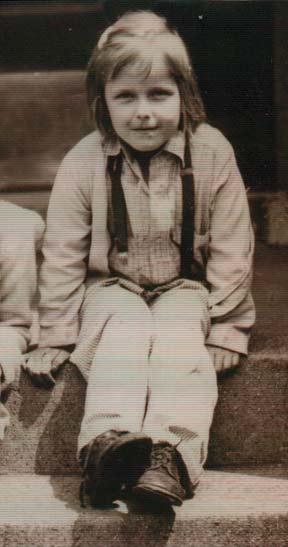
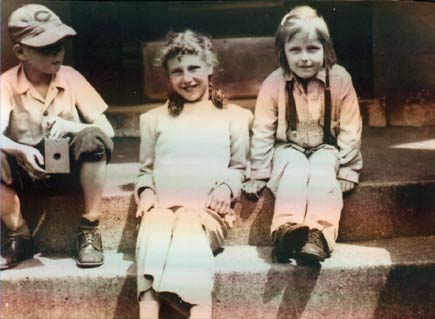
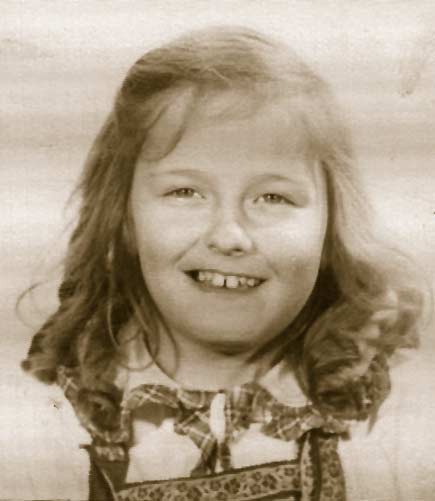
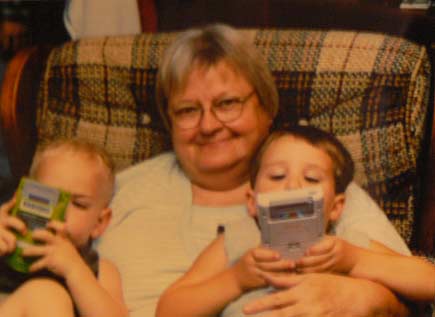
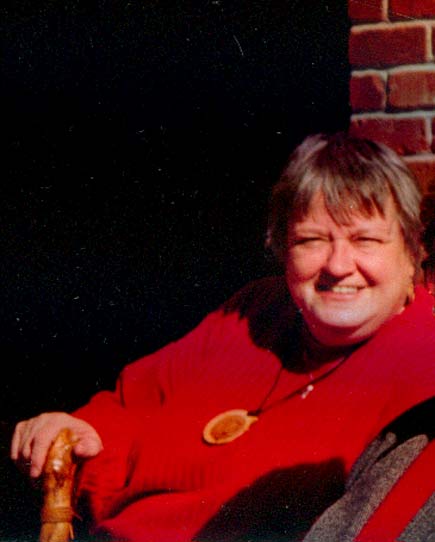
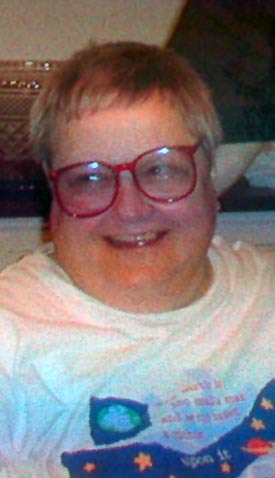
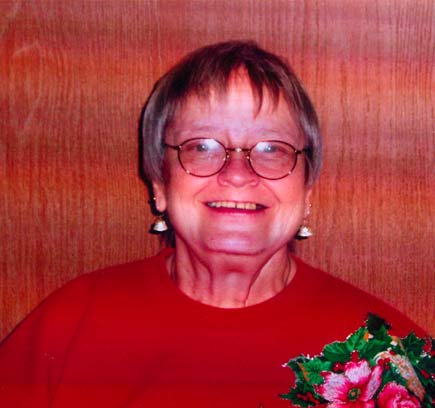
Pictures in remembrance of Elizabeth
A memorial will be held for Wilma Joanne “Elizabeth” Fineron at Benet Hill Chapel, 2pm Monday April 28.
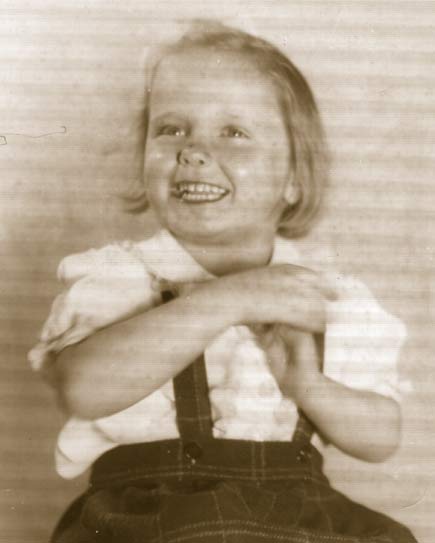
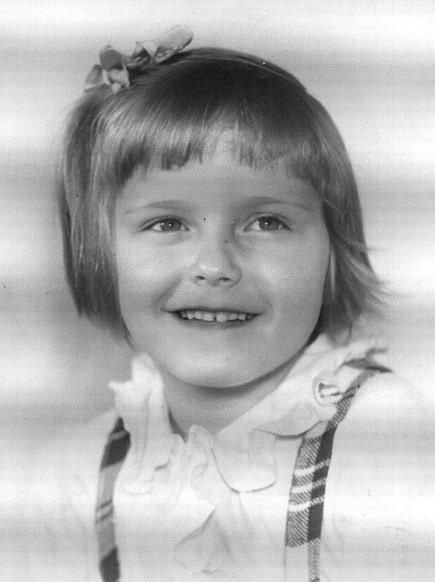
Steve Handon will officiate the ceremony. The music will be performed by First Strike Theater alumni. Benet Hill Monastery is at 2577 Chelton Rd. The chapel is located behind the school.
The Gazette wrote that Elizabeth walked her talk, the Indy featured a similar tribute. CSAction reprinted an email Elizabeth sent about her hospital ordeal.
Below we’ve collected some pictures of Elizabeth.


For a tribute and more pictures, click here.
For an amusing photo sequence, click here.
Elizabeth sent this email about her difficulties at the hospital:
I have had a very rough medical month and a half. I went into Memorial with Pneumonia the second week of March. While there they planned for me to return to have the right Corroded Artery done and in the meantime they sent me to Health South Rehab to work on balance. I stayed there a few days and returned home to wait two days to go back to Memorial for the surgery. I had the surgery and went home. At home I watched the hematoma on my neck get bigger and bigger and me get “dimmer and dimmer”. On Monday I saw Dr. Carlson and the next day (April 1st) I returned to Memorial for him to go in and heal the INFECTION. While in my neck he accidentally cut into the artery. In order to stop the bleeding he had to cut the main nerve to my tongue. A plastic surgeon (Dr. James) came and sewed up the tongue. Then Dr. Carlson put a patch on the Artery. Two days later he went back in to remove the patch and put a vein from the leg. While in something happened to my vocal cord. They kept me in Memorial a few more days and sent me back to Health Care South. I just got home yesterday and will have home medical care for a while. I feel very withdrawn from every thing so Paulette, if you want to call me or come visit me that would be terrific and I can get caught up. Love you both.
Elizabeth.
Final Solution for Palestinian Problem

“The more Qassam fire intensifies and the rockets reach a longer range, they will bring upon themselves a bigger shoah because we will use all our might to defend ourselves.”
-Matan Vilnai, Israeli Deputy Defense Minister, Feb 29, 2008
Normally the term Shoah, Hebrew for Holocaust, is reserved by Zionists to designate the Nazi extermination of the Jews, there being no genocide ne plus ultra. Could Vilnai’s threat have been more than a Freudian Slip?
Jewish spokesmen still spin Ahmadinejad’s “wipe Israel from the map” mistranslation, but cry foul that their boy was not just misinterpreted but that Israel was libeled. They insist if Vilnai had meant Holocaust, he would have said HaShoah. Shoah versus HaShoah? You be the judge.
(Yom HaShoah means Holocaust Remembrance Day. Shoah is capitalized everywhere online, except in recent newspaper reports, including Reuters, which is perhaps an effort to re-assert the old Hebrew meaning of “calamity.”)
What has Israel been perpetrating against the Occupied Territories, but wiping the Palestinian Question from the map?
Raise awareness to the CAUSE of cancer
Look at all that pink respect for breast cancer! Breast cancer awareness, I mean to say. As Marie has pointed out, women’s basketball over the weekend was draped in custom pink uniforms for the cause of cancer. “Cause” is an unfortunate pun, actually. No one’s interested in raising awareness of the cause of cancer.
I saw some coaches awarding Coach Yow a symbolic check for $10,000, to go “100% to breast cancer research” the announcers were happy to point out: “Not 93%, or even 99%, but 100% to research!” That’s good. If it had gone toward raising awareness [through ad campaigns], that money would be going 100% back to the television network.
About medical research, I have to wonder, if it weren’t for private fund-raising efforts, would there be insufficient research for a cure for cancer? Without Jerry’s Kids, or Walk for a Cure, etc, would it not be in the public’s interest to cure diseases like cancer? Are the 50,000 women diagnosed with cancer each year going unnoticed? Is the Health Department not picking up on the trend?
Whether our medical/industrial system wants to cure cancer is a matter of reasonable doubt. From a management perspective, can our society afford to stop this natural-seeming population trimmer? Breast Cancer preys generally upon women of post-reproductive age. Is our economy terribly concerned about the longevity of a less productive population segment?
Breast Cancer awareness would appear to be more about remembrance, about honoring those women who’ve lost the lottery of industrial toxin exposure. What about awareness of what’s causing cancer? We’ve researched causal-links plenty. Perhaps we should be raising money to go toward awareness of the cancer culprits. Let’s see if the media talking heads will speak so glibly about that!
Aren’t we learning that cancer behaves like rust? Cancer is oxidation, it’s, well, a cancer, in the figurative sense. Cancer is decay. It can be thwarted by proper avoidance of carcinogens, such as cigarette smoke, pollutants, or toxins. We know the sources of carcinogens: industry, chemicals, manufacture of plastics, poisons, toxic foods, etc.
How does wearing pink make any of that more visible? We’ll cure cancer when we arrest the causes. When we, literally, arrest the purveyors.
Media Hysteria pushes for US military attack on Iranian people
One of Iran’s government leaders visits New York City to attend a United Nations function and the US media uses this as an excuse to rabidly push for a US war against that country.
Mahmoud Ahmadinejad’s right to free speech was so threatening to Bush and Cheney that they had to deny him a visit to the site of the ruins of 9/11 to place a wreath in remembrance of those that died there. Why?
The truth is, the US government feared what he had to say, so they censured him by denying him access to the World Trade Center site. It was a simple as that. He did speak at Columbia University though, and The New York Times printed some of that transcript
What is noticeable about the media reporting is how all the hysteria comes from the US Right Wing, the US government, and their corporate media lackeys. Ahmadinejad toned down and resisted from what would have been correct in labeling the US government as the main source of world terrorism. After all, this is the country that through the last decades has been responsible for killing millions of Iranians and Iraqis through its promotion of war in the Middle East.
That is not even to mention the deaths from US government terrorism that have wracked Lebanon, Afghanistan, Pakistan, Somalia, and the Occupied Territories controlled by US backed Israel. Instead, Ahmadinejad spoke out for Peace, something that the US corporate media has a real problem doing.
The US media in contrast, has tried to churn up a surge to more war. We, The American People, have to learn how to read between the lines of our corporate media sources and resist their propaganda and its call for yet more bloodshed.
Enough is enough. We should understand by now that demonization of the leader of another country is usually the prelude to attacking it.
Grandfather’s virility

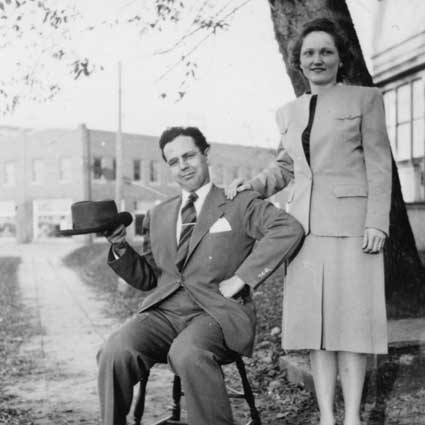
I like this picture of my grandfather. He passed away this summer and my sister and I looked through old family albums to choose a few photographs that might tell of his life.
Neither of us knew much about Grandpa’s youth, even about his character as my mom’s father. We’d only ever seen him as granddad to endless bursts of grandkids. He made his famous pancakes on sundays. His voice seemed always intoned with a cautionary chiding. “Oh, you wouldn’t want to do that.”
I remember riding with Grandpa in his old Nash Rambler with carpet samples in the back, running errands about town. He might have talked about the furniture store he once had, I don’t remember. His kindness was unwavering. It never occurred to me that a grandparent could be otherwise.
So in preparation for the funeral my sister and I were let to fashion a remembrance of our grandfather from photographic whole cloth. My sister is an art director who is very adept at manipulating a mood. We’d be enlarging originals, many of our relatives had never seen, or seen clearly, into prints which could recreate fiction. From hundreds of pictures we could mold an arresting romantic figure which we hoped they’d recognize.
Indeed we found a shot of Grandpa and his young fiancée posed on the front fender of a touring car, pointed toward the barren hills of Bonnie and Clyde, a sunny day, the two smiling, perhaps self-consciously at each other.
There’s another of Grandpa alone, wearing an apron, standing over the kitchen sink. Doing the dishes we presumed, but the dark shadows and soft sunlight coming through the lace lent the scene the suggestion that Grandpa could turn around any second with an engagement ring.
There’s a picture of the two of them sitting in a modest living room, he on the armrest actually, leaning back and against his wife, both of them glowing with happiness. Above them hangs a picture of an angel, which a cousin noted, had always hung above one of the later bedrooms.
These were the standouts to me, in thinking about which might be my favorite, but I chose another. I have no idea whether it catches an authentic side of Grandpa or not.
Someone mentioned that Grandpa and Grandma were once featured in a magazine article about a typical young family or some such sort. Grandpa worked for Montgomery Wards and they moved each year, Grandma giving birth at each relocation. It was thought that this picture might have come from that photo shoot. The composition is unusual I think, a kitchen chair on the sidewalk in front of your home. But this picture reflects something I can imagine having been in Grandpa’s character. He was a dandy.
There’s his wife, looking uncomfortably like a sidekick, and Grandpa seated in her presence; not merely unchivalrous, but self-satisfied and unguarded. I accidentally cropped his shoes when I scanned the pictures in the hasty late hours before the showing, but I assure you the body language was consistent, a nattily dressed first fiddle, head of household, master of the manor. I think it’s very evident in his pose, and I wonder if he knew it wasn’t true.
My grandfather on my father’s side, a fiery nordic who died when I was younger, cut a formidable figure around the house. You had to be quiet when you got too near Gudfar, unless he was laughing, and it seemed that activities were scheduled around his nap schedule. In any case, I didn’t find out until much later in life that he didn’t wear the pants in that family.
Oh, he was the oppressive dominant male, certainly the decider, but the guidance was Gudmor. She brought wisdom to the table, and certainly the emotional wisdom. Gudmor was always quick to cry when family visits ran short, something I could not conceive my stern grandfather would ever do. Gudmor was also the person to whom everything mattered, and so the not-uncommon better half. This was nothing that I saw in my youth, it had to be told to me later. Sure enough I see my own personailty reflect that heritage.
So I wonder, about Grandpa Hough, if I mightn’t have gotten something of a similar predisposition from him? It would make sense, wouldn’t it, that my parent’s attraction might be based on the similarity of their expectations for each other?
I’m sure that my grandfather, the snappy dresser, was also the beneficiary of having a very strong wife. And suddenly I can see that in all the pictures. My memories of my grandparents, even their eulogies, recount the two as inseparable, indistinguishable after so many years, from one another, but it seems to me that Grandma was the action-taker. She made the rules and prompted the activity. I have plenty of memories of Grandma. I think what Grandma wanted mattered most. I’m not sure Grandpa had an opinion most of the time. I think it was his wife, the more engaging, more communicative, clear-headed, stronger half.
So here’s a picture of my grandfather, fingering his hat like it’s a nobleman’s cane, like it’s lighter than air in the hands of someone made to feel at the top of his game. Let to feel, most certainly.
Both my grandfathers survived their spouses. But by only a couple years. Grandpa Hough moved in with his son, regained his health for a short time, but never did come into his own. I wonder if he ever had.
Sisters speak out about all US war zones
They come together from different states, Benedictines, Dominicans, the Loretto Community, the Sisters of Charity, the Sisters of Mercy, the Sisters of St Francis, Pox Christi, the Christian Peacemakers, even a nun visiting from Guatemala, to pray a silent vigil at the gates of Peterson AFB in remembrance of the two greatest war crimes ever perpetrated, Hiroshima and Nagasaki.
Not only against the use of nuclear weapons, but all weapons, and not just to sit idly by in prayer. The sisters asked for inspiration and guidance to address the violence our country is directing in Iraq, Afghanistan, the Philippines, Latin American and Colombia.
The heaviest words were for Iraq. Here is the latter part of the prayer ceremony:
We ask forgiveness for our complicity
in the violence now unleashed in the world
and we repent of the violence in our hearts.Forgive us, we pray
For initiating war Forgive us, we pray
For believin in untruths Forgive us, we pray
For resorting to torture Forgive us, we pray
For wasting resources Forgive us, we pray
For shattering innocence Forgive us, we prayFor trampling diplomacy Forgive us, we pray
For the death of US military in Iraq Forgive us, we pray
For the Iraqi civilians killed Forgive us, we pray
For trusting in weapons Forgive us, we pray
For exporting arms Forgive us, we prayFor needing to dominate Forgive us, we pray
For failing to trust Forgive us, we pray
For failing to act Forgive us, we pray
For valuing oil over life Forgive us, we prayFor failing to love Forgive us, we pray
For our arrogance Forgive us, we pray
For our pride Forgive us, we pray
For our silence Forgive us, we prayChange our hearts
That we learn compassion Change our hearts
That we practice mercy Change our hearts
That we embrace nonviolence Change our heartsThat we may act in justice Change our hearts
That we love tenderly Change our hearts
That we do your will Change our hearts
That we will be peace Change our hearts
Remembrance of XK-E past
It’s an Avon bottle which contained a likely malodorous aftershave designed for the hunt. But it’s also a talisman in British Racing Green of another coveted feline, slender curvaceous object of men’s lust, if too an extension of phallus, the Jaguar XK-E.

This is the Jaguar which Harold [of Maude] converted into a hearse. It’s the 1960 street distillation of the fabled twelve-cylinder D-type racing champion.
My father had an opportunity to buy a mint condition E-type but for having a teenage driver in the house. I had to settle for an Opel GT, the German worker’s counterpart to the Corvette/Capri/XKE. My dad hastily traded this before I could even see it for a safer Opel Manta. The taller Manta was lightweight and underpowered and so didn’t get me in trouble. I can press pedal to metal especially when I can count on there being not too much there, it’s a kind of timid recklessness. I imparted my teenage elan when I presumed to teach my little sister to drive the Opel. But she was fearless and to this day I wonder why she drives like a lunatic. Not having the Jaguar probably saved HER life.
My uncle once refurbished a convertible E-type and when last I asked about it, I learned he’d traced his visceral attraction to the British sportscar to even more fundamental racing lines. I recently saw his new project car and recognized there could be no more iconic a horseless carriage motorcar sportster than the original XK-120.
Holocaust denial
Tomorrow is Armenian Genocide Remembrance Day but not everybody is remembering. Some want to forget. Some want everybody else to forget, too. Holocaust denial apparently is a crime for some people, and not a crime for others.
Genocide remembrance for Jews only
Daniel Pearl’s name is being added to the Miami Beach Holocaust Memorial. Said the murdered journalist’s father, “the same forces that killed my grandparents in Auschwitz, the forces of hatred, are still operating in our world in the 21st century — and Danny is one of the victims.” Say What?!
Pearl is the first non-Holocaust victim to be added to the list. No one’s been added from among the victims of genocides which have ensued after WWII either. Gypsies, for example, who died along with Jews, Gays and Communists in the German extermination camps, suffer relentless persecution still, but none have been added to the list.
Said the chair of the Holocaust Memorial committee,
“Daniel really died for basically one reason, and basically the same reason 6 million others did, and that was for the crime of being a Jew.”
Though Israel’s criminal acts of genocide against the Palestinians and Lebanese may invite some to think otherwise, nowhere is it a crime to be Jewish.
Daniel Pearl was not the first or last Jew to visit Pakistan. Will no one consider the obvious offense Pearl’s captors would have taken? Daniel Pearl was writing about Islamic militancy for the leading jingoist Neocon pro-Israel warmonger yellow-press newspaper of all, the Wall Street Journal.
Holocaust Remembrance Day
Today is a day chosen by the Jewish government of Israel in the ’50s as a day for remembrance of the millions of Jews who died in Europe during World War Two. The date was chosen because it corresponds to the day the Warsaw Ghetto uprising began, one of the most heroic efforts of resistance to tyranny in the history of all mankind.
The horror of the holocaust against the Jewish community occurred over 60 years ago, but humankind should never forget the victims. They were victims of the apathy of US and non fascist Europe, as well as the fascist movement itself. A horrrible attempt was made to totally eliminate Jewish culture and the Jewish people themselves, and the whole world lost out as well. We now all suffer from the lack of having the Jewish culture of that era still with us today.
May the Jewish victims rest in peace and let us move to stop yet more future Holocausts from occurring again, whether it be against the Jewish community or any other community as well.
3 Fort Carson snipers die, no reason to cry
Probably one of the most disgusting lines of work the Pentagon arranges for ‘our troops’ to do, is the role of sniper. And three of these Fort Carson trained assassins just got blown up yesterday in Iraq, according to The Gazette headline today. The article had sort of a tearful quality to it, and this is part of the neo-con rehab for the reputation of snipers, torturers, and thugs of all stripes and varieities.
Cybersniper.com will give you even a musical rendition of this sniper rehab propaganda, and another sniper.com site had a collection going to help out US military snipers to get better equipment to shoot down Arabs with. Kind of a Toy for Tots thing, Bless their damned souls. But when most Americans think of snipers, they generally still think of Lee Harvey Oswald, and Charles Whitman, who shot down close to 50 people from the University Tower at the University of Texas in Austin. Let’s hope that people also remember that both got their training in the US Marine Corp, but they might not, I guess?
These three soldiers who just died in Iraq all trained as snipers at Fort Carson, but their dead bodies will head back to their hometowns, where no doubt the local press will talk about how proud their families are of them, how proud their local communities are of them, and how proud America is that they gave their lives in service to Bush and Cheney and the oil companies they represent. Hahaha, that last part is just untrue. The local press won’t mention that part of their ‘sevice’ for sure. My bad. They will be called hereoes, ‘sniper heroes’ even! Tears will wash ashore in remembrance of what fine men they were to choose this fine line of endeavour.
But the time to cry was when they joined the military and began to have the aspiration to train as long distance killers. They threw their lives away THEN, plain and simple. No reason to cry now. RIP, you three made the wrong turn in life. I’m crying for the orphan children of Iraq instead.
Remembering Hiroshima and Nagasaki
We held a protest today at the front gate of Peterson Air Force Base. It was to commemorate the bombing of Hiroshima and Nagasaki 61 years ago. It’s an annual remembrance.
The event also offers us a chance to reflect on the lunacy of nuclear weapons.
The protest was lost on the airmen who drove through the gate leaving the base. None of them seem to know what date it is. Let alone that it represents a tragic milestone for mankind.
Vigils are not kept for the equal number of Japanese civilians killed by conventional weapons, fire-bombed before we had nukes. American bombers annihalated entire Japanese cities, including 60% of Tokyo, in a deliberate effort to kill Japanese civilians.
An Iraqi remembrance
Holiday season event, date to be announced.
When we dismantled the 1900 CROSS IRAQ WAR MEMORIAL on October 13, we recited the names of all the US soldiers killed in the war in Iraq. Recalling the recitation of the American names, CAMP CASEY will next attempt to memorialize the people of Iraq who lost their lives.
This remembrance performance will require a chorus of at least twelve people, half male, half female, half of each of them children. A larger group can certainly be accomodated, as long as the make-up remains three parts men, three parts women, three parts boys, three parts girls.
As a lead vocalist reads the first names from the official list of US casualties, the chorus will punctuate each American name with a rythmic chant of Islamic first names to represent the Iraqi dead. Each member of the chorus will be assigned a set of four Islamic names, appropriate to their gender.
Between each American name, the chorus of twelve people will simultaneously chant four names in quick succession:
“Abdallah, Saleh, Sabah, Jabbar.”
“Qasem, Ahmad, Ali, Nusseir.”
“Yahya, Yaseen, Khaled, Ammar.”
“Ziyad, Taha, Nayef, Munther.”
“Hameed, Salah, Leith, Wahhab.”
“Mushtaq, Riyad, Basem, Mahdi.”
“Aziz, Nafe, Omar, Shiya.”
“Hussein, Dia, Jalal, Abbas.”
One man and one boy would voice a base rhythm of “Mohammad, Mohammad, Mohammad, Mohammad.”
The effect will be to have 48 Iraqi names called out for every American name, two thousand times.