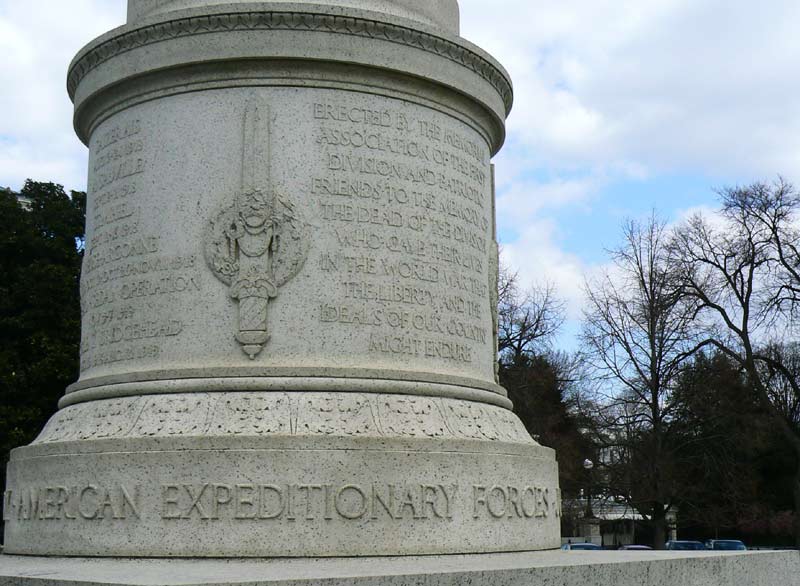
It’s always been America First

President Trump doesn’t want to complicate the argument by naming multi-nationals or offshore fortunes. Instead he implicates other nationalities as having usurped ‘Murcan interests. No more, he insists, “America First!” As if it hasn’t always been only ever that. American policy, foreign aid and wars have only ever served American purposes, and while big capital has reaped the benefits, its nationalist cover was wrapped in the Red White and Blue. Worse than Trump knowing nothing of history is the media’s eagerness to fill the vacuum with distortion. “America First” they decry, harks back to isolationist movements opposed to US entry into World War Two and before than The Great War and before that our Spanish American War of Expansion. Yeah, how about we call those isolationists what they were, pacifists and anti-imperialists?

Wilfred Owen: Spring Offensive & PTSD

You won’t find a more haunting depiction of battle induced PTSD than the last two stanzas of Wilfred Owen’s Spring Offensive. You’ll be curious no doubt to double back on the setup: troops being marched to the frontline, the idyllic lull before battle, the unceremonious charge, and the moment a stealthy sprint turns to mayhem. The next stanza speculates about the fate of those who fall in battle: to bullets, to explosive shells, and to shrapnel. The last stanza is about the “too swift” survivors who “out-fiend” death to come through, and don’t want to, or can’t, talk about it.

Spring Offensive (April, 1917)

Halted against the shade of a last hill,
They fed, and, lying easy, were at ease
And, finding comfortable chests and knees,
Carelessly slept.
                          But many there stood still
To face the stark, blank sky beyond the ridge,
Knowing their feet had come to the end of the world.

Marvelling they stood, and watched the long grass swirled
By the May breeze, murmurous with wasp and midge,
For though the summer oozed into their veins
Like the injected drug for their bones’ pains,
Sharp on their souls hung the imminent line of grass,
Fearfully flashed the sky’s mysterious glass.

Hour after hour they ponder the warm field—
And the far valley behind, where the buttercup
Had blessed with gold their slow boots coming up,
Where even the little brambles would not yield,
But clutched and clung to them like sorrowing hands;
They breathe like trees unstirred.

Till like a cold gust thrilled the little word
At which each body and its soul begird
And tighten them for battle. No alarms
Of bugles, no high flags, no clamorous haste—
Only a lift and flare of eyes that faced
The sun, like a friend with whom their love is done.
O larger shone that smile against the sun,—
Mightier than his whose bounty these have spurned.

So, soon they topped the hill, and raced together
Over an open stretch of herb and heather
Exposed. And instantly the whole sky burned
With fury against them; earth set sudden cups
In thousands for their blood; and the green slope
Chasmed and steepened sheer to infinite space.

Of them who running on that last high place
Leapt to swift unseen bullets, or went up
On the hot blast and fury of hell’s upsurge,
Or plunged and fell away past this world’s verge,
Some say God caught them even before they fell.

But what say such as from existence’ brink
Ventured but drave too swift to sink.
The few who rushed in the body to enter hell,
And there out-fiending all its fiends and flames
With superhuman inhumanities,
Long-famous glories, immemorial shames—
And crawling slowly back, have by degrees
Regained cool peaceful air in wonder—
Why speak they not of comrades that went under?

Wilfred Owen: Dulce et decorum est (Pro patria mori – The Old Lie)


The Roman poet Horace wrote “It is sweet and glorious to die for one’s country” as Rome shifted from republic to empire. By 1917 British infantryman Wilfred Owen had reduced Horace’s sentiment to “The old Lie.” Owen was killed in the Great War. His poem wasn’t published until 1920 after the war. Even exposed, the old lie went on to adorn many monuments, including, also in 1920, the rising U.S. empire’s Arlington National Cemetery.

Dulce et Decorum Est (August, 1917)

Bent double, like old beggars under sacks,
Knock-kneed, coughing like hags, we cursed through sludge,
Till on the haunting flares we turned our backs
And towards our distant rest began to trudge.
Men marched asleep. Many had lost their boots
But limped on, blood-shod. All went lame; all blind;
Drunk with fatigue; deaf even to the hoots
Of tired, outstripped Five-Nines that dropped behind.

Then somewhere near in front: Whew… fup… fop… fup…
Gas-shells or duds? We loosened masks, in case —
And listened … Nothing… Far rumouring of Krupp…
Then stinging, poison hit us in the face.

Gas! GAS! Quick, boys! — An ecstasy of fumbling,
Fitting the clumsy helmets just in time;
But someone still was yelling out and stumbling
And flound’ring like a man in fire or lime . . .
Dim, through the misty panes and thick green light,
As under a green sea, I saw him drowning.

In all my dreams, before my helpless sight,
He plunges at me, guttering, choking, drowning.

If in some smothering dreams, you too could pace
Behind the wagon that we flung him in,
And watch the white eyes writhing in his face,
His hanging face, like a devil’s sick of sin;
If you could hear, at every jolt, the blood
Come gargling from the froth-corrupted lungs,
Obscene as cancer, bitter as the cud
Of vile, incurable sores on innocent tongues, —
My friend, you would not tell with such high zest
To children ardent for some desperate glory,
The old Lie: Dulce et decorum est
Pro patria mori.

No new propaganda under the sun


Did you think Operation Iraqi Freedom photographers invented the warplanes-at-sunrise theme? Here’s a propaganda shot circa WWI, where the crack of dawn obviously had to be hand tinted on the original monochrome. Is that any more a manipulation than the digital ultra-vibrance our embeds contrive today? The caption under this photograph, reproduced in The Nations at War: a Current History published in 1914 when the “Great War” was yet “the World’s Greatest War,” reads: “A French armed biplane in pursuit of a German Taube aeroplane.” That’s for the folks on the homefront. In reality the German Dove has probably swooped upon the heavier Farman bomber whose forward gun was mostly used to strafe infantrymen.

Originally it was Antiwar Mother’s Day

Antiwar songFor how many war years longer will a MOTHER’S DAY tradition be to remind the vast Hallmark-washed that Mom’s postbellum holiday originated as a grassroots resistance by mothers opposed to enlisting their sons in war? Quoth abolitionist/pacifist/feminist/poet Julia Ward Howe in the Mother’s Day Proclamation: “We, the women of one country, will be too tender of those of another country to allow our sons to be trained to injure theirs.” Take heed war-loving patriots, Howe also penned the lyrics to Battle Hymn of the Republic.

Up against the wall, antiwar mother.

During WWI the plea expressed itself in a popular song: “I didn’t raise my boy to be a soldier.” Of course the song provoked many jingoist responses such as “I didn’t raise my boy to be a coward,” and “I tried to raise my boy to be a hero.” Blood lusty teabaggers were up to their same knee jerk patriotism back then, egged on no doubt by the same industrial military interests. From across the Atlantic, Punch magazine reflected the British eagerness to see the US join their war and lampooned with “I didn’t raise my girl to be a voter.”

Mother’s Day Proclamation, 1870

Arise, then, women of this day!
Arise, all women who have hearts,
Whether our baptism be of water or of tears!

Say firmly:
“We will not have great questions
decided by irrelevant agencies,
Our husbands will not come to us,
reeking with carnage, for caresses and applause.

Our sons shall not be taken from us to unlearn
All that we have been able to teach them
of charity, mercy and patience.

We, the women of one country,
will be too tender of those of another country
To allow our sons to be trained to injure theirs.”

From the bosom of the devastated Earth
a voice goes up with our own.

It says:
“Disarm! Disarm!
The sword of murder is not the balance of justice.”

Blood does not wipe out dishonor,
nor violence indicate possession.

As men have often forsaken the plough
and the anvil at the summons of war,
Let women now leave all that may be left of home
for a great and earnest day of counsel.

Let them meet first, as women,
to bewail and commemorate the dead.

Let them solemnly take counsel
with each other as to the means
Whereby the great human family can live in peace,?

Each bearing after his own time
the sacred impress, not of Caesar,?
But of God.

In the name of womanhood and humanity,
I earnestly ask?

That a general congress of women without limit of nationality?
May be appointed and held at someplace deemed most convenient?
And at the earliest period consistent with its objects,?
To promote the alliance of the different nationalities,?
The amicable settlement of international questions,?
The great and general interests of peace.

You have forgotten what to remember

You are not forgottenCan someone please explain to me what it means to fly this flag? The POW-MIA flag is ubiquitous these days around veterans. Our town hall flies this black flag halfway below the Stars and Stripes. When the latter is at half mast, the former hangs indecorously low. Which reminds me of a pirate ship stalking a wavering Old Glory.

I understand POW and MIA, and “you are not forgotten.” But there is no flag for the veterans, the dead or wounded, to whom does this lone flag speak and why?

Since the Gulf War, the US military maintains that it loses track of none of its soldiers. We’ve had POWs but they’ve been returned, and we’ve had MIAs whose bodies have been found. One was recovered even recently, though it was the body of a pilot lost over Iraq, understood to have died. Casualties at sea are still sometimes unrecoverable, but at least something about American war-making proficiency now permits us to confirm deaths even sans corpus. Supposedly.

US military engagements between those wars, and later, have been kept outside public scrutiny, or not officially admitted. As a result, they’ve added no POWs or MIAs for the home front to worry over.

Which leaves Vietnam, from whose era comes the dark silhouette of a bent inmate in the shadow of a prison guard tower. According to the last report, there remain 1728 American soldiers missing in action in Indochina. They are unaccounted for — it might be more fair to say–not missing persons, expected to turn up.

During the Vietnam War, the MIA list gave hope that your soldier wasn’t among the fallen. It was a hope that loved ones could cling to for even years after the fall of Siagon. On the radio, a Dick Curless hit from 1965 continued to resonate even as the war receded from memory. “Six Times a Day” told of a bride in post-WWII Germany who met the trains every day, awaiting the return of her German soldier, held by the Soviets in war-reparation labor camps until the Russians considered them to have atoned. Was this what we expected Vietnam was doing?

Six times a day the trains came down from Frankfort
The night he came ten years were almost through
She held him close and said I knew you’d be here
He said I had no doubt you’d be here too

American wives were determined to wait even longer, except evidence of post-war prisoners never came. There was speculation of a cover-up, suspicions which politicians like John Kerry and John McCain do little to assuage. After the war, some believe that prisoner GIs were left behind, whom the North Vietnamese hoped to exchange for war reparations. Instead of paying, it’s conjectured that the US government chose to deny the existence of those men. No American diplomat has ever confirmed the scenario, and no surviving GI has ever surfaced.

The closest we’ve come to rescuing POWs was at the movies, when Rambo went back for a jailbreak and to do-over America’s lost war.

Even as the rumor persisted, the fate of the abandoned POWs is assumed to have been execution at the hands of their former foe, presumed so exasperated and bitter. The general consensus today, no matter the theory, is that no veteran is anticipated to step alive from the sad lists of the Vietnam MIA.

If they are presumed dead, then what separates an MIA from the dead, who we honor together with all veterans? The Vietnam MIA have been added to the Vietnam Memorial. How now is their memory any different?

Even recently I’ve seen relatives of those MIA conduct special ceremonies on Memorial Day, with the empty place setting, the chair, the vase and rose, etc. It looks to me as though the family members have even passed the ritual down to grandchildren who would not even have know the missing soldier. But this ceremony isn’t conducted for the regular dead, who are also missing from the family table, it’s reserved for the missing dead. And so I wonder at the distinction.

MIAs represent casualties who fell off the books. If a soldier’s capture is confirmed, his status changes to POW, otherwise soldiers come up missing through desertion, treason, malfeasance, or physical obliteration. Mother nature can dispose of bodies, but the most common cause of disappearance is owed to the inhuman scale of mechanized war. As weapons grew more powerful, physical bodies more frequently disintegrated. Missing bodies today, even looking back retrospectively, are the result of human beings eclipsed by machine violence. In the engagements America has chosen from Vietnam onward, usually the technology for the big violence is our side’s alone. Which is not to implicate friendly fire. Often USAF air strikes are called in over battlefields strewn already with GI fatalities.

At first the act of flying a POW flag was aimed at the Vietnamese, to remind all around us, with a sideways glance at our enemies, of our concern for our soldiers. Perhaps the MIA component was an urging to Vietnam as well, after the war, to put effort into recovering US soldier remains. Over the decades, I’m not sure that Vietnam could have shown itself more cooperative. If archeological digs are today able to unearth more evidence, it’s not because the Vietnamese weren’t trying.

Who today are we addressing with the POW-MIA flags? I see these flags usually paired with the Red, White and Blue. But those are directed at our foes.

If a soldier’s relation has question to suspect their soldier is an MIA, isn’t that a beef to take up with the US military? The POW-MIA flag seems to say, we don’t trust you, don’t lie to us about our boys in uniform. We don’t want you smashing their bodies to smithereens, or leaving them behind and not telling us. The POW-MIA flag is a renegade message which says: we support the troops, but not their mission. Give them back.

Flying the POW-MIA flag is so unpatriotic, it’s patriotic.

Ward Churchill to speak for O’odham

O'odham rightsAccording to Censored News, Activist and scholar Ward Churchill will speak at the Unitarian Universalist Church of Tucson, 4831 W. 22nd St., on November 13, 2009 at 7:00 p.m. to benefit O’odham VOICE Against the Wall, which since 2003 has organized and advocated for the traditional O’odham leaders and elders of the Tohono O’odham communities in the southern territory of the United States and northern territory of Mexico. Professor Churchill’s talk is part of the “Apartheid in America: Surviving Occupation in O’odham Lands”

O’odham activist Ofelia Rivas will also participate. The event is sponsored by the Dry River Radical Resource Center, the Earth First! Journal, and Voices against the Wall.

Here’s some background on the O’odham struggle:

pamphlet cover illustrationBy J. D. Hendricks, 2004
TIAMAT PUBLICATIONS #5

The People Who Emerged From the Earth

Over two thousand years ago the descendents of the O’odham moved into the southwestern region of the area now claimed by the U.S. as the state of Arizona. 1 The O’odham have had one of the longest histories of contact with the forces of European colonization compared with the rest of the native North American peoples. The O’odham’s first contact with Spanish invaders took place in the mid 16th century; nearly one hundred years before the colonization of the North Atlantic coast and Great Lakes regions were begun by the French and English colonists. As such, the history of the O’odham provides a good context for an investigation of the colonization of Native North America, and more specifically, an investigation of the interplay between, and results of, the varied responses to colonization – that of collaboration, accommodation, and resistance.

Many histories of the O’odham refer to these desert people as the Papago. The term Papago was a name given to the O’odham by the Spanish colonizers, and is likely the result of a Spanish corruption of the O’odham word “papabi” which was the O’odham name for one of their principal bean varieties. Thus, the Spanish colonizers term for the O’odham (Papago) came to mean “the bean eaters.” 2 For the purposes of this study I will refrain from the use of the term Papago and will refer to “the people” 3 by their traditional pre-colonial name. 4

As is often the case, with the name Papago being a good example, European constructs are often imposed upon indigenous peoples by the historians that seek to portray their past. This result can occur when historians seek to glorify European norms and traditions at the expense of indigenous ones, and can also be the result of the subconscious indoctrination of the historian by the dominant culture – in this case that of western style industrial civilization. In other cases it can be the result of a simple uncritical usage of language.

One of the most dominant and reoccurring “civilized” constructs imposed upon indigenous peoples history is the commonly understood notion that the O’odham, or any other indigenous North American culture for that matter, existed as a totality or uniformed mass. This study will seek to use the history of the interaction between the O’odham peoples and the United States, both its government and its peoples, to deconstruct this myth of the totality and provide a history of the O’odham’s varied responses to colonization from an anti-colonial and anti-industrial perspective. By investigating various important case studies in O’odham history, and looking not only at resistance but also accommodation and collaboration, it is hoped that this work will help to provide a more realistic historical picture of the effects of colonization, and the intentions and reactions of both the colonizer and the colonized. Within the previously stated context and theoretical framework, this study will argue that while the O’odham responded to the U.S. invasion of their lands in various ways, the choices to resist, accommodate, or collaborate with the forces of colonization did not affect the overall U.S. policy concerning the O’odham – that policy being the eventual total assimilation of the O’odham into the dominant “civilized” industrial system. 5

This investigation will include a strong focus on O’odham resistance to colonization, as any anti-colonial history should, however it will not discount or ignore the many historical occurrences of accommodation, and in some cases outright collaboration, with the colonizers. It is important to always keep in mind that none of the actions and reactions in any of the case studies looked at are attributable to the O’odham as a “totality,” but rather are attributable only to the various groupings of O’odham, be they incarnated in the form of the individual, the clan, the village, an economic or spiritual grouping, or an established political organization.

A God of Civilization and Coercion Comes to the O’odham

The O’odham’s first encounter with Spanish invaders took place in the mid sixteenth century when a group of conquistadors led by Alvaro Nunez Cabeza de Vaca entered O’odham territory in search of gold. These men did not find the riches they were looking for and left the desert region to return to the Spanish colony. However, soon after word spread of the O’odham villages on the northern periphery of the Spanish colony, missionaries began to travel north to bring God and “civilization” to the native people residing there. By 1686, Catholic missionaries had formed a few small missions in O’odham territory using what they believed to be the influence of their soft power 6 techniques to lure the O’odham into their missions where they were then subjected to a rigorous schedule of cultural indoctrination. Most O’odham historians, including Winston Erickson, 7 and to a lesser extent, Bernard Fontana 8 have, during this time period, focused on the O’odham who chose to reside nearby and within these early missions, thus painting a picture of the O’odham as accepting of Spanish influence and cultural indoctrination.

However a closer look at this time period reveals that mission O’odham were only a small percentage of the total population of O’odham residing in the Sonoran desert 9 and that the ones who were there may not have been so for the reasons that the colonizers believed. San Xavier del Bac, the largest mission in O’odham lands, as well as many other missions, took advantage of the fact that the desert O’odham migrated in the dry winter months to the Northern Piman settlements along the rivers to work the small farm plots for sustenance. 10 The Catholic missions inserted themselves into this traditional pattern. Those O’odham who worked and lived near the missions were, for the most part, seasonal residents, which shows that the missions were viewed merely as being of utilitarian value. Thus, the O’odham as a totality were not necessarily accommodating to or interested in anything the missionaries had to offer per se, and when the missionaries began to employ “hard power” techniques and abuse or overstep the grounds for their welcome it did not go without consequence. 11

Accommodating and ignoring the missionaries was not the only response to colonization practiced by the O’odham during the seventeenth and eighteenth centuries. Although historians such as Erickson feel that “the missions did serve the O’odham well….,” 12 that assertion is contradicted by the fact that there were many large scale rebellions waged against the missions from outside and from within. In 1695, 1751, 1756, and 1776, large scale rebellions occurred in which missionaries were killed and their missions burned to the ground. 13 In some cases these rebellions were the doing of joint O’odham/Apache alliances, which is significant considering that many histories of the O’odham and Apache portray them as immemorial enemies. This may be the result of the fact that by the early nineteenth century the Spanish government initiated a campaign of divide and conquer that was continued later by the Mexican and U.S. governments to turn the O’odham and Apache against one another, thus easing the project of their subjugation.

A Change in the Occupation Government: Washington Enters O’odham Lands

In 1821, Mexican Independence from Spain was achieved and interest in the O’odham dropped away nearly entirely. By 1828, the new and secular Mexican government began the process of shutting down the missions in O’odham territory and by 1842, the last of the missions were closed. Soon after, in 1846, the United Stated initiated a war for territorial expansion against Mexico. This war was not of immediate consequence to the O’odham peoples. Isolated in desert regions, the fighting between the two occupation powers affected them little in the short run. However, the signing of the Treaty of Guadalupe Hidalgo in 1848, which ended the war, would lay the foundations for a series of disastrous events which would affect the O’odham in very negative ways.

Of greatest consequence to the O’odham was the fact that the boundary between the United States and Mexico was not finalized by the treaty of Guadalupe Hidalgo. The boundary was designated by Article Five of the Treaty as being an arbitrary line roughly following the 32nd parallel, an area which runs through the southern part of modern Arizona. To the east, the border was provided by the Rio Grande. The exact boundary line along the 32nd parallel was to be decided at a later date. It is also important to note here that the Treaty also provided that all Mexican citizens absorbed by the United States were to be granted U.S. citizenship, which included all indigenous peoples in the annexed territory since under Mexican law they were considered citizens. In the treaty the United States also assumed the responsibility for preventing cross border raiding into Mexico by the southwestern tribes, specifically the Apache. 14

In the aftermath of the signing of the treaty of Guadalupe Hidalgo, it became quickly apparent that an acceptable border between Mexico and the United States along the 32nd parallel would not be achieved. An official survey expedition was assembled by the United States and Mexico in 1849 to trace out the boundary between the two countries with little success. Various borderlines were agreed to and then abandoned and re-made by the United States, sometimes in a unilateral decision that dismissed the positions of the Mexican government altogether. 15

The principal concern for the United States was to secure title to an area of land in northern Sonora, Mexico that was ideally suited for the construction of a portion of the southern continental railroad whose building was being discussed in the U.S. Congress at the time. One of the main advocates for this southern railroad route was a South Carolina man by the name of Colonel James Gadsden. Gadsden’s history of connections to powerful business, military, and political leaders is very interesting and his appointment by the United States to be Minister to Mexico in 1853 serves as a very informative source to gauge the United States’ intentions towards Native Americans and the O’odham in particular.

James Gadsden was born into an influential southern family and graduated from Yale University. After enlisting and serving in the war of 1812, Gadsden was sent to the Florida territory with Andrew Jackson to aid in the campaign of removal and extermination being waged against the Seminole Indians, which took place from 1816-1818. After this war against the Seminole, Gadsden was appointed by President Monroe as commissioner to oversee the removal of the Seminole Indians to Indian Territory. Like the more famous removal of the Cherokee, the removal of the Seminole, and the high death rate suffered as a result, unarguably constituted genocide. 16 As a reward for a job well done, Gadsden was appointed by Monroe to a seat on the legislative council of the territory of Florida, thus beginning Gadsden’s political career. In 1840, Gadsden was elected President of the Louisville, Charleston, and Cincinnati Railroad. In 1853, the Secretary of War, an ardent white supremacist and slavery defender by the name of Jefferson Davis, appointed Gadsden to be Minister to Mexico. 17 As Minister to Mexico, one of Gadsden’s primary missions was to negotiate a final demarcation of the boundary between the U.S. and Mexico. Although Gadsden was a zealous believer in Manifest Destiny, his ideas concerning racial Anglo-Saxonism 18 caused him to be an opponent of the total annexation of Mexico. Gadsden, like many racist U.S. politicians of that time, felt that the total absorption of Mexico and its non-Anglo population into the United States would pollute the Anglo bloodline too much and thus he sought only to gain enough territory for the United States to build the southern pacific route. 19 Thus, a man who had presided over a war of genocide against the Seminole Indians, was a devout racist, and who had obvious conflicts of interest due to his connections to the railroads, was put into a position to determine the territorial boundary between the United States and Mexico and in the process also determine the boundaries of the O’odham’s land. With its appointment of Gadsden, the intent of the U.S. government could not be clearer. Business interests and territorial expansion were to run roughshod, by any means necessary, over any native peoples who stood in the way.

It is no surprise that when James Gadsden finally successfully negotiated a treaty with Santa Anna to secure what is now the southern portion of Arizona, the O’odham were not consulted. In fact, the Gadsden Treaty, signed into law in 1853, did not contain any mention of the O’odham at all. Considering that the new boundary line put in place by the Gadsden Treaty literally split the traditional O’odham lands in two, it is obvious that the intentions of the United States were in no way benevolent. Here it is also important to point out that the terms of the Gadsden Treaty specifically included the same citizenship provisions which were spelled out in the earlier Treaty of Guadalupe Hidalgo. 20 Although the Gadsden treaty was of great significance for the O’odham, their isolation and the outbreak of the Civil War enabled them to live another decade in relative isolation from Anglo encroachment.

Assimilation, Cultural Destruction, Double Speak and Ordained Genocide

The causes which the Almighty originates, when in their appointed time he wills that one race of men – as in races of lower animals – shall disappear off the face of the earth and give place to another race, and so on, in the great cycle traced out by Himself, which may be seen, but has reasons too deep to be fathomed by us. The races of the mammoths and mastodons, and the great sloths, came and passed away: The red man of America is passing away!
–United States Congress Committee on Indian Affairs report, 1865. 21

No doubt with similar justifications in mind as those of the Committee on Indian Affairs, Anglo settlers began their invasion of O’odham lands less than a year after the conclusion of the Civil War. The Homestead Act had opened up the lands of Southern Arizona to Anglo squatters and in 1866, one of the first of many bills was passed by Congress granting mineral rights to any citizen who claimed them. 22 Every one of these homesteads opened and every resource extraction operation initiated without the express consent of the O’odham represented an illegal action under the Gadsden Treaty. The citizenship provisions of the Gadsden Treaty had granted citizenship to all former Mexican citizens and the O’odham were, by legal definition, included in this formulation. The United States, however, refused to consider “uncivilized” peoples as being worthy of the protections granted to citizens by the fourth amendment of the U.S. Constitution, which prohibits the expropriation of property. This refusal of the United States government to follow its own laws pertaining to Native Americans when those laws happen to stand in the way of U.S. interests has been a common occurrence in United States Indian policy. This land grab was only the first of many illegalities committed against the O’odham people by the United States and its citizens. In this respect the O’odham are in a special position when compared with many other tribes. While the theft of native lands by the United States Government was usually legally justified by treaty stipulations signed between a tribe and the U.S. government, this justification could not and cannot be used in the case of the O’odham since no treaty was ever signed with the O’odham by the United States Government. 23

For the most part, the O’odham did not resist this initial incursion of Anglo settlement, rather the O’odham practiced accommodation and moved farther out into the desert to shield themselves from the new settlers invading their lands. Traditional ways were maintained with the exception of the introduction of cattle ranching. The O’odham territory was well suited for the raising of cattle and a good number of O’odham became cattle ranchers, both for purposes of subsistence as well as for sale to Anglos residing in and around Tucson. In the 1880s, as increasing numbers of Anglo cattle ranchers began to invade and take over their pasture, some O’odham began to resist.

The O’odham resisted by stealing the Anglo cattle herds which were rounded up and driven south to be sold on the Mexican market. The expropriation of Anglo cattle herds was not isolated, and it became a major concern for the settlers and the government. In at least one case, a large cattle outfit was driven out of business. 24 The concern over this outbreak of O’odham theft of Anglo cattle was large enough that newspapers as far away as Los Angeles ran stories about the phenomenon. For the most part these stories seem to have been deliberately used to justify the enclosure of the O’odham into reservations as the government and Anglo cattle ranchers seized the opportunity to gain even more O’odham land by arguing that it was an unfair burden for the Anglo cattle ranchers to have to “support” the O’odham. 25 Here, in previous case study, we have another common attribute of U.S. Indian policy in general, and one which occurs again and again in the history of O’odham contact with the U.S. government and Anglo settlers – blaming the victim.

Another official position of United States Indian policy during this time period was that everything done to the Indians was, in the words of Indian Commissioner J. Q. Smith, in their own “best interests.” 26 Whether this obvious sham was based on a subconscious guilt and delusion or was a cynical example of “double-speak,” it is obvious that Native American’s best interest’s were the last thing on the government’s mind. Nevertheless, with this reasoning as justification, the first official reservation for the O’odham was created by executive order of President Grant on July 1, 1874. This small reservation surrounded the Old Catholic mission at San Xavier del Bac. It is estimated that only about ten percent 27 of the desert O’odham took up residence within this reservation – these were labeled as “civilized” O’odham by U.S. census takers. The vast majority of O’odham were labeled as “wild” and continued to live in the vast desert regions west of San Xavier del Bac. While it is obvious that the desert O’odham were resisting cultural assimilation by avoidance, even the mission O’odham maintained a resistance to European culture as the next example will illustrate.

While visiting the old mission at San Xavier a newspaper columnist from the Los Angeles Times wrote that upon her visit in 1882, she could see “not a single civilized human habitation within miles.” This writer goes on to state that the O’odham’s dwellings were in the form of “conical mud huts.” In the casual racism and Social Darwinist rhetoric of the period she also adds that,

“The Papagos are but little in advance of gophers and prairie dogs in their habitations.” 28

The point is that after more than 200 years of European influence, even the mission O’odham continued to build their traditional shelters. 29

Progressivism and Cultural Genocide: The Dawes Act

In 1887, the General Allotment Act, also known as the Dawes Act, was signed into law. The Dawes Act was the staging point for the forced assimilation of those remnants of Native American groupings which had not been totally decimated by the preceding period of “Indian Wars” and forced relocations. The essential function of the Dawes Act was to disrupt traditional tribal land holding patterns and thus force Native Americans into the Anglo system of private property. The O’odham, like most other Native American cultures, did not have a concept of private property – land was held in common for the benefit of the village group. Communally held land was an essential pre-requisite for their Anarchistic political system and extremely de-centralized tribal structure. 30

The first section of the Dawes Act provides for equal “sections” of land to be parceled out to each “head of family.” This head of family was always understood to be the father of each family when land was allotted. Thus, this first section of the act not only attempted to destroy the communal land system of Native Americans, it also instituted Patriarchy as the basis for social functioning in Native America. 31 In addition, Section Five of the Act also provides that any un-allotted lands be subject to purchase by the United States government. Section Six and Seven provide that all monies paid by the U.S. for un-allotted Native lands be held for each tribe by the U.S. Treasury and “subject to appropriation” by the U.S. government to repay itself for the implementation of allotment as well as to provide for the “civilization” of Native Americans. 32 In less veiled words, these sections are basically stating that Native Americans will be forced to pay for their own cultural annihilation.

This interpretation of the intent of the Dawes Act becomes clearer when one looks at the arguments and debates that took place in Congress and within self described progressive “Indian rights” groups such as the Indian Rights Association. Critics of the Dawes Act in Congress such as Rep. Russell Errett understood that

“the main purpose of this bill is not to help the Indian troubles so much as it is to provide a method for getting at the valuable Indian lands and opening them up for settlement.” 33

And Senator Dawes, the namesake of the final bill, speaking of the land and resources of Native Americans stated that

“civilization has got after these possessions with a greed never before equaled but it is idle to expect to stay it….” 34

As for the progressive Indian Rights Association, they argued that

“the organization of the Indians into tribes is, and has been, one of the most serious hindrances to the advancement of civilization, and that every effort should be made to secure disintegration of all tribal organizations….” 35

And one of their leaders, Reverend L. Abbott, provided justification with the statement:

“Barbarism has no rights which civilization is bound to respect.” 36

So here we have a self-proclaimed progressive Indian Rights organization arguing for cultural genocide and against the notion that Native Americans have any rights that civilized people are bound to respect! This conclusion provides a perfect example of the essence of “progressive” or “civilized” thought.

The Dawes Act had a much less devastating effect for the O’odham than it did for many other Native American tribes. At the time of its passage, the only official reservation for the O’odham was the San Xavier reservation which, as was stated earlier, was only a small 71,090 acre reservation around the old mission San Xavier del Bac. When the allotment agent came to San Xavier in 1890, he allotted out 41,600 acres of land to the 363 O’odham whom he counted in his census as being resident at the time. 37 The vast majority of the O’odham still continued to live west of San Xavier in the expansive desert regions and were little affected by the allotment schemes. Even those O’odham who lived in San Xavier and were allotted land paid little attention to the artificial boundaries drawn on paper which supposedly privatized their land – they continued to farm and graze the land communally. 38 This refusal to abide by the provisions of the Dawes Act is also a form of resistance to cultural assimilation and adds one more example to show that for those O’odham who resisted, the most often employed method of resistance was non-compliance and avoidance. This specific response to colonization was made possible by the isolation and expansiveness of their desert home, which many Anglo’s continued to view as a “hopeless desert.” 39

The Domestication of the “Wild Papago”

The vast majority of the O’odham continued to resist assimilation and maintained a fairly traditional lifestyle – minus the introduction of cattle herding and horse rearing. In the twenty years following the passage of the Dawes Act, a growing effort was made to enclose the “Wild Papago” 40 and forcibly strip them of their traditional culture and instill them with the “civilized” values of the industrial Anglo. As was mentioned previously in the paper, ranchers and the government used O’odham cattle theft from Anglo ranchers as one tool to justify the enclosure of the O’odham within a reservation. During this period, Anglo Cattle ranchers continued to encroach deeper and deeper into O’odham territory and scuffles began to break out.

In another classic example of the “blame the victim” tactic, a pro-enclosure story was printed in the Los Angeles Times, no doubt to build public pressure for the domestication of the “Wild Papago.” The story concerns a group of O’odham who had resisted an Anglo cattleman’s attempts to enclose one of their water sources. When these O’odham continually tore down the fence that this cattleman had built, the rancher filed a report with the local Indian Agency sheriff to have the men arrested. When the sheriff arrived to arrest the O’odham responsible for defending their water source, he was taken hostage. The sheriff was later released unharmed; however, the incident was used to make the argument that such troubles can only be expected to increase if the O’odham were not enclosed on a reservation where they could be more easily controlled and monitored. 41

The tactic of occupying and diverting natural water sources was one of the tools used by the Anglo settlers and government to destroy the self sufficiency of the O’odham and force them into reservations where they would be dependent on the government for their water and would thus be easier to control and monitor. Some of the O’odham clearly understood what was happening, which is evidenced by instances of resistance both to the enclosure of natural water sources as well as resistance to the drilling of wells. One example of the U.S. government using water as a tool of forced cultural assimilation can be found by looking at an event recorded by an O’odham calendar stick 42 keeper. In 1912, the O’odham residing in the village of Santa Rosa, an isolated and traditional village in the western desert region of O’odham territory, were paid a visit by an Anglo Indian Commissioner who wished to drill a well for them. The Chief of the village objected to the drilling of the well on the grounds that it would disturb their culture, their autonomy and their self-sufficiency. The government agent proceeded to have the well drilled anyway. Upon completion of the well, the Chief of the village, according to the calendar stick keeper, stated that

“the well must be left alone and, in order that the Papagos might continue their old life, water must still be carried from the spring in the foothills.” 43

However, the prohibition by the Chief could not be upheld due to the overwhelming convenience of the new well and after a period of abstaining from its usage, the village of Santa Rosa (including the Chief) gave in and thus was assimilated into the industrial system by being made dependent on the Government well. 44 During this same time period, encroaching Anglo farmers engaged in the diversion of O’odham water sources to irrigate their farms. This practice served as another method of forcing the self sufficient O’odham into a relationship of dependence upon the government. In many areas so much water was diverted that the O’odham could no longer grow their traditional summer crops. 45

In 1919, the first incarnation of an O’odham reservation to enclose the nearly two million acres of desert that the “Wild Papago” were residing in was established. The formation of the desert O’odham reservation in 1919 ushered in a period of exponentially increased government interference in O’odham matters, and of course, the various forms of coercive assimilation were multiplied. By 1933, thirty-two unwanted wells were drilled all over the new reservation. 46 The well drilling was often opposed by those who were trying to maintain the O’odham Him’dag – the traditional ways of the desert people.

Resistance and Collaboration: O’odham Responses to Forced Modernization

In contrast to the traditional O’odham who had maintained resistance to cultural assimilation for the past 300 years, there was also a small number of O’odham based in the new reservation that welcomed collaboration with the forces of Anglo modernization and advocated for cultural accommodation and in some instances for total cultural assimilation. These men would later form an organization called the Papago Good Government League, which would serve as the propaganda arm of the Bureau of Indian Affairs and government policy in general. The leadership of this new faction had been taken from their families as youths and placed in Protestant boarding schools to be culturally indoctrinated. The Tucson Presbyterian Training School was one of the indoctrination centers where many future members of the Good Government League had been sent. 47

Religious indoctrination, whether Catholic or Protestant, has always been one of the most powerful tools of colonization and its justification used by European invaders against the indigenous peoples of the Americas. The necessary counterpart to the forced indoctrination of Christian principals and morals has always been the repression of indigenous spiritual practices. The United States government understood the profound power that traditional spiritual practices had in maintaining group solidarity and cohesion and it is for this reason that such spiritual practices were made illegal and repressed historically. In 1883, a Court of Indian Offenses was established by congress at the request of Secretary of Interior Henry M. Teller to eliminate traditional spiritual practices. In a report to the commissioner of Indian Affairs, Teller laid out his goals and his rationale stating that,

“If it is the purpose of the Government to civilize the Indians, they must be compelled to desist from the savage and barbarous practices that are calculated to continue them in savagery….”

Teller went on to associate those who resisted the repression of their spirituality with the “non-progressive” faction of Indians and labeled traditional spiritualism as “debauchery,” “diabolism,” and “savagery.” The overarching argument of his letter is that in order to civilize the Indians and bring them into the industrial system, their traditional spiritualism must be destroyed. As an initial step towards this end, Teller advised that Medicine Men be “compelled” to desist from their practice of “deception.” 48

Although the Court of Indian Offenses advocated that coercion be used to repress and destroy indigenous spiritualism, it failed to succeed in this project even when it used force to try to stop traditional spiritual rituals. According to Historian Edward Spicer, the only thing the Court succeeded in doing was driving traditional spiritual practices underground. In the case of many resistant O’odham, traditional spiritual practices were continued without regard to regulations or prohibitions against them, and in many cases, federal authorities resorted to repression and arrest to try to stop these practices. One traditional spiritual practice of the O’odham which was particularly hated by the Protestant Missionaries and Indian Agents was the Vi-kita ceremony.

The Vi-kita ceremony of the O’odham has been written about and studied by many Anglo historians and anthropologists, the most prominent being Columbia Anthropologist Ruth Underhill. 49 Before going into a short description of the Vi-kita it is important to understand that this ceremony varied depending on who was conducting it and where it was being conducted. Peter Blaine, an influential O’odham man sympathetic to the traditional ways, wrote in his autobiography about Underhill’s methods. Blaine explained the traditional way for the O’odham to tell about their past was to do it

“in a group so that everybody had a chance to talk and tell it their way. Underhill was talking to just one man…Dr. Underhill was wrong all the way in how she got her information.” 50

As scholars from the dominant culture often do, Underhill had applied her own notions of hierarchy, authority and individualism to her work with the O’odham and totally disregarded their traditional methods of conveying information in a communal fashion.

The Vi-kita itself was a yearly rain and fertility festival preformed to initiate and give thanks for the yearly summer rains. The ceremony itself consisted of the communal singing of rain songs, dancing, intimate encounters, and the consumption of Navait (Saguaro wine), an alcoholic drink made by the fermentation of Saguaro Cactus buds. The consumption of this wine was meant to symbolize the connection between the sky and the earth. The intake of the Navait was representative of the earth’s intake of rain. Participants drank Navait until vomiting occurred as this act embodied the clouds issuing forth rain unto the earth. It was a powerful ceremony that bonded the O’odham with the elements of nature.

When Protestant missionaries, and a small number of Protestant O’odham in the Good Government League, backed by U.S. Indian Agents, began their attempts to usurp power on the newly formed western O’odham (Sells) 51 reservation in the early 20th century, one of the first things they attacked was the practice of the Vi-kita ceremony. In the early 1930s, Peter Blaine explained that the traditional O’odham from the San Xavier reservation would travel to the western reservation for the Vi-kita. He states that,

“In the late 1920s the government tried to stop this wine drinking ceremony on the Sells reservation. But no Papago or Agency police could ever stop it.”

In one instance Blaine tells the story of how he helped defend three traditional O’odham Vi-kita ceremony leaders when they were arrested by agents from the Indian Bureau and jailed in Tucson. During the trial, a group of Protestant O’odham men from the Good Government League 52 argued for the repression of the ceremony – one of these men, Richard Hendrix, would continue to plague the traditional O’odham in future encounters. To respond to the collaborationist Good Government League, the resistant traditional O’odham formed the League of Papago Chiefs to counter the attempts of the Protestant Good Government League to usurp control on the reservation. 53

The Indian Reorganization Act and O’odham land rights

On June 18th, 1934, President Roosevelt signed into law the Indian Reorganization Act which finally stopped the forced allotment process initiated by the Dawes Act in 1887. The Indian Reorganization Act was viewed by its proponents as being in the best interests of the Indians. One of the reasons for this view was the fact that the Dawes Act and its forced allotment provisions had resulted in the loss of 90,000,000 acres of tribal lands and it was hoped by some, including then Indian Commissioner John Collier, that the Indian Reorganization Act could be used to regain some of this lost land.

The public was also encouraged to view the Indian Reorganization Act as being beneficial for Native Americans. A large article in the Los Angles Times entitled “The Bill to Return Indian Rights” stated that:

“After a century of graft, plunder and injustice, this bill has the objective of handing their own souls back to the Indians.” 54

However, such optimism and notions of cultural relativism were not held by all. As a precursor to the Indian Reorganization Act, a report was prepared for the Secretary of the Interior in 1928 to lay out the need for a change in Federal Indian Policy. The report stated that the “great majority of Indians are ultimately to merge into the general population” and that it was the government’s responsibility to assimilate Native Americans into “white civilization” because “the hands of the clock cannot be turned backwards.” Sympathetic attempts to help Native Americans retain their culture were stigmatized as attempts to “preserve them as museum specimens.” 55 Indian Commissioner John Collier was one of those who believed that Native Americans should retain their culture and that “the awakening of the racial spirit must be sustained….” 56 However, although the finalized Indian Reorganization Act did contain elements that were meant to “help” Native Americans, many of its articles were still designed to impose “civilized” systems on Native Americans.

It can be argued that the intent of the finalized Indian Reorganization Act was to initiate a new chapter in the push for the total cultural assimilation of the Native American tribes. The argument that there was no qualitative change between the Dawes Act and the Reorganization Act is legitimate. The Indian Reorganization Act provides the examples for the argument. The main tool of assimilation in the Indian Reorganization Act was the provision in Section 17 which allowed for Native American tribes to form their own tribal governments, constitutions and laws which, although it is not specifically stated, were intended to be Anglo in structure and functioning. In the case that these native governments were not sufficiently acceptable to the U.S. government, section 17 also provided that all Tribal Government formations must be “approved by the Secretary of the Interior.” 57 This clearly shows that the intent of the Act was not to allow Native Americans to become fully autonomous, either culturally or politically. For a tribe such as the O’odham, which had a long history of decentralization and consensus decision making, the imposition of western style liberal democracy, with its attendant centralization and majority rule system, was an obvious method of forced cultural indoctrination. Peter Blaine, who was mentioned earlier, was an O’odham man who had sympathy for the traditional, decentralized and communal way of O’odham societal organization. When the collaborationist Papago Good Government League began to maneuver themselves into the position of representing all of the O’odham, Blaine took it upon himself to lead the charge to discredit their assertions to business interests and the Federal Government that they represented the O’odham. Blaine wrote that:

“This so-called council represented only their own church people, but they took it upon themselves to become a council for all Papagos. They had meetings. Nobody attended them but these four guys because most people didn’t recognize them as leaders.” 58

In 1934 Blaine, along with another O’odham from the Gila Bend reservation named Leon Pancho became the first O’odham to travel to Washington D.C. These two men were sent as representatives of the traditional chiefs of the O’odham villages to argue against a recent court order that closed the Sells reservation to outside, Anglo owned, mining. The court order was a result of a lawsuit brought by the members of the Good Government League, including Richard Hendrix, who had teamed up with outside lawyers. These lawyers were to receive as payment a ten percent share of all land reclaimed from the mining companies, or a monetary equivalent. As this entire procedure was done behind the backs of the majority of the O’odham, when it was revealed, there was great resentment towards the Good Government League by many of the O’odham.

While in Washington D.C., Blaine was informed of the pending Indian Reorganization Act, and he became a supporter of the Act due to its provision allowing for the self government of Native Americans, as well as a provision in section Six that allowed the Secretary of Interior to manage mineral, mining, and livestock on the reservation. 59 In the case of the O’odham this meant that the reservation would be re-opened to mining and they would regain an important means of economic sustenance. According to Blaine, the mines were an important economic resource for the O’odham as they provided jobs and a market where beef and other O’odham products could be sold. 60 This is yet another unfortunate example of how the incursion of Anglo industrial technology served to destroy the self-sufficiency of the O’odham by making them dependent on it for survival.

Whether or not the mines were truly in the best interest of the O’odham is a complex topic which cannot be dealt with here. However it should be stated that Blaine and his companions’ trip to Washington D.C. was financed by the Tucson Chamber of Commerce, an organization that functioned in support of the mining interests, not the O’odham. This Tucson Chamber of Commerce was the same organization that had aggressively petitioned President Wilson to rescind his 1916 act forming the Sells reservation because it prevented Anglo agricultural interests from exploiting the area’s “best agricultural and grazing lands.” 61

Resistance to and Collaboration with the “White Man’s War”

Not long after the passage of the Indian Reorganization Act and the formation of the first O’odham Tribal Government, the United States declared war on Japan, thus entering World War II. The participation of Native Americans in World War II has been well publicized, especially the role the Dineh (Navajo) played as code talkers in the South Pacific. The United States government and the mainstream media portrayed Native Americans as being eager to fight for their homeland, and eager to assimilate into “white civilization” once they returned from the war. Nearly 25,000 62 Native Americans served in the United States military during World War II, many of whom were no doubt under the impression that their service would be rewarded with increased “rights” after the war’s end. Instead, as a “reward” for Native Americans participation in World War II the United States government established the Indian Claims commission in 1946 to legalize the U.S. occupation of Native American Lands never granted to the U.S. by treaty, passed House Concurrent Resolution 108 to terminate tribal recognition as separate entities from the Federal Government, and then instituted a plan in 1954 to relocate Native Americans off the reservation and into “Indian Ghettos” in the nation’s large cities. 63 These were the “rewards” for participation in World War II.

Like many other Native American Tribes, some of the O’odham Nations members participated in World War II. Ruth Underhill claims that the O’odham enlisted to serve in World War II “in droves” 64 and it is documented that the O’odham tribal government bought $10,000 in war bonds. 65 However, the extent of this involvement was distorted by the media, academia, and even some of the O’odham leaders in the tribal government. Richard Hendrix, a former member of the collaborationist Good Government League, had risen to prominence in the new O’odham tribal government by this time and was interviewed by the Arizona Archaeological and Historical Society on November 16, 1942. In this interview Hendrix exposed the extent to which he had allowed his mind to be colonized and assimilated into that of the dominant white culture. Speaking of colonization in general and World War II in particular, Hendrix stated that the O’odham had:

Learned to love the American government and they learned to love the Stars and Stripes. And when the war came and the time came for our boys to be registered, there was no exception. They registered just the same as white boys did. And now they are out fighting alongside the white boys, the American boys. They are just as anxious as the white boys to kill as many Japs, to kill as many Germans, and they are very anxious to win this great war so that the Papago people in this desert land may continue to enjoy the freedom of their homes. 66

Hendrix’s internalization of white supremacist racial notions is a heart breaking and shocking example of the extent to which he had accepted the ideology of “white civilization.” In addition, his assertion that every O’odham boy registered for the war with “no exception” is glaringly false.

Aside from the fact that there are always exceptions to everything, there was also a large scale organized resistance to World War II led by an old Chief and medicine man, Pia Machita, and his band of traditional O’odham who resided in an isolated village in the north western area of the Sells Reservation known as the Hickwan district. According to Peter Blaine, the O’odham residing in some of the most isolated villages in the Hickwan district had not seen a white man until the 1930s, and continued to practice the traditional O’odham Him’dag. 67 When Pia Machita was informed of the compulsory registration of young O’odham boys for induction into World War II, he instructed the youth of his village to refuse to sign the registration forms when they were visited by the local Indian Agent. Pia Machita was a very traditional leader who refused cultural assimilation and would not accept the authority of the Bureau of Indian Affairs or the O’odham tribal government. Finally, after all efforts to persuade Pia Machita’s village to register had failed, the tribal chief of police and a gang of Federal Marshals led by U.S. Marshall Ben McKinney invaded the village at two in the morning on October 16th, 1941, with tear gas bombs and guns drawn – when the Marshals attempted to take Pia Machita into custody some of the young men from the village used force to liberate him and severely beat one of the federal marshals. In the face of this resistance, the government agents and their local collaborators retreated to Tucson. When the Attorney General’s Office heard of the resistance on the O’odham reservation, they immediately got involved in the effort to repress this draft resistance movement as quickly as possible to prevent its possible spread to other reservations. By May 17th, 1941, after a period of about six months of trying to track down Pia Machita and his small band of men, Marshall McKinney and O’odham collaborators including Jose Ignacio from the tribal government, surrounded Pia Machita in the village of Stoa Pitk and took him into custody without incident. 68

Peter Blaine was the O’odham tribal chairman during the time that Pia Machita was leading the draft resistance movement. Although he did not believe that Pia Machita and his men were threats in any way, he was annoyed by what he perceived to be their stubbornness and attributed their draft resistance to his belief that they “didn’t really understand what they were doing.” 69 In reality, it was Blaine who did not understand the reasons behind Pia Machita and his men’s resistance to enlistment. Pia Machita and his men understood very well what they were doing – they were resisting giving aid to a government that they understood was their enemy. Given this understanding, and given the dictionary definition of the word “collaboration,” it becomes necessary to label those O’odham who participated in the arrest of Pia Machita as such – collaborators. The understanding that the U.S. government was the enemy of the traditional O’odham of the Hickwan district was based upon a long history of attempts by the U.S. government to force the Traditional O’odham of that area to abandon the Him’dag and embrace elements of Anglo “progress” such as dams, railroads, wells, and the protestant religion. Despite Peter Blaine’s inability to understand why the O’odham in the Hickwan district rejected Anglo-civilization in its totality, he still maintained sympathy for the people there. When Pia Machita and two co-defendants were finally sentenced to serve 18 months in prison at Terminal Island Federal Prison for their roles in leading the resistance movement, Peter Blaine eventually came to their aid and used his connections as tribal chairman to persuade the sentencing Judge to release Pia Machita early and allow him to return to the reservation and his family. 70

Conclusion

The history of the O’odham’s contact with the United States government has been one marked by a persistent current of resistance to cultural assimilation into “white civilization.” This resistance has included a variety of tactics and actions. The favored tactic of resistance to assimilation for many of the O’odham groupings seems to have been that of avoidance and feigned accommodation to Anglo culture when expedient. However, as was evidenced by the O’odham’s early history of contact with the Spanish, they did not refrain from waging armed resistance to colonization when they were pushed into a situation where other tactics might have been ineffectual.

In addition to resistance and accommodation, it has also been shown that some of the O’odham choose to engage in direct collaboration with the Anglo colonization of their lands and minds. As this paper has shown, the levels of collaborative activity amongst the O’odham varied, and so did the effects of such collaboration. When investigating instances of collaboration it is always important to understand the context which produced them and to remember that the ultimate blame for a situation of oppression should always be placed upon the group committing the acts of repression – in this case the United States government and allied business interests. It is important to show such examples of collaboration and to understand that all human cultures who have been the victim of colonization have invariably contained individuals who chose to collaborate for a variety of reasons. The O’odham are no exception to this rule. Making apologies for collaboration or failing to mention the instances where such collaboration did occur creates a historical distortion and does nothing to aid present struggles for liberation.

The O’odham responses to colonization never represented a totality, but a strong current of resistance is evident throughout their history. In regards to the United States government, it can be said, given the primary sources looked at, and the final drafts of laws signed and policies followed, that the intent of the United States government toward all Native American tribes, when it was not outright genocidal, has been the cultural destruction and absorption of remaining Native Americans into the dominant industrial culture of “white civilization.” Regardless of the varying tactics used, and the various lip service about “best interests” and “justice,” it has been shown that there has never been a qualitative change in United States policy toward the O’odham people and Native Americans in general. The O’odham have maintained aspects of their traditional culture despite the best efforts of the government to force assimilation, not as a result of such efforts. A continuing current of struggle between the forces of colonization and resistance has persisted for centuries, in all its various forms, within the minds and bodies of many O’odham and will continue until liberation.

NOTES:

1
This date is based on archeological evidence gathered by E.W. Haury in Ventana Cave. Haury, E.W. The Stratigraphy and Archeology of Ventana Cave Arizona. Tuscon: University of Arizona Press, 1950. Cited from Williams, Thomas R. “The Structure of the Socialization Process in Papago Indian Society.” Social Forces, Vol.36, No.3. p.253.

2
Fontana, Bernard L. Of Earth and Little Rain: The Papago Indians. Tuscon: University of Arizona Press, 1989. pp.37-39.

3
The name “O’odham” is roughly translated as “the people” in the Piman dialect spoken by the various O’odham groupings.

4
In 1986 the tribal government of the Papago reservation officially changed its name to the Tohono O’odham Nation.

5
The term “civilized” is a problematic historical term, and its definition tends to be very subjective. The meaning of the term and its use as a label is heavily influenced by how the author and the reader understand its meaning. For the purposes of this paper, the term “civilized” refers to the totality of the “western” cultural, political, and economic system – and most importantly the belief that technological/industrial progress is inherently beneficial and liberatory. For most, being labeled “civilized” is viewed as a positive and the label of “un-civilized” or “savage” is viewed in the reverse. However, for the purposes of this study it is imperative to understand that this author views “civilization” itself as an inherently oppressive and destructive entity, and this must be kept in mind to correctly understand the arguments and analyses in the paper.

6
The term “soft power” refers to the concept of gaining influence and control over another group by means of the attraction of the dominating group’s cultural attributes and the use of commodification rather than using military might and coercion (“hard power”) to gain that influence. See Joseph S. Nye, Jr. Soft Power: The means to success in world politics. New York: Perseus Books, 2004.

7
Erickson, Winston T. Sharing the Desert: The Tohono O’odham in History. Tucson: University of Arizona Press, 2003.

8
Fontana, Bernard L. Of Earth and Little Rain: The Papago Indians. Tucson: University of Arizona Press, 1989.

9
According to Catholic missionary records, the numbers of mission O’odham during this time period were somewhere around 2,000. However, according to population estimates there were at least 10,000 O’odham peoples living in this area. See Fontana, Bernard L. Of Earth and Little Rain . pp.11,46.

10
Fontana, Bernard L., p.40.

11
It is well documented that many of the Missions resorted to physical abuse, forced confinement and occasional murder to coerce the O’odham into compliance. San Xavier del Bac, the largest and most famous of Catholic missions in O’odham lands was built with forced labor. See Daniel McCool; “Federal Indian Policy and the Sacred Mountains of the Papago Indians.” Journal of Ethnic Studies 9.3 (1981).p59.

12
Erickson, Winston P., p.66.

13
Fontana, Bernard L., pp.61-64.

14
Treaty of Guadalupe Hidalgo, Feb 2nd, 1848. United States Statutes At Large, pp. 922-943

15
For a detailed treatment of this series of events see; Garber, Paul N. The Gadsden Treaty. Glouchester: Peter Smith, 1959.

16
For more information on the removal of the Seminole; Stannard, David E. American Holocaust: The Conquest of the New World. New York: Oxford University Press, 1992. P.124. For additional information about the Seminole Wars see; Churchill, Ward. “A Little Matter Of Genocide: Holocaust and Denial in the Americas 1492 to the Present.” San Francisco: City Lights Books, 1997.

17
All dates for the political appointments of James Gadsden are cited from Paul Garber’s “The Gadsden Treaty.” Pages 74-81.

18
Racial Anglo-Saxonism was a belief popular in the later 19th century which held that Europeans of Anglo-Saxon descent were at the forefront of evolution and were responsible to bring civilization to the world. This ideology was used as a convenient justification for the extermination and removal of Native Americans. For a detailed study of this ideology see: Horsman, Reginald. Race And Manifest Destiny: The Origins of American Racial Anglo-Saxonism. Cambridge: Harvard University Press, 1981.

19
For a detailed investigation of the role that the railroads played in the Gadsden purchase see; Schmidt, Louis B. “Manifest Opportunity and the Gadsden Purchase.” Arizona and the West, vol.3 (autumn 1961).

20
Forbes, Jack D. The Papago-Apache Treaty of 1853: Property Rights and Religious Liberties of the O’odham, Maricopa and Other Native Peoples. Davis: Native American Studies Tecumseh Center, U.C. Davis, 1979. p.1.

21
United States Congress. Joint Special Committee. Condition of The Indian Tribes. Report of the joint special committee, appointed under joint resolution of March 3, 1865. With an appendix. Washington, D.C.: United States Government Printing Office, 1865.

22
Erickson, p.77

23
During this time period many treaties were negotiated with native tribes in the regions west of the Mississippi to gain legal justification for the United States’ theft of their lands. For a detailed list of treaties signed between the United States and Native American tribes, see the compendium edited by Charles J. Kappler. Indian Affairs: Laws and Treaties. 7 volumes. Washington, D.C.: Unites States Government Printing Office, 1903-4.

24
Spicer, Edward H. Cycles of Conquest: The Impact of Spain, Mexico, and the United States on the Indians of the Southwest, 1533-1960. Tucson: The University of Arizona Press, 1962. p.138.

25
“Arizona News; Papago Cattle-thieves Brought to Justice.” Los Angeles Times. Feb 1, 1894. Also see: “Arizona News; Report Showing the Depredations Committed by Papago Indians on Stockmen’s Herds.” Los Angeles Times. June 8, 1895, In addition see; “Arizona News: Papagoes Destroying Cattle in Large Numbers.” Los Angeles Times. Mar 23, 1894.

26
Kehoe, Lawrence. “Our New Indian Policy and Religious Liberty.” Catholic World, vol. 26 (Oct. 1887). P.96.

27
Erickson p.78.

28
“Tucson And Fort Lowell; Notes of a Visitor – The Church of San Xavier.” Los Angeles Times. Nov 18, 1882.

29
The Spanish had brought the adobe style of construction to the O’odham but, although the resources for adobe construction were readily available to the O’odham at San Xavier, they continued to build their traditional grass huts.

30
For a detailed study of traditional O’odham tribal structure and life style see; Underhill, Ruth M. Social Organization of the Papago Indians. Columbia: Columbia University Press, 1939. ________. Papago Woman. New York: Holt, Rinehart and Winston, 1979.

31
For the most part, traditional Native American societies exhibited gender parallelism and were rarely if ever patriarchal by definition. For a detailed study of gender in Native America see: Allen, Paula G. The Sacred Hoop: Recovering the Feminine in American Indian Traditions. Boston: Beacon Press, 1986.

32
All direct quotations from Dawes Act. General Allotment Act (Dawes Act). February 8, 1887. Printed in its totality in: Prucha, Francis, P. ed. Documents of United States Indian Policy. 3rd ed. Lincoln: University of Nebraska Press, 2000.

33
U.S. Congress, House Committee on Indian Affairs, Lands in Severalty to Indians: Report to Accompany H.R. 5038, 46th Cong., 2nd sess., May 28, 1880, H. Rept. 1576, pp.7-10. Reproduced in: Washburn, Wilcomb E. The Assault on Indian Tribalism: The General Allotment Law (Dawes Act) of 1887. Philadelphia: J.B. Lippincott Co., 1975.

34
Letter from Henry L. Dawes to Henry M. Teller (Commissioner of Indian Affairs), September 19, 1882. Dawes Papers, Library of Congress, Washington, D.C. Reproduced in: Washburn, Wilcomb E. The Assault on Indian Tribalism: The General Allotment Law (Dawes Act) of 1887. Philadelphia: J.B. Lippincott Co., 1975.

35
Washburn, Wilcomb E. The Assault on Indian Tribalism: The General Allotment Law (Dawes Act) of 1887. P.12.

36
Washburn, p.16.

37
Fontana, pp. 77-79.

38
Erickson, p. 92.

39
“Baboquivari Peak.” Los Angeles Times. Nov 4, 1894.

40
The term “Wild Papago” was a term used by the government and media to marginalize those O’odham who continued to resist “civilization.”

41
“The Indian War Cloud.” Los Angeles Times. May 22, 1885.

42
The Calendar Stick was a device used by the O’odham as a tool to aid in the remembering of their history. The Calendar Stick itself was a cactus stick on which notches were carved at various intervals which aided the history keeper in the remembrance of events.

43
Fontana, p.54.

44
This example is meant to show the insidious nature of industrial technology and is not intended to place any blame on this specific group of O’odham for their ultimate choice to begin using the well. This example is given to show how industrial technology always comes with strings attached. In this case, once the village becomes dependent on the well they in turn become dependent on the Anglo civilization which is needed to maintain the functioning of such a well, and thus become less able to resist other Anglo incursions. In addition it must be pointed out here that the traditional water gathering procedure talked about was preformed by O’odham women. Due to this fact, some may feel that by resisting the building of the well, the male O’odham are in fact seeking to perpetuate patriarchy. It is true that the O’odham did have a system of gendered roles, but the overall system made room for exceptions and is best characterized as one of gender parallelism, not patriarchy. It is the Anglo industrial system that brought patriarchy to the O’odham. For more information see: Underhill, Ruth. Papago Woman. New York: Holt, Rinehart and Winston, 1979. Also see: Allen, Paula G. The Sacred Hoop: Recovering the Feminine in American Indian Traditions. Boston: Beacon Press, 1986.

45
Forbes, Jack D. The Papago-Apache Treaty of 1853: Property Rights and Religious Liberties of the O’odham, Maricopa and Other Native Peoples. Davis: Native American Studies Tecumseh Center, U.C. Davis, 1979. pp..5-8.

46
Spicer, p. 140.

47
Spicer, p.141.

48
All quotes taken directly from: House Executive Document no.1, 48th Cong., 1st sess., serial 2190, pp.x-xii. Reproduced in; Prucha, Francis, P. ed. Documents of United States Indian Policy. 3rd ed. Lincoln: University of Nebraska Press, 2000.

49
For a detailed account of the Vi-kita see: Davis, Edward H. The Papago Ceremony of Vikita. New York: Museum of The American Indian, 1920. Also see: Underhill, Ruth. Papago Woman. New York: Holt, Rinehart and Winston, 1979.

50
Blaine, Peter. Papagos and Politics. Tucson: The Arizona Historical Society, 1981. p.42.

51
The expansive western O’odham reservation was officially called the Sells reservation. It was named after the first Indian agent in the region, John Sells.

52
The Good Government League was formed by a small group of Protestant O’odham who used the organization to advocate for the assimilation of the O’odham into Anglo civilization as well as to promote general U.S. Indian policy.

53
Blaine, pp.40-50.

54
“Bill To Return Indian Rights ” Los Angeles Times. June 8, 1934.

55
Lewis Meriam et al., The Problem of Indian Administration. Baltimore: Johns Hopkins Press, 1928. Selection printed in: Prucha, Francis, P. ed. Documents of United States Indian Policy. 3rd ed. Lincoln: University of Nebraska Press, 2000.

56
Annual Report of the Secretary of Interior, 1934, pp.78-83. Reprinted in; Prucha, Francis, P. ed. Documents of United States Indian Policy. 3rd ed. Lincoln: University of Nebraska Press, 2000.

57
Wheeler-Howard Act (Indian Reorganization Act) June 18, 1934. U.S. Statutes at Large, 48:984-88. Re-printed in: Prucha, Francis, P. ed. Documents of United States Indian Policy. 3rd ed. Lincoln: University of Nebraska Press, 2000.

58
Blaine, p.50.

59
Wheeler-Howard Act (Indian Reorganization Act) June 18, 1934. U.S. Statutes at Large, 48:984-88. Re-printed in: Prucha, Francis, P. ed. Documents of United States Indian Policy. 3rd ed. Lincoln: University of Nebraska Press, 2000.

60
Blaine, pp.50-53.

61
McCool, Daniel. “Federal Indian Policy and the Sacred Mountains of the Papago Indians.” Journal of Ethnic Studies 9.3 (1981). p.62.

62
Holm, Tom. “Fighting A White Mans War: The Extent and Legacy of American Indian Participation in World War II.” The Journal of Ethnic Studies. 9.2. p.70.

63
For more on this aspect of the Indian Claims Commission, and a discussion about the termination act see: Forbes, Jack D. The Papago-Apache Treaty of 1853: Property Rights and Religious Liberties of the O’odham, Maricopa and Other Native Peoples. Davis: Native American Studies Tecumseh Center, U.C. Davis, 1979.

64
Underhill, Ruth. Papago Woman. New York: Holt, Rinehart and Winston, 1979. P.94.

65
Blaine, p.115.

66
Hendrix, Richard. Talk by Richard Hendricks, Prominent Papago Indian, Given at the Arizona Archaeological and Historical Society, November 16, 1942. The Kiva, vol. 8 (Nov. 1942).

67
Blaine, p.92.

68
Flaccus, Elmer. “Arizona’s Last Great Indian War: The Saga of Pia Machita.” The Journal of Arizona History, vol. 22 (1981).

69
Blaine, p.101.

70
Blain, pp.103-4.

© 2004, REPRODUCTION FOR NON-PROFIT INFORMATIONAL PURPOSES IS ALLOWED

Armed UAS drones need no defending

Predator Unmanned Attack VehicleI was curious about the etymology of the term “drone” applied to military (& DHS) Unmanned Aerial Surveillance aircraft, these days, mostly Armed. Obviously Armed UAS are not named after the stingless unproductive bees whose task it is to impregnate the queen, nor lazy idlers, nor clueless computer sales techies, nor thankless menial worker drones. Anyone who’s been around Radio Controlled model planes knows drones are named for the sound they make, a steady drone as they labor across the sky. While military aerial surveillance predates the Wright Brothers, and RC model airplanes have been around for half that time, it took the advent of asymmetric warfare to open the window to military drones. Their constant buzz offering the most intractable reason.

By “asymmetric” I do not mean the US intelligence code for off-textbook warfare, for counter-insurgency methods outside von Clausewitz etiquette. I mean the inherency they obscure, war between foes lopsided.

Look at a drone’s design. It’s more Gossamer Condor than military aircraft. Obviously an unmanned vehicle comprises fewer mechanical systems because it doesn’t need to propel, nor sustain, a crew of human beings. It might need less armature for the same reason, except of course, today’s drones are of high value in their own right. So why no armament?

Why too, no powerful jet engines or swept wings for aeronautic superiority? This drone looks about as robust as a paper glider. Laymen can distinguish bombers from jet fighters, as they can trucks from a race cars. I’d say the military drone resembles more a stick insect than its accidental namesake the bee. Do Armed UASs have no need for evasive maneuver capability?

I’ll ask another obvious question, why do drones carry no customary insignia designating to whose side it belongs? In particular this element would be of primary importance when encountered by other aircraft.

But a drone doesn’t encounter enemy aircraft, nor allied aircraft who might confuse it for belonging to an adversary, because drones operate where aerial supremacy is already absolute. The key to a drone’s military usefulness is that there is no opponent to shoot it down.

An Armed UAS can drone all it wants, taking its sweet time laying siege to defenseless objectives and other targets of opportunity. The US Predator or Reaper models can glide when they want to surveil in silence, although otherwise their motors project their presence with the deliberate imposition of a school hall monitor. It is more efficient to deter the placing of IEDs than to try to catch insurgents in the act.

Meanwhile all civilians are terrorized by the sound, associating it with sudden, unpredictable and often unjustified destruction and death.

The WWII German Stuka dive bomber had inverted gull wings which were thought to produce a horrifying wail as the notorious aircraft attacked city populations, Guernica among them. In fact the sound was produced by a siren the Nazis called Jericho’s Trumpet, mounted purposefully to spread fear on the ground. Like modern drones, the Stuka were not designed to fend off attackers from the sky.

Before the fighter planes of WWI, artillery spotters would rise in balloons to survey the enemy trenches. From these tethered balloons, artillery strikes could be directed with increasing accuracy. These remote eyes in the sky were the rudiments of aerial surveillance, the precursors to today’s Armed UAS. The balloons were manned obviously, and they weren’t armed, but the spotters they held aloft were despised much as drones are today. When WWI biplanes eventually came along to pick off the balloonists like sitting ducks, the soldiers in the trenches were jubilant.

When the Soviets invaded Afghanistan, the Taliban had been fortified by the US military. We’d helped the Taliban destabilize the region, to force Russia’s hand in rushing to restore order to its southern neighbor. We wanted to draw the Russian troops in before we assisted the Afghan insurgency with the real weapons it needed to combat their invaders’ superior fire power. When Bin Laden’s Mujihadeen and the Taliban got US Stinger Missiles, the Russians could no longer deploy their helicopter gunships with impunity and the end drew near.

Eventually whoever drew the US into its war on Islam, is going to start distributing the means to take the US out. It might be Stinger Missiles or a modern equivalent. Eventually someone will develop sympathy for the victimized Muslims of Pakistan, Afghanistan, Iraq and Gaza (add Somalia, Sudan, Yemen, etc) and help them flick the killer drones from the sky.

Would attacking the drones provide retribution enough, knowing that the real operators are safe in virtual cockpit command centers located safely within US homeland borders. Would it be sufficient to keep clearing the skies of drones, or will our victims have to weed US drones from the roots?

Will the drones prove as easily replaceable as GIs? The American Public keeps count of its lost soldiers, but in no way has this stanched the flow of fresh reinforcements. We do not count expended ordnance, or expensive equipment fallen casualty. Would such tallies discourage the war mongers or encourage weapons industry stockholders?

The American public has shown itself mostly contemptuous of the economic-draft soldiers who man today’s volunteer army, the deaths accumulate, but working poor are expendable. What about those who joined the military to clean up their act? We don’t want those back. After years of war, the public is already seeing too much PTSD, without contemplating bringing all of it home.

Perhaps instead Americans will react to a casualty list of aeronautic losses, maybe for reasons of pure economics. How many helicopters and jets we are losing adds to the federal deficit. But the losses of big equipment might offer the same decision making information we glean from the higher value chess pieces. Rooks and knights represent offensive capability. Hopes for victory or a draw hinge on which of those you have left. No one capitulates based on a count of their pawns. The cumulative tallies will reflect which way the tide is going. Military drones may be worth zero lives, but their destruction will signal an insurgence indomitable.

Top 10 secret armies of the CIA

Found this on the web, will try to retrace provenance, worth a read: The United States have a well known history of providing military support to countries in need. But from time to time, the US Government has provided secret forces. While many are successful, there have also been a number of failures. This is a list of the ten top secret armies of the CIA.

1. Ukrainian Partisans
From 1945 to 1952 the CIA trained and aerially supplied Ukranian partisan units which had originally been organised by he Germans to fight the Soviets during WWII. For seven years, the partisans, operating in the Carpathian Mountains, made sporadic attacks. Finally in 1952, a massive Soviet military force wiped them out.

2. Chinese Brigade in Burma
After the Communist victory in China, Nationalist Chinese soldiers fled into northern Burma. During the early 1950s, the CIA used these soldiers to create a 12,000 man brigade which made raids into Red China. However, the Nationalist soldiers found it more profitable to monopolise the local opium trade.

3. Guatemalan Rebel Army
After Guatemalan president Jacobo Arbenz legalised that country’s communist party and expropriated 400,000 acres of United Fruit banana plantations, the CIA decided to overthrow his government. Guatemalan rebels were trained in Honduras and backed up with a CIA air contingent of bombers and fighter planes. This army invaded Guatemala in 1954, promptly toppling Arbenz’s regine.

4. Sumatran Rebels
In an attempt to overthrow Indonesian president Sukarno in 1958, the CIA sent paramilitary experts and radio operators to the island of Sumatra to organise a revolt. With CIA air support, the rebel army attacked but was quickly defeated. The American government denied involvement even after a CIA b-26 was shot down and its CIA pilot, Allen Pope, was captured.

5. Khamba Horsemen
After the 1950 Chinese invasion of Tibet, the CIA began recruiting Khamba horsemen – fierce warriors who supported Tibet’s religious leader, the Dalai Lama – as they escaped into India in 1959. These Khambas were trained in modern warfare at Camp Hale, high in the rocky mountains near Leadville, Colorado. Transported back to Tibet by the CIA operated Air American, the Khambas organised an army number at its peak some 14,000. By the mid-1960s the Khambas had been abandoned by the CIA but they fought on alone until 1970.

6. Bay of Pigs Invasion Force
In 1960, CIA operatives recruited 1,500 Cuban refugees living in Miami and staged a surprise attack on Fidel Castro’s Cuba. Trained at a base in Guatemala, this small army – complete with an air force consisting of B-26 bombers – landed at the Bay of Pigs on April 19, 1961. The ill-conceived, poorly planned operation ended in disaster, since all but 150 men of the force were either killed or captured within three days.

7. L’armee Clandestine
In 1962, CIA agents recruited Meo tribesmen living in the mountains of Laos to fight as guerrillas against Communist Pathet Lao forces. Called l’armee Clandestine, this unit – paid, trained, and supplied by the CIA – grew into a 30,000 man force. By 1975 the Meos – who had numbers a quarter million in 1962 – had been reduced to 10,000 refugees fleeing into Thailand.

8. Nung Mercenaries
A Chinese hill people living in Vietname, the Nungs were hired and organised by the CIA as a mercenary force, during the Vietnam war. Fearsome and brutal fighters, the Nungs were employed throughout Vietnam and along the Ho Chi Minh Trail. The Nungs proved costly since they refused to fight unless constantly supplied with beer and prostitutes.

9. Peruvian Regiment
Unable to quell guerrilla forces in its eastern Amazonian provinces, Peru called on the US for help in the mid-1960s. The CIA responded by establishing a fortified camp in the area and hiring local Peruvians who were trained by Green Beret personnel on loan from the US army. After crushing the guerrillas, the elite unit was disbanded because of fears it might stage a coup against the government.

10. Congo Mercenary Force
In 1964, during the Congolese Civil War, the CIA established an army in the Congo to back pro-Western leaders Cyril Adoula and Joseph Mobutu. The CIA imported European mercenaries and Cuban pilots – exiles from Cuba – to pilot the CIA air force, composed of transports and B-26 Bombers.

11. The Cambodian Coup
For over 15 years, the CIA had tried various unsuccessful means of deposing Cambodia’s left-leaning Prince Norodom Sihanouk, including assassination attempts. However, in March, 1970, a CIA-backed coup finally did the job. Funded by US tax dollars, armed with US weapons, and trained by American Green Berets, anti-Sihanouk forces called Kampuchea Khmer Krom (KKK) overran the capital of Phnom Penh and took control of the government. With the blessing of the CIA and the Nixon administration, control of Cambodia was placed in the hands of Lon Nol, who would later distinguish himself by dispatching soldiers to butcher tens of thousands of civilians.

12. Kurd Rebels
During the early 1970s the CIA moved into eastern Iraq to organize and supply the Kurds of that area, who were rebelling against the pro-Soviet Iraqi government. The real purpose behind this action was to help the shah of Iran settle a border dispute with Iraq favourably. After an Iranian-Iraq settlement was reached, the CIA withdrew its support from the Kurds, who were then crushed by the Iraqi Army.

13. Angola Mercenary Force
In 1975, after years of bloody fighting and civil unrest in Angola, Portugal resolved to relinquish its hold on the last of its African colonies. The transition was to take place on November 11, with control of the country going to whichever political faction controlled the capital city of Luanda on that date. In the months preceding the change, three groups vied for power: the Popular Movement for the Liberation of Angola (MPLA), the National Front for the Liberation of Angola (FNLA) and the National Union for the Total Independence of Angola (UNITA). By July 1975, the Marxist MPLA had ousted the moderate FNLA and UNITA from Luanda, so the CIA decided to intervene covertly. Over $30 million was spent on the Angolan operation, the bulk of the money going to buy arms and pay French and South African mercenaries, who aided the FNLA and UNITA in their fight. Despite overwhelming evidence to the contrary, US officials categorically denied any involvement in the Angolan conflict. In the end, it was a fruitless military adventure, for the MPLA assumed power and controls Angola to this day.

14. Afghan Mujaheedin
Covert support for the groups fighting against the Soviet invasion of Afghanistan began under President Jimmy Carter in 1979, and was stepped up during the administration of Ronald Reagan. The operation succeeded in its initial goal, as the Soviets were forced to begin withdrawing their forces in 1987. Unfortunately, once the Soviets left, the US essentially ignored Afghanistan as it collapsed into a five-year civil war followed by the rise of the ultra-fundamentalist Taliban. The Taliban provided a haven for Osama bin Laden and al-Qaeda, the perpetrators of the 9/11 terrorist attacks in 2001.

15. Salvadoran Death Squads
As far back as 1964, the CIA helped form ORDEN and ANSESAL, two paramilitary intelligence networks that developed into the Salvadoran death squads. The CIA trained ORDEN leaders in the use of automatic weapons and surveillance techniques, and placed several leaders on the CIA payroll. The CIA also provided detailed intelligence on Salvadoran individuals later murdered by the death squads. During the civil war in El Salvador from 1980 to 1992, the death squads were responsible for 40,000 killings. Even after a public outcry forced President Reagan to denounce the death squads in 1984, CIA support continued.

16. Nicaraguan Contras
On November 23, 1981, President Ronald Reagan signed a top secret National Security Directive authorising the CIA to spend $19 million to recruit and support the Contras, opponents of Nicaragua’s Sandinista government. In supporting the Contras, the CIA carried out several acts of sabotage without the Congressional intelligence committees giving consent – or even being informed beforehand. In response, Congress passed the Boland Amendment, prohibiting the CIA from providing aid to the Contras. Attempts to find alternate sources of funds led to the Iran-Contra scandal. It may also have led the CIA and the Contras to become actively involved in drug smuggling. In 1988, the Senate Subcommittee on Narcotics, Terrorism, and International Operations concluded that individuals in the Contra movement engaged in drug trafficking; that known drug traffickers provided assistance to the Contras; and that ‘there are some serious questions as to whether or not US officials involved in Central America failed to address the drug issue for fear of jeopardizing the war effort against Nicaragua’.

17. Haitian Coup
In 1988, the CIA attempted to intervene in Haiti’s elections with a ‘covert action program’ to undermine the campaign of the eventual winner, Jean-Bertrand Aristide. Three years later, Aristide was overthrown in a bloody coup that killed more than 4,000 civilians. Many of the leaders of the coup had been on the CIA payroll since the mid-1980s. For example, Emmanuel ‘Toto’ Constant, the head of FRAPH, a brutal gang of thugs known for murder, torture, and beatings, admitted to being a paid agent of the CIA. Similarly, the CIA-created Haitian National Intelligence Service (NIS), supposedly created to combat drugs, functioned during the coup as a ‘political intimidation and assassination squad.’ In 1994, an American force of 20,000 was sent to Haiti to allow Aristide to return. Ironically, even after this, the CIA continued working with FRAPH and the NIS. In 2004, Aristide was overthrown once again, with Aristide claiming that US forces had kidnapped him.

18. Venezuelan Coup Attempt
On April 11, 2002, Venezuelan military leaders attempted to overthrow the country’s democratically-elected left-wing president, Hugo Chavez. The coup collapsed after two days as hundreds of thousands of people took to the streets and as units of the military joined with the protestors. The administration of George W. Bush was the only democracy in the Western Hemisphere not to condemn the coup attempt. According to intelligence analyst Wayne Madsen, the CIA had actively organised the coup: ‘The CIA provided Special Operations Group personnel, headed by a lieutenant colonel on loan from the US Special Operations Command at Fort Bragg, North Carolina, to help organise the coup against Chavez.

How to spot a Jap in Afghanistan

how-to-spot-a-jap-us-army-guidebook-china-1944This is an excerpt from the WWII training manual “HOW TO SPOT A JAP.” Can you doubt our military blimpnecks aren’t giving the same xenophobic advice about how American servicemen should be sizing up their robe-clad insurgent adversaries in Iraq and Afghanistan?
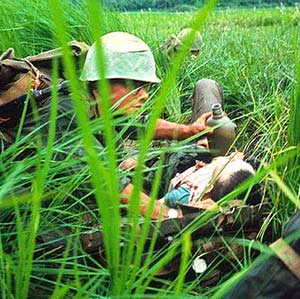
Who owns images of American dead?

vietnam-wounded-marineAP photographer Julie Jacobson was reticent to publish her picture of dying US Marine Lance Cpl. Joshua Bernard. Though his father was opposed, the Associated Press overruled. But this was no victory for the public’s right to see a true reflection of war. The D.o.D. is still indignant, but I suspect Jacobson’s report was ultimately vetted in their favor. Military propagandists need to represent America’s growing losses in Afghanistan. Jacobson’s image provides their limited hangout. Like the other photographs of casualties which have escaped through embeds, the image of Lance Corporal Bernard is desaturated of blood, and the surrounding events fit the military endorsed narrative.

Have you noticed that all combat images coming out of today’s wars are drab and lifeless. Obviously this motif is not being applied to the PR shots of jets and military hardware, but scenes of soldiering in Iraq and Afghanistan are dusty and grey, like scenes from a dark virtual world.

The colors in Jacobson’s controversial photo are similarly under saturated. Earlier casualty pics have even been rendered as black and white, and this is no exercise of artistic license. Colorless images telegraph little resemblance to our real world lived in color. An emotional distance is created, most obviously like the detachment we feel looking into the past. Everything before the late sixties happened in monocrome. Early color photographs always shock children with the prospect that lives in generations past might have been been lived in a world of contemporary vibrance.

The photographs from Vietnam were helped by that nation’s lush tropical greens. Images of the wounded were all the more gripping –and demoralizing from the military’s point of view– because unlike in Korea and WWII, the blood was red.

Most images taken in Vietnam came through the military staff photographers. The unapproved subjects, which subverted the official face of the war, emerged from the cameras of independent journalists.

dying US marineJulie Jacobson facilitated the release of this picture, by letting slip two details pertinent to the official US narrative in Afghanistan. Would you believe, just prior to this engagement, friendly Afghans came out of their houses to tell the US soldiers where they could find the Taliban? Probably to ensure Corporal Bernard’s squad pointed their guns away from their homes, but that’s not how the story was spun. Jacobson recounts that these Afghans were eager to inform on the Taliban.

The jocular Jacobson records another telltale crowd-pleaser in the aftermath of the Taliban “ambush,” when she found herself flanked by Afghan National Army troops. When the firing started, Jacobson sought immediately the ranks of US soldiers, because the freakin’ ANA Afghans “aren’t very good.”

Today’s media embeds are basically a privatized signal corps. Their photos should belong to the taxpayers. Insinuations that military families should dictate what images can be used, in the event of death, is a cruel irony. Are the families consulted about what Uncle Sam wants to do with their loved one when he’s still alive? Millions of federal tax dollars are spent on our soldiers, all the more when they die. I have little sympathy for the families who couldn’t stand up for their children and protect them from the capricious whims of our military. There is absolutely no reason to ask their permission about what happens when their little soldier meets his/her calculable fate.

Last veteran of the War to End All Wars

UK veteran harry patch
IS THAT RICH? UK’s oldest living veteran of the Great War died this weekend at age 111. Machine-gunner Harry Patch who survived Ypres and nearly not Passchendaele, was eulogized by Queen Elizabeth and Prince Charles who explained “The Great War is a chapter in our history we must never forget.” Prime Minister Gordon Brown added: “The noblest of all the generations has left us, but they will never be forgotten.” What did Soldier Patch think of the war for which he was held in patriotic regard? “It wasn’t worth it.”

Patch had been adamant that the senseless slaughter of WWI was not justified, for neither Queen nor Country. The joke is on us hopeful pacifists however, because the old soldier WAITED UNTIL HE WAS 100 TO SAY IT.

Do antiwar activists ask too much of our soldiers, to bear the brutalization of war, and return to be strong enough to speak against it? The state portrays their shell-shocked silence as stoic heroism, the veterans are far too broken to object. And the recruiting cycle repeats itself. The swiftboaters outnumber the conscientious objectors.

We will probably wait forever for the veteran to end all veterans.

War is a Racket

By Major General Smedley Darlington Butler

~ Chapter One ~
WAR IS A RACKET

WAR is a racket. It always has been.

It is possibly the oldest, easily the most profitable, surely the most vicious. It is the only one international in scope. It is the only one in which the profits are reckoned in dollars and the losses in lives.

A racket is best described, I believe, as something that is not what it seems to the majority of the people. Only a small “inside” group knows what it is about. It is conducted for the benefit of the very few, at the expense of the very many. Out of war a few people make huge fortunes.

In the World War a mere handful garnered the profits of the conflict. At least 21,000 new millionaires and billionaires were made in the United States during the World War. That many admitted their huge blood gains in their income tax returns. How many other war millionaires falsified their tax returns no one knows.

How many of these war millionaires shouldered a rifle? How many of them dug a trench? How many of them knew what it meant to go hungry in a rat-infested dug-out? How many of them spent sleepless, frightened nights, ducking shells and shrapnel and machine gun bullets? How many of them parried a bayonet thrust of an enemy? How many of them were wounded or killed in battle?

Out of war nations acquire additional territory, if they are victorious. They just take it. This newly acquired territory promptly is exploited by the few – the selfsame few who wrung dollars out of blood in the war. The general public shoulders the bill.

And what is this bill?

This bill renders a horrible accounting. Newly placed gravestones. Mangled bodies. Shattered minds. Broken hearts and homes. Economic instability. Depression and all its attendant miseries. Back-breaking taxation for generations and generations.

For a great many years, as a soldier, I had a suspicion that war was a racket; not until I retired to civil life did I fully realize it. Now that I see the international war clouds gathering, as they are today, I must face it and speak out.

Again they are choosing sides. France and Russia met and agreed to stand side by side. Italy and Austria hurried to make a similar agreement. Poland and Germany cast sheep’s eyes at each other, forgetting for the nonce [one unique occasion], their dispute over the Polish Corridor.
The assassination of King Alexander of Jugoslavia [Yugoslavia] complicated matters. Jugoslavia and Hungary, long bitter enemies, were almost at each other’s throats. Italy was ready to jump in. But France was waiting. So was Czechoslovakia. All of them are looking ahead to war. Not the people – not those who fight and pay and die – only those who foment wars and remain safely at home to profit.

There are 40,000,000 men under arms in the world today, and our statesmen and diplomats have the temerity to say that war is not in the making.

Hell’s bells! Are these 40,000,000 men being trained to be dancers?

Not in Italy, to be sure. Premier Mussolini knows what they are being trained for. He, at least, is frank enough to speak out. Only the other day, Il Duce in “International Conciliation,” the publication of the Carnegie Endowment for International Peace, said:

“And above all, Fascism, the more it considers and observes the future and the development of humanity quite apart from political considerations of the moment, believes neither in the possibility nor the utility of perpetual peace… War alone brings up to its highest tension all human energy and puts the stamp of nobility upon the people who have the courage to meet it.”

Undoubtedly Mussolini means exactly what he says. His well-trained army, his great fleet of planes, and even his navy are ready for war – anxious for it, apparently. His recent stand at the side of Hungary in the latter’s dispute with Jugoslavia showed that. And the hurried mobilization of his troops on the Austrian border after the assassination of Dollfuss showed it too. There are others in Europe too whose sabre rattling presages war, sooner or later.

Herr Hitler, with his rearming Germany and his constant demands for more and more arms, is an equal if not greater menace to peace. France only recently increased the term of military service for its youth from a year to eighteen months.

Yes, all over, nations are camping in their arms. The mad dogs of Europe are on the loose. In the Orient the maneuvering is more adroit. Back in 1904, when Russia and Japan fought, we kicked out our old friends the Russians and backed Japan. Then our very generous international bankers were financing Japan. Now the trend is to poison us against the Japanese. What does the “open door” policy to China mean to us? Our trade with China is about $90,000,000 a year. Or the Philippine Islands? We have spent about $600,000,000 in the Philippines in thirty-five years and we (our bankers and industrialists and speculators) have private investments there of less than $200,000,000.

Then, to save that China trade of about $90,000,000, or to protect these private investments of less than $200,000,000 in the Philippines, we would be all stirred up to hate Japan and go to war – a war that might well cost us tens of billions of dollars, hundreds of thousands of lives of Americans, and many more hundreds of thousands of physically maimed and mentally unbalanced men.

Of course, for this loss, there would be a compensating profit – fortunes would be made. Millions and billions of dollars would be piled up. By a few. Munitions makers. Bankers. Ship builders. Manufacturers. Meat packers. Speculators. They would fare well.

Yes, they are getting ready for another war. Why shouldn’t they? It pays high dividends.

But what does it profit the men who are killed? What does it profit their mothers and sisters, their wives and their sweethearts? What does it profit their children?

What does it profit anyone except the very few to whom war means huge profits?

Yes, and what does it profit the nation?

Take our own case. Until 1898 we didn’t own a bit of territory outside the mainland of North America. At that time our national debt was a little more than $1,000,000,000. Then we became “internationally minded.” We forgot, or shunted aside, the advice of the Father of our country. We forgot George Washington’s warning about “entangling alliances.” We went to war. We acquired outside territory. At the end of the World War period, as a direct result of our fiddling in international affairs, our national debt had jumped to over $25,000,000,000. Our total favorable trade balance during the twenty-five-year period was about $24,000,000,000. Therefore, on a purely bookkeeping basis, we ran a little behind year for year, and that foreign trade might well have been ours without the wars.

It would have been far cheaper (not to say safer) for the average American who pays the bills to stay out of foreign entanglements. For a very few this racket, like bootlegging and other underworld rackets, brings fancy profits, but the cost of operations is always transferred to the people – who do not profit.

~ Chapter Two ~
WHO MAKES THE PROFITS?

The World War, rather our brief participation in it, has cost the United States some $52,000,000,000. Figure it out. That means $400 to every American man, woman, and child. And we haven’t paid the debt yet. We are paying it, our children will pay it, and our children’s children probably still will be paying the cost of that war.

The normal profits of a business concern in the United States are six, eight, ten, and sometimes twelve percent. But war-time profits – ah! that is another matter – twenty, sixty, one hundred, three hundred, and even eighteen hundred per cent – the sky is the limit. All that traffic will bear. Uncle Sam has the money. Let’s get it.

Of course, it isn’t put that crudely in war time. It is dressed into speeches about patriotism, love of country, and “we must all put our shoulders to the wheel,” but the profits jump and leap and skyrocket – and are safely pocketed. Let’s just take a few examples:

Take our friends the du Ponts, the powder people – didn’t one of them testify before a Senate committee recently that their powder won the war? Or saved the world for democracy? Or something? How did they do in the war? They were a patriotic corporation. Well, the average earnings of the du Ponts for the period 1910 to 1914 were $6,000,000 a year. It wasn’t much, but the du Ponts managed to get along on it. Now let’s look at their average yearly profit during the war years, 1914 to 1918. Fifty-eight million dollars a year profit we find! Nearly ten times that of normal times, and the profits of normal times were pretty good. An increase in profits of more than 950 per cent.

Take one of our little steel companies that patriotically shunted aside the making of rails and girders and bridges to manufacture war materials. Well, their 1910-1914 yearly earnings averaged $6,000,000. Then came the war. And, like loyal citizens, Bethlehem Steel promptly turned to munitions making. Did their profits jump – or did they let Uncle Sam in for a bargain? Well, their 1914-1918 average was $49,000,000 a year!
Or, let’s take United States Steel. The normal earnings during the five-year period prior to the war were $105,000,000 a year. Not bad. Then along came the war and up went the profits. The average yearly profit for the period 1914-1918 was $240,000,000. Not bad.

There you have some of the steel and powder earnings. Let’s look at something else. A little copper, perhaps. That always does well in war times.

Anaconda, for instance. Average yearly earnings during the pre-war years 1910-1914 of $10,000,000. During the war years 1914-1918 profits leaped to $34,000,000 per year.

Or Utah Copper. Average of $5,000,000 per year during the 1910-1914 period. Jumped to an average of $21,000,000 yearly profits for the war period.

Let’s group these five, with three smaller companies. The total yearly average profits of the pre-war period 1910-1914 were $137,480,000. Then along came the war. The average yearly profits for this group skyrocketed to $408,300,000.

A little increase in profits of approximately 200 per cent.

Does war pay? It paid them. But they aren’t the only ones. There are still others. Let’s take leather.

For the three-year period before the war the total profits of Central Leather Company were $3,500,000. That was approximately $1,167,000 a year. Well, in 1916 Central Leather returned a profit of $15,000,000, a small increase of 1,100 per cent. That’s all. The General Chemical Company averaged a profit for the three years before the war of a little over $800,000 a year. Came the war, and the profits jumped to $12,000,000. a leap of 1,400 per cent.

International Nickel Company – and you can’t have a war without nickel – showed an increase in profits from a mere average of $4,000,000 a year to $73,000,000 yearly. Not bad? An increase of more than 1,700 per cent.

American Sugar Refining Company averaged $2,000,000 a year for the three years before the war. In 1916 a profit of $6,000,000 was recorded.
Listen to Senate Document No. 259. The Sixty-Fifth Congress, reporting on corporate earnings and government revenues. Considering the profits of 122 meat packers, 153 cotton manufacturers, 299 garment makers, 49 steel plants, and 340 coal producers during the war. Profits under 25 per cent were exceptional. For instance the coal companies made between 100 per cent and 7,856 per cent on their capital stock during the war. The Chicago packers doubled and tripled their earnings.

And let us not forget the bankers who financed the great war. If anyone had the cream of the profits it was the bankers. Being partnerships rather than incorporated organizations, they do not have to report to stockholders. And their profits were as secret as they were immense. How the bankers made their millions and their billions I do not know, because those little secrets never become public – even before a Senate investigatory body.

But here’s how some of the other patriotic industrialists and speculators chiseled their way into war profits.

Take the shoe people. They like war. It brings business with abnormal profits. They made huge profits on sales abroad to our allies. Perhaps, like the munitions manufacturers and armament makers, they also sold to the enemy. For a dollar is a dollar whether it comes from Germany or from France. But they did well by Uncle Sam too. For instance, they sold Uncle Sam 35,000,000 pairs of hobnailed service shoes. There were 4,000,000 soldiers. Eight pairs, and more, to a soldier. My regiment during the war had only one pair to a soldier. Some of these shoes probably are still in existence. They were good shoes. But when the war was over Uncle Sam has a matter of 25,000,000 pairs left over. Bought – and paid for. Profits recorded and pocketed.

There was still lots of leather left. So the leather people sold your Uncle Sam hundreds of thousands of McClellan saddles for the cavalry. But there wasn’t any American cavalry overseas! Somebody had to get rid of this leather, however. Somebody had to make a profit in it – so we had a lot of McClellan saddles. And we probably have those yet.

Also somebody had a lot of mosquito netting. They sold your Uncle Sam 20,000,000 mosquito nets for the use of the soldiers overseas. I suppose the boys were expected to put it over them as they tried to sleep in muddy trenches – one hand scratching cooties on their backs and the other making passes at scurrying rats. Well, not one of these mosquito nets ever got to France!

Anyhow, these thoughtful manufacturers wanted to make sure that no soldier would be without his mosquito net, so 40,000,000 additional yards of mosquito netting were sold to Uncle Sam.

There were pretty good profits in mosquito netting in those days, even if there were no mosquitoes in France. I suppose, if the war had lasted just a little longer, the enterprising mosquito netting manufacturers would have sold your Uncle Sam a couple of consignments of mosquitoes to plant in France so that more mosquito netting would be in order.

Airplane and engine manufacturers felt they, too, should get their just profits out of this war. Why not? Everybody else was getting theirs. So $1,000,000,000 – count them if you live long enough – was spent by Uncle Sam in building airplane engines that never left the ground! Not one plane, or motor, out of the billion dollars worth ordered, ever got into a battle in France. Just the same the manufacturers made their little profit of 30, 100, or perhaps 300 per cent.

Undershirts for soldiers cost 14¢ [cents] to make and uncle Sam paid 30¢ to 40¢ each for them – a nice little profit for the undershirt manufacturer. And the stocking manufacturer and the uniform manufacturers and the cap manufacturers and the steel helmet manufacturers – all got theirs.

Why, when the war was over some 4,000,000 sets of equipment – knapsacks and the things that go to fill them – crammed warehouses on this side. Now they are being scrapped because the regulations have changed the contents. But the manufacturers collected their wartime profits on them – and they will do it all over again the next time.

There were lots of brilliant ideas for profit making during the war.

One very versatile patriot sold Uncle Sam twelve dozen 48-inch wrenches. Oh, they were very nice wrenches. The only trouble was that there was only one nut ever made that was large enough for these wrenches. That is the one that holds the turbines at Niagara Falls. Well, after Uncle Sam had bought them and the manufacturer had pocketed the profit, the wrenches were put on freight cars and shunted all around the United States in an effort to find a use for them. When the Armistice was signed it was indeed a sad blow to the wrench manufacturer. He was just about to make some nuts to fit the wrenches. Then he planned to sell these, too, to your Uncle Sam.

Still another had the brilliant idea that colonels shouldn’t ride in automobiles, nor should they even ride on horseback. One has probably seen a picture of Andy Jackson riding in a buckboard. Well, some 6,000 buckboards were sold to Uncle Sam for the use of colonels! Not one of them was used. But the buckboard manufacturer got his war profit.

The shipbuilders felt they should come in on some of it, too. They built a lot of ships that made a lot of profit. More than $3,000,000,000 worth. Some of the ships were all right. But $635,000,000 worth of them were made of wood and wouldn’t float! The seams opened up – and they sank. We paid for them, though. And somebody pocketed the profits.

It has been estimated by statisticians and economists and researchers that the war cost your Uncle Sam $52,000,000,000. Of this sum, $39,000,000,000 was expended in the actual war itself. This expenditure yielded $16,000,000,000 in profits. That is how the 21,000 billionaires and millionaires got that way. This $16,000,000,000 profits is not to be sneezed at. It is quite a tidy sum. And it went to a very few.

The Senate (Nye) committee probe of the munitions industry and its wartime profits, despite its sensational disclosures, hardly has scratched the surface.

Even so, it has had some effect. The State Department has been studying “for some time” methods of keeping out of war. The War Department suddenly decides it has a wonderful plan to spring. The Administration names a committee – with the War and Navy Departments ably represented under the chairmanship of a Wall Street speculator – to limit profits in war time. To what extent isn’t suggested. Hmmm. Possibly the profits of 300 and 600 and 1,600 per cent of those who turned blood into gold in the World War would be limited to some smaller figure.

Apparently, however, the plan does not call for any limitation of losses – that is, the losses of those who fight the war. As far as I have been able to ascertain there is nothing in the scheme to limit a soldier to the loss of but one eye, or one arm, or to limit his wounds to one or two or three. Or to limit the loss of life.

There is nothing in this scheme, apparently, that says not more than 12 per cent of a regiment shall be wounded in battle, or that not more than 7 per cent in a division shall be killed.

Of course, the committee cannot be bothered with such trifling matters.

~ Chapter Three ~
WHO PAYS THE BILLS?

Who provides the profits – these nice little profits of 20, 100, 300, 1,500 and 1,800 per cent? We all pay them – in taxation. We paid the bankers their profits when we bought Liberty Bonds at $100.00 and sold them back at $84 or $86 to the bankers. These bankers collected $100 plus. It was a simple manipulation. The bankers control the security marts. It was easy for them to depress the price of these bonds. Then all of us – the people – got frightened and sold the bonds at $84 or $86. The bankers bought them. Then these same bankers stimulated a boom and government bonds went to par – and above. Then the bankers collected their profits.

But the soldier pays the biggest part of the bill.

If you don’t believe this, visit the American cemeteries on the battlefields abroad. Or visit any of the veteran’s hospitals in the United States. On a tour of the country, in the midst of which I am at the time of this writing, I have visited eighteen government hospitals for veterans. In them are a total of about 50,000 destroyed men – men who were the pick of the nation eighteen years ago. The very able chief surgeon at the government hospital; at Milwaukee, where there are 3,800 of the living dead, told me that mortality among veterans is three times as great as among those who stayed at home.

Boys with a normal viewpoint were taken out of the fields and offices and factories and classrooms and put into the ranks. There they were remolded; they were made over; they were made to “about face”; to regard murder as the order of the day. They were put shoulder to shoulder and, through mass psychology, they were entirely changed. We used them for a couple of years and trained them to think nothing at all of killing or of being killed.

Then, suddenly, we discharged them and told them to make another “about face” ! This time they had to do their own readjustment, sans [without] mass psychology, sans officers’ aid and advice and sans nation-wide propaganda. We didn’t need them any more. So we scattered them about without any “three-minute” or “Liberty Loan” speeches or parades. Many, too many, of these fine young boys are eventually destroyed, mentally, because they could not make that final “about face” alone.

In the government hospital in Marion, Indiana, 1,800 of these boys are in pens! Five hundred of them in a barracks with steel bars and wires all around outside the buildings and on the porches. These already have been mentally destroyed. These boys don’t even look like human beings. Oh, the looks on their faces! Physically, they are in good shape; mentally, they are gone.

There are thousands and thousands of these cases, and more and more are coming in all the time. The tremendous excitement of the war, the sudden cutting off of that excitement – the young boys couldn’t stand it.

That’s a part of the bill. So much for the dead – they have paid their part of the war profits. So much for the mentally and physically wounded – they are paying now their share of the war profits. But the others paid, too – they paid with heartbreaks when they tore themselves away from their firesides and their families to don the uniform of Uncle Sam – on which a profit had been made. They paid another part in the training camps where they were regimented and drilled while others took their jobs and their places in the lives of their communities. The paid for it in the trenches where they shot and were shot; where they were hungry for days at a time; where they slept in the mud and the cold and in the rain – with the moans and shrieks of the dying for a horrible lullaby.

But don’t forget – the soldier paid part of the dollars and cents bill too.

Up to and including the Spanish-American War, we had a prize system, and soldiers and sailors fought for money. During the Civil War they were paid bonuses, in many instances, before they went into service. The government, or states, paid as high as $1,200 for an enlistment. In the Spanish-American War they gave prize money. When we captured any vessels, the soldiers all got their share – at least, they were supposed to. Then it was found that we could reduce the cost of wars by taking all the prize money and keeping it, but conscripting [drafting] the soldier anyway. Then soldiers couldn’t bargain for their labor, Everyone else could bargain, but the soldier couldn’t.

Napoleon once said,

“All men are enamored of decorations…they positively hunger for them.”

So by developing the Napoleonic system – the medal business – the government learned it could get soldiers for less money, because the boys liked to be decorated. Until the Civil War there were no medals. Then the Congressional Medal of Honor was handed out. It made enlistments easier. After the Civil War no new medals were issued until the Spanish-American War.

In the World War, we used propaganda to make the boys accept conscription. They were made to feel ashamed if they didn’t join the army.
So vicious was this war propaganda that even God was brought into it. With few exceptions our clergymen joined in the clamor to kill, kill, kill. To kill the Germans. God is on our side…it is His will that the Germans be killed.

And in Germany, the good pastors called upon the Germans to kill the allies…to please the same God. That was a part of the general propaganda, built up to make people war conscious and murder conscious.

Beautiful ideals were painted for our boys who were sent out to die. This was the “war to end all wars.” This was the “war to make the world safe for democracy.” No one mentioned to them, as they marched away, that their going and their dying would mean huge war profits. No one told these American soldiers that they might be shot down by bullets made by their own brothers here. No one told them that the ships on which they were going to cross might be torpedoed by submarines built with United States patents. They were just told it was to be a “glorious adventure.”

Thus, having stuffed patriotism down their throats, it was decided to make them help pay for the war, too. So, we gave them the large salary of $30 a month.

All they had to do for this munificent sum was to leave their dear ones behind, give up their jobs, lie in swampy trenches, eat canned willy (when they could get it) and kill and kill and kill…and be killed.

But wait!

Half of that wage (just a little more than a riveter in a shipyard or a laborer in a munitions factory safe at home made in a day) was promptly taken from him to support his dependents, so that they would not become a charge upon his community. Then we made him pay what amounted to accident insurance – something the employer pays for in an enlightened state – and that cost him $6 a month. He had less than $9 a month left.

Then, the most crowning insolence of all – he was virtually blackjacked into paying for his own ammunition, clothing, and food by being made to buy Liberty Bonds. Most soldiers got no money at all on pay days.

We made them buy Liberty Bonds at $100 and then we bought them back – when they came back from the war and couldn’t find work – at $84 and $86. And the soldiers bought about $2,000,000,000 worth of these bonds!

Yes, the soldier pays the greater part of the bill. His family pays too. They pay it in the same heart-break that he does. As he suffers, they suffer. At nights, as he lay in the trenches and watched shrapnel burst about him, they lay home in their beds and tossed sleeplessly – his father, his mother, his wife, his sisters, his brothers, his sons, and his daughters.

When he returned home minus an eye, or minus a leg or with his mind broken, they suffered too – as much as and even sometimes more than he. Yes, and they, too, contributed their dollars to the profits of the munitions makers and bankers and shipbuilders and the manufacturers and the speculators made. They, too, bought Liberty Bonds and contributed to the profit of the bankers after the Armistice in the hocus-pocus of manipulated Liberty Bond prices.

And even now the families of the wounded men and of the mentally broken and those who never were able to readjust themselves are still suffering and still paying.

~ Chapter Four ~
HOW TO SMASH THIS RACKET!

WELL, it’s a racket, all right.

A few profit – and the many pay. But there is a way to stop it. You can’t end it by disarmament conferences. You can’t eliminate it by peace parleys at Geneva. Well-meaning but impractical groups can’t wipe it out by resolutions. It can be smashed effectively only by taking the profit out of war.

The only way to smash this racket is to conscript capital and industry and labor before the nations manhood can be conscripted. One month before the Government can conscript the young men of the nation – it must conscript capital and industry and labor. Let the officers and the directors and the high-powered executives of our armament factories and our munitions makers and our shipbuilders and our airplane builders and the manufacturers of all the other things that provide profit in war time as well as the bankers and the speculators, be conscripted – to get $30 a month, the same wage as the lads in the trenches get.

Let the workers in these plants get the same wages – all the workers, all presidents, all executives, all directors, all managers, all bankers –

yes, and all generals and all admirals and all officers and all politicians and all government office holders – everyone in the nation be restricted to a total monthly income not to exceed that paid to the soldier in the trenches!

Let all these kings and tycoons and masters of business and all those workers in industry and all our senators and governors and majors pay half of their monthly $30 wage to their families and pay war risk insurance and buy Liberty Bonds.

Why shouldn’t they?

They aren’t running any risk of being killed or of having their bodies mangled or their minds shattered. They aren’t sleeping in muddy trenches. They aren’t hungry. The soldiers are!

Give capital and industry and labor thirty days to think it over and you will find, by that time, there will be no war. That will smash the war racket – that and nothing else.

Maybe I am a little too optimistic. Capital still has some say. So capital won’t permit the taking of the profit out of war until the people – those who do the suffering and still pay the price – make up their minds that those they elect to office shall do their bidding, and not that of the profiteers. Another step necessary in this fight to smash the war racket is the limited plebiscite to determine whether a war should be declared. A plebiscite not of all the voters but merely of those who would be called upon to do the fighting and dying. There wouldn’t be very much sense in having a 76-year-old president of a munitions factory or the flat-footed head of an international banking firm or the cross-eyed manager of a uniform manufacturing plant – all of whom see visions of tremendous profits in the event of war – voting on whether the nation should go to war or not. They never would be called upon to shoulder arms – to sleep in a trench and to be shot. Only those who would be called upon to risk their lives for their country should have the privilege of voting to determine whether the nation should go to war.

There is ample precedent for restricting the voting to those affected. Many of our states have restrictions on those permitted to vote. In most, it is necessary to be able to read and write before you may vote. In some, you must own property. It would be a simple matter each year for the men coming of military age to register in their communities as they did in the draft during the World War and be examined physically. Those who could pass and who would therefore be called upon to bear arms in the event of war would be eligible to vote in a limited plebiscite. They should be the ones to have the power to decide – and not a Congress few of whose members are within the age limit and fewer still of whom are in physical condition to bear arms. Only those who must suffer should have the right to vote.

A third step in this business of smashing the war racket is to make certain that our military forces are truly forces for defense only.

At each session of Congress the question of further naval appropriations comes up. The swivel-chair admirals of Washington (and there are always a lot of them) are very adroit lobbyists. And they are smart. They don’t shout that “We need a lot of battleships to war on this nation or that nation.” Oh no. First of all, they let it be known that America is menaced by a great naval power. Almost any day, these admirals will tell you, the great fleet of this supposed enemy will strike suddenly and annihilate 125,000,000 people. Just like that. Then they begin to cry for a larger navy. For what? To fight the enemy? Oh my, no. Oh, no. For defense purposes only.

Then, incidentally, they announce maneuvers in the Pacific. For defense. Uh, huh.

The Pacific is a great big ocean. We have a tremendous coastline on the Pacific. Will the maneuvers be off the coast, two or three hundred miles? Oh, no. The maneuvers will be two thousand, yes, perhaps even thirty-five hundred miles, off the coast.

The Japanese, a proud people, of course will be pleased beyond expression to see the united States fleet so close to Nippon’s shores. Even as pleased as would be the residents of California were they to dimly discern through the morning mist, the Japanese fleet playing at war games off Los Angeles.

The ships of our navy, it can be seen, should be specifically limited, by law, to within 200 miles of our coastline. Had that been the law in 1898 the Maine would never have gone to Havana Harbor. She never would have been blown up. There would have been no war with Spain with its attendant loss of life. Two hundred miles is ample, in the opinion of experts, for defense purposes. Our nation cannot start an offensive war if its ships can’t go further than 200 miles from the coastline. Planes might be permitted to go as far as 500 miles from the coast for purposes of reconnaissance. And the army should never leave the territorial limits of our nation.

To summarize: Three steps must be taken to smash the war racket.

We must take the profit out of war.

We must permit the youth of the land who would bear arms to decide whether or not there should be war.

We must limit our military forces to home defense purposes.

~ Chapter Five ~
TO HELL WITH WAR!

I am not a fool as to believe that war is a thing of the past. I know the people do not want war, but there is no use in saying we cannot be pushed into another war.

Looking back, Woodrow Wilson was re-elected president in 1916 on a platform that he had “kept us out of war” and on the implied promise that he would “keep us out of war.” Yet, five months later he asked Congress to declare war on Germany.

In that five-month interval the people had not been asked whether they had changed their minds. The 4,000,000 young men who put on uniforms and marched or sailed away were not asked whether they wanted to go forth to suffer and die.

Then what caused our government to change its mind so suddenly?

Money.

An allied commission, it may be recalled, came over shortly before the war declaration and called on the President. The President summoned a group of advisers. The head of the commission spoke. Stripped of its diplomatic language, this is what he told the President and his group:

“There is no use kidding ourselves any longer. The cause of the allies is lost. We now owe you (American bankers, American munitions makers, American manufacturers, American speculators, American exporters) five or six billion dollars.

If we lose (and without the help of the United States we must lose) we, England, France and Italy, cannot pay back this money…and Germany won’t.

So…”

Had secrecy been outlawed as far as war negotiations were concerned, and had the press been invited to be present at that conference, or had radio been available to broadcast the proceedings, America never would have entered the World War. But this conference, like all war discussions, was shrouded in utmost secrecy. When our boys were sent off to war they were told it was a “war to make the world safe for democracy” and a “war to end all wars.”

Well, eighteen years after, the world has less of democracy than it had then. Besides, what business is it of ours whether Russia or Germany or England or France or Italy or Austria live under democracies or monarchies? Whether they are Fascists or Communists? Our problem is to preserve our own democracy.

And very little, if anything, has been accomplished to assure us that the World War was really the war to end all wars.

Yes, we have had disarmament conferences and limitations of arms conferences. They don’t mean a thing. One has just failed; the results of another have been nullified. We send our professional soldiers and our sailors and our politicians and our diplomats to these conferences. And what happens?

The professional soldiers and sailors don’t want to disarm. No admiral wants to be without a ship. No general wants to be without a command. Both mean men without jobs. They are not for disarmament. They cannot be for limitations of arms. And at all these conferences, lurking in the background but all-powerful, just the same, are the sinister agents of those who profit by war. They see to it that these conferences do not disarm or seriously limit armaments.

The chief aim of any power at any of these conferences has not been to achieve disarmament to prevent war but rather to get more armament for itself and less for any potential foe.

There is only one way to disarm with any semblance of practicability. That is for all nations to get together and scrap every ship, every gun, every rifle, every tank, every war plane. Even this, if it were possible, would not be enough.
The next war, according to experts, will be fought not with battleships, not by artillery, not with rifles and not with machine guns. It will be fought with deadly chemicals and gases.

Secretly each nation is studying and perfecting newer and ghastlier means of annihilating its foes wholesale. Yes, ships will continue to be built, for the shipbuilders must make their profits. And guns still will be manufactured and powder and rifles will be made, for the munitions makers must make their huge profits. And the soldiers, of course, must wear uniforms, for the manufacturer must make their war profits too.

But victory or defeat will be determined by the skill and ingenuity of our scientists.
If we put them to work making poison gas and more and more fiendish mechanical and explosive instruments of destruction, they will have no time for the constructive job of building greater prosperity for all peoples. By putting them to this useful job, we can all make more money out of peace than we can out of war – even the munitions makers.

So…I say,

TO HELL WITH WAR!

Free Money

No book on survival should fail to give you some good tips on how to rip-off bread. Really horning in on this chapter will put you on Free-loader Street life, ’cause with all the money in Amerika, the only thing you’ll have trouble getting is poor.

WELFARE

It’s easy to get on welfare that anyone who is broke and doesn’t have a regular relief check coming in is nothing but a goddamn lazy bum! Each state has a different set up. The racist penny-pinchers of Mississippi dole out only $8.00 a month. New York dishes ont the most with monthly payments up to $120.00. The Amerikan Public Welfare Association publishes a book called The Public Welfare Directory with information on exactly what each welfare agency provides and how you go about qualifying. You can read the directory at any public library to find out all you can about how your local office operates.

When you’ve discovered everything you need to know, head on down to the Welfare Department in your grubbiest clothes. Not sleeping the night before helps. The receptionist will assign an “intaker” to interview you. After a long wait, you’ll be directed to a desk. The intaker raps to you for a while, generally showing sympathy for your plight and turns you over to the caseworker who will make the final and ultimate assessment.

Have your heaviest story ready to ooze out. If you have no physical disabilities, lay down a “mentally deranged” rap. Getting medical papers saying you have any long-term illness or defect helps a lot. Tell the caseworker you get dizzy spells on the job and faint in the street. Keep bobbing your head, yawning, or scratching. Tell him that you have tried to commit suicide recently because you just can’t make it in a world that has forgotten how to love. Don’t lay it on too obviously. Wait till he “pries” some of the details from you. This makes the story even more convincing. Many welfare workers are young and hip. The image you are working on is that of a warm, sensitive kid victimized by brutal parents and a cold ruthless society. Tell them you held off coming for months because you wanted to maintain some self-respect even though have been walking the streets broke and hungry. If you are a woman tell him you were recently raped. In sexist Amerika, this will probably be true.

After about an hour or so of this soap-opera stuff, you’ll be ready to get your first check. From then on it’s a monthly check, complete medical care for free and all sorts of other outasight benefits. Occasionally the caseworker will drop by your pad or ask you down to the office to see how you’re coming along, but with your condition, things don’t look so good. Don’t abandon hope though. Hope always helps fill in a caseworker’s report.

The real trick is to parlay welfare payments in a few different states. Work out an exchange system with a buddy and mail each other the checks when they come in. If the caseworker comes by, your roommate can say you went to find a job or enrolled in a class. We know cats who have parlayed welfare payments up to six hundred dollars a month.

UNEMPLOYMENT

Every outlaw should learn everything there is to know about the rules governing unemployment insurance. As in the case of welfare rules, eligibility, and the size of payments differ from state to state. In New York, you are eligible for payments equivalent to half your weekly salary before taxes up to $65 per week, on the condition that you have worked for a minimum of twenty weeks during the year. Payments are somewhat lower in most other states. In order to collect, you must show you are actively searching for a job and keep a record of employers you contact. This can easily be fudged. Every time you’re questioned about it, mention one or two companies. If your hair is long, you’ll have no problem. Just say they won’t hire you until you get a haircut. When this is the case, the unemployment office cannot cut off your payments or your hair. They also cannot make you accept a job you do not want. Tell them any job offer you get is not challenging enough for your talents. Unemployment can be collected for six months before payments are terminated. Twenty more weeks of slavery and you can go back to maintaining your dignity in the unemployment line. These job insurance payments cannot be taxed and since you are working so few weeks out of each year, your taxable income is at a minimum. Read all the fine print for tax form 1040 and discover all the deductible loopholes available to you. You should wind up paying no taxes at all or having all the taxes that were deducted from your pay reimbursed. Never turn over to the pig government any funds you can rip off. Remember, it isn’t your government, so why submit to its taxation if you feel you do not have representation.

PANHANDLING

The practice of going up to folks and bumming money is a basic hustling art. If you are successful at panhandling, you’ll be able to master all the skills in the book and then some. To be good at it requires a complete knowledge of what motivates people. Even if we don’t need the bread, we panhandle on the streets in the same way doctors go back to medical school. It helps us stay in shape. Panhandling is illegal throughout Pig Empire, but it’s one of those laws that is rarely enforced unless they want to “clean the area” of hippies. If you’re in a strange locale, ask a fellow panhandler what the best places to work are without risking a bust. Do it in front of supermarkets, theaters, sporting events, hip dress shops and restaurants. College cafeterias are very good hunting grounds.

When you’re hustling, be assertive. Don’t lean against the wall with your palm out mumbling “Spare some change?” Go up to people and stand directly in front of them so they have to look you in the eye and say no. Bum from guys with dates. Bum from motherly looking types. After a while you’ll get a sense of the type of people you get results with.

Theater can be real handy. The best actors get the most bread. Devising a street theater skit can help. A good prop is a charity canister. You can get them by going to the offices of a mainstream charity and signing up as a collector. Don’t feel bad about ripping them off. Charities are the biggest swindle around. 80% or more of the funds raised by honky charities go to the organization itself. New fancy cars for the Red Cross, inflated salaries for the executives of the Cancer Fund, tax write-offs for Jerry Lewis. You get the picture. A good way to work this and keep your karma in shape is to turn over half to a revolutionary groups such as your local underground. Remember, fugitives from injustice depend on you to survive. Be a responsible member of our nation. Support the only war we have going!

RIP-OFFS

If you are closing out your checking account, overdraw your account by $10.00. The bank won’t bother chasing you down for a lousy 10 bucks.

Call the telephone operator from time to time and tell her you lost some change in a pay phone. They will mail you the cash.

You can get $150 to $600 in advance by willing your body to a University medical school. They have you sign a lot of papers and put a tattoo on your foot. You can get the tattoo removed and sell your body to the folks across the street. The universities can be ripped off by enrolling, applying for a loan and bugging out after the loan comes through. This is a lot easier than you might imagine and you can hit them for up to $2,500 with a good enough story.

Put a number 14 brass washer in a newspaper vending machine and take out all the papers. Stand around the corner or go into the local bar and sell them. You often get tipped. Don’t do this with underground papers. Remember they’re your brothers and sisters.

The airlines will give you $250 for each piece of luggage you lose when flying. The following is a good way to lose your luggage. When you get off a plane, have a friend meet you at the gate. Give him your luggage claim stubs and arrange to meet at a washroom or restaurant. Your friend picks up the bags and takes them out of the baggage room. Before he leaves the airport, he turns over the stubs to you at your prearranged rendezvous. You casually wander over to the baggage department and search for your elusive luggage. When all the baggage has been claimed, file a complaint with the lost and found department. They’ll have you fill out a form, explain that it probably got misplaced on another carrier and promise to send it to you as soon as it is located. In a month you’ll receive a check for $250 per bag. Enjoy your flight.

THE INTERNATIONAL YIPPIE CURRENCY EXCHANGE

Every time you drop a coin into a slot, you are losing money needlessly. There is at least one foreign coin that is the same size or close enough that will do the trick for less than a penny. The following are some of the foreign currencies that will get you that Coke, call or subway ride.

Quarter Size Coins

* URUGUAYAN 10 CENTISIMO PIECE
o works in many soda and candy machines, older telephones (3 slot types), toll machines, laundromats, parking meters, stamp machines, and restroom novelty machines. Works also in some electric cancerette machines but not most mechanical machines.

* DANISH 5 ORE PIECE
o works in 3 slot telephones, toll machines, laundromats, automats, some stamp machines, most novelty machines, and the Boston Subway. Does not work in soda or cancerette machines.

* PERUVIAN 20 CENTAVO PIECES
o works in new (one slot) telephone and some electric cancerette machines, but does not work as many places in the Uruguay, Danish and Peruvian coins.

* ICELANDIC 5 AURAN PIECE
o most effective quarter in the world, even works in change machines. Unfortunately, this coin is practically impossible to get outside of Iceland and even there, it is becoming difficult since the government is attempting to remove it from circulation.

Dime Size Coins

* MALAYSIAN PENNY
o generally works in all dime slots, including old and new telephones, candy machines, soda machines, electric machines, stamp machines, parking meters, photocopy machines, and pay toilets. Does not work in some newer stamp dispensers, and some mechanical cancerette machines.

* TRINIDAD PENNY
o generally works the same as Malaysian Penny.

New York Subway Tokens

* DANISH 25 ORE PIECE
o works in 95% of all subway turnstiles. A very safe coin to use since it will not jam the turnstile. It is 5/l000th of an inch bigger than a token.

* PORTUGUESE 50 CENTAVO PIECE
o the average Portuguese Centavo Piece is 2/1000th of an inch smaller than a token.

* JAMAICAN HALF PENNY, BAHAMA PENNY and AUSTRALIAN SCHILLING
o these coins are 12/l000th to 15/1000th of an inch smaller than token. They work in about 80% of all turnstiles. We have also had good success with FRENCH l FRANC PIECE (WWII issue), SPANISH l0 CENTAVO PIECE NICARAGUAN 25 CENTAVO PIECE.

All of the coins listed have a currency value of a few cents, with most less than one penny. Foreign coins work more regularly than slugs and are non-magnetic, hence cannot be detected by “slug detector machines.” Also unlike slugs, although they are illegal to use in machines, they are perfectly legal to possess and exchange.

Large coin dealers and currency exchanges are generally uptight about handling cheap foreign coins in quantity since they don’t make much profit and are subject to certain pressures in selling coins that are the same size as Amerikan coins or tokens.

People planning trips to European or South American countries should bring back rolls of coins as souvenirs or for use in “coin jewelry.”

If you do not plan to travel, a small coin store which is cool about selling to the public is located on the Lower East Side at 191 East Third Street, New York City. When their phone works, the number is 475-9897.

Washers are the most popular types of slugs. You can go to any hardware store and match them up with various coins. Sometimes you might have to put a small piece of scotch tape over one side of the hole to make it more effective. Each washer is identified by its material and number, i.e. No. 14 brass washer with scotch tape on one side is a perfect dime. When you get the ones you want, you can buy thousands for next to nothing (especially at industrial supply stores) and pass them out to our friends.

Xerox copies of both sides of a dollar bill, carefully glued together, work in most machines that give you change for a dollar. Excuse us, there is a knock at the door. . .Fancy that! It’s the Treasury Department. Wonder what they want?

Jesus Killed Mohammed, every last one

Bradley Fighting VehicleWith attention now drawn on the evangelical skinheads running amok with the US military’s Big Stick, reporter Jeff Sharlet relates a story in this month’s Harpers, which showcases the fundamental irreligiosity of the capital “C” Crusaders.

The episode Jesus Killed Mohammed takes place in Samarra, Iraq, in 2004, where rascally US Christ fans succeed in goading their crosstown rivals into taking a shot at them, the sooner to be dispatched to the Islamic hereafter by the Christ Gang’s overwhelming firepower. The operation involved painting “Jesus Killed Mohammed” across the side of their Bradley Fighting Vehicle, and having their translator poke his megaphone out the top, giving Arabic voice to the insolent taunt, shouting it up and down the neighborhood until no one was left to speak up for Mohammed.

???? ??? ?????

The affair reminded me of the Monty Phython skit about the world’s deadliest joke being appropriated for military use across the WWI trenches, which was, if you remember, immediately fatal, combined with the sacrilegious 2005 GWOT strategy which drew so much flak to US special forces in Afghanistan when soldiers burned Taliban corpses to draw enemy ire. The Intelligence Service calls it “tickling:” provoking your opponent into an emotional response to reveal his position. In the Afghan case, the US team violated Geneva Conventions against mutilating the dead. In Sammara the only code protecting the sensitivities of the indignant Muslims was probably the boxing rule forbidding blows below the belt. Perhaps it was the very indecency of the concept which most elicited snickers from the American perps.

In operation JESUS KILLED MOHAMMED, the 1/26 Infantry of the 1st Infantry Division led by Lieutenant John D. DeGiulio, under instructions from the 10th Special Forces Group who called themselves “the Faith element,” drove their Bradleys along the streets drawing fire, one shot at a time, from virtually every door. After each shot rang out, the Bradley would summarily aerate each residence and its inhabitants until “Jesus Killed Mohammed” did not offend anymore.

As Sharlet noted, every Iraqi home is permitted one AK-47 for self defense, so answering the US force’s insolence did not reveal you to have been an insurgent. The infidels were biting their thumbs at the Iraqis from behind impregnable armor, to respond with small arms fire was entirely a matter of honor, and suicide.

Next to the White House

While visiting Washington DC in March, I found it interesting to note the edifices closest to the White House.
The Executive Office Building

EAST, WEST
The neighbor to the immediate East of the Obama’s White House is the Department of the Treasury. Is that any surprise? Of course not, but how bourgeois! I could imagine Scrooge McDuck sneaking across the White House garden twice a day to check his reserves. To the West is what we now call the Dwight D. Eisenhower Executive Office Building. It’s the site of the suspicious office fires which may or may not have masked a recent vice-president’s misdeeds. The edifice looks straight out of A Series of Unfortunate Events, and check out the plaque which commemorates what the building used to be called:

State War and Navy Departments

Probably that should be no surprise as well: the White house sandwiched between Treasury and War. “State, War and Navy.” How so much less duplicitous than the “Department of Defense.”

SOUTHWEST
Behind the former War offices, to the Southwest of the White House, lies the war memorial to end all war memorials. It’s the WWI Memorial, of considerably diminutive size compared to those commemorations of subsequent wars which have spilled unto the Mall, but its form followed the convention of the typical Great War monuments erected throughout Europe among the nations who had participated.

WWI monument to US Army Expeditionary Force

Except the American version is dedicated to the “Expeditionary Forces” which I just love. That’s what WWI was about for the US. The trenches of Europe were no place Americans needed to defend their freedom. The troops we sent, to relieve France and England, represented a foreign expedition, exactly that. More precisely, our troops were an R&D expedition for our blustering capitalists.

(This may be no time or place to note that history books do not link America’s WWI experience with the Influenza outbreak of 1917-18, which began in the barracks of US soldiers being mobilized for war. American soldiers took their flu to Europe and ultimately killed 50 million people. Those were not the days before we knew better to stay home to prevent infecting others.)

The US entry into WWI was bitterly opposed by a peace movement which the war-opportunist-profiteers maligned as isolationist. Selfish globalization-denying isolationism has been the slander ever since, used against anyone who tries to block military interventions in all their guises.

Ultimately WWI was no affair of ours, had the Huns emerged victorious, American foreign affairs would hardly have changed. Our foreign trading partners would have numbered more Germans, that’s all. But it’s useless to compare alternative outcomes of WWI, all things staying constant, because America participated and profited wildly.

If American investors had not jumped in Over There, the greatest business opportunities of blossoming industrialism would have been missed. The opportunities offered by the Europeans fighting amongst themselves, proved to have been momentous.

And here was the monument to those lost American lives, sacrificed so that American industrial might, in particular the new banking monopolists, could seize the European spheres of influence throughout the world. Of course the lost lives of the American Expeditionary Force were remembered thus:

“…WHO GAVE THEIR LIVES IN THE WORLD WAR THAT LIBERTY AND THE IDEALS OF OUR COUNTRY MIGHT ENDURE”

It would take another World War for the US to appropriate the colonies and oil fields by means of contracts and loans, with the leverage of coming to their aid again, this time armed with lend-lease bills.

SOUTHEAST
To the Southeast of the White House, across the back lawn, lies the monument antecedent to the Great War. It’s the Civil War Memorial, atop which rides the triumphant General William Tecumseh Sherman. (Who, to be fair, presided over the War Department for a long stretch after the Civil War, actually this nation’s longest peacetime period.)

Sherman monumentCurious that I chose to crop his personage from my pictures, but my eyes were drawn to the lesser figures around the base of the monument, in particular, a half naked woman.

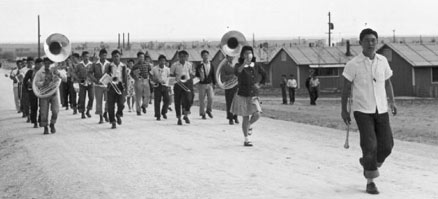
The memorial seemed to include various uniformed Civil War participants. How egalitarian to include a woman. But this woman was no French Revolutionary with breast bared oblivious as she rallied her comrades to victory. This delicate woman was unarmed and stripped to the waist, her children in tattered rags at her feet.

Could this statue be offering another conceit to the reality of war, to Sherman’s March to the sea, to the burning of Atlanta, to the shameful destruction he visited on the secessionist South? Was this a nod to the real role given to Women in war, their sons and husbands taken from them, a non-combatant left helpless to defend her children or herself. Did the shirt torn from her body confess to the woman’s rape?

More probably the feminine likeness personified man’s attraction to war, a soldier’s predilection for her beauty. How many war monuments memorialize as they also beacon?

Much of the terrain around the White House grounds is blocked off by secondary and tertiary security perimeters. But for the arrival of bus unloadng its visitors to see it, the Civil War Monument is normally cordoned off. When I had passed it earlier, a balaclava-clad guard was blocking the only entrance.

SOUTH
The grassy expanse immediately South of the White House, permitting the First Family an uninterrupted view of the National Mall, has actually been given over to parking permits. The loop of asphalt across the lawn, with cars strewn diagonally along the edges, gives the unfortunate impression of overflow event parking. In any other neighborhood, the crowd of cars would be a dead giveaway that someone on the block was having a party.

UCSB Prof William Robinson pro-Semite

Putting down the Warsaw Ghetto uprising
Wouldn’t you think it bad form for Israeli militants to behave like Nazis, while immunizing themselves with the self-righteous indignation that any criticism of their actions can simply be dismissed as “anti-Semitic?” Photographs and confessions emerging from the IDF’s atrocities in Gaza just beg comparison the German Einsatzgruppen in Poland. Earlier this year UC Santa Barbara professor William Robinson forwarded an email photo essay to a UCSB listserv, the already much-circulated side by side comparison to the WWII atrocities. Two students complained, plagiarizing stock IDF lingo. Now the Anti-Defamation League wants Robinson to recant. With IDF propagandists pouring on the bullshit, let’s revisit the documents.

As has already been noted, Professor Robinson is a harsh critic of US foreign policy, and already a likely target for the goon squad enforcers of Western Capitalism. Not many of America’s actions are defensible, so Robinson has to be attacked by desperate means. Lucky for the lackey-jackals, Robinson chose to criticize Israel’s atrocities against the Palestinians of Gaza. Bingo!

The Israeli propaganda machine has armed aspiring Israel-defenders with a blanket rebuttal: just yell “ANTI-SEMITISM!” And what a load of crap that is. Much turns on the definition of “anti-Semitism.” It packs the punch of meaning someone who hates Jews, but the advocates of Zionism have expanded the definition into 3-D! Zionist apologist Nathan Sharansky has coined the 3D definition of ant-Semitism: demonization of Israel, double standards, and delegitimization. You don’t have to look closely to note that those points outline all the rebuttals of criticisms of Israel and any question of the legitimacy of the Zionist usurpation of Palestine.

The criticisms posed by those concerned for the fate of Gaza are the same expressed by a large portion of the Israeli Jewish population as well. But the US Israeli lobby, militantly Zionist, has the complicity of the US war-mongering corporate media, thus the IDF Megaphone protestations get traction. These are the same cheap shots leveled against Ward Churchill. By flooding the internet to create the sensation that the indignation was shared, the IDF spammers have been successful in slandering these dissenting academics.

Since we’re seeing this technique being slopped unto our comment forums, let’s examine the statement for which Robinson is being attacked. First we’ll present Robinson’s email. The next post will feature the ensuing letters of complaint, two from UCSB students, and third from the ADL.

Original Email
Here is Professor Robinson’s original email, including his attachment of the Judith Stone article. This accompanied the aforementioned photo essay he forwarded.

Subject: [socforum] parallel images of Nazis and Israelis
From: “William I. Robinson” …
Date: Mon, 19 Jan 2009 21:00:05

If Martin Luther King were alive on this day of January 19, 2009, there is no doubt that he would be condemning the Israeli aggression against Gaza along with U.S. military and political support for Israeli war crimes, or that he would be standing shoulder to shoulder with the Palestinians. I am forwarding some horrific, parallel images of Nazi atrocities against the Jews and Israeli atrocities against the Palestinians. Perhaps the most frightening are not those providing a graphic depiction of the carnage but that which shows Israeli children writing “with love” on a bomb that will tear apart Palestinian children.

Gaza is Israel’s Warsaw – a vast concentration camp that confined and blockaded Palestinians, subjecting them to the slow death of malnutrition, disease and despair, nearly two years before their subjection to the quick death of Israeli bombs. We are witness to a slow-motion process of genocide (Websters: “the systematic killing of, or a program of action intended to destroy, a whole national or ethnic group”), a process whose objective is not so much to physically eliminate each and every Palestinian than to eliminate the Palestinians as a people in any meaningful sense of the notion of people-hood.

The Israeli army is the fifth most potent military machine in the world and one that is backed by a propaganda machine that rivals and may well surpass that of the U.S., a machine that dares to make the ludicrous and obnoxious claim that opposition to the policies and practices of the Israeli state is anti-Semitism. It should be no surprise that a state founded on the negation of a people was one of the principal backers of the apartheid South African state not to mention of the Latin American military dictatorships until those regimes collapsed under mass protest, and today arms, trains, and advises military and paramilitary forces in Colombia, one of the world’s worst human rights violators.

Below is an article written by a U.S. Jew and sent to a Jewish newspaper. The editor of the paper was fired for publishing it.

Quest for Justice

By Judith Stone

I am a Jew. I was a participant in the Rally for the Right of Return to Palestine. It was the right thing to do.

I’ve heard about the European holocaust against the Jews since I was a small child. I’ve visited the memorials in Washington, DC and Jerusalem dedicated to Jewish lives lost and I’ve cried at the recognition to what level of atrocity mankind is capable of sinking.

Where are the Jews of conscience? No righteous malice can be held against the survivors of Hitler’s holocaust. These fragments of humanity were in no position to make choices beyond that of personal survival. We must not forget that being a survivor or a co-religionist of the victims of the European Holocaust does not grant dispensation from abiding by the rules of humanity.

“Never again” as a motto, rings hollow when it means “never again to us alone.” My generation was raised being led to believe that the biblical land was a vast desert inhabited by a handful of impoverished Palestinians living with their camels and eking out a living in the sand. The arrival of the Jews was touted as a tremendous benefit to these desert dwellers. Golda Mier even assured us that there “is no Palestinian problem.”

We know now this picture wasn’t as it was painted. Palestine was a land filled with people who called it home. There were thriving towns and villages, schools and hospitals. There were Jews, Christians and Muslims. In fact, prior to the occupation, Jews represented a mere 7 percent of the population and owned 3 percent of the land.

Taking the blinders off for a moment, I see a second atrocity perpetuated by the very people who should be exquisitely sensitive to the suffering of others. These people knew what it felt like to be ordered out of your home at gun point and forced to march into the night to unknown destinations or face execution on the spot. The people who displaced the Palestinians knew first hand what it means to watch your home in flames, to surrender everything dear to your heart at a moment’s notice. Bulldozers leveled hundreds of villages, along with the remains of the village inhabitants, the old and the young. This was nothing new to the world.

Poland is a vast graveyard of the Jews of Europe. Israel is the final resting place of the massacred Palestinian people. A short distance from the memorial to the Jewish children lost to the holocaust in Europe there is a leveled parking lot. Under this parking lot is what’s left of a once flourishing village and the bodies of men, women and children whose only crime was taking up needed space and not leaving graciously. This particular burial marker reads: “Public Parking”.

I’ve talked with Palestinians. I have yet to meet a Palestinian who hasn’t lost a member of their family to the Israeli Shoah, nor a Palestinian who cannot name a relative or friend languishing under inhumane conditions in an Israeli prison. Time and time again, Israel is cited for human rights violations to no avail. On a recent trip to Israel, I visited the refugee camps inhabited by a people who have waited 52 years in these ‘temporary’ camps to go home. Every Palestinian grandparent can tell you the name of their village, their street, and where the olive trees were planted. Their grandchildren may never have been home, but they can tell you where their great-grandfather lies buried and where the village well stood. The press has fostered the portrait of the Palestinian terrorist. But, the victims who rose up against human indignity in the Warsaw Ghetto are called heroes. Those who lost their lives are called martyrs. The Palestinian who tosses a rock in desperation is a terrorist.

Two years ago I drove through Palestine and watched intricate sprinkler systems watering lush green lawns of Zionist settlers in their new condominium complexes, surrounded by armed guards and barbed wire in the midst of a Palestinian community where there was not adequate water to drink and the surrounding fields were sandy and dry. University professor Moshe Zimmerman reported in the Jerusalem Post (April 30, 1995), “The Jewish children of Hebron are just like Hitler’s youth.”

We Jews are suing for restitution, lost wages, compensation for homes, land, slave labor and back wages in Europe. Am I a traitor of a Jew for supporting the right of return of the Palestinian refugees to their birthplace and compensation for what was taken that cannot be returned?

The Jewish dead cannot be brought back to life and neither can the Palestinian massacred be resurrected. David Ben Gurion said, “Let us not ignore the truth among ourselves…politically, we are the aggressors and they defend themselves…The country is theirs, because they inhabit it, whereas we want to come here and settle down, and in their view we want to take away from them their country…”

Palestine is a land that has been occupied and emptied of its people. It’s cultural and physical landmarks have been obliterated and replaced by tidy Hebrew signs. The history of a people was the first thing eradicated by the occupiers. The history of the indigenous people has been all but eradicated as though they never existed. And all this has been hailed by the world as a miraculous act of G-d. We must recognize that Israel’s existence is not even a question of legality so much as it is an illegal fait accompli realized through the use of force while supported by the Western powers. The UN missions directed at Israel in attempting to correct its violations of have thus far been futile.

In Hertzl’s “The Jewish State,” the father of Zionism said, “…We must investigate and take possession of the new Jewish country by means of every modern expedient.” I guess I agree with Ehud Barak (3 June 1998) when he said, “If I were a Palestinian, I’d also join a terror group.” I’d go a step further perhaps. Rather than throwing little stones in desperation, I’d hurtle a boulder.

Hopefully, somewhere deep inside, every Jew of conscience knows that this was no war; that this was not G-d’s restitution of the holy land to it’s rightful owners. We know that a human atrocity was and continues to be perpetuated against an innocent people who couldn’t come up with the arms and money to defend themselves against the western powers bent upon their demise as a people.

We cannot continue to say, “But what were we to do?” Zionism is not synonymous with Judaism. I wholly support the rally of the right of return of the Palestinian people.

One man’s Guerrier, another’s Terroriste

WELL LOOKY WHAT I FOUND! Published in France just after the war, this book is about “LES TERRORISTES.” Can you tell by the cover art, who play the title role?
Souvenais-vous, les Terroristes

USA POST-2001: America designates its war zone detainees as EPWs, or “Enemy Prisoners of War,” because to call them POWs would confuse public sympathies. To the average American, “P.O.W.” commemorates the GI captivity experience in Vietnam or Korea. When a soldier of ours is caught, that’s a POW. To grant both sides equal status would be to humanize our enemy. Of course, POW used to mean all “Prisoners Of War,” ours and theirs, in WWII days, before, and as mentioned in all international conventions.

We label the people of Iraq or Afghanistan who resist our occupation, as insurgents. Be they Bathists or Taliban, we call their cause an insurgency, not a resistance, because that would confuse American public affection for the French Resistance: La Resistance! Every nation in Occupied Europe had a resistance movement, and the WWII archetypes are still fresh. Occupiers equal Germans. Collaborators equal cowards, traitors, Qwislings, Vichy. Resistance fighters equal the heroes.

Since then, American occupations, of postwar France for example, have avoided mention of their assigned task. In Germany and Japan, US soldiers are merely “stationed” there. In countries which we’ve invaded, like Vietnam, Americans denied being the despised occupiers, we were advisors, protectors, etc. And the populations who opposed our military administration were insurgents, and if they attacked us by unconventional means, they were terrorists!

In Iraq as well as Afghanistan, the American spectator can discern that al-Qaeda has been the only named terrorist organization, yet Sunni, Shiite, and Taliban fighters are all called terrorists. Militant Islam is considered terrorist, Hezbollah and Hamas liberation movements are called terrorist, even the Somali pirate brigands are being condemned as terrorists.

So who were “Les Terroristes” of Occupied France? The book cover heeds us to “Souvenais-vous!” Never forget them. The book is full of their pictures and accounts of their brave deeds. Most of them fell to the Nazis, to firing squads and Gestapo tortures. The brave Terroristes were the scourge of the German Occupation, rooted out and almost eradicated before the last year of the war. The Nazis called them “terrorists,” they were LA RESISTANCE!

Petty bureaucrat resents being called… The Holocaust denials of Larry DeWitt

Internment camp for Japanese-Americans, Granada Relocation Center, Amache Colorado
In the face of Ward Churchill’s vindication in a Colorado court, and now hearing support for him by fellow academics, Wingnut Holocaust Deniers are rallying behind whichever colleague will grab their dunce baton. The latest denier is academic aspirant, Social Security Administration archivist Larry DeWitt, who’s been nursing a masters from the University of Maryland, Baltimore County campus. His master’s thesis was about little known SSA efforts to mitigate The Wartime Internments & Other “Restrictive Governmental Actions.”

Example: his caption under a photograph of quarters at the Manzanar relocation camp reads: “Figure 43: While these internees do indeed have a bare lightbulb overhead, their living conditions are not as primitive as the rhetoric of some historians may imply.”

DeWitt has been an Agency Historian for the SSA since 1995, in which capacity he cobbled a history of the department, with a view it appears, to lay a groundwork for its privatization. You can read more about DeWitt at larrydewitt.net, a website “created as part of coursework in the graduate program of the History Department at the University of Maryland Baltimore County (UMBC).”

But he calls it: A Miscellany of History, Philosophy and Public Policy: A portal to four websites containing the work of historian and public policy scholar Larry DeWitt.

Most recently, DeWitt assumes to be an authority on scholarship, opining on the History News Network website: Ward Churchill: He’s Baaack! Here’s his opening line: “Well, that embarrassment for the liberal academy—Ward Churchill—is back in the news again.”

A recent article for Coloquio: Revista Cultural was about Iraq: “Doing the right thing the wrong way.”

Are DeWitt’s writing unremarkable? Yes, but for a federal agency that has proven to be vulnerable to partisan attack, I think DeWitt’s positions are ominously charged. Here are some more articles:

“Howard Zinn: The Historian as Don Quixote,” HNN, 01/26/09

“The Future Social Security Debate,” Independent Voice , April/May 2008

“How Historians Can Help Frame the Next Social Security Debate,” HNN, 10/22/07

“It is Time to Impose Peace on the Middle East,” August 2006

“Should Historians Try to Rank President Bush’s Presidency?” HNN, 5/22/06

“A Progressive Argument for Overturning Roe,” October 2005

“It’s Not the Cows Who are Mad,” January 2004

Larry W. DeWitt of the Social Security Administration

Roughing it in DC

WASHINGTON DC- We caught the Metro, dragged our bags across the streets and sidewalks, but alright, we haven’t exactly been roughing it.

Map of Washington DC hotels
First stop, the Capitol Hilton, from which we can promenade to the White House. It’s a stuffy hotel, with historic presidential-themed porcelain plates on display featuring an eagle that would look more comfortable on Luftwaffe place settings.

Marie arranged the other couples nights at the St. Gregorys, the nearer to hang around the university and explore Georgetown.

St Gregory Hotel, Washington DC
The St. Gregory Hotel was reputedly a favorite of Marlyn Monroe’s. Which I suppose is enough to explain the life size statue of Monroe in their lobby. Monroe stands poised above the famous subway vent, her dress permanently fixed immodestly. Billy Wilder had the good sense to shot the scene from the front, but the St. Gregory didn’t have that foresight, and they’ve bent this Monroe forward like a hood ornament, for short customers maybe.

I’m not sure the titillating sight is something to complain about. Call it a land mind for involuntary ogling. Easily avoided once you know it’s there, but if your mind is on something else, a conversation for example, Monroe’s pose catches your reflex unawares.

Warmongers do end run on Vietnam Wall

US Vietnam Veterans War Memorial
WASHINGTON DC- Who knew it wasn’t just the Vietnam War veterans who had misgivings about Maya Lin’s design for a memorial? Fair enough it doesn’t celebrate the achievements of our armies. This peripheral statue offers the more conventional bronze tribute. It depicts as addendum, three survivors emerging from the woods, disheveled and still brandishing assault rifles. They appear to regard the wall and its visitors with wariness. I recognize the faces now, they are the chicken hawks who didn’t go, but still want to wage war, and had to figure out how to get America over that wall.

Nearby, the WWII memorial celebrates the victors more than it commemorates the dead, it’s fashioned like a stone coliseum, as might have been fashioned by the world champion rooster after an undefeated string of cockfights.

Bishop Williamson must RECANT says Pope

Before the papal court
At the behest of the Vatican, Bishop Richard Williamson apologized for offense caused by his statements regarding WWII historical records of the Nazi concentration camps. But Pope Benedict weighed the bishop’s statement as insufficient. Now he’s demanding a full retraction before he will reconsider the latter’s excommunication. Being urged to recant may be a scandal in papal circles, but history buffs and cineasts have only ever seen truth-clinging heretics assailed with cries to “RECANT!”

Google it yourself. Oddly this development puts Bishop Williamson in esteemed scientific and theological company. But this is just historical revisionism. Especially aimed against closely held popular beliefs, revisiting the official version of the Holocaust is like backing a losing horse still too early after the “fact.” However, has blasphemy ever met with other than an officially disgusted welcome? Certainly the challenging argument only compounds its offense by deeming to compare itself to earlier, now orthodox, heresy.

One might well wonder where this episode is leading. Has the Pope been oblivious to the Holocaust issue, as his spokesmen would have us believe, or is the German pontiff deviously reopening the official discussion?

As with any reform, leaders may be receptive, but know in the meanwhile that their subjects are the hardest to win over. The brunt of resistance is thus diverted toward the heretic, until the case is made. Only in the movies do champions of the status quo look unbecoming in defeat. In the real world the holdouts are populist champions representing the overwhelming majority of adherents.

Bishop Richard Williamson’s public statements have caused great offense, and the Pope’s recent move to make peace with the renegade Williamson, among others, has reignited the fury of the Bishop’s critics. But of what import do non-Catholic opinions have on the subject of how the Vatican administrates its ranks? Surely a bishop’s personal, non-religious views, soon return to obscurity.

By throwing the ball back in the Bishop’s court, Pope Benedict unquestionably directs the media spotlight back on the “question” of the Holocaust. It’s hard to imagine that he expects anything other than a firm committed stand by the bishop. What are men of faith but what they believe?

At stake is more than the rehabilitation of Bishop Williamson, but the soul of modern Germany. A re-characterization of the Nazi death camps would mean reassessing the collective guilt of Europe’s non-Jews. It might also mean a reprieve for the German People whose national identity for generations has been defined by their participation in the most unspeakable of evils.

I’m not sure why the Pope’s having once been a Hitler Youth is always dismissed out of hand. Although perhaps, for the sake of argument, that’s as it should.

The Vatican might also gain something themselves by bringing more light to critical analysis of the Holocaust. They could be seeking a possible mitigation of their infamous role in the Nazi genocide. There’s no escaping the evidence that the Catholic church collaborated with Hitler. If they can paint his “Final Solution” as less homicidal, their actions can perhaps be adjudged as more pragmatic.

Wikipedia and those romantic Zionists

Wikipedia for IsraelIn researching the evolution of Zionist terrorism, from clandestine militias like Bar-Giora, to Hashomer, Haganah, Etzel, and the pro-Nazi Stern Gang, I came upon this opening paragraph in Wikipedia. Describing Bar-Giora, it began: “On September 28, 1907, a group of activists from Poalei Zion gathered in Yitzhak Ben-Zvi’s tiny Jaffa apartment. There was no furniture, the men sat on the floor in a circle and used a crate for a desk.”
Some helpful Wiki elf was obviously feeling sentimental.

Here’s the full paragraph, one third of the only more nostalgic full article:

On September 28, 1907, a group of activists from Poalei Zion gathered in Yitzhak Ben-Zvi’s tiny Jaffa apartment. There was no furniture, the men sat on the floor in a circle and used a crate for a desk. Inspired by Israel Shochat’s ideas, they agreed that the only way to fulfill the dream of becoming a Jewish nation was to rise up and assert themselves through cultivating and defending their land themselves. The state of things in the early years of the 20th Century in Palestine, was such that Jewish farmers employed Arabs to work their farms and protect them, and in turn were subject to landlords, such as Edmond de Rothschild’s agents. There was much discontent and disillusionment.

Thus I was sparked to delve into the oft-derided accusation that Wikipedia is biased toward Israel. Compare the paragraph above, to the introductions of Wiki articles about militant Muslim or Arab groups. Start with Wiki’s official terrorist list and judge for yourself.

CAMERA
Electronic Intifada documented an interesting story last year, when they interrupted the Zionist site CAMERA from organizing commando edit raids on Wikipedia to ensure Israel was always shown in a favorable light. In its report, EI leaked the email thread which, by the way, serves as a great instruction manual for aspiring Wiki editors. We’ll reprint the conversation below.

The episode is documented in several articles. Beginning with EI exclusive: a pro-Israel group’s plan to rewrite history on Wikipedia, The Electronic Intifada, 21 April 2008. (Reprinted in Global Research 4/24.)

Alex Beam, of The Boston Globe, broke the story in print on May 6, 2008, in War of the virtual Wiki-worlds.

Next came Israel Shamir, Wiki, the Chaos Controlled, who asserted that CAMERA’s interrupted zeal masked Wikipedia’s already Zionist admins. Shamir’s continuing battle with Wikipedia can be followed in wiki/Talk).

IRGUN, ET AL
Hashomer clandestine paramilitary malitiaAbout the clandestine pre-Israel paramilitary organizations, which eventually became the Israel Defense Force? Their history is very interesting. The Zionist policy of using “retaliation” to justify strikes, started right from the beginning.

When the Jewish settlers, many of whom were immigrating into Palestine illegally, felt that British authorities were not giving them preferred treatment in disputes with local Arabs, they organized private armies to quell Arab unrest over their expanding landholdings.

During WWI, these fighters, formed as Hashomer, worked behind the lines with an intelligence branch named Nili, to help the British drive out the Turks. When the Paris Treaty of 1919 did not yield a Zionist state as promised, the militants reformed as Haganah. Commando units under FOSH attacked Arabs during the revolts of the 1930s, which became HISH to fight on the side of the Allies in WWII, meanwhile the Haganah Bet, better known as the Etzel, or Irgun, unleashed terrorist attacks against the British.

In 1938 Irgun leader David Raziel, defined Israel’s prevailing policy of DEFENSIVE ATTACK:

“The actions of the Haganah alone will never be a true victory. If the goal of the war is to break the will of the enemy – and this cannot be attained without destroying his spirit – clearly we cannot be satisfied with solely defensive operations… Defensiveness by way of offensiveness, in order to deprive the enemy the option of attacking, is called active defense.”

During WWII, Irgun kept up its fight against the British, in collaboration with Nazi Germany. In exchange for FIRST) the promise of Palestine being made an independent Zionist state, and SECOND) that Jews of Occupied Europe be allowed to emigrate to Israel, instead of the Nazi suggested destination of Gibraltar.

After the war, Irgun scored its most dramatic attacks, before and during the formation of Israel. Widely denounced by international critics as a terrorist organization, Irgun became the right-wing predecessor to today’s Likud Party.

Wikipedia describes this episode in a tentative fashion: An offshoot of Irgun, better known as the STERN GANG, (but the Wiki article is named by its official Lihi title), tried to make a pact with the Nazis, but never heard back. Later Lihi was honored for its historic contribution to the establishment of Israel.

Bishop Williamson and Auschwitz 1.0

Arbeit Macht Frei
I am curious as to why a Roman Catholic bishop would risk a second excommunication over the historic particulars of the Holocaust. Bishop Richard Williamson is being labeled a “Holocaust Denier” because he questions the extent, and mechanism, of the official version of the Holocaust. Because Williamson is also criticized for his skepticism about the official 9/11 narrative, and for his praise for the Unabomber’s manifesto, I want to take a closer look, and wonder what is he reading?

Bishop Richard WilliamsonHere’s what the outspoken Williamson told Swedish SVT in a November 2008 interview, as transcribed by the BBC:

“I believe that the historical evidence is strongly against, is hugely against, six million Jews having been deliberately gassed in gas chambers as a deliberate policy of Adolf Hitler… I believe there were no gas chambers [during World War II]”

First, I’m compelled to pose a naive question: If we can all agree that Jews died in huge numbers by incomparable horrors at the hands of the Nazis, would it matter what the exact death toll was, or which killing method predominated? Why? What is the need for laws to restrict historians who are trying to reconstruct the record from emerging facts? Must preemptive “anti-defamation” laws mandate that historians stick to the official “untold” number and “indescribable” evil?

Even if we postulate, albeit cynically, that Holocaust reverence is critical to upholding American public support for Israel‘s “right to exist” in the Middle East, how could a revision of the casualties, in any case a horrific magnitude, make an difference?

Millions of Jews fell victim to the Third Reich. No one is denying it, and historical revision is not trying to bring the Holocaust victims back to life. Holocaust Remembrance of the Jewish victims has remained a political priority around the world, advocating commemoration in education, literature, civic life, and pop culture. Why then, an aversion to scrutiny?

Last week a fellow Society of St. Pius X member, Rev. Floriano Abrahamowicz was ejected from SSPX for coming to Williamson’s and the Pope’s defense.

While the usual politicians and Jewish community leaders are voicing their indignation, can we ask, are the Bishop’s beliefs really at odds with accepted orthodoxy? The media will reiterate that the Six Million figure has always been beyond dispute. All the while, official scholarship has been recording otherwise. In Germany, revisionist historians are jailed for Holocaust Denial. Yet bit by bit, mainstream historians have been able to publish divergent theses which withstand legal refutation.

For the sake of argument, let’s dismiss all the “deniers” as kooks, and look only at the traditionally vetted voices.

On the subject of Auschwitz, where four million of the total six million Jews were believed to have perished, Der Spiegel managing editor Fritjof Meyer a continued critic of revisionism, summarized in Osteuropa 52, 5/2002, p. 631:

“In 1945, the Soviet Investigatory Commission numbered four million victims in the National Socialist work and extermination camp of Auschwitz-Birkenau, a product of war propaganda. Under coercion, camp Commandant Höß named three million and recanted. Up until now, how many people actually fell victim to this singular mass murder could only be estimated. The first Holocaust historian, Gerald Reitlinger, assumed one million, while the latest state of research estimated it to be several hundred thousand fewer.”

Naturally even Meyer touched off a firestorm by integrating the sum of official scholarship into the big picture. The difficulties which historians face in reaching variant findings are explained by another mainstream scholar, noted Hitler historian Dr. Werner Maser, Professor for History and International Law, Munich University, Falsification, Legend, and Truth about Hitler and Stalin, Olzog, Munich 2004, on p.332

“To be sure, […] the extermination of the Jews is considered to be one of the best researched aspects of contemporary history […], but that is not the case. […] Indeed, whole regions remain as much terra incognita as ever, […] German historians exhibit timidity about taking on the horrible issue and possibly bringing to light details that do not agree with the accounts which have multiplied for a very long time.”

And about the deterrence of the Holocaust Denial laws:

“The sword of Damocles hovers over historians (not only in Germany) who portray the controversial phases of history as they ‘actually were’ – and identify the frequently even officially codified ideological specifications as falsifications of history.”

The question of the gas chambers is raised by the absence of evidence. According to major Holocaust authority Dr. Arno J. Mayer, Professor of Modern Jewish History at Princeton University, in Why Did the Heavens Not Darken? The “Final Solution” in History, Pantheon, New York 1990, p. 362:

“Sources for the study of the gas chambers are at once rare and unreliable. Even though Hitler and the Nazis made no secret of their war on the Jews, the SS operatives dutifully eliminated all traces of their murderous activities and instruments. No written orders for gassing have turned up thus far. The SS not only destroyed most camp records, which were in any case incomplete, but also razed nearly all killing and crematory installations well before the arrival of Soviet troops. Likewise, care was taken to dispose of the bones and ashes of the victims.”

Justifiably, scholars are skeptical that the complete absence of evidence should be taken as proof of its existence and total suppression. Some camps were overrun before the Germans could destroy any part of them. Mayer continues, p. 163:

“In the meantime, there is no denying the many contradictions, ambiguities, and errors in the existing sources. […] Much the same is true of for the conflicting estimates and extrapolations of the number of victims, since there are no reliable statistics to work with. […] Both radical skepticism and rigid dogmatism about the exact processes of extermination and the exact number of victims are the bane of sound historical interpretation”

In light of the before-sited Wannsee Conference documents now being considered post-war forgeries, Mayer explains, p 163:

“To date there is no certainty about who gave the order, and when, to install the gas chambers used for the murder of Jews at Auschwitz. As no written command has been located, there is a strong presumption that the order was issued and received orally”

With no written record of a “Final Solution,” and the implausibility of a completely vaporized paper trail, mainstream scholars have had to improvise an explanation for how an extermination directive was disseminated. University of Vermont Professor Raul Hilberg, member of US Holocaust Memorial Council, author of The Destruction of the European Jews, (Holmes & Meyer, New York 1985), was quoted in Newsday, Feb. 23, 1983:

“But what began in 1941 was a process of destruction [of the Jews] not planned in advance, not organized centrally by any agency. There was no blueprint and there was no budget for destructive measures. They [these measures] were taken step by step, one step at a time. Thus came about not so much a plan being carried out, but an incredible meeting of minds, a consensus mind reading by a far-flung [German] bureaucracy.”

Hilberg himself ran into trouble with the authorized version, because he refused to corroborate tales of Jewish rebellion against their Nazi jailers. His group-think theory extended to the Jews themselves, putting emphasis on their acceptance of being exploited as war industry slave labor.

“I had to examine the Jewish tradition of trusting God, princes, laws and contracts […] Ultimately I had to ponder the Jewish calculation that the persecutor would not destroy what he could economically exploit. It was precisely this Jewish strategy that dictated accommodation and precluded resistance.”

That’s where the extermination camp thesis becomes less probable than the work camp. Perhaps the Jews didn’t resist because they were being worked, not gassed. Worked to death, of course, but dying as more a consequence of wartime Germany’s depleting resources, than from a deliberate eradication effort. Evidence is plentiful of the work camps and dead bodies.

And isn’t that the answer to my innocent question? To doubt whether the murder weapon was a pistol or a knife, means calling into question the crime entirely. That’s why revisionists are decried for being “deniers.” While we presume the distinction makes little difference, because clearly a murder was committed regardless, the prosecutor constructing the accusations wants to prove his motive and not another.

There are many details about which historians have begun to disagree. Many of the witness accounts have been proven to be unreliable. Even Elie Wiesel was compelled to reclassified his memoir as a novel. The Holocaust as later generations have come to know it was not as the WWII generation saw it. Even those soldiers who encountered the atrocities themselves.

Professor Hilberg recounts studying at Brooklyn College under Hans Rosenberg, a fellow Jew. Even in the wake of the haunting newsreels of the concentration camps, Hilberg records that Rosenberg remarked in a 1948 lecture:

“The most wicked atrocities perpetrated on a civilian population in modern times occurred during the Napoleonic occupation of Spain.”

I don’t really subscribe to the idea that the Holocaust is diminished by learning that the WWII concentration camp victims died from systemic and despotic abuse, starvation and exhaustion. But those holding the secrets believe that the concept of the Holocaust being the greatest evil perpetrated upon mankind falls apart if cracks are allowed to form in the accepted narrative.

Perhaps the German population, and for that matter, the Catholic Church, did not intercede more vigorously because there was no premeditated extermination program. We can say now that German reinforcements being sent to the Russian Front knew they were being sent to their deaths, but this is only with hindsight.

Is this Bishop Williamson’s interest in revisiting the Holocaust, to rehabilitate the church’s role? I doubt it. The Catholic church cannot escape culpability for its instrumental role in support of the Nazis, guilty of ware crimes and crimes against humanity, initiating a war of aggression being the chief charge at the Nuremberg Trials for example, before even taking into account the concentration camps.

Perhaps the American industrialists and bankers who knew about the camps did not interfere because they understood the camps were for the supply of slave labor. Isn’t this a key enigma of the Holocaust, as we grapple with it? How could we have not known? How could this have been allowed to happen?

Perhaps the signs above the camp gates which read ARBEIT MACHT FREI, work earns freedom, meant what they said. They might have been inescapable ironies, but not the cruel mockery of which we accuse the Germans.

Why would factories like IG Farben and Krupp want to liquidate their valuable cheap workforce? Why would camps meant to exterminate have infirmaries? Why would the wardens treat inmates for illness while simultaneously sending incoming transports to directly to ovens?

Today the popular conscience has been saturated with the ghostly images of the concentration camp victims. How to explain the emaciated inmates discovered by the liberating troops, many of whom could not be saved from dying, even under the administration of the liberators? Dr. Arno J. Mayer concedes this explanation, p. 365

“[…] the whole of Auschwitz was intermittently in the grip of a devastating typhus epidemic. The result was an unspeakable death rate. […] There is a distinction between dying from ‘natural’ or ‘normal’ causes and being killed by shooting, hanging, phenol injection, or gassing. […] from 1942 to 1945, certainly at Auschwitz, but probably overall, more Jews were killed by so-called ‘natural’ causes than by ‘unnatural’ ones.”

This is not to diminish the crime of the Holocaust one iota. The German people, the industrialists, the church, the anti-Semites, are far more guilty because the crime against the Jews was banal and common. It was not devised by agents of unspeakable evil.

Other aspiring genocidal nations and peoples cannot excuse their acts because their methods fall demonstrably below the mythic proportions of the Holocaust.

ig-farben-auschwitz