Iraq War embed Rob McClure, witness to war crimes he didn’t report, suffers phantom pain in gonads he never had.


DENVER, COLORADO- Today Occupy Denver political prisoner Corey Donahue was given a nine month sentence for a 2011 protest stunt. Judge Nicole Rodarte’s unexpected harsh sentence came after the court read the victim statement of CBS4 cameraman Rob McClure, who said he still feels the trauma of the uninvited “cupping [of his] balls” while he was filming the 2011 protest encampment at the state capitol. Donahue admits that McClure was the target of a “nut-tap”, but insists it was feigned, as occupiers demonstrated their disrespect to the corporate news crews who were intent on demonizing the homeless participants even as Denver riot police charged the park. Though a 2012 jury convicted Donahue of misdemeanor unwanted sexual contact, witnesses maintain there was no physical contact.

Of course simply the implication of contact would have humiliated McClure in front of the battalion of police officers amused by the antic. That’s authentic sexual trauma, just as a high school virgin is violated when a braggart falsely claims to have of engaged them in sexual congress. Donahue was wrong, but how wrong? Can professionals who dish it out claim infirmity when the tables are turned?

Ultimately the joke was on Donahue, because his mark turned out to be far more vulnerable than his dirty job would have suggested. The CBS4 cameraman who Donahue picked on was a louse’s louse.

Off limits?
While some might assert there is no context which would excuse touching a stranger’s genital region, I’m not sure the rule of no hitting below the belt is a civility to which folks facing riot cops are in accord. Protesters can’t shoot cops, they can’t spit at cops, in fact protesters have to pull all their punches. Some would have you believe demonstrators should do no more than put daisies in police gun barrels, all the while speaking calmly with only pleasant things to say.

Let me assure you, simply to defy police orders is already a humiliation for police. What’s some pantomimed disrespect? Humiliating riot cops is the least unarmed demonstrators can do against batons and shields and pepper spray. Should the authorities’ private parts be off limits for a public’s expression of discontent? Jocks wear jock straps precisely because private parts aren’t off sides.

It’s tempting to imagine that all cops are human beings who can be turned from following orders to joining in protestations of injustice and inequity. This is of course nonsense. But it’s even more delusional to think corporate media cameras and reporters will ever take a sympathetic line to the travails of dissidents. Media crews exploit public discontent just as riot cops enjoy the overtime. Media crews gather easy stories of compelling interest from interviewees eager to have their complaints be understood.

Corey Donahue
On October 15, 2011, Rob McClure turned his camera off when the narrative wasn’t fitting the derogatory spin he wanted to put on the homeless feeding team which manned Occupy Denver’s kitchen, dubbed “The Thunderdome.” Donahue observed the cameraman’s deliberate black out of the savory versus the unsavory and reciprocated with the crowd pleasing nut-tap. In the midst of this circus, Colorado State Troopers, METRO SWAT, and city riot police charged the encampment and made two dozen arrests.

It was hours later, perhaps after reviewing police surveillance footage, that McClure conferred with police commanders and agreed to press charges for the nut-tap. Corey Donahue was one of the high visibility leaders of the crowd. He’d been involved in multiple arrests, but this time his bond would be higher and harder to post because instead of the usual anti-protest violations, Donahue would be charged with sex crime.

Ultimately Donahue sought political asylum in South America rather than face having to report for the rest of his life as a sex offender. The offense was only a misdemeanor and his trial was a miscarriage of justice. Attorney friends later convinced Donahue to return to the US because this crime was arguably not sex related and was likely to be overturned on appeal. Likewise, a sentence was unlikely to exceed time served as the “nut-tap” paled in comparison to the police brutality and excessive force which has since ensued. Neither Judge Rodarte or victim Rob McClure got the memo, and it wasn’t the first time McClure failed to frame public outcry in the context of brutal militarized repression.

It turns out McClure’s own self respect was probably way too fragile to have ventured to cast stones at the slovenly homeless occupiers.

Rob McClure
Cameraman Robert McClure had been an embedded reporter in Iraq in 2004. You might expect such a experience to have toughened him up, or expanded his empathy for critics of US authoritarian brutality, but that is to underestimate the culpability of the corporate media war drum beaters.

And McClure’s guilt ran deeper that that. According to his CBS4 bio, McClure was reporting from a major military detention center. It turns out McClure covered Abu Fucking Ghraib. In 2004 McClure’s assignment was to distort what happened there as rogue misconduct. No thanks to fuckers like McClure, the Abu Ghraib techniques were later confirmed to be standard protocol. The US torture and humiliation of prisoners was systemic.

McClure’s coverage for CBS4 specifically glorified Dr. Dave Hnida, otherwise a family physician from Littleton, but in the service of the military as a battlefield surgeon assigned to treat prisoners of war. While it sounds commendatory to attend to the health of our sworn adversaries, in practice that job involves most commonly reviving prisoners being subjected to interrogation. Hnida’s task was to keep subjects conscious for our extended depredations. Medical colleagues call those practitioners “torture docs”. They shouldn’t be celebrated. They should lose their medical licenses.

So that’s the Rob McClure who wrote Judge Rodarte to say that after all these years, having witnessed unthinkable horror and sadistic injustice, while still spinning stories to glorify American soldiers and killer cops and power-tripping jailers, the memory of Corey Donahue’s prank made his balls hurt.

DO US soldiers know what they sign up for? Horror? Mass murder? Burn pits? PTSD. Disability. Homelessness. Viagra.

It was a crass thing for Trump to say to a recent war widow, but of course it’s also fundamentally said in praise of brave men. They knew what they signed up for. But do American soldiers know what they sign up for? Not just the risk, but the horror and culpability? Did Trump voters know what they signed up for? I’ll put it to you they did not.

Shit in a Sack

?Cell House Three with 'Dog Cages' on the second floor, left.
From the front page of the Pueblo Star-Journal and Sunday Chieftain?, Dated Sunday November 6, 1977. The banner headline on the front page cried out in large bold lettering: NEWSMEN TOUR PRISON AND VIEW “LIVING HELL” By Bill Gagnon.

Canon City- A three-man reporter-photographer team from The Pueblo Chieftain and Pueblo Star-Journal stepped out of the bright and warm summerlike weather here last week and into a medieval chamber of horror- Cellhouse 3 at the Colorado State Penitentiary.

?Once inside the grim building, they were stunned by the sight of humans caged in filthy cells and living under the most wretched conditions imaginable, denied even the most simple and basic necessities of life – soap, towels, soaks, clean clothing, blankets and sheets. Yes , they even are denied the necessary materials to scrub and clean their steel hovels.

?For 24 hours a day, seven days a week, these unfortunate creatures are kept locked in their filth-covered cages with nothing to do except learn to hate an indifferent and unthinking society that keeps them there.

?Treated and looked upon as subhuman beings, even medical and dental services available to them are mediocre and to the point they are almost nil. And letters sent to them by loved ones outside the high, gray walls sometimes is delayed for weeks at the prison before being delivered to them.

?While these conditions observed first hand by the Pueblo news team in the prison’s so called “punitive segregation” section made a grown man ill, they were compounded by those seen in the narrow and darkened steel barred isolation cells in the solitary confinement wing. There, faceless and silent occupants huddle and cringe in the darkness amid the pungent stench of filth within the close confines of these cesspools like cubicles, almost concealed from those outside.

?Those confined to this living hell in the infamous Cellhouse 3 are stripped of all human dignity and respect. An aura of frustration and despair hands heavy throughout this living example of man’s inhumanity to man.

?Yet, despite such barbaric treatment, some find an inner strength which turns to outrage and they cry out to the world; “You can’t do this to me; I am a man!” But few outside the walls hear, or want to hear them.

?But the voice of one of these tortured men, David Anderson, in the form of a letter sent to the editors of these newspapers describing the deplorable conditions in maximum security, was heard. And it resulted in the assignment of this news team to investigate the shocking allegations.

?Note: the article also contained several photos of the conditions, and covered two full pages of the newspaper.

While I was confined there, Gerald Hayes, one of the prisoners, sat down in his cell, with an old razor blade, cut off his index finger.

With blood dripping from his hand, he scrawled a message on the wall of his cell “God! Help us, Convicts are people too.”

Gather round children, I’m about to tell you a true story. ?It happened nearly 40 years ago in the Colorado State Penitentiary. It happened in cell house three.

?Cell house three was isolated from the rest of the prison, it was built to house death row prisoners and other prisoners deemed problem prisoners.

?If you caused problems in cell house three, they would then send you to a special tier called the “Dog Cages” This was their jail within a jail within a prison. The “Dog Cages” was a 24/7 lock down in your cell. The only exception was when you were let out of your cell for an hour to take a shower. Some men lost their minds under those conditions. It was quite easy for a prisoner to become so confused after months, that he could not distinguish one day of the week from another.?

Many of the prisoners there committed self mutilation or suicide. In my efforts not to end up hanging from a dirty bed sheet as so many others, I chose humor as a means to hold on to my sanity.

?This is the story of one of those efforts.?

Since the beginning of time when we first started locking men in prisons, the prisoners have made knives for self protection. These homemade knives were called a “Shiv” or a “Shank” and over the years the prisoners found ingenious ways of hiding their “Shank” from the prison guards who were continually searching for the “Shank”.?

For many guards, finding a prisoners hidden contraband, made their day. And for some guards, finding a “Shank” was as near a sexual experience as they could get. They became ecstatic.?

With the hidden “Shank” and the prison guards lustful hunger to find it, I began to set up my plan.?

The chief “Shank” hunter of cell house three was well known; he was Lieutenant D. A. Davis, who was in charge of cell house three on the swing shift. Lt. D. A. Davis loved his job and the power he held over the prisoners lives, he never missed an opportunity to torment the prisoner with late delivery of their mail or medication, the two most important things to a prisoners.?

D. A. had on several occasions during the cold winter months, set the steam heater on the “Dog Cages” at the lowest setting, the control for the heaters were off tier in the control cage, there were many windows on the tier broken and snow would often blow onto the tier. Another little trick that seemed to give D.A. a lot of pleasure; when the food cart came to the cell house from the main dining room, he would let it set until the food was cold. He took joy in making the prisoners suffer, making sure to remind them he was in charge of every aspect of their lives’. ?

D.A. could also be cruel to the other prison guards. He was a Canon City hometown boy, who thought of the prison as their cottage industry, if a guard was from another city or another race ( D.A. was white) D.A. would made them also feel his wrath. guard Rodriquez had two strikes against him; he was Spanish from Pueblo.?D.A. was one of those spit and polish guards, sharp creases in his shirt and trousers, Lieutenant bars sparkling, I think he was afraid to sit down while in uniform for fear of wrinkling his trousers. He was an overweight heavy jowl bully with shifty eyes that seemed always searching as if his deeds would catch up with him.?

While Rodriquez was a complete opposite of D. A. in manner and dress.?

Rodriquez was a small quiet man, his uniform was always a little rumpled, in the several years I knew him, I never once saw Rodriquez mistreat a prisoner. He once confided to me that he thought being locked in a prison cell 24 hours a day was punishment enough and that he was not going to add to it. The empathy for the prisoners in his face was easy to see. He said that he had taken the job as a prison guard as a last resort only to take care of his family, after failing to gain employment in other areas. All the prisoners respected him for the kindness he showed them. Because of the way D.A. treated Rodriquez it could be said that he suffered as much abuse from D.A. as the prisoners did. ?

Rodriquez seemed always to have a slight smile whenever I made D.A. the brunt of one of my schemes, but he never said so with words. I think the enemy of our enemy can become our friend, it was Rodriquez who tossed the newspaper clipping ( Living Hell ) on my bunk one day, the news article was consider contraband and unavailable to the prisoners until I received that copy.

The Plan:
Timing was needed for my plan to be successful; It needed to happen just after D.A came on duty for the 3:00 swing shift, and there would need for one of the prisoners to be out of his cell for a shower. When a prisoner is out of his cell for showering, is the only time he would have access to the exterior windows you see in the photo above.?

I had acquired a small 8 inch by 12 inch plastic bag, in the bottom of this bag I place a 8 inch wooden stick and then took a nice big healthy shit in the bag, adding a smidgen of water so as to make the mixture runny. I rolled up the bag tightly and then wrapped it again in an old newspaper so that the contents were not visible. When you felt this concoction of stick, plastic and paper it felt like there could be a “Shank” hidden within. ?

The Hide:
I tied a short string in the center of this concoction and had the prisoner out for his shower lower it out the exterior window so that it hung between the second floor and the first floor. The time was about 3:15 and D.A. had just came on duty. The guard tower just yards away from the cell house had a clear view of the exterior of the cell house and I was sure what his reaction would be when he spotted it hanging there outside the window.?The prisoner out for his shower waited until the tower guard was on the back side of the tower before he lowered the bag out the window and tied it off on the bars.?

And just as I had planned; The tower guard spotted the bag hanging there a few minutes later, the Tower guard took out his binoculars for a closer inspection of the bag. Ah Ha! what are those convicts up to now? and then the next step, the guard picked up his phone to call the cell house and alert them to the mysterious bag hanging out the window on the “Dog Cage” tier. I heard the cell house phone ring.?
The Jig is up! D.A. the “Shank Hunter” was on the job.?

D.A. hollered out Lock-Up! meaning for the prisoner out for his shower to go to his cell. The cell block door slid open and D.A. came walking in as if he were doing a head count of the prisoners. He walked casually to the end of the tier, not looking at the widow where the bag was tied, on his return trip his demeanor was much different as he excitedly jumped to the window and pulled the bag up, ripping the sting from the bars. Glancing around he darted for the tier door with his prize in hand….of course, I hollered out “D.A. Come Back Here With My Shit!?

The prisoners all locked in their cells exploded in laughter.

?D.A. was still not sure of his prize as Rodriquez later told me of what happen when D.A. entered the cage. He feverishly began ripping opening the bag and discovered the sack of shit, he threw the bag on the floor and it splattered up on his pants. His face turned beet red with embarrassment as he remarked to Rodriquez he didn’t want to hear any talk of this incident. D.A. began to wretch and struggled to keep from vomiting. Of course we prisoners knew that we would have some new punishments coming from D.A., but hearing the laughter was so therapeutic, there are those moments when suffering and punishment reach a point that we don’t care what happen to us. ?

D.A. took a short leave to go home and change his pants.?

When Rodriquez came on the tier, he walked right up to my cell with the biggest smile I had ever seen on his face, and said I know you did it David and it was beautiful! my reply was “What are you talking about?”

The Moral of the story; When Shit Happens… make sure you’re not the one holding the sack.

The Modern Prometheus doesn’t fear your Second Amendment. He fears fire.

By HE I mean Dr. Frankenstein’s penultimate scientific industrial creature, Capitalism. Everything I know about bringing down the system I learned from horror movies. Maybe. Mary Shelley and Bram Stoker knew not only the evils to be feared, but which fears paralyze evil. For Frankenstein is was fire. For Dracula, daylight. Pretty damn spot on.

The Second Amendment sidearm may protect you from troops quartering in your house and raping your maidens, but guns don’t have the stopping power to bring down man-made monsters. Capitalism is preoccupied about being immolated however. Maybe that’s why people can easily get a license to concealed carry, but will serve years in prison for possession of incindiaries. Molotov cocktails have stopped heavy tanks. Whether or not fire brought down the WTC, the state definitely doesn’t want you to have it. Mankind’s first tool. DIY.

Frankenstein the Modern Prometheus was undeterred by bullets. Like every undead monster since, Frankenstein was held off by fire.

Dracula was likewise impervious to human might. His bloodsucking immortal reign was vulnerable to daylight. By outward appearance, vampires represent our most jaded celebrities, thought their immortality and superhuman power more closely resembles our corporate trusts, or the sociopath olygarchs They too cannot be shot down or beaten, so long as no one believe they exist Exposed to light vampires are reduced to ashes. As moviegoers know, that takes some clever thinking, on top of the laborious coming around to believing vampires for the evil they are. Dragged into the light of day, Nosferatu is history.

Pope Rock-the-Frock Francis canonizes Final Solution architect Junipero Serra

No matter how progressive, humble or earnest he sounds, Pope Francis fronts for the Catholic Church, engine of colonialism, author of vast horrors, ongoing and unrepentant. Pope Francis is the first New World pontiff and so what? Now he’s honoring Conquistador confessor Junipero Serra who established the California mission system which worked their indigenous captives to death, fed a diet intended to starve them. The Third Reich modeled their concentration camp program after the Franciscan forced-labor “missions” which externinated the west coast native Americas.

Clarence Darrow and Jury Nullification

Clarence Darrow’s closing arguments in Leopold & Loeb resonates today in the Denver Urban Camping Ban and Jury Nullification Trials.
 
“You can trace it all down through the history of man. You can trace the burnings, the boilings, the drawings and quarterings, the hangings of people in England at the crossroads, carving them up and hanging them, as examples for all to see.”

Darrow continued:

“We can come down to the last century when nearly two hundred crimes were punishable by death, and by death in every form; not only hanging that was too humane, but burning, boiling, cutting into pieces, torturing in all conceivable forms.

I know that every step in the progress of humanity has been met and opposed by prosecutors, and many times by courts. I know that when poaching and petty larceny was punishable by death in England, juries refused to convict. They were too humane to obey the law; and judges refused to sentence. I know that when the delusion of witchcraft was spreading over Europe, claiming its victims by the millions, many a judge so shaped his cases that no crime of witchcraft could be punished in his court. I know that these trials were stopped in America because juries would no longer convict.

Gradually the laws have been changed and modified, and men look back with horror at the hangings and the killings of the past. What did they find in England? That as they got rid of these barbarous statutes, crimes decreased instead of increased; as the criminal law was modified and humanized, there was less crime instead of more. I will undertake to say, Your Honor, that you can scarcely find a single book written by a student, and I will include all the works on criminology of the past, that has not made the statement over and over again that as the penal code was made less terrible, crimes grew less frequent”.

Now in the year 2015, in Denver, Colorado we arrest a man for doing nothing more than informing the citizen of their rights, committing the crime of passing out a pamphlet explaining their rights as a juror. Mark Lanicelli was arrested and jailed for this crime.

The police arrest a man, woman or child, that have already suffered the humiliation of being homeless for the crime of falling asleep in public, something that every human must do. They call this law the “Camping Ban”. Along with being homeless, they are thrown into jail and given a criminal record.

The above two examples are crimes committed by the city of Denver against the citizens.

These crimes will end only when the people of Denver find their voice and say no to the prosecutors with Jury Nullification.

So Jon Stewart decides when an act of malice is too egregious to joke about? It’s called pandering, people.


Jon Stewart’s monologue last night was a moving response to the racist murders committed in Charleston on Wednesday. Dylann Storm Roof’s shooting of nine African Americans was hate crime and racism pure and simple. I cheered along as Stewart declared a comic intervention: America needed to sober up to the reality of its self-perpetuating racist crimes. I’m not sure Stewart could have reacted any differently, but his comedic turn was also a reminder for me of the manipulative tool the Daily Show has always been. World events are always filled with tragedy, which Stewart highlights and lampoons, so why is the Charleston church shooting more egregious than the mosques Americans bomb every day? Is Roof’s racism any more “home-grown” than our government’s? Does Jon Stewart decide for you when the laughter starts or stops?

I applaud Stewart calling for Americans to stop laughing about racism. #BlackLivesMatter #GodDammit! #GodFuckingDammit! Now I hope in his last shows Stewart can ask his audience to stop laughing at court jesters who provide escape valves for the horrors of systemic state-sponsored injustice.

Stewart followed up his Andy Kaufmanesque cold-open with an interview of Nobel laureate Malala Yousafzai, the compelling child star of Pakistan, as balm for his being overwhelmed by the day’s trauma. Malala of course, the poster child for the machinations of the neoliberal globalists who need to enslave Third World young women to fill their free trade zone factories with Western-education-trafficked slave laborers. So if Stewart delivers the neoliberal agenda on a silver platter, who ordered the show-stopper?

Want to save Nigerian girls? Buy them! But first ask who is abducting whom?

Western interest are desperate to create public consent for airstrike interventions in Africa, having failed with their KONY 2012 campaign, the Rwanda remembrance handwringing, ad infinitum. Now Nigerian insurgents have thwarted a military “rescue” of two hundred schoolgirls abducted by Boko Haram by announcing that the girls will be put up for sale. The western media is spinning a horror story of sexual bondage while trying to ignore the obvious solution: purchase the girls. It’s even cheaper than euthanizing them with drone strikes. The US kills dark-skinned children by the thousands without a care. I have yet to hear anyone consider the circumstance of these Nigerian schoolgirls before they were abducted? Can we know the Chibok girls weren’t repossessed by dissident factions of their own communities? The White House hashtag campaign #bringbackourgirls seems dreadfully Freudian. The kidnapped girls were liberated from our clutches and we want them back. BOKO HARAM is an Islamic movement which opposes Western indoctrination. While it’s labeled “terrorist” outside of Africa, certainly its methods are no worse than those of the Western-imposed dictators ravaging Africa for corporate extraction interests. Western schools in Africa are entry points for providing the labor pools for Capitalism. Are African children better off in our recruiting mechanisms or out of them?

Pueblo museum excises Mine Workers Union from Ludlow Massacre exhibit!


PUEBLO, COLORADO- 2014 marks one hundred years since the Ludlow Massacre of 1914. A variety of commemorations are planned before the formal anniversary on April 20. I attended one such event on Wednesday, a lecture by a CSU professor to footnote the “Children of Ludlow” exhibit at El Pueblo History Museum. I’m always excitied when attention is paid to Ludlow, a subject regularly left out of American schoolbooks, but I was disappointed to find key elements of labor history excised from the museum’s narrative. Literally. The United Mine Workers of America, the organization central to the strike, which supplied the tent city, and which even today maintains the memorial site, was mentioned only once, IN FINE PRINT! The Ludlow miners voted to strike because the mining companies refused to recognize the UMWA. Unmentioned. The horrors of the atrocity were not tempered, in their explicitness perhaps we think them enough, but there was also the apologist suggestion that some culpability belonged to the miners. I questioned one curator who admitted they were at pains to keep the story “balanced” and that the squeakiest wheel thus far has been the National Guard. Apparently the Guard is offended that its role will be misconstrued. What balance do they want, I wondered. Had they lost children in the “battlezone” too?

Children are at the heart of commemorating Ludlow and at the heart of this preversion of the massacre’s memory. Were they recklessly endangered by their parents and union organizers? Were they dragged into a battlezone? The museum seems to suggest as much, highlighting the beligerence of the miners, mischaracterizing the soldiers, and leaving the union actions largely unexplained.

First I’d like to declare how I tire of the objective irrelevance which results when academics seek the approval of government technocrats. I am also disturbed by educators who pretend blindness to subtle inferences which shape a political takeaway. To them, “remembering” Ludlow seems sufficient in itself. I can hardly see the point to remembering Ludlow unless we have discerned its lessons. Until we are remembering the LESSONS OF LUDLOW, our educators’ self-proclaimed raison d’etre will be self-fulfilling: “history will repeat itself.” This Pueblo exhibit suggests no lesson other than the exploitation of tragedy, and leaves me fearful about the Ludlow commemorations to follow. The anti-union, pro-military climate which prevails these hundred years since the massacre will make for a travesty of a remembrance unless someone with a worker’s perspective speaks up.

NOT BROUGHT TO YOU BY…
Let’s start with this exhibit, which alas has already escaped critique since September. Its full title, as evidenced in the photo above: “Black Hills Energy presents: Children of Ludlow, Life in a Battlezone, 1913-1914.”

I’ll bet curators thought it a measure of truth and reconciliation that the Ludlow presentation was sponsored by a local extraction industry business. Black Hills Energy trades not in coal but natural gas. In fact they’re among the frackers tearing up Southeastern Colorado. I think the irony more likely suggests how the UMWA’s starring role was left on the cutting room floor. There are generic mentions of “the union”, as at right, keeping a ledger of which families were assigned tents, but only in the fine print is the UMWA named as owning the ledger.

BATTLEZONES
More troubling is the skewed framing of the museum’s narrative. It begins with the subtitle, “life in a battlezone.” That’s taking a rather curious liberty don’t you think? The event we accept now as “Ludlow” became a battlezone on April 20, and the regional Coal Field War which followed was a battlezone to which both revenge-seekers and militia thronged, but the tent colonies in which 12,000 lived, 9,000 of whom were the children of the title role, were camps full of families. That they were straffed regularly by the guards makes them shooting galleries not battlegrounds.

Calling Ludlow a battlezone is like calling Sand Creek a “collision” or calling the Middle East a “conflict”. All of these mask the role of the aggressor.

I will credit the curators for offering a candid detail of horrific import. In a description of the day before the massacre, when the Greeks among the immigrants were celebrating Greek Easter, mention is made of the mounted National Guards offered this taunt: “You enjoy your roast today; we will have ours tomorrow.” No one should deny today that the events of April 20, which culminated in the torching of the tents and asphyxiation of women and children, was a premeditated act.

THE CHILDREN
Should the miners have put their children in harm’s way by defying the mining companies? How could they not? As immigrants they didn’t have nearby relatives to foster their children away from the random bullets. Also left unsaid by the display: many of the children had already been working in the mines and counted among those on strike. This was before child labor reforms.

Curiously, the exhibit did include a famous photograph of the notorious activist Mother Jones leading a childrens’ march through Trinidad. The caption explained that Jones wasn’t above using real children to advance the cause of Colorado’s coal miners.” Emphasis mine. While technically true in a modern context, it’s probably disingenuous to imply someone is using the children when a key issue of the demonstration is CHILD LABOR.

No really. Mother Jones was leading a march of children, many of them workers of the mines, for the reform of labor practices which abused children. This and subsequent campaigns eventually led to child labor laws. Is saying “Mother Jones wasn’t above using children” in any way an accurate characterization?

Compounding the inference that the Children of Ludlow were jeopardized for the cause, was the implication that the miners were combatants who contributed to the battlezone. As the displays progressed in chronological order, the first weapon on display was a rifle used by the miners. Immediately behind it was an enlarged photograph vividly depicting miners posed with two identical specimens.

Moving along the exhibit chronologically, anticipating the rising violence, the museum goers is apparently supposed to register that the strikers were firing too, if not first. Recent historical accounts have deliberated about who fired first. I think the motive is suspiciously revisionist in view of today’s dogma of nonviolence absolutism: if your protest devolves into violence, you deserve every bit of the beating you get.

Whenever it was that the miners began firing, the single militia and three guard casualties were not recorded until after the massacre took place, belying the narrative that the miners invited the massacre. Witnesses conflict about when the three union leaders were executed. I’ll give the museum credit for defying the National Guard in summarizing that among the casualties, three of the miners were “executed”.

PARITY OF WEAPONS
Students of the Ludlow accounts know that many of the miners were better riflemen than the soldiers. Many were immigrants who’d served in Bulkan wars and outmatched Colorado’s green guardsmen. That is not to suggest that the miners and their harrassers were equally armed, yet…

The only other weapon on display is a rifle of vintage used by the national guard. It shares a case with a uniform and sabre, lending it official authority. Also, the rifle is not presented as having been used at Ludlow, so it doesn’t project an aura of culpability. Missing is the machine gun depicted in the photograph of the machine gun nest which fired down upon the camp. It’s depicted with a caption about the Guard being a welcome presence. Missing too is the armored car dubbed the “Death Special”. Obviously the armor protected its operators from being hit by striking-miner bullets as it drove through the canvas encampment, straffing the tents with its mounted machine gun.

HUMANIZING THE PERP
Right after the photo of armed miners was the display at right, with a very contrived bit of spin catering to today’s military families. Although the photo shows soldiers actively aiming their gun at the camp, the caption assures us that the “Ludlow families feel relief with the arrival of National Guard”. This supposition is based on the fact that when the soldiers first arrived they were serenaded with the “Battle Cry of Freedom” and greeted with American flags. Most of the miners being immigrants, they were eager to show their patriotism, but the conclusion drawn here is a terrible mendacity. The miners and union organizers knew full well the purpose of the National Guard. They knew the strikebreaking role it played in famous strikes of the past. The miners feted the soldiers hoping to sway them from their eventual task. Protesters of all eras hold out this hope every time they face riot police.

A following paragraph suggested that by the time the massacre was committed, most of the soldiers had been mustered out and replaced with militia members and company guards. This is slight of hand. After the official inquiry, which was prompted by the public outcry, twenty National Guard soldiers were court martialed. All were acquitted. Is the Guard wanting us to believe they were acquitted because they weren’t there?

This attempt to put a friendly face on the National Guard, coupled with an abdication of effort to give the union its due, seems engineered to appeal to the average Pueblan of today, many probably related to an active-duty soldier and long since indoctrinated against evil unions. When I asked the lecturer about the omission of the UMWA, she prefaced her answer for the audience, explaining that unions of old were not like those despised today. I told her I thought failing to describe the hows and whys of the strike was a real teaching opportunity missed.

HISTORY COLORADO
It’s probably important to point out that the Ludlow presentation at the History Museum was developed with the assistance of History Colorado, which finally shuttered a contested display: a Sand Creek Massacre exhibit with a similar flavor of whitewash. Like labeling Ludlow a battlezone, History Colorado tried to typify Sand Creek as a “collision.”

Also typical of History Colorado is the propensity to address their exhibits to children. Programming for school bus visits invariably dumbs down what can be presented and I hardly think the compromise is worth it. If children ran the world, maybe Disney versions of history would suffice.

I’d like to have seen it highlighted that the Ludlow miners were mainly immigrants who were looked down upon by the residents of Colorado. If the museum audience were the “Children of Ludlow” in the extended sense, as a few descendants probably were, more of us were the children of the soldiers of Ludlow, or the citizens who cheered them on, or joined the militia or built the armored car at Rockefeller’s Pueblo factory. If we’re going to remember Ludlow, we ought to remember our role in it so we don’t do that again. It’s easy to pretend we were the martyrs. In all probability that’s who we will be if the lessons of Ludlow are discarded.

UN disinviting Iran confirms Syria talks aren’t about peace but Western victory

So it turns out the “Syrian Peace Talks” were of the Mideast Peace variety: terminal consessions to an aggressor’s demands, as per usual Zionist. The US has successfully pressured the UN to rescind the invitation for Iran to join the Syrian peace conference, apparently because Iran doesn’t agree that a peaceful outcome must include President Assad’s abdication. Does regime change sound like a fair and impartial solution for Syria, or does it resemble the goal of the Western nations who continue to back the instability? As usual, instead of pursuing peace, the US is talking extortion.
 
NOW THIS: US expresses horror [that someone is vying to beat US record] of torture and execution –is what the headline should read. Can the US “express horror” at torture and execution, alleged no less?!

WWII air veterans of Doolittle Raiders celebrate 71 years of bombing civilians

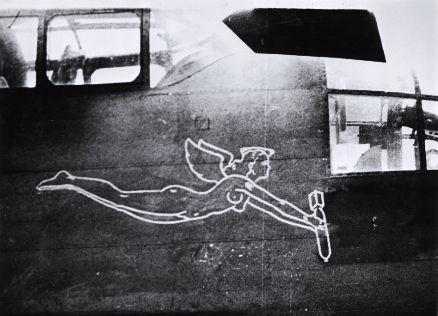
Doolittle nose-art
I read 30 Seconds Over Tokyo when I was still a war-playing kid, before I would understand the mischievous consequences of the Doolittle Raiders B-25 bombers deploying without their bombsights. This was to prevent US war-making advantages falling into enemy hands but it also precluded dropping bombs with accuracy. I’m pretty certain the account for young readers also didn’t explain why over a quarter of the squadron’s bombs were of the incidiary cluster variety. Readers today know what those are for. Doolittle claimed to be targeting military sites in Japan’s capitol, but “invariably” hit civilian areas including four schools and a hospital. Of the American fliers captured, three were tried and executed by the despicable “Japs”, who considered the straffing of civilians to be war crimes. After the war, the US judged the Japanese officers responsible, as if their verdict was a greater injustice against our aviators’ “honest errors”. Today we rationalize our systemic overshoot policy as “collateral damage”.

Every year since WWII, Doolittle’s commandos are feted for their milestone bombing mission. This Veterans Day is to be the last due to their advanced ages. But it is fitting, because isn’t it time Americans faced what we’re celebrating? There’s no denying it took suicidal daring, but the Doolittle Raid inaugurated what became a staple of US warfare, the wholesale terrorizing of civilians from on high, with impunity and indifference. To be fair, the American public has always been kept in the dark. American aircraft have fire-bombed civilians at every diplomatic opportunity since 1942, and a Private Manning sits in the brig for trying to give us a chance to object.

We now know that the Doolittle Raid didn’t turn the tide, nor shake Japanese resolve. It was a retalliation for the attack on Pearl Harbor, intended to boost US morale as if to say, America wasn’t defeated. Kinda like why and how we struck back at Afghanistan after 9/11, just as indiscriminately.

The “Mark Twain” ersatz bombsight
substitute bombsightThe Norden bombsight was a closely guarded US secret weapon. An airstrike without it would today be like lobotomizing so-called smart bombs, and deciding to opt for imprecision bombing. The official army record recounts that a subsitute sighting mechanism was improvised for the raid, dubbed the “Mark Twain” and judged to be effective enough. Now a bad joke. Indochina and Wikileaks-wisened, we know the mendacity of that assessment. The vehemently anti-imperialist, anti-racist Twain would not have been honored.

Twain satirized Western so-called Enlightenment thus: “good to fire villages with, upon occasion”.

Post-postwar hagiographies of the raid have suggested the improvised bombsight was better suited to low-altitude missions than the Norden model. That conclusion is easily dismissed because the device was used only for the Doolittle run and never after. The sight’s designer, mission aviator C. Ross Greening, offered a explanation for why he named the device after Mark Twain in his pothumously published memoir Not As Briefed. He didn’t.

The bombsight is named the “Mark Twain” in reference to the “lead line” depth finder used on the Mississippi River paddle wheelers in bygone days.

Because its design was so simple, we’re left to suppose. Greening’s bombsight was named for the same “mark” which Samuel Langhorne Clemens adopted as his celebrated pen name. I find it disingeneous to pretend to repurpose an archaic expression whose meaning was already eclipsed by the household name of America’s most outspoken anti-imperialist. Who would believe you named your dog “Napoleon” after a French pastry?

We are given another glimpse into Greening’s sense of humor by how he named his plane, the “Hari-Kari-er” ready to deal death by bomb-induced suicide. Greening’s B-25 is the one pictured above, with the angelic tart holding a bomb aloft. Greening’s plane was another that carried only incendiary ordnance.

Much was made of the sight’s two-piece aluminum construction, reportedly costing 20 cents at the time compared to the $10,000 Norden. This provided the jingoist homefront the smug satisfaction perhaps, combining a frugality born of the Depression with the American tradition of racism, that only pennies were expensed and or risked on Japanese lives.

War Crimes
Targeting civilians, taking insufficient care to avoid civilian casualties, using disproportunate force, acts of wanton retaliation, and the use of collective punishment are all prohibited by international convention. They are war crimes for which the US prosecutes adversaries but with which our own military refuses to abide. Americans make much of terrorism, yet remain blind to state terrorism. Doolittle’s historic raid, judged by the objective against which it is celebrated as a success, was an act of deliberate terrorism.

Forcing the Japanese to deploy more of their military assets to protect the mainland sounds like a legitimate strategy, except not by targeting civilians to illustrate the vulnerability, nor by terrorizing the population, one of Doolittle’s stated aims. He called it a “fear complex”.

It was hoped that the damage done would be both material and psychological. Material damage was to be the destruction of specific targets with ensuing confusion and retardation of production. The psychological results, it was hoped, would be the recalling of combat equipment from other theaters for home defense, the development of a fear complex in Japan, improved relationships with our Allies, and a favorable reaction in the American people.

There is no defending Japan’s imperialist expansion in the Pacific, and certainly not its own inhumanity. The Japanese treated fellow Asians with the same racist disregard with which we dispatched Filipinos. While Americans point in horror at how the Japanese retalliated against the Chinese population for the Doolittle Raid, we ignore that Doolittle purposely obscured from where our bombers were launched, leaving China’s coast as the only probably suspect.

To be fair, most of Doolittle’s team was kept in the dark about the mission until they were already deployed. I hardly want to detract from the courage they showed to undertake a project that seemed virtually suicidal. But how long should all of us remain in the dark about the true character of the Doolittle Raid?

Out of deference for the earlier generation of WWII veterans, those in leadership, certain intelligence secrets were kept until thirty years after the war. Unveiled, they paint a very different picture of what transpired. The fact that the US knew the German and Japanese codes from early on revealed an imbalance not previously admitted, as an example.

About the Doolittle Raid, much is already openly documented, if not widely known. The impetus for the raid was public knowledge, the evidence of its intent in full view.

BY DESIGN
In the aftermath of Pearl Harbor, American newspapers were already touting offers of cash rewards for whoever would be the first to strike back at Japan. President Roosevelt expressed a deliberate interest in hitting the Japanese mainland, in particular Tokyo, to retaliate for the Japanese strike against Pearl Harbor, never mind it had been a solely military target.

Plans were made to exploit the Japanese homeland’s vulnerability to fire, as ninety percent of urban structures were made of paper and wood. Writes historian William Bruce Jenson:

In his “confidential” meeting with reporters back in November, Marshall had declared that the US would have no cavil about burning Japan’s paper cities.

For the Doolittle Raid, a bombing strategy was developed to overwhelm the fire department of his target, the Shiba ward.

A former naval attache in Tokyo told Doolittle: “I know that Tokyp fire department very well. Seven big scattered fires would be too much for it to cope with.”

As lead plane, Doolittle’s role was to literally blaze the way. Fellow pilot Richard Joyce told Nebraska History Magazine in 1995:

The lead airplane, which was going to have Doolittle on board as the airplane commander, was going to be loaded with nothing but incendiaries -2.2­ pound thermite incendiaries- in clus­ters. They drop these big clusters and then the straps break and they spray, so they set a whole bunch of fires. He was to be the pathfinder and set a whole bunch of fires in Tokyo for pathfinding purposes.

Doolittle’s report outlined his objective more formally:

one plane was to take off ahead of the others, arrive over Tokyo at dusk and fire the most inflammable part of the city with incendiary bombs. This minimized the overall hazard and assured that the target would be lighted up for following airplanes.

Greening paints the most vivid picture, of burning the Japanese paper houses to light the way:

Doolittle planned to leave a couple of hours early, and in the dark set fire to Tokyo’s Shiba ward … the mission’s basic tactic had been that Doolittle would proceed alone and bomb a flammable section of Tokyo, creating a beacon in the night to help guide following planes to their targets.

Doolittle’s copilot Lt Richard Cole, told this to interviews in 1957:

Since we had a load of incendiaries, our target was the populated areas of the west and northwest parts of Tokyo.

After the bombers had left on their raid, and before news got back about whether or not they accomplished it, the Navy crew on the carrier USS Hornet already sang this song, which went in part:

Little did Hiro think that night
The skies above Tokyo would be alight
With the fires that Jimmy started in Tokyo’s dives
To guide to their targets the B-25s.
When all of a sudden from out of the skies
Came a basket of eggs for the little slant eyes

Incendiaries

Most of the bombers were loaded with three demolition bombs and an incendiary cluster bomb. Some of the planes carried only incendiaries. According to Doolittle’s official report of the raid, here were some of their stated objectives:

Plane no. 40-2270, piloted by Lt. Robert Gray:
thickly populated small factories district. … Fourth scattered incendiary over the correct area

Plane No. 40-2250, Lt. Richard Joyce:
Incendiary cluster dropped over thickly populated and dense industrial residential sector immediately inshore from primary target. (Shiba Ward)

“The third dem. bomb and the incendiary were dropped in the heavy industrial and residential section in the Shiba Ward 1/4 of a mile in shore from the bay and my tat.”

Aircraft 40-2303, Lt Harold Watson:
the congested industrial districts near the railroad station south of the Imperial Palace

AC 40-2283, David Jones:
the congested area Southeast of the Imperial Palace

Even though the planned night raid became a daytime mission, Doolittle did not alter his original role, intended to light the way for the following planes. His target remained the Shiba District of Tokyo. His own plane: “changed course to the southwest and incendiary-bombed highly inflammable section.”

Doolittle’s report included a description of the incendiary bombs:

The Chemical Warfare Service provided special 500 incendiary clusters each containing 128 incendiary bombs. These clusters were developed at the Edgewood Arsenal and test dropped by the Air Corps test group at Aberdeen. Several tests were carried on to assure their proper functioning and to determine the dropping angle and dispersion. Experimental work on and production of these clusters was carried on most efficiently.

As has become an aerial bombardment tradition, crews were let to inscribe messages on the bombs about to be dropped. Accounts made the most of these chestnuts: “You’ll get a BANG out of this.” And “I don’t want to set the world on fire –only Tokyo.”

These details, which reveal the intentions of the raid, were not made known to the public immediately. The Doolittle Raid was planned and executed in secret, with US government and military spokesmen denying knowledge of the operation even in its aftermath. The first word to reach the American public came from the New York Times, citing Japanese sources:

Enemy bombers appeared over Tokyo for the first time in the current war, inflicting damage on schools and hospitals. Invading planes failed to cause and damage on military establishments, although casualties in the schools and hospitals were as yet unknown. This inhuman attack on these cultural establishments and on residential districts is causing widespread indignation among the populace.

This report was dismissed as propaganda. When Japan declared its intention to charge the airman it had taken captive with war crimes, the US protestations redoubled. The accusations were belittled even as our own reports conceded to the possibilities.

Lieutenant Dawson’s Thirty Seconds Over Tokyo was the first published account of the raid. Printed less than a year after the event, wartime-sensitive details such as the phony guns made of broomstick handles poking out the back were left out. Targets were also not specified, but a candor remained, probably intended to be threatening. Lawson described the 500-pound incendiaries as “something like the old Russian Molotov Breadbasket”, and related US naval attache Jurika’s advice:

“If you can start seven good fires in Tokyo, they’ll never put them out,” Jurika promised us. … “I wouldn’t worry too much about setting fires in flimsy-looking sections of Tokyo,” he said. “The Japanese have done an amazing job of spreading out some of their industries, instead of concentrating them in large buildings. There’s probably a small machine shop under half of these fragile-looking roofs.”

“Flimsy” became Lawson’s keyword for the residential areas. Here Lawson described dropping his third and fourth bombs, when he saw their corresponding red light indicators:

The third red light flickered, and, since we were now over a flimsy area in the southern part of the city, the fourth light blinked. That was the incendiary, which I knew would separate as soon as it hit the wind and that dozens of small fire bombs would molt from it.

I was satisfied about the steel-smelter and hoped the other bombs had done as well. There was no way of telling, but I was positive that Tokyo could have been damaged that day with a rock.

Our actual bombing operation, from the time the first one went until the dive, consumed not more than thirty seconds.

Thus: Chance of hitting civilian homes: 50/50.
Charges of Excessive Force could be expected, because
blame the victim for being weaker than: a rock.
Care taken to avoid innocent casualties: 30 seconds.

In a later afterword, Lawson blamed Tokyo for having insufficient bomb shelters.

After the war, US occupation forces recovered Japanese records which documented the losses attributed to the Doolittle Raid: fifty dead, 252 wounded, ninety buildings. Besides military or strategic targets, that number included nine electric power buildings, a garment factory, a food storage warehouse, a gas company, two misc factories, six wards of Nagoya 2nd Temporary Army Hospital, six elementary or secondary schools, and “innumerable nonmilitary residences”.

Strafing
Japan accused the fliers of indescriminate strafing civilians. The US countered that defending fighters were responsible for stray bullets when their gunfire missed the bombers. That’s very likely, except the raiders were candid about their strafing too. Lawson:

I nosed down a railroad track on the outskirts of the city and passed a locomotive close enough to see the surprised face of the engineer. As I went by I could have kicked myself for not giving the locomotive’s boiler a burst of our forward 30-calibre guns, then I remembered that we might have better use for the ammunition.

A big yacht loomed up ahead of us and, figuring it must be armed, I told Thatcher to give it a burst. We went over it, lifted our nose to put the tail down and Thatcher sprayed its deck with our 50-calibre stingers.

Greening’s account of firing on a sailor, raises the moral ambiguity of air warfare with which few airmen grapple. By virtue that technology allows it, combatants become slave to a predetermined outcome:

When we attacked the next patrol boat, a Japanese sailor threw his hands up as if to surrender. I guess he expected us to stop and take him prisoner. We shot him and left this boat smoking too.

The Medals
Friendship Medals exchanged between Japan and the US found themselves requisitioned for Doolittle’s Raid:

Several years prior to the war, medals of friendship and good relationship were awarded to several people of the United States by the Japanese government.  In substance these medals were symbolic of the friendship and cooperation between the nations and were to represent the duration of this attitude.  It was decided by the Secretary of the Navy, Mr. Frank Knox, that the time was appropriate to have these medals returned.  They had been awarded to Mr. Daniel J. Quigley, Mr. John D. Laurey, Mr. H. Vormstein and Lt. Stephen Jurkis.

After arrangements had been made and the medals secured, a ceremony was held on the deck of the Hornet during which the medals were wired to a 500 lb. bomb to be carried by Lt. Ted Lawson and returned to the Japanese government in an appropriate fashion.

Lawson’s plane no 40-2261 dropped that bomb on an “industrial section of Tokyo” omitting to mention that Japan’s industry was still a post-feudal cottage industry.

“The medals were subsequently delivered in small pieces to their donors in Tokyo by Lt. Ted Lawson at about noon, Saturday, April 18, 1942.”

–Mitscher, M.A. Letter Report to Commander Pacific Fleet.

“Through the courtesy of the War Department your Japanese medal and similar medals, turned in for shipment, were returned to His Royal Highness, The Emperor of Japan on April 18, 1942.”

–Knox, F. Letter Report to Mr. H. Vormstein

Another criminal sociopath evades the hangman. Maggie Thatcher goes to hell


Was Margaret Thatcher religious? We might take solace that her final breaths were complicated by abject horror of the fate she knew awaited her. She might have been iron willed and resolute, are we going to pretend she was clueless? But justice delayed is justice denied. Thatcher’s karma is pie in the sky, while her destructive legacy was concrete as the sarcophagus that will protect her.

Ordinary Britons are jubilant and now officials and talking heads are admonishing celebrants to respect her deadness. — Did we learn nothing from Reagan’s funeral? We eulogized the senile man, and the unintelligencia used our lapse to lionize the cretin! Are we now going show the same clueless deference to Margaret Thatcher and add to the false history supporting her enduring world dynasty of greedy-bastards?! Thatcher was a wicked sociopath and those who praise her expose their ignorance or lack of conscience.

My takeaway from the spontaneous celebrations of Margaret Thatcher’s death is that we’ve got to hold good-riddance parties BEFORE these mofos pass on! On a related note, what pretext does President Obama have for attending the inauguration of George Dubya’s presidential library if he isn’t bringing handcuffs? The World Court should arrest the lot at Thatcher’s funeral.

Fracking protest message at Denver 350 rally cuts through nebulous “Forward on Climate” theme


DENVER, COLORADO- Score another success for Colorado Fractivists who crashed this weekend’s climate rally with their unequivocal anti-fracking message. The February 17 event was intended to urge President Obama “Forward on Climate”, to borrow his most recent campaign vagarity, but when official speeches began, and the prefab signs were distributed, it became unclear who might be trying to co-opt whom.

Gas
The 350.ORG sponsored march, coinciding with a rally and civil disobedience in DC, called specifically for a halt to the Keystone XL Pipeline and Tar Sands extraction which climate scientists have dubbed “game over” for hopes of averting climate disaster, but the dominant signage spoke vaguely of “Climate Action” and “It’s Time to Cut Carbon” and “Big Coal Makes Us Sick”, all of which are slogans used by proponents of natural gas. 350-ORG has been raising awareness of the imperative to reduce carbon emissions, while recognizing that the groundswell driving environmentalists across the country is opposition to oil & gas hydraulic fracturing.

It’s all the same fight to reduce burning of fossil fuels, but moderate allies like the Sierra Club haven’t been prepared to denounce their new-found bed partners urging consumers to get “Beyond Coal.” To her credit, local 350-ORG coordinator Micah Parkin incorporated fractivist groups into the Feb 17 rally, but Democratic Party panderers didn’t get the memo. A representative read a letter of support from Senator Michael Bennet and was able to sneak past: “I stand with Obama” and even “in favor of US energy independence” although that’s code for oil & gas exports, dependent on construction of the XL pipeline. But when Mark Udall’s representative referred to “clean burning natural gas” the crowd booed. Even as he pleaded “we’re on your side,” the crowd wouldn’t relent, making sure his takeaway would be that fracking compounded global warming, among its other horrors.

The highlight of the rally occurred immediately afterward when the master of ceremonies, a twelve-year-old rapper and member of the Boulder based Earth Guardians, thanked Udall’s rep affably but then assured the audience that “of course there’s no such thing as clean natural gas!”


Occupy
A word about Occupy Denver’s part in Sunday’s march. Occupiers took the black-tie invitation to heart and turned up in black bloc attire with bandanas and balaclavas. OD then pushed the envelope to the consternation of parade marshals, stepping into the street at one point, blocking cars at another, in the spirit of their banner which read “ONLY DIRECT ACTION WILL STOP THE PIPELINE.”

To what end, creating friction during an event otherwise running smoothly? Who knows. The demonstration was uneventful and garnered scant media attention. Mixing it up might have helped, or not. The turnout was large but not up for a confrontation. Occupy didn’t push it.

The irony of 350-ORG supporters being upset by the antics of the Occupiers, was that behind the masks were many activists who’d actually gone to Texas to stop the XL pipeline, who’d gotten arrested, some out on $25,000 bond. How unfortunate that those troublemakers weren’t recognized from the stage. It was a real missed opportunity, this having been a rally to, um, STOP THE PIPELINE. These rowdy boring-party crashers were actually its unsung, veritable heroes. What the crowd wanted to mistake for infantile grandstanding, was really the infantile audacity that stops pipelines. Yes you get in trouble if you step off the sidewalk. Do you think the police are going to let you stop the pipeline?

Zero Dark Thirty has critics protesting that torture shouldn’t be shown to work, instead of torture being wrong

Protest torture, don’t protest Zero Dark Thirty’s depiction of torture as working, even if the public account of the hunt for Osama bin Laden holds that it did not. Who’s your source for that, the CIA? No doubt countless plenty were tortured elsewhere in the actual narrative. How perverse for human rights groups to oppose torture based on it being ineffectual, instead of inhumane. Do you doubt torture works? Look at poor Bradley Manning, already pleading guilty. You’d think galvanizing the public against the horror of torture would be easier than trying to sell them a lie, that torture isn’t fiendishly effective. Remember the inane debate about what constitutes torture? That can be illustrated in less than a second, likewise its effectiveness. What sophistry. This is same patronizing social engineering which moralists envision to contort society to new-age morays expunged of sociopathic ills. Greed, slavery, war, genocide, all work perfectly well. That’s the problem

Waldo Canyon Wildfire gives Colorado Springs a front range seat to war zone movie set, says Governor Hickenlooper


COLORADO SPRINGS- Governor Hickenlooper made the remark after touring the Waldo Canyon Fire by helicopter. After touching down on the grounds of Coronado High School, cleared mid-press-conference because it fell in the freshly designated evacuation area, the governor said the wildfire resembled the movie set of a military invasion. Predictably the media clipped his observation to just “movie set”, adding the fire chief’s “epic” and “historic”. President Obama is expected to visit the disaster zone on Friday. I wonder if he’ll match our governor’s candor. He is certainly in the position to say whether our present horror is any match for the devastation unleashed by our invasions. Perhaps he can tell us the fire’s equivalency in drone strikes. Is 100 homes a week’s worth? If President Obama wanted to be partisan about it (pretending his Democratic Party was the antiwar party) he might suggest that conservative war-mongering, race-baiting, climate-denying Colorado Springs had this front range seat coming. Unless sentimentally doused in prayer-sharing reverence, our local disaster, with Governor Hickenlooper’s unedited comment, could be an empathy-learning moment.

This American Life caves to Apple Corp, swaps Mike Daisey Chinese factory horror story for Marketplace puff spin

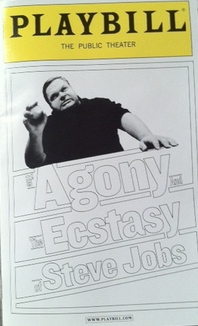
PlaybillThis American Life host Ira Glass tried to pull an Oprah on playwright Mike Daisey, to dress him down on creative license Daisey took with an excerpt of a monolog aired on TAL titled Mr. Daisey and the Apple Factory. The debunking came courtesy of American Public Media’s laughable “Marketplace” Wall Street PR engine, which Glass pretended were reliable experts on the subject of China’s apparently resolved labor abuses. That’s not even funny. This “retraction” reeks even upwind, and Apple’s having become the most highly valued corporation probably explains Glass’s uncharacteristically virulent condemnation. Shameful is what it was, and I hold it unforgivable, for the pretend-affable Glass, so-called folk archivist, to scuttle someone else’s too successful artistic quest for fundamental truth.

Let’s be clear. Mike Daisey was “debunked” based on his Chinese translator contradicting his version of events, and Marketplace finding Hong Kong based activists ready to give Chinese labor problems the all-clear signal. Both sources no longer protected by anonymity are under duress in China, and it’s not mentioned under whose employ they are now.

The Apple Factory story was the first best thing TAL had aired since pioneering post-sardonic navel gazing, but this week Glass issued a full retraction, removed the episode from the archive, and aired a blistering character assassination complete with manipulatively edited confrontations with Daisey, loaded with the expectation he’d buckle like fictional-confession memoir author James Frey. Except Frey’s lies unraveled because they contrived to propagate untruth. Daisey’s truths were undisputed, but the liberties he took to weave a personal narrative were “debunked” to cast doubt on his every word. It was a shameful moment for This American Life, and I’m hoping this time Glass has overestimated the vapidity of his listeners.

For example, when Mike Daisey explained his rationale for not wanting to “unpack the complexity” of his narrative, Ira Glass responded that he didn’t know what that meant. To what kind of reporter, editor, producer, or storyteller would that concept be foreign?

APM’s Marketplace
This was not the first collaboration between Marketplace and TAL. As the Occupy Wall Street protests grew, Ira Glass commissioned folksy research pieces from a Marketplace team to explain world banking and derivatives trading in terms sufficiently lazy to not disturb the usual NPR stupor. It was bunk coiffed in TAL’s typical carefree je ne care pas.

So this time, Marketplace’s man in China was consulted to fact-check Mike Daisey’s account. ACTUALLY, Glass reveals that he was approached by Marketplace AFTER they’d looked into Daisey’s sources. Glass thanked Marketplace for offering the story to TAL, instead of exploiting the exposé themselves. That’s Glass pretending he doesn’t know PR is about getting someone else to say it for you. Absolving Apple required more than one media property criticizing another. Somebody probably wanted a full retraction.

To foul Mike Daisey’s story required one phone call to the translator and guide he’d used in China, whose contact information he tried hide from Glass and co. No mention that this might have been to protect her from angry Chinese authorities, or from Apple and its supplier Foxconn and the inevitable underworld that rides herd on its victim laborers.

Marketplace’s feat consisted of tracking down his translator, breaking her cover, and putting her on the spot for the harsh criticisms which Daisey laid on Apple, Foxconn and their Chinese hosts. Especially as the popularity of Mike Daisey’s performance piece grew, and after its airing on TAL and his many media interviews, the anonymity of his Chinese translator would remain of paramount concern, but once exposed by Marketplace, what choice might she have had but to denounce Daisey’s heresies?

Could Apple’s being the world’s most high valued company have had anything to do with this kill-the-messenger hit piece? Apple has scheduled a press conference Monday morning to announce what it plans to do with its now famous $100 Billion cash holdings.

Storytelling
Isn’t it rich that TAL suddenly wants to hold its stories to journalistic standards? Imagine if someone had called them on the Christmas elven adventures of David Sedaris. Was that fact-checked? Or what of the elementary Christmas play Sedaris so gloriously skewered? IF YOU Criticize TAL for its too-often neglect of difficult subjects and you’re scolded that the show is about culture and storytelling.

Mike Daisey’s TAL recording is now offline, although the transcript remains. In it you’ll find an indictment that Ira Glass perhaps lacks the temerity to redact as well. It’s his introduction to the segment, and I’ll reprint it here, because Glass praises exactly Daisey’s storytelling technique, separate from the facts he recounts.

A couple weeks ago I saw this one-man show where this guy did something on stage I thought was really kind of amazing. He took this fact that we all already know, right, this fact that our stuff is made overseas in maybe not the greatest working conditions, and he made the audience actually feel something about that fact. Which is really quite a trick. You really have to know how to tell a story to be able to pull something like that off.

In his own words, Glass concedes what his show’s retraction is all about. He’s not retracting the facts, these “we all already know”. Glass and Apple are trying to retract Mike Daisey’s effect, that “he made the audience actually feel something about that fact.”

TO BE CONTINUED

Ft Carson conducts pro forma town hall to clear way for environmental impact of proposed helicopter brigade

Occupy Colorado Springs protest at Crowne Plaza Hotel, Jan 26, 2012
OCCUPIED COLORADO SPRINGS- Ft Carson’s environmental PR team held what’s called a “draft Environmental Assessment,” prerequisite to their addition of a Combat Aviation Brigade to America’s “Best Hometown in the Army”. Except for a car-dealer and realtor giving their attaboys, the citizens comment section weighed solidly AGAINST expansion of war-making and war-training. In true pro forma, Garrison Commander McLaughlin shrugged off the opposition, stating that public input would be answered while the army proceeded as planned. And that’s where Occupy will have something to say.

The fundamental message from OCCUPY WALL STREET, and from the global movement at large, is that it’s the people who are in charge. Whatever corrupted system may have wielded the power to bring the world to the brink of chaos, the authority must be returned to the people. OCCUPY makes clear the people do not have to sit idly by while their rulers make decisions against their interests. OCCUPY reminds us the people will have a say in their own destiny.

An army hearing, about what it plans to do, in defiance of public outcry, is nothing that self-respecting citizens have to take sitting down. They didn’t, citizens came from as far as the Southeastern plains to present their testimonials, but after the citizen comment period ended, the holders of the meeting made certain to conclude that the Ft Carson expansion was advancing regardless. This inhospitalty even after almost uninterrupted patriotic fawning over Ft Carson’s soldiers and the role they play defending our liberty.

While everyone falls all over themselves to THANK A SOLDIER, let’s not confuse respect for deference. America is not ruled by a military junta. The Department of Defense is not our governing body. For all his authority and swagger, this camp commander does not overrule us citizens. WE are the boss of the army. We are his CHAIN OF COMMAND. When the people of Colorado Springs, the people of Colorado, or the people of the United States express our will, it’s the army’s role to say “SIR, YES SIR.”

I’m deeply troubled by an officer of the military who pretends that his fellow citizens are but a temporary impediment to his military plans. When a room full of citizens tells this commander that they don’t want helicopters over their airspace, I expect him to take heed. To do otherwise is purely insubordination of his superiors. All this patriotic militarism may be going to his head. This is a soldier after all, sworn to protect our constitution and America, meaning its people. DO YOU HEAR ME SOLDIER?

If you think I sound disrespectful, let me inform you that I’m a veteran too, of ANTIWAR actions. One of which involved a soldier of higher rank than this one, running up to me as I silently held a sign, and attacking me with his fists, knocking me over. CSPD policemen had to pull him off. I did not press charges, but I could have. That was not only assault. An officer of his stature knows it was worse than that: it was an attack on his chain-of-command. What incalculable gall, to presume to treat me as a subordinate upon whom he could visit his accustomed violence. On a citizen!

And that’s what’s got me worried, about where all this soldier-worship leads. Only a couple weeks ago, at a weekly sidewalk peace bannering, a fellow activist was approached by a soldier and sucker-punched in the face, right out of the blue, while his wife cheered from their car. Are you kidding me? This deference to soldiers has got to stop.

These are soldiers, and we’re right to thank them. Theirs is a thankless task. Well not thankless, they ask, and are given unending thanks. But theirs is a task no one wants, to have to dehumanize yourself, be made to kill, maim, torture, rape, often it turns out, exactly under orders. We’ve learned that soldiers are sometimes commanded to kill everyone in a 360 degree radius. “Free Fire Zones” mean to kill every living thing in sight. We learn too that pissing on your dead victims is taught as a coping mechanism, to dehumanize your adversary so as to suffer less PTSD and less guilt. And we’ve learned that the military has no followup plan to reintegrate their soldier-monsters to a life post-service. Homeless vets from Vietnam onward are a testimony to the incompatibility of war service in horror zones to a return to normal civilian life. When the army creates killer-thugs, it means to dispose of them in further war zones, it means for them to re-up, or die prematurely from DU exposure. Yes, soldiers are to be thanked, but kept at arm’s length, like Fukushima heroes, radioactive. By design, their duty rendered them untouchable, to them eternal thanks and goodbye, unless you are prepared to weather the propensity to antisocial violence and domestic abuse the veterans of fragile countenance bring back with them. Certainly we cannot elevate the more hardened professional killers, who know only means foul and heartless, to positions of authority above citizens.

It irks me to no end to be goaded by this camp commander, who after hearing the public speak, admonished us in the end that our protestations will amount to nothing. How dare he, this insubordinate would-be coup leader?

Shall OCCUPY remind you, America is ruled by its people. This is a Democracy. WE THE PEOPLE are in charge!

Yes it may look right now like the suits are in charge, the men behind you, patting your back, the men with businesses who profit from war-making. In other cultures they are known as war profiteers, and in other periods of history they are executed. Who should profit by war? Well another aspect about OCCUPY is that these business vultures have been put on notice their time has come. No sustainable model of global democracy has room for predatory warmongers who keep wanting to pull their fortunes from war.

The people will be in charge of this nation, not the military or its business enablers. And when the people say enough, it’s going to be the military’s place to do the people’s will. If the people say no helicopters, or not in my airspace, or stop with your immoral wars, the army better stop its posturing, or find itself in the brig. Thank you soldier, but stand down. When the people tell you to stand down soldier, you had better do it, on the double.

For my part I will not decline to press charges a second time against military careerists who overstep their authority. And I will not again brook one iota of insubordination from someone sworn to serve this country. We American citizens are in charge of what’s done in our name. Do you hear me soldier? Sir, Yes Sir? Wise move soldier.

Tea Partying with the Freak Brothers

Whew! These Occupy posts are far more difficult to pry from myself than their predecessors; the hands-on mechanics of putting the earlier stuff into practice in the present world, amongst the isolated pools of individuated consciousness we humans represent, each with his or her own vision of the whole, has been at the very least disorienting. I’ve lately revived an old motto i swiped from the good people at Oat Willie’s down in Austin, Texas: Onward Through the Fog! How odd is it that i’ve recently connected with some folks that hark back to that place in ways that are deeply surreal. Oat Willie’s and Fat Freddie will seem to be completely out of place in this bit, in which i mean to address the notion of cooperation amongst disparate factions, but not permanently i hope. By the end of this post, i hope to connect Occupy, The Tea Party, disparate passions, and yes, Hippies. It will be necessary to engage in some relatively surreal thinking.

Last night on a new Facebook page, “UNITE: OCCUPY,” (cap lock and all), i got into a conversation about this stuff started by a guy that asked whether anyone thought a joint event between Occupiers and Tea Partiers might be possible. Sure, i said, our Colorado Springs group had lots of Tea Partiers among its earliest enthusiasts, and although many have pulled away, there still exists a close association with many that veer sharply toward the Te Party camp, especially among Ron Paul supporters. The common ground Occupy shares with the Tea Party, at least t a grass root level, is substantial. There can be no doubt of the equally substantial differences. I suspect that it would take some pretty serious ideological barnstorming to bring the two camps together, but nothing prevents the groups from at least tentative discussion to find commonalities.

Tonight our Occupy group staged a talk by Tea Party stalwart, Constitutionalist Mike Holler. Mike seemed for all appearances to be an earnest and well-versed supporter of Constitutional “fundamentalism,” if you will. He peppered his talk with lots of my favorite quotes from my favorite founding fathers. He got a little testy about the revisionist history his kids bring home from college early on–perhaps indicative of one point of separation between Occupiers and Tea Partiers. Some of those are important. Occupy is international, where the Tea Party can display degrees of jingoism. I, personally, respect the earnest efforts of our Enlightenment founders, but recognize that they were flawed, and aver that their document was dated by racist, sexist, and elitist provisions and thinking that they might be excused from by noting their temporal milieu. We don’t have the same luxury. Occupy is legitimately grass root, supported by sweat and blood more than funded, where TP is, or at least became very quickly corporately funded “astroturf,” disingenuously proffering libertarian ideals as a smoke screen for corporate license to plunder. Occupiers are in my experience far more diverse than Tea Partiers. Socialist and Anarchist Occupiers are common, as are assorted races, genders, orientations, and religious persuasions, where Tea Partiers seem to my limited observation to be relatively homogeneously white Christian capitalist patriots. Mike interjected that both groups had been misrepresented by the media, and that seems likely to be so given that mainstream media seems content to misrepresent ’bout anything they report in this country, but Fox news and the rabid right like the Tea Party so much i have to wonder if he’s fallen victim to a personal soft spot.

Mike spoke eloquently enough in his effort to simplify the Constitution, focusing on issues of freedom, and state’s rights. He said very little with which i could find disagreement. He pointed out two major points of confluence between Occupy and the Tea Party–personal liberty, and a rally-cry, “No more Bailouts!” I suspect he fastidiously avoided some points he knew or at least feared might be contentious, like for example the ludicrous assertions i’ve heard often that environmental warnings from the scientific community stem from some kind of Satanic control scheme from the–well just whom is never too clear. The Vatican or something. Commies, i guess. That just maybe the best way for Tea Partiers and Occupiers to interact, though, for now, concentrating on the common aversion to what amounts to Fascism. Interacting from that perspective could exclude much conversation. It could put the Tea Party in the same position as the Occupy movement, after their Fascist sponsors withdraw in horror. Whatever. We Occupiers got on just fine with Tea Party Mike–“Mr. Constitution.”

Mike largely expressed notions we Occupiers could embrace. I suppose he could have done a bit of research and tailored his speech toward that end, but i think we just agree; he seemed a grassroot kind of guy, to me. He briefly alluded to schisms within the Tea Party, and there’s no sensible reason to avoid acknowledging the same within Occupy. Last night’s event was attended by Occupy people that have had such extreme altercations in their attempts to wrestle a semblance of ideological unity from a stubbornly liquid platform that it could easily enough have disintegrated into bedlam. I attended with my dear friend Thomas, with whom i often disagree. In fact, he and i often disagree so strongly that sometimes i feel like smacking him in back of the head. I expect he feels the same way about me at times. Maybe much of the time. Take note, war-mongers of the world: Thomas is a great guy, and even though we disagree with one another, sometimes strongly, neither of us has smacked the other in back of the head. Get it?

So here we were last night, disparate Occupiers engaging a Tea Party mouthpiece in a room full of people that have all experienced the vagaries of human interaction under a fairly pressurized circumstance over the past few months. No butterflies fluttered around the room, but no one worked up a bickering session, either. We worked together. All of us. One could recall the old adage that “The enemy of my enemy is my friend,” but that would be devolution. I prefer to imagine that those with arguments present recognized the futility of scrapping amongst friends, if only below the radar of their Egos. Whether my nobler hopes for those pained souls in the room last night are valid or not, the assertions i made in these non-pages well before Occupy began remain true. The system we wrestle against is collapsing around our heads. And the solution is spiritual, to a far greater extent than it is temporal.

Fat Freddy is a comic book character that lives in Denver. Seriously. I met him a little while ago. (This only seems out of place, i promise.) Mr. Constitution Mike Holler expressed the opinion last night that our American republic, our constitutional federation of states, is in its final throes; that we are in a position where, ” it’s too late to save the country, but too early to start shooting.” Mike seemed tentative in expressing his hope that God might pull some kind of supernatural rabbit from his celestial hat to resolve our monumental national woes. I expect he feared perturbing the often non-Christian sensibilities of the Occupiers. He needn’t have worried quite so much–we may be largely skeptical of literal interpretations, but we’re pretty tolerant of that sort of thing. When i met Fat Freddy–an icon of counter-cultural activism important to me since childhood, an old-school Hippie with connection to the most famous and infamous of that crowd–he singled me out and pulled me aside to explain in some detail his expectation for a spiritual upheaval in coming days. Freddy’s taken up with the Urantia Book, a tome i’ve heard Christians disparage as devilish. I couldn’t see anything devilish about what he showed me. He earnestly explained his expectation for resolution. Soon.

We had come to Denver to talk about foreclosures and bank jiggery-pokery with another guy, and pulled up at Freddy’s house without knowing it. It just happened that way. These old Hippies like Tea Party fave, Ron Paul. (Follow along, now, i know it’s weird, and yeah, i know a lot of Occupiers don’t like Paul; i’m not sure about him myself). Also in attendance at that meeting was a woman i had been conversing with on line for quite a while in the context of Occupy. It took me nearly through the whole meeting to recognize her, because i knew her to live down in the Four Corners neighborhood of Colorado. She lives at Freddy’s now. This juxtaposition is so weird that now i’m expecting the Mad Hatter, or Lewis Carroll himself to pop up at some meeting quoting from Jabberwocky. Mike Holler holds out for resolution to the country’s woes in a traditional Christian context. My own suspicion, shared with J.B.S. Haldane, is that the Universe is not only queerer than we suppose, but queerer than we can suppose. But somewhere in the mix i am convinced that some divine Thing many of us think of as God is deeply interested in the little proceedings here on our little blue marble and that our interactions are subsequently and necessarily thus influenced.

We live right here. We have no choice but to manage things on a coarse, physical level; but we also live, i think, on an overlapping and less tangible plane, where we have more influence than we might ordinarily imagine. At the same time, things seem to occur herethere without our conscious direction. We’ll need to keep plugging away at things like grasping the Constitution, and taking on massive, quixotic quests like fighting banks and a world full of renegade, intransigent governments and power brokers, not to mention our own internal battles, as finely defined as within our own Souls. We’ll need to recognize the Truth in one another, even when it’s obscured by a bunch of worldly disagreement and fog. And so far as i can tell, were learning. Whatever that means.

Reprinted from hipgnosis.

Slavoj Zizek Not Gaga for Pop

Slovenian philosopher Slovaj Zizek has a cult following like Lady Gaga, but denied this weekend any romantic connection. I write this with tongue in cheek, Slavoj’s, because of his comic protestations. Zizek was cajoled by Amy Goodman at Saturday’s London Fronline Club event: did he categorically denied the rumor? Zizek said “Absolute denial on everything.” But he wasn’t dissing Gaga or the notoriety of the mischievous meme, even as he protested: “I didn’t even listen to not one of her songs!” The audience ate it up; how total a rejection. Except Zizek continued playfully: “My God, I listen to Schubert and Schumann songs. Sorry, I’m a conservative.” And there you have the reigning academic of pop cultural references, who cannot make a point without recalling a movie scene, rejecting not Lady Gaga, but Pop. Obviously Zizek’s pop culture isn’t yours.

It may escape the notice of average film goers that when themes evoke cinematic moments to Zizek’s memory, they’re not from There’s Something About Mary. Saturday’s discussion brought up Marx Brothers, yes, in the company of Lubitsch and Truffaut, moments of cinema verité, touches of social comment with Zizek’s nuance already scripted. Yes he’s famously evoked Tom & Jerry, and more recently tried to project Hosni Mubarak’s attention to Wiley Coyote’s fatal overrun of the cliff, but I think it’s clear, like Schubert and Schumann, we’re talking about classics. Academia may like to paint Zizek a populist, but his material is not plebeian.

For the curious, from the Marx Brothers: “My client may look like an idiot, and act like an idiot. That shouldn’t distract you, he is an idiot.” (About Rumsfeld being a liar.)

From Night And Day: A young lover finally yields unceremoniously to her suitor’s whining entreaties, to which he puts on the brakes like a reluctant prude. (About the West’s rejection of what it’s always pretended to want, a secular revolution in Egypt.)

From Ninotchka: Customer “May I have a coffee with cream?” Waiter: “We don’t have cream, we have milk. May I offer you a coffee without milk?” (About speaking the unspoken pretense.)

Where Zizek hits low perhaps are his wildly off-color jokes, gleaned from friends over drinks –I like to imagine– as opposed to circulated in morning emails. Zizek was full of sexism-loaded analogies on Saturday, and one joke in particular looks to have fallen between the edits which Democracy Now is re-airing, and even off the published transcript of the full event.

So I’ll retell it, and you tell me if Zizek could have made his point without getting so obscene. He’s addressing human nature’s desire for favorable news, even as by definition it masks atrocity.

A man’s wife is treated in the hospital for a potentially fatal condition. The doctor comes out and tells the husband, there’s good news and bad news. The good news is, we saved your wife, she will live. The bad news is, well, due to circumstances we couldn’t avoid, her rectal muscles no longer function, so she’ll be shitting uncontrollably the rest of her life, and her vagina will be secreting a substance, very unpleasant, and so on, her mouth, her nose, disgusting, and so on. Noticing the husband’s discomfort increasing to an unbearable pitch, the doctor tells him: Relax, I’m kidding, don’t worry, your wife died.

Zizek was illustrating the new Wikileaks state of affairs, our corporate government and its press rejecting the truths which emerged from the leaks, preferring the more palatable, no matter the horrors it perpetuates. Between reality and Zizek’s joke, which was the more obscene?

I also love Zizek’s propensity to drop “and so on” between statements, like verbal checkmarks on the points he’s hit. It’s post-graduate lecture shorthand for “you know the rest.” Chomsky does it too, by fading into mumbles, and it is frustrating to those of us who haven’t covered the assigned reading. But it’s a reminder too, of how much out there we cannot hope to master. That shouldn’t stand in our way of trying to grasp the bigger picture.

Am I right, Slavoj Zizek big picture speaks to us using the vocabulary of the big picture show? It’s the silver screen to be precise, and as yet he’s limited himself to visuals, not lyrics. I think Zizek’s candid revelation about his musical preferences leaves a hint for us that the bigger picture isn’t to be found in today’s compression sculpted pop sound, no matter how politically clever or Gaga the music.

Shaken, stirred, totally Fukushima’d

Now Fukushima Daiichi means the same in English as in Japanese. Although now apparently “meltdown” no longer means apocalyptic, “radiation” no longer means toxic, and to “exceed the safety levels” no longer means to pose adverse risk to your health. Curious. Because, I suppose, Japan can’t cry REACTOR FIRE in a crowded metropolis. Instead of blaming a Japanese government for being less than forthcoming about the obvious exponential horrors to come, realize they’re in hospice-caretaker mode, with little recourse but to comfort the imperiled population with big white lies. The Japanese are skeptical, but what are they supposed to do? They can no sooner stop drinking and eating than they can stop breathing. Will Fukushima be only a partial Chernobyl or verse visa? Halfway around the world, is the news being broken gently for our unknowing benefit? From across the Pacific, we can fret about the fallout –a word which now apparently means radioactive particles of no demonstrated significance. At least this president is not advising us to grab for duct-tape and visqueen. Leave the Japanese the stiff upper lip indispensable to island nations sin salida. For your own self-preservation, turn off the telly and heed experts who haven’t jettisoned the original nuclear power glossary. To those talking heads and blog comment trolls still shilling for the nuclear ambitions of the “Clean Power” Green Energy scam. Sayonara.

John Pilger – The War You Don’t See

We call it the Iraq War, as we did the Vietnam War, but America’s wars aren’t so-named in the host countries. It’s the Iraq Invasion, not War, and Afghanistan Invasion really, now Occupation, Decimation and Holocaust. Journalist filmmaker John Pilger subscribes to the theory that if a public is let to see the horrors of war, it will refuse to participate. His new documentary THE WAR YOU DON’T SEE traces US and UK efforts since WWI to propagandize war. Amid interviews with news bureau chiefs who he holds culpable for hyping war, Pilger shows censored footage which could have turned public opinion. I have to wonder if a simple sequence of an Iraqi home subjected to a US raid, in particular the focus on a young daughter’s anxiety, would not have broken just enough American hearts.

Emma Goldman on Direct Action

Yes it was Emma Goldman who said “If voting changed anything, they’d make it illegal.”
It was no mere quip. The turn of the last century activist was a fierce advocate of every social reform and was ultimately exiled to Europe for challenging forced conscription. Do you wonder what else Goldman had to say, about political violence, prisons, patriotism, puritanism, the traffic of women, suffrage, poverty, birth control, and the struggle of minorities? Far from being a cynic, Goldman offered an alternative to the false hope of the ballot box.

What does the history of parliamentarism show? Nothing but failure and defeat, not even a single reform to ameliorate the economic and social stress of the people. Laws have been passed and enactments made for the improvement and protection of labor. Thus it was proven only last year that Illinois, with the most rigid laws for mine protection, had the greatest mine disasters. In States where child labor laws prevail, child exploitation is at its highest, and though with us the workers enjoy full political opportunities, capitalism has reached the most brazen zenith.

It may be claimed that men of integrity would not become corrupt in the political grinding mill. Perhaps not; but such men would be absolutely helpless to exert the slightest influence in behalf of labor, as indeed has been shown in numerous instances. The State is the economic master of its servants. Good men, if such there be, would either remain true to their political faith and lose their economic support, or they would cling to their economic master and be utterly unable to do the slightest good. The political arena leaves one no alternative, one must either be a dunce or a rogue.

The political superstition is still holding sway over the hearts and minds of the masses, but the true lovers of liberty will have no more to do with it. Instead, they believe with Stirner that man has as much liberty as he is willing to take.

Universal suffrage itself owes its existence to direct action. If not for the spirit of rebellion, of the defiance on the part of the American revolutionary fathers, their posterity would still wear the King’s coat. If not for the direct action of a John Brown and his comrades, America would still trade in the flesh of the black man. True, the trade in white flesh is still going on; but that, too, will have to be abolished by direct action. Trade-unionism, the economic arena of the modern gladiator, owes its existence to direct action. It is but recently that law and government have attempted to crush the trade-union movement, and condemned the exponents of man’s right to organize to prison as conspirators. Had they sought to assert their cause through begging, pleading, and compromise, trade-unionism would today be a negligible quantity. In France, in Spain, in Italy, in Russia, nay even in England (witness the growing rebellion of English labor unions), direct, revolutionary, economic action has become so strong a force in the battle for industrial liberty as to make the world realize the tremendous importance of labor’s power. The General Strike, the supreme expression of the economic consciousness of the workers, was ridiculed in America but a short time ago. Today every great strike, in order to win, must realize the importance of the solidaric general protest.

Direct action, having proven effective along economic lines, is equally potent in the environment of the individual. There a hundred forces encroach upon his being, and only persistent resistance to them will finally set him free. Direct action against the authority in the shop, direct action against the authority of the law, direct action against the invasive, meddlesome authority of our moral code, is the logical, consistent method of Anarchism.

Will it not lead to a revolution? Indeed, it will. No real social change has ever come about without a revolution. People are either not familiar with their history, or they have not yet learned that revolution is but thought carried into action.

Here’s the full essay from which the above was excerpted, where Goldman cites Emerson, Wilde, Burroughs, Thoreau and GBS to laud the promise of anarchism and direct action.

ANARCHISM: WHAT IT REALLY STANDS FOR

ANARCHY.??

Ever reviled, accursed, ne’er understood,?
Thou art the grisly terror of our age.?
“Wreck of all order,” cry the multitude,?
“Art thou, and war and murder’s endless rage.
“?O, let them cry. To them that ne’er have striven?
The truth that lies behind a word to find,?
To them the word’s right meaning was not given.?
They shall continue blind among the blind.?
But thou, O word, so clear, so strong, so pure,
?Thou sayest all which I for goal have taken.?
I give thee to the future! Thine secure
?When each at least unto himself shall waken.?
Comes it in sunshine? In the tempest’s thrill??
I cannot tell–but it the earth shall see!
?I am an Anarchist! Wherefore I will
?Not rule, and also ruled I will not be!?
?
JOHN HENRY MACKAY.

THE history of human growth and development is at the same time the history of the terrible struggle of every new idea heralding the approach of a brighter dawn. In its tenacious hold on tradition, the Old has never hesitated to make use of the foulest and cruelest means to stay the advent of the New, in whatever form or period the latter may have asserted itself. Nor need we retrace our steps into the distant past to realize the enormity of opposition, difficulties, and hardships placed in the path of every progressive idea. The rack, the thumbscrew, and the knout are still with us; so are the convict’s garb and the social wrath, all conspiring against the spirit that is serenely marching on.

Anarchism could not hope to escape the fate of all other ideas of innovation. Indeed, as the most revolutionary and uncompromising innovator, Anarchism must needs meet with the combined ignorance and venom of the world it aims to reconstruct.

To deal even remotely with all that is being said and done against Anarchism would necessitate the writing of a whole volume. I shall therefore meet only two of the principal objections. In so doing, I shall attempt to elucidate what Anarchism really stands for.

The strange phenomenon of the opposition to Anarchism is that it brings to light the relation between so-called intelligence and ignorance. And yet this is not so very strange when we consider the relativity of all things. The ignorant mass has in its favor that it makes no pretense of knowledge or tolerance. Acting, as it always does, by mere impulse, its reasons are like those of a child. “Why?” “Because.” Yet the opposition of the uneducated to Anarchism deserves the same consideration as that of the intelligent man.

What, then, are the objections? First, Anarchism is impractical, though a beautiful ideal. Second, Anarchism stands for violence and destruction, hence it must be repudiated as vile and dangerous. Both the intelligent man and the ignorant mass judge not from a thorough knowledge of the subject, but either from hearsay or false interpretation.

A practical scheme, says Oscar Wilde, is either one already in existence, or a scheme that could be carried out under the existing conditions; but it is exactly the existing conditions that one objects to, and any scheme that could accept these conditions is wrong and foolish. The true criterion of the practical, therefore, is not whether the latter can keep intact the wrong or foolish; rather is it whether the scheme has vitality enough to leave the stagnant waters of the old, and build, as well as sustain, new life. In the light of this conception, Anarchism is indeed practical. More than any other idea, it is helping to do away with the wrong and foolish; more than any other idea, it is building and sustaining new life.

The emotions of the ignorant man are continuously kept at a pitch by the most blood-curdling stories about Anarchism. Not a thing too outrageous to be employed against this philosophy and its exponents. Therefore Anarchism represents to the unthinking what the proverbial bad man does to the child,–a black monster bent on swallowing everything; in short, destruction and violence.

Destruction and violence! How is the ordinary man to know that the most violent element in society is ignorance; that its power of destruction is the very thing Anarchism is combating? Nor is he aware that Anarchism, whose roots, as it were, are part of nature’s forces, destroys, not healthful tissue, but parasitic growths that feed on the life’s essence of society. It is merely clearing the soil from weeds and sagebrush, that it may eventually bear healthy fruit.

Someone has said that it requires less mental effort to condemn than to think. The widespread mental indolence, so prevalent in society, proves this to be only too true. Rather than to go to the bottom of any given idea, to examine into its origin and meaning, most people will either condemn it altogether, or rely on some superficial or prejudicial definition of non-essentials.

Anarchism urges man to think, to investigate, to analyze every proposition; but that the brain capacity of the average reader be not taxed too much, I also shall begin with a definition, and then elaborate on the latter.

ANARCHISM: –The philosophy of a new social order based on liberty unrestricted by man-made law; the theory that all forms of government rest on violence, and are therefore wrong and harmful, as well as unnecessary.

The new social order rests, of course, on the materialistic basis of life; but while all Anarchists agree that the main evil today is an economic one, they maintain that the solution of that evil can be brought about only through the consideration of every phase of life,–individual, as well as the collective; the internal, as well as the external phases.

A thorough perusal of the history of human development will disclose two elements in bitter conflict with each other; elements that are only now beginning to be understood, not as foreign to each other, but as closely related and truly harmonious, if only placed in proper environment: the individual and social instincts. The individual and society have waged a relentless and bloody battle for ages, each striving for supremacy, because each was blind to the value and importance of the other. The individual and social instincts,–the one a most potent factor for individual endeavor, for growth, aspiration, self-realization; the other an equally potent factor for mutual helpfulness and social well-being.

The explanation of the storm raging within the individual, and between him and his surroundings, is not far to seek. The primitive man, unable to understand his being, much less the unity of all life, felt himself absolutely dependent on blind, hidden forces ever ready to mock and taunt him. Out of that attitude grew the religious concepts of man as a mere speck of dust dependent on superior powers on high, who can only be appeased by complete surrender. All the early sagas rest on that idea, which continues to be the Leitmotiv of the biblical tales dealing with the relation of man to God, to the State, to society. Again and again the same motif, man is nothing, the powers are everything. Thus Jehovah would only endure man on condition of complete surrender. Man can have all the glories of the earth, but he must not become conscious of himself. The State, society, and moral laws all sing the same refrain: Man can have all the glories of the earth, but he must not become conscious of himself.

Anarchism is the only philosophy which brings to man the consciousness of himself; which maintains that God, the State, and society are non-existent, that their promises are null and void, since they can be fulfilled only through man’s subordination. Anarchism is therefore the teacher of the unity of life; not merely in nature, but in man. There is no conflict between the individual and the social instincts, any more than there is between the heart and the lungs: the one the receptacle of a precious life essence, the other the repository of the element that keeps the essence pure and strong. The individual is the heart of society, conserving the essence of social life; society is the lungs which are distributing the element to keep the life essence–that is, the individual–pure and strong.

“The one thing of value in the world,” says Emerson, “is the active soul; this every man contains within him. The soul active sees absolute truth and utters truth and creates.” In other words, the individual instinct is the thing of value in the world. It is the true soul that sees and creates the truth alive, out of which is to come a still greater truth, the re-born social soul.

Anarchism is the great liberator of man from the phantoms that have held him captive; it is the arbiter and pacifier of the two forces for individual and social harmony. To accomplish that unity, Anarchism has declared war on the pernicious influences which have so far prevented the harmonious blending of individual and social instincts, the individual and society.

Religion, the dominion of the human mind; Property, the dominion of human needs; and Government, the dominion of human conduct, represent the stronghold of man’s enslavement and all the horrors it entails. Religion! How it dominates man’s mind, how it humiliates and degrades his soul. God is everything, man is nothing, says religion. But out of that nothing God has created a kingdom so despotic, so tyrannical, so cruel, so terribly exacting that naught but gloom and tears and blood have ruled the world since gods began. Anarchism rouses man to rebellion against this black monster. Break your mental fetters, says Anarchism to man, for not until you think and judge for yourself will you get rid of the dominion of darkness, the greatest obstacle to all progress.

Property, the dominion of man’s needs, the denial of the right to satisfy his needs. Time was when property claimed a divine right, when it came to man with the same refrain, even as religion, “Sacrifice! Abnegate! Submit!” The spirit of Anarchism has lifted man from his prostrate position. He now stands erect, with his face toward the light. He has learned to see the insatiable, devouring, devastating nature of property, and he is preparing to strike the monster dead.

“Property is robbery,” said the great French Anarchist Proudhon. Yes, but without risk and danger to the robber. Monopolizing the accumulated efforts of man, property has robbed him of his birthright, and has turned him loose a pauper and an outcast. Property has not even the time-worn excuse that man does not create enough to satisfy all needs. The A B C student of economics knows that the productivity of labor within the last few decades far exceeds normal demand. But what are normal demands to an abnormal institution? The only demand that property recognizes is its own gluttonous appetite for greater wealth, because wealth means power; the power to subdue, to crush, to exploit, the power to enslave, to outrage, to degrade. America is particularly boastful of her great power, her enormous national wealth. Poor America, of what avail is all her wealth, if the individuals comprising the nation are wretchedly poor? If they live in squalor, in filth, in crime, with hope and joy gone, a homeless, soilless army of human prey.

It is generally conceded that unless the returns of any business venture exceed the cost, bankruptcy is inevitable. But those engaged in the business of producing wealth have not yet learned even this simple lesson. Every year the cost of production in human life is growing larger (50,000 killed, 100,000 wounded in America last year); the returns to the masses, who help to create wealth, are ever getting smaller. Yet America continues to be blind to the inevitable bankruptcy of our business of production. Nor is this the only crime of the latter. Still more fatal is the crime of turning the producer into a mere particle of a machine, with less will and decision than his master of steel and iron. Man is being robbed not merely of the products of his labor, but of the power of free initiative, of originality, and the interest in, or desire for, the things he is making.

Real wealth consists in things of utility and beauty, in things that help to create strong, beautiful bodies and surroundings inspiring to live in. But if man is doomed to wind cotton around a spool, or dig coal, or build roads for thirty years of his life, there can be no talk of wealth. What he gives to the world is only gray and hideous things, reflecting a dull and hideous existence,–too weak to live, too cowardly to die. Strange to say, there are people who extol this deadening method of centralized production as the proudest achievement of our age. They fail utterly to realize that if we are to continue in machine subserviency, our slavery is more complete than was our bondage to the King. They do not want to know that centralization is not only the death-knell of liberty, but also of health and beauty, of art and science, all these being impossible in a clock-like, mechanical atmosphere.

Anarchism cannot but repudiate such a method of production: its goal is the freest possible expression of all the latent powers of the individual. Oscar Wilde defines a perfect personality as “one who develops under perfect conditions, who is not wounded, maimed, or in danger.” A perfect personality, then, is only possible in a state of society where man is free to choose the mode of work, the conditions of work, and the freedom to work. One to whom the making of a table, the building of a house, or the tilling of the soil, is what the painting is to the artist and the discovery to the scientist,–the result of inspiration, of intense longing, and deep interest in work as a creative force. That being the ideal of Anarchism, its economic arrangements must consist of voluntary productive and distributive associations, gradually developing into free communism, as the best means of producing with the least waste of human energy. Anarchism, however, also recognizes the right of the individual, or numbers of individuals, to arrange at all times for other forms of work, in harmony with their tastes and desires.

Such free display of human energy being possible only under complete individual and social freedom, Anarchism directs its forces against the third and greatest foe of all social equality; namely, the State, organized authority, or statutory law,–the dominion of human conduct.

Just as religion has fettered the human mind, and as property, or the monopoly of things, has subdued and stifled man’s needs, so has the State enslaved his spirit, dictating every phase of conduct. “All government in essence,” says Emerson, “is tyranny.” It matters not whether it is government by divine right or majority rule. In every instance its aim is the absolute subordination of the individual.

Referring to the American government, the greatest American Anarchist, David Thoreau, said:

“Government, what is it but a tradition, though a recent one, endeavoring to transmit itself unimpaired to posterity, but each instance losing its integrity; it has not the vitality and force of a single living man. Law never made man a whit more just; and by means of their respect for it, even the well disposed are daily made agents of injustice.”

Indeed, the keynote of government is injustice. With the arrogance and self-sufficiency of the King who could do no wrong, governments ordain, judge, condemn, and punish the most insignificant offenses, while maintaining themselves by the greatest of all offenses, the annihilation of individual liberty. Thus Ouida is right when she maintains that

“the State only aims at instilling those qualities in its public by which its demands are obeyed, and its exchequer is filled. Its highest attainment is the reduction of mankind to clockwork. In its atmosphere all those finer and more delicate liberties, which require treatment and spacious expansion, inevitably dry up and perish. The State requires a taxpaying machine in which there is no hitch, an exchequer in which there is never a deficit, and a public, monotonous, obedient, colorless, spiritless, moving humbly like a flock of sheep along a straight high road between two walls.”

Yet even a flock of sheep would resist the chicanery of the State, if it were not for the corruptive, tyrannical, and oppressive methods it employs to serve its purposes. Therefore Bakunin repudiates the State as synonymous with the surrender of the liberty of the individual or small minorities,–the destruction of social relationship, the curtailment, or complete denial even, of life itself, for its own aggrandizement. The State is the altar of political freedom and, like the religious altar, it is maintained for the purpose of human sacrifice.

In fact, there is hardly a modern thinker who does not agree that government, organized authority, or the State, is necessary only to maintain or protect property and monopoly. It has proven efficient in that function only.

Even George Bernard Shaw, who hopes for the miraculous from the State under Fabianism, nevertheless admits that “it is at present a huge machine for robbing and slave-driving of the poor by brute force.” This being the case, it is hard to see why the clever prefacer wishes to uphold the State after poverty shall have ceased to exist.

Unfortunately, there are still a number of people who continue in the fatal belief that government rests on natural laws, that it maintains social order and harmony, that it diminishes crime, and that it prevents the lazy man from fleecing his fellows. I shall therefore examine these contentions.

A natural law is that factor in man which asserts itself freely and spontaneously without any external force, in harmony with the requirements of nature. For instance, the demand for nutrition, for sex gratification, for light, air, and exercise, is a natural law. But its expression needs not the machinery of government, needs not the club, the gun, the handcuff, or the prison. To obey such laws, if we may call it obedience, requires only spontaneity and free opportunity. That governments do not maintain themselves through such harmonious factors is proven by the terrible array of violence, force, and coercion all governments use in order to live. Thus Blackstone is right when he says, “Human laws are invalid, because they are contrary to the laws of nature.”

Unless it be the order of Warsaw after the slaughter of thousands of people, it is difficult to ascribe to governments any capacity for order or social harmony. Order derived through submission and maintained by terror is not much of a safe guaranty; yet that is the only “order” that governments have ever maintained. True social harmony grows naturally out of solidarity of interests. In a society where those who always work never have anything, while those who never work enjoy everything, solidarity of interests is non-existent; hence social harmony is but a myth. The only way organized authority meets this grave situation is by extending still greater privileges to those who have already monopolized the earth, and by still further enslaving the disinherited masses. Thus the entire arsenal of government–laws, police, soldiers, the courts, legislatures, prisons,–is strenuously engaged in “harmonizing” the most antagonistic elements in society.

The most absurd apology for authority and law is that they serve to diminish crime. Aside from the fact that the State is itself the greatest criminal, breaking every written and natural law, stealing in the form of taxes, killing in the form of war and capital punishment, it has come to an absolute standstill in coping with crime. It has failed utterly to destroy or even minimize the horrible scourge of its own creation.

Crime is naught but misdirected energy. So long as every institution of today, economic, political, social, and moral, conspires to misdirect human energy into wrong channels; so long as most people are out of place doing the things they hate to do, living a life they loathe to live, crime will be inevitable, and all the laws on the statutes can only increase, but never do away with, crime. What does society, as it exists today, know of the process of despair, the poverty, the horrors, the fearful struggle the human soul must pass on its way to crime and degradation. Who that knows this terrible process can fail to see the truth in these words of Peter Kropotkin:

“Those who will hold the balance between the benefits thus attributed to law and punishment and the degrading effect of the latter on humanity; those who will estimate the torrent of depravity poured abroad in human society by the informer, favored by the Judge even, and paid for in clinking cash by governments, under the pretext of aiding to unmask crime; those who will go within prison walls and there see what human beings become when deprived of liberty, when subjected to the care of brutal keepers, to coarse, cruel words, to a thousand stinging, piercing humiliations, will agree with us that the entire apparatus of prison and punishment is an abomination which ought to be brought to an end.”

The deterrent influence of law on the lazy man is too absurd to merit consideration. If society were only relieved of the waste and expense of keeping a lazy class, and the equally great expense of the paraphernalia of protection this lazy class requires, the social tables would contain an abundance for all, including even the occasional lazy individual. Besides, it is well to consider that laziness results either from special privileges, or physical and mental abnormalities. Our present insane system of production fosters both, and the most astounding phenomenon is that people should want to work at all now. Anarchism aims to strip labor of its deadening, dulling aspect, of its gloom and compulsion. It aims to make work an instrument of joy, of strength, of color, of real harmony, so that the poorest sort of a man should find in work both recreation and hope.

To achieve such an arrangement of life, government, with its unjust, arbitrary, repressive measures, must be done away with. At best it has but imposed one single mode of life upon all, without regard to individual and social variations and needs. In destroying government and statutory laws, Anarchism proposes to rescue the self-respect and independence of the individual from all restraint and invasion by authority. Only in freedom can man grow to his full stature. Only in freedom will he learn to think and move, and give the very best in him. Only in freedom will he realize the true force of the social bonds which knit men together, and which are the true foundation of a normal social life.

But what about human nature? Can it be changed? And if not, will it endure under Anarchism?

Poor human nature, what horrible crimes have been committed in thy name! Every fool, from king to policeman, from the flatheaded parson to the visionless dabbler in science, presumes to speak authoritatively of human nature. The greater the mental charlatan, the more definite his insistence on the wickedness and weaknesses of human nature. Yet, how can any one speak of it today, with every soul in a prison, with every heart fettered, wounded, and maimed?

John Burroughs has stated that experimental study of animals in captivity is absolutely useless. Their character, their habits, their appetites undergo a complete transformation when torn from their soil in field and forest. With human nature caged in a narrow space, whipped daily into submission, how can we speak of its potentialities?

Freedom, expansion, opportunity, and, above all, peace and repose, alone can teach us the real dominant factors of human nature and all its wonderful possibilities.

Anarchism, then, really stands for the liberation of the human mind from the dominion of religion; the liberation of the human body from the dominion of property; liberation from the shackles and restraint of government. Anarchism stands for a social order based on the free grouping of individuals for the purpose of producing real social wealth; an order that will guarantee to every human being free access to the earth and full enjoyment of the necessities of life, according to individual desires, tastes, and inclinations.

This is not a wild fancy or an aberration of the mind. It is the conclusion arrived at by hosts of intellectual men and women the world over; a conclusion resulting from the close and studious observation of the tendencies of modern society: individual liberty and economic equality, the twin forces for the birth of what is fine and true in man.

As to methods. Anarchism is not, as some may suppose, a theory of the future to be realized through divine inspiration. It is a living force in the affairs of our life, constantly creating new conditions. The methods of Anarchism therefore do not comprise an iron-clad program to be carried out under all circumstances. Methods must grow out of the economic needs of each place and clime, and of the intellectual and temperamental requirements of the individual. The serene, calm character of a Tolstoy will wish different methods for social reconstruction than the intense, overflowing personality of a Michael Bakunin or a Peter Kropotkin. Equally so it must be apparent that the economic and political needs of Russia will dictate more drastic measures than would England or America. Anarchism does not stand for military drill and uniformity; it does, however, stand for the spirit of revolt, in whatever form, against everything that hinders human growth. All Anarchists agree in that, as they also agree in their opposition to the political machinery as a means of bringing about the great social change.

“All voting,” says Thoreau, “is a sort of gaming, like checkers, or backgammon, a playing with right and wrong; its obligation never exceeds that of expediency. Even voting for the right thing is doing nothing for it. A wise man will not leave the right to the mercy of chance, nor wish it to prevail through the power of the majority.” A close examination of the machinery of politics and its achievements will bear out the logic of Thoreau.

What does the history of parliamentarism show? Nothing but failure and defeat, not even a single reform to ameliorate the economic and social stress of the people. Laws have been passed and enactments made for the improvement and protection of labor. Thus it was proven only last year that Illinois, with the most rigid laws for mine protection, had the greatest mine disasters. In States where child labor laws prevail, child exploitation is at its highest, and though with us the workers enjoy full political opportunities, capitalism has reached the most brazen zenith.

Even were the workers able to have their own representatives, for which our good Socialist politicians are clamoring, what chances are there for their honesty and good faith? One has but to bear in mind the process of politics to realize that its path of good intentions is full of pitfalls: wire-pulling, intriguing, flattering, lying, cheating; in fact, chicanery of every description, whereby the political aspirant can achieve success. Added to that is a complete demoralization of character and conviction, until nothing is left that would make one hope for anything from such a human derelict. Time and time again the people were foolish enough to trust, believe, and support with their last farthing aspiring politicians, only to find themselves betrayed and cheated.

It may be claimed that men of integrity would not become corrupt in the political grinding mill. Perhaps not; but such men would be absolutely helpless to exert the slightest influence in behalf of labor, as indeed has been shown in numerous instances. The State is the economic master of its servants. Good men, if such there be, would either remain true to their political faith and lose their economic support, or they would cling to their economic master and be utterly unable to do the slightest good. The political arena leaves one no alternative, one must either be a dunce or a rogue.

The political superstition is still holding sway over the hearts and minds of the masses, but the true lovers of liberty will have no more to do with it. Instead, they believe with Stirner that man has as much liberty as he is willing to take. Anarchism therefore stands for direct action, the open defiance of, and resistance to, all laws and restrictions, economic, social, and moral. But defiance and resistance are illegal. Therein lies the salvation of man. Everything illegal necessitates integrity, self-reliance, and courage. In short, it calls for free, independent spirits, for “men who are men, and who have a bone in their backs which you cannot pass your hand through.”

Universal suffrage itself owes its existence to direct action. If not for the spirit of rebellion, of the defiance on the part of the American revolutionary fathers, their posterity would still wear the King’s coat. If not for the direct action of a John Brown and his comrades, America would still trade in the flesh of the black man. True, the trade in white flesh is still going on; but that, too, will have to be abolished by direct action. Trade-unionism, the economic arena of the modern gladiator, owes its existence to direct action. It is but recently that law and government have attempted to crush the trade-union movement, and condemned the exponents of man’s right to organize to prison as conspirators. Had they sought to assert their cause through begging, pleading, and compromise, trade-unionism would today be a negligible quantity. In France, in Spain, in Italy, in Russia, nay even in England (witness the growing rebellion of English labor unions), direct, revolutionary, economic action has become so strong a force in the battle for industrial liberty as to make the world realize the tremendous importance of labor’s power. The General Strike, the supreme expression of the economic consciousness of the workers, was ridiculed in America but a short time ago. Today every great strike, in order to win, must realize the importance of the solidaric general protest.

Direct action, having proven effective along economic lines, is equally potent in the environment of the individual. There a hundred forces encroach upon his being, and only persistent resistance to them will finally set him free. Direct action against the authority in the shop, direct action against the authority of the law, direct action against the invasive, meddlesome authority of our moral code, is the logical, consistent method of Anarchism.

Will it not lead to a revolution? Indeed, it will. No real social change has ever come about without a revolution. People are either not familiar with their history, or they have not yet learned that revolution is but thought carried into action.

Anarchism, the great leaven of thought, is today permeating every phase of human endeavor. Science, art, literature, the drama, the effort for economic betterment, in fact every individual and social opposition to the existing disorder of things, is illumined by the spiritual light of Anarchism. It is the philosophy of the sovereignty of the individual. It is the theory of social harmony. It is the great, surging, living truth that is reconstructing the world, and that will usher in the Dawn.

Now the US Coast Guard will know you know how oil cleanup is f-cking done

Diagram from Fucking Proper Fucking Booming videoAs icky sneaky toxic crude permeates Louisiana marches, now experts tell us the eco-stain won’t ever come out. No really. The oil assault has been mounting steadily, BP poised dutifully with “booms” and it isn’t working. Exasperated oil spill cleanup professionals are not a bit surprised, one has even released a video throwing down expletives as much for humor as heartbreak. Accusations go beyond BP, calling the US Coast Guard head a “shameless piece of shit, and so’s President Obama if he can’t see that.” –But brightly, it’s all in the delivery.

About the looming oil invasion.

We can’t see the oil, but we can see the bright orange boom ringing our coastlines in apparent preparedness against the oil. When you watch the video you’ll learn that the boom is colored bright orange for you to see it, for the media cameras to allay our concerns that the prophylactic is in place. But from this video you’ll see that the boom is being deployed like a movie set facade, with little hope of effectiveness.

The key is in the “catch bassins.” Boom isn’t just Maxi-pad we stick into the water like a quicker-picker-upper. It’s meant to corral the oil into catch bassins. Absent those receptacles the oil is left for waves to push it up and over like trench warriors going over the top, wave after wave, to hit the beach, “all of it.”

You’ll note the major concern about oil spills is landfall, and it should be. Oil floats and thus isn’t as much a disaster on the surface until it hits populous surfaces. Of course, BP’s use of chemical dispersants breaks up the oil while it’s in the water, rendering the underwater a deadly war zone too.

The dispersant of choice has long been banned in the UK for its toxicity. COREXIT is named not after a chemical compound but as a phonetic abbreviation for what it does, Corexit “corrects-it” haha. It’s a cuncoxen applied to cover up the visible horror of a spill. HIDEZIT is apparently its nickname, acknowledging the darker humor.

Watch this video and you’ll know how boom technology works and you’ll understand what we need to ask of BP and government oversight.

The schoolroom-like lecture is delivered by an anonymous professional with straightforward simplicity and humor, but with palpable emotion. You hear the break in her voice especially as the oil industry is taken to task for its utter disregard for what’s happened.

There’s not enough boom, rope or anchor on this planet to properly boom the north coast of the Gulf of Mexico. There should be. It’s not that much of an expense. Really it’s not.

They said they were ready. Having enough materials to perform fucking proper fucking booming is part of being ready. They’re not ready, are they?”

This message could be subversive reassurance that oil spills can be contained, and thus, offshore drilling needn’t be restrained, but let’s burn that PR slick when we come to it.

I’m also a little wary when the preface mentions the misrepresentation of the magnitude of the blowout but pegs the flow at “up to 50,000 barrels.” Experts who’ve all along predicted it was 100,000 quantify that with “at minimum.”

OR, the video is a self-serving appeal from a booming-trainer for more funding to teach more boomers. Well that would be money better spent.

Here’s your chance to be trained in how to deploy oil spill booms without being sworn to silence by BP. If you’re anywhere near the coast, get out there.

This very funny piece is labeled Booming School 101. A better title might be “Fucking proper fucking booming” or subtitled, oil spill cleanup done fucking right.

AIPAC student DC junkets paying off


This year’s AIPAC conference targeted university student body officers in an effort to fend off BDS campaigns at campuses nationwide. Did the controversial strategy just pay off at UC Berkeley? When the student council voted 16 to 4 to divest, student body president Will Smelko vetoed the measure. Intense pressure from Israeli lobby groups were able to prevent overturning the veto.

AIPAC said they were going to do it, and they did it. Here’s what AIPAC’s Leadership Development Director Jonathan Kessler told DC conference attendees:

How are we going to beat back the anti-Israel divestment resolution at Berkeley? We’re going to make certain that pro-Israel students take over the student government and reverse the vote. That is how AIPAC operates in our nation’s capitol. This is how AIPAC must operate on our nation’s campuses.

Though the Berkeley bill SB118 proposed divestment from General Electric and United Technologies only, two military industries which profit from Israel’s subjugation of the Palestinians, it’s true perhaps that the measure opened the door to further BDS inroads to fight Israel Apartheid.

The divestment proposal had the backing of Archbishop Desmond Tutu among many activists. Against was the Israeli lobby. Students were warned that prospective Jewish students would avoid enrolling, etc. Can we imagine the suggestion was made that the current students would be denied jobs? There probably is a corporate future for “made” students who’ve shown their fealty to AIPAC.

Worth reprinting is the statement read by UCB Professor Judth Butler trying to warn the students against AIPAC’s disreputable coercion:

Let us begin with the assumption that it is very hard to hear the debate under consideration here. One hears someone saying something, and one fears that they are saying another thing. It is hard to trust words, or indeed to know what words actually mean. So that is a sign that there is a certain fear in the room, and also, a certain suspicion about the intentions that speakers have and a fear about the implications of both words and deeds. Of course, tonight you do not need a lecture on rhetoric from me, but perhaps, if you have a moment, it might be possible to pause and to consider reflectively what is actually at stake in this vote, and what is not. Let me introduce myself first as a Jewish faculty member here at Berkeley, on the advisory board of Jewish Voice for Peace, on the US executive committee of Faculty for Israeli-Palestinian Peace, a global organization, a member of the Russell Tribunal on Human Rights in Palestine, and a board member of the Freedom Theatre in Jenin. I am at work on a book which considers Jewish criticisms of state violence, Jewish views of co-habitation, and the importance of ‘remembrance’ in both Jewish and Palestinian philosophic and poetic traditions.

The first thing I want to say is that there is hardly a Jewish dinner table left in this country–or indeed in Europe and much of Israel–in which there is not enormous disagreement about the status of the occupation, Israeli military aggression and the future of Zionism, binationalism and citizenship in the lands called Israel and Palestine. There is no one Jewish voice, and in recent years, there are increasing differences among us, as is evident by the multiplication of Jewish groups that oppose the occupation and which actively criticize and oppose Israeli military policy and aggression. In the US and Israel alone these groups include: Jewish Voice for Peace, American Jews for a Just Peace, Jews Against the Occupation, Boycott from Within, New Profile, Anarchists Against the Wall, Women in Black, Who Profits?, Btselem, Zochrot, Black Laundry, Jews for a Free Palestine (Bay Area), No Time to Celebrate and more. The emergence of J Street was an important effort to establish an alternative voice to AIPAC, and though J street has opposed the bill you have before you, the younger generation of that very organization has actively contested the politics of its leadership. So even there you have splits, division and disagreement.

So if someone says that it offends “the Jews” to oppose the occupation, then you have to consider how many Jews are already against the occupation, and whether you want to be with them or against them. If someone says that “Jews” have one voice on this matter, you might consider whether there is something wrong with imagining Jews as a single force, with one view, undivided. It is not true. The sponsors of Monday evening’s round table at Hillel made sure not to include voices with which they disagree. And even now, as demonstrations in Israel increase in number and volume against the illegal seizure of Palestinian lands, we see a burgeoning coalition of those who seek to oppose unjust military rule, the illegal confiscation of lands, and who hold to the norms of international law even when nations refuse to honor those norms.

What I learned as a Jewish kid in my synagogue–which was no bastion of radicalism–was that it was imperative to speak out against social injustice. I was told to have the courage to speak out, and to speak strongly, even when people accuse you of breaking with the common understanding, even when they threaten to censor you or punish you. The worst injustice, I learned, was to remain silent in the face of criminal injustice. And this tradition of Jewish social ethics was crucial to the fights against Nazism, fascism and every form of discrimination, and it became especially important in the fight to establish the rights of refugees after the Second World War. Of course, there are no strict analogies between the Second World War and the contemporary situation, and there are no strict analogies between South Africa and Israel, but there are general frameworks for thinking about co-habitation, the right to live free of external military aggression, the rights of refugees, and these form the basis of many international laws that Jews and non-Jews have sought to embrace in order to live in a more just world, one that is more just not just for one nation or for another, but for all populations, regardless of nationality and citizenship. If some of us hope that Israel will comply with international law, it is precisely so that one people can live among other peoples in peace and in freedom. It does not de-legitimate Israel to ask for its compliance with international law. Indeed, compliance with international law is the best way to gain legitimacy, respect and an enduring place among the peoples of the world.

Of course, we could argue on what political forms Israel and Palestine must take in order for international law to be honored. But that is not the question that is before you this evening. We have lots of time to consider that question, and I invite you to join me to do that in a clear-minded way in the future. But consider this closely: the bill you have before you does not ask that you take a view on Israel. I know that it certainly seems like it does, since the discussion has been all about that. But it actually makes two points that are crucial to consider. The first is simply this: there are two companies that not only are invested in the Israeli occupation of Palestinian lands and peoples, but who profit from that occupation, and which are sustained in part by funds invested by the University of California. They are General Electric and United Technologies. They produce aircraft designed to bomb and kill, and they have bombed and killed civilians, as has been amply demonstrated by Amnesty International and Human Rights Watch. You are being asked to divest funds from these two companies. You are NOT being asked to divest funds from every company that does business with Israel. And you are not being asked to resolve to divest funds from Israeli business or citizens on the basis of their citizenship or national belonging. You are being asked only to call for a divestment from specific companies that make military weapons that kill civilians. That is the bottom line.

If the newspapers or others seek to make inflammatory remarks and to say that this is an attack on Israel, or an attack on Jews, or an upsurge of anti-Semitism, or an act that displays insensitivity toward the feelings of some of our students, then there is really only one answer that you can provide, as I see it. Do we let ourselves be intimidated into not standing up for what is right? It is simply unethical for UC to invest in such companies when they profit from the killing of civilians under conditions of a sustained military occupation that is manifestly illegal according to international law. The killing of civilians is a war crime. By voting yes, you say that you do not want the funds of this university to be invested in war crimes, and that you hold to this principle regardless of who commits the war crime or against whom it is committed.

Of course, you should clearly ask whether you would apply the same standards to any other occupation or destructive military situation where war crimes occur. And I note that the bill before you is committed to developing a policy that would divest from all companies engaged in war crimes. In this way, it contains within it both a universal claim and a universalizing trajectory. It recommends explicitly “additional divestment policies to keep university investments out of companies aiding war crimes throughout the world, such as those taking place in Morocco, the Congo, and other places as determined by the resolutions of the United Nations and other leading human rights organizations.” Israel is not singled out. It is, if anything, the occupation that is singled out, and there are many Israelis who would tell you that Israel must be separated from its illegal occupation. This is clearly why the divestment call is selective: it does not call for divestment from any and every Israeli company; on the contrary, it calls for divestment from two corporations where the links to war crimes are well-documented.

Let this then be a precedent for a more robust policy of ethical investment that would be applied to any company in which UC invests. This is the beginning of a sequence, one that both sides to this dispute clearly want. Israel is not to be singled out as a nation to be boycotted–and let us note that Israel itself is not boycotted by this resolution. But neither is Israel’s occupation to be held exempt from international standards. If you want to say that the historical understanding of Israel’s genesis gives it an exceptional standing in the world, then you disagree with those early Zionist thinkers, Martin Buber and Judah Magnes among them, who thought that Israel must not only live in equality with other nations, but must also exemplify principles of equality and social justice in its actions and policies. There is nothing about the history of Israel or of the Jewish people that sanctions war crimes or asks us to suspend our judgment about war crimes in this instance. We can argue about the occupation at length, but I am not sure we can ever find a justification on the basis of international law for the deprivation of millions of people of their right to self-determination and their lack of protection against police and military harassment and destructiveness. But again, we can have that discussion, and we do not have to conclude it here in order to understand the specific choice that we face. You don’t have to give a final view on the occupation in order to agree that investing in companies that commit war crimes is absolutely wrong, and that in saying this, you join Jews, Muslims, Hindus, Christians and so many other peoples from diverse religious and secular traditions who believe that international governance, justice and peace demand compliance with international law and human rights and the opposition to war crimes. You say that you do not want our money going into bombs and helicopters and military materiel that destroys civilian life. You do not want it in this context, and you do not want it in any context.

Part of me wants to joke–where would international human rights be without the Jews! We helped to make those rights, at Nuremberg and again in Jerusalem, so what does it mean that there are those who tell you that it is insensitive to Jewishness to come out in favor of international law and human rights? It is a lie–and what a monstrous view of what it means to be Jewish. It disgraces the profound traditions of social justice that have emerged from the struggle against fascism and the struggles against racism; it effaces the tradition of ta-ayush, living together, the ethical relation to the non-Jew which is the substance of Jewish ethics, and it effaces the value that is given to life no matter the religion or race of those who live. You do not need to establish that the struggle against this occupation is the same as the historical struggle against apartheid to know that each struggle has its dignity and its absolute value, and that oppression in its myriad forms do not have to be absolutely identical to be equally wrong. For the record, the occupation and apartheid constitute two different versions of settler colonialism, but we do not need a full understanding of this convergence and divergence to settle the question before us today. Nothing in the bill before you depends on the seamless character of that analogy. In voting for this resolution, you stand with progressive Jews everywhere and with broad principles of social justice, which means, that you stand with those who wish to stand not just with their own kind but with all of humanity, and who do this, in part, both because of the religious and non-religious values they follow.

Lastly, let me say this. You may feel fear in voting for this resolution. I was frightened coming here this evening. You may fear that you will seem anti-Semitic, that you cannot handle the appearance of being insensitive to Israel’s needs for self-defense, insensitive to the history of Jewish suffering. Perhaps it is best to remember the words of Primo Levi who survived a brutal internment at Auschwitz when he had the courage to oppose the Israeli bombings of southern Lebanon in the early 1980s. He openly criticized Menachem Begin, who directed the bombing of civilian centers, and he received letters asking him whether he cared at all about the spilling of Jewish blood. He wrote:

I reply that the blood spilled pains me just as much as the blood spilled by all other human beings. But there are still harrowing letters. And I am tormented by them, because I know that Israel was founded by people like me, only less fortunate than me. Men with a number from Auschwitz tattooed on their arms, with no home nor homeland, escaping from the horrors of the Second World War who found in Israel a home and a homeland. I know all this. But I also know that this is Begin’s favourite defence. And I deny any validity to this defence.

As the Israeli historian Idith Zertal makes clear, do not use this most atrocious historical suffering to legitimate military destructiveness–it is a cruel and twisted use of the history of suffering to defend the affliction of suffering on others.

To struggle against fear in the name of social justice is part of a long and venerable Jewish tradition; it is non-nationalist, that is true, and it is committed not just to my freedom, but to all of our freedoms. So let us remember that there is no one Jew, not even one Israel, and that those who say that there are seek to intimidate or contain your powers of criticism. By voting for this resolution, you are entering a debate that is already underway, that is crucial for the materialization of justice, one which involves having the courage to speak out against injustice, something I learned as a young person, but something we each have to learn time and again. I understand that it is not easy to speak out in this way. But if you struggle against voicelessness to speak out for what is right, then you are in the middle of that struggle against oppression and for freedom, a struggle that knows that there is no freedom for one until there is freedom for all. There are those who will surely accuse you of hatred, but perhaps those accusations are the enactment of hatred. The point is not to enter that cycle of threat and fear and hatred–that is the hellish cycle of war itself. The point is to leave the discourse of war and to affirm what is right. You will not be alone. You will be speaking in unison with others, and you will, actually, be making a step toward the realization of peace–the principles of non-violence and co-habitation that alone can serve as the foundation of peace. You will have the support of a growing and dynamic movement, inter-generational and global, by speaking against the military destruction of innocent lives and against the corporate profit that depends on that destruction. You will stand with us, and we will most surely stand with you.

Wolfman is a man’s werewolf, no Olalla

Poor wolf man, he’s the bastard of the horror big three. Dracula and Frankenstein have antecedents in folklore but bloomed on the quills of novelists. The werewolf traces back to the Greek, yet no one will pull him from the doghouse, not that Hollywood doesn’t keep trying. Whenever I see the cinematic transformation of man to beast, from An American Werewolf in London to the latest Wolfman offering, I can’t help but recall the terrifying hairification of Jerry Lewis in the Nutty Professor, RLS painting itself a spoof of Dr. Jekyll and Mr. Hyde, regarded as the most literary of inferences to lycanthropy. But Robert Louis Stevenson wrote another short story seldom cited as a werewolf tale. Curious, because I think it holds the key to the man- wolf allure, when it’s not gay teen cheese. In his 1887 Olalla, RLS described the entrancing menace and tormented fate of the lupine-afflicted without mentioning the word.

Of course Stevenson’s angle separated man less from beast.

…the sudden disclosure of her eyes disturbed me. They were unusually large, the iris golden like Felipe’s, but the pupil at that moment so distended that they seemed almost black; and what affected me was not so much their size as (what was perhaps its consequence) the singular insignificance of their regard. A look more blankly stupid I have never met. My eyes dropped before it even as I spoke, and I went on my way upstairs to my own room, at once baffled and embarrassed. Yet, when I came there and saw the face of the portrait, I was again reminded of the miracle of family descent. My hostess was, indeed, both older and fuller in person; her eyes were of a different colour; her face, besides, was not only free from the ill-significance that offended and attracted me in the painting; it was devoid of either good or bad – a moral blank expressing literally naught. And yet there was a likeness, not so much speaking as immanent, not so much in any particular feature as upon the whole. It should seem, I thought, as if when the master set his signature to that grave canvas, he had not only caught the image of one smiling and false-eyed woman, but stamped the essential quality of a race.