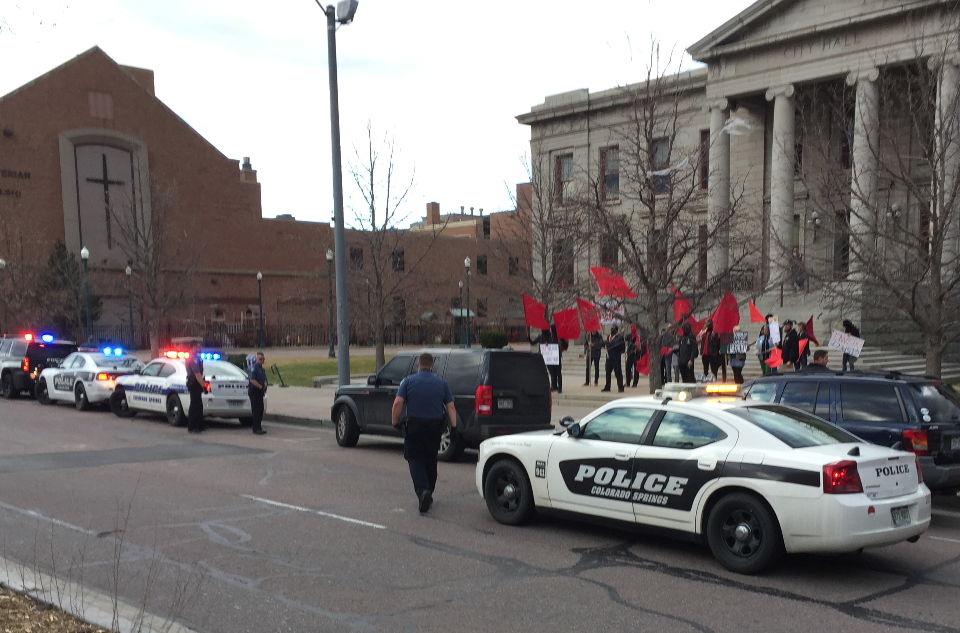
The FBI Wants You to Identify These Participatory Democracy Enthusiasts

Speaking as a street activist, I can assure you that any protester who has traveled to a demonstration in Washington DC would have stormed the Capital Building if the opportunity arose instead of being ignored outside it. Especially if the customary paramilitary posts were unattended and police undercover provocateurs were breaking the windows and doors to ease your access to an edifice that belongs to the people more than any other. Obviously the game plan was to let Trump supporters have their brief moment of unsuppressed anger, then let a “riot” discredit the outgoing party.

What a sham to accuse Trump’s would be rescuers of trespass! How dare law enforcement charge nonviolent demonstrators for the damage which their MAGA-clad plainclothes officers coordinated if not perpetrated?! An unarmed female Air Force veteran was shot dead trying to climb through a window – and who are we calling terrorists?!

Now the FBI is circulating photos of their top 37 persons of interests, wanted for violating a curfew and treading on the sanctity of our congressional den of thieves. The curfew was a blatant breach of the First Amendment and Congress is the People’s House. The demonstrators wanted to confront their pretend representatives and they did it. Trump expressed his gratitude and they earned it.

Whatever their politics, they are heroes and genuine patriots. They look funny because the FBI and the media shitshowrunners selected for cross-eyes and cro-magnon brows, but such alleged freaks showed initiative, restraint, a sense of humor, and an audacious love of their country. They braved COVID to save Democracy, they accused Congress of betraying the people and they’re not wrong. Their critics don’t have a clue, and the smarter among those let Bernie and Elizabeth Warren deliver them hook line and sinker into the fold of the Democratic Party, where status quo reigns at its ugliest. As a Biden presidency sinks in, their skin will crawl once more, and the cycle of impotent “resistance” will begin again at square one.

“Comfort Women” aren’t unique to Japan and Korea. In the US military they’re called service women.

As a South Korean court decides that Japan owes more compensation to the Korean women it abducted during WWII to serve as “Comfort Women” for the Japanese troops, Americans should own up to the reality that all militaries rely on involuntary prostitution and gang rape to motivate their soldiers.

From antiquity through the Napoleonic Wars, through America’s Civil War to its imperial conquests westward and abroad, and until World War One immobilized warfare, “comfort women” were called “camp followers.” US servicemen in Vietnam established a sex industry in Southeast Asia that is fertilized still today by veterans of all nationalities. But while America’s Defense Department outsources more and more of its functions to contractor profiteers, it has moved the sexual services in-house. This shifts the customary impact on victim populations unto another consumable pool of sexual prey called FELLOW SOLDIERS.

In brief the scheme is simple: Recruit young women, let male soldiers to rape them, replenish as needed. Mission Accomplished as they say. Among your female grunts, purge would-be careerists to ensure you are trafficking in only the age of vulnerability suited to your comfort-seekers. That perverse finess is of course the giveaway.

In the US military, 100% of women are sexually harassed or raped. Officials say the figure is 70%, or they discount attacks as cases of harassment and not rape. This allows service women who chose not to report their rapes to save face, and it ameleorates the stigma which otherwise would fall on every woman in uniform. Like the single blank bullet issued to firing squads to ease the conscience of every member allowing them to believe their gun did not chamber a live and fatal bullet. The confidential medical records say the frequency of sexual victimhood is actually 90%, but that suggestes an improbable paucity of unreported cases. In the civilian world, it’s believed that half of all rapes go unreported. Assuming a correlation, how can you have twice as many as 90%?

Besides addressing the rape culture endemic to professioonal soldiering, a remedy suggests itself in at least pretending to care about the well being of female soldiers. For a start, America’s military branches could easily relax the basic training requirements for women. The current standards, which pander to a feminist insistance on a physical equality of the genders, quickly destroy all female recruits. The same backpack weight loads of boot camp, which eventually debilitate men’s backs and knees by the time they’re 40, cripple women before they’re 25. An obscenely high percentage of women have to be med-boarded out of active duty with destroyed backs, ankles and wrists. And the female re-enlistment rate is abysmal. You’d think the army, navy, air force and marines would want to retain trained soldiers. Unless women are more valuable to them young, untrained, and uninitiated.

Comfort Women and Camp followers suffered attrition from the natural consequences of communicable disease and abuse, allowing for a regular turnover of fresh stock. Pretending your soldiers don’t consume comfort women means having to be duplicitous about where you are dumping your bodies.

CSPD Intelligence doesn’t have much

Lt. Mark ComteCOLORADO SPRINGS, COLO- Like the term Military Intelligence, “police intelligence” is an oxymoron. At least that’s the old joke. Wednesday’s hearing about the CSPD’s undercover operation against the Colo. Springs Socialists reinforced the adage. The good news is that Metro VNI, that is, Vice Narcotics & Intelligence, doesn’t have much intelligence, as in smarts, haha, OR constructive data. The impetus of CSPD’s efforts to infiltrate local activists has been to track ANTIFA, a nefarious worldwide anti-fascist organization apparently. Lieutenant Mark Comte, who heads Metro-VNI, testified to what they know so far. ANTIFA members wear black and cover their faces. When protesters do that, they’re Antifa.

Iraq War embed Rob McClure, witness to war crimes he didn’t report, suffers phantom pain in gonads he never had.


DENVER, COLORADO- Today Occupy Denver political prisoner Corey Donahue was given a nine month sentence for a 2011 protest stunt. Judge Nicole Rodarte’s unexpected harsh sentence came after the court read the victim statement of CBS4 cameraman Rob McClure, who said he still feels the trauma of the uninvited “cupping [of his] balls” while he was filming the 2011 protest encampment at the state capitol. Donahue admits that McClure was the target of a “nut-tap”, but insists it was feigned, as occupiers demonstrated their disrespect to the corporate news crews who were intent on demonizing the homeless participants even as Denver riot police charged the park. Though a 2012 jury convicted Donahue of misdemeanor unwanted sexual contact, witnesses maintain there was no physical contact.

Of course simply the implication of contact would have humiliated McClure in front of the battalion of police officers amused by the antic. That’s authentic sexual trauma, just as a high school virgin is violated when a braggart falsely claims to have of engaged them in sexual congress. Donahue was wrong, but how wrong? Can professionals who dish it out claim infirmity when the tables are turned?

Ultimately the joke was on Donahue, because his mark turned out to be far more vulnerable than his dirty job would have suggested. The CBS4 cameraman who Donahue picked on was a louse’s louse.

Off limits?
While some might assert there is no context which would excuse touching a stranger’s genital region, I’m not sure the rule of no hitting below the belt is a civility to which folks facing riot cops are in accord. Protesters can’t shoot cops, they can’t spit at cops, in fact protesters have to pull all their punches. Some would have you believe demonstrators should do no more than put daisies in police gun barrels, all the while speaking calmly with only pleasant things to say.

Let me assure you, simply to defy police orders is already a humiliation for police. What’s some pantomimed disrespect? Humiliating riot cops is the least unarmed demonstrators can do against batons and shields and pepper spray. Should the authorities’ private parts be off limits for a public’s expression of discontent? Jocks wear jock straps precisely because private parts aren’t off sides.

It’s tempting to imagine that all cops are human beings who can be turned from following orders to joining in protestations of injustice and inequity. This is of course nonsense. But it’s even more delusional to think corporate media cameras and reporters will ever take a sympathetic line to the travails of dissidents. Media crews exploit public discontent just as riot cops enjoy the overtime. Media crews gather easy stories of compelling interest from interviewees eager to have their complaints be understood.

Corey Donahue
On October 15, 2011, Rob McClure turned his camera off when the narrative wasn’t fitting the derogatory spin he wanted to put on the homeless feeding team which manned Occupy Denver’s kitchen, dubbed “The Thunderdome.” Donahue observed the cameraman’s deliberate black out of the savory versus the unsavory and reciprocated with the crowd pleasing nut-tap. In the midst of this circus, Colorado State Troopers, METRO SWAT, and city riot police charged the encampment and made two dozen arrests.

It was hours later, perhaps after reviewing police surveillance footage, that McClure conferred with police commanders and agreed to press charges for the nut-tap. Corey Donahue was one of the high visibility leaders of the crowd. He’d been involved in multiple arrests, but this time his bond would be higher and harder to post because instead of the usual anti-protest violations, Donahue would be charged with sex crime.

Ultimately Donahue sought political asylum in South America rather than face having to report for the rest of his life as a sex offender. The offense was only a misdemeanor and his trial was a miscarriage of justice. Attorney friends later convinced Donahue to return to the US because this crime was arguably not sex related and was likely to be overturned on appeal. Likewise, a sentence was unlikely to exceed time served as the “nut-tap” paled in comparison to the police brutality and excessive force which has since ensued. Neither Judge Rodarte or victim Rob McClure got the memo, and it wasn’t the first time McClure failed to frame public outcry in the context of brutal militarized repression.

It turns out McClure’s own self respect was probably way too fragile to have ventured to cast stones at the slovenly homeless occupiers.

Rob McClure
Cameraman Robert McClure had been an embedded reporter in Iraq in 2004. You might expect such a experience to have toughened him up, or expanded his empathy for critics of US authoritarian brutality, but that is to underestimate the culpability of the corporate media war drum beaters.

And McClure’s guilt ran deeper that that. According to his CBS4 bio, McClure was reporting from a major military detention center. It turns out McClure covered Abu Fucking Ghraib. In 2004 McClure’s assignment was to distort what happened there as rogue misconduct. No thanks to fuckers like McClure, the Abu Ghraib techniques were later confirmed to be standard protocol. The US torture and humiliation of prisoners was systemic.

McClure’s coverage for CBS4 specifically glorified Dr. Dave Hnida, otherwise a family physician from Littleton, but in the service of the military as a battlefield surgeon assigned to treat prisoners of war. While it sounds commendatory to attend to the health of our sworn adversaries, in practice that job involves most commonly reviving prisoners being subjected to interrogation. Hnida’s task was to keep subjects conscious for our extended depredations. Medical colleagues call those practitioners “torture docs”. They shouldn’t be celebrated. They should lose their medical licenses.

So that’s the Rob McClure who wrote Judge Rodarte to say that after all these years, having witnessed unthinkable horror and sadistic injustice, while still spinning stories to glorify American soldiers and killer cops and power-tripping jailers, the memory of Corey Donahue’s prank made his balls hurt.

DO US soldiers know what they sign up for? Horror? Mass murder? Burn pits? PTSD. Disability. Homelessness. Viagra.

It was a crass thing for Trump to say to a recent war widow, but of course it’s also fundamentally said in praise of brave men. They knew what they signed up for. But do American soldiers know what they sign up for? Not just the risk, but the horror and culpability? Did Trump voters know what they signed up for? I’ll put it to you they did not.

Trump trolls Puerto Rico, wants storm victims to clean up the mess by hand


If President Trump is as dumb as you’re sure he is, who is writing his brilliant shtick? Could the capitalist cretin in chief have projected less empathy for victims of Hurrican Maria when he responded to calls for federal disaster relief by tossing rolls of paper towels to beleaguered Puerto Ricans? These gags don’t write themselves!

Next Trump posed with military brass and told reporters the caption should be “the calm before the storm.” Asked to explain, Trump replied “you’ll see.” The phrasing is cliche, but the mise-en-scene is must see TV.

White mass shooters are not terrorists. They present no pretext for retaliation. Remember, the Global War On Terror?

Stephen Paddock sniper nest in Mandalay Bay Hotel Las Vegas
Las Vegas mass shooter Stephen Paddock is not a terrorist. That’s not because you or anyone is a racist for thinking only darker-skinned Jihadists are terrorists. “Terrorism” is a bureaucratic contrivance, as in, The Global War On Terror. It means nothing, but apparently provides legal justification to enforce American global hegemony with military strikes on “supporters of terror”. Of course it doesn’t. It’s artifice. Naturally the public wants to see the charge of terrorism applied equitably to all mass murderers who terrorize the public. Like they want to see police brutality applied liberally to white crime suspects not just black. Like they want to see children charged as adults when the media is fomenting their anger.

Terrorism is a semantic contrivance. It’s how we denounce US adversaries and their desperate means to counter our asymetric military superiority. Our bombs don’t terrorize, their hand delivered bombs do. The Nazis accused resistance fighters of being terrorists.

“Hate Speech” is another contrivance. Priests used to be allowed to burn parishoners for it, priests called it blasphemy. Secular indignants avoid calling it heresy. The Enlightenment was supposed to mark the west’s transcendance of the fear of heretics. Hate Speech is how Americans dismiss unsavory opinion. Fortunately the courts have struck down hate speech laws for what they always were, violations of the First Amendment, but the concept is still a litmus test by which the public wants to pin the ears of irritating speakers.

Likewise the term “genocide”. THAT’S a crime only other nations commit. And only when retaliation suits our agenda. After Rwanda, the UN contrived that charges of genocide mandate international action. As a result, genocide doesn’t mean genocide unless somebody wants to invade. Oil interests are currently eyeing Burma.

Terrorism, hate speech, and genocide are real things, but they are real offenses of which our government is far more culpable than you, or the random deviant individual white male mass shooter.

Does it matter then, if individuals are accused of terrorism when the state is not? I’ll offer you two examples of other contrivances. Conspiracy and racketeering. Both are heavily trafficked by our corporations and government, but easily applied to people whose enterprise authorites want to deem criminal. I just witnessed the trial of two legal reform activists, charged and convicted of both counts. When the law applies to you and not to those enforcing the law, it’s time to stop cheerleading for the prosecution.

Stephen Paddock terrorized, but who do you really fear now that he’s dead –another random white man with too many guns? I’ll wager you’re afraid of the too many guns, their too wide availability, or the purveyors, who keep assault rifles legal in the US to obfuscate the mass manufacture of guns for international arms trafficking. The weapons industry terrorizes.

Judged by intent, the common wife beater is a terrorist. No question, but see? The distinction is unhelpful. How about we call Stephen Paddock a SNIPER. He was that. The Route 91 concert venue was his paramilitary free-fire zone. Paddock may now hold the world record for most American citizens sniped, but his feat pales as uniformed North American white male snipers go.

POW-MIA. Not forgotten or forgiven.


The POW-MIA flag used to represent a renegade popular sentiment that our military wasn’t taking seriously the American soldiers left behind in Vietnam. Now the same flag flies from the flapoles of federal buildings like VA facilities. I think the cultural fixation on foresaken warriors is a Freudian reflection of our nation’s moral conscience. Indead our better self is a Prisoner Of War. Likewise Missing In Action. America you ARE forgotten, and I’ll add not forgiven.

Of course it was the 7th cavalry at Nogun Ri

Even the rightest wing-est extremist in Texas don’t hold a candle to Some Colorado Wingnuts, the ones who call Natives “prairie niggers” or “wagon burners”, especially when any negative reviews of the Seventh Cavalry massacres. Like Wounded knee, a vengeance quest for Custer and a bunch of his homicidal lunatic troopers got their own asses sent to Hell. And before that, at the Little Ouachita, murdering men, women and children at a mostly Cheyenne winter encampment. Must not criticize heroic asswipes like Custer. Oh, that song they adopted, Garryowen, that’s about a really rowdy  custom (performed by the lads of Garryowen, a town in Ireland) of getting drunk and beating up on cops. Anyhoo, I got this from Wiki because it’s easy. Sue me. It’s about another massacre and why the people of Korea aren’t as enthusiastic about the U.S. Big Brother as the South Korean Government. Hint: it’s because the corrupt U.S. Government pays the S. Korean Puppet Government to pretend to like us.

The No Gun Ri massacre (Hangul??? ??? ?? ??; Hanja?????????; RRNogeun-ri minganin haksal sageon) occurred on July 26–29, 1950, early in the Korean War, when an undetermined number of South Korean refugees were killed in a U.S. air attack and by small- and heavy-weapons fire of the 7th U.S. Cavalry at a railroad bridge near the village of Nogeun-ri (Korean: ???), 100 miles (160 km) southeast of Seoul. In 2005, a South Korean government inquest certified the names of 163 dead or missing and 55 wounded, and added that many other victims’ names were not reported. The South Korean government-funded No Gun Ri Peace Foundation estimated in 2011 that 250–300 were killed, mostly women and children.

The incident was little-known outside Korea until publication of an Associated Press (AP) story in 1999 in which 7th Cavalry veterans corroborated survivors’ accounts. The AP also uncovered declassified U.S. Army orders to fire on approaching civilians because of reports of North Korean infiltration of refugee groups. Some details were disputed, but the massacre account was found to be essentially correct. In 2001, the U.S. Army conducted an investigation and, after previously rejecting survivors’ claims, acknowledged the killings, but described the three-day event as “an unfortunate tragedy inherent to war and not a deliberate killing”. The army rejected survivors’ demands for an apology and compensation. United States President Bill Clinton issued a statement of regret, adding the next day that “things happened which were wrong”.

South Korean investigators disagreed with the U.S. report, saying that they believed that 7th Cavalry troops were ordered to fire on the refugees. The survivors’ group called the U.S. report a “whitewash”. The AP later discovered additional archival documents showing that U.S. commanders ordered troops to “shoot” and “fire on” civilians at the war front during this period; these declassified documents had been found but not disclosed by the Pentagon investigators. American historian Sahr Conway-Lanz reported that among the undisclosed documents was a letter from the U.S. ambassador in South Korea stating that the U.S. military had adopted a theater-wide policy of firing on approaching refugee groups. Despite demands, the U.S. investigation was not reopened.

Prompted by the exposure of No Gun Ri, survivors of similar alleged incidents from 1950–51 filed reports with the Seoul government. In 2008, an investigative commission said more than 200 cases of alleged large-scale killings by the U.S. military had been registered, mostly air attacks

If you’re a vet from that arena, and was above the rank of captain at the time, I won’t give two thirds of a sex act about your damn feelings.

Colo. Springs police disperse March 26 anti-imperialism rally because it was easier than listening to socialists

Colorado Springs Socialists
COLORADO SPRINGS, CO- Local socialists assembled at City Hall on Sunday to “March Against Imperialism”. After a brief march and an half-hour rally while encircled by CSPD, the socialists were informed they were “free to carry on with their assembly” but whoever lingered would be issued a citation for having been in the street. Making no distinction for who had and who hadn’t, the police began handcuffing participants and the couple dozen others quickly dispersed. Five socialists were issued citations for “pedestrian in the highway” and “failure to disperse” while another was arrested and detained for failing to show an ID while filming the police. That person was taken to the downtown police station and held until officers finally informed her of the charges for which she was being cited, after which she identified herself. Throughout her detainment, multiple officers kept up a harassment of questions, refusing her requests that she contact her lawyer. CSPD never issued an order to disperse, a fact that is borne out by witness video. But in effect that is what the officers accomplished. They threatened the legal assembly with citations, for failure to disperse!

CSPD cruiser gunboat diplomacy

It made a funny scene. Around thirty self-declared socialists, blockaded by eight sometimes more CSPD cruisers, in a standoff that lasted until the police lost their patience. Socialists spoke against imperialism, the police officers being their main audience that quiet Sunday downtown. Immediately as the march had ended the police had announced that anyone stepping back into the street would be arrested, and so no one did. But a half-hour of speeches proved too much for the officers to bear and so they interjected again, this time to discuss the problem they had with what had happened earlier. We told those officers they were of course free to discuss such matters individually with whoever they considered a person of interest, BUT AFTERWARD, because they were otherwise interrupting our legal assembly. But the officers persisted in their interruption, deciding after the fact what charges to bring, regardless that they’d forgotten to provide the evidence to back them up. “See you in court” they laughed! We’ve heard that before.

On a serious note. What happened Sunday could have a chilling effect on the nascent kick-ass Colorado Springs Socialists. Unwarranted police attention is an unhappy tradition for socialist organizers, from anarchists to trade unions. Sunday’s denouement confirms all their parents’ worst worries, the folly of declaring yourself to be a socialist in a regressive backwater like Colorado Springs. People were arrested? Handcuffed?! Now you’re on a police watch list! I remember my father’s alarm when he learned his college sophmore had a subscription to Mother Jones Magazine.

Fun as it was, Sunday’s event was essentially uneventful: no altercations, no property damage, not even rhetoric to threaten infrastructure. Minus any media attention, or much of an audience at all on a sleepy Sunday evening, these socialists were determined to parade their dissent where and how those around could see, and reaped more law enforcement than the circumstances required.

While you might say the outcome was predictable, it needn’t have been. Students from the wealthier Colorado College have free range on downtown streets, protesting racism or election outcomes on the street without arrests or citations. Every full moon CC students ride the length of downtown’s main street on bike, skate or skateboard, without even police escort. Sunday’s fledgeling socialist organization is a student club of the UCCS campus. UCCS is more working class, for many a commuter campus, and obviously isn’t shown any deference by city administrators.

Compared to the liberal arts curriculum of Colorado College. UCCS is considered more conservative. UCCS hosts business and military related classes. It even has a Brazil-esque Department of Homeland Security -um- Department. So I think it’s all the more admirable that UCCS has spawned a bonafide socialist group that dwarfs even their school’s Young Republican franchise. I’ve no doubt those socialists I met on Sunday will not be cowed by CSPD’s preemptive aggressions. Hopefully their more timid members will take heart.

Public protests are regularly given use of the streets, which like parks are considered traditional free speech zones. The Tea Party and Occupy took to the streets of Colorado Springs without incurring arrests. More recently people have marched for Black Lives Matter and for solidarity with Native Americans fighting oil pipelines. These have produced zero arrests.

In the meantime it will be important to debrief on what happened and unify the legal strategies. All defendants face the traffic offense of being a pedestrian on the highway [sic] and the misdemeanor of failure to disperse, no doubt tacked on to be a droppable charge as fodder for plea bargains. The recalcitrant videographer faces an added charge of misdemeanor interference for failing to produce her ID. They give her no extra credit for providing a pretext for interrogation because she wouldn’t say zilch without a lawyer present, except to explain where and when they were violating her rights. It used to be that cops had to read us our rights.

Police can issue all the tickets they want when there’s probable cause. They can’t threaten to issue tickets for the solitary purpose of disbanding a legal assembly. In the end, the only socialists who got citations were punished not for being in the street but for standing their ground in front of City Hall.

Colo. US District Court judge enjoins DIA to limit restriction of free speech (grants our preliminary injunction!)

Plaintiffs Nazli McDonnell and Eric Verlo
DENVER, COLORADO- If your civil liberties have ever been violated by a cop, over your objections, only to have the officer say “See you in court”, this victory is for YOU! On January 29 we were threatened with arrest for protesting the “Muslim Ban” at Denver International Airport. We argued that our conduct was protected speech and that they were violating our rights. They dismissed our complaints with, in essense: “That’s for a court to decide.” And today IT HAS! On Feb 15 we summoned the cops to federal court and this morning, Feb 22, US District Court Judge William Martinez granted our preliminary injunction, severely triming DIA’s protest permit process. In a nutshell: no restrictions on signs, size of assemblies or their location within the main terminal (so long as the airport’s function is not impeded). Permits are still required but with 24 hours advance notice, not seven days. Below is Judge Martinez’ 46-page court order in full:

Document 29 Filed 02/22/17 USDC Colorado

IN THE UNITED STATES DISTRICT COURT
FOR THE DISTRICT OF COLORADO

Judge William J. Martínez

Civil Action No. 17-cv-0332-WJM-MJW

NAZLI MCDONNELL, and
ERIC VERLO,

Plaintiffs,

v.

CITY AND COUNTY OF DENVER,?
DENVER POLICE COMMANDER ANTONIO LOPEZ,
in his individual and official capacity, and?
DENVER POLICE SERGEANT VIRGINIA QUIÑONES,
in her individual and official capacity,

Defendants.

________________________________________________________

ORDER GRANTING PRELIMINARY INJUNCTION IN PART
________________________________________________________

Plaintiffs Nazli McDonnell (“McDonnell”) and Eric Verlo (“Verlo”) (together, “Plaintiffs”) sue the City and County of Denver (“Denver”), Denver Police Commander Antonio Lopez (“Lopez”) and Denver Police Sergeant Virginia Quiñones (“Quiñones”) (collectively, “Defendants”) for allegedly violating Plaintiffs’ First and Fourteenth Amendment rights when they prevented Plaintiffs from protesting without a permit in the Jeppesen Terminal at Denver International Airport (“Airport” or “Denver Airport”). (ECF No. 1.) Currently before the Court is Plaintiffs’ Motion for Preliminary Injunction, which seeks to enjoin Denver from enforcing some of its policies regarding demonstrations and protests at the Airport. (ECF No. 2.) This motion has been fully briefed (see ECF Nos. 2, 20, 21, 23) and the Court held an evidentiary hearing on February 15, 2017 (“Preliminary Injunction Hearing”).

For the reasons explained below, Plaintiffs’ Motion is granted to the following limited extent:

• Defendants must issue an expressive activity permit on twenty-four hours’ notice in circumstances where an applicant, in good faith, seeks a permit for the purpose of communicating topical ideas reasonably relevant to the purposes and mission of the Airport, the immediate importance of which could not have been foreseen seven days or more in advance of the commencement of the activity for which the permit is sought, or when circumstances beyond the control of the permit applicant prevented timely filing of the application; ?

• Defendants must make all reasonable efforts to accommodate the applicant’s preferred demonstration location, whether inside or outside of the Jeppesen Terminal, so long as the location is a place where the unticketed public is normally allowed to be; ?

• Defendants may not enforce Denver Airport Regulation 50.09’s prohibition against “picketing” (as that term is defined in Denver Airport Regulation 50.02-8) within the Jeppesen Terminal; and ?

• Defendants may not restrict the size of a permit applicant’s proposed signage beyond that which may be reasonably required to prevent the impeding of the normal flow of travelers and visitors in and out of Jeppesen Terminal; and specifically, Defendants may not enforce Denver Airport Regulation 50.08-12’s requirement that signs or placards be no larger than one foot by one foot. ??

Any relief Plaintiffs seek beyond the foregoing is denied at this phase of the case. In particular, the Court will not require the Airport to accommodate truly spontaneous demonstrations (although the Airport remains free to do so); the Court will not require the Airport to allow demonstrators to unilaterally determine the location within the Jeppesen Terminal that they wish to demonstrate; and the Court will not strike down the Airport’s usual seven-day notice-and-permit requirement as unconstitutional in all circumstances.

I. FINDINGS OF FACT

Based on the parties’ filings, and on the documentary and testimonial evidence received at the evidentiary hearing, the Court makes the following findings of fact for purposes of resolving Plaintiffs’ Motion.?

A. Regulation 50

Pursuant to Denver Municipal Code § 5-16(a), Denver’s manager of aviation may “adopt rules and regulations for the management, operation and control of [the] Denver Municipal Airport System, and for the use and occupancy, management, control, operation, care, repair and maintenance of all structures and facilities thereon, and all land on which [the] Denver Municipal Airport System is located and operated.” Under that authority, the manager of aviation has adopted “Rules and Regulations for the Management, Operation, Control, and Use of the Denver Municipal Airport System.” See https://www.flydenver.com/about/administration/rules_regulations (last accessed Feb. 16, 2017). Part 50 of those rules and regulations governs picketing, protesting, soliciting, and similar activities at the Airport. See https://www.flydenver.com/sites/default/files/rules/50_leafleting.pdf (last accessed Feb. 16, 2017). The Court will refer to Part 50 collectively as “Regulation 50.”

The following subdivisions of Regulation 50 are relevant to the parties’ current dispute:

Regulation 50.03: “No person or organization shall leaflet, conduct surveys, display signs, gather signatures, solicit funds, or engage in other speech related activity at Denver International Airport for religious, charitable, or political purposes, or in connection with a labor dispute, except pursuant to, and in compliance with, a permit for such activity issued by the CEO [of the Airport] or his or her designee. . . .” ?

Regulation 50.04-1: “Any person or organization desiring to leaflet, display signs, gather signatures, solicit funds, or engage in other speech related activity at Denver International Airport for religious, charitable, or political purposes, or in connection with a labor dispute, shall complete a permit application and submit it during regular business hours, at least seven (7) days prior to the commencement of the activity for which the permit is sought and no earlier than thirty (30) days prior to commencement of the activity. The permit application shall be submitted using the form provided by the Airport. The applicant shall provide the name and address of the person in charge of the activity, the names of the persons engaged in the activity, the nature of the activity, each location at which the activity is proposed to be conducted, the purpose of the activity, the hours during which the activity is proposed to be conducted, and the beginning and end dates of such activity. A labor organization shall also identify the employer who is the target of the proposed activity.”

Regulation 50.04-3: “Upon presentation of a complete permit application ?and all required documentation, the CEO shall issue a permit to the applicant, if there is space available in the Terminal, applying only the limitations and regulations set forth in this Rule and Regulation . . . . Permits shall be issued on a first come-first served basis. No permits shall be issued by the CEO for a period of time in excess of thirty-one (31) days.” ?

Regulation 50.04-5: “In issuing permits or allocating space, the CEO shall not exercise any discretion or judgment regarding the purpose or content of the proposed activity, except as provided in these Rules and Regulations. The issuance of a permit is a strictly ministerial function and does not constitute an endorsement by the City and County of Denver of any organization, cause, religion, political issue, or other matter.” ?

Regulation 50.04-6: “The CEO may move expressive activity from one location to another and/or disperse such activity around the airport upon reasonable notice to each affected person when in the judgment of the CEO such action is necessary for the efficient and effective operation of the transportation function of the airport.” ?

Regulation 50.08-12: “Individuals and organizations engaged in leafleting, solicitation, picketing, or other speech related activity shall not: * * * [w]ear or carry a sign or placard larger than one foot by one foot in size . . . .” (underscoring in original).

Regulation 50.09: “Picketing not related to a labor dispute is prohibited in ?all interior areas of the Terminal and concourses, in the Restricted Area, and on all vehicular roadways, and shall not be conducted by more than two (2) persons at any one location upon the Airport.” ?

Regulation 50.02-8: “Picketing shall mean one or more persons marching or stationing themselves in an area in order to communicate their position on a political, charitable, or religious issue, or a labor dispute, by displaying one or more signs, posters or similar devices” (underscoring in original).

The Airport receives about forty-five permit requests a year. No witness at the Preliminary Injunction Hearing (including Airport administrators who directly or indirectly supervise the permit process) could remember an instance in which a permit had been denied.

?Although there is no formal written, prescribed procedure for requesting expedited treatment of permit requests, the Airport not infrequently processes such requests and issues permits in less than seven days. Last November, less than seven days before Election Day, the Airport received a request from “the International Machinists” 1 to stage a demonstration ahead of the election. The Airport was able to process that request in two days and thereby permit the demonstration before Election Day.
?
——————————
1 Presumably, the International Association of Machinists and Aerospace Workers. ?
———————

B. The Executive Order

On Friday, January 27, 2017, President Trump signed Executive Order 13769 (“Executive Order”). See 82 Fed. Reg. 8977. The Executive Order, among other things, established a 90-day ban on individuals from seven Muslim-majority countries from entering the United States, a 120-day suspension of all refugee admissions, and an indefinite suspension of refugee admissions from Syria. Id. §§ 3(c), 5(a), 5(c). “The impact of the Executive Order was immediate and widespread. It was reported that thousands of visas were immediately canceled, hundreds of travelers with such visas were prevented from boarding airplanes bound for the United States or denied entry on arrival, and some travelers were detained.” Washington v. Trump, ___ F.3d. ___, ___, 2017 WL 526497, at *2 (9th Cir. Feb. 9, 2017). As is well known, demonstrators and attorneys quickly began to assemble at certain American airports, both to protest the Executive Order and potentially to offer assistance to travelers being detained upon arrival.?

C. The January 28 Protest at the Denver Airport

Shortly after 1:00 p.m. on the following day—Saturday, January 28, 2017— Airport public information officer Heath Montgomery e-mailed Defendant Lopez, the police commander responsible for Denver’s police district encompassing the Airport. Lopez was off-duty at the time. Montgomery informed Lopez that he had received media inquiries about a protest being planned for the Airport later that day, and that no Regulation 50 permit had been issued for such a protest.

Not knowing any details about the nature or potential size of the protest, and fearing the possibility of “black bloc” and so-called “anarchist activities,” Lopez coordinated with other Denver Police officials to redeploy Denver Police’s gang unit from their normal assignments to the Airport. Denver Police also took uniformed officers out of each of the various other police districts and redeployed them to the Airport. Lopez called for these reinforcements immediately in light of the Airport’s significant distance from any other police station or normal patrol area. Lopez knew that if an unsafe situation developed, he could not rely on additional officers being able to get to the Airport quickly.

Through his efforts, Lopez was eventually able to assemble a force of about fifty officers over “the footprint of the entire airport,” meaning inclusive of all officers already assigned to the Airport who remained on their normal patrol duties. Lopez himself also came out to the Airport.

In the meantime, Montgomery had somehow learned of an organization known as the Colorado Muslim Connection that was organizing protesters through Facebook. Montgomery reached out to this organization through the Airport’s own Facebook account and informed them of Regulation 50’s permit requirement. (Ex. 32.) One of the Colorado Muslim Connection’s principals, Nadeen Ibrahim, then e-mailed Montgomery “to address the permit.” (Ex. 30.) Ibrahim told Montgomery:

The group of people we have will have a peaceful assembly carrying signs saying welcome here along with a choir and lots of flowers. Our goal is to stand in solidarity with our community members that have been detained at the airports since the signing of the executive order, though they do have active, legal visas/green cards. Additionally, we would like to show our physical welcoming presence for any newly arriving Middle Eastern sisters and brothers with visas. We do not intend to block any access to [the Airport].

(Id.) Montgomery apparently did not construe this e-mail as a permit request, or at least not a properly prepared one, and stated that “Denver Police will not allow a protest at the airport tonight. We are willing to work with you like any other group but there is a formal process for that.” (Id.)

Nonetheless, protesters began to assemble in the late afternoon and early evening in the Airport’s Jeppesen Terminal, specifically in the multi-storied central area known as the “Great Hall.” The Great Hall is a very large, rectangular area that runs north and south. The lower level of the Great Hall (level 5) has an enormous amount of floor space, and is ringed with offices and some retail shops, but the floor space itself is largely taken up by security screening facilities for departing passengers. The only relatively unobstructed area on level 5 is the middle third, which is currently designed primarily as a location for “meeters-and-greeters,” i.e., individuals waiting for passengers arriving from domestic flights who come up from the underground train connecting the Jeppesen Terminal with the various concourses. There is a much smaller meeters-and-greeters waiting area at the north end of level 5, where international arrivals exit from customs screening.

The upper level of the Great Hall (level 6) has much less floor space than level 5 given that it is mostly open to level 5 below. It is ringed with retail shops and restaurants. At its north end is a pedestrian bridge to and from the “A” concourse and its separate security screening area.

Given this design, every arriving and departing passenger at the Airport (i.e., all passengers except those only connecting through Denver), and nearly every other person having business at the airport (including employees, delivery persons, meeters-and-greeters, etc.), must pass through some portion of the Great Hall. In 2016, the Airport served 58.3 million passengers, making it the sixth busiest airport in the United States and the eighteenth busiest in the world. Approximately 36,000 people also work at the airport.

The protesters who arrived on the evening of January 28 largely congregated in the middle third of the Great Hall (the domestic-arrivals meeter-and-greeter area). The protesters engaged in singing, chanting, praying, and holding up signs. At least one of them had a megaphone.

The size of the protest at its height is unclear. The witnesses at the evidentiary hearing gave varying estimates ranging from as low as 150 to as high as 1,000. Most estimates, however, centered in the range of about 200. Lopez, who believed that the protest eventually comprised about 300 individuals, did not believe that his fifty officers throughout the Airport were enough to ensure safety and security for that size of protest, even if he could pull all of his officers away from their normal duties.

Most of the details of the January 28 protest are not relevant for present purposes. Suffice it to say that Lopez eventually approached those who appeared to be the protest organizers and warned them multiple times that they could be arrested if they continued to protest without a permit. Airport administration later agreed to allow the protest to continue on “the plaza,” an area just outside the Jeppesen Terminal to its south, between the Terminal itself and the Westin Hotel. Protesters then moved to that location, and the protest dispersed later in the evening. No one was arrested and no illegal activity stemming from the protest (e.g., property damage) was reported, nor was there any report of disruption to travel operations or any impeding of the normal flow of travelers and visitors in and out of Jeppesen Terminal.

D. The January 29 Protest at the Denver Airport

Plaintiffs disagree strongly with the Executive Order and likewise wished to protest it, but, due to their schedules, were unable to participate in the January 28 protest. They decided instead to go to the Airport on the following day, Sunday, January 29. They came that afternoon and stationed themselves at a physical barrier just outside the international arrival doors at the north end of the Great Hall, level 5. They each held up a sign of roughly poster board size expressing a message of opposition to the Executive Order and solidarity with those affected by it. (See Exs. 2, 4, M.)

Plaintiffs were soon approached by Defendant Quiñones, who warned them that they could be arrested for demonstrating without a permit. Plaintiffs felt threatened, as well as disheartened that they could not freely exercise their First Amendment rights then and there. Plaintiffs felt it was important to be demonstrating both at that particular time, given the broad news coverage of the effects of the Executive Order, and at that particular place (the international arrivals area), given a desire to express solidarity with those arriving directly from international destinations—whom Plaintiffs apparently assumed would be most likely to be affected by the Executive Order in some way.

Plaintiffs left the Airport later that day without being arrested, and without incident. They have never returned to continue their protest, nor have they applied for a permit to do so.

E. Permits Since Issued

The airport has since issued permits to demonstrators opposed to the Executive Order. At least one of these permits includes permission for four people to demonstrate in the international arrivals area, where Plaintiffs demonstrated on January 29.

II. REQUESTED INJUNCTION

Plaintiffs have never proposed specific injunction language. In their Motion, they asked for “an injunction prohibiting their arrest for standing in peaceful protest within Jeppesen Terminal and invalidating Regulation 50 as violative of the First and Fourteenth Amendments to the United States Constitution.” (ECF No. 2 at 4.) At the Preliminary Injunction Hearing, Plaintiffs’ counsel asked the Court to enjoin Defendants (1) “from arresting people for engaging in behavior that the plaintiffs or people similarly situated were engaging in,” (2) from enforcing Regulation 50.09 (which forbids non- labor demonstrators from holding up signs within the Jeppesen Terminal), and (3) from administering Regulation 50 without an “exigent circumstances exception.” Counsel also argued that requiring a permit application seven days ahead of time is unconstitutionally long in any circumstance, exigent or not.

III. LEGAL STANDARD

A. The Various Standards

In a sense, there are at least three preliminary injunction standards. The first, typically-quoted standard requires: (1) a likelihood of success on the merits, (2) a threat of irreparable harm, which (3) outweighs any harm to the non-moving party, and (4) that the injunction would not adversely affect the public interest. See, e.g., Awad v. Ziriax, 670 F.3d 1111, 1125 (10th Cir. 2012).

If, however, the injunction will (1) alter the status quo, (2) mandate action by the defendant, or (3) afford the movant all the relief that it could recover at the conclusion of a full trial on the merits, a second standard comes into play, one in which the movant must meet a heightened burden. See O Centro Espirita Beneficiente Uniao do Vegetal v. Ashcroft, 389 F.3d 973, 975 (10th Cir. 2004) (en banc). Specifically, the proposed injunction “must be more closely scrutinized to assure that the exigencies of the case support the granting of a remedy that is extraordinary even in the normal course” and “a party seeking such an injunction must make a strong showing both with regard to the likelihood of success on the merits and with regard to the balance of harms.” Id.

On the other hand, the Tenth Circuit also approves of a

modified . . . preliminary injunction test when the moving party demonstrates that the [irreparable harm], [balance of harms], and [public interest] factors tip strongly in its favor. In such situations, the moving party may meet the requirement for showing [likelihood of] success on the merits by showing that questions going to the merits are so serious, substantial, difficult, and doubtful as to make the issue ripe for litigation and deserving of more deliberate investigation.

Verlo v. Martinez, 820 F.3d 1113, 1128 n.5 (10th Cir. 2016). This standard, in other words, permits a weaker showing on likelihood of success when the party’s showing on the other factors is strong. It is not clear how this standard would apply if the second standard also applies.

In any event, “a preliminary injunction is an extraordinary remedy,” and therefore “the right to relief must be clear and unequivocal.” Greater Yellowstone Coal. v. Flowers, 321 F.3d 1250, 1256 (10th Cir. 2003).

B. Does Any Modified Standard Apply?

The status quo for preliminary injunction purposes is “the last peaceable uncontested status existing between the parties before the dispute developed.” Schrier v. Univ. of Colo., 427 F.3d 1253, 1260 (10th Cir. 2005) (internal quotation marks omitted). By asking that portions of Regulation 50 be invalidated, Plaintiffs are seeking to change the status quo. Therefore they must make a stronger-than-usual showing on likelihood of success and the balance of harms.

IV. ANALYSIS

A. Irreparable Harm as it Relates to Standing

Under the circumstances, the Court finds it appropriate to begin by discussing the irreparable harm element of the preliminary injunction test as it relates Plaintiffs’ standing to seek an injunction.

Testimony at the Preliminary Injunction Hearing revealed that certain groups wishing to protest the Executive Order have since applied for and obtained permits. Thus, Plaintiffs could get a permit to demonstrate at the airport on seven days’ advance notice—although Regulation 50.09 would still prohibit them from demonstrating by wearing or holding up signs. In addition, as discussed in more detail below (Part IV.B.3.c), Plaintiffs could potentially get a permit to hold a protest parade on public streets in the City and County of Denver with as little as 24 hours’ notice. And as far as the Court is aware, the two Plaintiffs may be able to stand on any public street corner and hold up signs without any prior notice or permit requirement. Thus, Plaintiffs’ alleged irreparable harm must be one or both of the following: (1) the prospect of not being able to demonstrate specifically at the airport on less than seven days’ notice, or (2) the inability to picket in opposition to the government action they oppose—that is, the inability to hold up “signs, posters or similar devices” while engaging in expressive activity at the airport. The Court finds that the second of these options is a fairly traditional allegation of First Amendment injury—even if they do apply for and obtain a permit, by the express terms of Regulation 50.09 Plaintiffs will not be allowed to carry or hold up signs, posters, or the like. The first option, however, requires more extensive discussion and analysis.

The rapidly developing situation that prompted Plaintiffs to go to the Airport on January 29 has since somewhat subsided. The Executive Order remains a newsworthy topic, but a nationwide injunction now prevents its enforcement, see Washington, ___ F.3d at ___, 2017 WL 526497, at *9, and—to the Court’s knowledge—none of the most urgent effects that led to airport-based protests, such as individuals being detained upon arrival, have since repeated themselves. Nonetheless, the circumstances that prompted this lawsuit reveal a number of unassailable truths about “freedom of speech . . . [and] the right of the people peaceably to assemble, and to petition the government for a redress of grievances.” U.S. Const. amend. I.

One indisputable truth is that the location of expressive activity can have singular First Amendment significance, or as the Tenth Circuit has pithily put it: “Location, location, location. It is cherished by property owners and political demonstrators alike.” Pahls v. Thomas, 718 F.3d 1210, 1216 (10th Cir. 2013). The ability to convey a message to a particular person is crucial, and that ability often turns entirely on location.

Thus, location has specifically been at issue in a number of First Amendment decisions. See, e.g., McCullen v. Coakley, 134 S. Ct. 2518, 2535 (2014) (abortion protesters’ ability to approach abortion clinic patrons within a certain distance); Pahls, 718 F.3d at 1216–17 (protesters’ ability to be in a location where the President could see them as his motorcade drove past); Citizens for Peace in Space v. City of Colo. Springs, 477 F.3d 1212, 1218–19 (10th Cir. 2007) (peace activists’ ability to be near a hotel and conference center where a NATO conference was taking place); Tucker v. City of Fairfield, 398 F.3d 457, 460 (6th Cir. 2005) (labor protesters’ ability to demonstrate outside a car dealership); Friends of Animals, Inc. v. City of Bridgeport, 833 F. Supp. 2d 205, 207–08 (D. Conn. 2011) (animal rights protesters’ ability to protest near a circus), aff’d sub nom. Zalaski v. City of Bridgeport Police Dep’t, 475 F. App’x 805 (2d Cir. 2012).

Another paramount truth is that the timing of expressive activity can also have irreplaceable First Amendment value and significance: “simple delay may permanently vitiate the expressive content of a demonstration.” NAACP, W. Region v. City of Richmond, 743 F.2d 1346, 1356 (9th Cir. 1984); see also American-Arab Anti-Discrimination Comm. v. City of Dearborn, 418 F.3d 600, 605 (6th Cir. 2005) (“Any notice period is a substantial inhibition on speech.”); Church of Am. Knights of Ku Klux Klan v. City of Gary, 334 F.3d 676, 682 (7th Cir. 2003) (“given that . . . political demonstrations are often engendered by topical events, a very long period of advance notice with no exception for spontaneous demonstrations unreasonably limits free speech”); Douglas v. Brownell, 88 F.3d 1511, 1524 (8th Cir. 1996) (“The five-day notice requirement restricts a substantial amount of speech that does not interfere with the city’s asserted goals of protecting pedestrian and vehicle traffic, and minimizing inconvenience to the public.”).

This case provides an excellent example of this phenomena given that —whether intentionally or not— the President’s announcement of his Supreme Court nomination on January 31 (four days after signing the Executive Order) permitted the President to shift the media’s attention to a different topic of national significance. Thus, the inability of demonstrators to legally “strike while the iron’s hot” mattered greatly in this instance. Cf. City of Gary, 334 F.3d at 682 (in the context of a 45-day application period for a parade, noting that “[a] group that had wanted to hold a rally to protest the U.S. invasion of Iraq and had applied for a permit from the City of Gary on the first day of the war would have found that the war had ended before the demonstration was authorized”).

These principles are not absolute, however, nor self-applying. The Court must analyze them in the specific context of the Airport. But for present purposes, the Court notes that the Plaintiffs’ alleged harm of being unable to protest at a specific location on short notice states a cognizable First Amendment claim. In addition, by its very nature, this is the sort of claim that is “capable of repetition, yet evading review.” S. Pac. Terminal Co. v. Interstate Commerce Comm’n, 219 U.S. 498, 515 (1911). Here, “the challenged action”—enforcement of the seven-day permit requirement during an event of rapidly developing significance —“was in its duration too short to be fully litigated prior to its cessation or expiration.” Weinstein v. Bradford, 423 U.S. 147, 149 (1975). Further, “there [is] a reasonable expectation that the same complaining party would be subjected to the same action again.” Id. More specifically, the Court credits Plaintiffs’ testimony that they intend to return to the Airport for future protests, and, given continuing comments by the Trump Administration that new immigration and travel- related executive orders are forthcoming, the Court agrees with Plaintiffs that it is reasonably likely a similar situation will recur —i.e., government action rapidly creating consequences relevant specifically to the Airport.

Thus, although the prospect of being unable to demonstrate at the Airport on short notice is not, literally speaking, an “irreparable harm” (because the need for such demonstration may never arise again), it is nonetheless a sufficient harm for purposes of standing and seeking a preliminary injunction.

The Court now turns to the heart of this case—whether Plaintiffs are likely to succeed on the merits of their claims. Following that, the Court will reprise the irreparable harm analysis in the specific context of the likelihood-of-success findings.

B. Likelihood of Success on the Merits

Evaluating likelihood of success requires evaluating the substantive merit of Plaintiffs’ claim that Regulation 50, or any portion of it, violates their First Amendment rights. To answer this question, the Supreme Court prescribes the following analysis:

1. Is the expression at issue protected by the First Amendment? ?

2. If so, is the location at issue a traditional public forum, a designated public ?forum, or a nonpublic forum? ?

3. If the location is a traditional or designated public forum, is the ?government’s speech restriction narrowly tailored to meet a compelling ?state interest? ?

4. If the location is a nonpublic forum, is the government’s speech restriction ? ?reasonable in light of the purpose served by the forum, and viewpoint neutral?

See Cornelius v. NAACP Legal Def. & Educ. Fund, Inc., 473 U.S. 788, 797–806 (1985).

The Court will address these inquiries in turn.

1. Does the First Amendment Protect Plaintiffs’ Expressive Conduct?

The Court “must first decide whether [the speech at issue] is speech protected by the First Amendment, for, if it is not, we need go no further.” Id. at 797. There appears to be no contest that the sorts of activities Plaintiffs attempted to engage in at the Airport (including holding up signs) are expressive endeavors protected by the First Amendment. Accordingly, the Court deems it conceded for preliminary injunction purposes that Plaintiffs are likely to succeed on this element of the Cornelius analysis.

2. Is the Jeppesen Terminal a Public Forum (Traditional or Designated)?

The Court must next decide whether the Jeppesen Terminal is a public forum:

. . . the extent to which the Government can control access [to government property for expressive purposes] depends on the nature of the relevant forum. Because a principal purpose of traditional public fora is the free exchange of ideas, speakers can be excluded from a public forum only when the exclusion is necessary to serve a compelling state interest and the exclusion is narrowly drawn to achieve that interest. Similarly, when the Government has intentionally designated a place or means of communication as a public forum[,] speakers cannot be excluded without a compelling governmental interest. Access to a nonpublic forum, however, can be restricted as long as the restrictions are reasonable and are not an effort to suppress expression merely because public officials oppose the speaker’s view.

Id. at 800 (citations and internal quotation marks omitted; alterations incorporated).

a. Is the Jeppesen Terminal a Traditional Public Forum??

Plaintiffs claim that “[t]he Supreme Court has not definitively decided whether airport terminals . . . are public forums.” (ECF No. 2 at 7.) This is either an intentional misstatement or a difficult-to-understand misreading of the most relevant case (which Plaintiffs repeatedly cite), International Society for Krishna Consciousness, Inc. v. Lee, 505 U.S. 672, 679 (1992) (“Lee”).

The plaintiffs in Lee were disseminating religious literature and soliciting funds at the airports controlled by the Port Authority of New York and New Jersey (JFK, LaGuardia, and Newark). Id. at 674–75. By regulation, however, the Port Authority prohibited “continuous or repetitive” person-to-person solicitation and distribution of literature. Id. at 675–76. The Second Circuit held that the airports were not public fora and that the regulation was reasonable as to solicitation but not as to distribution. Id. at 677. The dispute then went to the Supreme Court, which granted certiorari specifically “to resolve whether airport terminals are public fora,” among other questions. Id.

The Court answered the public forum question in the negative. Relying on the historical use of airport terminals generally, the Court found that “the tradition of airport activity does not demonstrate that airports have historically been made available for speech activity.” Id. at 680. “Nor can we say,” the Court continued, “that these particular terminals, or airport terminals generally, have been intentionally opened by their operators to such activity; the frequent and continuing litigation evidencing the operators’ objections belies any such claim.” Id. at 680–81. Then, invoking the reasonableness test that applies to government regulation of nonpublic fora, the Court affirmed the Second Circuit’s holding that the solicitation ban was reasonable. Id. at 683–85.

Five justices (Rehnquist, White, O’Connor, Scalia, and Thomas) joined all of the major rulings regarding the solicitation ban, including the nonpublic forum status of airport terminals and the reasonableness of the ban. The outcome regarding the distribution ban, however, commanded no majority opinion. Justice O’Connor, applying the reasonableness standard for nonpublic fora, agreed with the Second Circuit that the distribution ban was not reasonable. Id. at 690–93 (opn. of O’Connor, J.). Justice Kennedy, joined in relevant part by Justices Blackmun, Stevens, and Souter, agreed that the Second Circuit’s judgment regarding the distribution ban should be affirmed, but on different grounds, namely, under a strict scrutiny test (because these justices believed that the airport terminals should be deemed a public forum). Id. at 708–10 (opn. of Kennedy, J.). The result was that the Second Circuit’s invalidation of the distribution ban was affirmed without any opinion commanding a majority view.

Regardless of the outcome with respect to the distribution ban, it is beyond debate that five Supreme Court justices in Lee agreed that airport terminals are not public fora. Id. at 680–81. The Tenth Circuit has acknowledged this holding. Mocek v. City of Albuquerque, 813 F.3d 912, 930 (10th Cir. 2015) (“As an initial matter, an airport is a nonpublic forum, where restrictions on expressive activity need only ‘satisfy a requirement of reasonableness.’” (quoting Lee, 505 U.S. at 683)). Notably, Plaintiffs have cited no case in which any court anywhere has deemed an airport to be a public forum.

b. Is the Jeppesen Terminal a Designated Public Forum??

Even though the Jeppesen Terminal is not a traditional public forum, Denver could still designate it as a public forum if Denver “intentionally [opens the Jeppesen Terminal] for public discourse.” Cornelius, 473 U.S. at 802. Denver denies that it has done so, and Plaintiffs’ arguments to the contrary lack merit.

i. Terminal Visitors’ Incidental Expressive Activities

Plaintiffs argue that visitors to the Jeppesen Terminal “engage in First Amendment activity; they wear buttons, shirts, and hats that convey distinct messages to other visitors. They engage in one-on-one conversations.” (ECF No. 21 at 3.) Thus, Plaintiffs say, Denver has designated a public forum within the Jeppesen Terminal.

The Tenth Circuit has already foreclosed this argument. Addressing the public forum status of the Denver Performing Arts Complex, the Court stated the following: “Even if Denver allowed patrons to wear political buttons or shirts with slogans, this would not be sufficient to establish a designated public forum. The First Amendment does not require the government to impose a ‘zone of silence’ on its property to maintain its character as a nonpublic forum.” Hawkins v. City & Cnty. of Denver, 170 F.3d 1281, 1288 (10th Cir. 1999).

Indeed, even if it wanted to, Denver almost certainly could not impose such a “zone of silence,” as illustrated by Board of Airport Commissioners of City of Los Angeles v. Jews for Jesus, Inc., 482 U.S. 569 (1987). There, the Los Angeles airport authority adopted a resolution announcing that “the Central Terminal Area at Los Angeles International Airport [LAX] is not open for First Amendment activities.” Id. at 570–71 (internal quotation marks omitted). The Supreme Court found that this provision did not “merely reach the activity of [the religious proselytizers who challenged it],” but also prohibited

even talking and reading, or the wearing of campaign buttons or symbolic clothing. Under such a sweeping ban, virtually every individual who enters LAX may be found to violate the resolution by engaging in some “First Amendment activit[y].” We think it obvious that such a ban cannot be justified even if LAX were a nonpublic forum because no conceivable governmental interest would justify such an absolute prohibition of speech.

Id. at 574–75. Thus, the evidence at the Preliminary Injunction Hearing established beyond any possible dispute that Denver has shown no intent to designate the Airport as a public forum by allowing speech at that location which it may not disallow in the first instance.

ii. The Effect of Regulation 50 Itself?

Plaintiffs further argue, “Regulation 50 states that free speech activity is proper in the Jeppesen Terminal (pursuant to a restriction). Denver has [thus] designated the Jeppesen Terminal a public forum for leafleting, conducting surveys, displaying signs, gathering signatures, soliciting funds, and other speech related activity for religious, charitable, or political purposes.” (ECF No. 21 at 3–4.) Although clever, this argument cannot be correct. 2

First, the Airport knows from the Supreme Court’s Jews for Jesus decision, just discussed, that it cannot prohibit all behavior that can be characterized as First Amendment-protected expressive activity.

Second, the Airport also knows from the Lee decision that it likely cannot completely ban some forms of intentional First Amendment communication (such as leafleting) given that the Jeppesen T erminal, like the Port Authority terminals at issue in Lee, is a large multipurpose facility that can reasonably accommodate some amount of intentional First Amendment activity. So, again, the Airport’s choice to regulate what it could not prohibit in the first place is not evidence of intent to designate a public forum. See Stanton v. Fort Wayne-Allen Cnty. Airport Auth., 834 F. Supp. 2d 865, 872 (N.D. Ind. 2011) (“[t]he designation of certain free speech zones, along with the permit requirement and limitation of expression to certain times, manners, and places as set forth in the permit, are marks of the Airport Authority’s attempt to restrict public discourse, and are inconsistent with an intent to designate a public forum” (emphasis in original)).

Third, Plaintiffs’ position, if accepted, would likely turn out to chill expressive speech in the long run. If a government will be deemed to have designated a public forum every time it accommodates citizens’ natural desire to engage in expressive activity in a nonpublic forum, governments will likely cut back on such accommodations as far as they are constitutionally allowed. Cf. Perry Educ. Ass’n v. Perry Local Educators’ Ass’n, 460 U.S. 37, 46 (1983) (government may un-designate a designated public forum).

—————
2 Plaintiffs have unsurprisingly cited no decision from any court adopting their reasoning.
————

iii. “Welcome Home” Messages?

Plaintiffs finally argue that “[s]ome individuals (who, importantly, are not airlines passengers) hold signs welcoming home loved ones or those returning from overseas deployment.” (ECF No. 21 at 3.) The Court will address signs welcoming home veterans and active-duty military members in Part IV.B.3.f, below, and for the reasons stated there finds that this practice, to the extent it exists, does not show intent to designate a public forum. As for welcoming home loved ones, the Court sees no greater religious, charitable, political, or labor-related significance in a typical welcome home sign than standing in the meeter-and-greeter area with a pleasant smile.

In any event, to the extent a welcome home sign has greater significance, “[t]he government does not create a public forum by inaction.” Cornelius, 473 U.S. at 802. Thus, simple failure to enforce Regulation 50 against such signholders is not itself sufficient to infer that the Airport intended to designate a public forum. And finally, even if the Court were to find such an intent, the Court would still be required to consider whether the Airport only intended to designate a public forum specifically for, e.g., those wishing to convey welcome home messages: “A public forum may be created for a limited purpose such as use by certain groups, or for the discussion of certain subjects.” Perry, 460 U.S. at 45 n.7 (1983) (citations omitted). Plaintiffs have nowhere addressed this.

For all these reasons, Plaintiffs have failed to demonstrate that the Jeppesen Terminal is a designated public forum. 3

—————
3 Plaintiffs also attack Regulation 50 as a “prior restraint.” (ECF No. 2 at 6–7.) “The term prior restraint is used ‘to describe administrative and judicial orders forbidding certain communications when issued in advance of the time that such communications are to occur.’” Alexander v. United States, 509 U.S. 544, 550 (1993) (quoting M. Nimmer, Nimmer on Freedom of Speech § 4.03, p. 4-14 (1984)) (emphasis in original). Whether or not that definition could fit Regulation 50, it adds nothing to this case because the Supreme Court’s forum analysis provides the governing principles.
————

3. Given that the Jeppesen Terminal Is Not a Public Forum, Is Regulation 50 Reasonable in Light of the Purposes Served by the Airport, and Is It Viewpoint-Neutral?

a. Reasonableness of the Need for a Permit Submitted in Advance, Generally

Reasonableness is a fact-intensive inquiry into the “particular nature of the public expression” at issue and “the extent to which it interferes with the designated purposes” of the nonpublic forum. Hawkins, 170 F.3d at 1290. Justice O’Connor’s concurring opinion in Lee is significant here, both because of its reasoning and because it has reached the somewhat paradoxical status of a “controlling concurrence.” See id. at 1289 (“In actuality, [Justice O’Connor’s reasonableness analysis in Lee] constitutes only Justice O’Connor’s view, who provided the swing vote in the highly-fractured Lee decision, but as the narrowest majority holding, we are bound by it.”).

In Lee, Justice O’Connor noted the Port Authority’s airports were not single-purpose facilities (unlike many other locations where the Supreme Court had previously examined speech restrictions). 505 U.S. at 688. Rather, the airports were “huge complex[es] open to travelers and nontravelers alike,” id. at 688, and had essentially become “shopping mall[s] as well as . . . airport[s],” id. at 689. The question, then, was whether Port Authority’s restrictions were “reasonably related to maintaining the multipurpose environment that the Port Authority has deliberately created.” Id.

Justice O’Connor’s description of the Port Authority Airports aptly describes the Jeppesen Terminal, to an extent. The Great Hall is lined with restaurants and retail establishments, and in that sense is reminiscent of a shopping mall. On the other hand, most of the floor space on level 6 is simply the floor space needed to get from location to location (the equivalent of wide hallways), and most of the floor space on level 5 is dedicated to security screening. The only large area that is usually free of significant obstructions is the central meeter-and-greeter area—and even that area has at times been taken up by art installations or other features. 4

Moreover, despite certain characteristics of the Airport that may resemble a shopping mall, the Airport’s undisputed primary purpose is to facilitate safe and efficient air travel. The need for safety hopefully needs no discussion —for decades, airports and airplanes have been the specific target of terrorists. As for efficiency, the significance of the Great Hall within the Jeppesen Terminal is particularly evident given that it is the node through which every arriving and departing passenger must pass. As noted, the Airport served 58.3 million passengers last year. Even assuming that just 20 million (about a third) were arrivals and departures (the remainder being those who connect through without reaching the Jeppesen Terminal), this still comes to more than 55,000 passengers moving through the Great Hall per day, or about 2,300 per hour. If the Airport could somehow maintain precisely that average over all days and hours of its operation —which of course never happens— it would still be the equivalent of perpetually filling and emptying a large concert hall every hour.

In this light, the Airport’s general purposes for requiring demonstrators to apply for a permit in advance are difficult to question. As stated by the various Airport administrators who testified at the Preliminary Injunction Hearing (Ken Greene, chief operations officer; Patrick Heck, chief commercial officer; and Dave Dalton, assistant director for terminal operations), it is important for the Airport to have advance notice regarding the presence of individuals coming for reasons other than normal airport- related activities, and particularly those who come to the airport intending to attract the attention of passengers and others. The Airport needs an opportunity to determine the appropriate location for a group of the requested size in light of the day(s) and time(s) requested. The permitting requirement also gives the Airport the opportunity to point out Regulation 50’s code of conduct (Regulation 50.08), so that demonstrators know what activities are and are not permissible.

In addition, the Airport fairly desires an opportunity to understand the nature of the expressive activity, which can inform whether additional security is needed. As Lopez’s testimony illustrates, it is not a simple matter to bring additional police officers to the Airport on a moment’s notice. Lopez further pointed out the advantage of understanding the subject matter of the dispute so that he can anticipate whether counter-protesters might arrive and potentially create at least a difficult, if not dangerous, situation.

Importantly, Denver does not need to prove that any particular past event has raised serious congestion or safety concerns: “Although Denver admits that plaintiffs did not cause any congestion problems or major disruption on the particular occasion that they demonstrated . . . , that is not dispositive. ‘[T]he Government need not wait until havoc is wreaked to restrict access to a nonpublic forum.’” Hawkins, 170 F.3d at 1290 (quoting Cornelius, 473 U.S. at 810). Thus, the Airport may reasonably require a permit applied for in advance. The Court does not understand Plaintiffs to be arguing to the contrary, i.e., that the Airport is never justified in requiring an advance permit under any circumstances.

———
4 Plaintiffs’ Exhibit 15, for example, is a photograph of the meeter-and-greeter area in 2008, and shows that a fountain occupied a significant portion of floor space at the time.
———

?b. Reasonableness of the Seven-Day Requirement, Specifically

Plaintiffs do attack Regulation 50.03’s requirement that permit applications be submitted seven days in advance of the desired activity, apparently arguing that this is unconstitutionally unreasonable in all circumstances. Given both Plaintiffs’ testimony at the Preliminary Injunction Hearing, it is not clear that they would be satisfied by a shorter advance-notice period, nor that it would redress their claimed injury —the inability to protest essentially at a moment’s notice on a topical event. But, to the extent Plaintiffs are challenging the seven-day requirement through the overbreadth doctrine (see Part IV.B.4, below), the Court finds that they have not met their higher burden (or even the normal preliminary injunction burden) to show that they are likely to succeed on proving the seven-day requirement unreasonable in all circumstances.

The Airport’s witnesses were not aware of any other airport with a seven-day requirement. The Indiana airport at issue in the Stanton case —which Defendants have relied upon heavily— had a two-day notice requirement, and also a provision by which the airport could accept an application on even shorter notice. 834 F. Supp. 2d at 870. On the other hand, that Airport handled about 40,000 departing and arriving passengers per month, id. at 868, whereas the Denver Airport handles far more than that per day.

The Court’s own research has revealed that airports ahead of the Denver Airport in 2016 passenger statistics have varied requirements:

• O’Hare International Airport (Chicago) — six business days, see Chicago Department of Aviation Amended Rules and Regulations Governing First Amendment Activities at the City of Chicago Airports § 3(A) (Sept. 18, 2015), available at http://www.flychicago.com/SiteCollectionDocuments/ OHare/AboutUs/cdaamendedRulesandRegs.pdf (last accessed Feb. 16, 2017);

• Dallas-Fort Worth International Airport — three business days, see Code of Rules and Regulations of the Dallas-Fort Worth International Airport Board, ch. 3, § 4, art. VI(A) (2006), available at https://www.dfwairport.com/cs/groups/public/documents/webasset/p1_008800.pdf (last accessed Feb. 16, 2017); ?

• John F. Kennedy International Airport (New York City) — twenty-four hours, see Port Authority of New York and New Jersey Airport Rules and Regulations § XV(B)(2)(a) (Aug. 4, 2009), available at http://www.panynj.gov/airports/pdf/Rules_Regs_Revision_8_04_09.pdf (last accessed Feb. 16, 2017). ??

Obviously there is no clear trend. Depending on how these airports define “business day,” some of these time periods may actually be longer than the Denver Airport’s seven-day requirement. ?

In any event, Plaintiffs have never explained how the Airport, in its particular circumstances, cannot reasonably request seven days’ advance notice as a general rule. Indeed, Plaintiffs could not cite to this Court any case holding that any advance notice requirement applicable to a nonpublic forum was unconstitutional in all circumstances. Accordingly, Plaintiffs have not made a strong showing of likelihood of success on this particular theory of relief.

c. Reasonableness of the Regulation 50.03’s Lack of a Formal Process for Handling Permit Application More Quickly in Exigent Circumstances

Plaintiffs would prefer that they be allowed to demonstrate at the Airport without any advance notice in “exigent circumstances.” Given the serious and substantial purposes served by an advance notice requirement, the Court cannot say that Plaintiffs are likely to succeed on this score. Plaintiffs have given the Court no reason to hold that the Airport has a constitutional duty, even in exigent circumstances, to accommodate demonstrators as they show up, without any advance warning whatsoever.

Nonetheless, the Airport’s complete lack of any formal mechanism for at least expediting the permit application process in unusual circumstances raises a substantial and serious question for this Court. As noted in Part IV.A, above, timing and location are cardinal First Amendment considerations, and a number of cases regarding public fora (streets and parks) have held or strongly suggested that an advance notice requirement is unconstitutional if it does not account for the possibility of spontaneous or short-notice demonstrations regarding suddenly relevant issues.

Indeed, as the undersigned pointed out to Defendants’ counsel at the Preliminary Injunction Hearing, Denver itself is willing to accept an application for a street parade on twenty-four hours’ notice (as opposed to its standard requirement of thirty days) “if the proposed parade is for the purpose of spontaneous communication of topical ideas that could not have been foreseen in advance of [the] required application period or when circumstances beyond the control of the applicant prevented timely filing of the application.” Denver Mun. Code § 54-361(d). But again, this governs a public forum (city streets), where time, place, and manner restrictions such as this must satisfy a narrow tailoring analysis and leave open ample alternative channels for communication. See Perry, 460 U.S. at 45. As the above discussion makes clear, under controlling authority the Airport need not satisfy the same legal standards.

The parties have not cited, nor has the Court located, any case specifically discussing the need for a nonpublic forum to accommodate short-notice demonstrations. But the Court likewise has not found any case expressly precluding that consideration when evaluating reasonableness in the context of a nonpublic forum. It is perhaps unsurprising that the specific question has never come up in a nonpublic forum until now. The Court believes it to be an accurate observation that this country has never before experienced a situation in which (a) the motivation to protest developed so rapidly and (b) the most obviously relevant protest locations was a place the Supreme Court had already declared to be a nonpublic forum—the airport terminal.

When evaluating the reasonableness of a First Amendment restriction in a nonpublic forum, the Court concludes that it may appropriately consider the ability to shorten an advance notice requirement in a place like the Airport, given how unique airports are within the category of nonpublic fora. As Justice O’Connor noted in Lee, most of the Supreme Court’s major nonpublic forum cases aside from airport cases have involved

discrete, single-purpose facilities. See, e.g., [United States v.] Kokinda, [497 U.S. 720 (1990)] (dedicated sidewalk between parking lot and post office); Cornelius v. NAACP Legal Defense & Ed. Fund, Inc., 473 U.S. 788 (1985) (literature for charity drive); City Council of Los Angeles v. Taxpayers for Vincent, 466 U.S. 789 (1984) (utility poles); Perry, supra (interschool mail system); Postal Service v. Council of Greenburgh Civic Assns., [453 U.S. 114 (1981)] (household mail boxes); Adderley v. Florida, 385 U.S. 39 (1966) (curtilage of jailhouse).

505 U.S. at 688 (parallel citations omitted). As Justice O’Connor observed, however, many airports have become large, multipurpose facilities, see id. at 688–89, and that describes the Denver Airport well. To be sure, the reason for expanding beyond the bare minimum of infrastructure needed to handle travelers and airplanes is to promote air travel—to make the airport a more convenient and welcoming location specifically (although not exclusively) for travelers—but the reasonableness of First Amendment restrictions must nonetheless be judged according to the “multipurpose environment that [airport authorities] ha[ve] deliberately created.” Id. at 689.

Moreover, modern airports are almost always owned and operated by a political body, as well as secured by government employees. Thus, short-notice demonstrations reasonably relevant to an airport are also reasonably likely to be demonstrations about political or otherwise governmental topics, “an area in which the importance of First Amendment protections is at its zenith.” Meyer v. Grant, 486 U.S. 414, 425 (1988) (internal quotation marks omitted).

Given all this, and in light of the First Amendment interests in location and timing that this very case has made salient, the Court finds it unreasonable for the Airport to have no formal process by which demonstrators can obtain an expedited permit when -to borrow from the Denver parade ordinance— they seek to communicate topical ideas reasonably relevant to the Airport, the immediate importance of which could not have been foreseen in advance of the usual seven-day period, or when circumstances beyond the control of the applicant prevented timely filing of the application. The Court further finds in the particular circumstances of the Airport that reasonableness requires a process by which an applicant who faces such circumstances can request a permit on twenty-four hours’ notice. If this is all the notice Denver needs to prepare for a street parade, the Court can see no reason why more notice is needed (in exigent circumstances) for a substantially more confined environment like the Airport. 5

Accordingly, the Court finds that Plaintiffs are strongly likely to succeed in their challenge to Regulation 50.03 to this limited extent.

———-
5 At the Preliminary Injunction Hearing, Defendants’ counsel argued that preparing for a street parade is actually easier than preparing for demonstrations at the airport. The Court cannot fathom how this could possibly be the case, at least when comparing a typical street parade request to the typical Airport demonstration request. Indeed, the normal street parade request window is thirty days, suggesting just the opposite. Denver Mun. Code § 54-361(d). The challenges may be different, but the Court cannot accept—on this record, at least—that Airport demonstrations on average require more preparation time than do public parades or marches.
——-

d. Reasonableness of the Airport’s Power to Control the Location of Permitted Expressive Activity

At the Preliminary Injunction Hearing, it became clear that Plaintiffs not only wish for a more expansive right to protest in the Jeppesen T erminal, but they also argue for the right to select precisely where in the Terminal they should be allowed to stand. The Court recognizes that, from Plaintiffs’ perspective, their message is diluted if they cannot demonstrate in the international arrivals area, and this is a legitimate concern for all the reasons discussed previously about the power of location when conveying a message. The Court must also account, however, for Airport administrators’ superior knowledge about airport operations, foot traffic patterns, concerns particular to the specific day of the protest, and so forth.

?Regulation 50.04-1 requires permit applicants to specify “each location at which the [expressive] activity is proposed to be conducted,” but nowhere in Regulation 50 is there any limitation on the Airport’s discretion whether to approve the location request. Rather, the only provision addressing this topic is Regulation 50.04-6, which applies to a demonstration already underway: “The CEO may move expressive activity from one location to another and/or disperse such activity around the airport upon reasonable notice to each affected person when in the judgment of the CEO such action is necessary for the efficient and effective operation of the transportation function of the airport.”

There is no evidence that Airport administrators are using their discretion when approving a demonstration’s location to suppress or dilute a particular message, but there is also no logical reason to leave Airport administrators’ discretion essentially unfettered at the permitting stage while restricting it once the demonstration is underway. The Court finds Plaintiffs are likely to succeed at least in proving that Regulation 50.04-1 is unreasonable to the extent the Airport’s discretion is not restrained to the same degree as in Regulation 50.04-6. Defendants will therefore be enjoined to follow the same restraints in both settings.

e. Reasonableness of Regulation 50.09’s Prohibition of Signage Within the Jeppesen Terminal, and Regulation 50.08-12’s Limitation of All Signs to One Square Foot

Regulation 50.09 establishes that “picketing” (defined to include “displaying one or more signs, posters or similar devices,” Regulation 50.02-8) is totally prohibited in the Jeppesen Terminal unless as part of a labor protest. And, under Regulation 50.08-12, any permissible sign may be no larger than “one foot by one foot in size.”

?Any argument that the picketing ban is reasonable in the context of the Airport is foreclosed by Justice O’Connor’s analysis of the leafleting band at issue in Lee. See 505 U.S. at 690–93. Leafleting usually involves an individual moving around, at least within a small area, and actively offering literature to passersby. Signholding is usually less obtrusive, given that the signholder often stays within an even smaller area and conveys his or her message passively to those who walk by and notice the sign. The Court simply cannot discern what legitimate or reasonable Airport purpose is served by a complete ban on “picketing” or signholding among permitted demonstrators in the Jeppesen Terminal.

The Court also finds the one-foot-by-one-foot signage restriction unreasonable. The Airport has a legitimate interest in regulating the size of signs, as well as other aspects of their display (such as whether they will be held in the air, as in traditional picketing), but a one-foot-by-one-foot restriction is barely distinguishable, both legally and as a factual matter, from a complete ban. The point of a sign is to make a message readable from a distance. Few messages of substance are readable from any kind of distance if they must be condensed into one foot square. Reasonableness instead requires the Airport to consider the size of the signs that a permit applicant wishes to display as compared to the needs and limitations of the location where the applicant will demonstrate. Any restriction by the Airport which limits the size of a permit applicant’s signage beyond that which may be reasonably required to prevent the restriction or impeding of the normal flow of travelers and visitors in and out of Jeppesen Terminal will be preliminarily enjoined.

f. Viewpoint Neutrality

?A nonpublic forum is not required to be content-neutral, but it is required to be viewpoint-neutral with respect to the First Amendment activity it permits. Hawkins, 170 F.3d at 1288. Regulation 50, on its face, is viewpoint neutral, and Plaintiffs do not argue otherwise. Rather, they say that “Regulation 50 is being enforced as a clearly view-point-based restriction.” (ECF No. 2 at 14 (emphasis added).) This appears to be an as-applied challenge:

Individuals walk through Denver International Airport with political messages and slogans on their shirts and luggage and discuss politics on a daily basis. Counsel for Plaintiffs has worn political shirts while traveling through Denver International Airport and discussed modern politics with fellow passengers on many occasions. However, no other individual, to Plaintiffs or Plaintiffs’ counsel’s knowledge, has been threatened with arrest for engaging in this political speech. Nor has any individual been arrested for displaying pro-President Trump messages, for example a red hat that reads “Make America Great Again.” Only Plaintiffs’ expressive activity against the President’s Executive Order, and others advocating similarly, has been threatened with arrest.

(Id.) Denver responds:

The permit requirement furthers the nonpublic forum purpose by mitigating disruption at the airport by individuals who choose to be at the airport for non-travel related activities. In Stanton, the [Northern District of Indiana] rejected this exact argument challenging a nearly identical permitting rule of the Fort Wayne-Allen County Airport on an as applied basis by distinguishing between incidental expressive activities by members of the traveling public versus those arriving at the airport solely for purposes of engaging in expressive speech. Any messages a traveler or individual picking up a family member conveys by wearing T-shirts or hats are “incidental to the use of the Airport’s facilities” by persons whose “primary purpose for being present at the Airport is a purpose other than expressing free speech rights,” which is different in kind than individuals arriving at an airport whose primary purpose is expressive speech. Id. at 880–882.

(ECF No. 20 at 11 (emphasis added).)?

This argument obviously relies on a particular interpretation of Regulation 50 (given that the Regulation itself makes no explicit distinction between those who arrive at the airport for travel-related purposes and those who do not). Nonetheless, this is how Airport administrators interpret Regulation 50, as they made clear at the Preliminary Injunction Hearing. They also made clear that they have never sought to enforce Regulation 50 against someone wearing a political shirt, for example, while on airport-related business. Plaintiffs’ own arguments support the sincerity of the Airport administrators’ testimony. By Plaintiffs’ own admission, they are unaware of anyone going about his or her typical airport-related business who has been arrested or even threatened with arrest for wearing a political shirt, discussing politics, etc.

At the Preliminary Injunction Hearing, Plaintiffs attempted to present an as- applied viewpoint discrimination case by showing that the Airport regularly allows individuals to hold rallies, display signs, and so forth, for returning servicemembers and veterans, yet without requiring those individuals to obtain a permit under Regulation 50. The Court agrees that pro-military and pro-veteran messages are political statements, at least to the extent being conveyed by someone not at the Airport to welcome home a relative or loved one (and perhaps even by those persons as well). Thus, it would seem that pro-military messages would fall under Regulation 50. However, Plaintiffs have failed at this stage to show that the Airport’s alleged treatment of pro-military and pro-veteran messages amounts to viewpoint discrimination.

At the outset, Plaintiffs fail to note the subjective element of their claim: “viewpoint discrimination in contravention of the First Amendment requires a plaintiff to show that the defendant acted with a viewpoint-discriminatory purpose.” Pahls, 718 F.3d at 1230. In that light, it is tenuous to suggest that allowing (allegedly) unpermitted pro-military or pro-veteran expression at various times in the past but not allowing these recent unpermitted protests against the Executive Order is evidence of viewpoint discrimination. The question of whether our nation should honor servicemembers and the question of how our nation should treat foreign nationals affected by the Executive Order are not really in the same universe of discourse. To bridge the gap, it takes a number of assumptions about where pro-military attitudes tend to fall in the American political spectrum, and what people with those attitudes might also think about the Executive Order. This would be a fairly tall order of proof even outside the preliminary injunction context.

Moreover, Plaintiffs’ evidence of unpermitted pro-military expression is fairly weak. Plaintiffs’ main example is the activities of the Rocky Mountain Honor Flight, an organization that assists World War II veterans to travel to Washington, D.C., and visit the World War II Memorial, and then welcomes them home with a large and boisterous rally held in the meeter-and-greeter portion of the Great Hall. A former servicemember who helped to organize one of these rallies testified that she inquired of a more-senior organizer whether the Airport required any special procedures, and the answer she received was “no.” However, Airport administrators presented unrebutted testimony that Rocky Mountain Honor Flight rallies are planned far in advance and sponsored by the Airport itself, in connection with TSA and certain airlines. The Airport does not need a Regulation 50 permit for its own expressive activities, and a government entity’s expression about a topic is not a matter of First Amendment concern. See Pleasant Grove City v. Summum, 555 U.S. 460, 467 (2009) (“The Free Speech Clause restricts government regulation of private speech; it does not regulate government speech.”).

Apart from the Rocky Mountain Honor Flight, Plaintiffs’ evidence comprises photos they gleaned from a Getty Images database showing individuals over the last decade or so being greeted at the Airport by persons holding signs. Some of these signs appear to be simple “welcome home” signs directed at specific returning family members. In the obviously servicemember-related photos, American flags are common. The Court finds that these photos, presented out of context, are not sufficient evidence to make a strong showing of likelihood of success regarding viewpoint discrimination, particularly the subjective intent requirement. Thus, the Court finds no reason for an injunction based on alleged viewpoint-discriminatory conduct. 6

————
6 Even if Plaintiffs’ evidence were enough, the Court would find at this stage of this litigation that the only injunctive relief appropriate in light of the balance-of-harms and public interest considerations, below, would be an injunction to enforce Regulation 50 evenhandedly. Such an outcome would not advance Plaintiffs’ interests here.
———

4. Is Regulation 50 Overbroad or Vague?

Plaintiffs bring both overbreadth and vagueness challenges to Regulation 50, which, in this case, are really two sides of the same coin. If a speech regulation’s sweep is unclear and may potentially apply to protected conduct, a court may invalidate the regulation as vague; whereas if the regulation actually applies to unprotected as well as protected speech, an individual who violates the regulation through unprotected speech may nonetheless challenge the entire statute as overbroad. See Grayned v. City of Rockford, 408 U.S. 104, 108–09, 114–15 (1972); 1 Smolla & Nimmer on Freedom of Speech ch. 6 (Oct. 2016 update). Here, Plaintiffs argue either that Regulation 50 is overbroad because it forbids (without a permit) protected conduct such as wearing a political hat while walking to one’s flight (ECF No. 2 at 16–18); or it is vague because it is unclear to what it applies precisely, given that Plaintiffs have seen Regulation 50 enforced against themselves but not against those who wear political hats or buttons, who are welcoming home military veterans, etc., all of whom are “seemingly in violation” of the Regulation (id. at 18–20).

The first task, then, is to determine what Regulation 50 actually encompasses. Again, the Regulation states that “no person or organization shall leaflet, conduct surveys, display signs, gather signatures, solicit funds, or engage in other speech related activity at Denver International Airport for religious, charitable, or political purposes, or in connection with a labor dispute, except pursuant to, and in compliance with, a permit for such activity issued by the CEO or his or her designee.”

The portion about leafleting, conducting surveys, displaying signs, gathering signatures, or soliciting funds is not vague. It does not fail to “give the person of ordinary intelligence a reasonable opportunity to know what is prohibited.” Grayned, 408 U.S. at 108. Nor is it overbroad given that it is not a complete prohibition of leafleting (as in Lee), but simply a prohibition without a permit.

The arguably difficult portion of Regulation 50 is the “or engage in other speech related activity at Denver International Airport for religious, charitable, or political purposes” clause. It is grammatically possible to interpret this passage as extending to any religious, charitable, or political “speech related activity” by anyone at the Airport, including travelers wearing political buttons or sharing their religious beliefs with others.

Denver argues that no person of ordinary intelligence would have such a worry: “a person of ordinary intelligence cannot reasonably claim that they are unable to discern the difference between a traveler walking through the airport with a ‘make America great again’ baseball cap or travelers discussing politics as they walk to their intended destination and a gathering of people who have no purpose for being at the airport other than to march or station themselves in order to communicate their position on a political issue.” (ECF No. 20 at 14.) This argument is slightly inapposite. The question is not whether someone can distinguish between a passenger’s pro-Trump hat and a gathering of anti-Trump protesters. The question is whether Regulation 50 contains such a distinction, and particularly a distinction between the incidental activities of those who come to the airport for airport-related purposes and the intentional activities of those who come to the airport to demonstrate.

However, to the extent Denver means to say that Regulation 50 would not be interpreted by a person of ordinary intelligence to encompass, e.g., a traveler choosing to wear a “Make America Great Again” hat, the Court agrees. Regulation 50 is not, as Plaintiffs suggest, just one paragraph from Regulation 50.03. Regulation 50 comprises sixteen major subdivisions, many of which are themselves subdivided. A person of ordinary intelligence who reads Regulation 50 —all of it— cannot avoid the overwhelming impression that its purpose is to regulate the expressive conduct of those who come to the Airport specifically to engage in expressive conduct. Thus, Regulation 50 is not vague.

As for overbreadth, “[t]he first step in [the] analysis is to construe the challenged statute; it is impossible to determine whether a statute reaches too far without first knowing what the statute covers.” United States v. Williams, 553 U.S. 285, 293 (2008). For the reasons already stated, the Court finds that the only reasonable construction is one that does not extend to an airline passenger wearing a political T-shirt, or anything of that character. Cf. Jews for Jesus, 482 U.S. at 575. This is, moreover, the Airport’s own interpretation, the sincerity of which is borne out by Plaintiffs’ own experience. Thus, Regulation 50 is not overbroad. 7

————
7 Even if Regulation 50 were vague or overbroad, the Court would nonetheless find that an injunction against enforcing Regulation 50 as a whole would be against the public interest. The more appropriate remedy would be an injunction to follow precisely the interpretation that the Airport currently follows, but that would be of no benefit to Plaintiffs.
————

?C. Irreparable Harm

Having found that Plaintiffs are strongly likely to succeed in invalidating a narrow subset of Regulation 50, the Court returns to irreparable harm. Given that Plaintiffs First Amendment rights are at stake in those portions of Regulation 50 that the Court finds to be unreasonable, irreparable harm almost inevitably follows: “the loss of First Amendment freedoms, for even minimal periods of time, unquestionably constitutes irreparable injury.” Heideman v. S. Salt Lake City, 348 F.3d 1182, 1190 (10th Cir. 2003) (internal quotation marks omitted).

?D. Balance of Harms

The injury to a plaintiff deprived of his or her legitimate First Amendment rights almost always outweighs potential harm to the government if the injunction is granted. See Awad v. Ziriax, 670 F.3d 1111, 1131 (10th Cir. 2012); ACLU v. Johnson, 194 F.3d 1149, 1163 (10th Cir. 1999). Thus, the Court finds that the harm to Plaintiffs from the Airport’s continued enforcement of the unreasonable portions of Regulation 50 would be greater than the harm to the Airport in refraining from such enforcement, particularly given that the unreasonable portions are quite limited and most of Regulation 50 will remain unchanged.

?E. Public Interest

Finally, as with irreparable injury and balancing of interests, it is almost always in the public interest to prevent a First Amendment violation. See Awad, 670 F.3d at 1132; Johnson, 194 F.3d at 1163. Moreover, the Court is not striking down Regulation 50 or even altering it in any significant respect. Thus, the public’s interest in safe and efficient Airport operations remains unaffected.?

F. Bond

A party awarded a preliminary injunction normally must “give[] security in an amount that the court considers proper to pay the costs and damages sustained by any party found to have been wrongfully enjoined or restrained.” Fed. R. Civ. P. 65(c). The Tenth Circuit has held, however, that “a trial court may, in the exercise of discretion, determine a bond is unnecessary to secure a preliminary injunction if there is an absence of proof showing a likelihood of harm.” Coquina Oil Corp. v. Transwestern Pipeline Co., 825 F.2d 1461, 1462 (10th Cir. 1987) (internal quotation marks omitted); see also 11A Charles Alan Wright et al., Federal Practice & Procedure § 2954 n.29 (3d ed., Apr. 2016 update) (citing public rights cases where the bond was excused or significantly reduced). Denver has not argued that Plaintiffs should be required to post a bond, and the Court finds that waiver of the bond is appropriate in any event.

V. CONCLUSION

For the reasons set forth above, the Court ORDERS as follows:

1. Plaintiffs’ Motion for Preliminary Injunction (ECF No. 2) is GRANTED to the ?limited extent stated in this order and otherwise DENIED; ?

2. The City and County of Denver (including its respective officers, agents, ?servants, employees, attorneys, and other persons who are in active concert or participation with any of them, and further including without limitation Defendants Lopez and Quiñones) (collectively, “Defendants”) are PRELIMINARILY ENJOINED as follows:

a. Defendants must timely process a permit application under Denver Airport Regulation 50.04-1 that is received less than 7 days but at least 24 hours prior to the commencement of the activity for which the permit is sought, provided that the applicant, in good faith, seeks a permit for the purpose of communicating topical ideas reasonably relevant to the purposes and mission of the Airport, the immediate importance of which could not have been foreseen 7 days or more in advance of the commencement of the activity for which the permit is sought, or when circumstances beyond the control of the applicant prevented timely filing of the application; however, circumstances beyond Defendants’ control may excuse strict compliance with this requirement to the extent those circumstances demonstrably interfere with the expedited permitting process; ?

b. So long as a permit applicant seeks to demonstrate in a location where the unticketed public is normally allowed to be, Defendants must make all reasonable efforts to accommodate the applicant’s preferred location, whether inside or outside of the Jeppesen Terminal;

c. Defendants may not enforce Denver Airport Regulation 50.09’s prohibition against “picketing” (as that term is defined in Regulation 50.02-8) within the Jeppesen Terminal; and

d. Defendants may not restrict the size of a permit applicant’s proposed signage beyond that which may be reasonably required to prevent the impeding of the normal flow of travelers and visitors in and out of Jeppesen Terminal; and specifically, Defendants may not enforce Denver Airport Regulation 50.08-12’s requirement that signs or placards be no larger than one foot by one foot.

3. This Preliminary Injunction is effective immediately upon issuance of this Order, and will remain in force for the duration of this action unless otherwise modified by Order of this Court.

Dated this 22nd day of February, 2017, at 8:05 a.m. Mountain Standard Time. BY THE COURT:

__________________________
William J. Martínez?
United States District Judge

DPD commander reveals arrest threat is a regular “ploy” to disperse protest

DENVER, COLORADO- We heard on Friday that US judge William Martinez needed more time to craft an opinion on a temporary injunction of DIA’s enforcement of their free speech permit. He commited to a decision early this week, and frankly we don’t know what to expect. From challenges he posed to attorneys at Wednesday’s hearing, the judge appears to think DIA needs some degree of “notice” about potential disruptions. He is unlikely to rule against the permit altogether because he opened the hearing already proclaiming that DIA is a “not a public forum” and thus has discretion about what expression to allow. DIA can limit subject matter, but not viewpoint, and can constrict assemblies. Judge Martinez’s starting point was based on US Supreme Court precedent set at JFK and Dulles airports, ignoring that both of those facilities are decentralized and lack DIA’s literal public square. Ironically, neither JFK or Dulles attempted to quash their Muslim Ban protests as did DIA. I’d like to mention some other details revealed at the preliminary injunction hearing.

For starters, the person in charge of approving permits has a highy subjective attitude about viewpoint. To him, pro-military messages are not oints of view at all, they’re just patriotic. They don’t require permits. Also, his department hasn’t declined to issue permits. They work with applicants to arrive at accommodations suitable to the airport. For example, the American Islamic Society was recently granted a permit, the airport requires they limit their participant numbers to FOUR.

DPD Commander Tony Lopez explained why he needs advance notice of protest actions, to be able to schedule officers without having to pay short-notice overtime. Lopez revealed that his optimal staffing numbers are a one to one ratio with activists. Small wonder he was demoted to DIA from downtown District Six. Lopez also testified that he often threatens to make arrests “as a ploy” to make a crowd disperse. And “it usually works” he said. A next step is to mobilize his officers to appear to be targeting particular activists, to increase the intimidation, without an actual intention of making arrests, or justifying them. His testimony confirmed what I described to the court, of officers often threatening to arrest us, even when they had no legal basis, and telling us we needed a permit when none was required.

From the attitude of the city attorneys and the DIA personnel, one became uneasily aware that administrators don’t even blink at sacrificing civil liberties for the interests of security. If airport surveillance can’t size you up as either a traveller or meetor-greetor, they can’t predict your behavior and you’ve suddenly become a security risk. Airport customs and TSA lines are already areas inhospitable to personal freedoms. Apparently airport managers would like all their hallways and public centers to be as restricted. If cops had their way, public streets and sidewalks would be single-purpose conduits as well.

We await a federal judge’s ruling for now, with optimism in judgement superior to that of petty administrators, city lawyers and police. Seeking protection from the courts is contigent on the premise that if needed, the wisdom of the US Supreme Court could be brought to bear. Of late it’s hard to regard those justices as the brightest minds or uncorrupted. We have the Citizens United decision as an example. To which I would add, the terrible compromise that airports are not public forums.

As President Trump considers a follow-up executive order to replace his first Muslim Ban now stymied by the courts, it’s interesting to note we just marked the anniversary of FDR’s order to put Japanese-Americans, the “others” of his day, into internment camps. The supreme court of his day upheld his order. Technically that legal precedent still stands.

Occupy v. Martinez (Plaza Protest Ban) 2016 US 10th Circuit Court of Appeals Decision AFFIRMING Prelim Injunction


Yesterday I published the federal judge’s order to grant the 2015 preliminary injunction against the Lindsey Flanigan Courthouse. Since that time the city motioned to dismiss, there were show cause hearings, and depositions, and an appeal to the 10th Circuit Court of Appeals. On April 8, 2016 the appeals court AFFIRMED the preliminary injunction. As a result this legal action is on the road to becoming a permanent injunction, to be decided at trial this April. The prospects look promising, based on how the appelate judges schooled our First Amendment adversaries. I’m reprinting their full decision below.

In particular you might enjoy Judge McHugh’s citing of US Supreme Court Justice Owen Roberts, writing in 1939 for the majority, in a decision to uphold public first amendment rights in Hague v. [AFL-]CIO. Robert affirmed that streets were traditional free speech areas:

“Wherever the title of streets and parks may rest, they have immemorially been held in trust for the use of the public and, time out of mind, have been used for purposes of assembly, communicating thoughts between citizens, and discussing public questions. Such use of the streets and public places has, from ancient times, been a part of the privileges, immunities, rights, and liberties of citizens. The privilege of a citizen of the United States to use the streets and parks for communication of views on national questions may be regulated in the interest of all; it is not absolute, but relative, and must be exercised in subordination to the general comfort and convenience, and in consonance with peace and good order; but it must not, in the guise of regulation, be abridged or denied.”

Here’s the full 2016 opinion rejecting Denver’s appeal of our federal injunction:

Document: 01019599889 Date Filed: 04/08/2016

UNITED STATES COURT OF APPEALS
FOR THE TENTH CIRCUIT

_________________________________

ERIC VERLO; JANET MATZEN; and FULLY INFORMED JURY ASSOCIATION,

Plaintiffs – Appellees,

v.

THE HONORABLE MICHAEL MARTINEZ, in his official capacity as Chief Judge of the Second Judicial District,

Defendant – Appellant,

v.

THE CITY AND COUNTY OF DENVER, COLORADO, a municipality; ROBERT C. WHITE, in his official capacity as Denver Chief of Police,
Defendants – Appellees.

_______________

FILED ?United States Court of Appeals Tenth Circuit

April 8, 2016

Elisabeth A. Shumaker Clerk of Court

No. 15-1319

_________________________________

Appeal from the United States District Court for the District of Colorado ?(D.C. No. 1:15-CV-01775-WJM-MJW)
_________________________________

Stephanie Lindquist Scoville, Senior Assistant Attorney General, Office of the Attorney General for the State of Colorado, Denver, Colorado (Cynthia H. Coffman, Attorney General; Frederick R. Yarger, Solicitor General; Matthew D. Grove, Assistant Solicitor General; Ralph L. Carr, Colorado Judicial Center, Denver, Colorado, with her on the briefs) for Defendant – Appellant.

David A. Lane, Killmer, Lane & Newman, LLP, Denver, Colorado, for Plaintiffs – Appellees.

Wendy J. Shea, Assistant City Attorney; Geoffrey C. Klingsporn, Assistant City Attorney; Evan P. Lee, Assistant City Attorney; Cristina Peña Helm, Assistant City Attorney, Denver City Attorney’s Office, Denver, Colorado, filed a brief on behalf of Defendants – Appellees.
_________________________________

Before BRISCOE, McKAY, and McHUGH, Circuit Judges.
_________________________________

McHUGH, Circuit Judge.
_________________________________

This is an interlocutory appeal challenging the district court’s grant of a preliminary injunction, enjoining in part the enforcement of an administrative order (Order) issued by Defendant-Appellant Judge Michael Martinez, acting in his official capacity as Chief Judge of the Second Judicial District of Colorado (Judicial District). The Order prohibits all expressive activities within an area immediately surrounding the Lindsey-Flanigan Courthouse in Denver (Courthouse). Plaintiffs-Appellees Eric Verlo, Janet Matzen, and the Fully Informed Jury Association (collectively, Plaintiffs) sought the preliminary injunction to stop enforcement of the Order against their expressive activities. Following an evidentiary hearing, the district court enjoined enforcement of a portion of the Order as against Plaintiffs. The Judicial District now appeals.

Based on the arguments made and evidence presented at the preliminary injunction hearing, we hold the district court did not abuse its discretion in granting Plaintiffs’ motion in part. Although we affirm the district court’s order granting a limited preliminary injunction, we express no opinion as to whether a permanent injunction should issue. Instead, we provide guidance to the district court and the parties regarding the factual inquiry and the applicable legal standard relevant to that question on remand.

I. BACKGROUND

The genesis of this case is an incident involving nonparties. On July 27, 2015, two men were distributing pamphlets on the plaza outside the Courthouse (Plaza). The pamphlets contained information about jury nullification, a practice in which a jury refuses to convict a defendant despite legal evidence of guilt because the jury members believe the law at issue is immoral. 1 Both men were arrested and charged with jury tampering in violation of Colorado law. See Colo. Rev. Stat. § 18-8-609(1) (“A person commits jury-tampering if, with intent to influence a jury’s vote, opinion, decision, or other action in a case, he attempts directly or indirectly to communicate with a juror other than as a part of the proceedings in the trial of the case.”).

———
1 Jury nullification has been defined as “[a] jury’s knowing and deliberate rejection of the evidence or refusal to apply the law either because the jury wants to send a message about some social issue that is larger than the case itself or because the result dictated by law is contrary to the jury’s sense of justice, morality, or fairness.” Jury Nullification, Black’s Law Dictionary (10th ed. 2014).
———

Plaintiffs, like the men who were arrested, wish to distribute literature relating to and advocating for jury nullification to individuals approaching the Courthouse who might be prospective jurors. Fearing they too would be subject to arrest, Plaintiffs brought suit against the City and County of Denver and Robert C. White, Denver’s police chief, in his official capacity (collectively, Denver) to establish their First Amendment right to engage in this activity. On the same day they filed suit, Plaintiffs also moved for a preliminary injunction, seeking to restrain Defendants from taking action to prevent Plaintiffs from distributing jury nullification literature on the Plaza. Two days later, Plaintiffs amended their complaint to also challenge the Order issued by the Judicial District.

That Order, entitled Chief Judge Order Regarding Expressive Activities at the Lindsey-Flanigan Courthouse, states in relevant part:

The Court has the responsibility and authority to ensure the safe and orderly use of the facilities of the Second Judicial District; to minimize activities which unreasonably disrupt, interrupt, or interfere with the orderly and peaceful conduct of court business in a neutral forum free of actual or perceived partiality, bias, prejudice, or favoritism; to provide for the fair and orderly conduct of hearings and trials; to promote the free flow of pedestrian and vehicular traffic on sidewalks and streets; and to maintain proper judicial decorum. Those having business with the courts must be able to enter and exit the Lindsey-Flanigan Courthouse freely, in a safe and orderly fashion and unhindered by threats, confrontation, interference, or harassment. Accordingly, the Court hereby prohibits certain expressive activities on the grounds of the Courthouse, without regard to the content of any particular message, idea, or form of speech.

Prohibited Activities: The activities listed below shall be prohibited in the following areas: anywhere inside the Lindsey-Flanigan Courthouse, including courtrooms, corridors, hallways, and lobbies; the areas, lawns, walkways, or roadways between the Courthouse and public sidewalks and roads; and any areas, walkways, or roadways that connect public sidewalks and roads to Courthouse entrances or exits. This includes, but is not limited to, the Courthouse entrance plaza areas on the east and west sides of the Courthouse as depicted in the highlighted areas of the attached map.

1. Demonstrating; picketing; protesting; marching; parading; holding vigils or religious services; proselytizing or preaching; distributing literature or other materials, or engaging in similar conduct that involves the communication or expression of views or grievances; soliciting sales or donations; or engaging in any commercial activity; unless specifically authorized in writing by administration; ?

2. Obstructing the clear passage, entry, or exit of law enforcement and emergency vehicles and personnel, Courthouse personnel, and other persons having business with the courts through Courthouse parking areas, entrances, and roadways to and from Courthouse and Courthouse grounds;

3. Erecting structures or other facilities, whether for a single proceeding or intended to remain in place until the conclusion of a matter; or placing tents, chairs, tables, or similar items on Courthouse grounds; except as specifically authorized in writing by administration; and ?

4. Using sound amplification equipment in a manner that harasses or interferes with persons entering or leaving Courthouse grounds or persons waiting in line to enter the Courthouse. ?

The Order was accompanied by an image depicting an aerial view of the Courthouse and its grounds, with the areas in which the Order prohibited expressive activity highlighted in yellow (Restricted Areas).

The Courthouse is bordered on its north side by Colfax Avenue and on its west side by Fox Street. Both Colfax Avenue and Fox Street have public sidewalks running along the perimeter of the Courthouse. Immediately to the east of the Courthouse lies the Plaza. The Plaza is bisected by Elati Street, which is closed to traffic other than police vehicles. Elati Street runs through a large circular area (Main Plaza) between the Courthouse and the Van Cise-Simonet Detention Center (Detention Center), which houses pretrial detainees. The Main Plaza contains planters, benches, public artwork, sidewalks, and gravel areas and is suitable for public gatherings.

Of relevance to this appeal are the Restricted Areas, which include an arc-shaped walkway and planter area immediately to the east of the Courthouse. The arced walkway runs from the corner of Elati Street and Colfax Avenue in a curved path across the front of the Courthouse and ends where it intersects with an open area in front of the Courthouse containing planters and benches (the Patio), which also forms part of the Restricted Areas. The Patio provides access to the main entrance on the east side of the Courthouse. Thus, the Restricted Areas encompass only the portions of the Plaza closest to the Courthouse.

The Judicial District opposed Plaintiffs’ motion for a preliminary injunction and, in doing so, defended the Order. In contrast, Denver entered into a joint stipulation (the Stipulation) with Plaintiffs. The Stipulation asserted that the entire Plaza between the Courthouse and the Detention Center—specifically including the Restricted Areas—was “a public forum and any content-based regulations must be narrowly drawn to effectuate a compelling state interest and reasonable time, place and manner regulations.” It further acknowledged that Plaintiffs were entitled to distribute jury nullification literature on the Plaza and pledged that Denver would not “arrest or otherwise charge Plaintiffs for handing out literature regarding jury nullification so long as Plaintiffs do not violate Colorado law or Denver’s Revised Municipal Code when they are handing out their literature.” The Stipulation specifically referenced the Judicial District’s Order, indicating Denver did not “intend to enforce [the Order] as written and will only impose content and viewpoint neutral reasonable time, place and manner restrictions on the use of the Plaza, and/or other exterior areas surrounding the Plaza if Denver determines that a compelling need exists to do so.”

At the preliminary injunction hearing, the parties called only two witnesses. Plaintiffs called Commander Antonio Lopez of the Denver Police Department. Commander Lopez described the Plaza as a public “open space” much like the city’s various parks. He testified that in the five years since the Courthouse opened he has witnessed “more First Amendment activity take place in [the Plaza] than [he] can recall.” Specifically, Commander Lopez described a variety of protest activities “at one point . . . averaging about two or three a week” in the Plaza. He further testified that the Denver Police Department had never taken steps to stop protest activity in the Plaza, other than intervening if protesters became violent or otherwise broke the law. Relevant to this appeal, Commander Lopez testified that in his experience, the entire Plaza—including the Restricted Areas—has traditionally been used for First Amendment protest activities. On cross-examination, Commander Lopez acknowledged that the “majority” of the protests in the Plaza occurred closer to the Detention Center, but that he had also seen protests directed at the Courthouse.

The Judicial District called Steven Steadman, administrator of judicial security for Colorado. Mr. Steadman testified that the Order was motivated by concern about anticipated protests of a verdict in a death penalty case being tried at the Courthouse.?Mr. Steadman explained that he met with Chief Judge Martinez to discuss security concerns relating to that verdict and recommended the Judicial District adopt a policy similar to one recently implemented in Arapahoe County during another high-profile capital trial.

Mr. Steadman also testified about the design of the Plaza, including the Restricted Areas. He indicated that the planters, gravel areas, and sidewalks were intentionally designed to “signal to the average user how to find their way, and where you should go and what the main travel ways are.” Mr. Steadman explained that the Patio and arced walkway’s “sole purpose is to allow people, the public, to enter and exit the [Courthouse] without being interfered with.” But Mr. Steadman also stated that, prior to imposition of the Order, protestors—including pamphleteers—were allowed to protest immediately in front of the doors to the Courthouse, provided they did not interfere with ingress or egress from the Courthouse. He explained that the “general response” of protestors was to cease their activities when requested by Courthouse security not to interfere with public access to the Courthouse. Mr. Steadman further testified that no person had ever been arrested for blocking ingress or egress from the Courthouse since it opened in 2010. Important to this appeal, Mr. Steadman acknowledged that Plaintiffs’ activities of passing out jury nullification literature did not present “any security risk” beyond what had previously been tolerated without incident throughout the time the Courthouse had been open.

The district court also accepted a proffer of Plaintiffs’ testimony, indicating that their intent was to approach people entering the Courthouse to discuss quietly the concept of jury nullification and to distribute their literature. Plaintiffs asserted that proximity to the front door of the Courthouse was key to their message because otherwise their intended audience—“people who are going to serve or are in fact serving on juries”—will “very frequently just bypass them” in the designated free speech zone by “walking on one of the sidewalks that is part of the [Restricted Areas].” By contrast, positioning themselves near the front door would allow Plaintiffs “to pass out literature to anyone who wants it” and “if people want to stop and talk about [it], they can then explain to them what the concept of jury nullification is.” Thus, according to Plaintiffs, the Order effectively prevented them from reaching their target audience. Finally, the district court accepted the parties’ jointly stipulated exhibits, which consisted of a series of images of the Plaza and Restricted Areas, as well as a copy of the Order.

Following the evidentiary hearing, the district court granted Plaintiffs’ request for a preliminary injunction. In doing so, the district court relied on Denver’s Stipulation that the Plaza was a public forum and the Judicial District’s position that resolving the forum status was not necessary because the Order “would satisfy even the strictest test.” The district court concluded Plaintiffs had demonstrated a likelihood of success on the merits because, treating the Restricted Areas as public fora, the Order’s complete ban on expressive activity was not narrowly tailored to accomplish a significant government interest.

Accordingly, the district court entered a carefully circumscribed preliminary injunction in favor of Plaintiffs. Specifically, the district court enjoined enforcement of Paragraph 1 of the Order against Plaintiffs “to the extent he or she is otherwise lawfully seeking to distribute and/or orally advocate the message contained in [Plaintiffs’ pamphlets]” in the Restricted Areas. But the district court expressly left the remainder of the Order in place.

Following entry of the preliminary injunction, the Judicial District moved to stay the injunction pending appeal pursuant to Rule 62(c) of the Federal Rules of Civil Procedure. In its motion to stay, the Judicial District introduced evidence that— subsequent to entry of the preliminary injunction—protesters had “descended on the Courthouse Plaza” and engaged in a pattern of disruptive and inappropriate behavior, including erecting canopies, harassing citizens seeking to enter the Courthouse, damaging the Courthouse landscaping, yelling and taunting court personnel, and posting signs in the planters and on the flagpoles in the Plaza. The Judicial District argued that a stay of the injunction was appropriate because protesters had been “emboldened” by the injunction to violate even the portions of the Order not subject to the injunction, thereby irreparably harming the Judicial District. The district court declined to stay the injunction, finding the Judicial District had not demonstrated a likelihood of success on appeal because the harm identified was not caused by the injunction. The district court reasoned the Judicial District and Denver were free to enforce the Order against the parties engaging in the complained-of disruptive behavior because such behavior was unlawful and not protected by the narrow injunction issued by the court with respect to Plaintiffs’ activities only.

The Judicial District now appeals. Exercising jurisdiction pursuant to 28 U.S.C. § 1292(a)(1), we affirm.

II. DISCUSSION

On appeal, the Judicial District raises two arguments. First, it asserts the district court erred when it concluded the Plaintiffs had demonstrated a likelihood of success in establishing the Restricted Areas are public fora. Second, the Judicial District argues the district court incorrectly applied strict scrutiny when evaluating the Order. As a result, the Judicial District asks this court to reverse the district court’s entry of the preliminary injunction and remand for further proceedings.

We review the district court’s grant of a preliminary injunction for abuse of discretion. Planned Parenthood of Kan. & Mid-Mo. v. Moser, 747 F.3d 814, 822 (10th Cir. 2014). “A district court abuses its discretion when it commits an error of law or makes clearly erroneous factual findings.” Id.

A. Scope of Review

Before addressing the merits of the parties’ arguments, we pause to clarify the scope of our review. The district court granted a narrow preliminary injunction drafted to address Plaintiffs’ First Amendment concerns related to their specific expressive activities. Although Plaintiffs asked the district court to prohibit enforcement of the entire Order, the court enjoined only the first paragraph, which imposes a complete ban on First Amendment activities—picketing, pamphleteering, protesting—within the Restricted Areas. The district court left in place the rest of the Order, including the prohibitions against obstructing Courthouse entrances, erecting structures, and using sound amplification equipment in the Restricted Areas.

The district court further limited the scope of the preliminary injunction by enjoining the first paragraph of the Order only as to Plaintiffs’ specific pamphleteering activities. In fact, the court enjoined enforcement of the Order only as to Plaintiffs’ distribution and discussion of two specifically identified pamphlets. The Judicial District remains free to enforce the first paragraph of the Order—even against Plaintiffs—for all other First Amendment activities within the Restricted Areas.

Finally, the district court limited the geographic scope of the injunction. Although the Order prohibits First Amendment activity both inside and outside the Courthouse, the district court enjoined enforcement of Paragraph 1 as to Plaintiffs only outside the Courthouse, leaving the entirety of the Order intact within the Courthouse. And the district court did not enjoin enforcement of any part of the Order within those portions of the Restricted Areas dedicated to Courthouse landscaping and security features. Thus, the Order continues to prohibit all expressive activity in the planter boxes or other landscaping and in the gravel security areas. Accordingly, the features of the Restricted Area to which the preliminary injunction applies are limited to (1) the arced walkway running south from Colfax Avenue between the gravel security area (to the west of the walkway) and a raised planter (to the east of the walkway) and ending at the Patio area at the main entrance on the east side of the Courthouse; 2 and (2) the Patio area at the main entrance. 3

————–
2 As discussed, the Order’s prohibition on expressive activities in the planter and gravel security areas were not enjoined by the district court.

3 The evidence presented about the geographic layout and physical features of the Restricted Area consisted primarily of approximately fifteen photographs. Because the record contains little testimony about the photographs, we rely on our own review of them to describe the Restricted Areas. In particular, it is unclear whether and to what extent the Restricted Areas include the sidewalk running along Fox Street on the west side of the Courthouse. The exhibit appears to highlight some areas of the sidewalk, but counsel for the Judicial District conceded at oral argument that it would be “constitutionally questionable” to prevent speech on a public sidewalk, and then indicated “[t]hat is precisely why the order here does not extend that far.” Therefore, we do not treat the Fox Street sidewalk as part of the Restricted Areas for purposes of our analysis.
——————

Our task in this appeal is to determine whether the district court abused its discretion when, based on the record before it at the preliminary injunction hearing, it issued this narrow, targeted injunction. But the Judicial District asks us to consider events occurring after the preliminary injunction hearing to determine whether the district court abused its discretion in issuing the preliminary injunction. Specifically, the Judicial District points to evidence introduced during the Rule 62(c) hearing on the motion to stay the injunction pending appeal, which indicated that following the injunction, protestors had engaged in a series of inappropriate and disruptive behaviors. Some of these behaviors included harassing court personnel seeking to enter the Courthouse, erecting canopies and signs, and trampling Courthouse landscaping. According to the Judicial District, these post-injunction events demonstrate the “concrete concerns” motivating the creation of the Restricted Areas and therefore should have been considered by the district court.

Although we share the Judicial District’s concern about the disruptions created by some protestors following issuance of the injunction, these post-injunction events are not relevant to our resolution of this interlocutory appeal for two reasons. First, this evidence relates to events occurring after the preliminary injunction issued, and therefore none of it was presented to the district court at the hearing. We will not hold that the district court abused its discretion based on evidence not before it when it ruled. See Adler v. Wal-Mart Stores, Inc., 144 F.3d 664, 671 (10th Cir. 1998) (noting the general principle, in the context of de novo review of a summary judgment disposition, that we conduct our review “from the perspective of the district court at the time it made its ruling, ordinarily limiting our review to the materials adequately brought to the attention of the district court by the parties”); Theriot v. Par. of Jefferson, 185 F.3d 477, 491 n.26 (5th Cir. 1999) (“An appellate court may not consider . . . facts which were not before the district court at the time of the challenged ruling.”). Cf. Ambus v. Granite Bd. of Educ., 975 F.2d 1555, 1569 (10th Cir. 1992) (“[W]e will not reverse the grant of summary judgment . . . based on evidence not before the district court.”). Accordingly, our review is limited to the evidence before the district court at the time of the preliminary injunction hearing, and we will not consider post-injunction events.

Second, even if we were to consider the post-decision evidence, it would not alter our analysis. The evidence the Judicial District relies on to demonstrate the negative effects of the preliminary injunction, in fact, does not implicate the injunction at all. As discussed, the preliminary injunction enjoins enforcement of Paragraph 1 of the Order specifically against Plaintiffs’ pamphleteering activities in certain parts of the Restricted Areas. The district court expressly allowed the Judicial District to continue enforcing the entire Order as to all other parties and all other First Amendment activities in the Restricted Areas. Importantly, the preliminary injunction does not affect the Judicial District’s ability to enforce the Order against any protestors, including the Plaintiffs, who engage in disruptive behaviors. For example, the injunction does not prohibit the Judicial District from taking action against protestors who obstruct Courthouse entrances, damage the Courthouse landscaping, or erect structures. All of this behavior remained prohibited by the Order after issuance of the injunction. In short, nothing in the preliminary injunction before us on appeal interferes with the Judicial District’s or Denver’s ability to enforce the Order against anyone, including Plaintiffs, engaging in such behavior.

The evidence of post-injunction bad behavior of some protestors may be relevant on remand to a motion to modify the injunction4 or to the district court’s ultimate decision on whether to issue a permanent injunction. But for the purposes of this appeal, we limit our review to the evidence before the district court at the time it issued the preliminary injunction.

—————
4 As the district court noted, the Judicial District did not move to modify the preliminary injunction based on changed circumstances. See Fed. R. Civ. P. 60(b)(5) (allowing a party to obtain relief from a judgment or order when “applying [the judgment or order] prospectively is no longer equitable”); Horne v. Flores, 557 U.S. 433, 447 (2009) (noting that under Rule 60(b)(5) “[t]he party seeking relief bears the burden of establishing that changed circumstances warrant relief”).
—————

B. Abuse of Discretion

We now turn our attention to the question of whether the district court abused its discretion when it issued the preliminary injunction.

To obtain a preliminary injunction the moving party must demonstrate: (1) a likelihood of success on the merits; (2) a likelihood that the moving party will suffer irreparable harm if the injunction is not granted; (3) the balance of equities is in the moving party’s favor; and (4) the preliminary injunction is in the public interest.

Republican Party of N.M. v. King, 741 F.3d 1089, 1092 (10th Cir. 2013). In the First Amendment context, “the likelihood of success on the merits will often be the determinative factor” because of the seminal importance of the interests at stake. Hobby Lobby Stores, Inc. v. Sebelius, 723 F.3d 1114, 1145 (10th Cir. 2013) (internal quotation marks omitted); see also Heideman v. S. Salt Lake City, 348 F.3d 1182, 1190 (10th Cir. 2003) (“[T]he loss of First Amendment freedoms, for even minimal periods of time, unquestionably constitutes irreparable injury.”).

1. The district court did not abuse its discretion in finding the second, third, and fourth factors weighed in Plaintiffs’ favor.

Here, the district court found the second (irreparable harm), third (balance of equities), and fourth (public interest) factors weighed in Plaintiffs’ favor in light of the important First Amendment interests at stake. As an initial matter, the Judicial District has not challenged the district court’s determination as to these factors beyond a single footnote in its opening brief stating it had challenged them before the district court. A party’s offhand reference to an issue in a footnote, without citation to legal authority or reasoned argument, is insufficient to present the issue for our consideration. See San Juan Citizens All. v. Stiles, 654 F.3d 1038, 1055–56 (10th Cir. 2011). Accordingly, the Judicial District has waived any challenge to the district court’s findings related to the elements of irreparable harm, the balance of equities, and the public interest. But even if the Judicial District had properly challenged these factors on appeal, we would nevertheless affirm the district court’s conclusion that they weigh in Plaintiffs’ favor.

The Supreme Court has instructed that “[t]he loss of First Amendment freedoms, for even minimal periods of time, unquestionably constitutes irreparable injury.” Elrod v. Burns, 427 U.S. 347, 373 (1976); see also Awad v. Ziriax, 670 F.3d 1111, 1131 (10th Cir. 2012) (“[W]hen an alleged constitutional right is involved, most courts hold that no further showing of irreparable injury is necessary.”). There is no dispute that Plaintiffs’ pamphleteering constitutes First Amendment activity. See McCullen v. Coakley, 134 S. Ct. 2518, 2536 (2014) (recognizing that one-on-one communication and leafletting are First Amendment-protected activities). And the Judicial District does not dispute that the Order would bar Plaintiffs from engaging in their pamphleteering in the Restricted Areas. Accordingly, the district court did not abuse its discretion in finding that the factor of irreparable harm weighs in Plaintiffs’ favor.

The third factor—balance of equities—also tips in Plaintiffs’ favor. Before the district court, Plaintiffs proffered testimony that the Order would substantially impair their ability to convey their intended message to their target audience because it would prevent Plaintiffs from approaching potential jurors and engaging in a meaningful discussion of jury nullification. The district court also heard testimony from Mr. Steadman that Plaintiffs’ distribution of jury nullification literature and one-on-one discussions with potential jurors did not present a security risk. And the Judicial District presented no evidence that Plaintiffs’ activities otherwise interfered with Courthouse functions. On this record, the district court did not abuse its discretion in finding the balance of equities weighed in favor of Plaintiffs. See Awad, 670 F.3d at 1132 (“Delayed implementation of a [governmental] measure that does not appear to address any immediate problem will generally not cause material harm, even if the measure were eventually found to be constitutional and enforceable.”).

As to whether the preliminary injunction is in the public interest, we agree with the district court that “it is always in the public interest to prevent the violation of a party’s constitutional rights.” Id. (internal quotation marks omitted); Pac. Frontier v. Pleasant Grove City, 414 F.3d 1221, 1237 (10th Cir. 2005) (“Vindicating First Amendment freedoms is clearly in the public interest.”). The district court did not abuse its discretion in finding the public interest was served by issuing the preliminary injunction to prevent the violation of Plaintiffs’ First Amendment rights.

Thus, we agree the second, third, and fourth factors weigh in Plaintiffs’ favor. The only remaining question, then, is whether the district court abused its discretion in finding Plaintiffs demonstrated a likelihood of success on the merits. 5 Specifically, we must determine whether the Order violated Plaintiffs’ First Amendment right to distribute jury nullification pamphlets and engage in one-on-one conversations with individuals entering and leaving the Courthouse.

————
5 The Tenth Circuit has modified the preliminary injunction test when the moving party demonstrates that the second, third, and fourth factors “tip strongly” in its favor. See Oklahoma ex rel. Okla. Tax Comm’n v. Int’l Registration Plan, Inc., 455 F.3d 1107, 1113 (10th Cir. 2006). “In such situations, the moving party may meet the requirement for showing success on the merits by showing that questions going to the merits are so serious, substantial, difficult, and doubtful as to make the issue ripe for litigation and deserving of more deliberate investigation.” Id. (internal quotation marks omitted). But because we conclude the district court did not abuse its discretion in finding Plaintiffs demonstrated a likelihood of success on the merits, we need not decide whether this more lenient test applies.
—–

2. On this record, the district court did not abuse its discretion in finding Plaintiffs demonstrated a likelihood of success on the merits.

To demonstrate a violation of their First Amendment rights, Plaintiffs must first establish that their activities are protected by the First Amendment. See Cornelius v. NAACP Legal Def. & Educ. Fund, Inc., 473 U.S. 788, 797 (1985). If so, a court must identify whether the challenged restrictions impact a public or nonpublic forum, because that determination dictates the extent to which the government can restrict First Amendment activities within the forum. See id. Finally, courts must determine whether the proffered justifications for prohibiting speech in the forum satisfy the requisite standard of review. Id. We address each element in turn.

a. Plaintiffs’ activities are protected by the First Amendment

The Supreme Court recently reaffirmed that pamphleteering and one-on-one communications are First-Amendment-protected activities. See McCullen, 134 S. Ct. at 2536. The Court “observed that one-on-one communication is the most effective, fundamental, and perhaps economical avenue of political discourse” and that “no form of speech is entitled to greater constitutional protection” than leafletting. Id. (internal quotation marks and alteration omitted). The Court went on to state, “[w]hen the government makes it more difficult to engage in these modes of communication, it imposes an especially significant First Amendment burden.” Id. Thus, Plaintiffs’ activities are protected by the First Amendment.

b. The district court did not abuse its discretion by assuming for purposes of analysis that the Restricted Areas are public fora

To properly place the district court’s decision in context, we begin with a brief discussion of the significance of forum status to the protection afforded under the First Amendment to public speech on government property. We then review the argument presented by the Judicial District to the district court regarding the forum status of the Restricted Areas here. Because the Judicial District either made a strategic decision to forgo any argument that the Restricted Areas are nonpublic fora, or inadequately presented that argument to the district court, we conclude the argument is waived. As a result, the district court did not abuse its discretion by scrutinizing the Order under public forum analysis for purposes of the preliminary injunction motion.

Turning now to the constitutional restrictions on speech, our analysis is guided by Plaintiffs’ wish to engage in First Amendment-protected activity on government property. “Nothing in the Constitution requires the Government freely to grant access to all who wish to exercise their right to free speech on every type of Government property without regard to the nature of the property or to the disruption that might be caused by the speaker’s activities.” Cornelius, 473 U.S. at 799–800. But in some instances, the public may have acquired by tradition or prior permission the right to use government property for expressive purposes. See id. at 802. To determine when and to what extent the Government may properly limit expressive activity on its property, the Supreme Court has adopted a range of constitutional protections that varies depending on the nature of the government property, or forum. Id. at 800.

The Court has identified three types of speech fora: the traditional public forum, the designated public forum, and the nonpublic forum. Id. at 802. Traditional public fora are places that by long tradition have been open to public assembly and debate. See id.; Perry Educ. Ass’n v. Perry Local Educators’ Ass’n, 460 U.S. 37, 45 (1983) (“At one end of the spectrum are streets and parks which ‘have immemorially been held in trust for the use of the public and, time out of mind, have been used for purposes of assembly, communicating thoughts between citizens, and discussing public questions.’” (quoting Hague v. Comm. for Indus. Org., 307 U.S. 496, 515 (1939))). In these traditional public fora, the government’s right to “limit expressive activity [is] sharply circumscribed.” Id. A designated public forum is public property, not constituting a traditional public forum, which the government has intentionally opened to the public for expressive activity. Id. The government is not required to retain the open character of the property indefinitely, but “as long as it does so, it is bound by the same standards as apply in a traditional public forum.” Id. at 46. If the property is not a traditional public forum and it has not been designated as a public forum, it is a nonpublic forum. “Access to a nonpublic forum . . . can be restricted as long as the restrictions are ‘reasonable and are not an effort to suppress expression merely because public officials oppose the speaker’s view.’” 6 Cornelius, 473 U.S. at 800 (brackets omitted) (quoting Perry Educ., 460 U.S. at 46).

————
6 Not relevant to this appeal, the Supreme Court has also recognized that the government can create a “limited public forum” by allowing “selective access to some speakers or some types of speech in a nonpublic forum,” while not opening “the property sufficiently to become a designated public forum.” Summum v. Callaghan, 130 F.3d 906, 916 (10th Cir. 1997) (citing Rosenberger v. Rector & Visitors of the Univ. of Va., 515 U.S. 819, 829–30 (1995)).
—————

Because the nature of the forum dictates the standard of scrutiny with which restrictions on speech are reviewed, courts typically begin the analysis of a challenge to restrictions on speech involving government property by identifying the nature of the forum involved. See, e.g., Doe v. City of Albuquerque, 667 F.3d 1111, 1128 (10th Cir. 2012). But the procedural posture of this appeal restricts the scope of our inquiry. That is, we need not determine whether the Restricted Areas are, in fact, public or nonpublic fora to resolve this interlocutory appeal. Rather, our task is to determine whether the district court abused its discretion when it found, based on the evidence and arguments presented, that Plaintiffs had demonstrated a likelihood of success on the merits. See Atchison, Topeka & Santa Fe Ry. Co. v. Lennen, 640 F.2d 255, 261 (10th Cir. 1981) (“It is only necessary that plaintiffs establish a reasonable probability of success, and not an ‘overwhelming’ likelihood of success, in order for a preliminary injunction to issue.”). Because the Judicial District waived any argument that the Restricted Areas are nonpublic fora, we conclude the district court did not abuse its discretion by evaluating the Plaintiffs’ likelihood of success under the scrutiny applicable to public fora.

To explain our rationale for this conclusion, we track the evolution of the Judicial District’s arguments in the district court regarding the forum status of the Restricted Areas. Plaintiffs argued in their motion for preliminary injunction that the entire Plaza, including the Restricted Areas, constitutes a traditional public forum. Denver also stipulated with Plaintiffs that the Plaza is a public forum.

In response to the motion for preliminary injunction, the Judicial District claimed Plaintiffs were unlikely to prevail on the merits of their First Amendment claim because “[i]rrespective of Denver’s view of the courthouse plaza, it is not a traditional public forum. And even if it were, the [Order] comes nowhere near banning all expressive activity in that area. To the contrary, it is a reasonable time, place, and manner restriction.” But the Judicial District did not then provide any support for its assertion that the Plaza is not a public forum. Rather, it first claimed that Plaintiffs lacked standing to challenge the Order and then continued its argument under the heading, “This Court need not decide whether the plaza is a traditional public forum for the purposes of this proceeding.” Under that heading, the Judicial District asserted that the Stipulation between the Plaintiffs and Denver did not bind the Judicial District or the district court and that therefore “[t]he status of the plaza is an open question.” But, again, rather than present argument on the correct forum status of the Plaza or ask the district court to reach a contrary conclusion, the Judicial District stated the district court need not identify the precise forum status of the Restricted Areas “because [the Order] would satisfy even the strictest test.” That is, the Judicial District claimed that “[e]ven if Plaintiffs were correct that the entire plaza is a traditional public forum,” and thus subject to a higher standard of review, the Order was constitutional as a reasonable time, place, and manner restriction. The Judicial District maintained this tactical approach through oral argument on the motion for a preliminary injunction.

After the close of evidence at the hearing on Plaintiffs’ motion for a preliminary injunction, the district court attempted to clarify the Judicial District’s position:

THE COURT: In your briefing the Attorney General took the position that it doesn’t matter whether the area in question is a public forum or a non-public forum area, because the Attorney General believes that you can establish the grounds necessary under the standards to apply in either case.

JUDICIAL DIST.: To be clear, our position is that this is not a public forum. However, that is a factually intensive question that I don’t think the Court has been presented with sufficient evidence to decide today.

THE COURT: Well, I have a stipulation from the owner of the property that it is a public forum area.

JUDICIAL DIST.: I understand that. I don’t think that binds either [the Judicial District] or this Court.

THE COURT: Well, that’s something I need to decide, right?

JUDICIAL DIST.: Not necessarily.

THE COURT: Okay. But here’s what I am getting at. Your position is, whether it’s public or non-public, you believe that the . . . Plaza Order . . . is sufficiently narrowly tailored to meet the concerns of ingress and egress to the courthouse and threat to the public safety. Is that your position?

JUDICIAL DIST.: Yes. Our position is that the order satisfies time, place, and manner requirements. . . .

The discussion then proceeded under the assumption that the Order impacted a public forum and therefore had to be narrowly tailored. Recall that the government has broad discretion to restrict expressive activity in a nonpublic forum, irrespective of whether the restrictions are narrowly tailored. Perry Educ., 460 U.S. at 46. But, as will be discussed in more detail below, even content-neutral restrictions on speech in a public forum—whether a traditional public forum or a designated public forum—must be narrowly tailored to advance a significant government interest. See id. at 45–46.

Consistent with its acquiescence to the district court’s application of a public forum analysis at the preliminary injunction stage, the Judicial District limited its oral argument on the motion for preliminary injunction to the proper definition of “narrowly- tailored.” Tellingly, the Judicial District provided no argument relevant to whether the Restricted Area was, in fact, a public forum, or that the restrictions did not have to be narrowly tailored at all because they impacted only nonpublic fora. Instead, the Judicial District conceded that the evidence was insufficient to allow the district court to determine the forum status of the Restricted Areas. But it claimed the district court could proceed to the merits under a public forum analysis nevertheless, because the result would be the same whether the Restricted Areas were public or nonpublic fora. That is, the Judicial District argued the district court could assume for purposes of analysis that the Restricted Areas are public fora. And the district court did as suggested in its Order Granting Motion for Preliminary Injunction.

In the Preliminary Injunction Order’s discussion of the likelihood that Plaintiffs will succeed on the merits, the district court discussed forum in a section titled, “Is the Courthouse Plaza a Public Forum?” In this section, the district court considered the significance of the nature of the forum, the disagreement between Denver and the Judicial District on that issue, and the Stipulation between Denver and Plaintiffs that the Restricted Areas are public fora. Relying in part on the Stipulation, the district court concluded Plaintiffs are “likely to prevail in their claim that the Courthouse Plaza is at least a designated public forum, if not a traditional public forum.” But the district court also notes “the Second Judicial District has not specifically argued for a finding that the Courthouse Plaza is a nonpublic forum. Rather, it says that ‘resolving [the type of forum at issue] is not necessary for the purposes of this proceeding because the [Plaza Order] would satisfy even the strictest test.’”

Our review of the record is consistent with the district court’s assessment of the Judicial District’s argument. During the briefing and argument to the district court in opposition to Plaintiffs’ motion for preliminary injunction, the Judicial District never provided legal argument supporting its conclusory statement that the Restricted Areas are nonpublic fora. As noted, it instead indicated the forum status of the Plaza was an open question the district court need not decide, and further conceded it was a question the district court could not decide based on the evidence presented. In sum, the Judicial District made the strategic decision to accept Plaintiffs’ characterization of the Restricted Areas as a public forum for purposes of analysis and to present only an argument that the Order is constitutional under the scrutiny applicable to restrictions of speech in public fora. And the Judicial District maintained that position throughout the district court proceedings.

The Judicial District filed a motion in the district court to stay the injunction pending appeal, in which it stated “courthouse plazas are not traditional public fora,” and cited, without further analysis, Hodge v. Talkin, 799 F.3d 1145 (D.C. Cir. 2015), a new decision at the time holding the plaza of the Supreme Court building is not a public forum. But again, the Judicial District did not seek a ruling that the Restricted Areas are nonpublic fora or provide reasoned analysis to support such a claim. Consistent with its earlier strategy, the Judicial District argued that “even if the [Courthouse Plaza] were a traditional public forum,” the district court applied the wrong level of scrutiny. Significantly, the Judicial District never claimed it could bar or reasonably restrict speech in the Restricted Areas because they were nonpublic fora; it argued the district court had erred because “[s]trict scrutiny applies only to content-based restrictions on speech in a public forum.”

For the first time on appeal, the Judicial District provides substantive argument for the claim that the Restricted Areas are nonpublic fora and, therefore, the district court should have considered only whether the content-neutral restrictions contained in the Order were reasonable. When a party pursues a new legal theory for the first time on appeal, we usually refuse to consider it. See Richison v. Ernest Grp., Inc., 634 F.3d 1123, 1127–28 (10th Cir. 2011); Lone Star Steel Co. v. United Mine Workers of Am., 851 F.2d 1239, 1243 (10th Cir. 1988) (“Ordinarily, a party may not lose in the district court on one theory of the case, and then prevail on appeal on a different theory.”).

As noted, the Judicial District was aware of the “open question” with respect to the forum status of the Restricted Areas but made the strategic decision to forgo presenting meaningful argument on this point. In its response brief to Plaintiffs’ motion for preliminary injunction filed with the district court, the Judicial District cited three cases in support of its statement that the forum question remains open. But it provided no argument incorporating those decisions into a cogent legal analysis of the Restricted Areas as nonpublic fora. See United States v. Wooten, 377 F.3d 1134, 1145 (10th Cir. 2004) (“The court will not consider such issues adverted to in a perfunctory manner, unaccompanied by some effort at developed argumentation.” (internal quotation marks omitted)). And although forum status is a fact-intensive inquiry, the Judicial District failed to explain how the particular facts here color that analysis. Cf. Fed. R. App. P. 28(a)(8)(A) (providing that appellant’s opening brief must contain an argument section that includes “appellant’s contentions and the reasons for them, with citations to the authorities and parts of the record on which the appellant relies”).

Thus, the Judicial District has waived this issue, at least for purposes of our review of the preliminary injunction order. Richison, 634 F.3d at 1127 (explaining that if a party intentionally chooses not to pursue an argument before the district court, “we usually deem it waived and refuse to consider it”). 7 And the forum status issue is not properly before us even if we generously conclude the Judicial District presented alternative arguments to the district court that (1) the Restricted Areas are not public fora; or (2) even if the Restricted Areas are public fora, the Order can survive the applicable level of scrutiny. Although the Judicial District presented cogent legal argument on the second issue, it failed to present reasoned argument on the first to the district court. See Ark Initiative v. U.S. Forest Serv., 660 F.3d 1256, 1263 (10th Cir. 2011) (holding that the “scant discussion” of an issue in the district court “appear[ed] as an afterthought, and [did] not meet the standard for preserving an issue for review”).

—————
7 Even if this argument had been merely forfeited, it would nevertheless be an inappropriate basis for reversal because the Judicial District has not argued plain error. See Richison v. Ernest Grp., Inc., 634 F.3d 1123, 1131 (10th Cir. 2011) (“And the failure to do so —the failure to argue for plain error and its application on appeal— surely marks the end of the road for an argument for reversal not first presented to the district court.”). Nor are we inclined to exercise our discretion to consider the forum status issue despite the failure to raise it to the district court because we agree with the Judicial District that the preliminary injunction record is inadequate for that purpose. Cf. Cox v. Glanz, 800 F.3d 1231, 1244–45 (10th Cir. 2015) (exercising discretion to consider forfeited argument on “clearly established” prong of qualified immunity).
———————

Our conclusion that the Judicial District failed to adequately present this issue to the district court is further supported by the district court’s view that “the Second Judicial District ha[d] not specifically argued for a finding that the Courthouse Plaza is a nonpublic forum.” Id. (“Not surprisingly, the district court never addressed” the issue.). Accordingly, the argument that the Restricted Areas are nonpublic fora was waived either by the Judicial District’s strategic decision not to present it, or by the Judicial District’s failure to adequately brief the issue. As such, the district court’s application of a public forum analysis is not a legitimate ground on which to reverse the preliminary injunction order.

We now address the only other challenge the Judicial District makes to the preliminary injunction: that the district court abused its discretion by applying the wrong test, even if the Restricted Areas are public fora.

c. The district court did not apply the wrong standard to the content-neutral restrictions imposed by the Order

Having determined the district court did not abuse its discretion by treating the Restricted Areas as public fora for purposes of analysis, we next consider whether the district court abused its discretion when it found Plaintiffs had demonstrated a likelihood of success on the question of whether the Order violated their constitutional rights under the relevant First Amendment standards. 8 In a public forum, the government cannot ban all expressive activity. Perry Educ., 460 U.S. at 45. But even in a public forum, the government can restrict speech through “content-neutral time, place, and manner restrictions that: (a) serve a significant government interest; (b) are narrowly tailored to advance that interest; and (c) leave open ample alternative channels of communication.” Doe, 667 F.3d at 1130–31. Content-based restrictions, however, “must satisfy strict scrutiny, that is, the restriction must be narrowly tailored to serve a compelling government interest.” Summum, 555 U.S. at 469.

The Judicial District argues the district court abused its discretion by applying an incorrect legal standard. Specifically, the Judicial District contends the district court applied the stringent strict scrutiny analysis reserved for content-based restrictions. And because the Order imposes only content-neutral restrictions, the Judicial District claims this was an abuse of discretion. Although we agree the restrictions are content-neutral, we are not convinced the district court applied the more stringent standard applicable to content-based restrictions.

The district court explained that under the relevant standard, “[t]he state may . . . enforce regulations of the time, place, and manner of expression which [1] are content- neutral, [2] are narrowly tailored to serve a significant government interest, and [3] leave open ample alternative channels of communication.” On its face, then, the district court appears to have invoked the correct legal standard. Cf. Doe, 667 F.3d at 1130–31 (same). Nevertheless, the Judicial District argues that in considering whether the restrictions are “narrowly tailored,” the district court inappropriately applied the more demanding standard applicable to content-based regulations.

————
8 “Government restrictions on speech in a designated public forum are subject to the same strict scrutiny as restrictions in a traditional public forum.” Pleasant Grove City v. Summum, 555 U.S. 460, 470 (2009). Thus, our analysis does not turn on whether the Restricted Areas are considered traditional or designated public fora.
——————

The term “narrowly tailored” appears in the tests for both content-based and content-neutral regulations on speech. See Doe, 667 F.3d at 1130–31 (indicating a content-neutral regulation must be “narrowly tailored” to advance a significant government interest); Pleasant Grove, 555 U.S. at 469 (stating that content-based restrictions “must be narrowly tailored to serve a compelling government interest”) (emphasis added)). And, as the Judicial District correctly notes, there are subtle differences in the way courts apply the concept of narrow tailoring in the two contexts. For the purposes of a content-neutral regulation, “the requirement of narrow tailoring is satisfied so long as the regulation promotes a substantial government interest that would be achieved less effectively absent the regulation, and does not burden substantially more speech than is necessary to further the government’s legitimate interests.” Wells v. City & Cty. of Denver, 257 F.3d 1132, 1148 (10th Cir. 2001) (ellipsis and internal quotation marks omitted). In contrast, a content-based restriction is narrowly tailored only if it is the least restrictive means of achieving the government’s compelling objective. See Ashcroft v. ACLU, 542 U.S. 656, 666 (2004); United States v. Playboy Entm’t Grp., Inc., 529 U.S. 803, 813 (2000).

According to the Judicial District, the district court considered alternatives to the Order that might have been employed to achieve the Judicial District’s objectives, and such consideration proves the district court applied the “least restrictive means” standard. In the Judicial District’s view, any inquiry into alternative means of achieving the government objective is inappropriate where, like here, the restrictions are content-neutral, rather than content-based, and thus not subject to the least restrictive alternative form of narrow tailoring. We disagree.

The Supreme Court has not discouraged courts from considering alternative approaches to achieving the government’s goals when determining whether a content- neutral regulation is narrowly tailored to advance a significant government interest. Although the Court has held that a content-neutral regulation “need not be the least restrictive or least intrusive means of serving the government’s interests,” it has also explained that “the government still may not regulate expression in such a manner that a substantial portion of the burden on speech does not serve to advance its goals.” McCullen, 134 S. Ct. at 2535 (internal quotation marks omitted). And when considering content-neutral regulations, the Court itself has examined possible alternative approaches to achieving the government’s objective to determine whether the government’s chosen approach burdens substantially more speech than necessary. Id. at 2537–39. That is, the government may not “forgo[] options that could serve its interests just as well,” if those options would avoid “substantially burdening the kind of speech in which [Plaintiffs’] wish to engage.” Id. at 2537; id. at 2539 (“The point is not that [the government] must enact all or even any of the proposed [alternative approaches]. The point is instead that the [government] has available to it a variety of approaches that appear capable of serving its interests, without excluding individuals from areas historically open for speech and debate.”). Thus, “[t]o meet the requirement of narrow tailoring [in the context of content-neutral regulations], the government must demonstrate that alternative measures that burden substantially less speech would fail to achieve the government’s interests, not simply that the chosen route is easier.” Id. at 2540.

As a result, we cannot conclude the district court applied the wrong legal standard merely because it considered whether the Judicial District had options other than the complete ban on speech contained in Paragraph 1 of the Order that would equally serve its interests. We now turn our attention to whether, under the standard applicable to content-neutral regulations in a public forum, the district court abused its discretion when it found Plaintiffs had demonstrated a likelihood of success on the question of whether the Order survives constitutional scrutiny.

d. The district court did not abuse its discretion by concluding that Plaintiffs were likely to succeed on the merits

As discussed, for purposes of the preliminary injunction analysis, the Judicial District acquiesced in the district court’s acceptance of Plaintiffs’ characterization, and Denver’s Stipulation, that the Restricted Areas are public fora. Under that assumption, we can easily conclude the district court did not abuse its discretion in finding Plaintiffs were likely to succeed on their claim that a complete ban of their expressive activities violates the First Amendment. Our resolution of this issue is informed by the Supreme Court’s recent decision in McCullen, which is highly analogous.

In McCullen, the Supreme Court considered the constitutionality of a state law creating thirty-five-foot buffer zones around the entrances of facilities where abortions are performed. Id. at 2525. The McCullen plaintiffs wished to approach and talk to women outside such facilities —to engage in “sidewalk counseling”— in an attempt to dissuade the women from obtaining abortions. Id. at 2527. The buffer zones forced the McCullen plaintiffs away from their preferred positions outside the clinics’ entrances, thereby hampering their sidewalk counseling efforts. Id. at 2527–28. The McCullen plaintiffs brought suit, arguing the buffer zones restricted their First Amendment rights and seeking to enjoin enforcement of the statute creating the buffer zones. Id. at 2528. After the First Circuit upheld the statute as a reasonable content-neutral time, place, and manner restriction, the Supreme Court granted certiorari. Id.

The Court began its analysis by recognizing that the buffer-zone statute operated to restrict speech in traditional public fora: streets and sidewalks. Id. at 2529. It then held the buffer-zone statute was a content-neutral restriction because violations of the act depended not on what the plaintiffs said, but on where they said it. Id. at 2531 (“Indeed, petitioners can violate the Act merely by standing in a buffer zone, without displaying a sign or uttering a word.”). The Court then proceeded to apply the test for content-neutral restrictions in a public forum, assessing whether the buffer-zone statute was “narrowly tailored to serve a significant governmental interest.” Id. at 2534. Because the plaintiffs had not challenged the significance of the government’s asserted interests, the Court’s analysis largely focused on the question of whether the statute was narrowly tailored to serve that interest.

The Court noted the buffer zones placed serious burdens on the plaintiffs’ speech activities. Id. at 2535. Specifically, by preventing the plaintiffs from engaging in quiet, one-on-one conversations about abortion and distributing literature, the buffer zones “operate[d] to deprive petitioners of their two primary methods of communicating with patients.” Id. at 2536. Although the First Amendment does not guarantee a right to any particular form of speech, the Supreme Court explained that some forms of speech -one-on-one conversation and leafletting on public sidewalks— “have historically been more closely associated with the transmission of ideas than others.” Id. The Court held that “[w]hen the government makes it more difficult to engage in [one-on-one communication and leafletting], it imposes an especially significant First Amendment burden.” Id.

The Court also rejected the idea that the buffer zones were constitutional because they left ample alternative channels for communication. Id. at 2536–37. In McCullen, the size of the buffer zone made it difficult to distinguish persons headed to the clinic from passersby “in time to initiate a conversation before they enter[ed] the buffer zone.” Id. at 2535. As a result, the plaintiffs were often forced to raise their voices from outside the buffer zone once they identified the clinic patients, thereby forcing a mode of communication contrary to their compassionate message and preventing them from distributing pamphlets. Id. at 2535-36. Where the plaintiffs wished to engage in quiet conversations with women seeking abortions and not in noisy protest speech, the Court held it was “no answer to say that petitioners can still be ‘seen and heard’ by women within the buffer zones.” Id. at 2537. Instead, the Supreme Court concluded the thirty-five foot buffer zones had “effectively stifled petitioners’ message” by prohibiting the plaintiffs’ chosen means of communication. Id.

Finally, the Court held the buffer zones burdened substantially more speech than necessary to achieve the state’s asserted interests in public safety, preventing harassment of women and clinic staff seeking entrance to clinics, and preventing deliberate obstruction of clinic entrances. Id. Although the Court acknowledged the importance of these interests, it determined the state’s chosen method of achieving them —categorically excluding most individuals from the buffer zones— was not narrowly tailored. Id. at 2537–41. That is, the Court held the government had not demonstrated “that alternative measures that burden substantially less speech would fail to achieve the government’s interests.” Id. at 2540. In so doing, the Court expressly rejected the argument that the government could choose a particular means of achieving its interests merely because that method was easier to administer. Id.

Here, the Order imposes substantially similar restrictions on Plaintiffs’ First Amendment activities as the buffer-zone statute did in McCullen. Specifically, the Order imposes a categorical ban on First Amendment activity within the Restricted Areas. This ban effectively destroys Plaintiffs’ ability to engage in one-on-one communication and leafletting within the Restricted Areas. And the record is silent on whether Plaintiff could adequately identify and thereby engage in their preferred method of communication before the public entered the Restricted Areas. Where the district court’s preliminary injunction analysis was based on a public forum analysis and the record does not contain facts to distinguish McCullen, we cannot conclude that the district court abused its discretion in finding that the Plaintiffs are likely to succeed on the merits of their First Amendment claim.

Moreover, the Judicial District’s asserted interests in banning First Amendment activity in the Restricted Areas are largely identical to the government interests asserted in McCullen: unhindered ingress and egress and public safety. See id. We agree these interests are legitimate. But on this record at least, the district court did not abuse its discretion in concluding the means chosen to achieve those interests —a total ban on expressive activity— is not narrowly tailored, as even content-neutral regulations in a public forum must be. 9

————–
9 This is not to say that the Judicial District cannot impose content-neutral time, place, and manner restrictions that are narrowly-tailored to advance the significant interests it identifies. Indeed, several of the provisions contained in the Order were not enjoined by the district court. As one example, paragraph 4 of the Order prohibits the use of sound amplification equipment. This type of content-neutral restriction has long been upheld. See Ward v. Rock Against Racism, 491 U.S. 781, 796–97 (1989).
——————

In summary, the district court did not abuse its discretion by analyzing the issues at the preliminary injunction stage as if the Restricted Areas were public fora, or by considering alternative means of achieving the governmental interests in determining whether the Order is narrowly tailored to serve a significant government interest. Similarly, the district court did not abuse its discretion by finding Plaintiffs were likely to prevail on their claim that the complete prohibition of Plaintiffs’ plans to distribute pamphlets to people in a public forum is unconstitutional. See United States v. Apel, __ U.S. __, 134 S. Ct. 1144, 1154–55 (2014) (Ginsburg, J., concurring) (“When the Government permits the public onto part of its property, in either a traditional or designated public forum, its ‘ability to permissibly restrict expressive conduct is very limited.’” (quoting United States v. Grace, 461 U.S. 171, 177 (1983)).

Nevertheless, because the question of the forum status of the Restricted Areas will remain central to the district court’s permanent injunction analysis on remand, we now address principles relevant to the resolution of this issue. See Cook v. Rockwell Int’l Corp., 618 F.3d 1127, 1142 n.15 (10th Cir. 2010) (“[I]t is proper to . . . decide questions of law raised in this appeal that are certain to arise again . . . in order to guide the district court on remand.”). In doing so, we express no opinion as to the merits of that question.

C. Issues on Remand

To determine whether a permanent injunction should be granted, the district court must reach a final decision on the First Amendment issues in this case. Because the relevant First Amendment test varies according to the nature of the forum involved and because the Judicial District will presumably contest Plaintiffs’ characterization of the Restricted Areas as public fora, the district court is required to first determine the forum status of the Restricted Areas. In resolving this question, the parties must present evidence, and the district court must enter factual findings supporting its conclusion, that each of the Restricted Areas constitutes a traditional public forum, a designated public forum, or a nonpublic forum. See, e.g., Huminski v. Corsones, 396 F.3d 53, 90–92 (2d Cir. 2004) (separately considering the forum status of state courthouses, court lands/grounds, and parking lots); Sammartano v. First Judicial Dist. Ct., 303 F.3d 959, 966–68 (9th Cir. 2002) (concluding plaintiffs were likely to succeed on First Amendment challenge to rule restricting expressive clothing in municipal complex, including courtrooms, because the rule “does not differentiate between courtrooms and other public areas”), abrogated on other grounds by Winter v. Nat. Res. Def. Council, Inc., 555 U.S. 7 (2008); United States v. Gilbert, 920 F.2d 878, 884 (11th Cir. 1991) (Gilbert I) (holding portions of courthouse grounds were designated public fora, while other parts of the grounds were nonpublic fora). We summarize the relevant precedent on these issues now in an attempt to aid the district court and the parties in this task on remand. In addition, we provide some limited guidance to the district court and the parties on the tension between the Judicial District and Denver over the appropriate use of the Restricted Areas.

1. Traditional Public Fora

The Supreme Court has long recognized “that public places historically associated with the free exercise of expressive activities, such as streets, sidewalks, and parks, are considered, without more, to be public forums.” United States v. Grace, 461 U.S. 171, 177 (1983) (internal quotation marks omitted); see also Perry Educ. Ass’n v. Perry Local Educators’ Ass’n, 460 U.S. 37, 45 (1983) (identifying as “quintessential” public fora those spaces that “time out of mind[] have been used for purposes of assembly, communicating thoughts between citizens, and discussing public questions”). Here, the Restricted Areas include the arced walkway that runs from the corner of Elati Street and Colfax Avenue in a curved path across the front of the Courthouse to the Patio in front of the main entrance to the Courthouse. The inclusion of this area raises at least a question concerning its status as traditional a public forum.

The Supreme Court has also cautioned, however, that not all streets and sidewalks are traditional public fora. See United States v. Kokinda, 497 U.S. 720, 727 (1990) (discussing a postal sidewalk “constructed solely to provide for the passage of individuals engaged in postal business” from the parking area to the post office door); Greer v. Spock, 424 U.S. 828, 835–37 (1976) (speech restrictions on a military reservation that contained streets and sidewalks). Instead, the particular characteristics of a sidewalk are highly relevant to the inquiry. See Grace, 461 U.S. at 179–80. “The mere physical characteristics of the property cannot dictate” the outcome of the forum analysis. Kokinda, 497 U.S. at 727. Rather, “the location and purpose of a publicly owned sidewalk is critical to determining whether such a sidewalk constitutes a public forum.” Id. at 728–29.

The Supreme Court’s discussion in Grace is likely to be of particular relevance on remand. In Grace, the Court considered whether a federal statute prohibiting expressive activities on the Supreme Court’s grounds could be constitutionally applied to the adjacent public sidewalks. 461 U.S. at 172–73. The Court found the public sidewalks along the perimeter of the grounds were physically indistinguishable from other public sidewalks in Washington, D.C. Id. at 179. “There is no separation, no fence, and no indication whatever to persons stepping from the street to the curb and sidewalks that serve as the perimeter of the Court grounds that they have entered some special type of enclave.” Id. at 180. See also Int’l Soc’y for Krishna Consciousness, Inc. v. Lee, 505 U.S. 672, 680 (1992) (“[W]e have recognized that the location of property also has a bearing [on whether it is a traditional public forum] because separation from acknowledged public areas may serve to indicate that the separated property is a special enclave, subject to greater restriction.”). In the absence of some physical distinction between typical public sidewalks and the sidewalks making up the perimeter of the Court grounds, the Court in Grace held the perimeter sidewalks were traditional public fora, subject only to those restrictions normally allowed in such spaces. 461 U.S. at 180. Thus, on remand here, the district court must determine whether the evidence supports a finding that the arced walkway is physically distinguishable from other public sidewalks.

But the physical similarity to public sidewalks is not alone determinative of these sidewalks’ forum status. In Kokinda, the Supreme Court held that a sidewalk owned by and in front of a United States Post Office was not a traditional public forum, despite the fact that it was physically identical to a public sidewalk across the parking lot from the post office entrance. 497 U.S. at 727. The Court reasoned the post office sidewalk did not share the characteristics of a sidewalk open to the public at large. Although the public sidewalk formed a public passageway that served as a general thoroughfare, in contrast, “the postal sidewalk was constructed solely to provide for the passage of individuals engaged in postal business.” Id. As a result, the Court held the postal sidewalk was not a traditional public forum. Id. at 729–30. Accordingly, the evidence and findings of fact on remand should be focused on the physical characteristics and the intended and actual use of any sidewalks included in the Restricted Areas.

Importantly, the mere fact a sidewalk abuts a courthouse or its grounds is not determinative of the forum status of the sidewalk. 10 The Grace Court expressly rejected the idea that a traditional public forum could be transformed into a nonpublic forum merely because of its physical proximity to government property. 461 U.S. at 180. The Court stated

[t]raditional public forum property occupies a special position in terms of First Amendment protection and will not lose its historically recognized character for the reason that it abuts government property that has been dedicated to a use other than as a forum for public expression. Nor may the government transform the character of the property by the expedient of including it within the statutory definition of what might be considered a non-public forum parcel of property.

Id.; see also Rodney A. Smolla, 1 Smolla & Nimmer on Freedom of Speech § 8:32 (“With the development of modern public forum doctrine, courts increasingly have come to recognize that they are not immune from the rules set down for other public property.”). In Grace, the Supreme Court concluded, “[w]e are convinced . . . that the [statute], which totally bans the specified communicative activity on the public sidewalks around the Court grounds, cannot be justified as a reasonable place restriction primarily because it has an insufficient nexus with any of the public interests [asserted].” 461 U.S. at 181. Similarly, the fact that the arced walkway abuts the Courthouse here is not determinative alone of its forum status.

——————
10 The cases relied on by the Judicial District do not support the blanket proposition that all courthouse grounds are automatically nonpublic fora merely because they physically abut a courthouse. Rather, these cases first conclude the grounds are not a traditional public forum and then carefully consider the physical characteristics of the government property, as well as the prior use of that property for expressive activities, to determine its forum status. See Huminski v. Corsones, 396 F.3d 53, 90–92 (2d Cir. 2004) (holding courthouses were nonpublic fora where buildings housing the courts had not been traditionally open to the public for expressive activities and such activities inside the courthouse would likely be incompatible with the purposes the courthouse serves); Sammartano v. First Judicial Dist. Ct., 303 F.3d 959, 966 (9th Cir. 2002) (holding civil complex, including courts and public offices had not “by long tradition or by government fiat” been open to public expression and agreeing with parties that it was a nonpublic forum), abrogated on other grounds by Winter v. Nat. Res. Def. Council, Inc., 555 U.S. 7 (2008). See also United States v. Gilbert (Gilbert I), 920 F.2d 878, 884–85 (11th Cir. 1991) (considering prior expressive activities on different areas of court grounds and holding some portions had been designated as public fora, while other parts of the grounds were nonpublic fora).
——————

The district court will also be required to decide the forum status of the Patio before it can apply the proper standard to restrictions on expressive activity in that Restricted Area. The D.C. Circuit recently applied the Court’s forum analysis in Grace to the question of whether the plaza in front of the Supreme Court was a traditional public forum. See Hodge v. Talkin, 799 F.3d 1145, 1158 (D.C. Cir. 2015), petition for cert. filed, 84 U.S.L.W. 3388 (U.S. Jan. 4, 2016) (No. 15-863). The court’s analysis focused on the plaza’s physical characteristics, emphasizing the architectural integration of the plaza with the Supreme Court building itself, as well as the physical separation between the plaza and the perimeter sidewalks. Id. at 1158–59. In particular, the D.C. Circuit relied on evidence that the Supreme Court plaza is elevated from the public sidewalk by a set of marble steps that contrast with the public sidewalk, but match the steps leading to the entrance of the Supreme Court building. It also relied on evidence that the plaza is surrounded by a low wall that matches the wall surrounding the Supreme Court building. Id. at 1158. According to the court, a visitor would be on notice that the pathway to the Supreme Court begins on the plaza. Id. Because the physical characteristics of the plaza indicated an intentional separation from the surrounding sidewalks and because the plaza had not traditionally been a space open for expressive activities, the D.C. Circuit held the Supreme Court plaza was a nonpublic forum. Id. at 1159–60.

Here, the parties should present evidence and the district court should make findings about the physical characteristics of the arced walkway and Patio, with attention to the ways in which each is distinguished from public sidewalks and the public areas of the Plaza. Specifically, the district court should consider whether it would be apparent to a visitor that by entering the Patio he is entering an enclave connected with the Courthouse and whether the use of the arced walkway is limited to courthouse ingress and egress.

?2. Designated Public Fora

If the district court finds that one or more of the Restricted Areas is not a traditional public forum, it must next consider whether the Restricted Area has been nevertheless designated as public fora. The Supreme Court has explained that “a government entity may create ‘a designated public forum’ if government property that has not traditionally been regarded as a public forum is intentionally opened up for that purpose.” Pleasant Grove City v. Summum, 555 U.S. 460, 469 (2009) (holding that placement of certain privately donated permanent monuments in public park while rejecting others constituted government, not public, speech). To create a designated public forum, “the government must make an affirmative choice to open up its property for use as a public forum.” United States v. Am. Library Ass’n, Inc., 539 U.S. 194, 206 (2003) (holding that library’s provision of internet access did not open a designated public forum, but was offered as a technological extension of its book collection). The Court has further cautioned that “[t]he government does not create a public forum by inaction or by permitting limited discourse, but only by intentionally opening a nontraditional forum for public discourse.” Cornelius v. NAACP Legal Def. & Educ. Fund, 473 U.S. 788, 802 (1985). See also Walker v. Tex. Div., Sons of Confederate Veterans, Inc., ___ U.S. ___, 135 S. Ct. 2239, 2249–50 (2015) (holding that Texas did not intentionally open its license plates to public discourse). Thus, the government’s intent is the focus of this inquiry. See Cornelius, 473 U.S. at 802; see also Gen. Media Commc’ns, Inc. v. Cohen, 131 F.3d 273, 279 (2d Cir. 1997) (“Governmental intent is said to be the ‘touchstone’ of forum analysis.”), as corrected and reported at 1997 U.S. App. LEXIS 40571, *15 (March 25, 1998).

The Supreme Court has further instructed that it “will not find that a public forum has been created in the face of clear evidence of a contrary intent, nor will [it] infer that the government intended to create a public forum when the nature of the property is inconsistent with expressive activity.” Cornelius, 473 U.S. at 803. If the “principal function of the property would be disrupted by expressive activity,” the Supreme Court is “particularly reluctant” to conclude the government designated it as a public forum. Id. at 804. Consequently, prohibitions on speech within a courthouse have been routinely upheld. 11 See, e.g., Hodge, 799 F.3d at 1158 (upholding statute banning expressive activities within Supreme Court building); Mezibov v. Allen, 411 F.3d 712, 718 (6th Cir. 2005) (“The courtroom is a nonpublic forum.”); Huminski, 396 F.3d at 91 (collecting cases and holding that the interior of a courthouse is not a public forum); Sefick v. Gardner, 164 F.3d 370, 372 (7th Cir. 1998) (“The lobby of the courthouse is not a traditional public forum or a designated public forum, not a place open to the public for the presentation of views. No one can hold a political rally in the lobby of a federal courthouse.”); Berner v. Delahanty, 129 F.3d 20, 26 (1st Cir. 1997) (holding that courtroom is a nonpublic forum).

———–
11 The preliminary injunction here does not enjoin the Order’s restrictions on speech within the Courthouse.
—————

Under facts similar to those here, the Seventh Circuit held the plaintiffs had no First Amendment right to distribute jury nullification pamphlets in the lobby of the county courthouse. Braun v. Baldwin, 346 F.3d 761, 764 (7th Cir. 2003) (“[Plaintiffs] have no greater right than a criminal defendant’s lawyer to tell jurors in the courthouse to disobey the judge’s instructions.” (emphasis added)). See also United States v. Ogle, 613 F.2d 233 (10th Cir. 1979) (upholding conviction for jury tampering where the defendant, who did not raise a First Amendment defense, attempted to have jury nullification literature delivered to a juror in a pending case).

Although there is little doubt the interior of a courthouse is a nonpublic forum, the forum status of a courthouse’s exterior is dependent upon the unique facts involved. Compare Grace, 461 U.S. at 182 (acknowledging “necessity to protect persons and property or to maintain proper order and decorum within the Supreme Court grounds,” but striking as unconstitutional a ban on expressive activities on abutting sidewalks), with Cox v. Louisiana, 379 U.S. 559, 562–64, 572–74 (1965) (upholding statute prohibiting demonstration outside a courthouse intended to affect the outcome of pending criminal charges, but reversing defendant’s conviction pursuant to the statute under the circumstances). In determining whether the government “intended to designate a place not traditionally open to assembly and debate as a public forum,” the Supreme Court “has looked to the policy and practice of the government and to the nature of the property and its compatibility with expressive activity.” Walker, 135 S. Ct. at 2250 (internal quotation marks omitted).

Applying these principles, the Eleventh Circuit reached contrary conclusions regarding different portions of the grounds of a federal building housing a federal district court and federal agencies. Gilbert I, 902 F.2d at 884. In Gilbert I, the plaintiff challenged an injunction prohibiting him from using the federal building as his home and from engaging in certain expressive activities in and around the building. The ground level of the federal building included an interior lobby and, outside the lobby doors, a covered portico leading to an uncovered plaza. Id. at 880–81. Because demonstrations had occurred frequently on the uncovered plaza, the Eleventh Circuit held the uncovered plaza had been designated as a public forum. In contrast, it determined the covered portico area was not a public forum. In reaching that conclusion, the court relied in part on the district court’s finding that the Government Services Agency (GSA) had an unwritten policy of excluding demonstrators from the covered portico. Although there was evidence demonstrators had occasionally used the portico during protest activities, the Eleventh Circuit relied on the district court’s finding that these were “isolated instances of undiscovered violations” of the GSA policy and not the intentional “opening of a nontraditional forum for public discourse.” 12 Id. at 884–85.

———————
12 After the Eleventh Circuit issued this decision, an unrelated security issue caused the GSA to place a row of planters across the uncovered plaza and to issue a statement limiting the public forum to the area between the planters and the public street. Mr. Gilbert again sued and the circuit court upheld the district court’s ruling that the GSA had effectively withdrawn the area between the planters and the building previously designated as a public forum. See United States v. Gilbert (Gilbert III), 130 F.3d 1458, 1461 (11th Cir. 1997) (“The government is not required to retain indefinitely the open character of a facility.”). Between Gilbert I and Gilbert III, the Eleventh Circuit upheld Mr. Gilbert’s conviction for obstructing the entrance to the federal building. United States v. Gilbert (Gilbert II), 47 F.3d 1116, 1117 (11th Cir. 1995).
————————————

As the decision in Gilbert I demonstrates, the issue of whether an area associated with a courthouse has been designated as a public or nonpublic forum is highly dependent on the evidence of the government’s intent to open the area to public speech. That intent can be established by the government’s policy statements, 13 affirmative actions by the government to designate the area as a public forum, 14 stipulation, 15 the compatibility of expressive activity with the principal function of the property, 16 and whether and the frequency with which public speech has been permitted in the forum. 17 To avoid post hoc justification for a desire to suppress a particular message, courts have considered the government’s statement of policy in light of the government’s actual practice. Air Line Pilots Ass’n, Int’l v. Dep’t of Aviation of City of Chi., 45 F.3d 1144, 1153–54 (7th Cir. 1995) (“[A] court must examine the actual policy —as gleaned from the consistent practice with regard to various speakers— to determine whether a state intended to create a designated public forum.”); Hays Cty. Guardian v. Supple, 969 F.2d 111, 117–18 (5th Cir. 1992) (“[T]he government’s policy is indicated by its consistent practice, not each exceptional regulation that departs from the consistent practice.”). Accordingly, forum status is an inherently factual inquiry about the government’s intent and the surrounding circumstances that requires the district court to make detailed factual findings. See Stewart v. D. C. Armory Bd., 863 F.2d 1013, 1018 (D.C. Cir. 1988) (holding that “identifying the government’s intent . . . raises inherently factual issues that cannot be resolved on a Rule 12(b)(6) motion”); Air Line Pilots, 45 F.3d at 1154 (same). And the ultimate question is whether the facts indicate the government intended to open a nontraditional forum to expressive activity. See Cornelius, 473 U.S. at 802 (“The government does not create a public forum by inaction or by permitting limited discourse, but only by intentionally opening a nontraditional forum for public discourse.”).

——————————
13 Church on the Rock v. City of Albuquerque, 84 F.3d 1273, 1276-77 (10th Cir. 1996) (relying on senior citizen center policies to determine forum status of senior centers); Paulsen v. County of Nassau, 925 F.2d 65, 69 (2d Cir. 1991) (relying on county charter and local law as indicia of county’s intent to dedicate coliseum to a broad array of public and expressive purposes); Gilbert I, 920 F.2d at 884 (relying on unwritten GSA policy banning demonstrations from the covered portico).

14 Church on the Rock, 84 F.3d at 1278 (holding that senior centers were designated as public fora because the city had “permitted lectures and classes on a broad range of subjects by both members and non-members”); Huminski, 396 F.3d at 91 (holding courthouse parking lot is not a public forum because there was no evidence the government did anything to designate it as such).

15 Grider v. Abramson, 180 F.3d 739, 748 n.11 (6th Cir. 1999) (relying on stipulation of the parties that courthouse steps are a public forum).

16 Paulsen, 925 F.3d at 70 (holding that coliseum grounds are a public forum, in part, because the property can accommodate a wide variety of expressive activity without threatening the government function of the facility); Greer v. Spock, 424 U.S. 828, 835– 37 (1976) (holding military reservation is not a public forum); Adderley v. Florida, 385 U.S. 39, 47 (1966) (same as to jailhouse).

17 Widmar v. Vincent, 454 U.S. 263, 267-68 (1981) (holding university’s policy of accommodating student meetings created a forum generally open for student use); Paulsen, 925 F.3d at 70 (“The grounds of the Coliseum have been used for parades, political rallies and speeches, religious weddings and circuses. . . . Routinely, banners have been displayed by patrons . . . . Significantly, . . . many groups, including war veterans, the Christian Joy Fellowship and the Salvation Army, were regularly permitted to solicit contributions or distribute literature.”); Gilbert I, 920 F.2d at 884 (holding that unenclosed plaza of a federal building that houses courtrooms has been opened by the government as a public forum because “[d]emonstrations occur there on a frequent basis,” but holding covered portico was not opened as a public forum because occasional demonstrations there were undetected violations of GSA policy).
—————————————————

3. Disagreement Over Opening the Restricted Areas as Public Fora

Here, the issue of the government’s intent is complicated by the disagreement between Denver and the Judicial District about the forum status of the Restricted Areas.

According to Denver, it intended to and did open all areas of the Plaza, including those within the Restricted Areas, to the public for expressive activity. In fact, Denver (one of the Defendants) entered into a Stipulation to this effect with Plaintiffs. Cf. Grider v. Abramson, 180 F.3d 739, 748 n.11 (6th Cir. 1999) (noting that parties had stipulated that courthouse steps are a public forum). In contrast, the Judicial District argues Denver’s Stipulation that the entire Plaza is a public forum cannot control the status of the Restricted Areas because Colorado law vests the judicial branch with inherent authority to regulate state courthouses. As such, the Judicial District asserts that its intent —not Denver’s— should control the forum status of the Restricted Areas.

This argument between Defendants raises difficult and novel questions about the intersection between a government property owner’s power to designate its property as a public forum and the rights of the occupant of the government property —in this case another governmental entity— to use that property without interference. The parties have not directed us to any authority addressing the question of whose intent controls when two governmental entities disagree about the status of the same forum, and our own research has not revealed any decision precisely on point. But a review of the evolution of the Supreme Court’s doctrine on speech forums reveals some fundamental principles that may guide resolution of this difficult question.

The Supreme Court has not always recognized a First Amendment right of the public to use publicly owned property for expressive purposes. Indeed, the Court’s early jurisprudence recognized the absolute right of the government to exclude the public from using its property. See Davis v. Massachusetts, 167 U.S. 43, 46–47 (1897); see also Geoffrey R. Stone, Fora Americana: Speech in Public Places, 1974 Sup. Ct. Rev. 233, 236–37 (discussing the Supreme Court’s early forum jurisprudence). In Davis, the Court considered a First Amendment challenge to a Boston city ordinance forbidding “any public address” on public property “except in accordance with a permit from the mayor.” 167 U.S. at 44. The Supreme Judicial Court of Massachusetts had affirmed a preacher’s conviction for violating the ordinance by preaching on Boston Common without first obtaining a permit from the mayor, stating “[f]or the Legislature absolutely or conditionally to forbid public speaking in a highway or public park is no more an infringement of the rights of a member of the public than for the owner of a private house to forbid it in his house.” Id. at 47 (quoting Commonwealth v. Davis, 39 N.E. 113, 113 (Mass. 1895) (Holmes, J.)). The Supreme Court unanimously affirmed, concluding that “[t]he right to absolutely exclude all right to use necessarily includes the authority to determine under what circumstances such use may be availed of, as the greater power contains the lesser.” Id. at 48. Under the Supreme Court’s jurisprudence at the time, the government —as the owner of public property— retained an absolute right to exclude the public from that property, just as any private property owner would have the right to exclude others. See Stone, supra, at 237 (“[T]he state possessed the power absolutely to prohibit the exercise of First Amendment rights of speech on public property simply by asserting the prerogatives traditionally associated with the private ownership of land. The complex and difficult problem of the public forum had been ‘solved’ by resort to common law concepts of private property.”).

Later, the Supreme Court revisited the question of the public’s use of government property for expressive purposes and again relied on traditional notions of private property ownership. See Hague v. Comm. for Indus. Org., 307 U.S. 496 (1939). In Hague, the Court considered the constitutionality of city ordinances prohibiting all public meetings and leafletting in streets and other public places without a permit. Id. at 501–03. Departing from its analysis in Davis, Justice Roberts, writing for a plurality of the Court, stated:

Wherever the title of streets and parks may rest, they have immemorially been held in trust for the use of the public and, time out of mind, have been used for purposes of assembly, communicating thoughts between citizens, and discussing public questions. Such use of the streets and public places has, from ancient times, been a part of the privileges, immunities, rights, and liberties of citizens. The privilege of a citizen of the United States to use the streets and parks for communication of views on national questions may be regulated in the interest of all; it is not absolute, but relative, and must be exercised in subordination to the general comfort and convenience, and in consonance with peace and good order; but it must not, in the guise of regulation, be abridged or denied.

Id. at 515–16. Justice Roberts’s position accepted the underlying premise of Davis —that the owner of government property enjoyed the same prerogatives as any private property owner— but then extended that premise to predicate a “public forum right upon established common law notions of adverse possession and public trust.” Stone, supra, at 238. See also Harry Kalven, Jr., The Concept of the Public Forum: Cox v. Louisiana, 1965 Sup. Ct. Rev. 1, 13 (describing Justice Roberts’s analysis in Hague as establishing “a kind of First-Amendment easement” in which the public, through long use and tradition, has acquired a right to use certain types of public property for First Amendment purposes).

Although Justice Roberts spoke only for a plurality of the Hague Court, his formulation has since been accepted by the Supreme Court as the prevailing rationale underlying the concept of traditional public fora. See, e.g., Perry Educ., 460 U.S. at 45 (defining traditional public fora by adopting Justice Roberts’s “time out of mind” description). Even in the context of a traditional public forum in which the government property owner’s power to exclude and curtail use is sharply circumscribed, the underlying rationale is premised on traditional notions of private property ownership. Indeed, the government’s power to control speech in a traditional public forum is circumscribed precisely because the public has, through the extent and nature of its use of these types of government property, acquired, in effect, a “speech easement” that the government property owner must now honor.

The Supreme Court has continued to rely on traditional notions of property ownership to describe the government’s ability to control the use of its property. For example, the Supreme Court has recognized that the government, “no less than a private owner of property, has power to preserve the property under its control for the use to which it is lawfully dedicated.” Greer, 424 U.S. at 836 (emphasis added). This includes the ability to designate portions of government property for expressive purposes. See Perry Educ., 460 U.S. at 45. But the underlying rationale of a designated public forum is that the governmental entity with control over the property can decide whether and to what extent to open nontraditional fora to public speech. See Christian Legal Soc’y Chapter of the Univ. of Cal., Hastings Coll. of Law v. Martinez, 561 U.S. 661, 679 (2010) (“[I]n a progression of cases, this Court has employed forum analysis to determine when a governmental entity, in regulating property in its charge, may place limitations on speech.”) (emphasis added)).

In this case, the record before the district court at the preliminary injunction hearing indicated that Denver is the owner of the Courthouse and its surrounding grounds. It was also undisputed that there is no lease agreement between Denver and the Judicial District that could have transferred some of Denver’s property interests to the Judicial District. And the Judicial District is not the only occupant of the building; the county also has courtrooms in the building. As a result, Denver’s intent will be particularly relevant to a determination of whether the Restricted Areas were designated as a public forum.

Nevertheless, the Judicial District argues Denver may not unilaterally designate the Restricted Areas as public fora because, under Colorado law, the state judicial branch is endowed with inherent authority as an independent and co-equal branch of government to regulate state courthouses. The first problem with this argument is that it ignores the limits of that inherent authority. Although Colorado permits its courts to do all that is “reasonably required to enable a court to perform efficiently its judicial functions, to protect its dignity, independence, and integrity, and to make its lawful actions effective,” the Colorado Supreme Court has recognized that this inherent authority is not without its limitations. Bd. of Cty. Comm’rs of Weld Cty. v. Nineteenth Judicial Dist., 895 P.2d 545, 547–48 (Colo. 1995) (quoting Pena v. District Ct., 681 P.2d 953, 956 (Colo.1984)). Specifically, the “court’s inherent authority terminates when its ability to carry out its constitutional duty to administer justice is no longer threatened.” Id. at 549.

On the existing record, the Judicial District has not demonstrated that Plaintiffs’ First Amendment activities interfered with the ability of the Judicial District to carry out its essential functions. Mr. Steadman testified that Plaintiffs’ pamphleteering presented no security risk to the Courthouse. And the Judicial District presented no evidence indicating that the narrow preliminary injunction issued by the district court would interfere with its judicial functions. On the record before us, therefore, the Judicial District has not demonstrated that the preliminary injunction issued by the district court implicates the court’s inherent authority.

But it is also true that Denver’s statement of its intent is only one factor to be considered by the district court in determining whether a permanent injunction should issue. Recall that the government’s statement of policy should be weighed against the evidence of its actual practice to avoid post hoc justifications. See Air Line Pilots, 45 F.3d at 1153; Hays Cty. Guardian, 969 F.2d at 117–18. Denver’s concession in the Stipulation and its expressions of past intent could be motivated by fiscal or other considerations that are inconsistent with its actual practice.

For example, although the evidence indicated that some expressive activity has occurred in the Restricted Areas, those occasions may have been “isolated incidents of undiscovered violations,” rather than evidence of affirmative acts to open the Restricted Areas as public fora. Gilbert I, 920 F.2d at 885. And a contrary intent might be gleaned from the design of the Restricted Areas and the extent to which public and private areas are clearly separated. See Grace, 461 U.S. at 179–80. Also of importance in assessing whether the Restricted Areas have been designated as public fora is the extent to which doing so is incompatible with the primary use of the Courthouse. See Cornelius, 473 U.S. at 803. That is, it would be strong evidence that Denver did not intend to designate all of the Restricted Areas as public fora if to do so would destroy the primary function of the Courthouse. Or in different terms, the district court must assess whether it is credible that a governmental owner would construct a courthouse and install state and county judicial operations within it, only to designate public fora so intrusively that the essential function of the courthouse is thwarted. Thus, although the Stipulation provides some evidence on the question of whether the Restricted Areas have been designated as public fora, it is not alone determinative of that question.

III. CONCLUSION

Based on the record before it, the district court did not abuse its discretion in granting Plaintiffs’ request for a preliminary injunction. We therefore AFFIRM the order entering a limited preliminary injunction in favor of Plaintiffs, and REMAND for further proceedings consistent with this decision.

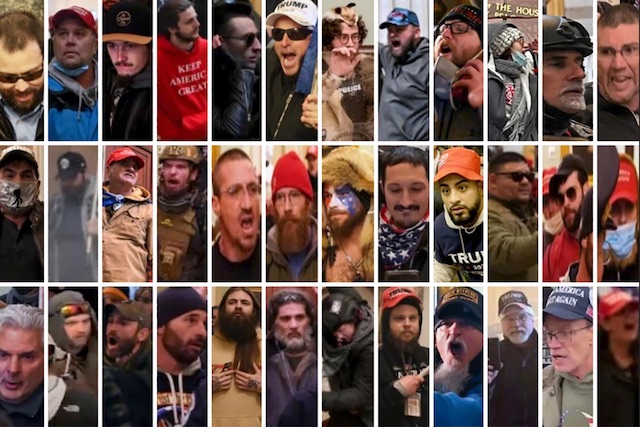
Pro-immigrant activists with Occupy Denver file suit against DIA and DPD, challenge airport free speech “permit”


DENVER, COLORADO- Civil liberties champion David Lane has filed a complaint in US district court challenging Denver’s office of the city attorney for instituting a permit process at DIA to prevent public protest. Holding signs has become impermissible at the airport, without the issuance of a permit seven days in advnace, although police are not bothering themselves about signs welcoming homecomers or seeking to connect business visitors with their limo service. That selective enforcement is unconstitutional of course, and the lawfirm powerhouse of Kilmer Lane & Newman is filing suit on behalf of two Occupy Denver plaintiffs. last Sunday, January 29, both were threatened with arrest by DIA police. While two earlier attempts to assemble had capitulated to DPD intimidation, the Occupy Denver activists stood their ground. Why did you file your lawsuit? “We know our rights. We want the POLICE to know our rights.”

1. Full text of complaint:

Case 1:17-cv-00332 Document 1
Filed 02/06/17 USDC Colorado Page 1 of 14

Civil Action No.

IN THE UNITED STATES DISTRICT COURT FOR THE DISTRICT OF COLORADO

NAZLI MCDONNELL,
ERIC VERLO,

Plaintiffs, vs.

CITY AND COUNTY OF DENVER,?
DENVER POLICE COMMANDER ANTONIO LOPEZ, in his individual and official capacity,
DENVER POLICE SERGEANT VIRGINIA QUINONES, in her individual and official capacity,

Defendants.

______________________________________________________________________________

COMPLAINT

______________________________________________________________________________

Plaintiffs, by and through their attorneys David A. Lane and Andy McNulty of KILLMER, LANE & NEWMAN, LLP, allege as follows:

INTRODUCTION

1. Plaintiffs Eric Verlo and Nazli McDonnell challenge a regulation of alarming breadth that bans all First Amendment expression at Denver International Airport without a permit.

2. Plaintiffs are concerned citizens who believe that President Donald Trump has overstepped his executive authority by signing the January 27, 2017, Executive Order (hereinafter “Muslim Ban”), which permanently bans Syrian refugees from emigrating to the United States, temporarily bans nationals of seven countries (including permanent legal residents and visa-holders), and suspends all applications to the United States refugee program (even as to vetted entrants currently in transit).

3. Plaintiffs wish to express their disgust with President Trump’s (likely unconstitutional) Muslim Ban. They wish to do so in the same place that hundreds of thousands of Americans across the country have done: standing directly outside of the secure Customs and Border Protection (hereinafter “CBP”) screening area within an airport where immigrants to America enter into the main terminal after clearing customs. Plaintiffs, unlike many citizens across this great nation who have exercised their opposition to the Muslim Ban in airports by chanting, singing, dancing, and praying, simply wish to stand in silent protest, holding signs that express their solidarity with immigrants and the Muslim community.

4. Plaintiffs are banned from doing so by DENVER INTERNATIONAL AIRPORT REGULATION 50 (hereinafter “Regulation 50”).

5. Regulation 50 states: “No person or organization shall leaflet, conduct surveys, display signs, gather signatures, solicit funds, or engage in other speech related activity at Denver International Airport for religious, charitable, or political purposes, or in connection with a labor dispute, except pursuant to, and in compliance with, a permit for such activity issued by the CEO or his or her designee.” DENVER INTERNATIONAL AIRPORT REGULATION 50.03. In order to obtain a permit, an individual must “complete a permit application and submit it during regular business hours, at least seven (7) days prior to the commencement of the activity for which the permit is sought[.]” DENVER INTERNATIONAL AIRPORT REGULATION 50.04-1.

6. Plaintiffs ask that this Court enjoin the enforcement of Regulation 50 and prohibit Defendants from arresting them for their First Amendment-protected activity of standing in peaceful protest within Jeppesen Terminal. Regulation 50 is overbroad in violation of the First Amendment and vague in violation of the Fourteenth Amendment’s Due Process Clause.

7. This is a civil rights action for declaratory and injunctive relief as well as fees and costs arising under 42 U.S.C. §§ 1983, 1988 and 28 U.S.C. Section 2201 et seq. due to Defendants’ current and imminent violations of Plaintiffs’ rights guaranteed by the First and Fourteenth Amendments to the Constitution of the United States.

PARTIES

8. Plaintiff Eric Verlo is a citizen of the United States of America. Mr. Verlo wishes to show his resistance to President Trump’s Muslim Ban, so that others will be inspired to join in the resistance.

9. Plaintiff Nazli McDonnell is a citizen of the United States of America. Ms. McDonnell wishes to show her resistance to President Trump’s Muslim Ban, so that others will be inspired to join in the resistance.

10. Defendant City and County of Denver is a municipal corporation and political subdivision of the State of Colorado. Thus, it is an entity subject to the provisions of § 1983.

11. Defendant Antonio Lopez is a Commander with the Denver Police Department. Commander Lopez is responsible for security at Denver International Airport’s Jeppesen Terminal.

12. Defendant Virginia Quinones is a Sergeant with the Denver Police Department. Sergeant Quinones is responsible for security at Denver International Airport’s Jeppesen Terminal.

JURISDICTION AND VENUE

13. Plaintiffs bring this claim pursuant to 42 U.S.C. § 1983; the First Amendment to the United States Constitution, incorporated as against States and their municipal divisions through the Fourteenth Amendment to the United States Constitution; and the Due Process Clause of the Fourteenth Amendment.

14. This Court has jurisdiction under 28 U.S.C. § 1331 over Plaintiffs’ claims that “arise[] under the Constitution of the United States.”

FACTS

15. On January 27, 2017, President Donald Trump signed an Executive Order, which permanently banned Syrian refugees from emigrating to the United States, temporarily banned nationals of seven countries (including permanent legal residents and visa-holders), and suspended all applications to the United States refugee program (even as to vetted entrants currently in transit). President Trump’s Executive Order has been subsequently referred to as a “Muslim Ban,” because it both mirrors President Trump’s racist, anti-Islam statements made on December 7, 2015, that he was planning to ban all Muslims from entering the United States until our representatives can “figure out what’s going on” and the ban targets countries whose population is predominantly Muslim and seemingly bears little rational relation to each country’s security threat to the United States.

16. Immediately upon the enactment of President Trump’s Muslim Ban there was an outpouring of outrage from a large proportion of the American population and across the spectrum of political affiliation. This outrage led to resistance in the form of protests.

17. On January 28, 2017, and January 29, 2017, protests erupted in nearly every major city in the United States. The protests organically formed in our nation’s airports. Protesters chose to express their disgust with President Trump’s Muslim Ban in airports (and specifically outside of the secure CBP screening area) because individuals affected by the ban who were in transit to the United States were being held and questioned by CBP agents there. Many of these travelers, including lawful United States residents, were forced to sign documents revoking their lawful status within the United States and deported. Still others were simply deported with no explanation. Others still were held for hours as teams of lawyers rushed to prepare habeas petitions for their release.

18. News reports about the protests make clear that they have been peaceful and non- disruptive despite the gathering of, in some cases, thousands of people.

19. Airport staff have told protesters, and would-be protesters, at numerous airports across the nation, including Kansas City International Airport, that there are no restrictions on their speech and that all protesters who wish to participate in actions against the Muslim Ban are allowed. Protests have continued in other cities to this day.

20. On January 28, 2017, there was one such protest at Denver International Airport, within the Jeppesen Terminal. At approximately 5:00 p.m. hundreds gathered in the Jeppesen Terminal’s atrium, near arrivals, to protest and many others gathered to bear witness.

21. Prior to the protest, leaders had applied for a permit. It was denied. The reason for its denial was that the permit was not requested with seven days advance notice of the protest occurring. Regulation 50 requires seven days advance notice.

22. The January 28, 2017, protest began with speeches, chants, songs, and prayers. It was a peaceful gathering of solidarity for immigrants and Muslims. Every person at the January 28, 2017, protest was contained in an area of the Jeppesen Terminal atrium that is designed as a gathering space for people to sit, relax, and converse. No one was standing in the walkways or passageways of the terminal.

23. Soon after the January 28, 2017, protest began, members of the Denver Police Department arrived on-scene. Commander Antonio Lopez engaged the leader of the protest, Amal Kassir, along with State Representative Joe Salazar and representatives from the ACLU of Colorado, and informed them that the protest was unlawful. Commander Lopez told Ms. Kassir that anything that “could be construed as Free Speech” was prohibited at the Denver International Airport, including within the Jeppesen Terminal, without a permit. See Exhibit 1, January 28, 2017 Video.

24. Commander Lopez also stated that all “First Amendment expression” was prohibited at the Denver International Airport, including within the Jeppesen Terminal, without a permit on Regulation 50. Commander Lopez handed Regulation 50 to multiple protesters, including Ms. Kassir. See Exhibit 2, January 28, 2017 Video 2.

25. Regulation 50 states (in pertinent part): “No person or organization shall leaflet, conduct surveys, display signs, gather signatures, solicit funds, or engage in other speech related activity at Denver International Airport for religious, charitable, or political purposes, or in connection with a labor dispute, except pursuant to, and in compliance with, a permit for such activity issued by the CEO or his or her designee.” DENVER INTERNATIONAL AIRPORT REGULATION 50.03. In order to obtain a permit, an individual must “complete a permit application and submit it during regular business hours, at least seven (7) days prior to the commencement of the activity for which the permit is sought[.]” DENVER INTERNATIONAL AIRPORT REGULATION 50.04-1.

26. Commander Lopez, along with members of Denver International Security, told Ms. Kassir that every portion of Denver International Airport property, which has an approximately fifty square mile footprint, is off-limits for First Amendment expression. They suggested that Ms. Kassir move her protest to Tower Road, which is approximately six miles from the Jeppesen Terminal and, like most of the land surrounding Denver International Airport, adjacent to open prairie land with no inhabitants.

27. Commander Lopez threatened Ms. Kassir and numerous other demonstrators with arrest if they didn’t immediately cease any “First Amendment expression.” According to Commander Lopez’s directives, the individuals gathered in the Jeppesen Terminal could not stand holding signs, sing, speak to others about matters of public concern, hold the United States Constitution above their shoulders, or stand silently with their arms interlocked.

28. Ultimately, to avoid arrest, Ms. Kassir and the demonstrators moved outside of the Jeppesen Terminal to the large area on its south side, adjacent to the escalators leading to the commuter rail and under the Westin Hotel. The protest continued peacefully for a little while longer, then disbursed without issue.

29. The next day, January 29, 2017, Plaintiffs Eric Verlo and Nazli McDonnell traveled to Denver International Airport’s Jeppesen Terminal to express their opposition to President Trump’s Muslim Ban.

30. Mr. Verlo and Ms. McDonnell brought with them signs expressing support for immigrants and expressing concern that history was repeating itself with disastrous potential consequences.

31. Mr. Verlo and Ms. McDonnell positioned themselves adjacent to the secure CBP screening area within the Jeppesen Terminal at approximately 1:15 p.m.

32. Adjacent the secure CBP screening area at the Jeppesen Terminal is the only place where Mr. Verlo and Ms. McDonnell can reach their intended audience. Mr. Verlo and Ms. McDonnell wish to communicate with those who could be swayed by their message and, particularly, with immigrants. International travelers are often immigrants and/or lawful United States residents, including green card and other visa holders, other than citizens. Mr. Verlo and Ms. McDonnell wish to express their solidarity with immigrants directly to these individuals. Further, United States citizens who arrive from international locations are also individuals with whom Mr. Verlo and Ms. McDonnell wish to communicate. International travelers have experienced other cultures and are likely to be sympathetic to Mr. Verlo and Ms. McDonell’s message.

33. The secure CBP screening area is also the location where the Muslim Ban has been enforced by DHS, both at Denver International Airport and across the nation. Neither Plaintiff attempted to enter any restricted areas of Denver International Airport.

34. While silently displaying their signs, Mr. Verlo and Ms. McDonnell were in the open plaza near the secure CBP screening area within the Jeppesen Terminal and positioned significantly behind the railing, which demarcates where those waiting for loved ones are permitted to stand. Mr. Verlo and Ms. McDonnell did not impede the right of way of any passengers hustling to catch flights at the last moment. They simply stood with placards showing their distaste for the Executive Order and the man who executed it.

35. Mr. Verlo and Mr. McDonnell also observed another man in the terminal, named Gene Wells, who was expressing views similar to theirs.

36. Mr. Wells was wearing a sign taped to the back of his shirt.

37. Mr. Wells left the Jeppesen Terminal, but subsequently returned to protest. When he did, he was stopped by Denver Police Department officers who told him that he could not walk around the terminal with the slogan he had affixed to his back. Mr. Wells eventually rejoined Mr. Verlo and Mr. McDonnell at the international arrivals doors, but not without trepidation. He feared he might be arrested.

38. While Mr. Verlo and Ms. McDonnell were displaying their signs, Defendant Sergeant Virginia Quinones approached Mr. Verlo and Ms. McDonnell and threatened them with arrest if they did not leave Jeppesen Terminal. See Exhibit 3, January 29, 2017, Video.

39. Sergeant Quinones handed Mr. Verlo and Ms. McDonnell Regulation 50 and cited it as the reason they would be arrested if they did not leave Jeppesen Terminal. Id. Sergeant Quinones told Mr. Verlo and Ms. McDonnell that they would need a permit in order to stand silently, holding signs in opposition of the Muslim Ban and be in compliance with Regulation 50.

40. Had Mr. Verlo and Ms. McDonnell applied for a permit the second President Trump signed the Executive Order implementing the Muslim Ban, they still would have been unable to engage in protest within the Jeppesen Terminal under the terms and conditions of Regulation 50 on January 29, 2017.

41. Mr. Verlo and Ms. McDonnell did not immediately leave the Jeppesen Terminal after being threatened with arrest. However, they were startled by Sergeant Quiones’ threat and feared arrest for the duration of the time they were there.

42. Throughout the time Mr. Verlo and Ms. McDonnell were expressing their views within the Jeppesen Terminal they received numerous shows of support from passersby. Multiple self- proclaimed Muslims expressed heart-felt statements of appreciation to Mr. Verlo, Ms. McDonnell, and others holding signs.

43. Mr. Verlo and Ms. McDonnell ultimately left Jeppesen Terminal.

44. Mr. Verlo and Ms. McDonnell wish to return to Jeppesen Terminal to express solidarity with Muslims and opposition to the Muslim Ban, but are reticent to do so for fear of being arrested.

45. Upon information and belief, no individual has been arrested, or threatened with arrest, for wearing a “Make America Great Again” campaign hat without a permit within the Jeppesen Terminal at Denver International Airport.

46. Upon information and belief, no individual has been arrested, or threatened with arrest, for holding a sign welcoming home a member of our military without a permit within the Jeppesen Terminal at Denver International Airport.

47. Upon information and belief, no individual has been arrested, or threatened with arrest, for holding a sign and soliciting passengers for a limousine without a permit within the Jeppesen Terminal at Denver International Airport.

48. Upon information and belief, no individual has been arrested, or threatened with arrest, for discussing current affairs with another person without a permit within the Jeppesen Terminal at Denver International Airport.

49. At all times relevant to this Complaint, Defendants acted under color of law.

CLAIM I: FIRST AMENDMENT
(§ 1983 violation – all Defendants)

50. Plaintiffs repeat, re-allege, and incorporate by reference the allegations in the foregoing paragraphs of this Complaint as fully set forth herein.

51. Regulation 50 violates the Free Speech Clause of the First Amendment to the Constitution, on its face and as applied, because it impermissibly curtails Plaintiffs’ free-speech rights.

52. Plaintiffs wish to speak on a matter of public concern. 11

53. Denver International Airport’s Jeppesen Terminal is a public forum.

54. Regulation 50 directly infringes upon and chills reasonable persons from engaging in activity that is protected by the First Amendment.

55. Regulation 50 acts as an unconstitutional prior restraint on speech because it (1) requires a permit before allowing individuals to engage in speech, (2) allows for arbitrary and/or discriminatory permit denials, and (3) requires advance notice that is unconstitutionally excessive.

56. Regulation 50 is overbroad.?

57. Regulation 50 is not narrowly tailored to serve a compelling government interest.?

58. Regulation 50 does not further a substantial government interest.?

59. Regulation 50’s restriction on expressive conduct is greater than necessary to further any
government interest.?

60. Defendants’ actions and/or omissions enforcing Regulation 50 caused, directly or
proximately, Plaintiffs to suffer damages.

CLAIM II: FIRST AMENDMENT RETALIATION
(§ 1983 violation – all Defendants)

1. All statements of fact set forth previously are hereby incorporated into this claim as though set forth fully herein. ?

2. Plaintiffs engaged in First Amendment protected speech on a matter of public concern ?while displaying signs opposing President Trump’s Muslim Ban on January 29, 2017.

3. Defendants jointly and on their own accord responded to Plaintiffs’ First Amendment protected speech with retaliation, including but not limited to threatening Plaintiffs with arrest.

4. Defendants retaliatory actions were substantially motivated by Plaintiffs’ exercise of their First Amendment rights.

5. By unlawfully threatening Plaintiffs with arrest, Defendants sought to punish Plaintiffs for exercising their First Amendment rights and to silence their future speech. Defendants’ retaliatory actions would chill a person of ordinary firmness from engaging in such First Amendment protected activity.

6. Defendants’ actions and/or omissions enforcing Regulation 50 caused, directly and proximately, Plaintiffs to suffer damages.

CLAIM III: FOURTEENTH AMENDMENT DUE PROCESS
(§ 1983 violation – all Defendants)

7. All statements of fact set forth previously are hereby incorporated into this claim as though set forth fully herein.

8. The prohibitions of Regulation 50 are vague and not clearly defined. ?

9. Regulation 50 offers no clear and measurable standard by which Plaintiffs and others can ?act lawfully.

10. Regulation 50 does not provide explicit standards for application by law enforcement officers.

11. Regulation 50 fails to provide people of ordinary intelligence a reasonable opportunity to understand what conduct it prohibits, and authorizes or encourages arbitrary and discriminatory enforcement, or both.

12. Defendants’ actions and/or omissions enforcing Regulation 50 caused, directly and proximately, Plaintiffs to suffer damages.

PRAYER FOR RELIEF

WHEREFORE, Plaintiffs respectfully request that this Court enter judgment in their favor and against Defendants, and grant:

(a) Appropriate declaratory and other injunctive and/or equitable relief; 13

(b)  Enter a declaration that Regulation 50 is unconstitutional on its face and enjoin its enforcement; ?

(c)  Compensatory and consequential damages, including damages for emotional distress, loss of reputation, humiliation, loss of enjoyment of life, and other pain and suffering on all claims allowed by law in an amount to be determined at trial; ?

(d)  All economic losses on all claims allowed by law; ?

(e)  Punitive damages on all claims allowed by law and in an amount to be determined ?at trial; ?

(f)  Attorney’s fees and the costs associated with this action, pursuant to 42 U.S.C. § ?1988; ?

(g)  Pre and post-judgment interest at the lawful rate; and ?

(h)  Any further relief that this court deems just and proper, and any other relief as ?allowed by law. ?

Dated this 6th day of February 2017.

KILLMER, LANE & NEWMAN, LLP
s/ Andy McNulty

___________________________________
David A. Lane
?Andy McNulty?
Killmer, Lane & Newman, LLC
1543 Champa Street, Suite 400 Denver, Colorado 80202?
Attorneys for Plaintiff

2. Full text of Feb 6 motion for preliminary injunction:

Case 1:17-cv-00332 Document 2
Filed 02/06/17 USDC Colorado Page 1 of 23

Civil Action No.

IN THE UNITED STATES DISTRICT COURT FOR THE DISTRICT OF COLORADO

NAZLI MCDONNELL,
ERIC VERLO,

Plaintiffs, vs.

CITY AND COUNTY OF DENVER,
DENVER POLICE COMMANDER ANTONIO LOPEZ, in his individual and official capacity,
DENVER POLICE SERGEANT VIRGINIA QUINONES, in her individual and official capacity,

Defendants.

______________________________________________________________________________

MOTION FOR PRELIMINARY INJUNCTION

______________________________________________________________________________

Plaintiffs, by and through their attorneys David A. Lane and Andy McNulty of KILLMER, LANE & NEWMAN, LLP, hereby submit the following Motion for Preliminary Injunction, and in support thereof, states as follows:

1. Introduction

Over the last four days, many Americans have expressed public disapproval of President Donald Trump’s January 27, 2017, Executive Order, which permanently bans Syrian refugees from emigrating to the United States, temporarily bans nationals of seven countries (including permanent legal residents and visa-holders), and suspends all applications to the United States refugee program (even as to vetted entrants currently in transit). Plaintiffs are concerned and alarmed United States citizens who wish to join the growing chorus of voices expressing opposition to the Executive Order. To do so, they wish to stand in silent protest at the Jeppesen Terminal within Denver International Airport.

Plaintiffs did just this on January 29, 2017, standing in silent protest of the Executive Order outside of the secure Customs and Border Protection (hereinafter “CBP”) screening area within Jeppesen Terminal. Almost immediately, Plaintiffs were threatened with arrest by Denver Police Department Sergeant Virginia Quinones for standing silently and holding signs opposing the Executive Order, despite that fact that the Jeppesen Terminal has previously been used for expressive activity (and that protesters at more than ten major airports nationwide have protested peacefully without major disruption or legal restriction). While silently displaying their signs, Plaintiffs were in the plaza within the Jeppesen Terminal and positioned significantly behind the railing, which demarcates where those waiting for loved ones are permitted to stand, in the open plaza outside of the secure CBP screening area at the Jeppesen Terminal. Plaintiffs did not impede the right of way of any passengers hustling to catch flights at the last moment. They simply stood with placards showing their distaste for the Executive Order and the man who executed it.

Even though Plaintiffs were simply engaged in peaceful First Amendment protected expression, they were threatened with arrest. Sergeant Quinones informed Plaintiffs that, in order to stand silently with political signs, they would need a permit. Without a permit, Sergeant Quinones stated, all “First Amendment expression” at the Denver International Airport was banned.

This was not the first time since the enactment of the Executive Order that the Denver Police Department threatened individuals with arrest for engaging in First Amendment protected activity in Jeppesen Terminal. On January 28, 2016, a protest was held in the plaza of Jeppesen Terminal. During the protest, Denver Police Commander Antonio Lopez instructed multiple individuals, including State Representative Joseph Salazar and representatives from the ACLU of Colorado, that all “First Amendment expression” was banned at Denver International Airport without a permit. See Exhibit 1, January 28, 2017, Video 1; Exhibit 2, January 28, 2017, Video 2. The protesters had, in fact, applied for a permit earlier that day. However, it had not been granted because they had not done so seven days in advance of the protest in compliance with Denver International Airport regulations. Although no arrests were ultimately made, protesters were threatened numerous times by Commander Lopez, and other officers, with arrest.

The Denver International Airport regulation that both Sergeant Quinones and Commander Lopez relied upon in instructing Plaintiffs, and others, that Denver International Airport bans all “First Amendment expression” without a permit is DENVER INTERNATIONAL AIRPORT REGULATION 50 (hereinafter “Regulation 50”). Regulation 50 states that “no person or organization shall leaflet, conduct surveys, display signs, gather signatures, solicit funds, or engage in other speech related activity at Denver International Airport for religious, charitable, or political purposes, or in connection with a labor dispute, except pursuant to, and in compliance with, a permit for such activity issued by the CEO or his or her designee.” DENVER INTERNATIONAL AIRPORT REGULATION 50.03. In order to obtain a permit, an individual must “complete a permit application and submit it during regular business hours, at least seven (7) days prior to the commencement of the activity for which the permit is sought[.]” DENVER INTERNATIONAL AIRPORT REGULATION 50.04-1.

Plaintiffs wish to return to Denver International Airport to protest the Executive Order, but are reasonably frightened of arrest and, absent action by this Court, must choose between lawfully exercising their First Amendment right and being subject to arrest and/or prosecution.

Plaintiffs ask that this Court enter an injunction prohibiting their arrest for standing in peaceful protest within Jeppesen Terminal and invalidating Regulation 50 as violative of the First and Fourteenth Amendments to the United States Constitution.

2. Factual Background

All statements of fact set forth in the simultaneously filed Complaint are hereby incorporated into this Brief as though set forth fully herein.

3. Argument

3.1 The standard for issuance of a preliminary injunction.

When seeking a preliminary injunction, a plaintiff must establish that (1) he is likely to succeed on the merits; (2) he is likely to suffer irreparable harm; (3) the balance of equities tips in his favor; and (4) that an injunction is in the public interest. Winter v. Nat. Res. Def. Council, 555 U.S. 7, 20 (2008); see also ACLU v. Johnson, 194 F.3d 1149, 1155 (10th Cir. 1999).

The Tenth Circuit has modified the preliminary injunction test when the moving party demonstrates that the second, third, and fourth factors “tip strongly” in its favor. See Oklahoma ex rel. Okla. Tax Comm’n v. Int’l Registration Plan, Inc., 455 F.3d 1107, 1113 (10th Cir. 2006); see also 820 F.3d 1113, n.5 (10th Cir. 2016). “In such situations, the moving party may meet the requirement for showing success on the merits by showing that questions going to the merits are so serious, substantial, difficult, and doubtful as to make the issue ripe for litigation and deserving of more deliberate investigation.” Id. (internal quotation marks omitted). Moreover, this “fair chance of prevailing” test is appropriate in this case because Plaintiffs are challenging a policy, not a statue or ordinance. See Planned Parenthood Minn, N.D., & S.D. v. Rounds, 530 F.3d 724, 732 (9th Cir. 2008) (“[C]ourts should… apply the familiar ‘fair chance of prevailing’ test where a preliminary injunction is sought to enjoin something other than government action based on presumptively reasoned democratic processes.”).

Under either standard, Plaintiffs are able to demonstrate that the issuance of a preliminary injunction is appropriate in this matter.

3.3 Regulation 50 implicates Plaintiffs’ First Amendment rights. 1

When the government regulates the exercise of First Amendment rights, the burden is on the proponent of the restriction to establish its constitutionality. Phelps-Roper v. Koster, 713 F.3d 942, 949 (8th Cir. 2013). Moreover, when assessing the preliminary injunction factors in First Amendment cases, “the likelihood of success will often be the determinative factor.” Hobby Lobby Stores, Inc. v. Sebelius, 723 F.3d 1114, 1145 (10th Cir. 2013). This is because “the loss of First Amendment freedoms, for even minimal periods of time, unquestionably, constitutes irreparable injury,” Heideman v. Salt Lake City, 348 F.3d 1182, 1190 (10th Cir. 2003), and it is invariably in the public interest to protect an individual’s First Amendment rights. See Homans v. City of Albuquerque, 264 F.3d 1240, 1244 (10th Cir. 2001) (noting that “the public interest is better served” by protecting First Amendment rights).

[NOTE 1. It is important to note that facial challenges to government policies and statutes, when based on First and Fourteenth Amendment grounds, are not disfavored. See United States v. Stevens, 559 U.S. 460, 473 (2010); City of Chicago v. Morales, 527 U.S. 41 (1999).]

3.4 Plaintiffs are likely to succeed on the merits.

Plaintiffs are likely to succeed on the merits because Regulation 50 violates the Free Speech Clause of the First Amendment and the Due Process Clause of the Fourteenth Amendment.

3.4(a) Plaintiffs engaged, and wish to engage, in speech on a matter of public concern.

Plaintiffs’ speech is at the core of the First Amendment’s protection because it deals with a matter of public concern. “Speech deals with matters of public concern when it can be fairly considered as relating to any matter of political, social, or other concern to the community, or when it is a subject of legitimate news interest; that is, a subject of general interest and of value and concern to the public.” Snyder v. Phelps, 562 U.S. 443, 453 (2011) (internal quotation marks and citation omitted). “Speech on matters of public concern is at the heart of the First Amendment’s protection.” Id. at 451-52 (alterations and quotation marks omitted). “The First Amendment reflects ‘a profound national commitment to the principle that debate on public issues should be uninhibited, robust, and wide-open.’” Id. at 452 (quoting New York Times Co. v. Sullivan, 376 U.S. 254, 270 (1964)). Plaintiffs wish to engage in expression about President Donald Trump’s January 27, 2017, Executive Order, a topic that has generated nearly unprecedented debate and dissent. See Adrienne Mahsa Varkiani, Here’s Your List of All the Protests Happening Against the Muslim Ban, THINK PROGRESS (Jan. 28, 2017), https://thinkprogress.org/muslim-ban-protests-344f6e66022e#.ft1oznfv4 (compiling list of direct actions planned in response to President Trump’s January 27, 2017, Executive Order). Thus, Plaintiffs’ speech “‘occupies the highest rung of the hierarchy of First Amendment values, and is entitled to special protection.’” Snyder, 562 U.S. at 452 (quoting Connick v. Myers, 461 U.S. 138, 145 (1983)).

3.4(b) Regulation 50 acts as a prior restraint.

The restriction at issue in this matter is a prior restraint. “The term prior restraint is used ‘to describe administrative and judicial orders forbidding certain communications when issued in advance of the time that such communications are to occur.’” Alexander v. United States, 509 U.S. 544, 550 (1993) (quoting M. Nimmer, Nimmer on Freedom of Speech § 4.03, p. 4–14 (1984)). Regulation 50 is in an administrative order that forbids future communication and bases the ability to communicate in the future on the discretion of an administrative official. See DENVER INTERNATIONAL AIRPORT REGULATION 50.03 (“no person or organization shall leaflet, conduct surveys, display signs, gather signatures, solicit funds, or engage in other speech related activity at Denver International Airport for religious, charitable, or political purposes, or in connection with a labor dispute, except pursuant to, and in compliance with, a permit for such activity issued by the CEO or his or her designee.” (emphasis added)). It is a prior restraint.

The burden of proving a prior restraint is permissible is particularly steep. The Supreme Court has repeatedly held that “[a]ny system of prior restraints of expression comes to this Court bearing a heavy presumption against its constitutional validity.” Bantam Books, Inc. v. Sullivan, 372 U.S. 58, 70 (1963). For the reasons outlined infra, Defendants cannot meet this especially significant burden.

3.4(c) Jeppesen Terminal, outside of the passenger security zones, is a traditional public forum.

The Supreme Court has not definitively decided whether airport terminals, including Jeppesen Terminal, are public forums. In Lee v. International Society for Krishna Consciousness, Inc., 505 U.S. 830 (1992) (hereinafter “Lee I”), issued the same day as International Society for Krishna Consciousness, Inc. v. Lee, 505 U.S. 672 (1992) (hereinafter “Lee II”), the Supreme Court struck down a total ban on distribution of literature in airports. In Lee I, the Court issued a one sentence per curiam opinion, which affirmed the Second Circuit for the reasons expressed by Justice O’Connor, Justice Kennedy, and Justice Souter in Lee II. See Lee I, 505 U.S. at 831. Justice Kennedy and Justice Souter’s opinions in Lee II found that “airport corridors and shopping areas outside of the passenger security zones… are public forums, and speech in those places is entitled to protection against all government regulation inconsistent with public forum principles.” Lee II, 505 U.S. at 693 (Kennedy, J., concurring in the judgment); but see Lee II, 505 U.S. at 683 (“”[W]e think that neither by tradition nor purpose can the terminals be described as satisfying the standards we have previously set out for identifying a public forum.”).

Therefore, Plaintiffs ask this Court to find the area of Jeppesen Terminal outside of the passenger security zones to be a public forum. The historical use of the Jeppesen Terminal’s plazas and other areas outside of the passenger security zones (including the area outside of the secure CBP screening area) for political speech (particularly, the history of welcoming of American military personnel home from service, discussion between passengers of matters of public concern, and display of clothing advocating for political views and ideals) indicates that it is a public forum. See First Unitarian Church of Salt Lake City v. Salt Lake City Corp., 308 F.3d 1114, 1130 (10th Cir. 2002) (“Where courts have considered the traditional use of publicly accessible property for speech, they have refused to attribute legal significance to an historical absence of speech activities where that non-speech history was created by the very restrictions at issue in the case.”). Further, that the Jeppesen Terminal is free and open to the public (outside of the passenger security zones), illustrates that it is a public forum. See, e.g., Ark. Educ. Television Comm’n v. Forbes, 523 U.S. 666, 676 (1998); Cornelius v. NAACP Legal Def. & Educ. Fund, 473 U.S. 788, 800, 805, 809 (1985). Finally, Jeppesen Terminal retains characteristics similar to parks: it has large plazas lined with benches, it is surrounded by businesses which are open to the public, and it has dedicated walkways, similar to sidewalks, indicating that it is a public forum. See e.g., Frisby v. Schultz, 487 U.S. 474, 480-481 (1988); United States v. Grace, 461 U.S. 171, 177 (1983). Further, the Supreme Court has not strictly limited the public forum category to streets, sidewalks, and parks. See, e.g., Se. Promotions, Ltd. v. Conrad, 420 U.S. 546 (1975) (finding leased municipal theater is a public forum); Heffron v. Int’l Society for Krishna Consciousness, Inc., 452 U.S. 640 (1981) (finding state fair is a public forum); Edwards v. South Carolina, 372 U.S. 229 (1963) (finding grounds of state capitol are a traditional public forum). Even if the City claims that it has never intended for Jeppesen Terminal to be a public forum, this is not dispositive. See Lee, 505 U.S. at 830 (government policy prohibiting distribution of literature at airport on property struck down); Cornelius, 473 U.S. at 805 (government’s decision to limit access is not itself dispositive). Plaintiffs’ ask that this Court find Jeppesen Terminal, outside of the passenger security zones, a traditional public forum.

Since Jeppesen Terminal is a traditional public forum, any restriction on Plaintiffs’ speech must be content-neutral and narrowly tailored to a compelling government interest. Regulation 50 fails at both.

3.4(d) Regulation 50 is content-based.

Regulation 50 is a content-based restriction of expression. Although the Supreme Court has long held that content-based restrictions elicit strict scrutiny, see, e.g., Carey v. Brown, 447 U.S. 455 (1980), lower courts diverged on the meaning of “content-based” until Reed v. Town of Gilbert, 135 S. Ct. 2218 (2015). 2 Reed clarified that a restriction is content based simply if it draws distinctions “based on the message a speaker conveys.” 135 S. Ct. at 2227. Reed is clear that even “subtle” distinctions that define regulated expression “by its function or purpose . . . are distinctions based on the message a speaker conveys, and therefore, are subject to strict scrutiny.” Id. This accords with Texas v. Johnson, which held that “the emotive impact of speech on its audience is not a secondary effect unrelated to the content of the expression itself.” 491 U.S. 491 U.S. 297, 412 (1989) (internal quotations omitted).

[NOTE 2. Reed involved a municipal “sign code” that regulated signs differently based on the kind of message they conveyed (such as “ideological,” “political,” or “temporary directional”). 135 S. Ct. at 2224-25. The Court rejected the city’s argument that a law had to discriminate against certain viewpoints in order to be a content-based restriction. Id. at 2229.]

Regulation 50 is content-based on its face. It distinguishes between content and requires that an official determine the content of the speaker’s message when enforcing its proscriptions. Reed, 135 S. Ct. at 2227; see DENVER INTERNATIONAL AIRPORT REGULATION 50.03 (“No person or organization shall leaflet, conduct surveys, display signs, gather signatures, solicit funds, or engage in other speech related activity at Denver International Airport for religious, charitable, or political purposes, or in connection with a labor dispute[.]” (emphasis added)). The distinctions drawn by Regulation 50 make it a facially content-based restriction on expression that must elicit “the most exacting scrutiny.” Johnson, 491 U.S. at 412; Reed, 135 S. Ct. at 2227.

3.4(e) Regulation 50 is not narrowly tailored to serve a compelling government interest.

As a facially content-based restriction of expression at traditional public fora, Regulation 50 is presumptively unconstitutional unless Defendant “prove[s] that the restriction furthers a compelling interest and is narrowly tailored to achieve that interest.” Reed, 135 St. Ct. at 2231; accord Johnson, 491 U.S. at 412.

“A statute is narrowly tailored if it targets and eliminates no more than the exact source of the ‘evil’ it seeks to remedy.” Frisby v. Schultz, 487 U.S. 474, 485 (1988) (citation omitted). Regulation 50 reaches more speech than that which would impair the security of the airport or ensure that passengers are not unduly encumbered. In fact, it completely bans all “First Amendment expression.” “A complete ban can be narrowly tailored, but only if each activity within the proscription’s scope is an appropriately targeted evil.” Id.. Regulation 50 is not such a ban. For instance, Plaintiffs’ expression does nothing to jeopardize security at Denver International Airport or to inhibit the free flow of passengers through the airport.

Further, any argument that Plaintiffs can engage in expressive activity in another location lacks merit, as the Supreme Court has held that the First Amendment is violated when one specific location or audience, when important to the speaker, is foreclosed. See McCullen v. Coakley, 134 S. Ct. 2518, 2536 (2014); Schenck v. Pro-Choice Network, 519 U.S. 357, 377 (1997) (invalidating a “floating” buffer zone around people entering an abortion clinic partly on the ground that it prevented protestors “from communicating a message from a normal conversational distance or handing leaflets to people entering or leaving the clinics who are walking on the public sidewalks”); Schneider v. New Jersey, 308 U.S. 147, 163 (1939) (invalidating anti-handbilling ordinances even though “their operation is limited to streets and alleys and leaves persons free to distribute printed matter in other public places”). Regulation 50 lacks the narrow tailoring necessary to survive First Amendment strict scrutiny analysis.

3.4(f) Regulation 50 violates the First Amendment even if this Court determines Jeppesen Terminal is a nonpublic forum.

Regulation 50 bans all “First Amendment expression” absent a permit; it is unconstitutional even when analyzed under the lower standard of scrutiny applied by courts to First Amendment political speech in a nonpublic forum. In Board of Airport Commissioners of Los Angeles v. Jews for Jesus, Inc., 482 U.S. 569 (1987), the Supreme Court considered whether a resolution restricting free speech in the airport was constitutional. The resolution at issue stated that the airport “is not open for First Amendment activities by any individual and/or entity.” Id. at 574. Although the Court did not explicitly find that the airport was a nonpublic forum, it did hold that the resolution restricting speech in the airport was facially unreasonable, even if the airport was a nonpublic forum. Id. at 573. The Court noted that enforcing the resolution would prohibit “talking and reading, or the wearing of campaign buttons or symbolic clothing.” Id. at 574. The Court also noted, “[m]uch nondisruptive speech–such as the wearing of a T-shirt or button that contains a political message–may not be ‘airport related’ but is still protected speech even in a nonpublic forum.” Id. at 575 (citing Cohen v. California, 403 U.S. 15 (1971) (holding that wearing of jacket with offensive language in a courthouse was a form of nondisruptive expression that was protected by the First Amendment)). Thus, although specific conduct was not at issue in the Jews for Jesus decision, the Court nonetheless implicitly held that non-disruptive speech is protected by the First Amendment in nonpublic fora and that restrictions that encumber non-disruptive expression are unreasonable.

In Lee II, Justice O’Connor set forth the test for determining reasonableness in the context of nonpublic fora. 505 U.S. at 687 (O’Connor, J., concurring). 3 She stated, ”[t]he reasonableness of the Government’s restriction [on speech in a nonpublic forum] must be assessed in light of the purpose of the forum and all the surrounding circumstances.” Id. (O’Connor, J., concurring) (quoting Cornelius, 473 U.S. at 809). However, Justice O’Connor noted that while “[o]rdinarily . . . we have . . . been confronted with cases where the fora at issue were discrete, single-purpose facilities,” airports present a different analysis because they are multipurpose facilities. Id. at 688 (O’Connor, J., concurring) (citations omitted). She determined airports to be multipurpose facilities because

the Port Authority [has] chosen not to limit access to the airports under its control, [and] has created a huge complex open to travelers and nontravelers alike. The airports house restaurants, cafeterias, snack bars, coffee shops, cocktail lounges, post offices, banks, telegraph offices, clothing shops, drug stores, food stores, nurseries, barber shops, currency exchanges, art exhibits, commercial advertising displays, bookstores, newsstands, dental offices and private clubs.

Id. This led to the finding that “[t]he reasonableness inquiry, therefore, is not whether the restrictions on speech are consistent with preserving the property for air travel, but whether they are reasonably related to maintaining the multipurpose environment that the Port Authority has deliberately created.” Id. at 689. A complete ban on First Amendment activity at the Jeppesen Terminal, absent a permit that must be obtained by providing seven days advance notice, is not a reasonable restriction. Regulation 50 does not comport with Justice O’Connor’s conclusion that airports are more than simply places where air travel occurs.

[NOTE 3. It is important to note that Lee involved a plurality opinion, joined by Justice O’Connor. Therefore, Justice O’Connor’s concurrence is the “narrowest grounds” that justify the Court’s result and her concurrence holds substantial precedential weight.]

Moreover, Justice O’Connor distinguished between solicitations (which the Supreme Court found could be reasonably restricted) and distributing leaflets (which the Supreme Court found could not be reasonably restricted) in the airport:

[L]eafleting does not entail the same kinds of problems presented by face-to-face solicitation. Specifically, “one need not ponder the contents of a leaflet or pamphlet in order mechanically to take it out of someone’s hand . . . . The distribution of literature does not require that the recipient stop in order to receive the message the speaker wishes to convey; instead the recipient is free to read the message at a later time.”

Id. at 690 (quoting United States v. Kokinda, 497 U.S. 720, 734 (1990)).

Thus, the Court held in Lee II that prohibiting solicitation in a nonpublic forum is not unreasonable, but that prohibiting the distribution of leaflets and other literature at a nonpublic forum is unreasonable. See also Lee, 505 U.S. at 830 (decided the same day as Lee II and striking down a prohibition on the distribution of leaflets and other literature at La Guardia, John F. Kennedy, and Newark International airports) (per curiam). Circuit courts have also recognized the inherent right to distribute paper and other information in nonpublic fora. Following Lee I and Lee II, two circuit courts have held that airports, as nonpublic fora, could not preclude newspaper publishers from placing newsracks in airport terminals. See Jacobsen v. City of Rapid City, South Dakota, 128 F.3d 660 (8th Cir. 1997); Multimedia Publishing Co. of South Carolina, Inc. v. Greenville-Spartanburg Airport Dist., 991 F.2d 154 (4th Cir. 1993). To the extent that the airports were concerned about safety or the impediment of traffic flow, the courts held that the airport may impose reasonable restrictions, but they could not enforce an outright ban on the newspaper racks. See Jacobsen, 128 F.3d at 660; Multimedia Publishing Co. of South Carolina, Inc., 991 F.2d at 154.

Denver, through Regulation 50, has banned all “First Amendment expression” including leafleting and protests. In fact, Plaintiffs expression is arguably less intrusive and disruptive to air travel than the form of expression, namely leafletting, that the Court held could not be reasonably restricted in the areas of an airport that precede the security screening area. It is clear from Lee I, Lee II, and Jews for Jesus that Denver cannot ban all “First Amendment expression” at the Jeppesen Terminal.

3.4(f)(1) Independently, the viewpoint-based prohibition of Plaintiffs’ speech, based on Regulation 50, violates the First Amendment.

Even if Jeppesen Terminal is a nonpublic forum, “this does not mean the government has unbridled control over speech, . . . for it is axiomatic that ‘the First Amendment forbids the government to regulate speech in ways that favor some viewpoints or ideas at the expense of others.” Summum v. Callaghan, 130 F.3d 906, 916 (10th Cir. 1997) (quoting Lamb’s Chapel v. Center Moriches Union Free School Dist., 508 U.S. 384, 394, (1993)). “Restrictions on speech in nonpublic fora must be viewpoint neutral[.]” Warren v. Fairfax Cty., 196 F.3d 186, 193 (4th Cir. 1999) (citing Cornelius, 473 at 809). Defendants’ restriction of Plaintiffs’ speech, under the guise of Regulation 50, discriminates on the basis of viewpoint. Individuals walk through Denver International Airport with political messages and slogans on their shirts and luggage and discuss politics on a daily basis. Counsel for Plaintiffs has worn political shirts while traveling through Denver International Airport and discussed modern politics with fellow passengers on many occasions. However, no other individual, to Plaintiffs or Plaintiffs’ counsel’s knowledge, has been threatened with arrest for engaging in this political speech. Nor has any individual been arrested for displaying pro-President Trump messages, for example a red hat that reads “Make America Great Again.” Only Plaintiffs’ expressive activity against the President’s Executive Order, and others advocating similarly, has been threatened with arrest. Regulation 50 is being enforced as a clearly view-point based restriction. Defendants’ application of Regulation 50 to Plaintiffs speech is view-point based and violates the First Amendment.

3.4(g) The seven day advance notice requirement for obtaining a permit is not a reasonable restriction.

Notice periods restrict spontaneous free expression and assembly rights safeguarded in the First Amendment. Plaintiffs, like many others throughout history, wish to engage in First Amendment expression in quick response to topical events. While even in such time-sensitive situations, a municipality may require some short period of advance notice so as to allow it time to take measures to provide for necessary traffic control and other aspects of public safety, the period can be no longer than necessary to meet the City’s urgent and essential needs of this type. See American-Arab Anti-Discrimination Comm. v. City of Dearborn, 418 F.3d 600, 605 (6th Cir. 2005) (“Any notice period is a substantial inhibition on speech.”).

Advance notice requirements that have been upheld by courts have most generally been less than a week. See, e.g., A Quaker Action Group v. Morton, 516 F.2d 717, 735 (D.C. Cir. 1975) (two-day advance notice requirement is reasonable for use of National Park areas in District of Columbia for public gatherings); Powe v. Miles, 407 F.2d 73, 84 (2d Cir. 1968) (two-day advance notice requirement for parade is reasonable); Progressive Labor Party v. Lloyd, 487 F. Supp. 1054, 1059 (D. Mass. 1980) (three-day advance filing requirement for parade permit approved in context of broader challenge); Jackson v. Dobbs, 329 F. Supp. 287, 292 (N.D. Ga. 1970) (marchers must obtain permit by 4 p.m. on day before the march), aff’d, 442 F.2d 928 (5th Cir. 1971). Lengthy advance filing requirements for parade permits, such as the seven day advance notice requirement imposed by Regulation 50, have been struck down as violating the First Amendment. See American-Arab Anti-Discrimination Comm., 418 F.3d at 605-07 (holding that provision requiring thirty days’ notice is overbroad and is not saved by an unwritten policy of waiving the provision); NAACP, W. Region v. City of Richmond, 743 F.2d 1346, 1357 (9th Cir. 1984) (“[A]ll available precedent suggests that a 20-day advance notice requirement is overbroad.”). Even an advance filing requirement of five days has been held too long to comport with the First Amendment. See Douglas v. Brownell, 88 F.3d 1511, 1523-24 (8th Cir. 1996) (city’s asserted goals of protecting pedestrian and vehicular traffic and minimizing inconvenience to the public does not justify five-day advance filing requirement for any parade, defined as ten or more persons).

It is clear that, in the case at bar, a permit requirement of seven days advance notice is not a reasonable restriction of Plaintiffs’ First Amendment rights. Plaintiffs wish to engage in timely, direct action against, what they perceive as, a tyrannical and unconstitutional exercise of the executive power. If Plaintiffs were to have applied for a permit at the exact moment President Trump signed the Executive Order, they would still have been prevented from engaging in First Amendment activity on January 29, 2017. In direct action, like in most things, timing is everything. As evidenced by myriad protests that occurred across the nation’s airports, which were accompanied by no violence or destruction of property and did not otherwise jeopardize security, accommodation of protest at the Jeppesen Terminal is reasonable. Such a lengthy approval period, with no exceptions for spontaneous, peaceful protests, violates the First Amendment. See Church of the American Knights of the Ku Klux Klan v. City of Gary, 334 F.3d 676, 682 (7th Cir. 2003) (noting that “the length of the required period of advance notice is critical to its reasonableness; and given … that political demonstrations are often engendered by topical events, a very long period of advance notice with no exception for spontaneous demonstrations unreasonably limits free speech” (emphasis added)).

3.4(h) Regulation 50 is overbroad in violation of the First Amendment.

“[A] law may be invalidated as overbroad if ‘a substantial number of its applications are unconstitutional, judged in relation to the [ordinance]’s plainly legitimate sweep.’” United States v. Stevens, 559 U.S. 460, 473 (2010) (quoting Wash. State Grange v. Wash. State Republican Party, 552 U.S. 442, 449 n.6 (2008)). An overbroad statute may be challenged on its face even though a more narrowly drawn statute would be valid as applied to the party in the case before it. City Council of L.A. v. Taxpayers for Vincent, 466 U.S. 789, 798 (1984) (“[B]roadly written statutes may have such a deterrent effect on free expression that they should be subject to challenge even by a party whose own conduct may be unprotected.”). The Supreme Court “has repeatedly held that a government purpose to control or prevent activities constitutionally subject to state regulation may not be achieved by means which sweep unnecessarily broadly and thereby invade the area of protected freedoms.” NAACP v. Alabama ex rel. Flowers, 377 U.S. 288, 307 (1964); see also Grayned v. City of Rockford, 408 U.S. 109, 114-15 (1972) (“The crucial question, then, is whether the ordinance sweeps within its prohibitions what may not be punished under the First and Fourteenth Amendments.”). Courts have “provided this expansive remedy out of concern that the threat of enforcement of an overbroad law may deter or ‘chill’ constitutionally protected speech—especially when the overbroad statute imposes criminal sanctions.” Virginia v. Hicks, 539 U.S. 113, 119 (2003).

Determining whether a law is substantially overbroad requires a two-step analysis. First, a court must “construe the challenged [law]; it is impossible to determine whether a [law] reaches too far without first knowing what the [law] covers.” United States v. Williams, 553 U.S. 285, 293 (2008). Second, based on the first step, a court must determine whether the law “criminalizes a substantial amount of protected expressive activity.” Id. at 297.

Regulation 50 provides that “no person or organization shall leaflet, conduct surveys, display signs, gather signatures, solicit funds, or engage in other speech related activity at Denver International Airport for religious, charitable, or political purposes, or in connection with a labor dispute, except pursuant to, and in compliance with, a permit for such activity issued by the CEO or his or her designee.” Those tasked with enforcing Regulation 50, have stated that it bans all “First Amendment expression.” See Exhibit 1, January 28, 2017, Video 1; Exhibit 2, January 28, 2017, Video 2.

A complete prohibition on First Amendment expression and related activity proscripts a substantial amount of protected expressive activity. See Jews for Jesus, 482 U.S. at 569; Lee, 505 U.S. at 830. It prohibits face-to-face conversations and wearing clothing intended to convey a message, along with leafleting and other traditional First Amendment activity, all of which protected expression. Regulation 50’s overbreadth is stark and violates the guarantees of the First Amendment.

3.4(i) Regulation 50 is unconstitutionally vague.

“A fundamental principle in our legal system is that laws which regulate persons or entities must give fair notice of conduct that is forbidden or required.” F.C.C. v. Fox Television Stations, Inc., 132 S. Ct. 2307, 2317 (2012). “A law’s failure to provide fair notice of what constitutes a violation is a special concern where laws ‘abut[ ] upon sensitive areas of basic First Amendment freedoms’ because it ‘inhibit[s] the exercise’ of freedom of expression and ‘inevitably lead[s] citizens to steer far wider of the unlawful zone … than if the boundaries of the forbidden areas were clearly marked.’” Stahl v. City of St. Louis, 687 F.3d 1038, 1041 (8th Cir. 2012) (quoting Grayned, 408 U.S. at 109). For this reason, a stringent vagueness test applies to a law that interferes with the right of free speech. Vill. of Hoffman Estates v. Flipside, Hoffman Estates, Inc., 455 U.S. 489, 499 (1982). “Where a statute’s literal scope, unaided by a narrowing state court interpretation, is capable of reaching expression sheltered by the First Amendment, the doctrine demands a greater degree of specificity than in other contexts.” Smith v. Goguen, 415 U.S. 566, 573 (1974).

Regulation 50 is vague, and therefore unconstitutional, for two separate reasons. First, Regulation 50 fails “to provide the kind of notice that will enable ordinary people to understand what conduct it prohibits.” City of Chicago v. Morales, 527 U.S. 41, 56 (1999). A law is unconstitutionally vague where it “does not provide people with fair notice of when their actions are likely to become unlawful.” Stahl, 687 F.3d at 1041. Because violators of Regulation 50 are subject to criminal sanction, the strictest vagueness test applies. See Reno v. ACLU, 521 U.S. 844, 872 (1997) (recognizing criminal sanctions might “cause speakers to remain silent rather than communicate even arguably unlawful words, ideas, and images” which, together with the “‘risk of discriminatory enforcement’ of vague regulations, poses greater First Amendment concerns than those implicated by [a] civil regulation[.]”). Whether expressive activity will be deemed “First Amendment expression” in the Jeppesen Terminal is not predictable. Plaintiffs have reasonably refrained from protected speech for fear that someone might consider their expression to be in violation of the regulation. However, officials have failed to enforce the regulation against many others who are seemingly in violation, including those discussing politics with other passengers, wearing clothing meant to make some social or political statement, limo drivers soliciting passengers, and those welcoming home military veterans. Although there might be times when a speaker knows, or should know, that certain speech will violate the statute, in many situations such an effect is difficult or impossible to predict. See Stahl, 687 F.3d at 1041 (finding vagueness because even “[t]hough there are certainly times when a speaker knows or should know that certain speech or activities likely will cause a traffic problem, in many situations such an effect is difficult or impossible to predict.”). Regulation 50 fails to give fair notice and therefore violates the mandates of the Fourteenth Amendment.

Regulation 50 is also unconstitutionally broad because it “authorize[s] and even encourage[s] arbitrary and discriminatory enforcement.” Morales, 527 U.S. at 56. Regulation 50’s terms allow law enforcement officials wide discretion to decide whether any given speech is prohibited and arrest the speaker. “Such a statute does not provide for government by clearly defined laws, but rather for government by the moment-to-moment opinions of a policeman on his beat.” Cox v. Louisiana, 379 U.S. 536, 579 (1965); see Norton v. Discipline Comm. of E. Tenn. State Univ., 399 U.S. 906, 909 (1970) (“Officials of public universities . . . are no more free than policemen or prosecutors to punish speech because it is rude or disrespectful, or because it causes in them vague apprehensions, or because for any other reason they do not like its content.”).

Officers have been observed enforcing Regulation 50 against those protesting President Trump’s Executive Order, but not against those wearing other political shirts or buttons. Officers have not enforced the regulation against other political expression, including those standing in support of military veterans returning home from combat. Seemingly, the only ones who have been subject to this regulation are those who are specifically speaking against President Trump’s Executive Order. “The most meaningful aspect of the vagueness doctrine is . . . the requirement that a legislature establish minimal guidelines to govern law enforcement.” Smith, 415 U.S. at 574. Because the terms allow a police officer leeway to determine that expressive conduct is lawful, or not, they are vague. Regulation 50 permits “a standardless sweep [that] allows policemen, prosecutors, and juries to pursue their personal predilections.” Kolender v. Lawson, 461 U.S. 352, 358 (1983) (internal citations omitted). It is unconstitutional.

3.5 Absent an injunction, Plaintiffs will suffer irreparable harm.

“The loss of First Amendment freedoms, for even minimal periods of time, unquestionably constitutes irreparable injury.” Elrod v. Burns, 427 U.S. 347, 373 (1976); see also Verlo v. Martinez, 820 F.3d 1113, 1127 (10th Cir. 2016); Awad v. Ziriax, 670 F.3d 1111, 1131 (10th Cir. 2012) (“[W]hen an alleged constitutional right is involved, most courts hold that no further showing of irreparable injury is necessary.”); Verlo v. Martinez, 820 F.3d 1113, 1127 (10th Cir. 2016).

Moreover, Plaintiffs’ expression is a time-sensitive response to a nearly unprecedented action by our federal government. But see C. Norwood, A Twitter Tribute to Holocaust Victims, THE ATLANTIC (January 27, 2017), https://www.theatlantic.com/politics/archive/2017/01/jewish-refugees-in-the-us/514742/ (describing the rebuff of refugees fleeing Nazi Germany in 1939, many of whom would be murdered during the Holocaust); Korematsu v. United States, 323 U.S. 214 (1944). Delaying Plaintiffs’ protest, and discouraging Plaintiffs and others from demonstrating, detracts from its importance and provides a false appearance that Denver is not like other cities of all sizes across the country that have mustered sizeable protests at their airports. Denver has held itself out as a “sanctuary city.” Jon Murray, Mayor Hancock says he welcomes “sanctuary city” title if it means Denver supports immigrants and refugees, The DENVER POST (January 30, 2017), http://www.denverpost.com/2017/01/30/mayor-hancock-welcomes-sanctuary-city-title-denver-supports-immigrants-refugees/. For Colorado’s citizens to seemingly show lackluster support in this time of trial would not only irreparable harm Plaintiffs, and others, but it would go against the public interest.

3.6 The balance of the equities weighs in favor of granting a preliminary injunction.

“The balance of equities… generally favors the constitutionally-protected freedom of expression.” Phelps-Roper v. Nixon, 545 F.3d 685, 690 (8th Cir. 2008) overruled on other grounds by Phelps-Roper v. City of Manchester, Mo., 697 F.3d 678 (8th Cir. 2012). Courts have consistently held that when First Amendment freedoms are threatened, the balance of the equities weighs in the Plaintiffs’ favor. See Verlo, 820 F.3d at 1127; Awad, 670 F.3d at 1132. There is no harm to Defendant, who has no significant interest in the enforcement of Regulation 50 since it is likely unconstitutional.

3.7 A preliminary injunction is in the public interest.

“[I]t is always in the public interest to prevent the violation of a party’s constitutional rights.” Awad, 670 F.3d at 1133 (internal quotation marks omitted); accord Verlo, 820 F.3d at 1127; Pac. Frontier v. Pleasant Grove City, 414 F.3d 1221, 1237 (10th Cir. 2005) (“Vindicating First Amendment freedoms is clearly in the public interest.”); Cate v. Oldham, 707 F.2d 1176, 1190 (10th Cir. 1983) (noting “[t]he strong public interest in protecting First Amendment values”).

4. Conclusion

For the reasons stated, Plaintiffs respectfully request that this Court grant their Motion for a Preliminary Injunction, enjoin enforcement of Regulation 50, and prohibit Defendants from arresting Plaintiffs and all others similarly situated when they engage in First Amendment protected activity within Jeppesen Terminal.

Dated this 6th day of February, 2017

KILLMER, LANE & NEWMAN, LLP
s/ Andy McNulty
__________________________

David Lane
Andy McNulty
1543 Champa Street, Suite 400 Denver, CO 80202
Counsel for Plaintiffs

Yeah, so if Aleppo is Syria’s Stalingrad, which are the Nazis beating a retreat?

The West’s covert proxy insurgency against Syria has suffered a major defeat in Aleppo. Social media is deluged now with cries for help, “this may be the last you hear from me” being the latest meme to drum up popular support for increased military intervention. Aleppo is being compared to Stalingrad. Funny, because the Nazis famously lost their attempt to take that from Russia. What a delicious bit of irony that. Cities ravaged by bitter urban warfare have plenty of antecedents. I suspect corporate journalists suppose their readers are as historically illiterate as they. Stalingrad was a reversal or fortune and that’s what the US war machine hopes to make of Aleppo. Our human shields are crying their hearts out online, stuck where we put them, on our firing line. As refugees, we don’t want them. The humanitarian disaster is our creation. US covert ops out of Syria! US covert bloggers out of Syria! You want to help the children of Aleppo? Adopt them. It’s the least you should do after getting their parents and siblings killed as your human shields.

UPDATE: Deaf blind judge gives Shadoe Garner 75 DAYS JAIL for possession of Wicca ritual athame and for littering.


DENVER, COLORADO- Shadoe Garner was found guilty today by a judge who didn’t blink at the public defender having no time to prepare, at discovery evidence not being provided to defense, at prosecutors withholding half their witnesses and videos (depriving the defense of knowing what might have be exculpable evidence), at being forwarned that a 35C Appeal was virtually guaranteed, and despite two police videos making very clear that Shadoe’s rights were violated, if only the judge had ears and eyes to see it.

The courtroom staff should have seen trouble brewing earlier in the morning when an attorney announced “the court will call Emanuel Wilson” and the old judge replied “I’m sorry, did you say Javier Lopez?” Uh, no.

Judge Frederick Rogers is a dead ringer for filmmaker John Huston, with none of the latter’s sense of humor. He tried a case before Shadoe’s, a young black vet with PTSD who was awarded a large settlement for a traumatic brain injury and who went off on his lawyers for witholding the award in a conservatorship. The judge found him guilty of making threats, however exaggerated, giving no allowances for his mental disability.

In Shadow’s case, Judge Rogers denied all motions to wave speedy trial, and declared he wouldn’t suppress the prosecution’s evidence based on the defense not having seen it. The judge wanted to see it presented first so he could assess its worth to the charges before considering suppression. Essentially, motion quashed.

The evidence wound up supporting Shadoe’s claims, that he identified himself, that he had served papers on Commander Tony Lopez, not littered, and that the “weapon” he carried was a religious talisman, if also a knife.

“My name is Shadoe Garner”
Three times on the video Shadoe Garner told officers his name when asked, both first name and last. He even provided his date of birth. From that the officers could have run a check on his identity without having to take him into custody for not having an ID. The officers even testified that they heard Shadoe say all that. But the judge only heard the defendant say “Shadows” and so felt the defendant was being evasive. Officers can even be heard on the video using Shadoe’s name as they talked to him!

Instead of cross-checking his info in their system, the officers took Shadoe from the crowd and that operation required a pat down. Before doing that, Officer Montathong asked Shadoe, “do you have a weapon or anything that could poke me?”

Weapon vs. Athame
“Yes” Shadoe replied, I have an Athame” and he gestured to his left thigh. The officers retrieved what they alerted each other was a knife. Shadow countered “It’s not a knife, it’s an athame, a ceremonial object.” He repeated that explanation several times on the video.

It might be relevant to point out that Shadoe was wearing his robe, a distinct purple garment which officers would recognize over and over on the 16th Street Mall or at Stoner Hill, where the Dirty Kids live.

Shadow thinks of himself as a Wiccan druid, and the ceremonial dagger he refers to as an athame is as ritualistic as his robe. Shadoe told me he had ground-scored the robe weeks before. It’s a hooded cape that can only be described as a theatrical vestment.

The “knife” too was theatrical. The prosecutor constantly pointed out that its length was longer twelve inches, much too long for a pocket knife. It’s length was more like a kitchen knife or, more obviously, a SWORD.

The weapon pulled from a sheath strapped to Shadoe’s leg was a 12″ bowie knife manufactured by “Force Recon”. Sargent Martinez recognized it from his Marine days as a military combat weapon.

The First Amendment isn’t a pass to COSPLAY in urban environments, but a homeless person doesn’t have much choice about what possessions they can leave at home and which they have to carry.

Both Sargent Martinez and Officer Montathong said Shadoe was wearing a trench coat, even though the videos depicted the robe clearly. What trench coat has a hood? The officers stuck to their story because it’s regulation they say to suspect protesters wearing trench coats. Officer Montathong said protesters “always hide pee containers under their trench coats to throw at police.”

I’ll note here the officers removed Shadoe from the protest because they felt unsafe in the crowd. Sargent Martinez was calling the shots that day and testified the crowd numbered “five to six” peaceful, seated, protesters. Though the police numbered twenty, Martinez didn’t feel safe. For backup Commander Lopez called in Metro SWAT too.

“I am a process server”
Shadow repeated multiple times that he was a “process server”. No one questioned the officers whether it was customary to charge process servers with littering.

Shadow was arrested for littering because he served Commander Tony Lopez with an 11-page notice of a federal lawsuit. Lopez refused to take the document so Shadoe thrust it at his chest and it bounced to the sidewalk. “Cite him for littering” barked Lopez. Officers gave Shadoe a chance to pick up his “trash” or be ticketed for littering. Shadoe replied that he couldn’t retreive the papers, they now belonged to Lopez. Lopez had been officially served, documented by a witness video. If Shadoe took back the papers the transaction would be undone. As he explained this, Shadoe cast aside a cigarette butt. “Pick that up” ordered the officers, “or you’ll be cited for littering.” Shadoe dutifully bent and retrieved the cigarette butt. He wasn’t about to be given a ticket for littering.

He didn’t have an ID. Like many homeless, he’d lost it in a previous interaction with DPD. The police confiscate IDs from Denver homeless, probably as a deterrant to further contact. But Shadoe gave his name when asked, even though the police inquiry was unwarranted.

Appeal
The next step will be for Shadoe to appeal, but he’s got to do it from jail. The public defender’s office has to meet with Shadoe before the deadline expires and that’s not a likely priority for them. His next hearing is August 22 in District Court, division 5G. Shadoe is charged with felony weapons possession on account of a second offense, his persisting in carrying a ceremonial athame.

Shadoe’s single request to Judge Rogers, as the judge considered his sentencing, was to ask that the weapon not be destroyed, as called for by Denver ordinance. The city objected but the judge ruled that the evidence was required for Shadoe’s appeal. By his plea, Shadoe demonstrated that the evidence means more to him than a mere knife.

Shadoe has a very good case. The DPD abused his Fourth Amendment protection against illegal search and seizure. There’s the First Amendment right to his religion practices. And there’s the right to effective counsel which Shadoe was denied.

Judge Rogers has made a lot of work for the courts above him. Who knows how many other defendants are going to be jailed before judicial superiors figure out that Rogers has got to go.

Cleveland cops only cared that Tunick’s 100 naked women were not marching.


The Spencer Tunick naked women photo-op at the Cleveland RNC provided an interesting spectacle. One hundred nude women aimed large mirrors at the convention center to shine light on the retrograde sexism of the GOP. They also might have stroked Donald Trump’s ego with a news headline he’s sure to have appreciated: A HUNDRED NAKED WOMEN GREET TRUMP AT THE RNC. Leave it to the press to mistake petitioners for groupies. What happened next also illuminated exactly what’s wrong with orchestrated protest. Nothing. Nothing wrong.

Tunick sweated about getting arrested for his per-usual photo project “Everything She Says Means Everything.” He’d gotten permission from the property owners, and his mass nudity installations are not misunderstood to be gatherings of sex offenders, but the RNC cops did show up. Their visit shed light on the very element Tunick was missing.

Esquire Magazine described the brief artist v. officer cultural exchange:

As soon as the women get into place, a van pulls up with four cops. The driver says to one of Tunick’s assistants: “What’s going on here? I just wanted to make sure there was no marching. There’s not going to be any marching in my area.” Then, they shake hands, and he drives off.

There’s not going to be any marching in my area says a cop untrusted to shut down unpermitted protest. Because dissent was envisioned to get out of hand, the city of Cleveland decided to abridge it. My area, the cop bragged. What a shame no one had the clothes to challenge him.

Naked masses of people express what again? The philosophy escapes me. Naked supplicants remind me of how the ancient Greeks forbade their slaves to wear clothes lest they conceal themselves as citizens. Apropos to today’s nudes, Greek and Roman slaves were also shorn. Military detainees in modern times are still stripped to prevent their escape. By definition, naked people wield nothing. To uphold inequity, indeed to maximize inequity, leave the poor nothing.

To a middle class steeped in materialism, perhaps Spencer Tunic’s nudescapes commodify communal being-ness. I can’t help but think their sensationalization appeals to the prurient. To non-Americans this is FEMEN activism stripped to nudity.

Tunic’s remote “she says” transmission to the RNC, an aerial photobomb deploying no boots on the ground, there, recalls the fairytale emperor whose imaginary attire was woven of a similar lack of substance.

Erdogan fakes coup in Turkey, purges army and supreme court, shuts down US air base to force extradition of rival


The military coup in Istanbul was not what the Turkish President’s tightly reined media, nor the West’s fascist controlled media, say it was. It was not a coup, it was a Reichtag Fire. Now Recep Erdogan is rounding up the “plotters”, most of them supreme court judges, who were the last checks and balances on his authoritarian ambitions. We’re supposed to believe jurists plotted with foot soldiers? Imagine you get a ransom note from kidnappers, but the person they say they’ve kidnapped is on Facetime with CNN assuring you he’s free! Imagine you’re the kidnapper and you see that! But you’re only a soldier, doing your compulsory military service, following orders to prevent rioters from storming a bridge, and you’re not watching television as your president calls citizens to take to the streets and attack the disloyal “rebels.” Meanwhile the officers ordered to give you the orders hop a helicopter to Greece because they know they are going to be the scapegoats. And get this: jet pilots who precision bomb Kurds and ISIS for lunch, can only lob lunchbox bombs upon the parliament and sundry official buildings. Now US pundits, speaking as former CIA officers, resting their laurels on having been advisors to countless military coups, are claiming the coup was “bungled”. Yeah? Do you think Turkish soldiers don’t know their capitol is in Ankara, not Istanbul? Former CIA director James Woolsey is among the pundits. Woolsey, we learn, has been in Turkey for the last six months. What is HE doing in Turkey? Now Erdogan has closed US use of Incirlik Air Base and he’s asking President Obama to extradite Fethullah Gülen, the Turkish expat whose is seen as Erdogan’s main political rival.

Modern Nat Turner insures Dallas cops cannot assail Black lives with impunity

Chris DornerWas ANYBODY going to stop the unfettered lynching of people of color in America? Did President Obama ever deliver anything more than a eulogy? Few police officers are being convicted or even indicted. Videotaped killings of black men by lawmen have become so common, those disseminating the videos are being accused of harboring fetishes. People expressing offense online are being shamed for being clicktivists, though clearly the only fuels firing public outrage are the videos. Meanwhile Black Lives Matter spokespeople have become so jaded they ridicule the efficacy of street protests. And now everyone is condemning the lone direct action taker.
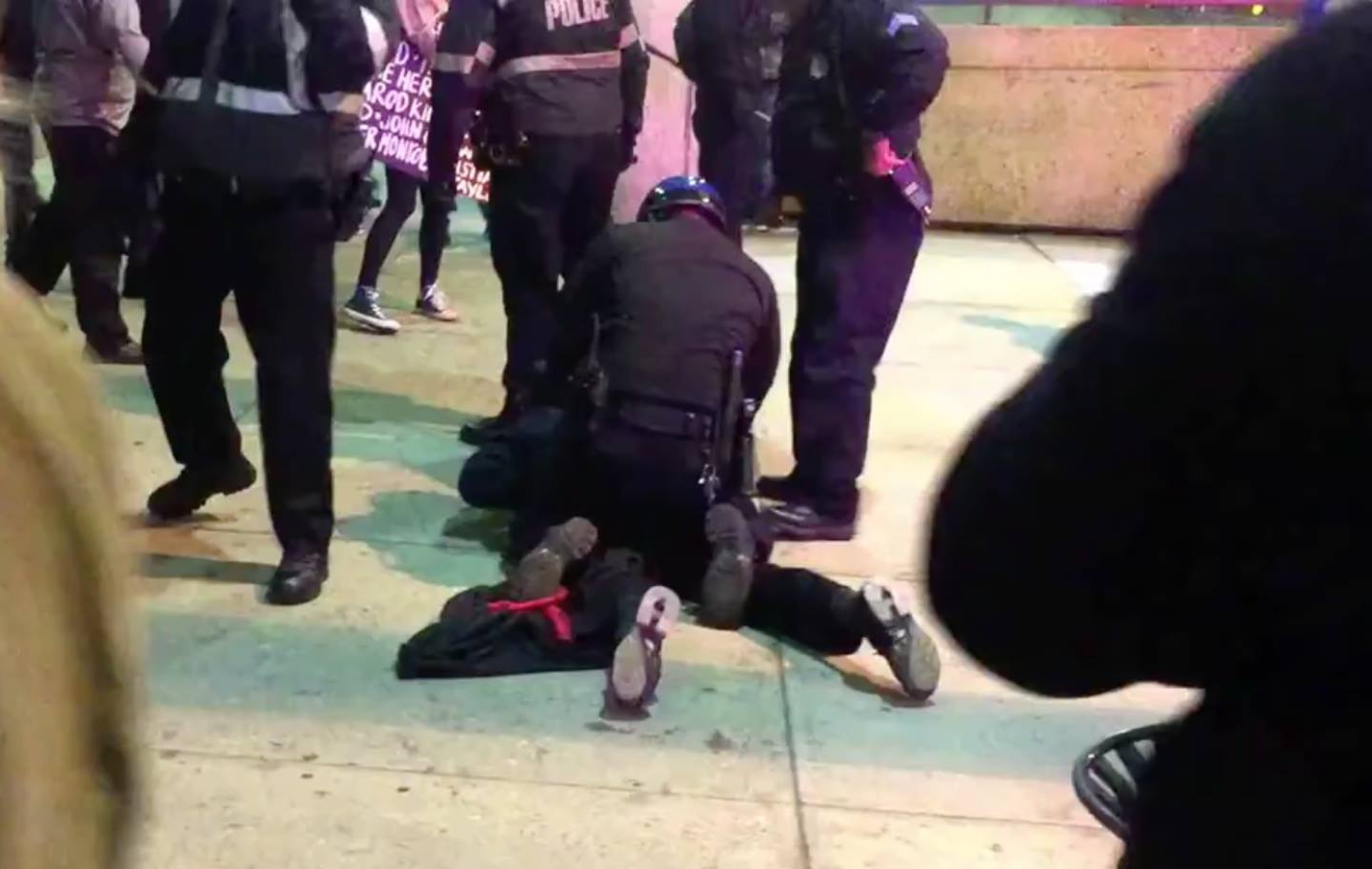
The killing of any human being is terrible, but the retaliatory killings of police in Dallas could have been prevented. Not by expecting minority communities to stomach further and unending extrajudicial assassinations, but by having police curb their racism and use of lethal force. Or of course by disbanding militarized police departments. Public officials can’t even broach that conversation. Do we expect the police state to dismantle itself?

Self-styled black revolutionary Micah Xavier Johnson, a typical PTSD-hardened Afghan vet, put “suicide by cop” to the service of his embattled community and avenged the deaths of Alton Sterling and Philando Castile. He didn’t shoot their actual killers, but he didn’t hit innocents either. Johnson targeted America’s systemic enforcers of inequity, hitting twelve police officers, five of whom have now died.

Let’s note those cops weren’t “protecting the first amendment rights” of a spontaneous protest of the Sterling and Castile murders, but were harassing and detering demonstrations. The officers could have chosen not to, and hopefully, their comrades in other cities, molesting other legal assemblies, may now choose to stand down, because now authoritarian bullying has come in the line of fire.

There is poetic justice for those who would decry “Blue Lives Matter”. If they’re going to pretend it, let them feel the oppressive threat of violence which black lives bear. For one evening, in a small corner of Dallas, Texas, police brutality faced a comeuppance.

For now Johnson’s act is being condemned as an atrocity, as a massacre even, though obviously his victims 1) met every standard of belligerent adversary, 2) were armed, and 3) outnumbered him. Let’s concede that Johnson is a credit to his military training. He confirms how our soldiers could so murderously rapage through our war zones against lesser equipped combatants. Johnson’s motive echoes that which provoked US atrocities overseas, seeking revenge against civilians, exacting collective punishment for deadly IEDs.

If we acknowledge the violence with which African Americans are oppressed, and the mendacity of its apologists and enablers, can we condemn violent resistance? International law accords oppressed peoples the human right to resist.

Slave rebellion leader Nat Turner is recognized today as a hero, but was exhaustively vilified in his day because he killed slave owners, indescriminate of old or young. Whites retaliated and killed many more blacks. More violence follwed from abolitionsists and Jayhawkers, all of it lamentable. But slavery didn’t end because we willed it.

Because this era’s history is written with erasers, our victors’ primary tool, Micah Johnson will probably never be praised for heroism.

Johnson will join fellow effaced cop-killer Christopher Dorner. A previous African American reservist vet who was immolated alive, killed instead of being apprehended, lest an investigation benefit from his testimony about why he could no longer bear LAPD corruption in 2013.

From Dorner’s “manifesto”, before Michael Brown, Ferguson and Baltimore:

“Those Caucasian officers who join South Bureau divisions (77th,SW,SE, an Harbor) with the sole intent to victimize minorities who are uneducated, and unaware of criminal law, civil law, and civil rights. You prefer the South bureau because a use of force/deadly force is likely and the individual you use UOF on will likely not report it. You are a high value target.

“Those Black officers in supervisory ranks and pay grades who stay in south bureau (even though you live in the valley or OC) for the sole intent of getting retribution toward subordinate caucasian officers for the pain and hostile work environment their elders inflicted on you as probationers (P-1?s) and novice P-2’s. You are a high value target.

You perpetuated the cycle of racism in the department as well. You breed a new generation of bigoted caucasian officer when you belittle them and treat them unfairly.

Mikah Johnson’s last words we only know through the spin of Dallas police, the same people who decided not to wait him out, nor to smoke him or gas him out from hiding in a public parking garage, but instead to send a robot with a bomb and M.O.V.E. his ass like every other black nationalist revolutionary.

No, you murdurous assholes, Johnson didn’t “want to kill all white people.” He wanted to kill white cops. Just like Dorner, he wasn’t a threat to the public, he was a threat to the police state. You cops ensured Mikah Johnson didn’t live to dictate “confessions” and you even obliterated his body like Osama bin Laden. Drawn and quartered essentially, to preclude memorializers being able to center on an idol to build a resistance.

You and I may grapple with what to think of Johnson’s personal rampage, but the state knew immediately his was the selfless heroism they fear most. As with bin Laden, they knew his apprehension must be terminal.

Lest I be misunderstood, I do not promote armed insurrection, sedition or murder. I cannot. But I will not condemn Micah Johnson.

I need not agrandize him either. Taken without his revolutionary ideology, Johnson was an ordinary mentally wounded veteran like many others. Homicidal vets with PTSD are at the core of our epidemic of police brutality. Our law enforcement teams are full of OIF and OEF soldiers who got their start shooting up cars at checkpoints and acting out racist genocide to their heart’s content.

It’s not a new problem, the US has always had active warzones feeding veterans into homelessness for those who couldn’t cope and filling government jobs for those who thrived. Beside policemanship, a very common job for discharged soldiers has always been the post office. Rembember the rampaging gunman problem we used to call “going postal?”

America’s racism problem may be transcended by a succession of church services, but class struggle is not a hearts and minds operation. Fascist rule and its army of the rich are not going to be wished away by militant nonviolence. That’s as likely as counting on the tooth fairy.

Worrying that acts like Johnson’s will provoke increased authoritarian repression is an expression of privilege provided by someone aclimated to a tolerable status quo, clearly a white perspective for whom black lives matter not enough.

Until all of us share the plight of the average Syrian refugee, trapped in our capitalist frontier war zones, none of us are shouldering an equitable burden of the police state.

That’s why it is more than black lives that matter. The middle class greivances of Occupy Wall Street are only a class removed from Black America’s suffering. We’re still talking about privileged Americans who support a grander racism that drives our global exploitation of all peoples.

I don’t have any faith that an arc of history bends toward justice in this corporate dark age. For my own sense of what’s right, it’s important to recognize Micah Johnson and Christopher Dorner for who they were, flawed, maybe very minor, aspiring Nat Turners, who wanted to strike against today’s slave masters and their brutal blue foremen.

Mistakenly released DPD After Action Report reveals 27 officers on “shadow operations” at Denver 100 Mask March


DENVER, COLORADO- Hidden deep in the evidence against one of nine protesters arrested at last year’s Guy Fawkes’ Day march in Denver, was an “AFTER ACTION REPORT” never encountered before in discovery evidence available to previous Denver activism defendants. This report has provided the first public mention of “Shadow Teams” deployed on “Shadow Operations” against peaceful demonstrators. Most remarkable was that 27 officers were mobilized for shadow operations, among a total of 169, clocking a total of 1379 man hours, against a rally and march that numbered “around 100” at its peak, to quote the report.

The report was presented to Denver municipal judge Beth Faragher on Monday before the trial of one of the Anonymous arrestees. The judge was asked why discovery evidence didn’t include reports from the “Shadow Teams” detailing, for example, what their shadow operations were. Judge Faragher agreed to continue the trial until September to allow city attorneys to come up with some answers.

One defendant’s lawyer was also provided the Denver Police Department’s Crowd Management Manual, an earlier edition of which was leaked last year by Denver’s Unicorn Riot. The current manual does not differ on this subject and defines Shadow Team as: “A team of officers assigned to identify Persons of Interest as being involved in possible criminal activity based on Reasonable Suspicion.”

There is no disagreement that shadow operations involve undercover officers following targeted activists. The question is what were they doing to maintain their cover? You can’t surveil moving marches from under storefront awnings or hotel windows. To mingle with protesters who have to march with them. To ingratiate yourself with hosts you have to participate. To impress leaders you have to delegate. So what actions were the shadow offices mimicking?

The title “Million Mask March” means to aggregate all the actions across the world demonstrating on Guy Fawkes’ Day, every 5th of November. Individual marches are ridiculed for being mere fractions of a million, in Denver for example, marshalling only a hundred or so. Now, even more humiliating for Denver may be the revelation that up to a quarter of the marchers were undercover cops.

Denver activists are accustomed to infiltrators, such have been photographed and outed regularly, but 27 officers operating in “shadow teams” is news. It may rewrite the last several years of arrest incidents. Arrests of Denver protesters have appeared sporatic and haphazard. Now it seems the targeting may have been restricted to actual protesters, because their shadow companions were not arrestible, by virtue of being cops.

Although Shadow Teams are mentioned in the DPD manual, this After Action Report is the first to itemize their deployment.

Here’s the command structure which list the names of three officers whom lawyers may be able to depose: a Commander Fountain, Lieutenant Mitchell, and Lieutenant Jimenez. Defense lawyers are now considering deposing these officers to learn more about what their operations entail.

Unfortunately the narrative provided in the 4-page after action report does not detail the “shadow” activity. It does however mention the number of anonymous activists which Denver was mobilizing against. From 20 building up to 100 tops. Here’s the full narrative:

Denver Police Department AFTER ACTION REPORT

NARRATIVE OF INCIDENT (Chronological log, if applicable, to be attached)

On 11-05-2015 members of the Denver Police Department were assigned to various locations throughout downtown Denver to monitor the Million Mask March. Response personnel consisted primarily of District SCAT teams, DMU, Metro/Swat and Gang Bureau officers. The MAP Team was staged at 14th and Delaware to facilitate arrest processing. On-duty traffic resources and DPD special units assisted as well. District Six Commander Tony Lopez acted as the Operations Chief and managed activity in the field. The Command Post was maintained at the Denver Crime Lab with representatives from RTD, DSD, DFD, CSP and DHPD.

By 1130 hours about 10 protestors gathered in the 1400 block of Lincoln on the west side of the Capitol. The participants were primarily dressed in black clothing and many were wearing masks. By 1245 hours the crowd grew to over 40 people. They demonstrated peacefully by holding signs and banners. On November 4th the protest group announced a planned march between the hours of 4 – 5 pm. The morning crowds and noon marches that took place in 2013 and 2014 did not occur this year.

Afternoon March

At 1420 hours some group members were observed making signs with spray paint. By 1545 the crowd grew to around 60. At 1640 hours Sergeant Cervera 680 contacted security at the World Trade Center (1625-1675 Broadway) in anticipation of protest activity there (Ben Buthe 720-499-2292 or CP 303-595-7049). DPD was advised that the WTC Plaza closes at 1800 hours.

At approximately 1650 hours officers contacted occupants of a suspicious dark truck NY GMY4295 parked on the elevated lot just east of DPD HQ (1400 blk of Cherokee). The incident checked clear.

At 1700 hours, two individuals wearing Guy Fawkes masks were observed walking southbound in the 1300 block of Delaware and then eastbound on W. 13th Avenue past the south side of DPD HQ.

At 1704 hours the group left northbound on Lincoln from the Capitol. They turned left on the 16th Street Mall but appeared to stay on the east sidewalk. The group turned south on Court Place but quickly crossed the street and walked back toward the Mall. At 1714 hours, some members walked in the street upon being encouraged by an individual with a bullhorn. This action interrupted the RTD Shuttle Service. The entire group then continued their march by walking down the center of the Mall. The Federal Reserve Security office was notified.

At 1725 hours the group rallied a short time at Stout Street and then turned around to march back toward Broadway. They turned west on California and walked toward 15th Street, where they remained on the sidewalk. The group turned right on 15th Street and started an unpermitted march in the street shortly thereafter. DMU officers responded to encourage the protestors back on the sidewalk. Verbal orders were given as well.

The group turned east on Stout and then north on the 16th Street Mall. They rallied for a short time at the Federal Reserve Building at 16th and Arapahoe and then continued northbound on the Mall. The group appeared to number around 100 at this time.

At 1750 hours the demonstrators turned right on Lawrence and marched primarily on the sidewalk toward 17th Street. They stopped momentarily midblock in front of the Westin Hotel then continued outbound on Lawrence. The group turned south on 18th Street where some of the members walked in the street. At 1757 hours, most of the crowd began an unpermitted march in the street 1700 block of Arapahoe. Demonstrators were advised to get out of the street and back on the sidewalk. After refusals to comply, four parties were arrested for the continued violations. Traffic officers diverted vehicular traffic at 18th Street for safety and opened the street at 1805 hours. At 1803 hours a female victim contacted 724A Officer Gates and stated she was assaulted by one of the protestors. District 6 officers were dispatched for the report and an ambulance was called.

The demonstrators continued their march on the sidewalk on Arapahoe toward 16th Street, then turned left on the Mall. They turned west on Curtis and marched across 15th to 14th Street. At 1817 hours an individual wearing a grey backpack with a metal baton attached to the back appeared to be trying to incite a disturbance. The group turned south on 14th and walked toward Champa where they stopped and blocked traffic. At 1820 hours a white male wearing all black with a military-type vest and carrying a backpack with white lettering was advised by police to get out of the street at 14th and Champa.

At 1825 hours the group continued to march south on 14th Street. They crossed California, Welton and Glenarm and then turned east on Tremont. At 1835 hours some members attempted to march in the streets again at 15th and Tremont. DMU officers once again responded to order and marshal the violators back on the sidewalk. The group continued south on 15th Street toward Colfax Avenue. The group marched unpermitted in the streets again on Colfax Avenue eastbound toward Broadway.

At 1844 hours a protestor pushed over DPD Lieutenant Mike Wyatt and bicycle officer Tab Davis at Colfax and Broadway. The suspect was arrested shortly thereafter. A second arrest was made after an individual attempted to “unarrest” the first suspect. At 1858 hours Sergeant Horton reported a felony drug arrest. Once again, traffic and DMU personnel assisted with traffic control in order to maintain a safe environment. Two additional protestors were arrested for disobedience. The protestors ultimately gathered back at the State Capitol and dissipated by around 1930 hours.

Throughout the afternoon and evening, multiple announcements were made by police for the demonstrators to get out of the street. Three Use of Force reports were completed in association with the arrests and three officers suffered injuries. One of the three officers (Cash) was transported to DHMC with a knee injury related to an arrest. Except for those officers involved in an arrest, all units were released by 2000 hours.

I’m pretty sure PRIVILEGE is voting for a warmongering sociopath to feel good about having a first woman president.

Oh, really, so it’s “privilege” to support Bernie Sanders because he will take votes away from Hillary and thus enable a Trump presidency? Is it privilege to vote for Trump just for the entertainment value of seeing what the blowhard will do? Who is the only candidate with a direct record of mass murder and banksterism? I’ll assert it’s wildly privileged to inaugurate Hillary Clinton, just as you did Barack Obama, for the token victory of a first whatever, at the cost of giving the US regime a public mandate for more war and imperialism. Remember how we used to believe the world didn’t hate us ordinary Americans, just our fraudulently elected president? Now you want to elect the Bush-est of evils. Privilege is knowing the most formidable military in the world will kill untold thousands of darker-skinned others for the sake of your security.

Once more the Hippie Bard takes keyboard in hand..

Some might be asking themselves (as I often do) “Self, just what in Hell is Brother Jonah thinking, ragging on obscure moments in American and British history and raggin’ on the Queen?” Hmmm…

Perhaps it has much ado about something. Like the partitioning of Arabia which has taken an uncounted (by me) number of wars to keep in about the same political and religious boundaries.

Here I should interject the very much related wars on the ol’ Pipeline Grid such as VietNam, Thailand, (they host U.S. Air Farce Bases) (so do about two thirds of the countries around) India in all its manifestations, Ceylon which is now Sri Lanka as per the wishes of the people there, same with Mumbai, Bangladesh, Afghanistan, the new yet strangely ancient British and American policies to keep China as a client state rather than a superpower (way too late, fellas, way too late) by encircling them militarily and economically… but let’s start with the partitioning of Arabia. The Saudi, Jordanian, Yemeni, defunct Syrian and Iraqi, Kuwaiti etc Royal Houses have been placed on their thrones not by genuine common consent of the people the Kings and Emirs but by the Armed Forces and on behalf by the British and American 1% oil (and every other marketable commodity) cartels.

By the way Iran is not an Arabic nation. They’re Persian and the muddled inclusion in the Arabian bloc by people who say stupid shit like “well, they’re all alike” just pisses off some people.

While the Queen doesn’t have full political power in England or her royal former colonial empire, she IS a major shareholder in British Petroleum. The ones who screwed up the Gulf of Mexico and told the American/Mexican/Cuban and all other nations to mind our own business, they would take care of everything and we should just run along and play somewhere.

Economic concerns fuel military affairs. In the case oil, fueling is the correct word.

AND.. the 3 leading Protestant churches in America, Methodist, Baptist and AOG, are offspring of the Episcopal Church. And there’s movements in these churches to re-start the Crusades. Taking ISIS and al Qaeda as the excuse.

I have witnessed the Colorado prison and jail system allowing and encouraging volunteer Religious Leaders who spread the Gospel of Hate and exclude as many dissenters to that perverted gospel as possible. I’ll assume here that it’s a nationwide deal. Radicalizing American prisoners, many of whom are actually habitual violent criminals, to continue a war inflamed by the actions in behalf of the 1%.

And insisting all along that every “Ay-rab” meaning every Muslim in the entire world (it hurts my brain to translate Standard English into Standard Redneck) is born with a bomb in his or her hand.

maybe not that extreme, but hyperbole spawns hyperbole.  It doesn’t matter who gets in the way of the bullets or shrapnel, not to the bigpigs at least.

You might remember this…

“Charlie asd Camilla almost got their asses dragged out of their limo and street just would have prevailed, blue blood would have flowed in the gutters of London etc… (sic) the London Anarchists found a neat way to defeat kettling”

Maybe the rich bitch establishment ought to really worry about reprisals.Their gated communities can be kettled and turned into ghettoes in the most real definition of the term.

By volunteers who probably wouldn’t ask a dime in pay, merely a just society for their children.

One in which their kids or siblings or parents won’t be shot down in the street by the cops. Or shot in their own homes. I hadn’t been up here a red hot two months when the Denver cops shot a man to death in his bed, said they saw him “reaching for something” and the evidence at their automatic acquittal hearing was their word against that of a dead man. Then they charged the victim’s nephew for the killing because he wasn’t home when they went in to serve a warrant on him but shot his uncle instead. True Story, from the summer of ’04.

They obviously want war, or think they do. Or at least their masters believe they’ll come out on top.

But their social doctrine is entwined and mirrored in Capitalism. Which is a pyramid scheme, can’t last forever and when it falls, and their social doctrine goes down with the supply of non-existent money, based on resources they don’t actually have… too bad, right? Only we’ll have the privilege of joining them in their misery.

Yeah, That’s right, I’m saying the U.S. Navy committed piracy

revengeThe day was 20 March 2014. Eastern Med. N Korean tanker Morning Glory departs from a port disapproved of by the American Corporate Police State. The New Libyan Puppet Dictatorship gets a call from the U.S. that the “rebels” had been intercepted and that the oil, claimed by the ‘Oil’-igarchy, is to be turned over to the Puppet “democracy”.

The picture is a “quick sloppy” but the issue at the top shows the front cover. It’s for sale on Ebay as a collectible but I don’t give a damn by whom. Piracy. The date, sometime in 1978. National Lampoon magazine publishes a “revenge” issue.

Showing on the cover is a person who is clearly Arab being punched in the face.

Why and how is it “revenge”? Because the OPEC ‘cartel’ demanded the price they wanted for THEIR property from the US/British Oil Cartels. Oh my, those dark skinned people need to be punished for their impudence. One of the suggested “revenge” tactics suggested was “what if a lot of American Navy crews uh.. “mutineed” and ehrr “Stole” their ships. It wouldn’t be our fault if these Bad Fellows became the Terrors of the Seven Seas, now would it? (Queen Elizabeth I did the same thing to the Spanish)”   Which is true, the English DID that. It goes on with a US submarine with a skull and crossbones (!) flying and the legend “Yo ho ho and $2 a barrel for Arabian crude!”

So now, according to the not-very-abandoned-or-even-noticeably-modified Bush Doctrine, the Navy thieves and murderers don’t even have to mutiny to enjoy their fantasies about being Captain Hook and Captain Kidd and Blackbeard and Long John Silver. The American Taxpayers subsidize their piracy on behalf of the richest 1% who skirt paying their own way through taxes as quickly as they dodge military service for themselves and their demon spawn piglets.

They get to sit around on their fat arses collecting the blood money and not pay nor fight nor work to earn the spoils.

That’s what we of the “Peasant” class get to do for them.


Virginia Dare was an “Anchor Baby”

Not meaning to poke fun at young Ms Dare who disappeared along with the rest of the Roanoke Colony more than 400 years ago. More like mocking and reproving redneck bigots who make a big stink about other people having the same immigration privileges as THEIR ancestors did. Especially as it’s an election issue.

Along with the Religious Refugees. See, the first English immigrants were notably religious extremists fleeing from other religious extremists. Virginia the colony was named not for the Virgin Mary, but for Queen Elizabeth. The one who bullied Parliament into passing the Conformity doctrines. Which led to some hugely large massive horrifying monstrous big “civil” wars in England, Scotland, Wales, Ireland. Then exported to America along with the ongoing British v Spain and France wars.  The plan was then as now (think Israel) put a large amount of people who are just too contentious to allow them to stay in the Motherland, give them discount passage and sell them limited supplies and weapons. And do a lot of it on credit. The French term for it was pioneers. A support system for military adventures.  Make sure they’re likely to piss off the natives, but not likely to survive without some “emergency” backup from Momma England.

Others did the same thing, the English just were the ones who got away with it. Davy Crockett was part of two such maneuvers. Born in Tennessee when the Revolution hadn’t been worked out, Tennessee having been treaty land which the Crown was refusing to allow English expansion. One of the sore spots that the sorehead revolutionaries used as an excuse for the revolution. It’s referenced in the Declaration of Independence. The British government honoring some of their treaty obligations by selling weapons to Natives. And blankets (ahem!) and other goods. The Treaties in question being the peace agreements after the 7 Years War which was fought mostly in Europe but in American History class we’re taught to call it the French and Indian War. And since he was born in 1786 which was just barely almost 20 years before the Louisiana purchase, where the kings of  France and Spain took turns financing each others wars by selling land in The New World which had never been visited by any European king. They sold land back and forth that they had never seen. Along with the people of the region. Subject of Spain one morning and France the next. The English and their bastard child The United States did the same thing.

to tie it all together….

Definitely Davy Crockett was born of illegal immigrants on Cherokee land. The Roanoke colony was located in what’s now the Carolinas, named for one of the Kings Charles of England. The Conformity Acts caused such frictions between English Christians that Protestant groups like the Pilgrim Church, Puritans, Presbyterians and of course Catholics were slaughtered and persecuted whenever their factions weren’t persecuting every other faction. And a whole bunch of Christians who just could not conform to other Christian doctrines fled to America to set up shop. And put up shot. There was for instance a running feud which often broke into gunfire between South Carolina and North Carolina about the difference between Presbyterian and Episcopalian and another cross-Potomac same thing because Virginia was mostly Protestant and Maryland was predominately Catholic.  You didn’t have to be across the Catholic Protestant line to piss off the authorities. Just being a Non Conformist protestant would do the trick. I got that from the Oxford World Almanac which interestingly enough is sponsored by the Episcopal Church.

Whatever happened to Ms Dare and the rest of the Roanoke settlers is pure speculation but there sure is a lot of that too. Some have said in my hearing that the Roanoke people assimilated into the Cherokee or other nearby tribes. No documentation of that, all the documentation is on the lines that they Never Were Found Again.   Some of the speculation seems, to me, very cult like.

And a lot of the ones who promote that kind of conspiracy theories are also heavily into the Birther and Minuteman militias. And with ties to the Klan.

But with all these centuries of Christian v Christian slaughter, it’s somehow the fault of Jewish merchants (who say Happy Holidays instead of Merry Christmas)and Muslims. There have already been calls for the opening of internment camps for American Muslims.

Although the Hate Groups keep telling us that Muslims can’t be Americans. Or Native American Church. Or Jews. Or anybody who doesn’t attend Their Church. Ask any of those who proposing a Church State which one is to be the State Church and he’ll probably (eventually) say his own church of course.

Before any of all that comes around, maybe Christians better stop hating each other first. And your fellow Americans regardless of whether you think we’re actually Americans.

Earth Day, Hour, Minute now Memory. KRCC’s Democracy Now, Then, Was.

FrackedRemember Earth Day? It became Earth Hour, then I think Earth Minute. If there was an Earth Second you and I missed it. With every chance for commemorative environmental actions squeezed out by the newest condensed schedule, the Earth Moment became a void. Now for Earth Day we do nothing. We reflect in acquescence. It’s become another holiday, minus the time off, which is not ironic. Our uninterrupted industry on Earth Day is fitting. Earth Day is like Valentine’s Day. Happy Earth Day! 🙂

Earth Day
Who were those assholes who decided a whole day was too much for consumer culture to spare in reflection, potential enlightenment and transcendence? Those reformist subverted all hope of drawing popular support to the movement. They’re the same moderates who think people need warm cookies to be attracted to a revolution. They are the same Sunday schoolers who think protest must be made safe for picnic goers and their children.

These “innovations” appear well meaning, if naive, but sometimes outside-the-box thinking falls outside of all effectiveness. What passes for unschooled, so consistently, is very likely shepherded by handlers as clever as fox.

The function of subversives used to belong to the anti-establishment. The dark side is using them much more effectively. Rooting them out is depicted as fingerpointing by the Left, which initiates the circular firing squads. And we’re played for idiots.

So let me tell you about my Earth Day.

Democracy Now
My Earth Day featured a visit by Amy Goodman of Democracy Now. She came to Colorado College to speak on behalf of her program and her most recent book which is a twenty year retrospective about the social movements she’s covered. Amy spoke in the tiniest of lecture halls which was full because it was tiny.

Because guess what? The public radio station on which the program used to appear didn’t promote the event. The community radio station which streams her for now isn’t on the air as yet. Word only spread through a student organization on campus. Thus the audience was kept small. Amy’s previous appearance filled a venue much larger, and the one before that filled the school’s largest. Someone shrunk Democracy Now’s local reach by a combination of destructive intent on the part of CC’s regents and a lack of vigilence on the part of her local station KRCC and its supporters.

Not only did the cretinous traitors at KRCC sabotage the potential of Amy’s personal appearance, the event was put into the hands of a strange new student association dedicated to the project of nuturing communication between two Colorado Springs campuses: Colorado College and the Fucking U.S. Air Force Academy. Because apparently the two vocational vectors have things to share with one another.

So two students, one from each school, introduced Amy and before they did they spoke about the importance of people going into civil life collaborating with those heading into military leadership. As if.

These two insipid dwarf-people introduced DEMOCRACY NOW, the flagship news program of the PACIFICA Radio Network, dedicated to a media independent of corporations who profit from war.

The two representatives were clueless, as were their faculty sponsors, and of course they were applauded by liberals who probably think that the educated liberal arts students will have a chance to infect or soften the warmonger mentality of the military academy.

Except it’s of course the reverse. This exchange normalizes the jerk-off war lovers by giving them a seat at the table of academia as if Air Force Academy professors and students have anything to do with university level education.

Amy of course was gracious and didn’t offend her oblivious hosts or their audience. One can only hope the audience was patronizing, but probably not. Instead we’re all thankful for what civic engagement and communty building there is, regardless if it’s subverted by the poisonous outreach of the military state.

Too many do-goodests among us haven’t a clue we are carrying water for the purveyors of contaminants. They fracked Earth Day right under our noses. Where our shouting mouths are supposed to be.

Have a Nice Earth Day! 🙂