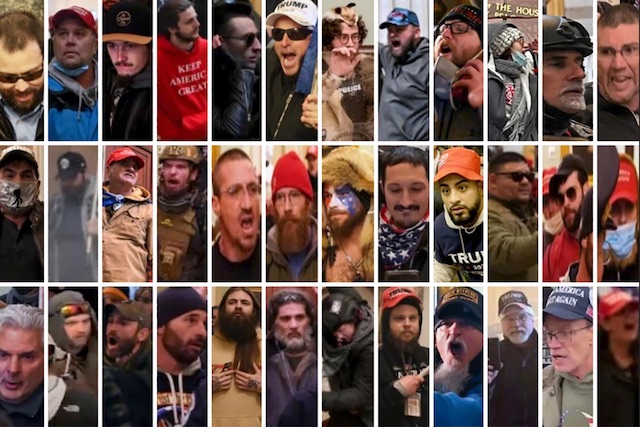
The FBI Wants You to Identify These Participatory Democracy Enthusiasts

Speaking as a street activist, I can assure you that any protester who has traveled to a demonstration in Washington DC would have stormed the Capital Building if the opportunity arose instead of being ignored outside it. Especially if the customary paramilitary posts were unattended and police undercover provocateurs were breaking the windows and doors to ease your access to an edifice that belongs to the people more than any other. Obviously the game plan was to let Trump supporters have their brief moment of unsuppressed anger, then let a “riot” discredit the outgoing party.

What a sham to accuse Trump’s would be rescuers of trespass! How dare law enforcement charge nonviolent demonstrators for the damage which their MAGA-clad plainclothes officers coordinated if not perpetrated?! An unarmed female Air Force veteran was shot dead trying to climb through a window – and who are we calling terrorists?!

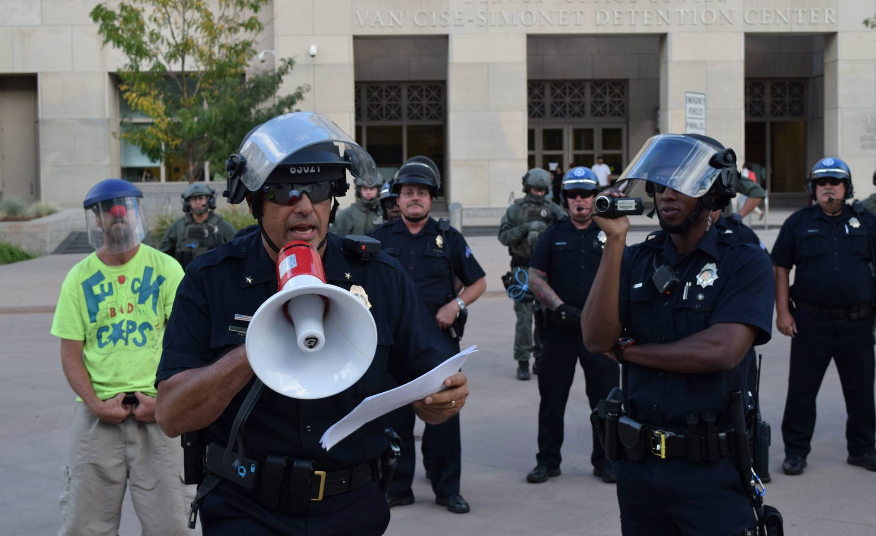
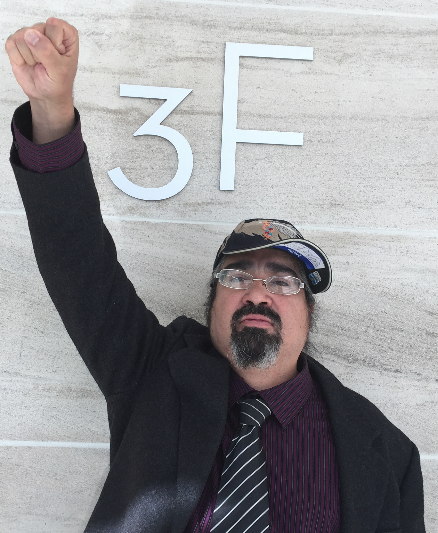
Now the FBI is circulating photos of their top 37 persons of interests, wanted for violating a curfew and treading on the sanctity of our congressional den of thieves. The curfew was a blatant breach of the First Amendment and Congress is the People’s House. The demonstrators wanted to confront their pretend representatives and they did it. Trump expressed his gratitude and they earned it.

Whatever their politics, they are heroes and genuine patriots. They look funny because the FBI and the media shitshowrunners selected for cross-eyes and cro-magnon brows, but such alleged freaks showed initiative, restraint, a sense of humor, and an audacious love of their country. They braved COVID to save Democracy, they accused Congress of betraying the people and they’re not wrong. Their critics don’t have a clue, and the smarter among those let Bernie and Elizabeth Warren deliver them hook line and sinker into the fold of the Democratic Party, where status quo reigns at its ugliest. As a Biden presidency sinks in, their skin will crawl once more, and the cycle of impotent “resistance” will begin again at square one.

Can Biden Get America’s War Machine Back On Track?

I'm Joe Biden and I Approve This Message.

The US media is sparing no effort to unseat President Trump by projecting landslide support for a return to a normal state of affairs, you know: wars, covert wars, and financial supremacy. Admitedly Trump is a constant and tiresome embarassment, but alas the Tump circus has also sidelined war and brought world peace. Try as the media might to restart the Cold War, our Clown-in-Chief befriends our supposed-to-be enemies and de-escalates the jingoist propaganda. And his baffoon act makes it impossible for career diplomats to pretend Capitalist America hasn’t always been a bullying asshole. Trump was the indictment which Ugly America deserved, yet deniers still RESIST, claiming he doesn’t represent them. Look in the mirror you mal-educated narcissists. Do you owe your vitality to infusions of Third World blood? Karma created Trump in your goddamn image. Now you’re hoping to enlist the Clinton-Bush-Obama good-times political machine to restore domestic calm so that warmongers, exploiters and profiteers can get the imperialist juggernaut back to cruising speed. Selfish Americans, you can’t even figure out that Team Biden is the uglier American by far.

Avoid Genetically Modified Organizers

I would call them Academically Modified Organizers except that doesn’t relate their haunting similarity to agricultural GMOs. University-incubated community organizers are designed to share a tragic characteristic of killer crops: the terminator gene. And it self-selects for stupid.

OF COURSE establishment-perpetuating education is going to adulterate what it’s selling as liberatory ideology! For example: anti-oppression, to innoculate against leadership; safe spaces to subvert direct communication; inclusion to preempt focus; consensus to thwart decision. These are genetic modifications to the social impulse, confounding political activism with self crit therapy. The newest social studies grads have resurrected a hopeful rejoinder to repression that reeks of their generations’s ubiquitous consolation prize. It goes THEY TRIED TO BURY US. THEY DIDN”T KNOW WE WERE SEEDS. Sorry, no you are not viable seeds. Poor hobbled Millennials, your miseducators and anti-social conditioners have as good as irradiated your seeds. Your enfeebled strain of resistance may be crazy infectious to systemically modified uncritical thinkers, but it’s not fertile.

Repeat after Senator Jeff Flake: I will not be complicit.

It does sound silly coming from a politician elected to oppose complicity. And what does it say to citizens tirelessly circulating petitions and urging their neighbors to vote? It says this: EVEN US senators are powerless to work within the system! Let’s thank Jeff Flake for that kernel of truth. If your resistance to Trump and corruption and capitalism does not seek to tear it down YOU ARE COMPLICIT.

White mass shooters are not terrorists. They present no pretext for retaliation. Remember, the Global War On Terror?

Stephen Paddock sniper nest in Mandalay Bay Hotel Las Vegas
Las Vegas mass shooter Stephen Paddock is not a terrorist. That’s not because you or anyone is a racist for thinking only darker-skinned Jihadists are terrorists. “Terrorism” is a bureaucratic contrivance, as in, The Global War On Terror. It means nothing, but apparently provides legal justification to enforce American global hegemony with military strikes on “supporters of terror”. Of course it doesn’t. It’s artifice. Naturally the public wants to see the charge of terrorism applied equitably to all mass murderers who terrorize the public. Like they want to see police brutality applied liberally to white crime suspects not just black. Like they want to see children charged as adults when the media is fomenting their anger.

Terrorism is a semantic contrivance. It’s how we denounce US adversaries and their desperate means to counter our asymetric military superiority. Our bombs don’t terrorize, their hand delivered bombs do. The Nazis accused resistance fighters of being terrorists.

“Hate Speech” is another contrivance. Priests used to be allowed to burn parishoners for it, priests called it blasphemy. Secular indignants avoid calling it heresy. The Enlightenment was supposed to mark the west’s transcendance of the fear of heretics. Hate Speech is how Americans dismiss unsavory opinion. Fortunately the courts have struck down hate speech laws for what they always were, violations of the First Amendment, but the concept is still a litmus test by which the public wants to pin the ears of irritating speakers.

Likewise the term “genocide”. THAT’S a crime only other nations commit. And only when retaliation suits our agenda. After Rwanda, the UN contrived that charges of genocide mandate international action. As a result, genocide doesn’t mean genocide unless somebody wants to invade. Oil interests are currently eyeing Burma.

Terrorism, hate speech, and genocide are real things, but they are real offenses of which our government is far more culpable than you, or the random deviant individual white male mass shooter.

Does it matter then, if individuals are accused of terrorism when the state is not? I’ll offer you two examples of other contrivances. Conspiracy and racketeering. Both are heavily trafficked by our corporations and government, but easily applied to people whose enterprise authorites want to deem criminal. I just witnessed the trial of two legal reform activists, charged and convicted of both counts. When the law applies to you and not to those enforcing the law, it’s time to stop cheerleading for the prosecution.

Stephen Paddock terrorized, but who do you really fear now that he’s dead –another random white man with too many guns? I’ll wager you’re afraid of the too many guns, their too wide availability, or the purveyors, who keep assault rifles legal in the US to obfuscate the mass manufacture of guns for international arms trafficking. The weapons industry terrorizes.

Judged by intent, the common wife beater is a terrorist. No question, but see? The distinction is unhelpful. How about we call Stephen Paddock a SNIPER. He was that. The Route 91 concert venue was his paramilitary free-fire zone. Paddock may now hold the world record for most American citizens sniped, but his feat pales as uniformed North American white male snipers go.

American christianity is a cargo cult

Jesus loves me
Haha I sympathize with this meme. But it applies to the colonized as well as the colonizers. I do tend to fault impoverished people for shackling themselves to church dogma. Religion rationalizes and preserves inequity. Of course this ignores that African American congregations are community centers above everything else. To cast off religion would deprive believers of their whole social fabric. But isn’t that like arguing that slave plantations were more than places of involuntary employment? Obviously tobacco and cotton plantations were the centers of slave communities. To end slavery threatened a slave’s source of everything: sustenance, shelter, family and community. Small wonder most slaves resisted those agitating for abolition. Slave rebellions were always betrayed by fearful slaves. No churches advocated for abolition. Even the civil rights movement a century later, was resisted by African American churches, except for a tiny few associated with MLK. Everyone today pretends to have marched with MLK, even as they admonish their followers to stay in their pews! Ferguson ignited the Black Lives Matter movement despite local preachers incessantly calling for the protests to cease.

D’ya think ANTIFA might be a trap?

Black Bloc
By all means shout down the fascists. Shout down white supremicists. Bash the alt-right. Do it in black bloc, if you must (and yes we must). March on, against, and over, capitalism. Declare yourself anti-fascist. Express solidarity with ANTIFA protests and counterprotests across the country. I would rethink, however, opening an Antifa franchise without knowing who elsewhere can now act IN YOUR NAME.

No one owns the ANTIFA brand. Like “black bloc”, it’s a tactic, not a movement. Except as this moment’s zeitgeist, the brand has indeed become a movement. The imperative to repudiate emboldened Nazis lacks for neither urgency nor legitimacy.

Antifa is horizontal like Occupy, no leaders. Its membership is fully self-nominated. Except where Occupy Wall Street offshoots offered local casts of characters, Antifa participants remain undercover. The problem becomes whose undercovers.

I fully support confronting fascists. I might quibble about picking fights with inarticulate Nazi cosplayers. Our corporations, the media, and the police who protect both are the full grown, authoritarian fascists.

I likewise support black bloc as an essential strategy for effective protest actions. I encourage picking fights with dogmatic nonviolence passivists who continuously thwart the potential of public demonstrations.

I support Antifa as I do Earth First, as I do ELF, or ALF the Animal Liberation Front, or Hezbollah, Hamas, and the Intifada if you’re begining to catch my drift. I stand with them without wearing a mask because my expression of support is my political right. I do not act as them, wearing a mask.

Antifa may be serving the establishment just fine by diverting youthful rebellion from directing its energy at STATE fascism. It may be suiting populist urges just fine too by allowing discontents to vent our disgust against punchable twits instead of the impregnable powers that be. Ideally those inclined to resist fascism will catch on to who really needs the pounding.

When that begins to happen however, some Antifa chapter (the media will call it a “cell”) in Reseda or Des Moines or Stuyvesant is going to commit an outrage of domestic terrorism and the Antifa brand will be blown. It may be government black ops conducting a false flag, or three percenters shy of a full load hoping to ignite a race war, or misguided revolutionaries jumping the gun. It won’t matter. “Antifa” will be declared a terrorist organization. Pardon the pun, that will be trump.

And while we know Antifa is not an organization, intelligence records will have mapped out who were the ringleaders and daredevils of concern to national security. Authorities may or may not round up suspected co-conspirators and charge them with racketeering. That’s not even my worry. Once discredited and forced underground, Antifa enthousiasts will recede into the woodwork. All the organizing, educating and networking will have come to naught.

I anticipate that my thoughts here are not going to find favor with my many friends currently marching behind the Antifa banner. But I know a number of idiots among them too, and worse, suspected moles bent on disrupting productive insurgencies.

Though Antifa in its character employs security culture stratagems, by design it’s one big back door. I know some comrades see that as essential to escalating a revolutionary force. I see the absence of a binding ideology to be its undoing.

How about we think outside the box too calculatedly provided to us by our anti-fa social engineers? That box is pre-addresed and postage due.

If you are anti-fascism or anti-capitalism, WHAT ARE YOU FOR?

BE THAT.

You can fly the Antifa banner but do it as an allied organization you are meanwhile building.

You can punch the same Nazis and blockade the same racists, and you can sell the establishment killer app for which you control the code.

Black Bloc

Police body cameras reveal Colorado Springs law enforcement used arrests to infiltrate a student socialist group.


COLORADO SPRINGS, COLORADO- Police body worn camera footage accidentally discovered to defendants in the March 26, 2017, protest cases, has revealed a mysterious side story at the Colorado Springs Socialists’ “March Against Imperialism”. At that march, six participants were cited for marching in the street. Meanwhile, a curious seventh was detained, driven off, but not cited. CSPD Officer Krueger’s body-cam recorded what happened and more.

What happened at the March 26 rally, beside the police dispersing a fully legal assembly? This video documents that the CSPD tried to give deeper cover to a team of El Paso County Sheriff’s plainclothes operatives, by giving one of them the credibility of an arrest. In truth, it worked for three weeks and several socialist actions, until the undercover team spooked everyone with their excessively sketchy zeal. As the March 26 evidence was released to defendants, the contradictory police reports began to accrue. Then a file labeled KRUEGER BODY-CAM emerged.

1. Krueger-cam
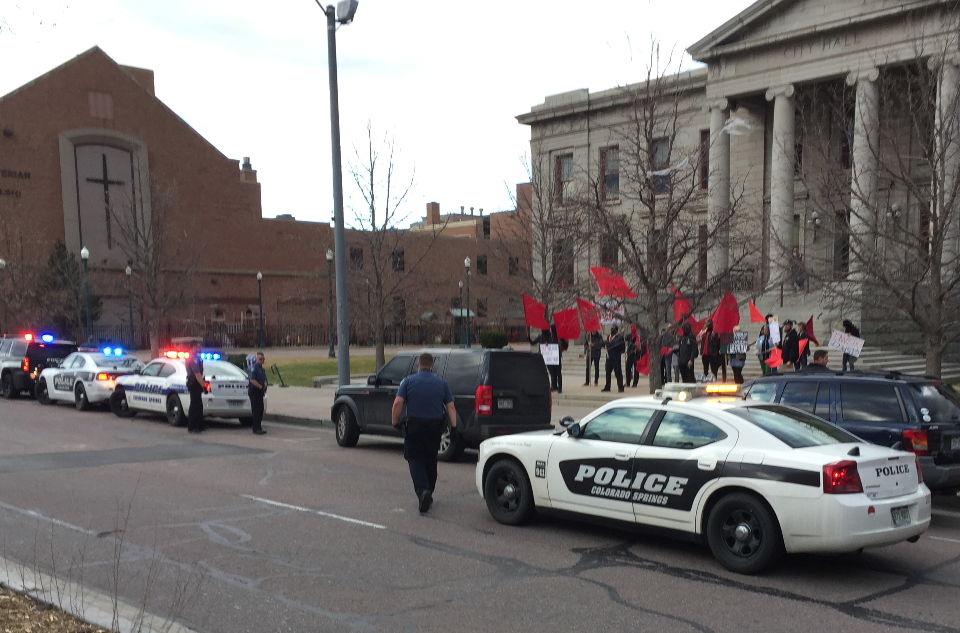
The first thing you see is the twenty or so protesters, clad in black, waving red flags, rallying on the steps of Colorado Springs City Hall. Speakers are railing against capitalism and imperialism. CSPD Officer Krueger comes upon this scene, among the reinforcements called, because fourteen of the protesters, mostly masked, were observed to have marched on the street.

(Marchers had followed Nevada to Bijou to Tejon to Colorado back to Nevada, trailed by the cruisers of CSPD Officers Mark Keller and Roberto Williamson. Returning to City Hall, participants were told by CSPD Sergeant Clayton Blackwell that they could protest on the sidewalk but would be ticketed if they stepped back into the street.)

As the rally goes on, the officers hear that orders have changed and everyone is going to be ticketed. On camera, Officer Keller relates a possible motive: “LT wants everyone identified.”

(Most of the protesters are masked. Arrests will give police the pretext to register everyone’s identity, whether the person walked in the street or not. By “LT”, Keller may be refering to Lieutenant Webber, who dispatched officers to the scene, or Lieutenant Mark Comte, in charge of CSPD intelligence.)

As officers discuss whether to rush the group or detain two or three protesters at a time, CSPD Sergeant Blackwell discloses to his men: “There’s two UCs in there, and they’ll just take a ticket like everybody else.” Blackwell adds, jokingly: “So hopefully we don’t have to start spraying ‘cause I don’t know which ones they are.”

Officer Keller tells Krueger and Canaan he thinks one of the protesters is concealing a knife. He fingers a masked protester wearing a Carhartt jacket.

CSPD Officer Dustin Canaan knew nothing about the undercover scheme.Though Krueger and his partner, CSPD Officer Dustin Canaan, were informed about undercovers, they don’t know that they are being tasked with arresting one.

Officers Krueger and Canaan are formally instructed that when the move is made to issue citations to the protesters, they are to apprehend “Carhartt”.

In fact, the first planned arrestee of March 26 is “Carhartt”. Aka the sheriff’s undercover.

Officers encircle the rally as Sergeants Ingram and Blackwell tell the socialists that “Everyone is getting a ticket!”

When the officers confront “Carhartt” he loudly abuses them with expletives proclaiming his innocence. He does this to incite fellow protesters to resist the police effort to detain him. Everybody else however is either walking swiftly away or calmly accepting their citations for Pedestrian-in-the-Roadway and Failure-to-Disperse.

City police unknowingly encircle sheriffs undercovers

Officers Krueger and Canaan ask “Carhartt” whether he has a weapon. The suspect responds with a strange command, voiced between clenched teeth: “Pat me down at the car.”

CSPD Office Krueger escorts detainee Mark JacksonThey don’t hear his response and so repeat their question. “Carhartt” sticks to his odd refrain: “Pat me down at the car!”

Krueger and Canaan walk “Carhartt” to their cruiser where he admits he has a weapon, a “M&P Shield 9mm”. He alerts the officers that his gun is tucked into his front waistline, with the safety off. In his pocket the officers find an additional magazine clip.

(Let us reflect for a moment, that only Officer Keller knew about this undercover. Imagine if events had escalated and any of the other dozens of police officers had caught a glimpse of the undercover’s gun. What kind of trigger-happy confrontation could have resulted with the socialist marchers caught in the middle? We might also wonder what Carhartt intended to do with two magazines full of bullets.)

Officer Canaan unloads the 9mm, removes the bullet from the chamber, and places everything on the front seat.

Sheriffs undercover Mark Jackson concealed a loaded 9mm

The officers ask “Carhartt” whether he wants to be cited and released on the spot, or taken to be booked at the station? The detainee responds he wants to go wherever the other arrestees are being processed.

Asked whether he has a concealed carry permit “Carhartt” replies no.

It occurs to the officers that they can’t catch and release someone, however cooperative, if they’ve apprehended you carrying a concealed weapon without a permit.

Officer Krueger leaves to consult his supervisor Sergeant Blackwell about this arrestee who is carrying a gun without a permit.

Blackwell asks Krueger: “Is he one of our UCs?” He explains again: “We have two UCs. Do you recognize him?”

Krueger says no.

Blackwell comes to the cruiser to see for himself.

Sergeant Clayton Blackwell and Officer Dustin Canaan look at their unfamiliar detainee.

Blackwell doesn’t recognize the detainee either.

As Sergeant Blackwell walks away from the cruiser, he tells Krueger the suspect is not one of their UCs, then he ponders: “…unless he’s with the sheriff’s office?”

The suspect gives his name as Mark Jackson, d.o.b. 7/20/75, last digits of SS# 1033, phone number (281) 606-0532. All of which is probably phony.

Undercover Amy Walter speaks with an Eastern European accent.His partner “Amy Walter” has been sitting nearby on the curb. She didn’t flee like the other participants, but oddly, was neither cited nor unmasked like all those who remained.

(“Amy Walter” kept her cover for months after the arrests. She claimed to drive up from Pueblo and only appeared fully bloc’d up. She’s gregarious and eager, and speaks with an Eastern European accent.)

Jackson remains detained in the back seat. After a few minutes CSPD Officer Mark Keller comes to the window to look at the suspect. He walks off camera, probably to tell Sergeant Blackwell that he can confirm the detainee is indeed an undercover.

Blackwell returns shortly to the cruiser to tell Krueger “We’re good.” Lowering his voice, he adds: “He’s UC.”

After some thought, Krueger turns to Jackson and asks in a whisper: ”Are you with the Sheriffs?” The undercover answers in the affirmative.

Krueger turns off his body-cam.

2. Canaan-cam
The body-cam worn by Krueger’s partner, Officer Canaan, has all the while recorded the same sequence of events, but he wasn’t paying attention to the whispers, so his camera continues to record.

Officer Keller walks back to the cruiser, this time to tease the undercover. Keller leans in and jokes about the arrest he arranged by pretending to suspect that Jackson had a knife.

Keller begins: “You really should hang out with a better crowd.”

Mocks Jackson: “I know. ‘Fuck the Police’. Ha ha.”

Keller goes on: “Hey, youse in the street, I figured you should get a ticket like everybody else.”

The undercover then says: “That’s why I yelled ‘COME FUCKING ARREST ME!’”

The two then discuss whether the undercover’s female partner should also be ticketed. Jackson theorizes that one ticket is enough.

Meanwhile an unspoken decision is made not to carry through with Jackson’s citation. This disturbs the undercover. He asks “How will it look when I don’t get a ticket?”


As Officer Mark Keller leaves the conversation at the cruiser, he looks directly at Canaan’s body-cam.

Undercover Jackson then notices that Officer Canaan did not grasp the development. He tells Krueger “You better tell your partner what’s going on.” Canaan turns off the audio on his body-cam.

ANALYSIS
To recap. Sergeant Blackwell revealed that the city had two UCs planted in the Socialist march. Officer Keller knew of the undercover Sheriff’s deputies “Jackson” and “Walter”. An effort was orchestrated to give a citation to “Jackson” but that plan was aborted. Wouldn’t it be interesting to know why?

Jackson’s detainment did not generate officer reports from either Krueger or Canaan, but the alias “Mark Jackson” was listed in three places. 1) on the March 26 police blotter, 2) in the radio log as “Mark Jackson in custody”, and 3) mentioned in passing in the report filed by Officer Roberto Williamson.

For three weeks “Mark Jackson” continued to infiltrate the socialist group, participating in several counterprotests, until everyone gave him the cold shoulder. His partner “Amy Walter” continues to contact group members.

The infiltration operation is extraordinary when you consider that the “Colorado Springs Socialists” essentially comprises the UCCS Socialist Discussion Group, a year-old student club chartered at the school. Though the students sometimes conceal themselves bandanas and hoodies when they attend social justice protests, they’ve committed zero acts of rioting, violence, or property destruction.

Once the video files had been released to the March 26 defendants, city prosecutors fought tooth and nail to quash the defendants’ subpoenas to the officers involved. The judge refused to review the body-cam footage, explaining that the El Paso Sheriffs Office had the discretion to refuse to provide further information.

Defendants insisted the prosecution was obligated to produce all the witnesses it knew to be on the scene of the alleged offenses, whether the witnesses were uniformed police or undercover. But the court won’t concede that the undercover operation merits looking into. The city stresses the importance of detectives being able to remain undercover to monitor ongoing crimes, in this case, jaywalking. The defendants are charged with obstruction and failure to disperse. If those are the crimes worth embedding undercovers, then the officers ought to be summoned to the trial to testify and secure convictions.

The defendants risked just that by insisting that the undercovers come forward as witnesses, but that risk was worth what the defendants were really after. What were those undercovers doing at the rally and at the march? Were they leading marchers into the street? Were undercovers taunting the cops as a demonstration that the protesters heard police orders to get off the street. Most marchers did not hear any orders, nor see police do much other than block traffic for their procession, contrary to the tone set by undercover Mark Jackson’s “COME FUCKING ARREST ME”. To prove the charge of Failure to Disperse” the prosecution has to prove that the accused wilfully defied the police. Jackson’s words seem meant to stand in for that proof.

Likewise, was Jackson’s belligerant response to police trying to arrest him meant to spark more resistance? Very often, riot cops target their own infiltrators who know to act outraged and resistive so that the crowd responds protectively. Jackson was clearly trying to do that.

Most of all, defendants wanted to get to the bottom of CSPD’s complicated operation to set their undercovers up to “take a ticket like everybody else.” How many officer were involved, and why didn’t officers recognize each other? Are the undercovers in fact with the El Paso Sheriffs Office or are they intelligence contractors or government agents? Who was coordinating this infiltration operation and who decided to call off issuing the ticket?

Who above all, thought they needed to insert an armed undercover, or two, possibly four, in the midst of a peaceful anti-imperialism march? Could a socialist group’s reckless co-opting of city streets warrant an undercover team’s reckless endangerment of unsuspecting activists surounded by very likley PTSD-addled police officers?

Jackson’s jittery behavior while detained in the back of the police cruiser hardly gives you confidence that even he should be trusted to wield a gun.

APPENDIX
The Krueger and Canaan body cam videos are circulating online. We’ll link to them as we locate stable copies. Below is an index of the events described above.

On the KRUEGER body-cam:

[0:45] Officer Mark Keller: “L.T. wants everyone identified.”

[3:05] Sergeant Clayton Blackwell: “There’s two UCs in there, and they’ll just take a ticket like everybody else. So hopefully we don’t have to start spraying ‘cause I don’t know which ones they are.”

[3:50] Off-camera officer: “Guy in the Carhartt [jacket] has a knife in his pocket.”

[9:00] Officers Krueger and Canaan discuss orders to arrest “Carhartt” suspected of carrying a knife.

[14:02] Sergeant John Ingram shouts: “Everyone is going to get a ticket!”

[15:20] Krueger and Canaan contact “Carhartt” who responds in a hostile and provocative manner. Unlike the other arrestees who are fully cooperative, he objects with loud profanity and derision.

[18:05] Krueger and Canaan discover “Carhartt” is armed with a 9mm handgun, tucked in his front waistband, and no concealed carry permit.

[20:04] Suspect gives his name as “Mark Jackson, d.o.b. 7/20/75”, and asks: “How do you know I was in the street?” Officer Canaan replies “An officer pointed you out. He’s been watching you the whole time.”

[23:38] Krueger consults Sgt. Blackwell who determines that “Jackson” is not one of their two UCs embedded in the march.

[28:56] Off camera Sgt. Blackwell tells Krueger “He’s U.C.”

[29:20] “Mark Jackson” admits he is with Sheriff’s Office.

[29:50] Krueger turns off body-cam.

On the CANAAN body-cam:

[16:41] Officer Dustin Canaan unloads the detainee’s “M&P Shield 9mm” and places gun, magazines, and extra bullet on front seat.

[22:02] Officer Mark Keller approaches cruiser to take a look at the detainee’s face.

[24:52] Sergeant Blackwell taps on cruiser window, says “We’re good.” Whispers to Krueger (inaudible, but it’s on the Krueger cam where we hear: “He’s UC”)

[25:03] Officer Keller returns to cruiser to joke with “Mark Jackson” about having arranged his fake arrest. Says Keller: “Hey, you’se in the street, I figured you should get a ticket like everybody else.” To which Jackson replies: “That’s why I said ‘Come fucking arrest me!’”

[25:25] Keller discusses with Jackson whether or not to ticket his female partner.

[26:27] Canaan turns off the audio of his body-cam.

Last cruise of pirate chasers Juergen Kantner and Sabine Merz, a geography

Lapu-Lapu beats Magellan
There’s something fishy about the story of German sailor Juergen Gustav Kantner, whose beheading video was just released by Abu Sayyaf rebels (ASG). Apparently Kantner, 70, had been kidnapped by Somali pirates before this. What are the chances, considering all the gin joints and circumnavigators these days? In a further coincidence, the umpteen sensational articles are all short on details, including the dead woman found on Kantner’s boat, her identity discarded by even the media. Why? Her name was Sabine Isne Merz, 59, sometimes cited as Sabina Wetch. She and husband Kantner were ransomed in Somalia in August 2008 after 52 days in captivity. This time Merz’s body was found aboard the Bermuda-rigged “Rockall”, but a whole Sulu Sea away from where the couple was allegedly captured.

I’d like to lay out the geography of what’s been revealed so far, so emerging facts will more easily shake themselves out online.

According to the ASG, the Germans were seized in November 2016 while sailing on Tanjong Luok Pisuk (spelled Luuk in media reports), an inlet on the Northwest coast of Borneo, in the state of Sabah, Malaysia. Then, halfway down Sabah, Merz was purportedly killed in a shootout with her captors off Tawi-Tawi Isand in the Pangutaran province of Western Mindanao, the Philippines. Her body was found beside a shotgun on the Rockall, abandoned off Laparan Island in Sulu province. Some reports say the sailboat was moored, some say adrift. Though Tawi-Tawi and Sulu belong to the Philippines, they are governed by the Autonomous Region of Muslim Mindanao (ARMM), from which today’s gruesome video is thought to originate.

Juergen Kantner met his end at the edge of a curved blade wielded by Muslim rebels in the Philippines’ long contested province of Mindanao. A nearby indigenous resistance in Cebu, under the leadership of Lapu-Lapu five hundred years ago, stopped explorer Ferdinand Magellan halfway round the circumnavigation for which he’s given credit because on a previous trip he’d come around from the other direction to “discover” the Malay Archipelago. By coincidence, Kanter and Merz almost bridged the gap.

DAPL used helicopters to down drones, cut live feeds as Rosebud camp swept


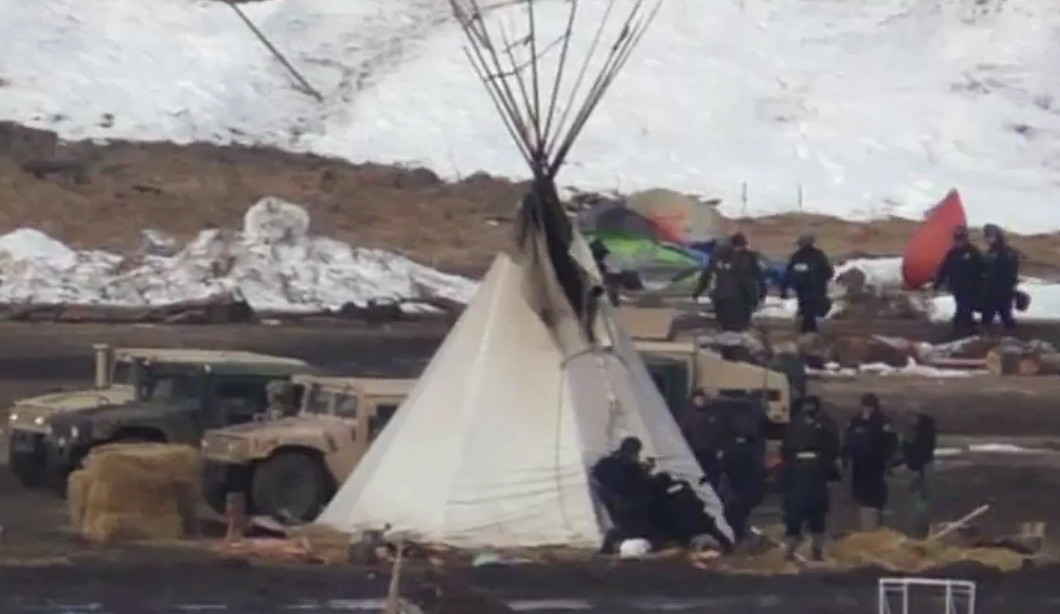
Forty seven water protectors were arrested yesterday as militarized police cleared both Oceti and Rosebud camps along the Cannonball River in Standing Rock. Helicopters flew low, not to support the ground troops conducting tent to tent raids, but to interfere with resistance drones recording the spectacle. Drone operators report their links being jammed and their drones being forced into collisions if they were unable to avoid the Homeland Security choppers. There were many live feeds being broadcast from drones, long distance cameras and on the front lines. Once Oceti camp was cleared, one by one the feeds were interrupted and dropped. When connections resumed, viewers learned that Rosebud camp too was swept and cleared. Rosebud was on reservation land, not disputed treaty land, but BIA officers helped by militarized police evicted everyone.

Smokey Bear wants to prevent fires, does he belong to your resistance?

So there’s a t-shirt being pitched by the alt-mod-left, who want to coopt the anti-Trump rallying cry RESIST. It’s Smokey Bear with his head down and fist raised, invoking the Black Panther salute made iconic at the 1968 olympics. Except his fist is on FIRE, and it’s Smokey. WTF. Is he resisting putting it out? Smokey Bear’s singular catch-phrase is about YOU, PREVENTING FIRES. As usual, he’s holding a shovel, a reminder that fighting forest fires is essentially ditch-digging. So what is Smokey resisting? The urge to douse the fire burning up his hand? The image reminds me of the innanity of moderate democrats. Both “Smokey” and “Bear” have long become euphemisms for cops. This Smokey wants to embed with your resistance crew. Knock him out with a shovel.

I’m told it’s a good day when you get to say “motherfucker” in federal court

The Colorado Springs Gazette was not amused. Nor was the Denverite about my testimony yesterday in US district court, seeking an injunction against the Denver International Airport’s free speech permit. The city attorney tried to discredit me by forcing me to recite for the federal judge the full unabridge text of the sign I held at DIA. It was a riff on anti-Nazi cleric Martin Niemöller’s oft-paraphrased parable: “First they came for the Socialists, but I said nothing, etc”, this time foreshortened as a visceral response to Trump’s Muslim Ban: “-and we said NOT TODAY [strong expletive]!” We argued about whether my message was “welcoming”. I assured her that it was very warmly received and could not be interpreted as anything but uniquivocal solidarity. So I read it forcefully, resisting the inclination to lean into the microphone on the last word. Afterward my attorneys assured me it’s a good day in their line of work when you get to say MOTHERFUCKER in court! Judge William Martinez restricted hearing testimony to the single day (Wednesday) and promised to rule on the preliminary injunction by Friday, February 17.

Pro-immigrant activists with Occupy Denver file suit against DIA and DPD, challenge airport free speech “permit”


DENVER, COLORADO- Civil liberties champion David Lane has filed a complaint in US district court challenging Denver’s office of the city attorney for instituting a permit process at DIA to prevent public protest. Holding signs has become impermissible at the airport, without the issuance of a permit seven days in advnace, although police are not bothering themselves about signs welcoming homecomers or seeking to connect business visitors with their limo service. That selective enforcement is unconstitutional of course, and the lawfirm powerhouse of Kilmer Lane & Newman is filing suit on behalf of two Occupy Denver plaintiffs. last Sunday, January 29, both were threatened with arrest by DIA police. While two earlier attempts to assemble had capitulated to DPD intimidation, the Occupy Denver activists stood their ground. Why did you file your lawsuit? “We know our rights. We want the POLICE to know our rights.”

1. Full text of complaint:

Case 1:17-cv-00332 Document 1
Filed 02/06/17 USDC Colorado Page 1 of 14

Civil Action No.

IN THE UNITED STATES DISTRICT COURT FOR THE DISTRICT OF COLORADO

NAZLI MCDONNELL,
ERIC VERLO,

Plaintiffs, vs.

CITY AND COUNTY OF DENVER,?
DENVER POLICE COMMANDER ANTONIO LOPEZ, in his individual and official capacity,
DENVER POLICE SERGEANT VIRGINIA QUINONES, in her individual and official capacity,

Defendants.

______________________________________________________________________________

COMPLAINT

______________________________________________________________________________

Plaintiffs, by and through their attorneys David A. Lane and Andy McNulty of KILLMER, LANE & NEWMAN, LLP, allege as follows:

INTRODUCTION

1. Plaintiffs Eric Verlo and Nazli McDonnell challenge a regulation of alarming breadth that bans all First Amendment expression at Denver International Airport without a permit.

2. Plaintiffs are concerned citizens who believe that President Donald Trump has overstepped his executive authority by signing the January 27, 2017, Executive Order (hereinafter “Muslim Ban”), which permanently bans Syrian refugees from emigrating to the United States, temporarily bans nationals of seven countries (including permanent legal residents and visa-holders), and suspends all applications to the United States refugee program (even as to vetted entrants currently in transit).

3. Plaintiffs wish to express their disgust with President Trump’s (likely unconstitutional) Muslim Ban. They wish to do so in the same place that hundreds of thousands of Americans across the country have done: standing directly outside of the secure Customs and Border Protection (hereinafter “CBP”) screening area within an airport where immigrants to America enter into the main terminal after clearing customs. Plaintiffs, unlike many citizens across this great nation who have exercised their opposition to the Muslim Ban in airports by chanting, singing, dancing, and praying, simply wish to stand in silent protest, holding signs that express their solidarity with immigrants and the Muslim community.

4. Plaintiffs are banned from doing so by DENVER INTERNATIONAL AIRPORT REGULATION 50 (hereinafter “Regulation 50”).

5. Regulation 50 states: “No person or organization shall leaflet, conduct surveys, display signs, gather signatures, solicit funds, or engage in other speech related activity at Denver International Airport for religious, charitable, or political purposes, or in connection with a labor dispute, except pursuant to, and in compliance with, a permit for such activity issued by the CEO or his or her designee.” DENVER INTERNATIONAL AIRPORT REGULATION 50.03. In order to obtain a permit, an individual must “complete a permit application and submit it during regular business hours, at least seven (7) days prior to the commencement of the activity for which the permit is sought[.]” DENVER INTERNATIONAL AIRPORT REGULATION 50.04-1.

6. Plaintiffs ask that this Court enjoin the enforcement of Regulation 50 and prohibit Defendants from arresting them for their First Amendment-protected activity of standing in peaceful protest within Jeppesen Terminal. Regulation 50 is overbroad in violation of the First Amendment and vague in violation of the Fourteenth Amendment’s Due Process Clause.

7. This is a civil rights action for declaratory and injunctive relief as well as fees and costs arising under 42 U.S.C. §§ 1983, 1988 and 28 U.S.C. Section 2201 et seq. due to Defendants’ current and imminent violations of Plaintiffs’ rights guaranteed by the First and Fourteenth Amendments to the Constitution of the United States.

PARTIES

8. Plaintiff Eric Verlo is a citizen of the United States of America. Mr. Verlo wishes to show his resistance to President Trump’s Muslim Ban, so that others will be inspired to join in the resistance.

9. Plaintiff Nazli McDonnell is a citizen of the United States of America. Ms. McDonnell wishes to show her resistance to President Trump’s Muslim Ban, so that others will be inspired to join in the resistance.

10. Defendant City and County of Denver is a municipal corporation and political subdivision of the State of Colorado. Thus, it is an entity subject to the provisions of § 1983.

11. Defendant Antonio Lopez is a Commander with the Denver Police Department. Commander Lopez is responsible for security at Denver International Airport’s Jeppesen Terminal.

12. Defendant Virginia Quinones is a Sergeant with the Denver Police Department. Sergeant Quinones is responsible for security at Denver International Airport’s Jeppesen Terminal.

JURISDICTION AND VENUE

13. Plaintiffs bring this claim pursuant to 42 U.S.C. § 1983; the First Amendment to the United States Constitution, incorporated as against States and their municipal divisions through the Fourteenth Amendment to the United States Constitution; and the Due Process Clause of the Fourteenth Amendment.

14. This Court has jurisdiction under 28 U.S.C. § 1331 over Plaintiffs’ claims that “arise[] under the Constitution of the United States.”

FACTS

15. On January 27, 2017, President Donald Trump signed an Executive Order, which permanently banned Syrian refugees from emigrating to the United States, temporarily banned nationals of seven countries (including permanent legal residents and visa-holders), and suspended all applications to the United States refugee program (even as to vetted entrants currently in transit). President Trump’s Executive Order has been subsequently referred to as a “Muslim Ban,” because it both mirrors President Trump’s racist, anti-Islam statements made on December 7, 2015, that he was planning to ban all Muslims from entering the United States until our representatives can “figure out what’s going on” and the ban targets countries whose population is predominantly Muslim and seemingly bears little rational relation to each country’s security threat to the United States.

16. Immediately upon the enactment of President Trump’s Muslim Ban there was an outpouring of outrage from a large proportion of the American population and across the spectrum of political affiliation. This outrage led to resistance in the form of protests.

17. On January 28, 2017, and January 29, 2017, protests erupted in nearly every major city in the United States. The protests organically formed in our nation’s airports. Protesters chose to express their disgust with President Trump’s Muslim Ban in airports (and specifically outside of the secure CBP screening area) because individuals affected by the ban who were in transit to the United States were being held and questioned by CBP agents there. Many of these travelers, including lawful United States residents, were forced to sign documents revoking their lawful status within the United States and deported. Still others were simply deported with no explanation. Others still were held for hours as teams of lawyers rushed to prepare habeas petitions for their release.

18. News reports about the protests make clear that they have been peaceful and non- disruptive despite the gathering of, in some cases, thousands of people.

19. Airport staff have told protesters, and would-be protesters, at numerous airports across the nation, including Kansas City International Airport, that there are no restrictions on their speech and that all protesters who wish to participate in actions against the Muslim Ban are allowed. Protests have continued in other cities to this day.

20. On January 28, 2017, there was one such protest at Denver International Airport, within the Jeppesen Terminal. At approximately 5:00 p.m. hundreds gathered in the Jeppesen Terminal’s atrium, near arrivals, to protest and many others gathered to bear witness.

21. Prior to the protest, leaders had applied for a permit. It was denied. The reason for its denial was that the permit was not requested with seven days advance notice of the protest occurring. Regulation 50 requires seven days advance notice.

22. The January 28, 2017, protest began with speeches, chants, songs, and prayers. It was a peaceful gathering of solidarity for immigrants and Muslims. Every person at the January 28, 2017, protest was contained in an area of the Jeppesen Terminal atrium that is designed as a gathering space for people to sit, relax, and converse. No one was standing in the walkways or passageways of the terminal.

23. Soon after the January 28, 2017, protest began, members of the Denver Police Department arrived on-scene. Commander Antonio Lopez engaged the leader of the protest, Amal Kassir, along with State Representative Joe Salazar and representatives from the ACLU of Colorado, and informed them that the protest was unlawful. Commander Lopez told Ms. Kassir that anything that “could be construed as Free Speech” was prohibited at the Denver International Airport, including within the Jeppesen Terminal, without a permit. See Exhibit 1, January 28, 2017 Video.

24. Commander Lopez also stated that all “First Amendment expression” was prohibited at the Denver International Airport, including within the Jeppesen Terminal, without a permit on Regulation 50. Commander Lopez handed Regulation 50 to multiple protesters, including Ms. Kassir. See Exhibit 2, January 28, 2017 Video 2.

25. Regulation 50 states (in pertinent part): “No person or organization shall leaflet, conduct surveys, display signs, gather signatures, solicit funds, or engage in other speech related activity at Denver International Airport for religious, charitable, or political purposes, or in connection with a labor dispute, except pursuant to, and in compliance with, a permit for such activity issued by the CEO or his or her designee.” DENVER INTERNATIONAL AIRPORT REGULATION 50.03. In order to obtain a permit, an individual must “complete a permit application and submit it during regular business hours, at least seven (7) days prior to the commencement of the activity for which the permit is sought[.]” DENVER INTERNATIONAL AIRPORT REGULATION 50.04-1.

26. Commander Lopez, along with members of Denver International Security, told Ms. Kassir that every portion of Denver International Airport property, which has an approximately fifty square mile footprint, is off-limits for First Amendment expression. They suggested that Ms. Kassir move her protest to Tower Road, which is approximately six miles from the Jeppesen Terminal and, like most of the land surrounding Denver International Airport, adjacent to open prairie land with no inhabitants.

27. Commander Lopez threatened Ms. Kassir and numerous other demonstrators with arrest if they didn’t immediately cease any “First Amendment expression.” According to Commander Lopez’s directives, the individuals gathered in the Jeppesen Terminal could not stand holding signs, sing, speak to others about matters of public concern, hold the United States Constitution above their shoulders, or stand silently with their arms interlocked.

28. Ultimately, to avoid arrest, Ms. Kassir and the demonstrators moved outside of the Jeppesen Terminal to the large area on its south side, adjacent to the escalators leading to the commuter rail and under the Westin Hotel. The protest continued peacefully for a little while longer, then disbursed without issue.

29. The next day, January 29, 2017, Plaintiffs Eric Verlo and Nazli McDonnell traveled to Denver International Airport’s Jeppesen Terminal to express their opposition to President Trump’s Muslim Ban.

30. Mr. Verlo and Ms. McDonnell brought with them signs expressing support for immigrants and expressing concern that history was repeating itself with disastrous potential consequences.

31. Mr. Verlo and Ms. McDonnell positioned themselves adjacent to the secure CBP screening area within the Jeppesen Terminal at approximately 1:15 p.m.

32. Adjacent the secure CBP screening area at the Jeppesen Terminal is the only place where Mr. Verlo and Ms. McDonnell can reach their intended audience. Mr. Verlo and Ms. McDonnell wish to communicate with those who could be swayed by their message and, particularly, with immigrants. International travelers are often immigrants and/or lawful United States residents, including green card and other visa holders, other than citizens. Mr. Verlo and Ms. McDonnell wish to express their solidarity with immigrants directly to these individuals. Further, United States citizens who arrive from international locations are also individuals with whom Mr. Verlo and Ms. McDonnell wish to communicate. International travelers have experienced other cultures and are likely to be sympathetic to Mr. Verlo and Ms. McDonell’s message.

33. The secure CBP screening area is also the location where the Muslim Ban has been enforced by DHS, both at Denver International Airport and across the nation. Neither Plaintiff attempted to enter any restricted areas of Denver International Airport.

34. While silently displaying their signs, Mr. Verlo and Ms. McDonnell were in the open plaza near the secure CBP screening area within the Jeppesen Terminal and positioned significantly behind the railing, which demarcates where those waiting for loved ones are permitted to stand. Mr. Verlo and Ms. McDonnell did not impede the right of way of any passengers hustling to catch flights at the last moment. They simply stood with placards showing their distaste for the Executive Order and the man who executed it.

35. Mr. Verlo and Mr. McDonnell also observed another man in the terminal, named Gene Wells, who was expressing views similar to theirs.

36. Mr. Wells was wearing a sign taped to the back of his shirt.

37. Mr. Wells left the Jeppesen Terminal, but subsequently returned to protest. When he did, he was stopped by Denver Police Department officers who told him that he could not walk around the terminal with the slogan he had affixed to his back. Mr. Wells eventually rejoined Mr. Verlo and Mr. McDonnell at the international arrivals doors, but not without trepidation. He feared he might be arrested.

38. While Mr. Verlo and Ms. McDonnell were displaying their signs, Defendant Sergeant Virginia Quinones approached Mr. Verlo and Ms. McDonnell and threatened them with arrest if they did not leave Jeppesen Terminal. See Exhibit 3, January 29, 2017, Video.

39. Sergeant Quinones handed Mr. Verlo and Ms. McDonnell Regulation 50 and cited it as the reason they would be arrested if they did not leave Jeppesen Terminal. Id. Sergeant Quinones told Mr. Verlo and Ms. McDonnell that they would need a permit in order to stand silently, holding signs in opposition of the Muslim Ban and be in compliance with Regulation 50.

40. Had Mr. Verlo and Ms. McDonnell applied for a permit the second President Trump signed the Executive Order implementing the Muslim Ban, they still would have been unable to engage in protest within the Jeppesen Terminal under the terms and conditions of Regulation 50 on January 29, 2017.

41. Mr. Verlo and Ms. McDonnell did not immediately leave the Jeppesen Terminal after being threatened with arrest. However, they were startled by Sergeant Quiones’ threat and feared arrest for the duration of the time they were there.

42. Throughout the time Mr. Verlo and Ms. McDonnell were expressing their views within the Jeppesen Terminal they received numerous shows of support from passersby. Multiple self- proclaimed Muslims expressed heart-felt statements of appreciation to Mr. Verlo, Ms. McDonnell, and others holding signs.

43. Mr. Verlo and Ms. McDonnell ultimately left Jeppesen Terminal.

44. Mr. Verlo and Ms. McDonnell wish to return to Jeppesen Terminal to express solidarity with Muslims and opposition to the Muslim Ban, but are reticent to do so for fear of being arrested.

45. Upon information and belief, no individual has been arrested, or threatened with arrest, for wearing a “Make America Great Again” campaign hat without a permit within the Jeppesen Terminal at Denver International Airport.

46. Upon information and belief, no individual has been arrested, or threatened with arrest, for holding a sign welcoming home a member of our military without a permit within the Jeppesen Terminal at Denver International Airport.

47. Upon information and belief, no individual has been arrested, or threatened with arrest, for holding a sign and soliciting passengers for a limousine without a permit within the Jeppesen Terminal at Denver International Airport.

48. Upon information and belief, no individual has been arrested, or threatened with arrest, for discussing current affairs with another person without a permit within the Jeppesen Terminal at Denver International Airport.

49. At all times relevant to this Complaint, Defendants acted under color of law.

CLAIM I: FIRST AMENDMENT
(§ 1983 violation – all Defendants)

50. Plaintiffs repeat, re-allege, and incorporate by reference the allegations in the foregoing paragraphs of this Complaint as fully set forth herein.

51. Regulation 50 violates the Free Speech Clause of the First Amendment to the Constitution, on its face and as applied, because it impermissibly curtails Plaintiffs’ free-speech rights.

52. Plaintiffs wish to speak on a matter of public concern. 11

53. Denver International Airport’s Jeppesen Terminal is a public forum.

54. Regulation 50 directly infringes upon and chills reasonable persons from engaging in activity that is protected by the First Amendment.

55. Regulation 50 acts as an unconstitutional prior restraint on speech because it (1) requires a permit before allowing individuals to engage in speech, (2) allows for arbitrary and/or discriminatory permit denials, and (3) requires advance notice that is unconstitutionally excessive.

56. Regulation 50 is overbroad.?

57. Regulation 50 is not narrowly tailored to serve a compelling government interest.?

58. Regulation 50 does not further a substantial government interest.?

59. Regulation 50’s restriction on expressive conduct is greater than necessary to further any
government interest.?

60. Defendants’ actions and/or omissions enforcing Regulation 50 caused, directly or
proximately, Plaintiffs to suffer damages.

CLAIM II: FIRST AMENDMENT RETALIATION
(§ 1983 violation – all Defendants)

1. All statements of fact set forth previously are hereby incorporated into this claim as though set forth fully herein. ?

2. Plaintiffs engaged in First Amendment protected speech on a matter of public concern ?while displaying signs opposing President Trump’s Muslim Ban on January 29, 2017.

3. Defendants jointly and on their own accord responded to Plaintiffs’ First Amendment protected speech with retaliation, including but not limited to threatening Plaintiffs with arrest.

4. Defendants retaliatory actions were substantially motivated by Plaintiffs’ exercise of their First Amendment rights.

5. By unlawfully threatening Plaintiffs with arrest, Defendants sought to punish Plaintiffs for exercising their First Amendment rights and to silence their future speech. Defendants’ retaliatory actions would chill a person of ordinary firmness from engaging in such First Amendment protected activity.

6. Defendants’ actions and/or omissions enforcing Regulation 50 caused, directly and proximately, Plaintiffs to suffer damages.

CLAIM III: FOURTEENTH AMENDMENT DUE PROCESS
(§ 1983 violation – all Defendants)

7. All statements of fact set forth previously are hereby incorporated into this claim as though set forth fully herein.

8. The prohibitions of Regulation 50 are vague and not clearly defined. ?

9. Regulation 50 offers no clear and measurable standard by which Plaintiffs and others can ?act lawfully.

10. Regulation 50 does not provide explicit standards for application by law enforcement officers.

11. Regulation 50 fails to provide people of ordinary intelligence a reasonable opportunity to understand what conduct it prohibits, and authorizes or encourages arbitrary and discriminatory enforcement, or both.

12. Defendants’ actions and/or omissions enforcing Regulation 50 caused, directly and proximately, Plaintiffs to suffer damages.

PRAYER FOR RELIEF

WHEREFORE, Plaintiffs respectfully request that this Court enter judgment in their favor and against Defendants, and grant:

(a) Appropriate declaratory and other injunctive and/or equitable relief; 13

(b)  Enter a declaration that Regulation 50 is unconstitutional on its face and enjoin its enforcement; ?

(c)  Compensatory and consequential damages, including damages for emotional distress, loss of reputation, humiliation, loss of enjoyment of life, and other pain and suffering on all claims allowed by law in an amount to be determined at trial; ?

(d)  All economic losses on all claims allowed by law; ?

(e)  Punitive damages on all claims allowed by law and in an amount to be determined ?at trial; ?

(f)  Attorney’s fees and the costs associated with this action, pursuant to 42 U.S.C. § ?1988; ?

(g)  Pre and post-judgment interest at the lawful rate; and ?

(h)  Any further relief that this court deems just and proper, and any other relief as ?allowed by law. ?

Dated this 6th day of February 2017.

KILLMER, LANE & NEWMAN, LLP
s/ Andy McNulty

___________________________________
David A. Lane
?Andy McNulty?
Killmer, Lane & Newman, LLC
1543 Champa Street, Suite 400 Denver, Colorado 80202?
Attorneys for Plaintiff

2. Full text of Feb 6 motion for preliminary injunction:

Case 1:17-cv-00332 Document 2
Filed 02/06/17 USDC Colorado Page 1 of 23

Civil Action No.

IN THE UNITED STATES DISTRICT COURT FOR THE DISTRICT OF COLORADO

NAZLI MCDONNELL,
ERIC VERLO,

Plaintiffs, vs.

CITY AND COUNTY OF DENVER,
DENVER POLICE COMMANDER ANTONIO LOPEZ, in his individual and official capacity,
DENVER POLICE SERGEANT VIRGINIA QUINONES, in her individual and official capacity,

Defendants.

______________________________________________________________________________

MOTION FOR PRELIMINARY INJUNCTION

______________________________________________________________________________

Plaintiffs, by and through their attorneys David A. Lane and Andy McNulty of KILLMER, LANE & NEWMAN, LLP, hereby submit the following Motion for Preliminary Injunction, and in support thereof, states as follows:

1. Introduction

Over the last four days, many Americans have expressed public disapproval of President Donald Trump’s January 27, 2017, Executive Order, which permanently bans Syrian refugees from emigrating to the United States, temporarily bans nationals of seven countries (including permanent legal residents and visa-holders), and suspends all applications to the United States refugee program (even as to vetted entrants currently in transit). Plaintiffs are concerned and alarmed United States citizens who wish to join the growing chorus of voices expressing opposition to the Executive Order. To do so, they wish to stand in silent protest at the Jeppesen Terminal within Denver International Airport.

Plaintiffs did just this on January 29, 2017, standing in silent protest of the Executive Order outside of the secure Customs and Border Protection (hereinafter “CBP”) screening area within Jeppesen Terminal. Almost immediately, Plaintiffs were threatened with arrest by Denver Police Department Sergeant Virginia Quinones for standing silently and holding signs opposing the Executive Order, despite that fact that the Jeppesen Terminal has previously been used for expressive activity (and that protesters at more than ten major airports nationwide have protested peacefully without major disruption or legal restriction). While silently displaying their signs, Plaintiffs were in the plaza within the Jeppesen Terminal and positioned significantly behind the railing, which demarcates where those waiting for loved ones are permitted to stand, in the open plaza outside of the secure CBP screening area at the Jeppesen Terminal. Plaintiffs did not impede the right of way of any passengers hustling to catch flights at the last moment. They simply stood with placards showing their distaste for the Executive Order and the man who executed it.

Even though Plaintiffs were simply engaged in peaceful First Amendment protected expression, they were threatened with arrest. Sergeant Quinones informed Plaintiffs that, in order to stand silently with political signs, they would need a permit. Without a permit, Sergeant Quinones stated, all “First Amendment expression” at the Denver International Airport was banned.

This was not the first time since the enactment of the Executive Order that the Denver Police Department threatened individuals with arrest for engaging in First Amendment protected activity in Jeppesen Terminal. On January 28, 2016, a protest was held in the plaza of Jeppesen Terminal. During the protest, Denver Police Commander Antonio Lopez instructed multiple individuals, including State Representative Joseph Salazar and representatives from the ACLU of Colorado, that all “First Amendment expression” was banned at Denver International Airport without a permit. See Exhibit 1, January 28, 2017, Video 1; Exhibit 2, January 28, 2017, Video 2. The protesters had, in fact, applied for a permit earlier that day. However, it had not been granted because they had not done so seven days in advance of the protest in compliance with Denver International Airport regulations. Although no arrests were ultimately made, protesters were threatened numerous times by Commander Lopez, and other officers, with arrest.

The Denver International Airport regulation that both Sergeant Quinones and Commander Lopez relied upon in instructing Plaintiffs, and others, that Denver International Airport bans all “First Amendment expression” without a permit is DENVER INTERNATIONAL AIRPORT REGULATION 50 (hereinafter “Regulation 50”). Regulation 50 states that “no person or organization shall leaflet, conduct surveys, display signs, gather signatures, solicit funds, or engage in other speech related activity at Denver International Airport for religious, charitable, or political purposes, or in connection with a labor dispute, except pursuant to, and in compliance with, a permit for such activity issued by the CEO or his or her designee.” DENVER INTERNATIONAL AIRPORT REGULATION 50.03. In order to obtain a permit, an individual must “complete a permit application and submit it during regular business hours, at least seven (7) days prior to the commencement of the activity for which the permit is sought[.]” DENVER INTERNATIONAL AIRPORT REGULATION 50.04-1.

Plaintiffs wish to return to Denver International Airport to protest the Executive Order, but are reasonably frightened of arrest and, absent action by this Court, must choose between lawfully exercising their First Amendment right and being subject to arrest and/or prosecution.

Plaintiffs ask that this Court enter an injunction prohibiting their arrest for standing in peaceful protest within Jeppesen Terminal and invalidating Regulation 50 as violative of the First and Fourteenth Amendments to the United States Constitution.

2. Factual Background

All statements of fact set forth in the simultaneously filed Complaint are hereby incorporated into this Brief as though set forth fully herein.

3. Argument

3.1 The standard for issuance of a preliminary injunction.

When seeking a preliminary injunction, a plaintiff must establish that (1) he is likely to succeed on the merits; (2) he is likely to suffer irreparable harm; (3) the balance of equities tips in his favor; and (4) that an injunction is in the public interest. Winter v. Nat. Res. Def. Council, 555 U.S. 7, 20 (2008); see also ACLU v. Johnson, 194 F.3d 1149, 1155 (10th Cir. 1999).

The Tenth Circuit has modified the preliminary injunction test when the moving party demonstrates that the second, third, and fourth factors “tip strongly” in its favor. See Oklahoma ex rel. Okla. Tax Comm’n v. Int’l Registration Plan, Inc., 455 F.3d 1107, 1113 (10th Cir. 2006); see also 820 F.3d 1113, n.5 (10th Cir. 2016). “In such situations, the moving party may meet the requirement for showing success on the merits by showing that questions going to the merits are so serious, substantial, difficult, and doubtful as to make the issue ripe for litigation and deserving of more deliberate investigation.” Id. (internal quotation marks omitted). Moreover, this “fair chance of prevailing” test is appropriate in this case because Plaintiffs are challenging a policy, not a statue or ordinance. See Planned Parenthood Minn, N.D., & S.D. v. Rounds, 530 F.3d 724, 732 (9th Cir. 2008) (“[C]ourts should… apply the familiar ‘fair chance of prevailing’ test where a preliminary injunction is sought to enjoin something other than government action based on presumptively reasoned democratic processes.”).

Under either standard, Plaintiffs are able to demonstrate that the issuance of a preliminary injunction is appropriate in this matter.

3.3 Regulation 50 implicates Plaintiffs’ First Amendment rights. 1

When the government regulates the exercise of First Amendment rights, the burden is on the proponent of the restriction to establish its constitutionality. Phelps-Roper v. Koster, 713 F.3d 942, 949 (8th Cir. 2013). Moreover, when assessing the preliminary injunction factors in First Amendment cases, “the likelihood of success will often be the determinative factor.” Hobby Lobby Stores, Inc. v. Sebelius, 723 F.3d 1114, 1145 (10th Cir. 2013). This is because “the loss of First Amendment freedoms, for even minimal periods of time, unquestionably, constitutes irreparable injury,” Heideman v. Salt Lake City, 348 F.3d 1182, 1190 (10th Cir. 2003), and it is invariably in the public interest to protect an individual’s First Amendment rights. See Homans v. City of Albuquerque, 264 F.3d 1240, 1244 (10th Cir. 2001) (noting that “the public interest is better served” by protecting First Amendment rights).

[NOTE 1. It is important to note that facial challenges to government policies and statutes, when based on First and Fourteenth Amendment grounds, are not disfavored. See United States v. Stevens, 559 U.S. 460, 473 (2010); City of Chicago v. Morales, 527 U.S. 41 (1999).]

3.4 Plaintiffs are likely to succeed on the merits.

Plaintiffs are likely to succeed on the merits because Regulation 50 violates the Free Speech Clause of the First Amendment and the Due Process Clause of the Fourteenth Amendment.

3.4(a) Plaintiffs engaged, and wish to engage, in speech on a matter of public concern.

Plaintiffs’ speech is at the core of the First Amendment’s protection because it deals with a matter of public concern. “Speech deals with matters of public concern when it can be fairly considered as relating to any matter of political, social, or other concern to the community, or when it is a subject of legitimate news interest; that is, a subject of general interest and of value and concern to the public.” Snyder v. Phelps, 562 U.S. 443, 453 (2011) (internal quotation marks and citation omitted). “Speech on matters of public concern is at the heart of the First Amendment’s protection.” Id. at 451-52 (alterations and quotation marks omitted). “The First Amendment reflects ‘a profound national commitment to the principle that debate on public issues should be uninhibited, robust, and wide-open.’” Id. at 452 (quoting New York Times Co. v. Sullivan, 376 U.S. 254, 270 (1964)). Plaintiffs wish to engage in expression about President Donald Trump’s January 27, 2017, Executive Order, a topic that has generated nearly unprecedented debate and dissent. See Adrienne Mahsa Varkiani, Here’s Your List of All the Protests Happening Against the Muslim Ban, THINK PROGRESS (Jan. 28, 2017), https://thinkprogress.org/muslim-ban-protests-344f6e66022e#.ft1oznfv4 (compiling list of direct actions planned in response to President Trump’s January 27, 2017, Executive Order). Thus, Plaintiffs’ speech “‘occupies the highest rung of the hierarchy of First Amendment values, and is entitled to special protection.’” Snyder, 562 U.S. at 452 (quoting Connick v. Myers, 461 U.S. 138, 145 (1983)).

3.4(b) Regulation 50 acts as a prior restraint.

The restriction at issue in this matter is a prior restraint. “The term prior restraint is used ‘to describe administrative and judicial orders forbidding certain communications when issued in advance of the time that such communications are to occur.’” Alexander v. United States, 509 U.S. 544, 550 (1993) (quoting M. Nimmer, Nimmer on Freedom of Speech § 4.03, p. 4–14 (1984)). Regulation 50 is in an administrative order that forbids future communication and bases the ability to communicate in the future on the discretion of an administrative official. See DENVER INTERNATIONAL AIRPORT REGULATION 50.03 (“no person or organization shall leaflet, conduct surveys, display signs, gather signatures, solicit funds, or engage in other speech related activity at Denver International Airport for religious, charitable, or political purposes, or in connection with a labor dispute, except pursuant to, and in compliance with, a permit for such activity issued by the CEO or his or her designee.” (emphasis added)). It is a prior restraint.

The burden of proving a prior restraint is permissible is particularly steep. The Supreme Court has repeatedly held that “[a]ny system of prior restraints of expression comes to this Court bearing a heavy presumption against its constitutional validity.” Bantam Books, Inc. v. Sullivan, 372 U.S. 58, 70 (1963). For the reasons outlined infra, Defendants cannot meet this especially significant burden.

3.4(c) Jeppesen Terminal, outside of the passenger security zones, is a traditional public forum.

The Supreme Court has not definitively decided whether airport terminals, including Jeppesen Terminal, are public forums. In Lee v. International Society for Krishna Consciousness, Inc., 505 U.S. 830 (1992) (hereinafter “Lee I”), issued the same day as International Society for Krishna Consciousness, Inc. v. Lee, 505 U.S. 672 (1992) (hereinafter “Lee II”), the Supreme Court struck down a total ban on distribution of literature in airports. In Lee I, the Court issued a one sentence per curiam opinion, which affirmed the Second Circuit for the reasons expressed by Justice O’Connor, Justice Kennedy, and Justice Souter in Lee II. See Lee I, 505 U.S. at 831. Justice Kennedy and Justice Souter’s opinions in Lee II found that “airport corridors and shopping areas outside of the passenger security zones… are public forums, and speech in those places is entitled to protection against all government regulation inconsistent with public forum principles.” Lee II, 505 U.S. at 693 (Kennedy, J., concurring in the judgment); but see Lee II, 505 U.S. at 683 (“”[W]e think that neither by tradition nor purpose can the terminals be described as satisfying the standards we have previously set out for identifying a public forum.”).

Therefore, Plaintiffs ask this Court to find the area of Jeppesen Terminal outside of the passenger security zones to be a public forum. The historical use of the Jeppesen Terminal’s plazas and other areas outside of the passenger security zones (including the area outside of the secure CBP screening area) for political speech (particularly, the history of welcoming of American military personnel home from service, discussion between passengers of matters of public concern, and display of clothing advocating for political views and ideals) indicates that it is a public forum. See First Unitarian Church of Salt Lake City v. Salt Lake City Corp., 308 F.3d 1114, 1130 (10th Cir. 2002) (“Where courts have considered the traditional use of publicly accessible property for speech, they have refused to attribute legal significance to an historical absence of speech activities where that non-speech history was created by the very restrictions at issue in the case.”). Further, that the Jeppesen Terminal is free and open to the public (outside of the passenger security zones), illustrates that it is a public forum. See, e.g., Ark. Educ. Television Comm’n v. Forbes, 523 U.S. 666, 676 (1998); Cornelius v. NAACP Legal Def. & Educ. Fund, 473 U.S. 788, 800, 805, 809 (1985). Finally, Jeppesen Terminal retains characteristics similar to parks: it has large plazas lined with benches, it is surrounded by businesses which are open to the public, and it has dedicated walkways, similar to sidewalks, indicating that it is a public forum. See e.g., Frisby v. Schultz, 487 U.S. 474, 480-481 (1988); United States v. Grace, 461 U.S. 171, 177 (1983). Further, the Supreme Court has not strictly limited the public forum category to streets, sidewalks, and parks. See, e.g., Se. Promotions, Ltd. v. Conrad, 420 U.S. 546 (1975) (finding leased municipal theater is a public forum); Heffron v. Int’l Society for Krishna Consciousness, Inc., 452 U.S. 640 (1981) (finding state fair is a public forum); Edwards v. South Carolina, 372 U.S. 229 (1963) (finding grounds of state capitol are a traditional public forum). Even if the City claims that it has never intended for Jeppesen Terminal to be a public forum, this is not dispositive. See Lee, 505 U.S. at 830 (government policy prohibiting distribution of literature at airport on property struck down); Cornelius, 473 U.S. at 805 (government’s decision to limit access is not itself dispositive). Plaintiffs’ ask that this Court find Jeppesen Terminal, outside of the passenger security zones, a traditional public forum.

Since Jeppesen Terminal is a traditional public forum, any restriction on Plaintiffs’ speech must be content-neutral and narrowly tailored to a compelling government interest. Regulation 50 fails at both.

3.4(d) Regulation 50 is content-based.

Regulation 50 is a content-based restriction of expression. Although the Supreme Court has long held that content-based restrictions elicit strict scrutiny, see, e.g., Carey v. Brown, 447 U.S. 455 (1980), lower courts diverged on the meaning of “content-based” until Reed v. Town of Gilbert, 135 S. Ct. 2218 (2015). 2 Reed clarified that a restriction is content based simply if it draws distinctions “based on the message a speaker conveys.” 135 S. Ct. at 2227. Reed is clear that even “subtle” distinctions that define regulated expression “by its function or purpose . . . are distinctions based on the message a speaker conveys, and therefore, are subject to strict scrutiny.” Id. This accords with Texas v. Johnson, which held that “the emotive impact of speech on its audience is not a secondary effect unrelated to the content of the expression itself.” 491 U.S. 491 U.S. 297, 412 (1989) (internal quotations omitted).

[NOTE 2. Reed involved a municipal “sign code” that regulated signs differently based on the kind of message they conveyed (such as “ideological,” “political,” or “temporary directional”). 135 S. Ct. at 2224-25. The Court rejected the city’s argument that a law had to discriminate against certain viewpoints in order to be a content-based restriction. Id. at 2229.]

Regulation 50 is content-based on its face. It distinguishes between content and requires that an official determine the content of the speaker’s message when enforcing its proscriptions. Reed, 135 S. Ct. at 2227; see DENVER INTERNATIONAL AIRPORT REGULATION 50.03 (“No person or organization shall leaflet, conduct surveys, display signs, gather signatures, solicit funds, or engage in other speech related activity at Denver International Airport for religious, charitable, or political purposes, or in connection with a labor dispute[.]” (emphasis added)). The distinctions drawn by Regulation 50 make it a facially content-based restriction on expression that must elicit “the most exacting scrutiny.” Johnson, 491 U.S. at 412; Reed, 135 S. Ct. at 2227.

3.4(e) Regulation 50 is not narrowly tailored to serve a compelling government interest.

As a facially content-based restriction of expression at traditional public fora, Regulation 50 is presumptively unconstitutional unless Defendant “prove[s] that the restriction furthers a compelling interest and is narrowly tailored to achieve that interest.” Reed, 135 St. Ct. at 2231; accord Johnson, 491 U.S. at 412.

“A statute is narrowly tailored if it targets and eliminates no more than the exact source of the ‘evil’ it seeks to remedy.” Frisby v. Schultz, 487 U.S. 474, 485 (1988) (citation omitted). Regulation 50 reaches more speech than that which would impair the security of the airport or ensure that passengers are not unduly encumbered. In fact, it completely bans all “First Amendment expression.” “A complete ban can be narrowly tailored, but only if each activity within the proscription’s scope is an appropriately targeted evil.” Id.. Regulation 50 is not such a ban. For instance, Plaintiffs’ expression does nothing to jeopardize security at Denver International Airport or to inhibit the free flow of passengers through the airport.

Further, any argument that Plaintiffs can engage in expressive activity in another location lacks merit, as the Supreme Court has held that the First Amendment is violated when one specific location or audience, when important to the speaker, is foreclosed. See McCullen v. Coakley, 134 S. Ct. 2518, 2536 (2014); Schenck v. Pro-Choice Network, 519 U.S. 357, 377 (1997) (invalidating a “floating” buffer zone around people entering an abortion clinic partly on the ground that it prevented protestors “from communicating a message from a normal conversational distance or handing leaflets to people entering or leaving the clinics who are walking on the public sidewalks”); Schneider v. New Jersey, 308 U.S. 147, 163 (1939) (invalidating anti-handbilling ordinances even though “their operation is limited to streets and alleys and leaves persons free to distribute printed matter in other public places”). Regulation 50 lacks the narrow tailoring necessary to survive First Amendment strict scrutiny analysis.

3.4(f) Regulation 50 violates the First Amendment even if this Court determines Jeppesen Terminal is a nonpublic forum.

Regulation 50 bans all “First Amendment expression” absent a permit; it is unconstitutional even when analyzed under the lower standard of scrutiny applied by courts to First Amendment political speech in a nonpublic forum. In Board of Airport Commissioners of Los Angeles v. Jews for Jesus, Inc., 482 U.S. 569 (1987), the Supreme Court considered whether a resolution restricting free speech in the airport was constitutional. The resolution at issue stated that the airport “is not open for First Amendment activities by any individual and/or entity.” Id. at 574. Although the Court did not explicitly find that the airport was a nonpublic forum, it did hold that the resolution restricting speech in the airport was facially unreasonable, even if the airport was a nonpublic forum. Id. at 573. The Court noted that enforcing the resolution would prohibit “talking and reading, or the wearing of campaign buttons or symbolic clothing.” Id. at 574. The Court also noted, “[m]uch nondisruptive speech–such as the wearing of a T-shirt or button that contains a political message–may not be ‘airport related’ but is still protected speech even in a nonpublic forum.” Id. at 575 (citing Cohen v. California, 403 U.S. 15 (1971) (holding that wearing of jacket with offensive language in a courthouse was a form of nondisruptive expression that was protected by the First Amendment)). Thus, although specific conduct was not at issue in the Jews for Jesus decision, the Court nonetheless implicitly held that non-disruptive speech is protected by the First Amendment in nonpublic fora and that restrictions that encumber non-disruptive expression are unreasonable.

In Lee II, Justice O’Connor set forth the test for determining reasonableness in the context of nonpublic fora. 505 U.S. at 687 (O’Connor, J., concurring). 3 She stated, ”[t]he reasonableness of the Government’s restriction [on speech in a nonpublic forum] must be assessed in light of the purpose of the forum and all the surrounding circumstances.” Id. (O’Connor, J., concurring) (quoting Cornelius, 473 U.S. at 809). However, Justice O’Connor noted that while “[o]rdinarily . . . we have . . . been confronted with cases where the fora at issue were discrete, single-purpose facilities,” airports present a different analysis because they are multipurpose facilities. Id. at 688 (O’Connor, J., concurring) (citations omitted). She determined airports to be multipurpose facilities because

the Port Authority [has] chosen not to limit access to the airports under its control, [and] has created a huge complex open to travelers and nontravelers alike. The airports house restaurants, cafeterias, snack bars, coffee shops, cocktail lounges, post offices, banks, telegraph offices, clothing shops, drug stores, food stores, nurseries, barber shops, currency exchanges, art exhibits, commercial advertising displays, bookstores, newsstands, dental offices and private clubs.

Id. This led to the finding that “[t]he reasonableness inquiry, therefore, is not whether the restrictions on speech are consistent with preserving the property for air travel, but whether they are reasonably related to maintaining the multipurpose environment that the Port Authority has deliberately created.” Id. at 689. A complete ban on First Amendment activity at the Jeppesen Terminal, absent a permit that must be obtained by providing seven days advance notice, is not a reasonable restriction. Regulation 50 does not comport with Justice O’Connor’s conclusion that airports are more than simply places where air travel occurs.

[NOTE 3. It is important to note that Lee involved a plurality opinion, joined by Justice O’Connor. Therefore, Justice O’Connor’s concurrence is the “narrowest grounds” that justify the Court’s result and her concurrence holds substantial precedential weight.]

Moreover, Justice O’Connor distinguished between solicitations (which the Supreme Court found could be reasonably restricted) and distributing leaflets (which the Supreme Court found could not be reasonably restricted) in the airport:

[L]eafleting does not entail the same kinds of problems presented by face-to-face solicitation. Specifically, “one need not ponder the contents of a leaflet or pamphlet in order mechanically to take it out of someone’s hand . . . . The distribution of literature does not require that the recipient stop in order to receive the message the speaker wishes to convey; instead the recipient is free to read the message at a later time.”

Id. at 690 (quoting United States v. Kokinda, 497 U.S. 720, 734 (1990)).

Thus, the Court held in Lee II that prohibiting solicitation in a nonpublic forum is not unreasonable, but that prohibiting the distribution of leaflets and other literature at a nonpublic forum is unreasonable. See also Lee, 505 U.S. at 830 (decided the same day as Lee II and striking down a prohibition on the distribution of leaflets and other literature at La Guardia, John F. Kennedy, and Newark International airports) (per curiam). Circuit courts have also recognized the inherent right to distribute paper and other information in nonpublic fora. Following Lee I and Lee II, two circuit courts have held that airports, as nonpublic fora, could not preclude newspaper publishers from placing newsracks in airport terminals. See Jacobsen v. City of Rapid City, South Dakota, 128 F.3d 660 (8th Cir. 1997); Multimedia Publishing Co. of South Carolina, Inc. v. Greenville-Spartanburg Airport Dist., 991 F.2d 154 (4th Cir. 1993). To the extent that the airports were concerned about safety or the impediment of traffic flow, the courts held that the airport may impose reasonable restrictions, but they could not enforce an outright ban on the newspaper racks. See Jacobsen, 128 F.3d at 660; Multimedia Publishing Co. of South Carolina, Inc., 991 F.2d at 154.

Denver, through Regulation 50, has banned all “First Amendment expression” including leafleting and protests. In fact, Plaintiffs expression is arguably less intrusive and disruptive to air travel than the form of expression, namely leafletting, that the Court held could not be reasonably restricted in the areas of an airport that precede the security screening area. It is clear from Lee I, Lee II, and Jews for Jesus that Denver cannot ban all “First Amendment expression” at the Jeppesen Terminal.

3.4(f)(1) Independently, the viewpoint-based prohibition of Plaintiffs’ speech, based on Regulation 50, violates the First Amendment.

Even if Jeppesen Terminal is a nonpublic forum, “this does not mean the government has unbridled control over speech, . . . for it is axiomatic that ‘the First Amendment forbids the government to regulate speech in ways that favor some viewpoints or ideas at the expense of others.” Summum v. Callaghan, 130 F.3d 906, 916 (10th Cir. 1997) (quoting Lamb’s Chapel v. Center Moriches Union Free School Dist., 508 U.S. 384, 394, (1993)). “Restrictions on speech in nonpublic fora must be viewpoint neutral[.]” Warren v. Fairfax Cty., 196 F.3d 186, 193 (4th Cir. 1999) (citing Cornelius, 473 at 809). Defendants’ restriction of Plaintiffs’ speech, under the guise of Regulation 50, discriminates on the basis of viewpoint. Individuals walk through Denver International Airport with political messages and slogans on their shirts and luggage and discuss politics on a daily basis. Counsel for Plaintiffs has worn political shirts while traveling through Denver International Airport and discussed modern politics with fellow passengers on many occasions. However, no other individual, to Plaintiffs or Plaintiffs’ counsel’s knowledge, has been threatened with arrest for engaging in this political speech. Nor has any individual been arrested for displaying pro-President Trump messages, for example a red hat that reads “Make America Great Again.” Only Plaintiffs’ expressive activity against the President’s Executive Order, and others advocating similarly, has been threatened with arrest. Regulation 50 is being enforced as a clearly view-point based restriction. Defendants’ application of Regulation 50 to Plaintiffs speech is view-point based and violates the First Amendment.

3.4(g) The seven day advance notice requirement for obtaining a permit is not a reasonable restriction.

Notice periods restrict spontaneous free expression and assembly rights safeguarded in the First Amendment. Plaintiffs, like many others throughout history, wish to engage in First Amendment expression in quick response to topical events. While even in such time-sensitive situations, a municipality may require some short period of advance notice so as to allow it time to take measures to provide for necessary traffic control and other aspects of public safety, the period can be no longer than necessary to meet the City’s urgent and essential needs of this type. See American-Arab Anti-Discrimination Comm. v. City of Dearborn, 418 F.3d 600, 605 (6th Cir. 2005) (“Any notice period is a substantial inhibition on speech.”).

Advance notice requirements that have been upheld by courts have most generally been less than a week. See, e.g., A Quaker Action Group v. Morton, 516 F.2d 717, 735 (D.C. Cir. 1975) (two-day advance notice requirement is reasonable for use of National Park areas in District of Columbia for public gatherings); Powe v. Miles, 407 F.2d 73, 84 (2d Cir. 1968) (two-day advance notice requirement for parade is reasonable); Progressive Labor Party v. Lloyd, 487 F. Supp. 1054, 1059 (D. Mass. 1980) (three-day advance filing requirement for parade permit approved in context of broader challenge); Jackson v. Dobbs, 329 F. Supp. 287, 292 (N.D. Ga. 1970) (marchers must obtain permit by 4 p.m. on day before the march), aff’d, 442 F.2d 928 (5th Cir. 1971). Lengthy advance filing requirements for parade permits, such as the seven day advance notice requirement imposed by Regulation 50, have been struck down as violating the First Amendment. See American-Arab Anti-Discrimination Comm., 418 F.3d at 605-07 (holding that provision requiring thirty days’ notice is overbroad and is not saved by an unwritten policy of waiving the provision); NAACP, W. Region v. City of Richmond, 743 F.2d 1346, 1357 (9th Cir. 1984) (“[A]ll available precedent suggests that a 20-day advance notice requirement is overbroad.”). Even an advance filing requirement of five days has been held too long to comport with the First Amendment. See Douglas v. Brownell, 88 F.3d 1511, 1523-24 (8th Cir. 1996) (city’s asserted goals of protecting pedestrian and vehicular traffic and minimizing inconvenience to the public does not justify five-day advance filing requirement for any parade, defined as ten or more persons).

It is clear that, in the case at bar, a permit requirement of seven days advance notice is not a reasonable restriction of Plaintiffs’ First Amendment rights. Plaintiffs wish to engage in timely, direct action against, what they perceive as, a tyrannical and unconstitutional exercise of the executive power. If Plaintiffs were to have applied for a permit at the exact moment President Trump signed the Executive Order, they would still have been prevented from engaging in First Amendment activity on January 29, 2017. In direct action, like in most things, timing is everything. As evidenced by myriad protests that occurred across the nation’s airports, which were accompanied by no violence or destruction of property and did not otherwise jeopardize security, accommodation of protest at the Jeppesen Terminal is reasonable. Such a lengthy approval period, with no exceptions for spontaneous, peaceful protests, violates the First Amendment. See Church of the American Knights of the Ku Klux Klan v. City of Gary, 334 F.3d 676, 682 (7th Cir. 2003) (noting that “the length of the required period of advance notice is critical to its reasonableness; and given … that political demonstrations are often engendered by topical events, a very long period of advance notice with no exception for spontaneous demonstrations unreasonably limits free speech” (emphasis added)).

3.4(h) Regulation 50 is overbroad in violation of the First Amendment.

“[A] law may be invalidated as overbroad if ‘a substantial number of its applications are unconstitutional, judged in relation to the [ordinance]’s plainly legitimate sweep.’” United States v. Stevens, 559 U.S. 460, 473 (2010) (quoting Wash. State Grange v. Wash. State Republican Party, 552 U.S. 442, 449 n.6 (2008)). An overbroad statute may be challenged on its face even though a more narrowly drawn statute would be valid as applied to the party in the case before it. City Council of L.A. v. Taxpayers for Vincent, 466 U.S. 789, 798 (1984) (“[B]roadly written statutes may have such a deterrent effect on free expression that they should be subject to challenge even by a party whose own conduct may be unprotected.”). The Supreme Court “has repeatedly held that a government purpose to control or prevent activities constitutionally subject to state regulation may not be achieved by means which sweep unnecessarily broadly and thereby invade the area of protected freedoms.” NAACP v. Alabama ex rel. Flowers, 377 U.S. 288, 307 (1964); see also Grayned v. City of Rockford, 408 U.S. 109, 114-15 (1972) (“The crucial question, then, is whether the ordinance sweeps within its prohibitions what may not be punished under the First and Fourteenth Amendments.”). Courts have “provided this expansive remedy out of concern that the threat of enforcement of an overbroad law may deter or ‘chill’ constitutionally protected speech—especially when the overbroad statute imposes criminal sanctions.” Virginia v. Hicks, 539 U.S. 113, 119 (2003).

Determining whether a law is substantially overbroad requires a two-step analysis. First, a court must “construe the challenged [law]; it is impossible to determine whether a [law] reaches too far without first knowing what the [law] covers.” United States v. Williams, 553 U.S. 285, 293 (2008). Second, based on the first step, a court must determine whether the law “criminalizes a substantial amount of protected expressive activity.” Id. at 297.

Regulation 50 provides that “no person or organization shall leaflet, conduct surveys, display signs, gather signatures, solicit funds, or engage in other speech related activity at Denver International Airport for religious, charitable, or political purposes, or in connection with a labor dispute, except pursuant to, and in compliance with, a permit for such activity issued by the CEO or his or her designee.” Those tasked with enforcing Regulation 50, have stated that it bans all “First Amendment expression.” See Exhibit 1, January 28, 2017, Video 1; Exhibit 2, January 28, 2017, Video 2.

A complete prohibition on First Amendment expression and related activity proscripts a substantial amount of protected expressive activity. See Jews for Jesus, 482 U.S. at 569; Lee, 505 U.S. at 830. It prohibits face-to-face conversations and wearing clothing intended to convey a message, along with leafleting and other traditional First Amendment activity, all of which protected expression. Regulation 50’s overbreadth is stark and violates the guarantees of the First Amendment.

3.4(i) Regulation 50 is unconstitutionally vague.

“A fundamental principle in our legal system is that laws which regulate persons or entities must give fair notice of conduct that is forbidden or required.” F.C.C. v. Fox Television Stations, Inc., 132 S. Ct. 2307, 2317 (2012). “A law’s failure to provide fair notice of what constitutes a violation is a special concern where laws ‘abut[ ] upon sensitive areas of basic First Amendment freedoms’ because it ‘inhibit[s] the exercise’ of freedom of expression and ‘inevitably lead[s] citizens to steer far wider of the unlawful zone … than if the boundaries of the forbidden areas were clearly marked.’” Stahl v. City of St. Louis, 687 F.3d 1038, 1041 (8th Cir. 2012) (quoting Grayned, 408 U.S. at 109). For this reason, a stringent vagueness test applies to a law that interferes with the right of free speech. Vill. of Hoffman Estates v. Flipside, Hoffman Estates, Inc., 455 U.S. 489, 499 (1982). “Where a statute’s literal scope, unaided by a narrowing state court interpretation, is capable of reaching expression sheltered by the First Amendment, the doctrine demands a greater degree of specificity than in other contexts.” Smith v. Goguen, 415 U.S. 566, 573 (1974).

Regulation 50 is vague, and therefore unconstitutional, for two separate reasons. First, Regulation 50 fails “to provide the kind of notice that will enable ordinary people to understand what conduct it prohibits.” City of Chicago v. Morales, 527 U.S. 41, 56 (1999). A law is unconstitutionally vague where it “does not provide people with fair notice of when their actions are likely to become unlawful.” Stahl, 687 F.3d at 1041. Because violators of Regulation 50 are subject to criminal sanction, the strictest vagueness test applies. See Reno v. ACLU, 521 U.S. 844, 872 (1997) (recognizing criminal sanctions might “cause speakers to remain silent rather than communicate even arguably unlawful words, ideas, and images” which, together with the “‘risk of discriminatory enforcement’ of vague regulations, poses greater First Amendment concerns than those implicated by [a] civil regulation[.]”). Whether expressive activity will be deemed “First Amendment expression” in the Jeppesen Terminal is not predictable. Plaintiffs have reasonably refrained from protected speech for fear that someone might consider their expression to be in violation of the regulation. However, officials have failed to enforce the regulation against many others who are seemingly in violation, including those discussing politics with other passengers, wearing clothing meant to make some social or political statement, limo drivers soliciting passengers, and those welcoming home military veterans. Although there might be times when a speaker knows, or should know, that certain speech will violate the statute, in many situations such an effect is difficult or impossible to predict. See Stahl, 687 F.3d at 1041 (finding vagueness because even “[t]hough there are certainly times when a speaker knows or should know that certain speech or activities likely will cause a traffic problem, in many situations such an effect is difficult or impossible to predict.”). Regulation 50 fails to give fair notice and therefore violates the mandates of the Fourteenth Amendment.

Regulation 50 is also unconstitutionally broad because it “authorize[s] and even encourage[s] arbitrary and discriminatory enforcement.” Morales, 527 U.S. at 56. Regulation 50’s terms allow law enforcement officials wide discretion to decide whether any given speech is prohibited and arrest the speaker. “Such a statute does not provide for government by clearly defined laws, but rather for government by the moment-to-moment opinions of a policeman on his beat.” Cox v. Louisiana, 379 U.S. 536, 579 (1965); see Norton v. Discipline Comm. of E. Tenn. State Univ., 399 U.S. 906, 909 (1970) (“Officials of public universities . . . are no more free than policemen or prosecutors to punish speech because it is rude or disrespectful, or because it causes in them vague apprehensions, or because for any other reason they do not like its content.”).

Officers have been observed enforcing Regulation 50 against those protesting President Trump’s Executive Order, but not against those wearing other political shirts or buttons. Officers have not enforced the regulation against other political expression, including those standing in support of military veterans returning home from combat. Seemingly, the only ones who have been subject to this regulation are those who are specifically speaking against President Trump’s Executive Order. “The most meaningful aspect of the vagueness doctrine is . . . the requirement that a legislature establish minimal guidelines to govern law enforcement.” Smith, 415 U.S. at 574. Because the terms allow a police officer leeway to determine that expressive conduct is lawful, or not, they are vague. Regulation 50 permits “a standardless sweep [that] allows policemen, prosecutors, and juries to pursue their personal predilections.” Kolender v. Lawson, 461 U.S. 352, 358 (1983) (internal citations omitted). It is unconstitutional.

3.5 Absent an injunction, Plaintiffs will suffer irreparable harm.

“The loss of First Amendment freedoms, for even minimal periods of time, unquestionably constitutes irreparable injury.” Elrod v. Burns, 427 U.S. 347, 373 (1976); see also Verlo v. Martinez, 820 F.3d 1113, 1127 (10th Cir. 2016); Awad v. Ziriax, 670 F.3d 1111, 1131 (10th Cir. 2012) (“[W]hen an alleged constitutional right is involved, most courts hold that no further showing of irreparable injury is necessary.”); Verlo v. Martinez, 820 F.3d 1113, 1127 (10th Cir. 2016).

Moreover, Plaintiffs’ expression is a time-sensitive response to a nearly unprecedented action by our federal government. But see C. Norwood, A Twitter Tribute to Holocaust Victims, THE ATLANTIC (January 27, 2017), https://www.theatlantic.com/politics/archive/2017/01/jewish-refugees-in-the-us/514742/ (describing the rebuff of refugees fleeing Nazi Germany in 1939, many of whom would be murdered during the Holocaust); Korematsu v. United States, 323 U.S. 214 (1944). Delaying Plaintiffs’ protest, and discouraging Plaintiffs and others from demonstrating, detracts from its importance and provides a false appearance that Denver is not like other cities of all sizes across the country that have mustered sizeable protests at their airports. Denver has held itself out as a “sanctuary city.” Jon Murray, Mayor Hancock says he welcomes “sanctuary city” title if it means Denver supports immigrants and refugees, The DENVER POST (January 30, 2017), http://www.denverpost.com/2017/01/30/mayor-hancock-welcomes-sanctuary-city-title-denver-supports-immigrants-refugees/. For Colorado’s citizens to seemingly show lackluster support in this time of trial would not only irreparable harm Plaintiffs, and others, but it would go against the public interest.

3.6 The balance of the equities weighs in favor of granting a preliminary injunction.

“The balance of equities… generally favors the constitutionally-protected freedom of expression.” Phelps-Roper v. Nixon, 545 F.3d 685, 690 (8th Cir. 2008) overruled on other grounds by Phelps-Roper v. City of Manchester, Mo., 697 F.3d 678 (8th Cir. 2012). Courts have consistently held that when First Amendment freedoms are threatened, the balance of the equities weighs in the Plaintiffs’ favor. See Verlo, 820 F.3d at 1127; Awad, 670 F.3d at 1132. There is no harm to Defendant, who has no significant interest in the enforcement of Regulation 50 since it is likely unconstitutional.

3.7 A preliminary injunction is in the public interest.

“[I]t is always in the public interest to prevent the violation of a party’s constitutional rights.” Awad, 670 F.3d at 1133 (internal quotation marks omitted); accord Verlo, 820 F.3d at 1127; Pac. Frontier v. Pleasant Grove City, 414 F.3d 1221, 1237 (10th Cir. 2005) (“Vindicating First Amendment freedoms is clearly in the public interest.”); Cate v. Oldham, 707 F.2d 1176, 1190 (10th Cir. 1983) (noting “[t]he strong public interest in protecting First Amendment values”).

4. Conclusion

For the reasons stated, Plaintiffs respectfully request that this Court grant their Motion for a Preliminary Injunction, enjoin enforcement of Regulation 50, and prohibit Defendants from arresting Plaintiffs and all others similarly situated when they engage in First Amendment protected activity within Jeppesen Terminal.

Dated this 6th day of February, 2017

KILLMER, LANE & NEWMAN, LLP
s/ Andy McNulty
__________________________

David Lane
Andy McNulty
1543 Champa Street, Suite 400 Denver, CO 80202
Counsel for Plaintiffs

DAPL buys ranchland to separate water protector campsites from oil pipeline.


STANDING ROCK SIOUX ENCAMPMENT, CANNONBALL, ND- Energy Transfer Partners have upped the ante by purchasing the Cannonball Ranch and the 1,500 ft easement which surrounds it, effectively forcing Camp Standing Rock to move south of the Cannonball River. Even though an injunction has halted construction and winter cold will forestall escavation until the spring, the North Dakota State Police are pressing for the closure of the camp’s northern outpost, manned to physically block further demolition of the sacred burial ground, and the National Guard are pressing for additional millions to finance their containment of the protests. In a private meeting on Monday, the tribal council signaled its willingness to meet law enforcement demands, under protest by activists at the blockade. While the indigenous gathering vows to resist through the winter, logistics are steadily stacking against it. Escalation will be hindered by the limited rivershore next to the Sacred Stone camp, and water protectors will now have to cross a river and several hills of National Guard defenses to reach the pipeline.

BREAKING: Denver judge rules DPD “Shadow Officers” will be compelled to testify in Guy Fawkes protest case


DENVER, COLORADO- Judge Theresa Spahn ruled this morning that Commander Fountain of DPD Intelligence, and “Shadow Team” Lieutenants Mitchell and Jimenez, will be compelled to testify in the case of Selayna Bechtold, a 19-yr-old arrested at last November’s Guy Fawkes Day march. Selayna was accused of obstructing the roadway and was among nine jailed that night, out of one hundred who marched. Curiously, a document accidentally released into one of the defendant’s discovery evidence revealed that 27 of those 100 were “shadow officers”. That march was 27% cop. From a leaked DPD crowd management manual we know that undercover shadow teams assist the arrest teams by pointing out “persons of interest”. What Cmdr Fountain and his men can testify to is how the undercovers pretend to be protesters. Do they take the streets? Do they pretend to assault policemen? Do they ingratiate themselves with real protesters by encouraging or leading in acts of unlawfulness? The city lawyers lost their bid to quash the subpoena motion of the intelligence and shadow personnel, but they will probably keep resisting defense efforts to shine the light on Denver’s heavy handed suppression of public protest. Even funnier: have them watch surveillance footage of the march and ask them to identify those seen misbehaving. Which are protesters and which are cops? If neither side know, there’s a 27% chance they are cops!

UPDATE: This afternoon, after the jury was seated and after opening arguments were made, the city lawyers told the judge they finally had the chance to review the defense evidence, which included a video of Selayna being jumped from behind, dragged across the street, tugged this way and that until eventually piled upon by riot officers. Based on that video, the city no longer wished to proceed. That video had been posted to Facebook within minutes of Selayna’s arrest November 5th of last year. It’s remained online for nine months. Count me among activists who thought the authorities scrutinized social media more closely. Was this the reason or did higherups spend lunchtime discussing what shadow officers were going to reveal? The testimony of shadow officers will have to wait until the next pending tials, five remain and all the defense lawyers have now motioned to subpoena these gentlemen. Selayna’s courtroom by the way was filled with Denver city attorneys preparing for those upcoming cases…

Modern Nat Turner insures Dallas cops cannot assail Black lives with impunity

Chris DornerWas ANYBODY going to stop the unfettered lynching of people of color in America? Did President Obama ever deliver anything more than a eulogy? Few police officers are being convicted or even indicted. Videotaped killings of black men by lawmen have become so common, those disseminating the videos are being accused of harboring fetishes. People expressing offense online are being shamed for being clicktivists, though clearly the only fuels firing public outrage are the videos. Meanwhile Black Lives Matter spokespeople have become so jaded they ridicule the efficacy of street protests. And now everyone is condemning the lone direct action taker.

The killing of any human being is terrible, but the retaliatory killings of police in Dallas could have been prevented. Not by expecting minority communities to stomach further and unending extrajudicial assassinations, but by having police curb their racism and use of lethal force. Or of course by disbanding militarized police departments. Public officials can’t even broach that conversation. Do we expect the police state to dismantle itself?

Self-styled black revolutionary Micah Xavier Johnson, a typical PTSD-hardened Afghan vet, put “suicide by cop” to the service of his embattled community and avenged the deaths of Alton Sterling and Philando Castile. He didn’t shoot their actual killers, but he didn’t hit innocents either. Johnson targeted America’s systemic enforcers of inequity, hitting twelve police officers, five of whom have now died.

Let’s note those cops weren’t “protecting the first amendment rights” of a spontaneous protest of the Sterling and Castile murders, but were harassing and detering demonstrations. The officers could have chosen not to, and hopefully, their comrades in other cities, molesting other legal assemblies, may now choose to stand down, because now authoritarian bullying has come in the line of fire.

There is poetic justice for those who would decry “Blue Lives Matter”. If they’re going to pretend it, let them feel the oppressive threat of violence which black lives bear. For one evening, in a small corner of Dallas, Texas, police brutality faced a comeuppance.

For now Johnson’s act is being condemned as an atrocity, as a massacre even, though obviously his victims 1) met every standard of belligerent adversary, 2) were armed, and 3) outnumbered him. Let’s concede that Johnson is a credit to his military training. He confirms how our soldiers could so murderously rapage through our war zones against lesser equipped combatants. Johnson’s motive echoes that which provoked US atrocities overseas, seeking revenge against civilians, exacting collective punishment for deadly IEDs.

If we acknowledge the violence with which African Americans are oppressed, and the mendacity of its apologists and enablers, can we condemn violent resistance? International law accords oppressed peoples the human right to resist.

Slave rebellion leader Nat Turner is recognized today as a hero, but was exhaustively vilified in his day because he killed slave owners, indescriminate of old or young. Whites retaliated and killed many more blacks. More violence follwed from abolitionsists and Jayhawkers, all of it lamentable. But slavery didn’t end because we willed it.

Because this era’s history is written with erasers, our victors’ primary tool, Micah Johnson will probably never be praised for heroism.

Johnson will join fellow effaced cop-killer Christopher Dorner. A previous African American reservist vet who was immolated alive, killed instead of being apprehended, lest an investigation benefit from his testimony about why he could no longer bear LAPD corruption in 2013.

From Dorner’s “manifesto”, before Michael Brown, Ferguson and Baltimore:

“Those Caucasian officers who join South Bureau divisions (77th,SW,SE, an Harbor) with the sole intent to victimize minorities who are uneducated, and unaware of criminal law, civil law, and civil rights. You prefer the South bureau because a use of force/deadly force is likely and the individual you use UOF on will likely not report it. You are a high value target.

“Those Black officers in supervisory ranks and pay grades who stay in south bureau (even though you live in the valley or OC) for the sole intent of getting retribution toward subordinate caucasian officers for the pain and hostile work environment their elders inflicted on you as probationers (P-1?s) and novice P-2’s. You are a high value target.

You perpetuated the cycle of racism in the department as well. You breed a new generation of bigoted caucasian officer when you belittle them and treat them unfairly.

Mikah Johnson’s last words we only know through the spin of Dallas police, the same people who decided not to wait him out, nor to smoke him or gas him out from hiding in a public parking garage, but instead to send a robot with a bomb and M.O.V.E. his ass like every other black nationalist revolutionary.

No, you murdurous assholes, Johnson didn’t “want to kill all white people.” He wanted to kill white cops. Just like Dorner, he wasn’t a threat to the public, he was a threat to the police state. You cops ensured Mikah Johnson didn’t live to dictate “confessions” and you even obliterated his body like Osama bin Laden. Drawn and quartered essentially, to preclude memorializers being able to center on an idol to build a resistance.

You and I may grapple with what to think of Johnson’s personal rampage, but the state knew immediately his was the selfless heroism they fear most. As with bin Laden, they knew his apprehension must be terminal.

Lest I be misunderstood, I do not promote armed insurrection, sedition or murder. I cannot. But I will not condemn Micah Johnson.

I need not agrandize him either. Taken without his revolutionary ideology, Johnson was an ordinary mentally wounded veteran like many others. Homicidal vets with PTSD are at the core of our epidemic of police brutality. Our law enforcement teams are full of OIF and OEF soldiers who got their start shooting up cars at checkpoints and acting out racist genocide to their heart’s content.

It’s not a new problem, the US has always had active warzones feeding veterans into homelessness for those who couldn’t cope and filling government jobs for those who thrived. Beside policemanship, a very common job for discharged soldiers has always been the post office. Rembember the rampaging gunman problem we used to call “going postal?”

America’s racism problem may be transcended by a succession of church services, but class struggle is not a hearts and minds operation. Fascist rule and its army of the rich are not going to be wished away by militant nonviolence. That’s as likely as counting on the tooth fairy.

Worrying that acts like Johnson’s will provoke increased authoritarian repression is an expression of privilege provided by someone aclimated to a tolerable status quo, clearly a white perspective for whom black lives matter not enough.

Until all of us share the plight of the average Syrian refugee, trapped in our capitalist frontier war zones, none of us are shouldering an equitable burden of the police state.

That’s why it is more than black lives that matter. The middle class greivances of Occupy Wall Street are only a class removed from Black America’s suffering. We’re still talking about privileged Americans who support a grander racism that drives our global exploitation of all peoples.

I don’t have any faith that an arc of history bends toward justice in this corporate dark age. For my own sense of what’s right, it’s important to recognize Micah Johnson and Christopher Dorner for who they were, flawed, maybe very minor, aspiring Nat Turners, who wanted to strike against today’s slave masters and their brutal blue foremen.

The Lindsey Flanigan Courthouse Plaza protest timeline (July 2015 – present)


UPDATED: This is a timeline of the legal battle which began in July 2015 over activists’s right to protest in the Lindsey Flanigan Courthouse Plaza. It explains why activists with Occupy Denver did not believe they were being given lawful orders when commanded to stop and why activists still believe the DPD were wrong to make their arrests. The city’s charges of “encumbrance” and “obstruction” appeared calculated to circumvent a federal injunction protecting the public’s First Amendment rights.

July 27, 2015
Mark Iannicelli and Eric Brandt distribute jury nullification literature at Lindsey Flanigan Courthouse (LFC) plaza. Mark Iannicelli is arrested and jailed for two days, charged with seven felony counts of jury tampering. #15CR03981 (charges dismissed 12/16 by Judge Plotz).

Aug 7
Warrant is issued for arrest of Eric Brandt for same incident, same charges. Eric Brandt is arrested and jailed #15CR04212 (charges dismissed 12/16).

Aug 14
Colorado 2nd Judicial District Chief Judge Michael A. Martinez issues order CJO-1 barring protest, including structures, in LFC plaza. (The Chief Judge later explained that his motivation was to preempt racial unrest on occasion of potential death sentence being given to African American Dexter Lewis, so soon after Aurora Theater Shooter James Holmes, who is white, had been spared the death penalty.)

Aug 17
Through attorney David Lane of Kilmer, Lane & Newman, plaintiffs Eric Verlo, Janet Matzen & Fully Informed Jury Association file complaint for federal injunction protection against continued arrest of jury nullification pamphleteers in LFC plaza

Aug 19
Having become apprized of CJO-1 posted at courthouse, Verlo et al file amended complaint to include a challenge of the “plaza order”. US District Court Judge William J. Martinez grants an injunction hearing for August 21.

Aug 21
1. An AMENDED CJO-1 is posted to courthouse entrance. Colorado Chief Judge Martinez amends PLAZA ORDER prohibitions to apply only to “highlighted area”, not entire plaza.

2. US Judge Martinez hears oral arguments on federal injunction. LFC plaza is stipulated to be not just a “designated” free speech zone but a “traditional” free speech zone.

Aug 25
US District Judge William Martinez grants preliminary injunction, strikes first paragraph from amended plaza order. He rules the prohibitions in the highlighted area cannot limit non-amplified speech, the accosting of passersby, or the distribution of literature.

Aug 26   FOUR ARRESTS
8am: New REDACTED amended CJO-1 [Plaza Order] is posted on glass door of Lindsey Flanigan Courthouse. Occupy Denver activists initiate an all-day protest to distribute FIJA fliers.

10am: Protesters erect a popup canopy which is immediately confiscated by DPD citing activist lack of permit. Other materials confiscated include table, chairs, drums, banners, signs and jury nullification brochures. However there are no arrests or citations.

1pm: City Attorney Wendy Shea agrees to have DPD return confiscated property. DPD equivocates (for two days), citing lack of a specific person to whom property should be released.

3pm: Plaintiffs Verlo et al file motion to hold DPD in contempt of federal injunction for the confiscations. (DPD was later found not to be in contempt because evidence was not conclusive that literature had been confiscated.)

9pm: Occupy Denver erects three tents. DPD and SWAT seize the tents. Four protesters arrested for “obstruction”: William Hall #15GS012195 (took a plea deal: probation and area restriction), Adrian Brown #15GS012196 (trial 3/8, not guilty obstruction & failure to obey, guilty interference, 20 days jail, on appeal), Fred Hendrich #15GS012197 (case dismissed 6/13), Eric Verlo #15GS012198 (trial 1/11, guilty obstruction & interference, 20 days jail, on appeal)

10pm: Remaining protesters stay overnight in sleeping bags awaiting release of arrestees. (Thus begins a 24-hour protest which continues for 56 days.)

Aug 28     ONE CITATION, TWO ARRESTS
4pm: After further calls to city attorney, the canopy is reclaimed from DPD property, and is erected immediately. DPD confiscates it as “encumbrance”. Citation is issued for dog off-leash to Caryn Sorado #15GV552914 (dismissed 11/24 via plea deal)

7pm: Immediately after his delayed release from jail, Adrian “Monk” Brown erects a tent. Within half hour, while walking his dog at South end of plaza, Brown is arrested by DPD and tent is confiscated. #15GS012303 (trial 11/16 w Rodarte, jury finds Brown NOT GUILTY)

8pm: Eric Brandt protests Brown’s arrest, chases DPD Commander Lopez car, arrested. #15GS012304 (trial 8/24 w Spahn)

Sept 1
8am: Hearing before US judge Martinez to hold DPD in contempt. Paying a visit to the Denver Department of Pubic Works, activist learn that there is no permit required for “free speech activity” and furthermore the department does not have jurisdiction over the Lindsey Flanigan Courthouse plaza.

4pm: Activists erect three empty tents marked with bold letters “JURY NULLIFICATION TENTS”. At 6pm, DPD arrives in force to confiscate the three tents, and pass out paper notices [Encumbrance Notice] which read:

“!!Notice!! It is illegal to place ANY encumbrance on the public right of way. An encumbrance is defined as “any article, vehicle or thing whatsoever” which is on “any street, alley, sidewalk, parkway or other public way or place.” D.R.M.C. § 49-246 et. seq. The manager of Public Works may order all encumbrances in the public right-of-way to be removed. The failure to remove items so ordered is a criminal offense; the maximum possible penalty for which is up to one year in the county jail and/or up to $999 fine. PLEASE REMOVE ALL PERSONAL ITEMS FROM THIS AREA. If personal items are not removed immediately, you may be subject to an order of removal at which time all items will be subject to removal by the Denver Police Department. Agency – Denver Police Department”

The Denver ordinance cited above reads:

“§ 49-246. The manager of public works or the manager’s designee (hereinafter in this article, “manager”) is authorized to remove or to order the removal of any article, vehicle or thing whatsoever encumbering any street, alley, sidewalk, parkway or other public way or place (any such thing hereinafter in this article to be called an “encumbrance”). The manager may prescribe appropriate methods, specifications, placement and materials for encumbrances in the public right-of-way.”

Sept 3
US District Court Judge William Martinez rules DPD is not in contempt because evidence was not conclusive that literature had been confiscated. (Note: plaintiff’s order to show cause was filed on 8/26 before that evening’s arrests.)

Sept 7
In the LFC Plaza, city workers install steel signs in center of plaza which read: “NOTICE In reference to DRMC Sec. 49-246 this plaza must remain free from all encumbrances/obstructions – Denver Public Works”

Sept 8
4:30pm: DPD conducts sixth raid on protest, confiscating everything that can’t be gathered and held by activists.

Sept 11
Night raid, to avoid arrest everyone must stand and gather personal items as if to leave.

Sept 12
DPD Night raid. Everyone made to stand, no arrests.

plaza-handcuffs-timothy-campbell-nmt

Sept 13
Night raid, stop and frisk of Timothy Campbell because he “looked threatening” to an HSS security guard. Campbell is handcuffed but released. Michael Moore is issued a citation for having his dog Lizzie off leash #15GS013171 (1/5 plea deal, six month probation).

Sept 14
DPD confiscates “encumbrances”: chairs, flags, banners, toilet paper

Sept 15
While Michael Moore is loudly protesting at doors of jail about delayed release of Eric Brandt, jail deputies assault Moore and attempt to take him into custody. DPD arrives and delivers Moore to Detox. No arrests.

Sept 16   ONE ARREST
Surveillance operator observes Jose “Pedro” Trejo urinating in public. DPD force arrives, Pedro arrested #15GS013298 (Plea deal, time served, $50 fine).

Sept 17
1am night raid makes 12th raid. DPD threaten arrest for “violation of urban camping ban”

Sept 18   FOUR ARRESTS
While activists are celebrating 4th anniversary of Occupy Wall Street, DPD evict assembly citing encumbrances, arrest Eric Brandt #15GS013512 (trial 8/29 w Spahn) and confiscate majority of protest equipment and personal property, warn others to leave and face arrest upon return. Activists return and DPD arrest three more: Adrian Brown #15GS013537 (dismissed 3/18), Jay Maxwell #15GS013517 (plea deal, year probation), and Timothy Campbell who is tackled and charged with assault #15CR05088 (jailed 4 days, charges dropped 9/22).

Via their attorney, plaintiffs Verlo et al receive Spoliation Letter to preserve all correspondence, media, eg. evidence of activities in plaza, from August 2015 onward.

Sept 19   ONE ARREST
2:38am: Later that night, Mark Iannicelli is arrested for not removing his chair from plaza #15GS013527 (District court considering motion to dismiss)

Sept 24   THREE ARRESTS
Possible police agent sent into camp to provoke fight. Arrest of Adrian Brown #15M08835 (charges dropped) and Matthew Lentz #15CR05197 (jailed 5 days, charges dropped 9/28). Brandt arrested for interference #15GS013823 (6/13 trial ended in hung jury. Retrial is 8/1 w Faragher).

Sept 25
Adrian Brown files motion for expanded discovery on 8/26 tent arrest case (#15GS012196). Sept 25 is before the 30 day period after which HALO camera footage is regularly overwritten. (Other 8/26 defendants will be told their discovery motions were filed too late to prevent destruction of HALO surveillance video. Although all motions were similarly worded and requested the identical evening’s footage at Brown.)

City challenges temporary injunction with US Court of Appeals.

4pm: CURFEW notice posted by City workers who install eight steel signs on periphery of plaza declaring a curfew. Signs read:

“NOTICE The grounds of the Lindsey-Flanigan Courthouse and the Denver Detention Center are closed to the public from 8:30PM until 7:30AM. Except to conduct official business within tne facilities. Violators are subject to citation or arrest pursuant to D.R.M.C 38-115”

7:25pm: Activist are driven off the plaza by DPD. Protest continues overnight on sidewalk along Colfax Ave. DPD conduct night raid forcing everyone to stand and gather sleeping bags as usual.

Sept 26
Protest relocates across Colfax Ave to triangle shaped park on Northwest corner of Tremont and Colfax.

Sept 28?
After an activist discussion of an alternative fallback location being the plaza in front of the Wellington Webb Building, we discover curfew signs have now been posted there too.

Sep 30
City of Denver files motion to dismiss injunction.

Oct 6   ONE ARREST
Possible infiltrator disrupts camp by stealing property. She is ousted by Caryn Sodaro but later files a complaint in municipal court seeking a protection order against Sodaro. Warrant is issued for Sodaro’s arrest #15GS014734 (11/18 plea deal, 150 days jail).

Oct 9
Plaintiff files response to motion to dismiss.

Oct 16
Reply brief by plaintiffs

Oct 21   ONE ARREST
On first day of rain since plaza protest began, DPD effects full eviction of COLFAX CAMP. Confiscates personal property and protest materials. Hauls much of it in a garbage truck. Eric Brandt is arrested for obstruction and interference #15GS015407 (trial 9/7 w Spahn)

Oct 26
Reply from plaintiffs.

Nov 12
Reply in support of defense

Nov 16
Jury finds Monk Brown no guilty of 8/28 obstruction. Judge Nicole Rodarte in 3G. Deputy city attorney prosecuted the case.

Nov 17
Oral arguments to court of appeals, courtroom III

Dec 16
Denver District Court Judge Kenneth Plotz dismisses Jury Tampering charges against Mark Iannicelli and Eric Brandt (city does not appeal).

Jan 11
8/26 tent arrestee Eric Verlo found guilty of obstruction and interference, 20 days jail. Represented by public defender. On appeal based on ineffective assistance of counsel.

Jan 13
City makes first request for plaintiffs to show documents to defendants, as per spoliation letter. (Meanwhile activist defendants have received discovery motion responses that surveillance video is overwritten and all of city correspondence is privileged.)

Feb 1
Plaintiffs Verlo et al are informed that US District Judge William Martinez wishes to hold a full trial to consider a permanent injunction. Depositions will be recorded on Feb 12.

March 8
8/26 tent arrestee Monk Brown found not guilty of obstruction and failure to obey, but guilty on interference, sentenced to 20 days jail, on appeal based in inconsistent verdict.

March 16
Mark Iannicelli arrested again distributing JN fliers #16GS003320. He’s detained and cited for harassment and violation of CJO-1. Released within hours, charges dropped are 3/18.

May 2
Verlo et al file motion to show cause why former Denver defendants should not be held in contempt of court for the March 16 arrest of Mark Iannicelli. Filing was delayed because city refused to produce discovery evidence. Plaintiffs had to file a CORA request to learn facts of Iannicelli’s arrest.

May 11
Deposition of Chief Justice Michael Martinez

May 31
Order received from Federal Judge William Martinez:

ORDER: Before the Court is Plaintiffs’ Motion for Order to Show Cause Why Former Denver Defendants Should Not Be Held in Contempt of Court [108]. Per D.C.COLO.LCivR 7.1(d) and Federal Rule of Civil Procedure 6(d), the Denver Defendants’ deadline to respond was May 26, 2016. Denver filed nothing on that date, and has since filed nothing. Accordingly, the Court could deem the motion confessed. Solely in the interests of justice, however, Denver is ORDERED to file a response on or before June 3, 2016. No reply will be accepted without prior order or leave of Court. SO ORDERED by Judge William J. Martinez on 05/31/2016.

June 1
Motion to dismiss 8/28 chair arrest of Mark Iannicelli moves case to district court. Dismissal expected.

June 3
City responds to motion to show cause.

June 13
Fred Henrich 8/26 tent case dismissed.

June 20
Federal judge William Martinez responds:

ORDER: Before the Court is Plaintiffs’ Motion for Order to Show Cause Why Former Denver Defendants Should Not Be Held in Contempt of Court [108]. Given the nature of the alleged violation of this Court’s preliminary injunction, and given the lack of evidence that the alleged violation presents an ongoing problem, the Court sees no pressing reason to address potential contempt at this time. Plaintiffs are therefore DIRECTED to file a notice, no later than June 24, 2016, explaining why the Court should give priority to their motion. Otherwise, the Court intends to set this matter for a hearing immediately following the bench trial scheduled to begin on April 17, 2017 between Plaintiffs and the Second Judicial District. SO ORDERED by Judge William J. Martinez on 06/20/2016.

June 22
Jury trial for Eric Brandt’s 9/24 interference arrest results in hung jury. Retrial scheduled for 8/1 w Judge Faragher.

—-

NOTES:
A. List of 2015-16 plaza arrests (20) & citations (2)

No. Name: Date: Offense: Result:
1. Mark Iannicelli 7/27 (jury tampering) DISMISSED 12/16
2. Eric Brandt 7/27 (jury tampering) DISMISSED 12/16
3. William “Reno” Hall 8/26 TENT (obstr.) PLEA, prob., area restriction
4. Adrian “Monk” Brown 8/26 TENT (obstruction) NOT GUILTY obstruct & failure, GUILTY interference
5. Fred Hendrich 8/26 TENT (obstruction, interference, failure to obey) DISMISSED 6/13
6. Eric Verlo 8/26 TENT (obstruction, interference) GUILTY, 20 days jail, on appeal
7. Caryn Sodaro 8/28 (DOG citation) PLEA deal
8. Adrian “Monk” Brown 8/28 TENT (obstruction) NOT GUILTY 11/17
9. Eric Brandt 8/28 (failure to obey) ***trial 8/24
10. Michael Moore 9/13 (DOG citation) PLEA deal
11. Jose “Pedro” Trejo 9/16 (urinating in public) PLEA deal
12. Eric Brandt 9/18 TARP (obstruction) ***trial 8/29
13. Jay Maxwell 9/18 HANDCART (obstruction) PLEA deal
14. Adrian “Monk” Brown 9/18 A COOLER (obstr) DISMISSED 3/8
15. Tim Campbell 9/18 (assault/resisting) DROPPED
16. Mark Iannicelli 9/19 CHAIR (obstruction) to be dismissed
17. Matthew Lentz 9/24 (assault) DROPPED
18. Adrian “Monk” Brown 9/24 (assault) DROPPED
19. Eric Brandt 9/24 (interference) ***hung jury, retrial 8/1
20. Caryn Sodaro 10/6 (disturb, threats) PLEA deal, 150 days concurrent
21. Eric Brandt 10/21 WET PILE (obstruction) ***trial 9/7
22. Mark Iannicelli 3/16/2016 (harassment, violation of CJO-1) DISMISSED

B. Running tally:
Cases dropped or dismissed: 9
Not guilty verdict, obstruction: 2
Guilty verdict, interference: 1
Guilty verdict, obstruction & interference: 1
Plea deals: 6
Cases outstanding: 4

3. Trials still scheduled:
August 1, Eric Brandt (9/24 interloper interference), RETRIAL, LFC 3H
August 24, Eric Brandt (8/28 Lopez failure to obey), jury trial, LFC 3F
August 29, Eric Brandt (9/18 tarp obstruction), jury trial, LFC 3F
September 7, Eric Brandt (10/21 Tremont obstruct.), jury trial, LFC 3F
April 17-19, 2017, Verlo v Martinez, permanent injunction, Araj Federal Courthouse Rm A801

Monk Brown arrest record with Adams County escalates to being beaten up.


BREAKING: ADAMS COUNTY, COLORADO– COUNTY SHERIFFS BEAT UP HOMELESS PANHANDLER AND TRY TO THROW HIM UNDER MOVING CAR. VIDEO CONFISCATED FROM OTHER HOMELESS MAN.

(On March 9, Adrian Brown filed a federal civil rights lawsuit through the law offices of David Lane citing 31 counts of abuses by Adams County Sheriff’s Deputies who continue to this day to abuse and arrest Brown and others like him for panhandling at I-76 and Sheridan.)

Brown has had every one of his cases dismissed so far by Judge Doyle because CDOT has testified in court that they are not concerned with pedestrians and panhandlers at this location.

Eric Brandt has tested Adams County by flying his “FUCK COPS” sign at this location. Brandt’s arrest was found to be unconstitutional by the same Judge Doyle on Feb 5, 2016.

Since then, both Brown and Brandt have been arrested again, with Austin Johnson and at least half dozen others. Adams County has stepped up their assaults at this location in recent days.

Adrian Brown received notice this morning that Adams County made another arrest this morning and went there to intervene and show the deputies the judge’s orders and the federal lawsuit.

Brandt called the sheriffs department and advised them that they dont fuck with the fuck the cops guys.

Today Brown arrived to witness his own brother being arrested and immediatly took up station upon their departure.

The deputies immediately turned around, called for backup and took Brown into custody. The deputies beat Brown, repeatedly punching him. They tried to throw him under a moving car. Then they attacked witness Austin Johnson, forcing the phone from his hand with which he was recording he incident.

Johnson was cuffed and searched. Brown’s brother Zach, and another woman Jen, were charged with trespassing.

Internal Affairs refuses to come get statements from the homeless witnesses. Instead it is requiring them to make the 50 mile trip to the Internal Affairs office if they want an investigation.

Brown is in Adams County jail on charges of obstructing an officer, assaulting an officer and resisting arrest.

UPDATE: Monk just called. Adams deputies did not take photos of his injuries. His bond is $10,000.

Third Guy Fawkes Day case dismissed as Denver continues to arrest marchers

DENVER, COLO.- Last night Denver police mobbed a demonstration protesting the officer-involved execution of unarmed suspect Dion Avila Damon in front of his wife and child. At the end of Tuesday’s march, Robin Hamm and Nathan Stickel were arrested for obstruction, failure to obey, and destruction of private property. They were still in custody when fellow activist, Joaquin dela Torre-McNeil, arrested at an identically uneventful march last November, showed up for his court date today only to hear the city motion to dismiss his case. Joaquin was charged with interference and resisting arrest, both accusations without merit. This morning the city admitted as much.

This marks the third of nine arrests made November 5, 2015 which have been dismissed. Peter Lewis, 31, was snagged as an obstructee, then detained on a possessions charge until all charges were dropped November 20. Brandon Deaton, 24, was charged with obstruction. He was represented by attorney Frank Ingham and his case was dismissed March 23.

Joaquin’s dismissal bodes well for the remaining six cases, which are equally unfounded.

Four are charged with interference and obstruction, plus the odd sundry misdemeanor: David Croisant, 29, is represented by attorney Birk Baumgardner; Selayna Bechtold, 19, is represented by Venkatesh Iyer; Mark Iannicelli, 58, is represented by Katayoun Donnelly; and Justin Berding, 25, is represented by Cheri Deatsch.

Two are charged with felonies: Damian Stasek, 25, represented by attorney Lon Heymann; and Jake Pauly, 25. Both are charged with assault of a peace officer, which happens whenever physical contact is not initiated by the police, although in both cases this was a technicality.

Bumping into police officers is going to happen if they get in your way, especially when they have no right to get in your way, given that your first amendment right was the reason they were supposed to stay out of your way. If there’s no obstruction, there’s no interference, and your collision with their obstruction of your civil liberties is not assault.

The November 5th march was uneventful except for the arrests. There was neither property damaged, traffic impeded, nor lives endangered. The police acted purely to intimidate and squelch protest. They succeeded but now the courts are not supporting their actions. As charges fall, the accusations lose veracity. Certainly the crowd’s anger at their demonstration being curtailed with such heavy-handedness is being shown to having been legitimate. You can’t arrest people for objecting to your unlawful conduct.

But DPD hasn’t been taught that lesson yet. Last night’s march for DPD victim Dion Avila Damon was equally harmless. Arrests were made for the usual show of force. Two activists remain in custody. The bureaucratic delay is now excused as a 24-hour processing requirement for fingerprints to clear the system. Only then will bonds be calculated and allowed to be posted. Detainees will then wait a minimum of five further hours to be released. When last night’s charges are dismissed, Denver will have to account for two more wrongful imprisonment cases.

Denver Homeless Out Loudest Ray Lyall


Here’s a better picture of Denver Homeless Out Loud activist Ray Lyall and colleague, with the usual Denver protest entourage. Ray Lyall was found guilty of trespass last week, like his cohort DJ Razee before him. The two were among nine DHOL members arrested defending Tiny Houses on October 25, ten if you include a follow-up action, but Ray and DJ are the only cases to come to trial. Four more are scheduled soon: April 20, May 9 & 10, and June 1.

You might well ask, what of the remaining four? They PLED GUILTY.

It is customary not to condemn another’s self-preservation needs, but let’s be honest, taking the plea deal does hurt everybody. Pleading guilty implicates your co-defendants, validates the police probable cause, and sacrifices the opportunity for which arrest and detainment were the ante.

Ray Lyall took his case to trial, compelled five police officers and a Denver Housing Authority to take the stand, opportuned an eloquent lawyer to speak about homelessness and the bigger picture, tied up a municipal courtroom profit center for two days, and was sentenced to peanuts: one year probation plus community service. Probation is essentially what’s been on offer for plea deals, so Ray risked only being found not guilty.

DJ’s sentence admittedly was not peanuts, it included jail time. The judge declared she would rather have imposed probation, but DJ knew probation would hinder his options as a street activist. DJ stipulated jail so that afterward he’d be free to protest without the spector of a deferred sentence weighing upon him.

Plea deals have shaped a lamentable pattern for Denver activists. Owing to inadequate legal representation or financial hardship, many political arrestees have been tempted by offers of deferred prosecution or deferred sentencing which have necessitated their abstention from further protest. Some who have continued to participate in demonstrations have been in the awkward position of encouraging others to do what they could no longer risk, perpetuating the cycle of arrests and plea deal emasculation.

The Denver activist community has some serial plea dealers, who always take pleas and ensnare newbies with them every cycle. As a result, fresh activists become burned out and regular police oppression is emboldened.

The irony of course is that the vast majority of Denver protest arrests have been violations of civil liberties. It will only stop when the police are challenged and sued. Obstruction, interference, failure to obey, resisting, trespass, disturbing the peace etc, are the habitual pretexts which Denver police have been using to curb street protest. Even the felony charge of assault of a police officer has been succesfully used to scare activists into taking pleas. Usually such “assaults” were simply collisions or confrontations where police officers were the actual assailants.

Not everyone is in a position to fight their charges to the bitter end, but asserting the illegitimacy of political arrests is critical to bringing Denver police to heel.

If you are going to plead guilty because you don’t think you have the right to march in the street or to ignore unconstitutional orders or to defy unjust laws, DON’T DO IT. Spare the rest of us the bad example of capitulating to wrongful authority.

The History of Violent Protest in Colorado Springs, in a Nutshell.

JesusGET THIS. I heard a reverend-person yesterday lecturing newish activists about their need for nonviolence training, which she was volunteering to lead. She was also offering rubber wristbands for her graduates to wear at demonstrations, so that police could differentiate between protesters. She told us she’d ask officers to scrutinize those not wearing bands as being the potential troublemakers. This, she assured everyone, would make it more difficult for outside groups to waylay the action. I kid you not. And she’s a church leader praised locally as something of an activist! HA! That’s a RAT!

I recognized the Springs “outsider” buggaboo so I thought I’d relate where it came from in a little piece I’ll call The History of Violent Protest in Colorado Springs. Ready? It won’t take long.

So what violence have I seen in my fairly full-time participation over a dozen years, multiple wars and as many elections? ZERO. That’s right. I’ve seen a lot of brutal handling by police, but by the hands of protesters? Nothing.

Yep. The History of Violent Protest in Colorado Springs. The End.

For as much as local church leaders harp on nonviolence training, which includes, by the way, nonviolence bounderies that forbid even confrontational speech, you’d think they’d seen a need for it. They haven’t. For EVERY preacher and or disciple regurgitating nonviolence edicts, I’ve never seen ONE counterpart advocate for, nor commit, violence. It’s almost a laugh, if the practice wasn’t so damaging to public demonstrations. Colorado Springs street protests have been defanged to nothing, police needn’t bother to show up and they don’t. As a result, neither do protesters.

And it isn’t just that nonviolence dogma declaws the public beast. Religifying activism alienates intellectuals and atheists who woud prefer not to suffer the foolish god-justified claptrap. Monotheism is the engine which has always perpetuated privilege, enslavement, colonization and capitalism. Wtf.

Not satisfied to deputize citizens with the equivalent of TSA pre-boarding approval, clergy want to deprive their charges of the element of surprise. The Springs antiwar community keeps direct contact with law enforcement. I’m guessing protestations, if any, are now simply phoned in.

I JUST WANT TO PUNCH these nonviolence religion freaks for mutilating the impetus of budding activists. A newcomer’s anger is what drew them to protest in the first place. Of course as ministers that is their function. Social injustice is job security to church employees. They are about as likely to remedy inequity as the Pope. Sermons aim to temper their sheep’s natural anger at injustice. But enough about those assholes.

No matter the issue, antiwar, the environment, racism, homelessness, in Colorado Springs I’ve seen absolutely no public demonstration escalate to violence. Why then the ready queue of spiritual nuts so eager to innoculate every next wave of concerned citizen before they can even take to the street? It goes back to something that happened at an antiwar demonstration in 2003, although the lesson being drawn is not based on what really happened. That’s the bugaboo.

Palmer Park, 2003
In 2003 George W. Bush was about to initiate an illegal war against Iraq and public demonstrations were coordinated across the globe. In Colorado Springs nearly 2,000 people assembled in Palmer Park along Academy Boulevard. The Springs rally looked to eclipse the antiwar events planned in Denver, so some people came from Denver, or so it’s believed. In reality, the Springs antiwar community had an average age of 75 and hadn’t seen new faces for decades. The sight of younger participants led many to believe they were from elsewhere. Plus some of the younger protesters wore black, so word spread they were Anarchists. Scary.

For the usual reasons, the CSPD decided to close Academy Boulevard. When rally-goers realized their protest wasn’t being seen because motorists were no longer driving by, some decided to lead the crowds southward toward an intersection where traffic was still passing. Being that Academy Boulevard was cleared of cars, the most obvious route was on the street. There was no sidewalk and the park was congested with the parked cars of the attendees. No matter. The police formed a line and ordered the marchers back.

The police began to spray tear gas as the protesters retreated. Clouds of gas enveloped the crowds as they dispersed and struggled to get in their cars. The cars were gased with families and small children inside them, unable to drive away.

Across the globe that day, only two cities used tear gas against their antiwar protests: Athens and Colorado Springs. That’s how old timers like to tell the story. They’ll add that the police crackdown was prompted by unruly outsiders being violent with police. By which they mean, refusing to get off the street. Being assertive of one’s rights somehow became translated to mean impermissively violent.

Had these Emily Posts ever seen the footage of Selma?! These nonviolence sticklers are MLK idolators, yet just like Selma’s whites, they blame the victim.


Palmer Park, 2003

Protests in Colorado Springs immediately diminished in popularity and never again drew large numbers. Apparently when organizers called their members the apprehension was always “will it be safe?”

And so from that day, nuns and other clergy met regularly with Colorado Springs police to talk to them about protest plans, lest CSPD be surprised and overreact. That hasn’t stopped police from dragging us across streets or assaulting us in parking lots or on sidewalks. Oh to have merited it even once!

NOTE: I have omitted a couple of insider details about the 2003 rally because I wanted to relate the experience of the average participant. Yes, the event was advertized statewide and drew opponents of Bush’s war from along the Front Range. And yes, there was a strategy among frontline protesters to try to block an intersection. Most attendees didn’t know either of these facts. The local peace community was so insular that all new faces were looked upon as interlopers. But my point remains, there was no violence. Our freedom to assemble, wherever two thousand people need to go, is not abriged by congress nor by traffic laws. Rebuffing law enforcement’s attempt to disrespect civil liberties by standing, walking, sitting, or shouting, is not violence.

St Patricks Day, 2007

Nonviolently submitting to state violence is supposed to move onlookers to empathy. In 2007, was the Colorado Springs public moved by the police brutalization of nonviolent 70-yr-old Elizabeth Fineron, who later died of complications of her injuries? No, they cheered the police.

Sacrificing yourself may work in democracies with an empowered populace, but against fascism, as against the Mongols or Manifest Destiny, it’s abrogation of responsibility and suicide.

Nonviolence
Incorporating the dogma of “nonviolence” into what would otherwise be straightforward protest becomes problematic when nonviolence folks want to differentiate themselves. Those who are “othered” are then presumed to be planning violence. That’s a very serious charge. Inciting a riot is a crime. Plotting to overthrow a democracy is sedition.

Non-nonviolence does not equal intending-violence. For example, I do not advocate violence, I advocate solidarity.

I do not oppose people asking for NV training, or undertaking it, though I would prefer that nonviolence wasn’t marketed to newcomers who wouldn’t have thought to have needed it.

Why should “nonviolence” even have to come up, for example, at a discussion about a SIT-IN? Agreeing to sit is already a gesture which has capitulated the option to resist. A crowd can’t charge from the seated position. You can’t even defend yourself. The nonviolence is inherent.

Religious NV training is really about nonviolent communication, a whole other can of rotten worms. There is no evidence that Gandhi, MLK or the Flint factory sit-ins practiced that aberration.

If the challenge is to show public opposition to the sit-lie ordinance because it further oppresses the homeless, public energies need not be exhausted by habitually passive religious leaders and their idea of what direct action needs to be.

Yes, the anticipation of the supremacy of nonviolence over state violence is a religious expectation. Against fascism you’re asking for a miracle.

If preachers were activists they would lead their flocks into the street. Circulating among activists, those church leaders are opportunistic missionaries, looking for recruits among the disenchanted.

To be earnestly inclusive of faiths and non-faiths, leave you diety at home. Show respect for the “others” who don’t need the voodoo rationalizations you require to muster moral courage.

Monk Brown set up a tent on the plaza. It took a SWAT team to take it down. Now a Denver jury took them down.

Adrian Monk Brown
DENVER, COLORADO- Homeless Adrian “Monk” Brown was accused of “obstruction” for sitting in a protest tent last August 26th on the plaza of the Lindsey Flanigan Courthouse. Monk was also charged with “interference” with the riot police sent to evict him. A subsequent charge of “failure to obey” was added by prosecutors pressuring Monk to take a plea. After a two day trial which ended Wednesday, a Denver County jury found Monk Brown NOT GUILTY of either obstruction or failure to obey. Owing maybe to a crime scene video that highlighted the brutal irreverance shown by protesters toward DPD officers, the jury did convict Monk of interference. Except now it wasn’t a crime scene. Monk’s attorney Melissa Trollinger Annis is challenging the inconsistent verdict because it’s unlikely interference will stick without the police having a cause for arrest. Monk wasn’t obstructing.

This verdict marks the second time Monk has beaten the obstruction charge. The first was November 17 when Monk was acquitted of erecting a tent in the plaza on August 28, two days after the recent case. Monk put up that tent the moment he got out of jail for his August 26 arrest. He was fully acquitted in that case. Monk’s subsequent arrests in the plaza on September 18 and September 24 were dismissed and dropped, respectively.

Monk’s arrests numbered among the 19 arrests and two citations issued against the plaza demonstrators during a full time Occupy Denver protest which ran from August 26 to October 21, 2015, when DPD effected a final eviction and activist resources became terminally waterlogged. Just as the activists have now become tied up in court, Denver police headquarters are now overburdened with a hoard of tents, tarps, chairs, umbrellas, banners, and drums which must be kept in evidence.

The plaza protest was launched after the arrest of Mark Iannicelli and Eric Brandt for distributing jury nullification fliers at the Lindsey Flanigan Courthouse. Activists with Occupy Denver won a federal court injunction to prevent such further arrests. With an ongoing legal battle stipulating the plaza as not just a traditional free speech zone, but a designated free speech zone, the city’s backdoor methods of restricting First Amendment Rights could be isolated and exposed.

For too long, the city of Denver has been able to curb free speech through backdoor charges: Obstruction, disturbing the peace, jaywalking, and TRESPASS. Activists are even charged with resisting arrest, when subjects are actively objecting to their unlawful arrest. The days of halting political demonstrations by having riot cops enforce city ordinances such as obstruction may be drawing to a close.

In Colorado they will kill you for your house. RIP Martin Wirth and assailants.


My friend Martin Wirth made the news yesterday trying to protect his Bailey Colorado home from a predatory mortgage company. Today he is dead and I can’t say I believe this is what he intended. He took a sheriff’s deputy with him, and he wounded two more, but I don’t believe Martin intended that either. At this point we know only law enforcement’s side of the story so it’s too early to give Martin credit or blame. RIP everyone, victims all.

I do know Martin was served an eviction notice and that he intended to resist it. He was waging the fight in court. Two years ago he hoped to deter an eviction by sheer number of allies camped on his lawn. It would have achieved only a stay, but a symbolic victory is the best you can hope for in a political battle.

Alone with a rifle, I think Martin meant to have a western standoff, as pure a demonstration of why Americans have the 2nd Amendment, to protect your home from the bad guys, often the armed proxies of the state.

Let’s say that’s what Martin had in mind. Do you not suppose that he was a surprised as you and I that the Sheriff’s deputies would open fire? That they’d kill him, over a house?

He’d be in trouble enough just brandishing a gun. You’d think the state would be satisfied to jail a person for that. It gets him out of the house.

According to reports, the sheriff’s deputies anticipated resistance. They sent eight deputies to take Martin’s house.

In Colorado we’ve seen law officers show up in combat gear to enforce an eviction. They carried assault rifles among other scary weapons, which most assumed were worn for deterrence. After all, recalcitrant evictees can be arrested enroute to the grocery store or to check their mail without the need for a military assault.

In Bailey Colorado apparently everyone is in a big hurry to shut up the loudmouth. Martin Wirth was an Occupy Denver activist and a Green Party candidate for the state senate. In the last election he won 25% of the vote. No good letting Martin Wirth get that far this year.

In life, Martin was probably a kinder, compassionate, more thoughtful variety of western archetype. In death, he was cinematic. Typical of the western archetype he will be both vilified and honored.

Bomb a Hiroshima plus a Nagasaki if you want the world to fear your nukes

APPARENTLY, nuclear club initiates have to demonstrate their bombs on real victims to convince other nations that their WMDs are real. How unfortunate for North Korea that its hydrogen bomb detonation was only a test. Naturally a bully like the US can taunt its pipsqueak adversary, asserting it doesn’t believe Piongyang’s claims of a successful nuclear blast. The US can find credibility in hoaxes like yellowcake, WMDs, or centrifuges, but a real hydrogen bomb, they have to see to believe. In WWII, Japan’s Kamikazi pilots and suicide Banzai charges were the pretext for immolating the civilian city of Hiroshima with an Atom Bomb. Americans are told it was to teach Japan the futility of resistance. The real reason we dropped the bomb of course was to show our Communist rivals that the United States of Capitalism had innovated a weapon of unimaginable power and look what it can do! Americans like Show & Tell, not just tell. We bombed Nagazaki because we had made two bombs.