The year 2014 will mark the 150th anniversary of the Sand Creek Massacre, on November 29, two days after Thanksgiving. But on this day, January 29 of the year before, a Shoshone village suffered an identical fate. The Bear Creek Massacre was also once called the Battle of Bear Creek, but the only grounds which western military history buffs have to argue that such engagements were “battles” not massacres, is that was how the US cavalry waged its fights against the hostiles, its only victories were raids upon unsuspecting villages.
Here is the official contemporary report of Colonel Connor’s attack. First the cover letter which sets the scene. From the Official Records of the War of Rebellion (what the Civil War was called then), series 1, volume 50, part 1:
HEADQUARTERS DEPARTMENT OF THE PACIFIC,
San Francisco, February 20, 1863.
Adjt. General L. THOMAS, U. S. Army,
Washington, D. C.:
SIR: I have the honor to inclose herewith the report of Colonel P. E. Connor, Third Infantry California Volunteers of the battle fought on the 29th of January, on Bear River, Utah, Ter., between U. S. troops and hostile Indians. Our victory was complete; 224 of the enemy left dead on the field. Colonel Connor’s loss was heavy. Out of 200 men engaged 14 were killed on the field and 4 officers and 49 men wounded; 1 officer and 5 of the men wounded have since died. Colonel Connor’s report of the suffering of his troops on the march and the gallant and heroic conduct of both officers and men in that terrible combat will commend the Column from California and its brave commander to the favorable notice of the General-in-Chief and War Department.
Very respectfully, your obedient servant,
G. WRIGHT,
Brigadier-General, U. S. Army, Commanding.
I’ll parse those totals for you. Cowboy casualties: 20 dead, 47 wounded. Indians: 224 dead, 0 wounded.
Here are the more relevant passages of Connor’s report. Notice he puts plenty of emphasis on the fight he encountered, even suggesting that the Shoshones initiated the attack. Connor sheds much less light on the aftermath. (I’ve bolded some parts of import:)
Report of Colonel P. Edward Connor, Third California Infantry, commanding District of Utah. (Excerpt)
As daylight was approaching I was apprehensive that the Indians would discover the strength of my force and make their escape. I therefore made a rapid march with the cavalry and reached the bank of the river shortly after daylight in full view of the Indian encampment and about one mile distant. I immediately ordered Major McGarry to advance with the cavalry and surround before attacking them, while I remained a few minutes in the rear to give orders to the infantry and artillery.
On my arrival on the field I found that Major Mcgarry had dismounted the cavalry and was engaged with the Indians who had sallied out of their hiding places on foot and horseback, and with fiendish malignity waved the scalps of white women and challenged the troops to battle, at the same time attacking them. Finding it impossible to surround them in consequence of the nature of the ground, he accepted their challenge.
The “scalps of white women” was a common motif used in justifying ensuing slaughters. Colonel Chivington cited the presence of same at the Sand Creek camp, although none were ever produced.
The position of the Indians was one of strong natural defenses, and almost inaccessible to the troops, being in a deep, dry ravine from six to twelve feet deep and from thirty to forty feet wide, banks and running across level table-land, along which they had constructed steps from which they could deliver their fire without being themselves exposed. Under the embankments they had constructed artificial covers of willows thickly woven together, from being which they could fire without being observed.
After being engaged about twenty minutes I found it was impossible to dislodge them without great sacrifice of life. I accordingly ordered Major McGarry with twenty men to turn their left flank, which was in the ravine where it entered the mountains. Shortly afterward Captain Hoyt reached the ford three-quarters of a mile distant, but found it impossible to cross footmen. Some of them tried it, however, rushing into the river, but, finding it deep and rapid, retired. I immediately ordered a detachment of cavalry with led horses to cross the infantry, which was done accordingly and upon their arrival upon the field I ordered them to the support of Major McGarry’s flanking party, who shortly afterward succeeded in turning the enemy’s flank.
Up to this time, in consequence of being exposed on a level and open plain while the Indians were under cover, they had every advantage of us, fighting with the ferocity of demons. My men fell fast and thick around me, but after flanking them we had the advantage and made good use of it. I ordered the flanking party to advance down the ravine on either side, which gave us the advantage of an enfilading fire and caused some of the Indians to give way and run toward the north of the ravine.
At this point I had a company stationed, who shot them as they ran out. I also ordered a detachment of cavalry across the ravine to cut off the retreat of any fugitives who might escape the company at the mouth of the ravine. But few tried to escape, however, but continued fighting with unyielding obstinacy, frequently engaging hand to hand with the troops until killed in their hiding places.
The most of those who did escape from the ravine were afterward shot in attempting to swim the river, or killed while desperately fighting under cover of the dense willow thicket which lined the river-banks.
Most were shot, but Connor skimps on the detail. The wounded Shoshones and those feigning injury were prodded with bayonettes then shot, violated sometimes before, sometimes after. Few escaped this fate. Like any population of civilians, the village was at least seventyfive percent women and children.
I have also to report to the general commanding that previous to my departure Chief Justice Kinney, of Great Salt Lake City, made a requisition for troops for the purpose of arresting the Indian chiefs Bear Hunter, San Pitch, and Sagwich. I informed the marshal that my arrangements for our expedition against the Indians were made, and that it was not my intention to take any prisoners, but that he could accompany me. Marshal Gibbs accordingly accompanied me and rendered efficient aid in caring for the wounded.
…
Of the good conduct and bravery of both officers and men California has reason to be proud. We found 224 bodies on the field, among which were those of the chiefs Bear Hunter, Sagwich, and Leight. How many more were killed than stated I am unable to say, as the condition of the wounded rendered their immediate removal a necessity. I was unable to examine the field. I captured 175 horses, some arms, destroyed over seventy lodges, a large quantity of wheat and other provisions, which had been furnished them by the Mormons; left a small quantity of wheat for the sustenance of 16 and children, whom I left on the field.
 COLORADO SPRINGS- If US Rep. Doug Lamborn (R-CO) remembered one thing from the Uncle Remus stories, it was not to touch that Tar Baby! You know, the one Brer Rabbit mistook for a cute black infant who would not tip his hat to his better. Or was that a
  You might ask, how did Brer Fox know that Rabbit was going to mix it up with the Tar Baby? Would Rabbit have laid his hand on the baby if he’d been white? Would it have mattered if a white baby didn’t answer to his greeting?
  The accompanying images reflect the changing visual representation of Tar-Baby. He makes his first appearance in an early chapter of the Uncle Remus Tales (as collected by Joel Chandler Harris) called “The Wonderful Tar-Baby Story.” Above is one of the original illustrations by artist A.B. Frost. There Brer Fox creates a “baby” made of tar to lure Brer Rabbit into his clutches.
  The next images are from Disney versions. First the animated film SONG OF THE SOUTH, then the children’s books which followed.
 Disney rewrote the tale for its children’s book series, making the tar baby this time out of glue. Not only that, but they gave him ears to resemble a rabbit. This preempted confusing him for a human baby, black or white. Now Brer Rabbit could be seen taking him for his kin, which of course shifts the premise, and might puzzle some children to wonder why Brer Rabbit is so quick to come to blows.
 Before Coloradans were chasing off out-of-state migrant workers, yesterday’s illegal immigrants, they were offended by earlier indigent encampments. When miners struck in Colorado’s southern coal fields, the mine owners evicted them from the company-owned houses. The unions were left to build a tent city in Ludlow to put pressure on the industry to accept some labor demands. The standoff was spun as a standoff between the ungrateful miners, most of them recent immigrants, and a nation’s critical source of heating fuel. The Colorado population was roused to man a militia and beat the miners into submission. As much as consumers feared an interrupted coal supply in the record cold of the winter of 1914, imagine the miners enduring in their tents. In the end, we all know the result: the Ludlow Massacre and the unions were defeated.
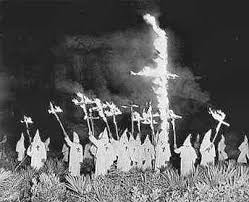
 One other really vicious Despot who did that:
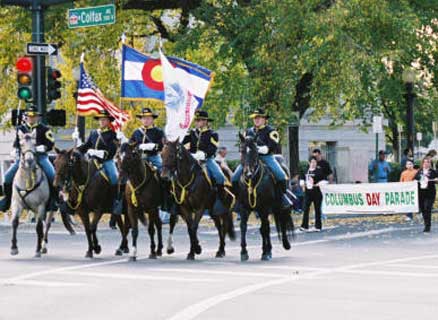
 This squad looks like they’re reenacting Colonel Chivington and his raiders freshly back from the Sand Creek Massacre. Perhaps they are retracing the victory lap the soldiers rode in Denver, festooned with the body parts of their victims, women and children, they exhibited as trophies of their victorious raid on the Indian encampment at Sand Creek.
 Do YOU, for example, count Winston Churchill’s WWII England among your ancestors? Here is the invitation to the 2008 parade: