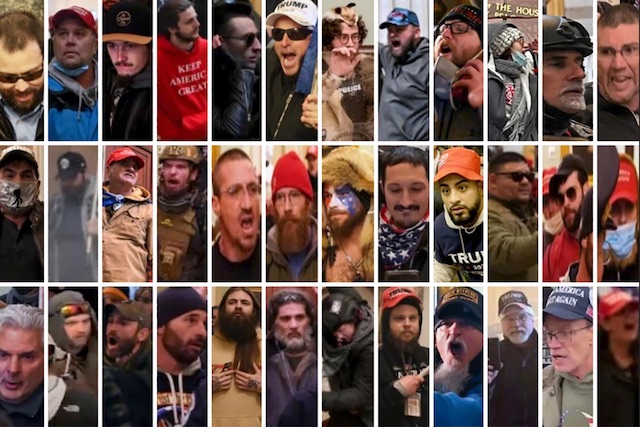
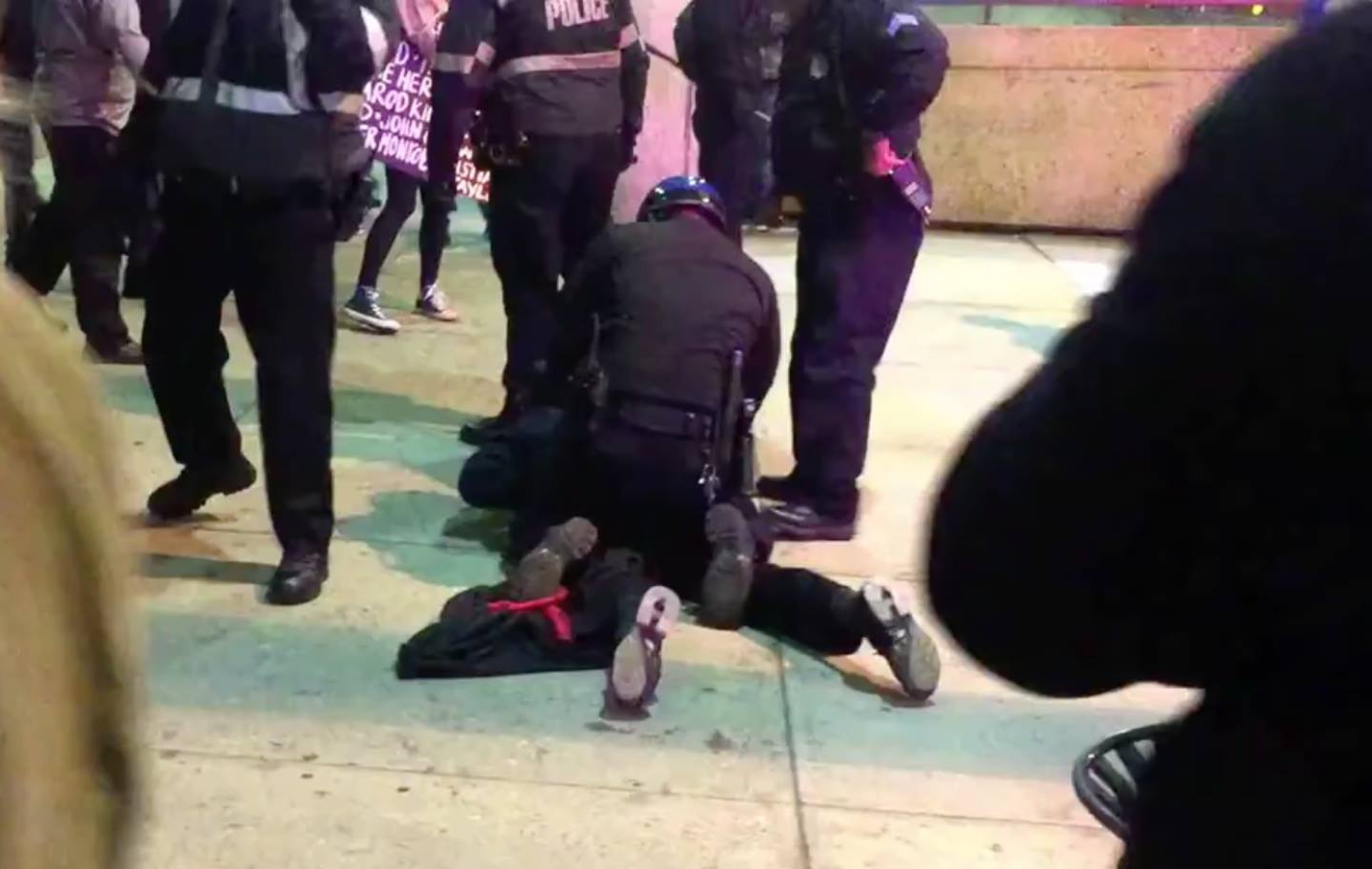
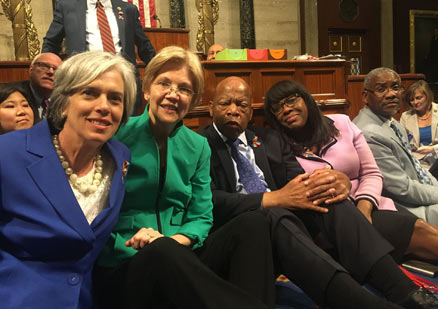
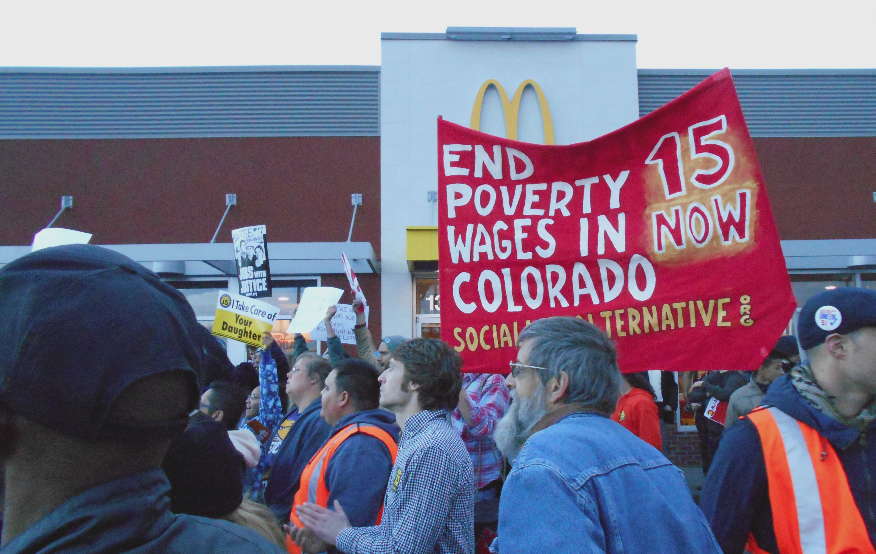
The FBI Wants You to Identify These Participatory Democracy Enthusiasts

Speaking as a street activist, I can assure you that any protester who has traveled to a demonstration in Washington DC would have stormed the Capital Building if the opportunity arose instead of being ignored outside it. Especially if the customary paramilitary posts were unattended and police undercover provocateurs were breaking the windows and doors to ease your access to an edifice that belongs to the people more than any other. Obviously the game plan was to let Trump supporters have their brief moment of unsuppressed anger, then let a “riot” discredit the outgoing party.

What a sham to accuse Trump’s would be rescuers of trespass! How dare law enforcement charge nonviolent demonstrators for the damage which their MAGA-clad plainclothes officers coordinated if not perpetrated?! An unarmed female Air Force veteran was shot dead trying to climb through a window – and who are we calling terrorists?!

Now the FBI is circulating photos of their top 37 persons of interests, wanted for violating a curfew and treading on the sanctity of our congressional den of thieves. The curfew was a blatant breach of the First Amendment and Congress is the People’s House. The demonstrators wanted to confront their pretend representatives and they did it. Trump expressed his gratitude and they earned it.

Whatever their politics, they are heroes and genuine patriots. They look funny because the FBI and the media shitshowrunners selected for cross-eyes and cro-magnon brows, but such alleged freaks showed initiative, restraint, a sense of humor, and an audacious love of their country. They braved COVID to save Democracy, they accused Congress of betraying the people and they’re not wrong. Their critics don’t have a clue, and the smarter among those let Bernie and Elizabeth Warren deliver them hook line and sinker into the fold of the Democratic Party, where status quo reigns at its ugliest. As a Biden presidency sinks in, their skin will crawl once more, and the cycle of impotent “resistance” will begin again at square one.

A “1969 Project” Would Say the Moon Landing Didn’t Happen

The New York Times’ woke campaign “1619 Project” offers restitution for slavery with typical newspaperman philanthropy: the in-kind contribution! Thus “all the news that’s fit to print” gets trimmed by what isn’t centric to the African American experience, not for news in real-time but retroactively! The Grey Lady of Yellow Journalism is courting younger audiences fresh from history courses featuring personages created in their diverse image. As if the past is a pageant of participation awards, purged of the characters whose relevance used to be the making of history. Never mind how you got here, the study of history is now a showcase of what insignificant role you might aspire to when it’s your turn to play a part.

Corporate News Streetwalker Didn’t See That Coming

Local news reporter Alex Bozarjian felt “violated, objectified, and embarrassed” when a passing marathon runner grabbed her butt on live TV. Hopefully we’ll be seeing more of that! Corporate media INDULGES in disrespect and objectification, shouldn’t their representatives be braced for the consequence? Was it a sexual assault? Not of Bozarjian! The grinning runner did that FOR THE CAMERA! It was a slap aimed to denigrate and disrespect the media, and should forewarn every mainstream news hack who presumes their victimized public cannot strike back. Bozarjian’s station says “No woman should have to endure that abuse simply for doing her job.” Doing THAT job — how about ALL of them? Male AND female! Whether fool or knave, unknowing or mendacious, media whores deserve a slap whenever they surface in public. Granted, that slap will probably be more effective delivered in the face. Bozarjian got off easy.

Occupy allstar Caryn Sodaro breaches bank doors, allows water protectors to ask Denver Wells Fargo to defund DAPL

Glenn Morris, Caryn Sodaro
DENVER, COLORADO- At the behest of the beseiged Standing Rock encampment currently blocking the Dakota Access Pipeline, Denver water protectors held an unannounced rally on the capitol steps Friday morning and marched prompty to the Wells Fargo building several blocks north. Led by the American Indian Movement, and joined by allies, the predominantly Native American assembly intended to deliver a message to the major banking entity underwriting the Energy Transfer pipeline project. The action Friday was prompted by President Trump’s recent executive order to bypass legal restrictions holding up the drilling. Arriving at the bank, the hundred fifty marchers found all doors locked.

After a few minutes of rallying outside, a door suddenly opened and everyone rushed inside the atrium. That everyone included drummers, dancers, leaders, and television crews.

After a long rally and a round dance were held in the Wells Fargo atrium, another door leading to the bankteller counters miraculously opened and the group was able to rush in to the bank. Behind these miracles was veteran Occupy Denver activist Caryn Sodaro.

The security guards and police were unable to reach the open door in time, so within a minute the lobby was filled with water protectors making loud their demands. Eventually all the banners were gathered inside and multiple television cameras and reporters covered it all.

Occupy Denver has breached the Wells Fargo Building before, in 2011, for an allied action against the predatory bank. The original feat resulted in an arrest.

In the bank lobby, the water protectors chanted and walked in circles as leaders asked to speak to bank representatives. None appeared, and eventually DPD took to a megaphone and gave the gathering three minutes to leave. That was the cue for AIM leader Glenn Morris to spend well over three minutes telling the bank and the police that the water protectors would be back.

Caryn Sodaro
Caryn Sodaro urges water protectors to raise their voices so that bank officials can hear them from the upper floors.

Caryn’s feat on Friday was unheralded even as participants celebrated their victory. But that’s par for the course for the unsung agitator. Maybe it’s unwise to brag about it here. Nonesense. Activists deserve mythbuilding all the more when the adversarial media and moderate reformists refuse to credit radical actions. I’ve purposefully obfuscated the details of Caryn’s breach so that they remain Occupy Denver trade secrets. But let’s here give Caryn Sodaro her due. If the DPD can glean one lesson from their unsuccessful blockaid of marchers on Friday, it can be this: next time keep better eyes on Caryn!

Pro-immigrant activists with Occupy Denver file suit against DIA and DPD, challenge airport free speech “permit”


DENVER, COLORADO- Civil liberties champion David Lane has filed a complaint in US district court challenging Denver’s office of the city attorney for instituting a permit process at DIA to prevent public protest. Holding signs has become impermissible at the airport, without the issuance of a permit seven days in advnace, although police are not bothering themselves about signs welcoming homecomers or seeking to connect business visitors with their limo service. That selective enforcement is unconstitutional of course, and the lawfirm powerhouse of Kilmer Lane & Newman is filing suit on behalf of two Occupy Denver plaintiffs. last Sunday, January 29, both were threatened with arrest by DIA police. While two earlier attempts to assemble had capitulated to DPD intimidation, the Occupy Denver activists stood their ground. Why did you file your lawsuit? “We know our rights. We want the POLICE to know our rights.”

1. Full text of complaint:

Case 1:17-cv-00332 Document 1
Filed 02/06/17 USDC Colorado Page 1 of 14

Civil Action No.

IN THE UNITED STATES DISTRICT COURT FOR THE DISTRICT OF COLORADO

NAZLI MCDONNELL,
ERIC VERLO,

Plaintiffs, vs.

CITY AND COUNTY OF DENVER,?
DENVER POLICE COMMANDER ANTONIO LOPEZ, in his individual and official capacity,
DENVER POLICE SERGEANT VIRGINIA QUINONES, in her individual and official capacity,

Defendants.

______________________________________________________________________________

COMPLAINT

______________________________________________________________________________

Plaintiffs, by and through their attorneys David A. Lane and Andy McNulty of KILLMER, LANE & NEWMAN, LLP, allege as follows:

INTRODUCTION

1. Plaintiffs Eric Verlo and Nazli McDonnell challenge a regulation of alarming breadth that bans all First Amendment expression at Denver International Airport without a permit.

2. Plaintiffs are concerned citizens who believe that President Donald Trump has overstepped his executive authority by signing the January 27, 2017, Executive Order (hereinafter “Muslim Ban”), which permanently bans Syrian refugees from emigrating to the United States, temporarily bans nationals of seven countries (including permanent legal residents and visa-holders), and suspends all applications to the United States refugee program (even as to vetted entrants currently in transit).

3. Plaintiffs wish to express their disgust with President Trump’s (likely unconstitutional) Muslim Ban. They wish to do so in the same place that hundreds of thousands of Americans across the country have done: standing directly outside of the secure Customs and Border Protection (hereinafter “CBP”) screening area within an airport where immigrants to America enter into the main terminal after clearing customs. Plaintiffs, unlike many citizens across this great nation who have exercised their opposition to the Muslim Ban in airports by chanting, singing, dancing, and praying, simply wish to stand in silent protest, holding signs that express their solidarity with immigrants and the Muslim community.

4. Plaintiffs are banned from doing so by DENVER INTERNATIONAL AIRPORT REGULATION 50 (hereinafter “Regulation 50”).

5. Regulation 50 states: “No person or organization shall leaflet, conduct surveys, display signs, gather signatures, solicit funds, or engage in other speech related activity at Denver International Airport for religious, charitable, or political purposes, or in connection with a labor dispute, except pursuant to, and in compliance with, a permit for such activity issued by the CEO or his or her designee.” DENVER INTERNATIONAL AIRPORT REGULATION 50.03. In order to obtain a permit, an individual must “complete a permit application and submit it during regular business hours, at least seven (7) days prior to the commencement of the activity for which the permit is sought[.]” DENVER INTERNATIONAL AIRPORT REGULATION 50.04-1.

6. Plaintiffs ask that this Court enjoin the enforcement of Regulation 50 and prohibit Defendants from arresting them for their First Amendment-protected activity of standing in peaceful protest within Jeppesen Terminal. Regulation 50 is overbroad in violation of the First Amendment and vague in violation of the Fourteenth Amendment’s Due Process Clause.

7. This is a civil rights action for declaratory and injunctive relief as well as fees and costs arising under 42 U.S.C. §§ 1983, 1988 and 28 U.S.C. Section 2201 et seq. due to Defendants’ current and imminent violations of Plaintiffs’ rights guaranteed by the First and Fourteenth Amendments to the Constitution of the United States.

PARTIES

8. Plaintiff Eric Verlo is a citizen of the United States of America. Mr. Verlo wishes to show his resistance to President Trump’s Muslim Ban, so that others will be inspired to join in the resistance.

9. Plaintiff Nazli McDonnell is a citizen of the United States of America. Ms. McDonnell wishes to show her resistance to President Trump’s Muslim Ban, so that others will be inspired to join in the resistance.

10. Defendant City and County of Denver is a municipal corporation and political subdivision of the State of Colorado. Thus, it is an entity subject to the provisions of § 1983.

11. Defendant Antonio Lopez is a Commander with the Denver Police Department. Commander Lopez is responsible for security at Denver International Airport’s Jeppesen Terminal.

12. Defendant Virginia Quinones is a Sergeant with the Denver Police Department. Sergeant Quinones is responsible for security at Denver International Airport’s Jeppesen Terminal.

JURISDICTION AND VENUE

13. Plaintiffs bring this claim pursuant to 42 U.S.C. § 1983; the First Amendment to the United States Constitution, incorporated as against States and their municipal divisions through the Fourteenth Amendment to the United States Constitution; and the Due Process Clause of the Fourteenth Amendment.

14. This Court has jurisdiction under 28 U.S.C. § 1331 over Plaintiffs’ claims that “arise[] under the Constitution of the United States.”

FACTS

15. On January 27, 2017, President Donald Trump signed an Executive Order, which permanently banned Syrian refugees from emigrating to the United States, temporarily banned nationals of seven countries (including permanent legal residents and visa-holders), and suspended all applications to the United States refugee program (even as to vetted entrants currently in transit). President Trump’s Executive Order has been subsequently referred to as a “Muslim Ban,” because it both mirrors President Trump’s racist, anti-Islam statements made on December 7, 2015, that he was planning to ban all Muslims from entering the United States until our representatives can “figure out what’s going on” and the ban targets countries whose population is predominantly Muslim and seemingly bears little rational relation to each country’s security threat to the United States.

16. Immediately upon the enactment of President Trump’s Muslim Ban there was an outpouring of outrage from a large proportion of the American population and across the spectrum of political affiliation. This outrage led to resistance in the form of protests.

17. On January 28, 2017, and January 29, 2017, protests erupted in nearly every major city in the United States. The protests organically formed in our nation’s airports. Protesters chose to express their disgust with President Trump’s Muslim Ban in airports (and specifically outside of the secure CBP screening area) because individuals affected by the ban who were in transit to the United States were being held and questioned by CBP agents there. Many of these travelers, including lawful United States residents, were forced to sign documents revoking their lawful status within the United States and deported. Still others were simply deported with no explanation. Others still were held for hours as teams of lawyers rushed to prepare habeas petitions for their release.

18. News reports about the protests make clear that they have been peaceful and non- disruptive despite the gathering of, in some cases, thousands of people.

19. Airport staff have told protesters, and would-be protesters, at numerous airports across the nation, including Kansas City International Airport, that there are no restrictions on their speech and that all protesters who wish to participate in actions against the Muslim Ban are allowed. Protests have continued in other cities to this day.

20. On January 28, 2017, there was one such protest at Denver International Airport, within the Jeppesen Terminal. At approximately 5:00 p.m. hundreds gathered in the Jeppesen Terminal’s atrium, near arrivals, to protest and many others gathered to bear witness.

21. Prior to the protest, leaders had applied for a permit. It was denied. The reason for its denial was that the permit was not requested with seven days advance notice of the protest occurring. Regulation 50 requires seven days advance notice.

22. The January 28, 2017, protest began with speeches, chants, songs, and prayers. It was a peaceful gathering of solidarity for immigrants and Muslims. Every person at the January 28, 2017, protest was contained in an area of the Jeppesen Terminal atrium that is designed as a gathering space for people to sit, relax, and converse. No one was standing in the walkways or passageways of the terminal.

23. Soon after the January 28, 2017, protest began, members of the Denver Police Department arrived on-scene. Commander Antonio Lopez engaged the leader of the protest, Amal Kassir, along with State Representative Joe Salazar and representatives from the ACLU of Colorado, and informed them that the protest was unlawful. Commander Lopez told Ms. Kassir that anything that “could be construed as Free Speech” was prohibited at the Denver International Airport, including within the Jeppesen Terminal, without a permit. See Exhibit 1, January 28, 2017 Video.

24. Commander Lopez also stated that all “First Amendment expression” was prohibited at the Denver International Airport, including within the Jeppesen Terminal, without a permit on Regulation 50. Commander Lopez handed Regulation 50 to multiple protesters, including Ms. Kassir. See Exhibit 2, January 28, 2017 Video 2.

25. Regulation 50 states (in pertinent part): “No person or organization shall leaflet, conduct surveys, display signs, gather signatures, solicit funds, or engage in other speech related activity at Denver International Airport for religious, charitable, or political purposes, or in connection with a labor dispute, except pursuant to, and in compliance with, a permit for such activity issued by the CEO or his or her designee.” DENVER INTERNATIONAL AIRPORT REGULATION 50.03. In order to obtain a permit, an individual must “complete a permit application and submit it during regular business hours, at least seven (7) days prior to the commencement of the activity for which the permit is sought[.]” DENVER INTERNATIONAL AIRPORT REGULATION 50.04-1.

26. Commander Lopez, along with members of Denver International Security, told Ms. Kassir that every portion of Denver International Airport property, which has an approximately fifty square mile footprint, is off-limits for First Amendment expression. They suggested that Ms. Kassir move her protest to Tower Road, which is approximately six miles from the Jeppesen Terminal and, like most of the land surrounding Denver International Airport, adjacent to open prairie land with no inhabitants.

27. Commander Lopez threatened Ms. Kassir and numerous other demonstrators with arrest if they didn’t immediately cease any “First Amendment expression.” According to Commander Lopez’s directives, the individuals gathered in the Jeppesen Terminal could not stand holding signs, sing, speak to others about matters of public concern, hold the United States Constitution above their shoulders, or stand silently with their arms interlocked.

28. Ultimately, to avoid arrest, Ms. Kassir and the demonstrators moved outside of the Jeppesen Terminal to the large area on its south side, adjacent to the escalators leading to the commuter rail and under the Westin Hotel. The protest continued peacefully for a little while longer, then disbursed without issue.

29. The next day, January 29, 2017, Plaintiffs Eric Verlo and Nazli McDonnell traveled to Denver International Airport’s Jeppesen Terminal to express their opposition to President Trump’s Muslim Ban.

30. Mr. Verlo and Ms. McDonnell brought with them signs expressing support for immigrants and expressing concern that history was repeating itself with disastrous potential consequences.

31. Mr. Verlo and Ms. McDonnell positioned themselves adjacent to the secure CBP screening area within the Jeppesen Terminal at approximately 1:15 p.m.

32. Adjacent the secure CBP screening area at the Jeppesen Terminal is the only place where Mr. Verlo and Ms. McDonnell can reach their intended audience. Mr. Verlo and Ms. McDonnell wish to communicate with those who could be swayed by their message and, particularly, with immigrants. International travelers are often immigrants and/or lawful United States residents, including green card and other visa holders, other than citizens. Mr. Verlo and Ms. McDonnell wish to express their solidarity with immigrants directly to these individuals. Further, United States citizens who arrive from international locations are also individuals with whom Mr. Verlo and Ms. McDonnell wish to communicate. International travelers have experienced other cultures and are likely to be sympathetic to Mr. Verlo and Ms. McDonell’s message.

33. The secure CBP screening area is also the location where the Muslim Ban has been enforced by DHS, both at Denver International Airport and across the nation. Neither Plaintiff attempted to enter any restricted areas of Denver International Airport.

34. While silently displaying their signs, Mr. Verlo and Ms. McDonnell were in the open plaza near the secure CBP screening area within the Jeppesen Terminal and positioned significantly behind the railing, which demarcates where those waiting for loved ones are permitted to stand. Mr. Verlo and Ms. McDonnell did not impede the right of way of any passengers hustling to catch flights at the last moment. They simply stood with placards showing their distaste for the Executive Order and the man who executed it.

35. Mr. Verlo and Mr. McDonnell also observed another man in the terminal, named Gene Wells, who was expressing views similar to theirs.

36. Mr. Wells was wearing a sign taped to the back of his shirt.

37. Mr. Wells left the Jeppesen Terminal, but subsequently returned to protest. When he did, he was stopped by Denver Police Department officers who told him that he could not walk around the terminal with the slogan he had affixed to his back. Mr. Wells eventually rejoined Mr. Verlo and Mr. McDonnell at the international arrivals doors, but not without trepidation. He feared he might be arrested.

38. While Mr. Verlo and Ms. McDonnell were displaying their signs, Defendant Sergeant Virginia Quinones approached Mr. Verlo and Ms. McDonnell and threatened them with arrest if they did not leave Jeppesen Terminal. See Exhibit 3, January 29, 2017, Video.

39. Sergeant Quinones handed Mr. Verlo and Ms. McDonnell Regulation 50 and cited it as the reason they would be arrested if they did not leave Jeppesen Terminal. Id. Sergeant Quinones told Mr. Verlo and Ms. McDonnell that they would need a permit in order to stand silently, holding signs in opposition of the Muslim Ban and be in compliance with Regulation 50.

40. Had Mr. Verlo and Ms. McDonnell applied for a permit the second President Trump signed the Executive Order implementing the Muslim Ban, they still would have been unable to engage in protest within the Jeppesen Terminal under the terms and conditions of Regulation 50 on January 29, 2017.

41. Mr. Verlo and Ms. McDonnell did not immediately leave the Jeppesen Terminal after being threatened with arrest. However, they were startled by Sergeant Quiones’ threat and feared arrest for the duration of the time they were there.

42. Throughout the time Mr. Verlo and Ms. McDonnell were expressing their views within the Jeppesen Terminal they received numerous shows of support from passersby. Multiple self- proclaimed Muslims expressed heart-felt statements of appreciation to Mr. Verlo, Ms. McDonnell, and others holding signs.

43. Mr. Verlo and Ms. McDonnell ultimately left Jeppesen Terminal.

44. Mr. Verlo and Ms. McDonnell wish to return to Jeppesen Terminal to express solidarity with Muslims and opposition to the Muslim Ban, but are reticent to do so for fear of being arrested.

45. Upon information and belief, no individual has been arrested, or threatened with arrest, for wearing a “Make America Great Again” campaign hat without a permit within the Jeppesen Terminal at Denver International Airport.

46. Upon information and belief, no individual has been arrested, or threatened with arrest, for holding a sign welcoming home a member of our military without a permit within the Jeppesen Terminal at Denver International Airport.

47. Upon information and belief, no individual has been arrested, or threatened with arrest, for holding a sign and soliciting passengers for a limousine without a permit within the Jeppesen Terminal at Denver International Airport.

48. Upon information and belief, no individual has been arrested, or threatened with arrest, for discussing current affairs with another person without a permit within the Jeppesen Terminal at Denver International Airport.

49. At all times relevant to this Complaint, Defendants acted under color of law.

CLAIM I: FIRST AMENDMENT
(§ 1983 violation – all Defendants)

50. Plaintiffs repeat, re-allege, and incorporate by reference the allegations in the foregoing paragraphs of this Complaint as fully set forth herein.

51. Regulation 50 violates the Free Speech Clause of the First Amendment to the Constitution, on its face and as applied, because it impermissibly curtails Plaintiffs’ free-speech rights.

52. Plaintiffs wish to speak on a matter of public concern. 11

53. Denver International Airport’s Jeppesen Terminal is a public forum.

54. Regulation 50 directly infringes upon and chills reasonable persons from engaging in activity that is protected by the First Amendment.

55. Regulation 50 acts as an unconstitutional prior restraint on speech because it (1) requires a permit before allowing individuals to engage in speech, (2) allows for arbitrary and/or discriminatory permit denials, and (3) requires advance notice that is unconstitutionally excessive.

56. Regulation 50 is overbroad.?

57. Regulation 50 is not narrowly tailored to serve a compelling government interest.?

58. Regulation 50 does not further a substantial government interest.?

59. Regulation 50’s restriction on expressive conduct is greater than necessary to further any
government interest.?

60. Defendants’ actions and/or omissions enforcing Regulation 50 caused, directly or
proximately, Plaintiffs to suffer damages.

CLAIM II: FIRST AMENDMENT RETALIATION
(§ 1983 violation – all Defendants)

1. All statements of fact set forth previously are hereby incorporated into this claim as though set forth fully herein. ?

2. Plaintiffs engaged in First Amendment protected speech on a matter of public concern ?while displaying signs opposing President Trump’s Muslim Ban on January 29, 2017.

3. Defendants jointly and on their own accord responded to Plaintiffs’ First Amendment protected speech with retaliation, including but not limited to threatening Plaintiffs with arrest.

4. Defendants retaliatory actions were substantially motivated by Plaintiffs’ exercise of their First Amendment rights.

5. By unlawfully threatening Plaintiffs with arrest, Defendants sought to punish Plaintiffs for exercising their First Amendment rights and to silence their future speech. Defendants’ retaliatory actions would chill a person of ordinary firmness from engaging in such First Amendment protected activity.

6. Defendants’ actions and/or omissions enforcing Regulation 50 caused, directly and proximately, Plaintiffs to suffer damages.

CLAIM III: FOURTEENTH AMENDMENT DUE PROCESS
(§ 1983 violation – all Defendants)

7. All statements of fact set forth previously are hereby incorporated into this claim as though set forth fully herein.

8. The prohibitions of Regulation 50 are vague and not clearly defined. ?

9. Regulation 50 offers no clear and measurable standard by which Plaintiffs and others can ?act lawfully.

10. Regulation 50 does not provide explicit standards for application by law enforcement officers.

11. Regulation 50 fails to provide people of ordinary intelligence a reasonable opportunity to understand what conduct it prohibits, and authorizes or encourages arbitrary and discriminatory enforcement, or both.

12. Defendants’ actions and/or omissions enforcing Regulation 50 caused, directly and proximately, Plaintiffs to suffer damages.

PRAYER FOR RELIEF

WHEREFORE, Plaintiffs respectfully request that this Court enter judgment in their favor and against Defendants, and grant:

(a) Appropriate declaratory and other injunctive and/or equitable relief; 13

(b)  Enter a declaration that Regulation 50 is unconstitutional on its face and enjoin its enforcement; ?

(c)  Compensatory and consequential damages, including damages for emotional distress, loss of reputation, humiliation, loss of enjoyment of life, and other pain and suffering on all claims allowed by law in an amount to be determined at trial; ?

(d)  All economic losses on all claims allowed by law; ?

(e)  Punitive damages on all claims allowed by law and in an amount to be determined ?at trial; ?

(f)  Attorney’s fees and the costs associated with this action, pursuant to 42 U.S.C. § ?1988; ?

(g)  Pre and post-judgment interest at the lawful rate; and ?

(h)  Any further relief that this court deems just and proper, and any other relief as ?allowed by law. ?

Dated this 6th day of February 2017.

KILLMER, LANE & NEWMAN, LLP
s/ Andy McNulty

___________________________________
David A. Lane
?Andy McNulty?
Killmer, Lane & Newman, LLC
1543 Champa Street, Suite 400 Denver, Colorado 80202?
Attorneys for Plaintiff

2. Full text of Feb 6 motion for preliminary injunction:

Case 1:17-cv-00332 Document 2
Filed 02/06/17 USDC Colorado Page 1 of 23

Civil Action No.

IN THE UNITED STATES DISTRICT COURT FOR THE DISTRICT OF COLORADO

NAZLI MCDONNELL,
ERIC VERLO,

Plaintiffs, vs.

CITY AND COUNTY OF DENVER,
DENVER POLICE COMMANDER ANTONIO LOPEZ, in his individual and official capacity,
DENVER POLICE SERGEANT VIRGINIA QUINONES, in her individual and official capacity,

Defendants.

______________________________________________________________________________

MOTION FOR PRELIMINARY INJUNCTION

______________________________________________________________________________

Plaintiffs, by and through their attorneys David A. Lane and Andy McNulty of KILLMER, LANE & NEWMAN, LLP, hereby submit the following Motion for Preliminary Injunction, and in support thereof, states as follows:

1. Introduction

Over the last four days, many Americans have expressed public disapproval of President Donald Trump’s January 27, 2017, Executive Order, which permanently bans Syrian refugees from emigrating to the United States, temporarily bans nationals of seven countries (including permanent legal residents and visa-holders), and suspends all applications to the United States refugee program (even as to vetted entrants currently in transit). Plaintiffs are concerned and alarmed United States citizens who wish to join the growing chorus of voices expressing opposition to the Executive Order. To do so, they wish to stand in silent protest at the Jeppesen Terminal within Denver International Airport.

Plaintiffs did just this on January 29, 2017, standing in silent protest of the Executive Order outside of the secure Customs and Border Protection (hereinafter “CBP”) screening area within Jeppesen Terminal. Almost immediately, Plaintiffs were threatened with arrest by Denver Police Department Sergeant Virginia Quinones for standing silently and holding signs opposing the Executive Order, despite that fact that the Jeppesen Terminal has previously been used for expressive activity (and that protesters at more than ten major airports nationwide have protested peacefully without major disruption or legal restriction). While silently displaying their signs, Plaintiffs were in the plaza within the Jeppesen Terminal and positioned significantly behind the railing, which demarcates where those waiting for loved ones are permitted to stand, in the open plaza outside of the secure CBP screening area at the Jeppesen Terminal. Plaintiffs did not impede the right of way of any passengers hustling to catch flights at the last moment. They simply stood with placards showing their distaste for the Executive Order and the man who executed it.

Even though Plaintiffs were simply engaged in peaceful First Amendment protected expression, they were threatened with arrest. Sergeant Quinones informed Plaintiffs that, in order to stand silently with political signs, they would need a permit. Without a permit, Sergeant Quinones stated, all “First Amendment expression” at the Denver International Airport was banned.

This was not the first time since the enactment of the Executive Order that the Denver Police Department threatened individuals with arrest for engaging in First Amendment protected activity in Jeppesen Terminal. On January 28, 2016, a protest was held in the plaza of Jeppesen Terminal. During the protest, Denver Police Commander Antonio Lopez instructed multiple individuals, including State Representative Joseph Salazar and representatives from the ACLU of Colorado, that all “First Amendment expression” was banned at Denver International Airport without a permit. See Exhibit 1, January 28, 2017, Video 1; Exhibit 2, January 28, 2017, Video 2. The protesters had, in fact, applied for a permit earlier that day. However, it had not been granted because they had not done so seven days in advance of the protest in compliance with Denver International Airport regulations. Although no arrests were ultimately made, protesters were threatened numerous times by Commander Lopez, and other officers, with arrest.

The Denver International Airport regulation that both Sergeant Quinones and Commander Lopez relied upon in instructing Plaintiffs, and others, that Denver International Airport bans all “First Amendment expression” without a permit is DENVER INTERNATIONAL AIRPORT REGULATION 50 (hereinafter “Regulation 50”). Regulation 50 states that “no person or organization shall leaflet, conduct surveys, display signs, gather signatures, solicit funds, or engage in other speech related activity at Denver International Airport for religious, charitable, or political purposes, or in connection with a labor dispute, except pursuant to, and in compliance with, a permit for such activity issued by the CEO or his or her designee.” DENVER INTERNATIONAL AIRPORT REGULATION 50.03. In order to obtain a permit, an individual must “complete a permit application and submit it during regular business hours, at least seven (7) days prior to the commencement of the activity for which the permit is sought[.]” DENVER INTERNATIONAL AIRPORT REGULATION 50.04-1.

Plaintiffs wish to return to Denver International Airport to protest the Executive Order, but are reasonably frightened of arrest and, absent action by this Court, must choose between lawfully exercising their First Amendment right and being subject to arrest and/or prosecution.

Plaintiffs ask that this Court enter an injunction prohibiting their arrest for standing in peaceful protest within Jeppesen Terminal and invalidating Regulation 50 as violative of the First and Fourteenth Amendments to the United States Constitution.

2. Factual Background

All statements of fact set forth in the simultaneously filed Complaint are hereby incorporated into this Brief as though set forth fully herein.

3. Argument

3.1 The standard for issuance of a preliminary injunction.

When seeking a preliminary injunction, a plaintiff must establish that (1) he is likely to succeed on the merits; (2) he is likely to suffer irreparable harm; (3) the balance of equities tips in his favor; and (4) that an injunction is in the public interest. Winter v. Nat. Res. Def. Council, 555 U.S. 7, 20 (2008); see also ACLU v. Johnson, 194 F.3d 1149, 1155 (10th Cir. 1999).

The Tenth Circuit has modified the preliminary injunction test when the moving party demonstrates that the second, third, and fourth factors “tip strongly” in its favor. See Oklahoma ex rel. Okla. Tax Comm’n v. Int’l Registration Plan, Inc., 455 F.3d 1107, 1113 (10th Cir. 2006); see also 820 F.3d 1113, n.5 (10th Cir. 2016). “In such situations, the moving party may meet the requirement for showing success on the merits by showing that questions going to the merits are so serious, substantial, difficult, and doubtful as to make the issue ripe for litigation and deserving of more deliberate investigation.” Id. (internal quotation marks omitted). Moreover, this “fair chance of prevailing” test is appropriate in this case because Plaintiffs are challenging a policy, not a statue or ordinance. See Planned Parenthood Minn, N.D., & S.D. v. Rounds, 530 F.3d 724, 732 (9th Cir. 2008) (“[C]ourts should… apply the familiar ‘fair chance of prevailing’ test where a preliminary injunction is sought to enjoin something other than government action based on presumptively reasoned democratic processes.”).

Under either standard, Plaintiffs are able to demonstrate that the issuance of a preliminary injunction is appropriate in this matter.

3.3 Regulation 50 implicates Plaintiffs’ First Amendment rights. 1

When the government regulates the exercise of First Amendment rights, the burden is on the proponent of the restriction to establish its constitutionality. Phelps-Roper v. Koster, 713 F.3d 942, 949 (8th Cir. 2013). Moreover, when assessing the preliminary injunction factors in First Amendment cases, “the likelihood of success will often be the determinative factor.” Hobby Lobby Stores, Inc. v. Sebelius, 723 F.3d 1114, 1145 (10th Cir. 2013). This is because “the loss of First Amendment freedoms, for even minimal periods of time, unquestionably, constitutes irreparable injury,” Heideman v. Salt Lake City, 348 F.3d 1182, 1190 (10th Cir. 2003), and it is invariably in the public interest to protect an individual’s First Amendment rights. See Homans v. City of Albuquerque, 264 F.3d 1240, 1244 (10th Cir. 2001) (noting that “the public interest is better served” by protecting First Amendment rights).

[NOTE 1. It is important to note that facial challenges to government policies and statutes, when based on First and Fourteenth Amendment grounds, are not disfavored. See United States v. Stevens, 559 U.S. 460, 473 (2010); City of Chicago v. Morales, 527 U.S. 41 (1999).]

3.4 Plaintiffs are likely to succeed on the merits.

Plaintiffs are likely to succeed on the merits because Regulation 50 violates the Free Speech Clause of the First Amendment and the Due Process Clause of the Fourteenth Amendment.

3.4(a) Plaintiffs engaged, and wish to engage, in speech on a matter of public concern.

Plaintiffs’ speech is at the core of the First Amendment’s protection because it deals with a matter of public concern. “Speech deals with matters of public concern when it can be fairly considered as relating to any matter of political, social, or other concern to the community, or when it is a subject of legitimate news interest; that is, a subject of general interest and of value and concern to the public.” Snyder v. Phelps, 562 U.S. 443, 453 (2011) (internal quotation marks and citation omitted). “Speech on matters of public concern is at the heart of the First Amendment’s protection.” Id. at 451-52 (alterations and quotation marks omitted). “The First Amendment reflects ‘a profound national commitment to the principle that debate on public issues should be uninhibited, robust, and wide-open.’” Id. at 452 (quoting New York Times Co. v. Sullivan, 376 U.S. 254, 270 (1964)). Plaintiffs wish to engage in expression about President Donald Trump’s January 27, 2017, Executive Order, a topic that has generated nearly unprecedented debate and dissent. See Adrienne Mahsa Varkiani, Here’s Your List of All the Protests Happening Against the Muslim Ban, THINK PROGRESS (Jan. 28, 2017), https://thinkprogress.org/muslim-ban-protests-344f6e66022e#.ft1oznfv4 (compiling list of direct actions planned in response to President Trump’s January 27, 2017, Executive Order). Thus, Plaintiffs’ speech “‘occupies the highest rung of the hierarchy of First Amendment values, and is entitled to special protection.’” Snyder, 562 U.S. at 452 (quoting Connick v. Myers, 461 U.S. 138, 145 (1983)).

3.4(b) Regulation 50 acts as a prior restraint.

The restriction at issue in this matter is a prior restraint. “The term prior restraint is used ‘to describe administrative and judicial orders forbidding certain communications when issued in advance of the time that such communications are to occur.’” Alexander v. United States, 509 U.S. 544, 550 (1993) (quoting M. Nimmer, Nimmer on Freedom of Speech § 4.03, p. 4–14 (1984)). Regulation 50 is in an administrative order that forbids future communication and bases the ability to communicate in the future on the discretion of an administrative official. See DENVER INTERNATIONAL AIRPORT REGULATION 50.03 (“no person or organization shall leaflet, conduct surveys, display signs, gather signatures, solicit funds, or engage in other speech related activity at Denver International Airport for religious, charitable, or political purposes, or in connection with a labor dispute, except pursuant to, and in compliance with, a permit for such activity issued by the CEO or his or her designee.” (emphasis added)). It is a prior restraint.

The burden of proving a prior restraint is permissible is particularly steep. The Supreme Court has repeatedly held that “[a]ny system of prior restraints of expression comes to this Court bearing a heavy presumption against its constitutional validity.” Bantam Books, Inc. v. Sullivan, 372 U.S. 58, 70 (1963). For the reasons outlined infra, Defendants cannot meet this especially significant burden.

3.4(c) Jeppesen Terminal, outside of the passenger security zones, is a traditional public forum.

The Supreme Court has not definitively decided whether airport terminals, including Jeppesen Terminal, are public forums. In Lee v. International Society for Krishna Consciousness, Inc., 505 U.S. 830 (1992) (hereinafter “Lee I”), issued the same day as International Society for Krishna Consciousness, Inc. v. Lee, 505 U.S. 672 (1992) (hereinafter “Lee II”), the Supreme Court struck down a total ban on distribution of literature in airports. In Lee I, the Court issued a one sentence per curiam opinion, which affirmed the Second Circuit for the reasons expressed by Justice O’Connor, Justice Kennedy, and Justice Souter in Lee II. See Lee I, 505 U.S. at 831. Justice Kennedy and Justice Souter’s opinions in Lee II found that “airport corridors and shopping areas outside of the passenger security zones… are public forums, and speech in those places is entitled to protection against all government regulation inconsistent with public forum principles.” Lee II, 505 U.S. at 693 (Kennedy, J., concurring in the judgment); but see Lee II, 505 U.S. at 683 (“”[W]e think that neither by tradition nor purpose can the terminals be described as satisfying the standards we have previously set out for identifying a public forum.”).

Therefore, Plaintiffs ask this Court to find the area of Jeppesen Terminal outside of the passenger security zones to be a public forum. The historical use of the Jeppesen Terminal’s plazas and other areas outside of the passenger security zones (including the area outside of the secure CBP screening area) for political speech (particularly, the history of welcoming of American military personnel home from service, discussion between passengers of matters of public concern, and display of clothing advocating for political views and ideals) indicates that it is a public forum. See First Unitarian Church of Salt Lake City v. Salt Lake City Corp., 308 F.3d 1114, 1130 (10th Cir. 2002) (“Where courts have considered the traditional use of publicly accessible property for speech, they have refused to attribute legal significance to an historical absence of speech activities where that non-speech history was created by the very restrictions at issue in the case.”). Further, that the Jeppesen Terminal is free and open to the public (outside of the passenger security zones), illustrates that it is a public forum. See, e.g., Ark. Educ. Television Comm’n v. Forbes, 523 U.S. 666, 676 (1998); Cornelius v. NAACP Legal Def. & Educ. Fund, 473 U.S. 788, 800, 805, 809 (1985). Finally, Jeppesen Terminal retains characteristics similar to parks: it has large plazas lined with benches, it is surrounded by businesses which are open to the public, and it has dedicated walkways, similar to sidewalks, indicating that it is a public forum. See e.g., Frisby v. Schultz, 487 U.S. 474, 480-481 (1988); United States v. Grace, 461 U.S. 171, 177 (1983). Further, the Supreme Court has not strictly limited the public forum category to streets, sidewalks, and parks. See, e.g., Se. Promotions, Ltd. v. Conrad, 420 U.S. 546 (1975) (finding leased municipal theater is a public forum); Heffron v. Int’l Society for Krishna Consciousness, Inc., 452 U.S. 640 (1981) (finding state fair is a public forum); Edwards v. South Carolina, 372 U.S. 229 (1963) (finding grounds of state capitol are a traditional public forum). Even if the City claims that it has never intended for Jeppesen Terminal to be a public forum, this is not dispositive. See Lee, 505 U.S. at 830 (government policy prohibiting distribution of literature at airport on property struck down); Cornelius, 473 U.S. at 805 (government’s decision to limit access is not itself dispositive). Plaintiffs’ ask that this Court find Jeppesen Terminal, outside of the passenger security zones, a traditional public forum.

Since Jeppesen Terminal is a traditional public forum, any restriction on Plaintiffs’ speech must be content-neutral and narrowly tailored to a compelling government interest. Regulation 50 fails at both.

3.4(d) Regulation 50 is content-based.

Regulation 50 is a content-based restriction of expression. Although the Supreme Court has long held that content-based restrictions elicit strict scrutiny, see, e.g., Carey v. Brown, 447 U.S. 455 (1980), lower courts diverged on the meaning of “content-based” until Reed v. Town of Gilbert, 135 S. Ct. 2218 (2015). 2 Reed clarified that a restriction is content based simply if it draws distinctions “based on the message a speaker conveys.” 135 S. Ct. at 2227. Reed is clear that even “subtle” distinctions that define regulated expression “by its function or purpose . . . are distinctions based on the message a speaker conveys, and therefore, are subject to strict scrutiny.” Id. This accords with Texas v. Johnson, which held that “the emotive impact of speech on its audience is not a secondary effect unrelated to the content of the expression itself.” 491 U.S. 491 U.S. 297, 412 (1989) (internal quotations omitted).

[NOTE 2. Reed involved a municipal “sign code” that regulated signs differently based on the kind of message they conveyed (such as “ideological,” “political,” or “temporary directional”). 135 S. Ct. at 2224-25. The Court rejected the city’s argument that a law had to discriminate against certain viewpoints in order to be a content-based restriction. Id. at 2229.]

Regulation 50 is content-based on its face. It distinguishes between content and requires that an official determine the content of the speaker’s message when enforcing its proscriptions. Reed, 135 S. Ct. at 2227; see DENVER INTERNATIONAL AIRPORT REGULATION 50.03 (“No person or organization shall leaflet, conduct surveys, display signs, gather signatures, solicit funds, or engage in other speech related activity at Denver International Airport for religious, charitable, or political purposes, or in connection with a labor dispute[.]” (emphasis added)). The distinctions drawn by Regulation 50 make it a facially content-based restriction on expression that must elicit “the most exacting scrutiny.” Johnson, 491 U.S. at 412; Reed, 135 S. Ct. at 2227.

3.4(e) Regulation 50 is not narrowly tailored to serve a compelling government interest.

As a facially content-based restriction of expression at traditional public fora, Regulation 50 is presumptively unconstitutional unless Defendant “prove[s] that the restriction furthers a compelling interest and is narrowly tailored to achieve that interest.” Reed, 135 St. Ct. at 2231; accord Johnson, 491 U.S. at 412.

“A statute is narrowly tailored if it targets and eliminates no more than the exact source of the ‘evil’ it seeks to remedy.” Frisby v. Schultz, 487 U.S. 474, 485 (1988) (citation omitted). Regulation 50 reaches more speech than that which would impair the security of the airport or ensure that passengers are not unduly encumbered. In fact, it completely bans all “First Amendment expression.” “A complete ban can be narrowly tailored, but only if each activity within the proscription’s scope is an appropriately targeted evil.” Id.. Regulation 50 is not such a ban. For instance, Plaintiffs’ expression does nothing to jeopardize security at Denver International Airport or to inhibit the free flow of passengers through the airport.

Further, any argument that Plaintiffs can engage in expressive activity in another location lacks merit, as the Supreme Court has held that the First Amendment is violated when one specific location or audience, when important to the speaker, is foreclosed. See McCullen v. Coakley, 134 S. Ct. 2518, 2536 (2014); Schenck v. Pro-Choice Network, 519 U.S. 357, 377 (1997) (invalidating a “floating” buffer zone around people entering an abortion clinic partly on the ground that it prevented protestors “from communicating a message from a normal conversational distance or handing leaflets to people entering or leaving the clinics who are walking on the public sidewalks”); Schneider v. New Jersey, 308 U.S. 147, 163 (1939) (invalidating anti-handbilling ordinances even though “their operation is limited to streets and alleys and leaves persons free to distribute printed matter in other public places”). Regulation 50 lacks the narrow tailoring necessary to survive First Amendment strict scrutiny analysis.

3.4(f) Regulation 50 violates the First Amendment even if this Court determines Jeppesen Terminal is a nonpublic forum.

Regulation 50 bans all “First Amendment expression” absent a permit; it is unconstitutional even when analyzed under the lower standard of scrutiny applied by courts to First Amendment political speech in a nonpublic forum. In Board of Airport Commissioners of Los Angeles v. Jews for Jesus, Inc., 482 U.S. 569 (1987), the Supreme Court considered whether a resolution restricting free speech in the airport was constitutional. The resolution at issue stated that the airport “is not open for First Amendment activities by any individual and/or entity.” Id. at 574. Although the Court did not explicitly find that the airport was a nonpublic forum, it did hold that the resolution restricting speech in the airport was facially unreasonable, even if the airport was a nonpublic forum. Id. at 573. The Court noted that enforcing the resolution would prohibit “talking and reading, or the wearing of campaign buttons or symbolic clothing.” Id. at 574. The Court also noted, “[m]uch nondisruptive speech–such as the wearing of a T-shirt or button that contains a political message–may not be ‘airport related’ but is still protected speech even in a nonpublic forum.” Id. at 575 (citing Cohen v. California, 403 U.S. 15 (1971) (holding that wearing of jacket with offensive language in a courthouse was a form of nondisruptive expression that was protected by the First Amendment)). Thus, although specific conduct was not at issue in the Jews for Jesus decision, the Court nonetheless implicitly held that non-disruptive speech is protected by the First Amendment in nonpublic fora and that restrictions that encumber non-disruptive expression are unreasonable.

In Lee II, Justice O’Connor set forth the test for determining reasonableness in the context of nonpublic fora. 505 U.S. at 687 (O’Connor, J., concurring). 3 She stated, ”[t]he reasonableness of the Government’s restriction [on speech in a nonpublic forum] must be assessed in light of the purpose of the forum and all the surrounding circumstances.” Id. (O’Connor, J., concurring) (quoting Cornelius, 473 U.S. at 809). However, Justice O’Connor noted that while “[o]rdinarily . . . we have . . . been confronted with cases where the fora at issue were discrete, single-purpose facilities,” airports present a different analysis because they are multipurpose facilities. Id. at 688 (O’Connor, J., concurring) (citations omitted). She determined airports to be multipurpose facilities because

the Port Authority [has] chosen not to limit access to the airports under its control, [and] has created a huge complex open to travelers and nontravelers alike. The airports house restaurants, cafeterias, snack bars, coffee shops, cocktail lounges, post offices, banks, telegraph offices, clothing shops, drug stores, food stores, nurseries, barber shops, currency exchanges, art exhibits, commercial advertising displays, bookstores, newsstands, dental offices and private clubs.

Id. This led to the finding that “[t]he reasonableness inquiry, therefore, is not whether the restrictions on speech are consistent with preserving the property for air travel, but whether they are reasonably related to maintaining the multipurpose environment that the Port Authority has deliberately created.” Id. at 689. A complete ban on First Amendment activity at the Jeppesen Terminal, absent a permit that must be obtained by providing seven days advance notice, is not a reasonable restriction. Regulation 50 does not comport with Justice O’Connor’s conclusion that airports are more than simply places where air travel occurs.

[NOTE 3. It is important to note that Lee involved a plurality opinion, joined by Justice O’Connor. Therefore, Justice O’Connor’s concurrence is the “narrowest grounds” that justify the Court’s result and her concurrence holds substantial precedential weight.]

Moreover, Justice O’Connor distinguished between solicitations (which the Supreme Court found could be reasonably restricted) and distributing leaflets (which the Supreme Court found could not be reasonably restricted) in the airport:

[L]eafleting does not entail the same kinds of problems presented by face-to-face solicitation. Specifically, “one need not ponder the contents of a leaflet or pamphlet in order mechanically to take it out of someone’s hand . . . . The distribution of literature does not require that the recipient stop in order to receive the message the speaker wishes to convey; instead the recipient is free to read the message at a later time.”

Id. at 690 (quoting United States v. Kokinda, 497 U.S. 720, 734 (1990)).

Thus, the Court held in Lee II that prohibiting solicitation in a nonpublic forum is not unreasonable, but that prohibiting the distribution of leaflets and other literature at a nonpublic forum is unreasonable. See also Lee, 505 U.S. at 830 (decided the same day as Lee II and striking down a prohibition on the distribution of leaflets and other literature at La Guardia, John F. Kennedy, and Newark International airports) (per curiam). Circuit courts have also recognized the inherent right to distribute paper and other information in nonpublic fora. Following Lee I and Lee II, two circuit courts have held that airports, as nonpublic fora, could not preclude newspaper publishers from placing newsracks in airport terminals. See Jacobsen v. City of Rapid City, South Dakota, 128 F.3d 660 (8th Cir. 1997); Multimedia Publishing Co. of South Carolina, Inc. v. Greenville-Spartanburg Airport Dist., 991 F.2d 154 (4th Cir. 1993). To the extent that the airports were concerned about safety or the impediment of traffic flow, the courts held that the airport may impose reasonable restrictions, but they could not enforce an outright ban on the newspaper racks. See Jacobsen, 128 F.3d at 660; Multimedia Publishing Co. of South Carolina, Inc., 991 F.2d at 154.

Denver, through Regulation 50, has banned all “First Amendment expression” including leafleting and protests. In fact, Plaintiffs expression is arguably less intrusive and disruptive to air travel than the form of expression, namely leafletting, that the Court held could not be reasonably restricted in the areas of an airport that precede the security screening area. It is clear from Lee I, Lee II, and Jews for Jesus that Denver cannot ban all “First Amendment expression” at the Jeppesen Terminal.

3.4(f)(1) Independently, the viewpoint-based prohibition of Plaintiffs’ speech, based on Regulation 50, violates the First Amendment.

Even if Jeppesen Terminal is a nonpublic forum, “this does not mean the government has unbridled control over speech, . . . for it is axiomatic that ‘the First Amendment forbids the government to regulate speech in ways that favor some viewpoints or ideas at the expense of others.” Summum v. Callaghan, 130 F.3d 906, 916 (10th Cir. 1997) (quoting Lamb’s Chapel v. Center Moriches Union Free School Dist., 508 U.S. 384, 394, (1993)). “Restrictions on speech in nonpublic fora must be viewpoint neutral[.]” Warren v. Fairfax Cty., 196 F.3d 186, 193 (4th Cir. 1999) (citing Cornelius, 473 at 809). Defendants’ restriction of Plaintiffs’ speech, under the guise of Regulation 50, discriminates on the basis of viewpoint. Individuals walk through Denver International Airport with political messages and slogans on their shirts and luggage and discuss politics on a daily basis. Counsel for Plaintiffs has worn political shirts while traveling through Denver International Airport and discussed modern politics with fellow passengers on many occasions. However, no other individual, to Plaintiffs or Plaintiffs’ counsel’s knowledge, has been threatened with arrest for engaging in this political speech. Nor has any individual been arrested for displaying pro-President Trump messages, for example a red hat that reads “Make America Great Again.” Only Plaintiffs’ expressive activity against the President’s Executive Order, and others advocating similarly, has been threatened with arrest. Regulation 50 is being enforced as a clearly view-point based restriction. Defendants’ application of Regulation 50 to Plaintiffs speech is view-point based and violates the First Amendment.

3.4(g) The seven day advance notice requirement for obtaining a permit is not a reasonable restriction.

Notice periods restrict spontaneous free expression and assembly rights safeguarded in the First Amendment. Plaintiffs, like many others throughout history, wish to engage in First Amendment expression in quick response to topical events. While even in such time-sensitive situations, a municipality may require some short period of advance notice so as to allow it time to take measures to provide for necessary traffic control and other aspects of public safety, the period can be no longer than necessary to meet the City’s urgent and essential needs of this type. See American-Arab Anti-Discrimination Comm. v. City of Dearborn, 418 F.3d 600, 605 (6th Cir. 2005) (“Any notice period is a substantial inhibition on speech.”).

Advance notice requirements that have been upheld by courts have most generally been less than a week. See, e.g., A Quaker Action Group v. Morton, 516 F.2d 717, 735 (D.C. Cir. 1975) (two-day advance notice requirement is reasonable for use of National Park areas in District of Columbia for public gatherings); Powe v. Miles, 407 F.2d 73, 84 (2d Cir. 1968) (two-day advance notice requirement for parade is reasonable); Progressive Labor Party v. Lloyd, 487 F. Supp. 1054, 1059 (D. Mass. 1980) (three-day advance filing requirement for parade permit approved in context of broader challenge); Jackson v. Dobbs, 329 F. Supp. 287, 292 (N.D. Ga. 1970) (marchers must obtain permit by 4 p.m. on day before the march), aff’d, 442 F.2d 928 (5th Cir. 1971). Lengthy advance filing requirements for parade permits, such as the seven day advance notice requirement imposed by Regulation 50, have been struck down as violating the First Amendment. See American-Arab Anti-Discrimination Comm., 418 F.3d at 605-07 (holding that provision requiring thirty days’ notice is overbroad and is not saved by an unwritten policy of waiving the provision); NAACP, W. Region v. City of Richmond, 743 F.2d 1346, 1357 (9th Cir. 1984) (“[A]ll available precedent suggests that a 20-day advance notice requirement is overbroad.”). Even an advance filing requirement of five days has been held too long to comport with the First Amendment. See Douglas v. Brownell, 88 F.3d 1511, 1523-24 (8th Cir. 1996) (city’s asserted goals of protecting pedestrian and vehicular traffic and minimizing inconvenience to the public does not justify five-day advance filing requirement for any parade, defined as ten or more persons).

It is clear that, in the case at bar, a permit requirement of seven days advance notice is not a reasonable restriction of Plaintiffs’ First Amendment rights. Plaintiffs wish to engage in timely, direct action against, what they perceive as, a tyrannical and unconstitutional exercise of the executive power. If Plaintiffs were to have applied for a permit at the exact moment President Trump signed the Executive Order, they would still have been prevented from engaging in First Amendment activity on January 29, 2017. In direct action, like in most things, timing is everything. As evidenced by myriad protests that occurred across the nation’s airports, which were accompanied by no violence or destruction of property and did not otherwise jeopardize security, accommodation of protest at the Jeppesen Terminal is reasonable. Such a lengthy approval period, with no exceptions for spontaneous, peaceful protests, violates the First Amendment. See Church of the American Knights of the Ku Klux Klan v. City of Gary, 334 F.3d 676, 682 (7th Cir. 2003) (noting that “the length of the required period of advance notice is critical to its reasonableness; and given … that political demonstrations are often engendered by topical events, a very long period of advance notice with no exception for spontaneous demonstrations unreasonably limits free speech” (emphasis added)).

3.4(h) Regulation 50 is overbroad in violation of the First Amendment.

“[A] law may be invalidated as overbroad if ‘a substantial number of its applications are unconstitutional, judged in relation to the [ordinance]’s plainly legitimate sweep.’” United States v. Stevens, 559 U.S. 460, 473 (2010) (quoting Wash. State Grange v. Wash. State Republican Party, 552 U.S. 442, 449 n.6 (2008)). An overbroad statute may be challenged on its face even though a more narrowly drawn statute would be valid as applied to the party in the case before it. City Council of L.A. v. Taxpayers for Vincent, 466 U.S. 789, 798 (1984) (“[B]roadly written statutes may have such a deterrent effect on free expression that they should be subject to challenge even by a party whose own conduct may be unprotected.”). The Supreme Court “has repeatedly held that a government purpose to control or prevent activities constitutionally subject to state regulation may not be achieved by means which sweep unnecessarily broadly and thereby invade the area of protected freedoms.” NAACP v. Alabama ex rel. Flowers, 377 U.S. 288, 307 (1964); see also Grayned v. City of Rockford, 408 U.S. 109, 114-15 (1972) (“The crucial question, then, is whether the ordinance sweeps within its prohibitions what may not be punished under the First and Fourteenth Amendments.”). Courts have “provided this expansive remedy out of concern that the threat of enforcement of an overbroad law may deter or ‘chill’ constitutionally protected speech—especially when the overbroad statute imposes criminal sanctions.” Virginia v. Hicks, 539 U.S. 113, 119 (2003).

Determining whether a law is substantially overbroad requires a two-step analysis. First, a court must “construe the challenged [law]; it is impossible to determine whether a [law] reaches too far without first knowing what the [law] covers.” United States v. Williams, 553 U.S. 285, 293 (2008). Second, based on the first step, a court must determine whether the law “criminalizes a substantial amount of protected expressive activity.” Id. at 297.

Regulation 50 provides that “no person or organization shall leaflet, conduct surveys, display signs, gather signatures, solicit funds, or engage in other speech related activity at Denver International Airport for religious, charitable, or political purposes, or in connection with a labor dispute, except pursuant to, and in compliance with, a permit for such activity issued by the CEO or his or her designee.” Those tasked with enforcing Regulation 50, have stated that it bans all “First Amendment expression.” See Exhibit 1, January 28, 2017, Video 1; Exhibit 2, January 28, 2017, Video 2.

A complete prohibition on First Amendment expression and related activity proscripts a substantial amount of protected expressive activity. See Jews for Jesus, 482 U.S. at 569; Lee, 505 U.S. at 830. It prohibits face-to-face conversations and wearing clothing intended to convey a message, along with leafleting and other traditional First Amendment activity, all of which protected expression. Regulation 50’s overbreadth is stark and violates the guarantees of the First Amendment.

3.4(i) Regulation 50 is unconstitutionally vague.

“A fundamental principle in our legal system is that laws which regulate persons or entities must give fair notice of conduct that is forbidden or required.” F.C.C. v. Fox Television Stations, Inc., 132 S. Ct. 2307, 2317 (2012). “A law’s failure to provide fair notice of what constitutes a violation is a special concern where laws ‘abut[ ] upon sensitive areas of basic First Amendment freedoms’ because it ‘inhibit[s] the exercise’ of freedom of expression and ‘inevitably lead[s] citizens to steer far wider of the unlawful zone … than if the boundaries of the forbidden areas were clearly marked.’” Stahl v. City of St. Louis, 687 F.3d 1038, 1041 (8th Cir. 2012) (quoting Grayned, 408 U.S. at 109). For this reason, a stringent vagueness test applies to a law that interferes with the right of free speech. Vill. of Hoffman Estates v. Flipside, Hoffman Estates, Inc., 455 U.S. 489, 499 (1982). “Where a statute’s literal scope, unaided by a narrowing state court interpretation, is capable of reaching expression sheltered by the First Amendment, the doctrine demands a greater degree of specificity than in other contexts.” Smith v. Goguen, 415 U.S. 566, 573 (1974).

Regulation 50 is vague, and therefore unconstitutional, for two separate reasons. First, Regulation 50 fails “to provide the kind of notice that will enable ordinary people to understand what conduct it prohibits.” City of Chicago v. Morales, 527 U.S. 41, 56 (1999). A law is unconstitutionally vague where it “does not provide people with fair notice of when their actions are likely to become unlawful.” Stahl, 687 F.3d at 1041. Because violators of Regulation 50 are subject to criminal sanction, the strictest vagueness test applies. See Reno v. ACLU, 521 U.S. 844, 872 (1997) (recognizing criminal sanctions might “cause speakers to remain silent rather than communicate even arguably unlawful words, ideas, and images” which, together with the “‘risk of discriminatory enforcement’ of vague regulations, poses greater First Amendment concerns than those implicated by [a] civil regulation[.]”). Whether expressive activity will be deemed “First Amendment expression” in the Jeppesen Terminal is not predictable. Plaintiffs have reasonably refrained from protected speech for fear that someone might consider their expression to be in violation of the regulation. However, officials have failed to enforce the regulation against many others who are seemingly in violation, including those discussing politics with other passengers, wearing clothing meant to make some social or political statement, limo drivers soliciting passengers, and those welcoming home military veterans. Although there might be times when a speaker knows, or should know, that certain speech will violate the statute, in many situations such an effect is difficult or impossible to predict. See Stahl, 687 F.3d at 1041 (finding vagueness because even “[t]hough there are certainly times when a speaker knows or should know that certain speech or activities likely will cause a traffic problem, in many situations such an effect is difficult or impossible to predict.”). Regulation 50 fails to give fair notice and therefore violates the mandates of the Fourteenth Amendment.

Regulation 50 is also unconstitutionally broad because it “authorize[s] and even encourage[s] arbitrary and discriminatory enforcement.” Morales, 527 U.S. at 56. Regulation 50’s terms allow law enforcement officials wide discretion to decide whether any given speech is prohibited and arrest the speaker. “Such a statute does not provide for government by clearly defined laws, but rather for government by the moment-to-moment opinions of a policeman on his beat.” Cox v. Louisiana, 379 U.S. 536, 579 (1965); see Norton v. Discipline Comm. of E. Tenn. State Univ., 399 U.S. 906, 909 (1970) (“Officials of public universities . . . are no more free than policemen or prosecutors to punish speech because it is rude or disrespectful, or because it causes in them vague apprehensions, or because for any other reason they do not like its content.”).

Officers have been observed enforcing Regulation 50 against those protesting President Trump’s Executive Order, but not against those wearing other political shirts or buttons. Officers have not enforced the regulation against other political expression, including those standing in support of military veterans returning home from combat. Seemingly, the only ones who have been subject to this regulation are those who are specifically speaking against President Trump’s Executive Order. “The most meaningful aspect of the vagueness doctrine is . . . the requirement that a legislature establish minimal guidelines to govern law enforcement.” Smith, 415 U.S. at 574. Because the terms allow a police officer leeway to determine that expressive conduct is lawful, or not, they are vague. Regulation 50 permits “a standardless sweep [that] allows policemen, prosecutors, and juries to pursue their personal predilections.” Kolender v. Lawson, 461 U.S. 352, 358 (1983) (internal citations omitted). It is unconstitutional.

3.5 Absent an injunction, Plaintiffs will suffer irreparable harm.

“The loss of First Amendment freedoms, for even minimal periods of time, unquestionably constitutes irreparable injury.” Elrod v. Burns, 427 U.S. 347, 373 (1976); see also Verlo v. Martinez, 820 F.3d 1113, 1127 (10th Cir. 2016); Awad v. Ziriax, 670 F.3d 1111, 1131 (10th Cir. 2012) (“[W]hen an alleged constitutional right is involved, most courts hold that no further showing of irreparable injury is necessary.”); Verlo v. Martinez, 820 F.3d 1113, 1127 (10th Cir. 2016).

Moreover, Plaintiffs’ expression is a time-sensitive response to a nearly unprecedented action by our federal government. But see C. Norwood, A Twitter Tribute to Holocaust Victims, THE ATLANTIC (January 27, 2017), https://www.theatlantic.com/politics/archive/2017/01/jewish-refugees-in-the-us/514742/ (describing the rebuff of refugees fleeing Nazi Germany in 1939, many of whom would be murdered during the Holocaust); Korematsu v. United States, 323 U.S. 214 (1944). Delaying Plaintiffs’ protest, and discouraging Plaintiffs and others from demonstrating, detracts from its importance and provides a false appearance that Denver is not like other cities of all sizes across the country that have mustered sizeable protests at their airports. Denver has held itself out as a “sanctuary city.” Jon Murray, Mayor Hancock says he welcomes “sanctuary city” title if it means Denver supports immigrants and refugees, The DENVER POST (January 30, 2017), http://www.denverpost.com/2017/01/30/mayor-hancock-welcomes-sanctuary-city-title-denver-supports-immigrants-refugees/. For Colorado’s citizens to seemingly show lackluster support in this time of trial would not only irreparable harm Plaintiffs, and others, but it would go against the public interest.

3.6 The balance of the equities weighs in favor of granting a preliminary injunction.

“The balance of equities… generally favors the constitutionally-protected freedom of expression.” Phelps-Roper v. Nixon, 545 F.3d 685, 690 (8th Cir. 2008) overruled on other grounds by Phelps-Roper v. City of Manchester, Mo., 697 F.3d 678 (8th Cir. 2012). Courts have consistently held that when First Amendment freedoms are threatened, the balance of the equities weighs in the Plaintiffs’ favor. See Verlo, 820 F.3d at 1127; Awad, 670 F.3d at 1132. There is no harm to Defendant, who has no significant interest in the enforcement of Regulation 50 since it is likely unconstitutional.

3.7 A preliminary injunction is in the public interest.

“[I]t is always in the public interest to prevent the violation of a party’s constitutional rights.” Awad, 670 F.3d at 1133 (internal quotation marks omitted); accord Verlo, 820 F.3d at 1127; Pac. Frontier v. Pleasant Grove City, 414 F.3d 1221, 1237 (10th Cir. 2005) (“Vindicating First Amendment freedoms is clearly in the public interest.”); Cate v. Oldham, 707 F.2d 1176, 1190 (10th Cir. 1983) (noting “[t]he strong public interest in protecting First Amendment values”).

4. Conclusion

For the reasons stated, Plaintiffs respectfully request that this Court grant their Motion for a Preliminary Injunction, enjoin enforcement of Regulation 50, and prohibit Defendants from arresting Plaintiffs and all others similarly situated when they engage in First Amendment protected activity within Jeppesen Terminal.

Dated this 6th day of February, 2017

KILLMER, LANE & NEWMAN, LLP
s/ Andy McNulty
__________________________

David Lane
Andy McNulty
1543 Champa Street, Suite 400 Denver, CO 80202
Counsel for Plaintiffs

March on DC with your own protest message, not one dictated by NGOs. Yes, you’ll need a banner and poles.

Denver Womens March 2012Organizers of the post-inaugural WOMEN’S MARCH in Washington DC this weekend are telling participants not to bring poles for signs or flags, or even knapsacks. Ha ha ha. As you travel across the country to march, remember who’s making the real sacrifice. The march coordinators are paid. You are spending the time and expense because you have something to express. Bring it. The only reason organizers want you unequipped is so your [rogue] message won’t stray from theirs. Does that sound democratic? They also have a different goal than you. Their mission is to pull off a smooth event. Yours is to make history.

As a veteran of countless protest marches, national, regional and international, I encourage newcomers to stick to their nonconformist inclinations. Independent critical thinking is what led you to take action in the first place.

To begin, THIS IS YOUR MARCH.
Washington DC belongs to you. Inauguration Day and its aftermath belong to you. Just because someone squats a Facebook event on a day conducive to public gathering doesn’t give them dibs to call the shots. A stand-alone call to arms, such as MLK’s Million Man March or CodePink’s A Billion Rising, is another matter. Spontaneous uprisings against historic events are no one organization’s to control or temper. Especially if they begin with capitulations to the state.

Here’s the usual pattern. After a FB event goes viral, nonprofit activist groups jump in to offer their expertise, resources and manpower. The nonprofits thus dominate the details and the event originators have little ground to object. Thrilled to see “their” event succeed, these new-to-the-spotlight activists don’t know that street protest is anathema to nonprofits whose existential foundation is not to disrupt politics as usual. Falling into the trap of coordinating ineffective demonstrations is often blamed on newbie error, but in Washington DC, newbies making the newbie mistakes are employees of nonprofits seeded to pretend the event had a grassroots origin. What the NGOs are really doing is setting a prescribed burn, or backfire.

Backfire: a fire set intentionally to arrest the progress of an approaching fire by creating a burned area in its path, thus depriving the fire of fuel.

Bastards! Fortunately backfire has a further meaning, probably not unrelated to the sketchy forestry strategem.

Backfire: rebound adversely on the originator; have the opposite effect to what was intended.

Just as DC lobbyists monopolize your representatives, professional activists have staked out the capitol and squatted on what is the public’s only access to speak to power. Accept their invitation to come to DC. Thank them for their legal support, their logistics and water bottles, but you’ll handle your messaging thank you.

NOTES FOR NEXT TIME
(If you’d prefer not to dwell on criticism, please skip to the section on RULES. For me, these counterproductive “mistakes” set us back every time we give them a pass.)

1. Telling participants they can’t bring stuff like food or chairs! The event’s duration is being throttled to what can be endured between meals, without a pause for rest. Do you go to meetings without chairs? In the cold outdoors one can’t even sit on the ground.

2. Hiring private security contractors, “some identifiable, some undercover”. WTF? DC’s cops, National Guard, Secret Service, and “Shadow Teams” aren’t enough?

3. Coordinating with police. What? What?! To whom Black Lives Can’t Even Matter? Sorry no.

4. Stifling expression with limits on how to carry signs. Without sticks. “Flags but without poles.” Restricting marchers to signs reinforced with only cardboard tubing. Viewed from a perspective to show the numbers, the march will bear no legible message at all.

5. Telling marchers they must handcarry small bags. You’d think they don’t want marchers’ hands free to carry signs at all.

6. Stooping to a permit, as an excuse to self-police and make participants feel honor bound to unecessary concessions (the permit terms). You don’t need a permit for First Amendment activities. NGOs use permits to effectively reserve public areas and restrict their concurrent use by others. It’s a means to control public space.

7. Scheduling the march on the day after the main event, in time to disrupt nothing. Diluting the inherent outcry, expending from everyone’s discretionary resources to converge on DC. As a result we’ll have two mobilizations. Both massive, hopefully, intead of one which could have TIPPED THE SCALE.

RULES ARE
Meant to be broken. Permit holders can enforce rules within the confines of their event area, with the assistance of authorities if needed, but not outside it. Organizer “rules” can’t be enforced on Metro, or on public streets, or along march route. DC police may pretend they have that authority but they don’t. Cops lie. Know your rights.

To hold a sign where it’s visible in a march, and big enough to where it can be seen among multitudes, you need poles.

BRING POLES.
There is no safety reason whatsoever, in Washington DC, for forbidding the use of sign poles. We’ve seen pole restrictions attempted at national conventions, in close-in urban areas with vulnerable storefront windows, but Washington’s boulevards and setbacked facades evolved with political marches. Demonstrations, parades and motorcades are everyday for DC. Your sign poles pose zero threat and you don’t have to relinquish them. Not Post-911, nor in the Age of Trump. If an NGO-deputized cop won’t allow your entry to their rally, their privatized-park, have someone wait with the contraband outside its bounds. Banners are best seen on the edges of rallies anyway. When attendance numbers reach overload, you’re golden. Move with the numbers. Otherwise wait and join in as the march departs from the rally.

What’s best for poles? Lengths of bamboo from garden nurseries. Bamboo is stiff, light, and utterly non-threatening. Eight footers will hold a banner above marchers’ heads while still allowing you to rest the poles on the ground when the march lags. Six foot lengths give you adequate leverage to keep the banner taut but are more work. Either are cheap and expendable. Bring extra. Bamboo are thin enough to hold reserve pieces bundled. You can grasp a bundle of three as readily as a single pole. Those extra poles can be allocated as you see other marchers in need.

Let’s rule out pipe, lumber and dowels for being too heavy. Broom handles are expensive. Wooden stakes are uncomfortable and too short, and apparently, too “pointy”.

Various widths of PVC are rigid enough to about eight feet. Steel electrical conduit can give you ten feet. Both are cheaply available at neighborhood hardware stores. The baggage holds of charter buses can’t accommodate pieces over eight feet.

Alternatives to fixed lengths poles would be telescoping poles such as hiking sticks or monopods. Usually these do not extend beyond five feet. Longer telescoping tool handles used for painting for example extend but won’t contract to shorter than five feet or so.

Sectional poles such as geodesic tent poles can be folded to different length permutations. Depending on the weight of your banner material, multiple tent poles may be required to provide sufficient stiffness.

The benefit of collapsible poles is that you can conceal them until you are ready. Provided you have a BAG.

BRING A BAG
There are plenty of ordinary reasons to need a bag. Lunch. Extra layers of clothing. Hat, sunglasses, bandana. Extra gloves, hand warmers, snacks, literature to share, stuff handed you at the rally.

As a banner holder you’ll need supplies like duct tape, markers and string to fix signs, and those aforementioned extra tent poles. Maybe a backup banner or gag props for an alternative photo op.

We bring bags to work, school and play. Who expects that a day traversing DC doesn’t call for a bag?

Don’t be fooled into believing that for safety reasons all bags must be clear plastic. DC surveillance can spot the excess heft of dangerous materials such as explosives or weapons, without having to see them. What they’re really looking for are items like ropes, carabiners, harnesses, goggles, which activists can use for nonviolent fun, to mix things up and entertain, provide media moments and get attention.

Besides which, clear bags will make for unsightly messy photos. Neither does your bag need to be restricted in size. Bring a backpack or knapsack. Leave your hands free to carry that sign!

The best reason for you to shoulder an ordinary opaque knapsack is to give cover for others to bring bags with necessities you overlooked. Cameras, accessories, extra socks, bullhorns, batteries, umbrellas etc.

There’s nothing so heartbreaking as a mass of people who’ve come from across the country to participate in a march that goes nowhere. An uneventful demonstration garners no press, wins no recruits, and only burns out those who thought they came to DC to effect change.

I watched half a million hispanic Americans assemble on the National Mall for Immigrant Rights. Many of those half million took a great risk marching in DC. It’s possible many as a result were deported. They could only follow the rules of course, received no media coverage, and accomplished fuck-all.

BRING CHAIRS
Come to DC with a demand, but bring more than the leverage of numbers. Carry with you the potential that you might LINGER. That’s the pressure the media can’t ignore.

Chairs, umbrellas, canopies, tents, enhance your stamina and protect you from the elements. The longer your protest runs, the more time there will be for latecomers to join in. That’s the momentum the state is worried about. Project that.

“Power concedes nothing without a demand. It never did and it never will.” – Frederick Douglass

Douglass also said: “If there is no struggle, there is no progress.” Your march organizers have promised their DC colleagues a toothless beast. It’s not what they tell their donors, nor how they phrased their invitation to you. You brought your physical body to DC to support the cause. Is it theirs to squander?

Mistakenly released DPD After Action Report reveals 27 officers on “shadow operations” at Denver 100 Mask March


DENVER, COLORADO- Hidden deep in the evidence against one of nine protesters arrested at last year’s Guy Fawkes’ Day march in Denver, was an “AFTER ACTION REPORT” never encountered before in discovery evidence available to previous Denver activism defendants. This report has provided the first public mention of “Shadow Teams” deployed on “Shadow Operations” against peaceful demonstrators. Most remarkable was that 27 officers were mobilized for shadow operations, among a total of 169, clocking a total of 1379 man hours, against a rally and march that numbered “around 100” at its peak, to quote the report.

The report was presented to Denver municipal judge Beth Faragher on Monday before the trial of one of the Anonymous arrestees. The judge was asked why discovery evidence didn’t include reports from the “Shadow Teams” detailing, for example, what their shadow operations were. Judge Faragher agreed to continue the trial until September to allow city attorneys to come up with some answers.

One defendant’s lawyer was also provided the Denver Police Department’s Crowd Management Manual, an earlier edition of which was leaked last year by Denver’s Unicorn Riot. The current manual does not differ on this subject and defines Shadow Team as: “A team of officers assigned to identify Persons of Interest as being involved in possible criminal activity based on Reasonable Suspicion.”

There is no disagreement that shadow operations involve undercover officers following targeted activists. The question is what were they doing to maintain their cover? You can’t surveil moving marches from under storefront awnings or hotel windows. To mingle with protesters who have to march with them. To ingratiate yourself with hosts you have to participate. To impress leaders you have to delegate. So what actions were the shadow offices mimicking?

The title “Million Mask March” means to aggregate all the actions across the world demonstrating on Guy Fawkes’ Day, every 5th of November. Individual marches are ridiculed for being mere fractions of a million, in Denver for example, marshalling only a hundred or so. Now, even more humiliating for Denver may be the revelation that up to a quarter of the marchers were undercover cops.

Denver activists are accustomed to infiltrators, such have been photographed and outed regularly, but 27 officers operating in “shadow teams” is news. It may rewrite the last several years of arrest incidents. Arrests of Denver protesters have appeared sporatic and haphazard. Now it seems the targeting may have been restricted to actual protesters, because their shadow companions were not arrestible, by virtue of being cops.

Although Shadow Teams are mentioned in the DPD manual, this After Action Report is the first to itemize their deployment.

Here’s the command structure which list the names of three officers whom lawyers may be able to depose: a Commander Fountain, Lieutenant Mitchell, and Lieutenant Jimenez. Defense lawyers are now considering deposing these officers to learn more about what their operations entail.

Unfortunately the narrative provided in the 4-page after action report does not detail the “shadow” activity. It does however mention the number of anonymous activists which Denver was mobilizing against. From 20 building up to 100 tops. Here’s the full narrative:

Denver Police Department AFTER ACTION REPORT

NARRATIVE OF INCIDENT (Chronological log, if applicable, to be attached)

On 11-05-2015 members of the Denver Police Department were assigned to various locations throughout downtown Denver to monitor the Million Mask March. Response personnel consisted primarily of District SCAT teams, DMU, Metro/Swat and Gang Bureau officers. The MAP Team was staged at 14th and Delaware to facilitate arrest processing. On-duty traffic resources and DPD special units assisted as well. District Six Commander Tony Lopez acted as the Operations Chief and managed activity in the field. The Command Post was maintained at the Denver Crime Lab with representatives from RTD, DSD, DFD, CSP and DHPD.

By 1130 hours about 10 protestors gathered in the 1400 block of Lincoln on the west side of the Capitol. The participants were primarily dressed in black clothing and many were wearing masks. By 1245 hours the crowd grew to over 40 people. They demonstrated peacefully by holding signs and banners. On November 4th the protest group announced a planned march between the hours of 4 – 5 pm. The morning crowds and noon marches that took place in 2013 and 2014 did not occur this year.

Afternoon March

At 1420 hours some group members were observed making signs with spray paint. By 1545 the crowd grew to around 60. At 1640 hours Sergeant Cervera 680 contacted security at the World Trade Center (1625-1675 Broadway) in anticipation of protest activity there (Ben Buthe 720-499-2292 or CP 303-595-7049). DPD was advised that the WTC Plaza closes at 1800 hours.

At approximately 1650 hours officers contacted occupants of a suspicious dark truck NY GMY4295 parked on the elevated lot just east of DPD HQ (1400 blk of Cherokee). The incident checked clear.

At 1700 hours, two individuals wearing Guy Fawkes masks were observed walking southbound in the 1300 block of Delaware and then eastbound on W. 13th Avenue past the south side of DPD HQ.

At 1704 hours the group left northbound on Lincoln from the Capitol. They turned left on the 16th Street Mall but appeared to stay on the east sidewalk. The group turned south on Court Place but quickly crossed the street and walked back toward the Mall. At 1714 hours, some members walked in the street upon being encouraged by an individual with a bullhorn. This action interrupted the RTD Shuttle Service. The entire group then continued their march by walking down the center of the Mall. The Federal Reserve Security office was notified.

At 1725 hours the group rallied a short time at Stout Street and then turned around to march back toward Broadway. They turned west on California and walked toward 15th Street, where they remained on the sidewalk. The group turned right on 15th Street and started an unpermitted march in the street shortly thereafter. DMU officers responded to encourage the protestors back on the sidewalk. Verbal orders were given as well.

The group turned east on Stout and then north on the 16th Street Mall. They rallied for a short time at the Federal Reserve Building at 16th and Arapahoe and then continued northbound on the Mall. The group appeared to number around 100 at this time.

At 1750 hours the demonstrators turned right on Lawrence and marched primarily on the sidewalk toward 17th Street. They stopped momentarily midblock in front of the Westin Hotel then continued outbound on Lawrence. The group turned south on 18th Street where some of the members walked in the street. At 1757 hours, most of the crowd began an unpermitted march in the street 1700 block of Arapahoe. Demonstrators were advised to get out of the street and back on the sidewalk. After refusals to comply, four parties were arrested for the continued violations. Traffic officers diverted vehicular traffic at 18th Street for safety and opened the street at 1805 hours. At 1803 hours a female victim contacted 724A Officer Gates and stated she was assaulted by one of the protestors. District 6 officers were dispatched for the report and an ambulance was called.

The demonstrators continued their march on the sidewalk on Arapahoe toward 16th Street, then turned left on the Mall. They turned west on Curtis and marched across 15th to 14th Street. At 1817 hours an individual wearing a grey backpack with a metal baton attached to the back appeared to be trying to incite a disturbance. The group turned south on 14th and walked toward Champa where they stopped and blocked traffic. At 1820 hours a white male wearing all black with a military-type vest and carrying a backpack with white lettering was advised by police to get out of the street at 14th and Champa.

At 1825 hours the group continued to march south on 14th Street. They crossed California, Welton and Glenarm and then turned east on Tremont. At 1835 hours some members attempted to march in the streets again at 15th and Tremont. DMU officers once again responded to order and marshal the violators back on the sidewalk. The group continued south on 15th Street toward Colfax Avenue. The group marched unpermitted in the streets again on Colfax Avenue eastbound toward Broadway.

At 1844 hours a protestor pushed over DPD Lieutenant Mike Wyatt and bicycle officer Tab Davis at Colfax and Broadway. The suspect was arrested shortly thereafter. A second arrest was made after an individual attempted to “unarrest” the first suspect. At 1858 hours Sergeant Horton reported a felony drug arrest. Once again, traffic and DMU personnel assisted with traffic control in order to maintain a safe environment. Two additional protestors were arrested for disobedience. The protestors ultimately gathered back at the State Capitol and dissipated by around 1930 hours.

Throughout the afternoon and evening, multiple announcements were made by police for the demonstrators to get out of the street. Three Use of Force reports were completed in association with the arrests and three officers suffered injuries. One of the three officers (Cash) was transported to DHMC with a knee injury related to an arrest. Except for those officers involved in an arrest, all units were released by 2000 hours.

Congress protests public right to guns. No checks & balances for constituents.


I do like to see rule-breaking protest normalized, but that’s as far as I’ll go as an endorsement. These US Representatives won’t call an official sit-in to stop war, nor to defend Social Security or heathcare or to end torture or war crimes, but they’ll do it to abridge your rights. Until these MoFos sit-in to rein in the banks and the corporatocracy, I’ll be damned if I’m going to applaud them for wanting to curb the people’s right to bear arms. Take assault rifles from cops and private cops and the bank eviction posses before you deem it insupportable that your victimized constituents weren’t granted the second amendment for a reason. What utter dumbass charlatans! Who needs assault rifles? The Native Americans could have used them. The Puerto Ricans needed them. Hawaiians. Central America. Our slaves. Every African American male. You privileged shills!

Founding Fathers dumped Bill of Rights

Religious freedom was passed by popular vote but only after the Official Founding Fathers rejected the entire Bill of Rights, which is why they (ten out of 13, not complete) are the first Amendments to the constitution. Now we have neo-fascist pigs like , well, the entire Republican party wanting to make Muslims wear identification, be registered and monitored like Megan’s Law, all dark skinned persons denied immigrant or refugee status etc.

So much for freedom, respect of the constitution and the “Clearly Defined Original Intent” of the so called foundering (sic) (or maybe just “sick” (I get a little weird about midnight and isn’t it the last night of the full moon?)

Of course the unfounded fatherhood who are supposed to be all knowing made up less of the population than just any others. People who didn’t own land were excluded from any vote. Black people in slavery including those who were owned (and fathered) by such benign leaders as Jefferson. You would think such a great man would at least grant freedom and the vote to his own descendents but no…

Name 40 of the “founding fathers” whose intentions are to be the basis of all our law. Why that number, you may ask.

well, I might answer, there were 4 million people in the bounds of the original United States so 40 would be 1 percent OF one percent of the total population, counting everybody who were on the census…

Yeah, I made an arbitrary statistical standard. Sue me, it would cost more to haul away my chattel than you’ll get paid for it.

But I would bet the moot question won’t be answered unless the Wrong Wing learn how to use Wikipedia. Maybe they could just lift the names of the Rich Bastards who signed the Declaration of Independence.

Paupers, Indians, slaves, women of any race or social status, etc. were denied the voted. Maybe “protected from the brutal duties of suffrage and civic involvement”

A quick guess would put it that a Ten Percent minority elected the representatives.

And we still have the proud symbol of Fascism on our state seal.

Earth Day, Hour, Minute now Memory. KRCC’s Democracy Now, Then, Was.

FrackedRemember Earth Day? It became Earth Hour, then I think Earth Minute. If there was an Earth Second you and I missed it. With every chance for commemorative environmental actions squeezed out by the newest condensed schedule, the Earth Moment became a void. Now for Earth Day we do nothing. We reflect in acquescence. It’s become another holiday, minus the time off, which is not ironic. Our uninterrupted industry on Earth Day is fitting. Earth Day is like Valentine’s Day. Happy Earth Day! 🙂

Earth Day
Who were those assholes who decided a whole day was too much for consumer culture to spare in reflection, potential enlightenment and transcendence? Those reformist subverted all hope of drawing popular support to the movement. They’re the same moderates who think people need warm cookies to be attracted to a revolution. They are the same Sunday schoolers who think protest must be made safe for picnic goers and their children.

These “innovations” appear well meaning, if naive, but sometimes outside-the-box thinking falls outside of all effectiveness. What passes for unschooled, so consistently, is very likely shepherded by handlers as clever as fox.

The function of subversives used to belong to the anti-establishment. The dark side is using them much more effectively. Rooting them out is depicted as fingerpointing by the Left, which initiates the circular firing squads. And we’re played for idiots.

So let me tell you about my Earth Day.

Democracy Now
My Earth Day featured a visit by Amy Goodman of Democracy Now. She came to Colorado College to speak on behalf of her program and her most recent book which is a twenty year retrospective about the social movements she’s covered. Amy spoke in the tiniest of lecture halls which was full because it was tiny.

Because guess what? The public radio station on which the program used to appear didn’t promote the event. The community radio station which streams her for now isn’t on the air as yet. Word only spread through a student organization on campus. Thus the audience was kept small. Amy’s previous appearance filled a venue much larger, and the one before that filled the school’s largest. Someone shrunk Democracy Now’s local reach by a combination of destructive intent on the part of CC’s regents and a lack of vigilence on the part of her local station KRCC and its supporters.

Not only did the cretinous traitors at KRCC sabotage the potential of Amy’s personal appearance, the event was put into the hands of a strange new student association dedicated to the project of nuturing communication between two Colorado Springs campuses: Colorado College and the Fucking U.S. Air Force Academy. Because apparently the two vocational vectors have things to share with one another.

So two students, one from each school, introduced Amy and before they did they spoke about the importance of people going into civil life collaborating with those heading into military leadership. As if.

These two insipid dwarf-people introduced DEMOCRACY NOW, the flagship news program of the PACIFICA Radio Network, dedicated to a media independent of corporations who profit from war.

The two representatives were clueless, as were their faculty sponsors, and of course they were applauded by liberals who probably think that the educated liberal arts students will have a chance to infect or soften the warmonger mentality of the military academy.

Except it’s of course the reverse. This exchange normalizes the jerk-off war lovers by giving them a seat at the table of academia as if Air Force Academy professors and students have anything to do with university level education.

Amy of course was gracious and didn’t offend her oblivious hosts or their audience. One can only hope the audience was patronizing, but probably not. Instead we’re all thankful for what civic engagement and communty building there is, regardless if it’s subverted by the poisonous outreach of the military state.

Too many do-goodests among us haven’t a clue we are carrying water for the purveyors of contaminants. They fracked Earth Day right under our noses. Where our shouting mouths are supposed to be.

Have a Nice Earth Day! 🙂

Stakeholders means property owners essentially, for whom the original constitution was drafted, not you.

When you see “stakeholder” it’s the brushoff. When government representatives hold hearings for stakeholders, they want to hear from monied interests and not you. Stakeholders are businesses and their periferal entities which may or may not include community members organized into public interest groups mobilized to grease private profits. Big Green. No room at the table upstarts or activated people whose stake is not commodified. In the West, stakeholders are energy companies, ranchers, and maybe an environmental advocacy group already willing to give industry what it wants. The stakeholder concept pleases conservatives who harken to the founding fathers, who intended the independent colonies be ruled by land holders only. When you’re a have-not, you haven’t a stake.

Mother Teresa was the Janet Matzen of Calcutta

(The above photo is of Janet on May Day 20015 feeding a group of 50 people in front of the state capital, still wearing that warm smile for all the homeless and hungry.)
 
Janet Matezen was a 54 year old working mom. She had recently lost her job at a local market where she worked as a meat cutter. Like many of the middle class, Janet was also struggling to make ends meet. It was October 2011, Occupy of Denver made camp in Denver’s Civic Center Park. Their number began to grow daily as word of the movement spread via the media. Janet had never been a protester or even been to a rally such as Occupy, but she was curious. She decided one day that she would drive to the park to see what it was all about.

When I first saw Janet in the park, she looked like any other mother from any city in America. She was average with one difference, she always had a warm smile. She began to talk with the others there in the park, and the more she heard their stories the more shocked she became at the conditions many there were living under. She never spoke of her own problems. Janet’s struggles seemed to fade as she listen to their stories. After all, she had a home and food for her table.

I believe the old adage “I use to feel sorry for myself because I had no shoes, and then I met a man who had no feet” best describes Janet’s experience there with Occupy in Denver’s Civic Center Park.

In the past four years, Janet has transformed herself into an advocate and champion of the homeless and hungry of Denver. Whenever the city council is considering new legislation such as the Anti Camping Ban, Janet is always there to lend her voice in defense of the poor and homeless.

When the Colorado House of Representatives were recently considering a bill of rights for the homeless, Janet was present at every stage of the hearings.

When the homeless are arrested for falling asleep in the park, she is always there to help, even if it’s only to be with them in court.

One spring day in 2012, I interviewed Janet in the city park; one of the questions I ask her was; “Did she have any fears of the people there in the park” her reply surprised me, she said “Oh no! I know they would protect me, it’s the police that I’m afraid of.” I did not miss the irony of her answer; to think that a 54 year old mother in the park would be more afraid of the police than the homeless.

I could only conclude, that Janet, after witnessing so much of the violence by the police against the homeless knew who in truth would serve and protect her.

Janet has also had her small victories, besides feeding the homeless, as reported in the “Popular Resistance”

**STAFF NOTE: Planned protests at Palm Restaurants are cancelled today.**

DENVER, CO. (October 18, 2013) – The Boycott the Urban Camping Ban Coalition is pleased to announce that The Palm Restaurant has officially withdrawn support for Denver’s Urban Camping Ban Ordinance passed in May 2012.

On May 6, 2012, Occupy Denver held their first Boycott in protest of the Urban Camping Ban at Snooze A.M. Eatery.1 It was attended by not just members of Occupy Denver, but activists from Denver and surrounding areas who were concerned about the treatment of their fellow human beings, the homeless. The “Urban Camping” Ban Ordinance was passed by the Denver City Council on May 14, 2012, at which time an ongoing weekly protest lead by Janet Matzen and Occupy Denver began at Snooze A.M. Eatery and later attracted coalition partners. On April 5, 2013, Snooze issued a statement reversing their position in support of the Ban.

On April 26, 2013, the Boycott was moved to The Palm Restaurant Denver and a weekly Friday night boycott began. Despite concerted efforts by the Denver City Council through the Denver Police Department to quash Boycotters’ Constitutional rights to free speech and protest, the protest continued strongly and garnered International support.

Today, we are pleased to announce that The Palm Restaurant, who we truly believe cares for the plight of the homeless, announced they no longer support the “Urban Camping” Ban Ordinance. We thank The Palm Restaurant for standing with the homeless and calling for the repeal of the “Urban Camping” Ban in Denver.
Once again, we urge all businesses and organizations in Denver to review the Denver Homeless Out Loud Report on the implementation and impacts the Ban has had and call for its repeal.

I’ve often been amazed that Janet can be in so many places doing so many different things and all for the benefit of the homeless and poor. Most recently you will find Janet, every Friday in front of the Tattered Cover book store where she continues to protest the anti camping while at the same time feeding the hungry and homeless of Denver.

We often hear the word “Grassroots” but I never saw in action as I’ve seen it with Janet. She gives real meaning to the phrase “Grassroots Activist” with her compassion for others.

Suzanna Arundhati Roy spoke so eloquently when she said: “And so it is, in the quiet breathing of Janet, I see that possible world.”

April 15: NYC took a bridge, Chicago & Seattle took the streets, Portland took Town Hall, and Denver took the cake

Photo by Laura Avant
DENVER, COLORADO- Yes, Denver’s FIGHT FOR FIFTEEN march kept to the sidewalks. When ISO members (organizing the local “15 NOW” group) pushed the boundaries, SEIU marshals criticized them not just for agitating, but for pushing their socialist agenda. Occupy Denver activists held a prominent banner which referenced reigning minimum wage champion Socialist Alternative. Most of the attendees were union members whose representatives have obviously failed to credit the SA party or Seattle Councilwoman Kshama Sawant for the nation’s first $15 minimum wage victory. We fielded questions all evening from marchers eager to know if an SA chapter was brewing in Colorado.

TO BE FAIR, Denver’s march did take an adventurous turn, by Denver standards, but the rally began as might be expected from an event dominated by the SEIU and other corporate unions and their immobile nonprofit cohorts. Denver’s 4-15 rally started in the middle of CU-Denver’s Auraria campus, invisible from any street and unseeable to even partipants arriving, until they turned the corner to find it, behind the Tivoli Center.

Then organizers had a lineup of speakers which stretched well past expectations, trimming the crowd by over a third as supporters opted to slip away due to the unexpected cold front. Next participants were admonished to stick to the sidewalk, even on campus grounds, and applaud the police who’d agreed to permit the march. We were heading to a neighboring McDonalds, at least we were taking the scenic route.

Throughout the rally and march, a brass band played, and members of the local band Flobots led chants and songs. This lent a fun energy but it did preclude ordinary marchers speaking out or centering the vocal messaging on anything more than the generic themes of financial discontent. Even as crowds lingered in front of McDonalds, the band played on, when poignant denunciations might have provided a suitable climax.

Fortunately, a “Silver Brigade” had been deployed to patronize the fast food monster beforehand, to prevent managers from being able to lock the doors when the marchers arrived. McDs managers did lock the doors and they discussed a number of interesting defensive tactics under the noses of our operatives, but the managers were ultimately unable to refuse senior citizens demanding they be allowed to exit. This exit was timed to allow the Fight-for-Fifteen procession to march straight up to the counter, demanding a living wage, etc. Their objections heard, the marchers left and eventually crossed the street and dissolved into shortcuts through the Auraria campus.

(Note: My account of our inside job may appear indiscrete, but I include it purposefully. One, because even with advance knowledge it’s a difficult tactic to prevent, and two, because organizers of successive protests of establishments such as McDs need to include this tactic if they don’t want to remain locked out.)

Photo by Laura Avant
The highlight for me was infusing the event theme with the S-word. Desperate as they were today to fight for a living wage, vowing “we’ll be back” or else to “shut it down”, these union adherants will shortly become the usual Democrats, waving the Hillary banners, as if there was no alternative.

Whose fault is it that America’s minimum wage has been allowed to lapse below the poverty level? Is the responsibility not in part that of the unions’? The SEIU is driving the official “Fight for Fifteen” campaign, but only after socialists have led the way, as they did whenever the labor movement made its gains.

The Putin knock-knock joke is easier to find than his Kremlin speech on Crimea

Putin Obama Knock Knock Joke - Crimea RiverThis graphic circulating on the interwebs is a lot easier to find than Vladimir Putin’s March 18 address to the Kremlin about the referendum in Crimea after the Western coup in Ukraine. Bypassing dubious translations excerpted on Capitalist media sites, here is a transcript of his speech direct from the Kremlin. Putin is no hero, but he threatens US-EU banking hegemony, gives asylum to Edward Snowden, and executes zero people with drones.
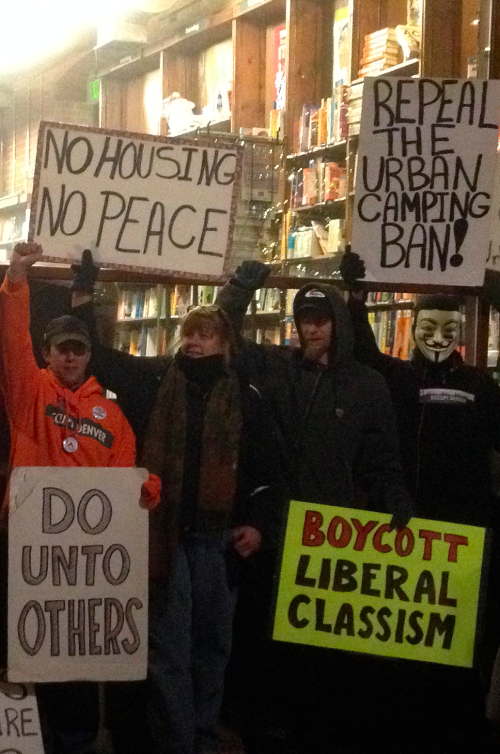
QUOTING PRESIDENT OF RUSSIA VLADIMIR PUTIN:
Federation Council members, State Duma deputies, good afternoon. Representatives of the Republic of Crimea and Sevastopol are here among us, citizens of Russia, residents of Crimea and Sevastopol!

Dear friends, we have gathered here today in connection with an issue that is of vital, historic significance to all of us. A referendum was held in Crimea on March 16 in full compliance with democratic procedures and international norms.

More than 82 percent of the electorate took part in the vote. Over 96 percent of them spoke out in favour of reuniting with Russia. These numbers speak for themselves.

To understand the reason behind such a choice it is enough to know the history of Crimea and what Russia and Crimea have always meant for each other.

Everything in Crimea speaks of our shared history and pride. This is the location of ancient Khersones, where Prince Vladimir was baptised. His spiritual feat of adopting Orthodoxy predetermined the overall basis of the culture, civilisation and human values that unite the peoples of Russia, Ukraine and Belarus. The graves of Russian soldiers whose bravery brought Crimea into the Russian empire are also in Crimea. This is also Sevastopol – a legendary city with an outstanding history, a fortress that serves as the birthplace of Russia’s Black Sea Fleet. Crimea is Balaklava and Kerch, Malakhov Kurgan and Sapun Ridge. Each one of these places is dear to our hearts, symbolising Russian military glory and outstanding valour.

Crimea is a unique blend of different peoples’ cultures and traditions. This makes it similar to Russia as a whole, where not a single ethnic group has been lost over the centuries. Russians and Ukrainians, Crimean Tatars and people of other ethnic groups have lived side by side in Crimea, retaining their own identity, traditions, languages and faith.

Incidentally, the total population of the Crimean Peninsula today is 2.2 million people, of whom almost 1.5 million are Russians, 350,000 are Ukrainians who predominantly consider Russian their native language, and about 290,000-300,000 are Crimean Tatars, who, as the referendum has shown, also lean towards Russia.

True, there was a time when Crimean Tatars were treated unfairly, just as a number of other peoples in the USSR. There is only one thing I can say here: millions of people of various ethnicities suffered during those repressions, and primarily Russians.

Crimean Tatars returned to their homeland. I believe we should make all the necessary political and legislative decisions to finalise the rehabilitation of Crimean Tatars, restore them in their rights and clear their good name.

We have great respect for people of all the ethnic groups living in Crimea. This is their common home, their motherland, and it would be right – I know the local population supports this – for Crimea to have three equal national languages: Russian, Ukrainian and Tatar.

Colleagues,

In people’s hearts and minds, Crimea has always been an inseparable part of Russia. This firm conviction is based on truth and justice and was passed from generation to generation, over time, under any circumstances, despite all the dramatic changes our country went through during the entire 20th century.

After the revolution, the Bolsheviks, for a number of reasons – may God judge them – added large sections of the historical South of Russia to the Republic of Ukraine. This was done with no consideration for the ethnic make-up of the population, and today these areas form the southeast of Ukraine. Then, in 1954, a decision was made to transfer Crimean Region to Ukraine, along with Sevastopol, despite the fact that it was a federal city. This was the personal initiative of the Communist Party head Nikita Khrushchev. What stood behind this decision of his – a desire to win the support of the Ukrainian political establishment or to atone for the mass repressions of the 1930’s in Ukraine – is for historians to figure out.

What matters now is that this decision was made in clear violation of the constitutional norms that were in place even then. The decision was made behind the scenes. Naturally, in a totalitarian state nobody bothered to ask the citizens of Crimea and Sevastopol. They were faced with the fact. People, of course, wondered why all of a sudden Crimea became part of Ukraine. But on the whole – and we must state this clearly, we all know it – this decision was treated as a formality of sorts because the territory was transferred within the boundaries of a single state. Back then, it was impossible to imagine that Ukraine and Russia may split up and become two separate states. However, this has happened.

Unfortunately, what seemed impossible became a reality. The USSR fell apart. Things developed so swiftly that few people realised how truly dramatic those events and their consequences would be. Many people both in Russia and in Ukraine, as well as in other republics hoped that the Commonwealth of Independent States that was created at the time would become the new common form of statehood. They were told that there would be a single currency, a single economic space, joint armed forces; however, all this remained empty promises, while the big country was gone. It was only when Crimea ended up as part of a different country that Russia realised that it was not simply robbed, it was plundered.

At the same time, we have to admit that by launching the sovereignty parade Russia itself aided in the collapse of the Soviet Union. And as this collapse was legalised, everyone forgot about Crimea and Sevastopol ­– the main base of the Black Sea Fleet. Millions of people went to bed in one country and awoke in different ones, overnight becoming ethnic minorities in former Union republics, while the Russian nation became one of the biggest, if not the biggest ethnic group in the world to be divided by borders.

Now, many years later, I heard residents of Crimea say that back in 1991 they were handed over like a sack of potatoes. This is hard to disagree with. And what about the Russian state? What about Russia? It humbly accepted the situation. This country was going through such hard times then that realistically it was incapable of protecting its interests. However, the people could not reconcile themselves to this outrageous historical injustice. All these years, citizens and many public figures came back to this issue, saying that Crimea is historically Russian land and Sevastopol is a Russian city. Yes, we all knew this in our hearts and minds, but we had to proceed from the existing reality and build our good-neighbourly relations with independent Ukraine on a new basis. Meanwhile, our relations with Ukraine, with the fraternal Ukrainian people have always been and will remain of foremost importance for us.

Today we can speak about it openly, and I would like to share with you some details of the negotiations that took place in the early 2000s. The then President of Ukraine Mr Kuchma asked me to expedite the process of delimiting the Russian-Ukrainian border. At that time, the process was practically at a standstill. Russia seemed to have recognised Crimea as part of Ukraine, but there were no negotiations on delimiting the borders. Despite the complexity of the situation, I immediately issued instructions to Russian government agencies to speed up their work to document the borders, so that everyone had a clear understanding that by agreeing to delimit the border we admitted de facto and de jure that Crimea was Ukrainian territory, thereby closing the issue.

We accommodated Ukraine not only regarding Crimea, but also on such a complicated matter as the maritime boundary in the Sea of Azov and the Kerch Strait. What we proceeded from back then was that good relations with Ukraine matter most for us and they should not fall hostage to deadlock territorial disputes. However, we expected Ukraine to remain our good neighbour, we hoped that Russian citizens and Russian speakers in Ukraine, especially its southeast and Crimea, would live in a friendly, democratic and civilised state that would protect their rights in line with the norms of international law.

However, this is not how the situation developed. Time and time again attempts were made to deprive Russians of their historical memory, even of their language and to subject them to forced assimilation. Moreover, Russians, just as other citizens of Ukraine are suffering from the constant political and state crisis that has been rocking the country for over 20 years.

I understand why Ukrainian people wanted change. They have had enough of the authorities in power during the years of Ukraine’s independence. Presidents, prime ministers and parliamentarians changed, but their attitude to the country and its people remained the same. They milked the country, fought among themselves for power, assets and cash flows and did not care much about the ordinary people. They did not wonder why it was that millions of Ukrainian citizens saw no prospects at home and went to other countries to work as day labourers. I would like to stress this: it was not some Silicon Valley they fled to, but to become day labourers. Last year alone almost 3 million people found such jobs in Russia. According to some sources, in 2013 their earnings in Russia totalled over $20 billion, which is about 12% of Ukraine’s GDP.

I would like to reiterate that I understand those who came out on Maidan with peaceful slogans against corruption, inefficient state management and poverty. The right to peaceful protest, democratic procedures and elections exist for the sole purpose of replacing the authorities that do not satisfy the people. However, those who stood behind the latest events in Ukraine had a different agenda: they were preparing yet another government takeover; they wanted to seize power and would stop short of nothing. They resorted to terror, murder and riots. Nationalists, neo-Nazis, Russophobes and anti-Semites executed this coup. They continue to set the tone in Ukraine to this day.

The new so-called authorities began by introducing a draft law to revise the language policy, which was a direct infringement on the rights of ethnic minorities. However, they were immediately ‘disciplined’ by the foreign sponsors of these so-called politicians. One has to admit that the mentors of these current authorities are smart and know well what such attempts to build a purely Ukrainian state may lead to. The draft law was set aside, but clearly reserved for the future. Hardly any mention is made of this attempt now, probably on the presumption that people have a short memory. Nevertheless, we can all clearly see the intentions of these ideological heirs of Bandera, Hitler’s accomplice during World War II.

It is also obvious that there is no legitimate executive authority in Ukraine now, nobody to talk to. Many government agencies have been taken over by the impostors, but they do not have any control in the country, while they themselves – and I would like to stress this – are often controlled by radicals. In some cases, you need a special permit from the militants on Maidan to meet with certain ministers of the current government. This is not a joke – this is reality.

Those who opposed the coup were immediately threatened with repression. Naturally, the first in line here was Crimea, the Russian-speaking Crimea. In view of this, the residents of Crimea and Sevastopol turned to Russia for help in defending their rights and lives, in preventing the events that were unfolding and are still underway in Kiev, Donetsk, Kharkov and other Ukrainian cities.

Naturally, we could not leave this plea unheeded; we could not abandon Crimea and its residents in distress. This would have been betrayal on our part.

First, we had to help create conditions so that the residents of Crimea for the first time in history were able to peacefully express their free will regarding their own future. However, what do we hear from our colleagues in Western Europe and North America? They say we are violating norms of international law. Firstly, it’s a good thing that they at least remember that there exists such a thing as international law – better late than never.

Secondly, and most importantly – what exactly are we violating? True, the President of the Russian Federation received permission from the Upper House of Parliament to use the Armed Forces in Ukraine. However, strictly speaking, nobody has acted on this permission yet. Russia’s Armed Forces never entered Crimea; they were there already in line with an international agreement. True, we did enhance our forces there; however – this is something I would like everyone to hear and know – we did not exceed the personnel limit of our Armed Forces in Crimea, which is set at 25,000, because there was no need to do so.

Next. As it declared independence and decided to hold a referendum, the Supreme Council of Crimea referred to the United Nations Charter, which speaks of the right of nations to self-determination. Incidentally, I would like to remind you that when Ukraine seceded from the USSR it did exactly the same thing, almost word for word. Ukraine used this right, yet the residents of Crimea are denied it. Why is that?

Moreover, the Crimean authorities referred to the well-known Kosovo precedent – a precedent our western colleagues created with their own hands in a very similar situation, when they agreed that the unilateral separation of Kosovo from Serbia, exactly what Crimea is doing now, was legitimate and did not require any permission from the country’s central authorities. Pursuant to Article 2, Chapter 1 of the United Nations Charter, the UN International Court agreed with this approach and made the following comment in its ruling of July 22, 2010, and I quote: “No general prohibition may be inferred from the practice of the Security Council with regard to declarations of independence,” and “General international law contains no prohibition on declarations of independence.” Crystal clear, as they say.

I do not like to resort to quotes, but in this case, I cannot help it. Here is a quote from another official document: the Written Statement of the United States America of April 17, 2009, submitted to the same UN International Court in connection with the hearings on Kosovo. Again, I quote: “Declarations of independence may, and often do, violate domestic legislation. However, this does not make them violations of international law.” End of quote. They wrote this, disseminated it all over the world, had everyone agree and now they are outraged. Over what? The actions of Crimean people completely fit in with these instructions, as it were. For some reason, things that Kosovo Albanians (and we have full respect for them) were permitted to do, Russians, Ukrainians and Crimean Tatars in Crimea are not allowed. Again, one wonders why.

We keep hearing from the United States and Western Europe that Kosovo is some special case. What makes it so special in the eyes of our colleagues? It turns out that it is the fact that the conflict in Kosovo resulted in so many human casualties. Is this a legal argument? The ruling of the International Court says nothing about this. This is not even double standards; this is amazing, primitive, blunt cynicism. One should not try so crudely to make everything suit their interests, calling the same thing white today and black tomorrow. According to this logic, we have to make sure every conflict leads to human losses.

I will state clearly – if the Crimean local self-defence units had not taken the situation under control, there could have been casualties as well. Fortunately this did not happen. There was not a single armed confrontation in Crimea and no casualties. Why do you think this was so? The answer is simple: because it is very difficult, practically impossible to fight against the will of the people. Here I would like to thank the Ukrainian military – and this is 22,000 fully armed servicemen. I would like to thank those Ukrainian service members who refrained from bloodshed and did not smear their uniforms in blood.

Other thoughts come to mind in this connection. They keep talking of some Russian intervention in Crimea, some sort of aggression. This is strange to hear. I cannot recall a single case in history of an intervention without a single shot being fired and with no human casualties.

Colleagues,

Like a mirror, the situation in Ukraine reflects what is going on and what has been happening in the world over the past several decades. After the dissolution of bipolarity on the planet, we no longer have stability. Key international institutions are not getting any stronger; on the contrary, in many cases, they are sadly degrading. Our western partners, led by the United States of America, prefer not to be guided by international law in their practical policies, but by the rule of the gun. They have come to believe in their exclusivity and exceptionalism, that they can decide the destinies of the world, that only they can ever be right. They act as they please: here and there, they use force against sovereign states, building coalitions based on the principle “If you are not with us, you are against us.” To make this aggression look legitimate, they force the necessary resolutions from international organisations, and if for some reason this does not work, they simply ignore the UN Security Council and the UN overall.

This happened in Yugoslavia; we remember 1999 very well. It was hard to believe, even seeing it with my own eyes, that at the end of the 20th century, one of Europe’s capitals, Belgrade, was under missile attack for several weeks, and then came the real intervention. Was there a UN Security Council resolution on this matter, allowing for these actions? Nothing of the sort. And then, they hit Afghanistan, Iraq, and frankly violated the UN Security Council resolution on Libya, when instead of imposing the so-called no-fly zone over it they started bombing it too.

There was a whole series of controlled “colour” revolutions. Clearly, the people in those nations, where these events took place, were sick of tyranny and poverty, of their lack of prospects; but these feelings were taken advantage of cynically. Standards were imposed on these nations that did not in any way correspond to their way of life, traditions, or these peoples’ cultures. As a result, instead of democracy and freedom, there was chaos, outbreaks in violence and a series of upheavals. The Arab Spring turned into the Arab Winter.

A similar situation unfolded in Ukraine. In 2004, to push the necessary candidate through at the presidential elections, they thought up some sort of third round that was not stipulated by the law. It was absurd and a mockery of the constitution. And now, they have thrown in an organised and well-equipped army of militants.

We understand what is happening; we understand that these actions were aimed against Ukraine and Russia and against Eurasian integration. And all this while Russia strived to engage in dialogue with our colleagues in the West. We are constantly proposing cooperation on all key issues; we want to strengthen our level of trust and for our relations to be equal, open and fair. But we saw no reciprocal steps.

On the contrary, they have lied to us many times, made decisions behind our backs, placed us before an accomplished fact. This happened with NATO’s expansion to the East, as well as the deployment of military infrastructure at our borders. They kept telling us the same thing: “Well, this does not concern you.” That’s easy to say.

It happened with the deployment of a missile defence system. In spite of all our apprehensions, the project is working and moving forward. It happened with the endless foot-dragging in the talks on visa issues, promises of fair competition and free access to global markets.

Today, we are being threatened with sanctions, but we already experience many limitations, ones that are quite significant for us, our economy and our nation. For example, still during the times of the Cold War, the US and subsequently other nations restricted a large list of technologies and equipment from being sold to the USSR, creating the Coordinating Committee for Multilateral Export Controls list. Today, they have formally been eliminated, but only formally; and in reality, many limitations are still in effect.

In short, we have every reason to assume that the infamous policy of containment, led in the 18th, 19th and 20th centuries, continues today. They are constantly trying to sweep us into a corner because we have an independent position, because we maintain it and because we call things like they are and do not engage in hypocrisy. But there is a limit to everything. And with Ukraine, our western partners have crossed the line, playing the bear and acting irresponsibly and unprofessionally.

After all, they were fully aware that there are millions of Russians living in Ukraine and in Crimea. They must have really lacked political instinct and common sense not to foresee all the consequences of their actions. Russia found itself in a position it could not retreat from. If you compress the spring all the way to its limit, it will snap back hard. You must always remember this.

Today, it is imperative to end this hysteria, to refute the rhetoric of the cold war and to accept the obvious fact: Russia is an independent, active participant in international affairs; like other countries, it has its own national interests that need to be taken into account and respected.

At the same time, we are grateful to all those who understood our actions in Crimea; we are grateful to the people of China, whose leaders have always considered the situation in Ukraine and Crimea taking into account the full historical and political context, and greatly appreciate India’s reserve and objectivity.

Today, I would like to address the people of the United States of America, the people who, since the foundation of their nation and adoption of the Declaration of Independence, have been proud to hold freedom above all else. Isn’t the desire of Crimea’s residents to freely choose their fate such a value? Please understand us.

I believe that the Europeans, first and foremost, the Germans, will also understand me. Let me remind you that in the course of political consultations on the unification of East and West Germany, at the expert, though very high level, some nations that were then and are now Germany’s allies did not support the idea of unification. Our nation, however, unequivocally supported the sincere, unstoppable desire of the Germans for national unity. I am confident that you have not forgotten this, and I expect that the citizens of Germany will also support the aspiration of the Russians, of historical Russia, to restore unity.

I also want to address the people of Ukraine. I sincerely want you to understand us: we do not want to harm you in any way, or to hurt your national feelings. We have always respected the territorial integrity of the Ukrainian state, incidentally, unlike those who sacrificed Ukraine’s unity for their political ambitions. They flaunt slogans about Ukraine’s greatness, but they are the ones who did everything to divide the nation. Today’s civil standoff is entirely on their conscience. I want you to hear me, my dear friends. Do not believe those who want you to fear Russia, shouting that other regions will follow Crimea. We do not want to divide Ukraine; we do not need that. As for Crimea, it was and remains a Russian, Ukrainian, and Crimean-Tatar land.

I repeat, just as it has been for centuries, it will be a home to all the peoples living there. What it will never be and do is follow in Bandera’s footsteps!

Crimea is our common historical legacy and a very important factor in regional stability. And this strategic territory should be part of a strong and stable sovereignty, which today can only be Russian. Otherwise, dear friends (I am addressing both Ukraine and Russia), you and we – the Russians and the Ukrainians – could lose Crimea completely, and that could happen in the near historical perspective. Please think about it.

Let me note too that we have already heard declarations from Kiev about Ukraine soon joining NATO. What would this have meant for Crimea and Sevastopol in the future? It would have meant that NATO’s navy would be right there in this city of Russia’s military glory, and this would create not an illusory but a perfectly real threat to the whole of southern Russia. These are things that could have become reality were it not for the choice the Crimean people made, and I want to say thank you to them for this.

But let me say too that we are not opposed to cooperation with NATO, for this is certainly not the case. For all the internal processes within the organisation, NATO remains a military alliance, and we are against having a military alliance making itself at home right in our backyard or in our historic territory. I simply cannot imagine that we would travel to Sevastopol to visit NATO sailors. Of course, most of them are wonderful guys, but it would be better to have them come and visit us, be our guests, rather than the other way round.

Let me say quite frankly that it pains our hearts to see what is happening in Ukraine at the moment, see the people’s suffering and their uncertainty about how to get through today and what awaits them tomorrow. Our concerns are understandable because we are not simply close neighbours but, as I have said many times already, we are one people. Kiev is the mother of Russian cities. Ancient Rus is our common source and we cannot live without each other.

Let me say one other thing too. Millions of Russians and Russian-speaking people live in Ukraine and will continue to do so. Russia will always defend their interests using political, diplomatic and legal means. But it should be above all in Ukraine’s own interest to ensure that these people’s rights and interests are fully protected. This is the guarantee of Ukraine’s state stability and territorial integrity.

We want to be friends with Ukraine and we want Ukraine to be a strong, sovereign and self-sufficient country. Ukraine is one of our biggest partners after all. We have many joint projects and I believe in their success no matter what the current difficulties. Most importantly, we want peace and harmony to reign in Ukraine, and we are ready to work together with other countries to do everything possible to facilitate and support this. But as I said, only Ukraine’s own people can put their own house in order.

Residents of Crimea and the city of Sevastopol, the whole of Russia admired your courage, dignity and bravery. It was you who decided Crimea’s future. We were closer than ever over these days, supporting each other. These were sincere feelings of solidarity. It is at historic turning points such as these that a nation demonstrates its maturity and strength of spirit. The Russian people showed this maturity and strength through their united support for their compatriots.

Russia’s foreign policy position on this matter drew its firmness from the will of millions of our people, our national unity and the support of our country’s main political and public forces. I want to thank everyone for this patriotic spirit, everyone without exception. Now, we need to continue and maintain this kind of consolidation so as to resolve the tasks our country faces on its road ahead.

Obviously, we will encounter external opposition, but this is a decision that we need to make for ourselves. Are we ready to consistently defend our national interests, or will we forever give in, retreat to who knows where? Some Western politicians are already threatening us with not just sanctions but also the prospect of increasingly serious problems on the domestic front. I would like to know what it is they have in mind exactly: action by a fifth column, this disparate bunch of ‘national traitors’, or are they hoping to put us in a worsening social and economic situation so as to provoke public discontent? We consider such statements irresponsible and clearly aggressive in tone, and we will respond to them accordingly. At the same time, we will never seek confrontation with our partners, whether in the East or the West, but on the contrary, will do everything we can to build civilised and good-neighbourly relations as one is supposed to in the modern world.

Colleagues,

I understand the people of Crimea, who put the question in the clearest possible terms in the referendum: should Crimea be with Ukraine or with Russia? We can be sure in saying that the authorities in Crimea and Sevastopol, the legislative authorities, when they formulated the question, set aside group and political interests and made the people’s fundamental interests alone the cornerstone of their work. The particular historic, population, political and economic circumstances of Crimea would have made any other proposed option – however tempting it could be at the first glance – only temporary and fragile and would have inevitably led to further worsening of the situation there, which would have had disastrous effects on people’s lives. The people of Crimea thus decided to put the question in firm and uncompromising form, with no grey areas. The referendum was fair and transparent, and the people of Crimea clearly and convincingly expressed their will and stated that they want to be with Russia.

Russia will also have to make a difficult decision now, taking into account the various domestic and external considerations. What do people here in Russia think? Here, like in any democratic country, people have different points of view, but I want to make the point that the absolute majority of our people clearly do support what is happening.

The most recent public opinion surveys conducted here in Russia show that 95 percent of people think that Russia should protect the interests of Russians and members of other ethnic groups living in Crimea – 95 percent of our citizens. More than 83 percent think that Russia should do this even if it will complicate our relations with some other countries. A total of 86 percent of our people see Crimea as still being Russian territory and part of our country’s lands. And one particularly important figure, which corresponds exactly with the result in Crimea’s referendum: almost 92 percent of our people support Crimea’s reunification with Russia.

Thus we see that the overwhelming majority of people in Crimea and the absolute majority of the Russian Federation’s people support the reunification of the Republic of Crimea and the city of Sevastopol with Russia.

Now this is a matter for Russia’s own political decision, and any decision here can be based only on the people’s will, because the people is the ultimate source of all authority.

Members of the Federation Council, deputies of the State Duma, citizens of Russia, residents of Crimea and Sevastopol, today, in accordance with the people’s will, I submit to the Federal Assembly a request to consider a Constitutional Law on the creation of two new constituent entities within the Russian Federation: the Republic of Crimea and the city of Sevastopol, and to ratify the treaty on admitting to the Russian Federation Crimea and Sevastopol, which is already ready for signing. I stand assured of your support.

The Tattered Cover doubles down on its privilege to ignore Denver homeless

Tattered CoverDENVER, COLORADO- Representatives of Occupy Denver met with both owner and manager of The Tattered Cover Bookstore last week hoping to avert taking public action against the popularly lionized bookseller for its passive support of the city’s Urban Camping Ban. There was hope that owner Joyce Meskis could reconsider her “neutrality” on the policy of oppression which has proved disastrous for Denver’s beleaguered street dwellers, at the very least, rescind her membership in the Downtown Business Partnership, the lobbying entity which conjured the ordinance.

INSTEAD Meskis told the Occupiers to redirect their efforts toward citizens instead of pressuring businesses to take sides. Meskis admitted she had not followed the city council hearings and so did not know that individuals have had no more clout there than have the homeless. The camping ban was proposed by a cabal of businesses, OD explained. Its repeal will no doubt require an outcry from the same. Meskis remained adamant that her business take no side. OD suggested that a bookstore of all places might want to hold itself to the higher ideals it propagates. What good is literacy if it does not elevate? Meskis held firm: the Tattered Cover must entertain both sides and allow customers to arrive at their own conclusions.

Imagine a dealer of books so pedantic. Really, are there two sides to human rights? Archbishop Desmond Tutu once wrote that neutrality helps the oppressor, never the oppressed. They haven’t read him, or maybe they disagree? More obnoxious than ignorance is arrogant ignorance. Even the illiterate do not argue against Edmond Burke’s “when good men do nothing.” What’s the point of enriching yourself with a business if it’s not to have more impact on your community?

Looking at the callous indifference of business leaders, who reserve their personal sympathies in the interest of dispassionate objectivity, you might as well be staring at an American general, a politician, or other such sociopath, the embodiment of Capitalism, void of humanity.

Fortunately people governed strictly by the bottom line are much easier to reorient than others whose values are ideological or moral. Attenuating their flow of customers brings businesses to heel. Money talks, and yes, it’s too bad the Tattered Cover has turned out to be the unlikely posterchild.

BUMMER? HARDLY. What we have is a opportunity to blow open the conservative liberal pretense that privileged first worlders need not soil themselves with taking sides. Wars happen, torture happens, neglect of the poor happens when community members, particularly the power centers of business, say nothing to oppose them. The Tattered Cover maintains its ambivalence is a principled stand. I think its acquiescence on the urban camping ban allowed the more preditory downtown businesses to rationalize their inhumanity, thinking “see, it’s not just us assholes.”

OD’s reluctant boycott continues undaunted this Friday at 5:30pm at the Tattered Cover’s LoDo store.

Tattered Cover boycott

El Paso County Clerk Wayne Williams wants voter registration fraud evidence pulled from net

Romney supporter, 20-year-old Mormon Victoria Bautista, registering only Republican votersCOLORADO SPRINGS– A young voter registration activist, by admission soliciting only Mitt Romney supporters, was caught on video saying she worked for the El Paso County Clerk, mistakenly as it turns out. Local Dems have run with the story while Clerk & Recorder Wayne Williams and the Colorado Springs Gazette, both notorious GOP bullies, insist the viral video be taken down because it misrepresents the truth, missing the point about WHO was misrepresenting the truth. Whether the young woman spoke in error, she and perhaps others are representing themselves as county representatives, and the clerk’s damage control is revealing. After clarifying that his office does not employ partisan foot soldiers (although examples abound of Democrats being purged from his staff), Williams scolds only the video taker for “spreading disinformation”. He does not warn citizens to question volunteers who pretend official status, nor does he offer evidence of reprimands or special retraining. Of course all sides are protecting the identity of the 20-year-old Victoria Bautista. Why? At 20 she’s not getting any smarter, or educated obviously. I hardly think it serves our society to coddle anyone screwing with civic participation. Many of our current officials are evidence of what happens when you nurture mediocrity in politics. Are we so hard up we want idiots in authority? I think that’s a characteristic best pruned aggressively like you would rot.

Denver April 28 War on Women march was a PRObama rally and we fell for it

Rita Ague
DENVER- Isn’t there something distasteful about a gathering of Obama supporters who want to rail against “The War On Women” and permit no mention of his non metaphorical deadly engagements? Organizers complained bitterly about activist Rita Ague’s successful subversion of their Democratic Party-only event messaging, while pretending the Pro-Obama theme was spontaneous and not partisan astroturf. While attendees carried all sorts of reproductive rights slogans, the only signage hung on the amphitheater was for Dem candidates. We had anticipated as much from early participants instructed not to worry about signs, they’d be provided. Indeed they were: “Women for Obama”, “Latinas for Obama” and anti Right-wingnut signs. Another clue came from Denver colleagues who surprised us with the news that a significant turnout was not expected because the Denver community was not responding. This was strictly a country mouse affair.

By “we fell for it” I mean of course Colorado Springs, where we fall for everything. War, Jesus, and soon, Fracking. The average Colorado Springs Joe would prefer Sarah Palin in the White House, so to fall on the smarter side of that curve it’s enough to favor Obama. In Colorado Springs even the left is right, gays are Log Cabin Republicans, and Occupiers are Teabaggers. Only on conservative campuses did academics look for common ground between Occupy Wall Street and the Tea Party.


Sure enough, three of the five organizers were from Colorado Springs, all outside Denver circles. Does it matter? Not really, the day was a fun outing for Spring’s would-be activated women, and the issues are real and persist. But why now? Why the sudden “Rightwing” onslaught on women’s rights, when Republican candidates and representatives are already wearing the black hat in the economic downturn? It’s called baiting, and the Repugs took it. The War on Women, so-called, is the cry to circle the wagons in fear and support your local gunslinger and hey, he’s a Democrat!


And there they were, keeping to themselves at upstage right, the candidates waited to make their speeches about who was going to save the women.

As a LONG TIME party faithful, Rita Ague sussed immediately that this “grassroots” event was a DP hoax. She recognized the usual suspects and traditional call outs. Newly activated citizens are prey for election year campaigns, and Rita suspected the Dems were after the better half of the 99% like the GOP did the Tea Party.

Even in their country mouse afterglow, organizers pretend they didn’t know their rally would become Pro-Obama. Does that make them duplicitous or simply stupid? I’m tired of suspecting otherwise earnest, personable, and very effective fellow activists of being deceitful, hence the depressing tone of this story. We’re idiots, in a more disguised analogy, we’re sheep.


Rita Ague was criticized for upstaging the speakers with her sign, NO WAR ON WORLD OR WOMEN. Because it clashed with the programmed message. (No Democrat is offering to save women from war.) In threatening Rita, the organizers proved themselves as comfortable as their political guests with censoring all public assertion of free speech at what was supposed to be a grassroots rally. What unmitigated, transparently blank-headed dicks, for want of a sexist term.

The newly formed War on Women defenders circle thought they’d parlay their apparent momentum by calling for a Slut Walk for the following weekend. Why not, the media image-friendly meme has become a successful Jezebel feminist protest form , though not usually scheduled in the cold of MAY.


The authentic grassroots element had a blast on the march, here you can observe a large Occupy Denver contingent, participating to show solidarity and to meet people like-minded enough to take to the street for something they believe in.

Occupy Wall Street mentor Adbusters issues latest tactical briefing. Chicago. May. Occupy.

Vancouver’s Adbusters Magazine sent the initial callouts to occupy Wall Street, to be the natural successor to unfinished revolutions in Tahrir Square and Madrid. Quickly enough it escaped their grasp. Adusters has issued two dozen “Tactical Briefings” since before September 17 to advise the growing rebellion, to be interpreted coming from a valued mentor, albeit an outsider, technically now, a non-occupier. The distinction was never more obvious than when one of their briefings advised striking the camps and waiting out the winter. But their briefing #25 offers more than retreat, it sets OWS sights on the joint NATO-G8 summit to be held in Chicago this May, against which very large demonstrations are already being planned. No specific advice on the other hand for local occupies, wisely perhaps, where tacticians can add no more to the strategy than hold your ground, by definition, occupy.

ADBUSTERS TACTICAL BRIEFING #25

Hey you redeemers, rebels and radicals out there,

Against the backdrop of a global uprising that is simmering in dozens of countries and thousands of cities and towns, the G8 and NATO will hold a rare simultaneous summit in Chicago this May. The world’s military and political elites, heads of state, 7,500 officials from 80 nations, and more than 2,500 journalists will be there.

And so will we.

On May 1, 50,000 people from all over the world will flock to Chicago, set up tents, kitchens, peaceful barricades and #OCCUPYCHICAGO for a month. With a bit of luck, we’ll pull off the biggest multinational occupation of a summit meeting the world has ever seen.

And this time around we’re not going to put up with the kind of police repression that happened during the Democratic National Convention protests in Chicago, 1968 … nor will we abide by any phony restrictions the City of Chicago may want to impose on our first amendment rights. We’ll go there with our heads held high and assemble for a month-long people’s summit … we’ll march and chant and sing and shout and exercise our right to tell our elected representatives what we want … the constitution will be our guide.

And when the G8 and NATO meet behind closed doors on May 19, we’ll be ready with our demands: a Robin Hood Tax … a ban on high frequency ‘flash’ trading … a binding climate change accord … a three strikes and you’re out law for corporate criminals … an all out initiative for a nuclear-free Middle East … whatever we decide in our general assemblies and in our global internet brainstorm – we the people will set the agenda for the next few years and demand our leaders carry it out.

And if they don’t listen … if they ignore us and put our demands on the back burner like they’ve done so many times before … then, with Gandhian ferocity, we’ll flashmob the streets, shut down stock exchanges, campuses, corporate headquarters and cities across the globe … we’ll make the price of doing business as usual too much to bear.

Jammers, pack your tents, muster up your courage and prepare for a big bang in Chicago this Spring. If we don’t stand up now and fight now for a different kind of future we may not have much of a future … so let’s live without dead time for a month in May and see what happens …

for the wild,
Culture Jammers HQ

Occupy Congress? Who is that really keeping occupied? You.

A number of my friends want to OCCUPY CONGRESS. Jan 17 Opening Day. I suppose every day might be appropriate to read our representatives the riot act, but doesn’t such an action perpetuate the delusion that our legislators ever listen? Proponents, Dems typically, argue “well, it’s the only system we got.” They say that about elections, about incumbents, and about Capitalism. Well, ours are the only lives we have too. Why piss them away on old assumptions, which have delivered us from absolutely nothing? A corporate-trust, inherited-wealth hierarchy is designed to outpace ordinary lifespans. Occupy Congress? Who is that really keeping occupied?

Why I Occupy Walmart

MY ENDGAME in occupying Walmart is to rally union members to the Occupy Movement. Union members, not unions. Taking the fight straight to Walmart, one of the most despicable, exploitative despoilers of the world’s people and economy is something the big unions should have been doing thirty years ago. Maybe their members will finally see that they’ve been sold up the river by their supposed representatives. That neither local nor national unions are expressing solidarity with us on the sidewalks of these super centers is proof that the only wages and working conditions they’ve been protecting are their own.

CSPD acquires urban assault vehicle. What line have activist informants been feeding them?

COLO. SPRINGS- This image just in from a reconnoiter of the downtown police garage. The CSPD has mobilized an urban assault vehicle, for, I don’t know what, keeping up with the Jones’s? Ever since Springs police decided that the Pikes Peak Justice & Peace Commission held gravitational pull over all political dissent in El Paso County, the CSPD holds weekly briefings with a PPJPC staffer, and of late they’ve added morning tete-a-tetes with an OCCUPY delegate from Acacia Park. What are those “representatives” telling them? That law enforcement needs bigger ammo? Would now be the time to suggest we call organizers who grease the mechanisms of oppression, however ill-conceived their intention, by a more appropriate term, RATS?

I can understand neighbors with differing opinions about whether cops need more helicopters, or K-9 intimidation duos, but how ever does the ordinary citizen rationalize that their police department needs riot equipment? To protect us from ourselves? We found out a couple years ago that the CSPD has a busload of their own people-suppression gear. Now we have an armored personnel carrier for cops? Because they can’t drag defenseless nonviolent protesters across the pavement without mechanization? The Acacia Park protesters have been happy to seek permits to set up their literature canopies and have organized community service cleanup actions to put a shine on their model compliance, meanwhile the police are arming up…

EPILOG:
Is this a political cheap shot? Yes. It’s trash talk. No argument. Why and when Colorado Springs took delivery of an armored vehicle is entirely conjecture. Maybe it’s the usual cost-plus profiteering scheme. That’s not really the point. The point is, what intelligence is CSPD getting from their de facto adversaries?

The sight of a new armored vehicle to use against civilians should be a major embarrassment to someone who considers themselves tasked with offering assurances to the city that all local protest will be inoffensive and dismissible.

The CSPD needs armor WHY? Not even crime here has ever escalated to a level which would require an armored assault by the police.

I was content to leave it at that, but oh well, some people need it explained.

It is not conceivable that anything public citizen advisers might have whispered at regular meetups would have prompted the CSPD to armor up. But what are the collaborators conferring with police about? We know the why, for a seat at the table, so what goals are they selling out?

It would be false praise to suggest the PPJPC had a role in bringing the armored UAV to town. But the PPJPC cannot escape responsibility for eroding the role and breadth of activism in this city. In particular for playing informant to the CSPD, for being the conduit of intimidation which the police want to push the other way, and for employing an executive director who has a personal resolve against confrontational activism. You won’t see him at protests, organizing protests, or promoting protests. You’ll see him keeping his meetings with other respectable nonprofit heads, and his appointments with the CSPD, and fielding their calls when they catch wind of other dissenters. No surprise that a once energetic PPJPC is now but a social justice knitting circle of communion takers.

Of course it’s worse, because Colorado Springs social circles are small enough that the CSPD only needs one snitch. Not that any illegal activities have been planned, certainly no violence, but the CSPD wants to keep tabs, and the PPJPC is happy enough to believe that if you have nothing to hide, then keeping city authorities informed shouldn’t threaten you.

For those who need this spelled out: civil disobedience is by definition illegal, and benefits incalculably from putting authorities on the spot. Giving them your game plan in exchange for not upsetting the apple cart does not favor those who are protesting the apple cart.

So what is whispered in these regular meetings with the police? Let’s imagine only the most innocent possibilities. Who’s new to town, who’s jumping on this national campaign, who’s retreating from the fallout from that recent action, what’s the scuttlebutt, what’s to these rumors, and what are CSPD’s concerns. It makes me nearly sick to think about. The relationship must be as with a lobbyist. The collaborator is enjoined to take responsibility for keeping the peace. Any surprises and it’s their rapport that suffers. Police embarrassed on the street? No cookie for you.

Occupy Colorado Springs organizers have fallen for the same bait, a quasi permitted stay in Acacia Park in exchange for daily updates with the police. A special relationship is how I believe it’s being billed. You’d probably call it a morning coffee with your boss, with info flowing his way, instructions coming yours.

If you are hoping to reform the system, thinking you have allies among the blimp-necks sworn to uphold it TO THE LETTER is probably wrongheaded.

The ugly arrangement at the PPJPC didn’t begin with Executive Director Steve Saint. The PPJPC sat down in 2003 after an antiwar rally was teargassed, to hash out a code of conduct agreement with the CSPD. Membership balked at such a prospect and the project was abandoned, but left the city with a paper trail with which to claim it believed it had cemented a deal and would consider further trouble to be a breach of the agreement. This came to light after the St Patrick’s Day Parade fiasco of 2007. An event which provoked the larges upsurge in participation in the PPJPC but rapidly dropped off with its failure to capitalize on the visibility.

I know a little about that because I was chairman in that aftermath, fighting an insubordinate staff who only slowly revealed their ulterior motives and stacked the board against me. The rationale? Public protests hurt alliances with other non profits. Being anti-military preempted cooperation with almost all the other social causes in an army town.

It’s of course a long story, but in the end you’ve got a career staff member determined to jettison antiwar efforts for the comfort of taking on the environment, poverty, and whatever causes get a Democratic president elected. Steve Saint very visibly put his name to the letter which invited Van Jones to come speak at Colorado College. Van Jones is as corporate a messenger as Barack Obama, with the same empty promises. This time instead of Hope, he’s selling Green. And it’s just as easy a sugar pill to swallow.

Did you know some disgruntled Dems have set about to form a Green Party? Guess who’s put himself at the center of scuttling that effort by neutering any grassroots platform? I take no pleasure in delivering this punch line.

Of course more than anything the antiwar movement suffered with Obama’s election. Now the hopeful are disillusioned and cynical, and who is the little PPJPC to revive that crowd? But the PPJPC backed Obama, stood in line to see him while their dissenters embarrassed them by protesting outside. Dissenters who ultimately had the police called on them for trying to have a meeting in front of the PPJPC office.

The PPJPC is fully co-opted, fine, but that the organization plays the role of informant to the police is untenable. A historically, unequivocally, uninterruptedly nonviolent activist community provides no grounds for the city police to escalate their crowd-control technologies, and it certainly doesn’t merit full-time paid informants trying to snitch on them.

Colorado Springs issues permit to sleep on sidewalk but without tents. Let Them Eat Concrete

COLO. SPRINGS- I’m not crazy about OCCUPY organizers negotiating with city representatives for a tentative permit to occupy Acacia Park. You don’t need permits for free speech, nor does activism gain by the advice of cops. That said, allowing a protest encampment, even without tents, may grow participation more effectively than outrage over oppressive responses to civil disobedience. So what’s come of this strategy today is the same permission that has been granted to the Wall Street activists in Zuccotti Plaza, sleeping bags but no tents. Doesn’t that seem shamelessly punitive? Shelter is a human right, deprivation of which is a violation of the 14th Amendment. It’s likely the city could be held liable for endangering the health and lives of these activists.

So permits or not? No American citizen needs permission to express himself, and whatever means you have to conspire to shut down Wall Street are not going to be allowed. So should an occupation seek a permit? The physics of military occupation are Might Makes Right, not Simon Says. But military intelligence and diplomats play invaluable roles. Might makes right, but guile and craft save the occupiers manpower and lives. Maybe permits create the beachhead with which the American people get their size 99 shoe in the door.

Holding regular meetups with the police is another dilemma. I know I’m not shrewd enough to go head to head with a police department, its vast intelligence resources, and well practiced dissent-quashing strategies. For me a most significant element of the public demonstration is law enforcement’s incapability of predicting unregulated behavior.

The 14th Amendment forbids the state to “deprive any person of life, liberty, or property, without due process of law.” So we might well pause to consider another news story which emerged today, that the US citizen assassinated by CIA drones in Yemen, wasn’t riding in a convoy as previously claimed, but at a dinner party with a 16-year-old relative and his friends, all of them killed without trial or even legal charges. At its simplest the 14th Amendment says you can’t punish someone before properly found guilty. Forcing inhumane conditions upon a citizen exercising his rights is punitive, cruel and unusual.

In Denver today a similar delegation met with the mayor, who give his permission for protests to continue, as it was his to give, for his subjects to exercise their 1st Amendment Rights, but abridged to exclude at night, in the cold, or in city park. Specifically the Denver mayor said he’d allow them to sleep on sidewalks provided they’re exposed to the elements. No tents. Let them eat concrete.

The Colorado Springs city attorney gave instruction to formalize the handicap with a permit. They can sleep on sidewalks but no shelter allowed. Want a cold or flu? Have at it.

A provocative thought, however sad: will today’s protesters submitting their bodies to rain, cold and snow, submitting their health and spirits to debilitating hardship, streamed live on the internet, will it have a similar effect as images of water hoses on civil rights marchers?

CSPD backs down, decides at 11th hour not to make Occupation arrests

COLO. SPRINGS- We don’t really know what happened last night. Police commanders told representatives of the Colorado Springs Occupation protest that they would be arrested that evening if they lingered in Acacia Park one minute past 11pm. They were told that the decision came from the City Attorney. Then nothing. Whether an intimidation tactic or Psy Ops to discredit the protesters to cry wolf, it backfired, because last night the city of Colorado Springs learned that quite a few of its citizens are willing to face arrest in order to stand up for freedom of expression and the right to assemble. Even as the entire night passed without interrution, whether now the welcome table, canopy and protest materials are raided no longer matters, because it will be reconstituted in spades. The people of Colorado Springs know their rights! Incidentally, in their talks with the organizers, on the record, the CSPD claimed that the ordinance they were enforcing had passed with the approval of the local ACLU. Not true!

I know where Congressman Lamborn is – because no one is telling OR asking. Re: media blackout on junkets to Israel

Calls to Doug Lamborn’s office inquiring as to his whereabouts produces this charade: “Um, I don’t know. Let me ask. They don’t know. I’m not certain who would know. Could you hold please?” And we never get an answer. That his office won’t say, coupled with the media’s strange incuriosity, points to a self-enforced news moratorium on where a fifth of US congress is spending the August recess: as guests of Israel and the most powerful DC lobby. It’s been reported that a record 81 members are on an all-expense-paid junket to Israel, but their identities are a closely guarded secret. The US TV audience can be let to see their representatives give standing ovations to the Israeli prime minister, but visit Israel? The media blackout would have you think there’s something wrong with that.

Middle East peace groups and Palestinian rights organizations have had to painstakingly gather the information from stray news reports out of Israel, or from congressional offices reluctant to let it be know. So far 45 names are known to be on this year’s junket. Doug Lamborn is not on the list, but his office probably has a lower self-respect threshold for playing dumb.

You’d think with the recent furor about calling Obama a Tar Baby, that the media would want to be calling Lamborn to the hot seat. Apparently not. All that’s said is that he hasn’t surfaced to meet with constituents, or give interviews. Last week Lamborn issued a press release unrelated to his recent trouble, probably preplanned, in collaboration with fellow Colorado Congressman Tipton. Tipton, by the way, is among the officeholders known to be in Israel.

Lamborn vacationing in Israel would not be a far-fetched possibility. He attended the junket in 2007 and since then has acted on Israel’s behest in lobbying to drop charges against an accused Israeli spy, in removing legislation which prevented the US from relocating its Tel Aviv Embassy to Jerusalem, and this Spring Lamborn was made co-chair of the Israel Allies Caucus.

What a damn missed opportunity to press them on contacting Tar Baby Lamborn. It would appear that keeping the congressional Israeli lobbying junket on the QT outweighs making Lamborn squirm on camera to explain his non-racist remark. Never mind complicating the issue. What’s a racist WASP doing in the land of Apartheid racism? Well, of course, they’re absolutely related. Oooh, terrible timing. And Lamborn’s a Christian Zionist, so he “likes” Jews, but come the end times, he won’t touch them either.

How is it American elected officials are allowed to behave as agents of a foreign government would be one question, but the more glaring one would be why it is the media is complicit in keeping citizens in the dark?

Partial list of 81 US congressmembers on Israel junket over August recess, according to MoveOver AIPAC

Gus Bilirakis R-9 FL
Mo Brooks R-5 AL
Anne Marie Buerkle R-25 NY
Eric Cantor R-7 VA
Russ Carnahan D-3 MO
Kathy Castor D-11 FL
Steve Chabot R-1 OH (went last month)
Judy Chu D-32 CA
David Cicilline D-1 RI
Yvette Clarke D-11 NY
Mark Critz D- 12 PA
Scott DesJarlais R- 4 TN
Bob Dold R-10 IL (unconfirmed)
Jeff Duncan R-3 SC
Blake Farenthold R-27 TX
Stephen Fincher R-8 TN
Mike Fitzpatrick R-8 PA
Chuck Fleischman R-3 TN
John Garamendi D-10 CA
Kay Granger R-12 TX
Michael Grimm NY-13
Janice Hahn D-36 CA
Jaime Herrera Buetler R-3 WA
Steny Hoyer D-5 MD
Jesse Jr. Jackson D-2 IL
Hank Johnson D-4 GA
Kevin McCarthy CA-22
Gwen Moore D-4 WI
Bill Owens D-23 NY
Steven Palazzo R-4 MS
Ed Perlmutter D-7 CO
Tom Price R-6 GA
Tom Reed R-29 NY
Peter Roskam R-6 IL
Dennis Ross R-12 FL
Loretta Sanchez D-47 CA
David Schweikert R-5 AZ
Terri Sewell D-7 AL (not confirmed)
Adam Smith D-9 WA
Steve Southerland R-2 FLA
Betty Sutton D-13 OH
Scott Tipton R-3 CO
Allen West R-22 FL
Frederica Wilson D-17 FL
Kevin Yoder R-3 KS

I just got an email from Pres. Obama

I just got an email from President Obama. He wants me to lead. He says the politicians in Washington won’t do their job unless I do their job for them. At face value, that’s just weird. Are constituents to imagine that stump speeches fall by the wayside when the polls close and representatives develop amnesia from which only lobbyists can deliver them? Does anyone really believe that the public has to jump hoops for good governance? Who drinks crap-flavored Kool-Aid?

Pardon my disrespect. Yeah, Obama writes to me directly, and would you believe, often. He’s practically asking my advice on a daily basis, or that’s the impression he gives with his personable tone. Actually it’s strictly a one-way conversation, telling me what to do, offering gentle encouragement, and asking for money. It’s gotten so I can’t differentiate fund-raising from tax-collecting. I confess I’ve tired of inferring that if Obama is running low on fairy dust, it’s because I’m not clapping hard enough.

The problem is I think Obama is wearing thin with all this intra-constituent communication, and he’s delegating too much of the multi-tasks to Dumbama. In today’s letter, Obama wants me to solve an “Immigration Crisis,” his contribution? Boots on the ground.

Did Abraham Lincoln write the Gettysburg Address? That’s always the impression my teachers gave. No Civil Warmongering William Safire of his day laid claim to coining four score nattering nabobs. When did Americans decide their leaders needed ghostwriters? Why do we accept that an Ersatzbama can come across with the same winning sparkle? Because you know the president is not even reviewing these compositions either. He’s got ghost-readers on staff for that.

Alright, so we like our speeches peppered with wit, and we know not even the most luminous television hosts can tread water without a staff of gag-writers. Fine, if celebrities need personal assistants to hold their phones, we can’t begrudge a busy president his showbiz consultants.

But oh my goodness, why would we countenance forged personal emails?! Who wants a Notobama pretending to give us the inside scoop on the President’s daily thoughts? What kind of charade is that for a presidential parade?

And I ask you, have you yet heard Obama answer a simple question, and you’re left wanting to hear more? If I got an email that confided he didn’t believe the crap vetted for the corporate media, that would be a believable email. Instead we all get Minimebama email numbing us with what we know is the web’s potential for a ceaseless stream of digital drivel.

But I’m making quite an ignorant assumption, that we’re all getting the same stupid email. We assume the White House is spamming a consistent message, but maybe it’s highly customized, and for some reason, and I’d better take it to heart, they’ve pegged me as a big idiot.