Mother Jones is next to discredit Playwright Mike Daisey for his dramatization of Apple’s supply line abuses in China, right in the byline of Andy Kroll’s piece on Walmart’s shadow factory system in China, which they call their, haha, “fiction-free investigation”. THEN THEY FALL FOR A GREEN INDUSTRY-STRENGTH CLEANER! MoJo asks: Are Walmart’s Chinese Factories as Bad as Apple’s? and never really answers. Instead it’s a behind the greenwash exposé, and what else is new. AND Kroll falls for a Walmart PR contractor who adversaries of sustainability hacks recognize as the archetypal intelligence fiend, the federal witness protection program hair club for men, biker, treehugger alias. This time in the persona of “Terry Foecke (pronounced FAKE-ee), a consultant spearheading Walmart’s factory energy efficiency program in China. In a lobby full of Westerners, Foecke cut an unmistakable figure—thickly bearded, 6-foot-3, with a broad belly and hip square-framed glasses. He was an unlikely Walmart ally: a soft-spoken, almost professorial progressive who quoted George Bernard Shaw and told me he spoke out against runaway consumerism at his Unitarian church back home in Minnesota.” Um, yeah Andy. Fake-ee.
Tag Archives: Consumerism
As NYPD destroys Occupy Wall Street, Americans get their own 9-11 moment, a state terrorist attack on their liberty.
UNOCCUPIED WALL STREET- NYPD goons put an end to the Zuccotti Park OWS rebel base tonight. Shall we declare it official, this night of the Occupy Wall Street Smack-down, that images of riot police are now ubiquitous as American Pie? Officer unfriendly closed the airspace, created a no-witnesses buffer zone, drove news crews away under threat of revoking their press passes, and razed the camp, tents, electronics and all, Occupy Denver Thunderdome smash shit up style.
Calls are going out for YOU to occupy your streets. And the day after tomorrow, November 17, is a General Strike. Unless principles of nonviolence [to Capitalism] dictate you may not resist consumerism.
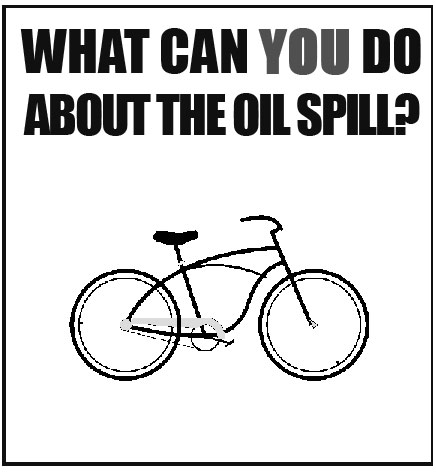
What you CAN do about the gulf oil spil
We may be powerless to advise the experts or force the perps to walk the plank. And we are not to blame for the industrial orgy of consumerism foisted on our modern livestyles. But turning this around is up to us; not heading to the Gulf, or saving oiled birds. This disaster spills over our pitiful remedies. We’ll have our hands full battling the attack it presents on human survival and biodiversity. For the right now: stop using oil. Impossible? Well then we’re spilt milk.
BP is entirely right to ignore better efforts to protect the coast from contamination. No amount of boom will insulate us from the oil barrage receiving continuous reinforcement from the blown well. Like paper towels to clean a bathtub, it’s make-work window dressing. There’s a perfectly apt Titanic idiom, but here’s another: are you really going to worry about passengers putting their wet shoes on the deck chairs?
Who is that on the back of the poor?
Here’s a Christmas gift for your favorite First Worlder. Let them affix their mug behind the face of “Justitia,” the Western Goddess of Justice, carried by the laboring poor as she seeks to right inequity without relinquishing her station of privilege. Who is the bloated First World hypocrite — but you! This statue by Danish artist Jen Galschiot is also known as Survival of the Fattest. Global elitists can celebrate their face on this 8-inch cardboard cutout as it depicts their naked supremacy.
For COP15, Galschiot installed this life-sized statue in the water next to Hans Christian Anderson’s Little Mermaid. Climate talk delegates who ventured to see Copenhagen harbor’s famous tourist attraction saw a grotesque figure straddling her carrier, whose head struggled to stay above the water.
Picture frames are popular Christmas gifts for those of us who lack nothing, except more frames to decorate pictures of ourselves and our stuff. How’s this for framing an emergent identity?
The war on Christmas they worry about
What it’s going to take to revisit 350ppm, to reverse climate change, is not carbon trading, wind turbines, miraculous scientific leaps, or a COP15 conference. The anti-technology has been known to us since sustainable times, when mankind didn’t have to transcend his wants, because it was challenge enough to seek for his needs. Conservation.
The consumer goods Killer App -KILLED
Finally a real KILLER APP. A free iPhone application called the Good Guide lets you scan the barcodes of (eventually) every consumer good to learn immediately its goodness rating on a scale of 0-10. No more Consumer Report printouts, mental notes or improvisational evaluation. The Good Guide score is the synthesis of three criteria, the ratings for which are also shown: health, environment and social. How healthy is this item? How environmentally friendly? And how socially-responsible is the producer? Notably missing is a ranking for price, sidestepping the inescapable real world cost vs. benefit compromise.
According to an article in Grist, GoodGuide emerged from a project called TAO IT, created by Dara O’Rourke, associate professor at UC Berkeley’s Department of Environmental Science, Management and Policy. Goodguide’s aim sounds like a watchdog function better administrated by a regulatory agency. I can already see industry lobbyists setting up offices to influence the GoodGuide analysts.
A lot will depend on the transparency of the GoodGuide benchmarks and the objective distance they can keep from market interests. For example, the PR budget of one conglomerate alone could create a faux ratings mechanism to usurp GoogGuide as consumers-aid du jour. A recent processed food industry Smart Choices badge comes to mind.
The GoodGuide evaluation policies do give a good impression.
GoodGuide aggregates and analyzes data on both product and company performance. We employ a range of scientific methods – health hazard assessment, environmental impact assessment, and social impact assessment – to identify major impacts to human health, the environment, and society. Each of these categories is then further analyzed within specific issue areas, such as climate change policies, labor concerns, and product toxicity. Currently, GoodGuide’s database has over 600 base criteria by which we evaluate products and companies.
Health Performance
As an example, for health performance, GoodGuide’s system takes into account both the impacts of a company’s operations on its workers and local communities, and the impacts of using a specific product on your health. Our team has gathered data on important health hazards such as:• Cancer risks
• Reproductive health hazards
• Mutagenicity
• Endocrine disruption
• Respiratory hazards
• Skin and eye irritationOur research currently uses a simplified health hazard assessment process that allows us to rate thousands of products along standard criteria. It should be noted that while these ratings are not risk assessments of products or chemicals, they do highlight potential hazards associated with the use of these products.
Environmental Performance
For environmental performance, GoodGuide is aggregating data on the life-cycle impacts of products, from manufacturing to transportation to use to final disposal. For companies, impact categories include:• Environmental emissions and their impacts on air, water, land, and climate
• Natural resource impacts
• Environmental management programsGoodGuide uses these categories to generate overall environmental performance ratings for companies.
Social Performance
For social issues, GoodGuide aggregates data on the social impacts companies have on their employees:• Compensation
• Labor and human rights practices
• Diversity policies
• Working conditionsIn addition to impacts on employees, Social Performance ratings consider impact on consumers and communities. The social scoring system also brings together information on corporate governance, disclosure policies, and overall practices.
OUR RATINGS
Types of Information
Different types of information flow into GoodGuide’s system: absolute measures, relative measures, and binary measures. Absolute measures describe measurable activities of a company or product. For example, the pounds of toxic air emissions released per year, the CEO’s salary, or the amount of money a company donated to charity. Relative measures are scores, such as a numerical grade of “6.5 out of 10” or a textual grade of “bad” to “excellent.” Binary (or Yes/No) measures indicate whether a product or company does or does not have specific characteristics. For example, a product may or may not have earned an environmental certification, or a company may or may not test its products on animals.The GoodGuide Rating
These measures are then used to create GoodGuide’s ratings. To calculate a single rating for a product or company, we convert all of the existing measures into a 0 to 10 score. In GoodGuide’s system, a score of 10 is the best and a score of 0 is the worst. Products and companies are rated relative to the performance of similar products or companies in the same industry.The initial ratings are based on a set of selected criteria from a broad pool of data available within the GoodGuide database. We think these criteria are some of the most representative and understandable. As this is the first time all of this data has ever been aggregated in the same place, we are currently working to assess the consistency and comparability of measures across our many data sources. We would love to hear your suggestions on the relative importance of these various measures of product and company performance.
GoodGuide recognizes that even the most quantitative assessment of environmental, health, or social issues requires value judgments about the relative importance of various issues. For example, rational people can disagree over the relative importance of animal testing in evaluating a product or company. We have used our best scientific judgment in building our current ratings, and in future versions we will flag issues where personal values and preferences are particularly relevant. We will then enable people to create personalized ratings based on their own concerns.
In order to facilitate your ability to assess the data, we will also be providing an assessment of data uncertainty, completeness, and quality. These assessments can be used to weight the existing data within the GoodGuide database.
Incomplete Data
In some cases data is unavailable for a company or a product. This may be because we have not yet identified a credible data source for a given issue or topic. It may also be that the data is not publicly available because companies have not disclosed critical information. One goal of this project is to work collaboratively with key stakeholders around the world, including government agencies, non-profit organizations, private research firms, and companies to promote the quantity and quality of disclosure of important data to the public.
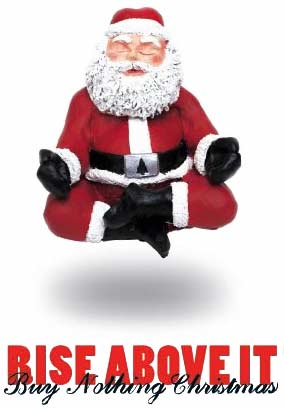
Black Friday is Buy Nothing Day
The big day is upon us, the Black Friday meme is in full force, doorbuster deals are pitched to begin as early as 4am. Everyone wants to catch the early worm shopper, and NMT is no exception. We call your “growing excitement” and raise you one BUY NOTHING DAY. Consume nothing, except comestibles, go nowhere except by self-locomotion, and reclaim your pre-industrialized sustainable nature.
That’s to attack the consumer culture addiction from the abuser’s side. Stop buying what you don’t need.
This BND, Adbusters is going after the problem from the supply side by declaring a General Wildcat Strike, because how are we to arrest the consumer culture juggernaut without calling on the workers at the cogs? But it’s asking a lot of a social class who can afford it least.
Many of us already aren’t scheduled to work on the day after Thanksgiving. I’m not going to work, probably neither are you. But if you’re a retail clerk, unprotected by unions and armed with neither sick days nor savings, you can hardly risk giving your boss the finger on the day he’s expecting to earn a bonus.
Taking down the marketing megalith is going to involve enlisting the working class, but not for one day. They’re already to be the front line casualties of any successful attack on consumerism.
But you on the couch: turn off, tune out, drop down and show us some effort.
I knew Black Friday, and You Sir, are no Black Friday
If this year’s “Black Friday” fails to pull retailers out of their red ink, should the dubious protologism retire its presumption to speak for consumer confidence? I think it should. Wasn’t it really just an economist’s “for the Gipper” meme –putting the solvency of the market on the shoulders of Christmas shoppers, rallying them to pull the economy into the black, regardless if it meant spending themselves into the red? I hate it when emotion-charged phrases are usurped by pretenders. Hiroshima was “Ground Zero” before the WTC, the “Homeland” was Nazi Germany, and “Black Friday” was Robinson Crusoe’s, well, Man Friday.
“Black Friday” in general has represented whichever awful event befell that day of the week of recent memory. It may be a wonderful anti-racism step to appoint a rare positive attribution to the word “black,” but I object to its use here to exacerbate affluenza, targeted against the best efforts of sustainability educators to reframe the day-after-Thanksgiving as Buy Nothing Day. If you are a booster for consumerism, black is an accounting concept meaning profitability. But how disingenuous to expect that those outside the balance sheet should share the enthusiasm. For example, it’s not everyone’s Good Friday just because Notre Dame wins that day. Good Friday, by the way, is also called Black Friday, as is any Friday that falls on the 13th.
Below I will list history’s Black Fridays, lest nocturnal Wikipedia cobbler elves continue their PR visits to bolster the retailer claim to the term. According to “Wikipedia” the earliest citation for a shopper’s “Black Friday” is 1966. But in actuality, the expression came from Philadelphia bus drivers and policemen referring to the traffic congestion created at their city center on the busiest shopping day of the year. But Philadelphia retailers objected to the negative connotation. Perhaps as a result, the “black ink” angle surfaces, attributed to a store clerk, offering a more upbeat, chamber-of-commerce-friendly spin. Hmm.
Many people think Black Friday recalls the Stock Market Crash of 1929. It does, and they’re right to be confused about which day of the week it was in particular, because the first day of the crash became known as Black Thursday, followed by Black Friday, then the next trading days, Black Monday and Black Tuesday.
What other occasions in man’s history have warranted the dark coloration? Let’s begin with Black Sabbath:
Black Saturdays
Sept 10, 1547, disaster for Scottish defenders at Battle of Pinkie Cleugh, Scotland
Aug 6, 1621, Mass hysteria caused by dark stormy night confirming Armageddon arrived with Episcopacy, Scotland
Dec 28, 1929, Massacre of Mau demonstrators by NZ police, Samoa
June 13, 1942, Disastrous UK Battle of Gazala against German Afrika Korps
June 29, 1946, UK Operation Agatha against Zionist terrorists in Palestine
Oct 8, 1962, height of A-bomb scare, Cuban Missile Crisis
Dec 6, 1975, Beirut massacres which started Lebanese Civil War, Lebanon
July 31, 1982, worst road accident in French history, (on annual “Black Saturday” when entire of population takes to the road for vacation)
July 14, 1984, Honk Kong exchange rates fall to all time low
Aug 20, 1988, worst day of Yellowstone Fires
Jan 20, 1990, January Massacre of Azeri demonstrators by Soviet Army, Azerbaijan
Feb 7, 2009, brush fires, Victoria, Australia
Black Sundays
Feb 14, 1926, bush fires, Victoria, Australia
April 14, 1935, “Black Blizzard” over Dust Bowl, the Great Plains of US and Canada
Feb 6, 1938, fatal waves on Bondi Beach, Australia
Nov 8, 1942, Nazi extermination of Jews in Staszow, Poland
June 11, 1944, disastrous Canadian battle against German Panzers, Normandy, France
Sept 24, 1950, sunlight blocked by forest fires, Pennsylvania
Jan 2, 1955, brush fires in Southern Australia
May 2, 1982, Exxon canceled shale oil project in Parachute, Colorado
Nov 24, 1991, extreme right party ascension in Belgium
May 1, 1994, San Marino Grand Prix death of Ayrton Senna
April 26, 1998, DIA inter-terminal subway fails, Denver
Jan 21, 2001, Direct TV purged viewers who were pirating signals
Feb 18, 2001, Datona 500 death of Dale Earnhart
Dec 28, 2008, Detroit Lions finished 0-16
Black Mondays
Easter, 1209, English settlers massacred in Dublin, Ireland
April 14, 1360, Easter misfortune during Hundred Years War
Feb 8, 1886, Pall Mall Riot, London, UK
Dec 10, 1894, Newfoundland bank failure, Canada
Oct 28, 1929, Stock Market Crash, 3rd day of trading
May 27, 1935, US Supreme Court overturns National Recovery Act
Sept 19, 1977, Shutdown of Youngstown, Ohio steel mill
Nov 27, 1978, Assassination of Harvey Milk
Oct 19, 1987, global stock market crash
Oct 8, 1990, Temple Mount Massacre by Israeli IDF, Palestine
Black Tuesdays
Oct 29, 1929, Stock Market Crash
1967, brush fires in Tasmania, Australia
Oct 20, 1987, global stock market crash, because Monday is Tuesday in Australia
Black Wednesdays
Sept 16, 1992, when UK withdrew currency from European Exchange Rate Mechanism, suffering a devaluation of 3.4 billion pounds.
Nov 3, 2004, John Kerry concedes 2004 election immediately after promising to challenge polling irregularities.
Had not the US Stock Exchange been shut down on Tuesday, there would have been a Black Wednesday 1929 as well.
Black Thursdays
Feb 6, 1851, brush fires, Victoria, Australia
Oct 24, 1929, start of US Stock Market Crash
Oct 14, 1943, disastrous US-UK bombing raid over Schweinfurt, Germany
Dec 16, 1943, disastrous UK bombing raid over Berlin, Germany
Aug 24, 1995, Moscow Interbank credit market collapse, Russia
Feb 8, 1998, Black World Wide Web Protest
July 24, 2003, Guatemala City riots, Guatemala
Black Fridays
Sept 24, 1869, collapse of price of gold.
Oct 14, 1881, Eyemouth Disaster, Scotland
Nov 11, 1887, Haymarket hangings of innocent anarchists, Chicago
Nov 18, 1910, Police assault of suffragettes, London, UK
Jan 31, 1919, George Square Riot, during strike for 40hr work week, Glasgow, Scotland
Oct 25, 1929, second day of Stock Market Crash
Jan 13, 1939, bush fires in Victoria, Australia
1940 movie starring Boris Karloff
Sept 18, 1942, Bombing of Dartmouth, Devon, UK
Oct 13, 1944, Disastrous Canadian raid, Battle of the Scheldt, Belgium
Feb 9, 1945, Disastrous UK air raid, Battle of Sunnfjord, Norway
Oct 5, 1945, Hollywood Warner Brothers union riot, led to Taft-Hartley Act
May 5, 1950, Red River Flood, Winnipeg, Manitoba, Canada
Oct 7, 1977, Phillies lost to Dodgers, game 3 of National League series
Sept 8, 1978, Massacre of protesters in Tehran, led to Iranian Revolution
May 31, 1985, US-Canadian Tornado outbreak
July 31, 1987, Edmonton Tornado, Alberta Canada
March 12, 1993 Bombay Bombings
Aug 12, 2004, suppression of protests, Male, Maldives
Sept 30, 2005, Students protesters killed in Meghalaya, India
Oct 3, 2008, EESA Wall Street Bailout
–AND–
Nov 28, 2009, the first day of the Christmas shopping season, when America’s retailers balance sheets are brought out of the red.
It fits right?
Simplifying the Omnivore’s Dilemma
The author of The Omnivore’s Dilemma put together a list of eating rules for the New York Times. From 2,500 submissions made by his readers, Michael Pollan gleaned 20. If I lob cheap laughs off the top, like “Don’t eat egg salad from a vending machine” and other home-spun wisdoms which help NYT editors trivialize critiques of consumerism, I’m left with eight tips to spark constructive rethinking of our eating patterns. For starters: 1. If you are not hungry enough to eat an apple, then you’re not hungry.
2. You may not leave the table until you finish your fruit.
3. You don’t get fat on food you pray over.
4. Breakfast you should eat alone. Lunch you should share with a friend. Dinner, give to your enemy.
5. Never eat something that is pretending to be something else.
6. Don’t eat anything you aren’t willing to kill yourself.
7. Don’t yuck someone’s yum.
8. Eat until you are seven-tenths full and save the other three-tenths for hunger.
The Red-listed fishy
Greenpeace is urging consumers to check whether their grocery stores are carrying red-listed seafood. These are species from fisheries endangered by depletion and susceptible to pirate fishing. Greenpeace’s idea? Report your grocer for stocking contraband.
Try as you might to peruse their red list, you have to sign in with Greenpeace to download their survey toolkit. We’ve posted their list here.
RED-List Seafood Species
Alaska Pollock
Atlanta Cod or Scrod
Atlantic Halibut (US & Canadian)
Atlantic Salmon (wild and farmed)
Atlantic Sea Scallop
Bluefin Tuna
Bigeye Tuna
Chilean Sea Bass (aka Patagonian Toothfish)
Greenland Halibut (aka black halibut, Atlantic turbot or Arrowhead flounder)
Grouper (imported to the US)
Hoki (aka grenadier)
Monkfish
Ocean Quahog
Orange Roughy
Red Snapper
Redfish (aka Ocean Perch)
Sharks
Skates and Rays
South Atlantic Albacore Tuna
Swordfish
Tropical Shrimp (wild and farmed)
Yellowfin Tuna
Are there any fish which are not red-listed?! Is a fish absent from this list because it is still plentiful and a sustainable commodity, like Pacific Salmon perhaps, or because it is not commercially available anyway? I can think of Haddock, for example, or Hake.
The American dyslexia for economics
The interest rate for banks is down to zero. B of A and Citibank are still charging 39%. What again does economic news have to do with me?
The biggest news on the economy was BREAKING NEWS a week ago: the US economy is in a recession, and has been for over a year. Can news a year old still be news? What news exactly are we getting from the experts, economists and other mesmerists paraded on the television every evening?
We consult them on a minute by minute basis, actually, on 24/7 cable news stations, for every hint of a whiff of where the weather vane might indicate the US economy is blowing. If the stock market doesn’t hang on their every diagnosis, it reacts to what unelected, self-made officials say. Now we’re led to understand all that spinning can flip-flop for a year-old contradictory study.
And who’s going to let America know when we’ve hit a full-on depression? Will we be told it before the decade is enshrined post-facto in a Time-Life retrospective? Are those in charge so cynical that they count on the public knowing the truth in spite of their lies, because it’s we who endure the effects in real time anyway? The media can lie about unemployment figures too –what could it possibly matter to the unemployed?
It’s not only ADD. Americans understand why too-sobering statistics are kept from us, lest a post-mortem induce pre. We are the great engine of consumerism, running on pure flattery. I think it’s the same self-defeating fatalism which fuels the life insurance scam. We bet against ourselves. We buy self-help books. We are eternally sick.
But does the economy really work so? Would an autopsy be self-fulfilling? Can an economy go sour due to one bad-apple-attitude, or would it be because of the lost jobs?
I’m guessing this is where the University of Chicago meets Euripides, or if it prefers, palmistry. There’s a global comeuppance in your future, you small fraction of Earth’s population who have expended the lion’s share of its resources. That’s what will introduce the American quality of life to harsh earthbound reality.
Keeping American consumers in debt is less a magician’s act of driving the economy, than it is a swindler’s function of distracting the poor dupe until he’s lost his shirt.
But this swindler is not planning to catch the next bus out of town.
This banking scam isn’t over until the shirtless victim is thrown out the saloon door and into the street, where’s he’s got no redress but to face line after line of well armed riot police.
The Advent conspiracy
Consumerism allows people to create the illusion of giving without having to sacrifice anything personal. Buying loads of useless or unneeded crap, wrapping it up in mountains of toxic paper and ribbon, presenting it, often by mail, to recipients we rarely see seems a requirement for anyone who isn’t Scrooge.
Let’s try something new. Give presence this holiday season. Give time and attention, spend creative energy, become less fractured and manic, more unified and peaceful. Refuse to spend your useless gift quota ($450,000,000,000 spent each year in the U.S. divided by the American gift-buying population — that’s your required outlay). Donate part of the money saved to Living Water International, an organization working to provide water wells to undeveloped countries.
A lack of clean water is the leading cause of death in under-resourced countries. 1.8 million people die annually from water-born illnesses, nearly 4,000 children every DAY. It’s estimated that $10 billion would solve the world’s fresh-water crisis. $10 billion. Our national priorities are beyond fucked up.
Walmart trampling is Black Friday PR
“BLACK FRIDAY” BREAKING NEWS- What do you make of the trampling of a Wal-mart worker by crazed bargain hunters at Long Island super center first thing on the day after Thanksgiving? Crazy shoppers, or beguilingly crazy bargains? Which most aroused your curiosity? Savage crowd behavior, that’s nothing new. But maniacal consumer behavior in the mist of a darkening economic crisis –that’s PR whitewash.
The Law of the Jungle
THE LAW OF THE JUNGLE
Trade, within a society and between countries, is the exchange of goods and services produced by human beings. The owners of the means of production appropriate the profits. As a class, they are the leaders of the capitalist state and they boast of fostering development and social wellbeing through market. This they worship as an infallible God.
In every country there is competition between the strongest and the weakest; the ones with more physical energy and better fed, those who learned how to read and write, who attended school and have more experience accumulated; the ones with more extensive social relations and more resources, and those within society who fail to have these advantages.
Now, as far as the countries is concerned, there are differences between those with a better climate and more arable land, more water and more natural resources in the area where they are located, when there are no more territories to conquer; the ones mastering technology, having greater development and handling unlimited media resources and those who, on the contrary, do not enjoy any of these prerogatives. These are the sometimes enormous differences between the rich and the poor nations.
It’s the law of the jungle.
There are no differences between ethnic groups, however, when it comes to the mental faculties of the human being. This has been thoroughly proven by science. The present society is not the natural way in which human life evolved, but rather a creation of the mentally developed man without which his life would be inconceivable. Therefore, what is at stake is whether the human being will be able to survive the privilege of having a creative mind.
The developed capitalist system, epitomized by the country with a privileged nature where the European white man brought his ideas, dreams and ambitions, is today in a crisis. But, it is not the usual crisis happening once in a number of years; not even the traumatic crisis of the 1930s but the worst of all crises since the world started to pursue this growth and development model.
The current crisis of the developed capitalist system is taking place when the empire is about to change leadership in the elections to be held in twenty-five days; it was all that was left to see.
The candidate of the two main parties that will say the last word in these elections are trying to persuade the bewildered voters –many of whom have never cared to cast a vote— that as candidates to the presidency they can secure the wellbeing and consumerism of what they describe as a people of middle class only, even though they are not planning to introduce any real changes to what they consider the most perfect economic system the world has ever known. The same world that, in their respective minds, is less important than the happiness of over three hundred million people who account for less than five percent of the world population. The fate of the remaining ninety-five percent of human beings, peace and war, the fit or unfit-for-breathing air, will highly depend on the decisions of the administrative leader of the empire, whether or not that constitutional position has any power at a time of nuclear weapons and space shields moved by computers in circumstances where every second counts and when ethical principles keep loosing their value. Still, the more or less nefarious role of the President of that country cannot be overlooked.
Racism is deeply-rooted in the United States where the mind of millions of people can hardly reconcile with the notion that a black man, with his wife and children could live in the White House, which is precisely called White.
It’s a miracle that the Democratic candidate has not met the same destiny as Martin Luther King, Malcolm X and others who only a few decades ago dreamed of justice and equality. He is in the habit of looking at his adversary with serenity and of smiling at the dialectic predicament of an opponent gazing into space.
The Republican candidate, on the other hand, who likes to enhance his reputation as a belligerent man, was one of the worst students in his class at West Point. He has confessed that he did not know any Mathematics; it can thus be assumed that he knew less of the complicated economic science.
The truth is his adversary surpasses him in cleverness and composure.
Something McCain has aplenty is age, and his health condition is not safe.
I am bringing up these data to indicate that eventually –if anything went wrong with the candidate’s health, in case he is elected— the lady of the riffle, the inexperienced former governor of Alaska could become President of the United States. It can be noticed that she does not know a thing.
Meditating on the current US public debt –$10,266 trillions— that President Bush is laying on the shoulders of the new generations in that country, I took to calculating how long it would take a man to count the debt that he has doubled in eight years.
A man working eight hours a day, without missing a second, and counting one hundred one-dollar bills per minute, during 300 days in the year, would need 710 billion years to count that amount of money.
I could not find a more graphic way to describe the volume of money that is practically mentioned every day now.
In order to avoid a general state of panic, the US administration has declared that it will secure deposits that do not exceed 250 thousand dollars. It will be managing banks and such funds as Lenin would never have thought of counting with an abacus.
We might be wondering about the contribution of Bush’s administration to Socialism. But, let’s not entertain any illusions. Once the banking operations go back to normal, the imperialists will return the banks to the private business as some other countries in this hemisphere have already done. The peoples always foot the bill.
Capitalism tends to reproduce itself under any social system because it is based on selfishness and on man’s instincts.
The only choice left to human society is to overcome this contradiction; otherwise it would not be able to survive.
At this time, the ocean of money being poured into the world finances by the central banks of the developed capitalist countries is dealing a hard blow to the Stock Exchanges of the countries which resort to these institutions in an effort to beat their economic underdevelopment. Cuba has no Stock Exchange. We shall certainly find more rational and more socialist ways of financing our development.
The current crisis and the brutal measures of the US administration to save itself will bring more inflation, more devaluation of the national currencies, more painful losses in the markets, lower prices for basic export commodities and more unequal exchange. But, they will also bring to the peoples a better understanding of the truth, a greater conscience, more rebelliousness and more revolutions.
We shall see how the crisis develops and what happens in the United States in twenty-five days.
Fidel Castro Ruz
October 11, 2008 6:15 p.m.
iN line for the iPhone
As one who doesn’t like to leave the house, I am a big fan of the internet. In truth, I can hardly speak a negative word about it. The web has given us unfettered access to news and information, consumer goods, visions pleasing to the eye, sounds pleasing to the ear, easy communication one step removed. I can’t say I miss a single thing about the “good ol’ days.” Except waiting in line for concert tickets.
I love live music. I’ve been to zillions of concerts. In fact, I am going to a 2-day concert event in Denver this weekend. The headliners are Tom Petty and the Dave Matthews Band (woot! woot!). Over the years I’ve seen the Stones, the Who, the Grateful Dead, Elton John, Bob Dylan, Pink Floyd, Bruce Springsteen, James Taylor, Michael Jackson — the list goes on and on. And, so I don’t date myself too closely, I’ve even seen ‘N Sync and James Blunt.
Raised in an environment of easy internet access, my poor darling children have never had to stand in line for anything. Until last week when the new iPhone was to be released. After I made the big mistake of describing the many reasons I was considering an iPhone purchase, they decided that their future health and happiness was predicated on having 16GB iPhones. With no advice from me, they decided that they had to get to the store very early or risk failure.
They got to the AT&T store at 1 a.m. They were 22nd and 23rd in line. By the time Eric and I arrived shortly before 8, there were 100 people in line. There were camping chairs and coolers, even a gas grill. Decks of cards, pop cans and water bottles, fast food litter. I imagine there were a few dead soldiers (uh, empty beer containers) although I didn’t see any. The atmosphere was convivial. The camaraderie palpable.
They allowed people into the store 6 at a time. As each lucky buyer emerged, a bright orange AT&T bag signaling victory, their fellow consumers clapped and yelled in celebration.
We (read: they) left with our iPhones at 8:30. I later read that they’d sold out in 40 minutes — many campers went home empty-handed. But my two lucky ducks were thrilled with their phones, made all the more precious by the procurement experience.
SUV sales crash, oil up, GM on verge of going under
I just put a bumper sticker on my car that states simply that ‘America needs an oil change’. That’s code for America needs a policy change on energy issues, which won’t be easy, because the US is still run by THE STUPIDS.
Take our press full of dimwit papers like our own local Colorado Springs Gazette. At the Gazette, they are still into denial about Global Warming, climate change,, and declining world energy supplies. They are sill pushing for unrestricted suburban sprawl, unrestricted Pentagon-military-industrial welfare, and maximum consumerism. ‘What crisis?’ is their motto, which is reminiscent of Alfred E. Newman’s line ‘What me worry?’ Reading the Gazette is a little like reading Mad Magazine, except they’re not joking and really believe the madness they push!
Meanwhile, nobody can unload their lead balloons, the SUVs of America. Detroit is going under (I know that we thought it already was under, but..) big time, and all THE STUPIDS can do is plan a war against Iran! What geniuses they are!
America needs an Oily Dick change, but is the new one of Oily Barack going to be much better? America stands by with their thumbs up their butts hoping so, but the future looks grim, since THE STUPIDS are still running the entire show. That would be the business men.
Living better at the expense of others
Perhaps you thought it couldn’t get worse. Colorado College hosts speakers who deny global warming, or dismiss the “one or two degrees.” They have speakers who champion imperialism by debt. Coming up, on February 26th at Packard Hall, CC has asked Wal-mart VP of public relations Ray Bracy to address economic development. I kid you not, his address is: “Saving People Money So They Can Live Better: A Global Perspective.”
Do you almost want to hear this pitch? Materialism to live better. Exploitation the means to an end. A global picture of happiness? Now that’s going to take balls.
In the meantime, consider the bronze statue Survival of the Fattest, and this WTO lament, for Art In Defense Of Humanism:
I’m sitting on the back of a man
He is sinking under the burden
I would do anything to help him
Except stepping down from his back.
Greens and the energy companies
Everybody says they’re for helping out the environment these days, and yet nobody seems to be for protecting the environment that much. After all, who is going to say they are for dumping a pile of personal refuse into the middle of the city park, so to speak?
The most prolific talkers about the need to save the environment are the supporters of the world wide Green Party Movement. This political movement was formed because neither the Marxists nor the capitalists of the world seemed to take the issue seriously enough. Still, today the real issue is, does the Green Movement itself take saving the environment all that seriously? Unfortunately I think that the answer is really… NO, it does not. Why is that conclusion warranted?
Let’s take a look at the energy companies and the Green Movement, for example, and what do all the Green supporters always seem to advocate? They basically seem to advocate nothing. They usually talk about finding new non-polluting energy sources and turning to that as replacement for oil, coal, and nuclear. They advocate that individuals use less energy personally. They advocate less personal consumerism, but they don’t advocate much any real change in the structure of who runs the energy businesses, which is in private hands.
Is that really advocating for protecting the environment in a serious manner?
These energy companies are monstrous in size and are the major multi-nationals in the world. Can their structure just be allowed to stay as it is now, and the earth can be protected by that? Are these energy companies in private hands going to respond to reason and turn to ‘clean’ fuels in lesser amounts? We have to keep in mind that the rest of the multi-nationals demand humongous amounts of energy to be supplied to them for production, transportation, and sales.
Demanding that individuals reduce personal consumption while humongous multi-nationals should merely remain organized as they are is not a serious plan to combat ecological disintegration. Where is the Green Movement’s call to take these companies out of private hands and control their management so that profit making is not their single orientation? Have we missed something here, because allowing private ownership of multi-national energy corporations is not going to conserve Earth?
The Greens have to do what many countries have had to do in the past to be a movement that can seriously change the world. Many countries when confronted by huge multi-nationals that wanted to merely loot national resources and make a profit off that, nationalized these companies. They took them over and took back some of the loot taken into private hands by the super rich. It was necessary to do so, just as it is still necessary to do this with today’s humongous energy conglomerates. In short, the Green Movement must stop just making demands that individual peons change their consumer habits, and demand that energy multi-nationals be nationalized.
The Green Movement, to save Earth’s ecology, has to change from being a group of nice individuals talking intellectually about good things, and become a Movement that has serious demands that can actually effect serious change if implemented. Nationalize the energy multi-nationals now!
Think that costs too much in the long run? Then think some about how these companies have directed the spending of $2 1/2 trillion dollars PLUS into occupying Iraq and Afghanistan? Save some money and help save the planet from non-sustainable production directed by private owners looting Earth for private profit.
Buy Nothing Day 2004