The US media

The structure of the U.S. and global news media is undergoing rapid change – change that may soon make outdated the concept of news (as opposed to entertainment or other “soft” information media).

Much of this change stems from the trend toward media conglomerates – vast empires that may include a chain of papers, lifestyle magazines, radio and TV stations, a cable network, a movie studio, a book division and an online service. News outlets are no longer run as public trusts with a unique responsibility to society, but as pure consumer products, marketed like soft drinks. (In the news business, cities aren’t cities any more; they’re “markets.”)

As recently as the 1970s, newspapers dominated news coverage, with TV and radio playing catch-up on whatever stories the papers broke. No more.

Go into any newspaper these days, and you’ll find the editors keeping a close watch on a bank of TV sets tuned to local newscasts and CNN. With the exception of a few prestigious national papers – The New York Times, The Wall Street Journal, The Washington Post and the Los Angeles Times – U.S. papers are driven by the same values that prevail on TV: short, simple, reader-friendly reports, heavy on crime and celebrities. (More on these trends can found in Ben Bagdikian’s invaluable The Media Monopoly.)

Still, it does no good to whine. If you want to reach a mainstream audience, learn to work with the media structure as it exists.

Play the Media

Reprinted from The Ruckus Media Manual, from the Ruckus Society.

Coordinating media for a direct action is more art than science, and sometimes owes more to luck than either. News is a quirky, complicated, unpredictable endeavor – much
like an action itself. Put the two together, and it can seem like a miracle when an action actually communicates the intended message to the desired audience. As media coordinator, your job is to work miracles.

There’s no formula for working miracles, but there are certain steps you can take that will greatly increase your chances of coverage. You have to stay flexible and willing to do whatever works, but following the basics will put you in position to respond most effectively if you have to change course.

Much about media work, up to the point when the action finally goes down, is tedious, exacting, and detail-oriented. (Then it’s exciting as hell.) But if you ignore the fundamentals, you’re giving the news media – who are already naturally disposed to regard activists as naive amateurs – one more reason to ignore your action.

This chapter includes a checklist of what you should do, and when you should do it, to have the best shot at getting your action’s message out. But these steps can be for naught if not done with thorough professionalism – journalists are professional cynics, and if you’re sloppy they will notice it, and it will color their coverage. So go the extra mile; proofread the press release again; make the extra phone call. Never cut corners.

And always remember this advice from Wes “Scoop” Nisker, a legendary counterculture journalist of the ’60s: “If you don’t like the news, go out and make it yourself.”

Informants

Everything you ever wanted to know about informers and infiltrators
Infiltrators seek information on most radical groups. The return of mass mobilizations and radical actions in anti-globalization, anti-poverty, anti-racism and anti-police brutality demonstrations, as well as declarations to continue struggling in the streets and underground has drawn attention from the state’s secret police. More infiltrators will be sent into our ranks to try to bribe, entice or manipulate individuals. The extent to which they are able to infiltrate our groups depends on our seriousness and responsibility in learning about, promoting, and working within a security culture.

Radical movements can learn to better identify covert enemies in our projects. Once identified, appropriate action is needed to undo, contain, or remove the danger. This section is intended to arm you with information on how to spot and deal with informers, infiltrators, and provocateurs in our ranks.

WHO IS AN INFORMER?
There are actually two kinds of informers. The deliberate informer is an undercover agent on the payroll of government or industry. The second type is the activist-turned-informer. Both kinds try to infiltrate our ranks and are equally dangerous to our movements.

Let’s discuss the deliberate informers first. They are often difficult to identify. Informers can be of any age and any profile, but they do have a few discernible methods or operation, or “modus operandi”. These are: The “hang around” type: they are persons who regularly show at meetings and actions but generally don’t get involved. They collect documents, listen to conversations and note who’s who. This observation role is relatively inactive.

The “sleeper” type: is similar to the “hang around” modus operandi, except that their absorption of information is used to activate their role at a later date.

The “novice” type: presents a somewhat more active role, but confines themselves to less prominent work. They don’t take initiatives, but the work they do is valued. This helps them build trust and credibility.

**The “super activist” type: they come out of nowhere and all of a sudden, they are everywhere. Whether it’s a meeting, protest, or an action, this person will be right in the thick of it. Keep in mind however that this can also be the mark of a new activist, whose enthusiasm and commitment is so strong that she/he wants to fight the power every minute of the day. It should be said that with several of these modus operandi, the behaviour is hard to distinguish from a sincere new person’s involvement. How do we tell them apart? Well, a planted infiltrator will ask a lot of questions about the direct action groups, individuals and illegal activities. She/he may suggest targets and volunteer to do reconnaissance as well as take part in the action. Infiltrators also try to build profiles on individuals, their beliefs, habits, friends, and weaknesses. At the same time, infiltrators will shield their true selves from other activists.

Anyone who asks a lot of questions about direct actions isn’t necessarily an infiltrator, but they ARE someone you should be careful with. At the very least, they need to be informed about security issues. New activists should understand that direct action tactics can be risky (though some risks are worth taking!) and that asking a lot of questions endangers people. If the person persists in asking questions, there is a problem and appropriate measures must be taken. Activists who can’t understand the need for security should be shunned and kept away from the movement.

Some types of infiltrators stay in the background and offer material support, other informants may have nothing to do with the group or action, but initially heard certain plans and tipped off the police. Among the more active types of infiltrators can be a gregarious person that quickly wins group trust. Some infiltrators will attempt to gain key forms of control, such as of communications/ secretarial, or finances. Other informants can use charm and sex to get intimate with activists, to better spy or potentially destabilize group dynamics.

Active infiltrators can also be provocateurs specializing in disruptive tactics such as sowing disorder and demoralizing meetings or demos, heightening conflicts whether they are interpersonal or about action or theory, or pushing things further with bravado and violent proposals. Infiltrators often need to build credibility; they may do this by claiming to have participated in past actions.

Also, infiltrators will try to exploit activist sensibilities regarding oppression and diversity. Intelligence organizations will send in someone who will pose as a person experiencing the common oppression of the particular activist group. For example, in the 1960’s, the Weather Underground was infiltrated by an “ordinary Joe” informant with a working class image. Black war veterans infiltrated the Black Panther Party.

A fresh example of police infiltration and manipulation tactics is that of Germinal, a group targeted for arrest two days prior to the April 2001 anti-FTAA demonstrations in Quebec City. Five months prior, the police set up a false transport company and specifically postered opportunities for employment in the vicinity of a Germinal member seeking employment.

The trap worked. Tipped off by an initial informant, two under-cover cops worked for four months in the group. This operation resulted in the media-hyped “dismantlement” of the group on the eve of the summit. Seven Germinal members were arrested, 5 of whom spent 41 days in preventive custody, only to be released under draconian bail conditions. The police’s covert action was in part about dismantling the group, but it was also about creating a media/propaganda campaign to justify the police- state security for the summit.

BACKGROUND CHECKS – AN ESSENTIAL TOOL
What are some ways of looking into the possibility that someone is an informer? Firstly, unless you have concrete reasons or evidence that someone is an infiltrator, spreading rumours will damage the movement. Rumors that you do hear of should be questioned and traced back.

A person’s background can be looked into, especially activism they claimed to have participated in, in other places. Do your contacts in those places know of the person, their involvement? Did problems ever come up? One important advantage of having links with far away places is that it makes it more difficult for informers to fabricate claims about their activities.

What are a person’s means of living? Who are her or his friends? What sorts of contradictions exist between their professed ideals and how they live? One of our strengths as activists is our ideas and values, our counterculture, our attitudes towards the dominant society. Our sincerity in discussing these things is also a way of learning about each other.

When planning for new actions, care must be taken concerning who is approached. As little as possible should be said about the actual action plan until a person’s political philosophy, ideas about strategy, and levels of risk they are willing to engage in have been discussed on an abstract basis. If there is a strong basis for believing this person might be interested in the action, then the general idea of an action can be run by them. Only when they have agreed to participate, do they come to the group to discuss action details.

During the trials of activists, police often reveal the kinds of information that they have gathered concerning our groups and activities. Note what revelations come out of these trials. What are the possible and likely sources of the information? Speak to persons that have been arrested and interrogated to see what they may have said to the police, or discussed in their jail cell.

Placing infiltrators in social justice and revolutionary movements is an established practice. It was done to the Black Panthers, AIM, the Front de Libération du Québec (FLQ), and the peace/ anti-war/and anti-nuclear movements on a large scale. Small groups, such as affinity groups, or working groups of larger more open organizations, need to be especially careful with new members. Direct action organizing is ideally done with longstanding, trusted members of the activist community. This doesn’t mean that no one else should ever be allowed into these groups. On the contrary, if our movement is to continue to grow, new people should be welcome and recruited; we just need to keep security in mind and exercise caution at all times.

The Unwitting Informer
Possibly an even greater threat to our movements than the covert operative is the activist-turned-informer, either unwittingly or through coercion. The unwitting informer is the activist who can’t keep his/her mouth shut. If someone brags to you about what they’ve done, make sure this person never has any knowledge that can incriminate you, because sooner or later, the wrong person will hear of it. These activists don’t mean to do harm, but their bragging can be very damaging.

It is your responsibility to instruct these people on the importance of security culture. The other type of activist-informer is the person who cracks under pressure and starts talking to save his or her own skin. Many activists get drawn into situations they are not able to handle, and some are so caught up in the “excitement” that they either don’t realize what the consequences can be, or they just don’t think they’ll ever have to face them. Keep in mind that the categories of “planted informer” and “activist-turned-informer” can, and have been blurred. In 1970, during the height of the FLQ’s activities, Carole de Vault – a young Parti Quebecois (PQ) activist was drawn to the FLQ, but then became a paid police agent. Her “activism” was with the PQ; she disagreed with the heavier FLQ actions since it threatened the “legitimate” work of the PQ. Her involvement with the FLQ was as a planted police informer.

KNOW YOUR OWN LIMITS
We have to know the possible consequences of every action we take and be prepared to deal with them. There is no shame in not being able to do an action because of responsibilities or circumstances that make it impossible for you to do jail time at this point in your life. As long as capitalism and all of its evils exist, there will be resistance. In other words, there will be plenty of great actions for you to participate in when your life circumstances are more favourable.

If others are dependent on you for support, you aren’t willing to lose your job, or drop out of school or ruin your future career, DON’T DO THE ACTION. If you are addicted to an illicit drug and/or have a lengthy criminal record, the cops will use this to pressure you for information. If you don’t feel capable of detoxing under interrogation and brutality, or doing a hell of a lot more time than your comrades, DON’T DO THE ACTION.

Make certain that you talk with others in your affinity group about situations that make you uncertain whether you should be involved in particular actions, especially those that are at a high risk of being criminalized. Remember – there is no excuse for turning in comrades to the police – and those activists that do effectively excommunicate themselves from our movements. We must offer no legal or jail support to those activists who turn in others for their impact on our movement is far-reaching and can have devastating effects.

COVERT ACTION OTHER THAN INFILTRATION
Covert (or “Special”) Action from police and secret service is also done outside of the group, with or without infiltration. These efforts include: intimidation and harassment, blackmail and manipulation, propaganda, informing employers and security checks, as well as physical sabotage like theft and arson.

Intimidation and harassment can include visits from secret service agents, calling you or your partner by their first name on the street, thefts where obvious clues are left. Police will try to blackmail people if they want to recruit or neutralize them.

Police uses propaganda in an attempt to poison the atmosphere and manipulate media and public opinion. In December 1971, when the FLQ was near its end and heavily infiltrated, the RCMP issued a false FLQ communiqué in the name of the “Minerve” cell. The communiqué adopted a hardline position, denouncing the abandonment of terrorist action by a well-known activist, Pierre Vallières, and urging the continuation of armed struggle. In Genoa, Italy, police played an active covert role in trying to discredit black bloc anarchists during the July 2001 meeting of the G8. Several reports reveal that Italian police masked as black bloc members attacked demonstrators and small shops. With a lack of public information, the police help manipulate public discourse along the lines of “how do legitimate demonstrators isolate activist thugs?” Slanderous propaganda can take the form of anonymous letters, or rumours aimed at the activist milieu. There are also examples where police will make uncorroborated, casual accusations to journalists that, to use two examples, a person is a drug dealer, or that at a demonstration, a person aimed a handgun at an officer. It is often for slanderous reasons that police charge activists with “weapons possession” for having a penknife, or charges of violence like “assault.”

The growth of the anti-globalization movement has been accompanied by renewed anarchist-scare propaganda on the part of authorities. Politicians and police attempt to massage public opinion, preparing people for a crack down, in order to legitimate the use of heavier methods of social control, exclusion and repression.

Manipulative disinformation spread through the media needs to be denounced as lies. There are activist-friendly lawyers who can help us demand retractions and corrections. Speak to the journalists involved, call them on their sloppy, dishonest work, expose their hypocrisy, and complain to the journalists’ ethics body. We can not rely on capitalist, private-media for any kind of fairness.

It is valuable for us to learn more about the covert actions of the police. There exists a long and documented history. Factual information about police covert activities also comes out as evidence presented in court. An important, too often neglected part of our strength is our knowledge of, and our protection from, police action against us.

MOVING AGAINST INFORMERS: CONSIDERATIONS AND ALTERNATIVES
(Taken from PROTECTING OURSELVES FROM STATE REPRESSION: A MANUAL FOR REVOLUTIONARY ACTIVISTS. Published in 1984 by the Anti-Repression Resource Team – Jackson, Mississippi)

Assuming that the security people within the group have suspicions about a group member being an informer/provocateur, it is useful for security/leadership to resolve certain questions both before and after the investigation:

(a) How badly do you want to know whether the person is in agent or not? Clearly, if the person under suspicion is relatively important to the group’s functioning, then leadership must know one way or the other. The more important the person under suspicion is to the group, the more intensive the investigation. We may suggest methods of investigation which are unorthodox and from a certain point of view morally indefensible. But the question is always how badly the group needs to know. No group need use all or any of the methods we describe. But under the condition that the correct information is a life-and-death matter for the group, certain drastic measures may be justified.

(b) What will be done if the information is inconclusive? Often there is not enough evidence to confirm that someone is a police agent, but there IS enough evidence to confirm certain suspicions. A great deal will depend upon what is at stake with the person under suspicion. In general, the choices come down to

1) labeling the person a security risk and acting accordingly;

2) doing nothing outwardly but continuing the investigation;

3) isolating the person from sensitive work but keeping him or her in the group;

4) moving to a higher stage of investigation.

(c) What will be done If the person does turn out to be an agent? While common sense dictates that the person be exposed and severed from the group, other actions might be initiated. If the presence of the agent is a real threat to the group, then the agent should be neutralized in an effective manner. Usually wide exposure of the agent will accomplish an effective neutralization. But if the agent is no great threat to the group’s functioning, the agent staying inside the group may be useful for other purposes. The group might decide that they prefer to keep the agent, rather than risk not knowing who would replace a known quantity. It the agent is not in a sensitive position, can be monitored and isolated from important work, the group may want to keep such an agent at a low organizational level. Or the agent might be given tasks that seem to be sensitive but are in reality not crucial to the group. Under the cover of doing “sensitive” work, false and semi-false information about the group can be relayed to the intelligence agencies that the agent belongs to. Or perhaps certain information that is in fact true about the group can be willfully discredited by creation of pseudo-events and/or false information. Remember that when the intelligence agencies have a great deal of contradictory information, it decreases their ability to act decisively against the group.

(d) What are the responsibilities to other groups of the group’s knowledge of an informer? If the group makes a decision to sever connection with the agent it is certainly the group’s responsibility to quietly contact leadership in other groups to warn them about the agent. Often public exposure is done through the group’s newspaper/newsletter/ journal; in this case, the news article should be sent to a wide variety of groups. The more pressing problem is the instance where there are only suspicions but not decisive evidence. Experience has shown that suspicions are taken seriously only when then is a political bond that exists between persons with long movement experience. People who have been in the movement a long time, and who are known to each other and trusted as dedicated movement people, can convey agent suspicions that will get a favorable hearing or be readily believed. This “old hands trust network” is relatively independent of political point of view; veteran leaders of rival radical organizations can freely and easily exchange information on matters of security.

Security Culture

The first step in recognizing security risks in a community is working towards creating a security culture.

(Reprinted from security.resist.ca.)

As the direct action movement becomes more effective, government harassment will only increase. To minimize the destructiveness of this government harassment, it is imperative that we create a “security culture” within our movement. Violations of security culture include behavior is inappropriate because it intensifies government harassment, jeopardizes the freedom of other activists, and destroys the trust within the movement.

COMMUNITY ORGANIZING AND STATE REPRESSION
It was not that long ago that discussions about security culture were seen as not relevant to the vast majority of community organizers. As long as one didn’t “break the law” it was assumed that social freedoms in North America and Europe would allow for the expression of dissent without a rise in repression. A number of events have conspired since the late nineties to change the landscape of organizing considerably.

New legislation – the PATRIOT Act in the US and Bill C-36 in Canada – which have been sold to the public as required to fight the spectre of terrorism in a post-911 world, serve double-duty in giving the state new laws with which to crack down on internal dissent. A rise in state-hyped racist hysteria, has made community organizers from middle eastern origins (or other “suspicious” backgrounds), increasingly targets of incarceration without cause, and other abuse at the hands of governments eager to deflect attention from the real issues of failing economies and unpopular wars. In many countries, governments have enacted laws to make it illegal to work with overseas organizations now declared “terrorist” – putting at risk communities who have worked to support liberation fighters around the world.

It follows that those who fight to change the world will be met with resistance by those who do not want it changed. One does not have to participate in extralegal activities to raise the interest of state security forces (whether those be local, regional or national agencies). Security culture must no longer be thought of as merely the domain of those who might break unjust laws – but as something that is part of the organizing toolbox as a mechanism for community self-defense.

The guidelines presented here are designed to enhance your personal safety as well as the overall effectiveness of our movements. By adopting a security culture, we can limit or neutralize counterintelligence operations meant to disrupt our political organizing, be it mainstream or underground.

TOWARDS AN EXPANDED DEFINITION OF SECURITY CULTURE
Creating secure communities is about more than being educated about the state and its security forces. Fundamentally, it means creating working dynamics of respect, education and inclusion in all our work. Building strong communities that act in solidarity with one another is the best protection against infiltration, disruption and other conditions of repression.

So what is a security culture? It’s a culture where the people know their rights and, more importantly, assert them in all situations. Those who belong to a security culture also know what behaviour compromises security and are quick to work with people who exhibit insecure or oppressive behaviour. Security consciousness becomes a culture when a community as a whole adopts this awareness and demonstrates that those behaviours which violate security are unacceptable.

SECURITY CULTURE MEANS CHALLENGING OPPRESSION
Security culture is about more than just targeting specific behaviours in individuals such as bragging, gossiping or lying. It is also about checking movement behaviours and practices as a whole to ensure that oppressive practices aren’t feeding into intelligence operations being carried out against our community.

Within the histories of groups targeted by COINTELPRO (such as AIM and the BPP), and certainly within the animal rights and environmental movements, there are many example of how oppressive behaviours created conditions ripe for FBI manipulation.

Underlying sexism in some groups has meant that women trying to raise security concerns are not taken seriously, or (on the other end), are not suspected as informers simply because they are women. A tokenistic approach to recruitment has lead socialist organizations to bring in new members who fit their ‘ideal’ of what the working class should be – only have them to later turn out working for the British Home Office.

Racism, sexism and homophobia in the movement spread division that create overall weaknesses and create openings easily manipulatable by state operatives. Exclusion can make those people who feel marginalized by group practices more open to infiltrators.

Obviously, our movements still have a lot of work to do before we have satisfactorily addressed issues of oppression – but what is important here is a recognition that oppressive behaviours feed into poor community security.

(IN)SECURE PRACTICES
The following section was originally written for an audience engaged, or on the periphery of extralegal activity, and so focuses on “underground” groups. We would like to add that the same rules apply to discussions about individuals involved in or providing support groups considered “terrorist” by western governments (but who are in actual fact, liberation fighters at odds with US foreign policy). It is generally good practice to limit discussion about movement individuals where you are unsure what information about them is “public” knowledge.

As community organizers, a lot of activists like to verbally engage with each other and have no trouble spending hours discussing theory, tactics, and strategy. This is an essential part of building our analysis and work, but in some cases this can put ourselves or others in jeopardy.

WHAT NOT TO SAY
To begin with, there are certain things that are inappropriate to discuss. These things include:
o your own or someone else’s involvement with an underground group
o someone else’s desire to get involved with such a group
o asking others if they are a member of an underground group
o your own or someone else’s participation in any action that was illegal
o someone else’s advocacy for such actions
o your plans or someone else’s plans for a future action

Essentially, it is a bad idea to speak about an individual’s involvement (past, present or future) with illegal activities, or with activities that may raise the interest of the state (such as advocacy of certain groups or tactics). These are unacceptable topics of discussion regardless of whether they are rumor, speculation or personal knowledge.

Please note: this is not to say that it is incorrect to speak about direct action in general terms – just be sure that you don’t link individual activists to specific actions or groups. It is perfectly legal, secure and desirable that people speak out in support of all forms of resistance (though if you’re involved with illegal activity, it is probably best that you don’t openly advocate for breaking the law as that alone can raise state interest in your life).

THREE EXCEPTIONS
There are only three times that it is acceptable to speak about specific actions that may be against the law. These are the only situations when it is appropriate to speak about your own or someone else’s involvement or intent to commit an illegal act.

The first situation would be if you were planning an action with other members of your small group (your “cell” or “affinity group”). These discussions should never take place over the Internet (e-mail), phone line, through the mail, or in an activist’s home or car, as these places and forms of communication are frequently monitored. The only people who should hear this discussion would include those who are actively participating in the action. Anyone who is not involved does not need to know and, therefore, should not know.

The second exception occurs after an activist has been arrested and brought to trial. If s/he is found guilty, this activist can freely speak of the actions for which s/he was convicted. However, s/he must never give information that would help the authorities determine who else participated in illegal activities.

The third exception is for anonymous letters and interviews with the media. This must be done carefully and without compromising security. Advice on secure communication techniques can be found at elsewhere on this site.

BOTTOM LINE SECURITY
If you are engaged in activity that is considered illegal, it is best to take a lesson from veteran activists of the direct action movements and only allow a select few to know about your activity. Those few people should consist of only the individuals who you are doing work and actions with and AND NO ONE ELSE!

The reason for these security precautions is obvious: if people don’t know anything, they can’t talk about it. When activists who do not share the same serious consequences know who did an illegal direct action, they are far more likely to talk after being harassed and intimidated by the authorities, because they are not the ones who will go to jail. Even those people who are trustworthy can often be tricked by the authorities into revealing damaging and incriminating information. It is safest for all cell members to keep their involvement in the group amongst themselves. The fewer people who know, the less evidence there is in the long run.

SECURITY VIOLATING BEHAVIOURS
In an attempt to impress others, activists may behave in ways that compromise security. Some people do this frequently – they are habitually gossiping and bragging. Some activists say inappropriate things only when they consume alcohol. Many activists make occasional breaches of security because there was a momentary temptation to say something or hint at something that shouldn’t have been said or implied. In most every situation, the desire to be accepted is the root cause.

Those people who tend to be the greatest security risks are those activists who have low self-esteem and strongly desire the approval of their peers. Certainly it is natural to seek friendship and recognition for our efforts, but it is imperative that we keep these desires in check so we do not jeopardize the safety of other activists or ourselves. People who place their desire for friendship over the importance of the cause can do serious damage to our security.

The following are examples of security-violating behaviours:
o Lying: To impress others, liars claim to have done illegal actions. Such lies not only compromise the person’s security — as cops will not take what is said as a lie– but also hinders solidarity and trust.
o Gossip & Rumors: Some people think they can win friends because they are privy to special information. These gossips will tell others about who did what action or, if they don’t know who did it, guess at who they think did what actions or just spread rumors about who did it. This sort of talk is very damaging. People need to remember that rumors are all that are needed to instigate an investigation, or even lay charges. New anti-terrorist law in both Canada and the United States allows state security forces to carry out raids on individuals based on nothing more than hearsay evidence.
o Bragging: Some people who partake in illegal direct action might be tempted to brag about it to their friends. This not only jeopardizes the bragger’s security, but also that of the other people involved with the action (as they may be suspected by association). As well the people who s/he told can be charged as accessories after the fact.
o Indirect-Bragging: Indirect braggers are people who make a big production on how they want to remain anonymous, avoid protests, and stay “underground.” They might not come out and say that they do illegal direct action, but they make sure everyone within earshot knows they are up to something. They are no better than braggers, but they try to be more sophisticated about it by pretending to maintain security. However, if they were serious about security, they would just make up a good excuse as to why they are not as active, or why they can’t make it to the protest . Concealing sensitive information from even trusted comrades is far better than jeopardizing underground work.

SELF-EDUCATION TOWARDS LIBERATION
With the above information about security, it should be easier to spot those activists who compromise our movement’s security. So what do we do with people who display these behaviours? Do we shun or expel them from our groups and projects? Actually, no – not for the first security violation, at least.

The unfortunate truth is there are some security-ignorant people in the movement and others who have possibly been raised in a “scene” that thrives on bragging and gossiping. It doesn’t mean these people are bad, but it does mean they need to inform themselves and learn about personal and group security. Even seasoned activists make mistakes when there is a general lack of security consciousness in our groups. And that’s where those of you reading this can help. We must ALWAYS act to inform persons whose behaviour breaches security. If someone you know is bragging about doing an action or spreading security-compromising gossip, it is your responsibility to explain to her or him why that sort of talk violates security and is inappropriate.

You should strive to share this knowledge in a manner that encourages the person’s understanding and changes her/his behaviour. It should be done without damaging the person’s pride. Show your sincere interest in helping him/her to become a more effective activist. Keep your humility and avoid presenting a superior, “holier than-thou” attitude. Such an attitude can raise an individual’s defenses and prevent them from listening to and using the advice offered. The goal of addressing these issues with others is to reduce insecure behaviour, rather than showing how much more security-conscious you are.

Share your concerns and knowledge in private, so that the person does not feel as if they are being publicly humiliated. Addressing the person as soon as possible after the security violation increases effectiveness.

If each of us remains responsible for discussing security information with people who slip up, we can dramatically improve security in our groups and activities. When people recognize that lying, gossiping, bragging, and inappropriate debriefing damages both themselves and others, these behaviours will soon end. By developing a culture where breaches of security are pointed out and discouraged, all sincere activists will quickly understand.

DEALING WITH CHRONIC SECURITY PROBLEMS
So what do we do with activists who repeatedly violate security precautions even after being informed several times? Unfortunately for them, the best thing to do is to cut them loose. Discuss the issue openly and ask them to leave your meetings, basecamps and organizations. With law enforcement budgets on the increase and with courts handing down long sentences for political “crimes”, the stakes are too high to allow chronic security offenders to work among us.

By creating a security culture, we have an effective defense against informers and agents who try to infiltrate groups. Imagine an informer who, every time they ask another activist about their activities, receives information about security. It would frustrate the informer’s work. When other activists discovered that she/he continued to violate security precautions after being repeatedly informed, there would be grounds for isolating the person from our groups. And that would be one less informer for us to deal with!

ADOPT A SECURITY CULTURE NOW!
Activists are restless and resistance is on the rise. Some people are adopting radical and confrontational tactics. The more we organize and are effective, the more police forces continue to escalate their activities against us. For direct action movements to continue, we need to consider our security more seriously. Good security should be made one of our strengths.

Detention

Jail/court solidarity is a combination of non-cooperation techniques and collective bargaining that groups of activists can use to take care of each other in the legal system. Jail/court solidarity has been used in the civil rights, peace, environmental, anti-globalization, and other movements.
(Reprinted from the Just Cause Law Collective.)

The leverage for solidarity arises because jails and courts, in order to run smoothly, rely on people to be passive and obedient. Jails expect prisoners to get in line and march where they’re told. Courts expect defendants to sit quietly and give up their right to trial. Neither of these systems is set up to deal with large, organized groups of people who simply say, “No, I won’t.” So when people non-cooperate and negotiate as a group, the authorities may be forced to agree to their demands. Of course, the demands have to be ones that the jail authorities or the prosecutor are capable of meeting. Jail/court solidarity will not bring about an end to nuclear weapons or corporate globalization.

Typical Demands
* All the people arrested for the same type of incident must receive the same charges and sentence, instead of some (such as leaders or Arab-Americans) being singled out for harsher treatment.

* A person in custody who’s sick or hurt must be given immediate medical treatment.

* Someone who’s been locked up separately must be returned to where the rest of the group is being held.

The demand must be clearly explained to the authorities, and then backed up by non-cooperation tactics, which can be physical or procedural.

Physical Non-Cooperation Techniques
* refusing to stop chanting, singing or dancing

* refusing to follow orders (if they say stand, then sit; if they say line up, then mill about)

* refusing to move at all

* refusing to wear clothes

* refusing to eat (but not refusing to drink)

In choosing non-cooperation tactics, it’s important to leave room for escalation if demands are not met. Refusing to eat (fasting) is normally the last tactic people use. It’s one of the most difficult, but also one of the most powerful forms of non-cooperation. Because it’s harder for everyone to communicate and make decisions well when they stop eating, at least one person in each group should refrain from fasting and act as caretaker for those who do fast. The “designated eaters” assist in facilitating meetings and in communicating with supporters, lawyers, media and the authorities. (Of course, it’s silly to “dry fast,” because negotiations often take longer than one can stay alive without drinking.)

Procedural Non-Cooperation Techniques
* not bringing ID and refusing to gives name or answer other questions (so the authorities have to keep people locked up)

* refusing to promise to appear in court (again so the authorities have to keep people locked up)

* demanding to have the court appoint a free attorney to represent every low-income defendant1

* refusing to plead guilty (so the authorities have to hold trials)

* refusing to give up the right to a speedy trial (also known as refusing to “waive time”)

* having the lawyers submit lots of motions (written legal arguments, to which the prosecutor must respond) and requiring lots of hearings in court

Using Jail/Court Solidarity
Groups should consider in advance which solidarity demands and non-cooperation tactics they might use at various stages of the action, in jail and in court. Activists who employ jail/court solidarity tactics need to leave plenty of room for those who don’t wish to join them. Not everyone can stay in jail or prepare for trial. But then, not everyone has to participate in order for solidarity tactics to work—it only requires enough people to leverage the negotiation. The strength of solidarity comes from the voluntary agreement of everyone who takes part in it, and from the support given to those who cannot take part.

Solidarity is particularly important when working in coalition, because it helps protect members who are likely to be treated worse than others, such as:

* non-U.S. citizens and recent citizens, especially those from Arab or Moslem countries

* people of color, LGBT people, and people with disabilities

* people who are seen as leaders

* people who go limp, who lock down, etc.

* people who dress punk or who wear all black

* people on probation or parole

* people with prior arrests or convictions

Jail/court solidarity requires that people have good meetings and take the time to listen to each other. Never, ever let the police, jail authorities, or lawyers push the group into a rushed decision. Activists can nearly always bargain for more time. After all, it’s simpler for the authorities to give the group another fifteen minutes to come to consensus, than for them to carry large numbers of people who’ve all gone limp.

People are only entitled to court-appointed lawyers if they’re facing jail time. If a person’s charged with an infraction, a crime for which the penalties don’t include jail (for example, certain traffic violations), the judge will not appoint a free lawyer.

Arrest

If you are arrested, you will be brought to the police station and booked. The booking process consists of getting your basic background (e.g., name, address, date of birth). You may also be searched, photographed, and fingerprinted. If you decide not to cooperate during the booking process, it is very unlikely that you will be released immediately. You do have a statutory right to one phone call. If you plan to be arrested, it is important that you arrange for someone to be available to accept your call from the station.
(Reprinted from the National Lawyers Guild.)

If you are arrested and booked early in the day while court is still in session, you should be brought into court for arraignment. If court is not in session, you can still be released on bail by a bail commissioner. Bail commissioners charge a fee of $40. The police will likely know the names and telephone numbers of the bail commissioner(s) on call. Most demonstrators with roots in the community are released by the bail commissioner without bail (“on personal recognizance”), but you should be prepared to come up with the money needed. There is no formula for releasing arrestees without bail, and it is unclear what might happen to out-of-towners. The bail money is returned to you (except for the $40 commissioner fee) after you have made all of your required court appearances and your case is resolved. When you are released, you will get a blue recognizance slip ordering you to appear at your arraignment, which is typically held the next weekday morning.

OVERVIEW OF THE ARRAIGNMENT PROCESS
1. What is an Arraignment?
Arraignment is the procedure during which the defendant is brought before a judge and is formally notified of the charges, a plea is entered, the issues of bail or outstanding warrants are addressed, and a determination is made about whether appointment of a free or low-cost lawyer is warranted. The case will be called for arraignment after previously scheduled cases have been called, which is usually between 10:30 a.m. and noon, depending on the court.

2. Access to Defendants
Generally only attorneys are allowed into the holding area where the arrestees (“defendants”) are held. Attorneys can take messages to (and from) defendants from their supporters and family members who may be at the courthouse.

3. Bail and Conditions of Release
Bail may become an issue if the charges are serious and/or the defendant has a prior record. It is wise to have funds available for bail and to discuss this with your attorney. If unsatisfied by the bail decision of the District or Municipal Court, defendants may get a “bail review” in Superior Court, usually the next day.

Defendants should know that if they are arrested for anything while out on bail, they can, and will most likely be, held for up to 60 days without bail. The only appeal from a bail revocation in this instance is to the Supreme Judicial Court, and such an appeal is likely to take over 60 days.

Conditions of release may also be an issue. Often the judge will impose a “stay-away order,” ordering the defendants to stay away from either named victims, or more often, the place of the arrest. A court, however, cannot place conditions on release under the general bail statute (Commonwealth v. Dodge (1999) G.L. 276, § 58). Unfortunately, many judges are either unaware of, or intentionally ignore, this rule. Be prepared to challenge any such restrictions as unconstitutional or unjust, for example, where defendants are ordered to stay away from an entire area of the city, or where they are likely to have legitimate business at the restricted place in question.

4. Plea of Not Guilty
Defendants often want to stand up in court and orally enter their plea of “not guilty,” but in most courts the judge or clerk will automatically enter a not guilty plea on the docket, sometimes without even announcing it.

5. Subsequent Court Appearances
In most courts, the next court appearance after the arraignment is a pre-trial hearing. The length of time between the arraignment and the pre-trial hearing varies, but is usually three to six weeks. However, any defendant who is being held without bail is entitled to return to court within 30 days. The Boston Municipal Court holds a pre-trial conference before the pre-trial hearing, and the defendant is asked to choose the dates of both at the arraignment. When there is more than one defendant in the same case, the court will usually allow the defendants to choose different pre-trial conference dates but will require the same pre-trial hearing date.

6. Attorneys
If you are indigent (as determined by the Probation Department) and there is at least a potential of receiving a jail sentence, the court will offer to appoint an attorney, usually for a $150 fee, which can usually be worked off in community service. You have a constitutional right to represent yourself, though in all court proceedings you will be held to the same procedural rules as an attorney. Frequently, the National Lawyers Guild is able to provide attorneys to arrested demonstrators for free or at a reduced rate.

CHARGES:
The most common charges for demonstrators are trespass, disorderly person, disturbing the peace, and resisting arrest. Sometimes demonstrators may be charged under city ordinances, which only carry fines.

1. Trespass
Before demonstrators can be arrested for trespass, a person in lawful control of the premises must give them notice that their presence is unlawful. A posted sign can serve as this warning. If there is an oral warning, demonstrators should be given the opportunity to leave. The maximum sentence is 30 days and a $100 fine.

2. Disorderly Person / Disturbing the Peace
Police charge demonstrators with these two crimes when they engage in acts that the police simply do not like. The actual elements of the offenses are difficult for the prosecution to prove, especially in a political context, although “disturbing the peace” is easier to prove than being a “disorderly person”. Each carries a maximum six month sentence and $200 fine.

3. Resisting Arrest

DEALS AND DISPOSITIONS:
Often in these cases, especially when the charges are relatively minor, the defendants will be offered a deal to dispose of the cases on the arraignment date. Some possible dispositions, in increasing order of severity, are:

1. Pretrial Probation
A defendant is placed on probation for a specified period of time. No admission or guilty plea is required. If the defendant does not get arrested and obeys the terms (if any) of the probation, the charges are dismissed at the end of the probationary period. If the defendant is rearrested or violates the terms of the pre-trial probation, the case can be restored to the trial list.

2. Dismissal Upon Paying Court Costs
The defendant pays court costs in exchange for a dismissal. Most judges will allow defendants to perform community service in lieu of court costs. In a few courts this can be done at any non-profit organization tax-exempt under §501(c)(3). A letter certifying that the work was performed is presented either directly to the court or to the Probation Department. Note that many courts require the defendant to perform the work at one of a pre-approved list of organizations.

3. Continuance Without a Finding
This is a procedure whereby the court finds that there are sufficient facts for a finding of guilty, but does not enter the actual finding of guilt. Instead, the case is “continued without a finding” for a specified period of time and then dismissed if the defendant is not re-arrested and does not violate the terms of the continuance during that period of time. It is not a conviction; a person who receives this disposition can answer “no” to the question, “Have you ever been convicted of a crime?” However, this is a finding that defendant committed the offense, and for many purposes, such as immigration, government jobs, and sentencing in federal court, it will be treated the same as a guilty plea or finding.

A disposition of “continued without a finding” differs from pre-trial probation and dismissal upon paying court costs because it requires the defendant to admit that the government has sufficient facts so that a jury may find him or her guilty at trial. Some judges will require you to admit to the specific acts for which you are charged, though the statute does not require this; it only requires that you admit that the government has sufficient facts, as stated above, so that a jury may find you guilty at trial. Since there is a finding of sufficient facts, violation of the terms of the continuance will result in the entry of a guilty finding and the defendant may then be sentenced up to the maximum provided by the statute. A maximum sentence may be avoided by the inclusion of an alternative sentence at the time of the admission, called a Duquette sentence. With this provision, defendants will know what they are facing if they violate the terms of the continuance (if any), or if they get arrested during the time of the continuance. This type of sentence is not common for arrested demonstrators, and you should consult with your lawyer about whether a Duquette alternative makes sense for you.

A continuance without a finding is a common disposition in these cases. However, it is also generally available to demonstration defendants at a later time in the process. So, unless there are good reasons for accepting it at the arraignment (such as the defendant does not wish to return to court, the charges are more serious than usual, or the defendant has a long record), there is no rush to take this disposition, even though prosecutors and judges will pressure you to do so. Also, as the protections of the Criminal Offenders Record Information (CORI) law are gradually being eroded, the difference between a continuance without a finding and a guilty plea are shrinking.

4. Guilty
Dispositions that involve a finding of guilty should generally be avoided at the arraignment, although it is, of course, the defendant’s decision. Usually, the only disposition involving a guilty finding that might be pressed for at arraignment is guilty with a fine. If you are an immigrant, this disposition will likely affect your immigration status. See the section below on non-citizens.

TRIAL:
You have a constitutional right to take your case to trial. You also have a constitutional right to testify on your own behalf. You should consult with your lawyer in deciding whether to exercise these rights.

Taking a case to trial will often take a long time, depending on the court that you are in. It is not unusual that defendants who take a “deal” can complete their pre-trial probation or continuance without a finding before a trial would be held. Many defendants who engage in civil disobedience want to use their testimony at a trial to highlight their political cause. Depending on the case, this may or may not be an effective tactic.

JUVENILES:
People 17 or under are treated differently than adults. If the police think you are under the age of 17, you usually will be separated from the adults upon arrest. Juveniles are often, but not always, released at the police station.

Generally juveniles are only released to a parent or legal guardian. If you are away from your parents or traveling to a demonstration, you may be able to use a permission slip (signed by a parent or guardian) stating that you are not a runaway, have parental permission to be at the demonstration, and lists the names, addresses, and phone numbers of one or two adults who can pick you up. Obviously, this will take some advance planning and is not a legally binding guarantee of your release. Make sure that a parent or guardian can be reached by telephone for contact by the police or a legal support person.

Minors who are charged with crimes are usually (with the exception of serious offenses) charged in juvenile court. Juvenile court differs from adult court in that, among other things, juveniles do not have the right to a jury trial. In many (but not all) cases, the sentences are not as severe as in adult court. The right to a lawyer is the same as for adults.

NON-CITIZENS:
A conviction or continuance without a finding for protest activities can have serious consequences for non-citizens, including deportation or exclusion the next time one attempts to enter the US. It can also harm one’s chances of obtaining lawful permanent residence or citizenship. All activists need to recognize that the U.S. government is very hostile to non-citizens, who are particularly vulnerable and should be cautious. For more information, see the National Immigration Law Center.

Documentation

Effective Camera Work for Legal Observers
(Reprinted from Whispered Media.)

Camera and Battery Care:
Turning your video camera off and removing the battery will keep your batteries going a lot longer than having the camera on standby or turned off with the battery still attached. Carry lens paper and clean your lens frequently.

Date/Time Stamping:
Make sure to keep your video camera’s date/time stamping function on at all times. Before you begin recording, check to make sure that the date and time are correct. If you are using audiotape or a video camera without date/time stamping, narrate the information at the beginning and end of logical segments: “It’s now 9:30 a.m. on Monday, August 14, 2000…it’s now 9:45 a.m. on Monday, August 14, 2000.”

Lead Time:
Allow one minute to run at the beginning of a new tape before you start recording. The tape at the very beginning and end of your cassette will have more imperfections, more sound and color irregularities. If you are near the end of your tape, and you like what you are recording, insert a new tape.

Frame and Establish:
When you begin shooting each event, make sure to include street signs, building addresses and other landmarks, to prove your location. Take some shots of your partner, to show just where you were standing. Take shots of landmarks and pan from them, or zoom in, to the action. In addition to zooming in for details such as an officer’s badge number, narrate the information onto audio as insurance. Videographers should also take a good, long shot—ten seconds or more—for each important scene. Being mobile is important, but you may want to make friends with a neighbor or storeowner whose second-story window is a terrific vantage point.

Discretion And Courtesy:
There are some things you simply should not tape. Be clear about which actions and situations are meant for the record and which might better be left undocumented. Announce to everyone that you have a camera and would like to start taping. When in doubt, ask. Don’t take it personally if people are suspicious or hostile.

Audio:
Even in the absence of a decent shot, the audio portion of your videotape may provide the very evidence needed to win a case. Don’t stop your video camera just because you can’t see well enough.

Labeling:
Label your tape cassettes or film cartridges while you’re in the field. Include the names of both legal observers, indicating who was the cameraperson. Include the date, times and locations. Number each tape or cartridge consecutively.

Legal Observers

A legal observer watches and records the actions of the police at demonstrations. Observers are important because they may deter police brutality and because they collect information that may be helpful in later court proceedings. In addition, legal observers can assist activists who are arrested unexpectedly or who need medical attention, by alerting the appropriate support teams associated with the demonstration.
(Reprinted from the Law Collective.)

The role of a legal observer differs in important ways from that of a peace monitor or spokesperson. Legal observers should not become involved in crowd control, conflict resolution, or speaking for the demonstrators. Police officers are always looking for leaders with whom to negotiate and the media are always looking for activists whom they can interview. Explain to them clearly that you are present as an observer, not as a spokesperson.

Types of Demonstrations
Make sure you understand the nature of the demonstration you’re observing. Is it an authorized march or rally, for which a permit was granted? Is it a spontaneous march or gathering? Is it an organized “nonviolent direct action” (civil disobedience)? Some demonstrations are planned as a hybrid of these. For example, groups may split off from a legal march to engage in nonviolent direct action, while the rest of the demonstrators watch or move on. Knowing which kind of demonstration you’re observing will help you position yourself safely and advantageously.

Safety Guidelines
To reduce the possibility that you may be arrested yourself, and to enhance your safety and credibility if you are arrested, follow these guidelines while you’re being a legal observer:

* Use no violence, verbal or physical, toward anyone.

* Do not damage or destroy property.

* Neither use nor carry drugs or alcohol, other than prescription medication.

* Do not carry weapons.

Working Together
Legal observers work in pairs, to corroborate each other’s testimony and to help keep each other safe. Normally, one person takes photographs or videotape, while the other makes written notes. The person using the camera should be guided and protected by his/her partner, who will be more alert to what’s going on in the periphery.

Preparation
Familiarize yourself with the general area you are going to be observing. Learn the street names and orient yourself so that you know which way is north, south, etc. Figure out where to find pay phones, bathrooms, food, batteries and film (some businesses may close during demonstrations, while others may go out of their way to offer sanctuary).

Know how to recognize people from groups such as the activists’ communications team, legal team, and medical team. Make sure that you have the phone numbers for any such groups. Find out exactly where any medical stations will be set up, and figure out in advance how to direct people to them. Know where the local police stations and jails are, and inquire about temporary holding facilities (such as a stadium, armory or gym—sometimes used during mass arrests).

Review the Police Misconduct Report form. Make sure you are familiar with all the types of information you should be collecting. Practice with your partner so that you become comfortable with logging the video or photographic data onto the Legal Observer Notes form. In addition, review typical charges and defenses, so that you know what will help prove that people have been unlawfully arrested.

Improve your ability to estimate distance by marking off increments (ten feet, fifteen feet, twenty feet, thirty feet, etc.) outside on the pavement, and fixing them in your memory. Figure out the standard width of the streets and the sidewalks in the vicinity in which you’ll be observing.

Equipment
One member of your pair will need an easy-to-read wristwatch, several pens, and a clipboard. On the clipboard, keep at least 30 copies of the Legal Observer Notes form. Keep handy at least five copies of the Police Misconduct Report (on which you will be consolidating the data from your field notes).

The other member of your pair will need a regular camera or video camera. Disposable cameras are fine, too. Get far more film, tape, and batteries than you think you’ll need. (You can return what you don’t use if you keep the receipt.)

You should have a cellular phone, radio or pager with you. Otherwise, it will be impossible for those coordinating the legal observers to direct you to the places where you’re most needed. If you don’t own a cell phone or radio, borrow one. Make sure the coordinators have your number(s).

Binoculars or a small telescope may be helpful, as well. Take notes about when you use such aids, so that your report remains credible; otherwise you might appear to be claiming that you spotted an officer’s badge number from 50 feet away.

You can dictate notes faster than you can write them, so it’s extremely helpful to have a recorder. Some PDAs and MP3 players can also be used for recording. And a cell phone is very useful for dictation, because you can record memos to your voice mail. Practice with every device available to you, because you may need to switch to a different system if your primary tool runs out of capacity or power.

You must bring extra batteries for your cameras, recording devices and cell phone.

Bring several sizes of zip-lock plastic bags, as well as stickers for labeling the bags, so that you can collect potential evidence; and keep clean tissue or disposable gloves with you, for handling the items you’re collecting.

Chalk is useful for marking your position on the sidewalk or street, so that you can come back and measure your distance from the incident you were observing. Bring a long measuring tape so that you don’t have to estimate. Take pictures of your chalk marks, in case they’re erased.

Safeguarding Materials
The office coordinating your activities may arrange to have runners who can pick up your notes, film, tapes, digital memory, etc. That way, if you are arrested, you won’t lose all your work. Alternatively, you may bring self-addressed, stamped envelopes with you (padded ones, for tapes or digital memory), and every time you’ve accumulated a reasonable amount of material you can drop it in the nearest mailbox.

If you did witness police misconduct, begin filling out the Police Misconduct Report as soon as possible, preferably within a few hours, before your memory fades. Review your written and recorded notes several times, while you’re preparing your report, to help you capture as much detail as possible.

Make sure you have clear instructions about where and how to deliver your photos, recordings, notes and reports. Under no circumstances should you hand them to anyone who cannot prove s/he has been designated by the legal observer coordinator to take custody of your work. It’s safer to deliver your materials, by hand or by mail, directly to the office that’s coordinating legal observers.

Clothing
Wear standardized clothing that identifies you as a legal observer. There should be a t-shirt, armband, hat or badge labeled “legal observer.” (The National Lawyers Guild, for example, uses florescent green baseball caps.) Check with the coordinator for your event.

Your credibility will be increased and you’ll be less likely to be arrested if you dress conservatively. Check out the mainstream journalists—they generally have comfortable, inconspicuous attire.

Bring extra clothing in a sealed plastic bag: you may need to replace items that have been contaminated by tear gas or pepper spray. Protect your feet by wearing broken-in shoes and thick socks. Wear an appropriate hat for protection against cold or sun. Bring sunglasses.

Do not wear ties, scarves or jewelry (especially piercings), which could be grabbed or snagged.

Supplies
Bring money for food, transportation and phone calls. Make sure you have adequate food and water—bring more water than you expect to drink, because you may need it for cleansing wounds or rinsing off tear gas or pepper spray. Keep the water in a squirt bottle. You should also have sunscreen and a personal first aid kit. If you use prescription medication, bring it in the original container, with the pharmacy’s label on it. Make sure to bring your medication with you if you have asthma or other respiratory problems, to help protect yourself against chemical weapons.

Chemical Weapons
There has been considerable increase in the use of tear gas and pepper spray against activists.

Do not wear contact lenses! Chemical irritants absorbed by or trapped under contact lenses may cause eye damage.

Some people bring gas masks to demonstrations, although these attract police attention. If you choose to bring a gas mask, get an M17A1 or the equivalent, with shatter resistant lenses and replaceable, non-asbestos filters. Alternatives to gas masks are a combination of (1) swim goggles (available with prescription lenses) and (2) a respirator with a filter (sold at hardware stores, for use with hazardous gas or paint stripper). Another covering for the mouth and nose is a damp bandanna (bring it in a heavy-duty plastic zip-lock bag). Avoid wearing any sort of mask or bandanna longer than absolutely necessary, because the police may be zealous in enforcing mask laws at demonstrations.

Keep your skin free of Vaseline, mineral oil, skin moisturizers and make-up. Use an oil-free sun-screen. Chemical weapons bind with oily substances and become harder to remove.

You’ll get better protection against chemical weapons from synthetic, water-resistant clothing (like wind-breakers and running pants), especially clothing which is snug around the neck, wrists and ankles. Once clothing has been contaminated with chemical weapons, it should be removed. Bring a change of clothing in a sealed plastic bag.

“Non-Lethal” Projectiles
At many demonstrations, law enforcement agencies have fired a variety of “non-lethal” projectiles, including rubber bullets (generally spherical, ranging from pea-sized to marble-sized), wooden bullets (one-inch dowels, about one-and-a-half inches long) and beanbags (three-inch by four-inch net bags, filled with plastic shavings).

The projectiles cause deep bruises and can break bones, but the most serious risk is to your eyes. For protection, bring the type of plastic visor or shield used by carpenters (available at hardware stores). These visors are important to use over glasses or swim goggles, either of which can shatter.

Note:
At times, legal observers have found themselves in an emergency situation in which they felt ethically obliged to intervene. Typically, this has occurred when a legal observer witnesses an activist being badly injured by law enforcement and attempts to speak with the officers or nonviolently shield the victim. If you decide, as an act of conscience, that you must abandon the observer’s role, remember to:

1. practice strict nonviolence;

2. show that you are relinquishing your role as an observer by removing any legal observer insignia (hat, badge, etc.); and

3. give your notes and equipment to another legal observer for safe removal.

Legal Observer Checklist
Detailed description of police misconduct incidents (verbal abuse, wrongful arrest, excessive force) including the exact date, time and location. Note failure to warn, refusal to allow dispersal, etc.

Nickname and affinity group of the victim(s).

Other witnesses’ names, addresses, emails and phone numbers.

Names and contact information for any journalists, videographers or photographers.

Number of officers and law enforcement vehicles.

Commanding officer’s name, rank and badge number (make a note if officers refuse to supply this information).

Name, rank, badge number, description and agency of each officer present (make a note if officers refuse to supply this information).

License plate and ID number of police vehicles.

License numbers of private cars moving through the demonstration.

Police equipment and weapons: body armor, shields, batons, tear gas, pepper spray, tazers, rubber bullets, wooden bullets, bean bags, stingers, etc.

Which police weapons were used and how: protesters drenched with pepper spray; tear gas canisters fired at persons (rather than onto the street); horses or vehicles run into people, etc.

Routes taken by demonstrators and police.

Statements made by police (particularly commanding officers) and civil officials. Whether orders or warnings were audible and/or intelligible.

June 6 — End the Siege of Gaza!

End the Siege of GazaFrom A.N.S.W.E.R.:
Saturday, June 6 marks the 42nd anniversary of the Israeli seizure of Gaza. Organizations and individuals in solidarity with the people of Palestine will be taking to the streets once again to demand: End the Siege of Gaza!

The world looked on in horror this past winter as Israel mercilessly starved and bombed the people of Gaza, killing around 1,400 Palestinians – at least one-third of whom were children. The Arab world now refers to the dark days from the end of December to mid-January “The Gaza Massacre.” Although the mainstream media no longer focuses on Gaza, the suffering continues there nonetheless. Using the pretext of combating terrorism, Israel has refused to allow in even one truckload of cement into Gaza. In other words, the city that was reduced to rubble still lies in rubble today.All these months later, people are still living in tents and are scarcely able to secure the necessities of life.

People of conscience around the world continue to raise their voices in outrage at this crime against humanity, and in solidarity with our brothers and sisters in Gaza. We will also stand for all Palestinian people’s inalienable right to return to their homes from which they were evicted. Let your voice be heard.

US Marines embed officer in Daily Show

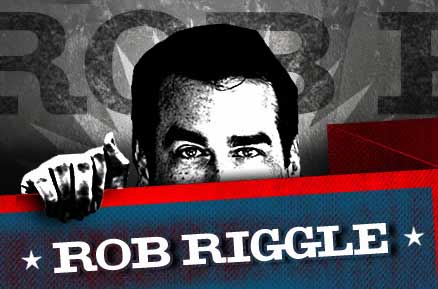
Rob Riggle Daily Show US Marine
NPR just outed Rob Riggle! Maybe you knew it already, I did not, but Comedian Rob Riggle of the Daily Show is a Marine Corps Reserves Officer! The news story this Memorial Day being that Riggle just got promoted. His duty in the Marines? Public Relations Officer! On the DAILY SHOW, handling public relations, and he earned a promotion WTF!

We think of reservists like dry-season firefighters: in theory, volunteering to assist in times of crisis. Certainly “putting out fires” defines the challenges of media relations too.

Since when has it been okay to spend defense funding on making palatable what the military does? Defense Department propaganda aimed at the home front public used to be forbidden, when Josef Goebbels was still a bad example. Now we accept paying soldiers to kill civilians, and we need soldiers stationed in LA to keep us in a laughing mood about it.

So which is Rob Riggle’s day job, and which is his reservist post? Riggle’s reserve duty is mentioned in his Daily Show bio, as if he is a soldier. Basically Riggle is a military propagandist embedded with the Comedy Network.

Political Prisoners

political prisonerThe United States has the largest per capita prison population in the world. Many of our nation’s inmates are political prisoners, having been caught on the wrong side of discriminatory socio-economic policies. This brief list mentions the more celebrated activist political prisoners, in no particular order.

(This page is a work in progress. Thanks are due to the prisoner activist organizations from whom graphics and blurbs have been adapted.)

——– LATEST
Animal rights activists have been arrested, accused of stalking.
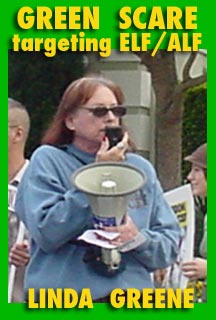
Linda GreeneLinda Greene #1300927
Century Regional Detention Facility
11705 S. Alameda Street
Lynwood, CA 90262

Arrested April 16, 2009. Charges are unclear at this time but apparently stem from peaceful, legal demonstrations against UCLA primate vivisectors. Lindy is a committed animal rights activist who has been active against Huntingdon Life Sciences, LA Animal Services’ needless killing of homeless animals, and UCLA primate vivisection, along with a number of other social justice and anti-war issues.
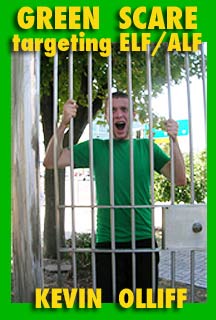
kevin olliffKevin Olliff #1300931
Terminal Annex
P.O. Box 86164
Los Angeles, CA 90086-0164

Arrested again April 16 after indictment by a secretive Grand Jury in Los Angeles. Charges are unclear at this time but apparently stem from peaceful, legal demonstrations against UCLA primate vivisectors. Kevin is a committed animal rights activist who has organized against Huntingdon Life Sciences.

Alex Jason Hall #323748
Booking number: 906610
Salt Lake County Metro Jail
3415 S. 900 W.
Salt Lake City, UT 84119

On March 5, William “BJ” Veihl and Alex Hall, were raided and arrested accused of raiding a mink farm in Utah, last August, and attempting to raid a second mink farm, in October 2008. Both are being held at Salt Lake County Jailed charged with Animal Enterprise Terrorism.

William Veihl #323754
Booking #:906617
Salt Lake County Metro Jail
3415 S. 900 W.
Salt Lake City, UT 84119

——– SHAC 7:
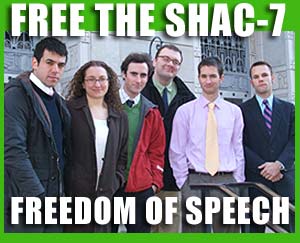
shac7The SHAC 7 are 6 activists and a corporation, Stop Huntingdon Animal Cruelty USA Inc., found guilty of multiple federal felonies for their alleged role in campaigning to close down the notorious animal testing lab, Huntingdon Life Sciences. They were not accused of actually smashing windows, liberating animals or even attending demonstrations, rather reporting on and encouraging others to engage in legal demonstrations and supporting the ideology of direct action.

Jacob Conroy #93501-011
FCI Terminal Island
Federal Correctional Institution
P.O. Box 3007
San Pedro, CA 90731

One of the SHAC 7, sentenced: 4 years. Visit Jake’s support website: www.myspace.com/veganjedi.

Lauren Gazzola #93497-011
FCI Danbury
Federal Correctional Institution
Route #37
Danbury, CT 06811

One of the SHAC 7, sentenced: 4 years, 4 months. Visit Lauren’s support website: www.myspace.com/supportlauren

Joshua Harper #29429-086
FCI Sheridan
Federal Correctional Institution
P.O. Box 5000
Sheridan, OR 97378

One of the SHAC 7, sentenced: 3 years. Visit Josh’s support website: www.myspace.com/jharps

Kevin Kjonaas #93502-011
FCI Sandstone
P.O. Box 1000
Sandstone, MN 55072

One of the SHAC 7, sentenced: 6 years.

——— GREEN SCARE
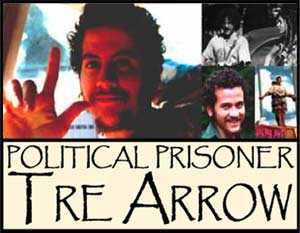
tre arrowTre Arrow #70936065
FCI Herlong
Federal Correctional Institution
P.O. Box 800
Herlong, CA 96113

In August 2008, Tre was sentenced to 78 months in federal prison after pleading guilty to two counts of arson, charges resulting from fires that destroyed several cement and logging trucks in Oregon in 2001. The sentence is less time served (Tre has been incarcerated in Canada and the US since March 2004), leaving a little more than 30 months to serve.

“I plead guilty to these charges to avoid going to trial and possibly spending the rest of my life behind bars if found guilty. I want to reiterate very clearly that this was a non cooperation plea agreement, wherein I didn’t give any information to the government about anyone or any action in order to receive this sentence. Unlike the three other defendants in this case I have not snitched on anyone. They received a 41 month sentence because they implicated me and cooperated fully with the government.”
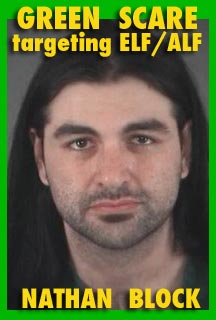
nathan blockNathan Block #36359-086
FCI Lompoc
Federal Correctional Institution
3600 Guard Road
Lompoc, CA 93436

Serving 7 years & 8 months for an ELF arson against a Poplar Tree Farm and an ELF arson against an SUV dealership. Also admitted his role in an ELF/ALF conspiracy.
Resist the green scareJordan Halliday #24836
Cache County Jail
1225 West Valley View Highway, Suite 100
Logan, UT 84321

On March 13, 2009, animal rights activist Jordan Halliday was found in contempt of court for refusing to testify before a grand jury (a secret proceeding where witnesses are not allowed to have attorneys present). He may be held until the grand jury closes in June.
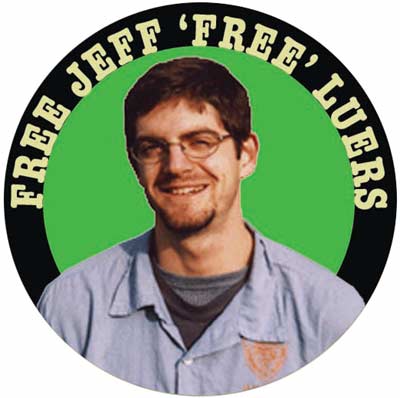
Jeff LuersJeffrey Luers #13797671
CRCI
9111 NE Sunderland Avenue
Portland, OR 97211-1708

In 2007, Jeff “Free” Luers won an appeal of his outrageous 23-year sentence for the burning of three SUV’s in Eugene, Oregon. His sentence was reduced to 10 years. He is scheduled to be released in December 2009.

Marie Mason #04672-061
FCI Waseca
Federal Correctional Institution
P.O. Box 1731
Waseca, MN 56093

Marie Mason is a long-time environmental and social justice activist and loving mother of two. In March 2008, she was arrested on charges related to Earth Liberation Front actions that occurred in Michigan in 1999 and 2000; no one was injured in the actions. On February 5, 2009, Marie received an outrageous 262 month sentence (a little under 22 years). The sentence was higher than even that asked for by federal prosecutors. Marie’s sentence is the longest given to any “Green Scare” defendant to date. Support website: www.freemarie.org
Eric McDavidEric McDavid #16209-097
FCI Victorville Medium II
Federal Correctional Institution
P.O. Box 5300
Adelanto, CA 92301

In September 2007, Eric McDavid was found guilty of conspiracy to sabotage federal facilities in the name of the environment. The government’s case was based on the word of an FBI informant who was paid over $75,000 to fabricate a crime. Both of Eric’s co-defendants testified against Eric in return for a lesser charge. On May 8, 2008, Eric was sentenced to an outrageous 19 years and 7 months in prison for a crime that was never committed. Eric is appealing his conviction.

Daniel McGowanDaniel McGowan #63794-053
USP Marion
U.S. Penitentiary
P.O. Box 1000
Marion, IL 62959

In June 2007, Daniel McGowan was sentenced to seven years in prison. Learn more about Daniel at the following websites: www.myspace.com/danielmcgowan.
jonathan paulJonathan Paul #07167-085
FCI Phoenix
Federal Correctional Institution
37910 N 45th Ave.
Phoenix, AZ 85086

Jonathan Paul was sentenced to 4 years and 3 months imprisonment for role in 1997 fire that destroyed the Cavel West horsemeat packing plant in Redmond, Oregon. He began his sentence on October 31, 2007. Jonathan said as he reported to prison, “This is way bigger than us, this is for the animals and the planet, we will never suffer as much as they do.”

Michael Sykes #696693
Richard A. Handlon Correctional Facility
1728 Bluewater Highway
Ionia, MI 48846

Serving four to ten years for anti-sprawl arsons, criminal damage to a utility pole, spray-painting political graffiti and burning the American flag.
justin uribeJustin Uribe #T-29257
C-5/236 up
Pleasant Valley State Prison
PO Box 8503
Coalinga, CA 93210

Serving the final years of a 6-year term for arson. These actions were not animal or environmentally motivated, but Justin is an avowed animal liberationist, scheduled for release within the next year.
briana watersBriana Waters #36432-086
FCI Danbury
Federal Correctional Institution
Route 37
Danbury, CT 06811

On June 19, 2008, Briana was sentenced to six years in prison. She maintains her innocence and will be appealing her conviction.

joyanna zacherJoyanna Zacher #36360-086
FCI Dublin
Federal Correctional Institution
5701 8th Street – Camp Parks – Unit F
Dublin, CA 94568

In June 2007, Joyanna Zacher (“Sadie”) and Nathan Block (“Exile”) were sentenced to 7 years and 8 months imprisonment each. For more information, please contact their support campaign: solidaritywithsadieandexile@gmail.com.

——– CUBAN 5
Free the Cuban 5The Cuban Five are five Cuban men who are in U.S. prison, serving four life sentences and 75 years collectively, after being wrongly convicted in U.S. federal court in Miami, on June 8, 2001. The Five were falsely accused by the U.S. government of committing espionage conspiracy against the United States, and other related charges. But the Five pointed out vigorously in their defense that they were involved in monitoring the actions of Miami-based terrorist groups, in order to prevent terrorist attacks on their country of Cuba.
cuban five drawingRUBEN CAMPA #58733-004
FCI Terre Haute
P.O. Box 33
Terre Haute, IN 47808
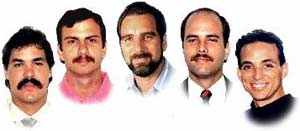
cuban fiveANTONIO GUERRERO #58741-004
U.S.P. Florence
P.O. Box 7500
Florence, CO 81226

GERARDO HERNANDEZ #58739-004
U.S. Penitentiary-Victorville
P.O. Box 5500
Adelanto, CA 92301
cuban fiveRENE GONZALEZ #58738-004
FCI Marianna
P.O. Box 7007
Marianna, FL 32447-7007

LUIS MEDINA #58734-004
USP McCreary
P.O. Box 3000
Pine Knot, KY 42635

——– MOVE 9
free move nineThe MOVE 9 are innocent men and women who have been imprisoned since 1979, following a massive police assault on MOVE headquarters in Powerton Village, Philadelphia (seven years before the government dropped a bomb on MOVE killing 11 people including 5 children).

MOVE is an eco-revolutionary group who carried out protests in defense of all life. There are currently eight MOVE activists in prison each serving 100 years after been framed for the murder of a cop in 1979. 9th defendant, Merle Africa, died in prison in 1998.

MICHAEL DAVIS AFRICA #AM-4973
SCI Graterford
P.O. Box 244
Graterford, PA 19426-0244

EDWARD GOODMAN AFRICA #AM-4974
SCI Mahoney
301 Morea Road
Frackville, PA 17932
janet hollaway afrikaJANET HOLLOWAY AFRICA #OO-6308
16403-1238
451 Fullerton Ave
Cambridge Springs, PA

DELBERT ORR AFRICA #AM4985
SCI Dallas
Follies Road, Drawer K
Dallas, PA 18612

JANINE PHILLIPS AFRICA #OO-6309
16403-1238
451 Fullerton Ave
Cambridge Springs, PA
move9WILLIAM PHILLIPS AFRICA #AM-4984
SCI Dallas
Follies Road, Drawer K
Dallas, PA 18612

CHUCK SIMS AFRICA #AM-4975
SCI Graterford
P.O. Box 244
Graterford, PA 19426-0244

DEBBIE SIMS AFRICA #OO-6307
16403-1238
451 Fullerton Ave
Cambridge Springs, PA
mumia abu-jamalMUMIA ABU-JAMAL #AM-8335
175 Progress Drive
Waynesburg, PA 15370-8090

In 1981 Mumia, former Black Panther and vocal supporter of MOVE, was framed for the murder of a cop. He was originally sentenced to death but is currently awaiting re-sentencing following a court hearing in 2001.

——– VIRGIN ISLANDS FIVE:
Free the virgin island fiveABDUL AZIZ (Warren Ballentine)
Golden Groove Correctional Facility
P.O. Box 1100
Kingshill, St Croix, V.I U.S 00850
hanif shabazz beyHANIF S. BEY (B. GEREAU) #295933
Keen Mountain Correctional Center
P.O. Box 860
Oakwood, Virginia 24631

MALIK SMITH #295945
Wallensridge Supermax
P.O. Box 759
Big Stone Gap, VA 24219

———- BLACK PANTHERS / BLA / BPP
Black panthers san francisco 8

imam jamil - revolution the bookIMAM JAMIL ABDULLAH AL-AMIN (H. Rap Brown) #99974-555
USP Florence ADMAX
P.O. Box 8500
Florence, CO 81226
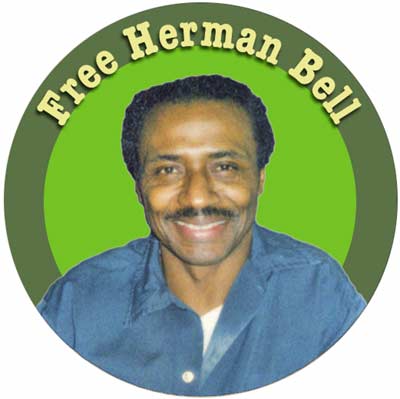
Herman BellHERMAN BELL #2318931
San Francisco County Jail
850 Bryant Street
San Francisco CA 94103

One of NEW YORK FIVE.

JOSEPH “JOE-JOE” BOWEN #AM-4272
1 Kelley Drive
Coal Township, PA 17866-1021

FRED “MUHAMMAD” BURTON #AF 3896
SCI Somerset
1590 Walters Mill Rd
Somerset, PA 15510
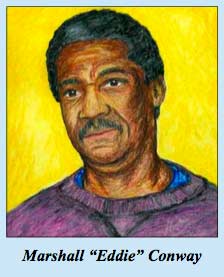
marshall eddie conwayMARSHALL EDDIE CONWAY #116469
Jessup Correctional Institution
P.O. Box 534
Jessup, MD 20794

Veteran Black Panther Party leader Marshall Edward (“Eddie”) Conway continues to maintain his innocence of a police murder in 1970, which he claims not to have committed.
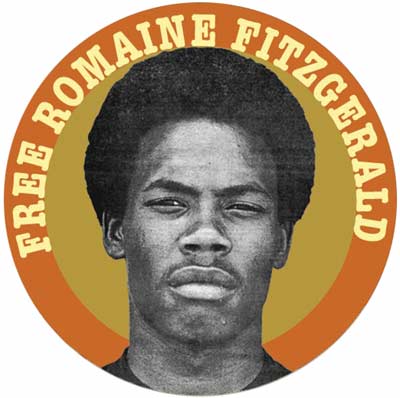
Romaine chip fitzgeraldROMAINE CHIP FITZGERALD #B27527
FC-2-110
P.O. Box 921
Imperial, CA 92251
robert seth hayesROBERT SETH HAYES #74-A-2280
Wende Correctional Facility
P.O. Box 1187
Alden, NY 14004-1187

Mondo we langaMONDO WE LANGA (DAVID RICE) #27768
P.O. Box 2500
Lincoln, NE 68542-2500

MALIKI LATINE #81-A-4469
P.O. Box 2000
Dannemora, New York 12929
abdul majidABDUL MAJID #83-A-0483
Green Haven Correctional Facility
Drawer B
Stormville, NY 12582-0010

One of QUEENS TWO.
Jalil muntaqimJALIL MUNTAQIM (Anthony Bottom) #2311826
San Francisco County Jail
850 Bryant St
San Francisco, CA 94103

One of NEW YORK THREE, Jalil Muntaqim was arrested in 1971 at the age of nineteen following an armed confrontation between Black Liberation Army members and the San Fransisco police. He was subsequenmtly framed for the murder of two New York City police officers, and has consequently spent the last thirty years in prison.
ed poindexterED POINDEXTER #27767
P. O. Box 2500
Lincoln, NE 68542

RONALD REED #2195311
5329 Osgood Avenue North
Stillwater, Minnesota 55082-1117
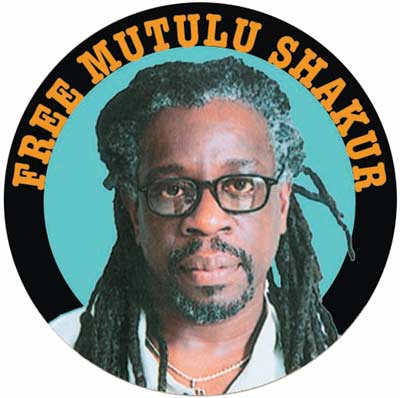
Mutulu ShakurDR. MUTULU SHAKUR #83205-012
USP Florence ADX
P.O. Box 8500
Florence, CO 81226

Father of Tupak Shakur, Dr. Mutulu Shakur, a lifelong activist in the New Afrikan (Black) Independence Movement and a Doctor of Acupuncture, was cofounder of the Republic of New Afrika (1968); the Black Acupuncture Advisory Association of America and was one of the pioneers in using acupuncture in the treatment of substance abuse; the Islamic Young Men’s Movement, a youth prisoner organization; and was a key organizer in the historic gang truce between the Bloods and the Crips at Lompoc Penitentiary. Shakur was sentenced to 60 years imprisonment for an alleged conspiracy by the Black Liberation Army/New Afrikan Freedom Fighters against the U.S. government.
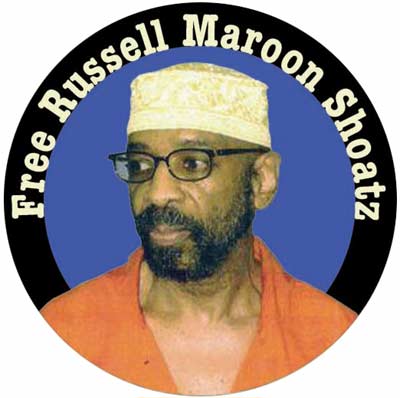
Russell maroon shoatzRUSSELL MAROON SHOATS #AF-3855
175 Proggress Dr.
Waynesburg, PA 15370

Russel Maroon Shoats is a Black (New Afrikan) POW. Maroon is imprisoned for his activities on behalf of Black Liberation. In 1967, Maroon was a founding member of Philadelphia’s Black Unity Council (BUC). The BUC eventually merged with the Black Panther Party, and Maroon became a member of the Philadelphia’s BPP chapter.

In 1970, Maroon and five other comrades were accused of attacking a Philadelphia Police station, resulting in the death and wounding of several police officers. This attack was carried out in response to the unjustified deaths in the Black community commited by these officers.

SEKOU KAMBUI (William Turk) #113058
P.O. Box 56 SCC (B1-21)
Elmore, AL 36025-0056
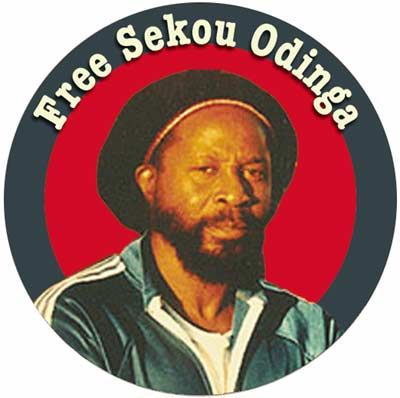
sekou odingaSEKOU ODINGA #05228-054
P.O. Box 8500 ADX
Florence, CO 81226-8500

SUNDIATA ACOLI (C. SQUIRE) #39794-066
USP Otisville
P.O. Box 1000
Otisville, NY 10963

In 1969 he and 13 others were arrested in the Panther 21 conspiracy case. He was held in jail without bail and on trial for two years before being acquitted, along with all other defendants, by a jury deliberating less than two hours.

Upon release, FBI intimidation of potential employers shut off all employment possibilities in the computer profession and stepped-up COINTELPRO harassment, surveillance, and provocations soon drove him underground.

In May 1973, while driving the New Jersey Turnpike, he and his comrades were ambushed by N.J. state troopers. One companion, Zayd Shakur, was killed, another companion, Assata Shakur, was wounded and captured. One state trooper was killed and another wounded, and Sundiata was captured days later.

——— INDIGENOUS RIGHTS

oso blancoBYRON SHANE CHUBBUCK #07909-051
USP Talladega
P.O. Box 1000
Talladega, AL 35160

Byron is a wolf clan Cherokee/Choctaw raised in New Mexico, his Indian name is Oso Blanco and he became known by the authorities as “Robin the Hood” after the FBI and local gang unit APD officers learned from a CI that Oso Blanco was robbing banks to send thousands of dollars worth of supplies to the Zapatista Rebels of Chiapas on a regular basis during 1998 and 1999.

“I am serving 80 years in Beaumont federal Penitentiary for bank robbery and firearms violation. I robbed from the banks and gave to the Hood and indigenous warriors. I was dubbed by the FBI as Robin The Hood. For my info on me all you need to do is Google my name you will find both the lies of main stream media and some independent interviews where I was able to give my accounts of the situation. Do this and then write me if your still interested in me helping others.”

Support Oso Blanco/White Bear/Yona Unaga on Myspace.
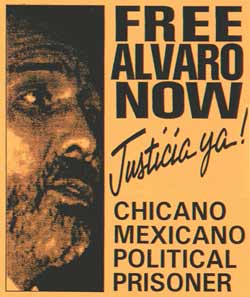
alvaro chicano mexicanALVARO LUNA HERNANDEZ #255735
Hughes Unit
Rt. 2, Box 4400
Gatesville, TX 76597

Alvaro was charged with one count for disarming the sheriff and one count for a wound suffered by Sgt. Curtis Hines from a ricocheting police bullet. Alvaro’s elderly mother was charged with “hindering apprehension” and jailed. On June 2-9, 1997, Alvaro was convicted of “threatening” the sheriff, but acquitted on the charge of shooting Sgt. Hines. He received a 50-year sentence. His case is currently on appeal.
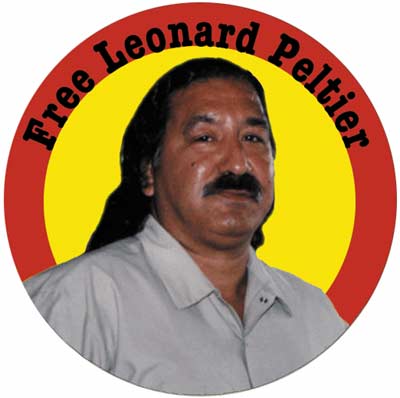
leonard peltierLEONARD PELTIER #89637-132
USP Lewisburg
P.O. Box 1000
Lewisburg, PA 178371

Leonard Peltier is a Native American PP imprisoned for the 1975 shoot-out between the FBI and the American Indian Movement (AIM) in which two federal agents and an Native American man were killed. Four years after his incarceration, a Freedom of Information Act (FOIA) suit released documents which prove Leonard Peltier’s innocence and FBI’s targeting of the activist. Leonard was a close associate of Dennis Banks (one of the founders of AIM).
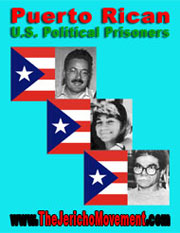
puerto ricoCommittee to free Puerto Rican POWs.

oscar lopez riveraOSCAR LOPEZ RIVERA #87651-024
U.S.P. Terre Haute
P.O. Box 33
Terre Haute, IN 47808

He was arrested in 1981 and sentenced to 55 years for seditious conspiracy. In 1988 he was given an additional 15 years for conspiracy to escape. His release date is 2021.

puerto rico carlosCARLOS ALBERTO TORRES #88976-024
FCI Pekin
P.O. Box 5000
Pekin, IL 61555

In 1980 he was arrested and charged with seditious conspiracy and related charges, and sentenced to 78 years in prison. The parole commission recently told him he must serve another 15 years in prison before they will consider his case. His release date is 2024.

———— ANTI-IMPERIALISM

marilyn buckMARILYN BUCK #00482-285
Unit A
5701 8th St. Camp Parks
Dublin, CA 94568

She was charged with conspiracy to support and free PP/POW’s and to support the New Afrikan Independence struggle through expropriations. In 1988 she was indicted for conspiracy to protest and alter government policies through use of violence against government and military buildings and received an additional 10 years for conspiracy to bomb the Capitol. She is serving a total of 80 years.
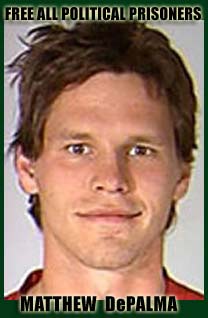
matthew depalmaMATTHEW DEPALMA
Sherburne County Jail
13880 Business Center Drive
Elk River, MN 55330-4601

DePalma is an anarchist convicted of illegally possessing Molotov cocktails allegedly intended to be used at the Republican National Convention and against the police outside the convention.

The government indictment stated that between August 22, 1008 and August 29, 2008, DePalma began to build roughly about five Molotov cocktails. Police started watching him during a CrimeThinc Convergence near Waldo, Wis. It was here where they claim he devised his plan to use explosives to disrupt the RNC at the Xcel Center. He was arrested on August 30, 2008 by agent of the FBI Joint Terrorism Task Force at a residence in Minneapolis. The plan involved tunnels near the center and using explosives to destroy cables and cause a power outage.

As with the more recent arrests, a great deal of evidence against DePalma has come from the assistance of a paid informant. DePalma pleaded guilty on October 21, 2008. He pleaded guilty to 1 count of possession of destruction device.

david gilbertDAVID GILBERT #83-A-6158
Clinton Correctional Facility
P.O. Box 2001
Dannemora, NY 12929

David Gilbert is a North American political prisoner. On October 20, 1981, he and other comrades were captured at Nyack, NY during an attempted expropriation by a unit of the Black Liberation Army and other white revolutionaries (known as the Revolutionary Armed Task Force – RATF). During the expropriation attempt, 3 officers were killed. Charged and convicted of felony murder, David is serving a 75 year (minimum) to life sentence. While in prison, David has been actively involved in the struggle against AIDS, and has remained a staunch opponent of oppression still dedicated to human liberation.
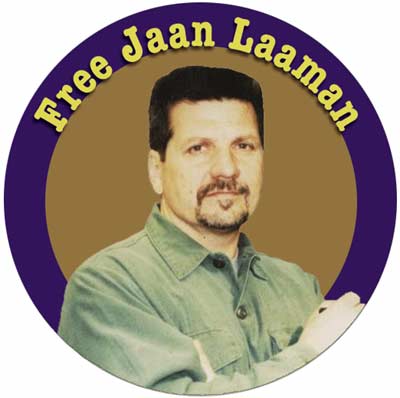
jaan laamanJAAN K. LAAMAN #10372-016
USP Tucson
P.O. Box 24550
Tucson, AZ 85734

Jaan Karl Laaman is an Anti-Imperialist political prisoner, imprisoned for actions carried out by United Freedom Front (UFF)­ a left-wing guerrilla group active in the US in the early ’80s. He is currently serving a 98 years sentence for charges ranging from Seditious Conspiracy, firefights with government forces and weapon possession.

In the 1960’s, Jaan was involved in various grassroots movements, ranging from the peace movement, anti-racist struggles to the labor organizing. During this time, he joined the Students for a Democratic Society (SDS), where he worked side by side with Black Panther Party and Young Lords organizing the youth. Due to a combination of government repression and slow progress of the movements of change, Jaan joined up with the underground revolutionary movement.

WILLIAM ‘LEFTY’ GILDAY
MCI Shirley
P.O. Box 1218
Shirley, MA 01464-1218

William “Lefty” Gilday is a 60’s radical sentenced to death for his involvement in bank expropriation while attempting to finance the anti-war movement during the Vietnam war.

THOMAS MANNING #10373-016
USP Hazelton
P. O. Box 2000
Bruceton Mills, WV 26525

Helen Woodson #03231-045
FMC Carswell
P.O. Box 27137
Fort Worth, TX 76127

Serving 8 years & 10 months for a series of actions that focused the interrelationship of war and the destruction of the natural world. The actions included destruction of Government property (pouring a tin of red paint over the security desk of a federal court) and making threatening communications. Prior to her arrest Helen had served 20Þ years for actions which included: 1) Using a hammer to disarm a nuclear missile silo. 2) Burning $25,000 on the floor of a bank whilst denouncing war, environmental destruction and economic injustice. 3) Mailing warning letters with bullets attached to Government & corporate officials.

— MISC:
BILL DUNNE #10916-086
USP Big Sandy
P.O. Box 2068
Inez, KY 41224

ojore lutaloOJORE NURU LUTALO #59860
P.O. Box 861
SBI# 0000901548
Trenton, NJ 08625
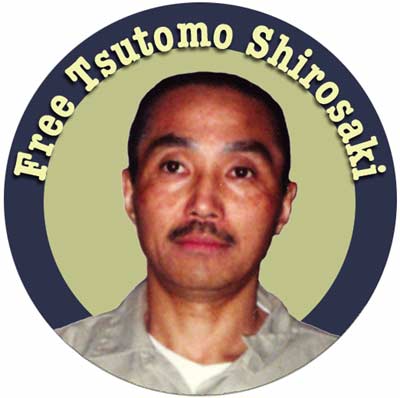
tsutomo shirosakiTSUTOMU SHIROSAKI #20924-016
FCI Terre Haute
P.O. Box 33
Terre Haute, IN 47808
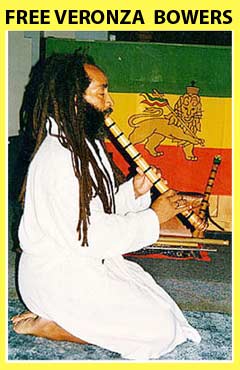
veronza bowersVERONZA BOWERS JR. #35316-136
P.O. Box 150160
Atlanta, GA 30315
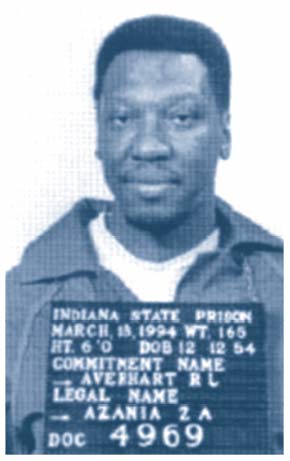
azania zoloZOLO AGONA AZANIA #4969
Indiana State Prison
P.O. Box 41
Michigan City, IN 46361
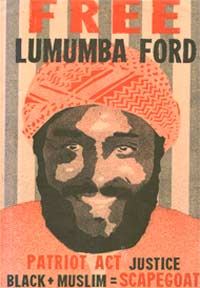
lumumba fordPatrice Lumumba Ford #96639-011
USP Coleman I
P.O. Box 1033
Coleman , FL 33521

Herman Wallace #76759
Elaine Hunt Correctional Center
Unit 5, E-Tier
PO Box 174
St Gabriel, LA 70776

Albert Woodfox #72148
CCR, Lower A5
Louisiana State Penitentiary
Angola, LA 70712
gary tylerGary Tyler # 84156
Louisiana State Penitentiary
ASH-4
Angola, LA 70712

In 1975, Gary Tyler, an African-American teenager, was wrongly convicted by an all-white jury for the murder of Timothy Weber, a thirteen-year-old white youth. Weber had been killed the previous year during an attack by a racist white mob on a school bus filled with African-American high school students in Destrehan, Louisiana. Tyler ‘s trial was characterized by coerced testimony, planted evidence, judicial misconduct, and an incompetent defense. He was sentenced to death by electrocution at the age of seventeen.
pol brennanPol Brennan #A88 785 324
South Texas Detention Complex
566 Veteran’s Drive
Pearsall, TX 78061

Former Irish Republican Prisoner of War, Pol Brennan, has been detained by the US Border Patrol and is awaiting possible deportation.
yu kikumuraYu Kikumura, #09008-050,
P.O. Box 8500-ADX,
Florence, CO 81226.

Yu Kikumura, a Japanese National – US Political Prisoner is imprisoned at A D X Florence in Colorado. This is a super maximum-security federal control-unit prison. He needs some direct legal support (advice and/or representation). Yu Kikumura was a member of the Japanese Red Army. They acted in support of the Palestinian struggle. In 1986 Yu Kikumura was arrested in Amsterdam carrying a bomb in his luggage. He was later deported to Japan but released on a technicality. He was arrested on April 12, 1988 at a rest stop on the New Jersey Turnpike by a state trooper who thought he was acting suspiciously.
hugo pinellHugo L.A. Pinell #A88401 SHU D3-221
Pelican Bay State Prison
P.O. Box 7500
Crescent City, CA 95531-7500

Hugo was a student and comrade of the legendary Black Panther Field Marshall, the late George Jackson, with whom he worked to organize other Black prisoners against the racist violence and prison conditions of the ’60s and ’70s.

————–
Visitation Info, from ABCF:

Restrictions and criteria for visiting Federal and State prisons are different. Generally, it is easier to visit state prisoners. Visiting condtions are usually better at Federal prisons. Listed below are some of the different guidelines for visiting Federal/State prisoners, and some guidelines useful to visit any prisoner.

Federal Prisons. To visit Federal prisoners, you must first be approved by filling out a form that the prisoner must send you in advance. Only people who say they had a relationship to a federal prisoner prior to their imprisonment can be approved. Usually, the prison will not approve people who say they visit other prisoners. Once you complete and mail the form to the prisoners counselor, the prisoner will tell you if you have been approved or denied.

State Prisons. Some state prisons require you to be placed on an approved visitors list but most do not. Contact the state prisoner you want to see and have them fill you in on the procedures of the particular prison they are held. Some state prisoners may receive food packages. Check with the prisoner for restrictions on what they can receive.

Before visiting any prisoner, write to them, be considerate and send a postal money order made payable to the prisoners name and number so they can buy stamps to reply. (most prisons DO NOT allow you to send stamps). Ask all questions through the mail before your visit. Ask about visiting days/hours, dress codes, maximum number of vistors allowed per visit, about getting photos of your visit, and anything else you can think of. You wont be allowed to visit without presenting a valid photo ID like a drivers license or county ID. Bring small bills or change for the vending machines in the visiting room.

Writing prisoners, from ELPSN:

Things to remember when writing to prisoners:

1. Don’t discuss any illegal activity (ALL mail is read by prison officials).

2. Each prison has its own mail restrictions.

3. Do not put any stickers inside or outside the card/letter (including Air Mail/Par Avion stickers, if writing from overseas)

4. Do not include any paperclips, staples or anything extra in your letter.

5. Write your address on the envelope AND inside the letter, since prisoners often are not given the envelope.

6. Do not send money to the prison address (please contact activist’s support groups to financially support prisoners).

7. Prisoners appreciate books, but they must be paperback, and must ship directly from the publisher or from online retailers like Amazon.com.

8. Your letters are appreciated , even if you don’t receive a response (prisoners are only allowed a limited amount of paper, envelopes and stamps, making it difficult to respond to every letter).

High Country Earth First Denver Meeting

Earth First roadshowHigh Country Earth First is hosting the EF! ROADSHOW, in DENVER, May 25-26: Monday 2pm in Cheesman Park, and Tuesday 6pm at the Gypsy House.
 
Four ongoing EF! projects in Colorado: DENVER: Stop I-70 Expansion through North Denver; SAN LUIS VALLEY: Halt gas drilling in Baca National Wildlife Refuge: and WESTERN SLOPE: Red Cliff mine campaign and Feral Futures (May 24 – June 7).

From “Rockslide,” High Country Earth First!

The need for resistance in solidarity with the wild has never been louder or clearer than it is today; the EF! roadshow is a great tool for growing that resistance. There are countless examples to draw from in the story of radical movements before us: militant labor organizing tours, anti-fascist resistance recruitment and international speaking tours to build cross-border solidarity. The origin of Earth First! itself is credited to a few roadshows that kicked it all off in the early 1980s. We are building on this tradition; akin to a fellowship crossing Middle Earth to amass insurgents to face Mordor head-on.

List-serves and websites aren’t enough
This Roadshow’s primary intention is to strengthen our radical grassroots ecological network. For almost 30 years, we have been an organized voice bridging conservation biology with grassroots community organizing, road blockading and eco-sabotage. In the past 5 years we have seen numbers and experience-level in the EF! movement decline drastically. Yet, our place has never been more urgent. New groups are popping up across the country, but they are detached from many of the groups, history, and skills that came before them. We can’t afford to stumble and make the same mistakes over again.

We are at the tail end of a decade where corporate globalization rooted itself in the US and spread across the planet like a plague. And now that the reality of climate change is finally sinking into the mainstream consciousness, the same superpowers that pushed so-called ‘free trade’ policies to exploit wild nature more efficiently are promoting carbon trading in attempt to make a profitable industry out of the disasters they’ve created. The spineless Big Green environmental NGOs are scrambling for crumbs and cutting deals with the industry for shallow public relations victories. Earth First! must rise and recognize that it’s presence is a strong component of making the broader environmental movement truly effective. We are its spine, or as an EF! co-founder, Howie Wolke, has put it, we are the lions of a movement ‘ecosystem’. Our niche is critical, and its presence (or absence) is felt deeply by our surroundings.

We need to reconnect the multi-generational aspect of Earth First! that has fallen by the wayside in recent years. We need to broaden our network’s base—from radical rural grandparents to revolutionary urban youth. We need re-establish lost relationships with scholars and scientists who resonate with us. We need to re-inspire musicians and artists to contribute their passion to our battles.

When it comes down to it, solid movements are based on strong personal relationships; and real relationships don’t go very far over the internet. We need face-to-face interaction to build trust with—and support for—each other.

From EF! Here is a glimpse of ongoing local and national campaigns and projects related to EF!. They could all use your support in a variety of ways—from fundraising to showing up in person. Please contact the organizing groups directly to find out what they need most:

Northern California Redwood Defense
Since the fall of Maxxam/Pacific Lumber, forest defenders in the Redwoods have been directing attention on another logging empire: Green Diamond Resource Company (formerly Simpson). In the last 10 years they have clear-cut 52,000 acres of Northern California forests. They are killing off endangered Spotted Owls and have aspirations to sell off thousands of acres in Humboldt County for Salmon killing suburban development. We have set up multiple treesit villages to oppose the destruction, and we need your help TODAY.
www.efhumboldt.org

Appalachian Anti-Mountain Top Removal
The presence of coal plants are threats to the lives within both the human community and the mountain ecosystem. One of the most biologically flourishing areas of the world is being environmentally and socially impoverished by companies practicing mountain top removal. Mountain top removal clogs streams, destroys forests, threatens biodiversity and forces coalfield residents into the unjust choice between income and well-being.
www.blueridgeef.com

Stop I-69 in Indiana
I-69 is a NAFTA superhighway, already constructed from Canada to Indianapolis and projected to extend down into Mexico. This highway is intended for the mass transportation of goods and resources, to further exploit workers and the land, and to lessen companies’ accountability in terms of human and environmental rights. In 2008, they began construction of this road through southwestern Indiana, which will evict hundreds of rural families, destroy hundreds of acres of land, and devastate the habitats of countless species of animals, including the endangered Indiana Bat. www.stopi69.wordpress.com

Fight Development in the North Woods of Maine
The largest piece of undeveloped land east of the Mississippi is under attack. Plum Creek, the nation’s largest corporate landowner, is in the process of rezoning 20,000 acres of the Moosehead Lake region in Maine for luxury house and resorts, while trying to balance it off with a fraudulent conservation easement plan. This plan would still allow timber harvesting, commercial water extraction and the building of new infrastructure, among many other ecologically devastating practices. www.maineearthfirst.wordpress.com

Defend the Last Free-Roaming Wild Buffalo in Montana
The Buffalo Field Campaign (BFC) is the only group working in the field, everyday, to stop the slaughter and harassment of Yellowstone’s wild buffalo. Volunteers from around the world defend buffalo on their traditional winter habitat and advocate for their protection. Our daily patrols stand with the buffalo on the ground they choose to be on, and document every move made against them. Tactics range from video documentation to nonviolent civil disobedience. www.buffalofieldcampaign.org

Fight new Copper Mines and Roads in the Deserts of Arizona
Chuk’shon Earth First! is fighting the proposed Rosemont Copper Mine in the Santa Rita Mountains, which is greenwashing itself by claiming a need for increased copper extraction for the solar panel industry. The group is also opposing the expansion of I-10, part of the Department of Transportation’s “Corridors of the Future” program to increase capacity of global industrial commerce. The proposed I-10 Bypass would bisect wild/rural lands and facilitate more sprawl between Tucson and Phoenix. www.chukshonef.wordpress.com

Blue Mountain Biodiversity Project in eastern Oregon
Blue Mountains Biodiversity Project (BMBP) formed in 1991 to increase regional and national awareness of the Blue Mountains ecosystems, to ensure the protection for and reintroduction of diverse native wildlife species, to promote ecologically sound restoration and address the root causes of ecological and community instability. They have trained countless EF!ers is forest monitoring. They are one of the country’s premier grassroots ‘paper-wrenchers’, filing legal challenges that help make our blockades successful. They can be reached at 541-385-9167

Stop Florida Power & Light from trashing the Everglades
Everglades Earth First! (EEF!) have been battling FPL’s plans to build the country’s largest fossil fuel power plant in the Loxahatchee Basin; a headwaters to the remaining Everglades ecosystem. EEF! Is also challenging over 500 miles of new gas pipelines and 2 new Liquified Natural Gas (LNG) facilities. Get more details: www.evergladesearthfirst.org

Stop Gas Drilling in Western New York
There is a proposal on the table to begin one of the largest fossil fuel exploration projects in the country. This project would result hundreds of millions of tons of CO2 emissions, along with the impacts of pipelines, power plants, and new LNG storage facilities. Get in touch with Shale Shock: www.shaleshock.org

Bank of America, Stop Funding Coal!
A national campaign is well underway to stop Bank of America (BoA), who is the largest investor to Mountain Top Removal coal mining. The company recently offered lip-service to address their support for the coal industry, but have made no real steps towards cutting ties with King Coal. With BoA locations in cities across the U.S., this campaign can easily be supported in a decentralized fashion. Give ‘em hell! For more info: www.ran.org

No 2010 Olympics
The Native Youth Movement and other First Nations groups in occupied Canada have called for full-scale resistance to the Winter Olympics proposed in British Colombia. The Olympics proposal includes a mess of development, ski-resorts and infrastructure on indigenous land. Learn more at: www.no2010.com

Root Force
This project is a research database and strategic think tank for direct action intended to target corporate/colonial infrastructure, such as: roads, dams, power plants, and mines. Their website offers background information on transnational companies, government agencies and their local affiliations across the United States. www.rootforce.org

Why be bothered by horrors of detainees

Con Son Prison Vietnam 1951President Obama is blocking the release of further detainee abuse photos. Would more images of outrages committed against US detainees inflame sentiment against US troops? No doubt. Would more of such photos add nothing to the national dialog? Well… If you consider that the media is still vacillating on the definition of waterboarding, torturers and the lawyers who sanctioned torture are being exempted from prosecution, and war criminals like Dick Cheney are bragging about their participation, maybe there’s room for more dialog.

Journalist Seymour Hersh has seen the additional photographs. He’s even recounted the videos of young Iraqi boy detainees being raped by their captors. Hersh described that the most haunting aspect were the boys’ screams. Barack Obama doesn’t want the American conscience haunted by any such brutalities.

With release of convicted Roxana Saberi, Iranian justice proves more fair than US

American TV reporter Roxana Saberi overstayed her welcome in Iran, despite the revocation of her press credentials, continuing to tape segments for pro-US-military propaganda outlets such as NPR and Fox News. She was detained, charged, convicted and sentenced earlier this year, which is more than the US has done for any of the detainees it has held for eight years, most of whom have turned out to be guilty of no crime, and all of whom the US also tortured. After much indignant hue and cry from the US, Iran has released Saberi to what may resemble the hero’s welcome given Jessica Lynch, another white girl rescued from uncivilized Islam. Will the US media bat an eyelash at the irony?

Rush would have been 20, 21st hijacker

Rush Limbaugh Republican GOP starComedienne Wanda Sykes can joke that Rush Limbaugh would have been the 20th hijacker on 9/11 but for his Hillbilly Heroin addiction, but if Rush were ever to fly commercial, having to eschew his cigars and Oxycodone, I’m sure there would be no end to complaints, even if he did stuff his ugly corpulence into the obligatory two seats, from whoever had to sit in his sweaty vicinity. Sykes joked that she hoped Limbaugh died of liver failure. The media pundits who think she went too far pretend there is honor among thieves.

Sean Hannity & the Global War OF Terror

The quicker we get Sean Hannity waterboarded the better. But we can hope for better than merely shutting him up about whether or not waterboarding is torture. Let’s figure out WHAT we can waterboard him for!

Is there a secret we want to extract from Sean Hannity? Or is there just something he’s done for which America could feel comfort in exacting redress? Wouldn’t that be the real point of torture? And actually, not to draw Hannity’s blood, but to extrude the shit from his colleagues looking on, who might fancy themselves next, O’Reilly, Limbaugh, et al.

I understand Hannity already has a volunteer to administer the procedure, what we really need is the person to direct it. To issue the thumbs up or thumbs down, irrationally, to heighten the torment.

Hannity has volunteered to subject himself to what he considers no more than fraternity hazing. Olberman has offered $1,000 for ever second Hannity lasts. Which I predict will be calculated in fragments of the first second. A subject of waterboarding can hold his breath, but the torturers will start the clock by forcefully expelling that reserve. Waterboarding begins when the victim gasps for air, and inhales water instead.

The media debate around waterboarding asks two questions. Is waterboarding torture? And does torture work? Both questions are flawed. The first is simply an insult, the second is misdirected.

Perhaps the average American is disconnect enough from reality to question whether the unimaginable can be. If you’ve never stepped into the sea, you can speculate that water is not really wet. Fast-food eating television viewers can wonder, does the stove burn?

Does torture work? Of course it does. To wonder if torture is an effective method of interrogation is to get the question entirely wrong.

In one debate about the efficacy of torture, the FBI claims the with one terror suspect they were making gains with psychological methods until the CIA seized custody in order to give the waterboard a try. Apparently with no success, after which the FBI had another promising run interrupted by another CIA inter-department rendition. Sound like the ol’ good agency, bad agency interrogation ploy to you?

Ignored in the torture efficacy assessment is the absence of a control sample. Did the subject have anything to reveal? How unfair to judge an interrogator if his subject doen’t have a secret to crack. And even that misses the point. What is the purpose of torture? Is it to extract information, such as learning of ticking time-bombs to save innocent lives, or is it about preemptive subjugation of people?

To torture someone is to terrorize them with their own helplessness under the thumb of brutal inhumanity. Torture is directed less against the terrorized subject themselves, than the public looking on. Torture is terror. It get the predicate reversed in the phrase “Global War On Terror.” Terror is the subject not the object; actually the objective. It’s the Global War OF Terror. In our GWOT, torture is an important weapon in the US arsonal, and of course it works. Against brave people, it “works” solely to provoke them.

Jesus Killed Mohammed, every last one

Bradley Fighting VehicleWith attention now drawn on the evangelical skinheads running amok with the US military’s Big Stick, reporter Jeff Sharlet relates a story in this month’s Harpers, which showcases the fundamental irreligiosity of the capital “C” Crusaders.

The episode Jesus Killed Mohammed takes place in Samarra, Iraq, in 2004, where rascally US Christ fans succeed in goading their crosstown rivals into taking a shot at them, the sooner to be dispatched to the Islamic hereafter by the Christ Gang’s overwhelming firepower. The operation involved painting “Jesus Killed Mohammed” across the side of their Bradley Fighting Vehicle, and having their translator poke his megaphone out the top, giving Arabic voice to the insolent taunt, shouting it up and down the neighborhood until no one was left to speak up for Mohammed.

???? ??? ?????

The affair reminded me of the Monty Phython skit about the world’s deadliest joke being appropriated for military use across the WWI trenches, which was, if you remember, immediately fatal, combined with the sacrilegious 2005 GWOT strategy which drew so much flak to US special forces in Afghanistan when soldiers burned Taliban corpses to draw enemy ire. The Intelligence Service calls it “tickling:” provoking your opponent into an emotional response to reveal his position. In the Afghan case, the US team violated Geneva Conventions against mutilating the dead. In Sammara the only code protecting the sensitivities of the indignant Muslims was probably the boxing rule forbidding blows below the belt. Perhaps it was the very indecency of the concept which most elicited snickers from the American perps.

In operation JESUS KILLED MOHAMMED, the 1/26 Infantry of the 1st Infantry Division led by Lieutenant John D. DeGiulio, under instructions from the 10th Special Forces Group who called themselves “the Faith element,” drove their Bradleys along the streets drawing fire, one shot at a time, from virtually every door. After each shot rang out, the Bradley would summarily aerate each residence and its inhabitants until “Jesus Killed Mohammed” did not offend anymore.

As Sharlet noted, every Iraqi home is permitted one AK-47 for self defense, so answering the US force’s insolence did not reveal you to have been an insurgent. The infidels were biting their thumbs at the Iraqis from behind impregnable armor, to respond with small arms fire was entirely a matter of honor, and suicide.

US, Sri Lanka, share concern for civilians

Tamil refugees Kadirgamh camp near Chettikulam
Do you wonder why US criticism hasn’t been more pronounced, as Sri Lanka’s military keeps bombing the Tamil Tiger rebels in spite of disproportionately high civilian casualties? Collateral Damage is our M.O.! From Afghanistan today come reports of Truckloads of dead civilians after Afghan battle, specifically a US aerial bombardment. As always, US Commander: Afghan Civilian Casualties Not from US Forces.

That was last year’s official response to the 90 Afghan civilian deaths after a US air raid on Azizabad.

The Independent is reporting that the Farah Province civilian casualty is closer to 120 than the US DoD’s reported five. We are left only to check with Google to learn what will turn out to have happened, irrespective of what US-NATO media relations eventually confirms. Google the village of Ganj Abad, in the Bala Baluk district.

Next to the White House

While visiting Washington DC in March, I found it interesting to note the edifices closest to the White House.
The Executive Office Building

EAST, WEST
The neighbor to the immediate East of the Obama’s White House is the Department of the Treasury. Is that any surprise? Of course not, but how bourgeois! I could imagine Scrooge McDuck sneaking across the White House garden twice a day to check his reserves. To the West is what we now call the Dwight D. Eisenhower Executive Office Building. It’s the site of the suspicious office fires which may or may not have masked a recent vice-president’s misdeeds. The edifice looks straight out of A Series of Unfortunate Events, and check out the plaque which commemorates what the building used to be called:

State War and Navy Departments

Probably that should be no surprise as well: the White house sandwiched between Treasury and War. “State, War and Navy.” How so much less duplicitous than the “Department of Defense.”

SOUTHWEST
Behind the former War offices, to the Southwest of the White House, lies the war memorial to end all war memorials. It’s the WWI Memorial, of considerably diminutive size compared to those commemorations of subsequent wars which have spilled unto the Mall, but its form followed the convention of the typical Great War monuments erected throughout Europe among the nations who had participated.

WWI monument to US Army Expeditionary Force

Except the American version is dedicated to the “Expeditionary Forces” which I just love. That’s what WWI was about for the US. The trenches of Europe were no place Americans needed to defend their freedom. The troops we sent, to relieve France and England, represented a foreign expedition, exactly that. More precisely, our troops were an R&D expedition for our blustering capitalists.

(This may be no time or place to note that history books do not link America’s WWI experience with the Influenza outbreak of 1917-18, which began in the barracks of US soldiers being mobilized for war. American soldiers took their flu to Europe and ultimately killed 50 million people. Those were not the days before we knew better to stay home to prevent infecting others.)

The US entry into WWI was bitterly opposed by a peace movement which the war-opportunist-profiteers maligned as isolationist. Selfish globalization-denying isolationism has been the slander ever since, used against anyone who tries to block military interventions in all their guises.

Ultimately WWI was no affair of ours, had the Huns emerged victorious, American foreign affairs would hardly have changed. Our foreign trading partners would have numbered more Germans, that’s all. But it’s useless to compare alternative outcomes of WWI, all things staying constant, because America participated and profited wildly.

If American investors had not jumped in Over There, the greatest business opportunities of blossoming industrialism would have been missed. The opportunities offered by the Europeans fighting amongst themselves, proved to have been momentous.

And here was the monument to those lost American lives, sacrificed so that American industrial might, in particular the new banking monopolists, could seize the European spheres of influence throughout the world. Of course the lost lives of the American Expeditionary Force were remembered thus:

“…WHO GAVE THEIR LIVES IN THE WORLD WAR THAT LIBERTY AND THE IDEALS OF OUR COUNTRY MIGHT ENDURE”

It would take another World War for the US to appropriate the colonies and oil fields by means of contracts and loans, with the leverage of coming to their aid again, this time armed with lend-lease bills.

SOUTHEAST
To the Southeast of the White House, across the back lawn, lies the monument antecedent to the Great War. It’s the Civil War Memorial, atop which rides the triumphant General William Tecumseh Sherman. (Who, to be fair, presided over the War Department for a long stretch after the Civil War, actually this nation’s longest peacetime period.)

Sherman monumentCurious that I chose to crop his personage from my pictures, but my eyes were drawn to the lesser figures around the base of the monument, in particular, a half naked woman.

The memorial seemed to include various uniformed Civil War participants. How egalitarian to include a woman. But this woman was no French Revolutionary with breast bared oblivious as she rallied her comrades to victory. This delicate woman was unarmed and stripped to the waist, her children in tattered rags at her feet.

Could this statue be offering another conceit to the reality of war, to Sherman’s March to the sea, to the burning of Atlanta, to the shameful destruction he visited on the secessionist South? Was this a nod to the real role given to Women in war, their sons and husbands taken from them, a non-combatant left helpless to defend her children or herself. Did the shirt torn from her body confess to the woman’s rape?

More probably the feminine likeness personified man’s attraction to war, a soldier’s predilection for her beauty. How many war monuments memorialize as they also beacon?

Much of the terrain around the White House grounds is blocked off by secondary and tertiary security perimeters. But for the arrival of bus unloadng its visitors to see it, the Civil War Monument is normally cordoned off. When I had passed it earlier, a balaclava-clad guard was blocking the only entrance.

SOUTH
The grassy expanse immediately South of the White House, permitting the First Family an uninterrupted view of the National Mall, has actually been given over to parking permits. The loop of asphalt across the lawn, with cars strewn diagonally along the edges, gives the unfortunate impression of overflow event parking. In any other neighborhood, the crowd of cars would be a dead giveaway that someone on the block was having a party.

Italy’s emperor gets hauled down

berlusconi.jpg Silvio Berlusconi reminds one of an Italian version of the fascist-leaning Fox News owner, Rupert Murdoch. Both own the press and in Berlusconi’s case, he even bought the top political position in his country though Murdoch likes to stay in the shadows and just buy the politicians. But now Italy’s emperor gets hauled down to the ground by his wife! She accuses him of being the sugar daddy for a 17 year old girl… Oh Slick Willy!

PROFILE of Italian Prime Minister Silvio Berlusconi

“That’s enough, I cannot remain with a man who consorts with minors,” Ms (Veronica) Lario was quoted as saying in La Repubblica.

“I read in the papers about how he has been hanging around a minor – because he must have known her before she was 18 – and how she called him ‘Grandpa’ and about their meetings in Rome and Milan.

“This is no longer acceptable. How can I stay with such a man?” La Stampa quoted her as saying.

She also said Mr Berlusconi had failed to attend his own daughters’ 18th birthday celebrations.
————————————————————————————————————–
Well there! One can see that the Big Conservative Values Man of Italy has certainly fallen a bit short in the eyes of his current wife in the personal morality department. One wonders what Pope Rat thinks of all this? Will Silvio be forgiven in the eyes of the Church, if not his wife’s?

This Italian telenovela just keeps getting funnier and funnier. We want to say Poor Italy, but we really can’t, because they at least eat much better than we do in the US. Now where is Monica these days?

Don’t be a strikebreaker!

The major grocery store chains here in Colorado are planning to attack their workers next week by forcing a strike. At issue is that they want to destroy the pensions of these workers so don’t break their strike by crossing the picket lines and into the stores to shop. All workers deserve a decent retirement!
United food and commercial workers

You can even help out on the picket line for a bit and show some solidarity with these people in their efforts to stop company cutbacks forced against them. You can also go do your own shopping for groceries at some of the ethnic grocery companies in Colorado and help save some of your own money in the meantime. Give yourself and union workers a break!

Here is what this strike will be about…

By Laura Chapin – UFCW Local 7 – For Immediate Release – 5/2/2009

The federal government has extended the deadline for the green – or fully funded – status for the major grocers’ pension fund from April 30 to June 30, giving the companies a second chance to do the right thing by their workers. The union has already agreed to the extension, so it’s up to the companies to meet the workers halfway.

Under the Worker Retiree and Employer Relief Act of 2008, trustees of a pension plans – both the union and the companies – have the option of extending their green status, or adequately funded status, for one year. If the company trustees fail to agree to extend the green status by the new deadline of June 30, the pension fund will go into a red status, meaning there will be insufficient funding to maintain the workers’ pension plan.

The union pension trustees have agreed to the one-year extension, but the company trustees have refused and instead proposed dramatic cuts to worker’s pension benefits. The benefits to be cut include eliminating the Golden Rule of 80, which raise the retirement eligibility from age 50 to age 62, eliminating the disability pension, and eliminating a $200 a month supplement between ages 60 and 62 years of age.

“We agreed to the extension because we want to give the economy time to recover,” said UFCW Associate Counsel Crisanta Duran. “Instead of meeting the workers halfway on the agreement, which would not have cost them a penny, the companies are choosing to use the under funded status as a bargaining chip and ask for almost 50% in cuts. This is not fair to the workers who are counting on the retirement they have earned.”

According to Safeway worker Arlys Carlson, “All we’re asking is that the companies take care of us the same way we’ve taken care customers all these years.”

UFCW Local #7 represents approximately 17,000 Colorado grocery workers at Safeway, King Soopers/City Market, and Albertsons. Negotiations began April 9 and will continue daily through the current contracts’ expiration on May 9.

For More Information:
Laura K. Chapin, (303) 425-0897 ext 302 ofc
(303) 885 – 1402 cell

The major companies simply want to destroy the unions with a strike. They have begun putting help wanted ads in the papers looking for scab workers to replace union workers. Sadly enough there are many who will try to grab these jobs and to Hell With Those Guys will be their attitude, since this is America, Land of the Screw the Others. Many are actually proud of themselves for being ‘smart’ when they do so. Wrong.

Colorado Springs Calendar MAY 2009

MAY 2009
1- May Day: International Workers Day
4- Tobias Wolff, Reading at CC, Armstrong Theatre, 7pm
9- UFCW Local 7 contract expires with Safeway workers
15- NAKBA commemoration
17- CFP Protest of PRO-ISRAEL RALLY, City Auditorium, 3pm-6pm
18- Senator Michael Bennet, CC commencement, Quad, 8am
18- Governor Bill Ritter, City Hall, Fountain, 6pm
23- Uncle Wilbur Fountain, annual opening, Acacia Park, 11am-1pm
25- High Country Earth First! EF! ROADSHOW, Cheesman Park 2pm
26- High Country Earth First! EF! ROADSHOW, Gypsy House 7pm
27- Colorado Springs ACLU annual meeting, G&L Foundation
27-6/3 Feral Futures, to be disclosed shortly
30- UFCW solidarity action, TBA

UCSB Hillel students Rebecca Joseph, Tova Hausman highlight poor education

Charges against Professor William RobinsonToday’s university campuses have to deal with College Republicans, ACTA and NeoMcCarthyists. The latest uneducable creeps shopped their leftist-professor- horror-story to the Anti-Defamation League, to brand their teacher’s criticism of Israel as “anti-Semitic.” UCSB senior Rebecca Joseph and junior Tova Hausman both took exception to Professor William Robinson’s Sociology Listserv email comparing Israel’s mop up operation in Gaza to the Warsaw Ghetto. Below are the words they cut and pasted together to accuse Robinson.

The literacy level of these two students is probably on par for Twilight fans, but definitely unbecoming for the University of California system. The first letter is reputedly from a college senior. Rebecca Joseph‘s opening argument was plagiarized from the internet, but she continues to scold Professor Robinson for straying from her idea of what makes a university professor. The second complaint from UCSB junior Tova Hausman copies the first letter’s form, but adds the accusation of sexual misconduct for leaving her feeling raped.

Is it unfair to put simple college students under national scrutiny like this? From their own words they show themselves to be rather helpless. But what to do when students, or some unscrupulous backers, are taking aim at a respected tenured professor? It’s serious business. Organizations like ACTA and Hillel are out to enforce a veritable Right Wing PC rectitude. As if it’s politically incorrect to make fun of uneducated on campus!

Keeping educators silenced was easier during the Bush administration, but the dampers are still on Academic Freedom. Ward Churchill may have won his case in court against the University of Colorado, but opinionated faculty are still few and far between. The latest attack against William Robinson attempts to reinforce more of the same.

UCSB senior Rebecca JosephProbably by now Hillel is wishing they’d coaxed a better educated pair of students to face off against Robinson. The administrators who received the complaint letters should have earmarked the girls for a remedial English refresher in anticipation of their graduation. But let’s look beyond the cheap shots.

The accusations inarticulated here are scurrilous where they are not outright illogical. You be the judge.

First Student Complaint
Here’s the first complaint received by UCSB, from Rebecca Joseph, Vice-president of the Santa Barbara campus Orthodox Jewish Chabad. Interestingly, UCSB has a number of pro-Israel action groups: Hillel, Jewish Awareness Movement on Campus, American Students for Israel, Stand With Us, AIPAC and the Israeli Palestinian Film Festival (which judging by the lineup runs films only by un-self-critical Israelis and sympathetic Palestinians).

Here is Rebecca Joseph’s complaint, uncorrected.

To Whom It May Concern:

On Monday, january 19, at 1:02 pm, I received an email from Professor Robinson for the course Sociology of Globalization (Soc 130SG). The subject of the email was “Parallel images of Nazis and Israelis.” This email compared the aggression of the Nazis to the Jews in Germany, to that which is going on between Palestine and Israel today. Professor Robinson wrote the first three paragraphs including the following: “Gaza is Israel’s Warsaw…” In addition to his few words, he attached an email describing the comparison which goes on to another attachment showing pictures to prove his point.

This email shocked me; before I did anything I gave him the benefit of the doubt and emailed him back asking, “I just wanted to know what this information was for? Is it for some assignment or just information that you put out there for us?” His response was “Rebecca, just for your interest….. I should have clarified.”

At this point I felt nauseous that a professor could use his power to send this email with his views attached, to each student in his class. To me this overstepped the boundaries of a professor and his conduct in a system of higher education. Due to this horrific email I had to drop the course. being a senior and needing any classes I could get, this left me in need of more classes which added more stress.

Two weeks later I saw a friend that was in the course with me and I asked him if it was ever brought up in class or discussed even for a brief minute or two, he responded by telling me that he never even mentioned it in class and that he too would have dropped the course, but he needed it to graduate on time.

Anti Semitism is considered to be hatred toward Jews –individually and as a group– that can be attributed to the Jewish religion and/or ethnicity. An important issue is the distinction between legitimate criticism of policies and practices of the State of Israel, and commentary that assumes an anti-Semitic character. The demonization of Israel, or vilification of Israeli leaders, sometimes through comparisons with Nazi leaders, and through the use of Nazi symbols to caricature them, indicates an anti-Semitic bias rather than a valid criticism of policy.

I found these parallel images intimidating, disgusting, and beyond a teacher role as an educator in the university system. I feel that something must be done so other students don’t have to go through the same intimidating, disgust I went through. I was asked to speak to him and get him to apologize but I feel that it will not make a difference for future students of his.

Whatever the outcome may be, I am hoping for some apology from Robinson, for not only my self and but for my peers in the class as well. In addition I would like to see more happen then just an apology because he has breached the University’s Code of Conduct for Professors and that this issue must be dealt with immediately.

In the Faculty Code of Conduct in Part II, Professional Responsibilities, Ethical Principles, and Unacceptable Faculty conduct, in Section A, Teaching and Students, it states that “The integrity of the faculty-student relationship is the foundation of the University’s educational mission. This relationship vests considerable trust in the faculty member, who, in turn, bears authority and accountability as mentor, educator, and evaluator.”

However Professor Robinson has turned away from his professional responsibilities through his “significant intrusion of material unrelated to the course.” (Part II, Section A, Number 1, b). He has also violated the universities policy by “participating in or deliberately abetting disruption, interference, or intimidation in the classroom,” (Part II, Section A, Number 5). Robinson has done so through this intimidating email which had pushed me to withdraw from this course and take another one.

In the University System professors above all, are to be “effective teachers and scholars,” Robinson has gone against his rights as a professor at the university through his, “unauthorized use of University resources or facilities on a significant scale for personal, commercial, political, or religious purposes,” (Section II, Section C, Number 3). Robinson used his university resources, to email each student in this course to get his view across, in doing so; he became a representation of the faculty members of the University of California Santa Barbara. The code of conduct state that, “faculty members have the same rights and obligations as all citizens. They are as free as other citizens to express their views and to participate in the political process of the community. When they act or speak in their personal and private capacities, they should avoid deliberately creating the impression that they represent the University.” By Robinson using his university email account he attaches his thoughts with that of the university and they become a single entity sharing the same ideas.

Thank you very much for your time and consideration of this matter and I am hoping to here [sic] back in the near future.

Thank you,

Rebecca Joseph

Junior Tova Hausman accused UCSB professor William Robinson of being anti-SemiticSecond student complaint
The second letter, which cribs from the first obviously, was sent by UCSB junior Tova Hausman. At least she credits the US State Dept as the source of her definition of “anti-Semitism.” But Hausman adds the accusation of sexual impropriety, taking a page it seems from David Mamet’s Oleanna.

February 19, 2009

To whom it may concern,

My name is Tova Hausman, and I was enrolled in Professor William Robinson’s Sociology 130 SG course this Winter 2009. The course was called Social Globalization. Our class received an email in the second week of class, from the professor, called “Parallel images of Nazis and Israelis.” It discussed the parallel acts and images between Nazi Germany during World War II and the present day Israelis. He claims that what the Nazis did to the Jews during the war is parallel to what Israel is doing to Palestine right now. Professor Robinson clearly stated his anti Semitic political views in this email that were unjust and unsolicited. The department of states 2004 definition of anti-Semitism: Anti Semitism is considered to be hatred toward Jews –individually and as a group– that can be attributed to the Jewish religion and/or ethnicity. An important issue is the distinction between legitimate criticism of policies and practices of the State of Israel, and commentary that assumes an anti-Semitic character. The demonization of Israel, or vilification of Israeli leaders, sometimes through comparisons with Nazi leaders, and through the use of Nazi symbols to caricature them, indicates an anti-Semitic bias rather than a valid criticism of policy……

In all the years of schooling and higher education I have never experienced an abuse of an educator position. Taking the opportunity to disseminate personal political views through obtaining email addresses of the class roster that are only for academic use, show betrayal and complete abuse of powers by the professor. To hide behind a computer and send this provocative email shows poor judgment and perhaps a warped personality. The classroom and the forum of which higher education is presented needs to be safe and guarded so the rights of individuals are respected. handle

To express one’s political views is not necessarily wrong but here it was not relevant to the subject matter. How could one continue to participate in this professor’s class? The fact that the professor attached his views to the depiction of what my great grandparents and family experienced shows lack of sensitivity and awareness. What he did was criminal because he took my trust and invaded something that is very personal. I felt as if I have been violated by this professor. Yes I am aware of Anti-Semites, but to abuse this position in an environment of higher education where I always thought it to be safe, until now, is intimidating.

This professor should be stopped immediately from continuing to disseminate this information and be punished because his damage is irreversible. He abused his privilege to teach, to lead, and to mentor.

Bellow is a list of the faculty code of conduct in which I believe Professor Robinson violated:

Part I — Professional Rights of Faculty
2. the right to present controversial material relevant to a course of instruction.

Part II — Professional Responsibilities, Ethical Principles, and Unacceptable Faculty Conduct
A. Teaching and Student

The integrity of the faculty-student relationship is the foundation of the University’s educational mission. This relationship vests considerable trust in the faculty member, who, in turn, bears authority and accountability as mentor, educator, and evaluator. The unequal institutional power inherent in this relationship heighten the vulnerability of the student and the potential for coercion. The pedagogical relationship between faculty member and student must be protected from influences or activities that can interfere with learning consistent with the goals and ideals of the University. Whenever a faculty member is responsible for academic supervision of a student, a personal relationship between them of a romantic or sexual nature, even if consensual, is inappropriate. Any such relationship jeopardizes the integrity of the educational process.

1. Failure to meet the responsibilities of instruction, including:
(b) significant intrusion of material unrelated to the course;

2. Discrimination, including harassment, against a student on political grounds, or for reasons of race, religion, sex, sexual orientation, ethnic origin, national origin, ancestry, marital status, medical condition, status as a covered veteran, or, within the limits imposed by law or University regulation, because of age or citizenship or for other arbitrary or personal reasons.

5. Participating in or deliberately abetting disruption, interference, or intimidation in the classroom.

Types of unacceptable conduct:

B. Scholarship
Violation of canons of intellectual honesty, such as research misconduct and/or intentional misappropriation of the writings, research, and findings of others.

C. University
3. Unauthorized use of University resources or facilities on a significant scale for personal, commercial, political, or religious purposes.

E. The Community Ethical Principles.
“Faculty members have the same rights and obligations as all citizens. They are as free as other citizens to express their views and to participate in the political processes of the community. When they act or speak in their personal and private capacities, they should avoid deliberately creating the impression that they represent the University.” (U.C. Academic Council Statement, 1971)

I expect this matter to be looked into and wish to be contacted soon.

Thank you,

Tova Hausman

Well let’s make a point to contact this McCarthy wannabe. These are crummy students fancying themselves campus sanitizers for Israel. What contemptible innuendo and vacuous indignation! The two students reportedly approached the Simon Wiesenthal Center, where they were advised to work through the Jewish Anti-Defamation League.

Abraham FoxmanLetter sent from the ADL
Pressure then came from Anti-Defamation League National Director Abraham Foxman who visited the campus in a covert meeting to recommend the immediate reprimand of Professor Robinson. (Foxman even had these words for the Gaza analysis offered by Bill Moyers.)

February 9, 2009

William I. Robinson
Professor of Sociology
Global and international Studies
Latin American and Iberian Studies
University of California – Santa Barbara
Santa Barbara, CA 93106

Dear Professor Robinson:

We have received complaints that on January 19, 2009, you sent an email to a number of your student entitled “parallel images of Nazis and Israelis.” If this allegation is true, ADL strongly condemns the views expressed in your email and urges you to unequivocally repudiate them.

While your writings are protected by the First Amendment and academic freedom, we rely upon our own rights to say that your comparisons of Nazis and Israelis were offensive, a historical and have crossed the line well beyond legitimate criticism of Israel.

In our view, no accurate comparison can be made between the complex Israeli-Palestinian conflict and the atrocities committed by the Nazis against the Jews. Nor can Israeli actions or policies be fairly characterized as acts of ethnic cleansing or genocide. Unlike the Holocaust (and to more recent examples of genocide and ethnic cleansing in Darfur, Rwanda and Kosovo), there is no Israeli ideology, policy or plan to persecute, exterminate or expel the Palestinian population — nor has there ever been. In direct contrast, the Nazis’ “final solution” to the “Jewish problem” was the deliberate, systematic and mechanized extermination of European Jewry. Hitler’s “final Solution” led to the calculated, premeditated murder of six million Jews and the destruction of thriving Jewish communities across Europe.

We also think it is important to note that the tone and extreme views presented in your email were intimidating to students and likely chilled thoughtful discussion on the Israeli-Palestinian conflict. Clearly, that is antithetical to the very purpose of the academy. Finally, using your university email address to send out material that appears unrelated to your Globalization of Sociology course likely violates numerous parts of the University of Santa Barbara Faculty Code of Conduct (see, for example, Part I, 2; Part II, A, 1, b; Part II, C, 3; Part II, E, 1).

Again, ADL strongly condemns the views expressed in the January 19, 2009 email and we urge you to unequivocally repudiate them.

Sincerely,

Cynthia Silverman
Santa Barbara Regional Director
Anti-Defamation League

Cc:
Department Chair, Verta Dean
Chancellor, Henry T. Yang
President, Mark G. Yudof

Martin Scharlemann, University of California at Santa BarbaraEmail from UCSB Charges Officer:
Instead of dismissing the dubious accusations, the school is convening an investigation. But not without impropriety on the part of the Charges Officer Martin Scharlemann. Prof. Scharlemann insisted that Robinson produce a written refutation BEFORE he would reveal the formal accusations leveled by the two students. Read the formidable exchanges at the website mounted by the UCSB students and faculty rallying to Robinson’s defense.

Charges Officer E-mail Re: Charges

Professor Robinson,

Responding to your memo of 3 April, here is a summary of the allegations:

* You, as professor of an academic course, sent to each student enrolled in that course a highly partisan email accompanied by lurid
photographs.

* The email was unexpected and without educational context.

* You offered no explanation of how the material related to the content of the course.

* You offered no avenue to discuss, nor encouraged any response, to the opinions and photographs included in the email.

* You directly told a student who inquired that the email was not connected to the course.

* As a result, two enrolled students were too distraught to continue with the course.

* The constellation of allegations listed above, if substantially true, may violate the Faculty Code of Conduct.

In the (”not exhaustive”) list of examples included with that Faculty Code of Conduct, the most proximate are part II, A. 1. b and A. 4.

On the other matters you raise, while my conversation with the students was confidential, I can tell you that I did not advise them to seek an “apology” from you. And yes, I did offer you an opportunity “if you wish” to provide a written response to the complaint before I met with the Charges Advisory Committee, which is solely vested with the authority to dismiss a complaint as frivolous and unfounded.

-Martin Scharlemann

Dan ChinitzAnd from the internets…
And let’s not overlook the attempts to initiate an email campaign to bring public pressure on UCSB to reprimand Professor Robinson. A commenter to this blog linked to a website advocating a form email to convey (our) universal indignation over the anti-Semitism at UCSB. The form letter is suggested by “anonymous” (possibly Alvin Black aka Dr. Mike) and he recommended signing it “Name withheld to protect privacy.” We reprint the opening and closing here:

Dear Chancellor Yang,

As I am sure you know, several months ago, Professor William I. Robinson, a self described “scholar -activist” and professor of Sociology and Global Studies at your university, forwarded an email to his students condemning Israel. The email contained images of Nazi atrocities along with images from Israel’s defensive campaign against Hamas’s terror. This comparison is considered by both the US State Dept and the European Union, in their working paper on anti-Semitism, to cross the line into anti-Semitism. This email was so disturbing to at least two students that they felt compelled to drop his class. Because of the nature of the emails, the Anti-Defamation League, as well as the UCSB Academic Senate’s Charges Committee have become involved.

[…etc…]

And thus the Arab world’s war against Israel becomes a nation-wide campus war against Jews.

Professor Robinson seems to have chosen to join the ranks of these “erstwhile defenders.”

I most sincerely urge you, therefore, to draw a line in the sand. The university should not be a promoter of Jew-hatred, nor an inciter of violence.

Sincerely yours,

Name withheld to protect privacy

Anonymity
Isn’t that what this post is about actually? We’ve aggregated the criticisms flying against Professor Robinson, but most notably this article seeks to expose the UCSB students who led the faceless attack against Professor Robinson.

Until the Los Angeles Times revealed their names today, the identities of both Joseph and Hausman had been concealed. Even the specific complaints they brought against Robinson were kept secret from the accused himself. Now, what kind of people insist on slandering others from the shadows?

At NMT, we make ourselves known, while many of our detractors do not. We could not care less, but if apologists for Israel’s crimes consider themselves in the right, why do they hide behind aliases?

If you support Israel’s “right to defend itself” by breaking international conventions and committing war crimes, stand up and say it. If you think Israel has every right to take the land of the Palestinians and keep it, Goddamn it come out from behind your creepy disguises and say it. If you’re going to impugn others for whatever false transgression, without the courage to reveal yourself, do you expect anyone to accord you credibility?

If you are going to condemn the Palestinians of Gaza for exercising their basic human right to resist an illegal foreign invasion and occupation of their land, you better have the nerve to say it publicly. Cowards.

UCSB Prof William Robinson pro-Semite

Putting down the Warsaw Ghetto uprising
Wouldn’t you think it bad form for Israeli militants to behave like Nazis, while immunizing themselves with the self-righteous indignation that any criticism of their actions can simply be dismissed as “anti-Semitic?” Photographs and confessions emerging from the IDF’s atrocities in Gaza just beg comparison the German Einsatzgruppen in Poland. Earlier this year UC Santa Barbara professor William Robinson forwarded an email photo essay to a UCSB listserv, the already much-circulated side by side comparison to the WWII atrocities. Two students complained, plagiarizing stock IDF lingo. Now the Anti-Defamation League wants Robinson to recant. With IDF propagandists pouring on the bullshit, let’s revisit the documents.

As has already been noted, Professor Robinson is a harsh critic of US foreign policy, and already a likely target for the goon squad enforcers of Western Capitalism. Not many of America’s actions are defensible, so Robinson has to be attacked by desperate means. Lucky for the lackey-jackals, Robinson chose to criticize Israel’s atrocities against the Palestinians of Gaza. Bingo!

The Israeli propaganda machine has armed aspiring Israel-defenders with a blanket rebuttal: just yell “ANTI-SEMITISM!” And what a load of crap that is. Much turns on the definition of “anti-Semitism.” It packs the punch of meaning someone who hates Jews, but the advocates of Zionism have expanded the definition into 3-D! Zionist apologist Nathan Sharansky has coined the 3D definition of ant-Semitism: demonization of Israel, double standards, and delegitimization. You don’t have to look closely to note that those points outline all the rebuttals of criticisms of Israel and any question of the legitimacy of the Zionist usurpation of Palestine.

The criticisms posed by those concerned for the fate of Gaza are the same expressed by a large portion of the Israeli Jewish population as well. But the US Israeli lobby, militantly Zionist, has the complicity of the US war-mongering corporate media, thus the IDF Megaphone protestations get traction. These are the same cheap shots leveled against Ward Churchill. By flooding the internet to create the sensation that the indignation was shared, the IDF spammers have been successful in slandering these dissenting academics.

Since we’re seeing this technique being slopped unto our comment forums, let’s examine the statement for which Robinson is being attacked. First we’ll present Robinson’s email. The next post will feature the ensuing letters of complaint, two from UCSB students, and third from the ADL.

Original Email
Here is Professor Robinson’s original email, including his attachment of the Judith Stone article. This accompanied the aforementioned photo essay he forwarded.

Subject: [socforum] parallel images of Nazis and Israelis
From: “William I. Robinson” …
Date: Mon, 19 Jan 2009 21:00:05

If Martin Luther King were alive on this day of January 19, 2009, there is no doubt that he would be condemning the Israeli aggression against Gaza along with U.S. military and political support for Israeli war crimes, or that he would be standing shoulder to shoulder with the Palestinians. I am forwarding some horrific, parallel images of Nazi atrocities against the Jews and Israeli atrocities against the Palestinians. Perhaps the most frightening are not those providing a graphic depiction of the carnage but that which shows Israeli children writing “with love” on a bomb that will tear apart Palestinian children.

Gaza is Israel’s Warsaw – a vast concentration camp that confined and blockaded Palestinians, subjecting them to the slow death of malnutrition, disease and despair, nearly two years before their subjection to the quick death of Israeli bombs. We are witness to a slow-motion process of genocide (Websters: “the systematic killing of, or a program of action intended to destroy, a whole national or ethnic group”), a process whose objective is not so much to physically eliminate each and every Palestinian than to eliminate the Palestinians as a people in any meaningful sense of the notion of people-hood.

The Israeli army is the fifth most potent military machine in the world and one that is backed by a propaganda machine that rivals and may well surpass that of the U.S., a machine that dares to make the ludicrous and obnoxious claim that opposition to the policies and practices of the Israeli state is anti-Semitism. It should be no surprise that a state founded on the negation of a people was one of the principal backers of the apartheid South African state not to mention of the Latin American military dictatorships until those regimes collapsed under mass protest, and today arms, trains, and advises military and paramilitary forces in Colombia, one of the world’s worst human rights violators.

Below is an article written by a U.S. Jew and sent to a Jewish newspaper. The editor of the paper was fired for publishing it.

Quest for Justice

By Judith Stone

I am a Jew. I was a participant in the Rally for the Right of Return to Palestine. It was the right thing to do.

I’ve heard about the European holocaust against the Jews since I was a small child. I’ve visited the memorials in Washington, DC and Jerusalem dedicated to Jewish lives lost and I’ve cried at the recognition to what level of atrocity mankind is capable of sinking.

Where are the Jews of conscience? No righteous malice can be held against the survivors of Hitler’s holocaust. These fragments of humanity were in no position to make choices beyond that of personal survival. We must not forget that being a survivor or a co-religionist of the victims of the European Holocaust does not grant dispensation from abiding by the rules of humanity.

“Never again” as a motto, rings hollow when it means “never again to us alone.” My generation was raised being led to believe that the biblical land was a vast desert inhabited by a handful of impoverished Palestinians living with their camels and eking out a living in the sand. The arrival of the Jews was touted as a tremendous benefit to these desert dwellers. Golda Mier even assured us that there “is no Palestinian problem.”

We know now this picture wasn’t as it was painted. Palestine was a land filled with people who called it home. There were thriving towns and villages, schools and hospitals. There were Jews, Christians and Muslims. In fact, prior to the occupation, Jews represented a mere 7 percent of the population and owned 3 percent of the land.

Taking the blinders off for a moment, I see a second atrocity perpetuated by the very people who should be exquisitely sensitive to the suffering of others. These people knew what it felt like to be ordered out of your home at gun point and forced to march into the night to unknown destinations or face execution on the spot. The people who displaced the Palestinians knew first hand what it means to watch your home in flames, to surrender everything dear to your heart at a moment’s notice. Bulldozers leveled hundreds of villages, along with the remains of the village inhabitants, the old and the young. This was nothing new to the world.

Poland is a vast graveyard of the Jews of Europe. Israel is the final resting place of the massacred Palestinian people. A short distance from the memorial to the Jewish children lost to the holocaust in Europe there is a leveled parking lot. Under this parking lot is what’s left of a once flourishing village and the bodies of men, women and children whose only crime was taking up needed space and not leaving graciously. This particular burial marker reads: “Public Parking”.

I’ve talked with Palestinians. I have yet to meet a Palestinian who hasn’t lost a member of their family to the Israeli Shoah, nor a Palestinian who cannot name a relative or friend languishing under inhumane conditions in an Israeli prison. Time and time again, Israel is cited for human rights violations to no avail. On a recent trip to Israel, I visited the refugee camps inhabited by a people who have waited 52 years in these ‘temporary’ camps to go home. Every Palestinian grandparent can tell you the name of their village, their street, and where the olive trees were planted. Their grandchildren may never have been home, but they can tell you where their great-grandfather lies buried and where the village well stood. The press has fostered the portrait of the Palestinian terrorist. But, the victims who rose up against human indignity in the Warsaw Ghetto are called heroes. Those who lost their lives are called martyrs. The Palestinian who tosses a rock in desperation is a terrorist.

Two years ago I drove through Palestine and watched intricate sprinkler systems watering lush green lawns of Zionist settlers in their new condominium complexes, surrounded by armed guards and barbed wire in the midst of a Palestinian community where there was not adequate water to drink and the surrounding fields were sandy and dry. University professor Moshe Zimmerman reported in the Jerusalem Post (April 30, 1995), “The Jewish children of Hebron are just like Hitler’s youth.”

We Jews are suing for restitution, lost wages, compensation for homes, land, slave labor and back wages in Europe. Am I a traitor of a Jew for supporting the right of return of the Palestinian refugees to their birthplace and compensation for what was taken that cannot be returned?

The Jewish dead cannot be brought back to life and neither can the Palestinian massacred be resurrected. David Ben Gurion said, “Let us not ignore the truth among ourselves…politically, we are the aggressors and they defend themselves…The country is theirs, because they inhabit it, whereas we want to come here and settle down, and in their view we want to take away from them their country…”

Palestine is a land that has been occupied and emptied of its people. It’s cultural and physical landmarks have been obliterated and replaced by tidy Hebrew signs. The history of a people was the first thing eradicated by the occupiers. The history of the indigenous people has been all but eradicated as though they never existed. And all this has been hailed by the world as a miraculous act of G-d. We must recognize that Israel’s existence is not even a question of legality so much as it is an illegal fait accompli realized through the use of force while supported by the Western powers. The UN missions directed at Israel in attempting to correct its violations of have thus far been futile.

In Hertzl’s “The Jewish State,” the father of Zionism said, “…We must investigate and take possession of the new Jewish country by means of every modern expedient.” I guess I agree with Ehud Barak (3 June 1998) when he said, “If I were a Palestinian, I’d also join a terror group.” I’d go a step further perhaps. Rather than throwing little stones in desperation, I’d hurtle a boulder.

Hopefully, somewhere deep inside, every Jew of conscience knows that this was no war; that this was not G-d’s restitution of the holy land to it’s rightful owners. We know that a human atrocity was and continues to be perpetuated against an innocent people who couldn’t come up with the arms and money to defend themselves against the western powers bent upon their demise as a people.

We cannot continue to say, “But what were we to do?” Zionism is not synonymous with Judaism. I wholly support the rally of the right of return of the Palestinian people.