Occupy v. Martinez (Plaza Protest Ban) 2016 US 10th Circuit Court of Appeals Decision AFFIRMING Prelim Injunction


Yesterday I published the federal judge’s order to grant the 2015 preliminary injunction against the Lindsey Flanigan Courthouse. Since that time the city motioned to dismiss, there were show cause hearings, and depositions, and an appeal to the 10th Circuit Court of Appeals. On April 8, 2016 the appeals court AFFIRMED the preliminary injunction. As a result this legal action is on the road to becoming a permanent injunction, to be decided at trial this April. The prospects look promising, based on how the appelate judges schooled our First Amendment adversaries. I’m reprinting their full decision below.

In particular you might enjoy Judge McHugh’s citing of US Supreme Court Justice Owen Roberts, writing in 1939 for the majority, in a decision to uphold public first amendment rights in Hague v. [AFL-]CIO. Robert affirmed that streets were traditional free speech areas:

“Wherever the title of streets and parks may rest, they have immemorially been held in trust for the use of the public and, time out of mind, have been used for purposes of assembly, communicating thoughts between citizens, and discussing public questions. Such use of the streets and public places has, from ancient times, been a part of the privileges, immunities, rights, and liberties of citizens. The privilege of a citizen of the United States to use the streets and parks for communication of views on national questions may be regulated in the interest of all; it is not absolute, but relative, and must be exercised in subordination to the general comfort and convenience, and in consonance with peace and good order; but it must not, in the guise of regulation, be abridged or denied.”

Here’s the full 2016 opinion rejecting Denver’s appeal of our federal injunction:

Document: 01019599889 Date Filed: 04/08/2016

UNITED STATES COURT OF APPEALS
FOR THE TENTH CIRCUIT

_________________________________

ERIC VERLO; JANET MATZEN; and FULLY INFORMED JURY ASSOCIATION,

Plaintiffs – Appellees,

v.

THE HONORABLE MICHAEL MARTINEZ, in his official capacity as Chief Judge of the Second Judicial District,

Defendant – Appellant,

v.

THE CITY AND COUNTY OF DENVER, COLORADO, a municipality; ROBERT C. WHITE, in his official capacity as Denver Chief of Police,
Defendants – Appellees.

_______________

FILED ?United States Court of Appeals Tenth Circuit

April 8, 2016

Elisabeth A. Shumaker Clerk of Court

No. 15-1319

_________________________________

Appeal from the United States District Court for the District of Colorado ?(D.C. No. 1:15-CV-01775-WJM-MJW)
_________________________________

Stephanie Lindquist Scoville, Senior Assistant Attorney General, Office of the Attorney General for the State of Colorado, Denver, Colorado (Cynthia H. Coffman, Attorney General; Frederick R. Yarger, Solicitor General; Matthew D. Grove, Assistant Solicitor General; Ralph L. Carr, Colorado Judicial Center, Denver, Colorado, with her on the briefs) for Defendant – Appellant.

David A. Lane, Killmer, Lane & Newman, LLP, Denver, Colorado, for Plaintiffs – Appellees.

Wendy J. Shea, Assistant City Attorney; Geoffrey C. Klingsporn, Assistant City Attorney; Evan P. Lee, Assistant City Attorney; Cristina Peña Helm, Assistant City Attorney, Denver City Attorney’s Office, Denver, Colorado, filed a brief on behalf of Defendants – Appellees.
_________________________________

Before BRISCOE, McKAY, and McHUGH, Circuit Judges.
_________________________________

McHUGH, Circuit Judge.
_________________________________

This is an interlocutory appeal challenging the district court’s grant of a preliminary injunction, enjoining in part the enforcement of an administrative order (Order) issued by Defendant-Appellant Judge Michael Martinez, acting in his official capacity as Chief Judge of the Second Judicial District of Colorado (Judicial District). The Order prohibits all expressive activities within an area immediately surrounding the Lindsey-Flanigan Courthouse in Denver (Courthouse). Plaintiffs-Appellees Eric Verlo, Janet Matzen, and the Fully Informed Jury Association (collectively, Plaintiffs) sought the preliminary injunction to stop enforcement of the Order against their expressive activities. Following an evidentiary hearing, the district court enjoined enforcement of a portion of the Order as against Plaintiffs. The Judicial District now appeals.

Based on the arguments made and evidence presented at the preliminary injunction hearing, we hold the district court did not abuse its discretion in granting Plaintiffs’ motion in part. Although we affirm the district court’s order granting a limited preliminary injunction, we express no opinion as to whether a permanent injunction should issue. Instead, we provide guidance to the district court and the parties regarding the factual inquiry and the applicable legal standard relevant to that question on remand.

I. BACKGROUND

The genesis of this case is an incident involving nonparties. On July 27, 2015, two men were distributing pamphlets on the plaza outside the Courthouse (Plaza). The pamphlets contained information about jury nullification, a practice in which a jury refuses to convict a defendant despite legal evidence of guilt because the jury members believe the law at issue is immoral. 1 Both men were arrested and charged with jury tampering in violation of Colorado law. See Colo. Rev. Stat. § 18-8-609(1) (“A person commits jury-tampering if, with intent to influence a jury’s vote, opinion, decision, or other action in a case, he attempts directly or indirectly to communicate with a juror other than as a part of the proceedings in the trial of the case.”).

———
1 Jury nullification has been defined as “[a] jury’s knowing and deliberate rejection of the evidence or refusal to apply the law either because the jury wants to send a message about some social issue that is larger than the case itself or because the result dictated by law is contrary to the jury’s sense of justice, morality, or fairness.” Jury Nullification, Black’s Law Dictionary (10th ed. 2014).
———

Plaintiffs, like the men who were arrested, wish to distribute literature relating to and advocating for jury nullification to individuals approaching the Courthouse who might be prospective jurors. Fearing they too would be subject to arrest, Plaintiffs brought suit against the City and County of Denver and Robert C. White, Denver’s police chief, in his official capacity (collectively, Denver) to establish their First Amendment right to engage in this activity. On the same day they filed suit, Plaintiffs also moved for a preliminary injunction, seeking to restrain Defendants from taking action to prevent Plaintiffs from distributing jury nullification literature on the Plaza. Two days later, Plaintiffs amended their complaint to also challenge the Order issued by the Judicial District.

That Order, entitled Chief Judge Order Regarding Expressive Activities at the Lindsey-Flanigan Courthouse, states in relevant part:

The Court has the responsibility and authority to ensure the safe and orderly use of the facilities of the Second Judicial District; to minimize activities which unreasonably disrupt, interrupt, or interfere with the orderly and peaceful conduct of court business in a neutral forum free of actual or perceived partiality, bias, prejudice, or favoritism; to provide for the fair and orderly conduct of hearings and trials; to promote the free flow of pedestrian and vehicular traffic on sidewalks and streets; and to maintain proper judicial decorum. Those having business with the courts must be able to enter and exit the Lindsey-Flanigan Courthouse freely, in a safe and orderly fashion and unhindered by threats, confrontation, interference, or harassment. Accordingly, the Court hereby prohibits certain expressive activities on the grounds of the Courthouse, without regard to the content of any particular message, idea, or form of speech.

Prohibited Activities: The activities listed below shall be prohibited in the following areas: anywhere inside the Lindsey-Flanigan Courthouse, including courtrooms, corridors, hallways, and lobbies; the areas, lawns, walkways, or roadways between the Courthouse and public sidewalks and roads; and any areas, walkways, or roadways that connect public sidewalks and roads to Courthouse entrances or exits. This includes, but is not limited to, the Courthouse entrance plaza areas on the east and west sides of the Courthouse as depicted in the highlighted areas of the attached map.

1. Demonstrating; picketing; protesting; marching; parading; holding vigils or religious services; proselytizing or preaching; distributing literature or other materials, or engaging in similar conduct that involves the communication or expression of views or grievances; soliciting sales or donations; or engaging in any commercial activity; unless specifically authorized in writing by administration; ?

2. Obstructing the clear passage, entry, or exit of law enforcement and emergency vehicles and personnel, Courthouse personnel, and other persons having business with the courts through Courthouse parking areas, entrances, and roadways to and from Courthouse and Courthouse grounds;

3. Erecting structures or other facilities, whether for a single proceeding or intended to remain in place until the conclusion of a matter; or placing tents, chairs, tables, or similar items on Courthouse grounds; except as specifically authorized in writing by administration; and ?

4. Using sound amplification equipment in a manner that harasses or interferes with persons entering or leaving Courthouse grounds or persons waiting in line to enter the Courthouse. ?

The Order was accompanied by an image depicting an aerial view of the Courthouse and its grounds, with the areas in which the Order prohibited expressive activity highlighted in yellow (Restricted Areas).

The Courthouse is bordered on its north side by Colfax Avenue and on its west side by Fox Street. Both Colfax Avenue and Fox Street have public sidewalks running along the perimeter of the Courthouse. Immediately to the east of the Courthouse lies the Plaza. The Plaza is bisected by Elati Street, which is closed to traffic other than police vehicles. Elati Street runs through a large circular area (Main Plaza) between the Courthouse and the Van Cise-Simonet Detention Center (Detention Center), which houses pretrial detainees. The Main Plaza contains planters, benches, public artwork, sidewalks, and gravel areas and is suitable for public gatherings.

Of relevance to this appeal are the Restricted Areas, which include an arc-shaped walkway and planter area immediately to the east of the Courthouse. The arced walkway runs from the corner of Elati Street and Colfax Avenue in a curved path across the front of the Courthouse and ends where it intersects with an open area in front of the Courthouse containing planters and benches (the Patio), which also forms part of the Restricted Areas. The Patio provides access to the main entrance on the east side of the Courthouse. Thus, the Restricted Areas encompass only the portions of the Plaza closest to the Courthouse.

The Judicial District opposed Plaintiffs’ motion for a preliminary injunction and, in doing so, defended the Order. In contrast, Denver entered into a joint stipulation (the Stipulation) with Plaintiffs. The Stipulation asserted that the entire Plaza between the Courthouse and the Detention Center—specifically including the Restricted Areas—was “a public forum and any content-based regulations must be narrowly drawn to effectuate a compelling state interest and reasonable time, place and manner regulations.” It further acknowledged that Plaintiffs were entitled to distribute jury nullification literature on the Plaza and pledged that Denver would not “arrest or otherwise charge Plaintiffs for handing out literature regarding jury nullification so long as Plaintiffs do not violate Colorado law or Denver’s Revised Municipal Code when they are handing out their literature.” The Stipulation specifically referenced the Judicial District’s Order, indicating Denver did not “intend to enforce [the Order] as written and will only impose content and viewpoint neutral reasonable time, place and manner restrictions on the use of the Plaza, and/or other exterior areas surrounding the Plaza if Denver determines that a compelling need exists to do so.”

At the preliminary injunction hearing, the parties called only two witnesses. Plaintiffs called Commander Antonio Lopez of the Denver Police Department. Commander Lopez described the Plaza as a public “open space” much like the city’s various parks. He testified that in the five years since the Courthouse opened he has witnessed “more First Amendment activity take place in [the Plaza] than [he] can recall.” Specifically, Commander Lopez described a variety of protest activities “at one point . . . averaging about two or three a week” in the Plaza. He further testified that the Denver Police Department had never taken steps to stop protest activity in the Plaza, other than intervening if protesters became violent or otherwise broke the law. Relevant to this appeal, Commander Lopez testified that in his experience, the entire Plaza—including the Restricted Areas—has traditionally been used for First Amendment protest activities. On cross-examination, Commander Lopez acknowledged that the “majority” of the protests in the Plaza occurred closer to the Detention Center, but that he had also seen protests directed at the Courthouse.

The Judicial District called Steven Steadman, administrator of judicial security for Colorado. Mr. Steadman testified that the Order was motivated by concern about anticipated protests of a verdict in a death penalty case being tried at the Courthouse.?Mr. Steadman explained that he met with Chief Judge Martinez to discuss security concerns relating to that verdict and recommended the Judicial District adopt a policy similar to one recently implemented in Arapahoe County during another high-profile capital trial.

Mr. Steadman also testified about the design of the Plaza, including the Restricted Areas. He indicated that the planters, gravel areas, and sidewalks were intentionally designed to “signal to the average user how to find their way, and where you should go and what the main travel ways are.” Mr. Steadman explained that the Patio and arced walkway’s “sole purpose is to allow people, the public, to enter and exit the [Courthouse] without being interfered with.” But Mr. Steadman also stated that, prior to imposition of the Order, protestors—including pamphleteers—were allowed to protest immediately in front of the doors to the Courthouse, provided they did not interfere with ingress or egress from the Courthouse. He explained that the “general response” of protestors was to cease their activities when requested by Courthouse security not to interfere with public access to the Courthouse. Mr. Steadman further testified that no person had ever been arrested for blocking ingress or egress from the Courthouse since it opened in 2010. Important to this appeal, Mr. Steadman acknowledged that Plaintiffs’ activities of passing out jury nullification literature did not present “any security risk” beyond what had previously been tolerated without incident throughout the time the Courthouse had been open.

The district court also accepted a proffer of Plaintiffs’ testimony, indicating that their intent was to approach people entering the Courthouse to discuss quietly the concept of jury nullification and to distribute their literature. Plaintiffs asserted that proximity to the front door of the Courthouse was key to their message because otherwise their intended audience—“people who are going to serve or are in fact serving on juries”—will “very frequently just bypass them” in the designated free speech zone by “walking on one of the sidewalks that is part of the [Restricted Areas].” By contrast, positioning themselves near the front door would allow Plaintiffs “to pass out literature to anyone who wants it” and “if people want to stop and talk about [it], they can then explain to them what the concept of jury nullification is.” Thus, according to Plaintiffs, the Order effectively prevented them from reaching their target audience. Finally, the district court accepted the parties’ jointly stipulated exhibits, which consisted of a series of images of the Plaza and Restricted Areas, as well as a copy of the Order.

Following the evidentiary hearing, the district court granted Plaintiffs’ request for a preliminary injunction. In doing so, the district court relied on Denver’s Stipulation that the Plaza was a public forum and the Judicial District’s position that resolving the forum status was not necessary because the Order “would satisfy even the strictest test.” The district court concluded Plaintiffs had demonstrated a likelihood of success on the merits because, treating the Restricted Areas as public fora, the Order’s complete ban on expressive activity was not narrowly tailored to accomplish a significant government interest.

Accordingly, the district court entered a carefully circumscribed preliminary injunction in favor of Plaintiffs. Specifically, the district court enjoined enforcement of Paragraph 1 of the Order against Plaintiffs “to the extent he or she is otherwise lawfully seeking to distribute and/or orally advocate the message contained in [Plaintiffs’ pamphlets]” in the Restricted Areas. But the district court expressly left the remainder of the Order in place.

Following entry of the preliminary injunction, the Judicial District moved to stay the injunction pending appeal pursuant to Rule 62(c) of the Federal Rules of Civil Procedure. In its motion to stay, the Judicial District introduced evidence that— subsequent to entry of the preliminary injunction—protesters had “descended on the Courthouse Plaza” and engaged in a pattern of disruptive and inappropriate behavior, including erecting canopies, harassing citizens seeking to enter the Courthouse, damaging the Courthouse landscaping, yelling and taunting court personnel, and posting signs in the planters and on the flagpoles in the Plaza. The Judicial District argued that a stay of the injunction was appropriate because protesters had been “emboldened” by the injunction to violate even the portions of the Order not subject to the injunction, thereby irreparably harming the Judicial District. The district court declined to stay the injunction, finding the Judicial District had not demonstrated a likelihood of success on appeal because the harm identified was not caused by the injunction. The district court reasoned the Judicial District and Denver were free to enforce the Order against the parties engaging in the complained-of disruptive behavior because such behavior was unlawful and not protected by the narrow injunction issued by the court with respect to Plaintiffs’ activities only.

The Judicial District now appeals. Exercising jurisdiction pursuant to 28 U.S.C. § 1292(a)(1), we affirm.

II. DISCUSSION

On appeal, the Judicial District raises two arguments. First, it asserts the district court erred when it concluded the Plaintiffs had demonstrated a likelihood of success in establishing the Restricted Areas are public fora. Second, the Judicial District argues the district court incorrectly applied strict scrutiny when evaluating the Order. As a result, the Judicial District asks this court to reverse the district court’s entry of the preliminary injunction and remand for further proceedings.

We review the district court’s grant of a preliminary injunction for abuse of discretion. Planned Parenthood of Kan. & Mid-Mo. v. Moser, 747 F.3d 814, 822 (10th Cir. 2014). “A district court abuses its discretion when it commits an error of law or makes clearly erroneous factual findings.” Id.

A. Scope of Review

Before addressing the merits of the parties’ arguments, we pause to clarify the scope of our review. The district court granted a narrow preliminary injunction drafted to address Plaintiffs’ First Amendment concerns related to their specific expressive activities. Although Plaintiffs asked the district court to prohibit enforcement of the entire Order, the court enjoined only the first paragraph, which imposes a complete ban on First Amendment activities—picketing, pamphleteering, protesting—within the Restricted Areas. The district court left in place the rest of the Order, including the prohibitions against obstructing Courthouse entrances, erecting structures, and using sound amplification equipment in the Restricted Areas.

The district court further limited the scope of the preliminary injunction by enjoining the first paragraph of the Order only as to Plaintiffs’ specific pamphleteering activities. In fact, the court enjoined enforcement of the Order only as to Plaintiffs’ distribution and discussion of two specifically identified pamphlets. The Judicial District remains free to enforce the first paragraph of the Order—even against Plaintiffs—for all other First Amendment activities within the Restricted Areas.

Finally, the district court limited the geographic scope of the injunction. Although the Order prohibits First Amendment activity both inside and outside the Courthouse, the district court enjoined enforcement of Paragraph 1 as to Plaintiffs only outside the Courthouse, leaving the entirety of the Order intact within the Courthouse. And the district court did not enjoin enforcement of any part of the Order within those portions of the Restricted Areas dedicated to Courthouse landscaping and security features. Thus, the Order continues to prohibit all expressive activity in the planter boxes or other landscaping and in the gravel security areas. Accordingly, the features of the Restricted Area to which the preliminary injunction applies are limited to (1) the arced walkway running south from Colfax Avenue between the gravel security area (to the west of the walkway) and a raised planter (to the east of the walkway) and ending at the Patio area at the main entrance on the east side of the Courthouse; 2 and (2) the Patio area at the main entrance. 3

————–
2 As discussed, the Order’s prohibition on expressive activities in the planter and gravel security areas were not enjoined by the district court.

3 The evidence presented about the geographic layout and physical features of the Restricted Area consisted primarily of approximately fifteen photographs. Because the record contains little testimony about the photographs, we rely on our own review of them to describe the Restricted Areas. In particular, it is unclear whether and to what extent the Restricted Areas include the sidewalk running along Fox Street on the west side of the Courthouse. The exhibit appears to highlight some areas of the sidewalk, but counsel for the Judicial District conceded at oral argument that it would be “constitutionally questionable” to prevent speech on a public sidewalk, and then indicated “[t]hat is precisely why the order here does not extend that far.” Therefore, we do not treat the Fox Street sidewalk as part of the Restricted Areas for purposes of our analysis.
——————

Our task in this appeal is to determine whether the district court abused its discretion when, based on the record before it at the preliminary injunction hearing, it issued this narrow, targeted injunction. But the Judicial District asks us to consider events occurring after the preliminary injunction hearing to determine whether the district court abused its discretion in issuing the preliminary injunction. Specifically, the Judicial District points to evidence introduced during the Rule 62(c) hearing on the motion to stay the injunction pending appeal, which indicated that following the injunction, protestors had engaged in a series of inappropriate and disruptive behaviors. Some of these behaviors included harassing court personnel seeking to enter the Courthouse, erecting canopies and signs, and trampling Courthouse landscaping. According to the Judicial District, these post-injunction events demonstrate the “concrete concerns” motivating the creation of the Restricted Areas and therefore should have been considered by the district court.

Although we share the Judicial District’s concern about the disruptions created by some protestors following issuance of the injunction, these post-injunction events are not relevant to our resolution of this interlocutory appeal for two reasons. First, this evidence relates to events occurring after the preliminary injunction issued, and therefore none of it was presented to the district court at the hearing. We will not hold that the district court abused its discretion based on evidence not before it when it ruled. See Adler v. Wal-Mart Stores, Inc., 144 F.3d 664, 671 (10th Cir. 1998) (noting the general principle, in the context of de novo review of a summary judgment disposition, that we conduct our review “from the perspective of the district court at the time it made its ruling, ordinarily limiting our review to the materials adequately brought to the attention of the district court by the parties”); Theriot v. Par. of Jefferson, 185 F.3d 477, 491 n.26 (5th Cir. 1999) (“An appellate court may not consider . . . facts which were not before the district court at the time of the challenged ruling.”). Cf. Ambus v. Granite Bd. of Educ., 975 F.2d 1555, 1569 (10th Cir. 1992) (“[W]e will not reverse the grant of summary judgment . . . based on evidence not before the district court.”). Accordingly, our review is limited to the evidence before the district court at the time of the preliminary injunction hearing, and we will not consider post-injunction events.

Second, even if we were to consider the post-decision evidence, it would not alter our analysis. The evidence the Judicial District relies on to demonstrate the negative effects of the preliminary injunction, in fact, does not implicate the injunction at all. As discussed, the preliminary injunction enjoins enforcement of Paragraph 1 of the Order specifically against Plaintiffs’ pamphleteering activities in certain parts of the Restricted Areas. The district court expressly allowed the Judicial District to continue enforcing the entire Order as to all other parties and all other First Amendment activities in the Restricted Areas. Importantly, the preliminary injunction does not affect the Judicial District’s ability to enforce the Order against any protestors, including the Plaintiffs, who engage in disruptive behaviors. For example, the injunction does not prohibit the Judicial District from taking action against protestors who obstruct Courthouse entrances, damage the Courthouse landscaping, or erect structures. All of this behavior remained prohibited by the Order after issuance of the injunction. In short, nothing in the preliminary injunction before us on appeal interferes with the Judicial District’s or Denver’s ability to enforce the Order against anyone, including Plaintiffs, engaging in such behavior.

The evidence of post-injunction bad behavior of some protestors may be relevant on remand to a motion to modify the injunction4 or to the district court’s ultimate decision on whether to issue a permanent injunction. But for the purposes of this appeal, we limit our review to the evidence before the district court at the time it issued the preliminary injunction.

—————
4 As the district court noted, the Judicial District did not move to modify the preliminary injunction based on changed circumstances. See Fed. R. Civ. P. 60(b)(5) (allowing a party to obtain relief from a judgment or order when “applying [the judgment or order] prospectively is no longer equitable”); Horne v. Flores, 557 U.S. 433, 447 (2009) (noting that under Rule 60(b)(5) “[t]he party seeking relief bears the burden of establishing that changed circumstances warrant relief”).
—————

B. Abuse of Discretion

We now turn our attention to the question of whether the district court abused its discretion when it issued the preliminary injunction.

To obtain a preliminary injunction the moving party must demonstrate: (1) a likelihood of success on the merits; (2) a likelihood that the moving party will suffer irreparable harm if the injunction is not granted; (3) the balance of equities is in the moving party’s favor; and (4) the preliminary injunction is in the public interest.

Republican Party of N.M. v. King, 741 F.3d 1089, 1092 (10th Cir. 2013). In the First Amendment context, “the likelihood of success on the merits will often be the determinative factor” because of the seminal importance of the interests at stake. Hobby Lobby Stores, Inc. v. Sebelius, 723 F.3d 1114, 1145 (10th Cir. 2013) (internal quotation marks omitted); see also Heideman v. S. Salt Lake City, 348 F.3d 1182, 1190 (10th Cir. 2003) (“[T]he loss of First Amendment freedoms, for even minimal periods of time, unquestionably constitutes irreparable injury.”).

1. The district court did not abuse its discretion in finding the second, third, and fourth factors weighed in Plaintiffs’ favor.

Here, the district court found the second (irreparable harm), third (balance of equities), and fourth (public interest) factors weighed in Plaintiffs’ favor in light of the important First Amendment interests at stake. As an initial matter, the Judicial District has not challenged the district court’s determination as to these factors beyond a single footnote in its opening brief stating it had challenged them before the district court. A party’s offhand reference to an issue in a footnote, without citation to legal authority or reasoned argument, is insufficient to present the issue for our consideration. See San Juan Citizens All. v. Stiles, 654 F.3d 1038, 1055–56 (10th Cir. 2011). Accordingly, the Judicial District has waived any challenge to the district court’s findings related to the elements of irreparable harm, the balance of equities, and the public interest. But even if the Judicial District had properly challenged these factors on appeal, we would nevertheless affirm the district court’s conclusion that they weigh in Plaintiffs’ favor.

The Supreme Court has instructed that “[t]he loss of First Amendment freedoms, for even minimal periods of time, unquestionably constitutes irreparable injury.” Elrod v. Burns, 427 U.S. 347, 373 (1976); see also Awad v. Ziriax, 670 F.3d 1111, 1131 (10th Cir. 2012) (“[W]hen an alleged constitutional right is involved, most courts hold that no further showing of irreparable injury is necessary.”). There is no dispute that Plaintiffs’ pamphleteering constitutes First Amendment activity. See McCullen v. Coakley, 134 S. Ct. 2518, 2536 (2014) (recognizing that one-on-one communication and leafletting are First Amendment-protected activities). And the Judicial District does not dispute that the Order would bar Plaintiffs from engaging in their pamphleteering in the Restricted Areas. Accordingly, the district court did not abuse its discretion in finding that the factor of irreparable harm weighs in Plaintiffs’ favor.

The third factor—balance of equities—also tips in Plaintiffs’ favor. Before the district court, Plaintiffs proffered testimony that the Order would substantially impair their ability to convey their intended message to their target audience because it would prevent Plaintiffs from approaching potential jurors and engaging in a meaningful discussion of jury nullification. The district court also heard testimony from Mr. Steadman that Plaintiffs’ distribution of jury nullification literature and one-on-one discussions with potential jurors did not present a security risk. And the Judicial District presented no evidence that Plaintiffs’ activities otherwise interfered with Courthouse functions. On this record, the district court did not abuse its discretion in finding the balance of equities weighed in favor of Plaintiffs. See Awad, 670 F.3d at 1132 (“Delayed implementation of a [governmental] measure that does not appear to address any immediate problem will generally not cause material harm, even if the measure were eventually found to be constitutional and enforceable.”).

As to whether the preliminary injunction is in the public interest, we agree with the district court that “it is always in the public interest to prevent the violation of a party’s constitutional rights.” Id. (internal quotation marks omitted); Pac. Frontier v. Pleasant Grove City, 414 F.3d 1221, 1237 (10th Cir. 2005) (“Vindicating First Amendment freedoms is clearly in the public interest.”). The district court did not abuse its discretion in finding the public interest was served by issuing the preliminary injunction to prevent the violation of Plaintiffs’ First Amendment rights.

Thus, we agree the second, third, and fourth factors weigh in Plaintiffs’ favor. The only remaining question, then, is whether the district court abused its discretion in finding Plaintiffs demonstrated a likelihood of success on the merits. 5 Specifically, we must determine whether the Order violated Plaintiffs’ First Amendment right to distribute jury nullification pamphlets and engage in one-on-one conversations with individuals entering and leaving the Courthouse.

————
5 The Tenth Circuit has modified the preliminary injunction test when the moving party demonstrates that the second, third, and fourth factors “tip strongly” in its favor. See Oklahoma ex rel. Okla. Tax Comm’n v. Int’l Registration Plan, Inc., 455 F.3d 1107, 1113 (10th Cir. 2006). “In such situations, the moving party may meet the requirement for showing success on the merits by showing that questions going to the merits are so serious, substantial, difficult, and doubtful as to make the issue ripe for litigation and deserving of more deliberate investigation.” Id. (internal quotation marks omitted). But because we conclude the district court did not abuse its discretion in finding Plaintiffs demonstrated a likelihood of success on the merits, we need not decide whether this more lenient test applies.
—–

2. On this record, the district court did not abuse its discretion in finding Plaintiffs demonstrated a likelihood of success on the merits.

To demonstrate a violation of their First Amendment rights, Plaintiffs must first establish that their activities are protected by the First Amendment. See Cornelius v. NAACP Legal Def. & Educ. Fund, Inc., 473 U.S. 788, 797 (1985). If so, a court must identify whether the challenged restrictions impact a public or nonpublic forum, because that determination dictates the extent to which the government can restrict First Amendment activities within the forum. See id. Finally, courts must determine whether the proffered justifications for prohibiting speech in the forum satisfy the requisite standard of review. Id. We address each element in turn.

a. Plaintiffs’ activities are protected by the First Amendment

The Supreme Court recently reaffirmed that pamphleteering and one-on-one communications are First-Amendment-protected activities. See McCullen, 134 S. Ct. at 2536. The Court “observed that one-on-one communication is the most effective, fundamental, and perhaps economical avenue of political discourse” and that “no form of speech is entitled to greater constitutional protection” than leafletting. Id. (internal quotation marks and alteration omitted). The Court went on to state, “[w]hen the government makes it more difficult to engage in these modes of communication, it imposes an especially significant First Amendment burden.” Id. Thus, Plaintiffs’ activities are protected by the First Amendment.

b. The district court did not abuse its discretion by assuming for purposes of analysis that the Restricted Areas are public fora

To properly place the district court’s decision in context, we begin with a brief discussion of the significance of forum status to the protection afforded under the First Amendment to public speech on government property. We then review the argument presented by the Judicial District to the district court regarding the forum status of the Restricted Areas here. Because the Judicial District either made a strategic decision to forgo any argument that the Restricted Areas are nonpublic fora, or inadequately presented that argument to the district court, we conclude the argument is waived. As a result, the district court did not abuse its discretion by scrutinizing the Order under public forum analysis for purposes of the preliminary injunction motion.

Turning now to the constitutional restrictions on speech, our analysis is guided by Plaintiffs’ wish to engage in First Amendment-protected activity on government property. “Nothing in the Constitution requires the Government freely to grant access to all who wish to exercise their right to free speech on every type of Government property without regard to the nature of the property or to the disruption that might be caused by the speaker’s activities.” Cornelius, 473 U.S. at 799–800. But in some instances, the public may have acquired by tradition or prior permission the right to use government property for expressive purposes. See id. at 802. To determine when and to what extent the Government may properly limit expressive activity on its property, the Supreme Court has adopted a range of constitutional protections that varies depending on the nature of the government property, or forum. Id. at 800.

The Court has identified three types of speech fora: the traditional public forum, the designated public forum, and the nonpublic forum. Id. at 802. Traditional public fora are places that by long tradition have been open to public assembly and debate. See id.; Perry Educ. Ass’n v. Perry Local Educators’ Ass’n, 460 U.S. 37, 45 (1983) (“At one end of the spectrum are streets and parks which ‘have immemorially been held in trust for the use of the public and, time out of mind, have been used for purposes of assembly, communicating thoughts between citizens, and discussing public questions.’” (quoting Hague v. Comm. for Indus. Org., 307 U.S. 496, 515 (1939))). In these traditional public fora, the government’s right to “limit expressive activity [is] sharply circumscribed.” Id. A designated public forum is public property, not constituting a traditional public forum, which the government has intentionally opened to the public for expressive activity. Id. The government is not required to retain the open character of the property indefinitely, but “as long as it does so, it is bound by the same standards as apply in a traditional public forum.” Id. at 46. If the property is not a traditional public forum and it has not been designated as a public forum, it is a nonpublic forum. “Access to a nonpublic forum . . . can be restricted as long as the restrictions are ‘reasonable and are not an effort to suppress expression merely because public officials oppose the speaker’s view.’” 6 Cornelius, 473 U.S. at 800 (brackets omitted) (quoting Perry Educ., 460 U.S. at 46).

————
6 Not relevant to this appeal, the Supreme Court has also recognized that the government can create a “limited public forum” by allowing “selective access to some speakers or some types of speech in a nonpublic forum,” while not opening “the property sufficiently to become a designated public forum.” Summum v. Callaghan, 130 F.3d 906, 916 (10th Cir. 1997) (citing Rosenberger v. Rector & Visitors of the Univ. of Va., 515 U.S. 819, 829–30 (1995)).
—————

Because the nature of the forum dictates the standard of scrutiny with which restrictions on speech are reviewed, courts typically begin the analysis of a challenge to restrictions on speech involving government property by identifying the nature of the forum involved. See, e.g., Doe v. City of Albuquerque, 667 F.3d 1111, 1128 (10th Cir. 2012). But the procedural posture of this appeal restricts the scope of our inquiry. That is, we need not determine whether the Restricted Areas are, in fact, public or nonpublic fora to resolve this interlocutory appeal. Rather, our task is to determine whether the district court abused its discretion when it found, based on the evidence and arguments presented, that Plaintiffs had demonstrated a likelihood of success on the merits. See Atchison, Topeka & Santa Fe Ry. Co. v. Lennen, 640 F.2d 255, 261 (10th Cir. 1981) (“It is only necessary that plaintiffs establish a reasonable probability of success, and not an ‘overwhelming’ likelihood of success, in order for a preliminary injunction to issue.”). Because the Judicial District waived any argument that the Restricted Areas are nonpublic fora, we conclude the district court did not abuse its discretion by evaluating the Plaintiffs’ likelihood of success under the scrutiny applicable to public fora.

To explain our rationale for this conclusion, we track the evolution of the Judicial District’s arguments in the district court regarding the forum status of the Restricted Areas. Plaintiffs argued in their motion for preliminary injunction that the entire Plaza, including the Restricted Areas, constitutes a traditional public forum. Denver also stipulated with Plaintiffs that the Plaza is a public forum.

In response to the motion for preliminary injunction, the Judicial District claimed Plaintiffs were unlikely to prevail on the merits of their First Amendment claim because “[i]rrespective of Denver’s view of the courthouse plaza, it is not a traditional public forum. And even if it were, the [Order] comes nowhere near banning all expressive activity in that area. To the contrary, it is a reasonable time, place, and manner restriction.” But the Judicial District did not then provide any support for its assertion that the Plaza is not a public forum. Rather, it first claimed that Plaintiffs lacked standing to challenge the Order and then continued its argument under the heading, “This Court need not decide whether the plaza is a traditional public forum for the purposes of this proceeding.” Under that heading, the Judicial District asserted that the Stipulation between the Plaintiffs and Denver did not bind the Judicial District or the district court and that therefore “[t]he status of the plaza is an open question.” But, again, rather than present argument on the correct forum status of the Plaza or ask the district court to reach a contrary conclusion, the Judicial District stated the district court need not identify the precise forum status of the Restricted Areas “because [the Order] would satisfy even the strictest test.” That is, the Judicial District claimed that “[e]ven if Plaintiffs were correct that the entire plaza is a traditional public forum,” and thus subject to a higher standard of review, the Order was constitutional as a reasonable time, place, and manner restriction. The Judicial District maintained this tactical approach through oral argument on the motion for a preliminary injunction.

After the close of evidence at the hearing on Plaintiffs’ motion for a preliminary injunction, the district court attempted to clarify the Judicial District’s position:

THE COURT: In your briefing the Attorney General took the position that it doesn’t matter whether the area in question is a public forum or a non-public forum area, because the Attorney General believes that you can establish the grounds necessary under the standards to apply in either case.

JUDICIAL DIST.: To be clear, our position is that this is not a public forum. However, that is a factually intensive question that I don’t think the Court has been presented with sufficient evidence to decide today.

THE COURT: Well, I have a stipulation from the owner of the property that it is a public forum area.

JUDICIAL DIST.: I understand that. I don’t think that binds either [the Judicial District] or this Court.

THE COURT: Well, that’s something I need to decide, right?

JUDICIAL DIST.: Not necessarily.

THE COURT: Okay. But here’s what I am getting at. Your position is, whether it’s public or non-public, you believe that the . . . Plaza Order . . . is sufficiently narrowly tailored to meet the concerns of ingress and egress to the courthouse and threat to the public safety. Is that your position?

JUDICIAL DIST.: Yes. Our position is that the order satisfies time, place, and manner requirements. . . .

The discussion then proceeded under the assumption that the Order impacted a public forum and therefore had to be narrowly tailored. Recall that the government has broad discretion to restrict expressive activity in a nonpublic forum, irrespective of whether the restrictions are narrowly tailored. Perry Educ., 460 U.S. at 46. But, as will be discussed in more detail below, even content-neutral restrictions on speech in a public forum—whether a traditional public forum or a designated public forum—must be narrowly tailored to advance a significant government interest. See id. at 45–46.

Consistent with its acquiescence to the district court’s application of a public forum analysis at the preliminary injunction stage, the Judicial District limited its oral argument on the motion for preliminary injunction to the proper definition of “narrowly- tailored.” Tellingly, the Judicial District provided no argument relevant to whether the Restricted Area was, in fact, a public forum, or that the restrictions did not have to be narrowly tailored at all because they impacted only nonpublic fora. Instead, the Judicial District conceded that the evidence was insufficient to allow the district court to determine the forum status of the Restricted Areas. But it claimed the district court could proceed to the merits under a public forum analysis nevertheless, because the result would be the same whether the Restricted Areas were public or nonpublic fora. That is, the Judicial District argued the district court could assume for purposes of analysis that the Restricted Areas are public fora. And the district court did as suggested in its Order Granting Motion for Preliminary Injunction.

In the Preliminary Injunction Order’s discussion of the likelihood that Plaintiffs will succeed on the merits, the district court discussed forum in a section titled, “Is the Courthouse Plaza a Public Forum?” In this section, the district court considered the significance of the nature of the forum, the disagreement between Denver and the Judicial District on that issue, and the Stipulation between Denver and Plaintiffs that the Restricted Areas are public fora. Relying in part on the Stipulation, the district court concluded Plaintiffs are “likely to prevail in their claim that the Courthouse Plaza is at least a designated public forum, if not a traditional public forum.” But the district court also notes “the Second Judicial District has not specifically argued for a finding that the Courthouse Plaza is a nonpublic forum. Rather, it says that ‘resolving [the type of forum at issue] is not necessary for the purposes of this proceeding because the [Plaza Order] would satisfy even the strictest test.’”

Our review of the record is consistent with the district court’s assessment of the Judicial District’s argument. During the briefing and argument to the district court in opposition to Plaintiffs’ motion for preliminary injunction, the Judicial District never provided legal argument supporting its conclusory statement that the Restricted Areas are nonpublic fora. As noted, it instead indicated the forum status of the Plaza was an open question the district court need not decide, and further conceded it was a question the district court could not decide based on the evidence presented. In sum, the Judicial District made the strategic decision to accept Plaintiffs’ characterization of the Restricted Areas as a public forum for purposes of analysis and to present only an argument that the Order is constitutional under the scrutiny applicable to restrictions of speech in public fora. And the Judicial District maintained that position throughout the district court proceedings.

The Judicial District filed a motion in the district court to stay the injunction pending appeal, in which it stated “courthouse plazas are not traditional public fora,” and cited, without further analysis, Hodge v. Talkin, 799 F.3d 1145 (D.C. Cir. 2015), a new decision at the time holding the plaza of the Supreme Court building is not a public forum. But again, the Judicial District did not seek a ruling that the Restricted Areas are nonpublic fora or provide reasoned analysis to support such a claim. Consistent with its earlier strategy, the Judicial District argued that “even if the [Courthouse Plaza] were a traditional public forum,” the district court applied the wrong level of scrutiny. Significantly, the Judicial District never claimed it could bar or reasonably restrict speech in the Restricted Areas because they were nonpublic fora; it argued the district court had erred because “[s]trict scrutiny applies only to content-based restrictions on speech in a public forum.”

For the first time on appeal, the Judicial District provides substantive argument for the claim that the Restricted Areas are nonpublic fora and, therefore, the district court should have considered only whether the content-neutral restrictions contained in the Order were reasonable. When a party pursues a new legal theory for the first time on appeal, we usually refuse to consider it. See Richison v. Ernest Grp., Inc., 634 F.3d 1123, 1127–28 (10th Cir. 2011); Lone Star Steel Co. v. United Mine Workers of Am., 851 F.2d 1239, 1243 (10th Cir. 1988) (“Ordinarily, a party may not lose in the district court on one theory of the case, and then prevail on appeal on a different theory.”).

As noted, the Judicial District was aware of the “open question” with respect to the forum status of the Restricted Areas but made the strategic decision to forgo presenting meaningful argument on this point. In its response brief to Plaintiffs’ motion for preliminary injunction filed with the district court, the Judicial District cited three cases in support of its statement that the forum question remains open. But it provided no argument incorporating those decisions into a cogent legal analysis of the Restricted Areas as nonpublic fora. See United States v. Wooten, 377 F.3d 1134, 1145 (10th Cir. 2004) (“The court will not consider such issues adverted to in a perfunctory manner, unaccompanied by some effort at developed argumentation.” (internal quotation marks omitted)). And although forum status is a fact-intensive inquiry, the Judicial District failed to explain how the particular facts here color that analysis. Cf. Fed. R. App. P. 28(a)(8)(A) (providing that appellant’s opening brief must contain an argument section that includes “appellant’s contentions and the reasons for them, with citations to the authorities and parts of the record on which the appellant relies”).

Thus, the Judicial District has waived this issue, at least for purposes of our review of the preliminary injunction order. Richison, 634 F.3d at 1127 (explaining that if a party intentionally chooses not to pursue an argument before the district court, “we usually deem it waived and refuse to consider it”). 7 And the forum status issue is not properly before us even if we generously conclude the Judicial District presented alternative arguments to the district court that (1) the Restricted Areas are not public fora; or (2) even if the Restricted Areas are public fora, the Order can survive the applicable level of scrutiny. Although the Judicial District presented cogent legal argument on the second issue, it failed to present reasoned argument on the first to the district court. See Ark Initiative v. U.S. Forest Serv., 660 F.3d 1256, 1263 (10th Cir. 2011) (holding that the “scant discussion” of an issue in the district court “appear[ed] as an afterthought, and [did] not meet the standard for preserving an issue for review”).

—————
7 Even if this argument had been merely forfeited, it would nevertheless be an inappropriate basis for reversal because the Judicial District has not argued plain error. See Richison v. Ernest Grp., Inc., 634 F.3d 1123, 1131 (10th Cir. 2011) (“And the failure to do so —the failure to argue for plain error and its application on appeal— surely marks the end of the road for an argument for reversal not first presented to the district court.”). Nor are we inclined to exercise our discretion to consider the forum status issue despite the failure to raise it to the district court because we agree with the Judicial District that the preliminary injunction record is inadequate for that purpose. Cf. Cox v. Glanz, 800 F.3d 1231, 1244–45 (10th Cir. 2015) (exercising discretion to consider forfeited argument on “clearly established” prong of qualified immunity).
———————

Our conclusion that the Judicial District failed to adequately present this issue to the district court is further supported by the district court’s view that “the Second Judicial District ha[d] not specifically argued for a finding that the Courthouse Plaza is a nonpublic forum.” Id. (“Not surprisingly, the district court never addressed” the issue.). Accordingly, the argument that the Restricted Areas are nonpublic fora was waived either by the Judicial District’s strategic decision not to present it, or by the Judicial District’s failure to adequately brief the issue. As such, the district court’s application of a public forum analysis is not a legitimate ground on which to reverse the preliminary injunction order.

We now address the only other challenge the Judicial District makes to the preliminary injunction: that the district court abused its discretion by applying the wrong test, even if the Restricted Areas are public fora.

c. The district court did not apply the wrong standard to the content-neutral restrictions imposed by the Order

Having determined the district court did not abuse its discretion by treating the Restricted Areas as public fora for purposes of analysis, we next consider whether the district court abused its discretion when it found Plaintiffs had demonstrated a likelihood of success on the question of whether the Order violated their constitutional rights under the relevant First Amendment standards. 8 In a public forum, the government cannot ban all expressive activity. Perry Educ., 460 U.S. at 45. But even in a public forum, the government can restrict speech through “content-neutral time, place, and manner restrictions that: (a) serve a significant government interest; (b) are narrowly tailored to advance that interest; and (c) leave open ample alternative channels of communication.” Doe, 667 F.3d at 1130–31. Content-based restrictions, however, “must satisfy strict scrutiny, that is, the restriction must be narrowly tailored to serve a compelling government interest.” Summum, 555 U.S. at 469.

The Judicial District argues the district court abused its discretion by applying an incorrect legal standard. Specifically, the Judicial District contends the district court applied the stringent strict scrutiny analysis reserved for content-based restrictions. And because the Order imposes only content-neutral restrictions, the Judicial District claims this was an abuse of discretion. Although we agree the restrictions are content-neutral, we are not convinced the district court applied the more stringent standard applicable to content-based restrictions.

The district court explained that under the relevant standard, “[t]he state may . . . enforce regulations of the time, place, and manner of expression which [1] are content- neutral, [2] are narrowly tailored to serve a significant government interest, and [3] leave open ample alternative channels of communication.” On its face, then, the district court appears to have invoked the correct legal standard. Cf. Doe, 667 F.3d at 1130–31 (same). Nevertheless, the Judicial District argues that in considering whether the restrictions are “narrowly tailored,” the district court inappropriately applied the more demanding standard applicable to content-based regulations.

————
8 “Government restrictions on speech in a designated public forum are subject to the same strict scrutiny as restrictions in a traditional public forum.” Pleasant Grove City v. Summum, 555 U.S. 460, 470 (2009). Thus, our analysis does not turn on whether the Restricted Areas are considered traditional or designated public fora.
——————

The term “narrowly tailored” appears in the tests for both content-based and content-neutral regulations on speech. See Doe, 667 F.3d at 1130–31 (indicating a content-neutral regulation must be “narrowly tailored” to advance a significant government interest); Pleasant Grove, 555 U.S. at 469 (stating that content-based restrictions “must be narrowly tailored to serve a compelling government interest”) (emphasis added)). And, as the Judicial District correctly notes, there are subtle differences in the way courts apply the concept of narrow tailoring in the two contexts. For the purposes of a content-neutral regulation, “the requirement of narrow tailoring is satisfied so long as the regulation promotes a substantial government interest that would be achieved less effectively absent the regulation, and does not burden substantially more speech than is necessary to further the government’s legitimate interests.” Wells v. City & Cty. of Denver, 257 F.3d 1132, 1148 (10th Cir. 2001) (ellipsis and internal quotation marks omitted). In contrast, a content-based restriction is narrowly tailored only if it is the least restrictive means of achieving the government’s compelling objective. See Ashcroft v. ACLU, 542 U.S. 656, 666 (2004); United States v. Playboy Entm’t Grp., Inc., 529 U.S. 803, 813 (2000).

According to the Judicial District, the district court considered alternatives to the Order that might have been employed to achieve the Judicial District’s objectives, and such consideration proves the district court applied the “least restrictive means” standard. In the Judicial District’s view, any inquiry into alternative means of achieving the government objective is inappropriate where, like here, the restrictions are content-neutral, rather than content-based, and thus not subject to the least restrictive alternative form of narrow tailoring. We disagree.

The Supreme Court has not discouraged courts from considering alternative approaches to achieving the government’s goals when determining whether a content- neutral regulation is narrowly tailored to advance a significant government interest. Although the Court has held that a content-neutral regulation “need not be the least restrictive or least intrusive means of serving the government’s interests,” it has also explained that “the government still may not regulate expression in such a manner that a substantial portion of the burden on speech does not serve to advance its goals.” McCullen, 134 S. Ct. at 2535 (internal quotation marks omitted). And when considering content-neutral regulations, the Court itself has examined possible alternative approaches to achieving the government’s objective to determine whether the government’s chosen approach burdens substantially more speech than necessary. Id. at 2537–39. That is, the government may not “forgo[] options that could serve its interests just as well,” if those options would avoid “substantially burdening the kind of speech in which [Plaintiffs’] wish to engage.” Id. at 2537; id. at 2539 (“The point is not that [the government] must enact all or even any of the proposed [alternative approaches]. The point is instead that the [government] has available to it a variety of approaches that appear capable of serving its interests, without excluding individuals from areas historically open for speech and debate.”). Thus, “[t]o meet the requirement of narrow tailoring [in the context of content-neutral regulations], the government must demonstrate that alternative measures that burden substantially less speech would fail to achieve the government’s interests, not simply that the chosen route is easier.” Id. at 2540.

As a result, we cannot conclude the district court applied the wrong legal standard merely because it considered whether the Judicial District had options other than the complete ban on speech contained in Paragraph 1 of the Order that would equally serve its interests. We now turn our attention to whether, under the standard applicable to content-neutral regulations in a public forum, the district court abused its discretion when it found Plaintiffs had demonstrated a likelihood of success on the question of whether the Order survives constitutional scrutiny.

d. The district court did not abuse its discretion by concluding that Plaintiffs were likely to succeed on the merits

As discussed, for purposes of the preliminary injunction analysis, the Judicial District acquiesced in the district court’s acceptance of Plaintiffs’ characterization, and Denver’s Stipulation, that the Restricted Areas are public fora. Under that assumption, we can easily conclude the district court did not abuse its discretion in finding Plaintiffs were likely to succeed on their claim that a complete ban of their expressive activities violates the First Amendment. Our resolution of this issue is informed by the Supreme Court’s recent decision in McCullen, which is highly analogous.

In McCullen, the Supreme Court considered the constitutionality of a state law creating thirty-five-foot buffer zones around the entrances of facilities where abortions are performed. Id. at 2525. The McCullen plaintiffs wished to approach and talk to women outside such facilities —to engage in “sidewalk counseling”— in an attempt to dissuade the women from obtaining abortions. Id. at 2527. The buffer zones forced the McCullen plaintiffs away from their preferred positions outside the clinics’ entrances, thereby hampering their sidewalk counseling efforts. Id. at 2527–28. The McCullen plaintiffs brought suit, arguing the buffer zones restricted their First Amendment rights and seeking to enjoin enforcement of the statute creating the buffer zones. Id. at 2528. After the First Circuit upheld the statute as a reasonable content-neutral time, place, and manner restriction, the Supreme Court granted certiorari. Id.

The Court began its analysis by recognizing that the buffer-zone statute operated to restrict speech in traditional public fora: streets and sidewalks. Id. at 2529. It then held the buffer-zone statute was a content-neutral restriction because violations of the act depended not on what the plaintiffs said, but on where they said it. Id. at 2531 (“Indeed, petitioners can violate the Act merely by standing in a buffer zone, without displaying a sign or uttering a word.”). The Court then proceeded to apply the test for content-neutral restrictions in a public forum, assessing whether the buffer-zone statute was “narrowly tailored to serve a significant governmental interest.” Id. at 2534. Because the plaintiffs had not challenged the significance of the government’s asserted interests, the Court’s analysis largely focused on the question of whether the statute was narrowly tailored to serve that interest.

The Court noted the buffer zones placed serious burdens on the plaintiffs’ speech activities. Id. at 2535. Specifically, by preventing the plaintiffs from engaging in quiet, one-on-one conversations about abortion and distributing literature, the buffer zones “operate[d] to deprive petitioners of their two primary methods of communicating with patients.” Id. at 2536. Although the First Amendment does not guarantee a right to any particular form of speech, the Supreme Court explained that some forms of speech -one-on-one conversation and leafletting on public sidewalks— “have historically been more closely associated with the transmission of ideas than others.” Id. The Court held that “[w]hen the government makes it more difficult to engage in [one-on-one communication and leafletting], it imposes an especially significant First Amendment burden.” Id.

The Court also rejected the idea that the buffer zones were constitutional because they left ample alternative channels for communication. Id. at 2536–37. In McCullen, the size of the buffer zone made it difficult to distinguish persons headed to the clinic from passersby “in time to initiate a conversation before they enter[ed] the buffer zone.” Id. at 2535. As a result, the plaintiffs were often forced to raise their voices from outside the buffer zone once they identified the clinic patients, thereby forcing a mode of communication contrary to their compassionate message and preventing them from distributing pamphlets. Id. at 2535-36. Where the plaintiffs wished to engage in quiet conversations with women seeking abortions and not in noisy protest speech, the Court held it was “no answer to say that petitioners can still be ‘seen and heard’ by women within the buffer zones.” Id. at 2537. Instead, the Supreme Court concluded the thirty-five foot buffer zones had “effectively stifled petitioners’ message” by prohibiting the plaintiffs’ chosen means of communication. Id.

Finally, the Court held the buffer zones burdened substantially more speech than necessary to achieve the state’s asserted interests in public safety, preventing harassment of women and clinic staff seeking entrance to clinics, and preventing deliberate obstruction of clinic entrances. Id. Although the Court acknowledged the importance of these interests, it determined the state’s chosen method of achieving them —categorically excluding most individuals from the buffer zones— was not narrowly tailored. Id. at 2537–41. That is, the Court held the government had not demonstrated “that alternative measures that burden substantially less speech would fail to achieve the government’s interests.” Id. at 2540. In so doing, the Court expressly rejected the argument that the government could choose a particular means of achieving its interests merely because that method was easier to administer. Id.

Here, the Order imposes substantially similar restrictions on Plaintiffs’ First Amendment activities as the buffer-zone statute did in McCullen. Specifically, the Order imposes a categorical ban on First Amendment activity within the Restricted Areas. This ban effectively destroys Plaintiffs’ ability to engage in one-on-one communication and leafletting within the Restricted Areas. And the record is silent on whether Plaintiff could adequately identify and thereby engage in their preferred method of communication before the public entered the Restricted Areas. Where the district court’s preliminary injunction analysis was based on a public forum analysis and the record does not contain facts to distinguish McCullen, we cannot conclude that the district court abused its discretion in finding that the Plaintiffs are likely to succeed on the merits of their First Amendment claim.

Moreover, the Judicial District’s asserted interests in banning First Amendment activity in the Restricted Areas are largely identical to the government interests asserted in McCullen: unhindered ingress and egress and public safety. See id. We agree these interests are legitimate. But on this record at least, the district court did not abuse its discretion in concluding the means chosen to achieve those interests —a total ban on expressive activity— is not narrowly tailored, as even content-neutral regulations in a public forum must be. 9

————–
9 This is not to say that the Judicial District cannot impose content-neutral time, place, and manner restrictions that are narrowly-tailored to advance the significant interests it identifies. Indeed, several of the provisions contained in the Order were not enjoined by the district court. As one example, paragraph 4 of the Order prohibits the use of sound amplification equipment. This type of content-neutral restriction has long been upheld. See Ward v. Rock Against Racism, 491 U.S. 781, 796–97 (1989).
——————

In summary, the district court did not abuse its discretion by analyzing the issues at the preliminary injunction stage as if the Restricted Areas were public fora, or by considering alternative means of achieving the governmental interests in determining whether the Order is narrowly tailored to serve a significant government interest. Similarly, the district court did not abuse its discretion by finding Plaintiffs were likely to prevail on their claim that the complete prohibition of Plaintiffs’ plans to distribute pamphlets to people in a public forum is unconstitutional. See United States v. Apel, __ U.S. __, 134 S. Ct. 1144, 1154–55 (2014) (Ginsburg, J., concurring) (“When the Government permits the public onto part of its property, in either a traditional or designated public forum, its ‘ability to permissibly restrict expressive conduct is very limited.’” (quoting United States v. Grace, 461 U.S. 171, 177 (1983)).

Nevertheless, because the question of the forum status of the Restricted Areas will remain central to the district court’s permanent injunction analysis on remand, we now address principles relevant to the resolution of this issue. See Cook v. Rockwell Int’l Corp., 618 F.3d 1127, 1142 n.15 (10th Cir. 2010) (“[I]t is proper to . . . decide questions of law raised in this appeal that are certain to arise again . . . in order to guide the district court on remand.”). In doing so, we express no opinion as to the merits of that question.

C. Issues on Remand

To determine whether a permanent injunction should be granted, the district court must reach a final decision on the First Amendment issues in this case. Because the relevant First Amendment test varies according to the nature of the forum involved and because the Judicial District will presumably contest Plaintiffs’ characterization of the Restricted Areas as public fora, the district court is required to first determine the forum status of the Restricted Areas. In resolving this question, the parties must present evidence, and the district court must enter factual findings supporting its conclusion, that each of the Restricted Areas constitutes a traditional public forum, a designated public forum, or a nonpublic forum. See, e.g., Huminski v. Corsones, 396 F.3d 53, 90–92 (2d Cir. 2004) (separately considering the forum status of state courthouses, court lands/grounds, and parking lots); Sammartano v. First Judicial Dist. Ct., 303 F.3d 959, 966–68 (9th Cir. 2002) (concluding plaintiffs were likely to succeed on First Amendment challenge to rule restricting expressive clothing in municipal complex, including courtrooms, because the rule “does not differentiate between courtrooms and other public areas”), abrogated on other grounds by Winter v. Nat. Res. Def. Council, Inc., 555 U.S. 7 (2008); United States v. Gilbert, 920 F.2d 878, 884 (11th Cir. 1991) (Gilbert I) (holding portions of courthouse grounds were designated public fora, while other parts of the grounds were nonpublic fora). We summarize the relevant precedent on these issues now in an attempt to aid the district court and the parties in this task on remand. In addition, we provide some limited guidance to the district court and the parties on the tension between the Judicial District and Denver over the appropriate use of the Restricted Areas.

1. Traditional Public Fora

The Supreme Court has long recognized “that public places historically associated with the free exercise of expressive activities, such as streets, sidewalks, and parks, are considered, without more, to be public forums.” United States v. Grace, 461 U.S. 171, 177 (1983) (internal quotation marks omitted); see also Perry Educ. Ass’n v. Perry Local Educators’ Ass’n, 460 U.S. 37, 45 (1983) (identifying as “quintessential” public fora those spaces that “time out of mind[] have been used for purposes of assembly, communicating thoughts between citizens, and discussing public questions”). Here, the Restricted Areas include the arced walkway that runs from the corner of Elati Street and Colfax Avenue in a curved path across the front of the Courthouse to the Patio in front of the main entrance to the Courthouse. The inclusion of this area raises at least a question concerning its status as traditional a public forum.

The Supreme Court has also cautioned, however, that not all streets and sidewalks are traditional public fora. See United States v. Kokinda, 497 U.S. 720, 727 (1990) (discussing a postal sidewalk “constructed solely to provide for the passage of individuals engaged in postal business” from the parking area to the post office door); Greer v. Spock, 424 U.S. 828, 835–37 (1976) (speech restrictions on a military reservation that contained streets and sidewalks). Instead, the particular characteristics of a sidewalk are highly relevant to the inquiry. See Grace, 461 U.S. at 179–80. “The mere physical characteristics of the property cannot dictate” the outcome of the forum analysis. Kokinda, 497 U.S. at 727. Rather, “the location and purpose of a publicly owned sidewalk is critical to determining whether such a sidewalk constitutes a public forum.” Id. at 728–29.

The Supreme Court’s discussion in Grace is likely to be of particular relevance on remand. In Grace, the Court considered whether a federal statute prohibiting expressive activities on the Supreme Court’s grounds could be constitutionally applied to the adjacent public sidewalks. 461 U.S. at 172–73. The Court found the public sidewalks along the perimeter of the grounds were physically indistinguishable from other public sidewalks in Washington, D.C. Id. at 179. “There is no separation, no fence, and no indication whatever to persons stepping from the street to the curb and sidewalks that serve as the perimeter of the Court grounds that they have entered some special type of enclave.” Id. at 180. See also Int’l Soc’y for Krishna Consciousness, Inc. v. Lee, 505 U.S. 672, 680 (1992) (“[W]e have recognized that the location of property also has a bearing [on whether it is a traditional public forum] because separation from acknowledged public areas may serve to indicate that the separated property is a special enclave, subject to greater restriction.”). In the absence of some physical distinction between typical public sidewalks and the sidewalks making up the perimeter of the Court grounds, the Court in Grace held the perimeter sidewalks were traditional public fora, subject only to those restrictions normally allowed in such spaces. 461 U.S. at 180. Thus, on remand here, the district court must determine whether the evidence supports a finding that the arced walkway is physically distinguishable from other public sidewalks.

But the physical similarity to public sidewalks is not alone determinative of these sidewalks’ forum status. In Kokinda, the Supreme Court held that a sidewalk owned by and in front of a United States Post Office was not a traditional public forum, despite the fact that it was physically identical to a public sidewalk across the parking lot from the post office entrance. 497 U.S. at 727. The Court reasoned the post office sidewalk did not share the characteristics of a sidewalk open to the public at large. Although the public sidewalk formed a public passageway that served as a general thoroughfare, in contrast, “the postal sidewalk was constructed solely to provide for the passage of individuals engaged in postal business.” Id. As a result, the Court held the postal sidewalk was not a traditional public forum. Id. at 729–30. Accordingly, the evidence and findings of fact on remand should be focused on the physical characteristics and the intended and actual use of any sidewalks included in the Restricted Areas.

Importantly, the mere fact a sidewalk abuts a courthouse or its grounds is not determinative of the forum status of the sidewalk. 10 The Grace Court expressly rejected the idea that a traditional public forum could be transformed into a nonpublic forum merely because of its physical proximity to government property. 461 U.S. at 180. The Court stated

[t]raditional public forum property occupies a special position in terms of First Amendment protection and will not lose its historically recognized character for the reason that it abuts government property that has been dedicated to a use other than as a forum for public expression. Nor may the government transform the character of the property by the expedient of including it within the statutory definition of what might be considered a non-public forum parcel of property.

Id.; see also Rodney A. Smolla, 1 Smolla & Nimmer on Freedom of Speech § 8:32 (“With the development of modern public forum doctrine, courts increasingly have come to recognize that they are not immune from the rules set down for other public property.”). In Grace, the Supreme Court concluded, “[w]e are convinced . . . that the [statute], which totally bans the specified communicative activity on the public sidewalks around the Court grounds, cannot be justified as a reasonable place restriction primarily because it has an insufficient nexus with any of the public interests [asserted].” 461 U.S. at 181. Similarly, the fact that the arced walkway abuts the Courthouse here is not determinative alone of its forum status.

——————
10 The cases relied on by the Judicial District do not support the blanket proposition that all courthouse grounds are automatically nonpublic fora merely because they physically abut a courthouse. Rather, these cases first conclude the grounds are not a traditional public forum and then carefully consider the physical characteristics of the government property, as well as the prior use of that property for expressive activities, to determine its forum status. See Huminski v. Corsones, 396 F.3d 53, 90–92 (2d Cir. 2004) (holding courthouses were nonpublic fora where buildings housing the courts had not been traditionally open to the public for expressive activities and such activities inside the courthouse would likely be incompatible with the purposes the courthouse serves); Sammartano v. First Judicial Dist. Ct., 303 F.3d 959, 966 (9th Cir. 2002) (holding civil complex, including courts and public offices had not “by long tradition or by government fiat” been open to public expression and agreeing with parties that it was a nonpublic forum), abrogated on other grounds by Winter v. Nat. Res. Def. Council, Inc., 555 U.S. 7 (2008). See also United States v. Gilbert (Gilbert I), 920 F.2d 878, 884–85 (11th Cir. 1991) (considering prior expressive activities on different areas of court grounds and holding some portions had been designated as public fora, while other parts of the grounds were nonpublic fora).
——————

The district court will also be required to decide the forum status of the Patio before it can apply the proper standard to restrictions on expressive activity in that Restricted Area. The D.C. Circuit recently applied the Court’s forum analysis in Grace to the question of whether the plaza in front of the Supreme Court was a traditional public forum. See Hodge v. Talkin, 799 F.3d 1145, 1158 (D.C. Cir. 2015), petition for cert. filed, 84 U.S.L.W. 3388 (U.S. Jan. 4, 2016) (No. 15-863). The court’s analysis focused on the plaza’s physical characteristics, emphasizing the architectural integration of the plaza with the Supreme Court building itself, as well as the physical separation between the plaza and the perimeter sidewalks. Id. at 1158–59. In particular, the D.C. Circuit relied on evidence that the Supreme Court plaza is elevated from the public sidewalk by a set of marble steps that contrast with the public sidewalk, but match the steps leading to the entrance of the Supreme Court building. It also relied on evidence that the plaza is surrounded by a low wall that matches the wall surrounding the Supreme Court building. Id. at 1158. According to the court, a visitor would be on notice that the pathway to the Supreme Court begins on the plaza. Id. Because the physical characteristics of the plaza indicated an intentional separation from the surrounding sidewalks and because the plaza had not traditionally been a space open for expressive activities, the D.C. Circuit held the Supreme Court plaza was a nonpublic forum. Id. at 1159–60.

Here, the parties should present evidence and the district court should make findings about the physical characteristics of the arced walkway and Patio, with attention to the ways in which each is distinguished from public sidewalks and the public areas of the Plaza. Specifically, the district court should consider whether it would be apparent to a visitor that by entering the Patio he is entering an enclave connected with the Courthouse and whether the use of the arced walkway is limited to courthouse ingress and egress.

?2. Designated Public Fora

If the district court finds that one or more of the Restricted Areas is not a traditional public forum, it must next consider whether the Restricted Area has been nevertheless designated as public fora. The Supreme Court has explained that “a government entity may create ‘a designated public forum’ if government property that has not traditionally been regarded as a public forum is intentionally opened up for that purpose.” Pleasant Grove City v. Summum, 555 U.S. 460, 469 (2009) (holding that placement of certain privately donated permanent monuments in public park while rejecting others constituted government, not public, speech). To create a designated public forum, “the government must make an affirmative choice to open up its property for use as a public forum.” United States v. Am. Library Ass’n, Inc., 539 U.S. 194, 206 (2003) (holding that library’s provision of internet access did not open a designated public forum, but was offered as a technological extension of its book collection). The Court has further cautioned that “[t]he government does not create a public forum by inaction or by permitting limited discourse, but only by intentionally opening a nontraditional forum for public discourse.” Cornelius v. NAACP Legal Def. & Educ. Fund, 473 U.S. 788, 802 (1985). See also Walker v. Tex. Div., Sons of Confederate Veterans, Inc., ___ U.S. ___, 135 S. Ct. 2239, 2249–50 (2015) (holding that Texas did not intentionally open its license plates to public discourse). Thus, the government’s intent is the focus of this inquiry. See Cornelius, 473 U.S. at 802; see also Gen. Media Commc’ns, Inc. v. Cohen, 131 F.3d 273, 279 (2d Cir. 1997) (“Governmental intent is said to be the ‘touchstone’ of forum analysis.”), as corrected and reported at 1997 U.S. App. LEXIS 40571, *15 (March 25, 1998).

The Supreme Court has further instructed that it “will not find that a public forum has been created in the face of clear evidence of a contrary intent, nor will [it] infer that the government intended to create a public forum when the nature of the property is inconsistent with expressive activity.” Cornelius, 473 U.S. at 803. If the “principal function of the property would be disrupted by expressive activity,” the Supreme Court is “particularly reluctant” to conclude the government designated it as a public forum. Id. at 804. Consequently, prohibitions on speech within a courthouse have been routinely upheld. 11 See, e.g., Hodge, 799 F.3d at 1158 (upholding statute banning expressive activities within Supreme Court building); Mezibov v. Allen, 411 F.3d 712, 718 (6th Cir. 2005) (“The courtroom is a nonpublic forum.”); Huminski, 396 F.3d at 91 (collecting cases and holding that the interior of a courthouse is not a public forum); Sefick v. Gardner, 164 F.3d 370, 372 (7th Cir. 1998) (“The lobby of the courthouse is not a traditional public forum or a designated public forum, not a place open to the public for the presentation of views. No one can hold a political rally in the lobby of a federal courthouse.”); Berner v. Delahanty, 129 F.3d 20, 26 (1st Cir. 1997) (holding that courtroom is a nonpublic forum).

———–
11 The preliminary injunction here does not enjoin the Order’s restrictions on speech within the Courthouse.
—————

Under facts similar to those here, the Seventh Circuit held the plaintiffs had no First Amendment right to distribute jury nullification pamphlets in the lobby of the county courthouse. Braun v. Baldwin, 346 F.3d 761, 764 (7th Cir. 2003) (“[Plaintiffs] have no greater right than a criminal defendant’s lawyer to tell jurors in the courthouse to disobey the judge’s instructions.” (emphasis added)). See also United States v. Ogle, 613 F.2d 233 (10th Cir. 1979) (upholding conviction for jury tampering where the defendant, who did not raise a First Amendment defense, attempted to have jury nullification literature delivered to a juror in a pending case).

Although there is little doubt the interior of a courthouse is a nonpublic forum, the forum status of a courthouse’s exterior is dependent upon the unique facts involved. Compare Grace, 461 U.S. at 182 (acknowledging “necessity to protect persons and property or to maintain proper order and decorum within the Supreme Court grounds,” but striking as unconstitutional a ban on expressive activities on abutting sidewalks), with Cox v. Louisiana, 379 U.S. 559, 562–64, 572–74 (1965) (upholding statute prohibiting demonstration outside a courthouse intended to affect the outcome of pending criminal charges, but reversing defendant’s conviction pursuant to the statute under the circumstances). In determining whether the government “intended to designate a place not traditionally open to assembly and debate as a public forum,” the Supreme Court “has looked to the policy and practice of the government and to the nature of the property and its compatibility with expressive activity.” Walker, 135 S. Ct. at 2250 (internal quotation marks omitted).

Applying these principles, the Eleventh Circuit reached contrary conclusions regarding different portions of the grounds of a federal building housing a federal district court and federal agencies. Gilbert I, 902 F.2d at 884. In Gilbert I, the plaintiff challenged an injunction prohibiting him from using the federal building as his home and from engaging in certain expressive activities in and around the building. The ground level of the federal building included an interior lobby and, outside the lobby doors, a covered portico leading to an uncovered plaza. Id. at 880–81. Because demonstrations had occurred frequently on the uncovered plaza, the Eleventh Circuit held the uncovered plaza had been designated as a public forum. In contrast, it determined the covered portico area was not a public forum. In reaching that conclusion, the court relied in part on the district court’s finding that the Government Services Agency (GSA) had an unwritten policy of excluding demonstrators from the covered portico. Although there was evidence demonstrators had occasionally used the portico during protest activities, the Eleventh Circuit relied on the district court’s finding that these were “isolated instances of undiscovered violations” of the GSA policy and not the intentional “opening of a nontraditional forum for public discourse.” 12 Id. at 884–85.

———————
12 After the Eleventh Circuit issued this decision, an unrelated security issue caused the GSA to place a row of planters across the uncovered plaza and to issue a statement limiting the public forum to the area between the planters and the public street. Mr. Gilbert again sued and the circuit court upheld the district court’s ruling that the GSA had effectively withdrawn the area between the planters and the building previously designated as a public forum. See United States v. Gilbert (Gilbert III), 130 F.3d 1458, 1461 (11th Cir. 1997) (“The government is not required to retain indefinitely the open character of a facility.”). Between Gilbert I and Gilbert III, the Eleventh Circuit upheld Mr. Gilbert’s conviction for obstructing the entrance to the federal building. United States v. Gilbert (Gilbert II), 47 F.3d 1116, 1117 (11th Cir. 1995).
————————————

As the decision in Gilbert I demonstrates, the issue of whether an area associated with a courthouse has been designated as a public or nonpublic forum is highly dependent on the evidence of the government’s intent to open the area to public speech. That intent can be established by the government’s policy statements, 13 affirmative actions by the government to designate the area as a public forum, 14 stipulation, 15 the compatibility of expressive activity with the principal function of the property, 16 and whether and the frequency with which public speech has been permitted in the forum. 17 To avoid post hoc justification for a desire to suppress a particular message, courts have considered the government’s statement of policy in light of the government’s actual practice. Air Line Pilots Ass’n, Int’l v. Dep’t of Aviation of City of Chi., 45 F.3d 1144, 1153–54 (7th Cir. 1995) (“[A] court must examine the actual policy —as gleaned from the consistent practice with regard to various speakers— to determine whether a state intended to create a designated public forum.”); Hays Cty. Guardian v. Supple, 969 F.2d 111, 117–18 (5th Cir. 1992) (“[T]he government’s policy is indicated by its consistent practice, not each exceptional regulation that departs from the consistent practice.”). Accordingly, forum status is an inherently factual inquiry about the government’s intent and the surrounding circumstances that requires the district court to make detailed factual findings. See Stewart v. D. C. Armory Bd., 863 F.2d 1013, 1018 (D.C. Cir. 1988) (holding that “identifying the government’s intent . . . raises inherently factual issues that cannot be resolved on a Rule 12(b)(6) motion”); Air Line Pilots, 45 F.3d at 1154 (same). And the ultimate question is whether the facts indicate the government intended to open a nontraditional forum to expressive activity. See Cornelius, 473 U.S. at 802 (“The government does not create a public forum by inaction or by permitting limited discourse, but only by intentionally opening a nontraditional forum for public discourse.”).

——————————
13 Church on the Rock v. City of Albuquerque, 84 F.3d 1273, 1276-77 (10th Cir. 1996) (relying on senior citizen center policies to determine forum status of senior centers); Paulsen v. County of Nassau, 925 F.2d 65, 69 (2d Cir. 1991) (relying on county charter and local law as indicia of county’s intent to dedicate coliseum to a broad array of public and expressive purposes); Gilbert I, 920 F.2d at 884 (relying on unwritten GSA policy banning demonstrations from the covered portico).

14 Church on the Rock, 84 F.3d at 1278 (holding that senior centers were designated as public fora because the city had “permitted lectures and classes on a broad range of subjects by both members and non-members”); Huminski, 396 F.3d at 91 (holding courthouse parking lot is not a public forum because there was no evidence the government did anything to designate it as such).

15 Grider v. Abramson, 180 F.3d 739, 748 n.11 (6th Cir. 1999) (relying on stipulation of the parties that courthouse steps are a public forum).

16 Paulsen, 925 F.3d at 70 (holding that coliseum grounds are a public forum, in part, because the property can accommodate a wide variety of expressive activity without threatening the government function of the facility); Greer v. Spock, 424 U.S. 828, 835– 37 (1976) (holding military reservation is not a public forum); Adderley v. Florida, 385 U.S. 39, 47 (1966) (same as to jailhouse).

17 Widmar v. Vincent, 454 U.S. 263, 267-68 (1981) (holding university’s policy of accommodating student meetings created a forum generally open for student use); Paulsen, 925 F.3d at 70 (“The grounds of the Coliseum have been used for parades, political rallies and speeches, religious weddings and circuses. . . . Routinely, banners have been displayed by patrons . . . . Significantly, . . . many groups, including war veterans, the Christian Joy Fellowship and the Salvation Army, were regularly permitted to solicit contributions or distribute literature.”); Gilbert I, 920 F.2d at 884 (holding that unenclosed plaza of a federal building that houses courtrooms has been opened by the government as a public forum because “[d]emonstrations occur there on a frequent basis,” but holding covered portico was not opened as a public forum because occasional demonstrations there were undetected violations of GSA policy).
—————————————————

3. Disagreement Over Opening the Restricted Areas as Public Fora

Here, the issue of the government’s intent is complicated by the disagreement between Denver and the Judicial District about the forum status of the Restricted Areas.

According to Denver, it intended to and did open all areas of the Plaza, including those within the Restricted Areas, to the public for expressive activity. In fact, Denver (one of the Defendants) entered into a Stipulation to this effect with Plaintiffs. Cf. Grider v. Abramson, 180 F.3d 739, 748 n.11 (6th Cir. 1999) (noting that parties had stipulated that courthouse steps are a public forum). In contrast, the Judicial District argues Denver’s Stipulation that the entire Plaza is a public forum cannot control the status of the Restricted Areas because Colorado law vests the judicial branch with inherent authority to regulate state courthouses. As such, the Judicial District asserts that its intent —not Denver’s— should control the forum status of the Restricted Areas.

This argument between Defendants raises difficult and novel questions about the intersection between a government property owner’s power to designate its property as a public forum and the rights of the occupant of the government property —in this case another governmental entity— to use that property without interference. The parties have not directed us to any authority addressing the question of whose intent controls when two governmental entities disagree about the status of the same forum, and our own research has not revealed any decision precisely on point. But a review of the evolution of the Supreme Court’s doctrine on speech forums reveals some fundamental principles that may guide resolution of this difficult question.

The Supreme Court has not always recognized a First Amendment right of the public to use publicly owned property for expressive purposes. Indeed, the Court’s early jurisprudence recognized the absolute right of the government to exclude the public from using its property. See Davis v. Massachusetts, 167 U.S. 43, 46–47 (1897); see also Geoffrey R. Stone, Fora Americana: Speech in Public Places, 1974 Sup. Ct. Rev. 233, 236–37 (discussing the Supreme Court’s early forum jurisprudence). In Davis, the Court considered a First Amendment challenge to a Boston city ordinance forbidding “any public address” on public property “except in accordance with a permit from the mayor.” 167 U.S. at 44. The Supreme Judicial Court of Massachusetts had affirmed a preacher’s conviction for violating the ordinance by preaching on Boston Common without first obtaining a permit from the mayor, stating “[f]or the Legislature absolutely or conditionally to forbid public speaking in a highway or public park is no more an infringement of the rights of a member of the public than for the owner of a private house to forbid it in his house.” Id. at 47 (quoting Commonwealth v. Davis, 39 N.E. 113, 113 (Mass. 1895) (Holmes, J.)). The Supreme Court unanimously affirmed, concluding that “[t]he right to absolutely exclude all right to use necessarily includes the authority to determine under what circumstances such use may be availed of, as the greater power contains the lesser.” Id. at 48. Under the Supreme Court’s jurisprudence at the time, the government —as the owner of public property— retained an absolute right to exclude the public from that property, just as any private property owner would have the right to exclude others. See Stone, supra, at 237 (“[T]he state possessed the power absolutely to prohibit the exercise of First Amendment rights of speech on public property simply by asserting the prerogatives traditionally associated with the private ownership of land. The complex and difficult problem of the public forum had been ‘solved’ by resort to common law concepts of private property.”).

Later, the Supreme Court revisited the question of the public’s use of government property for expressive purposes and again relied on traditional notions of private property ownership. See Hague v. Comm. for Indus. Org., 307 U.S. 496 (1939). In Hague, the Court considered the constitutionality of city ordinances prohibiting all public meetings and leafletting in streets and other public places without a permit. Id. at 501–03. Departing from its analysis in Davis, Justice Roberts, writing for a plurality of the Court, stated:

Wherever the title of streets and parks may rest, they have immemorially been held in trust for the use of the public and, time out of mind, have been used for purposes of assembly, communicating thoughts between citizens, and discussing public questions. Such use of the streets and public places has, from ancient times, been a part of the privileges, immunities, rights, and liberties of citizens. The privilege of a citizen of the United States to use the streets and parks for communication of views on national questions may be regulated in the interest of all; it is not absolute, but relative, and must be exercised in subordination to the general comfort and convenience, and in consonance with peace and good order; but it must not, in the guise of regulation, be abridged or denied.

Id. at 515–16. Justice Roberts’s position accepted the underlying premise of Davis —that the owner of government property enjoyed the same prerogatives as any private property owner— but then extended that premise to predicate a “public forum right upon established common law notions of adverse possession and public trust.” Stone, supra, at 238. See also Harry Kalven, Jr., The Concept of the Public Forum: Cox v. Louisiana, 1965 Sup. Ct. Rev. 1, 13 (describing Justice Roberts’s analysis in Hague as establishing “a kind of First-Amendment easement” in which the public, through long use and tradition, has acquired a right to use certain types of public property for First Amendment purposes).

Although Justice Roberts spoke only for a plurality of the Hague Court, his formulation has since been accepted by the Supreme Court as the prevailing rationale underlying the concept of traditional public fora. See, e.g., Perry Educ., 460 U.S. at 45 (defining traditional public fora by adopting Justice Roberts’s “time out of mind” description). Even in the context of a traditional public forum in which the government property owner’s power to exclude and curtail use is sharply circumscribed, the underlying rationale is premised on traditional notions of private property ownership. Indeed, the government’s power to control speech in a traditional public forum is circumscribed precisely because the public has, through the extent and nature of its use of these types of government property, acquired, in effect, a “speech easement” that the government property owner must now honor.

The Supreme Court has continued to rely on traditional notions of property ownership to describe the government’s ability to control the use of its property. For example, the Supreme Court has recognized that the government, “no less than a private owner of property, has power to preserve the property under its control for the use to which it is lawfully dedicated.” Greer, 424 U.S. at 836 (emphasis added). This includes the ability to designate portions of government property for expressive purposes. See Perry Educ., 460 U.S. at 45. But the underlying rationale of a designated public forum is that the governmental entity with control over the property can decide whether and to what extent to open nontraditional fora to public speech. See Christian Legal Soc’y Chapter of the Univ. of Cal., Hastings Coll. of Law v. Martinez, 561 U.S. 661, 679 (2010) (“[I]n a progression of cases, this Court has employed forum analysis to determine when a governmental entity, in regulating property in its charge, may place limitations on speech.”) (emphasis added)).

In this case, the record before the district court at the preliminary injunction hearing indicated that Denver is the owner of the Courthouse and its surrounding grounds. It was also undisputed that there is no lease agreement between Denver and the Judicial District that could have transferred some of Denver’s property interests to the Judicial District. And the Judicial District is not the only occupant of the building; the county also has courtrooms in the building. As a result, Denver’s intent will be particularly relevant to a determination of whether the Restricted Areas were designated as a public forum.

Nevertheless, the Judicial District argues Denver may not unilaterally designate the Restricted Areas as public fora because, under Colorado law, the state judicial branch is endowed with inherent authority as an independent and co-equal branch of government to regulate state courthouses. The first problem with this argument is that it ignores the limits of that inherent authority. Although Colorado permits its courts to do all that is “reasonably required to enable a court to perform efficiently its judicial functions, to protect its dignity, independence, and integrity, and to make its lawful actions effective,” the Colorado Supreme Court has recognized that this inherent authority is not without its limitations. Bd. of Cty. Comm’rs of Weld Cty. v. Nineteenth Judicial Dist., 895 P.2d 545, 547–48 (Colo. 1995) (quoting Pena v. District Ct., 681 P.2d 953, 956 (Colo.1984)). Specifically, the “court’s inherent authority terminates when its ability to carry out its constitutional duty to administer justice is no longer threatened.” Id. at 549.

On the existing record, the Judicial District has not demonstrated that Plaintiffs’ First Amendment activities interfered with the ability of the Judicial District to carry out its essential functions. Mr. Steadman testified that Plaintiffs’ pamphleteering presented no security risk to the Courthouse. And the Judicial District presented no evidence indicating that the narrow preliminary injunction issued by the district court would interfere with its judicial functions. On the record before us, therefore, the Judicial District has not demonstrated that the preliminary injunction issued by the district court implicates the court’s inherent authority.

But it is also true that Denver’s statement of its intent is only one factor to be considered by the district court in determining whether a permanent injunction should issue. Recall that the government’s statement of policy should be weighed against the evidence of its actual practice to avoid post hoc justifications. See Air Line Pilots, 45 F.3d at 1153; Hays Cty. Guardian, 969 F.2d at 117–18. Denver’s concession in the Stipulation and its expressions of past intent could be motivated by fiscal or other considerations that are inconsistent with its actual practice.

For example, although the evidence indicated that some expressive activity has occurred in the Restricted Areas, those occasions may have been “isolated incidents of undiscovered violations,” rather than evidence of affirmative acts to open the Restricted Areas as public fora. Gilbert I, 920 F.2d at 885. And a contrary intent might be gleaned from the design of the Restricted Areas and the extent to which public and private areas are clearly separated. See Grace, 461 U.S. at 179–80. Also of importance in assessing whether the Restricted Areas have been designated as public fora is the extent to which doing so is incompatible with the primary use of the Courthouse. See Cornelius, 473 U.S. at 803. That is, it would be strong evidence that Denver did not intend to designate all of the Restricted Areas as public fora if to do so would destroy the primary function of the Courthouse. Or in different terms, the district court must assess whether it is credible that a governmental owner would construct a courthouse and install state and county judicial operations within it, only to designate public fora so intrusively that the essential function of the courthouse is thwarted. Thus, although the Stipulation provides some evidence on the question of whether the Restricted Areas have been designated as public fora, it is not alone determinative of that question.

III. CONCLUSION

Based on the record before it, the district court did not abuse its discretion in granting Plaintiffs’ request for a preliminary injunction. We therefore AFFIRM the order entering a limited preliminary injunction in favor of Plaintiffs, and REMAND for further proceedings consistent with this decision.

Pro-immigrant activists with Occupy Denver file suit against DIA and DPD, challenge airport free speech “permit”


DENVER, COLORADO- Civil liberties champion David Lane has filed a complaint in US district court challenging Denver’s office of the city attorney for instituting a permit process at DIA to prevent public protest. Holding signs has become impermissible at the airport, without the issuance of a permit seven days in advnace, although police are not bothering themselves about signs welcoming homecomers or seeking to connect business visitors with their limo service. That selective enforcement is unconstitutional of course, and the lawfirm powerhouse of Kilmer Lane & Newman is filing suit on behalf of two Occupy Denver plaintiffs. last Sunday, January 29, both were threatened with arrest by DIA police. While two earlier attempts to assemble had capitulated to DPD intimidation, the Occupy Denver activists stood their ground. Why did you file your lawsuit? “We know our rights. We want the POLICE to know our rights.”

1. Full text of complaint:

Case 1:17-cv-00332 Document 1
Filed 02/06/17 USDC Colorado Page 1 of 14

Civil Action No.

IN THE UNITED STATES DISTRICT COURT FOR THE DISTRICT OF COLORADO

NAZLI MCDONNELL,
ERIC VERLO,

Plaintiffs, vs.

CITY AND COUNTY OF DENVER,?
DENVER POLICE COMMANDER ANTONIO LOPEZ, in his individual and official capacity,
DENVER POLICE SERGEANT VIRGINIA QUINONES, in her individual and official capacity,

Defendants.

______________________________________________________________________________

COMPLAINT

______________________________________________________________________________

Plaintiffs, by and through their attorneys David A. Lane and Andy McNulty of KILLMER, LANE & NEWMAN, LLP, allege as follows:

INTRODUCTION

1. Plaintiffs Eric Verlo and Nazli McDonnell challenge a regulation of alarming breadth that bans all First Amendment expression at Denver International Airport without a permit.

2. Plaintiffs are concerned citizens who believe that President Donald Trump has overstepped his executive authority by signing the January 27, 2017, Executive Order (hereinafter “Muslim Ban”), which permanently bans Syrian refugees from emigrating to the United States, temporarily bans nationals of seven countries (including permanent legal residents and visa-holders), and suspends all applications to the United States refugee program (even as to vetted entrants currently in transit).

3. Plaintiffs wish to express their disgust with President Trump’s (likely unconstitutional) Muslim Ban. They wish to do so in the same place that hundreds of thousands of Americans across the country have done: standing directly outside of the secure Customs and Border Protection (hereinafter “CBP”) screening area within an airport where immigrants to America enter into the main terminal after clearing customs. Plaintiffs, unlike many citizens across this great nation who have exercised their opposition to the Muslim Ban in airports by chanting, singing, dancing, and praying, simply wish to stand in silent protest, holding signs that express their solidarity with immigrants and the Muslim community.

4. Plaintiffs are banned from doing so by DENVER INTERNATIONAL AIRPORT REGULATION 50 (hereinafter “Regulation 50”).

5. Regulation 50 states: “No person or organization shall leaflet, conduct surveys, display signs, gather signatures, solicit funds, or engage in other speech related activity at Denver International Airport for religious, charitable, or political purposes, or in connection with a labor dispute, except pursuant to, and in compliance with, a permit for such activity issued by the CEO or his or her designee.” DENVER INTERNATIONAL AIRPORT REGULATION 50.03. In order to obtain a permit, an individual must “complete a permit application and submit it during regular business hours, at least seven (7) days prior to the commencement of the activity for which the permit is sought[.]” DENVER INTERNATIONAL AIRPORT REGULATION 50.04-1.

6. Plaintiffs ask that this Court enjoin the enforcement of Regulation 50 and prohibit Defendants from arresting them for their First Amendment-protected activity of standing in peaceful protest within Jeppesen Terminal. Regulation 50 is overbroad in violation of the First Amendment and vague in violation of the Fourteenth Amendment’s Due Process Clause.

7. This is a civil rights action for declaratory and injunctive relief as well as fees and costs arising under 42 U.S.C. §§ 1983, 1988 and 28 U.S.C. Section 2201 et seq. due to Defendants’ current and imminent violations of Plaintiffs’ rights guaranteed by the First and Fourteenth Amendments to the Constitution of the United States.

PARTIES

8. Plaintiff Eric Verlo is a citizen of the United States of America. Mr. Verlo wishes to show his resistance to President Trump’s Muslim Ban, so that others will be inspired to join in the resistance.

9. Plaintiff Nazli McDonnell is a citizen of the United States of America. Ms. McDonnell wishes to show her resistance to President Trump’s Muslim Ban, so that others will be inspired to join in the resistance.

10. Defendant City and County of Denver is a municipal corporation and political subdivision of the State of Colorado. Thus, it is an entity subject to the provisions of § 1983.

11. Defendant Antonio Lopez is a Commander with the Denver Police Department. Commander Lopez is responsible for security at Denver International Airport’s Jeppesen Terminal.

12. Defendant Virginia Quinones is a Sergeant with the Denver Police Department. Sergeant Quinones is responsible for security at Denver International Airport’s Jeppesen Terminal.

JURISDICTION AND VENUE

13. Plaintiffs bring this claim pursuant to 42 U.S.C. § 1983; the First Amendment to the United States Constitution, incorporated as against States and their municipal divisions through the Fourteenth Amendment to the United States Constitution; and the Due Process Clause of the Fourteenth Amendment.

14. This Court has jurisdiction under 28 U.S.C. § 1331 over Plaintiffs’ claims that “arise[] under the Constitution of the United States.”

FACTS

15. On January 27, 2017, President Donald Trump signed an Executive Order, which permanently banned Syrian refugees from emigrating to the United States, temporarily banned nationals of seven countries (including permanent legal residents and visa-holders), and suspended all applications to the United States refugee program (even as to vetted entrants currently in transit). President Trump’s Executive Order has been subsequently referred to as a “Muslim Ban,” because it both mirrors President Trump’s racist, anti-Islam statements made on December 7, 2015, that he was planning to ban all Muslims from entering the United States until our representatives can “figure out what’s going on” and the ban targets countries whose population is predominantly Muslim and seemingly bears little rational relation to each country’s security threat to the United States.

16. Immediately upon the enactment of President Trump’s Muslim Ban there was an outpouring of outrage from a large proportion of the American population and across the spectrum of political affiliation. This outrage led to resistance in the form of protests.

17. On January 28, 2017, and January 29, 2017, protests erupted in nearly every major city in the United States. The protests organically formed in our nation’s airports. Protesters chose to express their disgust with President Trump’s Muslim Ban in airports (and specifically outside of the secure CBP screening area) because individuals affected by the ban who were in transit to the United States were being held and questioned by CBP agents there. Many of these travelers, including lawful United States residents, were forced to sign documents revoking their lawful status within the United States and deported. Still others were simply deported with no explanation. Others still were held for hours as teams of lawyers rushed to prepare habeas petitions for their release.

18. News reports about the protests make clear that they have been peaceful and non- disruptive despite the gathering of, in some cases, thousands of people.

19. Airport staff have told protesters, and would-be protesters, at numerous airports across the nation, including Kansas City International Airport, that there are no restrictions on their speech and that all protesters who wish to participate in actions against the Muslim Ban are allowed. Protests have continued in other cities to this day.

20. On January 28, 2017, there was one such protest at Denver International Airport, within the Jeppesen Terminal. At approximately 5:00 p.m. hundreds gathered in the Jeppesen Terminal’s atrium, near arrivals, to protest and many others gathered to bear witness.

21. Prior to the protest, leaders had applied for a permit. It was denied. The reason for its denial was that the permit was not requested with seven days advance notice of the protest occurring. Regulation 50 requires seven days advance notice.

22. The January 28, 2017, protest began with speeches, chants, songs, and prayers. It was a peaceful gathering of solidarity for immigrants and Muslims. Every person at the January 28, 2017, protest was contained in an area of the Jeppesen Terminal atrium that is designed as a gathering space for people to sit, relax, and converse. No one was standing in the walkways or passageways of the terminal.

23. Soon after the January 28, 2017, protest began, members of the Denver Police Department arrived on-scene. Commander Antonio Lopez engaged the leader of the protest, Amal Kassir, along with State Representative Joe Salazar and representatives from the ACLU of Colorado, and informed them that the protest was unlawful. Commander Lopez told Ms. Kassir that anything that “could be construed as Free Speech” was prohibited at the Denver International Airport, including within the Jeppesen Terminal, without a permit. See Exhibit 1, January 28, 2017 Video.

24. Commander Lopez also stated that all “First Amendment expression” was prohibited at the Denver International Airport, including within the Jeppesen Terminal, without a permit on Regulation 50. Commander Lopez handed Regulation 50 to multiple protesters, including Ms. Kassir. See Exhibit 2, January 28, 2017 Video 2.

25. Regulation 50 states (in pertinent part): “No person or organization shall leaflet, conduct surveys, display signs, gather signatures, solicit funds, or engage in other speech related activity at Denver International Airport for religious, charitable, or political purposes, or in connection with a labor dispute, except pursuant to, and in compliance with, a permit for such activity issued by the CEO or his or her designee.” DENVER INTERNATIONAL AIRPORT REGULATION 50.03. In order to obtain a permit, an individual must “complete a permit application and submit it during regular business hours, at least seven (7) days prior to the commencement of the activity for which the permit is sought[.]” DENVER INTERNATIONAL AIRPORT REGULATION 50.04-1.

26. Commander Lopez, along with members of Denver International Security, told Ms. Kassir that every portion of Denver International Airport property, which has an approximately fifty square mile footprint, is off-limits for First Amendment expression. They suggested that Ms. Kassir move her protest to Tower Road, which is approximately six miles from the Jeppesen Terminal and, like most of the land surrounding Denver International Airport, adjacent to open prairie land with no inhabitants.

27. Commander Lopez threatened Ms. Kassir and numerous other demonstrators with arrest if they didn’t immediately cease any “First Amendment expression.” According to Commander Lopez’s directives, the individuals gathered in the Jeppesen Terminal could not stand holding signs, sing, speak to others about matters of public concern, hold the United States Constitution above their shoulders, or stand silently with their arms interlocked.

28. Ultimately, to avoid arrest, Ms. Kassir and the demonstrators moved outside of the Jeppesen Terminal to the large area on its south side, adjacent to the escalators leading to the commuter rail and under the Westin Hotel. The protest continued peacefully for a little while longer, then disbursed without issue.

29. The next day, January 29, 2017, Plaintiffs Eric Verlo and Nazli McDonnell traveled to Denver International Airport’s Jeppesen Terminal to express their opposition to President Trump’s Muslim Ban.

30. Mr. Verlo and Ms. McDonnell brought with them signs expressing support for immigrants and expressing concern that history was repeating itself with disastrous potential consequences.

31. Mr. Verlo and Ms. McDonnell positioned themselves adjacent to the secure CBP screening area within the Jeppesen Terminal at approximately 1:15 p.m.

32. Adjacent the secure CBP screening area at the Jeppesen Terminal is the only place where Mr. Verlo and Ms. McDonnell can reach their intended audience. Mr. Verlo and Ms. McDonnell wish to communicate with those who could be swayed by their message and, particularly, with immigrants. International travelers are often immigrants and/or lawful United States residents, including green card and other visa holders, other than citizens. Mr. Verlo and Ms. McDonnell wish to express their solidarity with immigrants directly to these individuals. Further, United States citizens who arrive from international locations are also individuals with whom Mr. Verlo and Ms. McDonnell wish to communicate. International travelers have experienced other cultures and are likely to be sympathetic to Mr. Verlo and Ms. McDonell’s message.

33. The secure CBP screening area is also the location where the Muslim Ban has been enforced by DHS, both at Denver International Airport and across the nation. Neither Plaintiff attempted to enter any restricted areas of Denver International Airport.

34. While silently displaying their signs, Mr. Verlo and Ms. McDonnell were in the open plaza near the secure CBP screening area within the Jeppesen Terminal and positioned significantly behind the railing, which demarcates where those waiting for loved ones are permitted to stand. Mr. Verlo and Ms. McDonnell did not impede the right of way of any passengers hustling to catch flights at the last moment. They simply stood with placards showing their distaste for the Executive Order and the man who executed it.

35. Mr. Verlo and Mr. McDonnell also observed another man in the terminal, named Gene Wells, who was expressing views similar to theirs.

36. Mr. Wells was wearing a sign taped to the back of his shirt.

37. Mr. Wells left the Jeppesen Terminal, but subsequently returned to protest. When he did, he was stopped by Denver Police Department officers who told him that he could not walk around the terminal with the slogan he had affixed to his back. Mr. Wells eventually rejoined Mr. Verlo and Mr. McDonnell at the international arrivals doors, but not without trepidation. He feared he might be arrested.

38. While Mr. Verlo and Ms. McDonnell were displaying their signs, Defendant Sergeant Virginia Quinones approached Mr. Verlo and Ms. McDonnell and threatened them with arrest if they did not leave Jeppesen Terminal. See Exhibit 3, January 29, 2017, Video.

39. Sergeant Quinones handed Mr. Verlo and Ms. McDonnell Regulation 50 and cited it as the reason they would be arrested if they did not leave Jeppesen Terminal. Id. Sergeant Quinones told Mr. Verlo and Ms. McDonnell that they would need a permit in order to stand silently, holding signs in opposition of the Muslim Ban and be in compliance with Regulation 50.

40. Had Mr. Verlo and Ms. McDonnell applied for a permit the second President Trump signed the Executive Order implementing the Muslim Ban, they still would have been unable to engage in protest within the Jeppesen Terminal under the terms and conditions of Regulation 50 on January 29, 2017.

41. Mr. Verlo and Ms. McDonnell did not immediately leave the Jeppesen Terminal after being threatened with arrest. However, they were startled by Sergeant Quiones’ threat and feared arrest for the duration of the time they were there.

42. Throughout the time Mr. Verlo and Ms. McDonnell were expressing their views within the Jeppesen Terminal they received numerous shows of support from passersby. Multiple self- proclaimed Muslims expressed heart-felt statements of appreciation to Mr. Verlo, Ms. McDonnell, and others holding signs.

43. Mr. Verlo and Ms. McDonnell ultimately left Jeppesen Terminal.

44. Mr. Verlo and Ms. McDonnell wish to return to Jeppesen Terminal to express solidarity with Muslims and opposition to the Muslim Ban, but are reticent to do so for fear of being arrested.

45. Upon information and belief, no individual has been arrested, or threatened with arrest, for wearing a “Make America Great Again” campaign hat without a permit within the Jeppesen Terminal at Denver International Airport.

46. Upon information and belief, no individual has been arrested, or threatened with arrest, for holding a sign welcoming home a member of our military without a permit within the Jeppesen Terminal at Denver International Airport.

47. Upon information and belief, no individual has been arrested, or threatened with arrest, for holding a sign and soliciting passengers for a limousine without a permit within the Jeppesen Terminal at Denver International Airport.

48. Upon information and belief, no individual has been arrested, or threatened with arrest, for discussing current affairs with another person without a permit within the Jeppesen Terminal at Denver International Airport.

49. At all times relevant to this Complaint, Defendants acted under color of law.

CLAIM I: FIRST AMENDMENT
(§ 1983 violation – all Defendants)

50. Plaintiffs repeat, re-allege, and incorporate by reference the allegations in the foregoing paragraphs of this Complaint as fully set forth herein.

51. Regulation 50 violates the Free Speech Clause of the First Amendment to the Constitution, on its face and as applied, because it impermissibly curtails Plaintiffs’ free-speech rights.

52. Plaintiffs wish to speak on a matter of public concern. 11

53. Denver International Airport’s Jeppesen Terminal is a public forum.

54. Regulation 50 directly infringes upon and chills reasonable persons from engaging in activity that is protected by the First Amendment.

55. Regulation 50 acts as an unconstitutional prior restraint on speech because it (1) requires a permit before allowing individuals to engage in speech, (2) allows for arbitrary and/or discriminatory permit denials, and (3) requires advance notice that is unconstitutionally excessive.

56. Regulation 50 is overbroad.?

57. Regulation 50 is not narrowly tailored to serve a compelling government interest.?

58. Regulation 50 does not further a substantial government interest.?

59. Regulation 50’s restriction on expressive conduct is greater than necessary to further any
government interest.?

60. Defendants’ actions and/or omissions enforcing Regulation 50 caused, directly or
proximately, Plaintiffs to suffer damages.

CLAIM II: FIRST AMENDMENT RETALIATION
(§ 1983 violation – all Defendants)

1. All statements of fact set forth previously are hereby incorporated into this claim as though set forth fully herein. ?

2. Plaintiffs engaged in First Amendment protected speech on a matter of public concern ?while displaying signs opposing President Trump’s Muslim Ban on January 29, 2017.

3. Defendants jointly and on their own accord responded to Plaintiffs’ First Amendment protected speech with retaliation, including but not limited to threatening Plaintiffs with arrest.

4. Defendants retaliatory actions were substantially motivated by Plaintiffs’ exercise of their First Amendment rights.

5. By unlawfully threatening Plaintiffs with arrest, Defendants sought to punish Plaintiffs for exercising their First Amendment rights and to silence their future speech. Defendants’ retaliatory actions would chill a person of ordinary firmness from engaging in such First Amendment protected activity.

6. Defendants’ actions and/or omissions enforcing Regulation 50 caused, directly and proximately, Plaintiffs to suffer damages.

CLAIM III: FOURTEENTH AMENDMENT DUE PROCESS
(§ 1983 violation – all Defendants)

7. All statements of fact set forth previously are hereby incorporated into this claim as though set forth fully herein.

8. The prohibitions of Regulation 50 are vague and not clearly defined. ?

9. Regulation 50 offers no clear and measurable standard by which Plaintiffs and others can ?act lawfully.

10. Regulation 50 does not provide explicit standards for application by law enforcement officers.

11. Regulation 50 fails to provide people of ordinary intelligence a reasonable opportunity to understand what conduct it prohibits, and authorizes or encourages arbitrary and discriminatory enforcement, or both.

12. Defendants’ actions and/or omissions enforcing Regulation 50 caused, directly and proximately, Plaintiffs to suffer damages.

PRAYER FOR RELIEF

WHEREFORE, Plaintiffs respectfully request that this Court enter judgment in their favor and against Defendants, and grant:

(a) Appropriate declaratory and other injunctive and/or equitable relief; 13

(b)  Enter a declaration that Regulation 50 is unconstitutional on its face and enjoin its enforcement; ?

(c)  Compensatory and consequential damages, including damages for emotional distress, loss of reputation, humiliation, loss of enjoyment of life, and other pain and suffering on all claims allowed by law in an amount to be determined at trial; ?

(d)  All economic losses on all claims allowed by law; ?

(e)  Punitive damages on all claims allowed by law and in an amount to be determined ?at trial; ?

(f)  Attorney’s fees and the costs associated with this action, pursuant to 42 U.S.C. § ?1988; ?

(g)  Pre and post-judgment interest at the lawful rate; and ?

(h)  Any further relief that this court deems just and proper, and any other relief as ?allowed by law. ?

Dated this 6th day of February 2017.

KILLMER, LANE & NEWMAN, LLP
s/ Andy McNulty

___________________________________
David A. Lane
?Andy McNulty?
Killmer, Lane & Newman, LLC
1543 Champa Street, Suite 400 Denver, Colorado 80202?
Attorneys for Plaintiff

2. Full text of Feb 6 motion for preliminary injunction:

Case 1:17-cv-00332 Document 2
Filed 02/06/17 USDC Colorado Page 1 of 23

Civil Action No.

IN THE UNITED STATES DISTRICT COURT FOR THE DISTRICT OF COLORADO

NAZLI MCDONNELL,
ERIC VERLO,

Plaintiffs, vs.

CITY AND COUNTY OF DENVER,
DENVER POLICE COMMANDER ANTONIO LOPEZ, in his individual and official capacity,
DENVER POLICE SERGEANT VIRGINIA QUINONES, in her individual and official capacity,

Defendants.

______________________________________________________________________________

MOTION FOR PRELIMINARY INJUNCTION

______________________________________________________________________________

Plaintiffs, by and through their attorneys David A. Lane and Andy McNulty of KILLMER, LANE & NEWMAN, LLP, hereby submit the following Motion for Preliminary Injunction, and in support thereof, states as follows:

1. Introduction

Over the last four days, many Americans have expressed public disapproval of President Donald Trump’s January 27, 2017, Executive Order, which permanently bans Syrian refugees from emigrating to the United States, temporarily bans nationals of seven countries (including permanent legal residents and visa-holders), and suspends all applications to the United States refugee program (even as to vetted entrants currently in transit). Plaintiffs are concerned and alarmed United States citizens who wish to join the growing chorus of voices expressing opposition to the Executive Order. To do so, they wish to stand in silent protest at the Jeppesen Terminal within Denver International Airport.

Plaintiffs did just this on January 29, 2017, standing in silent protest of the Executive Order outside of the secure Customs and Border Protection (hereinafter “CBP”) screening area within Jeppesen Terminal. Almost immediately, Plaintiffs were threatened with arrest by Denver Police Department Sergeant Virginia Quinones for standing silently and holding signs opposing the Executive Order, despite that fact that the Jeppesen Terminal has previously been used for expressive activity (and that protesters at more than ten major airports nationwide have protested peacefully without major disruption or legal restriction). While silently displaying their signs, Plaintiffs were in the plaza within the Jeppesen Terminal and positioned significantly behind the railing, which demarcates where those waiting for loved ones are permitted to stand, in the open plaza outside of the secure CBP screening area at the Jeppesen Terminal. Plaintiffs did not impede the right of way of any passengers hustling to catch flights at the last moment. They simply stood with placards showing their distaste for the Executive Order and the man who executed it.

Even though Plaintiffs were simply engaged in peaceful First Amendment protected expression, they were threatened with arrest. Sergeant Quinones informed Plaintiffs that, in order to stand silently with political signs, they would need a permit. Without a permit, Sergeant Quinones stated, all “First Amendment expression” at the Denver International Airport was banned.

This was not the first time since the enactment of the Executive Order that the Denver Police Department threatened individuals with arrest for engaging in First Amendment protected activity in Jeppesen Terminal. On January 28, 2016, a protest was held in the plaza of Jeppesen Terminal. During the protest, Denver Police Commander Antonio Lopez instructed multiple individuals, including State Representative Joseph Salazar and representatives from the ACLU of Colorado, that all “First Amendment expression” was banned at Denver International Airport without a permit. See Exhibit 1, January 28, 2017, Video 1; Exhibit 2, January 28, 2017, Video 2. The protesters had, in fact, applied for a permit earlier that day. However, it had not been granted because they had not done so seven days in advance of the protest in compliance with Denver International Airport regulations. Although no arrests were ultimately made, protesters were threatened numerous times by Commander Lopez, and other officers, with arrest.

The Denver International Airport regulation that both Sergeant Quinones and Commander Lopez relied upon in instructing Plaintiffs, and others, that Denver International Airport bans all “First Amendment expression” without a permit is DENVER INTERNATIONAL AIRPORT REGULATION 50 (hereinafter “Regulation 50”). Regulation 50 states that “no person or organization shall leaflet, conduct surveys, display signs, gather signatures, solicit funds, or engage in other speech related activity at Denver International Airport for religious, charitable, or political purposes, or in connection with a labor dispute, except pursuant to, and in compliance with, a permit for such activity issued by the CEO or his or her designee.” DENVER INTERNATIONAL AIRPORT REGULATION 50.03. In order to obtain a permit, an individual must “complete a permit application and submit it during regular business hours, at least seven (7) days prior to the commencement of the activity for which the permit is sought[.]” DENVER INTERNATIONAL AIRPORT REGULATION 50.04-1.

Plaintiffs wish to return to Denver International Airport to protest the Executive Order, but are reasonably frightened of arrest and, absent action by this Court, must choose between lawfully exercising their First Amendment right and being subject to arrest and/or prosecution.

Plaintiffs ask that this Court enter an injunction prohibiting their arrest for standing in peaceful protest within Jeppesen Terminal and invalidating Regulation 50 as violative of the First and Fourteenth Amendments to the United States Constitution.

2. Factual Background

All statements of fact set forth in the simultaneously filed Complaint are hereby incorporated into this Brief as though set forth fully herein.

3. Argument

3.1 The standard for issuance of a preliminary injunction.

When seeking a preliminary injunction, a plaintiff must establish that (1) he is likely to succeed on the merits; (2) he is likely to suffer irreparable harm; (3) the balance of equities tips in his favor; and (4) that an injunction is in the public interest. Winter v. Nat. Res. Def. Council, 555 U.S. 7, 20 (2008); see also ACLU v. Johnson, 194 F.3d 1149, 1155 (10th Cir. 1999).

The Tenth Circuit has modified the preliminary injunction test when the moving party demonstrates that the second, third, and fourth factors “tip strongly” in its favor. See Oklahoma ex rel. Okla. Tax Comm’n v. Int’l Registration Plan, Inc., 455 F.3d 1107, 1113 (10th Cir. 2006); see also 820 F.3d 1113, n.5 (10th Cir. 2016). “In such situations, the moving party may meet the requirement for showing success on the merits by showing that questions going to the merits are so serious, substantial, difficult, and doubtful as to make the issue ripe for litigation and deserving of more deliberate investigation.” Id. (internal quotation marks omitted). Moreover, this “fair chance of prevailing” test is appropriate in this case because Plaintiffs are challenging a policy, not a statue or ordinance. See Planned Parenthood Minn, N.D., & S.D. v. Rounds, 530 F.3d 724, 732 (9th Cir. 2008) (“[C]ourts should… apply the familiar ‘fair chance of prevailing’ test where a preliminary injunction is sought to enjoin something other than government action based on presumptively reasoned democratic processes.”).

Under either standard, Plaintiffs are able to demonstrate that the issuance of a preliminary injunction is appropriate in this matter.

3.3 Regulation 50 implicates Plaintiffs’ First Amendment rights. 1

When the government regulates the exercise of First Amendment rights, the burden is on the proponent of the restriction to establish its constitutionality. Phelps-Roper v. Koster, 713 F.3d 942, 949 (8th Cir. 2013). Moreover, when assessing the preliminary injunction factors in First Amendment cases, “the likelihood of success will often be the determinative factor.” Hobby Lobby Stores, Inc. v. Sebelius, 723 F.3d 1114, 1145 (10th Cir. 2013). This is because “the loss of First Amendment freedoms, for even minimal periods of time, unquestionably, constitutes irreparable injury,” Heideman v. Salt Lake City, 348 F.3d 1182, 1190 (10th Cir. 2003), and it is invariably in the public interest to protect an individual’s First Amendment rights. See Homans v. City of Albuquerque, 264 F.3d 1240, 1244 (10th Cir. 2001) (noting that “the public interest is better served” by protecting First Amendment rights).

[NOTE 1. It is important to note that facial challenges to government policies and statutes, when based on First and Fourteenth Amendment grounds, are not disfavored. See United States v. Stevens, 559 U.S. 460, 473 (2010); City of Chicago v. Morales, 527 U.S. 41 (1999).]

3.4 Plaintiffs are likely to succeed on the merits.

Plaintiffs are likely to succeed on the merits because Regulation 50 violates the Free Speech Clause of the First Amendment and the Due Process Clause of the Fourteenth Amendment.

3.4(a) Plaintiffs engaged, and wish to engage, in speech on a matter of public concern.

Plaintiffs’ speech is at the core of the First Amendment’s protection because it deals with a matter of public concern. “Speech deals with matters of public concern when it can be fairly considered as relating to any matter of political, social, or other concern to the community, or when it is a subject of legitimate news interest; that is, a subject of general interest and of value and concern to the public.” Snyder v. Phelps, 562 U.S. 443, 453 (2011) (internal quotation marks and citation omitted). “Speech on matters of public concern is at the heart of the First Amendment’s protection.” Id. at 451-52 (alterations and quotation marks omitted). “The First Amendment reflects ‘a profound national commitment to the principle that debate on public issues should be uninhibited, robust, and wide-open.’” Id. at 452 (quoting New York Times Co. v. Sullivan, 376 U.S. 254, 270 (1964)). Plaintiffs wish to engage in expression about President Donald Trump’s January 27, 2017, Executive Order, a topic that has generated nearly unprecedented debate and dissent. See Adrienne Mahsa Varkiani, Here’s Your List of All the Protests Happening Against the Muslim Ban, THINK PROGRESS (Jan. 28, 2017), https://thinkprogress.org/muslim-ban-protests-344f6e66022e#.ft1oznfv4 (compiling list of direct actions planned in response to President Trump’s January 27, 2017, Executive Order). Thus, Plaintiffs’ speech “‘occupies the highest rung of the hierarchy of First Amendment values, and is entitled to special protection.’” Snyder, 562 U.S. at 452 (quoting Connick v. Myers, 461 U.S. 138, 145 (1983)).

3.4(b) Regulation 50 acts as a prior restraint.

The restriction at issue in this matter is a prior restraint. “The term prior restraint is used ‘to describe administrative and judicial orders forbidding certain communications when issued in advance of the time that such communications are to occur.’” Alexander v. United States, 509 U.S. 544, 550 (1993) (quoting M. Nimmer, Nimmer on Freedom of Speech § 4.03, p. 4–14 (1984)). Regulation 50 is in an administrative order that forbids future communication and bases the ability to communicate in the future on the discretion of an administrative official. See DENVER INTERNATIONAL AIRPORT REGULATION 50.03 (“no person or organization shall leaflet, conduct surveys, display signs, gather signatures, solicit funds, or engage in other speech related activity at Denver International Airport for religious, charitable, or political purposes, or in connection with a labor dispute, except pursuant to, and in compliance with, a permit for such activity issued by the CEO or his or her designee.” (emphasis added)). It is a prior restraint.

The burden of proving a prior restraint is permissible is particularly steep. The Supreme Court has repeatedly held that “[a]ny system of prior restraints of expression comes to this Court bearing a heavy presumption against its constitutional validity.” Bantam Books, Inc. v. Sullivan, 372 U.S. 58, 70 (1963). For the reasons outlined infra, Defendants cannot meet this especially significant burden.

3.4(c) Jeppesen Terminal, outside of the passenger security zones, is a traditional public forum.

The Supreme Court has not definitively decided whether airport terminals, including Jeppesen Terminal, are public forums. In Lee v. International Society for Krishna Consciousness, Inc., 505 U.S. 830 (1992) (hereinafter “Lee I”), issued the same day as International Society for Krishna Consciousness, Inc. v. Lee, 505 U.S. 672 (1992) (hereinafter “Lee II”), the Supreme Court struck down a total ban on distribution of literature in airports. In Lee I, the Court issued a one sentence per curiam opinion, which affirmed the Second Circuit for the reasons expressed by Justice O’Connor, Justice Kennedy, and Justice Souter in Lee II. See Lee I, 505 U.S. at 831. Justice Kennedy and Justice Souter’s opinions in Lee II found that “airport corridors and shopping areas outside of the passenger security zones… are public forums, and speech in those places is entitled to protection against all government regulation inconsistent with public forum principles.” Lee II, 505 U.S. at 693 (Kennedy, J., concurring in the judgment); but see Lee II, 505 U.S. at 683 (“”[W]e think that neither by tradition nor purpose can the terminals be described as satisfying the standards we have previously set out for identifying a public forum.”).

Therefore, Plaintiffs ask this Court to find the area of Jeppesen Terminal outside of the passenger security zones to be a public forum. The historical use of the Jeppesen Terminal’s plazas and other areas outside of the passenger security zones (including the area outside of the secure CBP screening area) for political speech (particularly, the history of welcoming of American military personnel home from service, discussion between passengers of matters of public concern, and display of clothing advocating for political views and ideals) indicates that it is a public forum. See First Unitarian Church of Salt Lake City v. Salt Lake City Corp., 308 F.3d 1114, 1130 (10th Cir. 2002) (“Where courts have considered the traditional use of publicly accessible property for speech, they have refused to attribute legal significance to an historical absence of speech activities where that non-speech history was created by the very restrictions at issue in the case.”). Further, that the Jeppesen Terminal is free and open to the public (outside of the passenger security zones), illustrates that it is a public forum. See, e.g., Ark. Educ. Television Comm’n v. Forbes, 523 U.S. 666, 676 (1998); Cornelius v. NAACP Legal Def. & Educ. Fund, 473 U.S. 788, 800, 805, 809 (1985). Finally, Jeppesen Terminal retains characteristics similar to parks: it has large plazas lined with benches, it is surrounded by businesses which are open to the public, and it has dedicated walkways, similar to sidewalks, indicating that it is a public forum. See e.g., Frisby v. Schultz, 487 U.S. 474, 480-481 (1988); United States v. Grace, 461 U.S. 171, 177 (1983). Further, the Supreme Court has not strictly limited the public forum category to streets, sidewalks, and parks. See, e.g., Se. Promotions, Ltd. v. Conrad, 420 U.S. 546 (1975) (finding leased municipal theater is a public forum); Heffron v. Int’l Society for Krishna Consciousness, Inc., 452 U.S. 640 (1981) (finding state fair is a public forum); Edwards v. South Carolina, 372 U.S. 229 (1963) (finding grounds of state capitol are a traditional public forum). Even if the City claims that it has never intended for Jeppesen Terminal to be a public forum, this is not dispositive. See Lee, 505 U.S. at 830 (government policy prohibiting distribution of literature at airport on property struck down); Cornelius, 473 U.S. at 805 (government’s decision to limit access is not itself dispositive). Plaintiffs’ ask that this Court find Jeppesen Terminal, outside of the passenger security zones, a traditional public forum.

Since Jeppesen Terminal is a traditional public forum, any restriction on Plaintiffs’ speech must be content-neutral and narrowly tailored to a compelling government interest. Regulation 50 fails at both.

3.4(d) Regulation 50 is content-based.

Regulation 50 is a content-based restriction of expression. Although the Supreme Court has long held that content-based restrictions elicit strict scrutiny, see, e.g., Carey v. Brown, 447 U.S. 455 (1980), lower courts diverged on the meaning of “content-based” until Reed v. Town of Gilbert, 135 S. Ct. 2218 (2015). 2 Reed clarified that a restriction is content based simply if it draws distinctions “based on the message a speaker conveys.” 135 S. Ct. at 2227. Reed is clear that even “subtle” distinctions that define regulated expression “by its function or purpose . . . are distinctions based on the message a speaker conveys, and therefore, are subject to strict scrutiny.” Id. This accords with Texas v. Johnson, which held that “the emotive impact of speech on its audience is not a secondary effect unrelated to the content of the expression itself.” 491 U.S. 491 U.S. 297, 412 (1989) (internal quotations omitted).

[NOTE 2. Reed involved a municipal “sign code” that regulated signs differently based on the kind of message they conveyed (such as “ideological,” “political,” or “temporary directional”). 135 S. Ct. at 2224-25. The Court rejected the city’s argument that a law had to discriminate against certain viewpoints in order to be a content-based restriction. Id. at 2229.]

Regulation 50 is content-based on its face. It distinguishes between content and requires that an official determine the content of the speaker’s message when enforcing its proscriptions. Reed, 135 S. Ct. at 2227; see DENVER INTERNATIONAL AIRPORT REGULATION 50.03 (“No person or organization shall leaflet, conduct surveys, display signs, gather signatures, solicit funds, or engage in other speech related activity at Denver International Airport for religious, charitable, or political purposes, or in connection with a labor dispute[.]” (emphasis added)). The distinctions drawn by Regulation 50 make it a facially content-based restriction on expression that must elicit “the most exacting scrutiny.” Johnson, 491 U.S. at 412; Reed, 135 S. Ct. at 2227.

3.4(e) Regulation 50 is not narrowly tailored to serve a compelling government interest.

As a facially content-based restriction of expression at traditional public fora, Regulation 50 is presumptively unconstitutional unless Defendant “prove[s] that the restriction furthers a compelling interest and is narrowly tailored to achieve that interest.” Reed, 135 St. Ct. at 2231; accord Johnson, 491 U.S. at 412.

“A statute is narrowly tailored if it targets and eliminates no more than the exact source of the ‘evil’ it seeks to remedy.” Frisby v. Schultz, 487 U.S. 474, 485 (1988) (citation omitted). Regulation 50 reaches more speech than that which would impair the security of the airport or ensure that passengers are not unduly encumbered. In fact, it completely bans all “First Amendment expression.” “A complete ban can be narrowly tailored, but only if each activity within the proscription’s scope is an appropriately targeted evil.” Id.. Regulation 50 is not such a ban. For instance, Plaintiffs’ expression does nothing to jeopardize security at Denver International Airport or to inhibit the free flow of passengers through the airport.

Further, any argument that Plaintiffs can engage in expressive activity in another location lacks merit, as the Supreme Court has held that the First Amendment is violated when one specific location or audience, when important to the speaker, is foreclosed. See McCullen v. Coakley, 134 S. Ct. 2518, 2536 (2014); Schenck v. Pro-Choice Network, 519 U.S. 357, 377 (1997) (invalidating a “floating” buffer zone around people entering an abortion clinic partly on the ground that it prevented protestors “from communicating a message from a normal conversational distance or handing leaflets to people entering or leaving the clinics who are walking on the public sidewalks”); Schneider v. New Jersey, 308 U.S. 147, 163 (1939) (invalidating anti-handbilling ordinances even though “their operation is limited to streets and alleys and leaves persons free to distribute printed matter in other public places”). Regulation 50 lacks the narrow tailoring necessary to survive First Amendment strict scrutiny analysis.

3.4(f) Regulation 50 violates the First Amendment even if this Court determines Jeppesen Terminal is a nonpublic forum.

Regulation 50 bans all “First Amendment expression” absent a permit; it is unconstitutional even when analyzed under the lower standard of scrutiny applied by courts to First Amendment political speech in a nonpublic forum. In Board of Airport Commissioners of Los Angeles v. Jews for Jesus, Inc., 482 U.S. 569 (1987), the Supreme Court considered whether a resolution restricting free speech in the airport was constitutional. The resolution at issue stated that the airport “is not open for First Amendment activities by any individual and/or entity.” Id. at 574. Although the Court did not explicitly find that the airport was a nonpublic forum, it did hold that the resolution restricting speech in the airport was facially unreasonable, even if the airport was a nonpublic forum. Id. at 573. The Court noted that enforcing the resolution would prohibit “talking and reading, or the wearing of campaign buttons or symbolic clothing.” Id. at 574. The Court also noted, “[m]uch nondisruptive speech–such as the wearing of a T-shirt or button that contains a political message–may not be ‘airport related’ but is still protected speech even in a nonpublic forum.” Id. at 575 (citing Cohen v. California, 403 U.S. 15 (1971) (holding that wearing of jacket with offensive language in a courthouse was a form of nondisruptive expression that was protected by the First Amendment)). Thus, although specific conduct was not at issue in the Jews for Jesus decision, the Court nonetheless implicitly held that non-disruptive speech is protected by the First Amendment in nonpublic fora and that restrictions that encumber non-disruptive expression are unreasonable.

In Lee II, Justice O’Connor set forth the test for determining reasonableness in the context of nonpublic fora. 505 U.S. at 687 (O’Connor, J., concurring). 3 She stated, ”[t]he reasonableness of the Government’s restriction [on speech in a nonpublic forum] must be assessed in light of the purpose of the forum and all the surrounding circumstances.” Id. (O’Connor, J., concurring) (quoting Cornelius, 473 U.S. at 809). However, Justice O’Connor noted that while “[o]rdinarily . . . we have . . . been confronted with cases where the fora at issue were discrete, single-purpose facilities,” airports present a different analysis because they are multipurpose facilities. Id. at 688 (O’Connor, J., concurring) (citations omitted). She determined airports to be multipurpose facilities because

the Port Authority [has] chosen not to limit access to the airports under its control, [and] has created a huge complex open to travelers and nontravelers alike. The airports house restaurants, cafeterias, snack bars, coffee shops, cocktail lounges, post offices, banks, telegraph offices, clothing shops, drug stores, food stores, nurseries, barber shops, currency exchanges, art exhibits, commercial advertising displays, bookstores, newsstands, dental offices and private clubs.

Id. This led to the finding that “[t]he reasonableness inquiry, therefore, is not whether the restrictions on speech are consistent with preserving the property for air travel, but whether they are reasonably related to maintaining the multipurpose environment that the Port Authority has deliberately created.” Id. at 689. A complete ban on First Amendment activity at the Jeppesen Terminal, absent a permit that must be obtained by providing seven days advance notice, is not a reasonable restriction. Regulation 50 does not comport with Justice O’Connor’s conclusion that airports are more than simply places where air travel occurs.

[NOTE 3. It is important to note that Lee involved a plurality opinion, joined by Justice O’Connor. Therefore, Justice O’Connor’s concurrence is the “narrowest grounds” that justify the Court’s result and her concurrence holds substantial precedential weight.]

Moreover, Justice O’Connor distinguished between solicitations (which the Supreme Court found could be reasonably restricted) and distributing leaflets (which the Supreme Court found could not be reasonably restricted) in the airport:

[L]eafleting does not entail the same kinds of problems presented by face-to-face solicitation. Specifically, “one need not ponder the contents of a leaflet or pamphlet in order mechanically to take it out of someone’s hand . . . . The distribution of literature does not require that the recipient stop in order to receive the message the speaker wishes to convey; instead the recipient is free to read the message at a later time.”

Id. at 690 (quoting United States v. Kokinda, 497 U.S. 720, 734 (1990)).

Thus, the Court held in Lee II that prohibiting solicitation in a nonpublic forum is not unreasonable, but that prohibiting the distribution of leaflets and other literature at a nonpublic forum is unreasonable. See also Lee, 505 U.S. at 830 (decided the same day as Lee II and striking down a prohibition on the distribution of leaflets and other literature at La Guardia, John F. Kennedy, and Newark International airports) (per curiam). Circuit courts have also recognized the inherent right to distribute paper and other information in nonpublic fora. Following Lee I and Lee II, two circuit courts have held that airports, as nonpublic fora, could not preclude newspaper publishers from placing newsracks in airport terminals. See Jacobsen v. City of Rapid City, South Dakota, 128 F.3d 660 (8th Cir. 1997); Multimedia Publishing Co. of South Carolina, Inc. v. Greenville-Spartanburg Airport Dist., 991 F.2d 154 (4th Cir. 1993). To the extent that the airports were concerned about safety or the impediment of traffic flow, the courts held that the airport may impose reasonable restrictions, but they could not enforce an outright ban on the newspaper racks. See Jacobsen, 128 F.3d at 660; Multimedia Publishing Co. of South Carolina, Inc., 991 F.2d at 154.

Denver, through Regulation 50, has banned all “First Amendment expression” including leafleting and protests. In fact, Plaintiffs expression is arguably less intrusive and disruptive to air travel than the form of expression, namely leafletting, that the Court held could not be reasonably restricted in the areas of an airport that precede the security screening area. It is clear from Lee I, Lee II, and Jews for Jesus that Denver cannot ban all “First Amendment expression” at the Jeppesen Terminal.

3.4(f)(1) Independently, the viewpoint-based prohibition of Plaintiffs’ speech, based on Regulation 50, violates the First Amendment.

Even if Jeppesen Terminal is a nonpublic forum, “this does not mean the government has unbridled control over speech, . . . for it is axiomatic that ‘the First Amendment forbids the government to regulate speech in ways that favor some viewpoints or ideas at the expense of others.” Summum v. Callaghan, 130 F.3d 906, 916 (10th Cir. 1997) (quoting Lamb’s Chapel v. Center Moriches Union Free School Dist., 508 U.S. 384, 394, (1993)). “Restrictions on speech in nonpublic fora must be viewpoint neutral[.]” Warren v. Fairfax Cty., 196 F.3d 186, 193 (4th Cir. 1999) (citing Cornelius, 473 at 809). Defendants’ restriction of Plaintiffs’ speech, under the guise of Regulation 50, discriminates on the basis of viewpoint. Individuals walk through Denver International Airport with political messages and slogans on their shirts and luggage and discuss politics on a daily basis. Counsel for Plaintiffs has worn political shirts while traveling through Denver International Airport and discussed modern politics with fellow passengers on many occasions. However, no other individual, to Plaintiffs or Plaintiffs’ counsel’s knowledge, has been threatened with arrest for engaging in this political speech. Nor has any individual been arrested for displaying pro-President Trump messages, for example a red hat that reads “Make America Great Again.” Only Plaintiffs’ expressive activity against the President’s Executive Order, and others advocating similarly, has been threatened with arrest. Regulation 50 is being enforced as a clearly view-point based restriction. Defendants’ application of Regulation 50 to Plaintiffs speech is view-point based and violates the First Amendment.

3.4(g) The seven day advance notice requirement for obtaining a permit is not a reasonable restriction.

Notice periods restrict spontaneous free expression and assembly rights safeguarded in the First Amendment. Plaintiffs, like many others throughout history, wish to engage in First Amendment expression in quick response to topical events. While even in such time-sensitive situations, a municipality may require some short period of advance notice so as to allow it time to take measures to provide for necessary traffic control and other aspects of public safety, the period can be no longer than necessary to meet the City’s urgent and essential needs of this type. See American-Arab Anti-Discrimination Comm. v. City of Dearborn, 418 F.3d 600, 605 (6th Cir. 2005) (“Any notice period is a substantial inhibition on speech.”).

Advance notice requirements that have been upheld by courts have most generally been less than a week. See, e.g., A Quaker Action Group v. Morton, 516 F.2d 717, 735 (D.C. Cir. 1975) (two-day advance notice requirement is reasonable for use of National Park areas in District of Columbia for public gatherings); Powe v. Miles, 407 F.2d 73, 84 (2d Cir. 1968) (two-day advance notice requirement for parade is reasonable); Progressive Labor Party v. Lloyd, 487 F. Supp. 1054, 1059 (D. Mass. 1980) (three-day advance filing requirement for parade permit approved in context of broader challenge); Jackson v. Dobbs, 329 F. Supp. 287, 292 (N.D. Ga. 1970) (marchers must obtain permit by 4 p.m. on day before the march), aff’d, 442 F.2d 928 (5th Cir. 1971). Lengthy advance filing requirements for parade permits, such as the seven day advance notice requirement imposed by Regulation 50, have been struck down as violating the First Amendment. See American-Arab Anti-Discrimination Comm., 418 F.3d at 605-07 (holding that provision requiring thirty days’ notice is overbroad and is not saved by an unwritten policy of waiving the provision); NAACP, W. Region v. City of Richmond, 743 F.2d 1346, 1357 (9th Cir. 1984) (“[A]ll available precedent suggests that a 20-day advance notice requirement is overbroad.”). Even an advance filing requirement of five days has been held too long to comport with the First Amendment. See Douglas v. Brownell, 88 F.3d 1511, 1523-24 (8th Cir. 1996) (city’s asserted goals of protecting pedestrian and vehicular traffic and minimizing inconvenience to the public does not justify five-day advance filing requirement for any parade, defined as ten or more persons).

It is clear that, in the case at bar, a permit requirement of seven days advance notice is not a reasonable restriction of Plaintiffs’ First Amendment rights. Plaintiffs wish to engage in timely, direct action against, what they perceive as, a tyrannical and unconstitutional exercise of the executive power. If Plaintiffs were to have applied for a permit at the exact moment President Trump signed the Executive Order, they would still have been prevented from engaging in First Amendment activity on January 29, 2017. In direct action, like in most things, timing is everything. As evidenced by myriad protests that occurred across the nation’s airports, which were accompanied by no violence or destruction of property and did not otherwise jeopardize security, accommodation of protest at the Jeppesen Terminal is reasonable. Such a lengthy approval period, with no exceptions for spontaneous, peaceful protests, violates the First Amendment. See Church of the American Knights of the Ku Klux Klan v. City of Gary, 334 F.3d 676, 682 (7th Cir. 2003) (noting that “the length of the required period of advance notice is critical to its reasonableness; and given … that political demonstrations are often engendered by topical events, a very long period of advance notice with no exception for spontaneous demonstrations unreasonably limits free speech” (emphasis added)).

3.4(h) Regulation 50 is overbroad in violation of the First Amendment.

“[A] law may be invalidated as overbroad if ‘a substantial number of its applications are unconstitutional, judged in relation to the [ordinance]’s plainly legitimate sweep.’” United States v. Stevens, 559 U.S. 460, 473 (2010) (quoting Wash. State Grange v. Wash. State Republican Party, 552 U.S. 442, 449 n.6 (2008)). An overbroad statute may be challenged on its face even though a more narrowly drawn statute would be valid as applied to the party in the case before it. City Council of L.A. v. Taxpayers for Vincent, 466 U.S. 789, 798 (1984) (“[B]roadly written statutes may have such a deterrent effect on free expression that they should be subject to challenge even by a party whose own conduct may be unprotected.”). The Supreme Court “has repeatedly held that a government purpose to control or prevent activities constitutionally subject to state regulation may not be achieved by means which sweep unnecessarily broadly and thereby invade the area of protected freedoms.” NAACP v. Alabama ex rel. Flowers, 377 U.S. 288, 307 (1964); see also Grayned v. City of Rockford, 408 U.S. 109, 114-15 (1972) (“The crucial question, then, is whether the ordinance sweeps within its prohibitions what may not be punished under the First and Fourteenth Amendments.”). Courts have “provided this expansive remedy out of concern that the threat of enforcement of an overbroad law may deter or ‘chill’ constitutionally protected speech—especially when the overbroad statute imposes criminal sanctions.” Virginia v. Hicks, 539 U.S. 113, 119 (2003).

Determining whether a law is substantially overbroad requires a two-step analysis. First, a court must “construe the challenged [law]; it is impossible to determine whether a [law] reaches too far without first knowing what the [law] covers.” United States v. Williams, 553 U.S. 285, 293 (2008). Second, based on the first step, a court must determine whether the law “criminalizes a substantial amount of protected expressive activity.” Id. at 297.

Regulation 50 provides that “no person or organization shall leaflet, conduct surveys, display signs, gather signatures, solicit funds, or engage in other speech related activity at Denver International Airport for religious, charitable, or political purposes, or in connection with a labor dispute, except pursuant to, and in compliance with, a permit for such activity issued by the CEO or his or her designee.” Those tasked with enforcing Regulation 50, have stated that it bans all “First Amendment expression.” See Exhibit 1, January 28, 2017, Video 1; Exhibit 2, January 28, 2017, Video 2.

A complete prohibition on First Amendment expression and related activity proscripts a substantial amount of protected expressive activity. See Jews for Jesus, 482 U.S. at 569; Lee, 505 U.S. at 830. It prohibits face-to-face conversations and wearing clothing intended to convey a message, along with leafleting and other traditional First Amendment activity, all of which protected expression. Regulation 50’s overbreadth is stark and violates the guarantees of the First Amendment.

3.4(i) Regulation 50 is unconstitutionally vague.

“A fundamental principle in our legal system is that laws which regulate persons or entities must give fair notice of conduct that is forbidden or required.” F.C.C. v. Fox Television Stations, Inc., 132 S. Ct. 2307, 2317 (2012). “A law’s failure to provide fair notice of what constitutes a violation is a special concern where laws ‘abut[ ] upon sensitive areas of basic First Amendment freedoms’ because it ‘inhibit[s] the exercise’ of freedom of expression and ‘inevitably lead[s] citizens to steer far wider of the unlawful zone … than if the boundaries of the forbidden areas were clearly marked.’” Stahl v. City of St. Louis, 687 F.3d 1038, 1041 (8th Cir. 2012) (quoting Grayned, 408 U.S. at 109). For this reason, a stringent vagueness test applies to a law that interferes with the right of free speech. Vill. of Hoffman Estates v. Flipside, Hoffman Estates, Inc., 455 U.S. 489, 499 (1982). “Where a statute’s literal scope, unaided by a narrowing state court interpretation, is capable of reaching expression sheltered by the First Amendment, the doctrine demands a greater degree of specificity than in other contexts.” Smith v. Goguen, 415 U.S. 566, 573 (1974).

Regulation 50 is vague, and therefore unconstitutional, for two separate reasons. First, Regulation 50 fails “to provide the kind of notice that will enable ordinary people to understand what conduct it prohibits.” City of Chicago v. Morales, 527 U.S. 41, 56 (1999). A law is unconstitutionally vague where it “does not provide people with fair notice of when their actions are likely to become unlawful.” Stahl, 687 F.3d at 1041. Because violators of Regulation 50 are subject to criminal sanction, the strictest vagueness test applies. See Reno v. ACLU, 521 U.S. 844, 872 (1997) (recognizing criminal sanctions might “cause speakers to remain silent rather than communicate even arguably unlawful words, ideas, and images” which, together with the “‘risk of discriminatory enforcement’ of vague regulations, poses greater First Amendment concerns than those implicated by [a] civil regulation[.]”). Whether expressive activity will be deemed “First Amendment expression” in the Jeppesen Terminal is not predictable. Plaintiffs have reasonably refrained from protected speech for fear that someone might consider their expression to be in violation of the regulation. However, officials have failed to enforce the regulation against many others who are seemingly in violation, including those discussing politics with other passengers, wearing clothing meant to make some social or political statement, limo drivers soliciting passengers, and those welcoming home military veterans. Although there might be times when a speaker knows, or should know, that certain speech will violate the statute, in many situations such an effect is difficult or impossible to predict. See Stahl, 687 F.3d at 1041 (finding vagueness because even “[t]hough there are certainly times when a speaker knows or should know that certain speech or activities likely will cause a traffic problem, in many situations such an effect is difficult or impossible to predict.”). Regulation 50 fails to give fair notice and therefore violates the mandates of the Fourteenth Amendment.

Regulation 50 is also unconstitutionally broad because it “authorize[s] and even encourage[s] arbitrary and discriminatory enforcement.” Morales, 527 U.S. at 56. Regulation 50’s terms allow law enforcement officials wide discretion to decide whether any given speech is prohibited and arrest the speaker. “Such a statute does not provide for government by clearly defined laws, but rather for government by the moment-to-moment opinions of a policeman on his beat.” Cox v. Louisiana, 379 U.S. 536, 579 (1965); see Norton v. Discipline Comm. of E. Tenn. State Univ., 399 U.S. 906, 909 (1970) (“Officials of public universities . . . are no more free than policemen or prosecutors to punish speech because it is rude or disrespectful, or because it causes in them vague apprehensions, or because for any other reason they do not like its content.”).

Officers have been observed enforcing Regulation 50 against those protesting President Trump’s Executive Order, but not against those wearing other political shirts or buttons. Officers have not enforced the regulation against other political expression, including those standing in support of military veterans returning home from combat. Seemingly, the only ones who have been subject to this regulation are those who are specifically speaking against President Trump’s Executive Order. “The most meaningful aspect of the vagueness doctrine is . . . the requirement that a legislature establish minimal guidelines to govern law enforcement.” Smith, 415 U.S. at 574. Because the terms allow a police officer leeway to determine that expressive conduct is lawful, or not, they are vague. Regulation 50 permits “a standardless sweep [that] allows policemen, prosecutors, and juries to pursue their personal predilections.” Kolender v. Lawson, 461 U.S. 352, 358 (1983) (internal citations omitted). It is unconstitutional.

3.5 Absent an injunction, Plaintiffs will suffer irreparable harm.

“The loss of First Amendment freedoms, for even minimal periods of time, unquestionably constitutes irreparable injury.” Elrod v. Burns, 427 U.S. 347, 373 (1976); see also Verlo v. Martinez, 820 F.3d 1113, 1127 (10th Cir. 2016); Awad v. Ziriax, 670 F.3d 1111, 1131 (10th Cir. 2012) (“[W]hen an alleged constitutional right is involved, most courts hold that no further showing of irreparable injury is necessary.”); Verlo v. Martinez, 820 F.3d 1113, 1127 (10th Cir. 2016).

Moreover, Plaintiffs’ expression is a time-sensitive response to a nearly unprecedented action by our federal government. But see C. Norwood, A Twitter Tribute to Holocaust Victims, THE ATLANTIC (January 27, 2017), https://www.theatlantic.com/politics/archive/2017/01/jewish-refugees-in-the-us/514742/ (describing the rebuff of refugees fleeing Nazi Germany in 1939, many of whom would be murdered during the Holocaust); Korematsu v. United States, 323 U.S. 214 (1944). Delaying Plaintiffs’ protest, and discouraging Plaintiffs and others from demonstrating, detracts from its importance and provides a false appearance that Denver is not like other cities of all sizes across the country that have mustered sizeable protests at their airports. Denver has held itself out as a “sanctuary city.” Jon Murray, Mayor Hancock says he welcomes “sanctuary city” title if it means Denver supports immigrants and refugees, The DENVER POST (January 30, 2017), http://www.denverpost.com/2017/01/30/mayor-hancock-welcomes-sanctuary-city-title-denver-supports-immigrants-refugees/. For Colorado’s citizens to seemingly show lackluster support in this time of trial would not only irreparable harm Plaintiffs, and others, but it would go against the public interest.

3.6 The balance of the equities weighs in favor of granting a preliminary injunction.

“The balance of equities… generally favors the constitutionally-protected freedom of expression.” Phelps-Roper v. Nixon, 545 F.3d 685, 690 (8th Cir. 2008) overruled on other grounds by Phelps-Roper v. City of Manchester, Mo., 697 F.3d 678 (8th Cir. 2012). Courts have consistently held that when First Amendment freedoms are threatened, the balance of the equities weighs in the Plaintiffs’ favor. See Verlo, 820 F.3d at 1127; Awad, 670 F.3d at 1132. There is no harm to Defendant, who has no significant interest in the enforcement of Regulation 50 since it is likely unconstitutional.

3.7 A preliminary injunction is in the public interest.

“[I]t is always in the public interest to prevent the violation of a party’s constitutional rights.” Awad, 670 F.3d at 1133 (internal quotation marks omitted); accord Verlo, 820 F.3d at 1127; Pac. Frontier v. Pleasant Grove City, 414 F.3d 1221, 1237 (10th Cir. 2005) (“Vindicating First Amendment freedoms is clearly in the public interest.”); Cate v. Oldham, 707 F.2d 1176, 1190 (10th Cir. 1983) (noting “[t]he strong public interest in protecting First Amendment values”).

4. Conclusion

For the reasons stated, Plaintiffs respectfully request that this Court grant their Motion for a Preliminary Injunction, enjoin enforcement of Regulation 50, and prohibit Defendants from arresting Plaintiffs and all others similarly situated when they engage in First Amendment protected activity within Jeppesen Terminal.

Dated this 6th day of February, 2017

KILLMER, LANE & NEWMAN, LLP
s/ Andy McNulty
__________________________

David Lane
Andy McNulty
1543 Champa Street, Suite 400 Denver, CO 80202
Counsel for Plaintiffs

Virginia Dare was an “Anchor Baby”

Not meaning to poke fun at young Ms Dare who disappeared along with the rest of the Roanoke Colony more than 400 years ago. More like mocking and reproving redneck bigots who make a big stink about other people having the same immigration privileges as THEIR ancestors did. Especially as it’s an election issue.

Along with the Religious Refugees. See, the first English immigrants were notably religious extremists fleeing from other religious extremists. Virginia the colony was named not for the Virgin Mary, but for Queen Elizabeth. The one who bullied Parliament into passing the Conformity doctrines. Which led to some hugely large massive horrifying monstrous big “civil” wars in England, Scotland, Wales, Ireland. Then exported to America along with the ongoing British v Spain and France wars.  The plan was then as now (think Israel) put a large amount of people who are just too contentious to allow them to stay in the Motherland, give them discount passage and sell them limited supplies and weapons. And do a lot of it on credit. The French term for it was pioneers. A support system for military adventures.  Make sure they’re likely to piss off the natives, but not likely to survive without some “emergency” backup from Momma England.

Others did the same thing, the English just were the ones who got away with it. Davy Crockett was part of two such maneuvers. Born in Tennessee when the Revolution hadn’t been worked out, Tennessee having been treaty land which the Crown was refusing to allow English expansion. One of the sore spots that the sorehead revolutionaries used as an excuse for the revolution. It’s referenced in the Declaration of Independence. The British government honoring some of their treaty obligations by selling weapons to Natives. And blankets (ahem!) and other goods. The Treaties in question being the peace agreements after the 7 Years War which was fought mostly in Europe but in American History class we’re taught to call it the French and Indian War. And since he was born in 1786 which was just barely almost 20 years before the Louisiana purchase, where the kings of  France and Spain took turns financing each others wars by selling land in The New World which had never been visited by any European king. They sold land back and forth that they had never seen. Along with the people of the region. Subject of Spain one morning and France the next. The English and their bastard child The United States did the same thing.

to tie it all together….

Definitely Davy Crockett was born of illegal immigrants on Cherokee land. The Roanoke colony was located in what’s now the Carolinas, named for one of the Kings Charles of England. The Conformity Acts caused such frictions between English Christians that Protestant groups like the Pilgrim Church, Puritans, Presbyterians and of course Catholics were slaughtered and persecuted whenever their factions weren’t persecuting every other faction. And a whole bunch of Christians who just could not conform to other Christian doctrines fled to America to set up shop. And put up shot. There was for instance a running feud which often broke into gunfire between South Carolina and North Carolina about the difference between Presbyterian and Episcopalian and another cross-Potomac same thing because Virginia was mostly Protestant and Maryland was predominately Catholic.  You didn’t have to be across the Catholic Protestant line to piss off the authorities. Just being a Non Conformist protestant would do the trick. I got that from the Oxford World Almanac which interestingly enough is sponsored by the Episcopal Church.

Whatever happened to Ms Dare and the rest of the Roanoke settlers is pure speculation but there sure is a lot of that too. Some have said in my hearing that the Roanoke people assimilated into the Cherokee or other nearby tribes. No documentation of that, all the documentation is on the lines that they Never Were Found Again.   Some of the speculation seems, to me, very cult like.

And a lot of the ones who promote that kind of conspiracy theories are also heavily into the Birther and Minuteman militias. And with ties to the Klan.

But with all these centuries of Christian v Christian slaughter, it’s somehow the fault of Jewish merchants (who say Happy Holidays instead of Merry Christmas)and Muslims. There have already been calls for the opening of internment camps for American Muslims.

Although the Hate Groups keep telling us that Muslims can’t be Americans. Or Native American Church. Or Jews. Or anybody who doesn’t attend Their Church. Ask any of those who proposing a Church State which one is to be the State Church and he’ll probably (eventually) say his own church of course.

Before any of all that comes around, maybe Christians better stop hating each other first. And your fellow Americans regardless of whether you think we’re actually Americans.

OMG. Trump is not the Fourth Reich. You are!

The face of American Fascism is ugly ugly ugly, by art deco spiffy uniform standards. To pluralist, multicultural tastes, it’s warm and fuzzy. You probably find it palatable, you don’t mind it telling you why we must settle for war, poverty and injustice. You recoil in fear when its faces tell you that Donald Trump is Fascism on the rise. American Fascism has been in high gear since consolidating everyone else’s trading monoplies, resources, and colonies. It began with the Louisiana Purchase and lept from the continent gobbling Spain’s former possessions. Our Veterans of Foreign Wars were the Nazis before the Nazis. Instead of targeting the Jews, the scope of Western genocide has been much broader. Today our Mandarins have friendly faces but their final solution is merciless and straddles the planet. On their domestic list are the homeless, the healthcare-less, the zero-stakeholders, essentialy the 99 percent. Internationally it’s everybody who doesn’t serve a purpose, for example, refugees. If you are complicit in this exceptionalism, you are the “Fourth Reich” everyone is warning you about. Donald Trump is an egomaniac with a Napoleon complex. Maybe he wants to liberate the common people from the old guard, cut the purses of the bankers, and crown himself emperor. The US presidency isn’t a dictatorship, but Trump’s foes sure are worried about him succeeding. This time round there might remain no monarchs to banish Napoleon to Elba. Trump has got no friends, and don’t be fooled, neither do you.

Louisiana Lockdown – What is Angola Prison doing on Animal Planet TV?

Good ol’ boys probably think it’s mighty funny parading Angola’s black prisoners across the teevee, at the whim of an all-white Reality TV corrections officer caste. Inmates are portrayed like the channel’s animal kingdom predators, dangerous and unpredictable, but what misconduct is feared, the program doesn’t dare tell. For being menacing recidivists, Angola’s felons lead the life of choirboys apparently, no mention of the sexual slavery reported in a notorious memoir. What’s the HIV transmission rate in Angola? No one’s talking about racism. Was “Angola” named for its African population? We’ve already learned “The Farm” is an immense rural labor camp with a famous gladiatorial rodeo. Hopefully “Louisiana Lockdown” will disclose the reality side of its genre. Until then, the watchdog group most familiar with the mistreatment of Angola’s inmates is the humane society.

Now the US Coast Guard will know you know how oil cleanup is f-cking done

Diagram from Fucking Proper Fucking Booming videoAs icky sneaky toxic crude permeates Louisiana marches, now experts tell us the eco-stain won’t ever come out. No really. The oil assault has been mounting steadily, BP poised dutifully with “booms” and it isn’t working. Exasperated oil spill cleanup professionals are not a bit surprised, one has even released a video throwing down expletives as much for humor as heartbreak. Accusations go beyond BP, calling the US Coast Guard head a “shameless piece of shit, and so’s President Obama if he can’t see that.” –But brightly, it’s all in the delivery.

About the looming oil invasion.

We can’t see the oil, but we can see the bright orange boom ringing our coastlines in apparent preparedness against the oil. When you watch the video you’ll learn that the boom is colored bright orange for you to see it, for the media cameras to allay our concerns that the prophylactic is in place. But from this video you’ll see that the boom is being deployed like a movie set facade, with little hope of effectiveness.

The key is in the “catch bassins.” Boom isn’t just Maxi-pad we stick into the water like a quicker-picker-upper. It’s meant to corral the oil into catch bassins. Absent those receptacles the oil is left for waves to push it up and over like trench warriors going over the top, wave after wave, to hit the beach, “all of it.”

You’ll note the major concern about oil spills is landfall, and it should be. Oil floats and thus isn’t as much a disaster on the surface until it hits populous surfaces. Of course, BP’s use of chemical dispersants breaks up the oil while it’s in the water, rendering the underwater a deadly war zone too.

The dispersant of choice has long been banned in the UK for its toxicity. COREXIT is named not after a chemical compound but as a phonetic abbreviation for what it does, Corexit “corrects-it” haha. It’s a cuncoxen applied to cover up the visible horror of a spill. HIDEZIT is apparently its nickname, acknowledging the darker humor.

Watch this video and you’ll know how boom technology works and you’ll understand what we need to ask of BP and government oversight.

The schoolroom-like lecture is delivered by an anonymous professional with straightforward simplicity and humor, but with palpable emotion. You hear the break in her voice especially as the oil industry is taken to task for its utter disregard for what’s happened.

There’s not enough boom, rope or anchor on this planet to properly boom the north coast of the Gulf of Mexico. There should be. It’s not that much of an expense. Really it’s not.

They said they were ready. Having enough materials to perform fucking proper fucking booming is part of being ready. They’re not ready, are they?”

This message could be subversive reassurance that oil spills can be contained, and thus, offshore drilling needn’t be restrained, but let’s burn that PR slick when we come to it.

I’m also a little wary when the preface mentions the misrepresentation of the magnitude of the blowout but pegs the flow at “up to 50,000 barrels.” Experts who’ve all along predicted it was 100,000 quantify that with “at minimum.”

OR, the video is a self-serving appeal from a booming-trainer for more funding to teach more boomers. Well that would be money better spent.

Here’s your chance to be trained in how to deploy oil spill booms without being sworn to silence by BP. If you’re anywhere near the coast, get out there.

This very funny piece is labeled Booming School 101. A better title might be “Fucking proper fucking booming” or subtitled, oil spill cleanup done fucking right.

Gulf oil spill is SO Obama’s Katrina

Which parallel is not analogous? Off New Orleans, massive devastation to environment and human health, predictable failure of flawed technology, inadequate official response which broadens tragedy. Leaving BP to shoulder cleanup is like tasking arsonists to extinguish their fire. BP is responsible, but needn’t be put in charge. Put every government resource into addressing this calamity, make oil industry write the checks. By any standards of a failed rescue, Obama’s watch is proving as laggard as Bush’s.

We can all express our awe at the scale of the spill, but who can believe the professionals couldn’t foresee it? The media ramped its estimates incrementally, but department first responders were theorizing 100,000 barrels a day right from the start.

I’m amused that conservative critics use “Katrina” in the pejorative, where they didn’t hold it against Bush. Katrina has come to mean colossal fail, but what did it mean for Bush? It wasn’t his Waterloo, it didn’t even stub his toe. Those who pretend Katrina was Dubya’s downfall are the same pundits who describe Iraq as a blunder. Lies. To tar President Obama with a tragedy of like magnitude of a predecessor is to remind the electorate how bad Bush was.

I’m pleased by the comparison because it pollutes your perception that voting matters. The choice of lesser of two evils means relative degrees of industrial strength toxicity.

Why aren’t Obama hopefuls confident enough to let their leader take this “Katrina” on? Let him own it and beat Bush’s legacy of indifferent passivity.

Are you provoked because “Katrina” presumes a callous failure, as yet in your opinion unmerited by Team Obama? I’d rather say it means disaster in the sense of a test which proved this nation’s horribly misplaced priorities. Has Obama’s administration brought better preparedness in the face of unforeseen peril coming in with the tide? In such a manner alone this oil spill will rival Katrina. If you are measuring only loss of human lives, look to the health impact which the crude infusion will bring.

Now if you’re asking if the oil spill is a “Katrina” land grab of coastal real estate, and excuse to gentrify New Orleans and remake gambling regulations to suit the casinos, perhaps not. But count the same relief contractors to make themselves spillionaires. Once again the residents will bear the burden of the labor and disruption, ultimately to lose their livelihoods and homes. This time instead of praising “Brownie” the president will praise BP for doing their best, as the media will assure us it was. The spill’s magnitude could never have been predicted, they’ll say, a mitigation of the damage beyond anyone’s capability.

Was “Katrina” a repudiation of our reliance on old levees? Not really. Will this Katrina mean a rekindled moratorium against new offshore drilling capers? I doubt it. Americans inland will probably write off the oceans. No longer pristine, what with mercury, hypoxia and now oil, why not Drill Baby Drill with what is there left to lose aplomb?

Sky is falling you commerce Pollyanas

“If you talk about the sky falling too early, then people stop buying Louisiana oysters, blue crabs, and shrimp,” says LSU environmental scientist. We’re expected to believe the rate of the BP oil spill has only been deduced by hobbyists looking at foreign satellite images. At a possible 25,000 barrels a day, they calculate the Exxon Valdez benchmark has already been surpassed. The EPA has a site to crowdsource concern, while US space images are embargoed because damage control to consumer confidence is more important than protecting nature. Alas for those sardonic Gulf-is-half-empty types, the Deepwater Horizon oil missed the half already decimated by hypoxia.

Oil spill photos free of offending oil rig

The US Coast Guard has confirmed that an oil spill has indeed ensued after the Louisiana drilling platform explosion which claimed 11 lives. Suspicions now grow that Deepwater Horizon may have deliberately scuttled the damaged offshore rig yesterday lest images of the inevitable spill would depict the cause, reigniting the damning imagery that has long tarred oil industry efforts to pollute America’s coasts with the hazardous rigs. Instead of seeing a platform atop a massive oil slick, the public will see a despoiled patch of undefined size and origin; lacking a structure from which viewers could derive the disaster’s scale, or the felonious facility to damn for the deed.

I see the Minutemen are once again claiming not to be Racist…

Lying their asses off in other words.

The Former Border Patrol now I.C.E. claiming to not be racist is along the same lines, but hey, when you have guns shoved in your face for the “crime” of Looking Mexican by the unrepentant Pigs, and then told both by the Pigs in question and their supporters that it’s Your Fault for looking Mexican, the Racism becomes obvious.

The Minutemen are much the same, just no accountability, and strangely, none of the I.C.E.Racists are stopping their Hate Militia from committing Aggravated Assault against People.

The fact that some of the PEOPLE they round up, and murder if they resist, happen to be American, that doesn’t make a difference to me.

People are people and assaulting anybody is a Crime.

But there’s “Patriots” who believe that somehow the Crime isn’t a Crime unless it’s committed against an American.

Then again, the Americans that get assaulted by these Terrorist Thugs were dark-complected so it’s OK with the “Patriots”.

Same with the American PEOPLE murdered by the Private Army “Blackwater” in New Orleans.

With the full cooperation of the (non racist, of course) U.S. Army and the Louisiana Police in their various departments.

The Dubya archetype as maladroit foil

Bobby JindalSome might argue that it began before George Dubya. Apparently the US public’s distrust of politics is placated by believing its fate is in the hands of someone they could feel comfortable having a beer with. I’d say it began in earnest with the cardboard figurehead Ronald Reagan, and continued through the wimp and slick Wimpy. The perceived acuity of the US president has since been diminished ad absurdum to an incoherent, uneducated, illiterate inebriate. The ascension of Barack Obama marks a change meant to refresh voter confidence, but clearly our government’s winning motif is taking a not so distant back seat. Americans need someone with whom to feel superior, if not in the highest office, at least among his foils.

We saw it in Obama’s purported campaign opponents Wrong-way McCain and the sans pareil Sarah the Plain. With Republicans willing to plumb heretofore unfathomable shallows to foist its characters, there appears to be no end of candidates for rodeo clown.

Ron and MoronWhile I’m inclined to think these caricatures are fashioned by the media’s framework, mano a mano performance like Louisiana Governor Bobby Jindal make me a believer in the solo tour de force majeure, excuse me, grand malheur. Could Jindal’s rebuttal to President Obama’s congressional address have been any weaker? It’s hard for me to predict that SNL will give us anything other than the Palin treatment, lampooning Jindal’s insipid pitch by reprising it verbatim.

Now you’ve been to a doctor, you’ve watched your lawyer kick ass, you’ve taken the sage advice of accountants, you’ve been impressed by museum docents, grateful to police officers, seen miracles performed by plumbers. I’ve even found myself in the debt of cable installers, and more often then not, public clerks. Are we to then believe that Bobby Jindal and ilk are the best our public offices can offer?

Colorado’s collapsing Medical Care

kildare promo stillThe Denver Post ran an article this Sunday that paints a pretty sad picture of what’s going on in Health Care as the Obama Regime stands by. Health services in distress- Newly jobless seek aid in “astronomical” numbers
 
Health services being shut down even as demand goes up, as the economy is just not getting the job down for what people actually need! Meanwhile, Big Business run local, state, and federal government sits idly by watching the on rush of disaster without responding to it in any meaningful manner. This is Hurricane Katrina unfolding once again, but on a national scale and a scale of national corruption that dwarfs the mess that Bush made out of Southern Louisiana and Southern Mississippi. The levees have burst wide open, because the money was spent elsewhere rather than in reinforcement of these vital services. Where’s the CHANGE?

Wal-mart drives its chariot of predatory commerce over bones of Civil War dead

Union Soldiers fight on Brock Road 1864
WAL-MART wants to build a Virginia super-center on the edge of the memorial site of one of the most consequential battles of the Civil War. The Wilderness marked the first engagement between Generals Lee and Grant, ignited a forest fire which the soldiers fought through, and left 24,000 dead and wounded. Now 253 historians have joined in asking Wal-mart to reconsider.

Mr. Lee Scott, President and CEO
Walmart Stores, Inc.
702 SW 8th Street
Bentonville, Arkansas 72716-8611

Dear Mr. Scott:

I urge you in the strongest possible terms to pursue alternate building locations for the Walmart Supercenter proposed in Orange County, Virginia. The site currently under consideration lies within the historic boundary of the Wilderness Battlefield and only one quarter mile from the current boundary of the Wilderness Battlefield unit of Fredericksburg and Spotsylvania National Military Park.

The Battle of the Wilderness was among the most significant engagements of the Civil War. It marked the first time legendary generals Robert E. Lee and Ulysses S. Grant faced off against one another on the field of battle. During two days of desperate conflict in a harsh, unforgiving landscape tangled with underbrush, 4,000 Americans lost their lives and nearly 20,000 were wounded.

The proposed location will greatly increase traffic through the area and encourage further development to encroach upon and spoil the battlefield. This, in turn, will seriously degrade the experience for the many tens of thousands of heritage tourists who visit this National Park every year. The Wilderness Battlefield is easily the biggest tourist attraction in Orange County, with visitors coming from around the world to experience its serenity and contemplate its history and significance.

As a historian, I feel strongly that the Wilderness Battlefield is a unique historic and cultural treasure deserving careful stewardship. Currently only approximately 20 percent of the battlefield is protected by the National Park Service. If built, this Walmart would seriously undermine ongoing efforts to see more of this historic land preserved and deny future generations the opportunity to wander a landscape that has, until now, remained largely unchanged since 1864.

The Wilderness is an indelible part of our history, its very ground hallowed by the American blood spilled there, and it cannot be moved. Surely Walmart can identify a site that would meet its needs without changing the very character of the battlefield.

There are many places in central Virginia to build a commercial development, but there is only one Wilderness Battlefield. Please respect our great nation’s history and move your store farther away from this historic site and National Park.

Signed,

* Terrie Aamodt, Walla Walla University
* Edward D. Abrahams, Silver Spring, Md.
* Sean P. Adams, University of Florida
* Garry Adelman, History Associates, Inc.
* Nicholas Aieta, the Marlborough School, West Springfield, Mass.
* A.J. Aiseirithe, Washington, D.C.
* James Anderson, Ashburn, Va.
* Adam Arenson, University of Texas
* Jonathan M. Atkins, Berry College
* Arthur H. Auten, University of Hartford
* David Bard, Concord College
* Alwyn Barr, Texas Tech University
* Craig A. Bauer, Metairie, La.
* Erik Bauer, West Hollywood, Calif.
* Dale Baum, Texas A&M University
* Edwin C. Bearss, Historian emeritus, National Park Service
* Caryn Cosse Bell, University of Massachusetts at Lowell
* Jeffrey R. Bennett, Waterford, N.Y.
* Shannon Bennett, Ellettsville, Ind.
* Melvyn S. Berger, Newton, Mass.
* Arthur W. Bergeron, Shippensburg, Pa.
* Edward H. Bergerstrom, Port Richey, Fla.
* Eugene H. Berwanger, Colorado State University
* Fred W. Beuttler, Deputy Historian, U.S. House of Representatives
* Darrel Bigham, University of Southern Indiana
* John Bloom, Las Cruces, N.M.
* Frederick J. Blue, Youngstown State University
* Christopher Bobal, Lees Summit, Mo.
* Thomas Bockhorn, Huntsville, Ala.
* Keith Bohannon, University of West Georgia
* Phillip S. Bolger, San Diego, Calif.
* Patrick Boyd, the Pomfret School, Pomfret, Conn.
* Vernon S. Braswell, Corpus Christi, Tex.
* Roger D. Bridges, Bloomington, Ill.
* Ronald S. Brockway, Regis University
* Col. George M. Brooke, III, USMC (Ret.), Lexington, Va.
* Bruce A. Brown, Cypress, Calif.
* Norman D. Brown, University of Texas, Austen, Tex.
* David Brush, the Pomfret School, Pomfret, Conn.
* Jim Burgess, Manassas National Battlefield, Va.
* Ken Burns, Walpole, N.H.
* Brian Burton, Ferndale, Wash.
* Victoria Bynum, Texas State University-San Marcos
* Peter S. Carmichael, West Virginia University
* Marius M. Carriere, Christian Brothers University
* Katherine Cassioppi, National-Louis University
* Gary Casteel, Lexington, Va.
* Jane Turner Censer, George Mason University
* William Cheek, San Diego State University
* John Cimprich, Thomas More College
* Thomas G. Clemens, Hagerstown Community College
* Leon F. Cohn, Plantation, Fla.
* Thomas B. Colbert, Marshalltown Community College
* James R. Connor, Chancellor emeritus University of Wisconsin-Whitewater
* William J. Cooper, Jr., Louisiana State University
* Janet L. Coryell, Western Michigan University
* Charles E. Coulter, Yankton, S.D.
* Robert E. Curran, Richmond, Ky.
* Thomas F. Curran, Saint Louis, Mo.
* Gordon E. Dammann, National Museum of Civil War Medicine
* Guy Stephen Davis, Atlanta, Ga.
* William C. “Jack” Davis
* Joseph G. Dawson, III, Texas A&M University
* Mary DeCredico, United States Naval Academy
* James Lyle DeMarce, Arlington, Va.
* Charles B. Dew, Williams College
* Steven Deyle, University of Houston
* Richard DiNardo, Marine Corps Command and Staff College
* Luis-Alejandro Dinnella-Borrego, Warwick, N.Y.
* Richard R. Duncan, Alexandria, Va.
* Kenneth Durr, History Associates, Inc.
* David Dykstra, Poolesville, Md.
* Mark Elliott, University of North Carolina at Greensboro
* Robert F. Engs, University of Pennsylvania
* C. Wyatt Evans, Drew University
* Daniel Feller, University of Tennessee
* Rex H. Felton, Tiffin, Ohio
* Paul Finkelman, Albany Law School
* Jeff Fioravanti, Lynn, Mass.
* Joseph C. Fitzharris, University of Saint Thomas
* J.K. Folmarm California, Minn.
* George B. Forgie, University of Texas Austin
* Lee W. Formwalt, Organization of American Historians
* Janet B. Frazer, Narberth, Pa.
* Gary W. Gallagher, University of Virginia, Charlottesville, Va.
* Jonathan Gantt, Columbia College
* Jason Gart, History Associates, Inc.
* Louis S. Gerteis, University of Missouri, St. Louis
* Kate C. Gillin, the Pomfret School, Pomfret, Conn.
* Mary Giunta, Edinburg, Va.
* Martin K. Gordon, Columbia, Md.
* Cathy Gorn, University of Maryland
* Thomas M. Grace, Amherst, N.Y.
* Susan W. Gray, Severna Park, Md.
* A. Wilson Greene, Pamplin Historical Park and National Museum of the Civil War Soldier
* Debra F. Greene, Jefferson City, Mo.
* Jim Griffin, Frisco, Tex.
* Linda J. Guy, Clearville, Pa.
* Edward J. Hagerty, American Military University
* Alfred W. Hahn, Midlothian, Va.
* Judith Lee Hallock, South Setauket, N.Y.
* Jerry Harlow, President, Trevilian Station Battlefield Foundation
* D. Scott Hartwig, Gettysburg National Military Park, Pa.
* David S. Heidler, Colorado State University
* Jeannie Heidler, United States Air Force Academy
* John S. Heiser, Gettysburg National Military Park, Pa.
* Earl J. Hess, Lincoln Memorial University
* Libra Hilde, San Jose State University
* T. John Hillmer, Jr., Wilson’s Creek National Battlefield, Mo.
* David Hochfelder, State University of New York – Albany
* Sylvia Hoffert, Texas A&M University
* Patrick Hotard, Philadelphia, Pa.
* Richard Houston, Harwich, Mass.
* Randal L. Hoyer, Madonna University
* Richard L. Hutchison, Fort Worth, Tex.
* Brian M. Ingrassia, Georgia State University
* Perry D. Jamieson, Crofton, Md.
* Jim Jobe, Fort Donelson National Battlefield, Tenn.
* Willie Ray Johnson, Kennesaw Mountain National Battlefield Park, Ga.
* Vivian Lee Joyner, New Hill, N.C.
* Whitmel M. Joyner, New Hill, N.C.
* Walter D. Kamphoefner, Texas A&M University
* Amalie M. Kass, Harvard Medical School
* Philip M. Katz, Washington, D.C.
* Brad Keefer, Kent State University
* Brian J. Kenny, Denver, Co.
* Victoria A. Kin, San Antonio, Tex.
* George W. Knepper, University of Akron
* Christopher Kolakowski, National Museum of the U.S. Army Reserve
* Carl E. Kramer, Indiana University Southeast
* Arnold Krammer, Texas A&M University
* Robert K. Krick, Fredericksburg, Va.
* Michael E. Krivdo, Texas A&M University
* Benjamin Labaree, Saint Alban’s School, Washington, D.C.
* Dan Laney, Austin, Tex.
* Connie Langum, Wilson’s Creek National Battlefield, Mo.
* William P. Leeman, Coventry, R.I.
* Kevin Levin, Charlottesville, Va.
* Richard G. Lowe, University of North Texas
* Robert W. Lowery, Jr., Newport News, Va.
* M. Philip Lucas, Cornell College
* R. Wayne Mahood, Geneseo, N.Y.
* Daniel Martin, Lancaster, Pa.
* William Marvel, South Conway, N.H.
* Matthew Mason, Brigham Young University
* Dinah M. Mayo-Bobee, University of Massachusetts, Amherst
* George T. Mazuzan, Springfield, Va.
* Nathan McAlister, Hoyt, Kan.
* David McCullough
* Dennis K. McDaniel, Washington, D.C.
* James M. McPherson, Princeton University
* Kathleen G. McKesson, Eighty Four, Pa.
* James G. Mendez, Chicago, Ill.
* Brian Craig Miller, Emporia State University
* Roger E. Miller, Eagle River, Alaska.
* Wilbur R. Miller, State University of New York – Stony Brook
* Eric J. Mink, Fredericksburg, Va.
* Robert E. Mitchell, Brookline, Mass.
* John Moody, Orange Park, Fla.
* Richard Moore, Woodbridge, Va.
* Richard Morey, Kent Place School, Summit, N.J.
* Geoffrey Morrison, Saint Louis, Mo.
* Brenda Murray, North Pole, Alaska.
* Richard J. Myers, Doylestown, Pa.
* Eric Nedergaard, Mesa, Ariz.
* Robert D. Neuleib, Normal, Ill.
* Kenneth Noe, Auburn University
* Justin Oakley, Martinsville, Ind.
* Kristen Oertel, Millsaps College
* Marvin Olson, La Crescenta, Ca.
* Beverly Palmer, Claremont, Ca.
* John T. Payne, Lone Star College
* Graham Peck, Saint Xavier University
* William D. Pederson, Louisiana State University, Shreveport
* William E. Pellerin, Santa Barbara, Ca.
* Don Pfanz, Fredericksburg and Spotsylvania National Military Park, Va.
* Michael Pierson, University of Massachusetts, Lowell
* Kermit J. Pike, Western Reserve Historical Society, Mentor, Ohio
* Ann Poe, Alexandria, Va.
* Kieth Ploakoff, Rossmoor, Ca.
* Lawrence N. Powell, Tulane University
* Adam J. Pratt. Baton Rouge, La.
* Gerald Prokopowicz, East Carolina University
* John Quist, Shippensburg University
* Steven J. Rauch, Evans, Ga.
* S. Waite Rawls, III, Museum of the Confederacy
* Carol Reardon, Pennsylvania State University
* Douglas Reasner, Durant, Iowa
* Michael Reis, History Associates, Inc.
* Robert V. Remini, Office of the Historian, U.S. House of Representatives
* James Renberg, Southern Pines, N.C.
* Gordon Rhea, Mount Pleasant, S.C.
* Jean Richardson, Buffalo State College
* Jeffrey Richman, Brooklyn, N.Y.
* Harris D. Riley, Jr., M.D., Nashville, Tenn.
* James I. Robertson, Jr., Virginia Tech
* Stephen I. Rockenbach, Virginia State University
* Sylvia Rodrigue, Baton Rouge, La.
* Rodney A. Ross, Center for Legislative Archives, Washington, D.C.
* Jennifer Ross-Nazzal, Johnson Space Center
* Jeffrey J. Safford, Montana State University
* Frank Scaturro, New Hyde Park, N.Y.
* Mark S. Schantz, Hendrix College
* Laurence D. Schiller, Deerfield, Ill.
* Christopher A. Schnell, Springfield, Ill.
* Glenna R. Schroeder-Lein, Springfield, Ill.
* Frederick Schult, Jr., New York University
* Donald L. Schupp, Warrenton, Va.
* Richard D. Schwartz, Morristown, N.J.
* Cynthia Seacord, Schenectady, N.Y.
* Tomas Seaver, Woonsocket, R.I.
* Diane Shalda, Chicago Military Academy
* Peter D. Sheridan, Torrance, Ca.
* Mark Snyder, Akron, Ohio
* John Sotak, O.S.A., New Lenox, Ill.
* Clay W. Stuckey, DDS, Bedford, Ind.
* Carlyn Swaim, History Associates, Inc.
* Andrew Talkov, Virginia Historical Society
* Robert A. Taylor, Florida Institute of Technology
* Paul H. Tedesco, Northeastern University
* James Thayer, Milford, Mass.
* Emory M. Thomas, University of Georgia
* JoAnne Thomas, Peoria, Ill.
* Joseph Trent, Worcester, Mass.
* Tony R. Trimble, Plainfield, Ind.
* I. Bruce Turner, University of Louisiana at Lafayette
* Edwin C. Ulmer, Jr., Feasterville, Pa.
* Charles W. Van Adder, Forked River, N.J.
* Charles Vincent, Baker, La.
* Joseph F. von Deck, Ashburnham, Ma.
* Brent Vosburg, Elizabethtown, N.J.
* Robert Voss, Lincoln, Neb.
* George N. Vourlojianis, Lorain County Community College
* Christopher R. Waldrep, San Francisco State University
* John Weaver, Tipp City, Ohio
* Robert Welch, Ames, Iowa
* Lowell E. Wenger, Cincinnati, Ohio
* Jeffrey Wert, Centre Hall, Pa.
* Bruce E. Wilburn, Glen Allen, Va.
* Diana I. Williams, Wellesley College
* Mary Williams, Fort Davis National Historic Site, Tex.
* Terry Winschel, Vicksburg National Military Park, Miss.
* Roger Winthrop, Lansing, Mich.
* Eric J. Wittenberg, Columbus, Ohio
* Ralph A. Wooster, Lamar University
* Donald Yacovone, Harvard University
* Shirley J. Yee, University of Washington
* Mitchell Yockelson, National Archives and Records Administration
* William D. Young, Maple Woods Community College
* Mary E. Younger, Dayton, Ohio
* Jack Zevin, Queens College, City University of New York

The officials in New York State help murder immigrants in Suffolk County

marcello luceroWhen it comes to murderous racism, Louisiana doesn’t have anything up on Suffolk County, New York State. Here on Long Island, officials have a long history of acceptance and promotion of racial intolerance leading to murder. The latest case started out like this…

A friend who said he had been hanging out with the seven defendants in the park that night said there had not been much in the way of a plan before the group set out.

“We were just chilling, having a few beers,” said the friend… and then they set out to ‘fuck some Mexicans up’.

These racists were quite typical in that they didn’t know their ass from a hole on the ground. The Latinos living in their area are mainly Ecuadoran and are not from Mexico at all. So their victim, as in many of these same sort of hate crimes, was a person from a totally different group of people than from the supposed target group…. Mexicans. These teenagers murdered Mr. Lucero, who had come to the United States to help support his family in Gualaceo, Ecuador. They knifed him in the street in cold blood without any provocation at all.

So what do the scum bag local officials do? They admit that it was in fact a hate crime, but in Suffolk County these officials turn premeditated murder into ‘first degree assault’ and ‘first degree manslaughter’ charges. See Hate-crime death highlights racial tensions in Suffolk for additional information about this.

Notice if you read the news article, that a certain County Executive Steve Levy is at the center of the racism in Suffolk County, but won the majority of the Latino voters. How did that happen? It happened because he is from the Democratic Party though the Democratic Party has anti-immigrant policies as bad as the Republicans. Hispanic voters had to choose their County Exec from the locked up and undemocratic, supposed lesser of 2 evils. Actually, he last ran unopposed except for the Green Party candidate, and the Democratic Party and the Sierra Club have promoted this guy as being Mr. Green.

But there is another side to Steve Levy, and it is his racist campaigning against the immigrant community, a campaigning that animated these teenagers who wanted to ‘fuck up some Mexicans’. Ramirez: Levy has blood on his hands So did Steve Levy, if it helped get him elected?, which it did.

Steve Levy says that he did not want murder to occur, but with the long history of racist violence in Suffolk County, this is just a tad disingenuous on his part. Murder could easily be foreseen, but Levy chose not to give a damn. He hated immigrants too much. Here is what the New York Times had to say about him a year ago… Long Island The Riddle of Steve Levy

In some ways, Democratic Party politicians Steve Levy is a microcosm of the entire Democratic Party, one which has gone along with the Bush Administration racism for a long, long time. Yes, the party is embarrassed by it, but they are addicted to the racism and share it, too. Meanwhile, Mr Lucero is dead. Long Island ‘lynch mob’ killed our American Dream

El Paso County votes country bumpkin

Parts of the country which favored McCain/Palin, by how much. El Paso County in no position to make fun of hicks in Kentucky or Tennessee.
Mississippi, Oklahoma 66%; Wyoming 65%; Idaho, Utah 63%
Alaska 62%; Alabama 60%
Arkansas, Louisiana 59%
EL PASO COUNTY 58%
Kentucky, Tennessee 57%
Nebraska, Kansas 57%
Texas, West Virginia 56%
Arizona, South Carolina 54%
North Dakota, South Dakota 53%; Georgia 52%; Montana 50%

Colorado election by countyThe population centers along the Front Range and along the I-70 corridor appear to have gone to the Democrats. The Front Range interrupted only by El Paso and Douglas counties.

In Colorado news, Mark Udall’s IN and Marilyn Musgrave’s OUT; but crooked SOS Mike Coffman is promoted to Congress.

El Paso County lost its 1A jail money, but kept squeaky idiot Doug Lamborn in Congressional District 5.

SENATE DISTRICTS: 4, 9, 10, 11 & 12
Mark Scheffel, (Tim Schultheis), Bill Cardman, (John Morse -D), Keith King

HOUSE DISTRICTS: 14-21
Kent Lambert, Mark Waller, Larry Liston, Dennis Apuan (D), Michael Merrifield (D), Marsha Looper, Amy Stephens, Brian Gardner

Obama said The Ukraine not Ukraine tsk

Old map of Empire Russe with Russia and the UkraineOn the subject of spinning the debates…

Did you hear about Barack Obama’s horrible gaffe in the first debate?! According to public radio, Obama referred to “The Ukraine” instead of the less diminutive “Ukraine” sans-the. PRI’s The World trotted out tsk-tsks from a Ukrainian-accented expert who derided Obama for his un-PC insensitivity to her country’s post-Soviet independence.

Self-respecting nations don’t require “the” to distinguish them apparently. “The” is only for provinces or regions, the expert explained. The Balkins, the Riviera –I can’t remember her examples. Certainly you wouldn’t say The France, unless you were referring to the ocean liner. How undiplomatic for Obama to malign poor proud “Ukrayina.” The would-be statesman [in evident need of more experience] should come visit, suggested the expert. But the report revealed [Instead] Obama was campaigning in Ohio.

Shall we look into what the Ukrainian expert didn’t explain: why English speakers unconsciously need to add “the” before Ukraine? Is it simply because we used to, when Ukraine was a part of Russia, and then a member of the USSR. But we didn’t say the Georgia, or the Belorusse…

Unless we meant THE Republic of Belarus. But that rule applies to every formal title. Then also we say the United States, we say the UK, and we say the People’s Republic of China. We say the Netherlands, but not the Finland, nor the Afghanistan. We do not add THE to any of the -stan states, which was a Russian suffix meaning “land.” Perhaps as we don’t use THE for nations ending in -land either.

We say the Philippines. We say the the Maldives. There seems to be a pattern related to territories in the plural. So it’s nothing to do with client states but rather collected lands.

As usual, I’ve entertained myself before doing the research.

1. The Ukraine
Is the Ukraine (I can’t help but say it that way) a reference to plural regions? Or is there some other idiomatic pattern which governs usage for English-speakers? The answer turned out to be the former.

Apparentely, Ukrayina is named after the Old East Slavic for “border region.” The Territories of Ukraine were the old Russian empire’s western edge. Perhaps this suggests why Ukrainians want to be considered their own land, and not part of someone else’s.

There, the expert is right. A historically geographical name does not suggest a sovereign nation. The Transvaal, the Yukon, the Sahara, the Midlands on England’s border to Scotland. I think it’s interesting that no US state needs a “the,” compared to their previous incarnations as the Dakota Territories, the Louisiana Purchase, etc.

But to complicate the matter, in the Ukrainian language the word means “country.” Doesn’t it go against their own tongue to eliminate the definite article? To refer to either concept, country or border, requires “the.” At least I know it is so in English. Which is my point here.

Since their independence from the USSR the Ukraine has asserted an identity minus “the.” The distinction is for diplomatic papers. So I’m not sure that international conventions govern how foreign languages bend to suit another’s domestic decree. Germany for example is known by as many names as it has neighbors, and none of them is Deutschland.

How appropriate is it to try to mock Obama for speaking the King’s English, aka English?

Isn’t your interest piqued about other places to which a “the” wants to cling to an earlier vestige? The Ivory Coast would seem to have become an effortless Ivory Coast, maybe because the plurality of “coast” is ambiguous.

2. The Sudan
What about the Sudan versus Sudan? We know it through the English colonials as “the Sudan,” but now the post-colonial English-speaking diplomatic class asserts it’s just Sudan. I can’t help but wonder if there’s some Globalization edict for nation-state nomenclature compliance. Is it for the sake of easier alphabetization?

That reminds me of how China lined up the Olympic participants in the 2008 Opening Ceremonies. Nations were ranked based on how many strokes were required in their Chinese character. American commentators thought viewers would probably consider the order nonsensical. How much sense does it make to require state names to conform to an anglo-file system?

As an aside, is the French “Sud” for South, related to the Arabic “Sudan” for “Blacks?” Both that direction from the then-known world. Not so further aside, the French say “Le Sud” in the same way we use “the” to differentiate the destination from the direction.

In any event, in Arabic, the language of the population of Sudan, the country calls itself “al-Sudan.” Post-9/11 westerners know “al” translates to “the.” That would be Sudan with the “the.”

No blank-check bailout for Wall Street

COLORADO SPRINGS, CO – Organizations in Southern Colorado will participate in a National Day of Action in opposition to the no-strings attached, $700 billion corporate bailout plan advanced by President Bush and Treasury Secretary Paulson. A press conference will take place 2PM on Thursday, Sept. 25 in front of the Department of Human Services Sand Creek Office at 1635 South Murray Blvd., Colorado Springs.

From the LOCAL PRESS RELEASE:

“We believe the bailout is wrong headed – it’s low-wage working families struggling to make ends meet, who will most suffer the consequences of this kind of bad economic policy,” said Dennis Apuan, community leader and Democratic candidate for Statehouse, District 17. “We must press on our elected officials to ensure that families do not have to make impossible choices between feeding their children, heating their homes and filling their prescriptions. We need leaders who know how to respond to the growing need in our communities – lost jobs, threatened homes, and surging food and energy prices,” Apuan added.

The National Day of Action will feature more than 75 press conferences, demonstrations and other public events throughout the United States. Some of the events are being held by local and national organizations; others will be citizen-organized, involving taxpayers angered by the proposed corporate bailout, as introduced in Congress. The local event will include a voter registration drive and sign-up opportunities to volunteer in community civic engagement.

“With so many of the citizens and residents of House District 17 suffering from the downturn in the economy, it is important that they have a voice in these ill-advised corporate bailouts,” said Rosemary Harris, President of the Colorado Springs Branch NAACP. “This is a diverse community, with people from all racial, social and economic backgrounds. Our lives matter. Our voices matter. And our vote is our true voice. Registering voters who will determine the future policies and future leaders of this House District, this state, and this country is perhaps the best way to respond to the actions of those in Washington,” Harris added.

Among the leaders of the national organizing effort are TrueMajority.org, US Action Education Fund, ACORN, Campaign For America’s Future, Coalition on Human Needs, Military Spouses For Change, National Priorities Project and many others.

From the INDYPENDENT’s Arun Gupta, the ORIGINAL EMAIL CALL-OUT:

NO BAILOUT FOR WALL STREET
Protest on Wall Street this Thursday at 4pm!

Call to Self-Organize

This week the White House is going to try to push through the biggest robbery in world history with nary a stitch of debate to bail out the Wall Street bastards who created this economic apocalypse in the first place.

This is the financial equivalent of September 11. They think, just like with the Patriot Act, they can use the shock to force through the “therapy,” and we’ll just roll over!

Think about it: They said providing healthcare for 9 million children, perhaps costing $6 billion a year, was too expensive, but there’s evidently no sum of money large enough that will sate the Wall Street pigs. If this passes, forget about any money for environmental protection, to counter global warming, for education, for national healthcare, to rebuild our decaying infrastructure, for alternative energy.

This is a historic moment. We need to act now while we can influence the debate. Let’s demonstrate this Thursday at 4pm in Wall Street (see below).

We know the congressional Democrats will peep meekly before caving in like they have on everything else, from FISA to the Iraq War.

With Bear Stearns, Fannie and Freddie, AIG, the money markets and now this omnibus bailout, well in excess of $1 trillion will be distributed from the poor, workers and middle class to the scum floating on top.

This whole mess gives lie to the free market. The Feds are propping up stock prices, directing buyouts, subsidizing crooks and swindlers who already made a killing off the mortgage bubble.

Worst of all, even before any details have been hashed out, The New York Times admits that “Wall Street began looking for ways to profit from it,” and its chief financial correspondent writes that the Bush administration wants “Congress to give them a blank check to do whatever they want, whatever the cost, with no one able to watch them closely.”

It’s socialism for the rich and dog-eat-dog capitalism for the rest of us.

Let’s take it to the heart of the financial district! Gather at 4pm, this Thursday, Sept. 25 in the plaza at the southern end of Bowling Green Park, which is the small triangular park that has the Wall Street bull at the northern tip.

By having it later in the day we can show these thieves, as they leave work, we’re not their suckers. Plus, anyone who can’t get off work can still join us downtown as soon as they are able.

There is no agenda, no leaders, no organizing group, nothing to endorse other than we’re not going to pay! Let the bondholders pay, let the banks pay, let those who brought the “toxic” mortgage-backed securities pay!

On this list are many key organizers and activists. We have a huge amount of connections – we all know many other organizations, activists and community groups. We know P.R. folk who can quickly write up and distribute press releases, those who can contact legal observers, media activists who can spread the word, the videographers who can film the event, etc.

Do whatever you can – make and distribute your own flyers, contact all your groups and friends. This crime is without precedence and we can’t be silent! What’s the point of waiting for someone else to organize a protest two months from now, long after the crime has been perpetrated?

We have everything we need to create a large, peaceful, loud demonstration. Millions of others must feel the same way; they just don’t know what to do. Let’s take the lead and make this the start!

AGAIN:
When: 4pm – ? Thursday, September 25.
Where: Southern end of Bowling Green Park, in the plaza area
What to bring: Banners, noisemakers, signs, leaflets, etc.
Why: To say we won’t pay for the Wall Street bailout
Who: Everyone!

PETITION LETTER from 200 ECONOMISTS:

To the Speaker of the House of Representatives and the President pro tempore of the Senate:

As economists, we want to express to Congress our great concern for the plan proposed by Treasury Secretary Paulson to deal with the financial crisis. We are well aware of the difficulty of the current financial situation and we agree with the need for bold action to ensure that the financial system continues to function. We see three fatal pitfalls in the currently proposed plan:

1) Its fairness. The plan is a subsidy to investors at taxpayers’ expense. Investors who took risks to earn profits must also bear the losses. Not every business failure carries systemic risk. The government can ensure a well-functioning financial industry, able to make new loans to creditworthy borrowers, without bailing out particular investors and institutions whose choices proved unwise.

2) Its ambiguity. Neither the mission of the new agency nor its oversight are clear. If taxpayers are to buy illiquid and opaque assets from troubled sellers, the terms, occasions, and methods of such purchases must be crystal clear ahead of time and carefully monitored afterwards.

3) Its long-term effects. If the plan is enacted, its effects will be with us for a generation. For all their recent troubles, America’s dynamic and innovative private capital markets have brought the nation unparalleled prosperity. Fundamentally weakening those markets in order to calm short-run disruptions is desperately short-sighted.

For these reasons we ask Congress not to rush, to hold appropriate hearings, and to carefully consider the right course of action, and to wisely determine the future of the financial industry and the U.S. economy for years to come.

Signed (updated at 9/25/2008 8:30AM CT)

Acemoglu Daron (Massachussets Institute of Technology)
Adler Michael (Columbia University)
Admati Anat R. (Stanford University)
Alexis Marcus (Northwestern University)
Alvarez Fernando (University of Chicago)
Andersen Torben (Northwestern University)
Baliga Sandeep (Northwestern University)
Banerjee Abhijit V. (Massachussets Institute of Technology)
Barankay Iwan (University of Pennsylvania)
Barry Brian (University of Chicago)
Bartkus James R. (Xavier University of Louisiana)
Becker Charles M. (Duke University)
Becker Robert A. (Indiana University)
Beim David (Columbia University)
Berk Jonathan (Stanford University)
Bisin Alberto (New York University)
Bittlingmayer George (University of Kansas)
Boldrin Michele (Washington University)
Brooks Taggert J. (University of Wisconsin)
Brynjolfsson Erik (Massachusetts Institute of Technology)
Buera Francisco J. (UCLA)
Camp Mary Elizabeth (Indiana University)
Carmel Jonathan (University of Michigan)
Carroll Christopher (Johns Hopkins University)
Cassar Gavin (University of Pennsylvania)
Chaney Thomas (University of Chicago)
Chari Varadarajan V. (University of Minnesota)
Chauvin Keith W. (University of Kansas)
Chintagunta Pradeep K. (University of Chicago)
Christiano Lawrence J. (Northwestern University)
Cochrane John (University of Chicago)
Coleman John (Duke University)
Constantinides George M. (University of Chicago)
Crain Robert (UC Berkeley)
Culp Christopher (University of Chicago)
Da Zhi (University of Notre Dame)
Davis Morris (University of Wisconsin)
De Marzo Peter (Stanford University)
Dubé Jean-Pierre H. (University of Chicago)
Edlin Aaron (UC Berkeley)
Eichenbaum Martin (Northwestern University)
Ely Jeffrey (Northwestern University)
Eraslan Hülya K. K.(Johns Hopkins University)
Faulhaber Gerald (University of Pennsylvania)
Feldmann Sven (University of Melbourne)
Fernandez-Villaverde Jesus (University of Pennsylvania)
Fohlin Caroline (Johns Hopkins University)
Fox Jeremy T. (University of Chicago)
Frank Murray Z.(University of Minnesota)
Frenzen Jonathan (University of Chicago)
Fuchs William (University of Chicago)
Fudenberg Drew (Harvard University)
Gabaix Xavier (New York University)
Gao Paul (Notre Dame University)
Garicano Luis (University of Chicago)
Gerakos Joseph J. (University of Chicago)
Gibbs Michael (University of Chicago)
Glomm Gerhard (Indiana University)
Goettler Ron (University of Chicago)
Goldin Claudia (Harvard University)
Gordon Robert J. (Northwestern University)
Greenstone Michael (Massachusetts Institute of Technology)
Guadalupe Maria (Columbia University)
Guerrieri Veronica (University of Chicago)
Hagerty Kathleen (Northwestern University)
Hamada Robert S. (University of Chicago)
Hansen Lars (University of Chicago)
Harris Milton (University of Chicago)
Hart Oliver (Harvard University)
Hazlett Thomas W. (George Mason University)
Heaton John (University of Chicago)
Heckman James (University of Chicago – Nobel Laureate)
Henderson David R. (Hoover Institution)
Henisz, Witold (University of Pennsylvania)
Hertzberg Andrew (Columbia University)
Hite Gailen (Columbia University)
Hitsch Günter J. (University of Chicago)
Hodrick Robert J. (Columbia University)
Hopenhayn Hugo (UCLA)
Hurst Erik (University of Chicago)
Imrohoroglu Ayse (University of Southern California)
Isakson Hans (University of Northern Iowa)
Israel Ronen (London Business School)
Jaffee Dwight M. (UC Berkeley)
Jagannathan Ravi (Northwestern University)
Jenter Dirk (Stanford University)
Jones Charles M. (Columbia Business School)
Kaboski Joseph P. (Ohio State University)
Kahn Matthew (UCLA)
Kaplan Ethan (Stockholm University)
Karolyi, Andrew (Ohio State University)
Kashyap Anil (University of Chicago)
Keim Donald B (University of Pennsylvania)
Ketkar Suhas L (Vanderbilt University)
Kiesling Lynne (Northwestern University)
Klenow Pete (Stanford University)
Koch Paul (University of Kansas)
Kocherlakota Narayana (University of Minnesota)
Koijen Ralph S.J. (University of Chicago)
Kondo Jiro (Northwestern University)
Korteweg Arthur (Stanford University)
Kortum Samuel (University of Chicago)
Krueger Dirk (University of Pennsylvania)
Ledesma Patricia (Northwestern University)
Lee Lung-fei (Ohio State University)
Leeper Eric M. (Indiana University)
Leuz Christian (University of Chicago)
Levine David I.(UC Berkeley)
Levine David K.(Washington University)
Levy David M. (George Mason University)
Linnainmaa Juhani (University of Chicago)
Lott John R. Jr. (University of Maryland)
Lucas Robert (University of Chicago – Nobel Laureate)
Luttmer Erzo G.J. (University of Minnesota)
Manski Charles F. (Northwestern University)
Martin Ian (Stanford University)
Mayer Christopher (Columbia University)
Mazzeo Michael (Northwestern University)
McDonald Robert (Northwestern University)
Meadow Scott F. (University of Chicago)
Mehra Rajnish (UC Santa Barbara)
Mian Atif (University of Chicago)
Middlebrook Art (University of Chicago)
Miguel Edward (UC Berkeley)
Miravete Eugenio J. (University of Texas at Austin)
Miron Jeffrey (Harvard University)
Moretti Enrico (UC Berkeley)
Moriguchi Chiaki (Northwestern University)
Moro Andrea (Vanderbilt University)
Morse Adair (University of Chicago)
Mortensen Dale T. (Northwestern University)
Mortimer Julie Holland (Harvard University)
Muralidharan Karthik (UC San Diego)
Nanda Dhananjay (University of Miami)
Nevo Aviv (Northwestern University)
Ohanian Lee (UCLA)
Pagliari Joseph (University of Chicago)
Papanikolaou Dimitris (Northwestern University)
Parker Jonathan (Northwestern University)
Paul Evans (Ohio State University)
Pejovich Svetozar (Steve) (Texas A&M University)
Peltzman Sam (University of Chicago)
Perri Fabrizio (University of Minnesota)
Phelan Christopher (University of Minnesota)
Piazzesi Monika (Stanford University)
Piskorski Tomasz (Columbia University)
Rampini Adriano (Duke University)
Reagan Patricia (Ohio State University)
Reich Michael (UC Berkeley)
Reuben Ernesto (Northwestern University)
Roberts Michael (University of Pennsylvania)
Robinson David (Duke University)
Rogers Michele (Northwestern University)
Rotella Elyce (Indiana University)
Ruud Paul (Vassar College)
Safford Sean (University of Chicago)
Sandbu Martin E. (University of Pennsylvania)
Sapienza Paola (Northwestern University)
Savor Pavel (University of Pennsylvania)
Scharfstein David (Harvard University)
Seim Katja (University of Pennsylvania)
Seru Amit (University of Chicago)
Shang-Jin Wei (Columbia University)
Shimer Robert (University of Chicago)
Shore Stephen H. (Johns Hopkins University)
Siegel Ron (Northwestern University)
Smith David C. (University of Virginia)
Smith Vernon L.(Chapman University- Nobel Laureate)
Sorensen Morten (Columbia University)
Spiegel Matthew (Yale University)
Stevenson Betsey (University of Pennsylvania)
Stokey Nancy (University of Chicago)
Strahan Philip (Boston College)
Strebulaev Ilya (Stanford University)
Sufi Amir (University of Chicago)
Tabarrok Alex (George Mason University)
Taylor Alan M. (UC Davis)
Thompson Tim (Northwestern University)
Tschoegl Adrian E. (University of Pennsylvania)
Uhlig Harald (University of Chicago)
Ulrich, Maxim (Columbia University)
Van Buskirk Andrew (University of Chicago)
Veronesi Pietro (University of Chicago)
Vissing-Jorgensen Annette (Northwestern University)
Wacziarg Romain (UCLA)
Weill Pierre-Olivier (UCLA)
Williamson Samuel H. (Miami University)
Witte Mark (Northwestern University)
Wolfers Justin (University of Pennsylvania)
Woutersen Tiemen (Johns Hopkins University)
Zingales Luigi (University of Chicago)
Zitzewitz Eric (Dartmouth College)

Democratic Mayor of New Orleans, Ray Nagin, is one sorry ass mother

Ray Nagin and Dubya BushRay Nagin is a typical sorry ass Democratic Party hack. Like all of these mothers, Ray likes to help out the Republicans both rhetorically and concretely. When the Republicans wanted to ethnically clean the City of New Orleans by tearing down and not rebuilding public housing, they had a a friend in Ray. And what will stand out about the Hurricane Gustav that never really fully materialized, will be Ray’s waving the rhetorical shotgun against supposed future ‘looters’. Commentator David Zirin at Znet summed up Nagin’s threats against ‘looters’ below…

‘New Orleans mayor Ray Nagin said over the weekend, “Anybody who’s caught looting in the city of New Orleans will go directly to Angola [Louisiana State Penitentiary]. You will not have a temporary stay in the city. You go directly to the big house, in general population.”

Considering that many of the so called looters after Katrina, were fighting for their lives, and considering that the media had color-coded looters, with white residents classified as heroes, the implications of Nagin’s dictate is chilling. It’s horrifying to think that they could be laying their head in the former slave plantation known as Angola.’

His full commentary, Gustav & the Dome, give a good view of how the Republican US federal government is playing with the people of New Orleans, with Democratic Party Mayor Ray Nagin fully on board assisting with their crimes of neglect, corruption, and overt racism.

Might we ask ourselves, too, isn’t Ray Nagin exactly how an elected Barack Obama most likely would become? Ray Nagin seems like the perfect Democratic Party model for such a politician like Obama. None of Obama’s foreign policy plans seem to be a threat in the least to the now current Republican Party agenda. And Ray Nagin has not been a threat to their New Orleans agenda either.

When Nagin made his threats against his imaginary ‘looters’, he had just rushed back into the city from the Democratic Party Convention in Denver. It’s all photo op for these guys any way, and he was needed to show ‘unity’ with the Republicans in New Orleans more than grandstanding with Biden and Obama at the convention.

One wonders, what will it take for our country to get fed up with the likes of these guys? They come as a team, and as a team they must finally be thrown out for anything to ever change.

Racist police wait 2 weeks before finally arresting local teenagers who murdered undocumented worker in Pennsylvania

Democracy Now ran this interview with an eyewitness about the case of an undocumented Mexican worker, Luis Ramirez, who was murdered in an assault by a gang of racist football players in Shenandoah, Pennsylvania. The following day, July 25, local police finally arrested some of the perps for this murder, almost 2 weeks after it occurred on July 12!

See AP report about the arrests …Teens charged in fatal beating of immigrant Pa. town ‘filled with tensions between many ethnic groups’

Note that Amy Goodman gets the timing of the murder wrong in her reportage by 1 week, but still a very revealing report at that. And also note the framing done by Associated Press, which tries to excuse the racist hate crime by talking about a town full of ‘tensions’. Can one imagine such a title to a news report if a gang of Hispanics had beat and kicked to death a White Anglo in this town?

So we go from police inaction and prevarication in Pennsylvania to the murder of a Black man in Louisiana in the same time span,who was tasered multiple times by a White racist cop, including twice when he was already unconscious! See my previous commentary titled
Cop torturing by taser gets a little out of hand down South It is clear that the police and legal systems are racially biased at all levels and regions of this country.

But what can one expect from a legal system that has made legal testimony from prisoners (POWs) that are tortured in the hands of US authorities? The racism flows from the top levels of government straight down to the local football player thugs in our society. And of course, ti was probably the racist parents of these ‘kids’ that voted for this sick government in the first place. The violence in American society is circular in nature and is becoming more and more out of hand, and at the heart of the problem is our bloated military and the bloated corporations that supply it.

Cop torturing by taser gets a little out of hand down South

TaserYes, once again it is the State of Louisiana, which is the state the whole country has fallen into in actuality. Cop torture by taser gets yet more bad press, but cops like to torture at times, and here in Colorado Springs these cops have tasers, too. Dead Black Man Was Tasered Nine Times by White Cop
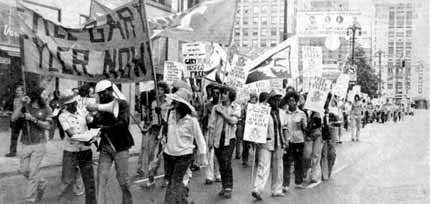
I mean you might have not even heard about this story, what with the press having to spend so much time talking about Commander-in-Chief-Wannabe Obama’s tour of the war lands? Why do Americans not protest these tortures by cops using taser? This is what the thugs at the top call ‘Homeland Security’? It seems like we’re getting National Insecurity worse than Obama Bin Laden ever could have delivered.

And let’s face it, being Black has gotten much more dangerous lately in this country not less. Blacks just don’t have as much money, poverty is a crime, and crime gets you tortured by cop tasers here in America the Beautiful. Let’s register these Black people by way of the criminal injustice system. Put a brand on them why not?

Baron ‘Scooter’ Pikes you had a bad attitude! See what you done? Now Taser International PR will have to work overtime to help the National Security State ‘protect life’, trademark impending.

Snappy music on the site there, Dudes. So let’s go torture! Got any more spare Black folk to electrocute? Long live the South! The KKK lives on! Ain’t that sweet? Department of Homeland Security? What a damn joke… What a Frankenstein this country is on tasers.

New Orleans

Police attack crowd with mace and tasers where people were trying to express opposition to tearing down perfectly serviceable Public Housing units in New Orleans. The US government wants Black people not to return to New Orleans for the same racist reasons that they didn’t bother reinforcing the levees in the first place before Katrina hit.

It was then a Black dominated city and the White Dixiecrat political establishment of Louisiana hated having to govern over such a concentration of poor income Blacks. It was an Apartheid city where Blacks had too much sway over the politics of the area in the White Political Establishment’s eyes, so the federal government, too, just didn’t think it important enough to do the job of holding back the flood waters that might occur, and eventually did.

So now they are trying to keep poorer Blacks dispersed by Katrina from being able to return to their former neighborhoods. Nothing has changed. The federal, state, and local governments are engaged in a giant racial relocation program that keeps former Black residents from being able to survive return to their city. White policy here? Divide, keep them away, and conquer. The same policy of divide and conquer used in Afghanistan and Iraq.

Jena style legalized lynching is as American as apple pie, unfortunately

Millions of people around our country are legally lynched by the legal system. Some live through it, but most have their lives damaged, destroyed, and otherwise taken away from them in part or in entirety.

The whole country knows this simple truth, but many people favor just that and keep the wheels of this legalized lynching machine constantly well oiled with their support.

Many are folk like our local rag, The Gazette, which for reasons of local political expediency ran a picture of Thursday’s march for The Jena 6 big on the front page. This is what keeps the paper in decent standing with the local NAACP chapter, which has a heavily military influenced leadership.

The Gazette wants to not endanger that constituency’s tolerance for the paper’s Business as Usual support for the US War Machine, but The Gazette editorial staff along with the whole US chain of Right Wing papers called ‘Freedom Publishing’, doesn’t care a damn about stopping legal lynching, whether in Jena, Louisiana or anywhere else. They really don’t want racial justice, they just want the social tranquility where Black folk accept their own political dominance by others.

In fact, the editorial staff at The Gazette are big proponents of continuing all the current legal injustice now totally codified in America’s courts. They are big proponents for ‘law and order’ when used against the lower classes, and against all Law and Order when directed at the fat cats who are primarily rich White men. The local NAACP will never get The Gazette and the fat cats they write opinions for to offer up any more than the most superficial posturing in regards to stopping the racist legal lynching that the Jena 6 case has brought to the fore.

Jena style legalized lynching is as American as apple pie, unfortunately. We need a new America where the legal system is taken away from the control of the super rich and then used by the exploited to stop the super rich’s theft of America’s wealth. We need a racially just America and the legal system as it currently is, is the biggest obstacle to obtaining that goal. It must be totally changed, transformed, and democratized, for as of today democratically controlled it most certainly is not.

Free the Jena Six Now! Stop Legalized Lynching of Black Americans Today!

Also, Prosecutorial Misconduct More Dangerous Than Racism
The Injustice in Jena

Ask not for whom the bell tolls…

B-52s are state sponsored terrorismit tolls for thee and me.
 
According to a story originally reported in the Army Times, a B-52 carrying six nuclear warheads traveled from North Dakota to Louisiana last week. Accidentally. This, despite the fact that flying nuclear warheads violates a treaty bearing our signature. The mistake was not discovered until after the plane had landed six hours later. President Bush was notified due to the gravity of the situation. As a result, all fighters and bombers within the U.S. will be grounded starting September 14 to allow for an internal investigation.
 
Can you spell DRILL?

Jena 6 Update

Those who support the Saint Patrick’s Day Seven here in Colorado Springs are not making a fetish out of this case. There are many other worthy causes out there we support, too. Everywhere the US Judicial System is miscarrying justice. Below is an appeal from supporters of The Jena Six of the lousy state of Louisiana.
…………………………………………………………………………………………………………..
Dear Supporter,

On September 20th, Mychal Bell–the first of the Jena 6 to be convicted–is scheduled for sentencing. If the District Attorney has his way, Mychal will face 22 years in prison. It’s a horrifying moment for Mychal, his parents, and the rest of the Jena 6 families. It’s also a perfect time for those who can to come to Jena, in person, and stand with them. We know it’s a serious time and financial commitment, but we wanted to give you the opportunity to join the hundreds of people who have already emailed us to say that they will come. If you can join us, please click on the link below to RSVP:

http://colorofchange.org/jena/rsvp.html

Our presence in Jena–in large numbers–will help focus media attention on the situation in Jena, escalate pressure on Louisiana public officials, and most importantly, show the families of the Jena 6, especially Mychal Bell and his parents, that we will stand with them in the face of this injustice.

On July 31st, with only a few days to prepare, 300 people from across the country rallied at the Jena Courthouse. We delivered a petition signed by 43,000 ColorOfChange.org members to the District Attorney demanding that he drop the charges against the Jena 6. It was a powerful day that made it clear that the Jena 6 and their families won’t have to fight on their own. Since then, more than 100,000 people have taken action and contacted the Governor, media attention to the case has grown, and we have an even bigger opportunity to make a profound impact.

As we plan for this event, we want to get a sense of how many people can commit to coming to Jena. Below are some details about getting there, so you can figure out if you’ll be able to join us.

Details

If you’re flying to Louisiana, the closest airports to Jena are Alexandria (45 minute drive) and Monroe (1.5 hour drive). You can also fly to Lafayette (2.25 hour drive), Shreveport (2.75 hour drive), Baton Rouge (3 hour drive), New Orleans (4.25 hour drive), or Houston (about a 5 hour drive). The closest hotels are in Pineville and Alexandria. As they fill up, we’d recommend staying at hotels near the airports above.

If travelling from out of town, you’ll want to get to Louisiana the night before, as things will start early in the morning, probably by 8am or 9am. Organizers will meet you when you arrive at a central location in Jena and get you situated for the day. We will be providing maps, organizers’ cell phone numbers, and other information closer to the day-of; you will be able to reach someone in case you have any problems, need directions, or have questions along the way.

RSVP

Once you’re confident you can come, please rsvp at the following:

http://colorofchange.org/jena/rsvp.html

If you have questions, you can send them to jena@colorofchange.org.

If you can’t come, don’t worry. We’ll be sending emails soon with more ways to take action between now and the 20th. Whatever your participation, we thank you for your ongoing commitment to justice for the Jena 6. It continues to be our privilege to be part of such a powerful community of support for these young men.

Thanks and Peace,

— James Rucker
Executive Director, ColorOfChange.org
August 28th, 2007