“Comfort Women” aren’t unique to Japan and Korea. In the US military they’re called service women.

As a South Korean court decides that Japan owes more compensation to the Korean women it abducted during WWII to serve as “Comfort Women” for the Japanese troops, Americans should own up to the reality that all militaries rely on involuntary prostitution and gang rape to motivate their soldiers.

From antiquity through the Napoleonic Wars, through America’s Civil War to its imperial conquests westward and abroad, and until World War One immobilized warfare, “comfort women” were called “camp followers.” US servicemen in Vietnam established a sex industry in Southeast Asia that is fertilized still today by veterans of all nationalities. But while America’s Defense Department outsources more and more of its functions to contractor profiteers, it has moved the sexual services in-house. This shifts the customary impact on victim populations unto another consumable pool of sexual prey called FELLOW SOLDIERS.

In brief the scheme is simple: Recruit young women, let male soldiers to rape them, replenish as needed. Mission Accomplished as they say. Among your female grunts, purge would-be careerists to ensure you are trafficking in only the age of vulnerability suited to your comfort-seekers. That perverse finess is of course the giveaway.

In the US military, 100% of women are sexually harassed or raped. Officials say the figure is 70%, or they discount attacks as cases of harassment and not rape. This allows service women who chose not to report their rapes to save face, and it ameleorates the stigma which otherwise would fall on every woman in uniform. Like the single blank bullet issued to firing squads to ease the conscience of every member allowing them to believe their gun did not chamber a live and fatal bullet. The confidential medical records say the frequency of sexual victimhood is actually 90%, but that suggestes an improbable paucity of unreported cases. In the civilian world, it’s believed that half of all rapes go unreported. Assuming a correlation, how can you have twice as many as 90%?

Besides addressing the rape culture endemic to professioonal soldiering, a remedy suggests itself in at least pretending to care about the well being of female soldiers. For a start, America’s military branches could easily relax the basic training requirements for women. The current standards, which pander to a feminist insistance on a physical equality of the genders, quickly destroy all female recruits. The same backpack weight loads of boot camp, which eventually debilitate men’s backs and knees by the time they’re 40, cripple women before they’re 25. An obscenely high percentage of women have to be med-boarded out of active duty with destroyed backs, ankles and wrists. And the female re-enlistment rate is abysmal. You’d think the army, navy, air force and marines would want to retain trained soldiers. Unless women are more valuable to them young, untrained, and uninitiated.

Comfort Women and Camp followers suffered attrition from the natural consequences of communicable disease and abuse, allowing for a regular turnover of fresh stock. Pretending your soldiers don’t consume comfort women means having to be duplicitous about where you are dumping your bodies.

You are not to blame. US stands with victims allied to neoliberal objectives.

“Why don’t we stand with Istanbul like we did Paris in the aftermath of their terrorist attack?” Because Western social media campaigns are orchestrated. Though built on outporings of sympathy, they are coordinated with NATO efforts to propagandize against perceived foes. The public’s failure to muster support for Turkish tragedies, like African or Asian or Balkan or other less-Western hosts, drawns criticism of racism. But it’s not YOUR racism, that’s blaming the victim. Your heartstrings are pulled by whatever photos the corportate media is pitching. Photos of Syrian children for the moment.

Modern Nat Turner insures Dallas cops cannot assail Black lives with impunity

Chris DornerWas ANYBODY going to stop the unfettered lynching of people of color in America? Did President Obama ever deliver anything more than a eulogy? Few police officers are being convicted or even indicted. Videotaped killings of black men by lawmen have become so common, those disseminating the videos are being accused of harboring fetishes. People expressing offense online are being shamed for being clicktivists, though clearly the only fuels firing public outrage are the videos. Meanwhile Black Lives Matter spokespeople have become so jaded they ridicule the efficacy of street protests. And now everyone is condemning the lone direct action taker.

The killing of any human being is terrible, but the retaliatory killings of police in Dallas could have been prevented. Not by expecting minority communities to stomach further and unending extrajudicial assassinations, but by having police curb their racism and use of lethal force. Or of course by disbanding militarized police departments. Public officials can’t even broach that conversation. Do we expect the police state to dismantle itself?

Self-styled black revolutionary Micah Xavier Johnson, a typical PTSD-hardened Afghan vet, put “suicide by cop” to the service of his embattled community and avenged the deaths of Alton Sterling and Philando Castile. He didn’t shoot their actual killers, but he didn’t hit innocents either. Johnson targeted America’s systemic enforcers of inequity, hitting twelve police officers, five of whom have now died.

Let’s note those cops weren’t “protecting the first amendment rights” of a spontaneous protest of the Sterling and Castile murders, but were harassing and detering demonstrations. The officers could have chosen not to, and hopefully, their comrades in other cities, molesting other legal assemblies, may now choose to stand down, because now authoritarian bullying has come in the line of fire.

There is poetic justice for those who would decry “Blue Lives Matter”. If they’re going to pretend it, let them feel the oppressive threat of violence which black lives bear. For one evening, in a small corner of Dallas, Texas, police brutality faced a comeuppance.

For now Johnson’s act is being condemned as an atrocity, as a massacre even, though obviously his victims 1) met every standard of belligerent adversary, 2) were armed, and 3) outnumbered him. Let’s concede that Johnson is a credit to his military training. He confirms how our soldiers could so murderously rapage through our war zones against lesser equipped combatants. Johnson’s motive echoes that which provoked US atrocities overseas, seeking revenge against civilians, exacting collective punishment for deadly IEDs.

If we acknowledge the violence with which African Americans are oppressed, and the mendacity of its apologists and enablers, can we condemn violent resistance? International law accords oppressed peoples the human right to resist.

Slave rebellion leader Nat Turner is recognized today as a hero, but was exhaustively vilified in his day because he killed slave owners, indescriminate of old or young. Whites retaliated and killed many more blacks. More violence follwed from abolitionsists and Jayhawkers, all of it lamentable. But slavery didn’t end because we willed it.

Because this era’s history is written with erasers, our victors’ primary tool, Micah Johnson will probably never be praised for heroism.

Johnson will join fellow effaced cop-killer Christopher Dorner. A previous African American reservist vet who was immolated alive, killed instead of being apprehended, lest an investigation benefit from his testimony about why he could no longer bear LAPD corruption in 2013.

From Dorner’s “manifesto”, before Michael Brown, Ferguson and Baltimore:

“Those Caucasian officers who join South Bureau divisions (77th,SW,SE, an Harbor) with the sole intent to victimize minorities who are uneducated, and unaware of criminal law, civil law, and civil rights. You prefer the South bureau because a use of force/deadly force is likely and the individual you use UOF on will likely not report it. You are a high value target.

“Those Black officers in supervisory ranks and pay grades who stay in south bureau (even though you live in the valley or OC) for the sole intent of getting retribution toward subordinate caucasian officers for the pain and hostile work environment their elders inflicted on you as probationers (P-1?s) and novice P-2’s. You are a high value target.

You perpetuated the cycle of racism in the department as well. You breed a new generation of bigoted caucasian officer when you belittle them and treat them unfairly.

Mikah Johnson’s last words we only know through the spin of Dallas police, the same people who decided not to wait him out, nor to smoke him or gas him out from hiding in a public parking garage, but instead to send a robot with a bomb and M.O.V.E. his ass like every other black nationalist revolutionary.

No, you murdurous assholes, Johnson didn’t “want to kill all white people.” He wanted to kill white cops. Just like Dorner, he wasn’t a threat to the public, he was a threat to the police state. You cops ensured Mikah Johnson didn’t live to dictate “confessions” and you even obliterated his body like Osama bin Laden. Drawn and quartered essentially, to preclude memorializers being able to center on an idol to build a resistance.

You and I may grapple with what to think of Johnson’s personal rampage, but the state knew immediately his was the selfless heroism they fear most. As with bin Laden, they knew his apprehension must be terminal.

Lest I be misunderstood, I do not promote armed insurrection, sedition or murder. I cannot. But I will not condemn Micah Johnson.

I need not agrandize him either. Taken without his revolutionary ideology, Johnson was an ordinary mentally wounded veteran like many others. Homicidal vets with PTSD are at the core of our epidemic of police brutality. Our law enforcement teams are full of OIF and OEF soldiers who got their start shooting up cars at checkpoints and acting out racist genocide to their heart’s content.

It’s not a new problem, the US has always had active warzones feeding veterans into homelessness for those who couldn’t cope and filling government jobs for those who thrived. Beside policemanship, a very common job for discharged soldiers has always been the post office. Rembember the rampaging gunman problem we used to call “going postal?”

America’s racism problem may be transcended by a succession of church services, but class struggle is not a hearts and minds operation. Fascist rule and its army of the rich are not going to be wished away by militant nonviolence. That’s as likely as counting on the tooth fairy.

Worrying that acts like Johnson’s will provoke increased authoritarian repression is an expression of privilege provided by someone aclimated to a tolerable status quo, clearly a white perspective for whom black lives matter not enough.

Until all of us share the plight of the average Syrian refugee, trapped in our capitalist frontier war zones, none of us are shouldering an equitable burden of the police state.

That’s why it is more than black lives that matter. The middle class greivances of Occupy Wall Street are only a class removed from Black America’s suffering. We’re still talking about privileged Americans who support a grander racism that drives our global exploitation of all peoples.

I don’t have any faith that an arc of history bends toward justice in this corporate dark age. For my own sense of what’s right, it’s important to recognize Micah Johnson and Christopher Dorner for who they were, flawed, maybe very minor, aspiring Nat Turners, who wanted to strike against today’s slave masters and their brutal blue foremen.

U.S. SOLDIERS ARE READYING FOR A MASSIVE DEPLOYMENT

COLORADO SPRINGS, COLORADO- You thank them for their service. You support them, they’re only following orders. You know they’re not at liberty to divulge everything they do or WHERE. As their supporters you are complicit, but whatever. Now your soldiers are keeping a HUGE secret from you. They’re GOING TO WAR. You’d think that would be too controversial to be a state secret.

If you leave in a military town, near a base, fort or camp, you need only ask around. Pawn shops and car dealerships seem to have their finger on the pulse of troop movements for some reason. In Colorado Springs, everybody knows. Friends and neighbors have already deployed overseas to establish contractor services. Others in readiness training.

Of course the big secret for awhile has been Africa. American soldiers have been involved in covert operations across Africa which none are still allowed to talk about. Those aren’t undeclared wars, just police actions. This time, again, it’s Iraq. Going back. I shall return.

Are they waiting on Spring? Summer weather? The election? Commander in Chief Clinton? Likely.

It used to be soldiers didn’t talk about mobilization. “Loose lips sink ships” etc. Of course in those days the public knew the nation was at war. War had been declared on us, or a fascist belligerent attacked. Today when the US launches offensive wars, illegal wars they’re called in the Hague, its troop movements have to be extra covert. Or not, actually, when mobilization is prelude to Shock and Awe.

Troop sneakiness seems to be all about sneaking past the American pulbic. Sneaking past us to unknown conflict zones in Africa and Asia, sneaking past us to redeploy to Iraq. At some point those soldiers have to understand what they’re doing is not only unpopular, it’s likely wrong.

Last Rhodesian Dylann Roof was racist and white supremacist AND mentally ill


When a white racist mass murderer is apprehended, it’s a Western law enforcement tradition not to treat the suspect as cops do suspects of color. Fortunately television audience are now rejecting this inequity, and predictably they call for blood, instead of suggesting that all pre-trial interaction with police be conducted with respect for the presumed innocent. Similarly, white shooters and bombers are not called terrorists or racists but rather loners struggling with mental illness. I think it’s hugely important to call out the racism and xenophobia which breeds antisocial renegades like Dylann Storm Roof, and NOT judge Roof differently than the rare but much abused non-white even un-domestic insurgent. But why dismiss the insanity defense, when it obviously plays a part in more crimes not fewer. Dylann Roof was on psych meds. That’s another nightmare altogether, by which I mean for the pharmaceutical industry, who I think have a perfect record for supplementing white mass shooters. American prisons are filled with mental illness and mental disability and mental shortcomings. The justice system needs to be reformed with respect for mental health challenges, not with calls to get tougher on those with lesser ability to cope in society.

Dylann Roof’s alleged manifesto shows he’s not the brightest bulb either.

I was not raised in a racist home or environment. Living in the South, almost every White person has a small amount of racial awareness, simply because of the numbers of negroes in this part of the country. But it is a superficial awareness. Growing up, in school, the White and black kids would make racial jokes toward each other, but all they were were jokes. Me and White friends would sometimes would watch things that would make us think that “blacks were the real racists” and other elementary thoughts like this, but there was no real understanding behind it.

The event that truly awakened me was the Trayvon Martin case. I kept hearing and seeing his name, and eventually I decided to look him up. I read the Wikipedia article and right away I was unable to understand what the big deal was. It was obvious that Zimmerman was in the right. But more importantly this prompted me to type in the words “black on White crime” into Google, and I have never been the same since that day. The first website I came to was the Council of Conservative Citizens. There were pages upon pages of these brutal black on White murders. I was in disbelief. At this moment I realized that something was very wrong. How could the news be blowing up the Trayvon Martin case while hundreds of these black on White murders got ignored?

From this point I researched deeper and found out what was happening in Europe. I saw that the same things were happening in England and France, and in all the other Western European countries. Again I found myself in disbelief. As an American we are taught to accept living in the melting pot, and black and other minorities have just as much right to be here as we do, since we are all immigrants. But Europe is the homeland of White people, and in many ways the situation is even worse there. From here I found out about the Jewish problem and other issues facing our race, and I can say today that I am completely racially aware.

Blacks

I think it is is fitting to start off with the group I have the most real life experience with, and the group that is the biggest problem for Americans.
Niggers are stupid and violent. At the same time they have the capacity to be very slick. Black people view everything through a racial lens. Thats what racial awareness is, its viewing everything that happens through a racial lens. They are always thinking about the fact that they are black. This is part of the reason they get offended so easily, and think that some thing are intended to be racist towards them, even when a White person wouldn’t be thinking about race. The other reason is the Jewish agitation of the black race.

Black people are racially aware almost from birth, but White people on average don’t think about race in their daily lives. And this is our problem. We need to and have to.

Say you were to witness a dog being beat by a man. You are almost surely going to feel very sorry for that dog. But then say you were to witness a dog biting a man. You will most likely not feel the same pity you felt for the dog for the man. Why? Because dogs are lower than men.

This same analogy applies to black and White relations. Even today, blacks are subconsciously viewed by White people are lower beings. They are held to a lower standard in general. This is why they are able to get away with things like obnoxious behavior in public. Because it is expected of them.

Modern history classes instill a subconscious White superiority complex in Whites and an inferiority complex in blacks. This White superiority complex that comes from learning of how we dominated other peoples is also part of the problem I have just mentioned. But of course I don’t deny that we are in fact superior.

I wish with a passion that niggers were treated terribly throughout history by Whites, that every White person had an ancestor who owned slaves, that segregation was an evil an oppressive institution, and so on. Because if it was all it true, it would make it so much easier for me to accept our current situation. But it isn’t true. None of it is. We are told to accept what is happening to us because of ancestors wrong doing, but it is all based on historical lies, exaggerations and myths. I have tried endlessly to think of reasons we deserve this, and I have only came back more irritated because there are no reasons.

Only a fourth to a third of people in the South owned even one slave. Yet every White person is treated as if they had a slave owning ancestor. This applies to in the states where slavery never existed, as well as people whose families immigrated after slavery was abolished. I have read hundreds of slaves narratives from my state. And almost all of them were positive. One sticks out in my mind where an old ex-slave recounted how the day his mistress died was one of the saddest days of his life. And in many of these narratives the slaves told of how their masters didn’t even allowing whipping on his plantation.

Segregation was not a bad thing. It was a defensive measure. Segregation did not exist to hold back negroes. It existed to protect us from them. And I mean that in multiple ways. Not only did it protect us from having to interact with them, and from being physically harmed by them, but it protected us from being brought down to their level. Integration has done nothing but bring Whites down to level of brute animals. The best example of this is obviously our school system.

Now White parents are forced to move to the suburbs to send their children to “good schools”. But what constitutes a “good school”? The fact is that how good a school is considered directly corresponds to how White it is. I hate with a passion the whole idea of the suburbs. To me it represents nothing but scared White people running. Running because they are too weak, scared, and brainwashed to fight. Why should we have to flee the cities we created for the security of the suburbs? Why are the suburbs secure in the first place? Because they are White. The pathetic part is that these White people don’t even admit to themselves why they are moving. They tell themselves it is for better schools or simply to live in a nicer neighborhood. But it is honestly just a way to escape niggers and other minorities.

But what about the White people that are left behind? What about the White children who, because of school zoning laws, are forced to go to a school that is 90 percent black? Do we really think that that White kid will be able to go one day without being picked on for being White, or called a “white boy”? And who is fighting for him? Who is fighting for these White people forced by economic circumstances to live among negroes? No one, but someone has to.

Here I would also like to touch on the idea of a Northwest Front. I think this idea is beyond stupid. Why should I for example, give up the beauty and history of my state to go to the Northwest? To me the whole idea just parallels the concept of White people running to the suburbs. The whole idea is pathetic and just another way to run from the problem without facing it.

Some people feel as though the South is beyond saving, that we have too many blacks here. To this I say look at history. The South had a higher ratio of blacks when we were holding them as slaves. Look at South Africa, and how such a small minority held the black in apartheid for years and years. Speaking of South Africa, if anyone thinks that think will eventually just change for the better, consider how in South Africa they have affirmative action for the black population that makes up 80 percent of the population.

It is far from being too late for America or Europe. I believe that even if we made up only 30 percent of the population we could take it back completely. But by no means should we wait any longer to take drastic action.

Anyone who thinks that White and black people look as different as we do on the outside, but are somehow magically the same on the inside, is delusional. How could our faces, skin, hair, and body structure all be different, but our brains be exactly the same? This is the nonsense we are led to believe.

Negroes have lower IQs, lower impulse control, and higher testosterone levels in generals. These three things alone are a recipe for violent behavior. If a scientist publishes a paper on the differences between the races in Western Europe or Americans, he can expect to lose his job. There are personality traits within human families, and within different breeds of cats or dogs, so why not within the races?

A horse and a donkey can breed and make a mule, but they are still two completely different animals. Just because we can breed with the other races doesn’t make us the same.

In a modern history class it is always emphasized that, when talking about “bad” things Whites have done in history, they were White. But when we learn about the numerous, almost countless wonderful things Whites have done, it is never pointed out that these people were White. Yet when we learn about anything important done by a black person in history, it is always pointed out repeatedly that they were black. For example when we learn about how George Washington carver was the first nigger smart enough to open a peanut.

On another subject I want to say this. Many White people feel as though they don’t have a unique culture. The reason for this is that White culture is world culture. I don’t mean that our culture is made up of other cultures, I mean that our culture has been adopted by everyone in the world. This makes us feel as though our culture isn’t special or unique. Say for example that every business man in the world wore a kimono, that every skyscraper was in the shape of a pagoda, that every door was a sliding one, and that everyone ate every meal with chopsticks. This would probably make a Japanese man feel as though he had no unique traditional culture.

I have noticed a great disdain for race mixing White women within the White nationalists community, bordering on insanity it. These women are victims, and they can be saved. Stop.

Jews

Unlike many White nationalists, I am of the opinion that the majority of American and European jews are White. In my opinion the issues with jews is not their blood, but their identity. I think that if we could somehow destroy the jewish identity, then they wouldn’t cause much of a problem. The problem is that Jews look White, and in many cases are White, yet they see themselves as minorities. Just like niggers, most jews are always thinking about the fact that they are jewish. The other issue is that they network. If we could somehow turn every jew blue for 24 hours, I think there would be a mass awakening, because people would be able to see plainly what is going on.

I don’t pretend to understand why jews do what they do. They are enigma.

Hispanics

Hispanics are obviously a huge problem for Americans. But there are good hispanics and bad hispanics. I remember while watching hispanic television stations, the shows and even the commercials were more White than our own. They have respect for White beauty, and a good portion of hispanics are White. It is a well known fact that White hispanics make up the elite of most hispanics countries. There is good White blood worth saving in Uruguay, Argentina, Chile and even Brazil.

But they are still our enemies.

East Asians

I have great respect for the East Asian races. Even if we were to go extinct they could carry something on. They are by nature very racist and could be great allies of the White race. I am not opposed at all to allies with the Northeast Asian races.

Patriotism

I hate the sight of the American flag. Modern American patriotism is an absolute joke. People pretending like they have something to be proud while White people are being murdered daily in the streets. Many veterans believe we owe them something for “protecting our way of life” or “protecting our freedom”. But I’m not sure what way of life they are talking about. How about we protect the White race and stop fighting for the jews. I will say this though, I myself would have rather lived in 1940’s American than Nazi Germany, and no this is not ignorance speaking, it is just my opinion. So I don’t blame the veterans of any wars up until after Vietnam, because at least they had an American to be proud of and fight for.

An Explanation

To take a saying from a film, “I see all this stuff going on, and I don’t see anyone doing anything about it. And it pisses me off.” To take a saying from my favorite film, “Even if my life is worth less than a speck of dirt, I want to use it for the good of society.”

I have no choice. I am not in the position to, alone, go into the ghetto and fight. I chose Charleston because it is most historic city in my state, and at one time had the highest ratio of blacks to Whites in the country. We have no skinheads, no real KKK, no one doing anything but talking on the internet. Well someone has to have the bravery to take it to the real world, and I guess that has to be me.

Unfortunately at the time of writing I am in a great hurry and some of my best thoughts, actually many of them have been to be left out and lost forever. But I believe enough great White minds are out there already.

Please forgive any typos, I didn’t have time to check it.

Osama bin Laden’s books. They could do you more good than they did him.

Last week the CIA decided
Crossing the Rubicon, The New Pearl Harbor, Imperial Hubris, Obama's Wars, The Best Democracy Money Can Buy... to declassify the list of books found in Osama bin Laden’s last hideout when Seal Team Six made their raid. There were 39 titles, which the press has categorized as heavy on conspiracy theory. That’s true, untrue, and unsurprising if you consider the official White House line is that the US does not support illegal coups. These authors beg to differ, including the unimpeachable Noam Chomski. Other investigative standouts include William Blum, Greg Palast, John Perkins. The list did not include publication dates or editions, just author and title. A closer inspection of the list is revealing.
 
(This is part one of a continuing series.)

It would be more accurate to describe Osama bin Laden’s bookshelf as history, mostly contemporary with notable exceptions. For example, bin Laden’s reference on Christianity and Islam in Spain 756-1031 was published in 1889 with the full title “The Relations and Mutual Influences of Christianity and Mohammedanism During the Khalifate of Cordova.” In 1889 European perspectives on the Moorish occupation appear dramatically antisemitic.

The history of The US and Vietnam 1787-1941 begins with Thomas Jefferson’s first interests in trading for rice with “Cochinchina”. Written by a former ambassador, it was published in 1990 by the National Defense University Press. The Best Enemy Money Can Buy is about the symbiotic relationship between the US military industrial complex and Russia’s.

Some of bin Laden’s “books” such as Michael O’Hanlon’s Unfinished Business were staple-bound publications from US policy think tanks. I’ll review those and the various intelligence agency exposés in subsequent posts.

Here are the 39 titles listed alphabetically:
The 2030 Spike by Colin Mason; A Brief Guide to Understanding Islam by I. A. Ibrahim; America’s Strategic Blunders by Willard Matthias; America’s ‘War on Terrorism’ by Michel Chossudovsky; Al-Qaeda’s Online Media Strategies: From Abu Reuter to Irhabi 007 by Hanna Rogan; The Best Democracy Money Can Buy by Greg Palast; The Best Enemy Money Can Buy by Anthony Sutton; Black Box Voting: Ballot Tampering in the 21st Century by Bev Harris; Bloodlines of the Illuminati by Fritz Springmeier; Bounding the Global War on Terror by Jeffrey Record; Checking Iran’s Nuclear Ambitions by Henry Sokolski and Patrick Clawson; Christianity and Islam in Spain 756-1031 A.D. by C. R. Haines; Civil Democratic Islam: Partners, Resources, and Strategies by Cheryl Benard; Confessions of an Economic Hit Man by John Perkins; Conspirators’ Hierarchy: The Committee of 300 by John Coleman; Crossing the Rubicon by Michael Ruppert; Fortifying Pakistan: The Role of U.S. Internal Security Assistance (only the book’s introduction) by C. Christine Fair and Peter Chalk; Guerrilla Air Defense: Antiaircraft Weapons and Techniques for Guerrilla Forces by James Crabtree; Handbook of International Law by Anthony Aust; Hegemony or Survival: America’s Quest for Global Dominance by Noam Chomsky; Imperial Hubris by Michael Scheuer; In Pursuit of Allah’s Pleasure by Asim Abdul Maajid, Esaam-ud-Deen and Dr. Naahah Ibrahim; International Relations Theory and the Asia-Pacific by John Ikenberry and Michael Mastandano; Killing Hope: U.S. Military and CIA Interventions since World War II by William Blum; Military Intelligence Blunders by John Hughes-Wilson; Project MKULTRA, the CIA’s program of research in behavioral modification. Joint hearing before the Select Committee on Intelligence and the Subcommittee on Health and Scientific Research of the Committee on Human Resources, United States Senate, Ninety-fifth Congress, first session, August 3, 1977. United States Congress Senate Select Committee on Intelligence; Necessary Illusions: Thought Control in Democratic Societies by Noam Chomsky; New Pearl Harbor: Disturbing Questions about the Bush Administration and 9/11 by David Ray Griffin; New Political Religions, or Analysis of Modern Terrorism by Barry Cooper; Obama’s Wars by Bob Woodward; Oxford History of Modern War by Charles Townsend; The Rise and Fall of the Great Powers by Paul Kennedy; Rogue State: A Guide to the World’s Only Superpower by William Blum; The Secret Teachings of All Ages by Manly Hall (1928); Secrets of the Federal Reserve by Eustace Mullins; The Taking of America 1-2-3 by Richard Sprague; Unfinished Business: U.S. Overseas Military Presence in the 21stCentury by Michael O’Hanlon; The U.S. and Vietnam 1787-1941 by Robert Hopkins Miller; “Website Claims Steve Jackson Games Foretold 9/11,” article posted on ICV2.com.

The Putin knock-knock joke is easier to find than his Kremlin speech on Crimea

Putin Obama Knock Knock Joke - Crimea RiverThis graphic circulating on the interwebs is a lot easier to find than Vladimir Putin’s March 18 address to the Kremlin about the referendum in Crimea after the Western coup in Ukraine. Bypassing dubious translations excerpted on Capitalist media sites, here is a transcript of his speech direct from the Kremlin. Putin is no hero, but he threatens US-EU banking hegemony, gives asylum to Edward Snowden, and executes zero people with drones.

QUOTING PRESIDENT OF RUSSIA VLADIMIR PUTIN:
Federation Council members, State Duma deputies, good afternoon. Representatives of the Republic of Crimea and Sevastopol are here among us, citizens of Russia, residents of Crimea and Sevastopol!

Dear friends, we have gathered here today in connection with an issue that is of vital, historic significance to all of us. A referendum was held in Crimea on March 16 in full compliance with democratic procedures and international norms.

More than 82 percent of the electorate took part in the vote. Over 96 percent of them spoke out in favour of reuniting with Russia. These numbers speak for themselves.

To understand the reason behind such a choice it is enough to know the history of Crimea and what Russia and Crimea have always meant for each other.

Everything in Crimea speaks of our shared history and pride. This is the location of ancient Khersones, where Prince Vladimir was baptised. His spiritual feat of adopting Orthodoxy predetermined the overall basis of the culture, civilisation and human values that unite the peoples of Russia, Ukraine and Belarus. The graves of Russian soldiers whose bravery brought Crimea into the Russian empire are also in Crimea. This is also Sevastopol – a legendary city with an outstanding history, a fortress that serves as the birthplace of Russia’s Black Sea Fleet. Crimea is Balaklava and Kerch, Malakhov Kurgan and Sapun Ridge. Each one of these places is dear to our hearts, symbolising Russian military glory and outstanding valour.

Crimea is a unique blend of different peoples’ cultures and traditions. This makes it similar to Russia as a whole, where not a single ethnic group has been lost over the centuries. Russians and Ukrainians, Crimean Tatars and people of other ethnic groups have lived side by side in Crimea, retaining their own identity, traditions, languages and faith.

Incidentally, the total population of the Crimean Peninsula today is 2.2 million people, of whom almost 1.5 million are Russians, 350,000 are Ukrainians who predominantly consider Russian their native language, and about 290,000-300,000 are Crimean Tatars, who, as the referendum has shown, also lean towards Russia.

True, there was a time when Crimean Tatars were treated unfairly, just as a number of other peoples in the USSR. There is only one thing I can say here: millions of people of various ethnicities suffered during those repressions, and primarily Russians.

Crimean Tatars returned to their homeland. I believe we should make all the necessary political and legislative decisions to finalise the rehabilitation of Crimean Tatars, restore them in their rights and clear their good name.

We have great respect for people of all the ethnic groups living in Crimea. This is their common home, their motherland, and it would be right – I know the local population supports this – for Crimea to have three equal national languages: Russian, Ukrainian and Tatar.

Colleagues,

In people’s hearts and minds, Crimea has always been an inseparable part of Russia. This firm conviction is based on truth and justice and was passed from generation to generation, over time, under any circumstances, despite all the dramatic changes our country went through during the entire 20th century.

After the revolution, the Bolsheviks, for a number of reasons – may God judge them – added large sections of the historical South of Russia to the Republic of Ukraine. This was done with no consideration for the ethnic make-up of the population, and today these areas form the southeast of Ukraine. Then, in 1954, a decision was made to transfer Crimean Region to Ukraine, along with Sevastopol, despite the fact that it was a federal city. This was the personal initiative of the Communist Party head Nikita Khrushchev. What stood behind this decision of his – a desire to win the support of the Ukrainian political establishment or to atone for the mass repressions of the 1930’s in Ukraine – is for historians to figure out.

What matters now is that this decision was made in clear violation of the constitutional norms that were in place even then. The decision was made behind the scenes. Naturally, in a totalitarian state nobody bothered to ask the citizens of Crimea and Sevastopol. They were faced with the fact. People, of course, wondered why all of a sudden Crimea became part of Ukraine. But on the whole – and we must state this clearly, we all know it – this decision was treated as a formality of sorts because the territory was transferred within the boundaries of a single state. Back then, it was impossible to imagine that Ukraine and Russia may split up and become two separate states. However, this has happened.

Unfortunately, what seemed impossible became a reality. The USSR fell apart. Things developed so swiftly that few people realised how truly dramatic those events and their consequences would be. Many people both in Russia and in Ukraine, as well as in other republics hoped that the Commonwealth of Independent States that was created at the time would become the new common form of statehood. They were told that there would be a single currency, a single economic space, joint armed forces; however, all this remained empty promises, while the big country was gone. It was only when Crimea ended up as part of a different country that Russia realised that it was not simply robbed, it was plundered.

At the same time, we have to admit that by launching the sovereignty parade Russia itself aided in the collapse of the Soviet Union. And as this collapse was legalised, everyone forgot about Crimea and Sevastopol ­– the main base of the Black Sea Fleet. Millions of people went to bed in one country and awoke in different ones, overnight becoming ethnic minorities in former Union republics, while the Russian nation became one of the biggest, if not the biggest ethnic group in the world to be divided by borders.

Now, many years later, I heard residents of Crimea say that back in 1991 they were handed over like a sack of potatoes. This is hard to disagree with. And what about the Russian state? What about Russia? It humbly accepted the situation. This country was going through such hard times then that realistically it was incapable of protecting its interests. However, the people could not reconcile themselves to this outrageous historical injustice. All these years, citizens and many public figures came back to this issue, saying that Crimea is historically Russian land and Sevastopol is a Russian city. Yes, we all knew this in our hearts and minds, but we had to proceed from the existing reality and build our good-neighbourly relations with independent Ukraine on a new basis. Meanwhile, our relations with Ukraine, with the fraternal Ukrainian people have always been and will remain of foremost importance for us.

Today we can speak about it openly, and I would like to share with you some details of the negotiations that took place in the early 2000s. The then President of Ukraine Mr Kuchma asked me to expedite the process of delimiting the Russian-Ukrainian border. At that time, the process was practically at a standstill. Russia seemed to have recognised Crimea as part of Ukraine, but there were no negotiations on delimiting the borders. Despite the complexity of the situation, I immediately issued instructions to Russian government agencies to speed up their work to document the borders, so that everyone had a clear understanding that by agreeing to delimit the border we admitted de facto and de jure that Crimea was Ukrainian territory, thereby closing the issue.

We accommodated Ukraine not only regarding Crimea, but also on such a complicated matter as the maritime boundary in the Sea of Azov and the Kerch Strait. What we proceeded from back then was that good relations with Ukraine matter most for us and they should not fall hostage to deadlock territorial disputes. However, we expected Ukraine to remain our good neighbour, we hoped that Russian citizens and Russian speakers in Ukraine, especially its southeast and Crimea, would live in a friendly, democratic and civilised state that would protect their rights in line with the norms of international law.

However, this is not how the situation developed. Time and time again attempts were made to deprive Russians of their historical memory, even of their language and to subject them to forced assimilation. Moreover, Russians, just as other citizens of Ukraine are suffering from the constant political and state crisis that has been rocking the country for over 20 years.

I understand why Ukrainian people wanted change. They have had enough of the authorities in power during the years of Ukraine’s independence. Presidents, prime ministers and parliamentarians changed, but their attitude to the country and its people remained the same. They milked the country, fought among themselves for power, assets and cash flows and did not care much about the ordinary people. They did not wonder why it was that millions of Ukrainian citizens saw no prospects at home and went to other countries to work as day labourers. I would like to stress this: it was not some Silicon Valley they fled to, but to become day labourers. Last year alone almost 3 million people found such jobs in Russia. According to some sources, in 2013 their earnings in Russia totalled over $20 billion, which is about 12% of Ukraine’s GDP.

I would like to reiterate that I understand those who came out on Maidan with peaceful slogans against corruption, inefficient state management and poverty. The right to peaceful protest, democratic procedures and elections exist for the sole purpose of replacing the authorities that do not satisfy the people. However, those who stood behind the latest events in Ukraine had a different agenda: they were preparing yet another government takeover; they wanted to seize power and would stop short of nothing. They resorted to terror, murder and riots. Nationalists, neo-Nazis, Russophobes and anti-Semites executed this coup. They continue to set the tone in Ukraine to this day.

The new so-called authorities began by introducing a draft law to revise the language policy, which was a direct infringement on the rights of ethnic minorities. However, they were immediately ‘disciplined’ by the foreign sponsors of these so-called politicians. One has to admit that the mentors of these current authorities are smart and know well what such attempts to build a purely Ukrainian state may lead to. The draft law was set aside, but clearly reserved for the future. Hardly any mention is made of this attempt now, probably on the presumption that people have a short memory. Nevertheless, we can all clearly see the intentions of these ideological heirs of Bandera, Hitler’s accomplice during World War II.

It is also obvious that there is no legitimate executive authority in Ukraine now, nobody to talk to. Many government agencies have been taken over by the impostors, but they do not have any control in the country, while they themselves – and I would like to stress this – are often controlled by radicals. In some cases, you need a special permit from the militants on Maidan to meet with certain ministers of the current government. This is not a joke – this is reality.

Those who opposed the coup were immediately threatened with repression. Naturally, the first in line here was Crimea, the Russian-speaking Crimea. In view of this, the residents of Crimea and Sevastopol turned to Russia for help in defending their rights and lives, in preventing the events that were unfolding and are still underway in Kiev, Donetsk, Kharkov and other Ukrainian cities.

Naturally, we could not leave this plea unheeded; we could not abandon Crimea and its residents in distress. This would have been betrayal on our part.

First, we had to help create conditions so that the residents of Crimea for the first time in history were able to peacefully express their free will regarding their own future. However, what do we hear from our colleagues in Western Europe and North America? They say we are violating norms of international law. Firstly, it’s a good thing that they at least remember that there exists such a thing as international law – better late than never.

Secondly, and most importantly – what exactly are we violating? True, the President of the Russian Federation received permission from the Upper House of Parliament to use the Armed Forces in Ukraine. However, strictly speaking, nobody has acted on this permission yet. Russia’s Armed Forces never entered Crimea; they were there already in line with an international agreement. True, we did enhance our forces there; however – this is something I would like everyone to hear and know – we did not exceed the personnel limit of our Armed Forces in Crimea, which is set at 25,000, because there was no need to do so.

Next. As it declared independence and decided to hold a referendum, the Supreme Council of Crimea referred to the United Nations Charter, which speaks of the right of nations to self-determination. Incidentally, I would like to remind you that when Ukraine seceded from the USSR it did exactly the same thing, almost word for word. Ukraine used this right, yet the residents of Crimea are denied it. Why is that?

Moreover, the Crimean authorities referred to the well-known Kosovo precedent – a precedent our western colleagues created with their own hands in a very similar situation, when they agreed that the unilateral separation of Kosovo from Serbia, exactly what Crimea is doing now, was legitimate and did not require any permission from the country’s central authorities. Pursuant to Article 2, Chapter 1 of the United Nations Charter, the UN International Court agreed with this approach and made the following comment in its ruling of July 22, 2010, and I quote: “No general prohibition may be inferred from the practice of the Security Council with regard to declarations of independence,” and “General international law contains no prohibition on declarations of independence.” Crystal clear, as they say.

I do not like to resort to quotes, but in this case, I cannot help it. Here is a quote from another official document: the Written Statement of the United States America of April 17, 2009, submitted to the same UN International Court in connection with the hearings on Kosovo. Again, I quote: “Declarations of independence may, and often do, violate domestic legislation. However, this does not make them violations of international law.” End of quote. They wrote this, disseminated it all over the world, had everyone agree and now they are outraged. Over what? The actions of Crimean people completely fit in with these instructions, as it were. For some reason, things that Kosovo Albanians (and we have full respect for them) were permitted to do, Russians, Ukrainians and Crimean Tatars in Crimea are not allowed. Again, one wonders why.

We keep hearing from the United States and Western Europe that Kosovo is some special case. What makes it so special in the eyes of our colleagues? It turns out that it is the fact that the conflict in Kosovo resulted in so many human casualties. Is this a legal argument? The ruling of the International Court says nothing about this. This is not even double standards; this is amazing, primitive, blunt cynicism. One should not try so crudely to make everything suit their interests, calling the same thing white today and black tomorrow. According to this logic, we have to make sure every conflict leads to human losses.

I will state clearly – if the Crimean local self-defence units had not taken the situation under control, there could have been casualties as well. Fortunately this did not happen. There was not a single armed confrontation in Crimea and no casualties. Why do you think this was so? The answer is simple: because it is very difficult, practically impossible to fight against the will of the people. Here I would like to thank the Ukrainian military – and this is 22,000 fully armed servicemen. I would like to thank those Ukrainian service members who refrained from bloodshed and did not smear their uniforms in blood.

Other thoughts come to mind in this connection. They keep talking of some Russian intervention in Crimea, some sort of aggression. This is strange to hear. I cannot recall a single case in history of an intervention without a single shot being fired and with no human casualties.

Colleagues,

Like a mirror, the situation in Ukraine reflects what is going on and what has been happening in the world over the past several decades. After the dissolution of bipolarity on the planet, we no longer have stability. Key international institutions are not getting any stronger; on the contrary, in many cases, they are sadly degrading. Our western partners, led by the United States of America, prefer not to be guided by international law in their practical policies, but by the rule of the gun. They have come to believe in their exclusivity and exceptionalism, that they can decide the destinies of the world, that only they can ever be right. They act as they please: here and there, they use force against sovereign states, building coalitions based on the principle “If you are not with us, you are against us.” To make this aggression look legitimate, they force the necessary resolutions from international organisations, and if for some reason this does not work, they simply ignore the UN Security Council and the UN overall.

This happened in Yugoslavia; we remember 1999 very well. It was hard to believe, even seeing it with my own eyes, that at the end of the 20th century, one of Europe’s capitals, Belgrade, was under missile attack for several weeks, and then came the real intervention. Was there a UN Security Council resolution on this matter, allowing for these actions? Nothing of the sort. And then, they hit Afghanistan, Iraq, and frankly violated the UN Security Council resolution on Libya, when instead of imposing the so-called no-fly zone over it they started bombing it too.

There was a whole series of controlled “colour” revolutions. Clearly, the people in those nations, where these events took place, were sick of tyranny and poverty, of their lack of prospects; but these feelings were taken advantage of cynically. Standards were imposed on these nations that did not in any way correspond to their way of life, traditions, or these peoples’ cultures. As a result, instead of democracy and freedom, there was chaos, outbreaks in violence and a series of upheavals. The Arab Spring turned into the Arab Winter.

A similar situation unfolded in Ukraine. In 2004, to push the necessary candidate through at the presidential elections, they thought up some sort of third round that was not stipulated by the law. It was absurd and a mockery of the constitution. And now, they have thrown in an organised and well-equipped army of militants.

We understand what is happening; we understand that these actions were aimed against Ukraine and Russia and against Eurasian integration. And all this while Russia strived to engage in dialogue with our colleagues in the West. We are constantly proposing cooperation on all key issues; we want to strengthen our level of trust and for our relations to be equal, open and fair. But we saw no reciprocal steps.

On the contrary, they have lied to us many times, made decisions behind our backs, placed us before an accomplished fact. This happened with NATO’s expansion to the East, as well as the deployment of military infrastructure at our borders. They kept telling us the same thing: “Well, this does not concern you.” That’s easy to say.

It happened with the deployment of a missile defence system. In spite of all our apprehensions, the project is working and moving forward. It happened with the endless foot-dragging in the talks on visa issues, promises of fair competition and free access to global markets.

Today, we are being threatened with sanctions, but we already experience many limitations, ones that are quite significant for us, our economy and our nation. For example, still during the times of the Cold War, the US and subsequently other nations restricted a large list of technologies and equipment from being sold to the USSR, creating the Coordinating Committee for Multilateral Export Controls list. Today, they have formally been eliminated, but only formally; and in reality, many limitations are still in effect.

In short, we have every reason to assume that the infamous policy of containment, led in the 18th, 19th and 20th centuries, continues today. They are constantly trying to sweep us into a corner because we have an independent position, because we maintain it and because we call things like they are and do not engage in hypocrisy. But there is a limit to everything. And with Ukraine, our western partners have crossed the line, playing the bear and acting irresponsibly and unprofessionally.

After all, they were fully aware that there are millions of Russians living in Ukraine and in Crimea. They must have really lacked political instinct and common sense not to foresee all the consequences of their actions. Russia found itself in a position it could not retreat from. If you compress the spring all the way to its limit, it will snap back hard. You must always remember this.

Today, it is imperative to end this hysteria, to refute the rhetoric of the cold war and to accept the obvious fact: Russia is an independent, active participant in international affairs; like other countries, it has its own national interests that need to be taken into account and respected.

At the same time, we are grateful to all those who understood our actions in Crimea; we are grateful to the people of China, whose leaders have always considered the situation in Ukraine and Crimea taking into account the full historical and political context, and greatly appreciate India’s reserve and objectivity.

Today, I would like to address the people of the United States of America, the people who, since the foundation of their nation and adoption of the Declaration of Independence, have been proud to hold freedom above all else. Isn’t the desire of Crimea’s residents to freely choose their fate such a value? Please understand us.

I believe that the Europeans, first and foremost, the Germans, will also understand me. Let me remind you that in the course of political consultations on the unification of East and West Germany, at the expert, though very high level, some nations that were then and are now Germany’s allies did not support the idea of unification. Our nation, however, unequivocally supported the sincere, unstoppable desire of the Germans for national unity. I am confident that you have not forgotten this, and I expect that the citizens of Germany will also support the aspiration of the Russians, of historical Russia, to restore unity.

I also want to address the people of Ukraine. I sincerely want you to understand us: we do not want to harm you in any way, or to hurt your national feelings. We have always respected the territorial integrity of the Ukrainian state, incidentally, unlike those who sacrificed Ukraine’s unity for their political ambitions. They flaunt slogans about Ukraine’s greatness, but they are the ones who did everything to divide the nation. Today’s civil standoff is entirely on their conscience. I want you to hear me, my dear friends. Do not believe those who want you to fear Russia, shouting that other regions will follow Crimea. We do not want to divide Ukraine; we do not need that. As for Crimea, it was and remains a Russian, Ukrainian, and Crimean-Tatar land.

I repeat, just as it has been for centuries, it will be a home to all the peoples living there. What it will never be and do is follow in Bandera’s footsteps!

Crimea is our common historical legacy and a very important factor in regional stability. And this strategic territory should be part of a strong and stable sovereignty, which today can only be Russian. Otherwise, dear friends (I am addressing both Ukraine and Russia), you and we – the Russians and the Ukrainians – could lose Crimea completely, and that could happen in the near historical perspective. Please think about it.

Let me note too that we have already heard declarations from Kiev about Ukraine soon joining NATO. What would this have meant for Crimea and Sevastopol in the future? It would have meant that NATO’s navy would be right there in this city of Russia’s military glory, and this would create not an illusory but a perfectly real threat to the whole of southern Russia. These are things that could have become reality were it not for the choice the Crimean people made, and I want to say thank you to them for this.

But let me say too that we are not opposed to cooperation with NATO, for this is certainly not the case. For all the internal processes within the organisation, NATO remains a military alliance, and we are against having a military alliance making itself at home right in our backyard or in our historic territory. I simply cannot imagine that we would travel to Sevastopol to visit NATO sailors. Of course, most of them are wonderful guys, but it would be better to have them come and visit us, be our guests, rather than the other way round.

Let me say quite frankly that it pains our hearts to see what is happening in Ukraine at the moment, see the people’s suffering and their uncertainty about how to get through today and what awaits them tomorrow. Our concerns are understandable because we are not simply close neighbours but, as I have said many times already, we are one people. Kiev is the mother of Russian cities. Ancient Rus is our common source and we cannot live without each other.

Let me say one other thing too. Millions of Russians and Russian-speaking people live in Ukraine and will continue to do so. Russia will always defend their interests using political, diplomatic and legal means. But it should be above all in Ukraine’s own interest to ensure that these people’s rights and interests are fully protected. This is the guarantee of Ukraine’s state stability and territorial integrity.

We want to be friends with Ukraine and we want Ukraine to be a strong, sovereign and self-sufficient country. Ukraine is one of our biggest partners after all. We have many joint projects and I believe in their success no matter what the current difficulties. Most importantly, we want peace and harmony to reign in Ukraine, and we are ready to work together with other countries to do everything possible to facilitate and support this. But as I said, only Ukraine’s own people can put their own house in order.

Residents of Crimea and the city of Sevastopol, the whole of Russia admired your courage, dignity and bravery. It was you who decided Crimea’s future. We were closer than ever over these days, supporting each other. These were sincere feelings of solidarity. It is at historic turning points such as these that a nation demonstrates its maturity and strength of spirit. The Russian people showed this maturity and strength through their united support for their compatriots.

Russia’s foreign policy position on this matter drew its firmness from the will of millions of our people, our national unity and the support of our country’s main political and public forces. I want to thank everyone for this patriotic spirit, everyone without exception. Now, we need to continue and maintain this kind of consolidation so as to resolve the tasks our country faces on its road ahead.

Obviously, we will encounter external opposition, but this is a decision that we need to make for ourselves. Are we ready to consistently defend our national interests, or will we forever give in, retreat to who knows where? Some Western politicians are already threatening us with not just sanctions but also the prospect of increasingly serious problems on the domestic front. I would like to know what it is they have in mind exactly: action by a fifth column, this disparate bunch of ‘national traitors’, or are they hoping to put us in a worsening social and economic situation so as to provoke public discontent? We consider such statements irresponsible and clearly aggressive in tone, and we will respond to them accordingly. At the same time, we will never seek confrontation with our partners, whether in the East or the West, but on the contrary, will do everything we can to build civilised and good-neighbourly relations as one is supposed to in the modern world.

Colleagues,

I understand the people of Crimea, who put the question in the clearest possible terms in the referendum: should Crimea be with Ukraine or with Russia? We can be sure in saying that the authorities in Crimea and Sevastopol, the legislative authorities, when they formulated the question, set aside group and political interests and made the people’s fundamental interests alone the cornerstone of their work. The particular historic, population, political and economic circumstances of Crimea would have made any other proposed option – however tempting it could be at the first glance – only temporary and fragile and would have inevitably led to further worsening of the situation there, which would have had disastrous effects on people’s lives. The people of Crimea thus decided to put the question in firm and uncompromising form, with no grey areas. The referendum was fair and transparent, and the people of Crimea clearly and convincingly expressed their will and stated that they want to be with Russia.

Russia will also have to make a difficult decision now, taking into account the various domestic and external considerations. What do people here in Russia think? Here, like in any democratic country, people have different points of view, but I want to make the point that the absolute majority of our people clearly do support what is happening.

The most recent public opinion surveys conducted here in Russia show that 95 percent of people think that Russia should protect the interests of Russians and members of other ethnic groups living in Crimea – 95 percent of our citizens. More than 83 percent think that Russia should do this even if it will complicate our relations with some other countries. A total of 86 percent of our people see Crimea as still being Russian territory and part of our country’s lands. And one particularly important figure, which corresponds exactly with the result in Crimea’s referendum: almost 92 percent of our people support Crimea’s reunification with Russia.

Thus we see that the overwhelming majority of people in Crimea and the absolute majority of the Russian Federation’s people support the reunification of the Republic of Crimea and the city of Sevastopol with Russia.

Now this is a matter for Russia’s own political decision, and any decision here can be based only on the people’s will, because the people is the ultimate source of all authority.

Members of the Federation Council, deputies of the State Duma, citizens of Russia, residents of Crimea and Sevastopol, today, in accordance with the people’s will, I submit to the Federal Assembly a request to consider a Constitutional Law on the creation of two new constituent entities within the Russian Federation: the Republic of Crimea and the city of Sevastopol, and to ratify the treaty on admitting to the Russian Federation Crimea and Sevastopol, which is already ready for signing. I stand assured of your support.

WWII air veterans of Doolittle Raiders celebrate 71 years of bombing civilians

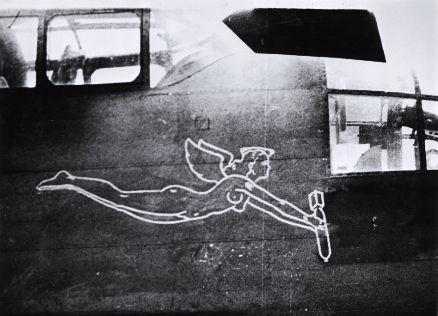
Doolittle nose-art
I read 30 Seconds Over Tokyo when I was still a war-playing kid, before I would understand the mischievous consequences of the Doolittle Raiders B-25 bombers deploying without their bombsights. This was to prevent US war-making advantages falling into enemy hands but it also precluded dropping bombs with accuracy. I’m pretty certain the account for young readers also didn’t explain why over a quarter of the squadron’s bombs were of the incidiary cluster variety. Readers today know what those are for. Doolittle claimed to be targeting military sites in Japan’s capitol, but “invariably” hit civilian areas including four schools and a hospital. Of the American fliers captured, three were tried and executed by the despicable “Japs”, who considered the straffing of civilians to be war crimes. After the war, the US judged the Japanese officers responsible, as if their verdict was a greater injustice against our aviators’ “honest errors”. Today we rationalize our systemic overshoot policy as “collateral damage”.

Every year since WWII, Doolittle’s commandos are feted for their milestone bombing mission. This Veterans Day is to be the last due to their advanced ages. But it is fitting, because isn’t it time Americans faced what we’re celebrating? There’s no denying it took suicidal daring, but the Doolittle Raid inaugurated what became a staple of US warfare, the wholesale terrorizing of civilians from on high, with impunity and indifference. To be fair, the American public has always been kept in the dark. American aircraft have fire-bombed civilians at every diplomatic opportunity since 1942, and a Private Manning sits in the brig for trying to give us a chance to object.

We now know that the Doolittle Raid didn’t turn the tide, nor shake Japanese resolve. It was a retalliation for the attack on Pearl Harbor, intended to boost US morale as if to say, America wasn’t defeated. Kinda like why and how we struck back at Afghanistan after 9/11, just as indiscriminately.

The “Mark Twain” ersatz bombsight
substitute bombsightThe Norden bombsight was a closely guarded US secret weapon. An airstrike without it would today be like lobotomizing so-called smart bombs, and deciding to opt for imprecision bombing. The official army record recounts that a subsitute sighting mechanism was improvised for the raid, dubbed the “Mark Twain” and judged to be effective enough. Now a bad joke. Indochina and Wikileaks-wisened, we know the mendacity of that assessment. The vehemently anti-imperialist, anti-racist Twain would not have been honored.

Twain satirized Western so-called Enlightenment thus: “good to fire villages with, upon occasion”.

Post-postwar hagiographies of the raid have suggested the improvised bombsight was better suited to low-altitude missions than the Norden model. That conclusion is easily dismissed because the device was used only for the Doolittle run and never after. The sight’s designer, mission aviator C. Ross Greening, offered a explanation for why he named the device after Mark Twain in his pothumously published memoir Not As Briefed. He didn’t.

The bombsight is named the “Mark Twain” in reference to the “lead line” depth finder used on the Mississippi River paddle wheelers in bygone days.

Because its design was so simple, we’re left to suppose. Greening’s bombsight was named for the same “mark” which Samuel Langhorne Clemens adopted as his celebrated pen name. I find it disingeneous to pretend to repurpose an archaic expression whose meaning was already eclipsed by the household name of America’s most outspoken anti-imperialist. Who would believe you named your dog “Napoleon” after a French pastry?

We are given another glimpse into Greening’s sense of humor by how he named his plane, the “Hari-Kari-er” ready to deal death by bomb-induced suicide. Greening’s B-25 is the one pictured above, with the angelic tart holding a bomb aloft. Greening’s plane was another that carried only incendiary ordnance.

Much was made of the sight’s two-piece aluminum construction, reportedly costing 20 cents at the time compared to the $10,000 Norden. This provided the jingoist homefront the smug satisfaction perhaps, combining a frugality born of the Depression with the American tradition of racism, that only pennies were expensed and or risked on Japanese lives.

War Crimes
Targeting civilians, taking insufficient care to avoid civilian casualties, using disproportunate force, acts of wanton retaliation, and the use of collective punishment are all prohibited by international convention. They are war crimes for which the US prosecutes adversaries but with which our own military refuses to abide. Americans make much of terrorism, yet remain blind to state terrorism. Doolittle’s historic raid, judged by the objective against which it is celebrated as a success, was an act of deliberate terrorism.

Forcing the Japanese to deploy more of their military assets to protect the mainland sounds like a legitimate strategy, except not by targeting civilians to illustrate the vulnerability, nor by terrorizing the population, one of Doolittle’s stated aims. He called it a “fear complex”.

It was hoped that the damage done would be both material and psychological. Material damage was to be the destruction of specific targets with ensuing confusion and retardation of production. The psychological results, it was hoped, would be the recalling of combat equipment from other theaters for home defense, the development of a fear complex in Japan, improved relationships with our Allies, and a favorable reaction in the American people.

There is no defending Japan’s imperialist expansion in the Pacific, and certainly not its own inhumanity. The Japanese treated fellow Asians with the same racist disregard with which we dispatched Filipinos. While Americans point in horror at how the Japanese retalliated against the Chinese population for the Doolittle Raid, we ignore that Doolittle purposely obscured from where our bombers were launched, leaving China’s coast as the only probably suspect.

To be fair, most of Doolittle’s team was kept in the dark about the mission until they were already deployed. I hardly want to detract from the courage they showed to undertake a project that seemed virtually suicidal. But how long should all of us remain in the dark about the true character of the Doolittle Raid?

Out of deference for the earlier generation of WWII veterans, those in leadership, certain intelligence secrets were kept until thirty years after the war. Unveiled, they paint a very different picture of what transpired. The fact that the US knew the German and Japanese codes from early on revealed an imbalance not previously admitted, as an example.

About the Doolittle Raid, much is already openly documented, if not widely known. The impetus for the raid was public knowledge, the evidence of its intent in full view.

BY DESIGN
In the aftermath of Pearl Harbor, American newspapers were already touting offers of cash rewards for whoever would be the first to strike back at Japan. President Roosevelt expressed a deliberate interest in hitting the Japanese mainland, in particular Tokyo, to retaliate for the Japanese strike against Pearl Harbor, never mind it had been a solely military target.

Plans were made to exploit the Japanese homeland’s vulnerability to fire, as ninety percent of urban structures were made of paper and wood. Writes historian William Bruce Jenson:

In his “confidential” meeting with reporters back in November, Marshall had declared that the US would have no cavil about burning Japan’s paper cities.

For the Doolittle Raid, a bombing strategy was developed to overwhelm the fire department of his target, the Shiba ward.

A former naval attache in Tokyo told Doolittle: “I know that Tokyp fire department very well. Seven big scattered fires would be too much for it to cope with.”

As lead plane, Doolittle’s role was to literally blaze the way. Fellow pilot Richard Joyce told Nebraska History Magazine in 1995:

The lead airplane, which was going to have Doolittle on board as the airplane commander, was going to be loaded with nothing but incendiaries -2.2­ pound thermite incendiaries- in clus­ters. They drop these big clusters and then the straps break and they spray, so they set a whole bunch of fires. He was to be the pathfinder and set a whole bunch of fires in Tokyo for pathfinding purposes.

Doolittle’s report outlined his objective more formally:

one plane was to take off ahead of the others, arrive over Tokyo at dusk and fire the most inflammable part of the city with incendiary bombs. This minimized the overall hazard and assured that the target would be lighted up for following airplanes.

Greening paints the most vivid picture, of burning the Japanese paper houses to light the way:

Doolittle planned to leave a couple of hours early, and in the dark set fire to Tokyo’s Shiba ward … the mission’s basic tactic had been that Doolittle would proceed alone and bomb a flammable section of Tokyo, creating a beacon in the night to help guide following planes to their targets.

Doolittle’s copilot Lt Richard Cole, told this to interviews in 1957:

Since we had a load of incendiaries, our target was the populated areas of the west and northwest parts of Tokyo.

After the bombers had left on their raid, and before news got back about whether or not they accomplished it, the Navy crew on the carrier USS Hornet already sang this song, which went in part:

Little did Hiro think that night
The skies above Tokyo would be alight
With the fires that Jimmy started in Tokyo’s dives
To guide to their targets the B-25s.
When all of a sudden from out of the skies
Came a basket of eggs for the little slant eyes

Incendiaries

Most of the bombers were loaded with three demolition bombs and an incendiary cluster bomb. Some of the planes carried only incendiaries. According to Doolittle’s official report of the raid, here were some of their stated objectives:

Plane no. 40-2270, piloted by Lt. Robert Gray:
thickly populated small factories district. … Fourth scattered incendiary over the correct area

Plane No. 40-2250, Lt. Richard Joyce:
Incendiary cluster dropped over thickly populated and dense industrial residential sector immediately inshore from primary target. (Shiba Ward)

“The third dem. bomb and the incendiary were dropped in the heavy industrial and residential section in the Shiba Ward 1/4 of a mile in shore from the bay and my tat.”

Aircraft 40-2303, Lt Harold Watson:
the congested industrial districts near the railroad station south of the Imperial Palace

AC 40-2283, David Jones:
the congested area Southeast of the Imperial Palace

Even though the planned night raid became a daytime mission, Doolittle did not alter his original role, intended to light the way for the following planes. His target remained the Shiba District of Tokyo. His own plane: “changed course to the southwest and incendiary-bombed highly inflammable section.”

Doolittle’s report included a description of the incendiary bombs:

The Chemical Warfare Service provided special 500 incendiary clusters each containing 128 incendiary bombs. These clusters were developed at the Edgewood Arsenal and test dropped by the Air Corps test group at Aberdeen. Several tests were carried on to assure their proper functioning and to determine the dropping angle and dispersion. Experimental work on and production of these clusters was carried on most efficiently.

As has become an aerial bombardment tradition, crews were let to inscribe messages on the bombs about to be dropped. Accounts made the most of these chestnuts: “You’ll get a BANG out of this.” And “I don’t want to set the world on fire –only Tokyo.”

These details, which reveal the intentions of the raid, were not made known to the public immediately. The Doolittle Raid was planned and executed in secret, with US government and military spokesmen denying knowledge of the operation even in its aftermath. The first word to reach the American public came from the New York Times, citing Japanese sources:

Enemy bombers appeared over Tokyo for the first time in the current war, inflicting damage on schools and hospitals. Invading planes failed to cause and damage on military establishments, although casualties in the schools and hospitals were as yet unknown. This inhuman attack on these cultural establishments and on residential districts is causing widespread indignation among the populace.

This report was dismissed as propaganda. When Japan declared its intention to charge the airman it had taken captive with war crimes, the US protestations redoubled. The accusations were belittled even as our own reports conceded to the possibilities.

Lieutenant Dawson’s Thirty Seconds Over Tokyo was the first published account of the raid. Printed less than a year after the event, wartime-sensitive details such as the phony guns made of broomstick handles poking out the back were left out. Targets were also not specified, but a candor remained, probably intended to be threatening. Lawson described the 500-pound incendiaries as “something like the old Russian Molotov Breadbasket”, and related US naval attache Jurika’s advice:

“If you can start seven good fires in Tokyo, they’ll never put them out,” Jurika promised us. … “I wouldn’t worry too much about setting fires in flimsy-looking sections of Tokyo,” he said. “The Japanese have done an amazing job of spreading out some of their industries, instead of concentrating them in large buildings. There’s probably a small machine shop under half of these fragile-looking roofs.”

“Flimsy” became Lawson’s keyword for the residential areas. Here Lawson described dropping his third and fourth bombs, when he saw their corresponding red light indicators:

The third red light flickered, and, since we were now over a flimsy area in the southern part of the city, the fourth light blinked. That was the incendiary, which I knew would separate as soon as it hit the wind and that dozens of small fire bombs would molt from it.

I was satisfied about the steel-smelter and hoped the other bombs had done as well. There was no way of telling, but I was positive that Tokyo could have been damaged that day with a rock.

Our actual bombing operation, from the time the first one went until the dive, consumed not more than thirty seconds.

Thus: Chance of hitting civilian homes: 50/50.
Charges of Excessive Force could be expected, because
blame the victim for being weaker than: a rock.
Care taken to avoid innocent casualties: 30 seconds.

In a later afterword, Lawson blamed Tokyo for having insufficient bomb shelters.

After the war, US occupation forces recovered Japanese records which documented the losses attributed to the Doolittle Raid: fifty dead, 252 wounded, ninety buildings. Besides military or strategic targets, that number included nine electric power buildings, a garment factory, a food storage warehouse, a gas company, two misc factories, six wards of Nagoya 2nd Temporary Army Hospital, six elementary or secondary schools, and “innumerable nonmilitary residences”.

Strafing
Japan accused the fliers of indescriminate strafing civilians. The US countered that defending fighters were responsible for stray bullets when their gunfire missed the bombers. That’s very likely, except the raiders were candid about their strafing too. Lawson:

I nosed down a railroad track on the outskirts of the city and passed a locomotive close enough to see the surprised face of the engineer. As I went by I could have kicked myself for not giving the locomotive’s boiler a burst of our forward 30-calibre guns, then I remembered that we might have better use for the ammunition.

A big yacht loomed up ahead of us and, figuring it must be armed, I told Thatcher to give it a burst. We went over it, lifted our nose to put the tail down and Thatcher sprayed its deck with our 50-calibre stingers.

Greening’s account of firing on a sailor, raises the moral ambiguity of air warfare with which few airmen grapple. By virtue that technology allows it, combatants become slave to a predetermined outcome:

When we attacked the next patrol boat, a Japanese sailor threw his hands up as if to surrender. I guess he expected us to stop and take him prisoner. We shot him and left this boat smoking too.

The Medals
Friendship Medals exchanged between Japan and the US found themselves requisitioned for Doolittle’s Raid:

Several years prior to the war, medals of friendship and good relationship were awarded to several people of the United States by the Japanese government.  In substance these medals were symbolic of the friendship and cooperation between the nations and were to represent the duration of this attitude.  It was decided by the Secretary of the Navy, Mr. Frank Knox, that the time was appropriate to have these medals returned.  They had been awarded to Mr. Daniel J. Quigley, Mr. John D. Laurey, Mr. H. Vormstein and Lt. Stephen Jurkis.

After arrangements had been made and the medals secured, a ceremony was held on the deck of the Hornet during which the medals were wired to a 500 lb. bomb to be carried by Lt. Ted Lawson and returned to the Japanese government in an appropriate fashion.

Lawson’s plane no 40-2261 dropped that bomb on an “industrial section of Tokyo” omitting to mention that Japan’s industry was still a post-feudal cottage industry.

“The medals were subsequently delivered in small pieces to their donors in Tokyo by Lt. Ted Lawson at about noon, Saturday, April 18, 1942.”

–Mitscher, M.A. Letter Report to Commander Pacific Fleet.

“Through the courtesy of the War Department your Japanese medal and similar medals, turned in for shipment, were returned to His Royal Highness, The Emperor of Japan on April 18, 1942.”

–Knox, F. Letter Report to Mr. H. Vormstein

Bill Graber, fake lesbian activist, agent provocateur, threatens websites to try to withdrawn his mug from public view

Retired Air Force, agent provocateur, infiltrator, Bill Graber aka Paula BrooksHELP! Any other sites out there being threatened by Bill Graber, fake lesbian blogger, DADT spoiler and Syria false flag propaganda troll? Now he’s pretending copyright infringement, trying to withdraw his ugly mug from public view. He’s threatening to sue NMT, our host, and I guess …half the web. Oh. NEVER MIND.
 
What a hoser. If the “retired Air Force” dude hadn’t been unmasked as the fake lesbian blogger “Paula Brooks” giving cover to the more infamous Gay Girl of Damascus Amina Arraf dude, he’d still be infiltrating lesbian blogs, sabotaging their DADT efforts and demoralizing fellow contributors, like a typical COINTELPRO op! When outed by the Washington Post, this is the photo he supplied, now it’s all over the internet. In our initial story, we didn’t know how much weight to give either his name, or his photo, considering he was the source of both, uncorroborated. Judging by the comments and emails we’ve received from agent Lez-Dude, he doesn’t mind the name “Bill Graber” all over the place, but boy he seems uncomfortable with the picture being out there. Could it be that he’s worried that with enough exposure the image will eventually catch the eye of someone who knows his real identity? OR did he give a dead person’s picture to the WaPo, and that could be found out? Who knows, it’s not like “Graber” is above hiding behind another identity, when he blogged as a deaf lesbian whose “dad” had to handle her phone calls from those dagblast reporters.
 
I’d say his claim to have copyrighted his lonesome image is an invitation for someone from the locality of Fairborn, Ohio to snap a real pic. His phone is 937-305-5518, his IP is 65.185.154.156, my bet would be to show this mug shot around Asian massage parlors outside Wright-Patterson Air Force Base.

Much legwork has already been done on “Bill Graber” sick puppy who insinuates himself into lesbian conversations to speak abusively to women, but his spooky military MO is going overlooked.

Synthesizing the complaints accumulated about “Paula Brooks” yields a pattern unnervingly like an activist-provocateur. Graber claims he was motivated to pose as a lesbian to help the cause of DADT, yet his efforts were chiefly disruptive and harmful. Accounts by fellow bloggers mirror exactly what peace activists experience with undercover cops.

By the way, after his unmasking, Graber handed off his site to another non-lesbian, not a man this time, whose husband is in the military.

Bill Graber photo provided to Washington PostCall me a nut, but I’m inclined to suggest that when the WaPo tracked lesbian “Brooks” to a man, it turned out to be a professional infiltrator, and an agreement was reached with the pro-military WaPo where a reasonably believable profile would be tendered to the public, sooner than out an agent. Thus we have “Graber”, this photo, and the following details: retired Air Force, construction worker, 58 years old, from Ohio. That’s all.

Whose photo? Well the longer that mug is online, the more likely such a question will be answered.

Then there will be more embarrassment, considering Graber-dude’s activities weren’t simply to thwart gay rights activists, but to lay the groundwork for US intervention in Syria, and who knows what else.

Of course that’s all conjecture, because I don’t want to out a Federal agent, that would be illegal.

Infiltrating social justice groups is illegal too, so in the interest of solidarity in activism, let’s find out who this Graber-dude is and invite him to come out, so to speak.

Chalk up this further DADT irony: when the military enforces DADT, it can’t hire any real lesbians to infiltrate lesbian blogs, it can only hire fake-lesbians. One hopes the Air Force wasn’t running gay and lesbian blogs to ferret out active duty homosexuals.

Alright, as promised, back to the charade of Graber-dude, ornery construction worker, upset about his likeness being featured on NMT. Here’s what he just sent us, writing as sammy the surf dog, in reply to our telling him to get stuffed:

You obviously need to get up to speed on just what the copyright laws says….

You are to remove that picture at once…. I will be sending the required notices to You… your hosting company and Google

and I’d start thinking about where you going to get the money to pay for the 2 month of unauthorized use….


Bill Graber

937-305-5518

Bill Graber photo provided to Washington PostSeriously? Google, of all people, will see you coming. Unmasked miscreant wants to erase his tracks online. Good luck with that. Your mug is practically an icon, you could trademark it, except now it’s become generic for fake lesbian dude. Yeah, whatever your expertise, it ain’t copyright.

Graber-Dude, what I’m doing, actually, is contacting others online to see how many are receiving your silly threats. I see one site has switched out your photo with a sketch, but hopefully expressing solidarity the rest of us will just share a laugh.

Obviously we don’t NEED to keep your picture here, it’s everywhere else, let other sites do the heavy lifting, but now that you’re erase-my-tracks-dude, you’ve piqued our interest. Because infiltrators are of special interest to us. Unmasked, they ought to be reassigned to desk jobs with their tail between their legs, not busy at their keyboards exercising their mucking-up skills.

Here’s Graber-Dude’s next composition:

Dear Eric Verlo

It has come to my attention that you have made an unauthorized use of my copyrighted image in the preparation of the article entitled “Straight blogger confesses he’s lesbian.”

I have reserved all rights to this image, and I have registered the copyright.

You neither asked for nor received permission to use the image nor to make or distribute copies of said image. Therefore, I believe you have willfully infringed my rights under 17 USC Section 101, et seq. and could be liable for statutory damages as high as $100,000.

I demand that you immediately cease the use and distribution of all infringing works derived from this image, and all copies of it, and that you deliver to me all unused, undistributed copies of it, or destroy such copies immediately, and that you desist from this or any other infringement of my rights in the future.

You will also need to contact me to discuss the licensing fees incurred by your unauthorized use of this image.

If I have not received an affirmative response from you by 8-19-11 indicating that you have fully complied with these requirements, I shall consider taking the full legal remedies available to rectify this situation.

Sincerely,

Not retired airforce construction fake lesbian blogger Paula Brooks aka Bill GraberMr. Graber-Dude. How about we trade images? You can use mine, you have my permission. But you don’t need it. Unless you’re using my likeness for commercial purpose, anyone is allowed to identify me with my image. Go ahead, I’ve got images all over, you have plenty from which to choose. You on the other hand have only one. Something odd about that.

Wikileaks reveals inventory of US possessions critical to corporations

To complain that a wikileaked list of off-US-soil “critical infrastructure and key resources” provides a checklist of targets for aspiring terrorists is to pretend that opponents of the US empire are as simple minded as American television viewers. The importance of most of the so-called Critical Foreign Dependencies is self-evident, more curious is how the US deems these proprietary interests, to what extent it will protect them, and for whom. Sole manufacturers of vaccines might be vital to public health, but what of communications cables, international ports, supplies of industrial metals and suppliers of components to US weapons systems? Those are critical only to bottom lines. The 2008 report in the State Department cable leaked yesterday reveals infrastructure critical to multinational corporations, whether US or not.

While American airwaves are full of denunciations of Wikileaks and Julian Assange for endangering the US, the Western press is ignoring incendiary cables making their rounds in the Middle East, in which the Lebanese Defence Minister Elias El-Murr asks his American liaison to assure Israel that a next invasion, restricted to rooting out Hezbollah, would not be opposed by Lebanese forces.

Amazon, Paypal and EveryDNS have thrown in with those that would censor Wikileaks, likely also Google and Twitter. Try to find the El-Murr story through Google News or Twitter.

Here’s the text of the 2009 cable:

2008 Critical Foreign Dependencies Initiative (CFDI)
critical infrastructure and key resources (CI/KR)

AFRICA

Congo
(Kinshasa): Cobalt (Mine and Plant)

Gabon:
Manganese – Battery grade, natural; battery grade, synthetic; chemical grade; ferro; metallurgical grade

Guinea:
Bauxite (Mine)

South Africa:
BAE Land System OMC, Benoni, South Africa
Brown David Gear Industries LTD, Benoni, South Africa
Bushveld Complex (chromite mine) Ferrochromium Manganese – Battery grade, natural; battery grade, synthetic; chemical grade; ferro; metallurgical grade
Palladium Mine and
Plant Platinum Mines Rhodium

EAST ASIA AND THE PACIFIC

Australia:
Southern Cross undersea cable landing, Brookvale, Australia
Southern Cross undersea cable landing, Sydney, Australia
Manganese – Battery grade, natural; battery grade, synthetic; chemical grade; ferro; metallurgical grade
Nickel Mines Maybe Faulding Mulgrave Victoria, Australia:
Manufacturing facility for Midazolam injection. Mayne Pharma (fill/finish), Melbourne, Australia: Sole suppliers of Crotalid Polyvalent Antivenin (CroFab).

China:
C2C Cable Network undersea cable landing, Chom Hom Kok, Hong Kong
C2C Cable Network undersea cable landing Shanghai, China
China-US undersea cable landing, Chongming, China
China-US undersea cable landing Shantou, China
EAC undersea cable landing Tseung Kwan O, Hong Kong
FLAG/REACH North Asia Loop undersea cable landing Tong Fuk, Hong Kong
Hydroelectric Dam Turbines and Generators Fluorspar (Mine)
Germanium Mine
Graphite Mine
Rare Earth Minerals/Elements Tin Mine and Plant Tungsten – Mine and Plant Polypropylene Filter Material for N-95 Masks
Shanghai Port
Guangzhou Port
Hong Kong Port
Ningbo Port
Tianjin Port

Fiji:
Southern Cross undersea cable landing, Suva, Fiji

Indonesia:
Tin Mine and Plant Straits of Malacca

Japan:
C2C Cable Network undersea cable landing, Chikura, Japan
C2C Cable Network undersea cable landing, Shima, Japan
China-US undersea cable, Okinawa, Japan
EAC undersea cable landing Ajigaura, Japan
EAC undersea cable landing Shima, Japan
FLAG/REACH North Asia Loop undersea cable landing Wada, Japan
Japan-US undersea cable landing, Maruyama, Japan
Japan-US undersea cable landing Kitaibaraki, Japan
KJCN undersea cable landing Fukuoka, Japan
KJCN undersea cable landing Kita-Kyushu, Japan
Pacific Crossing-1 (PC-1) undersea cable landing Ajigaura, Japan
Pacific Crossing-1 (PC-1) undersea cable landing Shima, Japan
Tyco Transpacific undersea cable landing, Toyohashi, Japan
Tyco Transpacific undersea cable landing Emi, Japan
Hitachi, Hydroelectric Dam Turbines and Generators
Port of Chiba
Port of Kobe
Port of Nagoya
Port of Yokohama
Iodine Mine
Metal Fabrication Machines Titanium Metal (Processed) Biken, Kanonji City, Japan
Hitachi Electrical Power Generators and Components Large AC Generators above 40 MVA

Malaysia:
Straits of Malacca

New Zealand:
Southern Cross undersea cable landing, Whenuapai, New Zealand
Southern Cross undersea cable landing, Takapuna, New Zealand

Philippines:
C2C Cable Network undersea cable landing, Batangas, Philippines
EAC undersea cable landing Cavite, Philippines

Republic of Korea:
C2C Cable Network undersea cable landing, Pusan, Republic of Korea.
EAC undersea cable landing Shindu-Ri, Republic of Korea
FLAG/REACH North Asia Loop undersea cable landing Pusan, Republic of Korea
KJCN undersea cable landing Pusan, Republic of Korea
Hitachi Large Electric Power Transformers 230 – 500 kV
Busan Port

Singapore:
C2C Cable Network undersea cable landing, Changi, Singapore
EAC undersea cable landing Changi North, Singapore
Port of Singapore
Straits of Malacca

Taiwan:
C2C Cable Network undersea cable landing, Fangshan, Taiwan
C2C Cable Network undersea cable landing, Tanshui, Taiwan
China-US undersea cable landing Fangshan, Taiwan
EAC undersea cable landing Pa Li, Taiwan
FLAG/REACH North Asia Loop undersea cable landing Toucheng, Taiwan
Kaohsiung Port

EUROPE AND EURASIA

Europe

(Unspecified):
Metal Fabrication Machines: Small number of Turkish companies (Durma, Baykal, Ermaksan)

Austria:
Baxter AG, Vienna, Austria: Immune Globulin Intravenous (IGIV)
Octapharma Pharmazeutika, Vienna, Austria: Immune Globulin Intravenous (IGIV)

Azerbaijan:
Sangachal Terminal
Baku-Tbilisi-Ceyhan Pipeline

Belarus:
Druzhba Oil Pipeline

Belgium:
Germanium Mine
Baxter SA, Lessines, Belgium: Immune Globulin Intravenous (IGIV)
Glaxo Smith Kline, Rixensart, Belgium: Acellular Pertussis Vaccine Component
GlaxoSmithKline Biologicals SA, Wavre, Belgium: Acellular Pertussis Vaccine Component
Port of Antwerp

Denmark:
TAT-14 undersea cable landing, Blaabjerg, Denmark
Bavarian Nordic (BN), Hejreskovvej, Kvistgard, Denmark: Smallpox Vaccine
Novo Nordisk Pharmaceuticals, Inc. Bagsvaerd, Denmark: Numerous formulations of insulin
Novo Nordisk Insulin Manufacturer: Global insulin supplies
Statens Serum Institut, Copenhagen, Denmark: DTaP (including D and T components) pediatric version

France:
APOLLO undersea cable, Lannion, France
FA-1 undersea cable, Plerin, France
TAT-14 undersea cable landing St. Valery, France
Sanofi-Aventis Insulin Manufacturer: Global insulin supplies Foot and Mouth Disease Vaccine finishing
Alstrom, Hydroelectric Dam Turbines and Generators
Alstrom Electrical Power Generators and Components
EMD Pharms Semoy, France: Cyanokit Injection
GlaxoSmithKline, Inc. Evreux, France: Influenza neurominidase inhibitor
RELENZA (Zanamivir) Diagast, Cedex, France: Olympus (impacts blood typing ability)
Genzyme Polyclonals SAS (bulk), Lyon, France: Thymoglobulin
Sanofi Pasteur SA, Lyon, France: Rabies virus vaccine

Georgia:
Baku-Tbilisi-Ceyhan Pipeline

Germany:
TAT-14 undersea cable landing, Nodren, Germany.
Atlantic Crossing-1 (AC-1) undersea cable landing Sylt, Germany
BASF Ludwigshafen: World’s largest integrated chemical complex
Siemens Erlangen: Essentially irreplaceable production of key chemicals
Siemens, GE, Hydroelectric Dam Turbines and Generators
Draeger Safety AG & Co., Luebeck, Germany: Critical to gas detection capability
Junghans Fienwerktechnik Schramberg, Germany: Critical to the production of mortars
TDW-Gasellschaft Wirksysteme, Schroebenhausen, Germany: Critical to the production of the Patriot Advanced Capability Lethality Enhancement Assembly
Siemens, Large Electric Power Transformers 230 – 500 kV
Siemens, GE Electrical Power Generators and Components
Druzhba Oil Pipeline Sanofi Aventis Frankfurt am Main, Germany: Lantus Injection (insulin)
Heyl Chemish-pharmazeutische Fabrik GmbH: Radiogardase (Prussian blue)
Hameln Pharmaceuticals, Hameln, Germany: Pentetate Calcium Trisodium (Ca DTPA) and Pentetate Zinc Trisodium (Zn DTPA) for contamination with plutonium, americium, and curium IDT
Biologika GmbH, Dessau Rossiau, Germany: BN Small Pox Vaccine.
Biotest AG, Dreiech, Germany: Supplier for TANGO (impacts automated blood typing ability) CSL
Behring GmbH, Marburg, Germany: Antihemophilic factor/von Willebrand factor
Novartis Vaccines and Diagnostics GmbH, Marburg, Germany: Rabies virus vaccine
Vetter Pharma Fertigung GmbH & Co KG, Ravensburg, Germany (filling): Rho(D) IGIV
Port of Hamburg

Ireland:
Hibernia Atlantic undersea cable landing, Dublin Ireland
Genzyme Ireland Ltd. (filling), Waterford, Ireland: Thymoglobulin

Italy:
Glaxo Smith Kline SpA (fill/finish), Parma, Italy: Digibind (used to treat snake bites)
Trans-Med gas pipeline

Netherlands:
Atlantic Crossing-1 (AC-1) undersea cable landing Beverwijk, Netherlands
TAT-14 undersea cable landing, Katwijk, Netherlands
Rotterdam Port

Norway:
Cobalt Nickel Mine

Poland:
Druzhba Oil Pipeline

Russia:
Novorossiysk Export Terminal
Primorsk Export Terminal.
Nadym Gas Pipeline Junction: The most critical gas facility in the world
Uranium Nickel Mine: Used in certain types of stainless steel and superalloys
Palladium Mine and Plant Rhodium

Spain:
Strait of Gibraltar
Instituto Grifols, SA, Barcelona, Spain: Immune Globulin Intravenous (IGIV)
Maghreb-Europe (GME) gas pipeline, Algeria

Sweden:
Recip AB Sweden: Thyrosafe (potassium iodine)

Switzerland:
Hoffman-LaRoche, Inc. Basel, Switzerland: Tamiflu (oseltamivir)
Berna Biotech, Berne, Switzerland: Typhoid vaccine CSL
Behring AG, Berne, Switzerland: Immune Globulin Intravenous (IGIV)

Turkey:
Metal Fabrication Machines: Small number of Turkish companies (Durma, Baykal, Ermaksan)
Bosporus Strait
Baku-Tbilisi-Ceyhan Pipeline

Ukraine:
Manganese – Battery grade, natural; battery grade, synthetic; chemical grade; ferro; metallurgical grade

United Kingdom:
Goonhilly Teleport, Goonhilly Downs, United Kingdom
Madley Teleport, Stone Street, Madley, United Kingdom
Martelsham Teleport, Ipswich, United Kingdom
APOLLO undersea cable landing Bude, Cornwall Station, United Kingdom
Atlantic Crossing-1 (AC-1) undersea cable landing Whitesands Bay
FA-1 undersea cable landing Skewjack, Cornwall Station
Hibernia Atlantic undersea cable landing, Southport, United Kingdom
TAT-14 undersea cable landing Bude, Cornwall Station, United Kingdom
Tyco Transatlantic undersea cable landing, Highbridge, United Kingdom
Tyco Transatlantic undersea cable landing, Pottington, United Kingdom.
Yellow/Atlantic Crossing-2 (AC-2) undersea cable landing Bude, United Kingdom
Foot and Mouth Disease Vaccine finishing
BAE Systems (Operations) Ltd., Presont, Lancashire, United Kingdom: Critical to the F-35 Joint Strike Fighter
BAE Systems Operations Ltd., Southway, Plymouth Devon, United Kingdom: Critical to extended range guided munitions
BAE Systems RO Defense, Chorley, United Kingdom: Critical to the Joint Standoff Weapon (JSOW) AGM-154C (Unitary Variant)
MacTaggart Scott, Loanhead, Edinburgh, Lothian, Scotland, United Kingdom: Critical to the Ship Submersible Nuclear (SSN)

NEAR/MIDDLE EAST
Djibouti:
Bab al-Mendeb: Shipping lane is a critical supply chain node

Egypt:
‘Ayn Sukhnah-SuMEd Receiving Import Terminal
‘Sidi Kurayr-SuMed Offloading Export Terminal
Suez Canal

Iran:
Strait of Hormuz
Khark (Kharg) Island
Sea Island Export Terminal
Khark Island T-Jetty

Iraq:
Al-Basrah Oil Terminal

Israel:
Rafael Ordnance Systems Division, Haifa, Israel: Critical to Sensor Fused Weapons (SFW), Wind Corrected Munitions Dispensers (WCMD), Tail Kits, and batteries

Kuwait:
Mina’ al Ahmadi Export Terminal

Morocco:
Strait of Gibraltar
Maghreb-Europe (GME) gas pipeline, Morocco

Oman:
Strait of Hormuz

Qatar:
Ras Laffan Industrial Center: By 2012 Qatar will be the largest source of imported LNG to U.S.

Saudi Arabia:
Abqaiq Processing Center: Largest crude oil processing and stabilization plant in the world
Al Ju’aymah Export Terminal: Part of the Ras Tanura complex
As Saffaniyah Processing Center
Qatif Pipeline Junction
Ras at Tanaqib Processing Center
Ras Tanura Export Terminal
Shaybah Central Gas-oil Separation Plant

Tunisia:
Trans-Med Gas Pipeline

United Arab Emirates (UAE):
Das Island Export Terminal
Jabal Zannah Export Terminal
Strait of Hormuz

Yemen:
Bab al-Mendeb: Shipping lane is a critical supply chain node

SOUTH AND CENTRAL ASIA

Kazakhstan:
Ferrochromium Khromtau Complex, Kempersai, (Chromite Mine)

India:
Orissa (chromite mines) and Karnataka (chromite mines)
Generamedix Gujurat, India: Chemotherapy agents, including florouracil and methotrexate

WESTERN HEMISPHERE

Argentina:
Foot and Mouth Disease Vaccine finishing

Bermuda:
GlobeNet (formerly Bermuda US-1 (BUS-1) undersea cable landing Devonshire, Bermuda

Brazil:
Americas-II undersea cable landing Fortaleza, Brazil
GlobeNet undersea cable landing Fortaleza, Brazil
GlobeNet undersea cable landing Rio de Janeiro, Brazil
Iron Ore from Rio Tinto Mine Manganese – Battery grade, natural; battery grade, synthetic; chemical grade; ferro; metallurgical grade Niobium (Columbium), Araxa,
Minas Gerais State (mine)
Ouvidor and Catalao I,
Goias State: Niobium

Chile:
Iodine Mine

Canada:
Hibernia Atlantic undersea cable landing Halifax , Nova Scotia, Canada
James Bay Power Project, Quebec: monumental hydroelectric power development
Mica Dam, British Columbia: Failure would impact the Columbia River Basin.
Hydro Quebec, Quebec: Critical irreplaceable source of power to portions of Northeast U. S.
Robert Moses/Robert H. Saunders Power, Ontario: Part of the St. Lawrence Power Project, between Barnhart Island, New York, and Cornwall, Ontario
Seven Mile Dam, British Columbia: Concrete gravity dam between two other hydropower dams along the Pend d’Oreille River
Pickering Nuclear Power Plant, Ontario, Canada
Chalk River Nuclear Facility, Ontario: Largest supplier of medical radioisotopes in the world
Hydrofluoric Acid Production Facility, Allied Signal, Amherstburg, Ontario
Enbridge Pipeline Alliance Pipeline: Natural gas transmission from Canada
Maritime and Northeast Pipeline: Natural gas transmission from Canada
Transcanada Gas: Natural gas transmission from Canada
Alexandria Bay POE, Ontario: Northern border crossing
Ambassador Bridge POE, Ontario: Northern border crossing
Blaine POE, British Columbia: Northern border crossing
Blaine Washington Rail Crossing, British Columbia
Blue Water Bridge POE, Ontario: Northern border crossing
Champlain POE, Quebec: Northern border crossing
CPR Tunnel Rail Crossing, Ontario (Michigan Central Rail Crossing)
International Bridge Rail Crossing, Ontario
International Railway Bridge Rail Crossing
Lewiston-Queenstown POE, Ontario: Northern border crossing
Peace Bridge POE, Ontario: Northern border crossing
Pembina POE, Manitoba: Northern border crossing
North Portal Rail Crossing, Saskatchewan
St. Claire Tunnel Rail Crossing, Ontario
Waneta Dam, British Columbia: Earthfill/concrete hydropower dam
Darlington Nuclear Power Plant, Ontario, Canada.
E-ONE Moli Energy, Maple Ridge, Canada: Critical to production of various military application electronics
General Dynamics Land Systems – Canada, London Ontario, Canada: Critical to the production of the Stryker/USMC LAV Vehicle Integration
Raytheon Systems Canada Ltd.
ELCAN Optical Technologies Division, Midland, Ontario, Canada: Critical to the production of the AGM-130 Missile
Thales Optronique Canada, Inc., Montreal, Quebec: Critical optical systems for ground combat vehicles
Germanium Mine Graphite Mine
Iron Ore Mine
Nickel Mine
Niobec Mine, Quebec, Canada: Niobium Cangene, Winnipeg, Manitoba:
Plasma Sanofi Pasteur Ltd., Toronto, Canada: Polio virus vaccine
GlaxoSmithKile Biologicals, North America, Quebec, Canada: Pre-pandemic influenza vaccines

French Guiana:
Americas-II undersea cable landing Cayenne, French Guiana

Martinique:
Americas-II undersea cable landing Le Lamentin, Martinique

Mexico:
FLAG/REACH North Asia Loop undersea cable landing Tijuana, Mexico
Pan-American Crossing (PAC) undersea cable landing Mazatlan, Mexico
Amistad International Dam: On the Rio Grande near Del Rio, Texas and Ciudad Acuna, Coahuila, Mexico
Anzalduas Dam: Diversion dam south of Mission, Texas, operated jointly by the U.S. and Mexico for flood control Falcon International Dam: Upstream of Roma, Texas and Miguel Aleman, Tamaulipas, Mexico
Retamal Dam: Diversion dam south of Weslaco, Texas, operated jointly by the U.S. and Mexico for flood control
GE Hydroelectric Dam Turbines and Generators: Main source for a large portion of larger components
Bridge of the Americas: Southern border crossing
Brownsville POE: Southern border crossing
Calexico East POE: Southern border crossing
Columbia Solidarity Bridge: Southern border crossing
Kansas City Southern de Mexico (KCSM) Rail Line, (Mexico)
Nogales POE: Southern border crossing
Laredo Rail Crossing
Eagle Pass Rail Crossing
Otay Mesa Crossing: Southern border crossing
Pharr International Bridge: Southern border crossing
World Trade Bridge: Southern border crossing
Ysleta Zaragosa Bridge: Southern border crossing
Hydrofluoric Acid Production Facility
Graphite Mine
GE Electrical Power Generators and Components
General Electric, Large Electric Power Transformers 230 – 500 kV

Netherlands Antilles:
Americas-II undersea cable landing Willemstad, Netherlands Antilles.

Panama:
FLAG/REACH North Asia Loop undersea cable landing Fort Amador, Panama
Panama Canal

Peru:
Tin Mine and Plant

Trinidad and Tobago:
Americas-II undersea cable landing
Port of Spain
Atlantic LNG: Provides 70% of U.S. natural gas import needs

Venezuela:
Americas-II undersea cable landing Camuri, Venezuela
GlobeNet undersea cable landing, Punta Gorda, Venezuela
GlobeNet undersea cable landing Catia La Mar, Venezuela
GlobeNet undersea cable landing Manonga, Venezuela

Opportunities for September, updated

SEPTEMBER
12- Day of Solidarity with the People of Zimbabwe
15- GLOBAL VOTE international plebiscite
16- Dave Rovics concert, CC Slocum Commons, 7pm
16-19 A.N.S.W.E.R. Days of Action in Solidarity with BRADLEY MANNING
17- Gender And Liberation demonstration against unsolved crimes against women of West Mesa, NM. At UCCS Upper Plaza, 1:30pm
17- Jim Hightower lecture, The People Are Revolting, CC Cornerstone, 4:45pm
17- Rally: HANDS OFF MY SOCIAL SECURITY, Centennial Hall, 6:30pm
20- David Barsamian, “War & Peace in Central Asia: Thinking Globally, Acting Locally,” CC Slocum Commons, 7:30pm
21- UN International Day of Peace, sponsors PTP, UF & CPI
22- World CAR FREE Day, bike or walk to work
23- Day of Solidarity with the People of Puerto Rico
23- Emma Goldman biographer, Candace Falk, lecture, Packard Hall, 3:30pm
25- Banned Book Week

Robert Fisk and the language of power, danger words: Competing Narratives

Celebrated reporter -and verb- Robert Fisk had harsh words, “danger words” he called them, for host Al-Jazeera where he gave an address about the language of power which has infected newsman and reader alike. Beware your unambiguous acceptance of empty terms into which state propagandists let you infer nuance: power players, activism, non-state actors, key players, geostrategic players, narratives, external players, meaningful solutions, –meaning what?
I’ll not divulge why these stung Al-J, but I’d like to detail the full list, and commit not to condone their false usage at NMT, without ridicule, “quotes” or disclaimer.

Fisk listed several expressions which he attributes to government craftsmen. Unfortunately journalists have been parroting these terms without questioning their dubious meaning. Fisk began with a favorite, the endless, disingenuous, “peace process.” What is that – victor-defined purgatory? Why would “peace” be a “process” Fisk asks.

How appropriate that some of the West’s strongest critics are linguists. Fisk lauded the current seagoing rescue of Gaza, the convoy determined to break the Israeli blockade. He compared it to the Berlin Airlift, when governments saw fit to help besieged peoples, even former enemies. This time however, the people have to act where their governments do not.

I read recently that the Gaza Freedom Flotilla might be preparing accommodations for Noam Chomsky to join the passage. Won’t that be an escalation? I imagine if Robert Fisk would climb aboard too, it would spell doom for any chance the relief supplies would reach the Gazans. A ship convoy with Chomsky and Fisk on board would present an opportunity that an Israeli torpedo could not resist.

Here is his list. If you can’t peruse the lecture, at least ponder these words with as much skepticism as you can. The parenthesis denote my shorthand.

peace process (detente under duress, while enduring repression)

“Peace of the Brave” (accept your subjugation, coined for Algeria, then France lost)

“Hearts and Minds” (Vietnam era psych-ops, then US lost)

spike (to avoid saying: increase)

surge (reinforcements, you send them in you’re losing)

key players (only puppets and their masters need apply)

back on track (the objective has been on rails?)

peace envoy (in mob-speak: the cleaner)

road map (winner’s bill of lading for the spoils)

experts (vetted opinions)

indirect talks (concurrent soliloquies, duets performed solo in proximity to common fiddler calling tune)

competing narratives (parallel universes in one? naturally the perpetrator is going to tell a different tale, disputing that of victim’s; ungoing result is no justice and no injustice) examples:
occupied vs. disputed;
wall vs. security barrier;
colonization vs settlements, outposts or Jewish neighborhoods.

foreign fighters (them, but always us)

Af-Pak (ignores third party India and thus dispute to Kashmir)

appeasers (sissies who don’t have bully’s back)

Weapons of Mass Destruction (not Iraq, now not Iran)

think tanks (ministry of propaganda privatized)

challenges (avoids they are problems)

intervention (asserted authority by military force)

change agents (by undisclosed means?)

Until asked otherwise, I’ll append Fisk’s talk here:

Robert Fisk, The Independent newspaper’s Middle East correspondent, gave the following address to the fifth Al Jazeera annual forum on May 23.

Power and the media are not just about cosy relationships between journalists and political leaders, between editors and presidents. They are not just about the parasitic-osmotic relationship between supposedly honourable reporters and the nexus of power that runs between White House and state department and Pentagon, between Downing Street and the foreign office and the ministry of defence. In the western context, power and the media is about words – and the use of words.

It is about semantics.

It is about the employment of phrases and clauses and their origins. And it is about the misuse of history; and about our ignorance of history.

More and more today, we journalists have become prisoners of the language of power.

Is this because we no longer care about linguistics? Is this because lap-tops ‘correct’ our spelling, ‘trim’ our grammar so that our sentences so often turn out to be identical to those of our rulers? Is this why newspaper editorials today often sound like political speeches?

Let me show you what I mean.

For two decades now, the US and British – and Israeli and Palestinian – leaderships have used the words ‘peace process’ to define the hopeless, inadequate, dishonourable agreement that allowed the US and Israel to dominate whatever slivers of land would be given to an occupied people.

I first queried this expression, and its provenance, at the time of Oslo – although how easily we forget that the secret surrenders at Oslo were themselves a conspiracy without any legal basis. Poor old Oslo, I always think! What did Oslo ever do to deserve this? It was the White House agreement that sealed this preposterous and dubious treaty – in which refugees, borders, Israeli colonies – even timetables – were to be delayed until they could no longer be negotiated.

And how easily we forget the White House lawn – though, yes, we remember the images – upon which it was Clinton who quoted from the Qur’an, and Arafat who chose to say: “Thank you, thank you, thank you, Mr. President.” And what did we call this nonsense afterwards? Yes, it was ‘a moment of history’! Was it? Was it so?

Do you remember what Arafat called it? “The peace of the brave.” But I don’t remember any of us pointing out that “the peace of the brave” was used originally by General de Gaulle about the end of the Algerian war. The French lost the war in Algeria. We did not spot this extraordinary irony.

Same again today. We western journalists – used yet again by our masters – have been reporting our jolly generals in Afghanistan as saying that their war can only be won with a “hearts and minds” campaign. No-one asked them the obvious question: Wasn’t this the very same phrase used about Vietnamese civilians in the Vietnam war? And didn’t we – didn’t the West – lose the war in Vietnam?

Yet now we western journalists are actually using – about Afghanistan – the phrase ‘hearts and minds’ in our reports as if it is a new dictionary definition rather than a symbol of defeat for the second time in four decades, in some cases used by the very same soldiers who peddled this nonsense – at a younger age – in Vietnam.

Just look at the individual words which we have recently co-opted from the US military.

When we westerners find that ‘our’ enemies – al-Qaeda, for example, or the Taliban -have set off more bombs and staged more attacks than usual, we call it ‘a spike in violence’. Ah yes, a ‘spike’!

A ‘spike’ in violence, ladies and gentlemen is a word first used, according to my files, by a brigadier general in the Baghdad Green Zone in 2004. Yet now we use that phrase, we extemporise on it, we relay it on the air as our phrase. We are using, quite literally, an expression created for us by the Pentagon. A spike, of course, goes sharply up, then sharply downwards. A ‘spike’ therefore avoids the ominous use of the words ‘increase in violence’ – for an increase, ladies and gentlemen, might not go down again afterwards.

Now again, when US generals refer to a sudden increase in their forces for an assault on Fallujah or central Baghdad or Kandahar – a mass movement of soldiers brought into Muslim countries by the tens of thousands – they call this a ‘surge’. And a surge, like a tsunami, or any other natural phenomena, can be devastating in its effects. What these ‘surges’ really are – to use the real words of serious journalism – are reinforcements. And reinforcements are sent to wars when armies are losing those wars. But our television and newspaper boys and girls are still talking about ‘surges’ without any attribution at all! The Pentagon wins again.

Meanwhile the ‘peace process’ collapsed. Therefore our leaders – or ‘key players’ as we like to call them – tried to make it work again. Therefore the process had to be put ‘back on track’. It was a railway train, you see. The carriages had come off the line. So the train had to be put ‘back on track’. The Clinton administration first used this phrase, then the Israelis, then the BBC.

But there was a problem when the ‘peace process’ had been put ‘back on track’ – and still came off the line. So we produced a ‘road map’ – run by a Quartet and led by our old Friend of God, Tony Blair, who – in an obscenity of history – we now refer to as a ‘peace envoy’.

But the ‘road map’ isn’t working. And now, I notice, the old ‘peace process’ is back in our newspapers and on our television screens. And two days ago, on CNN, one of those boring old fogies that the TV boys and girls call ‘experts’ – I’ll come back to them in a moment – told us again that the ‘peace process’ was being put ‘back on track’ because of the opening of ‘indirect talks’ between Israelis and Palestinians.

Ladies and gentlemen, this isn’t just about clichés – this is preposterous journalism. There is no battle between power and the media. Through language, we have become them.

Maybe one problem is that we no longer think for ourselves because we no longer read books. The Arabs still read books – I’m not talking here about Arab illiteracy rates – but I’m not sure that we in the West still read books. I often dictate messages over the phone and find I have to spend ten minutes to repeat to someone’s secretary a mere hundred words. They don’t know how to spell.

I was on a plane the other day, from Paris to Beirut – the flying time is about three hours and 45 minutes – and the woman next to me was reading a French book about the history of the Second World War. And she was turning the page every few seconds. She had finished the book before we reached Beirut! And I suddenly realised she wasn’t reading the book – she was surfing the pages! She had lost the ability to what I call ‘deep read’. Is this one of our problems as journalists, I wonder, that we no longer ‘deep read’? We merely use the first words that come to hand …

Let me show you another piece of media cowardice that makes my 63-year-old teeth grind together after 34 years of eating humus and tahina in the Middle East.

We are told, in so many analysis features, that what we have to deal with in the Middle East are ‘competing narratives’. How very cosy. There’s no justice, no injustice, just a couple of people who tell different history stories. ‘Competing narratives’ now regularly pop up in the British press. The phrase is a species – or sub-species – of the false language of anthropology. It deletes the possibility that one group of people – in the Middle East, for example – are occupied, while another group of people are doing the occupying. Again, no justice, no injustice, no oppression or oppressing, just some friendly ‘competing narratives’, a football match, if you like, a level playing field because the two sides are – are they not – ‘in competition’. It’s two sides in a football match. And two sides have to be given equal time in every story.

So an ‘occupation’ can become a ‘dispute’. Thus a ‘wall’ becomes a ‘fence’ or a ‘security barrier’. Thus Israeli colonisation of Arab land contrary to all international law becomes ‘settlements’ or ‘outposts’ or ‘Jewish neighbourhoods’.

You will not be surprised to know that it was Colin Powell, in his starring, powerless appearance as secretary of state to George W. Bush, who told US diplomats in the Middle East to refer to occupied Palestinian land as ‘disputed land’ – and that was good enough for most of the American media.

So watch out for ‘competing narratives’, ladies and gentlemen. There are no ‘competing narratives’, of course, between the US military and the Taliban. When there are, however, you’ll know the West has lost.

But I’ll give you a lovely, personal example of how ‘competing narratives’ come undone. Last month, I gave a lecture in Toronto to mark the 95th anniversary of the 1915 Armenian genocide, the deliberate mass murder of one and a half million Armenian Christians by the Ottoman Turkish army and militia. Before my talk, I was interviewed on Canadian Television, CTV, which also owns the Toronto Globe and Mail newspaper. And from the start, I could see that the interviewer had a problem. Canada has a large Armenian community. But Toronto also has a large Turkish community. And the Turks, as the Globe and Mail always tell us, “hotly dispute” that this was a genocide. So the interviewer called the genocide “deadly massacres”.

Of course, I spotted her specific problem straight away. She could not call the massacres a ‘genocide’, because the Turkish community would be outraged. But equally, she sensed that ‘massacres’ on its own – especially with the gruesome studio background photographs of dead Armenians – was not quite up to defining a million and a half murdered human beings. Hence the ‘deadly massacres’. How odd!!! If there are ‘deadly’ massacres, are there some massacres which are not ‘deadly’, from which the victims walk away alive? It was a ludicrous tautology.

In the end, I told this little tale of journalistic cowardice to my Armenian audience, among whom were sitting CTV executives. Within an hour of my ending, my Armenian host received an SMS about me from a CTV reporter. “Shitting on CTV was way out of line,” the reporter complained. I doubted, personally, if the word ‘shitting’ would find its way onto CTV. But then, neither does ‘genocide’. I’m afraid ‘competing narratives’ had just exploded.

Yet the use of the language of power – of its beacon-words and its beacon-phrases -goes on among us still. How many times have I heard western reporters talking about ‘foreign fighters’ in Afghanistan? They are referring, of course, to the various Arab groups supposedly helping the Taliban. We heard the same story from Iraq. Saudis, Jordanians, Palestinian, Chechen fighters, of course. The generals called them ‘foreign fighters’. And then immediately we western reporters did the same. Calling them ‘foreign fighters’ meant they were an invading force. But not once – ever – have I heard a mainstream western television station refer to the fact that there are at least 150,000 ‘foreign fighters’ in Afghanistan. And that most of them, ladies and gentlemen, are in American or other Nato uniforms!

Similarly, the pernicious phrase ‘Af-Pak’ – as racist as it is politically dishonest – is now used by reporters when it originally was a creation of the US state department, on the day that Richard Holbrooke was appointed special US representative to Afghanistan and Pakistan. But the phrase avoided the use of the word ‘India’ whose influence in Afghanistan and whose presence in Afghanistan, is a vital part of the story. Furthermore, ‘Af-Pak’ – by deleting India – effectively deleted the whole Kashmir crisis from the conflict in south-east Asia. It thus deprived Pakistan of any say in US local policy on Kashmir – after all, Holbrooke was made the ‘Af-Pak’ envoy, specifically forbidden from discussing Kashmir. Thus the phrase ‘Af-Pak’, which totally deletes the tragedy of Kashmir – too many ‘competing narratives’, perhaps? – means that when we journalists use the same phrase, ‘Af-Pak’, which was surely created for us journalists, we are doing the state department’s work.

Now let’s look at history. Our leaders love history. Most of all, they love the Second World War. In 2003, George W. Bush thought he was Churchill as well as George W. Bush. True, Bush had spent the Vietnam war protecting the skies of Texas from the Vietcong. But now, in 2003, he was standing up to the ‘appeasers’ who did not want a war with Saddam who was, of course, ‘the Hitler of the Tigris’. The appeasers were the British who did not want to fight Nazi Germany in 1938. Blair, of course, also tried on Churchill’s waistcoat and jacket for size. No ‘appeaser’ he. America was Britain’s oldest ally, he proclaimed – and both Bush and Blair reminded journalists that the US had stood shoulder-to-shoulder with Britain in her hour of need in 1940.

But none of this was true.

Britain’s old ally was not the United States. It was Portugal, a neutral fascist state during World War Two. Only my own newspaper, The Independent, picked this up.

Nor did America fight alongside Britain in her hour of need in 1940, when Hitler threatened invasion and the German air force blitzed London. No, in 1940 America was enjoying a very profitable period of neutrality – and did not join Britain in the war until Japan attacked the US naval base at Pearl Harbour in December of 1941.

Ouch!

Back in 1956, I read the other day, Eden called Nasser the ‘Mussolini of the Nile’. A bad mistake. Nasser was loved by the Arabs, not hated as Mussolini was by the majority of Africans, especially the Arab Libyans. The Mussolini parallel was not challenged or questioned by the British press. And we all know what happened at Suez in 1956.

Yes, when it comes to history, we journalists really do let the presidents and prime ministers take us for a ride.

Today, as foreigners try to take food and fuel by sea to the hungry Palestinians of Gaza, we journalists should be reminding our viewers and listeners of a long-ago day when America and Britain went to the aid of a surrounded people, bringing food and fuel – our own servicemen dying as they did so – to help a starving population. That population had been surrounded by a fence erected by a brutal army which wished to starve the people into submission. The army was Russian. The city was Berlin. The wall was to come later. The people had been our enemies only three years earlier. Yet we flew the Berlin airlift to save them. Now look at Gaza today. Which western journalist – and we love historical parallels – has even mentioned 1948 Berlin in the context of Gaza?

Look at more recent times. Saddam had ‘weapons of mass destruction’ – you can fit ‘WMD’ into a headline – but of course, he didn’t, and the American press went through embarrassing bouts of self-condemnation afterwards. How could it have been so misled, the New York Times asked itself? It had not, the paper concluded, challenged the Bush administration enough.

And now the very same paper is softly – very softly – banging the drums for war in Iran. Iran is working on WMD. And after the war, if there is a war, more self-condemnation, no doubt, if there are no nuclear weapons projects.

Yet the most dangerous side of our new semantic war, our use of the words of power – though it is not a war since we have largely surrendered – is that it isolates us from our viewers and readers. They are not stupid. They understand words, in many cases – I fear – better than we do. History, too. They know that we are drowning our vocabulary with the language of generals and presidents, from the so-called elites, from the arrogance of the Brookings Institute experts, or those of those of the Rand Corporation or what I call the ‘THINK TANKS’. Thus we have become part of this language.

Here, for example, are some of the danger words:

· POWER PLAYERS

· ACTIVISM

· NON-STATE ACTORS

· KEY PLAYERS

· GEOSTRATEGIC PLAYERS

· NARRATIVES

· EXTERNAL PLAYERS

· PEACE PROCESS

· MEANINGFUL SOLUTIONS

· AF-PAK

· CHANGE AGENTS (whatever these sinister creatures are).

I am not a regular critic of Al Jazeera. It gives me the freedom to speak on air. Only a few years ago, when Wadah Khanfar (now Director General of Al Jazeera) was Al Jazeera’s man in Baghdad, the US military began a slanderous campaign against Wadah’s bureau, claiming – untruthfully – that Al Jazeera was in league with al-Qaeda because they were receiving videotapes of attacks on US forces. I went to Fallujah to check this out. Wadah was 100 per cent correct. Al-Qaeda was handing in their ambush footage without any warning, pushing it through office letter-boxes. The Americans were lying.

Wadah is, of course, wondering what is coming next.

Well, I have to tell you, ladies and gentlemen, that all those ‘danger words’ I have just read out to you – from KEY PLAYERS to NARRATIVES to PEACE PROCESS to AF-PAK – all occur in the nine-page Al Jazeera programme for this very forum.

I’m not condemning Al Jazeera for this, ladies and gentlemen. Because this vocabulary is not adopted through political connivance. It is an infection that we all suffer from – I’ve used ‘peace process’ a few times myself, though with quotation marks which you can’t use on television – but yes, it’s a contagion.

And when we use these words, we become one with the power and the elites which rule our world without fear of challenge from the media. Al Jazeera has done more than any television network I know to challenge authority, both in the Middle East and in the West. (And I am not using ‘challenge’ in the sense of ‘problem’, as in ‘”I face many challenges,” says General McCrystal.’)

How do we escape this disease? Watch out for the spell-checkers in our lap-tops, the sub-editor’s dreams of one-syllable words, stop using Wikipedia. And read books – real books, with paper pages, which means deep reading. History books, especially.

Al Jazeera is giving good coverage to the flotilla – the convoy of boats setting off for Gaza. I don’t think they are a bunch of anti-Israelis. I think the international convoy is on its way because people aboard these ships – from all over the world – are trying to do what our supposedly humanitarian leaders have failed to do. They are bringing food and fuel and hospital equipment to those who suffer. In any other context, the Obamas and the Sarkozys and the Camerons would be competing to land US Marines and the Royal Navy and French forces with humanitarian aid – as Clinton did in Somalia. Didn’t the God-like Blair believe in humanitarian ‘intervention’ in Kosovo and Sierra Leone?

In normal circumstances, Blair might even have put a foot over the border.

But no. We dare not offend the Israelis. And so ordinary people are trying to do what their leaders have culpably failed to do. Their leaders have failed them.

Have the media? Are we showing documentary footage of the Berlin airlift today? Or of Clinton’s attempt to rescue the starving people of Somalia, of Blair’s humanitarian ‘intervention’ in the Balkans, just to remind our viewers and readers – and the people on those boats – that this is about hypocrisy on a massive scale?

The hell we are! We prefer ‘competing narratives’. Few politicians want the Gaza voyage to reach its destination – be its end successful, farcical or tragic. We believe in the ‘peace process’, the ‘road map’. Keep the ‘fence’ around the Palestinians. Let the ‘key players’ sort it out.

Ladies and gentlemen, I am not your ‘key speaker’ this morning.

I am your guest, and I thank you for your patience in listening to me.

Bananas, coconuts, Oreos and apples.

COLORADO SPRINGS- Jim Tucker’s got some ‘splainin’ to do. While reiterating the accusation that the Harrison school board is “racist,” the local NAACP champion called the Asian-American superintendent a “Banana” and thinks school children should be taught what it means. “It’s not really a racial slur. Those are terms that kids should learn in school and understand what those terms mean in the real world,” he told KKTV, who are running with the headline Rally Leader Uses Racial Slur. Tucker’s other school lunch pejoratives are coconut, oreo and apple.

Suomi hockey team beats Slovenska for bronze at 2010 Jeux Olympiques

Finland beats Slovakia for 3rd placeWhat does it say across the front of the Finnish hockey jersey “SUOMI?” Is that an acronym or an internet initialism? While it could be enthusiasm for Olympic mascot Sumi, Suomi is Finnish/Saami for what they call their country. Apparently the Finns didn’t get the memo about bringing Olympic text into uniform English-compliance.

Swedish jerseys use the abbreviation SWE for example, even though they spell their name Sverige. Similarly Austria, AUT, which otherwise goes by Österreich, and Japan, who spell it Nippon.

Norge, Polska, Nederland, España, Schweitz/Suisse, Belarus, Latvija and Kasakctah are perhaps close enough not to confuse American television viewers. Other hold outs are Hungary’s Magyarország, Germany’s Deutschland, and Russia’s ?????? -even the Asian nations know to romanize their Olympic alphabet. When in Rome, even the Greeks speak English.

It amazes me that American interviewers expect Olympic athletes to speak English. Where they don’t, their names don’t even get a mention. South Korean speed skaters are referred to only as “the Koreans.” Chinese free-style ski jumpers were given English nicknames so their “Chenglish”-speaking American coach could tell them apart.

Forget Olympic Gold, US claims a ring

ringsThe Olympic rings represent continents don’t they? I can almost see the globe laid flat traversed by the five rings, even the colors seem culturally appropriate. B, Y, Bk, G, R are the US, South America, Europe, Africa and Asia. What is North America but the US with its oil reserves isolated in the state of Canada and its cheap non-citizen labor pool confined in the state of Mexico? Actually the Olympic organization conflates South America with North to accommodate a ring for Oceania. Australia can have a ring of clear wallpaper. The indigenous revolution of Latin America deserves a ring of African dimension. If any powers can stand merging it’s US and EU. The Winter Olympics could be represented by a single white ring.

By an odd coincidence E.U. are the European Union’s initials for les Etats Unis, the United States.

Greg Mortenson brings war to Pakistan

Three Cups of Tea, now Stones Into Schools author Greg Mortenson saw stones turned against Americans as the US suffered its first soldier casualties from an IED in the northwest boarder region of Pakistan. The US troops were training the paramilitary Frontier Corps, mercenaries hired to protect the all-girls schools built by Mortenson’s Central Asia Institute and USAID to which local Muslims and the Taliban take such umbrage. Oh, and lots of teenage girls were killed and injured too.

You thought Pakistan was already seeing plenty of casualties? Well except for a US contractor killed in a hotel bombing, all the deaths have been Pakistani civilians, killed by the score in daily air strikes by US drones.

Beyond MLK worship: Beyond Vietnam

MLK“A time comes when silence is betrayal. That time has come for us in relation to Vietnam.”
Martin Luther King Beyond Vietnam: Time to Break the Silence
Full text of 1967 speech below.

Riverside Church, New York City, 4 April 1967

I come to this magnificent house of worship tonight because my conscience leaves me no other choice. I join with you in this meeting because I am in deepest agreement with the aims and work of the organization which has brought us together: Clergy and Laymen Concerned about Vietnam. The recent statement of your executive committee are the sentiments of my own heart and I found myself in full accord when I read its opening lines:

“A time comes when silence is betrayal.”

That time has come for us in relation to Vietnam.

The truth of these words is beyond doubt but the mission to which they call us is a most difficult one. Even when pressed by the demands of inner truth, men do not easily assume the task of opposing their government’s policy, especially in time of war. Nor does the human spirit move without great difficulty against all the apathy of conformist thought within one’s own bosom and in the surrounding world. Moreover when the issues at hand seem as perplexed as they often do in the case of this dreadful conflict we are always on the verge of being mesmerized by uncertainty; but we must move on.

Some of us who have already begun to break the silence of the night have found that the calling to speak is often a vocation of agony, but we must speak. We must speak with all the humility that is appropriate to our limited vision, but we must speak. And we must rejoice as well, for surely this is the first time in our nation’s history that a significant number of its religious leaders have chosen to move beyond the prophesying of smooth patriotism to the high grounds of a firm dissent based upon the mandates of conscience and the reading of history. Perhaps a new spirit is rising among us. If it is, let us trace its movement well and pray that our own inner being may be sensitive to its guidance, for we are deeply in need of a new way beyond the darkness that seems so close around us.

Over the past two years, as I have moved to break the betrayal of my own silences and to speak from the burnings of my own heart, as I have called for radical departures from the destruction of Vietnam, many persons have questioned me about the wisdom of my path. At the heart of their concerns this query has often loomed large and loud: Why are you speaking about war, Dr. King? Why are you joining the voices of dissent? Peace and civil rights don’t mix, they say. Aren’t you hurting the cause of your people, they ask? And when I hear them, though I often understand the source of their concern, I am nevertheless greatly saddened, for such questions mean that the inquirers have not really known me, my commitment or my calling. Indeed, their questions suggest that they do not know the world in which they live.

“I wish not to speak with Hanoi and the National Liberation Front, but rather to my fellow Americans who, with me, bear the greatest responsibility in ending a conflict that has exacted a heavy price on both continents.”

In the light of such tragic misunderstandings, I deem it of signal importance to try to state clearly, and I trust concisely, why I believe that the path from Dexter Avenue Baptist Church — the church in Montgomery, Alabama, where I began my pastorate — leads clearly to this sanctuary tonight.

I come to this platform tonight to make a passionate plea to my beloved nation. This speech is not addressed to Hanoi or to the National Liberation Front. It is not addressed to China or to Russia.

Nor is it an attempt to overlook the ambiguity of the total situation and the need for a collective solution to the tragedy of Vietnam. Neither is it an attempt to make North Vietnam or the National Liberation Front paragons of virtue, nor to overlook the role they can play in a successful resolution of the problem. While they both may have justifiable reason to be suspicious of the good faith of the United States, life and history give eloquent testimony to the fact that conflicts are never resolved without trustful give and take on both sides.

Tonight, however, I wish not to speak with Hanoi and the NLF, but rather to my fellow Americans, who, with me, bear the greatest responsibility in ending a conflict that has exacted a heavy price on both continents.

The Importance of Vietnam

Since I am a preacher by trade, I suppose it is not surprising that I have seven major reasons for bringing Vietnam into the field of my moral vision. There is at the outset a very obvious and almost facile connection between the war in Vietnam and the struggle I, and others, have been waging in America. A few years ago there was a shining moment in that struggle. It seemed as if there was a real promise of hope for the poor — both black and white — through the poverty program. There were experiments, hopes, new beginnings. Then came the buildup in Vietnam and I watched the program broken and eviscerated as if it were some idle political plaything of a society gone mad on war, and I knew that America would never invest the necessary funds or energies in rehabilitation of its poor so long as adventures like Vietnam continued to draw men and skills and money like some demonic destructive suction tube. So I was increasingly compelled to see the war as an enemy of the poor and to attack it as such.

“For the sake of those boys,
for the sake of this governent,
for the sake of hundreds of thousands
trembling under our violence,
I cannot be silent.”

Perhaps the more tragic recognition of reality took place when it became clear to me that the war was doing far more than devastating the hopes of the poor at home. It was sending their sons and their brothers and their husbands to fight and to die in extraordinarily high proportions relative to the rest of the population. We were taking the black young men who had been crippled by our society and sending them eight thousand miles away to guarantee liberties in Southeast Asia which they had not found in southwest Georgia and East Harlem. So we have been repeatedly faced with the cruel irony of watching Negro and white boys on TV screens as they kill and die together for a nation that has been unable to seat them together in the same schools. So we watch them in brutal solidarity burning the huts of a poor village, but we realize that they would never live on the same block in Detroit. I could not be silent in the face of such cruel manipulation of the poor.

My third reason moves to an even deeper level of awareness, for it grows out of my experience in the ghettoes of the North over the last three years — especially the last three summers. As I have walked among the desperate, rejected and angry young men I have told them that Molotov cocktails and rifles would not solve their problems. I have tried to offer them my deepest compassion while maintaining my conviction that social change comes most meaningfully through nonviolent action. But they asked — and rightly so — what about Vietnam? They asked if our own nation wasn’t using massive doses of violence to solve its problems, to bring about the changes it wanted. Their questions hit home, and I knew that I could never again raise my voice against the violence of the oppressed in the ghettos without having first spoken clearly to the greatest purveyor of violence in the world today — my own government. For the sake of those boys, for the sake of this government, for the sake of hundreds of thousands trembling under our violence, I cannot be silent.

For those who ask the question, “Aren’t you a civil rights leader?” and thereby mean to exclude me from the movement for peace, I have this further answer. In 1957 when a group of us formed the Southern Christian Leadership Conference, we chose as our motto: “To save the soul of America.” We were convinced that we could not limit our vision to certain rights for black people, but instead affirmed the conviction that America would never be free or saved from itself unless the descendants of its slaves were loosed completely from the shackles they still wear. In a way we were agreeing with Langston Hughes, that black bard of Harlem, who had written earlier:

O, yes,
I say it plain,
America never was America to me,
And yet I swear this oath —
America will be!

Now, it should be incandescently clear that no one who has any concern for the integrity and life of America today can ignore the present war. If America’s soul becomes totally poisoned, part of the autopsy must read Vietnam. It can never be saved so long as it destroys the deepest hopes of men the world over. So it is that those of us who are yet determined that America will be are led down the path of protest and dissent, working for the health of our land.

“Surely we must see
that the men we supported
pressed them to their violence.”

As if the weight of such a commitment to the life and health of America were not enough, another burden of responsibility was placed upon me in 1964; and I cannot forget that the Nobel Prize for Peace was also a commission — a commission to work harder than I had ever worked before for “the brotherhood of man.” This is a calling that takes me beyond national allegiances, but even if it were not present I would yet have to live with the meaning of my commitment to the ministry of Jesus Christ. To me the relationship of this ministry to the making of peace is so obvious that I sometimes marvel at those who ask me why I am speaking against the war. Could it be that they do not know that the good news was meant for all men — for Communist and capitalist, for their children and ours, for black and for white, for revolutionary and conservative? Have they forgotten that my ministry is in obedience to the one who loved his enemies so fully that he died for them? What then can I say to the “Vietcong” or to Castro or to Mao as a faithful minister of this one? Can I threaten them with death or must I not share with them my life?

Finally, as I try to delineate for you and for myself the road that leads from Montgomery to this place I would have offered all that was most valid if I simply said that I must be true to my conviction that I share with all men the calling to be a son of the living God. Beyond the calling of race or nation or creed is this vocation of sonship and brotherhood, and because I believe that the Father is deeply concerned especially for his suffering and helpless and outcast children, I come tonight to speak for them.

This I believe to be the privilege and the burden of all of us who deem ourselves bound by allegiances and loyalties which are broader and deeper than nationalism and which go beyond our nation’s self-defined goals and positions. We are called to speak for the weak, for the voiceless, for victims of our nation and for those it calls enemy, for no document from human hands can make these humans any less our brothers.

Strange Liberators

And as I ponder the madness of Vietnam and search within myself for ways to understand and respond to compassion my mind goes constantly to the people of that peninsula. I speak now not of the soldiers of each side, not of the junta in Saigon, but simply of the people who have been living under the curse of war for almost three continuous decades now. I think of them too because it is clear to me that there will be no meaningful solution there until some attempt is made to know them and hear their broken cries.

“Before long they must know
that their government has sent them
into a struggle among Vietnamese,
and the more sophisticated surely realize
that we are on the side of the wealthy
and the secure
while we create hell for the poor.”

They must see Americans as strange liberators. The Vietnamese people proclaimed their own independence in 1945 after a combined French and Japanese occupation, and before the Communist revolution in China. They were led by Ho Chi Minh. Even though they quoted the American Declaration of Independence in their own document of freedom, we refused to recognize them. Instead, we decided to support France in its re-conquest of her former colony.

Our government felt then that the Vietnamese people were not “ready” for independence, and we again fell victim to the deadly Western arrogance that has poisoned the international atmosphere for so long. With that tragic decision we rejected a revolutionary government seeking self-determination, and a government that had been established not by China (for whom the Vietnamese have no great love) but by clearly indigenous forces that included some Communists. For the peasants this new government meant real land reform, one of the most important needs in their lives.

For nine years following 1945 we denied the people of Vietnam the right of independence. For nine years we vigorously supported the French in their abortive effort to re-colonize Vietnam.

Before the end of the war we were meeting eighty percent of the French war costs. Even before the French were defeated at Dien Bien Phu, they began to despair of the reckless action, but we did not. We encouraged them with our huge financial and military supplies to continue the war even after they had lost the will. Soon we would be paying almost the full costs of this tragic attempt at re-colonization.

After the French were defeated it looked as if independence and land reform would come again through the Geneva agreements. But instead there came the United States, determined that Ho should not unify the temporarily divided nation, and the peasants watched again as we supported one of the most vicious modern dictators — our chosen man, Premier Diem. The peasants watched and cringed as Diem ruthlessly routed out all opposition, supported their extortionist landlords and refused even to discuss reunification with the north. The peasants watched as all this was presided over by U.S. influence and then by increasing numbers of U.S. troops who came to help quell the insurgency that Diem’s methods had aroused. When Diem was overthrown they may have been happy, but the long line of military dictatorships seemed to offer no real change — especially in terms of their need for land and peace.

The only change came from America as we increased our troop commitments in support of governments which were singularly corrupt, inept and without popular support. All the while the people read our leaflets and received regular promises of peace and democracy — and land reform. Now they languish under our bombs and consider us – not their fellow Vietnamese — the real enemy. They move sadly and apathetically as we herd them off the land of their fathers into concentration camps where minimal social needs are rarely met. They know they must move or be destroyed by our bombs. So they go — primarily women and children and the aged.

“Somehow this madness must cease.”

They watch as we poison their water, as we kill a million acres of their crops. They must weep as the bulldozers roar through their areas preparing to destroy the precious trees. They wander into the hospitals, with at least twenty casualties from American firepower for one “Vietcong-inflicted” injury. So far we may have killed a million of them — mostly children. They wander into the towns and see thousands of the children, homeless, without clothes, running in packs on the streets like animals. They see the children, degraded by our soldiers as they beg for food. They see the children selling their sisters to our soldiers, soliciting for their mothers.

What do the peasants think as we ally ourselves with the landlords and as we refuse to put any action into our many words concerning land reform? What do they think as we test our latest weapons on them, just as the Germans tested out new medicine and new tortures in the concentration camps of Europe? Where are the roots of the independent Vietnam we claim to be building? Is it among these voiceless ones?

We have destroyed their two most cherished institutions: the family and the village. We have destroyed their land and their crops. We have cooperated in the crushing of the nation’s only non-Communist revolutionary political force — the Unified Buddhist church. We have supported the enemies of the peasants of Saigon. We have corrupted their women and children and killed their men. What liberators?

Now there is little left to build on — save bitterness. Soon the only solid physical foundations remaining will be found at our military bases and in the concrete of the concentration camps we call fortified hamlets. The peasants may well wonder if we plan to build our new Vietnam on such grounds as these? Could we blame them for such thoughts? We must speak for them and raise the questions they cannot raise. These too are our brothers.

Perhaps the more difficult but no less necessary task is to speak for those who have been designated as our enemies. What of the National Liberation Front — that strangely anonymous group we call VC or Communists? What must they think of us in America when they realize that we permitted the repression and cruelty of Diem which helped to bring them into being as a resistance group in the south? What do they think of our condoning the violence which led to their own taking up of arms? How can they believe in our integrity when now we speak of “aggression from the north” as if there were nothing more essential to the war? How can they trust us when now we charge them with violence after the murderous reign of Diem and charge them with violence while we pour every new weapon of death into their land? Surely we must understand their feelings even if we do not condone their actions. Surely we must see that the men we supported pressed them to their violence. Surely we must see that our own computerized plans of destruction simply dwarf their greatest acts.

“We must continue to raise our voices if our nation persists in its perverse ways in Vietnam.”

How do they judge us when our officials know that their membership is less than twenty-five percent Communist and yet insist on giving them the blanket name? What must they be thinking when they know that we are aware of their control of major sections of Vietnam and yet we appear ready to allow national elections in which this highly organized political parallel government will have no part? They ask how we can speak of free elections when the Saigon press is censored and controlled by the military junta. And they are surely right to wonder what kind of new government we plan to help form without them — the only party in real touch with the peasants. They question our political goals and they deny the reality of a peace settlement from which they will be excluded. Their questions are frighteningly relevant. Is our nation planning to build on political myth again and then shore it up with the power of new violence?

Here is the true meaning and value of compassion and nonviolence when it helps us to see the enemy’s point of view, to hear his questions, to know his assessment of ourselves. For from his view we may indeed see the basic weaknesses of our own condition, and if we are mature, we may learn and grow and profit from the wisdom of the brothers who are called the opposition.

So, too, with Hanoi. In the north, where our bombs now pummel the land, and our mines endanger the waterways, we are met by a deep but understandable mistrust. To speak for them is to explain this lack of confidence in Western words, and especially their distrust of American intentions now. In Hanoi are the men who led the nation to independence against the Japanese and the French, the men who sought membership in the French commonwealth and were betrayed by the weakness of Paris and the willfulness of the colonial armies. It was they who led a second struggle against French domination at tremendous costs, and then were persuaded to give up the land they controlled between the thirteenth and seventeenth parallel as a temporary measure at Geneva. After 1954 they watched us conspire with Diem to prevent elections which would have surely brought Ho Chi Minh to power over a united Vietnam, and they realized they had been betrayed again.

When we ask why they do not leap to negotiate, these things must be remembered. Also it must be clear that the leaders of Hanoi considered the presence of American troops in support of the Diem regime to have been the initial military breach of the Geneva agreements concerning foreign troops, and they remind us that they did not begin to send in any large number of supplies or men until American forces had moved into the tens of thousands.

“When machines and computers,
profit motives and property rights
are considered more important than people,
the giant triplets of
racism,
materialism
and militarism
are incapable of being conquered.”

Hanoi remembers how our leaders refused to tell us the truth about the earlier North Vietnamese overtures for peace, how the president claimed that none existed when they had clearly been made. Ho Chi Minh has watched as America has spoken of peace and built up its forces, and now he has surely heard of the increasing international rumors of American plans for an invasion of the north. He knows the bombing and shelling and mining we are doing are part of traditional pre-invasion strategy. Perhaps only his sense of humor and of irony can save him when he hears the most powerful nation of the world speaking of aggression as it drops thousands of bombs on a poor weak nation more than eight thousand miles away from its shores.

At this point I should make it clear that while I have tried in these last few minutes to give a voice to the voiceless on Vietnam and to understand the arguments of those who are called enemy, I am as deeply concerned about our troops there as anything else. For it occurs to me that what we are submitting them to in Vietnam is not simply the brutalizing process that goes on in any war where armies face each other and seek to destroy. We are adding cynicism to the process of death, for they must know after a short period there that none of the things we claim to be fighting for are really involved. Before long they must know that their government has sent them into a struggle among Vietnamese, and the more sophisticated surely realize that we are on the side of the wealthy and the secure while we create hell for the poor.

This Madness Must Cease

Somehow this madness must cease. We must stop now. I speak as a child of God and brother to the suffering poor of Vietnam. I speak for those whose land is being laid waste, whose homes are being destroyed, whose culture is being subverted. I speak for the poor of America who are paying the double price of smashed hopes at home and death and corruption in Vietnam. I speak as a citizen of the world, for the world as it stands aghast at the path we have taken. I speak as an American to the leaders of my own nation. The great initiative in this war is ours. The initiative to stop it must be ours.

This is the message of the great Buddhist leaders of Vietnam. Recently one of them wrote these words:

“Each day the war goes on the hatred increases in the heart of the Vietnamese and in the hearts of those of humanitarian instinct. The Americans are forcing even their friends into becoming their enemies. It is curious that the Americans, who calculate so carefully on the possibilities of military victory, do not realize that in the process they are incurring deep psychological and political defeat. The image of America will never again be the image of revolution, freedom and democracy, but the image of violence and militarism.”

“A nation that continues
year after year
to spend more money on military defense
than on programs of social uplift
is approaching spiritual death.”

If we continue, there will be no doubt in my mind and in the mind of the world that we have no honorable intentions in Vietnam. It will become clear that our minimal expectation is to occupy it as an American colony and men will not refrain from thinking that our maximum hope is to goad China into a war so that we may bomb her nuclear installations. If we do not stop our war against the people of Vietnam immediately the world will be left with no other alternative than to see this as some horribly clumsy and deadly game we have decided to play.

The world now demands a maturity of America that we may not be able to achieve. It demands that we admit that we have been wrong from the beginning of our adventure in Vietnam, that we have been detrimental to the life of the Vietnamese people. The situation is one in which we must be ready to turn sharply from our present ways.

In order to atone for our sins and errors in Vietnam, we should take the initiative in bringing a halt to this tragic war. I would like to suggest five concrete things that our government should do immediately to begin the long and difficult process of extricating ourselves from this nightmarish conflict:

• End all bombing in North and South Vietnam

• Declare a unilateral cease-fire in the hope that such action will create the atmosphere for negotiation.

• Take immediate steps to prevent other battlegrounds in Southeast Asia by curtailing our military buildup in Thailand and our interference in Laos.

• Realistically accept the fact that the National Liberation Front has substantial support in South Vietnam and must thereby play a role in any meaningful negotiations and in any future Vietnam government.

• Set a date that we will remove all foreign troops from Vietnam in accordance with the 1954 Geneva agreement.

Part of our ongoing commitment might well express itself in an offer to grant asylum to any Vietnamese who fears for his life under a new regime which included the Liberation Front. Then we must make what reparations we can for the damage we have done. We most provide the medical aid that is badly needed, making it available in this country if necessary.

Protesting The War

Meanwhile we in the churches and synagogues have a continuing task while we urge our government to disengage itself from a disgraceful commitment. We must continue to raise our voices if our nation persists in its perverse ways in Vietnam. We must be prepared to match actions with words by seeking out every creative means of protest possible.

As we counsel young men concerning military service we must clarify for them our nation’s role in Vietnam and challenge them with the alternative of conscientious objection. I am pleased to say that this is the path now being chosen by more than seventy students at my own alma mater, Morehouse College, and I recommend it to all who find the American course in Vietnam a dishonorable and unjust one. Moreover I would encourage all ministers of draft age to give up their ministerial exemptions and seek status as conscientious objectors. These are the times for real choices and not false ones. We are at the moment when our lives must be placed on the line if our nation is to survive its own folly. Every man of humane convictions must decide on the protest that best suits his convictions, but we must all protest.

“If we do not act
we shall surely be dragged down
the long and shameful corridors of time
reserved for those who possess
power without compassion,
might without morality,
and strength without sight.”

There is something seductively tempting about stopping there and sending us all off on what in some circles has become a popular crusade against the war in Vietnam. I say we must enter the struggle, but I wish to go on now to say something even more disturbing. The war in Vietnam is but a symptom of a far deeper malady within the American spirit, and if we ignore this sobering reality we will find ourselves organizing clergy-and laymen-concerned committees for the next generation. They will be concerned about Guatemala and Peru. They will be concerned about Thailand and Cambodia. They will be concerned about Mozambique and South Africa. We will be marching for these and a dozen other names and attending rallies without end unless there is a significant and profound change in American life and policy. Such thoughts take us beyond Vietnam, but not beyond our calling as sons of the living God.

In 1957 a sensitive American official overseas said that it seemed to him that our nation was on the wrong side of a world revolution. During the past ten years we have seen emerge a pattern of suppression which now has justified the presence of U.S. military “advisors” in Venezuela. This need to maintain social stability for our investments accounts for the counter-revolutionary action of American forces in Guatemala. It tells why American helicopters are being used against guerrillas in Colombia and why American napalm and green beret forces have already been active against rebels in Peru. It is with such activity in mind that the words of the late John F. Kennedy come back to haunt us. Five years ago he said,

“Those who make peaceful revolution impossible will make violent revolution inevitable.”

Increasingly, by choice or by accident, this is the role our nation has taken — the role of those who make peaceful revolution impossible by refusing to give up the privileges and the pleasures that come from the immense profits of overseas investment.

I am convinced that if we are to get on the right side of the world revolution, we as a nation must undergo a radical revolution of values. We must rapidly begin the shift from a “thing-oriented” society to a “person-oriented” society. When machines and computers, profit motives and property rights are considered more important than people, the giant triplets of racism, materialism, and militarism are incapable of being conquered.

A true revolution of values will soon cause us to question the fairness and justice of many of our past and present policies. On the one hand we are called to play the good Samaritan on life’s roadside; but that will be only an initial act. One day we must come to see that the whole Jericho road must be transformed so that men and women will not be constantly beaten and robbed as they make their journey on life’s highway.

True compassion is more than flinging a coin to a beggar; it is not haphazard and superficial. It comes to see that an edifice which produces beggars needs restructuring. A true revolution of values will soon look uneasily on the glaring contrast of poverty and wealth. With righteous indignation, it will look across the seas and see individual capitalists of the West investing huge sums of money in Asia, Africa and South America, only to take the profits out with no concern for the social betterment of the countries, and say: “This is not just.”

It will look at our alliance with the landed gentry of Latin America and say: “This is not just.”

The Western arrogance of feeling that it has everything to teach others and nothing to learn from them is not just.

A true revolution of values will lay hands on the world order and say of war: “This way of settling differences is not just.”

This business of burning human beings with napalm, of filling our nation’s homes with orphans and widows, of injecting poisonous drugs of hate into veins of people normally humane, of sending men home from dark and bloody battlefields physically handicapped and psychologically deranged, cannot be reconciled with wisdom, justice and love. A nation that continues year after year to spend more money on military defense than on programs of social uplift is approaching spiritual death.

America, the richest and most powerful nation in the world, can well lead the way in this revolution of values. There is nothing, except a tragic death wish, to prevent us from reordering our priorities, so that the pursuit of peace will take precedence over the pursuit of war. There is nothing to keep us from molding a recalcitrant status quo with bruised hands until we have fashioned it into a brotherhood.

This kind of positive revolution of values is our best defense against communism. War is not the answer. Communism will never be defeated by the use of atomic bombs or nuclear weapons. Let us not join those who shout war and through their misguided passions urge the United States to relinquish its participation in the United Nations. These are days which demand wise restraint and calm reasonableness. We must not call everyone a Communist or an appeaser who advocates the seating of Red China in the United Nations and who recognizes that hate and hysteria are not the final answers to the problem of these turbulent days. We must not engage in a negative anti-communism, but rather in a positive thrust for democracy, realizing that our greatest defense against communism is to take offensive action in behalf of justice. We must with positive action seek to remove those conditions of poverty, insecurity and injustice which are the fertile soil in which the seed of communism grows and develops.

The People Are Important

These are revolutionary times. All over the globe men are revolting against old systems of exploitation and oppression and out of the wombs of a frail world new systems of justice and equality are being born. The shirtless and barefoot people of the land are rising up as never before. “The people who sat in darkness have seen a great light.” We in the West must support these revolutions. It is a sad fact that, because of comfort, complacency, a morbid fear of communism, and our proneness to adjust to injustice, the Western nations that initiated so much of the revolutionary spirit of the modern world have now become the arch anti-revolutionaries. This has driven many to feel that only Marxism has the revolutionary spirit. Therefore, communism is a judgment against our failure to make democracy real and follow through on the revolutions we initiated. Our only hope today lies in our ability to recapture the revolutionary spirit and go out into a sometimes hostile world declaring eternal hostility to poverty, racism, and militarism. With this powerful commitment we shall boldly challenge the status quo and unjust mores and thereby speed the day when “every valley shall be exalted, and every mountain and hill shall be made low, and the crooked shall be made straight and the rough places plain.”

A genuine revolution of values means in the final analysis that our loyalties must become ecumenical rather than sectional. Every nation must now develop an overriding loyalty to mankind as a whole in order to preserve the best in their individual societies.

This call for a world-wide fellowship that lifts neighborly concern beyond one’s tribe, race, class and nation is in reality a call for an all-embracing and unconditional love for all men. This oft misunderstood and misinterpreted concept – so readily dismissed by the Nietzsches of the world as a weak and cowardly force – has now become an absolute necessity for the survival of man. When I speak of love I am not speaking of some sentimental and weak response. I am speaking of that force which all of the great religions have seen as the supreme unifying principle of life. Love is somehow the key that unlocks the door which leads to ultimate reality. This Hindu-Moslem-Christian-Jewish-Buddhist belief about ultimate reality is beautifully summed up in the first epistle of Saint John:

Let us love one another; for love is God and everyone that loveth is born of God and knoweth God. He that loveth not knoweth not God; for God is love. If we love one another God dwelleth in us, and his love is perfected in us.

Let us hope that this spirit will become the order of the day. We can no longer afford to worship the god of hate or bow before the altar of retaliation. The oceans of history are made turbulent by the ever-rising tides of hate. History is cluttered with the wreckage of nations and individuals that pursued this self-defeating path of hate. As Arnold Toynbee says :

“Love is the ultimate force that makes for the saving choice of life and good against the damning choice of death and evil. Therefore the first hope in our inventory must be the hope that love is going to have the last word.”

We are now faced with the fact that tomorrow is today. We are confronted with the fierce urgency of now. In this unfolding conundrum of life and history there is such a thing as being too late. Procrastination is still the thief of time. Life often leaves us standing bare, naked and dejected with a lost opportunity. The “tide in the affairs of men” does not remain at the flood; it ebbs. We may cry out desperately for time to pause in her passage, but time is deaf to every plea and rushes on. Over the bleached bones and jumbled residue of numerous civilizations are written the pathetic words: “Too late.”

There is an invisible book of life that faithfully records our vigilance or our neglect. “The moving finger writes, and having writ moves on…” We still have a choice today; nonviolent coexistence or violent co-annihilation.

We must move past indecision to action. We must find new ways to speak for peace in Vietnam and justice throughout the developing world – a world that borders on our doors. If we do not act we shall surely be dragged down the long dark and shameful corridors of time reserved for those who possess power without compassion, might without morality, and strength without sight.

Now let us begin. Now let us rededicate ourselves to the long and bitter – but beautiful – struggle for a new world. This is the calling of the sons of God, and our brothers wait eagerly for our response. Shall we say the odds are too great? Shall we tell them the struggle is too hard? Will our message be that the forces of American life militate against their arrival as full men, and we send our deepest regrets? Or will there be another message, of longing, of hope, of solidarity with their yearnings, of commitment to their cause, whatever the cost? The choice is ours, and though we might prefer it otherwise we must choose in this crucial moment of human history.

As that noble bard of yesterday, James Russell Lowell, eloquently stated:

Once to every man and nation
Comes the moment to decide,
In the strife of truth and falsehood,
For the good or evil side;
Some great cause, God’s new Messiah,
Off’ring each the bloom or blight,
And the choice goes by forever
Twixt that darkness and that light.
Though the cause of evil prosper,
Yet ’tis truth alone is strong;
Though her portion be the scaffold,
And upon the throne be wrong:
Yet that scaffold sways the future,
And behind the dim unknown,
Standeth God within the shadow
Keeping watch above his own.

DAI and the perils of privatization

The perils of privatization. Cuba has arrested a pro-democracy agent who admits working for the US government. But that didn’t come from a confession. Instead, it was reported by a Washington DC area contractor, Development Alternatives, Inc, who confirmed one of their employees had been apprehended. The US State Department and CIA have always used private firms as cover, but privatizing the payroll, instead of providing a firewall of deniability, has added a bureaucratic layer more readily exposed.

Referring to their agent in Havana as a “subcontractor” is not to suggest that there are now sub-mercenaries, or sub-agents, but simply that the functions of the CIA and USAID have indeed been subcontracted. DAI is not a cover for the CIA, it’s a privatized surrogate.

The name DAI reminds me of the more embarrassing anagram, CAI, Greg Mortenson’s Central Asia Institute, also doing the Lord Uncle Sam’s work.

Actually, the agent in question is not an employee of DAI, but a person subcontracted under the employ of a third party. The identity of neither the person, nor the third party company, is being revealed. Does that imply funny business to you?

Aspiring privateers beware, there is neither diplomatic immunity, nor covert backup, for private companies infiltrating foreign political systems. Under US laws, these agents would be tried as terrorists.

I’ve read it suggested that Cuba should consider a prisoner swap for the CUBAN 5, who’ve been languishing in US prisons for the crime of trying to stop Florida-based terrorists plotting attacks on Cuba. The DAI employee apprehended today entered Cuba under false pretenses, with a tourist visa, with the intention of overthrowing the Cuban government. The US would be lucky if it could be considered an even trade.

The Caracas Commitment Si Se Puede

You might imagine the multinational corporate media would blackout the talk of a 5th Socialist International. They are most determined to censor the issues which the world’s leftist parties are resolved to address. Where Obama 2008 and Copenhagen 2009 project a vacuum of ideological momentum, check out the Caracas Commitment.

The Caracas Commitment
November 25, 2009?
By Declaration from World Meeting of Left Parties?
November 19-21 Caracas, Venezuela

Political parties and organizations from Latin America, the Caribbean, Europe, Africa, Asia, and Oceania commemorate and celebrate the unity and solidarity that brought us together in Caracas, Bolivarian Republic of Venezuela, and from this libertarian city we would like to express our revolutionary rebelliousness. We are glad of and committed to the proud presence of the forces of change in a special moment of history. Likewise, we are proud to reaffirm our conviction to definitively sow, grow and win Socialism of the 21st century.

In this regard, we want to sign the Commitment of Caracas as a revolutionary guide for the challenges ahead of us. We have gathered with the aim of unifying criteria and giving concrete answers that allow us to defend our sovereignty, our social victories, and the freedom of our peoples in the face of the generalized crisis of the world capitalist system and the new threats spreading over our region and the whole world with the establishment and strengthening of military bases in the sister republics of Colombia, Panama, Aruba, Curacao, the Dutch Antilles, as well as the aggression against Ecuadorian territory, and the invasions of Iraq and Afghanistan.

We consider that the world capitalist system is going through one of its most severe crises, which has shaken its very foundations and brought with it consequences that jeopardize the survival of humanity. Likewise, capitalism and the logic of capital, destroys the environment and biodiversity, bringing with it consequences of climate change, global warming and the destruction of life.

One of the epicentres of the capitalist crisis is in the economic domain; this highlights the limitations of unbridled free markets ruled by private monopolies. In this situation, some governments have been asked to intervene to prevent the collapse of vital economic sectors, for instance, through the implementation of bailouts to bank institutions that amount to hundreds of billions of dollars. Said governments have been asked to stimulate their economies by increasing public expenditure in order to mitigate the recession and the private sector decline, which evidences the end of the supposedly irrefutable “truth” of neo-liberalism that of non-intervention of the State in economic affairs.

In this regard, it is very timely to promote an in-depth discussion on the economic crisis, the role of the State and the construction of a new financial architecture.

In summary, the capitalist crisis cannot be reduced simply to a financial crisis; it is a structural crisis of capital which combines the economic crisis, with an ecological crisis, a food crisis, and an energy crisis, which together represents a mortal threat to humanity and mother earth. Faced with this crisis, left-wing movements and parties see the defence of nature and the construction of an ecologically sustainable society as a fundamental axis of our struggle for a better world.

In recent years, progressive and left-wing movements of the Latin American region have accumulated forces, and stimulated transformations, throwing up leaders that today hold important government spaces. This has represented an important blow to the empire because the peoples have rebelled against the domination that has been imposed on them, and have left behind their fear to express their values and principles, showing the empire that we will not allow any more interference in our internal affairs, and that we are willing to defend our sovereignty.

This meeting is held at a historic time, characterized by a new imperialistic offensive against the peoples and governments of the region and of the world, a pretension supported by the oligarchies and ultraconservative right-wing, with the objective of recovering spaces lost as a consequence of the advancement of revolutionary process of liberation developing in Latin America. These are expressed through the creation of regional organizations such as ALBA, UNASUR, PETROCARIBE, Banco del Sur, the Sao Paulo Forum, COPPPAL, among others; where the main principles inspiring these processes are those of solidarity, complementarity, social priority over economic advantage, respect for self-determination of the peoples in open opposition to the policies of imperial domination. For these reasons, the right-wing forces in partnership with the empire have launched an offensive to combat the advance and development of the peoples’ struggles, especially those against the overexploitation of human beings, racist discrimination, cultural oppression, in defence of natural resources, of the land and territory from the perspective of the left and progressive movements and of world transformation.

We reflect on the fact that these events have led the U.S administration to set strategies to undermine, torpedo and destabilize the advancement of these processes of change and recuperation of sovereignty. To this end, the US has implemented policies expressed through an ideological and media offensive that aim to discredit the revolutionary and progressive governments of the region, labelling them as totalitarian governments, violators of human rights, with links to drug-trafficking operations, and terrorism; and also questioning the legitimacy of their origin. This is the reason for the relentless fury with which all the empire’s means of propaganda and its agents inside our own countries continuously attack the experiences in Venezuela, Ecuador, Nicaragua, Bolivia, and Paraguay, as with its maintenance of the blockade against revolutionary and independent Cuba.

Part of the strategy activated by the U.S. Empire is evidenced by the coup in Honduras, as well as in other destabilizing initiatives in Central America, attempting to impose the oligarchic interests that have already left hundreds of victims, while a disgusting wave of cynicism tries to cover up the dictatorship imposed by the U.S. administration with a false veil of democracy. Along with this, it is developing a military offensive with the idea of maintaining political and military hegemony in the region, for which it is promoting new geopolitical allies, generating destabilization and disturbing peace in the region and globally through military intimidation, with the help of its allies in the internal oligarchies, who are shown to be complicit in the actions taken by the empire, giving away their sovereignty, and opening spaces for the empire’s actions.

We consider that this new offensive is specifically expressed through two important events that took place this year in the continent: The coup in Honduras, and the installation of military bases in Colombia and Panama, as well as the strengthening of the already existing ones in our region. The coup in Honduras is nothing but a display of hypocrisy by the empire, a way to intimidate the rest of the governments in the region. It is a test-laboratory that aims to set a precedent that can be applied as a new coup model and a way to encourage the right to plot against the transformational and independent processes.

We denounce the military agreement between the Colombian government and the United States administration strengthens the U.S.’s military strategy, whose contents are expressed in the so-called “White Book.” This confirms that the development of the agreement will guarantee a projection of continental and intercontinental military power, the strengthening of transportation capability and air mobility to guarantee the improvement of its action capability, in order to provide the right conditions to have access to energy sources. It also consolidates its political partnership with the regional oligarchy for the control of Colombian territory and its projection in the Andes and in the rest of South America. All this scaffolding and consolidation of military architecture entails a serious threat for peace in the region and the world.

The installation of military bases in the region and their interrelation with the different bases spread throughout the world is not only confined to the military sphere, but rather forms part of the establishment of a general policy of domination and expansion directed by the U.S. These bases constitute strategic points to dominate all the countries in Central and Latin America and the rest of the world.

The treaty for the installation of military bases in Colombia is preceded by Plan Colombia, which was already an example of U.S. interference in the affairs of Colombia and the region using the fight against drug trafficking and terrorism as an excuse. However, it has been shown that drug trafficking levels have increased in Colombia; therefore, the plan is no longer justified given that no favourable results have been obtained since its implementation, that would justify a new treaty with the U.S.

Today, the global strategy headed by the U.S. concerning drug trafficking is a complete failure. Its results are summarised by a rapid processes of accumulation of illegal capital, increased consumption of drugs and exacerbation of criminality, whose victims are the peoples of Latin America, especially the Colombian people. This strategy should be revisited and modified, and should be oriented towards a different logic that focuses on drug consumption as a public health issue. In Colombia, drug trafficking has assumed the form of paramilitarism, and turned into a political project the scope of which and persons responsible should be investigated so that the truth is known, so that justice prevails and the terror of the civilian population ceases.

We, the peoples of the world, declare that we will not give up the spaces we have managed to conquer after years of struggle and resistance; and we commit ourselves to regain those which have been taken from us. Therefore, we need to defend the processes of change and the unfolding revolutions since they are based on sovereign decisions made by the peoples.

Agreements

1. Mobilization and Condemnation of U.S. Military Bases

1.1.
To organize global protests against the U.S. military bases from December 12th to 17th, 2009. Various leftwing parties and social movements will promote forums, concerts, protest marches and any other creative activity within the context of this event.

1.2.
To establish a global mobilization front for the political denouncement of the U.S. military bases. This group will be made up by social leaders, left-wing parties, lawmakers, artists, among others, who will visit different countries with the aim of raising awareness in forums, press conferences and news and above all in gatherings with each country’s peoples.

1.3.
To organize students, young people, workers and women in order to establish a common agenda of vigilance and to denounce against the military bases throughout the world.

1.4.
To organize a global legal forum to challenge the installation of the U.S. military bases. This forum is conceived as a space for the condemnation of illegalities committed against the sovereignty and self-determination of the peoples and the imposition of a hegemonic imperialist model.

1.5.
To organise a global trial against paramilitarism in Colombia bringing testimonies and evidence to international bodies of justice.

1.6.
To promote a global trial against George Bush for crimes against humanity, as the person principally responsible for the genocide against the peoples of Iraq and Afghanistan.

1.7.
To promote a campaign for the creation of constitutional and legal provisions in all of our countries against the installation of military bases and deployment of nuclear weapons of mass destruction.

1.8.
To promote, from the different social organizations and movements of the countries present in this meeting, a political solution for the Colombian conflict.

1.9.
To organise solidarity with the Colombian people against the imperial aggression that the military bases entail in Colombian territory.

2. Installation and Development of a Platform of Joint Action by Left-Wing Parties of the World

2.1.
To establish a space of articulation of progressive and left-wing organizations and parties that allows for coordinating policies against the aggression towards the peoples, the condemnation of the aggressions against governments elected democratically, the installation of military bases, the violation of sovereignty and against xenophobia, the defence of immigrants’ rights, peace, and the environment, and peasant, labour, indigenous and afro-descendent movements.

2.2.
To set up a Temporary Executive Secretariat (TES) that allows for the coordination of a common working agenda, policy making, and follow-up on the agreements reached within the framework of this international encounter. Said Secretariat undertakes to inform about relevant events in the world, and to define specific action plans: statements, declarations, condemnations, mobilizations, observations and other issues that may be decided.

2.3.
To set up an agenda of permanent ideological debate on the fundamental aspects of the process of construction of socialism.

2.4.
To prepare common working agendas with participation from Latin America, Europe, Africa, Asia and Oceania.

2.5.
To organize solidarity of the people’s of the world with the Bolivarian revolution and President Hugo Chávez, in response to the constant imperial attacks.

2.6.
To commemorate the centenary of Clara Zetkin’s proposal to celebrate March 8th as the International Day of Women. The parties undertake to celebrate this day insofar as possible.

2.7.
To summon a meeting to be held in Caracas in April 2010 in commemoration of the bicentenary of our Latin American and Caribbean independences.

3. Organization of a World Movement of Militants for a Culture of Peace

3.1.
To promote the establishment of peace bases, by peace supporters, who will coordinate actions and denouncements against interventionism and war sponsored by imperialism through activities such as: forums, cultural events, and debates to promote the ethical behaviour of anti-violence, full participation in social life, respect for human rights and fundamental freedoms, acknowledgement of the cultural identities of our peoples and strengthening the framework of integration. This space seeks to raise awareness among all citizens in rejection of all forms of domination, internal or external intervention, and to reinforce the culture of peace. To struggle relentlessly for a world with no nuclear weapons, no weapons of mass destruction, no military bases, no foreign interference, and no economic blockades, as our peoples need peace and are absolutely entitled to attain development. Promote the American continent as a territory of peace, home to the construction of a free and sovereign world.

3.2.
To organize a Peace Parliament as a political space to exchange common endeavours among the world’s progressive and left-wing parliamentarians, and to know the historical, economic, legal, political and environmental aspects key for the defence of peace. Hereby we recommend holding the first meeting in February 2010.

4. Artillery Of International Communication to Emancipate Revolutionary Consciousness

4.1.
To discuss a public communication policy at an inter-regional level that aims to improve the media battle, and to convey the values of socialism among the peoples.

4.2.
To promote the creation and consolidation of alternative and community communication media to break the media siege, promote an International Alternative Left-wing Media Coordination Office that creates links to provide for improved information exchange among our countries, in which Telesur and Radiosur can be spearheads for this action.

4.3.
To create a website of all of the progressive and left-wing parties and movements in the world as a means to ensure permanent exchange and the development of an emancipating and alternative communication.

4.4.
To promote a movement of artists, writers and filmmakers to promote and develop festivals of small, short and full-length films that reflects the advancement and the struggle of peoples in revolution.

4.5.
To hold a meeting or international forum of alternative left-wing media.

5. Mobilize All Popular Organizations in Unrestricted Support for the People of Honduras

5.1.
To promote an international trial against the coup plotters in Honduras before the International Criminal Court for the abuses and crimes committed.

5.2.
Refuse to recognize the illegal electoral process they aim to carry out in Honduras.

5.3.
To carry out a world vigil on Election Day in Honduras in order to protest against the intention to legitimize the coup, coordinated by the permanent committee that emerges from this encounter.

5.4.
To coordinate the actions of left-wing parties worldwide to curb the imperialist pretensions of using the coup in Honduras as a strategy against the Latin American and Caribbean progressive processes and governments.

5.5.
To unite with the people of Honduras through a global solidarity movement for people’s resistance and for the pursuit of democratic and participatory paths that allow for the establishment of progressive governments committed to common welfare and social justice.

5.6.
To undertake actions geared towards denouncing before multilateral bodies, and within the framework of international law, the abduction of José Manuel Zelaya, legitimate President of Honduras, that facilitated the rupture of constitutional order in Honduras. It is necessary to determine responsibility among those who participated directly in this crime, and even among those who allowed his aircraft to go in and out Costa Rica without trying to detain the kidnappers of the Honduran president.

6. Solidarity with the Peoples of the World

6.1.
The Left-wing Parties of the International Meeting of Caracas agree to demand the immediate liberation of the five Cuban heroes unfairly imprisoned in American jails. They are authentic anti-terrorist fighters that caused no harm to U.S. national security, whose work was oriented towards preventing the terrorist attacks prepared by the terrorist counterrevolution against Cuba. The Five Heroes were subject to a biased judicial process, condemned by broad sectors of humanity, and stigmatized by a conspiracy of silence by the mainstream media. Given the impossibility of winning justice via judicial means, we call upon all political left-wing parties of the world to increase actions for their immediate liberation. We call on President Obama to utilize his executive power and set these Five Heroes of Humanity free.

6.2.
The International Meeting of Left-wing Parties resolutely demands the immediate and unconditional cessation of the criminal U.S. blockade that harmed the Cuban people so badly over the last fifty years. The blockade should come to an end right now in order to fulfil the will of the 187 countries that recently declared themselves against this act of genocide during the UN General Assembly.

6.3.
To unite with the people of Haiti in the struggle for the return of President Jean Bertrand Aristide to his country.

6.4.
We propose to study the possibility to grant a residence in Venezuela to Jean Bertrand Aristide, who was kidnapped and overthrown as Haiti’s president by U.S. imperialism.

6.5.
We express the need to declare a permanent alert aimed at preventing any type of breach of the constitutional order that may hinder the process of democratic change underway in Paraguay.

6.6.
We denounce the neoliberal privatizing advance in Mexico expressly in the case of the Electric Energy state-owned company, a heritage of the people, which aims through the massive firing of 45,000 workers to intimidate the union force, “Luz y Fuerza”, which constitutes another offensive of the Empire in Central and North America.

6.7.
To declare our solidarity with the peoples of the world that have suffered and are still suffering imperial aggressions, especially, the 50 year-long genocidal blockade against Cuba; the threat against the people of Paraguay; the slaughter of the Palestinian people; the illegal occupation of part of the territory of the Republic of Western Sahara and the invasion of Iraq and Afghanistan which today is expanding into Pakistan; the illegal sanctions imposed against Zimbabwe and the constant threat against Iran, among others.

Caracas, November 21st, 2009

Declaration of Solidarity with the People of Cuba

The Left-wing Parties of the International Meeting of Caracas agree to demand the immediate liberation of the five Cuban heroes unfairly imprisoned in U.S. prisons. They are authentic anti-terrorist fighters that caused no harm to US national security, whose work was oriented towards preventing the terrorist attacks prepared by the terrorist counterrevolution against Cuba. The Five Heroes were subject to a biased judicial process, condemned by broad sectors of humanity, and stigmatized by a conspiracy of silence by the mainstream media.

Given the impossibility of winning justice via judicial means, we call upon all political left-wing parties of the world to increase actions for their immediate liberation. We call on President Obama to utilize his executive power and set these Five Heroes of Humanity free.

The International Meeting of Left-wing Parties resolutely demands the immediate and unconditional cessation of the criminal U.S. blockade that harmed the Cuban people so badly over the last fifty years. The blockade should come to an end right now in order to fulfill the will of the 187 countries that recently declared themselves against this act of genocide during the UN General Assembly.

Caracas, November 21, 2009

Special Declaration on the Coup D’état in Honduras

We, left-wing parties of Latin America, Africa, Europe, Asia and Oceania, present in the international encounter of left-wing parties, reject the coup d’état against the constitutional government of citizen’s power of the President of Honduras Manuel Zelaya Rosales.

Cognizant of the situation of repression, persecution and murder against the Honduran people and the permanent military harassment against president Manuel Zelaya Rosales, which represents a breach of the rule of law in the sister nation of Honduras:

We support the actions of the national resistance front in its struggle to restore democracy.

We demand and support the sovereign right of the Honduran people to call for a national constituent assembly to establish direct democracy and to ensure the broadest political participation of the people in public affairs.

We denounce the United States intervention and its national and international reactionary right-wing allies and their connection with the coup, which hinders the construction of democracy in Honduras and in the world.

We condemn and repudiate the permanent violation of political and social human rights as well as the violation freedom of speech, promoted and perpetrated by the de facto powers, the Supreme Court of Justice, the National Congress of the Republic, the Ministry of Defence and Security since June 28, 2009.

We reiterate our demand to international governments and bodies, not to recognize the results of the general elections to be held on November 29, 2009 in Honduras, due to the lack of constitutional guarantees and the legal conditions necessary for a fair, transparent and reliable electoral process, the lack of reliable observers that can vouch for the results of this electoral process, which has already been rejected by most international governments, bodies and international public opinion.

To propose and promote an international trial against coup plotters and their accomplices in Honduras before the International Criminal Court, for the illegal actions, abuses and crimes they committed, while developing actions aimed at denouncing to the relevant bodies and in the framework of the international law, the violation of the rights and the kidnapping of the legitimate president of Honduras Manuel Zelaya Rosales, because it is necessary to establish the responsibility of those who participated directly and internally in the perpetration of this crime.

We urge national and international human rights organizations to support these measures, to carry on the campaign of denunciation and vigilance with permanent observers in face of the renewed human rights violations, particularly the persecution and sanction through the loss of jobs for political reasons against the members and supporters of the resistance and president Manuel Zelaya.

We repudiate and condemn the attacks against the diplomatic corps of the embassies of the Federative Republic of Brazil and the Republic of Argentina, and the embassies of the member countries of the Bolivarian Alliance for the Peoples of our America (ALBA); and express our solidarity with the heroic work of the staff of these diplomatic missions, who have been victims of harassment and hostility by the coup plotters.

We agree to establish coordination among left-wing parties of the world to exert pressure to oust the de facto government and for the restoration of the constitutional president and the right of the Honduran people to install a national constituent assembly that allows for deepening direct democracy.

We urge governments, international bodies and companies to maintain and intensify economic and commercial sanctions to business accomplices and supporters of the coup in Honduras, and to maintain an attitude of vigilance, to break all relations that recognize the coup plotters and the de facto government officers, as well as to take migration control measures that hinder the movement of people who have the purpose of voting in another country where elections are held with the aim of changing the results through the transfer of votes from one country to the other.

We agree not to recognize the international and national observers of the electoral process who are aligned and conspire to attempt to give legitimacy to an electoral process devoid of legality and legitimacy. We demand that rather than observing an illegal and illegitimate process, the return of the state of democratic law and the constitutional government of citizen power Honduras President Manuel Zelaya Rosales is guaranteed.

Caracas, November 21, 2009

Special Decision

The international encounter of Left-wing Political parties held in Caracas on November 19, 20 and 21, 2009, received the proposal made by Commander Hugo Chavez Frias to convoke the V Socialist International as a space for socialist-oriented parties, movements and currents in which we can harmonize a common strategy for the struggle against imperialism, the overthrow of capitalism by socialism and solidarity based economic integration of a new type. We assessed that proposition in terms of its historical dimension which calls for a new spirit of internationalism and agreed, for the purpose of achieving it in the short term, to create a WORKING GROUP comprised of those socialist parties, currents and social movements who endorse the initiative, to prepare an agenda which defines the objectives, contents and mechanisms of this global revolutionary body. We call for an initial constitutive event for April 2010 in the City of Caracas. Furthermore, those parties, socialist currents and social movements who have not expressed themselves on this matter can subject this proposal to the examination of their legitimate directive bodies.

Caracas, November 21, 2009

Chavez convokes a 5th International

On November 22, meeting with international left wing parties in Caracas, Venezuelan president Hugo Chavez proposed the formation of a 5th Socialist International. (The 1st-4th being: Marx, Engels, Lenin, and Trotsky) Below are excerpts of his address:

(Translation from the Spanish for Direct Action by Roberto Jorquera.)

At last night’s meeting, after hearing a few interventions, it was my turn to say a few words. For a while we have been reflecting on an idea that last night I decided was important to propose because we analysed it and we felt that there was no better time to launch this idea. And I am very happy today that the international meeting of left organisations has taken up this call as part of its final statement even though it was not part of its agenda.

Here I want to read from the final statement:

“The International Meeting of Left-wing Political Parties held in Caracas on November 19, 20 and 21, 2009, received the proposal made by Commander Hugo Chavez Frias to convoke the Fifth Socialist International as a space for socialist-oriented parties, movements and currents in which we can harmonise a common strategy for the struggle against imperialism, the overthrow of capitalism by socialism and solidarity-based economic integration of a new type. We assessed that proposition in terms of its historical dimension which calls for a new spirit of internationalism and agreed, for the purpose of achieving it in the short term, to create a Working Group comprised of those socialist parties, currents and social movements who endorse the initiative, to prepare an agenda which defines the objectives, contents and mechanisms of this global revolutionary body. We call for an initial constitutive event for April 2010 in the city of Caracas. Furthermore, those parties, socialist currents and social movements who have not expressed themselves on this matter can subject this proposal to the examination of their legitimate directive bodies.”

I want to take a few minutes to reflect on these issues, particularly to point to the importance that this call has […] In relation to the Fifth International I ask this special congress to include this issue in its debates so that we can analyse it and put it into context and study this proposal and its context. This proposal to call on political parties, revolutionary parties and social movements, to create a new organisation that is able to adapt to the time that we are living under and the situation that we live under; to put itself at the forefront of the people of the world and their calls; to become an instrument of articulation and unification of the struggles of the world’s peoples so that we can save this planet. It is important that the congress discuss this issue. That is why I made the call.

The Fifth International — let’s remember that the First International was established in 1864. Karl Marx with a number of other comrades called for the First International. Many years later Frederick Engels called for the establishment of the Second International at the end of the 19th century. And then at the beginning of the 20th century Vladimir Lenin with many other great revolutionaries established the Third International, and Leon Trotsky in 1936-37 established the Fourth International. All of them had a context but remember that all four Internationals, experiments to unite parties and currents and social movements from around the world, have lost their way along the road for different reasons — some degenerated, lost their force, disappeared soon after their formation. But none of them was able to advance the original aims that they had set themselves.

From the heat of great workers’ struggles and popular struggles against the so-called industrial revolutions and the dominance of the bourgeois class, many experiments where tried. Arising from the heat of the Russian Revolution, Europe was the epicentre of struggles. For many years many social movements and revolutionaries looked to Europe […]

Now I think due to the product of the times we can say that the centre of gravity of revolutionary struggles on this planet is no longer in Europe … With much due respect to all the movements in Europe, Asia and Africa and the Middle East and Oceania and North America where revolutionary forces also exist, the epicentre of the revolutionary struggles and socialist struggle today in the world at the beginning of the 21st century is in our America. And Venezuela has the task of being the epicentre of that struggle. It is our turn to be in the vanguard and we need to take up that challenge. We have a great responsibility. All of you comrades, all of us in the PSUV and allied parties and us in government have that responsibility.

I honestly believe that the time has come to convoke the Fifth Socialist International and we call on all the revolutionary parties, socialist parties and currents and social movements that struggle for socialism and against capitalism and imperialism to save the world. Let us reclaim Rosa Luxemburg’s slogan “Socialism or barbarism”. Let us save the world. Let’s make socialism. Let us save the world and destroy capitalism. Let us save the world and destroy imperialism. That is what it is about. That is the essence of this congress.

Krav Maga is martial art of war crime

Commando Krav MagaI recently overheard a karate instructor mention an Israeli hand-to-hand fighting technique called Krav Maga being adopted by paramilitary forces worldwide, which of course excites the youngsters. So I looked it up. Speaking for social justice bloggers everywhere, I have to admit, Israel is just a gift that keeps on giving!
Exhibit 1: online images of Krav Maga fighters are color coded to show which is the attacker.

Perhaps because this fighting style is a reality based training method.

Exhibit 2: Krav Maga teaches discipline like the Asian martial art traditions, but does not assume a pretense of honorable conduct. Its rules are: no rules and no restraint. Doesn’t that sound familiar?

From descriptions of its ethics, I found it hard to distinguish Krav Maga from bar brawling. To judge by some online disclaimers appended to the principles of Krav Maga, of few webmasters may have become uncomfortable with the similarity they bore with the IDF’s code of conduct in Gaza.

Here, for example, are its basic principles:

        * You’re not going to care how much damage you’re going to cause.
* Cause as much damage as possible and run.
* Do not try to prolong a fight. Do what needs to be done and escape.

Expressed in more formal terms:

        * Do not get hurt
* Neutralize your attacker as fast as possible
* Go from defending to attacking as quickly as possible
* Use the body’s natural reflexes
* Strike at any vulnerable point
* Use any tool or object available to you

Of course applied to military strategy, this could mean the disproportionate application of force, and using weapons that might have been banned by international treaty.

A survey of Krav Maga training websites reveal it’s based on Israel’s history of fighting for its survival in the Middle East, and by the way, it is not a sport.

Krav Maga is an evolving art that adapts to an ever changing world, both locally and globally.

As a result, Krav Maga is the ideal self-defense system for use on the street — a place where no rules exist.

Life Magazine knows Afghanistan

life-aug57-vietnam-keep-village-freeWhy, it’s the price of freedom. LIFE didn’t question it in 1965, its readers know no better today. You have to destroy a village to free it. You have to cripple an enemy child before you can take him fishing.

Alanis Morissette couldn’t tell from irony, and neither can America. Then and now. Americans wouldn’t recognize irony if it blew up in their face 44 years later.

life-mag-july65-deeper-into-vietnamIn Vietnam in 1965, our photographers were allowed to depict US wounded. Six years into the conflict, the antiwar movement was still nascent, US GI casualties passed 2,000 (by 1966 they would quadruple), and America’s worst atrocities in Southeast Asia were yet to come. This Life Magazine cover story is titled “DEEPER INTO THE VIETNAM WAR.”

Sept 11 – America Reaps What It Sows!

A post-911 perspective by Black Liberation Army prisoner of war Jalil Muntaqim.

U.S. International Warfare Initiates World War III Human Rights During Wartime
By Jalil A. Muntaqim

In the aftermath of the September 11, 2001, attack on the World Trade Center and Pentagon, Americans have displayed their true colors of jingoism, a militaristic spirit of nationalism. Similarly, it was witnessed how the people of Iraq rallied in support of their President, Saddam Hussein, after the U.S. bombed to death 250,000 Iraqis, and continued devastation of that country with collateral damage of 1 million dead women and children. Hence, people rallying in support of their government and representatives is a common phenomenon when a country is attacked by an outsider. The U.S. has been foremost in the world extending foreign policy of free-market economy, to the extent of undermining other countries cultures and ideologies expressed as their way of life. Such conflicts inevitably positions the U.S. as the centerpiece, the bulls-eye for international political dissent, as indicated by demonstrations against the U.S. controlled IMF, WTO and World Bank conferences. The attack on the World Trade Center and Pentagon did not occur in a vacuum. The people that carried out the attacks were not blind followers or robots with an irrational hatred of the U.S. peoples. Rather, this attack was part of an overall blowback to U.S. imperialist policy in support of zionist Israel and opposition to fundamentalist Islam.

There are essentially three primary world ideologies or world views: the capitalist free-market economy/democracy; the socialist production economy; and Islamic theocratic government, of which has been in competition for many decades. However, in the last 20 years the socialist economies has been severely subverted and co-opted by free-market economies, the ideals of American style democracy. This isolated, for the most part, Islamic theocratic ideology and system of government as the principle target of the U.S. in its quest for world hegemony. This reality of competing world views and economies is further complicated due to religious underpinning of beliefs that motivates actions, especially as they are expressed by U.S. and Western European christianity and Israel zionist judaism in opposition to Islam. From the struggles of the Crusades to the present confrontation, the struggle for ideological supremacy reigns, as the faithful continue to proselytize in the name of the Supreme Being.

When geopolitics are combined with religious fervor in the character of nationalist identity and patriotism, rational and logical thinking is shoved aside as matters of the moment takes historical precedents. It has often been said that “Truth Crush to the Earth Will Rise Again”. Since truth is relative to ones belief, can it be safely said that America has reaped what it has sowed? The American truth of capitalist christian democracy and its imperialist hegemonic aspirations has crushed both socialist and Islamic world views. It has extended its avaricious tentacles as the world police and economic harbinger of all that is beneficent, in stark denial of its history as a purveyor of genocides, slavery and colonial violence.

The U.S. was the first to use biological-germ warfare on people when it distributed blankets infected with smallpox to Native Americans; it has refused to apologize for Afrikan slavery acknowledging it engaged in a crime against humanity requiring reparations; it is the first and only country to use the atomic bomb on the people of Hiroshima and Nagasaki and intern thousands of Japanese and Italians in this country; it used carpet bombing and defoliates against the peoples of Vietnam; it has initiated embargoes, coup d’etats and assassinations against those it opposes, while propping-up right-wing military dictators; as well as continued military bombing of Vieques. In essence, the U.S. governments hegemonic goals has created the ire of millions of people throughout the world. While domestically, racial profiling, police killing and mass incarceration of Black and Brown people has eroded patriotic sentiments in opposition to white supremacy.

As America weeps and laments its loss, the public find itself joining the torn ranks of those whose heartaches beat opposing U.S. greed and international profiteering. The American public acquiesce to U.S. international folly has cause them to feel the economic pains of those who live daily in poverty. Indeed, Americans should brace for years of economic uncertainty, where the American ideal of freedom and liberty will resemble plight of those who live under the right-wing dictatorships the U.S. has supported. The tyranny suffered by others in the world as a result of U.S. imperialism, has come full circle to visit this country with the wrath of the U.S. own mechanization. Since the U.S. taught and trained right-wing military dictators in the School of the Americas, including the CIA training of Osama bin Laden in the Afghanistan proxy war against the Russians, it will be this same kind of terrorist activist that will be unleashed on American soil, as El-Hajj Malik Shabazz stated after the assassination of John Kennedy, a matter of the chicken coming home to roost. Therefore, American civil liberties and human rights are being garrotted by the yoke of the right-wing in the name of national security. The legalization of U.S. fascism was initiated with the war against political dissent (Cointelpro); the war against organized crime (RICO laws); the war against illegal drugs (plethora of drug laws) and now culminating in the war against terrorism with the American Joint Anti-Terrorist Taskforce and Office of Home Security, further extending police, FBI and CIA powers to undermine domestic civil liberties and human rights.

The U.S. Secretary of Defense, Donald Rumsfeld, recently stated that the U.S. need to create a new language in defining how to combat terrorism. This Orwellian propaganda in the media espouses the U.S. is venturing in a new type of warfare to defend the American way of life. However, what this double-speak propagates as a long-term and sustained initiative against terrorism is essentially a way of embellishing and enlarging U.S. counter-insurgency activity it has been engaged in since the advent of the Green Berets, Rangers, Delta Force and Navy Seals. The U.S. has been involved in counter-insurgency activity in Afrika, Latin America and Asia for decades. But due to the September 11, 2001, attack on U.S. soil, the government has seized the opportunity to offensively pursue left-wing revolutionaries and Muslim insurgents throughout the world. This U.S. military action extends and substantiates its position as the international police.

Since the establishment of the Trilateral Commission that initiated the process for the development of one world government, the U.S. has broaden its capacity to impose and enforce its will on oppressed peoples globally. The FBI and CIA has been operating in Europe, Afrika, Asia and Latin America establishing the long arm of U.S. law and order. Its bases of operations have conducted surveillance, investigations to arrest, prosecute or neutralize left-wing revolutionaries or Muslim insurgents. As the U.S. consolidates its political and economic influence throughout the world, it will seek to protect its overall hegemonic imperialist goals. After the Gulf War, and the air (bombing) campaign in Yugoslavia, the U.S. has employed its military might to ensure its foreign policy are achieved.

Because NATO has evolved into a European military entity that Russia is seeking to join, today, the U.S. has positioned itself beyond the mission of NATO. The U.S. now concentrates its military might in opposing Islamic countries (Iran, Iraq, Libya, Sudan, Afghanistan, Philippines, etc.) and those the U.S. deem as rogue nations (North Korea, Vietnam, Cuba, etc.). The new military initiatives will be directed to towards Southeast Asia as the secondary target, as it continues to direct the Middle East conflict to preserve its oil investments and zionist interest. As the U.S. expand its imperialist military mission, as seen with committing military troops in Uzbekistan to also protect oil interest in the Caspian Sea, it has sought to redefine itself by targeting what it identify as the terrorist thereat wherever in the world it might exist. Hence, with the employment of conventional warfare combined with counter-insurgency tactical activities, the U.S. has pronounced itself as the military guardian of the world.

Although, the U.S. states its actions are in its self-interest, in terms of what is euphemistically defined as defending the free world, the truth of the matter is this action is a prelude to evolving one world government with the U.S. as its governing authority. Once the Peoples Republic of China becomes a full member of the WTO, and North Korea and Vietnam has been compromised, with Russia becoming an ally of NATO, the U.S. political-military influence in the world will be consolidated. The U.S. geopolitical strategy is not confined to the present crisis in the aftermath of the September 11, 2001, attack and targeting Osama bin Laden as the world’s nemesis. Rather, the U.S. strategy is to preserve its capacity to establish one world government as originally envisioned by the Trilateral Commission.

Nonetheless, there are some serious obstacles to this hegemonic goal, of which the world of fundamentalist Islam has become the principle target. Here, it should be noted that Islam condemns suicide or the mass killings of women, children and non-combatant males. Yet, the U.S., Israel, western Europe, Russia, India and China all view Islam as the enemy. Although, there are over 1.2 billion Muslims in the world, the current alliance of economic interest headed by the U.S., are united to vanquish what they consider the growing menace of fundamentalist Islam. It is with this understanding of U.S. geopolitics one is able to comprehend why the U.S. has redefine its military mission, as opposition to globalization and U.S. imperialism metamorph into a political struggle without borders or territorial imperatives.

The ideological struggle between capitalist free-market economy and Islamic theocratic determinates has exploded into an international conflagration of insurgency with the potential of initiating World War III. The Islamic fundamentalist movements throughout the world has the potential to test the U.S. military, political and economic resolve as the world’s leader and authority of an one world government. With over 1.2 billion adherents, Islam has become a formidable foe to contend with for ideological supremacy in the world’s geopolitics. Even without discussing the religious (moral and ethics) aspects that motivates the geopolitics of Islam in opposition to U.S. imperialist hegemony, the call for Jihad/Holy War against the U.S. presents a serious threat that could precipitate WW-III. Therefore, the U.S. find it necessary to redefine its military mission, develop new language to codify warfare and legitimize its international political and economic purpose. Yet, many of the world’s oppressed peoples’ have already experienced U.S. military counter-insurgency tactics (Ethiopia, Somalia, Nicaragua, Guatemala, Chile, Congo, etc.), including parts of the Islamic world. No matter how or why the U.S. attempts to persuade Americans that it is entering a new type of warfare, in reality it is more of the same, only extending the military arena to further protect its authority to establish one world government.

However, the U.S. is not the homogeneous country that people are deluded into believing exist. Rather, the U.S. has been held together due its ability to exploit the world’s resources and distribute (unequally) the profits amongst its citizens with its culture of conspicuous consumption. But, the recent attack on the U.S., and its aftermath may very well lead to the untangling and unraveling of the U.S. fabric as has been witnessed with the USSR and Yugoslavia. In understanding this true history of U.S. imperialism, outside and within its borders, essentially tells a story of why U.S. imperialism has been and will continue to be attacked.

Ultimately, the U.S. will eventually find itself at war with itself, as the ideology of a free democratic society will be found to be a big lie. This is especially disconcerting as greater restrictions on civil and human rights are made into law eroding the First and Fourth Amendment of the U.S. Constitution. As during the Vietnam conflict, internal contradictions of racism, poverty and inequality will be exacerbated as a result of the U.S. military campaign and domestic undermining of civil and human rights. It is expected that strife in America will eventually become violent dissolving any semblance of the illusion of America the Beautiful. In anticipation of U.S. progressive activist opposing this claimed war against terrorism, the federal government will pass new laws to severely restrict protest, demonstrations and dissent. In the ’60s, U.S. progressive activists evolved the slogan “Bring the War Home!” – the question is what will be the slogan this time, now that the war has been brought home?

Free the Land!!

About Afghanistan, shoot the messenger

OSPAAAL posterThis time let’s learn something from the travesty of Vietnam. The interests which drove US soldiers into the hamlets of Southeast Asia are directing the massacres today. We call them the hawks, as if war was mere blood sport. Though South Vietnamese collaborators were forced to flee for their lives from Saigon, their US cohorts were never held to account. This time as America extricates itself from terrorizing Afghanistan, let’s note those among us with blood on our hands and prosecute. Not the soldiers, but the warmongers in the charge: those commanders who every month reported the war “is still winnable” those propagandists who blamed the failure of occupation on waning public resolve, those politicians who rationalized inhumanity, and the war industrialists, all of them.

September calendar

7- Labor Day HEALTH CARE RALLY, Printers Home, 110 S. Union
12- Day of Solidarity with the People of Zimbabwe
16- Save the News, Colorado History Museum, Denver, 6:30pm
18- Jim Hightower “No Agitation, No Change” IBEW Hall, 6pm, $35
21- UN International Day of Peace, sponsors PTP, UF & CPI
23- Day of Solidarity with the People of Puerto Rico
24- Zionists rallying for war against Iran, BOYCOTT ISRAEL, Denver
24-25 –MARCH ON G-20 SUMMIT, Pittsburgh PA
25- Day of Solidarity with the People of Mozambique
30-10/6 – Week of Solidarity with the Peoples of Asia