Denver’s Argonaut Wine and Liquor reserves the right to roll their derelict customers without you videotaping it


DENVER, COLORADO- Occupy Denver activist Caryn Sodaro was arrested in April for filming Denver police officers physically tormenting a drunken itinerant behind the Argonant liquor store on 760 East Colfax. Appearing in municipal court yesterday Caryn learned her accusers aren’t the DPD but Argonaut itself, whose employees charge Caryn with trespass for not removing herself from their parking lot with sufficient deference. Caryn was among a group of onlookers who were hoping to curb the police abuse by recording it. Of course documenting police brutality is not illegal, so the City of Denver is relying on private interests to complain to take the heat from law enforcement’s decision to make an arrest. You might well ask, what interest does the Argonaut have to keep customers or passersby from witnessing police officers kicking homeless men behind its store?

Video still from camera footageCaryn was retreating as ordered. In fact she was four spectators removed from the crime scene when DPD reinforcements lunged toward her to nab her.

Now the DPD want to hang Caryn’s arrest on a technicality, that she was trespassing, ignoring whether witnessing the potential commission of a crime wouldn’t be sufficient excuse to bend the Argonaut’s property rights. No one otherwise pretends that crimes like domestic violence are protected by claims to the privacy afforded by private property. Why does the DPD think its officers can indulge sadistic tendencies behind a veil of private security guards?

On Tuesday Argonant dispatched staffers Chris Crowley and William Dehl to bear witness against Caryn Sodaro. I wouldn’t bother to highlight the pair’s personal identities here were it not for a colorful twist in the courtroom which in retrospect is unsurprising from blond thick-necked goons who may delight in watching inebriates get the jack-boot. Waiting their turn to receive instruction from the judge, Crowley and Dehl amused themselves through the long morning docket by making disparaging and racist remarks to each other about the mainly Hispanic and black defendants in the clutches of Denver’s judicial quagmire, many of whom were in-custody and could not post bond.

The Argonaut has been a Capitol Hill favorite for a half-century, and no doubt it has finessed the art of dealing with the regular drunks. No doubt letting local officers vent their anger against bums in back alley is a tradition in the liquor biz. Fortunately cell phone cameras mean those days are waning. The Colorado legislature recently reinforced the public’s right to film the police. It can hardly be in the Argonaut’s best interest to shield police brutality from citizens who want to intervene. The Argonaut doesn’t want to highlight the consequence of alcoholism. Hopefully despite Argonaut’s efforts, getting rolled by the cops will prove to be less inevitable.

The Poor Peoples Potty Project

Pause You Who Read This. In Great Expectations, Dickens writes, “Pause you who read this, and think for a moment of the long chain of iron or gold, of thorns or flowers, that would never have bound you, but for the formation of the first link of one memorable day.”
 
Again; I ask the reader to pause and think for a moment; think of our human species, that has come so far in many of our improvements under the conditions we inherited here on planet earth; improvements in our sanitation, shelters and food. These improvements were not some idle whimsy idea, they were made because we needed and wanted to survive as a species, we come to understand that shelter, food and sanitation were the ingredients for longevity. We most often take these normal functions of the human body for granted without thinking as we live our daily lives in suburbia, moving with the speed of light from our jobs to our homes. Should you doubt, you have only to try a small experiment; For a few days camp in your back yard, without the use of your kitchen to cook your meals for nourishment, the shelter that provides warmth and a bed to rest after the toil of a long weary day, the toilet that allows you to clean and relieve your natural body functions. These are the basics of every human on planet earth, there are no exceptions to these rules.

So now I’m thinking of the human mind that figured out how to fly a machine to a comet and land there, wow! What an incredible feat, what an incredible cost of money to accomplish this project. It clearly demonstrates the power of the human mind and our ability to solve a problem.

And then I read the second story of humans who have no shelter here on planet earth, no food for nourishment, no toilet to relieve their normal body functions. So I ask myself; When that space ship left planet earth to land on some distant comet, did it leave behind a human race who have lost their way; on compassion and empathy for our fellow travelers of planet earth? Are we moving so fast through this vast wilderness of space that we cannot see with compassion those in need of the most simple function of all humans.

Is there a solution to the problem? I believe there is.

We have a chance to tell our fellow humans, homeless travelers that they are not alone, we need only look into our hearts and rekindle our compassion that was given each of us as a gift.

A simple solution might look like this; we identify where the homeless congregate, we find solutions to zoning for portable toilets, set up in discreet places, arrange for the portable potty to be serviced and maintained.

It is an effort to reclaim our humanity, our compassion, and say that we care about all as we travel this amazing journey called life.

It only takes one person with an idea to change the world, a person who has compassion and empathy; are you one of those humans? All across America I believe there are such people.

I’am asking only, that you look into your heart and ask yourself; as one person, what can I do to help?

If together we can find a solution to one small problem; a place for the homeless to use a toilet; then think of what we might do next. Anything is possible, homeless and hunger.

Is it not time that we pause in our busy life and think of the long chain that tells us, this is the moment we formed a new link and as members of the human species we then can look back at planet earth with pride of what we carry to those distant stars.

Are escapees Richard Matt and David Sweat hardened criminals? Maybe, but they’re only dangerous if you’re a cop.

david sweat and richard matt
New York State authorities are warning the pubic that prison escapees David Sweat, 34, and Richard Matt, 48, are hardened criminals and extremely dangerous. However, they didn’t kill anyone while making their escape from a maximum security prison, and unless you are Matt’s former boss, who he killed, or a Sheriff’s deputy who stood in their way, such as Sweat plead guilty to co-killing, there’s no past record to suggest the pair mean you any harm. Having the police tell everyone “if you see something, say something” does make everyone the fugitives encounter a potential snitch. NY law enforcement should be held accountable for what the pair might be forced to do as a result. Freedom for prisoners. Abolish all prisons.
 
Now we need homeless vagabonds to head to New York state in pairs to assist the manhunt.

Vanity Fair cover spotlights a gender trait Caitlyn Jenner didn’t nip or tuck: male privilege.

Thank you Bruce now Caitlyn Jenner for stepping up to be an olympian standard-bearer to assail the stigma of gender dysphoria. Caitlyn’s reveal on the cover of Vanity Fair is a triumph, for transexuals and, one might hope, “women of a certain age”. But that it certainly is not. Caitlyn owes her magazine cover to her celebrity power of course, to sensationalism, and above all to her male privilege.

And there we have the distinction feminists have long drawn between their struggle and that of man-made women. It’s not about whose struggle is greater. But it’s not the same struggle.

As a woman, Jenner now faces every traditional gender disadvantage except obviously the wage gap. With another exception. If you doubt that Caityn Jenner has yet to shed her alter ego’s male privilege, ask yourself when was the last time Vanity Fair put a 65 year old woman on their cover, wearing a bunny suit? Not that female celebrities even twenty years younger would likely consent to being presented as corseted sexpots.

Jenner claimed in her interview that she is asexual, maybe to un-complicate the anticipated male gaze. Or maybe that’s one hurdle too far for our reality-phobic media which needs to repress sex to sell it.

So Vanity Fair couldn’t help but sexualize the cover, but it leaves viewers with nothing to glean but narcissism. Can we fail to feel in Jenner’s gaze, the arrogance of a conquerer? That’s not an attribute exclusive to masculinity, but Jenner’s comes of privilege.

The Wheaties box superhuman decathlete had her beefcake and now she intends to eat it. No one says a trans feminine must be a shrinking violet, but the public reaction has been to coddle Jenner for her courageous act, though it seems clearly an act. When Jenner came out in April, she predicted a “wild ride”. What the audience took for trepidation was really an artful teaser for the magazine cover and the reality TV specials already in the works. Jenner’s Caitlyn races dirt track thrillcraft. Earlier this year she rear-ended a fellow Malibu driver. Jenner’s SUV fatally bumped the woman into oncoming traffic on PCH.

Forty years ago Bruce Jenner defined the hyper-masculine, now Caitlyn claims the impossibly feminine. I see a craftily Botoxed siren and I’m not sure how our culture is served to efface age and gender, especially as human beings, more fragile than we know, yearn to catch on magazine covers authentic reflections of themselves.

Okay, best thing to come out of this? #MyVanityFairCover

Mainstream Media Missed The Mark, or give me another helping of Monsanto GMO potatoes and corn and pass me the latest comic book

March against Monsanto, Denver, May 23, 2015:
Once again the main stream media failed to show up when one of their corporate paymasters tells them to go sit in the corner and be quiet. All mainstream media were noticeably absent. However they could be found at the Colorado Convention Center where the fourth annual COMIC CON event was held. The message we can all take away from this; when it comes to the health of human beings, watching your local news or reading the Denver Post is akin to reading the funny papers or watching cartoons.
 
KGNU sent the only newsperson to the Monsanto Protest

Occupy rally for DPD teen victim Jessie Hernandez rained out, Denver cops deploy anyway. #justiceforjessie

May 20 protest at Wellington Webb Building in Denver
DENVER, COLORADO- Rain kept numbers down at the event yesterday calling for Denver officials to investigate the brutal police murder of Latina teen Jessica Hernandez. Even as the crowd influx never surged beyond steady, over the course of two hours the police force arrayed against Occupy Denver and their allies never wavered from the usual: disproportionate and overwhelming. The DPD is obviously taking no chances with the potential firestorm the teen’s killing could ignite in the Denver community. Excellent. Humbled as we may feel that it takes so few activists to threaten the system, we feed off that fear. Individual police officers can denigrate protesters all they want, obviously the protests have their respect.

Is Dzhokhar Tsarnaev guilty of a worse crime than US forces commit overseas?

Dzhokhar TsarnaevDoes the “Boston Marathon Bomber” look like he deserves the death penalty? Funny, you don’t even know what he looks like. US authorities have been meticulous about controlling images of Dzhokhar Tsarnaev since the manhunt for the teen and his older brother ended in extrajudicial firing squads which teen Dzhokhar survived. He’s been in custody since then and the only more recent image his captors released was of Dzhokhar giving the finger to a jail cell surveillance camera. This to influence the jury to give the death penalty. Why the embargo on images? Are authorities afraid the public will feel sympathy for the disfigurement Dzhokhar suffered from his fusillade? Where defense attorneys not permitted to submit images of Dzhokhar smiling? Is the image ban in effect a media blackout? Remember how Saddam Hussein’s trial was broadcast without sound? Now US dumb justice has become literally blind, all Star Chambers and spectral evidence.
 
Is Dzhokhar Tsarnaev guilty of a worse crime than US forces commit overseas? If an American sniper turned in the Tsarnaev brothers headcount, he’d be handed a potato peeler and punished with kitchen duty. Dzhokhar Tsarnaev is a small fry. US drone pilots eat massacres like the Boston Marathon for breakfast.

Get a job you dirty hippie! Unhelpful advice which activists take personally.

Occupy Wall Street composed a chant to rebut the ageless heckle hurled at protesters: GET A JOB YOU DIRTY HIPPIE! After Zuccotti Park was razed and Occupiers regrouped, they offerd this rejoinder. Remember it?
    “Got a JOB. Took a SHOWER.
    We’re still occupying, speaking truth to power!”

Of course it wasn’t true, or at least whether we did or not was as irrelevant as the original misconception. But street activists come up against misguided advice much more pernicious than the crudely insulting. Consider the constructive advice from journeymen activists who’ve been at this for a long time and know how it’s done. You know the ones, who preach nonviolence or you’ll never get anywhere, as if they have a record of success or fount of experience more illustrative than the old grindstone. False history has even robbed them of the authentic lessons to glean from Gandhi and MLK. Yet even the best-intentioned of our peers caution that movements will never take hold without blablabla. This sacred cow, for instance: community outreach.

A colleague of mine recently asked about my ideas to better reach out to the African American community vis-a-vis the protests which Occupy Denver has been spearheading to show solidarity with the Black Lives Matter uprisings in Baltimore and Ferguson. At face value it’s a reasonable question as Occupy franchizes across the country have been predominantly white. At base however, the distinction is academic and the implication insulting.

In Denver, as probably in many multicultural urban centers since Ferguson, authorities have succeeded in working with community leaders to redirect street protest into the usual back channels. In Denver the spiritual leaders have kept their flocks locked in their churches. When Denver high schoolers began to stage walk-outs, school administrators put the schools on lockdown. Traditional social justice groups fell victim to academics and their identity politics diatribes. White priviledge must “make space”, in effect, step back, whether or not alternative leaders were knocking. In Denver the most significant protest entity impervious to scholatisc impotence or the wiles of religious submission was Occupy Denver. Since 2011 this ad hoc collection of protest-hardened activists could mobilize at the flick of a switch, usually through social media. By definition, Occupy refused to bind themselves to everybody else’s longstanding arrangements of detente.

Of course this persistence is not static and there are ceaseless internal pressures to conform and play for crumbs. Table scraps are sustenance after all, and all mature decisions are compromises. Adults choose lesser evils, safety nets, the bird in the hand, wisdom over altruism. Can dreamers even be sure the burning stove isn’t an adage meant to waylay us from our childish intuition about freedom? From the frying pan into the fire is more probably the forbidden roadmap to revolution.

You want to know the sage advice that burns me up the most? Comrades telling me the struggle will be a long haul. A marathon. Are you kidding me? Revolution is a sprint! We’ve got to light a fire under your ass!

In any case. Community outreach. What’s the problem? My first thought was of the criticism protesters still face everyday: “GET A JOB!” Everyone seems to have their own idea about what other activists are supposed to be doing.

On the subject of Occupy and “outreach” I offer six points:

1. Did Occupy Wall Street reach out to the community of brokers and bankers on Wall Street? It did not. Occupy was about disruption, gathering on the street and uniting activists. Community organizing was another sort of activism. Occupy was not voting, or going around trying to get out the vote, or lobbying legislators, or gathering petition signatures, or fundraising, or taking in cats, or walking in people’s shoes. All of these are perfectly constructive things, but they’re fundamental to what Occupy was not. I know it sounds mature to talk about building community and helping out and being less disruptive but those are tasks that keep conventional social justice groups too busy to occupy.

2. I am reminded of a lesson learned as occupiers coordinated their efforts. If you feel there is a task going undone, you probably should step up to do it. Others have their hands full with what they are doing. If you feel there is a deficiency and it’s important to you, fill it.

3. That said, there is an imperative not to dillute the fundamental mission. If tangential efforts drain the human resources needed for the goal that brought everyone together, then somebody is winning and it’s not Occupy.

4. Denver’s African American community already has their leaders, most of them undisposed to street activism. Occupy Denver’s community is with activists of all colors. We reach them through the message, our actions, and our unending persistance. None of these are based on color lines.

5. Occupy has many black activist allies. On the street we support them EVERY TIME regardless of whether they support us. Even if it’s “their” issue. If they are not able to rally as frequently as we can, it’s not their fault. (That is White middle class privilege.)

6. If you think the African American community is central to addressing the probem of racism, that’s a problem. It should be up to the WHITE AMERICAN COMMUNITY to shout “BLACK LIVES MATTER” the loudest of all.

Hillary walks into Chipotle, orders a “burrito bowl.” Haha. How about a soup salad?

The New York Times reported the story about the presidential candidate slumming it with her constituents without any hint that they caught the disconnect. It may not be Bush Senior marvelling curiously at a barcode scanner or Bush Junior referencing the “Internets” but this was clearly Hillary Clinton’s first time in a Mexican fast food grill. The choice is beef, chicken, pork or tofu, served in tacos, fajitas, burritos, or bowls. Unless her handlers intervene, Hillary is going to waltz into a Souper-Salad and ask for the soup salad.

Pikes Peak Community College teaches climate denial to meteorology students


COLORADO SPRINGS, COLO.- Overheard on FM 89.9, PPCC’s radio station: a spot for the General Meteorology Course MET-150, where students can learn about the earth’s cyclic temperature rises, how after this year warming is expected to level off, and how 99% of world scientists are dissatified with the way Climate Change is being reported in the media. Here the statistic is reinterpreted to mean: scientists agree with PPCC students and Springs radio listeners, and think our worries are overblown.

Beatrix Potter rocked the Guilded Age, why film Miss Potter honors her today

By “rocked” I mean she was its posterchild, so it’s small wonder we celebrate her today as the Guilded Age makes a comeback. Miss Potter honors a scion of British high society who made her own fortune in Edwardian England, bucked expectations that she marry and have a family, then saved England’s Lake District from development so that it remains a trust for the enjoymment of the leisure class.

TEDx comes to Dumbville, or, Colorado Springs reads Horton Hears a How

COLO. SPRINGS- TED-TalksTM likes to say it offers “a spa for your brain” and when I saw that an X-variant was coming to Colorado Springs (“TEDx”s are unaffiliated affiliates. Yeah, uh-oh.) I wondered if a spa might only be as good as its mineral water. Or its mud, or masseurs, whatever. Yes, I foresaw the inevitability of Dumbass Springs confirming its nature, but the lure of a train wreck was strong. I confess my expectations were lower still because incessent shared posts on Facebook have inoculated me with an aversion to the TED motivational formula, no matter the click-bait hyperbole they are AHA-moments For Dummies.

Typically a TED theme holds water for about as long as it takes to incubate a viral meme, but I wondered if in unedited presentation form, do they permit the scrutiny of live input from the audience? They are popular after all. A complementary pass offered the chance to see, and our local franchise had sold out. Could I gag the reflex of skepticism about TED’s curated plethora of inspirational vehicles? To my mind they never fail to carry water (Let’s cross the metaphors) for the neoliberal false-Left, its outside-of-the-box thinkers never truly asserting a POV remote from Capital’s doomed ship whose last exertions mimick being radically progressive enough to impersonate credibility, cross fingers spark hope. TED’s appearance of being crowd-sourced has already been eroded by its gatekeeping against populist lay disciplines. Its novelty was its social media distribution model, otherwise TED is merely another consent-manufacturing think tank of unchanged spots for the pedestrian academic. Will a local TEDx event outsource its attractions or will it local-source from luminary wattage? I ask because our backwater tradition is to elevate dimbulbs. When we mob Ticketmaster it’s for star talent of our ilk. Upcoming exhibit A: Dennis Miller. Ok TED, a full report to follow.

US Global War On Terror finally drops pretense of not being war on Islam

We’re AT WAR WITH THE ISLAMIC STATE! ISIS being not merely al-Qaeda in Iraq or Mesopotamia or the Levant, depending on who’s spinning your translation, but terrorists bent on establishing an Islamic State in Iraq and Syria! Someone is going to get an advertising award for the ISIS brand, though it sounds like an episode of Ad Men pitching a concept for Get Smart. What exactly is the West’s objection to an Islamic Califate? We already support the Jewish califate of Israel which has a regular record of far greater atrocities. If Americans are upset by the beheading videos attributed to ISIS it’s because ally Saudi Arabia doesn’t allow its frequent and similarly executed spectacles to be broadcast publically. Well, at least President Obama has abandoned the irrationality of a Global War on Terror, in favor of calling what critics have always known it to be, a War on Islam. When we’re finally candid we can admit we are defending Western imperialism from the forces who oppose usury, exploitation and slavery.

I’ll believe drugs are victimless when a pot activist gets off the couch for an issue other than access to his addiction

I know as many functional drug users as victims of substance abuse addiction, so it’s a complicated issue for me. I’m against drug criminalization fueling our prison industrial complex, but marijuana rights activism seems too guided by self-interest for my comfort. Is your access to pot more urgent than suffering, injustice and inequity? Of course that may be my privilege speaking. It’s a condescending bugger.

The Putin knock-knock joke is easier to find than his Kremlin speech on Crimea

Putin Obama Knock Knock Joke - Crimea RiverThis graphic circulating on the interwebs is a lot easier to find than Vladimir Putin’s March 18 address to the Kremlin about the referendum in Crimea after the Western coup in Ukraine. Bypassing dubious translations excerpted on Capitalist media sites, here is a transcript of his speech direct from the Kremlin. Putin is no hero, but he threatens US-EU banking hegemony, gives asylum to Edward Snowden, and executes zero people with drones.

QUOTING PRESIDENT OF RUSSIA VLADIMIR PUTIN:
Federation Council members, State Duma deputies, good afternoon. Representatives of the Republic of Crimea and Sevastopol are here among us, citizens of Russia, residents of Crimea and Sevastopol!

Dear friends, we have gathered here today in connection with an issue that is of vital, historic significance to all of us. A referendum was held in Crimea on March 16 in full compliance with democratic procedures and international norms.

More than 82 percent of the electorate took part in the vote. Over 96 percent of them spoke out in favour of reuniting with Russia. These numbers speak for themselves.

To understand the reason behind such a choice it is enough to know the history of Crimea and what Russia and Crimea have always meant for each other.

Everything in Crimea speaks of our shared history and pride. This is the location of ancient Khersones, where Prince Vladimir was baptised. His spiritual feat of adopting Orthodoxy predetermined the overall basis of the culture, civilisation and human values that unite the peoples of Russia, Ukraine and Belarus. The graves of Russian soldiers whose bravery brought Crimea into the Russian empire are also in Crimea. This is also Sevastopol – a legendary city with an outstanding history, a fortress that serves as the birthplace of Russia’s Black Sea Fleet. Crimea is Balaklava and Kerch, Malakhov Kurgan and Sapun Ridge. Each one of these places is dear to our hearts, symbolising Russian military glory and outstanding valour.

Crimea is a unique blend of different peoples’ cultures and traditions. This makes it similar to Russia as a whole, where not a single ethnic group has been lost over the centuries. Russians and Ukrainians, Crimean Tatars and people of other ethnic groups have lived side by side in Crimea, retaining their own identity, traditions, languages and faith.

Incidentally, the total population of the Crimean Peninsula today is 2.2 million people, of whom almost 1.5 million are Russians, 350,000 are Ukrainians who predominantly consider Russian their native language, and about 290,000-300,000 are Crimean Tatars, who, as the referendum has shown, also lean towards Russia.

True, there was a time when Crimean Tatars were treated unfairly, just as a number of other peoples in the USSR. There is only one thing I can say here: millions of people of various ethnicities suffered during those repressions, and primarily Russians.

Crimean Tatars returned to their homeland. I believe we should make all the necessary political and legislative decisions to finalise the rehabilitation of Crimean Tatars, restore them in their rights and clear their good name.

We have great respect for people of all the ethnic groups living in Crimea. This is their common home, their motherland, and it would be right – I know the local population supports this – for Crimea to have three equal national languages: Russian, Ukrainian and Tatar.

Colleagues,

In people’s hearts and minds, Crimea has always been an inseparable part of Russia. This firm conviction is based on truth and justice and was passed from generation to generation, over time, under any circumstances, despite all the dramatic changes our country went through during the entire 20th century.

After the revolution, the Bolsheviks, for a number of reasons – may God judge them – added large sections of the historical South of Russia to the Republic of Ukraine. This was done with no consideration for the ethnic make-up of the population, and today these areas form the southeast of Ukraine. Then, in 1954, a decision was made to transfer Crimean Region to Ukraine, along with Sevastopol, despite the fact that it was a federal city. This was the personal initiative of the Communist Party head Nikita Khrushchev. What stood behind this decision of his – a desire to win the support of the Ukrainian political establishment or to atone for the mass repressions of the 1930’s in Ukraine – is for historians to figure out.

What matters now is that this decision was made in clear violation of the constitutional norms that were in place even then. The decision was made behind the scenes. Naturally, in a totalitarian state nobody bothered to ask the citizens of Crimea and Sevastopol. They were faced with the fact. People, of course, wondered why all of a sudden Crimea became part of Ukraine. But on the whole – and we must state this clearly, we all know it – this decision was treated as a formality of sorts because the territory was transferred within the boundaries of a single state. Back then, it was impossible to imagine that Ukraine and Russia may split up and become two separate states. However, this has happened.

Unfortunately, what seemed impossible became a reality. The USSR fell apart. Things developed so swiftly that few people realised how truly dramatic those events and their consequences would be. Many people both in Russia and in Ukraine, as well as in other republics hoped that the Commonwealth of Independent States that was created at the time would become the new common form of statehood. They were told that there would be a single currency, a single economic space, joint armed forces; however, all this remained empty promises, while the big country was gone. It was only when Crimea ended up as part of a different country that Russia realised that it was not simply robbed, it was plundered.

At the same time, we have to admit that by launching the sovereignty parade Russia itself aided in the collapse of the Soviet Union. And as this collapse was legalised, everyone forgot about Crimea and Sevastopol ­– the main base of the Black Sea Fleet. Millions of people went to bed in one country and awoke in different ones, overnight becoming ethnic minorities in former Union republics, while the Russian nation became one of the biggest, if not the biggest ethnic group in the world to be divided by borders.

Now, many years later, I heard residents of Crimea say that back in 1991 they were handed over like a sack of potatoes. This is hard to disagree with. And what about the Russian state? What about Russia? It humbly accepted the situation. This country was going through such hard times then that realistically it was incapable of protecting its interests. However, the people could not reconcile themselves to this outrageous historical injustice. All these years, citizens and many public figures came back to this issue, saying that Crimea is historically Russian land and Sevastopol is a Russian city. Yes, we all knew this in our hearts and minds, but we had to proceed from the existing reality and build our good-neighbourly relations with independent Ukraine on a new basis. Meanwhile, our relations with Ukraine, with the fraternal Ukrainian people have always been and will remain of foremost importance for us.

Today we can speak about it openly, and I would like to share with you some details of the negotiations that took place in the early 2000s. The then President of Ukraine Mr Kuchma asked me to expedite the process of delimiting the Russian-Ukrainian border. At that time, the process was practically at a standstill. Russia seemed to have recognised Crimea as part of Ukraine, but there were no negotiations on delimiting the borders. Despite the complexity of the situation, I immediately issued instructions to Russian government agencies to speed up their work to document the borders, so that everyone had a clear understanding that by agreeing to delimit the border we admitted de facto and de jure that Crimea was Ukrainian territory, thereby closing the issue.

We accommodated Ukraine not only regarding Crimea, but also on such a complicated matter as the maritime boundary in the Sea of Azov and the Kerch Strait. What we proceeded from back then was that good relations with Ukraine matter most for us and they should not fall hostage to deadlock territorial disputes. However, we expected Ukraine to remain our good neighbour, we hoped that Russian citizens and Russian speakers in Ukraine, especially its southeast and Crimea, would live in a friendly, democratic and civilised state that would protect their rights in line with the norms of international law.

However, this is not how the situation developed. Time and time again attempts were made to deprive Russians of their historical memory, even of their language and to subject them to forced assimilation. Moreover, Russians, just as other citizens of Ukraine are suffering from the constant political and state crisis that has been rocking the country for over 20 years.

I understand why Ukrainian people wanted change. They have had enough of the authorities in power during the years of Ukraine’s independence. Presidents, prime ministers and parliamentarians changed, but their attitude to the country and its people remained the same. They milked the country, fought among themselves for power, assets and cash flows and did not care much about the ordinary people. They did not wonder why it was that millions of Ukrainian citizens saw no prospects at home and went to other countries to work as day labourers. I would like to stress this: it was not some Silicon Valley they fled to, but to become day labourers. Last year alone almost 3 million people found such jobs in Russia. According to some sources, in 2013 their earnings in Russia totalled over $20 billion, which is about 12% of Ukraine’s GDP.

I would like to reiterate that I understand those who came out on Maidan with peaceful slogans against corruption, inefficient state management and poverty. The right to peaceful protest, democratic procedures and elections exist for the sole purpose of replacing the authorities that do not satisfy the people. However, those who stood behind the latest events in Ukraine had a different agenda: they were preparing yet another government takeover; they wanted to seize power and would stop short of nothing. They resorted to terror, murder and riots. Nationalists, neo-Nazis, Russophobes and anti-Semites executed this coup. They continue to set the tone in Ukraine to this day.

The new so-called authorities began by introducing a draft law to revise the language policy, which was a direct infringement on the rights of ethnic minorities. However, they were immediately ‘disciplined’ by the foreign sponsors of these so-called politicians. One has to admit that the mentors of these current authorities are smart and know well what such attempts to build a purely Ukrainian state may lead to. The draft law was set aside, but clearly reserved for the future. Hardly any mention is made of this attempt now, probably on the presumption that people have a short memory. Nevertheless, we can all clearly see the intentions of these ideological heirs of Bandera, Hitler’s accomplice during World War II.

It is also obvious that there is no legitimate executive authority in Ukraine now, nobody to talk to. Many government agencies have been taken over by the impostors, but they do not have any control in the country, while they themselves – and I would like to stress this – are often controlled by radicals. In some cases, you need a special permit from the militants on Maidan to meet with certain ministers of the current government. This is not a joke – this is reality.

Those who opposed the coup were immediately threatened with repression. Naturally, the first in line here was Crimea, the Russian-speaking Crimea. In view of this, the residents of Crimea and Sevastopol turned to Russia for help in defending their rights and lives, in preventing the events that were unfolding and are still underway in Kiev, Donetsk, Kharkov and other Ukrainian cities.

Naturally, we could not leave this plea unheeded; we could not abandon Crimea and its residents in distress. This would have been betrayal on our part.

First, we had to help create conditions so that the residents of Crimea for the first time in history were able to peacefully express their free will regarding their own future. However, what do we hear from our colleagues in Western Europe and North America? They say we are violating norms of international law. Firstly, it’s a good thing that they at least remember that there exists such a thing as international law – better late than never.

Secondly, and most importantly – what exactly are we violating? True, the President of the Russian Federation received permission from the Upper House of Parliament to use the Armed Forces in Ukraine. However, strictly speaking, nobody has acted on this permission yet. Russia’s Armed Forces never entered Crimea; they were there already in line with an international agreement. True, we did enhance our forces there; however – this is something I would like everyone to hear and know – we did not exceed the personnel limit of our Armed Forces in Crimea, which is set at 25,000, because there was no need to do so.

Next. As it declared independence and decided to hold a referendum, the Supreme Council of Crimea referred to the United Nations Charter, which speaks of the right of nations to self-determination. Incidentally, I would like to remind you that when Ukraine seceded from the USSR it did exactly the same thing, almost word for word. Ukraine used this right, yet the residents of Crimea are denied it. Why is that?

Moreover, the Crimean authorities referred to the well-known Kosovo precedent – a precedent our western colleagues created with their own hands in a very similar situation, when they agreed that the unilateral separation of Kosovo from Serbia, exactly what Crimea is doing now, was legitimate and did not require any permission from the country’s central authorities. Pursuant to Article 2, Chapter 1 of the United Nations Charter, the UN International Court agreed with this approach and made the following comment in its ruling of July 22, 2010, and I quote: “No general prohibition may be inferred from the practice of the Security Council with regard to declarations of independence,” and “General international law contains no prohibition on declarations of independence.” Crystal clear, as they say.

I do not like to resort to quotes, but in this case, I cannot help it. Here is a quote from another official document: the Written Statement of the United States America of April 17, 2009, submitted to the same UN International Court in connection with the hearings on Kosovo. Again, I quote: “Declarations of independence may, and often do, violate domestic legislation. However, this does not make them violations of international law.” End of quote. They wrote this, disseminated it all over the world, had everyone agree and now they are outraged. Over what? The actions of Crimean people completely fit in with these instructions, as it were. For some reason, things that Kosovo Albanians (and we have full respect for them) were permitted to do, Russians, Ukrainians and Crimean Tatars in Crimea are not allowed. Again, one wonders why.

We keep hearing from the United States and Western Europe that Kosovo is some special case. What makes it so special in the eyes of our colleagues? It turns out that it is the fact that the conflict in Kosovo resulted in so many human casualties. Is this a legal argument? The ruling of the International Court says nothing about this. This is not even double standards; this is amazing, primitive, blunt cynicism. One should not try so crudely to make everything suit their interests, calling the same thing white today and black tomorrow. According to this logic, we have to make sure every conflict leads to human losses.

I will state clearly – if the Crimean local self-defence units had not taken the situation under control, there could have been casualties as well. Fortunately this did not happen. There was not a single armed confrontation in Crimea and no casualties. Why do you think this was so? The answer is simple: because it is very difficult, practically impossible to fight against the will of the people. Here I would like to thank the Ukrainian military – and this is 22,000 fully armed servicemen. I would like to thank those Ukrainian service members who refrained from bloodshed and did not smear their uniforms in blood.

Other thoughts come to mind in this connection. They keep talking of some Russian intervention in Crimea, some sort of aggression. This is strange to hear. I cannot recall a single case in history of an intervention without a single shot being fired and with no human casualties.

Colleagues,

Like a mirror, the situation in Ukraine reflects what is going on and what has been happening in the world over the past several decades. After the dissolution of bipolarity on the planet, we no longer have stability. Key international institutions are not getting any stronger; on the contrary, in many cases, they are sadly degrading. Our western partners, led by the United States of America, prefer not to be guided by international law in their practical policies, but by the rule of the gun. They have come to believe in their exclusivity and exceptionalism, that they can decide the destinies of the world, that only they can ever be right. They act as they please: here and there, they use force against sovereign states, building coalitions based on the principle “If you are not with us, you are against us.” To make this aggression look legitimate, they force the necessary resolutions from international organisations, and if for some reason this does not work, they simply ignore the UN Security Council and the UN overall.

This happened in Yugoslavia; we remember 1999 very well. It was hard to believe, even seeing it with my own eyes, that at the end of the 20th century, one of Europe’s capitals, Belgrade, was under missile attack for several weeks, and then came the real intervention. Was there a UN Security Council resolution on this matter, allowing for these actions? Nothing of the sort. And then, they hit Afghanistan, Iraq, and frankly violated the UN Security Council resolution on Libya, when instead of imposing the so-called no-fly zone over it they started bombing it too.

There was a whole series of controlled “colour” revolutions. Clearly, the people in those nations, where these events took place, were sick of tyranny and poverty, of their lack of prospects; but these feelings were taken advantage of cynically. Standards were imposed on these nations that did not in any way correspond to their way of life, traditions, or these peoples’ cultures. As a result, instead of democracy and freedom, there was chaos, outbreaks in violence and a series of upheavals. The Arab Spring turned into the Arab Winter.

A similar situation unfolded in Ukraine. In 2004, to push the necessary candidate through at the presidential elections, they thought up some sort of third round that was not stipulated by the law. It was absurd and a mockery of the constitution. And now, they have thrown in an organised and well-equipped army of militants.

We understand what is happening; we understand that these actions were aimed against Ukraine and Russia and against Eurasian integration. And all this while Russia strived to engage in dialogue with our colleagues in the West. We are constantly proposing cooperation on all key issues; we want to strengthen our level of trust and for our relations to be equal, open and fair. But we saw no reciprocal steps.

On the contrary, they have lied to us many times, made decisions behind our backs, placed us before an accomplished fact. This happened with NATO’s expansion to the East, as well as the deployment of military infrastructure at our borders. They kept telling us the same thing: “Well, this does not concern you.” That’s easy to say.

It happened with the deployment of a missile defence system. In spite of all our apprehensions, the project is working and moving forward. It happened with the endless foot-dragging in the talks on visa issues, promises of fair competition and free access to global markets.

Today, we are being threatened with sanctions, but we already experience many limitations, ones that are quite significant for us, our economy and our nation. For example, still during the times of the Cold War, the US and subsequently other nations restricted a large list of technologies and equipment from being sold to the USSR, creating the Coordinating Committee for Multilateral Export Controls list. Today, they have formally been eliminated, but only formally; and in reality, many limitations are still in effect.

In short, we have every reason to assume that the infamous policy of containment, led in the 18th, 19th and 20th centuries, continues today. They are constantly trying to sweep us into a corner because we have an independent position, because we maintain it and because we call things like they are and do not engage in hypocrisy. But there is a limit to everything. And with Ukraine, our western partners have crossed the line, playing the bear and acting irresponsibly and unprofessionally.

After all, they were fully aware that there are millions of Russians living in Ukraine and in Crimea. They must have really lacked political instinct and common sense not to foresee all the consequences of their actions. Russia found itself in a position it could not retreat from. If you compress the spring all the way to its limit, it will snap back hard. You must always remember this.

Today, it is imperative to end this hysteria, to refute the rhetoric of the cold war and to accept the obvious fact: Russia is an independent, active participant in international affairs; like other countries, it has its own national interests that need to be taken into account and respected.

At the same time, we are grateful to all those who understood our actions in Crimea; we are grateful to the people of China, whose leaders have always considered the situation in Ukraine and Crimea taking into account the full historical and political context, and greatly appreciate India’s reserve and objectivity.

Today, I would like to address the people of the United States of America, the people who, since the foundation of their nation and adoption of the Declaration of Independence, have been proud to hold freedom above all else. Isn’t the desire of Crimea’s residents to freely choose their fate such a value? Please understand us.

I believe that the Europeans, first and foremost, the Germans, will also understand me. Let me remind you that in the course of political consultations on the unification of East and West Germany, at the expert, though very high level, some nations that were then and are now Germany’s allies did not support the idea of unification. Our nation, however, unequivocally supported the sincere, unstoppable desire of the Germans for national unity. I am confident that you have not forgotten this, and I expect that the citizens of Germany will also support the aspiration of the Russians, of historical Russia, to restore unity.

I also want to address the people of Ukraine. I sincerely want you to understand us: we do not want to harm you in any way, or to hurt your national feelings. We have always respected the territorial integrity of the Ukrainian state, incidentally, unlike those who sacrificed Ukraine’s unity for their political ambitions. They flaunt slogans about Ukraine’s greatness, but they are the ones who did everything to divide the nation. Today’s civil standoff is entirely on their conscience. I want you to hear me, my dear friends. Do not believe those who want you to fear Russia, shouting that other regions will follow Crimea. We do not want to divide Ukraine; we do not need that. As for Crimea, it was and remains a Russian, Ukrainian, and Crimean-Tatar land.

I repeat, just as it has been for centuries, it will be a home to all the peoples living there. What it will never be and do is follow in Bandera’s footsteps!

Crimea is our common historical legacy and a very important factor in regional stability. And this strategic territory should be part of a strong and stable sovereignty, which today can only be Russian. Otherwise, dear friends (I am addressing both Ukraine and Russia), you and we – the Russians and the Ukrainians – could lose Crimea completely, and that could happen in the near historical perspective. Please think about it.

Let me note too that we have already heard declarations from Kiev about Ukraine soon joining NATO. What would this have meant for Crimea and Sevastopol in the future? It would have meant that NATO’s navy would be right there in this city of Russia’s military glory, and this would create not an illusory but a perfectly real threat to the whole of southern Russia. These are things that could have become reality were it not for the choice the Crimean people made, and I want to say thank you to them for this.

But let me say too that we are not opposed to cooperation with NATO, for this is certainly not the case. For all the internal processes within the organisation, NATO remains a military alliance, and we are against having a military alliance making itself at home right in our backyard or in our historic territory. I simply cannot imagine that we would travel to Sevastopol to visit NATO sailors. Of course, most of them are wonderful guys, but it would be better to have them come and visit us, be our guests, rather than the other way round.

Let me say quite frankly that it pains our hearts to see what is happening in Ukraine at the moment, see the people’s suffering and their uncertainty about how to get through today and what awaits them tomorrow. Our concerns are understandable because we are not simply close neighbours but, as I have said many times already, we are one people. Kiev is the mother of Russian cities. Ancient Rus is our common source and we cannot live without each other.

Let me say one other thing too. Millions of Russians and Russian-speaking people live in Ukraine and will continue to do so. Russia will always defend their interests using political, diplomatic and legal means. But it should be above all in Ukraine’s own interest to ensure that these people’s rights and interests are fully protected. This is the guarantee of Ukraine’s state stability and territorial integrity.

We want to be friends with Ukraine and we want Ukraine to be a strong, sovereign and self-sufficient country. Ukraine is one of our biggest partners after all. We have many joint projects and I believe in their success no matter what the current difficulties. Most importantly, we want peace and harmony to reign in Ukraine, and we are ready to work together with other countries to do everything possible to facilitate and support this. But as I said, only Ukraine’s own people can put their own house in order.

Residents of Crimea and the city of Sevastopol, the whole of Russia admired your courage, dignity and bravery. It was you who decided Crimea’s future. We were closer than ever over these days, supporting each other. These were sincere feelings of solidarity. It is at historic turning points such as these that a nation demonstrates its maturity and strength of spirit. The Russian people showed this maturity and strength through their united support for their compatriots.

Russia’s foreign policy position on this matter drew its firmness from the will of millions of our people, our national unity and the support of our country’s main political and public forces. I want to thank everyone for this patriotic spirit, everyone without exception. Now, we need to continue and maintain this kind of consolidation so as to resolve the tasks our country faces on its road ahead.

Obviously, we will encounter external opposition, but this is a decision that we need to make for ourselves. Are we ready to consistently defend our national interests, or will we forever give in, retreat to who knows where? Some Western politicians are already threatening us with not just sanctions but also the prospect of increasingly serious problems on the domestic front. I would like to know what it is they have in mind exactly: action by a fifth column, this disparate bunch of ‘national traitors’, or are they hoping to put us in a worsening social and economic situation so as to provoke public discontent? We consider such statements irresponsible and clearly aggressive in tone, and we will respond to them accordingly. At the same time, we will never seek confrontation with our partners, whether in the East or the West, but on the contrary, will do everything we can to build civilised and good-neighbourly relations as one is supposed to in the modern world.

Colleagues,

I understand the people of Crimea, who put the question in the clearest possible terms in the referendum: should Crimea be with Ukraine or with Russia? We can be sure in saying that the authorities in Crimea and Sevastopol, the legislative authorities, when they formulated the question, set aside group and political interests and made the people’s fundamental interests alone the cornerstone of their work. The particular historic, population, political and economic circumstances of Crimea would have made any other proposed option – however tempting it could be at the first glance – only temporary and fragile and would have inevitably led to further worsening of the situation there, which would have had disastrous effects on people’s lives. The people of Crimea thus decided to put the question in firm and uncompromising form, with no grey areas. The referendum was fair and transparent, and the people of Crimea clearly and convincingly expressed their will and stated that they want to be with Russia.

Russia will also have to make a difficult decision now, taking into account the various domestic and external considerations. What do people here in Russia think? Here, like in any democratic country, people have different points of view, but I want to make the point that the absolute majority of our people clearly do support what is happening.

The most recent public opinion surveys conducted here in Russia show that 95 percent of people think that Russia should protect the interests of Russians and members of other ethnic groups living in Crimea – 95 percent of our citizens. More than 83 percent think that Russia should do this even if it will complicate our relations with some other countries. A total of 86 percent of our people see Crimea as still being Russian territory and part of our country’s lands. And one particularly important figure, which corresponds exactly with the result in Crimea’s referendum: almost 92 percent of our people support Crimea’s reunification with Russia.

Thus we see that the overwhelming majority of people in Crimea and the absolute majority of the Russian Federation’s people support the reunification of the Republic of Crimea and the city of Sevastopol with Russia.

Now this is a matter for Russia’s own political decision, and any decision here can be based only on the people’s will, because the people is the ultimate source of all authority.

Members of the Federation Council, deputies of the State Duma, citizens of Russia, residents of Crimea and Sevastopol, today, in accordance with the people’s will, I submit to the Federal Assembly a request to consider a Constitutional Law on the creation of two new constituent entities within the Russian Federation: the Republic of Crimea and the city of Sevastopol, and to ratify the treaty on admitting to the Russian Federation Crimea and Sevastopol, which is already ready for signing. I stand assured of your support.

WWII air veterans of Doolittle Raiders celebrate 71 years of bombing civilians

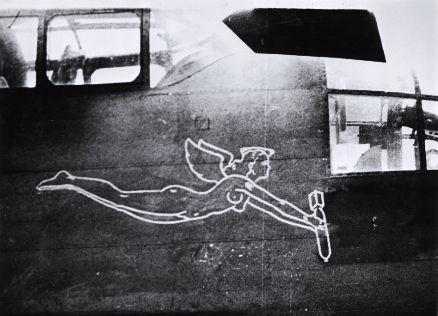
Doolittle nose-art
I read 30 Seconds Over Tokyo when I was still a war-playing kid, before I would understand the mischievous consequences of the Doolittle Raiders B-25 bombers deploying without their bombsights. This was to prevent US war-making advantages falling into enemy hands but it also precluded dropping bombs with accuracy. I’m pretty certain the account for young readers also didn’t explain why over a quarter of the squadron’s bombs were of the incidiary cluster variety. Readers today know what those are for. Doolittle claimed to be targeting military sites in Japan’s capitol, but “invariably” hit civilian areas including four schools and a hospital. Of the American fliers captured, three were tried and executed by the despicable “Japs”, who considered the straffing of civilians to be war crimes. After the war, the US judged the Japanese officers responsible, as if their verdict was a greater injustice against our aviators’ “honest errors”. Today we rationalize our systemic overshoot policy as “collateral damage”.

Every year since WWII, Doolittle’s commandos are feted for their milestone bombing mission. This Veterans Day is to be the last due to their advanced ages. But it is fitting, because isn’t it time Americans faced what we’re celebrating? There’s no denying it took suicidal daring, but the Doolittle Raid inaugurated what became a staple of US warfare, the wholesale terrorizing of civilians from on high, with impunity and indifference. To be fair, the American public has always been kept in the dark. American aircraft have fire-bombed civilians at every diplomatic opportunity since 1942, and a Private Manning sits in the brig for trying to give us a chance to object.

We now know that the Doolittle Raid didn’t turn the tide, nor shake Japanese resolve. It was a retalliation for the attack on Pearl Harbor, intended to boost US morale as if to say, America wasn’t defeated. Kinda like why and how we struck back at Afghanistan after 9/11, just as indiscriminately.

The “Mark Twain” ersatz bombsight
substitute bombsightThe Norden bombsight was a closely guarded US secret weapon. An airstrike without it would today be like lobotomizing so-called smart bombs, and deciding to opt for imprecision bombing. The official army record recounts that a subsitute sighting mechanism was improvised for the raid, dubbed the “Mark Twain” and judged to be effective enough. Now a bad joke. Indochina and Wikileaks-wisened, we know the mendacity of that assessment. The vehemently anti-imperialist, anti-racist Twain would not have been honored.

Twain satirized Western so-called Enlightenment thus: “good to fire villages with, upon occasion”.

Post-postwar hagiographies of the raid have suggested the improvised bombsight was better suited to low-altitude missions than the Norden model. That conclusion is easily dismissed because the device was used only for the Doolittle run and never after. The sight’s designer, mission aviator C. Ross Greening, offered a explanation for why he named the device after Mark Twain in his pothumously published memoir Not As Briefed. He didn’t.

The bombsight is named the “Mark Twain” in reference to the “lead line” depth finder used on the Mississippi River paddle wheelers in bygone days.

Because its design was so simple, we’re left to suppose. Greening’s bombsight was named for the same “mark” which Samuel Langhorne Clemens adopted as his celebrated pen name. I find it disingeneous to pretend to repurpose an archaic expression whose meaning was already eclipsed by the household name of America’s most outspoken anti-imperialist. Who would believe you named your dog “Napoleon” after a French pastry?

We are given another glimpse into Greening’s sense of humor by how he named his plane, the “Hari-Kari-er” ready to deal death by bomb-induced suicide. Greening’s B-25 is the one pictured above, with the angelic tart holding a bomb aloft. Greening’s plane was another that carried only incendiary ordnance.

Much was made of the sight’s two-piece aluminum construction, reportedly costing 20 cents at the time compared to the $10,000 Norden. This provided the jingoist homefront the smug satisfaction perhaps, combining a frugality born of the Depression with the American tradition of racism, that only pennies were expensed and or risked on Japanese lives.

War Crimes
Targeting civilians, taking insufficient care to avoid civilian casualties, using disproportunate force, acts of wanton retaliation, and the use of collective punishment are all prohibited by international convention. They are war crimes for which the US prosecutes adversaries but with which our own military refuses to abide. Americans make much of terrorism, yet remain blind to state terrorism. Doolittle’s historic raid, judged by the objective against which it is celebrated as a success, was an act of deliberate terrorism.

Forcing the Japanese to deploy more of their military assets to protect the mainland sounds like a legitimate strategy, except not by targeting civilians to illustrate the vulnerability, nor by terrorizing the population, one of Doolittle’s stated aims. He called it a “fear complex”.

It was hoped that the damage done would be both material and psychological. Material damage was to be the destruction of specific targets with ensuing confusion and retardation of production. The psychological results, it was hoped, would be the recalling of combat equipment from other theaters for home defense, the development of a fear complex in Japan, improved relationships with our Allies, and a favorable reaction in the American people.

There is no defending Japan’s imperialist expansion in the Pacific, and certainly not its own inhumanity. The Japanese treated fellow Asians with the same racist disregard with which we dispatched Filipinos. While Americans point in horror at how the Japanese retalliated against the Chinese population for the Doolittle Raid, we ignore that Doolittle purposely obscured from where our bombers were launched, leaving China’s coast as the only probably suspect.

To be fair, most of Doolittle’s team was kept in the dark about the mission until they were already deployed. I hardly want to detract from the courage they showed to undertake a project that seemed virtually suicidal. But how long should all of us remain in the dark about the true character of the Doolittle Raid?

Out of deference for the earlier generation of WWII veterans, those in leadership, certain intelligence secrets were kept until thirty years after the war. Unveiled, they paint a very different picture of what transpired. The fact that the US knew the German and Japanese codes from early on revealed an imbalance not previously admitted, as an example.

About the Doolittle Raid, much is already openly documented, if not widely known. The impetus for the raid was public knowledge, the evidence of its intent in full view.

BY DESIGN
In the aftermath of Pearl Harbor, American newspapers were already touting offers of cash rewards for whoever would be the first to strike back at Japan. President Roosevelt expressed a deliberate interest in hitting the Japanese mainland, in particular Tokyo, to retaliate for the Japanese strike against Pearl Harbor, never mind it had been a solely military target.

Plans were made to exploit the Japanese homeland’s vulnerability to fire, as ninety percent of urban structures were made of paper and wood. Writes historian William Bruce Jenson:

In his “confidential” meeting with reporters back in November, Marshall had declared that the US would have no cavil about burning Japan’s paper cities.

For the Doolittle Raid, a bombing strategy was developed to overwhelm the fire department of his target, the Shiba ward.

A former naval attache in Tokyo told Doolittle: “I know that Tokyp fire department very well. Seven big scattered fires would be too much for it to cope with.”

As lead plane, Doolittle’s role was to literally blaze the way. Fellow pilot Richard Joyce told Nebraska History Magazine in 1995:

The lead airplane, which was going to have Doolittle on board as the airplane commander, was going to be loaded with nothing but incendiaries -2.2­ pound thermite incendiaries- in clus­ters. They drop these big clusters and then the straps break and they spray, so they set a whole bunch of fires. He was to be the pathfinder and set a whole bunch of fires in Tokyo for pathfinding purposes.

Doolittle’s report outlined his objective more formally:

one plane was to take off ahead of the others, arrive over Tokyo at dusk and fire the most inflammable part of the city with incendiary bombs. This minimized the overall hazard and assured that the target would be lighted up for following airplanes.

Greening paints the most vivid picture, of burning the Japanese paper houses to light the way:

Doolittle planned to leave a couple of hours early, and in the dark set fire to Tokyo’s Shiba ward … the mission’s basic tactic had been that Doolittle would proceed alone and bomb a flammable section of Tokyo, creating a beacon in the night to help guide following planes to their targets.

Doolittle’s copilot Lt Richard Cole, told this to interviews in 1957:

Since we had a load of incendiaries, our target was the populated areas of the west and northwest parts of Tokyo.

After the bombers had left on their raid, and before news got back about whether or not they accomplished it, the Navy crew on the carrier USS Hornet already sang this song, which went in part:

Little did Hiro think that night
The skies above Tokyo would be alight
With the fires that Jimmy started in Tokyo’s dives
To guide to their targets the B-25s.
When all of a sudden from out of the skies
Came a basket of eggs for the little slant eyes

Incendiaries

Most of the bombers were loaded with three demolition bombs and an incendiary cluster bomb. Some of the planes carried only incendiaries. According to Doolittle’s official report of the raid, here were some of their stated objectives:

Plane no. 40-2270, piloted by Lt. Robert Gray:
thickly populated small factories district. … Fourth scattered incendiary over the correct area

Plane No. 40-2250, Lt. Richard Joyce:
Incendiary cluster dropped over thickly populated and dense industrial residential sector immediately inshore from primary target. (Shiba Ward)

“The third dem. bomb and the incendiary were dropped in the heavy industrial and residential section in the Shiba Ward 1/4 of a mile in shore from the bay and my tat.”

Aircraft 40-2303, Lt Harold Watson:
the congested industrial districts near the railroad station south of the Imperial Palace

AC 40-2283, David Jones:
the congested area Southeast of the Imperial Palace

Even though the planned night raid became a daytime mission, Doolittle did not alter his original role, intended to light the way for the following planes. His target remained the Shiba District of Tokyo. His own plane: “changed course to the southwest and incendiary-bombed highly inflammable section.”

Doolittle’s report included a description of the incendiary bombs:

The Chemical Warfare Service provided special 500 incendiary clusters each containing 128 incendiary bombs. These clusters were developed at the Edgewood Arsenal and test dropped by the Air Corps test group at Aberdeen. Several tests were carried on to assure their proper functioning and to determine the dropping angle and dispersion. Experimental work on and production of these clusters was carried on most efficiently.

As has become an aerial bombardment tradition, crews were let to inscribe messages on the bombs about to be dropped. Accounts made the most of these chestnuts: “You’ll get a BANG out of this.” And “I don’t want to set the world on fire –only Tokyo.”

These details, which reveal the intentions of the raid, were not made known to the public immediately. The Doolittle Raid was planned and executed in secret, with US government and military spokesmen denying knowledge of the operation even in its aftermath. The first word to reach the American public came from the New York Times, citing Japanese sources:

Enemy bombers appeared over Tokyo for the first time in the current war, inflicting damage on schools and hospitals. Invading planes failed to cause and damage on military establishments, although casualties in the schools and hospitals were as yet unknown. This inhuman attack on these cultural establishments and on residential districts is causing widespread indignation among the populace.

This report was dismissed as propaganda. When Japan declared its intention to charge the airman it had taken captive with war crimes, the US protestations redoubled. The accusations were belittled even as our own reports conceded to the possibilities.

Lieutenant Dawson’s Thirty Seconds Over Tokyo was the first published account of the raid. Printed less than a year after the event, wartime-sensitive details such as the phony guns made of broomstick handles poking out the back were left out. Targets were also not specified, but a candor remained, probably intended to be threatening. Lawson described the 500-pound incendiaries as “something like the old Russian Molotov Breadbasket”, and related US naval attache Jurika’s advice:

“If you can start seven good fires in Tokyo, they’ll never put them out,” Jurika promised us. … “I wouldn’t worry too much about setting fires in flimsy-looking sections of Tokyo,” he said. “The Japanese have done an amazing job of spreading out some of their industries, instead of concentrating them in large buildings. There’s probably a small machine shop under half of these fragile-looking roofs.”

“Flimsy” became Lawson’s keyword for the residential areas. Here Lawson described dropping his third and fourth bombs, when he saw their corresponding red light indicators:

The third red light flickered, and, since we were now over a flimsy area in the southern part of the city, the fourth light blinked. That was the incendiary, which I knew would separate as soon as it hit the wind and that dozens of small fire bombs would molt from it.

I was satisfied about the steel-smelter and hoped the other bombs had done as well. There was no way of telling, but I was positive that Tokyo could have been damaged that day with a rock.

Our actual bombing operation, from the time the first one went until the dive, consumed not more than thirty seconds.

Thus: Chance of hitting civilian homes: 50/50.
Charges of Excessive Force could be expected, because
blame the victim for being weaker than: a rock.
Care taken to avoid innocent casualties: 30 seconds.

In a later afterword, Lawson blamed Tokyo for having insufficient bomb shelters.

After the war, US occupation forces recovered Japanese records which documented the losses attributed to the Doolittle Raid: fifty dead, 252 wounded, ninety buildings. Besides military or strategic targets, that number included nine electric power buildings, a garment factory, a food storage warehouse, a gas company, two misc factories, six wards of Nagoya 2nd Temporary Army Hospital, six elementary or secondary schools, and “innumerable nonmilitary residences”.

Strafing
Japan accused the fliers of indescriminate strafing civilians. The US countered that defending fighters were responsible for stray bullets when their gunfire missed the bombers. That’s very likely, except the raiders were candid about their strafing too. Lawson:

I nosed down a railroad track on the outskirts of the city and passed a locomotive close enough to see the surprised face of the engineer. As I went by I could have kicked myself for not giving the locomotive’s boiler a burst of our forward 30-calibre guns, then I remembered that we might have better use for the ammunition.

A big yacht loomed up ahead of us and, figuring it must be armed, I told Thatcher to give it a burst. We went over it, lifted our nose to put the tail down and Thatcher sprayed its deck with our 50-calibre stingers.

Greening’s account of firing on a sailor, raises the moral ambiguity of air warfare with which few airmen grapple. By virtue that technology allows it, combatants become slave to a predetermined outcome:

When we attacked the next patrol boat, a Japanese sailor threw his hands up as if to surrender. I guess he expected us to stop and take him prisoner. We shot him and left this boat smoking too.

The Medals
Friendship Medals exchanged between Japan and the US found themselves requisitioned for Doolittle’s Raid:

Several years prior to the war, medals of friendship and good relationship were awarded to several people of the United States by the Japanese government.  In substance these medals were symbolic of the friendship and cooperation between the nations and were to represent the duration of this attitude.  It was decided by the Secretary of the Navy, Mr. Frank Knox, that the time was appropriate to have these medals returned.  They had been awarded to Mr. Daniel J. Quigley, Mr. John D. Laurey, Mr. H. Vormstein and Lt. Stephen Jurkis.

After arrangements had been made and the medals secured, a ceremony was held on the deck of the Hornet during which the medals were wired to a 500 lb. bomb to be carried by Lt. Ted Lawson and returned to the Japanese government in an appropriate fashion.

Lawson’s plane no 40-2261 dropped that bomb on an “industrial section of Tokyo” omitting to mention that Japan’s industry was still a post-feudal cottage industry.

“The medals were subsequently delivered in small pieces to their donors in Tokyo by Lt. Ted Lawson at about noon, Saturday, April 18, 1942.”

–Mitscher, M.A. Letter Report to Commander Pacific Fleet.

“Through the courtesy of the War Department your Japanese medal and similar medals, turned in for shipment, were returned to His Royal Highness, The Emperor of Japan on April 18, 1942.”

–Knox, F. Letter Report to Mr. H. Vormstein

BIDDER 70 doc reduces super-activist Tim DeChristopher to a number, lonely

BUMMER. I was thrilled a documentary would tell the world about Tim DeChristopher. You might think his achievement would be more widely know. It’s a testament of the power he’s up against, added to the meager support he has received, that even here I have to explain who he is and what he did. Tired of the futility of outdoor protests to prevent BLM land sales to the extraction industry, Tim DeChristopher attended an auction of particularly dubious legitimacy and successfully thwarted it by posing as a bidder and buying many of the lots. This happened at the close of Bush’s presidency, but Obama’s administration pursued a successful prosecution. DeChristopher has just been released after serving two years in federal prison. The documentary “Bidder 70” recounts the ordeal in a manner that provides neither encouragement nor inspiration, and leaves me to question how DeChristopher might have been better represented in court, publicized in actions, and celebrated in film. To say Bidder 70 reduces Tim DeChristopher to a number distorts the idiom. No mere number, DeChristopher is the important but solitary number one, among a casualty count always rising. In the sea of ineffectual activism that prompted his improvisational escalation, DeChristopher emerges more singular than when he started, but that’s to judge based on a flawed documentary. Hardly an surprising result.

It’s certainly armchair quarterbacking to suggest Tim DeChristopher’s legal team failed him miserably, likewise his publicity crew, but I can unequivocally conclude that DeChristopher would have served the environmental movement much more successfully had he been free to apply his imagination and energies, literally. Jail time helped Mandela, MLK and Thoreau, but that’s because you heard about it. The makers of “Bidder 70” can’t be faulted for their subject’s obscurity, but they are applying themselves to sealing his fate with coffin nails.

“Bidder 70” has major shortcomings: you are left with an informed impression that one, there is nothing to be done, two, you don’t want to do it in prison, and three, our collective impotence is inescapable. What’s the point then of attending the movie?

Of all the questions left for a post-screening Q&A, probably one should not be whether the subject is other than he appears. Explain this, how does a protagonist gain inspiration from being told there’s nothing to be done, by a Nobel Prize winner, whom he believes and holds as his mentor? Everyone loves a good challenge, but DeChristopher comes off as a poor listener. Nothing? I’ll see your nothing and raise you nothing. Futile? Count me in! Everyone loves an underdog, but he gathers no recruits.

Never mind his in-denial heroics, the audience takeaway is that his cause is lost. This is swiftly reinforced with the story of Tim DeChristopher’s road less traveled to prison. Offered encouragement by other activists who’ve served time, who we’ve also not heard of, it’s painted to be a fate of unimaginable awfulness and given an ominous soundtrack.

Who could not to admire Tim DeChristopher and respect his dedication and courage? The filmmakers painted in super-heroic light, notwithstanding his irrational adjustments, and so their thematic choice look awfully suspect. Are we likely to learn that they’re new to activism and have no idea what does or doesn’t motivate?

Filmed between 2009 and 2011 and released last year, “Bidder 70” makes no mention of “fracking.” The environmental movement has been literally bursting with opposition to hydraulic fracturing and these filmmakers were at the forefront of the national rallies. This omission is juxtaposed with a clip of 350’s Bill McKibbon praising the consumption of natural gas over coal.

Threat of Atmel plant closure prompts city council to rescind support of solar farm, on Earth Day

COLO. SPRINGS- I told the gentleman from Atmel who trolled the city council meeting, this would be my headline: ATMEL KILLS SOLAR IN COLORADO SPRINGS. Prompted by his threat to ship Atmel jobs to Malaysia if a 0.25% utilities rate hike went into effect, the Colorado Springs City Council voted today, inauspiciously the day after Earth Day, to rescind their minuscule subsidy of a community solar farm program. Apparently Atmel is the city’s largest utilities customer, so when Atmel whines, CSU grovels. Actually their rep turns up at every discussion of renewable energy or water restrictions and he’s against everything. Colorado Springs is the coal ash belching, Fountain Creek polluting, burnt foothills, diminished community services, low-tax haven it is today thanks to Atmel and its Tea Party posse.
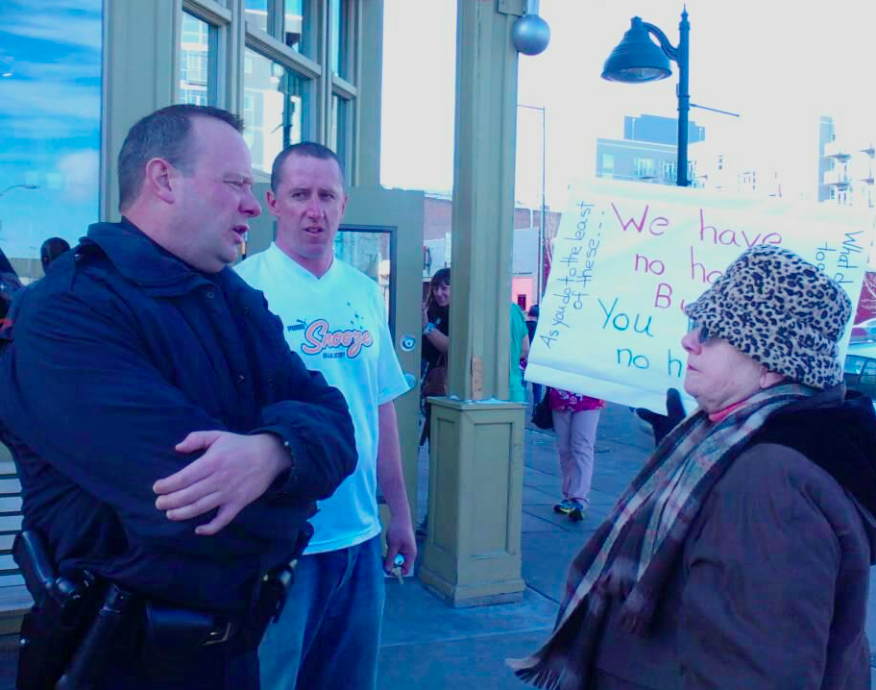
Working a token solar power start-up into the utility grid would result in a rate increase of 10¢ for monthly energy bill of $100, or 60¢ per $200. Semiconductor manufacturer Atmel faced a potential $6,000 increase per month, enough to jeopardize the multimillion dollar operation according them. It’s the same Powerpoint presentation they conjure when the city’s inquiring about wind turbines or scrubbers on the aging coal plant or solar or water rate hikes.

An Atmel facility in California sources its energy from solar, at a rate of 16¢ per whatever, but our local rate of 3¢ is too high for our local Atmel. He kept saying he was “for solar” but when pressed he answered “but not in Colorado Springs.” You wonder if his headquarters knows their Atmel guy is being such a regressive douche. I plan to inquire.

The vote today meant that Colorado Springs Utilities (CSU) will not implement its tariff planned for May 1st, which solar startup SUNSHARES had been counting on for its financing.

The public turnout at today’s meeting was two thirds in favor of solar power and one third against. (Measured by body weight the two sides were equal. It’s probably no surprise that environmental minded citizens know how to eat sustainably too. The two factions kept to separate sides of the room which was how I formed my size-ist observation.) The pro-solar folk represented themselves, common citizens, but those speaking against solar bore titles with advocacy groups like Americans For Prosperity, Citizens for Affordable Energy, and, get this, the Clean Energy Coalition, which bills itself as the largest advocacy network for renewable energy, but surprise, they’re against solar! Well, not one dared to say they were against solar, in fact they all prefaced their remarks with “I’m for solar, but–“. Their coordinator, noxious AFP henchman Sean Paige explained that climate science is “faith based” and in fact, resistance to fracking is also faith-based. All the anti talking points were boilerplate climate denial crap. Manufacturing solar panels pollutes (what about manufacturing fossil fuel equipment?), renewable energy costs jobs, yada yada. There was even an economics professor from Colorado College, who asserted that solar power was bad for the economy. Weird.

Of course the new slate of city councilors bought it. What has already emerged to be a cabal of mouth breathers conceived of this plan yesterday, EARTH DAY, to rescind their initial foray into solar energy, and today they entertained informed comments from the public and ignored them.

Private security protects authorities from public, also from public justice

“Former Pakistani military ruler Pervez Musharraf and his security team pushed past policemen and sped away from a court in the country’s capital on Thursday to avoid arrest after his bail was revoked in a case in which he is accused of treason.” Obviously that’s what a private security team is for. Dethroned Egyptian despot Mubarak proved it takes only a presidential physician to divert an accused mass murderer to a hospital instead of jail. Could such private Praetorian guards be protecting America’s criminal political class from federal law enforcement? We don’t know because we have yet to charge any of them.

Target of Occupy Denver boycott expects DPD to roll protesters like they’re homeless sleepers

Snooze Jon Schlegel
DENVER, COLORADO- Downtown eatery co-owner Jon Schlegel thought the homeless were defenseless when he led an effort to criminalize sleeping or seeking shelter out-of-doors last year. Instead Schlegel incurred the wrath of Occupy Denver, who’ve maintained a now seven-month long Boycott Snooze protest opposite his trendy restaurant. Yes it’s personal, Schlegel opened SNOOZE in a depressed area adjacent to a homeless shelter, now he wants to gentrify his digs by running out the homeless. So every Sunday occupiers bring signs to sway potential customers from supporting Snooze’s war on the homeless, and every Sunday Schlegel calls the police. But there have been no charges, officers remind Occupiers they are within their rights, yet Snoozegoers are treated to the illusion that the boycott’s legality may be borderline. You know, it’s that phony paradox promoted by our corporate media, that free speech means having to tolerate another’s opinion however offensive. (When free speech offends you, you are likely the offender being protested.) The real question is how Denver Police justify juxtaposing their intimidating armed presence against a citizen’s First Amendment rights.

Manti Te’o mistery phone paramour is a live person whose name is not Lennay Kekua. That is not the hoax

You’d think that Notre Dame linebacker Manti Te’o would be overjoyed to learn his internet girlfriend’s death was a hoax, that the person with whom he spent days and nights on the phone is alive and well, even if her name isn’t Lennay Kekua. If it’s true the NFL hot-property had never met this posthumous paramour, but fell in love with her over the course of years on the phone, you’d think the bond would be super-ordinary and he’d be on the first plane to meet his miraculously restored Ophelia. The death “hoax” could have a fairytale ending!

(Maybe I’m overestimating the emotional availability of a football player, but that exclamation could be a pun and a twist.)

Evidently Manti Te’o presumes his fabled “Lennay Kekua” by any other name will not smell as sweet. That’s certainly the conclusion a TV audience is meant to infer. The football star’s sagging enthusiasm for his ex phone pal enamorada suggests he might already know her identity doesn’t it? His business-of-football associates don’t seem to show much curiosity either. Is it that Lennay Kekua’s real identity and physical appearance have to be vetted by Notre Dame or by the NFL before they approve a re-engagement with the Manti entity integral to their business plan? No doubt American Football might also not ready for a gender switch, if the phone passed around the locker room in the persona of “Lennay” turns out to be Manti’s “prankster” friend Ronaiah Tuiasosopo.

Macho Manti Te’o is entitled to the private life of his choosing, but when the media money machine plumbs real-life drama to pull the nation’s heartstrings, we’re entitled to see what comes up at the end of the line, especially the more feverishly they try to cut it.

Because isn’t there a real chance here for something transformative? Imagine if Manti Te’o is revealed to be gay, what that could do for traditional divisive stereotypes, blessed by football.

Reality television teases us with the charismatic potential of witnessing real life, but carefully scripts what we see to preclude an unpredictable outcome.

NOW: Support the Tar Sands Blockade, includes DIY direct action supply list!


BREAKING: Does effective direct action get more exciting than this?

You can support the ongoing action: here’s their wish list. At the same time, an excellent inventory of what YOU’LL NEED to scramble a tree-sit if the XL Pipeline is coming your way.

To read this list is like being there, and I think, it brings you one step closer.

CLIMB GEAR
• 91/2-12 mm static kern-mantle/ arborist climb lines
• 5/8ths CWC truck rope or Tytan
• arborist throw lines and throw bags.
• 6mm accessory cord (climb rated)
• 1” tubular webbing
• rock/tree climbing harnesses all sizes mostly medium
• locking climb rated steel and aluminum carabiners
• climb rated pulleys (preferably tandem speed)
• Petzl steel quick links
TECH
• gmrs radios with silent and ear bud options
• Energizer XP18000s
• batteries (AA/AAA/Go Pro Batteries)
• GoProHero2?s & extra batteries
• Netbooks
• small portable solar panels with battery
• Pelican cases (large and small)
• deer/trail cameras
• satellite phones
• MacBook Pro’s
• MiniDV tapes
• 16GB SDcards (Class 10 preferred)
• 8GB+ flash drives
• Canon VIXIA HF R300?s (and extra batteries & charger deck)
• verizon wifi hotspots
• ATN PVS7-3A 3rd Gen or similar Night Vision Binocular Goggles
• Field watches
• car inverters
• 1TB USB External Hard Drives (mac&pc compatible)
MEDICAL
• splints
• coband
• braces (limb)
• disinfectant/antibacterial swabs
• compact girny
• saline
• epsom salt
• joint braces
• gauze rolls
• ace bandage
• Benedryl (anti-allergy)
• nitrile gloves
• trauma shears
APPAREL
• rain gear
• warm clothes (wool or synthetic earth tones) and socks!
• tarps/tents
• wool blanketss
• sleeping bags
• camping hammocks
• headlamps with blue or green (preferred) or red LED option
• work gloves
• towels
TOOLS & MATERIALS
• angle grinder
• chopsaws
• battery powered drills and impact drivers (makita, delta, bosch)
• welder (arc)
• handsaws
• shovels
• pickaxes
• rope: seriously, anything
• 550 parachute cord
• chain
• knives
• multitools (Leatherman or Gerber)
• plywood (3/8”-3/4” – 4?x8? sheets)
• 2×4?s
• decking screws
• 3/8-1/2” bolts and nuts
FOOD
• coffee (good and strong)
• bulk grains
• produce
• spices
• condiments
• non-perishables
• EmergenC
• tea
• MRE’s
ART
• muslin/canvas
• paint (buckets and spray)
• general art supplies
• projector (mac/pc compatible)
• gromet kit
• paint brushes
• paint sticks /mops
• supplies for building 15 ft + puppets
OTHER
• cans of rolling tobacco
• vehicles (junk or drivable)
• All Terrain Vehicles ATV’s
• thermoses
• dirt bikes
• toilet paper
• soap
• water filters
• backpacks
• all-natural cleaning supplies
• camelbaks
• generator 600watt plus
• all-natural mosquito repellant
• condoms
• tampons
• verizon prepaid phone cards

Walmart: Strike you goddamn morons!

Finally, finally Walmart slave-wage workers are marching, on their off hours, picketing their stores. Finally. It’s tempting to get out there and hold signs in support, but where were they when we were protesting Walmart ourselves? The pathetic Walmart “associates” couldn’t be convinced we weren’t jeopardizing the source of their livelihoods. Except their jobs aren’t livelihoods. Even as Walmarts in more and more cities face a growing uprising, I’m not convinced that our local workforce can wise up beyond agitating to medicate their lives with pot or jumping at the chance to scab each other’s part-time hours.

Let’s not forget Wikileaks snitch Adrian Lamo, saboteur Daniel Domscheit-Berg and Swedish Woman in Red Anna Ardin

While we’re praising Wikileaks and its impact on our revolutionary times, let’s call out those who betrayed the cause, they’re already erasing their tracks on Wikipedia. First there’s hackster-confidant Adrian Lamo who turned in Bradley Manning; there’s fired Wikileaks volunteer Daniel Domscheit-Berg who permanently dismantled the anonymous leak submission mechanism; there’s jilted neoliberal faketivist Anna Ardin who schemed to bring Julian Assange to an ultra-right prosecutor’s attention in Sweden; there’s de facto honeypot Sofia Wilen whose complicity is still a mystery; and there’s President Barack Obama and Attorney General Eric Holder who persist in persecuting whistleblowers, who’ve empaneled a grand jury against Assange and who consider Wikileaks a terrorist enterprise.

Colo. Springs content to see Obama, skip chance to put a message TO him


COLORADO SPRINGS, Colo.– It’s so dispiriting to witness the perpetual truancy of the local social justice community. They can attend prayer meeting circle jerks apparently, but when President Obomber comes to town, on the anniversary of the targeted assassination of the City of Nagasaki via atom bomb no less, August 9, those finks are nowhere. We saw teabags, potheads and Paultards with more spirit. You might be satisfied to hear that none of the other sign-bearers divined the motorcade route, but with patience we were able to see and be seen by the president twice, as he left Cutler Hall for the Olympic Training Center and on his return to Peterson AFB via Uintah to I-25. We would have welcomed antiwar colleagues, but what are you going to do? I guess advocating for military intervention in Darfur, Libya and Syria occupies a pacifist dupe full time, not to mention cheerleading for the Army’s “sustainability” PR. And you can’t speak up for immigrants, prisoners, women, gays, the environment, the poor and oppressed, if you’re sucking on Obama supporters’ toes for the duration of the election season. Some of the democrats exiting the campaign stop thanked us for our message. One asked: “Are you with the Justice and Peace?” Sadly, no, we said. They don’t turn up in public anymore. You might ask them about that, I recommended. I write this after the next day’s anti-activist trial, also a no-show by the excuse-making louts.