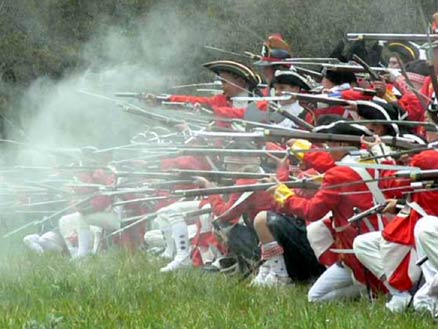
US, not Assad, drops MOAB Weapon of Mass Destruction on Afghans, same MO used against Philly’s MOVE insurgents.


The US is bragging right now that it’s dropped a GBU-43/B MOAB, aka Massive Ordnance Air Blast Bomb, know in the Chairforce as a “Mother Of All Bombs” bomb, apparently the larger of non-nuclear bombs in its arsenal, on a suspected tunnel in Afghanistan, presumably full of Afghans. Will the UN condemn the US act and support coalition retaliatory airstrikes on the rogue regime which did it? No need for an investigation, we’re on TV admitting to the deed. Note the US war media are adding “in combat” and “on the battlefield” to their headlines although the command and control center allegedly targeted would be Islamic State’s DC.

If the US is going to insist that the MOAB bombing was legal under US rules of engagement, it would be hard to argue that Islamic State Terrorism (see what I did there) could not enjoy a comparable broad latitude.

Normally of course, US spokespeople would deny responsibility, but this bomb was too big. Too big not to break windows five miles away, and too big to smuggle into the hands of covert operatives so that we can say they did it.

Black Lives Matter 5280 hold Denver march in memory of Michael Brown


DENVER, COLORADO- A coalition of Colorado activists led by Black Lives Matter 5280 marched through the state capitol on Sunday to mark the one-year anniversary of the killing of Michael Brown by Ferguson police. Over two hundred marchers gathered at Lawson Park and marched to the courthouse where a memorial ceremony was held for all recent victims of police violence.

BlackLivesMatter-Ferguson-Denver-march-nmt
Photos by David Lee Anderson

Mother Teresa was the Janet Matzen of Calcutta

(The above photo is of Janet on May Day 20015 feeding a group of 50 people in front of the state capital, still wearing that warm smile for all the homeless and hungry.)
 
Janet Matezen was a 54 year old working mom. She had recently lost her job at a local market where she worked as a meat cutter. Like many of the middle class, Janet was also struggling to make ends meet. It was October 2011, Occupy of Denver made camp in Denver’s Civic Center Park. Their number began to grow daily as word of the movement spread via the media. Janet had never been a protester or even been to a rally such as Occupy, but she was curious. She decided one day that she would drive to the park to see what it was all about.

When I first saw Janet in the park, she looked like any other mother from any city in America. She was average with one difference, she always had a warm smile. She began to talk with the others there in the park, and the more she heard their stories the more shocked she became at the conditions many there were living under. She never spoke of her own problems. Janet’s struggles seemed to fade as she listen to their stories. After all, she had a home and food for her table.

I believe the old adage “I use to feel sorry for myself because I had no shoes, and then I met a man who had no feet” best describes Janet’s experience there with Occupy in Denver’s Civic Center Park.

In the past four years, Janet has transformed herself into an advocate and champion of the homeless and hungry of Denver. Whenever the city council is considering new legislation such as the Anti Camping Ban, Janet is always there to lend her voice in defense of the poor and homeless.

When the Colorado House of Representatives were recently considering a bill of rights for the homeless, Janet was present at every stage of the hearings.

When the homeless are arrested for falling asleep in the park, she is always there to help, even if it’s only to be with them in court.

One spring day in 2012, I interviewed Janet in the city park; one of the questions I ask her was; “Did she have any fears of the people there in the park” her reply surprised me, she said “Oh no! I know they would protect me, it’s the police that I’m afraid of.” I did not miss the irony of her answer; to think that a 54 year old mother in the park would be more afraid of the police than the homeless.

I could only conclude, that Janet, after witnessing so much of the violence by the police against the homeless knew who in truth would serve and protect her.

Janet has also had her small victories, besides feeding the homeless, as reported in the “Popular Resistance”

**STAFF NOTE: Planned protests at Palm Restaurants are cancelled today.**

DENVER, CO. (October 18, 2013) – The Boycott the Urban Camping Ban Coalition is pleased to announce that The Palm Restaurant has officially withdrawn support for Denver’s Urban Camping Ban Ordinance passed in May 2012.

On May 6, 2012, Occupy Denver held their first Boycott in protest of the Urban Camping Ban at Snooze A.M. Eatery.1 It was attended by not just members of Occupy Denver, but activists from Denver and surrounding areas who were concerned about the treatment of their fellow human beings, the homeless. The “Urban Camping” Ban Ordinance was passed by the Denver City Council on May 14, 2012, at which time an ongoing weekly protest lead by Janet Matzen and Occupy Denver began at Snooze A.M. Eatery and later attracted coalition partners. On April 5, 2013, Snooze issued a statement reversing their position in support of the Ban.

On April 26, 2013, the Boycott was moved to The Palm Restaurant Denver and a weekly Friday night boycott began. Despite concerted efforts by the Denver City Council through the Denver Police Department to quash Boycotters’ Constitutional rights to free speech and protest, the protest continued strongly and garnered International support.

Today, we are pleased to announce that The Palm Restaurant, who we truly believe cares for the plight of the homeless, announced they no longer support the “Urban Camping” Ban Ordinance. We thank The Palm Restaurant for standing with the homeless and calling for the repeal of the “Urban Camping” Ban in Denver.
Once again, we urge all businesses and organizations in Denver to review the Denver Homeless Out Loud Report on the implementation and impacts the Ban has had and call for its repeal.

I’ve often been amazed that Janet can be in so many places doing so many different things and all for the benefit of the homeless and poor. Most recently you will find Janet, every Friday in front of the Tattered Cover book store where she continues to protest the anti camping while at the same time feeding the hungry and homeless of Denver.

We often hear the word “Grassroots” but I never saw in action as I’ve seen it with Janet. She gives real meaning to the phrase “Grassroots Activist” with her compassion for others.

Suzanna Arundhati Roy spoke so eloquently when she said: “And so it is, in the quiet breathing of Janet, I see that possible world.”

The Putin knock-knock joke is easier to find than his Kremlin speech on Crimea

Putin Obama Knock Knock Joke - Crimea RiverThis graphic circulating on the interwebs is a lot easier to find than Vladimir Putin’s March 18 address to the Kremlin about the referendum in Crimea after the Western coup in Ukraine. Bypassing dubious translations excerpted on Capitalist media sites, here is a transcript of his speech direct from the Kremlin. Putin is no hero, but he threatens US-EU banking hegemony, gives asylum to Edward Snowden, and executes zero people with drones.

QUOTING PRESIDENT OF RUSSIA VLADIMIR PUTIN:
Federation Council members, State Duma deputies, good afternoon. Representatives of the Republic of Crimea and Sevastopol are here among us, citizens of Russia, residents of Crimea and Sevastopol!

Dear friends, we have gathered here today in connection with an issue that is of vital, historic significance to all of us. A referendum was held in Crimea on March 16 in full compliance with democratic procedures and international norms.

More than 82 percent of the electorate took part in the vote. Over 96 percent of them spoke out in favour of reuniting with Russia. These numbers speak for themselves.

To understand the reason behind such a choice it is enough to know the history of Crimea and what Russia and Crimea have always meant for each other.

Everything in Crimea speaks of our shared history and pride. This is the location of ancient Khersones, where Prince Vladimir was baptised. His spiritual feat of adopting Orthodoxy predetermined the overall basis of the culture, civilisation and human values that unite the peoples of Russia, Ukraine and Belarus. The graves of Russian soldiers whose bravery brought Crimea into the Russian empire are also in Crimea. This is also Sevastopol – a legendary city with an outstanding history, a fortress that serves as the birthplace of Russia’s Black Sea Fleet. Crimea is Balaklava and Kerch, Malakhov Kurgan and Sapun Ridge. Each one of these places is dear to our hearts, symbolising Russian military glory and outstanding valour.

Crimea is a unique blend of different peoples’ cultures and traditions. This makes it similar to Russia as a whole, where not a single ethnic group has been lost over the centuries. Russians and Ukrainians, Crimean Tatars and people of other ethnic groups have lived side by side in Crimea, retaining their own identity, traditions, languages and faith.

Incidentally, the total population of the Crimean Peninsula today is 2.2 million people, of whom almost 1.5 million are Russians, 350,000 are Ukrainians who predominantly consider Russian their native language, and about 290,000-300,000 are Crimean Tatars, who, as the referendum has shown, also lean towards Russia.

True, there was a time when Crimean Tatars were treated unfairly, just as a number of other peoples in the USSR. There is only one thing I can say here: millions of people of various ethnicities suffered during those repressions, and primarily Russians.

Crimean Tatars returned to their homeland. I believe we should make all the necessary political and legislative decisions to finalise the rehabilitation of Crimean Tatars, restore them in their rights and clear their good name.

We have great respect for people of all the ethnic groups living in Crimea. This is their common home, their motherland, and it would be right – I know the local population supports this – for Crimea to have three equal national languages: Russian, Ukrainian and Tatar.

Colleagues,

In people’s hearts and minds, Crimea has always been an inseparable part of Russia. This firm conviction is based on truth and justice and was passed from generation to generation, over time, under any circumstances, despite all the dramatic changes our country went through during the entire 20th century.

After the revolution, the Bolsheviks, for a number of reasons – may God judge them – added large sections of the historical South of Russia to the Republic of Ukraine. This was done with no consideration for the ethnic make-up of the population, and today these areas form the southeast of Ukraine. Then, in 1954, a decision was made to transfer Crimean Region to Ukraine, along with Sevastopol, despite the fact that it was a federal city. This was the personal initiative of the Communist Party head Nikita Khrushchev. What stood behind this decision of his – a desire to win the support of the Ukrainian political establishment or to atone for the mass repressions of the 1930’s in Ukraine – is for historians to figure out.

What matters now is that this decision was made in clear violation of the constitutional norms that were in place even then. The decision was made behind the scenes. Naturally, in a totalitarian state nobody bothered to ask the citizens of Crimea and Sevastopol. They were faced with the fact. People, of course, wondered why all of a sudden Crimea became part of Ukraine. But on the whole – and we must state this clearly, we all know it – this decision was treated as a formality of sorts because the territory was transferred within the boundaries of a single state. Back then, it was impossible to imagine that Ukraine and Russia may split up and become two separate states. However, this has happened.

Unfortunately, what seemed impossible became a reality. The USSR fell apart. Things developed so swiftly that few people realised how truly dramatic those events and their consequences would be. Many people both in Russia and in Ukraine, as well as in other republics hoped that the Commonwealth of Independent States that was created at the time would become the new common form of statehood. They were told that there would be a single currency, a single economic space, joint armed forces; however, all this remained empty promises, while the big country was gone. It was only when Crimea ended up as part of a different country that Russia realised that it was not simply robbed, it was plundered.

At the same time, we have to admit that by launching the sovereignty parade Russia itself aided in the collapse of the Soviet Union. And as this collapse was legalised, everyone forgot about Crimea and Sevastopol ­– the main base of the Black Sea Fleet. Millions of people went to bed in one country and awoke in different ones, overnight becoming ethnic minorities in former Union republics, while the Russian nation became one of the biggest, if not the biggest ethnic group in the world to be divided by borders.

Now, many years later, I heard residents of Crimea say that back in 1991 they were handed over like a sack of potatoes. This is hard to disagree with. And what about the Russian state? What about Russia? It humbly accepted the situation. This country was going through such hard times then that realistically it was incapable of protecting its interests. However, the people could not reconcile themselves to this outrageous historical injustice. All these years, citizens and many public figures came back to this issue, saying that Crimea is historically Russian land and Sevastopol is a Russian city. Yes, we all knew this in our hearts and minds, but we had to proceed from the existing reality and build our good-neighbourly relations with independent Ukraine on a new basis. Meanwhile, our relations with Ukraine, with the fraternal Ukrainian people have always been and will remain of foremost importance for us.

Today we can speak about it openly, and I would like to share with you some details of the negotiations that took place in the early 2000s. The then President of Ukraine Mr Kuchma asked me to expedite the process of delimiting the Russian-Ukrainian border. At that time, the process was practically at a standstill. Russia seemed to have recognised Crimea as part of Ukraine, but there were no negotiations on delimiting the borders. Despite the complexity of the situation, I immediately issued instructions to Russian government agencies to speed up their work to document the borders, so that everyone had a clear understanding that by agreeing to delimit the border we admitted de facto and de jure that Crimea was Ukrainian territory, thereby closing the issue.

We accommodated Ukraine not only regarding Crimea, but also on such a complicated matter as the maritime boundary in the Sea of Azov and the Kerch Strait. What we proceeded from back then was that good relations with Ukraine matter most for us and they should not fall hostage to deadlock territorial disputes. However, we expected Ukraine to remain our good neighbour, we hoped that Russian citizens and Russian speakers in Ukraine, especially its southeast and Crimea, would live in a friendly, democratic and civilised state that would protect their rights in line with the norms of international law.

However, this is not how the situation developed. Time and time again attempts were made to deprive Russians of their historical memory, even of their language and to subject them to forced assimilation. Moreover, Russians, just as other citizens of Ukraine are suffering from the constant political and state crisis that has been rocking the country for over 20 years.

I understand why Ukrainian people wanted change. They have had enough of the authorities in power during the years of Ukraine’s independence. Presidents, prime ministers and parliamentarians changed, but their attitude to the country and its people remained the same. They milked the country, fought among themselves for power, assets and cash flows and did not care much about the ordinary people. They did not wonder why it was that millions of Ukrainian citizens saw no prospects at home and went to other countries to work as day labourers. I would like to stress this: it was not some Silicon Valley they fled to, but to become day labourers. Last year alone almost 3 million people found such jobs in Russia. According to some sources, in 2013 their earnings in Russia totalled over $20 billion, which is about 12% of Ukraine’s GDP.

I would like to reiterate that I understand those who came out on Maidan with peaceful slogans against corruption, inefficient state management and poverty. The right to peaceful protest, democratic procedures and elections exist for the sole purpose of replacing the authorities that do not satisfy the people. However, those who stood behind the latest events in Ukraine had a different agenda: they were preparing yet another government takeover; they wanted to seize power and would stop short of nothing. They resorted to terror, murder and riots. Nationalists, neo-Nazis, Russophobes and anti-Semites executed this coup. They continue to set the tone in Ukraine to this day.

The new so-called authorities began by introducing a draft law to revise the language policy, which was a direct infringement on the rights of ethnic minorities. However, they were immediately ‘disciplined’ by the foreign sponsors of these so-called politicians. One has to admit that the mentors of these current authorities are smart and know well what such attempts to build a purely Ukrainian state may lead to. The draft law was set aside, but clearly reserved for the future. Hardly any mention is made of this attempt now, probably on the presumption that people have a short memory. Nevertheless, we can all clearly see the intentions of these ideological heirs of Bandera, Hitler’s accomplice during World War II.

It is also obvious that there is no legitimate executive authority in Ukraine now, nobody to talk to. Many government agencies have been taken over by the impostors, but they do not have any control in the country, while they themselves – and I would like to stress this – are often controlled by radicals. In some cases, you need a special permit from the militants on Maidan to meet with certain ministers of the current government. This is not a joke – this is reality.

Those who opposed the coup were immediately threatened with repression. Naturally, the first in line here was Crimea, the Russian-speaking Crimea. In view of this, the residents of Crimea and Sevastopol turned to Russia for help in defending their rights and lives, in preventing the events that were unfolding and are still underway in Kiev, Donetsk, Kharkov and other Ukrainian cities.

Naturally, we could not leave this plea unheeded; we could not abandon Crimea and its residents in distress. This would have been betrayal on our part.

First, we had to help create conditions so that the residents of Crimea for the first time in history were able to peacefully express their free will regarding their own future. However, what do we hear from our colleagues in Western Europe and North America? They say we are violating norms of international law. Firstly, it’s a good thing that they at least remember that there exists such a thing as international law – better late than never.

Secondly, and most importantly – what exactly are we violating? True, the President of the Russian Federation received permission from the Upper House of Parliament to use the Armed Forces in Ukraine. However, strictly speaking, nobody has acted on this permission yet. Russia’s Armed Forces never entered Crimea; they were there already in line with an international agreement. True, we did enhance our forces there; however – this is something I would like everyone to hear and know – we did not exceed the personnel limit of our Armed Forces in Crimea, which is set at 25,000, because there was no need to do so.

Next. As it declared independence and decided to hold a referendum, the Supreme Council of Crimea referred to the United Nations Charter, which speaks of the right of nations to self-determination. Incidentally, I would like to remind you that when Ukraine seceded from the USSR it did exactly the same thing, almost word for word. Ukraine used this right, yet the residents of Crimea are denied it. Why is that?

Moreover, the Crimean authorities referred to the well-known Kosovo precedent – a precedent our western colleagues created with their own hands in a very similar situation, when they agreed that the unilateral separation of Kosovo from Serbia, exactly what Crimea is doing now, was legitimate and did not require any permission from the country’s central authorities. Pursuant to Article 2, Chapter 1 of the United Nations Charter, the UN International Court agreed with this approach and made the following comment in its ruling of July 22, 2010, and I quote: “No general prohibition may be inferred from the practice of the Security Council with regard to declarations of independence,” and “General international law contains no prohibition on declarations of independence.” Crystal clear, as they say.

I do not like to resort to quotes, but in this case, I cannot help it. Here is a quote from another official document: the Written Statement of the United States America of April 17, 2009, submitted to the same UN International Court in connection with the hearings on Kosovo. Again, I quote: “Declarations of independence may, and often do, violate domestic legislation. However, this does not make them violations of international law.” End of quote. They wrote this, disseminated it all over the world, had everyone agree and now they are outraged. Over what? The actions of Crimean people completely fit in with these instructions, as it were. For some reason, things that Kosovo Albanians (and we have full respect for them) were permitted to do, Russians, Ukrainians and Crimean Tatars in Crimea are not allowed. Again, one wonders why.

We keep hearing from the United States and Western Europe that Kosovo is some special case. What makes it so special in the eyes of our colleagues? It turns out that it is the fact that the conflict in Kosovo resulted in so many human casualties. Is this a legal argument? The ruling of the International Court says nothing about this. This is not even double standards; this is amazing, primitive, blunt cynicism. One should not try so crudely to make everything suit their interests, calling the same thing white today and black tomorrow. According to this logic, we have to make sure every conflict leads to human losses.

I will state clearly – if the Crimean local self-defence units had not taken the situation under control, there could have been casualties as well. Fortunately this did not happen. There was not a single armed confrontation in Crimea and no casualties. Why do you think this was so? The answer is simple: because it is very difficult, practically impossible to fight against the will of the people. Here I would like to thank the Ukrainian military – and this is 22,000 fully armed servicemen. I would like to thank those Ukrainian service members who refrained from bloodshed and did not smear their uniforms in blood.

Other thoughts come to mind in this connection. They keep talking of some Russian intervention in Crimea, some sort of aggression. This is strange to hear. I cannot recall a single case in history of an intervention without a single shot being fired and with no human casualties.

Colleagues,

Like a mirror, the situation in Ukraine reflects what is going on and what has been happening in the world over the past several decades. After the dissolution of bipolarity on the planet, we no longer have stability. Key international institutions are not getting any stronger; on the contrary, in many cases, they are sadly degrading. Our western partners, led by the United States of America, prefer not to be guided by international law in their practical policies, but by the rule of the gun. They have come to believe in their exclusivity and exceptionalism, that they can decide the destinies of the world, that only they can ever be right. They act as they please: here and there, they use force against sovereign states, building coalitions based on the principle “If you are not with us, you are against us.” To make this aggression look legitimate, they force the necessary resolutions from international organisations, and if for some reason this does not work, they simply ignore the UN Security Council and the UN overall.

This happened in Yugoslavia; we remember 1999 very well. It was hard to believe, even seeing it with my own eyes, that at the end of the 20th century, one of Europe’s capitals, Belgrade, was under missile attack for several weeks, and then came the real intervention. Was there a UN Security Council resolution on this matter, allowing for these actions? Nothing of the sort. And then, they hit Afghanistan, Iraq, and frankly violated the UN Security Council resolution on Libya, when instead of imposing the so-called no-fly zone over it they started bombing it too.

There was a whole series of controlled “colour” revolutions. Clearly, the people in those nations, where these events took place, were sick of tyranny and poverty, of their lack of prospects; but these feelings were taken advantage of cynically. Standards were imposed on these nations that did not in any way correspond to their way of life, traditions, or these peoples’ cultures. As a result, instead of democracy and freedom, there was chaos, outbreaks in violence and a series of upheavals. The Arab Spring turned into the Arab Winter.

A similar situation unfolded in Ukraine. In 2004, to push the necessary candidate through at the presidential elections, they thought up some sort of third round that was not stipulated by the law. It was absurd and a mockery of the constitution. And now, they have thrown in an organised and well-equipped army of militants.

We understand what is happening; we understand that these actions were aimed against Ukraine and Russia and against Eurasian integration. And all this while Russia strived to engage in dialogue with our colleagues in the West. We are constantly proposing cooperation on all key issues; we want to strengthen our level of trust and for our relations to be equal, open and fair. But we saw no reciprocal steps.

On the contrary, they have lied to us many times, made decisions behind our backs, placed us before an accomplished fact. This happened with NATO’s expansion to the East, as well as the deployment of military infrastructure at our borders. They kept telling us the same thing: “Well, this does not concern you.” That’s easy to say.

It happened with the deployment of a missile defence system. In spite of all our apprehensions, the project is working and moving forward. It happened with the endless foot-dragging in the talks on visa issues, promises of fair competition and free access to global markets.

Today, we are being threatened with sanctions, but we already experience many limitations, ones that are quite significant for us, our economy and our nation. For example, still during the times of the Cold War, the US and subsequently other nations restricted a large list of technologies and equipment from being sold to the USSR, creating the Coordinating Committee for Multilateral Export Controls list. Today, they have formally been eliminated, but only formally; and in reality, many limitations are still in effect.

In short, we have every reason to assume that the infamous policy of containment, led in the 18th, 19th and 20th centuries, continues today. They are constantly trying to sweep us into a corner because we have an independent position, because we maintain it and because we call things like they are and do not engage in hypocrisy. But there is a limit to everything. And with Ukraine, our western partners have crossed the line, playing the bear and acting irresponsibly and unprofessionally.

After all, they were fully aware that there are millions of Russians living in Ukraine and in Crimea. They must have really lacked political instinct and common sense not to foresee all the consequences of their actions. Russia found itself in a position it could not retreat from. If you compress the spring all the way to its limit, it will snap back hard. You must always remember this.

Today, it is imperative to end this hysteria, to refute the rhetoric of the cold war and to accept the obvious fact: Russia is an independent, active participant in international affairs; like other countries, it has its own national interests that need to be taken into account and respected.

At the same time, we are grateful to all those who understood our actions in Crimea; we are grateful to the people of China, whose leaders have always considered the situation in Ukraine and Crimea taking into account the full historical and political context, and greatly appreciate India’s reserve and objectivity.

Today, I would like to address the people of the United States of America, the people who, since the foundation of their nation and adoption of the Declaration of Independence, have been proud to hold freedom above all else. Isn’t the desire of Crimea’s residents to freely choose their fate such a value? Please understand us.

I believe that the Europeans, first and foremost, the Germans, will also understand me. Let me remind you that in the course of political consultations on the unification of East and West Germany, at the expert, though very high level, some nations that were then and are now Germany’s allies did not support the idea of unification. Our nation, however, unequivocally supported the sincere, unstoppable desire of the Germans for national unity. I am confident that you have not forgotten this, and I expect that the citizens of Germany will also support the aspiration of the Russians, of historical Russia, to restore unity.

I also want to address the people of Ukraine. I sincerely want you to understand us: we do not want to harm you in any way, or to hurt your national feelings. We have always respected the territorial integrity of the Ukrainian state, incidentally, unlike those who sacrificed Ukraine’s unity for their political ambitions. They flaunt slogans about Ukraine’s greatness, but they are the ones who did everything to divide the nation. Today’s civil standoff is entirely on their conscience. I want you to hear me, my dear friends. Do not believe those who want you to fear Russia, shouting that other regions will follow Crimea. We do not want to divide Ukraine; we do not need that. As for Crimea, it was and remains a Russian, Ukrainian, and Crimean-Tatar land.

I repeat, just as it has been for centuries, it will be a home to all the peoples living there. What it will never be and do is follow in Bandera’s footsteps!

Crimea is our common historical legacy and a very important factor in regional stability. And this strategic territory should be part of a strong and stable sovereignty, which today can only be Russian. Otherwise, dear friends (I am addressing both Ukraine and Russia), you and we – the Russians and the Ukrainians – could lose Crimea completely, and that could happen in the near historical perspective. Please think about it.

Let me note too that we have already heard declarations from Kiev about Ukraine soon joining NATO. What would this have meant for Crimea and Sevastopol in the future? It would have meant that NATO’s navy would be right there in this city of Russia’s military glory, and this would create not an illusory but a perfectly real threat to the whole of southern Russia. These are things that could have become reality were it not for the choice the Crimean people made, and I want to say thank you to them for this.

But let me say too that we are not opposed to cooperation with NATO, for this is certainly not the case. For all the internal processes within the organisation, NATO remains a military alliance, and we are against having a military alliance making itself at home right in our backyard or in our historic territory. I simply cannot imagine that we would travel to Sevastopol to visit NATO sailors. Of course, most of them are wonderful guys, but it would be better to have them come and visit us, be our guests, rather than the other way round.

Let me say quite frankly that it pains our hearts to see what is happening in Ukraine at the moment, see the people’s suffering and their uncertainty about how to get through today and what awaits them tomorrow. Our concerns are understandable because we are not simply close neighbours but, as I have said many times already, we are one people. Kiev is the mother of Russian cities. Ancient Rus is our common source and we cannot live without each other.

Let me say one other thing too. Millions of Russians and Russian-speaking people live in Ukraine and will continue to do so. Russia will always defend their interests using political, diplomatic and legal means. But it should be above all in Ukraine’s own interest to ensure that these people’s rights and interests are fully protected. This is the guarantee of Ukraine’s state stability and territorial integrity.

We want to be friends with Ukraine and we want Ukraine to be a strong, sovereign and self-sufficient country. Ukraine is one of our biggest partners after all. We have many joint projects and I believe in their success no matter what the current difficulties. Most importantly, we want peace and harmony to reign in Ukraine, and we are ready to work together with other countries to do everything possible to facilitate and support this. But as I said, only Ukraine’s own people can put their own house in order.

Residents of Crimea and the city of Sevastopol, the whole of Russia admired your courage, dignity and bravery. It was you who decided Crimea’s future. We were closer than ever over these days, supporting each other. These were sincere feelings of solidarity. It is at historic turning points such as these that a nation demonstrates its maturity and strength of spirit. The Russian people showed this maturity and strength through their united support for their compatriots.

Russia’s foreign policy position on this matter drew its firmness from the will of millions of our people, our national unity and the support of our country’s main political and public forces. I want to thank everyone for this patriotic spirit, everyone without exception. Now, we need to continue and maintain this kind of consolidation so as to resolve the tasks our country faces on its road ahead.

Obviously, we will encounter external opposition, but this is a decision that we need to make for ourselves. Are we ready to consistently defend our national interests, or will we forever give in, retreat to who knows where? Some Western politicians are already threatening us with not just sanctions but also the prospect of increasingly serious problems on the domestic front. I would like to know what it is they have in mind exactly: action by a fifth column, this disparate bunch of ‘national traitors’, or are they hoping to put us in a worsening social and economic situation so as to provoke public discontent? We consider such statements irresponsible and clearly aggressive in tone, and we will respond to them accordingly. At the same time, we will never seek confrontation with our partners, whether in the East or the West, but on the contrary, will do everything we can to build civilised and good-neighbourly relations as one is supposed to in the modern world.

Colleagues,

I understand the people of Crimea, who put the question in the clearest possible terms in the referendum: should Crimea be with Ukraine or with Russia? We can be sure in saying that the authorities in Crimea and Sevastopol, the legislative authorities, when they formulated the question, set aside group and political interests and made the people’s fundamental interests alone the cornerstone of their work. The particular historic, population, political and economic circumstances of Crimea would have made any other proposed option – however tempting it could be at the first glance – only temporary and fragile and would have inevitably led to further worsening of the situation there, which would have had disastrous effects on people’s lives. The people of Crimea thus decided to put the question in firm and uncompromising form, with no grey areas. The referendum was fair and transparent, and the people of Crimea clearly and convincingly expressed their will and stated that they want to be with Russia.

Russia will also have to make a difficult decision now, taking into account the various domestic and external considerations. What do people here in Russia think? Here, like in any democratic country, people have different points of view, but I want to make the point that the absolute majority of our people clearly do support what is happening.

The most recent public opinion surveys conducted here in Russia show that 95 percent of people think that Russia should protect the interests of Russians and members of other ethnic groups living in Crimea – 95 percent of our citizens. More than 83 percent think that Russia should do this even if it will complicate our relations with some other countries. A total of 86 percent of our people see Crimea as still being Russian territory and part of our country’s lands. And one particularly important figure, which corresponds exactly with the result in Crimea’s referendum: almost 92 percent of our people support Crimea’s reunification with Russia.

Thus we see that the overwhelming majority of people in Crimea and the absolute majority of the Russian Federation’s people support the reunification of the Republic of Crimea and the city of Sevastopol with Russia.

Now this is a matter for Russia’s own political decision, and any decision here can be based only on the people’s will, because the people is the ultimate source of all authority.

Members of the Federation Council, deputies of the State Duma, citizens of Russia, residents of Crimea and Sevastopol, today, in accordance with the people’s will, I submit to the Federal Assembly a request to consider a Constitutional Law on the creation of two new constituent entities within the Russian Federation: the Republic of Crimea and the city of Sevastopol, and to ratify the treaty on admitting to the Russian Federation Crimea and Sevastopol, which is already ready for signing. I stand assured of your support.

Threat of Atmel plant closure prompts city council to rescind support of solar farm, on Earth Day

COLO. SPRINGS- I told the gentleman from Atmel who trolled the city council meeting, this would be my headline: ATMEL KILLS SOLAR IN COLORADO SPRINGS. Prompted by his threat to ship Atmel jobs to Malaysia if a 0.25% utilities rate hike went into effect, the Colorado Springs City Council voted today, inauspiciously the day after Earth Day, to rescind their minuscule subsidy of a community solar farm program. Apparently Atmel is the city’s largest utilities customer, so when Atmel whines, CSU grovels. Actually their rep turns up at every discussion of renewable energy or water restrictions and he’s against everything. Colorado Springs is the coal ash belching, Fountain Creek polluting, burnt foothills, diminished community services, low-tax haven it is today thanks to Atmel and its Tea Party posse.

Working a token solar power start-up into the utility grid would result in a rate increase of 10¢ for monthly energy bill of $100, or 60¢ per $200. Semiconductor manufacturer Atmel faced a potential $6,000 increase per month, enough to jeopardize the multimillion dollar operation according them. It’s the same Powerpoint presentation they conjure when the city’s inquiring about wind turbines or scrubbers on the aging coal plant or solar or water rate hikes.

An Atmel facility in California sources its energy from solar, at a rate of 16¢ per whatever, but our local rate of 3¢ is too high for our local Atmel. He kept saying he was “for solar” but when pressed he answered “but not in Colorado Springs.” You wonder if his headquarters knows their Atmel guy is being such a regressive douche. I plan to inquire.

The vote today meant that Colorado Springs Utilities (CSU) will not implement its tariff planned for May 1st, which solar startup SUNSHARES had been counting on for its financing.

The public turnout at today’s meeting was two thirds in favor of solar power and one third against. (Measured by body weight the two sides were equal. It’s probably no surprise that environmental minded citizens know how to eat sustainably too. The two factions kept to separate sides of the room which was how I formed my size-ist observation.) The pro-solar folk represented themselves, common citizens, but those speaking against solar bore titles with advocacy groups like Americans For Prosperity, Citizens for Affordable Energy, and, get this, the Clean Energy Coalition, which bills itself as the largest advocacy network for renewable energy, but surprise, they’re against solar! Well, not one dared to say they were against solar, in fact they all prefaced their remarks with “I’m for solar, but–“. Their coordinator, noxious AFP henchman Sean Paige explained that climate science is “faith based” and in fact, resistance to fracking is also faith-based. All the anti talking points were boilerplate climate denial crap. Manufacturing solar panels pollutes (what about manufacturing fossil fuel equipment?), renewable energy costs jobs, yada yada. There was even an economics professor from Colorado College, who asserted that solar power was bad for the economy. Weird.

Of course the new slate of city councilors bought it. What has already emerged to be a cabal of mouth breathers conceived of this plan yesterday, EARTH DAY, to rescind their initial foray into solar energy, and today they entertained informed comments from the public and ignored them.

Are Colorado Springs Citizens Being Gagged On Fracking Issue?

Our colleague Lotus has initiated some fruitful correspondence on the subject of the still-impending fracking of the Pikes Peak region. In light of the City’s abrupt cancellation of the May 17 public hearing, we’ll present excerpts of his emails and telephone notes here.

Are Colorado Springs Citizens Being Gagged On Fracking Issue?

The fracking hearing was cancelled. The more I learn about how the fracking issue is being dealt with in Colorado Springs, the more it looks like citizens have very little room for input. This even seems to be true of the way the City Council Advisory Committee on fracking was run – very little room for public input.

The letter from Councilman Val Snider below seems to be saying that the public will only be allowed to respond to the recommendations of the advisory committee, will not be allowed general input concerning the issue of fracking.

It appears that 4-5 people from Huerfano/Las Animas Counties, who have been harmed by fracking, may be willing to speak to the city council and the public here in Colorado Springs. But the process seems to be so closed that it does not appear likely that these people who were harmed will be allowed to speak, allowed to warn people here in Colorado Springs what may be in store for them if they allow fracking in Colorado Springs. The informal Council meetings do not allow for public input. The formal meeting only allow for 3 minutes of input on subjects not on the agenda. And what will be on the agenda may not allow for general input, will be limited to discussion of the recommendations of the committee.

I read articles about how the El Paso County Commission dealt with fracking, and they ignored the recommendations of their own planning commission when they watered down their regulations. Where is the protection of our water, land and air when it comes to fracking? There does not seem to be much of any.

Lotus

From Colorado Springs City Councilman Val Snyder:

Hi Lotus,

The city will not be having any public meetings on fracking. The city will have public meetings on the recommendations of the Oil and Gas Committee on areas of potential regulation for oil and gas activities. The first public meeting on this is May 24, 6-8pm, at the City Administration Building.

There will be opportunities for public comment before City Council, as the potential oil and gas regulations work their way through the process. The first is tentatively scheduled for June 12, a formal Council meeting.

Thank you for your writing.

Val

From a telephone conversation with May Jensen:

Anti-Fracking Info From Mary Jensen & Other Info
(From my notes, so hope is accurate.)

I have been wondering why people from other communities who have been harmed by fracking (their land, water, personally, etc) have not been asked to speak to the local Colorado Springs City Council, El Paso County Commissioners, etc. So I finally located the author of a letter to the editor of the CS Independent, Mary Jensen, who has a doctorate in applied clinical nutrition.

Mary Jensen’s March 8-14, 2012 email:

Fracking concoction by Mary Jensen:

Across the state and the country, there is documented evidence of wells being contaminated by chemicals used in oil and gas fracking. Yet Gov. John Hickenlooper recently demonstrated how supposedly safe fracked water is by taking “a swig of it.”

I am incensed at the example he’s setting — playing Russian roulette by drinking water that may or may not have been sanitized for a cheap publicity stunt. He need only look as far as his own state to see the irreparable harm done to our people, our livestock, our air, our water and our lands.
Here are some materials Hickenlooper might have ingested in his fracked beverage:

• Benzene, a powerful bone-marrow poison (aplastic anemia) associated with leukemia, breast and uterine cancer. It may also cause fatigue, skin and mucous membrane irritation, and narcotic behavior including lightheadedness, disorientation, loss of consciousness and coma.

• Styrene, which may cause eye and mucous membrane irritation, neurotoxic effects in the central and peripheral nervous systems, loss of consciousness and death.

• Toluene, which may cause muscular incoordination, tremors, hearing loss, dizziness, vertigo, emotional instability and delusions, liver and kidney damage, and anemia — besides potential harm to developing fetuses.

• Xylene, with cancer-causing and neurotoxic effects, which can cause reproductive abnormalities and death through respiratory or cardiac arrest. More toxic than benzene and toluene!

• Methylene chloride, which may cause cancer, liver and kidney damage, central nervous system disorders and worse.

• Or any of more than 1,000 other safe “food additives” used by the oil and gas industry.

Hickenlooper is welcome to come down to Huerfano and Las Animas counties to talk with the ranchers and other folks who have been irreparably damaged by these poisons.

— Mary Jensen, Ph.D.

From telephone conversation with Mary Jensen on 5-12-12:

Mary especially emphasized that we should get Josh Joswick to speak to our elected leaders. Josh Joswick: commissioner in southern Colorado’s La Plata County, which successfully fought state regulators and companies in court for a say in oil and gas production.

http://www.chron.com/business/energy/article/Drilling-threatens-nature-Colorado-residents-say-1968302.php

Josh Joswick is now a Staff Organizer, Oil and Gas Issues the San Juan Citizens Alliance Staff Organizer, Colorado Energy Issues josh@sanjuancitizens.org Josh brings nearly 20 years of experience in dealing with the oil and gas industry to the position of Oil and Gas Issues Organizer. He served three terms as a La Plata County Commissioner from January 1993 to January 2005; in that capacity, locally he worked to see that La Plata County’s oil and gas land use regulations were not only enforced but expanded to protect surface owners’ rights. Josh has dealt with numerous agencies, and legislative and Congressional elected officials, to uphold the rights of local governments to exercise their land use authority as it pertained to oil and gas development, and to assert the right of local government to address with the environmental impacts of oil and gas development.

http://www.sanjuancitizens.org/otherpages/contact.shtml

http://www.spoke.com/people/josh-joswick-3e1429c09e597c10008191b9

Mary Jensen said there are probably at least 4-5 people who have been adversely affected by fracking that would be willing to travel to Colorado Springs in order to speak to the Council. Many people have gone to court and signed a settlement that they later learned prevents them from speaking to the press. Many of these people have spent everything they have fighting the fracking companies in court.

Silencing Communities: How the Fracking Industry Keeps Its Secrets
http://truth-out.org/news/item/9004-silencing-communities-how-the-fracking-industry-keeps-its- secrets

See attached two page fracking information add that was run in the LaVeta Signature and Huerfano County Journal. Organizers paid over $2,000 for these adds.

Mary mentioned that 6 people in her area have died of brain cancer, and another person has brain cancer.

Mary Jensen went on to say that she had heard that drilling down around Trinidad was disastrous in terms of contaminating many wells, but she did not have specifics. Her understanding is that the gas company declared bankruptcy and walked away from it all. (Contaminated wells are not likely to be usable for 100 years.)

In one of the Gazette articles, see below, it said that the Colorado Springs moratorium on fracking ends May 31, 2012. (A reason to extend the moratorium would be in order to provide more time to revise the regulatory structure.)

Mary said that fracking, this dangerous method of oil and gas extraction, is not more effective than simply drilling for oil and gas. Read: Deborah Rogers Transcript of “In Their Own Words: Examining Shale Gas Hype”

http://preservethefingerlakes.org/?p=127

Mary said that there is now a network of 14 anti-fracking organizations. The contact for getting on the Grassroots EnErgy activist Network (GREEN) is Citizens for Huerfano County, Kelly Kringel, kkringel@gmail.com

The CHC website is http://www.huerfanofrack.com/.

Also there is going to be a Colorado Grassroots Fractivist Summit, Jun 9, 2012

Mary stated that it was important that I visit the website TEDX http://www.endocrinedisruption.com/home.php and learn about the 600+ chemical used in fracking hundreds of which adversely affect the endocrine system.

http://www.endocrinedisruption.com/home.php

Mary said another important resource on fracking is A Primer for Local Governments on Environmental Liability

http://www.mrsc.org/subjects/environment/envliabprim.pdf

She said that the president of Citizens for Huerfano County, Kelly Kringel, kkringel@gmail.com , would be able to provide me with access to this document. The CHC website is
http://www.huerfanofrack.com/

On http://www.huerfanofrack.com/ I located POW: Protect Our Wells appears to be a mainly Colorado Springs based group. The president is Sandy Martin, 719-351-1640, sandra@protectourwells.org .

Other board members also seem to have CS area phone numbers

http://www.protectourwells.org/ ,
http://www.protectourwells.org/BOD.html .
http://www.huerfanofrack.com/
also listed the Sierra Club
http://rmc.sierraclub.org/ppg/
and Green Cities Coalition, which I am already familiar with.
http://www.greencitiescoalition.net/index.php?option=com_content&view=article&id=88&Itemid=30

Both of these organizations have people on the committee advising the Colorado Springs City Council on fracking.

Mary said that Perry Cabot from Colorado State University in Pueblo was helping people in her area with base line water studies. These are needed in order to later prove well contamination.

Mary said the Land Owner’s Guide To Oil and Gas Development by the Oil and Gas Accountability Project was another important document. And also the book Oil and Gas At Your Door: 970-259-3353.

Citizens for Huerfano County President, Kelly Kringel, kkringel@gmail.com, asked in an email if I knew Mary Talbott. I do not, so I did a search and came up with:

Mary Talbott & fracking issue:

Commissioner to energy company: ‘We’re scared of you’

http://www.gazette.com/articles/drilling-127253-county-approved.html

Citizens, county respond to frack attack

(Talbott, who is retired from the El Paso County Department of Health and Environment and does not live near prospective drill sites)

County, city leaders to get a present on Tuesday

(She plans to hand them a copy of “Split Estate,” a 75-minute DVD about drilling issues in Rifle, Colo. )

http://thecountyseat.freedomblogging.com/tag/el-paso-county-commissioners/

Talbott presented fracking report to El Paso County Board of Health (bottom p 3)

http://www.elpasocountyhealth.org/sites/default/files/11_14_11_Minutes.pdf

What has happened in El Paso County…Majority of Commissioners Ignored head of own planning commission, and the recommendations of the Commission!

Gazette article:

County adopts slimmed-down oil and gas regulations

ANDREW WINEKE
THE GAZETTE

http://www.gazette.com/articles/talbott-129368-denver-citizens.html

El Paso County commissioners on Tuesday narrowly approved a basic set of regulations to govern oil and gas drilling in the county.

The Board of County Commissioners voted 3-2 to approve a proposal that was significantly scaled down from what the county’s planning commission approved earlier this month. The regulations govern transportation, emergency response, noxious weeds and, controversially, water quality issues related to drilling.

Commissioners Peggy Littleton and Darryl Glenn objected to the water quality regulations, arguing that the county was overstepping its authority because the Colorado Oil and Gas Conservation Commission also regulates drilling-related water issues.

“I think it would be irresponsible for us to open ourselves up to lawsuits,” Littleton said.
The Attorney General’s Office and oil and gas commission director Dave Neslin have expressed concern over the county’s proposed rules, both in the version approved by the planning commission and a trimmed-down version the county’s planning staff developed last week, arguing that the county can’t regulate areas where the state has its rules in place.

However, commissioners Amy Lathen, Sallie Clark and Dennis Hisey said that water quality was too important to leave up to the state.

“I really don’t mind pushing the envelope when it comes to our water quality,” Hisey said.
The water quality monitoring regulations adopted by the county are similar to what the oil and gas commission has agreed to in other counties, requiring wells to be monitored initially for a baseline measurement and then at one, three, and six-year intervals after drilling begins.

The commissioners scrapped most of the rules proposed by the planning commission, including measures that would have governed setbacks from structures and property lines, mitigation of visual impacts and noise and impacts to wildlife. The commissioners will instead try to address those issues by working with the oil and gas commission on an intergovernmental agreement.

Getting some kind of oil and gas regulations in place was vitally important for the county, since a moratorium on oil and gas permits expired at midnight Tuesday and the county had no other regulations in place. Houston-based Ultra Resources has applied to drill six wells in El Paso County, four in unincorporated parts of the county and two more in Banning Lewis Ranch, inside the Colorado Springs city limits. The city imposed its own moratorium and set up a task force to study oil and gas regulations. The task force plans to make a recommendation to City Council by early May.
All of this was decided in a meeting that stretched nearly nine hours Tuesday. Several dozen speakers weighed in on the proposed regulations on each side of the issue.

Jeff Cahill, who lives near the Corral Bluffs Open Space, said that the proposed drilling has already hurt his property values and made it difficult for he and his wife to sell their home.
“They say they’re not going to impact us,” he told the commission. “Well, they’ve already impacted me.”

Steve Hicks, chairman of the El Paso County planning commission, urged the commission to pass more stringent regulations such as those approved by the planning commission.

“At times, there needs to be extra regulation where the state doesn’t go far enough, and this is one of them,” he said.

Other speakers praised the economic potential of expanded oil and gas development in the county.
Bob Stovall recounted his experience as an oil and gas lawyer and a city attorney in Farmington, N.M.

“Air is pretty clean there. Water is pretty clean there – and that’s after 100 years of oil and gas,” he said. “If oil and gas is around in this county, it could be good for us and it can be done well.”

Tisha Conoly Schuller, president and CEO of the Colorado Oil and Gas Association, said the county’s new regulations were a good framework to build on.

“The El Paso County commissioners made significant progress today,” she said. “The rules passed are 90 percent within the guidance provided by the Attorney General. There are still a couple of important issues to work through, but I am confident that the county is serious about finding common ground, and after seeing the progress made today, we will continue to work toward county regulations that are protective of the environment and within the scope of the county’s jurisdiction.”

Read more:

http://www.gazette.com/articles/county-132696-water-quality.html#ixzz1ujNiqAjK

Split Estate: an eye-opening examination of the consequences and conflicts that can arise between surface land owners in the western United States, and those who own and extract the energy and mineral rights below. http://splitestate.com/

http://www.splitestate.com/video_clips.html
http://www.amazon.com/s/ref=nb_sb_noss?rh=n%3A2625373011%2Ck%3Asplit+estate+dvd&k eywords=split+estate+dvd&ie=UTF8

“split estate,” in which landowners have surface rights but someone else owns the rights to the underground minerals. Josh Joswick : commissioner in southern Colorado’s La Plata County, which successfully fought state regulators and companies in court for a say in oil and gas production.

http://www.chron.com/business/energy/article/Drilling-threatens-nature-Colorado-residents-say- 1968302.php ;

http://www.spoke.com/people/josh-joswick-3e1429c09e597c10008191b9

Gasland, a documentary on fracking.
http://www.gaslandthemovie.com/whats- fracking/affirming-gasland ,
http://www.gaslandthemovie.com/
http://gizmodo.com/5905909/gasland-the-definitive-documentary-on-fracking

Frack-happy Ultra Petroleum is the city’s largest private landowner. What kind of neighbor might it be?

Ultra Petroleum Corp., which owns subsidiary Ultra Resources…has most of the leases and permits in El Paso County and Colorado Springs

http://www.csindy.com/coloradosprings/close-up/Content?oid=2422410

Question for the Green Cities Coalition: How “green” is alcohol?

My friend Lotus has a few words for the Green Cities Coalition, the so-far irrelevant activist hub which purports to speak for the region’s environmentalists. One of their number will be debating a fracking proponent on Thursday, where the public will see firsthand whether the GCC is a fighter or pushover against the local global warmers. But Lotus questions why the GCC always meets in bars, and I concur. From “Geeks Who Drink” to “Drinking Liberally”, maybe our city probably owes its paucity of effective activists to the delusion that they’re getting somewhere by drinking.

Here’s what Lotus sent in reply to their latest email invitation to “Happy Hour”:

To so called Green Cities Coalition,
 
Does the so called Green Cities Coalition have a contract with the local bars to promote, to advertise, alcohol? Is this a source of revenue for GCC? Is that why GCC puts such a sick and inaccurate phrase (Happy Hour) in the subject of your widely circulated emails?

I have never attended a Green Cities Coalition function thus far, and will do my best to avoid your organization, and to avoid promoting GCC so long as you continue to promote the use of alcohol, and especially the Orwellian double speak use of the word “happy hour” (sic). There is nothing happy about alcohol for a very large number of the users. According to the National Association for Children of Alcoholics about 43 percent of the U.S. population has been exposed to alcoholism in their families; and about one in eight adult drinkers in the US consumes alcohol problematically or alcoholically. (Which might explain in part why many of your members apparently need to meet in bars and promote alcohol.)

In my own life I have seen lots of relatives, employees, and friends and tons of strangers destroyed physically, mentally, and spiritually to one degree or another – often completely or almost completely destroyed – by alcohol. None of the people currently attending AA meetings is likely to be able to attend Green Cities Coalition functions either because your functions are so often held in bars, where alcohol is present, and because you so often promote alcohol. The same goes of Mothers Against Drunk Drivers. So all of these people are excluded from all or most of your so called green functions.

Do a computer search for AA meetings in Colorado Springs, Denver, etc and you will see that there are thousands of AA meetings in these cities every week. Probably millions of people attempting to undo the damage that alcohol has done to them.

If Green Cities Coalition members are so addicted to alcohol that they are unable to have green functions without mixing them with alcohol, then please leave me off your email lists, and please stop calling yourselves green. Call yourselves black instead, which is often the color used to symbolize evil, for that is what alcohol is for millions of people.

I suggest you promote and consume green raw smoothies instead! If you do not know what these are, which is probably the case, then do a search. Why not promote the creation of a health food restaurant that serves green smoothies in competition with the hundreds of unhealthy bars in Colorado Springs? Stop promoting the bars (which serve not only alcohol but junk food) and start promoting health – green smoothies, health food restaurants.

Lotus

If it weren’t for the nonviolence sneaks

In honor of Oct 2, the International Day of Nonviolence, which hardly any government of the world honors IN DEED, especially the league of NATO and USA’s coalition of the killing. I thought I’d perseverate further on the role nonviolent dogma plays in squashing dissent. Here’s my theme: If it weren’t for the nonviolence sneaks the antiwar movement of the 60s might have deposed the military industrial complex before it became supersized, privatized and above the law. Or not, but NV claptrap certainly got us nowhere.

If it weren’t for the nonviolence sneaks, Gaza might have been liberated already. Nonviolent kabuki demonstrations have spoiled attempted marches from Egypt, have scuttled would-be flotillas, have squeezed out real activists from sailing to Gaza’s rescue. Ask yourself, which brought more attention and sympathy for Palestinians, the Mavi Marmara or “The Audacity of Hope” which didn’t even show audacity enough to confront Greek harbor keepers? The Turkish activists on the Marmara were nonviolent, but not neurotically so. They might have expelled their Israeli boarders, but we have to pretend at least surprise at the brutality of Israel’s massacre. The US Boat on the other hand exchanged indignation over bullhorns without ever leaving the harbor, then stood down. Nonviolence doesn’t mean passivity, really?

If it weren’t for the nonviolence sneaks, the Palestinian’s right to defend their homeland from their occupiers would not be an issue. If Palestine was allowed to resist their invaders, Israel would stop trying to take it all.

If it weren’t for the nonviolence sneaks, Bush could not have stolen a second election and Americans wouldn’t have had to settle for hope instead of change.

If it wasn’t for the nonviolence sneaks with their ultimatums of passivity, who knows how soon the New World Order might have been prevented? It’s the nonviolence sneaks who are the most despicable provocateurs, alienating the 99% by ensuring public protest remain forever ineffectual.

If it weren’t for the nonviolence sneaks, antiwar movements would end war, social injustices would be righted, and greed brought to justice.

If it weren’t for the nonviolence sneaks who enforce public compliance, world governments would respect their people and couldn’t rule by fear.

If if wasn’t for the nonviolence sneaks, the public’s urgent will would be heeded, instead of dismissed for inconsequential whine it’s become.

Chicago G8 protest planners offer city guarantees of usual ineffectual actions

Organizers meeting today to plan against next year’s G8 summit in Chicago hit the ground running –backward. On Friday a spokesperson for one of the coalition partners offered this assurance to the Chicago Tribune: “Our goal is a legal, permitted, family friendly march where people can come and have their voices heard in a safe environment.” Interesting. The objective of successful past anti-globalization protests has been no less than to shut the undemocratic summits down.
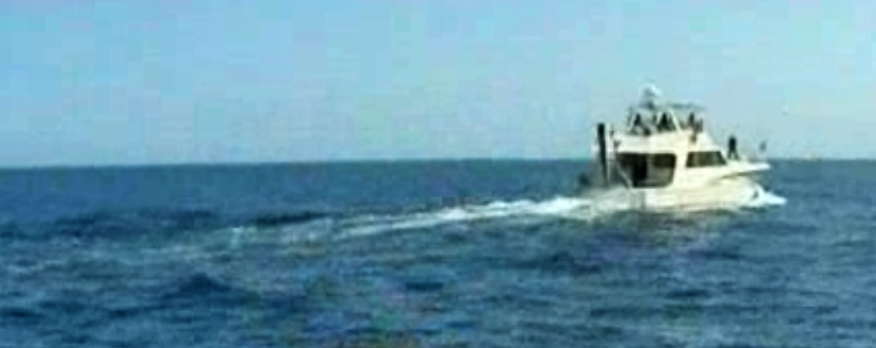
Nine months out, it appears activism’s old guard is determined to blunt all real resistance welling in American youth. The Tribune found another normalizing voice from UNAC which disavowed any recourse but nonviolence. WTF? It’s one thing not to encourage violence, another to promise to “back off from any violence.”

Hello? Activists with broken spirits need to STFD and STFU. Let younger, hotter heads give you a lesson in courage and purpose. If you are over thirty, hold yourselves among the fucks responsible for this mess. Who are you to deny the young their righteous rage?

As elder activists, precisely what wisdom is it you think you can impart? Have you stopped one war? Slowed imperialism? Ended nukes? Saved the whales? Halted global warming? Attended to anything but the erosion of democracy, the social safety net and the environment? Your exalted nonviolence neither delivered India from class exploitation nor ended racism in America. Stick with fundraising, educating, inspiring others, drawing your peers into social networking; lead, but not by edict, and not by a consensus dominated by your peers. Put your dogma aside for the young leaders, let them make their own mistakes. I hope you will at least admit they can’t fail more miserably than you.

At Sunday’s meeting, the United National Antiwar Committee spokesman acquitted himself when confronted by a young gentleman representing an anarchist entity. Committee member Ashley Smith’s full quote had been: “We will not be the ones to initiate or perpetrate any violence.” And: “We will back off from any violence.” But when pressed at the meeting, he explained that organizers hoped the event would be safe for families, but that younger militants could exercise their freedoms like anybody else. I paraphrase.

I’ll qualify my criticism by pointing out that a number of the organizers were personal victims of recent FBI home invasions, so they are fully justified in having to distance themselves from being interpreted as advocating violence. An additional challenge is presented by an adversarial corporate press determined to squeeze whatever soundbite it wants to discredit or hobble protest.

Of course I’d prefer activists recused themselves from addressing the subject of violence/nonviolence, instead of alienating potential allies by being deliberately exclusionary. And by potential allies, I mean the only allies that will get the movement anywhere, the NEXT GENERATION, because who else are you expecting?

Solo Gaza relief ship Dignite Al Karama presses on for the dignity of Palestine

Freedom Flotilla II, Stay Human
Not only have nation states refused to sanction humanitarian relief missions to illegally besieged Gaza, events this week prove they are unanimous in prohibiting even citizens doing it themselves. Yet, one brave vessel has eluded sabotage, lawsuit, bureaucracy, and Greece’s Coast Guard paramilitaries. French Freedom Flotilla II participant DIGNITE AL KARAMA presses on alone to break the siege of Gaza. Without media escort, television cameras or witnesses, the crew of eleven, joined by print reporter Quentin Girard, will have only their cellphones to apprise the world audience of their progress against the bellicose reception which Israel has promised awaits any transgressors of its 63 year occupation and subjugation of Palestine, including its open-air prison called Gaza.
 
UPDATES: Dignite incercepted by Greek Coast Guard while refueling in Ormos Kouremenos, Crete. Taken under escort to Xinthya, where it’s promised they will be able to leave in the morning. Translation of French article below.

Flotilla for Gaza: The “Dignity” intercepted by Greek coast guard.

For two hours, late Wednesday afternoon, the “Dignity” is moored at Ormos Kouremenos, a small port in the far east of Crete. It needs to replenish fuel one last time before sailing to Gaza.

Suddenly, as it has already replentished 1,000 liters and is awaiting a second delivery, a gunboat of the Greek coast guard emerges. The passengers immediately understand. In this small bay where there are only fishing boats made of wood, they know it is there for them. The gunboat approaches, also an unmarked car.

The Coast Guard ask politely for our papers. Thus began a two-hour discussion and document control board where everything is carefully checked. Activists trample board.

“It’s too bad”, everyone is thinking. This was the last step before the big crossing. A dozen men in uniform, very polite, surround the Dignity. The phone calls multiply, presumably to refer to a distant authority. The Coast Guard require passports, they carefully register the names.

They don’t find much wrong with the boat. The captain didn’t have a logbook and the marina’s entry fee, 30 euros, hadn’t yet been tendered. Except that in this small fishing harbor, there was no place to declare one’s arrival. We must wait. Passengers prepare to eat, the menu that night, chicken pasta, coppa and lentils.

“We’re Very Sorry”

Eventually the Coast Guard announced that we must follow them to another port to sign authorizations and that the “Dignity” will be able to leave the next morning. It’s 10PM.

In the meantime they keep the boat’s papers to make photocopies. They ensure that there is no problem. One of them apologized repeatedly: “Sorry.” Omeyya Seddik, one of the passengers replied, “You’re doing your jobs, that’s normal.”

The “Dignity” is off again into the night toward the port of Xinthya, escorted by the Coast Guard boat which heads off without delay. Too fast. Many times it seems to disappear into the night as if really she doesn’t want to be followed.

The passengers do not know how to react. What to do? Keep a slim hope? Or immediately broadcast our circumstances and risk making it certain we will not be able to leave as promised. They doubt, they got the impression there were only Greeks among the Coast Guard and the people who were roaming around taking pictures.

Three days they are at sea, three days playing cat and mouse without knowing really if there was a cat. The dignity might perhaps not get to Gaza. It was the only ship of the “Freedom Flotilla” that managed to sail and keep up the hope of getting to Gaza. It went a little further than others, probably not enough. “We remain committed” they declare. “Tomorrow if we can go, we will continue to Gaza.”

RADIO INTERVIEW: Quentin Gerard explains: “This boat has become a strong political symbol.”

AWAITING CONFIRMATION: Swedish aid ship JULIANO still hopes to make a convoy. (Broadcasting live at http://ustre.am/zQHM)

As it stands, authorities have blocked or sabotaged 9 of the 10 vessels known to be sailing in the aid convoy. They are: The Audacity of Hope, Tahrir, Saorise, Juliano, Guernica, Louise Michel, Dignite Al Karama, Stefano Chiarini, Freedom for All, and the Methimus II.


Aboard the DIGNITE: Activists: Olivier Besancenot, Annick Coupé, Nabil Ennasr, Jacqueline Le Corre, Nicole Kiil-Nielsen, Osama Mouftah, Julien Rivoire, Omeyya Seddik; crew: Hilaire, Vincent and Yannick; not pictured: photographer/reporter Quentin Girard.

See their pictures at Liberte.fr.

Updated Facebook page statement of DIGNITY delegation:
La déclaration des camarades à bord du bateau

Message of the French delegation on board the Dignité Al Karama: The Freedom Flotilla is not dead!

Our presence at sea, on the Dignity-Al Karama, permits us to carry on the message of the international campaign of the Freedom Flotilla II and of the French Un Bateau Pour Gaza campaign. The statements by the Israeli authorities proclaiming the end of the Freedom Flotilla II, praising the Greek government acts as freedom of expression and actions of a civil society are now dead words.

We are at sea, and the collected national coalitions are not giving up.

States should no longer be complicit in this criminal blockade, and cannot silence the urge of civil society that simply demands, through this nonviolent action, the enforcement of law by permanent lifting of the blockade of Gaza.

We call on all justice-loving citizens to strengthen the effort, to allow the Dignity-Al Karama and all boats of the flotilla to go to Gaza.

Girard latest Tweets:

July 6, 3:36
Besancenot at the helm, small salad, sea of oil. Nickel.

July 6, 3:37
On the boat we wonder about the latest of the mercato and of the Tour de France. Any news?

July 6, 5:29
@JAntiwilders Dignity Is still heading to Gaza.

July 6, 5:29
@yanouz FT1 will not be on the boat evidently.

July 6, 6:19
@GirardTh Not too much wind, calm sea, it’s a change from the Atlantic.

July 6, 6:33
@JpKphotographer Yes, will you follow me? We need press agency photos.

July 6, 11:09
Did the Greek-Swedish ship manage to leave the port of Athens? Really?

In the original French:

3:36 – 06.07
Besancenot à la barre, petite salade, mer d’huile. Nickel.

3:37 – 06.07
Sur le bateau on s’inquiète des dernières nouvelles du mercato et du tour de France. Des news?

5:29 – 06.07
@JAntiwilders dignity is still heading to Gaza.

5:29 – 06.07
@yanouz F1 ne viendra pas sur le bateau apparemment.

6:19 – 06.07
@GirardTh pas trop de vent, mer calme, ça change de l’Atlantique.

6:33 – 06.07
@JpKphotographer oui, tu me rejoins? Ils ont besoin de photographes dagence de presse.

11:09 – 06.07
Le bateau greco suédois aurait réussi à sortir du port d Athènes? Vrai?

Freedom Flotilla II faces Shayetet13 in showdown at the naval siege of Gaza

Freedom Flotilla II - Stay HumanIt promises to be quite a showdown. Israel has repeated that it will let no ship through to Gaza, the IDF has promised “surprises” for the would-be blockade-runners, while this relief convoy is upping the ante with luminaries political and literary. The US boat is carrying novelist Alice Walker and a who’s who of peace activists, no less than Medea Benjamin, Kathy Kelly, Ray McGovern, and Ann Wright. There will be journalists from CBS, CNN and NPR, so you’d think Israel wouldn’t dare jam their signal and superimpose its own news package like it did with the Mavi Marmara, but maybe it won’t have to.

We’ve seen water hose on Freedom Riders before, only this time the blastees will be activist-squires. You might wonder what kind of sympathy they’ll garner, that is if an audience will see it at all. Will there be an independent media vessel cruising alongside the flotilla, with footage and equipment outside the jurisdiction of an Isreali commando raid? In the past the IDF was able to confiscate every scrap of evidence which could be used against them, at least until their doctored video could shape the official narrative.

Then too, with the absence of the Muslim Brotherhood, and Palestine-champions like Ken O’Keefe, the IDF’s interdiction may meet no resistance at all. Remember the MV Rachel Corrie, surrendering themselves with nary a ripple of media coverage?

Another less provocative strategy adopted by the US boat was not to carry any aid cargo, simply letters of support from American donors. I’m not sure why, except that the IDF cannot accuse them of smuggling anything past the blockade. But what does that make the Audacity of Hope exactly? The Freedom Flotilla is what, if it’s not a relief convoy?

There’s time before the flotilla leaves from Greece, please please please put something aboard to take to Gaza. Break the siege with SOMETHING. You can’t very well assert that Israel wouldn’t otherwise grant entry to all these American activists, many of the Jewish, through the formal border crossings, with or without stacks of correspondence.

I’ll spare further critique for now and wish Team Nonviolence the best success. NotMyTribe has complied a Twitter list of who to follow on the Freedom Flotilla II. Here is an incomplete listing of the passengers on three ships, Ireland’s MV Saoirse, Canada’s Tahrir, and USA’s The Audacity of Hope.

Ireland – MV Saoirse
National Coordinator Fintan Lane, Skipper Shane Dillon, John Hearne, Pat Fitzgerald, Paul Murphy, Hugh Lewis, Rik Walton, Mags O’Brien, Gerard Barron, Jim Roche, Zoe Lawlor, John Mallon, Charlie McMenamin, Philip McCullough, Hussein Hamed, Aine Joyce, Former Fianna Fáil TD Chris Andrews, Senator Mark Daly, Sinn Féin TD Aengus Ó’ Snodaigh, Sinn Féin councilor Gerry MacLochlainn, artist Felim Egan, rugby international Trevor Hogan. Representing the Irish Ship to Gaza campaign, the Free Gaza Movement, Irish Anti-War Movement, and Ireland-Palestine Solidarity Campaign.

Canada – Tahrir
Rifat Audeh, Stéphan Corriveau, Karen DeVito, Bachar Elsolh, David Heap, Miles Howe, Soha Kneen, Irene MacInnes, David Milne, Marie-Eve Rancourt, Jase Tanner, Kevin Neish, Dylan Penner (Independent Jewish Voices Canada), Vivienne Porzsolt (Jews Against Occupation in Australia), Harmeet Singh Sooden, Muhammed Hamou (the London Muslim Mosque), Robert Lovelace (Former Chief of the Ardoch Algonquin First Nation and professor of Indigenous Studies at Queen’s University), Lyn Adamson (Canadian Voice of Women for Peace Co-Chair), Manon Massé (Quebec Solidaire representative), Sue Breeze, Kate Wilson, filmmaker John Greyson, Mary Hughes-Thompson, co-founder of the Free Gaza Movement), Sofia Smith, Amira Haas

US Boat – The Audacity of Hope
Medea Benjamin, Hedy Epstein, Ray McGovern, Kathy Kelly, Ken Mayers, Richard Levy, Henry Norr, Gail Miller, Ridgely Fuller, Robert Naiman, Linda Durham, Brad Taylor, Nic Abramson, Alice Walker, ?Libor Kožnar?, Hagit Borer, Kit Kittredge, G. Kaleo Larson

French
Two boats: Louise Michel & Le Dignité-El Karameh
Julien Bayou (co-founder, Black Thursday), Olivier Besancenot (NPA), Alain Bosc (Cimade), Annick Coupé (porte-parole et déléguée générale de l’Union Syndicale Solidaires), Ismahane Chouder (Participation et Spiritualité Musulmane), Jean-François Courbe (département international de la CGT), Nabil Ennasri (président du Collectif des Musulmans de France), Raymond Fabrègues (Coalition contre Agrexco et Confédération paysanne), Patrice Finel (Parti de Gauche), Georges Gumpel (membre du bureau national de l’UJFP et représentant de l’EJJP), Nicole Kill Nielsen (députée européenne EE-LV), Claude Léostic (vice présidente de l’AFPS), Jean-Paul Lecoq (député du PCF), Catherine Lecoq (Mouvement de la Paix et le Collectif 13 Un bateau pour Gaza), Jo le Guen (navigateur), Yamin Makri (Collectif 69 de soutien au peuple palestinien), Oussama Mouftah (Collectif 59 Palestine), Marie Jo Parbot (auteur de BD), Eugène Riguidel (navigateur), Thomas Sommer (CCIPPP), Henri Stoll (Collectif Palestine 68), Omeyya Seddik

Norway
Torstein Dahle, Stine Renate Haheim, Aksel Hagen, Mina Boldermo Eriksen, Bjørn O. Bjørnsen, Tove Henny Lehre, Bard Vegar Solhjell

Denmark
Gitte Seeberg
John Ekebjaerg-Jakobsen
Adam Qvist

(NOTE: This post will be updated an appended as more information becomes available.)

Are FBI raids on activists focused on UNAC strategies?

The UNAC is claiming that recent FBI raids on the offices of various antiwar organizations are linked to those which attended its July conference, an attempt to coordinate national antiwar activities.

Even the title of the conference was never pinned down. Here are the 28 action points decided for the upcoming year, which reads like a clearinghouse of ideas.

Action Program Adopted by the National Conference to Bring the Troops Home Now!

Albany, New York, July 25, 2010

1.
The Rainbow PUSH Coalition and the United Auto Workers (UAW) have invited peace organizations to endorse and participate in a campaign for Jobs, Justice, and Peace. We endorse this campaign and plan to be a part of it. On August 28, 2010, in Detroit, we will march on the anniversary of that day in 1963 when Walter Reuther, president of the UAW, Martin Luther King, Jr., and other civil rights leaders joined with hundreds of thousands of Americans for the March on Washington. In Detroit, prior to the March on Washington, 125,000 marchers participated in the Freedom Walk led by Dr. King. At the march, King delivered his “I Have a Dream” speech for the first time before sharing it with the world in Washington. This year, a massive march has been called for October 2 in Washington. We will begin to build momentum again in Detroit on August 28th. We also endorse the August 28, 2010 Reclaim the Dream Rally and March called by Rev. Al Sharpton and the National Action Network to begin at 11 a.m. at Dunbar High School, 1301 New Jersey Avenue Northwest, Washington D.C. .

2.
Endorse, promote and mobilize for the Saturday, October 2nd “One Nation” march on Washington, DC initiated by 1199SEIU and the NAACP, now being promoted by a growing coalition, which includes the AFL-CIO and U.S. Labor Against the War, and civil rights, peace and other social justice forces in support of the demand for jobs, redirection of national resources from militarism and war to meeting human needs, fully funding vital social programs, and addressing the fiscal crisis of state and local governments. Organize and build an antiwar contingent to participate in the march. Launch a full-scale campaign to get endorsements for the October 2 march on Washington commencing with the final plenary session of this conference.

3.
Endorse the call issued by a range of student groups for Thursday, October 7, as a national day of action to defend education from the horrendous budget cuts that are laying off teachers, closing schools, raising tuition and limiting access to education, especially for working and low income people. Demand “Money for Education, not U.S. Occupations” and otherwise link the cuts in spending for education to the astronomical costs of U.S. wars and occupations.

4.
Devote October 7-16 to organizing local and regional protests to commemorate the ninth anniversary of the invasion and occupation of Afghanistan through demonstrations, marches, rallies, vigils, teach-ins, cultural events and other actions to demand an immediate end to the wars and occupations in both Iraq and Afghanistan and complete withdrawal of all military forces and private security contractors and other mercenaries. The nature and scheduling of these events will reflect the needs of local sponsors and should be designed to attract broad co-sponsorship and diverse participation of antiwar forces with other social justice organizations and progressive constituencies.

5.
The U.S. military is the largest polluter in the world. Therefore, we endorse the “climate chaos” demonstration in Washington D.C. on October 11, coordinated by the National Campaign for Nonviolent Resistance.

6.
Support and build Remember Fallujah Week November 15-19.

7.
Join the new and existing broad-based campaigns to fund human needs and cut the military budget. Join with organizations representing the fight against cutbacks (especially labor and community groups) to build coalitions at the city/town, state and national level. Draft resolutions for city councils, town and village meetings and voter referendum ballot questions linking astronomical war spending to denial of essential public services at home. (Model resolutions and ballot questions will be circulated for consideration of local groups.) Obtain endorsements of elected officials, town and city councils, state parties and legislatures, and labor bodies. Work the legislative process to make military spending an issue. Oppose specific military funding programs and bills, and couple them with human needs funding issues. Use lobbying and other forms of protest, including civil disobedience campaigns, to focus attention on the issue.

8.
Mid-March, 2011 nationally coordinated local teach-ins and protests to mark the eighth year of the Iraq War and to prepare for bi-coastal spring demonstrations the following month.

9.
Bi-Coastal mass spring mobilizations in New York City, San Francisco and Los Angeles on April 9, 2011. These will be accompanied by distinct and separate non-violent direct actions on the same day. A prime component of these mobilizations will be major efforts to include broad new forces from youth to veterans to trade unionists to civil and human rights groups to the Arab, Muslim and other oppressed communities, to environmental organizations, social justice and faith-based groups. Veterans and military families will be key to these mobilizations with special efforts to organize this community to be the lead contingent. Launch a full-scale campaign to get endorsements for these actions commencing with the final plenary session of this conference.

10.
Select a week prior to or after the April actions for local lobbying of elected officials at a time when Congress is not in session. Lobbying to take multiple forms from meeting with local officials to protests at their offices and homes. We will attend the town hall meetings of our Congresspersons and confront them vigorously on their support for the wars and occupations of Iraq and Afghanistan and sanctions on Iran. We also will press them on the unconstitutional diminution of the civil liberties of all Americans and targeted populations.

11.
Consistent with the call to include broad popular sectors of society in our efforts and to contend with the challenges of opposing U.S. wars and occupations while also rejecting attacks at home, National Peace Conference participants will join May Day actions on May 1, 2011, so as to unite all those standing against war and for rights. U.S. military and trade wars force millions of refugees and migrants to the U.S., where they face growing repression, including mass detentions and deportations. Many immigrants, including youth, are forced into the military, through the economic draft as well as under threat of deportation and using false promises of citizenship. By standing together as one on May Day, the antiwar and immigrant rights movements make clear their united stand against U.S. wars and for the rights of all at home and abroad.

12.
National tours: Organize, over a series of months, nationally-coordinated tours of prominent speakers and local activists that link the demands for immediate withdrawal to the demands for funding social programs, as outlined above. Encourage alternatives to military/lethal intervention, relying on research and experience of local and international peace team efforts.

13.
Pressure on Iran from the U.S., Israel and other quarters continues to rise and the threat of a catastrophic military attack on Iran, as well as the ratcheting up of punitive sanctions that primarily impact the people of that country, are of grave concern. In the event of an imminent U.S. government attack on Iran, or such an attack, or a U.S.-backed Israeli attack against Iran, or any other major international crisis triggered by U.S. military action, a continuations committee approved by the conference will mount rapid, broad and nationally coordinated protests by antiwar and social justice activists.

14.
In the event of U.S.-backed military action by Israel against Palestinians, aid activists attempting to end the blockade of Gaza, or attacks on other countries such as Lebanon, Syria, or Iran, a continuations committee approved by the conference will condemn such attacks and support widespread protest actions.

15.
In solidarity with the antiwar movements of Japan and Korea, each calling for U.S. Troops to Get Out Now, and given the great increase in U.S. military preparations against the Democratic People’s Republic of Korea, National Peace Conference participants will organize immediate protests following any attack by the U.S. on Korea. U.S. war preparations include stockpiling hundreds of bunker-busters and conducting major war games near the territorial waters of China and Korea. In keeping with our stand for the right of self-determination and our demand of Out Now, the National Peace Conference calls for Bringing All U.S. Troops Home Now!

16.
Support actions to end the Israeli occupation and repression of Palestinians and the blockade of Gaza.

17.
Support actions aimed at dismantling the Cold War nuclear, biological, radiological and chemical weapons and delivery systems. Support actions aimed at stopping the nuclear renaissance of this Administration, which has proposed to spend $80 billion over the next 10 years to build three new nuclear bomb making facilities and “well over” $100 billion over the same period to modernize nuclear weapons delivery systems. We must support actions aimed at dismantling nuclear, biological, radiological and chemical weapons and delivery systems. We must oppose the re-opening of the uranium mining industry, new nuclear power plants, and extraction of other fossil fuels that the military consumes.

18.
Work in solidarity with GIs, veterans, and military families to support their campaigns and calls for action. Demand support for the troops when they return home and support efforts to counter military recruitment.

19.
Take actions against war profiteers, including oil and energy companies, weapons manufacturers, and engineering firms, whose contractors are working to insure U.S. economic control of Iraq’s and Afghanistan’s resources.

20.
Support actions, educational efforts and lobbying campaigns to promote a transition to a sustainable peace economy.

21.
Develop and implement a multi-pronged national media campaign which includes the following: the honing of a message which will capture our message: “End the Wars and Occupations, Bring the Dollars Home;” a fundraising campaign which would enable the creation and national placement and broadcast of professionally developed print ads as public service radio and television spots which communicate this imperative to the public as a whole (which would involve coordinated outreach to some major funders); outreach to sympathetic media artists to enable the creation of these pieces; an intentional, aggressive, coordinated campaign to garner interviews on as many targeted national news venues as possible which would feature movement voices speaking our nationally coordinated message to the honed; a plan to place on message op-ed pieces in papers around the country on a nationally coordinated schedule.

22.
We demand the immediate and total withdrawal of U.S. military forces, mercenaries and contractors from Afghanistan and Iraq, and an end to drone attacks on Pakistan, Afghanistan and other countries and call for self-determination for the people of all countries. In this demand is the necessity for full truth and transparency regarding all U.S./NATO actions and an expanded development of independent news sources for broad public knowledge of the state of the wars and occupations. We demand an end to censorship of news topics and full democratic access to freedom of information within the U.S. NATO Military Industrial Media Empire.

23.
We call for the equal participation of women in all aspects of the antiwar movement. We propose nonviolent direct actions either in Congressional offices or other appropriate and strategic locations, possibly defense contractors, Federal Buildings, or military bases in the U.S. These actions would be local and coordinated nationally, i.e., the same day for everyone (times may vary). The actions would probably result in arrests for sitting in after offices close. Entering certain facilities could also result in arrests. Participants would be prepared for that possible outcome before joining the action. Nonviolence training would be offered locally, with lists of trainers being made available. The message/demand would be a vote, a congressional action to end the wars: Iraq, Afghanistan, Pakistan. Close U.S. bases. Costs of war and financial issues related to social needs neglected because of war spending would need to be studied and statements regarding same be prepared before the actions. Press release would encourage coverage because of the actions being local and nationally coordinated.

24.
We will convene one or more committees or conferences for the purpose of identifying and arranging boycotts, sit-ins, and other actions that directly interfere with the immoral aspects of the violence and wars that we protest.

25.
We call for the immediate release from Israeli prisons of Mordechai Vanunu and for ending restrictions on his right to speak. We also call upon the Israeli government to let him travel freely and to leave Israel permanently if he so desires.

26.
We oppose the prosecution for Bradley Manning for being the source of the Wikileaks leaks. Manning has done what all GIs should do when they see war crimes: expose them! Bradley Manning’s prosecution sends a message that if you expose illegal activity in the military, you will be prosecuted. We call for the unconditional release of Bradley Manning and an end to all war crimes.

27.
We call for building and expanding the movement for peace by consciously and continually linking it with the urgent necessity to create jobs and fund social needs. We call for support from the antiwar movement to tie the wars and the funding for the wars to the urgent domestic issues through leaflets, signs, banners and active participation in the growing number of mass actions demanding jobs, health care, housing, education and immigrant rights such as:

July 25 – March in Albany in Support of Muslims Targeted by Preemptive Prosecution called by the Muslim Solidarity Committee and Project SALAM.

July 29 & 30 – Boycott Arizona Actions across the country as racist Arizona law SB 1070 goes into effect, including the mass march July 30 in NYC as the Arizona Diamondbacks play the Mets.

All the other mass actions listed above leading up to the bi-coastal actions on April 9, 2011.

28.
The continuations committee elected at this conference shall reach out to other peace and social justice groups holding protests in the fall of 2010 and the spring of 2011, where such groups’ demands and tactics are not inconsistent with those adopted at the UNAC conference, on behalf of exploring ways to maximize unity within the peace and social justice movements this fall and next spring.

Down to sports, empires are tribal

American World Cup viewers tuning in to watch their team face England on Saturday might be excused confusion about their adversary’s flag. Instead of the British Union Jack, English fans waved a red and white standard usually only glimpsed in movies where knights fight dragons, crusades, or Braveheart.

That’s the red cross of Saint George, dragon-slayer, minus the diagonal white-on-blue X of Scotland’s Saint Andrew and the red X of Ireland’s Saint Patrick. Where British dominion is concerned, natural resources and labor are commonwealth, assertion of athletic dominance is forever England.

But the England team crest, with the three lions passant-guardant, dates to lionhearted King Richard, the early realm’s warrior expansionist. Technically the heraldic cats are léopards, because the royal houses ruled in the language of the French, and these three show the empire’s spots: Team England’s badge invokes the era when “England” included the conquered Scotland, Ireland and Wales.

As far as world onlookers cared, the first round pairing of USA versus England was an intramural match among conspiratorial members of the Coalition of the Willing. At best one could only root for the good cop colonizer. Early enough in the game, a score fumbled past England’s goalie portended the Gods’ ambivalence over the outcome. Like Olympic teams, the FIFA contenders are groupings of soccer all-stars whose day jobs mean playing side by side, for either Man United or Real Madrid apparently. It’s hard to expect that team allegiances would defer to nationalism any more than to the federation’s television revenues. The achievement of a tie for match USA – England guaranteed to string along the barely interested American TV audience.

England, Scotland and Ireland were grandfathered into FIFA because, despite not being standalone sovereign nations, they originated the competition. Indeed Britain invented football, whose spread across the world is owed to European colonialism.

Sovereignty is no small distinction when it comes to legitimizing sports teams. Taiwan and Tibet are not recognized by China for example, as the Korean halves reject each other, as the US might object to Puerto Rican or Hawaiian bids for succession.

Today a pretense of sovereignty is enough to field a national soccer team. Take Iraq, Afghanistan and Israel, for example, and I needn’t stop there. By what standard are they independent entities versus US client states? They have their own flags, for all the US cares, and I daresay American pride would be sacrificed for the political gain of either of these puppets excelling their master in sport. A success in sporting circles would only bolster the facade of their indigenous national sovereignty.

Does it say something about the difference between contemporary empires and past, that the US doesn’t need to stamp the red, white and blue unto its colonial projects? Nor dominate them in the arena?

We can contrast America’s far-flung possessions and occupations with the British Commonwealth, whose flags closely mimicked mother Britain’s theme. But I’d like to clarify Ireland’s representation on the British flag. The cross of St. Patrick whose outline informs the Union Jack, represents Ireland before her independence. Still occupied Northern Ireland has a flag which duplicates England’s but for the addition of a loyalist co-opted red hand at its center.

While England holds fast to Scotland’s oil and Ireland’s loyalists, when it comes to sport, she wants all the credit.

AIPAC student DC junkets paying off


This year’s AIPAC conference targeted university student body officers in an effort to fend off BDS campaigns at campuses nationwide. Did the controversial strategy just pay off at UC Berkeley? When the student council voted 16 to 4 to divest, student body president Will Smelko vetoed the measure. Intense pressure from Israeli lobby groups were able to prevent overturning the veto.

AIPAC said they were going to do it, and they did it. Here’s what AIPAC’s Leadership Development Director Jonathan Kessler told DC conference attendees:

How are we going to beat back the anti-Israel divestment resolution at Berkeley? We’re going to make certain that pro-Israel students take over the student government and reverse the vote. That is how AIPAC operates in our nation’s capitol. This is how AIPAC must operate on our nation’s campuses.

Though the Berkeley bill SB118 proposed divestment from General Electric and United Technologies only, two military industries which profit from Israel’s subjugation of the Palestinians, it’s true perhaps that the measure opened the door to further BDS inroads to fight Israel Apartheid.

The divestment proposal had the backing of Archbishop Desmond Tutu among many activists. Against was the Israeli lobby. Students were warned that prospective Jewish students would avoid enrolling, etc. Can we imagine the suggestion was made that the current students would be denied jobs? There probably is a corporate future for “made” students who’ve shown their fealty to AIPAC.

Worth reprinting is the statement read by UCB Professor Judth Butler trying to warn the students against AIPAC’s disreputable coercion:

Let us begin with the assumption that it is very hard to hear the debate under consideration here. One hears someone saying something, and one fears that they are saying another thing. It is hard to trust words, or indeed to know what words actually mean. So that is a sign that there is a certain fear in the room, and also, a certain suspicion about the intentions that speakers have and a fear about the implications of both words and deeds. Of course, tonight you do not need a lecture on rhetoric from me, but perhaps, if you have a moment, it might be possible to pause and to consider reflectively what is actually at stake in this vote, and what is not. Let me introduce myself first as a Jewish faculty member here at Berkeley, on the advisory board of Jewish Voice for Peace, on the US executive committee of Faculty for Israeli-Palestinian Peace, a global organization, a member of the Russell Tribunal on Human Rights in Palestine, and a board member of the Freedom Theatre in Jenin. I am at work on a book which considers Jewish criticisms of state violence, Jewish views of co-habitation, and the importance of ‘remembrance’ in both Jewish and Palestinian philosophic and poetic traditions.

The first thing I want to say is that there is hardly a Jewish dinner table left in this country–or indeed in Europe and much of Israel–in which there is not enormous disagreement about the status of the occupation, Israeli military aggression and the future of Zionism, binationalism and citizenship in the lands called Israel and Palestine. There is no one Jewish voice, and in recent years, there are increasing differences among us, as is evident by the multiplication of Jewish groups that oppose the occupation and which actively criticize and oppose Israeli military policy and aggression. In the US and Israel alone these groups include: Jewish Voice for Peace, American Jews for a Just Peace, Jews Against the Occupation, Boycott from Within, New Profile, Anarchists Against the Wall, Women in Black, Who Profits?, Btselem, Zochrot, Black Laundry, Jews for a Free Palestine (Bay Area), No Time to Celebrate and more. The emergence of J Street was an important effort to establish an alternative voice to AIPAC, and though J street has opposed the bill you have before you, the younger generation of that very organization has actively contested the politics of its leadership. So even there you have splits, division and disagreement.

So if someone says that it offends “the Jews” to oppose the occupation, then you have to consider how many Jews are already against the occupation, and whether you want to be with them or against them. If someone says that “Jews” have one voice on this matter, you might consider whether there is something wrong with imagining Jews as a single force, with one view, undivided. It is not true. The sponsors of Monday evening’s round table at Hillel made sure not to include voices with which they disagree. And even now, as demonstrations in Israel increase in number and volume against the illegal seizure of Palestinian lands, we see a burgeoning coalition of those who seek to oppose unjust military rule, the illegal confiscation of lands, and who hold to the norms of international law even when nations refuse to honor those norms.

What I learned as a Jewish kid in my synagogue–which was no bastion of radicalism–was that it was imperative to speak out against social injustice. I was told to have the courage to speak out, and to speak strongly, even when people accuse you of breaking with the common understanding, even when they threaten to censor you or punish you. The worst injustice, I learned, was to remain silent in the face of criminal injustice. And this tradition of Jewish social ethics was crucial to the fights against Nazism, fascism and every form of discrimination, and it became especially important in the fight to establish the rights of refugees after the Second World War. Of course, there are no strict analogies between the Second World War and the contemporary situation, and there are no strict analogies between South Africa and Israel, but there are general frameworks for thinking about co-habitation, the right to live free of external military aggression, the rights of refugees, and these form the basis of many international laws that Jews and non-Jews have sought to embrace in order to live in a more just world, one that is more just not just for one nation or for another, but for all populations, regardless of nationality and citizenship. If some of us hope that Israel will comply with international law, it is precisely so that one people can live among other peoples in peace and in freedom. It does not de-legitimate Israel to ask for its compliance with international law. Indeed, compliance with international law is the best way to gain legitimacy, respect and an enduring place among the peoples of the world.

Of course, we could argue on what political forms Israel and Palestine must take in order for international law to be honored. But that is not the question that is before you this evening. We have lots of time to consider that question, and I invite you to join me to do that in a clear-minded way in the future. But consider this closely: the bill you have before you does not ask that you take a view on Israel. I know that it certainly seems like it does, since the discussion has been all about that. But it actually makes two points that are crucial to consider. The first is simply this: there are two companies that not only are invested in the Israeli occupation of Palestinian lands and peoples, but who profit from that occupation, and which are sustained in part by funds invested by the University of California. They are General Electric and United Technologies. They produce aircraft designed to bomb and kill, and they have bombed and killed civilians, as has been amply demonstrated by Amnesty International and Human Rights Watch. You are being asked to divest funds from these two companies. You are NOT being asked to divest funds from every company that does business with Israel. And you are not being asked to resolve to divest funds from Israeli business or citizens on the basis of their citizenship or national belonging. You are being asked only to call for a divestment from specific companies that make military weapons that kill civilians. That is the bottom line.

If the newspapers or others seek to make inflammatory remarks and to say that this is an attack on Israel, or an attack on Jews, or an upsurge of anti-Semitism, or an act that displays insensitivity toward the feelings of some of our students, then there is really only one answer that you can provide, as I see it. Do we let ourselves be intimidated into not standing up for what is right? It is simply unethical for UC to invest in such companies when they profit from the killing of civilians under conditions of a sustained military occupation that is manifestly illegal according to international law. The killing of civilians is a war crime. By voting yes, you say that you do not want the funds of this university to be invested in war crimes, and that you hold to this principle regardless of who commits the war crime or against whom it is committed.

Of course, you should clearly ask whether you would apply the same standards to any other occupation or destructive military situation where war crimes occur. And I note that the bill before you is committed to developing a policy that would divest from all companies engaged in war crimes. In this way, it contains within it both a universal claim and a universalizing trajectory. It recommends explicitly “additional divestment policies to keep university investments out of companies aiding war crimes throughout the world, such as those taking place in Morocco, the Congo, and other places as determined by the resolutions of the United Nations and other leading human rights organizations.” Israel is not singled out. It is, if anything, the occupation that is singled out, and there are many Israelis who would tell you that Israel must be separated from its illegal occupation. This is clearly why the divestment call is selective: it does not call for divestment from any and every Israeli company; on the contrary, it calls for divestment from two corporations where the links to war crimes are well-documented.

Let this then be a precedent for a more robust policy of ethical investment that would be applied to any company in which UC invests. This is the beginning of a sequence, one that both sides to this dispute clearly want. Israel is not to be singled out as a nation to be boycotted–and let us note that Israel itself is not boycotted by this resolution. But neither is Israel’s occupation to be held exempt from international standards. If you want to say that the historical understanding of Israel’s genesis gives it an exceptional standing in the world, then you disagree with those early Zionist thinkers, Martin Buber and Judah Magnes among them, who thought that Israel must not only live in equality with other nations, but must also exemplify principles of equality and social justice in its actions and policies. There is nothing about the history of Israel or of the Jewish people that sanctions war crimes or asks us to suspend our judgment about war crimes in this instance. We can argue about the occupation at length, but I am not sure we can ever find a justification on the basis of international law for the deprivation of millions of people of their right to self-determination and their lack of protection against police and military harassment and destructiveness. But again, we can have that discussion, and we do not have to conclude it here in order to understand the specific choice that we face. You don’t have to give a final view on the occupation in order to agree that investing in companies that commit war crimes is absolutely wrong, and that in saying this, you join Jews, Muslims, Hindus, Christians and so many other peoples from diverse religious and secular traditions who believe that international governance, justice and peace demand compliance with international law and human rights and the opposition to war crimes. You say that you do not want our money going into bombs and helicopters and military materiel that destroys civilian life. You do not want it in this context, and you do not want it in any context.

Part of me wants to joke–where would international human rights be without the Jews! We helped to make those rights, at Nuremberg and again in Jerusalem, so what does it mean that there are those who tell you that it is insensitive to Jewishness to come out in favor of international law and human rights? It is a lie–and what a monstrous view of what it means to be Jewish. It disgraces the profound traditions of social justice that have emerged from the struggle against fascism and the struggles against racism; it effaces the tradition of ta-ayush, living together, the ethical relation to the non-Jew which is the substance of Jewish ethics, and it effaces the value that is given to life no matter the religion or race of those who live. You do not need to establish that the struggle against this occupation is the same as the historical struggle against apartheid to know that each struggle has its dignity and its absolute value, and that oppression in its myriad forms do not have to be absolutely identical to be equally wrong. For the record, the occupation and apartheid constitute two different versions of settler colonialism, but we do not need a full understanding of this convergence and divergence to settle the question before us today. Nothing in the bill before you depends on the seamless character of that analogy. In voting for this resolution, you stand with progressive Jews everywhere and with broad principles of social justice, which means, that you stand with those who wish to stand not just with their own kind but with all of humanity, and who do this, in part, both because of the religious and non-religious values they follow.

Lastly, let me say this. You may feel fear in voting for this resolution. I was frightened coming here this evening. You may fear that you will seem anti-Semitic, that you cannot handle the appearance of being insensitive to Israel’s needs for self-defense, insensitive to the history of Jewish suffering. Perhaps it is best to remember the words of Primo Levi who survived a brutal internment at Auschwitz when he had the courage to oppose the Israeli bombings of southern Lebanon in the early 1980s. He openly criticized Menachem Begin, who directed the bombing of civilian centers, and he received letters asking him whether he cared at all about the spilling of Jewish blood. He wrote:

I reply that the blood spilled pains me just as much as the blood spilled by all other human beings. But there are still harrowing letters. And I am tormented by them, because I know that Israel was founded by people like me, only less fortunate than me. Men with a number from Auschwitz tattooed on their arms, with no home nor homeland, escaping from the horrors of the Second World War who found in Israel a home and a homeland. I know all this. But I also know that this is Begin’s favourite defence. And I deny any validity to this defence.

As the Israeli historian Idith Zertal makes clear, do not use this most atrocious historical suffering to legitimate military destructiveness–it is a cruel and twisted use of the history of suffering to defend the affliction of suffering on others.

To struggle against fear in the name of social justice is part of a long and venerable Jewish tradition; it is non-nationalist, that is true, and it is committed not just to my freedom, but to all of our freedoms. So let us remember that there is no one Jew, not even one Israel, and that those who say that there are seek to intimidate or contain your powers of criticism. By voting for this resolution, you are entering a debate that is already underway, that is crucial for the materialization of justice, one which involves having the courage to speak out against injustice, something I learned as a young person, but something we each have to learn time and again. I understand that it is not easy to speak out in this way. But if you struggle against voicelessness to speak out for what is right, then you are in the middle of that struggle against oppression and for freedom, a struggle that knows that there is no freedom for one until there is freedom for all. There are those who will surely accuse you of hatred, but perhaps those accusations are the enactment of hatred. The point is not to enter that cycle of threat and fear and hatred–that is the hellish cycle of war itself. The point is to leave the discourse of war and to affirm what is right. You will not be alone. You will be speaking in unison with others, and you will, actually, be making a step toward the realization of peace–the principles of non-violence and co-habitation that alone can serve as the foundation of peace. You will have the support of a growing and dynamic movement, inter-generational and global, by speaking against the military destruction of innocent lives and against the corporate profit that depends on that destruction. You will stand with us, and we will most surely stand with you.

Yanks overseas pretend to be Canadian but how do you do that in Vancouver?

Since the overt militarization of Pax Americana, US citizens traveling the world are advised to pretend they’re Canadians. It only took this week’s unexpected team USA victory over Canada in men’s Olympic hockey, to ignite anti-American feelings. Even before the games began, the USOC’s USA House was the only hospitality venue whose address was not made public, conveniently too because it was safely not open to the public. Now visitors leaving USA House are reminded not to wear or behave in any fashion that would distinguish them as Americans as they make their way to their accommodations.

Security warnings didn’t lessen even as Canada took revenge with a win against the US in Women’s Hockey. Canada’s speed skating victory wasn’t helped by Apolo Ohno’s complaint that his disqualification might have been owed to the supervising judge being Canadian.

Will a Canadian victory in the finals be enough to ameliorate feelings against Americans who dominate every other aspect of North American culture so obnoxiously? In either outcome I foresee American visitors and athletes taking their leave with as little fanfare as possible.

Just as McDonalds is uncontested as it pretends to speak for all Olympic athletes that their toxic McNugget is the “favorite of Olympians,” so is the American war machine able to coopt US athletes for their imperialist message. Critics of the Olympics are ridiculed for politicizing the games, yet militant nationalism pervades the ceremonies.

The television announcers remind us that the USA hockey players have been paired with beneficiaries of the Wounded Warrior program. Each stick-wielding, armored, helmeted ice warrior thus plays for the honor of an actual US soldier. A recognition I believe of America’s undying desire to have a second chance to kick ass.

I don’t know anyone rooting for Team USA, the finals rematch would seem to be an extraordinary opportunity for Obama-spirited diplomacy. These athletes are all NHL players of mottled nationalities, probably most Canadian as much as they are American. What better chance to let the victory to the host. Can you imagine the US asserting its dominance over its coalition partner? What could come of that?

Americans have precious few fans outside the homeland. Oh, they tell us, “we love Americans, just not America.” But in Vancouver this week, that was not true. Imagine Canadians added to the list of world people grown tired of the idiot American brute. Canada will take the sympathy of the rest of the Commonwealth with them.

After two weeks of patient cheerleading against US Olympic supremacy, suddenly I’m jumping up and down for a US win!

It’s just a game. The white man’s war on the world is not.

Jokenhagen, the COP15 that wasn’t

You heard about the Yes Men successfully pulling off another stunt in Copenhagen? The delegates were fooled, even the media, and so unsurprisingly, the substance of their theatrics is being glossed over. While the reporters track the footprints to sort truth from facade, they are wiping all traces behind them. Url-shortening conduit bit.ly warns for example that clicking through might endanger your browser. The Yes Men prank Canada is as far as most news stories go. Why Canada — is the more to the story.
climate debt agents good cop15

First the substance: Canada is a wealthy-nation holdout on the climate talks. Its conservative government is offering to curb carbon emissions by a mere 3% etc. So the Yes Men thought they’d lead by example, role-playing Canada stepping up as all industrialized powers must. Their special announcement was called AGENDA 2020, wherein Canada pledged a 40% cut in emissions by 2020, to reach a 80% cut by 2050. Plus they vowed a “climate debt mechanism” comprising 1% of Canada’s GDP, climbing to 5% by 2030, to go toward emissions reduction and clean energy projects in Africa.

Drastic cuts, and huge payments of “climate debt” are what scientists project will be necessary to reach the environmental 350ppm line in the sand. A COP15 without such figures will be a failure. It’s small wonder the media is describing this “prank” without mentioning what was said.

Some Canadian outlets are providing reasonable detail of the commotion which was provoked. Check out the Globe and Mail, then the Toronto Star for good overviews.

The operation as it unfurled: preparations and execution were a collaboration between YM and the red-jacketed Climate Debt Agents (CDA).

0. YM begin tweeting as Canadian envoy PM Jim Prentice
(example: “My staff have notified me of a fake account pretending to represent me. It is @JimPrentice hope we can get it removed shortly. 5:31 AM Dec 14th from web” )

1. YM botch amusing anti-CocaCola prank

2. YM as Prentice tweets special announcement of a bold step forward.

3. YM (enviro-canada.com) offers Environment Canada press release

4. CDA fakes press conference outlining AGENDA 2020

5. Another CDA press conference features the envoy from Uganda, applauding Canada

6. Phony YM Wall Street Journal European Edition picks up story

7. YM (as ec-gc.ca) Environment Canadia press release pretending to denounce fraudulent prank

8. And the obligatory CDA press conference.

9. The real Canadian delegates provide the hijinks from there.

Championing minor pranks here and there as they toured for the release of their new movie The Yes Men Save the World, a reputation no doubt preceded them to the Climate Conference. The Yes Men anti-CocaCola prank earlier this week was stopped after just 20 seconds, but may have been a ruse to resolve expectations that they were obviously in Copenhagen to do something.

The CBC covers the moves of the Canadian and US delegates to get a handle on their PR. Interesting too were the frantic efforts to unmask the deception. While web sleuths followed the internet clues, a CBC reader comments that so far we’ve heard nothing yet of detective work in pursuit of whoever “hacked” the Climategate emails.

The press conferences are available on Youtube COP15DK, although their credibility is enhanced by the websites constructed around them.

AGENDA 2020

UGANDA RESPONDS

CANADA RETRACTS

CLIMATE DEBT AGENTS TAKE RESPONSIBILITY

Of course the Yes Men released their own article to tell the story:

Copenhagen spoof shames Canada; Climate Debt No Joke

by The Yes Men

African, Danish and Canadian youth join the Yes Men to demand climate justice and skewer Canadian climate policy.

COPENHAGEN, Denmark – “Canada is ‘red-faced’!” (Globe and Mail) “Copenhagen spoof shames Canada!” (Guardian) “Hoax slices through Canadian spin on warming!” (The Toronto Star) “A childish prank!” (Stephen Harper, Prime Minister of Canada)

What at first looked like the flip-flop of the century has been revealed as a sophisticated ruse by a coalition of African, North American, and European activists. The purpose: to highlight the most powerful nations’ obstruction of meaningful progress in Copenhagen, to push for just climate debt reparations, and to call out Canada in particular for its terrible climate policy.

The elaborate intercontinental operation was spearheaded by a group of concerned Canadian citizens, the “Climate Debt Agents” from ActionAid, and The Yes Men. It involved the creation of a best-case scenario in which Canadian government representatives unleashed a bold new initiative to curb emissions and spearhead a “Climate Debt Mechanism” for the developing world.

The ruse started at 2:00 PM Monday, when journalists around the world were surprised to receive a press release from “Environment Canada” (enviro-canada.com, a copy of ec.gc.ca) that claimed Canada was reversing its position on climate change.

In the release, Canada’s Environment Minister, Jim Prentice, waxed lyrical. “Canada is taking the long view on the world economy,” said Prentice. “Nobody benefits from a world in peril. Contributing to the development of other nations and taking full responsibilities for our emissions is simple Canadian good sense.”

Thirty minutes later, the same “Environment Canada” sent out another press release, congratulating itself on Uganda’s excited response to the earlier fake announcement. A video featuring an impassioned response by “Margaret Matembe,” supposedly a COP15 delegate from Uganda, was embedded in a fake COP15 website. “Canada, until now you have blocked climate negotiations and refused to reduce emissions,” said “Matembe.” “Of course, you do sit on the world’s second-largest oil reserve. But for us it isn’t a mere economic issue – it’s about drought, famine, and disease.”

(The video was shot in a replica of the Bella Center’s briefing room, at Frederiksholms Kanal 4, in the center of Copenhagen. Matembe was actually Kodili Chandia, a “Climate Debt Agent” from ActionAid, a collective of activists that push for rich countries to help those most affected by climate change for adaptation and mitigation projects. The “Climate Debt Agents,” with their signature bright red suits, have been a ubiquitous presence in Copenhagen during the climate summit.)

Then it was time for Canada to react. One hour later, another “Environment Canada” (this one at ec-gc.ca) released a bombastic response to the original release. This one quot ed Jim Prentice, Canada’s Minister for the Environment, decrying the original announcement: “It is the height of cruelty, hypocrisy, and immorality to infuse with false hopes the spirit of people who are already, and will additionally, bear the brunt of climate change’s terrible human effects. Canada deplores this moral misfire.”

Because almost none of the resulting news coverage even mentioned Uganda or “Matembe’s” response, a fourth release was sent from the second website (ec-gc.ca).

Meanwhile, in the real world

The real Canadian government’s reactions were almost as strange as the fake ones in the release. Dimitri Soudas, a spokesperson for the Canadian Prime Minister, emailed reporters and blamed Steven Guilbeault, cofounder of Quebec-based Equiterre. “More time should be dedicated to playing a constructive role instead of childish pranks,” said Soudas in a first email, while misspelling Guilbeault’s name.

Guilbeault demanded an apology. “A better way to use his time would probably be to advise the Canadian government to change its deeply flawed position on climate,” said Guilbeault.

Soudas and Guilbeault were seen exchanging angry words in the hallway outside of Canada’s 3:30pm press conference, which did not start until 4:30pm, and at which the Canadians refused to answer any questions about the flurry of false releases.

More raised voices were heard when Stephen Chu, the US Secretary of Energy, refused to pose for a photo with his Canadian counterpart, Jim Prentice. After Steve Kelly, Prentice’s chief of staff, begged for 10 minutes, the US guy finally asked why a photo was so important. Kelly replied that “we were carpetbagged this morning by [environmental non-governmental organizations] with a false press release. I gotta change the story.”

Why Blame Canada?

The only country in the world to have abandoned the Kyoto Protocol’s emissions and climate debt targets, Canada also has the most energy-intensive, destructive and polluting oil reserves in the world. The Alberta tar sands, according to The Economist, are in fact the world’s biggest single industrial source of carbon emissions.

“By not agreeing to emissions reductions, Canada is holding a loaded gun to our heads, and seems ready to pull the trigger on millions of us around the globe, ” said Margaret Matembe aka Kodili Chandia of the “Climate Debt Agents.” “They leave us no choice but to see them as criminal.”

At last year’s climate summit in Poznan, Poland, over 400 civil society organizations voted Canada worst of all nations in blocking progress towards a binding climate treaty. Will Canada take the dubious prize again this year in Copenhagen?

“The Canadian government is not listening to its citizens,” says Sarah Ramsey, a resident of Alberta who has seen the destruction of the tar sands firsthand. Ramsey traveled to Copenhagen to give voice to a generation of young Canadians. “We are discouraged and demoralized by our government’s position on climate change. We decided to lend our government a hand, and show them what good leadership looks like.”

In solidarity with the delegates from the G77 Bloc of nations, today’s intervention was also meant to highlight an issue at the heart of the ongoing talks-the issue of climate justice, and the climate debt that the developed world owes the developing world. Seventy-five percent of the historical emissions that created the climate crisis came from 20% of the world’s population in developed countries, according to the UN, yet up to 80% of the impacts of the climate crisis are experienced in the developing world, according to the World Bank.

“I meant every word I said,” says Kodili Chandia, a spokesperson for the Climate Debt Agents, who spoke out as a member of the Ugandan delegation. “This debate isn’t just about facts and figures and abstract concepts of fairness-the drought we are seeing right now in East Africa is directly threatening the lives of millions of people, including farmers in my own family. We have not created this problem but we are living with the consequences. That’s why I still say: It’s time for rich countries to pay their climate debt.”

– 30 –

There will be a press conference today at the “good” Bella Center used to shoot the fake announcement videos: 1pm, Frederiksholms Kanal 4, Copenhgaen.

More dream announcements coming soon! Come make your own or stay tuned at good-cop15.org.

FOR IMMEDIATE RELEASE
Tuesday, December 15, 2009

Signore Massimo Tartaglia fist thrower

Arrest of Silvio Berlusconi assailant December 14So far the only Berlusconi-media-approved photo released of Italian Heavyweight Champion Massimo Tartaglia conveniently corroborates the diagnosis of Tartaglia’s alleged mental illness. What does that say about the average Italian, not crazy enough? Now of course Berlusconi’s press is predicting a wave of public sympathy for the wounded dictator. Basta!

My favorite incongruent idiocy came from the lips of Italian President Giorgio Napolitano who condemned the “grave and unusual gesture of aggression,” pleading that political differences be expressed “preventing and heading off every impulse and spiral of violence.” What’s good enough for Iraqis is not gentile enough for poor Berlusconi.

Italian authorities were quick to announce that Tartaglia was confessed remorse for his “cowardly and rash act.” But we can recognize that for bureaucrat-speak, because breaking through, then facing off the Don himself was anything but cowardly.

But then the Italian authorities had to backtrack on the impetuous aspect by confounding themselves with the conclusion that pepper spray and a crucifix discovered on the assailant suggested the attack on Berlusconi was premeditated. Aha. Interior Minister Roberto Maroni said of Tartaglia “He had been developing a rage against the prime minister for some time.”

Really? Since 2002-3 perhaps, when against the wishes of the Italian people, Berlusconi took Italy into the Coalition of the W?

UPDATE
From his hospital bed, Berlusconi is proclaiming “Love always wins over jealousy and hatred.”

While thousands of Italian Facebook users discover they have been involuntarily drafted into Friends of Silvio groups. While thousands of others find their newly formed Fans of Massimo Tartaglia group has been deleted.

We Are United For a Peaceful Obama

Come to Acacia Park, TUESDAY, 5PM
ACACIA PARK, 5PM- COLORADANS FOR PEACE are not alone urging President Obama to escalate his attention to the antiwar mandate given him by the American voters. Michael Moore & Keith Olbermann have made eleventh hour pleas, and the nation’s prominent antiwar activists signed a collective letter to President Obama (see below). Here are the national organizations taking to the streets tomorrow:

United Against Afghan Escalation, Women Say No To War (Code Pink), No Escalation in Afghanistan (UFPJ), Veterans Oppose Troop Build-up (IVAW), US Labor Against War, A.N.S.W.E.R., Stop the Escalation (World Can’t Wait), American Friends Service Committee (AFSC), Just Foreign Policy, Pax Christi USA, Peace Action, Progressive Democrats of America, The Peace and Justice Resource Center and Voters for Peace.

The letter composed by the National Assembly:

President Barack Obama?
The White House?Washington, D.C.
November 30, 2009

Dear President Obama,
With millions of U.S. people feeling the fear and desperation of no longer having a home; with millions feeling the terror and loss of dignity that comes with unemployment; with millions of our children slipping further into poverty and hunger, your decision to deploy thousands more troops and throw hundreds of billions more dollars into prolonging the profoundly tragic war in Afghanistan strikes us as utter folly. We believe this decision represents a war against ordinary people, both here in the United States and in Afghanistan.  The war in Afghanistan, if continued, will result in the deaths of hundreds if not thousands of U.S. troops, and untold thousands of Afghans.

Polls indicate that a majority of those who labored with so much hope to elect you as president now fear that you will make a wrong decision — a tragic decision that will destroy their dreams for America. More tragic is the price of your decision. It will be paid with the blood, suffering and broken hearts of our young troops, their loved ones and an even greater number of Afghan men, women and children.

The U.S. military claims that this war must be fought to protect U.S. national security, but we believe it is being waged to expand U.S. empire in the interests of oil and pipeline companies.

Your decision to escalate U.S. troops and continue the occupation will cause other people in other lands to despise the U.S. as a menacing military power that violates international law. Keep in mind that to most of the peoples of the world, widening the war in Afghanistan will look exactly like what it is: the world’s richest nation making war on one of the world’s very poorest.

The war must be ended now. Humanitarian aid programs should address the deep poverty that has always been a part of the life of Afghan people.

We will keep opposing this war in every nonviolent way possible. We will urge elected representatives to cut all funding for war. Some of us will be led to withhold our taxes, practice civil resistance, and promote slowdowns and strikes at schools and workplaces.

In short, President Obama, we will do everything in our power, as nonviolent peace activists, to build the kind of massive movement –which today represents the sentiments of a majority of the American people–that will play a key role in ending U.S. war in Afghanistan.

Such would be the folly of a decision to escalate troop deployment and such is the depth of our opposition to the death and suffering it would cause.

Sincerely, (Signers names listed in alphabetical order)

Jack Amoureux, Executive Committee
Military Families Speak Out

Michael Baxter
Catholic Peace Fellowship

Medea Benjamin, Co-founder
Global Exchange

Frida Berrigan
Witness Against Torture

Elaine Brower
World Can’t Wait

Leslie Cagan, Co-Founder
United for Peace and Justice

Tom Cornell
Catholic Peace Fellowship

Matt Daloisio
War Resisters League

Marie Dennis, Director
Maryknoll Office for Global Concerns

Robby Diesu
Our Spring Break

Pat Elder, Co-coordinator
National Network Opposing Militarization of Youth

Mike Ferner, President
Veterans For Peace

Joy First, Convener
National Campaign for Nonviolent Resistance

Sara Flounders, Co-Director
International Action Center

Sunil Freeman
ANSWER Coalition, Washington, D.C.

Diana Gibson, Coordinator
Multifaith Voices for Peace and Justice

Jerry Gordon, Co-Coordinator
National Assembly To End Iraq and Afghanistan Wars and Occupation

Rabbi Lynn Gottlieb
Shomer Shalom Network for Jewish Nonviolence

David Hartsough
Peaceworkers San Francisco

Mike Hearington, Steering Committee
Georgia Peace and Justice Coalition, Atlanta

Larry Holmes, Coordinator
Troops Out Now Coalition

Mark C. Johnson, Ph.D., Executive Director
Fellowship of Reconciliation

Hany Khalil
War Times

Kathy Kelly, Co-Coordinator
Voices for Creative Nonviolence

Leslie Kielson , Co-Chair
United for Peace and Justice

Malachy Kilbride
National Campaign for Nonviolent Resistance

Adele Kubein, Executive Committee
Military Families Speak Out

Jeff Mackler, Co-Coordinator
National Assembly to End Iraq and Afghanistan Wars and Occupations

Imam Abdul Malik Mujahid, Chair-Elect
World Parliament of Religion

Michael T. McPhearson, Executive Director
Veterans For Peace

Gael Murphy, Co-founder
Code Pink

Michael Nagler, Founder
Metta Center for Nonviolence

Max Obuszewski, Director
Baltimore Nonviolence Center

Pete Perry
Peace of the Action

Dave Robinson, Executive
Director Pax Christi USA

Terry Rockefeller
September 11th Families For Peaceful Tomorrows

Samina Sundas, Founding Executive Director
American Muslim Voice

David Swanson
AfterDowningStreet.org

Carmen Trotta
Catholic Worker

Nancy Tsou, Coordinator
Rockland Coalition for Peace and Justice

Kevin Zeese
Voters for Peace

And Michael Moore’s letter:

An Open Letter to President Obama from Michael Moore

Monday, November 30th, 2009

Dear President Obama,

Do you really want to be the new “war president”? If you go to West Point tomorrow night (Tuesday, 8pm) and announce that you are increasing, rather than withdrawing, the troops in Afghanistan, you are the new war president. Pure and simple. And with that you will do the worst possible thing you could do — destroy the hopes and dreams so many millions have placed in you. With just one speech tomorrow night you will turn a multitude of young people who were the backbone of your campaign into disillusioned cynics. You will teach them what they’ve always heard is true — that all politicians are alike. I simply can’t believe you’re about to do what they say you are going to do. Please say it isn’t so.

It is not your job to do what the generals tell you to do. We are a civilian-run government. WE tell the Joint Chiefs what to do, not the other way around. That’s the way General Washington insisted it must be. That’s what President Truman told General MacArthur when MacArthur wanted to invade China. “You’re fired!,” said Truman, and that was that. And you should have fired Gen. McChrystal when he went to the press to preempt you, telling the press what YOU had to do. Let me be blunt: We love our kids in the armed services, but we f*#&in’ hate these generals, from Westmoreland in Vietnam to, yes, even Colin Powell for lying to the UN with his made-up drawings of WMD (he has since sought redemption).

So now you feel backed into a corner. 30 years ago this past Thursday (Thanksgiving) the Soviet generals had a cool idea — “Let’s invade Afghanistan!” Well, that turned out to be the final nail in the USSR coffin.

There’s a reason they don’t call Afghanistan the “Garden State” (though they probably should, seeing how the corrupt President Karzai, whom we back, has his brother in the heroin trade raising poppies). Afghanistan’s nickname is the “Graveyard of Empires.” If you don’t believe it, give the British a call. I’d have you call Genghis Khan but I lost his number. I do have Gorbachev’s number though. It’s + 41 22 789 1662. I’m sure he could give you an earful about the historic blunder you’re about to commit.

With our economic collapse still in full swing and our precious young men and women being sacrificed on the altar of arrogance and greed, the breakdown of this great civilization we call America will head, full throttle, into oblivion if you become the “war president.” Empires never think the end is near, until the end is here. Empires think that more evil will force the heathens to toe the line — and yet it never works. The heathens usually tear them to shreds.

Choose carefully, President Obama. You of all people know that it doesn’t have to be this way. You still have a few hours to listen to your heart, and your own clear thinking. You know that nothing good can come from sending more troops halfway around the world to a place neither you nor they understand, to achieve an objective that neither you nor they understand, in a country that does not want us there. You can feel it in your bones.

I know you know that there are LESS than a hundred al-Qaeda left in Afghanistan! A hundred thousand troops trying to crush a hundred guys living in caves? Are you serious? Have you drunk Bush’s Kool-Aid? I refuse to believe it.

Your potential decision to expand the war (while saying that you’re doing it so you can “end the war”) will do more to set your legacy in stone than any of the great things you’ve said and done in your first year. One more throwing a bone from you to the Republicans and the coalition of the hopeful and the hopeless may be gone — and this nation will be back in the hands of the haters quicker than you can shout “tea bag!”

Choose carefully, Mr. President. Your corporate backers are going to abandon you as soon as it is clear you are a one-term president and that the nation will be safely back in the hands of the usual idiots who do their bidding. That could be Wednesday morning.

We the people still love you. We the people still have a sliver of hope. But we the people can’t take it anymore. We can’t take your caving in, over and over, when we elected you by a big, wide margin of millions to get in there and get the job done. What part of “landslide victory” don’t you understand?

Don’t be deceived into thinking that sending a few more troops into Afghanistan will make a difference, or earn you the respect of the haters. They will not stop until this country is torn asunder and every last dollar is extracted from the poor and soon-to-be poor. You could send a million troops over there and the crazy Right still wouldn’t be happy. You would still be the victim of their incessant venom on hate radio and television because no matter what you do, you can’t change the one thing about yourself that sends them over the edge.

The haters were not the ones who elected you, and they can’t be won over by abandoning the rest of us.

President Obama, it’s time to come home. Ask your neighbors in Chicago and the parents of the young men and women doing the fighting and dying if they want more billions and more troops sent to Afghanistan. Do you think they will say, “No, we don’t need health care, we don’t need jobs, we don’t need homes. You go on ahead, Mr. President, and send our wealth and our sons and daughters overseas, ’cause we don’t need them, either.”

What would Martin Luther King, Jr. do? What would your grandmother do? Not send more poor people to kill other poor people who pose no threat to them, that’s what they’d do. Not spend billions and trillions to wage war while American children are sleeping on the streets and standing in bread lines.

All of us that voted and prayed for you and cried the night of your victory have endured an Orwellian hell of eight years of crimes committed in our name: torture, rendition, suspension of the bill of rights, invading nations who had not attacked us, blowing up neighborhoods that Saddam “might” be in (but never was), slaughtering wedding parties in Afghanistan. We watched as hundreds of thousands of Iraqi civilians were slaughtered and tens of thousands of our brave young men and women were killed, maimed, or endured mental anguish — the full terror of which we scarcely know.

When we elected you we didn’t expect miracles. We didn’t even expect much change. But we expected some. We thought you would stop the madness. Stop the killing. Stop the insane idea that men with guns can reorganize a nation that doesn’t even function as a nation and never, ever has.

Stop, stop, stop! For the sake of the lives of young Americans and Afghan civilians, stop. For the sake of your presidency, hope, and the future of our nation, stop. For God’s sake, stop.

Tonight we still have hope.

Tomorrow, we shall see. The ball is in your court. You DON’T have to do this. You can be a profile in courage. You can be your mother’s son.

We’re counting on you.

Yours,
Michael Moore

Marching orders from Vets For Peace

Veterans For Peace are stepping forward to plan the unplannable: how to protest the regularly postponed announcement of an escalation in Afghanistan? I forgot how we picked March 19-21 to demonstrate against the attack on Iraq. Did we protest its beginning, or did it start afterward? Bush snuck the “surge” past public outcry, and that’s how Obama will surge Afghanistan. Vets for Peace suggest activists be ready this time with a “March of the Dead” immediately when Obama decides.
death masks

A MARCH OF THE DEAD requires dark cloths, preferably robes or hoods, and plain white masks with eyes and mouth backed with black gauze. Generic masks are available here, for example.

Already this year Obama has doubled US troops in Afghanistan without having to announce a decision.

As far as planning protests, it’s been easy to forecast the thousand-mark milestones of US soldier deaths, and the anniversaries of the wars. How are we to project when a decision is coming? The administration keeps setting back the date for Obama’s decision, owing to the complexity of the issues. Afghanistan may be so complicated, it will never be answered.

Participating in the Veterans For Peace call to action are: Military Families Speak Out, the A.N.S.W.E.R Coalition, National Assembly, National Campaign for Nonviolent Resistance, United for Peace and Justice, and World Can’t Wait.

Let’s add Coloradans For Peace march for the dead.

Our mission, should we chose to accept it:

1) Within the next few days, ideally prior to any decision from President Obama, conduct any of a wide range of local activities — from calling Members of Congress to nonviolent civil resistance and everything in between — demonstrating our opposition to and disgust with any decision to widen the war in Aghanistan. To show unity of purpose, we suggest local “March of the Dead” to Federal Buildings, local Congressional offices and government buildings of any sort.

2) On the day immediately following an announcement to escalate the war in Afghanistan, respond again in a variety of ways. To show unity of purpose, we suggest:

a) making an appointment that day with at least one group that you’re not already a member of — a church, union, civic group, etc. — to go and speak with them about the war

b) return to the streets and again conduct any of a wide range of local activities — from calling Members of Congress to nonviolent civil resistance and everything in between — and be prepared to comment to the news media about the escalation of the war.

Atomic’s one handed coders rebrand Fallujah game as Six Hours in My Lai

virtual rapeNMT has obtained screenshots from Atomic Games ‘Six Days in Fallujah,’ traded p2p and remarketed as Six Hours in My Lai. There was no budget to modify the OIF coalition uniforms to resemble the Vietnam GIs, but who’s looking at the clothing? Nostalgic vets will find the rape reenactments unremarkably familar. In reality the mayhem of My Lai and My Khe lasted 28 hours, not six, but industry research indicates that cyber ejaculators rarely have more than a six hour window before a landlady looks in on them.

Gaming studies remain inconclusive about whether virtual sex stimulation augments with cumulative scorekeeping. It will require a scientific leap before computer health levels can fortify a real-world refractory period. Otherwise virtual serial binges cannot build on themselves like the longer pyramid games of Civilization or World Of Warcraft.

okinawa schoolgirl rapeJapanese game publisher Konami, forced by civilian outcry to drop a distribution deal for Atomic’s Fallujah first person shooter, is pleased that the salient gangbang modules will find their way to end-user Marine Corps wannabes. Konami already has a bestselling Raper II title, an Okinawa schoolgirl adventure for American servicemen. Konami’s own one-handed programmers are set to adapt the Atomic code for the Japanese market. The human trafficking of Iraqi orphans into US contractor Army brothels becomes Korean Comfort Women; US combat depravity becomes The Rape of Nanking.
Deprived of being able to cash in on the Fallujah atrocity allure, Atomic Games is looking for sympathy from the Support the Troops crowd. Atomic laid off the soldiers on its staff, issuing this statement:

“We wish to assure the dozens of Marine veterans who have collectively invested hundreds of hours in this project that, while we have been badly wounded, we will fight on. The stories of your brothers’ courage and sacrifice in Fallujah must be shared with the world.”

By historical accounts, are they referring to the virtual sequences between the levels of action which act like silent movie inter-titles to link the running and jumping to a bigger story? Where the plot points are inviolate can be the only teaching moments in an otherwise chose-your-adventure killing spree. Where will there be opportunity for gamers to show courage and sacrifice with only a menu of rape and murder?

Let’s be clear. The Fallujah video game was not about soldiering. It did not mean to replicate the experience of 99.9% of the American soldiers who served in the battle for Fallujah. A first person shooter is not about following orders, falling in, or self-sacrifice. An FPS is about four wheeling a personal path of personal destruction. Atomic’s Six Days in Fallujah was a spring break for Grand Theft Auto sex tourists.

NMT is equally concerned about the lost Fallujah stories which may have been the narrative of the gameplay. The world should hear of the turning back all male refugees, of the White Phosphorous and sniper Free Fire Zones. The lost Fallujah action sequences no doubt exploited the armored vehicles crushing the Iraqi wounded, and the role of the helicopter gunships over the river, Red Bridge and the Fallujah hospital.

US journalists! Visit scenic Kurdistan!

Sulaimania Sulaimaniya Kurdistan Iraq Irak
US media correspondents, reporters, tv anchors and news directors, get yourselves to scenic Kurdistan asap, visit the mountains of Sulaimania, the waterfalls of Ahmed Awa are apparently recommended. Embeds, lead the way! It may be the only way all you war propagandists will reap what you so justly deserve.

I can’t imagine there’s a single corporate media journalist who wouldn’t be hard pressed to defend the pro-war filter he or she puts on the news for US domestic consumption. Corporate tools? They’re military industrial pitchmen. Advocating death and dismemberment without restraint. Let them plead ignorance. Bullshit. I’d love to see Bill Clinton make a case for all of them.

Antiwar voices are split on whether to charge MSM collaborators for war crimes, for selling the Anglo world on patently illegal wars. But how else are we to be rid of them? America remains locked in a Vulcan mind meld with these impudent, immoral careerists. Perhaps apprehension by the Iranians, and a trial by revolutionary council, is the only justice they might ever meet. Dispatch them to Kurdistan: Assignment Iran! Let the Persians teach Americans the only way to deal with poisonous snakes.

The media song now, to spin the recent errant three in the best light, is that Kurdistan was not an unthinkable destination for tourists such as they, and perfectly safe too. Unless you venture toward the Iran border, where US commandos have been raiding Iranian infrastructure, while the US Navy taunts the Iranian coast in full force. Alas, Kurdistan, quite happy with its undeclared sovereignty from Iraq, has proven to be a safe haven for Anglos.

I remember a most heartbreaking scene from the first month of the war, recorded by an independent American photographer as he worked his way through Kurdistan. Perhaps you recall it.

Do I mean the friendly fire, or accidental, I’m not sure which to put in quotes, bombing which killed coalition troops, but also took out a Kurd ally who may have turned out to rival a more favored ally? No, not that one.

Our photographer was making his second entry into Iraq as I recall, and documented a personal incident thus. He was traveling with a Kurd escort, when an Iraqi combatant broke through with a grenade, determined to blow himself up next to the American.

And I should clarify, I was not rooting against the photographer, but– here’s what happened.

The Iraqi was being held off by a Kurd fighter, but he had pulled the pin on the grenade, and leaned against his opponent, dooming both of them if the Kurd dared to shoot him. The scene unfolded in the progression of stills the photographer snapped as he hastened away. The Iraqi was chest to chest with the Kurd, pleading to be let to get the American. I interpreted his entreaties to say: Brother let me pass, I must reach the American, I have no quarrel with you, let me die with the infidel. The Kurd seemed for a moment to consider the words of his Iraqi brother. American deaths counts many hundred fold, we are brothers fighting the American aggressors, I have committed to die for this act, help me, please let me just reach him.

I could be wrong, he may have been cursing the filthy Kurd for blocking his way. But his locked eyes and sweated brow reflected an earnest human being.

I cannot be sure how long this went on, but the Kurd kept the desperate man at bay, and as soon as the Kurd had wrestled control of the grenade, he shot the would-be assassin point black. The Iraqi fell unceremoniously into the tall weeds. The last image showed his body collapsed in the ditch beside the road. The photographer and his Kurd entourage moved on.

There were honest, unembedded journalists in the early stages of the war. A record number were killed by the US military until none report independently anymore. Journalists working for foreign news agencies are detained in secret US prisons, under the same pretext that we protest of Iran or North Korea.

If we do not have the resolve to string up these blood-thirsty yellow journalists, promulgating lies to justify the continued slaughter of countless innocents, let the Iranians have at them.

National Assembly is antiwar exclusively

unite-against-the-warReports are emerging from July’s National Assembly, the vital effort to unite antiwar forces into a common movement. Delegates from the major peace organizations hammered out a strategy to address Iraq, Afghanistan, Pakistan and Palestine. Missing from the consensus? Nonviolence, and good riddance. It goes without saying that humanitarian activists are peaceful. To legislate a dogma of non-confrontation plays right into the hands of the authoritarians. Here’s the official report:

AN ASSESSMENT OF THE FIRST YEAR OF THE NATIONAL ASSEMBLY TO END THE IRAQ AND AFGHANISTAN WARS AND OCCUPATIONS

Address given by Marilyn Levin, member, National Assembly Administrative Body, and Planning Committee, Greater Boston United for Justice with Peace Coalition, to the National Antiwar Conference held July 10-12, 2009 in Pittsburgh, Pennsylvania

July 10-12, 2009, 255 people representing diverse organizations and constituencies from all over the country came together in Pittsburgh:

1) To look at where we are today,

2) To articulate our long range goals to rejuvenate the antiwar movement towards building a massive movement capable of forcing an end to their wars and occupations, to take our money back from the war machine to meet pressing social needs, and to save our planet for our children, and

3) To develop and vote for action plans as steps to realize these objectives.

All of our major objectives were accomplished and we leave today with a comprehensive action agenda to carry us through to next spring. Everyone had a chance to speak and differences were aired without rancor or splits to achieve unity in action.

Friday night’s speakers, along with many conference participants, grappled with how to unify and broaden the movement. Saturday afternoon and Sunday morning, we presented a great roster of workshops covering the major issues we face today. Saturday night’s rally was dynamic and inspiring.

There were two highlights of the conference for me. First was the international component where activist comrades joined us from Canada and courageous labor leaders of powerful mass movements in Haiti and Guadaloupe reminded us that imperialism and the struggle against it are global. There was a statement by members of the Viva Palestina aid convoy detained in Egypt. We passed motions in solidarity with the struggles of the people of Haiti, Honduras, and Palestine.

The second highlight was the discussion on Iran, where, in spite of strong passions stirred up by the rapidly evolving events there, we were able to illuminate the issues and debate our differences. Finally, we were able to agree on a unity position that all could embrace, as well as meeting the foremost call of the Iranians – US Hands off! No Sanctions! No interventions! Self-determination for the Iranian people! A wonderful example of a united front –- as inclusive as possible and taking principled positions that most will accept and act on.

So what is the National Assembly? What you saw this weekend explains who we are and how we function.

Democracy. All were invited and all perspectives welcomed. There was acceptance of the will of the conference even when it diverged from the proposals put forward by the leadership body. We were especially gratified that representatives from all the major antiwar coalitions came and addressed our conference.

Our willingness to struggle for unity and compromise when needed in order to move forward, as evidenced by a leadership that did not impose personal political views on others in service to unity.

An organization that admits to and learns from its mistakes and accepts its limitations when the unity we seek can’t yet be achieved.

An organization that has built a growing cadre of leaders that has developed trust, a structure that works, and a strong working relationship.

And finally, confidence, vision, and optimism. Confidence that we can provide leadership in rebooting our movement. A vision regarding how to accomplish that and an understanding of the necessity for these kinds of conferences leading to action. Optimism that masses of people will move in opposition to these horrendous policies that bring death and destruction and that they will have the power to change the world.

I’ve been asked to give an assessment of the first year since our initiation as an ongoing network with a mission, from our first conference in June, 2008 until today. Last year, we weren’t sure anyone would come and lo and behold 400 people came together in Cleveland to inaugurate a year of activities and set up a structure to maintain our work. A lot has transpired in that year and the National Assembly is well on its way as an established organization recognized throughout the movement as providing leadership and promoting a direction towards growth.

I need to start a little earlier and go back to why the National Assembly was called into existence in the first place.

What we saw, in the spring of 2008, was a movement at a low ebb – one that was shrinking rather than growing in spite of the war dragging on — this while the antiwar sentiment couldn’t be higher, and the disapproval rating for the Bush Administration couldn’t have been lower. From the high point of the largest action against the Iraq War in September, 2005 which drew 700,000 people, there was a pulling away from mass action by significant sections of the movement which supported electoral politics as the central strategy, in spite of a recurring pattern of disappointment when Democratic “antiwar” candidates voted again and again for war and war funding, and a split between the two major national coalitions, UFPJ and ANSWER, one that continues to this day. For the first time in five years, there was not enough unity or mass action perspective for any national demonstrations to take place marking the 5th year of the occupation of Iraq. Fundamentally, there was a vacuum of leadership.

Some far-sighted people like Jerry Gordon and Jeff Mackler, with experience gained from leadership in the last powerful antiwar movement that ended the Vietnam War, felt impelled to act. They began to organize a base of diverse but like-minded activists committed to building and expanding an effective antiwar movement in this country. The vehicle to accomplish this was the first national assembly, a national conference to pull activists together, to analyze the present state of the movement, to discuss where we needed to go and the actions that were needed to get us there.

We developed a unity statement with five basic principles that we hold today as the basis for where we stand:

1) Unity – all sections of the movement working together for common goals and actions;

2) Political Independence – no affiliations or support to any political party;

3) Democracy – decision-making at conferences with one person, one vote;

4) Mass Action – as the central strategy for organizing while embracing other forms of
outreach and protest; and

5) Out Now – the central demand to withdraw all military forces, contractors, and bases
from the countries where the U.S. was waging war on the people.

It seems simple but no one else saw it that way. Our conference was unique in the history of the present movement.

The organizers didn’t know what the mood and composition or strength of the conference would be, so we were cautious and minimal in the program we posed to the conference. We focused on Out Now from Iraq and modest action proposals, not being strong enough to initiate national actions on our own. The conference participants were ahead of us and ready to tackle the larger issues. Proposals were passed to add “Out Now from Afghanistan”, “End U.S. Support for the Occupation of Palestine”, and “Hands off Iran” to our set of demands, and given what has transpired in these areas, we were well prepared to take on a major role.

October 10th actions held in 20 cities were endorsed as well as a call for December actions building towards what we hoped would be unified, nationally coordinated bicoastal mass actions in the spring of 2009, the 6th year of the Iraq occupation. When Gaza was brutally assaulted, we joined with ANSWER and others to march in Washington and to demonstrate in the streets all over the country, and we’re still working under Palestinian leadership to bring justice and relief to a beleaguered population.

We made a concerted effort to find a common date for spring bi-coastal mobilizations. As you know, ANSWER chose March 21st as a day of united protests which we endorsed, while UFPJ called for a national march on Wall St. on April 4th. A number of National Assembly supporters who were also delegates to the UFPJ conference in December formed a mass action unity caucus and went to the conference with a resolution to allow delegates to vote for one or both actions but this was rejected. We’ll keep trying for 2010. The National Assembly endorsed and built both actions and marched behind our signs with our demands. The demonstrations were small (but spirited) and still of major importance.

For us, it’s quality, not quantity, as we position ourselves to be in the forefront as the pendulum swings in our direction once again.

Some take the position that mass demonstrations are not effective, unless we can pull 100,000 protestors into the streets. This is short-sighted and does not address how we get from small to large. Any successful movement for change doesn’t start with 100,000 people, and there has never been significant social change without mass actions. I remember my first anti-Vietnam war demonstration was in 1963 in Detroit and we had 15 people. In 1965, SDS called the first national march against the war in Washington. 25,000 people turned out and we thought it was huge!

Everyone talks about reaching out to the thousands of young people who mobilized to elect Obama. We agree, but we say the way to do this is by offering education and action. Action beyond calling, and emailing, and faxing the politicians they placed in office.

Why are mass demonstrations so important to building a powerful movement? It is because they accomplish so much in the process of building them. They provide:

Continuity. You can’t build anything by starting anew each time. Each action should lead to the next action or open national conference, with success building upon success. We need a continuity of leadership that builds trust and a reputation for integrity, and that learns lessons to improve. We need a continuity of organization and structure that can implement the tasks before us.

Visibility. Actions in the street give heart to the people the U.S. is attacking and occupying, letting them know that they are not alone. Mass actions create solidarity, offering support to anti-war soldiers, vets and their families, and a counter-force to the economic draft facing our youth, and they strengthen and deepen the antiwar sentiment of the people.

Inspiration. New people are brought into the movement, especially the youth, through activism. Have you ever talked to young people coming to a mass demonstration for the first time? They are inspired and thrilled to hear powerful speakers who are leaders of social justice movements and soldiers resisting the wars. They see they are not alone and get a taste of the power of large numbers of people marching together. They are energized to go home and join with others to continue to organize opposition to brutal U.S. wars and occupations. This is the way to reach out to the Obama supporters.

Explanation. An analysis of what is going on is offered along with tying together what seem at first to be disparate elements, i.e., war is tied to the economy, the war budget, bail-outs of the rich, the lack of basic needs being met, justice denied, and the impoverishment of the people.

Pressure on Government. People in this country are taught to be quiet. We’re told that our job is to elect officials whom we agree with periodically and then go home and wait while they fix things. This conveniently maintains the status quo but it sure doesn’t put pressure on them, or scare them, or force social change. Mass actions provide the most effective way to make significant change happen.

Let’s look at the present period. Obama’s election was based in large part on the hopes and aspirations of Americans for peace and a better life based on the promises and assumed promises that were made of peace, justice, and prosperity, which have not and will not be met.

Contrary to expectations, the previous administration’s policies are continued with a more handsome and articulate face. We all know that rather than winding down, wars and interventions are escalating and the rapacious greed of this immoral system knows no bounds.

Simultaneously, the economic crisis is causing terrible hardship for working people and for people who are no longer able to find work and their families. They are using this self-created financial disaster to further cut the standard of living and eliminate a secure future for older people and the young.

It was very moving and yet appalling to see this visually demonstrated when Robin Alexander of the United Electrical Workers Union asked people in the audience to stand who were unemployed, personally knew of soldier casualties, lived in communities where services were being cut, or who were otherwise negatively impacted by the wars and the failing economy. Nearly the entire room, a microcosm of the wider society, was standing by the end of that exercise.

It is inevitable that the present period of quiescence and hanging on to the hope that Obama and the new Congress will save us will come to a crashing end. People will not sit idly by forever while the world around them collapses. We are already seeing the beginnings of stirring. There is a greater willingness to go out in the streets to protest. There is more organizing taking place on campuses, more young people joining the movement. The many proposals for October actions are an indication that there is a widespread awareness of the need for actions this fall and the conviction that the movement must find common dates.

Brian Becker, National Coordinator of ANSWER, urged that we all work together to mount nationally coordinated actions next spring. Michael McPhearson, Co-Chair of UFPJ and Executive Director of Veterans for Peace, announced his support for October 17 and his willingness to do what he could to spur unified actions in the spring of 2010. We must have the faith and confidence that the people have the power to end the atrocities resulting from U.S. wars and occupations, and that they will recognize and utilize this power. As this happens, we must build a stronger antiwar movement that is able to provide leadership and the optimism to forge ahead no matter what the opposition throws at us.

The National Assembly to End the Iraq and Afghanistan Wars and Occupations is helping to provide that leadership and the vision that is needed. Although young and small, in one short year, we are now a force to be taken seriously and negotiated with, and by our persistent call for unity and mass action, our demonstrated ability to organize, and our coordinated strategy for revitalizing the movement, we are having an impact larger than our forces would indicate. In some ways, we too are a product of (and some say an antidote to) the 2008 election. To counter the malaise of the movement, we have quietly been building a solid core of activists and leaders around the country that understand the importance of a united front organized around principled demands and mass actions, not just calling Washington politicians when bills come up and crises happen.

At this conference, we have laid out an ambitious program of action that will take us through the spring of 2010. We are proud that we could provide the kick off for national organizing to bring a massive turnout to Pittsburgh for the G-20 protests September 25. Homeland Security is already making preparations to keep protesters hidden and stifle our right to speak out, but we won’t be silenced.

Following that, are a series of October building actions, culminating in large local and regional demonstrations on October 17 marking dates of significance related to the Iraq and Afghanistan wars and occupations and remembering the legacy of the anti-Vietnam war movement. Throughout the year, we will organize educational programs, support various forms of protest and organize around the inevitable emergencies caused by our government’s unholy interventions and threats to other nations.

We have initiated a Free Palestine Working Committee to ensure this work, which includes the growing boycott, divestment, and sanctions campaigns and the efforts to break the siege of Gaza, continues to be in the forefront and fully integrated in our work until justice and self-determination and return is in the hands of the Palestinians.

And lastly, we will continue to advocate for unity of the movement and once again bring thousands to Washington and the West Coast in the spring, to let our government and the world know that the U.S. movement against wars and occupations is alive and will not be quiet.

We will march and continue to march until all U.S. forces come home, bases are dismantled, and the sovereign people of the world have the right to control their own resources and determine their own futures, and the war budget becomes the peace budget.

Don’t sit on the sidelines and watch history being made. We urge all organizations to join the National Assembly and to play your part in building and shaping the powerful movement that is coming.

All out for the September 25 G-20 march in Pittsburgh! All out for the actions in early October! All out October 17!

No. 1 domestic terrorist Daniel McGowan

The Huffington Post published a letter by ELF/ALF political prisoner Daniel McGowan, who is allowed to send one letter per week from CMU36, the controversial “Communication Management Unit” whose cover-name is USP Marion. According to McGowan, prison guards call it the “I Unit,” which probably does not stand for illegal.

As of May 2009, I have been at USP Marion’s “Communication Management Unit,” or CMU, for roughly nine months and now is a good time to address the misconceptions (and the silence) regarding this unit. I want to offer a snapshot of my day-to-day life here as well as some analysis of what the existence of CMUs in the federal prison system implies. It is my hope that this article will partially fill the void of information that exists concerning the CMU, will help dispel rumors, and will inspire you to support those of us on the inside fighting the existence of these isolation units — in the courts and in the realm of public opinion.

It is best to start from the beginning — or at least where my story and the CMU meet. My transfer here is no different from that of many of the men here who were living at Federal Correctional Institutions (normal prisons) prior to the genesis of the CMUs. On May 12, 2008, on my way back from a decent lunch, I was told to report to “R&D” (receiving and discharge). I was given two boxes and half an hour to pack up my meager possessions. After complying I was placed in the SHU (secure housing unit or “hole”) and put on a bus the next day. There was no hearing and no information given to me or my attorneys — only after a day was I told I was on my way to Marion, Illinois’ CMU.

Hearing the term “CMU” made my knees buckle as it drummed up some memory I had of the infamous “control units” at Marion (closed in 1995 and replaced by Florence ADX: the lone Federal “Supermax” prison). Then it hit me. The lawyers, in challenging the application of the terrorist enhancement in my case, made the prescient argument that if I receive the enhancement, the Bureau of Prisons (BoP) would use that to place me in the CMU at FCI Terre Haute, Indiana (at the time just 5 months old). In fact, on the way to FCI Sandstone in August 2007, I not only saw the CMU but met one of its residents while in transit. Let me back up and offer a brief history of the Communication Management Units.

The CMU I reside in, at USP Marion, received its first prisoner in May 2008 and when I arrived, held about 17 men, the majority of whom were Muslim. Currently, the unit has 25, with a capacity of 52 cells. In April 2009, we received seven new people, all of whom were from the CMU at FCI Terre Haute. The unit is overwhelmingly Muslim with 18 men identifying as such. Most, but not all of the prison, have so-called terrorism cases. According to a BoP spokesperson, the unit “will not be limited to inmates convicted of terrorism-related cases through all of the prisoners fit that description.” Others have prison disciplinary violation or allegations related to communication and the misuse of telephones etc. Here, almost everyone has a terrorism related case — whether it is like my case (destruction of property characterized as “domestic terrorism”) or conspiracy and “providing material aid” cases.

Before the Marion CMU opened, there was the original CMU, opened in December 2006 at the former death row at FCI Terre Haute. According to early articles, the unit was intended for “second tier terrorism inmates, most of them Arab Muslims and a less restrictive version of the Supermax in Florence, Colorado.”

Additionally, BoP Director Harley Lappin, in a July 2008 hearing on the 2009 BoP budget request, said of the CMUs, “A lot of the more serious offenders, terrorists, were housed at ADX Florence. So, we are ramping up two communications management units that are less restrictive but will ensure that all mail and phone calls of the offenders are monitored on a daily basis.”

Terre Haute’s CMU has 36 men (27 of whom are Muslim) and is roughly comparable to Marion’s CMU. The rest of this place focuses on the latter, in which I have resided and of which I have seen firsthand.

You may be curious about just what a CMU actually is. From my correspondence, I can tell that many correspondents do not know much about what goes on here. I hope this can clear up any misperceptions. According to the BoP,

The CMU is [sic] established to house inmates who, due to their current offense of conviction, offense conduct or other verified information, require increased monitoring of communication between inmates and persons in the community in order to protect the safety, security, and orderly operations of Bureau facilities and protect the public…The CMU is a self-contained general population housing unit.

There are, of course, alternate views to the above definition including the belief that the CMUs are Muslim units, a political prisoner unit (similar to the HSU operated by the BoP in the 80’s, and a punishment unit.

The CMUs have an extremely high Muslim population; here at Marion, it is 65-75%. An overrepresentation of any one demographic in a prison raises constitutional issues of equal protection as well as safety issues. Nowhere in the BoP will you find any group represented in such extreme disproportion. To counter these claims, the BoP brought in a small number of non-Muslims to be used as proof that the units are not strictly Muslim (an interesting note is that some of the Muslim men here have cases unrelated to terrorism). Does the inclusion of six people that are non-Muslim really negate the claim of segregation though? What are the criteria for determining who comes to the CMU? The BoP claims there are 211 international terrorists (and 1000 domestic terrorists) in their system. Yet, the CMUs have no more than 60 men at the present time. Where are the rest of these people? How does the BOP determine who of those 1200 are sent to a CMU and who to normal prisons? These are questions that need to be asked — in court and in the media.

Many of the men here (both Muslim and non) are considered political prisoners in their respective movements and have been engaged in social justice, religious organizations, charities and humanitarian efforts. Another conception of the CMU is that it is a location designed to isolate us from our movements and to act as a deterrent for others from those movements (as in “step outside the line and you too will end up there”). The intended effect of long-term housing of this kind is a profound sense of dislocation and alienation. With your mail, email, phones, and visits monitored and no human touch allowed at the visits, it is difficult to feel a connection to “the streets.” There is historical evidence of the BoP utilizing political prisons — despite the fact that the Department of Justice refuses to acknowledge the concept of political prisoners in US prisons, choosing to call us “criminal” instead.

The Lexington High Security Unit (HSU) was one such example. Having opened its 16-bed facilities in 1988 and housing a number of female political prisoners, the HSU functioned as an isolation unit — underground, bathed in fluorescence, and limited interaction with staff. In the opinion of Dr. Richard Korn, speaking on behalf of the American Civil Liberties Union, the unit’s goal was “…to reduce prisoners to a state of submission essential for their ideological conversion. That failing, the next objective is to reduce them as efficient, self-directing antagonists. That failing, the only alternative is to destroy them by making them destroy themselves.”

After an arduous campaign by human rights advocates and supporters, the BoP capitulated, stating it would close its facility (when it did not, it was sued). The judge ruled that the plaintiffs were illegally designated based on their past political affiliations, statements and political beliefs. The unit was closed and the women were transferred to other prisons.

The correlations between the HSU and CMU are many and seem to have some of the same goals as well as methods used to designate us here. Knowing they are dealing with people committed to ideals and the movements they are a part of, we were placed here in order to weaken those connections and harm our relationships. An example is the horrendous strain that the CMU puts on our familial relations — especially our marriages. It was certainly considered by the architects of the CMU that preventing visits that allow human touch for long-term prisoners would have a disastrous impact on our relationships and would lead to weaker inmates.

Finally, the CMU can be viewed as “the stick” — a punitive unit for those who don’t play ball or who continue to express political beliefs anathema to the BoP or the US government. Although I am not aware of the BoP’s criteria for sending people here (due to their refusal to release specific CMU information), it is curious who is and who is not here. Out of roughly 18 codefendants in my criminal case, I am the only one at a CMU (the remainder of them are at low and medium security prisons). The same goes for a member of the SHAC7 campaign, Andrew Stepanian, one of 6 defendants in his case who was sent here for the last 6 months of his sentence. Other men here have codefendants at the Terre Haute CMU while others have codefendants at normal federal prisons. Despite numerous Freedom of Information Requests, the BoP refuses to grant the documents that specify the rules governing transfer to the CMU. Remember, hardly any of the men here have received any disciplinary violations and some have been in general population over 15 years! How can someone be okay in general population for that long and then one day be seen as a communication threat?

So, I have hypothesized about the goals of the CMU. Let me discuss the many problems and injustices associated with the existence of the CMUs.

Due process
More appropriately, a lack thereof. A term I never thought much about before my imprisonment, due process is:

…the conduct of legal proceedings according to established rules and principles for the protection and enforcement of private rights, including notice and the right to hearing before a tribunal [my emphasis] with the power to decide the case.

I was moved from FCI Sandstone, against my will and at a moment’s notice, with no hearing and thus no chance to contest the reason for my transfer. A FOIA request recently received states I was redesignated May 6th, my transfer was signed the next day and I was moved on May 13th with the reason given as “program participation”. Since I got here, I have not had a hearing to contest the claims made in the “Notice to Inmate of Transfer to CMU, ” some of which were woefully inaccurate. Instead, I was told I can utilize the administrative remedy process (which I have done to no avail) and request a transfer after 18 months of “clear conduct”.

The irony is that all prisoners who violate prison rules are subject to a series of disciplinary hearings in which they could offer their defense. For legal units such as Florence ADX (Supermax) or the control unit program, there exists a codified set of rules and hearings for transfer to these locations. The BoP has deliberately ignored this process and has instead transferred us to this special, brand-new CMU without due process. My notice of transfer was given to me 12 days after I arrived!

Similar to the callous disregard for due process (and the US Constitution), there is no “step down” process for the CMU. Unlike the ones that exist at Florence ADX, control units or even the gang units, the CMU has no stages, no requisite amount of time we are to spend here before being sent back to a normal prison.

Because these preceding programs are specifically for prison misbehavior, there is a logical and orderly way to finish the program and eventually transfer. For us, the BoP has set up a paradox — if we are here for our offense conduct, which we cannot ever change, how can we reasonably leave the unit? In its “Admissions and Orientation” guide for Marion’s CMU, here is what they say:

Every new commitment to the CMU will be evaluated by his unit team regarding his suitability for incarceration in this institution. If, for some reason, the inmate is deemed not acceptable for confinement in this unit, he will be processed as expeditiously as possible…

[I am still roughly 10 months from my 18-month period in which I must wait before requesting a transfer. Considering the fact that all my remedies have been denied, I am not hopeful about this.]

CMU as Secret
In addition to the due process and transfer issues, there is the secretive and illegal manner that the CMU was created (Note: for historical perspectives, it needs to be stated that the CMU was established roughly halfway through the second term of George W. Bush and his Attorney General Alberto Gonzales.)

In April 2006, the BoP proposed a “Limited Communication for Terrorist Inmates” policy, which suggested new restrictions for “terrorists” and “terrorism related inmates” such as:

1) One 6-page letter per week.

2) One 15-minute phone call a month.

3) One 1-hour visit a month.

A coalition of civil rights organizations signed a letter of protest criticizing the proposed rules and raising numerous constitutional, practical and ethical objectives. The outcry appears to have caused the BoP to reconsider it and just 6 months later, open the CMU at FCI Terre Haute quietly. Since the BoP never sought public comment on the new CMU, it certainly appears to be a violation of the Administrative Procedural Act (APA), an argument a federal judge in Miami raised in response to a prisoner’s legal challenge to transfer to the CMU.

The unit is functionally an open secret. While the BoP circumvented the standard public comment (and feedback process), it has sought to get around this by describing the CMU as a “self-contained general population unit,” implying that the unit is legally and penally no different than a normal unit at an FCI. There is no mention of the CMU on the BoP’s website (ww.bop.gov) or USP Marion’s subpage on the same site. You will not find extensive Congressional hearings on the subject — other than a July 2008 subcommittee hearing in which it appears that the BoP director was not fully forthcoming on the CMU36. Letters here are stamped “USP Marion,” not CMU, and the unit is called “I Unit” by staff. (An interesting anecdote: while on transit in Winter 2009, I met men from the FCI here and asked them what they knew about I Unit. Without hesitation, they said, “That’s where the terrorists are.” They informed me this is what BoP Staff routinely told them.)

Media queries are met with silence or vague information. Requests by the media to interview me by coming to Marion have been denied — due to it “being detrimental to the safety, security and good order of the institution.” There still is no Program Statement on the CMU — a legal requirement, outlining the specific rules of the CMU and its designation criteria.

Because of this, and the general refusal of the BoP to hand over relevant documents through FOIA, it is impossible to determine the specific reasons why one is sent here — and thus, how to contest this process. In effect, the CMU was created on the fly, with no eye toward legality; they are free to operate it in whatever manner they choose.

Communication Management (The Promotion of Isolation and Alienation)
The most painful aspect of this unit, to me, is how the CMU restricts my contact with the world beyond these walls. It is difficult for those who have not known prison to understand what a lifeline contact with our family and friends is to us. It is our link to the world — and our future (for those of us who are fortunate enough to have release dates). Prison authorities and architects are well aware that those with strong family ties and in good communication with their loved ones are well behaved and have significantly lower rates of recidivism. The BoP, in theory, recognizes this by claiming they try to situate us within 500 miles of our homes. Mostly, this is a cruel farce for many prisoners — I have not been within 1000 miles of my family in 2 years.

The most Orwellian aspects of the CMU are in how they manage our communications:

A) Telephones- at my previous prison, I was able to use the phones for 300 minutes a month — days, nights, weekends and holidays — basically at any point I was not in my housing unit (6am-10pm). Here, we receive one 15-minute phone call a week. The call can only take place between 8am and 2:30pm, never on weekends or holidays and must be scheduled one and a half weeks in advance (we can choose a back-up number to call but if neither picks up, we don’t get a call). The call is live-monitored and recorded. Not only do we receive one fifth of the minutes granted to other federal prisoners but the call is also very trying for our families — all of whom have day jobs and many of whom have children in school. The CMU requires calls be made in English only — a difficult demand considering over half of the men here speak English as a second language (this restriction is not present at other federal prisons).

B) Visits- At FCI Sandstone, I received up to eight visiting days a month (56 hours) — contact visits in which I could embrace my wife, play cards with my nieces and share vending machine food with my visitors. These visits were my lifeline. I got about twelve of them in eight months and it aided in my adjustment to prison.

The CMU restricts our visits to one four-hour non-contract visit a month. One short visit through two inches of plate glass with cameras hanging overhead and my visitors stuffed in a four-and-a-half by three-and-a-half-foot stuffy booth — a tight squeeze for two. The visits can only take place on weekdays from 8am-2pm — no more Christmas or Thanksgiving visits — and worse, no physical contact (Consider what it would be like to have no contact with your loved ones. What if you couldn’t hug or kiss your lover, partner, wife, husband? What would that do to you?) I find myself riddled with guilt when I ask friends to spend $500 to fly across the country, drive three hours (and repeat) for a four-hour non-contact visit. I’m lucky though, having people who will do this. Many of the men here can’t afford it or don’t want to subject their children to this reality.

C) Mail- We can only send out mail once a day and we cannot visit the mail room to send out packages. We are one-hundred-percent reliant on the one staff person who deals with our mail to do so and sending a box home is a laborious procedure. We must leave our envelopes unsealed so that staff can read, copy, scan and send to whatever other agency studies our correspondence. A letter to NYC takes roughly seven to nine days (which should take five). Letters sent abroad, especially those not written in English, could take a month or more — a common complaint of some of my fellow prisoners.

Staff here has an interesting reading of the rules governing legal mail leading to the charge that they open our legal mail (this is the subject of an administrative remedy I filed with the BoP Central Office in Washington DC). The rule states that the lawyer’s name must be clearly identified and that the envelope must say “Special Mail- Open only in the presence of inmates” and yet staff has opened my legal mail that said “Law Offices of Jane Doe” stating that it should have said, “Jane Doe, Attorney at Law”! The staff looks for any reason to disqualify our legal mail as protected and gather intelligence this way. In doing so, they violate the sanctity of the attorney-client confidentiality principle.

Most of my violations have been petty — a package has more than twenty pieces of paper or a friend kindly enclosed stamps. A few instances though amount to censorship and a limiting of political expression and dialogue. See Appendix B for a detailed discussion of these instances.

D) Media Contact- Although requests have been made to interview people in the CMU, none have been granted to date. This is a violation of the spirit of the BoP’s own media policy. There is an imperative on the Bureau’s part to control and ultimately suppress information on the CMU from making it to a mass audience.

Daily Life at the CMU
Neither one of the two CMUs were built for long-term habitation. The Marion CMU was the site of the Secure Housing Unit (SHU), the USP that closed here in 2005. Terre Haute’s CMU is in “D-wing” — the site of the former federal death row.

The CMU was seemingly converted to its current use with the addition of televisions, steel tables, and new wiring and yet it is not suitable for long-term use due to its “open cell” design (i.e. with bars). With 25 prisoners, our movements are restricted to two housing ranges (hallways about 100 by 12 feet); a recreation range where we also eat (consisting of seven cells with a computer, typewriter, barber shop, religious library, social library, art room and recreational equipment); and a small rec yard (all concrete, a lap equals one-eighteenth of a mile, four cages with two basketball hoops, one handball court, a weather awning with tables and some sit-up benches). We are lucky to be visited daily by a resident bird population of doves and blackbirds, and overhead, the occasional hawk or falcon (ironically, as I write this, I overhear warnings from staff that if we continue to feed the birds, we will receive violations). The appearance of the yard with its cages, concrete, and excessive barbed wire has earned it nickname “Little Guantanamo” (of course a punitive unit with seventy-five percent Muslims also contributes to the name as well).

The conditions here are not dire — in fact, the horror stories I have heard over the last two years have convinced me it is far worse at many prisons and yet, I believe it is important to be descriptive and accurate — to dispel fears (about violence, for instance) but also to demonstrate just how different life is for us at the CMU.

There are many things we lack here that other prisons in the federal system have to offer:

1- A residential drug/alcohol program- despite at least one person here having completion of it ordered by the court.

2- Enough jobs for the prisoners here- There is not nearly enough jobs for all the men here and most are extremely low paying.

3- UNICOR- This is Federal Prison Industries which has shops at many federal prisons (including this one outside the CMU). These jobs pay much more, allow men to pay their court fees, restitution and child support and, as the BoP brags, teaches people job skills.

4- Adequate educational opportunities- Until recently, we did not have GED or vocational programs. Due to inmate pressure and persistence, we now have both of those as well as a few prisoner-taught classes but no college courses at all.

5- Access to staff on a daily basis- At other federal prisons, you are able to approach staff members at lunch every day, including the Warden. Here, we get (at most) two quick walk-throughs a week, usually taking place early in the morning. You are often left waiting days to resolve a simple question.

6- Law library access- We have a very small law library here with only twenty-five percent of the books required by law. We can only request books twice weekly and those are only delivered if the other nine hundred prisoners at the adjacent Medium are not using them. We lack Federal Court and Supreme Court reports as well as books on Immigration Law (fifty percent or more of the men here face deportation). This lack of access makes for an arduous and ineffective research path.

7- Computers- We have four computers for our email system (two for reading, one for printing and one that we were told would be for legal but it still isn’t working). Unlike my previous prison, where we had forty computers with a robust computer-class program, or like other prisons that teach a vocational computer course, we have no such thing.

8- Access to general population- Being in an isolation unit makes for a situation in which we cannot have organized sports leagues and tournaments due to not having enough people at all. This may not seem crucial but sports are a very useful diversion from the stress of prison life and separation.

After reading the preceding sections, perhaps like me you are wondering what really is the purpose of the CMU. In short, the SMU is Florence ADX-LITE for those men whose security points are low and present no real problems to staff. From my interactions with the men here, I can say with certainty, that people here are remarkably well-behaved and calm — many without any disciplinary violations. If these men, like myself, don’t get in trouble, and have been in the system for some time, why are we here? Consider my case.

My short time in prison prior to coming to the CMU consisted of two months at MDC Brooklyn and eight months at FCI Sandstone. I had never gotten in trouble and spent my days as a clerk in psychology, working toward a Master’s degree, reading, writing and exercising. My goal was to get closer to home and my loved ones. In April 2008, I filed a “hardship transfer” request due to my mother’s illness and her inability to travel to Minnesota to visit me. I had my team meeting, and my security points were lowered. Weeks later, I was moved to the CMU.

The irony is that I was moved to the CMU to have my communication managed, but what changed in that one year to justify this move? If I was a danger, then why did the BoP house me in a low-security prison? The same applies to many of the men here– some have been in general population for twenty years and then suddenly a need to manage their communication is conjured up. During my pre-CMU time, I had used 3500 phone minutes and sent hundreds of letters. If there was a problem with my communication, shouldn’t the BoP have raised this with me? My notice stating their rationale for placing me here attributed it to me “being a member and leader in the ELF and ALF” and “communicating in code.” But if this is true, then shouldn’t I have been sent to the CMU as soon as I self-reported to prison in July 2007?

The CMUs were crafted and opened under the Bush administration as some misguided attempt to be tough on the “war on terror.” This unit contains many prisoners from cases prosecuted during the hyper-paranoid and over-the-top period after 9/11 and the passage of the USA Patriot Act.44 The number of prosecutions categorized as terrorism-related more than doubled to reach 1,200 in 2002. It seemed that every other week, there was some plot uncovered by overzealous FBI agents — in Lackawanna, NY, Miami, FL, Portland, OR, and Virginia and elsewhere (never mind the illegal wiretaps and unscrupulous people used in these cases). These cases may not be headlines anymore but these men did not go away — they were sent to prison and, when it was politically advantageous for Bush, transferred to the CMUs. The non-Muslim populations of these units (although definitely picked judiciously) were sent there to dispel charges that the CMUs were exclusively Muslim units.

The codified rationale for all prisoners being transferred here are “contact with persons in community require heightened control and reviews” and “your transfer to this facility for greater communication management is necessary to the safe, secure, and orderly function of Bureau institutions…” Should an increase in monitoring of communication mean a decrease in privileges? If the goal is to manage our contact with the outside world, shouldn’t the BoP hire enough staff so that we can maintain the same rights and privileges as other prisoners (since the party line is that we are not here for punishment)? The reality is the conditions, segregation, lack of due process and such are punishment regardless of whether the BoP admits it or not.

Forward!
Where to from here, then? Does the new President and his Attorney General take issue with segregation? Will Obama view the CMU, as he did with Guantanamo Bay, as a horrible legacy of his predecessor and close it? Many people are hopeful for an outcome like that. On April 7th, 2009, Mr. Obama, while in Turkey, said, “The United States will not make war on Islam,” and that he wanted to “extend the hand of friendship to the Muslim world.” While that sounds wonderful, what does that look like in concrete terms? Will he actualize that opinion by closing the CMU? Or will he marry the policy of Bush and condone a secret illegal set of political units for Muslims and activists? What of the men here? Will he transfer us back to normal prisons and review the outrageous prosecutions of many of the CMU detainees? If it can be done with (former) Senator Ted Steven’s case, it can be done here.

While lawsuits have been filed in both Illinois and Indiana federal courts, what is needed urgently is for these units to be dragged out into the open. I am asking for your help and advocacy in dealing with this injustice and the mindset that allows a CMU to exist. Please pursue the resource section at the end of this article and consider doing something. I apologize for the length of this piece — it was suggested to me (by people way smarter than myself) that it would be best to start from the beginning and offer as many details as possible. I hope I gave you a clearer idea of what’s going on here. Thank you for all your support and love — your letters are a bright candle in a sea of darkness.

Reenacting wars of colonial imperialism

A Revolutionary War reenactment with Colorado Springs D-12 schools
COLORADO SPRINGS, 1776. District 12 elementary school 5th graders reenacted a couple Revolutionary War battles, where the heretofore unstoppable Red Coats fought in vain to crush the American insurgency.

Ryan
Aided by Awakening Councils of British Loyalists, the English troops threw overwhelming force against Colonial militias who would not fight fair.

Hiding in the woods
Comprised mainly of army irregulars, dressed often as ordinary civilians, because they were, the “American” rebels would not renounce terrorist tactics, human shields and unconventional warfare.

Fighting against insurgents
British soldiers were conscripted from among the families who could afford neither education or apprenticeships to the skilled trades. Whereas their Tory collaborator were from the colonies’ wealthy landowners.

Devon
The British armies represented a coalition from client states of the empire, such as the Scottish Highlanders. These occupation forces supplemented their number with private contractor mercenaries, the professionally equipped, widely despised Hessians.

French
The Continental insurgency was accused of including foreign fighters.

Wounded on the field

Red Coats
British military superiority was overwhelming, wherever they concentrated their forces, the rebels withdrew. But there were never enough British soldiers deployed to hold the entire countryside.

Continental Army
The American Freedom Fighters were assisted by France, home of “French Fries,” later called “Freedom Fries,” and the Statue of Liberty.

Ryan
After eight long years of far flung military engagements, incurring an insurmountable national debt, the English conceded victory to the separatists in what became known as the American War of Independence.

EPILOG:
Support Our Troops
Playing the heavy in a reenactment of the US patriotic struggle against British occupation, was not so bad as playing a turncoat.

Most Americans look back and picture themselves having been Lexington Minutemen, or Kentucky Rangers or Continental Marines, but many of our forefathers fought against the patriots. The more ignoble among the collaborators were: Simcoe’s Queen’s Rangers, the Loyal Irish Volunteers, the New Jersey Volunteers, Brant’s Volunteers, Butler’s Rangers, Caldwell’s Company, Docksteader’s Rangers, DeLancey’s Brigade, Brewerton’s Company, the King’s Royal Regiment, the Loyal American Regiment, the Royal American Volunteers, the Queen’s Rangers, and Tarleton’s British Legion.

POSTSCRIPT:
Reports of atrocities were dismissed as enemy propaganda. Evidence emerges later of what happens when infantry are left to their own initiative. Witness: stretcher-bearers and wounded come upon a British patrol coming off the lunch-hour, and are put to the bayonet.
Nurses

Darfur, the Israeli lobby & US Democrats

hillary-clinton-meets-israelWhat does it mean for Africa when right wing end-of-the- world-is-near evangelical Christians join forces with the Robert F. Kennedy Center For Human Rights? What does it mean for African Americans when Bush, Obama, and nearly all last year’s presidential candidates from both parties encourage the continuation of an African civil war rather than a political settlement between the parties? What does it mean when 21st century PR firms employ FaceBook, slick viral marketing and millions of dollars to create a simple, satisfying, feel-good excuse for military intervention on the African continent? –from Is There a Save Darfur Industrial Complex?

But Save Darfur has gotten into hot water with aid groups helping the refugees of the conflict.

In February it began a high-profile advertising campaign that included full-page newspaper ads, television spots and billboards calling for more aggressive action in Darfur, including the imposition of a no-flight zone over the region.

Aid groups and even some activists say banning flights could do more harm than good, because it could stop aid flights. Many aid groups fly white airplanes and helicopters that may look similar to those used by the Sudanese government, putting their workers at risk in a no-flight zone.

Sam Worthington, the president and chief executive of InterAction, a coalition of aid groups, complained to Mr. Rubenstein by e-mail that Save Darfur’s advertising was confusing the public and damaging the relief effort.

“I am deeply concerned by the inability of Save Darfur to be informed by the realities on the ground and to understand the consequences of your proposed actions,” Mr. Worthington wrote.

He noted that contrary to assertions in its initial ads, Save Darfur did not represent any of the organizations working in Darfur, and he accused it of “misstating facts.” He said its endorsement of plans that included a no-flight zone and the use of multilateral forces “could easily result in the deaths of hundreds of thousands of individuals.”

Another aid group, Action Against Hunger, said in a statement last week that a forced intervention by United Nations troops without the approval of the Sudanese government “could have disastrous consequences that risk triggering a further escalation of violence while jeopardizing the provision of vital humanitarian assistance to millions of people.”

Aid groups also complain that Save Darfur, whose budget last year was $15 million, does not spend that money on aid for the long-suffering citizens of the region.

from the New York Times June 2, 2007 Darfur Advocacy Group Undergoes a Shake-Up

‘The “Save Darfur (Coalition) was created in 2005 by two groups concerned about genocide in the African country – the American Jewish World Service and the U.S. Holocaust Memorial Museum…

‘The coalition has a staff of 30 with expertise in policy and public relations. Its budget was about $15 million in the most recent fiscal year…

from The Washington Post at http://www.overbrook.org/newsletter/06_07/pdfs/AJWS_Washington_Post.pdf

Hillary Clinton on Darfur as she calls for more Pentagon intervention and wars abroad. This is a woman that has no problem with genocide when committed by the US and/ or Israel.

Biden calls for military force in Darfur speaks for itself as he directly calls for a US military assault on Sudan See Joe Biden: Darfur as he calls for US troops to attack Sudan