Osama bin Laden’s books. They could do you more good than they did him.

Last week the CIA decided
Crossing the Rubicon, The New Pearl Harbor, Imperial Hubris, Obama's Wars, The Best Democracy Money Can Buy... to declassify the list of books found in Osama bin Laden’s last hideout when Seal Team Six made their raid. There were 39 titles, which the press has categorized as heavy on conspiracy theory. That’s true, untrue, and unsurprising if you consider the official White House line is that the US does not support illegal coups. These authors beg to differ, including the unimpeachable Noam Chomski. Other investigative standouts include William Blum, Greg Palast, John Perkins. The list did not include publication dates or editions, just author and title. A closer inspection of the list is revealing.
 
(This is part one of a continuing series.)

It would be more accurate to describe Osama bin Laden’s bookshelf as history, mostly contemporary with notable exceptions. For example, bin Laden’s reference on Christianity and Islam in Spain 756-1031 was published in 1889 with the full title “The Relations and Mutual Influences of Christianity and Mohammedanism During the Khalifate of Cordova.” In 1889 European perspectives on the Moorish occupation appear dramatically antisemitic.

The history of The US and Vietnam 1787-1941 begins with Thomas Jefferson’s first interests in trading for rice with “Cochinchina”. Written by a former ambassador, it was published in 1990 by the National Defense University Press. The Best Enemy Money Can Buy is about the symbiotic relationship between the US military industrial complex and Russia’s.

Some of bin Laden’s “books” such as Michael O’Hanlon’s Unfinished Business were staple-bound publications from US policy think tanks. I’ll review those and the various intelligence agency exposés in subsequent posts.

Here are the 39 titles listed alphabetically:
The 2030 Spike by Colin Mason; A Brief Guide to Understanding Islam by I. A. Ibrahim; America’s Strategic Blunders by Willard Matthias; America’s ‘War on Terrorism’ by Michel Chossudovsky; Al-Qaeda’s Online Media Strategies: From Abu Reuter to Irhabi 007 by Hanna Rogan; The Best Democracy Money Can Buy by Greg Palast; The Best Enemy Money Can Buy by Anthony Sutton; Black Box Voting: Ballot Tampering in the 21st Century by Bev Harris; Bloodlines of the Illuminati by Fritz Springmeier; Bounding the Global War on Terror by Jeffrey Record; Checking Iran’s Nuclear Ambitions by Henry Sokolski and Patrick Clawson; Christianity and Islam in Spain 756-1031 A.D. by C. R. Haines; Civil Democratic Islam: Partners, Resources, and Strategies by Cheryl Benard; Confessions of an Economic Hit Man by John Perkins; Conspirators’ Hierarchy: The Committee of 300 by John Coleman; Crossing the Rubicon by Michael Ruppert; Fortifying Pakistan: The Role of U.S. Internal Security Assistance (only the book’s introduction) by C. Christine Fair and Peter Chalk; Guerrilla Air Defense: Antiaircraft Weapons and Techniques for Guerrilla Forces by James Crabtree; Handbook of International Law by Anthony Aust; Hegemony or Survival: America’s Quest for Global Dominance by Noam Chomsky; Imperial Hubris by Michael Scheuer; In Pursuit of Allah’s Pleasure by Asim Abdul Maajid, Esaam-ud-Deen and Dr. Naahah Ibrahim; International Relations Theory and the Asia-Pacific by John Ikenberry and Michael Mastandano; Killing Hope: U.S. Military and CIA Interventions since World War II by William Blum; Military Intelligence Blunders by John Hughes-Wilson; Project MKULTRA, the CIA’s program of research in behavioral modification. Joint hearing before the Select Committee on Intelligence and the Subcommittee on Health and Scientific Research of the Committee on Human Resources, United States Senate, Ninety-fifth Congress, first session, August 3, 1977. United States Congress Senate Select Committee on Intelligence; Necessary Illusions: Thought Control in Democratic Societies by Noam Chomsky; New Pearl Harbor: Disturbing Questions about the Bush Administration and 9/11 by David Ray Griffin; New Political Religions, or Analysis of Modern Terrorism by Barry Cooper; Obama’s Wars by Bob Woodward; Oxford History of Modern War by Charles Townsend; The Rise and Fall of the Great Powers by Paul Kennedy; Rogue State: A Guide to the World’s Only Superpower by William Blum; The Secret Teachings of All Ages by Manly Hall (1928); Secrets of the Federal Reserve by Eustace Mullins; The Taking of America 1-2-3 by Richard Sprague; Unfinished Business: U.S. Overseas Military Presence in the 21stCentury by Michael O’Hanlon; The U.S. and Vietnam 1787-1941 by Robert Hopkins Miller; “Website Claims Steve Jackson Games Foretold 9/11,” article posted on ICV2.com.

Obama drops Cuba from terrorism list, but should Cuba, or anyone, drop the US from their watch list?

Who is the most prolific supporter of terrorism? Even if you exclude state terrorism, economic terrorism, war, or proxy war, the US and its corporate partners are the undisputed heavyweights of sponsoring covert, behind the scenes, terrorist acts. A special ops veteran once told me that his standard issue combat rifle was the Kalashnikov.

CASE DISMISSED! City of Denver drops charges against Occupier Patrick Jay


DENVER, COLORADO- Prosecuting attorneys for the City of Denver were granted their own motion to have their case against Patrick Jay dismissed for lack of evidence! Prominent civil rights lawyer David Lane was informed this weekend that all charges against Patrick have been dropped.

Patrick was arrested last December while returning to his car after a ?#?BlackLivesMatter? protest. He was seized by SWAT officers while VIDEOTAPING the snatch and grab arrest of fellow activist Max Mendieta. Patrick was charged with obstructing traffic while marchers staged die-ins at prominent Denver intersections. *

According to police, HALO cameras recorded Patrick and others blocking vehicles. The cameras might also have confirmed that their actions prevented cars from running over the marchers laying prone on the pavement. We’ll never know because the DPD now says the footage is gone. After defendants declined to take plea deals, Patrick’s defense attorney David Lane learned the HALO footage would not be available for discovery because the surveillance files had been accidentally overwritten! In view of this, David Lane motioned for a dismissal, but city attorneys assured the judge that there were DPD officers enough to bear witness against Patrick Jay. Lane vowed to compel those officers to first have to pick Patrick from out of a line up. Patrick’s jury trial was set for April, but last week city attorneys tendered their own motion for a dismissal and that motion was granted.

Patrick Jay’s charges were dropped and his First Amendment rights were vindicated, but of course the Denver Police achieved their goal of intimidating activists who have to brace themselves for arbitrary arrest even though they know their rights. Over the course of many months of marches, participation has suffered attrition not just because people are frightened, don’t want to or can’t subject themselves to arrest, but some activists who had no alternative but to take plea deals now cannot risk violating the terms of probation which forbid their participation in protests.

Only a few days after Patrick’s arrest, he and I were leaving another anti-police-brutality march when multiple DPD cruisers swooped up to us on the sidewalk. This time instead of jumping off and unto us, an officer in the lead vehicle shouted from his rolled-down window: “Scared you?!”

Yes, officer, you did. **

Arrests and harassment have helped the DPD reduce protest numbers. Because of favorable plea deals or inadequate legal representation, no one has yet had the chance to challenge the veracity of their charges, until now. Several cases, including Max Mendieta’s, are still pending. Max is also represented by David Lane. Hopefully the recognition of Patrick’s arrest being unwarranted will turn the tide.

————-
NOTES:
* PATRICK’S ARREST
WAS SURREAL. Everyone was returning to their cars, putting signs into trunks etc, when the police SUV carrying riot cops on its sideboards made a slow pass. This was a development we began to notice at earlier events. Even though the officers in riot gear might not have had to show themselves during a march, they would emerge afterward on their SUVs to cruise by our vehicles, almost to a stop as if scanning our cars looking for suspicious occupants. We didn’t think much of it except this time they stopped and the entire gang lept off to seize one of our group, Max Mendieta, as he walked the few solitary steps to his car. Patrick started to film the whole incident, from when police forced Max to the ground until they hauled him into custody. We’d reconstituted into a small group of less than a dozen, activists eager to dissuade further arressts, but the riot cops elbowed past us to seize another, which Patrick filmed, and then they grabbed Patrick. Patrick asked what they were arresting him for, but the officers wouldn’t say, only that it would be listed on his arrest warrant.

Ironically their irreverant answer turned out to be incorrect. But first I want to tell you what happened when the police drove off. They left an officer behind. The SUV loaded with riot cops, minus one, stopped several car lengths away when someone noticed the error. Their sargeant had been left on the street, in his cumbersome riot gear, unable to fit in the ordinary cruisers, and barely able to catch up with the waiting SUV. I guess the SUV driver didn’t want to risk backing over his sargeant, so the fat man lumbered slowly back to his perch, his riot gear clinking with every plodding step, like a minuscule robocop, the crowd barely able to sustain its “nah-nah-nah-nah” chant for laughing so hard.

Perhaps as payback, the arrestees that night -there were four total- had to wait sixteen hours “for their fingerprints to clear.”

Back to Patrick’s undeclared charges. Due to what we could only construe to be a typo, Patrick’s citation read “database-error” where the offense was supposed to be. Patrick had to sit in jail for 16 hours, post bail, await arraignment, and seek a lawyer, knowing only that he was charged with database-error. When the magistrate asked if he pled guilty, Patrick said “To what? Database error?” “No.”

** YES THERE’S MORE TO THIS STORY TOO. After the DPD pulled their gag, the officers watched as we walked to the building under which we’d parked our vehicle. The hour having become late, we discovered the stairwell doors locked. We imagined the officers laughing as they saw us circle the office building testing every door. We soon realized that our only recourse was to descend the car ramp to the parking area, but we were afraid that the police would follow and corner us there, out of view of other late night passersby. Security cameras or no, we feared what two dozen or so cops could do to two pedestrians; what we know often happens to homeless indigents in back alleys and poorly lit spaces; what happens to African Americans in broad daylight while they scream “I Can’t Breathe!” So we waited until the police cars lost interest before we ventured down the ramp.

Not being able to count on even our own police to obey the law, knowing the brutality of which police are capable, and witnessing the capriciousness of police abuse of authority, is the terror that defines living in a police state.

Office of Colorado Springs N.A.A.C.P. bombed for some reason but whose?

NAACP office in Colorado Springs
COLORADO SPRINGS, CO- Someone tried to firebomb the Springs office of the NAACP yesterday. A pipebomb failed to ignite a can of gasoline left leaning behind the building located in Hillside, the city’s traditionally African American community. The FBI claims to be interested in a white male with a beat up pickup truck. Across the state activists are alarmed at the subdued media response and lack of outrage. I’d like to explain why this bomb, a typical racist MO, has yet to resonate here.

Colorado Springs is a cesspool of racism and institutionalized Jim Crow, but as usual the drama is complicated and local minority leaders are hesitant to point the finger. As befits the Springs’ conservative nature, the local NAACP is headed by a card-carrying member of the TEA PARTY! You heard that right! For a decade this NAACP chapter has been estranged from its black community, mostly poor and neither elitist nor libertarian. Dr. James Tucker, publisher of the African American Voice, accuses this NAACP of complacency, malfeasance and worse. He claims they are under investigation so it’s hard to predict whose interests might be served by torching the office.

I’m certainly not suggesting that Colorado Springs bigots are not also too stupid to attack an ineffectual organization, but taking the high road means profiting from no accusation until the facts are in.

Outsiders may want to protest, but locals also don’t want to be mistaken for supporting this chapter, which has actively de-escalated calls for solidarity with Ferguson. Actually the national NAACP too deployed counter-insurgency tactics to calm the Ferguson rebellion.

Whether yesterday’s bombing was authentic or not, we don’t need to get to the bottom of it before repudiating the usual pattern of racist acts of domestic terrorism against colored institutions. Of course we must also protest that the corporate media looks the other way. But let’s not get distracted from figuring out that today’s N.A.A.C.P. has no Association with the Advancement of Colored People unless they’re bourgeois.

US Global War On Terror finally drops pretense of not being war on Islam

We’re AT WAR WITH THE ISLAMIC STATE! ISIS being not merely al-Qaeda in Iraq or Mesopotamia or the Levant, depending on who’s spinning your translation, but terrorists bent on establishing an Islamic State in Iraq and Syria! Someone is going to get an advertising award for the ISIS brand, though it sounds like an episode of Ad Men pitching a concept for Get Smart. What exactly is the West’s objection to an Islamic Califate? We already support the Jewish califate of Israel which has a regular record of far greater atrocities. If Americans are upset by the beheading videos attributed to ISIS it’s because ally Saudi Arabia doesn’t allow its frequent and similarly executed spectacles to be broadcast publically. Well, at least President Obama has abandoned the irrationality of a Global War on Terror, in favor of calling what critics have always known it to be, a War on Islam. When we’re finally candid we can admit we are defending Western imperialism from the forces who oppose usury, exploitation and slavery.

Want to save Nigerian girls? Buy them! But first ask who is abducting whom?

Western interest are desperate to create public consent for airstrike interventions in Africa, having failed with their KONY 2012 campaign, the Rwanda remembrance handwringing, ad infinitum. Now Nigerian insurgents have thwarted a military “rescue” of two hundred schoolgirls abducted by Boko Haram by announcing that the girls will be put up for sale. The western media is spinning a horror story of sexual bondage while trying to ignore the obvious solution: purchase the girls. It’s even cheaper than euthanizing them with drone strikes. The US kills dark-skinned children by the thousands without a care. I have yet to hear anyone consider the circumstance of these Nigerian schoolgirls before they were abducted? Can we know the Chibok girls weren’t repossessed by dissident factions of their own communities? The White House hashtag campaign #bringbackourgirls seems dreadfully Freudian. The kidnapped girls were liberated from our clutches and we want them back. BOKO HARAM is an Islamic movement which opposes Western indoctrination. While it’s labeled “terrorist” outside of Africa, certainly its methods are no worse than those of the Western-imposed dictators ravaging Africa for corporate extraction interests. Western schools in Africa are entry points for providing the labor pools for Capitalism. Are African children better off in our recruiting mechanisms or out of them?

Denver march against police brutality interrupted by a DPD demonstration

DENVER, COLO.- Saturday’s “Every 5th” Anonymous march didn’t get two blocks along the 16th Street Mall before Denver police officers advanced into the compact procession to extract what looked to be targeted activists. Said one Anon: “One minute we were chanting ‘FUCK THE POLICE’ and the next they were fucking themselves! Our demonstration AGAINST police brutality was in solidarity with the New Mexico action #OpAlbuquerque, but became a demonstration OF police brutality. Thank you DPD!” Hundreds of downtown shoppers were drawn to the shit show, to see four dozen masked protesters menaced by a paramilitary force three times the size, ostensibly for jaywalking.

Local news outlets reported that the marchers were diverted from the pedestrian mall when their path was blocked by a dense row of police. Officers made five quick arrests, spraying pepper spray into the faces of marchers who weren’t accommodating their unprovoked, seemingly arbitrary snatch and grab maneuver.

ftp-nmt-dpd-arrestee-groundA few minutes later, with tension waning, the DPD made an odd sixth arrest, tackling an unrelated passerby who suddenly bolted from between their ranks. Whether opportune or calculated, the officers piled on this small man which provoked the crowd to close in on the action and boo. This resembled an attempt to incite obstruction, to provide a pretext for a police escalation, because the little man’s curious entrance coincided with a squad of riot cops already dismounting from the sideboards of their SUVs, in formation to march but without a situtation to warrant it. Let’s also add that the mystery arrestee was cop-shaped and was led off in a different direction than the other detainees.

There was plenty of shouting “FUCK THE DPD” but protesters didn’t take the bait, hardly resembling the riotous mob the DPD pretended them to be. Instead Denver citizens were treated to a front row DPD command performance of “SHOW ME WHAT A POLICE STATE LOOKS LIKE.”

For me, the FTP message resonates on more levels than the delightfully juvenile. The DPD show of force makes a regular cameo at every political demonstration. Often the military equipment is kept around the corner, but the oppressive presence is made felt. After DPD brutally squashed the Occupy demonstrations of 2011, even activists are deterred from joining protests in large numbers because of the eminent threat of police violence. The ever present police escorts which tail protest marches also taint demonstrators with the implication that their legal assembly verges on illegality. No matter what your issue, the police are going to stand in your way.

Though unpopular with the nonviolence zealots who consider it more effective to be non-confrontational, the FTP theme has become universal across activist disciplines, even with those one might presume were uninitiated. Obviously police violence extends well beyond the curtailment of civil liberties. Earlier on Saturday a group of Colorado Springs Anons stood before the CSPD HQ with a sign than read only “FTP”. It was complemented with posters that tempered the message for the city’s more conservative population, such as “Free the Prisons” and “Failed the People”. Yet countless passing motorists responded by rolling down their windows and pumping their fists shouting “Fuck the Police!”

More photos from Denver Anon and photog Stuart Sipkin.

Here’s the official 4/5 press release, reproduced from Pastebin:

Anonymous Police Brutality Protest/#Every5th/@AnarchoAnon

MEDIA ALERT
FOR IMMEDIATE RELEASE

Contact: anarchoanon@riseup.net / @AnarchoAnon

Denver 4/5—Police in Denver violently attacked a protest march against police brutality on the Downtown 16th street mall a few minutes after it began at 5:30 pm. 6 arrests took place, with police violently tackling individuals in the crowd and spraying pepper spray at protesters and bystanders. A witness said that several of those arrested were passers-by who were not involved in the protest. This protest, called by the informal net-based group known as “Anonymous,” was part of the “Every 5th” event series, in which protesters have gathered downtown on the 5th of every month to protest various issues since November 5, 2013. This particular march was planned in solidarity with protests over a recent police murder of a homeless man in Albuquerque, New Mexico, with an eye to similar ongoing police brutality issues in Denver.

“The Albuquerque Police Department has come under federal scrutiny for being involved in 37 shootings since 2010, 23 of them fatal.” (Democracy Now)

One participant said: “There were about 50 of us at the march. We peacefully marched from Civic Center Park to the 16th st mall, our usual march route. As soon as we turned off the mall, police officers violently tackled individuals, swung clubs at others, and sprayed clouds of pepper spray at the crowd. They then formed a line and took out rubber bullet guns, and continued to try to antagonize the crowd. The crowd grew larger as pedestrians became alarmed by the aggressive behavior of the Denver Police Department. There were also numerous military-style vehicles present with SWAT officers riding on the outside. This seems to be a deliberately intimidating response in which DPD is trying to send a strong message to the citizens of their city that the police will not tolerate people speaking out against police brutality. Despite the police violence, our march continued successfully for several hours, snaking through city streets, denouncing police brutality with chants and fliers. This sort of behavior by the police really only serves to promote our protest, and as we saw today, it actually encourages people to join us.”

UPDATE:

All 6 who were wrongfully arrested have plead not guilty and have been released on bond/PR and reported back the following:

Police kept insisting the protestors’ water bottles in their backpacks were “molotov cocktails” even after smelling the water. Repeatedly.

They were taken to what appeared to be a mass arrest area that had been set up in advance. There was a table piled with sandwiches and frosted cupcakes. When asked by one of the protesters if the cupcakes had been made especially for the occasion. A cop responded “Yes, there are cupcakes. And they aren’t for you!”

One Denver Sheriff was heard bragging in the jail to another sheriff about how he had just said to one of the cuffed arrestees “I can beat the shit out of you and won’t even lose my job. Nothing will happen to me.”

Multiple photos of direct police interaction during the protest were deleted off of one of the arrestee’s cameras.

When one bystander tried to ask a question about the protest, he was called homophobic and sexist slurs by the police as he was being arrested.

Regardless of arguments about reforming the police versus abolishing them altogether one thing the protesters are in agreement about is that DPD acts like a gang of terrorists who aren’t accountable in any way to the people they purport to “Protect and Serve.

Archived livestream footage clips from march: http://www.ustream.tv/channel/anarcho-anon

Twitter handles with details from the event: @anarchoanon @standupdenver @mcsole @occupydenver @internerve

The Putin knock-knock joke is easier to find than his Kremlin speech on Crimea

Putin Obama Knock Knock Joke - Crimea RiverThis graphic circulating on the interwebs is a lot easier to find than Vladimir Putin’s March 18 address to the Kremlin about the referendum in Crimea after the Western coup in Ukraine. Bypassing dubious translations excerpted on Capitalist media sites, here is a transcript of his speech direct from the Kremlin. Putin is no hero, but he threatens US-EU banking hegemony, gives asylum to Edward Snowden, and executes zero people with drones.

QUOTING PRESIDENT OF RUSSIA VLADIMIR PUTIN:
Federation Council members, State Duma deputies, good afternoon. Representatives of the Republic of Crimea and Sevastopol are here among us, citizens of Russia, residents of Crimea and Sevastopol!

Dear friends, we have gathered here today in connection with an issue that is of vital, historic significance to all of us. A referendum was held in Crimea on March 16 in full compliance with democratic procedures and international norms.

More than 82 percent of the electorate took part in the vote. Over 96 percent of them spoke out in favour of reuniting with Russia. These numbers speak for themselves.

To understand the reason behind such a choice it is enough to know the history of Crimea and what Russia and Crimea have always meant for each other.

Everything in Crimea speaks of our shared history and pride. This is the location of ancient Khersones, where Prince Vladimir was baptised. His spiritual feat of adopting Orthodoxy predetermined the overall basis of the culture, civilisation and human values that unite the peoples of Russia, Ukraine and Belarus. The graves of Russian soldiers whose bravery brought Crimea into the Russian empire are also in Crimea. This is also Sevastopol – a legendary city with an outstanding history, a fortress that serves as the birthplace of Russia’s Black Sea Fleet. Crimea is Balaklava and Kerch, Malakhov Kurgan and Sapun Ridge. Each one of these places is dear to our hearts, symbolising Russian military glory and outstanding valour.

Crimea is a unique blend of different peoples’ cultures and traditions. This makes it similar to Russia as a whole, where not a single ethnic group has been lost over the centuries. Russians and Ukrainians, Crimean Tatars and people of other ethnic groups have lived side by side in Crimea, retaining their own identity, traditions, languages and faith.

Incidentally, the total population of the Crimean Peninsula today is 2.2 million people, of whom almost 1.5 million are Russians, 350,000 are Ukrainians who predominantly consider Russian their native language, and about 290,000-300,000 are Crimean Tatars, who, as the referendum has shown, also lean towards Russia.

True, there was a time when Crimean Tatars were treated unfairly, just as a number of other peoples in the USSR. There is only one thing I can say here: millions of people of various ethnicities suffered during those repressions, and primarily Russians.

Crimean Tatars returned to their homeland. I believe we should make all the necessary political and legislative decisions to finalise the rehabilitation of Crimean Tatars, restore them in their rights and clear their good name.

We have great respect for people of all the ethnic groups living in Crimea. This is their common home, their motherland, and it would be right – I know the local population supports this – for Crimea to have three equal national languages: Russian, Ukrainian and Tatar.

Colleagues,

In people’s hearts and minds, Crimea has always been an inseparable part of Russia. This firm conviction is based on truth and justice and was passed from generation to generation, over time, under any circumstances, despite all the dramatic changes our country went through during the entire 20th century.

After the revolution, the Bolsheviks, for a number of reasons – may God judge them – added large sections of the historical South of Russia to the Republic of Ukraine. This was done with no consideration for the ethnic make-up of the population, and today these areas form the southeast of Ukraine. Then, in 1954, a decision was made to transfer Crimean Region to Ukraine, along with Sevastopol, despite the fact that it was a federal city. This was the personal initiative of the Communist Party head Nikita Khrushchev. What stood behind this decision of his – a desire to win the support of the Ukrainian political establishment or to atone for the mass repressions of the 1930’s in Ukraine – is for historians to figure out.

What matters now is that this decision was made in clear violation of the constitutional norms that were in place even then. The decision was made behind the scenes. Naturally, in a totalitarian state nobody bothered to ask the citizens of Crimea and Sevastopol. They were faced with the fact. People, of course, wondered why all of a sudden Crimea became part of Ukraine. But on the whole – and we must state this clearly, we all know it – this decision was treated as a formality of sorts because the territory was transferred within the boundaries of a single state. Back then, it was impossible to imagine that Ukraine and Russia may split up and become two separate states. However, this has happened.

Unfortunately, what seemed impossible became a reality. The USSR fell apart. Things developed so swiftly that few people realised how truly dramatic those events and their consequences would be. Many people both in Russia and in Ukraine, as well as in other republics hoped that the Commonwealth of Independent States that was created at the time would become the new common form of statehood. They were told that there would be a single currency, a single economic space, joint armed forces; however, all this remained empty promises, while the big country was gone. It was only when Crimea ended up as part of a different country that Russia realised that it was not simply robbed, it was plundered.

At the same time, we have to admit that by launching the sovereignty parade Russia itself aided in the collapse of the Soviet Union. And as this collapse was legalised, everyone forgot about Crimea and Sevastopol ­– the main base of the Black Sea Fleet. Millions of people went to bed in one country and awoke in different ones, overnight becoming ethnic minorities in former Union republics, while the Russian nation became one of the biggest, if not the biggest ethnic group in the world to be divided by borders.

Now, many years later, I heard residents of Crimea say that back in 1991 they were handed over like a sack of potatoes. This is hard to disagree with. And what about the Russian state? What about Russia? It humbly accepted the situation. This country was going through such hard times then that realistically it was incapable of protecting its interests. However, the people could not reconcile themselves to this outrageous historical injustice. All these years, citizens and many public figures came back to this issue, saying that Crimea is historically Russian land and Sevastopol is a Russian city. Yes, we all knew this in our hearts and minds, but we had to proceed from the existing reality and build our good-neighbourly relations with independent Ukraine on a new basis. Meanwhile, our relations with Ukraine, with the fraternal Ukrainian people have always been and will remain of foremost importance for us.

Today we can speak about it openly, and I would like to share with you some details of the negotiations that took place in the early 2000s. The then President of Ukraine Mr Kuchma asked me to expedite the process of delimiting the Russian-Ukrainian border. At that time, the process was practically at a standstill. Russia seemed to have recognised Crimea as part of Ukraine, but there were no negotiations on delimiting the borders. Despite the complexity of the situation, I immediately issued instructions to Russian government agencies to speed up their work to document the borders, so that everyone had a clear understanding that by agreeing to delimit the border we admitted de facto and de jure that Crimea was Ukrainian territory, thereby closing the issue.

We accommodated Ukraine not only regarding Crimea, but also on such a complicated matter as the maritime boundary in the Sea of Azov and the Kerch Strait. What we proceeded from back then was that good relations with Ukraine matter most for us and they should not fall hostage to deadlock territorial disputes. However, we expected Ukraine to remain our good neighbour, we hoped that Russian citizens and Russian speakers in Ukraine, especially its southeast and Crimea, would live in a friendly, democratic and civilised state that would protect their rights in line with the norms of international law.

However, this is not how the situation developed. Time and time again attempts were made to deprive Russians of their historical memory, even of their language and to subject them to forced assimilation. Moreover, Russians, just as other citizens of Ukraine are suffering from the constant political and state crisis that has been rocking the country for over 20 years.

I understand why Ukrainian people wanted change. They have had enough of the authorities in power during the years of Ukraine’s independence. Presidents, prime ministers and parliamentarians changed, but their attitude to the country and its people remained the same. They milked the country, fought among themselves for power, assets and cash flows and did not care much about the ordinary people. They did not wonder why it was that millions of Ukrainian citizens saw no prospects at home and went to other countries to work as day labourers. I would like to stress this: it was not some Silicon Valley they fled to, but to become day labourers. Last year alone almost 3 million people found such jobs in Russia. According to some sources, in 2013 their earnings in Russia totalled over $20 billion, which is about 12% of Ukraine’s GDP.

I would like to reiterate that I understand those who came out on Maidan with peaceful slogans against corruption, inefficient state management and poverty. The right to peaceful protest, democratic procedures and elections exist for the sole purpose of replacing the authorities that do not satisfy the people. However, those who stood behind the latest events in Ukraine had a different agenda: they were preparing yet another government takeover; they wanted to seize power and would stop short of nothing. They resorted to terror, murder and riots. Nationalists, neo-Nazis, Russophobes and anti-Semites executed this coup. They continue to set the tone in Ukraine to this day.

The new so-called authorities began by introducing a draft law to revise the language policy, which was a direct infringement on the rights of ethnic minorities. However, they were immediately ‘disciplined’ by the foreign sponsors of these so-called politicians. One has to admit that the mentors of these current authorities are smart and know well what such attempts to build a purely Ukrainian state may lead to. The draft law was set aside, but clearly reserved for the future. Hardly any mention is made of this attempt now, probably on the presumption that people have a short memory. Nevertheless, we can all clearly see the intentions of these ideological heirs of Bandera, Hitler’s accomplice during World War II.

It is also obvious that there is no legitimate executive authority in Ukraine now, nobody to talk to. Many government agencies have been taken over by the impostors, but they do not have any control in the country, while they themselves – and I would like to stress this – are often controlled by radicals. In some cases, you need a special permit from the militants on Maidan to meet with certain ministers of the current government. This is not a joke – this is reality.

Those who opposed the coup were immediately threatened with repression. Naturally, the first in line here was Crimea, the Russian-speaking Crimea. In view of this, the residents of Crimea and Sevastopol turned to Russia for help in defending their rights and lives, in preventing the events that were unfolding and are still underway in Kiev, Donetsk, Kharkov and other Ukrainian cities.

Naturally, we could not leave this plea unheeded; we could not abandon Crimea and its residents in distress. This would have been betrayal on our part.

First, we had to help create conditions so that the residents of Crimea for the first time in history were able to peacefully express their free will regarding their own future. However, what do we hear from our colleagues in Western Europe and North America? They say we are violating norms of international law. Firstly, it’s a good thing that they at least remember that there exists such a thing as international law – better late than never.

Secondly, and most importantly – what exactly are we violating? True, the President of the Russian Federation received permission from the Upper House of Parliament to use the Armed Forces in Ukraine. However, strictly speaking, nobody has acted on this permission yet. Russia’s Armed Forces never entered Crimea; they were there already in line with an international agreement. True, we did enhance our forces there; however – this is something I would like everyone to hear and know – we did not exceed the personnel limit of our Armed Forces in Crimea, which is set at 25,000, because there was no need to do so.

Next. As it declared independence and decided to hold a referendum, the Supreme Council of Crimea referred to the United Nations Charter, which speaks of the right of nations to self-determination. Incidentally, I would like to remind you that when Ukraine seceded from the USSR it did exactly the same thing, almost word for word. Ukraine used this right, yet the residents of Crimea are denied it. Why is that?

Moreover, the Crimean authorities referred to the well-known Kosovo precedent – a precedent our western colleagues created with their own hands in a very similar situation, when they agreed that the unilateral separation of Kosovo from Serbia, exactly what Crimea is doing now, was legitimate and did not require any permission from the country’s central authorities. Pursuant to Article 2, Chapter 1 of the United Nations Charter, the UN International Court agreed with this approach and made the following comment in its ruling of July 22, 2010, and I quote: “No general prohibition may be inferred from the practice of the Security Council with regard to declarations of independence,” and “General international law contains no prohibition on declarations of independence.” Crystal clear, as they say.

I do not like to resort to quotes, but in this case, I cannot help it. Here is a quote from another official document: the Written Statement of the United States America of April 17, 2009, submitted to the same UN International Court in connection with the hearings on Kosovo. Again, I quote: “Declarations of independence may, and often do, violate domestic legislation. However, this does not make them violations of international law.” End of quote. They wrote this, disseminated it all over the world, had everyone agree and now they are outraged. Over what? The actions of Crimean people completely fit in with these instructions, as it were. For some reason, things that Kosovo Albanians (and we have full respect for them) were permitted to do, Russians, Ukrainians and Crimean Tatars in Crimea are not allowed. Again, one wonders why.

We keep hearing from the United States and Western Europe that Kosovo is some special case. What makes it so special in the eyes of our colleagues? It turns out that it is the fact that the conflict in Kosovo resulted in so many human casualties. Is this a legal argument? The ruling of the International Court says nothing about this. This is not even double standards; this is amazing, primitive, blunt cynicism. One should not try so crudely to make everything suit their interests, calling the same thing white today and black tomorrow. According to this logic, we have to make sure every conflict leads to human losses.

I will state clearly – if the Crimean local self-defence units had not taken the situation under control, there could have been casualties as well. Fortunately this did not happen. There was not a single armed confrontation in Crimea and no casualties. Why do you think this was so? The answer is simple: because it is very difficult, practically impossible to fight against the will of the people. Here I would like to thank the Ukrainian military – and this is 22,000 fully armed servicemen. I would like to thank those Ukrainian service members who refrained from bloodshed and did not smear their uniforms in blood.

Other thoughts come to mind in this connection. They keep talking of some Russian intervention in Crimea, some sort of aggression. This is strange to hear. I cannot recall a single case in history of an intervention without a single shot being fired and with no human casualties.

Colleagues,

Like a mirror, the situation in Ukraine reflects what is going on and what has been happening in the world over the past several decades. After the dissolution of bipolarity on the planet, we no longer have stability. Key international institutions are not getting any stronger; on the contrary, in many cases, they are sadly degrading. Our western partners, led by the United States of America, prefer not to be guided by international law in their practical policies, but by the rule of the gun. They have come to believe in their exclusivity and exceptionalism, that they can decide the destinies of the world, that only they can ever be right. They act as they please: here and there, they use force against sovereign states, building coalitions based on the principle “If you are not with us, you are against us.” To make this aggression look legitimate, they force the necessary resolutions from international organisations, and if for some reason this does not work, they simply ignore the UN Security Council and the UN overall.

This happened in Yugoslavia; we remember 1999 very well. It was hard to believe, even seeing it with my own eyes, that at the end of the 20th century, one of Europe’s capitals, Belgrade, was under missile attack for several weeks, and then came the real intervention. Was there a UN Security Council resolution on this matter, allowing for these actions? Nothing of the sort. And then, they hit Afghanistan, Iraq, and frankly violated the UN Security Council resolution on Libya, when instead of imposing the so-called no-fly zone over it they started bombing it too.

There was a whole series of controlled “colour” revolutions. Clearly, the people in those nations, where these events took place, were sick of tyranny and poverty, of their lack of prospects; but these feelings were taken advantage of cynically. Standards were imposed on these nations that did not in any way correspond to their way of life, traditions, or these peoples’ cultures. As a result, instead of democracy and freedom, there was chaos, outbreaks in violence and a series of upheavals. The Arab Spring turned into the Arab Winter.

A similar situation unfolded in Ukraine. In 2004, to push the necessary candidate through at the presidential elections, they thought up some sort of third round that was not stipulated by the law. It was absurd and a mockery of the constitution. And now, they have thrown in an organised and well-equipped army of militants.

We understand what is happening; we understand that these actions were aimed against Ukraine and Russia and against Eurasian integration. And all this while Russia strived to engage in dialogue with our colleagues in the West. We are constantly proposing cooperation on all key issues; we want to strengthen our level of trust and for our relations to be equal, open and fair. But we saw no reciprocal steps.

On the contrary, they have lied to us many times, made decisions behind our backs, placed us before an accomplished fact. This happened with NATO’s expansion to the East, as well as the deployment of military infrastructure at our borders. They kept telling us the same thing: “Well, this does not concern you.” That’s easy to say.

It happened with the deployment of a missile defence system. In spite of all our apprehensions, the project is working and moving forward. It happened with the endless foot-dragging in the talks on visa issues, promises of fair competition and free access to global markets.

Today, we are being threatened with sanctions, but we already experience many limitations, ones that are quite significant for us, our economy and our nation. For example, still during the times of the Cold War, the US and subsequently other nations restricted a large list of technologies and equipment from being sold to the USSR, creating the Coordinating Committee for Multilateral Export Controls list. Today, they have formally been eliminated, but only formally; and in reality, many limitations are still in effect.

In short, we have every reason to assume that the infamous policy of containment, led in the 18th, 19th and 20th centuries, continues today. They are constantly trying to sweep us into a corner because we have an independent position, because we maintain it and because we call things like they are and do not engage in hypocrisy. But there is a limit to everything. And with Ukraine, our western partners have crossed the line, playing the bear and acting irresponsibly and unprofessionally.

After all, they were fully aware that there are millions of Russians living in Ukraine and in Crimea. They must have really lacked political instinct and common sense not to foresee all the consequences of their actions. Russia found itself in a position it could not retreat from. If you compress the spring all the way to its limit, it will snap back hard. You must always remember this.

Today, it is imperative to end this hysteria, to refute the rhetoric of the cold war and to accept the obvious fact: Russia is an independent, active participant in international affairs; like other countries, it has its own national interests that need to be taken into account and respected.

At the same time, we are grateful to all those who understood our actions in Crimea; we are grateful to the people of China, whose leaders have always considered the situation in Ukraine and Crimea taking into account the full historical and political context, and greatly appreciate India’s reserve and objectivity.

Today, I would like to address the people of the United States of America, the people who, since the foundation of their nation and adoption of the Declaration of Independence, have been proud to hold freedom above all else. Isn’t the desire of Crimea’s residents to freely choose their fate such a value? Please understand us.

I believe that the Europeans, first and foremost, the Germans, will also understand me. Let me remind you that in the course of political consultations on the unification of East and West Germany, at the expert, though very high level, some nations that were then and are now Germany’s allies did not support the idea of unification. Our nation, however, unequivocally supported the sincere, unstoppable desire of the Germans for national unity. I am confident that you have not forgotten this, and I expect that the citizens of Germany will also support the aspiration of the Russians, of historical Russia, to restore unity.

I also want to address the people of Ukraine. I sincerely want you to understand us: we do not want to harm you in any way, or to hurt your national feelings. We have always respected the territorial integrity of the Ukrainian state, incidentally, unlike those who sacrificed Ukraine’s unity for their political ambitions. They flaunt slogans about Ukraine’s greatness, but they are the ones who did everything to divide the nation. Today’s civil standoff is entirely on their conscience. I want you to hear me, my dear friends. Do not believe those who want you to fear Russia, shouting that other regions will follow Crimea. We do not want to divide Ukraine; we do not need that. As for Crimea, it was and remains a Russian, Ukrainian, and Crimean-Tatar land.

I repeat, just as it has been for centuries, it will be a home to all the peoples living there. What it will never be and do is follow in Bandera’s footsteps!

Crimea is our common historical legacy and a very important factor in regional stability. And this strategic territory should be part of a strong and stable sovereignty, which today can only be Russian. Otherwise, dear friends (I am addressing both Ukraine and Russia), you and we – the Russians and the Ukrainians – could lose Crimea completely, and that could happen in the near historical perspective. Please think about it.

Let me note too that we have already heard declarations from Kiev about Ukraine soon joining NATO. What would this have meant for Crimea and Sevastopol in the future? It would have meant that NATO’s navy would be right there in this city of Russia’s military glory, and this would create not an illusory but a perfectly real threat to the whole of southern Russia. These are things that could have become reality were it not for the choice the Crimean people made, and I want to say thank you to them for this.

But let me say too that we are not opposed to cooperation with NATO, for this is certainly not the case. For all the internal processes within the organisation, NATO remains a military alliance, and we are against having a military alliance making itself at home right in our backyard or in our historic territory. I simply cannot imagine that we would travel to Sevastopol to visit NATO sailors. Of course, most of them are wonderful guys, but it would be better to have them come and visit us, be our guests, rather than the other way round.

Let me say quite frankly that it pains our hearts to see what is happening in Ukraine at the moment, see the people’s suffering and their uncertainty about how to get through today and what awaits them tomorrow. Our concerns are understandable because we are not simply close neighbours but, as I have said many times already, we are one people. Kiev is the mother of Russian cities. Ancient Rus is our common source and we cannot live without each other.

Let me say one other thing too. Millions of Russians and Russian-speaking people live in Ukraine and will continue to do so. Russia will always defend their interests using political, diplomatic and legal means. But it should be above all in Ukraine’s own interest to ensure that these people’s rights and interests are fully protected. This is the guarantee of Ukraine’s state stability and territorial integrity.

We want to be friends with Ukraine and we want Ukraine to be a strong, sovereign and self-sufficient country. Ukraine is one of our biggest partners after all. We have many joint projects and I believe in their success no matter what the current difficulties. Most importantly, we want peace and harmony to reign in Ukraine, and we are ready to work together with other countries to do everything possible to facilitate and support this. But as I said, only Ukraine’s own people can put their own house in order.

Residents of Crimea and the city of Sevastopol, the whole of Russia admired your courage, dignity and bravery. It was you who decided Crimea’s future. We were closer than ever over these days, supporting each other. These were sincere feelings of solidarity. It is at historic turning points such as these that a nation demonstrates its maturity and strength of spirit. The Russian people showed this maturity and strength through their united support for their compatriots.

Russia’s foreign policy position on this matter drew its firmness from the will of millions of our people, our national unity and the support of our country’s main political and public forces. I want to thank everyone for this patriotic spirit, everyone without exception. Now, we need to continue and maintain this kind of consolidation so as to resolve the tasks our country faces on its road ahead.

Obviously, we will encounter external opposition, but this is a decision that we need to make for ourselves. Are we ready to consistently defend our national interests, or will we forever give in, retreat to who knows where? Some Western politicians are already threatening us with not just sanctions but also the prospect of increasingly serious problems on the domestic front. I would like to know what it is they have in mind exactly: action by a fifth column, this disparate bunch of ‘national traitors’, or are they hoping to put us in a worsening social and economic situation so as to provoke public discontent? We consider such statements irresponsible and clearly aggressive in tone, and we will respond to them accordingly. At the same time, we will never seek confrontation with our partners, whether in the East or the West, but on the contrary, will do everything we can to build civilised and good-neighbourly relations as one is supposed to in the modern world.

Colleagues,

I understand the people of Crimea, who put the question in the clearest possible terms in the referendum: should Crimea be with Ukraine or with Russia? We can be sure in saying that the authorities in Crimea and Sevastopol, the legislative authorities, when they formulated the question, set aside group and political interests and made the people’s fundamental interests alone the cornerstone of their work. The particular historic, population, political and economic circumstances of Crimea would have made any other proposed option – however tempting it could be at the first glance – only temporary and fragile and would have inevitably led to further worsening of the situation there, which would have had disastrous effects on people’s lives. The people of Crimea thus decided to put the question in firm and uncompromising form, with no grey areas. The referendum was fair and transparent, and the people of Crimea clearly and convincingly expressed their will and stated that they want to be with Russia.

Russia will also have to make a difficult decision now, taking into account the various domestic and external considerations. What do people here in Russia think? Here, like in any democratic country, people have different points of view, but I want to make the point that the absolute majority of our people clearly do support what is happening.

The most recent public opinion surveys conducted here in Russia show that 95 percent of people think that Russia should protect the interests of Russians and members of other ethnic groups living in Crimea – 95 percent of our citizens. More than 83 percent think that Russia should do this even if it will complicate our relations with some other countries. A total of 86 percent of our people see Crimea as still being Russian territory and part of our country’s lands. And one particularly important figure, which corresponds exactly with the result in Crimea’s referendum: almost 92 percent of our people support Crimea’s reunification with Russia.

Thus we see that the overwhelming majority of people in Crimea and the absolute majority of the Russian Federation’s people support the reunification of the Republic of Crimea and the city of Sevastopol with Russia.

Now this is a matter for Russia’s own political decision, and any decision here can be based only on the people’s will, because the people is the ultimate source of all authority.

Members of the Federation Council, deputies of the State Duma, citizens of Russia, residents of Crimea and Sevastopol, today, in accordance with the people’s will, I submit to the Federal Assembly a request to consider a Constitutional Law on the creation of two new constituent entities within the Russian Federation: the Republic of Crimea and the city of Sevastopol, and to ratify the treaty on admitting to the Russian Federation Crimea and Sevastopol, which is already ready for signing. I stand assured of your support.

US Global War Of Terror destabilization operation opens the ball in Venezuela


To “open the ball” is a dance expression the US cavalry borrowed to describe the initiation of a military engagement. Against Native American prey this usually meant to wake the village by firing into the teepees. The US has long been covertly trying to destabilize Venezuela, but recent developments indicate they’re escalating “opposition protests” to Syrian proportions. Tunisia and Egypt may have been more spontaneous than the US-coordinated “Color Revolutions” along the former Soviet Bloc and in Iran, but the rollout of Arab Spring into Libya and Syra was entirely US-EU covert ops. With renewed “populist” uprisings cementing the encirclement of Russia, the US has detonated unrest in South America, determined to push the Venezuelan government to extremes. Next the UN will decide someone has exceded the bounds of human rights violations, ignoring of course the real Goliaths of that game.

WWII air veterans of Doolittle Raiders celebrate 71 years of bombing civilians

Doolittle nose-art
I read 30 Seconds Over Tokyo when I was still a war-playing kid, before I would understand the mischievous consequences of the Doolittle Raiders B-25 bombers deploying without their bombsights. This was to prevent US war-making advantages falling into enemy hands but it also precluded dropping bombs with accuracy. I’m pretty certain the account for young readers also didn’t explain why over a quarter of the squadron’s bombs were of the incidiary cluster variety. Readers today know what those are for. Doolittle claimed to be targeting military sites in Japan’s capitol, but “invariably” hit civilian areas including four schools and a hospital. Of the American fliers captured, three were tried and executed by the despicable “Japs”, who considered the straffing of civilians to be war crimes. After the war, the US judged the Japanese officers responsible, as if their verdict was a greater injustice against our aviators’ “honest errors”. Today we rationalize our systemic overshoot policy as “collateral damage”.

Every year since WWII, Doolittle’s commandos are feted for their milestone bombing mission. This Veterans Day is to be the last due to their advanced ages. But it is fitting, because isn’t it time Americans faced what we’re celebrating? There’s no denying it took suicidal daring, but the Doolittle Raid inaugurated what became a staple of US warfare, the wholesale terrorizing of civilians from on high, with impunity and indifference. To be fair, the American public has always been kept in the dark. American aircraft have fire-bombed civilians at every diplomatic opportunity since 1942, and a Private Manning sits in the brig for trying to give us a chance to object.

We now know that the Doolittle Raid didn’t turn the tide, nor shake Japanese resolve. It was a retalliation for the attack on Pearl Harbor, intended to boost US morale as if to say, America wasn’t defeated. Kinda like why and how we struck back at Afghanistan after 9/11, just as indiscriminately.

The “Mark Twain” ersatz bombsight
substitute bombsightThe Norden bombsight was a closely guarded US secret weapon. An airstrike without it would today be like lobotomizing so-called smart bombs, and deciding to opt for imprecision bombing. The official army record recounts that a subsitute sighting mechanism was improvised for the raid, dubbed the “Mark Twain” and judged to be effective enough. Now a bad joke. Indochina and Wikileaks-wisened, we know the mendacity of that assessment. The vehemently anti-imperialist, anti-racist Twain would not have been honored.
Twain satirized Western so-called Enlightenment thus: “good to fire villages with, upon occasion”.

Post-postwar hagiographies of the raid have suggested the improvised bombsight was better suited to low-altitude missions than the Norden model. That conclusion is easily dismissed because the device was used only for the Doolittle run and never after. The sight’s designer, mission aviator C. Ross Greening, offered a explanation for why he named the device after Mark Twain in his pothumously published memoir Not As Briefed. He didn’t.

The bombsight is named the “Mark Twain” in reference to the “lead line” depth finder used on the Mississippi River paddle wheelers in bygone days.

Because its design was so simple, we’re left to suppose. Greening’s bombsight was named for the same “mark” which Samuel Langhorne Clemens adopted as his celebrated pen name. I find it disingeneous to pretend to repurpose an archaic expression whose meaning was already eclipsed by the household name of America’s most outspoken anti-imperialist. Who would believe you named your dog “Napoleon” after a French pastry?

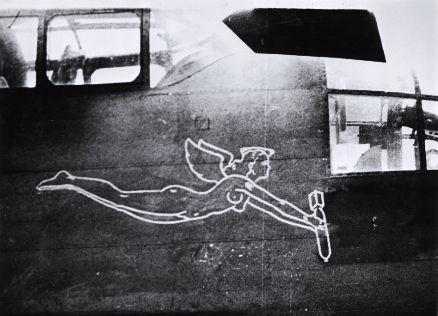
We are given another glimpse into Greening’s sense of humor by how he named his plane, the “Hari-Kari-er” ready to deal death by bomb-induced suicide. Greening’s B-25 is the one pictured above, with the angelic tart holding a bomb aloft. Greening’s plane was another that carried only incendiary ordnance.

Much was made of the sight’s two-piece aluminum construction, reportedly costing 20 cents at the time compared to the $10,000 Norden. This provided the jingoist homefront the smug satisfaction perhaps, combining a frugality born of the Depression with the American tradition of racism, that only pennies were expensed and or risked on Japanese lives.

War Crimes
Targeting civilians, taking insufficient care to avoid civilian casualties, using disproportunate force, acts of wanton retaliation, and the use of collective punishment are all prohibited by international convention. They are war crimes for which the US prosecutes adversaries but with which our own military refuses to abide. Americans make much of terrorism, yet remain blind to state terrorism. Doolittle’s historic raid, judged by the objective against which it is celebrated as a success, was an act of deliberate terrorism.

Forcing the Japanese to deploy more of their military assets to protect the mainland sounds like a legitimate strategy, except not by targeting civilians to illustrate the vulnerability, nor by terrorizing the population, one of Doolittle’s stated aims. He called it a “fear complex”.

It was hoped that the damage done would be both material and psychological. Material damage was to be the destruction of specific targets with ensuing confusion and retardation of production. The psychological results, it was hoped, would be the recalling of combat equipment from other theaters for home defense, the development of a fear complex in Japan, improved relationships with our Allies, and a favorable reaction in the American people.

There is no defending Japan’s imperialist expansion in the Pacific, and certainly not its own inhumanity. The Japanese treated fellow Asians with the same racist disregard with which we dispatched Filipinos. While Americans point in horror at how the Japanese retalliated against the Chinese population for the Doolittle Raid, we ignore that Doolittle purposely obscured from where our bombers were launched, leaving China’s coast as the only probably suspect.

To be fair, most of Doolittle’s team was kept in the dark about the mission until they were already deployed. I hardly want to detract from the courage they showed to undertake a project that seemed virtually suicidal. But how long should all of us remain in the dark about the true character of the Doolittle Raid?

Out of deference for the earlier generation of WWII veterans, those in leadership, certain intelligence secrets were kept until thirty years after the war. Unveiled, they paint a very different picture of what transpired. The fact that the US knew the German and Japanese codes from early on revealed an imbalance not previously admitted, as an example.

About the Doolittle Raid, much is already openly documented, if not widely known. The impetus for the raid was public knowledge, the evidence of its intent in full view.

BY DESIGN
In the aftermath of Pearl Harbor, American newspapers were already touting offers of cash rewards for whoever would be the first to strike back at Japan. President Roosevelt expressed a deliberate interest in hitting the Japanese mainland, in particular Tokyo, to retaliate for the Japanese strike against Pearl Harbor, never mind it had been a solely military target.

Plans were made to exploit the Japanese homeland’s vulnerability to fire, as ninety percent of urban structures were made of paper and wood. Writes historian William Bruce Jenson:

In his “confidential” meeting with reporters back in November, Marshall had declared that the US would have no cavil about burning Japan’s paper cities.

For the Doolittle Raid, a bombing strategy was developed to overwhelm the fire department of his target, the Shiba ward.

A former naval attache in Tokyo told Doolittle: “I know that Tokyp fire department very well. Seven big scattered fires would be too much for it to cope with.”

As lead plane, Doolittle’s role was to literally blaze the way. Fellow pilot Richard Joyce told Nebraska History Magazine in 1995:

The lead airplane, which was going to have Doolittle on board as the airplane commander, was going to be loaded with nothing but incendiaries -2.2­ pound thermite incendiaries- in clus­ters. They drop these big clusters and then the straps break and they spray, so they set a whole bunch of fires. He was to be the pathfinder and set a whole bunch of fires in Tokyo for pathfinding purposes.

Doolittle’s report outlined his objective more formally:

one plane was to take off ahead of the others, arrive over Tokyo at dusk and fire the most inflammable part of the city with incendiary bombs. This minimized the overall hazard and assured that the target would be lighted up for following airplanes.

Greening paints the most vivid picture, of burning the Japanese paper houses to light the way:

Doolittle planned to leave a couple of hours early, and in the dark set fire to Tokyo’s Shiba ward … the mission’s basic tactic had been that Doolittle would proceed alone and bomb a flammable section of Tokyo, creating a beacon in the night to help guide following planes to their targets.

Doolittle’s copilot Lt Richard Cole, told this to interviews in 1957:

Since we had a load of incendiaries, our target was the populated areas of the west and northwest parts of Tokyo.

After the bombers had left on their raid, and before news got back about whether or not they accomplished it, the Navy crew on the carrier USS Hornet already sang this song, which went in part:

Little did Hiro think that night
The skies above Tokyo would be alight
With the fires that Jimmy started in Tokyo’s dives
To guide to their targets the B-25s.
When all of a sudden from out of the skies
Came a basket of eggs for the little slant eyes

Incendiaries

Most of the bombers were loaded with three demolition bombs and an incendiary cluster bomb. Some of the planes carried only incendiaries. According to Doolittle’s official report of the raid, here were some of their stated objectives:

Plane no. 40-2270, piloted by Lt. Robert Gray:
thickly populated small factories district. … Fourth scattered incendiary over the correct area

Plane No. 40-2250, Lt. Richard Joyce:
Incendiary cluster dropped over thickly populated and dense industrial residential sector immediately inshore from primary target. (Shiba Ward)

“The third dem. bomb and the incendiary were dropped in the heavy industrial and residential section in the Shiba Ward 1/4 of a mile in shore from the bay and my tat.”

Aircraft 40-2303, Lt Harold Watson:
the congested industrial districts near the railroad station south of the Imperial Palace

AC 40-2283, David Jones:
the congested area Southeast of the Imperial Palace

Even though the planned night raid became a daytime mission, Doolittle did not alter his original role, intended to light the way for the following planes. His target remained the Shiba District of Tokyo. His own plane: “changed course to the southwest and incendiary-bombed highly inflammable section.”

Doolittle’s report included a description of the incendiary bombs:

The Chemical Warfare Service provided special 500 incendiary clusters each containing 128 incendiary bombs. These clusters were developed at the Edgewood Arsenal and test dropped by the Air Corps test group at Aberdeen. Several tests were carried on to assure their proper functioning and to determine the dropping angle and dispersion. Experimental work on and production of these clusters was carried on most efficiently.

As has become an aerial bombardment tradition, crews were let to inscribe messages on the bombs about to be dropped. Accounts made the most of these chestnuts: “You’ll get a BANG out of this.” And “I don’t want to set the world on fire –only Tokyo.”

These details, which reveal the intentions of the raid, were not made known to the public immediately. The Doolittle Raid was planned and executed in secret, with US government and military spokesmen denying knowledge of the operation even in its aftermath. The first word to reach the American public came from the New York Times, citing Japanese sources:

Enemy bombers appeared over Tokyo for the first time in the current war, inflicting damage on schools and hospitals. Invading planes failed to cause and damage on military establishments, although casualties in the schools and hospitals were as yet unknown. This inhuman attack on these cultural establishments and on residential districts is causing widespread indignation among the populace.

This report was dismissed as propaganda. When Japan declared its intention to charge the airman it had taken captive with war crimes, the US protestations redoubled. The accusations were belittled even as our own reports conceded to the possibilities.

Lieutenant Dawson’s Thirty Seconds Over Tokyo was the first published account of the raid. Printed less than a year after the event, wartime-sensitive details such as the phony guns made of broomstick handles poking out the back were left out. Targets were also not specified, but a candor remained, probably intended to be threatening. Lawson described the 500-pound incendiaries as “something like the old Russian Molotov Breadbasket”, and related US naval attache Jurika’s advice:

“If you can start seven good fires in Tokyo, they’ll never put them out,” Jurika promised us. … “I wouldn’t worry too much about setting fires in flimsy-looking sections of Tokyo,” he said. “The Japanese have done an amazing job of spreading out some of their industries, instead of concentrating them in large buildings. There’s probably a small machine shop under half of these fragile-looking roofs.”

“Flimsy” became Lawson’s keyword for the residential areas. Here Lawson described dropping his third and fourth bombs, when he saw their corresponding red light indicators:

The third red light flickered, and, since we were now over a flimsy area in the southern part of the city, the fourth light blinked. That was the incendiary, which I knew would separate as soon as it hit the wind and that dozens of small fire bombs would molt from it.

I was satisfied about the steel-smelter and hoped the other bombs had done as well. There was no way of telling, but I was positive that Tokyo could have been damaged that day with a rock.

Our actual bombing operation, from the time the first one went until the dive, consumed not more than thirty seconds.

Thus: Chance of hitting civilian homes: 50/50.
Charges of Excessive Force could be expected, because
blame the victim for being weaker than: a rock.
Care taken to avoid innocent casualties: 30 seconds.

In a later afterword, Lawson blamed Tokyo for having insufficient bomb shelters.

After the war, US occupation forces recovered Japanese records which documented the losses attributed to the Doolittle Raid: fifty dead, 252 wounded, ninety buildings. Besides military or strategic targets, that number included nine electric power buildings, a garment factory, a food storage warehouse, a gas company, two misc factories, six wards of Nagoya 2nd Temporary Army Hospital, six elementary or secondary schools, and “innumerable nonmilitary residences”.

Strafing
Japan accused the fliers of indescriminate strafing civilians. The US countered that defending fighters were responsible for stray bullets when their gunfire missed the bombers. That’s very likely, except the raiders were candid about their strafing too. Lawson:

I nosed down a railroad track on the outskirts of the city and passed a locomotive close enough to see the surprised face of the engineer. As I went by I could have kicked myself for not giving the locomotive’s boiler a burst of our forward 30-calibre guns, then I remembered that we might have better use for the ammunition.

A big yacht loomed up ahead of us and, figuring it must be armed, I told Thatcher to give it a burst. We went over it, lifted our nose to put the tail down and Thatcher sprayed its deck with our 50-calibre stingers.

Greening’s account of firing on a sailor, raises the moral ambiguity of air warfare with which few airmen grapple. By virtue that technology allows it, combatants become slave to a predetermined outcome:

When we attacked the next patrol boat, a Japanese sailor threw his hands up as if to surrender. I guess he expected us to stop and take him prisoner. We shot him and left this boat smoking too.

The Medals
Friendship Medals exchanged between Japan and the US found themselves requisitioned for Doolittle’s Raid:

Several years prior to the war, medals of friendship and good relationship were awarded to several people of the United States by the Japanese government.  In substance these medals were symbolic of the friendship and cooperation between the nations and were to represent the duration of this attitude.  It was decided by the Secretary of the Navy, Mr. Frank Knox, that the time was appropriate to have these medals returned.  They had been awarded to Mr. Daniel J. Quigley, Mr. John D. Laurey, Mr. H. Vormstein and Lt. Stephen Jurkis.

After arrangements had been made and the medals secured, a ceremony was held on the deck of the Hornet during which the medals were wired to a 500 lb. bomb to be carried by Lt. Ted Lawson and returned to the Japanese government in an appropriate fashion.

Lawson’s plane no 40-2261 dropped that bomb on an “industrial section of Tokyo” omitting to mention that Japan’s industry was still a post-feudal cottage industry.

“The medals were subsequently delivered in small pieces to their donors in Tokyo by Lt. Ted Lawson at about noon, Saturday, April 18, 1942.”

–Mitscher, M.A. Letter Report to Commander Pacific Fleet.

“Through the courtesy of the War Department your Japanese medal and similar medals, turned in for shipment, were returned to His Royal Highness, The Emperor of Japan on April 18, 1942.”

–Knox, F. Letter Report to Mr. H. Vormstein

FBI focus on Assata Shakur reveals pernicious discretion of Terrorist label

MS. SHAKUR (né Joanne Chesimard) insists she did not kill the New Jersey trooper in 1973, that she couldn’t have, she’d been disabled by a police bullet to the back while her hands were raised. Shakur contends she was the victim of a legal lynching and before that a target of the USG’s COINTELPRO. Understanding now that many black activists of that era were deliberately assassinated by law enforcement, might the 17-yr old Shakur have been justified in defending herself? She was certainly justified in escaping her torturers in prison and then gaining political asylum in Cuba. She hasn’t killed a trooper since, so it’s odd then, isn’t it, that Assata Shakur is being added to the FBI’s Most Wanted Terrorist List? She’s the “first woman” because it’s a terrorist-only list. Looking back, some of the best revolutionaries have been women. Retroactively designating enemies of the people is a strange development for President Obama who won’t even revisit the last administration to look for war crimes.
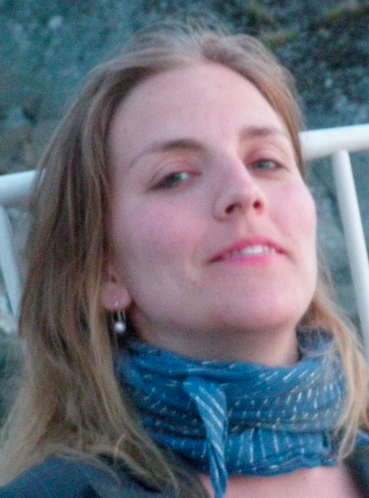
 
Certainly Assata Shakur speaks against US Capitalism but does she fit the profile of drone-strike eligibility? Apparently so and that’s telling. The intelligence community doesn’t want to stop acts of terror, it’s the ideology that terrorizes them.

Colorado Extraction Resistance claims responsibility for gas balloon attack on gas frackers

balloons
DENVER, COLORADO- Organizers of an annual oil and gas industry conference held at the Grand Hyatt on Monday and Tuesday tried to prevent public interruption of their let’s frack Colorado discussion. They tried to ignore protesters outside. They revoked the admissions passes granted to activists who wanted to attend the open segment of the conference designed for public consumption. They didn’t count on the COLORADO EXTRACTION RESISTANCE to successfully negotiate the heightened security and deliver gas balloons to gas frackers convening in the ballroom.

Attached to the balloons, which swiftly lifted to the ceiling neatly beyond reach, were noisemakers which accentuated the shouts of the Extraction Resisters shouting “Ban Fracking Everywhere!” Most of the interlopers escaped but one was manhandled, his head slammed against the wall, and arrested for wielding balloons. In a dispiriting twist, attendees conspiring to frack the shit out of Colorado were not arrested, though the gases which leak from their wells pose a more eminent public threat than helium.

The successful interruption prompted a spirited protest outside, where conference attendees were heckled and passersby were warned to pay special care as they passed the Grand Hyatt, at that moment sheltering eco-terrorists from citizens arrest.
(UPDATE: Now read their account and full DIY instructions!)

ARGO is a near deftly crafted thriller, jingoist agitprop, full-on Islamophobic mockumentary

This movie is rated AYFKM– Film critics are unanimous in their praise of ARGO, Ben Affleck’s retelling of an Iran Hostage Crisis era escape caper. Either these reviews also reflect media agencies uniformly shrugging off Argo’s obvious anti-Iranian jingoism or these authors are inured to crude Islamophobic propaganda. Whatever the film’s highly praised period piece accuracies, the Angry Arab and bearded terrorist stereotype are pure post-9/11 refinements. The ill-fitting eyeglass frames, face-obstructing Prell hair, and presumed fitness-less sloop-shouldered physiques pretend to lampoon everyone of that era, but the character assassination is precision targeted at Iranians, all of them.

“Mockumentary” is meant to describe a mock documentary. Argo is not a documentary, although it asserts to be historical, but most assuredly it mocks.

Borat couldn’t have made this film more offensive. If the Muslim world wasn’t in an uproar about a fictional Hollywood video disparaging to Islam, Argo would do it. What a mockery to pretend that real Zionist movie moguls aren’t laughing about a story that depicts Jewish movie industryists pranking Iran with a fake production they called Ar-Go Fuck Yourself.

Let’s dispel right away the pretense of historical accuracy. The painstaking period details, and mimicked video footage is meant to lend a scent of authenticity to a CIA personnel expatriation that did happen, but much of the villain-at-their-heels tension was fabricated. Poetic license might excuse drama, were it not for the added perk of vilifying, parodying and humiliating a people.

I counted no insult spared. Angry Arabs (the Persians aren’t Arab — do they filmmakers know or care?) never attenuating their cacophonous accusatory gibberish. Death squads circulating house to house, Muslim-garbed women hypocritically enjoying Western fast food, every dark face a humorless compassionless fanatic, their soldiers hirsute menacing mongrels who do everything by force.

I’m off to research Argo’s fabrications which so flavor the Iran-bashing. For the time being I can surmise two. The film assert that the White House pulled the operation at the last minute, prompting ballsy improvisation when our hero agent went rogue. Later he was awarded the CIA’ highest honor. How likely was it that they gave a medal to an agent who really defied every link of his chain of command? Unless he didn’t. And second, the movie plot has Iran’s Revolutionary Guards so hot on their heels that the guards shoot their way through airport doors and mount pickup trucks to brandish guns as they chase a departing jumbo jet along the runway, providing Argo that Black Hawk Down, post-apocalypse Iraq, Libyan rebel stereotype sent up so well in Team America. The tarmac scene is witnessed only by the movie audience and the CIA extraction specialist as he looks out the airplane window. None of his charges sees it because they are of course real people who could do interviews and swiftly confirm the exaggeration.

What’s kosher for the goose should be halal for the gander

If Israel can threaten to attack Iran, without drawing the unanimous rebuke of the international community, then it follows Iran cannot be criticized for warning of its imperative to make a preemptive strike. Except that both would be illegal, the United States being the reigning serial aggressor at large. Or maybe you’re of the opinion that Israel can have 200 nuclear weapons and Iran can’t have one, or that if US and Israeli agents detonate bombs in Iran it’s not terrorism.

Opposition forces kill US Ambassador Chris Stevens, America In Libya’s No. 1

Maybe it could have happened to a more deserving operative, but that’s splitting hairs. Obviously we can’t call the late ambassador Chris Stevens the “mastermind” of the US covert destabilization of Libya. However, he was Our Man in Benghazi, essentially the NO. 1 in charge of the state-terrorist cell poised to exploit the rolling “Arab Spring” for the forces of capitalist neo-democracy, let’s call it AMERICA IN LIBYA. Stevens organized and armed the US-sponsored rebels who exploited the pan-Arab protests to foment unrest, then civil war, then NATO intervention, against the West’s nemesis Muammar Gaddafi. Remember how Gaddafi was unceremoniously deposed? Captured, tormented, then shot most likely by a CIA-contracted assassin? Where was the humanitarian outcry against that sanctioned barbarity?
 
How undignified of Westerners to decry the killing of Ambassador Stevens, legally, in the field of battle, by opposition fighters in Libya, on this rare occasion when they got their man. Actually four: the ambassador, a military attache, and two Americans whose identities the USG won’t reveal, I’m thinking mercenaries. The USG is speculating that the rocket attack was planned, and by none other than al-Qaeda, because it’s unlikely the Libyans who stormed the US consulate in Benghazi brought impromptu grenade launchers. Funny, Gaddafi had the same nagging complaint about his supposed “protesters.”
 
Everyone is condemning this killing, even President Obama vows to exact “justice”. But by his own definition, this was justice meted by Libyans, perhaps even some of the allies we’d mobilized to remove Gaddafi. Whereas Obama’s “justice” means retaliatory air strikes and death squads against unnamed, unproven adversaries, immolating their homes, families and friends.

Let’s not forget Wikileaks snitch Adrian Lamo, saboteur Daniel Domscheit-Berg and Swedish Woman in Red Anna Ardin

While we’re praising Wikileaks and its impact on our revolutionary times, let’s call out those who betrayed the cause, they’re already erasing their tracks on Wikipedia. First there’s hackster-confidant Adrian Lamo who turned in Bradley Manning; there’s fired Wikileaks volunteer Daniel Domscheit-Berg who permanently dismantled the anonymous leak submission mechanism; there’s jilted neoliberal faketivist Anna Ardin who schemed to bring Julian Assange to an ultra-right prosecutor’s attention in Sweden; there’s de facto honeypot Sofia Wilen whose complicity is still a mystery; and there’s President Barack Obama and Attorney General Eric Holder who persist in persecuting whistleblowers, who’ve empaneled a grand jury against Assange and who consider Wikileaks a terrorist enterprise.

Should the London Olympics remember the 1972 Munich Holocaust? Do you?

America can’t memorialize the 1972 Munich hostage killings, because that act of terrorism was not unlike our own airstrikes or special ops raids, against purported enemy combatants, off the field of combat, except we don’t even try to kidnap them alive.
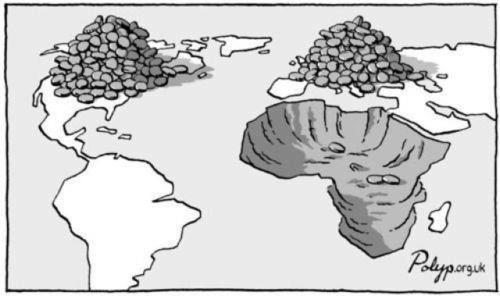
 
Of course the Israeli Olympic wrestlers and weightlifters killed in Munich in 1972 should be memorialized. But to call the deaths a massacre pretends the German police meant their ambush to kill everyone.* What happened at the 1972 Olympics is being recalled as the “Munich Massacre” but even the propagandists tweaking the Wikipedia entry don’t have the temerity to doff the disclaimer that “massacre” is the informal name. Shall we recall what happened? On September 5, 1972, PLO terrorists infiltrated the Olympic village and tried to kidnap Israeli hostages to exchange for 234 Palestinians held by Israel. Two Israelis fought back and were killed. Next the eight gunman and their nine captives were led into an ambush at a military airfield. After a 1 & 1/2 hour gun battle on the tarmac, trapped under the helicopters by police snipers, the PLO killed four of their captives. A police investigation revealed the remaining five captives may have died in sniper crossfire. This detail is disputed, but a secret financial settlement was sought and reached with German authorities. So, was Munich a massacre or a botched hostage rescue? Do words matter? The Mossad’s retaliatory murder of an innocent Moroccan waiter in Norway, mistaken for the Munich mastermind, is trivialized as the Lillehammer Affair.

Proponents want an Olympic tribute to the Munich Massacre “so that it never happens again.” Boy does that ever have a familiar ring to it. Look out for an Elie Wieselish re-tailoring of the original narrative, Steven Spielberg’s Munich being only a recent example of a myth-makeover remembrance.

To begin with, the PLO kidnappers were a faction of the PLO called the Black September Brigade, named after the Black September purge of the PLO from Jordan. This ouster, aided by the US and fought by Syria, was initiated by Israel’s attack on the village of Karameh, in which the PLO suffered 200 killed, to the IDF’s 28. Not a massacre because 150 PLO fighters were taken captive. Wikistorians taking liberties with translation are calling the PLO group “Black September”, with the effect of obfuscating the event which preceded the Munich operation.

The Munich raid to seize hostages was actually named “Operation Iqrit and Kafr Bir’im” after the Christian villages of Kafr Bir’im and Iqrit, ethnically cleansed by Israel in 1948. Villagers were granted right of return by Israel’s supreme court, but overruled by the military. An attempt to return had been repulsed by police as recently as August 1972, as the Olympics began.

Next, the identity of the Israeli athletes is always left incomplete. With the exception of the 18 year old Russian immigrant, all the Israeli hostages were IDF soldiers who’d participated in military acts against Palestine, Egypt, lebanon, Jordan, or Syria, and so are not exactly the innocent civilians of current retellings.

Who killed the Israeli captives during the gun battle with German police? An immediate investigation found that sniper fire may have hit the captives, as it had also severely wounded a fellow policeman. A cover-up long obscured the official reports. While this could be pretended to protect the German participants, it also kept the blame on the PLO gunmen, which would have been critical to justify Israel’s “eye for an eye” revenge killings.

Did the gunman strafe their hostages with bullets upon seeing the arrival of the police armored reinforcements? The only witness accounts come from the German authorities. We might accept that the lead PLO gunman lobbed a grenade into the first helicopter with the intention of killing the four hostages it contained, if they were still alive. An autopsy revealing that one of the Israelis died from the flames is used the emphasize that the grenade, and thus a PLO terrorist, certainly killed him.

Though the German police admitted potential culpability for the deaths of the five hostages in the second helicopter, a later analysis put convenient blame on a particular gunman, one of them ones captured and who eventually escaped justice by being released. Certainly this narrative would be critical if Israel hoped for popular support for their effort to hunt the gunman down.

Many of Israel’s revenge killings involved car bombs which risked collateral deaths and injuries. Assassinating the “mastermind” killed eight others, including a nun, and injured 18 more.

Whether the PLO gunmen killed the Israelis or not, even the operation’s planners can’t be said to have intended it. No one masterminded a massacre.

Of the PLO participants in Munich, five gunman were killed, and three were captured. Those three were released weeks later to meet the demands of a subsequent hijacking. Israel’s Mossad boasted of having tracked them down and assassinated them shortly thereafter. But accounts vary, and one of them was interviewed decades later for a documentary. What’s known is that Israel implemented an “eye for an eye” operation that over 20 years hunted and killed 20-35 Palestinian targets. They weren’t sought out to take hostage but to murder, and most of them were unconnected to the Black September Brigade. The Mossad long-arm-of-the-law theme was less about revenge than deterrence, because anyone who might have masterminded or abetted the Munich plot was planning a kidnapping not a murder.

If a massacre is measured by an imbalance of casualties, let’s look at the numbers. After 11 Israelis were murdered, Israel retaliatory airstrikes killed 200 in Syria and Lebanon, an IDF raid killed up to 100 in Lebanon, and the Mossad targeted up to 35 in subsequent assassinations. Here’s an accounting:

Sept 5-6, 1972
11 Israeli athletes, coaches former IDF
(2 killed by BSB in initial break-in, 9 killed during the ambush rescue attempt, possibly by crossfire)
1 German police
5 PLO gunmen

Sept 8, 1972
IAF retaliatory airstrikes on PLO bases in Syria and Lebanon.
200 Palestinians killed, including women and children

IDF Operation “SPRING OF YOUTH” raid on Lebanon, April 1973
3 PLO suspected planners
12-100 PLO members
1 PLO wife
1 Italian woman
2 Lebanese policemen
Unknown number of Lebanese civilians

Mossad Operation “WRATH OF GOD”, (20-35 targets over 20 years)
PLO translator of disputed BSB involvement, Oct 1972
PLO senior official, December 1972
Palestinian activist “expertly” pushed under bus, London, 1972
Jordanian Fatah rep, January 1973
Law professor at Am Univ of Beirut, April, 1973
Replacement for Fatah rep, Athens, April 1973
(2 BSB minor members injured, Rome, April 1973)
PLO director of operations for BSB, June 1973
Moroccan waiter, mistaken identity, Norway, July 1973
3 Arab-looking men, Switzerland, January 1974
Arab security guard, Spain, August 1974
PLO rep, blamed on the Abu Nidal Org, London, January 1978
2 PLO reps, Paris, August 1978 (3 injured)
PLO suspected “mastermind”, car-bomb, January 1979, also killed:
4 Bodyguards
1 British student
1 German nun
2 Lebanese passersby (also 18 injured)
PLO military head, Cannes, July 1979
2 Palestinians, December, 1979
PLO rep, Brussels, June 1981
2 PLO senior figures, car bomb, Rome, June 1982
PLO senior official, car bomb, Paris, July 1982
PLO senior official, drive-by, Athens, August 1983
PLO Secretary-General, drive-by, Athens, June 1986
PLO official, car bomb, Athens, October 1986
2 Palestinians, car bomb, Cyprus, February 1988 (1 other wounded)
PLO suspected head of intelligence, June 1992

What’s that? The ratio is 11 to 335 and the Israelis want to call it a massacre? If you count the Palestinians killed in the initial Black September attack on the PLO in Jordan, the comparison becomes irrelevant.

But the Munich ratio is nothing compared to the 1,500 Gazans killed in Operation Cast Lead. Now there’s a massacre.

*ON THE OTHER HAND. The botched hostage rescue in Munich might very well have been a massacre. Do we really want to go there? The German snipers who initiated the gun battle at Furstenfeldbruck Airbase may really have behaved with a total disregard to the fate of the Israeli hostages. With the antisemitism that prevailed in Europe, and still prevails there among the working classes, it’s very likely the policemen looked at the gunmen and their captives with equal scorn. If the bound Israelis weren’t hit in the crossfire, it could certainly be held that the sniper attack provoked their killing. The coverup and subsequent private financial settlement reached between Germany and the Israeli survivors suggests a culpability of the like. In that respect, if European Jews look back at Munich 1972 and say it was a massacre, I believe them.

War memorial to Global War On Terror, aka War on Islam For World Resources now logging “Horn of Africa” casualties

By now you’ve read elsewhere that many of the wounded soldiers being medivac’d to the US surgery hub in Germany are coming from parts unknown more specifically not-known to be US-declared war zones. Their flight origin is only revealed as “Horn of Africa”, but it’s telling isn’t it? US disrespect for foreign sovereignty means not even uttering the nation states involved. USG spokesmen know, for the geographically challenged, calling it the Horn can obfuscate the spheres of disputed influence stretching from Somalia, for you Blackhawk Downers, to Mali, where three US special ops were recently killed with their prostitute attaches, while the corporate media breathed a collective “huh?” Thankfully US adversaries in Mali had the better sense not to string the American bodies from bridges like pre-Falluja’d Fallujah, or did they? NATO’s media cameras weren’t there to exploit it in any case. Basically the Horn is where US AFRICOM has yet to beat back the continent’s last Islamic protectors as the Western serial rape of Africa drops its pretense that strangulation isn’t the final act.

Do the 2012 London Olympics need extra security forces to protect Israeli athletes or to arrest them?

Organizers are worried about inadequate security for the Olympic Games set to begin next month in London. What security threat are they anticipating exactly? It’s true the Olympics have become a bullseye for globalization critics. More and more, both athletes and groupies represent the jet set. But other than past indigenous protests in the Commonwealth territories, which amounted to no more than nonviolent blockades, what does the UK need paramilitary forces to defend against this time? Another 1972 Munich massacre? At the summer Olympics in Munich, the Israeli wrestling team was murdered by PLO terrorists called the “Black September Brigade”, but the official narrative leaves off that the Israeli athletes were targeted because they were IDF soldiers who’d participated in the counter-insurgent near-complete rout of the PLO, known as Black September. So that raises an interesting question. Is London expecting to host Israeli athletes who were veterans of Operation Cast Lead or the attack on the Mavi Marmara, whose assassinations someone might want to avenge? British authorities could address that most handily with preemption, because this time the IDF campaign against Gaza was widely regarded to have violated international law. Warn Team Israel that any such veteran setting foot in England would face prosecution for war crimes. While London is at it, issue the same warning to Team USA. Yeah, and Team UK, and Team Germany, et cetera, for Afghanistan, Libya, now Syria. It’s become the 2012 NATO War Criminals Olympics, gone professional, no amateur status terrorists need apply.

How to testify at a grand jury: David House “invokes” on Bradley Manning, Julian Assange, & taking illegal notes

Bradley Manning supporter David House was called last year before the grand jury preparing charges against Julian Assange, in the event Assange is successfully remanded to Sweden. Despite being told a transcript was forbidden, House took notes which have now found themselves (A)nonymously online, reproduced here with David House’s refrain in bold. Here’s Grand Jury, a comedy:  

1. Record of proceedings
2. As recorded by David House
3. Grand Jury, Alexandria VA
4. 15 June 2011, 4:10pm to 5pm
5.  
6. Inside the Grand Jury:
7. DOJ Counterespionage Section: Attorney Patrick Murphy *
8. DOJ Counterespionage Section: Attorney Deborah Curtis *
9. Eastern District of Virginia: AUSA Bob Wiechering
10. Eastern District of Virginia: AUSA Tracy McCormick
11. Eastern District of Virginia: AUSA Karen Dunn
12. Unspecified number of Grand Jurors
13. Court Steganographer
14. David House
15.  
16. Directly outside the Grand Jury:
17. Mike Condon, FBI Agent from Washington, D.C. field office
18. James Farmer, Chief of Anti-Terrorism and National Security Unit at the U.S. Attorney’s Office in D. Mass
19. Peter Krupp, David House’s attorney
20.  
21.  
22. Record begins: 4:10pm
23. [David House is sworn in and informed of his rights]
24. Patrick Murphy: Would you please state your full name for the record?
25. David House: My name is David House.
26. PM: Did you meet Bradley Manning in January 2010?
27. DH: On the advice of counsel, I invoke my right to remain silent under the Fifth Amendment to the United States Constitution. I am concerned that this grand jury is seeking information designed to infringe or chill my associational privacy, and that of others, guaranteed by the First Amendment to the United States Constitution, and that it is using information obtained without a search warrant in violation of the Fourth Amendment to the United States Constitution. I define the preceding statement as “invoke”, and when I say “I invoke” in the future I am referring to this statement.
28. Deborah Curtis: Exhibit 1-A?
29. PM: Mr. House, please direct your attention to the screen behind you, exhibit 1-A.
30. DC: I can’t make it bigger.
31. PM: Try… here, remove that bar on the side.
32. DC: That didn’t work.
33. DH: Do you guys need help?
34. DC: We just need to make it bigger. Can everyone see this okay?
35. PM: Ok… we’re going to continue.
36.  
37. [A still image from the Frontline PBS special is displayed on the screen. Four figures are standing in front of the BUILDS logo, one figure has her back turned.]
38.  
39. PM: Mr. House, can you identify the man on the right?
40. DH: I invoke.
41. PM: Can you identify the man standing second from right?
42. DH: I invoke.
43. PM: Ok, can you identify the person with bright-colored hair, standing here?
44. DH: I invoke.
45. PM: Are we to believe that identifying that individual would somehow incriminate you?
46. DH: On the advice of counsel, I invoke my right to remain silent under the Fifth Amendment to the United States Constitution. I am concerned that this grand jury is seeking information designed to infringe or chill my associational privacy, and that of others, guaranteed by the First Amendment to the United States Constitution, and that it is using information obtained without a search warrant in violation of the Fourth Amendment to the United States Constitution.
47. PM: Ok, can you identify the man on the left?
48. PM: I would like to observe for the record that Mr. House is taking notes.
49. DH: As to the previous question, I invoke.
50. PM: Why are you taking notes?
51. DH: Invoke.
52. Bob Wiechering: I’d like to recommend, at this point, that we take a break and talk to your counsel.
53.  
54. [AUSAs and House leave the grand jury]
55. [Peter Krupp, House’s attorney, asserts House’s right to invoke]
56. [AUSAs and House return to the grand jury]
57.  
58. PM: What is your birthdate?
59. DH: March 14, 1987
60. PM: Where do you live?
61. DH: Can you restate the question?
62. PM: What is your address?
63. DH: I invoke.
64. PM: What is your current occupation?
65. DH: I invoke.
66. PM: Were you a senior in computer science at Boston University in January 2010?
67. DH: I invoke.
68. PM: Isn’t it true that you told PBS Frontline that you were a senior at Boston University in January 2010?
69. DH: I invoke.
70. PM: Do you know what a hackerspace is?
71. DH: I invoke.
72. PM: Do you know what BUILDS is, the acronym?
73. DH: I invoke.
74. Bob Wiechering: Mr. House, I notice you are taking notes. Attempting to create your own transcript is a violation of rule 6(e) of this grand jury. We have brought this to the attention of your counsel, and although he feels differently on the matter, we assert that you must stop taking notes at this time.
75. DH: Let me consult with my attorney.
76. [House leaves the grand jury room and returns one minute later]
77. DH: My lawyer asks that you refer all questions about notes to him.
78. BW: Let’s continue.
79. PM: Mr. House, are you involved with the Bradley Manning Support Network?
80. DH: I invoke.
81. PM: Did you respond in the affirmative when asked by the FBI if you had heard of known WikiLeaks associate Jacob Appelbaum?
82. PM: I would like to state for the record that Mr. House is not answering the question and is instead taking notes.
83. DH: I invoke.
84. PM: Do you intend to answer any of my questions, aside from your date of birth and your name?
85. DH: I invoke.
86. PM: Is that because of the phalanx of attorneys present here today?
87. Court Stenographer: I’m sorry, the what of attorneys?
88. PM: Phalanx… the phalanx of attorneys.
89. DH: As to the phalanx of attorneys, I invoke.
90. PM: At this time, I will let Deborah Curtis ask a few questions.
91. DC: Mr. House, have you ever been to the Oxford Spa restaurant in Cambridge, MA?
92. DH: Allow me to consult with my attorney.
93. [House leaves the grand jury and returns one minute later.]
94. DH: As to the previous question, I invoke.
95. DC: You admitted to federal agents in Boston that you had met Bradley Manning in January 2010, is that correct?
96. DH: I invoke.
97. DC: Isn’t it true that you spent the night of January 27 2010 with Daniel Clark and Bradley Manning?
98. DH: Can you repeat the question?
99. DC: Isn’t it true that you spent the night of January 27 2010 with Daniel Clark and Bradley Manning?
100. DH: One more time.
101. DC: Isn’t it true that you spent the night of January 27 2010 with Daniel Clark and Bradley Manning?
102. PM: He’s writing it down.
103. DC: Are you getting this, are you writing it all down?
104. DH: Was the last question a question to be answered?
105. DC: Yes.
106. DH: I invoke.
107. DC: And the question before?
108. DH: I also invoke.
109. DC: Where did Danny Clark have breakfast on the morning of January 28, 2010?
110. DH: Allow me to consult with my attorney.
111. [House leaves the grand jury and returns one minute later.]
112. DH: As to the previous question, I invoke.
113. DC: Do you intend to answer any questions about Daniel Clark?
114. DH: Invoke.
115. DC: Do you intend to answer any questions about Bradley Manning?
116. DH: [Writing] Could you please repeat the question?
117. DC: Do you intend to answer any questions about Jacob Appelbaum?
118. DH: I invoke.
119. DC: At this time, we’d like to stop the proceedings. You are free to leave.

US senator says bomb makers and their associates should be killed forthwith

Said Senator Dianne Feinstein to Fox News about an al-Qaeda suspect in Yemen: “I am hopeful that we will be able to, candidly, kill this bomb maker and kill some of these other associates. This, about a certain Ibrahim Hassan al-Asiri about whom we have only intelligence hearsay to go on, based on an undetectable bomb, on which they say they detect his forensic signature, and about his friends, members they say of AL-QAEDA OF THE SAUDI PENINSULA or some such. What this means, for employees of GENERAL DYNAMICS or RAYTHEON OF SOUTHERN COLORADO for example, is that you don’t even have to possess a factory security ID to be suspected by Yemen, or our other Muslim adversaries, of making bombs that terrorize their innocents. Allah forbid they should commandeer armed drones, in preemptive self defense, to kill you and your now pants-pissing friends, candidly.
 
And let’s be realistic, the BOMB MAKERS OF AMERICA is an awfully big fraternity at this point.

Oops, troops don’t get memo, kill kids

SUNDAY- Drunken US soldiers kill 16 Afghanistan civilians, nine of them children. The US military is claiming the massacre was the work of one soldier who “wandered” inside homes in Kandahar’s Panjwayi district, but witnesses report it was a squad who laughed as they shot the families and tried to burn the bodies. US Army defenders might argue mouths agape that it doesn’t make sense, what would US NATO forces accomplish by doing that? State terrorism is no accident. Whether by directive, unleashing berserkers, or enlisting young men with mental deficiencies, TROOPS KILL KIDS.
 
For our remedial readers I’ll note that Tony and I are under fire for raising that point at an Occupy GA. What’s the vigilante posse got to say about the US soldiers in the village of Zangabad? Just part of the ugly job of war? Happens everyday? Yes it does.

US use of torture on POWs should stop

The U.S. has a long history of torturing its POWs. Torture of POWs is used by many other countries. However its use is denied by many U.S. authorities or government officials. The definition of torture put simply is to cause pain, emotionally, physically, or psychologically. Torture is used to terrify enemies, and hardly ever gains information.

Some examples of the U.S. A. military use of torture on P.O.W.s

Che Guevara
Che Guevara was murdered on October 9, 1967 in Bolivia. He was tortured and killed by Bolivian soldiers trained and equipped by CIA operatives. Che was told he was going to be killed by Felix Rodriguez. He was shot in the legs several times, and put into a dirty schoolhouse. His arms and feet were tied while he lay in the dirt. He lay by the bodies of his dead Guerrilla fighters. The USA tried to cover up his deliberate murder by shooting him in the legs to make it look like he died in battle. He was never given a trial. He was shot nine times.

Philippines war
The Philippine war was a war fought by Filipino revolutionaries and the USA. Waterboarding was one of the main techniques used by the CIA. It was used on Extra Judiciar prisoners.The department of Justice authorized this. Sleep Deprivation and de-sensorizing among other things was used. The use of solitary confinement and confusion is used frequently, prisoners are made to wear blindfolds to cause confusion and panic. Medical treatment is also refused. Bribery, and threats are used to force a confession.

Korean War
The Korean war was fought between South and North Korea. The US occupied the south, while the soviet troops occupied the North.

Vietnam War
Prisoners were put in Tiger cages. Lime was dumped on them, and water was dumped on them after.

Central America
In Nicaragua Somoza tortured people by putting them in cages with lions. Somoza was a dictator backed up by the US military. In Argentina children of communist parents were stolen, while their parents were tortured and killed.

School of The Americas
The CIA distributes an interrogation manual which shows torture techniques to use during interrogations. The manual was used by the CIA to train US-supported Latin American militaries at this school.

Abu Ghraib Prison
Torture has been recently used in Abu Ghraib prison, located in Iraq. Some of the main forms of torture used here are rape, sodomy, water boarding among many others. Military Intelligence has been present during these procedures, and highly encourages it. A prison guard said prisoners receive snake bites for minimum mis-behavior. In the AD. seg units prisoners are dumped into poop and pee.

Afghanistan war
The US invaded, tortured and suffocated thousands of POWs to death.

Officials claim that Torture must be used to gain information. During the presidency of George W. Bush some U.S government officials said that they believed water boarding was not a form of torture. In 2002 the Office of Legal Counsel stated that water boarding wasn’t a form of torture. The OLC said that the reason water boarding was not thought of as a torture was that “In order for pain or suffering to rise to the level of torture, that statute requires it to be severe & water boarding did not cause severe pain or suffering either physically or mentally.” Even though water boarding causes the victim to believe he/she is being drowned.

Torture hardly ever gains information but instead is used to terrorize people so they don’t resist, or to force a confession. Torture is used in interrogations by cops, being put in handcuffs that are to tight is also a less painful form of torture. During the st. Patrick Parade a couple of years ago the police stopped the parade and threw older people on the ground, an old lady was dragged across the pavement and put into handcuffs. She died a couple of months later.

People say that the US doesn’t torture people, because supposedly it is better than that.The fact of the matter is that the USA is the biggest user of torture in the world. It has and will continue to torture its POWs while everyone here says the USA government and military does not torture and has never tortures POWs.

As NYPD destroys Occupy Wall Street, Americans get their own 9-11 moment, a state terrorist attack on their liberty.

UNOCCUPIED WALL STREET- NYPD goons put an end to the Zuccotti Park OWS rebel base tonight. Shall we declare it official, this night of the Occupy Wall Street Smack-down, that images of riot police are now ubiquitous as American Pie? Officer unfriendly closed the airspace, created a no-witnesses buffer zone, drove news crews away under threat of revoking their press passes, and razed the camp, tents, electronics and all, Occupy Denver Thunderdome smash shit up style.
 
Calls are going out for YOU to occupy your streets. And the day after tomorrow, November 17, is a General Strike. Unless principles of nonviolence [to Capitalism] dictate you may not resist consumerism.

Colorado College closes doors on public lecture about Northcom, NORAD & the War on Drugs against Mexican people

COLORADO COLLEGE- Today’s presentation by Brigadier General Daniel Hokanson, on the role of NORAD and NORTHCOM in the War on Drugs on the US-Mexico border was abruptly closed to the public, for reasons not made clear to community members who might have appeared to offer a critical reception. Was it something we said, or didn’t get to say, except through our signs held outside Worner Center? What’s wrong with NORTHCOM & PENTAGON OUT OF COLOMBIA & MEXICO? Who can argue with this arithmetic: CRIMINALIZED + MILITARIZED DRUG WAR = DEATH & TYRANNY? Although I suppose neolibs would deny DRUG WAR IS U.S. EXCUSE TO SUPPRESS REBELLION. Popular with students was: WAR ON DRUG IS AS BOGUS AS WAR ON POVERTY. We’d compare it to the so-called Global War on Terror, but at a neoliberal institution like CC, who knows how that would be interpreted. If I’d been able to ask any question at all, it would have been to the Political Science Department. Why hadn’t they invited a second speaker to offer a corresponding critique of US Latin American policy? Turnout for the talk was sparse, and the sponsoring faculty member expressed his bemusement at our diligence to protest what he thought had been scheduled under the radar. So we beat NORAD at its own game.