Robert Fisk and the language of power, danger words: Competing Narratives

Celebrated reporter -and verb- Robert Fisk had harsh words, “danger words” he called them, for host Al-Jazeera where he gave an address about the language of power which has infected newsman and reader alike. Beware your unambiguous acceptance of empty terms into which state propagandists let you infer nuance: power players, activism, non-state actors, key players, geostrategic players, narratives, external players, meaningful solutions, –meaning what?
I’ll not divulge why these stung Al-J, but I’d like to detail the full list, and commit not to condone their false usage at NMT, without ridicule, “quotes” or disclaimer.

Fisk listed several expressions which he attributes to government craftsmen. Unfortunately journalists have been parroting these terms without questioning their dubious meaning. Fisk began with a favorite, the endless, disingenuous, “peace process.” What is that – victor-defined purgatory? Why would “peace” be a “process” Fisk asks.

How appropriate that some of the West’s strongest critics are linguists. Fisk lauded the current seagoing rescue of Gaza, the convoy determined to break the Israeli blockade. He compared it to the Berlin Airlift, when governments saw fit to help besieged peoples, even former enemies. This time however, the people have to act where their governments do not.

I read recently that the Gaza Freedom Flotilla might be preparing accommodations for Noam Chomsky to join the passage. Won’t that be an escalation? I imagine if Robert Fisk would climb aboard too, it would spell doom for any chance the relief supplies would reach the Gazans. A ship convoy with Chomsky and Fisk on board would present an opportunity that an Israeli torpedo could not resist.

Here is his list. If you can’t peruse the lecture, at least ponder these words with as much skepticism as you can. The parenthesis denote my shorthand.

peace process (detente under duress, while enduring repression)

“Peace of the Brave” (accept your subjugation, coined for Algeria, then France lost)

“Hearts and Minds” (Vietnam era psych-ops, then US lost)

spike (to avoid saying: increase)

surge (reinforcements, you send them in you’re losing)

key players (only puppets and their masters need apply)

back on track (the objective has been on rails?)

peace envoy (in mob-speak: the cleaner)

road map (winner’s bill of lading for the spoils)

experts (vetted opinions)

indirect talks (concurrent soliloquies, duets performed solo in proximity to common fiddler calling tune)

competing narratives (parallel universes in one? naturally the perpetrator is going to tell a different tale, disputing that of victim’s; ungoing result is no justice and no injustice) examples:
occupied vs. disputed;
wall vs. security barrier;
colonization vs settlements, outposts or Jewish neighborhoods.

foreign fighters (them, but always us)

Af-Pak (ignores third party India and thus dispute to Kashmir)

appeasers (sissies who don’t have bully’s back)

Weapons of Mass Destruction (not Iraq, now not Iran)

think tanks (ministry of propaganda privatized)

challenges (avoids they are problems)

intervention (asserted authority by military force)

change agents (by undisclosed means?)

Until asked otherwise, I’ll append Fisk’s talk here:

Robert Fisk, The Independent newspaper’s Middle East correspondent, gave the following address to the fifth Al Jazeera annual forum on May 23.

Power and the media are not just about cosy relationships between journalists and political leaders, between editors and presidents. They are not just about the parasitic-osmotic relationship between supposedly honourable reporters and the nexus of power that runs between White House and state department and Pentagon, between Downing Street and the foreign office and the ministry of defence. In the western context, power and the media is about words – and the use of words.

It is about semantics.

It is about the employment of phrases and clauses and their origins. And it is about the misuse of history; and about our ignorance of history.

More and more today, we journalists have become prisoners of the language of power.

Is this because we no longer care about linguistics? Is this because lap-tops ‘correct’ our spelling, ‘trim’ our grammar so that our sentences so often turn out to be identical to those of our rulers? Is this why newspaper editorials today often sound like political speeches?

Let me show you what I mean.

For two decades now, the US and British – and Israeli and Palestinian – leaderships have used the words ‘peace process’ to define the hopeless, inadequate, dishonourable agreement that allowed the US and Israel to dominate whatever slivers of land would be given to an occupied people.

I first queried this expression, and its provenance, at the time of Oslo – although how easily we forget that the secret surrenders at Oslo were themselves a conspiracy without any legal basis. Poor old Oslo, I always think! What did Oslo ever do to deserve this? It was the White House agreement that sealed this preposterous and dubious treaty – in which refugees, borders, Israeli colonies – even timetables – were to be delayed until they could no longer be negotiated.

And how easily we forget the White House lawn – though, yes, we remember the images – upon which it was Clinton who quoted from the Qur’an, and Arafat who chose to say: “Thank you, thank you, thank you, Mr. President.” And what did we call this nonsense afterwards? Yes, it was ‘a moment of history’! Was it? Was it so?

Do you remember what Arafat called it? “The peace of the brave.” But I don’t remember any of us pointing out that “the peace of the brave” was used originally by General de Gaulle about the end of the Algerian war. The French lost the war in Algeria. We did not spot this extraordinary irony.

Same again today. We western journalists – used yet again by our masters – have been reporting our jolly generals in Afghanistan as saying that their war can only be won with a “hearts and minds” campaign. No-one asked them the obvious question: Wasn’t this the very same phrase used about Vietnamese civilians in the Vietnam war? And didn’t we – didn’t the West – lose the war in Vietnam?

Yet now we western journalists are actually using – about Afghanistan – the phrase ‘hearts and minds’ in our reports as if it is a new dictionary definition rather than a symbol of defeat for the second time in four decades, in some cases used by the very same soldiers who peddled this nonsense – at a younger age – in Vietnam.

Just look at the individual words which we have recently co-opted from the US military.

When we westerners find that ‘our’ enemies – al-Qaeda, for example, or the Taliban -have set off more bombs and staged more attacks than usual, we call it ‘a spike in violence’. Ah yes, a ‘spike’!

A ‘spike’ in violence, ladies and gentlemen is a word first used, according to my files, by a brigadier general in the Baghdad Green Zone in 2004. Yet now we use that phrase, we extemporise on it, we relay it on the air as our phrase. We are using, quite literally, an expression created for us by the Pentagon. A spike, of course, goes sharply up, then sharply downwards. A ‘spike’ therefore avoids the ominous use of the words ‘increase in violence’ – for an increase, ladies and gentlemen, might not go down again afterwards.

Now again, when US generals refer to a sudden increase in their forces for an assault on Fallujah or central Baghdad or Kandahar – a mass movement of soldiers brought into Muslim countries by the tens of thousands – they call this a ‘surge’. And a surge, like a tsunami, or any other natural phenomena, can be devastating in its effects. What these ‘surges’ really are – to use the real words of serious journalism – are reinforcements. And reinforcements are sent to wars when armies are losing those wars. But our television and newspaper boys and girls are still talking about ‘surges’ without any attribution at all! The Pentagon wins again.

Meanwhile the ‘peace process’ collapsed. Therefore our leaders – or ‘key players’ as we like to call them – tried to make it work again. Therefore the process had to be put ‘back on track’. It was a railway train, you see. The carriages had come off the line. So the train had to be put ‘back on track’. The Clinton administration first used this phrase, then the Israelis, then the BBC.

But there was a problem when the ‘peace process’ had been put ‘back on track’ – and still came off the line. So we produced a ‘road map’ – run by a Quartet and led by our old Friend of God, Tony Blair, who – in an obscenity of history – we now refer to as a ‘peace envoy’.

But the ‘road map’ isn’t working. And now, I notice, the old ‘peace process’ is back in our newspapers and on our television screens. And two days ago, on CNN, one of those boring old fogies that the TV boys and girls call ‘experts’ – I’ll come back to them in a moment – told us again that the ‘peace process’ was being put ‘back on track’ because of the opening of ‘indirect talks’ between Israelis and Palestinians.

Ladies and gentlemen, this isn’t just about clichés – this is preposterous journalism. There is no battle between power and the media. Through language, we have become them.

Maybe one problem is that we no longer think for ourselves because we no longer read books. The Arabs still read books – I’m not talking here about Arab illiteracy rates – but I’m not sure that we in the West still read books. I often dictate messages over the phone and find I have to spend ten minutes to repeat to someone’s secretary a mere hundred words. They don’t know how to spell.

I was on a plane the other day, from Paris to Beirut – the flying time is about three hours and 45 minutes – and the woman next to me was reading a French book about the history of the Second World War. And she was turning the page every few seconds. She had finished the book before we reached Beirut! And I suddenly realised she wasn’t reading the book – she was surfing the pages! She had lost the ability to what I call ‘deep read’. Is this one of our problems as journalists, I wonder, that we no longer ‘deep read’? We merely use the first words that come to hand …

Let me show you another piece of media cowardice that makes my 63-year-old teeth grind together after 34 years of eating humus and tahina in the Middle East.

We are told, in so many analysis features, that what we have to deal with in the Middle East are ‘competing narratives’. How very cosy. There’s no justice, no injustice, just a couple of people who tell different history stories. ‘Competing narratives’ now regularly pop up in the British press. The phrase is a species – or sub-species – of the false language of anthropology. It deletes the possibility that one group of people – in the Middle East, for example – are occupied, while another group of people are doing the occupying. Again, no justice, no injustice, no oppression or oppressing, just some friendly ‘competing narratives’, a football match, if you like, a level playing field because the two sides are – are they not – ‘in competition’. It’s two sides in a football match. And two sides have to be given equal time in every story.

So an ‘occupation’ can become a ‘dispute’. Thus a ‘wall’ becomes a ‘fence’ or a ‘security barrier’. Thus Israeli colonisation of Arab land contrary to all international law becomes ‘settlements’ or ‘outposts’ or ‘Jewish neighbourhoods’.

You will not be surprised to know that it was Colin Powell, in his starring, powerless appearance as secretary of state to George W. Bush, who told US diplomats in the Middle East to refer to occupied Palestinian land as ‘disputed land’ – and that was good enough for most of the American media.

So watch out for ‘competing narratives’, ladies and gentlemen. There are no ‘competing narratives’, of course, between the US military and the Taliban. When there are, however, you’ll know the West has lost.

But I’ll give you a lovely, personal example of how ‘competing narratives’ come undone. Last month, I gave a lecture in Toronto to mark the 95th anniversary of the 1915 Armenian genocide, the deliberate mass murder of one and a half million Armenian Christians by the Ottoman Turkish army and militia. Before my talk, I was interviewed on Canadian Television, CTV, which also owns the Toronto Globe and Mail newspaper. And from the start, I could see that the interviewer had a problem. Canada has a large Armenian community. But Toronto also has a large Turkish community. And the Turks, as the Globe and Mail always tell us, “hotly dispute” that this was a genocide. So the interviewer called the genocide “deadly massacres”.

Of course, I spotted her specific problem straight away. She could not call the massacres a ‘genocide’, because the Turkish community would be outraged. But equally, she sensed that ‘massacres’ on its own – especially with the gruesome studio background photographs of dead Armenians – was not quite up to defining a million and a half murdered human beings. Hence the ‘deadly massacres’. How odd!!! If there are ‘deadly’ massacres, are there some massacres which are not ‘deadly’, from which the victims walk away alive? It was a ludicrous tautology.

In the end, I told this little tale of journalistic cowardice to my Armenian audience, among whom were sitting CTV executives. Within an hour of my ending, my Armenian host received an SMS about me from a CTV reporter. “Shitting on CTV was way out of line,” the reporter complained. I doubted, personally, if the word ‘shitting’ would find its way onto CTV. But then, neither does ‘genocide’. I’m afraid ‘competing narratives’ had just exploded.

Yet the use of the language of power – of its beacon-words and its beacon-phrases -goes on among us still. How many times have I heard western reporters talking about ‘foreign fighters’ in Afghanistan? They are referring, of course, to the various Arab groups supposedly helping the Taliban. We heard the same story from Iraq. Saudis, Jordanians, Palestinian, Chechen fighters, of course. The generals called them ‘foreign fighters’. And then immediately we western reporters did the same. Calling them ‘foreign fighters’ meant they were an invading force. But not once – ever – have I heard a mainstream western television station refer to the fact that there are at least 150,000 ‘foreign fighters’ in Afghanistan. And that most of them, ladies and gentlemen, are in American or other Nato uniforms!

Similarly, the pernicious phrase ‘Af-Pak’ – as racist as it is politically dishonest – is now used by reporters when it originally was a creation of the US state department, on the day that Richard Holbrooke was appointed special US representative to Afghanistan and Pakistan. But the phrase avoided the use of the word ‘India’ whose influence in Afghanistan and whose presence in Afghanistan, is a vital part of the story. Furthermore, ‘Af-Pak’ – by deleting India – effectively deleted the whole Kashmir crisis from the conflict in south-east Asia. It thus deprived Pakistan of any say in US local policy on Kashmir – after all, Holbrooke was made the ‘Af-Pak’ envoy, specifically forbidden from discussing Kashmir. Thus the phrase ‘Af-Pak’, which totally deletes the tragedy of Kashmir – too many ‘competing narratives’, perhaps? – means that when we journalists use the same phrase, ‘Af-Pak’, which was surely created for us journalists, we are doing the state department’s work.

Now let’s look at history. Our leaders love history. Most of all, they love the Second World War. In 2003, George W. Bush thought he was Churchill as well as George W. Bush. True, Bush had spent the Vietnam war protecting the skies of Texas from the Vietcong. But now, in 2003, he was standing up to the ‘appeasers’ who did not want a war with Saddam who was, of course, ‘the Hitler of the Tigris’. The appeasers were the British who did not want to fight Nazi Germany in 1938. Blair, of course, also tried on Churchill’s waistcoat and jacket for size. No ‘appeaser’ he. America was Britain’s oldest ally, he proclaimed – and both Bush and Blair reminded journalists that the US had stood shoulder-to-shoulder with Britain in her hour of need in 1940.

But none of this was true.

Britain’s old ally was not the United States. It was Portugal, a neutral fascist state during World War Two. Only my own newspaper, The Independent, picked this up.

Nor did America fight alongside Britain in her hour of need in 1940, when Hitler threatened invasion and the German air force blitzed London. No, in 1940 America was enjoying a very profitable period of neutrality – and did not join Britain in the war until Japan attacked the US naval base at Pearl Harbour in December of 1941.

Ouch!

Back in 1956, I read the other day, Eden called Nasser the ‘Mussolini of the Nile’. A bad mistake. Nasser was loved by the Arabs, not hated as Mussolini was by the majority of Africans, especially the Arab Libyans. The Mussolini parallel was not challenged or questioned by the British press. And we all know what happened at Suez in 1956.

Yes, when it comes to history, we journalists really do let the presidents and prime ministers take us for a ride.

Today, as foreigners try to take food and fuel by sea to the hungry Palestinians of Gaza, we journalists should be reminding our viewers and listeners of a long-ago day when America and Britain went to the aid of a surrounded people, bringing food and fuel – our own servicemen dying as they did so – to help a starving population. That population had been surrounded by a fence erected by a brutal army which wished to starve the people into submission. The army was Russian. The city was Berlin. The wall was to come later. The people had been our enemies only three years earlier. Yet we flew the Berlin airlift to save them. Now look at Gaza today. Which western journalist – and we love historical parallels – has even mentioned 1948 Berlin in the context of Gaza?

Look at more recent times. Saddam had ‘weapons of mass destruction’ – you can fit ‘WMD’ into a headline – but of course, he didn’t, and the American press went through embarrassing bouts of self-condemnation afterwards. How could it have been so misled, the New York Times asked itself? It had not, the paper concluded, challenged the Bush administration enough.

And now the very same paper is softly – very softly – banging the drums for war in Iran. Iran is working on WMD. And after the war, if there is a war, more self-condemnation, no doubt, if there are no nuclear weapons projects.

Yet the most dangerous side of our new semantic war, our use of the words of power – though it is not a war since we have largely surrendered – is that it isolates us from our viewers and readers. They are not stupid. They understand words, in many cases – I fear – better than we do. History, too. They know that we are drowning our vocabulary with the language of generals and presidents, from the so-called elites, from the arrogance of the Brookings Institute experts, or those of those of the Rand Corporation or what I call the ‘THINK TANKS’. Thus we have become part of this language.

Here, for example, are some of the danger words:

· POWER PLAYERS

· ACTIVISM

· NON-STATE ACTORS

· KEY PLAYERS

· GEOSTRATEGIC PLAYERS

· NARRATIVES

· EXTERNAL PLAYERS

· PEACE PROCESS

· MEANINGFUL SOLUTIONS

· AF-PAK

· CHANGE AGENTS (whatever these sinister creatures are).

I am not a regular critic of Al Jazeera. It gives me the freedom to speak on air. Only a few years ago, when Wadah Khanfar (now Director General of Al Jazeera) was Al Jazeera’s man in Baghdad, the US military began a slanderous campaign against Wadah’s bureau, claiming – untruthfully – that Al Jazeera was in league with al-Qaeda because they were receiving videotapes of attacks on US forces. I went to Fallujah to check this out. Wadah was 100 per cent correct. Al-Qaeda was handing in their ambush footage without any warning, pushing it through office letter-boxes. The Americans were lying.

Wadah is, of course, wondering what is coming next.

Well, I have to tell you, ladies and gentlemen, that all those ‘danger words’ I have just read out to you – from KEY PLAYERS to NARRATIVES to PEACE PROCESS to AF-PAK – all occur in the nine-page Al Jazeera programme for this very forum.

I’m not condemning Al Jazeera for this, ladies and gentlemen. Because this vocabulary is not adopted through political connivance. It is an infection that we all suffer from – I’ve used ‘peace process’ a few times myself, though with quotation marks which you can’t use on television – but yes, it’s a contagion.

And when we use these words, we become one with the power and the elites which rule our world without fear of challenge from the media. Al Jazeera has done more than any television network I know to challenge authority, both in the Middle East and in the West. (And I am not using ‘challenge’ in the sense of ‘problem’, as in ‘”I face many challenges,” says General McCrystal.’)

How do we escape this disease? Watch out for the spell-checkers in our lap-tops, the sub-editor’s dreams of one-syllable words, stop using Wikipedia. And read books – real books, with paper pages, which means deep reading. History books, especially.

Al Jazeera is giving good coverage to the flotilla – the convoy of boats setting off for Gaza. I don’t think they are a bunch of anti-Israelis. I think the international convoy is on its way because people aboard these ships – from all over the world – are trying to do what our supposedly humanitarian leaders have failed to do. They are bringing food and fuel and hospital equipment to those who suffer. In any other context, the Obamas and the Sarkozys and the Camerons would be competing to land US Marines and the Royal Navy and French forces with humanitarian aid – as Clinton did in Somalia. Didn’t the God-like Blair believe in humanitarian ‘intervention’ in Kosovo and Sierra Leone?

In normal circumstances, Blair might even have put a foot over the border.

But no. We dare not offend the Israelis. And so ordinary people are trying to do what their leaders have culpably failed to do. Their leaders have failed them.

Have the media? Are we showing documentary footage of the Berlin airlift today? Or of Clinton’s attempt to rescue the starving people of Somalia, of Blair’s humanitarian ‘intervention’ in the Balkans, just to remind our viewers and readers – and the people on those boats – that this is about hypocrisy on a massive scale?

The hell we are! We prefer ‘competing narratives’. Few politicians want the Gaza voyage to reach its destination – be its end successful, farcical or tragic. We believe in the ‘peace process’, the ‘road map’. Keep the ‘fence’ around the Palestinians. Let the ‘key players’ sort it out.

Ladies and gentlemen, I am not your ‘key speaker’ this morning.

I am your guest, and I thank you for your patience in listening to me.

With Daniel Pearl Act, US warns others to respect press freedoms, of WSJ only

President Obama signed off on the Daniel Pearl Freedom of Press Act, surrounded by friends and colleagues of the former WSJ reporter who was slain in pursuit of al-Qaeda, while infiltrating Pakistan as if working for one of America’s loudest War-on-Islam propaganda drummers wasn’t pushing it. Taking the theme of don’t-kill-journalists at face value however, are there provisions in the act to exclude the US and its allies?

Because our forces have intimidated or outright killed I think what amounts to the high score of journalists in our war zones. If we’re concerned exclusively with reporters who’ve been decapitated, I’m sure those victims of our high caliber overkill outnumber Daniel Pearl too.

No, I suppose we’re only talking about protecting our journalists, the embeds, the only ones of which we approve. What have embeds proven to be but the new Army Press Corps? This is the same indemnity we claim for our soldiers. Try to shoot one of those and we obliterate entire clans based on rumors of who did it. If we capture someone alive, we put them on trial for combating us illegally. We dismiss laws of war that spell out that belligerents may only shoot at opponents shooting back. If they’re unarmed, or surrendering, or leaving the battle unarmed, or eating dinner with their family, they are not fair game. But we do it, and when journalists try to document our crimes we kill them.

Daniel Pearl worked for the WSJ. It’s the leading Neocon pro-war mouthpiece, only just ahead of the NY Times and the Washington Post, among newspapers with authority. If Pearl’s tracking of al-Qaeda didn’t help US intelligence outright, his reports were certainly serving the war propaganda machine.

When the Jewish community highlights the plot line that Pearl was killed because he was a Jew, it unveils a purposeful vaguarity the Israeli lobby likes to pretend is a distinction between American Jews and Zionists. The argument has it that all Jews may or may not support Israel, and yet critics of Zionism are accused of being anti-Semitic. Because, I’ll assert, AIPAC, the ADL and Simon Wiesenthal are determined to behave as if they have everyone’s support. Was Daniel Pearl a Zionist, he worked for it, and aimed to assail its declared arch-enemy under the pretext of journalist objectivity.

You can’t make the same accusation of the independent journalists being silenced wherever our military is operating. In our own country America is even keeping its own photo-journalists from being able to document the oil spill in the gulf.

The Daniel Pearl Act mandates that reports of inhibitions to journalists, especially if they are suspected of being systemic, be investigated and condemned with all the ensuing world police bells and whistles. I think that language smacks of the mandate to label “genocide” only where the US sees it.

Darfur, for example. Or the Balkans. Examples with which few fellow nations agree. To justify our interviention. Never Afghanistan, Iraq, Palestine, and of course I could go on.

This ACT is a political weapon of semantics to pretend right is on our side, Orwellian doublespeak to ordain preemptive drone attacks.

If President Obama had meant this legislation to address freedom of the press sincerely, he would have appended the names of all the journalists who we’ve killed, ourselves or by proxy. The list would have run into the footnotes, and it would have meant investigating ourselves. Not going to happen.

Rock papers scissors blunderbuss

US Army says our GIs may need bigger guns. No, better history lessons. It appears as if America’s gun makers are lobbying for another US standard issue. The stories are creeping into the newswires that US soldiers need bigger guns. Our 5.56mm isn’t enough stopping power anymore, which explains the relentless insurgencies, they’re not stopping. Well, making historical comparisons isn’t going to serve your argument.
Afghan rifle

Soldiers, experts and a US Army Study are looking back at past adversarial mismarriages of ordnance to spell out why today’s GIs need to arm up. To our M4 assault rifle, the Taliban answers with the AK-47. Every schoolboy knows that, but it’s a differential in caliber that means our opponents can fire from almost twice the distance. While we’re berating the obvious, I’d like to point out their 7.62mm bullets also enjoy a home team advantage which ballistics geeks know affects range and velocity.

Apparently the Soviets had the same disadvantage against the Afghans, the soviets had the AK-47, and they faced rebels with Lee-Enfield or Mauser rifles. The WWII era guns suited the battle better.

Before that, the British were ill-equiped with Brown Bess muskets, against Jezzail flintlocks that ultimately drove every last Englishman out.

Is old better than new, it doesn’t help the case for the weapons makers. I’m reminded of when the crossbow fell to the Welsh longbow. New technology stoned by old, where the simplicity of brute force was the innovation. The Swiss pike figures somewhere in there, long pointed sticks, rough metal tips outclassing honed steel.

Short range versus long range incompatibility is not accidental. Weapons fashioned for the close-in fighting required of enforcing occupation came up short against the partisan sniper on the offensive.

US complaints of drawing the short stick are just keeping with tradition. Astute gun experts point to the M-4’s shortened muzzle as a major reason its fire lacks velocity. The shortened weapon is easier to carry through doors. An early foreshortened firearm used primarily for urban fighting was the blunderbuss. Made even more portable was the dragon, carried by the hated Dragoons, early specialists in oppressing unfree populations.

There are three common threads here, all of them related. The first is the coincidence that our pertinent examples are Afghanistan, and the Afghans never lost, regardless their weapon.

Not unrelated is that the practical, indigenous weapon has always prevailed.

And that’s directly linked to the Law of Insurgency, a principle which shamefully America doesn’t teach in its military academies. Put simply, insurgents always win.

Oh there were good old days of conquest when gunpowder ran roughshod over the stone-aged. Those days went with the conquistadors and the US cavalry.

Some may want to think our crusader edge is back, that an overwhelming US technological supremacy has restored the oppressor’s favorable imbalance, but it’s not true, boots on the ground. Wasn’t that was the lesson of Vietnam? Another lesson despicably cut from the patriot curriculum.

In Vietnam by the way, US GIs carried the larger M-14s, so both sides fired a similarly large 7.62mm round. Did it help?

It may be good military tact to upgrade our Afghan forces to the longer guns. But occupation-wise that puts us back at square one, trying to take the country, not administer it.

The industrial age, and with it the equalizing effect of universal access to weaponry, has meant the end of conquest and twilight for colonial occupations. Populations rise now against post-colonial inequity, but the victor is preordained as the tide.

The lesson for arms dealers who want to sell us more stopping power to kill our foes? Historians know what gunsmiths may deny, there’s no stopping them.

Relief convoy to bring media Armada


What this Freedom Flotilla has over previous relief efforts like the Viva Palestina caravans is a momentum building in the international press. It’s the big ship effect that works for gunship diplomacy, brought to bear this time to enforce social justice, too big to ignore.
(Update 5/24: Australia’s Sidney Morning Herald has three articles: 1. the Turkish sendoff 2. Elvis Costello honoring the BDS cultural boycott, and 3. an in-depth story featuring the trademarked media logo BUSTING THE BLOCKADE!)

Admittedly America’s is a Zionist media. That’s where I suppose the social media campaign must wag the Zionist dog, to mix pun with metaphor. It’s going to help no doubt that the Israeli press is already awash with anticipation.

Where the last Viva Palestina humanitarian convoy crossed continents before the BBC begrudged it coverage, the 2010 Freedom Flotilla, including ShiptoGaza and the Free Gaza Movement have already hit BBC radar. The IHH efforts are being joined by a cargo ship which just left Algiers.

Here are the latest photos from Turkey, a Convoy to Gaza blog being updated by UK activist Lorbital, and Tox’s notes about DAY ONE of relief convoy, day 1075 of Gaza Siege.

With Israel vowing to stop them, and the Freedom Flotilla determined to push through, the showdown will have Western media outlets unable to maintain their news blackout. This will be no USS Liberty pummeled by sneak attack with no witnesses permitted to break the story. The Gaza relief convoy numbers nine ships, with more adventurers joining the escort no doubt, a measure of supporters’ anticipation of an inevitable catharsis for the siege.

The inertia looks good to me. Press releases are flying announcing who’s joining the convoy (now a USS Liberty survivor), and European diplomats are issuing statements that they expect Israel to give the convoy safe passage. Wait until the ships are making the final crossing from Cyprus for heavyweight supporters such as George Galloway or Hugo Chavez to weigh in.

Israeli welcome flotillaThe Israeli press is already running circles. A fleet of Israeli sailboats from the Herziliya Marina is preparing to greet the relief convoy with banners that say HAMAS SUCKS to counter whatever humanitarian message they worry the “peace activists” might score. There’s some speculation that Israel would fare better PR by letting the aid through.

A fortuitous coincidence places White House Chief of Staff Rahm Emanuel in Israel when the blockade-runners are due to arrive. By Israel, I actually mean the Occupied Territories. Emanuel was trying to book the Western Wall for his son’s barmitzvah. Plans were changed due either to threats from the ultra-right because of US criticisms of continuing settlement building, or because US officials are prohibited from conducting personal business outside of Israel’s Green Line.

Algerian relif convoy shipThe cargo ship which sailed from Algeria today is the al-Jazair. More info on this ship as we find it.

ShiptoGaza Sweden has uploaded more pictures of the loading of the charming Sofia in Athens.

Turkey’s third convoy vessel has been identified as the massive cargo ship Defne Y (IMO: 7725518), loading in Istanbul and due to join the Gazze and Mavi Marmara in Cyprus.

Better to cloak SSID? Google won’t say

WirelessWiFi users who opt for the convenience of broadcasting their SSIDs, versus cloaking their wireless networks, based on the security strategy that a privacy measure calls attention to itself, were shocked last week to learn that Google’s Street view vehicles were mapping neighborhoods, logging their open WiFi signals, including the data flowing across the networks.

Google was quick to explain and apologize, but further revelations suggest the extent of the data mining went beyond even tracking computer MAC addresses on the networks. Google appended its mea culpa / won’t-do-it-again to detail the network activity it may have recorded, and now between the lines netizens familiar with sniffing technology can surmise the privacy stalker was taking in quite a bit more.

Here is how Google explained the initial anomaly when news emerged from a German Government probe of their alarming information sweep:

In 2006 an engineer working on an experimental WiFi project wrote a piece of code that sampled all categories of publicly broadcast WiFi data. A year later, when our mobile team started a project to collect basic WiFi network data like SSID information and MAC addresses using Google’s Street View cars, they included that code in their software—although the project leaders did not want, and had no intention of using, payload data.

Who is to say what is “publicly broadcast data?” Users could presume it means unencrypted transmissions, but not necessarily. The real revelation was the suggestion of “payload data.”

Google had to follow up their FAQs when their customers fielded some tougher questions:

…it’s now clear that we have been mistakenly collecting samples of payload data from open (i.e. non-password-protected) WiFi networks, even though we never used that data in any Google products.

We’re getting over the shock of Google ads targeted at us based on where we’ve surfed, subjects about which we’ve emailed, and social network conversations. Get ready for profiling based on file and folder names on our desktop.

John Pilger: Gaza flotilla is one of most important direct actions of our lifetime

Free Gaza Freedom Flotilla flagship leaves Ireland for Gaza
Still waiting for aerial photos of MV Rachel Corrie leaving Ireland for the Mediterranean. Feel like you’re missing out? This quote from Journalist-superstar John Pilger won’t help: “The Freedom Flotilla is one of the most important direct actions of my lifetime. With its desperately-needed supplies and range of people from all over the world, representing sheer human decency, it sends a message of disgust to Gaza’s oppressor and, above all, reaches out unreservedly to the people of Gaza.” –John Pilger, 8 May 2010

Besides releasing the photo above, the latest update from the Rachel Corrie came at GMT 14:23 today, reported by @FreeGazaOrg:

Leaving the coast of Ireland on her way around the bottom of England. All is well, weather is excellent

The Israeli press is beating the war drum against the convoy’s arrival, lampooning the would-be Gaza rescuers as International Peace Schlamazels.

On the seas, the Ma’an News Agency echos reports of preparations Israel is undertaking to battle the relief convoy:

“About half of the Israeli naval forces will participate in an operation that was approved by the cabinet. [Israeli] Defense Minister Ehud Barak will supervise the operation,” an Israeli official told the Arabic-language satellite TV station Al-Hurra.

An Israeli security source told Ma’an that authorities will prevent the arrival of the boats “at any price.”

This lead Freedom Flotilla followers on Twitter to strategize that if the Free Gaza blockage runners could double their numbers, the Israeli navy would be forced to deploy ITS FULL FORCE to maintain the siege. A marginal increase in the convoy size would thus prove a bigger flotilla than Israel could repel!

Naval Siege of GazaMeanwhile Israeli border patrol gunships continue to strafe Palestinian fishing boats.

UPDATE: Noam Chomsky, just denied entry into the West Bank, sends best wishes to the Freedom Flotilla:

“I have been deeply impressed with the courageous and honorable efforts to break through the savage and criminal siege of Gaza, utterly lacking in credible pretext, designed to crush any hope of meaningful Palestinian independence. My best wishes for your success in this critically important undertaking, which I hope will also help to awaken the consciousness of the world.” — Noam Chomsky, 10 May 2010

16-year-old Jessica Watson completes solo circumnavigation, flunks geometry

When 16-year-old Jessica Watson arrives in Sidney tomorrow, she will be the youngest person to sail around the globe alone. The precocious Aussie will be denied an official record however, for the same reason the Olympics enforce a minimum age for gymnasts, protecting suggestible minors from overzealous parents ostensibly. The snubbing might seem an unenforceable formality, but it turns out Jessica comes up short on another technicality, the same principle which holds that girth is measured at the waist.

The “circum” in navigate refers to circumference. Let’s take nothing away from the young adventurer who’s proven herself plenty brave, a capable sea-person, and undeniably a class act. Criticism of her geometry or vocabulary is aimed really at her internet fans who are now raining expletives on sailing officials who would deny her a world record.

Just as we credit her home team for media, communications, and consultation, readers of her blog know that Jessica set her autopilot to daily coordinates provided to her. Thus it was Team Jessica which charted the interesting compromise.

While no one expects round-the-world sailors to follow the equator, circumnavigation at minimum requires traversing an orb over its circumference. You cannot, as an extreme example, run a few paces off the South Pole and call yourself a circumnavigator. Soon we’d have swimmers circumnavigating the North Pole. The de-icing of the Northwest Passage likewise will be providing new shortcuts for would-be record breakers. Jessica Watson’s ability to traverse the south seas owed entirely to techncal innovations which have yielded stronger crafts and better storm avoidance. The latitudes formerly named for their impenetrability, the Roaring Forties, Furious Fifties and Screaming Sixties, are now open to sporting pursuits. Making the straight shot across all longitudes there is a distance a fraction of the equator. As a result, ocean racing adjudicators have decided that a proper circumnavigation should mean at least 21,600 nautical miles across the seas, a distance that approximates the width of our planet.

Did Team Jessica miscalculate? More likely it was an expeditious decision to enable a finish before the youngster’s 17th birthday. Going the extra distance would have added extra days to Jessica’s sixteen years. The course was thus plotted to make Sidney at greatest haste. Which meant setting their own interpretation of a circumnavigation.

To do this, Team Watson contrived a simplification of the minimum requirement: crossing all longitudes and passing over the equator twice, which their sailor dutifully did. Their explanation to Jessica’s fans sounds officious, but is not universally accepted as equivalent to a full circumnavigation. Can you measure a waistline by passing the tape around one leg so long as you extend it up through a belt loop? On a globe such an approximation comes up short. Level of difficulty to sail it, still enormous, but a foreshortened route.

Actually, Miss Watson’s Burmuda rig will have traveled 23,000 sea miles taking into account her drift and the tacks required to work the wind, but her charted course accumulates to only 19,000. Imagine shortening the Tour de France to substitute sections on stationary bikes. No less effort, but not quite the Tour.

Watson’s official start was delayed by a mishap that sent she and Ella’s Pink Lady back for repairs and may have sealed the fate of her world record.

Pink Lady’s departure made the news in a bigger than expected way over a half year ago. Concerns about allowing so young a person to attempt a solo circumnavigation appeared vindicated the next day when Jessica struck a freighter on her very first night. This meant a return to harbor for the Pink Lady and having perhaps to reroute the journey of shorter duration than initially planned.

Perhaps the racing officials are right to retire seafaring records based on age. With modern technology and remote systems having become what they are, what does it mean anymore to differentiate “assisted” or “unassisted”? 2009 witnessed the first Atlantic crossing of a catamaran captained by a quadriplegic. By any conventional understanding of seamanship that feat was impossible. Before long, who or what is put at the helm will be irrelevant, watercrafts will progress –“unassisted” meaning untouched– guided by unmanned vehicle operators at computer consoles. Perhaps the control could eventually even be crowdsourced online.

The crowd’s attention to Elle’s Pink Lady was owed undeniably to its captain being a 16-year-old girl. For a period on the official blog, public comments were closed off to shed followers whose infatuations may have been unflattering to the schoolroom audiences which Australian television news was drawing to the website. If I had to guess at what was jettisoned, it was probably fan fiction fantasies thinly veiled as hopeful advice to avoid Somali pirates. While some followers were no doubt titillated by the thought of a vulnerable young woman alone on the dark sea, to the average audience, the opportunity to check-in on the Pink Lady in 10-meter swells in near-real time, took vicarious adventuring to new heights.

On the other hand a 16-year-old captain’s log had obvious drawbacks. The facility to wax poetic hits at an age later than the teens apparently. Previous age-record holders like the teen who took five years to circle the globe in the Dove was in his twenties when he chose to write about it. Jessica’s narrative was extemporized and followed a pragmatic motif. Her notes reflected the singular focus of young specialist whose technical proficiencies might have crowded out wider observation skills. Preoccupied with her boat’s speed, in between, nothing. Her typical report was peppered thus:

“Yeah, so, nothing new to report really, so, yeah, so, that’s about it for me, so, yeah.”

When Captain Jessica wasn’t relating the progress the Pink Lady was making, or the occasional repair attempt she planned to revisit, her thoughts were on the day’s menu, the supplies packed for her which she opened like a Christmas chocolate calendar, supplemental gifts scheduled to lift her spirits at regulated intervals and the latest blog comments to which she relayed personal replies.

In addition to the typical teenager sweets fixation was another unexpected first, although clearly enough foreseen by Team Jessica’s sponsors. Video blogging on a daily basis meant that Jessica had to worry about her makeup and hair. She holds the world record I’ll bet for first solo circumnavigator to concern herself with wardrobe and beauty products.

For the most part, Jessica impresses like the average gifted and talented, and disappoints where you’d expect it too. How interesting are the whims of a child of millionaire parents able to indulge a not-necessarily world-changing enterprise? Elle’s Pink Lady is a model of commercial endorsement banking on publicity spectacle. No different from most high profile sports, professional tennis for example, but of virtuoso certainly less athletic. It’s more like Lifestyles of the Rich and Famous, watch their children take to the sea.

With Jessica’s upcoming arrival garnering excitement, isn’t it fitting that an unpredicted non-sponsor is stepping forward to reap product placement. It turns out the Australian conglomerate responsible for the “Pink Lady” apple considers the name of Jessica Watson’s project a trademark infringement, but they’re ready to settle if she considers adding them to her endorsements.

With Obama reversing Iraq withdrawal, Obamapologists put sissy in Sisyphus

Whose war?Was it news to you? The Iraq withdrawal is off. The war that launched America’s first black president GOES ON. Didn’t the new Dissembler in Chief campaign to end the Iraq War, sort of, or uh, eventually? Skeptics were ostracized and accused of not stepping up, hope-wise. What’s next, Obama’s Tink dies if we all don’t clap our hands in obeisance, chanting “we believe”? If American voters were upset about Guantanamo, Endless War on Terror, torture, rendition, corporations indemnified of their abuses –take your pick– you wouldn’t know it now. Were you hoping to see Bush and Co prosecuted? What did you think of the President standing by as his SCOTUS nominee gushed about the preeminence of the rule of law.

Freedom Flotilla flagship off to Gaza

Free Gaza Freedom Flotilla crew member FaichreThe rechristened MV Rachel Corrie sails today from Dundalk, Ireland, to join the Freedom Flotilla intent on running the blockade of Gaza. Israel is already warning Cyprus against allowing the humanitarian convoy to shelter in its ports, rehearsing plans to intercept, and Turkish supporters are rebuffing Israeli threats to bomb relief ships which attempt to reach Palestine. In other news, the Organization for Economic Cooperation and Development has accepted Israel’s membership, cementing First World culpability for Israeli growth from conquest. Critics had urged Israel’s disqualification because its capitalization has been owed to the occupation and illegal appropriation of Palestinian resources, but could the OECD ultimately disown the US-European joint colonial venture?

What a coincidence that today’s date in 1949 marked the end of the siege of Berlin, when an international effort was mounted by world governments to fly relief convoys of supplies to the besieged population of Berlin. Today western governments won’t abide the expressed will of their citizens and so the people themselves are having to save the Palestinians abandoned in Gaza.

The MV Rachel Corrie has been repainted with a giant Irish flag on its side, and the words “FREE GAZA” along its top. The cargo ship retains its original IMO 6715281 for communications and tracking. Bloggers and journalists will be charting the flotilla’s progress online.

Among the participants on the Free Gaza project are Ken Fleming, Nobel Peace Prize winner; Mairead Maguire, Nobel Peace Prize winner; Denis Halliday, UN Humanitarian Coordinator in Iraq; Matthias Chang, Perdana Global Peace Organizer; Aengus.O’Snodaigh, Sinn Fein; Chris Andrews; Free Gaza Movement co-founder Greta Berlin, Caoimhe Butterly, Ewa Jasiewicz, Fintan Lane, and Niamh Moloughney.

AIPAC student DC junkets paying off


This year’s AIPAC conference targeted university student body officers in an effort to fend off BDS campaigns at campuses nationwide. Did the controversial strategy just pay off at UC Berkeley? When the student council voted 16 to 4 to divest, student body president Will Smelko vetoed the measure. Intense pressure from Israeli lobby groups were able to prevent overturning the veto.

AIPAC said they were going to do it, and they did it. Here’s what AIPAC’s Leadership Development Director Jonathan Kessler told DC conference attendees:

How are we going to beat back the anti-Israel divestment resolution at Berkeley? We’re going to make certain that pro-Israel students take over the student government and reverse the vote. That is how AIPAC operates in our nation’s capitol. This is how AIPAC must operate on our nation’s campuses.

Though the Berkeley bill SB118 proposed divestment from General Electric and United Technologies only, two military industries which profit from Israel’s subjugation of the Palestinians, it’s true perhaps that the measure opened the door to further BDS inroads to fight Israel Apartheid.

The divestment proposal had the backing of Archbishop Desmond Tutu among many activists. Against was the Israeli lobby. Students were warned that prospective Jewish students would avoid enrolling, etc. Can we imagine the suggestion was made that the current students would be denied jobs? There probably is a corporate future for “made” students who’ve shown their fealty to AIPAC.

Worth reprinting is the statement read by UCB Professor Judth Butler trying to warn the students against AIPAC’s disreputable coercion:

Let us begin with the assumption that it is very hard to hear the debate under consideration here. One hears someone saying something, and one fears that they are saying another thing. It is hard to trust words, or indeed to know what words actually mean. So that is a sign that there is a certain fear in the room, and also, a certain suspicion about the intentions that speakers have and a fear about the implications of both words and deeds. Of course, tonight you do not need a lecture on rhetoric from me, but perhaps, if you have a moment, it might be possible to pause and to consider reflectively what is actually at stake in this vote, and what is not. Let me introduce myself first as a Jewish faculty member here at Berkeley, on the advisory board of Jewish Voice for Peace, on the US executive committee of Faculty for Israeli-Palestinian Peace, a global organization, a member of the Russell Tribunal on Human Rights in Palestine, and a board member of the Freedom Theatre in Jenin. I am at work on a book which considers Jewish criticisms of state violence, Jewish views of co-habitation, and the importance of ‘remembrance’ in both Jewish and Palestinian philosophic and poetic traditions.

The first thing I want to say is that there is hardly a Jewish dinner table left in this country–or indeed in Europe and much of Israel–in which there is not enormous disagreement about the status of the occupation, Israeli military aggression and the future of Zionism, binationalism and citizenship in the lands called Israel and Palestine. There is no one Jewish voice, and in recent years, there are increasing differences among us, as is evident by the multiplication of Jewish groups that oppose the occupation and which actively criticize and oppose Israeli military policy and aggression. In the US and Israel alone these groups include: Jewish Voice for Peace, American Jews for a Just Peace, Jews Against the Occupation, Boycott from Within, New Profile, Anarchists Against the Wall, Women in Black, Who Profits?, Btselem, Zochrot, Black Laundry, Jews for a Free Palestine (Bay Area), No Time to Celebrate and more. The emergence of J Street was an important effort to establish an alternative voice to AIPAC, and though J street has opposed the bill you have before you, the younger generation of that very organization has actively contested the politics of its leadership. So even there you have splits, division and disagreement.

So if someone says that it offends “the Jews” to oppose the occupation, then you have to consider how many Jews are already against the occupation, and whether you want to be with them or against them. If someone says that “Jews” have one voice on this matter, you might consider whether there is something wrong with imagining Jews as a single force, with one view, undivided. It is not true. The sponsors of Monday evening’s round table at Hillel made sure not to include voices with which they disagree. And even now, as demonstrations in Israel increase in number and volume against the illegal seizure of Palestinian lands, we see a burgeoning coalition of those who seek to oppose unjust military rule, the illegal confiscation of lands, and who hold to the norms of international law even when nations refuse to honor those norms.

What I learned as a Jewish kid in my synagogue–which was no bastion of radicalism–was that it was imperative to speak out against social injustice. I was told to have the courage to speak out, and to speak strongly, even when people accuse you of breaking with the common understanding, even when they threaten to censor you or punish you. The worst injustice, I learned, was to remain silent in the face of criminal injustice. And this tradition of Jewish social ethics was crucial to the fights against Nazism, fascism and every form of discrimination, and it became especially important in the fight to establish the rights of refugees after the Second World War. Of course, there are no strict analogies between the Second World War and the contemporary situation, and there are no strict analogies between South Africa and Israel, but there are general frameworks for thinking about co-habitation, the right to live free of external military aggression, the rights of refugees, and these form the basis of many international laws that Jews and non-Jews have sought to embrace in order to live in a more just world, one that is more just not just for one nation or for another, but for all populations, regardless of nationality and citizenship. If some of us hope that Israel will comply with international law, it is precisely so that one people can live among other peoples in peace and in freedom. It does not de-legitimate Israel to ask for its compliance with international law. Indeed, compliance with international law is the best way to gain legitimacy, respect and an enduring place among the peoples of the world.

Of course, we could argue on what political forms Israel and Palestine must take in order for international law to be honored. But that is not the question that is before you this evening. We have lots of time to consider that question, and I invite you to join me to do that in a clear-minded way in the future. But consider this closely: the bill you have before you does not ask that you take a view on Israel. I know that it certainly seems like it does, since the discussion has been all about that. But it actually makes two points that are crucial to consider. The first is simply this: there are two companies that not only are invested in the Israeli occupation of Palestinian lands and peoples, but who profit from that occupation, and which are sustained in part by funds invested by the University of California. They are General Electric and United Technologies. They produce aircraft designed to bomb and kill, and they have bombed and killed civilians, as has been amply demonstrated by Amnesty International and Human Rights Watch. You are being asked to divest funds from these two companies. You are NOT being asked to divest funds from every company that does business with Israel. And you are not being asked to resolve to divest funds from Israeli business or citizens on the basis of their citizenship or national belonging. You are being asked only to call for a divestment from specific companies that make military weapons that kill civilians. That is the bottom line.

If the newspapers or others seek to make inflammatory remarks and to say that this is an attack on Israel, or an attack on Jews, or an upsurge of anti-Semitism, or an act that displays insensitivity toward the feelings of some of our students, then there is really only one answer that you can provide, as I see it. Do we let ourselves be intimidated into not standing up for what is right? It is simply unethical for UC to invest in such companies when they profit from the killing of civilians under conditions of a sustained military occupation that is manifestly illegal according to international law. The killing of civilians is a war crime. By voting yes, you say that you do not want the funds of this university to be invested in war crimes, and that you hold to this principle regardless of who commits the war crime or against whom it is committed.

Of course, you should clearly ask whether you would apply the same standards to any other occupation or destructive military situation where war crimes occur. And I note that the bill before you is committed to developing a policy that would divest from all companies engaged in war crimes. In this way, it contains within it both a universal claim and a universalizing trajectory. It recommends explicitly “additional divestment policies to keep university investments out of companies aiding war crimes throughout the world, such as those taking place in Morocco, the Congo, and other places as determined by the resolutions of the United Nations and other leading human rights organizations.” Israel is not singled out. It is, if anything, the occupation that is singled out, and there are many Israelis who would tell you that Israel must be separated from its illegal occupation. This is clearly why the divestment call is selective: it does not call for divestment from any and every Israeli company; on the contrary, it calls for divestment from two corporations where the links to war crimes are well-documented.

Let this then be a precedent for a more robust policy of ethical investment that would be applied to any company in which UC invests. This is the beginning of a sequence, one that both sides to this dispute clearly want. Israel is not to be singled out as a nation to be boycotted–and let us note that Israel itself is not boycotted by this resolution. But neither is Israel’s occupation to be held exempt from international standards. If you want to say that the historical understanding of Israel’s genesis gives it an exceptional standing in the world, then you disagree with those early Zionist thinkers, Martin Buber and Judah Magnes among them, who thought that Israel must not only live in equality with other nations, but must also exemplify principles of equality and social justice in its actions and policies. There is nothing about the history of Israel or of the Jewish people that sanctions war crimes or asks us to suspend our judgment about war crimes in this instance. We can argue about the occupation at length, but I am not sure we can ever find a justification on the basis of international law for the deprivation of millions of people of their right to self-determination and their lack of protection against police and military harassment and destructiveness. But again, we can have that discussion, and we do not have to conclude it here in order to understand the specific choice that we face. You don’t have to give a final view on the occupation in order to agree that investing in companies that commit war crimes is absolutely wrong, and that in saying this, you join Jews, Muslims, Hindus, Christians and so many other peoples from diverse religious and secular traditions who believe that international governance, justice and peace demand compliance with international law and human rights and the opposition to war crimes. You say that you do not want our money going into bombs and helicopters and military materiel that destroys civilian life. You do not want it in this context, and you do not want it in any context.

Part of me wants to joke–where would international human rights be without the Jews! We helped to make those rights, at Nuremberg and again in Jerusalem, so what does it mean that there are those who tell you that it is insensitive to Jewishness to come out in favor of international law and human rights? It is a lie–and what a monstrous view of what it means to be Jewish. It disgraces the profound traditions of social justice that have emerged from the struggle against fascism and the struggles against racism; it effaces the tradition of ta-ayush, living together, the ethical relation to the non-Jew which is the substance of Jewish ethics, and it effaces the value that is given to life no matter the religion or race of those who live. You do not need to establish that the struggle against this occupation is the same as the historical struggle against apartheid to know that each struggle has its dignity and its absolute value, and that oppression in its myriad forms do not have to be absolutely identical to be equally wrong. For the record, the occupation and apartheid constitute two different versions of settler colonialism, but we do not need a full understanding of this convergence and divergence to settle the question before us today. Nothing in the bill before you depends on the seamless character of that analogy. In voting for this resolution, you stand with progressive Jews everywhere and with broad principles of social justice, which means, that you stand with those who wish to stand not just with their own kind but with all of humanity, and who do this, in part, both because of the religious and non-religious values they follow.

Lastly, let me say this. You may feel fear in voting for this resolution. I was frightened coming here this evening. You may fear that you will seem anti-Semitic, that you cannot handle the appearance of being insensitive to Israel’s needs for self-defense, insensitive to the history of Jewish suffering. Perhaps it is best to remember the words of Primo Levi who survived a brutal internment at Auschwitz when he had the courage to oppose the Israeli bombings of southern Lebanon in the early 1980s. He openly criticized Menachem Begin, who directed the bombing of civilian centers, and he received letters asking him whether he cared at all about the spilling of Jewish blood. He wrote:

I reply that the blood spilled pains me just as much as the blood spilled by all other human beings. But there are still harrowing letters. And I am tormented by them, because I know that Israel was founded by people like me, only less fortunate than me. Men with a number from Auschwitz tattooed on their arms, with no home nor homeland, escaping from the horrors of the Second World War who found in Israel a home and a homeland. I know all this. But I also know that this is Begin’s favourite defence. And I deny any validity to this defence.

As the Israeli historian Idith Zertal makes clear, do not use this most atrocious historical suffering to legitimate military destructiveness–it is a cruel and twisted use of the history of suffering to defend the affliction of suffering on others.

To struggle against fear in the name of social justice is part of a long and venerable Jewish tradition; it is non-nationalist, that is true, and it is committed not just to my freedom, but to all of our freedoms. So let us remember that there is no one Jew, not even one Israel, and that those who say that there are seek to intimidate or contain your powers of criticism. By voting for this resolution, you are entering a debate that is already underway, that is crucial for the materialization of justice, one which involves having the courage to speak out against injustice, something I learned as a young person, but something we each have to learn time and again. I understand that it is not easy to speak out in this way. But if you struggle against voicelessness to speak out for what is right, then you are in the middle of that struggle against oppression and for freedom, a struggle that knows that there is no freedom for one until there is freedom for all. There are those who will surely accuse you of hatred, but perhaps those accusations are the enactment of hatred. The point is not to enter that cycle of threat and fear and hatred–that is the hellish cycle of war itself. The point is to leave the discourse of war and to affirm what is right. You will not be alone. You will be speaking in unison with others, and you will, actually, be making a step toward the realization of peace–the principles of non-violence and co-habitation that alone can serve as the foundation of peace. You will have the support of a growing and dynamic movement, inter-generational and global, by speaking against the military destruction of innocent lives and against the corporate profit that depends on that destruction. You will stand with us, and we will most surely stand with you.

Whistleblower prosecuted, Palin not charged

Email hackerHacker David Kernell blew the whistle on then-governor Sarah Palin’s illegal use of personal emails to evade the State of Alaska’s record-keeping requirements. For guessing her password and posting her emails in public, Kernell is found guilty of four felony counts, while Palin mocks the justice system from her pedestal on Fox News. From abuse of authority, influence peddling, to turning tricks for the oil industry, it’s not like obstructing justice didn’t fit her MO.
Al-Qaeda combat-tourism deluxe pkg?

Combat-tourism has never been more accessible, by simply enlisting with state forces you have a license to hunt in a war zone. Today’s ROE pretty much mean open season. If you can’t make the military commitment, negotiate a contract with a private mercenary firm where the conditions are riskier but the limit on civilians is irrelevant. How long before real adventurers can hire safaris to bag the most coveted trophy according to world-sentiment, a US soldier? Al-Qaeda al-Shmaeda –no need to join a West-hating jihad– I’m talking about embedding with a military contractor who shoots both ways.

Who knows that this doesn’t happen already? Assuming US military affiliated contractors have scruples about which direction their paid bullets fly, those suffering agency oversight can subcontract their authorized black-ops missions, dropping paying-customer Rambos into the field as insurgent terrorists.

Assuming no scruples addresses why hired-guns are reviled in the first place. Neither defending their home, their honor, or a nationalist construct like “Freedom,” mercenaries go to war for the money. If a privateer contracts himself to Big Oil, or corporate whomever, what qualms should he have to serve Joe Blow Adventure-seeker who simply wants to bag some arrogant American Armies of One?

Actually, US casualties serve the war machine more effectively than US victories when you consider the bigger picture.

The scenario is a win-win-win. US corporate partners can charge the Pentagon $1K/day for the manpower, the DoD can expense it in their “surge” development budget, and a combat-tourism subcontractor can charge you for the thrill of pulling the trigger. I can already see the posting on Craigslist or Ebay, a fortnight’s trek with Xe Xtreme LLC, all the GIs you can shoot, we supply the AK47s and RPGs, what am I bid?

For the homicidal veteran dishonorably discharged –we can only wish– longing to get back to the action, for the Dubai bachelor who has everything, for the Great White Hunter who faces too many warrants for poaching endangered predators. These already comprise the mercenary contractor corps. The elite combat enthusiast with something to prove wants to put Kevlar in his cross-hairs. The more invincible the US forces pretend, the higher the allure.

Good news that image is fading.

Karl Rove hides in Borders kids section until CSPD police officers called

Karl Rove book signing at Borders April 18, 2010
BRIARGATE MALL, COLORADO SPRINGS- The good news is that Borders will not eject you for an objectionable t-shirt. But they do not hesitate to have CSPD officers revisit you four times to tell you that you remain at their discretion. Mall security on the other hand believes you have no rights outside the sliver of sidewalk at the parking lot’s edge. Today, everyone unmasked as a protester was kept one floor removed from where Karl Rove was signing books and posing for pictures in the children’s section upstairs, but we were able to parade our ARREST KARL ROVE message before those lined up to see him, and that line subsided an hour before the event was scheduled to end. Ha ha.

US inhumanity maxed at Azimuth Limit

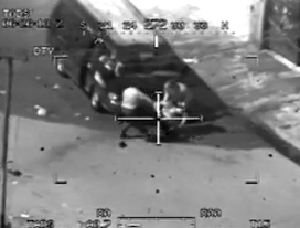
WikiLeaks video combat footage of 2007 collateral murder in Iraq“Light ’em all up. Come on, fire!” Watching the leaked combat footage of the helicopter gunships killing unarmed Iraqi civilians in 2007, I’m troubled by my own desensitized response. When I saw earlier leaked videos of an AH-64 vaporizing Iraqi farmers and a C-130 wreaking mayhem in Afghanistan, I remember my real shock at seeing a human life extinguished. This time not even flinch. “Just fuckin’, once you get on ’em just open ’em up.” Not at the brutality, nor the callousness of the play by play –even as the pilots targeted rescuers trying to help the wounded. I fault the Rules of Engagement that allowed the massacre, not the soldiers’ laughing swagger –as I hope they will not begrudge my unguarded satisfaction when eventually spectators will be treated to leaked footage of American soldiers taking some fire.

If you watched the video, perhaps you too were wishing that July 12, 2007 had recorded a massive setback for US troops in Iraq, at the height of the “surge” where a whole shitload of “dismounts” had been ambushed by IED explosions in a Baghdad square in the aftermath of a civilian massacre. Those who watched the 39-minute extended version I know were hoping to see a resolution like that, instead of an additional war crime of disproportional force and the targeting of civilians, a Hellfire missile attack on a building into which armed and unarmed men had entered, surrounded by passing innocents and rescuers scrambling to help.

There it goes! Look at that bitch go!
Patoosh!
Ah, sweet!
Need a little more room.
Nice missile.
Does it look good?
Sweet!

The Army has declared that no further inquiry will be made into the 2007 killing of the two Reuters journalists. Its FOIA requests long thwarted, even Reuters is not expressing outrage at this footage. Civilians and journalists about to be lit up The corporate media is hoping to let this story fade on the fringe. Does this mean that more pilots and gunners might become emboldened to leak other trophy reels? It doesn’t take Nelson Ratings for news outlets to see that viewers are already clamoring for more combat snuff films.

We could grant amnesty in exchange for those who turn in the most degenerate sequences.

And pretend they’ll remain anonymous. Ultimately friends and relatives will be able to place identities with the radio voices. Speaking on one of the clearest channels is the young voiced HOTEL-26, who reported taking fire from the photographers and ID’d the “RPG” with started the whole engagement. Likewise the gunner on CRAZY HORSE-18 who responded “Alright, hahaha, I hit ’em….” is addressed “God damn it, Kyle.”

And then there’s the poor 30mm gunner in CRAZY HORSE-19 who assessed his work thus:

Oh yeah, look at that. Right through the windshield! Ha ha!

While chomping at the bit to fire upon the improvised ambulance, he was momentarily thwarted by a puzzling “Azimuth Limit” which prevented his shooting.

Bloggers are now abuzz to decode the Azimuth Limit which slowed the turkey shoot when none of the gunners were showing restraint. Azimuth is the angular measurement of an object’s distance clockwise from True North. On rifles it expresses the adjustment of a gunsight to its boresight. On aircraft it apparently has something to do with the angle of relation to the axis of the fuselage. Whatever it is, maybe we can ratchet military Azimuth Limits down flat, if that’s what it will take to stop our soldiers from blowing away civilians, journalists, children and their rescuers alike. The shooters can cuss and salivate all they want so long as their trigger mechanisms respect human life or at least balk at excessive carnage.

What doesn’t come across the audio is what the US soldiers on the ground are saying to themselves as they survey “that big pile of [unarmed] bodies,” in their palaver, the “dead bastards.”

UPDATE — the testimonials begin:

From Iraq war veteran Michael Prysner, co-founder of March Forward!

The harrowing Apache footage released by WikiLeaks gives us a stomach-turning glimpse of war. Seventeen minutes of cold-blooded massacre in a war of more than seven years. A brief clip of one Apache video; a quick look at one part of one mission. Hundreds of those missions take place every day.

The video came to light thanks to military whistleblowers who provided it to WikiLeaks together with supporting documents.  Imagine if we had access to all such videos, the things we would see. Imagine all the Iraqis killed who have no one to uncover the truth about their deaths. Had the death of two Reuters news staffers not generated interest in this video, then the destruction of three families by hellfire missiles fired into an apartment building with no provocation, in a separate engagement also featured in the video, would have never been made public.

This massacre is a drop in a sea of blood. Many other such “incidents” will never be known.

Officers claimed there was “no question” that the pilots were responding to enemy fire; the video shows there is no question that they were not responding to enemy fire. They said that they had “no idea” how the journalists were killed; the video shows that they know very well how those journalists were killed. They were gunned down standing in a crowd of unarmed people.
After the slaughter of that group, the pilots beg for permission to kill the innocent passers-by who had come to the aid of one of the wounded, like any of us would have done if we saw our neighbor dying on the ground as we drove down the street. They kill everyone trying to help the dying journalist, and critically wound two children seen sitting in the front seat.

We see a group of unarmed men mowed down by a machine gun designed to destroy armored vehicles. We see a vanload of good Samaritans obliterated for trying to help a dying victim. We see all this with the soundtrack of the pilots mocking the dead, congratulating each other and laughing about the massacre.

No wonder the U.S. military goes to such great lengths to keep such videos from us. They want us to see Iraq and Afghanistan through their lens, through their embedded reporters, filtered by censorship and restrictions. They know that, once the people of this country see the extreme racism and brutality behind these occupations, they will be repulsed by what their tax dollars are paying for.

The military brass and the White House politicians have tried to justify this senseless atrocity. “Cut the pilots some slack. This was in Baghdad. This was a battle zone”—that’s been their line. The pilots had been indoctrinated with the same colonial mentality. “That’s what they get for bringing their kids into battle,” one pilot says.

The father driving that van was not “bringing his kids into battle.” He was bringing them to school, driving down the street where they live. But the U.S. occupation has made all of Iraq a battle zone. To those pilots, to their commanders over the radio and to the generals in the Pentagon, every single person in Baghdad and in Iraq is “fair game.”

The pilots joked about the people they killed, laughed about U.S. military vehicles running over dead bodies, knowing that their commanders were listening and that they were being recorded. They were not acting out of character. This is the culture of the occupation. This is how these wars are being conducted.

Having seen this, one cannot honestly believe that these atrocities are committed day in and day out for the liberation of the Iraqi people.

The Pentagon’s talking heads and media lackeys are hard at work putting their spin on this story. It’s time to tell the truth. For more than seven years, the U.S. has unleashed criminal, unprovoked aggression against the people of Iraq, and they have been doing the same thing in Afghanistan for more than eight years.

The U.S. military presence in Iraq is a colonial occupation force. The only way forward is a complete, immediate and unconditional withdrawal of all U.S. forces from Iraq and Afghanistan. This government will not do that unless all of us who are outraged by these criminal acts stand up and demand it.

Iraq war veteran Josh Stieber, US Army Specialist, 1st ID, Bravo Company 2-16 in Baghdad (Rustamiyah) 2007-2008. Although he was not present at the scene of the video, he knows those who were involved and is familiar with the environment.

A lot of my friends are in that video. After watching the video, I would definitely say that that is, nine times out of ten, the way things ended up. Killing was following military protocol. It was going along with the rules as they are.

If these videos shock and revolt you, they show the reality of what war is like. If you don’t like what you see in them, it means we should be working harder towards alternatives to war.

?

Mayor looks PETA gift horse in the tits

COLORADO SPRINGS- When our cash-wrung city decided to cut trash removal for municipal parks –if also to make it harder on the homeless camps– People for the Ethical Treatment of Animals (PETA) famously stepped in with an offer to subsidize the service if we agreed to use their trash cans.

Bruised by national news accounts of our shuttered services and having to extinguish 1/3 of our traffic lights, Mayor Rivera accepted PETA’s offer.
Until he saw their message. Which element was it that was too risqué for conservative Hooter Springs: the lettuce-clad bikini girl? The call to go vegan? Or the trashing of the Tea Partier’s staple for what’s for dinner?

Media reports of wingnut death threats meant to amplify fear not illuminate

What message is the media conveying by sensationalizing threatening phone calls and letters being received by US legislators in the wake of passing the health care bill? A chief element of the story is strangely missing, namely, WHO is making them. Death threats and inciting violence are criminal acts. News reports about crime usually don’t conclude without reassurances that law enforcement is pursuing the perpetrators. In this case, the media seems satisfied to blame right wing extremists, as if such acts is unpreventable, for Democrats to dodge like flaming arrows from an enraged populace –so called. This is fearmongering by a corporate media complicit in trying to block health reform.

Ignoble WWII bombing of Coventry commemorated with coined slur, ours

Here’s a bit of WWII distortion the History Channel is passing off as, um, history. Did you know that those dirty Krauts leveled the English city of Coventry so completely that they coined a word to celebrate it? Apparently that term was “Coventrated.” Oh, it’s a real verb alright — trouble is, it’s English. The British intelligence office seized upon the conjugated Coventriert to mean: subjected to heavy bombardment, and pretended the Huns were such bastards they commemorated the atrocity by mocking their victims in the Teutonic dictionary.

Also problematic, the barbaric Teutons failed to “coventrate” with equal efficacy anywhere else. But the Allies sure did. By night and by day, the UK and US bombers respectively “coventrated” the German and Hungarian homelands, with all the more ferocity because they were dishing the Nazis, haha, a taste of their own medicine.

The bombing of Coventry was tragedy enough, and might have been ameliorated had Churchill responded to the intelligence forewarning but risk betraying that the Brits were intercepting Germany’s secret ciphers. Allowing Coventry to fall victim was one of the high prices of keeping ULTRA a secret, but Hitler’s choice to bomb the historic city and its famed Cathedral was to provoke much enmity with the English public. Britain’s propaganda ministry was able to compound the resentment against the Germans for the devastation of Coventry by portraying the enemy as not just Philistine, but Bombast.

Of course more German cities suffered under the 24-hour US-UK tag-team bombing raids, many incurring orders of magnitude greater casualties than the 600 dead of Coventry. Notable among the Axis cities was the medieval capital of Dresden which possessed not one legitimate military target. No mention of those victims in the History Channel’s records of military misdeeds, meanwhile propagandist Newscorp property HarperCollins is weaving the coventriert detail for revisionist Dresden-deniers.

The stories of America’s firebombing of Japanese cities have already been suppressed. Apologists have long been at work justifying the use of atomic weapons against civilians in Hiroshima and Nagazaki. Where were the propagandists to conjugate Hiroshima?

America’s other unique bombing method would later be described minus geographical references, as simple carpet bombing.

The History Channel is part of the A&E network, co-owed by warmongers Disney, Hearst and NBC/GE. Their mention of “coventrate” came in a program about Lao Tsu’s Art of War, as his military edicts might have predicted, Nostradamus-like, the outcome of the Viet Nam War. Here’s an example of the program’s perspective:

The Vietcong lost the public support of many Vietnamese when they executed thousands of South Vietnamese under the employ of the US.

Meanwhile the American cause lost its public support when the US public caught sight of photographs of US war casualties.

Sound like a fair comparison? The Vietnamese weren’t demoralized by the millions killed in their midst, while the antiwar movement was not galvanized by the revelations of US atrocities? Right.

Healthcare reformist TR Reid visits COS to say universal coverage not possible

The Healing of America: a Global quest for better, cheaper, and fairer health care.COLORADO SPRINGS– [UPDATED]
My question to TR Reid, who speaks tonight at CC’s Palmer Hall, is how can voices for health care rights get past the corporate media editors?
As Washington Post Denver bureau chief and NPR reporter, Reid’s answer will reveal his earnestness, because most clearly his editors have kept the upper hand. The Independent, which is sponsoring tonight’s event, has invited two respondents to offer rebuttals, but both represent the health care status quo, there is no one advocating for socialized medicine, automatically framing Reid’s centrism as the people’s best hope.

I remember a TR Reid interview on NPR, which left me with the distinct impression of a hobbled argument. Look at the subtitle of his Frontline documentary: Sick Around the World: Can the U.S. learn anything from the rest of the world about how to run a health care system? They don’t say “what can the US learn” but can it. That’s the same false question the corporate media use to approach Global Warming. Though the answer is a multiplicity of affirmatives, the headline posed as a question leaves the viewer with the impression the conclusion is his to decide. The moon: is it there?

A follow-up Sick Around America was famously, in alternative media circles at least, altered to endorse insurance mandates. Reid broke away from the final product when PBS refused to mention his conclusion that health insurance should not be for profit. Reid chalked it up to a disagreement, not specifically a motive.

The book Mr. Reid will be signing is titled The Healing of America: a global quest for better, cheaper, and fairer health care. His own disjointed title reflects why he returned empty-handed. Can you imagine if it had read simply: a global quest for health care?

Better, cheaper and fairer are redundant qualifiers and load the theme with false perspective. “Better” assumes American care can be ranked on a scale, this book is obviously only for those getting care. “Cheaper” assumes health care must have a price — Universal health care is free. “Fairer” again assumes that our current equilibrium is in some measurable aspect fair, besides which, the concept is a fallacy. There’s unfair and fair. Moving from one toward the other, fairness is unfair until it is fair. Besides which, every schoolchild knows “fairer” is expressed as “more fair.” If Reid had been honest, he would have phrased it “less unfair.”

TR Reid applauds the health care available in other developed countries, but notes the other systems are not without their flaws. Is this some sort of psychological inducement to feed the American ego, that US reform can aim higher than the health care as a right provided elsewhere? I think it’s a loophole with which to scuttle his proposal.

It seems TR Reid is ignoring the chief obstacle to health care. It’s not reason, it’s not taxes. The chief obstacle is capitalist greed, it’s class warfare, and the social systems of our like nations are under attack as well. The shortcomings which TR Reid sees in Europe are the result of legislative meddling with systems enacted by the people.

Americans aren’t going to get health care by waiting on their legislators, or the benevolence of the corporations. The audience tonight may be impressed by TR Reid’s findings, but he’s offering nothing but placebo. Talking about health care, visualizing it, salivating at its proximity, is as much taste as TR Reid, the Washington Post and its corporate health industry advertisers will have us get.

UPDATE: TR Reid spoke to a standing room only crowd and received a standing ovation. As per usual for journalists, he provided his own disclaimer for venturing from objectivity when he posited that providing health care for all could be a moral obligation. But on the matter of The Politics of Health Care Reform, the topic of his speech, he had nothing to say.

Really, he threw the question back at the audience. Why won’t the USA provide universal coverage to its people. I’ve thought about it a lot, he told us, and I don’t have the answer.

When it came why some countries pay for Viagra, while others do not, TR Reid was humorously inquisitive. His rundown of the various medical systems throughout the world was decidedly comprehensive. But on the question of the hour, Reid was the customary incurious newspaperman which might explain his success in major media.

Not once, even at someone’s prompting, did Reid mention the for-profit worm in America’s medical system’s rotten apple. We’re told that Reid walked away from the second Frontline documentary for its whitewash of his criticism of the for-profit incentive which prevents payment systems from serving the public good. He’s excised the subject from his own presentation too. Instead, Reid focused on the millions of uninsured Americans, without a mention of the bigger population of victims, those insured who are denied care nonetheless.

Reid was pessimistic about the chances for near-term reform, based on anecdotal evidence of comments he’s received on the Frontline website. A year ago his documentary got mostly supportive comments. This year they are predominantly critical. Thus, Reid concludes, Americans do not want health care reform.

His audience tonight applauded every punchline about health care as a human right, yet Reid held that we did not want it badly enough. I hate it when the best of our spokesmen blame the audience.

Name, rank, serial number, pantie size

When you’re an al-Qaeda brand POW, you’re expected to give more than the Geneva Conventions’ name, rank and serial number. From Umar Farouk Abdulmutallab, US interrogators want to know the who, what and where about the explosives party in his pants but forget HOW the Christmas concoction was supposed to formulate itself into a terrorist attack. Should Americans be assured with the news today that “Abdulmutallab is cooperating with US intelligence?” His captors going back and forth about whether a pantie bomber is entitled to US civil rights sound like coercion of an American citizen to me. On top of the torture.

By all means tell them how you came to wrap yourself in C-4 plastique, more than likely you had a point to make, you might as well express it now. How sad that the American public has forgotten it is entitled to the freedom not to explain.

I went to a baby shower once where guests has to smell diapers filled with melted candy bars, the object being to differentiate one from the other, the gag being that the scenario looked like we were sniffing poo. It’s not a task I would entrust with the TSA. The American public should make their media talking heads do this when another diaper bomber comes up the gangway. Ants in the pants do not constitute an ant army invasion. Loose gunpowder does not a firecracker make. Explosives with no means of detonation do not make a bomber, a bullet in the hand is not worth a gunman.

CS Indy turns to cruel IFES deceiver to voice cautionary best hope for Haiti

IFESWhen it came to coverage of the Haiti earthquake disaster, the CS Indy left it to their Your Turn column, and by “your” they meant YOUR MASSAH. What caught my eye was the headline “Time for a new Haiti” accompanied by the excerpt blurb “Aristide’s return would be a disaster,” written by a pasty diplomat who had a personal hand in Haiti’s ongoing misery. Here is our allegedly progressive newsweekly giving the podium to IFES criminal Richard Soudriette instead of bundling him off to Port Au Prince for a well deserved drubbing.
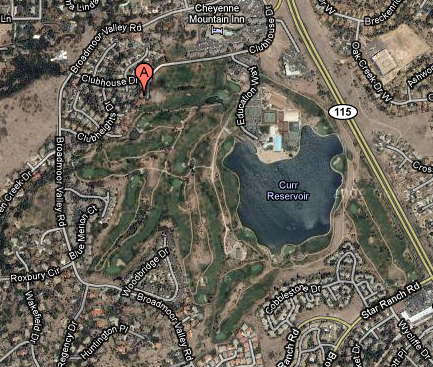
Mr. Soudriette presided over the International Foundation for Electoral Systems (IFES) from 1988 to 2007, the period which saw two US coups in Haiti, where twice the democratically elected Bertrand Aristide was removed from office by our hands. Who better to have blown the whistle on the US interference than someone observing, even advising and conducting, the elections? That’s ignoring of course that the IFES is actually a private agency which does the CIA’s work, created in the 80s when Congress moved to limit the CIA’s official role destabilizing democracies. Through the IFES, through the National Endowment for Democracy, the CIA continues its intelligence wars subverting foreign governments who threaten America’s corporate rule.

If you want to believe that enterprises like IFES might be serving some good, consider this: if democratic ideals were really being advanced, the US State Department would be proud to do the work. These aren’t subcontracted jobs that wouldn’t benefit from official diplomatic networks. The IFES and ilk are as disreputable cretins as ever wore stuffed shirts, designed to separate people from legitimate representation.

And don’t think all the pitchfork bearing victims of its election racketeering are overseas. The IFES has been an adversary of the American people as Americans have tried to rescue their elections from Diebold and the stolen votes of 2000, 2002, 2004 and 2006.

When will traitorous, undemocratic Neocons like Richard Soudriette meet the wrath they have so richly courted? The Haitians are suffering, there are countless stories of Americans helping in the effort, instead the Indy gives people of Haiti more of the same malignant spin. How did Soudriette explain his expertise on Aristide? He didn’t:

“Unfortunately Aristide is hinting at a comeback despite his two failed terms. Aristide’s return to Haitian politics would be a disaster for the country. His many political allies in the U.S. and abroad would best serve Haiti’s interests by encouraging Aristide to permanently step aside from politics.”

Rather, Soudriette says, we need to back efforts to amend Haiti’s constitution to allow America’s man Preval serve additional terms. Oh, and give more responsibility to USAID, another CIA arm. Why is Soudriette spinning this message to Colorado Springs I wonder?

It’s not enough that Soudriette lent his villainy to Haiti’s disastrous last decades, now two years removed from the job, on the occasion of its most recent natural calamity, Soudriette resurfaces to damn the Haitian people with the same lies, lest they ever catch a break. That’s what makes this brand of conservative bureaucrat so damnable.

And why is the Indy propagating this venomous neo-liberal drivel? It could be highlighting the truly hopeful opportunities which locals have been taking to help the earthquake victims. Tired of watching the US military bureaucracy monopolize and bungle the aid efforts, a Springs surgical team enlisted a local businessman’s private turboprop to spend a week in Port Au Prince effecting miracles. Let’s hear about that story.

To pick up where we left off with scoundrel Soudriette, he of the many Haitian crony friends in DC, the careerist democracy-thief has moved to Colorado Springs, to lecture for El Pomar, and head the Center for Diplomacy and Democracy, which may be just another shell to which the CIA funnels funding. While stationed in DC for the IFES, Soudriette was also billing from an M Street address for the Conservation International Foundation. The good news is that apart from a CFDD franchise opened in Northern Iraq, no doubt to milk from Iraq reconstruction funds, the headquarters here appears to be merely a residence with a walkout on the golf course of the Country Club of Colorado.

Non profit front on the Country Club of Colorado golf course

Mountaintop removal halted into DAY 8

CGZ actionAs you come in from the cold spell, think of the Coal River Mountain tree-sitters who are passing their seventh night in drizzling cold, getting by with just what they could pack in the first day, their support crews arrested, their trees now blockaded by fences. Attempts to resupply their brave squats have been intercepted, yesterday Ben Fiorillo was arrested, this morning, David Baghdadi. A flyover today yielded great photos, but no means of reaching the sitters with food, water, heat, batteries or ear protection against the high decibel air horns with which the coal mine security men have been harassing the activists. If you can conjure any alternatives for support, contact Climate Ground Zero. The good news: calls from internet supporters have persuaded West Virginia authorities to temper their aggressive counter-eco-insurgency tactics, and thus far Massey Energy has been prevented from blasting in its Mountaintop Removal efforts because of the treesit presence.

I was hoping to provide some insight into the logistics of manning a treesit. So far I’ve not found much available by way of tutorials online, except for a slim pamphlet (PDF) from Reach Out Publications, and great video instructions for cooking in a tree: Buck’s Canopy Cooking.

One reason perhaps is the need to keep the adversaries in the dark. Another very good reason might be that treesitting skills might be best taught like any skill labor, from journeyman to apprentice. Suffice it to say, treesits are 90% about tree climbing. Hence the majority of your focus will be rope skills. Experts recommend these two titles: The Tree Climbers Companion by Jeff Jepson, and On Rope: North American Vertical Rope Techniques
by Bruce Smith and Allen Padgett.

The complexity of climbing should not stop anyone who’s determined to save our wilderness from the industrial rapists. If extreme sport is your thing, why not look into thrills which go beyond your own adrenalin levels? You want to support the troops? These are our troops. Can you think of any braver?

Coal River Mountain BEE TREE Treesit

Let them eat army boots!

After the airport in Haiti was passed into US control, the Guardian newspaper is reporting controllers are diverting aid flights in favor of US Army landings. International aid efforts are being sent to the Dominican Republic while the US concentrates on getting boots on the ground. Meanwhile the US Navy has positioned an aircraft carrier to serve as a “floating airport” for flights to where?

I’d like to get a picture of that, gunboat diplomacy in Port Au Prince, a moated Green Zone, towering over the rabid masses ashore. Will American soldiers be taunting the Haitians “Boukies” still, or resort to the term from Somalia everyone learned from Black Hawk Down: they called them “Skinnies.”

Beyond MLK worship: Beyond Vietnam

MLK“A time comes when silence is betrayal. That time has come for us in relation to Vietnam.”
Martin Luther King Beyond Vietnam: Time to Break the Silence
Full text of 1967 speech below.

Riverside Church, New York City, 4 April 1967

I come to this magnificent house of worship tonight because my conscience leaves me no other choice. I join with you in this meeting because I am in deepest agreement with the aims and work of the organization which has brought us together: Clergy and Laymen Concerned about Vietnam. The recent statement of your executive committee are the sentiments of my own heart and I found myself in full accord when I read its opening lines:

“A time comes when silence is betrayal.”

That time has come for us in relation to Vietnam.

The truth of these words is beyond doubt but the mission to which they call us is a most difficult one. Even when pressed by the demands of inner truth, men do not easily assume the task of opposing their government’s policy, especially in time of war. Nor does the human spirit move without great difficulty against all the apathy of conformist thought within one’s own bosom and in the surrounding world. Moreover when the issues at hand seem as perplexed as they often do in the case of this dreadful conflict we are always on the verge of being mesmerized by uncertainty; but we must move on.

Some of us who have already begun to break the silence of the night have found that the calling to speak is often a vocation of agony, but we must speak. We must speak with all the humility that is appropriate to our limited vision, but we must speak. And we must rejoice as well, for surely this is the first time in our nation’s history that a significant number of its religious leaders have chosen to move beyond the prophesying of smooth patriotism to the high grounds of a firm dissent based upon the mandates of conscience and the reading of history. Perhaps a new spirit is rising among us. If it is, let us trace its movement well and pray that our own inner being may be sensitive to its guidance, for we are deeply in need of a new way beyond the darkness that seems so close around us.

Over the past two years, as I have moved to break the betrayal of my own silences and to speak from the burnings of my own heart, as I have called for radical departures from the destruction of Vietnam, many persons have questioned me about the wisdom of my path. At the heart of their concerns this query has often loomed large and loud: Why are you speaking about war, Dr. King? Why are you joining the voices of dissent? Peace and civil rights don’t mix, they say. Aren’t you hurting the cause of your people, they ask? And when I hear them, though I often understand the source of their concern, I am nevertheless greatly saddened, for such questions mean that the inquirers have not really known me, my commitment or my calling. Indeed, their questions suggest that they do not know the world in which they live.

“I wish not to speak with Hanoi and the National Liberation Front, but rather to my fellow Americans who, with me, bear the greatest responsibility in ending a conflict that has exacted a heavy price on both continents.”

In the light of such tragic misunderstandings, I deem it of signal importance to try to state clearly, and I trust concisely, why I believe that the path from Dexter Avenue Baptist Church — the church in Montgomery, Alabama, where I began my pastorate — leads clearly to this sanctuary tonight.

I come to this platform tonight to make a passionate plea to my beloved nation. This speech is not addressed to Hanoi or to the National Liberation Front. It is not addressed to China or to Russia.

Nor is it an attempt to overlook the ambiguity of the total situation and the need for a collective solution to the tragedy of Vietnam. Neither is it an attempt to make North Vietnam or the National Liberation Front paragons of virtue, nor to overlook the role they can play in a successful resolution of the problem. While they both may have justifiable reason to be suspicious of the good faith of the United States, life and history give eloquent testimony to the fact that conflicts are never resolved without trustful give and take on both sides.

Tonight, however, I wish not to speak with Hanoi and the NLF, but rather to my fellow Americans, who, with me, bear the greatest responsibility in ending a conflict that has exacted a heavy price on both continents.

The Importance of Vietnam

Since I am a preacher by trade, I suppose it is not surprising that I have seven major reasons for bringing Vietnam into the field of my moral vision. There is at the outset a very obvious and almost facile connection between the war in Vietnam and the struggle I, and others, have been waging in America. A few years ago there was a shining moment in that struggle. It seemed as if there was a real promise of hope for the poor — both black and white — through the poverty program. There were experiments, hopes, new beginnings. Then came the buildup in Vietnam and I watched the program broken and eviscerated as if it were some idle political plaything of a society gone mad on war, and I knew that America would never invest the necessary funds or energies in rehabilitation of its poor so long as adventures like Vietnam continued to draw men and skills and money like some demonic destructive suction tube. So I was increasingly compelled to see the war as an enemy of the poor and to attack it as such.

“For the sake of those boys,
for the sake of this governent,
for the sake of hundreds of thousands
trembling under our violence,
I cannot be silent.”

Perhaps the more tragic recognition of reality took place when it became clear to me that the war was doing far more than devastating the hopes of the poor at home. It was sending their sons and their brothers and their husbands to fight and to die in extraordinarily high proportions relative to the rest of the population. We were taking the black young men who had been crippled by our society and sending them eight thousand miles away to guarantee liberties in Southeast Asia which they had not found in southwest Georgia and East Harlem. So we have been repeatedly faced with the cruel irony of watching Negro and white boys on TV screens as they kill and die together for a nation that has been unable to seat them together in the same schools. So we watch them in brutal solidarity burning the huts of a poor village, but we realize that they would never live on the same block in Detroit. I could not be silent in the face of such cruel manipulation of the poor.

My third reason moves to an even deeper level of awareness, for it grows out of my experience in the ghettoes of the North over the last three years — especially the last three summers. As I have walked among the desperate, rejected and angry young men I have told them that Molotov cocktails and rifles would not solve their problems. I have tried to offer them my deepest compassion while maintaining my conviction that social change comes most meaningfully through nonviolent action. But they asked — and rightly so — what about Vietnam? They asked if our own nation wasn’t using massive doses of violence to solve its problems, to bring about the changes it wanted. Their questions hit home, and I knew that I could never again raise my voice against the violence of the oppressed in the ghettos without having first spoken clearly to the greatest purveyor of violence in the world today — my own government. For the sake of those boys, for the sake of this government, for the sake of hundreds of thousands trembling under our violence, I cannot be silent.

For those who ask the question, “Aren’t you a civil rights leader?” and thereby mean to exclude me from the movement for peace, I have this further answer. In 1957 when a group of us formed the Southern Christian Leadership Conference, we chose as our motto: “To save the soul of America.” We were convinced that we could not limit our vision to certain rights for black people, but instead affirmed the conviction that America would never be free or saved from itself unless the descendants of its slaves were loosed completely from the shackles they still wear. In a way we were agreeing with Langston Hughes, that black bard of Harlem, who had written earlier:

O, yes,
I say it plain,
America never was America to me,
And yet I swear this oath —
America will be!

Now, it should be incandescently clear that no one who has any concern for the integrity and life of America today can ignore the present war. If America’s soul becomes totally poisoned, part of the autopsy must read Vietnam. It can never be saved so long as it destroys the deepest hopes of men the world over. So it is that those of us who are yet determined that America will be are led down the path of protest and dissent, working for the health of our land.

“Surely we must see
that the men we supported
pressed them to their violence.”

As if the weight of such a commitment to the life and health of America were not enough, another burden of responsibility was placed upon me in 1964; and I cannot forget that the Nobel Prize for Peace was also a commission — a commission to work harder than I had ever worked before for “the brotherhood of man.” This is a calling that takes me beyond national allegiances, but even if it were not present I would yet have to live with the meaning of my commitment to the ministry of Jesus Christ. To me the relationship of this ministry to the making of peace is so obvious that I sometimes marvel at those who ask me why I am speaking against the war. Could it be that they do not know that the good news was meant for all men — for Communist and capitalist, for their children and ours, for black and for white, for revolutionary and conservative? Have they forgotten that my ministry is in obedience to the one who loved his enemies so fully that he died for them? What then can I say to the “Vietcong” or to Castro or to Mao as a faithful minister of this one? Can I threaten them with death or must I not share with them my life?

Finally, as I try to delineate for you and for myself the road that leads from Montgomery to this place I would have offered all that was most valid if I simply said that I must be true to my conviction that I share with all men the calling to be a son of the living God. Beyond the calling of race or nation or creed is this vocation of sonship and brotherhood, and because I believe that the Father is deeply concerned especially for his suffering and helpless and outcast children, I come tonight to speak for them.

This I believe to be the privilege and the burden of all of us who deem ourselves bound by allegiances and loyalties which are broader and deeper than nationalism and which go beyond our nation’s self-defined goals and positions. We are called to speak for the weak, for the voiceless, for victims of our nation and for those it calls enemy, for no document from human hands can make these humans any less our brothers.

Strange Liberators

And as I ponder the madness of Vietnam and search within myself for ways to understand and respond to compassion my mind goes constantly to the people of that peninsula. I speak now not of the soldiers of each side, not of the junta in Saigon, but simply of the people who have been living under the curse of war for almost three continuous decades now. I think of them too because it is clear to me that there will be no meaningful solution there until some attempt is made to know them and hear their broken cries.

“Before long they must know
that their government has sent them
into a struggle among Vietnamese,
and the more sophisticated surely realize
that we are on the side of the wealthy
and the secure
while we create hell for the poor.”

They must see Americans as strange liberators. The Vietnamese people proclaimed their own independence in 1945 after a combined French and Japanese occupation, and before the Communist revolution in China. They were led by Ho Chi Minh. Even though they quoted the American Declaration of Independence in their own document of freedom, we refused to recognize them. Instead, we decided to support France in its re-conquest of her former colony.

Our government felt then that the Vietnamese people were not “ready” for independence, and we again fell victim to the deadly Western arrogance that has poisoned the international atmosphere for so long. With that tragic decision we rejected a revolutionary government seeking self-determination, and a government that had been established not by China (for whom the Vietnamese have no great love) but by clearly indigenous forces that included some Communists. For the peasants this new government meant real land reform, one of the most important needs in their lives.

For nine years following 1945 we denied the people of Vietnam the right of independence. For nine years we vigorously supported the French in their abortive effort to re-colonize Vietnam.

Before the end of the war we were meeting eighty percent of the French war costs. Even before the French were defeated at Dien Bien Phu, they began to despair of the reckless action, but we did not. We encouraged them with our huge financial and military supplies to continue the war even after they had lost the will. Soon we would be paying almost the full costs of this tragic attempt at re-colonization.

After the French were defeated it looked as if independence and land reform would come again through the Geneva agreements. But instead there came the United States, determined that Ho should not unify the temporarily divided nation, and the peasants watched again as we supported one of the most vicious modern dictators — our chosen man, Premier Diem. The peasants watched and cringed as Diem ruthlessly routed out all opposition, supported their extortionist landlords and refused even to discuss reunification with the north. The peasants watched as all this was presided over by U.S. influence and then by increasing numbers of U.S. troops who came to help quell the insurgency that Diem’s methods had aroused. When Diem was overthrown they may have been happy, but the long line of military dictatorships seemed to offer no real change — especially in terms of their need for land and peace.

The only change came from America as we increased our troop commitments in support of governments which were singularly corrupt, inept and without popular support. All the while the people read our leaflets and received regular promises of peace and democracy — and land reform. Now they languish under our bombs and consider us – not their fellow Vietnamese — the real enemy. They move sadly and apathetically as we herd them off the land of their fathers into concentration camps where minimal social needs are rarely met. They know they must move or be destroyed by our bombs. So they go — primarily women and children and the aged.

“Somehow this madness must cease.”

They watch as we poison their water, as we kill a million acres of their crops. They must weep as the bulldozers roar through their areas preparing to destroy the precious trees. They wander into the hospitals, with at least twenty casualties from American firepower for one “Vietcong-inflicted” injury. So far we may have killed a million of them — mostly children. They wander into the towns and see thousands of the children, homeless, without clothes, running in packs on the streets like animals. They see the children, degraded by our soldiers as they beg for food. They see the children selling their sisters to our soldiers, soliciting for their mothers.

What do the peasants think as we ally ourselves with the landlords and as we refuse to put any action into our many words concerning land reform? What do they think as we test our latest weapons on them, just as the Germans tested out new medicine and new tortures in the concentration camps of Europe? Where are the roots of the independent Vietnam we claim to be building? Is it among these voiceless ones?

We have destroyed their two most cherished institutions: the family and the village. We have destroyed their land and their crops. We have cooperated in the crushing of the nation’s only non-Communist revolutionary political force — the Unified Buddhist church. We have supported the enemies of the peasants of Saigon. We have corrupted their women and children and killed their men. What liberators?

Now there is little left to build on — save bitterness. Soon the only solid physical foundations remaining will be found at our military bases and in the concrete of the concentration camps we call fortified hamlets. The peasants may well wonder if we plan to build our new Vietnam on such grounds as these? Could we blame them for such thoughts? We must speak for them and raise the questions they cannot raise. These too are our brothers.

Perhaps the more difficult but no less necessary task is to speak for those who have been designated as our enemies. What of the National Liberation Front — that strangely anonymous group we call VC or Communists? What must they think of us in America when they realize that we permitted the repression and cruelty of Diem which helped to bring them into being as a resistance group in the south? What do they think of our condoning the violence which led to their own taking up of arms? How can they believe in our integrity when now we speak of “aggression from the north” as if there were nothing more essential to the war? How can they trust us when now we charge them with violence after the murderous reign of Diem and charge them with violence while we pour every new weapon of death into their land? Surely we must understand their feelings even if we do not condone their actions. Surely we must see that the men we supported pressed them to their violence. Surely we must see that our own computerized plans of destruction simply dwarf their greatest acts.

“We must continue to raise our voices if our nation persists in its perverse ways in Vietnam.”

How do they judge us when our officials know that their membership is less than twenty-five percent Communist and yet insist on giving them the blanket name? What must they be thinking when they know that we are aware of their control of major sections of Vietnam and yet we appear ready to allow national elections in which this highly organized political parallel government will have no part? They ask how we can speak of free elections when the Saigon press is censored and controlled by the military junta. And they are surely right to wonder what kind of new government we plan to help form without them — the only party in real touch with the peasants. They question our political goals and they deny the reality of a peace settlement from which they will be excluded. Their questions are frighteningly relevant. Is our nation planning to build on political myth again and then shore it up with the power of new violence?

Here is the true meaning and value of compassion and nonviolence when it helps us to see the enemy’s point of view, to hear his questions, to know his assessment of ourselves. For from his view we may indeed see the basic weaknesses of our own condition, and if we are mature, we may learn and grow and profit from the wisdom of the brothers who are called the opposition.

So, too, with Hanoi. In the north, where our bombs now pummel the land, and our mines endanger the waterways, we are met by a deep but understandable mistrust. To speak for them is to explain this lack of confidence in Western words, and especially their distrust of American intentions now. In Hanoi are the men who led the nation to independence against the Japanese and the French, the men who sought membership in the French commonwealth and were betrayed by the weakness of Paris and the willfulness of the colonial armies. It was they who led a second struggle against French domination at tremendous costs, and then were persuaded to give up the land they controlled between the thirteenth and seventeenth parallel as a temporary measure at Geneva. After 1954 they watched us conspire with Diem to prevent elections which would have surely brought Ho Chi Minh to power over a united Vietnam, and they realized they had been betrayed again.

When we ask why they do not leap to negotiate, these things must be remembered. Also it must be clear that the leaders of Hanoi considered the presence of American troops in support of the Diem regime to have been the initial military breach of the Geneva agreements concerning foreign troops, and they remind us that they did not begin to send in any large number of supplies or men until American forces had moved into the tens of thousands.

“When machines and computers,
profit motives and property rights
are considered more important than people,
the giant triplets of
racism,
materialism
and militarism
are incapable of being conquered.”

Hanoi remembers how our leaders refused to tell us the truth about the earlier North Vietnamese overtures for peace, how the president claimed that none existed when they had clearly been made. Ho Chi Minh has watched as America has spoken of peace and built up its forces, and now he has surely heard of the increasing international rumors of American plans for an invasion of the north. He knows the bombing and shelling and mining we are doing are part of traditional pre-invasion strategy. Perhaps only his sense of humor and of irony can save him when he hears the most powerful nation of the world speaking of aggression as it drops thousands of bombs on a poor weak nation more than eight thousand miles away from its shores.

At this point I should make it clear that while I have tried in these last few minutes to give a voice to the voiceless on Vietnam and to understand the arguments of those who are called enemy, I am as deeply concerned about our troops there as anything else. For it occurs to me that what we are submitting them to in Vietnam is not simply the brutalizing process that goes on in any war where armies face each other and seek to destroy. We are adding cynicism to the process of death, for they must know after a short period there that none of the things we claim to be fighting for are really involved. Before long they must know that their government has sent them into a struggle among Vietnamese, and the more sophisticated surely realize that we are on the side of the wealthy and the secure while we create hell for the poor.

This Madness Must Cease

Somehow this madness must cease. We must stop now. I speak as a child of God and brother to the suffering poor of Vietnam. I speak for those whose land is being laid waste, whose homes are being destroyed, whose culture is being subverted. I speak for the poor of America who are paying the double price of smashed hopes at home and death and corruption in Vietnam. I speak as a citizen of the world, for the world as it stands aghast at the path we have taken. I speak as an American to the leaders of my own nation. The great initiative in this war is ours. The initiative to stop it must be ours.

This is the message of the great Buddhist leaders of Vietnam. Recently one of them wrote these words:

“Each day the war goes on the hatred increases in the heart of the Vietnamese and in the hearts of those of humanitarian instinct. The Americans are forcing even their friends into becoming their enemies. It is curious that the Americans, who calculate so carefully on the possibilities of military victory, do not realize that in the process they are incurring deep psychological and political defeat. The image of America will never again be the image of revolution, freedom and democracy, but the image of violence and militarism.”

“A nation that continues
year after year
to spend more money on military defense
than on programs of social uplift
is approaching spiritual death.”

If we continue, there will be no doubt in my mind and in the mind of the world that we have no honorable intentions in Vietnam. It will become clear that our minimal expectation is to occupy it as an American colony and men will not refrain from thinking that our maximum hope is to goad China into a war so that we may bomb her nuclear installations. If we do not stop our war against the people of Vietnam immediately the world will be left with no other alternative than to see this as some horribly clumsy and deadly game we have decided to play.

The world now demands a maturity of America that we may not be able to achieve. It demands that we admit that we have been wrong from the beginning of our adventure in Vietnam, that we have been detrimental to the life of the Vietnamese people. The situation is one in which we must be ready to turn sharply from our present ways.

In order to atone for our sins and errors in Vietnam, we should take the initiative in bringing a halt to this tragic war. I would like to suggest five concrete things that our government should do immediately to begin the long and difficult process of extricating ourselves from this nightmarish conflict:

• End all bombing in North and South Vietnam

• Declare a unilateral cease-fire in the hope that such action will create the atmosphere for negotiation.

• Take immediate steps to prevent other battlegrounds in Southeast Asia by curtailing our military buildup in Thailand and our interference in Laos.

• Realistically accept the fact that the National Liberation Front has substantial support in South Vietnam and must thereby play a role in any meaningful negotiations and in any future Vietnam government.

• Set a date that we will remove all foreign troops from Vietnam in accordance with the 1954 Geneva agreement.

Part of our ongoing commitment might well express itself in an offer to grant asylum to any Vietnamese who fears for his life under a new regime which included the Liberation Front. Then we must make what reparations we can for the damage we have done. We most provide the medical aid that is badly needed, making it available in this country if necessary.

Protesting The War

Meanwhile we in the churches and synagogues have a continuing task while we urge our government to disengage itself from a disgraceful commitment. We must continue to raise our voices if our nation persists in its perverse ways in Vietnam. We must be prepared to match actions with words by seeking out every creative means of protest possible.

As we counsel young men concerning military service we must clarify for them our nation’s role in Vietnam and challenge them with the alternative of conscientious objection. I am pleased to say that this is the path now being chosen by more than seventy students at my own alma mater, Morehouse College, and I recommend it to all who find the American course in Vietnam a dishonorable and unjust one. Moreover I would encourage all ministers of draft age to give up their ministerial exemptions and seek status as conscientious objectors. These are the times for real choices and not false ones. We are at the moment when our lives must be placed on the line if our nation is to survive its own folly. Every man of humane convictions must decide on the protest that best suits his convictions, but we must all protest.

“If we do not act
we shall surely be dragged down
the long and shameful corridors of time
reserved for those who possess
power without compassion,
might without morality,
and strength without sight.”

There is something seductively tempting about stopping there and sending us all off on what in some circles has become a popular crusade against the war in Vietnam. I say we must enter the struggle, but I wish to go on now to say something even more disturbing. The war in Vietnam is but a symptom of a far deeper malady within the American spirit, and if we ignore this sobering reality we will find ourselves organizing clergy-and laymen-concerned committees for the next generation. They will be concerned about Guatemala and Peru. They will be concerned about Thailand and Cambodia. They will be concerned about Mozambique and South Africa. We will be marching for these and a dozen other names and attending rallies without end unless there is a significant and profound change in American life and policy. Such thoughts take us beyond Vietnam, but not beyond our calling as sons of the living God.

In 1957 a sensitive American official overseas said that it seemed to him that our nation was on the wrong side of a world revolution. During the past ten years we have seen emerge a pattern of suppression which now has justified the presence of U.S. military “advisors” in Venezuela. This need to maintain social stability for our investments accounts for the counter-revolutionary action of American forces in Guatemala. It tells why American helicopters are being used against guerrillas in Colombia and why American napalm and green beret forces have already been active against rebels in Peru. It is with such activity in mind that the words of the late John F. Kennedy come back to haunt us. Five years ago he said,

“Those who make peaceful revolution impossible will make violent revolution inevitable.”

Increasingly, by choice or by accident, this is the role our nation has taken — the role of those who make peaceful revolution impossible by refusing to give up the privileges and the pleasures that come from the immense profits of overseas investment.

I am convinced that if we are to get on the right side of the world revolution, we as a nation must undergo a radical revolution of values. We must rapidly begin the shift from a “thing-oriented” society to a “person-oriented” society. When machines and computers, profit motives and property rights are considered more important than people, the giant triplets of racism, materialism, and militarism are incapable of being conquered.

A true revolution of values will soon cause us to question the fairness and justice of many of our past and present policies. On the one hand we are called to play the good Samaritan on life’s roadside; but that will be only an initial act. One day we must come to see that the whole Jericho road must be transformed so that men and women will not be constantly beaten and robbed as they make their journey on life’s highway.

True compassion is more than flinging a coin to a beggar; it is not haphazard and superficial. It comes to see that an edifice which produces beggars needs restructuring. A true revolution of values will soon look uneasily on the glaring contrast of poverty and wealth. With righteous indignation, it will look across the seas and see individual capitalists of the West investing huge sums of money in Asia, Africa and South America, only to take the profits out with no concern for the social betterment of the countries, and say: “This is not just.”

It will look at our alliance with the landed gentry of Latin America and say: “This is not just.”

The Western arrogance of feeling that it has everything to teach others and nothing to learn from them is not just.

A true revolution of values will lay hands on the world order and say of war: “This way of settling differences is not just.”

This business of burning human beings with napalm, of filling our nation’s homes with orphans and widows, of injecting poisonous drugs of hate into veins of people normally humane, of sending men home from dark and bloody battlefields physically handicapped and psychologically deranged, cannot be reconciled with wisdom, justice and love. A nation that continues year after year to spend more money on military defense than on programs of social uplift is approaching spiritual death.

America, the richest and most powerful nation in the world, can well lead the way in this revolution of values. There is nothing, except a tragic death wish, to prevent us from reordering our priorities, so that the pursuit of peace will take precedence over the pursuit of war. There is nothing to keep us from molding a recalcitrant status quo with bruised hands until we have fashioned it into a brotherhood.

This kind of positive revolution of values is our best defense against communism. War is not the answer. Communism will never be defeated by the use of atomic bombs or nuclear weapons. Let us not join those who shout war and through their misguided passions urge the United States to relinquish its participation in the United Nations. These are days which demand wise restraint and calm reasonableness. We must not call everyone a Communist or an appeaser who advocates the seating of Red China in the United Nations and who recognizes that hate and hysteria are not the final answers to the problem of these turbulent days. We must not engage in a negative anti-communism, but rather in a positive thrust for democracy, realizing that our greatest defense against communism is to take offensive action in behalf of justice. We must with positive action seek to remove those conditions of poverty, insecurity and injustice which are the fertile soil in which the seed of communism grows and develops.

The People Are Important

These are revolutionary times. All over the globe men are revolting against old systems of exploitation and oppression and out of the wombs of a frail world new systems of justice and equality are being born. The shirtless and barefoot people of the land are rising up as never before. “The people who sat in darkness have seen a great light.” We in the West must support these revolutions. It is a sad fact that, because of comfort, complacency, a morbid fear of communism, and our proneness to adjust to injustice, the Western nations that initiated so much of the revolutionary spirit of the modern world have now become the arch anti-revolutionaries. This has driven many to feel that only Marxism has the revolutionary spirit. Therefore, communism is a judgment against our failure to make democracy real and follow through on the revolutions we initiated. Our only hope today lies in our ability to recapture the revolutionary spirit and go out into a sometimes hostile world declaring eternal hostility to poverty, racism, and militarism. With this powerful commitment we shall boldly challenge the status quo and unjust mores and thereby speed the day when “every valley shall be exalted, and every mountain and hill shall be made low, and the crooked shall be made straight and the rough places plain.”

A genuine revolution of values means in the final analysis that our loyalties must become ecumenical rather than sectional. Every nation must now develop an overriding loyalty to mankind as a whole in order to preserve the best in their individual societies.

This call for a world-wide fellowship that lifts neighborly concern beyond one’s tribe, race, class and nation is in reality a call for an all-embracing and unconditional love for all men. This oft misunderstood and misinterpreted concept – so readily dismissed by the Nietzsches of the world as a weak and cowardly force – has now become an absolute necessity for the survival of man. When I speak of love I am not speaking of some sentimental and weak response. I am speaking of that force which all of the great religions have seen as the supreme unifying principle of life. Love is somehow the key that unlocks the door which leads to ultimate reality. This Hindu-Moslem-Christian-Jewish-Buddhist belief about ultimate reality is beautifully summed up in the first epistle of Saint John:

Let us love one another; for love is God and everyone that loveth is born of God and knoweth God. He that loveth not knoweth not God; for God is love. If we love one another God dwelleth in us, and his love is perfected in us.

Let us hope that this spirit will become the order of the day. We can no longer afford to worship the god of hate or bow before the altar of retaliation. The oceans of history are made turbulent by the ever-rising tides of hate. History is cluttered with the wreckage of nations and individuals that pursued this self-defeating path of hate. As Arnold Toynbee says :

“Love is the ultimate force that makes for the saving choice of life and good against the damning choice of death and evil. Therefore the first hope in our inventory must be the hope that love is going to have the last word.”

We are now faced with the fact that tomorrow is today. We are confronted with the fierce urgency of now. In this unfolding conundrum of life and history there is such a thing as being too late. Procrastination is still the thief of time. Life often leaves us standing bare, naked and dejected with a lost opportunity. The “tide in the affairs of men” does not remain at the flood; it ebbs. We may cry out desperately for time to pause in her passage, but time is deaf to every plea and rushes on. Over the bleached bones and jumbled residue of numerous civilizations are written the pathetic words: “Too late.”

There is an invisible book of life that faithfully records our vigilance or our neglect. “The moving finger writes, and having writ moves on…” We still have a choice today; nonviolent coexistence or violent co-annihilation.

We must move past indecision to action. We must find new ways to speak for peace in Vietnam and justice throughout the developing world – a world that borders on our doors. If we do not act we shall surely be dragged down the long dark and shameful corridors of time reserved for those who possess power without compassion, might without morality, and strength without sight.

Now let us begin. Now let us rededicate ourselves to the long and bitter – but beautiful – struggle for a new world. This is the calling of the sons of God, and our brothers wait eagerly for our response. Shall we say the odds are too great? Shall we tell them the struggle is too hard? Will our message be that the forces of American life militate against their arrival as full men, and we send our deepest regrets? Or will there be another message, of longing, of hope, of solidarity with their yearnings, of commitment to their cause, whatever the cost? The choice is ours, and though we might prefer it otherwise we must choose in this crucial moment of human history.

As that noble bard of yesterday, James Russell Lowell, eloquently stated:

Once to every man and nation
Comes the moment to decide,
In the strife of truth and falsehood,
For the good or evil side;
Some great cause, God’s new Messiah,
Off’ring each the bloom or blight,
And the choice goes by forever
Twixt that darkness and that light.
Though the cause of evil prosper,
Yet ’tis truth alone is strong;
Though her portion be the scaffold,
And upon the throne be wrong:
Yet that scaffold sways the future,
And behind the dim unknown,
Standeth God within the shadow
Keeping watch above his own.

Good news for Haiti

Haiti presidential palace succumbs to earthquake
On the bright side of Haiti’s catastrophic earthquake, American puppet René Préval has been cut down a few notches, a whole couple stories actually. Here’s the presidential palace before January 12 and after. The pretender Preval has been Our Man in Port-au-Prince subsequent to the US-arranged a coup in 2004 to depose the democratically elected Jean-Bertrand Aristide (for the second time). The popular Aristide was a threat to exploitation interests.

While Americans rally to provide relief to the Haitians, let’s not be too incredulous about the state of their poverty. Here’s A.N.S.W.E.R.’s recent statement to highlight this teaching moment:

All of us are joining in the outpouring of solidarity from people all over the hemisphere and world who are sending humanitarian aid and assistance to the people of Haiti.

At such a moment, it is also important to put this catastrophe into a political and social context. Without this context, it is impossible to understand both the monumental problems facing Haiti and, most importantly, the solutions that can allow Haiti to survive and thrive. Hillary Clinton said today, “It is biblical, the tragedy that continues to daunt Haiti and the Haitian people.” This hypocritical statement that blames Haiti’s suffering exclusively on an “act of God” masks the role of U.S. and French imperialism in the region.

In this email message, we have included some background information about Haiti that helps establish the real context:

Haitian Prime Minister Jean-Max Bellerive stated today that as many as 100,000 Haitians may be dead. International media is reporting bodies being piled along streets surrounded by the rubble from thousands of collapsed buildings. Estimates of the economic damage are in the hundreds of millions of dollars. Haiti’s large shantytown population was particularly hard hit by the tragedy.

As CNN, ABC and every other major corporate media outlet will be quick to point out, Haiti is the poorest country in the entire Western hemisphere. But not a single word is uttered as to why Haiti is poor. Poverty, unlike earthquakes, is no natural disaster.

The answer lies in more than two centuries of U.S. hostility to the island nation, whose hard-won independence from the French was only the beginning of its struggle for liberation.

In 1804, what had begun as a slave uprising more than a decade earlier culminated in freedom from the grips of French colonialism, making Haiti the first Latin American colony to win its independence and the world’s first Black republic. Prior to the victory of the Haitian people, George Washington and then-Secretary of State Thomas Jefferson had supported France out of fear that Haiti would inspire uprisings among the U.S. slave population. The U.S. slave-owning aristocracy was horrified at Haiti’s newly earned freedom.

U.S. interference became an integral part of Haitian history, culminating in a direct military occupation from 1915 to 1934. Through economic and military intervention, Haiti was subjugated as U.S. capital developed a railroad and acquired plantations. In a gesture of colonial arrogance, Franklin D. Roosevelt, who was the assistant secretary of the Navy at the time, drafted a constitution for Haiti which, among other things, allowed foreigners to own land. U.S. officials would later find an accommodation with the dictator François “Papa Doc” Duvalier, and then his son Jean-Claude “Baby Doc” Duvalier, as Haiti suffered under their brutal repressive policies.

In the 1980s and 1990s, U.S. policy toward Haiti sought the reorganization of the Haitian economy to better serve the interests of foreign capital. The U.S. Agency for International Development (USAID) was instrumental in shifting Haitian agriculture away from grain production, paving the way for dependence on food imports. Ruined Haitian farmers flocked to the cities in search of a livelihood, resulting in the swelling of the precarious shantytowns found in Port-au-Prince and other urban centers.

Who has benefited from these policies? U.S. food producers profited from increased exports to Haitian markets. Foreign corporations that had set up shop in Haitian cities benefitted from the super-exploitation of cheap labor flowing from the countryside. But for the people of Haiti, there was only greater misery and destitution.

Washington orchestrated the overthrow of the democratically elected Haitian President Jean-Bertrand Aristide—not once, but twice, in 1991 and 2004. Haiti has been under a U.S.-backed U.N. occupation for nearly six years. Aristide did not earn the animosity of U.S. leaders for his moderate reforms; he earned it when he garnered support among Haiti’s poor, which crystallized into a mass popular movement. Two hundred years on, U.S. officials are still horrified by the prospect of a truly independent Haiti.

The unstable, makeshift dwellings imposed upon Haitians by Washington’s neoliberal policies have now, for many, been turned into graves. Those same policies are to blame for the lack of hospitals, ambulances, fire trucks, rescue equipment, food and medicine. The blow dealt by such a natural disaster to an economy made so fragile from decades of plundering will greatly magnify the suffering of the Haitian people.

Natural disasters are inevitable, but resource allocation and planning can play a decisive role in mitigating their impact and dealing with the aftermath. Haiti and neighboring Cuba, who are no strangers to violent tropical storms, were both hit hard in 2008 by a series of hurricanes—which, unlike earthquakes, are predictable. While more than 800 lives were lost in Haiti, less than 10 people died in Cuba. Unlike Haiti, Cuba had a coordinated evacuation plan and post-hurricane rescue efforts that were centrally planned by the Cuban government. This was only possible because Cuban society is not organized according to the needs of foreign capital, but rather according to the needs of the Cuban people.

In a televised speech earlier today, President Obama has announced that USAID and the Departments of State and Defense will be working to support the rescue and relief efforts in Haiti in the coming days. Ironically, these are the same government entities responsible for the implementation of the economic and military policies that reduced Haiti to ruins even before the earthquake hit.