

PUEBLO, COLORADO- 2014 marks one hundred years since the Ludlow Massacre of 1914. A variety of commemorations are planned before the formal anniversary on April 20. I attended one such event on Wednesday, a lecture by a CSU professor to footnote the “Children of Ludlow” exhibit at El Pueblo History Museum. I’m always excitied when attention is paid to Ludlow, a subject regularly left out of American schoolbooks, but I was disappointed to find key elements of labor history excised from the museum’s narrative. Literally. The United Mine Workers of America, the organization central to the strike, which supplied the tent city, and which even today maintains the memorial site, was mentioned only once, IN FINE PRINT! The Ludlow miners voted to strike because the mining companies refused to recognize the UMWA. Unmentioned. The horrors of the atrocity were not tempered, in their explicitness perhaps we think them enough, but there was also the apologist suggestion that some culpability belonged to the miners. I questioned one curator who admitted they were at pains to keep the story “balanced” and that the squeakiest wheel thus far has been the National Guard. Apparently the Guard is offended that its role will be misconstrued. What balance do they want, I wondered. Had they lost children in the “battlezone” too?
Children are at the heart of commemorating Ludlow and at the heart of this preversion of the massacre’s memory. Were they recklessly endangered by their parents and union organizers? Were they dragged into a battlezone? The museum seems to suggest as much, highlighting the beligerence of the miners, mischaracterizing the soldiers, and leaving the union actions largely unexplained.
First I’d like to declare how I tire of the objective irrelevance which results when academics seek the approval of government technocrats. I am also disturbed by educators who pretend blindness to subtle inferences which shape a political takeaway. To them, “remembering” Ludlow seems sufficient in itself. I can hardly see the point to remembering Ludlow unless we have discerned its lessons. Until we are remembering the LESSONS OF LUDLOW, our educators’ self-proclaimed raison d’etre will be self-fulfilling: “history will repeat itself.” This Pueblo exhibit suggests no lesson other than the exploitation of tragedy, and leaves me fearful about the Ludlow commemorations to follow. The anti-union, pro-military climate which prevails these hundred years since the massacre will make for a travesty of a remembrance unless someone with a worker’s perspective speaks up.
NOT BROUGHT TO YOU BY…
Let’s start with this exhibit, which alas has already escaped critique since September. Its full title, as evidenced in the photo above: “Black Hills Energy presents: Children of Ludlow, Life in a Battlezone, 1913-1914.”
 I’ll bet curators thought it a measure of truth and reconciliation that the Ludlow presentation was sponsored by a local extraction industry business. Black Hills Energy trades not in coal but natural gas. In fact they’re among the frackers tearing up Southeastern Colorado. I think the irony more likely suggests how the UMWA’s starring role was left on the cutting room floor. There are generic mentions of “the union”, as at right, keeping a ledger of which families were assigned tents, but only in the fine print is the UMWA named as owning the ledger.
BATTLEZONES
More troubling is the skewed framing of the museum’s narrative. It begins with the subtitle, “life in a battlezone.” That’s taking a rather curious liberty don’t you think? The event we accept now as “Ludlow” became a battlezone on April 20, and the regional Coal Field War which followed was a battlezone to which both revenge-seekers and militia thronged, but the tent colonies in which 12,000 lived, 9,000 of whom were the children of the title role, were camps full of families. That they were straffed regularly by the guards makes them shooting galleries not battlegrounds.
Calling Ludlow a battlezone is like calling Sand Creek a “collision” or calling the Middle East a “conflict”. All of these mask the role of the aggressor.
I will credit the curators for offering a candid detail of horrific import. In a description of the day before the massacre, when the Greeks among the immigrants were celebrating Greek Easter, mention is made of the mounted National Guards offered this taunt: “You enjoy your roast today; we will have ours tomorrow.” No one should deny today that the events of April 20, which culminated in the torching of the tents and asphyxiation of women and children, was a premeditated act.
THE CHILDREN
Should the miners have put their children in harm’s way by defying the mining companies? How could they not? As immigrants they didn’t have nearby relatives to foster their children away from the random bullets. Also left unsaid by the display: many of the children had already been working in the mines and counted among those on strike. This was before child labor reforms.
Curiously, the exhibit did include a famous photograph of the notorious activist Mother Jones leading a childrens’ march through Trinidad. The caption explained that Jones “wasn’t above using real children to advance the cause of Colorado’s coal miners.” Emphasis mine. While technically true in a modern context, it’s probably disingenuous to imply someone is using the children when a key issue of the demonstration is CHILD LABOR.
No really. Mother Jones was leading a march of children, many of them workers of the mines, for the reform of labor practices which abused children. This and subsequent campaigns eventually led to child labor laws. Is saying “Mother Jones wasn’t above using children” in any way an accurate characterization?
 Compounding the inference that the Children of Ludlow were jeopardized for the cause, was the implication that the miners were combatants who contributed to the battlezone. As the displays progressed in chronological order, the first weapon on display was a rifle used by the miners. Immediately behind it was an enlarged photograph vividly depicting miners posed with two identical specimens.
Moving along the exhibit chronologically, anticipating the rising violence, the museum goers is apparently supposed to register that the strikers were firing too, if not first. Recent historical accounts have deliberated about who fired first. I think the motive is suspiciously revisionist in view of today’s dogma of nonviolence absolutism: if your protest devolves into violence, you deserve every bit of the beating you get.
Whenever it was that the miners began firing, the single militia and three guard casualties were not recorded until after the massacre took place, belying the narrative that the miners invited the massacre. Witnesses conflict about when the three union leaders were executed. I’ll give the museum credit for defying the National Guard in summarizing that among the casualties, three of the miners were “executed”.
PARITY OF WEAPONS
Students of the Ludlow accounts know that many of the miners were better riflemen than the soldiers. Many were immigrants who’d served in Bulkan wars and outmatched Colorado’s green guardsmen. That is not to suggest that the miners and their harrassers were equally armed, yet…
The only other weapon on display is a rifle of vintage used by the national guard. It shares a case with a uniform and sabre, lending it official authority. Also, the rifle is not presented as having been used at Ludlow, so it doesn’t project an aura of culpability. Missing is the machine gun depicted in the photograph of the machine gun nest which fired down upon the camp. It’s depicted with a caption about the Guard being a welcome presence. Missing too is the armored car dubbed the “Death Special”. Obviously the armor protected its operators from being hit by striking-miner bullets as it drove through the canvas encampment, straffing the tents with its mounted machine gun.
HUMANIZING THE PERP
 Right after the photo of armed miners was the display at right, with a very contrived bit of spin catering to today’s military families. Although the photo shows soldiers actively aiming their gun at the camp, the caption assures us that the “Ludlow families feel relief with the arrival of National Guard”. This supposition is based on the fact that when the soldiers first arrived they were serenaded with the “Battle Cry of Freedom” and greeted with American flags. Most of the miners being immigrants, they were eager to show their patriotism, but the conclusion drawn here is a terrible mendacity. The miners and union organizers knew full well the purpose of the National Guard. They knew the strikebreaking role it played in famous strikes of the past. The miners feted the soldiers hoping to sway them from their eventual task. Protesters of all eras hold out this hope every time they face riot police.
A following paragraph suggested that by the time the massacre was committed, most of the soldiers had been mustered out and replaced with militia members and company guards. This is slight of hand. After the official inquiry, which was prompted by the public outcry, twenty National Guard soldiers were court martialed. All were acquitted. Is the Guard wanting us to believe they were acquitted because they weren’t there?
This attempt to put a friendly face on the National Guard, coupled with an abdication of effort to give the union its due, seems engineered to appeal to the average Pueblan of today, many probably related to an active-duty soldier and long since indoctrinated against evil unions. When I asked the lecturer about the omission of the UMWA, she prefaced her answer for the audience, explaining that unions of old were not like those despised today. I told her I thought failing to describe the hows and whys of the strike was a real teaching opportunity missed.
HISTORY COLORADO
It’s probably important to point out that the Ludlow presentation at the History Museum was developed with the assistance of History Colorado, which finally shuttered a contested display: a Sand Creek Massacre exhibit with a similar flavor of whitewash. Like labeling Ludlow a battlezone, History Colorado tried to typify Sand Creek as a “collision.”
Also typical of History Colorado is the propensity to address their exhibits to children. Programming for school bus visits invariably dumbs down what can be presented and I hardly think the compromise is worth it. If children ran the world, maybe Disney versions of history would suffice.
I’d like to have seen it highlighted that the Ludlow miners were mainly immigrants who were looked down upon by the residents of Colorado. If the museum audience were the “Children of Ludlow” in the extended sense, as a few descendants probably were, more of us were the children of the soldiers of Ludlow, or the citizens who cheered them on, or joined the militia or built the armored car at Rockefeller’s Pueblo factory. If we’re going to remember Ludlow, we ought to remember our role in it so we don’t do that again. It’s easy to pretend we were the martyrs. In all probability that’s who we will be if the lessons of Ludlow are discarded.

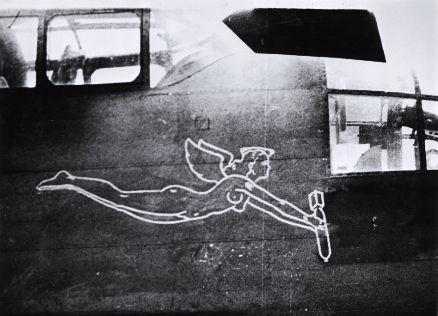
 The Norden bombsight was a closely guarded US secret weapon. An airstrike without it would today be like lobotomizing so-called smart bombs, and deciding to opt for imprecision bombing. The official army record recounts that a subsitute sighting mechanism was improvised for the raid, dubbed the “Mark Twain” and judged to be effective enough. Now a bad joke. Indochina and Wikileaks-wisened, we know the mendacity of that assessment. The vehemently anti-imperialist, anti-racist Twain would not have been honored.
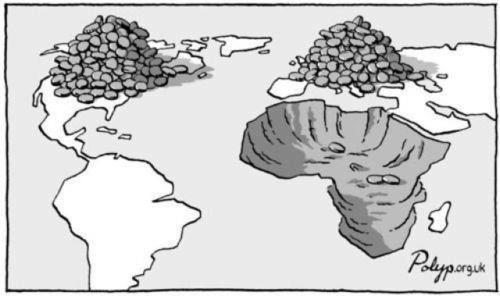 By now you’ve read elsewhere that many of the wounded soldiers being medivac’d to the US surgery hub in Germany are coming from parts unknown more specifically not-known to be US-declared war zones. Their flight origin is only revealed as “Horn of Africa”, but it’s telling isn’t it? US disrespect for foreign sovereignty means not even uttering the nation states involved. USG spokesmen know, for the geographically challenged, calling it the Horn can obfuscate the spheres of disputed influence stretching from Somalia, for you Blackhawk Downers, to Mali, where three US special ops were recently killed with their prostitute attaches, while the corporate media breathed a collective “huh?” Thankfully US adversaries in Mali had the better sense not to string the American bodies from bridges like pre-Falluja’d Fallujah, or did they? NATO’s media cameras weren’t there to exploit it in any case. Basically the Horn is where US AFRICOM has yet to beat back the continent’s last Islamic protectors as the Western serial rape of Africa drops its pretense that strangulation isn’t the final act.

 I’m more than a reluctant adherent to Apple technology, and am personally saddened at the death of Steve Jobs. Was he only 56? I assumed by his accomplishment that he was decades older. But my sadness is probably selfishly motivated, as a suspect of Apple acolytes, believing that Apple’s fruitfulness was owed chiefly to its larger-than-life leader, so a return to Jobless Apple means no more candy. But Jobs wasn’t larger than life really, he seems to have led less than a life. The fact that Steve Jobs was unable to discuss his cancer for fear of rocking the markets and hurting his company’s stock value, betrays the preoccupation he had with the bottom line. One of the richest persons in the world, who’d influenced so many lives in an incredibly personal way, went to his death a mystery. And while convention may hold that’s it’s too early for heresies before the wake, accelerated Twitter lag means a post mortem enforced deference for Steve Jobs has probably already expired.
 If the Woz had an Edison contemporary, it was Nicola Tesla, renowned mad scientist, robbed of the credit and profit for inventing Alternating Current. He was Edison’s nemesis actually, and Edison lobbied against AC for a national power grid in favor of his patents for Direct Current. Probably by now everyone has heard that Edison would rush to circuses when they had to publicly execute an elephant for insubordination. Edison would electrocute the animals to demonstrate the lethal properties of AC.
 (At Metta, we would like to change the slogan to “Create a New World! Stop the Machine! because in creating a new world, the machine dissolves more readily.)
 2011 DIVERSITY FAIR, NOTES, PART 1- What is our police department doing with high school age “explorers?” They’re uniformed and have their own shoulder patch. Exploring what? The limits to which they impose their weight against peoples’ rights? I’m at a civic festival in Confluence Park, across from a canopy whose shade does not conceal a mass of blue uniforms, adult officers bulky with bullet-proof vests and leather, holstering all manner of law enforcement weaponry, and CSPD apprentices, skinnier for lack of the armor and accouterments, but otherwise dressed exactly like police officers, and adopting the swagger which comes of trooping the colors, emboldened by the anonymity of the requisite Ray-Bans.