Ward Churchill to speak for O’odham

O'odham rightsAccording to Censored News, Activist and scholar Ward Churchill will speak at the Unitarian Universalist Church of Tucson, 4831 W. 22nd St., on November 13, 2009 at 7:00 p.m. to benefit O’odham VOICE Against the Wall, which since 2003 has organized and advocated for the traditional O’odham leaders and elders of the Tohono O’odham communities in the southern territory of the United States and northern territory of Mexico. Professor Churchill’s talk is part of the “Apartheid in America: Surviving Occupation in O’odham Lands”

O’odham activist Ofelia Rivas will also participate. The event is sponsored by the Dry River Radical Resource Center, the Earth First! Journal, and Voices against the Wall.

Here’s some background on the O’odham struggle:

pamphlet cover illustrationBy J. D. Hendricks, 2004
TIAMAT PUBLICATIONS #5

The People Who Emerged From the Earth

Over two thousand years ago the descendents of the O’odham moved into the southwestern region of the area now claimed by the U.S. as the state of Arizona. 1 The O’odham have had one of the longest histories of contact with the forces of European colonization compared with the rest of the native North American peoples. The O’odham’s first contact with Spanish invaders took place in the mid 16th century; nearly one hundred years before the colonization of the North Atlantic coast and Great Lakes regions were begun by the French and English colonists. As such, the history of the O’odham provides a good context for an investigation of the colonization of Native North America, and more specifically, an investigation of the interplay between, and results of, the varied responses to colonization – that of collaboration, accommodation, and resistance.

Many histories of the O’odham refer to these desert people as the Papago. The term Papago was a name given to the O’odham by the Spanish colonizers, and is likely the result of a Spanish corruption of the O’odham word “papabi” which was the O’odham name for one of their principal bean varieties. Thus, the Spanish colonizers term for the O’odham (Papago) came to mean “the bean eaters.” 2 For the purposes of this study I will refrain from the use of the term Papago and will refer to “the people” 3 by their traditional pre-colonial name. 4

As is often the case, with the name Papago being a good example, European constructs are often imposed upon indigenous peoples by the historians that seek to portray their past. This result can occur when historians seek to glorify European norms and traditions at the expense of indigenous ones, and can also be the result of the subconscious indoctrination of the historian by the dominant culture – in this case that of western style industrial civilization. In other cases it can be the result of a simple uncritical usage of language.

One of the most dominant and reoccurring “civilized” constructs imposed upon indigenous peoples history is the commonly understood notion that the O’odham, or any other indigenous North American culture for that matter, existed as a totality or uniformed mass. This study will seek to use the history of the interaction between the O’odham peoples and the United States, both its government and its peoples, to deconstruct this myth of the totality and provide a history of the O’odham’s varied responses to colonization from an anti-colonial and anti-industrial perspective. By investigating various important case studies in O’odham history, and looking not only at resistance but also accommodation and collaboration, it is hoped that this work will help to provide a more realistic historical picture of the effects of colonization, and the intentions and reactions of both the colonizer and the colonized. Within the previously stated context and theoretical framework, this study will argue that while the O’odham responded to the U.S. invasion of their lands in various ways, the choices to resist, accommodate, or collaborate with the forces of colonization did not affect the overall U.S. policy concerning the O’odham – that policy being the eventual total assimilation of the O’odham into the dominant “civilized” industrial system. 5

This investigation will include a strong focus on O’odham resistance to colonization, as any anti-colonial history should, however it will not discount or ignore the many historical occurrences of accommodation, and in some cases outright collaboration, with the colonizers. It is important to always keep in mind that none of the actions and reactions in any of the case studies looked at are attributable to the O’odham as a “totality,” but rather are attributable only to the various groupings of O’odham, be they incarnated in the form of the individual, the clan, the village, an economic or spiritual grouping, or an established political organization.

A God of Civilization and Coercion Comes to the O’odham

The O’odham’s first encounter with Spanish invaders took place in the mid sixteenth century when a group of conquistadors led by Alvaro Nunez Cabeza de Vaca entered O’odham territory in search of gold. These men did not find the riches they were looking for and left the desert region to return to the Spanish colony. However, soon after word spread of the O’odham villages on the northern periphery of the Spanish colony, missionaries began to travel north to bring God and “civilization” to the native people residing there. By 1686, Catholic missionaries had formed a few small missions in O’odham territory using what they believed to be the influence of their soft power 6 techniques to lure the O’odham into their missions where they were then subjected to a rigorous schedule of cultural indoctrination. Most O’odham historians, including Winston Erickson, 7 and to a lesser extent, Bernard Fontana 8 have, during this time period, focused on the O’odham who chose to reside nearby and within these early missions, thus painting a picture of the O’odham as accepting of Spanish influence and cultural indoctrination.

However a closer look at this time period reveals that mission O’odham were only a small percentage of the total population of O’odham residing in the Sonoran desert 9 and that the ones who were there may not have been so for the reasons that the colonizers believed. San Xavier del Bac, the largest mission in O’odham lands, as well as many other missions, took advantage of the fact that the desert O’odham migrated in the dry winter months to the Northern Piman settlements along the rivers to work the small farm plots for sustenance. 10 The Catholic missions inserted themselves into this traditional pattern. Those O’odham who worked and lived near the missions were, for the most part, seasonal residents, which shows that the missions were viewed merely as being of utilitarian value. Thus, the O’odham as a totality were not necessarily accommodating to or interested in anything the missionaries had to offer per se, and when the missionaries began to employ “hard power” techniques and abuse or overstep the grounds for their welcome it did not go without consequence. 11

Accommodating and ignoring the missionaries was not the only response to colonization practiced by the O’odham during the seventeenth and eighteenth centuries. Although historians such as Erickson feel that “the missions did serve the O’odham well….,” 12 that assertion is contradicted by the fact that there were many large scale rebellions waged against the missions from outside and from within. In 1695, 1751, 1756, and 1776, large scale rebellions occurred in which missionaries were killed and their missions burned to the ground. 13 In some cases these rebellions were the doing of joint O’odham/Apache alliances, which is significant considering that many histories of the O’odham and Apache portray them as immemorial enemies. This may be the result of the fact that by the early nineteenth century the Spanish government initiated a campaign of divide and conquer that was continued later by the Mexican and U.S. governments to turn the O’odham and Apache against one another, thus easing the project of their subjugation.

A Change in the Occupation Government: Washington Enters O’odham Lands

In 1821, Mexican Independence from Spain was achieved and interest in the O’odham dropped away nearly entirely. By 1828, the new and secular Mexican government began the process of shutting down the missions in O’odham territory and by 1842, the last of the missions were closed. Soon after, in 1846, the United Stated initiated a war for territorial expansion against Mexico. This war was not of immediate consequence to the O’odham peoples. Isolated in desert regions, the fighting between the two occupation powers affected them little in the short run. However, the signing of the Treaty of Guadalupe Hidalgo in 1848, which ended the war, would lay the foundations for a series of disastrous events which would affect the O’odham in very negative ways.

Of greatest consequence to the O’odham was the fact that the boundary between the United States and Mexico was not finalized by the treaty of Guadalupe Hidalgo. The boundary was designated by Article Five of the Treaty as being an arbitrary line roughly following the 32nd parallel, an area which runs through the southern part of modern Arizona. To the east, the border was provided by the Rio Grande. The exact boundary line along the 32nd parallel was to be decided at a later date. It is also important to note here that the Treaty also provided that all Mexican citizens absorbed by the United States were to be granted U.S. citizenship, which included all indigenous peoples in the annexed territory since under Mexican law they were considered citizens. In the treaty the United States also assumed the responsibility for preventing cross border raiding into Mexico by the southwestern tribes, specifically the Apache. 14

In the aftermath of the signing of the treaty of Guadalupe Hidalgo, it became quickly apparent that an acceptable border between Mexico and the United States along the 32nd parallel would not be achieved. An official survey expedition was assembled by the United States and Mexico in 1849 to trace out the boundary between the two countries with little success. Various borderlines were agreed to and then abandoned and re-made by the United States, sometimes in a unilateral decision that dismissed the positions of the Mexican government altogether. 15

The principal concern for the United States was to secure title to an area of land in northern Sonora, Mexico that was ideally suited for the construction of a portion of the southern continental railroad whose building was being discussed in the U.S. Congress at the time. One of the main advocates for this southern railroad route was a South Carolina man by the name of Colonel James Gadsden. Gadsden’s history of connections to powerful business, military, and political leaders is very interesting and his appointment by the United States to be Minister to Mexico in 1853 serves as a very informative source to gauge the United States’ intentions towards Native Americans and the O’odham in particular.

James Gadsden was born into an influential southern family and graduated from Yale University. After enlisting and serving in the war of 1812, Gadsden was sent to the Florida territory with Andrew Jackson to aid in the campaign of removal and extermination being waged against the Seminole Indians, which took place from 1816-1818. After this war against the Seminole, Gadsden was appointed by President Monroe as commissioner to oversee the removal of the Seminole Indians to Indian Territory. Like the more famous removal of the Cherokee, the removal of the Seminole, and the high death rate suffered as a result, unarguably constituted genocide. 16 As a reward for a job well done, Gadsden was appointed by Monroe to a seat on the legislative council of the territory of Florida, thus beginning Gadsden’s political career. In 1840, Gadsden was elected President of the Louisville, Charleston, and Cincinnati Railroad. In 1853, the Secretary of War, an ardent white supremacist and slavery defender by the name of Jefferson Davis, appointed Gadsden to be Minister to Mexico. 17 As Minister to Mexico, one of Gadsden’s primary missions was to negotiate a final demarcation of the boundary between the U.S. and Mexico. Although Gadsden was a zealous believer in Manifest Destiny, his ideas concerning racial Anglo-Saxonism 18 caused him to be an opponent of the total annexation of Mexico. Gadsden, like many racist U.S. politicians of that time, felt that the total absorption of Mexico and its non-Anglo population into the United States would pollute the Anglo bloodline too much and thus he sought only to gain enough territory for the United States to build the southern pacific route. 19 Thus, a man who had presided over a war of genocide against the Seminole Indians, was a devout racist, and who had obvious conflicts of interest due to his connections to the railroads, was put into a position to determine the territorial boundary between the United States and Mexico and in the process also determine the boundaries of the O’odham’s land. With its appointment of Gadsden, the intent of the U.S. government could not be clearer. Business interests and territorial expansion were to run roughshod, by any means necessary, over any native peoples who stood in the way.

It is no surprise that when James Gadsden finally successfully negotiated a treaty with Santa Anna to secure what is now the southern portion of Arizona, the O’odham were not consulted. In fact, the Gadsden Treaty, signed into law in 1853, did not contain any mention of the O’odham at all. Considering that the new boundary line put in place by the Gadsden Treaty literally split the traditional O’odham lands in two, it is obvious that the intentions of the United States were in no way benevolent. Here it is also important to point out that the terms of the Gadsden Treaty specifically included the same citizenship provisions which were spelled out in the earlier Treaty of Guadalupe Hidalgo. 20 Although the Gadsden treaty was of great significance for the O’odham, their isolation and the outbreak of the Civil War enabled them to live another decade in relative isolation from Anglo encroachment.

Assimilation, Cultural Destruction, Double Speak and Ordained Genocide

The causes which the Almighty originates, when in their appointed time he wills that one race of men – as in races of lower animals – shall disappear off the face of the earth and give place to another race, and so on, in the great cycle traced out by Himself, which may be seen, but has reasons too deep to be fathomed by us. The races of the mammoths and mastodons, and the great sloths, came and passed away: The red man of America is passing away!
–United States Congress Committee on Indian Affairs report, 1865. 21

No doubt with similar justifications in mind as those of the Committee on Indian Affairs, Anglo settlers began their invasion of O’odham lands less than a year after the conclusion of the Civil War. The Homestead Act had opened up the lands of Southern Arizona to Anglo squatters and in 1866, one of the first of many bills was passed by Congress granting mineral rights to any citizen who claimed them. 22 Every one of these homesteads opened and every resource extraction operation initiated without the express consent of the O’odham represented an illegal action under the Gadsden Treaty. The citizenship provisions of the Gadsden Treaty had granted citizenship to all former Mexican citizens and the O’odham were, by legal definition, included in this formulation. The United States, however, refused to consider “uncivilized” peoples as being worthy of the protections granted to citizens by the fourth amendment of the U.S. Constitution, which prohibits the expropriation of property. This refusal of the United States government to follow its own laws pertaining to Native Americans when those laws happen to stand in the way of U.S. interests has been a common occurrence in United States Indian policy. This land grab was only the first of many illegalities committed against the O’odham people by the United States and its citizens. In this respect the O’odham are in a special position when compared with many other tribes. While the theft of native lands by the United States Government was usually legally justified by treaty stipulations signed between a tribe and the U.S. government, this justification could not and cannot be used in the case of the O’odham since no treaty was ever signed with the O’odham by the United States Government. 23

For the most part, the O’odham did not resist this initial incursion of Anglo settlement, rather the O’odham practiced accommodation and moved farther out into the desert to shield themselves from the new settlers invading their lands. Traditional ways were maintained with the exception of the introduction of cattle ranching. The O’odham territory was well suited for the raising of cattle and a good number of O’odham became cattle ranchers, both for purposes of subsistence as well as for sale to Anglos residing in and around Tucson. In the 1880s, as increasing numbers of Anglo cattle ranchers began to invade and take over their pasture, some O’odham began to resist.

The O’odham resisted by stealing the Anglo cattle herds which were rounded up and driven south to be sold on the Mexican market. The expropriation of Anglo cattle herds was not isolated, and it became a major concern for the settlers and the government. In at least one case, a large cattle outfit was driven out of business. 24 The concern over this outbreak of O’odham theft of Anglo cattle was large enough that newspapers as far away as Los Angeles ran stories about the phenomenon. For the most part these stories seem to have been deliberately used to justify the enclosure of the O’odham into reservations as the government and Anglo cattle ranchers seized the opportunity to gain even more O’odham land by arguing that it was an unfair burden for the Anglo cattle ranchers to have to “support” the O’odham. 25 Here, in previous case study, we have another common attribute of U.S. Indian policy in general, and one which occurs again and again in the history of O’odham contact with the U.S. government and Anglo settlers – blaming the victim.

Another official position of United States Indian policy during this time period was that everything done to the Indians was, in the words of Indian Commissioner J. Q. Smith, in their own “best interests.” 26 Whether this obvious sham was based on a subconscious guilt and delusion or was a cynical example of “double-speak,” it is obvious that Native American’s best interest’s were the last thing on the government’s mind. Nevertheless, with this reasoning as justification, the first official reservation for the O’odham was created by executive order of President Grant on July 1, 1874. This small reservation surrounded the Old Catholic mission at San Xavier del Bac. It is estimated that only about ten percent 27 of the desert O’odham took up residence within this reservation – these were labeled as “civilized” O’odham by U.S. census takers. The vast majority of O’odham were labeled as “wild” and continued to live in the vast desert regions west of San Xavier del Bac. While it is obvious that the desert O’odham were resisting cultural assimilation by avoidance, even the mission O’odham maintained a resistance to European culture as the next example will illustrate.

While visiting the old mission at San Xavier a newspaper columnist from the Los Angeles Times wrote that upon her visit in 1882, she could see “not a single civilized human habitation within miles.” This writer goes on to state that the O’odham’s dwellings were in the form of “conical mud huts.” In the casual racism and Social Darwinist rhetoric of the period she also adds that,

“The Papagos are but little in advance of gophers and prairie dogs in their habitations.” 28

The point is that after more than 200 years of European influence, even the mission O’odham continued to build their traditional shelters. 29

Progressivism and Cultural Genocide: The Dawes Act

In 1887, the General Allotment Act, also known as the Dawes Act, was signed into law. The Dawes Act was the staging point for the forced assimilation of those remnants of Native American groupings which had not been totally decimated by the preceding period of “Indian Wars” and forced relocations. The essential function of the Dawes Act was to disrupt traditional tribal land holding patterns and thus force Native Americans into the Anglo system of private property. The O’odham, like most other Native American cultures, did not have a concept of private property – land was held in common for the benefit of the village group. Communally held land was an essential pre-requisite for their Anarchistic political system and extremely de-centralized tribal structure. 30

The first section of the Dawes Act provides for equal “sections” of land to be parceled out to each “head of family.” This head of family was always understood to be the father of each family when land was allotted. Thus, this first section of the act not only attempted to destroy the communal land system of Native Americans, it also instituted Patriarchy as the basis for social functioning in Native America. 31 In addition, Section Five of the Act also provides that any un-allotted lands be subject to purchase by the United States government. Section Six and Seven provide that all monies paid by the U.S. for un-allotted Native lands be held for each tribe by the U.S. Treasury and “subject to appropriation” by the U.S. government to repay itself for the implementation of allotment as well as to provide for the “civilization” of Native Americans. 32 In less veiled words, these sections are basically stating that Native Americans will be forced to pay for their own cultural annihilation.

This interpretation of the intent of the Dawes Act becomes clearer when one looks at the arguments and debates that took place in Congress and within self described progressive “Indian rights” groups such as the Indian Rights Association. Critics of the Dawes Act in Congress such as Rep. Russell Errett understood that

“the main purpose of this bill is not to help the Indian troubles so much as it is to provide a method for getting at the valuable Indian lands and opening them up for settlement.” 33

And Senator Dawes, the namesake of the final bill, speaking of the land and resources of Native Americans stated that

“civilization has got after these possessions with a greed never before equaled but it is idle to expect to stay it….” 34

As for the progressive Indian Rights Association, they argued that

“the organization of the Indians into tribes is, and has been, one of the most serious hindrances to the advancement of civilization, and that every effort should be made to secure disintegration of all tribal organizations….” 35

And one of their leaders, Reverend L. Abbott, provided justification with the statement:

“Barbarism has no rights which civilization is bound to respect.” 36

So here we have a self-proclaimed progressive Indian Rights organization arguing for cultural genocide and against the notion that Native Americans have any rights that civilized people are bound to respect! This conclusion provides a perfect example of the essence of “progressive” or “civilized” thought.

The Dawes Act had a much less devastating effect for the O’odham than it did for many other Native American tribes. At the time of its passage, the only official reservation for the O’odham was the San Xavier reservation which, as was stated earlier, was only a small 71,090 acre reservation around the old mission San Xavier del Bac. When the allotment agent came to San Xavier in 1890, he allotted out 41,600 acres of land to the 363 O’odham whom he counted in his census as being resident at the time. 37 The vast majority of the O’odham still continued to live west of San Xavier in the expansive desert regions and were little affected by the allotment schemes. Even those O’odham who lived in San Xavier and were allotted land paid little attention to the artificial boundaries drawn on paper which supposedly privatized their land – they continued to farm and graze the land communally. 38 This refusal to abide by the provisions of the Dawes Act is also a form of resistance to cultural assimilation and adds one more example to show that for those O’odham who resisted, the most often employed method of resistance was non-compliance and avoidance. This specific response to colonization was made possible by the isolation and expansiveness of their desert home, which many Anglo’s continued to view as a “hopeless desert.” 39

The Domestication of the “Wild Papago”

The vast majority of the O’odham continued to resist assimilation and maintained a fairly traditional lifestyle – minus the introduction of cattle herding and horse rearing. In the twenty years following the passage of the Dawes Act, a growing effort was made to enclose the “Wild Papago” 40 and forcibly strip them of their traditional culture and instill them with the “civilized” values of the industrial Anglo. As was mentioned previously in the paper, ranchers and the government used O’odham cattle theft from Anglo ranchers as one tool to justify the enclosure of the O’odham within a reservation. During this period, Anglo Cattle ranchers continued to encroach deeper and deeper into O’odham territory and scuffles began to break out.

In another classic example of the “blame the victim” tactic, a pro-enclosure story was printed in the Los Angeles Times, no doubt to build public pressure for the domestication of the “Wild Papago.” The story concerns a group of O’odham who had resisted an Anglo cattleman’s attempts to enclose one of their water sources. When these O’odham continually tore down the fence that this cattleman had built, the rancher filed a report with the local Indian Agency sheriff to have the men arrested. When the sheriff arrived to arrest the O’odham responsible for defending their water source, he was taken hostage. The sheriff was later released unharmed; however, the incident was used to make the argument that such troubles can only be expected to increase if the O’odham were not enclosed on a reservation where they could be more easily controlled and monitored. 41

The tactic of occupying and diverting natural water sources was one of the tools used by the Anglo settlers and government to destroy the self sufficiency of the O’odham and force them into reservations where they would be dependent on the government for their water and would thus be easier to control and monitor. Some of the O’odham clearly understood what was happening, which is evidenced by instances of resistance both to the enclosure of natural water sources as well as resistance to the drilling of wells. One example of the U.S. government using water as a tool of forced cultural assimilation can be found by looking at an event recorded by an O’odham calendar stick 42 keeper. In 1912, the O’odham residing in the village of Santa Rosa, an isolated and traditional village in the western desert region of O’odham territory, were paid a visit by an Anglo Indian Commissioner who wished to drill a well for them. The Chief of the village objected to the drilling of the well on the grounds that it would disturb their culture, their autonomy and their self-sufficiency. The government agent proceeded to have the well drilled anyway. Upon completion of the well, the Chief of the village, according to the calendar stick keeper, stated that

“the well must be left alone and, in order that the Papagos might continue their old life, water must still be carried from the spring in the foothills.” 43

However, the prohibition by the Chief could not be upheld due to the overwhelming convenience of the new well and after a period of abstaining from its usage, the village of Santa Rosa (including the Chief) gave in and thus was assimilated into the industrial system by being made dependent on the Government well. 44 During this same time period, encroaching Anglo farmers engaged in the diversion of O’odham water sources to irrigate their farms. This practice served as another method of forcing the self sufficient O’odham into a relationship of dependence upon the government. In many areas so much water was diverted that the O’odham could no longer grow their traditional summer crops. 45

In 1919, the first incarnation of an O’odham reservation to enclose the nearly two million acres of desert that the “Wild Papago” were residing in was established. The formation of the desert O’odham reservation in 1919 ushered in a period of exponentially increased government interference in O’odham matters, and of course, the various forms of coercive assimilation were multiplied. By 1933, thirty-two unwanted wells were drilled all over the new reservation. 46 The well drilling was often opposed by those who were trying to maintain the O’odham Him’dag – the traditional ways of the desert people.

Resistance and Collaboration: O’odham Responses to Forced Modernization

In contrast to the traditional O’odham who had maintained resistance to cultural assimilation for the past 300 years, there was also a small number of O’odham based in the new reservation that welcomed collaboration with the forces of Anglo modernization and advocated for cultural accommodation and in some instances for total cultural assimilation. These men would later form an organization called the Papago Good Government League, which would serve as the propaganda arm of the Bureau of Indian Affairs and government policy in general. The leadership of this new faction had been taken from their families as youths and placed in Protestant boarding schools to be culturally indoctrinated. The Tucson Presbyterian Training School was one of the indoctrination centers where many future members of the Good Government League had been sent. 47

Religious indoctrination, whether Catholic or Protestant, has always been one of the most powerful tools of colonization and its justification used by European invaders against the indigenous peoples of the Americas. The necessary counterpart to the forced indoctrination of Christian principals and morals has always been the repression of indigenous spiritual practices. The United States government understood the profound power that traditional spiritual practices had in maintaining group solidarity and cohesion and it is for this reason that such spiritual practices were made illegal and repressed historically. In 1883, a Court of Indian Offenses was established by congress at the request of Secretary of Interior Henry M. Teller to eliminate traditional spiritual practices. In a report to the commissioner of Indian Affairs, Teller laid out his goals and his rationale stating that,

“If it is the purpose of the Government to civilize the Indians, they must be compelled to desist from the savage and barbarous practices that are calculated to continue them in savagery….”

Teller went on to associate those who resisted the repression of their spirituality with the “non-progressive” faction of Indians and labeled traditional spiritualism as “debauchery,” “diabolism,” and “savagery.” The overarching argument of his letter is that in order to civilize the Indians and bring them into the industrial system, their traditional spiritualism must be destroyed. As an initial step towards this end, Teller advised that Medicine Men be “compelled” to desist from their practice of “deception.” 48

Although the Court of Indian Offenses advocated that coercion be used to repress and destroy indigenous spiritualism, it failed to succeed in this project even when it used force to try to stop traditional spiritual rituals. According to Historian Edward Spicer, the only thing the Court succeeded in doing was driving traditional spiritual practices underground. In the case of many resistant O’odham, traditional spiritual practices were continued without regard to regulations or prohibitions against them, and in many cases, federal authorities resorted to repression and arrest to try to stop these practices. One traditional spiritual practice of the O’odham which was particularly hated by the Protestant Missionaries and Indian Agents was the Vi-kita ceremony.

The Vi-kita ceremony of the O’odham has been written about and studied by many Anglo historians and anthropologists, the most prominent being Columbia Anthropologist Ruth Underhill. 49 Before going into a short description of the Vi-kita it is important to understand that this ceremony varied depending on who was conducting it and where it was being conducted. Peter Blaine, an influential O’odham man sympathetic to the traditional ways, wrote in his autobiography about Underhill’s methods. Blaine explained the traditional way for the O’odham to tell about their past was to do it

“in a group so that everybody had a chance to talk and tell it their way. Underhill was talking to just one man…Dr. Underhill was wrong all the way in how she got her information.” 50

As scholars from the dominant culture often do, Underhill had applied her own notions of hierarchy, authority and individualism to her work with the O’odham and totally disregarded their traditional methods of conveying information in a communal fashion.

The Vi-kita itself was a yearly rain and fertility festival preformed to initiate and give thanks for the yearly summer rains. The ceremony itself consisted of the communal singing of rain songs, dancing, intimate encounters, and the consumption of Navait (Saguaro wine), an alcoholic drink made by the fermentation of Saguaro Cactus buds. The consumption of this wine was meant to symbolize the connection between the sky and the earth. The intake of the Navait was representative of the earth’s intake of rain. Participants drank Navait until vomiting occurred as this act embodied the clouds issuing forth rain unto the earth. It was a powerful ceremony that bonded the O’odham with the elements of nature.

When Protestant missionaries, and a small number of Protestant O’odham in the Good Government League, backed by U.S. Indian Agents, began their attempts to usurp power on the newly formed western O’odham (Sells) 51 reservation in the early 20th century, one of the first things they attacked was the practice of the Vi-kita ceremony. In the early 1930s, Peter Blaine explained that the traditional O’odham from the San Xavier reservation would travel to the western reservation for the Vi-kita. He states that,

“In the late 1920s the government tried to stop this wine drinking ceremony on the Sells reservation. But no Papago or Agency police could ever stop it.”

In one instance Blaine tells the story of how he helped defend three traditional O’odham Vi-kita ceremony leaders when they were arrested by agents from the Indian Bureau and jailed in Tucson. During the trial, a group of Protestant O’odham men from the Good Government League 52 argued for the repression of the ceremony – one of these men, Richard Hendrix, would continue to plague the traditional O’odham in future encounters. To respond to the collaborationist Good Government League, the resistant traditional O’odham formed the League of Papago Chiefs to counter the attempts of the Protestant Good Government League to usurp control on the reservation. 53

The Indian Reorganization Act and O’odham land rights

On June 18th, 1934, President Roosevelt signed into law the Indian Reorganization Act which finally stopped the forced allotment process initiated by the Dawes Act in 1887. The Indian Reorganization Act was viewed by its proponents as being in the best interests of the Indians. One of the reasons for this view was the fact that the Dawes Act and its forced allotment provisions had resulted in the loss of 90,000,000 acres of tribal lands and it was hoped by some, including then Indian Commissioner John Collier, that the Indian Reorganization Act could be used to regain some of this lost land.

The public was also encouraged to view the Indian Reorganization Act as being beneficial for Native Americans. A large article in the Los Angles Times entitled “The Bill to Return Indian Rights” stated that:

“After a century of graft, plunder and injustice, this bill has the objective of handing their own souls back to the Indians.” 54

However, such optimism and notions of cultural relativism were not held by all. As a precursor to the Indian Reorganization Act, a report was prepared for the Secretary of the Interior in 1928 to lay out the need for a change in Federal Indian Policy. The report stated that the “great majority of Indians are ultimately to merge into the general population” and that it was the government’s responsibility to assimilate Native Americans into “white civilization” because “the hands of the clock cannot be turned backwards.” Sympathetic attempts to help Native Americans retain their culture were stigmatized as attempts to “preserve them as museum specimens.” 55 Indian Commissioner John Collier was one of those who believed that Native Americans should retain their culture and that “the awakening of the racial spirit must be sustained….” 56 However, although the finalized Indian Reorganization Act did contain elements that were meant to “help” Native Americans, many of its articles were still designed to impose “civilized” systems on Native Americans.

It can be argued that the intent of the finalized Indian Reorganization Act was to initiate a new chapter in the push for the total cultural assimilation of the Native American tribes. The argument that there was no qualitative change between the Dawes Act and the Reorganization Act is legitimate. The Indian Reorganization Act provides the examples for the argument. The main tool of assimilation in the Indian Reorganization Act was the provision in Section 17 which allowed for Native American tribes to form their own tribal governments, constitutions and laws which, although it is not specifically stated, were intended to be Anglo in structure and functioning. In the case that these native governments were not sufficiently acceptable to the U.S. government, section 17 also provided that all Tribal Government formations must be “approved by the Secretary of the Interior.” 57 This clearly shows that the intent of the Act was not to allow Native Americans to become fully autonomous, either culturally or politically. For a tribe such as the O’odham, which had a long history of decentralization and consensus decision making, the imposition of western style liberal democracy, with its attendant centralization and majority rule system, was an obvious method of forced cultural indoctrination. Peter Blaine, who was mentioned earlier, was an O’odham man who had sympathy for the traditional, decentralized and communal way of O’odham societal organization. When the collaborationist Papago Good Government League began to maneuver themselves into the position of representing all of the O’odham, Blaine took it upon himself to lead the charge to discredit their assertions to business interests and the Federal Government that they represented the O’odham. Blaine wrote that:

“This so-called council represented only their own church people, but they took it upon themselves to become a council for all Papagos. They had meetings. Nobody attended them but these four guys because most people didn’t recognize them as leaders.” 58

In 1934 Blaine, along with another O’odham from the Gila Bend reservation named Leon Pancho became the first O’odham to travel to Washington D.C. These two men were sent as representatives of the traditional chiefs of the O’odham villages to argue against a recent court order that closed the Sells reservation to outside, Anglo owned, mining. The court order was a result of a lawsuit brought by the members of the Good Government League, including Richard Hendrix, who had teamed up with outside lawyers. These lawyers were to receive as payment a ten percent share of all land reclaimed from the mining companies, or a monetary equivalent. As this entire procedure was done behind the backs of the majority of the O’odham, when it was revealed, there was great resentment towards the Good Government League by many of the O’odham.

While in Washington D.C., Blaine was informed of the pending Indian Reorganization Act, and he became a supporter of the Act due to its provision allowing for the self government of Native Americans, as well as a provision in section Six that allowed the Secretary of Interior to manage mineral, mining, and livestock on the reservation. 59 In the case of the O’odham this meant that the reservation would be re-opened to mining and they would regain an important means of economic sustenance. According to Blaine, the mines were an important economic resource for the O’odham as they provided jobs and a market where beef and other O’odham products could be sold. 60 This is yet another unfortunate example of how the incursion of Anglo industrial technology served to destroy the self-sufficiency of the O’odham by making them dependent on it for survival.

Whether or not the mines were truly in the best interest of the O’odham is a complex topic which cannot be dealt with here. However it should be stated that Blaine and his companions’ trip to Washington D.C. was financed by the Tucson Chamber of Commerce, an organization that functioned in support of the mining interests, not the O’odham. This Tucson Chamber of Commerce was the same organization that had aggressively petitioned President Wilson to rescind his 1916 act forming the Sells reservation because it prevented Anglo agricultural interests from exploiting the area’s “best agricultural and grazing lands.” 61

Resistance to and Collaboration with the “White Man’s War”

Not long after the passage of the Indian Reorganization Act and the formation of the first O’odham Tribal Government, the United States declared war on Japan, thus entering World War II. The participation of Native Americans in World War II has been well publicized, especially the role the Dineh (Navajo) played as code talkers in the South Pacific. The United States government and the mainstream media portrayed Native Americans as being eager to fight for their homeland, and eager to assimilate into “white civilization” once they returned from the war. Nearly 25,000 62 Native Americans served in the United States military during World War II, many of whom were no doubt under the impression that their service would be rewarded with increased “rights” after the war’s end. Instead, as a “reward” for Native Americans participation in World War II the United States government established the Indian Claims commission in 1946 to legalize the U.S. occupation of Native American Lands never granted to the U.S. by treaty, passed House Concurrent Resolution 108 to terminate tribal recognition as separate entities from the Federal Government, and then instituted a plan in 1954 to relocate Native Americans off the reservation and into “Indian Ghettos” in the nation’s large cities. 63 These were the “rewards” for participation in World War II.

Like many other Native American Tribes, some of the O’odham Nations members participated in World War II. Ruth Underhill claims that the O’odham enlisted to serve in World War II “in droves” 64 and it is documented that the O’odham tribal government bought $10,000 in war bonds. 65 However, the extent of this involvement was distorted by the media, academia, and even some of the O’odham leaders in the tribal government. Richard Hendrix, a former member of the collaborationist Good Government League, had risen to prominence in the new O’odham tribal government by this time and was interviewed by the Arizona Archaeological and Historical Society on November 16, 1942. In this interview Hendrix exposed the extent to which he had allowed his mind to be colonized and assimilated into that of the dominant white culture. Speaking of colonization in general and World War II in particular, Hendrix stated that the O’odham had:

Learned to love the American government and they learned to love the Stars and Stripes. And when the war came and the time came for our boys to be registered, there was no exception. They registered just the same as white boys did. And now they are out fighting alongside the white boys, the American boys. They are just as anxious as the white boys to kill as many Japs, to kill as many Germans, and they are very anxious to win this great war so that the Papago people in this desert land may continue to enjoy the freedom of their homes. 66

Hendrix’s internalization of white supremacist racial notions is a heart breaking and shocking example of the extent to which he had accepted the ideology of “white civilization.” In addition, his assertion that every O’odham boy registered for the war with “no exception” is glaringly false.

Aside from the fact that there are always exceptions to everything, there was also a large scale organized resistance to World War II led by an old Chief and medicine man, Pia Machita, and his band of traditional O’odham who resided in an isolated village in the north western area of the Sells Reservation known as the Hickwan district. According to Peter Blaine, the O’odham residing in some of the most isolated villages in the Hickwan district had not seen a white man until the 1930s, and continued to practice the traditional O’odham Him’dag. 67 When Pia Machita was informed of the compulsory registration of young O’odham boys for induction into World War II, he instructed the youth of his village to refuse to sign the registration forms when they were visited by the local Indian Agent. Pia Machita was a very traditional leader who refused cultural assimilation and would not accept the authority of the Bureau of Indian Affairs or the O’odham tribal government. Finally, after all efforts to persuade Pia Machita’s village to register had failed, the tribal chief of police and a gang of Federal Marshals led by U.S. Marshall Ben McKinney invaded the village at two in the morning on October 16th, 1941, with tear gas bombs and guns drawn – when the Marshals attempted to take Pia Machita into custody some of the young men from the village used force to liberate him and severely beat one of the federal marshals. In the face of this resistance, the government agents and their local collaborators retreated to Tucson. When the Attorney General’s Office heard of the resistance on the O’odham reservation, they immediately got involved in the effort to repress this draft resistance movement as quickly as possible to prevent its possible spread to other reservations. By May 17th, 1941, after a period of about six months of trying to track down Pia Machita and his small band of men, Marshall McKinney and O’odham collaborators including Jose Ignacio from the tribal government, surrounded Pia Machita in the village of Stoa Pitk and took him into custody without incident. 68

Peter Blaine was the O’odham tribal chairman during the time that Pia Machita was leading the draft resistance movement. Although he did not believe that Pia Machita and his men were threats in any way, he was annoyed by what he perceived to be their stubbornness and attributed their draft resistance to his belief that they “didn’t really understand what they were doing.” 69 In reality, it was Blaine who did not understand the reasons behind Pia Machita and his men’s resistance to enlistment. Pia Machita and his men understood very well what they were doing – they were resisting giving aid to a government that they understood was their enemy. Given this understanding, and given the dictionary definition of the word “collaboration,” it becomes necessary to label those O’odham who participated in the arrest of Pia Machita as such – collaborators. The understanding that the U.S. government was the enemy of the traditional O’odham of the Hickwan district was based upon a long history of attempts by the U.S. government to force the Traditional O’odham of that area to abandon the Him’dag and embrace elements of Anglo “progress” such as dams, railroads, wells, and the protestant religion. Despite Peter Blaine’s inability to understand why the O’odham in the Hickwan district rejected Anglo-civilization in its totality, he still maintained sympathy for the people there. When Pia Machita and two co-defendants were finally sentenced to serve 18 months in prison at Terminal Island Federal Prison for their roles in leading the resistance movement, Peter Blaine eventually came to their aid and used his connections as tribal chairman to persuade the sentencing Judge to release Pia Machita early and allow him to return to the reservation and his family. 70

Conclusion

The history of the O’odham’s contact with the United States government has been one marked by a persistent current of resistance to cultural assimilation into “white civilization.” This resistance has included a variety of tactics and actions. The favored tactic of resistance to assimilation for many of the O’odham groupings seems to have been that of avoidance and feigned accommodation to Anglo culture when expedient. However, as was evidenced by the O’odham’s early history of contact with the Spanish, they did not refrain from waging armed resistance to colonization when they were pushed into a situation where other tactics might have been ineffectual.

In addition to resistance and accommodation, it has also been shown that some of the O’odham choose to engage in direct collaboration with the Anglo colonization of their lands and minds. As this paper has shown, the levels of collaborative activity amongst the O’odham varied, and so did the effects of such collaboration. When investigating instances of collaboration it is always important to understand the context which produced them and to remember that the ultimate blame for a situation of oppression should always be placed upon the group committing the acts of repression – in this case the United States government and allied business interests. It is important to show such examples of collaboration and to understand that all human cultures who have been the victim of colonization have invariably contained individuals who chose to collaborate for a variety of reasons. The O’odham are no exception to this rule. Making apologies for collaboration or failing to mention the instances where such collaboration did occur creates a historical distortion and does nothing to aid present struggles for liberation.

The O’odham responses to colonization never represented a totality, but a strong current of resistance is evident throughout their history. In regards to the United States government, it can be said, given the primary sources looked at, and the final drafts of laws signed and policies followed, that the intent of the United States government toward all Native American tribes, when it was not outright genocidal, has been the cultural destruction and absorption of remaining Native Americans into the dominant industrial culture of “white civilization.” Regardless of the varying tactics used, and the various lip service about “best interests” and “justice,” it has been shown that there has never been a qualitative change in United States policy toward the O’odham people and Native Americans in general. The O’odham have maintained aspects of their traditional culture despite the best efforts of the government to force assimilation, not as a result of such efforts. A continuing current of struggle between the forces of colonization and resistance has persisted for centuries, in all its various forms, within the minds and bodies of many O’odham and will continue until liberation.

NOTES:

1
This date is based on archeological evidence gathered by E.W. Haury in Ventana Cave. Haury, E.W. The Stratigraphy and Archeology of Ventana Cave Arizona. Tuscon: University of Arizona Press, 1950. Cited from Williams, Thomas R. “The Structure of the Socialization Process in Papago Indian Society.” Social Forces, Vol.36, No.3. p.253.

2
Fontana, Bernard L. Of Earth and Little Rain: The Papago Indians. Tuscon: University of Arizona Press, 1989. pp.37-39.

3
The name “O’odham” is roughly translated as “the people” in the Piman dialect spoken by the various O’odham groupings.

4
In 1986 the tribal government of the Papago reservation officially changed its name to the Tohono O’odham Nation.

5
The term “civilized” is a problematic historical term, and its definition tends to be very subjective. The meaning of the term and its use as a label is heavily influenced by how the author and the reader understand its meaning. For the purposes of this paper, the term “civilized” refers to the totality of the “western” cultural, political, and economic system – and most importantly the belief that technological/industrial progress is inherently beneficial and liberatory. For most, being labeled “civilized” is viewed as a positive and the label of “un-civilized” or “savage” is viewed in the reverse. However, for the purposes of this study it is imperative to understand that this author views “civilization” itself as an inherently oppressive and destructive entity, and this must be kept in mind to correctly understand the arguments and analyses in the paper.

6
The term “soft power” refers to the concept of gaining influence and control over another group by means of the attraction of the dominating group’s cultural attributes and the use of commodification rather than using military might and coercion (“hard power”) to gain that influence. See Joseph S. Nye, Jr. Soft Power: The means to success in world politics. New York: Perseus Books, 2004.

7
Erickson, Winston T. Sharing the Desert: The Tohono O’odham in History. Tucson: University of Arizona Press, 2003.

8
Fontana, Bernard L. Of Earth and Little Rain: The Papago Indians. Tucson: University of Arizona Press, 1989.

9
According to Catholic missionary records, the numbers of mission O’odham during this time period were somewhere around 2,000. However, according to population estimates there were at least 10,000 O’odham peoples living in this area. See Fontana, Bernard L. Of Earth and Little Rain . pp.11,46.

10
Fontana, Bernard L., p.40.

11
It is well documented that many of the Missions resorted to physical abuse, forced confinement and occasional murder to coerce the O’odham into compliance. San Xavier del Bac, the largest and most famous of Catholic missions in O’odham lands was built with forced labor. See Daniel McCool; “Federal Indian Policy and the Sacred Mountains of the Papago Indians.” Journal of Ethnic Studies 9.3 (1981).p59.

12
Erickson, Winston P., p.66.

13
Fontana, Bernard L., pp.61-64.

14
Treaty of Guadalupe Hidalgo, Feb 2nd, 1848. United States Statutes At Large, pp. 922-943

15
For a detailed treatment of this series of events see; Garber, Paul N. The Gadsden Treaty. Glouchester: Peter Smith, 1959.

16
For more information on the removal of the Seminole; Stannard, David E. American Holocaust: The Conquest of the New World. New York: Oxford University Press, 1992. P.124. For additional information about the Seminole Wars see; Churchill, Ward. “A Little Matter Of Genocide: Holocaust and Denial in the Americas 1492 to the Present.” San Francisco: City Lights Books, 1997.

17
All dates for the political appointments of James Gadsden are cited from Paul Garber’s “The Gadsden Treaty.” Pages 74-81.

18
Racial Anglo-Saxonism was a belief popular in the later 19th century which held that Europeans of Anglo-Saxon descent were at the forefront of evolution and were responsible to bring civilization to the world. This ideology was used as a convenient justification for the extermination and removal of Native Americans. For a detailed study of this ideology see: Horsman, Reginald. Race And Manifest Destiny: The Origins of American Racial Anglo-Saxonism. Cambridge: Harvard University Press, 1981.

19
For a detailed investigation of the role that the railroads played in the Gadsden purchase see; Schmidt, Louis B. “Manifest Opportunity and the Gadsden Purchase.” Arizona and the West, vol.3 (autumn 1961).

20
Forbes, Jack D. The Papago-Apache Treaty of 1853: Property Rights and Religious Liberties of the O’odham, Maricopa and Other Native Peoples. Davis: Native American Studies Tecumseh Center, U.C. Davis, 1979. p.1.

21
United States Congress. Joint Special Committee. Condition of The Indian Tribes. Report of the joint special committee, appointed under joint resolution of March 3, 1865. With an appendix. Washington, D.C.: United States Government Printing Office, 1865.

22
Erickson, p.77

23
During this time period many treaties were negotiated with native tribes in the regions west of the Mississippi to gain legal justification for the United States’ theft of their lands. For a detailed list of treaties signed between the United States and Native American tribes, see the compendium edited by Charles J. Kappler. Indian Affairs: Laws and Treaties. 7 volumes. Washington, D.C.: Unites States Government Printing Office, 1903-4.

24
Spicer, Edward H. Cycles of Conquest: The Impact of Spain, Mexico, and the United States on the Indians of the Southwest, 1533-1960. Tucson: The University of Arizona Press, 1962. p.138.

25
“Arizona News; Papago Cattle-thieves Brought to Justice.” Los Angeles Times. Feb 1, 1894. Also see: “Arizona News; Report Showing the Depredations Committed by Papago Indians on Stockmen’s Herds.” Los Angeles Times. June 8, 1895, In addition see; “Arizona News: Papagoes Destroying Cattle in Large Numbers.” Los Angeles Times. Mar 23, 1894.

26
Kehoe, Lawrence. “Our New Indian Policy and Religious Liberty.” Catholic World, vol. 26 (Oct. 1887). P.96.

27
Erickson p.78.

28
“Tucson And Fort Lowell; Notes of a Visitor – The Church of San Xavier.” Los Angeles Times. Nov 18, 1882.

29
The Spanish had brought the adobe style of construction to the O’odham but, although the resources for adobe construction were readily available to the O’odham at San Xavier, they continued to build their traditional grass huts.

30
For a detailed study of traditional O’odham tribal structure and life style see; Underhill, Ruth M. Social Organization of the Papago Indians. Columbia: Columbia University Press, 1939. ________. Papago Woman. New York: Holt, Rinehart and Winston, 1979.

31
For the most part, traditional Native American societies exhibited gender parallelism and were rarely if ever patriarchal by definition. For a detailed study of gender in Native America see: Allen, Paula G. The Sacred Hoop: Recovering the Feminine in American Indian Traditions. Boston: Beacon Press, 1986.

32
All direct quotations from Dawes Act. General Allotment Act (Dawes Act). February 8, 1887. Printed in its totality in: Prucha, Francis, P. ed. Documents of United States Indian Policy. 3rd ed. Lincoln: University of Nebraska Press, 2000.

33
U.S. Congress, House Committee on Indian Affairs, Lands in Severalty to Indians: Report to Accompany H.R. 5038, 46th Cong., 2nd sess., May 28, 1880, H. Rept. 1576, pp.7-10. Reproduced in: Washburn, Wilcomb E. The Assault on Indian Tribalism: The General Allotment Law (Dawes Act) of 1887. Philadelphia: J.B. Lippincott Co., 1975.

34
Letter from Henry L. Dawes to Henry M. Teller (Commissioner of Indian Affairs), September 19, 1882. Dawes Papers, Library of Congress, Washington, D.C. Reproduced in: Washburn, Wilcomb E. The Assault on Indian Tribalism: The General Allotment Law (Dawes Act) of 1887. Philadelphia: J.B. Lippincott Co., 1975.

35
Washburn, Wilcomb E. The Assault on Indian Tribalism: The General Allotment Law (Dawes Act) of 1887. P.12.

36
Washburn, p.16.

37
Fontana, pp. 77-79.

38
Erickson, p. 92.

39
“Baboquivari Peak.” Los Angeles Times. Nov 4, 1894.

40
The term “Wild Papago” was a term used by the government and media to marginalize those O’odham who continued to resist “civilization.”

41
“The Indian War Cloud.” Los Angeles Times. May 22, 1885.

42
The Calendar Stick was a device used by the O’odham as a tool to aid in the remembering of their history. The Calendar Stick itself was a cactus stick on which notches were carved at various intervals which aided the history keeper in the remembrance of events.

43
Fontana, p.54.

44
This example is meant to show the insidious nature of industrial technology and is not intended to place any blame on this specific group of O’odham for their ultimate choice to begin using the well. This example is given to show how industrial technology always comes with strings attached. In this case, once the village becomes dependent on the well they in turn become dependent on the Anglo civilization which is needed to maintain the functioning of such a well, and thus become less able to resist other Anglo incursions. In addition it must be pointed out here that the traditional water gathering procedure talked about was preformed by O’odham women. Due to this fact, some may feel that by resisting the building of the well, the male O’odham are in fact seeking to perpetuate patriarchy. It is true that the O’odham did have a system of gendered roles, but the overall system made room for exceptions and is best characterized as one of gender parallelism, not patriarchy. It is the Anglo industrial system that brought patriarchy to the O’odham. For more information see: Underhill, Ruth. Papago Woman. New York: Holt, Rinehart and Winston, 1979. Also see: Allen, Paula G. The Sacred Hoop: Recovering the Feminine in American Indian Traditions. Boston: Beacon Press, 1986.

45
Forbes, Jack D. The Papago-Apache Treaty of 1853: Property Rights and Religious Liberties of the O’odham, Maricopa and Other Native Peoples. Davis: Native American Studies Tecumseh Center, U.C. Davis, 1979. pp..5-8.

46
Spicer, p. 140.

47
Spicer, p.141.

48
All quotes taken directly from: House Executive Document no.1, 48th Cong., 1st sess., serial 2190, pp.x-xii. Reproduced in; Prucha, Francis, P. ed. Documents of United States Indian Policy. 3rd ed. Lincoln: University of Nebraska Press, 2000.

49
For a detailed account of the Vi-kita see: Davis, Edward H. The Papago Ceremony of Vikita. New York: Museum of The American Indian, 1920. Also see: Underhill, Ruth. Papago Woman. New York: Holt, Rinehart and Winston, 1979.

50
Blaine, Peter. Papagos and Politics. Tucson: The Arizona Historical Society, 1981. p.42.

51
The expansive western O’odham reservation was officially called the Sells reservation. It was named after the first Indian agent in the region, John Sells.

52
The Good Government League was formed by a small group of Protestant O’odham who used the organization to advocate for the assimilation of the O’odham into Anglo civilization as well as to promote general U.S. Indian policy.

53
Blaine, pp.40-50.

54
“Bill To Return Indian Rights ” Los Angeles Times. June 8, 1934.

55
Lewis Meriam et al., The Problem of Indian Administration. Baltimore: Johns Hopkins Press, 1928. Selection printed in: Prucha, Francis, P. ed. Documents of United States Indian Policy. 3rd ed. Lincoln: University of Nebraska Press, 2000.

56
Annual Report of the Secretary of Interior, 1934, pp.78-83. Reprinted in; Prucha, Francis, P. ed. Documents of United States Indian Policy. 3rd ed. Lincoln: University of Nebraska Press, 2000.

57
Wheeler-Howard Act (Indian Reorganization Act) June 18, 1934. U.S. Statutes at Large, 48:984-88. Re-printed in: Prucha, Francis, P. ed. Documents of United States Indian Policy. 3rd ed. Lincoln: University of Nebraska Press, 2000.

58
Blaine, p.50.

59
Wheeler-Howard Act (Indian Reorganization Act) June 18, 1934. U.S. Statutes at Large, 48:984-88. Re-printed in: Prucha, Francis, P. ed. Documents of United States Indian Policy. 3rd ed. Lincoln: University of Nebraska Press, 2000.

60
Blaine, pp.50-53.

61
McCool, Daniel. “Federal Indian Policy and the Sacred Mountains of the Papago Indians.” Journal of Ethnic Studies 9.3 (1981). p.62.

62
Holm, Tom. “Fighting A White Mans War: The Extent and Legacy of American Indian Participation in World War II.” The Journal of Ethnic Studies. 9.2. p.70.

63
For more on this aspect of the Indian Claims Commission, and a discussion about the termination act see: Forbes, Jack D. The Papago-Apache Treaty of 1853: Property Rights and Religious Liberties of the O’odham, Maricopa and Other Native Peoples. Davis: Native American Studies Tecumseh Center, U.C. Davis, 1979.

64
Underhill, Ruth. Papago Woman. New York: Holt, Rinehart and Winston, 1979. P.94.

65
Blaine, p.115.

66
Hendrix, Richard. Talk by Richard Hendricks, Prominent Papago Indian, Given at the Arizona Archaeological and Historical Society, November 16, 1942. The Kiva, vol. 8 (Nov. 1942).

67
Blaine, p.92.

68
Flaccus, Elmer. “Arizona’s Last Great Indian War: The Saga of Pia Machita.” The Journal of Arizona History, vol. 22 (1981).

69
Blaine, p.101.

70
Blain, pp.103-4.

© 2004, REPRODUCTION FOR NON-PROFIT INFORMATIONAL PURPOSES IS ALLOWED

Three meals away from revolution

Brochure from ready.govThe phrase is oft quoted, but no one knows who originated it –or, even if it’s true. It could just be an old pharah’s wives tale. But Obama buys it: from the people who brought you hope.gov we’ve now come to ready.gov. Where the White House assures you there is no need to fear coming plagues and pestilence so long as you “Prepare. Plan. Stay Informed.” and be sure to have food for three days.

Is it three meals or nine? Is the consequence anarchy or revolution? The “truism” is commonly sited as being an old Russian expression, but it’s so pithy, others guess it has a literary source like Dumas. A contemporary scholar placed it back much further:

The Romans believed that civilization is never more than three meals away from anarchy.

Of course, when Stalin or Trotsky are thought to have said it, the dire consequence for civilization is revolution. Which is where the saying catches the popular imagination. Internet sleuths are eager to credit the wisdom to a BBC situation comedy. “[Arnold] Rimmer said it in Red Dwarf.” Although two decades before, Science Fiction authors Larry Niven and Jerry Pournelle wrote in Lucifer’s Hammer, that civilization is “only three meals removed from savagery.”

Doubtless in earlier times, you ate well if you could rely on one solid meal every day, which no doubt holds true for the majority of the world still. In the developed nations of course, we cannot see ourselves subsisting on less than three.

The makers of the documentary King Corn interviewed Senator Chuck Grassley about America’s food supply, which is where the expression piqued my interest. Grassley explained: “A society is always nine meals away from a revolution. If you have people going without food for three days and there are enough of them out there, they will revolt.”

Like the “300 pound gorilla” which has now become 900lbs, the units have indexed with man’s inflated prosperity, likewise the vicarious sense that salvation from inequity might come by revolution. A better educated Briton is thought to have coined the nine meals abstraction. At the height of last year’s food crisis, it was recalled that Lord Cameron of Dillington, in his capacity of head of the UK’s Countryside Agency, coined version 2.0 “nine meals from anarchy.”

The distinction between anarchy and revolution was noted by Fredick Upham Adams in 1896, unearthed by Wikiquotes, who speculated on the veracity of the concept:

…I realize that the spirit of liberty does not exist in hungry men. People talked about a day coming when the people would become so hungry and desperate that they would rise in a revolution and sweep all before them. Such a day will never come. Hungry men may fight, but it will be for a bone—not for liberty. The perpetuity of liberty rests with those who eat three square meals a day.

Of course, Maslow would later quantify this with his hierarchy of needs, but I think modern man clings to the revolutionary idyll over anarchy because it gives him imaginary elbow room to believe right could prevail over the totalitarian misrule of the state. For the common man, it grants him reprieve from the likelihood that Orwell was correct to imagine that the future of mankind will be a soldier’s foot on your face forever. For the affluent, thoughts of a revolutionary cleansing assuage their guilt.

But Obama’s crew appears to be taking no chances. They’ve unveiled a website at www.ready.gov which expands on George W. Bush’s plastic and duct tape. Actually, the plastic and duct tape are still there, but at the top Obama wants us to be sure to get our three squares, for three days.

Ready
Prepare. Plan. Stay Informed.

EMERGENCY SUPPLY LIST

Recommended Items to Include in a Basic Emergency Supply Kit:

– Water, one gallon of water per person per day for at least three days, for drinking and sanitation
– Food, at least a three-day supply of non-perishable food
– Battery-powered or hand crank radio and a NOAA Weather Radio with tone alert and extra batteries for both
– Flashlight and extra batteries
– First aid kit
– Whistle to signal for help
– Dust mask, to help filter contaminated air and plastic sheeting and duct tape to shelter-in-place
– Moist towelettes, garbage bags and plastic ties for personal sanitation
– Wrench or pliers to turn off utilities
– Can opener for food (if kit contains canned food)
– Local maps
– Cell phone with chargers

Additional Items to Consider Adding to an Emergency Supply Kit:

– Prescription medications and glasses
– Infant formula and diapers
– Pet food and extra water for your pet
– Important family documents such as copies of insurance policies, identification and bank account records in a waterproof, portable container
– Cash or traveler’s checks and change
– Emergency reference material such as a first aid book or information from http://www.ready.gov
– Sleeping bag or warm blanket for each person. Consider additional bedding if you live in a cold-weather climate.
– Complete change of clothing including a long sleeved shirt, long pants and sturdy shoes. Consider additional clothing if you live in a cold-weather climate.
– Household chlorine bleach and medicine dropper – When diluted nine parts water to one part bleach, bleach can be used as a disinfectant. Or in an emergency, you can use it to treat water by using 16 drops of regular household liquid bleach per gallon of water. Do not use scented, color safe or bleaches with added cleaners.
– Fire Extinguisher
– Matches in a waterproof container
– Feminine supplies and personal hygiene items
– Mess kits, paper cups, plates and plastic utensils, paper towels
– Paper and pencil
– Books, games, puzzles or other activities for children

Through its Ready Campaign, the U.S. Department of Homeland Security educates and empowers Americans to take some simple steps to prepare for and respond to potential emergencies, including natural disasters and terrorist attacks. Ready asks individuals to do three key things: get an emergency supply kit, make a family emergency plan, and be informed about the different types of emergencies that could occur and their appropriate responses.

All Americans should have some basic supplies on hand in order to survive for at least three days if an emergency occurs. Following is a listing of some basic items that every emergency supply kit should include. However, it is important that individuals review this list and consider where they live and the unique needs of their family in order to create an emergency supply kit that will meet these needs. Individuals should also consider having at least two emergency supply kits, one full kit at home and smaller portable kits in their workplace, vehicle or other places they spend time.

Israeli war criminal to speak in Denver on premise of Iran having WMDs

uzi-landau-israel-minister-internal-security-infrastructureThis alert just in from Denver. Zionist war criminal Uzi Landau (who denies Amnesty International report that Palestinians are withheld their own water) is scheduled to speak tomorrow at CU Denver. Landau’s visit is part of a renewed Israeli PR campaign to refute the UN Goldstone Report and to advocate for military strikes against Iran. A spirited protest scheduled for 1PM. CFP will be joining in. Below is full action alert:
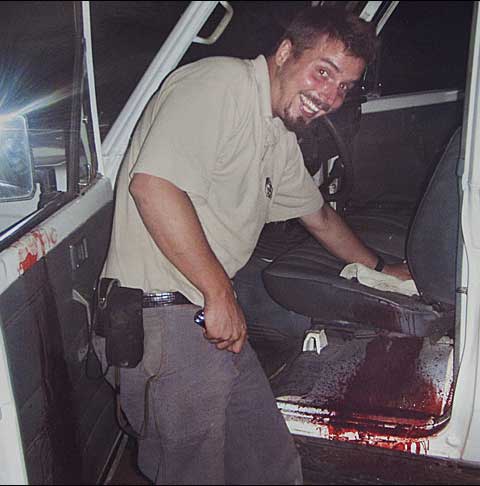
Former Israeli Minister of Internal Security and Zionist hard-line supporter of genocide of the Palestinian people, Uzi
Landau, will be speaking about the supposed threat of Iranian Nuclear Weapons on his first trip to the United States. The speech will be taking place at the University of Colorado at Denver on the Auraria Campus on Wednesday Oct. 28 from 1:30pm – 3:30pm at Saint Cajetan’s Church across from the King Building (please come early around 1pm)

For those of you unfamiliar with this war criminal and human rights violator, he was opposed to the 2004 disengagement plan from the Gaza Strip. He encouraged armed resistance by settlers to the plan and was actually banned from traveling abroad by Ariel Sharon due to his extreme views (hard to believe he was too extreme for Sharon). He was also Minister of Internal Security at the time of Rachael Cory’s murder by Israeli forces. He was previously sponsored by the Zionist of America in a failed speaking tour and continues to support human rights violations of the Palestinian people.

Please come with signs and a spirit of “vigorous” protest. This should not go un-resisted!!!

Reformation unpopular with Catholics

Local progressive agitator Rita Ague takes issue with a scolding homily delivered at Manitou’s Our Lady of Perpetual Help:

I’m sorry, Father Corbley, but I’m unable to attend your sessions.

I’m one of many cafeteria Catholics and former Catholics who find spirituality in avoiding “spiritual masturbation.” Instead, I work as best I can for justice and peace, and don’t worry about what makes me feel spiritual.

Guess this qualifies me as one of those you cited in your sermon as operating “outside the box” I actually call myself a “Cathepis” – sounds a bit vulgar, but actually stands for a Catholic who agrees with the direction the Church of England has gone in allowing priests to marry, women to be ordained, gay priests with partners to come out of the closet and actually become bishops, etc.

No, I’m not gay, but am a strong supporter of civil rights and Christian, humanistic love and respect for all. I attend both Catholic and Episcopal services, but must admit to leaning more toward the Episcopal, insofar as I’m absolutely turned off with the oh so unchristianlike behavior of so many RC’ers, such as the current pope, our local bishop, the blatantly manipulated “good Catholics” who see my “Healthcare not Warfare” button and signs, and scream at me that I’m going to hell because I support health care reform. They yell that health care reform, including the public option and/or single payer approach, is all about abortion. And I develop my own spirituality by refraining from screaming back at them.

Good luck to you, Father, and God be with you in your journey on a less traveled road.

Rita Ague

Do we have a soft spot for mercenaries

Norwegian Tjostolv Moland sentenced to death in Kisangani, DRCIt’s damning photograph. I sought it out after hearing the story of the two Norwegian mercenaries condemned to death in the Congo for the murder of their Congolese driver. Was their black companion killed in an attempt to rob the white adventurers, as they tell it? US news outlets asked Tjostolv Moland’s mothers about the picture of her son, which showed him smiling as he wiped blood from the driver’s seat of their pickup. The mother dismissed it as bad timing, she though her son was probably caught off guard, laughing at a joke unrelated to his morbid task. Boy can Americans relate.

Other US newspapers speculated about a fabled Norwegian propensity to laugh at adversity. They also described Norwegian diplomats scrambling to save the two boys from the gallows. It’s true that Norway doesn’t have a death sentence, and therefore does not condone it elsewhere. Otherwise US and BBC portrayal of Norwegian concern for the two mercenaries seemed at odds with Norway’s usual determined pacifism, so I was eager to hear from my relatives there.

The scoop? Contrary to US and UK sentiments and their projection of Norwegian concerns, there is no domestic sympathy for the two wayward boys. None.

The Norwegian public has become well aware that Moland and partner Joshua French have been traveling the Congo as mercenaries, and have been involved in other killings as well. The fact that Congolese courts are trying to extort a large fine from the Norwegian government, based on the accusation of the two travelers being agents of Norway, is due to documents which the two forged to pretend they had active duty contact with the Norwegian military.

In Norway, military service is compulsory. Every Norwegian male has a record of military service. It helps that Norway rarely involves itself with acts of aggression, sanctioned by a fraternity of nations or not. And when soldiers of fortune like Moland and French set about rampaging in Africa, it behooves Norwegian authorities to ensure that their military is not implicated by association.

How fitting that US and UK listeners should presume a reflexive maternal instinct to protect the two white boys, set upon by angry African opportunists. The boys might be mercenaries, but America and Britain have lots of those overseas. Hired guns, paid assassins, professional killers, why quibble with words?

The laws of war grant little grace for mercenaries, but that’s not what English-speaking supporters of imperial expansion want to believe. Mercenaries in the Neocon vernacular are called private contractors. They’re just ordinary soldiers who’ve escaped the poor pay of military service, to the entrepreneurial ranks of war-making free enterprise.

Ten reasons to oppose I-70 expansion

Stop I-70 expansionHigh Country Earth First has set its sights on halting expansion of Interstate 70 through Colorado. This is more than a fight over urban neighborhoods, or Rocky Mountain foothills to be despoiled. The expansion of I-70, like I-29 and others, is about bulking up America’s commercial trucking thoroughfares, the infrastructure critical to greater NAFTA globalism, and the veins into which America feeds its addiction to oil.


Here’s the HCEF flier being distributed to Denver residences.

TOP TEN REASONS TO OPPOSE I-70 EXPANSION

Environmental Racism – More than 90% of the people in Elyria / Swansea neighborhood are people of color and about 30% are officially low-income. Even the government’s official Draft Environmental Impact Statement admits the expansion would have a disproportionate impact on minority and low-income people.

Pollution – I-70 expansion would multiply the long-term impact of noise and air pollution on the community in Elyria / Swansea. Emissions of some air pollutants are expected to increase by 50% in the next 20 years if I-70 is expanded. During the three years of construction, additional noise and air pollution would be created.

Displacement – I-70 realignment would demolish 18 to 53 homes in Elyria/ Swansea. The neighborhood post office would be lost, and residents would have to travel 2 or 3 miles to the nearest post office. Many low-income residents will have to find housing outside of Denver, increasing community destruction.

Job Loss – I-70 realignment would displace 52-58 businesses. The National Western Stock Show, which hires many local residents for temporary labor, would be moved to a new location. Other neighborhood emplowers will also be displaced by expansion or re-routing. Food Access – One of the two grocery stores in the neighborhood, a Latino grocery, would be demolished. The area of North Denver is already underserved by grocers; eliminating more only increases the problem.

Recreation – The I-70 realignment plan would place a vehicle bypass near Elyria Park, increasing vehicle noise, and would create new barriers to the Park by way of increased traffic. This will further the death of the neighborhood by making it even less enjoyable to live in.

Hazardous Wastes – Construction would disturb over 100 acres of hazardous materials sites where arsenic, lead, cadmium, and contaminated soil and groundwater are located. Increased trucking on I-70 will bring greater amounts of haz-mat through the area as well, increasing the risk of accidens and spills.

Land Use – The plan requires over 300 acres of urban land acquisition including 10-41 residential properties, 101-142 commercial properties, and 17 acres of Open Space, space that could be used for homes, schools, gardens, playgrounds, parks, and, more.

Cost – Expansion would cost between $1.3 and $1.9 billion, plus $7 to $10 million yearly in additional maintenance. This at a time when human services is facing massive cuts and education is on a $300 million chopping block.

Wildlife – Realignment would destroy 220 acres of resident mule deer area, 205 acres white tail deer overall range, 50 acres bald eagle winter range and winter prey, 21 acres prarie dog habitat, and increased invasive/noxious weed infestations.

The real solution isn’t expanding the highway, but reducing the traffic. Rather than displacing a neighborhood, destroying the environment, and contributing to global warming, lets create solutions that reduce our reliance on fossil fuels and cars.

The I-70 expansion, what is it? The Colorado Department of Transportation (CDOT) has decided that Interstate 70, the main east/west freeway through Denver needs to be expanded in the section which passes through north Denver, from its intersection with I-25 to Quebec street.

There are two main proposals being considered by CDOT. The first would expand the current viaduct from six to ten lanes and keep I-70 in its current location. The second proposal, and the one favored by the power brokers in Denver, is to reroute (detour) I-70 north from its intersection with I-25 along the Platte river/Brighton boulevard area, and then connect up with highway 270 to where in reconnects with the current I-70 path at Quebec street. This expansion/detour would be eight lanes and add roughly 2 miles to the length of I-70 through this section. The cost for these proposals ranges from 1.25 to 2 BILLION dollars. Either expansion will gut the neighborhoods of Globeville, Elyria, and Swansea, and increase air pollution in other North Denver neighborhoods. These plans are discussed in detail in the Environmental Impact Statement which can be found at www.i-70east.com/

But do we even need an I-70 expansion? CDOT justifies this expansion by saying that we need to expand I-70 to meet future traffic needs, based on growth in the eastern suburbs. However, this urban sprawl is completely unsustainable and may not even happen considering the housing market. The real reason CDOT wants to expand I-70 is to decrease congestion for cross-country truck traffic. Minor slowdowns in urban areas can cost trucking companies millions of dollars; CDOT is really working for the trucking companies, not us.

There’s no real reason to expand I-70. And considering the costs, financially and otherwise (see other side) it seems like more than just a stupid idea but also a downright bad one. Several groups are working to prevent the expansion. They need you to succeed.

Email: noi70expansion@gmail.com to get involved.

In other little girl news…

Laura Dekker sails aboard Guppy
13-year-old Laura Dekker wants to challenge the recent round-the-world age record, but the Dutch government prevented her departure on the grounds that 13 might be too young. Dekker’s supportive parents are being painted as reckless and cavalier. The spin from the Netherlands bookends well with the little-girl-lost klaxon out of California: eccentrics are untrustworthy. Behavior deviating from norm can be probable cause all of itself to suspect a) child neglect or b) even horrific criminality.

On the improbably wisdom of circling the world at 13: probably if you’re not of legal age to represent yourself on a contract, let alone customs documents, you shouldn’t be traveling solo by boat or plane. That preempts the debate about whether under-age or marginally qualified recreational sailors should put an unwarranted burden on maritime rescue resources.

Shrouded by the implied criticisms of the Dekker family, were some very relevant details that their daughter was born while the couple was circumnavigating the world, and spent her childhood on the sea. Laura Dekker got own yacht when she was six. SIX. And was sailing solo by age ten. Does that register? TEN. Who are we, past-our-prime landlubbers, to assess her competence?

Junior Ms. Dekker ran afoul of authorities when she sailed to England alone. The British insisted that her father fly to accompany her return. He protested that his daughter was fully able to return of her own, but was forced to relent. He flew to England, but secretly cast her off and snuck back by plane. When the Dutch authorities discovered that the daughter was still sailing alone, they intercepted her arrival.

A family of eccentrics shut down.

The off-the-charts ugliness in California, with the rescue of Jaycee Dugard, appears more inhuman with each day’s revelations. And more queasily human, as her zealously religious abductor attempts to communicate to the press about a forthcoming “heartwarming story” he forecasts will emerge.

Victim too of the repulsive mess is feeding of paranoia: the public’s impulse to image how the young Dugard could have been rescued sooner. If only neighbors had been more alert to Phillip Garrido’s creepy behavior; religious zealousness, homeschooling, differently behaved children, the odd eccentricities, become in hindsight the probable cause for our regret not having searched the Garrido backyard sooner.

How many estranged neighbors are now calling the police on each other, hopeful to unearth depraved sexual deviance. How more uncomfortable are we making eccentrics, especially the solitary sort without family, more self-conscious about merely behaving differently?

Enchanting place names of Ethiopia

Ethiopia enchanting placesI found this travel poster for Ethiopia, the African ally with whom the US harasses Somalia and Sudan. But it features pictures of lynched black men, and was circulated by OSPAAAL, Cuba’s Tri-continent alliance.
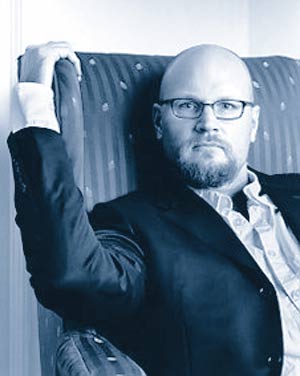
“Some of the far away places with charming names that tourists should visit:

ALEM BEKAGNE
The biggest prison in East Africa.

KAGNEW
US strategic military base for “technical” espionage.

ADOLA MINES
Where 20,000 men waste away doing forced labor.

MASSAWA
Important Ethiopian-US-Israeli naval base for the control of the Red Sea.”

Augusten Burroughs is so self-amused

Augusten Burroughs author of Running with ScissorsI was recently subjected to a road trip audio book disgorged from an auteur who shares the eminent surname of Burroughs. But unlike Wyeth the younger who had the advantage of genes, this literal-bastard is of no relations and has to defraud us with a bone through his gilded celebrity cage. It gives me the willies to consider that admirers of Running With Scissors think it’s a creative bone.

I can’t remember now which episode of Possible Side Effects finally drove me to seek the solitude of my own headphones. Had it something to do with a dog? Alcohol? Airline travel? It will come to me, although I’ll be better off hoping it doesn’t. Burroughs’ insipid presumption that not a single footstep will be uninteresting to his readers, reminds me of the Power Rangers school of storytelling. What happens, the end.

There’s an absolute pattern to scribes who emerge as recovered substance abusers, one day at a time. Every day brings the agonist to an end, whether a story happened or not. It’s enough that Burroughs emerged sober, Go bless him. Well-wishers cheer his recovery on, but that doesn’t make his daily travails units of a serial.

Most of the scenarios it seemed revolved around Augusten Burroughs being recognized from his author’s photograph on the back cover of his book. He’s so famous! It does rile me when an obvious twit has a following who hold his twiticisms aloft where he can then point to them and journal again about that.

Of course the hives I felt were vindicated when I learned that like memorist-entrepreneur and twelve-step-denier James Frey, Augusten Burroughs was caught recounting lies. In burroughs’ case, by his own psychiatrist! And had to redefine Running With Scissors as not a memoir after all.

Actually I have no doubt that what Burroughs writes is memoir, he tweets as many times as he pulls open the refrigerator door. Queer Eye For The Bored Guy presumes readers can’t decorate their imagination.

US journalists! Visit scenic Kurdistan!

Sulaimania Sulaimaniya Kurdistan Iraq Irak
US media correspondents, reporters, tv anchors and news directors, get yourselves to scenic Kurdistan asap, visit the mountains of Sulaimania, the waterfalls of Ahmed Awa are apparently recommended. Embeds, lead the way! It may be the only way all you war propagandists will reap what you so justly deserve.

I can’t imagine there’s a single corporate media journalist who wouldn’t be hard pressed to defend the pro-war filter he or she puts on the news for US domestic consumption. Corporate tools? They’re military industrial pitchmen. Advocating death and dismemberment without restraint. Let them plead ignorance. Bullshit. I’d love to see Bill Clinton make a case for all of them.

Antiwar voices are split on whether to charge MSM collaborators for war crimes, for selling the Anglo world on patently illegal wars. But how else are we to be rid of them? America remains locked in a Vulcan mind meld with these impudent, immoral careerists. Perhaps apprehension by the Iranians, and a trial by revolutionary council, is the only justice they might ever meet. Dispatch them to Kurdistan: Assignment Iran! Let the Persians teach Americans the only way to deal with poisonous snakes.

The media song now, to spin the recent errant three in the best light, is that Kurdistan was not an unthinkable destination for tourists such as they, and perfectly safe too. Unless you venture toward the Iran border, where US commandos have been raiding Iranian infrastructure, while the US Navy taunts the Iranian coast in full force. Alas, Kurdistan, quite happy with its undeclared sovereignty from Iraq, has proven to be a safe haven for Anglos.

I remember a most heartbreaking scene from the first month of the war, recorded by an independent American photographer as he worked his way through Kurdistan. Perhaps you recall it.

Do I mean the friendly fire, or accidental, I’m not sure which to put in quotes, bombing which killed coalition troops, but also took out a Kurd ally who may have turned out to rival a more favored ally? No, not that one.

Our photographer was making his second entry into Iraq as I recall, and documented a personal incident thus. He was traveling with a Kurd escort, when an Iraqi combatant broke through with a grenade, determined to blow himself up next to the American.

And I should clarify, I was not rooting against the photographer, but– here’s what happened.

The Iraqi was being held off by a Kurd fighter, but he had pulled the pin on the grenade, and leaned against his opponent, dooming both of them if the Kurd dared to shoot him. The scene unfolded in the progression of stills the photographer snapped as he hastened away. The Iraqi was chest to chest with the Kurd, pleading to be let to get the American. I interpreted his entreaties to say: Brother let me pass, I must reach the American, I have no quarrel with you, let me die with the infidel. The Kurd seemed for a moment to consider the words of his Iraqi brother. American deaths counts many hundred fold, we are brothers fighting the American aggressors, I have committed to die for this act, help me, please let me just reach him.

I could be wrong, he may have been cursing the filthy Kurd for blocking his way. But his locked eyes and sweated brow reflected an earnest human being.

I cannot be sure how long this went on, but the Kurd kept the desperate man at bay, and as soon as the Kurd had wrestled control of the grenade, he shot the would-be assassin point black. The Iraqi fell unceremoniously into the tall weeds. The last image showed his body collapsed in the ditch beside the road. The photographer and his Kurd entourage moved on.

There were honest, unembedded journalists in the early stages of the war. A record number were killed by the US military until none report independently anymore. Journalists working for foreign news agencies are detained in secret US prisons, under the same pretext that we protest of Iran or North Korea.

If we do not have the resolve to string up these blood-thirsty yellow journalists, promulgating lies to justify the continued slaughter of countless innocents, let the Iranians have at them.

Unseen 1945 Hiroshima Ground Zero pics loosed from personal stash

Hiroshima trunkLet’s file this under more soul-less disregard for your fellow travelers. Never before seen photographs of Ground Zero at Hiroshima have emerged in time for the 64th anniversary of the record-setting war crime. The US army photo record, which had escaped the government’s suppression efforts, remained in someone’s personal stash for decades. The damning documentation his to neglect, and, fortunately, to accidentally discard.

In the early 1970s this gentleman and a friend discovered a chest full of pictures obviously taken at the epicenter of the atomic bomb blast in Japan. His friend kept the chest and he stuffed the photos into an old suitcase which he then left to the damp of his basement. Somewhere in the process of housecleaning and moving, the suitcase was thrown to the curb, where a garbage sleuth made the find.

The US military took scrupulous records of the devastation of Hiroshima. Immediately after Japan’s capitulation, Army photographers circulated all over Ground Zero, doubtless paying for it with the cancer shortly thereafter. The images were kept from the US and world public indefinitely, and relatively few of them have ever been shown.

In an attempt to trace the provenance of these photos, the original house owner was contacted for the full story. He didn’t know it, having chanced upon it himself, but he greeted the call without a clue:

“The photographs? Of Hiroshima? You have them? I thought they were in my basement! How do you get them?”

“This is wild! I must have thrown them out by accident when I was moving stuff out. I never would have purposefully gotten rid of those photographs. I’ve been carrying them around with me since 1972!”

Roberto Arango and Jose, here in Colorado Springs we miss you two guys immensely!

roberto arangoIt has been almost one month since Layla and I returned to Colorado Springs after our vacation in Colombia, and 2 months since we visited the small town located close by the high mountains called El Cocuy. The El Cocuy region is notable because these mountains are much more beautiful and spectacular than those found here in Colorado, and can be reached quite easily from Miami, Florida after a cheapie flight to Bogota and a mere 12 hour bus trip that well may be the most scenic bus ride you will ever go on.

Take all the hiking and mountain climbing equipment you will need because you probably cannot find it there in El Cocuy to purchase or rent. Maybe in the other small town nearby called Guican, though I rather doubt it?

We did not actually go into the highest area where the snow topped mountains are, because we had neither the time, equipment, nor patience to get in. Traveling with my 12 year old daughter, I had to take her needs into account, and climbing the highest mountains just was not what she had in mind at the time. Instead, she wanted to keep traveling with a 19 year British kid named Max, who was on a controlled and packed schedule that involved bussing off as quick as possible to meet up with another acquaintance.

What made the trip to El Cocuy most memorable to me was the hospitality of Roberto Arango and his friend, fellow musician Jose. After we got off the bus to El Cocuy, we managed to stumble across the plaza to an almost abandoned looking building that is in fact Roberto’s home, though he rents off beds to visiting travelers in need of a room for a week or a night. But he did not just rent us a room, but most enthusiastically offered to play us an on-the-spot concert, too! He and Jose were drinking some wine and were playing their songs and they continued playing for us their beautiful music for over an hour plus. You can see Roberto and Jose starting about 3 minutes into this youtube tape Around “El Cocuy” Mountains

Notice the paintings and beautiful garden in the background? Roberto Arango is also a very good painter and these are his works. In addition, he graduated with a degree in horticulture and in the inside plaza of his house was a full grown and beautiful garden! The paintings were way too large for us to cart back to the US, PLUS I was traveling while broke otherwise I might have tried doing just that. They were that good!

If you are interested in going to those high peaks around the area and want to get more info about what they are like, then just search Guican and El Cocuy on youtube to pull up some videos of those who have already done these treks. But for myself, the main reason to go back for me would be to revisit with my good friends, Roberto and Jose. Thanks, Guys, for having made our time spent with you the highlight of our visit to Colombia! Thanks, Roberto, and I hope to visit with you once again. And YES, Jose, your compact disc has been a big hit with my wife as I had thought it would be. She plays it constantly.

No. 1 domestic terrorist Daniel McGowan

The Huffington Post published a letter by ELF/ALF political prisoner Daniel McGowan, who is allowed to send one letter per week from CMU36, the controversial “Communication Management Unit” whose cover-name is USP Marion. According to McGowan, prison guards call it the “I Unit,” which probably does not stand for illegal.

As of May 2009, I have been at USP Marion’s “Communication Management Unit,” or CMU, for roughly nine months and now is a good time to address the misconceptions (and the silence) regarding this unit. I want to offer a snapshot of my day-to-day life here as well as some analysis of what the existence of CMUs in the federal prison system implies. It is my hope that this article will partially fill the void of information that exists concerning the CMU, will help dispel rumors, and will inspire you to support those of us on the inside fighting the existence of these isolation units — in the courts and in the realm of public opinion.

It is best to start from the beginning — or at least where my story and the CMU meet. My transfer here is no different from that of many of the men here who were living at Federal Correctional Institutions (normal prisons) prior to the genesis of the CMUs. On May 12, 2008, on my way back from a decent lunch, I was told to report to “R&D” (receiving and discharge). I was given two boxes and half an hour to pack up my meager possessions. After complying I was placed in the SHU (secure housing unit or “hole”) and put on a bus the next day. There was no hearing and no information given to me or my attorneys — only after a day was I told I was on my way to Marion, Illinois’ CMU.

Hearing the term “CMU” made my knees buckle as it drummed up some memory I had of the infamous “control units” at Marion (closed in 1995 and replaced by Florence ADX: the lone Federal “Supermax” prison). Then it hit me. The lawyers, in challenging the application of the terrorist enhancement in my case, made the prescient argument that if I receive the enhancement, the Bureau of Prisons (BoP) would use that to place me in the CMU at FCI Terre Haute, Indiana (at the time just 5 months old). In fact, on the way to FCI Sandstone in August 2007, I not only saw the CMU but met one of its residents while in transit. Let me back up and offer a brief history of the Communication Management Units.

The CMU I reside in, at USP Marion, received its first prisoner in May 2008 and when I arrived, held about 17 men, the majority of whom were Muslim. Currently, the unit has 25, with a capacity of 52 cells. In April 2009, we received seven new people, all of whom were from the CMU at FCI Terre Haute. The unit is overwhelmingly Muslim with 18 men identifying as such. Most, but not all of the prison, have so-called terrorism cases. According to a BoP spokesperson, the unit “will not be limited to inmates convicted of terrorism-related cases through all of the prisoners fit that description.” Others have prison disciplinary violation or allegations related to communication and the misuse of telephones etc. Here, almost everyone has a terrorism related case — whether it is like my case (destruction of property characterized as “domestic terrorism”) or conspiracy and “providing material aid” cases.

Before the Marion CMU opened, there was the original CMU, opened in December 2006 at the former death row at FCI Terre Haute. According to early articles, the unit was intended for “second tier terrorism inmates, most of them Arab Muslims and a less restrictive version of the Supermax in Florence, Colorado.”

Additionally, BoP Director Harley Lappin, in a July 2008 hearing on the 2009 BoP budget request, said of the CMUs, “A lot of the more serious offenders, terrorists, were housed at ADX Florence. So, we are ramping up two communications management units that are less restrictive but will ensure that all mail and phone calls of the offenders are monitored on a daily basis.”

Terre Haute’s CMU has 36 men (27 of whom are Muslim) and is roughly comparable to Marion’s CMU. The rest of this place focuses on the latter, in which I have resided and of which I have seen firsthand.

You may be curious about just what a CMU actually is. From my correspondence, I can tell that many correspondents do not know much about what goes on here. I hope this can clear up any misperceptions. According to the BoP,

The CMU is [sic] established to house inmates who, due to their current offense of conviction, offense conduct or other verified information, require increased monitoring of communication between inmates and persons in the community in order to protect the safety, security, and orderly operations of Bureau facilities and protect the public…The CMU is a self-contained general population housing unit.

There are, of course, alternate views to the above definition including the belief that the CMUs are Muslim units, a political prisoner unit (similar to the HSU operated by the BoP in the 80’s, and a punishment unit.

The CMUs have an extremely high Muslim population; here at Marion, it is 65-75%. An overrepresentation of any one demographic in a prison raises constitutional issues of equal protection as well as safety issues. Nowhere in the BoP will you find any group represented in such extreme disproportion. To counter these claims, the BoP brought in a small number of non-Muslims to be used as proof that the units are not strictly Muslim (an interesting note is that some of the Muslim men here have cases unrelated to terrorism). Does the inclusion of six people that are non-Muslim really negate the claim of segregation though? What are the criteria for determining who comes to the CMU? The BoP claims there are 211 international terrorists (and 1000 domestic terrorists) in their system. Yet, the CMUs have no more than 60 men at the present time. Where are the rest of these people? How does the BOP determine who of those 1200 are sent to a CMU and who to normal prisons? These are questions that need to be asked — in court and in the media.

Many of the men here (both Muslim and non) are considered political prisoners in their respective movements and have been engaged in social justice, religious organizations, charities and humanitarian efforts. Another conception of the CMU is that it is a location designed to isolate us from our movements and to act as a deterrent for others from those movements (as in “step outside the line and you too will end up there”). The intended effect of long-term housing of this kind is a profound sense of dislocation and alienation. With your mail, email, phones, and visits monitored and no human touch allowed at the visits, it is difficult to feel a connection to “the streets.” There is historical evidence of the BoP utilizing political prisons — despite the fact that the Department of Justice refuses to acknowledge the concept of political prisoners in US prisons, choosing to call us “criminal” instead.

The Lexington High Security Unit (HSU) was one such example. Having opened its 16-bed facilities in 1988 and housing a number of female political prisoners, the HSU functioned as an isolation unit — underground, bathed in fluorescence, and limited interaction with staff. In the opinion of Dr. Richard Korn, speaking on behalf of the American Civil Liberties Union, the unit’s goal was “…to reduce prisoners to a state of submission essential for their ideological conversion. That failing, the next objective is to reduce them as efficient, self-directing antagonists. That failing, the only alternative is to destroy them by making them destroy themselves.”

After an arduous campaign by human rights advocates and supporters, the BoP capitulated, stating it would close its facility (when it did not, it was sued). The judge ruled that the plaintiffs were illegally designated based on their past political affiliations, statements and political beliefs. The unit was closed and the women were transferred to other prisons.

The correlations between the HSU and CMU are many and seem to have some of the same goals as well as methods used to designate us here. Knowing they are dealing with people committed to ideals and the movements they are a part of, we were placed here in order to weaken those connections and harm our relationships. An example is the horrendous strain that the CMU puts on our familial relations — especially our marriages. It was certainly considered by the architects of the CMU that preventing visits that allow human touch for long-term prisoners would have a disastrous impact on our relationships and would lead to weaker inmates.

Finally, the CMU can be viewed as “the stick” — a punitive unit for those who don’t play ball or who continue to express political beliefs anathema to the BoP or the US government. Although I am not aware of the BoP’s criteria for sending people here (due to their refusal to release specific CMU information), it is curious who is and who is not here. Out of roughly 18 codefendants in my criminal case, I am the only one at a CMU (the remainder of them are at low and medium security prisons). The same goes for a member of the SHAC7 campaign, Andrew Stepanian, one of 6 defendants in his case who was sent here for the last 6 months of his sentence. Other men here have codefendants at the Terre Haute CMU while others have codefendants at normal federal prisons. Despite numerous Freedom of Information Requests, the BoP refuses to grant the documents that specify the rules governing transfer to the CMU. Remember, hardly any of the men here have received any disciplinary violations and some have been in general population over 15 years! How can someone be okay in general population for that long and then one day be seen as a communication threat?

So, I have hypothesized about the goals of the CMU. Let me discuss the many problems and injustices associated with the existence of the CMUs.

Due process
More appropriately, a lack thereof. A term I never thought much about before my imprisonment, due process is:

…the conduct of legal proceedings according to established rules and principles for the protection and enforcement of private rights, including notice and the right to hearing before a tribunal [my emphasis] with the power to decide the case.

I was moved from FCI Sandstone, against my will and at a moment’s notice, with no hearing and thus no chance to contest the reason for my transfer. A FOIA request recently received states I was redesignated May 6th, my transfer was signed the next day and I was moved on May 13th with the reason given as “program participation”. Since I got here, I have not had a hearing to contest the claims made in the “Notice to Inmate of Transfer to CMU, ” some of which were woefully inaccurate. Instead, I was told I can utilize the administrative remedy process (which I have done to no avail) and request a transfer after 18 months of “clear conduct”.

The irony is that all prisoners who violate prison rules are subject to a series of disciplinary hearings in which they could offer their defense. For legal units such as Florence ADX (Supermax) or the control unit program, there exists a codified set of rules and hearings for transfer to these locations. The BoP has deliberately ignored this process and has instead transferred us to this special, brand-new CMU without due process. My notice of transfer was given to me 12 days after I arrived!

Similar to the callous disregard for due process (and the US Constitution), there is no “step down” process for the CMU. Unlike the ones that exist at Florence ADX, control units or even the gang units, the CMU has no stages, no requisite amount of time we are to spend here before being sent back to a normal prison.

Because these preceding programs are specifically for prison misbehavior, there is a logical and orderly way to finish the program and eventually transfer. For us, the BoP has set up a paradox — if we are here for our offense conduct, which we cannot ever change, how can we reasonably leave the unit? In its “Admissions and Orientation” guide for Marion’s CMU, here is what they say:

Every new commitment to the CMU will be evaluated by his unit team regarding his suitability for incarceration in this institution. If, for some reason, the inmate is deemed not acceptable for confinement in this unit, he will be processed as expeditiously as possible…

[I am still roughly 10 months from my 18-month period in which I must wait before requesting a transfer. Considering the fact that all my remedies have been denied, I am not hopeful about this.]

CMU as Secret
In addition to the due process and transfer issues, there is the secretive and illegal manner that the CMU was created (Note: for historical perspectives, it needs to be stated that the CMU was established roughly halfway through the second term of George W. Bush and his Attorney General Alberto Gonzales.)

In April 2006, the BoP proposed a “Limited Communication for Terrorist Inmates” policy, which suggested new restrictions for “terrorists” and “terrorism related inmates” such as:

1) One 6-page letter per week.

2) One 15-minute phone call a month.

3) One 1-hour visit a month.

A coalition of civil rights organizations signed a letter of protest criticizing the proposed rules and raising numerous constitutional, practical and ethical objectives. The outcry appears to have caused the BoP to reconsider it and just 6 months later, open the CMU at FCI Terre Haute quietly. Since the BoP never sought public comment on the new CMU, it certainly appears to be a violation of the Administrative Procedural Act (APA), an argument a federal judge in Miami raised in response to a prisoner’s legal challenge to transfer to the CMU.

The unit is functionally an open secret. While the BoP circumvented the standard public comment (and feedback process), it has sought to get around this by describing the CMU as a “self-contained general population unit,” implying that the unit is legally and penally no different than a normal unit at an FCI. There is no mention of the CMU on the BoP’s website (ww.bop.gov) or USP Marion’s subpage on the same site. You will not find extensive Congressional hearings on the subject — other than a July 2008 subcommittee hearing in which it appears that the BoP director was not fully forthcoming on the CMU36. Letters here are stamped “USP Marion,” not CMU, and the unit is called “I Unit” by staff. (An interesting anecdote: while on transit in Winter 2009, I met men from the FCI here and asked them what they knew about I Unit. Without hesitation, they said, “That’s where the terrorists are.” They informed me this is what BoP Staff routinely told them.)

Media queries are met with silence or vague information. Requests by the media to interview me by coming to Marion have been denied — due to it “being detrimental to the safety, security and good order of the institution.” There still is no Program Statement on the CMU — a legal requirement, outlining the specific rules of the CMU and its designation criteria.

Because of this, and the general refusal of the BoP to hand over relevant documents through FOIA, it is impossible to determine the specific reasons why one is sent here — and thus, how to contest this process. In effect, the CMU was created on the fly, with no eye toward legality; they are free to operate it in whatever manner they choose.

Communication Management (The Promotion of Isolation and Alienation)
The most painful aspect of this unit, to me, is how the CMU restricts my contact with the world beyond these walls. It is difficult for those who have not known prison to understand what a lifeline contact with our family and friends is to us. It is our link to the world — and our future (for those of us who are fortunate enough to have release dates). Prison authorities and architects are well aware that those with strong family ties and in good communication with their loved ones are well behaved and have significantly lower rates of recidivism. The BoP, in theory, recognizes this by claiming they try to situate us within 500 miles of our homes. Mostly, this is a cruel farce for many prisoners — I have not been within 1000 miles of my family in 2 years.

The most Orwellian aspects of the CMU are in how they manage our communications:

A) Telephones- at my previous prison, I was able to use the phones for 300 minutes a month — days, nights, weekends and holidays — basically at any point I was not in my housing unit (6am-10pm). Here, we receive one 15-minute phone call a week. The call can only take place between 8am and 2:30pm, never on weekends or holidays and must be scheduled one and a half weeks in advance (we can choose a back-up number to call but if neither picks up, we don’t get a call). The call is live-monitored and recorded. Not only do we receive one fifth of the minutes granted to other federal prisoners but the call is also very trying for our families — all of whom have day jobs and many of whom have children in school. The CMU requires calls be made in English only — a difficult demand considering over half of the men here speak English as a second language (this restriction is not present at other federal prisons).

B) Visits- At FCI Sandstone, I received up to eight visiting days a month (56 hours) — contact visits in which I could embrace my wife, play cards with my nieces and share vending machine food with my visitors. These visits were my lifeline. I got about twelve of them in eight months and it aided in my adjustment to prison.

The CMU restricts our visits to one four-hour non-contract visit a month. One short visit through two inches of plate glass with cameras hanging overhead and my visitors stuffed in a four-and-a-half by three-and-a-half-foot stuffy booth — a tight squeeze for two. The visits can only take place on weekdays from 8am-2pm — no more Christmas or Thanksgiving visits — and worse, no physical contact (Consider what it would be like to have no contact with your loved ones. What if you couldn’t hug or kiss your lover, partner, wife, husband? What would that do to you?) I find myself riddled with guilt when I ask friends to spend $500 to fly across the country, drive three hours (and repeat) for a four-hour non-contact visit. I’m lucky though, having people who will do this. Many of the men here can’t afford it or don’t want to subject their children to this reality.

C) Mail- We can only send out mail once a day and we cannot visit the mail room to send out packages. We are one-hundred-percent reliant on the one staff person who deals with our mail to do so and sending a box home is a laborious procedure. We must leave our envelopes unsealed so that staff can read, copy, scan and send to whatever other agency studies our correspondence. A letter to NYC takes roughly seven to nine days (which should take five). Letters sent abroad, especially those not written in English, could take a month or more — a common complaint of some of my fellow prisoners.

Staff here has an interesting reading of the rules governing legal mail leading to the charge that they open our legal mail (this is the subject of an administrative remedy I filed with the BoP Central Office in Washington DC). The rule states that the lawyer’s name must be clearly identified and that the envelope must say “Special Mail- Open only in the presence of inmates” and yet staff has opened my legal mail that said “Law Offices of Jane Doe” stating that it should have said, “Jane Doe, Attorney at Law”! The staff looks for any reason to disqualify our legal mail as protected and gather intelligence this way. In doing so, they violate the sanctity of the attorney-client confidentiality principle.

Most of my violations have been petty — a package has more than twenty pieces of paper or a friend kindly enclosed stamps. A few instances though amount to censorship and a limiting of political expression and dialogue. See Appendix B for a detailed discussion of these instances.

D) Media Contact- Although requests have been made to interview people in the CMU, none have been granted to date. This is a violation of the spirit of the BoP’s own media policy. There is an imperative on the Bureau’s part to control and ultimately suppress information on the CMU from making it to a mass audience.

Daily Life at the CMU
Neither one of the two CMUs were built for long-term habitation. The Marion CMU was the site of the Secure Housing Unit (SHU), the USP that closed here in 2005. Terre Haute’s CMU is in “D-wing” — the site of the former federal death row.

The CMU was seemingly converted to its current use with the addition of televisions, steel tables, and new wiring and yet it is not suitable for long-term use due to its “open cell” design (i.e. with bars). With 25 prisoners, our movements are restricted to two housing ranges (hallways about 100 by 12 feet); a recreation range where we also eat (consisting of seven cells with a computer, typewriter, barber shop, religious library, social library, art room and recreational equipment); and a small rec yard (all concrete, a lap equals one-eighteenth of a mile, four cages with two basketball hoops, one handball court, a weather awning with tables and some sit-up benches). We are lucky to be visited daily by a resident bird population of doves and blackbirds, and overhead, the occasional hawk or falcon (ironically, as I write this, I overhear warnings from staff that if we continue to feed the birds, we will receive violations). The appearance of the yard with its cages, concrete, and excessive barbed wire has earned it nickname “Little Guantanamo” (of course a punitive unit with seventy-five percent Muslims also contributes to the name as well).

The conditions here are not dire — in fact, the horror stories I have heard over the last two years have convinced me it is far worse at many prisons and yet, I believe it is important to be descriptive and accurate — to dispel fears (about violence, for instance) but also to demonstrate just how different life is for us at the CMU.

There are many things we lack here that other prisons in the federal system have to offer:

1- A residential drug/alcohol program- despite at least one person here having completion of it ordered by the court.

2- Enough jobs for the prisoners here- There is not nearly enough jobs for all the men here and most are extremely low paying.

3- UNICOR- This is Federal Prison Industries which has shops at many federal prisons (including this one outside the CMU). These jobs pay much more, allow men to pay their court fees, restitution and child support and, as the BoP brags, teaches people job skills.

4- Adequate educational opportunities- Until recently, we did not have GED or vocational programs. Due to inmate pressure and persistence, we now have both of those as well as a few prisoner-taught classes but no college courses at all.

5- Access to staff on a daily basis- At other federal prisons, you are able to approach staff members at lunch every day, including the Warden. Here, we get (at most) two quick walk-throughs a week, usually taking place early in the morning. You are often left waiting days to resolve a simple question.

6- Law library access- We have a very small law library here with only twenty-five percent of the books required by law. We can only request books twice weekly and those are only delivered if the other nine hundred prisoners at the adjacent Medium are not using them. We lack Federal Court and Supreme Court reports as well as books on Immigration Law (fifty percent or more of the men here face deportation). This lack of access makes for an arduous and ineffective research path.

7- Computers- We have four computers for our email system (two for reading, one for printing and one that we were told would be for legal but it still isn’t working). Unlike my previous prison, where we had forty computers with a robust computer-class program, or like other prisons that teach a vocational computer course, we have no such thing.

8- Access to general population- Being in an isolation unit makes for a situation in which we cannot have organized sports leagues and tournaments due to not having enough people at all. This may not seem crucial but sports are a very useful diversion from the stress of prison life and separation.

After reading the preceding sections, perhaps like me you are wondering what really is the purpose of the CMU. In short, the SMU is Florence ADX-LITE for those men whose security points are low and present no real problems to staff. From my interactions with the men here, I can say with certainty, that people here are remarkably well-behaved and calm — many without any disciplinary violations. If these men, like myself, don’t get in trouble, and have been in the system for some time, why are we here? Consider my case.

My short time in prison prior to coming to the CMU consisted of two months at MDC Brooklyn and eight months at FCI Sandstone. I had never gotten in trouble and spent my days as a clerk in psychology, working toward a Master’s degree, reading, writing and exercising. My goal was to get closer to home and my loved ones. In April 2008, I filed a “hardship transfer” request due to my mother’s illness and her inability to travel to Minnesota to visit me. I had my team meeting, and my security points were lowered. Weeks later, I was moved to the CMU.

The irony is that I was moved to the CMU to have my communication managed, but what changed in that one year to justify this move? If I was a danger, then why did the BoP house me in a low-security prison? The same applies to many of the men here– some have been in general population for twenty years and then suddenly a need to manage their communication is conjured up. During my pre-CMU time, I had used 3500 phone minutes and sent hundreds of letters. If there was a problem with my communication, shouldn’t the BoP have raised this with me? My notice stating their rationale for placing me here attributed it to me “being a member and leader in the ELF and ALF” and “communicating in code.” But if this is true, then shouldn’t I have been sent to the CMU as soon as I self-reported to prison in July 2007?

The CMUs were crafted and opened under the Bush administration as some misguided attempt to be tough on the “war on terror.” This unit contains many prisoners from cases prosecuted during the hyper-paranoid and over-the-top period after 9/11 and the passage of the USA Patriot Act.44 The number of prosecutions categorized as terrorism-related more than doubled to reach 1,200 in 2002. It seemed that every other week, there was some plot uncovered by overzealous FBI agents — in Lackawanna, NY, Miami, FL, Portland, OR, and Virginia and elsewhere (never mind the illegal wiretaps and unscrupulous people used in these cases). These cases may not be headlines anymore but these men did not go away — they were sent to prison and, when it was politically advantageous for Bush, transferred to the CMUs. The non-Muslim populations of these units (although definitely picked judiciously) were sent there to dispel charges that the CMUs were exclusively Muslim units.

The codified rationale for all prisoners being transferred here are “contact with persons in community require heightened control and reviews” and “your transfer to this facility for greater communication management is necessary to the safe, secure, and orderly function of Bureau institutions…” Should an increase in monitoring of communication mean a decrease in privileges? If the goal is to manage our contact with the outside world, shouldn’t the BoP hire enough staff so that we can maintain the same rights and privileges as other prisoners (since the party line is that we are not here for punishment)? The reality is the conditions, segregation, lack of due process and such are punishment regardless of whether the BoP admits it or not.

Forward!
Where to from here, then? Does the new President and his Attorney General take issue with segregation? Will Obama view the CMU, as he did with Guantanamo Bay, as a horrible legacy of his predecessor and close it? Many people are hopeful for an outcome like that. On April 7th, 2009, Mr. Obama, while in Turkey, said, “The United States will not make war on Islam,” and that he wanted to “extend the hand of friendship to the Muslim world.” While that sounds wonderful, what does that look like in concrete terms? Will he actualize that opinion by closing the CMU? Or will he marry the policy of Bush and condone a secret illegal set of political units for Muslims and activists? What of the men here? Will he transfer us back to normal prisons and review the outrageous prosecutions of many of the CMU detainees? If it can be done with (former) Senator Ted Steven’s case, it can be done here.

While lawsuits have been filed in both Illinois and Indiana federal courts, what is needed urgently is for these units to be dragged out into the open. I am asking for your help and advocacy in dealing with this injustice and the mindset that allows a CMU to exist. Please pursue the resource section at the end of this article and consider doing something. I apologize for the length of this piece — it was suggested to me (by people way smarter than myself) that it would be best to start from the beginning and offer as many details as possible. I hope I gave you a clearer idea of what’s going on here. Thank you for all your support and love — your letters are a bright candle in a sea of darkness.

Stand united against Christian Endtimers who cheerlead colonial war for Zionism

Christians United For Israel
SUNDAY 5/17- Colorado Springs Christians United For Israel has scheduled A Night to Honor Israel to instruct one and all “WHY it is necessary to stand united for Israel: “Biblically, Morally, Geo-politically” on Sunday May 17, from 3pm-7pm at the City Auditorium. Can you guess there will be something to say about this outside?

COLORADANS FOR PEACE will be providing counterbalance to the racist war-mongering outside the City Auditorium, from before 3pm Sunday, until this message is heard: JUSTICE FOR PALESTINE, NO WAR WITH IRAN.

night-to-honor-israelWith the consent and aid of the US, Israel most recently committed horrible atrocities in Gaza and Lebanon, and they continue to seize Palestinian land and oppress the Palestinian people. Inciting America’s Christian community to rally for Zionist racism is exactly what will not serve the cause of peace in the Middle East.

The CUFI invite reads: “Join us for Colorado Springs’ first ever Night to Honor Israel as Christian and Jewish communities gather in a show of support for Israel. The event boasts traditional Israeli song and dance, a beautiful banner presentation of the Tribes of Israel, and dynamic speakers that will convey the importance of standing with Israel and encourage us to action. There will be an Israeli Marketplace, and the event will close with a light reception.”

Which sounds reasonable enough, until of course the mention of “encourage us to action.” By action, the CUFI guest speakers mean war with Iran.

yes-will-stand-with-israelThe Colorado Springs event is one of scores scheduled across the country this weekend, intended as “a gift to Israel on the anniversary of her creation,” an expression of unconditional support “in Israel’s hour of need.” Israel has in the last hour cast Lebanon and Gaza into death throes, as it grades the remainder of Palestine for Jewish settlements. By hour of need, do they mean, the threat posed by Iran acquiring nuclear weapons? Iran has never threatened the “destruction of Israel” other than the expressed hope that her Zionist system of apartheid borders be dissolved and the inhabitants of the region be permitted a democratic regime of their choosing.


Here are some sample banner slogans:
CHRISTIAN RIGHT + ZIONISM = UNHOLY ALLIANCE
WHAT FRIEND OF ISRAEL CONDEMNS JEWS TO HELL?
ISRAEL IS NOT YOUR ESCHATOLOGICAL PAWN
CHRISTIAN ZIONISTS ARE ANTI-SEMITES

Here’s the COLORADANS FOR PEACE invite, please pass it around!

Fellow peace activists,
If you haven’t heard already, we will be protesting “A NIGHT TO HONOR ISRAEL” to be held at the Colorado Springs City Auditorium this Sunday. The event is sponsored by Christians United For Israel, which teaches unconditional support of Israel, and is currently advocating for a US attack on Iran.

This event is touted as the “First Annual” for Colorado Springs, and is among 60 happening on the same day all over the country as “a gift to Israel.” The same featured speakers have been traveling the US over the last several months urging unilateral support for Israel “in her hour of great need.”

COLORADANS FOR PEACE is determined to show that the City of Colorado Springs must not be considered an accomplice to Israel’s racist motives and criminal actions. We believe that peace in the Middle East will not be reached by escalated militarism and preemptive violence.

Please contact whomever you think would be interested. We will assemble on the sidewalk across the street from the City Auditorium at 221 E. Kiowa Street, between Nevada Ave and Weber Street. We’ll be there from 3pm to 6pm or so, serving as peaceful witness against war and racism. We will have Palestinian flags and banners which read OCCUPATION IS A CRIME and STAND WITH GAZA, among others. More information, and updates can be found at http://coloradansforpeace.org

WHAT: Witness for peace at COS Pro-Israel rally
WHERE: Across from City Auditorium at 221 E. Kiowa St.
WHEN: Sunday May 17, from 3 PM to 6 PM,
WHO: Coloradans For Peace with other organizations working toward promoting peace in the Middle East

Feel free to call me if you have any questions. I can be reached at 719.460.2836. Whatever assistance you can provide will be greatly appreciated.

Yours,

Eric Verlo
Coloradans For Peace

Ya’at’eeh from Tuba City, Arizona!

roadside-Navajo-Arizona
I’d envisioned myself hiking alone in Sedona for three magical days, vortexed into a frenzied energy, taken by wizened hippies to a hillside lair for impromptu meditation. Instead, in spite of the brazenly gorgeous Sedona landscape, I felt the whole place to be a pseudo-spiritual, wildly affluent, corporate-run and supremely phony tourist trap. I was slightly horrified to feel this way about such a beautiful place, and tried to lecture myself into giving further consideration, but to no avail. I got the hell out of Nirvana Dodge after a single (albeit lovely) hike.

That was yesterday. Today I headed north out of Flagstaff on Highway 89 with no particular plan. Shortly after the city faded from the rearview and I was facing the open road, I turned on the radio and heard “You’re listening to Indian Public Radio.” This heralded a perfect Tony Hillerman-esque adventure, I was sure of it, and I was flooded with good cheer.

From the radio came gentle Indian flute sounds, haunting-dancing-with-wolves-vision-quest sounds, which had the hair on my arms standing instantly at attention. Within thirty seconds, however, a techno track and a Navajo-accented rapper barged into the song, resulting in a somewhat bizarre Eminem/Kokopelli kind of thing. I was enthralled.

A retrospective about Harold Drake’s radio show “The Church in Your Hogan” was next, followed by a short discussion of cultural taboos associated with Indian suicide, and an admonition to speak openly about such things. Fleetwood Mac, Peter Frampton, and then this song by some sweet-voiced Hopi girls:

Hey, Cousin! Nice to see you again!
Do you have any duck tape, Cousin? Because my muffler fell off again.
Duck tape. Sigh. Indian glue.

I was becoming giddy.

I took the Navajo Trail (Highway 160) east onto the Navajo reservation and soon came upon Tuba City, a dusty little town of 8,000 residents and seemingly little else. I drove down Main Street and saw house after house boarded up and nothing but dry dusty fields all around. I don’t know where the actual people live, but the town seems reserved for ghosts. In front of the elementary school, at two in the afternoon, were twenty long yellow school buses awaiting what couldn’t possibly be that many kids. In fact I didn’t see any kids, yet one after another the buses pulled slowly away from the curb. Maybe each rural denizen has his or her own bus.

I went into the trading post/interactive Navajo museum ($9)/internet café hoping to find authentic Indian crafts. The store had some very nice moccasins which, on closer inspection, were made by Minnetonka Moccasins — a big corporation headquartered in Minnesota. I tried on a cute black straw cowboy hat made by some beachwear company in Oregon. Then I spied a truly adorable backpack purse of Indian-patterned wool and leather, manufactured — big sigh — by Pendleton, the company responsible for the boiled wool jackets of my Junior League days.

I couldn’t find anything else to do in Tuba City, so I ate some trail mix in the car, drank some warm water from my CamelBack, and did some research on Tuba City. Here are some fun facts:

1. It is the Navajo Nation’s largest community.
2. It was founded by the Mormons in 1872.
3. It was a uranium boom town in the fifties, and regional headquarters for the Atomic Energy Commission.
4. Songwriter-musician Glenn Danzig got his ass kicked in a Tuba City nightclub. It was caught on tape and can be seen on YouTube.
5. SPC Lori Piestewa of Tuba City was the first woman killed in the current war against Iraq. She died in the same ambush that injured her best friend, Jessica Lynch.
Highway-89-Navajo-ArizonaTuba-city-boarded-houseTuba-city-boarded-house-2Tuba-city-boarded-house-3

Little Eichmann Country-Western anthem

Of course, that describes most of the Pseudo-patriotic crap infesting the airwaves now…

But there’s one I heard “that’s the way things were and still ought to be”

Like honoring our preachers, leaders, teachers and heroes and believing everything they said

Charlie Manson was a preacher. Preached Armageddon really really strong.
Cotten Mather was a Preacher who gets quoted a lot by the Reich Wing, (Like Chuck Norris and Dawg the Bounty Hunter, just another couple of Wannabe Pigs) whenever they say that America should be a Religious Dictatorship…

Who also said that Native Americans were a construct of Satan because we’re not specifically mentioned in Genesis, that we had no souls and should be exterminated.
And that the people who allowed their kids to play with dolls were practicing witchcraft and should be killed.
And the Kiddoes themselves

Imagine, if you will, somebody offing your rug-rats because you gave them a Teddy Bear or let them watch Mickey Mouse or Bugs Bunny….
And the Good Pastor Mather also owned Slaves.

Leaders? McCarthy, for instance, with all the Liars, Murderers and Thieves who were and are his Fellow Travelers, like Reagan, Nixon, Bush (all the Bush Klan), Billy Sunday who was one of Their Crowd and also a Nazi Sympathizer (and, leave us not forget, a Preacher), People who could feel at ease at a Country Club or a Klan Rally?

We should believe everything they said or say?

Really?

We’re supposed to (here in Colorado Springs) Revere and Honor “heroes” like Custer and Chivington and Palmer…

Racist SCUM who tried to wipe a whole race of Americans from the face of the world.

When Custer is quoted in the book (and film) Little Big Man as saying

It’s more important to kill the women and children, because if we let them breed there wouldn’t be any point killing the men

It’s an accurate representation of what the punk murdering bastard actually DID say.

And we’ve got an Idol of his disciple William Jackson Palmer parked right in the middle of a busy intersection.

By the way, Custer and Chivington and Palmer also believed in and quoted Cotten Mather…

And the “War on Christmas” loudmouths should remember this, Cotten Mather was a Puritan… whose family had been run out of England for criticizing their Religious Dictatorship and, importantly, pissing off King James by opposing the celebration of CHRISTMAS because it’s a Catholic holiday

I don’t remember the name of the singer, but it’s one of those redneck punks who offers to beat up on anybody who disagrees with him.

Yep, real Role Model for a working Civilization.

The kid who sings the song is (to me) a youngster. Mid twenties, maybe thirties.

No way in HELL could this dude remember anything at all about the 70s even.

Far Less the 40s, 50s and 60s that’s he’s so nostalgic about.

When Apartheid was the Official Law of the Land in 20 states. People of “color” could be arrested or even hanged for not stepping off the sidewalk to let the Master Race walk past.

THAT’S the way things were, and I for one actually remember some of it…

So, is the stupid bastard really sure “that’s the way it still should be”?

Or is he merely hoping that WE are simple-minded enough to believe that?

Judging a book by an unflattering cover

Illustrator George Booth cartoon character with catsBritain’s Got Talent, Simon Cowell’s UK precursor to American Idol, is pulling another Paul Potts out of its hat, flying in the face of its own conventional wisdom that only attractive people could possibly have talent. This time, straight out of a George Booth cartoon, she’s “never been kissed” (never had a boyfriend, job, etc), climbed out from under a rock we’re supposed to believe, Susan Boyle.

You might well ask, how otherwise would un-pop-culturish faces get a hearing? I share in Mr. Potts and Ms. Boyle’s triumph, but the feigned incredulity of the celebrity judges mocks us all.

Do you remember Paul Potts, the jagged-toothed mobile phone salesman who wound up singing like Mario Lanza? You can see it replayed on Youtube still, the smiling junior Fudd, patiently bearing the judges’ smirky condescension until he had the chance to give them pause.

Susan Boyle on 2009 Britains Got TalentThis year it was Susan Boyle’s turn, already 20 million views online. To her credit, or her handlers, Ms. Boyle doesn’t wait on the stage with the air of a sanitarium orderly for her turn to turn the tables. She antes up a feisty personality, impossibly self-confident by the audience’s pre-judgment. Until…

Are we supposed to believe that neither Simon Cowell nor the other judges anticipated how a face that could have scuttled a thousand ships, would have made it past the preliminary call-backs without something up its sleeve? Or that Ms. Boyle’s notoriety might not have preceded her. A voice like that is not untrained. She was already a star in her local church. It’s hard to imagine that her village neighbors hadn’t arrived by the lorry load for their 47-year-old protege’s television debut.

Tenor Paul Potts on Britains Got TalentLikewise, Paul Potts was already a traveled tenor before his performance on Britain’s Got Talent. Noted control freak Simon Cowell is probably the Idol/Talent antagonist delivering the real virtuoso acting on those shows. Pretend or not, his reality TV magic does leave viewers with a sense of enrichment.
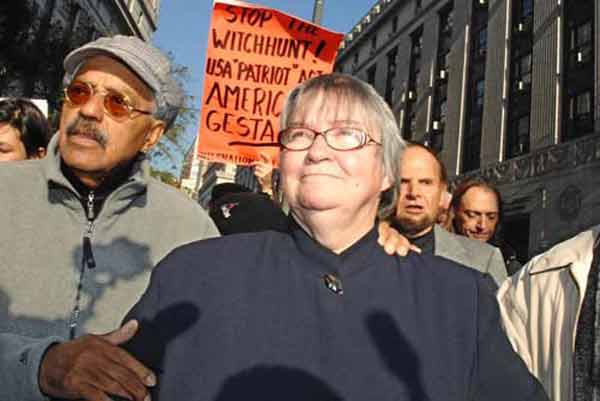
So are we chastened by coming face to face with our predisposition to low expectations for our common looking peers? The Potts and Boyle moments purport to provide transformational climaxes, but I’m unconvinced. I believe rather we are still laughing at the fool, and reinforcing our media’s quite artificial prejudice against ordinary people. Social classes used to be distinguishable in a person’s face. America’s melting pot, and to a degree, democracy’s march across the world, may have blended the clues we are accustomed to finding in bone structure, eye color and posture. It looks to me like Western media is determined to bring eugenics back, the dividing line being the red carpet.

American Idol
I remember reading not long ago a culture magazine blogger expressing surprise that an unknown contestant had advanced past the Idol favorites. I wondered: there are such things as known Idol participants? There’s already a distinction between reality TV and celebrity reality TV, now there are pre-Idol idols?

Cuba emerges victor of Cold Cash War

The ban on US travel to Cuba may be lifted, but isn’t the timing so 1989? Old Havana has been affected by the European tourists which have been coming for decades, but opening the gates to the capitalist hordes of the American unwashed has been a dreadful prospect for the idyllic socialist retreat. It’s fitting that today, the US economy doesn’t pack the reckless punch it once did. Phase two of the Cold War is over and Capitalism has been felled. And it’s Castro, not Reagan, who’s lived to see it.

Lynne Stewart visits Churchill Trial

Human rights activist Lynn Steward marches with husband Ralph PointerDENVER- For local media wonks who may have lost sight of the national significance of the Churchill v CU trial, the Denver courtroom was visited last week by radical luminary Lynne Stewart, who traveled from New York in a show of solidarity with Churchill’s fight against a systemic quashing of dissent now reaching into US academia.

Lynne and her husband Ralph Poynter scheduled their Denver visit to coincide with Professor Churchill’s testimony and the anticipated end of the 3-week trial. But arriving Wednesday and leaving Friday, they missed both. We met the couple on Thursday, the day’s session which was cut short by the closings due to severe weather.

As the lawyer to accused terrorist Sheikh Omar Abdel-Rahman, Stewart was convicted in 2005 of conspiracy and giving material aid to a terrorist. She was sentenced to 28 months in prison, but is free on bail while awaiting the outcome of an appeal.

Denver reporters missed Stewart’s visit in their seemingly predisposition to ignore the trial’s greater ramifications, except for the lip service they pay to the Right Winged media’s national obsession with Ward Churchill and their idea of blasphemy.

No matter how inflammatory Professor Churchill’s essay, the actions taken by CU to appease Colorado politicians, represent nothing less than the gagging of dissent. And in a university, where you’d hope all the voices would be dissenting. What good are fascist professors outside of PE and Machine shop? Is school any place for a humanities faculty member who is bigoted or conservative?

Personally, I resent idiocy over the airwaves, but in the schools it is just unforgivable.

The case has generated headlines across the country and spurred fiery debates about academic freedom versus academic integrity.

This is how the Boulder Daily Camera summarizes the Churchill case. While they admit to the trial’s notoriety, they frame the argument just as Churchill’s censors would approve. A false choice between freedom and integrity.

It’s not freedom versus integrity. It’s freedom and integrity versus the subjugation of both. While Professor Churchill and allies stand for freedom of speech, and integrity of character, the college is being shown, in league with the media, to represent neither.

Driving Miss McIntosh

Marjorie K. McintoshDENVER- At first the testimony from a CU committee member who voted to dismiss Ward Churchill seemed utterly damning. Dr. Marjorie McIntosh, retired Distinguished Professor of history, gave her testimony by video because she would be lecturing in England at the time of the Churchill v CU trial. She came across like a wise elder, her scolding kind and maternal. She had me convinced that Ward should be sent to his room, but for an indelible pallor that began to infect her testimony as the retired professor grew tired under scrutiny. And like the history of 14th Century England which was her specialization, it became inescapably evident that Marjorie McIntosh was very, very white.
At face value, Dr. McIntosh’s quiet authoritative demeanor seemed beyond reproach, expressing as she did her support for Ward Churchill’s right to speak. McIntosh described how her father was a dean at U of M who reputedly stood up to Senator McCarthy. She explained her initial reluctance to be party to a Right Wing attempt to “get” Professor Churchill. At first Ms. McIntosh seemed as earnest as your own grandmother, if your grandmother was also a well spoken distinguished academic.

But the cracks in Ms. McIntosh’s maternal concern showed themselves even before the plaintiff’s cross-examination. When Professor McIntosh described herself as “fair and impartial,” it was in contrast, she offered, to Professor Churchill for example, who she understands may not be impartial or neutral.

Partiality
Under cross-examination McIntosh went further. To paraphrase: “Professor Curchill is not a trained historian, he has an MA, he is a scholar who writes on historical subjects. He presents himself as a specialist, but he does not have that training.”

By contrast we are meant to infer, McIntosh is a Distinguished Professor, rewarded for having had a “national impact” on scholarship, and having produced work which has “directed” consequential research.

Questioned about the significance of tenure, McIntosh described the rigorous qualifications which she met. But with a smile she would not vouch for a uniformity of high standards at CU, since, obviously… She held her tongue as if too polite to say it: Ward Churchill was a glaring example of the opposite.

A second indication of Dr. McIntosh’s personal bias might be suggested by how she characterized committee chairwoman Mimi Wesson’s perceived personal agenda: Did she detect any bias on the committee, in particular with Wesson? McIntosh saw no evidence of bias, and she thought Wesson treated Professor Churchill with great respect, both in his presence and after. McIntosh was impressed by Wesson’s professionalism.

Another of McIntosh’s responses hints at a further insincerity. She and her SCRUM colleagues were tasked with investigating one allegation each made against Churchill. McIntosh was “foot soldier” for the Madan Indian Ft Clark episode. Discrepancies in Churchill’s account had been brought to the university’s attention by Arizona professor Lavall, a rival of Churchill’s in the American Indian Movement. McIntosh was asked whether she knew that Lavall’s allegations had been raised six years before being addressed by her committee. Perhaps to dodge the accusation that the timing of their inquest was more related to Churchill’s 9/11 essay, McIntosh replied that she did not know. After of course, delivering the findings of what she presented as an exhaustive review of all available evidence.

Allegation A
Allegation A held that Churchill falsified an account of the 1837 small pox outbreak in North Dakota. McIntosh was charged with verifying Churchill’s claims (1) that small pox was deliberately spread by the US Army using blankets, (2) that said blankets were dispensed from a St Louis small pox infirmary, (3) that the infected Indians were ordered to scatter, (4) that a vaccination was deliberately kept from the indians, and (5) that the dead numbered upwards 400,000.

According to Lavall and the CU committee, Churchill was held to have been negligent in citing sources. While Churchill countered that his accounts came from oral tradition, much of it commonly known, McIntosh encountered none.

While McIntosh concedes that she does shares no heritage with Native Americans, to perhaps have grown up with oral accounts, but she argues that Churchill is similarly neither from the tribal lines from which he would have heard Mandan stories.

Did you give Professor Churchill the benefit of the doubt? Dr. McIntosh was asked?

“I would say we gave him a great big benefit of the doubt” McIntosh replied. Her research found no oral tradition of small pox evidence. “We could have stopped there and found him guilty of fabrication and falsification.” Instead the committee magnanimously contacted Churchill to ask for further evidence. They were surprised when he produced conflicting sources. Most surprising, McIntosh condescended, was not getting a straight-forward answer from Professor Churchill.

McIntosh summarized the generally accepted narrative of the 1837 epidemic: Every summer a fur trading company working along the Missouri River, sent a steamship north from St Louis, to the fortified trading posts lying along the river, at their furthest, 2000 miles north. Only once a year, the “Saint Peter” steamed upriver with trading goods to exchange for furs and hides, and with “annuities” which were gifts for Indian tribes who had signed a treaty with the government. A week into the 1837 voyage, one passenger was showing signs of an illness but the captain decided against forcing a disembarkation. By two weeks, everyone on the boat had contracted what was by then undeniably a small pox outbreak. As each of these travelers got off at the trading posts, small pox spread from every stop. The Mandan Indians lived 300 miles north of Ft Union, the furthest point of the steamboat. At least 90% of their number were killed. That much is undisputed.

About involvement of US soldiers, blankets, an infirmary, a vaccination withheld, and an order to scatter, Ms. McIntosh found absolutely no proof. She conceded that some accounts hint that the outbreak was intentional, a couple of accounts mention blankets. On this point the committee agreed the thesis could have been justified. But St Louis newspaper archives reveal no trace of an infirmary nor of a small pox outbreak. There were no medical records kept at the trading posts, nor even any medical staff. Etc.

And as to Churchill’s numbers… “Churchill cites 100,000, then 125,000, then 250,00 and now as many as 400,000.” Churchill attributes the figures to “as Professor Thornton suggests.” But according to McIntosh, Thornton never gave any numbers.

Disputing the numbers, the means, the details, reminds me of another pattern of denial.

Holocaust Denial
Is this not the very basis of Holocaust Denial? A perpetrator culture, commits a genocide, then quibbles with accusers by pointing to the paucity of evidence. It’s a mobster’s strategem. Leave no witnesses and there’s no one to tie you to a crime. A massacre thoroughly executed leaves no trace. History is written by the victors. The master narrative, in Western Heritage, has always had a white master.

Do I liken McIntosh to Jessica Tandy’s role in Driving Miss Daisy? If Tandy had quietly not transformed, but instead held tenaciously to her condescending racism. I would be loath to offend those courageous souls who labor to get to the truth about recorded history, but Holocaust Denial is about repudiating mankind’s evil deeds. Where evidence is sparse, because the perpetrators covered their tracks, others come along to cast doubt on the original crime. The details matter less than the crime. Here we have white man’s genocide against the Native Americans. All the details are in dispute. Held together, they deny the whole of what we can plainly see as the truth.

Asked if she was acquainted with Critical Race Theory, McIntosh replied she wasn’t. She professed uncertainty about even the tenure process for Ethnics Studies. She feels those kind of studies are emotional and partisan. Enlish history has debate too, but less resonance in people’s current lives.

Academic disciplines
Dr. McIntosh became combative when challenged about her proficiency with history from taken from oral tradition. In her later scholarship, Ms. McIntosh worked in contemporary Ugandan women’s studies. Oral sources build African history, but not in English history, where archival history preempts oral sources. We are left to question if McIntosh can reconcile how to incorporate oral accounts not from the present.

Was she coming at this subject with a bias? No, she’d never heard of the Mandan small pox epidemic.

Did anyone put pressure on her, to arrive at her findings? “In the first place, it didn’t occur to me that anyone would put pressure on me.” In discussing her apprehension about joining committee, Mcintosh “did not think the University would be critical of me.”

“Fellow Travelers” and other scary boogie-men

The term was coined as part of a coordinated effort to disrupt the lives and careers of Americans whose “crime” was in not being members of the Right Wing Lunatic Fringe during the McCarthy Era.

Now we have representatives of groups who walk hand in hand with Nazism criticizing us for pointing out the fact that they’re Fellow Travelers with the Nazis.

What have they got to complain about? It’s their own damn concept.

As I recall, the groups they represent today as being Fighters for Freedom, during the McCarthy Witch-hunts just like those of today, did NOTHING to stop the madness and the degradation of Human Rights in America.

When they say they did, they’re quite simply Lying.

It’s familiar territory for them, they’re Good Friends of the Untruth.

Israel is pot calling the kettle non-white

Zionist annual March of the Living
World Jewish leaders urge boycott of Durban conference -because the International Conference on Racism is planning to condemn Israeli racism. So the headlines scream: World Jewish Congress president lauds US’ decision to withdraw from anti-racism conference which he says ignores “plight of victims of true racism.” Head of European Jewish Congress calls on EU to boycott event as well. Then a curious headline invites conference attendees instead to join a pilgrimage to Auschwitz.

First of all, we’re accustomed to hearing that only Jews have been the victims of genocide. Did you know they are racism’s only true victims too?!

AuschwitzThe March of the Living is a Zionist organization dedicated to shepherding young “birthright” Jews to Nazi concentration camp memorial sites to indoctrinate them afresh with the horrors of the Holocaust. The visitors drape themselves with Israeli flags as they tour the iconographic gates and museums. Photographs are taken and reprinted in sepia tone, as if to depict the “Living” visitors in the same circumstances as less fortunate predecessors.

After which, the young charges travel to Israel, to participate in the anniversary of Israel’s creation.

Here is yesterday’s article on the MARCH OF THE LIVING 2009 invitation. I reprint it in its entirety because it is comically oblivious to irony. Here the “living” want to memorialize the dead, at the expense of the living. It’s a repudiation of hatred, by pretending it is vanquished.

Each classic Zionist fallacy is there: 1) to accuse Jews of racism is racism, 2) mankind has suffered no greater evil than the Holocaust, and 3) Auschwitz ergo Israel.

Auschwitz march to protest Durban II

This year’s March of the Living to be held while anti-racism conference convenes in Geneva. Organizers call on all government’s to follow US’ example, withdraw from gathering and attend march instead
Ynetnews

The International March of the Living has announced that precisely while many countries will be convening in Geneva for the Durban II gatherings, 10,000 youths—Jewish and non-Jewish—will be at the gates of Auschwitz on Tuesday, April 21, to give the next generation a strong platform to “Say No to Hatred Today.”

The event will commemorate several important milestone dates: International Holocaust Remembrance Day, the 70th anniversary of the beginning of World War II and the 60th anniversary of the ratification of the International Human Rights Declaration.

Organizers of the March of the Living saluted the decision of the United States Government to abstain from the planned proceedings in Geneva. “This is a compelling moral position by the US leadership, displaying that hatred and intolerance have no place in international discourse.” said Dr. Shmuel Rosenman, Chairman of the International March of the Living.

“We call upon all governments with conscience to follow suit and demonstrate the ultimate repudiation of genocide through participation in the March of the Living 2009 at Auschwitz.”

Global call for action
As a further means to counter the messages that are expected to emerge from the Geneva event, tens of contemporary victims of genocide, offering a united voice against hatred and persecution, have been invited to lead the march, which this year is under the sponsorship of Guma and Jamie Aguiar.

Canadian MP and former Justice Minister Irwin Cotler, internationally recognized human rights advocate, today announced his decision to come to Auschwitz from the conferences he will be attending then in Geneva—together with other well-known human rights activists—to join the youthful participants at March of the Living.

“Auschwitz is the most powerful symbol with which to memorialize evil found in Jewish history – in fact in the history of mankind,” said Cotler who also serves as the honorary co-chair of the International March of the Living Advisory Board. “It is a compelling reminder of the dangers of state-sanctioned incitement to hatred and genocide, and the indifference and inaction left in its wake. This global effort is a call to remembrance and action so that never again will we be indifferent in the face of mass atrocity and injustice.”

In addition to Cotler honorary co-chairs include: Dan Kurtzer, Lord Greville Janner, Jennifer Laszlo-Mizrahi, Tal Brody and Daniel Ayalon .

Since 1988, the March of the Living has brought over 140,000 students to Poland to participate in educational missions aimed at better understanding the horrors of the Holocaust.

The March of the Living, with an expected attendance of over 10,000 young people from around the world, will include a three kilometer march from Auschwitz to the death camp at Birkenau where over 1.5 million Jews perished. Most of the participants will then visit Israel during the week of that nation’s Memorial Day and Independence Day.

Coloradans For Peace join ANSWER in DC

answer coloradans for peaceUPDATE MARCH 21 MARCH ON PENTAGON: Students & Communities Mobilize to March on the Pentagon and the Corporate War Profiteers

Students and community organizations from across the country are mobilizing to be in Washington, D.C., on Saturday, March 21 to make their voices heard in the March on the Pentagon and the Corporate War Profiteers.

The PentagonMarch.org website now lists 64 departure locations in 20 states, many of them leaving from college campuses, including: University of Iowa, Georgia State University, University of Massachusetts-Amherst, Central Connecticut State University-New Britain, University of Connecticut-Storrs, Berkshire Community College, and more!

Visit the PentagonMarch Transportation Page to find the departure location nearest you, or to sign-up to list your campus’s or city’s travel plans!

Read more about the exciting plans for March 21st:

The March on the Pentagon on Saturday, March 21 is shaping up to be a dramatic and highly significant demonstration. Many thousands of people are coming to Washington, D.C. to make their voices heard.

March 21 will culminate in a dramatic direct action where hundreds of coffins—representing the multinational victims of militarism, Empire and corporate greed—will be carried and delivered to the headquarters of the Corporate War Profiteers and Merchants of Death.

From the Pentagon, we will march to the nearby giant corporate offices of Boeing Company, Lockheed Martin Corporation, General Dynamics and KBR (the former subsidiary of Halliburton).

The march will start close to the State Department in Washington, D.C. (assemble at 12 noon at 23rd St. and Constitution Ave. NW).

Please make an urgently needed donation today by clicking this link to donate online through our secure server, where you can also find information on how to donate by check.

All out for March 21! Jobs Not War! Schools Not War! Occupation is a Crime!

Kinky Country Rob, I’m broadcasting to you from Wheeling, West Virginia!

Country ShufflemaniaIs your soul saved? Do you take Texas Country Music to be your rightful, lawful bride? Kinky Country Rob, I’m broadcasting to you from out in Wheeling, West Virginia.

You know that you are a sinner, so why not repent and still save your soul, Kinky Country Rob? No amount of rain is going to put out the fire that God will deliver to a sinner like yourself. Lost as any sodomite could ever be, you chose the liberal environs of the sinful city to rain on your perfidious soul. You chose a life of moral turpitude instead of one following your Lord. You’ve been fired from every honky tonk in town!

Sinner Rob, beware the flames of eternal damnation! Don’t let the tiny flame in your soul flicker out without finding The Salvation as you get dunked into the waters of His Love. God Bless you, Kinky Country Rob. Step aside, Devil, and let Country Rob be saved. Oh Yes, listen in on Country Shufflemania and be saved!

Down every road there’s always one more city… I’d like to settle down but they won’t let me. I’m on the run, the highway is my home. I’m lonely but can’t afford the luxury, because he who travels the fastest goes alone. I’m on the run, the highway is my home.

Kinky Country Rob, how are you these days? I’m broadcasting to you from Wheeling, West Virginia. Hope you’re doing fine? Write me a line won’t you, Kinky Country Rob? Jukebox, play me the truth! Kinky, but I think you’re fine.