The New Slave Ships Have Arrived

The year was 1960, and there was only one men’s prison in Colorado at that time, located at Canon City. There was a women’s prison that sat next to the men’s prison. There were three small satellites off the main prison: the ranch, dairy farm and garden. And there was the young men’s reformatory at Buena Vista, for a total of three prisons. In 1960 the population figures for Colorado was nearly two million people, in 2010 it was a little over five million; In a span of fifty years Colorado gained three million people. In 1960, it took 3 prisons to confine the convicts of two million people living in Colorado. By 2006 there were 30 prisons in Colorado, while adding only three million people to the population. Hold on here a minute; something doesn’t add up: 2 million people needed 3 prisons, now 5 million people need 30 prisons?!

It would be safe to assume that this growth in population were of people about to commit a crime, judging from the growth of new prisons compared to the population growth.

That’s quite a growth from 3 prisons to 30 prisons in 26 years; but then we didn’t have the “Prison Industrial Complex” in those years; Corporation private prisons. Their motto should read “If there are no prisoners; there is no profit”

If you and your family were out on a Sunday drive in 1960 and happen to drive by “Old Max” on Hi-way 50, you would have noticed a sign in front of the prison that advertised “Visitors Welcome” the sign went on to tell you that you could enter the prison for fifty cents on a guided tour at certain hours. This fifty cents was to go into a prisoner burial fund, for indigent convicts who died while imprisoned. They would then be buried in a pauper grave yard and sentence was complete due to death.

A few years later these tours were discontinued for fear that the prisoners might take the tourist hostage, also the Prison Administration had decided that it was better not to let the taxpayer see the condition of the prison they were paying for.

My wife and I decided to take the tour.

I had the feeling of a rat in the trap when the large steel door slammed shut behind us. After taking only a few steps, we left behind a warm sunny day and stepped into a dark gray world. The doom and gloom seemed to lurk at every corner, the guards in their towers, stared down at the tour, rifles at ready. We had the feeling that this tour, was a bad idea.

There was a guard about 70 years old who served as our tour guide, he wore a guard’s uniform and walked backwards as he pointed out the finer attractions of the prison; like the hole or the gas chamber. We were not allowed to go into these building as the old guard explained; we could be taken hostage.
However we were taken to the curio shop where the convicts were allowed to sell their hobby work, and it was here that the old guard gave us some stories on the history of Roy Best an ex-warden who was discovered with state cattle on his personal ranch and convicts were used as ranch hands. The old guard told how Warden Best would tell all newly arrived convicts: “While serving your sentence, you are allowed to make a dollar any way you can, Just make sure it’s not my dollar.” He also told a story of what happen when two convicts were caught in a homosexual act; they would be taken to the curio shop and handcuffed to a steel rail, they both would be made to wear a woman’s dress, for all the tours to see. It didn’t matter who was pitcher and who was catcher, they both had to wear a dress.

There were two yellow lines painted on the concrete about six feet apart, we were warned as tourists of all the harm and mayhem that could befall us if we stepped outside of the yellow lines and it was here that some of the tourist began thinking about what a mistake this was and could they get their fifty cents back. And of course the convicts were well aware of the rule of crossing the yellow line while a tour was in the prison or of talking to any of the tourists; it meant a certain trip to the hole. As the tour progressed through the prison, I noticed that many of the tourist heads kept bobbing down, making sure their feet didn’t touch the yellow line.

As we neared the end of the tour we came to where three convicts were waiting for the tour to pass before crossing the yellow line; There was an older lady with white hair near the front of the tour, when she saw those three convicts, (who were all dressed in white pants and shirts) she whispered to the old guard.

“Who are those men?”

The guard turned to look and then began to name the convicts.

The old woman stopped him and said ” No! I mean are they convicts or are they civilian employees?”

“They are convicts,” the guard replied, “they are allowed to wear white because they all work in the hospital.”

The gray haired lady then exclaimed with the most bewildering look on her face “my goodness! They look like anybody else”.

It’s been over fifty years since that white haired lady spoke those words, but her words are burned into my memory as if she had only spoken them yesterday.
What the white haired lady never realized is those convicts were sons, with mothers and fathers.

As all convicts are; they are the sons and daughters, the brothers and sisters, mother and fathers of us all.

Like that old white haired lady’s words “They looked like anybody else,” society looks at prisoners and sees them all the same, maybe that’s because they are all dressed the same or their mailing address is the same. They eat the same food and spend the long boring days together. It’s true that while you are a prisoner, the rules of a prison or jail apply to all, a sort of “One size fits all.” Yet the crime that sent these men and women to prison are as different as day and night.

Willie “The Actor” Sutton, a bank robber from back in the 40s use to dress up as a policeman when robbing a bank. Willie would never put any bullets in his gun; he wanted to make sure that no one was injured while robbing the banks, you might say Willie was a little different kind of criminal, but when he was in prison, he dressed like all the other convicts.

Back in the 50s the prison at Canon City had a rule: all prisoners shoes must have a “V” shaped notch cut into the heel. This was intended to make it easier for the guards to track escaped convicts. In theory the rule seemed pretty “air tight.” The drawback was that the convicts all knew about the notch, and would simply fill the notch or remove the heel. It took a few year for the guards to figure out why they weren’t finding any tracks of escaped convicts with a “V” notch in the heel.

The old white haired lady was right about one thing; they do look like everyone else. But the underlying problem that sent them to prison are very different.

From the New York Times: U.S. prison population dwarfs that of other nations.

“The United States has less than 5 percent of the world’s population. But it has almost a quarter of the world’s prisoners. Indeed, the United States leads the world in producing prisoners, a reflection of a relatively recent and now entirely distinctive American approach to crime and punishment. Americans are locked up for crimes — from writing bad checks to using drugs — that would rarely produce prison sentences in other countries. And in particular they are kept incarcerated far longer than prisoners in other nations. Criminologists and legal scholars in other industrialized nations say they are mystified and appalled by the number and length of American prison sentences. The United States has, for instance, 2.3 million criminals behind bars, more than any other nation, according to data maintained by the International Center for Prison Studies at King’s College London.”

In reading the above and the complete 1700 word article you will not find the word ‘Corrections” used once.

Webster’s Dictionary: Correction; 1 a correction or being corrected, 2 a change that corrects a mistake; change from wrong to right or from abnormal to normal.

As you are reading this story you may have noticed that I do not use today’s language to describe prisons, convicts, guards and wardens, as “Correctional Facility”, “Correctional Officer”, “Superintendent” or “Inmate”. To call them “Correctional Facility’s or Correctional Officer” is the height of hypocrisy. The truth is the guards can’t correct the problems in their own lives let alone solve the many complex problems of the men and women they guard.

The word correction was introduced by the prison industrial complex to fool the public into thinking they were solving the problems of the people they were warehousing and collecting all of those tax dollars for.

Again! hold on here a minute; If they are correcting all the problems of these errant people? Then why are we building so many new prisons and filling them with men, women and children?

You might be asking yourself “How did America, end up with so many criminals? The truth is “We didn’t.” The American Prison Corporations quite simply found it very profitable to imprison citizens.

The Corrections Corporation of America (CCA) simple minded solution to the problem is to build more prisons and pass new laws which will produce more criminals for their prisons.

Looking to the CCA and their lobbyist is equivalent to hiring the fox to guard the hen house.

This all leads to a greater bottom line profit for the CCA but does little to solve the crime rate, the recidivism rate or help those prisoners who truly need help. And it certainly does not slow the growth of new prisons. “The breeding grounds of crime”.

Confronting Confinement, a June 2006 U.S. prison study by the bipartisan Commission on Safety and Abuse in America’s Prisons, reports than on any given day more than 2 million people are incarcerated in the United States, and that over the course of a year, 13.5 million spend time in prison or jail. African Americans are imprisoned at a rate roughly seven times higher than Whites, and Hispanics at a rate three times higher than Whites. Within three years of their release, 67% of former prisoners are rearrested and 52% are re-incarcerated, a recidivism rate that calls into question the effectiveness of America’s corrections system, which costs taxpayers $60 billion a year. Violence, overcrowding, poor medical and mental health care, and numerous other failings plague America’s 5,000 prisons and jails. The study indicates that even small improvements in medical care could significantly reduce recidivism. “What happens inside jails and prisons does not stay inside jails and prisons,” the commission concludes, since 95% of inmates are eventually released back into society, ill-equipped to lead productive lives. Given the dramatic rise in incarceration over the past decade, public safety is threatened unless the corrections system does in fact “correct” rather than simply punish. For a copy of the complete report and the commission’s recommendations for reform, see

From: U.S. Prisons Overcrowded and Violent, Recidivism High — Infoplease.com

In the words of George Carlin; we add syllables to soften the meaning of words; From the Colorado Central Magazine; (The polite modern terms are inmate, not prisoner or convict as in historical years, and corrections officer instead of guard.)

The Huffington Post published an excellent piece yesterday by reporter Chris Kirkham describing how the Corrections Corporation of America (CCA) wants to buy up state prisons, all under the guise of helping state governments deal with their budget shortfalls.

Called the Corrections Investment Initiative (sounds so positive, right?), it’s a sickening display of exploitive behavior — perhaps best underscored by the fact that the CCA stipulates in its “investment” overture that, as part of the deal, the states need to keep the prisons packed. Their language for it:

“An assurance by the agency partner [the state] that the agency has sufficient inmate population to maintain a minimum 90 percent occupancy rate over the term of the contract.”

In reading the above article I did not notice anything pertaining to correcting the prisoner’s problems that sent them to prison. I did read the words “Helping state governments deal with their budget shortfalls” Whenever someone comes to me and tells me they can save me money… But I have to spend money in order to save money, it’s right here I become suspicious of their motive, “Thank You, but, No Thanks'”

“The Corrections Corporation of America” and that white haired lady have something in common with one big difference; the white haired lady saw us all the same looking like anybody else but she had no motive for profit when she looked at us, she can be forgiven for her mistake.

“The Corrections Corporation of America” sees the prisoners also all the same; as a free labor force to manufacture goods in their prison industrial program. For the CCA it’s a win-win proposition, the taxpayer pays for housing their captive work force and then they again made a profit off the manufactured goods. It appears “The Corrections Corporation of America” has found a new way to reconstitute slavery. The only thing missing are the slave ships from Africa; we are already here so there is no need of the ships. However they will need to lobby the congress for new laws to insure the prisons are full of able bodied workers. And of course the lobbyists don’t work cheap; they have a large overhead in the moneys they must contribute to our elected legislator campaign fund.

The money travels from the taxpayer’s pocket to the government coffers, from the government coffers to “The Corrections Corporation of America” and then from their checking account back to the Colorado Legislator reelection fund, a vicious cycle that never ends. They are all so busy stuffing their pockets with the taxpayer’s money they have little left to correct the problems of the prisoners that got them the money in the first place.

In conclusion, with solutions; The unsuspecting, hardworking taxpayers have been taken for a ride for too long. It’s time we told the Prison Industrial Complex; “The Jig is Up.” It’s time for a revolution.

There is an old saying among the convicts; All the convicts in prison combined, never stole more money than one banker or corporation stole with one swipe of their pen. “While the poor man was out stealing a loaf of bread to feed his family, the banker was stealing the poor man’s house”.

One of the very best and clear examples I can give, happened right here in Colorado. For years and years the prisons have been filled with “Pot” smokers, the public was told; These are criminals, depraved drug addicts that will rob, steal and rape your daughter.

When the opposite was more true; ‘Pot” smokers are very relaxed, looking only for some Twinkies to munch on while watching cartoons.

And now that Colorado has de-criminalized marijuana, we are left with a bunch of taxpaying ‘Pot “smokers living normal lives, working and contributing to society. I’m sure that it’s not much consolation to all the men and women who suffered for years in prison, classified as a criminal, not to mention the families that were destroyed. Men and women who were filled with hate in this prison system, then released to commit a real crime.

Back in 1960, I was not taken as a hostage while touring the prison, but in 2015 we are all being held as hostage by the CCA (Private Prison Corp.) for our tax dollars.

You can help change that by contacting one of the local or national groups to end mass incarceration.

————–
About the author: David Anderson is an ex-convict, who had escaped from “Old Max” twice. He was serving three life sentences for crimes of which he was innocent. It took seven years for these convictions to be reversed. He walked out of the prison on April 29th 1983.

Michelle Obama visits Pueblo for Latino Dream Act vote, not to hear or see you

PUEBLO, COLORADO– Chris Curry had this to say about First Lady Michelle Obama’s appearance in Pueblo yesterday: “No signs were allowed anywhere in or around the building and the cops had cattle cage barriers around the entire perimeter. It felt like we were being herded into a gas chamber with Michelle Obama as the bait.”

Willie and Waylon and Some Other Guy: A story about weed, marriage, and Texas tall tales. Part I

I like telling the story of the time we went to Telluride with my brother David to catch the Bluegrass Festival there. Dave is a pretty dang famous fiddler, and this happened 13 or 14 years ago when his Freight Hoppers were riding a crest, having two then current Billboard Top 20 Americana list releases on Rounder, (Rounder is pretty much a ripoff, but that’s for another time). The Freight Hoppers were hot in Colorado, and their set would draw some 30, 000 festival-goers, with a respectable bevy of hairy Deadheads looking for an outlet following Jerry’s departure bouncing , flouncing and working their little Tai Chi dance up at the stage. Lots of really notable musicians liked them, too, and still do, actually.

Anyhow, we would meet up with Dave and the band at the festivals after winding through a long cattle-line setup, to get to the will-call desk and pick up our magic-rainbow all-access wristbands and hang out all weekend with all these niche-famous musicians, eating, drinking, being merry, smoking, and playing music together. That shit is great!

So one day we’re back stage chillin’ with Tony Furtado, (hi Tony—rock on!), and someone goes, “Is that Johnny Cash?” and sure enough, the Highwaymen had showed up to play an unscheduled set. We never made it away from whatever we were doing at the time to see them play, but not long later, as if they had come for no other purpose, Willie Nelson and Kris Kristofferson show up looking for my brother to tell him how much they dig his music. How cool is that!? Well, we all got to jawin’, and knowing a little about Willie I pulled a little fairly decent weed out of my pocket and offered it, but Willie said, “Oh, no thanks, son, put that away,” and busted out some G13 mutant weed or something, and sparked the stoniest joint I’ve ever smoked in my life, to this very day. What a day!

Now, Willie has always been a hero of mine. His heroes have always been cowboys, he says; mine have always been outlaws, and I always figured Willie for a true outlaw, to the core. I mean the guy runs for president on a platform built of pot smoke, with Ani DiFranco as his running mate. Go Willie! That’s why some things he’s said lately trouble me. I’ll get to that in a minute but the first order of business here is to retell that story one more time, (not that I won’t tell it again—it’s a great staple of mine at parties and such), and to let you in on a secret: It’s all bullshit! It never happened!

***

I am a teller of tall tales, a spinner of yarns, a slinger of bool-shyte. That’s what I do. I’m gonna do some now, here; it’s my schtick, and folks who know me will instantly recognize some of the regular phraseology of my everyday standup, right here on the page. Hi Tim! Hi kids! Hi Willie! Some will recognize little inside tidbits and feel special. They’ll pick out my little eddies and anticipate how I circle back around myself. Hell, if you’re reading you might just as well go ahead and start feeling all conspiratorial and special right now. I mean, this is certainly not USA Today. You can pretty much count on being in an exclusive number by this count.
So if this is a bit of improv by a bullshit artist, how do you know this isn’t all bullshit right now? I’ll let you in on another secret: it is! That’s right—it’s the Lying Cretin. Everything I say is a lie. The Lie is truer than the Truth. Willie and I will be burning one in Austin when I make it down that way in a few months and we’ll laaaugh and laugh about this whole thing, because he gets it, you know. This statement does not belong in the set of all true statements.

Wrap your head around that a spell. It can’t be done. And no side-winding tap-dance involving imaginary words like”pseudo-statement” allowed, either. This is True Lies. It’s a breakdown in reason, a blind spot in our panoramic window to Reality like that thing with the dots you learned in elementary school. You can not manipulate the notions here to fit your mind, though you may, just maybe, be able to manipulate your mind to fit the notions. OK, so I’ll admit we can’t prove the magick here, and maybe someday some mathematician will build a technical ladder up and out of Gödel’s pit, but, we can’t prove a negative, right? But let’s see ya prove that. And now follow it back to the beginning of this paragraph, the beginning of this rant, the beginning of everything you’ve ever read, heard, saw, sensed felt.

And, lo and behold, you find yourself “poised on the wave of explicit Presence, the clockless Nowever.” But don’t forget what kinda bullshit you’re reading.

(Reprinted from Hipgnosis)

Silly honeybee, High Fructose Corn Syrup is for kids, American humans, fat

If you’d like one reason to despise corporate honey producers, how’s this? Humans come by honey because of the largess of bees. Beekeepers harvest the surplus as honeybees go about –what we’ve learned is their more critical responsibility for human interests– pollinating our crops. Unfortunately it’s become more profitable to milk the hives of more of the honey and leave sugar water or High Fructose Corn Syrup for the hardworking honeybees. Yes it’s killing them.

Never mind it’s suspected as the leading cause of why American honeybees are dying off, it’s crude and parasitic. There might have been a time we’d say it was un-American.

HFCS-induced obesity and diabetes is too gentle a fate for greedy beekeepers. Likewise for cattle farmers who sell the milk, leaving their calves to nurse on a concocted dilution containing cow’s blood and other dairy substitutes — care to wager HFCS is not among them?

You can avoid Big Agra honey, and no doubt any processed foods which market themselves as containing honey. Although, you might check the label, most often the corporate nutritionists have already swapped out your honey for HFCS.

The lynching of Preston John Porter Jr. by a mob from Limon and Colo. Springs

A propos of, let’s
say, LYNCHING.
Burned at the stake, at Lake Station Colorado, near LimonColorado
state history records 175+ lynchings, of mostly cattle rustlers and horse thieves. Boosters laud our state’s few (5) racially-motivated lynchings, but in relation to Colorado’s small portion of African- Americans, the incident rate is not insignificant. What’s more, Colorado can tie any state for the worst race lynching ever, when in 1900, along the railroad tracks near Lake Station, black 16-year-old, 130 lb. Preston Porter Jr, innocent and probably mentally feeble, was burned at the stake by a cheering mob numbering over 300.

Lynching describes the physical act of hanging, stringing someone up without inexpedient formalities. In principal lynching means a death sentence without recourse to due justice. And of course, in practice the summary execution is often motivated by racial prejudice. I explain the obvious because today no one appears to acknowledge that US drones over Pakistan, Yemen, et al, are terminating lives based on mere suspicions of being enemies of the state, these are darker skinned lives, with the full enthusiasm of the American TV mob.

Out West, lynchings were rough justice. Everywhere else they were and are hate crimes. Colorado sidesteps having to include the killing of Native Americans as lynchings because those were massacres. One western memoir recounts that “lynch law” was as necessary to keeping peace in the Wild West as were Indian Massacres and shooting wolves.

Preston Porter was a young railroad worker accused of the rape and murder of 12-year-old Louise Frost. After having accused another African-American, three “Mexicans” and a Native American, enraged parties in Limon and Denver settled on Porter. After a week of interrogation, enhanced by trying hypnosis and reading his palm, they coerced a confession.

Next they let the victim’s father decide the manner of death. “Burnt at the stake” was his choice. The mob marched poor Preston to the site of the crime, near what was then Lake Station, and they used a rail for the stake. Preston had no coat but was made to wait for hours in the cold because crowds were delayed getting to the affair by rail from Colorado Springs.

The etching below is reprinted from the Denver Times newspaper article of November 17, 1900. It portrays Porter crying out for the Lord to forgive his tormentors. Don’t think the reporter reflected Porter’s act with sympathy. He wrote: “The great crowd shook with pure enjoyment of the situation.”

Here’s what happened next, as reported by the New York Times:

For an instant the body stood erect, the arms were raised in supplication while burning pieces of clothing dropped from them. The body then fell away from the fire, the head lower than the feet still fastened to the rail.

This was not expected, and for a few minutes those stolid men were disconcerted; they feared that the only remaining chain would give way. If this had occurred the partly burned human being would have dashed among them in his blazing garments. And not many would have cared to capture him again. But the chain held fast.

The body was then in such a position that only the legs were in the fire. The cries of the wretch were redoubled, and he again begged to be shot. Some wanted to throw him over into the fire, others tried to dash oil upon him. Boards were carried, and a large pile made over the prostrate body. They soon were ignited, and the terrible heat and lack of air quickly rendered the victim unconscious, bringing death a few moments later.

All told, the fire took 20 minutes to kill the young black victim.

How was Preston Porter’s ordeal unlike the targets of American aerial assassinations? Americans just heap on the fuel as they burn alive.

EPILOG:
Preston’s executioners left the rail at the site to serve as a warning to other coloreds. Fortunately there wasn’t any trace of it when I made a recent visit. But a docent at the nearby railroad museum knew exactly the incident I was asking about and dismissed me curtly, disgusted with my interest in the matter and refusing to offer any directions to the location. It hadn’t occured to me that Limon’s “native” residents would be related to Preston’s killers. Fortunately another local, not born-and-bred, overherd my inquiry and gave me a lift to a probable starting point.

It wasn’t hard to find. Lake Station was the train stop before the bend at Limon. Before trains, “Lake” was a stage for stagecoaches, providing water to the Butterfield Overland Dispatch heading to Denver. Later it became a “siding” where steam locomotives could take water. After water stops became unnecessary. Lake Station was demolished. Building foundations remain. Its namesake lake dried to wetland long ago.

Victim Louise Frost was returning to her home in Hugo when she was accosted as she drove her surrey across the Big Sandy River where the dry river bed was forded by the old wagon trail. The old trail refers to the famous Smokey Hill Trail which led aspiring prospectors to Colorado gold. Erosion has altered the topography of the dry river but Preston Porter was executed on a rise between the crossing and the railroad tracks.

There is no memorial for the black martyred teen. Nothing marks or commemorates the atrocity. There should and could be. The site of Preston Porter’s death lies adjacent to a protected wetands along the Big Sandy. There’s a nature walk which could easily incorporate a monument. If Limon would own up to the deed.

Lake Station, Colorado, where Lake Creek crosses into the Big Sandy
The Union Pacific Railroad track at Lake Station, looking Southwest toward Pikes Peak.

Obama ate a fish who knew Lincoln

bottom feederFishermen have always called it the Slimehead fish. It’s sorta-scientific name is Darwin’s Slimehead. But when bottom-of-the-barrel scraping began for the ocean’s remaining fisheries, fishmongers created a market for the never-thought-palatable deep bottom feeder by renaming it the Orange Roughy.

That much you’ve probably heard before.

Really, what’s in a name? A fish by any other name will smell too. Is there a fish story without hyperbole, that does not smell fishy? The idiom comes from the experience-honed doubt that the fishmonger’s catch is not fresh. People know steak is dead cow, so does it matter that Orange Roughy is Slimehead, Monkfish is Goosefish, Rock Salmon is Spiny Dogfish, or Tilapia is Mouthbrooder?

Actually Israeli exporters wanted to give Tilapia a biblical makeover, asserting the Tilapia from the Sea of Galilee, should be called St. Peter’s Fish, but US regulators intervened. In the Gospel of Matthew 17:27, apostle Peter tells tax collectors where they can go. In more than that many words he tells them to go fish, and from the mouth of the “first fish they catch,” they will find the four drachmas he owes them. The FDA didn’t buy it either. By the way, if you doubt Wikipedia has Zionist preoccupations, sniff the first paragraph of their entry for Tilapia. Maybe we are about to see whether Wiki momentum can surfeit the vernacular.

The US government also intervened when fish wholesalers wanted to rename the Patagonian Toothfish as Chilean Sea Bass. It’s not a Bass. And the poor Teethfish, like the Slimehead, are now endangered.

Because man’s traditional food fishes have become depleted, we’re having now to make meals of the dregs. And the populations of these deep sea dwellers have less resiliency than the coastal stocks. In the case of the Toothfish and the Slimehead, it’s because they grow very slowly. The Slimehead can grow to be 150 years old. They don’t become sexually reproductive until they are 33, and that’s not in dogfish years. Fishing operations which harvest entire sea mounts decimate every generation at once, leaving none who can spawn.

Would it give you an unsettled feeling to consume something so ancient? If we’re talking a pre-Phylloxera wine, it could be a great thing. But a fish that old has been absorbing mercury from the height of the industrial revolution onwards. So there might be a health benefit for showing deference to your fish elders.

It recently upset me to learn that with modern agriculture we eat cattle before they’re two, when they’re barely adolescent. Now I wonder what’s too old. We revere elephants and tortoises for their longevity, such ancient beings we don’t eat.

I’m old enough to remember learning about the old carp in the fountains of Paris, who also lived quite long. French schoolchildren could marvel that some carp still lived who might have glimpsed Napoleon.

A Slimehead Orange Roughy caught today could have lived in the time of Lincoln. Certainly those fish drag-netted in the 1970s, when the Orange Roughy exotic star was contrived to rise, were contemporaries of John Wilkes Booth. Though swimming many thousand feet below sea level, Roughy might have encountered a fresh shipwreck of Lincoln’s era, carrying gold sent from the west coast to finance the Civil War.

Today finds Americans awaiting their and their fellow man’s emancipation from war, torture, illegal detention, economic enslavement, usury, exploitation, impoverishment, enfeeblement and poisoning. Since just the new millennium Americans learned quick to participate again in their political system. They elected what many thought impossible, an African American president. The voters placed all their hope in Barack Obama, and their faith in party politics foretold that Obama’s majority would deliver the mandate he was given. Obama’s first days were anticipated to rival FDRs. Obama’s legacy could already be measured for laurels because it meant simply reversing the calamity of his predecessor. By such a deliverance alone, it was visualized, Obama would stand beside Abraham Lincoln, America’s greatest president.

Abraham Obama may be an unjustly loft comparison, as wanting to believe Obama deserves the Nobel Peace Prize. But what else was an expectant public to do? They put him in office, they believed his promises. He spoke of change, they wanted change. What swiftly Bush had done, they wanted undone. And Obama assured all that he heard them.

And has it worked out that way? Obama’s speeches begin where the last one ends. They’re long, they’re reasoned, but where at first Americans reveled at a suddenly well-spoken president, now they wish he’d stop talking and start doing. Apparently “yes we can” meant “you can wait” –more likely “hi Mom” or “cheese.” Now the hand which Obama raises so famously to give assurance, is looking more like just the hand.

It may be dawning on many that this junior senator from Illinois didn’t have to debate Frederick Douglas, build a log cabin, read Aristotle by candlelight, or climb a long leadership ladder to get to Washington DC. It may be occurring to them that Obama’s speech at the 2004 Democratic National Convention, was the only accomplishment they’d seen of this unknown senator from the land of Lincoln.

An Orange Roughy served on fine porcelain may turn out to be the only thing our President Obama shares with Abraham Lincoln.

And very likely, you ate one too. So if stone-carvers are already bidding on the project to add someone’s face to Mount Rushmore, your likeness may be as appropriate as any.

Ward Churchill to speak for O’odham

O'odham rightsAccording to Censored News, Activist and scholar Ward Churchill will speak at the Unitarian Universalist Church of Tucson, 4831 W. 22nd St., on November 13, 2009 at 7:00 p.m. to benefit O’odham VOICE Against the Wall, which since 2003 has organized and advocated for the traditional O’odham leaders and elders of the Tohono O’odham communities in the southern territory of the United States and northern territory of Mexico. Professor Churchill’s talk is part of the “Apartheid in America: Surviving Occupation in O’odham Lands”

O’odham activist Ofelia Rivas will also participate. The event is sponsored by the Dry River Radical Resource Center, the Earth First! Journal, and Voices against the Wall.

Here’s some background on the O’odham struggle:

pamphlet cover illustrationBy J. D. Hendricks, 2004
TIAMAT PUBLICATIONS #5

The People Who Emerged From the Earth

Over two thousand years ago the descendents of the O’odham moved into the southwestern region of the area now claimed by the U.S. as the state of Arizona. 1 The O’odham have had one of the longest histories of contact with the forces of European colonization compared with the rest of the native North American peoples. The O’odham’s first contact with Spanish invaders took place in the mid 16th century; nearly one hundred years before the colonization of the North Atlantic coast and Great Lakes regions were begun by the French and English colonists. As such, the history of the O’odham provides a good context for an investigation of the colonization of Native North America, and more specifically, an investigation of the interplay between, and results of, the varied responses to colonization – that of collaboration, accommodation, and resistance.

Many histories of the O’odham refer to these desert people as the Papago. The term Papago was a name given to the O’odham by the Spanish colonizers, and is likely the result of a Spanish corruption of the O’odham word “papabi” which was the O’odham name for one of their principal bean varieties. Thus, the Spanish colonizers term for the O’odham (Papago) came to mean “the bean eaters.” 2 For the purposes of this study I will refrain from the use of the term Papago and will refer to “the people” 3 by their traditional pre-colonial name. 4

As is often the case, with the name Papago being a good example, European constructs are often imposed upon indigenous peoples by the historians that seek to portray their past. This result can occur when historians seek to glorify European norms and traditions at the expense of indigenous ones, and can also be the result of the subconscious indoctrination of the historian by the dominant culture – in this case that of western style industrial civilization. In other cases it can be the result of a simple uncritical usage of language.

One of the most dominant and reoccurring “civilized” constructs imposed upon indigenous peoples history is the commonly understood notion that the O’odham, or any other indigenous North American culture for that matter, existed as a totality or uniformed mass. This study will seek to use the history of the interaction between the O’odham peoples and the United States, both its government and its peoples, to deconstruct this myth of the totality and provide a history of the O’odham’s varied responses to colonization from an anti-colonial and anti-industrial perspective. By investigating various important case studies in O’odham history, and looking not only at resistance but also accommodation and collaboration, it is hoped that this work will help to provide a more realistic historical picture of the effects of colonization, and the intentions and reactions of both the colonizer and the colonized. Within the previously stated context and theoretical framework, this study will argue that while the O’odham responded to the U.S. invasion of their lands in various ways, the choices to resist, accommodate, or collaborate with the forces of colonization did not affect the overall U.S. policy concerning the O’odham – that policy being the eventual total assimilation of the O’odham into the dominant “civilized” industrial system. 5

This investigation will include a strong focus on O’odham resistance to colonization, as any anti-colonial history should, however it will not discount or ignore the many historical occurrences of accommodation, and in some cases outright collaboration, with the colonizers. It is important to always keep in mind that none of the actions and reactions in any of the case studies looked at are attributable to the O’odham as a “totality,” but rather are attributable only to the various groupings of O’odham, be they incarnated in the form of the individual, the clan, the village, an economic or spiritual grouping, or an established political organization.

A God of Civilization and Coercion Comes to the O’odham

The O’odham’s first encounter with Spanish invaders took place in the mid sixteenth century when a group of conquistadors led by Alvaro Nunez Cabeza de Vaca entered O’odham territory in search of gold. These men did not find the riches they were looking for and left the desert region to return to the Spanish colony. However, soon after word spread of the O’odham villages on the northern periphery of the Spanish colony, missionaries began to travel north to bring God and “civilization” to the native people residing there. By 1686, Catholic missionaries had formed a few small missions in O’odham territory using what they believed to be the influence of their soft power 6 techniques to lure the O’odham into their missions where they were then subjected to a rigorous schedule of cultural indoctrination. Most O’odham historians, including Winston Erickson, 7 and to a lesser extent, Bernard Fontana 8 have, during this time period, focused on the O’odham who chose to reside nearby and within these early missions, thus painting a picture of the O’odham as accepting of Spanish influence and cultural indoctrination.

However a closer look at this time period reveals that mission O’odham were only a small percentage of the total population of O’odham residing in the Sonoran desert 9 and that the ones who were there may not have been so for the reasons that the colonizers believed. San Xavier del Bac, the largest mission in O’odham lands, as well as many other missions, took advantage of the fact that the desert O’odham migrated in the dry winter months to the Northern Piman settlements along the rivers to work the small farm plots for sustenance. 10 The Catholic missions inserted themselves into this traditional pattern. Those O’odham who worked and lived near the missions were, for the most part, seasonal residents, which shows that the missions were viewed merely as being of utilitarian value. Thus, the O’odham as a totality were not necessarily accommodating to or interested in anything the missionaries had to offer per se, and when the missionaries began to employ “hard power” techniques and abuse or overstep the grounds for their welcome it did not go without consequence. 11

Accommodating and ignoring the missionaries was not the only response to colonization practiced by the O’odham during the seventeenth and eighteenth centuries. Although historians such as Erickson feel that “the missions did serve the O’odham well….,” 12 that assertion is contradicted by the fact that there were many large scale rebellions waged against the missions from outside and from within. In 1695, 1751, 1756, and 1776, large scale rebellions occurred in which missionaries were killed and their missions burned to the ground. 13 In some cases these rebellions were the doing of joint O’odham/Apache alliances, which is significant considering that many histories of the O’odham and Apache portray them as immemorial enemies. This may be the result of the fact that by the early nineteenth century the Spanish government initiated a campaign of divide and conquer that was continued later by the Mexican and U.S. governments to turn the O’odham and Apache against one another, thus easing the project of their subjugation.

A Change in the Occupation Government: Washington Enters O’odham Lands

In 1821, Mexican Independence from Spain was achieved and interest in the O’odham dropped away nearly entirely. By 1828, the new and secular Mexican government began the process of shutting down the missions in O’odham territory and by 1842, the last of the missions were closed. Soon after, in 1846, the United Stated initiated a war for territorial expansion against Mexico. This war was not of immediate consequence to the O’odham peoples. Isolated in desert regions, the fighting between the two occupation powers affected them little in the short run. However, the signing of the Treaty of Guadalupe Hidalgo in 1848, which ended the war, would lay the foundations for a series of disastrous events which would affect the O’odham in very negative ways.

Of greatest consequence to the O’odham was the fact that the boundary between the United States and Mexico was not finalized by the treaty of Guadalupe Hidalgo. The boundary was designated by Article Five of the Treaty as being an arbitrary line roughly following the 32nd parallel, an area which runs through the southern part of modern Arizona. To the east, the border was provided by the Rio Grande. The exact boundary line along the 32nd parallel was to be decided at a later date. It is also important to note here that the Treaty also provided that all Mexican citizens absorbed by the United States were to be granted U.S. citizenship, which included all indigenous peoples in the annexed territory since under Mexican law they were considered citizens. In the treaty the United States also assumed the responsibility for preventing cross border raiding into Mexico by the southwestern tribes, specifically the Apache. 14

In the aftermath of the signing of the treaty of Guadalupe Hidalgo, it became quickly apparent that an acceptable border between Mexico and the United States along the 32nd parallel would not be achieved. An official survey expedition was assembled by the United States and Mexico in 1849 to trace out the boundary between the two countries with little success. Various borderlines were agreed to and then abandoned and re-made by the United States, sometimes in a unilateral decision that dismissed the positions of the Mexican government altogether. 15

The principal concern for the United States was to secure title to an area of land in northern Sonora, Mexico that was ideally suited for the construction of a portion of the southern continental railroad whose building was being discussed in the U.S. Congress at the time. One of the main advocates for this southern railroad route was a South Carolina man by the name of Colonel James Gadsden. Gadsden’s history of connections to powerful business, military, and political leaders is very interesting and his appointment by the United States to be Minister to Mexico in 1853 serves as a very informative source to gauge the United States’ intentions towards Native Americans and the O’odham in particular.

James Gadsden was born into an influential southern family and graduated from Yale University. After enlisting and serving in the war of 1812, Gadsden was sent to the Florida territory with Andrew Jackson to aid in the campaign of removal and extermination being waged against the Seminole Indians, which took place from 1816-1818. After this war against the Seminole, Gadsden was appointed by President Monroe as commissioner to oversee the removal of the Seminole Indians to Indian Territory. Like the more famous removal of the Cherokee, the removal of the Seminole, and the high death rate suffered as a result, unarguably constituted genocide. 16 As a reward for a job well done, Gadsden was appointed by Monroe to a seat on the legislative council of the territory of Florida, thus beginning Gadsden’s political career. In 1840, Gadsden was elected President of the Louisville, Charleston, and Cincinnati Railroad. In 1853, the Secretary of War, an ardent white supremacist and slavery defender by the name of Jefferson Davis, appointed Gadsden to be Minister to Mexico. 17 As Minister to Mexico, one of Gadsden’s primary missions was to negotiate a final demarcation of the boundary between the U.S. and Mexico. Although Gadsden was a zealous believer in Manifest Destiny, his ideas concerning racial Anglo-Saxonism 18 caused him to be an opponent of the total annexation of Mexico. Gadsden, like many racist U.S. politicians of that time, felt that the total absorption of Mexico and its non-Anglo population into the United States would pollute the Anglo bloodline too much and thus he sought only to gain enough territory for the United States to build the southern pacific route. 19 Thus, a man who had presided over a war of genocide against the Seminole Indians, was a devout racist, and who had obvious conflicts of interest due to his connections to the railroads, was put into a position to determine the territorial boundary between the United States and Mexico and in the process also determine the boundaries of the O’odham’s land. With its appointment of Gadsden, the intent of the U.S. government could not be clearer. Business interests and territorial expansion were to run roughshod, by any means necessary, over any native peoples who stood in the way.

It is no surprise that when James Gadsden finally successfully negotiated a treaty with Santa Anna to secure what is now the southern portion of Arizona, the O’odham were not consulted. In fact, the Gadsden Treaty, signed into law in 1853, did not contain any mention of the O’odham at all. Considering that the new boundary line put in place by the Gadsden Treaty literally split the traditional O’odham lands in two, it is obvious that the intentions of the United States were in no way benevolent. Here it is also important to point out that the terms of the Gadsden Treaty specifically included the same citizenship provisions which were spelled out in the earlier Treaty of Guadalupe Hidalgo. 20 Although the Gadsden treaty was of great significance for the O’odham, their isolation and the outbreak of the Civil War enabled them to live another decade in relative isolation from Anglo encroachment.

Assimilation, Cultural Destruction, Double Speak and Ordained Genocide

The causes which the Almighty originates, when in their appointed time he wills that one race of men – as in races of lower animals – shall disappear off the face of the earth and give place to another race, and so on, in the great cycle traced out by Himself, which may be seen, but has reasons too deep to be fathomed by us. The races of the mammoths and mastodons, and the great sloths, came and passed away: The red man of America is passing away!
–United States Congress Committee on Indian Affairs report, 1865. 21

No doubt with similar justifications in mind as those of the Committee on Indian Affairs, Anglo settlers began their invasion of O’odham lands less than a year after the conclusion of the Civil War. The Homestead Act had opened up the lands of Southern Arizona to Anglo squatters and in 1866, one of the first of many bills was passed by Congress granting mineral rights to any citizen who claimed them. 22 Every one of these homesteads opened and every resource extraction operation initiated without the express consent of the O’odham represented an illegal action under the Gadsden Treaty. The citizenship provisions of the Gadsden Treaty had granted citizenship to all former Mexican citizens and the O’odham were, by legal definition, included in this formulation. The United States, however, refused to consider “uncivilized” peoples as being worthy of the protections granted to citizens by the fourth amendment of the U.S. Constitution, which prohibits the expropriation of property. This refusal of the United States government to follow its own laws pertaining to Native Americans when those laws happen to stand in the way of U.S. interests has been a common occurrence in United States Indian policy. This land grab was only the first of many illegalities committed against the O’odham people by the United States and its citizens. In this respect the O’odham are in a special position when compared with many other tribes. While the theft of native lands by the United States Government was usually legally justified by treaty stipulations signed between a tribe and the U.S. government, this justification could not and cannot be used in the case of the O’odham since no treaty was ever signed with the O’odham by the United States Government. 23

For the most part, the O’odham did not resist this initial incursion of Anglo settlement, rather the O’odham practiced accommodation and moved farther out into the desert to shield themselves from the new settlers invading their lands. Traditional ways were maintained with the exception of the introduction of cattle ranching. The O’odham territory was well suited for the raising of cattle and a good number of O’odham became cattle ranchers, both for purposes of subsistence as well as for sale to Anglos residing in and around Tucson. In the 1880s, as increasing numbers of Anglo cattle ranchers began to invade and take over their pasture, some O’odham began to resist.

The O’odham resisted by stealing the Anglo cattle herds which were rounded up and driven south to be sold on the Mexican market. The expropriation of Anglo cattle herds was not isolated, and it became a major concern for the settlers and the government. In at least one case, a large cattle outfit was driven out of business. 24 The concern over this outbreak of O’odham theft of Anglo cattle was large enough that newspapers as far away as Los Angeles ran stories about the phenomenon. For the most part these stories seem to have been deliberately used to justify the enclosure of the O’odham into reservations as the government and Anglo cattle ranchers seized the opportunity to gain even more O’odham land by arguing that it was an unfair burden for the Anglo cattle ranchers to have to “support” the O’odham. 25 Here, in previous case study, we have another common attribute of U.S. Indian policy in general, and one which occurs again and again in the history of O’odham contact with the U.S. government and Anglo settlers – blaming the victim.

Another official position of United States Indian policy during this time period was that everything done to the Indians was, in the words of Indian Commissioner J. Q. Smith, in their own “best interests.” 26 Whether this obvious sham was based on a subconscious guilt and delusion or was a cynical example of “double-speak,” it is obvious that Native American’s best interest’s were the last thing on the government’s mind. Nevertheless, with this reasoning as justification, the first official reservation for the O’odham was created by executive order of President Grant on July 1, 1874. This small reservation surrounded the Old Catholic mission at San Xavier del Bac. It is estimated that only about ten percent 27 of the desert O’odham took up residence within this reservation – these were labeled as “civilized” O’odham by U.S. census takers. The vast majority of O’odham were labeled as “wild” and continued to live in the vast desert regions west of San Xavier del Bac. While it is obvious that the desert O’odham were resisting cultural assimilation by avoidance, even the mission O’odham maintained a resistance to European culture as the next example will illustrate.

While visiting the old mission at San Xavier a newspaper columnist from the Los Angeles Times wrote that upon her visit in 1882, she could see “not a single civilized human habitation within miles.” This writer goes on to state that the O’odham’s dwellings were in the form of “conical mud huts.” In the casual racism and Social Darwinist rhetoric of the period she also adds that,

“The Papagos are but little in advance of gophers and prairie dogs in their habitations.” 28

The point is that after more than 200 years of European influence, even the mission O’odham continued to build their traditional shelters. 29

Progressivism and Cultural Genocide: The Dawes Act

In 1887, the General Allotment Act, also known as the Dawes Act, was signed into law. The Dawes Act was the staging point for the forced assimilation of those remnants of Native American groupings which had not been totally decimated by the preceding period of “Indian Wars” and forced relocations. The essential function of the Dawes Act was to disrupt traditional tribal land holding patterns and thus force Native Americans into the Anglo system of private property. The O’odham, like most other Native American cultures, did not have a concept of private property – land was held in common for the benefit of the village group. Communally held land was an essential pre-requisite for their Anarchistic political system and extremely de-centralized tribal structure. 30

The first section of the Dawes Act provides for equal “sections” of land to be parceled out to each “head of family.” This head of family was always understood to be the father of each family when land was allotted. Thus, this first section of the act not only attempted to destroy the communal land system of Native Americans, it also instituted Patriarchy as the basis for social functioning in Native America. 31 In addition, Section Five of the Act also provides that any un-allotted lands be subject to purchase by the United States government. Section Six and Seven provide that all monies paid by the U.S. for un-allotted Native lands be held for each tribe by the U.S. Treasury and “subject to appropriation” by the U.S. government to repay itself for the implementation of allotment as well as to provide for the “civilization” of Native Americans. 32 In less veiled words, these sections are basically stating that Native Americans will be forced to pay for their own cultural annihilation.

This interpretation of the intent of the Dawes Act becomes clearer when one looks at the arguments and debates that took place in Congress and within self described progressive “Indian rights” groups such as the Indian Rights Association. Critics of the Dawes Act in Congress such as Rep. Russell Errett understood that

“the main purpose of this bill is not to help the Indian troubles so much as it is to provide a method for getting at the valuable Indian lands and opening them up for settlement.” 33

And Senator Dawes, the namesake of the final bill, speaking of the land and resources of Native Americans stated that

“civilization has got after these possessions with a greed never before equaled but it is idle to expect to stay it….” 34

As for the progressive Indian Rights Association, they argued that

“the organization of the Indians into tribes is, and has been, one of the most serious hindrances to the advancement of civilization, and that every effort should be made to secure disintegration of all tribal organizations….” 35

And one of their leaders, Reverend L. Abbott, provided justification with the statement:

“Barbarism has no rights which civilization is bound to respect.” 36

So here we have a self-proclaimed progressive Indian Rights organization arguing for cultural genocide and against the notion that Native Americans have any rights that civilized people are bound to respect! This conclusion provides a perfect example of the essence of “progressive” or “civilized” thought.

The Dawes Act had a much less devastating effect for the O’odham than it did for many other Native American tribes. At the time of its passage, the only official reservation for the O’odham was the San Xavier reservation which, as was stated earlier, was only a small 71,090 acre reservation around the old mission San Xavier del Bac. When the allotment agent came to San Xavier in 1890, he allotted out 41,600 acres of land to the 363 O’odham whom he counted in his census as being resident at the time. 37 The vast majority of the O’odham still continued to live west of San Xavier in the expansive desert regions and were little affected by the allotment schemes. Even those O’odham who lived in San Xavier and were allotted land paid little attention to the artificial boundaries drawn on paper which supposedly privatized their land – they continued to farm and graze the land communally. 38 This refusal to abide by the provisions of the Dawes Act is also a form of resistance to cultural assimilation and adds one more example to show that for those O’odham who resisted, the most often employed method of resistance was non-compliance and avoidance. This specific response to colonization was made possible by the isolation and expansiveness of their desert home, which many Anglo’s continued to view as a “hopeless desert.” 39

The Domestication of the “Wild Papago”

The vast majority of the O’odham continued to resist assimilation and maintained a fairly traditional lifestyle – minus the introduction of cattle herding and horse rearing. In the twenty years following the passage of the Dawes Act, a growing effort was made to enclose the “Wild Papago” 40 and forcibly strip them of their traditional culture and instill them with the “civilized” values of the industrial Anglo. As was mentioned previously in the paper, ranchers and the government used O’odham cattle theft from Anglo ranchers as one tool to justify the enclosure of the O’odham within a reservation. During this period, Anglo Cattle ranchers continued to encroach deeper and deeper into O’odham territory and scuffles began to break out.

In another classic example of the “blame the victim” tactic, a pro-enclosure story was printed in the Los Angeles Times, no doubt to build public pressure for the domestication of the “Wild Papago.” The story concerns a group of O’odham who had resisted an Anglo cattleman’s attempts to enclose one of their water sources. When these O’odham continually tore down the fence that this cattleman had built, the rancher filed a report with the local Indian Agency sheriff to have the men arrested. When the sheriff arrived to arrest the O’odham responsible for defending their water source, he was taken hostage. The sheriff was later released unharmed; however, the incident was used to make the argument that such troubles can only be expected to increase if the O’odham were not enclosed on a reservation where they could be more easily controlled and monitored. 41

The tactic of occupying and diverting natural water sources was one of the tools used by the Anglo settlers and government to destroy the self sufficiency of the O’odham and force them into reservations where they would be dependent on the government for their water and would thus be easier to control and monitor. Some of the O’odham clearly understood what was happening, which is evidenced by instances of resistance both to the enclosure of natural water sources as well as resistance to the drilling of wells. One example of the U.S. government using water as a tool of forced cultural assimilation can be found by looking at an event recorded by an O’odham calendar stick 42 keeper. In 1912, the O’odham residing in the village of Santa Rosa, an isolated and traditional village in the western desert region of O’odham territory, were paid a visit by an Anglo Indian Commissioner who wished to drill a well for them. The Chief of the village objected to the drilling of the well on the grounds that it would disturb their culture, their autonomy and their self-sufficiency. The government agent proceeded to have the well drilled anyway. Upon completion of the well, the Chief of the village, according to the calendar stick keeper, stated that

“the well must be left alone and, in order that the Papagos might continue their old life, water must still be carried from the spring in the foothills.” 43

However, the prohibition by the Chief could not be upheld due to the overwhelming convenience of the new well and after a period of abstaining from its usage, the village of Santa Rosa (including the Chief) gave in and thus was assimilated into the industrial system by being made dependent on the Government well. 44 During this same time period, encroaching Anglo farmers engaged in the diversion of O’odham water sources to irrigate their farms. This practice served as another method of forcing the self sufficient O’odham into a relationship of dependence upon the government. In many areas so much water was diverted that the O’odham could no longer grow their traditional summer crops. 45

In 1919, the first incarnation of an O’odham reservation to enclose the nearly two million acres of desert that the “Wild Papago” were residing in was established. The formation of the desert O’odham reservation in 1919 ushered in a period of exponentially increased government interference in O’odham matters, and of course, the various forms of coercive assimilation were multiplied. By 1933, thirty-two unwanted wells were drilled all over the new reservation. 46 The well drilling was often opposed by those who were trying to maintain the O’odham Him’dag – the traditional ways of the desert people.

Resistance and Collaboration: O’odham Responses to Forced Modernization

In contrast to the traditional O’odham who had maintained resistance to cultural assimilation for the past 300 years, there was also a small number of O’odham based in the new reservation that welcomed collaboration with the forces of Anglo modernization and advocated for cultural accommodation and in some instances for total cultural assimilation. These men would later form an organization called the Papago Good Government League, which would serve as the propaganda arm of the Bureau of Indian Affairs and government policy in general. The leadership of this new faction had been taken from their families as youths and placed in Protestant boarding schools to be culturally indoctrinated. The Tucson Presbyterian Training School was one of the indoctrination centers where many future members of the Good Government League had been sent. 47

Religious indoctrination, whether Catholic or Protestant, has always been one of the most powerful tools of colonization and its justification used by European invaders against the indigenous peoples of the Americas. The necessary counterpart to the forced indoctrination of Christian principals and morals has always been the repression of indigenous spiritual practices. The United States government understood the profound power that traditional spiritual practices had in maintaining group solidarity and cohesion and it is for this reason that such spiritual practices were made illegal and repressed historically. In 1883, a Court of Indian Offenses was established by congress at the request of Secretary of Interior Henry M. Teller to eliminate traditional spiritual practices. In a report to the commissioner of Indian Affairs, Teller laid out his goals and his rationale stating that,

“If it is the purpose of the Government to civilize the Indians, they must be compelled to desist from the savage and barbarous practices that are calculated to continue them in savagery….”

Teller went on to associate those who resisted the repression of their spirituality with the “non-progressive” faction of Indians and labeled traditional spiritualism as “debauchery,” “diabolism,” and “savagery.” The overarching argument of his letter is that in order to civilize the Indians and bring them into the industrial system, their traditional spiritualism must be destroyed. As an initial step towards this end, Teller advised that Medicine Men be “compelled” to desist from their practice of “deception.” 48

Although the Court of Indian Offenses advocated that coercion be used to repress and destroy indigenous spiritualism, it failed to succeed in this project even when it used force to try to stop traditional spiritual rituals. According to Historian Edward Spicer, the only thing the Court succeeded in doing was driving traditional spiritual practices underground. In the case of many resistant O’odham, traditional spiritual practices were continued without regard to regulations or prohibitions against them, and in many cases, federal authorities resorted to repression and arrest to try to stop these practices. One traditional spiritual practice of the O’odham which was particularly hated by the Protestant Missionaries and Indian Agents was the Vi-kita ceremony.

The Vi-kita ceremony of the O’odham has been written about and studied by many Anglo historians and anthropologists, the most prominent being Columbia Anthropologist Ruth Underhill. 49 Before going into a short description of the Vi-kita it is important to understand that this ceremony varied depending on who was conducting it and where it was being conducted. Peter Blaine, an influential O’odham man sympathetic to the traditional ways, wrote in his autobiography about Underhill’s methods. Blaine explained the traditional way for the O’odham to tell about their past was to do it

“in a group so that everybody had a chance to talk and tell it their way. Underhill was talking to just one man…Dr. Underhill was wrong all the way in how she got her information.” 50

As scholars from the dominant culture often do, Underhill had applied her own notions of hierarchy, authority and individualism to her work with the O’odham and totally disregarded their traditional methods of conveying information in a communal fashion.

The Vi-kita itself was a yearly rain and fertility festival preformed to initiate and give thanks for the yearly summer rains. The ceremony itself consisted of the communal singing of rain songs, dancing, intimate encounters, and the consumption of Navait (Saguaro wine), an alcoholic drink made by the fermentation of Saguaro Cactus buds. The consumption of this wine was meant to symbolize the connection between the sky and the earth. The intake of the Navait was representative of the earth’s intake of rain. Participants drank Navait until vomiting occurred as this act embodied the clouds issuing forth rain unto the earth. It was a powerful ceremony that bonded the O’odham with the elements of nature.

When Protestant missionaries, and a small number of Protestant O’odham in the Good Government League, backed by U.S. Indian Agents, began their attempts to usurp power on the newly formed western O’odham (Sells) 51 reservation in the early 20th century, one of the first things they attacked was the practice of the Vi-kita ceremony. In the early 1930s, Peter Blaine explained that the traditional O’odham from the San Xavier reservation would travel to the western reservation for the Vi-kita. He states that,

“In the late 1920s the government tried to stop this wine drinking ceremony on the Sells reservation. But no Papago or Agency police could ever stop it.”

In one instance Blaine tells the story of how he helped defend three traditional O’odham Vi-kita ceremony leaders when they were arrested by agents from the Indian Bureau and jailed in Tucson. During the trial, a group of Protestant O’odham men from the Good Government League 52 argued for the repression of the ceremony – one of these men, Richard Hendrix, would continue to plague the traditional O’odham in future encounters. To respond to the collaborationist Good Government League, the resistant traditional O’odham formed the League of Papago Chiefs to counter the attempts of the Protestant Good Government League to usurp control on the reservation. 53

The Indian Reorganization Act and O’odham land rights

On June 18th, 1934, President Roosevelt signed into law the Indian Reorganization Act which finally stopped the forced allotment process initiated by the Dawes Act in 1887. The Indian Reorganization Act was viewed by its proponents as being in the best interests of the Indians. One of the reasons for this view was the fact that the Dawes Act and its forced allotment provisions had resulted in the loss of 90,000,000 acres of tribal lands and it was hoped by some, including then Indian Commissioner John Collier, that the Indian Reorganization Act could be used to regain some of this lost land.

The public was also encouraged to view the Indian Reorganization Act as being beneficial for Native Americans. A large article in the Los Angles Times entitled “The Bill to Return Indian Rights” stated that:

“After a century of graft, plunder and injustice, this bill has the objective of handing their own souls back to the Indians.” 54

However, such optimism and notions of cultural relativism were not held by all. As a precursor to the Indian Reorganization Act, a report was prepared for the Secretary of the Interior in 1928 to lay out the need for a change in Federal Indian Policy. The report stated that the “great majority of Indians are ultimately to merge into the general population” and that it was the government’s responsibility to assimilate Native Americans into “white civilization” because “the hands of the clock cannot be turned backwards.” Sympathetic attempts to help Native Americans retain their culture were stigmatized as attempts to “preserve them as museum specimens.” 55 Indian Commissioner John Collier was one of those who believed that Native Americans should retain their culture and that “the awakening of the racial spirit must be sustained….” 56 However, although the finalized Indian Reorganization Act did contain elements that were meant to “help” Native Americans, many of its articles were still designed to impose “civilized” systems on Native Americans.

It can be argued that the intent of the finalized Indian Reorganization Act was to initiate a new chapter in the push for the total cultural assimilation of the Native American tribes. The argument that there was no qualitative change between the Dawes Act and the Reorganization Act is legitimate. The Indian Reorganization Act provides the examples for the argument. The main tool of assimilation in the Indian Reorganization Act was the provision in Section 17 which allowed for Native American tribes to form their own tribal governments, constitutions and laws which, although it is not specifically stated, were intended to be Anglo in structure and functioning. In the case that these native governments were not sufficiently acceptable to the U.S. government, section 17 also provided that all Tribal Government formations must be “approved by the Secretary of the Interior.” 57 This clearly shows that the intent of the Act was not to allow Native Americans to become fully autonomous, either culturally or politically. For a tribe such as the O’odham, which had a long history of decentralization and consensus decision making, the imposition of western style liberal democracy, with its attendant centralization and majority rule system, was an obvious method of forced cultural indoctrination. Peter Blaine, who was mentioned earlier, was an O’odham man who had sympathy for the traditional, decentralized and communal way of O’odham societal organization. When the collaborationist Papago Good Government League began to maneuver themselves into the position of representing all of the O’odham, Blaine took it upon himself to lead the charge to discredit their assertions to business interests and the Federal Government that they represented the O’odham. Blaine wrote that:

“This so-called council represented only their own church people, but they took it upon themselves to become a council for all Papagos. They had meetings. Nobody attended them but these four guys because most people didn’t recognize them as leaders.” 58

In 1934 Blaine, along with another O’odham from the Gila Bend reservation named Leon Pancho became the first O’odham to travel to Washington D.C. These two men were sent as representatives of the traditional chiefs of the O’odham villages to argue against a recent court order that closed the Sells reservation to outside, Anglo owned, mining. The court order was a result of a lawsuit brought by the members of the Good Government League, including Richard Hendrix, who had teamed up with outside lawyers. These lawyers were to receive as payment a ten percent share of all land reclaimed from the mining companies, or a monetary equivalent. As this entire procedure was done behind the backs of the majority of the O’odham, when it was revealed, there was great resentment towards the Good Government League by many of the O’odham.

While in Washington D.C., Blaine was informed of the pending Indian Reorganization Act, and he became a supporter of the Act due to its provision allowing for the self government of Native Americans, as well as a provision in section Six that allowed the Secretary of Interior to manage mineral, mining, and livestock on the reservation. 59 In the case of the O’odham this meant that the reservation would be re-opened to mining and they would regain an important means of economic sustenance. According to Blaine, the mines were an important economic resource for the O’odham as they provided jobs and a market where beef and other O’odham products could be sold. 60 This is yet another unfortunate example of how the incursion of Anglo industrial technology served to destroy the self-sufficiency of the O’odham by making them dependent on it for survival.

Whether or not the mines were truly in the best interest of the O’odham is a complex topic which cannot be dealt with here. However it should be stated that Blaine and his companions’ trip to Washington D.C. was financed by the Tucson Chamber of Commerce, an organization that functioned in support of the mining interests, not the O’odham. This Tucson Chamber of Commerce was the same organization that had aggressively petitioned President Wilson to rescind his 1916 act forming the Sells reservation because it prevented Anglo agricultural interests from exploiting the area’s “best agricultural and grazing lands.” 61

Resistance to and Collaboration with the “White Man’s War”

Not long after the passage of the Indian Reorganization Act and the formation of the first O’odham Tribal Government, the United States declared war on Japan, thus entering World War II. The participation of Native Americans in World War II has been well publicized, especially the role the Dineh (Navajo) played as code talkers in the South Pacific. The United States government and the mainstream media portrayed Native Americans as being eager to fight for their homeland, and eager to assimilate into “white civilization” once they returned from the war. Nearly 25,000 62 Native Americans served in the United States military during World War II, many of whom were no doubt under the impression that their service would be rewarded with increased “rights” after the war’s end. Instead, as a “reward” for Native Americans participation in World War II the United States government established the Indian Claims commission in 1946 to legalize the U.S. occupation of Native American Lands never granted to the U.S. by treaty, passed House Concurrent Resolution 108 to terminate tribal recognition as separate entities from the Federal Government, and then instituted a plan in 1954 to relocate Native Americans off the reservation and into “Indian Ghettos” in the nation’s large cities. 63 These were the “rewards” for participation in World War II.

Like many other Native American Tribes, some of the O’odham Nations members participated in World War II. Ruth Underhill claims that the O’odham enlisted to serve in World War II “in droves” 64 and it is documented that the O’odham tribal government bought $10,000 in war bonds. 65 However, the extent of this involvement was distorted by the media, academia, and even some of the O’odham leaders in the tribal government. Richard Hendrix, a former member of the collaborationist Good Government League, had risen to prominence in the new O’odham tribal government by this time and was interviewed by the Arizona Archaeological and Historical Society on November 16, 1942. In this interview Hendrix exposed the extent to which he had allowed his mind to be colonized and assimilated into that of the dominant white culture. Speaking of colonization in general and World War II in particular, Hendrix stated that the O’odham had:

Learned to love the American government and they learned to love the Stars and Stripes. And when the war came and the time came for our boys to be registered, there was no exception. They registered just the same as white boys did. And now they are out fighting alongside the white boys, the American boys. They are just as anxious as the white boys to kill as many Japs, to kill as many Germans, and they are very anxious to win this great war so that the Papago people in this desert land may continue to enjoy the freedom of their homes. 66

Hendrix’s internalization of white supremacist racial notions is a heart breaking and shocking example of the extent to which he had accepted the ideology of “white civilization.” In addition, his assertion that every O’odham boy registered for the war with “no exception” is glaringly false.

Aside from the fact that there are always exceptions to everything, there was also a large scale organized resistance to World War II led by an old Chief and medicine man, Pia Machita, and his band of traditional O’odham who resided in an isolated village in the north western area of the Sells Reservation known as the Hickwan district. According to Peter Blaine, the O’odham residing in some of the most isolated villages in the Hickwan district had not seen a white man until the 1930s, and continued to practice the traditional O’odham Him’dag. 67 When Pia Machita was informed of the compulsory registration of young O’odham boys for induction into World War II, he instructed the youth of his village to refuse to sign the registration forms when they were visited by the local Indian Agent. Pia Machita was a very traditional leader who refused cultural assimilation and would not accept the authority of the Bureau of Indian Affairs or the O’odham tribal government. Finally, after all efforts to persuade Pia Machita’s village to register had failed, the tribal chief of police and a gang of Federal Marshals led by U.S. Marshall Ben McKinney invaded the village at two in the morning on October 16th, 1941, with tear gas bombs and guns drawn – when the Marshals attempted to take Pia Machita into custody some of the young men from the village used force to liberate him and severely beat one of the federal marshals. In the face of this resistance, the government agents and their local collaborators retreated to Tucson. When the Attorney General’s Office heard of the resistance on the O’odham reservation, they immediately got involved in the effort to repress this draft resistance movement as quickly as possible to prevent its possible spread to other reservations. By May 17th, 1941, after a period of about six months of trying to track down Pia Machita and his small band of men, Marshall McKinney and O’odham collaborators including Jose Ignacio from the tribal government, surrounded Pia Machita in the village of Stoa Pitk and took him into custody without incident. 68

Peter Blaine was the O’odham tribal chairman during the time that Pia Machita was leading the draft resistance movement. Although he did not believe that Pia Machita and his men were threats in any way, he was annoyed by what he perceived to be their stubbornness and attributed their draft resistance to his belief that they “didn’t really understand what they were doing.” 69 In reality, it was Blaine who did not understand the reasons behind Pia Machita and his men’s resistance to enlistment. Pia Machita and his men understood very well what they were doing – they were resisting giving aid to a government that they understood was their enemy. Given this understanding, and given the dictionary definition of the word “collaboration,” it becomes necessary to label those O’odham who participated in the arrest of Pia Machita as such – collaborators. The understanding that the U.S. government was the enemy of the traditional O’odham of the Hickwan district was based upon a long history of attempts by the U.S. government to force the Traditional O’odham of that area to abandon the Him’dag and embrace elements of Anglo “progress” such as dams, railroads, wells, and the protestant religion. Despite Peter Blaine’s inability to understand why the O’odham in the Hickwan district rejected Anglo-civilization in its totality, he still maintained sympathy for the people there. When Pia Machita and two co-defendants were finally sentenced to serve 18 months in prison at Terminal Island Federal Prison for their roles in leading the resistance movement, Peter Blaine eventually came to their aid and used his connections as tribal chairman to persuade the sentencing Judge to release Pia Machita early and allow him to return to the reservation and his family. 70

Conclusion

The history of the O’odham’s contact with the United States government has been one marked by a persistent current of resistance to cultural assimilation into “white civilization.” This resistance has included a variety of tactics and actions. The favored tactic of resistance to assimilation for many of the O’odham groupings seems to have been that of avoidance and feigned accommodation to Anglo culture when expedient. However, as was evidenced by the O’odham’s early history of contact with the Spanish, they did not refrain from waging armed resistance to colonization when they were pushed into a situation where other tactics might have been ineffectual.

In addition to resistance and accommodation, it has also been shown that some of the O’odham choose to engage in direct collaboration with the Anglo colonization of their lands and minds. As this paper has shown, the levels of collaborative activity amongst the O’odham varied, and so did the effects of such collaboration. When investigating instances of collaboration it is always important to understand the context which produced them and to remember that the ultimate blame for a situation of oppression should always be placed upon the group committing the acts of repression – in this case the United States government and allied business interests. It is important to show such examples of collaboration and to understand that all human cultures who have been the victim of colonization have invariably contained individuals who chose to collaborate for a variety of reasons. The O’odham are no exception to this rule. Making apologies for collaboration or failing to mention the instances where such collaboration did occur creates a historical distortion and does nothing to aid present struggles for liberation.

The O’odham responses to colonization never represented a totality, but a strong current of resistance is evident throughout their history. In regards to the United States government, it can be said, given the primary sources looked at, and the final drafts of laws signed and policies followed, that the intent of the United States government toward all Native American tribes, when it was not outright genocidal, has been the cultural destruction and absorption of remaining Native Americans into the dominant industrial culture of “white civilization.” Regardless of the varying tactics used, and the various lip service about “best interests” and “justice,” it has been shown that there has never been a qualitative change in United States policy toward the O’odham people and Native Americans in general. The O’odham have maintained aspects of their traditional culture despite the best efforts of the government to force assimilation, not as a result of such efforts. A continuing current of struggle between the forces of colonization and resistance has persisted for centuries, in all its various forms, within the minds and bodies of many O’odham and will continue until liberation.

NOTES:

1
This date is based on archeological evidence gathered by E.W. Haury in Ventana Cave. Haury, E.W. The Stratigraphy and Archeology of Ventana Cave Arizona. Tuscon: University of Arizona Press, 1950. Cited from Williams, Thomas R. “The Structure of the Socialization Process in Papago Indian Society.” Social Forces, Vol.36, No.3. p.253.

2
Fontana, Bernard L. Of Earth and Little Rain: The Papago Indians. Tuscon: University of Arizona Press, 1989. pp.37-39.

3
The name “O’odham” is roughly translated as “the people” in the Piman dialect spoken by the various O’odham groupings.

4
In 1986 the tribal government of the Papago reservation officially changed its name to the Tohono O’odham Nation.

5
The term “civilized” is a problematic historical term, and its definition tends to be very subjective. The meaning of the term and its use as a label is heavily influenced by how the author and the reader understand its meaning. For the purposes of this paper, the term “civilized” refers to the totality of the “western” cultural, political, and economic system – and most importantly the belief that technological/industrial progress is inherently beneficial and liberatory. For most, being labeled “civilized” is viewed as a positive and the label of “un-civilized” or “savage” is viewed in the reverse. However, for the purposes of this study it is imperative to understand that this author views “civilization” itself as an inherently oppressive and destructive entity, and this must be kept in mind to correctly understand the arguments and analyses in the paper.

6
The term “soft power” refers to the concept of gaining influence and control over another group by means of the attraction of the dominating group’s cultural attributes and the use of commodification rather than using military might and coercion (“hard power”) to gain that influence. See Joseph S. Nye, Jr. Soft Power: The means to success in world politics. New York: Perseus Books, 2004.

7
Erickson, Winston T. Sharing the Desert: The Tohono O’odham in History. Tucson: University of Arizona Press, 2003.

8
Fontana, Bernard L. Of Earth and Little Rain: The Papago Indians. Tucson: University of Arizona Press, 1989.

9
According to Catholic missionary records, the numbers of mission O’odham during this time period were somewhere around 2,000. However, according to population estimates there were at least 10,000 O’odham peoples living in this area. See Fontana, Bernard L. Of Earth and Little Rain . pp.11,46.

10
Fontana, Bernard L., p.40.

11
It is well documented that many of the Missions resorted to physical abuse, forced confinement and occasional murder to coerce the O’odham into compliance. San Xavier del Bac, the largest and most famous of Catholic missions in O’odham lands was built with forced labor. See Daniel McCool; “Federal Indian Policy and the Sacred Mountains of the Papago Indians.” Journal of Ethnic Studies 9.3 (1981).p59.

12
Erickson, Winston P., p.66.

13
Fontana, Bernard L., pp.61-64.

14
Treaty of Guadalupe Hidalgo, Feb 2nd, 1848. United States Statutes At Large, pp. 922-943

15
For a detailed treatment of this series of events see; Garber, Paul N. The Gadsden Treaty. Glouchester: Peter Smith, 1959.

16
For more information on the removal of the Seminole; Stannard, David E. American Holocaust: The Conquest of the New World. New York: Oxford University Press, 1992. P.124. For additional information about the Seminole Wars see; Churchill, Ward. “A Little Matter Of Genocide: Holocaust and Denial in the Americas 1492 to the Present.” San Francisco: City Lights Books, 1997.

17
All dates for the political appointments of James Gadsden are cited from Paul Garber’s “The Gadsden Treaty.” Pages 74-81.

18
Racial Anglo-Saxonism was a belief popular in the later 19th century which held that Europeans of Anglo-Saxon descent were at the forefront of evolution and were responsible to bring civilization to the world. This ideology was used as a convenient justification for the extermination and removal of Native Americans. For a detailed study of this ideology see: Horsman, Reginald. Race And Manifest Destiny: The Origins of American Racial Anglo-Saxonism. Cambridge: Harvard University Press, 1981.

19
For a detailed investigation of the role that the railroads played in the Gadsden purchase see; Schmidt, Louis B. “Manifest Opportunity and the Gadsden Purchase.” Arizona and the West, vol.3 (autumn 1961).

20
Forbes, Jack D. The Papago-Apache Treaty of 1853: Property Rights and Religious Liberties of the O’odham, Maricopa and Other Native Peoples. Davis: Native American Studies Tecumseh Center, U.C. Davis, 1979. p.1.

21
United States Congress. Joint Special Committee. Condition of The Indian Tribes. Report of the joint special committee, appointed under joint resolution of March 3, 1865. With an appendix. Washington, D.C.: United States Government Printing Office, 1865.

22
Erickson, p.77

23
During this time period many treaties were negotiated with native tribes in the regions west of the Mississippi to gain legal justification for the United States’ theft of their lands. For a detailed list of treaties signed between the United States and Native American tribes, see the compendium edited by Charles J. Kappler. Indian Affairs: Laws and Treaties. 7 volumes. Washington, D.C.: Unites States Government Printing Office, 1903-4.

24
Spicer, Edward H. Cycles of Conquest: The Impact of Spain, Mexico, and the United States on the Indians of the Southwest, 1533-1960. Tucson: The University of Arizona Press, 1962. p.138.

25
“Arizona News; Papago Cattle-thieves Brought to Justice.” Los Angeles Times. Feb 1, 1894. Also see: “Arizona News; Report Showing the Depredations Committed by Papago Indians on Stockmen’s Herds.” Los Angeles Times. June 8, 1895, In addition see; “Arizona News: Papagoes Destroying Cattle in Large Numbers.” Los Angeles Times. Mar 23, 1894.

26
Kehoe, Lawrence. “Our New Indian Policy and Religious Liberty.” Catholic World, vol. 26 (Oct. 1887). P.96.

27
Erickson p.78.

28
“Tucson And Fort Lowell; Notes of a Visitor – The Church of San Xavier.” Los Angeles Times. Nov 18, 1882.

29
The Spanish had brought the adobe style of construction to the O’odham but, although the resources for adobe construction were readily available to the O’odham at San Xavier, they continued to build their traditional grass huts.

30
For a detailed study of traditional O’odham tribal structure and life style see; Underhill, Ruth M. Social Organization of the Papago Indians. Columbia: Columbia University Press, 1939. ________. Papago Woman. New York: Holt, Rinehart and Winston, 1979.

31
For the most part, traditional Native American societies exhibited gender parallelism and were rarely if ever patriarchal by definition. For a detailed study of gender in Native America see: Allen, Paula G. The Sacred Hoop: Recovering the Feminine in American Indian Traditions. Boston: Beacon Press, 1986.

32
All direct quotations from Dawes Act. General Allotment Act (Dawes Act). February 8, 1887. Printed in its totality in: Prucha, Francis, P. ed. Documents of United States Indian Policy. 3rd ed. Lincoln: University of Nebraska Press, 2000.

33
U.S. Congress, House Committee on Indian Affairs, Lands in Severalty to Indians: Report to Accompany H.R. 5038, 46th Cong., 2nd sess., May 28, 1880, H. Rept. 1576, pp.7-10. Reproduced in: Washburn, Wilcomb E. The Assault on Indian Tribalism: The General Allotment Law (Dawes Act) of 1887. Philadelphia: J.B. Lippincott Co., 1975.

34
Letter from Henry L. Dawes to Henry M. Teller (Commissioner of Indian Affairs), September 19, 1882. Dawes Papers, Library of Congress, Washington, D.C. Reproduced in: Washburn, Wilcomb E. The Assault on Indian Tribalism: The General Allotment Law (Dawes Act) of 1887. Philadelphia: J.B. Lippincott Co., 1975.

35
Washburn, Wilcomb E. The Assault on Indian Tribalism: The General Allotment Law (Dawes Act) of 1887. P.12.

36
Washburn, p.16.

37
Fontana, pp. 77-79.

38
Erickson, p. 92.

39
“Baboquivari Peak.” Los Angeles Times. Nov 4, 1894.

40
The term “Wild Papago” was a term used by the government and media to marginalize those O’odham who continued to resist “civilization.”

41
“The Indian War Cloud.” Los Angeles Times. May 22, 1885.

42
The Calendar Stick was a device used by the O’odham as a tool to aid in the remembering of their history. The Calendar Stick itself was a cactus stick on which notches were carved at various intervals which aided the history keeper in the remembrance of events.

43
Fontana, p.54.

44
This example is meant to show the insidious nature of industrial technology and is not intended to place any blame on this specific group of O’odham for their ultimate choice to begin using the well. This example is given to show how industrial technology always comes with strings attached. In this case, once the village becomes dependent on the well they in turn become dependent on the Anglo civilization which is needed to maintain the functioning of such a well, and thus become less able to resist other Anglo incursions. In addition it must be pointed out here that the traditional water gathering procedure talked about was preformed by O’odham women. Due to this fact, some may feel that by resisting the building of the well, the male O’odham are in fact seeking to perpetuate patriarchy. It is true that the O’odham did have a system of gendered roles, but the overall system made room for exceptions and is best characterized as one of gender parallelism, not patriarchy. It is the Anglo industrial system that brought patriarchy to the O’odham. For more information see: Underhill, Ruth. Papago Woman. New York: Holt, Rinehart and Winston, 1979. Also see: Allen, Paula G. The Sacred Hoop: Recovering the Feminine in American Indian Traditions. Boston: Beacon Press, 1986.

45
Forbes, Jack D. The Papago-Apache Treaty of 1853: Property Rights and Religious Liberties of the O’odham, Maricopa and Other Native Peoples. Davis: Native American Studies Tecumseh Center, U.C. Davis, 1979. pp..5-8.

46
Spicer, p. 140.

47
Spicer, p.141.

48
All quotes taken directly from: House Executive Document no.1, 48th Cong., 1st sess., serial 2190, pp.x-xii. Reproduced in; Prucha, Francis, P. ed. Documents of United States Indian Policy. 3rd ed. Lincoln: University of Nebraska Press, 2000.

49
For a detailed account of the Vi-kita see: Davis, Edward H. The Papago Ceremony of Vikita. New York: Museum of The American Indian, 1920. Also see: Underhill, Ruth. Papago Woman. New York: Holt, Rinehart and Winston, 1979.

50
Blaine, Peter. Papagos and Politics. Tucson: The Arizona Historical Society, 1981. p.42.

51
The expansive western O’odham reservation was officially called the Sells reservation. It was named after the first Indian agent in the region, John Sells.

52
The Good Government League was formed by a small group of Protestant O’odham who used the organization to advocate for the assimilation of the O’odham into Anglo civilization as well as to promote general U.S. Indian policy.

53
Blaine, pp.40-50.

54
“Bill To Return Indian Rights ” Los Angeles Times. June 8, 1934.

55
Lewis Meriam et al., The Problem of Indian Administration. Baltimore: Johns Hopkins Press, 1928. Selection printed in: Prucha, Francis, P. ed. Documents of United States Indian Policy. 3rd ed. Lincoln: University of Nebraska Press, 2000.

56
Annual Report of the Secretary of Interior, 1934, pp.78-83. Reprinted in; Prucha, Francis, P. ed. Documents of United States Indian Policy. 3rd ed. Lincoln: University of Nebraska Press, 2000.

57
Wheeler-Howard Act (Indian Reorganization Act) June 18, 1934. U.S. Statutes at Large, 48:984-88. Re-printed in: Prucha, Francis, P. ed. Documents of United States Indian Policy. 3rd ed. Lincoln: University of Nebraska Press, 2000.

58
Blaine, p.50.

59
Wheeler-Howard Act (Indian Reorganization Act) June 18, 1934. U.S. Statutes at Large, 48:984-88. Re-printed in: Prucha, Francis, P. ed. Documents of United States Indian Policy. 3rd ed. Lincoln: University of Nebraska Press, 2000.

60
Blaine, pp.50-53.

61
McCool, Daniel. “Federal Indian Policy and the Sacred Mountains of the Papago Indians.” Journal of Ethnic Studies 9.3 (1981). p.62.

62
Holm, Tom. “Fighting A White Mans War: The Extent and Legacy of American Indian Participation in World War II.” The Journal of Ethnic Studies. 9.2. p.70.

63
For more on this aspect of the Indian Claims Commission, and a discussion about the termination act see: Forbes, Jack D. The Papago-Apache Treaty of 1853: Property Rights and Religious Liberties of the O’odham, Maricopa and Other Native Peoples. Davis: Native American Studies Tecumseh Center, U.C. Davis, 1979.

64
Underhill, Ruth. Papago Woman. New York: Holt, Rinehart and Winston, 1979. P.94.

65
Blaine, p.115.

66
Hendrix, Richard. Talk by Richard Hendricks, Prominent Papago Indian, Given at the Arizona Archaeological and Historical Society, November 16, 1942. The Kiva, vol. 8 (Nov. 1942).

67
Blaine, p.92.

68
Flaccus, Elmer. “Arizona’s Last Great Indian War: The Saga of Pia Machita.” The Journal of Arizona History, vol. 22 (1981).

69
Blaine, p.101.

70
Blain, pp.103-4.

© 2004, REPRODUCTION FOR NON-PROFIT INFORMATIONAL PURPOSES IS ALLOWED

Machine men, with machine minds and machine hearts

Charlie-Chaplin-Great-DictatorThis weekend the kids and I watched Charlie Chaplin’s brilliant 1940 movie The Great Dictator. The film was released before the United States’ entry into World War II when our country was still at peace with Nazi Germany. Charlie Chaplin was an outspoken critic of Nazism and fascism while most Americans were either ignorant of or complacent about European goings-on. The Great Dictator is ingenious in its inexorable skewering of Hitler and Mussolini, done with complete levity and irreverance, a task made possible by Chaplin’s lack of foresight into the coming Holocaust. He admits he likely wouldn’t have made the film had he known about Hitler’s final solution.
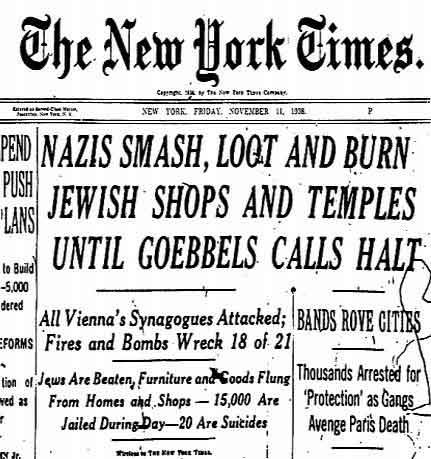
Chaplin plays two characters in the film: Adenoid Hynkel (Adolf Hitler) and an obscure Jewish barber who resembles the great dictator. Chaplin undertook a meticulous study of Adolf Hitler’s manner of speaking in preparation for the film, and some of the most brilliant scenes are of Hynkel’s speeches, spoken in authentic German-sounding gibberish, delivered with all the wild-eyed passion, choking and spitting of Hitler himself. Hynkel is surrounded by cronies with amusing names: Goebbels is Herr Garbitsch (pronounced Garbage), Göring is Herr Herring, and leading the opposition is Benzino Napaloni — a portmanteau of Benito Mussolini and Napoleon Bonaparte.

In a plot twist near the end of the film, the Jewish barber is mistaken for Adenoid Hynkel and is called on to make a victory speech to thousands of Germans cheering the successful invasion of neighboring Osterlich (Austria). Bumbling to center stage completely unprepared, the imposter Herr Hynkel delivers this address to his buoyant followers:

I’m sorry but I don’t want to be an Emperor – that’s not my business – I don’t want to rule or conquer anyone. I should like to help everyone if possible, Jew, gentile, black man, white. We all want to help one another, human beings are like that.

We all want to live by each other’s happiness, not by each other’s misery. We don’t want to hate and despise one another. In this world there is room for everyone and the earth is rich and can provide for everyone.

The way of life can be free and beautiful.

But we have lost the way.

Greed has poisoned men’s souls – has barricaded the world with hate; has goose-stepped us into misery and bloodshed.

We have developed speed but we have shut ourselves in: machinery that gives abundance has left us in want. Our knowledge has made us cynical, our cleverness hard and unkind. We think too much and feel too little: More than machinery we need humanity; More than cleverness we need kindness and gentleness. Without these qualities, life will be violent and all will be lost.

The aeroplane and the radio have brought us closer together. The very nature of these inventions cries out for the goodness in men, cries out for universal brotherhood for the unity of us all. Even now my voice is reaching millions throughout the world, millions of despairing men, women and little children, victims of a system that makes men torture and imprison innocent people. To those who can hear me I say “Do not despair”.

The misery that is now upon us is but the passing of greed, the bitterness of men who fear the way of human progress: the hate of men will pass and dictators die and the power they took from the people, will return to the people and so long as men die [now] liberty will never perish…

Soldiers – don’t give yourselves to brutes, men who despise you and enslave you – who regiment your lives, tell you what to do, what to think and what to feel, who drill you, diet you, treat you as cattle, as cannon fodder.

Don’t give yourselves to these unnatural men, machine men, with machine minds and machine hearts. You are not machines. You are not cattle. You are men. You have the love of humanity in your hearts. You don’t hate – only the unloved hate. Only the unloved and the unnatural. Soldiers – don’t fight for slavery, fight for liberty.

In the seventeenth chapter of Saint Luke it is written ” the kingdom of God is within man ” – not one man, nor a group of men – but in all men – in you, the people.

You the people have the power, the power to create machines, the power to create happiness. You the people have the power to make life free and beautiful, to make this life a wonderful adventure. Then in the name of democracy let’s use that power – let us all unite. Let us fight for a new world, a decent world that will give men a chance to work, that will give you the future and old age and security. By the promise of these things, brutes have risen to power, but they lie. They do not fulfil their promise, they never will. Dictators free themselves but they enslave the people. Now let us fight to fulfil that promise. Let us fight to free the world, to do away with national barriers, do away with greed, with hate and intolerance. Let us fight for a world of reason, a world where science and progress will lead to all men’s happiness.

Soldiers – in the name of democracy, let us all unite!

Look up! Look up! The clouds are lifting – the sun is breaking through. We are coming out of the darkness into the light. We are coming into a new world. A kind new world where men will rise above their hate and brutality.

The soul of man has been given wings – and at last he is beginning to fly. He is flying into the rainbow – into the light of hope – into the future, that glorious future that belongs to you, to me and to all of us. Look up. Look up.

Israel declares that it will temporarily halt its orgy of destruction for Obama’s inauguration

kristallnacht
Israel ‘wants rapid Gaza pullout’ and Israeli Prime Minister Ehud Olmert has said he wants Israeli troops to leave Gaza “as quickly as possible”. So are we really to believe that Israel has permanently turned back from its genocidal onslaught against Palestinians after its own Jewish version of Kristallnacht?

Or is this just the lull in the nastiness as Barack Obama continues to carry on the ‘Global War’ to advance the American Corporate Empire forward against all rivals, while the US population watches on like passive cattle? Why is our society seemingly so ready to turn the entire world into a Hell Hole for its own corporate master class?

Colorization of the Grapes of Wrath

migrant-motherI think it’s time to colorize The Grapes of Wrath. And I don’t mean the Turner Classics process exactly. It may help to dumb down the artistic contrast of the black & white for a contemporary audience palate of splashy Disneycolor, but how about trying to make Steinbeck’s theme more accessible to today’s spoon-fed viewers? Let’s colorize the skin of the poor migrant workers to reflect the inhumanly-treated populations of today’s displaced im-migrants of color.

I can’t remember where I come down on colorizing the old movies. No one’s insisted on infusing CMYK into Ansel Adams or Picasso’s sketchbook, why are masterpieces filmed in black and white supposed to be pigment deficient? We don’t presume to dub dialog over the silent movies made before the age of the talkies. As yet. Of course, Ted Turner was concerned for reviving interest in old intellectual properties, many of which were already in-artful. And perhaps his salesmanship maneuver has been proven effective. When my family sat down to watch Grapes of Wrath, the grey image tuned a number of youthful eyes away.

Like Dorothea Lange’s famous photographs, John Ford’s film depicted disadvantaged Okies with whom the American audience could identify. We may not know what it feels like to be forced off our homes, but how the families cope with the hardship, we all can recognize. I’m curious how the film was received by Californians in 1940, coming less than ten years after the original plague of destitute Oklahoma refugees. How would the characters have faired with our sympathies if they had been played as coarse hillbilly Crackers with guns and a poor person’s chip-on-the-shoulder desperation?

The poor protagonists of The Grapes of Wrath were weakened skinny po-folk, who staked their relief on the strength of a single hopeful job listing flyer, who protested their oppression without resorting to violence, and who accepted hardship as their lot. Seeing into their daily lives, viewers were shown a dignified, earnest people who treated others with respect and compassion. Antagonist characters in the film were less charitable, taking advantage of the hard-luck migrants with guile, violence and authority. People into which the Oklahoma refugees traveled, New Mexico, Arizona and California, treated the migrants like vermin. Even as onlookers might express admiration for the Okies’ determination to cross Death Valley, the better fed Californians held them in disdain for not knowing enough to be in such a predicament. The Okies were blamed for their own poverty. They threatened to burden everyone’s already depleting resources. Only the viewers understood the unfair actions which had landed the otherwise self-sufficient sharecroppers to have to leave their livelihoods.

The circumstances of the Dust Bowl cum great depression era forced removal of the small Oklahoma farmers is eerily familiar to today’s economy and its foreclosures. Homesteaders find themselves made homeless, as a consequence of business decisions between corporations, banks and regulators. The Oklahoma farmers wanted to point their shotguns to warn the financial disruptors from their land, but found the conduits of the dirty work were their own neighbors and relatives. Everyone was merely following orders from someone higher up. That the system could be at fault, left the victims with no clear recourse.

Here’s the classic eviction exchange.

THE MAN
I can’t help that. All I know is I got my orders.
They told me to tell you you got to get off,
and that’s what I’m telling you.

MULEY
You mean get off my own land?

THE MAN
Now don’t go blaming me. It ain’t *my* fault.

SON
Whose fault is it?

THE MAN
You know who owns the land–the Shawnee Land and Cattle Company.

MULEY
Who’s the Shawnee Land and Cattle Comp’ny?

THE MAN
It ain’t nobody. It’s a company.

SON
They got a pres’dent, ain’t they?
They got somebody that knows what a shotgun’s for, ain’t they?

THE MAN
But it ain’t *his* fault, because the *bank* tells him what to do.

SON
All right. Where’s the bank?

THE MAN
Tulsa. But what’s the use of picking on him?
He ain’t anything but the manager, and half crazy hisself,
trying to keep up with his orders from the east!

MULEY
Then who *do* we shoot?

THE MAN
Brother, I don’t know. If I did I’d tell you.
But I just don’t know *who’s* to blame!

There was a lot more in The Grapes of Wrath which could inform a modern world view. The dreaded “Cats” for example. These were the Caterpillar tractors which were shown ravaging the land like locusts, arriving to demolish the houses of the reluctant dispossessed. Bulldozers are still used for that function today. In fact, Caterpillar manufactures armored versions to deploy in war zones for the destruction of houses. Palestinians have shown to be less reluctant than the poor Okies about trying to shoot the bulldozer drivers who are taking aim at their homes. Israel is expanding its settlements in Palestine with the aid of Caterpillar tractors which clear the land of its recalcitrant invadees.

Likewise, the union busting strategies portrayed in Grapes of Wrath are the same used today. Police officers are called in when work supervisors encounter workers who show too much skepticism for the employer’s scam. Troublemakers are arrested lest the workforce succeed in organizing itself. Instigators are paid to infiltrate a social event and start a fight, to give law enforcement the excuse to break in and make its calculated arrests. Casual viewers may think the famous 1939 film depicts a bygone age. Not at all.

Director John Ford made sure that the Okie migrants were deathly skinny, while everyone else, from gas station attendants to deputized union-busters, was immaculately dressed and well fed. But the audience could identify with both sides, because both were white. Imagine if the displaced peoples were not the same color.

Today’s migrant workers are hispanic. They are illegal immigrants, just like Okies passing through the Arizona checkpoint in Steinbeck’s novel.

GUARD
Where you going?

TOM
California.

GUARD
How long you plan to be in Arizona?

TOM
No longer’n we can get acrost her.

GUARD
Got any plants?

TOM
No plants.

GUARD
Okay. Go ahead, but you better keep movin’.

Could a modern audience appreciate the travails of a Mexican family in an exact same predicament? Mexican farmers have been forced from their land in an even less polite manner today. They have similar claim to their homesteads, some of them even have indigenous claims. But American and Mexican corporate interests have been forcing the Mexicans to flee. The migration north is not about seeking fortune; picking lettuce it most certainly is not. The work our illegal immigrants are willing to do is out of desperation and subsistence. Corporate America reserves our agricultural work for migrants because it’s cheaper. Otherwise American citizens have devised unions to ensure that workers are paid an honorable wage. Exploitation of the illegal immigrant is simply a bypass of decent labor practices meant to protect everyone.

In selfish, protectionist terms, hiring illegal immigrants undermines the strength of unionized labor. Ultimately the exploitation of others dehumanizes us all.

I wish Americans could see The Grapes of Wrath as a projection of the ongoing injustices suffered by all exploited migrants. As well-fed American citizens leading prosperous lives, wouldn’t it be our responsibility to help the victims of our system? Instead, we are those cold-hearted leather-jacketed Californians herding them into lives of slow death by hard labor and starvation.

The Grapes of Wrath offered a strong Socialist message, disguised in a protagonist who did not yet have all the answers. Before setting out to light the way, Henry Fonda’s character says this to his mom:

TOM
…maybe I can do sump’n. Maybe I can jus’ fin’ out sump’n.
Jus’ scrounge aroun’ an’ try to fin’ out what it is that’s wrong,
an then see if they ain’t sump’n could be done about it.
But I ain’t thought it out clear, Ma. I can’t.
I don’t know enough.

MA
How’m I gonna know ’bout you?
They might kill you an’ I wouldn’t know.
They might hurt you. How’m I gonna know?

TOM
Well, maybe it’s like Casy says, a fella ain’t got a soul
of his own, but on’y a piece of a big soul–the one big soul
that belongs to ever’body–an’ then…
Then it don’t matter. Then I’ll be all aroun’ in the dark.
I’ll be ever’where–wherever you look. Wherever there’s
a fight so hungry people can eat, I’ll be there.
Wherever there’s a cop beatin’ up a guy, I’ll be there.
I’ll be in the way guys yell when they’re mad
–an’ I’ll be in the way kids laugh when they’re
hungry an’ they know supper’s ready.
An’ when our people eat the stuff they raise,
an’ live in the houses they build, why, I’ll be there too.

I had to see The Grapes of Wrath in high school. It was required. Are schools today trying to infuse students with social wisdom? How about a Grapes Redux starring people of color? Imagine this closing line, spoken by a dark skinned mother, about the hardship that is her people’s fate:

MA
…Maybe that makes us tough. Rich fellas come up an’ they die, an’ their kids ain’t no good, an’ they die out. But we keep a-comin’. We’re the people that live. Can’t nobody wipe us out. Can’t nobody lick us. We’ll go on forever, Pa. We’re the people.

Early voting march merely a Dem rally

CC early voting march
COLORADO COLLEGE- Energized students held a successful march on Monday from the CC campus to a downtown early voting location. Though billed as a non-partisan EARLY VOTING MARCH, the event was purely a pro-Obama rally, and as such, was rigidly controlled.

For example, unannounced speakers included pro-war US Senator Ken Salazar and other local Dems. The marchers were dispatched ahead of schedule, to thwart other participants and sent along Cascade Avenue instead of the highly more visible Tejon Avenue a block away.

It was great to see college students activated and excited, but really they were just wound up and herded like cattle to the polls. As if the local Dems didn’t trust the students to listen their speeches and remember to go vote. The organizers provided further encouragement by bringing a grill and promising a cookout for after the students emerged. Bluegrass accompaniment too. After all, the students had missed lunch to attend the rally. I’ve heard it explained once before by student organizers. If you want participation, serve food.

The upside I suppose was that the students didi take to the street. They felt the excitement of ringing chants. Of projecting a political purpose in public.

Once when a heckler pulled alongside, to boo and display a NOBAMA sticker, the students answered back with boos, until curtailed by their handlers. The same handlers collected the various Obama signs when the group neared the polling place. Will these activist types be lending their skills when things don’t go as planned on November 4th? Will they be rallying the student to take action when elections don’t offer remedy?

Bank steals roof from over the head of a 90 yr old woman who lived in her house for 38 years!

How many years do you need to pay a mortgage off in the US to make it go away? When this woman in Ohio first started making payments on her mortgage she was 52 years old, and yet at 90 the banks were stealing her property from her! Outrageous! The story turns even more tragic as the woman now has tried to commit suicide with a gun. Ohio woman, 90, attempts suicide after foreclosure

One wonders just how it might have been, too, if the gun loving nuts had worried more about mortgages and banks instead of their stupid guns? We might have control over the banks and control over gun proliferation both and it would be a better world altogether!

The man in Nebraska who abandoned his 9 kids at the hospital this week was worried about losing his home, too. Kin of 9 abandoned kids say they would’ve helped

What a country we live in today! These types of stories are going to be popping up soon all over the place. No bailout for the people down below at all. Look, too, at the Gulf Coast. The rich have no compassion for the Common People! They seem to think of us as cattle?

The DNC’s Denver meatpacking facility

PatriotsCalling it the Gitmo on The Platte might be a bit of hyperbole here, but look what the Democratic Party has prepared for US dissidents that will arrive protesting their lousy corporate politics? Tasers and cattle pens. I can hardly stomach being around you DP voting fools at all these days. You are the worst!

Liberals want to vote for a political party like this? Don’t you nitwit voting addicts of the Democratic Party assign any responsibility for this sort of ‘homeland security’ mentality to the Democratic Party itself, or will you just let these Barack-Hillary thugs hide themselves behind the Denver police without calling them out on it? You know that they really do control how their convention is actually policed, don’t you? Shame on you for voting for this come November!

BTW, the picture heading this commentary is taken from a Democratic Party web site, where this is what they have to say about the US occupation of Iraq…

‘The Democratic Party supports our men and women serving in the military. Our country, our state and our county are indebted to them for their valor and sacrifice. We stand behind our troops and wish them a safe and speedy return.’

Translated from the language of political bullshit, the Democratic Party is saying that it doesn’t give a damn about the Pentagon looting our American national wealth on behalf of the military welfare sucking corporations and that it doesn’t give a shit if the US government turns Iraq and its people into a total scrap heap. What a scummy political party you ‘liberal’ folk vote for again and again and again! You are hardly voting for the lesser of 2 evils but are voting for the evil itself. Right, Dennis? (That question is directed to Dennis Apuan, former brake on antiwar protest here in Colorado Springs when he was PPJPC director, and now a local Democratic Party candidate hoping to become a bigger cheese.)

It’s time to stop being polite about people like Dennis or Poor Richard, local court jester for Ken Salazar, DP Senator of Colorado. These people are part of the apparatus that wants to cage up protest in Denver against the war, and cattle prod US patriots locked up in the pens. Yes they are and we shouldn’t let these cruds pretend otherwise. There is no way I would vote for Dennis Apuan, who did a most shitty job when he headed up the local peace group, too. He’s no better than having a Republican in there, and your party can shock me for saying so, Dennis!

Index to Not My Tribe mastheads

A few words about the changing NMT masthead. This is a partial listing of what we are not. Themes include war, environmental devastation, and the soulless invasion of man’s spirit. Special attention to riot police, Chinese repression, offshore drilling, and Las Vegas.

Guernica
Crazed warriors
AU peacekeepers
Pershing cavalry
CSPD tear gas 2003
Reenlistment Iraq
Fallujah offensive
Navy Seal divers
National Guard Kent State
Black Hawk helicopters
Helmeted riot police
Mexican riot police
Miami riot police
NYPD blue
Monster truck airborne
Lurking crocodile
Gestapo dead-checking
Chinese riot police
Debutante prom dresses
Cog wheels
Reef bleaching
Traffic exhaust
Mall of America
Gridlock on 405
Excavation
Chinese oil field
Landfill dump
Critical Mass vs NYPD
Mexican city
Tract housing sprawl
Chinese recruits
Shanghai cityscape
Chinese police
Beijing police exercises
Beijing Olympic security
Beijing riot police
Chinese Segway assault
Beijing smog
Forbidden City
Tiananmen Square standoff
Canadian oil rigs
Offshore oil rigs
Chinese oil platforms
Oil rig sunset
Irish offshore rigs
Three offshore oil rigs
Santa Barbara rig spill
Aerial view of spill
Four offshore oil rigs
More offshore platforms
Offshore oil spill
Oil tanker spill
Oil spill close-up
Oil spill clean-up
Oil rigs illuminated
Motorcycles in motorcade
Open pit mining
Long Beach oil derricks
Signal Hill oil
Early industrial pollution
Vegas circa 1950
Vegas downtown
Vegas circa 1980
Vegas neon
Vegas strip
Blackjack table
Neon cityscape
Los Angeles smog
Southern Cal suburb
Mall
Hazmat fire
Iraq salute
Redeployment
Enlistment oath
Police funeral motorcade
Tiananmen soldiers
Factory hog farming
Cattle feed lot
Caged chickens
Poultry processing
RNC riot sticks
Riot gas
DNC Denver
DNC Denver
DNC mounted
DNC Denver
DNC Denver
DNC Denver
DNC Denver
RNC Minneapolis
Army pledge
Junior Marines
Junior Marines
Junior Marines
Junior Marines
Vacant parking
Hi-tech border patrol
Bishops
Boxing
DNC beating
Military academy
Military fitness
Marching
Church and Tank
Bomber
Chinese soldiers
Putin between 41 and 43
President
Zionists
Roadside harassment
Food processing plant
Cheerleaders
National anthem
Boots
Shorts
Conference table
Food packing
Streetwalkers
Tanning bed
Theater seating
Lonely reef
Monster truck
Motorization
Coral bleaching

Rodeo just says “No” to cattle prod (allegations)

According to a screamin’ big headline in todays Gag-zette.

And just last year we had a miniature debate with some woman who said that using things like a rope tied around the testicles or touching the genitalia or rectum of an animal with some high-amp low-voltage charges wouldn’t cause the animal any Pain.

I really do envy the Dr Doolittle types, the ones who can get word straight from the horses mouth that, ‘why no, Little Missy, it doesn’t hurt us a bit to have our nutsacks squeezed…’

But unfortunately, I can’t understand Simplified Cattle or Horse Talk, so I’ll just have to judge by the way their eyes roll and the high pitched screaming noises they make, and the way they suddenly go berzerk and try to KILL somebody immediately following these “painless” procedures.

And, going by that evidence, I can state with absolute confidence that, why yes, Little Missy, that shit really does hurt.

Is it Rodeo time again? Damn…

Seems like only last year that somebody angrily was denouncing the contention that putting a pull-up cinch around the testicles of a bull in order to make him fight the rider more aggressively somehow causes PAIN to the animal.

Ummm… yeah.

And the presumably young lady who was so angry about our reporting of it, stating that somehow she knows for certain that a large mammal could not possibly be in pain, even though the bulls seem to be put into a killing rage by the practice, you know, having his ballocks squeezed.

I guess a bull told her that, calmly and assuredly, “Why no, little lady, doesn’t hurt us at all. We just naturally attack humans and try our level best to stomp their brains out.”

Before any of you yay-hoo goat-ropers start thinking that I’m some kind of Yankee elitist, allow me to point something out. You have shit for brains.

I hear so often (because I grew up in Texas, spent 40 damn years there, also Kansas, New Mexico and Here) that Rodeo is a reflection of ranch-hand work.

Must be reflected in one of those Fun-House mirrors at the associated carnivals, I guess.

My grandpa, his brother and their brother-in-law, Tom Blaylock, did trick riding for rodeos from time to time. One of their legendary accomplishments was when somebody who was very intoxicated challenged them to ride their horses on the Ferris Wheel. They were also very intoxicated and accepted said challenge. Fortunately their horses were smart enough not to get drunk. They also didn’t panic when they got on the ferris wheel.

That’s a Good Thing. Elseways I would have lost my grandpa and two uncles in the same incident long before I was born.

Uncle Tom grew up to become foreman at the Rolling Hills Ranch in Keene, Texas. Ok, in the middle of a trapezoid between Athens, Cleburne, Fort Worth and Keene. Had a Star Route address when they switched over from RFD. He died in 2002. In the summer of ’69 I was on the ranch, 8 years old, Woodstock was goin’ on but you wouldn’t have known it if you were just a kid on a ranch in Johnson County Texas. At the time I had never seen a man with long hair, Bearded men would have shocked livin’ hell out of me.

So I have plenty of first-hand experience with the Bucolic Lifestyle, plenty of truly rednecked close relatives, most of whom had plenty of experience with both Rodeo Cowboying and the Real Job. The two paths split and get further apart, one really really Far Away From Real Ranch Work issue is that of actually attempting to Ride Cattle.

A really important giveaway on that fact is that cattle in general and Bulls in particular just don’t have a docile attitude about people jumping on their backs. Especially if they have a Nutsack Cinch applying pressure to their testicles.

Now, here’s a challenge to all you wannabee cowboys out there… why not, when you’re on that bulls back, do it without the assurance that the clowns and other members of The Show aren’t going to try their level best to save your stupid ass once the inevitable happens and the bull throws you off, then turns around and tries to kill you.

Then, while you’ve got three-quarters of a ton of hate and mean and ugly dancing on your ribcage, maybe the last thing that goes through your pointy little head (besides a hoof) will be “You dumbass, whoever told you that Cattle were meant for ridin’?”

While we’re on the subject of gross and stupid habits, y’all can quit dippin’ snuff too.

Dudes, you project an image of ignorance on all Texans when you do stupid shit like that. Knock it the Hell off.

Mene, Mene, Tekel, Upharsin Mr. Bush

COLORADO SPRINGS- While a motorcade delivered President Bush to the Broadmoor Hotel, we were at the AFA airing our fresh age-old message.
Air Force Academy Commencement
It’s the proverbial proverbial Writing on the Wall. If you think Aramaic will be indecipherable to freeway drivers, “Mene, Mene, Tekel, Upharsin” was Greek to the original king for whom the fortune foretold his reign would be “numbered, weighed and divided.”

Who knew we’d find a protest message in the Old Testament?

DANIEL 5

1 King Belshazzar gave a great banquet for a thousand of his nobles and drank wine with them.

2 While Belshazzar was drinking his wine, he gave orders to bring in the gold and silver goblets that Nebuchadnezzar his father had taken from the temple in Jerusalem, so that the king and his nobles, his wives and his concubines might drink from them.

3 So they brought in the gold goblets that had been taken from the temple of God in Jerusalem, and the king and his nobles, his wives and his concubines drank from them.

4 As they drank the wine, they praised the gods of gold and silver, of bronze, iron, wood and stone.

5 Suddenly the fingers of a human hand appeared and wrote on the plaster of the wall, near the lampstand in the royal palace. The king watched the hand as it wrote.

6 His face turned pale and he was so frightened that his knees knocked together and his legs gave way.

7 The king called out for the enchanters, astrologers and diviners to be brought and said to these wise men of Babylon, “Whoever reads this writing and tells me what it means will be clothed in purple and have a gold chain placed around his neck, and he will be made the third highest ruler in the kingdom.”

8 Then all the king’s wise men came in, but they could not read the writing or tell the king what it meant.

9 So King Belshazzar became even more terrified and his face grew more pale. His nobles were baffled.

10 The queen, hearing the voices of the king and his nobles, came into the banquet hall. “O king, live forever!” she said. “Don’t be alarmed! Don’t look so pale!

11 There is a man in your kingdom who has the spirit of the holy gods in him. In the time of your father he was found to have insight and intelligence and wisdom like that of the gods. King Nebuchadnezzar your father—your father the king, I say—appointed him chief of the magicians, enchanters, astrologers and diviners.

12 This man Daniel, whom the king called Belteshazzar, was found to have a keen mind and knowledge and understanding, and also the ability to interpret dreams, explain riddles and solve difficult problems. Call for Daniel, and he will tell you what the writing means.”

13 So Daniel was brought before the king, and the king said to him, “Are you Daniel, one of the exiles my father the king brought from Judah?

14 I have heard that the spirit of the gods is in you and that you have insight, intelligence and outstanding wisdom.

15 The wise men and enchanters were brought before me to read this writing and tell me what it means, but they could not explain it.

16 Now I have heard that you are able to give interpretations and to solve difficult problems. If you can read this writing and tell me what it means, you will be clothed in purple and have a gold chain placed around your neck, and you will be made the third highest ruler in the kingdom.”

17 Then Daniel answered the king, “You may keep your gifts for yourself and give your rewards to someone else. Nevertheless, I will read the writing for the king and tell him what it means.

18 “O king, the Most High God gave your father Nebuchadnezzar sovereignty and greatness and glory and splendor.

19 Because of the high position he gave him, all the peoples and nations and men of every language dreaded and feared him. Those the king wanted to put to death, he put to death; those he wanted to spare, he spared; those he wanted to promote, he promoted; and those he wanted to humble, he humbled.

20 But when his heart became arrogant and hardened with pride, he was deposed from his royal throne and stripped of his glory.

21 He was driven away from people and given the mind of an animal; he lived with the wild donkeys and ate grass like cattle; and his body was drenched with the dew of heaven, until he acknowledged that the Most High God is sovereign over the kingdoms of men and sets over them anyone he wishes.

22 “But you his son, O Belshazzar, have not humbled yourself, though you knew all this.

23 Instead, you have set yourself up against the Lord of heaven. You had the goblets from his temple brought to you, and you and your nobles, your wives and your concubines drank wine from them. You praised the gods of silver and gold, of bronze, iron, wood and stone, which cannot see or hear or understand. But you did not honor the God who holds in his hand your life and all your ways.

24 Therefore he sent the hand that wrote the inscription.

25 “This is the inscription that was written:
Mene , Mene , Tekel , Parsin

26 “This is what these words mean:
Mene : God has numbered the days of your reign and brought it to an end.

27 Tekel : You have been weighed on the scales and found wanting.

28 Peres : Your kingdom is divided and given to the Medes and Persians.”

29 Then at Belshazzar’s command, Daniel was clothed in purple, a gold chain was placed around his neck, and he was proclaimed the third highest ruler in the kingdom.

30 That very night Belshazzar, king of the Babylonians, was slain,

31 and Darius the Mede took over the kingdom, at the age of sixty-two.

Hay bellies

I’ve read quite a bit about vegetarianism over the years. Nutritionists assert that in order to be healthy a vegetarian must actively seek the full complement of amino acids that make up protein, Hay ride the building blocks of our bodies, by consuming protein. This sounds like a reasonable assertion, but does it hold true in nature? Do living organisms, all of which are basically organized proteins, require ingested protein to survive?

Think of cows. What do they eat as they grow fat and delicious, merrily trotting the path to becoming culinary delights for the non-vegetarian population? Do they eat thick steaks, succulent chickens, light flaky fish, or the other white meat, pork? No, of course they don’t. They eat only plants — grass and hay — and only as much as they need.

Recent research suggests that our grains, fruits and veggies have become less nutritious over the past century. Man’s interference with the growth of plants — breeding for certain marketable traits, using chemical pesticides, artificially propping up the depleted soil with chemical fertilizers, speeding the ripening process — has resulted in not only dangerous food, but less nutritious food.

Animals are instinctive. They know what they need. They neither over- nor under indulge. I mean, have you ever seen an overstuffed cow, lying on her side in a meadow, moaning oh my god, I feel like a fat cow? No, nature provides every needed nutrient, in proper portions and proportions, for our cattle.

Or at least she used to. These days, ranchers do, in fact, encounter fat cows, dissatisfied cows, cows with big hay bellies. When cows aren’t getting needed nutrients from the grass they eat, they eat more, and more again, until they do. The fact that ranchers are seeing hay bellies is an indication that food ain’t what it used to be.

We have a similar problem. As Big Food alters the natural food supply to ensure that food looks pretty, has a long shelf life, is conveniently packaged, transported, and prepared, we are starving to death. Without micronutrients like resveratrol to signal satiety, without phytochemicals, enzymes, vitamins and minerals to nourish and support our biochemical processes, we’re eating more and more to gain needed nutrients, and we’re getting fatter and unhealthier in the process.

Hunger, shortages and Wall Street

What can we expect of a capitalist system gorging itself on the misery of others? The energized “food speculators” have found another way now to skim money off of commodities (and off those producing them) by racing out of their burnt down, failing criminal derivatives scams – that are and will continue to cause job loss, retirement and savings loss, home equity loss – and into food.

This should be stopped immediately by Congress in the interests of the nation and the poorest countries that are now experiencing riots and unrest over high prices and shortages. But you can bet the millionaires in Congress are profiting from this hideous behavior and won’t do a god damn thing about it other than throw money, our money, at it. Worthless solutions from bankrupt minds.The liars in the mainstream media blame everything else but the real cause …the Wall Street vipers. This is our American culture …profit at all and any costs.

Ethanol is turning out to be a speculative tool as well, besides taking land away from corn grown for cattle feed and humans. Sugar cane, other forms of bio-fuel will become speculator targets as well. Even water! All of this investing in commodities is driven by the falling dollar created by the Fed who crashed the dollar!! Lowering interest rates and opening cheap credit windows to Wall Street floods the economy with more worthless paper. This is driving the commodities bubble as well. Investors are trying to hedge against losses from the subprime/derivatives scams. It’s all related… not as the mainstream news claims that weather or high oil prices are driving this. Bullpucky.

“According to Grünewald, “Raw materials are the mega-trend of the decade,” and his company intends to intensify its involvement in both water and agricultural stocks. MIC investment in wheat alone has already yielded profit levels of 93 percent for the 2,500 members of the club.” – WSWS

Read these two articles and see if Wall Street is mentioned: NY Sun: food rationing or Yahoo: food crisis.

Commissioner rallies bikers to lobby

CORRAL BLUFFS, COLORADO- Residents trying to hold on to open space –Save Corral Bluffs– east of Colorado Springs have been fighting efforts to build a motorcycle raceway adjacent a pre-existing motor cross park. Local archeologists have been leading tours of the area in hope of preserving the site. Mark Lewis has helped to videotape the effort and forwarded this interesting development.

One of the county commissioners deciding the fate of Corral Bluffs has weighed in on an online dirt biker message board. It’s though this might be grounds to ask for his recusal on the matter. El Paso County Commissioner Jim Bensberg had this to say:

“Thursday morning, April 24, at the County Office Building, about 9 a.m., the Board of County Commissioners will decide whether to spend $35,000 of your OHV sticker money on a park planner pursuant to our original grant request.

The anti-access folks will be out in force to protest this next step in the plan. The point needs to be made, by someone other than me, that 18” of single track for 20 miles = 3.5 acres out of a proposed 900-acre park. Can you say “Open Space?” Sure ya can!

If the motorcycle community wants to be heard, this is a prime opportunity. Otherwise, all the Board will hear is the constant whining from the likes of Lee Milner and the NIMBYs.

So, spread the word. If motorcyclists continue to be underrepresented at these critical public meetings, they will get nothing in return. Democracy requires participation!

Jim B.”

Mark’s got lots of videotapes of the planning meetings and town forums at CSAction.org. What’s at stake is described in great detail at SaveCorralBluffs.com. The area is so-named because cattle drives could easily corral their cows in the natural confines of the bluffs. There are even cliffs discovered to have been used for buffalo jumps by Native Americans.

Homage to decline

Linsay Lohan recreates the Bert Stern Marilyn Monroe Last Sitting out-takesWhat were they after with this shoot? Does Lindsay’s fall parallel Marilyn’s? Has photographer Bert Stern forgotten that his first Last Sitting became iconic for being the Last Sitting? Did the original out-takes, which were iconic also with the Xs marking their initial rejection, elevate themselves beyond whose extinguished vitality they depicted?
 
Stern recreated the flat hair and unbecoming figure of a fallen goddess. He could have held a cattle call for that. I’m reminded of the Tarantino homage to seventies porn, appealing only for its familiarity. Marilyn Monroe’s last shoot was beautiful for the glimpse we caught of mankind’s fragility. Post-teen queen Lohan is just slumming. Next they can pose Robert Downey Jr in a silver ’55 Porsche Spyder.

No more reporting on the beef recall?

Suspect beef product ON HOLD on school shelvesThe largest beef recall in history has taught us what, so far? That 37 million pounds went to the USDA school lunch program, which was distributed to schools unknown. We quietly presume the USDA had been pawning off the questionable product to the poor and dismissible among our population. But why won’t they release the names of the schools? In whispered tones with food program insiders, you learn why. Because the USDA product goes to ALL schools. (NOTE: Corpus Christi School found the recalled meat on their shelves and made the switch to a safer supplier, shouldn’t your school do the same?)

While all or any of the Colorado schools may have taken delivery of the Hallmark suspect product, the USDA school food program in Colorado gets the bulk of its meat from Advanced Meatpacking out of Oklahoma. Advanced is regarded by industry watchers as likely worse than Hallmark. We’re not talking about the tip of an iceberg, we’re [not] talking about the as yet largely unexposed large underbelly of American factory farming.

What’s so bad about US meat that foreign markets won’t buy it? Our government regulators won’t test it adequately. Individual meatpackers who want to submit their product for voluntary testing are prevented by the USDA, for fear of creating a stigma around non-tested meat.

Other countries test their 100% of their herd animals for BSE. They also prohibit the feeding of rendered animals to other animals. This is the process by which BSE spreads. The US does not prohibit the use of rendered feed. US calves are raised on a diet of milk and blood: milk fortified with the blood of their predecessors. It redefines “adulterated” I think.

US methods to prevent mad cow disease resemble more the measures necessary not to see it. The official word is that the USA doesn’t have mad cow disease. Cattle which display the traits resembling mad cow disease in Europe, here are called “downer cows.” Our safety guidelines are thus: keep those cows from reaching the meat packers. Easy enough, unless you run across slaughterhouse workers with the initiate to use forklifts and chains to harvest downed cows like any other. Then you need video cameras to catch them.

But video cameras cannot catch the biggest flaw in this screening process. Most cattle infected with BSE do not begin to show symptoms until after they are two years old. Most cattle in the US reach the slaughterhouse before they are two.

Even with a breach of our paltry preventive procedures, the USDA is still unwilling to say their prescribed screening is insufficient.

Perhaps the USDA fears that implementing European testing standards would reveal a huge chunk of US beef to be tainted with mad cow. This would profoundly impact the food industry and our economy as a whole. Perhaps a few thousand CJD fatalities five years from now is a small price to pay for stability now. Besides, those in the know have money to buy organic beef from verifiable sources. The prosperity of the market has always been borne on the backs and at the expense of the common mortal. CJD means fewer to reach retirement.

Newspapers don’t want to touch this subject, many of their advertisers are restaurants which can’t afford to deal in the more expensive meats. Alternative news-weeklies rely on supermarkets for their distribution sites.

(NOTE: Except Ralph Routon and the Independent, March 6)

No one wants to shake consumer confidence in the food supply. The problem extends beyond beef, beyond poultry, beyond farmed fish, beyond ocean fisheries, beyond imported produce, beyond domestic agribusiness, beyond pesticides, irradiation and biogenetics. So the media is not going to start with any of it. As it is with the American health care system, your health is up to you.

By the way, most of the meat being recalled has already been consumed. Of what’s left, the USDA is only asking schools to set it aside for the time being. It is being neither recalled, nor destroyed. Probably it would be too alarming to ask cafeteria workers to destroy what only a day before they had been serving up for their kids for years.

This is good news for you, if you want to find out which schools were serving the bad meat. You still have a chance to call those responsible for the food service at your child’s school. Public or private, I assure you the probability is similar. Ask them if they’ve got the recalled Hallmark stock on hold.

How many BSE burgers did the kids eat?

What is the extent of the current beef recall? I’ve read that 143 million pounds of beef corresponds to two hamburger patties for each man, woman and child in America. Bovine Spongiform Encephalopathy That’s the meat of questionable safety produced by the Westland Meat Packing operation in Chino, California since February 1st, 2006, most of it already consumed, and we’re reminded, there’s no need to panic. Why did the USDA set the date at Feb 1st, if only because some of that product is still on the shelves? Since what actual date is Westland thought to have been putting “downed” cows into the food supply?

The Humane Society tried to get the attention of California law enforcement in January, based on a video they’d obtained late last year. We could presume that the Hallmark Slaughterhouse was already coercing downed cattle into its lines which is what prompted the undercover activist to bring a camera in the first place. How long were the scapegoated workers, with their forklifts, chains and water hoses circumventing USDA regulations? How many BSE burgers would that make, per each of us?

The sum total ground beef patties through Jack-in-the-Box, In-N-Out, Regal, King Meats, and the Federal School Lunch Program would be hard to calculate. The task remains to find out who were the 150 school districts receiving the 27 million pounds of BSE contaminated meat.

State school lunch programs which use meat product from WestlandSince not everyone is eating from school cafeterias, we are left to calculate how many times more BSE burgers or BSE pepper steaks each of the exposed kids would have had to consume among themselves.

No need for alarm, but let’s clarify what the AP is reporting: Downed cattle do not “pose a higher risk of contamination from … mad cow disease because they typically wallow in feces and their immune systems are often weak.” Downed cattle are kept out of our food system because they are symptomatic of having Bovine Spongiform Encephalopathy (BSE), commonly called mad-cow disease.

In Europe, livestock which cannot walk are forbidden from all food systems, including the rendering of carcasses to feed other animals, to prevent BSE from reaching the human food chain. To this end, Europeans test 100% of their herd animals, unlike the US which tests less than 2%, and whose industry uses terms like “downed cows” and “downers” and “non-ambulatory” in lieu of “mad” or BSE. This is why several international markets will not import US beef. Ingestion of meat with BSE leads to the fatal brain-wasting Jakob-Creutzfeldt Disease in humans.

———-
Here are the products being recalled. (Up next: recalled from whom.)

Various weight boxes of WESTLAND MEAT CO.,
BURRITO FILLING MIX.
PACKED FOR JACOBELLIES SAUSAGE CO., 74/26 GROUND BEEF.
RAW GROUND BEEF MEATBALL MIX FOR FURTHER PROCESSING.
COARSE GROUND BEEF ‘FOR COOKING ONLY’, FAT: 15%.
COARSE GROUND BEEF ‘FOR COOKING ONLY’.
COARSE GROUND BEEF TO BE FURTHER PROCESSED INTO COOKED ITEMS, FAT: 15%.
COARSE GROUND BEEF 85/15.
COARSE GROUND BEEF 93/7.
FINE GROUND BEEF ‘FOR COOKING ONLY’, FAT: 15%.
FINE GROUND BEEF ‘FOR COOKING ONLY’.
90 – 10% GROUND BEEF, 3/16 GRIND.
GROUND BEEF 1 LB. PACKAGE, FAT: 15%.
GROUND BEEF, FAT: 15%.
RAW BONELESS BEEF TRIMMINGS, ‘FOR COOKING ONLY’.
RAW BONELESS BEEF, ‘FOR COOKING ONLY’.
BEEF GROUND 50/50% LEAN.
BEEF GROUND 73/27% LEAN.
BEEF GROUND 81/19% LEAN.
BONELESS BEEF 90/10.
GROUND PORK FOR FURTHER PROCESSING NOT TO EXCEED 30% FAT.

Various weight boxes of PACKED FOR: KING MEAT CO.,
BEEF TRI TIP.
BEEF TOP SIRLOIN BUTT.
BEEF STRIP SIRLOIN.
BEEF RIB EYE LIP-ON.
BEEF PISMO TENDERLOIN.
BEEF O/S SKIRT.
BEEF I/S SKIRT.
BEEF FLANK STEAK.
BEEF BOTTOM SIRLOIN FLAP.
BEEF STRIP LOIN BONE-IN, FURTHER PROCESS 1X1.
BEEF EXPORT RIB 2X2, FURTHER PROCESS.

Various weight boxes of REGAL brand USDA SELECT,
And REGAL brand USDA CHOICE OR HIGHER,
BEEF RIBEYE ROLL LIP-ON.
BEEF PLATE, OUTSIDE SKIRT.
BEEF PLATE, INSIDE SKIRT.
BEEF LOIN, STRIP LOIN, BONELESS.
BEEF LOIN, BOTTOM SIRLOIN BUTT, FLAP, BONELESS.
BEEF LOIN, TOP SIRLOIN BUTT, BONELESS.
BEEF LOIN, TENDERLOIN, FULL, SIDE MUSCLE ON, DEFATTED.
BEEF FLANK STEAK.
BEEF, BOTTOM SIRLOIN BUTT TRITIP BONELESS.

Various weight boxes of HALLMARK MEAT PACKING:
BEEF LIVERS.
BEEF FEET.
BEEF TRIPE.
BEEF REGULAR TRIPE.
BEEF HONEYCOMB TRIPE.
BEEF TAILS.
BEEF CHEEK MEAT.
BEEF TONGUES.
BEEF TONGUE TRIMMINGS.
BEEF BONELESS.
BEEF RIBS.
BEEF HEARTS.
BEEF CHEEKS.
BEEF PLATES.
BEEF SMALL INTESTINES.
BEEF LIPS.
BEEF SPLEENS.
BEEF SALIVARY GLANDS, LYMPH NODES AND FAT [TONGUES].

Six-gallon containers of HALLMARK MEAT PACKING BEEF BILE.

One- and six-gallon containers of HALLMARK MEAT PACKING BEEF BLOOD, .2% SODIUM CITRATE ADDED.

Mad cow in school cafeteria food chain

Downer cows and now called non-ambulatoryIt is the largest recall of beef in our nation’s history, notable also because most of the meat in question has already been consumed, and so can’t be recalled, eaten by children in school cafeterias.

The reasons given by the USDA speak vaguely about animal abuse and downplay the health concern. But why would mistreatment prompt a recall if there wasn’t fear about what’s come through? You have to read between the lines. There are no reported cases of illness, it will take five to seven years before Jakob-Creutzfeldt disease begins eating the brains of the school children.

Prompted by activist videos which show slaughterhouse animal abuse, the USDA is now trying to clean up the meat packing practices at Westland/Hallmark Meat Co. Workers at these California plants were documented moving “downer” cows through the slaughtering process, by kicking, shocking or other cruel means. Not only was this inhumane, it was against the precautions which the USDA has been trying to enforce to keep cattle with Bovine Spongiform Encephalopathy from getting into the human food chain.

In the UK, cows which can no longer walk for themselves are suspected of Mad Cow Disease, which has been linked to Jakob-Creutzfeldt fatalities in humans. The US meat industry has successfully kept mad cow under wraps on this continent by renaming the symptom “downer cow syndrome,” or in today’s instance, “non-ambulatory” cattle, averting the link to JCD.

Even the BBC is helping to confuse the issue, describing the fear about the Westland/Hallmark downer cows as being more likely to contract BSE, as opposed to being likely to already have it.

The current ban/recall, which affects public food programs in California, and the Jack-in-the-Box and In-And-Out-Burger fast food chains, is about animal abuse, yes, and illegal contraventions of the feeble US preventive measures against Mad Cow. The official statements raise concerns about E. coli and Salmonella. Between the lines you can see the alarm because our system’s only protection against BSE contamination was to keep downed cows out of our food chain. Apparently slaughterhouse operators don’t share that concern. Westland/Hallmark was caught not by the USDA, but by a lone Humane Society camera. Where else are there no cameras to record the beef industry pushing mad cows into the grinder?

Botulism erases brand name distinction

Nothing like a little botulism to blow the lid off brand identity. Does it make a difference whose label is on the can? Apparently not. Unless you can visualize factory assembly lines where some cans are prepared with better ingredients than others. Same suppliers, same machinery, same ovens, in this case the same inadequate cooking temperature.

Brand label transparency happened just recently with contaminated pet food, many brands it turned out are manufactured by the same company, Menu Foods. Now we have deficiently canned people-product from Castleberry. And lo, they make dog food as well.

The problem is with Castleberry’s chili sauce. If you don’t live on the east coast, Castleberry may not ring a bell with you. But they are responsible for these labels too:

Austex, Best Yet, Big Y, Black Rock, Bryan, Bunker Hill, Cattle Drive, Firefighter, Food Club, Georgia, Gold Star, Great Value, Kroger, Lowe’s, Meijer, Morton House, Paramount, Piggly-Wiggly, Prudence, Southern Home, Steak N Shake, Thirfty Maid, Triple Bar and Value Time.

And the dog food brand Natural Balance. This one looks like it’s table scraps. A doggy bag in a can.

How is this for dog food?