
There are periods in the life of human society when revolution becomes an imperative necessity, when it proclaims itself as inevitable. New ideas germinate everywhere, seeking to force their way into the light, to find an application in life. These ideas are opposed by the inertia of those whose interest it is to maintain the old order; they suffocate in the stifling atmosphere of prejudice and traditions. The accepted ideas of the constitution of the state, of the laws of social equilibrium, of the political and economic interrelations of citizens, can hold out no longer against the implacable criticism which is daily undermining them?…?Political, economic and social institutions are crumbling. The social structure, having become uninhabitable, is hindering, even preventing, the development of seeds which are being propagated within its damaged walls and being brought forth around them.
The need for a new life becomes apparent. The code of established morality, that which governs the greater number of people in their daily life, no longer seems sufficient. What formerly seems just is now felt to be a crying injustice. The morality of yesterday is today recognized as revolting immorality. The conflict between new ideas and old traditions flames up in every class of society?…?the popular conscience rises up against the scandals which breed amidst the privileged and leisured, against the crimes committed in the name of “the law of the stronger,” or in order to maintain these privileges. Those who long for the triumph of justice, those who would put new ideas into practice, are soon forced to recognize that the realization of their generous, humanitarian and regenerating ideas cannot take place in a society thus constituted. They perceive the necessity of a revolutionary whirlwind which will sweep away all this rottenness, revive sluggish hearts with its breath and bring to mankind that spirit of devotion, self-denial and heroism, without which society sinks through degradation and vileness into complete disintegration.
In periods of frenzied haste toward wealth, of feverish speculation and of crisis, of the sudden downfall of great industries and the ephemeral expansion of other branches of production, of scandalous fortunes amassed in a few years and dissipated as quickly, it becomes evident that the economic institutions which control production and exchange are far from giving to society the prosperity which they are supposed to guarantee. They produce precisely the opposite result. Instead of order they bring forth chaos; instead of prosperity, poverty and insecurity; instead of reconciled interests, war – a perpetual war of the exploiter against the worker, of exploiters and of workers among themselves. Human society is seen to be splitting more and more into two hostile camps, and at the same time to be subdividing into thousands of small groups waging merciless war against each other. Weary of these wars, weary of the miseries which they cause, society rushes to seek a new organization. It clamors loudly for a complete remodeling of the system of property ownership, of production, of exchange all economic relations which spring from it.
The machinery of government, entrusted with the maintenance of the existing order, continues to function, but at every turn of its deteriorated gears, it slips and stops. Its working becomes more and more difficult, and the dissatisfaction caused by its defects grows continuously. Every day gives rise to a new demand. “Reform this,” “Reform that,” is heard from all sides. “War, finance, taxes, courts, police, everything would have to be remodeled, reorganized, established on a new basis,” say the reformers. And yet all know that it is impossible to make things over, to remodel anything at all because everything is interrelated; everything would have to be remade at once. And how can society be remodeled when it is divided into two openly hostile camps? To satisfy the discontented would be only to create new malcontents.
Incapable of undertaking reforms, since this would mean paving the way for revolution, and at the same time too impotent to be frankly reactionary, the governing bodies apply themselves to half-measures which can satisfy nobody, and only cause new dissatisfaction. The mediocrities who, in such transition periods, undertake to steer the ship of state, think of but one thing: to enrich themselves against the coming debacle. Attacked from all sides they defend themselves awkwardly, they evade, they commit blunder upon blunder and they soon succeed in cutting the last rope of salvation. They drown the prestige of the government in ridicule, caused by their own incapacity.
Such periods demand revolution. It becomes a social necessity; the situation itself is revolutionary.
When we study in the works of our greatest historians the genesis and development of vast revolutionary convulsions, we generally find under the heading “The Cause of the Revolution” a gripping picture of the situation on the eve of events. The misery of the people, the general insecurity, the vexatious measures of the government, the odious scandals laying bare the immense vices of society, the new ideas struggling to come to the surface and repulsed by the incapacity of the supporters of the former regime – nothing is omitted. Examining this picture, one arrives at the conviction that the revolution was indeed inevitable, and that there was no other way out than by the road of insurrection?…?But, between this pacific arguing and insurrection or revolt, there is a wide abyss – that abyss which, for the greatest part of humanity, lies between reasoning and action, thought and the will to act. How has this abyss been bridged??…?How was it that words, so often spoken and lost in the air like the empty chiming of bells, were changed in actions?
The answer is easy. Action. The continuous action, ceaselessly renewed, of minorities brings about this transformation. Courage, devotion, the spirit of sacrifice, are as contagious as cowardice, submission and panic.
What forms will this action take? All forms – indeed, the most varied forms, dictated by circumstances, temperament and the means at disposal. Sometimes tragic, sometimes humorous, but always daring; sometimes collective, sometimes purely individual, this policy of action will neglect none of the means at hand, no event of public life, in order to keep the spirit alive, to propagate and find expression for dissatisfaction, to excite hatred against exploiters, to ridicule the government and expose its weakness and above all and always, by actual example, to awaken courage and fan the spirit of revolt.
When a revolutionary situation arises in a country, before the spirit of revolt is sufficiently awakened in the masses to express itself in violent demonstrations in the streets or by rebellions and uprisings, it is through action that minorities succeed in awakening that feeling of independence and that spirit of audacity without which no revolution can come to a head.
Men of courage, not satisfied with words, but ever searching for the means to transform them into action – men of integrity for whom the act is one with the idea, for whom prison, exile and death are preferable to a life contrary to their principles, intrepid souls who know that it is necessary to dare in order to succeed – these are the lonely sentinels who enter the battle long before the masses are sufficiently roused to raise openly the banner of insurrection and to march, arms in hand, to the conquest of their rights?…?Whoever has a slight knowledge of history and a fairly clear head knows perfectly well from the beginning that theoretical propaganda for revolution will necessarily express itself in action long before the theoreticians have decided that the moment to act has come.
Nevertheless the cautious theoreticians are angry at these madmen, they excommunicate them, they anathematize them. But the madmen win sympathy, the mass of the people secretly applaud their courage and they find imitators?…?Acts of illegal protest, of revolt, of vengeance, multiply.
Indifference from this point on is impossible?…?By actions which compel general attention, the new idea seeps into people’s minds and wins converts?…?Above all, it awakens the spirit of the revolt: it breeds daring?…?The people observe that the monster is not so terrible as they thought; they begin dimly to perceive that a few energetic efforts will be sufficient to throw it down. Hope is born in their hearts, and let us remember that if exasperation often drives men to revolt, it is always hope – the hope of victory – which makes revolutions.
The government resists; it is savage in its repressions. But, though formerly persecution killed the energy of the oppressed, now, in periods of excitement, it produces the opposite result. It provokes new acts of revolt, individual and collective. It drives the rebels to heroism, and in rapid succession these acts spread, become general, develop. The revolutionary party is strengthened by elements, which up to this time were hostile or indifferent to it. The general disintegration penetrates into the government, the ruling classes, the privileged. Some of them advocate resistance to the limit; others are in favor of concessions; others, again, go so far as to declare themselves ready to renounce their privileges for the moment, in order to appease the spirit of revolt, hoping to dominate again later on. The unity of the government and the privileged class is broken.
The ruling class may also try to find safety in savage reaction. But it is now too late; the battle only becomes more bitter, more terrible, and the revolution which is looming will only be more bloody. On the other hand, the smallest concession of the governing classes, since it comes too late, since it has been snatched in struggle, only awakes the revolutionary spirit still more. The common people, who formerly would have been satisfied with the smallest concession, observe now that the enemy is wavering. They foresee victory, they feel their courage growing, and the same men who were formerly crushed by misery and were content to sigh in secret, now lift their heads and march proudly to the conquest of a better future.
Finally, the revolution breaks out, the more terrible as the preceding struggles were bitter.
The Spirit of Revolt, Pyotr Kropotkin, 1880.
 The Lebanese Right Wing is going into a panic as it is about to lose a major election coming up in that country. Israel is also worried and Barack Obama’s Zionists are getting worried, too. It was time to sex it up in Lebanon and who better than that old American whore, Hillary Clinton, to do the job? Cause Condi went off duty! See
  The center of the panic is El Distrito Federal, Mexico, which if you think about it a little, is exactly where one might think that an epidemic of Swine Flu might begin to happen. But jokes aside, this is a serious situation and this disease has already spread to the US, though the panic about it hasn’t quite yet. Instead, I would call it an Unease. How is it in Mexico City though?
  Immediately after the 2001 attack on the World Trade Center in 2001, the term “Nine Eleven” was already tripping off the tongues of TV talking heads as if it was more natural than saying “last Monday,” or “last week Monday,” before even we knew the attack was not going to last several days. The day after the election of Barack Obama, a suddenly large proportion of the TV talking heads were black, overnight, like it had become some sort of costume party theme.
 Obama meanwhile is the black man we invite to dinner. And these colored teevee folk too. They’re not poor blacks after all. They’re the Thomas Sowells, Uncle Toms, educated reformed black people. Rich black people are the new lawn jockeys.




 Could there be some wisdom to that internet adage? Maybe you find it amusing, and easy as shooting fish in a barrel, but this goading of the Israeli PR hacks is not pretty. We are being visited by organized spin- spammers, who are flooding the comments with their marching-order talking-points. And there’s a lot to spin: criminal military acts, war crimes, a deliberate program of genocide, and Israeli leaders continuously voicing aloud their outrageous racist intent, confident that their media PR machine in the US will run interference.
 Most people can easily conjure the cinematic image of Gestapo officers blocking train passengers, demanding “Your papers please.” That such a scene could ever develop in America, haunts citizens opposed to national identity cards or embedded microchips. But with modern surveillance methods as pervasive as cellphones, perhaps today’s state security services have less need to verify who we are. I’ll assert the US Department of Homeland Security is charged more with making Americans feel the heavy boot print of authoritarianism.
 Just what sort of ‘Jewish Center’ in Mumbai, India was attacked this Wednesday night and into Thursday?
  Most of us know about how the Pentagon has people like Generals Colin Powell and Ricardo Sanchez on board for its penetration into the Black and Hispanic populations. Nothing too new about trying to buy off and corrupt America’s minority communities by holding out the military’s ‘socialism’ for soldiers program here. Get some Blacks and Browns on board the racist US foreign policy of pummelling Black and Brown people abroad, while offering crumbs to the minority ethnic communities inside the US. Hold up a general or two high (even a president perhaps!) to try to convince these minority communities to participate eagerly into being co-opted by the military. But…
  When it comes to murderous racism, Louisiana doesn’t have anything up on Suffolk County, New York State. Here on Long Island, officials have a long history of acceptance and promotion of racial intolerance leading to murder. The latest case started out like this…
 Dixie is a mean bitch and she got ditched for now. That’s all it is. All you got to do is check out
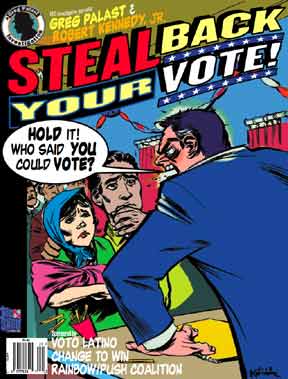
  EL PASO COUNTY, COLO.- I visited the Board of County Commissioners today to seek their intervention with problems developing with the upcoming election. They’d already voiced their support for Clerk and Recorder Bob Balink’s voter intimidation of Colorado College students. In light of national criticism of vote suppression tactics such as the fewer early-voter stations, longer wait times, and the possibility of running out of paper ballots, I wanted to give the commissioners a chance to reassure voters of El Paso County. Long lines? They’re all for them. In their own words:
 Poor liberal Nervous Nellies. They see plots everywhere! It must be quite scary for them don’t you think?
  I think it’s time to colorize
 Stephanopoulos:
 One fifth of all Colorado voters
  Last week we saw most of America go into shock as the stark reality of the US not having a real opposition party became evident. The Democratic Party actually led the rush to pass Bush’s $700 billion giveaway to the rich Bill into law, and it was actually the Republican party that posed the minor stumbling block to getting it done. The American people were almost completely left on the sidelines as a result of simply never having constructed a major opposition party to the Two Party Big Business dictatorship that US is run under.
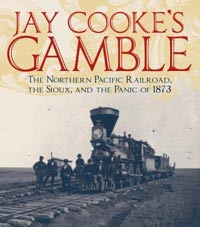 Many are looking back at the 1930s to the Great Depression of that Era and comparing today’s capitalist downturn to that one, but others see little similarities between that Economic Crash of what appears to many as the mere distant yesterday and today’s. Yet there is still another great financial crash to compare our current one to, the one historically called