The sinking of Judea, aka the Palestine

The sinking of the JudeaIn his novel Youth, Joseph Conrad wrote about a doomed coal steamer named “Judea.”
 
A propos of nothing much (Conrad’s theme was not solely about hubris), the story was based on events in Conrad’s own life and his early maritime experiences on a ship which was actually called “Palestine.”

Gaza’s Youth Manifesto For Change!

From anonymous young voices in Gaza, reprinted from Facebook group:Gaza Youth Breaks Out (GYBO), file under Jailhouse Literature.
 
Fuck Hamas. Fuck Israel. Fuck Fatah. Fuck UN. Fuck UNWRA. Fuck USA! We, the youth in Gaza, are so fed up with Israel, Hamas, the occupation, the violations of human rights and the indifference of the international community…

(Via THE GUARDIAN UK, which chose an incendiary if wildly inappropriate photo to represent the Gaza cyber rebels.)

GAZA’S YOUTH MANIFESTO FOR CHANGE

Fuck Hamas. Fuck Israel. Fuck Fatah. Fuck UN. Fuck UNWRA. Fuck USA! We, the youth in Gaza, are so fed up with Israel, Hamas, the occupation, the violations of human rights and the indifference of the international community! We want to scream and break this wall of silence, injustice and indifference like the Israeli F16’s breaking the wall of sound; scream with all the power in our souls in order to release this immense frustration that consumes us because of this fucking situation we live in; we are like lice between two nails living a nightmare inside a nightmare, no room for hope, no space for freedom. We are sick of being caught in this political struggle; sick of coal dark nights with airplanes circling above our homes; sick of innocent farmers getting shot in the buffer zone because they are taking care of their lands; sick of bearded guys walking around with their guns abusing their power, beating up or incarcerating young people demonstrating for what they believe in; sick of the wall of shame that separates us from the rest of our country and keeps us imprisoned in a stamp-sized piece of land; sick of being portrayed as terrorists, homemade fanatics with explosives in our pockets and evil in our eyes; sick of the indifference we meet from the international community, the so-called experts in expressing concerns and drafting resolutions but cowards in enforcing anything they agree on; we are sick and tired of living a shitty life, being kept in jail by Israel, beaten up by Hamas and completely ignored by the rest of the world.
 
There is a revolution growing inside of us, an immense dissatisfaction and frustration that will destroy us unless we find a way of canalizing this energy into something that can challenge the status quo and give us some kind of hope. The final drop that made our hearts tremble with frustration and hopelessness happened 30th November, when Hamas’ officers came to Sharek Youth Forum, a leading youth organization (www.sharek.ps) with their guns, lies and aggressiveness, throwing everybody outside, incarcerating some and prohibiting Sharek from working. A few days later, demonstrators in front of Sharek were beaten and some incarcerated. We are really living a nightmare inside a nightmare. It is difficult to find words for the pressure we are under. We barely survived the Operation Cast Lead, where Israel very effectively bombed the shit out of us, destroying thousands of homes and even more lives and dreams. They did not get rid of Hamas, as they intended, but they sure scared us forever and distributed post traumatic stress syndrome to everybody, as there was nowhere to run.
 
We are youth with heavy hearts. We carry in ourselves a heaviness so immense that it makes it difficult to us to enjoy the sunset. How to enjoy it when dark clouds paint the horizon and bleak memories run past our eyes every time we close them? We smile in order to hide the pain. We laugh in order to forget the war. We hope in order not to commit suicide here and now. During the war we got the unmistakable feeling that Israel wanted to erase us from the face of the earth. During the last years Hamas has been doing all they can to control our thoughts, behaviour and aspirations. We are a generation of young people used to face missiles, carrying what seems to be a impossible mission of living a normal and healthy life, and only barely tolerated by a massive organization that has spread in our society as a malicious cancer disease, causing mayhem and effectively killing all living cells, thoughts and dreams on its way as well as paralyzing people with its terror regime. Not to mention the prison we live in, a prison sustained by a so-called democratic country.
 
History is repeating itself in its most cruel way and nobody seems to care. We are scared. Here in Gaza we are scared of being incarcerated, interrogated, hit, tortured, bombed, killed. We are afraid of living, because every single step we take has to be considered and well-thought, there are limitations everywhere, we cannot move as we want, say what we want, do what we want, sometimes we even cant think what we want because the occupation has occupied our brains and hearts so terrible that it hurts and it makes us want to shed endless tears of frustration and rage!
 
We do not want to hate, we do not want to feel all of this feelings, we do not want to be victims anymore. ENOUGH! Enough pain, enough tears, enough suffering, enough control, limitations, unjust justifications, terror, torture, excuses, bombings, sleepless nights, dead civilians, black memories, bleak future, heart aching present, disturbed politics, fanatic politicians, religious bullshit, enough incarceration! WE SAY STOP! This is not the future we want!
 
We want three things. We want to be free. We want to be able to live a normal life. We want peace. Is that too much to ask? We are a peace movement consistent of young people in Gaza and supporters elsewhere that will not rest until the truth about Gaza is known by everybody in this whole world and in such a degree that no more silent consent or loud indifference will be accepted.
 
This is the Gazan youth’s manifesto for change!
 
We will start by destroying the occupation that surrounds ourselves, we will break free from this mental incarceration and regain our dignity and self respect.  We will carry our heads high even though we will face resistance. We will work day and night in order to change these miserable conditions we are living under. We will build dreams where we meet walls. 
 
We only hope that you – yes, you reading this statement right now! – can support us. In order to find out how, please write on our wall or contact us directly: freegazayouth@hotmail.com
 
We want to be free, we want to live, we want peace.
 
FREE GAZA YOUTH!

Amazon pedophile guide author Phillip Greaves is going to Disneyland!

PUEBLO, CO – Self-published self-abuser Phillip R. Greaves is going to Disneyland! Do I mean Disney World –because the molestation e-book author is being extradited to Florida? Naw. Thanks to the gung-ho deviant-phobic Florida Polk County Sheriff, the Amazon-banned-infamous, now civil-liberty-abridged, self-scribed child-lover will be jerking off all the way to the bank. Greaves’ The Pedophile’s Guide to Love and Pleasure is accused of violating obscenity laws and haven’t we been down this road before? Freedom of speech, what’s indecent, Larry Flynt, Nabokov, to name the obvious?

Now I have to tell you, I’d much prefer to defend a literary classic than this Stuart Smalley act for the NAMBLA set, and I wince as I imagine the ACLU inviting more tar-and-feathers as it defends another pedophile, but freedom of expression is absolute. It applies to heretical dissidents as much as to Sarah Palin. Idiots have opinions too, that doesn’t mean you have to listen to them.

Greaves’ DIY rotten-oeuvre probably does not redeem itself with literary merit, I’m guessing, nor do charges mention the book contains contraband photos. Thus the Polk County Sheriff attack may be soiling new ground. The how-to manual is being adjudged indecent based on written accounts of defiling underage fictional characters. Greaves is not under suspicion of having committed the crimes. We can deduce by the lack of charges that no minors were harmed in the making of Phillip Greaves’ fantasies. His “guide book” contains no pictures of exploited children. Greaves is being charged with describing illegal sexual acts which are injurious to minors. So what exactly differentiates this book from other tasteless works of fiction which recount criminal acts, even the most taboo?

There will always be a bible-belt backwater to send out invites for a book-burning. I’m upset I suppose because the Polk County authorities were able to convince Colorado law enforcement in Pueblo to arrest Greaves on their behalf, based on his having shipped a copy of his weirdo book over to their Florida jurisdiction. So it turns our Colorado lawmen are uneducated enough that they went along. At least we could be grateful that evidently they lack the initiative to devise such a sting themselves.

In his zeal to whomp on Phillip Greaves on behalf of the angry mob over at Amazon thirsty for fictional pedophile blood, the Polk County Sheriff bragged he hoped to have the author “eating processed-turkey this Christmas.” As good an admission as any that prison chow is intended to be punishment. This one defines “cruel and unusual” which used to be rationale enough to prohibit state practice, but these days we can’t be bothered to prevent torture.

I shouldn’t minimize the ordeal which Greaves will face with his jailers and fellow inmates, needless to say he’ll be earning every penny of the huge civil liberties settlement to which he is entitled. Maybe in turn he’ll be able to sue Amazon too.

The upshot for the residents of Polk County Florida is that internet merchants will have to be very careful about what they ship to zip codes 33830, 33837, 33841, 33843, 33868, 33898, and 34759. I hope the Polkels get nothing at all in the mail until they recall the grandstanding idiot they have for a sheriff.

But seriously. Are we cheerleading for the prosecution of thought crime? If Greaves had written in the third person, would police be serving a warrant on a page-bound protagonist?

Compared to pedestrian pornography, Phillip Greaves is an amateur. In US sex culture every fetish seems to find its audience. Who can deny that the sexualization of American children is pervasive across print and screen? This isn’t about the arbitrary condemnation of the fantasy life of perverts. Subversive classics of literature are often censored based on accusations of obscenity.

Emma Goldman on Direct Action

Yes it was Emma Goldman who said “If voting changed anything, they’d make it illegal.”
It was no mere quip. The turn of the last century activist was a fierce advocate of every social reform and was ultimately exiled to Europe for challenging forced conscription. Do you wonder what else Goldman had to say, about political violence, prisons, patriotism, puritanism, the traffic of women, suffrage, poverty, birth control, and the struggle of minorities? Far from being a cynic, Goldman offered an alternative to the false hope of the ballot box.

What does the history of parliamentarism show? Nothing but failure and defeat, not even a single reform to ameliorate the economic and social stress of the people. Laws have been passed and enactments made for the improvement and protection of labor. Thus it was proven only last year that Illinois, with the most rigid laws for mine protection, had the greatest mine disasters. In States where child labor laws prevail, child exploitation is at its highest, and though with us the workers enjoy full political opportunities, capitalism has reached the most brazen zenith.

It may be claimed that men of integrity would not become corrupt in the political grinding mill. Perhaps not; but such men would be absolutely helpless to exert the slightest influence in behalf of labor, as indeed has been shown in numerous instances. The State is the economic master of its servants. Good men, if such there be, would either remain true to their political faith and lose their economic support, or they would cling to their economic master and be utterly unable to do the slightest good. The political arena leaves one no alternative, one must either be a dunce or a rogue.

The political superstition is still holding sway over the hearts and minds of the masses, but the true lovers of liberty will have no more to do with it. Instead, they believe with Stirner that man has as much liberty as he is willing to take.

Universal suffrage itself owes its existence to direct action. If not for the spirit of rebellion, of the defiance on the part of the American revolutionary fathers, their posterity would still wear the King’s coat. If not for the direct action of a John Brown and his comrades, America would still trade in the flesh of the black man. True, the trade in white flesh is still going on; but that, too, will have to be abolished by direct action. Trade-unionism, the economic arena of the modern gladiator, owes its existence to direct action. It is but recently that law and government have attempted to crush the trade-union movement, and condemned the exponents of man’s right to organize to prison as conspirators. Had they sought to assert their cause through begging, pleading, and compromise, trade-unionism would today be a negligible quantity. In France, in Spain, in Italy, in Russia, nay even in England (witness the growing rebellion of English labor unions), direct, revolutionary, economic action has become so strong a force in the battle for industrial liberty as to make the world realize the tremendous importance of labor’s power. The General Strike, the supreme expression of the economic consciousness of the workers, was ridiculed in America but a short time ago. Today every great strike, in order to win, must realize the importance of the solidaric general protest.

Direct action, having proven effective along economic lines, is equally potent in the environment of the individual. There a hundred forces encroach upon his being, and only persistent resistance to them will finally set him free. Direct action against the authority in the shop, direct action against the authority of the law, direct action against the invasive, meddlesome authority of our moral code, is the logical, consistent method of Anarchism.

Will it not lead to a revolution? Indeed, it will. No real social change has ever come about without a revolution. People are either not familiar with their history, or they have not yet learned that revolution is but thought carried into action.

Here’s the full essay from which the above was excerpted, where Goldman cites Emerson, Wilde, Burroughs, Thoreau and GBS to laud the promise of anarchism and direct action.

ANARCHISM: WHAT IT REALLY STANDS FOR

ANARCHY.??

Ever reviled, accursed, ne’er understood,?
Thou art the grisly terror of our age.?
“Wreck of all order,” cry the multitude,?
“Art thou, and war and murder’s endless rage.
“?O, let them cry. To them that ne’er have striven?
The truth that lies behind a word to find,?
To them the word’s right meaning was not given.?
They shall continue blind among the blind.?
But thou, O word, so clear, so strong, so pure,
?Thou sayest all which I for goal have taken.?
I give thee to the future! Thine secure
?When each at least unto himself shall waken.?
Comes it in sunshine? In the tempest’s thrill??
I cannot tell–but it the earth shall see!
?I am an Anarchist! Wherefore I will
?Not rule, and also ruled I will not be!?
?
JOHN HENRY MACKAY.

THE history of human growth and development is at the same time the history of the terrible struggle of every new idea heralding the approach of a brighter dawn. In its tenacious hold on tradition, the Old has never hesitated to make use of the foulest and cruelest means to stay the advent of the New, in whatever form or period the latter may have asserted itself. Nor need we retrace our steps into the distant past to realize the enormity of opposition, difficulties, and hardships placed in the path of every progressive idea. The rack, the thumbscrew, and the knout are still with us; so are the convict’s garb and the social wrath, all conspiring against the spirit that is serenely marching on.

Anarchism could not hope to escape the fate of all other ideas of innovation. Indeed, as the most revolutionary and uncompromising innovator, Anarchism must needs meet with the combined ignorance and venom of the world it aims to reconstruct.

To deal even remotely with all that is being said and done against Anarchism would necessitate the writing of a whole volume. I shall therefore meet only two of the principal objections. In so doing, I shall attempt to elucidate what Anarchism really stands for.

The strange phenomenon of the opposition to Anarchism is that it brings to light the relation between so-called intelligence and ignorance. And yet this is not so very strange when we consider the relativity of all things. The ignorant mass has in its favor that it makes no pretense of knowledge or tolerance. Acting, as it always does, by mere impulse, its reasons are like those of a child. “Why?” “Because.” Yet the opposition of the uneducated to Anarchism deserves the same consideration as that of the intelligent man.

What, then, are the objections? First, Anarchism is impractical, though a beautiful ideal. Second, Anarchism stands for violence and destruction, hence it must be repudiated as vile and dangerous. Both the intelligent man and the ignorant mass judge not from a thorough knowledge of the subject, but either from hearsay or false interpretation.

A practical scheme, says Oscar Wilde, is either one already in existence, or a scheme that could be carried out under the existing conditions; but it is exactly the existing conditions that one objects to, and any scheme that could accept these conditions is wrong and foolish. The true criterion of the practical, therefore, is not whether the latter can keep intact the wrong or foolish; rather is it whether the scheme has vitality enough to leave the stagnant waters of the old, and build, as well as sustain, new life. In the light of this conception, Anarchism is indeed practical. More than any other idea, it is helping to do away with the wrong and foolish; more than any other idea, it is building and sustaining new life.

The emotions of the ignorant man are continuously kept at a pitch by the most blood-curdling stories about Anarchism. Not a thing too outrageous to be employed against this philosophy and its exponents. Therefore Anarchism represents to the unthinking what the proverbial bad man does to the child,–a black monster bent on swallowing everything; in short, destruction and violence.

Destruction and violence! How is the ordinary man to know that the most violent element in society is ignorance; that its power of destruction is the very thing Anarchism is combating? Nor is he aware that Anarchism, whose roots, as it were, are part of nature’s forces, destroys, not healthful tissue, but parasitic growths that feed on the life’s essence of society. It is merely clearing the soil from weeds and sagebrush, that it may eventually bear healthy fruit.

Someone has said that it requires less mental effort to condemn than to think. The widespread mental indolence, so prevalent in society, proves this to be only too true. Rather than to go to the bottom of any given idea, to examine into its origin and meaning, most people will either condemn it altogether, or rely on some superficial or prejudicial definition of non-essentials.

Anarchism urges man to think, to investigate, to analyze every proposition; but that the brain capacity of the average reader be not taxed too much, I also shall begin with a definition, and then elaborate on the latter.

ANARCHISM: –The philosophy of a new social order based on liberty unrestricted by man-made law; the theory that all forms of government rest on violence, and are therefore wrong and harmful, as well as unnecessary.

The new social order rests, of course, on the materialistic basis of life; but while all Anarchists agree that the main evil today is an economic one, they maintain that the solution of that evil can be brought about only through the consideration of every phase of life,–individual, as well as the collective; the internal, as well as the external phases.

A thorough perusal of the history of human development will disclose two elements in bitter conflict with each other; elements that are only now beginning to be understood, not as foreign to each other, but as closely related and truly harmonious, if only placed in proper environment: the individual and social instincts. The individual and society have waged a relentless and bloody battle for ages, each striving for supremacy, because each was blind to the value and importance of the other. The individual and social instincts,–the one a most potent factor for individual endeavor, for growth, aspiration, self-realization; the other an equally potent factor for mutual helpfulness and social well-being.

The explanation of the storm raging within the individual, and between him and his surroundings, is not far to seek. The primitive man, unable to understand his being, much less the unity of all life, felt himself absolutely dependent on blind, hidden forces ever ready to mock and taunt him. Out of that attitude grew the religious concepts of man as a mere speck of dust dependent on superior powers on high, who can only be appeased by complete surrender. All the early sagas rest on that idea, which continues to be the Leitmotiv of the biblical tales dealing with the relation of man to God, to the State, to society. Again and again the same motif, man is nothing, the powers are everything. Thus Jehovah would only endure man on condition of complete surrender. Man can have all the glories of the earth, but he must not become conscious of himself. The State, society, and moral laws all sing the same refrain: Man can have all the glories of the earth, but he must not become conscious of himself.

Anarchism is the only philosophy which brings to man the consciousness of himself; which maintains that God, the State, and society are non-existent, that their promises are null and void, since they can be fulfilled only through man’s subordination. Anarchism is therefore the teacher of the unity of life; not merely in nature, but in man. There is no conflict between the individual and the social instincts, any more than there is between the heart and the lungs: the one the receptacle of a precious life essence, the other the repository of the element that keeps the essence pure and strong. The individual is the heart of society, conserving the essence of social life; society is the lungs which are distributing the element to keep the life essence–that is, the individual–pure and strong.

“The one thing of value in the world,” says Emerson, “is the active soul; this every man contains within him. The soul active sees absolute truth and utters truth and creates.” In other words, the individual instinct is the thing of value in the world. It is the true soul that sees and creates the truth alive, out of which is to come a still greater truth, the re-born social soul.

Anarchism is the great liberator of man from the phantoms that have held him captive; it is the arbiter and pacifier of the two forces for individual and social harmony. To accomplish that unity, Anarchism has declared war on the pernicious influences which have so far prevented the harmonious blending of individual and social instincts, the individual and society.

Religion, the dominion of the human mind; Property, the dominion of human needs; and Government, the dominion of human conduct, represent the stronghold of man’s enslavement and all the horrors it entails. Religion! How it dominates man’s mind, how it humiliates and degrades his soul. God is everything, man is nothing, says religion. But out of that nothing God has created a kingdom so despotic, so tyrannical, so cruel, so terribly exacting that naught but gloom and tears and blood have ruled the world since gods began. Anarchism rouses man to rebellion against this black monster. Break your mental fetters, says Anarchism to man, for not until you think and judge for yourself will you get rid of the dominion of darkness, the greatest obstacle to all progress.

Property, the dominion of man’s needs, the denial of the right to satisfy his needs. Time was when property claimed a divine right, when it came to man with the same refrain, even as religion, “Sacrifice! Abnegate! Submit!” The spirit of Anarchism has lifted man from his prostrate position. He now stands erect, with his face toward the light. He has learned to see the insatiable, devouring, devastating nature of property, and he is preparing to strike the monster dead.

“Property is robbery,” said the great French Anarchist Proudhon. Yes, but without risk and danger to the robber. Monopolizing the accumulated efforts of man, property has robbed him of his birthright, and has turned him loose a pauper and an outcast. Property has not even the time-worn excuse that man does not create enough to satisfy all needs. The A B C student of economics knows that the productivity of labor within the last few decades far exceeds normal demand. But what are normal demands to an abnormal institution? The only demand that property recognizes is its own gluttonous appetite for greater wealth, because wealth means power; the power to subdue, to crush, to exploit, the power to enslave, to outrage, to degrade. America is particularly boastful of her great power, her enormous national wealth. Poor America, of what avail is all her wealth, if the individuals comprising the nation are wretchedly poor? If they live in squalor, in filth, in crime, with hope and joy gone, a homeless, soilless army of human prey.

It is generally conceded that unless the returns of any business venture exceed the cost, bankruptcy is inevitable. But those engaged in the business of producing wealth have not yet learned even this simple lesson. Every year the cost of production in human life is growing larger (50,000 killed, 100,000 wounded in America last year); the returns to the masses, who help to create wealth, are ever getting smaller. Yet America continues to be blind to the inevitable bankruptcy of our business of production. Nor is this the only crime of the latter. Still more fatal is the crime of turning the producer into a mere particle of a machine, with less will and decision than his master of steel and iron. Man is being robbed not merely of the products of his labor, but of the power of free initiative, of originality, and the interest in, or desire for, the things he is making.

Real wealth consists in things of utility and beauty, in things that help to create strong, beautiful bodies and surroundings inspiring to live in. But if man is doomed to wind cotton around a spool, or dig coal, or build roads for thirty years of his life, there can be no talk of wealth. What he gives to the world is only gray and hideous things, reflecting a dull and hideous existence,–too weak to live, too cowardly to die. Strange to say, there are people who extol this deadening method of centralized production as the proudest achievement of our age. They fail utterly to realize that if we are to continue in machine subserviency, our slavery is more complete than was our bondage to the King. They do not want to know that centralization is not only the death-knell of liberty, but also of health and beauty, of art and science, all these being impossible in a clock-like, mechanical atmosphere.

Anarchism cannot but repudiate such a method of production: its goal is the freest possible expression of all the latent powers of the individual. Oscar Wilde defines a perfect personality as “one who develops under perfect conditions, who is not wounded, maimed, or in danger.” A perfect personality, then, is only possible in a state of society where man is free to choose the mode of work, the conditions of work, and the freedom to work. One to whom the making of a table, the building of a house, or the tilling of the soil, is what the painting is to the artist and the discovery to the scientist,–the result of inspiration, of intense longing, and deep interest in work as a creative force. That being the ideal of Anarchism, its economic arrangements must consist of voluntary productive and distributive associations, gradually developing into free communism, as the best means of producing with the least waste of human energy. Anarchism, however, also recognizes the right of the individual, or numbers of individuals, to arrange at all times for other forms of work, in harmony with their tastes and desires.

Such free display of human energy being possible only under complete individual and social freedom, Anarchism directs its forces against the third and greatest foe of all social equality; namely, the State, organized authority, or statutory law,–the dominion of human conduct.

Just as religion has fettered the human mind, and as property, or the monopoly of things, has subdued and stifled man’s needs, so has the State enslaved his spirit, dictating every phase of conduct. “All government in essence,” says Emerson, “is tyranny.” It matters not whether it is government by divine right or majority rule. In every instance its aim is the absolute subordination of the individual.

Referring to the American government, the greatest American Anarchist, David Thoreau, said:

“Government, what is it but a tradition, though a recent one, endeavoring to transmit itself unimpaired to posterity, but each instance losing its integrity; it has not the vitality and force of a single living man. Law never made man a whit more just; and by means of their respect for it, even the well disposed are daily made agents of injustice.”

Indeed, the keynote of government is injustice. With the arrogance and self-sufficiency of the King who could do no wrong, governments ordain, judge, condemn, and punish the most insignificant offenses, while maintaining themselves by the greatest of all offenses, the annihilation of individual liberty. Thus Ouida is right when she maintains that

“the State only aims at instilling those qualities in its public by which its demands are obeyed, and its exchequer is filled. Its highest attainment is the reduction of mankind to clockwork. In its atmosphere all those finer and more delicate liberties, which require treatment and spacious expansion, inevitably dry up and perish. The State requires a taxpaying machine in which there is no hitch, an exchequer in which there is never a deficit, and a public, monotonous, obedient, colorless, spiritless, moving humbly like a flock of sheep along a straight high road between two walls.”

Yet even a flock of sheep would resist the chicanery of the State, if it were not for the corruptive, tyrannical, and oppressive methods it employs to serve its purposes. Therefore Bakunin repudiates the State as synonymous with the surrender of the liberty of the individual or small minorities,–the destruction of social relationship, the curtailment, or complete denial even, of life itself, for its own aggrandizement. The State is the altar of political freedom and, like the religious altar, it is maintained for the purpose of human sacrifice.

In fact, there is hardly a modern thinker who does not agree that government, organized authority, or the State, is necessary only to maintain or protect property and monopoly. It has proven efficient in that function only.

Even George Bernard Shaw, who hopes for the miraculous from the State under Fabianism, nevertheless admits that “it is at present a huge machine for robbing and slave-driving of the poor by brute force.” This being the case, it is hard to see why the clever prefacer wishes to uphold the State after poverty shall have ceased to exist.

Unfortunately, there are still a number of people who continue in the fatal belief that government rests on natural laws, that it maintains social order and harmony, that it diminishes crime, and that it prevents the lazy man from fleecing his fellows. I shall therefore examine these contentions.

A natural law is that factor in man which asserts itself freely and spontaneously without any external force, in harmony with the requirements of nature. For instance, the demand for nutrition, for sex gratification, for light, air, and exercise, is a natural law. But its expression needs not the machinery of government, needs not the club, the gun, the handcuff, or the prison. To obey such laws, if we may call it obedience, requires only spontaneity and free opportunity. That governments do not maintain themselves through such harmonious factors is proven by the terrible array of violence, force, and coercion all governments use in order to live. Thus Blackstone is right when he says, “Human laws are invalid, because they are contrary to the laws of nature.”

Unless it be the order of Warsaw after the slaughter of thousands of people, it is difficult to ascribe to governments any capacity for order or social harmony. Order derived through submission and maintained by terror is not much of a safe guaranty; yet that is the only “order” that governments have ever maintained. True social harmony grows naturally out of solidarity of interests. In a society where those who always work never have anything, while those who never work enjoy everything, solidarity of interests is non-existent; hence social harmony is but a myth. The only way organized authority meets this grave situation is by extending still greater privileges to those who have already monopolized the earth, and by still further enslaving the disinherited masses. Thus the entire arsenal of government–laws, police, soldiers, the courts, legislatures, prisons,–is strenuously engaged in “harmonizing” the most antagonistic elements in society.

The most absurd apology for authority and law is that they serve to diminish crime. Aside from the fact that the State is itself the greatest criminal, breaking every written and natural law, stealing in the form of taxes, killing in the form of war and capital punishment, it has come to an absolute standstill in coping with crime. It has failed utterly to destroy or even minimize the horrible scourge of its own creation.

Crime is naught but misdirected energy. So long as every institution of today, economic, political, social, and moral, conspires to misdirect human energy into wrong channels; so long as most people are out of place doing the things they hate to do, living a life they loathe to live, crime will be inevitable, and all the laws on the statutes can only increase, but never do away with, crime. What does society, as it exists today, know of the process of despair, the poverty, the horrors, the fearful struggle the human soul must pass on its way to crime and degradation. Who that knows this terrible process can fail to see the truth in these words of Peter Kropotkin:

“Those who will hold the balance between the benefits thus attributed to law and punishment and the degrading effect of the latter on humanity; those who will estimate the torrent of depravity poured abroad in human society by the informer, favored by the Judge even, and paid for in clinking cash by governments, under the pretext of aiding to unmask crime; those who will go within prison walls and there see what human beings become when deprived of liberty, when subjected to the care of brutal keepers, to coarse, cruel words, to a thousand stinging, piercing humiliations, will agree with us that the entire apparatus of prison and punishment is an abomination which ought to be brought to an end.”

The deterrent influence of law on the lazy man is too absurd to merit consideration. If society were only relieved of the waste and expense of keeping a lazy class, and the equally great expense of the paraphernalia of protection this lazy class requires, the social tables would contain an abundance for all, including even the occasional lazy individual. Besides, it is well to consider that laziness results either from special privileges, or physical and mental abnormalities. Our present insane system of production fosters both, and the most astounding phenomenon is that people should want to work at all now. Anarchism aims to strip labor of its deadening, dulling aspect, of its gloom and compulsion. It aims to make work an instrument of joy, of strength, of color, of real harmony, so that the poorest sort of a man should find in work both recreation and hope.

To achieve such an arrangement of life, government, with its unjust, arbitrary, repressive measures, must be done away with. At best it has but imposed one single mode of life upon all, without regard to individual and social variations and needs. In destroying government and statutory laws, Anarchism proposes to rescue the self-respect and independence of the individual from all restraint and invasion by authority. Only in freedom can man grow to his full stature. Only in freedom will he learn to think and move, and give the very best in him. Only in freedom will he realize the true force of the social bonds which knit men together, and which are the true foundation of a normal social life.

But what about human nature? Can it be changed? And if not, will it endure under Anarchism?

Poor human nature, what horrible crimes have been committed in thy name! Every fool, from king to policeman, from the flatheaded parson to the visionless dabbler in science, presumes to speak authoritatively of human nature. The greater the mental charlatan, the more definite his insistence on the wickedness and weaknesses of human nature. Yet, how can any one speak of it today, with every soul in a prison, with every heart fettered, wounded, and maimed?

John Burroughs has stated that experimental study of animals in captivity is absolutely useless. Their character, their habits, their appetites undergo a complete transformation when torn from their soil in field and forest. With human nature caged in a narrow space, whipped daily into submission, how can we speak of its potentialities?

Freedom, expansion, opportunity, and, above all, peace and repose, alone can teach us the real dominant factors of human nature and all its wonderful possibilities.

Anarchism, then, really stands for the liberation of the human mind from the dominion of religion; the liberation of the human body from the dominion of property; liberation from the shackles and restraint of government. Anarchism stands for a social order based on the free grouping of individuals for the purpose of producing real social wealth; an order that will guarantee to every human being free access to the earth and full enjoyment of the necessities of life, according to individual desires, tastes, and inclinations.

This is not a wild fancy or an aberration of the mind. It is the conclusion arrived at by hosts of intellectual men and women the world over; a conclusion resulting from the close and studious observation of the tendencies of modern society: individual liberty and economic equality, the twin forces for the birth of what is fine and true in man.

As to methods. Anarchism is not, as some may suppose, a theory of the future to be realized through divine inspiration. It is a living force in the affairs of our life, constantly creating new conditions. The methods of Anarchism therefore do not comprise an iron-clad program to be carried out under all circumstances. Methods must grow out of the economic needs of each place and clime, and of the intellectual and temperamental requirements of the individual. The serene, calm character of a Tolstoy will wish different methods for social reconstruction than the intense, overflowing personality of a Michael Bakunin or a Peter Kropotkin. Equally so it must be apparent that the economic and political needs of Russia will dictate more drastic measures than would England or America. Anarchism does not stand for military drill and uniformity; it does, however, stand for the spirit of revolt, in whatever form, against everything that hinders human growth. All Anarchists agree in that, as they also agree in their opposition to the political machinery as a means of bringing about the great social change.

“All voting,” says Thoreau, “is a sort of gaming, like checkers, or backgammon, a playing with right and wrong; its obligation never exceeds that of expediency. Even voting for the right thing is doing nothing for it. A wise man will not leave the right to the mercy of chance, nor wish it to prevail through the power of the majority.” A close examination of the machinery of politics and its achievements will bear out the logic of Thoreau.

What does the history of parliamentarism show? Nothing but failure and defeat, not even a single reform to ameliorate the economic and social stress of the people. Laws have been passed and enactments made for the improvement and protection of labor. Thus it was proven only last year that Illinois, with the most rigid laws for mine protection, had the greatest mine disasters. In States where child labor laws prevail, child exploitation is at its highest, and though with us the workers enjoy full political opportunities, capitalism has reached the most brazen zenith.

Even were the workers able to have their own representatives, for which our good Socialist politicians are clamoring, what chances are there for their honesty and good faith? One has but to bear in mind the process of politics to realize that its path of good intentions is full of pitfalls: wire-pulling, intriguing, flattering, lying, cheating; in fact, chicanery of every description, whereby the political aspirant can achieve success. Added to that is a complete demoralization of character and conviction, until nothing is left that would make one hope for anything from such a human derelict. Time and time again the people were foolish enough to trust, believe, and support with their last farthing aspiring politicians, only to find themselves betrayed and cheated.

It may be claimed that men of integrity would not become corrupt in the political grinding mill. Perhaps not; but such men would be absolutely helpless to exert the slightest influence in behalf of labor, as indeed has been shown in numerous instances. The State is the economic master of its servants. Good men, if such there be, would either remain true to their political faith and lose their economic support, or they would cling to their economic master and be utterly unable to do the slightest good. The political arena leaves one no alternative, one must either be a dunce or a rogue.

The political superstition is still holding sway over the hearts and minds of the masses, but the true lovers of liberty will have no more to do with it. Instead, they believe with Stirner that man has as much liberty as he is willing to take. Anarchism therefore stands for direct action, the open defiance of, and resistance to, all laws and restrictions, economic, social, and moral. But defiance and resistance are illegal. Therein lies the salvation of man. Everything illegal necessitates integrity, self-reliance, and courage. In short, it calls for free, independent spirits, for “men who are men, and who have a bone in their backs which you cannot pass your hand through.”

Universal suffrage itself owes its existence to direct action. If not for the spirit of rebellion, of the defiance on the part of the American revolutionary fathers, their posterity would still wear the King’s coat. If not for the direct action of a John Brown and his comrades, America would still trade in the flesh of the black man. True, the trade in white flesh is still going on; but that, too, will have to be abolished by direct action. Trade-unionism, the economic arena of the modern gladiator, owes its existence to direct action. It is but recently that law and government have attempted to crush the trade-union movement, and condemned the exponents of man’s right to organize to prison as conspirators. Had they sought to assert their cause through begging, pleading, and compromise, trade-unionism would today be a negligible quantity. In France, in Spain, in Italy, in Russia, nay even in England (witness the growing rebellion of English labor unions), direct, revolutionary, economic action has become so strong a force in the battle for industrial liberty as to make the world realize the tremendous importance of labor’s power. The General Strike, the supreme expression of the economic consciousness of the workers, was ridiculed in America but a short time ago. Today every great strike, in order to win, must realize the importance of the solidaric general protest.

Direct action, having proven effective along economic lines, is equally potent in the environment of the individual. There a hundred forces encroach upon his being, and only persistent resistance to them will finally set him free. Direct action against the authority in the shop, direct action against the authority of the law, direct action against the invasive, meddlesome authority of our moral code, is the logical, consistent method of Anarchism.

Will it not lead to a revolution? Indeed, it will. No real social change has ever come about without a revolution. People are either not familiar with their history, or they have not yet learned that revolution is but thought carried into action.

Anarchism, the great leaven of thought, is today permeating every phase of human endeavor. Science, art, literature, the drama, the effort for economic betterment, in fact every individual and social opposition to the existing disorder of things, is illumined by the spiritual light of Anarchism. It is the philosophy of the sovereignty of the individual. It is the theory of social harmony. It is the great, surging, living truth that is reconstructing the world, and that will usher in the Dawn.

Mark Twain: Oh Lord our God, help us tear their soldiers to bloody shreds

“O Lord our Father, our young patriots, idols of our hearts, go forth to battle — be Thou near them!
 
“With them — in spirit — we also go forth from the sweet peace of our beloved firesides to smite the foe.

“O Lord our God, help us to tear their soldiers to bloody shreds with our shells;

“help us to cover their smiling fields with the pale forms of their patriot dead;

“help us to drown the thunder of the guns with the shrieks of their wounded, writhing in pain;

“help us to lay waste their humble homes with a hurricane of fire;

“help us to wring the hearts of their unoffending widows with unavailing grief;

“help us to turn them out roofless with little children to wander unfriended the wastes of their desolated land in rags and hunger and thirst, sports of the sun flames of summer and the icy winds of winter, broken in spirit, worn with travail, imploring Thee for the refuge of the grave and denied it

“— for our sakes who adore Thee, Lord,

“blast their hopes, blight their lives, protract their bitter pilgrimage, make heavy their steps, water their way with their tears, stain the white snow with the blood of their wounded feet!

“We ask it, in the spirit of love, of Him Who is the Source of Love, and Who is the ever-faithful refuge and friend of all that are sore beset and seek His aid with humble and contrite hearts.

“Amen.”

-from Mark Twain’s The War Prayer

Animal Liberation Lone Wolf betrayed by ATF informant, literature and tattoo

Animal Rights Activist and VeganPardon the delay, but when an activist is arrested for the literature he’s carrying, I’ve got to find that material. 34-year-old Walter Edmund Bond was arraigned today for setting the Denver Sheepskin Factory fire in May. ATF agents report that in his knapsack was a tract entitled Declaration of War: Killing People to Save the animals and the Environment The ATF alleges his copy was subtitled: Strike a Match, Light a Fuse, We Only Have the Earth to Lose. Bond was arrested after an informant taped him confessing to being the “Lone Wolf” who took credit on an Animal Liberation Front website. In the meantime, media outlets have linked Bond to a 1977 conviction for arson, failing to note he would have served the time as a toddler. (Turns out “1977” was a typo.)

This story makes me sad, because as much as direct action now requires a culture of secrecy, and as renegade as “Lone Wolf” may have been, if it was Bond, what happened reminds us that wolves are in fact a social animal like we, and every ideologically driven person needs to seek out like-minded comrades.

While it was probably a foregone conclusion that the Sheepskin Factory fire was set to make a statement about animal rights, today’s media requires that someone take the credit. Lone Wolf’s online post performed that protocol, and that should have been that. Doubtless it’s hard to recruit allies for future projects without wanting to claim a resume of past deeds. And what’s to stop everyone from pretending to have been there?

The certainty with which the ATF ties Walter Bond to the fire is built on his bragging to a friend. His choice of reading material, or tattoos, corroborates the subject of his interest, equally likely what he would brag about, and not his actual culpability.

The Smoking Gun has obtained the full affidavit submitted by ATF Special Agents Rennie Mora, which details a call received by fellow agent Christopher Forkner. Someone who hadn’t talked to Walter Bond since the suspect was 22, called the ATF to relate a phone call he/she received from Bond in late June. Asked what he’d been up to lately, Bond referred “Informant CI-01” to the website voice of the voiceless and directed her/him to scroll down to the “Denver Sheepskin fire.” There “ALF Lone Wolf” had posted an explanation for why he’d targeted the business. Concluded the informant: “that’s what he had been up to.”

The informant then called the authorities, the ATF claims, because of fears firefighters might be endangered by future fires the suspect might light.

The affidavit also mentions that the informant passed on photographs of Bond to the ATF.

At the direction of the ATF, Informant CI-01 contacted Bond in Utah. Though Bond had called initially from “a phone at a Salt Lake City public library,” the affidavit offers no details about how the informant reached Bond. The informant suggested Bond travel to Denver and meet at a Ramada Inn on East Colfax, where their conversation was then recorded.

Had the ATF been tracking Bond since his arson conviction in 1997, or at activist gatherings since? There are no ready explanations for what motivated or enabled Informant CI-01 to ensnare her friend of twelve years before. It should be interesting to learn from Bond how he recounts the past weeks’ events and whether if was indeed a friend he last spoke with during his first stint in prison. The informant could have been a prison relation worried about violating parole, or a full-fledged undercover agent.

It appears Bond was short on friends. He was apprehended in the yard of friend Billie Jo Riley who described Bond as an “unlikable drifter.” She made a point to ridicule Bond for accepting two hamburgers in spite of the tattoo on his throat which reads “vegan.” The reporter from Denver’s 9News prodded her incredulously. “Did he know they were real hamburgers?” 9NEWS asked, as if anyone doesn’t recognize meat fat by just its smell. “Yeah” Riley complied, adding again “He ate two of them, two of them.”

The evidence which the ATF asserts corroborates Bond’s taped admission is his “VEGAN” tattoo and the aforementioned “propaganda.”

Which it very well may be. The 1991 screed is attributed to one “Screaming Wolf” and its publishers claim it came by floppy-disk, by mail, its postmark undecipherable. The text is available at Animal Liberation Front, archived under Philosophy/Legal. I’ll reformat it here for legibility, and of course, for curiosity only.

A DECLARATION OF WAR

?Killing People To Save Animals And The Environment ?

This book is dedicated to the animals who have been killed by human greed, selfishness, and bloodlust. In their names, and in the names of current and future generations of innocent beings who will suffer and die as a result of human brutality, the liberators are striking back. Our fellow creatures who have been mutilated, slaughtered, burned, poisoned, strangled, gassed, shot, electrocuted, microwaved, run over, skinned, eaten, enslaved, and domesticated are now being defended. Humans, beware!

?– Screaming Wolf –

Table Of Contents

A MESSAGE FROM THE UNDERGROUND

MAJOR DISCLAIMER BY SCREAMING WOLF

CHAPTER 1: THE LIBERATORS

CHAPTER 2: THIS WORLD IS MEANT FOR ALL BEINGS

CHAPTER 3: HOMO DESTRUCTUS

CHAPTER 4: THE EVERYDAY HOLOCAUST

CHAPTER 5: THE MYTH OF NON-VIOLENCE

CHAPTER 6: A TIME FOR WAR

CHAPTER 7: FINDING PEACE IN TIMES OF WAR
?

A MESSAGE FROM THE UNDERGROUND
(Preface from the original editors)

My husband and I are animal rights activists. For the past ten years we have been in trenches fighting for the animals. But we have always fought legally. We have used the system to its fullest, coordinating various educational, legislative, and litigious campaigns.

If you would have asked us how we felt about our work, we would have told you that our struggle for animal rights and a more humane world was finally becoming mainstream and acceptable. We really believed that our message was beginning to be heard.

However, on the morning of January 18, 1991, our lives were turned upside down.

Included in our mail was a small package with no return address. Inside was a computer disk. There was no explanation of what this disk was for, or who had sent it to us. We looked at the postmark on the envelope, but it was faint and illegible. With no clues as to its contents, we decided to put it in our computer and see what was on it.

The  disk  had  one  file on  it  called, A Declaration  of  War. We opened the file, and the following message appeared.

    “This manuscript explains the philosophy of a group of individuals throughout the world who call themselves, ‘Liberators’. They believe in a revolution to liberate animals and, if necessary, to kill their oppressors. They say such extreme action is needed to stop the horrible human caused suffering of animals and the destruction of the world. They believe that nothing short of a total overthrow of this system will free our brothers and sisters. Please see that this ‘Declaration of War’ is published for the world to read and understand.

Signed – Screaming Wolf”

?

Our curiosity kept us glued to the computer for the next four hours, as we read this bold manuscript. When we finished, we were extremely disturbed. What kind of person could be responsible for this, we wondered. At first, we couldn’t understand why we were chosen as the recipients of this ‘Declaration of War’. After thinking it through, we assumed it was because of some similarities in our personal philosophies. We, too, see humans as the destructive force in the world. We feel that this planet was not put here for humans to exploit, and that nature and other animals, not humans, are at the center of our moral thinking. ?

But what was this talk of killing oppressors? We never promoted or defended violence. Why did Screaming Wolf decide to contact us? The answer to that question is still a mystery, But the reason for our selection is a moot point. We have been selected and must now deal with this terrifying manuscript. ?

Screaming Wolf explains the reason why ‘Liberators’ feel that they must declare war on society. We expect that many activists in the animal rights and environmental movements agree with much of what the ‘Liberators’ have to say, but would seldom admit these deep and frightening thoughts, even to themselves. Feelings of frustration, feelings of alienation, feelings of love and hate and anger and fear, all of these, and more, are common to all of us working within the system for change. ?

However, the ‘Liberators’ go beyond these feelings, and describe real or proposed actions: actions which the public will immediately decry as terrorism, actions which the ‘Liberators’ defend as heroism. According to Screaming Wolf, who apparently is a spokesperson for these ‘Liberators’, these terrorists are a branch of the A.L.F. (Animal Liberation Front). This group has claimed responsibility for breaking into laboratories and factory farms, rescuing animals and damaging equipment. However, the A.L.F. has maintained a commitment of nonviolence towards all living beings, including humans. Liberators, according to Screaming Wolf, have decided to end their commitment of non-violence towards human life. These people actually feel that violence against humans is the only way to make a real difference for the animals. ?

After reading this manuscript, our anxiety and fear almost prompted us to toss it in trash. We were looking for any excuse to forget what we had just read. However, we concluded that Screaming Wolf’s message is too important to simply dismiss. People must know what ‘Liberator’ believe, and can come to their own conclusions about what it means, how they feel about it, and what they want to do about it. ?

We know that publishing a book like this is risky, despite the alleged First Amendment rights of freedom of press. People in this country are allowed to purchase and bear arms, but not to announce a call to arms. We expect some people to construe our publication of this book as an endorsement of violence, despite our disclaimers to the contrary. We looked into the laws regarding publication of literature concerning terrorism and realized at once that the risk in publishing this book is real. We expect to be slapped with dozens of lawsuits, and probably death threats as well. As one lawyer put it, our publishing this book may be totally legally defensible, but we will most likely have to repeatedly prove that fact over the next decade, costing us a fortune in legal fees, and draining our energy and time as we deal with the legal system. ?

The situation, as we see it, is that we have been the recipients of a manuscript that describes a terrorist group of people declaring war on humans to save animals and the environment. If we ignore the manuscript, the public will not know of this threat to its safety. People need to know that ‘Liberators’ exist. We also feel that everyone who believes in working within the system needs to engage in open and honest dialogue about all ways of seeing a problem and its possible solutions, including the solution offered by the ‘Liberators’. This applies to activists and those invested in the status quo. The message of ‘Liberators’ affects all of these people. ?

We concluded, therefore, that we must accept the responsibility of publishing this manuscript. In the name of truth and honesty, people must hear this message of the ‘Liberators’. ?

In an attempt to protect ourselves from criminal prosecution, we, the publishers, would like to make the following direct disclaimer. We do not endorse or support any of the illegal, terrorist activities described by Screaming Wolf or the ‘Liberators’. We present this book for informational purposes only. ?

The entire manuscript of Screaming Wolf could have been printed with quotation marks from the first word to the last, since all that follows this preface are the words of that individual and his or her presentation of the ‘Liberator’ position. We have excluded such quotation marks for the purpose of clarity. ?

This is a glimpse into the world of animal liberation terrorism. We suspect that the life and message of a ‘Liberator’ will be a difficult one for most people to understand. But we feel that the public has a right to have this information. After all, if the ‘Liberators’ continue to carry out their tactics, it may be a matter of life and death.

The Publishers ?
February, 1991.   ?

Read the entire manuscript in our archives: A Declaration of War.

Composer Jason Robert Brown wants to protect his unintellectual rights

As a musician and fan of stage musicals, I must proffer this disclaimer about American theater composer Jason Robert Brown: he’s terrible. Brown is a poster child for the music industry’s common mediocrity, of commerce’s habitual triumph over art. Now Brown has appointed himself defender of intellectual property rights, holding that teens should not use the internet to pirate his sheet music. Of course, I can only wish him foolproof success.

American musical theater saw a golden age in the 1940s, with notable glimmers of resurgence since then, in ever infrequent cycles. I don’t think anyone would argue that in-between was constant dreck –to which “show tunes” owe their stigma. Defenders of Andrew Lloyd Webber will find themselves similarly unrestrained enthusiasts for popular music, popular fiction and television. To each his own slop.

I have particular antipathy for contemporary composers of awfulness because they drive the inartistic music publishing industry where it does irreparable harm. School bands and theater departments are influenced to pay royalties for the performance pieces whose rights are most profitably leveraged, at the expense of older works of renown. Instead of seeding young repertoires with melodies and lyrics to enrich their memories, teachers pollute their students with forgettable claptrap, courtesy of bards like Brown.

I have the same prejudice with regard to literature. Why aren’t today’s students reading Stevenson or Poe instead of Blume or Rowling? Of course, composer JR Brown is more on par with author RL Stine, he’s that horrible. But don’t take my word for it, have a listen.

That said, here’s Jason Robert Brown championing not just the exclusive right to sell online what his publishers hawk through their network of scholastic pushers, but he wants the same markup. If ever a commodity could change hands for its true worth, Brown’s entire catalog should be ventilated for free through file sharing. Instead he’s personally joining various trading websites and then emailing each and every member who appears to be trading in his goods.

To paraphrase: Hello, I’m Jason Robert Brown, yes, The Jason Robert Brown, and I’d appreciate it if you stopped illegally sharing my music, since it deprives me of my rightful royalties.

Brown has posted some of the ensuing email exchanges on his blog, without any mention of offering remuneration for their contributions. Most laughable, but consistent with the weakness of his music work, Brown has engaged chiefly teens in his discussion of intellectual rights. He lists one discussion in which he compares his stolen sheet music to a loaned screwdriver, a Xerox’d book, and a copied CD.

Mr. Brown, might I direct you to the innumerable organizations which argue that intellectual property rights are not inalienable. They are restraints to trade, impediments to idea sharing, and diametric to elevating community wealth.

You have every right to contrive a product and sell it by whatever connivance, but your monopoly ends there. Whoever were your customers should have the right to do with their purchases what they will. What right have you to tax the use of your thought fart as it passes from ear to ear? Home Depot can’t charge multiple times for a screwdriver it’s already sold; to use your example.

Consider also that your melody was plucked from the ether of shared cultural experience. Should a rights police attach royalty liens on every whiff of inspiration you borrowed? Better to admit we are all channels of a community expression.

Mr. Brown, please be satisfied to exploit the business advantages you’ve built. Your Tony Award is indication enough of that accomplishment. Insisting that you deserve more only invites scrutiny of your ouevre. Your arguments may find refuge with fans of the “Twilight” caliber, but I am not about to underestimate the sophistication of your own musical taste. If you love Broadway, you know the incredible deficiency of the songs you are peddling. Describing your “music sensibility [which] fuses pop-rock stylings with theatrical lyrics” is faint self-praise enough.

Young stage enthusiasts. To you, JRB may appear a “genius” but what else would we expect of a generation raised on High School Musical. For superior fare, check out the pre maudlin days of Broadway, the shows which see regular revivals. If you want something further afield, look to lesser known works by those same composers. Even their obscure productions eclipse the best efforts of hacks today. Much of this material is freely available, but you’ll find that real showstoppers will have you showing no reluctance to part with your lunch money.

Jason Robert Brown, please stop your indecorous whine about the new leak in your traditional income monopoly. Leave your fans to trade them for their real worth.

We live among gods and demigods

I know a someone who’s studying Greek mythology. He isn’t very impressed and told me so, probably baiting me. He fixed me in the eye and said “Put it this way, I’m not going to care about it in college.” It was all I could muster to reply “Maybe.” I feigned not being sure myself, which was puzzling, telling him that he would find that Greek Gods had an odd habit of popping up in almost every academic discipline, especially Western literature, as if that would have mattered to him. Then I made a bet that the names of gods had come up in his favorite reads, Calvin and Hobbes and the Far Side. Nope he said. He wouldn’t have noticed, his mother chimed in, if he didn’t know them.

If he wasn’t going to do it, I thought I’d write his paper.

I thought about how content I felt having coaxed he and his siblings through attending a staged Odyssey, aided by a large and embarrassingly aromatic bag of m&ms. Surely Odysseus in the flesh was a head start I didn’t have. And I thought about how to have explained the gods further. They were more than themed superheroes, they were Gods. Do you capitalize gods in the plural? We spell it He, but not Them. Do we have their like in the Virgin of Guadalupe or St. Francis of Assisi? The Saints I guess, were not long ago role models: St. Bernadette, St. Joan, St. Barts (just kidding), St. Nick.

Of what import gods? As goes God, so too The Gods?

How do you explain the meaning of the classic gods, their relevance to Greek and Roman lives, in this age of monotheism? We’re not even that, we believe in a plurality of single gods. The best of us tolerate all, but believe that in their multitude of identities we’re only talking about one. A singular omniscient deity would have been strange to the Greeks, just as a committee of squabbling immortals would seem horribly inutilitarian to us.

My quandary extended some because in actuality monotheism was a framework I was imposing. In a single boomer generation, most of us now inhabit a secular universe, where religion is mostly lipservice to tradition. We may or may not talk to our consciences, God resides in us yada yada, but for the practical purpose of talking about God or gods, it’s academic.

So what’s the difference, one god or three, I’m thinking of the holy trinity, or a last supper full, or a whole class of 300 BC, many of whom are no longer on speaking terms? Then it occurred to me that today’s secular ungodly society probably resembles that of the Romans or Greeks more than I thought. We’re an empire, as they, decaying into unholy fetishes. We’re post-sacrilegious decadence. And we’ve gone this way before: I’m thinking of the gladiators and slavery, indifference to inhumanity and carnality, form over function and spectacle.

Our consumer culture is the golden calf and very likely Apollo’s temple is a brick and mortar edifice –alright marble and stone– and it’s consulted for oracles. And specialist gods live side by side with us, they on the red carpet. Who are our role models, the vocational enthusiasts to whom we whisper private prayers, but our celebrities? Not gods of archery maybe, but gods of tennis and cycling, go without saying. Their mortality is inconsequential, because their trademarks are immortal. How tangible the Roman gods and demi-gods, their dalliances and bastard progeny, do seem now.

We may have jettisoned Nietzsche’s dead God, but lost none of our weak nature. We do still worship godly personages, except they rise from among us, from our perceived meritocracy. I’ve no doubt genetics is about to confirm that only a few humans are ordained to greatness, affirming our tribal yearning to celebrate blood ties and royal lineage. Soon enough we’ll designate our betters as a superior genus, ourselves only lowly servants content to bask in their spirit-enriching glow.

We do it already, we attend concerts, keep up on the tabloids, wait eagerly for their anointed tweets. We fashion our own ambitions after the super stars of our particular interests. Could that have been the extent of the Roman adulation for their mythic ancestors?

Might Roman society have grown to such decay that the living celebrities walked in the shadow of their unblemished cousins immortal? I’m thinking of the difference between Elvis and Tom Cruise, or between Marilyn and Madonna. The big gods died young. The larger-than-life who were unexpired were the living gods who saw the flame of their lifetime extinguished with entropy.

Of course, how to explain the protracted legacy of gods like that? Did there follow such a dearth of unexceptional humanity, judging through the filter of the Dark Ages and prism of the Enlightenment, that every cultural reference can only point back before the Greeks?

How would you explain today why James Dean or Salvador Dali should be remembered into perpetuity? Won’t future generations have their own Formerly-know-as-Princes and Marx Brothers Stooges for masses to hold in reverence?

The truth is no. Anomalies like Einstein and Mozart aside in the mortal hierarchies, the archetypal heroes of Western mankind’s understanding of his social self, established themselves during civilization’s formative years. Just as Jesus and Co emerged from proximate centuries, so did introspective man have a stone age during which the character range of his character was cast in stone. In theory.

Therefore, yes, the classical gods are for us to study, as we would metallurgy or farming. Lest we inhabit only the now, with Parises of Ashton Kutcher and Dianas of Sarah Jessica Parker.

Wolfman is a man’s werewolf, no Olalla

Poor wolf man, he’s the bastard of the horror big three. Dracula and Frankenstein have antecedents in folklore but bloomed on the quills of novelists. The werewolf traces back to the Greek, yet no one will pull him from the doghouse, not that Hollywood doesn’t keep trying. Whenever I see the cinematic transformation of man to beast, from An American Werewolf in London to the latest Wolfman offering, I can’t help but recall the terrifying hairification of Jerry Lewis in the Nutty Professor, RLS painting itself a spoof of Dr. Jekyll and Mr. Hyde, regarded as the most literary of inferences to lycanthropy. But Robert Louis Stevenson wrote another short story seldom cited as a werewolf tale. Curious, because I think it holds the key to the man- wolf allure, when it’s not gay teen cheese. In his 1887 Olalla, RLS described the entrancing menace and tormented fate of the lupine-afflicted without mentioning the word.

Of course Stevenson’s angle separated man less from beast.

…the sudden disclosure of her eyes disturbed me. They were unusually large, the iris golden like Felipe’s, but the pupil at that moment so distended that they seemed almost black; and what affected me was not so much their size as (what was perhaps its consequence) the singular insignificance of their regard. A look more blankly stupid I have never met. My eyes dropped before it even as I spoke, and I went on my way upstairs to my own room, at once baffled and embarrassed. Yet, when I came there and saw the face of the portrait, I was again reminded of the miracle of family descent. My hostess was, indeed, both older and fuller in person; her eyes were of a different colour; her face, besides, was not only free from the ill-significance that offended and attracted me in the painting; it was devoid of either good or bad – a moral blank expressing literally naught. And yet there was a likeness, not so much speaking as immanent, not so much in any particular feature as upon the whole. It should seem, I thought, as if when the master set his signature to that grave canvas, he had not only caught the image of one smiling and false-eyed woman, but stamped the essential quality of a race.

What was Amtrak Terrorist Ojore Lutalo reading that got him arrested?

Journal Turning the TideWas this among the Anarchist literature which provoked the arrest of Amtrak Terrorist Ojore Lutalo in La Junta last week? Until we get the detailed affidavit, NMT is soliciting input from the exhibitors of the LA Anarchist Book Fair of JAN 24, as to which of their publications Ojore might have picked up that so excited his accusers. Who among them for example, is recruiting terrorists or propagandizing against America?

We are inviting every participant of the book fair from which Ojore was returning to submit their best candidate for subversive message for which law officers of Southern Colorado, advised by the local FBI, determined to be propaganda for wrong side of their “War on Terror.” Contact us or append your suggestions below.

Former BLA POW Lutalo is being charged with endangering his fellow passengers with a cell phone conversation purportedly overheard and interpreted to forewarn of a terrorist act, but once that misunderstanding was cleared, the unarmed prison-rights activist could have been left to go on his way. Instead Ojore was detained because of suspicions aroused by reading material he was carrying. I’m not sure even the bomb-making instructions of the Anarchist Cookbook would be grounds to get anyone arrested. Clearly the subject matter of Ojore’s literature will be a critical factor in unmasking the police state which celebrates its service in protecting the American public from terror.

By coincidence, I’m familiar with the train station in La Junta, and with that Amtrack stop. Several years back I once intercepted my sister as she crossed the country my rail. It was her birthday and I had the time to walk hastily through more than half of the cars, find where she was sitting, deliver a cake, light some candles, have a conversation, take some pictures, hug at the door, and descend to the platform when the train had to get on its way. I’m not convinced that police officers didn’t have enough time to size up the 64-year-old Lutalo, diffused the misunderstanding, and let him go on his way, for being the non-threatening passenger he was, if of course his skin was admittedly darker than made his fellow passengers comfortable. At the MOST, officers could have ridden with him the twenty minutes to the next stop at Lamar, while they sorted things out with whoever was so spooked by what they overheard.

That Lutalo was taken from the train and arrested, owes quite a bit to what the police reported to have found on him. Not weapons, nor explosives, but literature. Recruiting material for terrorists, and troubling images of President Obama.

If the press won’t report what books Ojore was carrying, the better to characterize them as propaganda; attributing them only to “Afrikan Liberation Army” or “New Afrikan Anarchist” neither of which are actual organizations that might profit by receiving national focus, here is YOUR opportunity to receive media scrutiny.

Perhaps YOUR literature was what piqued the interest of the police. Perhaps it was a how-to on organic farming that La Junta police knew was aimed at subverting Big Agra’s domination of the heartland. Perhaps by their judgment any criticism of America’s political system can be considered too radical and seditious.

Even if your publications didn’t feature “images of Obama,” certainly you could step up and issue a press release to apologize in advance if your “Anarchist” title, for example about running community soup kitchens, was construed to be a recruiting tool for terrorism.

This is an ideal opportunity for YOU, as a purveyor of potentially dangerous literature, to announce what titles you feature that are so informative as to be considered so subversive of our system that Americans must be protected from them. If you are inclined, please write about your catalog and its potential to alarm law enforcement and send us the link!

Ojore Nuru Lutalo, aka Leroy Bunting arrested with Anarchist literature

Anarchist Ojore Nuru LutaloFormer political prisoner Ojore Nuru Lutalo, ne Leroy Bunting, was pulled off an Amtrak train in La Junta, Colorado, for scaring fellow passengers with his cell phone conversation. The FBI’s Colorado Springs Joint Terrorism Task Force was alerted about the 64 year-old armed with anarchist literature from the “Afrikan Liberation Army” (sic) which he had obtained while speaking at the LA Anarchist Book Fair for the Anarchist Black Cross, a prison rights organization. Just yesterday I listened to a local law enforcement type defend the 2nd Amendment, the right to bear arms, by suggesting that if we substituted “books” for guns, no one would think to regulate them. His compatriots seem to have confused the argument by charging the former Black Liberation Army member for “endangering public transportation” with what they called terrorist recruiting propaganda.

Journal Turning the TideAccording to the Pueblo Chieftain, police found “a large amount of propaganda recruiting materials from the Afrikan Liberation Army, including photos of President Barack Obama and other items that raised suspicions.”

Break the Chains reports that Ojore was released Yesterday, and will return to the Otero District Court for an appearance February 5th, the charge now “Interfering with Public Transportation.”

How absolutely disingenuous to misquote the source of the so-called Anarchist literature, seeing as reportedly there was so much of it. This is the usual media disinfo to prevent giving the causes visibility. The Pueblo Chieftain has obtained the affidavit of the arrest, which should list the items found on Ojore. Until that’s made available, we can search online for what he was likely carrying. Our bet, they don’t want to call attention to the New Afrikan Liberation Front (NALF).

Here’s a list of the exhibitors at the 2nd Anarchist Book Fair:

Anarchist type brochuresSemiotext(e)
www.semiotexte.com
Earth First Journal
www.earthfirstjournal.org
Taala Hooghan: Infoshop & Youth Media Arts Center
www.taalahooghan.org
Modesto Anarcho
www.modestoanarcho.org
South Central Farmers
www.southcentralfarmers.com
Skylight Books
www.skylightbooks.com
Institute for Anarchist Studies
www.anarchist-studies.org
Critical Resistance
www.criticalresistance.org
Las Vegas Alliance of the Libertarian Left sonv.libertarianleft.org
Catholic Worker
www.lacatholicworker.org
Anti-Racist Action/Turning the Tide
www.antiracistaction.us
Anarchist Black Cross Federation L.A. www.abcf.net/la
PM press
www.pmpress.org
Microcosom Publishing
www.microcosmpublishing.com
AK press
www.akpress.org
Little black cart
www.littleblackcart.com
Make/Shift magazine
www.makeshiftmag.com
Journal of aesthetics and protest
www.journalofaestheticsandprotest.org
R.A.C. : Revolutionary Autonomous Communities
www.revolutionaryautonomouscommunities.blogspot.com
I.W.W
www.iww.org

Then there is also the Southside ABCF zine collection, the Crossroad Newletter, and the publications of the Spear and Shield. Here’s the New Afrikan Declaration of Independence, as printed on Prairie Fire:

“New Afrikan Declaration of Independence”

WE, New Afrikan People in America, in consequence of arriving at a knowledge of ourselves as a people with dignity, long deprived of that knowledge; as a consequence of revolting with every decimal of our collective and individual beings against the oppression that for three hundred years has destroyed and broken and warped the bodies and minds and spirits of our people in America, in consequence of our raging desire to be free of this oppression, to destroy this oppression wherever it assaults humankind in the world, and in consequence of inextinguishable determination to go a different way, to build a new and better world, do hereby declare ourselves forever free and independent of the jurisdiction of the United State of America and the obligations which that country¹s unilateral decision to make our ancestors and ourselves paper-citizens placed on us.

We claim no rights from the United States of America other than those rights belonging to human beings anywhere in the world, and these include the right to damages, reparations, due us from the grievous injuries sustained by our ancestors and ourselves by reason of United States lawlessness.

Ours is a revolution against oppression–our own oppression and that of all people in the world. And it is a revolution for a better life, a better station for all, a surer harmony with the forces of life in the universe. We therefore see these aims as the aims of our revolution:

    • To free black people in America from oppression;
  • To support and wage the world revolution until all people everywhere are so free;
  • To build a new Society that is better than what We now know and as perfect as We can make it;
  • To assure all people in the New Society maximum opportunity and equal access to that maximum;
  • To promote industriousness, responsibility, scholarship, and service;
  • To create conditions in which freedom of religion abounds and the pursuit of God and/or destiny, place and purpose of humankind in the Universe will be without hindrance;
  • To build a Black independent nation where no sect or religious creed subverts or impedes the building of the New Society, the New State Government, or achievement of the Aims of the Revolution as set forth in this Declaration;
  • To end exploitation of human beings by each other or the environment;
  • To assure equality of rights for the sexes;
  • To end color and class discrimination, while not abolishing salubrious diversity, and to promote self-respect and mutual understanding among all people in the society;
  • To protect and promote the personal dignity and integrity of the individual, and his or her natural rights;
  • To place the major means of production and trade in the trust of the state to assure the benefits of this earth and our genius and labor to society and all its members, and
  • To encourage and reward the individual for hard work and initiative and insight and devotion to the Revolution.

In mutual trust and great expectation, We the undersigned, for ourselves and for those who look to us but are unable personally to affix their signatures hereto, do join in this solemn Declaration of Independence, and to support this Declaration and to assure the success of the Revolution, We pledge without reservation ourselves, our talents, and all our worldly goods.

Or the creed:

“New Afrikan Creed”

1. i believe in the spirituality, humanity and genius of Black people, and in our new pursuit of these values.

2. i believe in the family and the community, and in the community as a family, and i will work to make this concept live.

3. i believe in the community as more important than the individual.

4. i believe in constant struggle for freedom, to end oppression and build a better world. i believe in collective struggle; in fashioning victory in concert with my brothers and sisters.

5. i believe that the fundamental reason our oppression continues is that We, as a people, lack the power to control our lives.

6. i believe that fundamental way to gain that power, and end oppression, is to build a sovereign Black nation.

7. i believe that all the land in America, upon which We have lived for a long time, which We have worked and built upon, and which We have fought to stay on, is land that belongs to us as a people.

8. i believe in the Malcolm X Doctrine: that We must organize upon this land, and hold a plebiscite, to tell the world by a vote that We are free and our land independent, and that, after the vote, We must stand ready to defend ourselves, establishing the nation beyond contradiction.

9. Therefore, i pledge to struggle without cease, until We have won sovereignty. i pledge to struggle without fail until We have built a better condition than the world has yet known.

10. i will give my life, if that is necessary; i will give my time, my mind, my strength, and my wealth because this IS necessary.

11. i will follow my chosen leaders and help them.

12. i will love my brothers and sisters as myself.

13. i will steal nothing from a brother or sister, cheat no brother or sister, misuse no brother or sister, inform on no brother or sister, and spread no gossip.

14. i will keep myself clean in body, dress and speech, knowing that i am a light set on a hill, a true representative of what We are building.

15. i will be patient and uplifting with the deaf, dumb and blind, and i will seek by word and deed to heal the Black family, to bring into the Movement and into the Community mothers and fathers, brothers and sisters left by the wayside.

Now, freely and of my own will, i pledge this Creed, for the sake of freedom for my people and a better world, on pain of disgrace and banishment if i prove false. For, i am no longer deaf, dumb or blind. i am, by inspiration of the ancestors and grace of the Creator — a New Afrikan.

Vaneigem on energy as commodity

NMT’s in-house Situationist has been conceptualizing a way forward well expressed in this May 2009 interview of Raoul Vaneigem:
Situationist“We are being “offered” biofuels on the condition we agree to transgenic rapeseed farming. Eco-tourism will accelerate the plundering of our biosphere. Windmill farms are being built without any advantage to the consumers. Those are the areas where intervention is possible. Natural resources belong to us, they are free, they must be made to serve the freedom of life. It will be up to the communities to secure their own energy and food independence so as to free themselves from the control of the multinationals and their state vassals everywhere. Claiming natural power for our use means reclaiming our own existence first. Only creativity will rid us of work. …

Freeness is the only absolute weapon capable of shattering the mighty self-destruction machine set in motion by consumer society, whose implosion is still releasing, like a deadly gas, bottom-line mentality, cupidity, financial gain, profit, and predation. Museums and culture should be free, for sure, but so should public services, currently prey to the scamming multinationals and states. Free trains, buses, subways, free healthcare, free schools, free water, air, electricity, free power, all through alternative networks to be set up. As freeness spreads, new solidarity networks will eradicate the stranglehold of the commodity. This is because life is a free gift, a continuous creation that the market’s vile profiteering alone deprives us of.”
–Raoul Vaneigem, 2009

Interviewed by Hans Ulrich Obrist, for e-flux, Journal #6. See original article or the copy mirrored below:

In Conversation with Raoul Vaneigem

Hans Ulrich Obrist: I just visited Edouard Glissant and Patrick Chamoiseau, who have written an appeal to Barack Obama. What would your appeal and/or advice be to Obama?

Raoul Vaneigem: I refuse to cultivate any relationship whatsoever with people of power. I agree with the Zapatistas from Chiapas who want nothing to do with either the state or its masters, the multinational mafias. I call for civil disobedience so that local communities can form, coordinate, and begin self-producing natural power, a more natural form of farming, and public services that are finally liberated from the scams of government by the Left or the Right. On the other hand, I welcome the appeal by Chamoiseau, Glissant, and their friends for the creation of an existence in which the poetry of a life rediscovered will put an end to the deadly stranglehold of the commodity.

HUO: Could we talk about your beginnings? How did your participation in situationism begin, and what was your fundamental contribution? At the outset of your relationship with the SI, there was the figure of Henri Lefebvre. What did he mean to you at the time? Why did you decide to send him poetic essays?

RV: I would first like to clarify that situationism is an ideology that the situationists were unanimous in rejecting. The term “situationist” was ever only a token of identification. Its particularity kept us from being mistaken for the throngs of ideologues. I have nothing in common with the spectacular recuperation of a project that, in my case, has remained revolutionary throughout. My participation in a group that has now disappeared was an important moment in my personal evolution, an evolution I have personally pressed on with in the spirit of the situationist project at its most revolutionary. My own radicality absolves me from any label. I grew up in an environment in which our fighting spirit was fueled by working class consciousness and a rather festive conception of existence. I found Lefebvre’s Critique of Everyday Life captivating. When La Somme et le reste [The Sum and the Remainder] was published, I sent him an essay of sorts on “poetry and revolution” that was an attempt to unify radical concepts, Lettrist language, music, and film imagery by crediting them all with the common virtue of making the people’s blood boil. Lefebvre kindly responded by putting me in touch with Guy Debord who immediately invited me to Paris. The two of us had very different temperaments, but we would agree over a period of nearly ten years on the need to bring consumer society to an end and to found a new society on the principle of self-management, where life supersedes survival and the existential angst that it generates.

HUO: Which situationist projects remain unrealized?

RV: Psychogeography, the construction of situations, the superseding of predatory behavior. The radicality, which, notwithstanding some lapses, never ceased to motivate us, remains a source of inspiration to this day. Its effects are just beginning to manifest themselves in the autonomous groups that are now coming to grips with the collapse of financial capitalism.

HUO: The Situationist International defined the situationist as someone who commits her- or himself to the construction of situations. What were those situations for you, concretely? How would you define the situationist project in 2009?

RV: By its very style of living and thinking, our group was already sketching out a situation, like a beachhead active within enemy territory. The military metaphor is questionable, but it does convey our will to liberate daily life from the control and stranglehold of an economy based on the profitable exploitation of man. We formed a “group-at-risk” that was conscious of the hostility of the dominant world, of the need for radical rupture, and of the danger of giving in to the paranoia typical of minds under siege. By showing its limits and its weaknesses, the situationist experience can also be seen as a critical meditation on the new type of society sketched out by the Paris Commune, by the Makhnovist movement and the Republic of Councils wiped out by Lenin and Trotsky, by the libertarian communities in Spain later smashed by the Communist Party. The situationist project is not about what happens once consumer society is rejected and a genuinely human society has emerged. Rather, it illuminates now how lifestyle can supersede survival, predatory behavior, power, trade and the death-reflex.

HUO: You and Guy Debord are the main protagonists of the situationist movement. How do you see Debord’s role and your role?

RV: Not as roles. That is precisely what situationism in its most ridiculous version aims at: reducing us to cardboard cut-outs that it can then set up against one another according to the spectacle’s standard operating procedure. I am simply the spokesman, among others, of a radical consciousness. I just do what I can to see that resistance to market exploitation is transformed into an offensive of life, and that an art of living sweeps away the ruins of oppression.

HUO: What were your reasons for resigning from the group?

RV: Following the occupation movements of May 1968, we knew that some recuperation was afoot. We were familiar with the mechanisms of alienation that would falsify our ideas and fit them neatly into the cultural puzzle. It became clear to us, during the last conference in Venice, that we had failed to shatter those mechanisms, that in fact they were shattering us from the inside. The group was crumbling, the Venice conference was demonstrating its increasing uselessness, and the only answers put forward were commensurate with the self-parody we had fallen into. Dissension intensified to the point of paranoid denunciation: of betrayals of radicality, of breaches of revolutionary spirit, of dereliction of conscience. Those times of catharsis and anathema are now long past, and it might be useful to examine how it is that we sowed the seeds of failure for which the group ended up paying such a heavy price. The shipwreck, however, did not indiscriminately sweep away to the shores of oblivion all of us who participated in the adventure. The group vanished in such a way as to allow the individuals to either consolidate their radicality, disown it, or lapse into the imposture of radicalism. I have attempted to analyze our experimental adventure in Entre le deuil du monde et la joie de vivre [Between Mourning the World and Exuberant Life].

HUO: You have written a lot on life, not survival. What is the difference?

RV: Survival is budgeted life. The system of exploitation of nature and man, starting in the Middle Neolithic with intensive farming, caused an involution in which creativity—a quality specific to humans—was supplanted by work, by the production of a covetous power. Creative life, as had begun to unfold during the Paleolithic, declined and gave way to a brutish struggle for subsistence. From then on, predation, which defines animal behavior, became the generator of all economic mechanisms.

HUO: Today, more than forty years after May ‘68, how do you feel life and society have evolved?

RV: We are witnessing the collapse of financial capitalism. This was easily predictable. Even among economists, where one finds even more idiots than in the political sphere, a number had been sounding the alarm for a decade or so. Our situation is paradoxical: never in Europe have the forces of repression been so weakened, yet never have the exploited masses been so passive. Still, insurrectional consciousness always sleeps with one eye open. The arrogance, incompetence, and powerlessness of the governing classes will eventually rouse it from its slumber, as will the progression in hearts and minds of what was most radical about May 1968.

HUO: Your new book takes us on a trip “between mourning the world and exuberant life.” You revisit May ‘68. What is left of May ‘68? Has it all been appropriated?

RV: Even if we are today seeing recycled ideologies and old religious infirmities being patched up in a hurry and tossed out to feed a general despair, which our ruling wheelers and dealers cash in on, they cannot conceal for long the shift in civilization revealed by May 1968. The break with patriarchal values is final. We are moving toward the end of the exploitation of nature, of work, of trade, of predation, of separation from the self, of sacrifice, of guilt, of the forsaking of happiness, of the fetishizing of money, of power, of hierarchy, of contempt for and fear of women, of the misleading of children, of intellectual dominion, of military and police despotism, of religions, of ideologies, of repression and the deadly resolutions of psychic tensions. This is not a fact I am describing, but an ongoing process that simply requires from us increased vigilance, awareness, and solidarity with life. We have to reground ourselves in order to rebuild—on human foundations—a world that has been ruined by the inhumanity of the cult of the commodity.

HUO: What do you think of the current moment, in 2009? Jean-Pierre Page has just published Penser l’après crise [Thinking the After-Crisis]. For him, everything must be reinvented. He says that a new world is emerging now in which the attempt to establish a US-led globalization has been aborted.

RV: The agrarian economy of the Ancien Régime was a fossilized form that was shattered by the emerging free-trade economy, from the 1789 revolution on. Similarly, the stock-dabbling speculative capitalism whose debacle we now witness is about to give way to a capitalism reenergized by the production of non-polluting natural power, the return to use value, organic farming, a hastily patched-up public sector, and a hypocritical moralization of trade. The future belongs to self-managed communities that produce indispensable goods and services for all (natural power, biodiversity, education, health centers, transport, metal and textile production . . .). The idea is to produce for us, for our own use—that is to say, no longer in order to sell them—goods that we are currently forced to buy at market prices even though they were conceived and manufactured by workers. It is time to break with the laws of a political racketeering that is designing, together with its own bankruptcy, that of our existence.

HUO: Is this a war of a new kind, as Page claims? An economic Third World War?

RV: We are at war, yes, but this is not an economic war. It is a world war against the economy. Against the economy that for thousands of years has been based on the exploitation of nature and man. And against a patched-up capitalism that will try to save its skin by investing in natural power and making us pay the high price for that which—once the new means of production are created—will be free as the wind, the sun, and the energy of plants and soil. If we do not exit economic reality and create a human reality in its place, we will once again allow market barbarism to live on.

HUO: In his book Making Globalization Work, Joseph Stiglitz argues for a reorganization of globalization along the lines of greater justice, in order to shrink global imbalances. What do you think of globalization? How does one get rid of profit as motive and pursue well-being instead? How does one escape from the growth imperative?

RV: The moralization of profit is an illusion and a fraud. There must be a decisive break with an economic system that has consistently spread ruin and destruction while pretending, amidst constant destitution, to deliver a most hypothetical well-being. Human relations must supersede and cancel out commercial relations. Civil disobedience means disregarding the decisions of a government that embezzles from its citizens to support the embezzlements of financial capitalism. Why pay taxes to the bankster-state, taxes vainly used to try to plug the sinkhole of corruption, when we could allocate them instead to the self-management of free power networks in every local community? The direct democracy of self-managed councils has every right to ignore the decrees of corrupt parliamentary democracy. Civil disobedience towards a state that is plundering us is a right. It is up to us to capitalize on this epochal shift to create communities where desire for life overwhelms the tyranny of money and power. We need concern ourselves neither with government debt, which covers up a massive defrauding of the public interest, nor with that contrivance of profit they call “growth.” From now on, the aim of local communities should be to produce for themselves and by themselves all goods of social value, meeting the needs of all—authentic needs, that is, not needs prefabricated by consumerist propaganda.

HUO: Edouard Glissant distinguishes between globality and globalization. Globalization eradicates differences and homogenizes, while globality is a global dialogue that produces differences. What do you think of his notion of globality?

RV: For me, it should mean acting locally and globally through a federation of communities in which our pork-barreling, corrupt parliamentary democracy is made obsolete by direct democracy. Local councils will be set up to take measures in favor of the environment and the daily lives of everyone. The situationists have called this “creating situations that rule out any backtracking.”

HUO: Might the current miscarriages of globalization have the same dangerous effects as the miscarriages of the previous globalization from the ‘30s? You have written that what was already intolerable in ‘68 when the economy was booming is even more intolerable today. Do you think the current economic despair might push the new generations to rebel?

RV: The crisis of the ‘30s was an economic crisis. What we are facing today is an implosion of the economy as a management system. It is the collapse of market civilization and the emergence of human civilization. The current turmoil signals a deep shift: the reference points of the old patriarchal world are vanishing. Percolating instead, still just barely and confusedly, are the early markers of a lifestyle that is genuinely human, an alliance with nature that puts an end to its exploitation, rape, and plundering. The worst would be the unawareness of life, the absence of sentient intelligence, violence without conscience. Nothing is more profitable to the racketeering mafias than chaos, despair, suicidal rebellion, and the nihilism that is spread by mercenary greed, in which money, even devalued in a panic, remains the only value.

HUO: In his book Utopistics, Immanuel Wallerstein claims that our world system is undergoing a structural crisis. He predicts it will take another twenty to fifty years for a more democratic and egalitarian system to replace it. He believes that the future belongs to “demarketized,” free-of-charge institutions (on the model, say, of public libraries). So we must oppose the marketization of water and air.1 What is your view?

RV: I do not know how long the current transformation will take (hopefully not too long, as I would like to witness it). But I have no doubt that this new alliance with the forces of life and nature will disseminate equality and freeness. We must go beyond our natural indignation at profit’s appropriation of our water, air, soil, environment, plants, animals. We must establish collectives that are capable of managing natural resources for the benefit of human interests, not market interests. This process of reappropriation that I foresee has a name: self-management, an experience attempted many times in hostile historical contexts. At this point, given the implosion of consumer society, it appears to be the only solution from both an individual and social point of view.

HUO: In your writing you have described the work imperative as an inhuman, almost animal condition. Do you consider market society to be a regression?

RV: As I mentioned above, evolution in the Paleolithic age meant the development of creativity—the distinctive trait of the human species as it breaks free from its original animality. But during the Neolithic, the osmotic relationship to nature loosened progressively, as intensive agriculture became based on looting and the exploitation of natural resources. It was also then that religion surfaced as an institution, society stratified, the reign of patriarchy began, of contempt for women, and of priests and kings with their stream of wars, destitution, and violence. Creation gave way to work, life to survival, jouissance to the animal predation that the appropriation economy confiscates, transcends, and spiritualizes. In this sense market civilization is indeed a regression in which technical progress supersedes human progress.

HUO: For you, what is a life in progress?

RV: Advancing from survival, the struggle for subsistence and predation to a new art of living, by recreating the world for the benefit of all.

HUO: My interviews often focus on the connections between art and architecture/urbanism, or literature and architecture/urbanism. Could you tell me about the Bureau of Unitary Urbanism?

RV: That was an idea more than a project. It was about the urgency of rebuilding our social fabric, so damaged by the stranglehold of the market. Such a rebuilding effort goes hand in hand with the rebuilding by individuals of their own daily existence. That is what psychogeography is really about: a passionate and critical deciphering of what in our environment needs to be destroyed, subjected to détournement, rebuilt.

HUO: In your view there is no such thing as urbanism?

RV: Urbanism is the ideological gridding and control of individuals and society by an economic system that exploits man and Earth and transforms life into a commodity. The danger in the self-built housing movement that is growing today would be to pay more attention to saving money than to the poetry of a new style of life.

HUO: How do you see cities in the year 2009? What kind of unitary urbanism for the third millennium? How do you envision the future of cities? What is your favorite city? You call Oarystis the city of desire. Oarystis takes its inspiration from the world of childhood and femininity. Nothing is static in Oarystis. John Cage once said that, like nature, “one never reaches a point of shapedness or finishedness. The situation is in constant unpredictable change.”2 Do you agree with Cage?

RV: I love wandering through Venice and Prague. I appreciate Mantua, Rome, Bologna, Barcelona, and certain districts of Paris. I care less about architecture than about how much human warmth its beauty has been capable of sustaining. Even Brussels, so devastated by real estate developers and disgraceful architects (remember that in the dialect of Brussels, “architect” is an insult), has held on to some wonderful bistros. Strolling from one to the next gives Brussels a charm that urbanism has deprived it of altogether. The Oarystis I describe is not an ideal city or a model space (all models are totalitarian). It is a clumsy and naïve rough draft for an experiment I still hope might one day be undertaken—so I agree with John Cage. This is not a diagram, but an experimental proposition that the creation of an environment is one and the same as the creation by individuals of their own future.

HUO: Is Oarystis based on natural power, like the Metabolist cities? Rem Koolhaas and I are working on a book on the Japanese Metabolists. When I read your wonderful text on Oarystis, I was reminded of that movement from the 1960s, especially the floating cities, Kikutake’s water cities. Is Oarystis a Metabolist city?

RV: When Oarystis was published, the architect Philippe Rothier and Diane Hennebert, who ran Brussels’ Architecture Museum at the time, rightly criticized me for ignoring the imaginative projects of a new generation of builders. Now that the old world is collapsing, the fusion of free natural power, self-built housing techniques, and the reinvention of sensual form is going to be decisive. So it is useful to remember that technical inventiveness must stem from the reinvention of individual and collective life. That is to say, what allows for genuine rupture and ecstatic inventiveness is self-management: the management by individuals and councils of their own lives and environment through direct democracy. Let us entrust the boundless freedoms of the imaginary to childhood and the child within us.

HUO: Several years ago I interviewed Constant on New Babylon. What were your dialogues with Constant and how do you see New Babylon today?

RV: I never met Constant, who if I am not mistaken had been expelled before my own association with the SI. New Babylon’s flaw is that it privileges technology over the formation of an individual and collective way of life—the necessary basis of any architectural concept. An architectural project only interests me if it is about the construction of daily life.

HUO: How can the city of the future contribute to biodiversity?

RV: By drawing inspiration from Alphonse Allais, by encouraging the countryside to infiltrate the city. By creating zones of organic farming, gardens, vegetable plots, and farms inside urban space. After all, there are so many bureaucratic and parasitical buildings that can’t wait to give way to fertile, pleasant land that is useful to all. Architects and squatters, build us some hanging gardens where we can go for walks, eat, and live!

HUO: Oarystis is in the form of a maze, but it is also influenced by Venice and its public piazzas. Could you tell us about the form of Oarystis?

RV: Our internal space-time is maze-like. In it, each of us is at once Theseus, Ariadne, and Minotaur. Our dérives would gain in awareness, alertness, harmony, and happiness if only external space-time could offer meanders that could conjure up the possible courses of our futures, as an analogy or echo of sorts—one that favors games of life, and prevents their inversion into games of death.

HUO: Will museums be abolished? Could you discuss the amphitheater of memory? A protestation against oblivion?

RV: The museum suffers from being a closed space in which works waste away. Painting, sculpture, music belong to the street, like the façades that contemplate us and come back to life when we greet them. Like life and love, learning is a continuous flow that enjoys the privilege of irrigating and fertilizing our sentient intelligence. Nothing is more contagious than creation. But the past also carries with it all the dross of our inhumanity. What should we do with it? A museum of horrors, of the barbarism of the past? I attempted to answer the question of the “duty of memory” in Ni pardon, ni talion [Neither Forgiveness Nor Retribution]:

Most of the great men we were brought up to worship were nothing more than cynical or sly murderers. History as taught in schools and peddled by an overflowing and hagiographic literature is a model of falsehood; to borrow a fashionable term, it is negationist. It might not deny the reality of gas chambers, it might no longer erect monuments to the glory of Stalin, Mao or Hitler, but it persists in celebrating the brutish conqueror: Alexander, called the Great—whose mentor was Aristotle, it is proudly intoned—Julius Caesar, Genghis Khan, Tamerlane, Napoleon, the throngs of generals, slaughterers of peoples, petty tyrants of the city or the state, torturer–judges, Javerts of every ilk, conniving diplomats, rapists and killers contracted by religions and ideologies; so much high renown carved from baseness, wickedness, and abjection. I am not suggesting we should unpave the avenues of official history and pave the side alleys instead. We are not in need of a purged history, but of a knowledge that scoops out into broad daylight facts that have been obscured, generation after generation, by the unceasing stratification of prejudice. I am not calling for a tribunal of the mind to begin condemning a bunch of undesirables who have been bizarrely put up on pedestals and celebrated in the motley pantheons of official memory. I just want to see the list of their crimes, the mention of their victims, the recollection of those who confronted them added to the inventory of their unsavory eulogies. I am not suggesting that the name of Francisco Ferrer wipe out that of his murderer, Alfonso XIII, but that at the very least everything be known of both. How dare textbooks still cultivate any respect for Bonaparte, responsible for the death of millions, for Louis XIV, slaughterer of peasants and persecutor of Protestants and freethinkers? For Calvin, murderer of Jacques Gruet and Michel Servet and dictator of Geneva, whose citizens, in tribute to Sébastien Castellion, would one day resolve to destroy the emblems and signs of such an unworthy worship? While Spain has now toppled the effigies of Francoism and rescinded the street names imposed by fascism, we somehow tolerate, towering in the sky of Paris, that Sacré-Coeur whose execrable architecture glorifies the crushing of the Commune. In Belgium there are still avenues and monuments honoring King Leopold II, one of the most cynical criminals of the nineteenth century, whose “red rubber” policy—denounced by Mark Twain, by Roger Casement (who paid for this with his life), by Edward Dene Morel, and more recently by Adam Hochschild—has so far bothered nary a conscience. This is a not a call to blow up his statues or to chisel away the inscriptions that celebrate him. This is a call to Belgian and Congolese citizens to cleanse and disinfect public places of this stain, the stain of one of the worst sponsors of colonial savagery. Paradoxically, I do tend to believe that forgetting can be productive, when it comes to the perpetrators of inhumanity. A forgetting that does not eradicate remembering, that does not blue-pencil memory, that is not an enforceable judgment, but that proceeds rather from a spontaneous feeling of revulsion, like a last-minute pivot to avoid dog droppings on the sidewalk. Once they have been exposed for their inhumanity, I wish for the instigators of past brutalities to be buried in the shroud of their wrongs. Let the memory of the crime obliterate the memory of the criminal.
3

HUO: Learning is deserting schools and going to the streets. Are streets becoming Thinkbelts? Cedric Price’s Potteries Thinkbelt used abandoned railroads for pop-up schools. What and where is learning today?

RV: Learning is permanent for all of us regardless of age. Curiosity feeds the desire to know. The call to teach stems from the pleasure of transmitting life: neither an imposition nor a power relation, it is pure gift, like life, from which it flows. Economic totalitarianism has ripped learning away from life, whose creative conscience it ought to be. We want to disseminate everywhere this poetry of knowledge that gives itself. Against school as a closed-off space (a barrack in the past, a slave market nowadays), we must invent nomadic learning.

HUO: How do you foresee the twenty-first-century university?

RV: The demise of the university: it will be liquidated by the quest for and daily practice of a universal learning of which it has always been but a pale travesty.

HUO: Could you tell me about the freeness principle (I am extremely interested in this; as a curator I have always believed museums should be free—Art for All, as Gilbert and George put it).

RV: Freeness is the only absolute weapon capable of shattering the mighty self-destruction machine set in motion by consumer society, whose implosion is still releasing, like a deadly gas, bottom-line mentality, cupidity, financial gain, profit, and predation. Museums and culture should be free, for sure, but so should public services, currently prey to the scamming multinationals and states. Free trains, buses, subways, free healthcare, free schools, free water, air, electricity, free power, all through alternative networks to be set up. As freeness spreads, new solidarity networks will eradicate the stranglehold of the commodity. This is because life is a free gift, a continuous creation that the market’s vile profiteering alone deprives us of.

HUO: Where is love in Oarystis?

RV: Everywhere. The love affair, as complex as it is simple, will serve as the building block for the new solidarity relations that sooner or later will supersede selfish calculation, competition, competitiveness, and predation, causes of our societies’ dehumanization.

HUO: Where is the city of the dead? In a forest rather than a cemetery?

RV: Yes, a forest, an auditorium in which the voices of the dead will speak amidst the lushness of nature, where life continuously creates itself anew.

HUO: Have you dreamt up other utopian cities apart from Oarystis? Or a concrete utopia in relation to the city?

RV: No, but I have not given up hope that such projects might mushroom and be realized one day, as we begin reconstructing a world devastated by the racketeering mafias.

HUO: In 1991 I founded a Robert Walser museum, a strollological museum, in Switzerland. I have always been fascinated by your notion of the stroll. Could you say something about your urban strolls with and without Debord? What about Walser’s? Have other strollologists inspired you?

RV: I hold Robert Walser in high regard, as many do. His lucidity and sense of dérive enchanted Kafka. I have always been fascinated by the long journey Hölderlin undertook following his break-up with Diotima. I admire Chatwin’s Songlines, in which he somehow manages to turn the most innocuous of walks into an intonation of the paths of fate, as though we were in the heart of the Australian bush. And I appreciate the strolls of Léon-Paul Fargue and the learning of Héron de Villefosse. My psychogeographic dérives with Guy Debord in Paris, Barcelona, Brussels, Beersel, and Antwerp were exceptional moments, combining theoretical speculation, sentient intelligence, the critical analysis of beings and places, and the pleasure of cheerful drinking. Our homeports were pleasant bistros with a warm atmosphere, havens where one was oneself because one felt in the air something of the authentic life, however fragile and short-lived. It was an identical mood that guided our wanderings through the streets, the lanes and the alleys, through the meanderings of a pleasure that our every step helped us gauge in terms of what it might take to expand and refine it just a little further. I have a feeling that the neighborhoods destroyed by the likes of Haussmann, Pompidou, and the real estate barbarians will one day be rebuilt by their inhabitants in the spirit of the joy and the life they once harbored.

HUO: What possibilities do you see for disalienation and détournement in 2009?

RV: This is a time of unprecedented chaos in material and moral conditions. Human values are going to have to compensate for the effects of the only value that has prevailed so far: money. But the implosion of financial totalitarianism means that this currency, which has so tripped us up, is now doomed to devaluation and a loss of all meaning. The absurdity of money is becoming concrete. It will gradually give way to new forms of exchange that will hasten its disappearance and lead to a gift economy.

HUO: What are the conditions for dialogue in 2009? Is there a way out of this system of isolation?

RV: Dialogue with power is neither possible nor desirable. Power has always acted unilaterally, by organizing chaos, by spreading fear, by forcing individuals and communities into selfish and blind withdrawal. As a matter of course, we will invent new solidarity networks and new intervention councils for the well-being of all of us and each of us, overriding the fiats of the state and its mafioso-political hierarchies. The voice of lived poetry will sweep away the last remaining echoes of a discourse in which words are in profit’s pay.

HUO: In your recent books you discuss your existence and temporality. The homogenizing forces of globalization homogenize time, and vice versa. How does one break with this? Could you discuss the temporality of happiness, as a notion?

RV: The productivity- and profit-based economy has implanted into lived human reality a separate reality structured by its ruling mechanisms: predation, competition and competitiveness, acquisitiveness and the struggle for power and subsistence. For thousands of years such denatured human behaviors have been deemed natural. The temporality of draining, erosion, tiredness, and decay is determined by labor, an activity that dominates and corrupts all others. The temporality of desire, love, and creation has a density that fractures the temporality of survival cadenced by work. Replacing the temporality of money will be a temporality of desire, a beyond-the-mirror, an opening to uncharted territories.

HUO: Is life ageless?

RV: I don’t claim that life is ageless. But since survival is nothing but permanent agony relieved by premature death, a renatured life that cultivates its full potential for passion and creation would surely achieve enough vitality to delay its endpoint considerably.

HUO: The Revolution of Everyday Life was a trigger for May ’68, and you have stated in other interviews that it is your key book that you are continually rewriting. Was the book an epiphany? How did it change the course of your work? What had you been doing previously?

RV: The book was prompted by an urgent need I was feeling at the time for a new perspective on the world and on myself, to pull me out of my state of survival, by means other than through suicide. This critical take on a consumer society that was corrupting and destroying life so relentlessly made me aware and conscious of my own life drive. And it became clear to me very quickly that this wasn’t a purely solipsistic project, that many readers were finding their own major concerns echoed there.

HUO: The Revolution of Everyday Life ends on an optimistic note: “We have a world of pleasures to win, and nothing to lose but boredom.”4 Are you still an optimist today?

RV: “Pessimists, what is it you were hoping for?,” Scutenaire wrote. I am neither a pessimist nor an optimist. I try to remain faithful to a principle: desire everything, expect nothing.

HUO: What is the most recent version of the book?

RV: Entre le deuil du monde et la joie de vivre [Between Mourning the World and Exuberant Life].

HUO: What book are you working on at the moment?

RV: I would love to have the resources to complete a Dictionary of Heresies, so as to clarify and correct the historical elements included in The Movement of the Free Spirit and Resistance to Christianity.

HUO: The question of temporality also brings us to Proust and his questionnaire (see inset). What might your definition of happiness be in 2009?

RV: Living ever more intensely and passionately in an ever more intense world. To those who sneer at my ecstatic candor, I reply with a phrase that brings me great comfort: “The desire for an other life is that life already.”5

HUO: Do you have unrealized projects? Unrealized books, unrealized projects in fields other than writing, unrealized architectural projects?

RV: My priority is to live better and better in a world that is more and more human. I would love to build the “urban countryside” of Oarystis, but I’m not just waiting patiently, like Fourier at the Palais Royal, for some billionaire to decide to finance the project only to lose everything to the financial crash a minute later.

HUO: What about your collaborations with other artists, painters, sculptors, designers, filmmakers?

RV: I don’t collaborate with anyone. At times I have offered a few texts to artist friends, not as a commentary on their work but as a counterpoint to it. Art moves me when, in it, I can sense its own overcoming, something that goes beyond it; when it nurtures a trace of life that blossoms as a true aspiration, the intuition of a new art of living.

HUO: Could you tell me about Brussels? What does Brussels mean to you? Where do you write?

RV: I live in the country, facing a garden and woods where the rhythm of the seasons has retained its beauty. Brussels as a city has been destroyed by urbanists and architects who are paid by real estate developers. There are still a few districts suitable for nice walks. I am fond of a good dozen wonderful cafés where one can enjoy excellent artisanal beers.

HUO: Do you agree with Geremek’s view that Europe is the big concern of the twenty-first century?

RV: I am not interested in this Europe ruled by racketeering bureaucracies and corrupt democracies. And regions only interest me once they are stripped of their regionalist ideology and are experiencing self-management and direct democracy. I feel neither Belgian nor European. The only homeland is a humanity that is at long last sovereign.

HUO: You have used a lot of pseudonyms. Je est un autre [I is an other]? How do you find or choose pseudonyms? How many pseudonyms have you used? Is there a complete list?

RV: I don’t keep any kind of score. I leave it up to the inspiration of the moment. There is nothing secret about using a pseudonym. Rather, it is about creating a distance, most often in commissioned work. This allows me to have some fun while alleviating my enduring financial difficulties, which I have always refused to resolve by compromising with the world of the spectacle.

HUO: A book that has been used by many artists and architects has been your Dictionnaire de citations pour servir au divertissement et a l’intelligence du temps [Dictionary of Quotations for the Entertainment and Intelligence of Our Time]. Where did that idea come from?

RV: It was a suggestion from my friend Pierre Drachline, who works for the Cherche Midi publishing house.

HUO: You have often criticized environmental movements who try to replace existing capitalism with capitalism of a different type. What do you think of Joseph Beuys? What non-capitalist project or movement do you support?

RV: We are being “offered” biofuels on the condition we agree to transgenic rapeseed farming. Eco-tourism will accelerate the plundering of our biosphere. Windmill farms are being built without any advantage to the consumers. Those are the areas where intervention is possible. Natural resources belong to us, they are free, they must be made to serve the freedom of life. It will be up to the communities to secure their own energy and food independence so as to free themselves from the control of the multinationals and their state vassals everywhere. Claiming natural power for our use means reclaiming our own existence first. Only creativity will rid us of work.

HUO: Last but not least, Rilke wrote that wonderful little book of advice to a young poet. What would your advice be to a young philosopher-writer in 2009?

RV: To apply to his own life the creativity he displays in his work. To follow the path of the heart, of what is most alive in him.

Translated from the French by Eric Anglès

Book burning is old hat for Kindle

The Amazon KindleAwww, the “Gift of Reading.” Wasn’t that something we gave ourselves for free in public school? And look at the e-book with which Amazon expects to separate readers from viewers –the latest movie.
Holy Schnikies Amazon picked a whopper of a name for its e-book reader! Is the “Kindle” supposed to inflame our gone-digital hearts to the warm fuzzies of reading? Because kindle wood and books have always been combustible dance partners. Firelight was something man used to have to read by, but kindling was also indispensable for book burnings. Which role most likely foreshadows this Kindle’s potential?

I think the answer lies not too far from Amazon CEO Jeff Bezo’s celebrated promise to never again remotely tamper with their readers’ Kindle libraries. Earlier this year, online customers bought digital books to which Amazon then discovered its merchant partner didn’t have the intellectual rights. Amazon refunded the purchases and erased the already downloaded files, revealing what technology experts already suspected, that the Kindle’s software permitted more than a hands-on eavesdropping capability.

In response to the outcry, Bezos promised never to do it again. Fine. His assurance is good enough for me. The truth is, Amazon won’t have to.

The burning of e-books will not be about destroying your and my electronic files. It will happen at the file’s creation or un-creation. And I suspect the censorship will be a lot more clever than a publisher conspicuously sitting on its exclusive rights to release or not release a title. All that need happen to disenfranchise a public from a familiar inflammatory tome is to buy the publishing right and excise the offensive material. Why not– it will be their right. And Jeff Bezos will probably be able to justify amending already sold copies under the guise of issuing corrections, or redistributing free updates to the original editions.

Can you imagine a world void of its disturbing literature? That’s the vision which has guided book burners. The only thing standing between mankind and the more equitable distribution of knowledge are the revolutionary armadas launched by Gutenberg. At which the Kindle is aiming its broadsides.

Augusten Burroughs is so self-amused

Augusten Burroughs author of Running with ScissorsI was recently subjected to a road trip audio book disgorged from an auteur who shares the eminent surname of Burroughs. But unlike Wyeth the younger who had the advantage of genes, this literal-bastard is of no relations and has to defraud us with a bone through his gilded celebrity cage. It gives me the willies to consider that admirers of Running With Scissors think it’s a creative bone.

I can’t remember now which episode of Possible Side Effects finally drove me to seek the solitude of my own headphones. Had it something to do with a dog? Alcohol? Airline travel? It will come to me, although I’ll be better off hoping it doesn’t. Burroughs’ insipid presumption that not a single footstep will be uninteresting to his readers, reminds me of the Power Rangers school of storytelling. What happens, the end.

There’s an absolute pattern to scribes who emerge as recovered substance abusers, one day at a time. Every day brings the agonist to an end, whether a story happened or not. It’s enough that Burroughs emerged sober, Go bless him. Well-wishers cheer his recovery on, but that doesn’t make his daily travails units of a serial.

Most of the scenarios it seemed revolved around Augusten Burroughs being recognized from his author’s photograph on the back cover of his book. He’s so famous! It does rile me when an obvious twit has a following who hold his twiticisms aloft where he can then point to them and journal again about that.

Of course the hives I felt were vindicated when I learned that like memorist-entrepreneur and twelve-step-denier James Frey, Augusten Burroughs was caught recounting lies. In burroughs’ case, by his own psychiatrist! And had to redefine Running With Scissors as not a memoir after all.

Actually I have no doubt that what Burroughs writes is memoir, he tweets as many times as he pulls open the refrigerator door. Queer Eye For The Bored Guy presumes readers can’t decorate their imagination.

Richard Brautigan was my favorite Beatle

Richard Brautigan recorded on Apple RecordsYou know you’re a Post- Baby Boomer when you had to learn that Lucy in the Sky With Diamonds was not an Elton John song. I remember being told by a nanny that you liked either the Monkeys or the Beatles. They broke up before I began listening to pop music. John became an activist, Paul was determined to return to commercial sounds, and George and Ringo faded to slackerdom, having ever only composed While My Guitar Gently Weeps and Octopus’s Garden between them, so I thought. I knew only the Beatles Red and White anthologies.

Barbara Bach and Got My Heart Set on You redeemed Ringo Starr fairly enough, and later I came to appreciate George Harrison. Actually later I heard Ravi Shankar liken Harrison’s exertions on the sitar to a monkey handling a violin, and we come full circle.

But before that was Handmade Films, Harrison’s project to finance Monty Python adventures, and something I’ve just come upon, recordings of my favorite post-beat writer Richard Brautigan. Someone at Apple Records, and I like to imagine it was George, approached RB about putting his poems on vinyl. Someone in the production process knew what to add to the poetry to please his fans. The tracks recorded Brautigan taking off his clothes, answering the phone, and brushing his teeth. I knew of the recordings, I didn’t know it was on Apple.

I came upon Richard Brautigan late too. In 1986 I read The Springhill Mine Disaster, and In Watermelon Sugar, and was pleased enough to imagine one day meeting him. It wasn’t until I was standing in the reference shelves of Penrose Library several years later, that I read a jacket liner which referenced Brautigan in the past tense. I was profoundly shattered that he lived no more, and I am still confused that a voice so lyrically optimistic could choose to commit suicide. I collected all his books but eventually lost a curiosity to read them.

Brautigan wrote: “All of us have a place in history. Mine is clouds.”

He took his life two years before I encountered The Confederate General and Trout Fishing. There is something uniformly post-mortem about my generation.

Richard Brautigan is considered a beat writer, although he came on the scene a decade later. Which oddly leads me to mention my favorite of his, The Abortion.

Ward Churchill and the Knights of the Round Table…

Or “…and the Holy Grail”. This is one example of what happens, as Judge Naves so brilliantly illustrates with his own contribution to Official Glossing Over of Real History, upholding the punishment and Demonization of Dr Churchill for no crime other than daring to tell a different viewpoint than the Official one. It involves the most over-used trite banal and EVIL defense of the Lie of Divine Right Of Kings.

Although Le Morte Darthur (also known as Le Morte d’Arthur) is universally accepted as a masterpiece of imaginative literature, so much mystery surrounds the identity of the author (that is, which one of several Sir Thomas Malorys of the 15th century actually wrote it) that any one definitive biography seems imprudent. The only direct information extant concerning the author is that a Sir Thomas Malory completed the book while he was a “knight-prisoner” in the ninth year of Edward IV’s reign, from March 4, 1469, to March 3, 1470. All the rest is conjecture.

So a Knight makes a fanciful story about the wondrous nobility of his profession. Which happened to be Killing People.

And leaving out the parts about how it’s more akin to being a Mafia Hit-man than anything else.

He was in prison at the time. Can you say “sucking up to the warden”? I knew you could.

There’s a new show on TV, new to me anyway, “Merlin”. with the predictable bullshit about Arthur Pendragon being “destined to lead the Noble Kingdom”.

Anachronisms like 14th century armor and castellary, candles and “ancient” books in what allegedly was the 4th century C.E.

And that was the good part. It goes downhill from there.

Arthur: “Destined to found a great kingdom”. Oh Come On! Even in the (entirely fictionalized) “history” his kingdom died with him.

Problem with it was, at the time the “history” was written, entirely made up from within a prison cell by a Saxon who was sucking up to a Norman king, is actually taken literally. Not by everybody, but those who do take it as Real make a Real Mess out of our current chapter of History.

The people at the time were being told, rather forcefully, that they had Won the Crusades, even with plenty of evidence to the contrary, all around them.

The same way the ex-president George Bush romanticized the Current Crusades. Along with his murderous friend and colleague Erik, the Prince of Blackwater. (it’s pure conjecture that he calls himself by that title… but it fits) who romanticizes his Goon Squads as “The Modern Knights Templar”… instead of the reality which is they’re a Publicly Funded Private Army, who have been granted absolute immunity from any kind of responsibility for their Crimes (given in advance) and absolute immunity from Public oversight, even though, as mentioned, they’re paid by the Public Funds.

Bring it back to Ward Churchill, the same ones who are promoting this “Noble Crusade” like Former Governor Bill Owens, G.Bush and Prince, and apparently Judge Larry “Sellout” Naves, are pushing the notion that “(we) have to believe the Official Version of American History” or it’s literally Treason.

Some of the Local IDIOT proponents of that view have even called Dr Churchill a Traitor.

They’re also the same coward right wing pukes who say that All Capital Offenses should be punished with swift Death.

Including Treason.

Thomas Malory was charged with treason. But granted a pardon, apparently, after writing the Suck Up officially sanctioned history.

No man was ever born destined to be a King. Royal Prerogative is a Fictional Construct designed to cover the crimes of Dictatorship.

A Night to disHonor Israeli indoctrination

Coloradans For Peace protest outside City Auditorium
GOOD NEWS FOR COLORADO SPRINGS- Not enough endtime zealots turned out to make today’s event scary, although those who did approach us with arguments were disturbing enough. By the way, the “Jewish Market” turned out to be a dozen tables, 75% of them with books, basically free propaganda literature (much of it from StandWithUs) making the case that Israel can do no wrong.

The Full Text of Iranian President Ahmadinejad’s speech

AhmadinejadAt last we have a copy of the full text of the Iranian President’s speech at the Durban Review Conference on racism and now we can examine just how it has been misrepresented as vile, ugly, and racist by vile ugly racists. The fact is that the main point of the speech actually has next to nothing to do directly with Israel or Jewish people at all, but rather is an attack on the war-like and imperialist United Nation Security Council and the undemocratic nature of this US controlled organization.

He essentially calls for its abolishment in the summary of his remarks and it is this Call that actually is the cause of the Made-In-US boycott and subsequent walkout from the anti-racism conference, and not anything else Ahmadinejad said.

President Ahmadinejad….

‘Secondly, mindful of the inefficiency of the current international political, economic and security systems, it is necessary to focus on divine and humanitarian values by referring to the true definition of human beings based upon justice and respect for the rights of all people in all parts of the world and by acknowledging the past wrong doings in the past dominant management of the world, and to undertake collective measures to reform the existing structures.

In this respect, it is crucially important to rapidly reform the structure of the Security Council, including the elimination of the discriminatory veto right and to change the current world financial and monetary systems.

It is evident that lack of understanding of the urgency for change is equivalent to the much heavier costs of delay.’

There is absolutely nothing anti-Jewish in any of his remarks, and the world has had enough of the United Nation Security Council and its constant war making. Many will also champion Ahmadinejad’s call for its abolishment.

FULL TEXT:

(Iranian President Mahmoud Ahmadinejad’s speech at the Durban Review Conference on racism in Geneva on April 20, 2009.)

Mr. Chairman, honorable secretary general of the United Nations, honorable United Nations high commissioner for human rights, Ladies and gentleman:

We have gathered in the follow-up to the Durban conference against racism and racial discrimination to work out practical mechanisms for our holy and humanitarian campaigns.

Over the last centuries, humanity has gone through great sufferings and pains. In the Medieval Ages, thinkers and scientists were sentenced to death. It was then followed by a period of slavery and slave trade. Innocent people were taken captive in their millions and separated from their families and loved ones to be taken to Europe and America under the worst conditions. A dark period that also experienced occupation, lootings and massacres of innocent people.

Many years passed by before nations rose up and fought for their liberty and freedom and they paid a high price for it. They lost millions of lives to expel the occupiers and establish independent and national governments. However, it did not take long before power grabbers imposed two wars in Europe which also plagued a part of Asia and Africa. Those horrific wars claimed about a hundred million lives and left behind massive devastation. Had lessons been learnt from the occupations, horrors and crimes of those wars, there would have been a ray of hope for the future.

The victorious powers called themselves the conquerors of the world while ignoring or down treading upon rights of other nations by the imposition of oppressive laws and international arrangements.

Ladies and gentlemen, let us take a look at the UN Security Council which is one of the legacies of World War I and World War II. What was the logic behind their granting themselves the veto right? How can such logic comply with humanitarian or spiritual values? Would it not be inconformity with the recognized principles of justice, equality before the law, love and human dignity? Would it not be discrimination, injustice, violations of human rights or humiliation of the majority of nations and countries?

The council is the highest decision-making world body for safeguarding international peace and security. How can we expect the realization of justice and peace when discrimination is legalized and the origin of the law is dominated by coercion and force rather than by justice and the rights?

Coercion and arrogance is the origin of oppression and wars. Although today many proponents of racism condemn racial discrimination in their words and their slogans, a number of powerful countries have been authorized to decide for other nations based on their own interests and at their own discretion and they can easily violate all laws and humanitarian values as they have done so.

Following World War II, they resorted to military aggression to make an entire nation homeless under the pretext of Jewish suffering and they sent migrants from Europe, the United States and other parts of the world in order to establish a totally racist government in occupied Palestine. And, in fact, in compensation for the dire consequences of racism in Europe, they helped bring to power the most cruel and repressive racist regime in Palestine.

The Security Council helped stabilize the occupying regime and supported it in the past 60 years giving them a free hand to commit all sorts of atrocities. It is all the more regrettable that a number of Western governments and the United States have committed themselves to defending those racist perpetrators of genocide while the awakened-conscience and free-minded people of the world condemn aggression, brutalities and the bombardment of civilians in Gaza. The supporters of Israel have always been either supportive or silent against the crimes.

Dear friends, distinguished delegates, ladies and gentlemen. What are the root causes of the US attacks against Iraq or the invasion of Afghanistan?

Was the motive behind the invasion of Iraq anything other than the arrogance of the then US administration and the mounting pressures on the part of the possessors of wealth and power to expand their sphere of influence seeking the interests of giant arms manufacturing companies affecting a noble culture with thousands of years of historical background, eliminating the potential and practical threats of Muslim countries against the Zionist regime or to control and plunder the energy resources of the Iraqi people?

Why, indeed, almost a million people were killed and injured and a few more millions were displaced? Why, indeed, the Iraqi people have suffered enormous losses amounting to hundreds of billions of dollars? And why was billions of dollars imposed on the American people as the result of these military actions? Was not the military action against Iraq planned by the Zionists and their allies in the then US administration in complicity with the arms manufacturing countries and the possessors of wealth? Did the invasion of Afghanistan restore peace, security and economic wellbeing in the country?

The United States and its allies not only have failed to contain the production of drugs in Afghanistan, but the cultivation of narcotics has multiplied in the course of their presence. The basic question is that what was the responsibility and the job of the then US administration and its allies?

Did they represent the countries of the world? Have they been mandated by them? Have they been authorized by the people of the world to interfere in all parts of the globe, of course mostly in our region? Are not these measures a clear example of egocentrism, racism, discrimination or infringement upon the dignity and independence of nations?

Ladies and gentlemen, who is responsible for the current global economic crisis? Where did the crisis start from? From Africa, Asia or from the United States in the first place then spreading across Europe and their allies?

For a long time, they imposed inequitable economic regulations by their political power on the international economy. They imposed a financial and monetary system without a proper international oversight mechanism on nations and governments that played no role in repressive trends or policies. They have not even allowed their people to oversea or monitor their financial policies. They introduced all laws and regulations in defiance of all moral values only to protect the interests of the possessors of wealth and power.

They further presented a definition for market economy and competition that denied many of the economic opportunities that could be available to other countries of the world. They even transferred their problems to others while the waves of crisis lashed back plaguing their economies with thousands of billions of dollars in budget deficit. And today, they are injecting hundreds of billions of dollars of cash from the pockets of their own people and other nations into the failing banks, companies and financial institutions making the situation more and more complicated for their economy and their people. They are simply thinking about maintaining power and wealth. They could not care any less about the people of the world and even their own people.

Mr. President, Ladies and gentlemen, Racism is rooted in the lack of knowledge concerning the root of human existence as the selected creature of God. It is also the product of his deviation from the true path of human life and the obligations of mankind in the world of creation, failing to consciously worship God, not being able to think about the philosophy of life or the path to perfection that are the main ingredients of divine and humanitarian values which have restricted the horizon of human outlook making transient and limited interests, the yardstick for his action. That is why evil’s power took shape and expanded its realm of power while depriving others from enjoying equitable and just opportunities of development.

The result has been the making of an unbridled racism that is posing the most serious threats against international peace and has hindered the way for building peaceful coexistence in the entire world. Undoubtedly, racism is the symbol of ignorance which has deep roots in history and it is, indeed, the sign of frustration in the development of human society.

It is, therefore, crucially important to trace the manifestations of racism in situations or in societies where ignorance or lack of knowledge prevails. This increasing general awareness and understanding towards the philosophy of human existence is the principle struggle against such manifestations, and reveals the truth that human kind centers on the creation of the universe and the key to solving the problem of racism is a return to spiritual and moral values and finally the inclination to worship God Almighty.

The international community must initiate collective moves to raise awareness in afflicted societies where ignorance of racism still prevails so as to bring to a halt the spread of these malicious manifestations.

Dear Friends, today, the human community is facing a kind of racism which has tarnished the image of humanity in the beginning of the third millennium.

World Zionism personifies racism that falsely resorts to religions and abuses religious sentiments to hide its hatred and ugly face. However, it is of great importance to bring into focus the political goals of some of the world powers and those who control huge economic resources and interests in the world. They mobilize all the resources including their economic and political influence and world media to render support in vain to the Zionist regime and to maliciously diminish the indignity and disgrace of this regime.

This is not simply a question of ignorance and one cannot conclude these ugly phenomena through consular campaigns. Efforts must be made to put an end to the abuse by Zionists and their political and international supporters and in respect with the will and aspirations of nations. Governments must be encouraged and supported in their fights aimed at eradicating this barbaric racism and to move towards reform in current international mechanisms.

There is no doubt that you are all aware of the conspiracies of some powers and Zionist circles against the goals and objectives of this conference. Unfortunately, there have been literatures and statements in support of Zionists and their crimes. And it is the responsibility of honorable representatives of nations to disclose these campaigns which run counter to humanitarian values and principles.

It should be recognized that boycotting such a session as an outstanding international capacity is a true indication of supporting the blatant example of racism. In defending human rights, it is primarily important to defend the rights of all nations to participate equally in all important international decision making processes without the influence of certain world powers.

And secondly, it is necessary to restructure the existing international organizations and their respective arrangements. Therefore this conference is a testing ground and the world public opinion today and tomorrow will judge our decisions and our actions.

Mr. President, Ladies and Gentlemen, the world is going through rapid fundamental changes. Power relations have become weak and fragile. The sound of cracks in the pillars of world systems can now be heard. Major political and economic structures are on the brink of collapse. Political and security crises are on the rise. The worsening crisis in the world economy for which there can be seen no bright prospect, demonstrates the rising tide of far-reaching global changes. I have repeatedly emphasized the need to change the wrong direction through which the world is being managed today and I have also warned of the dire consequences of any delay in this crucial responsibility.

Now in this valuable event, I would like to announce to all leaders, thinkers and to all nations of the world present in this meeting and those who have a hunger for peace and economic well-being that the unjust economic management of the world is now at the end of the road. This deadlock was inevitable since the logic of this imposed management was oppressive.

The logic of collective management of world affairs is based on noble aspirations which centers on human beings and the supremacy of the almighty God. Therefore it defies any policy or plan which goes against the influence of nations. The victory of right over wrong and the establishment of a just world system has been promised by the Almighty God and his messengers and it has been a shared goal of all human beings from different societies and generations in the course of history. Realization of such a future depends on the knowledge of creation and the belief of the faithful.

The making of a global society is in fact the accomplishment of a noble goal held in the establishment of a common global system that will be run with the participation of all nations of the world in all major decision making processes and the definite root to this sublime goal.

Scientific and technical capacities as well as communication technology have created a common and widespread understanding of the world society and has provided the necessary ground for a common system. Now it is upon all intellectuals, thinkers and policy makers in the world to carry out their historical responsibility with a firm belief in this definite root.

I also want to lay emphasis on the fact that Western liberalism and capitalism has reached its end since it has failed to perceive the truth of the world and humans as they are.

It has imposed its own goals and directions on human beings. There is no regard for human and divine values, justice, freedom, love and brotherhood and it has based living on intense competition, securing individual and cooperative material interest.

Now we must learn from the past by initiating collective efforts in dealing with present challenges and in this connection, and as a closing remark, I wish to draw your kind attention to two important issues:

Firstly, it is absolutely possible to improve the existing situation in the world. However it must be noted that this could be only achieved through the cooperation of all countries in order to get the best out of the existing capacities and resources in the world. My participation in this conference is because of my conviction to these important issues as well as to our common responsibility of defending the rights of nations vis-à-vis the sinister phenomena of racism and being with you, the thinkers of the world.

Secondly, mindful of the inefficiency of the current international political, economic and security systems, it is necessary to focus on divine and humanitarian values by referring to the true definition of human beings based upon justice and respect for the rights of all people in all parts of the world and by acknowledging the past wrong doings in the past dominant management of the world, and to undertake collective measures to reform the existing structures.

In this respect, it is crucially important to rapidly reform the structure of the Security Council, including the elimination of the discriminatory veto right and to change the current world financial and monetary systems.

It is evident that lack of understanding of the urgency for change is equivalent to the much heavier costs of delay.

Dear Friends, beware that to move in the direction of justice and human dignity is like a rapid flow in the current of a river. Let us not forget the essence of love and affection. The promised future of human beings is a great asset that may serve our purposes in keeping together to build a new world.

In order to make the world a better place full of love and blessings, a world devoid of poverty and hatred, merging the increasing blessings of God Almighty and the righteous managing of the perfect human being, let us all join hands in friendship in the fulfillment of such a new world.

I thank you Mr. President, Secretary General and all distinguished participants for having the patience to listen to me. Thank you very much.

Take a pinch of psychedelic

Tim Thumb psychedelic posterDuring the kids’ Snow Break last week, we chanced to visit the Denver Art Museum’s Psychedelic Experience exhibit. Dozens of groovy rock posters from the late sixties, mostly advertising shows at San Francisco’s Fillmore Auditorium, were on display, occasionally retro-enhanced by black light. More interesting to the kids, however, was an adjoining exhibit where ancient artifacts were displayed in a seemingly authentic sixties pad. There were LPs (how they laughed!) and record players, a giant console television, magazines from the era (first man on the moon was a big hit), shabby furniture covered in tie-dyed material, and a couple old-fashioned telephone booths with rotary phones. One by one, the kids went into the graffiti-covered booth and closed the door, sat on the bench and tried to figure out how to dial the phone. Seriously, it wasn’t obvious to them.

The terms LSD and psychedelic were ubiquitous throughout the exhibit and the kids asked me their meanings. I think I was able to explain LSD satisfactorily but had a hard time defining psychedelic, although I know psychedelic when I see it. It turns out that today is a birthday of sorts for both LSD and psychedelic, a perfect time to answer my own question!

From Today in Literature:
LSD was first synthesized on this day in 1943 by Albert Hoffman, and the psychiatrist Humphrey Osmond coined the term “psychedelic” on this day in 1956, by way of a poetic exchange with Aldous Huxley. Huxley had enthusiastically volunteered himself as a guinea pig for Osmond’s drug experiments and, after some initial reluctance, Osmond had agreed — he said he didn’t “relish the possibility, however remote, of finding a small but discreditable niche in literary history as the man who drove Aldous Huxley mad.” The two felt that a new word was needed to capture the nature of the new experience; Huxley offered his coinage in rhyme:

To make this trivial world sublime,
Take half a gramme of phanerothyme.

Osmond replied with his improvement, and entered Far Out history:

To fathom hell or soar angelic,
Just take a pinch of psychedelic.

Things to do in April

APRIL 2009
3- Antonio Skarmeta: Swing and Literature, Gaylord Hall, CC, 7pm
5- Andrew Skurka: Walking the Great Western Loop, CC, 4pm
7- Rajeev Taranath, Concert sarod/tabla, Packard Hall, CC, 7:30pm
14- Anniversary of BURNING OF BAGHDAD LIBRARY
15- LUDLOW SYMPOSIUM, Max Kade Theater, CC, 7pm
17- International Day of Farmers Struggle
20- 20th Annual Holocaust Commemoration, Gates Common Room, CC, 7pm

Why Americans must defend Ward Churchill

Here’s the letter Bill Ayers published to Defend Ward Churchill.

Defend Ward Churchill

Dear Colleagues,

In Brecht’s play Galileo the great astronomer sets forth into a world dominated by a mighty church and an authoritarian power: “The cities are narrow and so are the brains,” he declares recklessly.

“Superstition and plague. But now the word is: since it is so, it does not remain so. For everything moves my friend.”

Intoxicated with his own radical discoveries, Galileo feels the earth shifting and finds himself propelled surprisingly toward revolution.

”It was always said that the stars were fastened to a crystal vault so they could not fall. . . Now we have taken heart and let them float in the air, without support… they are embarked on a great voyage—like us who are also without support and embarked on a great voyage.”

Here Galileo raises the stakes and risks taking on the establishment in the realm of its own authority, and it strikes back fiercely. Forced to renounce his life’s work under the exquisite pressure of the Inquisition he denounces what he knows to be true, and is welcomed back into the church and the ranks of the faithful, but exiled from humanity—by his own word. A former student confronts him in the street:

“Many on all sides followed you with their ears and their eyes believing that you stood, not only for a particular view of the movement of the stars, but even more for the liberty of teaching— in all fields. Not then for any particular thoughts, but for the right to think at all. Which is in dispute.”

The right to think at all, which is in dispute—-this is what the Ward Churchill affair finally comes to: The right to a mind of one’s own, the right to pursue an argument into uncharted spaces, the right to challenge the church and its orthodoxy in the public square. The right to think at all.

It’s no surprise that this outrage against Professor Churchill occurs at this particular moment— a time of empire resurrected and unapologetic, militarism proudly expanding and triumphant, war without justice and without end, white supremacy retrenched, basic rights and protections shredded, growing disparities between the haves and the have-nots, fear and superstition and the mobilization of scapegoating social formations based on bigotry and violence or the threats of violence, and on and on. There’s more of course, and this isn’t the only story, but this is a recognizable part of where we’re living, and a familiar place to anyone with even a casual understanding of history. Here the competing impulses and ideals that have always animated our country’s story are on full display: rights and liberty and the pursuit of human freedom on one side, domination and war and repression on the other. The trauma of contradictions that is America.

Ward Churchill is under a sustained, orchestrated, and determined attack because of his political beliefs and statements and activities, and nothing more. No one doubts his productivity or his accomplishments. But the attack on Churchill is neither isolated nor innocent— the high school history teacher on the west side of Chicago gets the message, and so does the English literature teacher in Detroit and the math teacher in an Oakland middle school: be careful what you say; stay close to the official story; stick to the authorized text. If someone of Ward Churchill’s stature and standing for so many years at the University of Colorado can suffer this kind of campaign, what chance do I have?

Every committee, every investigation, every report plays out under a shadow of the star chamber; everyone must choose who to be and how to act in response. For this reason I support Ward Churchill unequivocally, unapologetically, whole-heartedly. I urge my colleagues and my students and everyone who values education as a grand enterprise geared toward enlightenment and liberation to speak out forcefully and fearlessly now on behalf of the liberty of teaching and learning, on behalf of the right to think at all.

Sincerely,
William Ayers
Distinguished Professor of Education and Senior University Scholar
University of Illinois at Chicago
billayers.org

Can I get an inflatable Ted Haggard Sex Doll anywhere?

Ted HaggardA lot of us have literally fallen in love with Ted Haggard, and now that he is immersed in sin he seems even sexier! So that brings me to the question of where can one go to get an inflatable Ted Haggard Sex Doll? Don’t worry, I won’t molest it if I find one, I strictly want him around for a platonic relationship based on Christ.
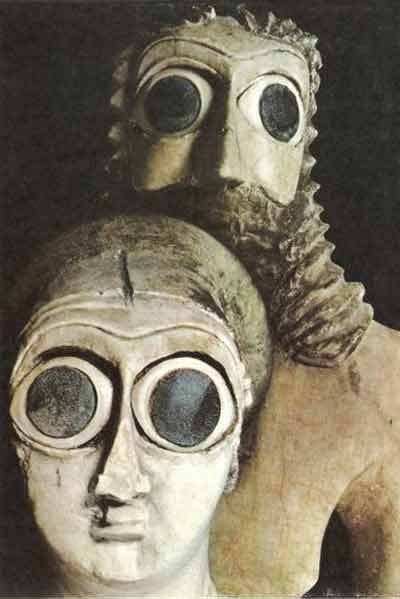
Now you might think that my desire to have this doll, Ted, is quite sick, but there may be places that will begin to help men like me out? For example, if we enter into Book 22, we might find that obsessive sexual attraction to Ted might still not make oneself incapable of being accepted inside the big tent of Love. The doors are being widened by the Obama Era and that’s a good thing for those being torn apart by their own sinful lusts!

At Book 22, where ‘intimacy products for married couples’ are being sold, I saw no inflatable dolls at all for sell. But inflatable sex dolls are the type of ‘intimacy product’ that do bring levity and joy to married couples daily! It will only be a matter of short time before the arousability factor of these dolls becomes better know to Christians! So why not have one with the likeness of sinful bad boy, Ted Haggard?

Sure, stick with an inflatable Pope doll or Franklin Graham one if you desire, but for me, it’s Ted all the way! I just can’t help it…. since I’m kind of a Christian Nympho and still love God, and some of God’s products still love me. Can I get an inflatable Ted Haggard Sex Doll anywhere?

History Begins at Sumer

Sumerian statuesI’m reading about the Sumarians (5,300 – 2,000 B.C.) FROM THE TABLETS OF SUMER: 39 Firsts in Man’s Recorded History. The Sumarians originated civilization as we know it, and their demise may look a lot like ours too. In case you missed the memo, Sumer was earliest Mesopotamia in southern Iraq.

Until the mid 19th Century, we didn’t know Sumerians from Adam. Their history is traced by now deciphered cuneiform writings on clay vessels. Now thanks to Bush’s Folly, we may learn very little more.

Until I have more to relate, I’ll treat you to the table of contents, where Princeton Assyriologist Samuel Noah Kramer lays out his thesis. You might be surprised at which cultural themes are apparently elemental.

From the Tablets of Sumer was published in 1956. The latest edition, History Begins at Sumer can be read online. Kramer also compiled an 18-volume Sumerian dictionary.

Thirty-Nine Firsts in Man’s Recorded History

1.     EDUCATION: The First School
2.     SCHOOLDAYS: The First Case of “Apple-Polishing”
3.     FATHER AND SON: The First Case of Juvenile Delinquency
4.     INTERNATIONAL AFFAIRS: The First “War of Nerves”
5.     GOVERNMENT: The First Bicameral Congress
6.     CIVIL WAR IN SUMER: The First Historian
7.     SOCIAL REFORM: The First Case of Tax Reduction
8.     LAW CODES: The First “Moses”
9.     JUSTICE: The First Legal Precedent
10.   MEDICINE: The First Pharmacopoeia
11.   AGRICULTURE: The First “Farmer’s Almanac”
12.   HORTICULTURE: The First Experiment in Shade-Tree Gardening
13.   PHILOSOPHY: Man’s First Cosmogony and Cosmology
14.   ETHICS: The First Moral Ideals
15.   SUFFERING AND SUBMISSION: The First “Job”
16.   WISDOM: The First Proverbs and Sayings
17.   “AESOPICA”: The First Animal Fables
18.   LOGOMACHY: The First Literary Debates
19.   PARADISE: The First Biblical Parallels
20.   A FLOOD: The First “Noah”
21.   HADES: The First Tale of Resurrection
22.   SLAYING OF THE DRAGON: The First “St. George”
23.   TALES OF GILGAMESH: The First Case of Literary Borrowing
24.   EPIC LITERATURE: Man’s First Heroic Age
25.   TO THE ROYAL BRIDEGROOM: The First Love Song
26.   BOOK LISTS: The First Library Catalogue
27.   WORLD PEACE AND HARMONY: Man’s First Golden Age
28.   ANCIENT COUNTERPARTS OF MODERN WOES:
The First “Sick” Society
29.   DESTRUCTION AND DELIVERANCE: The First Liturgic Laments
30.   THE IDEAL KING: The First Messiahs
31.   SHULGI OF UR: The First Long-Distance Champion
32.   POETRY: The First Literary Imagery
33.   THE SACRED MARRIAGE RITE: The First Sex Symbolism
34.   WEEPING GODDESSES: The First Mater Dolorosa
35.   AU-A A-U-A: The First Lullaby
36.   THE IDEAL MOTHER: Her First Literary Portrait
37.   THREE FUNERAL CHANTS: The First Elegies
38.   THE PICKAXE AND THE PLOW: Labor’s First Victory
39.   HOME OF THE FISH: The First Aquarium

Bishop Williamson and Auschwitz 1.0

Arbeit Macht Frei
I am curious as to why a Roman Catholic bishop would risk a second excommunication over the historic particulars of the Holocaust. Bishop Richard Williamson is being labeled a “Holocaust Denier” because he questions the extent, and mechanism, of the official version of the Holocaust. Because Williamson is also criticized for his skepticism about the official 9/11 narrative, and for his praise for the Unabomber’s manifesto, I want to take a closer look, and wonder what is he reading?

Bishop Richard WilliamsonHere’s what the outspoken Williamson told Swedish SVT in a November 2008 interview, as transcribed by the BBC:

“I believe that the historical evidence is strongly against, is hugely against, six million Jews having been deliberately gassed in gas chambers as a deliberate policy of Adolf Hitler… I believe there were no gas chambers [during World War II]”

First, I’m compelled to pose a naive question: If we can all agree that Jews died in huge numbers by incomparable horrors at the hands of the Nazis, would it matter what the exact death toll was, or which killing method predominated? Why? What is the need for laws to restrict historians who are trying to reconstruct the record from emerging facts? Must preemptive “anti-defamation” laws mandate that historians stick to the official “untold” number and “indescribable” evil?

Even if we postulate, albeit cynically, that Holocaust reverence is critical to upholding American public support for Israel‘s “right to exist” in the Middle East, how could a revision of the casualties, in any case a horrific magnitude, make an difference?

Millions of Jews fell victim to the Third Reich. No one is denying it, and historical revision is not trying to bring the Holocaust victims back to life. Holocaust Remembrance of the Jewish victims has remained a political priority around the world, advocating commemoration in education, literature, civic life, and pop culture. Why then, an aversion to scrutiny?

Last week a fellow Society of St. Pius X member, Rev. Floriano Abrahamowicz was ejected from SSPX for coming to Williamson’s and the Pope’s defense.

While the usual politicians and Jewish community leaders are voicing their indignation, can we ask, are the Bishop’s beliefs really at odds with accepted orthodoxy? The media will reiterate that the Six Million figure has always been beyond dispute. All the while, official scholarship has been recording otherwise. In Germany, revisionist historians are jailed for Holocaust Denial. Yet bit by bit, mainstream historians have been able to publish divergent theses which withstand legal refutation.

For the sake of argument, let’s dismiss all the “deniers” as kooks, and look only at the traditionally vetted voices.

On the subject of Auschwitz, where four million of the total six million Jews were believed to have perished, Der Spiegel managing editor Fritjof Meyer a continued critic of revisionism, summarized in Osteuropa 52, 5/2002, p. 631:

“In 1945, the Soviet Investigatory Commission numbered four million victims in the National Socialist work and extermination camp of Auschwitz-Birkenau, a product of war propaganda. Under coercion, camp Commandant Höß named three million and recanted. Up until now, how many people actually fell victim to this singular mass murder could only be estimated. The first Holocaust historian, Gerald Reitlinger, assumed one million, while the latest state of research estimated it to be several hundred thousand fewer.”

Naturally even Meyer touched off a firestorm by integrating the sum of official scholarship into the big picture. The difficulties which historians face in reaching variant findings are explained by another mainstream scholar, noted Hitler historian Dr. Werner Maser, Professor for History and International Law, Munich University, Falsification, Legend, and Truth about Hitler and Stalin, Olzog, Munich 2004, on p.332

“To be sure, […] the extermination of the Jews is considered to be one of the best researched aspects of contemporary history […], but that is not the case. […] Indeed, whole regions remain as much terra incognita as ever, […] German historians exhibit timidity about taking on the horrible issue and possibly bringing to light details that do not agree with the accounts which have multiplied for a very long time.”

And about the deterrence of the Holocaust Denial laws:

“The sword of Damocles hovers over historians (not only in Germany) who portray the controversial phases of history as they ‘actually were’ – and identify the frequently even officially codified ideological specifications as falsifications of history.”

The question of the gas chambers is raised by the absence of evidence. According to major Holocaust authority Dr. Arno J. Mayer, Professor of Modern Jewish History at Princeton University, in Why Did the Heavens Not Darken? The “Final Solution” in History, Pantheon, New York 1990, p. 362:

“Sources for the study of the gas chambers are at once rare and unreliable. Even though Hitler and the Nazis made no secret of their war on the Jews, the SS operatives dutifully eliminated all traces of their murderous activities and instruments. No written orders for gassing have turned up thus far. The SS not only destroyed most camp records, which were in any case incomplete, but also razed nearly all killing and crematory installations well before the arrival of Soviet troops. Likewise, care was taken to dispose of the bones and ashes of the victims.”

Justifiably, scholars are skeptical that the complete absence of evidence should be taken as proof of its existence and total suppression. Some camps were overrun before the Germans could destroy any part of them. Mayer continues, p. 163:

“In the meantime, there is no denying the many contradictions, ambiguities, and errors in the existing sources. […] Much the same is true of for the conflicting estimates and extrapolations of the number of victims, since there are no reliable statistics to work with. […] Both radical skepticism and rigid dogmatism about the exact processes of extermination and the exact number of victims are the bane of sound historical interpretation”

In light of the before-sited Wannsee Conference documents now being considered post-war forgeries, Mayer explains, p 163:

“To date there is no certainty about who gave the order, and when, to install the gas chambers used for the murder of Jews at Auschwitz. As no written command has been located, there is a strong presumption that the order was issued and received orally”

With no written record of a “Final Solution,” and the implausibility of a completely vaporized paper trail, mainstream scholars have had to improvise an explanation for how an extermination directive was disseminated. University of Vermont Professor Raul Hilberg, member of US Holocaust Memorial Council, author of The Destruction of the European Jews, (Holmes & Meyer, New York 1985), was quoted in Newsday, Feb. 23, 1983:

“But what began in 1941 was a process of destruction [of the Jews] not planned in advance, not organized centrally by any agency. There was no blueprint and there was no budget for destructive measures. They [these measures] were taken step by step, one step at a time. Thus came about not so much a plan being carried out, but an incredible meeting of minds, a consensus mind reading by a far-flung [German] bureaucracy.”

Hilberg himself ran into trouble with the authorized version, because he refused to corroborate tales of Jewish rebellion against their Nazi jailers. His group-think theory extended to the Jews themselves, putting emphasis on their acceptance of being exploited as war industry slave labor.

“I had to examine the Jewish tradition of trusting God, princes, laws and contracts […] Ultimately I had to ponder the Jewish calculation that the persecutor would not destroy what he could economically exploit. It was precisely this Jewish strategy that dictated accommodation and precluded resistance.”

That’s where the extermination camp thesis becomes less probable than the work camp. Perhaps the Jews didn’t resist because they were being worked, not gassed. Worked to death, of course, but dying as more a consequence of wartime Germany’s depleting resources, than from a deliberate eradication effort. Evidence is plentiful of the work camps and dead bodies.

And isn’t that the answer to my innocent question? To doubt whether the murder weapon was a pistol or a knife, means calling into question the crime entirely. That’s why revisionists are decried for being “deniers.” While we presume the distinction makes little difference, because clearly a murder was committed regardless, the prosecutor constructing the accusations wants to prove his motive and not another.

There are many details about which historians have begun to disagree. Many of the witness accounts have been proven to be unreliable. Even Elie Wiesel was compelled to reclassified his memoir as a novel. The Holocaust as later generations have come to know it was not as the WWII generation saw it. Even those soldiers who encountered the atrocities themselves.

Professor Hilberg recounts studying at Brooklyn College under Hans Rosenberg, a fellow Jew. Even in the wake of the haunting newsreels of the concentration camps, Hilberg records that Rosenberg remarked in a 1948 lecture:

“The most wicked atrocities perpetrated on a civilian population in modern times occurred during the Napoleonic occupation of Spain.”

I don’t really subscribe to the idea that the Holocaust is diminished by learning that the WWII concentration camp victims died from systemic and despotic abuse, starvation and exhaustion. But those holding the secrets believe that the concept of the Holocaust being the greatest evil perpetrated upon mankind falls apart if cracks are allowed to form in the accepted narrative.

Perhaps the German population, and for that matter, the Catholic Church, did not intercede more vigorously because there was no premeditated extermination program. We can say now that German reinforcements being sent to the Russian Front knew they were being sent to their deaths, but this is only with hindsight.

Is this Bishop Williamson’s interest in revisiting the Holocaust, to rehabilitate the church’s role? I doubt it. The Catholic church cannot escape culpability for its instrumental role in support of the Nazis, guilty of ware crimes and crimes against humanity, initiating a war of aggression being the chief charge at the Nuremberg Trials for example, before even taking into account the concentration camps.

Perhaps the American industrialists and bankers who knew about the camps did not interfere because they understood the camps were for the supply of slave labor. Isn’t this a key enigma of the Holocaust, as we grapple with it? How could we have not known? How could this have been allowed to happen?

Perhaps the signs above the camp gates which read ARBEIT MACHT FREI, work earns freedom, meant what they said. They might have been inescapable ironies, but not the cruel mockery of which we accuse the Germans.

Why would factories like IG Farben and Krupp want to liquidate their valuable cheap workforce? Why would camps meant to exterminate have infirmaries? Why would the wardens treat inmates for illness while simultaneously sending incoming transports to directly to ovens?

Today the popular conscience has been saturated with the ghostly images of the concentration camp victims. How to explain the emaciated inmates discovered by the liberating troops, many of whom could not be saved from dying, even under the administration of the liberators? Dr. Arno J. Mayer concedes this explanation, p. 365

“[…] the whole of Auschwitz was intermittently in the grip of a devastating typhus epidemic. The result was an unspeakable death rate. […] There is a distinction between dying from ‘natural’ or ‘normal’ causes and being killed by shooting, hanging, phenol injection, or gassing. […] from 1942 to 1945, certainly at Auschwitz, but probably overall, more Jews were killed by so-called ‘natural’ causes than by ‘unnatural’ ones.”

This is not to diminish the crime of the Holocaust one iota. The German people, the industrialists, the church, the anti-Semites, are far more guilty because the crime against the Jews was banal and common. It was not devised by agents of unspeakable evil.

Other aspiring genocidal nations and peoples cannot excuse their acts because their methods fall demonstrably below the mythic proportions of the Holocaust.

ig-farben-auschwitz

The poetry of kick-the-can in the rain

Refrigerator magnet poetryI hate random stream of consciousness when you can tell the author thinks they’re building to something. It’s so, so tedious. Such was my reaction to officially-described poet Elizabeth Alexander, who recited a piece she composed for the inauguration of the First Black American President. I’ll just note Alexander is a professor at Yale, the alma matter of Bush, Kerry, et al the Skull and Bones secret society.

If there’s anything that makes me crankier than war criminals being hugged, saluted, and wished a bon voyage, it’s applause for crappy poetry.

The awful result begins with noise –a cacophony which Alexander captures with brute mimicry. When she describes uniforms as common as tires and hems, of course I’m going to object. Why not add Coca-cola while you’re pandering to product placement?

Repairing done, Alexander moves on to people of disparate means “trying to make music.” Maybe a tenured African-American studies professor wouldn’t know, no one tries to make music. It doesn’t even take a non-musician to make music, without having to try. Obviously you’re confusing music with poetry.

It may be that Alexander’s challenge was corrupted by the insincerity of the “we have overcome” moment, where a half-black man’s ascent to figurehead is taken as penultimate achievement of the underground railroad. It comforts me to see artistes fall flat when they dip their quills in propaganda.

Here’s the whole drippy thing. Hate the ambiguously half phrase.

Praise song for the day.

Each day we go about our business, walking past each other, catching each others’ eyes or not, about to speak or speaking. All about us is noise. All about us is noise and bramble, thorn and din, each one of our ancestors on our tongues. Someone is stitching up a hem, darning a hole in a uniform, patching a tire, repairing the things in need of repair.

Someone is trying to make music somewhere with a pair of wooden spoons on an oil drum with cello, boom box, harmonica, voice.

A woman and her son wait for the bus.

A farmer considers the changing sky; A teacher says, “Take out your pencils. Begin.”

We encounter each other in words, words spiny or smooth, whispered or declaimed; words to consider, reconsider.

We cross dirt roads and highways that mark the will of someone and then others who said, “I need to see what’s on the other side; I know there’s something better down the road.”

We need to find a place where we are safe; We walk into that which we cannot yet see.

Say it plain, that many have died for this day. Sing the names of the dead who brought us here, who laid the train tracks, raised the bridges, picked the cotton and the lettuce, built brick by brick the glittering edifices they would then keep clean and work inside of.

Praise song for struggle; praise song for the day. Praise song for every hand-lettered sign; The figuring it out at kitchen tables.

Some live by “Love thy neighbor as thy self.”

Others by first do no harm, or take no more than you need.

What if the mightiest word is love, love beyond marital, filial, national. Love that casts a widening pool of light. Love with no need to preempt grievance.

In today’s sharp sparkle, this winter air, anything can be made, any sentence begun.

On the brink, on the brim, on the cusp — praise song for walking forward in that light.