
There are periods in the life of human society when revolution becomes an imperative necessity, when it proclaims itself as inevitable. New ideas germinate everywhere, seeking to force their way into the light, to find an application in life. These ideas are opposed by the inertia of those whose interest it is to maintain the old order; they suffocate in the stifling atmosphere of prejudice and traditions. The accepted ideas of the constitution of the state, of the laws of social equilibrium, of the political and economic interrelations of citizens, can hold out no longer against the implacable criticism which is daily undermining them?…?Political, economic and social institutions are crumbling. The social structure, having become uninhabitable, is hindering, even preventing, the development of seeds which are being propagated within its damaged walls and being brought forth around them.
The need for a new life becomes apparent. The code of established morality, that which governs the greater number of people in their daily life, no longer seems sufficient. What formerly seems just is now felt to be a crying injustice. The morality of yesterday is today recognized as revolting immorality. The conflict between new ideas and old traditions flames up in every class of society?…?the popular conscience rises up against the scandals which breed amidst the privileged and leisured, against the crimes committed in the name of “the law of the stronger,” or in order to maintain these privileges. Those who long for the triumph of justice, those who would put new ideas into practice, are soon forced to recognize that the realization of their generous, humanitarian and regenerating ideas cannot take place in a society thus constituted. They perceive the necessity of a revolutionary whirlwind which will sweep away all this rottenness, revive sluggish hearts with its breath and bring to mankind that spirit of devotion, self-denial and heroism, without which society sinks through degradation and vileness into complete disintegration.
In periods of frenzied haste toward wealth, of feverish speculation and of crisis, of the sudden downfall of great industries and the ephemeral expansion of other branches of production, of scandalous fortunes amassed in a few years and dissipated as quickly, it becomes evident that the economic institutions which control production and exchange are far from giving to society the prosperity which they are supposed to guarantee. They produce precisely the opposite result. Instead of order they bring forth chaos; instead of prosperity, poverty and insecurity; instead of reconciled interests, war – a perpetual war of the exploiter against the worker, of exploiters and of workers among themselves. Human society is seen to be splitting more and more into two hostile camps, and at the same time to be subdividing into thousands of small groups waging merciless war against each other. Weary of these wars, weary of the miseries which they cause, society rushes to seek a new organization. It clamors loudly for a complete remodeling of the system of property ownership, of production, of exchange all economic relations which spring from it.
The machinery of government, entrusted with the maintenance of the existing order, continues to function, but at every turn of its deteriorated gears, it slips and stops. Its working becomes more and more difficult, and the dissatisfaction caused by its defects grows continuously. Every day gives rise to a new demand. “Reform this,” “Reform that,” is heard from all sides. “War, finance, taxes, courts, police, everything would have to be remodeled, reorganized, established on a new basis,” say the reformers. And yet all know that it is impossible to make things over, to remodel anything at all because everything is interrelated; everything would have to be remade at once. And how can society be remodeled when it is divided into two openly hostile camps? To satisfy the discontented would be only to create new malcontents.
Incapable of undertaking reforms, since this would mean paving the way for revolution, and at the same time too impotent to be frankly reactionary, the governing bodies apply themselves to half-measures which can satisfy nobody, and only cause new dissatisfaction. The mediocrities who, in such transition periods, undertake to steer the ship of state, think of but one thing: to enrich themselves against the coming debacle. Attacked from all sides they defend themselves awkwardly, they evade, they commit blunder upon blunder and they soon succeed in cutting the last rope of salvation. They drown the prestige of the government in ridicule, caused by their own incapacity.
Such periods demand revolution. It becomes a social necessity; the situation itself is revolutionary.
When we study in the works of our greatest historians the genesis and development of vast revolutionary convulsions, we generally find under the heading “The Cause of the Revolution” a gripping picture of the situation on the eve of events. The misery of the people, the general insecurity, the vexatious measures of the government, the odious scandals laying bare the immense vices of society, the new ideas struggling to come to the surface and repulsed by the incapacity of the supporters of the former regime – nothing is omitted. Examining this picture, one arrives at the conviction that the revolution was indeed inevitable, and that there was no other way out than by the road of insurrection?…?But, between this pacific arguing and insurrection or revolt, there is a wide abyss – that abyss which, for the greatest part of humanity, lies between reasoning and action, thought and the will to act. How has this abyss been bridged??…?How was it that words, so often spoken and lost in the air like the empty chiming of bells, were changed in actions?
The answer is easy. Action. The continuous action, ceaselessly renewed, of minorities brings about this transformation. Courage, devotion, the spirit of sacrifice, are as contagious as cowardice, submission and panic.
What forms will this action take? All forms – indeed, the most varied forms, dictated by circumstances, temperament and the means at disposal. Sometimes tragic, sometimes humorous, but always daring; sometimes collective, sometimes purely individual, this policy of action will neglect none of the means at hand, no event of public life, in order to keep the spirit alive, to propagate and find expression for dissatisfaction, to excite hatred against exploiters, to ridicule the government and expose its weakness and above all and always, by actual example, to awaken courage and fan the spirit of revolt.
When a revolutionary situation arises in a country, before the spirit of revolt is sufficiently awakened in the masses to express itself in violent demonstrations in the streets or by rebellions and uprisings, it is through action that minorities succeed in awakening that feeling of independence and that spirit of audacity without which no revolution can come to a head.
Men of courage, not satisfied with words, but ever searching for the means to transform them into action – men of integrity for whom the act is one with the idea, for whom prison, exile and death are preferable to a life contrary to their principles, intrepid souls who know that it is necessary to dare in order to succeed – these are the lonely sentinels who enter the battle long before the masses are sufficiently roused to raise openly the banner of insurrection and to march, arms in hand, to the conquest of their rights?…?Whoever has a slight knowledge of history and a fairly clear head knows perfectly well from the beginning that theoretical propaganda for revolution will necessarily express itself in action long before the theoreticians have decided that the moment to act has come.
Nevertheless the cautious theoreticians are angry at these madmen, they excommunicate them, they anathematize them. But the madmen win sympathy, the mass of the people secretly applaud their courage and they find imitators?…?Acts of illegal protest, of revolt, of vengeance, multiply.
Indifference from this point on is impossible?…?By actions which compel general attention, the new idea seeps into people’s minds and wins converts?…?Above all, it awakens the spirit of the revolt: it breeds daring?…?The people observe that the monster is not so terrible as they thought; they begin dimly to perceive that a few energetic efforts will be sufficient to throw it down. Hope is born in their hearts, and let us remember that if exasperation often drives men to revolt, it is always hope – the hope of victory – which makes revolutions.
The government resists; it is savage in its repressions. But, though formerly persecution killed the energy of the oppressed, now, in periods of excitement, it produces the opposite result. It provokes new acts of revolt, individual and collective. It drives the rebels to heroism, and in rapid succession these acts spread, become general, develop. The revolutionary party is strengthened by elements, which up to this time were hostile or indifferent to it. The general disintegration penetrates into the government, the ruling classes, the privileged. Some of them advocate resistance to the limit; others are in favor of concessions; others, again, go so far as to declare themselves ready to renounce their privileges for the moment, in order to appease the spirit of revolt, hoping to dominate again later on. The unity of the government and the privileged class is broken.
The ruling class may also try to find safety in savage reaction. But it is now too late; the battle only becomes more bitter, more terrible, and the revolution which is looming will only be more bloody. On the other hand, the smallest concession of the governing classes, since it comes too late, since it has been snatched in struggle, only awakes the revolutionary spirit still more. The common people, who formerly would have been satisfied with the smallest concession, observe now that the enemy is wavering. They foresee victory, they feel their courage growing, and the same men who were formerly crushed by misery and were content to sigh in secret, now lift their heads and march proudly to the conquest of a better future.
Finally, the revolution breaks out, the more terrible as the preceding struggles were bitter.
The Spirit of Revolt, Pyotr Kropotkin, 1880.

 At pharmacies you can measure your blood pressure without a personalized magnetic card. But at the DMNS health exhibit, sponsored by Met Life, Kaiser Permanente, et al, you have to tell the machines who you are before you can learn your heart rate, your vital statistics, results of a stress test, a measure of your “stride,” digital imagery of your body at rest and in motion, scans of your fingers and palm, and a 3-D imaging of your face.
 In purchasing their museum passes, or submitting their DMNS membership cards, the visitors are of course revealing their verifiable identities. If they are not already members in the museum’s database, their admission purchase via credit card or personal check and driver’s license confirms who they are. Under the pretense of museum security, driver’s IDs can be inspected all of their own. Who would begrudge the museum knowing who is visiting? And if you had the foresight to worry about your anonymity, what would it matter if the museum recorded too, when you would be presenting yourself at the start of the health exhibit?

 Yesterday was a rather bad day for the Zionist Republic of Jewish Domination, more commonly known as just the Jewish State of Israel. The United Nations condemned it for its attacks on UN facilities in Gaza where the IDF dumped White Phosphorus down on the civilians hiding below, and then the UN also said that it wanted to investigate the hidden Israeli torture center called ‘1391.’
 When I was assembling my dorm room kit for college, I wanted an army blanket as a bed cover. For reasons I must have understood better then, the heavy duty olive drab wool, emblazoned with a U.S. monogram, was inarguably cool. Its generic quality was iconic, thus it had a caché more authentic than a stack of Izods. I considered my Army blanket to be the No. 2 Pencil of bed linens.
 University of California- Santa Barbara Sociology and Global Studies Professor, William Robinson, is under attack from the Jewish Anti-Defamation League for having spoken out against Israeli military atrocities in Gaza. Their position is quite simple and is that he should either shut up or be fired. See
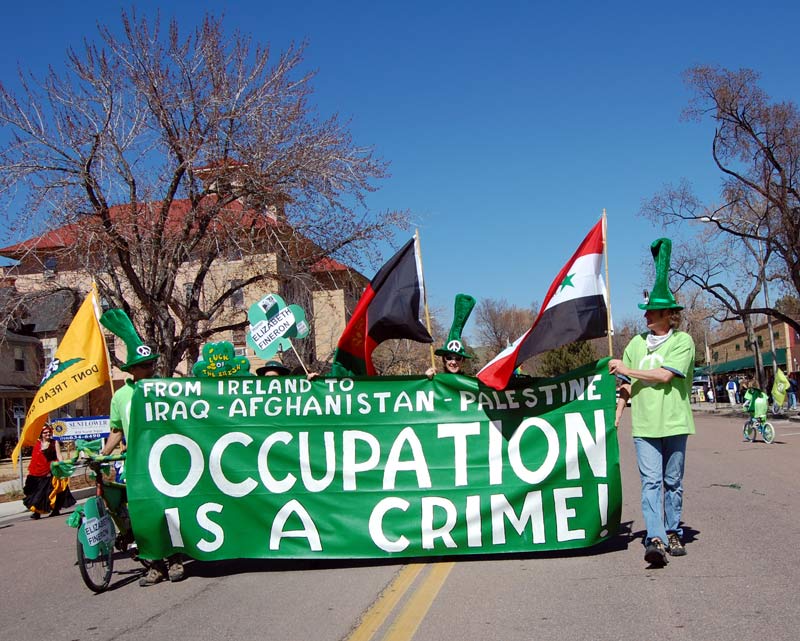















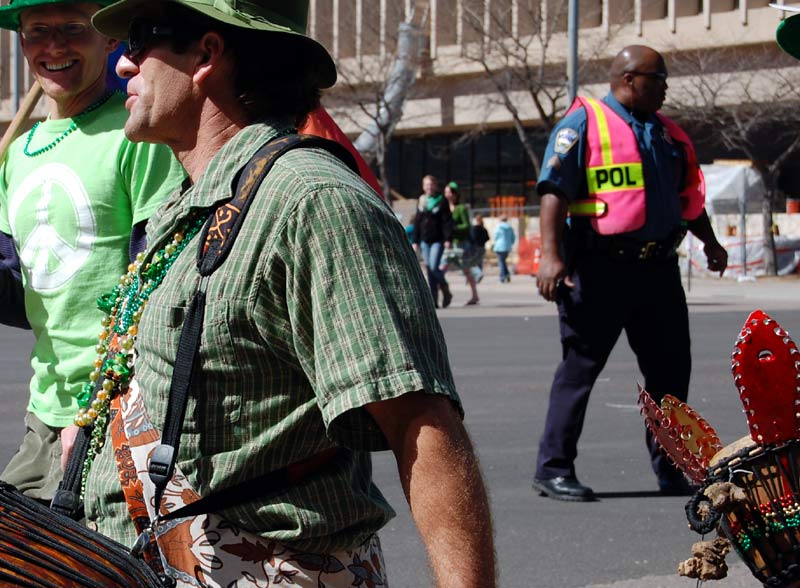

 One might think the Nazis embraced kitsch. But they didn’t like Hummels. Their Army Times equivalent, Der SA-Mann, derided Berta Hummel’s depictions of impoverished but happy German children. Her charcoals and porcelain figurines looked like “
 This weekend the kids and I watched Charlie Chaplin’s brilliant 1940 movie The Great Dictator. The film was released before the United States’ entry into World War II when our country was still at peace with Nazi Germany. Charlie Chaplin was an outspoken critic of Nazism and fascism while most Americans were either ignorant of or complacent about European goings-on. The Great Dictator is ingenious in its inexorable skewering of Hitler and Mussolini, done with complete levity and irreverance, a task made possible by Chaplin’s lack of foresight into the coming Holocaust. He admits he likely wouldn’t have made the film had he known about Hitler’s final solution.
 Obama won the presidency based on the fact that most Americans found him to be credible on his promise to get US troops out of Iraq, whereas they didn’t think John McCain had any commitment to do so. They got tricked and it appears that Obama today will merely restate the Bush promise to the Iraqi puppet government to get US troops out of Iraq by January 1, 2012. Look for numerous press reports to misstate that Obama is actually going to do nothing new in a manner similar to this one…
 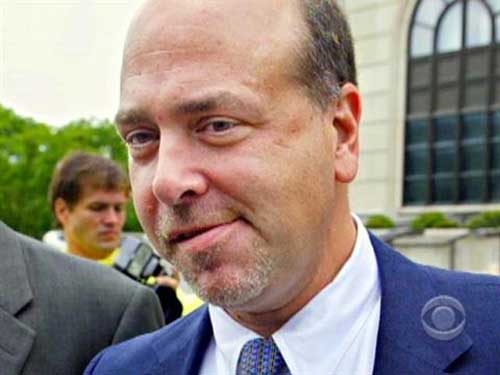 The more I see pundits scoring Barack Obama’s performance based on Wall Street’s reaction, according to how much hope Obama is able to infuse into the public’s faltering confidence in the economy, I have to ponder the uncomfortable etymology of the term CON ARTIST. Con Man is short for Confidence Man, itself a now obscure euphemism for chiseler, defrauder, grifter, scammer, swindler, gouger, or fraud. But the term is still charmingly descriptive.
 Ethnic cleansing disguised as plans to give a city more ‘open (Green) space’? Yes, that’s the Jewish State’s plan for Jerusalem. Voice of America reports that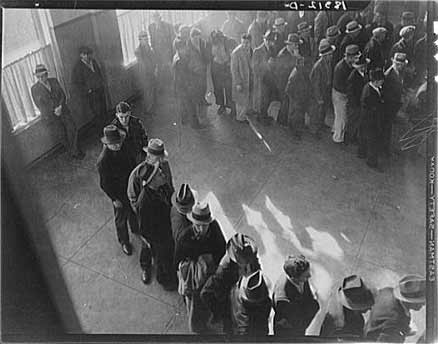
 This is by no means a complete list of contemporary populist heros, but I’d like to start with comedian
 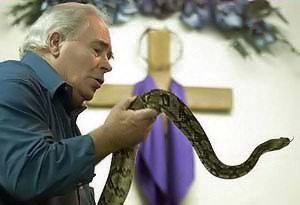 “He [Obama] created a 25 member advisory council and named 15 of its members yesterday, including several high-profile evangelicals — the Rev. Joel Hunter, senior pastor of a Florida megachurch, and the Rev. Frank Page, president emeritus of the Southern Baptist Convention — as well as representatives from secular nonprofits, which largely had little association with Bush’s faith-based initiative. The council members are to advise the faith office on policy but will not play a direct role in allocating federal grants. The office will be headed by Joshua DuBois, a 26-year-old Pentecostal who worked on religious issues for Obama’s campaign.”
 The Republicans gave the banks hundreds upon hundreds of billions of dollars, but that was not enough. Barack, instead of spending money to help house the homeless, institute universal medical coverage, or better Social Security for the elderly and incapacitated, thinks Bank of America’s corporate owners need yet more of your tax monies! What a wild CHANGE in thinking here! He brings us visions of Barack Lincoln, freeing the corporate class from all responsibilities! Poor slaves.