

In my circle they’re called “Saint Paul’s Principles” because my colleagues think the edicts are Catholic I guess. The St Paul Principles came from St Paul Minnesota, circa 2008, and were formally adopted by the varied groups organizing to disrupt the Republican National Convention of 2008. They’ve lived on as guiding principles for activists of all ilk. In 2011 many Occupy encampments ratified the StPP as their own code of conduct, indifferent to whether they were applicable or even beneficial. Let’s examine the well intended dogma. Do they apply universally? Are they constructive? And how did they work out for St Paul? The last one is easy. As you may remember, disruption of the 2008 RNC failed spectacularly.
The St. Paul Principles
1. Our solidarity will be based on respect for a diversity of tactics and the plans of other groups.
2. The actions and tactics used will be organized to maintain a separation of time or space.
3. Any debates or criticisms will stay internal to the movement, avoiding any public or media denunciations of fellow activists and events.
4. We oppose any state repression of dissent, including surveillance, infiltration, disruption and violence. We agree not to assist law enforcement actions against activists and others.
It’s hard to argue against this elegant expression of solidarity. With the SPPs, the protest organizers aimed at preempting COINTELPRO style disruption from generating conflict within the movement. The implicit condemnation of violence was of state sponsored violence, not authentic barricade defense. And no snitching. The SPPs addressed the problems which were already scuttling Denver’s 2008 DNC protests. In Denver, “Recreate ’68” planners let the press infer they meant to revive the Chicago riots of 1968, prompting almost every traditional social justice group to circulate a contract which everyone was expected to sign. It was a vow of nonviolence. Organizations who refused to sign were ostracized and could expect the violent police clobbering they invited.
Essentially the SPPs aimed to unite the nonviolent and non-nonviolent activists, to ensure neither denounced the other, and that physically neither wound up caught in each other’s fights or sit-ins. Probably the chief concession was being asked of the nonviolent crowd: Please, as long as we promise not to shroud your family atmosphere and your baby strollers in tear gas, please let the Black Blocs do their thing without your repudiation. Please. We share the same goals.
Can you begin to see where such a strategy might fail to lead?
But the St Paul organizers did share the same goals. Their aim was to disrupt the RNC via a strategy they called “3S” actions. SWARM, SEIZE. STAY. It’s easy to see why three years later Occupy Wall Street was attracted to these directives. “3S” defines Occupy and another three years on, OWS activist followed the 2014 Climate March with an action called “Flood Wall Street” the instructions for which rephrased 3S aquatically.
The “movement” to which the SPPs refer shared a goal, to disrupt the RNC, by means of swarming, seizing, and staying, by whatever tactic each member group wanted. They shared a further agreement, that the city of St Paul was to be partitioned in sectors allowing groups to conduct their actions in isolation, united in time, but separated geographically so that red zone, yellow zone and green zone participants needn’t mix and find themselves out of their respective confort zones.
The groups organizing against the 2008 RNC shared one more thing in common, bound as they were to the St Paul Principles, they were all signatories to the principles.
Do the St Paul Principles apply universally?
It’s easy to see that the 2011 OWS occupations in major cities across the country shared a similar goal. It was, if perhaps more vague than to prevent a party convention, to disrupt the wheels of commerce by means of encampments; the “3S” tactic now reduced to a single verb “Occupy”. Allies such as unions and antiwar organizations, while sympathetic, cannot be said to have shared the same determinaton to disrupt. Even MoveOn with their “99% Spring”, FireDogLake with their merchandizing, and Adbusters had to relent with the revolutionary rhetoric. Eventually OWS spinoffs like Occupy Sandy Relief began to serve functions diametrically opposed to disruption. Did they expand the “movement”? Of course. But did the more inclusive “movement” outgrown the capacity for St Paul Principles to maintain its unity? Are activists bent on disruption expected to respect and support activists determined to prevent disruption?
I know it’s lovely to imagine every social justice effort as anti-authoritarian, and whether nonviolent or indulgent, each comprises a unique wing of a broad anti-government movement. If you are prepared to pretend that everyone’s aims are progressive, we share similar enough goals and we are reformists. But if some aims are revolutionary, explicitely anti-Capitalist for example like Occupy Wall Street, then reformists are counterrevolutionary. If you think reformists aren’t Capitalism’s first line of defense, even as they consider themselves activists, then you don’t know your adversaries from your allies. To imagine that activists shouldn’t address such chasms of understanding in favor of upholding popular delusion is going to get a movement nowhere.
At last year’s Climate March in NYC, the prevailing sentiment was against Capitalism. The organizers didn’t want to mouth it, but a vast number of marchers began to grasp instinctively that Capitalism has no solution for Climate Change. The anti-Capitalist movement can become “the movement” but reformists will have to understand they are obstructionists before they as individuals can be said to share the common goal.
The St Paul RNC Welcoming Committee aimed to disrupt the Republican National Convention for a WEEK. Can activist groups as they grow and transform over years and compete for membership and community resources expect that they shouldn’t be critical of one another’s missteps or aggressions even as their goals diverge?
How scalable are the St Paul Principles? Do they apply to no matter who considers themselves part of a greater “movement”. Do they apply to signatories and non-signatories alike?
Are the St Paul Principles constructive?
I would argue: Hardly. While it seems safer to segregate the Black Bloc from the civil disobedients from the family picnic crowd, you’re not going to reach critical mass with each on its own. With public dischord still in its infancy and while we have nowhere near the numbers to defend against or deter violent repression, perhaps it is only reasonable to program our street protests according to color zones, as if marches were amusement rides for protest tourism.
If you’re satisfied to lead combatants to jail and probation for mere symbolic shows of defiance, and you’re prepared to let nonviolent activists subject themselves to brutality which even when filmed will not awaken the conscience of the sociopathic oligarchs, and you’re resigned to let the masses burn themselves out with boredom given nothing to challenge their apathy, then the St Paul Principles are for you.


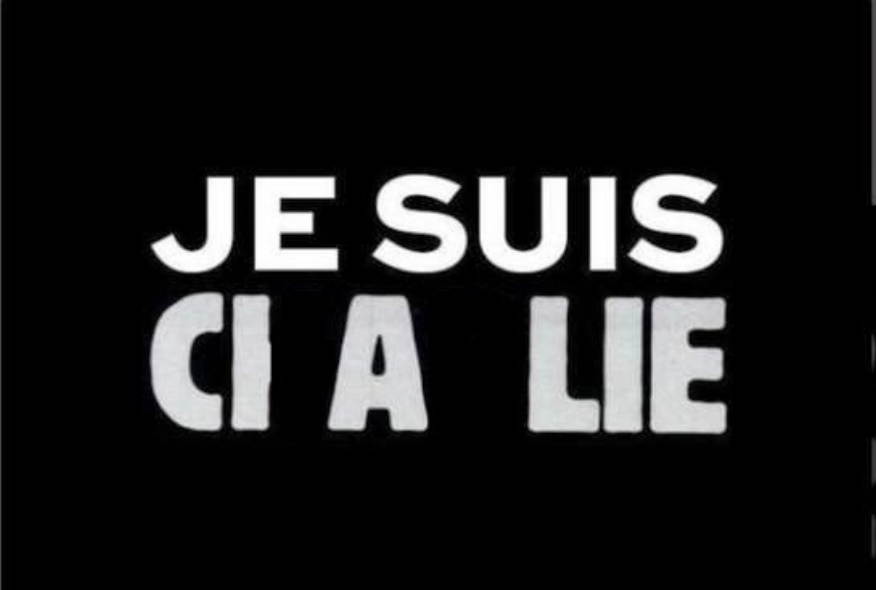 Even the nuanced critiques of the CHARLIE HEBDO COMEUPPANCE in Paris begin by disclaiming “of course the cartoonists didn’t deserve to die.” But I wonder, have none among us yet earned our adversaries’ judgment? We western imperialists are quick to decide which of our opponents deserve to die, even as mere collateral in our preemptive justice-dealing. How uncharitable of our exceptionalism to think that only we can direct extrajudicial assassinations. Paris is a front line like any other noncombatant zone marauded by US drones. Our intelligence agencies aren’t bothered to explain who they target and why. Contrast our existential rationalizations with the concrete evidence, much of it rubble, with which anti-imperial defenders can condemn us.
 I’ll bet curators thought it a measure of truth and reconciliation that the Ludlow presentation was sponsored by a local extraction industry business. Black Hills Energy trades not in coal but natural gas. In fact they’re among the frackers tearing up Southeastern Colorado. I think the irony more likely suggests how the UMWA’s starring role was left on the cutting room floor. There are generic mentions of “the union”, as at right, keeping a ledger of which families were assigned tents, but only in the fine print is the UMWA named as owning the ledger.


 SO I am going to brave the hypothesis that you can write about Twinkies without having to eat one. Actually I discovered Twinkie image aversion easily overcomes Twinkie the concept, and I don’t just mean examples like the phallic Strangelove Slim Pickens hat tip at right, excuse me? Even to look at the dubiously baked confections is unappetizing, so why do we think they’re edible? This might be a recurring quandary of mine to which short term memory blinds me. Why don’t we try to eat dirt? (Easy for a well fed person to ask.) Where do we get a hunger for breakfast cereals, but not processed pet food? Why do humans stop consuming a fruit at the seed or rind, yet question why those discards fail to interest animal life too? Taste? We grasp that fire consumes nutrients, a toaster sometimes terminally, but how do industrial processes blur how we discern between live food and dead? Is it box art? Which grocery aisle? Sugar and butter are both edible and inedible, with flour it’s the reverse –never mind, that’s not what I meant to write about, I wanted to address the sudden Soylent Greening of
 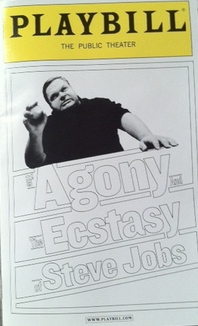 This American Life host Ira Glass tried to pull an Oprah on playwright Mike Daisey, to dress him down on creative license Daisey took with an excerpt of a monolog aired on TAL titled Mr. Daisey and the Apple Factory. The debunking came courtesy of American Public Media’s laughable “Marketplace” Wall Street PR engine, which Glass pretended were reliable experts on the subject of China’s apparently resolved labor abuses. That’s not even funny. This “retraction” reeks even upwind, and Apple’s having become the most highly valued corporation probably explains Glass’s uncharacteristically virulent condemnation. Shameful is what it was, and I hold it unforgivable, for the pretend-affable Glass, so-called folk archivist, to scuttle someone else’s too successful artistic quest for fundamental truth.
 Neighbors of Ft Carson probably know that soldiers in the 12th Regiment, 2nd Battalion, 4th Infantry Division of the US Army 4th Ivy go by the team name of “LETHAL WARRIORS”. It may boost egos, but wouldn’t you think it limits their deployment options? You could hardly expect host populations to think “Lethal Warriors” would qualify as PEACEKEEPERS for example. Who welcomes lethal force to deliver humanitarian aid? Well never mind that, because it gets worse.
 The term is self-explanatory, and so probably the soldiers don’t know berserker referred to the Norse warriors who threw themselves into a rage before laying waste their adversaries. Whether augmented by drink, drug or mental illness, the practice of deploying berserkers was OUTLAWED BY THE 10TH CENTURY. Do the soldiers of the 12th know their fighting anti-ethos has been a war crime for a full millennium?


 COLORADO SPRINGS- Local filmmaker, city council candidate, and critic of urban sprawl, Dave Gardner, screened his new doc