The New Slave Ships Have Arrived

The year was 1960, and there was only one men’s prison in Colorado at that time, located at Canon City. There was a women’s prison that sat next to the men’s prison. There were three small satellites off the main prison: the ranch, dairy farm and garden. And there was the young men’s reformatory at Buena Vista, for a total of three prisons. In 1960 the population figures for Colorado was nearly two million people, in 2010 it was a little over five million; In a span of fifty years Colorado gained three million people. In 1960, it took 3 prisons to confine the convicts of two million people living in Colorado. By 2006 there were 30 prisons in Colorado, while adding only three million people to the population. Hold on here a minute; something doesn’t add up: 2 million people needed 3 prisons, now 5 million people need 30 prisons?!

It would be safe to assume that this growth in population were of people about to commit a crime, judging from the growth of new prisons compared to the population growth.

That’s quite a growth from 3 prisons to 30 prisons in 26 years; but then we didn’t have the “Prison Industrial Complex” in those years; Corporation private prisons. Their motto should read “If there are no prisoners; there is no profit”

If you and your family were out on a Sunday drive in 1960 and happen to drive by “Old Max” on Hi-way 50, you would have noticed a sign in front of the prison that advertised “Visitors Welcome” the sign went on to tell you that you could enter the prison for fifty cents on a guided tour at certain hours. This fifty cents was to go into a prisoner burial fund, for indigent convicts who died while imprisoned. They would then be buried in a pauper grave yard and sentence was complete due to death.

A few years later these tours were discontinued for fear that the prisoners might take the tourist hostage, also the Prison Administration had decided that it was better not to let the taxpayer see the condition of the prison they were paying for.

My wife and I decided to take the tour.

I had the feeling of a rat in the trap when the large steel door slammed shut behind us. After taking only a few steps, we left behind a warm sunny day and stepped into a dark gray world. The doom and gloom seemed to lurk at every corner, the guards in their towers, stared down at the tour, rifles at ready. We had the feeling that this tour, was a bad idea.

There was a guard about 70 years old who served as our tour guide, he wore a guard’s uniform and walked backwards as he pointed out the finer attractions of the prison; like the hole or the gas chamber. We were not allowed to go into these building as the old guard explained; we could be taken hostage.
However we were taken to the curio shop where the convicts were allowed to sell their hobby work, and it was here that the old guard gave us some stories on the history of Roy Best an ex-warden who was discovered with state cattle on his personal ranch and convicts were used as ranch hands. The old guard told how Warden Best would tell all newly arrived convicts: “While serving your sentence, you are allowed to make a dollar any way you can, Just make sure it’s not my dollar.” He also told a story of what happen when two convicts were caught in a homosexual act; they would be taken to the curio shop and handcuffed to a steel rail, they both would be made to wear a woman’s dress, for all the tours to see. It didn’t matter who was pitcher and who was catcher, they both had to wear a dress.

There were two yellow lines painted on the concrete about six feet apart, we were warned as tourists of all the harm and mayhem that could befall us if we stepped outside of the yellow lines and it was here that some of the tourist began thinking about what a mistake this was and could they get their fifty cents back. And of course the convicts were well aware of the rule of crossing the yellow line while a tour was in the prison or of talking to any of the tourists; it meant a certain trip to the hole. As the tour progressed through the prison, I noticed that many of the tourist heads kept bobbing down, making sure their feet didn’t touch the yellow line.

As we neared the end of the tour we came to where three convicts were waiting for the tour to pass before crossing the yellow line; There was an older lady with white hair near the front of the tour, when she saw those three convicts, (who were all dressed in white pants and shirts) she whispered to the old guard.

“Who are those men?”

The guard turned to look and then began to name the convicts.

The old woman stopped him and said ” No! I mean are they convicts or are they civilian employees?”

“They are convicts,” the guard replied, “they are allowed to wear white because they all work in the hospital.”

The gray haired lady then exclaimed with the most bewildering look on her face “my goodness! They look like anybody else”.

It’s been over fifty years since that white haired lady spoke those words, but her words are burned into my memory as if she had only spoken them yesterday.
What the white haired lady never realized is those convicts were sons, with mothers and fathers.

As all convicts are; they are the sons and daughters, the brothers and sisters, mother and fathers of us all.

Like that old white haired lady’s words “They looked like anybody else,” society looks at prisoners and sees them all the same, maybe that’s because they are all dressed the same or their mailing address is the same. They eat the same food and spend the long boring days together. It’s true that while you are a prisoner, the rules of a prison or jail apply to all, a sort of “One size fits all.” Yet the crime that sent these men and women to prison are as different as day and night.

Willie “The Actor” Sutton, a bank robber from back in the 40s use to dress up as a policeman when robbing a bank. Willie would never put any bullets in his gun; he wanted to make sure that no one was injured while robbing the banks, you might say Willie was a little different kind of criminal, but when he was in prison, he dressed like all the other convicts.

Back in the 50s the prison at Canon City had a rule: all prisoners shoes must have a “V” shaped notch cut into the heel. This was intended to make it easier for the guards to track escaped convicts. In theory the rule seemed pretty “air tight.” The drawback was that the convicts all knew about the notch, and would simply fill the notch or remove the heel. It took a few year for the guards to figure out why they weren’t finding any tracks of escaped convicts with a “V” notch in the heel.

The old white haired lady was right about one thing; they do look like everyone else. But the underlying problem that sent them to prison are very different.

From the New York Times: U.S. prison population dwarfs that of other nations.

“The United States has less than 5 percent of the world’s population. But it has almost a quarter of the world’s prisoners. Indeed, the United States leads the world in producing prisoners, a reflection of a relatively recent and now entirely distinctive American approach to crime and punishment. Americans are locked up for crimes — from writing bad checks to using drugs — that would rarely produce prison sentences in other countries. And in particular they are kept incarcerated far longer than prisoners in other nations. Criminologists and legal scholars in other industrialized nations say they are mystified and appalled by the number and length of American prison sentences. The United States has, for instance, 2.3 million criminals behind bars, more than any other nation, according to data maintained by the International Center for Prison Studies at King’s College London.”

In reading the above and the complete 1700 word article you will not find the word ‘Corrections” used once.

Webster’s Dictionary: Correction; 1 a correction or being corrected, 2 a change that corrects a mistake; change from wrong to right or from abnormal to normal.

As you are reading this story you may have noticed that I do not use today’s language to describe prisons, convicts, guards and wardens, as “Correctional Facility”, “Correctional Officer”, “Superintendent” or “Inmate”. To call them “Correctional Facility’s or Correctional Officer” is the height of hypocrisy. The truth is the guards can’t correct the problems in their own lives let alone solve the many complex problems of the men and women they guard.

The word correction was introduced by the prison industrial complex to fool the public into thinking they were solving the problems of the people they were warehousing and collecting all of those tax dollars for.

Again! hold on here a minute; If they are correcting all the problems of these errant people? Then why are we building so many new prisons and filling them with men, women and children?

You might be asking yourself “How did America, end up with so many criminals? The truth is “We didn’t.” The American Prison Corporations quite simply found it very profitable to imprison citizens.

The Corrections Corporation of America (CCA) simple minded solution to the problem is to build more prisons and pass new laws which will produce more criminals for their prisons.

Looking to the CCA and their lobbyist is equivalent to hiring the fox to guard the hen house.

This all leads to a greater bottom line profit for the CCA but does little to solve the crime rate, the recidivism rate or help those prisoners who truly need help. And it certainly does not slow the growth of new prisons. “The breeding grounds of crime”.

Confronting Confinement, a June 2006 U.S. prison study by the bipartisan Commission on Safety and Abuse in America’s Prisons, reports than on any given day more than 2 million people are incarcerated in the United States, and that over the course of a year, 13.5 million spend time in prison or jail. African Americans are imprisoned at a rate roughly seven times higher than Whites, and Hispanics at a rate three times higher than Whites. Within three years of their release, 67% of former prisoners are rearrested and 52% are re-incarcerated, a recidivism rate that calls into question the effectiveness of America’s corrections system, which costs taxpayers $60 billion a year. Violence, overcrowding, poor medical and mental health care, and numerous other failings plague America’s 5,000 prisons and jails. The study indicates that even small improvements in medical care could significantly reduce recidivism. “What happens inside jails and prisons does not stay inside jails and prisons,” the commission concludes, since 95% of inmates are eventually released back into society, ill-equipped to lead productive lives. Given the dramatic rise in incarceration over the past decade, public safety is threatened unless the corrections system does in fact “correct” rather than simply punish. For a copy of the complete report and the commission’s recommendations for reform, see

From: U.S. Prisons Overcrowded and Violent, Recidivism High — Infoplease.com

In the words of George Carlin; we add syllables to soften the meaning of words; From the Colorado Central Magazine; (The polite modern terms are inmate, not prisoner or convict as in historical years, and corrections officer instead of guard.)

The Huffington Post published an excellent piece yesterday by reporter Chris Kirkham describing how the Corrections Corporation of America (CCA) wants to buy up state prisons, all under the guise of helping state governments deal with their budget shortfalls.

Called the Corrections Investment Initiative (sounds so positive, right?), it’s a sickening display of exploitive behavior — perhaps best underscored by the fact that the CCA stipulates in its “investment” overture that, as part of the deal, the states need to keep the prisons packed. Their language for it:

“An assurance by the agency partner [the state] that the agency has sufficient inmate population to maintain a minimum 90 percent occupancy rate over the term of the contract.”

In reading the above article I did not notice anything pertaining to correcting the prisoner’s problems that sent them to prison. I did read the words “Helping state governments deal with their budget shortfalls” Whenever someone comes to me and tells me they can save me money… But I have to spend money in order to save money, it’s right here I become suspicious of their motive, “Thank You, but, No Thanks'”

“The Corrections Corporation of America” and that white haired lady have something in common with one big difference; the white haired lady saw us all the same looking like anybody else but she had no motive for profit when she looked at us, she can be forgiven for her mistake.

“The Corrections Corporation of America” sees the prisoners also all the same; as a free labor force to manufacture goods in their prison industrial program. For the CCA it’s a win-win proposition, the taxpayer pays for housing their captive work force and then they again made a profit off the manufactured goods. It appears “The Corrections Corporation of America” has found a new way to reconstitute slavery. The only thing missing are the slave ships from Africa; we are already here so there is no need of the ships. However they will need to lobby the congress for new laws to insure the prisons are full of able bodied workers. And of course the lobbyists don’t work cheap; they have a large overhead in the moneys they must contribute to our elected legislator campaign fund.

The money travels from the taxpayer’s pocket to the government coffers, from the government coffers to “The Corrections Corporation of America” and then from their checking account back to the Colorado Legislator reelection fund, a vicious cycle that never ends. They are all so busy stuffing their pockets with the taxpayer’s money they have little left to correct the problems of the prisoners that got them the money in the first place.

In conclusion, with solutions; The unsuspecting, hardworking taxpayers have been taken for a ride for too long. It’s time we told the Prison Industrial Complex; “The Jig is Up.” It’s time for a revolution.

There is an old saying among the convicts; All the convicts in prison combined, never stole more money than one banker or corporation stole with one swipe of their pen. “While the poor man was out stealing a loaf of bread to feed his family, the banker was stealing the poor man’s house”.

One of the very best and clear examples I can give, happened right here in Colorado. For years and years the prisons have been filled with “Pot” smokers, the public was told; These are criminals, depraved drug addicts that will rob, steal and rape your daughter.

When the opposite was more true; ‘Pot” smokers are very relaxed, looking only for some Twinkies to munch on while watching cartoons.

And now that Colorado has de-criminalized marijuana, we are left with a bunch of taxpaying ‘Pot “smokers living normal lives, working and contributing to society. I’m sure that it’s not much consolation to all the men and women who suffered for years in prison, classified as a criminal, not to mention the families that were destroyed. Men and women who were filled with hate in this prison system, then released to commit a real crime.

Back in 1960, I was not taken as a hostage while touring the prison, but in 2015 we are all being held as hostage by the CCA (Private Prison Corp.) for our tax dollars.

You can help change that by contacting one of the local or national groups to end mass incarceration.

————–
About the author: David Anderson is an ex-convict, who had escaped from “Old Max” twice. He was serving three life sentences for crimes of which he was innocent. It took seven years for these convictions to be reversed. He walked out of the prison on April 29th 1983.

Drop symbols of White Supremacy, but don’t embolden government supremacy

SORRY, I DO HAVE A PROBLEM with government telling me how to think or telling me what I can’t say. Flags mean a lot to me and I CAN imagine MY flag being declared hateful or a public threat. How is anyone to rally like-minded dissenters when a government and its corporate media can declare their rallying symbol non grata? I don’t like the Confederate rebel flag either, it is modern code for unrepentant white racism, but I’m hugely skeptical when Big Brother is driving the bandwagon. How amusing that activists eager to burn Confederate flags find that the major retailers have already banned them. There’s a statement you’re being prevented making.

Scrap White Supremacy but we must cling tightly to the supremacy of individuals over their government.

Could the censors come for your flag too? I’m not big on national flags. However, the flags with which I associate ideologically, let’s be honest, scream regicide.

Imagine if the next mass shooter lunatic leaves selfies with an Anarchist flag or an Anon mask. “Rise up” is hate speech to oligarchs.

Guys, when Walmart, Target, Dixie politicians and the White House are on your side, you’re fantasizing and you’re on the wrong side.

If the vocabulary of racism, such as the word “nigger”, is effaced, how are we to talk about it? We had this argument about Mark Twain’s use of the word in Huckleberry Finn. Literature lost as I remember.

How blessed we would be to forget about slavery, except the same demographic is enslaved today in the prison system, while we white-out the words we need to recognize it.

Let’s be generous for a moment. The “Rebel” Flag, even as it draws racists like flies, is also about rebellion. Did you know the Civil War wears a revisionist title? Until America’s foreign excursions, the Civil War was called the War of Rebellion. Formal documents of the period are still bound as the Union’s record of the War of Rebellion.

Who effected the name change and why? Did it benefit the victor to write the history of the Civil War to cast slavery as its predominant issue? To justify the sacrifice of lives and trampling of state sovereignty?

The American national identity is that of revolutionaries rebelling against authoritarian rule. Was it confusing to let the bad guys usurp the rebel image?

I think it’s a lie to believe the common Southerner fought to preserve slavery. Just as it is to pretend the common German soldier defended the extermination camps. The average Johnny Rebel fought off the Yankee foreigner. Johnny Rebel was racist but no more so than his northern adversary. Lynchings of black men happened in both North and South.

If you want to hold a flag to account for racism, you’ll find a greater offender in the Union Flag, and today’s fifty star equivalent. The Stars and Stripes flew over the slave trade, the genocide of Native Americans, and the conquest and exploitation of indigenous peoples everywhere since.

If you want to fight racism, address its mechanisms. Address its leaders, not its disputable standard. The flag is a distraction. Who are racism’s enforcers? I read that Maryland police just killed another unarmed black man. Eye on that ball.

Judging history as we’ve distilled it, the cause of the Confederacy was unjust, but the Southern soldiers fought the Union as rebels.

I am damn partial to REBELS.

I’m reminded of the lyrics to I’m a Good Old Rebel. These reflect sentiments contemporary to the Reconstruction era, unreconstructed by the abolitionist narrative. Read ’em and weep.

Oh, I’m a good old rebel,?
Now that’s just what I am.?
For this Fair Land of Freedom,
?I do no give a damn.?
I’m glad I fought again’ her,
?I only wish we won.
?I ain’t asked any pardon for anything I’ve done.

I hates the Yankee Nation and everything they do.
?I hates the Declaration of Independence, too.?
I hates the glorious Union, ’tis dripping with our blood.?
I hates the striped banner, and fought it all I could.

I rode with Robert E. Lee,?
For three years, thereabout.?
Got wounded in four places,
?And I starved at Point Lookout.
?I catched the rheumatism
?A campin’ in the snow.?
But I killed a chance of Yankees
?And I’d like to kill some more.

Three hundred thousand Yankees
?Is stiff in southern dust.?
We got three hundred thousand?
Before they conquered us.?
They died of Southern Fever
?And Southern steel and shot.?
I wish there were three million
?Instead of what we got.

?I can’t pick up my musket?
And fight ’em down no more.?
But I ain’t agonna love ’em?
Now that is certain sure.
?And I don’t want no pardon?
For what I was and am.?
I won’t be reconstructed?
And I do not give a damn.

Oh, I’m a good old rebel,
?Now that’s just what I am.?
And for this Yankee Nation,
?I do no give a damn.?
I’m glad I fought again’ her,?
I only wish we won.?
I ain’t asked any pardon for anything I’ve done.?
I ain’t asked any pardon for anything I’ve done.

Last Rhodesian Dylann Roof was racist and white supremacist AND mentally ill


When a white racist mass murderer is apprehended, it’s a Western law enforcement tradition not to treat the suspect as cops do suspects of color. Fortunately television audience are now rejecting this inequity, and predictably they call for blood, instead of suggesting that all pre-trial interaction with police be conducted with respect for the presumed innocent. Similarly, white shooters and bombers are not called terrorists or racists but rather loners struggling with mental illness. I think it’s hugely important to call out the racism and xenophobia which breeds antisocial renegades like Dylann Storm Roof, and NOT judge Roof differently than the rare but much abused non-white even un-domestic insurgent. But why dismiss the insanity defense, when it obviously plays a part in more crimes not fewer. Dylann Roof was on psych meds. That’s another nightmare altogether, by which I mean for the pharmaceutical industry, who I think have a perfect record for supplementing white mass shooters. American prisons are filled with mental illness and mental disability and mental shortcomings. The justice system needs to be reformed with respect for mental health challenges, not with calls to get tougher on those with lesser ability to cope in society.

Dylann Roof’s alleged manifesto shows he’s not the brightest bulb either.

I was not raised in a racist home or environment. Living in the South, almost every White person has a small amount of racial awareness, simply because of the numbers of negroes in this part of the country. But it is a superficial awareness. Growing up, in school, the White and black kids would make racial jokes toward each other, but all they were were jokes. Me and White friends would sometimes would watch things that would make us think that “blacks were the real racists” and other elementary thoughts like this, but there was no real understanding behind it.

The event that truly awakened me was the Trayvon Martin case. I kept hearing and seeing his name, and eventually I decided to look him up. I read the Wikipedia article and right away I was unable to understand what the big deal was. It was obvious that Zimmerman was in the right. But more importantly this prompted me to type in the words “black on White crime” into Google, and I have never been the same since that day. The first website I came to was the Council of Conservative Citizens. There were pages upon pages of these brutal black on White murders. I was in disbelief. At this moment I realized that something was very wrong. How could the news be blowing up the Trayvon Martin case while hundreds of these black on White murders got ignored?

From this point I researched deeper and found out what was happening in Europe. I saw that the same things were happening in England and France, and in all the other Western European countries. Again I found myself in disbelief. As an American we are taught to accept living in the melting pot, and black and other minorities have just as much right to be here as we do, since we are all immigrants. But Europe is the homeland of White people, and in many ways the situation is even worse there. From here I found out about the Jewish problem and other issues facing our race, and I can say today that I am completely racially aware.

Blacks

I think it is is fitting to start off with the group I have the most real life experience with, and the group that is the biggest problem for Americans.
Niggers are stupid and violent. At the same time they have the capacity to be very slick. Black people view everything through a racial lens. Thats what racial awareness is, its viewing everything that happens through a racial lens. They are always thinking about the fact that they are black. This is part of the reason they get offended so easily, and think that some thing are intended to be racist towards them, even when a White person wouldn’t be thinking about race. The other reason is the Jewish agitation of the black race.

Black people are racially aware almost from birth, but White people on average don’t think about race in their daily lives. And this is our problem. We need to and have to.

Say you were to witness a dog being beat by a man. You are almost surely going to feel very sorry for that dog. But then say you were to witness a dog biting a man. You will most likely not feel the same pity you felt for the dog for the man. Why? Because dogs are lower than men.

This same analogy applies to black and White relations. Even today, blacks are subconsciously viewed by White people are lower beings. They are held to a lower standard in general. This is why they are able to get away with things like obnoxious behavior in public. Because it is expected of them.

Modern history classes instill a subconscious White superiority complex in Whites and an inferiority complex in blacks. This White superiority complex that comes from learning of how we dominated other peoples is also part of the problem I have just mentioned. But of course I don’t deny that we are in fact superior.

I wish with a passion that niggers were treated terribly throughout history by Whites, that every White person had an ancestor who owned slaves, that segregation was an evil an oppressive institution, and so on. Because if it was all it true, it would make it so much easier for me to accept our current situation. But it isn’t true. None of it is. We are told to accept what is happening to us because of ancestors wrong doing, but it is all based on historical lies, exaggerations and myths. I have tried endlessly to think of reasons we deserve this, and I have only came back more irritated because there are no reasons.

Only a fourth to a third of people in the South owned even one slave. Yet every White person is treated as if they had a slave owning ancestor. This applies to in the states where slavery never existed, as well as people whose families immigrated after slavery was abolished. I have read hundreds of slaves narratives from my state. And almost all of them were positive. One sticks out in my mind where an old ex-slave recounted how the day his mistress died was one of the saddest days of his life. And in many of these narratives the slaves told of how their masters didn’t even allowing whipping on his plantation.

Segregation was not a bad thing. It was a defensive measure. Segregation did not exist to hold back negroes. It existed to protect us from them. And I mean that in multiple ways. Not only did it protect us from having to interact with them, and from being physically harmed by them, but it protected us from being brought down to their level. Integration has done nothing but bring Whites down to level of brute animals. The best example of this is obviously our school system.

Now White parents are forced to move to the suburbs to send their children to “good schools”. But what constitutes a “good school”? The fact is that how good a school is considered directly corresponds to how White it is. I hate with a passion the whole idea of the suburbs. To me it represents nothing but scared White people running. Running because they are too weak, scared, and brainwashed to fight. Why should we have to flee the cities we created for the security of the suburbs? Why are the suburbs secure in the first place? Because they are White. The pathetic part is that these White people don’t even admit to themselves why they are moving. They tell themselves it is for better schools or simply to live in a nicer neighborhood. But it is honestly just a way to escape niggers and other minorities.

But what about the White people that are left behind? What about the White children who, because of school zoning laws, are forced to go to a school that is 90 percent black? Do we really think that that White kid will be able to go one day without being picked on for being White, or called a “white boy”? And who is fighting for him? Who is fighting for these White people forced by economic circumstances to live among negroes? No one, but someone has to.

Here I would also like to touch on the idea of a Northwest Front. I think this idea is beyond stupid. Why should I for example, give up the beauty and history of my state to go to the Northwest? To me the whole idea just parallels the concept of White people running to the suburbs. The whole idea is pathetic and just another way to run from the problem without facing it.

Some people feel as though the South is beyond saving, that we have too many blacks here. To this I say look at history. The South had a higher ratio of blacks when we were holding them as slaves. Look at South Africa, and how such a small minority held the black in apartheid for years and years. Speaking of South Africa, if anyone thinks that think will eventually just change for the better, consider how in South Africa they have affirmative action for the black population that makes up 80 percent of the population.

It is far from being too late for America or Europe. I believe that even if we made up only 30 percent of the population we could take it back completely. But by no means should we wait any longer to take drastic action.

Anyone who thinks that White and black people look as different as we do on the outside, but are somehow magically the same on the inside, is delusional. How could our faces, skin, hair, and body structure all be different, but our brains be exactly the same? This is the nonsense we are led to believe.

Negroes have lower IQs, lower impulse control, and higher testosterone levels in generals. These three things alone are a recipe for violent behavior. If a scientist publishes a paper on the differences between the races in Western Europe or Americans, he can expect to lose his job. There are personality traits within human families, and within different breeds of cats or dogs, so why not within the races?

A horse and a donkey can breed and make a mule, but they are still two completely different animals. Just because we can breed with the other races doesn’t make us the same.

In a modern history class it is always emphasized that, when talking about “bad” things Whites have done in history, they were White. But when we learn about the numerous, almost countless wonderful things Whites have done, it is never pointed out that these people were White. Yet when we learn about anything important done by a black person in history, it is always pointed out repeatedly that they were black. For example when we learn about how George Washington carver was the first nigger smart enough to open a peanut.

On another subject I want to say this. Many White people feel as though they don’t have a unique culture. The reason for this is that White culture is world culture. I don’t mean that our culture is made up of other cultures, I mean that our culture has been adopted by everyone in the world. This makes us feel as though our culture isn’t special or unique. Say for example that every business man in the world wore a kimono, that every skyscraper was in the shape of a pagoda, that every door was a sliding one, and that everyone ate every meal with chopsticks. This would probably make a Japanese man feel as though he had no unique traditional culture.

I have noticed a great disdain for race mixing White women within the White nationalists community, bordering on insanity it. These women are victims, and they can be saved. Stop.

Jews

Unlike many White nationalists, I am of the opinion that the majority of American and European jews are White. In my opinion the issues with jews is not their blood, but their identity. I think that if we could somehow destroy the jewish identity, then they wouldn’t cause much of a problem. The problem is that Jews look White, and in many cases are White, yet they see themselves as minorities. Just like niggers, most jews are always thinking about the fact that they are jewish. The other issue is that they network. If we could somehow turn every jew blue for 24 hours, I think there would be a mass awakening, because people would be able to see plainly what is going on.

I don’t pretend to understand why jews do what they do. They are enigma.

Hispanics

Hispanics are obviously a huge problem for Americans. But there are good hispanics and bad hispanics. I remember while watching hispanic television stations, the shows and even the commercials were more White than our own. They have respect for White beauty, and a good portion of hispanics are White. It is a well known fact that White hispanics make up the elite of most hispanics countries. There is good White blood worth saving in Uruguay, Argentina, Chile and even Brazil.

But they are still our enemies.

East Asians

I have great respect for the East Asian races. Even if we were to go extinct they could carry something on. They are by nature very racist and could be great allies of the White race. I am not opposed at all to allies with the Northeast Asian races.

Patriotism

I hate the sight of the American flag. Modern American patriotism is an absolute joke. People pretending like they have something to be proud while White people are being murdered daily in the streets. Many veterans believe we owe them something for “protecting our way of life” or “protecting our freedom”. But I’m not sure what way of life they are talking about. How about we protect the White race and stop fighting for the jews. I will say this though, I myself would have rather lived in 1940’s American than Nazi Germany, and no this is not ignorance speaking, it is just my opinion. So I don’t blame the veterans of any wars up until after Vietnam, because at least they had an American to be proud of and fight for.

An Explanation

To take a saying from a film, “I see all this stuff going on, and I don’t see anyone doing anything about it. And it pisses me off.” To take a saying from my favorite film, “Even if my life is worth less than a speck of dirt, I want to use it for the good of society.”

I have no choice. I am not in the position to, alone, go into the ghetto and fight. I chose Charleston because it is most historic city in my state, and at one time had the highest ratio of blacks to Whites in the country. We have no skinheads, no real KKK, no one doing anything but talking on the internet. Well someone has to have the bravery to take it to the real world, and I guess that has to be me.

Unfortunately at the time of writing I am in a great hurry and some of my best thoughts, actually many of them have been to be left out and lost forever. But I believe enough great White minds are out there already.

Please forgive any typos, I didn’t have time to check it.

Osama bin Laden’s books. They could do you more good than they did him.

Last week the CIA decided
Crossing the Rubicon, The New Pearl Harbor, Imperial Hubris, Obama's Wars, The Best Democracy Money Can Buy... to declassify the list of books found in Osama bin Laden’s last hideout when Seal Team Six made their raid. There were 39 titles, which the press has categorized as heavy on conspiracy theory. That’s true, untrue, and unsurprising if you consider the official White House line is that the US does not support illegal coups. These authors beg to differ, including the unimpeachable Noam Chomski. Other investigative standouts include William Blum, Greg Palast, John Perkins. The list did not include publication dates or editions, just author and title. A closer inspection of the list is revealing.
 
(This is part one of a continuing series.)

It would be more accurate to describe Osama bin Laden’s bookshelf as history, mostly contemporary with notable exceptions. For example, bin Laden’s reference on Christianity and Islam in Spain 756-1031 was published in 1889 with the full title “The Relations and Mutual Influences of Christianity and Mohammedanism During the Khalifate of Cordova.” In 1889 European perspectives on the Moorish occupation appear dramatically antisemitic.

The history of The US and Vietnam 1787-1941 begins with Thomas Jefferson’s first interests in trading for rice with “Cochinchina”. Written by a former ambassador, it was published in 1990 by the National Defense University Press. The Best Enemy Money Can Buy is about the symbiotic relationship between the US military industrial complex and Russia’s.

Some of bin Laden’s “books” such as Michael O’Hanlon’s Unfinished Business were staple-bound publications from US policy think tanks. I’ll review those and the various intelligence agency exposés in subsequent posts.

Here are the 39 titles listed alphabetically:
The 2030 Spike by Colin Mason; A Brief Guide to Understanding Islam by I. A. Ibrahim; America’s Strategic Blunders by Willard Matthias; America’s ‘War on Terrorism’ by Michel Chossudovsky; Al-Qaeda’s Online Media Strategies: From Abu Reuter to Irhabi 007 by Hanna Rogan; The Best Democracy Money Can Buy by Greg Palast; The Best Enemy Money Can Buy by Anthony Sutton; Black Box Voting: Ballot Tampering in the 21st Century by Bev Harris; Bloodlines of the Illuminati by Fritz Springmeier; Bounding the Global War on Terror by Jeffrey Record; Checking Iran’s Nuclear Ambitions by Henry Sokolski and Patrick Clawson; Christianity and Islam in Spain 756-1031 A.D. by C. R. Haines; Civil Democratic Islam: Partners, Resources, and Strategies by Cheryl Benard; Confessions of an Economic Hit Man by John Perkins; Conspirators’ Hierarchy: The Committee of 300 by John Coleman; Crossing the Rubicon by Michael Ruppert; Fortifying Pakistan: The Role of U.S. Internal Security Assistance (only the book’s introduction) by C. Christine Fair and Peter Chalk; Guerrilla Air Defense: Antiaircraft Weapons and Techniques for Guerrilla Forces by James Crabtree; Handbook of International Law by Anthony Aust; Hegemony or Survival: America’s Quest for Global Dominance by Noam Chomsky; Imperial Hubris by Michael Scheuer; In Pursuit of Allah’s Pleasure by Asim Abdul Maajid, Esaam-ud-Deen and Dr. Naahah Ibrahim; International Relations Theory and the Asia-Pacific by John Ikenberry and Michael Mastandano; Killing Hope: U.S. Military and CIA Interventions since World War II by William Blum; Military Intelligence Blunders by John Hughes-Wilson; Project MKULTRA, the CIA’s program of research in behavioral modification. Joint hearing before the Select Committee on Intelligence and the Subcommittee on Health and Scientific Research of the Committee on Human Resources, United States Senate, Ninety-fifth Congress, first session, August 3, 1977. United States Congress Senate Select Committee on Intelligence; Necessary Illusions: Thought Control in Democratic Societies by Noam Chomsky; New Pearl Harbor: Disturbing Questions about the Bush Administration and 9/11 by David Ray Griffin; New Political Religions, or Analysis of Modern Terrorism by Barry Cooper; Obama’s Wars by Bob Woodward; Oxford History of Modern War by Charles Townsend; The Rise and Fall of the Great Powers by Paul Kennedy; Rogue State: A Guide to the World’s Only Superpower by William Blum; The Secret Teachings of All Ages by Manly Hall (1928); Secrets of the Federal Reserve by Eustace Mullins; The Taking of America 1-2-3 by Richard Sprague; Unfinished Business: U.S. Overseas Military Presence in the 21stCentury by Michael O’Hanlon; The U.S. and Vietnam 1787-1941 by Robert Hopkins Miller; “Website Claims Steve Jackson Games Foretold 9/11,” article posted on ICV2.com.

An Open letter to the Denver Police Department

I can see you, as you sit there reading this; yeah, you with the donut jelly and crumbs all over the keypad and mouse. Searching Facebook and all social media sites looking for information. Doing a little undercover spying and investigative work so that you can run back to inform your buddies on what’s going down. There is a term for that; you are a “SNITCH”. In case you don’t know, a snitch is someone who hides in the shadows gathering information so that they might betray another.
 
We know what information you want. What are the protesters’ plans? How many of them are there? Where will they be? What are their names? We are happy to give that information to you. Unlike you, we are not a secretive in our goals. But before we give you that info we’re going to give you a little mix of commentary and history wrapped up in the truth. You seem to get very upset when the protesters call you pigs or holler “Fuck The Police”.

Personally, I think calling you pigs is a bit of and upgrade. When every human is born there is a residue left over, it’s called, afterbirth; it serve no useful purpose, it is waste left over from making of a human being. And this is how I see you, you are the “Afterbirth” that serves no useful purpose, you are the waste product. You want and demand respect from the citizens, yet you fail to understand that respect is something that is given, not taken. Respect is given for acts of valor, courage and bravery.

Do you believe it was an act of bravery when you murdered a 17 year old girl, Jessica Hernandez, in the alley, or when you murdered Marvin Booker in the county jail? Was it courage when you pepper-sprayed a 12 year old child in Civic Center Park on April 29th? Did one of you even think to go to that child and give medical assistance or maybe an apology? Or were you too busy looking for the next victim to assault? I can only assume you are brain-dead if you think these act will gain you respect.

The advent of the cell phone camera and internet has shown who and what you really are, that afterbirth, I mentioned above.

Back in the 60s we did not have cell phones to record your criminal conduct, but if you take the time to Google “Art Winstanley” you will discover you are not the first criminal cops. Art was one of Denver’s Serve & Protect cops who was also a burglar while on duty. When Art got caught, he “Snitched” on over fifty other cops who were in the burglary ring. He began his snitching after he was served a piece of cherry pie. How’s that for serve and protect?

And somewhere in your ranks is another Art who will come forward and expose your criminal deeds against the citizen. We don’t know who or when, but you can be sure, he or she is there to snitch on the rest of you.

Now about that information you looking for; I won’t give you any names, because unlike you, I’m not a SNITCH.

How many is there of us? We are many and our numbers are growing, your days and deeds are numbered.

Where is our next action? It will be everywhere on the streets, calling you out for your criminal deeds. The days of hiding your crimes are over and we will expose you.

Get a job you dirty hippie! Unhelpful advice which activists take personally.

Occupy Wall Street composed a chant to rebut the ageless heckle hurled at protesters: GET A JOB YOU DIRTY HIPPIE! After Zuccotti Park was razed and Occupiers regrouped, they offerd this rejoinder. Remember it?
    “Got a JOB. Took a SHOWER.
    We’re still occupying, speaking truth to power!”

Of course it wasn’t true, or at least whether we did or not was as irrelevant as the original misconception. But street activists come up against misguided advice much more pernicious than the crudely insulting. Consider the constructive advice from journeymen activists who’ve been at this for a long time and know how it’s done. You know the ones, who preach nonviolence or you’ll never get anywhere, as if they have a record of success or fount of experience more illustrative than the old grindstone. False history has even robbed them of the authentic lessons to glean from Gandhi and MLK. Yet even the best-intentioned of our peers caution that movements will never take hold without blablabla. This sacred cow, for instance: community outreach.

A colleague of mine recently asked about my ideas to better reach out to the African American community vis-a-vis the protests which Occupy Denver has been spearheading to show solidarity with the Black Lives Matter uprisings in Baltimore and Ferguson. At face value it’s a reasonable question as Occupy franchizes across the country have been predominantly white. At base however, the distinction is academic and the implication insulting.

In Denver, as probably in many multicultural urban centers since Ferguson, authorities have succeeded in working with community leaders to redirect street protest into the usual back channels. In Denver the spiritual leaders have kept their flocks locked in their churches. When Denver high schoolers began to stage walk-outs, school administrators put the schools on lockdown. Traditional social justice groups fell victim to academics and their identity politics diatribes. White priviledge must “make space”, in effect, step back, whether or not alternative leaders were knocking. In Denver the most significant protest entity impervious to scholatisc impotence or the wiles of religious submission was Occupy Denver. Since 2011 this ad hoc collection of protest-hardened activists could mobilize at the flick of a switch, usually through social media. By definition, Occupy refused to bind themselves to everybody else’s longstanding arrangements of detente.

Of course this persistence is not static and there are ceaseless internal pressures to conform and play for crumbs. Table scraps are sustenance after all, and all mature decisions are compromises. Adults choose lesser evils, safety nets, the bird in the hand, wisdom over altruism. Can dreamers even be sure the burning stove isn’t an adage meant to waylay us from our childish intuition about freedom? From the frying pan into the fire is more probably the forbidden roadmap to revolution.

You want to know the sage advice that burns me up the most? Comrades telling me the struggle will be a long haul. A marathon. Are you kidding me? Revolution is a sprint! We’ve got to light a fire under your ass!

In any case. Community outreach. What’s the problem? My first thought was of the criticism protesters still face everyday: “GET A JOB!” Everyone seems to have their own idea about what other activists are supposed to be doing.

On the subject of Occupy and “outreach” I offer six points:

1. Did Occupy Wall Street reach out to the community of brokers and bankers on Wall Street? It did not. Occupy was about disruption, gathering on the street and uniting activists. Community organizing was another sort of activism. Occupy was not voting, or going around trying to get out the vote, or lobbying legislators, or gathering petition signatures, or fundraising, or taking in cats, or walking in people’s shoes. All of these are perfectly constructive things, but they’re fundamental to what Occupy was not. I know it sounds mature to talk about building community and helping out and being less disruptive but those are tasks that keep conventional social justice groups too busy to occupy.

2. I am reminded of a lesson learned as occupiers coordinated their efforts. If you feel there is a task going undone, you probably should step up to do it. Others have their hands full with what they are doing. If you feel there is a deficiency and it’s important to you, fill it.

3. That said, there is an imperative not to dillute the fundamental mission. If tangential efforts drain the human resources needed for the goal that brought everyone together, then somebody is winning and it’s not Occupy.

4. Denver’s African American community already has their leaders, most of them undisposed to street activism. Occupy Denver’s community is with activists of all colors. We reach them through the message, our actions, and our unending persistance. None of these are based on color lines.

5. Occupy has many black activist allies. On the street we support them EVERY TIME regardless of whether they support us. Even if it’s “their” issue. If they are not able to rally as frequently as we can, it’s not their fault. (That is White middle class privilege.)

6. If you think the African American community is central to addressing the probem of racism, that’s a problem. It should be up to the WHITE AMERICAN COMMUNITY to shout “BLACK LIVES MATTER” the loudest of all.

The conceivability that climate change, torture, or Pope’s Catholicism isn’t.

The January 2015 Smithsonian Magazine asks “Did Civil War vets suffer from PTSD?” which seems a progressive conceit from an arbitor of the accepted version of events. I think it’s useful to ask “Does a bear shit in the woods?” by which I mean, is it conceivable to you that bears don’t shit in the woods? Because your incredulity is critical. Apparently these days, history is written not by historians but by pollsters. Today the commonplace perception of history and science prevails as the dominant verdict. Whether Climate Change is real, or whether torture is torture, depends on how the public polls. Presumably truth being what we want it to be would poll favorably too.

While the Smithsonian’s question suggests to upend institutional dogma, dragging 19th century medicine into the 21st century, it’s actually the reverse. Doctors treating veterans have always known that nearly all people exposed to combat will suffer PTSD, ancient times didn’t favor acronyms perhaps, yet today’s spin doctors want public comprehension to pivot on a question, contingent upon whether is is. Of course DO BEARS sounds more objective than BEARS DO. It also smells of the dissembling of a torture doctor. TORTURE IS.

Goddamnit! 100 years on, KRCC plays soldier to butcher Ludlow miners again

Ludlow
COLORADO SPRINGS, CO- This is what happen when apolitical wits want to dribble their sardonic apathy on a subject of historic import. Or as they see it, unimport. The 100-year anniversary of the Ludlow Massacre passed in April, with considerable media attention and unfortunately the requisit controversy that comes of celebrants numbering equal parts decendents of the perps and not the miners. You’d think KRCC might have heard the dissonance in April, the attempt of National Guard to rewrite the history in accordance to today’s culture of military-worship and the ensuing protestations, but no. Tonight a locally produced radio show called “Wish We Were Here” aired a one-hour episode about “Ludlow” on public radio franchise KRCC. Noel Black, Jake Burnell and Andrea Chalfin put the program together and relied on the same revisionists which dogged the official commemorations.

Ludlow 100 year anniversary feted by social class that committed massacre

Cover of WestwordDENVER, COLO.- I might be sensationalizing a technicality, but in effect it’s what happened: the remembering of Ludlow has been commandeered by the class who perpetrated it. The preliminary series of events commemorating the 100 year anniversary of the Ludlow Massacre (April 20, 1914) concluded tonight at Denver’s History Colorado Museum with a panel discussion featuring only establishment voices. “Is Ludlow relevant?” was the question posed to five participants among them three professors, a soldier, and a union rep. That’s like asking “is global warming real?” The question is loaded with the suggestion that the opposite is equally plausible. I would have preferred to hear HOW is Ludlow relevant. Though the union rep skillfully skirted the issue, no one pushed back at another flawed presumption, that the coal strike was an armed conflict. Yes the massacre provoked the ten day “Coal Field War” during which striking miners retaliated against the mine company employees, but the death toll was still but a fraction of the number of miners killed in the mine accidents which precipitated the Ludlow strike. It took an audience member to address that omission. Alas nobody mentioned the aftermath that found many miners under arrest, others scattered, and no mine owner, operator, guard, strikebreaker, Baldwin-Felts thug, or National Guard save one, was punished for the atrocity. Yes many immigrant miners were veterans of Bulkan wars, but some Colorado soldiers were veterans of the US campaign in the Philippines, where villages were dispatched with flame and machinegun fire. Not mentioned. Instead a Colorado National Guard representative was let to say that burning the tents at Ludlow was not a tactical error -and since the “non-combatant” deaths were unintended, Ludlow was not technically a massacre.

The Putin knock-knock joke is easier to find than his Kremlin speech on Crimea

Putin Obama Knock Knock Joke - Crimea RiverThis graphic circulating on the interwebs is a lot easier to find than Vladimir Putin’s March 18 address to the Kremlin about the referendum in Crimea after the Western coup in Ukraine. Bypassing dubious translations excerpted on Capitalist media sites, here is a transcript of his speech direct from the Kremlin. Putin is no hero, but he threatens US-EU banking hegemony, gives asylum to Edward Snowden, and executes zero people with drones.

QUOTING PRESIDENT OF RUSSIA VLADIMIR PUTIN:
Federation Council members, State Duma deputies, good afternoon. Representatives of the Republic of Crimea and Sevastopol are here among us, citizens of Russia, residents of Crimea and Sevastopol!

Dear friends, we have gathered here today in connection with an issue that is of vital, historic significance to all of us. A referendum was held in Crimea on March 16 in full compliance with democratic procedures and international norms.

More than 82 percent of the electorate took part in the vote. Over 96 percent of them spoke out in favour of reuniting with Russia. These numbers speak for themselves.

To understand the reason behind such a choice it is enough to know the history of Crimea and what Russia and Crimea have always meant for each other.

Everything in Crimea speaks of our shared history and pride. This is the location of ancient Khersones, where Prince Vladimir was baptised. His spiritual feat of adopting Orthodoxy predetermined the overall basis of the culture, civilisation and human values that unite the peoples of Russia, Ukraine and Belarus. The graves of Russian soldiers whose bravery brought Crimea into the Russian empire are also in Crimea. This is also Sevastopol – a legendary city with an outstanding history, a fortress that serves as the birthplace of Russia’s Black Sea Fleet. Crimea is Balaklava and Kerch, Malakhov Kurgan and Sapun Ridge. Each one of these places is dear to our hearts, symbolising Russian military glory and outstanding valour.

Crimea is a unique blend of different peoples’ cultures and traditions. This makes it similar to Russia as a whole, where not a single ethnic group has been lost over the centuries. Russians and Ukrainians, Crimean Tatars and people of other ethnic groups have lived side by side in Crimea, retaining their own identity, traditions, languages and faith.

Incidentally, the total population of the Crimean Peninsula today is 2.2 million people, of whom almost 1.5 million are Russians, 350,000 are Ukrainians who predominantly consider Russian their native language, and about 290,000-300,000 are Crimean Tatars, who, as the referendum has shown, also lean towards Russia.

True, there was a time when Crimean Tatars were treated unfairly, just as a number of other peoples in the USSR. There is only one thing I can say here: millions of people of various ethnicities suffered during those repressions, and primarily Russians.

Crimean Tatars returned to their homeland. I believe we should make all the necessary political and legislative decisions to finalise the rehabilitation of Crimean Tatars, restore them in their rights and clear their good name.

We have great respect for people of all the ethnic groups living in Crimea. This is their common home, their motherland, and it would be right – I know the local population supports this – for Crimea to have three equal national languages: Russian, Ukrainian and Tatar.

Colleagues,

In people’s hearts and minds, Crimea has always been an inseparable part of Russia. This firm conviction is based on truth and justice and was passed from generation to generation, over time, under any circumstances, despite all the dramatic changes our country went through during the entire 20th century.

After the revolution, the Bolsheviks, for a number of reasons – may God judge them – added large sections of the historical South of Russia to the Republic of Ukraine. This was done with no consideration for the ethnic make-up of the population, and today these areas form the southeast of Ukraine. Then, in 1954, a decision was made to transfer Crimean Region to Ukraine, along with Sevastopol, despite the fact that it was a federal city. This was the personal initiative of the Communist Party head Nikita Khrushchev. What stood behind this decision of his – a desire to win the support of the Ukrainian political establishment or to atone for the mass repressions of the 1930’s in Ukraine – is for historians to figure out.

What matters now is that this decision was made in clear violation of the constitutional norms that were in place even then. The decision was made behind the scenes. Naturally, in a totalitarian state nobody bothered to ask the citizens of Crimea and Sevastopol. They were faced with the fact. People, of course, wondered why all of a sudden Crimea became part of Ukraine. But on the whole – and we must state this clearly, we all know it – this decision was treated as a formality of sorts because the territory was transferred within the boundaries of a single state. Back then, it was impossible to imagine that Ukraine and Russia may split up and become two separate states. However, this has happened.

Unfortunately, what seemed impossible became a reality. The USSR fell apart. Things developed so swiftly that few people realised how truly dramatic those events and their consequences would be. Many people both in Russia and in Ukraine, as well as in other republics hoped that the Commonwealth of Independent States that was created at the time would become the new common form of statehood. They were told that there would be a single currency, a single economic space, joint armed forces; however, all this remained empty promises, while the big country was gone. It was only when Crimea ended up as part of a different country that Russia realised that it was not simply robbed, it was plundered.

At the same time, we have to admit that by launching the sovereignty parade Russia itself aided in the collapse of the Soviet Union. And as this collapse was legalised, everyone forgot about Crimea and Sevastopol ­– the main base of the Black Sea Fleet. Millions of people went to bed in one country and awoke in different ones, overnight becoming ethnic minorities in former Union republics, while the Russian nation became one of the biggest, if not the biggest ethnic group in the world to be divided by borders.

Now, many years later, I heard residents of Crimea say that back in 1991 they were handed over like a sack of potatoes. This is hard to disagree with. And what about the Russian state? What about Russia? It humbly accepted the situation. This country was going through such hard times then that realistically it was incapable of protecting its interests. However, the people could not reconcile themselves to this outrageous historical injustice. All these years, citizens and many public figures came back to this issue, saying that Crimea is historically Russian land and Sevastopol is a Russian city. Yes, we all knew this in our hearts and minds, but we had to proceed from the existing reality and build our good-neighbourly relations with independent Ukraine on a new basis. Meanwhile, our relations with Ukraine, with the fraternal Ukrainian people have always been and will remain of foremost importance for us.

Today we can speak about it openly, and I would like to share with you some details of the negotiations that took place in the early 2000s. The then President of Ukraine Mr Kuchma asked me to expedite the process of delimiting the Russian-Ukrainian border. At that time, the process was practically at a standstill. Russia seemed to have recognised Crimea as part of Ukraine, but there were no negotiations on delimiting the borders. Despite the complexity of the situation, I immediately issued instructions to Russian government agencies to speed up their work to document the borders, so that everyone had a clear understanding that by agreeing to delimit the border we admitted de facto and de jure that Crimea was Ukrainian territory, thereby closing the issue.

We accommodated Ukraine not only regarding Crimea, but also on such a complicated matter as the maritime boundary in the Sea of Azov and the Kerch Strait. What we proceeded from back then was that good relations with Ukraine matter most for us and they should not fall hostage to deadlock territorial disputes. However, we expected Ukraine to remain our good neighbour, we hoped that Russian citizens and Russian speakers in Ukraine, especially its southeast and Crimea, would live in a friendly, democratic and civilised state that would protect their rights in line with the norms of international law.

However, this is not how the situation developed. Time and time again attempts were made to deprive Russians of their historical memory, even of their language and to subject them to forced assimilation. Moreover, Russians, just as other citizens of Ukraine are suffering from the constant political and state crisis that has been rocking the country for over 20 years.

I understand why Ukrainian people wanted change. They have had enough of the authorities in power during the years of Ukraine’s independence. Presidents, prime ministers and parliamentarians changed, but their attitude to the country and its people remained the same. They milked the country, fought among themselves for power, assets and cash flows and did not care much about the ordinary people. They did not wonder why it was that millions of Ukrainian citizens saw no prospects at home and went to other countries to work as day labourers. I would like to stress this: it was not some Silicon Valley they fled to, but to become day labourers. Last year alone almost 3 million people found such jobs in Russia. According to some sources, in 2013 their earnings in Russia totalled over $20 billion, which is about 12% of Ukraine’s GDP.

I would like to reiterate that I understand those who came out on Maidan with peaceful slogans against corruption, inefficient state management and poverty. The right to peaceful protest, democratic procedures and elections exist for the sole purpose of replacing the authorities that do not satisfy the people. However, those who stood behind the latest events in Ukraine had a different agenda: they were preparing yet another government takeover; they wanted to seize power and would stop short of nothing. They resorted to terror, murder and riots. Nationalists, neo-Nazis, Russophobes and anti-Semites executed this coup. They continue to set the tone in Ukraine to this day.

The new so-called authorities began by introducing a draft law to revise the language policy, which was a direct infringement on the rights of ethnic minorities. However, they were immediately ‘disciplined’ by the foreign sponsors of these so-called politicians. One has to admit that the mentors of these current authorities are smart and know well what such attempts to build a purely Ukrainian state may lead to. The draft law was set aside, but clearly reserved for the future. Hardly any mention is made of this attempt now, probably on the presumption that people have a short memory. Nevertheless, we can all clearly see the intentions of these ideological heirs of Bandera, Hitler’s accomplice during World War II.

It is also obvious that there is no legitimate executive authority in Ukraine now, nobody to talk to. Many government agencies have been taken over by the impostors, but they do not have any control in the country, while they themselves – and I would like to stress this – are often controlled by radicals. In some cases, you need a special permit from the militants on Maidan to meet with certain ministers of the current government. This is not a joke – this is reality.

Those who opposed the coup were immediately threatened with repression. Naturally, the first in line here was Crimea, the Russian-speaking Crimea. In view of this, the residents of Crimea and Sevastopol turned to Russia for help in defending their rights and lives, in preventing the events that were unfolding and are still underway in Kiev, Donetsk, Kharkov and other Ukrainian cities.

Naturally, we could not leave this plea unheeded; we could not abandon Crimea and its residents in distress. This would have been betrayal on our part.

First, we had to help create conditions so that the residents of Crimea for the first time in history were able to peacefully express their free will regarding their own future. However, what do we hear from our colleagues in Western Europe and North America? They say we are violating norms of international law. Firstly, it’s a good thing that they at least remember that there exists such a thing as international law – better late than never.

Secondly, and most importantly – what exactly are we violating? True, the President of the Russian Federation received permission from the Upper House of Parliament to use the Armed Forces in Ukraine. However, strictly speaking, nobody has acted on this permission yet. Russia’s Armed Forces never entered Crimea; they were there already in line with an international agreement. True, we did enhance our forces there; however – this is something I would like everyone to hear and know – we did not exceed the personnel limit of our Armed Forces in Crimea, which is set at 25,000, because there was no need to do so.

Next. As it declared independence and decided to hold a referendum, the Supreme Council of Crimea referred to the United Nations Charter, which speaks of the right of nations to self-determination. Incidentally, I would like to remind you that when Ukraine seceded from the USSR it did exactly the same thing, almost word for word. Ukraine used this right, yet the residents of Crimea are denied it. Why is that?

Moreover, the Crimean authorities referred to the well-known Kosovo precedent – a precedent our western colleagues created with their own hands in a very similar situation, when they agreed that the unilateral separation of Kosovo from Serbia, exactly what Crimea is doing now, was legitimate and did not require any permission from the country’s central authorities. Pursuant to Article 2, Chapter 1 of the United Nations Charter, the UN International Court agreed with this approach and made the following comment in its ruling of July 22, 2010, and I quote: “No general prohibition may be inferred from the practice of the Security Council with regard to declarations of independence,” and “General international law contains no prohibition on declarations of independence.” Crystal clear, as they say.

I do not like to resort to quotes, but in this case, I cannot help it. Here is a quote from another official document: the Written Statement of the United States America of April 17, 2009, submitted to the same UN International Court in connection with the hearings on Kosovo. Again, I quote: “Declarations of independence may, and often do, violate domestic legislation. However, this does not make them violations of international law.” End of quote. They wrote this, disseminated it all over the world, had everyone agree and now they are outraged. Over what? The actions of Crimean people completely fit in with these instructions, as it were. For some reason, things that Kosovo Albanians (and we have full respect for them) were permitted to do, Russians, Ukrainians and Crimean Tatars in Crimea are not allowed. Again, one wonders why.

We keep hearing from the United States and Western Europe that Kosovo is some special case. What makes it so special in the eyes of our colleagues? It turns out that it is the fact that the conflict in Kosovo resulted in so many human casualties. Is this a legal argument? The ruling of the International Court says nothing about this. This is not even double standards; this is amazing, primitive, blunt cynicism. One should not try so crudely to make everything suit their interests, calling the same thing white today and black tomorrow. According to this logic, we have to make sure every conflict leads to human losses.

I will state clearly – if the Crimean local self-defence units had not taken the situation under control, there could have been casualties as well. Fortunately this did not happen. There was not a single armed confrontation in Crimea and no casualties. Why do you think this was so? The answer is simple: because it is very difficult, practically impossible to fight against the will of the people. Here I would like to thank the Ukrainian military – and this is 22,000 fully armed servicemen. I would like to thank those Ukrainian service members who refrained from bloodshed and did not smear their uniforms in blood.

Other thoughts come to mind in this connection. They keep talking of some Russian intervention in Crimea, some sort of aggression. This is strange to hear. I cannot recall a single case in history of an intervention without a single shot being fired and with no human casualties.

Colleagues,

Like a mirror, the situation in Ukraine reflects what is going on and what has been happening in the world over the past several decades. After the dissolution of bipolarity on the planet, we no longer have stability. Key international institutions are not getting any stronger; on the contrary, in many cases, they are sadly degrading. Our western partners, led by the United States of America, prefer not to be guided by international law in their practical policies, but by the rule of the gun. They have come to believe in their exclusivity and exceptionalism, that they can decide the destinies of the world, that only they can ever be right. They act as they please: here and there, they use force against sovereign states, building coalitions based on the principle “If you are not with us, you are against us.” To make this aggression look legitimate, they force the necessary resolutions from international organisations, and if for some reason this does not work, they simply ignore the UN Security Council and the UN overall.

This happened in Yugoslavia; we remember 1999 very well. It was hard to believe, even seeing it with my own eyes, that at the end of the 20th century, one of Europe’s capitals, Belgrade, was under missile attack for several weeks, and then came the real intervention. Was there a UN Security Council resolution on this matter, allowing for these actions? Nothing of the sort. And then, they hit Afghanistan, Iraq, and frankly violated the UN Security Council resolution on Libya, when instead of imposing the so-called no-fly zone over it they started bombing it too.

There was a whole series of controlled “colour” revolutions. Clearly, the people in those nations, where these events took place, were sick of tyranny and poverty, of their lack of prospects; but these feelings were taken advantage of cynically. Standards were imposed on these nations that did not in any way correspond to their way of life, traditions, or these peoples’ cultures. As a result, instead of democracy and freedom, there was chaos, outbreaks in violence and a series of upheavals. The Arab Spring turned into the Arab Winter.

A similar situation unfolded in Ukraine. In 2004, to push the necessary candidate through at the presidential elections, they thought up some sort of third round that was not stipulated by the law. It was absurd and a mockery of the constitution. And now, they have thrown in an organised and well-equipped army of militants.

We understand what is happening; we understand that these actions were aimed against Ukraine and Russia and against Eurasian integration. And all this while Russia strived to engage in dialogue with our colleagues in the West. We are constantly proposing cooperation on all key issues; we want to strengthen our level of trust and for our relations to be equal, open and fair. But we saw no reciprocal steps.

On the contrary, they have lied to us many times, made decisions behind our backs, placed us before an accomplished fact. This happened with NATO’s expansion to the East, as well as the deployment of military infrastructure at our borders. They kept telling us the same thing: “Well, this does not concern you.” That’s easy to say.

It happened with the deployment of a missile defence system. In spite of all our apprehensions, the project is working and moving forward. It happened with the endless foot-dragging in the talks on visa issues, promises of fair competition and free access to global markets.

Today, we are being threatened with sanctions, but we already experience many limitations, ones that are quite significant for us, our economy and our nation. For example, still during the times of the Cold War, the US and subsequently other nations restricted a large list of technologies and equipment from being sold to the USSR, creating the Coordinating Committee for Multilateral Export Controls list. Today, they have formally been eliminated, but only formally; and in reality, many limitations are still in effect.

In short, we have every reason to assume that the infamous policy of containment, led in the 18th, 19th and 20th centuries, continues today. They are constantly trying to sweep us into a corner because we have an independent position, because we maintain it and because we call things like they are and do not engage in hypocrisy. But there is a limit to everything. And with Ukraine, our western partners have crossed the line, playing the bear and acting irresponsibly and unprofessionally.

After all, they were fully aware that there are millions of Russians living in Ukraine and in Crimea. They must have really lacked political instinct and common sense not to foresee all the consequences of their actions. Russia found itself in a position it could not retreat from. If you compress the spring all the way to its limit, it will snap back hard. You must always remember this.

Today, it is imperative to end this hysteria, to refute the rhetoric of the cold war and to accept the obvious fact: Russia is an independent, active participant in international affairs; like other countries, it has its own national interests that need to be taken into account and respected.

At the same time, we are grateful to all those who understood our actions in Crimea; we are grateful to the people of China, whose leaders have always considered the situation in Ukraine and Crimea taking into account the full historical and political context, and greatly appreciate India’s reserve and objectivity.

Today, I would like to address the people of the United States of America, the people who, since the foundation of their nation and adoption of the Declaration of Independence, have been proud to hold freedom above all else. Isn’t the desire of Crimea’s residents to freely choose their fate such a value? Please understand us.

I believe that the Europeans, first and foremost, the Germans, will also understand me. Let me remind you that in the course of political consultations on the unification of East and West Germany, at the expert, though very high level, some nations that were then and are now Germany’s allies did not support the idea of unification. Our nation, however, unequivocally supported the sincere, unstoppable desire of the Germans for national unity. I am confident that you have not forgotten this, and I expect that the citizens of Germany will also support the aspiration of the Russians, of historical Russia, to restore unity.

I also want to address the people of Ukraine. I sincerely want you to understand us: we do not want to harm you in any way, or to hurt your national feelings. We have always respected the territorial integrity of the Ukrainian state, incidentally, unlike those who sacrificed Ukraine’s unity for their political ambitions. They flaunt slogans about Ukraine’s greatness, but they are the ones who did everything to divide the nation. Today’s civil standoff is entirely on their conscience. I want you to hear me, my dear friends. Do not believe those who want you to fear Russia, shouting that other regions will follow Crimea. We do not want to divide Ukraine; we do not need that. As for Crimea, it was and remains a Russian, Ukrainian, and Crimean-Tatar land.

I repeat, just as it has been for centuries, it will be a home to all the peoples living there. What it will never be and do is follow in Bandera’s footsteps!

Crimea is our common historical legacy and a very important factor in regional stability. And this strategic territory should be part of a strong and stable sovereignty, which today can only be Russian. Otherwise, dear friends (I am addressing both Ukraine and Russia), you and we – the Russians and the Ukrainians – could lose Crimea completely, and that could happen in the near historical perspective. Please think about it.

Let me note too that we have already heard declarations from Kiev about Ukraine soon joining NATO. What would this have meant for Crimea and Sevastopol in the future? It would have meant that NATO’s navy would be right there in this city of Russia’s military glory, and this would create not an illusory but a perfectly real threat to the whole of southern Russia. These are things that could have become reality were it not for the choice the Crimean people made, and I want to say thank you to them for this.

But let me say too that we are not opposed to cooperation with NATO, for this is certainly not the case. For all the internal processes within the organisation, NATO remains a military alliance, and we are against having a military alliance making itself at home right in our backyard or in our historic territory. I simply cannot imagine that we would travel to Sevastopol to visit NATO sailors. Of course, most of them are wonderful guys, but it would be better to have them come and visit us, be our guests, rather than the other way round.

Let me say quite frankly that it pains our hearts to see what is happening in Ukraine at the moment, see the people’s suffering and their uncertainty about how to get through today and what awaits them tomorrow. Our concerns are understandable because we are not simply close neighbours but, as I have said many times already, we are one people. Kiev is the mother of Russian cities. Ancient Rus is our common source and we cannot live without each other.

Let me say one other thing too. Millions of Russians and Russian-speaking people live in Ukraine and will continue to do so. Russia will always defend their interests using political, diplomatic and legal means. But it should be above all in Ukraine’s own interest to ensure that these people’s rights and interests are fully protected. This is the guarantee of Ukraine’s state stability and territorial integrity.

We want to be friends with Ukraine and we want Ukraine to be a strong, sovereign and self-sufficient country. Ukraine is one of our biggest partners after all. We have many joint projects and I believe in their success no matter what the current difficulties. Most importantly, we want peace and harmony to reign in Ukraine, and we are ready to work together with other countries to do everything possible to facilitate and support this. But as I said, only Ukraine’s own people can put their own house in order.

Residents of Crimea and the city of Sevastopol, the whole of Russia admired your courage, dignity and bravery. It was you who decided Crimea’s future. We were closer than ever over these days, supporting each other. These were sincere feelings of solidarity. It is at historic turning points such as these that a nation demonstrates its maturity and strength of spirit. The Russian people showed this maturity and strength through their united support for their compatriots.

Russia’s foreign policy position on this matter drew its firmness from the will of millions of our people, our national unity and the support of our country’s main political and public forces. I want to thank everyone for this patriotic spirit, everyone without exception. Now, we need to continue and maintain this kind of consolidation so as to resolve the tasks our country faces on its road ahead.

Obviously, we will encounter external opposition, but this is a decision that we need to make for ourselves. Are we ready to consistently defend our national interests, or will we forever give in, retreat to who knows where? Some Western politicians are already threatening us with not just sanctions but also the prospect of increasingly serious problems on the domestic front. I would like to know what it is they have in mind exactly: action by a fifth column, this disparate bunch of ‘national traitors’, or are they hoping to put us in a worsening social and economic situation so as to provoke public discontent? We consider such statements irresponsible and clearly aggressive in tone, and we will respond to them accordingly. At the same time, we will never seek confrontation with our partners, whether in the East or the West, but on the contrary, will do everything we can to build civilised and good-neighbourly relations as one is supposed to in the modern world.

Colleagues,

I understand the people of Crimea, who put the question in the clearest possible terms in the referendum: should Crimea be with Ukraine or with Russia? We can be sure in saying that the authorities in Crimea and Sevastopol, the legislative authorities, when they formulated the question, set aside group and political interests and made the people’s fundamental interests alone the cornerstone of their work. The particular historic, population, political and economic circumstances of Crimea would have made any other proposed option – however tempting it could be at the first glance – only temporary and fragile and would have inevitably led to further worsening of the situation there, which would have had disastrous effects on people’s lives. The people of Crimea thus decided to put the question in firm and uncompromising form, with no grey areas. The referendum was fair and transparent, and the people of Crimea clearly and convincingly expressed their will and stated that they want to be with Russia.

Russia will also have to make a difficult decision now, taking into account the various domestic and external considerations. What do people here in Russia think? Here, like in any democratic country, people have different points of view, but I want to make the point that the absolute majority of our people clearly do support what is happening.

The most recent public opinion surveys conducted here in Russia show that 95 percent of people think that Russia should protect the interests of Russians and members of other ethnic groups living in Crimea – 95 percent of our citizens. More than 83 percent think that Russia should do this even if it will complicate our relations with some other countries. A total of 86 percent of our people see Crimea as still being Russian territory and part of our country’s lands. And one particularly important figure, which corresponds exactly with the result in Crimea’s referendum: almost 92 percent of our people support Crimea’s reunification with Russia.

Thus we see that the overwhelming majority of people in Crimea and the absolute majority of the Russian Federation’s people support the reunification of the Republic of Crimea and the city of Sevastopol with Russia.

Now this is a matter for Russia’s own political decision, and any decision here can be based only on the people’s will, because the people is the ultimate source of all authority.

Members of the Federation Council, deputies of the State Duma, citizens of Russia, residents of Crimea and Sevastopol, today, in accordance with the people’s will, I submit to the Federal Assembly a request to consider a Constitutional Law on the creation of two new constituent entities within the Russian Federation: the Republic of Crimea and the city of Sevastopol, and to ratify the treaty on admitting to the Russian Federation Crimea and Sevastopol, which is already ready for signing. I stand assured of your support.

Pueblo museum excises Mine Workers Union from Ludlow Massacre exhibit!


PUEBLO, COLORADO- 2014 marks one hundred years since the Ludlow Massacre of 1914. A variety of commemorations are planned before the formal anniversary on April 20. I attended one such event on Wednesday, a lecture by a CSU professor to footnote the “Children of Ludlow” exhibit at El Pueblo History Museum. I’m always excitied when attention is paid to Ludlow, a subject regularly left out of American schoolbooks, but I was disappointed to find key elements of labor history excised from the museum’s narrative. Literally. The United Mine Workers of America, the organization central to the strike, which supplied the tent city, and which even today maintains the memorial site, was mentioned only once, IN FINE PRINT! The Ludlow miners voted to strike because the mining companies refused to recognize the UMWA. Unmentioned. The horrors of the atrocity were not tempered, in their explicitness perhaps we think them enough, but there was also the apologist suggestion that some culpability belonged to the miners. I questioned one curator who admitted they were at pains to keep the story “balanced” and that the squeakiest wheel thus far has been the National Guard. Apparently the Guard is offended that its role will be misconstrued. What balance do they want, I wondered. Had they lost children in the “battlezone” too?

Children are at the heart of commemorating Ludlow and at the heart of this preversion of the massacre’s memory. Were they recklessly endangered by their parents and union organizers? Were they dragged into a battlezone? The museum seems to suggest as much, highlighting the beligerence of the miners, mischaracterizing the soldiers, and leaving the union actions largely unexplained.

First I’d like to declare how I tire of the objective irrelevance which results when academics seek the approval of government technocrats. I am also disturbed by educators who pretend blindness to subtle inferences which shape a political takeaway. To them, “remembering” Ludlow seems sufficient in itself. I can hardly see the point to remembering Ludlow unless we have discerned its lessons. Until we are remembering the LESSONS OF LUDLOW, our educators’ self-proclaimed raison d’etre will be self-fulfilling: “history will repeat itself.” This Pueblo exhibit suggests no lesson other than the exploitation of tragedy, and leaves me fearful about the Ludlow commemorations to follow. The anti-union, pro-military climate which prevails these hundred years since the massacre will make for a travesty of a remembrance unless someone with a worker’s perspective speaks up.

NOT BROUGHT TO YOU BY…
Let’s start with this exhibit, which alas has already escaped critique since September. Its full title, as evidenced in the photo above: “Black Hills Energy presents: Children of Ludlow, Life in a Battlezone, 1913-1914.”

I’ll bet curators thought it a measure of truth and reconciliation that the Ludlow presentation was sponsored by a local extraction industry business. Black Hills Energy trades not in coal but natural gas. In fact they’re among the frackers tearing up Southeastern Colorado. I think the irony more likely suggests how the UMWA’s starring role was left on the cutting room floor. There are generic mentions of “the union”, as at right, keeping a ledger of which families were assigned tents, but only in the fine print is the UMWA named as owning the ledger.

BATTLEZONES
More troubling is the skewed framing of the museum’s narrative. It begins with the subtitle, “life in a battlezone.” That’s taking a rather curious liberty don’t you think? The event we accept now as “Ludlow” became a battlezone on April 20, and the regional Coal Field War which followed was a battlezone to which both revenge-seekers and militia thronged, but the tent colonies in which 12,000 lived, 9,000 of whom were the children of the title role, were camps full of families. That they were straffed regularly by the guards makes them shooting galleries not battlegrounds.

Calling Ludlow a battlezone is like calling Sand Creek a “collision” or calling the Middle East a “conflict”. All of these mask the role of the aggressor.

I will credit the curators for offering a candid detail of horrific import. In a description of the day before the massacre, when the Greeks among the immigrants were celebrating Greek Easter, mention is made of the mounted National Guards offered this taunt: “You enjoy your roast today; we will have ours tomorrow.” No one should deny today that the events of April 20, which culminated in the torching of the tents and asphyxiation of women and children, was a premeditated act.

THE CHILDREN
Should the miners have put their children in harm’s way by defying the mining companies? How could they not? As immigrants they didn’t have nearby relatives to foster their children away from the random bullets. Also left unsaid by the display: many of the children had already been working in the mines and counted among those on strike. This was before child labor reforms.

Curiously, the exhibit did include a famous photograph of the notorious activist Mother Jones leading a childrens’ march through Trinidad. The caption explained that Jones wasn’t above using real children to advance the cause of Colorado’s coal miners.” Emphasis mine. While technically true in a modern context, it’s probably disingenuous to imply someone is using the children when a key issue of the demonstration is CHILD LABOR.

No really. Mother Jones was leading a march of children, many of them workers of the mines, for the reform of labor practices which abused children. This and subsequent campaigns eventually led to child labor laws. Is saying “Mother Jones wasn’t above using children” in any way an accurate characterization?

Compounding the inference that the Children of Ludlow were jeopardized for the cause, was the implication that the miners were combatants who contributed to the battlezone. As the displays progressed in chronological order, the first weapon on display was a rifle used by the miners. Immediately behind it was an enlarged photograph vividly depicting miners posed with two identical specimens.

Moving along the exhibit chronologically, anticipating the rising violence, the museum goers is apparently supposed to register that the strikers were firing too, if not first. Recent historical accounts have deliberated about who fired first. I think the motive is suspiciously revisionist in view of today’s dogma of nonviolence absolutism: if your protest devolves into violence, you deserve every bit of the beating you get.

Whenever it was that the miners began firing, the single militia and three guard casualties were not recorded until after the massacre took place, belying the narrative that the miners invited the massacre. Witnesses conflict about when the three union leaders were executed. I’ll give the museum credit for defying the National Guard in summarizing that among the casualties, three of the miners were “executed”.

PARITY OF WEAPONS
Students of the Ludlow accounts know that many of the miners were better riflemen than the soldiers. Many were immigrants who’d served in Bulkan wars and outmatched Colorado’s green guardsmen. That is not to suggest that the miners and their harrassers were equally armed, yet…

The only other weapon on display is a rifle of vintage used by the national guard. It shares a case with a uniform and sabre, lending it official authority. Also, the rifle is not presented as having been used at Ludlow, so it doesn’t project an aura of culpability. Missing is the machine gun depicted in the photograph of the machine gun nest which fired down upon the camp. It’s depicted with a caption about the Guard being a welcome presence. Missing too is the armored car dubbed the “Death Special”. Obviously the armor protected its operators from being hit by striking-miner bullets as it drove through the canvas encampment, straffing the tents with its mounted machine gun.

HUMANIZING THE PERP
Right after the photo of armed miners was the display at right, with a very contrived bit of spin catering to today’s military families. Although the photo shows soldiers actively aiming their gun at the camp, the caption assures us that the “Ludlow families feel relief with the arrival of National Guard”. This supposition is based on the fact that when the soldiers first arrived they were serenaded with the “Battle Cry of Freedom” and greeted with American flags. Most of the miners being immigrants, they were eager to show their patriotism, but the conclusion drawn here is a terrible mendacity. The miners and union organizers knew full well the purpose of the National Guard. They knew the strikebreaking role it played in famous strikes of the past. The miners feted the soldiers hoping to sway them from their eventual task. Protesters of all eras hold out this hope every time they face riot police.

A following paragraph suggested that by the time the massacre was committed, most of the soldiers had been mustered out and replaced with militia members and company guards. This is slight of hand. After the official inquiry, which was prompted by the public outcry, twenty National Guard soldiers were court martialed. All were acquitted. Is the Guard wanting us to believe they were acquitted because they weren’t there?

This attempt to put a friendly face on the National Guard, coupled with an abdication of effort to give the union its due, seems engineered to appeal to the average Pueblan of today, many probably related to an active-duty soldier and long since indoctrinated against evil unions. When I asked the lecturer about the omission of the UMWA, she prefaced her answer for the audience, explaining that unions of old were not like those despised today. I told her I thought failing to describe the hows and whys of the strike was a real teaching opportunity missed.

HISTORY COLORADO
It’s probably important to point out that the Ludlow presentation at the History Museum was developed with the assistance of History Colorado, which finally shuttered a contested display: a Sand Creek Massacre exhibit with a similar flavor of whitewash. Like labeling Ludlow a battlezone, History Colorado tried to typify Sand Creek as a “collision.”

Also typical of History Colorado is the propensity to address their exhibits to children. Programming for school bus visits invariably dumbs down what can be presented and I hardly think the compromise is worth it. If children ran the world, maybe Disney versions of history would suffice.

I’d like to have seen it highlighted that the Ludlow miners were mainly immigrants who were looked down upon by the residents of Colorado. If the museum audience were the “Children of Ludlow” in the extended sense, as a few descendants probably were, more of us were the children of the soldiers of Ludlow, or the citizens who cheered them on, or joined the militia or built the armored car at Rockefeller’s Pueblo factory. If we’re going to remember Ludlow, we ought to remember our role in it so we don’t do that again. It’s easy to pretend we were the martyrs. In all probability that’s who we will be if the lessons of Ludlow are discarded.

Bear Creek Massacre, January 29, 1863


The year 2014 will mark the 150th anniversary of the Sand Creek Massacre, on November 29, two days after Thanksgiving. But on this day, January 29 of the year before, a Shoshone village suffered an identical fate. The Bear Creek Massacre was also once called the Battle of Bear Creek, but the only grounds which western military history buffs have to argue that such engagements were “battles” not massacres, is that was how the US cavalry waged its fights against the hostiles, its only victories were raids upon unsuspecting villages.

Here is the official contemporary report of Colonel Connor’s attack. First the cover letter which sets the scene. From the Official Records of the War of Rebellion (what the Civil War was called then), series 1, volume 50, part 1:

HEADQUARTERS DEPARTMENT OF THE PACIFIC,
San Francisco, February 20, 1863.
Adjt. General L. THOMAS, U. S. Army,
Washington, D. C.:
SIR: I have the honor to inclose herewith the report of Colonel P. E. Connor, Third Infantry California Volunteers of the battle fought on the 29th of January, on Bear River, Utah, Ter., between U. S. troops and hostile Indians. Our victory was complete; 224 of the enemy left dead on the field. Colonel Connor’s loss was heavy. Out of 200 men engaged 14 were killed on the field and 4 officers and 49 men wounded; 1 officer and 5 of the men wounded have since died. Colonel Connor’s report of the suffering of his troops on the march and the gallant and heroic conduct of both officers and men in that terrible combat will commend the Column from California and its brave commander to the favorable notice of the General-in-Chief and War Department.
Very respectfully, your obedient servant,
G. WRIGHT,
Brigadier-General, U. S. Army, Commanding.

I’ll parse those totals for you. Cowboy casualties: 20 dead, 47 wounded. Indians: 224 dead, 0 wounded.

Here are the more relevant passages of Connor’s report. Notice he puts plenty of emphasis on the fight he encountered, even suggesting that the Shoshones initiated the attack. Connor sheds much less light on the aftermath. (I’ve bolded some parts of import:)

Report of Colonel P. Edward Connor, Third California Infantry, commanding District of Utah. (Excerpt)

As daylight was approaching I was apprehensive that the Indians would discover the strength of my force and make their escape. I therefore made a rapid march with the cavalry and reached the bank of the river shortly after daylight in full view of the Indian encampment and about one mile distant. I immediately ordered Major McGarry to advance with the cavalry and surround before attacking them, while I remained a few minutes in the rear to give orders to the infantry and artillery.

On my arrival on the field I found that Major Mcgarry had dismounted the cavalry and was engaged with the Indians who had sallied out of their hiding places on foot and horseback, and with fiendish malignity waved the scalps of white women and challenged the troops to battle, at the same time attacking them. Finding it impossible to surround them in consequence of the nature of the ground, he accepted their challenge.

The “scalps of white women” was a common motif used in justifying ensuing slaughters. Colonel Chivington cited the presence of same at the Sand Creek camp, although none were ever produced.

The position of the Indians was one of strong natural defenses, and almost inaccessible to the troops, being in a deep, dry ravine from six to twelve feet deep and from thirty to forty feet wide, banks and running across level table-land, along which they had constructed steps from which they could deliver their fire without being themselves exposed. Under the embankments they had constructed artificial covers of willows thickly woven together, from being which they could fire without being observed.

After being engaged about twenty minutes I found it was impossible to dislodge them without great sacrifice of life. I accordingly ordered Major McGarry with twenty men to turn their left flank, which was in the ravine where it entered the mountains. Shortly afterward Captain Hoyt reached the ford three-quarters of a mile distant, but found it impossible to cross footmen. Some of them tried it, however, rushing into the river, but, finding it deep and rapid, retired. I immediately ordered a detachment of cavalry with led horses to cross the infantry, which was done accordingly and upon their arrival upon the field I ordered them to the support of Major McGarry’s flanking party, who shortly afterward succeeded in turning the enemy’s flank.

Up to this time, in consequence of being exposed on a level and open plain while the Indians were under cover, they had every advantage of us, fighting with the ferocity of demons. My men fell fast and thick around me, but after flanking them we had the advantage and made good use of it. I ordered the flanking party to advance down the ravine on either side, which gave us the advantage of an enfilading fire and caused some of the Indians to give way and run toward the north of the ravine.

At this point I had a company stationed, who shot them as they ran out. I also ordered a detachment of cavalry across the ravine to cut off the retreat of any fugitives who might escape the company at the mouth of the ravine. But few tried to escape, however, but continued fighting with unyielding obstinacy, frequently engaging hand to hand with the troops until killed in their hiding places.

The most of those who did escape from the ravine were afterward shot in attempting to swim the river, or killed while desperately fighting under cover of the dense willow thicket which lined the river-banks.

Most were shot, but Connor skimps on the detail. The wounded Shoshones and those feigning injury were prodded with bayonettes then shot, violated sometimes before, sometimes after. Few escaped this fate. Like any population of civilians, the village was at least seventyfive percent women and children.

I have also to report to the general commanding that previous to my departure Chief Justice Kinney, of Great Salt Lake City, made a requisition for troops for the purpose of arresting the Indian chiefs Bear Hunter, San Pitch, and Sagwich. I informed the marshal that my arrangements for our expedition against the Indians were made, and that it was not my intention to take any prisoners, but that he could accompany me. Marshal Gibbs accordingly accompanied me and rendered efficient aid in caring for the wounded.

Of the good conduct and bravery of both officers and men California has reason to be proud. We found 224 bodies on the field, among which were those of the chiefs Bear Hunter, Sagwich, and Leight. How many more were killed than stated I am unable to say, as the condition of the wounded rendered their immediate removal a necessity. I was unable to examine the field. I captured 175 horses, some arms, destroyed over seventy lodges, a large quantity of wheat and other provisions, which had been furnished them by the Mormons; left a small quantity of wheat for the sustenance of 16 and children, whom I left on the field.

WWII air veterans of Doolittle Raiders celebrate 71 years of bombing civilians

Doolittle nose-art
I read 30 Seconds Over Tokyo when I was still a war-playing kid, before I would understand the mischievous consequences of the Doolittle Raiders B-25 bombers deploying without their bombsights. This was to prevent US war-making advantages falling into enemy hands but it also precluded dropping bombs with accuracy. I’m pretty certain the account for young readers also didn’t explain why over a quarter of the squadron’s bombs were of the incidiary cluster variety. Readers today know what those are for. Doolittle claimed to be targeting military sites in Japan’s capitol, but “invariably” hit civilian areas including four schools and a hospital. Of the American fliers captured, three were tried and executed by the despicable “Japs”, who considered the straffing of civilians to be war crimes. After the war, the US judged the Japanese officers responsible, as if their verdict was a greater injustice against our aviators’ “honest errors”. Today we rationalize our systemic overshoot policy as “collateral damage”.

Every year since WWII, Doolittle’s commandos are feted for their milestone bombing mission. This Veterans Day is to be the last due to their advanced ages. But it is fitting, because isn’t it time Americans faced what we’re celebrating? There’s no denying it took suicidal daring, but the Doolittle Raid inaugurated what became a staple of US warfare, the wholesale terrorizing of civilians from on high, with impunity and indifference. To be fair, the American public has always been kept in the dark. American aircraft have fire-bombed civilians at every diplomatic opportunity since 1942, and a Private Manning sits in the brig for trying to give us a chance to object.

We now know that the Doolittle Raid didn’t turn the tide, nor shake Japanese resolve. It was a retalliation for the attack on Pearl Harbor, intended to boost US morale as if to say, America wasn’t defeated. Kinda like why and how we struck back at Afghanistan after 9/11, just as indiscriminately.

The “Mark Twain” ersatz bombsight
substitute bombsightThe Norden bombsight was a closely guarded US secret weapon. An airstrike without it would today be like lobotomizing so-called smart bombs, and deciding to opt for imprecision bombing. The official army record recounts that a subsitute sighting mechanism was improvised for the raid, dubbed the “Mark Twain” and judged to be effective enough. Now a bad joke. Indochina and Wikileaks-wisened, we know the mendacity of that assessment. The vehemently anti-imperialist, anti-racist Twain would not have been honored.

Twain satirized Western so-called Enlightenment thus: “good to fire villages with, upon occasion”.

Post-postwar hagiographies of the raid have suggested the improvised bombsight was better suited to low-altitude missions than the Norden model. That conclusion is easily dismissed because the device was used only for the Doolittle run and never after. The sight’s designer, mission aviator C. Ross Greening, offered a explanation for why he named the device after Mark Twain in his pothumously published memoir Not As Briefed. He didn’t.

The bombsight is named the “Mark Twain” in reference to the “lead line” depth finder used on the Mississippi River paddle wheelers in bygone days.

Because its design was so simple, we’re left to suppose. Greening’s bombsight was named for the same “mark” which Samuel Langhorne Clemens adopted as his celebrated pen name. I find it disingeneous to pretend to repurpose an archaic expression whose meaning was already eclipsed by the household name of America’s most outspoken anti-imperialist. Who would believe you named your dog “Napoleon” after a French pastry?

We are given another glimpse into Greening’s sense of humor by how he named his plane, the “Hari-Kari-er” ready to deal death by bomb-induced suicide. Greening’s B-25 is the one pictured above, with the angelic tart holding a bomb aloft. Greening’s plane was another that carried only incendiary ordnance.

Much was made of the sight’s two-piece aluminum construction, reportedly costing 20 cents at the time compared to the $10,000 Norden. This provided the jingoist homefront the smug satisfaction perhaps, combining a frugality born of the Depression with the American tradition of racism, that only pennies were expensed and or risked on Japanese lives.

War Crimes
Targeting civilians, taking insufficient care to avoid civilian casualties, using disproportunate force, acts of wanton retaliation, and the use of collective punishment are all prohibited by international convention. They are war crimes for which the US prosecutes adversaries but with which our own military refuses to abide. Americans make much of terrorism, yet remain blind to state terrorism. Doolittle’s historic raid, judged by the objective against which it is celebrated as a success, was an act of deliberate terrorism.

Forcing the Japanese to deploy more of their military assets to protect the mainland sounds like a legitimate strategy, except not by targeting civilians to illustrate the vulnerability, nor by terrorizing the population, one of Doolittle’s stated aims. He called it a “fear complex”.

It was hoped that the damage done would be both material and psychological. Material damage was to be the destruction of specific targets with ensuing confusion and retardation of production. The psychological results, it was hoped, would be the recalling of combat equipment from other theaters for home defense, the development of a fear complex in Japan, improved relationships with our Allies, and a favorable reaction in the American people.

There is no defending Japan’s imperialist expansion in the Pacific, and certainly not its own inhumanity. The Japanese treated fellow Asians with the same racist disregard with which we dispatched Filipinos. While Americans point in horror at how the Japanese retalliated against the Chinese population for the Doolittle Raid, we ignore that Doolittle purposely obscured from where our bombers were launched, leaving China’s coast as the only probably suspect.

To be fair, most of Doolittle’s team was kept in the dark about the mission until they were already deployed. I hardly want to detract from the courage they showed to undertake a project that seemed virtually suicidal. But how long should all of us remain in the dark about the true character of the Doolittle Raid?

Out of deference for the earlier generation of WWII veterans, those in leadership, certain intelligence secrets were kept until thirty years after the war. Unveiled, they paint a very different picture of what transpired. The fact that the US knew the German and Japanese codes from early on revealed an imbalance not previously admitted, as an example.

About the Doolittle Raid, much is already openly documented, if not widely known. The impetus for the raid was public knowledge, the evidence of its intent in full view.

BY DESIGN
In the aftermath of Pearl Harbor, American newspapers were already touting offers of cash rewards for whoever would be the first to strike back at Japan. President Roosevelt expressed a deliberate interest in hitting the Japanese mainland, in particular Tokyo, to retaliate for the Japanese strike against Pearl Harbor, never mind it had been a solely military target.

Plans were made to exploit the Japanese homeland’s vulnerability to fire, as ninety percent of urban structures were made of paper and wood. Writes historian William Bruce Jenson:

In his “confidential” meeting with reporters back in November, Marshall had declared that the US would have no cavil about burning Japan’s paper cities.

For the Doolittle Raid, a bombing strategy was developed to overwhelm the fire department of his target, the Shiba ward.

A former naval attache in Tokyo told Doolittle: “I know that Tokyp fire department very well. Seven big scattered fires would be too much for it to cope with.”

As lead plane, Doolittle’s role was to literally blaze the way. Fellow pilot Richard Joyce told Nebraska History Magazine in 1995:

The lead airplane, which was going to have Doolittle on board as the airplane commander, was going to be loaded with nothing but incendiaries -2.2­ pound thermite incendiaries- in clus­ters. They drop these big clusters and then the straps break and they spray, so they set a whole bunch of fires. He was to be the pathfinder and set a whole bunch of fires in Tokyo for pathfinding purposes.

Doolittle’s report outlined his objective more formally:

one plane was to take off ahead of the others, arrive over Tokyo at dusk and fire the most inflammable part of the city with incendiary bombs. This minimized the overall hazard and assured that the target would be lighted up for following airplanes.

Greening paints the most vivid picture, of burning the Japanese paper houses to light the way:

Doolittle planned to leave a couple of hours early, and in the dark set fire to Tokyo’s Shiba ward … the mission’s basic tactic had been that Doolittle would proceed alone and bomb a flammable section of Tokyo, creating a beacon in the night to help guide following planes to their targets.

Doolittle’s copilot Lt Richard Cole, told this to interviews in 1957:

Since we had a load of incendiaries, our target was the populated areas of the west and northwest parts of Tokyo.

After the bombers had left on their raid, and before news got back about whether or not they accomplished it, the Navy crew on the carrier USS Hornet already sang this song, which went in part:

Little did Hiro think that night
The skies above Tokyo would be alight
With the fires that Jimmy started in Tokyo’s dives
To guide to their targets the B-25s.
When all of a sudden from out of the skies
Came a basket of eggs for the little slant eyes

Incendiaries

Most of the bombers were loaded with three demolition bombs and an incendiary cluster bomb. Some of the planes carried only incendiaries. According to Doolittle’s official report of the raid, here were some of their stated objectives:

Plane no. 40-2270, piloted by Lt. Robert Gray:
thickly populated small factories district. … Fourth scattered incendiary over the correct area

Plane No. 40-2250, Lt. Richard Joyce:
Incendiary cluster dropped over thickly populated and dense industrial residential sector immediately inshore from primary target. (Shiba Ward)

“The third dem. bomb and the incendiary were dropped in the heavy industrial and residential section in the Shiba Ward 1/4 of a mile in shore from the bay and my tat.”

Aircraft 40-2303, Lt Harold Watson:
the congested industrial districts near the railroad station south of the Imperial Palace

AC 40-2283, David Jones:
the congested area Southeast of the Imperial Palace

Even though the planned night raid became a daytime mission, Doolittle did not alter his original role, intended to light the way for the following planes. His target remained the Shiba District of Tokyo. His own plane: “changed course to the southwest and incendiary-bombed highly inflammable section.”

Doolittle’s report included a description of the incendiary bombs:

The Chemical Warfare Service provided special 500 incendiary clusters each containing 128 incendiary bombs. These clusters were developed at the Edgewood Arsenal and test dropped by the Air Corps test group at Aberdeen. Several tests were carried on to assure their proper functioning and to determine the dropping angle and dispersion. Experimental work on and production of these clusters was carried on most efficiently.

As has become an aerial bombardment tradition, crews were let to inscribe messages on the bombs about to be dropped. Accounts made the most of these chestnuts: “You’ll get a BANG out of this.” And “I don’t want to set the world on fire –only Tokyo.”

These details, which reveal the intentions of the raid, were not made known to the public immediately. The Doolittle Raid was planned and executed in secret, with US government and military spokesmen denying knowledge of the operation even in its aftermath. The first word to reach the American public came from the New York Times, citing Japanese sources:

Enemy bombers appeared over Tokyo for the first time in the current war, inflicting damage on schools and hospitals. Invading planes failed to cause and damage on military establishments, although casualties in the schools and hospitals were as yet unknown. This inhuman attack on these cultural establishments and on residential districts is causing widespread indignation among the populace.

This report was dismissed as propaganda. When Japan declared its intention to charge the airman it had taken captive with war crimes, the US protestations redoubled. The accusations were belittled even as our own reports conceded to the possibilities.

Lieutenant Dawson’s Thirty Seconds Over Tokyo was the first published account of the raid. Printed less than a year after the event, wartime-sensitive details such as the phony guns made of broomstick handles poking out the back were left out. Targets were also not specified, but a candor remained, probably intended to be threatening. Lawson described the 500-pound incendiaries as “something like the old Russian Molotov Breadbasket”, and related US naval attache Jurika’s advice:

“If you can start seven good fires in Tokyo, they’ll never put them out,” Jurika promised us. … “I wouldn’t worry too much about setting fires in flimsy-looking sections of Tokyo,” he said. “The Japanese have done an amazing job of spreading out some of their industries, instead of concentrating them in large buildings. There’s probably a small machine shop under half of these fragile-looking roofs.”

“Flimsy” became Lawson’s keyword for the residential areas. Here Lawson described dropping his third and fourth bombs, when he saw their corresponding red light indicators:

The third red light flickered, and, since we were now over a flimsy area in the southern part of the city, the fourth light blinked. That was the incendiary, which I knew would separate as soon as it hit the wind and that dozens of small fire bombs would molt from it.

I was satisfied about the steel-smelter and hoped the other bombs had done as well. There was no way of telling, but I was positive that Tokyo could have been damaged that day with a rock.

Our actual bombing operation, from the time the first one went until the dive, consumed not more than thirty seconds.

Thus: Chance of hitting civilian homes: 50/50.
Charges of Excessive Force could be expected, because
blame the victim for being weaker than: a rock.
Care taken to avoid innocent casualties: 30 seconds.

In a later afterword, Lawson blamed Tokyo for having insufficient bomb shelters.

After the war, US occupation forces recovered Japanese records which documented the losses attributed to the Doolittle Raid: fifty dead, 252 wounded, ninety buildings. Besides military or strategic targets, that number included nine electric power buildings, a garment factory, a food storage warehouse, a gas company, two misc factories, six wards of Nagoya 2nd Temporary Army Hospital, six elementary or secondary schools, and “innumerable nonmilitary residences”.

Strafing
Japan accused the fliers of indescriminate strafing civilians. The US countered that defending fighters were responsible for stray bullets when their gunfire missed the bombers. That’s very likely, except the raiders were candid about their strafing too. Lawson:

I nosed down a railroad track on the outskirts of the city and passed a locomotive close enough to see the surprised face of the engineer. As I went by I could have kicked myself for not giving the locomotive’s boiler a burst of our forward 30-calibre guns, then I remembered that we might have better use for the ammunition.

A big yacht loomed up ahead of us and, figuring it must be armed, I told Thatcher to give it a burst. We went over it, lifted our nose to put the tail down and Thatcher sprayed its deck with our 50-calibre stingers.

Greening’s account of firing on a sailor, raises the moral ambiguity of air warfare with which few airmen grapple. By virtue that technology allows it, combatants become slave to a predetermined outcome:

When we attacked the next patrol boat, a Japanese sailor threw his hands up as if to surrender. I guess he expected us to stop and take him prisoner. We shot him and left this boat smoking too.

The Medals
Friendship Medals exchanged between Japan and the US found themselves requisitioned for Doolittle’s Raid:

Several years prior to the war, medals of friendship and good relationship were awarded to several people of the United States by the Japanese government.  In substance these medals were symbolic of the friendship and cooperation between the nations and were to represent the duration of this attitude.  It was decided by the Secretary of the Navy, Mr. Frank Knox, that the time was appropriate to have these medals returned.  They had been awarded to Mr. Daniel J. Quigley, Mr. John D. Laurey, Mr. H. Vormstein and Lt. Stephen Jurkis.

After arrangements had been made and the medals secured, a ceremony was held on the deck of the Hornet during which the medals were wired to a 500 lb. bomb to be carried by Lt. Ted Lawson and returned to the Japanese government in an appropriate fashion.

Lawson’s plane no 40-2261 dropped that bomb on an “industrial section of Tokyo” omitting to mention that Japan’s industry was still a post-feudal cottage industry.

“The medals were subsequently delivered in small pieces to their donors in Tokyo by Lt. Ted Lawson at about noon, Saturday, April 18, 1942.”

–Mitscher, M.A. Letter Report to Commander Pacific Fleet.

“Through the courtesy of the War Department your Japanese medal and similar medals, turned in for shipment, were returned to His Royal Highness, The Emperor of Japan on April 18, 1942.”

–Knox, F. Letter Report to Mr. H. Vormstein

Have Americans overtaken the Nazis as the real benchmark for Godwin’s Rule?

Funny how Americans think the Nazis are still the ne plus ultra of evildom. Isn’t it about time we stop pretending the cruelty of Hitler’s machine exceeded ours? The US military has of course blown well past the benchmark of “Godwin’s Rule” by any measure of war crime both in quality and quantity, the question is, for how long has this been true? The initiate might think Vietnam marked our trespass into the Ugly American of infamy, our ensuing exploits in Latin America cementing our ignoble national character, but US colonial possessions worldwide know we’ve applied American moxie to a Final Solution stratagem wherever we’ve roamed. Before our westward expansion domestically, we settled with genocidal intent under a crown’s mentorship. America’s plan for its indigenous populations was the model for the Nazi relocation and extermination system, so for the Germans we were the “Nazis”. Odd how that perspective got lost in our history of WWII, our “Good War”.

De mortuis nil nisi bonum is well and good but upholds the victor’s narrative

NeroIt’s probably older than Latin. “De mortuis nil nisi bonum” is a propriety imposed at death, as if to offer the deceased a false comfort that, however fraudulent the pretense of their reputation in life, they can take it with them. Well, most commonly, “Don’t speak ill of the dead” is a reminder not to rehash petty grievances in the face of another’s mortality, death being after all mankind’s mutual adversary. It’s a pact I suppose that’s meant to benefit everyone equally. But the tradition does sort of cement history as written by the victor, where revisionists dare not speak truth to power while that authority is alive.
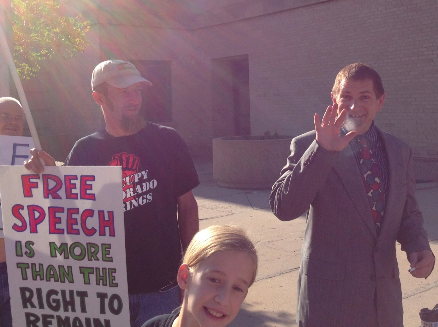
 
I saw the adage used in a disturbingly upbeat eulogy for Margaret Thatcher in this week’s New Yorker. Disturbing because it was fair handed enough, but mired like New York City, insulated by the growing wealth and cultural disparity, in the Western master narrative. I find that not speaking ill of the dead is completely irresponsible with historic figures like Margaret Thatcher and Henry Kissinger. If we are prevented from hanging them to hasten their death, we must at the minimum garrotte their memory before it’s set in stone. To beat a dead horse.

Another criminal sociopath evades the hangman. Maggie Thatcher goes to hell


Was Margaret Thatcher religious? We might take solace that her final breaths were complicated by abject horror of the fate she knew awaited her. She might have been iron willed and resolute, are we going to pretend she was clueless? But justice delayed is justice denied. Thatcher’s karma is pie in the sky, while her destructive legacy was concrete as the sarcophagus that will protect her.

Ordinary Britons are jubilant and now officials and talking heads are admonishing celebrants to respect her deadness. — Did we learn nothing from Reagan’s funeral? We eulogized the senile man, and the unintelligencia used our lapse to lionize the cretin! Are we now going show the same clueless deference to Margaret Thatcher and add to the false history supporting her enduring world dynasty of greedy-bastards?! Thatcher was a wicked sociopath and those who praise her expose their ignorance or lack of conscience.

My takeaway from the spontaneous celebrations of Margaret Thatcher’s death is that we’ve got to hold good-riddance parties BEFORE these mofos pass on! On a related note, what pretext does President Obama have for attending the inauguration of George Dubya’s presidential library if he isn’t bringing handcuffs? The World Court should arrest the lot at Thatcher’s funeral.

Steve Bass found guilty of camping not occupying, but could jury have ruled otherwise without hearing his defense?


COLORADO SPRINGS, Colo.– You may have underestimated the importance of today’s Camping Ban trial. The local media, social justice community and rights watchdogs missed it. But judging from the police force on hand and the elaborate lock-downs placed on the jury pools, it was evident the City of Colorado Springs thought a lot was at stake. I’ve written already about the draconian motions to prevent defendant Steve Bass from explaining his motives, including a ban of the word “Occupy.” Today the court made audience members remove their “Occupy Colorado Springs” t-shirts, but let the cat out of the bag by the palpable gravitas with which the court officials and police handled jury selection. Except for the absence of TV crews outside, you’d have thought Steve Bass was Hannibal Lector tripped up by an urban camping ordinance at “what happened last year in October at a park downtown.”

Yeah, even mention of “Acacia Park” was giving away too much, the prosecuting attorney preferred to call it “115 W. Platte Ave.” Every so often a prospective juror would stand up and say “I presume you’re referring to OCCUPY WALL STREET?” like he was solving a riddle, but instead of the door prize that volunteer would be dismissed from the pool for knowing too much.

After a trial that lasted one third the length of the jury selection, Steve Bass was found guilty. He offered no testimony, his lawyer, the very capable Patty Perelo, made no closing statement, because what defense could be made? Steve and his council elected not to have him testify, because to begin with, he’d have to swear to tell the whole truth, and if he explained he could only tell part of the truth, he’d be slapped with Contempt of Court.

We thought the jurors might have been curious, after seeing the city’s 8×10 glossy pictures with the circles and arrows telling what each one was and hearing not a peep from Bass, but they didn’t express it, and left after giving their verdict. This is Colorado Springs.

One of the prosecution’s witnesses, the arresting officer, nearly spilled the beans when he identified the defendant as someone he couldn’t have confused for someone else, because he’d said he’d encountered Bass many times in the park and shared many conversations.

“Oh?” the defense attorney Perelo perked her ears and asked, “and WHAT did you talk about?”

“Um… homeless policy, mostly.” That’s all HE could say. He couldn’t explain why he’d encountered the defendant so many times, or what the defendant was doing. Attorney Perelo couldn’t push it, because that would be leading him into forbidden territory. His testimony for the prosecutor was delivered straight from his notes.

There were two police witnesses, a map and several photographs, showing the tent and another showing just the poles. Was this necessary for a conviction? Because it necessitated explaining to the jury that said poles were in their “unerected state”. Not to be confused with the tent which was “fully erected”, which the judge pronounced like expressions which tripped off the tongue in cases of serious crime.

A photo of two sleeping bags required the officer to say he found the defendant sleeping “in the bags in the tent in the park” to prove all the elements of a violation of the camping ban.

The prosecuting attorney summarized it thus: “there was a tent, there was a sleeping bag, looks like camping to me.”

Not according to a dictionary definition of course. But that too had been motioned inadmissible. If you look it up, camping is variously defined as to “Live for a time in a camp, tent, or camper, as when on vacation.” Or as when destitute? Dictionaries don’t go there. That’s more like sheltering.

A couple of other examples: Soldiers sleep in tents. They’re not camping. Mountaineers overnighting on the side of a mountain aren’t camping. Refugees of war and natural disasters stay in refuge camps, but aren’t said to be camping. Anyway.

Steve Bass didn’t get his day in court. Everything he wanted to say he couldn’t. His attorney’s strategy today was to prepare for an appeal, on the grounds that the judge deprived Bass of the ability to defend himself.

Did Bass violate the camping ban as the jury decided? The prosecutor explained that nobody, not the judge, nor police officers or herself or the jury was in the position to decide the law. So Steve Bass has to take his case to someone who can.

Jury Selection
Over four hours were spent on choosing a jury, by far the most interesting part of the day. It took three sets of 25 potential jurors to pick six and one alternate. As the process approached lunch hour, the court was eager to buy pizza for seven instead of twenty five, but they didn’t make it.

As I mentioned, usually a juror familiar with “Occupy Wall Street” was dismissed, whether their opinions were favorable or unfavorable. I saw one juror dismissed because delving further would have meant discussing Occupy too much and would expose the other jurors to more occupy talk than the judge or prosecutor wanted.

On the other hand, many jurors had direct relatives in law enforcement, one juror considered a CSPD officer her “knight in shining armor,” so that was another cause for eliminations.

During the second batch, another juror stood up to say he was a former corrections officer, who wasn’t sure if he might have met Steve Bass “in the course of his duties” which poisoned the entire group by suggesting Steve had spent time in prison. That batch was dismissed. In actuality, Steve recognized him, because they both frequented the Dulcimer Shop.

Though Judge Williams maintained a convivial air of impartiality, he betrayed an awful prejudice. Whenever a juror expressed knowing something of what was in the news in October 2011, the judge would asked them if they could refrain from judging Bass based on the misbehavior of others. If jurors who knew about the protests were let to remain in the running, the assumption the judge offered was that “Occupy” was a taint that the defendant hoped they would overcome.

I don’t doubt that this slant extends well beyond Occupy, because municipal courts are notorious for being rubber stamps of a city’s citation process.

For example, in Judge Williams’ instructions to the jury, he read the sample guilty verdict first, in all its solemnity. When he read the not-guilty sample, he broke character to explain that he was not going to repeat the redundant stuff, etc, etc, and then he told the jury they shouldn’t be swayed by the order in which the two samples were read. The dramatic guilty versus the blah blah not-guilty.

Occupy harassment
Knowing about the prohibition against Steve mentioning Occupy, we thought we’d exercise our right not to be gagged. Could it matter? Should it? How preposterous that Steve was being tried and not permitted to say what he was doing. As if some precedent would be set that a defendant might convince a jury that forbidding a person shelter was a bad law.

So we came to court with t-shirts that read OCCUPY COLORADO SPRINGS. Immediately when we sat down, the judge called the lawyers up and decided we’d have to remove our shirts. We were given a chance to explain who we were, but the choice was invert the shirts, put on new ones, or leave. So we walked out.

I had an extra shirt outside with a peace symbol on it. Admittedly a politically-charged shirt, somewhat iconic locally, because it recalled an event in 2007 when peaceful protesters were forcibly removed from a city parade, one of them dragged across the pavement, an elderly woman who subsequently died of complications. So I knew I might be pushing it.

The point being to give Defendant Bass some context. He’s an activist. Alone without a voice he was a perp. With an audience of protestors he becomes a man of mystery. Every accused person in court is sized up in part based on his relations sitting behind him. Why shouldn’t Steve be allowed to show who his friends are?

As I reemerged from my car, already a police supervisor was yelling across the street to tell me I wouldn’t be allowed to wear that shirt. “Are you kidding?” I asked. I had a bag full of them, prepared for this eventuality if other spectators wanted to show solidarity. He was crossing the street to preempt my bringing the confrontation to the steps of the courthouse.

“Eric, you know the judge won’t let you wear that shirt.”

“I know no such thing. He only forbid things that say Occupy.” I knew this to be true, technically.

But they weren’t budging, they claimed a jury pool was already in the courtroom and they didn’t want to take any chances. Oddly, the officer blocking my way, beside the supervisor, was Good Old Officer Paladino who’d brutalized my friends and me in 2007. So he knew the t-shirt too well. Actually Officer Irwin Paladino’s history of abusing protesters goes back to 2003. I decided to dispense with plan B and invert my black t-shirt so I could go back in.

Did the CSPD make the smart call forbidding my t-shirt? I’ll be the first to admit the CSPD have outwitted the local social justice movement at every turn in Colorado Springs. They’re clever and competent, but they’re in the wrong. The CSPD are stepping on our rights, and overstepping their authority to do it. While it may have been superior gamesmanship, it was wrong.

Have I mentioned that they followed us everywhere? As if we were the accused in need of escort. On the officers’ radios we could hear them narrating our movements throughout the building. When Patrick went to the bathroom, an officer followed him inside and made small talk as Patrick peed. Did they think we were going to Mike Check the men’s room?

At one point we were able to see from a window on the second floor hall that CSPD were conferring with a parking enforcement officer around our cars. She was examining the license plates, getting on her phone, standing by the cars, as if waiting for something. The cars were legally parked, the meters fed, and well within the four hour limit. But who wants to argue with an impound lot? I assure you this intimidation tactic worked very well to send us out of the courthouse to rescue our vehicles.

Meanwhile, another friend came into the courthouse and overheard officers discussing whether to deny us entry again, and by what pretext, but I’m getting ahead of myself.

While watching the jury selection, it was the batch that was being dismissed in full, the court bailiff suddenly bolted from behind where we were sitting and told the judge she’d overheard us whispering about inappropriate subjects, specifically using profanity. This accusation was based on a dear Occupier’s habit of muttering colorful asides. Okay this was true, but in his defense, it was after the jury being spoiled, about the jury being spoiled, but inappropriate none-the-less and he apologized. But to tie all together in the misbehavior was a fabrication. The prosecutor tried to have us evicted, and Officer Paladino chimed in about the confrontation I instigated at the door. That’s when my friend told the judge she’d overheard CSPD officers discussing plans to keep us out, so the bailiff’s actions began to appear a little contrived.

This complaint was finally settled with the judge’s warning that one peep out of us would get us 90 days in jail for Contempt of Court. At this point we knew the pieces of duct tape we’d brought in to use to protest Steve’s gagging were definitely OUT.

Just before lunch recess I was able to clarify with Judge Williams whether the peace t-shirt I had wanted to wear was acceptable to the court. Receiving no objection from the prosecutor, the judge told me it would be okay, and then assured me he’d inform CSPD.

Returning from lunch, once again with the peace shirt, the security screeners nearly didn’t let me pass, but I barreled past with the confidence of someone who knows his rights. This time Officer Paladino came upon me at the courtroom door, swaggering right into my face assuring me he was not going to let me pass. FORTUNATELY before he could wrestle my arms behind my back, another supervisor arrived who’d heard the judge, and I was allowed to proceed. Boring story I know. But the pattern was unsettling.

Then Steve was found guilty, you could feel the city’s giddiness as they discussed sentencing. We’re only talking community service, but Colorado Springs has only one contractor for that, the odious Keep Colorado Springs Beautiful, whose hi profile task is to clean up after the CSPD Homeless Outreach Team scoops up the homeless and puts them in shelters very much in the model of correctional facilities. Steve was able to negotiate a less anti-homeless agency, and that’s the story so far.

George Seurat’s afternoon on an island


CHICAGO- What’s in a name? I expect its originator could explain. Do art collectors or curators have final edit over a famous painting’s title? I can understand the Art Institute of Chicago nicknaming its familiar La Grande Jatte, but the first paragraph of the painting’s gallery description has to explain that the iconic riverbank scene is named not for a tributary, but an island on the river Seine, because their slimmed translation of its full title now reads “A Sunday on La Grande Jatte” à la Sunday in the Park with George. Gone are afternoon and island from Un dimanche après-midi sur l’Île de la Grande Jatte –you wonder why bother to keep “la”? I remember the original full English title from art history textbooks, whose color plates now seem like a greatest hits album of the Art Institute’s collection. Did Chicago corner the market on Impressionist masterpieces, or did their image licenses determine which we’re taught are representative? Reframing painting titles suggests to me there’s more likelihood of the latter. Does great art jump out at you intuitively? I doubt we even know what we like.

The above detail is not Seurat, but Gustave Caillebotte’s Rainy Day in Paris and illustrates the difference it makes to see a painting in a gallery. High Def. Hopper’s Night Hawks is just as stark in actual size, but Caillebotte’s wet Parisenne has a lace veil which you’d never have noticed on a print.

Four Occupy tormentors unmasked


Occupy Colo. Springs held a NO WAR ON IRAN demo today, counter- protested by some soldiers who think any antiwar criticism of their mission fails to Support The Troops. (Horrifyingly curious don’t you think, that US soldiers would already consider war with Iran as their mission?!) Joining them it turned out, were four of OCS’s sneakiest saboteurs. I got them with one camera click! From right to ultra-right: Raven Martinez aka Briaunna Webbing aka Occupy Csprings, Michael Clifton aka Agent of Doubt, Ian Carman aka “Father” Ian, and Ryan Butler aka Ry King aka Lone Wolf.

My policy until now was not to dignify any of these Facebook twits with attention, but their rumor campaign against OCS has become so virulent and untrue, and their misdeeds are now tipping the balance. Today the entire intersection had to bear personal megaphone taunts, but I’ll say that the final straw was yesterday when I learned of misinformation they attempted to spread to the local news. Occupy CS’s hand was forced in issuing a public statement about accused-arsonist Kyle Lawrence, because someone asserted Kyle had joined a violent group that had sprung up in OCS. Uh, let’s get to the bottom of that one, shall we?

WARNING: OCCUDRAMA AHEAD. All of it boring, but these creeps need to crawl back under their mouse pads. Ignoring them hasn’t worked, and even though they crave attention, I’ll give that a try.

Exhibit A
Ryan Butler, Ryan King, Lucky Dog, Lone Wolf
At far right is RYAN BUTLER aka Lucky Dog, aka Lone Wolf. When he disrupted OCS GAs he went by “Ry King”.

The secretive Ryan Butler is half of the Clifton/Butler nerd team that hijacked the “Occupy Colorado Springs” Facebook Open Group. It’s got about 400 members, doesn’t represent Occupy at all, and is maintained as a launchpad for Tea Party occu-haters under the pretext of “free speech” as decided by its unlisted admins Ryan & Michael. The open group was originally created by authentic occupier Amber Hagen, who in her idealism let all participant have admin privileges. When Amber discovered that haters among the admins kept wrecking the page, she began to delete them. Michael Clifton once recounted at a meeting how he and Ryan scrambled over Skype to keep Amber from shutting them out. They hurriedly deleted Amber’s admin access, thus exiling her from her own group. This was the act that inspired Raven Martinez to do the same with the OCS Facebook community page, in all fairness I should say, to prevent others from doing it to her.

Ryan’s claim to fame in OCS came from a failed coup to share the spokesmanship monopoly held by occupothead Jason Warf, but I digress.

Ryan had to step away from OCS after legal trouble from a drunken poker game gone awry, which he tried to blame on authentic occupy vet RTG. Ryan has a criminal record of domestic violence and wears a gun in his home in violation of having lost his permit to carry. That much is not disputed. But Ryan refutes RTG’s version of the event: that Ryan pistol-whipped his ex-girlfriend, which enraged RTG and the two fought, trashing the house. Both face assault charges and Ryan’s ex has filed her usual plea to the court to dismiss any notion that Ryan abused her. Instead we are to believe Ryan tried to defend himself with a vice-grips laying about (leaves a strike pattern similar to a gun maybe), accidentally striking his ex.

I’ll add that my perspective doesn’t come from hearing RTG’s testimony, but rather from eavesdropping on private IMs sent by Ryan as he deliberated what to say by way of damage control. Anyway.

Entirely relevant here however is Ryan Butler’s favorite bragging right, his secret Fight Club-inspired “PLAN-B” CLUB (First rule of Plan-B, you don’t talk about Plan B, snore). Apparently “Plan B” is for Amendment Two fans who want an alternate plan “when the revolution fails.” Was this the pro-violence group to which Michael Clifton alluded in TV interviews? It had nothing to do with Occupy, didn’t come from Occupy, and if its membership is limited to Ryan’s friends, I’m guessing that pares it down to two: he and Clifton. Thus Clifton’s statement about his disassociation from proponents of violence was also facetious, because the above photo was taken upon their arrival at the counter-protest, they came together.

But how absolutely scurrilous to attempt to tarnish OCS with the suggestion that occupy was the breeding ground of their pro-gun Amendment Two fantasy life?!

Exhibit B
Michael Clifton, Agent of Doubt
Occupying more than the center of this photo is Michael Clifton, self-appointed videographer of the local occupy, known on Youtube and DIY newsites as “Agent of Doubt”.

Michael Clifton was a very early supporter of OCS, donating water and food as he documented its progress on Youtube, each segment introduced in his best impersonation of Alfred Hitchcock, minus the wit, or substance. Let’s say Clifton’s motives started out good, what would lead him last week to step forward and break the story about arsonist Kyle having a history with OCS, packaging his videos for best consumption by the local media?

Of course the answer is simple, and we’ve seen it before. Apparently 15-minutes of personal soundbite, TV attention converted to Youtube views, trumps any consideration for possible negative blowback for the movement. Clifton actually keeps distancing himself from OCS every time he alleges to speak authoritatively as an insider. It’s laughable if it wasn’t damnable, because this time the oaf said he quit when OCS members began to plan illegal strategies. Whaaat? –leaving listeners to infer that arson was among the strategies. What kind of tomfoolery insinuation is that?

Not surprisingly, once more Clifton is defending himself against accusations of being an informer or provocateur. I make no such charge. He’s an idiot. What can you do, Colorado Springs is full of them. Am I being too harsh? Read on.

In an earlier episode in front of City Council, Clifton famously declared himself an outsider to OCS so that he could take all the credit for a –he-thought– brilliant bit of investigative deduction regarding CSPD’s billing of man hours charged for policing OCS. Our friend had videotaped an OCS march you see, and noticed there weren’t any police officers in sight, ergo, the billings must have been fraudulent, yes, ignoring the possibility the cops were plain-clothed, or observing from a perimeter, or on call, etc. So like a flat-earther who draws conclusions based on only what he can see, our intrepid Sherlock declares the CSPD guilty of fraud, and… marches straight into the local office of the FBI to make the charge! The FBI, he reports, were only too happy to accept all his video footage into evidence!

This might point to Clifton’s real reason to declare he was not part of Occupy, because a GA consensus would have vetoed his FBI idea. OCS had recently endorsed a no-snitch policy, not on anyone, not even the city, and let’s face it, not least of all I’m guessing, TO the FBI.

Thus, however unwittingly, let’s call it witlessly, Clifton is an FBI informant in the very technical sense, isn’t he?

To put a fine point on it: everyone who’s participated in OCS activities recorded by Agent of Doubt Clifton, is now on record at the FBI, in not just the lossy Youtube segments available online, but the original hi-def digital sequences, in their entirety.

And while Agent Dork has been a stalwart companion to Occupy, if only for the videos which he converts into ad-views whose revenue he “contributes” to the Occupy movement by funding his own efforts to “promote” it, so far the sum of his efforts has been to give law enforcement and the local media evidence to build a case against Occupy. Thanks a ton Agent Dork. From here onward, your camera aught to record everyone giving you the finger!

Exhibit C
Department of Homeland Security Officer Ian Carman
I was tempted because of his sign to give Father Ian Carman a pass. Who’s to say a Department of Homeland Security employee shouldn’t consider himself part of the 99%? But after successive absences from GAs, then hiding among the haters, it might be time to take a close look at this very disruptive occupier.

Divisive behavior can be very subtle, so I’ll cut to the quick on Father Ian. He revealed to us that he worked for DHS because he wanted to explain that he had access to confidential files on certain occupiers, one of whom, supposedly a veteran, still had a very high security clearance, indicating he was likely still active duty, or perhaps in the intelligence service. Father Ian was asserting this about our high profile occupy star JWS, effectively trying to snitchjacket JWS. Come down on that whichever way you like.

Exhibit D

Raven Martinez writes on Facebook under the identity of her daughter, or the occunonymous Facebook user “Occupy Csprings”. Once a formidable OCS volunteer, Raven suddenly became my own personal raving critic. It’s been suggested that her fury bears the air of a woman scorned — I’ll delve into that further down, if I feel like it.

As reported above, the Tea Party mutiny of Amber’s Facebook OCS open group is what inspired Raven to hijack the OCS Facebook COMMUNITY PAGE. Raven might have done it with the best intentions, but did it utterly undemocratically and to everyone’s chagrin and condemnation. Here’s what happened.

Embattled by internal struggle against the very identity of mothership Occupy Wall Street, the OCS GA had adopted the moderating policy implemented by the New York OWS to thwart vanguards and saboteurs, but the Springs admins at that time were refusing to implement them. Admins were continuing to post political endorsements, conspiracy theories and statements critical of fellow occupiers. Further protocols were adopted by OCS to require admins to use their initials to identify who was responsible. Again this was ignored, and now many of the admins were refusing to attend the GAs.

One day Raven noticed important posts being deleted and snide comments being made about OCS protest actions, all being done by an admin who would not reveal his/her identity, and worst of all, in the name of Occupy Colorado Springs. An admin herself, Raven made the clever move of temporarily deleting all the other admin users on the chance that this one might be stupid enough to reveal himself by complaining about his suddenly lost access. The idiot took the bait, and turned out to be none other than OCS-permit-holder and self-important-leader Hossein Momsforpot. For shit. Well this left Raven with a dilemma. Who was going to believe that Hoss was anti-OWS? More critically, who among the admins she had deleted, could she reinstate without the risk that Hoss would convince them to reinstate his admin status with which he could then delete Raven? This was the lesson Raven had gleaned from the hijack perpetrated by Wolf & Agent Duh.

I neglected to mention that the earlier hijack was accomplished anonymously, with Ryan pretending that sole admin status was held by “his dog”. So with her hijack, Raven added her own innovation, Raven loudly proclaimed that she’d been shut out too! She planned to claim that her eventual “reinstatement” was the result of an omniscient AnonymousTM hacker who’d intervened for the betterment of the movement.

Raven’s problem was that I had just the day before publicly refused an admin appointment, and when she cavalierly let suspicions fall on occupier PJ, he promptly deleted himself. Funny story, no?

Well, although a number of very earnest admins felt slighted, oddly enough things worked out for the better after Raven’s purge because all the internal occuhating stopped, and a number of the admins who felt pushed out ultimately outed themselves as Ron Paul enthusiasts, conspiracy nuts, or single-issue MMJ addicts. In reality, no one was ejected from OCS, but having lost their control over the Facebook page, they chose to make kissoff statements and move on.

So Raven was able to coax PJ and me to share the admin responsibilities with her, and it’s a good thing too, because when Raven eventually turned against the broader OWS mission, she’ll say it was because of my personal agenda, Raven went and DELETED the Facebook page. She thought she’d done it, but Facebook has safeguards fortunately, PJ and I were alerted and able to save the 3,300 member page from oblivion.

And the rest is history in the making. Three of us administrate the community page now, we trust each other and our dedication to the values and goals of the original Wall Street occupiers, and the Facebook likes continue to rise.

Is that enough about Raven? Yes it is. She’s doing her best to vilify and destroy our efforts, but that’s as much as I want to say about her.

What the hell. Each of these four unsavory characters knows that I could say far more than I’ve divulged here. I’m already embarrassed enough to talk about them as I did, good grief. The personal attacks on me are based on nothing that I hadn’t written about on NMT, yet they persist via email and phone calls to everyone they can reach. Well, here’s my shot across the bow.

US use of torture on POWs should stop

The U.S. has a long history of torturing its POWs. Torture of POWs is used by many other countries. However its use is denied by many U.S. authorities or government officials. The definition of torture put simply is to cause pain, emotionally, physically, or psychologically. Torture is used to terrify enemies, and hardly ever gains information.

Some examples of the U.S. A. military use of torture on P.O.W.s

Che Guevara
Che Guevara was murdered on October 9, 1967 in Bolivia. He was tortured and killed by Bolivian soldiers trained and equipped by CIA operatives. Che was told he was going to be killed by Felix Rodriguez. He was shot in the legs several times, and put into a dirty schoolhouse. His arms and feet were tied while he lay in the dirt. He lay by the bodies of his dead Guerrilla fighters. The USA tried to cover up his deliberate murder by shooting him in the legs to make it look like he died in battle. He was never given a trial. He was shot nine times.

Philippines war
The Philippine war was a war fought by Filipino revolutionaries and the USA. Waterboarding was one of the main techniques used by the CIA. It was used on Extra Judiciar prisoners.The department of Justice authorized this. Sleep Deprivation and de-sensorizing among other things was used. The use of solitary confinement and confusion is used frequently, prisoners are made to wear blindfolds to cause confusion and panic. Medical treatment is also refused. Bribery, and threats are used to force a confession.

Korean War
The Korean war was fought between South and North Korea. The US occupied the south, while the soviet troops occupied the North.

Vietnam War
Prisoners were put in Tiger cages. Lime was dumped on them, and water was dumped on them after.

Central America
In Nicaragua Somoza tortured people by putting them in cages with lions. Somoza was a dictator backed up by the US military. In Argentina children of communist parents were stolen, while their parents were tortured and killed.

School of The Americas
The CIA distributes an interrogation manual which shows torture techniques to use during interrogations. The manual was used by the CIA to train US-supported Latin American militaries at this school.

Abu Ghraib Prison
Torture has been recently used in Abu Ghraib prison, located in Iraq. Some of the main forms of torture used here are rape, sodomy, water boarding among many others. Military Intelligence has been present during these procedures, and highly encourages it. A prison guard said prisoners receive snake bites for minimum mis-behavior. In the AD. seg units prisoners are dumped into poop and pee.

Afghanistan war
The US invaded, tortured and suffocated thousands of POWs to death.

Officials claim that Torture must be used to gain information. During the presidency of George W. Bush some U.S government officials said that they believed water boarding was not a form of torture. In 2002 the Office of Legal Counsel stated that water boarding wasn’t a form of torture. The OLC said that the reason water boarding was not thought of as a torture was that “In order for pain or suffering to rise to the level of torture, that statute requires it to be severe & water boarding did not cause severe pain or suffering either physically or mentally.” Even though water boarding causes the victim to believe he/she is being drowned.

Torture hardly ever gains information but instead is used to terrorize people so they don’t resist, or to force a confession. Torture is used in interrogations by cops, being put in handcuffs that are to tight is also a less painful form of torture. During the st. Patrick Parade a couple of years ago the police stopped the parade and threw older people on the ground, an old lady was dragged across the pavement and put into handcuffs. She died a couple of months later.

People say that the US doesn’t torture people, because supposedly it is better than that.The fact of the matter is that the USA is the biggest user of torture in the world. It has and will continue to torture its POWs while everyone here says the USA government and military does not torture and has never tortures POWs.

Ft Carson conducts pro forma town hall to clear way for environmental impact of proposed helicopter brigade

Occupy Colorado Springs protest at Crowne Plaza Hotel, Jan 26, 2012
OCCUPIED COLORADO SPRINGS- Ft Carson’s environmental PR team held what’s called a “draft Environmental Assessment,” prerequisite to their addition of a Combat Aviation Brigade to America’s “Best Hometown in the Army”. Except for a car-dealer and realtor giving their attaboys, the citizens comment section weighed solidly AGAINST expansion of war-making and war-training. In true pro forma, Garrison Commander McLaughlin shrugged off the opposition, stating that public input would be answered while the army proceeded as planned. And that’s where Occupy will have something to say.

The fundamental message from OCCUPY WALL STREET, and from the global movement at large, is that it’s the people who are in charge. Whatever corrupted system may have wielded the power to bring the world to the brink of chaos, the authority must be returned to the people. OCCUPY makes clear the people do not have to sit idly by while their rulers make decisions against their interests. OCCUPY reminds us the people will have a say in their own destiny.

An army hearing, about what it plans to do, in defiance of public outcry, is nothing that self-respecting citizens have to take sitting down. They didn’t, citizens came from as far as the Southeastern plains to present their testimonials, but after the citizen comment period ended, the holders of the meeting made certain to conclude that the Ft Carson expansion was advancing regardless. This inhospitalty even after almost uninterrupted patriotic fawning over Ft Carson’s soldiers and the role they play defending our liberty.

While everyone falls all over themselves to THANK A SOLDIER, let’s not confuse respect for deference. America is not ruled by a military junta. The Department of Defense is not our governing body. For all his authority and swagger, this camp commander does not overrule us citizens. WE are the boss of the army. We are his CHAIN OF COMMAND. When the people of Colorado Springs, the people of Colorado, or the people of the United States express our will, it’s the army’s role to say “SIR, YES SIR.”

I’m deeply troubled by an officer of the military who pretends that his fellow citizens are but a temporary impediment to his military plans. When a room full of citizens tells this commander that they don’t want helicopters over their airspace, I expect him to take heed. To do otherwise is purely insubordination of his superiors. All this patriotic militarism may be going to his head. This is a soldier after all, sworn to protect our constitution and America, meaning its people. DO YOU HEAR ME SOLDIER?

If you think I sound disrespectful, let me inform you that I’m a veteran too, of ANTIWAR actions. One of which involved a soldier of higher rank than this one, running up to me as I silently held a sign, and attacking me with his fists, knocking me over. CSPD policemen had to pull him off. I did not press charges, but I could have. That was not only assault. An officer of his stature knows it was worse than that: it was an attack on his chain-of-command. What incalculable gall, to presume to treat me as a subordinate upon whom he could visit his accustomed violence. On a citizen!

And that’s what’s got me worried, about where all this soldier-worship leads. Only a couple weeks ago, at a weekly sidewalk peace bannering, a fellow activist was approached by a soldier and sucker-punched in the face, right out of the blue, while his wife cheered from their car. Are you kidding me? This deference to soldiers has got to stop.

These are soldiers, and we’re right to thank them. Theirs is a thankless task. Well not thankless, they ask, and are given unending thanks. But theirs is a task no one wants, to have to dehumanize yourself, be made to kill, maim, torture, rape, often it turns out, exactly under orders. We’ve learned that soldiers are sometimes commanded to kill everyone in a 360 degree radius. “Free Fire Zones” mean to kill every living thing in sight. We learn too that pissing on your dead victims is taught as a coping mechanism, to dehumanize your adversary so as to suffer less PTSD and less guilt. And we’ve learned that the military has no followup plan to reintegrate their soldier-monsters to a life post-service. Homeless vets from Vietnam onward are a testimony to the incompatibility of war service in horror zones to a return to normal civilian life. When the army creates killer-thugs, it means to dispose of them in further war zones, it means for them to re-up, or die prematurely from DU exposure. Yes, soldiers are to be thanked, but kept at arm’s length, like Fukushima heroes, radioactive. By design, their duty rendered them untouchable, to them eternal thanks and goodbye, unless you are prepared to weather the propensity to antisocial violence and domestic abuse the veterans of fragile countenance bring back with them. Certainly we cannot elevate the more hardened professional killers, who know only means foul and heartless, to positions of authority above citizens.

It irks me to no end to be goaded by this camp commander, who after hearing the public speak, admonished us in the end that our protestations will amount to nothing. How dare he, this insubordinate would-be coup leader?

Shall OCCUPY remind you, America is ruled by its people. This is a Democracy. WE THE PEOPLE are in charge!

Yes it may look right now like the suits are in charge, the men behind you, patting your back, the men with businesses who profit from war-making. In other cultures they are known as war profiteers, and in other periods of history they are executed. Who should profit by war? Well another aspect about OCCUPY is that these business vultures have been put on notice their time has come. No sustainable model of global democracy has room for predatory warmongers who keep wanting to pull their fortunes from war.

The people will be in charge of this nation, not the military or its business enablers. And when the people say enough, it’s going to be the military’s place to do the people’s will. If the people say no helicopters, or not in my airspace, or stop with your immoral wars, the army better stop its posturing, or find itself in the brig. Thank you soldier, but stand down. When the people tell you to stand down soldier, you had better do it, on the double.

For my part I will not decline to press charges a second time against military careerists who overstep their authority. And I will not again brook one iota of insubordination from someone sworn to serve this country. We American citizens are in charge of what’s done in our name. Do you hear me soldier? Sir, Yes Sir? Wise move soldier.

Tea Partying with the Freak Brothers

Whew! These Occupy posts are far more difficult to pry from myself than their predecessors; the hands-on mechanics of putting the earlier stuff into practice in the present world, amongst the isolated pools of individuated consciousness we humans represent, each with his or her own vision of the whole, has been at the very least disorienting. I’ve lately revived an old motto i swiped from the good people at Oat Willie’s down in Austin, Texas: Onward Through the Fog! How odd is it that i’ve recently connected with some folks that hark back to that place in ways that are deeply surreal. Oat Willie’s and Fat Freddie will seem to be completely out of place in this bit, in which i mean to address the notion of cooperation amongst disparate factions, but not permanently i hope. By the end of this post, i hope to connect Occupy, The Tea Party, disparate passions, and yes, Hippies. It will be necessary to engage in some relatively surreal thinking.

Last night on a new Facebook page, “UNITE: OCCUPY,” (cap lock and all), i got into a conversation about this stuff started by a guy that asked whether anyone thought a joint event between Occupiers and Tea Partiers might be possible. Sure, i said, our Colorado Springs group had lots of Tea Partiers among its earliest enthusiasts, and although many have pulled away, there still exists a close association with many that veer sharply toward the Te Party camp, especially among Ron Paul supporters. The common ground Occupy shares with the Tea Party, at least t a grass root level, is substantial. There can be no doubt of the equally substantial differences. I suspect that it would take some pretty serious ideological barnstorming to bring the two camps together, but nothing prevents the groups from at least tentative discussion to find commonalities.

Tonight our Occupy group staged a talk by Tea Party stalwart, Constitutionalist Mike Holler. Mike seemed for all appearances to be an earnest and well-versed supporter of Constitutional “fundamentalism,” if you will. He peppered his talk with lots of my favorite quotes from my favorite founding fathers. He got a little testy about the revisionist history his kids bring home from college early on–perhaps indicative of one point of separation between Occupiers and Tea Partiers. Some of those are important. Occupy is international, where the Tea Party can display degrees of jingoism. I, personally, respect the earnest efforts of our Enlightenment founders, but recognize that they were flawed, and aver that their document was dated by racist, sexist, and elitist provisions and thinking that they might be excused from by noting their temporal milieu. We don’t have the same luxury. Occupy is legitimately grass root, supported by sweat and blood more than funded, where TP is, or at least became very quickly corporately funded “astroturf,” disingenuously proffering libertarian ideals as a smoke screen for corporate license to plunder. Occupiers are in my experience far more diverse than Tea Partiers. Socialist and Anarchist Occupiers are common, as are assorted races, genders, orientations, and religious persuasions, where Tea Partiers seem to my limited observation to be relatively homogeneously white Christian capitalist patriots. Mike interjected that both groups had been misrepresented by the media, and that seems likely to be so given that mainstream media seems content to misrepresent ’bout anything they report in this country, but Fox news and the rabid right like the Tea Party so much i have to wonder if he’s fallen victim to a personal soft spot.

Mike spoke eloquently enough in his effort to simplify the Constitution, focusing on issues of freedom, and state’s rights. He said very little with which i could find disagreement. He pointed out two major points of confluence between Occupy and the Tea Party–personal liberty, and a rally-cry, “No more Bailouts!” I suspect he fastidiously avoided some points he knew or at least feared might be contentious, like for example the ludicrous assertions i’ve heard often that environmental warnings from the scientific community stem from some kind of Satanic control scheme from the–well just whom is never too clear. The Vatican or something. Commies, i guess. That just maybe the best way for Tea Partiers and Occupiers to interact, though, for now, concentrating on the common aversion to what amounts to Fascism. Interacting from that perspective could exclude much conversation. It could put the Tea Party in the same position as the Occupy movement, after their Fascist sponsors withdraw in horror. Whatever. We Occupiers got on just fine with Tea Party Mike–“Mr. Constitution.”

Mike largely expressed notions we Occupiers could embrace. I suppose he could have done a bit of research and tailored his speech toward that end, but i think we just agree; he seemed a grassroot kind of guy, to me. He briefly alluded to schisms within the Tea Party, and there’s no sensible reason to avoid acknowledging the same within Occupy. Last night’s event was attended by Occupy people that have had such extreme altercations in their attempts to wrestle a semblance of ideological unity from a stubbornly liquid platform that it could easily enough have disintegrated into bedlam. I attended with my dear friend Thomas, with whom i often disagree. In fact, he and i often disagree so strongly that sometimes i feel like smacking him in back of the head. I expect he feels the same way about me at times. Maybe much of the time. Take note, war-mongers of the world: Thomas is a great guy, and even though we disagree with one another, sometimes strongly, neither of us has smacked the other in back of the head. Get it?

So here we were last night, disparate Occupiers engaging a Tea Party mouthpiece in a room full of people that have all experienced the vagaries of human interaction under a fairly pressurized circumstance over the past few months. No butterflies fluttered around the room, but no one worked up a bickering session, either. We worked together. All of us. One could recall the old adage that “The enemy of my enemy is my friend,” but that would be devolution. I prefer to imagine that those with arguments present recognized the futility of scrapping amongst friends, if only below the radar of their Egos. Whether my nobler hopes for those pained souls in the room last night are valid or not, the assertions i made in these non-pages well before Occupy began remain true. The system we wrestle against is collapsing around our heads. And the solution is spiritual, to a far greater extent than it is temporal.

Fat Freddy is a comic book character that lives in Denver. Seriously. I met him a little while ago. (This only seems out of place, i promise.) Mr. Constitution Mike Holler expressed the opinion last night that our American republic, our constitutional federation of states, is in its final throes; that we are in a position where, ” it’s too late to save the country, but too early to start shooting.” Mike seemed tentative in expressing his hope that God might pull some kind of supernatural rabbit from his celestial hat to resolve our monumental national woes. I expect he feared perturbing the often non-Christian sensibilities of the Occupiers. He needn’t have worried quite so much–we may be largely skeptical of literal interpretations, but we’re pretty tolerant of that sort of thing. When i met Fat Freddy–an icon of counter-cultural activism important to me since childhood, an old-school Hippie with connection to the most famous and infamous of that crowd–he singled me out and pulled me aside to explain in some detail his expectation for a spiritual upheaval in coming days. Freddy’s taken up with the Urantia Book, a tome i’ve heard Christians disparage as devilish. I couldn’t see anything devilish about what he showed me. He earnestly explained his expectation for resolution. Soon.

We had come to Denver to talk about foreclosures and bank jiggery-pokery with another guy, and pulled up at Freddy’s house without knowing it. It just happened that way. These old Hippies like Tea Party fave, Ron Paul. (Follow along, now, i know it’s weird, and yeah, i know a lot of Occupiers don’t like Paul; i’m not sure about him myself). Also in attendance at that meeting was a woman i had been conversing with on line for quite a while in the context of Occupy. It took me nearly through the whole meeting to recognize her, because i knew her to live down in the Four Corners neighborhood of Colorado. She lives at Freddy’s now. This juxtaposition is so weird that now i’m expecting the Mad Hatter, or Lewis Carroll himself to pop up at some meeting quoting from Jabberwocky. Mike Holler holds out for resolution to the country’s woes in a traditional Christian context. My own suspicion, shared with J.B.S. Haldane, is that the Universe is not only queerer than we suppose, but queerer than we can suppose. But somewhere in the mix i am convinced that some divine Thing many of us think of as God is deeply interested in the little proceedings here on our little blue marble and that our interactions are subsequently and necessarily thus influenced.

We live right here. We have no choice but to manage things on a coarse, physical level; but we also live, i think, on an overlapping and less tangible plane, where we have more influence than we might ordinarily imagine. At the same time, things seem to occur herethere without our conscious direction. We’ll need to keep plugging away at things like grasping the Constitution, and taking on massive, quixotic quests like fighting banks and a world full of renegade, intransigent governments and power brokers, not to mention our own internal battles, as finely defined as within our own Souls. We’ll need to recognize the Truth in one another, even when it’s obscured by a bunch of worldly disagreement and fog. And so far as i can tell, were learning. Whatever that means.

Reprinted from hipgnosis.

Hey Mike!

After last week, it seemed this entry would be a pep talk for disheartened Colorado Springs Occupiers. Instead it seems it will need to be my own mind meandering around in an attempt to make sense of the new dynamic rising from the ashes of the original manifestation we had going here, which has surely been destroyed. It feels something like a kids cabin make of Lincoln Logs or something after he knocks it over to build something else.

It’s been over a week since the City shut our permit down and confiscated our ramshackle, wind-ragged tents down at Acacia Park. After a few days of curious and somewhat disconcerting quiet, Occupiers in Colorado Springs are reconnected, reinvigorated, and in many cases really pissed off. Yesterday a contingency of us made our way to the old Venetucci Farm south of CSprings to harass Colorado’s Gov. Hickenlooper at the groundbreaking ceremony for a solar garden project of the city’s publicly owned utilities company. About 20 Occupiers of Colorado Springs mic-checked the governor and briefly disrupted the speechifying before a group that was made largely of Occupy’s natural allies, raising the ire of some attendees, but most assuredly reminding Hickenlooper that he won’t be allowed to ignore the movement simply by leaving Denver.

Some Occupiers present , including i, were ambivalent about our project. Hickenlooper is something of a liberal darling, having supported projects like the SunShare solar garden in the past, and the crowd at the event was populated by many of Colorado Springs’s “liberal” elite. The business of interrupting at these proceedings is a little sticky, and may have cost some in support for Occupy among this crowd. On the other hand, some of the issues addressed by Occupy were aptly illustrated within the very brief span of our attendance. Jerry Forte, who wrangles close to $300,000 a year for himself without considering bonuses as CEO of Colorado Springs Utilities, spent a few smooth-talking minutes going on about how cool the city’s utility non-profit is, noting the great advance the two or three dozen solar panels undergoing installation at Venetucci Farm toward his goal of deriving 20% of city power from renewable resources by 2020 represents. Gee whiz! At today’s use rates, by 2020, the world’s inhabitants, especially in the U.S., will be stabbing one another over firewood if we can survive the toxic byproducts of the petroleum industry, or the potentially nuclear wars we are preparing for our next trick in the Middle East. Hmm–wonder what gas prices will look like if the Levant and its environs are sealed under a “sea of glass.”

Forte also sits on the board at the local branch of the United Way, where Bob Holmes’s Homeward Pikes Peak brought in around $650,000 last year, and still can’t figure out how to house or manage the low-ball ,(and variable), estimate of around 1,100 homeless residents in Colorado Springs. Hickenlooper, a million dollar winner in the American sweepstakes who loves to project an aw-shucks, up-by-the-bootstrap, populist kind of image came to his ability to start restaurant empires via the petroleum industry. He presides over a state that panders shamelessly to the U.S. military and its attendant industrial complex, both of which entities these days seem to be no more than acquisition arms of the energy and financial elite about which you may have heard Occupiers railing in recent months. Mike Hannigan of the Pikes Peak Community Foundation was there, and i’m sure he was butt-hurt by the Occupiers implication by their mere presence that his organization might be elitist or something. The CC student i spoke with on the way off the farm grounds was perplexed and hurt herself, expressing solidarity with Occupy, but begging that we not “do it again, ” referring to our admittedly rather obnoxious interruption. She will likely go on from CC to join the cultured pseudo-liberal aristocracy of our guilt-laden Western catechism spinning its wheels till the Apocalypse. Hannigan manages some $50m in assets, and to be sure the foundation does some good work, but all the back-slapping and genteel coffee-sipping over a couple of ultimately meaningless solar panels sure feels a lot like John Rockefeller’s habit of passing out dimes to street urchins late in his life.

I am not accusing Hannigan, Forte, or others of comparability with Rockefeller, who made his initial fortune by arson and murder. Consider this, though. No one seems interested in whether the numbers in the mix add up to anything substantive or not. None of the serious players mentioned above have ever questioned the 1,000% spread between some of the salaries involved at CS Utilities, and when and if they do it’s generally to argue that we have to pay such ridiculous amounts to attract the “best and the brightest,” even though recent history shows plainly enough that it’s painfully obvious huge salaries hardly translate into top performance. No one scratches his head over the disconnect between the high-minded goal of CS Utilities for 20% renewable energy within minutes of the utter collapse of projected petroleum reserves. And aren’t we Americans, including especially those of us with the clout big money wields, responsible for our own politics? Are we really a bastion of freedom and intelligent, realistically utilitarian process or is all that rhetoric just a roll of dimes to cover up our guilt every time we go down to Wal-Mart to perpetuate our slave economy, without which we have never lived? What’s the disparity between Forte’s salary and the annual income of the guy that made his spiffy shoes?

Occupiers love solar projects. But nothing’s ever about just one thing, and it seems to me it’s about as rarely mostly about the thing at the top of the presentation program. We Occupiers are often accused of stupidly purveying no solid agenda. it may be apparent that at least my Occupy agenda is complicated. The above connects Big Oil, Third World labor, charitable impulse, income disparity, under-girding Western guilt, competitive job markets, and spiritual malaise, among other things, including much that remains implied. Many Occupiers i have met personally are still perturbed at the scanty portion of the American Pie they find available on their own plate. We’ve brought this whole scenario upon ourselves, though, and the current program will remain fully unsustainable whether the polite society of charity in the Pikes Peak region dismisses us over our antics or not. That’s why Occupy in general will be not so easily dislodged from its place in history.

The bitch about saying all this is i really, really like most of the people i recognized at Venetucci Farms yesterday. I like Americans in general–but man, we’ve got problems, just like the homeless guys Bob Holmes and his philosophical brethren like to try to control all the time. When i talk to those guys in line at the soup kitchen, i tell them, “Man, ya really ought to leave that dope alone a little.” They know me, and they know i love them. Really. I do–and really, they know it. They know they’re fucked up, too. Sometimes i’ll tell the most torn down that they need to leave the dope alone completely, before it kills them. That’s what i’m saying about our society here in Colorado Springs, in Colorado, the U.S.A., and the whole world. I really don’t have a beef with the bankers, politicians, and half-assed, dime-roll charities of the world, or the foolish scrabblers grasping at the American Nightmare. They’re working a system designed by haphazard evolutionary processes to favor ruthless competition. But i am saying that we need to get serious about fixing all these interwoven problems that stem from deep down in human souls, because we’re running out of time. If we lose, and everything goes to Hell in a handbasket, if none of us learn a genuinely cooperative technique for living together with ourselves, and with the Earth before she rejects us, we Occupiers will be able to tell our kids we fought the deadly processes that brought us down with everything at our disposal. Even if it’s with our dying breaths. What will those of us that insist on competing our species to death be telling theirs?

Occupy is not going away, here in Colorado Springs, or anywhere else. We’re planning more and escalating prodding at the fat, lazy system and its symbiotic remorae. We hope the World listens closely to what we’re saying and its members genuinely look inward to find that bit of truth that remains, concealed behind layers of self-deception and avarice. Because, sure, we’re pissed off about injustice–who wouldn’t be? But we also really like humans, and other living things, and we don’t want to see them all go away.

Happy ThanksNowFuckOffAndDieGiving

THANKSGIVING would seem to commemorate misplaced thanks. Our thanks are not for the bounty of the New World, or for receiving aid from the indigenous peoples, or for being bequeathed stewardship over their gardens and farms, or God forbid for their joining us for supper. American white folk give thanks that the North American indigenous resistance quite unwisely didn’t massacre our settlers to the last man and refute at least symbolically the European invasion of their continent. How many acts of turning the other cheek have been rewarded with a victor’s treachery? It’s become fashionable among environmentalists to think of mankind as a parasitic scourge soon to overrun the Earth its host, but that’s only Western Man isn’t it? Indigenous anarchist man has led a sustainable existence for longer than we celebrate our HAPPY history.

Occupiers can learn from Anarchists

Here’s one of the more popular pamphlets distributed at Occupy Colorado Springs, courtesy of the DABC. DEAR OCCUPIERS: A LETTER FROM ANARCHISTS
 
Support and solidarity! We’re inspired by the occupations on Wall Street and elsewhere around the country. Finally, people are taking to the streets again! The momentum around these actions has the potential to reinvigorate protest and resistance in this country. We hope these occupations will increase both in numbers and in substance, and we’ll do our best to contribute to that.
 
Why should you listen to us? In short, because we’ve been at this a long time already. We’ve spent decades struggling against capitalism, organizing occupations, and making decisions by consensus. If this new movement doesn’t learn from the mistakes of previous ones, we run the risk of repeating them. We’ve summarized some of our hard-won lessons here.

Occupation is nothing new. The land we stand on is already occupied territory. The United States was founded upon the extermination of indigenous peoples and the colonization of their land, not to mention centuries of slavery and exploitation. For a counter-occupation to be meaningful, it has to begin from this history. Better yet, it should embrace the history of resistance extending from indigenous self-defense and slave revolts through the various workers’ and anti-war movements right up to the recent anti-globalization movement.

The “99%” is not one social body, but many. Some occupiers have presented a narrative in which the “99%” is characterized as a homogenous mass. The faces intended to represent “ordinary people” often look suspiciously like the predominantly white, law-abiding middle-class citizens we’re used to seeing on television programs, even though such people make up a minority of the general population.

It’s a mistake to whitewash over our diversity. Not everyone is waking up to the injustices of capitalism for the first time now; some populations have been targeted by the power structure for years or generations. Middle-class workers who are just now losing their social standing can learn a lot from those who have been on the receiving end of injustice for much longer.

The problem isn’t just a few “bad apples.” The crisis is not the result of the selfishness of a few investment bankers; it is the inevitable consequence of an economic system that rewards cutthroat competition at every level of society. Capitalism is not a static way of life but a dynamic process that consumes everything, transforming the world into profit and wreckage. Now that everything has been fed into the fire, the system is collapsing, leaving even its former beneficiaries out in the cold. The answer is not to revert to some earlier stage of capitalism—to go back to the gold standard, for example; not only is that impossible, those earlier stages didn’t benefit the “99%” either. To get out of this mess, we’ll have to rediscover other ways of relating to each other and the world around us.

Police can’t be trusted. They may be “ordinary workers,” but their job is to protect the interests of the ruling class. As long as they remain employed as police, we can’t count on them, however friendly they might act. Occupiers who don’t know this already will learn it firsthand as soon as they threaten the imbalances of wealth and power our society is based on. Anyone who insists that the police exist to protect and serve the common people has probably lived a privileged life, and an obedient one.

Don’t fetishize obedience to the law. Laws serve to protect the privileges of the wealthy and powerful; obeying them is not necessarily morally right—it may even be immoral. Slavery was legal. The Nazis had laws too. We have to develop the strength of conscience to do what we know is best, regardless of the laws.

To have a diversity of participants, a movement must make space for a diversity of tactics. It’s controlling and self-important to think you know how everyone should act in pursuit of a better world. Denouncing others only equips the authorities to delegitimize, divide, and destroy the movement as a whole. Criticism and debate propel a movement forward, but power grabs cripple it. The goal should not be to compel everyone to adopt one set of tactics, but to discover how different approaches can be mutually beneficial.

Don’t assume those who break the law or confront police are agents provocateurs. A lot of people have good reason to be angry. Not everyone is resigned to legalistic pacifism; some people still remember how to stand up for themselves. Police violence isn’t just meant to provoke us, it’s meant to hurt and scare us into inaction. In this context, self-defense is essential.

Assuming that those at the front of clashes with the authorities are somehow in league with the authorities is not only illogical—it delegitimizes the spirit it takes to challenge the status quo, and dismisses the courage of those who are prepared to do so. This allegation is typical of privileged people who have been taught to trust the authorities and fear everyone who disobeys them.

No government—that is to say, no centralized power—will ever willingly put the needs of common people before the needs of the powerful. It’s naïve to hope for this. The center of gravity in this movement has to be our freedom and autonomy, and the mutual aid that can sustain those—not the desire for an “accountable” centralized power. No such thing has ever existed; even in 1789, the revolutionaries presided over a “democracy” with slaves, not to mention rich and poor.

That means the important thing is not just to make demands upon our rulers, but to build up the power to realize our demands ourselves. If we do this effectively, the powerful will have to take our demands seriously, if only in order to try to keep our attention and allegiance. We attain leverage by developing our own strength.

Likewise, countless past movements learned the hard way that establishing their own bureaucracy, however “democratic,” only undermined their original goals. We shouldn’t invest new leaders with authority, nor even new decision-making structures; we should find ways to defend and extend our freedom, while abolishing the inequalities that have been forced on us.

The occupations will thrive on the actions we take. We’re not just here to “speak truth to power”—when we only speak, the powerful turn a deaf ear to us. Let’s make space for autonomous initiatives and organize direct action that confronts the source of social inequalities and injustices.

Thanks for reading and scheming and acting.

May your every dream come true.