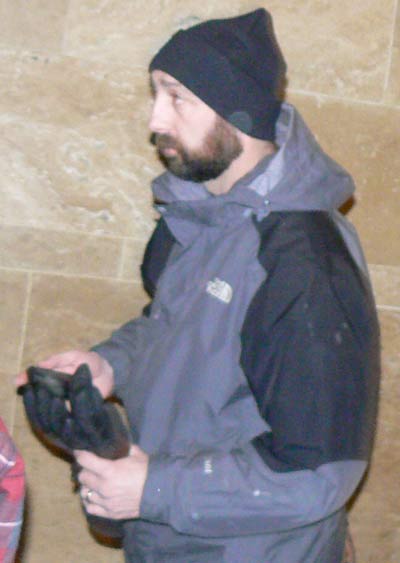
Ward Churchill speaks on which settler invasion wrote the book on Apartheid

Tucson Tohono O'odham
Ward Churchill spoke in Tucson on Friday and Brenda Norrell has posted the footage. Watching the ex-CU professor speak, I can’t help but think about the university students’ loss. They’re missing the lamentably rarefied perspectives he offers of course, but more important, the inspiration gained from such an engaging luminary.

Throughout his lectures, Churchill likes to put questions back at his audience. He understands, if I can presume to project his rationale, that a mentor’s role is to bounce ideas around, and be sure his students have minds open enough to let them resonate. It’s also a sign of someone fully confident with what they are teaching. Churchill gives you the impression he’s interested in the best argument you’ve got, and I believe him, but in reality he’s going to have few peers up to the task.

When it’s time for Q and A, Prof. Churchill calls it mud-wrestling, and welcomes all shots, “even spit wads.” He draws the line at brick bats, because he says, one might bounce off his head and hit somebody else. He warns, as if he’s had practice, “because someone might get hurt. I can assure you it won’t be me.”

I wished at that moment that Tucson was not so far from Churchill’s curiously vile detractors, who attended his trial in Denver, and who hold bitch fests online about every Churchinalia for reasons unspecified. I predict they’re remunerated; the love-to-hate pretext is wearing thin, these yahoos are pro-Israeli tea-baggers. So there’s no Drunkablog or Pirate Ballerina there tonight to take the “perfessor’s” challenge. Although wouldn’t such an exchange have been simply tedious? I recall this dismal attempt mounted against “Wart” by a couple CU college Republicans, it was just embarrassing. Have Churchill’s online critics ever confronted him in person I wonder? They can spout off in the safety of anonymity, and that’s about it.

Churchill’s speech to the predominantly Anglo and O’odham border activists was about the bigger issues behind the border wall. The theme of the gathering was Apartheid in America, and Churchill demonstrated how South African Apartheid came of the successful colonial methods practiced in the United States. These were the strategies employed by the Germans in taking and settling the Eastern Front during WWII, and of course the goals of Israel in Palestine.

Churchill described how settler invasions vary from colonial administration. In the latter case, the colonizers can go home, in the former, they stay. Another distinction is critical, the settlers aren’t moving to a land and becoming part of the social system, they remain citizens of the occupying force. They bring their identity and the foreign system with them, to apply against the people indigenous to the land. The process involves two steps: displace enough of the natives to make room for yourselves, but leave just enough to serve as a labor pool, for all the building that is required of empire building. You’ve need of only a portion of the original population, to do the manual labor required of developing the land, but eventually you need them to die off. The Nazi strategy in Poland was to eleminate a great deal via war, then another mass through starvation, ill health and exposure. Methods mirrored today in Gaza. As a USA example, Churchill sited the average life expectancy of a Native American on a reservation in 1975. The age was 44.6 years old. That’s 1/3 less that the G-Pop average, equivalent to thinning the population by a third.

To cut to the quick, Churchill asked his audience how they felt about social challenges like sexism, racism, ageism, classism. All were basically in accord as being against. What’s the problem, Churchill asked. If so many are against these things, why do they persist? Then he threw imperialism into the mix, which had not been mentioned. Churchill said we cannot adequately address the others until we have a clean conscience about the land taken from America’s First Peoples. This must be the priority. First Peoples, First Nations, First Priority.

Below is the video of Friday’s Tohono O’odham event in Tucson. Take note also of the excellent speeches which followed the keynote, by Ofelia Rivas and her brother in particular.

Click ON DEMAND, then select the “Live Show Fri Nov 13 2009 06:20:55 PM” or watch it at Livestream/earthcycles.

This Israel public relations jig is up

Colorado College lecture in Gaylord HallCOLORADO COLLEGE- The news from the ISRAEL TODAY lecture is all good. If you’d been there, you might wonder how my takeaway from such a bilious gathering could be upbeat. I’ll tell you. The Palestinian voice was well represented, Israel’s presentation was Old Testament, and the writing on the wall grows ever more clear. And I got a few nice pics.

The Audience
To begin, I would certainly have preferred everyone had acted with more decorum. That is, if there had been impressionable attendees there. As it was, the seats were only half occupied. Except for the young men with “JEW CREW” on their backs, or girls with Hebrew script across their pullovers, there were almost no CC students. The audience was one third voices for Palestine, and two thirds vitriolic Jew, amazingly indignant to disruption of their world view. No one was there to listen, except to cheer for what they already believed. But I’m certain it was an eye opener for all.

My friends and I were sure to supplement the speaker’s pauses with color to augment his heavily loaded statements. For example, when Gil Artzyeli described the objective and feat of Israel’s 2006 incursion into Lebanon “to silence them,” and did that not prove effective? Who could refrain from adding “you killed them.” The 2/3 supporters grew more and more angry. But the speaker had an inopportune manner of posing rhetorical questions, which we couldn’t resist answering.

It almost got us kicked out. I spent the duration with security guards poised right behind me, ready to escort me out of the room. I learned it would be more prudent to avoid the back row at opportunities like this, because you can be pulled out of your chair, or distracted into involuntary conversation with security personnel more readily than if you were well ensconced among the other attendees.

Those voicing support for Palestinians were made to wait until question and answer portion to voice their objections. Even then, the pro-Israel audience would cut them off. It became impossible to ask a complex question without interruptions of “What is your question? State your question!” They hounded everyone who wasn’t setting the speaker up for a softy. It was a ruthless crowd with the civility of Tea Partiers. When the pro-Israel attendees took their turn posing questions, no one interrupted. When it was a detractor, their time suddenly became too valuable to entrust to us. Even a CC student from Gaza, who hasn’t been permitted to visit his family in two years, was not given a hearing.

I’m positive that as these rude people think on how the event transpired, they will not be able to help feeling ashamed. Our interactions were spirited and engaging, addressed to a speaker with the hubris to take us on. We interrupted the speaker, but never tried to drown him out. Our adversaries on the other hand tried to flat out shut their fellow audience members up.

That crowd is immovable. I’ve no optimism for influencing their resolve. On the other hand, their rigidity was laughable. Their logic will not sway anyone new. They were positively shrill about their speaker being permitted to deliver his message as abridged. “Let him speak!” they shouted, as if their attention was rapt by information they’d never heard before, a preposterous notion. I’m neither Palestinian nor American Jew, but this was Israel Foundation Myth for Dummies. I can only think that this crowd sat tightly clenched, thrilled that the others among the audience were forced to listen to their dogma.

The Presentation
Old school. Palestinians offered their own statehood, but rejected it. Israel is pretext for Arab countries to oppress their peoples. No such thing as a Palestinian, Jewish presence in Judea has been continuous, Palestinians teach their children to hate, Israelis teach love, etc, etc. The old greenhouses of Gaza story was the example given to show that Palestinians don’t want to help themselves. Arab neighbor states are blamed for not resettling the Palestinians. Gaza is free, it is not occupied.

Would you believe Israel justifies the force it used in Lebanon and Gaza based on what NATO was permitted to do in Bosnia? Those were war crimes too! Israel accuses its critics of anti-Semitism because they don’t take other militaries to task for their crimes. But really Israel gives itself the latitude to commit crimes commensurate with the worst.

And here’s a wild gem! Israel owes its enormously successful economy (no mention of US foreign aid or direct sponsorship by Jewish American interests) to, among progressive business practices, the fact that all Israelis, both men and women, have to serve compulsory military service. It gives them the skills and discipline to excel in business and strengthen Israel. Mr. Artzyeli showed a video clip taken from CNBC, recommending that such a policy in American would certainly greatly improve its prospects for an economic recovery!

A word about the delivery of the presentation. Though impeccably dressed Gil Artzyeli affected the presence of someone wearing a Tony Soprano tracksuit. He sat back on his heels, his eyes directed to the ceiling as he dismissed his questioners. When a Palestinian girl raised a specific instance of an IDF strategy deployed in Lebanon, wondering how it was not a war crime. Artzyeli ignored it completely, making an aside to someone up front that the he wasn’t about to dignify that accusation with a response.

It’s kinda the problem Israel is having, isn’t it?

The Jig is Up
Over the last weeks I’ve had a chance to participate in three presentation by Israeli officials. The sum experience has fortified me with hope. With world opinion against them, and now the Goldstone Report, Israel is on the run.

The first lecture by Uzi Landau was on the offensive, directed toward Iran. It went over poorly. The Q&A revealed that Landau hadn’t connected the dots at all. The audience he had hoped to rally became only more concerned about Israeli nukes than Iran’s.

The second presentation delivered by Nir Barkat was an encouragement to the Denver Jewish community to support Jerusalem, with donations, travel, and by encouraging emigration. There the audience was equally smug and oblivious to the notion that increased settlements constituted violations of international law. But Israel’s continuous push for Jewish immigrants provides the clue to what Barkat inadvertently confirmed. Jews are leaving Jerusalem. The balance of the population is shifting toward the non-Jew.

This third event with the Deputy Consul General took the rhetoric down to basics, a demonstration of how far Israel is slipping. The dogma behind Zionism’s right to its own state, and their right to defend themselves, used to go without saying. Today Gil Artzyeli was forced to defend the most basic assumptions. The Jewish diaspora, their right to return, the expanding borders, the wall, the military retaliation. I was thrilled to see arguments slip back past the basics.

The Jewish American communities may still be a resolute, but their numbers are not large. It appears to me that the compatriots they’ve recruited, from the Christian right and the neoliberal conservatives are receding quickly.

The image of the much-oppressed Jew is becoming eclipsed by the militant arrogant Zionist, earning no one’s sympathy.

A few pictures from the event:
Deputy Consul General Gil Artzyeli lecture November 12, 2009
Castigated for raising his voice, Ed Nace insisted on standing for the duration of the lecture, to lend omniscience to his objection.

Deputy Consul General Gil Artzyeli lecture November 12, 2009
Colorado College Poli-Sci professor, and Middle East specialist Bob Lee rose several times to forbid the impromptu participation by the audience. Here he calls for security to remove Ed.

Deputy Consul General Gil Artzyeli lecture November 12, 2009
Security reconsidered asking Ed Nace to leave as he informed them in his booming voice that he was a Colorado College alum.

Deputy Consul General Gil Artzyeli lecture November 12, 2009
Would you believe Mr. Artzyeli trotted out the old Farfur the Mouse clip, depicting Muslim children being taught to admire suicide bombers. It’s a favorite example whose relevant context was long ago dismissed.

Footnote
One lamentable observation I had regarded a member of the chaplain’s office at CC, who is also a peace community activist. She was not at liberty to take sides on the Palestinian – Israel discussions for fear of alienating the Jewish students. I do not personally doubt her motives, nor her sympathies for the victims of injustice in Palestine.

However, when our 85 year-old Ed Nace raised his voice, or stood angrily, the chaplain’s assistant moved to calm him down. She may have thought he needed assistance, but in reality his stubborn act was working. His offense at the slanders against Palestinians, his incredulity that such a one-sided presentation was being allowed, and his indignation at the ferocity with which he was being silenced, expressed itself as a hard-of-hearing old man who was not about to be bullied. His performance, even inadvertent, worked to disrupt the lecture and temper the smug untruths being passed as academic fact. But Ed’s act was not made any easier by a colleague trying to calm him down. To his credit, Ed persevered and was able to put a human emotional context to Mr. Artzyeli’s slick propaganda.

The chaplain is no doubt schooled in nonviolent communication. She needs to bone up on effective nonviolent theater. Non-confrontational communication isn’t going to bring racist bullies like Artzyeli to heel. Zionist Apartheid is going to fall when it is condemned and pilloried.

CH2M pushes UAE Masdar as model PRT

In writing about the recent PPSBN Sustainability conference, I failed miserably to highlight the keynote speaker Nancy Tuor, who represented CH2M Hill as a model green corporate citizen. Ms Tuor, the “Group President and Executive Sponsor for Sustainability” at CH2M Hill, had headliner status at the conference because she is Program Manager on the MASDAR ‘Green’ City development in the United Arab Emirates, a smoke and mirrors project if ever there was, and it’s smoke from burning oil.

According to the program for this week’s conference in Colorado Springs:

CH2M HILL is the delivery partner for the first phase of the MASDAR development, a carbon-neutral and zero-waste sustainable city nestled in the heart of Abu Dhabi—the first major hydrocarbon producing nation.

First, a sustainable city built on income generated by fossil fuel is an oxymoron. Second, UAE’s efforts appear to be centered on securing the technological rights to new sources and practices before their monopoly on oil expires.

MASDAR is a comprehensive Abu Dhabi government program to address the issues of sustainable energy sources and environmental practices. The program is focused on developing and commercializing advanced and innovative technologies in renewable, alternative, and sustainable energies.

In other words, their definition of sustainable is much like the military’s, they want to sustain their profits.

Minneapolis Confidential‘s Ken Avidor contacted NMT about another outlandish aspect of CH2M’s green charade in Masdar. It relates to an announcement which Nancy Tuor made at the conference:

MIST delays impact PRT schedule. At a sustainability conference in Colorado Springs on November 3, 2009, Nancy Tuor, CH2M Hill’s program manager for the MASDAR ‘Green City’ in the United Arab Emirates, announced that the personal rapid transit (PRT) system will open to public use in about six months.

It seems a central showpiece of the Masdar development is a Personal Rapid Transit system which always fails to materialize. As Avidor writes:

You may have seen blog posts and news stories about a “sustainable” city in the United Arab Emirates called Masdar. One of the supposed “green” features of the Masdar project is a “Personal Rapid Transit” (PRT) system. It turns out the PRT system is a joke… but what do expect from a country where a prominent royal family member tortures people and has it all documented on video.

One of Avidor’s astute readers makes the point that the US tortures people, and documents it on video as well. So much for that dig at UAE, but Avidor’s central criticism stands. PRT projects worldwide are being lauded with out merit, but of critical relevance, PRTs are being used as stalking horses to thwart the finite budgets which metropolitan regions have for mass transit.

Interestingly, Avidor’s blog posts are being dogged by two detractors who can’t sing praises enough for PRTs. Maybe they’re new technology freaks who want to see Jetsons fantasies in their lifetimes. Maybe they believe the argument against mass transit, that contemporary man doesn’t want a community experience when he commutes. If they aren’t PRT industry shills, they should at least concede that no number of personal pods will accommodate the masses. They’re luxury hogs who don’t want to share the ride.

As cars sank the trolleys, so could PRT smoke and mirrors sink trains and subways. But the rich man has no need for mass transit. Why not get the taxpayers to fund something that will be available to only he: personal transit. Where there’s no room for the masses. It’s the same strategy the rich use to fund their charter schools at the expense of public schools.

Where the rich are fleecing the needy, you can always count on Colorado Springs to sign on.

Stop Jewish A-bomb. Say what? Whose?

barkat-stop-jewish-abomb-438DENVER- Barkat Protest. Tony’s sign proved effective right out of the bag. Tony had no sooner pulled it out when a pro-Israel organizer saw “STOP JEWISH A-BOMB” and immediately scolded Tony for his sloppy choice of words. “Your sloppiness reveals the anti-Semite you are.” We chased after him, demanding why it’s alright to say “Muslims” mustn’t have nukes.

Indeed, the Israeli lobby has become more careful to say in public that “Iran” must not have nuclear weapons. But not far behind that argument, is the rationale that radical Islam must not, and Muslims themselves cannot be trusted. According to Uzi Landau last week, Islam is the nemesis of our (yours and my) Judeo-Christian civilization.

Tony’s sign was designed to point at this hypocrisy. As well, of course, to remind all parties that Israel is a nuclear power. As much as it’s an alarmist about a nuclear Middle East, Israel possesses an estimated 200 nuclear warheads. But I didn’t expect the slogan to provoke the confession that a choice of words, Jewish versus Israel, Muslim versus Iran, was a mere matter of sloppiness. It is not.

For the most part, the crowd protesting Nir Barkat’s speech were on message. Barkat’s mission was to promote tourism to Jerusalem, and to rally the Jewish community to reverse the trend of Jews leaving his city. Those outside protested the demolition of Palestinian homes, and the building of new settlements. Some of the protesters were Palestinian, and all were pro-Palestinian. We were admonished for straying from the focus, in particular with our signs urging US OUT OF AFGHANISTAN.

Strangely, the counter-protesters supporting Barkat had a singular message, besides I HEART ISRAEL. It was about terrorism. Not just against Israel, but all terrorism. You’d not believe the signs borne by the pro-Israeli demonstrators: God bless US troops, Remember 9-11, Americans against Terrorism. They show up to support the Mayor of Jerusalem, but their message is about the Global War on Terrorism. I think it’s rather interesting to see Israel’s relationship to that meme authenticated by members of the Jewish community.

Inside, someone was able to unfold a sign which read “Barkat: Destroyer of Palestinian Homes” until quickly asked to conceal it. The questions for Nir Barkat posed by the moderator were mostly softballs. Barkat’s presentation was mostly to urge Jewish migration to Jerusalem, or at least, come for a visit.

(Work in progress: more by morning)

Jerusalem Mayor Nir Barkat addresses University of Denver audience

Ward Churchill to speak for O’odham

O'odham rightsAccording to Censored News, Activist and scholar Ward Churchill will speak at the Unitarian Universalist Church of Tucson, 4831 W. 22nd St., on November 13, 2009 at 7:00 p.m. to benefit O’odham VOICE Against the Wall, which since 2003 has organized and advocated for the traditional O’odham leaders and elders of the Tohono O’odham communities in the southern territory of the United States and northern territory of Mexico. Professor Churchill’s talk is part of the “Apartheid in America: Surviving Occupation in O’odham Lands”

O’odham activist Ofelia Rivas will also participate. The event is sponsored by the Dry River Radical Resource Center, the Earth First! Journal, and Voices against the Wall.

Here’s some background on the O’odham struggle:

pamphlet cover illustrationBy J. D. Hendricks, 2004
TIAMAT PUBLICATIONS #5

The People Who Emerged From the Earth

Over two thousand years ago the descendents of the O’odham moved into the southwestern region of the area now claimed by the U.S. as the state of Arizona. 1 The O’odham have had one of the longest histories of contact with the forces of European colonization compared with the rest of the native North American peoples. The O’odham’s first contact with Spanish invaders took place in the mid 16th century; nearly one hundred years before the colonization of the North Atlantic coast and Great Lakes regions were begun by the French and English colonists. As such, the history of the O’odham provides a good context for an investigation of the colonization of Native North America, and more specifically, an investigation of the interplay between, and results of, the varied responses to colonization – that of collaboration, accommodation, and resistance.

Many histories of the O’odham refer to these desert people as the Papago. The term Papago was a name given to the O’odham by the Spanish colonizers, and is likely the result of a Spanish corruption of the O’odham word “papabi” which was the O’odham name for one of their principal bean varieties. Thus, the Spanish colonizers term for the O’odham (Papago) came to mean “the bean eaters.” 2 For the purposes of this study I will refrain from the use of the term Papago and will refer to “the people” 3 by their traditional pre-colonial name. 4

As is often the case, with the name Papago being a good example, European constructs are often imposed upon indigenous peoples by the historians that seek to portray their past. This result can occur when historians seek to glorify European norms and traditions at the expense of indigenous ones, and can also be the result of the subconscious indoctrination of the historian by the dominant culture – in this case that of western style industrial civilization. In other cases it can be the result of a simple uncritical usage of language.

One of the most dominant and reoccurring “civilized” constructs imposed upon indigenous peoples history is the commonly understood notion that the O’odham, or any other indigenous North American culture for that matter, existed as a totality or uniformed mass. This study will seek to use the history of the interaction between the O’odham peoples and the United States, both its government and its peoples, to deconstruct this myth of the totality and provide a history of the O’odham’s varied responses to colonization from an anti-colonial and anti-industrial perspective. By investigating various important case studies in O’odham history, and looking not only at resistance but also accommodation and collaboration, it is hoped that this work will help to provide a more realistic historical picture of the effects of colonization, and the intentions and reactions of both the colonizer and the colonized. Within the previously stated context and theoretical framework, this study will argue that while the O’odham responded to the U.S. invasion of their lands in various ways, the choices to resist, accommodate, or collaborate with the forces of colonization did not affect the overall U.S. policy concerning the O’odham – that policy being the eventual total assimilation of the O’odham into the dominant “civilized” industrial system. 5

This investigation will include a strong focus on O’odham resistance to colonization, as any anti-colonial history should, however it will not discount or ignore the many historical occurrences of accommodation, and in some cases outright collaboration, with the colonizers. It is important to always keep in mind that none of the actions and reactions in any of the case studies looked at are attributable to the O’odham as a “totality,” but rather are attributable only to the various groupings of O’odham, be they incarnated in the form of the individual, the clan, the village, an economic or spiritual grouping, or an established political organization.

A God of Civilization and Coercion Comes to the O’odham

The O’odham’s first encounter with Spanish invaders took place in the mid sixteenth century when a group of conquistadors led by Alvaro Nunez Cabeza de Vaca entered O’odham territory in search of gold. These men did not find the riches they were looking for and left the desert region to return to the Spanish colony. However, soon after word spread of the O’odham villages on the northern periphery of the Spanish colony, missionaries began to travel north to bring God and “civilization” to the native people residing there. By 1686, Catholic missionaries had formed a few small missions in O’odham territory using what they believed to be the influence of their soft power 6 techniques to lure the O’odham into their missions where they were then subjected to a rigorous schedule of cultural indoctrination. Most O’odham historians, including Winston Erickson, 7 and to a lesser extent, Bernard Fontana 8 have, during this time period, focused on the O’odham who chose to reside nearby and within these early missions, thus painting a picture of the O’odham as accepting of Spanish influence and cultural indoctrination.

However a closer look at this time period reveals that mission O’odham were only a small percentage of the total population of O’odham residing in the Sonoran desert 9 and that the ones who were there may not have been so for the reasons that the colonizers believed. San Xavier del Bac, the largest mission in O’odham lands, as well as many other missions, took advantage of the fact that the desert O’odham migrated in the dry winter months to the Northern Piman settlements along the rivers to work the small farm plots for sustenance. 10 The Catholic missions inserted themselves into this traditional pattern. Those O’odham who worked and lived near the missions were, for the most part, seasonal residents, which shows that the missions were viewed merely as being of utilitarian value. Thus, the O’odham as a totality were not necessarily accommodating to or interested in anything the missionaries had to offer per se, and when the missionaries began to employ “hard power” techniques and abuse or overstep the grounds for their welcome it did not go without consequence. 11

Accommodating and ignoring the missionaries was not the only response to colonization practiced by the O’odham during the seventeenth and eighteenth centuries. Although historians such as Erickson feel that “the missions did serve the O’odham well….,” 12 that assertion is contradicted by the fact that there were many large scale rebellions waged against the missions from outside and from within. In 1695, 1751, 1756, and 1776, large scale rebellions occurred in which missionaries were killed and their missions burned to the ground. 13 In some cases these rebellions were the doing of joint O’odham/Apache alliances, which is significant considering that many histories of the O’odham and Apache portray them as immemorial enemies. This may be the result of the fact that by the early nineteenth century the Spanish government initiated a campaign of divide and conquer that was continued later by the Mexican and U.S. governments to turn the O’odham and Apache against one another, thus easing the project of their subjugation.

A Change in the Occupation Government: Washington Enters O’odham Lands

In 1821, Mexican Independence from Spain was achieved and interest in the O’odham dropped away nearly entirely. By 1828, the new and secular Mexican government began the process of shutting down the missions in O’odham territory and by 1842, the last of the missions were closed. Soon after, in 1846, the United Stated initiated a war for territorial expansion against Mexico. This war was not of immediate consequence to the O’odham peoples. Isolated in desert regions, the fighting between the two occupation powers affected them little in the short run. However, the signing of the Treaty of Guadalupe Hidalgo in 1848, which ended the war, would lay the foundations for a series of disastrous events which would affect the O’odham in very negative ways.

Of greatest consequence to the O’odham was the fact that the boundary between the United States and Mexico was not finalized by the treaty of Guadalupe Hidalgo. The boundary was designated by Article Five of the Treaty as being an arbitrary line roughly following the 32nd parallel, an area which runs through the southern part of modern Arizona. To the east, the border was provided by the Rio Grande. The exact boundary line along the 32nd parallel was to be decided at a later date. It is also important to note here that the Treaty also provided that all Mexican citizens absorbed by the United States were to be granted U.S. citizenship, which included all indigenous peoples in the annexed territory since under Mexican law they were considered citizens. In the treaty the United States also assumed the responsibility for preventing cross border raiding into Mexico by the southwestern tribes, specifically the Apache. 14

In the aftermath of the signing of the treaty of Guadalupe Hidalgo, it became quickly apparent that an acceptable border between Mexico and the United States along the 32nd parallel would not be achieved. An official survey expedition was assembled by the United States and Mexico in 1849 to trace out the boundary between the two countries with little success. Various borderlines were agreed to and then abandoned and re-made by the United States, sometimes in a unilateral decision that dismissed the positions of the Mexican government altogether. 15

The principal concern for the United States was to secure title to an area of land in northern Sonora, Mexico that was ideally suited for the construction of a portion of the southern continental railroad whose building was being discussed in the U.S. Congress at the time. One of the main advocates for this southern railroad route was a South Carolina man by the name of Colonel James Gadsden. Gadsden’s history of connections to powerful business, military, and political leaders is very interesting and his appointment by the United States to be Minister to Mexico in 1853 serves as a very informative source to gauge the United States’ intentions towards Native Americans and the O’odham in particular.

James Gadsden was born into an influential southern family and graduated from Yale University. After enlisting and serving in the war of 1812, Gadsden was sent to the Florida territory with Andrew Jackson to aid in the campaign of removal and extermination being waged against the Seminole Indians, which took place from 1816-1818. After this war against the Seminole, Gadsden was appointed by President Monroe as commissioner to oversee the removal of the Seminole Indians to Indian Territory. Like the more famous removal of the Cherokee, the removal of the Seminole, and the high death rate suffered as a result, unarguably constituted genocide. 16 As a reward for a job well done, Gadsden was appointed by Monroe to a seat on the legislative council of the territory of Florida, thus beginning Gadsden’s political career. In 1840, Gadsden was elected President of the Louisville, Charleston, and Cincinnati Railroad. In 1853, the Secretary of War, an ardent white supremacist and slavery defender by the name of Jefferson Davis, appointed Gadsden to be Minister to Mexico. 17 As Minister to Mexico, one of Gadsden’s primary missions was to negotiate a final demarcation of the boundary between the U.S. and Mexico. Although Gadsden was a zealous believer in Manifest Destiny, his ideas concerning racial Anglo-Saxonism 18 caused him to be an opponent of the total annexation of Mexico. Gadsden, like many racist U.S. politicians of that time, felt that the total absorption of Mexico and its non-Anglo population into the United States would pollute the Anglo bloodline too much and thus he sought only to gain enough territory for the United States to build the southern pacific route. 19 Thus, a man who had presided over a war of genocide against the Seminole Indians, was a devout racist, and who had obvious conflicts of interest due to his connections to the railroads, was put into a position to determine the territorial boundary between the United States and Mexico and in the process also determine the boundaries of the O’odham’s land. With its appointment of Gadsden, the intent of the U.S. government could not be clearer. Business interests and territorial expansion were to run roughshod, by any means necessary, over any native peoples who stood in the way.

It is no surprise that when James Gadsden finally successfully negotiated a treaty with Santa Anna to secure what is now the southern portion of Arizona, the O’odham were not consulted. In fact, the Gadsden Treaty, signed into law in 1853, did not contain any mention of the O’odham at all. Considering that the new boundary line put in place by the Gadsden Treaty literally split the traditional O’odham lands in two, it is obvious that the intentions of the United States were in no way benevolent. Here it is also important to point out that the terms of the Gadsden Treaty specifically included the same citizenship provisions which were spelled out in the earlier Treaty of Guadalupe Hidalgo. 20 Although the Gadsden treaty was of great significance for the O’odham, their isolation and the outbreak of the Civil War enabled them to live another decade in relative isolation from Anglo encroachment.

Assimilation, Cultural Destruction, Double Speak and Ordained Genocide

The causes which the Almighty originates, when in their appointed time he wills that one race of men – as in races of lower animals – shall disappear off the face of the earth and give place to another race, and so on, in the great cycle traced out by Himself, which may be seen, but has reasons too deep to be fathomed by us. The races of the mammoths and mastodons, and the great sloths, came and passed away: The red man of America is passing away!
–United States Congress Committee on Indian Affairs report, 1865. 21

No doubt with similar justifications in mind as those of the Committee on Indian Affairs, Anglo settlers began their invasion of O’odham lands less than a year after the conclusion of the Civil War. The Homestead Act had opened up the lands of Southern Arizona to Anglo squatters and in 1866, one of the first of many bills was passed by Congress granting mineral rights to any citizen who claimed them. 22 Every one of these homesteads opened and every resource extraction operation initiated without the express consent of the O’odham represented an illegal action under the Gadsden Treaty. The citizenship provisions of the Gadsden Treaty had granted citizenship to all former Mexican citizens and the O’odham were, by legal definition, included in this formulation. The United States, however, refused to consider “uncivilized” peoples as being worthy of the protections granted to citizens by the fourth amendment of the U.S. Constitution, which prohibits the expropriation of property. This refusal of the United States government to follow its own laws pertaining to Native Americans when those laws happen to stand in the way of U.S. interests has been a common occurrence in United States Indian policy. This land grab was only the first of many illegalities committed against the O’odham people by the United States and its citizens. In this respect the O’odham are in a special position when compared with many other tribes. While the theft of native lands by the United States Government was usually legally justified by treaty stipulations signed between a tribe and the U.S. government, this justification could not and cannot be used in the case of the O’odham since no treaty was ever signed with the O’odham by the United States Government. 23

For the most part, the O’odham did not resist this initial incursion of Anglo settlement, rather the O’odham practiced accommodation and moved farther out into the desert to shield themselves from the new settlers invading their lands. Traditional ways were maintained with the exception of the introduction of cattle ranching. The O’odham territory was well suited for the raising of cattle and a good number of O’odham became cattle ranchers, both for purposes of subsistence as well as for sale to Anglos residing in and around Tucson. In the 1880s, as increasing numbers of Anglo cattle ranchers began to invade and take over their pasture, some O’odham began to resist.

The O’odham resisted by stealing the Anglo cattle herds which were rounded up and driven south to be sold on the Mexican market. The expropriation of Anglo cattle herds was not isolated, and it became a major concern for the settlers and the government. In at least one case, a large cattle outfit was driven out of business. 24 The concern over this outbreak of O’odham theft of Anglo cattle was large enough that newspapers as far away as Los Angeles ran stories about the phenomenon. For the most part these stories seem to have been deliberately used to justify the enclosure of the O’odham into reservations as the government and Anglo cattle ranchers seized the opportunity to gain even more O’odham land by arguing that it was an unfair burden for the Anglo cattle ranchers to have to “support” the O’odham. 25 Here, in previous case study, we have another common attribute of U.S. Indian policy in general, and one which occurs again and again in the history of O’odham contact with the U.S. government and Anglo settlers – blaming the victim.

Another official position of United States Indian policy during this time period was that everything done to the Indians was, in the words of Indian Commissioner J. Q. Smith, in their own “best interests.” 26 Whether this obvious sham was based on a subconscious guilt and delusion or was a cynical example of “double-speak,” it is obvious that Native American’s best interest’s were the last thing on the government’s mind. Nevertheless, with this reasoning as justification, the first official reservation for the O’odham was created by executive order of President Grant on July 1, 1874. This small reservation surrounded the Old Catholic mission at San Xavier del Bac. It is estimated that only about ten percent 27 of the desert O’odham took up residence within this reservation – these were labeled as “civilized” O’odham by U.S. census takers. The vast majority of O’odham were labeled as “wild” and continued to live in the vast desert regions west of San Xavier del Bac. While it is obvious that the desert O’odham were resisting cultural assimilation by avoidance, even the mission O’odham maintained a resistance to European culture as the next example will illustrate.

While visiting the old mission at San Xavier a newspaper columnist from the Los Angeles Times wrote that upon her visit in 1882, she could see “not a single civilized human habitation within miles.” This writer goes on to state that the O’odham’s dwellings were in the form of “conical mud huts.” In the casual racism and Social Darwinist rhetoric of the period she also adds that,

“The Papagos are but little in advance of gophers and prairie dogs in their habitations.” 28

The point is that after more than 200 years of European influence, even the mission O’odham continued to build their traditional shelters. 29

Progressivism and Cultural Genocide: The Dawes Act

In 1887, the General Allotment Act, also known as the Dawes Act, was signed into law. The Dawes Act was the staging point for the forced assimilation of those remnants of Native American groupings which had not been totally decimated by the preceding period of “Indian Wars” and forced relocations. The essential function of the Dawes Act was to disrupt traditional tribal land holding patterns and thus force Native Americans into the Anglo system of private property. The O’odham, like most other Native American cultures, did not have a concept of private property – land was held in common for the benefit of the village group. Communally held land was an essential pre-requisite for their Anarchistic political system and extremely de-centralized tribal structure. 30

The first section of the Dawes Act provides for equal “sections” of land to be parceled out to each “head of family.” This head of family was always understood to be the father of each family when land was allotted. Thus, this first section of the act not only attempted to destroy the communal land system of Native Americans, it also instituted Patriarchy as the basis for social functioning in Native America. 31 In addition, Section Five of the Act also provides that any un-allotted lands be subject to purchase by the United States government. Section Six and Seven provide that all monies paid by the U.S. for un-allotted Native lands be held for each tribe by the U.S. Treasury and “subject to appropriation” by the U.S. government to repay itself for the implementation of allotment as well as to provide for the “civilization” of Native Americans. 32 In less veiled words, these sections are basically stating that Native Americans will be forced to pay for their own cultural annihilation.

This interpretation of the intent of the Dawes Act becomes clearer when one looks at the arguments and debates that took place in Congress and within self described progressive “Indian rights” groups such as the Indian Rights Association. Critics of the Dawes Act in Congress such as Rep. Russell Errett understood that

“the main purpose of this bill is not to help the Indian troubles so much as it is to provide a method for getting at the valuable Indian lands and opening them up for settlement.” 33

And Senator Dawes, the namesake of the final bill, speaking of the land and resources of Native Americans stated that

“civilization has got after these possessions with a greed never before equaled but it is idle to expect to stay it….” 34

As for the progressive Indian Rights Association, they argued that

“the organization of the Indians into tribes is, and has been, one of the most serious hindrances to the advancement of civilization, and that every effort should be made to secure disintegration of all tribal organizations….” 35

And one of their leaders, Reverend L. Abbott, provided justification with the statement:

“Barbarism has no rights which civilization is bound to respect.” 36

So here we have a self-proclaimed progressive Indian Rights organization arguing for cultural genocide and against the notion that Native Americans have any rights that civilized people are bound to respect! This conclusion provides a perfect example of the essence of “progressive” or “civilized” thought.

The Dawes Act had a much less devastating effect for the O’odham than it did for many other Native American tribes. At the time of its passage, the only official reservation for the O’odham was the San Xavier reservation which, as was stated earlier, was only a small 71,090 acre reservation around the old mission San Xavier del Bac. When the allotment agent came to San Xavier in 1890, he allotted out 41,600 acres of land to the 363 O’odham whom he counted in his census as being resident at the time. 37 The vast majority of the O’odham still continued to live west of San Xavier in the expansive desert regions and were little affected by the allotment schemes. Even those O’odham who lived in San Xavier and were allotted land paid little attention to the artificial boundaries drawn on paper which supposedly privatized their land – they continued to farm and graze the land communally. 38 This refusal to abide by the provisions of the Dawes Act is also a form of resistance to cultural assimilation and adds one more example to show that for those O’odham who resisted, the most often employed method of resistance was non-compliance and avoidance. This specific response to colonization was made possible by the isolation and expansiveness of their desert home, which many Anglo’s continued to view as a “hopeless desert.” 39

The Domestication of the “Wild Papago”

The vast majority of the O’odham continued to resist assimilation and maintained a fairly traditional lifestyle – minus the introduction of cattle herding and horse rearing. In the twenty years following the passage of the Dawes Act, a growing effort was made to enclose the “Wild Papago” 40 and forcibly strip them of their traditional culture and instill them with the “civilized” values of the industrial Anglo. As was mentioned previously in the paper, ranchers and the government used O’odham cattle theft from Anglo ranchers as one tool to justify the enclosure of the O’odham within a reservation. During this period, Anglo Cattle ranchers continued to encroach deeper and deeper into O’odham territory and scuffles began to break out.

In another classic example of the “blame the victim” tactic, a pro-enclosure story was printed in the Los Angeles Times, no doubt to build public pressure for the domestication of the “Wild Papago.” The story concerns a group of O’odham who had resisted an Anglo cattleman’s attempts to enclose one of their water sources. When these O’odham continually tore down the fence that this cattleman had built, the rancher filed a report with the local Indian Agency sheriff to have the men arrested. When the sheriff arrived to arrest the O’odham responsible for defending their water source, he was taken hostage. The sheriff was later released unharmed; however, the incident was used to make the argument that such troubles can only be expected to increase if the O’odham were not enclosed on a reservation where they could be more easily controlled and monitored. 41

The tactic of occupying and diverting natural water sources was one of the tools used by the Anglo settlers and government to destroy the self sufficiency of the O’odham and force them into reservations where they would be dependent on the government for their water and would thus be easier to control and monitor. Some of the O’odham clearly understood what was happening, which is evidenced by instances of resistance both to the enclosure of natural water sources as well as resistance to the drilling of wells. One example of the U.S. government using water as a tool of forced cultural assimilation can be found by looking at an event recorded by an O’odham calendar stick 42 keeper. In 1912, the O’odham residing in the village of Santa Rosa, an isolated and traditional village in the western desert region of O’odham territory, were paid a visit by an Anglo Indian Commissioner who wished to drill a well for them. The Chief of the village objected to the drilling of the well on the grounds that it would disturb their culture, their autonomy and their self-sufficiency. The government agent proceeded to have the well drilled anyway. Upon completion of the well, the Chief of the village, according to the calendar stick keeper, stated that

“the well must be left alone and, in order that the Papagos might continue their old life, water must still be carried from the spring in the foothills.” 43

However, the prohibition by the Chief could not be upheld due to the overwhelming convenience of the new well and after a period of abstaining from its usage, the village of Santa Rosa (including the Chief) gave in and thus was assimilated into the industrial system by being made dependent on the Government well. 44 During this same time period, encroaching Anglo farmers engaged in the diversion of O’odham water sources to irrigate their farms. This practice served as another method of forcing the self sufficient O’odham into a relationship of dependence upon the government. In many areas so much water was diverted that the O’odham could no longer grow their traditional summer crops. 45

In 1919, the first incarnation of an O’odham reservation to enclose the nearly two million acres of desert that the “Wild Papago” were residing in was established. The formation of the desert O’odham reservation in 1919 ushered in a period of exponentially increased government interference in O’odham matters, and of course, the various forms of coercive assimilation were multiplied. By 1933, thirty-two unwanted wells were drilled all over the new reservation. 46 The well drilling was often opposed by those who were trying to maintain the O’odham Him’dag – the traditional ways of the desert people.

Resistance and Collaboration: O’odham Responses to Forced Modernization

In contrast to the traditional O’odham who had maintained resistance to cultural assimilation for the past 300 years, there was also a small number of O’odham based in the new reservation that welcomed collaboration with the forces of Anglo modernization and advocated for cultural accommodation and in some instances for total cultural assimilation. These men would later form an organization called the Papago Good Government League, which would serve as the propaganda arm of the Bureau of Indian Affairs and government policy in general. The leadership of this new faction had been taken from their families as youths and placed in Protestant boarding schools to be culturally indoctrinated. The Tucson Presbyterian Training School was one of the indoctrination centers where many future members of the Good Government League had been sent. 47

Religious indoctrination, whether Catholic or Protestant, has always been one of the most powerful tools of colonization and its justification used by European invaders against the indigenous peoples of the Americas. The necessary counterpart to the forced indoctrination of Christian principals and morals has always been the repression of indigenous spiritual practices. The United States government understood the profound power that traditional spiritual practices had in maintaining group solidarity and cohesion and it is for this reason that such spiritual practices were made illegal and repressed historically. In 1883, a Court of Indian Offenses was established by congress at the request of Secretary of Interior Henry M. Teller to eliminate traditional spiritual practices. In a report to the commissioner of Indian Affairs, Teller laid out his goals and his rationale stating that,

“If it is the purpose of the Government to civilize the Indians, they must be compelled to desist from the savage and barbarous practices that are calculated to continue them in savagery….”

Teller went on to associate those who resisted the repression of their spirituality with the “non-progressive” faction of Indians and labeled traditional spiritualism as “debauchery,” “diabolism,” and “savagery.” The overarching argument of his letter is that in order to civilize the Indians and bring them into the industrial system, their traditional spiritualism must be destroyed. As an initial step towards this end, Teller advised that Medicine Men be “compelled” to desist from their practice of “deception.” 48

Although the Court of Indian Offenses advocated that coercion be used to repress and destroy indigenous spiritualism, it failed to succeed in this project even when it used force to try to stop traditional spiritual rituals. According to Historian Edward Spicer, the only thing the Court succeeded in doing was driving traditional spiritual practices underground. In the case of many resistant O’odham, traditional spiritual practices were continued without regard to regulations or prohibitions against them, and in many cases, federal authorities resorted to repression and arrest to try to stop these practices. One traditional spiritual practice of the O’odham which was particularly hated by the Protestant Missionaries and Indian Agents was the Vi-kita ceremony.

The Vi-kita ceremony of the O’odham has been written about and studied by many Anglo historians and anthropologists, the most prominent being Columbia Anthropologist Ruth Underhill. 49 Before going into a short description of the Vi-kita it is important to understand that this ceremony varied depending on who was conducting it and where it was being conducted. Peter Blaine, an influential O’odham man sympathetic to the traditional ways, wrote in his autobiography about Underhill’s methods. Blaine explained the traditional way for the O’odham to tell about their past was to do it

“in a group so that everybody had a chance to talk and tell it their way. Underhill was talking to just one man…Dr. Underhill was wrong all the way in how she got her information.” 50

As scholars from the dominant culture often do, Underhill had applied her own notions of hierarchy, authority and individualism to her work with the O’odham and totally disregarded their traditional methods of conveying information in a communal fashion.

The Vi-kita itself was a yearly rain and fertility festival preformed to initiate and give thanks for the yearly summer rains. The ceremony itself consisted of the communal singing of rain songs, dancing, intimate encounters, and the consumption of Navait (Saguaro wine), an alcoholic drink made by the fermentation of Saguaro Cactus buds. The consumption of this wine was meant to symbolize the connection between the sky and the earth. The intake of the Navait was representative of the earth’s intake of rain. Participants drank Navait until vomiting occurred as this act embodied the clouds issuing forth rain unto the earth. It was a powerful ceremony that bonded the O’odham with the elements of nature.

When Protestant missionaries, and a small number of Protestant O’odham in the Good Government League, backed by U.S. Indian Agents, began their attempts to usurp power on the newly formed western O’odham (Sells) 51 reservation in the early 20th century, one of the first things they attacked was the practice of the Vi-kita ceremony. In the early 1930s, Peter Blaine explained that the traditional O’odham from the San Xavier reservation would travel to the western reservation for the Vi-kita. He states that,

“In the late 1920s the government tried to stop this wine drinking ceremony on the Sells reservation. But no Papago or Agency police could ever stop it.”

In one instance Blaine tells the story of how he helped defend three traditional O’odham Vi-kita ceremony leaders when they were arrested by agents from the Indian Bureau and jailed in Tucson. During the trial, a group of Protestant O’odham men from the Good Government League 52 argued for the repression of the ceremony – one of these men, Richard Hendrix, would continue to plague the traditional O’odham in future encounters. To respond to the collaborationist Good Government League, the resistant traditional O’odham formed the League of Papago Chiefs to counter the attempts of the Protestant Good Government League to usurp control on the reservation. 53

The Indian Reorganization Act and O’odham land rights

On June 18th, 1934, President Roosevelt signed into law the Indian Reorganization Act which finally stopped the forced allotment process initiated by the Dawes Act in 1887. The Indian Reorganization Act was viewed by its proponents as being in the best interests of the Indians. One of the reasons for this view was the fact that the Dawes Act and its forced allotment provisions had resulted in the loss of 90,000,000 acres of tribal lands and it was hoped by some, including then Indian Commissioner John Collier, that the Indian Reorganization Act could be used to regain some of this lost land.

The public was also encouraged to view the Indian Reorganization Act as being beneficial for Native Americans. A large article in the Los Angles Times entitled “The Bill to Return Indian Rights” stated that:

“After a century of graft, plunder and injustice, this bill has the objective of handing their own souls back to the Indians.” 54

However, such optimism and notions of cultural relativism were not held by all. As a precursor to the Indian Reorganization Act, a report was prepared for the Secretary of the Interior in 1928 to lay out the need for a change in Federal Indian Policy. The report stated that the “great majority of Indians are ultimately to merge into the general population” and that it was the government’s responsibility to assimilate Native Americans into “white civilization” because “the hands of the clock cannot be turned backwards.” Sympathetic attempts to help Native Americans retain their culture were stigmatized as attempts to “preserve them as museum specimens.” 55 Indian Commissioner John Collier was one of those who believed that Native Americans should retain their culture and that “the awakening of the racial spirit must be sustained….” 56 However, although the finalized Indian Reorganization Act did contain elements that were meant to “help” Native Americans, many of its articles were still designed to impose “civilized” systems on Native Americans.

It can be argued that the intent of the finalized Indian Reorganization Act was to initiate a new chapter in the push for the total cultural assimilation of the Native American tribes. The argument that there was no qualitative change between the Dawes Act and the Reorganization Act is legitimate. The Indian Reorganization Act provides the examples for the argument. The main tool of assimilation in the Indian Reorganization Act was the provision in Section 17 which allowed for Native American tribes to form their own tribal governments, constitutions and laws which, although it is not specifically stated, were intended to be Anglo in structure and functioning. In the case that these native governments were not sufficiently acceptable to the U.S. government, section 17 also provided that all Tribal Government formations must be “approved by the Secretary of the Interior.” 57 This clearly shows that the intent of the Act was not to allow Native Americans to become fully autonomous, either culturally or politically. For a tribe such as the O’odham, which had a long history of decentralization and consensus decision making, the imposition of western style liberal democracy, with its attendant centralization and majority rule system, was an obvious method of forced cultural indoctrination. Peter Blaine, who was mentioned earlier, was an O’odham man who had sympathy for the traditional, decentralized and communal way of O’odham societal organization. When the collaborationist Papago Good Government League began to maneuver themselves into the position of representing all of the O’odham, Blaine took it upon himself to lead the charge to discredit their assertions to business interests and the Federal Government that they represented the O’odham. Blaine wrote that:

“This so-called council represented only their own church people, but they took it upon themselves to become a council for all Papagos. They had meetings. Nobody attended them but these four guys because most people didn’t recognize them as leaders.” 58

In 1934 Blaine, along with another O’odham from the Gila Bend reservation named Leon Pancho became the first O’odham to travel to Washington D.C. These two men were sent as representatives of the traditional chiefs of the O’odham villages to argue against a recent court order that closed the Sells reservation to outside, Anglo owned, mining. The court order was a result of a lawsuit brought by the members of the Good Government League, including Richard Hendrix, who had teamed up with outside lawyers. These lawyers were to receive as payment a ten percent share of all land reclaimed from the mining companies, or a monetary equivalent. As this entire procedure was done behind the backs of the majority of the O’odham, when it was revealed, there was great resentment towards the Good Government League by many of the O’odham.

While in Washington D.C., Blaine was informed of the pending Indian Reorganization Act, and he became a supporter of the Act due to its provision allowing for the self government of Native Americans, as well as a provision in section Six that allowed the Secretary of Interior to manage mineral, mining, and livestock on the reservation. 59 In the case of the O’odham this meant that the reservation would be re-opened to mining and they would regain an important means of economic sustenance. According to Blaine, the mines were an important economic resource for the O’odham as they provided jobs and a market where beef and other O’odham products could be sold. 60 This is yet another unfortunate example of how the incursion of Anglo industrial technology served to destroy the self-sufficiency of the O’odham by making them dependent on it for survival.

Whether or not the mines were truly in the best interest of the O’odham is a complex topic which cannot be dealt with here. However it should be stated that Blaine and his companions’ trip to Washington D.C. was financed by the Tucson Chamber of Commerce, an organization that functioned in support of the mining interests, not the O’odham. This Tucson Chamber of Commerce was the same organization that had aggressively petitioned President Wilson to rescind his 1916 act forming the Sells reservation because it prevented Anglo agricultural interests from exploiting the area’s “best agricultural and grazing lands.” 61

Resistance to and Collaboration with the “White Man’s War”

Not long after the passage of the Indian Reorganization Act and the formation of the first O’odham Tribal Government, the United States declared war on Japan, thus entering World War II. The participation of Native Americans in World War II has been well publicized, especially the role the Dineh (Navajo) played as code talkers in the South Pacific. The United States government and the mainstream media portrayed Native Americans as being eager to fight for their homeland, and eager to assimilate into “white civilization” once they returned from the war. Nearly 25,000 62 Native Americans served in the United States military during World War II, many of whom were no doubt under the impression that their service would be rewarded with increased “rights” after the war’s end. Instead, as a “reward” for Native Americans participation in World War II the United States government established the Indian Claims commission in 1946 to legalize the U.S. occupation of Native American Lands never granted to the U.S. by treaty, passed House Concurrent Resolution 108 to terminate tribal recognition as separate entities from the Federal Government, and then instituted a plan in 1954 to relocate Native Americans off the reservation and into “Indian Ghettos” in the nation’s large cities. 63 These were the “rewards” for participation in World War II.

Like many other Native American Tribes, some of the O’odham Nations members participated in World War II. Ruth Underhill claims that the O’odham enlisted to serve in World War II “in droves” 64 and it is documented that the O’odham tribal government bought $10,000 in war bonds. 65 However, the extent of this involvement was distorted by the media, academia, and even some of the O’odham leaders in the tribal government. Richard Hendrix, a former member of the collaborationist Good Government League, had risen to prominence in the new O’odham tribal government by this time and was interviewed by the Arizona Archaeological and Historical Society on November 16, 1942. In this interview Hendrix exposed the extent to which he had allowed his mind to be colonized and assimilated into that of the dominant white culture. Speaking of colonization in general and World War II in particular, Hendrix stated that the O’odham had:

Learned to love the American government and they learned to love the Stars and Stripes. And when the war came and the time came for our boys to be registered, there was no exception. They registered just the same as white boys did. And now they are out fighting alongside the white boys, the American boys. They are just as anxious as the white boys to kill as many Japs, to kill as many Germans, and they are very anxious to win this great war so that the Papago people in this desert land may continue to enjoy the freedom of their homes. 66

Hendrix’s internalization of white supremacist racial notions is a heart breaking and shocking example of the extent to which he had accepted the ideology of “white civilization.” In addition, his assertion that every O’odham boy registered for the war with “no exception” is glaringly false.

Aside from the fact that there are always exceptions to everything, there was also a large scale organized resistance to World War II led by an old Chief and medicine man, Pia Machita, and his band of traditional O’odham who resided in an isolated village in the north western area of the Sells Reservation known as the Hickwan district. According to Peter Blaine, the O’odham residing in some of the most isolated villages in the Hickwan district had not seen a white man until the 1930s, and continued to practice the traditional O’odham Him’dag. 67 When Pia Machita was informed of the compulsory registration of young O’odham boys for induction into World War II, he instructed the youth of his village to refuse to sign the registration forms when they were visited by the local Indian Agent. Pia Machita was a very traditional leader who refused cultural assimilation and would not accept the authority of the Bureau of Indian Affairs or the O’odham tribal government. Finally, after all efforts to persuade Pia Machita’s village to register had failed, the tribal chief of police and a gang of Federal Marshals led by U.S. Marshall Ben McKinney invaded the village at two in the morning on October 16th, 1941, with tear gas bombs and guns drawn – when the Marshals attempted to take Pia Machita into custody some of the young men from the village used force to liberate him and severely beat one of the federal marshals. In the face of this resistance, the government agents and their local collaborators retreated to Tucson. When the Attorney General’s Office heard of the resistance on the O’odham reservation, they immediately got involved in the effort to repress this draft resistance movement as quickly as possible to prevent its possible spread to other reservations. By May 17th, 1941, after a period of about six months of trying to track down Pia Machita and his small band of men, Marshall McKinney and O’odham collaborators including Jose Ignacio from the tribal government, surrounded Pia Machita in the village of Stoa Pitk and took him into custody without incident. 68

Peter Blaine was the O’odham tribal chairman during the time that Pia Machita was leading the draft resistance movement. Although he did not believe that Pia Machita and his men were threats in any way, he was annoyed by what he perceived to be their stubbornness and attributed their draft resistance to his belief that they “didn’t really understand what they were doing.” 69 In reality, it was Blaine who did not understand the reasons behind Pia Machita and his men’s resistance to enlistment. Pia Machita and his men understood very well what they were doing – they were resisting giving aid to a government that they understood was their enemy. Given this understanding, and given the dictionary definition of the word “collaboration,” it becomes necessary to label those O’odham who participated in the arrest of Pia Machita as such – collaborators. The understanding that the U.S. government was the enemy of the traditional O’odham of the Hickwan district was based upon a long history of attempts by the U.S. government to force the Traditional O’odham of that area to abandon the Him’dag and embrace elements of Anglo “progress” such as dams, railroads, wells, and the protestant religion. Despite Peter Blaine’s inability to understand why the O’odham in the Hickwan district rejected Anglo-civilization in its totality, he still maintained sympathy for the people there. When Pia Machita and two co-defendants were finally sentenced to serve 18 months in prison at Terminal Island Federal Prison for their roles in leading the resistance movement, Peter Blaine eventually came to their aid and used his connections as tribal chairman to persuade the sentencing Judge to release Pia Machita early and allow him to return to the reservation and his family. 70

Conclusion

The history of the O’odham’s contact with the United States government has been one marked by a persistent current of resistance to cultural assimilation into “white civilization.” This resistance has included a variety of tactics and actions. The favored tactic of resistance to assimilation for many of the O’odham groupings seems to have been that of avoidance and feigned accommodation to Anglo culture when expedient. However, as was evidenced by the O’odham’s early history of contact with the Spanish, they did not refrain from waging armed resistance to colonization when they were pushed into a situation where other tactics might have been ineffectual.

In addition to resistance and accommodation, it has also been shown that some of the O’odham choose to engage in direct collaboration with the Anglo colonization of their lands and minds. As this paper has shown, the levels of collaborative activity amongst the O’odham varied, and so did the effects of such collaboration. When investigating instances of collaboration it is always important to understand the context which produced them and to remember that the ultimate blame for a situation of oppression should always be placed upon the group committing the acts of repression – in this case the United States government and allied business interests. It is important to show such examples of collaboration and to understand that all human cultures who have been the victim of colonization have invariably contained individuals who chose to collaborate for a variety of reasons. The O’odham are no exception to this rule. Making apologies for collaboration or failing to mention the instances where such collaboration did occur creates a historical distortion and does nothing to aid present struggles for liberation.

The O’odham responses to colonization never represented a totality, but a strong current of resistance is evident throughout their history. In regards to the United States government, it can be said, given the primary sources looked at, and the final drafts of laws signed and policies followed, that the intent of the United States government toward all Native American tribes, when it was not outright genocidal, has been the cultural destruction and absorption of remaining Native Americans into the dominant industrial culture of “white civilization.” Regardless of the varying tactics used, and the various lip service about “best interests” and “justice,” it has been shown that there has never been a qualitative change in United States policy toward the O’odham people and Native Americans in general. The O’odham have maintained aspects of their traditional culture despite the best efforts of the government to force assimilation, not as a result of such efforts. A continuing current of struggle between the forces of colonization and resistance has persisted for centuries, in all its various forms, within the minds and bodies of many O’odham and will continue until liberation.

NOTES:

1
This date is based on archeological evidence gathered by E.W. Haury in Ventana Cave. Haury, E.W. The Stratigraphy and Archeology of Ventana Cave Arizona. Tuscon: University of Arizona Press, 1950. Cited from Williams, Thomas R. “The Structure of the Socialization Process in Papago Indian Society.” Social Forces, Vol.36, No.3. p.253.

2
Fontana, Bernard L. Of Earth and Little Rain: The Papago Indians. Tuscon: University of Arizona Press, 1989. pp.37-39.

3
The name “O’odham” is roughly translated as “the people” in the Piman dialect spoken by the various O’odham groupings.

4
In 1986 the tribal government of the Papago reservation officially changed its name to the Tohono O’odham Nation.

5
The term “civilized” is a problematic historical term, and its definition tends to be very subjective. The meaning of the term and its use as a label is heavily influenced by how the author and the reader understand its meaning. For the purposes of this paper, the term “civilized” refers to the totality of the “western” cultural, political, and economic system – and most importantly the belief that technological/industrial progress is inherently beneficial and liberatory. For most, being labeled “civilized” is viewed as a positive and the label of “un-civilized” or “savage” is viewed in the reverse. However, for the purposes of this study it is imperative to understand that this author views “civilization” itself as an inherently oppressive and destructive entity, and this must be kept in mind to correctly understand the arguments and analyses in the paper.

6
The term “soft power” refers to the concept of gaining influence and control over another group by means of the attraction of the dominating group’s cultural attributes and the use of commodification rather than using military might and coercion (“hard power”) to gain that influence. See Joseph S. Nye, Jr. Soft Power: The means to success in world politics. New York: Perseus Books, 2004.

7
Erickson, Winston T. Sharing the Desert: The Tohono O’odham in History. Tucson: University of Arizona Press, 2003.

8
Fontana, Bernard L. Of Earth and Little Rain: The Papago Indians. Tucson: University of Arizona Press, 1989.

9
According to Catholic missionary records, the numbers of mission O’odham during this time period were somewhere around 2,000. However, according to population estimates there were at least 10,000 O’odham peoples living in this area. See Fontana, Bernard L. Of Earth and Little Rain . pp.11,46.

10
Fontana, Bernard L., p.40.

11
It is well documented that many of the Missions resorted to physical abuse, forced confinement and occasional murder to coerce the O’odham into compliance. San Xavier del Bac, the largest and most famous of Catholic missions in O’odham lands was built with forced labor. See Daniel McCool; “Federal Indian Policy and the Sacred Mountains of the Papago Indians.” Journal of Ethnic Studies 9.3 (1981).p59.

12
Erickson, Winston P., p.66.

13
Fontana, Bernard L., pp.61-64.

14
Treaty of Guadalupe Hidalgo, Feb 2nd, 1848. United States Statutes At Large, pp. 922-943

15
For a detailed treatment of this series of events see; Garber, Paul N. The Gadsden Treaty. Glouchester: Peter Smith, 1959.

16
For more information on the removal of the Seminole; Stannard, David E. American Holocaust: The Conquest of the New World. New York: Oxford University Press, 1992. P.124. For additional information about the Seminole Wars see; Churchill, Ward. “A Little Matter Of Genocide: Holocaust and Denial in the Americas 1492 to the Present.” San Francisco: City Lights Books, 1997.

17
All dates for the political appointments of James Gadsden are cited from Paul Garber’s “The Gadsden Treaty.” Pages 74-81.

18
Racial Anglo-Saxonism was a belief popular in the later 19th century which held that Europeans of Anglo-Saxon descent were at the forefront of evolution and were responsible to bring civilization to the world. This ideology was used as a convenient justification for the extermination and removal of Native Americans. For a detailed study of this ideology see: Horsman, Reginald. Race And Manifest Destiny: The Origins of American Racial Anglo-Saxonism. Cambridge: Harvard University Press, 1981.

19
For a detailed investigation of the role that the railroads played in the Gadsden purchase see; Schmidt, Louis B. “Manifest Opportunity and the Gadsden Purchase.” Arizona and the West, vol.3 (autumn 1961).

20
Forbes, Jack D. The Papago-Apache Treaty of 1853: Property Rights and Religious Liberties of the O’odham, Maricopa and Other Native Peoples. Davis: Native American Studies Tecumseh Center, U.C. Davis, 1979. p.1.

21
United States Congress. Joint Special Committee. Condition of The Indian Tribes. Report of the joint special committee, appointed under joint resolution of March 3, 1865. With an appendix. Washington, D.C.: United States Government Printing Office, 1865.

22
Erickson, p.77

23
During this time period many treaties were negotiated with native tribes in the regions west of the Mississippi to gain legal justification for the United States’ theft of their lands. For a detailed list of treaties signed between the United States and Native American tribes, see the compendium edited by Charles J. Kappler. Indian Affairs: Laws and Treaties. 7 volumes. Washington, D.C.: Unites States Government Printing Office, 1903-4.

24
Spicer, Edward H. Cycles of Conquest: The Impact of Spain, Mexico, and the United States on the Indians of the Southwest, 1533-1960. Tucson: The University of Arizona Press, 1962. p.138.

25
“Arizona News; Papago Cattle-thieves Brought to Justice.” Los Angeles Times. Feb 1, 1894. Also see: “Arizona News; Report Showing the Depredations Committed by Papago Indians on Stockmen’s Herds.” Los Angeles Times. June 8, 1895, In addition see; “Arizona News: Papagoes Destroying Cattle in Large Numbers.” Los Angeles Times. Mar 23, 1894.

26
Kehoe, Lawrence. “Our New Indian Policy and Religious Liberty.” Catholic World, vol. 26 (Oct. 1887). P.96.

27
Erickson p.78.

28
“Tucson And Fort Lowell; Notes of a Visitor – The Church of San Xavier.” Los Angeles Times. Nov 18, 1882.

29
The Spanish had brought the adobe style of construction to the O’odham but, although the resources for adobe construction were readily available to the O’odham at San Xavier, they continued to build their traditional grass huts.

30
For a detailed study of traditional O’odham tribal structure and life style see; Underhill, Ruth M. Social Organization of the Papago Indians. Columbia: Columbia University Press, 1939. ________. Papago Woman. New York: Holt, Rinehart and Winston, 1979.

31
For the most part, traditional Native American societies exhibited gender parallelism and were rarely if ever patriarchal by definition. For a detailed study of gender in Native America see: Allen, Paula G. The Sacred Hoop: Recovering the Feminine in American Indian Traditions. Boston: Beacon Press, 1986.

32
All direct quotations from Dawes Act. General Allotment Act (Dawes Act). February 8, 1887. Printed in its totality in: Prucha, Francis, P. ed. Documents of United States Indian Policy. 3rd ed. Lincoln: University of Nebraska Press, 2000.

33
U.S. Congress, House Committee on Indian Affairs, Lands in Severalty to Indians: Report to Accompany H.R. 5038, 46th Cong., 2nd sess., May 28, 1880, H. Rept. 1576, pp.7-10. Reproduced in: Washburn, Wilcomb E. The Assault on Indian Tribalism: The General Allotment Law (Dawes Act) of 1887. Philadelphia: J.B. Lippincott Co., 1975.

34
Letter from Henry L. Dawes to Henry M. Teller (Commissioner of Indian Affairs), September 19, 1882. Dawes Papers, Library of Congress, Washington, D.C. Reproduced in: Washburn, Wilcomb E. The Assault on Indian Tribalism: The General Allotment Law (Dawes Act) of 1887. Philadelphia: J.B. Lippincott Co., 1975.

35
Washburn, Wilcomb E. The Assault on Indian Tribalism: The General Allotment Law (Dawes Act) of 1887. P.12.

36
Washburn, p.16.

37
Fontana, pp. 77-79.

38
Erickson, p. 92.

39
“Baboquivari Peak.” Los Angeles Times. Nov 4, 1894.

40
The term “Wild Papago” was a term used by the government and media to marginalize those O’odham who continued to resist “civilization.”

41
“The Indian War Cloud.” Los Angeles Times. May 22, 1885.

42
The Calendar Stick was a device used by the O’odham as a tool to aid in the remembering of their history. The Calendar Stick itself was a cactus stick on which notches were carved at various intervals which aided the history keeper in the remembrance of events.

43
Fontana, p.54.

44
This example is meant to show the insidious nature of industrial technology and is not intended to place any blame on this specific group of O’odham for their ultimate choice to begin using the well. This example is given to show how industrial technology always comes with strings attached. In this case, once the village becomes dependent on the well they in turn become dependent on the Anglo civilization which is needed to maintain the functioning of such a well, and thus become less able to resist other Anglo incursions. In addition it must be pointed out here that the traditional water gathering procedure talked about was preformed by O’odham women. Due to this fact, some may feel that by resisting the building of the well, the male O’odham are in fact seeking to perpetuate patriarchy. It is true that the O’odham did have a system of gendered roles, but the overall system made room for exceptions and is best characterized as one of gender parallelism, not patriarchy. It is the Anglo industrial system that brought patriarchy to the O’odham. For more information see: Underhill, Ruth. Papago Woman. New York: Holt, Rinehart and Winston, 1979. Also see: Allen, Paula G. The Sacred Hoop: Recovering the Feminine in American Indian Traditions. Boston: Beacon Press, 1986.

45
Forbes, Jack D. The Papago-Apache Treaty of 1853: Property Rights and Religious Liberties of the O’odham, Maricopa and Other Native Peoples. Davis: Native American Studies Tecumseh Center, U.C. Davis, 1979. pp..5-8.

46
Spicer, p. 140.

47
Spicer, p.141.

48
All quotes taken directly from: House Executive Document no.1, 48th Cong., 1st sess., serial 2190, pp.x-xii. Reproduced in; Prucha, Francis, P. ed. Documents of United States Indian Policy. 3rd ed. Lincoln: University of Nebraska Press, 2000.

49
For a detailed account of the Vi-kita see: Davis, Edward H. The Papago Ceremony of Vikita. New York: Museum of The American Indian, 1920. Also see: Underhill, Ruth. Papago Woman. New York: Holt, Rinehart and Winston, 1979.

50
Blaine, Peter. Papagos and Politics. Tucson: The Arizona Historical Society, 1981. p.42.

51
The expansive western O’odham reservation was officially called the Sells reservation. It was named after the first Indian agent in the region, John Sells.

52
The Good Government League was formed by a small group of Protestant O’odham who used the organization to advocate for the assimilation of the O’odham into Anglo civilization as well as to promote general U.S. Indian policy.

53
Blaine, pp.40-50.

54
“Bill To Return Indian Rights ” Los Angeles Times. June 8, 1934.

55
Lewis Meriam et al., The Problem of Indian Administration. Baltimore: Johns Hopkins Press, 1928. Selection printed in: Prucha, Francis, P. ed. Documents of United States Indian Policy. 3rd ed. Lincoln: University of Nebraska Press, 2000.

56
Annual Report of the Secretary of Interior, 1934, pp.78-83. Reprinted in; Prucha, Francis, P. ed. Documents of United States Indian Policy. 3rd ed. Lincoln: University of Nebraska Press, 2000.

57
Wheeler-Howard Act (Indian Reorganization Act) June 18, 1934. U.S. Statutes at Large, 48:984-88. Re-printed in: Prucha, Francis, P. ed. Documents of United States Indian Policy. 3rd ed. Lincoln: University of Nebraska Press, 2000.

58
Blaine, p.50.

59
Wheeler-Howard Act (Indian Reorganization Act) June 18, 1934. U.S. Statutes at Large, 48:984-88. Re-printed in: Prucha, Francis, P. ed. Documents of United States Indian Policy. 3rd ed. Lincoln: University of Nebraska Press, 2000.

60
Blaine, pp.50-53.

61
McCool, Daniel. “Federal Indian Policy and the Sacred Mountains of the Papago Indians.” Journal of Ethnic Studies 9.3 (1981). p.62.

62
Holm, Tom. “Fighting A White Mans War: The Extent and Legacy of American Indian Participation in World War II.” The Journal of Ethnic Studies. 9.2. p.70.

63
For more on this aspect of the Indian Claims Commission, and a discussion about the termination act see: Forbes, Jack D. The Papago-Apache Treaty of 1853: Property Rights and Religious Liberties of the O’odham, Maricopa and Other Native Peoples. Davis: Native American Studies Tecumseh Center, U.C. Davis, 1979.

64
Underhill, Ruth. Papago Woman. New York: Holt, Rinehart and Winston, 1979. P.94.

65
Blaine, p.115.

66
Hendrix, Richard. Talk by Richard Hendricks, Prominent Papago Indian, Given at the Arizona Archaeological and Historical Society, November 16, 1942. The Kiva, vol. 8 (Nov. 1942).

67
Blaine, p.92.

68
Flaccus, Elmer. “Arizona’s Last Great Indian War: The Saga of Pia Machita.” The Journal of Arizona History, vol. 22 (1981).

69
Blaine, p.101.

70
Blain, pp.103-4.

© 2004, REPRODUCTION FOR NON-PROFIT INFORMATIONAL PURPOSES IS ALLOWED

we need Lisners of the PEOPLE NOT Dictators of the PEOPLE! USA! ROCKS!

lamborn-town-hall-starzmore-flag
Television cameras today gravitated toward Doug Lamborn supporters. Thank goodness this flag-waver showed up with a sign to confirm visually the nagging suspicion that his crowd was illiterate.

Lamborn snickered, literally sniggered, about the success of the summer’s tea party gatherings and his hopes for more.

CHANGE THAT WORKS brought bingo cards with each square representing an Obamacare untruth Lamborn could be expected to roll out to frighten the audience. As he hit each phrase, players would shout “YOU LIE” until the eventual “BINGO!” The Gazette labeled us hecklers, but got a picture of Pattie scanning her scorecard, and me holding off an interloper.

lamborn-pat-hill
I hope the Gazette goes with this photo for tomorrow’s print edition. Health Care Reform up against the forces of darkness.

As audience members challenged Lamborn’s presentation, sinister looking men would crowd in on us, some physically threatening, others trying to mumble through arguments. The net effect created a disruptive buzz which actually diverted our energies to engage the town hall forum. I found it effective to block their gaze by sticking up my hand, which also prevented their approach. Rita circulated handouts which cautioned the men against personal confrontations. News photographers captured the images, but note that none of these men would reveal their names.

lamborn-town-hall-tony-sopranoLoring documented the goons, including this one who addressed Loring’s video camera with his best Tony Soprano impression: “How ya doin? Got a little camera?”


Loring’s video is already online. Mark will put together a CSAction video shortly. Gazette comment section troll MBurke has posted pictures of the meeting.

lamborn-town-hall-stargazers
Here’s the full image, taken after the town hall meeting, all cameras on her. Yes, that’s Doug Bruce in the background, pushing his latest attack on the Colorado Springs municipal budget.

lamborn doug bruce
Anti-tax pig Doug Bruce was there handing out brochures about his stealth stormwater fee proposal.

D. Lamborn don’t want to hear from U

Tomorrow brings another last chance to will America some health care. Representative Lamborn is back in town on Monday, asking his constituents to come let him know how to vote on health care reform, as if he were not already fully in every corporate pocket. Come on out, although Doug Lamborn cannot fail but deliver the TV coverage his backers expect. No doubt Lamborn was commissioned to gather his fellow teabaggers, to give the networks more grassroots backdrop for the so-called populist opposition to health reform. Come anyway. Shooting fish in a barrel is underrated. Mostly teabags know only the barest of talking points. They show up to show what good fan club members they are, for their favorite Fox, disinfotainment clowns.

It’s billed as: Doug Lamborn’s Health Care Legislation Town Hall Meeting, on Monday, October 19 from 11:30am to 12:30pm. At the Stargazer Event Center, 10 S. Parkside Drive, off Pikes Peak.

Come early. The last time the conservative Lamborn threw a town hall, he overfilled the minuscule room hours before with Republicans only. This time the venue is giant, but it’s no surprise the date coincides with the latest tea party roll out. Expect ignoramuses in droves, made to go play outside by their fairy TV godparents, Becks, Limbaughs and Malkins. They’ll give KRDO the usual low common denominator that doesn’t turn heads in the Springs.

The health argument is growing simpler every time we do this. This disagreement isn’t between those who have insurance and those who do not. It’s between those who haven’t needed medical care, and those who have.

Insured or not, no one’s getting care.

The joke’s on the poor bastards agitating for the continuing privilege to pay the spiraling premiums. Most, I’ll bet, don’t actually have insurance. They cling to their right not to buy any. They would be adversely affected if reform passes as currently drafted. Can’t argue with that.

But wait ’til they need something from a doctor, even just to schedule a visit, or get a prescription. Chief among their recurring arguments is that the uninsured right now can walk into any hospital and get treated. They recite this anecdote either because they’ve done it, or their friend’s done it, or Rush keeps bellyaching about how everybody’s doing it. But they’re sure of it.

Of course, that can remedy a broken arm, or a burst appendix, but forget recurring treatments. If you are diagnosed with something that’s not going to kill you in the emergency room, they can wait. You can wait, at home, to let your ailment get the best of you. The end.

Plucky ACORN staff show compassion for demonstrably stupid crackers

Hannah Giles poses as hapless prostitute to defraud ACORN office
Congress has sadly overreacted to the Fox News video sting operation to discredit ACORN. Over the summer, most of the community activism offices did run the Giles/O’Keefe whore/pimp act straight out the door, but invariably some staff member was going to take pity on the inadvisably-dressed, street-smart-deficient pair.

What are you going to do, tell someone they’re too stupid to a) turn tricks b) mortgage a whorehouse c) traffic in child prostitutes?

Nor can you put the word out to all your offices to be on the lookout for two dopey white kids, dressed for success based on Quentin Tarantino characters, who appear to be trying to effect an undercover sting. Because that would be racial profiling. Community activists aren’t like the CIA, prepared to entrap the least idiot who voices aspirations to be an outlaw. Because American idiots abound.

I used to have a telephone number listed in the Yellow Pages under Science. Long story, but we’d get calls from uneducated white people looking for laboratory equipment, specifically beakers and measuring devices, for manufacturing Meth. Regularly. I didn’t tell them to get lost, or to turn themselves in. I referred them to the public library where a reference librarian would be able to redirect their wild hair with trained gentleness.

At yesterday’s Teabag Constitution Day Rally, I was reminded about interacting with idiots. There wasn’t an angry white person there who’d graduated high school. Someone was speaking about the constitution, and asked the crowd which amendment protected their right to free speech. The response was silent.

Arguments broke out between “patriots” and counter-protesters. Here’s how they devolved: “Have you read the Constitution?” “HAVE YOU?” “Have you?” “HAVE YOU?” “Have you?” Ad infinitum ignoratum.

The best sign was held aloft, directly in the center, by a young cracker daughter. It read, in giant, meticulously markered bold letters: LIEIR!

The is no talking sense with dumb bastards. You can only be nice, advise them to look things up, read, get an education. Why step on their dreams? If they think their best chances in life lay in prostitution and pimping, who are you to stand in their way. Their inglorious venture will be thwarted by law enforcement soon enough.

Lamborn’s NO HEALTHCARE teabaggers want to hear from YOU

According to CSAction, snively congressman Doug Lamborn has sent out 70,000 mailers, billed to the taxpayer, to disseminate the insurance biz wingnut falsehoods about health care reform. He’s hoping to reconstitute a teabagger assembly at a public meeting on Thursday evening, August 27, at the Valley Hi Golf Course on Colorado Springs’ Southeast side. Get there early with YOUR message. 5PM, Chelton and Airport. The anti-tax teabaggers hate standing next to signs that don’t represent them, so think of some slogans that do. How about: DO UNTO OTHERS, or
FAITH HOPE CHARITY, or “as you did to the least of My brethren,
you did it to Me.” -Matt 25:40

CSAction has posted talking points and updates. Here are Mark’s arguments:

Representative Doug Lamborn has just sent out an estimated 70,000 mailers “prepared, published and mailed at taxpayer expense” that are full of LIES and disinformation about the healthcare reform bills. It’s only estimated to be 70,000 because, when asked about the total number mailed, LAMEborn’s Communications Director Catherine Mortensen, “I have the figures, but I don’t have the authority to give them to you.”

Actually they don’t have the authority to withhold that information because it’s public record, given that this pack of LIES was “prepared, published and mailed at taxpayer expense.”

The mailer says “114 million could lose their current health care coverage under the bill”. This is a LIE!

This absurd figure comes from “The Impact of the House Health Reform Legislation Coverage and Provider Incomes,” by the Lewin Group. The Lewin Group is a “research” and management consulting (lobbyist) firm owned entirely by the second largest health insurer in the nation, UnitedHealth Group.

Furthermore, the “research” does NOT show 114 million LOOSING healthcare but CHANGING insurers, AND an additional 9.4 million being insured that are not now. It’s a total guess as to how many would change over to the public plan, if offered. The 114 million was a figure the Lewin Group published in June, which they revised DOWN to 88.1 million in July, so it’s not even their most current LIE.

The Congressional Budget Office came to a different conclusion, saying that enrollment in the House Democrats’ proposed public plan would total 11 million to 12 million people.

The Lewin Group is part of Ingenix, a wholly-owned UnitedHealth subsidiary that was accused by the New York attorney general and the American Medical Association of helping insurers shift medical expenses to consumers by distributing skewed data. Ingenix supplied UnitedHealth and other insurers with data that allegedly understated the “reasonable and customary” doctor fees that insurers use to determine how much they will reimburse consumers for out-of-network care.

In January, United Health agreed to a $350 million settlement with the AMA, and a $50 million settlement with the New York attorney general, covering conduct going back as far as 1994, when they were distributing skewed information to fight President Clinton’s healthcare reforms.

Next LIE in this mailer: “4.7 million jobs that could be lost as a result of tax hikes on small businesses”.

This absurd figure comes from an op-ed piece written by House minority leader John Boehner, who admitted to distributing bribes from Big Tobacco on the floor of the House. He says got the figures according to the methodology developed by Christina Romer, the chair of the Council of Economic Advisers in the Obama administration. She NEVER said such a thing, and he obviously he doesn’t understand her methodology.

What did she really say?

“The current healthcare system does not work well for small businesses.”

“They pay about 18% more for comparable coverage than a big firm, and that puts them at a competitive disadvantage.”

“Healthcare reform is ABSOLUTELY aimed at easing those burdens.”

“The plan has a tax credit for small businesses.”

Watch her entire statement here.

Lewin Group Vice President John Sheils admits 114 million would NOT lose their employer-sponsored coverage AND they wouldn’t be forced into a government-run health plan. Rather, they would be able to choose between the government plan and other private options, through the exchange, and “they might very well be better off,” he said.

But not all of the firm’s corrupt reports see the light of day. For example, a study for the Blue Cross Blue Shield Association was never released, Sheils said.

“Let’s just say, sometimes studies come out that don’t show exactly what the client wants to see. And in those instances, they have [the] option to bury the study — to not release it, rather,” Sheils said.

CSaction reminds everyone present to be peaceful in word and action and not behave like the industry stooges disrupting town halls and shouting down citizens.

The Doug Lamborn health care town hall

I can hire one half of the working class to kill the other half.
          –the words of 19th century robber baron Jay Gould were on my mind as I contemplated the loud mob at Congressman Doug Lamborn’s health care town hall meeting. No one had to hire them to speak against fixing America’s medical system. Citizens of other developed nations surely pity Americans for ranking 37th in the world. They can puzzle at the American idiot’s unwillingness to improve it, but how simply pathetic the idiot’s preoccupation that no less fortunate should share it.

We arrived at the Woodland Park event a couple hours early, and so from our car were able to overhear several earlybird teabaggers rehearse their arguments. They discussed lines that had impressed them from other town halls. As the wingnut numbers grew, the most frequent introductory joke was to cajole each newcomer as the insurance industry plant.

I’m not cynical enough to suspect that any of the Woodland Park shrunken heads could have been paid agents. But I was emboldened to anticipate that without Rush or Glenn Beck present, these dittoheads might easily be disarrayed into a cacophony of bobbleheads, and I was right.

No. 1 domestic terrorist Daniel McGowan

The Huffington Post published a letter by ELF/ALF political prisoner Daniel McGowan, who is allowed to send one letter per week from CMU36, the controversial “Communication Management Unit” whose cover-name is USP Marion. According to McGowan, prison guards call it the “I Unit,” which probably does not stand for illegal.

As of May 2009, I have been at USP Marion’s “Communication Management Unit,” or CMU, for roughly nine months and now is a good time to address the misconceptions (and the silence) regarding this unit. I want to offer a snapshot of my day-to-day life here as well as some analysis of what the existence of CMUs in the federal prison system implies. It is my hope that this article will partially fill the void of information that exists concerning the CMU, will help dispel rumors, and will inspire you to support those of us on the inside fighting the existence of these isolation units — in the courts and in the realm of public opinion.

It is best to start from the beginning — or at least where my story and the CMU meet. My transfer here is no different from that of many of the men here who were living at Federal Correctional Institutions (normal prisons) prior to the genesis of the CMUs. On May 12, 2008, on my way back from a decent lunch, I was told to report to “R&D” (receiving and discharge). I was given two boxes and half an hour to pack up my meager possessions. After complying I was placed in the SHU (secure housing unit or “hole”) and put on a bus the next day. There was no hearing and no information given to me or my attorneys — only after a day was I told I was on my way to Marion, Illinois’ CMU.

Hearing the term “CMU” made my knees buckle as it drummed up some memory I had of the infamous “control units” at Marion (closed in 1995 and replaced by Florence ADX: the lone Federal “Supermax” prison). Then it hit me. The lawyers, in challenging the application of the terrorist enhancement in my case, made the prescient argument that if I receive the enhancement, the Bureau of Prisons (BoP) would use that to place me in the CMU at FCI Terre Haute, Indiana (at the time just 5 months old). In fact, on the way to FCI Sandstone in August 2007, I not only saw the CMU but met one of its residents while in transit. Let me back up and offer a brief history of the Communication Management Units.

The CMU I reside in, at USP Marion, received its first prisoner in May 2008 and when I arrived, held about 17 men, the majority of whom were Muslim. Currently, the unit has 25, with a capacity of 52 cells. In April 2009, we received seven new people, all of whom were from the CMU at FCI Terre Haute. The unit is overwhelmingly Muslim with 18 men identifying as such. Most, but not all of the prison, have so-called terrorism cases. According to a BoP spokesperson, the unit “will not be limited to inmates convicted of terrorism-related cases through all of the prisoners fit that description.” Others have prison disciplinary violation or allegations related to communication and the misuse of telephones etc. Here, almost everyone has a terrorism related case — whether it is like my case (destruction of property characterized as “domestic terrorism”) or conspiracy and “providing material aid” cases.

Before the Marion CMU opened, there was the original CMU, opened in December 2006 at the former death row at FCI Terre Haute. According to early articles, the unit was intended for “second tier terrorism inmates, most of them Arab Muslims and a less restrictive version of the Supermax in Florence, Colorado.”

Additionally, BoP Director Harley Lappin, in a July 2008 hearing on the 2009 BoP budget request, said of the CMUs, “A lot of the more serious offenders, terrorists, were housed at ADX Florence. So, we are ramping up two communications management units that are less restrictive but will ensure that all mail and phone calls of the offenders are monitored on a daily basis.”

Terre Haute’s CMU has 36 men (27 of whom are Muslim) and is roughly comparable to Marion’s CMU. The rest of this place focuses on the latter, in which I have resided and of which I have seen firsthand.

You may be curious about just what a CMU actually is. From my correspondence, I can tell that many correspondents do not know much about what goes on here. I hope this can clear up any misperceptions. According to the BoP,

The CMU is [sic] established to house inmates who, due to their current offense of conviction, offense conduct or other verified information, require increased monitoring of communication between inmates and persons in the community in order to protect the safety, security, and orderly operations of Bureau facilities and protect the public…The CMU is a self-contained general population housing unit.

There are, of course, alternate views to the above definition including the belief that the CMUs are Muslim units, a political prisoner unit (similar to the HSU operated by the BoP in the 80’s, and a punishment unit.

The CMUs have an extremely high Muslim population; here at Marion, it is 65-75%. An overrepresentation of any one demographic in a prison raises constitutional issues of equal protection as well as safety issues. Nowhere in the BoP will you find any group represented in such extreme disproportion. To counter these claims, the BoP brought in a small number of non-Muslims to be used as proof that the units are not strictly Muslim (an interesting note is that some of the Muslim men here have cases unrelated to terrorism). Does the inclusion of six people that are non-Muslim really negate the claim of segregation though? What are the criteria for determining who comes to the CMU? The BoP claims there are 211 international terrorists (and 1000 domestic terrorists) in their system. Yet, the CMUs have no more than 60 men at the present time. Where are the rest of these people? How does the BOP determine who of those 1200 are sent to a CMU and who to normal prisons? These are questions that need to be asked — in court and in the media.

Many of the men here (both Muslim and non) are considered political prisoners in their respective movements and have been engaged in social justice, religious organizations, charities and humanitarian efforts. Another conception of the CMU is that it is a location designed to isolate us from our movements and to act as a deterrent for others from those movements (as in “step outside the line and you too will end up there”). The intended effect of long-term housing of this kind is a profound sense of dislocation and alienation. With your mail, email, phones, and visits monitored and no human touch allowed at the visits, it is difficult to feel a connection to “the streets.” There is historical evidence of the BoP utilizing political prisons — despite the fact that the Department of Justice refuses to acknowledge the concept of political prisoners in US prisons, choosing to call us “criminal” instead.

The Lexington High Security Unit (HSU) was one such example. Having opened its 16-bed facilities in 1988 and housing a number of female political prisoners, the HSU functioned as an isolation unit — underground, bathed in fluorescence, and limited interaction with staff. In the opinion of Dr. Richard Korn, speaking on behalf of the American Civil Liberties Union, the unit’s goal was “…to reduce prisoners to a state of submission essential for their ideological conversion. That failing, the next objective is to reduce them as efficient, self-directing antagonists. That failing, the only alternative is to destroy them by making them destroy themselves.”

After an arduous campaign by human rights advocates and supporters, the BoP capitulated, stating it would close its facility (when it did not, it was sued). The judge ruled that the plaintiffs were illegally designated based on their past political affiliations, statements and political beliefs. The unit was closed and the women were transferred to other prisons.

The correlations between the HSU and CMU are many and seem to have some of the same goals as well as methods used to designate us here. Knowing they are dealing with people committed to ideals and the movements they are a part of, we were placed here in order to weaken those connections and harm our relationships. An example is the horrendous strain that the CMU puts on our familial relations — especially our marriages. It was certainly considered by the architects of the CMU that preventing visits that allow human touch for long-term prisoners would have a disastrous impact on our relationships and would lead to weaker inmates.

Finally, the CMU can be viewed as “the stick” — a punitive unit for those who don’t play ball or who continue to express political beliefs anathema to the BoP or the US government. Although I am not aware of the BoP’s criteria for sending people here (due to their refusal to release specific CMU information), it is curious who is and who is not here. Out of roughly 18 codefendants in my criminal case, I am the only one at a CMU (the remainder of them are at low and medium security prisons). The same goes for a member of the SHAC7 campaign, Andrew Stepanian, one of 6 defendants in his case who was sent here for the last 6 months of his sentence. Other men here have codefendants at the Terre Haute CMU while others have codefendants at normal federal prisons. Despite numerous Freedom of Information Requests, the BoP refuses to grant the documents that specify the rules governing transfer to the CMU. Remember, hardly any of the men here have received any disciplinary violations and some have been in general population over 15 years! How can someone be okay in general population for that long and then one day be seen as a communication threat?

So, I have hypothesized about the goals of the CMU. Let me discuss the many problems and injustices associated with the existence of the CMUs.

Due process
More appropriately, a lack thereof. A term I never thought much about before my imprisonment, due process is:

…the conduct of legal proceedings according to established rules and principles for the protection and enforcement of private rights, including notice and the right to hearing before a tribunal [my emphasis] with the power to decide the case.

I was moved from FCI Sandstone, against my will and at a moment’s notice, with no hearing and thus no chance to contest the reason for my transfer. A FOIA request recently received states I was redesignated May 6th, my transfer was signed the next day and I was moved on May 13th with the reason given as “program participation”. Since I got here, I have not had a hearing to contest the claims made in the “Notice to Inmate of Transfer to CMU, ” some of which were woefully inaccurate. Instead, I was told I can utilize the administrative remedy process (which I have done to no avail) and request a transfer after 18 months of “clear conduct”.

The irony is that all prisoners who violate prison rules are subject to a series of disciplinary hearings in which they could offer their defense. For legal units such as Florence ADX (Supermax) or the control unit program, there exists a codified set of rules and hearings for transfer to these locations. The BoP has deliberately ignored this process and has instead transferred us to this special, brand-new CMU without due process. My notice of transfer was given to me 12 days after I arrived!

Similar to the callous disregard for due process (and the US Constitution), there is no “step down” process for the CMU. Unlike the ones that exist at Florence ADX, control units or even the gang units, the CMU has no stages, no requisite amount of time we are to spend here before being sent back to a normal prison.

Because these preceding programs are specifically for prison misbehavior, there is a logical and orderly way to finish the program and eventually transfer. For us, the BoP has set up a paradox — if we are here for our offense conduct, which we cannot ever change, how can we reasonably leave the unit? In its “Admissions and Orientation” guide for Marion’s CMU, here is what they say:

Every new commitment to the CMU will be evaluated by his unit team regarding his suitability for incarceration in this institution. If, for some reason, the inmate is deemed not acceptable for confinement in this unit, he will be processed as expeditiously as possible…

[I am still roughly 10 months from my 18-month period in which I must wait before requesting a transfer. Considering the fact that all my remedies have been denied, I am not hopeful about this.]

CMU as Secret
In addition to the due process and transfer issues, there is the secretive and illegal manner that the CMU was created (Note: for historical perspectives, it needs to be stated that the CMU was established roughly halfway through the second term of George W. Bush and his Attorney General Alberto Gonzales.)

In April 2006, the BoP proposed a “Limited Communication for Terrorist Inmates” policy, which suggested new restrictions for “terrorists” and “terrorism related inmates” such as:

1) One 6-page letter per week.

2) One 15-minute phone call a month.

3) One 1-hour visit a month.

A coalition of civil rights organizations signed a letter of protest criticizing the proposed rules and raising numerous constitutional, practical and ethical objectives. The outcry appears to have caused the BoP to reconsider it and just 6 months later, open the CMU at FCI Terre Haute quietly. Since the BoP never sought public comment on the new CMU, it certainly appears to be a violation of the Administrative Procedural Act (APA), an argument a federal judge in Miami raised in response to a prisoner’s legal challenge to transfer to the CMU.

The unit is functionally an open secret. While the BoP circumvented the standard public comment (and feedback process), it has sought to get around this by describing the CMU as a “self-contained general population unit,” implying that the unit is legally and penally no different than a normal unit at an FCI. There is no mention of the CMU on the BoP’s website (ww.bop.gov) or USP Marion’s subpage on the same site. You will not find extensive Congressional hearings on the subject — other than a July 2008 subcommittee hearing in which it appears that the BoP director was not fully forthcoming on the CMU36. Letters here are stamped “USP Marion,” not CMU, and the unit is called “I Unit” by staff. (An interesting anecdote: while on transit in Winter 2009, I met men from the FCI here and asked them what they knew about I Unit. Without hesitation, they said, “That’s where the terrorists are.” They informed me this is what BoP Staff routinely told them.)

Media queries are met with silence or vague information. Requests by the media to interview me by coming to Marion have been denied — due to it “being detrimental to the safety, security and good order of the institution.” There still is no Program Statement on the CMU — a legal requirement, outlining the specific rules of the CMU and its designation criteria.

Because of this, and the general refusal of the BoP to hand over relevant documents through FOIA, it is impossible to determine the specific reasons why one is sent here — and thus, how to contest this process. In effect, the CMU was created on the fly, with no eye toward legality; they are free to operate it in whatever manner they choose.

Communication Management (The Promotion of Isolation and Alienation)
The most painful aspect of this unit, to me, is how the CMU restricts my contact with the world beyond these walls. It is difficult for those who have not known prison to understand what a lifeline contact with our family and friends is to us. It is our link to the world — and our future (for those of us who are fortunate enough to have release dates). Prison authorities and architects are well aware that those with strong family ties and in good communication with their loved ones are well behaved and have significantly lower rates of recidivism. The BoP, in theory, recognizes this by claiming they try to situate us within 500 miles of our homes. Mostly, this is a cruel farce for many prisoners — I have not been within 1000 miles of my family in 2 years.

The most Orwellian aspects of the CMU are in how they manage our communications:

A) Telephones- at my previous prison, I was able to use the phones for 300 minutes a month — days, nights, weekends and holidays — basically at any point I was not in my housing unit (6am-10pm). Here, we receive one 15-minute phone call a week. The call can only take place between 8am and 2:30pm, never on weekends or holidays and must be scheduled one and a half weeks in advance (we can choose a back-up number to call but if neither picks up, we don’t get a call). The call is live-monitored and recorded. Not only do we receive one fifth of the minutes granted to other federal prisoners but the call is also very trying for our families — all of whom have day jobs and many of whom have children in school. The CMU requires calls be made in English only — a difficult demand considering over half of the men here speak English as a second language (this restriction is not present at other federal prisons).

B) Visits- At FCI Sandstone, I received up to eight visiting days a month (56 hours) — contact visits in which I could embrace my wife, play cards with my nieces and share vending machine food with my visitors. These visits were my lifeline. I got about twelve of them in eight months and it aided in my adjustment to prison.

The CMU restricts our visits to one four-hour non-contract visit a month. One short visit through two inches of plate glass with cameras hanging overhead and my visitors stuffed in a four-and-a-half by three-and-a-half-foot stuffy booth — a tight squeeze for two. The visits can only take place on weekdays from 8am-2pm — no more Christmas or Thanksgiving visits — and worse, no physical contact (Consider what it would be like to have no contact with your loved ones. What if you couldn’t hug or kiss your lover, partner, wife, husband? What would that do to you?) I find myself riddled with guilt when I ask friends to spend $500 to fly across the country, drive three hours (and repeat) for a four-hour non-contact visit. I’m lucky though, having people who will do this. Many of the men here can’t afford it or don’t want to subject their children to this reality.

C) Mail- We can only send out mail once a day and we cannot visit the mail room to send out packages. We are one-hundred-percent reliant on the one staff person who deals with our mail to do so and sending a box home is a laborious procedure. We must leave our envelopes unsealed so that staff can read, copy, scan and send to whatever other agency studies our correspondence. A letter to NYC takes roughly seven to nine days (which should take five). Letters sent abroad, especially those not written in English, could take a month or more — a common complaint of some of my fellow prisoners.

Staff here has an interesting reading of the rules governing legal mail leading to the charge that they open our legal mail (this is the subject of an administrative remedy I filed with the BoP Central Office in Washington DC). The rule states that the lawyer’s name must be clearly identified and that the envelope must say “Special Mail- Open only in the presence of inmates” and yet staff has opened my legal mail that said “Law Offices of Jane Doe” stating that it should have said, “Jane Doe, Attorney at Law”! The staff looks for any reason to disqualify our legal mail as protected and gather intelligence this way. In doing so, they violate the sanctity of the attorney-client confidentiality principle.

Most of my violations have been petty — a package has more than twenty pieces of paper or a friend kindly enclosed stamps. A few instances though amount to censorship and a limiting of political expression and dialogue. See Appendix B for a detailed discussion of these instances.

D) Media Contact- Although requests have been made to interview people in the CMU, none have been granted to date. This is a violation of the spirit of the BoP’s own media policy. There is an imperative on the Bureau’s part to control and ultimately suppress information on the CMU from making it to a mass audience.

Daily Life at the CMU
Neither one of the two CMUs were built for long-term habitation. The Marion CMU was the site of the Secure Housing Unit (SHU), the USP that closed here in 2005. Terre Haute’s CMU is in “D-wing” — the site of the former federal death row.

The CMU was seemingly converted to its current use with the addition of televisions, steel tables, and new wiring and yet it is not suitable for long-term use due to its “open cell” design (i.e. with bars). With 25 prisoners, our movements are restricted to two housing ranges (hallways about 100 by 12 feet); a recreation range where we also eat (consisting of seven cells with a computer, typewriter, barber shop, religious library, social library, art room and recreational equipment); and a small rec yard (all concrete, a lap equals one-eighteenth of a mile, four cages with two basketball hoops, one handball court, a weather awning with tables and some sit-up benches). We are lucky to be visited daily by a resident bird population of doves and blackbirds, and overhead, the occasional hawk or falcon (ironically, as I write this, I overhear warnings from staff that if we continue to feed the birds, we will receive violations). The appearance of the yard with its cages, concrete, and excessive barbed wire has earned it nickname “Little Guantanamo” (of course a punitive unit with seventy-five percent Muslims also contributes to the name as well).

The conditions here are not dire — in fact, the horror stories I have heard over the last two years have convinced me it is far worse at many prisons and yet, I believe it is important to be descriptive and accurate — to dispel fears (about violence, for instance) but also to demonstrate just how different life is for us at the CMU.

There are many things we lack here that other prisons in the federal system have to offer:

1- A residential drug/alcohol program- despite at least one person here having completion of it ordered by the court.

2- Enough jobs for the prisoners here- There is not nearly enough jobs for all the men here and most are extremely low paying.

3- UNICOR- This is Federal Prison Industries which has shops at many federal prisons (including this one outside the CMU). These jobs pay much more, allow men to pay their court fees, restitution and child support and, as the BoP brags, teaches people job skills.

4- Adequate educational opportunities- Until recently, we did not have GED or vocational programs. Due to inmate pressure and persistence, we now have both of those as well as a few prisoner-taught classes but no college courses at all.

5- Access to staff on a daily basis- At other federal prisons, you are able to approach staff members at lunch every day, including the Warden. Here, we get (at most) two quick walk-throughs a week, usually taking place early in the morning. You are often left waiting days to resolve a simple question.

6- Law library access- We have a very small law library here with only twenty-five percent of the books required by law. We can only request books twice weekly and those are only delivered if the other nine hundred prisoners at the adjacent Medium are not using them. We lack Federal Court and Supreme Court reports as well as books on Immigration Law (fifty percent or more of the men here face deportation). This lack of access makes for an arduous and ineffective research path.

7- Computers- We have four computers for our email system (two for reading, one for printing and one that we were told would be for legal but it still isn’t working). Unlike my previous prison, where we had forty computers with a robust computer-class program, or like other prisons that teach a vocational computer course, we have no such thing.

8- Access to general population- Being in an isolation unit makes for a situation in which we cannot have organized sports leagues and tournaments due to not having enough people at all. This may not seem crucial but sports are a very useful diversion from the stress of prison life and separation.

After reading the preceding sections, perhaps like me you are wondering what really is the purpose of the CMU. In short, the SMU is Florence ADX-LITE for those men whose security points are low and present no real problems to staff. From my interactions with the men here, I can say with certainty, that people here are remarkably well-behaved and calm — many without any disciplinary violations. If these men, like myself, don’t get in trouble, and have been in the system for some time, why are we here? Consider my case.

My short time in prison prior to coming to the CMU consisted of two months at MDC Brooklyn and eight months at FCI Sandstone. I had never gotten in trouble and spent my days as a clerk in psychology, working toward a Master’s degree, reading, writing and exercising. My goal was to get closer to home and my loved ones. In April 2008, I filed a “hardship transfer” request due to my mother’s illness and her inability to travel to Minnesota to visit me. I had my team meeting, and my security points were lowered. Weeks later, I was moved to the CMU.

The irony is that I was moved to the CMU to have my communication managed, but what changed in that one year to justify this move? If I was a danger, then why did the BoP house me in a low-security prison? The same applies to many of the men here– some have been in general population for twenty years and then suddenly a need to manage their communication is conjured up. During my pre-CMU time, I had used 3500 phone minutes and sent hundreds of letters. If there was a problem with my communication, shouldn’t the BoP have raised this with me? My notice stating their rationale for placing me here attributed it to me “being a member and leader in the ELF and ALF” and “communicating in code.” But if this is true, then shouldn’t I have been sent to the CMU as soon as I self-reported to prison in July 2007?

The CMUs were crafted and opened under the Bush administration as some misguided attempt to be tough on the “war on terror.” This unit contains many prisoners from cases prosecuted during the hyper-paranoid and over-the-top period after 9/11 and the passage of the USA Patriot Act.44 The number of prosecutions categorized as terrorism-related more than doubled to reach 1,200 in 2002. It seemed that every other week, there was some plot uncovered by overzealous FBI agents — in Lackawanna, NY, Miami, FL, Portland, OR, and Virginia and elsewhere (never mind the illegal wiretaps and unscrupulous people used in these cases). These cases may not be headlines anymore but these men did not go away — they were sent to prison and, when it was politically advantageous for Bush, transferred to the CMUs. The non-Muslim populations of these units (although definitely picked judiciously) were sent there to dispel charges that the CMUs were exclusively Muslim units.

The codified rationale for all prisoners being transferred here are “contact with persons in community require heightened control and reviews” and “your transfer to this facility for greater communication management is necessary to the safe, secure, and orderly function of Bureau institutions…” Should an increase in monitoring of communication mean a decrease in privileges? If the goal is to manage our contact with the outside world, shouldn’t the BoP hire enough staff so that we can maintain the same rights and privileges as other prisoners (since the party line is that we are not here for punishment)? The reality is the conditions, segregation, lack of due process and such are punishment regardless of whether the BoP admits it or not.

Forward!
Where to from here, then? Does the new President and his Attorney General take issue with segregation? Will Obama view the CMU, as he did with Guantanamo Bay, as a horrible legacy of his predecessor and close it? Many people are hopeful for an outcome like that. On April 7th, 2009, Mr. Obama, while in Turkey, said, “The United States will not make war on Islam,” and that he wanted to “extend the hand of friendship to the Muslim world.” While that sounds wonderful, what does that look like in concrete terms? Will he actualize that opinion by closing the CMU? Or will he marry the policy of Bush and condone a secret illegal set of political units for Muslims and activists? What of the men here? Will he transfer us back to normal prisons and review the outrageous prosecutions of many of the CMU detainees? If it can be done with (former) Senator Ted Steven’s case, it can be done here.

While lawsuits have been filed in both Illinois and Indiana federal courts, what is needed urgently is for these units to be dragged out into the open. I am asking for your help and advocacy in dealing with this injustice and the mindset that allows a CMU to exist. Please pursue the resource section at the end of this article and consider doing something. I apologize for the length of this piece — it was suggested to me (by people way smarter than myself) that it would be best to start from the beginning and offer as many details as possible. I hope I gave you a clearer idea of what’s going on here. Thank you for all your support and love — your letters are a bright candle in a sea of darkness.

Tulane kicks Kimberly-Clark off campus!

From the Greenpeace Students’ Network: “Hi ya’ll! My name is Laney White, and I am spring 2009 graduate of Tulane University in New Orleans. I am writing to tell you the great news: Tulane just kicked Kimberly-Clark off campus!!!”

After working with the campus’s Facilities Services throughout the spring semester, my environmental group, Tulane Environmental Action League (TEAL), and I convinced the University to drop Kimberly-Clark, which uses wood clearcut from ancient forests to produce disposable products, in favor of a more sustainable company. Over the course of this summer, Tulane will be making the switch!

Despite obstacles like an apathetic student body, TEAL discovered that the concerted efforts of a small group of individuals could alter how a university chooses to do business. Over a series of meetings with Facilities Services, my student group presented viable alternatives to Kimberly-Clark and provided clear, well-researched arguments for making the switch. Persistence in communication with Facilities was crucial, as was coordinating with potential allies on campus. Tulane’s Office of Environmental Affairs, which is currently working to obtain LEED certification for some buildings on campus, was instrumental in helping make the final push for the switch because the new products will earn the buildings additional LEED points.

As a school located in New Orleans, the Tulane community has a greater stake in climate change and environmental stewardship than the average university. Placed on the frontlines of global warming, the impacts of the clearcutting practices supported by corporations like Kimberly-Clark have the potential to disproportionately affect the Crescent City. Kicking Kimberly-Clark off of Tulane’s campus is a small change that, when joined with the efforts of likeminded students across the country, has the potential to alter the market, change Kimberly-Clark’s practices, and have a huge impact!

I plan to continue my work as an environmental leader and look forward to working with many of you as we work to save the planet from climate catastrophe in the coming years. It is our actions, together, that will determine history and the fate of our planet.

For a green and peaceful future,
Laney White
Tulane University
Class of 2009

A Night to disHonor Israeli indoctrination

Coloradans For Peace protest outside City Auditorium
GOOD NEWS FOR COLORADO SPRINGS- Not enough endtime zealots turned out to make today’s event scary, although those who did approach us with arguments were disturbing enough. By the way, the “Jewish Market” turned out to be a dozen tables, 75% of them with books, basically free propaganda literature (much of it from StandWithUs) making the case that Israel can do no wrong.

Anti-Zionism 4D: Defining Demonization Double Standards and Delegitimization

The word “nutritious” defines a food quality that provides sustenance. I’ve no doubt as skepticism grows about the likely poisonous aspects of refined sugar and High Fructose Corn Syrup, the corporate sugar-water purveyors will append “satiates your subliminal impulses” to the meaning of nutritious. Who safeguards our dictionaries from authoritarians who profit from reweaving the fabric of knowledge we consider inviolate?

We expect facts to change, but it is unsettling to be robbed of the words which we count on to measure the change.

Did you think “anti-Semitic” meant prejudice against the Jews? It does, except the Zionists behind sustaining Israel want it to indemnify their unpopular endeavor too. Anti-Semitism now means opposing Israel, although the stigma implied is of course still “Jew Hater.” But the appropriation is unseemly. Crusading Evangelicals could tell you, if you oppose their bloody incursions into the lands of Islam, then you must be anti-Christian. But are you?

It would seem only fair that the victims of anti-Semitism should be entitled to define what oppresses them, but that’s not who’s wrapping themselves in its protection. Zionists (both Jewish and Christian) claim that an overwhelming percentage of World Jewry supports sustaining the US-Israel occupation of Palestine. Is it true? I wager that the far greater proportion of both Jews and non-Jews repudiate military aggression, occupation, ethnic cleansing and religious oppression. But if it were true, claims of suffering historical persecution are not grounds to be given license to persecute others.

Anti-Semitism describes real, tradition-rooted anti-Jewish sentiment. To expand its meaning disrespects the very tangible prejudice which Jews still face. Opposition to sustaining Israel is actually Anti-Zionism, which is neither for nor against Judaism. Anti-Zionism denounces another long-held prejudice: White European Man’s assertion that the Holy Land belongs to him.

Anti-Zionism is the opposition to sustaining an illegally invaded, illegally occupied, racist administration of Palestine in the name of “Zionism.” Anti-Zionism calls for “the destruction of Israel,” meaning the dissolution of the Western colonial theocracy imposed on the indigenous population of the Middle East. To oppose the sustaining of Israel is a call to exterminate Israeli apartheid. Anti-Zionism is no resurrection of the Final Solution. It means leave people be. White settlers should not assume to usurp the lands and water rights of the native Palestinians.

Zionism defender Nathan Sharansky has constructed a definition of anti-Semitism with an expanded breadth, he calls them the three Ds: Demonization, Double Standards and Delegitimization. It’s this 3D definition with which Zionists are branding UCSB professor William Robinson, himself a Jew, as an anti-Semite. Professor Robinson circulated an email among his sociology students, comparing Israel’s actions in Gaza to methods used by the Nazis, now US-Israeli lobby groups are calling for UCSB to censure him.

Sharansky’s three Ds are easily refuted because he offers no more than circular argument. Ipso Facto my eye. I reprint Sharansky’s explanation below, but first an abridgment:

Demonization: “…having [the Jewish state’s] actions blown out of all sensible proportion … can only be considered anti-Semitic.”

Double Standards: “It is anti-Semitism … when Israel is singled out by the United Nations for human rights abuses while tried and true abusers … are ignored.”

Delegitimization: “…the denial of Israel’s right to exist is always anti-Semitic.”

Thus, if Israel considers the criticisms leveled against it to be insensible, then the criticisms are anti-Semitic; also, so long as abusive regimes persist, Israel reserves its prerogative to abuse; and, the legitimacy of Israel’s biblically ordained Manifest Destiny is never to be questioned. These are self-rationalizations which beg ridicule, but doing so would appear anti-Semitic.

Sharansky finishes: “If other peoples have a right to live securely in their homelands, then the Jewish people have a right to live securely in their homeland.” To suggest that the right of the Palestinians to live in their homeland, have been usurped by the Jewish people, most of whom knew other homelands, is apparently anti-Semitic.

Here is Nathan Sharansky’s statement to support the 3-D formula for decrying “ANTI-SEMITISM!”

I propose the following test for differentiating legitimate criticism of Israel from anti-Semitism. The 3D test, as I call it, is not a new one. It merely applies to the new anti-Semitism the same criteria that for centuries identified the different dimensions of classical anti-Semitism.

DEMONIZATION
The first D is the test of demonization.

Whether it came in the theological form of a collective accusation of deicide or in the literary depiction of Shakespeare’s Shylock, Jews were demonized for centuries as the embodiment of evil. Therefore, today we must be wary of whether the Jewish state is being demonized by having its actions blown out of all sensible proportion.

For example, the comparisons of Israelis to Nazis and of the Palestinian refugee camps to Auschwitz — comparisons heard practically every day within the “enlightened” quarters of Europe — can only be considered anti-Semitic.

Those who draw such analogies either do not know anything about Nazi Germany or, more plausibly, are deliberately trying to paint modern-day Israel as the embodiment of evil.

DOUBLE STANDARDS
The second D is the test of double standards. For thousands of years a clear sign of anti-Semitism was treating Jews differently than other peoples, from the discriminatory laws many nations enacted against them to the tendency to judge their behavior by a different yardstick.

Similarly, today we must ask whether criticism of Israel is being applied selectively. In other words, do similar policies by other governments engender the same criticism, or is there a double standard at work?

It is anti-Semitism, for instance, when Israel is singled out by the United Nations for human rights abuses while tried and true abusers like China, Iran, Cuba, and Syria are ignored.

Likewise, it is anti-Semitism when Israel’s Magen David Adom, alone among the world’s ambulance services, is denied admission to the International Red Cross.

DELIGITIMIZATION
The third D is the test of deligitimization. In the past, anti-Semites tried to deny the legitimacy of the Jewish religion, the Jewish people, or both. Today, they are trying to deny the legitimacy of the Jewish state, presenting it, among other things, as the last vestige of colonialism.

While criticism of an Israeli policy may not be anti-Semitic, the denial of Israel’s right to exist is always anti-Semitic. If other peoples have a right to live securely in their homelands, then the Jewish people have a right to live securely in their homeland.

UCSB Hillel students Rebecca Joseph, Tova Hausman highlight poor education

Charges against Professor William RobinsonToday’s university campuses have to deal with College Republicans, ACTA and NeoMcCarthyists. The latest uneducable creeps shopped their leftist-professor- horror-story to the Anti-Defamation League, to brand their teacher’s criticism of Israel as “anti-Semitic.” UCSB senior Rebecca Joseph and junior Tova Hausman both took exception to Professor William Robinson’s Sociology Listserv email comparing Israel’s mop up operation in Gaza to the Warsaw Ghetto. Below are the words they cut and pasted together to accuse Robinson.

The literacy level of these two students is probably on par for Twilight fans, but definitely unbecoming for the University of California system. The first letter is reputedly from a college senior. Rebecca Joseph‘s opening argument was plagiarized from the internet, but she continues to scold Professor Robinson for straying from her idea of what makes a university professor. The second complaint from UCSB junior Tova Hausman copies the first letter’s form, but adds the accusation of sexual misconduct for leaving her feeling raped.

Is it unfair to put simple college students under national scrutiny like this? From their own words they show themselves to be rather helpless. But what to do when students, or some unscrupulous backers, are taking aim at a respected tenured professor? It’s serious business. Organizations like ACTA and Hillel are out to enforce a veritable Right Wing PC rectitude. As if it’s politically incorrect to make fun of uneducated on campus!

Keeping educators silenced was easier during the Bush administration, but the dampers are still on Academic Freedom. Ward Churchill may have won his case in court against the University of Colorado, but opinionated faculty are still few and far between. The latest attack against William Robinson attempts to reinforce more of the same.

UCSB senior Rebecca JosephProbably by now Hillel is wishing they’d coaxed a better educated pair of students to face off against Robinson. The administrators who received the complaint letters should have earmarked the girls for a remedial English refresher in anticipation of their graduation. But let’s look beyond the cheap shots.

The accusations inarticulated here are scurrilous where they are not outright illogical. You be the judge.

First Student Complaint
Here’s the first complaint received by UCSB, from Rebecca Joseph, Vice-president of the Santa Barbara campus Orthodox Jewish Chabad. Interestingly, UCSB has a number of pro-Israel action groups: Hillel, Jewish Awareness Movement on Campus, American Students for Israel, Stand With Us, AIPAC and the Israeli Palestinian Film Festival (which judging by the lineup runs films only by un-self-critical Israelis and sympathetic Palestinians).

Here is Rebecca Joseph’s complaint, uncorrected.

To Whom It May Concern:

On Monday, january 19, at 1:02 pm, I received an email from Professor Robinson for the course Sociology of Globalization (Soc 130SG). The subject of the email was “Parallel images of Nazis and Israelis.” This email compared the aggression of the Nazis to the Jews in Germany, to that which is going on between Palestine and Israel today. Professor Robinson wrote the first three paragraphs including the following: “Gaza is Israel’s Warsaw…” In addition to his few words, he attached an email describing the comparison which goes on to another attachment showing pictures to prove his point.

This email shocked me; before I did anything I gave him the benefit of the doubt and emailed him back asking, “I just wanted to know what this information was for? Is it for some assignment or just information that you put out there for us?” His response was “Rebecca, just for your interest….. I should have clarified.”

At this point I felt nauseous that a professor could use his power to send this email with his views attached, to each student in his class. To me this overstepped the boundaries of a professor and his conduct in a system of higher education. Due to this horrific email I had to drop the course. being a senior and needing any classes I could get, this left me in need of more classes which added more stress.

Two weeks later I saw a friend that was in the course with me and I asked him if it was ever brought up in class or discussed even for a brief minute or two, he responded by telling me that he never even mentioned it in class and that he too would have dropped the course, but he needed it to graduate on time.

Anti Semitism is considered to be hatred toward Jews –individually and as a group– that can be attributed to the Jewish religion and/or ethnicity. An important issue is the distinction between legitimate criticism of policies and practices of the State of Israel, and commentary that assumes an anti-Semitic character. The demonization of Israel, or vilification of Israeli leaders, sometimes through comparisons with Nazi leaders, and through the use of Nazi symbols to caricature them, indicates an anti-Semitic bias rather than a valid criticism of policy.

I found these parallel images intimidating, disgusting, and beyond a teacher role as an educator in the university system. I feel that something must be done so other students don’t have to go through the same intimidating, disgust I went through. I was asked to speak to him and get him to apologize but I feel that it will not make a difference for future students of his.

Whatever the outcome may be, I am hoping for some apology from Robinson, for not only my self and but for my peers in the class as well. In addition I would like to see more happen then just an apology because he has breached the University’s Code of Conduct for Professors and that this issue must be dealt with immediately.

In the Faculty Code of Conduct in Part II, Professional Responsibilities, Ethical Principles, and Unacceptable Faculty conduct, in Section A, Teaching and Students, it states that “The integrity of the faculty-student relationship is the foundation of the University’s educational mission. This relationship vests considerable trust in the faculty member, who, in turn, bears authority and accountability as mentor, educator, and evaluator.”

However Professor Robinson has turned away from his professional responsibilities through his “significant intrusion of material unrelated to the course.” (Part II, Section A, Number 1, b). He has also violated the universities policy by “participating in or deliberately abetting disruption, interference, or intimidation in the classroom,” (Part II, Section A, Number 5). Robinson has done so through this intimidating email which had pushed me to withdraw from this course and take another one.

In the University System professors above all, are to be “effective teachers and scholars,” Robinson has gone against his rights as a professor at the university through his, “unauthorized use of University resources or facilities on a significant scale for personal, commercial, political, or religious purposes,” (Section II, Section C, Number 3). Robinson used his university resources, to email each student in this course to get his view across, in doing so; he became a representation of the faculty members of the University of California Santa Barbara. The code of conduct state that, “faculty members have the same rights and obligations as all citizens. They are as free as other citizens to express their views and to participate in the political process of the community. When they act or speak in their personal and private capacities, they should avoid deliberately creating the impression that they represent the University.” By Robinson using his university email account he attaches his thoughts with that of the university and they become a single entity sharing the same ideas.

Thank you very much for your time and consideration of this matter and I am hoping to here [sic] back in the near future.

Thank you,

Rebecca Joseph

Junior Tova Hausman accused UCSB professor William Robinson of being anti-SemiticSecond student complaint
The second letter, which cribs from the first obviously, was sent by UCSB junior Tova Hausman. At least she credits the US State Dept as the source of her definition of “anti-Semitism.” But Hausman adds the accusation of sexual impropriety, taking a page it seems from David Mamet’s Oleanna.

February 19, 2009

To whom it may concern,

My name is Tova Hausman, and I was enrolled in Professor William Robinson’s Sociology 130 SG course this Winter 2009. The course was called Social Globalization. Our class received an email in the second week of class, from the professor, called “Parallel images of Nazis and Israelis.” It discussed the parallel acts and images between Nazi Germany during World War II and the present day Israelis. He claims that what the Nazis did to the Jews during the war is parallel to what Israel is doing to Palestine right now. Professor Robinson clearly stated his anti Semitic political views in this email that were unjust and unsolicited. The department of states 2004 definition of anti-Semitism: Anti Semitism is considered to be hatred toward Jews –individually and as a group– that can be attributed to the Jewish religion and/or ethnicity. An important issue is the distinction between legitimate criticism of policies and practices of the State of Israel, and commentary that assumes an anti-Semitic character. The demonization of Israel, or vilification of Israeli leaders, sometimes through comparisons with Nazi leaders, and through the use of Nazi symbols to caricature them, indicates an anti-Semitic bias rather than a valid criticism of policy……

In all the years of schooling and higher education I have never experienced an abuse of an educator position. Taking the opportunity to disseminate personal political views through obtaining email addresses of the class roster that are only for academic use, show betrayal and complete abuse of powers by the professor. To hide behind a computer and send this provocative email shows poor judgment and perhaps a warped personality. The classroom and the forum of which higher education is presented needs to be safe and guarded so the rights of individuals are respected. handle

To express one’s political views is not necessarily wrong but here it was not relevant to the subject matter. How could one continue to participate in this professor’s class? The fact that the professor attached his views to the depiction of what my great grandparents and family experienced shows lack of sensitivity and awareness. What he did was criminal because he took my trust and invaded something that is very personal. I felt as if I have been violated by this professor. Yes I am aware of Anti-Semites, but to abuse this position in an environment of higher education where I always thought it to be safe, until now, is intimidating.

This professor should be stopped immediately from continuing to disseminate this information and be punished because his damage is irreversible. He abused his privilege to teach, to lead, and to mentor.

Bellow is a list of the faculty code of conduct in which I believe Professor Robinson violated:

Part I — Professional Rights of Faculty
2. the right to present controversial material relevant to a course of instruction.

Part II — Professional Responsibilities, Ethical Principles, and Unacceptable Faculty Conduct
A. Teaching and Student

The integrity of the faculty-student relationship is the foundation of the University’s educational mission. This relationship vests considerable trust in the faculty member, who, in turn, bears authority and accountability as mentor, educator, and evaluator. The unequal institutional power inherent in this relationship heighten the vulnerability of the student and the potential for coercion. The pedagogical relationship between faculty member and student must be protected from influences or activities that can interfere with learning consistent with the goals and ideals of the University. Whenever a faculty member is responsible for academic supervision of a student, a personal relationship between them of a romantic or sexual nature, even if consensual, is inappropriate. Any such relationship jeopardizes the integrity of the educational process.

1. Failure to meet the responsibilities of instruction, including:
(b) significant intrusion of material unrelated to the course;

2. Discrimination, including harassment, against a student on political grounds, or for reasons of race, religion, sex, sexual orientation, ethnic origin, national origin, ancestry, marital status, medical condition, status as a covered veteran, or, within the limits imposed by law or University regulation, because of age or citizenship or for other arbitrary or personal reasons.

5. Participating in or deliberately abetting disruption, interference, or intimidation in the classroom.

Types of unacceptable conduct:

B. Scholarship
Violation of canons of intellectual honesty, such as research misconduct and/or intentional misappropriation of the writings, research, and findings of others.

C. University
3. Unauthorized use of University resources or facilities on a significant scale for personal, commercial, political, or religious purposes.

E. The Community Ethical Principles.
“Faculty members have the same rights and obligations as all citizens. They are as free as other citizens to express their views and to participate in the political processes of the community. When they act or speak in their personal and private capacities, they should avoid deliberately creating the impression that they represent the University.” (U.C. Academic Council Statement, 1971)

I expect this matter to be looked into and wish to be contacted soon.

Thank you,

Tova Hausman

Well let’s make a point to contact this McCarthy wannabe. These are crummy students fancying themselves campus sanitizers for Israel. What contemptible innuendo and vacuous indignation! The two students reportedly approached the Simon Wiesenthal Center, where they were advised to work through the Jewish Anti-Defamation League.

Abraham FoxmanLetter sent from the ADL
Pressure then came from Anti-Defamation League National Director Abraham Foxman who visited the campus in a covert meeting to recommend the immediate reprimand of Professor Robinson. (Foxman even had these words for the Gaza analysis offered by Bill Moyers.)

February 9, 2009

William I. Robinson
Professor of Sociology
Global and international Studies
Latin American and Iberian Studies
University of California – Santa Barbara
Santa Barbara, CA 93106

Dear Professor Robinson:

We have received complaints that on January 19, 2009, you sent an email to a number of your student entitled “parallel images of Nazis and Israelis.” If this allegation is true, ADL strongly condemns the views expressed in your email and urges you to unequivocally repudiate them.

While your writings are protected by the First Amendment and academic freedom, we rely upon our own rights to say that your comparisons of Nazis and Israelis were offensive, a historical and have crossed the line well beyond legitimate criticism of Israel.

In our view, no accurate comparison can be made between the complex Israeli-Palestinian conflict and the atrocities committed by the Nazis against the Jews. Nor can Israeli actions or policies be fairly characterized as acts of ethnic cleansing or genocide. Unlike the Holocaust (and to more recent examples of genocide and ethnic cleansing in Darfur, Rwanda and Kosovo), there is no Israeli ideology, policy or plan to persecute, exterminate or expel the Palestinian population — nor has there ever been. In direct contrast, the Nazis’ “final solution” to the “Jewish problem” was the deliberate, systematic and mechanized extermination of European Jewry. Hitler’s “final Solution” led to the calculated, premeditated murder of six million Jews and the destruction of thriving Jewish communities across Europe.

We also think it is important to note that the tone and extreme views presented in your email were intimidating to students and likely chilled thoughtful discussion on the Israeli-Palestinian conflict. Clearly, that is antithetical to the very purpose of the academy. Finally, using your university email address to send out material that appears unrelated to your Globalization of Sociology course likely violates numerous parts of the University of Santa Barbara Faculty Code of Conduct (see, for example, Part I, 2; Part II, A, 1, b; Part II, C, 3; Part II, E, 1).

Again, ADL strongly condemns the views expressed in the January 19, 2009 email and we urge you to unequivocally repudiate them.

Sincerely,

Cynthia Silverman
Santa Barbara Regional Director
Anti-Defamation League

Cc:
Department Chair, Verta Dean
Chancellor, Henry T. Yang
President, Mark G. Yudof

Martin Scharlemann, University of California at Santa BarbaraEmail from UCSB Charges Officer:
Instead of dismissing the dubious accusations, the school is convening an investigation. But not without impropriety on the part of the Charges Officer Martin Scharlemann. Prof. Scharlemann insisted that Robinson produce a written refutation BEFORE he would reveal the formal accusations leveled by the two students. Read the formidable exchanges at the website mounted by the UCSB students and faculty rallying to Robinson’s defense.

Charges Officer E-mail Re: Charges

Professor Robinson,

Responding to your memo of 3 April, here is a summary of the allegations:

* You, as professor of an academic course, sent to each student enrolled in that course a highly partisan email accompanied by lurid
photographs.

* The email was unexpected and without educational context.

* You offered no explanation of how the material related to the content of the course.

* You offered no avenue to discuss, nor encouraged any response, to the opinions and photographs included in the email.

* You directly told a student who inquired that the email was not connected to the course.

* As a result, two enrolled students were too distraught to continue with the course.

* The constellation of allegations listed above, if substantially true, may violate the Faculty Code of Conduct.

In the (”not exhaustive”) list of examples included with that Faculty Code of Conduct, the most proximate are part II, A. 1. b and A. 4.

On the other matters you raise, while my conversation with the students was confidential, I can tell you that I did not advise them to seek an “apology” from you. And yes, I did offer you an opportunity “if you wish” to provide a written response to the complaint before I met with the Charges Advisory Committee, which is solely vested with the authority to dismiss a complaint as frivolous and unfounded.

-Martin Scharlemann

Dan ChinitzAnd from the internets…
And let’s not overlook the attempts to initiate an email campaign to bring public pressure on UCSB to reprimand Professor Robinson. A commenter to this blog linked to a website advocating a form email to convey (our) universal indignation over the anti-Semitism at UCSB. The form letter is suggested by “anonymous” (possibly Alvin Black aka Dr. Mike) and he recommended signing it “Name withheld to protect privacy.” We reprint the opening and closing here:

Dear Chancellor Yang,

As I am sure you know, several months ago, Professor William I. Robinson, a self described “scholar -activist” and professor of Sociology and Global Studies at your university, forwarded an email to his students condemning Israel. The email contained images of Nazi atrocities along with images from Israel’s defensive campaign against Hamas’s terror. This comparison is considered by both the US State Dept and the European Union, in their working paper on anti-Semitism, to cross the line into anti-Semitism. This email was so disturbing to at least two students that they felt compelled to drop his class. Because of the nature of the emails, the Anti-Defamation League, as well as the UCSB Academic Senate’s Charges Committee have become involved.

[…etc…]

And thus the Arab world’s war against Israel becomes a nation-wide campus war against Jews.

Professor Robinson seems to have chosen to join the ranks of these “erstwhile defenders.”

I most sincerely urge you, therefore, to draw a line in the sand. The university should not be a promoter of Jew-hatred, nor an inciter of violence.

Sincerely yours,

Name withheld to protect privacy

Anonymity
Isn’t that what this post is about actually? We’ve aggregated the criticisms flying against Professor Robinson, but most notably this article seeks to expose the UCSB students who led the faceless attack against Professor Robinson.

Until the Los Angeles Times revealed their names today, the identities of both Joseph and Hausman had been concealed. Even the specific complaints they brought against Robinson were kept secret from the accused himself. Now, what kind of people insist on slandering others from the shadows?

At NMT, we make ourselves known, while many of our detractors do not. We could not care less, but if apologists for Israel’s crimes consider themselves in the right, why do they hide behind aliases?

If you support Israel’s “right to defend itself” by breaking international conventions and committing war crimes, stand up and say it. If you think Israel has every right to take the land of the Palestinians and keep it, Goddamn it come out from behind your creepy disguises and say it. If you’re going to impugn others for whatever false transgression, without the courage to reveal yourself, do you expect anyone to accord you credibility?

If you are going to condemn the Palestinians of Gaza for exercising their basic human right to resist an illegal foreign invasion and occupation of their land, you better have the nerve to say it publicly. Cowards.

Online vigilantes of Manatee County FL

Michael C. Quinn mugshots of Florida arresteesUpstanding citizens Michael Quinn and Carole Atkins maintain a website in Bradenton Florida to ensure that if you get arrested in their neck of the woods, Manatee County and environs, the whole world will have access to your mugshot, and the details of your crime. Or alleged crime, since the accounts are posted in advance of court hearings, guilty verdicts, or even a minor’s turning 18. Legal? D’ya think?

Townships and counties around America are setting up online databases where residents can acquaint themselves with the sexual offenders living in their neighborhoods. Regardless what you think of the merits of that sort of neighborhood watch, isn’t it quite another thing to broadcast the pictures of ordinary people who’ve run afoul of the law?

The Manatee County collection represents a repository of sad persons whose lives are going to be forever bound with citations, fees and parole officers. Just knowing that their likenesses are being broadcast far and wide, what is their sense of their own prospects for being offered a job or credit, or any kind of fresh start? The majority of these cases site confessions to detectives, and end reassuring the reader that the arrestee is presently in jail unable to post bond.

Carole Law AtkinsWorking against the inevitable recidivists is the unfortunate talent of the Bradenton Police Department photographer. There’s an irresistible quality to the pictures themselves, which are not the usual dull mugshots, but are curiously real emotive portraits.
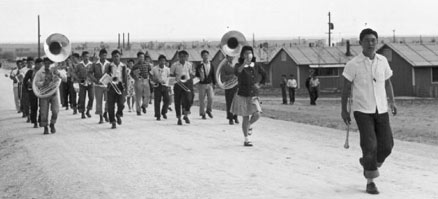
Then there’s the absolute pathos of the crime descriptions themselves. Manatee County is determined to hound even the lowest of evildoers who siphon gas, even from an outboard engine boat fuel tank.

Here are some sample crimes:

Angry Boys, 12 and 14, Arrested for Breaking Car Windows and Stealing Golf Clubs

Young Man Threatens Sister with Fire Poker, BB Gun, Throws CDs at Mom

Man Argues with Other Man Over Baseball Teams While Playing Golf

Bradenton Police Arrest Man for Burglary After He Entered Family Residence Where He’s Not Welcome

Woman Found Hiding in Closet in South Manatee County
(charged with breaking into an Unoccupied Dwelling)

Man Cuts Friend’s Hand in Argument Over Beer

Man Rented Out Home He Didn’t Own

Man Arrested for Threatening to Kill Woman and “Everyone Who Did This To Him”

Local Crime Watch Group Shuts Down Mini Pot Growing Operation
(two marijuana plants growing in a white pot.)

And there’s this item, which we reprint in full, with the name changed to protect the innocent until proven guilty:
Thief with Conscience Arrested After Burglary

According to a report from the Manatee County Sheriff’s Office, at about 10:30 p.m. on Tuesday, James Denton, 42, who lives at the Crown Mobile Home Park, broke into a friend’s mobile home and took a play station, camping roll, hair dryer and other miscellaneous items, the report said.

… Denton confessed to a deputy that he was trying to get in touch with the victim of the burglary to help him because Denton’s girlfriend had been arrested and he was trying to get money for her bail of $500, he told the deputy. That’s why he took the items from his friend’s home after he discovered his friend was not there.

Denton was arrested and charged with Burglary to an Unoccupied Dwelling.

The stolen items were all returned.

Denton remains in the Manatee County Jail on a $25,000 bail bond.

Petty bureaucrat resents being called… The Holocaust denials of Larry DeWitt

Internment camp for Japanese-Americans, Granada Relocation Center, Amache Colorado
In the face of Ward Churchill’s vindication in a Colorado court, and now hearing support for him by fellow academics, Wingnut Holocaust Deniers are rallying behind whichever colleague will grab their dunce baton. The latest denier is academic aspirant, Social Security Administration archivist Larry DeWitt, who’s been nursing a masters from the University of Maryland, Baltimore County campus. His master’s thesis was about little known SSA efforts to mitigate The Wartime Internments & Other “Restrictive Governmental Actions.”

Example: his caption under a photograph of quarters at the Manzanar relocation camp reads: “Figure 43: While these internees do indeed have a bare lightbulb overhead, their living conditions are not as primitive as the rhetoric of some historians may imply.”

DeWitt has been an Agency Historian for the SSA since 1995, in which capacity he cobbled a history of the department, with a view it appears, to lay a groundwork for its privatization. You can read more about DeWitt at larrydewitt.net, a website “created as part of coursework in the graduate program of the History Department at the University of Maryland Baltimore County (UMBC).”

But he calls it: A Miscellany of History, Philosophy and Public Policy: A portal to four websites containing the work of historian and public policy scholar Larry DeWitt.

Most recently, DeWitt assumes to be an authority on scholarship, opining on the History News Network website: Ward Churchill: He’s Baaack! Here’s his opening line: “Well, that embarrassment for the liberal academy—Ward Churchill—is back in the news again.”

A recent article for Coloquio: Revista Cultural was about Iraq: “Doing the right thing the wrong way.”

Are DeWitt’s writing unremarkable? Yes, but for a federal agency that has proven to be vulnerable to partisan attack, I think DeWitt’s positions are ominously charged. Here are some more articles:

“Howard Zinn: The Historian as Don Quixote,” HNN, 01/26/09

“The Future Social Security Debate,” Independent Voice , April/May 2008

“How Historians Can Help Frame the Next Social Security Debate,” HNN, 10/22/07

“It is Time to Impose Peace on the Middle East,” August 2006

“Should Historians Try to Rank President Bush’s Presidency?” HNN, 5/22/06

“A Progressive Argument for Overturning Roe,” October 2005

“It’s Not the Cows Who are Mad,” January 2004

Larry W. DeWitt of the Social Security Administration

Informal Denver bloggers convention

Incognito bloggers at Churchill Trial

Academic Press stringerDENVER- Blog wonks filled the courtroom today to witness the closing arguments of Freedom of Speech on trial. The twin Rocky Mountain News fiends were on hand, as were plenty of their blogosphere stringers. Can you help us put names to some of these faces? Confidential emails to editor@notmytribe will serve just fine. We have a most benevolent motive to shed light on nocturnal anti-socials.
Isn’t it awkward, that those in support of Ward Churchill, to draw the battle lines in terms of this trial, have no qualms being represented publically, but those opposed, even as they think themselves to represent the mainstream, are fiercely protective of their anonymity? How weirdly weak of them.

PART DEUX
Alright, it didn’t begin innocently. During the first courtroom break today, I was aiming my camera at the video media grotto, because my earlier photo had been taken with a cellphone, but also so that I might have a pretense to shoot wide and grab an image or two of some heretofore faceless note-takers, when a woman in the vicinity strode over to ask that I not take her picture.

I noted that I was sure her back had been turned, if even she was in the frame, but it mattered not, and she insisted that I show her the picture and then delete it in her presence. I acquiesced reluctantly, only because I had better things to do than argue with a “lawyer” about what right she had to ask me to do anything. But it didn’t end there. When I moved to intercept a friend with whom I urgently needed to speak before the break was over, the woman followed me, insisting that I prove that I hadn’t other exposures in which she was featured. She wouldn’t stop interrupting until I had found others, and deleted them, after which she walked away, her head turned back, facing me with a mock smile and wave, as if to verify that I wasn’t trying to take another picture of her back.

I thought the strange episode was over, until I reentered the courtroom to see the woman point me out to a companion, both of them seated in the front row reserved for the press, from which they alternated giving me cold stares and taking snapshots with a cellphone. WTF? At the finish of that session, the woman approached me again, wanting to apologize for the rude tact she’s taken. I accepted, but it seemed she also wanted to explain.

I had pressing contacts to pursue, but she followed me again, and grew vocally agitated anew, this time that I would not stop to hear her story. By the time we exited the courtroom, her harangue had grown embarrassing. I no longer had her image on my camera, she knew that, what claim did she have to detain me a moment further and impede what little courtroom social time remained?

When I finally turned, I had my camera in hand and began to take flash pictures as I asked her to please leave me alone. Instead she and her friend closed in, trying to block my lens, yelling until you could call it a melee and others were taking our picture, and Ward Churchill was emerging from the courtroom on the sidelines.

Ward Churchill trial

Now I had plenty of head shots, and shouted explanations –coordinated between the two friends– that the original objection was due to her sensitivity about her fat butt, and a fresh request that I show sympathy for her awful complexion. In the light of the crowd’s scrutiny I was able to walk away, but next they sought out the courtroom officer to request that I surrender my photographs. He wasn’t unprincipled enough to assert that I was obligated to do that, and he was satisfied that I wield my camera with more discretion lest I accidentally record an image of a juror, giving cause for a retrial. I accepted his advice, but the two shrews kept up their complaining to him until we left the courthouse for lunch.

her aggressive friendAfter lunch the strange woman kept to the media circles. I’d noticed a lanyard about her neck, but whatever ID hung upon it she’d stuffed into a front pocket, perhaps to conceal an identity, perhaps to pretend it was a press pass. Later in the courtroom I noticed her again, this time beyond the audience area, across the banister, chatting with two courtroom workers.
I’ve no idea her story. Does it strike you odd? Why would anyone presume their photograph was going to end up online. Now, with ample cause, in response to harassment.

Mimi Wesson has um big penis envy

CU Professor Marianne Wesson on her rideDENVER- And it’s a strange lot of penises she covets: there’s Bob Guccione, OJ Simpson, Michael Jackson, Bill Clinton and… Ward Churchill. In a private email in the midst of the CU firestorm over Churchill’s 9/11 essay, Wesson compared the “thoroughly unpleasant” Churchill to a pornographer, wife-batterer-killer, pedophile and cheat –as attorney David Lane reminded us in his closing arguments today. But it wasn’t the email that tipped me off, nor her fiction-writer persona promotional photo on the motorcycle. It was something which Marianne “My friends call me Mimi” did on her first day of testimony, early in the trial. When she left the witness stand, Wesson did not return to her seat, nor to the chairs located by the defense table for CU-aligned witnesses. During her break, Churchill-slayer Mimi Wesson chose the chair directly behind Ward Churchill.

Did anyone else remark on this? Even though Wesson stubbornly tried to project an adult impartiality about the case, as would befit the chairperson of a committee deciding another faculty member’s fate, off the stand Wesson couldn’t resist the urge which it appears drove her to solicit the committee chair position in the first place: to face “male celebrity wrongdoers” and take them down.

In the courtroom Wesson denied agreeing to the committee appointment only with the proviso that she be in charge, but her earlier videotaped deposition recorded otherwise. By her own account, Wesson had asked to be chairperson of the board selected to investigate Churchill. When Wesson blamed a possible stenographer’s error for the inconsistency, Attorney Lane pointed out that the courtroom had just heard her deposition with its own ears.

As a pup fiction writer, and a frequent law commentator on mainstream news programs, it’s clear Wesson welcomes the public eye. During the “All Churchill, all the time” mayhem, maybe she saw an opportunity to pretend to have incited the Churchill lynch mob.

Scrummy leaderI hope Wesson will be remembered for her testimony in this trial, in which the law professor demonstrated she was crafty enough to avoid admitting her prejudice, but couldn’t distance herself from the incriminating grandstanding she’d already done.
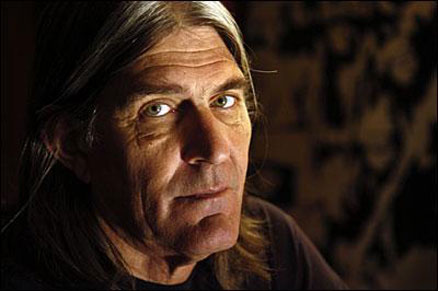
The “Wesson Committee” was shown in this trial to have been a hatchet team of academic hacks. Whose foray into Native America Ethnic Studies, purportedly to debunk Ward Churchill’s scolarship, resembled a visit of Ugly Americans to an Indian reservation. With Mimi the Emasculator wanting both to drive and ride shotgun.

Churchill v Churchill

ward-churchillClosing arguments will be heard this morning in the Ward Churchill trial and then the case goes to the (very young and earnest) jury.
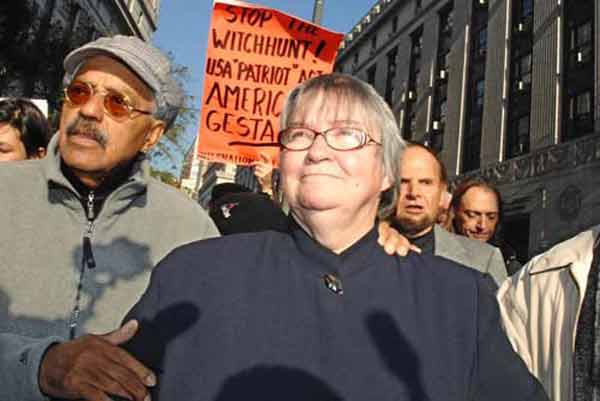
Winston Churchill said “history is written by the victors” which has been a central thesis in much of Ward Churchill’s work. It’s scrumptiously ironic that when Ward Churchill wins his case against CU, he’ll become a contributor to the “Master Narrative” he so despises. I’m guessing his chapter will be full of tales of brave Indiginists and murdering technocrats, white male regents and the soulless women who love them. Academia will be recast as the valiant protector of the ruling elite and the mighty slayer of free thought and open debate. The jury of young, multiracial unsophisticates will be consecrated as puissant defenders of justice. A few vindictive ex-wives and some illicit boys’ room puffing may be tossed in to add color.

When Ward Churchill prevails against the esteemed institution that called into question his academic integrity, his reputation as a scholar and a brilliant polemicist will be restored. More importantly, the master narrative will no longer be inscrutable.

The truth is incontrovertible, malice may attack it,
ignorance may deride it, but in the end; there it is.
— W. Churchill

Lynne Stewart visits Churchill Trial

Human rights activist Lynn Steward marches with husband Ralph PointerDENVER- For local media wonks who may have lost sight of the national significance of the Churchill v CU trial, the Denver courtroom was visited last week by radical luminary Lynne Stewart, who traveled from New York in a show of solidarity with Churchill’s fight against a systemic quashing of dissent now reaching into US academia.

Lynne and her husband Ralph Poynter scheduled their Denver visit to coincide with Professor Churchill’s testimony and the anticipated end of the 3-week trial. But arriving Wednesday and leaving Friday, they missed both. We met the couple on Thursday, the day’s session which was cut short by the closings due to severe weather.

As the lawyer to accused terrorist Sheikh Omar Abdel-Rahman, Stewart was convicted in 2005 of conspiracy and giving material aid to a terrorist. She was sentenced to 28 months in prison, but is free on bail while awaiting the outcome of an appeal.

Denver reporters missed Stewart’s visit in their seemingly predisposition to ignore the trial’s greater ramifications, except for the lip service they pay to the Right Winged media’s national obsession with Ward Churchill and their idea of blasphemy.

No matter how inflammatory Professor Churchill’s essay, the actions taken by CU to appease Colorado politicians, represent nothing less than the gagging of dissent. And in a university, where you’d hope all the voices would be dissenting. What good are fascist professors outside of PE and Machine shop? Is school any place for a humanities faculty member who is bigoted or conservative?

Personally, I resent idiocy over the airwaves, but in the schools it is just unforgivable.

The case has generated headlines across the country and spurred fiery debates about academic freedom versus academic integrity.

This is how the Boulder Daily Camera summarizes the Churchill case. While they admit to the trial’s notoriety, they frame the argument just as Churchill’s censors would approve. A false choice between freedom and integrity.

It’s not freedom versus integrity. It’s freedom and integrity versus the subjugation of both. While Professor Churchill and allies stand for freedom of speech, and integrity of character, the college is being shown, in league with the media, to represent neither.

America on trial, past if not present

DENVER- The Ward Churchill vs. CU trial continues today, featuring the much anticipated testimony of SCRUM hatchet chairwoman Mimi Wesson. But not before two dramatic points had already been made. First, that eugenics did play a part in the disenfranchisement of Native Americans, and second, that a witness brought from California by the plaintiff to talk about The American Council of Trustees and Alumni (ACTA) would not be allowed to testify. The defense attorney objected that a Psychology School Dean was insufficiently “expert” on ACTA, and the judge concurred. You’re going to have to look it up, and the Denver jury is not even going to hear about it.

The audience is more sparse for this sixth day, as the trial enters its second of an expected three weeks. Although the subject matter is getting meatier. Last week’s testimonies, cross examination, and one too many overruled objections prompted Churchill’s attorney David Lane to call for a mistrial.

Today’s witnesses, the third one a hostile witness, will address the allegations made against Ward Churchill by CU. While arguments about plagiarism will entail discussing the methods of scholarship, accusations about fabrication of history will mean debunking Ward, or questioning the Master Narrative.

The General Allotment Act of 1887 and “Eugenics”
ALLEGATION A made against Ward Churchill by CU is that he characterized a 1887 legislative act as being “for the first time a formal Eugenics Code.” CU maintains that this is a misrepresentation, mostly because the word is not mentioned anywhere in the act. Lucky for us, eugenics historian Dr. Lombardo is on hand to label that accusation “silly.”

Allegations
A. Misrepresentation General Allotment Act of 1887, calling it a “Eugenics Code”
B. Misre Indian Arts and Crafts Act, requires blood percentage
C. John Smith 1614, started small pox epidemic
D. Small pox epidemic in Ft Clark ND, from St Louis
E. Plagiarism, work from pamphlet DAMN THE DAMS
F. Plagiarism from Rebecca Robbins
G. Plagiarism, Fay Cohen alegation, she never

A-D from Prof Lavell
E came from RMN
F-G came from Prof Lavell.

SCRUM chairperson Mimi Wesson, who did not recuse herself, even after it was revealed in an email:

“I confess to being somewhat mystified by the variety of people this unpleasant (to say the least) individual has been able to enlist to defend him. I know people say it’s the principle, but we aren’t all out there defending Bob Guccioni’s first amendment rights, although God knows he has them.”

and

“The rallying around Churchill reminds me unhappily of the rallying around OJ Simpson and Bill Clinton and now Michael Jackson and other charismatic male celebrity wrongdoers.” (well okay, I don’t really know that jackson is an…

more in a bit!

Westword dumb-alecks are rooting for the separation of Churchill and state

Westword Print edition contents pageDENVER- This week’s cover of WESTWORD portends the upcoming Ward Churchill trial. The cover features Churchill and colleagues as unsavory caricatures of what looks like a circus of creeps. It points not to a cover story, but to a cartoon gatefold of equally squalid details, viewable online.

What you can’t see online is the editorial slant stuck into the contents page pointer. Two clever puns perhaps, betraying Westword’s miserable intent to disinform. Ward without end: academic freedom is a long bore. Separation of Churchill and state: apropos to nothing, maybe closer to the opposite, actually. The separation of education from the people.

The Westword jokes ride on a single unquestioned assumption, that Churchill is guilty of plagiarism. I think that’s an odd argument to pretend has already been proved. The University’s case is trumped up, and many academics have jumped to Churchill’s aid. Now that the charge faces a Denver courtroom, and not a stacked board of trustees, the baldfaced accusation will easily be refuted.

My bigger question is, from whom could Churchill have borrowed?!

Ward Churchill’s critics are wildly opposed to the findings of his scholarship. They’re angry that he points to genocide perpetrated against Native Americans, angry that he rails against the racism which undergirds American imperialism, and terrified that he completely exposed the government’s programs aimed at silencing dissent, COINTELPRO’s workings still lying unsprung on college campuses.

Ward’s opponents deny every of his conclusions, but they want to pretend he’s not alone? This is going to be like the naked emperor, accusing the little brave truth-teller of simply having mimicked his friends. Even true, the emperor is still naked.

Here’s another example of Westword’s humor. While every detail about Churchill seems framed to be a put-down, it looks like they also mean that to include the ethnicity of his wife.
Westword comic

I haven’t been paying attention to Denver’s alternative weekly. When did Westword become such douchebags?

Americans still resist being called Nazis

Ward ChurchillAmericans still resist being told they are Nazis. LOL. Ward Churchill’s “little Eichmann” reference was made in 2001. You would think subsequent events have shown that Churchill was barking up the right towers.

A context which Churchill clarified at his Thursday night appearance, was that his initial argument had been that using our own DoD’s criteria for what qualifies as a legitimate military target (command and control, communication, intelligence, etc), the WTC was a fully appropriate target for those fighting US subjugation.

Why Americans must defend Ward Churchill

Here’s the letter Bill Ayers published to Defend Ward Churchill.

Defend Ward Churchill

Dear Colleagues,

In Brecht’s play Galileo the great astronomer sets forth into a world dominated by a mighty church and an authoritarian power: “The cities are narrow and so are the brains,” he declares recklessly.

“Superstition and plague. But now the word is: since it is so, it does not remain so. For everything moves my friend.”

Intoxicated with his own radical discoveries, Galileo feels the earth shifting and finds himself propelled surprisingly toward revolution.

”It was always said that the stars were fastened to a crystal vault so they could not fall. . . Now we have taken heart and let them float in the air, without support… they are embarked on a great voyage—like us who are also without support and embarked on a great voyage.”

Here Galileo raises the stakes and risks taking on the establishment in the realm of its own authority, and it strikes back fiercely. Forced to renounce his life’s work under the exquisite pressure of the Inquisition he denounces what he knows to be true, and is welcomed back into the church and the ranks of the faithful, but exiled from humanity—by his own word. A former student confronts him in the street:

“Many on all sides followed you with their ears and their eyes believing that you stood, not only for a particular view of the movement of the stars, but even more for the liberty of teaching— in all fields. Not then for any particular thoughts, but for the right to think at all. Which is in dispute.”

The right to think at all, which is in dispute—-this is what the Ward Churchill affair finally comes to: The right to a mind of one’s own, the right to pursue an argument into uncharted spaces, the right to challenge the church and its orthodoxy in the public square. The right to think at all.

It’s no surprise that this outrage against Professor Churchill occurs at this particular moment— a time of empire resurrected and unapologetic, militarism proudly expanding and triumphant, war without justice and without end, white supremacy retrenched, basic rights and protections shredded, growing disparities between the haves and the have-nots, fear and superstition and the mobilization of scapegoating social formations based on bigotry and violence or the threats of violence, and on and on. There’s more of course, and this isn’t the only story, but this is a recognizable part of where we’re living, and a familiar place to anyone with even a casual understanding of history. Here the competing impulses and ideals that have always animated our country’s story are on full display: rights and liberty and the pursuit of human freedom on one side, domination and war and repression on the other. The trauma of contradictions that is America.

Ward Churchill is under a sustained, orchestrated, and determined attack because of his political beliefs and statements and activities, and nothing more. No one doubts his productivity or his accomplishments. But the attack on Churchill is neither isolated nor innocent— the high school history teacher on the west side of Chicago gets the message, and so does the English literature teacher in Detroit and the math teacher in an Oakland middle school: be careful what you say; stay close to the official story; stick to the authorized text. If someone of Ward Churchill’s stature and standing for so many years at the University of Colorado can suffer this kind of campaign, what chance do I have?

Every committee, every investigation, every report plays out under a shadow of the star chamber; everyone must choose who to be and how to act in response. For this reason I support Ward Churchill unequivocally, unapologetically, whole-heartedly. I urge my colleagues and my students and everyone who values education as a grand enterprise geared toward enlightenment and liberation to speak out forcefully and fearlessly now on behalf of the liberty of teaching and learning, on behalf of the right to think at all.

Sincerely,
William Ayers
Distinguished Professor of Education and Senior University Scholar
University of Illinois at Chicago
billayers.org