With no solution for America’s economic woes, Obama steers the country towards yet more Resource Wars

troops-protect-oil-supplyBarack Obama is playing a giant con game with the American people, as he gives away tax monies right, left, and center without any ability to really solve America’s economic woes by the framework constructed through his giveaways. At the center of this fraud is his camouflaging of the entire military industrial governmental complex’s constant appetite for yet more Pentagon based welfare. He’s pouring more troops into Afghanistan, maintaining US military presence in Iraq, and upholding the use of torture behind the pretense (GWOT) of waging a war against non US State or Israeli State Terrorism. Why?

The US government is simply engaged in a gigantic geopolitical contest, better thought of as economic warfare, to control the world’s declining natural resource base. Barack Obama is now the US Commander in Chief in this war, and he is not about to end it. He is no new thinker for the US ruling elites in their war games.

Meanwhile, the US government of Obama is churning out new debt like no end, but there will be an end and it will not look pretty to those who will suffer this latest world capitalist economic collapse. There is no current US government stimulus that can actually change the overproduction and excessive world stock piles of goods that has occurred. People will get laid off, and with normal capitalist market operations as before and now, they will in turn add to the problem of overproduction and declining purchasing power to get those warehoused goods moving out.

War though can destroy economies, nations, and peoples. It can change the entire picture when the destruction really gets going at full speed. Jobs then will get created…. but they will get just get created the hard way. Obama is steering the country, and in fact the entire world, toward yet more Resource Warfare. He is just plain bad news, as the entire US liberal and Left is just plain left flat footed in being The Reply that is so needed.

Obama’s coverups

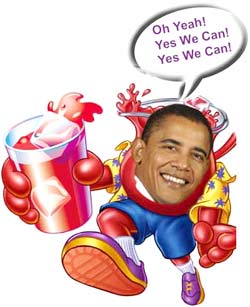
obama koolaidObama is covering up for George Bush’s Administration use of torture as policy. He wants to have it both ways, first claiming that he is changing policy, then in engaging in the old policies of ‘rendition’ and coverup of torture of POWs held by the US military. But there is yet another coverup underway, and that is how Obama is covering up for George Bush’s illegal support for the illegal actions of Israel in Gaza and elsewhere (remember Lebanon?). He may want to repeat the same under his own Administration? From MSNBC:
Obama administration defending Bush secrets.

You see, Obama’s Administration is all about coverups and trying to put a new face on the same old policies of the Republican Party, whether it be with his domestic or his foreign policies. Pretending to leave Iraq yet staying there. Pretending to stop US government made torture, yet continuing to engage in all the activities that use it (occupations of Afghanistan, attacks on Pakistan, continued worship of the military-industrial complex’s God GWOT). Obama is clearly one of the most duplicitous presidents the US has ever had. He is continuing the Federal Government give away’s to the corporate world, too.

And Number One on Obama’s coverup foreign agenda is continued coverup of what the Israeli game plan is all about, simply because it is the US government game plan also. Obama is continuing Cheney’s and the neocon’s program of trying to restructure the entire Middle East into a more compliant region for continued US domination and control of the peoples and the natural resources of the region. Oil is still the name of the game and Israel is still the US bulldog enforcer.

Obama needs to cover for Israel’s crimes since he plans to use their crimes to help further the US government’s own crimes. The US under Barack Obama is firmly on the side of Israel’s ethnic cleansing program in both Israel proper and in the Occupied Territories, and these are Obama’s coverups of the Bush Administration as much as how he is trying to coverup for Bush by keeping torture records secret, keeping executive privilege intact, and so on. There is no change beyond the superficial change of faces and parties in the White House.

Military-industrial war games shall continue and Barack will now direct them. Just don’t buy these Obama coverups if you want real change to ever occur? Don’t let him coverup for the use of torture nor the use of Israel’s military machine.

Four conflicted images of Costa Rica

Beware of dogCARATE, COSTA RICA- Even on the less beaten paths of the Osa Peninsula, Costa Rican residences were preoccupied with security. Ticos, as locals call themselves, were uniformly welcoming, but every property was protected by locked gates.

The Bienvenidos flier you are handed at immigration includes among its cautions: “If you are lost and in need of checking your map, look for a public and safe place to do it, or recur to the police authorities to help.” and “Avoid stopping when a stranger asks you for a ride.”

It is difficult to visualize a Costa Rica as it used to be, completely forested. Today ranch lands abut rain forest. Both look “natural.” The reason perhaps that eco-tourism has adopted the mantra “biodiversity.”
costa-rica-cattle-ranching

Skinny Costa Rican cows are grown for the North American fast food market. Their beef does not meet anyone’s standard for steak, but mixed 50/50 with the fat byproduct of American Holsteins, the result passes for fast food hamburger patties.

Clearing the land has the benefit of yielding timber for construction. Jungle preservation brings more eco-tourism to Costa Rica. Here the conflicting land uses meet. On the edge of the road past a timber mill, reads a sign advertising CANOPY TOURS.
costa-rica-canopy-tours

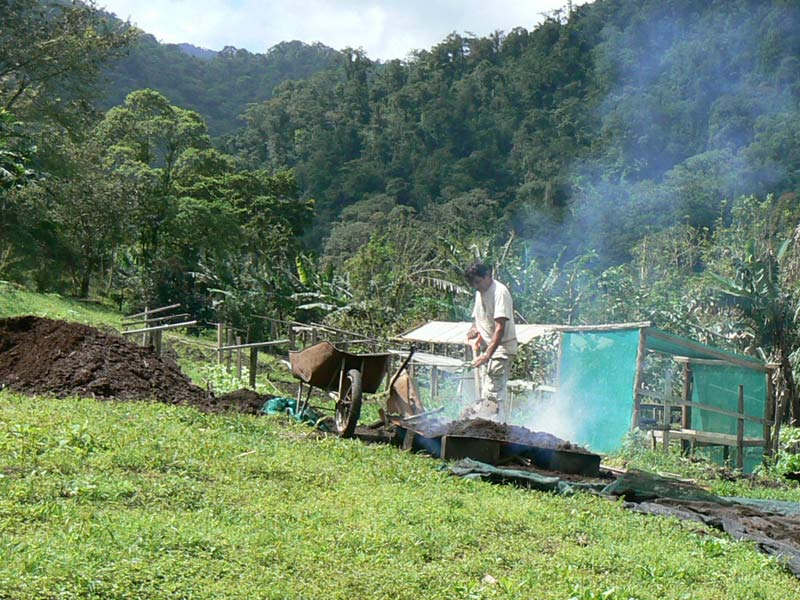
In the lee of Vulcan Arenal, Rancho Margot is a model of sustainable farming. Its gardeners are going to great lengths to try to meet all their lodge needs in-house. Some plants such as tomatoes, require a less tropical climate and so must be grown in green houses, where also they require dry soil. When we asked our guide what this ranch worker was doing, his answer was: “He’s trying to do the impossible.” He was heating dirt over a fire, careful to dry it without cooking it.
rancho-margot-arenal-vulcano

National Geographic is a nature pic zoo

Upsala Glacier Chile in retreat
January’s National Geographic featured an article about Charles Darwin. Juxtaposed against excerpts from Darwin’s diary on the Beagle, were the usual photographs of nature at its most vivid. But an image of a glacier, purporting to match Darwin’s awed description, left me slack- jawed with contrary impression. We’ve all been treated to then and now pictograms of retreating glaciers, so the National Geographic’s usual reverse illusionist, nature-isn’t-vanishing-act, wasn’t going to work for this pastoral scene. I’m looking straight through the glossy NATURE industry, and it’s nothing but a virtual zoo.

You might say the world of nature documentaries keeps more to the spirit of the early collector-adventurers, who shot and stuffed their specimens, in the name of documenting their existence. Certainly the photographers of today are capturing the living images of soon to be gone phenomena. Perhaps it’s more appropriate to regard their nature images as exhibits of Natural History.

Except that Museum goers know that what they are looking at is dead. Nature program viewers are given no such insight. And need they, really? If the closest that the recliner-set get to the Pacific Ocean is their HD flat screen TV, what does it matter if the Pacific is full of plastic instead of fish? Nature-appreciation wise, the eyes of the climate-controlled majority dictate its value.

The illusion which nature programs create is of a living Earth, susceptible to cycles, or whatever excuse they present for why you are hearing reports of coral bleaching while enjoying high saturation images of vibrant, fully vital, reefs. You are shown things alive, and so you believe it lives. That’s where this glossy facade is a lot more like a zoo.

Zoos are criticized for showing nature out of context. Even as the best zoo settings approach the theatrical stages of natural history dioramas, they still present an inert being. The zoo animal is not searching for food, fending off predators, or jockeying for a mate. The zoo attraction might almost be preserved in formaldehyde, for all it teaches about nature, and mankind’s relation to his origin.

Zoos, like domestic animals neutered or spayed, like doe-eyed Disney renditions of circle-of-life citizen animals, teach an antiseptic version of wild life, where man might deduce that his own life’s purpose is but a few years spent pinned like a butterfly adjacent thousands and millions more.

Camera lens filters enhance reality, camera lenses compress and direct it. That much we already knew.

Nature programs and nature photography present life as a spectacle, and seem at first glance to highlight every minutia for our increased understanding. But shown out of the context of the Earth’s present difficulties, the images inform less than they distort.

Bishop Williamson and Auschwitz 1.0

Arbeit Macht Frei
I am curious as to why a Roman Catholic bishop would risk a second excommunication over the historic particulars of the Holocaust. Bishop Richard Williamson is being labeled a “Holocaust Denier” because he questions the extent, and mechanism, of the official version of the Holocaust. Because Williamson is also criticized for his skepticism about the official 9/11 narrative, and for his praise for the Unabomber’s manifesto, I want to take a closer look, and wonder what is he reading?

Bishop Richard WilliamsonHere’s what the outspoken Williamson told Swedish SVT in a November 2008 interview, as transcribed by the BBC:

“I believe that the historical evidence is strongly against, is hugely against, six million Jews having been deliberately gassed in gas chambers as a deliberate policy of Adolf Hitler… I believe there were no gas chambers [during World War II]”

First, I’m compelled to pose a naive question: If we can all agree that Jews died in huge numbers by incomparable horrors at the hands of the Nazis, would it matter what the exact death toll was, or which killing method predominated? Why? What is the need for laws to restrict historians who are trying to reconstruct the record from emerging facts? Must preemptive “anti-defamation” laws mandate that historians stick to the official “untold” number and “indescribable” evil?

Even if we postulate, albeit cynically, that Holocaust reverence is critical to upholding American public support for Israel‘s “right to exist” in the Middle East, how could a revision of the casualties, in any case a horrific magnitude, make an difference?

Millions of Jews fell victim to the Third Reich. No one is denying it, and historical revision is not trying to bring the Holocaust victims back to life. Holocaust Remembrance of the Jewish victims has remained a political priority around the world, advocating commemoration in education, literature, civic life, and pop culture. Why then, an aversion to scrutiny?

Last week a fellow Society of St. Pius X member, Rev. Floriano Abrahamowicz was ejected from SSPX for coming to Williamson’s and the Pope’s defense.

While the usual politicians and Jewish community leaders are voicing their indignation, can we ask, are the Bishop’s beliefs really at odds with accepted orthodoxy? The media will reiterate that the Six Million figure has always been beyond dispute. All the while, official scholarship has been recording otherwise. In Germany, revisionist historians are jailed for Holocaust Denial. Yet bit by bit, mainstream historians have been able to publish divergent theses which withstand legal refutation.

For the sake of argument, let’s dismiss all the “deniers” as kooks, and look only at the traditionally vetted voices.

On the subject of Auschwitz, where four million of the total six million Jews were believed to have perished, Der Spiegel managing editor Fritjof Meyer a continued critic of revisionism, summarized in Osteuropa 52, 5/2002, p. 631:

“In 1945, the Soviet Investigatory Commission numbered four million victims in the National Socialist work and extermination camp of Auschwitz-Birkenau, a product of war propaganda. Under coercion, camp Commandant Höß named three million and recanted. Up until now, how many people actually fell victim to this singular mass murder could only be estimated. The first Holocaust historian, Gerald Reitlinger, assumed one million, while the latest state of research estimated it to be several hundred thousand fewer.”

Naturally even Meyer touched off a firestorm by integrating the sum of official scholarship into the big picture. The difficulties which historians face in reaching variant findings are explained by another mainstream scholar, noted Hitler historian Dr. Werner Maser, Professor for History and International Law, Munich University, Falsification, Legend, and Truth about Hitler and Stalin, Olzog, Munich 2004, on p.332

“To be sure, […] the extermination of the Jews is considered to be one of the best researched aspects of contemporary history […], but that is not the case. […] Indeed, whole regions remain as much terra incognita as ever, […] German historians exhibit timidity about taking on the horrible issue and possibly bringing to light details that do not agree with the accounts which have multiplied for a very long time.”

And about the deterrence of the Holocaust Denial laws:

“The sword of Damocles hovers over historians (not only in Germany) who portray the controversial phases of history as they ‘actually were’ – and identify the frequently even officially codified ideological specifications as falsifications of history.”

The question of the gas chambers is raised by the absence of evidence. According to major Holocaust authority Dr. Arno J. Mayer, Professor of Modern Jewish History at Princeton University, in Why Did the Heavens Not Darken? The “Final Solution” in History, Pantheon, New York 1990, p. 362:

“Sources for the study of the gas chambers are at once rare and unreliable. Even though Hitler and the Nazis made no secret of their war on the Jews, the SS operatives dutifully eliminated all traces of their murderous activities and instruments. No written orders for gassing have turned up thus far. The SS not only destroyed most camp records, which were in any case incomplete, but also razed nearly all killing and crematory installations well before the arrival of Soviet troops. Likewise, care was taken to dispose of the bones and ashes of the victims.”

Justifiably, scholars are skeptical that the complete absence of evidence should be taken as proof of its existence and total suppression. Some camps were overrun before the Germans could destroy any part of them. Mayer continues, p. 163:

“In the meantime, there is no denying the many contradictions, ambiguities, and errors in the existing sources. […] Much the same is true of for the conflicting estimates and extrapolations of the number of victims, since there are no reliable statistics to work with. […] Both radical skepticism and rigid dogmatism about the exact processes of extermination and the exact number of victims are the bane of sound historical interpretation”

In light of the before-sited Wannsee Conference documents now being considered post-war forgeries, Mayer explains, p 163:

“To date there is no certainty about who gave the order, and when, to install the gas chambers used for the murder of Jews at Auschwitz. As no written command has been located, there is a strong presumption that the order was issued and received orally”

With no written record of a “Final Solution,” and the implausibility of a completely vaporized paper trail, mainstream scholars have had to improvise an explanation for how an extermination directive was disseminated. University of Vermont Professor Raul Hilberg, member of US Holocaust Memorial Council, author of The Destruction of the European Jews, (Holmes & Meyer, New York 1985), was quoted in Newsday, Feb. 23, 1983:

“But what began in 1941 was a process of destruction [of the Jews] not planned in advance, not organized centrally by any agency. There was no blueprint and there was no budget for destructive measures. They [these measures] were taken step by step, one step at a time. Thus came about not so much a plan being carried out, but an incredible meeting of minds, a consensus mind reading by a far-flung [German] bureaucracy.”

Hilberg himself ran into trouble with the authorized version, because he refused to corroborate tales of Jewish rebellion against their Nazi jailers. His group-think theory extended to the Jews themselves, putting emphasis on their acceptance of being exploited as war industry slave labor.

“I had to examine the Jewish tradition of trusting God, princes, laws and contracts […] Ultimately I had to ponder the Jewish calculation that the persecutor would not destroy what he could economically exploit. It was precisely this Jewish strategy that dictated accommodation and precluded resistance.”

That’s where the extermination camp thesis becomes less probable than the work camp. Perhaps the Jews didn’t resist because they were being worked, not gassed. Worked to death, of course, but dying as more a consequence of wartime Germany’s depleting resources, than from a deliberate eradication effort. Evidence is plentiful of the work camps and dead bodies.

And isn’t that the answer to my innocent question? To doubt whether the murder weapon was a pistol or a knife, means calling into question the crime entirely. That’s why revisionists are decried for being “deniers.” While we presume the distinction makes little difference, because clearly a murder was committed regardless, the prosecutor constructing the accusations wants to prove his motive and not another.

There are many details about which historians have begun to disagree. Many of the witness accounts have been proven to be unreliable. Even Elie Wiesel was compelled to reclassified his memoir as a novel. The Holocaust as later generations have come to know it was not as the WWII generation saw it. Even those soldiers who encountered the atrocities themselves.

Professor Hilberg recounts studying at Brooklyn College under Hans Rosenberg, a fellow Jew. Even in the wake of the haunting newsreels of the concentration camps, Hilberg records that Rosenberg remarked in a 1948 lecture:

“The most wicked atrocities perpetrated on a civilian population in modern times occurred during the Napoleonic occupation of Spain.”

I don’t really subscribe to the idea that the Holocaust is diminished by learning that the WWII concentration camp victims died from systemic and despotic abuse, starvation and exhaustion. But those holding the secrets believe that the concept of the Holocaust being the greatest evil perpetrated upon mankind falls apart if cracks are allowed to form in the accepted narrative.

Perhaps the German population, and for that matter, the Catholic Church, did not intercede more vigorously because there was no premeditated extermination program. We can say now that German reinforcements being sent to the Russian Front knew they were being sent to their deaths, but this is only with hindsight.

Is this Bishop Williamson’s interest in revisiting the Holocaust, to rehabilitate the church’s role? I doubt it. The Catholic church cannot escape culpability for its instrumental role in support of the Nazis, guilty of ware crimes and crimes against humanity, initiating a war of aggression being the chief charge at the Nuremberg Trials for example, before even taking into account the concentration camps.

Perhaps the American industrialists and bankers who knew about the camps did not interfere because they understood the camps were for the supply of slave labor. Isn’t this a key enigma of the Holocaust, as we grapple with it? How could we have not known? How could this have been allowed to happen?

Perhaps the signs above the camp gates which read ARBEIT MACHT FREI, work earns freedom, meant what they said. They might have been inescapable ironies, but not the cruel mockery of which we accuse the Germans.

Why would factories like IG Farben and Krupp want to liquidate their valuable cheap workforce? Why would camps meant to exterminate have infirmaries? Why would the wardens treat inmates for illness while simultaneously sending incoming transports to directly to ovens?

Today the popular conscience has been saturated with the ghostly images of the concentration camp victims. How to explain the emaciated inmates discovered by the liberating troops, many of whom could not be saved from dying, even under the administration of the liberators? Dr. Arno J. Mayer concedes this explanation, p. 365

“[…] the whole of Auschwitz was intermittently in the grip of a devastating typhus epidemic. The result was an unspeakable death rate. […] There is a distinction between dying from ‘natural’ or ‘normal’ causes and being killed by shooting, hanging, phenol injection, or gassing. […] from 1942 to 1945, certainly at Auschwitz, but probably overall, more Jews were killed by so-called ‘natural’ causes than by ‘unnatural’ ones.”

This is not to diminish the crime of the Holocaust one iota. The German people, the industrialists, the church, the anti-Semites, are far more guilty because the crime against the Jews was banal and common. It was not devised by agents of unspeakable evil.

Other aspiring genocidal nations and peoples cannot excuse their acts because their methods fall demonstrably below the mythic proportions of the Holocaust.

ig-farben-auschwitz

Does Dope Fiend Michael Phelps stand alone?

Do you think Michael Phelps should be suspended, and lose commercial endorsements, because a photograph surfaces of America’s winningest Olympic athlete with America’s most unfairly maligned recreational drug?

How antiseptic can corporate media expect to paint its role models? TV land can use cosmetics, hairspray and vivid primary colors to shut out the real world, but indignation about the image of a marijuana bong repudiates plenty of very ordinary sensibilities. It demonizes a broad cultural element that has been leading the charge, actually, against this nation’s disastrous “War on Drugs.”

Do we allow these intolerant, no doubt hypocritical, prudes to marginalize pot smokers? I’m just dumb enough to think it’s time to flood the web with our own bong snapshots!

Next the klieg-lit culture makers are going to insist their washed out features are natural and that it’s an aberration to have freckles.

Fell not one more forest tree!

old-growth-forests-1620-1990
OLD GROWTH FORESTS. Sure we need lumber but we now need forests yet more. Two hundred years of industrial exploitation of the planet and now most of the forests are gone, and what remains are scraggly, sickly remnants that are not supportive of any remaining natural wildlife. Still, the slaughterhouse ‘forestry’ approach continues to bulldoze them down. The goal?

Well there is no goal, no sanity, no intelligence in all this. The only desire is that the forestry companies be allowed to do their final cash out on the Nature that hangs on. Ecologist GEORGE WUERTHNER in his comments Who Will Speak for the Forests? elaborates on this sad situation and the blindness of many who continue to advocate for what they consider to be scientific approach to the remaining pockets of semi Nature that still exist.

There are alternatives since very little actually has to be built out of wood. That hard wood floor I now walk on could have been built out of other materials. That house could have used something other than wood for its structure. That toilet paper you (and i guess me too) wipe your ass on could have come from something other than wood products. That idiotic newspaper you have in your hands, just didn’t need to be so full of utter trash and so over sized. It takes a personal commitment on your part to not support an economic system built on the total wasting of Nature for the System to be changed. Where is that commitment?

MLK: Why I am Opposed to the War

Martin Luther King Jr“You’re too arrogant! And if you don’t change your ways, I will rise up and break the backbone of your power, and I’ll place it in the hands of a nation that doesn’t even know my name. Be still and know that I’m God.”
 
Sermon at the Ebenezer Baptist Church on April 30, 1967. Full text below.

The sermon which I am preaching this morning in a sense is not the usual kind of sermon, but it is a sermon and an important subject, nevertheless, because the issue that I will be discussing today is one of the most controversial issues confronting our nation. I’m using as a subject from which to preach,

“Why I Am Opposed to the War in Vietnam.”

Now, let me make it clear in the beginning, that I see this war as an unjust, evil, and futile war. I preach to you today on the war in Vietnam because my conscience leaves me with no other choice. The time has come for America to hear the truth about this tragic war. In international conflicts, the truth is hard to come by because most nations are deceived about themselves. Rationalizations and the incessant search for scapegoats are the psychological cataracts that blind us to our sins. But the day has passed for superficial patriotism. He who lives with untruth lives in spiritual slavery. Freedom is still the bonus we receive for knowing the truth. “Ye shall know the truth,” says Jesus, “and the truth shall set you free.” Now, I’ve chosen to preach about the war in Vietnam because I agree with Dante, that the hottest places in hell are reserved for those who in a period of moral crisis maintain their neutrality. There comes a time when silence becomes betrayal.

The truth of these words is beyond doubt, but the mission to which they call us is a most difficult one. Even when pressed by the demands of inner truth, men do not easily assume the task of opposing their government’s policy, especially in time of war. Nor does the human spirit move without great difficulty against all the apathy of conformist thought within one’s own bosom and in the surrounding world. Moreover, when the issues at hand seem as perplexing, as they often do in the case of this dreadful conflict, we’re always on the verge of being mesmerized by uncertainty. But we must move on. Some of us who have already begun to break the silence of the night have found that the calling to speak is often a vocation of agony. But we must speak. We must speak with all the humility that is appropriate to our limited vision, but we must speak. And we must rejoice as well, for in all our history there has never been such a monumental dissent during a war, by the American people.

Polls reveal that almost fifteen million Americans explicitly oppose the war in Vietnam. Additional millions cannot bring themselves around to support it. And even those millions who do support the war [are] half-hearted, confused, and doubt-ridden. This reveals that millions have chosen to move beyond the prophesying of smooth patriotism, to the high grounds of firm dissent, based upon the mandates of conscience and the reading of history. Now, of course, one of the difficulties in speaking out today grows the fact that there are those who are seeking to equate dissent with disloyalty. It’s a dark day in our nation when high-level authorities will seek to use every method to silence dissent. But something is happening, and people are not going to be silenced. The truth must be told, and I say that those who are seeking to make it appear that anyone who opposes the war in Vietnam is a fool or a traitor or an enemy of our soldiers is a person that has taken a stand against the best in our tradition.

Yes, we must stand, and we must speak. [tape skip]…have moved to break the betrayal of my own silences and to speak from the burnings of my own heart, as I have called for radical departures from the destruction of Vietnam. Many persons have questioned me about the wisdom of my path. At the heart of their concerns, this query has often loomed large and loud:

“Why are you speaking about the war, Dr. King? Why are you joining the voices of dissent?” Peace and civil rights don’t mix, they say.

And so this morning, I speak to you on this issue, because I am determined to take the Gospel seriously. And I come this morning to my pulpit to make a passionate plea to my beloved nation.

This sermon is not addressed to Hanoi, or to the National Liberation Front. It is not addressed to China or to Russia. Nor is it an attempt to overlook the ambiguity of the total situation and the need for a collective solution to the tragedy of Vietnam. Nor is it an attempt to make North Vietnam or the National Liberation Front paragons of virtue, nor to overlook the role they must play in a successful resolution of the problem. This morning, however, I wish not to speak with Hanoi and the National Liberation Front, but rather to my fellow Americans, who bear the greatest responsibility, and entered a conflict that has exacted a heavy price on both continents.

Now, since I am a preacher by calling, I suppose it is not surprising that I have seven major reasons for bringing Vietnam into the field of my moral vision. There is…a very obvious and almost facile connection between the war in Vietnam and the struggle I and others have been waging in America. A few years ago there was a shining moment in that struggle. It seemed that there was a real promise of hope for the poor, both black and white, through the Poverty Program. There were experiments, hopes, and new beginnings. Then came the build-up in Vietnam. And I watched the program broken as if it was some idle political plaything of a society gone mad on war. And I knew that America would never invest the necessary funds or energies in rehabilitation of its poor so long as adventures like Vietnam continued to draw men and skills and money, like some demonic, destructive suction tube. And you may not know it, my friends, but it is estimated that we spend $500,000 to kill each enemy soldier, while we spend only fifty-three dollars for each person classified as poor, and much of that fifty-three dollars goes for salaries to people that are not poor. So I was increasingly compelled to see the war as an enemy of the poor, and attack it as such.

Perhaps the more tragic recognition of reality took place when it became clear to me that the war was doing far more than devastating the hope of the poor at home. It was sending their sons, and their brothers, and their husbands to fight and die in extraordinarily high proportion relative to the rest of the population. We were taking the black young men who had been crippled by society and sending them eight thousand miles away to guarantee liberties in Southeast Asia which they had not found in Southwest Georgia and East Harlem. So we have been repeatedly faced with a cruel irony of watching Negro and white boys on TV screens as they kill and die together for a nation that has been unable to seat them together in the same school room. So we watch them in brutal solidarity, burning the huts of a poor village. But we realize that they would hardly live on the same block in Chicago or Atlanta. Now, I could not be silent in the face of such cruel manipulation of the poor.

My third reason moves to an even deeper level of awareness, for it grows out of my experience in the ghettos of the North over the last three years–especially the last three summers. As I have walked among the desperate, rejected, and angry young men, I have told them that Molotov cocktails and rifles would not solve their problems. I have tried to offer them my deepest compassion while maintaining my conviction that social change comes most meaningfully through non-violent action; for they ask and write me, “So what about Vietnam?” They ask if our nation wasn’t using massive doses of violence to solve its problems to bring about the changes it wanted.

Their questions hit home, and I knew that I could never again raise my voice against the violence of the oppressed in the ghettos without first having spoken clearly to the greatest purveyor of violence in the world today: my own government. For the sake of those boys, for the sake of this government, for the sake of the hundreds of thousands trembling under our violence I cannot be silent.

Been a lot of applauding over the last few years. They applauded our total movement; they’ve applauded me. America and most of its newspapers applauded me in Montgomery. And I stood before thousands of Negroes getting ready to riot when my home was bombed and said, we can’t do it this way. They applauded us in the sit-in movement–we non-violently decided to sit in at lunch counters. The applauded us on the Freedom Rides when we accepted blows without retaliation. They praised us in Albany and Birmingham and Selma, Alabama. Oh, the press was so noble in its applause, and so noble in its praise when I was saying, Be non-violent toward Bull Connor; when I was saying, Be non-violent toward [Selma, Alabama segregationist sheriff] Jim Clark.

There’s something strangely inconsistent about a nation and a press that will praise you when you say, Be non-violent toward Jim Clark, but will curse and damn you when you say, “Be non-violent toward little brown Vietnamese children. There’s something wrong with that press!

As if the weight of such a commitment to the life and health of America were not enough, another burden of responsibility was placed upon me in 1964. And I cannot forget that the Nobel Peace Prize was not just something taking place, but it was a commission–a commission to work harder than I had ever worked before for the brotherhood of Man. This is a calling that takes me beyond national allegiances.

But even if it were not present, I would yet have to live with the meaning of my commitment to the ministry of Jesus Christ. To me, the relationship of this ministry to the making of peace is so obvious that I sometimes marvel at those who ask me why I am speaking against the war. Could it be that they do not know that the Good News was meant for all men, for communists and capitalists, for their children and ours, for black and white, for revolutionary and conservative? Have they forgotten that my ministry is in obedience to the One who loved His enemies so fully that he died for them? What, then, can I say to the Vietcong, or to Castro, or to Mao, as a faithful minister to Jesus Christ? Can I threaten them with death, or must I not share with them my life?

Finally, I must be true to my conviction that I share with all men the calling to be the son of the Living God. Beyond the calling of race or nation or creed is this vocation of son-ship and brotherhood. And because I believe that the Father is deeply concerned, especially for His suffering and helpless and outcast children, I come today to speak for them.

And as I ponder the madness of Vietnam and search within myself for ways to understand and respond in compassion, my mind goes constantly to the people of that peninsula. I speak not now of the soldiers of each side, not of the military government of Saigon, but simply of the people who have been under the curse of war for almost three continuous decades now. I think of them, too, because it is clear to me that there will be no meaningful solution until some attempt is made to know these people and hear their broken cries.

Now, let me tell you the truth about it. They must see Americans as strange liberators.

Do you realize that the Vietnamese people proclaimed their own independence in 1945 after a combined French and Japanese occupation? And incidentally, this was before the Communist revolution in China. They were led by Ho Chi Minh. And this is a little-known fact, and these people declared themselves independent in 1945. They quoted our Declaration of Independence in their document of freedom, and yet our government refused to recognize them. President Truman said they were not ready for independence. So we fell victim as a nation at that time of the same deadly arrogance that has poisoned the international situation for all of these years. France then set out to reconquer its former colony. And they fought eight long, hard, brutal years trying to re-conquer Vietnam. You know who helped France? It was the United States of America. It came to the point that we were meeting more than eighty percent of the war costs. And even when France started despairing of its reckless action, we did not. And in 1954, a conference was called at Geneva, and an agreement was reached, because France had been defeated at Dien Bien Phu.

But even after that, and after the Geneva Accord, we did not stop. We must face the sad fact that our government sought, in a real sense, to sabotage the Geneva Accord. Well, after the French were defeated, it looked as if independence and land reform would come through the Geneva agreement. But instead the United States came and started supporting a man named Diem who turned out to be one of the most ruthless dictators in the history of the world. He set out to silence all opposition. People were brutally murdered because they raised their voices against the brutal policies of Diem. And the peasants watched and cringed as Diem ruthlessly rooted out all opposition. The peasants watched as all this was presided over by United States influence and by increasing numbers of United States troops who came to help quell the insurgency that Diem’s methods had aroused. When Diem was overthrown, they may have been happy, but the long line of military dictatorships seemed to offer no real change, especially in terms of their need for land and peace. And who are we supporting in Vietnam today? It’s a man by the name of general Ky [Air Vice Marshal Nguyen Cao Ky] who fought with the French against his own people, and who said on one occasion that the greatest hero of his life is Hitler. This is who we are supporting in Vietnam today. Oh, our government and the press generally won’t tell us these things, but God told me to tell you this morning. The truth must be told.

The only change came from America as we increased our troop commitments in support of governments which were singularly corrupt, inept, and without popular support and all the while the people read our leaflets and received regular promises of peace and democracy and land reform. Now they languish under our bombs and consider us, not their fellow Vietnamese, the real enemy. They move sadly and apathetically as we herd them off the land of their fathers into concentration camps, where minimal social needs are rarely met. They know they must move or be destroyed by our bombs. So they go, primarily women, and children and the aged. They watch as we poison their water, as we kill a million acres of their crops. They must weep as the bulldozers roar through their areas preparing to destroy the precious trees. They wander into the towns and see thousands of thousands of the children, homeless, without clothes, running in packs on the streets like animals. They see the children degraded by our soldiers as they beg for food. They see the children selling their sisters to our soldiers, soliciting for their mothers. We have destroyed their two most cherished institutions: the family and the village. We have destroyed their land and their crops. We have cooperated in the crushing of the nation’s only noncommunist revolutionary political force, the United Buddhist Church. This is a role our nation has taken, the role of those who make peaceful revolutions impossible but refusing to give up the privileges and the pleasures that comes from the immense profits of overseas investments. I’m convinced that if we are to get on the right side of the world revolution, we as a nation must undergo a radical revolution of values. We must rapidly begin the shift from a thing-oriented society to a person-oriented society. When machines and computers, profit motives and property rights are considered more important than people, the giant triplets of racism, militarism and economic exploitation are incapable of being conquered.

A true revolution of values will soon cause us to question the fairness and justice of many of our present policies. On the one hand, we are called to play the Good Samaritan on life’s roadside, but that will be only an initial act. One day we must come to see that the whole Jericho Road must be changed so that men and women will not be constantly beaten and robbed as they make their journey on life’s highway. True compassion is more than flinging a coin to a beggar. A true revolution of values will soon look uneasily on the glaring contrast of poverty and wealth with righteous indignation. It will look across the seas and see individual capitalists of the West investing huge sums of money in Asia, Africa, and South America, only to take the profits out with no concern for the social betterment of the countries, and say, “This is not just.” It will look at our alliance with the landed gentry of Latin America and say, “This is not just.” The Western arrogance of feeling that it has everything to teach others and nothing to learn from them is not just. A true revolution of values will lay hands on the world order and say of war, “This way of settling differences is not just.” This business of burning human beings with napalm, of filling our nation’s homes with orphans and widows, of injecting poisonous drugs of hate into the veins of peoples normally humane, of sending men home from dark and bloody battlefields physically handicapped and psychologically deranged, cannot be reconciled with wisdom, justice, and love. A nation that continues year after year to spend more money on military defense than on programs of social uplift is approaching spiritual death.

Oh, my friends, if there is any one thing that we must see today is that these are revolutionary times. All over the globe men are revolting against old systems of exploitation and oppression, and out of the wounds of a frail world, new systems of justice and equality are being born. The shirtless and barefoot people of the land are rising up as never before. The people who sat in darkness have seen a great light. They are saying, unconsciously, as we say in one of our freedom songs, “Ain’t gonna let nobody turn me around!” It is a sad fact that because of comfort, complacency, a morbid fear of communism, our proneness to adjust to injustice, the Western nations that initiated so much of the revolutionary spirit of the modern world have now become the arch anti-revolutionaries. This has driven many to feel that only Marxism has a revolutionary spirit. Therefore, communism is a judgment against our failure to make democracy real and follow through on the revolutions that we initiated. Our only hope today lies in our ability to recapture the revolutionary spirit and go out into a sometimes hostile world declaring eternal hostility to poverty, racism, and militarism. With this powerful commitment we shall boldly challenge the status quo, we shall boldly challenge unjust mores, and thereby speed up the day when

“every valley shall be exalted, and every mountain and hill shall be made low, and the rough places shall be made plain, and the crooked places straight. And the glory of the Lord shall be revealed, and all flesh shall see it together.”

A genuine revolution of values means in the final analysis that our loyalties must become ecumenical rather than sectional. Every nation must now develop an overriding loyalty to mankind as a whole in order to preserve the best in their individual societies. This call for a worldwide fellowship that lifts neighborly concern beyond one’s tribe, race, class, and nation is in reality a call for an all-embracing, unconditional love for all men. This oft misunderstood and misinterpreted concept, so readily dismissed by the Nietzsches of the world as a weak and cowardly force, has now become an absolute necessity for the survival of mankind. And when I speak of love I’m not speaking of some sentimental and weak response. I am speaking of that force which all of the great religions have seen as the supreme unifying principle of life. Love is somehow the key that unlocks the door which leads to ultimate reality. This Hindu-Muslim-Christian-Jewish-Buddhist belief about ultimate reality is beautifully summed up in the first epistle of John: “Let us love one another, for God is love. And every one that loveth is born of God and knoweth God. He that loveth not knoweth not God, for God is love. If we love one another, God dwelleth in us and his love is perfected in us.”

Let me say finally that I oppose the war in Vietnam because I love America. I speak out against this war, not in anger, but with anxiety and sorrow in my heart, and, above all, with a passionate desire to see our beloved country stand as the moral example of the world. I speak out against this war because I am disappointed with America. And there can be no great disappointment where there is not great love. I am disappointed with our failure to deal positively and forthrightly with the triple evils of racism, economic exploitation, and militarism. We are presently moving down a dead-end road that can lead to national disaster. America has strayed to the far country of racism and militarism. The home that all too many Americans left was solidly structured idealistically; its pillars were solidly grounded in the insights of our Judeo-Christian heritage. All men are made in the image of God. All men are bothers. All men are created equal. Every man is an heir to a legacy of dignity and worth. Every man has rights that are neither conferred by, nor derived from the State–they are God-given. Out of one blood, God made all men to dwell upon the face of the earth. What a marvelous foundation for any home! What a glorious and healthy place to inhabit. But America’s strayed away, and this unnatural excursion has brought only confusion and bewilderment. It has left hearts aching with guilt and minds distorted with irrationality.

It is time for all people of conscience to call upon America to come back home. Come home, America. Omar Khayyam is right: “The moving finger writes, and having writ moves on.”

I call on Washington today. I call on every man and woman of good will all over America today. I call on the young men of America who must make a choice today to take a stand on this issue.

Tomorrow may be too late. The book may close. And don’t let anybody make you think that God chose America as his divine, messianic force to be a sort of policeman of the whole world. God has a way of standing before the nations with judgment, and it seems that I can hear God saying to America,

“You’re too arrogant!

And if you don’t change your ways,

I will rise up and break the backbone of your power,

and I’ll place it in the hands of a nation that doesn’t even know my name.

Be still and know that I’m God.”

Now it isn’t easy to stand up for truth and for justice. Sometimes it means being frustrated. When you tell the truth and take a stand, sometimes it means that you will walk the streets with a burdened heart. Sometimes it means losing a job…means being abused and scorned. It may mean having a seven, eight year old child asking a daddy, “Why do you have to go to jail so much?” And I’ve long since learned that to be a follower to the Jesus Christ means taking up the cross. And my bible tells me that Good Friday comes before Easter. Before the crown we wear, there is the cross that we must bear. Let us bear it–bear it for truth, bear it for justice, and bear it for peace. Let us go out this morning with that determination. And I have not lost faith. I’m not in despair, because I know that there is a moral order. I haven’t lost faith, because the arc of the moral universe is long, but it bends toward justice. I can still sing “We Shall Overcome” because Carlyle was right: “No lie can live forever.” We shall overcome because William Cullen Bryant was right: “Truth pressed to earth will rise again.” We shall overcome because James Russell Lowell was right: “Truth forever on the scaffold, wrong forever on the throne.” Yet, that scaffold sways the future. We shall overcome because the bible is right: “You shall reap what you sow.”

With this faith we will be able to hew out of the mountain of despair a stone of hope.

With this faith we will be able to transform the jangling discords of our world into a beautiful symphony of brotherhood.

With this faith we will be able to speed up the day when justice will roll down like waters, and righteousness like a mighty stream.

With this faith we will be able to speed up the day when the lion and the lamb will lie down together, and every man will sit under his own vine and fig tree, and none shall be afraid because the words of the Lord have spoken it.

With this faith we will be able to speed up the day when all over the world we will be able to join hands and sing in the words of the old Negro spiritual, “Free at last! Free at last! Thank God Almighty, we’re free at last!”

With this faith, we’ll sing it as we’re getting ready to sing it now. Men will beat their swords into plowshares and their spears into pruning hooks. And nations will not rise up against nations, neither shall they study war anymore. And I don’t know about you, I ain’t gonna study war no more.

seeking refuge in Abbey’s country

Phallic-arches-national-park
Edward Abbey presaged America’s current path to tyranny forty years ago and predicted that the end of American democracy would be coincident with the destruction of the wilderness.

What’s the connection between democracy and wilderness? Personal liberty is a fleeting commodity, according to Abbey, and history has shown that governments invariably move toward totalitarianism. When faced with authoritarian governance, wilderness is crucial because it serves as both a refuge from political oppression and a base for guerrilla warfare. Uprisings in urban settings are too quickly quelled by those with better weaponry, but hidden in mountain, desert or jungle settings, revolutionaries can gain an edge on establishment forces and engage in protracted — sometimes successful — battle. Consider Che in the mountains, the Vietcong in the jungle, Osama bin Laden in a desert cave.

From Desert Solitaire:

Suppose we were planning to impose a dictatorial regime upon the American people — the following preparations would be essential:

1. Concentrate the populace in megalopolitan masses so they can be kept under close surveillance and where, in the case of trouble, they can be bombed, burned, gassed or machine-gunned with a minimum of expense and waste.

2. Mechanize agriculture to the highest degree of refinement, thus forcing most of the scattered farm and ranching population into the cities. Such a policy is desirable because farmers, woodsmen, cowboys, Indians, fishermen and other relatively self-sufficient types are difficult to manage unless displaced from their natural environment.

3. Restrict the possession of firearms to the police and the regular military organizations.

4. Encourage or at least fail to discourage population growth. Large masses of people are more easily manipulated and dominated than scattered individuals.

5. Continue military conscription. Nothing excels military training for creating in young men an attitude of prompt, cheeful obedience to officially constituted authority.

6. Divert attention from deep conflicts within the society by engaging in foreign wars; make support of these wars a test of loyalty, thereby exposing and isolating potential opposition to the new order.

7. Overlay the nation with a finely reticulated network of communications, airlines and interstate autobahns.

8. Raze the wilderness. Dam the rivers, flood the canyons, drain the swamps, log the forests, strip-mine the hills, bulldoze the mountains, irrigate the deserts and improve the national parks into national parking lots.

In a final round of environmental fuck-yous, the Bush administration has offered up significant portions of pristine Utah wilderness to oil exploration. Aside from one notable monkeywrenching incident, the trashing of the American wilderness continues unabated.

Shots from my recent cave-hunting trip to Abbey’s country!

Toyota-Sequoia-offroad-Arches
Back-road-Arches
Arches-original-entrance
landscape-arch-arches
klondike-bluffs-arches
juniper-arches
ice-desert-arches
Marie-tree-hugger-arches
balanced-rock-near-abbey-arches
toyota-sequoia-arches
fiery-furnace-arches
delicate-arch-utah-license
cairns-delicate-arch-trail

Doomed to repeat internment camps

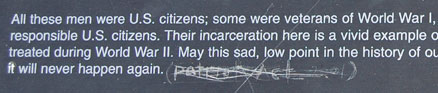
Several miles north of Moab, Utah, on Highway 191, there’s an Historical Interest marker to commemorate the Civilian Conservation Corps work camp at Dalton Wells. According to the plaque on the site, Camp DG-32 was used for public works through the Great Depression, and converted in 1943 into a concentration camp for Japanese Americans accused of being troublemakers at the civilian internment camps. The plaque offered an apology for the “total violation their civil rights,” and this admonition:
Civilian Conservation Corps DG-32 Dalton Wells
After which someone added in parentheses: “(Patriot Act, 2001)” and then as if to make the point, a next somebody scratched it out.

Full text of the marker:

Civilian Conservation Corps Camp DG-32 (Co. 234)
1935-1942

During the Great Depression of the 1930’s, CCC Camps were scattered all over the USA. They provided gainful employment to youth of the nation with work on public service projects. Between 1933 and 1942, four camps were located near Moab. Each camp worked on various natural resource project for the Soil Conservation Service, the National Park Service, and the forerunner of the Bureau of Land Management.

DG-32 was a long-lasting camp and typical of most with wooden, tar-paper covered barracks and buildings housing some 200 young men between the ages of 18 and 25. Enrollees came from the eastern states, and leadership was provided by the Army, Grazing Service, and local men experienced in construction and stock grazing needs.

Under spartan conditions, clothing, food, and housing were provided in the primitive camp. Pay was $30 per month with $25 sent home.

DG-32 projects included many range improvements: stock trails down the precipitous sandstone cliffs, spring developments, wells and stock ponds, eradication of rodents that competed with stock for feed, fences for corrals and pastures, reservoir dams, roads and bridges. These projects provided on the job training for the enrollees, besides the benefits they brought to the local economy. Many of these works are still in use today. The value of the camp and its works to Grand County is beyond estimation. It was a significant milestone that greatly influenced the economic history of the county.

All that remains of the camp today are the cottonwood trees planted by the enrollees that you see fronting this site, concrete slabs for buildings, graveled roads and rock-outlined walkways, the remains of an old windmill and a rock masonry water storage tank. These remnants signify the moving history of a time when America valiantly struggled to restore its economic stability and provide its young people with meaningful employment.

Japanese-American World War II Concentration Camp
1943

On January 11, 1943, a train pulled into Thompson Station north of here with armed Military Police guarding sixteen male American citizens of Japanese ancestry. While the locals of the town waited to cross the tracks, the entourage was loaded and transferred to the old abandoned “CCC” camp located here at Dalton Wells.

Their crime? They were classified as “troublemakers” in the Manzanar, California Relocation Center where they and their families had been forcibly located at the start of World War II. Removed from their homes and lands in California under a Presidential Executive Order, they were subject to the whim and mercy of poorly-trained bureaucrats and military personnel in the center. This Executive Presidential Order was the result of wartime hysteria, racial bigotry, and greed.

The original sixteen men were removed from Manzanar and brought here without the benefit of council. They did not have a formal hearing or proper arrest proceedings, and the action was in total violation of their civil rights. It was a process more compatible with fascism than democracy.

The inmates troubles worsened when and informer and confidant of the administration was beaten. An organizer of the mess hall workers was thrown into jail as a suspect. A meeting was held in the camp to protest the jailing and a riot resulted. Two inmates were killed by trigger-happy soldiers.

Other Japanese-American men were soon brought to the camp. Thirteen came from Gila River, Arizona, having been charged as being members of an organization which was fully sanctioned by camp officials. Ten more came from Manzanar as “suspected troublemakers.” Fifteen came from the Tule Lake, California, charged with refusing to register their availability for the draft and their loyalty to the U.S. under a set of confusing, denigrating requirements.

All these men were U.S. citizens; some were veterans of Work War I, others were family men, college graduates, and responsible U.S. citizens. Their incarceration here is a vivid example of how our Japanese-American citizens were treated during World War II. May this sad, low point in the history of our democracy never be forgotten, in the hope that it will never happen again.

The group was transferred by truck to an abandoned Indian school at Leupp, Arizona, on April 27, 1943. As those involved began to realize the inequality of the situation, the inmates were released back to relocation centers later that year. Thus, a black mark in the history of liberty and justice in the United States was ended.

They killed Bambi, and now Mumble too

Bambi meets GodzillaGenerations of American children have grown up witnessing Bambi orphaned by evil mother-killing hunters. In my theater seat, I was sure that deer stalking, as it’s called in England, would evolve the way of Neanderthals. The Happy Feet generation might have held the same hope for the survival of Emperor Penguins, but our George Bush Caligula has just given them a thumbs down.

In spite of the fact that the Academy Award for best documentary went to the March of the Penguins, which told of the heart-breaking travails of the Emperor Penguins, whose natural challenge is to face the most bitter climate on Earth.

Now Climate Change is pulling the ice from under their egg-nestling feet. Environmentalist groups want the Emperor Penguins declared an endangered species, to give clout to efforts to fight the causes of global warming, but the industrialists and fossil fuel companies are having none of it.

Remember the Rockhopper Penguin in Happy Feet, slowly strangling in his plastic six-pack necklace? He too was denied protection from the peril of melting ice and over-fishing.

I can’t visit a penguin exhibit at the zoo without thinking of Mumble, the Happy Feet star, gone crazy from confinement, at last breaking into the soft shuffle which enabled him to communicate with man, to pique man’s interest into his human-like behavior, and lure civilized man’s sympathy for Mumble’s kind, and their helplessness in the face of the human’s destructive fisheries.

At the Omaha Zoo, the scene on the ice with all the aimless penguins was so identical, I was certain the transformative scene had been filmed there, until I reminded myself that Happy Feet was a computer animation.

I was uncomfortable with the Stepin Fetchit quality of Happy Feet’s master-pleasing tap dance. It may have helped humanize black people in the eyes of racists, but it didn’t change white condescension.

Of course, neither penguins or polar bears can do a thing to slow the melting of their habitat. Their fate is in our hands. That was the message of Happy Feet, a message you might not have conceived could have gone over anyone’s head, even George Bush.

Who has the famous al-Zaidi Bush shoes

Everyone’s clamoring for the shoe heard around the world. The several
Muntadhar al-Zaidimanufacturers who claim to have cobbled the offending black oxfords are deluged in orders. A Saudi man has offered ten million dollars for Muntadhar al-Zaidi’s original pair. But the NYT reports: “Explosives tests by investigators destroyed the offending footwear.” Whaaaaaaaaaaaaat?!

I don’t believe that shit for a minute. If airport security can verify footwear inertness in a few seconds…

Not that a pair of worn leather shoes matters a whit. But there is more than shoe fetish at foot here. And I find something about the fate of this pair of shoes that’s awfully unlike a Skull and Bones man.

Idolatry
The Saudi who offered the king’s ransom for the “Medal of Freedom” shoes, may have been enraptured by idolatry, but he knows the magical allure which those shoes will always possess. How can any of us deny the mystical energy we attribute to baseballs marked by having been hit to home runs? All Americans take, or aspire to take, a pilgrimage to the Smithsonian to see the actual, for real, objects of their common heritage.

Museums of art and natural history, glean an idolatry all their own, but historical collections like the Smithsonian and the British Imperial War Museum, peddle in pure talisman mysticism.

The crown jewels come to mind, or any ordinary person’s diamond. Stones, crystals, runes, coins, fetishes, heirlooms, antiques, personal designer accessories, safety blankets. We swim in stuff which have meaning greater than their utility. Even poor Diogenes had his lantern.

Who are we kidding that mere objects don’t have enormous power over us? I myself keep everything. I frequently feel I’m drowning in remembrances and chanced-upon objects for which I aspire sentiment. Would that I could focus on strength-building empowering articles.

I’m reminded of last year’s sale of a copy of the Magna Carta, was it, to a modern Wall Street robber baron. I was not alone to surmise that he paid 21 million for the now-transgressed compact, probably to wipe his ass with it. As the great white hunters paid their safari guides in hope of being the last to personally vanquish whatever late species was next to be rendered extinct.

The al-Zaidi Shoes
This famous pair of shoes were thrown by Muntadhar al-Zaidi at President Bush, al-Zaidi being the first man to dare show defiance to the US Nero. Although, certain intellectuals do come to mind, for having voiced their discontent with his policies. I remember too, a certain brave Indonesian witch doctor who cast a magic curse on the universally despised Bush. Ki Gendeng Pamungkas placed a jinx to shorten Bush’s stay in Indonesia, it wasn’t a fatal voodoo spell, for that would have been just as illegal as making threats is in the US. I will always believe there must have been countless more who’ve cursed Bush to his face, if prudently under their breath.

But journalist al-Zaidi did the one act above all others. He showed open, physical defiance. At the bottom line, against an imperial oligarchy which dominates the world by military force, it’s the only defiance that really matters. And George Bush knows it.

Once subdued, was it necessary to bludgeon al-Zaidi? He had disarmed himself, and was now completely out of ammo. Was the rough apprehension in any manner appropriate? Everyone in the room had already been checked by security. What was the purpose of beating al-Zaidi in the next room? Or of the torture later?

Regicide
Would-be assassins of kings, in the times of kings, were drawn and quartered, made to suffer excruciating deaths, but their body parts desecrated as well. It wasn’t to insure their mortality.

From a historical perspective, I believe al-Zaidi’s projectile footwear represent an enormously momentous act, even more by being common objects. We all have shoes. And see, shoes have provide a ready aeronautic diversion from the path most taken. A significant number of common citizens can get close enough to our leader to lambast him with their shoes.

Do we approve of him or not? Does he listen to our protestations, or does he laugh them off as our America-given freedoms to disagree?

Is it a mere disagreement we have with Bush over his regime’s genocide, high crimes and theft from the American People?

I’m convinced that al-Zaidi’s shoes had to be drawn and quartered, lest they inspire further acts of bravery from the ranks of Bush’s subjects.

Is it time to throw our shoes? In this divide and conquer feudal age, by design an anti-social world which celebrates the individual lest a community spirit trounce the narcissism imperative to thwart organizing into collectives, a next shoe-thrower would be mocked for being a copy-cat. I can hope that we recognize the humility of extremely diminutive stature. We want to be voracious proponents of social justice, but have tragically impoverished resources, . The struggle against capitalist imperialism will require many foot soldiers. We can’t all be Che and al-Zaidi. We didn’t think to throw our shoes, we won’t be improvisers of the next gesture. For the better part of us, the most effective we can be is follow their lead.

Let’s imagine, for the populist courage they might ignite, that the al-Zaidi shoes were effaced from man’s heritage. Bush has done worse, he’s razed Iraq, cradle of civilization, the untold undiscovered archeological sites, the historic library, I can’t even go on, the losses were unthinkable.

Occult Talisman
Except, this is a man who like his father, and strangely like an odd many in his cabal, came out of the secret “Skull and Bones” club at Yale. The exclusive order was originated by a forefather, who amassed the Bush fortune with help from Hitler by the way, named for the club’s alleged possession of the remains of Sitting Bull. What, was Sitting Bull a famous Yalie? A forefather of modern empire building? Was he a banking/usury supremacist?

Sitting Bull was but one of the fiercest American indian leader to have defied the white man’s global conquest. Of course, it’s not uncommon for warring cannibals to feel that they gather strength from their opponents, even as they’ve defeated them.

The Bushes and their cadre of global elites are also members of Bohemian Grove. As occultist as blue-blood better-than-thous can get. I’ll not assert they celebrate witchcraft, but it’s more pagan than average churchgoers could comfortably countenance. Traditional religions hold it as false idolatry, academia dismisses it as mysticism.

Which brings me to the Lance of Longinus, allegedly the weapon which pierced Jesus’s side to deal the Coup de Grace. Though scholars have traced its existence to only 900 AD, the “Spear of Destiny” retains a tremendous occult allure, in particular the Nazi Third Reich. Other such talisman weapons have been sought by warrior leaders throughout history, as bestowing upon whoever possessed them, divine powers over challengers to their throne.

Let’s face it, since the success of the American industrial and banking driven democracy, in rising to dominate over all its WWII adversaries and allies, our elected leader has become absolute ruler of the known world. It wasn’t our intent, but it’s human nature.

Absolute Power Corrupts
We live again in a world of kings. Of moats, of food tasters, of royal jesters, of showing not just deference but fealty. We live in a world of a leisured class, where right to wealth and privilege is considered hereditary. A birthright to nobility is reinforced even by what we understand of genetics. Men are not created equal. Man at his highest is preordained. It’s no great leap to expect these men will search the firmament for signs to affirm that their supremacy is granted by divinity.

I expect earthly objects which defy a monarch’s impregnability have irresistible personal allure to kings for whom nothing remains but to divine their life’s purpose.

It’s not uncharted territory, there have been global empires before, except the world known to earlier supreme leaders had horizons closer in. Alexander ruled his whole known world. The Roman Emperors did, with the unconquered bits being just so much backwoods. Such leaders had no rivals in trade, power, or wealth. Charlemagne, Ghengis Khan, Shaka Zulu, ruled their entire known realms. While these leaders were empire builders, the related personages less lauded, were their progeny who succumbed to proving Lord Acton’s Dictum that “absolute power corrupts–” Each it seems resolved to challenge the last part “–absolutely.”

Now John Dalberg-Acton’s Essays on Freedom and Power is a scrap of paper I’d be surprised to find enshrined in a megalomaniac’s personal collection of power-emitting talisman keepsake chatchkes.

Red Bull is dangerous

Red Bull gives you angel wingsRED BULL contains: caffeine, ginseng and guarana (all legal stimulants) sugars, artificial sweeteners, taurine (an amino acid said to lower blood pressure).
 
RED BULL promises: increased energy, better concentration, sharper cognitive performance, greater endurance, higher metabolism, faster reaction time.
 
RED BULL delivers: increased heart rate, heightened blood pressure, anxiety, jitters, hyperactivity, insomnia, hypoglycemia, dehydration.

A single can of Red Bull or any other “energy drink” increases your risk of heart attack or stroke. The caffeine-jacked soda pop causes blood to become sticky which is a pre-cursor to cardiovascular problems. One hour after drinking Red Bull, the blood system becomes abnormal, functioning as it would in a patient with heart disease. This effect is seen even in young people.

Take a look at Red Bull‘s website. The company has aligned itself — through high-dollar sponsorships, which are nothing more than manipulative ad campaigns — with the sporting crowd. It started with rodeo; the Red Bull logo is tailor-made for a swaggering cowboy. The company’s tentacles have reached into the racing circuit, BMX cycling, extreme skiing, even soapbox derby. You’ll find athlete superstars wearing the Red Bull logo in arenas and venues across the globe.

It would be one thing if Red Bull was marketing its product to coke heads and junkies, providing them with a legal daytime buzz. But to suggest that athletes will benefit from the “energy” Red Bull offers is wildly irresponsible and evil. Unlike the electrolyte-balanced rehydration found in Gatorade, Red Bull is chock full of stimulants which cause rapid DE-hydration, making energy drinks exceptionally dangerous when used in rigorous physical activity. Loss of consciousness, kidney failure, and death are a few of the more troubling outcomes of serious dehydration. Even mild dehydration makes you feel like crap — foggy, sluggish, headachy — which doesn’t enhance physical or mental performance in anyone.

Threatening the health and well-being of rednecks and jocks the world over wasn’t quite enough for these bastards. Red Bull expanded its reach into the late night crowd. Barfare like “Vodka Bulls” and “Jaeger Bombs” combine Red Bull‘s powerful stimulants with a heavy depressant which can lead to heart failure and other health crises. Norway, France, Denmark, and even Uruguay have banned sales of Red Bull completely.

Red BullHistory has shown us that we can’t expect responsible behavior from corporations. They have an apparent duty to shareholders to make money, unfettered by ethical considerations. That’s why the Food and Drug Administration has been appointed our trusty watchdog. As soon as they’ve finished banning every natural supplement found in any organic health food store, I know they’ll muster the energy to take on Red Bull.

That day can’t come soon enough. Many of us are tired of running on empty promises.

Let me ever be a Wet Wit!

“”I am full of holy joy and free booze,” said Cobbler. I feel moved to sing. It is very wrong to resist an impulse to sing; to hold back a natural evacuation of joy is as injurious as to hold back any other natural issue. It makes a man spiritually costive, and plugs him up with hard, caked, thwarted merriment. This, in the course of time, poisons his whole system and is likely to turn him into that most detestable of beings, a Dry Wit. God grant that I may never be a Dry Wit. Let me ever be a Wet Wit! Let me pour forth what mirth I have until I am utterly empty — a Nit Wit.”
—from Tempest-Tost, by Robertson Davies, who died on this day in 1995

Weathermen for a Democratic Society

Bernadine Dohrn addresses S.D.S. in ChicagoIn 1969, the Radical Youth Movement (RYM) within Students for a Democratic Society (SDS) expelled the passive participants to reconfigure the SDS to Bring the War Home. At left, Bernardine Dohrn uninvites the Progressive Labor Party (PL) and the Worker Student Alliance (WSA) from the Chicago conference. Below is the founding document after which the RYM was renamed.

You Don’t Need A Weatherman
To Know Which Way The Wind Blows

June 18, 1969

Submitted by Karin Asbley, Bill Ayers, Bernardine Dohrn, John Jacobs, Jeff Jones, Gerry Long, Home Machtinger, Jim Mellen, Terry Robbins, Mark Rudd and Steve Tappis.

I. International Revolution

The contradiction between the revolutionary peoples of Asia, Africa and Latin America and the imperialists headed by the United States is the principal contradiction in the contemporary world. The development of this contradiction is promoting the struggle of the people of the whole world against US imperialism and its lackeys.

Lin Piao, Long Live the Victory of People’s War!

People ask, what is the nature of the revolution that we talk about- Who will it be made by, and for, and what are its goals and strategy-

The overriding consideration in answering these questions is that the main struggle going on in the world today is between US imperialism and the national liberation struggles against it. This is essential in defining political matters in the whole world: because it is by far the most powerful, every other empire and petty dictator is in the long run dependent on US imperialism, which has unified, allied with, and defended all of the reactionary forces of the whole world. Thus, in considering every other force or phenomenon, from Soviet imperialism or Israeli imperialism to “workers struggle” in France or Czechoslovakia, we determine who are our friends and who are our enemies according to whether they help US imperialism or fight to defeat it.

So the very first question people in this country must ask in considering the question of revolution is where they stand in relation to the United States as an oppressor nation, and where they stand in relation to the masses of people throughout the world whom US imperialism is oppressing.

The primary task of revolutionary struggle is to solve this principal contradiction on the side of the people of the world. It is the oppressed peoples of the world who have created the wealth of this empire and it is to them that it belongs; the goal of the revolutionary struggle must be the control and use of this wealth in the interests of the oppressed peoples of the world.

It is in this context that we must examine the revolutionary struggles in the United States. We are within the heartland of a worldwide monster, a country so rich from its worldwide plunder that even the crumbs doled out to the enslaved masses within its borders provide for material existence very much above the conditions of the masses of people of the world. The US empire, as a worldwide system, channels wealth, based upon the labor and resources of the rest of the world, into the United States. The relative affluence existing in the United States is directly dependent upon the labor and natural resources of the Vietnamese, the Angolans, the Bolivians and the rest of the peoples of the Third World. All of the United Airlines Astrojets, all of the Holiday Inns, all of Hertz’s automobiles, your television set, car and wardrobe already belong, to a large degree to the people of the rest of the world.

Therefore, any conception of “socialist revolution” simply in terms of the working people of the United States, failing to recognize the full scope of interests of the most oppressed peoples of the world, is a conception of a fight for a particular privileged interest, and is a very dangerous ideology. While the control and use of the wealth of the Empire for the people of the whole world is also in the interests of the vast majority of the people in this country, if the goal is not clear from the start we will further the preservation of class society, oppression, war, genocide, and the complete emiseration of everyone, including the people of the US.

The goal is the destruction of US imperialism and the achievement of a classless world: world communism. Winning state power in the US will occur as a result of the military forces of the US overextending themselves around the world and being defeated piecemeal; struggle within the US will be a vital part of this process, but when the revolution triumphs in the US it will have been made by the people of the whole world. For socialism to be defined in national terms within so extreme and historical an oppressor nation as this is only imperialist national chauvinism on the part of the “movement.”

II. What Is The Black Colony-

Not every colony of people oppressed by imperialism lies outside the boundaries of the US. Black people within North America, brought here 400 years ago as slaves and whose labor, as slaves, built this country, are an internal colony within the confines of the oppressor nation. What this means is that black people are oppressed as a whole people, in the institutions and social relations of the country, apart from simply the consideration of their class position, income, skill, etc., as individuals- What does this colony look like- What is the basis for its common oppression and why is it important-

One historically important position has been that the black colony only consists of the black belt nation in the South, whose fight for national liberation is based on a common land, culture, history and economic life. The corollary of this position is that black people in the rest of the country are a national minority but not actually part of the colony themselves; so the struggle for national liberation is for the black belt, and not all blacks; black people in the north, not actually part of the colony, are part of the working class of the white oppressor nation. In this formulation northern black workers have a “dual role”—one an interest in supporting the struggle in the South, and opposing racism, as members of the national minority; and as northern “white nation” workers whose class interest is in integrated socialism in the north. The consistent version of this line actually calls for integrated organizing of black and white workers in the north along what it calls “class” lines.

This position is wrong; in reality, the black colony does not exist simply as the “black belt nation,” but exists in the country as a whole. The common oppression of black people and the common culture growing out of that history are not based historically or currently on their relation to the territory of the black belt, even though that has been a place of population concentration and has some very different characteristics than the north, particularly around the land question.

Rather, the common features of oppression, history and culture which unify black people as a colony (although originating historically in a common territory apart from the colonizers, i.e., Africa, not the South) have been based historically on their common position as slaves, which since the nominal abolition of slavery has taken the form of caste oppression, and oppression of black people as a people everywhere that they exist. A new black nation, different from the nations of Africa from which it came, has been forged by the common historical experience of importation and slavery and caste oppression; to claim that to be a nation it must of necessity now be based on a common national territory apart from the colonizing nation is a mechanical application of criteria which were and are applicable to different situations.

What is specifically meant by the term caste is that all black people, on the basis of their common slave history, common culture and skin color are systematically denied access to particular job categories (or positions within job categories), social position, etc., regardless of individual skills, talents, money or education. Within the working class, they are the most oppressed section; in the petit bourgeoisie, they are even more strictly confined to the lowest levels. Token exceptions aside, the specific content of this caste oppression is to maintain black people in the most exploitative and oppressive jobs and conditions. Therefore, since the lowest class is the working class, the black caste is almost entirely a caste of the working class, or [holds] positions as oppressed as the lower working-class positions (poor black petit bourgeoisie and farmers); it is a colonial labor caste,, a colony whose common national character itself is defined by their common class position.

Thus, northern blacks do not have a “dual interest”—as blacks on the one hand and “US-nation workers” on the other. They have a single class interest, along with all other black people in the US, as members of the Black Proletarian Colony.

III. The Struggle For Socialist Self-Determination

The struggle of black people—as a colony—is for self-determination, freedom, and liberation from US imperialism. Because blacks have been oppressed and held in an inferior social position as a people, they have a right to decide, organize and act on their common destiny as a people apart from white interference. Black self-determination does not simply apply to determination of their collective political destiny at some future time. It is directly tied to the fact that because all blacks experience oppression in a form that no whites do, no whites are in a position to fully understand and test from their own practice the real situation black people face and the necessary response to it. This is why it is necessary for black people to organize separately and determine their actions separately at each stage of the struggle.

It is important to understand the implications of this. It is not legitimate for whites to organizationally intervene in differences among revolutionary black nationalists. It would be arrogant for us to attack any black organization that defends black people and opposes imperialism in practice. But it is necessary to develop a correct understanding of the Black Liberation struggle within our own organization, where an incorrect one will further racist practice in our relations with the black movement.

In the history of some external colonies, such as China and Vietnam, the struggle for self-determination has had two stages: (1) a united front against imperialism and for New Democracy (which is a joint dictatorship of anti-colonial classes led by the proletariat, the content of which is a compromise between the interests of the proletariat and nationalist peasants, petit bourgeoisie and national bourgeoisie); and (2) developing out of the new democratic stage, socialism.

However, the black liberation struggle in this country will have only one “stage”; the struggle for self-determination will embody within it the struggle for socialism.

As Huey P. Newton has said, “In order to be a revolutionary nationalist, you would of necessity have to be a socialist.” This is because—given the caste quality of oppression-as-a-people-through-a-common-degree-of-exploitation—self-determination requires being free from white capitalist exploitation in the form of inferior (lower caste) jobs, housing, schools, hospitals, prices. In addition, only what was or became in practice a socialist program for self-determination—one which addressed itself to reversing this exploitation—could win the necessary active mass support in the “proletarian colony.”

The program of a united front for new democracy, on the other hand, would not be as thorough, and so would not win as active and determined support from the black masses. The only reason for having such a front would be where the independent petit bourgeois forces which it would bring in would add enough strength to balance the weakening of proletarian backing. This is not the case: first, because much of the black petit bourgeoisie is actually a “comprador” petit bourgeoisie (like so-called black capitalists who are promoted by the power structure to seem independent but are really agents of white monopoly capital), who would never fight as a class for any real self-determination; and secondly, because many black petit bourgeoisie, perhaps most, while not having a class interest in socialist self-determination, are close enough to the black masses in the oppression and limitations on their conditions that they will support many kinds of self-determination issues, and, especially when the movement is winning, can be won to support full (socialist) self-determination. For the black movement to work to maximize this support from the petit bourgeoisie is correct; but it is in no way a united front where it is clear that the Black Liberation Movement should not and does not modify the revolutionary socialist content of its stand to win that support.

From /New Left Notes/, June 18, 1969

IV. Black Liberation Means Revolution

What is the relationship of the struggle for black self-determination to the whole worldwide revolution to defeat US imperialism and internationalize its resources toward the goal of creating a classless world-

No black self-determination could be won which would not result in a victory for the international revolution as a whole. The black proletarian colony, being dispersed as such a large and exploited section of the work force, is essential to the survival of imperialism. Thus, even if the black liberation movement chose to try to attain self-determination in the form of a separate country (a legitimate part of the right to self-determination), existing side by side with the US, imperialism could not survive if they won it—and so would never give up without being defeated. Thus, a revolutionary nationalist movement could not win without destroying the state power of the imperialists; and it is for this reason that the black liberation movement, as a revolutionary nationalist movement for self-determination, is automatically in and of itself an inseparable part of the whole revolutionary struggle against US imperialism and for international socialism.

However, the fact that black liberation depends on winning the whole revolution does not mean that it depends on waiting for and joining with a mass white movement to do it. The genocidal oppression of black people must be ended, and does not allow any leisure time to wait; if necessary, black people could win self-determination, abolishing the whole imperialist system and seizing state power to do it, without this white movement, although the cost among whites and blacks both would be high.

Blacks could do it alone if necessary because of their centralness to the system, economically and geo-militarily, and because of the level of unity, commitment, and initiative which will be developed in waging a people’s war for survival and national liberation. However, we do not expect that they will have to do it alone, not only because of the international situation, but also because the real interests of masses of oppressed whites in this country lie with the Black Liberation struggle, and the conditions for understanding and fighting for these interests grow with the deepening of the crises. Already, the black liberation movement has carried with it an upsurge of revolutionary consciousness among white youth; and while there are no guarantees, we can expect that this will extend and deepen among all oppressed whites.

To put aside the possibility of blacks winning alone leads to the racist position that blacks should wait for whites and are dependent on whites acting for them to win. Yet the possibility of blacks winning alone cannot in the least be a justification for whites failing to shoulder the burden of developing a revolutionary movement among whites. If the first error is racism by holding back black liberation, this would be equally racist by leaving blacks isolated to take on the whole fight—and the whole cost—for everyone.

It is necessary to defeat both racist tendencies: (1) that blacks shouldn’t go ahead with making the revolution, and (2) that blacks should go ahead alone with making it. The only third path is to build a white movement which will support the blacks in moving as fast as they have to and are able to, and still itself keep up with that black movement enough so that white revolutionaries share the cost and the blacks don’t have to do the whole thing alone. Any white who does not follow this third path is objectively following one of the other two (or both) and is objectively racist.

V. Anti-Imperialist Revolution And The United Front

Since the strategy for defeating imperialism in semi-feudal colonies has two stages, the new democratic stage of a united front to throw out imperialism and then the socialist stage, some people suggest two stages for the US too—one to stop imperialism, the anti-imperialist stage, and another to achieve the dictatorship of the proletariat, the socialist stage. It is no accident that even the proponents of this idea can’t tell you what it means. In reality, imperialism is a predatory international stage of capitalism. Defeating imperialism within the US couldn’t possibly have the content, which it could in a semi-feudal country, of replacing imperialism with capitalism or new democracy; when imperialism is defeated in the US, it will be replaced by socialism—nothing else. One revolution, one replacement process, one seizure of state power—the anti-imperialist revolution and the socialist revolution, one and the same stage. To talk of this as two separate stages, the struggle to overthrow imperialism and the struggle for socialist revolution, is as crazy as if Marx had talked about the proletarian socialist revolution as a revolution of two stages, one the overthrow of capitalist state power, and second the establishment of socialist state power.

Along with no two stages, there is no united front with the petit bourgeoisie, because its interests as a class aren’t for replacing imperialism with socialism. As far as people within this country are concerned, the international war against imperialism is the same task as the socialist revolution, for one overthrow of power here. There is no “united front” for socialism here.

One reason people have considered the “united front” idea is the fear that if we were talking about a one-stage socialist revolution we would fail to organize maximum possible support among people, like some petit bourgeoisie, who would fight imperialism on a particular issue, but weren’t for revolution. When the petit bourgeoisie’s interest is for fighting imperialism on a particular issue, but not for overthrowing it and replacing it with socialism, it is still contributing to revolution to that extent—not to some intermediate thing which is not imperialism and not socialism. Someone not for revolution is not for actually defeating imperialism either, but we still can and should unite with them on particular issues. But this is not a united front (and we should not put forth some joint “united front” line with them to the exclusion of our own politics), because their class position isn’t against imperialism as a system. In China, or Vietnam, the petit bourgeoisie’s class interests could be for actually winning against imperialism; this was because their task was driving it out, not overthrowing its whole existence. For us here, “throwing it out” means not from one colony, but all of them, throwing it out of the world, the same thing as overthrowing it.

VI. International Strategy

What is the strategy of this international revolutionary movement- What are the strategic weaknesses of the imperialists which make it possible for us to win- Revolutionaries around the world are in general agreement on the answer, which Lin Piao describes in the following way:

US imperialism is stronger, but also more vulnerable, than any imperialism of the past. It sets itself against the people of the whole world, including the people of the United States. Its human, military, material and financial resources are far from sufficient for the realization of its ambition of domination over the whole world. US imperialism has further weakened itself by occupying so many places in the world, overreaching itself, stretching its fingers out wide and dispersing its strength, with its rear so far away and its supply lines so long.

—/Long Live the Victory of People’s War/

The strategy which flows from this is what Ché called “creating two, three, many Vietnams”—to mobilize the struggle so sharply in so many places that the imperialists cannot possibly deal with it all. Since it is essential to their interests, they will try to deal with it all, and will be defeated and destroyed in the process.

In defining and implementing this strategy, it is clear that the vanguard (that is, the section of the people who are in the forefront of the struggle and whose class interests and needs define the terms and tasks of the revolution) of the “American Revolution” is the workers and oppressed peoples of the colonies of Asia, Africa and Latin America. Because of the level of special oppression of black people as a colony, they reflect the interests of the oppressed people of the world from within the borders of the United States; they are part of the Third World and part of the international revolutionary vanguard.

The vanguard role of the Vietnamese and other Third World countries in defeating US imperialism has been clear to our movement for some time. What has not been so clear is the vanguard role black people have played, and continue to play, in the development of revolutionary consciousness and struggle within the United States. Criticisms of the black liberation struggle as being “reactionary” or of black organizations on campus as being conservative or “racist” very often express this lack of understanding. These ideas are incorrect and must be defeated if a revolutionary movement is going to be built among whites.

The black colony, due to its particular nature as a slave colony, never adopted a chauvinist identification with America as an imperialist power, either politically or culturally. Moreover, the history of black people in America has consistently been one of the greatest overall repudiations of and struggle against the state. From the slave ships from Africa to the slave revolts, the Civil War, etc., black people have been waging a struggle for survival and liberation. In the history of our own movement this has also been the case: the civil rights struggles, initiated and led by blacks in the South; the rebellions beginning with Harlem in 1964 and Watts in 1965 through Detroit and Newark in 1967; the campus struggles at all-black schools in the South and struggles led by blacks on campuses all across the country. As it is the blacks—along with the Vietnamese and other Third World people—who are most oppressed by US imperialism, their class interests are most solidly and resolutely committed to waging revolutionary struggle through to its completion. Therefore it is no surprise that time and again, in both political content and level of consciousness and militancy, it has been the black liberation movement which has upped the ante and defined the terms of the struggle.

What is the relationship of this “black vanguard” to the “many Vietnams” around the world- Obviously this is an example of our strategy that different fronts reinforce each other. The fact that the Vietnamese are winning weakens the enemy, advancing the possibilities for the black struggle, etc. But it is important for us to understand that the interrelationship is more than this. Black people do not simply “choose” to intensify their struggle because they want to help the Vietnamese, or because they see that Vietnam heightens the possibilities for struggle here. The existence of any one Vietnam, especially a winning one, spurs on others not only through consciousness and choice, but through need, because it is a political and economic, as well as military, weakening of capitalism, and this means that to compensate, the imperialists are forced to intensify their oppression of other people.

Thus the loss of China and Cuba and the loss now of Vietnam not only encourages other oppressed peoples (such as the blacks) by showing what the alternative is and that it can be won, but also costs the imperialists billions of dollars which they then have to take out of the oppression of these other peoples. Within this country increased oppression falls heavier on the most oppressed sections of the population, so that the condition of all workers is worsened through rising taxes, inflation and the fall of real wages, and speedup. But this increased oppression falls heaviest on the most oppressed, such as poor white workers and, especially, the blacks, for example through the collapse of state services like schools, hospitals and welfare, which naturally hits the hardest at those most dependent on them.

This deterioration pushes people to fight harder to even try to maintain their present level. The more the ruling class is hurt in Vietnam, the harder people will be pushed to rebel and to fight for reforms. Because there exist successful models of revolution in Cuba, Vietnam, etc., these reform struggles will provide a continually larger and stronger base for revolutionary ideas. Because it needs to maximize profits by denying the reforms, and is aware that these conditions and reform struggles will therefore lead to revolutionary consciousness, the ruling class will see it more and more necessary to come down on any motion at all, even where it is not yet highly organized or conscious. It will come down faster on black people, because their oppression is increasing fastest, and this makes their rebellion most thorough and most dangerous, and fastest growing. It is because of this that the vanguard character and role of the black liberation struggle will be increased and intensified, rather than being increasingly equal to and merged into the situation and rebellion of oppressed white working people and youth. The crises of imperialism (the existence of Vietnam and especially that it’s winning) will therefore create a “Black Vietnam” within the US.

Given that black self-determination would mean fully crushing the power of the imperialists, this “Vietnam” has certain different characteristics than the external colonial wars. The imperialists will never “get out of the US” until their total strength and every resource they can bring to bear has been smashed; so the Black Vietnam cannot win without bringing the whole thing down and winning for everyone. This means that this war of liberation will be the most protracted and hardest fought of all.

It is in this context that the question of the South must be dealt with again, not as a question of whether or not the black nation, black colony, exists there, as opposed to in the North as well, but rather as a practical question of strategy and tactics: Can the black liberation struggle—the struggle of all blacks in the country—gain advantage in the actual war of liberation by concentrating on building base areas in the South in territory with a concentration of black population-

This is very clearly a different question than that of “where the colony is,” and to this question the “yes” answer is an important possibility. If the best potential for struggle in the South were realized, it is fully conceivable and legitimate that the struggle there could take on the character of a fight for separation; and any victories won in that direction would be important gains for the national liberation of the colony as a whole. However, because the colony is dispersed over the whole country, and not just located in the black belt, winning still means the power and liberation of blacks in the whole country.

Thus, even the winning of separate independence in the South would still be one step toward self-determination, and not equivalent to winning it; which, because of the economic position of the colony as a whole, would still require overthrowing the state power of the imperialists, taking over production and the whole economy and power, etc.

VII. The Revolutionary Youth Movement: Class Analysis

The revolutionary youth movement program was hailed as a transition strategy, which explained a lot of our past work and pointed to new directions for our movement. But as a transition to what- What was our overall strategy- Was the youth movement strategy just an organizational strategy because SDS is an organization of youth and we can move best with other young people-

We have pointed to the vanguard nature of the black struggle in this country as part of the international struggle against American imperialism, and the impossibility of anything but an international strategy for winning. Any attempt to put forth a strategy which, despite internationalist rhetoric, assumes a purely internal development to the class struggle in this country, is incorrect. The Vietnamese (and the Uruguayans and the Rhodesians) and the blacks and Third World peoples in this country will continue to set the terms for class struggle in America.

In this context, why an emphasis on youth- Why should young people be willing to fight on the side of Third World peoples- Before dealing with this question about youth, however, there follows a brief sketch of the main class categories in the white mother country which we think are important, and [which] indicate our present estimation of their respective class interests (bearing in mind that the potential for various sections to understand and fight for the revolution will vary according to more than just their real class interests).

Most of the population is of the working class, by which we mean not simply industrial or production workers, nor those who are actually working, but the whole section of the population which doesn’t own productive property and so lives off of the sale of its labor power. This is not a metaphysical category either in terms of its interests, the role it plays, or even who is in it, which very often is difficult to determine.

As a whole, the long-range interests of the non-colonial sections of the working class lie with overthrowing imperialism, with supporting self-determination for the oppressed nations (including the black colony), with supporting and fighting for international socialism. However, virtually all of the white working class also has short-range privileges from imperialism, which are not false privileges but very real ones which give them an edge of vested interest and tie them to a certain extent to the imperialists, especially when the latter are in a relatively prosperous phase. When the imperialists are losing their empire, on the other hand, these short-range privileged interests are seen to be temporary (even though the privileges may be relatively greater over the faster-increasing emiseration of the oppressed peoples). The long-range interests of workers in siding with the oppressed peoples are seen more clearly in the light of imperialism’s impending defeat. Within the whole working class, the balance of anti-imperialist class interests with white mother country short-term privilege varies greatly.

First, the most oppressed sections of the mother country working class have interests most clearly and strongly anti-imperialist. Who are the most oppressed sections of the working class- Millions of whites who have as oppressive material conditions as the blacks, or almost so: especially poor southern white workers; the unemployed or semi-employed, or those employed at very low wages for long hours and bad conditions, who are non-unionized or have weak unions; and extending up to include much of unionized labor which has it a little better off but still is heavily oppressed and exploited. This category covers a wide range and includes the most oppressed sections not only of production and service workers but also some secretaries, clerks, etc. Much of this category gets some relative privileges (i.e. benefits) from imperialism, which constitute some material basis for being racist or pro-imperialist; but overall it is itself directly and heavily oppressed, so that in addition to its long-range class interest on the side of the people of the world, its immediate situation also constitutes a strong basis for sharpening the struggle against the state and fighting through to revolution.

Secondly, there is the upper strata of the working class. This is also an extremely broad category, including the upper strata of unionized skilled workers and also most of the “new working class” of proletarianized or semi-proletarianized “intellect workers.” There is no clearly marked dividing line between the previous section and this one; our conclusions in dealing with “questionable” strata will in any event have to come from more thorough analysis of particular situations. The long-range class interests of this strata, like the previous section of more oppressed workers, are for the revolution and against imperialism. However, it is characterized by a higher level of privilege relative to the oppressed colonies, including the blacks, and relative to more oppressed workers in the mother country; so that there is a strong material basis for racism and loyalty to the system. In a revolutionary situation, where the people’s forces were on the offensive and the ruling class was clearly losing, most of this upper strata of the working class will be winnable to the revolution, while at least some sections of it will probably identify their interests with imperialism till the end and oppose the revolution (which parts do which will have to do with more variables than just the particular level of privilege). The further development of the situation will clarify where this section will go, although it is clear that either way we do not put any emphasis on reaching older employed workers from this strata at this time. The exception is where they are important to the black liberation struggle, the Third World, or the youth movement in particular situations, such as with teachers, hospital technicians, etc., in which cases we must fight particularly hard to organize them around a revolutionary line of full support for black liberation and the international revolution against US imperialism. This is crucial because the privilege of this section of the working class has provided and will provide a strong material basis for national chauvinist and social democratic ideology within the movement, such as anti-internationalist concepts of “student power” and “workers control.” Another consideration in understanding the interests of this segment is that, because of the way it developed and how its skills and its privileges were “earned over time,” the differential between the position of youth and older workers is in many ways greater for this section than any other in the population. We should continue to see it as important to build the revolutionary youth movement among the youth of this strata.

Thirdly, there are “middle strata” who are not petit bourgeoisie, who may even technically be upper working class, but who are so privileged and tightly tied to imperialism through their job roles that they are agents of imperialism. This section includes management personnel, corporate lawyers, higher civil servants, and other government agents, army officers, etc. Because their job categories require and promote a close identification with the interests of the ruling class, these strata are enemies of the revolution.

Fourthly, and last among the categories we’re going to deal with, is the petit bourgeoisie. This class is different from the middle level described above in that it has the independent class interest which is opposed to both monopoly power and to socialism. The petit bourgeoisie consists of small capital—both business and farms—and self-employed tradesmen and professionals (many professionals work for monopoly capital, and are either the upper level of the working class or in the dent class interests-anti-monopoly capital, but for capitalism rather than socialism—gives it a political character of some opposition to “big government,” like its increased spending and taxes and its totalitarian extension of its control into every aspect of life, and to “big labor,” which is at this time itself part of the monopoly capitalist power structure. The direction which this opposition takes can be reactionary or reformist. At this time the reformist side of it is very much mitigated by the extent to which the independence of the petit bourgeoisie is being undermined. Increasingly, small businesses are becoming extensions of big ones, while professionals and self-employed tradesmen less and less sell their skills on their own terms and become regular employees of big firms. This tendency does not mean that the reformist aspect is not still present; it is, and there are various issues, like withdrawing from a losing imperialist war, where we could get support from them. On the question of imperialism as a system, however, their class interests are generally more for it than for overthrowing it, and it will be the deserters from their class who stay with us.

VIII. Why A Revolutionary Youth Movement-

In terms of the above analysis, most young people in the US are part of the working class. Although not yet employed, young people whose parents sell their labor power for wages, and more important who themselves expect to do the same in the future—or go into the army or be unemployed—are undeniably members of the working class. Most kids are well aware of what class they are in, even though they may not be very scientific about it. So our analysis assumes from the beginning that youth struggles are, by and large, working-class struggles. But why the focus now on the struggles of working-class youth rather than on the working class as a whole-

The potential for revolutionary consciousness does not always correspond to ultimate class interest, particularly when imperialism is relatively prosperous and the movement is in an early stage. At this stage, we see working-class youth as those most open to a revolutionary movement which sides with the struggles of Third World people; the following is an attempt to explain a strategic focus on youth for SDS.

In general, young people have less stake in a society (no family, fewer debts, etc.), are more open to new ideas (they have not been brainwashed for so long or so well), and are therefore more able and willing to move in a revolutionary direction. Specifically in America, young people have grown up experiencing the crises in imperialism. They have grown up along with a developing black liberation movement, with the liberation of Cuba, the fights for independence in Africa and the war in Vietnam. Older people grew up during the fight against fascism, during the Cold War, the smashing of the trade unions, McCarthy, and a period during which real wages consistently rose—since 1965 disposable real income has decreased slightly, particularly in urban areas where inflation and increased taxation have bitten heavily into wages. This crisis in imperialism affects all parts of the society. America has had to militarize to protect and expand its empire; hence the high draft calls and the creation of a standing army of three and a half million, an army which still has been unable to win in Vietnam. Further, the huge defense expenditures—required for the defense of the empire and at the same time a way of making increasing profits for the defense industries—have gone hand in hand with the urban crisis around welfare, the hospitals, the schools, housing, air and water pollution. The State cannot provide the services it has been forced to assume responsibility for, and needs to increase taxes and to pay its growing debts while it cuts services and uses the pigs to repress protest. The private sector of the economy can’t provide jobs, particularly unskilled jobs. The expansion of the defense and education industries by the State since World War II is in part an attempt to pick up the slack, though the inability to provide decent wages and working conditions for “public” jobs is more and more a problem.

As imperialism struggles to hold together this decaying social fabric, it inevitably resorts to brute force and authoritarian ideology. People, especially young people, more and more find themselves in the iron grip of authoritarian institutions. Reaction against the pigs or teachers in the schools, welfare pigs or the army, is generalizable and extends beyond the particular repressive institution to the society and the State as a whole. The legitimacy of the State is called into question for the first time in at least 30 years, and the anti-authoritarianism which characterizes the youth rebellion turns into rejection of the State, a refusal to be socialized into American society. Kids used to try to beat the system from inside the army or from inside the schools; now they desert from the army and burn down the schools.

The crisis in imperialism has brought about a breakdown in bourgeois social forms, culture and ideology. The family falls apart, kids leave home, women begin to break out of traditional “female” and “mother” roles. There develops a “generation gap” and a “youth problem.” Our heroes are no longer struggling businessmen, and we also begin to reject the ideal career of the professional and look to Mao, Chef, the Panthers, the Third World, for our models, for motion. We reject the elitist, technocratic bullshit that tells us only experts can rule, and look instead to leadership from the people’s war of the Vietnamese. Chuck Berry, Elvis, the Temptations brought us closer to the “people’s culture” of Black America. The racist response to the civil rights movement revealed the depth of racism in America, as well as the impossibility of real change through American institutions. And the war against Vietnam is not “the heroic war against the Nazis”; it’s the big lie, with napalm burning through everything we had heard this country stood for. Kids begin to ask questions: Where is the Free World- And who do the pigs protect at home-

The breakdown in bourgeois culture and concomitant anti-authoritarianism is fed by the crisis in imperialism, but also in turn feeds that crisis, exacerbates it so that people no longer merely want the plastic ’50s restored, but glimpse an alternative (like inside the Columbia buildings) and begin to fight for it. We don’t want teachers to be more kindly cops; we want to smash cops, and build a new life.

The contradictions of decaying imperialism fall hardest on youth in four distinct areas—the schools, jobs, the draft and the army, and the pigs and the courts. (A) In jail-like schools, kids are fed a mish-mash of racist, male chauvinist, anti-working class, anti-communist lies while being channeled into job and career paths set up according to the priorities of monopoly capital. At the same time, the State is becoming increasingly incapable of providing enough money to keep the schools going at all. (B) Youth unemployment is three times average unemployment. As more jobs are threatened by automation or the collapse of specific industries, unions act to secure jobs for those already employed. New people in the labor market can’t find jobs, job stability is undermined (also because of increasing speed-up and more intolerable safety conditions) and people are less and less going to work in the same shop for 40 years. And, of course, when they do find jobs, young people get the worst ones and have the least seniority. (C) There are now two and a half million soldiers under thirty who are forced to police the world, kill and be killed in wars of imperialist domination. And (D) as a “youth problem” develops out of all this, the pigs and courts enforce curfews, set up pot busts, keep people off the streets, and repress any youth motion whatsoever.

In all of this, it is not that life in America is toughest for youth or that they are the most oppressed. Rather, it is that young people are hurt directly—and severely—by imperialism. And, in being less tightly tied to the system, they are more “pushed” to join the black liberation struggle against US imperialism. Among young people there is less of a material base for racism—they have no seniority, have not spent 20 years securing a skilled job (the white monopoly of which is increasingly challenged by the black liberation movement), and aren’t just about to pay off a 25-year mortgage on a house which is valuable because it’s located in a white neighborhood.

While these contradictions of imperialism fall hard on all youth, they fall hardest on the youth of the most oppressed (least privileged) sections of the working class. Clearly these youth have the greatest material base for struggle. They are the ones who most often get drafted, who get the worst jobs if they get any, who are most abused by the various institutions of social control, from the army to decaying schools, to the pigs and the courts. And their day-to-day existence indicates a potential for militancy and toughness. They are the people whom we can reach who at this stage are most ready to engage in militant revolutionary struggle.

The point of the revolutionary youth movement strategy is to move from a predominant student elite base to more oppressed (less privileged) working-class youth as a way of deepening and expanding the revolutionary youth movement—not of giving up what we have gained, not giving up our old car for a new Dodge. This is part of a strategy to reach the entire working class to engage in struggle against imperialism; moving from more privileged sections of white working-class youth to more oppressed sections to the entire working class as a whole, including importantly what has classically been called the industrial proletariat. But this should not be taken to mean that there is a magic moment, after we reach a certain percentage of the working class, when all of a sudden we become a working-class movement. We are already that if we put forward internationalist proletarian politics. We also don’t have to wait to become a revolutionary force. We must be a self-conscious revolutionary force from the beginning, not be a movement which takes issues to some mystical group—”THE PEOPLE”—who will make the revolution. We must be a revolutionary movement of people understanding the necessity to reach more people, all working people, as we make the revolution.

The above arguments make it clear that it is both important and possible to reach young people wherever they are—not only in the shops, but also in the schools, in the army and in the streets—so as to recruit them to fight on the side of the oppressed peoples of the world. Young people will be part of the International Liberation Army. The necessity to build this International Liberation Army in America leads to certain priorities in practice for the revolutionary youth movement which we should begin to apply this summer. …

IX. Imperialism Is The Issue

The Communists are distinguished from the other working-class parties by this only: 1. In the national struggles of the proletariat of different countries, they point out and bring to the front the common interests of the entire proletariat, independently of all nationality. 2. In the various stages of development which the struggle of the working-class against the bourgeoisie has to pass through, they always and everywhere represent the interests of the movement as a whole.”

—Communist Manifesto

How do we reach youth; what kinds of struggles do we build; how do we make a revolution- What we have tried to lay out so far is the political content of the consciousness which we want to extend and develop as a mass consciousness: the necessity to build our power as part of the whole international revolution to smash the state power of the imperialists and build socialism. Besides consciousness of this task, we must involve masses of people in accomplishing it. Yet we are faced with a situation in which almost all of the people whose interests are served by these goals, and who should be, or even are, sympathetic to revolution, neither understand the specific tasks involved in making a revolution nor participate in accomplishing them. On the whole, people don’t join revolutions just because revolutionaries tell them to. The oppression of the system affects people in particular ways, and the development of political consciousness and participation begins with particular problems, which turn into issues and struggles. We must transform people’s everyday problems, and the issues and struggles growing out of them, into revolutionary consciousness, active and conscious opposition to racism and imperialism.

This is directly counterposed to assuming that struggles around immediate issues will lead naturally over time to struggle against imperialism. It has been argued that since people’s oppression is due to imperialism and racism, then any struggle against immediate oppression is “objectively anti-imperialist,” and the development of the fight against imperialism is a succession of fights for reforms. This error is classical economism.

A variant of this argument admits that this position is often wrong, but suggests that since imperialism is collapsing at this time, fights for reforms become “objectively anti-imperialist.” At this stage of imperialism there obviously will be more and more struggles for the improvement of material conditions, but that is no guarantee of increasing internationalist proletarian consciousness.

On the one hand, if we, as revolutionaries, are capable of understanding the necessity to smash imperialism and build socialism, then the masses of people who we want to fight along with us are capable of that understanding. On the other hand, people are brainwashed and at present don’t understand it; if revolution is not raised at every opportunity, then how can we expect people to see it in their interests, or to undertake the burdens of revolution- We need to make it clear from the very beginning that we are about revolution. But if we are so careful to avoid the dangers of reformism, how do we relate to particular reform struggles- We have to develop some sense of how to relate each particular issue to the revolution.

In every case, our aim is to raise anti-imperialist and anti-racist consciousness and tie the struggles of working-class youth (and all working people) to the struggles of Third World people, rather than merely joining fights to improve material conditions, even though these fights are certainly justified. This is not to say that we don’t take immediate fights seriously, or fight hard in them, but that we are always up front with our politics, knowing that people in the course of struggle are open to a class line, ready to move beyond narrow self-interest.

It is in this sense that we point out that the particular issue is not the issue, is important insofar as it points to imperialism as an enemy that has to be destroyed. Imperialism is always the issue. Obviously, the issue cannot be a good illustration, or a powerful symbol, if it is not real to people, if it doesn’t relate to the concrete oppression that imperialism causes. People have to be (and are being) hurt in some material way to understand the evils of imperialism, but what we must stress is the systematic nature of oppression and the way in which a single manifestation of imperialism makes clear its fundamental nature. At Columbia it was not the gym, in particular, which was important in the struggle, but the way in which the gym represented, to the people of Harlem and Columbia, Columbia’s imperialist invasion of the black colony. Or at Berkeley, though people no doubt needed a park (as much, however, as many other things-), what made the struggle so important was that people, at all levels of militancy, consciously saw themselves attacking private property and the power of the State. And the Richmond Oil Strike was exciting because the militant fight for improvement of material conditions was part and parcel of an attack on international monopoly capital. The numbers and militancy of people mobilized for these struggles has consistently surprised the left, and pointed to the potential power of a class-conscious mass movement.

The masses will fight for socialism when they understand that reform fights, fights for improvement of material conditions, cannot be won under imperialism. With this understanding, revolutionaries should never put forth a line which fosters the illusion that imperialism will grant significant reforms. We must engage in struggles forthrightly as revolutionaries, so that it will be clear to anyone we help to win gains that the revolution rather than imperialism is responsible for them. This is one of the strengths of the Black Panther Party Breakfast for Children Program. It is “socialism in practice” by revolutionaries with the “practice” of armed self-defense and a “line” which stresses the necessity of overthrowing imperialism and seizing state power. Probably the American Friends Service Committee serves more children breakfast, but it is the symbolic value of the program in demonstrating what socialism will do for people which makes the Black Panther Program worthwhile.

What does it mean to organize around racism and imperialism in specific struggles- In the high schools (and colleges) at this time, it means putting forth a mass line to close down the schools, rather than to reform them, so that they can serve the people. The reason for this line is not that under capitalism the schools cannot serve the people, and therefore it is silly or illusory to demand that. Rather, it is that kids are ready for the full scope of militant struggle, and already demonstrate a consciousness of imperialism, such that struggles for a people-serving school would not raise the level of their struggle to its highest possible point. Thus, to tell a kid in New York that imperialism tracks him and thereby oppresses him is often small potatoes compared to his consciousness that imperialism oppresses him by jailing him, pigs and all, and the only thing to do is break out and tear up the jail. And even where high school kids are not yet engaged in such sharp struggle, it is crucial not to build consciousness only around specific issues such as tracking or ROTC or racist teachers, but to use these issues to build toward the general consciousness that the schools should be shut down. It may be important to present a conception of what schools should or could be like (this would include the abolition of the distinction between mental and physical work), but not offer this total conception as really possible to fight for in any way but through revolution.

A mass line to close down the schools or colleges does not contradict demands for open admissions to college or any other good reform demand. Agitational demands for impossible, but reasonable, reforms are a good way to make a revolutionary point. The demand for open admissions by asserting the alternative to the present (school) system exposes its fundamental nature—that it is racist, class-based, and closed—pointing to the only possible solution to the present situation: “Shut it down!” The impossibility of real open admissions—all black and brown people admitted, no flunk-out, full scholarship, under present conditions—is the best reason (that the schools show no possibility for real reform) to shut the schools down. We should not throw away the pieces of victories we gain from these struggles, for any kind of more open admissions means that the school is closer to closing down (it costs the schools more, there are more militant blacks and browns making more and more fundamental demands on the schools, and so on). Thus our line in the schools, in terms of pushing any good reforms, should be, Open them up and shut them down!”

The spread of black caucuses in the shops and other workplaces throughout the country is an extension of the black liberation struggle. These groups have raised and will continue to raise anti-racist issues to white workers in a sharper fashion than any whites ever have or could raise them. Blacks leading struggles against racism made the issue unavoidable, as the black student movement leadership did for white students. At the same time these black groups have led fights which traditional trade-union leaders have consistently refused to lead—fights against speed-up and for safety (issues which have become considerably more serious in the last few years), forcing white workers, particularly the more oppressed, to choose in another way between allegiance to the white mother country and black leadership. As white mother country radicals we should try to be in shops, hospitals, and companies where there are black caucuses, perhaps organizing solidarity groups, but at any rate pushing the importance of the black liberation struggle to whites, handing out Free Huey literature, bringing guys out to Panther rallies, and so on. Just one white guy could play a crucial role in countering UAW counter-insurgency.

We also need to relate to workplaces where there is no black motion but where there are still many young white workers. In the shops the crisis in imperialism has come down around speed-up, safety, and wage squeeze—due to higher taxes and increased inflation, with the possibility of wage-price controls being instituted.

We must relate this exploitation back to imperialism. The best way to do this is probably not caucuses in the shops, but to take guys to citywide demonstrations, Newsreels, even the latest administration building, to make the Movement concrete to them and involve them in it. Further, we can effect consciousness and pick up people through agitational work at plants, train stops, etc., selling Movements, handing out leaflets about the war, the Panthers, the companies’ holdings overseas or relations to defense industry, etc.

After the Richmond strike, people leafleted about demonstrations in support of the Curaçao Oil workers, Free Huey May Day, and People’s Park.

SDS has not dealt in any adequate way with the women question; the resolution passed at Ann Arbor did not lead to much practice, nor has the need to fight male supremacy been given any programmatic direction within the RYM. As a result, we have a very limited understanding of the tie-up between imperialism and the women question, although we know that since World War II the differential between men’s and women’s wages has increased, and guess that the breakdown of the family is crucial to the woman question. How do we organize women against racism and imperialism without submerging the principled revolutionary question of women’s liberation- We have no real answer, but we recognize the real reactionary danger of women’s groups that are not self-consciously revolutionary and anti-imperialist.

To become more relevant to the growing women’s movement, SDS women should begin to see as a primary responsibility the self-conscious organizing of women. We will not be able to organize women unless we speak directly to their own oppression. This will become more and more critical as we work with more oppressed women. Women who are working and women who have families face male supremacy continuously in their day-to-day lives; that will have to be the starting point in their politicization. Women will never be able to undertake a full revolutionary role unless they break out of their woman’s role. So a crucial task for revolutionaries is the creation of forms of organization in which women will be able to take on new and independent roles. Women’s self-defense groups will be a step toward these organizational forms, as an effort to overcome women’s isolation and build revolutionary self-reliance.

The cultural revolt of women against their “role” in imperialism (which is just beginning to happen in a mass way) should have the same sort of revolutionary potential that the RYM claimed for “youth culture.” The role of the “wife-mother” is reactionary in most modern societies, and the disintegration of that role under imperialism should make women more sympathetic to revolution.

In all of our work we should try to formulate demands that not only reach out to more oppressed women, but ones which tie us to other ongoing struggles, in the way that a daycare center at U of C [University of Chicago] enabled us to tie the women’s liberation struggle to the Black Liberation struggle.

There must be a strong revolutionary women’s movement, for without one it will be impossible for women’s liberation to be an important part of the revolution. Revolutionaries must be made to understand the full scope of women’s oppression, and the necessity to smash male supremacy.

X. Neighborhood-Based Citywide Youth Movement

One way to make clear the nature of the system and our tasks working off of separate struggles is to tie them together with each other: to show that we’re one “multi-issue” movement, not an alliance of high school and college students, or students and GIs, or youth and workers, or students and the black community. The way to do this is to build organic regional or sub-regional and citywide movements, by regularly bringing people in one institution or area to fights going on on other fronts.

This works on two levels. Within a neighborhood, by bringing kids to different fights and relating these fights to each other—high school stuff, colleges, housing, welfare, shops—we begin to build one neighborhood-based multi-issue movement off of them. Besides actions and demonstrations, we also pull different people together in day-to-day film showings, rallies, for speakers and study groups, etc. On a second level, we combine neighborhood “bases” into a citywide or region-wide movement by doing the same kind of thing; concentrating our forces at whatever important struggles are going on and building more ongoing interrelationships off of that.

The importance of specifically neighborhood-based organizing is illustrated by our greatest failing in RYM practice so far—high school organizing. In most cities we don’t know the kids who have been tearing up and burning down the schools. Our approach has been elitist, relating to often baseless citywide groups by bringing them our line, or picking up kids with a false understanding of “politics” rather than those whose practice demonstrates their concrete anti-imperialist consciousness that schools are prisons. We’ve been unwilling to work continuously with high school kids as we did in building up college chapters. We will only reach the high school kids who are in motion by being in the schoolyards, hangouts and on the streets on an everyday basis. From a neighborhood base, high school kids could be effectively tied in to struggles around other institutions and issues, and to the anti-imperialist movement as a whole.

We will try to involve neighborhood kids who aren’t in high schools too; take them to anti-war or anti-racism fights, stuff in the schools, etc.; and at the same time reach out more broadly through newspapers, films, storefronts. Activists and cadres who are recruited in this work will help expand and deepen the Movement in new neighborhoods and high schools. Mostly we will still be tied in to the college-based movement in the same area, be influencing its direction away from campus-oriented provincialism, be recruiting high school kids into it where it is real enough and be recruiting organizers out of it. In its most developed form, this neighborhood-based movement would be a kind of sub-region. In places where the Movement wasn’t so strong, this would be an important form for being close to kids in a day-to-day way and yet be relating heavily to a lot of issues and political fronts which the same kids are involved with.

The second level is combining these neighborhoods into citywide and regional movements. This would mean doing the same thing—bringing people to other fights going on—only on a larger scale, relating to various blow-ups and regional mobilizations. An example is how a lot of people from different places went to San Francisco State, the Richmond Oil Strike, and now Berkeley. The existence of this kind of cross-motion makes ongoing organizing in other places go faster and stronger, first by creating a pervasive politicization, and second by relating everything to the most militant and advanced struggles going on so that they influence and set the pace for a lot more people. Further, cities are a basic unit of organization of the whole society in a way that neighborhoods aren’t. For example, one front where we should be doing stuff is the courts; they are mostly organized citywide, not by smaller areas. The same for the city government itself. Schools where kids go are in different neighborhoods from where they live, especially colleges; the same for hospitals people go to, and where they work. As a practical question of staying with people we pick up, the need for a citywide or area-wide kind of orientation is already felt in our movement.

Another failure of this year was making clear what the RYM meant for chapter members and students who weren’t organizers about to leave their campus for a community college, high school, GI organizing, shops or neighborhoods. One thing it means for them is relating heavily to off-campus activities and struggles, as part of the citywide motion. Not leaving the campus movement like people did for ERAP [Education Research Action Project] stuff; rather, people still organized on the campus in off-campus struggles, the way they have in the past for national actions. Like the national actions, the citywide ones will build the on-campus movement, not compete with it.

Because the Movement will be defining itself in relation to many issues and groups, not just schools (and the war and racism as they hit at the schools), it will create a political context that non-students can relate to better, and be more useful to organizing among high school students, neighborhood kids, the mass of people. In the process, it will change the consciousness of the students too; if the issues are right and the Movement fights them, people will develop a commitment to the struggle as a whole, and an understanding of the need to be revolutionaries rather than a “student movement.” Building a revolutionary youth movement will depend on organizing in a lot of places where we haven’t been, and just tying the student movement to other issues and struggles isn’t a substitute for that. But given our limited resources we must also lead the on-campus motion into a RYM direction, and we can make great gains toward citywide youth movements by doing it.

Three principles underlie this multi-issue, “cross-institutional” movement, on the neighborhood and citywide levels, as to why it creates greater revolutionary consciousness and active participation in the revolution:

(1) Mixing different issues, struggles and groups demonstrates our analysis to people in a material way. We claim there is one system and so all these different problems have the same solution, revolution. If they are the same struggle in the end, we should make that clear from the beginning. On this basis we must aggressively smash the notion that there can be outside agitators on a question pertaining to the imperialists.

(2) “Relating to Motion”: the struggle activity, the action, of the Movement demonstrates our existence and strength to people in a material way. Seeing it happen, people give it more weight in their thinking. For the participants, involvement in struggle is the best education about the Movement, the enemy and the class struggle. In a neighborhood or whole city the existence of some struggle is a catalyst for other struggles—it pushes people to see the Movement as more important and urgent, and as an example and precedent makes it easier for them to follow. If the participants in a struggle are based in different institutions or parts of the city, these effects are multiplied. Varied participation helps the Movement be seen as political (wholly subversive) rather than as separate grievance fights. As people in one section of the Movement fight beside and identify closer with other sections, the mutual catalytic effect of their struggles will be greater.

(3) We must build a Movement oriented toward power. Revolution is a power struggle, and we must develop that understanding among people from the beginning. Pooling our resources area-wide and citywide really does increase our power in particular fights, as-well as push a mutual-aid-in-struggle consciousness.

XI. The RYM And The Pigs

A major focus in our neighborhood and citywide work is the pigs, because they tie together the various struggles around the State as the enemy, and thus point to the need for a Movement oriented toward power to defeat it.

The pigs are the capitalist state, and as such define the limits of all political struggles; to the extent that a revolutionary struggle shows signs of success, they come in and mark the point it can’t go beyond. In the early stages of struggle, the ruling class lets parents come down on high school kids, or jocks attack college chapters. When the struggle escalates the pigs come in; at Columbia, the left was afraid its struggle would be co-opted to anti-police brutality, cops off campus, and said pigs weren’t the issue. But pigs really are the issue and people will understand this, one way or another. They can have a liberal understanding that pigs are sweaty working-class barbarians who over-react and commit “police brutality” and so shouldn’t be on campus. Or they can understand pigs as the repressive imperialist State doing its job. Our job is not to avoid the issue of the pigs as “diverting” from anti-imperialist struggle, but to emphasize that they are our real enemy if we fight that struggle to win.

Even when there is no organized political struggle, the pigs come down on people in everyday life in enforcing capitalist property relations, bourgeois laws and bourgeois morality; they guard stores and factories and the rich and enforce credit and rent against the poor. The overwhelming majority of arrests in America are for crimes against property. The pigs will be coming down on the kids we’re working with in the schools, on the streets, around dope; we should focus on them, point them out all the time, like the Panthers do. We should relate the daily oppression by the pig to their role in political repression, and develop a class understanding of political power and armed force among the kids we’re with.

As we develop a base these two aspects of the pig role increasingly come together. In the schools, pig is part of daily oppression—keeping order in halls and lunch rooms, controlling smoking—while at the same time pigs prevent kids from handing out leaflets, and bust “outside agitators.” The presence of youth, or youth with long hair, becomes defined as organized political struggle and the pigs react to it as such. More and more everyday activity is politically threatening, so pigs are suddenly more in evidence; this in turn generates political organization and opposition, and so on. Our task will be to catalyze this development, pushing out the conflict with the pig so as to define every struggle—schools (pigs out, pig institutes out), welfare (invading pig-protected office), the streets (curfew and turf fights)—as a struggle against the needs of capitalism and the force of the State.

Pigs don’t represent State power as an abstract principle; they are a power that we will have to overcome in the course of struggle or become irrelevant, revisionist, or dead. We must prepare concretely to meet their power because our job is to defeat the pigs and the army, and organize on that basis. Our beginnings should stress self-defense—building defense groups around karate classes, learning how to move on the street and around the neighborhood, medical training, popularizing and moving toward (according to necessity) armed self-defense, all the time honoring and putting forth the principle that “political power comes out of the barrel of a gun.” These self-defense groups would initiate pig surveillance patrols, visits to the pig station and courts when someone is busted, etc.

Obviously the issues around the pig will not come down by neighborhood alone; it will take at least citywide groups able to coordinate activities against a unified enemy—in the early stages, for legal and bail resources and turning people out for demonstrations, adding the power of the citywide movement to what may be initially only a tenuous base in a neighborhood. Struggles in one part of the city will not only provide lessons for but [will] materially aid similar motion in the rest of it.

Thus the pigs are ultimately the glue—the necessity—that holds the neighborhood-based and citywide movement together; all of our concrete needs lead to pushing the pigs to the fore as a political focus:

(1) making institutionally oriented reform struggles deal with State power, by pushing our struggle till either winning or getting pigged;

(2) using the citywide inter-relation of fights to raise the level of struggle and further large-scale anti-pig movement-power consciousness;

(3) developing spontaneous anti-pig consciousness in our neighborhoods to an understanding of imperialism, class struggle and the State;

(4) and using the citywide movement as a platform for reinforcing and extending this politicization work, like by talking about getting together a citywide neighborhood-based mutual aid anti-pig self-defense network.

All of this can be done through citywide agitation and propaganda and picking certain issues—to have as the central regional focus for the whole Movement.

XII. Repression And Revolution

As institutional fights and anti-pig self-defense off of them intensify, so will the ruling class’s repression. Their escalation of repression will inevitably continue according to how threatening the Movement is to their power. Our task is not to avoid or end repression; that can always be done by pulling back, so we’re not dangerous enough to require crushing. Sometimes it is correct to do that as a tactical retreat, to survive to fight again.

To defeat repression, however, is not to stop it but to go on building the Movement to be more dangerous to them; in which case, defeated at one level, repression will escalate even more. To succeed in defending the Movement, and not just ourselves at its expense, we will have to successively meet and overcome these greater and greater levels of repression.

To be winning will thus necessarily, as imperialism’s lesser efforts fail, bring about a phase of all-out military repression. To survive and grow in the face of that will require more than a larger base of supporters; it will require the invincible strength of a mass base at a high level of active participation and consciousness, and can only come from mobilizing the self-conscious creativity, will and determination of the people.

Each new escalation of the struggle in response to new levels of repression, each protracted struggle around self-defense which becomes a material fighting force, is part of the international strategy of solidarity with Vietnam and the blacks, through opening up other fronts. They are anti-war, anti-imperialist and pro-black liberation. If they involve fighting the enemy, then these struggles are part of the revolution.

Therefore, clearly the organization and active, conscious, participating mass base needed to survive repression are also the same needed for winning the revolution. The Revolutionary Youth Movement speaks to the need for this kind of active mass-based Movement by tying citywide motion back to community youth bases, because this brings us close enough to kids in their day-to-day lives to organize their “maximum active participation” around enough different kinds of fights to push the “highest level of consciousness” about imperialism, the black vanguard, the State and the need for armed struggle.

III. The Need For A Revolutionary Party

The RYM must also lead to the effective organization needed to survive and to create another battlefield of the revolution. A revolution is a war; when the Movement in this country can defend itself militarily against total repression it will be part of the revolutionary war.

This will require a cadre organization, effective secrecy, self-reliance among the cadres, and an integrated relationship with the active mass-based Movement. To win a war with an enemy as highly organized and centralized as the imperialists will require a (clandestine) organization of revolutionaries, having also a unified “general staff”; that is, combined at some point with discipline under one centralized leadership. Because war is political, political tasks—the international communist revolution—must guide it. Therefore the centralized organization of revolutionaries must be a political organization as well as military, what is generally called a “Marxist-Leninist” party.

How will we accomplish the building of this kind of organization- It is clear that we couldn’t somehow form such a party at this time, because the conditions for it do not exist in this country outside the Black nation. What are these conditions-

One is that to have a unified centralized organization it is necessary to have a common revolutionary theory which explains, at least generally, the nature of our revolutionary tasks and how to accomplish them. It must be a set of ideas which have been tested and developed in the practice of resolving the important contradictions in our work.

A second condition is the existence of revolutionary leadership tested in practice. To have a centralized party under illegal and repressive conditions requires a centralized leadership, specific individuals with the understanding and the ability to unify and guide the Movement in the face of new problems and be right most of the time.

Thirdly, and most important, there must be the same revolutionary mass base mentioned earlier, or (better) revolutionary mass movement. It is clear that without this there can’t be the practical experience to know whether or not a theory, or a leader, is any good at all. Without practical revolutionary activity on a mass scale the party could not test and develop new ideas and draw conclusions with enough surety behind them to consistently base its survival on them. Especially, no revolutionary party could possibly survive Without relying on the active support and participation of masses of people.

These conditions for the development of a revolutionary party in this country are the main “conditions” for winning. There are two kinds of tasks for us.

One is the organization of revolutionary collectives within the Movement. Our theory must come from practice, but it can’t be developed in isolation. Only a collective pooling of our experiences can develop a thorough understanding of the complex conditions in this country. In the same way, only our collective efforts toward a common plan can adequately test the ideas we develop. The development of revolutionary Marxist-Leninist-Maoist collective formations which undertake this concrete evaluation and application of the lessons of our work is not just the task of specialists or leaders, but the responsibility of every revolutionary. Just as a collective is necessary to sum up experiences and apply them locally, equally the collective interrelationship of groups all over the country is necessary to get an accurate view of the whole movement and to apply that in the whole country. Over time, those collectives which prove themselves in practice to have the correct understanding (by the results they get) will contribute toward the creation of a unified revolutionary party.

The most important task for us toward making the revolution, and the work our collectives should engage in, is the creation of a mass revolutionary movement, without which a clandestine revolutionary party will be impossible. A revolutionary mass movement is different from the traditional revisionist mass base of “sympathizers.” Rather it is akin to the Red Guard in China, based on the full participation and involvement of masses of people in the practice of making revolution; a movement with a full willingness to participate in the violent and illegal struggle. It is a movement diametrically opposed to the elitist idea that only leaders are smart enough or interested enough to accept full revolutionary conclusions. It is a movement built on the basis of faith in the masses of people.

The task of collectives is to create this kind of movement. (The party is not a substitute for it. and in fact is totally dependent on it.) This will be done at this stage principally among youth, through implementing the Revolutionary Youth Movement strategy discussed in this paper. It is practice at this, and not political “teachings” in the abstract, which will determine the relevance of the political collectives which are formed.

The strategy of the RYM for developing an active mass base, tying the citywide fights to community and citywide anti-pig movement, and for building a party eventually out of this motion, fits with the world strategy for winning the revolution, builds a movement oriented toward power, and will become one division of the International Liberation Army, while its battlefields are added to the many Vietnams which will dismember and dispose of US imperialism. Long Live the Victory of People’s War!

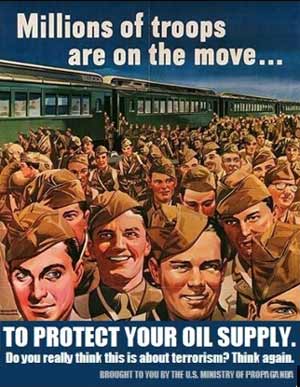
Somalia and the Pentagon Pirates of the Indian Ocean

pirateIt is a clear indication of how iron clad government controlled is the US corporate press that news reporting about Somalia in the last couple of weeks has been centered on the stoning to death of a young girl and ‘pirates’. Never mind those millions of starving refugees in the country that the Pentagon has created, it’s ‘Indiana Jones’ time here for the American media! And pirates are always fun to play with! But who are the real pirates off the coast of Somali in the Indian Ocean? Asia Times Online gives us some insight into just that question… NATO reaches into the Indian Ocean

India was once a neutral player in the old Cold War, but not anymore these days and times. The US has captured another satellite government to use in its geopolitical warfare against China and Russia… and that country is India. That old ally of the US, Pakistan?… well let’s just say that their new role is to be turned into a battlefield zone in Southern Asia for the Pentagon. The US based military industrial complex needs to get the Pentagon firmly into that region for more sales for them to be funded from US taxpayers. How better to keep the welfare system for them going? They need Federal ‘bailout’!

As to the Somali ‘pirates’ seizing ships inside their coastal waters? Look at it from their viewpoint? Nobody complained much about the US/ Ethiopian piracy in their homeland, now did they? How about those $300,000,000 of fish annually pirated from their coastal waters by international fisheries based in other countries? Who cares about fish piracy stealing from the starving Somalians? Did you even hear about it? Then why not Somali ‘pirates’ getting into the big game?

The US government is into a big geopolitical play to corner the world’s last remaining natural resources away from China and Russia. Southern Asia is the new zone of combat and the Indian Ocean sits strategically placed between Asia and Africa and most of all, the Middle East. The North Atlantic Treaty Organization is now into piracy in the Indian Ocean in a big way, all under the direction of the USA, and that wonderful little building in Northern Virginia, the Pentagon! Peace Now, Y’all. I’m sure that Obama plans to deliver ‘PEACE’… lol. He’s going to fight the Big Bad ‘pirates’ in Africa!

The gilded age and the police nightstick

Oscar of the Waldorf cookbookA legacy institution of the Gilded Age is the Waldorf=Astoria Hotel. Most of us only know it from the nutty salad, the mysterious Red Velvet Cake recipe, Thousand Island Dressing and Veal Oscar named for the famous maitre d’ hotel. I encountered the book of recipes collected by “Oscar of the Waldorf” and its cover illustration caught my eye. The coachman and carriage don’t look so opulent to us today, but do you recognize a timeless trapping of affluence? There’s nothing else in the picture but the policeman and his nightstick.

We almost dismiss the incongruity of the attendant police officer. That’s because he’s Officer Friendly to us, circa the 1950s egalitarian economic boom, earned post New Deal and post WWII, when law enforcement began to serve and protect the middle class share of the pie. Before those times, whose order did the police enforce?

Could the Waldorf diorama have featured some other occupation at the curb? A newsboy, a shoeshine, or a traffic director? If the cabbie is picking up late night revelers, why not depict a doorman or lamplighter?

If this scene did not include the policeman, he’d be missing.

The Gilded Age of the soaring wealth of bankers and industrialists, of the steel, coal, and rail robber barons, came at the expense of poverty wages for all the rest. The homeless of America’s eastern cities died in the streets, if they crossed the paths of the leisure class at all. As in London, where the bobbies were celebrated for carrying no guns, cops on the beat didn’t need more than a nightstick to beat back beggars and riffraff.

Just as in the Waldorf illustration, the policeman’s nightstick isn’t holstered, it is fingered idly like a baton. We’ve seen it in countless Chaplin, Keaton, and Keystone reels. The policeman’s baton might be carried idly, and animated mindlessly as a clerk might twirl a pencil, but the gyrations telegraphed a swinging function meant to be understood.

Today, a modern financial crisis has finally hit the post industrial era, and unemployment is taking a precipitous plunge. The repercussions for the American middle class are yet unclear to most, their comforts still too tangible to fathom gone. But our modern times have already seen the resurgence of the Rich And Famous, (to even beyond the lunge of our Super-Lotto winners, who always chose the sub-six-figure annuity). Exclusive cars, toy submarines and tickets into space cost multi-millions, but the rich have that money to burn. Common Americans have also watched the armoring of their police, using weapons which offend us, but which protect the security of institutional wealth. Para-military police forces are the natural escalation of the right-to-bear-arms arms-race, the equivalent of nightsticks to quell our social disquiet.

Already aren’t we seeing the police block the public’s way, lest we soil the red carpet of the well-heeled? Aren’t police blocking free speech in public spaces, when the monied media has decided it wants the backdrop to serve their message? Wait until we are gazing covetously upon the gilded extravagances, from the alley side of the gilded wrought iron gate.
guilded age of the nightstick
Wiki notes:
Thousand Island Dressing came to the Waldorf from the so-named Lake Ontario waterway where New York’s super rich had their summer homes. The $100 recipe for Red Velvet Cake was the urban myth which resurfaced as the $250 Neiman Marcus chocolate chip cookie.

The original Waldorf Hotel was built by an Astor whose middle name was Waldorf, next door to an aunt with whom he was feuding. Later another Astor convinced her to move uptown and replaced her home with a taller hotel named the Astoria. The two luxurious hotels hyphened via the Peacock Alley, inspiring the popular song “Meet me at the hyphen.” In 1931 the landmark was moved to accommodate the Empire State Building, and was purchased in 1949 by Conrad Hilton who added the double-hyphen flourish, completely in the spirit of gilded ornamentation.

Uncle Tom’s Hotel Rwanda

Is the Don Cheedle?Let’s clear something up for the sake of poetic justice. Uncle Tom was a maltreated slave who bore his burden with dignity. He was no collaborator, no stool pigeon, no upper class of black slave that kept the lower savages in order. That “Uncle Tom” is what the term has come to mean: a white man’s black man, owing perhaps to the original character’s civilized humanity which a white reader might not have expected to be a capacity of an African slave. The neo-Uncle Tom is a Tutsi.
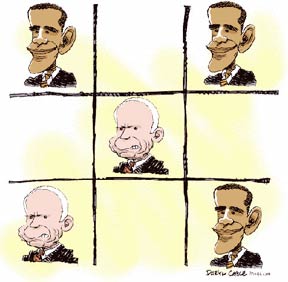
I heard the film Hotel Rwanda was just incredible, I’m sure it was. I watched the Frontline documentary to commemorate the anniversary of the genocide in Rwanda and so thought I knew the sad story already. Well I was right and I was wrong, but not about the film.

The mounting trouble in the Democratic Republic of Congo is causing leaders to forewarn of genocide such as Rwanda experienced in 1994. We’re told the same Hutus are marauding today. In addressing the issues of the Congo, do we have an understanding of what happened in 1994, beside the film dramatization?

The question to ask is whether what happened in Rwanda was genocide. That’s not to minimize the killings, but to scrutinize the motives. Was the fighting between Hutus and Tutsis racially motivated tribal warfare, or was it class warfare? Were the events of 1994 components of a peasant rebellion, distinguished by the opposing forces being from different ethnicities?

The distinction is critical. Behind the Hotel Rwanda imagery is the theme that African tribes need to be protected from each other. This happens in the form of UN intervention usually. The storytellers also know that if the narrative is bloody enough, a Western audience is just as ready to throw up its hands. Thus our impulse to join the Peace Corps or Medecins Sans Frontieres is quietly scrubbed in favor of calling in the cavalry. And then, only in the event of genocide.

Someone keeps wanting Westerners to believe that African tribes will continue to kill each other regardless what we do. Is it true? No, the Africans fight because of what we do.

The Tutsi victims of Hotel Rwanda were not just hotel keepers and clerks. The Tutsis were the administrative enforcers of post-colonial central Africa. The Hutus were the oppressed, and rose up against the Tutsis after generations of oppression and killings.

If Africa were let to develop autonomous states from its indigenous populations, its people could put their natural resources to use improving their lives. Instead, our post-colonial tentacles continue to stir up instability. Our business interests make sure that the native Africans never get their footing. We fund strong men to enforce violent rule over the inhabitants. It’s a controlled instability that facilitates the minimal societal infrastructure our traders require. But instability is difficult a balancing act. When the mayhem gets out of hand, peace-keepers are brought in at the people’s expense, to restore the disordered order.

McCain wants to redistribute the wealth: from the Middle Class to the Filthy Rich

obama-mccain-tic-tac-toCan WE THE PEOPLE really undo the NeoFascist coup of 2000, or will the electoral farce just continue?
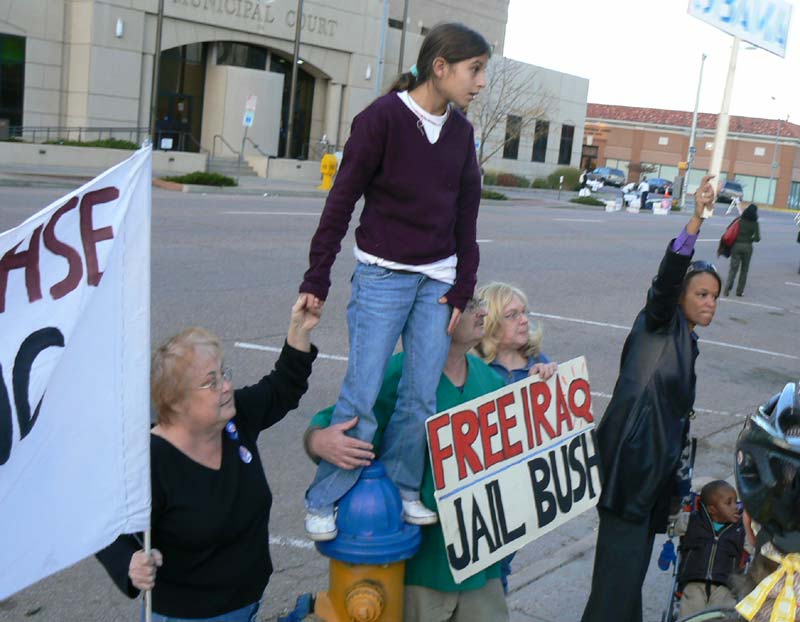
 
Was “Maverick” McCain’s goal the utter destruction of the Republican Party? Because that’s the ony way I can see him “winning.”

Evidence the election is already being stolen.

Her Imperial Highness Sarah Palin claims the media criticising her violates her First Amendment rights.

Canadian radio show hosts prank-call Sarah Palin, impersonating the French President, and get her to admit she thinks killing baby seals from a helicopter would be fun. [audio]

You know your country is worse than Nazi Germany when…

Did the CIA warn corporate executives prior to 9/11 attacks?

Lest anyone forget, McCain is NOT a natural born citizen, as required of the President in the United States Constitution. He was born in the Panama Canal Zone, before such births were legally “natural born.” The law that later made such births “natural” did not include those already born, they only became “naturalized citizens,” thus disqualifying McCain for the office of President. Not that anyone gives a damn about the Constitution anymore.

Ronald Reagan’s chief of staff endorses Obama.

Excerpts from Thomas McCullock’s Nov 3rd notes, thomasmc.com.

Springs Dems rally downtown in force

michelle-obama
COLORADO SPRINGS- A street party atmosphere prevailed downtown as local Dems formed a line over five blocks long to see the presumptive next First Lady. El Paso County may want to be conservative, but this afternoon the police had to treat the Democrats like VIPs.

LaylaWe stood to the West of the City Auditorium with our antiwar banners, keeping our distance from the anti-abortion and pro-Palin sad puppies.

Once again Colorado Obama supporters voiced their agreement with our slogan to stop funding the war. As per usual, Tony raised his voice about the less obvious antiwar theaters of Afghanistan, Somalia, Haiti, etc. With Layla in tow to reinforce the KIDS NOT BOMBS mantra. Still without upsetting most.

campaign workerEventually, one campaign official and then another approached us politely to inform us that we had to leave their sidewalk. Naturally we declined since we were not obstructing the public right of way. The second more animated worker went to confer with CSPD officers, who must have advised her to let us be.

No really. I remember hearing about GOP handlers in 2004, pretending to speak with the authority of the Secret Service, telling activists who could or couldn’t participate. I didn’t think I’d have a chance to laugh off that kind of self-important condescension from slickly dresses Democrats too.

Soon enough however, a city utility truck was stopped adjacent to where we were standing, his engine idling as if to test our determination with his exhaust. Most unfortunately, he blocked the visibility of our banner.

We stood our ground though because we could see that TV cameras were mobilizing around us for upcoming developments. It turned out we were ideally situated, perhaps less ideally for the organizers, to greet Mrs. Obama as she visited the outdoor crowd.

Springs Democrat overflow
Michelle Obama spent a good deal of time shaking hands and listening to personal encouragements. Let’s just admit that she was as gracious and eloquent as her husband.

Tony gives interview
Tony gave a lengthy interview to Hungarian reporters touring with the Obama campaign. They assumed he was a McCain-leaning counter demonstrator, and so were pleasantly surprised to hear we were actually Green Party Cynthia McKinney advocates. Andy stopped by before rejoining the queue to enter the auditorium. A number of the Springs quasi-extant peace community were in line for the Obama rally, sadly minus any peace paraphernalia to give them –or it– away. Gobama! (Hope for Peace?!)

Catholic vote
Next we decided to have a little fun with the anti-abortion contingent who’d occupied the center of the street. We were in general agreement that there are issues more important than the price of gasoline.

Blocking our message
But they weren’t interested in our expanded message of saving the already-born too, and moved to block our signs.

Two-edged sword of imperative morality

Because there’s the argument that we have a Moral Imperative to make war.

Funny how those wars Usually always involve the Capture of More Wealth for those who insist that it’s our Duty To God to spread our Superior Civilization to the Unwashed Heathen.

When McCain admitted at the end of the 2nd debate that the real reason for the U.S. propping up Georgia was exactly the same as the reason the Russians propped up South Ossetia, … because of the pipeline and which Economic Power would get to run it, and thus make the Other eat crap and die.

Or similar sentiments.

He showed clearly that we didn’t have the Moral Imperative to take up the sword.

And the reverse is true, we didn’t have Imperative Morality.

The necessary Moral High Ground to decide that we must Punish Russia for daring to act in the national interests of Russia rather than that of America.

Nor the same for “our” actions in Iraq. nor, obviously, “our” supposed Moral Imperative to “Force N. Korea and Iran to bend to OUR Imperial Will”

Because, really, when you have to FORCE somebody to bow to your Superiority, …

… you didn’t have any such Superiority to begin with.

That bit about the Unwashed Heathen is basicly a huge joke.

The guys who spew their Hate masked as Noble Concern For the Darker Races, like to point to the Pilgrims.

Not wanting to admit that the Pilgrims needed the Indians more than the other way round, “they were spreading the blessings of English Moderation, Liberty and Christian Enlightenment”…

And one of the things the Savages did which shocked the Pilgrims, the “far superior European Civilization”… was that the Indians actually had the “unnatural habit of bathing regularly”.

Yep, I just took a whole herd of Sacred Cows and lined them up in front of a Belt-Fed Water Cooled Machine-gun.

Unnecessarily brutal bitch-slap idea….

So, yesterday, just prior to getting home and finding a table full of food… I was talking to a couple of my friends, one works pest control and the other landscaping, Scots/Irish the both and Stout Lads with it.

The suggestion was made, Shannon’s idea, that instead of prosecuting Bush and Company normally, once they’re safely out of power, no naughty fingers creeping toward that Big Red Button,

Just take them from town to town across America, and allow the citizens to line up and take turns slapping the living dogshit out of them.

This would be cathartic, and for them, very painful and humiliating, and we wouldn’t have to kill them or support them for the rest of their unnatural lives while they’re in prison.

Yeah, it’s bizarre..

I don’t know for sure if the O-man himself bought the food for us, or his campaign people here in town.

Either way it’s a touch of Class that no way in Hell would the McCain people be able to match.

Because Obama, and the people who are working for his campaign, are people who Give a Damn.

None of the StormFront supplied bull-poo about “palling around with terrorists”, none of the “his middle name is Hussein” like that seriously makes three quarters of a measurable amount of difference…

It comes down to People, which is what America the nation is all about.

McCain and Palin, don’t give a damn and they fly their “Don’t-Give-A-Damn'” flag proudly.

They spread the hatred like the toxic waste it truly is and don’t take any responsibility for the consequences.

I didn’t put anything up on Tribe about just yet, nor did I post here about what’s happening to my foot.

Most of the regular Tribe folks have heard about my right foot, about the work accident and all that.

Now, it turns out, the LEFT foot has a similar problem. I guess it’s natural that it slipped under the Medical Radar, what with Texas having neglected the entire damage for 12 years, other than the initial surgeries…

But a bone called the Talus, in my right foot and now, the left one as well, died, necrosed.

That’s another story.

This is about Miss Johnnie, and the Obama Campaign people and Obama himself.

Some of the Right Wing, when they’re not trying to smear and sneer him with the word that’s an insult only to the Right Wing, “Muslim”, like to scream that he’s a Radical Christian.

Let us pause momentarily and meditate upon that… “Radical Christian”…

ok, time’s up.

Hey, he’s famous for quietly being a Radical Christian and allowing his life to be his witness.

If he’s a shill for “No Change At All” I don’t see it.

I wrote to the alfrankenweb forum about it first.

There’s a lot of good back and forth between them and Tribe.

Miss Johnnie is “just another” victim of the Way Things Are…

We’re not remarkable, and that, you see, is the really frightening part.

Our nation has melted down to where only the most extremist Clown Squad could possibly even try to pretend that we have some kind of Leave it to Beaver Because Father Knows Best, Lucy mythical White Suburban utopia.

Just the events of the last year would make your jaw drop to the floor, and …

To a certain mindset, we’re supposed to Just smile, and pretend that everything is Normal.

To the campaign workers, and to Obama himself, I’d like to say Thank you…

To the ones who want us to Vote Fear, Vote Same, Vote Stay-the-course, I’d like to say —k you.

They’ve had quite enough time ruining our nation.

Now, we have to rebuild.

Seems like they let loose an Elephant into our collective living room and he trashed the place, pooped on the floor, drank out of the toilet and punched holes in all the walls.

The cleaning bill alone is going to be monstrous.

Holy Land claimants want DNA pedigree

OMG-d. In their continuing effort to rationalize Israel’s right to exist as a European Jewish colonial authority over the lesser Palestinian Semites, Zionists are reconstituting a DNA claim check to redeem their lost Judea. Researchers are hoping to link today’s Israelis via DNA to the forefathers to whom their G-d, so the scripture says, promised the land. Though the scientific sampling is still small, the “proof” thus far is already showing an incredible racist temerity.

Anti-Negroid, anti-Semite, and anti-Goyim.

The following excerpts are from a 1999 study published in the Proceedings of the National Academy of Sciences of the USA revealing the intent to differentiate Jewish DNA.

Several lines of evidence support the hypothesis that Diaspora Jews from Europe, Northwest Africa, and the Near East resemble each other more closely than they resemble their non-Jewish neighbors. … The only exception was the Ethiopian Jews, who were affiliated more closely with non-Jewish Ethiopians and other North Africans.

dna-ashkenazi-jewAnti-Negroid
Does this suggest to you that Zionists may be more interested in granting a right-of-return El-Al ticket to white Jews over black? Forget Affirmative Action. They didn’t report the detail that only a handful of Ethiopian “Beta Israel” had yet been surveyed.

Emphasizing that the Beta Israel of Ethiopia were largely only converts to Judaism, fends off another contentious population, the Khazars of Ukraine/Turkey/Kasakhstan who converted during the Middle Ages. Why? It’s disputed that the European, less-Semitic looking Ashkenazi Jews may have originated from Khazaria.

–The graph above positions DNA types in relation to each other. Jewish groups (ASHkenazi, ROMan, North AFrican, KURdish, Near EAstern, YEMenite, and Ethiopian EtJ) are marked with triangles. Note the proximity of the non-Jewish PALestinian and SYRian. Likewise the Turk. (Algebra students will note the locations are plotted according to two coordinates, out of 18 possible lines.)

Let’s revisit the aim of the 1999 study. To bolster the claim of modern Jews to the ancient lands of Judea, required this hypothesis:

…a major portion of NRY biallelic diversity present in most of the contemporary Jewish communities surveyed here traces to a common Middle Eastern source population several thousand years ago.

This places the Jewish Peoples at the scene of the original land grant. But hark, the 1999 study came to an additional conclusion, less welcome, but significant enough to become the study’s vexing title:

Jewish and Middle Eastern non-Jewish populations share a common pool of Y-chromosome biallelic haplotypes

The possibility has been oft suggested by “Anti-Semites” of course, that the pre-1948 inhabitants of Palestine could be more closely related to the original Chosen People, than the prodigal European Jews. In lieu of a “Diaspora,” many of the original Israelites might more pragmatically have abandoned Judaism in order to assimilate with their conquerors. In other words, the Palestinians and Syrians of today might have a genetic claim to match their hereditary claim to ownership of the farms and orchards inhabited over a continuum of millennia.

Anti-Semitic
Semantics, like DNA, accord the inhabitants of the Middle East a common heritage. “Semites” refer to the Semitic people, not just the Hebrew.

The 1999 study was quick to put qualifiers on the direction in which the findings appeared to be leading:

The extremely close affinity of Jewish and non-Jewish Middle Eastern populations observed here supports the hypothesis of a common Middle Eastern origin. Of the Middle Eastern populations included in this study, only the Syrian and Palestinian samples mapped within the central cluster of Jewish populations. Continued studies of variation in larger samples, additional populations, and at other loci are needed to confirm our inferences as well as to clarify the affinities of Jewish and Middle Eastern Arab populations.

Imagine a South African Boer using such evidence to lay claim to the Transvaal, without of course wanting to suggest a common heritage with native Africans. Note too, here the researchers will point out that additional data is needed, whereas no such footnote accompanied their dismissal of the Ethiopian Jews.

Regardless, finding affinities between the Semitic peoples does not serve a Jewish state, created from land seized from Palestinians, and growing by the acquisition of more. What to do about this troublesome suggestion? Discredit the work of the past:

A number of earlier studies found evidence for Middle Eastern affinities of Jewish genes; however, results have depended to a great extent on which loci were being compared, possibly because of the confounding effects of selection. Although the NRY tends to behave as a single genetic locus, the DNA results presented here are less likely to be biased by selective effects.

Obfuscate with genetic drift, gene flow, admixture and ancestry.

At the most basic level, the genetic distances observed among Jewish and non-Jewish populations can be interpreted as reflecting common ancestry, genetic drift, and gene flow. The latter two processes will tend to increase genetic distances among Jewish populations, whereas admixture will also have the effect of decreasing genetic distances between Jewish and non-Jewish populations. Our results suggest that common ancestry is the major determinant of the genetic distances observed among Jewish communities, with admixture playing a secondary role.

And emphasize the insufficient breadth of this survey:

Although some mtDNA studies suggest close affinities of Jewish and Middle Eastern populations, comprehensive comparisons of mtDNA variation in Jewish and neighboring non-Jewish populations are not yet available.

But don’t let that hinder your overreaching premise:

The results support the hypothesis that the paternal gene pools of Jewish communities from Europe, North Africa, and the Middle East descended from a common Middle Eastern ancestral population,

And try a dose of straight-speak about your assumptions, lest scientists notice you pretend to have proven your assertion. In particular that you are overriding the DNA processes of drift, flow and admixture with assumptions of “ancestry.”

A Middle Eastern origin of the Jewish gene pool is generally assumed because of the detailed documentation of Jewish history and religion. There are not many genetic studies that have attempted to infer the genetic relationships among Diaspora Jews and non-Jewish Middle Eastern populations.

Anti-Goyim
Finally, note the problem of tracing DNA through paternal lines. Although in Judaism the priesthood is traced through men, membership is matrilineal. Drawing some conclusions requires the need for approximation, in particular for the Ashkenazi Jews of Europe.

To address the degree to which paternal gene flow may have affected the Jewish gene pool, we estimated approximate admixture levels in our Jewish samples from Europe. This question remains unresolved in particular for the Ashkenazi community. Our results indicated a relatively minor contribution of European Y chromosomes to the Ashkenazim.

Ashkenazi Jews are the progenitors of the Jewish populations who came to America, coming from Europe and before that Central Europe. In contrast to the Sephardic Jews of Southern Europe and the Mizrahi Jews of the Middle East, the Ashkenazi were the primary community behind Zionism, who lobbied the United Nations to legitimize the creation of a Jewish nation of Israel. DNA researchers are as motivated to link the Ashkenazi to Middle Eastern origin as they are to break their connections to Eastern Europe and the Caucasus.

Some genetic studies suggest that Jewish populations show substantial non-Jewish admixture and the occurrence of mass conversion of non-Jews to Judaism. In contrast, other research points to considerably greater genetic similarity among Jewish communities with only slight gene flow from their respective host populations. Furthermore, it has been demonstrated that the degree of genetic similarity among Jewish communities and between Jewish and non-Jewish populations depends on the particular locus that is being investigated. This observation raises the possibility that variation associated with a given locus has been influenced by natural selection.

Subsequent genetic studies are chipping away at the original construct. Here’s a 2003 study: Multiple origins of Ashkenazi Levites: Y chromosome evidence for both Near Eastern and European ancestries.

Comparisons with other Jewish and non-Jewish groups suggest that a founding event, probably involving one or very few European men occurring at a time close to the initial formation and settlement of the Ashkenazi community, is the most likely explanation for the presence of this distinctive haplogroup found today in >50% of Ashkenazi Levites.

A 2004 study published in the European Journal of Human Genetics further explores the founder effect, opening the door to the influence of the Khazars: Y chromosome evidence for a founder effect in Ashkenazi Jews.

Recent genetic studies, based on Y chromosome polymorphic markers, showed that Ashkenazi Jews are more closely related to other Jewish and Middle Eastern groups than to their host populations in Europe. However, Ashkenazim have an elevated frequency of R-M17, the dominant Y chromosome haplogroup in Eastern Europeans, suggesting possible gene flow. In the present study of 495 Y chromosomes of Ashkenazim, 57 (11.5%) were found to belong to R-M17. Detailed analyses of haplotype structure, diversity and geographic distribution suggest a founder effect for this haplogroup, introduced at an early stage into the evolving Ashkenazi community in Europe. R-M17 chromosomes in Ashkenazim may represent vestiges of the mysterious Khazars.

And a 2006 study: The matrilineal ancestry of Ashkenazi Jewry: portrait of a recent founder event.

Both the extent and location of the maternal ancestral deme from which the Ashkenazi Jewry arose remain obscure. Here, using complete sequences of the maternally inherited mitochondrial DNA (mtDNA), we show that close to one-half of Ashkenazi Jews, estimated at 8,000,000 people, can be traced back to only 4 women carrying distinct mtDNAs that are virtually absent in other populations, with the important exception of low frequencies among non-Ashkenazi Jews. We conclude that four founding mtDNAs, likely of Near Eastern ancestry, underwent major expansion(s) in Europe within the past millennium.

A 2008 study: Counting the founders: the matrilineal genetic ancestry of the Jewish Diaspora.

Unlike the previously reported pattern observed among Ashkenazi Jews, the numerically major portion of the non-Ashkenazi Jews, currently estimated at 5 million people and comprised of the Moroccan, Iraqi, Iranian and Iberian Exile Jewish communities showed no evidence for a narrow founder effect,

Election canvassing trick or treat?

In our neighborhood, we don’t have to think twice about opening our front door. Most days we leave it open. On the rare occasion that someone comes by, it’s a neighbor or a delivery man. At the extreme it might be a Jehovah’s Witness or small urban youth on a candy drive. So we found ourselves challenged this weekend at the sight of a grown black male in threatening urban attire on our doorstep at dusk. Behind him, a middle-aged white woman stood like a parent escorting a trick-or-treater. Much as I would have liked to know what their visit was about, we didn’t open the door.

I can admit I came late to the decision process, but I wouldn’t have advised any different. We have an African-American neighbor, but otherwise everyone outside in our neighborhood is white and dressed appropriate to what they are doing. This visitor wasn’t suitably dressed to deliver a pizza. Who had time to divine whether he had along a parole officer or a hostage? Answer the door? Not by the hair of our chiny-chin chins. Doesn’t that adage look very strange after all these years? See how far we’ve come.

I came on the scene after the third or fourth time our dark visitor rapped on the door. The decision already made to decline this particular solicitation, I listened as he tried to stuff some literature under our storm door before he walked back to a car. Only when I heard a motor start did I look to see a sporty black Infiniti pulling out of our driveway. When the coast was clear, I retrieved what he’d left under our door, finding two brochures promoting Barack Obama for president. This of course left me completely intrigued, and growing more so as the opportunity escaped to catch up with that car to ask what it was they had wanted.

I would not have been eager to explain our racist timidity, nor I suppose did I want to be faced with having to decline a solicitation for a campaign contribution. I would have had no qualms asking what the gentleman hoped to project with the knit cap and jacket getup. Was he armed too?

Our address isn’t listed as being Democrat, or even possibly receptive I think, so were they attracted by our yard sign?

We have an Obama sign on our lawn, entirely out of desire to show solidarity with the too few Progressives in our neighborhood, as well to encourage the election enthusiasm of our kids. The sign may have been the only reason our would-be canvassers picked our house. In these parts, Obama signs are few and far enough between that election canvassing requires a car.

It turns out the literature our visitors left was generic information about how to use mail-in ballots, and something else equally insignificant to voters presumably already in their camp. This afternoon I’m going to check with the regional Obama headquarters to ask after what we missed.

Really, what might have been their thinking? We’re not deterred about supporting a black candidate (Cynthia McKinney!), but was that an inadvertent aim? The racial divide has certainly come to the forefront of our minds. Now I’m hearing it formalized on the news as “the Bradley Effect.” The tendency of voters to say they will vote for a non-white California governor when later they will change their mind. Those media bastards! It’s really the corporate media auto-suggestion of a so-called effect that we have to worry about. And strange twilight dissonance canvassers.

Naturally my thoughts immediately run to Rovean schemes of bogeyman Obama surrogates sent into suburban neighborhoods to spook the white folk. Is that improbably despicable?

Do Americans want a president in the White House who they would not even be comfortable to see at their front door? I’m sure we can all open our door to a half-black lawyer in a cashmere coat. Some may need to hold out until they recognize the elaborate entourage that marks a dignitary. But such a distinguished visitor would be an honor for even the whitest cracker.

These days I have a feeling that just a uniform from a bonded company is the authorization an African-American male needs to be appreciated for his expertise in your hour of need. And that’s a far cry from wearing a dark knit cap accompanied by his social service officer.

I mentioned that our African American visitor knocked several times to try to get our attention, but we had neither television nor reading light visible. I’m not sure our visitor had any telltale indication we were home. It’s possible of course that nobody in our part of town was showing receptivity on his round. This persistence, loud knocks across our quiet dark house, was the incongruous element I could not reconcile with a friendly campaign call. Hence my suspicion that somebody was playing Big Bad Wolf.