OCCUPIED WALL STREET, NYC– Protests enter their third workweek in Liberty Plaza where the cold has arrived but demonstrators are still prohibited from having shelter. Organized labor is rallying their members to join the occupation on Wednesday, with over a million union workers expected to march in solidarity. If you’re not joining in, are you in the way? Colorado Springs Occupiers in Acacia Park are being joined by Tea Partiers, Ron Paulists, and Zietgeisters. The more the merrier. Remember, target the investment bankers down the block, NOON EVERYDAY. They’re getting cranky.
Tag Archives: Occupy
Revolution at 2112 RPM
For Tom, the guys at Occupy Colorado Springs, and everyone else:
So, if I sit here and carry on about how we can get out of this grief under which so many of us find ourselves buried by living cooperatively, and no one plays along, it’s like division by zero, an operation that produces no definable solution and the thought of which is so troublesome it caused philosopher George Berkeley to suspect all mathematicians could be devil-worshipers on the side. Seriously. A new friend I met at Acacia Park yesterday asked where the little hullabaloo about banks and bailouts and revolution and such was happening in Colorado Springs was asking the general milieu of rabble rousers where their revolution could be expected to go. (Hi, Tom). Some of the guys there, as one might expect, were so fed up with the obviously unsupportable state of current affairs that they were almost gleefully anticipating violence and war–civil war–right here in the U.S.A.. (Hi, Pat). I certainly can’t blame anyone for thinking that way, given that I hoped fervently for exactly the same outcome from around the 3rd grade til only recently, really.
I’ve already mentioned my opinion of the futility of standard issue revolutions. We’ve tried that. It doesn’t work. We’ve tried Monarchies, ordinary dictatorships, “working-class dictatorships”, Capitalism, Communism, Socialism, Ism after Ism–none of what we’ve tried to do has worked, neither for the oppressed nor the oppressors. We’ve been dividing by zero all the while. You should look that operation in the eye some, so you know what I’m saying. It’s the same as proving a negative, or trying to work out the math of the Singularity, and if you find it difficult, one glance at a graph will turn the lights on a little for you. When I was a schoolboy, I always thought it was supremely bogus to respond to any questions about division by zero, (or other imponderables, for that matter), by asserting the answers to be “undefined” just because a conventional answer might be unsatisfactory. I was a weird kid, OK? Look at the link or find something more techie, (a little help, Kathryn?), and then extrapolate the idea to the business of social revolutions and you’ll find my point, or at least one “quantum” facet of it. You could have a look at a representation of the Ouroborus and get the same notion to materialize in your head, maybe.
The shit we’ve been doing has not worked, is not working, and will not work. The answers we’re after will not derive from the operation we’ve been attempting to apply, no matter what.
We compete. That’s just what we do. We compete against one another, against Nature, and maybe against God, though it’s not by any means compulsory for you to think of it in any sort of Divine sense, or wrestle with religious aversions for the thing to work out the same, here. That’s just me. The competition we’ve been so avid to pursue all these generations hasn’t worked any better for the atheists or the religious. If we pursue yet another bloody revolution, we’ll wind up bathing in another absurdly predictable vat of blood, and maybe you super-rich can stretch your inane Grand Game out for a few more years in your bunkers after some of us useless eaters are dispatched and used as semi-organic fertilizer. The snake will still have a mouthful of tail caught up in its throat, if it lives through this one.
Tom was serious about finding a solution when he came by our little protestation yesterday. Pat was just as serious about the blood, I’m afraid. I’ve had enough of blood, so here’s what I’m doing. See what you think. (Here comes the part that might curdle Mom’s blood a bit, but maybe not…maybe not.) I have completely abandoned ordinary reality. It’s never worked so well for me anyhow, and I was already kinda screwed when I came to this notion, so you are welcome to hold on to your own personal misery and think of me as just another hopeless crackpot, if you want–another useless eater. After all, I’m seriously just an 9th grade dropout and unemployed housepainter with bad joints and a broken back, a tragic character out of a Steinbeck novel if you will. Except I don’t feel tragic at all; I’m the happiest guy I know. No shit.
What does it mean to have abandoned ordinary reality? There are lots of angles to that so I apologize up front for the doglegs I’ll be working as I attempt to answer the question. First, I’ve given up looking for a “job”, or the hope of ownership of anything at all, including money. That doesn’t mean I’ve decided to laze around on someone’s sofa til I die of entropic dissipation; I’ve been incredibly busy since this paradigm shift, with no horizon in sight, really. There are millions of people in the shape I was in over last summer, wells running dry and bankruptcy looming while the whole time work to do abounds. I’ve just given up the game those $game pieces$ track, like a chess player laying down his king. Those guys won. It’s OK–it’s only a game, after all. I was never so good at it–never really gave a damn.
Now I find myself in a brand-new and rather sketchily mapped territory where I’m the president of my own head and nothing else, a monarch of abrogation and apostasy. So when Tom asked about a plan, I had to think about it some before I could even say as much as I am right here, right now. The two biggest differences I can define between this new approach and the other are cooperation and good ol’ hippie-dippie, Jesus freak style love and self-abandonment. And not just on my end, see. I don’t own anything, won’t own anything at least so long as I go down this path, and can’t pay for anything or support myself, or anyone else. Well then. WTF?
I’ve always given. Always. I loved Robin Hood as a kid, and I used to do things like stashing random campfire-scented homeless dudes in the back of my room at night, in hope that Mom wouldn’t discover them and put them out in the snow or, even worse, send them packing to jail. (Neither Mom nor Dad ever discovered any of them. Hi, Mom. Hey, Dad ;)) I give away food for…well that’s a fine question. When asked why I spend so much of my time on things like the Colorado College Community Kitchen, the best I’ve been able to come up with in response is that it’s just in me to do. I think it’s been some sort of psychic trade-off for the ethical compromises and outright violations to which I’ve succumbed in my lackluster prosecution of the game of property collection, which I’ve always vaguely known to be a sort of theft, just like the Marxists say. Follow me, though–the Marxists haven’t show me anything not-dysfunctional, either. (Sorry, Michele, Jon).
This new thing is about giving and receiving, and about a different way of seeing the whole picture, like when one of those optical illusions with the hidden horse and rider amongst the trees suddenly becomes apparent. Nothing changes; it’s just revealed–revelatory. I live at someone else’s house. I bring around food for everyone to eat that I never owned. I smoke tobacco that a gracious host brought to me, and hope my phone and broadband will still be operational next week. You’re welcome to pay it for me while I try to figure out how to do this with no game pieces at all. Message me; I won’t be paying for it. I’m living on a prayer, as the song goes, living on Love. You can too, I swear. Quit your shitty job at Wal-Mart’s haircutting kiosk and cut your neighbor’s hair for free. Don’t worry about game pieces. Come down to CC on Sunday and help us give away someone else’s food. Have some! Bring some pizzas from your shop to the protesters. Retire your jersey if you’re a big winner and forget about the conspicuous displays of wealth. We get it. You won! Yay for you! Now put a few families up in your east wing. Love them. Be tender. Let their hapless lost patriarchs know it’s unnecessary to numb the pain with whiskey, or whatever. It’s OK–we won’t call you a wuss, or anything.
Right now there’s Revolution in the wind. I like to read kind of a lot. It seems the handiest way to find out about shit, and I’ve read about a lot of Revolutions. It can make my head spin. If we pursue Revolution we’ll be running in circles. We’ll be eating our tails. The Earth herself is done with our bullshit, and there’s really not any more tail left to eat. Let’s get off the turntable. We’ll be dizzy for a while, but I think we can walk in a straight line if we get our bearings. Get hold of me. I’ve got these words for you all, for free. This is not a trade. I can paint your house, too, or build you a deck or something. If you want to give me something, or give something to my family, or give something to someone I don’t know and will never meet, then maybe you get it. I won’t take it as payment. I’m not in that game.
I hope this works. I’ve had enough tail. How ’bout you?
http://en.wikipedia.org/wiki/Division_by_zero
(Reprinted from Hipgnosis)
#OccupyColoradoSprings Acacia Park, Tejon & Bijou, against corporate greed

The 99% speak out from Acacia Park, downtown Colorado Springs. Favorite posters were: In Capitalist America, Banks Rob You and We The People Are the Solution!
Great pics of #OccupyDenver Saturday march at kallisti.imgur.
#OccupyDenver gains speed in spite of counterrevolutionaries hitting brakes
You can point the finger at the angry Anarchists, or at the nonviolence biddies who refuse to mingle, but in the end the Occupy Denver General Assembly emerged unscathed. At issue was the third of the St Paul principles, that activists will not condemn each other over divergent tactics. Of course condemnation provokes… condemnation, so the disruptors succeeded with their divisive interjections, until participants concluded that violence versus nonviolence was a non issue. No one wants or plans violence, why pretend it requires sanction or prohibition? For my part I wonder who says youthful exuberance has anything to learn from voices of experience, experienced at failure? Occupy Together is the common goal. The Denver occupation on the capitol steps is now encamped 24/7 and has organized a permitted demonstration on Saturday Oct 1. Local unions have signed on to march, which mirrors the interest labor is now paying in several dozen cities worldwide, just as Occupy Wall Street garners more and more celebrity and media attention.
NY #OccupyWallStreet protest is going to be this generation’s Woodstock. Are you going to miss it?
If you can’t bum a ride to New York City, you are going to miss out, it’s plain as that. But you can make the revolution happen where you are. The Egyptian victory in Tahrir Square wasn’t achieved without simultaneous demos in Alexandria and Suez, etc. The earliest heavy casualties actually happened outside Cairo. In the Colorado capitol, a nascent #OccupyDenver is building steam. President Obama is making a campaign stop in Denver on Tuesday at Lincoln High School at Evans and Federal. That will be an excellent chance to force the media to break its blackout against the anti-capitalist uprising. What’s there to say to President Obama? Nothing right? He’s shown he answers only to Wall Street. But the message to the TV coverage of Obama, and to the people of Denver can be: Why is the bank-owned corporate media not telling you about #OccupyWallStreet? Reclaim our democracy from the bankers.
Colorado Springs is gaga for warmongers, bigots, Zionists and conservative educational campuses. The local Intelligence Quotient doesn’t rise to the level of critical thinking, which is a heartbreaking trait in its youth. But there is an ongoing effort to aid #OccupyWallStreet’s visibility. It’s held on the noon hour, at Tejon and Colorado Ave downtown, at the Booz Allen Hamilton Building, where area war profiteers laugh all the way to the investment banks across the hall, passing by the local FBI office, btw. Our protest doesn’t have the music, mahem & hijinks of NYC Liberty Plaza, but none of the beatings either. Come a few minutes late and you get to pass reserve cops hiding out of our view in the alleys around the critical intersection, in case the bankers want their critics squashed. Possible messaging: DON’T LET BANKERS FORECLOSE ON DEMOCRACY, OCCUPY WALL STREET NOW!
WALL STREET BANKS ARE STEALING YOUR HOME, HEALTH, RETIREMENT, STANDARD OF LIVING, & WORLD RESOURCES. #OCCUPYWALLSTREET –LOOK IT UP.
The revolution will not be televised, emailed unfiltered, or allowed to trend on Twitter, but it’s starting without you

OCCUPYWALLSTREET- Eighty nonviolent #OWS protesters arrested Saturday by NYPD, some penned in and maced, others manhandled, as they marched in NYC against America’s bankster oligarchs. Wall Street proper remains fortified by anti-invasion barriers preventing pedestrians and demonstrators from getting anywhere near. The protest encampment in Liberty Square enters its second week and today’s baptism of police brutality ensures that the Second American Revolution is taking wing.
What are their demands, everyone asks? At the crux, the same as Tahrir Square, REGIME CHANGE, a decapitation of corporatist imperial fascism. The trouble of course is that to average Americans, a “regime” is a foreign entity, usually incorrigible. So long as the MSM defines the terms, the concept of a US regime doesn’t compute. Another reason why #OccupyWallStreet has to be vague about its goals is because calling for the overthrow one’s masters is not legal. For now, what the protesters against Wall Street say they want, is what they want. If you want to have a say in what direction they take, go there and take part. Otherwise, settle for this, their ONE DEMAND:
A Message From Occupied Wall Street (Day Five)
Published 2011-09-22 07:51:42 UTC by OccupyWallSt
at OccupyWallStreet.orgThis is the fifth communiqué from the 99 percent. We are occupying Wall Street.
On September 21st, 2011, Troy Davis, an innocent man, was murdered by the state of Georgia. Troy Davis was one of the 99 percent.
Ending capital punishment is our one demand.
On September 21st, 2011, four of our members were arrested on baseless charges.
Ending police intimidation is our one demand.
On September 21st, 2011, the richest 400 Americans owned more than half of the country’s population.
Ending wealth inequality is our one demand.
On September 21st, 2011, we determined that Yahoo lied about occupywallst.org being in spam filters.
Ending corporate censorship is our one demand.
On September 21st, 2011, roughly eighty percent of Americans thought the country was on the wrong track.
Ending the modern gilded age is our one demand.
On September 21st, 2011, roughly 15% of Americans approved of the job Congress was doing.
Ending political corruption is our one demand.
On September 21st, 2011, roughly one sixth of Americans did not have work.
Ending joblessness is our one demand.
On September 21st, 2011, roughly one sixth of America lived in poverty.
Ending poverty is our one demand.
On September 21st, 2011, roughly fifty million Americans were without health insurance.
Ending health-profiteering is our one demand.
On September 21st, 2011, America had military bases in around one hundred and thirty out of one hundred and sixty-five countries.
Ending American imperialism is our one demand.
On September 21st, 2011, America was at war with the world.
Ending war is our one demand.
On September 21st, 2011, we stood in solidarity with Madrid, San Francisco, Los Angeles, Madison, Toronto, London, Athens, Sydney, Stuttgart, Tokyo, Milan, Amsterdam, Algiers, Tel Aviv, Portland and Chicago. Soon we will stand with Phoenix, Montreal, Cleveland and Atlanta. We’re still here. We are growing. We intend to stay until we see movements toward real change in our country and the world.
You have fought all the wars. You have worked for all the bosses. You have wandered over all the countries. Have you harvested the fruits of your labors, the price of your victories? Does the past comfort you? Does the present smile on you? Does the future promise you anything? Have you found a piece of land where you can live like a human being and die like a human being? On these questions, on this argument, and on this theme, the struggle for existence, the people will speak. Join us.
We speak as one. All of our decisions, from our choice to march on Wall Street to our decision to continue occupying Liberty Square, were decided through a consensus based process by the group, for the group.
Consider the Lilies
My friends are no doubt a scrappy bunch. It’s no big surprise that guys like Jon and Adam and–holy shit–Skip, are pissed off and ready to burn a few barns down, so to speak. I don’t think I need to look up a bunch of fancy references to convince anyone that things are dire, dire, dire. The college students I went hiking with yesterday afternoon will have to live what, like 20,0000 years to pay off the stupid shell-game debt they supposedly owe. Some guy on Adam’s page was trying to convince me the whole business is thus because we never pay our bills. Bullshit. It’s like this because a buncha paranoid Fascist clowns have set up a little magick trick to try and convince us they have some legitimate claim to all the cheese. THEY DO NOT!!!
So there’s a fight working alright, and I’ve been in it since I was a potential in my Granddad’s genetic line. But I recently noticed–this is so weird–we’re all fighting the wrong guy, and he is us. If we collapse our little bubble here in our little gob of the quantum foam, we’re all screwed; not just us little guys. And we really do have enough guys to kick their Fascist asses on the way down. But guess what, we’ve all got it wrong!
Like it or not we’re all in this together. We’re each and every one of us as fucked up as the Devil!!! Shit he may have been the only sane one all along–but now I’m just picking at scales. Sorry. Didn’t meant to. Ahem. Point is some of us are fucked up differently than others. It doesn’t matter. That crackhead? Fuck-ed. The cop beating him down? Fuck-ed. Dominique Kahn-Strauss? Fuck-ed. Who else? The Pope? Me? You? Yeah, you’re starting to anticipate if not grok me.
I’m a tool. Sometimes I’m also a dick and an asshole. That’s another matter–I’m happy about being a tool.
A while ago I came back to Colorado from a trip back to Cleveland for the great John Covert’s 95th birthday party. The moment I returned to my adopted home town, every television set in the danged known Universe began to trumpet the imminent falling of the sky, talking heads of every political stripe and linguistic camp bewailing the unavoidable collapse of the American dollar and the entire foundation of all civilization along with it. I found myself with time on my hands, so I started tinkering with this blog as nothing more than an outlet for some frustrations, and a place to sling a bit of my ordinary schtick, mainly just at myself, assuming I’d be the only one reading. I played around on Facebook a little meaning nothing more than to hunt down a few friends from the distant past. That’s what FB is for, right? A series of rapidly developing events took place and I soon found myself in the position I mean to describe right now, as best as I am able.
I guess I can’t recall the first moment I was told I could write. It hasn’t really mattered til recently–everyone knows writing is one of those career choices pursued by quixotic artsy-fartsy types that were willing to sacrifice creature comforts on the off chance someone might give a shit, and that the big bucks might roll in, easy-pleasy. Like hitting the lottery or breaking into the billboard charts with your high-school garage band, right? Besides, writers as a breed must, by necessity, possess a form of self-deluded arrogance that they have things to say of such verity and import that people will be compelled to actually pay money to subject themselves to the grief of listening to the blather produced in the effort to be a big deal. It was never like that. I just wanted something to fill the time that wouldn’t dissolve my brains like the all to comfortable slide into awareness of regularly scheduled TV programming was beginning to do.
Somewhere in the midst of Facebooking about how we need a new econo-political paradigm it became apparent that bitching about this need had long been a habit of mine, as well as of many of my friends. I’ve always been a pretty good bitcher, too, in fact, when I entered the foundationless world of a self-employed remodeler it was a sense of the futility of bellyaching about how paint companies were managed. My brother and I had enough faith in our pooled abilities to believe we could do things better than the people running outfits for which we had worked to strike under our own banner. The key words in this were and remain “faith” and “believe”.
So it occurred to me that if I really believe my own drivel, I ought to live it out.
Well that was an eye-opener. Very little pursuit of that idea led me to examine just what I actually believe, which turns out to be quite a bit, and quite at odds with the established order of things. I started, as is my wont, to contemplate God, and the deeper nature of things. I thought about how this transposes to something manageable in this “real” world. We have to work at a job, right? We have to round up bacon we can trade for goods, services, support for our children, and so on. But wait a minute–20 years of self-employment, and I was broke, money-wise, and most of my relationships were broke in some sense as well, though in most instances I couldn’t tell how, or how to fix it. Seemed the thing I was best at doing was bitching. Where’s the fun in that?
But I do believe in God, right, even though I’ve managed to get myself thrown out of both Christian churches and sorta like devil-worshiping occult groups because my notions of God are…unconventional. Enough so I’m usually inclined to put quotation marks around “God” when I type the word, and to feel compelled to issue tedious disclaimers about how I differ from the general milieu of thinkers on the matter.
An experiment in ontological ideoplasticity.
This whole thing is about stuff I believe. I’m kinda stuck at that level, since there’s not much I know. Some of what I believe has to do with what other folks believe, so I’ll be pretty much doing what a lot of other folks do, in a lot of ways. In some
Whoa!!! Blah Blah F-ing Blah.
Mt 6
25 Therefore I say unto you, Take no thought for your life, what ye shall eat, or what ye shall drink; nor yet for your body, what ye shall put on. Is not the life more than meat, and the body than raiment?
26 Behold the fowls of the air: for they sow not, neither do they reap, nor gather into barns; yet your heavenly Father feedeth them. Are ye not much better than they?
27 Which of you by taking thought can add one cubit unto his stature?
28 And why take ye thought for raiment? Consider the lilies of the field, how they grow; they toil not, neither do they spin:
29 And yet I say unto you, That even Solomon in all his glory was not arrayed like one of these.
30 Wherefore, if God so clothe the grass of the field, which to day is, and to morrow is cast into the oven, shall he not much more clothe you, O ye of little faith?
My apologies to any devil-worshiping freaks I may have just offended. You’re wrong, anyhow–that’s for another moment. Point is–and I’m no ordinary Christian–this is stuff we all learned from the cradle. I’ll be using Christian doctrinal talking points throughout this whole conversation because that’s where I learned this shit. It’s also where I learned it was all crap.
I’ve had a real hard time with this one, cause by now I can usually say, “The point is….” Right now I still can’t do that. The whole collection of thoughts in my head begins to ooze its way into the point when I come at it this way. Bear with a little, OK?
Christians say they believe the book that stuff up the page a little came from is the sacrosanct Word of God, equated with the Logos–God on paper, if you will. With apologies to those real Christian human beings in the world, Bullshit, Bullshit, Bullshit!!!!! If you shitheels really believed one word of the shit in that book, this conversation would be intrinsically inconceivable. See that at the end of that last sentence? PERIOD.
On the other hand, I believe the Bible to be a beautiful collection of fine literature, some of which may be divinely inspired. We have all these cultural heroes, like Gandhi whom I linked to on FB earlier, Jesus, John Lennon ferchristsake. We pay a bunch of lip service out to them then grab a beer and flick on some stupid nonsense on TV, or punch a child, or throw rocks at a cop, or bust a protester. Fuck that, I decided I believe it. Whatever it is.
You may have noticed me carrying on about a new paradigm, money’s a bad metaphor, we’re all in this together, &c., &c. All that is real, real important to what this is about, but OMG kids! This was a bitch to get off. I’ll be hanging flesh on it all as I go, but be patient. what ended up here just now was way different than what I’d meant to do. A writer has to possess a pretty ridiculous quantity of arrogance in the first place, just to have the motivation to sit here pouring all of it out. I mean, I think this tripe I’m typing is valuable enough, and that you all will want to see it–need to see it–to occupy me at 3:30 in the fucking morning. Even worse, here and round about, (get wit’ me on Facebook, if you came from somewhere else), I’ll be arguing with Hegel, Gandhi, Paul the fuckin’ Apostle. Can you believe it? Whatever, I believe the finer points from all those guys. I’ll explain everything.
This hasn’t been the clarification I’d promised to put up, but it defines some of the questions, I guess. You can have it.
Now don’t forget. A little review: It’s All Bullshit!!!
(Reprinted from Hipgnosis)
HA! NYC FiDi is now Occupied Territory

–by NYPD cops unfortunately, Wall the street remains barricaded from anti-banking demonstrators, but the broader NYC class-war zone remains contested as #OccupyWallStreet forces hold their protest beachhead for a fourth day. Violent arrests in Liberty Park have been made for wearing masks, trying to stay dry, holding signs, and defying the police commander’s belligerence; hashtags and emails have been censored by Twitter and Yahoo, but physics dictates an opposite reaction, and the physics of activism guarantee it will be greater than equal.
The Wall Street protest needs PIZZA!
The #OCCUPYWALLSTREET protesters are pulling their second overnight, anticipating a showdown when traders and bankster return to the financial district on Monday, and especially as international delegates arrive for the UN General Assembly. So you’re not there, what can you do? Remember in the thick of the Madison confab, when pizzas arrived courtesy of Egyptians in Tahrir Square? Do that! USDOR Tweets are favoring Liberato’s Pizza, who’ve restocked for fresh orders, but the more eateries who receive calls, the broader will be the demonstration’s support. Here’s a list of nearby pizzerias, but chose whatever food YOU would like, and don’t look for solidarity from corporate chains.
Liberato’s Pizza (via Seamless)
17 Cedar Street, New York – 212.344.3464Adrienne’s Pizzabar
54 Stone Street New York – 212.248.3838Underground Pizzeria
3 Hanover Square, New York – 212.425.4442Caruso’s Pizza & Pasta
140 Fulton Street, New York – 212.267.2927Masterpiece Pizzeria
2 Rector Street, New York – 212.349.4500Harry’s Italian Pizza Bar
2 Gold Street, New York – 212.747.0797Cucina Bene Pizza
41 Exchange Place, New York – 212.635.0345Cordato’s New York
94 1/2 Greenwich St, New York – 212.233.1573Majestic Pizza
8 Cortlandt Street, New York – 212.349.4046Rosella Pizzeria
164 William Street, New York – 212.619.826Zeytuna
59 Maiden Lane, New York – 212.742.2436Big Al’s Chicago Style Pizza
9 Thames Street, New York – 212.964.3269Grotto Pizzeria & Restaurant
69 New Street, New York – 212.809.6990
Where to stay on your next visit to NYC Sept 17 onward: Occupy Wall Street

From Syntagma Square to Wall Street, the people want their money back!
If the Wall Street bankers are going to be made to give the world’s wealth back to the people, they’ll ask to “you and whose army?” Your dumb lazy ass on the line would be helpful, but no one’s waiting on you to press the banks for economic justice. Around the world, youth activists are converging September 17 on the international centers of grand larceny. In New York City, that’s Wall Street.
From antibanks.net

Occupy financial districts on September 17:
#OCCUPYWALLSTREET in New York, USA – Read the plan of action.
#TOMALABOLSA in Madrid, Spain – Read the plan of action. Fb event.
#TOMALABOLSA in Valencia, Spain – Fb event
#TOMALABOLSA in Bilbao, Spain – Fb event
#TOMALABOLSA in Santander, in Spain – Camping 2 days in front of Bank Santander. Read the plan of action.
#TOMALABOLSA in Las Palmas, in Spain – Read the plan of action.
#OCCUPAZIONEPIAZZAAFFARI in Milan, Italy – Fb event.
#OCCUPYBANKOFENGLAND, #UKUncut in London, England – Fb event. other fb event.
#USDORSF San Francisco, USA – Read the plan of action.
#USDORLosA Los Angeles, USA – Read the plan of action.
#OCCUPYWALLSTREET in Austin, USA – Read the plan of action.
#OCCUPYWALLSTREET in Seattle, USA – Read the plan of action.
#TAKETHESQUARE return to the Capitol Square in Madison, Wisconsin – USA Webpage
#OCCUPYBAYSTREET in Toronto, Canada – Fb event.
in Athens, Greece – Hellenic Stock Exchange Fb event. Also gathering in Syntagma square at 12:00 and then march to the Bank of Greece on Panepistimioy Avenue. Fb event. Web flyer here.
in Berlin, Germany – Occupy Börse Berlin Fb Event.
in Frankfurt, Germany – Occupy Frankfurter Börse Fb Event.
in Stuttgart, Germany – Occupy börsenstrasse Fb event.
in Lisboa, Portugal – Demonstration in front of Stock-Market headquarters. Fb event.
in Porto, Portugal – Demonstration in front of Stock-Market headquarters. Portugal – Fb event.
in Vienna, Austria – Read the plan of action.
#BEURSPLEINBEZETTING in Amsterdam, Netherlands – Camping in the Exchange Market Square. Fb event. Preparation meeting (13.09.2011) link.
in Tel-Aviv, Israel. Demonstration in front of Stock Exchange Headquarters. FB event.
Anonops #OccupyWallStreet Sept 17
Adbusters says: let US Days Of Rage begin Sept 17, Occupy Wall Street!
IT’S ON. Street kitchens are set to roll into place September 17, one week after New York City observes its remembrance of the still suspiciously inexplicable, commercially branded, “9/11” foundational myth to launch the Global War On Terror, dose of public trauma to ease final steps of Capitalist Shock Doctrine. Yes, #OccupyWallStreet is being called on a Saturday, when the stock market is closed, the better to be encamped when the bell rings on Monday morning. Is it too late to protest the New World Disorder? We’ll know #Sept17.
Will occupying the streets Sept 17, Oct 6 and 15 precipitate an American Fall?
“American Fall” would be a pun, yes. A pan-Arabian-like Spring causing the US anti-democracy to tumble, being the objective. The English riots have put a dark spin on what might be Middle America’s reception to popular uprising, but mark the dates, because the brass ring nears whether you have the courage or not, and you won’t have the stomach for the alternative.
You’ve probably already sensed the buzz about #SEPT17, campus groups across the country have been bypassing the conventional chaperones to coordinate OCCUPY WALL STREET. Can they do it? Not without your help, and that doesn’t mean switching your phone service or knocking on doors to Get Out The Vote.
Donate, organize or help with the logistics. If you’ve the temerity, attend in person. At the very least, you’ll have your expenses reimbursed when the city settles your civil suit against them for false arrest. New York City already budgeted for the insurance policy that will pay the legal settlements for the probably now textbook law enforcement practice of kettling inconvenient protests. Or, thinking positively, you may just witness history. To make history you have to make it. Don’t leave it up to the Little Red Hen if you want a piece.
Next up is #OCT6, although the day varies regionally. The date marks the 10th anniversary of the Afghan invasion, but social justice groups of all stripes are throwing their sundry complaints unto one banner and have organized marches nationwide. Of course the nationals aims to SEIZE DC, where activists will converge on Freedom Square, English for “Tahrir Square”, with plans to camp there until the people’s voice is heard. DC has passed ordinances against overnight protests, but Freedom Square may be cut some slack for being off the National Mall. It’s a smaller public space which lies on the diagonal between the White House and the Capitol Building, abreast of General Tecumseh Sherman’s horse actually.
The determination to reclaim American Democracy with an action in DC hopes to recreate Madison Wisconsin on the Potomac, with the same grassroots support for a broad set of issues to which both parties have shown themselves unresponsive.
A successful DC foothold will get real traction being closely followed by an international call for a worldwide uprising. #OCT15 is being spearheaded by Spain’s movement for GLOBAL DEMOCRACY. Will it dilute regional efforts to have actions running concurrently, or will synchronized demonstrations overwhelm our transnational overseers? We can wait and see, or we can give it our best shot.
Here are more graphics in support of the kickoff September 17. Borrowing from Tunisia and Egypt, and before that Chicago 1968, it’s US Days of Rage.
In the course of a single spring we’ve seen massive demonstrations which provoked governments to interrupt cellphone service, shut down internet access, and answer protestors with direct gunfire. To what extreme will the USG be driven? What rights remain inviolate in the US? Not communication. Activist cellphones were blocked on the BART in San Francisco to thwart protests against police brutality.

US House Resolution 1553 offers go-ahead for Israel to attack Iran
House Republicans have crafted a resolution to offer US approval for Israel to use “all means necessary” to confront Iran, reviving Holocaust fears and misquoting Mahmoud Ahmadinejad, where “wipe from the map” conflating the “Zionist Regime” with the Jews. Below is the full text of the resolution, supported by Republican congress members including Colorado’s Doug Lamborn.
111TH CONGRESS
2D SESSIONH. RES. 1553
Expressing support for the State of Israel’s right to defend Israeli sovereignty, to protect the lives and safety of the Israeli people, and to use all means necessary to confront and eliminate nuclear threats posed by the Islamic Republic of Iran, including the use of military force if no other peaceful solution can be found within reasonable time to protect against such an immediate and existential threat to the State of Israel.
IN THE HOUSE OF REPRESENTATIVES
JULY 22, 2010
Mr. GOHMERT (for himself, Mr. AKIN, Mrs. BACHMANN, Mr. BARTLETT, Mr. BISHOP of Utah, Mrs. BLACKBURN, Mr. BONNER, Mr. BROUN of Georgia, Mr. BURTON of Indiana, Mr. CAMPBELL, Mr. CHAFFETZ, Mr. CONAWAY, Mr. CULBERSON, Ms. FALLIN, Mr. FLEMING, Mr. FRANKS of Arizona, Mr. GINGREY of Georgia, Ms. GRANGER, Mr. GRIFFITH, Mr. HENSARLING, Mr. HERGER, Mr. KING of Iowa, Mr. LAMBORN, Mr. LATTA, Mr. LOBIONDO, Mrs. LUMMIS, Mr. MARCHANT, Mr. NEUGEBAUER, Mr. PENCE, Mr. PITTS, Mr. POSEY, Mr. PRICE of Georgia, Mr. OLSON, Mr. ROONEY, Mrs. SCHMIDT, Mr. SHADEGG, Mr. SMITH of Texas, Mr. WESTMORELAND, Mr. ROSKAM, Mr. MCCOTTER, Mr. BROWN of South Carolina, Mr. RYAN of Wisconsin, Mr. MCCLINTOCK, Mr. JORDAN of Ohio, Mr. BARTON of Texas, Mr. KINGSTON, and Mr. CARTER) submitted the following resolution; which was referred to the Committee on Foreign Affairs
RESOLUTION
Expressing support for the State of Israel’s right to defend Israeli sovereignty, to protect the lives and safety of the Israeli people, and to use all means necessary to confront and eliminate nuclear threats posed by the Islamic Republic of Iran, including the use of military force if no other peaceful solution can be found within reasonable time to protect against such an immediate and existential threat to the State of Israel.
Whereas with the dawn of modern Zionism, the national liberation movement of the Jewish people, some 150 years ago, the Jewish people determined to return to their homeland in the Land of Israel from the lands of their dispersion;
Whereas in 1922, the League of Nations mandated that the Jewish people were the legal sovereigns over the Land of Israel and that legal mandate has never been superseded;
Whereas in the aftermath of the Nazi-led Holocaust from 1933 to 1945, in which the Germans and their collaborators murdered 6,000,000 Jewish people in a premeditated act of genocide, the international community recognized that the Jewish state, built by Jewish pioneers must gain its independence from Great Britain;
Whereas the United States was the first nation to recognize Israel’s independence in 1948, and the State of Israel has since proven herself to be a faithful ally of the United States in the Middle East;
Whereas the United States and Israel have a special friendship based on shared values, and together share the common goal of peace and security in the Middle East;
Whereas, on October 20, 2009, President Barack Obama rightly noted that the United States–Israel relationship is a ‘‘bond that is much more than a strategic alliance.’’;
Whereas the national security of the United States, Israel, and allies in the Middle East face a clear and present danger from the Government of the Islamic Republic of Iran seeking nuclear weapons and the ballistic missile capability to deliver them;
Whereas Israel would face an existential threat from a nuclear weapons-armed Iran;
Whereas President Barack Obama has been firm and clear in declaring United States opposition to a nuclear-armed Iran, stating on November 7, 2008, ‘‘Let me state—repeat what I stated during the course of the campaign. Iran’s development of a nuclear weapon I believe is unacceptable.’’;
Whereas, on October 26, 2005, at a conference in Tehran called ‘‘World Without Zionism’’, Iranian President Mahmoud Ahmadinejad stated, ‘‘God willing, with the force of God behind it, we shall soon experience a world without the United States and Zionism’’;
Whereas the New York Times reported that during his October 26, 2005, speech, President Ahmadinejad called for ‘‘this occupying regime [Israel] to be wiped off the map’’;
Whereas, on April 14, 2006, Iranian President Ahmadinejad said, ‘‘Like it or not, the Zionist regime [Israel] is heading toward annihilation’’;
Whereas, on June 2, 2008, Iranian President Ahmadinejad said, ‘‘I must announce that the Zionist regime [Israel], with a 60-year record of genocide, plunder, invasion, and betrayal is about to die and will soon be erased from the geographical scene’’;
Whereas, on June 2, 2008, Iranian President Ahmadinejad said, ‘‘Today, the time for the fall of the satanic power of the United States has come, and the countdown to the annihilation of the emperor of power and wealth has started’’;
Whereas, on May 20, 2009, Iran successfully tested a surface-to-surface long range missile with an approximate range of 1,200 miles;
Whereas Iran continues its pursuit of nuclear weapons;
Whereas Iran has been caught building three secret nuclear facilities since 2002;
Whereas Iran continues its support of international terrorism, has ordered its proxy Hizbullah to carry out catastrophic acts of international terrorism such as the bombing of the Jewish AMIA Center in Buenos Aires, Argentina, in 1994, and could give a nuclear weapon to a terrorist organization in the future;
Whereas Iran has refused to provide the International Atomic Energy Agency with full transparency and access to its nuclear program;
Whereas United Nations Security Council Resolution 1803 states that according to the International Atomic Energy Agency, ‘‘Iran has not established full and sustained suspension of all enrichment related and reprocessing activities and heavy-water-related projects as set out in resolution 1696 (2006), 1737 (2006) and 1747 (2007) nor resumed its cooperation with the IAEA under the Additional Protocol, nor taken the other steps required by the IAEA Board of Governors, nor complied with the provisions of Security Council resolution 1696 (2006), 1737 (2006) and 1747 (2007) . . .’’;
Whereas at July 2009’s G-8 Summit in Italy, Iran was given a September 2009 deadline to start negotiations over its nuclear programs and Iran offered a five-page document lamenting the ‘‘ungodly ways of thinking prevailing in global relations’’ and included various subjects, but left out any mention of Iran’s own nuclear program which was the true issue in question;
Whereas the United States has been fully committed to finding a peaceful resolution to the Iranian nuclear threat, and has made boundless efforts seeking such a resolution and to determine if such a resolution is even possible; and
Whereas the United States does not want or seek war with Iran, but it will continue to keep all options open to prevent Iran from obtaining nuclear weapons: Now, therefore, be it
Resolved, That the House of Representatives—
(1) condemns the Government of the Islamic Republic of Iran for its threats of ‘‘annihilating’’ the United States and the State of Israel, for its continued support of international terrorism, and for its incitement of genocide of the Israeli people;
(2) supports using all means of persuading the Government of Iran to stop building and acquiring nuclear weapons;
(3) reaffirms the United States bond with Israel and pledges to continue to work with the Government of Israel and the people of Israel to ensure that their sovereign nation continues to receive critical economic and military assistance, including missile defense capabilities, needed to address the threat of Iran; and
(4) expresses support for Israel’s right to use all means necessary to confront and eliminate nuclear threats posed by Iran, defend Israeli sovereignty, and protect the lives and safety of the Israeli people, including the use of military force if no other peaceful solution can be found within a reasonable time.
Argentine players lose to their bosses, New World Order is Old World Order

Team Argentina unfurled a banner before Saturday’s match against Germany, against FIFA regulations, but it wasn’t the one above which calls attention to the organization of grandmothers trying to lift the veil on Argentina’s Disappeared, some of whose murderers still occupy high office. This picture was taken during an earlier practice session. Instead, before today’s game, the Spanish-speaking Argentines were joined by their German-speaking adversaries to hold a sign in English: “SAY NO TO RACISM.” It reached American and British viewers, but could the message have been more innocuous?
The admonition resembled “Just Say No To Drugs,” Nancy Reagan’s pseudo-urbane theme of America’s War On Drugs, an attack on the lower class that continues today and couldn’t be more racist.
Note how two dark-suited gentlemen unrolled the English banner while FIFA line judges enjoin a handful of players from both teams to form the backdrop. About the “bold letters” television commentators described the cause of the brief delay as “something we all believe in.”
Will we learn from those in the stadium that the Argentine team had unfurled its anticipated banner, but the TV cameras were kept aimed at a FIFA diversion?
One might be excused the impression that the soccer game that followed, Argentina’s catastrophic loss to Germany, appeared to have suffered a similar negotiation. Half of the excitement of an Argentine ascendancy was anticipating the mouthpiece it would give coach Diego Maradona, beloved star and great fan of international upstarts Hugo Chavez and Mahmoud Ahmadinejad. Maradona hasn’t been speaking truth to only Argentina’s power.
The Argentine dribblers dominated the Germans at every turn, but none seemed disposed to coordinate a goal. At keep-away, they surrendered the ball to Germany only four times.
The South American quarterfinal losses to Netherlands, Spain and Germany confirmed that as sports mirror life, the New World Order is the Old World Order. The Ghanian Black Stars are out, and the Dutch rise from the ashes of South Africa.
Robert Fisk and the language of power, danger words: Competing Narratives
Celebrated reporter -and verb- Robert Fisk had harsh words, “danger words” he called them, for host Al-Jazeera where he gave an address about the language of power which has infected newsman and reader alike. Beware your unambiguous acceptance of empty terms into which state propagandists let you infer nuance: power players, activism, non-state actors, key players, geostrategic players, narratives, external players, meaningful solutions, –meaning what?
I’ll not divulge why these stung Al-J, but I’d like to detail the full list, and commit not to condone their false usage at NMT, without ridicule, “quotes” or disclaimer.
Fisk listed several expressions which he attributes to government craftsmen. Unfortunately journalists have been parroting these terms without questioning their dubious meaning. Fisk began with a favorite, the endless, disingenuous, “peace process.” What is that – victor-defined purgatory? Why would “peace” be a “process” Fisk asks.
How appropriate that some of the West’s strongest critics are linguists. Fisk lauded the current seagoing rescue of Gaza, the convoy determined to break the Israeli blockade. He compared it to the Berlin Airlift, when governments saw fit to help besieged peoples, even former enemies. This time however, the people have to act where their governments do not.
I read recently that the Gaza Freedom Flotilla might be preparing accommodations for Noam Chomsky to join the passage. Won’t that be an escalation? I imagine if Robert Fisk would climb aboard too, it would spell doom for any chance the relief supplies would reach the Gazans. A ship convoy with Chomsky and Fisk on board would present an opportunity that an Israeli torpedo could not resist.
Here is his list. If you can’t peruse the lecture, at least ponder these words with as much skepticism as you can. The parenthesis denote my shorthand.
peace process (detente under duress, while enduring repression)
“Peace of the Brave” (accept your subjugation, coined for Algeria, then France lost)
“Hearts and Minds” (Vietnam era psych-ops, then US lost)
spike (to avoid saying: increase)
surge (reinforcements, you send them in you’re losing)
key players (only puppets and their masters need apply)
back on track (the objective has been on rails?)
peace envoy (in mob-speak: the cleaner)
road map (winner’s bill of lading for the spoils)
experts (vetted opinions)
indirect talks (concurrent soliloquies, duets performed solo in proximity to common fiddler calling tune)
competing narratives (parallel universes in one? naturally the perpetrator is going to tell a different tale, disputing that of victim’s; ungoing result is no justice and no injustice) examples:
occupied vs. disputed;
wall vs. security barrier;
colonization vs settlements, outposts or Jewish neighborhoods.
foreign fighters (them, but always us)
Af-Pak (ignores third party India and thus dispute to Kashmir)
appeasers (sissies who don’t have bully’s back)
Weapons of Mass Destruction (not Iraq, now not Iran)
think tanks (ministry of propaganda privatized)
challenges (avoids they are problems)
intervention (asserted authority by military force)
change agents (by undisclosed means?)
Until asked otherwise, I’ll append Fisk’s talk here:
Robert Fisk, The Independent newspaper’s Middle East correspondent, gave the following address to the fifth Al Jazeera annual forum on May 23.
Power and the media are not just about cosy relationships between journalists and political leaders, between editors and presidents. They are not just about the parasitic-osmotic relationship between supposedly honourable reporters and the nexus of power that runs between White House and state department and Pentagon, between Downing Street and the foreign office and the ministry of defence. In the western context, power and the media is about words – and the use of words.
It is about semantics.
It is about the employment of phrases and clauses and their origins. And it is about the misuse of history; and about our ignorance of history.
More and more today, we journalists have become prisoners of the language of power.
Is this because we no longer care about linguistics? Is this because lap-tops ‘correct’ our spelling, ‘trim’ our grammar so that our sentences so often turn out to be identical to those of our rulers? Is this why newspaper editorials today often sound like political speeches?
Let me show you what I mean.
For two decades now, the US and British – and Israeli and Palestinian – leaderships have used the words ‘peace process’ to define the hopeless, inadequate, dishonourable agreement that allowed the US and Israel to dominate whatever slivers of land would be given to an occupied people.
I first queried this expression, and its provenance, at the time of Oslo – although how easily we forget that the secret surrenders at Oslo were themselves a conspiracy without any legal basis. Poor old Oslo, I always think! What did Oslo ever do to deserve this? It was the White House agreement that sealed this preposterous and dubious treaty – in which refugees, borders, Israeli colonies – even timetables – were to be delayed until they could no longer be negotiated.
And how easily we forget the White House lawn – though, yes, we remember the images – upon which it was Clinton who quoted from the Qur’an, and Arafat who chose to say: “Thank you, thank you, thank you, Mr. President.” And what did we call this nonsense afterwards? Yes, it was ‘a moment of history’! Was it? Was it so?
Do you remember what Arafat called it? “The peace of the brave.” But I don’t remember any of us pointing out that “the peace of the brave” was used originally by General de Gaulle about the end of the Algerian war. The French lost the war in Algeria. We did not spot this extraordinary irony.
Same again today. We western journalists – used yet again by our masters – have been reporting our jolly generals in Afghanistan as saying that their war can only be won with a “hearts and minds” campaign. No-one asked them the obvious question: Wasn’t this the very same phrase used about Vietnamese civilians in the Vietnam war? And didn’t we – didn’t the West – lose the war in Vietnam?
Yet now we western journalists are actually using – about Afghanistan – the phrase ‘hearts and minds’ in our reports as if it is a new dictionary definition rather than a symbol of defeat for the second time in four decades, in some cases used by the very same soldiers who peddled this nonsense – at a younger age – in Vietnam.
Just look at the individual words which we have recently co-opted from the US military.
When we westerners find that ‘our’ enemies – al-Qaeda, for example, or the Taliban -have set off more bombs and staged more attacks than usual, we call it ‘a spike in violence’. Ah yes, a ‘spike’!
A ‘spike’ in violence, ladies and gentlemen is a word first used, according to my files, by a brigadier general in the Baghdad Green Zone in 2004. Yet now we use that phrase, we extemporise on it, we relay it on the air as our phrase. We are using, quite literally, an expression created for us by the Pentagon. A spike, of course, goes sharply up, then sharply downwards. A ‘spike’ therefore avoids the ominous use of the words ‘increase in violence’ – for an increase, ladies and gentlemen, might not go down again afterwards.
Now again, when US generals refer to a sudden increase in their forces for an assault on Fallujah or central Baghdad or Kandahar – a mass movement of soldiers brought into Muslim countries by the tens of thousands – they call this a ‘surge’. And a surge, like a tsunami, or any other natural phenomena, can be devastating in its effects. What these ‘surges’ really are – to use the real words of serious journalism – are reinforcements. And reinforcements are sent to wars when armies are losing those wars. But our television and newspaper boys and girls are still talking about ‘surges’ without any attribution at all! The Pentagon wins again.
Meanwhile the ‘peace process’ collapsed. Therefore our leaders – or ‘key players’ as we like to call them – tried to make it work again. Therefore the process had to be put ‘back on track’. It was a railway train, you see. The carriages had come off the line. So the train had to be put ‘back on track’. The Clinton administration first used this phrase, then the Israelis, then the BBC.
But there was a problem when the ‘peace process’ had been put ‘back on track’ – and still came off the line. So we produced a ‘road map’ – run by a Quartet and led by our old Friend of God, Tony Blair, who – in an obscenity of history – we now refer to as a ‘peace envoy’.
But the ‘road map’ isn’t working. And now, I notice, the old ‘peace process’ is back in our newspapers and on our television screens. And two days ago, on CNN, one of those boring old fogies that the TV boys and girls call ‘experts’ – I’ll come back to them in a moment – told us again that the ‘peace process’ was being put ‘back on track’ because of the opening of ‘indirect talks’ between Israelis and Palestinians.
Ladies and gentlemen, this isn’t just about clichés – this is preposterous journalism. There is no battle between power and the media. Through language, we have become them.
Maybe one problem is that we no longer think for ourselves because we no longer read books. The Arabs still read books – I’m not talking here about Arab illiteracy rates – but I’m not sure that we in the West still read books. I often dictate messages over the phone and find I have to spend ten minutes to repeat to someone’s secretary a mere hundred words. They don’t know how to spell.
I was on a plane the other day, from Paris to Beirut – the flying time is about three hours and 45 minutes – and the woman next to me was reading a French book about the history of the Second World War. And she was turning the page every few seconds. She had finished the book before we reached Beirut! And I suddenly realised she wasn’t reading the book – she was surfing the pages! She had lost the ability to what I call ‘deep read’. Is this one of our problems as journalists, I wonder, that we no longer ‘deep read’? We merely use the first words that come to hand …
Let me show you another piece of media cowardice that makes my 63-year-old teeth grind together after 34 years of eating humus and tahina in the Middle East.
We are told, in so many analysis features, that what we have to deal with in the Middle East are ‘competing narratives’. How very cosy. There’s no justice, no injustice, just a couple of people who tell different history stories. ‘Competing narratives’ now regularly pop up in the British press. The phrase is a species – or sub-species – of the false language of anthropology. It deletes the possibility that one group of people – in the Middle East, for example – are occupied, while another group of people are doing the occupying. Again, no justice, no injustice, no oppression or oppressing, just some friendly ‘competing narratives’, a football match, if you like, a level playing field because the two sides are – are they not – ‘in competition’. It’s two sides in a football match. And two sides have to be given equal time in every story.
So an ‘occupation’ can become a ‘dispute’. Thus a ‘wall’ becomes a ‘fence’ or a ‘security barrier’. Thus Israeli colonisation of Arab land contrary to all international law becomes ‘settlements’ or ‘outposts’ or ‘Jewish neighbourhoods’.
You will not be surprised to know that it was Colin Powell, in his starring, powerless appearance as secretary of state to George W. Bush, who told US diplomats in the Middle East to refer to occupied Palestinian land as ‘disputed land’ – and that was good enough for most of the American media.
So watch out for ‘competing narratives’, ladies and gentlemen. There are no ‘competing narratives’, of course, between the US military and the Taliban. When there are, however, you’ll know the West has lost.
But I’ll give you a lovely, personal example of how ‘competing narratives’ come undone. Last month, I gave a lecture in Toronto to mark the 95th anniversary of the 1915 Armenian genocide, the deliberate mass murder of one and a half million Armenian Christians by the Ottoman Turkish army and militia. Before my talk, I was interviewed on Canadian Television, CTV, which also owns the Toronto Globe and Mail newspaper. And from the start, I could see that the interviewer had a problem. Canada has a large Armenian community. But Toronto also has a large Turkish community. And the Turks, as the Globe and Mail always tell us, “hotly dispute” that this was a genocide. So the interviewer called the genocide “deadly massacres”.
Of course, I spotted her specific problem straight away. She could not call the massacres a ‘genocide’, because the Turkish community would be outraged. But equally, she sensed that ‘massacres’ on its own – especially with the gruesome studio background photographs of dead Armenians – was not quite up to defining a million and a half murdered human beings. Hence the ‘deadly massacres’. How odd!!! If there are ‘deadly’ massacres, are there some massacres which are not ‘deadly’, from which the victims walk away alive? It was a ludicrous tautology.
In the end, I told this little tale of journalistic cowardice to my Armenian audience, among whom were sitting CTV executives. Within an hour of my ending, my Armenian host received an SMS about me from a CTV reporter. “Shitting on CTV was way out of line,” the reporter complained. I doubted, personally, if the word ‘shitting’ would find its way onto CTV. But then, neither does ‘genocide’. I’m afraid ‘competing narratives’ had just exploded.
Yet the use of the language of power – of its beacon-words and its beacon-phrases -goes on among us still. How many times have I heard western reporters talking about ‘foreign fighters’ in Afghanistan? They are referring, of course, to the various Arab groups supposedly helping the Taliban. We heard the same story from Iraq. Saudis, Jordanians, Palestinian, Chechen fighters, of course. The generals called them ‘foreign fighters’. And then immediately we western reporters did the same. Calling them ‘foreign fighters’ meant they were an invading force. But not once – ever – have I heard a mainstream western television station refer to the fact that there are at least 150,000 ‘foreign fighters’ in Afghanistan. And that most of them, ladies and gentlemen, are in American or other Nato uniforms!
Similarly, the pernicious phrase ‘Af-Pak’ – as racist as it is politically dishonest – is now used by reporters when it originally was a creation of the US state department, on the day that Richard Holbrooke was appointed special US representative to Afghanistan and Pakistan. But the phrase avoided the use of the word ‘India’ whose influence in Afghanistan and whose presence in Afghanistan, is a vital part of the story. Furthermore, ‘Af-Pak’ – by deleting India – effectively deleted the whole Kashmir crisis from the conflict in south-east Asia. It thus deprived Pakistan of any say in US local policy on Kashmir – after all, Holbrooke was made the ‘Af-Pak’ envoy, specifically forbidden from discussing Kashmir. Thus the phrase ‘Af-Pak’, which totally deletes the tragedy of Kashmir – too many ‘competing narratives’, perhaps? – means that when we journalists use the same phrase, ‘Af-Pak’, which was surely created for us journalists, we are doing the state department’s work.
Now let’s look at history. Our leaders love history. Most of all, they love the Second World War. In 2003, George W. Bush thought he was Churchill as well as George W. Bush. True, Bush had spent the Vietnam war protecting the skies of Texas from the Vietcong. But now, in 2003, he was standing up to the ‘appeasers’ who did not want a war with Saddam who was, of course, ‘the Hitler of the Tigris’. The appeasers were the British who did not want to fight Nazi Germany in 1938. Blair, of course, also tried on Churchill’s waistcoat and jacket for size. No ‘appeaser’ he. America was Britain’s oldest ally, he proclaimed – and both Bush and Blair reminded journalists that the US had stood shoulder-to-shoulder with Britain in her hour of need in 1940.
But none of this was true.
Britain’s old ally was not the United States. It was Portugal, a neutral fascist state during World War Two. Only my own newspaper, The Independent, picked this up.
Nor did America fight alongside Britain in her hour of need in 1940, when Hitler threatened invasion and the German air force blitzed London. No, in 1940 America was enjoying a very profitable period of neutrality – and did not join Britain in the war until Japan attacked the US naval base at Pearl Harbour in December of 1941.
Ouch!
Back in 1956, I read the other day, Eden called Nasser the ‘Mussolini of the Nile’. A bad mistake. Nasser was loved by the Arabs, not hated as Mussolini was by the majority of Africans, especially the Arab Libyans. The Mussolini parallel was not challenged or questioned by the British press. And we all know what happened at Suez in 1956.
Yes, when it comes to history, we journalists really do let the presidents and prime ministers take us for a ride.
Today, as foreigners try to take food and fuel by sea to the hungry Palestinians of Gaza, we journalists should be reminding our viewers and listeners of a long-ago day when America and Britain went to the aid of a surrounded people, bringing food and fuel – our own servicemen dying as they did so – to help a starving population. That population had been surrounded by a fence erected by a brutal army which wished to starve the people into submission. The army was Russian. The city was Berlin. The wall was to come later. The people had been our enemies only three years earlier. Yet we flew the Berlin airlift to save them. Now look at Gaza today. Which western journalist – and we love historical parallels – has even mentioned 1948 Berlin in the context of Gaza?
Look at more recent times. Saddam had ‘weapons of mass destruction’ – you can fit ‘WMD’ into a headline – but of course, he didn’t, and the American press went through embarrassing bouts of self-condemnation afterwards. How could it have been so misled, the New York Times asked itself? It had not, the paper concluded, challenged the Bush administration enough.
And now the very same paper is softly – very softly – banging the drums for war in Iran. Iran is working on WMD. And after the war, if there is a war, more self-condemnation, no doubt, if there are no nuclear weapons projects.
Yet the most dangerous side of our new semantic war, our use of the words of power – though it is not a war since we have largely surrendered – is that it isolates us from our viewers and readers. They are not stupid. They understand words, in many cases – I fear – better than we do. History, too. They know that we are drowning our vocabulary with the language of generals and presidents, from the so-called elites, from the arrogance of the Brookings Institute experts, or those of those of the Rand Corporation or what I call the ‘THINK TANKS’. Thus we have become part of this language.
Here, for example, are some of the danger words:
· POWER PLAYERS
· ACTIVISM
· NON-STATE ACTORS
· KEY PLAYERS
· GEOSTRATEGIC PLAYERS
· NARRATIVES
· EXTERNAL PLAYERS
· PEACE PROCESS
· MEANINGFUL SOLUTIONS
· AF-PAK
· CHANGE AGENTS (whatever these sinister creatures are).
I am not a regular critic of Al Jazeera. It gives me the freedom to speak on air. Only a few years ago, when Wadah Khanfar (now Director General of Al Jazeera) was Al Jazeera’s man in Baghdad, the US military began a slanderous campaign against Wadah’s bureau, claiming – untruthfully – that Al Jazeera was in league with al-Qaeda because they were receiving videotapes of attacks on US forces. I went to Fallujah to check this out. Wadah was 100 per cent correct. Al-Qaeda was handing in their ambush footage without any warning, pushing it through office letter-boxes. The Americans were lying.
Wadah is, of course, wondering what is coming next.
Well, I have to tell you, ladies and gentlemen, that all those ‘danger words’ I have just read out to you – from KEY PLAYERS to NARRATIVES to PEACE PROCESS to AF-PAK – all occur in the nine-page Al Jazeera programme for this very forum.
I’m not condemning Al Jazeera for this, ladies and gentlemen. Because this vocabulary is not adopted through political connivance. It is an infection that we all suffer from – I’ve used ‘peace process’ a few times myself, though with quotation marks which you can’t use on television – but yes, it’s a contagion.
And when we use these words, we become one with the power and the elites which rule our world without fear of challenge from the media. Al Jazeera has done more than any television network I know to challenge authority, both in the Middle East and in the West. (And I am not using ‘challenge’ in the sense of ‘problem’, as in ‘”I face many challenges,” says General McCrystal.’)
How do we escape this disease? Watch out for the spell-checkers in our lap-tops, the sub-editor’s dreams of one-syllable words, stop using Wikipedia. And read books – real books, with paper pages, which means deep reading. History books, especially.
Al Jazeera is giving good coverage to the flotilla – the convoy of boats setting off for Gaza. I don’t think they are a bunch of anti-Israelis. I think the international convoy is on its way because people aboard these ships – from all over the world – are trying to do what our supposedly humanitarian leaders have failed to do. They are bringing food and fuel and hospital equipment to those who suffer. In any other context, the Obamas and the Sarkozys and the Camerons would be competing to land US Marines and the Royal Navy and French forces with humanitarian aid – as Clinton did in Somalia. Didn’t the God-like Blair believe in humanitarian ‘intervention’ in Kosovo and Sierra Leone?
In normal circumstances, Blair might even have put a foot over the border.
But no. We dare not offend the Israelis. And so ordinary people are trying to do what their leaders have culpably failed to do. Their leaders have failed them.
Have the media? Are we showing documentary footage of the Berlin airlift today? Or of Clinton’s attempt to rescue the starving people of Somalia, of Blair’s humanitarian ‘intervention’ in the Balkans, just to remind our viewers and readers – and the people on those boats – that this is about hypocrisy on a massive scale?
The hell we are! We prefer ‘competing narratives’. Few politicians want the Gaza voyage to reach its destination – be its end successful, farcical or tragic. We believe in the ‘peace process’, the ‘road map’. Keep the ‘fence’ around the Palestinians. Let the ‘key players’ sort it out.
Ladies and gentlemen, I am not your ‘key speaker’ this morning.
I am your guest, and I thank you for your patience in listening to me.
Will our city presume to prohibit life for whoever can’t afford to pay their way?
In case you thought City Council’s reprieve earlier this winter reflected a soft spot in their heart for the homeless forced to live in tents, in reality the city attorneys advised any purge of the unsightly camps be delayed until an iron-clad ordinance could be devised. The suggested legal verbiage was reviewed at Monday’s meeting, to be formally adopted today. It reads “9.6.109. Camping on Public Property Prohibited.” The definition of “camping” to include: “Sleeping or making preparation to sleep, including the lying down of bedding for the purpose of sleeping.”
No sleeping. On public property.
By the way, I care not the least about a slippery slope that might infringe on your prerogative to take a nap in the park. This is not about the average man losing his middle class privileges to the creep of authoritarian rule-making. At some point I have to presume we agree that human beings have some inalienable rights. They used to be lofty ideals, protected by fundamental principles. On the issue of sleep, we are discussing the right to an involuntary life function.
The right to defecate is what’s got these homeless camps in trouble, but it stands to reason that to shit is more than a right too, it’s a necessity. All of this is dreadful platitude unless it’s escaped our city administrators. Are they suggesting that because the city cannot provide for the services for its people, that the people must forgo their basic creature needs?
What inhuman folly. And on public ground. Where are they to go? Must man pay rent to exist?
That you can dictate the rights of another on private land is open to debate. By whose authority do you claim dominion to use land for yourself? How dare you refuse a fellow human being, wherever he might need to rest his head? Granting the argument for private property, who are you to force your will upon others on shared common property? Others can’t do what? Where?
Do public lands belong only to property owners? You can legislate the right to take property for yourself, but you can’t hoard all of it. You have the right to private land precisely because the remainder is reserved for the public. The authority to give the deed to you comes from a governing entity empowered by everyone. A government is bound to providing for the land-less in exchange for the privilege to sell premium land to the better-off.
And a city has obligations to service that public land just as much as it serves the private lots. Can local administrators say, sorry, no more money for water, sewer, utilities, or security? Neither can it fail its responsibilities to the poor.
You aren’t obligated to provide eat, drink and shelter to all, but you can’t deny men access to the basic resource of land. Would you have men born into cells until they agree to work for their sustenance? Colorado Springs would deny them heat and sleep too. If we could, would we regulate breath?
On public land you have limited authority to regulate. Where private property owners crow about property rights, so do the public have property rights. Every bit, and perhaps more sacrosanct. The public can consent to regulation, for the safety and health of all etc, but that doesn’t encompass prohibition. You want health and safety, you provide the services. You have no authority to deny the service and then deny man’s basic needs. What an absolute crock.
Below is the text of the city’s proposed ordinance. It describes the creation of a new section, under 9.6.109.
9. Public Offenses, fair enough;
6. Offenses Affecting Property, a functional necessity of course;
109. Camping on Public Property Prohibited. Huh?
NOW, THEREFORE, BE IT ORDAINED BY THE CITY COUNCIL OF THE CITY OF COLORADO SPRINGS:
9.6.109: CAMPING ON PUBLIC PROPERTY PROHIBITED:
A. It is unlawful for any person to camp on any public property, except as may be specifically authorized by the appropriate governmental authority.
B. For the purposes of this section “camp” or “camping” means to use the public area for living accommodation including, but not limited to, the activities and circumstances listed below. These activities and circumstances may be considered in determining whether reasonable grounds for belief have arisen that a person has “camped” or is “camping” in violation of this ordinance.
1. Sleeping or making preparation to sleep, including the lying down of bedding for the purpose of sleeping.
2. Occupying a shelter out-of-doors. “Shelter” shall mean any cover or protection from the elements other than clothing, such as a tent, shack, sleeping bag, or other structure or material.
3. The presence or use of a camp fire, camp stove or other heating source or cooking device.
5. Keeping or storing personal property.
Sleep, a basic animal function. Shelter, a fundamental human need. Fire, the first of mankind’s tools. Before agriculture was fire.
Property. How unbecoming that an ordinance seeking to prohibit the public’s right to public property should also deprive the public of the ability to keep personal property.
Also presented on Monday were recommendations from the city management, detailing the consequences of violating the camping prohibition. They included this paragraph:
FINANCIAL IMPLICATIONS: A violation of these updated ordinances may result in a fine and sentencing to the Criminal Justice Center (CJC). In the past, homeless individuals have been known to ignore summonses to appear in Municipal Court until it is advantageous for them to be placed in CJC (cold weather, need for food and/or shelter, etc.). The preferred method of dealing with these types of violations would be to gain the cooperation of the individuals involved without relying upon the criminal justice system, thus removing them from the circumstance by linking them with the appropriate service agency.
Making the specious argument basically that since homeless persons sometimes get themselves arrested on purpose, authorities are justified in accommodating them full time. How considerate of us.
Are Israeli settlers of occupied Sderot combatants or human shields of IDF?
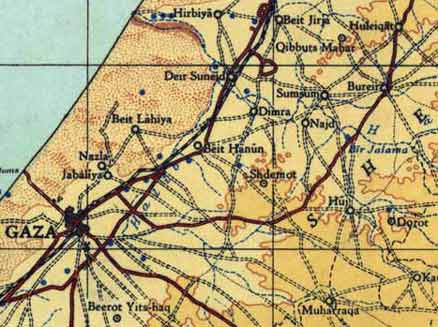
Though both Israel and Hamas are accused of war crimes during last year’s Operation Cast Lead, Human Rights Watch confirms its role as US policy whip by admonishing Hamas to account for its killing of civilians, yielding the AP headline: Human rights group: Hamas targeted civilians. February 5th is the deadline imposed by the UN for both parties to respond to charges made in the Goldstone Report. Fair enough, Hamas rockets killed three residents of Sderot while the IDF killed 1,400 in Gaza. But confusion always resurfaces about Sderot, formerly the Arab town of Najd. Can settlers deliberately mobilized to occupy Sderot, be excluded as legitimate targets of their dispossessed victims? Is Israel hiding behind civilian settlers which it moves illegally to advance its hold on conquered land?

The question of Sderot’s legitimacy provokes nothing but confusion. Some Israelis claim Sderot was part of the territory which the UN set aside for a Jewish State in 1947. Maps reveal rather that Sderot was seized in the warfare which erupted when the UN decision was announced. Sderot was overrun when Israel made its unilateral declaration of statehood, when Zionist forces expanded on the initial UN proposal, and fell back to the Green Line of 1949. Thus other Israelis defend Sderot as a “post-withdrawal” and “‘Green Line’ city.” A telling concession.
Both Israeli claims on Sderot profit by the confusion that the term “occupied territories” implies lands seized by Israel since 1967. Palestinians are constantly blamed for Arafat refusing to accept a compromise that would restore the 1967 boundaries. Ignoring the Palestinians’ right of return to properties taken well before.
Palestinians can be fully in the right to reject the UN’s reapportionment of their lands. But even if everyone was forced to adhere to the UN demarcations, Sderot would not be Israel’s. The dispossessed Palestinians have a right to reject the occupation of lands stolen in the wake of refugees fleeing the onslaught, now called the Nakba.
Beyond MLK worship: Beyond Vietnam
“A time comes when silence is betrayal. That time has come for us in relation to Vietnam.” —
Martin Luther King Beyond Vietnam: Time to Break the Silence
Full text of 1967 speech below.
Riverside Church, New York City, 4 April 1967
I come to this magnificent house of worship tonight because my conscience leaves me no other choice. I join with you in this meeting because I am in deepest agreement with the aims and work of the organization which has brought us together: Clergy and Laymen Concerned about Vietnam. The recent statement of your executive committee are the sentiments of my own heart and I found myself in full accord when I read its opening lines:
“A time comes when silence is betrayal.”
That time has come for us in relation to Vietnam.
The truth of these words is beyond doubt but the mission to which they call us is a most difficult one. Even when pressed by the demands of inner truth, men do not easily assume the task of opposing their government’s policy, especially in time of war. Nor does the human spirit move without great difficulty against all the apathy of conformist thought within one’s own bosom and in the surrounding world. Moreover when the issues at hand seem as perplexed as they often do in the case of this dreadful conflict we are always on the verge of being mesmerized by uncertainty; but we must move on.
Some of us who have already begun to break the silence of the night have found that the calling to speak is often a vocation of agony, but we must speak. We must speak with all the humility that is appropriate to our limited vision, but we must speak. And we must rejoice as well, for surely this is the first time in our nation’s history that a significant number of its religious leaders have chosen to move beyond the prophesying of smooth patriotism to the high grounds of a firm dissent based upon the mandates of conscience and the reading of history. Perhaps a new spirit is rising among us. If it is, let us trace its movement well and pray that our own inner being may be sensitive to its guidance, for we are deeply in need of a new way beyond the darkness that seems so close around us.
Over the past two years, as I have moved to break the betrayal of my own silences and to speak from the burnings of my own heart, as I have called for radical departures from the destruction of Vietnam, many persons have questioned me about the wisdom of my path. At the heart of their concerns this query has often loomed large and loud: Why are you speaking about war, Dr. King? Why are you joining the voices of dissent? Peace and civil rights don’t mix, they say. Aren’t you hurting the cause of your people, they ask? And when I hear them, though I often understand the source of their concern, I am nevertheless greatly saddened, for such questions mean that the inquirers have not really known me, my commitment or my calling. Indeed, their questions suggest that they do not know the world in which they live.
“I wish not to speak with Hanoi and the National Liberation Front, but rather to my fellow Americans who, with me, bear the greatest responsibility in ending a conflict that has exacted a heavy price on both continents.”
In the light of such tragic misunderstandings, I deem it of signal importance to try to state clearly, and I trust concisely, why I believe that the path from Dexter Avenue Baptist Church — the church in Montgomery, Alabama, where I began my pastorate — leads clearly to this sanctuary tonight.
I come to this platform tonight to make a passionate plea to my beloved nation. This speech is not addressed to Hanoi or to the National Liberation Front. It is not addressed to China or to Russia.
Nor is it an attempt to overlook the ambiguity of the total situation and the need for a collective solution to the tragedy of Vietnam. Neither is it an attempt to make North Vietnam or the National Liberation Front paragons of virtue, nor to overlook the role they can play in a successful resolution of the problem. While they both may have justifiable reason to be suspicious of the good faith of the United States, life and history give eloquent testimony to the fact that conflicts are never resolved without trustful give and take on both sides.
Tonight, however, I wish not to speak with Hanoi and the NLF, but rather to my fellow Americans, who, with me, bear the greatest responsibility in ending a conflict that has exacted a heavy price on both continents.
The Importance of Vietnam
Since I am a preacher by trade, I suppose it is not surprising that I have seven major reasons for bringing Vietnam into the field of my moral vision. There is at the outset a very obvious and almost facile connection between the war in Vietnam and the struggle I, and others, have been waging in America. A few years ago there was a shining moment in that struggle. It seemed as if there was a real promise of hope for the poor — both black and white — through the poverty program. There were experiments, hopes, new beginnings. Then came the buildup in Vietnam and I watched the program broken and eviscerated as if it were some idle political plaything of a society gone mad on war, and I knew that America would never invest the necessary funds or energies in rehabilitation of its poor so long as adventures like Vietnam continued to draw men and skills and money like some demonic destructive suction tube. So I was increasingly compelled to see the war as an enemy of the poor and to attack it as such.
“For the sake of those boys,
for the sake of this governent,
for the sake of hundreds of thousands
trembling under our violence,
I cannot be silent.”Perhaps the more tragic recognition of reality took place when it became clear to me that the war was doing far more than devastating the hopes of the poor at home. It was sending their sons and their brothers and their husbands to fight and to die in extraordinarily high proportions relative to the rest of the population. We were taking the black young men who had been crippled by our society and sending them eight thousand miles away to guarantee liberties in Southeast Asia which they had not found in southwest Georgia and East Harlem. So we have been repeatedly faced with the cruel irony of watching Negro and white boys on TV screens as they kill and die together for a nation that has been unable to seat them together in the same schools. So we watch them in brutal solidarity burning the huts of a poor village, but we realize that they would never live on the same block in Detroit. I could not be silent in the face of such cruel manipulation of the poor.
My third reason moves to an even deeper level of awareness, for it grows out of my experience in the ghettoes of the North over the last three years — especially the last three summers. As I have walked among the desperate, rejected and angry young men I have told them that Molotov cocktails and rifles would not solve their problems. I have tried to offer them my deepest compassion while maintaining my conviction that social change comes most meaningfully through nonviolent action. But they asked — and rightly so — what about Vietnam? They asked if our own nation wasn’t using massive doses of violence to solve its problems, to bring about the changes it wanted. Their questions hit home, and I knew that I could never again raise my voice against the violence of the oppressed in the ghettos without having first spoken clearly to the greatest purveyor of violence in the world today — my own government. For the sake of those boys, for the sake of this government, for the sake of hundreds of thousands trembling under our violence, I cannot be silent.
For those who ask the question, “Aren’t you a civil rights leader?” and thereby mean to exclude me from the movement for peace, I have this further answer. In 1957 when a group of us formed the Southern Christian Leadership Conference, we chose as our motto: “To save the soul of America.” We were convinced that we could not limit our vision to certain rights for black people, but instead affirmed the conviction that America would never be free or saved from itself unless the descendants of its slaves were loosed completely from the shackles they still wear. In a way we were agreeing with Langston Hughes, that black bard of Harlem, who had written earlier:
O, yes,
I say it plain,
America never was America to me,
And yet I swear this oath —
America will be!Now, it should be incandescently clear that no one who has any concern for the integrity and life of America today can ignore the present war. If America’s soul becomes totally poisoned, part of the autopsy must read Vietnam. It can never be saved so long as it destroys the deepest hopes of men the world over. So it is that those of us who are yet determined that America will be are led down the path of protest and dissent, working for the health of our land.
“Surely we must see
that the men we supported
pressed them to their violence.”As if the weight of such a commitment to the life and health of America were not enough, another burden of responsibility was placed upon me in 1964; and I cannot forget that the Nobel Prize for Peace was also a commission — a commission to work harder than I had ever worked before for “the brotherhood of man.” This is a calling that takes me beyond national allegiances, but even if it were not present I would yet have to live with the meaning of my commitment to the ministry of Jesus Christ. To me the relationship of this ministry to the making of peace is so obvious that I sometimes marvel at those who ask me why I am speaking against the war. Could it be that they do not know that the good news was meant for all men — for Communist and capitalist, for their children and ours, for black and for white, for revolutionary and conservative? Have they forgotten that my ministry is in obedience to the one who loved his enemies so fully that he died for them? What then can I say to the “Vietcong” or to Castro or to Mao as a faithful minister of this one? Can I threaten them with death or must I not share with them my life?
Finally, as I try to delineate for you and for myself the road that leads from Montgomery to this place I would have offered all that was most valid if I simply said that I must be true to my conviction that I share with all men the calling to be a son of the living God. Beyond the calling of race or nation or creed is this vocation of sonship and brotherhood, and because I believe that the Father is deeply concerned especially for his suffering and helpless and outcast children, I come tonight to speak for them.
This I believe to be the privilege and the burden of all of us who deem ourselves bound by allegiances and loyalties which are broader and deeper than nationalism and which go beyond our nation’s self-defined goals and positions. We are called to speak for the weak, for the voiceless, for victims of our nation and for those it calls enemy, for no document from human hands can make these humans any less our brothers.
Strange Liberators
And as I ponder the madness of Vietnam and search within myself for ways to understand and respond to compassion my mind goes constantly to the people of that peninsula. I speak now not of the soldiers of each side, not of the junta in Saigon, but simply of the people who have been living under the curse of war for almost three continuous decades now. I think of them too because it is clear to me that there will be no meaningful solution there until some attempt is made to know them and hear their broken cries.
“Before long they must know
that their government has sent them
into a struggle among Vietnamese,
and the more sophisticated surely realize
that we are on the side of the wealthy
and the secure
while we create hell for the poor.”They must see Americans as strange liberators. The Vietnamese people proclaimed their own independence in 1945 after a combined French and Japanese occupation, and before the Communist revolution in China. They were led by Ho Chi Minh. Even though they quoted the American Declaration of Independence in their own document of freedom, we refused to recognize them. Instead, we decided to support France in its re-conquest of her former colony.
Our government felt then that the Vietnamese people were not “ready” for independence, and we again fell victim to the deadly Western arrogance that has poisoned the international atmosphere for so long. With that tragic decision we rejected a revolutionary government seeking self-determination, and a government that had been established not by China (for whom the Vietnamese have no great love) but by clearly indigenous forces that included some Communists. For the peasants this new government meant real land reform, one of the most important needs in their lives.
For nine years following 1945 we denied the people of Vietnam the right of independence. For nine years we vigorously supported the French in their abortive effort to re-colonize Vietnam.
Before the end of the war we were meeting eighty percent of the French war costs. Even before the French were defeated at Dien Bien Phu, they began to despair of the reckless action, but we did not. We encouraged them with our huge financial and military supplies to continue the war even after they had lost the will. Soon we would be paying almost the full costs of this tragic attempt at re-colonization.
After the French were defeated it looked as if independence and land reform would come again through the Geneva agreements. But instead there came the United States, determined that Ho should not unify the temporarily divided nation, and the peasants watched again as we supported one of the most vicious modern dictators — our chosen man, Premier Diem. The peasants watched and cringed as Diem ruthlessly routed out all opposition, supported their extortionist landlords and refused even to discuss reunification with the north. The peasants watched as all this was presided over by U.S. influence and then by increasing numbers of U.S. troops who came to help quell the insurgency that Diem’s methods had aroused. When Diem was overthrown they may have been happy, but the long line of military dictatorships seemed to offer no real change — especially in terms of their need for land and peace.
The only change came from America as we increased our troop commitments in support of governments which were singularly corrupt, inept and without popular support. All the while the people read our leaflets and received regular promises of peace and democracy — and land reform. Now they languish under our bombs and consider us – not their fellow Vietnamese — the real enemy. They move sadly and apathetically as we herd them off the land of their fathers into concentration camps where minimal social needs are rarely met. They know they must move or be destroyed by our bombs. So they go — primarily women and children and the aged.
“Somehow this madness must cease.”
They watch as we poison their water, as we kill a million acres of their crops. They must weep as the bulldozers roar through their areas preparing to destroy the precious trees. They wander into the hospitals, with at least twenty casualties from American firepower for one “Vietcong-inflicted” injury. So far we may have killed a million of them — mostly children. They wander into the towns and see thousands of the children, homeless, without clothes, running in packs on the streets like animals. They see the children, degraded by our soldiers as they beg for food. They see the children selling their sisters to our soldiers, soliciting for their mothers.
What do the peasants think as we ally ourselves with the landlords and as we refuse to put any action into our many words concerning land reform? What do they think as we test our latest weapons on them, just as the Germans tested out new medicine and new tortures in the concentration camps of Europe? Where are the roots of the independent Vietnam we claim to be building? Is it among these voiceless ones?
We have destroyed their two most cherished institutions: the family and the village. We have destroyed their land and their crops. We have cooperated in the crushing of the nation’s only non-Communist revolutionary political force — the Unified Buddhist church. We have supported the enemies of the peasants of Saigon. We have corrupted their women and children and killed their men. What liberators?
Now there is little left to build on — save bitterness. Soon the only solid physical foundations remaining will be found at our military bases and in the concrete of the concentration camps we call fortified hamlets. The peasants may well wonder if we plan to build our new Vietnam on such grounds as these? Could we blame them for such thoughts? We must speak for them and raise the questions they cannot raise. These too are our brothers.
Perhaps the more difficult but no less necessary task is to speak for those who have been designated as our enemies. What of the National Liberation Front — that strangely anonymous group we call VC or Communists? What must they think of us in America when they realize that we permitted the repression and cruelty of Diem which helped to bring them into being as a resistance group in the south? What do they think of our condoning the violence which led to their own taking up of arms? How can they believe in our integrity when now we speak of “aggression from the north” as if there were nothing more essential to the war? How can they trust us when now we charge them with violence after the murderous reign of Diem and charge them with violence while we pour every new weapon of death into their land? Surely we must understand their feelings even if we do not condone their actions. Surely we must see that the men we supported pressed them to their violence. Surely we must see that our own computerized plans of destruction simply dwarf their greatest acts.
“We must continue to raise our voices if our nation persists in its perverse ways in Vietnam.”
How do they judge us when our officials know that their membership is less than twenty-five percent Communist and yet insist on giving them the blanket name? What must they be thinking when they know that we are aware of their control of major sections of Vietnam and yet we appear ready to allow national elections in which this highly organized political parallel government will have no part? They ask how we can speak of free elections when the Saigon press is censored and controlled by the military junta. And they are surely right to wonder what kind of new government we plan to help form without them — the only party in real touch with the peasants. They question our political goals and they deny the reality of a peace settlement from which they will be excluded. Their questions are frighteningly relevant. Is our nation planning to build on political myth again and then shore it up with the power of new violence?
Here is the true meaning and value of compassion and nonviolence when it helps us to see the enemy’s point of view, to hear his questions, to know his assessment of ourselves. For from his view we may indeed see the basic weaknesses of our own condition, and if we are mature, we may learn and grow and profit from the wisdom of the brothers who are called the opposition.
So, too, with Hanoi. In the north, where our bombs now pummel the land, and our mines endanger the waterways, we are met by a deep but understandable mistrust. To speak for them is to explain this lack of confidence in Western words, and especially their distrust of American intentions now. In Hanoi are the men who led the nation to independence against the Japanese and the French, the men who sought membership in the French commonwealth and were betrayed by the weakness of Paris and the willfulness of the colonial armies. It was they who led a second struggle against French domination at tremendous costs, and then were persuaded to give up the land they controlled between the thirteenth and seventeenth parallel as a temporary measure at Geneva. After 1954 they watched us conspire with Diem to prevent elections which would have surely brought Ho Chi Minh to power over a united Vietnam, and they realized they had been betrayed again.
When we ask why they do not leap to negotiate, these things must be remembered. Also it must be clear that the leaders of Hanoi considered the presence of American troops in support of the Diem regime to have been the initial military breach of the Geneva agreements concerning foreign troops, and they remind us that they did not begin to send in any large number of supplies or men until American forces had moved into the tens of thousands.
“When machines and computers,
profit motives and property rights
are considered more important than people,
the giant triplets of
racism,
materialism
and militarism
are incapable of being conquered.”Hanoi remembers how our leaders refused to tell us the truth about the earlier North Vietnamese overtures for peace, how the president claimed that none existed when they had clearly been made. Ho Chi Minh has watched as America has spoken of peace and built up its forces, and now he has surely heard of the increasing international rumors of American plans for an invasion of the north. He knows the bombing and shelling and mining we are doing are part of traditional pre-invasion strategy. Perhaps only his sense of humor and of irony can save him when he hears the most powerful nation of the world speaking of aggression as it drops thousands of bombs on a poor weak nation more than eight thousand miles away from its shores.
At this point I should make it clear that while I have tried in these last few minutes to give a voice to the voiceless on Vietnam and to understand the arguments of those who are called enemy, I am as deeply concerned about our troops there as anything else. For it occurs to me that what we are submitting them to in Vietnam is not simply the brutalizing process that goes on in any war where armies face each other and seek to destroy. We are adding cynicism to the process of death, for they must know after a short period there that none of the things we claim to be fighting for are really involved. Before long they must know that their government has sent them into a struggle among Vietnamese, and the more sophisticated surely realize that we are on the side of the wealthy and the secure while we create hell for the poor.
This Madness Must Cease
Somehow this madness must cease. We must stop now. I speak as a child of God and brother to the suffering poor of Vietnam. I speak for those whose land is being laid waste, whose homes are being destroyed, whose culture is being subverted. I speak for the poor of America who are paying the double price of smashed hopes at home and death and corruption in Vietnam. I speak as a citizen of the world, for the world as it stands aghast at the path we have taken. I speak as an American to the leaders of my own nation. The great initiative in this war is ours. The initiative to stop it must be ours.
This is the message of the great Buddhist leaders of Vietnam. Recently one of them wrote these words:
“Each day the war goes on the hatred increases in the heart of the Vietnamese and in the hearts of those of humanitarian instinct. The Americans are forcing even their friends into becoming their enemies. It is curious that the Americans, who calculate so carefully on the possibilities of military victory, do not realize that in the process they are incurring deep psychological and political defeat. The image of America will never again be the image of revolution, freedom and democracy, but the image of violence and militarism.”
“A nation that continues
year after year
to spend more money on military defense
than on programs of social uplift
is approaching spiritual death.”If we continue, there will be no doubt in my mind and in the mind of the world that we have no honorable intentions in Vietnam. It will become clear that our minimal expectation is to occupy it as an American colony and men will not refrain from thinking that our maximum hope is to goad China into a war so that we may bomb her nuclear installations. If we do not stop our war against the people of Vietnam immediately the world will be left with no other alternative than to see this as some horribly clumsy and deadly game we have decided to play.
The world now demands a maturity of America that we may not be able to achieve. It demands that we admit that we have been wrong from the beginning of our adventure in Vietnam, that we have been detrimental to the life of the Vietnamese people. The situation is one in which we must be ready to turn sharply from our present ways.
In order to atone for our sins and errors in Vietnam, we should take the initiative in bringing a halt to this tragic war. I would like to suggest five concrete things that our government should do immediately to begin the long and difficult process of extricating ourselves from this nightmarish conflict:
• End all bombing in North and South Vietnam
• Declare a unilateral cease-fire in the hope that such action will create the atmosphere for negotiation.
• Take immediate steps to prevent other battlegrounds in Southeast Asia by curtailing our military buildup in Thailand and our interference in Laos.
• Realistically accept the fact that the National Liberation Front has substantial support in South Vietnam and must thereby play a role in any meaningful negotiations and in any future Vietnam government.
• Set a date that we will remove all foreign troops from Vietnam in accordance with the 1954 Geneva agreement.
Part of our ongoing commitment might well express itself in an offer to grant asylum to any Vietnamese who fears for his life under a new regime which included the Liberation Front. Then we must make what reparations we can for the damage we have done. We most provide the medical aid that is badly needed, making it available in this country if necessary.
Protesting The War
Meanwhile we in the churches and synagogues have a continuing task while we urge our government to disengage itself from a disgraceful commitment. We must continue to raise our voices if our nation persists in its perverse ways in Vietnam. We must be prepared to match actions with words by seeking out every creative means of protest possible.
As we counsel young men concerning military service we must clarify for them our nation’s role in Vietnam and challenge them with the alternative of conscientious objection. I am pleased to say that this is the path now being chosen by more than seventy students at my own alma mater, Morehouse College, and I recommend it to all who find the American course in Vietnam a dishonorable and unjust one. Moreover I would encourage all ministers of draft age to give up their ministerial exemptions and seek status as conscientious objectors. These are the times for real choices and not false ones. We are at the moment when our lives must be placed on the line if our nation is to survive its own folly. Every man of humane convictions must decide on the protest that best suits his convictions, but we must all protest.
“If we do not act
we shall surely be dragged down
the long and shameful corridors of time
reserved for those who possess
power without compassion,
might without morality,
and strength without sight.”There is something seductively tempting about stopping there and sending us all off on what in some circles has become a popular crusade against the war in Vietnam. I say we must enter the struggle, but I wish to go on now to say something even more disturbing. The war in Vietnam is but a symptom of a far deeper malady within the American spirit, and if we ignore this sobering reality we will find ourselves organizing clergy-and laymen-concerned committees for the next generation. They will be concerned about Guatemala and Peru. They will be concerned about Thailand and Cambodia. They will be concerned about Mozambique and South Africa. We will be marching for these and a dozen other names and attending rallies without end unless there is a significant and profound change in American life and policy. Such thoughts take us beyond Vietnam, but not beyond our calling as sons of the living God.
In 1957 a sensitive American official overseas said that it seemed to him that our nation was on the wrong side of a world revolution. During the past ten years we have seen emerge a pattern of suppression which now has justified the presence of U.S. military “advisors” in Venezuela. This need to maintain social stability for our investments accounts for the counter-revolutionary action of American forces in Guatemala. It tells why American helicopters are being used against guerrillas in Colombia and why American napalm and green beret forces have already been active against rebels in Peru. It is with such activity in mind that the words of the late John F. Kennedy come back to haunt us. Five years ago he said,
“Those who make peaceful revolution impossible will make violent revolution inevitable.”
Increasingly, by choice or by accident, this is the role our nation has taken — the role of those who make peaceful revolution impossible by refusing to give up the privileges and the pleasures that come from the immense profits of overseas investment.
I am convinced that if we are to get on the right side of the world revolution, we as a nation must undergo a radical revolution of values. We must rapidly begin the shift from a “thing-oriented” society to a “person-oriented” society. When machines and computers, profit motives and property rights are considered more important than people, the giant triplets of racism, materialism, and militarism are incapable of being conquered.
A true revolution of values will soon cause us to question the fairness and justice of many of our past and present policies. On the one hand we are called to play the good Samaritan on life’s roadside; but that will be only an initial act. One day we must come to see that the whole Jericho road must be transformed so that men and women will not be constantly beaten and robbed as they make their journey on life’s highway.
True compassion is more than flinging a coin to a beggar; it is not haphazard and superficial. It comes to see that an edifice which produces beggars needs restructuring. A true revolution of values will soon look uneasily on the glaring contrast of poverty and wealth. With righteous indignation, it will look across the seas and see individual capitalists of the West investing huge sums of money in Asia, Africa and South America, only to take the profits out with no concern for the social betterment of the countries, and say: “This is not just.”
It will look at our alliance with the landed gentry of Latin America and say: “This is not just.”
The Western arrogance of feeling that it has everything to teach others and nothing to learn from them is not just.
A true revolution of values will lay hands on the world order and say of war: “This way of settling differences is not just.”
This business of burning human beings with napalm, of filling our nation’s homes with orphans and widows, of injecting poisonous drugs of hate into veins of people normally humane, of sending men home from dark and bloody battlefields physically handicapped and psychologically deranged, cannot be reconciled with wisdom, justice and love. A nation that continues year after year to spend more money on military defense than on programs of social uplift is approaching spiritual death.
America, the richest and most powerful nation in the world, can well lead the way in this revolution of values. There is nothing, except a tragic death wish, to prevent us from reordering our priorities, so that the pursuit of peace will take precedence over the pursuit of war. There is nothing to keep us from molding a recalcitrant status quo with bruised hands until we have fashioned it into a brotherhood.
This kind of positive revolution of values is our best defense against communism. War is not the answer. Communism will never be defeated by the use of atomic bombs or nuclear weapons. Let us not join those who shout war and through their misguided passions urge the United States to relinquish its participation in the United Nations. These are days which demand wise restraint and calm reasonableness. We must not call everyone a Communist or an appeaser who advocates the seating of Red China in the United Nations and who recognizes that hate and hysteria are not the final answers to the problem of these turbulent days. We must not engage in a negative anti-communism, but rather in a positive thrust for democracy, realizing that our greatest defense against communism is to take offensive action in behalf of justice. We must with positive action seek to remove those conditions of poverty, insecurity and injustice which are the fertile soil in which the seed of communism grows and develops.
The People Are Important
These are revolutionary times. All over the globe men are revolting against old systems of exploitation and oppression and out of the wombs of a frail world new systems of justice and equality are being born. The shirtless and barefoot people of the land are rising up as never before. “The people who sat in darkness have seen a great light.” We in the West must support these revolutions. It is a sad fact that, because of comfort, complacency, a morbid fear of communism, and our proneness to adjust to injustice, the Western nations that initiated so much of the revolutionary spirit of the modern world have now become the arch anti-revolutionaries. This has driven many to feel that only Marxism has the revolutionary spirit. Therefore, communism is a judgment against our failure to make democracy real and follow through on the revolutions we initiated. Our only hope today lies in our ability to recapture the revolutionary spirit and go out into a sometimes hostile world declaring eternal hostility to poverty, racism, and militarism. With this powerful commitment we shall boldly challenge the status quo and unjust mores and thereby speed the day when “every valley shall be exalted, and every mountain and hill shall be made low, and the crooked shall be made straight and the rough places plain.”
A genuine revolution of values means in the final analysis that our loyalties must become ecumenical rather than sectional. Every nation must now develop an overriding loyalty to mankind as a whole in order to preserve the best in their individual societies.
This call for a world-wide fellowship that lifts neighborly concern beyond one’s tribe, race, class and nation is in reality a call for an all-embracing and unconditional love for all men. This oft misunderstood and misinterpreted concept – so readily dismissed by the Nietzsches of the world as a weak and cowardly force – has now become an absolute necessity for the survival of man. When I speak of love I am not speaking of some sentimental and weak response. I am speaking of that force which all of the great religions have seen as the supreme unifying principle of life. Love is somehow the key that unlocks the door which leads to ultimate reality. This Hindu-Moslem-Christian-Jewish-Buddhist belief about ultimate reality is beautifully summed up in the first epistle of Saint John:
Let us love one another; for love is God and everyone that loveth is born of God and knoweth God. He that loveth not knoweth not God; for God is love. If we love one another God dwelleth in us, and his love is perfected in us.
Let us hope that this spirit will become the order of the day. We can no longer afford to worship the god of hate or bow before the altar of retaliation. The oceans of history are made turbulent by the ever-rising tides of hate. History is cluttered with the wreckage of nations and individuals that pursued this self-defeating path of hate. As Arnold Toynbee says :
“Love is the ultimate force that makes for the saving choice of life and good against the damning choice of death and evil. Therefore the first hope in our inventory must be the hope that love is going to have the last word.”
We are now faced with the fact that tomorrow is today. We are confronted with the fierce urgency of now. In this unfolding conundrum of life and history there is such a thing as being too late. Procrastination is still the thief of time. Life often leaves us standing bare, naked and dejected with a lost opportunity. The “tide in the affairs of men” does not remain at the flood; it ebbs. We may cry out desperately for time to pause in her passage, but time is deaf to every plea and rushes on. Over the bleached bones and jumbled residue of numerous civilizations are written the pathetic words: “Too late.”
There is an invisible book of life that faithfully records our vigilance or our neglect. “The moving finger writes, and having writ moves on…” We still have a choice today; nonviolent coexistence or violent co-annihilation.
We must move past indecision to action. We must find new ways to speak for peace in Vietnam and justice throughout the developing world – a world that borders on our doors. If we do not act we shall surely be dragged down the long dark and shameful corridors of time reserved for those who possess power without compassion, might without morality, and strength without sight.
Now let us begin. Now let us rededicate ourselves to the long and bitter – but beautiful – struggle for a new world. This is the calling of the sons of God, and our brothers wait eagerly for our response. Shall we say the odds are too great? Shall we tell them the struggle is too hard? Will our message be that the forces of American life militate against their arrival as full men, and we send our deepest regrets? Or will there be another message, of longing, of hope, of solidarity with their yearnings, of commitment to their cause, whatever the cost? The choice is ours, and though we might prefer it otherwise we must choose in this crucial moment of human history.
As that noble bard of yesterday, James Russell Lowell, eloquently stated:
Once to every man and nation
Comes the moment to decide,
In the strife of truth and falsehood,
For the good or evil side;
Some great cause, God’s new Messiah,
Off’ring each the bloom or blight,
And the choice goes by forever
Twixt that darkness and that light.
Though the cause of evil prosper,
Yet ’tis truth alone is strong;
Though her portion be the scaffold,
And upon the throne be wrong:
Yet that scaffold sways the future,
And behind the dim unknown,
Standeth God within the shadow
Keeping watch above his own.
Olbermann offers Obama an out
Keith Olbermann’s Special Comment on Afghanistan is being summarized as telling President Obama to Get Out Now. Olbermann’s words stir our enthusiasm, but he leaves damning loopholes as far as I am concerned. The MSNBC newsman conditions his advice to the president with “unless you are right,” then at the end, showing a tact far too reckless, he tells Obama to “listen to yourself.”
No. That’s not why we elected Barack Obama.
The inexperienced senator had no record. Our hope didn’t spring from a demonstration of ability. Obama was elected for the hope he offered because he appeared to be listening to the American people. It would probably have been inconceivable to imagine then that Obama could not but respond to the unprecedented surge of electoral participation prompted by George W. Bush’s wars.
Listen to the people Mr. Obama, and no one else. To ask Obama to listen to himself is to offer him entirely too much slack. Give an authoritarian leader too much rope, that’s more rope he has to hang you.
And then there is no “unless you are right.”
What is that but a straight man’s setup? That line is for the President to show America how sure he is of his decision. The people want a leader who’s offering supreme confidence, so Olbermann is holding the door. He goes on to frame the challenges posed by Afghanistan, as surmountable by a qualified prez. Olbermann invites the President to be “precisely right.” Isn’t that exactly what will sooth the viewers, after Obama has famously taken so much time to arrive at a decision?
But there is no “unless you are right.” Unless Olbermann meant it with an implied irony. But he didn’t. He didn’t say unless black is white, or up is down. Olbermann allowed for the possibility that an escalation could be right.
“If not, Mr. President, this way lies Vietnam.”
IF NOT Olbermann says. Doesn’t he mean no if and or buts?
When Walter Cronkite finally spoke out about Vietnam, and declared the war un-winnable, it was not because it had become un-winnable. It had not transformed into a quagmire, the chance for victory had not escaped us. The illegal and immoral subjugation of the Vietnamese people was never a winnable strategy. Like Iraq and Afghanistan, it was a predictable calamity, a crime. Moral observers knew it from the beginning.
America did not LOSE Vietnam, and we will not LOSE Iraq and Afghanistan. We DESTROYED those landscapes and millions of lives, and we continue to “finish the job.” It’s an immeasurable, apocalyptic tragedy.
If Barack Obama escalates in the footsteps of Lyndon Johnson, it will similarly be no mistake. The travesty is that the American people have once again been waylaid in their determination to find a leader to represent their desire for peace.
Here is the text of Keith Olbermann’s Special Comment:
SPECIAL COMMENT
By Keith Olbermann
Anchor, ‘Countdown’
Mon., Nov . 30, 2009Mr. President, it now falls to you to be both former Republican Senator George Aiken and the man to whom he spoke, Lyndon Johnson. You must declare victory, and get out.??
You should survey the dismal array of options in front of you — even the orders given out last night — sort them into the unacceptable, the unsuccessful, and the merely un-palatable, and then put your arm down on the table and wipe the entire assortment of them off your desk — off this nation’s desk — and into the scrap heap of history. ??
Unless you are utterly convinced — willing to bet American lives on it — that the military understands the clock is running, and that the check is not blank, and that the Pentagon will go to sleep when you tell it to, even though the Pentagon is a bunch of perpetually 12-year old boys desperate to stay up as late as possible by any means necessary — get out now. ??
We are, at present, fighting, in no particular order, the Taliban; a series of sleazy political-slash-military adventurers, not the least of whom is this mountebank election-fixer Karzai, and what National Security Advisor Jones estimated in October was around eight dozen al-Qaida in the neighborhood.??
But poll after poll, and anecdote after anecdote, of the reality of public opinion inside Afghanistan is that its residents believe we are fighting Afghanistan. That we, Sir, have become an occupying force. Yes: if we leave, Afghanistan certainly will have an occupying force, whether it’s from Pakistan, or consisting of foreign fighters who will try to ally themselves with the Taliban.??
Can you prevent that? Can you convince the Afghans that you can prevent that? Can you convince Americans that it is the only way to un-do Bush and Cheney policy catastrophes dating back to Cheney’s days as Secretary of Defense in the ’90s? If not, Mr. President, this way lies Vietnam. If you liked Iraq, you’ll love Afghanistan with 35,000 more troops, complete with the new wrinkle, straight from the minder-binder lingo of Joseph Heller’s “Catch-22.”??
President Obama will be presenting an exit strategy for Afghanistan. The exit strategy that begins by entering still further. Lose to win, sink to swim, escalate to disengage. And even this disconnect of fundamental logic is predicated on the assumption that once the extra troops go in, when the President says “okay, time for adult swim, Generals, time to get out of the pool and bring the troops with you,” that the Pentagon is just going to say “Yeppers.”??
The Pentagon, often to our eternal relief, but just as often to our eternal regret is in the War business. You were right, Mr. President, to slow the process down, once a series of exit strategies was offered to you by men whose power and in some case livelihoods are predicated on making sure all exit strategies, everywhere, forever, don’t really result in any service-man or woman actually exiting.??
These men are still in the belly of what President Eisenhower so rightly, so prophetically, christened the military-industrial complex. Now and later as the civilian gray eminences with “retired” next to their names, formally lobbying the House and Senate and informally lobbying the nation through television and the printed word, to “engage” here, or “serve” there, or “invest” everywhere, they are, in many cases, just glorified hardware salesmen. ??
It was political and operational brilliance, Sir, to retain Mr. Bush’s last Secretary of Defense Mr. Gates. It was transitional and bipartisan insight, Sir, to maintain General Stanley McChrystal as a key leader in the field. ??
And it was a subtle but powerful reminder to the authoritarian minded War-hawks like John McCain, and the blithering idiots like former Governor Palin, of the Civilian authority of the Constitution it was a picture drawn in crayon for ease of digestion by the Right, to tell our employees at the Pentagon, to take their loaded options and go away and come back with some real ones.??
You reminded them, Mr. President, that Mr. Gates works for the people of the United States of America, not the other way around. You reminded them, Mr. President, that General McChrystal is our employee, not our dictator. You’ve reminded them Mr. President. Now, tonight, remind yourself. Stanley McChrystal.??
General McChrystal has doubtless served his country bravely and honorably and at great risk, but to date his lasting legacy will be as the great facilitator of the obscenity that was transmuting the greatest symbol of this nation’s true patriotism, of its actual willingness to sacrifice, into a distorted circus fun-house mirror version of such selflessness.??
Friendly fire killed Pat Tillman. Mr. McChrystal killed the truth about Pat Tillman. And that willingness to stand truth on its head on behalf of “selling” a war or the generic idea of America being at war to turn a dead hero into a meaningless recruiting poster, should ring essentially relevant right now.??
From the very center of a part of our nation that could lie to the public, could lie to his mother, about what really happened to Pat Tillman, from the very man who was at the operational center of that plan, comes the entire series of plans to help us supposedly find the way out of Afghanistan? We are supposed to believe General McChrystal isn’t lying about Afghanistan???
Didn’t he blow his credibility by lying, so obviously and so painfully, about Pat Tillman? Why are we believing the McChrystals? Their reasons might sound better than the ones they helped George Bush and Dick Cheney fabricate for Iraq, but surely they are just as transparently oblivious of the forest. ??
Half of them insist we must stay in Afghanistan out of fear of not repeating Iraq, while the other half, believing Bush failed in Iraq by having too few troops, insist we must stay in Afghanistan out of fear of repeating Iraq. And they are suddenly sounding frighteningly similar to what the Soviet Generals were telling the Soviet Politicos in the 1980s about Afghanistan.??
Sure it’s not going well, sure we need to get out, we all see that. But first let’s make sure it’s stabilized and then we get out. The Afghans will be impressed by our commitment and will then take over the cost of policing themselves, even though the cost would be several times their gross national product. Just send in those extra troops, just for awhile. Just 350,000.
I’m sorry, did I say 350,000? I meant 35,000. Must be a coffee stain on the paper. Mr. President, last fall, you were elected. Not General McChrystal, not Secretary Gates, not another Bushian Drone of a politician. You. On the Change Ticket. On the pitch that all politicians are not created equal.??
And upon arrival you were greeted by a Three Mile Island of an economy, so bad that in the most paranoid recesses of the mind one could wonder if the Republicans didn’t plan it that way, to leave you in the position of having to prove the ultimate negative, that you staved off worldwide financial collapse, that if you had not done what you so swiftly did, that this “economic cloudy day” would have otherwise been the “biblical flood of finance.”??
So, much of the change for which you were elected, Sir, has thus far been understandably, if begrudgingly, tabled, delayed, made more open-ended. But patience ebbs, Mr. President. And while the first one thousand key decisions of your presidency were already made about the economy, the first public, easy-to-discern, mouse-or-elephant kind of decision comes tomorrow night at West Point at eight o’clock.
You know this, Mr. President: we cannot afford this war. Nothing makes less sense to our economy than the cost of supply for 35,000 new troops. Nothing will do more to slow economic recovery. You might as well shoot the revivified auto industry or embrace John Boehner Health Care Reform and Spray-Tan Reimbursement.
You know this, Mr. President: we cannot afford this war. Nothing makes less sense to our status in the world than for us to re-up as occupiers of Afghanistan and for you to look like you were unable to extricate yourself from a Military Chinese Finger Puzzle left for you by Bush and Cheney and the rest of Halliburton’s hench-men.
And most of all, and those of us who have watched these first nine months trust both your judgment and the fact you know this, Mr. President: unless you are exactly right, we cannot afford this war. For if all else is even, and everything from the opinion of the generals to the opinion of the public is even, we cannot afford to send these troops back into that quagmire for second tours, or thirds, or fourths, or fifths.
We cannot afford this ethically, Sir. The country has, for eight shameful years, forgotten its moral compass and its world purpose. And here is your chance to reassert that there is, in fact, American Exceptionalism. We are better. We know when to stop making our troops suffer, in order to make our generals happy.
You, Sir, called for change, for the better way, for the safety of our citizens including the citizens being wasted in war-for-the-sake-of-war, for a reasserting of our moral force. And we listened. And now you must listen. You must listen to yourself.
I protest UC students self interest
UC students are occupying campus buildings, in scenes gloriously reminiscent of the 60s. Debbie Downers have foretold that an antiwar movement would not catch the interest of youth until there was a military draft to affect them. They are right. We’ve seen marches and rallies for peace, but it took a tuition hike to light a fire under these selfish tight asses. The students are right to be enraged by a 30% tuition rise, but have they a case to justify civil disobedience? They’re rebelling against the result of an economy going bust, of the middle class losing the privilege to educated its kids. Rise up, protest, but make it look like more than about your entitlement to a post-highschool social life.
Ward Churchill speaks on which settler invasion wrote the book on Apartheid

Ward Churchill spoke in Tucson on Friday and Brenda Norrell has posted the footage. Watching the ex-CU professor speak, I can’t help but think about the university students’ loss. They’re missing the lamentably rarefied perspectives he offers of course, but more important, the inspiration gained from such an engaging luminary.
Throughout his lectures, Churchill likes to put questions back at his audience. He understands, if I can presume to project his rationale, that a mentor’s role is to bounce ideas around, and be sure his students have minds open enough to let them resonate. It’s also a sign of someone fully confident with what they are teaching. Churchill gives you the impression he’s interested in the best argument you’ve got, and I believe him, but in reality he’s going to have few peers up to the task.
When it’s time for Q and A, Prof. Churchill calls it mud-wrestling, and welcomes all shots, “even spit wads.” He draws the line at brick bats, because he says, one might bounce off his head and hit somebody else. He warns, as if he’s had practice, “because someone might get hurt. I can assure you it won’t be me.”
I wished at that moment that Tucson was not so far from Churchill’s curiously vile detractors, who attended his trial in Denver, and who hold bitch fests online about every Churchinalia for reasons unspecified. I predict they’re remunerated; the love-to-hate pretext is wearing thin, these yahoos are pro-Israeli tea-baggers. So there’s no Drunkablog or Pirate Ballerina there tonight to take the “perfessor’s” challenge. Although wouldn’t such an exchange have been simply tedious? I recall this dismal attempt mounted against “Wart” by a couple CU college Republicans, it was just embarrassing. Have Churchill’s online critics ever confronted him in person I wonder? They can spout off in the safety of anonymity, and that’s about it.
Churchill’s speech to the predominantly Anglo and O’odham border activists was about the bigger issues behind the border wall. The theme of the gathering was Apartheid in America, and Churchill demonstrated how South African Apartheid came of the successful colonial methods practiced in the United States. These were the strategies employed by the Germans in taking and settling the Eastern Front during WWII, and of course the goals of Israel in Palestine.
Churchill described how settler invasions vary from colonial administration. In the latter case, the colonizers can go home, in the former, they stay. Another distinction is critical, the settlers aren’t moving to a land and becoming part of the social system, they remain citizens of the occupying force. They bring their identity and the foreign system with them, to apply against the people indigenous to the land. The process involves two steps: displace enough of the natives to make room for yourselves, but leave just enough to serve as a labor pool, for all the building that is required of empire building. You’ve need of only a portion of the original population, to do the manual labor required of developing the land, but eventually you need them to die off. The Nazi strategy in Poland was to eleminate a great deal via war, then another mass through starvation, ill health and exposure. Methods mirrored today in Gaza. As a USA example, Churchill sited the average life expectancy of a Native American on a reservation in 1975. The age was 44.6 years old. That’s 1/3 less that the G-Pop average, equivalent to thinning the population by a third.
To cut to the quick, Churchill asked his audience how they felt about social challenges like sexism, racism, ageism, classism. All were basically in accord as being against. What’s the problem, Churchill asked. If so many are against these things, why do they persist? Then he threw imperialism into the mix, which had not been mentioned. Churchill said we cannot adequately address the others until we have a clean conscience about the land taken from America’s First Peoples. This must be the priority. First Peoples, First Nations, First Priority.
Below is the video of Friday’s Tohono O’odham event in Tucson. Take note also of the excellent speeches which followed the keynote, by Ofelia Rivas and her brother in particular.
Click ON DEMAND, then select the “Live Show Fri Nov 13 2009 06:20:55 PM” or watch it at Livestream/earthcycles.
Ward Churchill to speak for O’odham
According to Censored News, Activist and scholar Ward Churchill will speak at the Unitarian Universalist Church of Tucson, 4831 W. 22nd St., on November 13, 2009 at 7:00 p.m. to benefit O’odham VOICE Against the Wall, which since 2003 has organized and advocated for the traditional O’odham leaders and elders of the Tohono O’odham communities in the southern territory of the United States and northern territory of Mexico. Professor Churchill’s talk is part of the “Apartheid in America: Surviving Occupation in O’odham Lands”
O’odham activist Ofelia Rivas will also participate. The event is sponsored by the Dry River Radical Resource Center, the Earth First! Journal, and Voices against the Wall.
Here’s some background on the O’odham struggle:
By J. D. Hendricks, 2004
TIAMAT PUBLICATIONS #5The People Who Emerged From the Earth
Over two thousand years ago the descendents of the O’odham moved into the southwestern region of the area now claimed by the U.S. as the state of Arizona. 1 The O’odham have had one of the longest histories of contact with the forces of European colonization compared with the rest of the native North American peoples. The O’odham’s first contact with Spanish invaders took place in the mid 16th century; nearly one hundred years before the colonization of the North Atlantic coast and Great Lakes regions were begun by the French and English colonists. As such, the history of the O’odham provides a good context for an investigation of the colonization of Native North America, and more specifically, an investigation of the interplay between, and results of, the varied responses to colonization – that of collaboration, accommodation, and resistance.
Many histories of the O’odham refer to these desert people as the Papago. The term Papago was a name given to the O’odham by the Spanish colonizers, and is likely the result of a Spanish corruption of the O’odham word “papabi” which was the O’odham name for one of their principal bean varieties. Thus, the Spanish colonizers term for the O’odham (Papago) came to mean “the bean eaters.” 2 For the purposes of this study I will refrain from the use of the term Papago and will refer to “the people” 3 by their traditional pre-colonial name. 4
As is often the case, with the name Papago being a good example, European constructs are often imposed upon indigenous peoples by the historians that seek to portray their past. This result can occur when historians seek to glorify European norms and traditions at the expense of indigenous ones, and can also be the result of the subconscious indoctrination of the historian by the dominant culture – in this case that of western style industrial civilization. In other cases it can be the result of a simple uncritical usage of language.
One of the most dominant and reoccurring “civilized” constructs imposed upon indigenous peoples history is the commonly understood notion that the O’odham, or any other indigenous North American culture for that matter, existed as a totality or uniformed mass. This study will seek to use the history of the interaction between the O’odham peoples and the United States, both its government and its peoples, to deconstruct this myth of the totality and provide a history of the O’odham’s varied responses to colonization from an anti-colonial and anti-industrial perspective. By investigating various important case studies in O’odham history, and looking not only at resistance but also accommodation and collaboration, it is hoped that this work will help to provide a more realistic historical picture of the effects of colonization, and the intentions and reactions of both the colonizer and the colonized. Within the previously stated context and theoretical framework, this study will argue that while the O’odham responded to the U.S. invasion of their lands in various ways, the choices to resist, accommodate, or collaborate with the forces of colonization did not affect the overall U.S. policy concerning the O’odham – that policy being the eventual total assimilation of the O’odham into the dominant “civilized” industrial system. 5
This investigation will include a strong focus on O’odham resistance to colonization, as any anti-colonial history should, however it will not discount or ignore the many historical occurrences of accommodation, and in some cases outright collaboration, with the colonizers. It is important to always keep in mind that none of the actions and reactions in any of the case studies looked at are attributable to the O’odham as a “totality,” but rather are attributable only to the various groupings of O’odham, be they incarnated in the form of the individual, the clan, the village, an economic or spiritual grouping, or an established political organization.
A God of Civilization and Coercion Comes to the O’odham
The O’odham’s first encounter with Spanish invaders took place in the mid sixteenth century when a group of conquistadors led by Alvaro Nunez Cabeza de Vaca entered O’odham territory in search of gold. These men did not find the riches they were looking for and left the desert region to return to the Spanish colony. However, soon after word spread of the O’odham villages on the northern periphery of the Spanish colony, missionaries began to travel north to bring God and “civilization” to the native people residing there. By 1686, Catholic missionaries had formed a few small missions in O’odham territory using what they believed to be the influence of their soft power 6 techniques to lure the O’odham into their missions where they were then subjected to a rigorous schedule of cultural indoctrination. Most O’odham historians, including Winston Erickson, 7 and to a lesser extent, Bernard Fontana 8 have, during this time period, focused on the O’odham who chose to reside nearby and within these early missions, thus painting a picture of the O’odham as accepting of Spanish influence and cultural indoctrination.
However a closer look at this time period reveals that mission O’odham were only a small percentage of the total population of O’odham residing in the Sonoran desert 9 and that the ones who were there may not have been so for the reasons that the colonizers believed. San Xavier del Bac, the largest mission in O’odham lands, as well as many other missions, took advantage of the fact that the desert O’odham migrated in the dry winter months to the Northern Piman settlements along the rivers to work the small farm plots for sustenance. 10 The Catholic missions inserted themselves into this traditional pattern. Those O’odham who worked and lived near the missions were, for the most part, seasonal residents, which shows that the missions were viewed merely as being of utilitarian value. Thus, the O’odham as a totality were not necessarily accommodating to or interested in anything the missionaries had to offer per se, and when the missionaries began to employ “hard power” techniques and abuse or overstep the grounds for their welcome it did not go without consequence. 11
Accommodating and ignoring the missionaries was not the only response to colonization practiced by the O’odham during the seventeenth and eighteenth centuries. Although historians such as Erickson feel that “the missions did serve the O’odham well….,” 12 that assertion is contradicted by the fact that there were many large scale rebellions waged against the missions from outside and from within. In 1695, 1751, 1756, and 1776, large scale rebellions occurred in which missionaries were killed and their missions burned to the ground. 13 In some cases these rebellions were the doing of joint O’odham/Apache alliances, which is significant considering that many histories of the O’odham and Apache portray them as immemorial enemies. This may be the result of the fact that by the early nineteenth century the Spanish government initiated a campaign of divide and conquer that was continued later by the Mexican and U.S. governments to turn the O’odham and Apache against one another, thus easing the project of their subjugation.
A Change in the Occupation Government: Washington Enters O’odham Lands
In 1821, Mexican Independence from Spain was achieved and interest in the O’odham dropped away nearly entirely. By 1828, the new and secular Mexican government began the process of shutting down the missions in O’odham territory and by 1842, the last of the missions were closed. Soon after, in 1846, the United Stated initiated a war for territorial expansion against Mexico. This war was not of immediate consequence to the O’odham peoples. Isolated in desert regions, the fighting between the two occupation powers affected them little in the short run. However, the signing of the Treaty of Guadalupe Hidalgo in 1848, which ended the war, would lay the foundations for a series of disastrous events which would affect the O’odham in very negative ways.
Of greatest consequence to the O’odham was the fact that the boundary between the United States and Mexico was not finalized by the treaty of Guadalupe Hidalgo. The boundary was designated by Article Five of the Treaty as being an arbitrary line roughly following the 32nd parallel, an area which runs through the southern part of modern Arizona. To the east, the border was provided by the Rio Grande. The exact boundary line along the 32nd parallel was to be decided at a later date. It is also important to note here that the Treaty also provided that all Mexican citizens absorbed by the United States were to be granted U.S. citizenship, which included all indigenous peoples in the annexed territory since under Mexican law they were considered citizens. In the treaty the United States also assumed the responsibility for preventing cross border raiding into Mexico by the southwestern tribes, specifically the Apache. 14
In the aftermath of the signing of the treaty of Guadalupe Hidalgo, it became quickly apparent that an acceptable border between Mexico and the United States along the 32nd parallel would not be achieved. An official survey expedition was assembled by the United States and Mexico in 1849 to trace out the boundary between the two countries with little success. Various borderlines were agreed to and then abandoned and re-made by the United States, sometimes in a unilateral decision that dismissed the positions of the Mexican government altogether. 15
The principal concern for the United States was to secure title to an area of land in northern Sonora, Mexico that was ideally suited for the construction of a portion of the southern continental railroad whose building was being discussed in the U.S. Congress at the time. One of the main advocates for this southern railroad route was a South Carolina man by the name of Colonel James Gadsden. Gadsden’s history of connections to powerful business, military, and political leaders is very interesting and his appointment by the United States to be Minister to Mexico in 1853 serves as a very informative source to gauge the United States’ intentions towards Native Americans and the O’odham in particular.
James Gadsden was born into an influential southern family and graduated from Yale University. After enlisting and serving in the war of 1812, Gadsden was sent to the Florida territory with Andrew Jackson to aid in the campaign of removal and extermination being waged against the Seminole Indians, which took place from 1816-1818. After this war against the Seminole, Gadsden was appointed by President Monroe as commissioner to oversee the removal of the Seminole Indians to Indian Territory. Like the more famous removal of the Cherokee, the removal of the Seminole, and the high death rate suffered as a result, unarguably constituted genocide. 16 As a reward for a job well done, Gadsden was appointed by Monroe to a seat on the legislative council of the territory of Florida, thus beginning Gadsden’s political career. In 1840, Gadsden was elected President of the Louisville, Charleston, and Cincinnati Railroad. In 1853, the Secretary of War, an ardent white supremacist and slavery defender by the name of Jefferson Davis, appointed Gadsden to be Minister to Mexico. 17 As Minister to Mexico, one of Gadsden’s primary missions was to negotiate a final demarcation of the boundary between the U.S. and Mexico. Although Gadsden was a zealous believer in Manifest Destiny, his ideas concerning racial Anglo-Saxonism 18 caused him to be an opponent of the total annexation of Mexico. Gadsden, like many racist U.S. politicians of that time, felt that the total absorption of Mexico and its non-Anglo population into the United States would pollute the Anglo bloodline too much and thus he sought only to gain enough territory for the United States to build the southern pacific route. 19 Thus, a man who had presided over a war of genocide against the Seminole Indians, was a devout racist, and who had obvious conflicts of interest due to his connections to the railroads, was put into a position to determine the territorial boundary between the United States and Mexico and in the process also determine the boundaries of the O’odham’s land. With its appointment of Gadsden, the intent of the U.S. government could not be clearer. Business interests and territorial expansion were to run roughshod, by any means necessary, over any native peoples who stood in the way.
It is no surprise that when James Gadsden finally successfully negotiated a treaty with Santa Anna to secure what is now the southern portion of Arizona, the O’odham were not consulted. In fact, the Gadsden Treaty, signed into law in 1853, did not contain any mention of the O’odham at all. Considering that the new boundary line put in place by the Gadsden Treaty literally split the traditional O’odham lands in two, it is obvious that the intentions of the United States were in no way benevolent. Here it is also important to point out that the terms of the Gadsden Treaty specifically included the same citizenship provisions which were spelled out in the earlier Treaty of Guadalupe Hidalgo. 20 Although the Gadsden treaty was of great significance for the O’odham, their isolation and the outbreak of the Civil War enabled them to live another decade in relative isolation from Anglo encroachment.
Assimilation, Cultural Destruction, Double Speak and Ordained Genocide
The causes which the Almighty originates, when in their appointed time he wills that one race of men – as in races of lower animals – shall disappear off the face of the earth and give place to another race, and so on, in the great cycle traced out by Himself, which may be seen, but has reasons too deep to be fathomed by us. The races of the mammoths and mastodons, and the great sloths, came and passed away: The red man of America is passing away!
–United States Congress Committee on Indian Affairs report, 1865. 21No doubt with similar justifications in mind as those of the Committee on Indian Affairs, Anglo settlers began their invasion of O’odham lands less than a year after the conclusion of the Civil War. The Homestead Act had opened up the lands of Southern Arizona to Anglo squatters and in 1866, one of the first of many bills was passed by Congress granting mineral rights to any citizen who claimed them. 22 Every one of these homesteads opened and every resource extraction operation initiated without the express consent of the O’odham represented an illegal action under the Gadsden Treaty. The citizenship provisions of the Gadsden Treaty had granted citizenship to all former Mexican citizens and the O’odham were, by legal definition, included in this formulation. The United States, however, refused to consider “uncivilized” peoples as being worthy of the protections granted to citizens by the fourth amendment of the U.S. Constitution, which prohibits the expropriation of property. This refusal of the United States government to follow its own laws pertaining to Native Americans when those laws happen to stand in the way of U.S. interests has been a common occurrence in United States Indian policy. This land grab was only the first of many illegalities committed against the O’odham people by the United States and its citizens. In this respect the O’odham are in a special position when compared with many other tribes. While the theft of native lands by the United States Government was usually legally justified by treaty stipulations signed between a tribe and the U.S. government, this justification could not and cannot be used in the case of the O’odham since no treaty was ever signed with the O’odham by the United States Government. 23
For the most part, the O’odham did not resist this initial incursion of Anglo settlement, rather the O’odham practiced accommodation and moved farther out into the desert to shield themselves from the new settlers invading their lands. Traditional ways were maintained with the exception of the introduction of cattle ranching. The O’odham territory was well suited for the raising of cattle and a good number of O’odham became cattle ranchers, both for purposes of subsistence as well as for sale to Anglos residing in and around Tucson. In the 1880s, as increasing numbers of Anglo cattle ranchers began to invade and take over their pasture, some O’odham began to resist.
The O’odham resisted by stealing the Anglo cattle herds which were rounded up and driven south to be sold on the Mexican market. The expropriation of Anglo cattle herds was not isolated, and it became a major concern for the settlers and the government. In at least one case, a large cattle outfit was driven out of business. 24 The concern over this outbreak of O’odham theft of Anglo cattle was large enough that newspapers as far away as Los Angeles ran stories about the phenomenon. For the most part these stories seem to have been deliberately used to justify the enclosure of the O’odham into reservations as the government and Anglo cattle ranchers seized the opportunity to gain even more O’odham land by arguing that it was an unfair burden for the Anglo cattle ranchers to have to “support” the O’odham. 25 Here, in previous case study, we have another common attribute of U.S. Indian policy in general, and one which occurs again and again in the history of O’odham contact with the U.S. government and Anglo settlers – blaming the victim.
Another official position of United States Indian policy during this time period was that everything done to the Indians was, in the words of Indian Commissioner J. Q. Smith, in their own “best interests.” 26 Whether this obvious sham was based on a subconscious guilt and delusion or was a cynical example of “double-speak,” it is obvious that Native American’s best interest’s were the last thing on the government’s mind. Nevertheless, with this reasoning as justification, the first official reservation for the O’odham was created by executive order of President Grant on July 1, 1874. This small reservation surrounded the Old Catholic mission at San Xavier del Bac. It is estimated that only about ten percent 27 of the desert O’odham took up residence within this reservation – these were labeled as “civilized” O’odham by U.S. census takers. The vast majority of O’odham were labeled as “wild” and continued to live in the vast desert regions west of San Xavier del Bac. While it is obvious that the desert O’odham were resisting cultural assimilation by avoidance, even the mission O’odham maintained a resistance to European culture as the next example will illustrate.
While visiting the old mission at San Xavier a newspaper columnist from the Los Angeles Times wrote that upon her visit in 1882, she could see “not a single civilized human habitation within miles.” This writer goes on to state that the O’odham’s dwellings were in the form of “conical mud huts.” In the casual racism and Social Darwinist rhetoric of the period she also adds that,
“The Papagos are but little in advance of gophers and prairie dogs in their habitations.” 28
The point is that after more than 200 years of European influence, even the mission O’odham continued to build their traditional shelters. 29
Progressivism and Cultural Genocide: The Dawes Act
In 1887, the General Allotment Act, also known as the Dawes Act, was signed into law. The Dawes Act was the staging point for the forced assimilation of those remnants of Native American groupings which had not been totally decimated by the preceding period of “Indian Wars” and forced relocations. The essential function of the Dawes Act was to disrupt traditional tribal land holding patterns and thus force Native Americans into the Anglo system of private property. The O’odham, like most other Native American cultures, did not have a concept of private property – land was held in common for the benefit of the village group. Communally held land was an essential pre-requisite for their Anarchistic political system and extremely de-centralized tribal structure. 30
The first section of the Dawes Act provides for equal “sections” of land to be parceled out to each “head of family.” This head of family was always understood to be the father of each family when land was allotted. Thus, this first section of the act not only attempted to destroy the communal land system of Native Americans, it also instituted Patriarchy as the basis for social functioning in Native America. 31 In addition, Section Five of the Act also provides that any un-allotted lands be subject to purchase by the United States government. Section Six and Seven provide that all monies paid by the U.S. for un-allotted Native lands be held for each tribe by the U.S. Treasury and “subject to appropriation” by the U.S. government to repay itself for the implementation of allotment as well as to provide for the “civilization” of Native Americans. 32 In less veiled words, these sections are basically stating that Native Americans will be forced to pay for their own cultural annihilation.
This interpretation of the intent of the Dawes Act becomes clearer when one looks at the arguments and debates that took place in Congress and within self described progressive “Indian rights” groups such as the Indian Rights Association. Critics of the Dawes Act in Congress such as Rep. Russell Errett understood that
“the main purpose of this bill is not to help the Indian troubles so much as it is to provide a method for getting at the valuable Indian lands and opening them up for settlement.” 33
And Senator Dawes, the namesake of the final bill, speaking of the land and resources of Native Americans stated that
“civilization has got after these possessions with a greed never before equaled but it is idle to expect to stay it….” 34
As for the progressive Indian Rights Association, they argued that
“the organization of the Indians into tribes is, and has been, one of the most serious hindrances to the advancement of civilization, and that every effort should be made to secure disintegration of all tribal organizations….” 35
And one of their leaders, Reverend L. Abbott, provided justification with the statement:
“Barbarism has no rights which civilization is bound to respect.” 36
So here we have a self-proclaimed progressive Indian Rights organization arguing for cultural genocide and against the notion that Native Americans have any rights that civilized people are bound to respect! This conclusion provides a perfect example of the essence of “progressive” or “civilized” thought.
The Dawes Act had a much less devastating effect for the O’odham than it did for many other Native American tribes. At the time of its passage, the only official reservation for the O’odham was the San Xavier reservation which, as was stated earlier, was only a small 71,090 acre reservation around the old mission San Xavier del Bac. When the allotment agent came to San Xavier in 1890, he allotted out 41,600 acres of land to the 363 O’odham whom he counted in his census as being resident at the time. 37 The vast majority of the O’odham still continued to live west of San Xavier in the expansive desert regions and were little affected by the allotment schemes. Even those O’odham who lived in San Xavier and were allotted land paid little attention to the artificial boundaries drawn on paper which supposedly privatized their land – they continued to farm and graze the land communally. 38 This refusal to abide by the provisions of the Dawes Act is also a form of resistance to cultural assimilation and adds one more example to show that for those O’odham who resisted, the most often employed method of resistance was non-compliance and avoidance. This specific response to colonization was made possible by the isolation and expansiveness of their desert home, which many Anglo’s continued to view as a “hopeless desert.” 39
The Domestication of the “Wild Papago”
The vast majority of the O’odham continued to resist assimilation and maintained a fairly traditional lifestyle – minus the introduction of cattle herding and horse rearing. In the twenty years following the passage of the Dawes Act, a growing effort was made to enclose the “Wild Papago” 40 and forcibly strip them of their traditional culture and instill them with the “civilized” values of the industrial Anglo. As was mentioned previously in the paper, ranchers and the government used O’odham cattle theft from Anglo ranchers as one tool to justify the enclosure of the O’odham within a reservation. During this period, Anglo Cattle ranchers continued to encroach deeper and deeper into O’odham territory and scuffles began to break out.
In another classic example of the “blame the victim” tactic, a pro-enclosure story was printed in the Los Angeles Times, no doubt to build public pressure for the domestication of the “Wild Papago.” The story concerns a group of O’odham who had resisted an Anglo cattleman’s attempts to enclose one of their water sources. When these O’odham continually tore down the fence that this cattleman had built, the rancher filed a report with the local Indian Agency sheriff to have the men arrested. When the sheriff arrived to arrest the O’odham responsible for defending their water source, he was taken hostage. The sheriff was later released unharmed; however, the incident was used to make the argument that such troubles can only be expected to increase if the O’odham were not enclosed on a reservation where they could be more easily controlled and monitored. 41
The tactic of occupying and diverting natural water sources was one of the tools used by the Anglo settlers and government to destroy the self sufficiency of the O’odham and force them into reservations where they would be dependent on the government for their water and would thus be easier to control and monitor. Some of the O’odham clearly understood what was happening, which is evidenced by instances of resistance both to the enclosure of natural water sources as well as resistance to the drilling of wells. One example of the U.S. government using water as a tool of forced cultural assimilation can be found by looking at an event recorded by an O’odham calendar stick 42 keeper. In 1912, the O’odham residing in the village of Santa Rosa, an isolated and traditional village in the western desert region of O’odham territory, were paid a visit by an Anglo Indian Commissioner who wished to drill a well for them. The Chief of the village objected to the drilling of the well on the grounds that it would disturb their culture, their autonomy and their self-sufficiency. The government agent proceeded to have the well drilled anyway. Upon completion of the well, the Chief of the village, according to the calendar stick keeper, stated that
“the well must be left alone and, in order that the Papagos might continue their old life, water must still be carried from the spring in the foothills.” 43
However, the prohibition by the Chief could not be upheld due to the overwhelming convenience of the new well and after a period of abstaining from its usage, the village of Santa Rosa (including the Chief) gave in and thus was assimilated into the industrial system by being made dependent on the Government well. 44 During this same time period, encroaching Anglo farmers engaged in the diversion of O’odham water sources to irrigate their farms. This practice served as another method of forcing the self sufficient O’odham into a relationship of dependence upon the government. In many areas so much water was diverted that the O’odham could no longer grow their traditional summer crops. 45
In 1919, the first incarnation of an O’odham reservation to enclose the nearly two million acres of desert that the “Wild Papago” were residing in was established. The formation of the desert O’odham reservation in 1919 ushered in a period of exponentially increased government interference in O’odham matters, and of course, the various forms of coercive assimilation were multiplied. By 1933, thirty-two unwanted wells were drilled all over the new reservation. 46 The well drilling was often opposed by those who were trying to maintain the O’odham Him’dag – the traditional ways of the desert people.
Resistance and Collaboration: O’odham Responses to Forced Modernization
In contrast to the traditional O’odham who had maintained resistance to cultural assimilation for the past 300 years, there was also a small number of O’odham based in the new reservation that welcomed collaboration with the forces of Anglo modernization and advocated for cultural accommodation and in some instances for total cultural assimilation. These men would later form an organization called the Papago Good Government League, which would serve as the propaganda arm of the Bureau of Indian Affairs and government policy in general. The leadership of this new faction had been taken from their families as youths and placed in Protestant boarding schools to be culturally indoctrinated. The Tucson Presbyterian Training School was one of the indoctrination centers where many future members of the Good Government League had been sent. 47
Religious indoctrination, whether Catholic or Protestant, has always been one of the most powerful tools of colonization and its justification used by European invaders against the indigenous peoples of the Americas. The necessary counterpart to the forced indoctrination of Christian principals and morals has always been the repression of indigenous spiritual practices. The United States government understood the profound power that traditional spiritual practices had in maintaining group solidarity and cohesion and it is for this reason that such spiritual practices were made illegal and repressed historically. In 1883, a Court of Indian Offenses was established by congress at the request of Secretary of Interior Henry M. Teller to eliminate traditional spiritual practices. In a report to the commissioner of Indian Affairs, Teller laid out his goals and his rationale stating that,
“If it is the purpose of the Government to civilize the Indians, they must be compelled to desist from the savage and barbarous practices that are calculated to continue them in savagery….”
Teller went on to associate those who resisted the repression of their spirituality with the “non-progressive” faction of Indians and labeled traditional spiritualism as “debauchery,” “diabolism,” and “savagery.” The overarching argument of his letter is that in order to civilize the Indians and bring them into the industrial system, their traditional spiritualism must be destroyed. As an initial step towards this end, Teller advised that Medicine Men be “compelled” to desist from their practice of “deception.” 48
Although the Court of Indian Offenses advocated that coercion be used to repress and destroy indigenous spiritualism, it failed to succeed in this project even when it used force to try to stop traditional spiritual rituals. According to Historian Edward Spicer, the only thing the Court succeeded in doing was driving traditional spiritual practices underground. In the case of many resistant O’odham, traditional spiritual practices were continued without regard to regulations or prohibitions against them, and in many cases, federal authorities resorted to repression and arrest to try to stop these practices. One traditional spiritual practice of the O’odham which was particularly hated by the Protestant Missionaries and Indian Agents was the Vi-kita ceremony.
The Vi-kita ceremony of the O’odham has been written about and studied by many Anglo historians and anthropologists, the most prominent being Columbia Anthropologist Ruth Underhill. 49 Before going into a short description of the Vi-kita it is important to understand that this ceremony varied depending on who was conducting it and where it was being conducted. Peter Blaine, an influential O’odham man sympathetic to the traditional ways, wrote in his autobiography about Underhill’s methods. Blaine explained the traditional way for the O’odham to tell about their past was to do it
“in a group so that everybody had a chance to talk and tell it their way. Underhill was talking to just one man…Dr. Underhill was wrong all the way in how she got her information.” 50
As scholars from the dominant culture often do, Underhill had applied her own notions of hierarchy, authority and individualism to her work with the O’odham and totally disregarded their traditional methods of conveying information in a communal fashion.
The Vi-kita itself was a yearly rain and fertility festival preformed to initiate and give thanks for the yearly summer rains. The ceremony itself consisted of the communal singing of rain songs, dancing, intimate encounters, and the consumption of Navait (Saguaro wine), an alcoholic drink made by the fermentation of Saguaro Cactus buds. The consumption of this wine was meant to symbolize the connection between the sky and the earth. The intake of the Navait was representative of the earth’s intake of rain. Participants drank Navait until vomiting occurred as this act embodied the clouds issuing forth rain unto the earth. It was a powerful ceremony that bonded the O’odham with the elements of nature.
When Protestant missionaries, and a small number of Protestant O’odham in the Good Government League, backed by U.S. Indian Agents, began their attempts to usurp power on the newly formed western O’odham (Sells) 51 reservation in the early 20th century, one of the first things they attacked was the practice of the Vi-kita ceremony. In the early 1930s, Peter Blaine explained that the traditional O’odham from the San Xavier reservation would travel to the western reservation for the Vi-kita. He states that,
“In the late 1920s the government tried to stop this wine drinking ceremony on the Sells reservation. But no Papago or Agency police could ever stop it.”
In one instance Blaine tells the story of how he helped defend three traditional O’odham Vi-kita ceremony leaders when they were arrested by agents from the Indian Bureau and jailed in Tucson. During the trial, a group of Protestant O’odham men from the Good Government League 52 argued for the repression of the ceremony – one of these men, Richard Hendrix, would continue to plague the traditional O’odham in future encounters. To respond to the collaborationist Good Government League, the resistant traditional O’odham formed the League of Papago Chiefs to counter the attempts of the Protestant Good Government League to usurp control on the reservation. 53
The Indian Reorganization Act and O’odham land rights
On June 18th, 1934, President Roosevelt signed into law the Indian Reorganization Act which finally stopped the forced allotment process initiated by the Dawes Act in 1887. The Indian Reorganization Act was viewed by its proponents as being in the best interests of the Indians. One of the reasons for this view was the fact that the Dawes Act and its forced allotment provisions had resulted in the loss of 90,000,000 acres of tribal lands and it was hoped by some, including then Indian Commissioner John Collier, that the Indian Reorganization Act could be used to regain some of this lost land.
The public was also encouraged to view the Indian Reorganization Act as being beneficial for Native Americans. A large article in the Los Angles Times entitled “The Bill to Return Indian Rights” stated that:
“After a century of graft, plunder and injustice, this bill has the objective of handing their own souls back to the Indians.” 54
However, such optimism and notions of cultural relativism were not held by all. As a precursor to the Indian Reorganization Act, a report was prepared for the Secretary of the Interior in 1928 to lay out the need for a change in Federal Indian Policy. The report stated that the “great majority of Indians are ultimately to merge into the general population” and that it was the government’s responsibility to assimilate Native Americans into “white civilization” because “the hands of the clock cannot be turned backwards.” Sympathetic attempts to help Native Americans retain their culture were stigmatized as attempts to “preserve them as museum specimens.” 55 Indian Commissioner John Collier was one of those who believed that Native Americans should retain their culture and that “the awakening of the racial spirit must be sustained….” 56 However, although the finalized Indian Reorganization Act did contain elements that were meant to “help” Native Americans, many of its articles were still designed to impose “civilized” systems on Native Americans.
It can be argued that the intent of the finalized Indian Reorganization Act was to initiate a new chapter in the push for the total cultural assimilation of the Native American tribes. The argument that there was no qualitative change between the Dawes Act and the Reorganization Act is legitimate. The Indian Reorganization Act provides the examples for the argument. The main tool of assimilation in the Indian Reorganization Act was the provision in Section 17 which allowed for Native American tribes to form their own tribal governments, constitutions and laws which, although it is not specifically stated, were intended to be Anglo in structure and functioning. In the case that these native governments were not sufficiently acceptable to the U.S. government, section 17 also provided that all Tribal Government formations must be “approved by the Secretary of the Interior.” 57 This clearly shows that the intent of the Act was not to allow Native Americans to become fully autonomous, either culturally or politically. For a tribe such as the O’odham, which had a long history of decentralization and consensus decision making, the imposition of western style liberal democracy, with its attendant centralization and majority rule system, was an obvious method of forced cultural indoctrination. Peter Blaine, who was mentioned earlier, was an O’odham man who had sympathy for the traditional, decentralized and communal way of O’odham societal organization. When the collaborationist Papago Good Government League began to maneuver themselves into the position of representing all of the O’odham, Blaine took it upon himself to lead the charge to discredit their assertions to business interests and the Federal Government that they represented the O’odham. Blaine wrote that:
“This so-called council represented only their own church people, but they took it upon themselves to become a council for all Papagos. They had meetings. Nobody attended them but these four guys because most people didn’t recognize them as leaders.” 58
In 1934 Blaine, along with another O’odham from the Gila Bend reservation named Leon Pancho became the first O’odham to travel to Washington D.C. These two men were sent as representatives of the traditional chiefs of the O’odham villages to argue against a recent court order that closed the Sells reservation to outside, Anglo owned, mining. The court order was a result of a lawsuit brought by the members of the Good Government League, including Richard Hendrix, who had teamed up with outside lawyers. These lawyers were to receive as payment a ten percent share of all land reclaimed from the mining companies, or a monetary equivalent. As this entire procedure was done behind the backs of the majority of the O’odham, when it was revealed, there was great resentment towards the Good Government League by many of the O’odham.
While in Washington D.C., Blaine was informed of the pending Indian Reorganization Act, and he became a supporter of the Act due to its provision allowing for the self government of Native Americans, as well as a provision in section Six that allowed the Secretary of Interior to manage mineral, mining, and livestock on the reservation. 59 In the case of the O’odham this meant that the reservation would be re-opened to mining and they would regain an important means of economic sustenance. According to Blaine, the mines were an important economic resource for the O’odham as they provided jobs and a market where beef and other O’odham products could be sold. 60 This is yet another unfortunate example of how the incursion of Anglo industrial technology served to destroy the self-sufficiency of the O’odham by making them dependent on it for survival.
Whether or not the mines were truly in the best interest of the O’odham is a complex topic which cannot be dealt with here. However it should be stated that Blaine and his companions’ trip to Washington D.C. was financed by the Tucson Chamber of Commerce, an organization that functioned in support of the mining interests, not the O’odham. This Tucson Chamber of Commerce was the same organization that had aggressively petitioned President Wilson to rescind his 1916 act forming the Sells reservation because it prevented Anglo agricultural interests from exploiting the area’s “best agricultural and grazing lands.” 61
Resistance to and Collaboration with the “White Man’s War”
Not long after the passage of the Indian Reorganization Act and the formation of the first O’odham Tribal Government, the United States declared war on Japan, thus entering World War II. The participation of Native Americans in World War II has been well publicized, especially the role the Dineh (Navajo) played as code talkers in the South Pacific. The United States government and the mainstream media portrayed Native Americans as being eager to fight for their homeland, and eager to assimilate into “white civilization” once they returned from the war. Nearly 25,000 62 Native Americans served in the United States military during World War II, many of whom were no doubt under the impression that their service would be rewarded with increased “rights” after the war’s end. Instead, as a “reward” for Native Americans participation in World War II the United States government established the Indian Claims commission in 1946 to legalize the U.S. occupation of Native American Lands never granted to the U.S. by treaty, passed House Concurrent Resolution 108 to terminate tribal recognition as separate entities from the Federal Government, and then instituted a plan in 1954 to relocate Native Americans off the reservation and into “Indian Ghettos” in the nation’s large cities. 63 These were the “rewards” for participation in World War II.
Like many other Native American Tribes, some of the O’odham Nations members participated in World War II. Ruth Underhill claims that the O’odham enlisted to serve in World War II “in droves” 64 and it is documented that the O’odham tribal government bought $10,000 in war bonds. 65 However, the extent of this involvement was distorted by the media, academia, and even some of the O’odham leaders in the tribal government. Richard Hendrix, a former member of the collaborationist Good Government League, had risen to prominence in the new O’odham tribal government by this time and was interviewed by the Arizona Archaeological and Historical Society on November 16, 1942. In this interview Hendrix exposed the extent to which he had allowed his mind to be colonized and assimilated into that of the dominant white culture. Speaking of colonization in general and World War II in particular, Hendrix stated that the O’odham had:
Learned to love the American government and they learned to love the Stars and Stripes. And when the war came and the time came for our boys to be registered, there was no exception. They registered just the same as white boys did. And now they are out fighting alongside the white boys, the American boys. They are just as anxious as the white boys to kill as many Japs, to kill as many Germans, and they are very anxious to win this great war so that the Papago people in this desert land may continue to enjoy the freedom of their homes. 66
Hendrix’s internalization of white supremacist racial notions is a heart breaking and shocking example of the extent to which he had accepted the ideology of “white civilization.” In addition, his assertion that every O’odham boy registered for the war with “no exception” is glaringly false.
Aside from the fact that there are always exceptions to everything, there was also a large scale organized resistance to World War II led by an old Chief and medicine man, Pia Machita, and his band of traditional O’odham who resided in an isolated village in the north western area of the Sells Reservation known as the Hickwan district. According to Peter Blaine, the O’odham residing in some of the most isolated villages in the Hickwan district had not seen a white man until the 1930s, and continued to practice the traditional O’odham Him’dag. 67 When Pia Machita was informed of the compulsory registration of young O’odham boys for induction into World War II, he instructed the youth of his village to refuse to sign the registration forms when they were visited by the local Indian Agent. Pia Machita was a very traditional leader who refused cultural assimilation and would not accept the authority of the Bureau of Indian Affairs or the O’odham tribal government. Finally, after all efforts to persuade Pia Machita’s village to register had failed, the tribal chief of police and a gang of Federal Marshals led by U.S. Marshall Ben McKinney invaded the village at two in the morning on October 16th, 1941, with tear gas bombs and guns drawn – when the Marshals attempted to take Pia Machita into custody some of the young men from the village used force to liberate him and severely beat one of the federal marshals. In the face of this resistance, the government agents and their local collaborators retreated to Tucson. When the Attorney General’s Office heard of the resistance on the O’odham reservation, they immediately got involved in the effort to repress this draft resistance movement as quickly as possible to prevent its possible spread to other reservations. By May 17th, 1941, after a period of about six months of trying to track down Pia Machita and his small band of men, Marshall McKinney and O’odham collaborators including Jose Ignacio from the tribal government, surrounded Pia Machita in the village of Stoa Pitk and took him into custody without incident. 68
Peter Blaine was the O’odham tribal chairman during the time that Pia Machita was leading the draft resistance movement. Although he did not believe that Pia Machita and his men were threats in any way, he was annoyed by what he perceived to be their stubbornness and attributed their draft resistance to his belief that they “didn’t really understand what they were doing.” 69 In reality, it was Blaine who did not understand the reasons behind Pia Machita and his men’s resistance to enlistment. Pia Machita and his men understood very well what they were doing – they were resisting giving aid to a government that they understood was their enemy. Given this understanding, and given the dictionary definition of the word “collaboration,” it becomes necessary to label those O’odham who participated in the arrest of Pia Machita as such – collaborators. The understanding that the U.S. government was the enemy of the traditional O’odham of the Hickwan district was based upon a long history of attempts by the U.S. government to force the Traditional O’odham of that area to abandon the Him’dag and embrace elements of Anglo “progress” such as dams, railroads, wells, and the protestant religion. Despite Peter Blaine’s inability to understand why the O’odham in the Hickwan district rejected Anglo-civilization in its totality, he still maintained sympathy for the people there. When Pia Machita and two co-defendants were finally sentenced to serve 18 months in prison at Terminal Island Federal Prison for their roles in leading the resistance movement, Peter Blaine eventually came to their aid and used his connections as tribal chairman to persuade the sentencing Judge to release Pia Machita early and allow him to return to the reservation and his family. 70
Conclusion
The history of the O’odham’s contact with the United States government has been one marked by a persistent current of resistance to cultural assimilation into “white civilization.” This resistance has included a variety of tactics and actions. The favored tactic of resistance to assimilation for many of the O’odham groupings seems to have been that of avoidance and feigned accommodation to Anglo culture when expedient. However, as was evidenced by the O’odham’s early history of contact with the Spanish, they did not refrain from waging armed resistance to colonization when they were pushed into a situation where other tactics might have been ineffectual.
In addition to resistance and accommodation, it has also been shown that some of the O’odham choose to engage in direct collaboration with the Anglo colonization of their lands and minds. As this paper has shown, the levels of collaborative activity amongst the O’odham varied, and so did the effects of such collaboration. When investigating instances of collaboration it is always important to understand the context which produced them and to remember that the ultimate blame for a situation of oppression should always be placed upon the group committing the acts of repression – in this case the United States government and allied business interests. It is important to show such examples of collaboration and to understand that all human cultures who have been the victim of colonization have invariably contained individuals who chose to collaborate for a variety of reasons. The O’odham are no exception to this rule. Making apologies for collaboration or failing to mention the instances where such collaboration did occur creates a historical distortion and does nothing to aid present struggles for liberation.
The O’odham responses to colonization never represented a totality, but a strong current of resistance is evident throughout their history. In regards to the United States government, it can be said, given the primary sources looked at, and the final drafts of laws signed and policies followed, that the intent of the United States government toward all Native American tribes, when it was not outright genocidal, has been the cultural destruction and absorption of remaining Native Americans into the dominant industrial culture of “white civilization.” Regardless of the varying tactics used, and the various lip service about “best interests” and “justice,” it has been shown that there has never been a qualitative change in United States policy toward the O’odham people and Native Americans in general. The O’odham have maintained aspects of their traditional culture despite the best efforts of the government to force assimilation, not as a result of such efforts. A continuing current of struggle between the forces of colonization and resistance has persisted for centuries, in all its various forms, within the minds and bodies of many O’odham and will continue until liberation.
NOTES:
1
This date is based on archeological evidence gathered by E.W. Haury in Ventana Cave. Haury, E.W. The Stratigraphy and Archeology of Ventana Cave Arizona. Tuscon: University of Arizona Press, 1950. Cited from Williams, Thomas R. “The Structure of the Socialization Process in Papago Indian Society.” Social Forces, Vol.36, No.3. p.253.2
Fontana, Bernard L. Of Earth and Little Rain: The Papago Indians. Tuscon: University of Arizona Press, 1989. pp.37-39.3
The name “O’odham” is roughly translated as “the people” in the Piman dialect spoken by the various O’odham groupings.4
In 1986 the tribal government of the Papago reservation officially changed its name to the Tohono O’odham Nation.5
The term “civilized” is a problematic historical term, and its definition tends to be very subjective. The meaning of the term and its use as a label is heavily influenced by how the author and the reader understand its meaning. For the purposes of this paper, the term “civilized” refers to the totality of the “western” cultural, political, and economic system – and most importantly the belief that technological/industrial progress is inherently beneficial and liberatory. For most, being labeled “civilized” is viewed as a positive and the label of “un-civilized” or “savage” is viewed in the reverse. However, for the purposes of this study it is imperative to understand that this author views “civilization” itself as an inherently oppressive and destructive entity, and this must be kept in mind to correctly understand the arguments and analyses in the paper.6
The term “soft power” refers to the concept of gaining influence and control over another group by means of the attraction of the dominating group’s cultural attributes and the use of commodification rather than using military might and coercion (“hard power”) to gain that influence. See Joseph S. Nye, Jr. Soft Power: The means to success in world politics. New York: Perseus Books, 2004.7
Erickson, Winston T. Sharing the Desert: The Tohono O’odham in History. Tucson: University of Arizona Press, 2003.8
Fontana, Bernard L. Of Earth and Little Rain: The Papago Indians. Tucson: University of Arizona Press, 1989.9
According to Catholic missionary records, the numbers of mission O’odham during this time period were somewhere around 2,000. However, according to population estimates there were at least 10,000 O’odham peoples living in this area. See Fontana, Bernard L. Of Earth and Little Rain . pp.11,46.10
Fontana, Bernard L., p.40.11
It is well documented that many of the Missions resorted to physical abuse, forced confinement and occasional murder to coerce the O’odham into compliance. San Xavier del Bac, the largest and most famous of Catholic missions in O’odham lands was built with forced labor. See Daniel McCool; “Federal Indian Policy and the Sacred Mountains of the Papago Indians.” Journal of Ethnic Studies 9.3 (1981).p59.12
Erickson, Winston P., p.66.13
Fontana, Bernard L., pp.61-64.14
Treaty of Guadalupe Hidalgo, Feb 2nd, 1848. United States Statutes At Large, pp. 922-94315
For a detailed treatment of this series of events see; Garber, Paul N. The Gadsden Treaty. Glouchester: Peter Smith, 1959.16
For more information on the removal of the Seminole; Stannard, David E. American Holocaust: The Conquest of the New World. New York: Oxford University Press, 1992. P.124. For additional information about the Seminole Wars see; Churchill, Ward. “A Little Matter Of Genocide: Holocaust and Denial in the Americas 1492 to the Present.” San Francisco: City Lights Books, 1997.17
All dates for the political appointments of James Gadsden are cited from Paul Garber’s “The Gadsden Treaty.” Pages 74-81.18
Racial Anglo-Saxonism was a belief popular in the later 19th century which held that Europeans of Anglo-Saxon descent were at the forefront of evolution and were responsible to bring civilization to the world. This ideology was used as a convenient justification for the extermination and removal of Native Americans. For a detailed study of this ideology see: Horsman, Reginald. Race And Manifest Destiny: The Origins of American Racial Anglo-Saxonism. Cambridge: Harvard University Press, 1981.19
For a detailed investigation of the role that the railroads played in the Gadsden purchase see; Schmidt, Louis B. “Manifest Opportunity and the Gadsden Purchase.” Arizona and the West, vol.3 (autumn 1961).20
Forbes, Jack D. The Papago-Apache Treaty of 1853: Property Rights and Religious Liberties of the O’odham, Maricopa and Other Native Peoples. Davis: Native American Studies Tecumseh Center, U.C. Davis, 1979. p.1.21
United States Congress. Joint Special Committee. Condition of The Indian Tribes. Report of the joint special committee, appointed under joint resolution of March 3, 1865. With an appendix. Washington, D.C.: United States Government Printing Office, 1865.22
Erickson, p.7723
During this time period many treaties were negotiated with native tribes in the regions west of the Mississippi to gain legal justification for the United States’ theft of their lands. For a detailed list of treaties signed between the United States and Native American tribes, see the compendium edited by Charles J. Kappler. Indian Affairs: Laws and Treaties. 7 volumes. Washington, D.C.: Unites States Government Printing Office, 1903-4.24
Spicer, Edward H. Cycles of Conquest: The Impact of Spain, Mexico, and the United States on the Indians of the Southwest, 1533-1960. Tucson: The University of Arizona Press, 1962. p.138.25
“Arizona News; Papago Cattle-thieves Brought to Justice.” Los Angeles Times. Feb 1, 1894. Also see: “Arizona News; Report Showing the Depredations Committed by Papago Indians on Stockmen’s Herds.” Los Angeles Times. June 8, 1895, In addition see; “Arizona News: Papagoes Destroying Cattle in Large Numbers.” Los Angeles Times. Mar 23, 1894.26
Kehoe, Lawrence. “Our New Indian Policy and Religious Liberty.” Catholic World, vol. 26 (Oct. 1887). P.96.27
Erickson p.78.28
“Tucson And Fort Lowell; Notes of a Visitor – The Church of San Xavier.” Los Angeles Times. Nov 18, 1882.29
The Spanish had brought the adobe style of construction to the O’odham but, although the resources for adobe construction were readily available to the O’odham at San Xavier, they continued to build their traditional grass huts.30
For a detailed study of traditional O’odham tribal structure and life style see; Underhill, Ruth M. Social Organization of the Papago Indians. Columbia: Columbia University Press, 1939. ________. Papago Woman. New York: Holt, Rinehart and Winston, 1979.31
For the most part, traditional Native American societies exhibited gender parallelism and were rarely if ever patriarchal by definition. For a detailed study of gender in Native America see: Allen, Paula G. The Sacred Hoop: Recovering the Feminine in American Indian Traditions. Boston: Beacon Press, 1986.32
All direct quotations from Dawes Act. General Allotment Act (Dawes Act). February 8, 1887. Printed in its totality in: Prucha, Francis, P. ed. Documents of United States Indian Policy. 3rd ed. Lincoln: University of Nebraska Press, 2000.33
U.S. Congress, House Committee on Indian Affairs, Lands in Severalty to Indians: Report to Accompany H.R. 5038, 46th Cong., 2nd sess., May 28, 1880, H. Rept. 1576, pp.7-10. Reproduced in: Washburn, Wilcomb E. The Assault on Indian Tribalism: The General Allotment Law (Dawes Act) of 1887. Philadelphia: J.B. Lippincott Co., 1975.34
Letter from Henry L. Dawes to Henry M. Teller (Commissioner of Indian Affairs), September 19, 1882. Dawes Papers, Library of Congress, Washington, D.C. Reproduced in: Washburn, Wilcomb E. The Assault on Indian Tribalism: The General Allotment Law (Dawes Act) of 1887. Philadelphia: J.B. Lippincott Co., 1975.35
Washburn, Wilcomb E. The Assault on Indian Tribalism: The General Allotment Law (Dawes Act) of 1887. P.12.36
Washburn, p.16.37
Fontana, pp. 77-79.38
Erickson, p. 92.39
“Baboquivari Peak.” Los Angeles Times. Nov 4, 1894.40
The term “Wild Papago” was a term used by the government and media to marginalize those O’odham who continued to resist “civilization.”41
“The Indian War Cloud.” Los Angeles Times. May 22, 1885.42
The Calendar Stick was a device used by the O’odham as a tool to aid in the remembering of their history. The Calendar Stick itself was a cactus stick on which notches were carved at various intervals which aided the history keeper in the remembrance of events.43
Fontana, p.54.44
This example is meant to show the insidious nature of industrial technology and is not intended to place any blame on this specific group of O’odham for their ultimate choice to begin using the well. This example is given to show how industrial technology always comes with strings attached. In this case, once the village becomes dependent on the well they in turn become dependent on the Anglo civilization which is needed to maintain the functioning of such a well, and thus become less able to resist other Anglo incursions. In addition it must be pointed out here that the traditional water gathering procedure talked about was preformed by O’odham women. Due to this fact, some may feel that by resisting the building of the well, the male O’odham are in fact seeking to perpetuate patriarchy. It is true that the O’odham did have a system of gendered roles, but the overall system made room for exceptions and is best characterized as one of gender parallelism, not patriarchy. It is the Anglo industrial system that brought patriarchy to the O’odham. For more information see: Underhill, Ruth. Papago Woman. New York: Holt, Rinehart and Winston, 1979. Also see: Allen, Paula G. The Sacred Hoop: Recovering the Feminine in American Indian Traditions. Boston: Beacon Press, 1986.45
Forbes, Jack D. The Papago-Apache Treaty of 1853: Property Rights and Religious Liberties of the O’odham, Maricopa and Other Native Peoples. Davis: Native American Studies Tecumseh Center, U.C. Davis, 1979. pp..5-8.46
Spicer, p. 140.47
Spicer, p.141.48
All quotes taken directly from: House Executive Document no.1, 48th Cong., 1st sess., serial 2190, pp.x-xii. Reproduced in; Prucha, Francis, P. ed. Documents of United States Indian Policy. 3rd ed. Lincoln: University of Nebraska Press, 2000.49
For a detailed account of the Vi-kita see: Davis, Edward H. The Papago Ceremony of Vikita. New York: Museum of The American Indian, 1920. Also see: Underhill, Ruth. Papago Woman. New York: Holt, Rinehart and Winston, 1979.50
Blaine, Peter. Papagos and Politics. Tucson: The Arizona Historical Society, 1981. p.42.51
The expansive western O’odham reservation was officially called the Sells reservation. It was named after the first Indian agent in the region, John Sells.52
The Good Government League was formed by a small group of Protestant O’odham who used the organization to advocate for the assimilation of the O’odham into Anglo civilization as well as to promote general U.S. Indian policy.53
Blaine, pp.40-50.54
“Bill To Return Indian Rights ” Los Angeles Times. June 8, 1934.55
Lewis Meriam et al., The Problem of Indian Administration. Baltimore: Johns Hopkins Press, 1928. Selection printed in: Prucha, Francis, P. ed. Documents of United States Indian Policy. 3rd ed. Lincoln: University of Nebraska Press, 2000.56
Annual Report of the Secretary of Interior, 1934, pp.78-83. Reprinted in; Prucha, Francis, P. ed. Documents of United States Indian Policy. 3rd ed. Lincoln: University of Nebraska Press, 2000.57
Wheeler-Howard Act (Indian Reorganization Act) June 18, 1934. U.S. Statutes at Large, 48:984-88. Re-printed in: Prucha, Francis, P. ed. Documents of United States Indian Policy. 3rd ed. Lincoln: University of Nebraska Press, 2000.58
Blaine, p.50.59
Wheeler-Howard Act (Indian Reorganization Act) June 18, 1934. U.S. Statutes at Large, 48:984-88. Re-printed in: Prucha, Francis, P. ed. Documents of United States Indian Policy. 3rd ed. Lincoln: University of Nebraska Press, 2000.60
Blaine, pp.50-53.61
McCool, Daniel. “Federal Indian Policy and the Sacred Mountains of the Papago Indians.” Journal of Ethnic Studies 9.3 (1981). p.62.62
Holm, Tom. “Fighting A White Mans War: The Extent and Legacy of American Indian Participation in World War II.” The Journal of Ethnic Studies. 9.2. p.70.63
For more on this aspect of the Indian Claims Commission, and a discussion about the termination act see: Forbes, Jack D. The Papago-Apache Treaty of 1853: Property Rights and Religious Liberties of the O’odham, Maricopa and Other Native Peoples. Davis: Native American Studies Tecumseh Center, U.C. Davis, 1979.64
Underhill, Ruth. Papago Woman. New York: Holt, Rinehart and Winston, 1979. P.94.65
Blaine, p.115.66
Hendrix, Richard. Talk by Richard Hendricks, Prominent Papago Indian, Given at the Arizona Archaeological and Historical Society, November 16, 1942. The Kiva, vol. 8 (Nov. 1942).67
Blaine, p.92.68
Flaccus, Elmer. “Arizona’s Last Great Indian War: The Saga of Pia Machita.” The Journal of Arizona History, vol. 22 (1981).69
Blaine, p.101.70
Blain, pp.103-4.© 2004, REPRODUCTION FOR NON-PROFIT INFORMATIONAL PURPOSES IS ALLOWED
Ahmadinejad denial downgraded to jibe
Before Mahmoud Ahmadinejad’s Al-Quds remarks could be translated, Zionist mouthpieces were fomenting outrage about a new “Holocaust Denial.” By the time DC, London, Paris and Berlin were pushed to repudiate the Iranian president’s statement, and real transcripts hit the stands, newspapers have had to downgrade it as a Holocaust Jibe. Ahmadinejab didn’t deny the Holocaust, he denied the “Holocaust Myth.” The part justifying the state of Israel. Official narratives promoted by Holocaust Museums prominently feature the conclusion that Jews can only escape extermination by occupying to the Middle East.
At the Al-Quds rally, marking the day of solidarity to support the continuing struggle of the Palestinian people, Ahmadinejad did say:
“The very existence of this [Israeli] regime is an insult to the dignity of the people.”
“They [the Western powers] launched the myth of the Holocaust. They lied, they put on a show and then they support the Jews.
“The pretext for establishing the Zionist regime is a lie… a lie which relies on an unreliable claim, a mythical claim, and the occupation of Palestine has nothing to do with the Holocaust.”
“This claim is corrupt and the pretext is corrupt. This regime’s days are numbered and it is on its way to collapse. This regime is dying.”


By J. D. Hendricks, 2004