Growth Busters’ all white cast asks dark skinned people not to have kids

COLORADO SPRINGS- Local filmmaker, city council candidate, and critic of urban sprawl, Dave Gardner, screened his new doc GROWTHBUSTERS to a receptive hometown audience last night, on the heels of its world premier in Washington DC. Gardner has long defined his personal mission as questioning the wisdom of “growth”. Finally his unpopular theme is gaining traction. With GrowthBusters Gardner addresses economic growth, rampant consumption, carbon footprints and over-development, building to what he’s decided is the most elephantine challenge in the room, global population growth. Except, I’m sorry, that’s an elephant of another color. I resisted the Q & A, not wanting to pull down the evening’s celebratory curve. A giddy panel of white folk is for me as much a temptation as the easy target Gardner chose. In the privacy of the internet, we at Not My Tribe don’t have bubbles we’re too reluctant to burst.

Dave Gardner’s long unrewarded campaign against our city’s recidivist, graft-driven, and ever tragically unsustainable growth is so damn laudable, and his chopping away at the Capitalist assumptions of neoclassical economists is so urgently pertinent. But by folding both into the Inconvenient Truth of exponential global population rise, does Gardner mean the Colorado Springs audience takeaway to be we must distribute condoms to our Machiavellian land developers?

Let me first applaud Gardner’s critique of our region’s imbecilic growth. It’s ugly and residents are unhappy but powerless to depose the greedy exploitative speculators in charge. A memorable segment describes the Southern Delivery system being built to bring Pueblo water northward to serve El Paso County’s endless eastward developments. The energy to pump that water uphill will require the output of an average coal fired power plant, that much more emissions, pollution and coal ash.

Over the years Gardner has proven to be more than a gadfly battling our land barons. When he challenged Jerry Heimlicher, a pro-growth incumbent for a seat at the city council, the otherwise like-minded progressive adversary beat him, only to resign after his victory to make a sudden move out of town, leaving the position to be chosen by the usual undemocratic powers, looking suspiciously like his campaign had been a desperate measure to keep Gardner’s anti-growth voice off the council. There’s more to applaud about Gardner locally, but first–

I know this is easy to overlook in Colorado Springs, but Dave, the demographic character of the Stargazer Theater audience was what, last night, entirely white? It was, and probably not coincidentally, the dozens of experts you interviewed onscreen were also with one single exception white. Further, I’m sure we can agree the economic class represented was equally homogeneous; let’s call it comfortable. Tell us then, Dave, what does Middle America’s middle class white birthrate add to the worrisome arc of population growth?

Not that I think any socioeconomic group should address itself to out-breeding the next, but an audience with a zero or negative birthrate hardly needs to concentrate on curbing its numbers. Anticipating the challenges of exponential population growth is important, but HOW UNSEEMLY for a white community to plot counter-reproductive measures for the larger masses, specifically the darker-complected Global South, virtually all of its peoples lesser advantaged?

And let me add, how embarrassing that a Grist Magazine editor wants to brag about her lifestyle choice not to have a family, exchanged for the benefit of a “more dynamic schedule” which leaves her more easily free to join three similarly unencumbered friends for coffee.

We’re trading our biological imperative to live a Seinfeld episode?

I am not accusing anyone of deliberate racism, unlike the Sierra Club, who was certain this documentary took aim at Hispanic Americans. This was a detail we learned from the post-screening panel discussion. The local Sierra Club chairperson who sat on the panel last night told us that the national office was alarmed to learn that its Colorado Springs chapter was cosponsoring a documentary which called for curbing population growth. She assured her headquarters that she knew Dave Gardner personally and that GrowthBusters‘s thesis was above reproach. In particular, she explained, it didn’t target illegal immigration, which she presumed was their worry. To clarify, she was thinking: not birthrate but immigration rate, not global population growth but national population growth.

Population growth as it threatens America.

Once again we are reminded of the provincial brain freeze that characterizes our community. Even progressive ideals become distorted by the gravitational pull of our Tea Party tendencies. We support national reformist campaigns, but only to the limit of our stunted conservative comprehension.

Yes, discussing how to limit the birthrate of people of color is racist. It’s White Man’s Burden theology to believe that it is the privilege of the developed white world to decide for our lesser brethren whether they can procreate.

How is rushing to Dave Gardner’s defense, vouching for him that no racist insensitivity was intended, very much different from the excuse given by Congressman Doug Lamborn when he called President Obama a Tar Baby? Lamborn explained that he didn’t know black people were offended by “Tar Baby”. Would it really surprise Gardner that his call for White America to be alarmed about population growth, would threaten the of-color communities whose cultures still encourage having children?

Dave Gardner partnered with strange bedfellows when he took his anti-growth message to what he thought was the next level. The experts he interviewed are well aware their prognostications invite accusations of racism. I found it rather odd that one of them, speaking for the Club of Rome, was not introduced with his organization’s repute fully disclaimed.

If I were to guess, hitting upon the population question is where Gardner’s production finally took wing. Friends were recounting last night how he’d labored on the project for over half a decade, one scene shows Gardner lamenting the lack of financing available for a subject such as his. In the local sequences of GrowthBusters, the subject was about development and sustainability, while all the national interviews concerned population growth. When Gardner described the last year spent immersed in the project, I’m guessing that’s when underwriting for the population meme kicked in. The small cadre of usual suspects advancing today’s equivalent of eugenics theory were probably eager to add a fresh name to their roster. Yesteryear’s infamous population doomsayer Malthus was reviled because people inherently equated dire population projections with depopulation solutions. Malthus’ inheritors are accustomed to the same heat.

It is hard not to wonder if the First World’s cavalier disregard of climate change is because depopulation programs are being readied on the front burner. Peak oil, diminishing resources, declining agricultural yields and higher ecological toxicities cease to threaten human survival with the implementation of depopulation scenarios. Presentations like Gardner’s which reinforce the imperative of reducing the world population, create the popular consent with which population control compliance can be manufactured.

I’d have no problem with population growth engineering if it meant applying in the Third World, the proven method that has subdued the birthrate in the First World. Prosperity. If developed nations could share their abundance and education with the developing world, rendering the wealth of Africa’s natural resources back to Africa’s people for example, they’ll arrive at zero birthrates just like ours.

SPOILER ALERT: Redistribution of resources is not in the cards among the solutions which GrowthBusters suggests. Instead the feel good conclusion of this movie revolves around local applications of sustainability measures. Here I should confess I have a prejudice to corpulent over-eaters lecturing others on sustainability. Austerity measures are danced around, and a suggestion of cutting work hours to twenty one hours a week masks obviously a 50% cut in income.

Just as Gardner celebrates a return to hands-on farming, the oversimplified doubt he casts on the benefit of financial growth ignores the technological progress we all enjoy as its result. Gardner lampoons government planners who look to compensate for trends toward zero birthrates. They’re not “pro-growth”, they mean to fill diminishing labor pools. This is why the US invites its illegal immigrant workers. An increasingly idle population, mostly aging, needs people to service it. The benefit of growth and development was by design at least a rising tide for all.

I say we all, but who is comforted by Gardner’s thesis? How many of us have the savings to invest in a house with land to farm, install an orchard and solar panels to take ourselves off the grid, prepared to barter with our neighbors for the necessities we cannot make ourselves? Few of us live near an American dairy brave enough to defy government regulations against raw milk, I dare say that demographic has shrunk to approximate, no coincidence, the currently proverbial “one percent”. How many of us have access to community shared farms? I’ll hazard a guess you probably can’t afford to buy shares in the farms we have already, Grant Farms or Venetucci.

Let’s be honest about who’s supposed to be cutting back on having babies, and who’s in the position to weather the austere future mankind faces. One of the final scenes of Gardner’s domestic sustainable bliss depicted a model family unit belonging to one of the population growth think tanks. I’d like to think this was an oversight, but in a passing bit of the b-roll footage the audience was let to see that one of the white affluent women was pregnant.

George Who?

This is a paper from some time ago, well prior to the advent of Occupy events. Henry George wrote from a sensibility one rarely finds expressed so explicitly today. The modern reader should note that Christian underpinnings in no way disrupt either the reasoned logic or the passionate humanity behind George’s arguments. Follow the links! Many Occupiers have promoted education, the deeper aspects of which are rarely available in 3 page tracts….

For Eric Stephenson
16 February 2009

George Who?

It seems peculiar that in 2009 no one has heard of Henry George, if only for the fact that during his prime a hundred years past his was easily one of the most recognizable names on Earth. Just a journalist really, George’s hardscrabble upbringing, his early experience in the business world, and maybe just a little OCD inspired him to craft an entirely new approach to economic theory. Its publication very quickly garnered him international acclaim, respect, and supportive friendship from many of the greatest figures of his day. Many, encountering his work for the first time today, would no doubt label him a Commie, particularly given that George’s work followed Marx and Engels’ by three decades. This misinterprets George. His thinking split the difference between Adam Smith and the Communist theorists in many ways, sharing common ground with both camps but firmly establishing his own territory. His work deserves a second reading.

George was born in Philadelphia, September, 1839, to a family headed by a hardworking but low-budget printer. By providing the Church cut-rate printing services, George’s devout father enabled Henry to garner a relatively high-standard primary education from the Episcopal Academy. He left home after high-school seeking his own way, and after a brief period of adventuring, found himself in San Francisco where he joined the Printer’s Union, following in his father’s footsteps after all.

George lived a poor man’s life–same as any tradesman at the height of the Robber Barons’ power–until an editor at the San Francisco Times came across a piece he had written and left lying around. He accepted an offered staff writing position at $50 a week, which seemed a princely amount compared with his father’s $800 a year. He traveled quite a bit for the Times, and in 1868 on assignment in New York City first encountered the squalid conditions surrounding and adjoining vaunted islands of luxury and power that would inform and undergird his writing for the rest of his life.

Having gained considerable respect as a newsman and a fair amount of seed-money, George and a partner, William Hinton, established the San Francisco Evening Post in 1871. George unabashedly used the paper as a human rights platform until 1877, when, some say, powerful railroad interests against whom he had written since his SF Times days shut the Evening Post down. Quickly landing a government post through highly-placed friendships he had developed, he used the leisure time it afforded to produce his magnum opus, Progress and Poverty, and published it in 1879. George moved to New York in 1880 and promptly left for England and Ireland, touring there to support Irish land support. By the time he returned, his life had changed forever. Progress and Poverty had made him a celebrity (de Mille 1-152).

George’s political economy laid out in his roughly 600 page book begins with his assertion that Smith’s approach established private land ownership as the foundation of economic and social structure, referring often to “the sacred rights of private property” (Smith, par. 1.11.79). So far few would argue, but George figured this skewed, and brazenly wrote that, “[t]he great cause of inequality in the distribution of wealth is inequality in the ownership of land. The ownership of land is the great fundamental fact which ultimately determines the intellectual and moral condition of a people….[I]t necessarily follows that the only remedy for the unjust distribution of wealth is in making land common property” (295, 391). He argued that as a foundational natural resource there is no basis for sequestering land in private hands. He proposed to hold land in common and allot it to users for as long as they needed, for whatever production they could derive from it, and the holder would pay tax, (rent), on its assessed value until relinquished. The holder and any capital or labor involved would keep whatever profit came from the working of the land, and the public would base taxation only upon the land itself. Note that this negates both income and capital gains taxes. (During George’s prominence, no federal income tax existed in the United States). George insisted the extensive system described philosophically in Progress and Poverty, and rather more technically in The Science of Political Economy, would adequately supply the government’s fiscal needs without additional taxes while simultaneously encouraging entrepreneurship and curtailing development of a landed class.

Marx, whose seminal works came before George, but close enough that both wrote from the surrounding milieu of the Industrial Revolution, addressed similar problems. He and those following took the matter to a deeper extreme, however, allowing for no private ownership of either property or capital. Marx expressed a well known hostility to capital. The familiar Communist adage, “Property is Theft,” represents a drastic condensation from Marx’s arguments that labor always seems to wind up on the short end of dealings with those holding either land or capital (Marx, chap. 6, par.2). Like George, Marx chafed at the inequities this arrangement produced, especially with the exacerbations of capital lording over labor, which industrial development had completely disassociated from the land producing the wealth. “The means of production and of exchange, on whose foundation the bourgeoisie built itself up,” says Marx, “were generated in feudal society,” (Marx, and Engels 1848, chap. 1, par. 21).The Communists implemented a far more radical seizure of all private property, including both land and capital, consolidating it under a central federal power (chap. 2, par. 75). Contrarily, George felt that capital deserved its due, and sought to rectify the problems he saw by implementation of a more enlightened “single tax.”

A few germane observations present themselves for discussion. Smith, George, and Marx all expressed notions we might call idealist—Utopian even. Each sought to solve timeless conundrums with an incredibly optimistic approach. Jaded 21st century readers might consider any one of them painfully naive, in retrospect. None of them had the advantage of the hindsight we enjoy, however, and fruitlessly denying the problems each pointed out in his broader work does not help at all. Smith wrote when, fresh from the collapse of European Feudalism, land served as the key to wealth of any kind, and still viewed as an unlimited resource for the grabbing. The vast inequities the Industrial Revolution had abruptly produced vexed George and the Communists. None of these could have predicted today’s technological, information based economies, with the problems they addressed dispersed over the entire planet. Today, the rate of separation between the “Haves” and the “Have Nots” poises to exceed the conditions affecting either set of writers.
George did not design a perfect system. Neither, as amply demonstrated by both history and current events, did Smith or Marx. Henry George thoughtfully and humanely addressed a terribly intractable matter in human affairs, however, and deliberately allowed for future thinkers to expand his work. His work deserves contemplation as we forge into a new century fraught with uncertainties. Our present crisis may help encourage just that.

Works Cited

De Mille, Anna George. Henry George: Citizen of the World. Chapel Hill: University of North Carolina Press, 1950.
George, Henry. Progress and Poverty: An Inquiry into the Cause of Industrial Depressions and of Want with Increase of Wealth: The Remedy. 1898. New York, New York: The Robert Shalkenbach Foundation, 1979. 17 February 2009

Marx, Karl. Wage-Labor Capital. 1849. 17 February 2009

Marx, K. and Engels, F. Manifesto of the Communist Party. 1848. 17 February 2009

Smith, Adam. An Inquiry into the Nature and Causes of the Wealth of Nations. 1776. Ed. Edwin Cannan. 5th ed. London: Methuen & Co., Ltd., 1904. 17 February 2009

United States Department of the Treasury. Fact Sheets: Taxes. 17 February 2009 (This link is obsolete).

MIND THE GAP, chides Occupy Denver

Mind the gap
DENVER- Concert, 1000-strong march, and the customary Broadway sidewalk shenanigans. Here’s a paint-tub drummer, PVC didjeridoo and my vote for best sign: MIND THE GAP. Saturday’s musical festivities in Civic Center Park meshed well with the annual Zombie Crawl, but the day’s highlight came after dark, when Denver’s anarchist community held a march against police brutality in memory of DPD victim Marvin Booker. The unpermitted route began at Denver Zoo and defined “Whose streets? OUR STREETS!” as it took 23rd, York, Colfax, Broadway, around OCCUPY DENVER’s CC park and into the 16th Street Mall where nocturnal Zombies swelled the ranks and found themselves chanting and carrying the banners STOP POLICE TERRORISM and LAW ENFORCEMENT: END YOUR WAR AGAINST THE PEOPLE.

Lemony Snicket on Occupy Wall Street

“Someone feeling wronged is like someone feeling thirsty. Don’t tell them they aren’t. Sit with them and have a drink.”
–Lemony Snicket on Occupy Wall Street protests

Reprinted from Occupy Writers:

Thirteen Observations made by Lemony Snicket while watching Occupy Wall Street from a Discreet Distance 

Lemony Snicket is the author of A Series of Unfortunate Events (which are NOT about the economic collapse) which includes The Vile Village (which is neither about Wall Street nor Washington, DC).

1. If you work hard, and become successful, it does not necessarily mean you are successful because you worked hard, just as if you are tall with long hair it doesn’t mean you would be a midget if you were bald.

2. “Fortune” is a word for having a lot of money and for having a lot of luck, but that does not mean the word has two definitions.

3. Money is like a child—rarely unaccompanied. When it disappears, look to those who were supposed to be keeping an eye on it while you were at the grocery store. You might also look for someone who has a lot of extra children sitting around, with long, suspicious explanations for how they got there.

4. People who say money doesn’t matter are like people who say cake doesn’t matter—it’s probably because they’ve already had a few slices.

5. There may not be a reason to share your cake. It is, after all, yours. You probably baked it yourself, in an oven of your own construction with ingredients you harvested yourself. It may be possible to keep your entire cake while explaining to any nearby hungry people just how reasonable you are.

6. Nobody wants to fall into a safety net, because it means the structure in which they’ve been living is in a state of collapse and they have no choice but to tumble downwards. However, it beats the alternative.

7. Someone feeling wronged is like someone feeling thirsty. Don’t tell them they aren’t. Sit with them and have a drink.

8. Don’t ask yourself if something is fair. Ask someone else—a stranger in the street, for example.

9. People gathering in the streets feeling wronged tend to be loud, as it is difficult to make oneself heard on the other side of an impressive edifice.

10. It is not always the job of people shouting outside impressive buildings to solve problems. It is often the job of the people inside, who have paper, pens, desks, and an impressive view.

11. Historically, a story about people inside impressive buildings ignoring or even taunting people standing outside shouting at them turns out to be a story with an unhappy ending.

12. If you have a large crowd shouting outside your building, there might not be room for a safety net if you’re the one tumbling down when it collapses.

13. 99 percent is a very large percentage. For instance, easily 99 percent of people want a roof over their heads, food on their tables, and the occasional slice of cake for dessert. Surely an arrangement can be made with that niggling 1 percent who disagree.

Revolution at 2112 RPM

For Tom, the guys at Occupy Colorado Springs, and everyone else:

So, if I sit here and carry on about how we can get out of this grief under which so many of us find ourselves buried by living cooperatively, and no one plays along, it’s like division by zero, an operation that produces no definable solution and the thought of which is so troublesome it caused philosopher George Berkeley to suspect all mathematicians could be devil-worshipers on the side. Seriously. A new friend I met at Acacia Park yesterday asked where the little hullabaloo about banks and bailouts and revolution and such was happening in Colorado Springs was asking the general milieu of rabble rousers where their revolution could be expected to go. (Hi, Tom). Some of the guys there, as one might expect, were so fed up with the obviously unsupportable state of current affairs that they were almost gleefully anticipating violence and war–civil war–right here in the U.S.A.. (Hi, Pat). I certainly can’t blame anyone for thinking that way, given that I hoped fervently for exactly the same outcome from around the 3rd grade til only recently, really.

I’ve already mentioned my opinion of the futility of standard issue revolutions. We’ve tried that. It doesn’t work. We’ve tried Monarchies, ordinary dictatorships, “working-class dictatorships”, Capitalism, Communism, Socialism, Ism after Ism–none of what we’ve tried to do has worked, neither for the oppressed nor the oppressors. We’ve been dividing by zero all the while. You should look that operation in the eye some, so you know what I’m saying. It’s the same as proving a negative, or trying to work out the math of the Singularity, and if you find it difficult, one glance at a graph will turn the lights on a little for you. When I was a schoolboy, I always thought it was supremely bogus to respond to any questions about division by zero, (or other imponderables, for that matter), by asserting the answers to be “undefined” just because a conventional answer might be unsatisfactory. I was a weird kid, OK? Look at the link or find something more techie, (a little help, Kathryn?), and then extrapolate the idea to the business of social revolutions and you’ll find my point, or at least one “quantum” facet of it. You could have a look at a representation of the Ouroborus and get the same notion to materialize in your head, maybe.

The shit we’ve been doing has not worked, is not working, and will not work. The answers we’re after will not derive from the operation we’ve been attempting to apply, no matter what.

We compete. That’s just what we do. We compete against one another, against Nature, and maybe against God, though it’s not by any means compulsory for you to think of it in any sort of Divine sense, or wrestle with religious aversions for the thing to work out the same, here. That’s just me. The competition we’ve been so avid to pursue all these generations hasn’t worked any better for the atheists or the religious. If we pursue yet another bloody revolution, we’ll wind up bathing in another absurdly predictable vat of blood, and maybe you super-rich can stretch your inane Grand Game out for a few more years in your bunkers after some of us useless eaters are dispatched and used as semi-organic fertilizer. The snake will still have a mouthful of tail caught up in its throat, if it lives through this one.

Tom was serious about finding a solution when he came by our little protestation yesterday. Pat was just as serious about the blood, I’m afraid. I’ve had enough of blood, so here’s what I’m doing. See what you think. (Here comes the part that might curdle Mom’s blood a bit, but maybe not…maybe not.) I have completely abandoned ordinary reality. It’s never worked so well for me anyhow, and I was already kinda screwed when I came to this notion, so you are welcome to hold on to your own personal misery and think of me as just another hopeless crackpot, if you want–another useless eater. After all, I’m seriously just an 9th grade dropout and unemployed housepainter with bad joints and a broken back, a tragic character out of a Steinbeck novel if you will. Except I don’t feel tragic at all; I’m the happiest guy I know. No shit.

What does it mean to have abandoned ordinary reality? There are lots of angles to that so I apologize up front for the doglegs I’ll be working as I attempt to answer the question. First, I’ve given up looking for a “job”, or the hope of ownership of anything at all, including money. That doesn’t mean I’ve decided to laze around on someone’s sofa til I die of entropic dissipation; I’ve been incredibly busy since this paradigm shift, with no horizon in sight, really. There are millions of people in the shape I was in over last summer, wells running dry and bankruptcy looming while the whole time work to do abounds. I’ve just given up the game those $game pieces$ track, like a chess player laying down his king. Those guys won. It’s OK–it’s only a game, after all. I was never so good at it–never really gave a damn.

Now I find myself in a brand-new and rather sketchily mapped territory where I’m the president of my own head and nothing else, a monarch of abrogation and apostasy. So when Tom asked about a plan, I had to think about it some before I could even say as much as I am right here, right now. The two biggest differences I can define between this new approach and the other are cooperation and good ol’ hippie-dippie, Jesus freak style love and self-abandonment. And not just on my end, see. I don’t own anything, won’t own anything at least so long as I go down this path, and can’t pay for anything or support myself, or anyone else. Well then. WTF?

I’ve always given. Always. I loved Robin Hood as a kid, and I used to do things like stashing random campfire-scented homeless dudes in the back of my room at night, in hope that Mom wouldn’t discover them and put them out in the snow or, even worse, send them packing to jail. (Neither Mom nor Dad ever discovered any of them. Hi, Mom. Hey, Dad ;)) I give away food for…well that’s a fine question. When asked why I spend so much of my time on things like the Colorado College Community Kitchen, the best I’ve been able to come up with in response is that it’s just in me to do. I think it’s been some sort of psychic trade-off for the ethical compromises and outright violations to which I’ve succumbed in my lackluster prosecution of the game of property collection, which I’ve always vaguely known to be a sort of theft, just like the Marxists say. Follow me, though–the Marxists haven’t show me anything not-dysfunctional, either. (Sorry, Michele, Jon).

This new thing is about giving and receiving, and about a different way of seeing the whole picture, like when one of those optical illusions with the hidden horse and rider amongst the trees suddenly becomes apparent. Nothing changes; it’s just revealed–revelatory. I live at someone else’s house. I bring around food for everyone to eat that I never owned. I smoke tobacco that a gracious host brought to me, and hope my phone and broadband will still be operational next week. You’re welcome to pay it for me while I try to figure out how to do this with no game pieces at all. Message me; I won’t be paying for it. I’m living on a prayer, as the song goes, living on Love. You can too, I swear. Quit your shitty job at Wal-Mart’s haircutting kiosk and cut your neighbor’s hair for free. Don’t worry about game pieces. Come down to CC on Sunday and help us give away someone else’s food. Have some! Bring some pizzas from your shop to the protesters. Retire your jersey if you’re a big winner and forget about the conspicuous displays of wealth. We get it. You won! Yay for you! Now put a few families up in your east wing. Love them. Be tender. Let their hapless lost patriarchs know it’s unnecessary to numb the pain with whiskey, or whatever. It’s OK–we won’t call you a wuss, or anything.

Right now there’s Revolution in the wind. I like to read kind of a lot. It seems the handiest way to find out about shit, and I’ve read about a lot of Revolutions. It can make my head spin. If we pursue Revolution we’ll be running in circles. We’ll be eating our tails. The Earth herself is done with our bullshit, and there’s really not any more tail left to eat. Let’s get off the turntable. We’ll be dizzy for a while, but I think we can walk in a straight line if we get our bearings. Get hold of me. I’ve got these words for you all, for free. This is not a trade. I can paint your house, too, or build you a deck or something. If you want to give me something, or give something to my family, or give something to someone I don’t know and will never meet, then maybe you get it. I won’t take it as payment. I’m not in that game.

I hope this works. I’ve had enough tail. How ’bout you?

http://en.wikipedia.org/wiki/Division_by_zero

(Reprinted from Hipgnosis)

The revolution will not be televised, emailed unfiltered, or allowed to trend on Twitter, but it’s starting without you


OCCUPYWALLSTREET- Eighty nonviolent #OWS protesters arrested Saturday by NYPD, some penned in and maced, others manhandled, as they marched in NYC against America’s bankster oligarchs. Wall Street proper remains fortified by anti-invasion barriers preventing pedestrians and demonstrators from getting anywhere near. The protest encampment in Liberty Square enters its second week and today’s baptism of police brutality ensures that the Second American Revolution is taking wing.
 
What are their demands, everyone asks? At the crux, the same as Tahrir Square, REGIME CHANGE, a decapitation of corporatist imperial fascism. The trouble of course is that to average Americans, a “regime” is a foreign entity, usually incorrigible. So long as the MSM defines the terms, the concept of a US regime doesn’t compute. Another reason why #OccupyWallStreet has to be vague about its goals is because calling for the overthrow one’s masters is not legal. For now, what the protesters against Wall Street say they want, is what they want. If you want to have a say in what direction they take, go there and take part. Otherwise, settle for this, their ONE DEMAND:

A Message From Occupied Wall Street (Day Five)
Published 2011-09-22 07:51:42 UTC by OccupyWallSt
at OccupyWallStreet.org

This is the fifth communiqué from the 99 percent. We are occupying Wall Street.

On September 21st, 2011, Troy Davis, an innocent man, was murdered by the state of Georgia. Troy Davis was one of the 99 percent.

Ending capital punishment is our one demand.

On September 21st, 2011, four of our members were arrested on baseless charges.

Ending police intimidation is our one demand.

On September 21st, 2011, the richest 400 Americans owned more than half of the country’s population.

Ending wealth inequality is our one demand.

On September 21st, 2011, we determined that Yahoo lied about occupywallst.org being in spam filters.

Ending corporate censorship is our one demand.

On September 21st, 2011, roughly eighty percent of Americans thought the country was on the wrong track.

Ending the modern gilded age is our one demand.

On September 21st, 2011, roughly 15% of Americans approved of the job Congress was doing.

Ending political corruption is our one demand.

On September 21st, 2011, roughly one sixth of Americans did not have work.

Ending joblessness is our one demand.

On September 21st, 2011, roughly one sixth of America lived in poverty.

Ending poverty is our one demand.

On September 21st, 2011, roughly fifty million Americans were without health insurance.

Ending health-profiteering is our one demand.

On September 21st, 2011, America had military bases in around one hundred and thirty out of one hundred and sixty-five countries.

Ending American imperialism is our one demand.

On September 21st, 2011, America was at war with the world.

Ending war is our one demand.

On September 21st, 2011, we stood in solidarity with Madrid, San Francisco, Los Angeles, Madison, Toronto, London, Athens, Sydney, Stuttgart, Tokyo, Milan, Amsterdam, Algiers, Tel Aviv, Portland and Chicago. Soon we will stand with Phoenix, Montreal, Cleveland and Atlanta. We’re still here. We are growing. We intend to stay until we see movements toward real change in our country and the world.

You have fought all the wars. You have worked for all the bosses. You have wandered over all the countries. Have you harvested the fruits of your labors, the price of your victories? Does the past comfort you? Does the present smile on you? Does the future promise you anything? Have you found a piece of land where you can live like a human being and die like a human being? On these questions, on this argument, and on this theme, the struggle for existence, the people will speak. Join us.

We speak as one. All of our decisions, from our choice to march on Wall Street to our decision to continue occupying Liberty Square, were decided through a consensus based process by the group, for the group.

From Syntagma Square to Wall Street, the people want their money back!

If the Wall Street bankers are going to be made to give the world’s wealth back to the people, they’ll ask to “you and whose army?” Your dumb lazy ass on the line would be helpful, but no one’s waiting on you to press the banks for economic justice. Around the world, youth activists are converging September 17 on the international centers of grand larceny. In New York City, that’s Wall Street.

From antibanks.net

Occupy financial districts on September 17:

#OCCUPYWALLSTREET in New York, USA – Read the plan of action.

#TOMALABOLSA in Madrid, Spain – Read the plan of action. Fb event.

#TOMALABOLSA in Valencia, Spain – Fb event 

#TOMALABOLSA in Bilbao, Spain – Fb event

#TOMALABOLSA in Santander, in Spain – Camping 2 days in front of Bank Santander. Read the plan of action.

#TOMALABOLSA in Las Palmas, in Spain – Read the plan of action.

#OCCUPAZIONEPIAZZAAFFARI in Milan, Italy – Fb event.

#OCCUPYBANKOFENGLAND#UKUncut in London, England – Fb event. other fb event.

#USDORSF San Francisco, USA – Read the plan of action.

#USDORLosA Los Angeles, USA – Read the plan of action.

#OCCUPYWALLSTREET in Austin, USA – Read the plan of action.

#OCCUPYWALLSTREET in Seattle, USA – Read the plan of action.

#TAKETHESQUARE return to the Capitol Square in Madison, Wisconsin – USA Webpage

#OCCUPYBAYSTREET in Toronto, Canada – Fb event.

in Athens, Greece – Hellenic Stock Exchange Fb event. Also gathering in Syntagma square at 12:00 and then march to the Bank of Greece on Panepistimioy Avenue. Fb event. Web flyer here.

in Berlin, Germany – Occupy Börse Berlin Fb Event.

in Frankfurt, Germany – Occupy Frankfurter Börse Fb Event.

in Stuttgart, Germany – Occupy börsenstrasse Fb event.

in Lisboa, Portugal – Demonstration in front of Stock-Market headquarters. Fb event.

in Porto, Portugal – Demonstration in front of Stock-Market headquarters. Portugal – Fb event.

in Vienna, Austria – Read the plan of action.

#BEURSPLEINBEZETTING in Amsterdam, Netherlands – Camping in the Exchange Market Square. Fb event. Preparation meeting (13.09.2011) link.

in Tel-Aviv, Israel. Demonstration in front of Stock Exchange Headquarters. FB event.

Royal Wedding: time to tie the knot!

Prince William weds stuck-up 'commoner' Kate MiddletonI LOVE IT! What role should monarchs play in an aspiring-to-egalitarian age? While public demonstrations across North Africa and the Middle East herald an Arab Spring, similar masses in Britain protest bank imposed austerity cuts, each met with repressive force fully sanctioned by their clueless rulers. Democracy is in the air, courtesy of not elections nor representative legislation, but anarchic uprisings. 2011 should commemorate the people’s now clear potential for self-determination, not a celebration of family privilege. It’s time the anti-democratic, unsympathetic, habitually ignoble “royals,” even if mere figureheads, buggered off.

If you have to ask for whom the fat lady sings, it is not for Tahrir Square.

–And to really mix my malaprops, she sings for them that bought her. If there was one variable which got away from the underdogs of Egypt’s Jan25 Revolution, it was who would referee the endgame. While Hosni Mubarak’s stunning defiance Thursday night looked like a Hail Mary pass hoping to provoke the protesters to mayhem, as a defensive strategy he was moving the goalposts. Anticipating a capitulation, the Tahrir Square demonstrators made clear it was the entire regime which needed ousting, no Suleiman, no Emergency Law, an inviolate list of demands. Mubarak’s insulting buffoonery focused the great beast’s wrath like a rodeo clown. When the announcement came he was stepping down, who could not help but raise a cheer, drowning out the earlier precautions. Mubarak played Egypt like a fiddle, as he burned it, while the fat lady of state media called the game over.

It’s not over until the fat lady sings
So opera advises American football, in reality a game governed strictly by elapsed time. The expression describes the mutual sense that every competition has a natural denouement. Actually another false notion, as this feeling is not often shared by the side fallen behind at the final score.

I’ve convoluted ask not for whom the bell tolls– and if you have to ask how much it costs–, Hemingway and Bugatti I believe, to stress the obvious, that Wagnerian sopranos are kept in furs by the wealthiest of patrons. As epic as might be your struggle, unless you transcend the stage to torch the theater, the status quo raises and lowers the curtain. Without seizing the state media, if even that had been possible, and without staging a narrative to compete with Mubarak’s Greekest of tragic high dives, the Tahrir Square revolutionaries became mere players to please the king.

How could we have missed the grand theatricality of Mubarak’s televised last stands, lighting and makeup dialed to Bela Lugosi? Anyone who knows to dramatize a campfire tale by holding a flashlight under his chin also knows they don’t do that for their profile pic.

In all three of his televised responses to the Jan25 reformers, Mubarak could be paraphrased to have said “over my dead body.” It was a road map his adversaries probably should have heeded. Where is Mubarak now? He’s not gone, he hasn’t even left Egypt. We are informed Mubarak has stepped down by the same henchmen who told protesters “all your demands will be met,” then meeting none.

We learn now that Egypt’s Supreme Council of the Military is trying to clear Tahrir Square. It’s outlawing those who would cause chaos and disorder, and forbidding labor unions to assemble or strike. It’s refusing to end Egypt’s emergency law, or to release the unknown thousand detained during the protests. What of Suleiman and the regime’s other cronies? We have only Mubarak’s doppelganger in an army cap. Field Marshall “Happy” Tantawi, takes to the microphone with no other agenda it appears than to restore Egypt its accustomed sonorous normalcy. If Tibetan throat-singing has an antecedent we can wager now it was Pharaoh throat-talking.

Dance with the one who brought you
A mantra worth cursing out, when Americans wonder why their elected representatives answer only to their biggest campaign donors. So why would Egypt’s Jan25 upstarts have banked on winning the cooperation of the army? I almost said “their” army, but it’s bought and paid for by Mubarak, actually by the same interests who buy US politicians. Deciding not to challenge the army spared lives, but it’s left the military regime in place. Regime unchanged.

There’s a problem when you harness the protection of the military without knowing the intentions of its leaders. You can win a nonviolent revolution against the schoolyard bully if you’ve got the deterrence of “My Bodyguard,” but when the army does that on a national scale it’s called a “bloodless coup.” I’d be curious to know if nonviolence cultists rank bloodless coups among behaviors they condone.

Egypt’s April 6 Youth Movement, chief instigators of the Jan25 uprising, attribute much of their organizing skill to training with OTPOR, the famously successful Serbian youth rebellion which ousted a Balkan despot. OTPOR is now a “pro-Democracy” consultant group that tours the world to awaken nascent freedom-seeking insurgents aspiring to popular uprisings. OTPOR refutes insinuations rising from the disclosure that it has accepted CIA funding, but curiously OTPOR is more often by happenstance advising malcontents in Venezuela, Bolivia, Equador, Iran, the usual outspoken rivals to US hegemony. What are they doing in Egypt? Had Hosni Mubarak gone rogue and we didn’t know it?

When pan-Arabists think of events in Tunisia and Egypt igniting popular uprisings across North Africa and the Middle East, there’s a line to draw between the common dictators and those more hostile to the West, whose rule is autocratic by necessity of having to defend against CIA and Mossad activities designed to foment instability.

Whether against anti-US foes or pro, it might be safe to say that OTPOR talks a good game, without having yet had a victory. They too deposed a dictator, but not his regime. The problem with OTPOR’s advice has to do with the end game.

I sat in on an OTPOR seminar once. They make a yearly visit to Colorado College to lecture for the nonviolence program. At the conclusion of one lecture I witnessed a tremendously telling aside, which emerged during the Q&A, and definitely wasn’t in the nonviolence syllabus. I wonder if the A6YM got the memo.

This presenter, a veteran of the student uprising that deposed Slobodan Milosevic in 2000, contended that after this victory for Democracy, etc, etc, after the attention span of the media had moved on, the same Milosevic cronies who’d been driven to the shadows, assassinated the opposition leaders and crept right back to power. His lesson, a mere thesis, which I paraphrase to reflect his muted emphasis: we should maybe have taken it one step further and made sure to kill the fuckers.

A6YM is still gambling they can separate the lower ranks of the army from the brass. If Robert Fisk’s report that Egyptian tank commanders refused January 30 orders to make a Tiananmen Square out of Tahrir, there may still be hope in such a strategy. But it certainly won’t work if no one will announce that it has worked. If a tyrant falls in the forest and no one hears, his rule doesn’t fall. The funeral cortege of Genghis Khan killed everyone in its path to keep word of his death from spreading across the empire until his successor could consolidate power. If you’re not going to push him off the cliff literally, perhaps Slavoj Zizek is right to say you’ve got to create a Tom and Jerry moment where despots like Mubarak see that there is no longer any foundation beneath him, where visualizing his own demise brings it upon himself. But can that be done without having director’s cut over the narrative?

What kind of farce are we perpetuating to pretend that Hosni Mubarak must be granted a dignified exit? What dignity commanded firing on unarmed protesters? Are we to pretend men who torture to retain their power can be cajoled to release it?

Instead, the Egyptian rebels find themselves with no ground beneath their feet, their “victorious revolution” now a meme being used to rally dissenters against America’s chief adversary Iran.

Army “Revolutionary” XM25 weapon will revolutionize US people killing

The $35,000 rifle fires exploding ordnance, enabling US infantrymen to kill people behind walls or at distances of 2,300 ft. No indication that our soldiers can now SEE behind walls, or differentiate between combatants and noncombatants at such great distance. Meaning the XM25 will “revolutionize” killing, as military spokesmen say, probably the same innocents we’re massacring now, but an order of higher magnitude. If the same braggarts had a hand in naming the XM25, it means times (X) a magnitude (M) of 25, which I’ll bet is an arbitrary underestimation, where Collateral Damage approaches 100%. And get this, the Army assure us that the XM25 can be fired from the safety of distance and from cover, both of which the XM25 deprives of our adversary. “Revolutionary” pretends to reference the spirit of America’s only defensible war for our independence, but it really means another leap in the arms race, use of disproportional power, further distorting our inhuman arm’s length from war conventions, eliminating “cover” for our victims, but not for our own fighters because our opponents could never afford such a weapon. The DoD’s own words.

It’s class war after all. The haves against the have-nots. Specifically have-not the means to defend themselves from foreign oppressors. Nothing revolutionary about the wealthy keeping down the people.

And there’s nothing technologically revolutionary about the XM25 either. Laser metering, exploding bullets, timed remote detonation, none of those is a new development. Putting all that into a rifle bore is just a matter of budgeting for sky-is-the-limit weaponry. We could make guns that launched miniature yellow submarines if defense spending wanted to bear the expense.

Who’s pushing for a Colorado Springs mayor impervious to the will of voters?

COLORADO SPRINGS- News on the local election PR front: The Strong Mayor ballot measure is now being pitched as the “Elected Mayor” initiative. Perhaps quite a few voters in Colorado Springs might easily be convinced that we don’t have that already, rationalizing that Mayor Lionel Rivera could not possibly reflect the community’s best.

I ran into a friend of mine downtown this morning, working on a commercial shoot to interview supporters of the aforementioned mayoral reform. They were consulting people on the street, in theory, and he asked if I’d like to be interviewed.

I laughed, “you don’t want me, I’m absolutely against it.”

“You don’t want an elected mayor” he asked.

“I’d prefer an entire city council be held accountable to its constituents. How is that less democratic than a lone ‘elected’ mayor? Right now, the developers and business cronies have to back a whole council worth of officials. They want the ‘strong mayor’ scenario so they’ll only have to buy one vote.”

A chatty tv-blonde local-news type who might have been rethinking fitting me up for a microphone chimed in “Wow, I’ve never heard that perspective before.”

“Really?” I asked with earnestness meant to imbue my incredulity as a put-down.

“I’m from Denver” she answered by way of excusing her apolitical incuriosity, and she backed away.

Though it was a Denver Agency shooting the ad, a crew member immediately noted that one of the area’s wealthiest developers just passed by to get a coffee. As I left the scene, I clocked another tanned, linen-attired real-estate mogul on his cellphone, casually overseeing the shoot from the furthest table.

Emma Goldman on Direct Action

Yes it was Emma Goldman who said “If voting changed anything, they’d make it illegal.”
It was no mere quip. The turn of the last century activist was a fierce advocate of every social reform and was ultimately exiled to Europe for challenging forced conscription. Do you wonder what else Goldman had to say, about political violence, prisons, patriotism, puritanism, the traffic of women, suffrage, poverty, birth control, and the struggle of minorities? Far from being a cynic, Goldman offered an alternative to the false hope of the ballot box.

What does the history of parliamentarism show? Nothing but failure and defeat, not even a single reform to ameliorate the economic and social stress of the people. Laws have been passed and enactments made for the improvement and protection of labor. Thus it was proven only last year that Illinois, with the most rigid laws for mine protection, had the greatest mine disasters. In States where child labor laws prevail, child exploitation is at its highest, and though with us the workers enjoy full political opportunities, capitalism has reached the most brazen zenith.

It may be claimed that men of integrity would not become corrupt in the political grinding mill. Perhaps not; but such men would be absolutely helpless to exert the slightest influence in behalf of labor, as indeed has been shown in numerous instances. The State is the economic master of its servants. Good men, if such there be, would either remain true to their political faith and lose their economic support, or they would cling to their economic master and be utterly unable to do the slightest good. The political arena leaves one no alternative, one must either be a dunce or a rogue.

The political superstition is still holding sway over the hearts and minds of the masses, but the true lovers of liberty will have no more to do with it. Instead, they believe with Stirner that man has as much liberty as he is willing to take.

Universal suffrage itself owes its existence to direct action. If not for the spirit of rebellion, of the defiance on the part of the American revolutionary fathers, their posterity would still wear the King’s coat. If not for the direct action of a John Brown and his comrades, America would still trade in the flesh of the black man. True, the trade in white flesh is still going on; but that, too, will have to be abolished by direct action. Trade-unionism, the economic arena of the modern gladiator, owes its existence to direct action. It is but recently that law and government have attempted to crush the trade-union movement, and condemned the exponents of man’s right to organize to prison as conspirators. Had they sought to assert their cause through begging, pleading, and compromise, trade-unionism would today be a negligible quantity. In France, in Spain, in Italy, in Russia, nay even in England (witness the growing rebellion of English labor unions), direct, revolutionary, economic action has become so strong a force in the battle for industrial liberty as to make the world realize the tremendous importance of labor’s power. The General Strike, the supreme expression of the economic consciousness of the workers, was ridiculed in America but a short time ago. Today every great strike, in order to win, must realize the importance of the solidaric general protest.

Direct action, having proven effective along economic lines, is equally potent in the environment of the individual. There a hundred forces encroach upon his being, and only persistent resistance to them will finally set him free. Direct action against the authority in the shop, direct action against the authority of the law, direct action against the invasive, meddlesome authority of our moral code, is the logical, consistent method of Anarchism.

Will it not lead to a revolution? Indeed, it will. No real social change has ever come about without a revolution. People are either not familiar with their history, or they have not yet learned that revolution is but thought carried into action.

Here’s the full essay from which the above was excerpted, where Goldman cites Emerson, Wilde, Burroughs, Thoreau and GBS to laud the promise of anarchism and direct action.

ANARCHISM: WHAT IT REALLY STANDS FOR

ANARCHY.??

Ever reviled, accursed, ne’er understood,?
Thou art the grisly terror of our age.?
“Wreck of all order,” cry the multitude,?
“Art thou, and war and murder’s endless rage.
“?O, let them cry. To them that ne’er have striven?
The truth that lies behind a word to find,?
To them the word’s right meaning was not given.?
They shall continue blind among the blind.?
But thou, O word, so clear, so strong, so pure,
?Thou sayest all which I for goal have taken.?
I give thee to the future! Thine secure
?When each at least unto himself shall waken.?
Comes it in sunshine? In the tempest’s thrill??
I cannot tell–but it the earth shall see!
?I am an Anarchist! Wherefore I will
?Not rule, and also ruled I will not be!?
?
JOHN HENRY MACKAY.

THE history of human growth and development is at the same time the history of the terrible struggle of every new idea heralding the approach of a brighter dawn. In its tenacious hold on tradition, the Old has never hesitated to make use of the foulest and cruelest means to stay the advent of the New, in whatever form or period the latter may have asserted itself. Nor need we retrace our steps into the distant past to realize the enormity of opposition, difficulties, and hardships placed in the path of every progressive idea. The rack, the thumbscrew, and the knout are still with us; so are the convict’s garb and the social wrath, all conspiring against the spirit that is serenely marching on.

Anarchism could not hope to escape the fate of all other ideas of innovation. Indeed, as the most revolutionary and uncompromising innovator, Anarchism must needs meet with the combined ignorance and venom of the world it aims to reconstruct.

To deal even remotely with all that is being said and done against Anarchism would necessitate the writing of a whole volume. I shall therefore meet only two of the principal objections. In so doing, I shall attempt to elucidate what Anarchism really stands for.

The strange phenomenon of the opposition to Anarchism is that it brings to light the relation between so-called intelligence and ignorance. And yet this is not so very strange when we consider the relativity of all things. The ignorant mass has in its favor that it makes no pretense of knowledge or tolerance. Acting, as it always does, by mere impulse, its reasons are like those of a child. “Why?” “Because.” Yet the opposition of the uneducated to Anarchism deserves the same consideration as that of the intelligent man.

What, then, are the objections? First, Anarchism is impractical, though a beautiful ideal. Second, Anarchism stands for violence and destruction, hence it must be repudiated as vile and dangerous. Both the intelligent man and the ignorant mass judge not from a thorough knowledge of the subject, but either from hearsay or false interpretation.

A practical scheme, says Oscar Wilde, is either one already in existence, or a scheme that could be carried out under the existing conditions; but it is exactly the existing conditions that one objects to, and any scheme that could accept these conditions is wrong and foolish. The true criterion of the practical, therefore, is not whether the latter can keep intact the wrong or foolish; rather is it whether the scheme has vitality enough to leave the stagnant waters of the old, and build, as well as sustain, new life. In the light of this conception, Anarchism is indeed practical. More than any other idea, it is helping to do away with the wrong and foolish; more than any other idea, it is building and sustaining new life.

The emotions of the ignorant man are continuously kept at a pitch by the most blood-curdling stories about Anarchism. Not a thing too outrageous to be employed against this philosophy and its exponents. Therefore Anarchism represents to the unthinking what the proverbial bad man does to the child,–a black monster bent on swallowing everything; in short, destruction and violence.

Destruction and violence! How is the ordinary man to know that the most violent element in society is ignorance; that its power of destruction is the very thing Anarchism is combating? Nor is he aware that Anarchism, whose roots, as it were, are part of nature’s forces, destroys, not healthful tissue, but parasitic growths that feed on the life’s essence of society. It is merely clearing the soil from weeds and sagebrush, that it may eventually bear healthy fruit.

Someone has said that it requires less mental effort to condemn than to think. The widespread mental indolence, so prevalent in society, proves this to be only too true. Rather than to go to the bottom of any given idea, to examine into its origin and meaning, most people will either condemn it altogether, or rely on some superficial or prejudicial definition of non-essentials.

Anarchism urges man to think, to investigate, to analyze every proposition; but that the brain capacity of the average reader be not taxed too much, I also shall begin with a definition, and then elaborate on the latter.

ANARCHISM: –The philosophy of a new social order based on liberty unrestricted by man-made law; the theory that all forms of government rest on violence, and are therefore wrong and harmful, as well as unnecessary.

The new social order rests, of course, on the materialistic basis of life; but while all Anarchists agree that the main evil today is an economic one, they maintain that the solution of that evil can be brought about only through the consideration of every phase of life,–individual, as well as the collective; the internal, as well as the external phases.

A thorough perusal of the history of human development will disclose two elements in bitter conflict with each other; elements that are only now beginning to be understood, not as foreign to each other, but as closely related and truly harmonious, if only placed in proper environment: the individual and social instincts. The individual and society have waged a relentless and bloody battle for ages, each striving for supremacy, because each was blind to the value and importance of the other. The individual and social instincts,–the one a most potent factor for individual endeavor, for growth, aspiration, self-realization; the other an equally potent factor for mutual helpfulness and social well-being.

The explanation of the storm raging within the individual, and between him and his surroundings, is not far to seek. The primitive man, unable to understand his being, much less the unity of all life, felt himself absolutely dependent on blind, hidden forces ever ready to mock and taunt him. Out of that attitude grew the religious concepts of man as a mere speck of dust dependent on superior powers on high, who can only be appeased by complete surrender. All the early sagas rest on that idea, which continues to be the Leitmotiv of the biblical tales dealing with the relation of man to God, to the State, to society. Again and again the same motif, man is nothing, the powers are everything. Thus Jehovah would only endure man on condition of complete surrender. Man can have all the glories of the earth, but he must not become conscious of himself. The State, society, and moral laws all sing the same refrain: Man can have all the glories of the earth, but he must not become conscious of himself.

Anarchism is the only philosophy which brings to man the consciousness of himself; which maintains that God, the State, and society are non-existent, that their promises are null and void, since they can be fulfilled only through man’s subordination. Anarchism is therefore the teacher of the unity of life; not merely in nature, but in man. There is no conflict between the individual and the social instincts, any more than there is between the heart and the lungs: the one the receptacle of a precious life essence, the other the repository of the element that keeps the essence pure and strong. The individual is the heart of society, conserving the essence of social life; society is the lungs which are distributing the element to keep the life essence–that is, the individual–pure and strong.

“The one thing of value in the world,” says Emerson, “is the active soul; this every man contains within him. The soul active sees absolute truth and utters truth and creates.” In other words, the individual instinct is the thing of value in the world. It is the true soul that sees and creates the truth alive, out of which is to come a still greater truth, the re-born social soul.

Anarchism is the great liberator of man from the phantoms that have held him captive; it is the arbiter and pacifier of the two forces for individual and social harmony. To accomplish that unity, Anarchism has declared war on the pernicious influences which have so far prevented the harmonious blending of individual and social instincts, the individual and society.

Religion, the dominion of the human mind; Property, the dominion of human needs; and Government, the dominion of human conduct, represent the stronghold of man’s enslavement and all the horrors it entails. Religion! How it dominates man’s mind, how it humiliates and degrades his soul. God is everything, man is nothing, says religion. But out of that nothing God has created a kingdom so despotic, so tyrannical, so cruel, so terribly exacting that naught but gloom and tears and blood have ruled the world since gods began. Anarchism rouses man to rebellion against this black monster. Break your mental fetters, says Anarchism to man, for not until you think and judge for yourself will you get rid of the dominion of darkness, the greatest obstacle to all progress.

Property, the dominion of man’s needs, the denial of the right to satisfy his needs. Time was when property claimed a divine right, when it came to man with the same refrain, even as religion, “Sacrifice! Abnegate! Submit!” The spirit of Anarchism has lifted man from his prostrate position. He now stands erect, with his face toward the light. He has learned to see the insatiable, devouring, devastating nature of property, and he is preparing to strike the monster dead.

“Property is robbery,” said the great French Anarchist Proudhon. Yes, but without risk and danger to the robber. Monopolizing the accumulated efforts of man, property has robbed him of his birthright, and has turned him loose a pauper and an outcast. Property has not even the time-worn excuse that man does not create enough to satisfy all needs. The A B C student of economics knows that the productivity of labor within the last few decades far exceeds normal demand. But what are normal demands to an abnormal institution? The only demand that property recognizes is its own gluttonous appetite for greater wealth, because wealth means power; the power to subdue, to crush, to exploit, the power to enslave, to outrage, to degrade. America is particularly boastful of her great power, her enormous national wealth. Poor America, of what avail is all her wealth, if the individuals comprising the nation are wretchedly poor? If they live in squalor, in filth, in crime, with hope and joy gone, a homeless, soilless army of human prey.

It is generally conceded that unless the returns of any business venture exceed the cost, bankruptcy is inevitable. But those engaged in the business of producing wealth have not yet learned even this simple lesson. Every year the cost of production in human life is growing larger (50,000 killed, 100,000 wounded in America last year); the returns to the masses, who help to create wealth, are ever getting smaller. Yet America continues to be blind to the inevitable bankruptcy of our business of production. Nor is this the only crime of the latter. Still more fatal is the crime of turning the producer into a mere particle of a machine, with less will and decision than his master of steel and iron. Man is being robbed not merely of the products of his labor, but of the power of free initiative, of originality, and the interest in, or desire for, the things he is making.

Real wealth consists in things of utility and beauty, in things that help to create strong, beautiful bodies and surroundings inspiring to live in. But if man is doomed to wind cotton around a spool, or dig coal, or build roads for thirty years of his life, there can be no talk of wealth. What he gives to the world is only gray and hideous things, reflecting a dull and hideous existence,–too weak to live, too cowardly to die. Strange to say, there are people who extol this deadening method of centralized production as the proudest achievement of our age. They fail utterly to realize that if we are to continue in machine subserviency, our slavery is more complete than was our bondage to the King. They do not want to know that centralization is not only the death-knell of liberty, but also of health and beauty, of art and science, all these being impossible in a clock-like, mechanical atmosphere.

Anarchism cannot but repudiate such a method of production: its goal is the freest possible expression of all the latent powers of the individual. Oscar Wilde defines a perfect personality as “one who develops under perfect conditions, who is not wounded, maimed, or in danger.” A perfect personality, then, is only possible in a state of society where man is free to choose the mode of work, the conditions of work, and the freedom to work. One to whom the making of a table, the building of a house, or the tilling of the soil, is what the painting is to the artist and the discovery to the scientist,–the result of inspiration, of intense longing, and deep interest in work as a creative force. That being the ideal of Anarchism, its economic arrangements must consist of voluntary productive and distributive associations, gradually developing into free communism, as the best means of producing with the least waste of human energy. Anarchism, however, also recognizes the right of the individual, or numbers of individuals, to arrange at all times for other forms of work, in harmony with their tastes and desires.

Such free display of human energy being possible only under complete individual and social freedom, Anarchism directs its forces against the third and greatest foe of all social equality; namely, the State, organized authority, or statutory law,–the dominion of human conduct.

Just as religion has fettered the human mind, and as property, or the monopoly of things, has subdued and stifled man’s needs, so has the State enslaved his spirit, dictating every phase of conduct. “All government in essence,” says Emerson, “is tyranny.” It matters not whether it is government by divine right or majority rule. In every instance its aim is the absolute subordination of the individual.

Referring to the American government, the greatest American Anarchist, David Thoreau, said:

“Government, what is it but a tradition, though a recent one, endeavoring to transmit itself unimpaired to posterity, but each instance losing its integrity; it has not the vitality and force of a single living man. Law never made man a whit more just; and by means of their respect for it, even the well disposed are daily made agents of injustice.”

Indeed, the keynote of government is injustice. With the arrogance and self-sufficiency of the King who could do no wrong, governments ordain, judge, condemn, and punish the most insignificant offenses, while maintaining themselves by the greatest of all offenses, the annihilation of individual liberty. Thus Ouida is right when she maintains that

“the State only aims at instilling those qualities in its public by which its demands are obeyed, and its exchequer is filled. Its highest attainment is the reduction of mankind to clockwork. In its atmosphere all those finer and more delicate liberties, which require treatment and spacious expansion, inevitably dry up and perish. The State requires a taxpaying machine in which there is no hitch, an exchequer in which there is never a deficit, and a public, monotonous, obedient, colorless, spiritless, moving humbly like a flock of sheep along a straight high road between two walls.”

Yet even a flock of sheep would resist the chicanery of the State, if it were not for the corruptive, tyrannical, and oppressive methods it employs to serve its purposes. Therefore Bakunin repudiates the State as synonymous with the surrender of the liberty of the individual or small minorities,–the destruction of social relationship, the curtailment, or complete denial even, of life itself, for its own aggrandizement. The State is the altar of political freedom and, like the religious altar, it is maintained for the purpose of human sacrifice.

In fact, there is hardly a modern thinker who does not agree that government, organized authority, or the State, is necessary only to maintain or protect property and monopoly. It has proven efficient in that function only.

Even George Bernard Shaw, who hopes for the miraculous from the State under Fabianism, nevertheless admits that “it is at present a huge machine for robbing and slave-driving of the poor by brute force.” This being the case, it is hard to see why the clever prefacer wishes to uphold the State after poverty shall have ceased to exist.

Unfortunately, there are still a number of people who continue in the fatal belief that government rests on natural laws, that it maintains social order and harmony, that it diminishes crime, and that it prevents the lazy man from fleecing his fellows. I shall therefore examine these contentions.

A natural law is that factor in man which asserts itself freely and spontaneously without any external force, in harmony with the requirements of nature. For instance, the demand for nutrition, for sex gratification, for light, air, and exercise, is a natural law. But its expression needs not the machinery of government, needs not the club, the gun, the handcuff, or the prison. To obey such laws, if we may call it obedience, requires only spontaneity and free opportunity. That governments do not maintain themselves through such harmonious factors is proven by the terrible array of violence, force, and coercion all governments use in order to live. Thus Blackstone is right when he says, “Human laws are invalid, because they are contrary to the laws of nature.”

Unless it be the order of Warsaw after the slaughter of thousands of people, it is difficult to ascribe to governments any capacity for order or social harmony. Order derived through submission and maintained by terror is not much of a safe guaranty; yet that is the only “order” that governments have ever maintained. True social harmony grows naturally out of solidarity of interests. In a society where those who always work never have anything, while those who never work enjoy everything, solidarity of interests is non-existent; hence social harmony is but a myth. The only way organized authority meets this grave situation is by extending still greater privileges to those who have already monopolized the earth, and by still further enslaving the disinherited masses. Thus the entire arsenal of government–laws, police, soldiers, the courts, legislatures, prisons,–is strenuously engaged in “harmonizing” the most antagonistic elements in society.

The most absurd apology for authority and law is that they serve to diminish crime. Aside from the fact that the State is itself the greatest criminal, breaking every written and natural law, stealing in the form of taxes, killing in the form of war and capital punishment, it has come to an absolute standstill in coping with crime. It has failed utterly to destroy or even minimize the horrible scourge of its own creation.

Crime is naught but misdirected energy. So long as every institution of today, economic, political, social, and moral, conspires to misdirect human energy into wrong channels; so long as most people are out of place doing the things they hate to do, living a life they loathe to live, crime will be inevitable, and all the laws on the statutes can only increase, but never do away with, crime. What does society, as it exists today, know of the process of despair, the poverty, the horrors, the fearful struggle the human soul must pass on its way to crime and degradation. Who that knows this terrible process can fail to see the truth in these words of Peter Kropotkin:

“Those who will hold the balance between the benefits thus attributed to law and punishment and the degrading effect of the latter on humanity; those who will estimate the torrent of depravity poured abroad in human society by the informer, favored by the Judge even, and paid for in clinking cash by governments, under the pretext of aiding to unmask crime; those who will go within prison walls and there see what human beings become when deprived of liberty, when subjected to the care of brutal keepers, to coarse, cruel words, to a thousand stinging, piercing humiliations, will agree with us that the entire apparatus of prison and punishment is an abomination which ought to be brought to an end.”

The deterrent influence of law on the lazy man is too absurd to merit consideration. If society were only relieved of the waste and expense of keeping a lazy class, and the equally great expense of the paraphernalia of protection this lazy class requires, the social tables would contain an abundance for all, including even the occasional lazy individual. Besides, it is well to consider that laziness results either from special privileges, or physical and mental abnormalities. Our present insane system of production fosters both, and the most astounding phenomenon is that people should want to work at all now. Anarchism aims to strip labor of its deadening, dulling aspect, of its gloom and compulsion. It aims to make work an instrument of joy, of strength, of color, of real harmony, so that the poorest sort of a man should find in work both recreation and hope.

To achieve such an arrangement of life, government, with its unjust, arbitrary, repressive measures, must be done away with. At best it has but imposed one single mode of life upon all, without regard to individual and social variations and needs. In destroying government and statutory laws, Anarchism proposes to rescue the self-respect and independence of the individual from all restraint and invasion by authority. Only in freedom can man grow to his full stature. Only in freedom will he learn to think and move, and give the very best in him. Only in freedom will he realize the true force of the social bonds which knit men together, and which are the true foundation of a normal social life.

But what about human nature? Can it be changed? And if not, will it endure under Anarchism?

Poor human nature, what horrible crimes have been committed in thy name! Every fool, from king to policeman, from the flatheaded parson to the visionless dabbler in science, presumes to speak authoritatively of human nature. The greater the mental charlatan, the more definite his insistence on the wickedness and weaknesses of human nature. Yet, how can any one speak of it today, with every soul in a prison, with every heart fettered, wounded, and maimed?

John Burroughs has stated that experimental study of animals in captivity is absolutely useless. Their character, their habits, their appetites undergo a complete transformation when torn from their soil in field and forest. With human nature caged in a narrow space, whipped daily into submission, how can we speak of its potentialities?

Freedom, expansion, opportunity, and, above all, peace and repose, alone can teach us the real dominant factors of human nature and all its wonderful possibilities.

Anarchism, then, really stands for the liberation of the human mind from the dominion of religion; the liberation of the human body from the dominion of property; liberation from the shackles and restraint of government. Anarchism stands for a social order based on the free grouping of individuals for the purpose of producing real social wealth; an order that will guarantee to every human being free access to the earth and full enjoyment of the necessities of life, according to individual desires, tastes, and inclinations.

This is not a wild fancy or an aberration of the mind. It is the conclusion arrived at by hosts of intellectual men and women the world over; a conclusion resulting from the close and studious observation of the tendencies of modern society: individual liberty and economic equality, the twin forces for the birth of what is fine and true in man.

As to methods. Anarchism is not, as some may suppose, a theory of the future to be realized through divine inspiration. It is a living force in the affairs of our life, constantly creating new conditions. The methods of Anarchism therefore do not comprise an iron-clad program to be carried out under all circumstances. Methods must grow out of the economic needs of each place and clime, and of the intellectual and temperamental requirements of the individual. The serene, calm character of a Tolstoy will wish different methods for social reconstruction than the intense, overflowing personality of a Michael Bakunin or a Peter Kropotkin. Equally so it must be apparent that the economic and political needs of Russia will dictate more drastic measures than would England or America. Anarchism does not stand for military drill and uniformity; it does, however, stand for the spirit of revolt, in whatever form, against everything that hinders human growth. All Anarchists agree in that, as they also agree in their opposition to the political machinery as a means of bringing about the great social change.

“All voting,” says Thoreau, “is a sort of gaming, like checkers, or backgammon, a playing with right and wrong; its obligation never exceeds that of expediency. Even voting for the right thing is doing nothing for it. A wise man will not leave the right to the mercy of chance, nor wish it to prevail through the power of the majority.” A close examination of the machinery of politics and its achievements will bear out the logic of Thoreau.

What does the history of parliamentarism show? Nothing but failure and defeat, not even a single reform to ameliorate the economic and social stress of the people. Laws have been passed and enactments made for the improvement and protection of labor. Thus it was proven only last year that Illinois, with the most rigid laws for mine protection, had the greatest mine disasters. In States where child labor laws prevail, child exploitation is at its highest, and though with us the workers enjoy full political opportunities, capitalism has reached the most brazen zenith.

Even were the workers able to have their own representatives, for which our good Socialist politicians are clamoring, what chances are there for their honesty and good faith? One has but to bear in mind the process of politics to realize that its path of good intentions is full of pitfalls: wire-pulling, intriguing, flattering, lying, cheating; in fact, chicanery of every description, whereby the political aspirant can achieve success. Added to that is a complete demoralization of character and conviction, until nothing is left that would make one hope for anything from such a human derelict. Time and time again the people were foolish enough to trust, believe, and support with their last farthing aspiring politicians, only to find themselves betrayed and cheated.

It may be claimed that men of integrity would not become corrupt in the political grinding mill. Perhaps not; but such men would be absolutely helpless to exert the slightest influence in behalf of labor, as indeed has been shown in numerous instances. The State is the economic master of its servants. Good men, if such there be, would either remain true to their political faith and lose their economic support, or they would cling to their economic master and be utterly unable to do the slightest good. The political arena leaves one no alternative, one must either be a dunce or a rogue.

The political superstition is still holding sway over the hearts and minds of the masses, but the true lovers of liberty will have no more to do with it. Instead, they believe with Stirner that man has as much liberty as he is willing to take. Anarchism therefore stands for direct action, the open defiance of, and resistance to, all laws and restrictions, economic, social, and moral. But defiance and resistance are illegal. Therein lies the salvation of man. Everything illegal necessitates integrity, self-reliance, and courage. In short, it calls for free, independent spirits, for “men who are men, and who have a bone in their backs which you cannot pass your hand through.”

Universal suffrage itself owes its existence to direct action. If not for the spirit of rebellion, of the defiance on the part of the American revolutionary fathers, their posterity would still wear the King’s coat. If not for the direct action of a John Brown and his comrades, America would still trade in the flesh of the black man. True, the trade in white flesh is still going on; but that, too, will have to be abolished by direct action. Trade-unionism, the economic arena of the modern gladiator, owes its existence to direct action. It is but recently that law and government have attempted to crush the trade-union movement, and condemned the exponents of man’s right to organize to prison as conspirators. Had they sought to assert their cause through begging, pleading, and compromise, trade-unionism would today be a negligible quantity. In France, in Spain, in Italy, in Russia, nay even in England (witness the growing rebellion of English labor unions), direct, revolutionary, economic action has become so strong a force in the battle for industrial liberty as to make the world realize the tremendous importance of labor’s power. The General Strike, the supreme expression of the economic consciousness of the workers, was ridiculed in America but a short time ago. Today every great strike, in order to win, must realize the importance of the solidaric general protest.

Direct action, having proven effective along economic lines, is equally potent in the environment of the individual. There a hundred forces encroach upon his being, and only persistent resistance to them will finally set him free. Direct action against the authority in the shop, direct action against the authority of the law, direct action against the invasive, meddlesome authority of our moral code, is the logical, consistent method of Anarchism.

Will it not lead to a revolution? Indeed, it will. No real social change has ever come about without a revolution. People are either not familiar with their history, or they have not yet learned that revolution is but thought carried into action.

Anarchism, the great leaven of thought, is today permeating every phase of human endeavor. Science, art, literature, the drama, the effort for economic betterment, in fact every individual and social opposition to the existing disorder of things, is illumined by the spiritual light of Anarchism. It is the philosophy of the sovereignty of the individual. It is the theory of social harmony. It is the great, surging, living truth that is reconstructing the world, and that will usher in the Dawn.

Demonic DIA mustang Blucifer may be Bronco Blue, but eyes are Herring Red

Bluecifer, Satan's Steed, the Demon StallionThe conspiracy theories deepen about cruel oddities at Denver International Airport, and much of the conjecture is now being scuttled with classic disinformation. Questions are substantive enough about DIA construction anomalies, without worrying about Blucifer the red-eyed stallion, his Egyptian pal Anubis, gargoyle luggage gods, prophetic end-times murals, inward-facing concertina wire, tent canvas of pure Kevlar, and the dastardly Freemasons behind it all.

It’s supposed.

Conspiracy freaks delight in pretending the Masonic Order cannot help but leave triumphant clues about its omniscience. The eyeball pyramid on US paper currency would seem demonstration enough, but conspiracy sleuths nursed on Dan Brown eat that up. And the confusion disseminaters are pouring it on. Who am I to pooh-pooh any particulars, especially conspiracies, of themselves too often scurrilously maligned, except to suggest that the less symbolism-intensive speculation about DIA is plenty obvious, and operatic enough.

The fact that excavation continues at DIA, years after the facility became operative should raise eyebrows. How much excavation is required to build runways on a near-flat landscape? Has DIA really displaced so much earth it’s become a significant fraction of what was removed to carve the Panama Canal? Apparently satellite pictures reveal a growing mound to suggest the extent of cavernous facilities being dug under and around the DIA. The evocative white tents were always for the nomads, on the plains, white settlers needed dugouts.

Where easier to install secretive accommodations than under the everyday lock-down of a post-9/11 airport?

Would DIA serve as a massive underground concentration camp? Ask yourself if a many mile buffered isolation is necessary for that, on top of being underground, or vice-versa. Area 51 remains a mystery without having to comprise buried facilities. We’ve already seen that Superdomes smack in the middle of urban centers make perfectly inhumane detainment centers. Imagine too, the isolation of DIA, without a railway for incoming. The Nazi camps did not predate flight. There would have been no Auschwitz without a railroad line.

A far more obvious application would be as a shelter from the public outside, behind miles of no-man’s land, the single entrance easily closed off. Far from even prying eyes.

Underground shelters have historically been carved in bedrock, NORAD in Cheyenne Mountain as an example. Could a man-made hole ever surpass a mountain range for protection? But perhaps the New World Order has the atomic threat sewn up. The mushroom cloud may still be evoked to frighten the masses, but I’ll bet that all the nuclear arms across the globe are as secure as Israel’s Security Council veto. This DIA shelter may need only protect against biological agents or fallout from an environmental cataclysm.

Old-fashioned bomb shelters have suffered obsolescence due to ease-of-access. What safe-room will save you if you cannot get to it? NORAD only protected those already inside it. What do you do to protect far-flung clients in the age of Twitter-speed atmospheric percussions?

An oversized airport like DIA certainly answers that requirement. While Coloradans might grouse about the interminable drive to DIA, they might one day rue its impenetrability. Meanwhile the jet set will gain admission by simple default of having wings.

Nothing terribly complicated about that setup. If you belonged to the billionaires club, you’d think of a provision like that too. The A-bomb age already prepped Americans for the contingency that a nuclear war would necessitate saving the more important among us. What’s the objection now?

US House Resolution 1553 offers go-ahead for Israel to attack Iran

House Republicans have crafted a resolution to offer US approval for Israel to use “all means necessary” to confront Iran, reviving Holocaust fears and misquoting Mahmoud Ahmadinejad, where “wipe from the map” conflating the “Zionist Regime” with the Jews. Below is the full text of the resolution, supported by Republican congress members including Colorado’s Doug Lamborn.

111TH CONGRESS
2D SESSION

H. RES. 1553

Expressing support for the State of Israel’s right to defend Israeli sovereignty, to protect the lives and safety of the Israeli people, and to use all means necessary to confront and eliminate nuclear threats posed by the Islamic Republic of Iran, including the use of military force if no other peaceful solution can be found within reasonable time to protect against such an immediate and existential threat to the State of Israel.

IN THE HOUSE OF REPRESENTATIVES

JULY 22, 2010

Mr. GOHMERT (for himself, Mr. AKIN, Mrs. BACHMANN, Mr. BARTLETT, Mr. BISHOP of Utah, Mrs. BLACKBURN, Mr. BONNER, Mr. BROUN of Georgia, Mr. BURTON of Indiana, Mr. CAMPBELL, Mr. CHAFFETZ, Mr. CONAWAY, Mr. CULBERSON, Ms. FALLIN, Mr. FLEMING, Mr. FRANKS of Arizona, Mr. GINGREY of Georgia, Ms. GRANGER, Mr. GRIFFITH, Mr. HENSARLING, Mr. HERGER, Mr. KING of Iowa, Mr. LAMBORN, Mr. LATTA, Mr. LOBIONDO, Mrs. LUMMIS, Mr. MARCHANT, Mr. NEUGEBAUER, Mr. PENCE, Mr. PITTS, Mr. POSEY, Mr. PRICE of Georgia, Mr. OLSON, Mr. ROONEY, Mrs. SCHMIDT, Mr. SHADEGG, Mr. SMITH of Texas, Mr. WESTMORELAND, Mr. ROSKAM, Mr. MCCOTTER, Mr. BROWN of South Carolina, Mr. RYAN of Wisconsin, Mr. MCCLINTOCK, Mr. JORDAN of Ohio, Mr. BARTON of Texas, Mr. KINGSTON, and Mr. CARTER) submitted the following resolution; which was referred to the Committee on Foreign Affairs

RESOLUTION

Expressing support for the State of Israel’s right to defend Israeli sovereignty, to protect the lives and safety of the Israeli people, and to use all means necessary to confront and eliminate nuclear threats posed by the Islamic Republic of Iran, including the use of military force if no other peaceful solution can be found within reasonable time to protect against such an immediate and existential threat to the State of Israel.

Whereas with the dawn of modern Zionism, the national liberation movement of the Jewish people, some 150 years ago, the Jewish people determined to return to their homeland in the Land of Israel from the lands of their dispersion;

Whereas in 1922, the League of Nations mandated that the Jewish people were the legal sovereigns over the Land of Israel and that legal mandate has never been superseded;

Whereas in the aftermath of the Nazi-led Holocaust from 1933 to 1945, in which the Germans and their collaborators murdered 6,000,000 Jewish people in a premeditated act of genocide, the international community recognized that the Jewish state, built by Jewish pioneers must gain its independence from Great Britain;

Whereas the United States was the first nation to recognize Israel’s independence in 1948, and the State of Israel has since proven herself to be a faithful ally of the United States in the Middle East;

Whereas the United States and Israel have a special friendship based on shared values, and together share the common goal of peace and security in the Middle East;

Whereas, on October 20, 2009, President Barack Obama rightly noted that the United States–Israel relationship is a ‘‘bond that is much more than a strategic alliance.’’;

Whereas the national security of the United States, Israel, and allies in the Middle East face a clear and present danger from the Government of the Islamic Republic of Iran seeking nuclear weapons and the ballistic missile capability to deliver them;

Whereas Israel would face an existential threat from a nuclear weapons-armed Iran;

Whereas President Barack Obama has been firm and clear in declaring United States opposition to a nuclear-armed Iran, stating on November 7, 2008, ‘‘Let me state—repeat what I stated during the course of the campaign. Iran’s development of a nuclear weapon I believe is unacceptable.’’;

Whereas, on October 26, 2005, at a conference in Tehran called ‘‘World Without Zionism’’, Iranian President Mahmoud Ahmadinejad stated, ‘‘God willing, with the force of God behind it, we shall soon experience a world without the United States and Zionism’’;

Whereas the New York Times reported that during his October 26, 2005, speech, President Ahmadinejad called for ‘‘this occupying regime [Israel] to be wiped off the map’’;

Whereas, on April 14, 2006, Iranian President Ahmadinejad said, ‘‘Like it or not, the Zionist regime [Israel] is heading toward annihilation’’;

Whereas, on June 2, 2008, Iranian President Ahmadinejad said, ‘‘I must announce that the Zionist regime [Israel], with a 60-year record of genocide, plunder, invasion, and betrayal is about to die and will soon be erased from the geographical scene’’;

Whereas, on June 2, 2008, Iranian President Ahmadinejad said, ‘‘Today, the time for the fall of the satanic power of the United States has come, and the countdown to the annihilation of the emperor of power and wealth has started’’;

Whereas, on May 20, 2009, Iran successfully tested a surface-to-surface long range missile with an approximate range of 1,200 miles;

Whereas Iran continues its pursuit of nuclear weapons;

Whereas Iran has been caught building three secret nuclear facilities since 2002;

Whereas Iran continues its support of international terrorism, has ordered its proxy Hizbullah to carry out catastrophic acts of international terrorism such as the bombing of the Jewish AMIA Center in Buenos Aires, Argentina, in 1994, and could give a nuclear weapon to a terrorist organization in the future;

Whereas Iran has refused to provide the International Atomic Energy Agency with full transparency and access to its nuclear program;

Whereas United Nations Security Council Resolution 1803 states that according to the International Atomic Energy Agency, ‘‘Iran has not established full and sustained suspension of all enrichment related and reprocessing activities and heavy-water-related projects as set out in resolution 1696 (2006), 1737 (2006) and 1747 (2007) nor resumed its cooperation with the IAEA under the Additional Protocol, nor taken the other steps required by the IAEA Board of Governors, nor complied with the provisions of Security Council resolution 1696 (2006), 1737 (2006) and 1747 (2007) . . .’’;

Whereas at July 2009’s G-8 Summit in Italy, Iran was given a September 2009 deadline to start negotiations over its nuclear programs and Iran offered a five-page document lamenting the ‘‘ungodly ways of thinking prevailing in global relations’’ and included various subjects, but left out any mention of Iran’s own nuclear program which was the true issue in question;

Whereas the United States has been fully committed to finding a peaceful resolution to the Iranian nuclear threat, and has made boundless efforts seeking such a resolution and to determine if such a resolution is even possible; and

Whereas the United States does not want or seek war with Iran, but it will continue to keep all options open to prevent Iran from obtaining nuclear weapons: Now, therefore, be it

Resolved, That the House of Representatives—

(1) condemns the Government of the Islamic Republic of Iran for its threats of ‘‘annihilating’’ the United States and the State of Israel, for its continued support of international terrorism, and for its incitement of genocide of the Israeli people;

(2) supports using all means of persuading the Government of Iran to stop building and acquiring nuclear weapons;

(3) reaffirms the United States bond with Israel and pledges to continue to work with the Government of Israel and the people of Israel to ensure that their sovereign nation continues to receive critical economic and military assistance, including missile defense capabilities, needed to address the threat of Iran; and

(4) expresses support for Israel’s right to use all means necessary to confront and eliminate nuclear threats posed by Iran, defend Israeli sovereignty, and protect the lives and safety of the Israeli people, including the use of military force if no other peaceful solution can be found within a reasonable time.

Dodgers sportscasters recall Chavez Ravine, not Battle of Chavez Ravine

Ry Cooder recorded an album to commemorate Chavez RavineChávez Ravine isn’t just the site of Dodger Stadium. Major League announcers mentioned it knowingly today during the Cubs game, looking over at its Hollywood-like “Think Blue” sign, but Chávez Ravine is no mere physical feature. It names the Hispanic community purged in the postwar years, three entire neighborhoods razed under the pretext of a planned housing project, a final holdout kept bulldozers at bay with a shotgun. When the ten-year Battle of Chávez Ravine was over, the land seized by eminent domain was delivered to a wealthy team-owner and the rest is baseball history under the bridge.

Composer Jason Robert Brown wants to protect his unintellectual rights

As a musician and fan of stage musicals, I must proffer this disclaimer about American theater composer Jason Robert Brown: he’s terrible. Brown is a poster child for the music industry’s common mediocrity, of commerce’s habitual triumph over art. Now Brown has appointed himself defender of intellectual property rights, holding that teens should not use the internet to pirate his sheet music. Of course, I can only wish him foolproof success.

American musical theater saw a golden age in the 1940s, with notable glimmers of resurgence since then, in ever infrequent cycles. I don’t think anyone would argue that in-between was constant dreck –to which “show tunes” owe their stigma. Defenders of Andrew Lloyd Webber will find themselves similarly unrestrained enthusiasts for popular music, popular fiction and television. To each his own slop.

I have particular antipathy for contemporary composers of awfulness because they drive the inartistic music publishing industry where it does irreparable harm. School bands and theater departments are influenced to pay royalties for the performance pieces whose rights are most profitably leveraged, at the expense of older works of renown. Instead of seeding young repertoires with melodies and lyrics to enrich their memories, teachers pollute their students with forgettable claptrap, courtesy of bards like Brown.

I have the same prejudice with regard to literature. Why aren’t today’s students reading Stevenson or Poe instead of Blume or Rowling? Of course, composer JR Brown is more on par with author RL Stine, he’s that horrible. But don’t take my word for it, have a listen.

That said, here’s Jason Robert Brown championing not just the exclusive right to sell online what his publishers hawk through their network of scholastic pushers, but he wants the same markup. If ever a commodity could change hands for its true worth, Brown’s entire catalog should be ventilated for free through file sharing. Instead he’s personally joining various trading websites and then emailing each and every member who appears to be trading in his goods.

To paraphrase: Hello, I’m Jason Robert Brown, yes, The Jason Robert Brown, and I’d appreciate it if you stopped illegally sharing my music, since it deprives me of my rightful royalties.

Brown has posted some of the ensuing email exchanges on his blog, without any mention of offering remuneration for their contributions. Most laughable, but consistent with the weakness of his music work, Brown has engaged chiefly teens in his discussion of intellectual rights. He lists one discussion in which he compares his stolen sheet music to a loaned screwdriver, a Xerox’d book, and a copied CD.

Mr. Brown, might I direct you to the innumerable organizations which argue that intellectual property rights are not inalienable. They are restraints to trade, impediments to idea sharing, and diametric to elevating community wealth.

You have every right to contrive a product and sell it by whatever connivance, but your monopoly ends there. Whoever were your customers should have the right to do with their purchases what they will. What right have you to tax the use of your thought fart as it passes from ear to ear? Home Depot can’t charge multiple times for a screwdriver it’s already sold; to use your example.

Consider also that your melody was plucked from the ether of shared cultural experience. Should a rights police attach royalty liens on every whiff of inspiration you borrowed? Better to admit we are all channels of a community expression.

Mr. Brown, please be satisfied to exploit the business advantages you’ve built. Your Tony Award is indication enough of that accomplishment. Insisting that you deserve more only invites scrutiny of your ouevre. Your arguments may find refuge with fans of the “Twilight” caliber, but I am not about to underestimate the sophistication of your own musical taste. If you love Broadway, you know the incredible deficiency of the songs you are peddling. Describing your “music sensibility [which] fuses pop-rock stylings with theatrical lyrics” is faint self-praise enough.

Young stage enthusiasts. To you, JRB may appear a “genius” but what else would we expect of a generation raised on High School Musical. For superior fare, check out the pre maudlin days of Broadway, the shows which see regular revivals. If you want something further afield, look to lesser known works by those same composers. Even their obscure productions eclipse the best efforts of hacks today. Much of this material is freely available, but you’ll find that real showstoppers will have you showing no reluctance to part with your lunch money.

Jason Robert Brown, please stop your indecorous whine about the new leak in your traditional income monopoly. Leave your fans to trade them for their real worth.

Down to sports, empires are tribal

American World Cup viewers tuning in to watch their team face England on Saturday might be excused confusion about their adversary’s flag. Instead of the British Union Jack, English fans waved a red and white standard usually only glimpsed in movies where knights fight dragons, crusades, or Braveheart.

That’s the red cross of Saint George, dragon-slayer, minus the diagonal white-on-blue X of Scotland’s Saint Andrew and the red X of Ireland’s Saint Patrick. Where British dominion is concerned, natural resources and labor are commonwealth, assertion of athletic dominance is forever England.

But the England team crest, with the three lions passant-guardant, dates to lionhearted King Richard, the early realm’s warrior expansionist. Technically the heraldic cats are léopards, because the royal houses ruled in the language of the French, and these three show the empire’s spots: Team England’s badge invokes the era when “England” included the conquered Scotland, Ireland and Wales.
As far as world onlookers cared, the first round pairing of USA versus England was an intramural match among conspiratorial members of the Coalition of the Willing. At best one could only root for the good cop colonizer. Early enough in the game, a score fumbled past England’s goalie portended the Gods’ ambivalence over the outcome. Like Olympic teams, the FIFA contenders are groupings of soccer all-stars whose day jobs mean playing side by side, for either Man United or Real Madrid apparently. It’s hard to expect that team allegiances would defer to nationalism any more than to the federation’s television revenues. The achievement of a tie for match USA – England guaranteed to string along the barely interested American TV audience.

England, Scotland and Ireland were grandfathered into FIFA because, despite not being standalone sovereign nations, they originated the competition. Indeed Britain invented football, whose spread across the world is owed to European colonialism.

Sovereignty is no small distinction when it comes to legitimizing sports teams. Taiwan and Tibet are not recognized by China for example, as the Korean halves reject each other, as the US might object to Puerto Rican or Hawaiian bids for succession.

Today a pretense of sovereignty is enough to field a national soccer team. Take Iraq, Afghanistan and Israel, for example, and I needn’t stop there. By what standard are they independent entities versus US client states? They have their own flags, for all the US cares, and I daresay American pride would be sacrificed for the political gain of either of these puppets excelling their master in sport. A success in sporting circles would only bolster the facade of their indigenous national sovereignty.

Does it say something about the difference between contemporary empires and past, that the US doesn’t need to stamp the red, white and blue unto its colonial projects? Nor dominate them in the arena?

We can contrast America’s far-flung possessions and occupations with the British Commonwealth, whose flags closely mimicked mother Britain’s theme. But I’d like to clarify Ireland’s representation on the British flag. The cross of St. Patrick whose outline informs the Union Jack, represents Ireland before her independence. Still occupied Northern Ireland has a flag which duplicates England’s but for the addition of a loyalist co-opted red hand at its center.

While England holds fast to Scotland’s oil and Ireland’s loyalists, when it comes to sport, she wants all the credit.

Mondovino: globalization and terroir, Robert Parker versus your good taste

American wine cowboy conquest with tankFor those with a curiosity for how wine terroir is holding up against the onslaught of wine factory farming, the 10-hour miniseries version of MONDOVINO is finally available on DVD. For viewers curious about viniculture globalization under Californian colonial domination, the original feature length documentary delivers, with a long finish. Any time critics accuse a film of being one sided, you know it’s about class war.

I had my first lesson in vineyard terroir when my college-aged aunt visited my family in Alsace and spent a season picking grapes. She informed us to our horreur that everything gets stomped in that barrel, bugs and all. I didn’t drink wine then, so what did I care, but it was easy to decide that such was the artistry that probably made French wines great.

But as I said, Mondovino was about much more than wine, and now I’ll get to the point. We may lament the new commercialization of wine, but historically the occupation has always had its strictly-business types. Vintners were rarely agriculturalists who subsisted, they were wine lovers subsidized. We can wince at the Napa Valley nouveau gauche, but even Bordeaux’s great chateaus, and especially all the Premiers Crus, are owned and have been owned by businessmen money lenders, going back centuries.

The modernization and standardization which is destroying contemporary wines is simply the evolution of production control. At last, technology and the ascent of a gilded age have brought vintners to believe they’ve bested nature. It’s true if you don’t care about wine, if you’re content to bottle a soft drink as opposed to allowing wine the breathing space to develop personality. Basically this documentary demonstrates that these gentlemen hobbyists, now plaintively bourgeois about profit, welcome the new global fascism.

Old World Fascists
Of course it is no stretch to imagine that the Mondovino filmmakers are going to ask, how did your father or grandfather like Fascism under the Nazis? They point the question at an Italian family who date their wealth back 900 years as bankers.

Any European documentary delving into family histories will always ask particularly about the war years. In America it’s what did you do during the war Daddy? In Europe it’s about weathering the occupation. Most working class French want to tell you what they did in the Resistance. Rich people you don’t ask because of course they were collaborateurs.

Mondovino’s subjects are the perpetually wealthy, who don’t even register the affront. Of course their families thrived under Fascism, quelle betise to imagine it would be otherwise. How curious it is we are surprised they embrace it so again.

Such moments are the highlights of Mondovino, rich folk posing in elaborate foyers, plaintively matter of fact about Fascism.

One opulent reception room in Florence is packed with ancient paintings, among them a painting of the very room full of paintings, you imagine if you peered closely enough you would see the infinity of mirrors scheme, a Baroque era black velvet number. The Grande Dame mentions that Prince Charles inquired about that painting at breakfast.

Let me add, critics have held Jonathan Nossiter’s camera work to be unstable. Actually he was very easily distracted by momentously relevant tchotchkes and biographical details few commoners are granted audience to encounter.

Fascists in the New World
Mondovino allowed the Napa Valley entrepreneurs to hang themselves. Open mouth, insert vacuous blather, often racist. These nouveau riches landscaped new vineyard for themselves, praising the terrain like it was classic architecture, their aesthetic tributes could only reference the National Mall. That classic.

Over at Mondavi, talk fixated of expansion and conquest. The film’s main plot addressed the Mondavi’s ongoing acquisition of the world’s most treasured appelations. For the worse of course, because what do they know about wine but that it should all taste the same? Son Mondavi dreams of someday having a vineyard on the moon, for no other reason than he thought of it. Wouldn’t it be exciting, he asks, to be able to say: “hey, let’s open a bottle from the moon,” my paraphrase.

The issue of terroir, English readers, has entirely to do with terre which is French for “earth.” Terre with a capital T is “Earth.” Of course the earthbound distinction was lost on this Californian.

Yes, Mondavi is surely alone in pondering what earth, sun and elements would have feed his moon vines.

Most vile of all the New World vintners was a family outfit in Argentina. They sit on a spacious veranda and explain how every boy in the family is named for founding father, the original title holder. Their wealth goes back to the early Spanish settlers and they express the perennial colonizer’s lament, that Los Indios of the regions have no work ethic. Centuries ago the Spaniard had to devise cruel torments to drive their slave laborers to produce. It was an inefficient system to impose on the indigenous and transplanted tribes, unaccustomed to a hierarchical workforce supporting do-nothings at the top.

Globalization
Key to Mondavi’s quest for wine world domination, is a market that has standardized the consumer’s taste. No longer are customers hopping in their car for a Sunday drive, to stop by a neighboring chateau to sample a vintage take a case home. Today the global consumption of wine has meant having to market it without being able to taste it. For that consumers have come to follow the ratings of critics. It was inevitable of course, but Mondovino reveals how hilariously flawed and phony the system is.

Mondovino focuses on two celebrity tasters who make or break wines. Robert Parker and James Suckling. Let’s dispatch the latter quickly.

James Suckling
James Suckling made a niche for himself nurturing Italian wines and coined the term “Super Tuscan.” I didn’t know that, but Mondovino records Suckling attributing the phenomena to the ether before being made to admit that the meme was his own.

More hilarious was a hypothetical question posed to the critic after confessing in an unguarded moment that he might have been too generous with the rating he gave a friend’s wine. The friend, a wealthy vintner, was letting Suckling a villa, which meant he was also his landlord. Naturally Mondovino asked if a discount on the rent would move Suckling to consider a more favorable rating. Suckling took the bait, laughingly nodding, of course, his friend under his breath suggested in such case he could have the villa for free.

It’s not corruption, merely a gentleman’s game. Can we even assert that the ordinary consumer suffers? Taste is subjective. Suckling’s ultimate rating is of negligible consequence to wine drinkers, except to commerce.

Robert Parker
I’m sorry to be getting around to Parker’s scheme so late in this article, because he plays such a profound part in the homogenizing of world wine production. The mechanism is beyond the pale, but it’s simple. Parker is influential and has a distinctive appetite, he has a best friend who consults with vintners about how to make their wine to Parker’s taste. The result has been devastating. Vines that have for ages had their own distinctive gouts have now been McParkered. The consultant charges a large fee to monitor an increasing stable of wines, for the camera his preoccupation was “micro-oxygenate,” and after it’s bottled parker comes around and bestows the high marks. The more they pay, the higher the score.

Mondovino underscores this plot by filming a Burger King billboard as Parker drives past it, while he sings the praises of uniform quality. The filmmakers notice an FBI cap on Parker’s desk and make sure to keep it in the frame. Parker is quite candid and friendly in Mondovino, probably because he had no inkling they did not share his eagerness to see viniculture’s eccentricities ironed to a uniform flat.

When the film was released and Robert Parker emerged as enterprising accomplice to Mondavi’s villain, Parker was enraged. He wrote rant after rant against the film and its makers. I’m not sure he’s over it yet. I wanted to be sure to document what I thought was Mondovino’s most brilliant assault on the witless benefit the Parker-Mondavi venture think they’re bequeathing with their anschluss of world wine. It’s about the subjectivity of taste. Robert Parker’s.

A recurring motif of Mondovino’s interviews was a fascination with dogs. It’s cute, and often we give ourselves leave to believe we have learned something about the owner by just looking at their dog.

In one memorable scene, we’ve met a quite unassuming South American vintner who has only one hectar, but is none the less generous with his wine, his time and friendship. He has a black dog, and when the filmmaker asks his name, the vintner laughs such that the revelation is self-effacing. “Luther King” is his name, because, he tells us in Spanish, he’s “negro.” Mondovino’s dark hats are so distasteful, it’s important that the heroic characters aren’t too pearly clean.

All the asides with the dogs were entertaining in their own right, but could have served entirely to set up Robert Parker’s scene. We’re invited to Parkers home and immediately discover he has something for bulldogs.

Do you like bulldogs? Taste is of course subjective. Robert Parker and his wife love their bulldogs, two, and their home is festooned with Bulldogephemera, statuettes, paintings, the camera frame’s worth. Imagine a wall covered with watercolors and oil portraits of bulldogs as you consider the subjectivity of taste.

Then just as Parker is prompted to discuss that his nose is ensured for a million dollars, we discover that one of the dogs has become incontinent, and there’s the near unbearable dog flatulence from which not even conversation can escape. Imagine Robert Parker’s nose not ensured against that. The interview concludes with Parker rambling about something as a bulldog sits sneering on the carpet forcing the filmmaker to keep a safe distance, and so he focuses in close capturing the ugly, perhaps infirm, definitely defensive, unlikable mug.

The next time you chose a wine because it has a high Parker score, ask yourself how it integrates an atmosphere of dog.

Bananagrams true lowercase scrabble

Scrabble competitor letter tile gameSNL’s Weekend Update poked fun at a tragic development in the world of word games. SCRABBLE rescinded its famous prohibition on proper names and places, leaving SNL to suggest that JENGA should let us use glue. Was traditional Scrabble (let’s call it Scrabble Classic) becoming too difficult for today’s wordsmiths? Maybe conjuring anagrams from a modern vocabulary has became too hard a scrabble. The timing of this generous handicap would seem to take aim at viral rival BANANAGRAMS, a faster but no looser crossword game. I think the focus playgroup missed a larger no-child-left-behind incompatibility, math. To square off with Bananagrams, Scrabble needs to dumb down the arithmetic.

Maneuvering the ten-point letter unto the triple-letter square, that’s a challenge best left to our British Commonwealth cousins, our betters at math, science and now, I’m guessing, English as a Second First Language.

Although one could long, with Bananagrams, for a more complicated scoring system than simply who “peels” last. I’d like to see scores for most words formed, or long peel drives, or complexity of words formed. An interesting dilemma develops in Bananagrams between choosing entertaining words versus more interchangeable monosyllabic varieties. But Bananagrams keeps it simple and fast, which I think explains its contemporary appeal.

Which by no means means simple. Newcomers to Bananagrams, as they did for Scrabble, still find themselves well outmatched by players equipped with crossword puzzle vocabularies. Adz, Ait, Axon.. if you’re lacking for despicable examples.

Scrabble had to open the doors to proper nouns probably because today’s television vocabulary consists largely of brand names and trademarks.

Polo fits White Wealth Winter Olympics

Ralph LaurenYou might wonder why a polo player features so prominently on the official clothing of the 2010 Winter Olympics. Well of course, because the haberdasher au contract is Ralph Lauren, who one-upped Lacoste so many years ago when so many of the hoi polloi began sporting the little alligators that yuppies needed to differentiate themselves once again.

Of course a snotty sport like polo is not unrepresentative of winter sports. It’s exclusive, requires expensive equipment, and near full-time access to snow, meaning globe-trotting jet setters. What’s appropriate too about this logo is its size. You didn’t remember it being so big? It’s targeted at generation Ralph Lauren, now needing reading glasses.

Yanks overseas pretend to be Canadian but how do you do that in Vancouver?

Since the overt militarization of Pax Americana, US citizens traveling the world are advised to pretend they’re Canadians. It only took this week’s unexpected team USA victory over Canada in men’s Olympic hockey, to ignite anti-American feelings. Even before the games began, the USOC’s USA House was the only hospitality venue whose address was not made public, conveniently too because it was safely not open to the public. Now visitors leaving USA House are reminded not to wear or behave in any fashion that would distinguish them as Americans as they make their way to their accommodations.

Security warnings didn’t lessen even as Canada took revenge with a win against the US in Women’s Hockey. Canada’s speed skating victory wasn’t helped by Apolo Ohno’s complaint that his disqualification might have been owed to the supervising judge being Canadian.

Will a Canadian victory in the finals be enough to ameliorate feelings against Americans who dominate every other aspect of North American culture so obnoxiously? In either outcome I foresee American visitors and athletes taking their leave with as little fanfare as possible.

Just as McDonalds is uncontested as it pretends to speak for all Olympic athletes that their toxic McNugget is the “favorite of Olympians,” so is the American war machine able to coopt US athletes for their imperialist message. Critics of the Olympics are ridiculed for politicizing the games, yet militant nationalism pervades the ceremonies.

The television announcers remind us that the USA hockey players have been paired with beneficiaries of the Wounded Warrior program. Each stick-wielding, armored, helmeted ice warrior thus plays for the honor of an actual US soldier. A recognition I believe of America’s undying desire to have a second chance to kick ass.

I don’t know anyone rooting for Team USA, the finals rematch would seem to be an extraordinary opportunity for Obama-spirited diplomacy. These athletes are all NHL players of mottled nationalities, probably most Canadian as much as they are American. What better chance to let the victory to the host. Can you imagine the US asserting its dominance over its coalition partner? What could come of that?

Americans have precious few fans outside the homeland. Oh, they tell us, “we love Americans, just not America.” But in Vancouver this week, that was not true. Imagine Canadians added to the list of world people grown tired of the idiot American brute. Canada will take the sympathy of the rest of the Commonwealth with them.

After two weeks of patient cheerleading against US Olympic supremacy, suddenly I’m jumping up and down for a US win!

It’s just a game. The white man’s war on the world is not.

Medal count reflects Wealthy Olympics

The US media ranks the US ahead in the Vancouver Winter Olympics based on most medals won. The non-American consensus rates competitors according to their gold, Germany often leading. If your average win is silver, it does seem queer to declare yourself in first place. Not to mention that total wins appear irrevocably linked to the size of the teams fielded. Inspired by 538 giving 2010 odds based on statistical analysis, I thought about other likely predictors. Number of athletes and population size are both outweighed by Per Capita Income as the deciding factor for final rankings.

Gold
Medals
Total
Medals
 
Country
Team
Size
 
Population
GDP per
capita
Prob.
Rank
8 32 USA 215 309m $ 46k 1
9 27 Germany 153 82m 39k 3
8 20 Norway 99 5m 77k 4
8 17 Canada 206 34m 39k 2
6 11 South Korea 46 50m 16k 9
6 8 Switzerland 146 8m 66k 5
4 13 Austria 81 8m 45k 7
4 10 China 90 1,336m 3k 10
4 8 Sweden 106 9m 43k 6
3 14 Russia 177 142m 9k 8

Joe Stack’s Piper Cherokee Manifesto

Single Engine AircraftIt’s getting so you can’t fly a plane into a federal office building and hope somebody will finally find your website. Though engineer Joseph Stack left an online statement to explain his last act of desperation against the IRS, it was deleted “in compliance with a request from the FBI.” I guess his web hosts think the 1st Amendment has an FBI exemption. Even Google’s cache was expunged. This has freed Reporters to characterize Stack’s missive as a crazed rant. Nothing threatens the establishment like this conclusion: “Sadly, though I spent my entire life trying to believe it wasn’t so, … violence … is the only answer. The cruel joke is that [those] at the top have known this all along and have been laughing, at … fools like me all along.” I don’t know about you, but when I hear that a self-made engineer-businessman who has his own plane, commits suicide on principles he has articulated in a manifesto, I’m curious to hear him out.

I’m reminded of the sad story of the desperate antiwar activist who set himself on fire as a final protest of the escalating wars in Iraq and Afghanistan. He knew accomplices would only dissuade him, so he chose an isolated spot where he could proceed unmolested and set up a video camera to record the act. Naturally, policemen were the first to encounter his body and thus the footage of dramatic statement are consigned to the obscurity of their files.

single engine airplaneFortunately the internet is still too porous for redaction on the grounds of national security, or whatever reason the FBI contrived to censor Stack’s suicide note/screed/diatribe. The Smoking Gun has the usual non-text scans of what Joseph Stack wrote before he piloted his single-engine Piper PA-28 into the Austin TX IRS office. Here’s the full text of Stack’s manifesto.
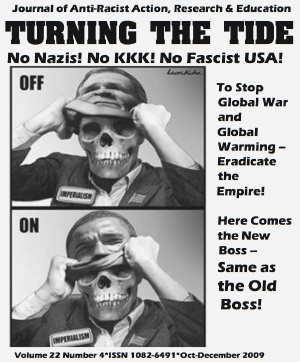
If you’re reading this, you’re no doubt asking yourself, “Why did this have to happen?”  The simple truth is that it is complicated and has been coming for a long time.  The writing process, started many months ago, was intended to be therapy in the face of the looming realization that there isn’t enough therapy in the world that can fix what is really broken.  Needless to say, this rant could fill volumes with example after example if I would let it.  I find the process of writing it frustrating, tedious, and probably pointless… especially given my gross inability to gracefully articulate my thoughts in light of the storm raging in my head.  Exactly what is therapeutic about that I’m not sure, but desperate times call for desperate measures.

We are all taught as children that without laws there would be no society, only anarchy.  Sadly, starting at early ages we in this country have been brainwashed to believe that, in return for our dedication and service, our government stands for justice for all.  We are further brainwashed to believe that there is freedom in this place, and that we should be ready to lay our lives down for the noble principles represented by its founding fathers.  Remember? One of these was “no taxation without representation”.  I have spent the total years of my adulthood unlearning that crap from only a few years of my childhood.  These days anyone who really stands up for that principle is promptly labeled a “crackpot”, traitor and worse.

While very few working people would say they haven’t had their fair share of taxes (as can I), in my lifetime I can say with a great degree of certainty that there has never been a politician cast a vote on any matter with the likes of me or my interests in mind.  Nor, for that matter, are they the least bit interested in me or anything I have to say.

Why is it that a handful of thugs and plunderers can commit unthinkable atrocities (and in the case of the GM executives, for scores of years) and when it’s time for their gravy train to crash under the weight of their gluttony and overwhelming stupidity, the force of the full federal government has no difficulty coming to their aid within days if not hours?  Yet at the same time, the joke we call the American medical system, including the drug and insurance companies, are murdering tens of thousands of people a year and stealing from the corpses and victims they cripple, and this country’s leaders don’t see this as important as bailing out a few of their vile, rich cronies.  Yet, the political “representatives” (thieves, liars, and self-serving scumbags is far more accurate) have endless time to sit around for year after year and debate the state of the “terrible health care problem”.  It’s clear they see no crisis as long as the dead people don’t get in the way of their corporate profits rolling in.

And justice? You’ve got to be kidding!

How can any rational individual explain that white elephant conundrum in the middle of our tax system and, indeed, our entire legal system?  Here we have a system that is, by far, too complicated for the brightest of the master scholars to understand.  Yet, it mercilessly “holds accountable” its victims, claiming that they’re responsible for fully complying with laws not even the experts understand.  The law “requires” a signature on the bottom of a tax filing; yet no one can say truthfully that they understand what they are signing; if that’s not “duress” than what is.  If this is not the measure of a totalitarian regime, nothing is.

How did I get here?

My introduction to the real American nightmare starts back in the early ‘80s.  Unfortunately after more than 16 years of school, somewhere along the line I picked up the absurd, pompous notion that I could read and understand plain English.  Some friends introduced me to a group of people who were having ‘tax code’ readings and discussions.  In particular, zeroed in on a section relating to the wonderful “exemptions” that make institutions like the vulgar, corrupt Catholic Church so incredibly wealthy.  We carefully studied the law (with the help of some of the “best”, high-paid, experienced tax lawyers in the business), and then began to do exactly what the “big boys” were doing (except that we weren’t stealing from our congregation or lying to the government about our massive profits in the name of God).  We took a great deal of care to make it all visible, following all of the rules, exactly the way the law said it was to be done.

The intent of this exercise and our efforts was to bring about a much-needed re-evaluation of the laws that allow the monsters of organized religion to make such a mockery of people who earn an honest living.  However, this is where I learned that there are two “interpretations” for every law; one for the very rich, and one for the rest of us… Oh, and the monsters are the very ones making and enforcing the laws; the inquisition is still alive and well today in this country.

That little lesson in patriotism cost me $40,000+, 10 years of my life, and set my retirement plans back to 0.  It made me realize for the first time that I live in a country with an ideology that is based on a total and complete lie.  It also made me realize, not only how naive I had been, but also the incredible stupidity of the American public; that they buy, hook, line, and sinker, the crap about their “freedom”… and that they continue to do so with eyes closed in the face of overwhelming evidence and all that keeps happening in front of them.

Before even having to make a shaky recovery from the sting of the first lesson on what justice really means in this country (around 1984 after making my way through engineering school and still another five years of “paying my dues”), I felt I finally had to take a chance of launching my dream of becoming an independent engineer.

On the subjects of engineers and dreams of independence, I should digress somewhat to say that I’m sure that I inherited the fascination for creative problem solving from my father.  I realized this at a very young age.

The significance of independence, however, came much later during my early years of college; at the age of 18 or 19 when I was living on my own as student in an apartment in Harrisburg, Pennsylvania.  My neighbor was an elderly retired woman (80+ seemed ancient to me at that age) who was the widowed wife of a retired steel worker.  Her husband had worked all his life in the steel mills of central Pennsylvania with promises from big business and the union that, for his 30 years of service, he would have a pension and medical care to look forward to in his retirement.  Instead he was one of the thousands who got nothing because the incompetent mill management and corrupt union (not to mention the government) raided their pension funds and stole their retirement.  All she had was social security to live on.

In retrospect, the situation was laughable because here I was living on peanut butter and bread (or Ritz crackers when I could afford to splurge) for months at a time.  When I got to know this poor figure and heard her story I felt worse for her plight than for my own (I, after all, I thought I had everything to in front of me).  I was genuinely appalled at one point, as we exchanged stories and commiserated with each other over our situations, when she in her grandmotherly fashion tried to convince me that I would be “healthier” eating cat food (like her) rather than trying to get all my substance from peanut butter and bread.  I couldn’t quite go there, but the impression was made.  I decided that I didn’t trust big business to take care of me, and that I would take responsibility for my own future and myself.

Return to the early ‘80s, and here I was off to a terrifying start as a ‘wet-behind-the-ears’ contract software engineer… and two years later, thanks to the fine backroom, midnight effort by the sleazy executives of Arthur Andersen (the very same folks who later brought us Enron and other such calamities) and an equally sleazy New York Senator (Patrick Moynihan), we saw the passage of 1986 tax reform act with its section 1706.

For you who are unfamiliar, here is the core text of the IRS Section 1706, defining the treatment of workers (such as contract engineers) for tax purposes. Visit this link for a conference committee report (http://www.synergistech.com/1706.shtml#ConferenceCommitteeReport) regarding the intended interpretation of Section 1706 and the relevant parts of Section 530, as amended. For information on how these laws affect technical services workers and their clients, read our discussion here (http://www.synergistech.com/ic-taxlaw.shtml).

SEC. 1706. TREATMENT OF CERTAIN TECHNICAL PERSONNEL.

(a) IN GENERAL – Section 530 of the Revenue Act of 1978 is amended by adding at the end thereof the following new subsection:

(d) EXCEPTION. – This section shall not apply in the case of an individual who pursuant to an arrangement between the taxpayer and another person, provides services for such other person as an engineer, designer, drafter, computer programmer, systems analyst, or other similarly skilled worker engaged in a similar line of work.

(b) EFFECTIVE DATE. – The amendment made by this section shall apply to remuneration paid and services rendered after December 31, 1986.

Note:

·      “another person” is the client in the traditional job-shop relationship.

·      “taxpayer” is the recruiter, broker, agency, or job shop.

·      “individual”, “employee”, or “worker” is you.

Admittedly, you need to read the treatment to understand what it is saying but it’s not very complicated.  The bottom line is that they may as well have put my name right in the text of section (d).  Moreover, they could only have been more blunt if they would have came out and directly declared me a criminal and non-citizen slave.  Twenty years later, I still can’t believe my eyes.

During 1987, I spent close to $5000 of my ‘pocket change’, and at least 1000 hours of my time writing, printing, and mailing to any senator, congressman, governor, or slug that might listen; none did, and they universally treated me as if I was wasting their time.  I spent countless hours on the L.A. freeways driving to meetings and any and all of the disorganized professional groups who were attempting to mount a campaign against this atrocity.  This, only to discover that our efforts were being easily derailed by a few moles from the brokers who were just beginning to enjoy the windfall from the new declaration of their “freedom”.  Oh, and don’t forget, for all of the time I was spending on this, I was loosing income that I couldn’t bill clients.

After months of struggling it had clearly gotten to be a futile exercise.  The best we could get for all of our trouble is a pronouncement from an IRS mouthpiece that they weren’t going to enforce that provision (read harass engineers and scientists).  This immediately proved to be a lie, and the mere existence of the regulation began to have its impact on my bottom line; this, of course, was the intended effect.

Again, rewind my retirement plans back to 0 and shift them into idle.  If I had any sense, I clearly should have left abandoned engineering and never looked back.

Instead I got busy working 100-hour workweeks.  Then came the L.A. depression of the early 1990s.  Our leaders decided that they didn’t need the all of those extra Air Force bases they had in Southern California, so they were closed; just like that.  The result was economic devastation in the region that rivaled the widely publicized Texas S&L fiasco.  However, because the government caused it, no one gave a shit about all of the young families who lost their homes or street after street of boarded up houses abandoned to the wealthy loan companies who received government funds to “shore up” their windfall.  Again, I lost my retirement.

Years later, after weathering a divorce and the constant struggle trying to build some momentum with my business, I find myself once again beginning to finally pick up some speed.  Then came the .COM bust and the 911 nightmare.  Our leaders decided that all aircraft were grounded for what seemed like an eternity; and long after that, ‘special’ facilities like San Francisco were on security alert for months.  This made access to my customers prohibitively expensive.  Ironically, after what they had done the Government came to the aid of the airlines with billions of our tax dollars … as usual they left me to rot and die while they bailed out their rich, incompetent cronies WITH MY MONEY!  After these events, there went my business but not quite yet all of my retirement and savings.

By this time, I’m thinking that it might be good for a change.  Bye to California, I’ll try Austin for a while.  So I moved, only to find out that this is a place with a highly inflated sense of self-importance and where damn little real engineering work is done.  I’ve never experienced such a hard time finding work.  The rates are 1/3 of what I was earning before the crash, because pay rates here are fixed by the three or four large companies in the area who are in collusion to drive down prices and wages… and this happens because the justice department is all on the take and doesn’t give a fuck about serving anyone or anything but themselves and their rich buddies.

To survive, I was forced to cannibalize my savings and retirement, the last of which was a small IRA.  This came in a year with mammoth expenses and not a single dollar of income.  I filed no return that year thinking that because I didn’t have any income there was no need.  The sleazy government decided that they disagreed.  But they didn’t notify me in time for me to launch a legal objection so when I attempted to get a protest filed with the court I was told I was no longer entitled to due process because the time to file ran out.  Bend over for another $10,000 helping of justice.

So now we come to the present.  After my experience with the CPA world, following the business crash I swore that I’d never enter another accountant’s office again.  But here I am with a new marriage and a boatload of undocumented income, not to mention an expensive new business asset, a piano, which I had no idea how to handle.  After considerable thought I decided that it would be irresponsible NOT to get professional help; a very big mistake.

When we received the forms back I was very optimistic that they were in order.  I had taken all of the years information to Bill Ross, and he came back with results very similar to what I was expecting.  Except that he had neglected to include the contents of Sheryl’s unreported income; $12,700 worth of it. To make matters worse, Ross knew all along this was missing and I didn’t have a clue until he pointed it out in the middle of the audit.  By that time it had become brutally evident that he was representing himself and not me.

This left me stuck in the middle of this disaster trying to defend transactions that have no relationship to anything tax-related (at least the tax-related transactions were poorly documented).  Things I never knew anything about and things my wife had no clue would ever matter to anyone.  The end result is… well, just look around.

I remember reading about the stock market crash before the “great” depression and how there were wealthy bankers and businessmen jumping out of windows when they realized they screwed up and lost everything.  Isn’t it ironic how far we’ve come in 60 years in this country that they now know how to fix that little economic problem; they just steal from the middle class (who doesn’t have any say in it, elections are a joke) to cover their asses and it’s “business-as-usual”.  Now when the wealthy fuck up, the poor get to die for the mistakes… isn’t that a clever, tidy solution.

As government agencies go, the FAA is often justifiably referred to as a tombstone agency, though they are hardly alone.  The recent presidential puppet GW Bush and his cronies in their eight years certainly reinforced for all of us that this criticism rings equally true for all of the government.  Nothing changes unless there is a body count (unless it is in the interest of the wealthy sows at the government trough).  In a government full of hypocrites from top to bottom, life is as cheap as their lies and their self-serving laws.

I know I’m hardly the first one to decide I have had all I can stand.  It has always been a myth that people have stopped dying for their freedom in this country, and it isn’t limited to the blacks, and poor immigrants.  I know there have been countless before me and there are sure to be as many after.  But I also know that by not adding my body to the count, I ensure nothing will change.  I choose to not keep looking over my shoulder at “big brother” while he strips my carcass, I choose not to ignore what is going on all around me, I choose not to pretend that business as usual won’t continue; I have just had enough.

I can only hope that the numbers quickly get too big to be white-washed and ignored that the American zombies wake up and revolt; it will take nothing less.  I would only hope that by striking a nerve that stimulates the inevitable double standard, knee-jerk government reaction that results in more stupid draconian restrictions people wake up and begin to see the pompous political thugs and their mindless minions for what they are.  Sadly, though I spent my entire life trying to believe it wasn’t so, but violence not only is the answer, it is the only answer.  The cruel joke is that the really big chunks of shit at the top have known this all along and have been laughing, at and using this awareness against, fools like me all along.

I saw it written once that the definition of insanity is repeating the same process over and over and expecting the outcome to suddenly be different.  I am finally ready to stop this insanity.  Well, Mr. Big Brother IRS man, let’s try something different; take my pound of flesh and sleep well.

The communist creed: From each according to his ability, to each according to his need.

The capitalist creed: From each according to his gullibility, to each according to his greed.

Joe Stack (1956-2010)

02/18/2010

Ojore Nuru Lutalo, aka Leroy Bunting arrested with Anarchist literature

Anarchist Ojore Nuru LutaloFormer political prisoner Ojore Nuru Lutalo, ne Leroy Bunting, was pulled off an Amtrak train in La Junta, Colorado, for scaring fellow passengers with his cell phone conversation. The FBI’s Colorado Springs Joint Terrorism Task Force was alerted about the 64 year-old armed with anarchist literature from the “Afrikan Liberation Army” (sic) which he had obtained while speaking at the LA Anarchist Book Fair for the Anarchist Black Cross, a prison rights organization. Just yesterday I listened to a local law enforcement type defend the 2nd Amendment, the right to bear arms, by suggesting that if we substituted “books” for guns, no one would think to regulate them. His compatriots seem to have confused the argument by charging the former Black Liberation Army member for “endangering public transportation” with what they called terrorist recruiting propaganda.

Journal Turning the TideAccording to the Pueblo Chieftain, police found “a large amount of propaganda recruiting materials from the Afrikan Liberation Army, including photos of President Barack Obama and other items that raised suspicions.”

Break the Chains reports that Ojore was released Yesterday, and will return to the Otero District Court for an appearance February 5th, the charge now “Interfering with Public Transportation.”

How absolutely disingenuous to misquote the source of the so-called Anarchist literature, seeing as reportedly there was so much of it. This is the usual media disinfo to prevent giving the causes visibility. The Pueblo Chieftain has obtained the affidavit of the arrest, which should list the items found on Ojore. Until that’s made available, we can search online for what he was likely carrying. Our bet, they don’t want to call attention to the New Afrikan Liberation Front (NALF).

Here’s a list of the exhibitors at the 2nd Anarchist Book Fair:

Anarchist type brochuresSemiotext(e)
www.semiotexte.com
Earth First Journal
www.earthfirstjournal.org
Taala Hooghan: Infoshop & Youth Media Arts Center
www.taalahooghan.org
Modesto Anarcho
www.modestoanarcho.org
South Central Farmers
www.southcentralfarmers.com
Skylight Books
www.skylightbooks.com
Institute for Anarchist Studies
www.anarchist-studies.org
Critical Resistance
www.criticalresistance.org
Las Vegas Alliance of the Libertarian Left sonv.libertarianleft.org
Catholic Worker
www.lacatholicworker.org
Anti-Racist Action/Turning the Tide
www.antiracistaction.us
Anarchist Black Cross Federation L.A. www.abcf.net/la
PM press
www.pmpress.org
Microcosom Publishing
www.microcosmpublishing.com
AK press
www.akpress.org
Little black cart
www.littleblackcart.com
Make/Shift magazine
www.makeshiftmag.com
Journal of aesthetics and protest
www.journalofaestheticsandprotest.org
R.A.C. : Revolutionary Autonomous Communities
www.revolutionaryautonomouscommunities.blogspot.com
I.W.W
www.iww.org

Then there is also the Southside ABCF zine collection, the Crossroad Newletter, and the publications of the Spear and Shield. Here’s the New Afrikan Declaration of Independence, as printed on Prairie Fire:

“New Afrikan Declaration of Independence”

WE, New Afrikan People in America, in consequence of arriving at a knowledge of ourselves as a people with dignity, long deprived of that knowledge; as a consequence of revolting with every decimal of our collective and individual beings against the oppression that for three hundred years has destroyed and broken and warped the bodies and minds and spirits of our people in America, in consequence of our raging desire to be free of this oppression, to destroy this oppression wherever it assaults humankind in the world, and in consequence of inextinguishable determination to go a different way, to build a new and better world, do hereby declare ourselves forever free and independent of the jurisdiction of the United State of America and the obligations which that country¹s unilateral decision to make our ancestors and ourselves paper-citizens placed on us.

We claim no rights from the United States of America other than those rights belonging to human beings anywhere in the world, and these include the right to damages, reparations, due us from the grievous injuries sustained by our ancestors and ourselves by reason of United States lawlessness.

Ours is a revolution against oppression–our own oppression and that of all people in the world. And it is a revolution for a better life, a better station for all, a surer harmony with the forces of life in the universe. We therefore see these aims as the aims of our revolution:

    • To free black people in America from oppression;
  • To support and wage the world revolution until all people everywhere are so free;
  • To build a new Society that is better than what We now know and as perfect as We can make it;
  • To assure all people in the New Society maximum opportunity and equal access to that maximum;
  • To promote industriousness, responsibility, scholarship, and service;
  • To create conditions in which freedom of religion abounds and the pursuit of God and/or destiny, place and purpose of humankind in the Universe will be without hindrance;
  • To build a Black independent nation where no sect or religious creed subverts or impedes the building of the New Society, the New State Government, or achievement of the Aims of the Revolution as set forth in this Declaration;
  • To end exploitation of human beings by each other or the environment;
  • To assure equality of rights for the sexes;
  • To end color and class discrimination, while not abolishing salubrious diversity, and to promote self-respect and mutual understanding among all people in the society;
  • To protect and promote the personal dignity and integrity of the individual, and his or her natural rights;
  • To place the major means of production and trade in the trust of the state to assure the benefits of this earth and our genius and labor to society and all its members, and
  • To encourage and reward the individual for hard work and initiative and insight and devotion to the Revolution.

In mutual trust and great expectation, We the undersigned, for ourselves and for those who look to us but are unable personally to affix their signatures hereto, do join in this solemn Declaration of Independence, and to support this Declaration and to assure the success of the Revolution, We pledge without reservation ourselves, our talents, and all our worldly goods.

Or the creed:

“New Afrikan Creed”

1. i believe in the spirituality, humanity and genius of Black people, and in our new pursuit of these values.

2. i believe in the family and the community, and in the community as a family, and i will work to make this concept live.

3. i believe in the community as more important than the individual.

4. i believe in constant struggle for freedom, to end oppression and build a better world. i believe in collective struggle; in fashioning victory in concert with my brothers and sisters.

5. i believe that the fundamental reason our oppression continues is that We, as a people, lack the power to control our lives.

6. i believe that fundamental way to gain that power, and end oppression, is to build a sovereign Black nation.

7. i believe that all the land in America, upon which We have lived for a long time, which We have worked and built upon, and which We have fought to stay on, is land that belongs to us as a people.

8. i believe in the Malcolm X Doctrine: that We must organize upon this land, and hold a plebiscite, to tell the world by a vote that We are free and our land independent, and that, after the vote, We must stand ready to defend ourselves, establishing the nation beyond contradiction.

9. Therefore, i pledge to struggle without cease, until We have won sovereignty. i pledge to struggle without fail until We have built a better condition than the world has yet known.

10. i will give my life, if that is necessary; i will give my time, my mind, my strength, and my wealth because this IS necessary.

11. i will follow my chosen leaders and help them.

12. i will love my brothers and sisters as myself.

13. i will steal nothing from a brother or sister, cheat no brother or sister, misuse no brother or sister, inform on no brother or sister, and spread no gossip.

14. i will keep myself clean in body, dress and speech, knowing that i am a light set on a hill, a true representative of what We are building.

15. i will be patient and uplifting with the deaf, dumb and blind, and i will seek by word and deed to heal the Black family, to bring into the Movement and into the Community mothers and fathers, brothers and sisters left by the wayside.

Now, freely and of my own will, i pledge this Creed, for the sake of freedom for my people and a better world, on pain of disgrace and banishment if i prove false. For, i am no longer deaf, dumb or blind. i am, by inspiration of the ancestors and grace of the Creator — a New Afrikan.

Beyond MLK worship: Beyond Vietnam

MLK“A time comes when silence is betrayal. That time has come for us in relation to Vietnam.”
Martin Luther King Beyond Vietnam: Time to Break the Silence
Full text of 1967 speech below.

Riverside Church, New York City, 4 April 1967

I come to this magnificent house of worship tonight because my conscience leaves me no other choice. I join with you in this meeting because I am in deepest agreement with the aims and work of the organization which has brought us together: Clergy and Laymen Concerned about Vietnam. The recent statement of your executive committee are the sentiments of my own heart and I found myself in full accord when I read its opening lines:

“A time comes when silence is betrayal.”

That time has come for us in relation to Vietnam.

The truth of these words is beyond doubt but the mission to which they call us is a most difficult one. Even when pressed by the demands of inner truth, men do not easily assume the task of opposing their government’s policy, especially in time of war. Nor does the human spirit move without great difficulty against all the apathy of conformist thought within one’s own bosom and in the surrounding world. Moreover when the issues at hand seem as perplexed as they often do in the case of this dreadful conflict we are always on the verge of being mesmerized by uncertainty; but we must move on.

Some of us who have already begun to break the silence of the night have found that the calling to speak is often a vocation of agony, but we must speak. We must speak with all the humility that is appropriate to our limited vision, but we must speak. And we must rejoice as well, for surely this is the first time in our nation’s history that a significant number of its religious leaders have chosen to move beyond the prophesying of smooth patriotism to the high grounds of a firm dissent based upon the mandates of conscience and the reading of history. Perhaps a new spirit is rising among us. If it is, let us trace its movement well and pray that our own inner being may be sensitive to its guidance, for we are deeply in need of a new way beyond the darkness that seems so close around us.

Over the past two years, as I have moved to break the betrayal of my own silences and to speak from the burnings of my own heart, as I have called for radical departures from the destruction of Vietnam, many persons have questioned me about the wisdom of my path. At the heart of their concerns this query has often loomed large and loud: Why are you speaking about war, Dr. King? Why are you joining the voices of dissent? Peace and civil rights don’t mix, they say. Aren’t you hurting the cause of your people, they ask? And when I hear them, though I often understand the source of their concern, I am nevertheless greatly saddened, for such questions mean that the inquirers have not really known me, my commitment or my calling. Indeed, their questions suggest that they do not know the world in which they live.

“I wish not to speak with Hanoi and the National Liberation Front, but rather to my fellow Americans who, with me, bear the greatest responsibility in ending a conflict that has exacted a heavy price on both continents.”

In the light of such tragic misunderstandings, I deem it of signal importance to try to state clearly, and I trust concisely, why I believe that the path from Dexter Avenue Baptist Church — the church in Montgomery, Alabama, where I began my pastorate — leads clearly to this sanctuary tonight.

I come to this platform tonight to make a passionate plea to my beloved nation. This speech is not addressed to Hanoi or to the National Liberation Front. It is not addressed to China or to Russia.

Nor is it an attempt to overlook the ambiguity of the total situation and the need for a collective solution to the tragedy of Vietnam. Neither is it an attempt to make North Vietnam or the National Liberation Front paragons of virtue, nor to overlook the role they can play in a successful resolution of the problem. While they both may have justifiable reason to be suspicious of the good faith of the United States, life and history give eloquent testimony to the fact that conflicts are never resolved without trustful give and take on both sides.

Tonight, however, I wish not to speak with Hanoi and the NLF, but rather to my fellow Americans, who, with me, bear the greatest responsibility in ending a conflict that has exacted a heavy price on both continents.

The Importance of Vietnam

Since I am a preacher by trade, I suppose it is not surprising that I have seven major reasons for bringing Vietnam into the field of my moral vision. There is at the outset a very obvious and almost facile connection between the war in Vietnam and the struggle I, and others, have been waging in America. A few years ago there was a shining moment in that struggle. It seemed as if there was a real promise of hope for the poor — both black and white — through the poverty program. There were experiments, hopes, new beginnings. Then came the buildup in Vietnam and I watched the program broken and eviscerated as if it were some idle political plaything of a society gone mad on war, and I knew that America would never invest the necessary funds or energies in rehabilitation of its poor so long as adventures like Vietnam continued to draw men and skills and money like some demonic destructive suction tube. So I was increasingly compelled to see the war as an enemy of the poor and to attack it as such.

“For the sake of those boys,
for the sake of this governent,
for the sake of hundreds of thousands
trembling under our violence,
I cannot be silent.”

Perhaps the more tragic recognition of reality took place when it became clear to me that the war was doing far more than devastating the hopes of the poor at home. It was sending their sons and their brothers and their husbands to fight and to die in extraordinarily high proportions relative to the rest of the population. We were taking the black young men who had been crippled by our society and sending them eight thousand miles away to guarantee liberties in Southeast Asia which they had not found in southwest Georgia and East Harlem. So we have been repeatedly faced with the cruel irony of watching Negro and white boys on TV screens as they kill and die together for a nation that has been unable to seat them together in the same schools. So we watch them in brutal solidarity burning the huts of a poor village, but we realize that they would never live on the same block in Detroit. I could not be silent in the face of such cruel manipulation of the poor.

My third reason moves to an even deeper level of awareness, for it grows out of my experience in the ghettoes of the North over the last three years — especially the last three summers. As I have walked among the desperate, rejected and angry young men I have told them that Molotov cocktails and rifles would not solve their problems. I have tried to offer them my deepest compassion while maintaining my conviction that social change comes most meaningfully through nonviolent action. But they asked — and rightly so — what about Vietnam? They asked if our own nation wasn’t using massive doses of violence to solve its problems, to bring about the changes it wanted. Their questions hit home, and I knew that I could never again raise my voice against the violence of the oppressed in the ghettos without having first spoken clearly to the greatest purveyor of violence in the world today — my own government. For the sake of those boys, for the sake of this government, for the sake of hundreds of thousands trembling under our violence, I cannot be silent.

For those who ask the question, “Aren’t you a civil rights leader?” and thereby mean to exclude me from the movement for peace, I have this further answer. In 1957 when a group of us formed the Southern Christian Leadership Conference, we chose as our motto: “To save the soul of America.” We were convinced that we could not limit our vision to certain rights for black people, but instead affirmed the conviction that America would never be free or saved from itself unless the descendants of its slaves were loosed completely from the shackles they still wear. In a way we were agreeing with Langston Hughes, that black bard of Harlem, who had written earlier:

O, yes,
I say it plain,
America never was America to me,
And yet I swear this oath —
America will be!

Now, it should be incandescently clear that no one who has any concern for the integrity and life of America today can ignore the present war. If America’s soul becomes totally poisoned, part of the autopsy must read Vietnam. It can never be saved so long as it destroys the deepest hopes of men the world over. So it is that those of us who are yet determined that America will be are led down the path of protest and dissent, working for the health of our land.

“Surely we must see
that the men we supported
pressed them to their violence.”

As if the weight of such a commitment to the life and health of America were not enough, another burden of responsibility was placed upon me in 1964; and I cannot forget that the Nobel Prize for Peace was also a commission — a commission to work harder than I had ever worked before for “the brotherhood of man.” This is a calling that takes me beyond national allegiances, but even if it were not present I would yet have to live with the meaning of my commitment to the ministry of Jesus Christ. To me the relationship of this ministry to the making of peace is so obvious that I sometimes marvel at those who ask me why I am speaking against the war. Could it be that they do not know that the good news was meant for all men — for Communist and capitalist, for their children and ours, for black and for white, for revolutionary and conservative? Have they forgotten that my ministry is in obedience to the one who loved his enemies so fully that he died for them? What then can I say to the “Vietcong” or to Castro or to Mao as a faithful minister of this one? Can I threaten them with death or must I not share with them my life?

Finally, as I try to delineate for you and for myself the road that leads from Montgomery to this place I would have offered all that was most valid if I simply said that I must be true to my conviction that I share with all men the calling to be a son of the living God. Beyond the calling of race or nation or creed is this vocation of sonship and brotherhood, and because I believe that the Father is deeply concerned especially for his suffering and helpless and outcast children, I come tonight to speak for them.

This I believe to be the privilege and the burden of all of us who deem ourselves bound by allegiances and loyalties which are broader and deeper than nationalism and which go beyond our nation’s self-defined goals and positions. We are called to speak for the weak, for the voiceless, for victims of our nation and for those it calls enemy, for no document from human hands can make these humans any less our brothers.

Strange Liberators

And as I ponder the madness of Vietnam and search within myself for ways to understand and respond to compassion my mind goes constantly to the people of that peninsula. I speak now not of the soldiers of each side, not of the junta in Saigon, but simply of the people who have been living under the curse of war for almost three continuous decades now. I think of them too because it is clear to me that there will be no meaningful solution there until some attempt is made to know them and hear their broken cries.

“Before long they must know
that their government has sent them
into a struggle among Vietnamese,
and the more sophisticated surely realize
that we are on the side of the wealthy
and the secure
while we create hell for the poor.”

They must see Americans as strange liberators. The Vietnamese people proclaimed their own independence in 1945 after a combined French and Japanese occupation, and before the Communist revolution in China. They were led by Ho Chi Minh. Even though they quoted the American Declaration of Independence in their own document of freedom, we refused to recognize them. Instead, we decided to support France in its re-conquest of her former colony.

Our government felt then that the Vietnamese people were not “ready” for independence, and we again fell victim to the deadly Western arrogance that has poisoned the international atmosphere for so long. With that tragic decision we rejected a revolutionary government seeking self-determination, and a government that had been established not by China (for whom the Vietnamese have no great love) but by clearly indigenous forces that included some Communists. For the peasants this new government meant real land reform, one of the most important needs in their lives.

For nine years following 1945 we denied the people of Vietnam the right of independence. For nine years we vigorously supported the French in their abortive effort to re-colonize Vietnam.

Before the end of the war we were meeting eighty percent of the French war costs. Even before the French were defeated at Dien Bien Phu, they began to despair of the reckless action, but we did not. We encouraged them with our huge financial and military supplies to continue the war even after they had lost the will. Soon we would be paying almost the full costs of this tragic attempt at re-colonization.

After the French were defeated it looked as if independence and land reform would come again through the Geneva agreements. But instead there came the United States, determined that Ho should not unify the temporarily divided nation, and the peasants watched again as we supported one of the most vicious modern dictators — our chosen man, Premier Diem. The peasants watched and cringed as Diem ruthlessly routed out all opposition, supported their extortionist landlords and refused even to discuss reunification with the north. The peasants watched as all this was presided over by U.S. influence and then by increasing numbers of U.S. troops who came to help quell the insurgency that Diem’s methods had aroused. When Diem was overthrown they may have been happy, but the long line of military dictatorships seemed to offer no real change — especially in terms of their need for land and peace.

The only change came from America as we increased our troop commitments in support of governments which were singularly corrupt, inept and without popular support. All the while the people read our leaflets and received regular promises of peace and democracy — and land reform. Now they languish under our bombs and consider us – not their fellow Vietnamese — the real enemy. They move sadly and apathetically as we herd them off the land of their fathers into concentration camps where minimal social needs are rarely met. They know they must move or be destroyed by our bombs. So they go — primarily women and children and the aged.

“Somehow this madness must cease.”

They watch as we poison their water, as we kill a million acres of their crops. They must weep as the bulldozers roar through their areas preparing to destroy the precious trees. They wander into the hospitals, with at least twenty casualties from American firepower for one “Vietcong-inflicted” injury. So far we may have killed a million of them — mostly children. They wander into the towns and see thousands of the children, homeless, without clothes, running in packs on the streets like animals. They see the children, degraded by our soldiers as they beg for food. They see the children selling their sisters to our soldiers, soliciting for their mothers.

What do the peasants think as we ally ourselves with the landlords and as we refuse to put any action into our many words concerning land reform? What do they think as we test our latest weapons on them, just as the Germans tested out new medicine and new tortures in the concentration camps of Europe? Where are the roots of the independent Vietnam we claim to be building? Is it among these voiceless ones?

We have destroyed their two most cherished institutions: the family and the village. We have destroyed their land and their crops. We have cooperated in the crushing of the nation’s only non-Communist revolutionary political force — the Unified Buddhist church. We have supported the enemies of the peasants of Saigon. We have corrupted their women and children and killed their men. What liberators?

Now there is little left to build on — save bitterness. Soon the only solid physical foundations remaining will be found at our military bases and in the concrete of the concentration camps we call fortified hamlets. The peasants may well wonder if we plan to build our new Vietnam on such grounds as these? Could we blame them for such thoughts? We must speak for them and raise the questions they cannot raise. These too are our brothers.

Perhaps the more difficult but no less necessary task is to speak for those who have been designated as our enemies. What of the National Liberation Front — that strangely anonymous group we call VC or Communists? What must they think of us in America when they realize that we permitted the repression and cruelty of Diem which helped to bring them into being as a resistance group in the south? What do they think of our condoning the violence which led to their own taking up of arms? How can they believe in our integrity when now we speak of “aggression from the north” as if there were nothing more essential to the war? How can they trust us when now we charge them with violence after the murderous reign of Diem and charge them with violence while we pour every new weapon of death into their land? Surely we must understand their feelings even if we do not condone their actions. Surely we must see that the men we supported pressed them to their violence. Surely we must see that our own computerized plans of destruction simply dwarf their greatest acts.

“We must continue to raise our voices if our nation persists in its perverse ways in Vietnam.”

How do they judge us when our officials know that their membership is less than twenty-five percent Communist and yet insist on giving them the blanket name? What must they be thinking when they know that we are aware of their control of major sections of Vietnam and yet we appear ready to allow national elections in which this highly organized political parallel government will have no part? They ask how we can speak of free elections when the Saigon press is censored and controlled by the military junta. And they are surely right to wonder what kind of new government we plan to help form without them — the only party in real touch with the peasants. They question our political goals and they deny the reality of a peace settlement from which they will be excluded. Their questions are frighteningly relevant. Is our nation planning to build on political myth again and then shore it up with the power of new violence?

Here is the true meaning and value of compassion and nonviolence when it helps us to see the enemy’s point of view, to hear his questions, to know his assessment of ourselves. For from his view we may indeed see the basic weaknesses of our own condition, and if we are mature, we may learn and grow and profit from the wisdom of the brothers who are called the opposition.

So, too, with Hanoi. In the north, where our bombs now pummel the land, and our mines endanger the waterways, we are met by a deep but understandable mistrust. To speak for them is to explain this lack of confidence in Western words, and especially their distrust of American intentions now. In Hanoi are the men who led the nation to independence against the Japanese and the French, the men who sought membership in the French commonwealth and were betrayed by the weakness of Paris and the willfulness of the colonial armies. It was they who led a second struggle against French domination at tremendous costs, and then were persuaded to give up the land they controlled between the thirteenth and seventeenth parallel as a temporary measure at Geneva. After 1954 they watched us conspire with Diem to prevent elections which would have surely brought Ho Chi Minh to power over a united Vietnam, and they realized they had been betrayed again.

When we ask why they do not leap to negotiate, these things must be remembered. Also it must be clear that the leaders of Hanoi considered the presence of American troops in support of the Diem regime to have been the initial military breach of the Geneva agreements concerning foreign troops, and they remind us that they did not begin to send in any large number of supplies or men until American forces had moved into the tens of thousands.

“When machines and computers,
profit motives and property rights
are considered more important than people,
the giant triplets of
racism,
materialism
and militarism
are incapable of being conquered.”

Hanoi remembers how our leaders refused to tell us the truth about the earlier North Vietnamese overtures for peace, how the president claimed that none existed when they had clearly been made. Ho Chi Minh has watched as America has spoken of peace and built up its forces, and now he has surely heard of the increasing international rumors of American plans for an invasion of the north. He knows the bombing and shelling and mining we are doing are part of traditional pre-invasion strategy. Perhaps only his sense of humor and of irony can save him when he hears the most powerful nation of the world speaking of aggression as it drops thousands of bombs on a poor weak nation more than eight thousand miles away from its shores.

At this point I should make it clear that while I have tried in these last few minutes to give a voice to the voiceless on Vietnam and to understand the arguments of those who are called enemy, I am as deeply concerned about our troops there as anything else. For it occurs to me that what we are submitting them to in Vietnam is not simply the brutalizing process that goes on in any war where armies face each other and seek to destroy. We are adding cynicism to the process of death, for they must know after a short period there that none of the things we claim to be fighting for are really involved. Before long they must know that their government has sent them into a struggle among Vietnamese, and the more sophisticated surely realize that we are on the side of the wealthy and the secure while we create hell for the poor.

This Madness Must Cease

Somehow this madness must cease. We must stop now. I speak as a child of God and brother to the suffering poor of Vietnam. I speak for those whose land is being laid waste, whose homes are being destroyed, whose culture is being subverted. I speak for the poor of America who are paying the double price of smashed hopes at home and death and corruption in Vietnam. I speak as a citizen of the world, for the world as it stands aghast at the path we have taken. I speak as an American to the leaders of my own nation. The great initiative in this war is ours. The initiative to stop it must be ours.

This is the message of the great Buddhist leaders of Vietnam. Recently one of them wrote these words:

“Each day the war goes on the hatred increases in the heart of the Vietnamese and in the hearts of those of humanitarian instinct. The Americans are forcing even their friends into becoming their enemies. It is curious that the Americans, who calculate so carefully on the possibilities of military victory, do not realize that in the process they are incurring deep psychological and political defeat. The image of America will never again be the image of revolution, freedom and democracy, but the image of violence and militarism.”

“A nation that continues
year after year
to spend more money on military defense
than on programs of social uplift
is approaching spiritual death.”

If we continue, there will be no doubt in my mind and in the mind of the world that we have no honorable intentions in Vietnam. It will become clear that our minimal expectation is to occupy it as an American colony and men will not refrain from thinking that our maximum hope is to goad China into a war so that we may bomb her nuclear installations. If we do not stop our war against the people of Vietnam immediately the world will be left with no other alternative than to see this as some horribly clumsy and deadly game we have decided to play.

The world now demands a maturity of America that we may not be able to achieve. It demands that we admit that we have been wrong from the beginning of our adventure in Vietnam, that we have been detrimental to the life of the Vietnamese people. The situation is one in which we must be ready to turn sharply from our present ways.

In order to atone for our sins and errors in Vietnam, we should take the initiative in bringing a halt to this tragic war. I would like to suggest five concrete things that our government should do immediately to begin the long and difficult process of extricating ourselves from this nightmarish conflict:

• End all bombing in North and South Vietnam

• Declare a unilateral cease-fire in the hope that such action will create the atmosphere for negotiation.

• Take immediate steps to prevent other battlegrounds in Southeast Asia by curtailing our military buildup in Thailand and our interference in Laos.

• Realistically accept the fact that the National Liberation Front has substantial support in South Vietnam and must thereby play a role in any meaningful negotiations and in any future Vietnam government.

• Set a date that we will remove all foreign troops from Vietnam in accordance with the 1954 Geneva agreement.

Part of our ongoing commitment might well express itself in an offer to grant asylum to any Vietnamese who fears for his life under a new regime which included the Liberation Front. Then we must make what reparations we can for the damage we have done. We most provide the medical aid that is badly needed, making it available in this country if necessary.

Protesting The War

Meanwhile we in the churches and synagogues have a continuing task while we urge our government to disengage itself from a disgraceful commitment. We must continue to raise our voices if our nation persists in its perverse ways in Vietnam. We must be prepared to match actions with words by seeking out every creative means of protest possible.

As we counsel young men concerning military service we must clarify for them our nation’s role in Vietnam and challenge them with the alternative of conscientious objection. I am pleased to say that this is the path now being chosen by more than seventy students at my own alma mater, Morehouse College, and I recommend it to all who find the American course in Vietnam a dishonorable and unjust one. Moreover I would encourage all ministers of draft age to give up their ministerial exemptions and seek status as conscientious objectors. These are the times for real choices and not false ones. We are at the moment when our lives must be placed on the line if our nation is to survive its own folly. Every man of humane convictions must decide on the protest that best suits his convictions, but we must all protest.

“If we do not act
we shall surely be dragged down
the long and shameful corridors of time
reserved for those who possess
power without compassion,
might without morality,
and strength without sight.”

There is something seductively tempting about stopping there and sending us all off on what in some circles has become a popular crusade against the war in Vietnam. I say we must enter the struggle, but I wish to go on now to say something even more disturbing. The war in Vietnam is but a symptom of a far deeper malady within the American spirit, and if we ignore this sobering reality we will find ourselves organizing clergy-and laymen-concerned committees for the next generation. They will be concerned about Guatemala and Peru. They will be concerned about Thailand and Cambodia. They will be concerned about Mozambique and South Africa. We will be marching for these and a dozen other names and attending rallies without end unless there is a significant and profound change in American life and policy. Such thoughts take us beyond Vietnam, but not beyond our calling as sons of the living God.

In 1957 a sensitive American official overseas said that it seemed to him that our nation was on the wrong side of a world revolution. During the past ten years we have seen emerge a pattern of suppression which now has justified the presence of U.S. military “advisors” in Venezuela. This need to maintain social stability for our investments accounts for the counter-revolutionary action of American forces in Guatemala. It tells why American helicopters are being used against guerrillas in Colombia and why American napalm and green beret forces have already been active against rebels in Peru. It is with such activity in mind that the words of the late John F. Kennedy come back to haunt us. Five years ago he said,

“Those who make peaceful revolution impossible will make violent revolution inevitable.”

Increasingly, by choice or by accident, this is the role our nation has taken — the role of those who make peaceful revolution impossible by refusing to give up the privileges and the pleasures that come from the immense profits of overseas investment.

I am convinced that if we are to get on the right side of the world revolution, we as a nation must undergo a radical revolution of values. We must rapidly begin the shift from a “thing-oriented” society to a “person-oriented” society. When machines and computers, profit motives and property rights are considered more important than people, the giant triplets of racism, materialism, and militarism are incapable of being conquered.

A true revolution of values will soon cause us to question the fairness and justice of many of our past and present policies. On the one hand we are called to play the good Samaritan on life’s roadside; but that will be only an initial act. One day we must come to see that the whole Jericho road must be transformed so that men and women will not be constantly beaten and robbed as they make their journey on life’s highway.

True compassion is more than flinging a coin to a beggar; it is not haphazard and superficial. It comes to see that an edifice which produces beggars needs restructuring. A true revolution of values will soon look uneasily on the glaring contrast of poverty and wealth. With righteous indignation, it will look across the seas and see individual capitalists of the West investing huge sums of money in Asia, Africa and South America, only to take the profits out with no concern for the social betterment of the countries, and say: “This is not just.”

It will look at our alliance with the landed gentry of Latin America and say: “This is not just.”

The Western arrogance of feeling that it has everything to teach others and nothing to learn from them is not just.

A true revolution of values will lay hands on the world order and say of war: “This way of settling differences is not just.”

This business of burning human beings with napalm, of filling our nation’s homes with orphans and widows, of injecting poisonous drugs of hate into veins of people normally humane, of sending men home from dark and bloody battlefields physically handicapped and psychologically deranged, cannot be reconciled with wisdom, justice and love. A nation that continues year after year to spend more money on military defense than on programs of social uplift is approaching spiritual death.

America, the richest and most powerful nation in the world, can well lead the way in this revolution of values. There is nothing, except a tragic death wish, to prevent us from reordering our priorities, so that the pursuit of peace will take precedence over the pursuit of war. There is nothing to keep us from molding a recalcitrant status quo with bruised hands until we have fashioned it into a brotherhood.

This kind of positive revolution of values is our best defense against communism. War is not the answer. Communism will never be defeated by the use of atomic bombs or nuclear weapons. Let us not join those who shout war and through their misguided passions urge the United States to relinquish its participation in the United Nations. These are days which demand wise restraint and calm reasonableness. We must not call everyone a Communist or an appeaser who advocates the seating of Red China in the United Nations and who recognizes that hate and hysteria are not the final answers to the problem of these turbulent days. We must not engage in a negative anti-communism, but rather in a positive thrust for democracy, realizing that our greatest defense against communism is to take offensive action in behalf of justice. We must with positive action seek to remove those conditions of poverty, insecurity and injustice which are the fertile soil in which the seed of communism grows and develops.

The People Are Important

These are revolutionary times. All over the globe men are revolting against old systems of exploitation and oppression and out of the wombs of a frail world new systems of justice and equality are being born. The shirtless and barefoot people of the land are rising up as never before. “The people who sat in darkness have seen a great light.” We in the West must support these revolutions. It is a sad fact that, because of comfort, complacency, a morbid fear of communism, and our proneness to adjust to injustice, the Western nations that initiated so much of the revolutionary spirit of the modern world have now become the arch anti-revolutionaries. This has driven many to feel that only Marxism has the revolutionary spirit. Therefore, communism is a judgment against our failure to make democracy real and follow through on the revolutions we initiated. Our only hope today lies in our ability to recapture the revolutionary spirit and go out into a sometimes hostile world declaring eternal hostility to poverty, racism, and militarism. With this powerful commitment we shall boldly challenge the status quo and unjust mores and thereby speed the day when “every valley shall be exalted, and every mountain and hill shall be made low, and the crooked shall be made straight and the rough places plain.”

A genuine revolution of values means in the final analysis that our loyalties must become ecumenical rather than sectional. Every nation must now develop an overriding loyalty to mankind as a whole in order to preserve the best in their individual societies.

This call for a world-wide fellowship that lifts neighborly concern beyond one’s tribe, race, class and nation is in reality a call for an all-embracing and unconditional love for all men. This oft misunderstood and misinterpreted concept – so readily dismissed by the Nietzsches of the world as a weak and cowardly force – has now become an absolute necessity for the survival of man. When I speak of love I am not speaking of some sentimental and weak response. I am speaking of that force which all of the great religions have seen as the supreme unifying principle of life. Love is somehow the key that unlocks the door which leads to ultimate reality. This Hindu-Moslem-Christian-Jewish-Buddhist belief about ultimate reality is beautifully summed up in the first epistle of Saint John:

Let us love one another; for love is God and everyone that loveth is born of God and knoweth God. He that loveth not knoweth not God; for God is love. If we love one another God dwelleth in us, and his love is perfected in us.

Let us hope that this spirit will become the order of the day. We can no longer afford to worship the god of hate or bow before the altar of retaliation. The oceans of history are made turbulent by the ever-rising tides of hate. History is cluttered with the wreckage of nations and individuals that pursued this self-defeating path of hate. As Arnold Toynbee says :

“Love is the ultimate force that makes for the saving choice of life and good against the damning choice of death and evil. Therefore the first hope in our inventory must be the hope that love is going to have the last word.”

We are now faced with the fact that tomorrow is today. We are confronted with the fierce urgency of now. In this unfolding conundrum of life and history there is such a thing as being too late. Procrastination is still the thief of time. Life often leaves us standing bare, naked and dejected with a lost opportunity. The “tide in the affairs of men” does not remain at the flood; it ebbs. We may cry out desperately for time to pause in her passage, but time is deaf to every plea and rushes on. Over the bleached bones and jumbled residue of numerous civilizations are written the pathetic words: “Too late.”

There is an invisible book of life that faithfully records our vigilance or our neglect. “The moving finger writes, and having writ moves on…” We still have a choice today; nonviolent coexistence or violent co-annihilation.

We must move past indecision to action. We must find new ways to speak for peace in Vietnam and justice throughout the developing world – a world that borders on our doors. If we do not act we shall surely be dragged down the long dark and shameful corridors of time reserved for those who possess power without compassion, might without morality, and strength without sight.

Now let us begin. Now let us rededicate ourselves to the long and bitter – but beautiful – struggle for a new world. This is the calling of the sons of God, and our brothers wait eagerly for our response. Shall we say the odds are too great? Shall we tell them the struggle is too hard? Will our message be that the forces of American life militate against their arrival as full men, and we send our deepest regrets? Or will there be another message, of longing, of hope, of solidarity with their yearnings, of commitment to their cause, whatever the cost? The choice is ours, and though we might prefer it otherwise we must choose in this crucial moment of human history.

As that noble bard of yesterday, James Russell Lowell, eloquently stated:

Once to every man and nation
Comes the moment to decide,
In the strife of truth and falsehood,
For the good or evil side;
Some great cause, God’s new Messiah,
Off’ring each the bloom or blight,
And the choice goes by forever
Twixt that darkness and that light.
Though the cause of evil prosper,
Yet ’tis truth alone is strong;
Though her portion be the scaffold,
And upon the throne be wrong:
Yet that scaffold sways the future,
And behind the dim unknown,
Standeth God within the shadow
Keeping watch above his own.