Vaneigem on energy as commodity

NMT’s in-house Situationist has been conceptualizing a way forward well expressed in this May 2009 interview of Raoul Vaneigem:
Situationist“We are being “offered” biofuels on the condition we agree to transgenic rapeseed farming. Eco-tourism will accelerate the plundering of our biosphere. Windmill farms are being built without any advantage to the consumers. Those are the areas where intervention is possible. Natural resources belong to us, they are free, they must be made to serve the freedom of life. It will be up to the communities to secure their own energy and food independence so as to free themselves from the control of the multinationals and their state vassals everywhere. Claiming natural power for our use means reclaiming our own existence first. Only creativity will rid us of work. …

Freeness is the only absolute weapon capable of shattering the mighty self-destruction machine set in motion by consumer society, whose implosion is still releasing, like a deadly gas, bottom-line mentality, cupidity, financial gain, profit, and predation. Museums and culture should be free, for sure, but so should public services, currently prey to the scamming multinationals and states. Free trains, buses, subways, free healthcare, free schools, free water, air, electricity, free power, all through alternative networks to be set up. As freeness spreads, new solidarity networks will eradicate the stranglehold of the commodity. This is because life is a free gift, a continuous creation that the market’s vile profiteering alone deprives us of.”
–Raoul Vaneigem, 2009

Interviewed by Hans Ulrich Obrist, for e-flux, Journal #6. See original article or the copy mirrored below:

In Conversation with Raoul Vaneigem

Hans Ulrich Obrist: I just visited Edouard Glissant and Patrick Chamoiseau, who have written an appeal to Barack Obama. What would your appeal and/or advice be to Obama?

Raoul Vaneigem: I refuse to cultivate any relationship whatsoever with people of power. I agree with the Zapatistas from Chiapas who want nothing to do with either the state or its masters, the multinational mafias. I call for civil disobedience so that local communities can form, coordinate, and begin self-producing natural power, a more natural form of farming, and public services that are finally liberated from the scams of government by the Left or the Right. On the other hand, I welcome the appeal by Chamoiseau, Glissant, and their friends for the creation of an existence in which the poetry of a life rediscovered will put an end to the deadly stranglehold of the commodity.

HUO: Could we talk about your beginnings? How did your participation in situationism begin, and what was your fundamental contribution? At the outset of your relationship with the SI, there was the figure of Henri Lefebvre. What did he mean to you at the time? Why did you decide to send him poetic essays?

RV: I would first like to clarify that situationism is an ideology that the situationists were unanimous in rejecting. The term “situationist” was ever only a token of identification. Its particularity kept us from being mistaken for the throngs of ideologues. I have nothing in common with the spectacular recuperation of a project that, in my case, has remained revolutionary throughout. My participation in a group that has now disappeared was an important moment in my personal evolution, an evolution I have personally pressed on with in the spirit of the situationist project at its most revolutionary. My own radicality absolves me from any label. I grew up in an environment in which our fighting spirit was fueled by working class consciousness and a rather festive conception of existence. I found Lefebvre’s Critique of Everyday Life captivating. When La Somme et le reste [The Sum and the Remainder] was published, I sent him an essay of sorts on “poetry and revolution” that was an attempt to unify radical concepts, Lettrist language, music, and film imagery by crediting them all with the common virtue of making the people’s blood boil. Lefebvre kindly responded by putting me in touch with Guy Debord who immediately invited me to Paris. The two of us had very different temperaments, but we would agree over a period of nearly ten years on the need to bring consumer society to an end and to found a new society on the principle of self-management, where life supersedes survival and the existential angst that it generates.

HUO: Which situationist projects remain unrealized?

RV: Psychogeography, the construction of situations, the superseding of predatory behavior. The radicality, which, notwithstanding some lapses, never ceased to motivate us, remains a source of inspiration to this day. Its effects are just beginning to manifest themselves in the autonomous groups that are now coming to grips with the collapse of financial capitalism.

HUO: The Situationist International defined the situationist as someone who commits her- or himself to the construction of situations. What were those situations for you, concretely? How would you define the situationist project in 2009?

RV: By its very style of living and thinking, our group was already sketching out a situation, like a beachhead active within enemy territory. The military metaphor is questionable, but it does convey our will to liberate daily life from the control and stranglehold of an economy based on the profitable exploitation of man. We formed a “group-at-risk” that was conscious of the hostility of the dominant world, of the need for radical rupture, and of the danger of giving in to the paranoia typical of minds under siege. By showing its limits and its weaknesses, the situationist experience can also be seen as a critical meditation on the new type of society sketched out by the Paris Commune, by the Makhnovist movement and the Republic of Councils wiped out by Lenin and Trotsky, by the libertarian communities in Spain later smashed by the Communist Party. The situationist project is not about what happens once consumer society is rejected and a genuinely human society has emerged. Rather, it illuminates now how lifestyle can supersede survival, predatory behavior, power, trade and the death-reflex.

HUO: You and Guy Debord are the main protagonists of the situationist movement. How do you see Debord’s role and your role?

RV: Not as roles. That is precisely what situationism in its most ridiculous version aims at: reducing us to cardboard cut-outs that it can then set up against one another according to the spectacle’s standard operating procedure. I am simply the spokesman, among others, of a radical consciousness. I just do what I can to see that resistance to market exploitation is transformed into an offensive of life, and that an art of living sweeps away the ruins of oppression.

HUO: What were your reasons for resigning from the group?

RV: Following the occupation movements of May 1968, we knew that some recuperation was afoot. We were familiar with the mechanisms of alienation that would falsify our ideas and fit them neatly into the cultural puzzle. It became clear to us, during the last conference in Venice, that we had failed to shatter those mechanisms, that in fact they were shattering us from the inside. The group was crumbling, the Venice conference was demonstrating its increasing uselessness, and the only answers put forward were commensurate with the self-parody we had fallen into. Dissension intensified to the point of paranoid denunciation: of betrayals of radicality, of breaches of revolutionary spirit, of dereliction of conscience. Those times of catharsis and anathema are now long past, and it might be useful to examine how it is that we sowed the seeds of failure for which the group ended up paying such a heavy price. The shipwreck, however, did not indiscriminately sweep away to the shores of oblivion all of us who participated in the adventure. The group vanished in such a way as to allow the individuals to either consolidate their radicality, disown it, or lapse into the imposture of radicalism. I have attempted to analyze our experimental adventure in Entre le deuil du monde et la joie de vivre [Between Mourning the World and Exuberant Life].

HUO: You have written a lot on life, not survival. What is the difference?

RV: Survival is budgeted life. The system of exploitation of nature and man, starting in the Middle Neolithic with intensive farming, caused an involution in which creativity—a quality specific to humans—was supplanted by work, by the production of a covetous power. Creative life, as had begun to unfold during the Paleolithic, declined and gave way to a brutish struggle for subsistence. From then on, predation, which defines animal behavior, became the generator of all economic mechanisms.

HUO: Today, more than forty years after May ‘68, how do you feel life and society have evolved?

RV: We are witnessing the collapse of financial capitalism. This was easily predictable. Even among economists, where one finds even more idiots than in the political sphere, a number had been sounding the alarm for a decade or so. Our situation is paradoxical: never in Europe have the forces of repression been so weakened, yet never have the exploited masses been so passive. Still, insurrectional consciousness always sleeps with one eye open. The arrogance, incompetence, and powerlessness of the governing classes will eventually rouse it from its slumber, as will the progression in hearts and minds of what was most radical about May 1968.

HUO: Your new book takes us on a trip “between mourning the world and exuberant life.” You revisit May ‘68. What is left of May ‘68? Has it all been appropriated?

RV: Even if we are today seeing recycled ideologies and old religious infirmities being patched up in a hurry and tossed out to feed a general despair, which our ruling wheelers and dealers cash in on, they cannot conceal for long the shift in civilization revealed by May 1968. The break with patriarchal values is final. We are moving toward the end of the exploitation of nature, of work, of trade, of predation, of separation from the self, of sacrifice, of guilt, of the forsaking of happiness, of the fetishizing of money, of power, of hierarchy, of contempt for and fear of women, of the misleading of children, of intellectual dominion, of military and police despotism, of religions, of ideologies, of repression and the deadly resolutions of psychic tensions. This is not a fact I am describing, but an ongoing process that simply requires from us increased vigilance, awareness, and solidarity with life. We have to reground ourselves in order to rebuild—on human foundations—a world that has been ruined by the inhumanity of the cult of the commodity.

HUO: What do you think of the current moment, in 2009? Jean-Pierre Page has just published Penser l’après crise [Thinking the After-Crisis]. For him, everything must be reinvented. He says that a new world is emerging now in which the attempt to establish a US-led globalization has been aborted.

RV: The agrarian economy of the Ancien Régime was a fossilized form that was shattered by the emerging free-trade economy, from the 1789 revolution on. Similarly, the stock-dabbling speculative capitalism whose debacle we now witness is about to give way to a capitalism reenergized by the production of non-polluting natural power, the return to use value, organic farming, a hastily patched-up public sector, and a hypocritical moralization of trade. The future belongs to self-managed communities that produce indispensable goods and services for all (natural power, biodiversity, education, health centers, transport, metal and textile production . . .). The idea is to produce for us, for our own use—that is to say, no longer in order to sell them—goods that we are currently forced to buy at market prices even though they were conceived and manufactured by workers. It is time to break with the laws of a political racketeering that is designing, together with its own bankruptcy, that of our existence.

HUO: Is this a war of a new kind, as Page claims? An economic Third World War?

RV: We are at war, yes, but this is not an economic war. It is a world war against the economy. Against the economy that for thousands of years has been based on the exploitation of nature and man. And against a patched-up capitalism that will try to save its skin by investing in natural power and making us pay the high price for that which—once the new means of production are created—will be free as the wind, the sun, and the energy of plants and soil. If we do not exit economic reality and create a human reality in its place, we will once again allow market barbarism to live on.

HUO: In his book Making Globalization Work, Joseph Stiglitz argues for a reorganization of globalization along the lines of greater justice, in order to shrink global imbalances. What do you think of globalization? How does one get rid of profit as motive and pursue well-being instead? How does one escape from the growth imperative?

RV: The moralization of profit is an illusion and a fraud. There must be a decisive break with an economic system that has consistently spread ruin and destruction while pretending, amidst constant destitution, to deliver a most hypothetical well-being. Human relations must supersede and cancel out commercial relations. Civil disobedience means disregarding the decisions of a government that embezzles from its citizens to support the embezzlements of financial capitalism. Why pay taxes to the bankster-state, taxes vainly used to try to plug the sinkhole of corruption, when we could allocate them instead to the self-management of free power networks in every local community? The direct democracy of self-managed councils has every right to ignore the decrees of corrupt parliamentary democracy. Civil disobedience towards a state that is plundering us is a right. It is up to us to capitalize on this epochal shift to create communities where desire for life overwhelms the tyranny of money and power. We need concern ourselves neither with government debt, which covers up a massive defrauding of the public interest, nor with that contrivance of profit they call “growth.” From now on, the aim of local communities should be to produce for themselves and by themselves all goods of social value, meeting the needs of all—authentic needs, that is, not needs prefabricated by consumerist propaganda.

HUO: Edouard Glissant distinguishes between globality and globalization. Globalization eradicates differences and homogenizes, while globality is a global dialogue that produces differences. What do you think of his notion of globality?

RV: For me, it should mean acting locally and globally through a federation of communities in which our pork-barreling, corrupt parliamentary democracy is made obsolete by direct democracy. Local councils will be set up to take measures in favor of the environment and the daily lives of everyone. The situationists have called this “creating situations that rule out any backtracking.”

HUO: Might the current miscarriages of globalization have the same dangerous effects as the miscarriages of the previous globalization from the ‘30s? You have written that what was already intolerable in ‘68 when the economy was booming is even more intolerable today. Do you think the current economic despair might push the new generations to rebel?

RV: The crisis of the ‘30s was an economic crisis. What we are facing today is an implosion of the economy as a management system. It is the collapse of market civilization and the emergence of human civilization. The current turmoil signals a deep shift: the reference points of the old patriarchal world are vanishing. Percolating instead, still just barely and confusedly, are the early markers of a lifestyle that is genuinely human, an alliance with nature that puts an end to its exploitation, rape, and plundering. The worst would be the unawareness of life, the absence of sentient intelligence, violence without conscience. Nothing is more profitable to the racketeering mafias than chaos, despair, suicidal rebellion, and the nihilism that is spread by mercenary greed, in which money, even devalued in a panic, remains the only value.

HUO: In his book Utopistics, Immanuel Wallerstein claims that our world system is undergoing a structural crisis. He predicts it will take another twenty to fifty years for a more democratic and egalitarian system to replace it. He believes that the future belongs to “demarketized,” free-of-charge institutions (on the model, say, of public libraries). So we must oppose the marketization of water and air.1 What is your view?

RV: I do not know how long the current transformation will take (hopefully not too long, as I would like to witness it). But I have no doubt that this new alliance with the forces of life and nature will disseminate equality and freeness. We must go beyond our natural indignation at profit’s appropriation of our water, air, soil, environment, plants, animals. We must establish collectives that are capable of managing natural resources for the benefit of human interests, not market interests. This process of reappropriation that I foresee has a name: self-management, an experience attempted many times in hostile historical contexts. At this point, given the implosion of consumer society, it appears to be the only solution from both an individual and social point of view.

HUO: In your writing you have described the work imperative as an inhuman, almost animal condition. Do you consider market society to be a regression?

RV: As I mentioned above, evolution in the Paleolithic age meant the development of creativity—the distinctive trait of the human species as it breaks free from its original animality. But during the Neolithic, the osmotic relationship to nature loosened progressively, as intensive agriculture became based on looting and the exploitation of natural resources. It was also then that religion surfaced as an institution, society stratified, the reign of patriarchy began, of contempt for women, and of priests and kings with their stream of wars, destitution, and violence. Creation gave way to work, life to survival, jouissance to the animal predation that the appropriation economy confiscates, transcends, and spiritualizes. In this sense market civilization is indeed a regression in which technical progress supersedes human progress.

HUO: For you, what is a life in progress?

RV: Advancing from survival, the struggle for subsistence and predation to a new art of living, by recreating the world for the benefit of all.

HUO: My interviews often focus on the connections between art and architecture/urbanism, or literature and architecture/urbanism. Could you tell me about the Bureau of Unitary Urbanism?

RV: That was an idea more than a project. It was about the urgency of rebuilding our social fabric, so damaged by the stranglehold of the market. Such a rebuilding effort goes hand in hand with the rebuilding by individuals of their own daily existence. That is what psychogeography is really about: a passionate and critical deciphering of what in our environment needs to be destroyed, subjected to détournement, rebuilt.

HUO: In your view there is no such thing as urbanism?

RV: Urbanism is the ideological gridding and control of individuals and society by an economic system that exploits man and Earth and transforms life into a commodity. The danger in the self-built housing movement that is growing today would be to pay more attention to saving money than to the poetry of a new style of life.

HUO: How do you see cities in the year 2009? What kind of unitary urbanism for the third millennium? How do you envision the future of cities? What is your favorite city? You call Oarystis the city of desire. Oarystis takes its inspiration from the world of childhood and femininity. Nothing is static in Oarystis. John Cage once said that, like nature, “one never reaches a point of shapedness or finishedness. The situation is in constant unpredictable change.”2 Do you agree with Cage?

RV: I love wandering through Venice and Prague. I appreciate Mantua, Rome, Bologna, Barcelona, and certain districts of Paris. I care less about architecture than about how much human warmth its beauty has been capable of sustaining. Even Brussels, so devastated by real estate developers and disgraceful architects (remember that in the dialect of Brussels, “architect” is an insult), has held on to some wonderful bistros. Strolling from one to the next gives Brussels a charm that urbanism has deprived it of altogether. The Oarystis I describe is not an ideal city or a model space (all models are totalitarian). It is a clumsy and naïve rough draft for an experiment I still hope might one day be undertaken—so I agree with John Cage. This is not a diagram, but an experimental proposition that the creation of an environment is one and the same as the creation by individuals of their own future.

HUO: Is Oarystis based on natural power, like the Metabolist cities? Rem Koolhaas and I are working on a book on the Japanese Metabolists. When I read your wonderful text on Oarystis, I was reminded of that movement from the 1960s, especially the floating cities, Kikutake’s water cities. Is Oarystis a Metabolist city?

RV: When Oarystis was published, the architect Philippe Rothier and Diane Hennebert, who ran Brussels’ Architecture Museum at the time, rightly criticized me for ignoring the imaginative projects of a new generation of builders. Now that the old world is collapsing, the fusion of free natural power, self-built housing techniques, and the reinvention of sensual form is going to be decisive. So it is useful to remember that technical inventiveness must stem from the reinvention of individual and collective life. That is to say, what allows for genuine rupture and ecstatic inventiveness is self-management: the management by individuals and councils of their own lives and environment through direct democracy. Let us entrust the boundless freedoms of the imaginary to childhood and the child within us.

HUO: Several years ago I interviewed Constant on New Babylon. What were your dialogues with Constant and how do you see New Babylon today?

RV: I never met Constant, who if I am not mistaken had been expelled before my own association with the SI. New Babylon’s flaw is that it privileges technology over the formation of an individual and collective way of life—the necessary basis of any architectural concept. An architectural project only interests me if it is about the construction of daily life.

HUO: How can the city of the future contribute to biodiversity?

RV: By drawing inspiration from Alphonse Allais, by encouraging the countryside to infiltrate the city. By creating zones of organic farming, gardens, vegetable plots, and farms inside urban space. After all, there are so many bureaucratic and parasitical buildings that can’t wait to give way to fertile, pleasant land that is useful to all. Architects and squatters, build us some hanging gardens where we can go for walks, eat, and live!

HUO: Oarystis is in the form of a maze, but it is also influenced by Venice and its public piazzas. Could you tell us about the form of Oarystis?

RV: Our internal space-time is maze-like. In it, each of us is at once Theseus, Ariadne, and Minotaur. Our dérives would gain in awareness, alertness, harmony, and happiness if only external space-time could offer meanders that could conjure up the possible courses of our futures, as an analogy or echo of sorts—one that favors games of life, and prevents their inversion into games of death.

HUO: Will museums be abolished? Could you discuss the amphitheater of memory? A protestation against oblivion?

RV: The museum suffers from being a closed space in which works waste away. Painting, sculpture, music belong to the street, like the façades that contemplate us and come back to life when we greet them. Like life and love, learning is a continuous flow that enjoys the privilege of irrigating and fertilizing our sentient intelligence. Nothing is more contagious than creation. But the past also carries with it all the dross of our inhumanity. What should we do with it? A museum of horrors, of the barbarism of the past? I attempted to answer the question of the “duty of memory” in Ni pardon, ni talion [Neither Forgiveness Nor Retribution]:

Most of the great men we were brought up to worship were nothing more than cynical or sly murderers. History as taught in schools and peddled by an overflowing and hagiographic literature is a model of falsehood; to borrow a fashionable term, it is negationist. It might not deny the reality of gas chambers, it might no longer erect monuments to the glory of Stalin, Mao or Hitler, but it persists in celebrating the brutish conqueror: Alexander, called the Great—whose mentor was Aristotle, it is proudly intoned—Julius Caesar, Genghis Khan, Tamerlane, Napoleon, the throngs of generals, slaughterers of peoples, petty tyrants of the city or the state, torturer–judges, Javerts of every ilk, conniving diplomats, rapists and killers contracted by religions and ideologies; so much high renown carved from baseness, wickedness, and abjection. I am not suggesting we should unpave the avenues of official history and pave the side alleys instead. We are not in need of a purged history, but of a knowledge that scoops out into broad daylight facts that have been obscured, generation after generation, by the unceasing stratification of prejudice. I am not calling for a tribunal of the mind to begin condemning a bunch of undesirables who have been bizarrely put up on pedestals and celebrated in the motley pantheons of official memory. I just want to see the list of their crimes, the mention of their victims, the recollection of those who confronted them added to the inventory of their unsavory eulogies. I am not suggesting that the name of Francisco Ferrer wipe out that of his murderer, Alfonso XIII, but that at the very least everything be known of both. How dare textbooks still cultivate any respect for Bonaparte, responsible for the death of millions, for Louis XIV, slaughterer of peasants and persecutor of Protestants and freethinkers? For Calvin, murderer of Jacques Gruet and Michel Servet and dictator of Geneva, whose citizens, in tribute to Sébastien Castellion, would one day resolve to destroy the emblems and signs of such an unworthy worship? While Spain has now toppled the effigies of Francoism and rescinded the street names imposed by fascism, we somehow tolerate, towering in the sky of Paris, that Sacré-Coeur whose execrable architecture glorifies the crushing of the Commune. In Belgium there are still avenues and monuments honoring King Leopold II, one of the most cynical criminals of the nineteenth century, whose “red rubber” policy—denounced by Mark Twain, by Roger Casement (who paid for this with his life), by Edward Dene Morel, and more recently by Adam Hochschild—has so far bothered nary a conscience. This is a not a call to blow up his statues or to chisel away the inscriptions that celebrate him. This is a call to Belgian and Congolese citizens to cleanse and disinfect public places of this stain, the stain of one of the worst sponsors of colonial savagery. Paradoxically, I do tend to believe that forgetting can be productive, when it comes to the perpetrators of inhumanity. A forgetting that does not eradicate remembering, that does not blue-pencil memory, that is not an enforceable judgment, but that proceeds rather from a spontaneous feeling of revulsion, like a last-minute pivot to avoid dog droppings on the sidewalk. Once they have been exposed for their inhumanity, I wish for the instigators of past brutalities to be buried in the shroud of their wrongs. Let the memory of the crime obliterate the memory of the criminal.
3

HUO: Learning is deserting schools and going to the streets. Are streets becoming Thinkbelts? Cedric Price’s Potteries Thinkbelt used abandoned railroads for pop-up schools. What and where is learning today?

RV: Learning is permanent for all of us regardless of age. Curiosity feeds the desire to know. The call to teach stems from the pleasure of transmitting life: neither an imposition nor a power relation, it is pure gift, like life, from which it flows. Economic totalitarianism has ripped learning away from life, whose creative conscience it ought to be. We want to disseminate everywhere this poetry of knowledge that gives itself. Against school as a closed-off space (a barrack in the past, a slave market nowadays), we must invent nomadic learning.

HUO: How do you foresee the twenty-first-century university?

RV: The demise of the university: it will be liquidated by the quest for and daily practice of a universal learning of which it has always been but a pale travesty.

HUO: Could you tell me about the freeness principle (I am extremely interested in this; as a curator I have always believed museums should be free—Art for All, as Gilbert and George put it).

RV: Freeness is the only absolute weapon capable of shattering the mighty self-destruction machine set in motion by consumer society, whose implosion is still releasing, like a deadly gas, bottom-line mentality, cupidity, financial gain, profit, and predation. Museums and culture should be free, for sure, but so should public services, currently prey to the scamming multinationals and states. Free trains, buses, subways, free healthcare, free schools, free water, air, electricity, free power, all through alternative networks to be set up. As freeness spreads, new solidarity networks will eradicate the stranglehold of the commodity. This is because life is a free gift, a continuous creation that the market’s vile profiteering alone deprives us of.

HUO: Where is love in Oarystis?

RV: Everywhere. The love affair, as complex as it is simple, will serve as the building block for the new solidarity relations that sooner or later will supersede selfish calculation, competition, competitiveness, and predation, causes of our societies’ dehumanization.

HUO: Where is the city of the dead? In a forest rather than a cemetery?

RV: Yes, a forest, an auditorium in which the voices of the dead will speak amidst the lushness of nature, where life continuously creates itself anew.

HUO: Have you dreamt up other utopian cities apart from Oarystis? Or a concrete utopia in relation to the city?

RV: No, but I have not given up hope that such projects might mushroom and be realized one day, as we begin reconstructing a world devastated by the racketeering mafias.

HUO: In 1991 I founded a Robert Walser museum, a strollological museum, in Switzerland. I have always been fascinated by your notion of the stroll. Could you say something about your urban strolls with and without Debord? What about Walser’s? Have other strollologists inspired you?

RV: I hold Robert Walser in high regard, as many do. His lucidity and sense of dérive enchanted Kafka. I have always been fascinated by the long journey Hölderlin undertook following his break-up with Diotima. I admire Chatwin’s Songlines, in which he somehow manages to turn the most innocuous of walks into an intonation of the paths of fate, as though we were in the heart of the Australian bush. And I appreciate the strolls of Léon-Paul Fargue and the learning of Héron de Villefosse. My psychogeographic dérives with Guy Debord in Paris, Barcelona, Brussels, Beersel, and Antwerp were exceptional moments, combining theoretical speculation, sentient intelligence, the critical analysis of beings and places, and the pleasure of cheerful drinking. Our homeports were pleasant bistros with a warm atmosphere, havens where one was oneself because one felt in the air something of the authentic life, however fragile and short-lived. It was an identical mood that guided our wanderings through the streets, the lanes and the alleys, through the meanderings of a pleasure that our every step helped us gauge in terms of what it might take to expand and refine it just a little further. I have a feeling that the neighborhoods destroyed by the likes of Haussmann, Pompidou, and the real estate barbarians will one day be rebuilt by their inhabitants in the spirit of the joy and the life they once harbored.

HUO: What possibilities do you see for disalienation and détournement in 2009?

RV: This is a time of unprecedented chaos in material and moral conditions. Human values are going to have to compensate for the effects of the only value that has prevailed so far: money. But the implosion of financial totalitarianism means that this currency, which has so tripped us up, is now doomed to devaluation and a loss of all meaning. The absurdity of money is becoming concrete. It will gradually give way to new forms of exchange that will hasten its disappearance and lead to a gift economy.

HUO: What are the conditions for dialogue in 2009? Is there a way out of this system of isolation?

RV: Dialogue with power is neither possible nor desirable. Power has always acted unilaterally, by organizing chaos, by spreading fear, by forcing individuals and communities into selfish and blind withdrawal. As a matter of course, we will invent new solidarity networks and new intervention councils for the well-being of all of us and each of us, overriding the fiats of the state and its mafioso-political hierarchies. The voice of lived poetry will sweep away the last remaining echoes of a discourse in which words are in profit’s pay.

HUO: In your recent books you discuss your existence and temporality. The homogenizing forces of globalization homogenize time, and vice versa. How does one break with this? Could you discuss the temporality of happiness, as a notion?

RV: The productivity- and profit-based economy has implanted into lived human reality a separate reality structured by its ruling mechanisms: predation, competition and competitiveness, acquisitiveness and the struggle for power and subsistence. For thousands of years such denatured human behaviors have been deemed natural. The temporality of draining, erosion, tiredness, and decay is determined by labor, an activity that dominates and corrupts all others. The temporality of desire, love, and creation has a density that fractures the temporality of survival cadenced by work. Replacing the temporality of money will be a temporality of desire, a beyond-the-mirror, an opening to uncharted territories.

HUO: Is life ageless?

RV: I don’t claim that life is ageless. But since survival is nothing but permanent agony relieved by premature death, a renatured life that cultivates its full potential for passion and creation would surely achieve enough vitality to delay its endpoint considerably.

HUO: The Revolution of Everyday Life was a trigger for May ’68, and you have stated in other interviews that it is your key book that you are continually rewriting. Was the book an epiphany? How did it change the course of your work? What had you been doing previously?

RV: The book was prompted by an urgent need I was feeling at the time for a new perspective on the world and on myself, to pull me out of my state of survival, by means other than through suicide. This critical take on a consumer society that was corrupting and destroying life so relentlessly made me aware and conscious of my own life drive. And it became clear to me very quickly that this wasn’t a purely solipsistic project, that many readers were finding their own major concerns echoed there.

HUO: The Revolution of Everyday Life ends on an optimistic note: “We have a world of pleasures to win, and nothing to lose but boredom.”4 Are you still an optimist today?

RV: “Pessimists, what is it you were hoping for?,” Scutenaire wrote. I am neither a pessimist nor an optimist. I try to remain faithful to a principle: desire everything, expect nothing.

HUO: What is the most recent version of the book?

RV: Entre le deuil du monde et la joie de vivre [Between Mourning the World and Exuberant Life].

HUO: What book are you working on at the moment?

RV: I would love to have the resources to complete a Dictionary of Heresies, so as to clarify and correct the historical elements included in The Movement of the Free Spirit and Resistance to Christianity.

HUO: The question of temporality also brings us to Proust and his questionnaire (see inset). What might your definition of happiness be in 2009?

RV: Living ever more intensely and passionately in an ever more intense world. To those who sneer at my ecstatic candor, I reply with a phrase that brings me great comfort: “The desire for an other life is that life already.”5

HUO: Do you have unrealized projects? Unrealized books, unrealized projects in fields other than writing, unrealized architectural projects?

RV: My priority is to live better and better in a world that is more and more human. I would love to build the “urban countryside” of Oarystis, but I’m not just waiting patiently, like Fourier at the Palais Royal, for some billionaire to decide to finance the project only to lose everything to the financial crash a minute later.

HUO: What about your collaborations with other artists, painters, sculptors, designers, filmmakers?

RV: I don’t collaborate with anyone. At times I have offered a few texts to artist friends, not as a commentary on their work but as a counterpoint to it. Art moves me when, in it, I can sense its own overcoming, something that goes beyond it; when it nurtures a trace of life that blossoms as a true aspiration, the intuition of a new art of living.

HUO: Could you tell me about Brussels? What does Brussels mean to you? Where do you write?

RV: I live in the country, facing a garden and woods where the rhythm of the seasons has retained its beauty. Brussels as a city has been destroyed by urbanists and architects who are paid by real estate developers. There are still a few districts suitable for nice walks. I am fond of a good dozen wonderful cafés where one can enjoy excellent artisanal beers.

HUO: Do you agree with Geremek’s view that Europe is the big concern of the twenty-first century?

RV: I am not interested in this Europe ruled by racketeering bureaucracies and corrupt democracies. And regions only interest me once they are stripped of their regionalist ideology and are experiencing self-management and direct democracy. I feel neither Belgian nor European. The only homeland is a humanity that is at long last sovereign.

HUO: You have used a lot of pseudonyms. Je est un autre [I is an other]? How do you find or choose pseudonyms? How many pseudonyms have you used? Is there a complete list?

RV: I don’t keep any kind of score. I leave it up to the inspiration of the moment. There is nothing secret about using a pseudonym. Rather, it is about creating a distance, most often in commissioned work. This allows me to have some fun while alleviating my enduring financial difficulties, which I have always refused to resolve by compromising with the world of the spectacle.

HUO: A book that has been used by many artists and architects has been your Dictionnaire de citations pour servir au divertissement et a l’intelligence du temps [Dictionary of Quotations for the Entertainment and Intelligence of Our Time]. Where did that idea come from?

RV: It was a suggestion from my friend Pierre Drachline, who works for the Cherche Midi publishing house.

HUO: You have often criticized environmental movements who try to replace existing capitalism with capitalism of a different type. What do you think of Joseph Beuys? What non-capitalist project or movement do you support?

RV: We are being “offered” biofuels on the condition we agree to transgenic rapeseed farming. Eco-tourism will accelerate the plundering of our biosphere. Windmill farms are being built without any advantage to the consumers. Those are the areas where intervention is possible. Natural resources belong to us, they are free, they must be made to serve the freedom of life. It will be up to the communities to secure their own energy and food independence so as to free themselves from the control of the multinationals and their state vassals everywhere. Claiming natural power for our use means reclaiming our own existence first. Only creativity will rid us of work.

HUO: Last but not least, Rilke wrote that wonderful little book of advice to a young poet. What would your advice be to a young philosopher-writer in 2009?

RV: To apply to his own life the creativity he displays in his work. To follow the path of the heart, of what is most alive in him.

Translated from the French by Eric Anglès

FDR wanted an Economic Bill of Rights

You think Dwight D. Eisenhower’s farewell address was a zinger, you should see FDR’s. Unearthed by Michael Moore for his new movie, the footage records Roosevelt declaring his intention to pursue a Second Bill of Rights. FDR died before he could make it happen, and you’ll never feel more sorry for yourself. FDR proposed these economic rights because our “political rights proved inadequate to assure us equality in the pursuit of happiness.” They were: equal rights to a job, fair pay, a home, medical care, retirement, and education. All these would have been affordable to the prospering industrial superpower, before the richest 1% took ownership of 90% of America’s wealth.

Curiously, as revealed in the film, FDR’s diplomats sent to rebuild Europe and Japan, did survive the president, and were able to draft new constitutions which guaranteed those rights. As a result, our former enemies, the refashioned Germans, Italians and Japanese, have all these protections. Theirs are now the most prosperous economies on Earth.

FDR in 1944: Read it and weep.

It is our duty now to begin to lay the plans and determine the strategy for the winning of a lasting peace and the establishment of an American standard of living higher than ever before known. We cannot be content, no matter how high that general standard of living may be, if some fraction of our people—whether it be one-third or one-fifth or one-tenth—is ill-fed, ill-clothed, ill-housed, and insecure.

This Republic had its beginning, and grew to its present strength, under the protection of certain inalienable political rights—among them the right of free speech, free press, free worship, trial by jury, freedom from unreasonable searches and seizures. They were our rights to life and liberty.

As our nation has grown in size and stature, however—as our industrial economy expanded—these political rights proved inadequate to assure us equality in the pursuit of happiness.

We have come to a clear realization of the fact that true individual freedom cannot exist without economic security and independence. “Necessitous men are not free men.” People who are hungry and out of a job are the stuff of which dictatorships are made.

In our day these economic truths have become accepted as self-evident. We have accepted, so to speak, a second Bill of Rights under which a new basis of security and prosperity can be established for all—regardless of station, race, or creed.

Among these are:

The right to a useful and remunerative job in the industries or shops or farms or mines of the nation;

The right to earn enough to provide adequate food and clothing and recreation;

The right of every farmer to raise and sell his products at a return which will give him and his family a decent living;

The right of every businessman, large and small, to trade in an atmosphere of freedom from unfair competition and domination by monopolies at home or abroad;

The right of every family to a decent home;

The right to adequate medical care and the opportunity to achieve and enjoy good health;

The right to adequate protection from the economic fears of old age, sickness, accident, and unemployment;

The right to a good education.

All of these rights spell security. And after this war is won we must be prepared to move forward, in the implementation of these rights, to new goals of human happiness and well-being.

America’s own rightful place in the world depends in large part upon how fully these and similar rights have been carried into practice for our citizens.

Sept 11 – America Reaps What It Sows!

A post-911 perspective by Black Liberation Army prisoner of war Jalil Muntaqim.

U.S. International Warfare Initiates World War III Human Rights During Wartime
By Jalil A. Muntaqim

In the aftermath of the September 11, 2001, attack on the World Trade Center and Pentagon, Americans have displayed their true colors of jingoism, a militaristic spirit of nationalism. Similarly, it was witnessed how the people of Iraq rallied in support of their President, Saddam Hussein, after the U.S. bombed to death 250,000 Iraqis, and continued devastation of that country with collateral damage of 1 million dead women and children. Hence, people rallying in support of their government and representatives is a common phenomenon when a country is attacked by an outsider. The U.S. has been foremost in the world extending foreign policy of free-market economy, to the extent of undermining other countries cultures and ideologies expressed as their way of life. Such conflicts inevitably positions the U.S. as the centerpiece, the bulls-eye for international political dissent, as indicated by demonstrations against the U.S. controlled IMF, WTO and World Bank conferences. The attack on the World Trade Center and Pentagon did not occur in a vacuum. The people that carried out the attacks were not blind followers or robots with an irrational hatred of the U.S. peoples. Rather, this attack was part of an overall blowback to U.S. imperialist policy in support of zionist Israel and opposition to fundamentalist Islam.

There are essentially three primary world ideologies or world views: the capitalist free-market economy/democracy; the socialist production economy; and Islamic theocratic government, of which has been in competition for many decades. However, in the last 20 years the socialist economies has been severely subverted and co-opted by free-market economies, the ideals of American style democracy. This isolated, for the most part, Islamic theocratic ideology and system of government as the principle target of the U.S. in its quest for world hegemony. This reality of competing world views and economies is further complicated due to religious underpinning of beliefs that motivates actions, especially as they are expressed by U.S. and Western European christianity and Israel zionist judaism in opposition to Islam. From the struggles of the Crusades to the present confrontation, the struggle for ideological supremacy reigns, as the faithful continue to proselytize in the name of the Supreme Being.

When geopolitics are combined with religious fervor in the character of nationalist identity and patriotism, rational and logical thinking is shoved aside as matters of the moment takes historical precedents. It has often been said that “Truth Crush to the Earth Will Rise Again”. Since truth is relative to ones belief, can it be safely said that America has reaped what it has sowed? The American truth of capitalist christian democracy and its imperialist hegemonic aspirations has crushed both socialist and Islamic world views. It has extended its avaricious tentacles as the world police and economic harbinger of all that is beneficent, in stark denial of its history as a purveyor of genocides, slavery and colonial violence.

The U.S. was the first to use biological-germ warfare on people when it distributed blankets infected with smallpox to Native Americans; it has refused to apologize for Afrikan slavery acknowledging it engaged in a crime against humanity requiring reparations; it is the first and only country to use the atomic bomb on the people of Hiroshima and Nagasaki and intern thousands of Japanese and Italians in this country; it used carpet bombing and defoliates against the peoples of Vietnam; it has initiated embargoes, coup d’etats and assassinations against those it opposes, while propping-up right-wing military dictators; as well as continued military bombing of Vieques. In essence, the U.S. governments hegemonic goals has created the ire of millions of people throughout the world. While domestically, racial profiling, police killing and mass incarceration of Black and Brown people has eroded patriotic sentiments in opposition to white supremacy.

As America weeps and laments its loss, the public find itself joining the torn ranks of those whose heartaches beat opposing U.S. greed and international profiteering. The American public acquiesce to U.S. international folly has cause them to feel the economic pains of those who live daily in poverty. Indeed, Americans should brace for years of economic uncertainty, where the American ideal of freedom and liberty will resemble plight of those who live under the right-wing dictatorships the U.S. has supported. The tyranny suffered by others in the world as a result of U.S. imperialism, has come full circle to visit this country with the wrath of the U.S. own mechanization. Since the U.S. taught and trained right-wing military dictators in the School of the Americas, including the CIA training of Osama bin Laden in the Afghanistan proxy war against the Russians, it will be this same kind of terrorist activist that will be unleashed on American soil, as El-Hajj Malik Shabazz stated after the assassination of John Kennedy, a matter of the chicken coming home to roost. Therefore, American civil liberties and human rights are being garrotted by the yoke of the right-wing in the name of national security. The legalization of U.S. fascism was initiated with the war against political dissent (Cointelpro); the war against organized crime (RICO laws); the war against illegal drugs (plethora of drug laws) and now culminating in the war against terrorism with the American Joint Anti-Terrorist Taskforce and Office of Home Security, further extending police, FBI and CIA powers to undermine domestic civil liberties and human rights.

The U.S. Secretary of Defense, Donald Rumsfeld, recently stated that the U.S. need to create a new language in defining how to combat terrorism. This Orwellian propaganda in the media espouses the U.S. is venturing in a new type of warfare to defend the American way of life. However, what this double-speak propagates as a long-term and sustained initiative against terrorism is essentially a way of embellishing and enlarging U.S. counter-insurgency activity it has been engaged in since the advent of the Green Berets, Rangers, Delta Force and Navy Seals. The U.S. has been involved in counter-insurgency activity in Afrika, Latin America and Asia for decades. But due to the September 11, 2001, attack on U.S. soil, the government has seized the opportunity to offensively pursue left-wing revolutionaries and Muslim insurgents throughout the world. This U.S. military action extends and substantiates its position as the international police.

Since the establishment of the Trilateral Commission that initiated the process for the development of one world government, the U.S. has broaden its capacity to impose and enforce its will on oppressed peoples globally. The FBI and CIA has been operating in Europe, Afrika, Asia and Latin America establishing the long arm of U.S. law and order. Its bases of operations have conducted surveillance, investigations to arrest, prosecute or neutralize left-wing revolutionaries or Muslim insurgents. As the U.S. consolidates its political and economic influence throughout the world, it will seek to protect its overall hegemonic imperialist goals. After the Gulf War, and the air (bombing) campaign in Yugoslavia, the U.S. has employed its military might to ensure its foreign policy are achieved.

Because NATO has evolved into a European military entity that Russia is seeking to join, today, the U.S. has positioned itself beyond the mission of NATO. The U.S. now concentrates its military might in opposing Islamic countries (Iran, Iraq, Libya, Sudan, Afghanistan, Philippines, etc.) and those the U.S. deem as rogue nations (North Korea, Vietnam, Cuba, etc.). The new military initiatives will be directed to towards Southeast Asia as the secondary target, as it continues to direct the Middle East conflict to preserve its oil investments and zionist interest. As the U.S. expand its imperialist military mission, as seen with committing military troops in Uzbekistan to also protect oil interest in the Caspian Sea, it has sought to redefine itself by targeting what it identify as the terrorist thereat wherever in the world it might exist. Hence, with the employment of conventional warfare combined with counter-insurgency tactical activities, the U.S. has pronounced itself as the military guardian of the world.

Although, the U.S. states its actions are in its self-interest, in terms of what is euphemistically defined as defending the free world, the truth of the matter is this action is a prelude to evolving one world government with the U.S. as its governing authority. Once the Peoples Republic of China becomes a full member of the WTO, and North Korea and Vietnam has been compromised, with Russia becoming an ally of NATO, the U.S. political-military influence in the world will be consolidated. The U.S. geopolitical strategy is not confined to the present crisis in the aftermath of the September 11, 2001, attack and targeting Osama bin Laden as the world’s nemesis. Rather, the U.S. strategy is to preserve its capacity to establish one world government as originally envisioned by the Trilateral Commission.

Nonetheless, there are some serious obstacles to this hegemonic goal, of which the world of fundamentalist Islam has become the principle target. Here, it should be noted that Islam condemns suicide or the mass killings of women, children and non-combatant males. Yet, the U.S., Israel, western Europe, Russia, India and China all view Islam as the enemy. Although, there are over 1.2 billion Muslims in the world, the current alliance of economic interest headed by the U.S., are united to vanquish what they consider the growing menace of fundamentalist Islam. It is with this understanding of U.S. geopolitics one is able to comprehend why the U.S. has redefine its military mission, as opposition to globalization and U.S. imperialism metamorph into a political struggle without borders or territorial imperatives.

The ideological struggle between capitalist free-market economy and Islamic theocratic determinates has exploded into an international conflagration of insurgency with the potential of initiating World War III. The Islamic fundamentalist movements throughout the world has the potential to test the U.S. military, political and economic resolve as the world’s leader and authority of an one world government. With over 1.2 billion adherents, Islam has become a formidable foe to contend with for ideological supremacy in the world’s geopolitics. Even without discussing the religious (moral and ethics) aspects that motivates the geopolitics of Islam in opposition to U.S. imperialist hegemony, the call for Jihad/Holy War against the U.S. presents a serious threat that could precipitate WW-III. Therefore, the U.S. find it necessary to redefine its military mission, develop new language to codify warfare and legitimize its international political and economic purpose. Yet, many of the world’s oppressed peoples’ have already experienced U.S. military counter-insurgency tactics (Ethiopia, Somalia, Nicaragua, Guatemala, Chile, Congo, etc.), including parts of the Islamic world. No matter how or why the U.S. attempts to persuade Americans that it is entering a new type of warfare, in reality it is more of the same, only extending the military arena to further protect its authority to establish one world government.

However, the U.S. is not the homogeneous country that people are deluded into believing exist. Rather, the U.S. has been held together due its ability to exploit the world’s resources and distribute (unequally) the profits amongst its citizens with its culture of conspicuous consumption. But, the recent attack on the U.S., and its aftermath may very well lead to the untangling and unraveling of the U.S. fabric as has been witnessed with the USSR and Yugoslavia. In understanding this true history of U.S. imperialism, outside and within its borders, essentially tells a story of why U.S. imperialism has been and will continue to be attacked.

Ultimately, the U.S. will eventually find itself at war with itself, as the ideology of a free democratic society will be found to be a big lie. This is especially disconcerting as greater restrictions on civil and human rights are made into law eroding the First and Fourth Amendment of the U.S. Constitution. As during the Vietnam conflict, internal contradictions of racism, poverty and inequality will be exacerbated as a result of the U.S. military campaign and domestic undermining of civil and human rights. It is expected that strife in America will eventually become violent dissolving any semblance of the illusion of America the Beautiful. In anticipation of U.S. progressive activist opposing this claimed war against terrorism, the federal government will pass new laws to severely restrict protest, demonstrations and dissent. In the ’60s, U.S. progressive activists evolved the slogan “Bring the War Home!” – the question is what will be the slogan this time, now that the war has been brought home?

Free the Land!!

Phony Sedon-y meet Social Ecology

hikers-Boynton-Sedona
I mentioned in my last post that I’d had a visceral negative reaction to Sedona — undeniably one of the most beautiful places on earth — which surprised and dismayed me. I had a vague sense that I was offended by the opulence and pseudo-spiritualism of the place, but that didn’t completely explain my snarky attitude which, I’ve come to understand, usually masks a deeper response to perceived injustice or dashed hopes.

I found an answer in the form of a book I happened to pull from my brother’s bookshelf: An American Child Supreme — the education of a liberation ecologist, by John Nichols. It’s a memoir of sorts, and tries to decipher how any of us — born into a culture that very nearly ensures that we become bigots, greedy consumers, warmongers, and environmental parasites — develops a social conscience.

John Nichols tells of the life-changing — often seemingly innocuous — events, people and books that transformed him from a product of a privileged upbringing and Mayflower pedigree to a liberation ecologist (as opposed to naturalist or environmentalist), a more radical superstratum of social ecology.

I won’t go into any of that, although it was fascinating to me. I’ll just write the words that I scratched frantically into my little notebook so I’d not lose them or allow myself to forget them. I wasn’t sure how they related to Sedona, but somehow they did.

Myself, I do not have the courage or the fanaticism that motivated Diana Oughton (of the Weather Underground) to build bombs, but I cannot envision the changes we need without some sort of apocalyptic reaction against the current levels of violence generated by the daily economic activities of the multinationals that feed and clothe us.

Territorial shooting wars are only a small fraction of the greater (and more horrific) violence of a world market that levels forests, pollutes the oceans, impoverishes people and toxifies topsoil in order to bring us our hamburgers, polyester golf slacks, and Marlboro cigarettes. “The human murder by poverty in Latin America is secret,” writes Eduard Galeano. “Every year, without making a sound, three Hiroshima bombs explode over communities that have become accustomed to suffering with clenched teeth. This systemic violence is not apparent but is real and constantly increasing: its holocausts are not made known in the sensational press but in Food and Agricultural Organization statistics.”

Environmental collapse is now universally caused by monopoly capital plundering earth’s biological and human resources for profit. The profit is generated by the labor of those underdogs, whose energy is thus co-opted to destroy the environment. This means that our most destructive environmental problems are tied to their inequality. . . . That inequality is causing a downward social spiral on earth and eco-devastation. Profit requires demolition. The racism that deforms our nation (and the globe) is a tool used by a capitalist society to maintain class divisions for profit-making reasons, so racism is also a main component of biosystem toxicity.

John Nichols sums up the philosophy of a liberation ecologist when he quotes Tom Athanasiou’s book Divided Planet: The Ecology of Rich and Poor, whose words are directed at environmentalists:

“The time for such political innocence is over. . . .it is past time for environmentalists to face their own history, in which they have too often stood not for justice and freedom, or even for realism, but merely for the comforts and aesthetics of affluent nature lovers. They have no choice. History will judge greens by whether they stand with the world’s poor.”

That must be it. I distrusted Sedona because it quite obviously doesn’t stand with the world’s poor, nor even the nation’s middle class. It is an enclave for affluent nature lovers whose social consciences are buried in crystals and energy forces, $4 iced teas and expensive gauzy skirts.

Sedona seems to care not a whit about social or economic justice nor — I’d wager a guess — about wreaking environmental havoc in Utah and New Mexico to keep its own little slice of Eden energized and enflowered. There is no need for Sedona to worry about the larger world, neither liberation for its people nor the sustainability of its global environment. Sedona exists unto itself and its wealthy denizens — to be owned, developed and distributed and enjoyed at their directive.

Sedona-Boynton-Canyon

The Full Text of Iranian President Ahmadinejad’s speech

AhmadinejadAt last we have a copy of the full text of the Iranian President’s speech at the Durban Review Conference on racism and now we can examine just how it has been misrepresented as vile, ugly, and racist by vile ugly racists. The fact is that the main point of the speech actually has next to nothing to do directly with Israel or Jewish people at all, but rather is an attack on the war-like and imperialist United Nation Security Council and the undemocratic nature of this US controlled organization.

He essentially calls for its abolishment in the summary of his remarks and it is this Call that actually is the cause of the Made-In-US boycott and subsequent walkout from the anti-racism conference, and not anything else Ahmadinejad said.

President Ahmadinejad….

‘Secondly, mindful of the inefficiency of the current international political, economic and security systems, it is necessary to focus on divine and humanitarian values by referring to the true definition of human beings based upon justice and respect for the rights of all people in all parts of the world and by acknowledging the past wrong doings in the past dominant management of the world, and to undertake collective measures to reform the existing structures.

In this respect, it is crucially important to rapidly reform the structure of the Security Council, including the elimination of the discriminatory veto right and to change the current world financial and monetary systems.

It is evident that lack of understanding of the urgency for change is equivalent to the much heavier costs of delay.’

There is absolutely nothing anti-Jewish in any of his remarks, and the world has had enough of the United Nation Security Council and its constant war making. Many will also champion Ahmadinejad’s call for its abolishment.

FULL TEXT:

(Iranian President Mahmoud Ahmadinejad’s speech at the Durban Review Conference on racism in Geneva on April 20, 2009.)

Mr. Chairman, honorable secretary general of the United Nations, honorable United Nations high commissioner for human rights, Ladies and gentleman:

We have gathered in the follow-up to the Durban conference against racism and racial discrimination to work out practical mechanisms for our holy and humanitarian campaigns.

Over the last centuries, humanity has gone through great sufferings and pains. In the Medieval Ages, thinkers and scientists were sentenced to death. It was then followed by a period of slavery and slave trade. Innocent people were taken captive in their millions and separated from their families and loved ones to be taken to Europe and America under the worst conditions. A dark period that also experienced occupation, lootings and massacres of innocent people.

Many years passed by before nations rose up and fought for their liberty and freedom and they paid a high price for it. They lost millions of lives to expel the occupiers and establish independent and national governments. However, it did not take long before power grabbers imposed two wars in Europe which also plagued a part of Asia and Africa. Those horrific wars claimed about a hundred million lives and left behind massive devastation. Had lessons been learnt from the occupations, horrors and crimes of those wars, there would have been a ray of hope for the future.

The victorious powers called themselves the conquerors of the world while ignoring or down treading upon rights of other nations by the imposition of oppressive laws and international arrangements.

Ladies and gentlemen, let us take a look at the UN Security Council which is one of the legacies of World War I and World War II. What was the logic behind their granting themselves the veto right? How can such logic comply with humanitarian or spiritual values? Would it not be inconformity with the recognized principles of justice, equality before the law, love and human dignity? Would it not be discrimination, injustice, violations of human rights or humiliation of the majority of nations and countries?

The council is the highest decision-making world body for safeguarding international peace and security. How can we expect the realization of justice and peace when discrimination is legalized and the origin of the law is dominated by coercion and force rather than by justice and the rights?

Coercion and arrogance is the origin of oppression and wars. Although today many proponents of racism condemn racial discrimination in their words and their slogans, a number of powerful countries have been authorized to decide for other nations based on their own interests and at their own discretion and they can easily violate all laws and humanitarian values as they have done so.

Following World War II, they resorted to military aggression to make an entire nation homeless under the pretext of Jewish suffering and they sent migrants from Europe, the United States and other parts of the world in order to establish a totally racist government in occupied Palestine. And, in fact, in compensation for the dire consequences of racism in Europe, they helped bring to power the most cruel and repressive racist regime in Palestine.

The Security Council helped stabilize the occupying regime and supported it in the past 60 years giving them a free hand to commit all sorts of atrocities. It is all the more regrettable that a number of Western governments and the United States have committed themselves to defending those racist perpetrators of genocide while the awakened-conscience and free-minded people of the world condemn aggression, brutalities and the bombardment of civilians in Gaza. The supporters of Israel have always been either supportive or silent against the crimes.

Dear friends, distinguished delegates, ladies and gentlemen. What are the root causes of the US attacks against Iraq or the invasion of Afghanistan?

Was the motive behind the invasion of Iraq anything other than the arrogance of the then US administration and the mounting pressures on the part of the possessors of wealth and power to expand their sphere of influence seeking the interests of giant arms manufacturing companies affecting a noble culture with thousands of years of historical background, eliminating the potential and practical threats of Muslim countries against the Zionist regime or to control and plunder the energy resources of the Iraqi people?

Why, indeed, almost a million people were killed and injured and a few more millions were displaced? Why, indeed, the Iraqi people have suffered enormous losses amounting to hundreds of billions of dollars? And why was billions of dollars imposed on the American people as the result of these military actions? Was not the military action against Iraq planned by the Zionists and their allies in the then US administration in complicity with the arms manufacturing countries and the possessors of wealth? Did the invasion of Afghanistan restore peace, security and economic wellbeing in the country?

The United States and its allies not only have failed to contain the production of drugs in Afghanistan, but the cultivation of narcotics has multiplied in the course of their presence. The basic question is that what was the responsibility and the job of the then US administration and its allies?

Did they represent the countries of the world? Have they been mandated by them? Have they been authorized by the people of the world to interfere in all parts of the globe, of course mostly in our region? Are not these measures a clear example of egocentrism, racism, discrimination or infringement upon the dignity and independence of nations?

Ladies and gentlemen, who is responsible for the current global economic crisis? Where did the crisis start from? From Africa, Asia or from the United States in the first place then spreading across Europe and their allies?

For a long time, they imposed inequitable economic regulations by their political power on the international economy. They imposed a financial and monetary system without a proper international oversight mechanism on nations and governments that played no role in repressive trends or policies. They have not even allowed their people to oversea or monitor their financial policies. They introduced all laws and regulations in defiance of all moral values only to protect the interests of the possessors of wealth and power.

They further presented a definition for market economy and competition that denied many of the economic opportunities that could be available to other countries of the world. They even transferred their problems to others while the waves of crisis lashed back plaguing their economies with thousands of billions of dollars in budget deficit. And today, they are injecting hundreds of billions of dollars of cash from the pockets of their own people and other nations into the failing banks, companies and financial institutions making the situation more and more complicated for their economy and their people. They are simply thinking about maintaining power and wealth. They could not care any less about the people of the world and even their own people.

Mr. President, Ladies and gentlemen, Racism is rooted in the lack of knowledge concerning the root of human existence as the selected creature of God. It is also the product of his deviation from the true path of human life and the obligations of mankind in the world of creation, failing to consciously worship God, not being able to think about the philosophy of life or the path to perfection that are the main ingredients of divine and humanitarian values which have restricted the horizon of human outlook making transient and limited interests, the yardstick for his action. That is why evil’s power took shape and expanded its realm of power while depriving others from enjoying equitable and just opportunities of development.

The result has been the making of an unbridled racism that is posing the most serious threats against international peace and has hindered the way for building peaceful coexistence in the entire world. Undoubtedly, racism is the symbol of ignorance which has deep roots in history and it is, indeed, the sign of frustration in the development of human society.

It is, therefore, crucially important to trace the manifestations of racism in situations or in societies where ignorance or lack of knowledge prevails. This increasing general awareness and understanding towards the philosophy of human existence is the principle struggle against such manifestations, and reveals the truth that human kind centers on the creation of the universe and the key to solving the problem of racism is a return to spiritual and moral values and finally the inclination to worship God Almighty.

The international community must initiate collective moves to raise awareness in afflicted societies where ignorance of racism still prevails so as to bring to a halt the spread of these malicious manifestations.

Dear Friends, today, the human community is facing a kind of racism which has tarnished the image of humanity in the beginning of the third millennium.

World Zionism personifies racism that falsely resorts to religions and abuses religious sentiments to hide its hatred and ugly face. However, it is of great importance to bring into focus the political goals of some of the world powers and those who control huge economic resources and interests in the world. They mobilize all the resources including their economic and political influence and world media to render support in vain to the Zionist regime and to maliciously diminish the indignity and disgrace of this regime.

This is not simply a question of ignorance and one cannot conclude these ugly phenomena through consular campaigns. Efforts must be made to put an end to the abuse by Zionists and their political and international supporters and in respect with the will and aspirations of nations. Governments must be encouraged and supported in their fights aimed at eradicating this barbaric racism and to move towards reform in current international mechanisms.

There is no doubt that you are all aware of the conspiracies of some powers and Zionist circles against the goals and objectives of this conference. Unfortunately, there have been literatures and statements in support of Zionists and their crimes. And it is the responsibility of honorable representatives of nations to disclose these campaigns which run counter to humanitarian values and principles.

It should be recognized that boycotting such a session as an outstanding international capacity is a true indication of supporting the blatant example of racism. In defending human rights, it is primarily important to defend the rights of all nations to participate equally in all important international decision making processes without the influence of certain world powers.

And secondly, it is necessary to restructure the existing international organizations and their respective arrangements. Therefore this conference is a testing ground and the world public opinion today and tomorrow will judge our decisions and our actions.

Mr. President, Ladies and Gentlemen, the world is going through rapid fundamental changes. Power relations have become weak and fragile. The sound of cracks in the pillars of world systems can now be heard. Major political and economic structures are on the brink of collapse. Political and security crises are on the rise. The worsening crisis in the world economy for which there can be seen no bright prospect, demonstrates the rising tide of far-reaching global changes. I have repeatedly emphasized the need to change the wrong direction through which the world is being managed today and I have also warned of the dire consequences of any delay in this crucial responsibility.

Now in this valuable event, I would like to announce to all leaders, thinkers and to all nations of the world present in this meeting and those who have a hunger for peace and economic well-being that the unjust economic management of the world is now at the end of the road. This deadlock was inevitable since the logic of this imposed management was oppressive.

The logic of collective management of world affairs is based on noble aspirations which centers on human beings and the supremacy of the almighty God. Therefore it defies any policy or plan which goes against the influence of nations. The victory of right over wrong and the establishment of a just world system has been promised by the Almighty God and his messengers and it has been a shared goal of all human beings from different societies and generations in the course of history. Realization of such a future depends on the knowledge of creation and the belief of the faithful.

The making of a global society is in fact the accomplishment of a noble goal held in the establishment of a common global system that will be run with the participation of all nations of the world in all major decision making processes and the definite root to this sublime goal.

Scientific and technical capacities as well as communication technology have created a common and widespread understanding of the world society and has provided the necessary ground for a common system. Now it is upon all intellectuals, thinkers and policy makers in the world to carry out their historical responsibility with a firm belief in this definite root.

I also want to lay emphasis on the fact that Western liberalism and capitalism has reached its end since it has failed to perceive the truth of the world and humans as they are.

It has imposed its own goals and directions on human beings. There is no regard for human and divine values, justice, freedom, love and brotherhood and it has based living on intense competition, securing individual and cooperative material interest.

Now we must learn from the past by initiating collective efforts in dealing with present challenges and in this connection, and as a closing remark, I wish to draw your kind attention to two important issues:

Firstly, it is absolutely possible to improve the existing situation in the world. However it must be noted that this could be only achieved through the cooperation of all countries in order to get the best out of the existing capacities and resources in the world. My participation in this conference is because of my conviction to these important issues as well as to our common responsibility of defending the rights of nations vis-à-vis the sinister phenomena of racism and being with you, the thinkers of the world.

Secondly, mindful of the inefficiency of the current international political, economic and security systems, it is necessary to focus on divine and humanitarian values by referring to the true definition of human beings based upon justice and respect for the rights of all people in all parts of the world and by acknowledging the past wrong doings in the past dominant management of the world, and to undertake collective measures to reform the existing structures.

In this respect, it is crucially important to rapidly reform the structure of the Security Council, including the elimination of the discriminatory veto right and to change the current world financial and monetary systems.

It is evident that lack of understanding of the urgency for change is equivalent to the much heavier costs of delay.

Dear Friends, beware that to move in the direction of justice and human dignity is like a rapid flow in the current of a river. Let us not forget the essence of love and affection. The promised future of human beings is a great asset that may serve our purposes in keeping together to build a new world.

In order to make the world a better place full of love and blessings, a world devoid of poverty and hatred, merging the increasing blessings of God Almighty and the righteous managing of the perfect human being, let us all join hands in friendship in the fulfillment of such a new world.

I thank you Mr. President, Secretary General and all distinguished participants for having the patience to listen to me. Thank you very much.

MLK: Why I am Opposed to the War

Martin Luther King Jr“You’re too arrogant! And if you don’t change your ways, I will rise up and break the backbone of your power, and I’ll place it in the hands of a nation that doesn’t even know my name. Be still and know that I’m God.”
 
Sermon at the Ebenezer Baptist Church on April 30, 1967. Full text below.

The sermon which I am preaching this morning in a sense is not the usual kind of sermon, but it is a sermon and an important subject, nevertheless, because the issue that I will be discussing today is one of the most controversial issues confronting our nation. I’m using as a subject from which to preach,

“Why I Am Opposed to the War in Vietnam.”

Now, let me make it clear in the beginning, that I see this war as an unjust, evil, and futile war. I preach to you today on the war in Vietnam because my conscience leaves me with no other choice. The time has come for America to hear the truth about this tragic war. In international conflicts, the truth is hard to come by because most nations are deceived about themselves. Rationalizations and the incessant search for scapegoats are the psychological cataracts that blind us to our sins. But the day has passed for superficial patriotism. He who lives with untruth lives in spiritual slavery. Freedom is still the bonus we receive for knowing the truth. “Ye shall know the truth,” says Jesus, “and the truth shall set you free.” Now, I’ve chosen to preach about the war in Vietnam because I agree with Dante, that the hottest places in hell are reserved for those who in a period of moral crisis maintain their neutrality. There comes a time when silence becomes betrayal.

The truth of these words is beyond doubt, but the mission to which they call us is a most difficult one. Even when pressed by the demands of inner truth, men do not easily assume the task of opposing their government’s policy, especially in time of war. Nor does the human spirit move without great difficulty against all the apathy of conformist thought within one’s own bosom and in the surrounding world. Moreover, when the issues at hand seem as perplexing, as they often do in the case of this dreadful conflict, we’re always on the verge of being mesmerized by uncertainty. But we must move on. Some of us who have already begun to break the silence of the night have found that the calling to speak is often a vocation of agony. But we must speak. We must speak with all the humility that is appropriate to our limited vision, but we must speak. And we must rejoice as well, for in all our history there has never been such a monumental dissent during a war, by the American people.

Polls reveal that almost fifteen million Americans explicitly oppose the war in Vietnam. Additional millions cannot bring themselves around to support it. And even those millions who do support the war [are] half-hearted, confused, and doubt-ridden. This reveals that millions have chosen to move beyond the prophesying of smooth patriotism, to the high grounds of firm dissent, based upon the mandates of conscience and the reading of history. Now, of course, one of the difficulties in speaking out today grows the fact that there are those who are seeking to equate dissent with disloyalty. It’s a dark day in our nation when high-level authorities will seek to use every method to silence dissent. But something is happening, and people are not going to be silenced. The truth must be told, and I say that those who are seeking to make it appear that anyone who opposes the war in Vietnam is a fool or a traitor or an enemy of our soldiers is a person that has taken a stand against the best in our tradition.

Yes, we must stand, and we must speak. [tape skip]…have moved to break the betrayal of my own silences and to speak from the burnings of my own heart, as I have called for radical departures from the destruction of Vietnam. Many persons have questioned me about the wisdom of my path. At the heart of their concerns, this query has often loomed large and loud:

“Why are you speaking about the war, Dr. King? Why are you joining the voices of dissent?” Peace and civil rights don’t mix, they say.

And so this morning, I speak to you on this issue, because I am determined to take the Gospel seriously. And I come this morning to my pulpit to make a passionate plea to my beloved nation.

This sermon is not addressed to Hanoi, or to the National Liberation Front. It is not addressed to China or to Russia. Nor is it an attempt to overlook the ambiguity of the total situation and the need for a collective solution to the tragedy of Vietnam. Nor is it an attempt to make North Vietnam or the National Liberation Front paragons of virtue, nor to overlook the role they must play in a successful resolution of the problem. This morning, however, I wish not to speak with Hanoi and the National Liberation Front, but rather to my fellow Americans, who bear the greatest responsibility, and entered a conflict that has exacted a heavy price on both continents.

Now, since I am a preacher by calling, I suppose it is not surprising that I have seven major reasons for bringing Vietnam into the field of my moral vision. There is…a very obvious and almost facile connection between the war in Vietnam and the struggle I and others have been waging in America. A few years ago there was a shining moment in that struggle. It seemed that there was a real promise of hope for the poor, both black and white, through the Poverty Program. There were experiments, hopes, and new beginnings. Then came the build-up in Vietnam. And I watched the program broken as if it was some idle political plaything of a society gone mad on war. And I knew that America would never invest the necessary funds or energies in rehabilitation of its poor so long as adventures like Vietnam continued to draw men and skills and money, like some demonic, destructive suction tube. And you may not know it, my friends, but it is estimated that we spend $500,000 to kill each enemy soldier, while we spend only fifty-three dollars for each person classified as poor, and much of that fifty-three dollars goes for salaries to people that are not poor. So I was increasingly compelled to see the war as an enemy of the poor, and attack it as such.

Perhaps the more tragic recognition of reality took place when it became clear to me that the war was doing far more than devastating the hope of the poor at home. It was sending their sons, and their brothers, and their husbands to fight and die in extraordinarily high proportion relative to the rest of the population. We were taking the black young men who had been crippled by society and sending them eight thousand miles away to guarantee liberties in Southeast Asia which they had not found in Southwest Georgia and East Harlem. So we have been repeatedly faced with a cruel irony of watching Negro and white boys on TV screens as they kill and die together for a nation that has been unable to seat them together in the same school room. So we watch them in brutal solidarity, burning the huts of a poor village. But we realize that they would hardly live on the same block in Chicago or Atlanta. Now, I could not be silent in the face of such cruel manipulation of the poor.

My third reason moves to an even deeper level of awareness, for it grows out of my experience in the ghettos of the North over the last three years–especially the last three summers. As I have walked among the desperate, rejected, and angry young men, I have told them that Molotov cocktails and rifles would not solve their problems. I have tried to offer them my deepest compassion while maintaining my conviction that social change comes most meaningfully through non-violent action; for they ask and write me, “So what about Vietnam?” They ask if our nation wasn’t using massive doses of violence to solve its problems to bring about the changes it wanted.

Their questions hit home, and I knew that I could never again raise my voice against the violence of the oppressed in the ghettos without first having spoken clearly to the greatest purveyor of violence in the world today: my own government. For the sake of those boys, for the sake of this government, for the sake of the hundreds of thousands trembling under our violence I cannot be silent.

Been a lot of applauding over the last few years. They applauded our total movement; they’ve applauded me. America and most of its newspapers applauded me in Montgomery. And I stood before thousands of Negroes getting ready to riot when my home was bombed and said, we can’t do it this way. They applauded us in the sit-in movement–we non-violently decided to sit in at lunch counters. The applauded us on the Freedom Rides when we accepted blows without retaliation. They praised us in Albany and Birmingham and Selma, Alabama. Oh, the press was so noble in its applause, and so noble in its praise when I was saying, Be non-violent toward Bull Connor; when I was saying, Be non-violent toward [Selma, Alabama segregationist sheriff] Jim Clark.

There’s something strangely inconsistent about a nation and a press that will praise you when you say, Be non-violent toward Jim Clark, but will curse and damn you when you say, “Be non-violent toward little brown Vietnamese children. There’s something wrong with that press!

As if the weight of such a commitment to the life and health of America were not enough, another burden of responsibility was placed upon me in 1964. And I cannot forget that the Nobel Peace Prize was not just something taking place, but it was a commission–a commission to work harder than I had ever worked before for the brotherhood of Man. This is a calling that takes me beyond national allegiances.

But even if it were not present, I would yet have to live with the meaning of my commitment to the ministry of Jesus Christ. To me, the relationship of this ministry to the making of peace is so obvious that I sometimes marvel at those who ask me why I am speaking against the war. Could it be that they do not know that the Good News was meant for all men, for communists and capitalists, for their children and ours, for black and white, for revolutionary and conservative? Have they forgotten that my ministry is in obedience to the One who loved His enemies so fully that he died for them? What, then, can I say to the Vietcong, or to Castro, or to Mao, as a faithful minister to Jesus Christ? Can I threaten them with death, or must I not share with them my life?

Finally, I must be true to my conviction that I share with all men the calling to be the son of the Living God. Beyond the calling of race or nation or creed is this vocation of son-ship and brotherhood. And because I believe that the Father is deeply concerned, especially for His suffering and helpless and outcast children, I come today to speak for them.

And as I ponder the madness of Vietnam and search within myself for ways to understand and respond in compassion, my mind goes constantly to the people of that peninsula. I speak not now of the soldiers of each side, not of the military government of Saigon, but simply of the people who have been under the curse of war for almost three continuous decades now. I think of them, too, because it is clear to me that there will be no meaningful solution until some attempt is made to know these people and hear their broken cries.

Now, let me tell you the truth about it. They must see Americans as strange liberators.

Do you realize that the Vietnamese people proclaimed their own independence in 1945 after a combined French and Japanese occupation? And incidentally, this was before the Communist revolution in China. They were led by Ho Chi Minh. And this is a little-known fact, and these people declared themselves independent in 1945. They quoted our Declaration of Independence in their document of freedom, and yet our government refused to recognize them. President Truman said they were not ready for independence. So we fell victim as a nation at that time of the same deadly arrogance that has poisoned the international situation for all of these years. France then set out to reconquer its former colony. And they fought eight long, hard, brutal years trying to re-conquer Vietnam. You know who helped France? It was the United States of America. It came to the point that we were meeting more than eighty percent of the war costs. And even when France started despairing of its reckless action, we did not. And in 1954, a conference was called at Geneva, and an agreement was reached, because France had been defeated at Dien Bien Phu.

But even after that, and after the Geneva Accord, we did not stop. We must face the sad fact that our government sought, in a real sense, to sabotage the Geneva Accord. Well, after the French were defeated, it looked as if independence and land reform would come through the Geneva agreement. But instead the United States came and started supporting a man named Diem who turned out to be one of the most ruthless dictators in the history of the world. He set out to silence all opposition. People were brutally murdered because they raised their voices against the brutal policies of Diem. And the peasants watched and cringed as Diem ruthlessly rooted out all opposition. The peasants watched as all this was presided over by United States influence and by increasing numbers of United States troops who came to help quell the insurgency that Diem’s methods had aroused. When Diem was overthrown, they may have been happy, but the long line of military dictatorships seemed to offer no real change, especially in terms of their need for land and peace. And who are we supporting in Vietnam today? It’s a man by the name of general Ky [Air Vice Marshal Nguyen Cao Ky] who fought with the French against his own people, and who said on one occasion that the greatest hero of his life is Hitler. This is who we are supporting in Vietnam today. Oh, our government and the press generally won’t tell us these things, but God told me to tell you this morning. The truth must be told.

The only change came from America as we increased our troop commitments in support of governments which were singularly corrupt, inept, and without popular support and all the while the people read our leaflets and received regular promises of peace and democracy and land reform. Now they languish under our bombs and consider us, not their fellow Vietnamese, the real enemy. They move sadly and apathetically as we herd them off the land of their fathers into concentration camps, where minimal social needs are rarely met. They know they must move or be destroyed by our bombs. So they go, primarily women, and children and the aged. They watch as we poison their water, as we kill a million acres of their crops. They must weep as the bulldozers roar through their areas preparing to destroy the precious trees. They wander into the towns and see thousands of thousands of the children, homeless, without clothes, running in packs on the streets like animals. They see the children degraded by our soldiers as they beg for food. They see the children selling their sisters to our soldiers, soliciting for their mothers. We have destroyed their two most cherished institutions: the family and the village. We have destroyed their land and their crops. We have cooperated in the crushing of the nation’s only noncommunist revolutionary political force, the United Buddhist Church. This is a role our nation has taken, the role of those who make peaceful revolutions impossible but refusing to give up the privileges and the pleasures that comes from the immense profits of overseas investments. I’m convinced that if we are to get on the right side of the world revolution, we as a nation must undergo a radical revolution of values. We must rapidly begin the shift from a thing-oriented society to a person-oriented society. When machines and computers, profit motives and property rights are considered more important than people, the giant triplets of racism, militarism and economic exploitation are incapable of being conquered.

A true revolution of values will soon cause us to question the fairness and justice of many of our present policies. On the one hand, we are called to play the Good Samaritan on life’s roadside, but that will be only an initial act. One day we must come to see that the whole Jericho Road must be changed so that men and women will not be constantly beaten and robbed as they make their journey on life’s highway. True compassion is more than flinging a coin to a beggar. A true revolution of values will soon look uneasily on the glaring contrast of poverty and wealth with righteous indignation. It will look across the seas and see individual capitalists of the West investing huge sums of money in Asia, Africa, and South America, only to take the profits out with no concern for the social betterment of the countries, and say, “This is not just.” It will look at our alliance with the landed gentry of Latin America and say, “This is not just.” The Western arrogance of feeling that it has everything to teach others and nothing to learn from them is not just. A true revolution of values will lay hands on the world order and say of war, “This way of settling differences is not just.” This business of burning human beings with napalm, of filling our nation’s homes with orphans and widows, of injecting poisonous drugs of hate into the veins of peoples normally humane, of sending men home from dark and bloody battlefields physically handicapped and psychologically deranged, cannot be reconciled with wisdom, justice, and love. A nation that continues year after year to spend more money on military defense than on programs of social uplift is approaching spiritual death.

Oh, my friends, if there is any one thing that we must see today is that these are revolutionary times. All over the globe men are revolting against old systems of exploitation and oppression, and out of the wounds of a frail world, new systems of justice and equality are being born. The shirtless and barefoot people of the land are rising up as never before. The people who sat in darkness have seen a great light. They are saying, unconsciously, as we say in one of our freedom songs, “Ain’t gonna let nobody turn me around!” It is a sad fact that because of comfort, complacency, a morbid fear of communism, our proneness to adjust to injustice, the Western nations that initiated so much of the revolutionary spirit of the modern world have now become the arch anti-revolutionaries. This has driven many to feel that only Marxism has a revolutionary spirit. Therefore, communism is a judgment against our failure to make democracy real and follow through on the revolutions that we initiated. Our only hope today lies in our ability to recapture the revolutionary spirit and go out into a sometimes hostile world declaring eternal hostility to poverty, racism, and militarism. With this powerful commitment we shall boldly challenge the status quo, we shall boldly challenge unjust mores, and thereby speed up the day when

“every valley shall be exalted, and every mountain and hill shall be made low, and the rough places shall be made plain, and the crooked places straight. And the glory of the Lord shall be revealed, and all flesh shall see it together.”

A genuine revolution of values means in the final analysis that our loyalties must become ecumenical rather than sectional. Every nation must now develop an overriding loyalty to mankind as a whole in order to preserve the best in their individual societies. This call for a worldwide fellowship that lifts neighborly concern beyond one’s tribe, race, class, and nation is in reality a call for an all-embracing, unconditional love for all men. This oft misunderstood and misinterpreted concept, so readily dismissed by the Nietzsches of the world as a weak and cowardly force, has now become an absolute necessity for the survival of mankind. And when I speak of love I’m not speaking of some sentimental and weak response. I am speaking of that force which all of the great religions have seen as the supreme unifying principle of life. Love is somehow the key that unlocks the door which leads to ultimate reality. This Hindu-Muslim-Christian-Jewish-Buddhist belief about ultimate reality is beautifully summed up in the first epistle of John: “Let us love one another, for God is love. And every one that loveth is born of God and knoweth God. He that loveth not knoweth not God, for God is love. If we love one another, God dwelleth in us and his love is perfected in us.”

Let me say finally that I oppose the war in Vietnam because I love America. I speak out against this war, not in anger, but with anxiety and sorrow in my heart, and, above all, with a passionate desire to see our beloved country stand as the moral example of the world. I speak out against this war because I am disappointed with America. And there can be no great disappointment where there is not great love. I am disappointed with our failure to deal positively and forthrightly with the triple evils of racism, economic exploitation, and militarism. We are presently moving down a dead-end road that can lead to national disaster. America has strayed to the far country of racism and militarism. The home that all too many Americans left was solidly structured idealistically; its pillars were solidly grounded in the insights of our Judeo-Christian heritage. All men are made in the image of God. All men are bothers. All men are created equal. Every man is an heir to a legacy of dignity and worth. Every man has rights that are neither conferred by, nor derived from the State–they are God-given. Out of one blood, God made all men to dwell upon the face of the earth. What a marvelous foundation for any home! What a glorious and healthy place to inhabit. But America’s strayed away, and this unnatural excursion has brought only confusion and bewilderment. It has left hearts aching with guilt and minds distorted with irrationality.

It is time for all people of conscience to call upon America to come back home. Come home, America. Omar Khayyam is right: “The moving finger writes, and having writ moves on.”

I call on Washington today. I call on every man and woman of good will all over America today. I call on the young men of America who must make a choice today to take a stand on this issue.

Tomorrow may be too late. The book may close. And don’t let anybody make you think that God chose America as his divine, messianic force to be a sort of policeman of the whole world. God has a way of standing before the nations with judgment, and it seems that I can hear God saying to America,

“You’re too arrogant!

And if you don’t change your ways,

I will rise up and break the backbone of your power,

and I’ll place it in the hands of a nation that doesn’t even know my name.

Be still and know that I’m God.”

Now it isn’t easy to stand up for truth and for justice. Sometimes it means being frustrated. When you tell the truth and take a stand, sometimes it means that you will walk the streets with a burdened heart. Sometimes it means losing a job…means being abused and scorned. It may mean having a seven, eight year old child asking a daddy, “Why do you have to go to jail so much?” And I’ve long since learned that to be a follower to the Jesus Christ means taking up the cross. And my bible tells me that Good Friday comes before Easter. Before the crown we wear, there is the cross that we must bear. Let us bear it–bear it for truth, bear it for justice, and bear it for peace. Let us go out this morning with that determination. And I have not lost faith. I’m not in despair, because I know that there is a moral order. I haven’t lost faith, because the arc of the moral universe is long, but it bends toward justice. I can still sing “We Shall Overcome” because Carlyle was right: “No lie can live forever.” We shall overcome because William Cullen Bryant was right: “Truth pressed to earth will rise again.” We shall overcome because James Russell Lowell was right: “Truth forever on the scaffold, wrong forever on the throne.” Yet, that scaffold sways the future. We shall overcome because the bible is right: “You shall reap what you sow.”

With this faith we will be able to hew out of the mountain of despair a stone of hope.

With this faith we will be able to transform the jangling discords of our world into a beautiful symphony of brotherhood.

With this faith we will be able to speed up the day when justice will roll down like waters, and righteousness like a mighty stream.

With this faith we will be able to speed up the day when the lion and the lamb will lie down together, and every man will sit under his own vine and fig tree, and none shall be afraid because the words of the Lord have spoken it.

With this faith we will be able to speed up the day when all over the world we will be able to join hands and sing in the words of the old Negro spiritual, “Free at last! Free at last! Thank God Almighty, we’re free at last!”

With this faith, we’ll sing it as we’re getting ready to sing it now. Men will beat their swords into plowshares and their spears into pruning hooks. And nations will not rise up against nations, neither shall they study war anymore. And I don’t know about you, I ain’t gonna study war no more.

Israeli fury seals a Single State Solution

Israeli Defense ForceIsrael’s relentless and unrepentant program to exterminate the Palestinians of Gaza, will yield but a single outcome. And it would certainly please the Palestinians, if they live to see it. First, if Palestine is deprived of viability as an independent state, Israel is left with only a single state solution. Second, with Israel convinced that its security from rocket fire depends on every last Arab neighbor being interned or interred, there is no other choice but cloistered Apartheid. Will the international community long tolerate a feudal theocracy constantly inflaming the resentment of its indigenous laborers?
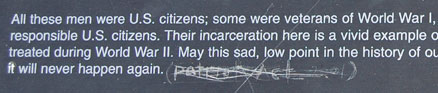
I was being facetious to suggest that Palestinians will not live to see Israel vanquished.

Much as Israel might try, the Palestinians won’t be killed off like North America’s original natives. Neither Gaza nor the West Bank will succumb to genocide, alcoholism or uranium poisoning, nor vanish like an eclipsed civilization. They can be driven off, and dispersed among the neighbors, but the Palestinian diaspora will hang interminable with a much fresher claim to the lands of their fathers than ever had the Zionists.

But on the ground, the captive Palestinians will never reconstitute even a client state, so long as Israel pens them in like Soweto. Lands allotted to Palestinians will be work camps, and prison camps, with every un-free man’s right to rebel against the yoke of occupation. Israel will dodge rockets until the last slave is shackled.

And I guess the world will sit by and let them do that. However blatant they want to be about it.

Knowing that after Lebanon and Gaza, Israel has disciplinary actions aimed at Syria and Iran, what are the prospects for cohabitation in the Middle East? Does Israel expect that its “right to exist” grants it a swath of no-man’s zone, extended beyond the borders of all its neighbors? Israel’s wrathful attack on Gaza, as retaliation for Hamas’ motley rockets, the disproportionality of the air strikes, and the IDF’s disregard for innocent civilian casualties, betrays Israel’s racist ambivalence about the fate of non-Jews. Without a humanitarian regard for others, how can Israel expect to be asked to the adult’s table?

So Israel has sealed its own fate. Obliterate the Palestinians or drive them off, ostracize the neighbors until you are all alone. Israel will be a solitary state, inhabited by the white elite, separated by a state religion forbidden to their darker working castes. The untouchables will live behind apartheid walls until delivered by an Arab Mandela. Then international pressure, hopefully too a domestic conscience, will bring Democracy, and then, as current opponents of a single-state-solution fear, a popular vote will eradicate the oppression of religious rule.

Say goodbye to Israel, the Jewish State. It will “be wiped off the map” of the Middle East, and left for Jews and Palestinians to inhabit with equality. So long as particular Palestinians do not survive who have claims to properties appropriated by the Zionists, or so long as some compensation is offered to buy off the Palestinian’s right of return, the rich Jewish enclaves will coexist with the have-nots, like the gated communities of any other third world nation.

Or Israelis could choose the single state solution right now.

Cabinet candidate Bill Richardson was clean enough to run for president?

Doesn’t it strike you as a bit odd, that Arizona governor Bill Richardson withdraws his name from consideration for the Secretary of Commerce because of some unseemly quid pro quo scheme, yet it hadn’t stopped him from running for president? Where was the press to dig up the story when Richardson was still a potential Democratic presidential nominee?

It’s not as if the subject of corruption hadn’t come up. Greg Palast had exposed the governor in Armed Madhouse.

I like Palast’s extrapolation on Richardson’s ethnic heritage. To summarize, Richardson came by his Hispanic hyphen through his mom’s side. His dad was a Citibank executive, which qualifies Richardson to be a Citibank-American. As a partner in Henry Kissinger’s lobbying firm, Palast also terms him a Kissinger-American.

But what most interested Palast was the corrupt election of 2004, and how George Bush stole Arizona, under the nose of a supposedly Democratic governor. With Richardson momentarily in the spotlight, here’s an excerpt which Palast is circulating:

Bill Richardson – Kissinger-American
by Greg Palast, excerpted from Armed Madhouse

Henry Kissinger and Bill Richardson
January 5, 2009

Bill Richardson is out: Caught with his hand, if not exactly in the cookie jar, at least you could say his sticky finger were near it. I’m not surprised.

For years I’ve been investigating the second-most corrupt state in the USA (after Alaska). I like to check in on the enchanted state with my bud Santiago Juárez.

I knew it was not a polite question, but it was really bugging me, so I asked him, “Exactly how does a Mexican get the name William Richardson?”

Governor Richardson’s dad, Santiago explained, was a Citibank executive assigned to Mexico City. There he met Governor Bill’s mom, and-milagro!-a Mexican-American was born. Richardson gets big mileage out of his mother’s heritage, and that makes him, legitimately, a Mexican-American, a politically useful designation. But it’s just as legitimate to say that Richardson is a Citibank-American.

But Governor Richardson is more than that. Between leaving Bill Clinton’s cabinet where he was Secretary of Energy and grabbing a Hispanic-district seat in Congress, Richardson became a partner in (Henry) Kissinger and Associates. That would make Richardson a Kissinger-American as well.

In 2004, John Kerry won New Mexico-if you counted the votes. But they didn’t – and George Bush won the state and the presidency by just 5,000 ballots. Everyone was talking about the theft of Ohio by Republicans, but few noted that New Mexico was stolen as well. But one fact drove me straight nuts: In the end, this state and its damaged elections were in the hands of Richardson, A Democrat and a Mexican-American one at that.

In New Mexico the issue of uncounted votes is more than skin deep. Lots of Mexican-American votes don’t tally, but Citibank-American votes never get lost. Kissinger American votes always count. The story of America’s failed elections is not about undervotes. It’s about underclass. Disenfranchisement is class warfare by other means. It just happens that in New Mexico, the colors of the underclass are, for the most part, brown and red.

Class War by Other Means

As community organizer Santiago told me:

You take away people’s health insurance and you take their right to union pay scales and you take away their pensions-taking away their vote’s just one more on the list.

Some New Mexico Democrats have no trouble at the voting booth. In Santa Fe, you find trust-fund refugees from Los Angeles wearing Navajo turquoise jewelry and “casual” clothes that cost more than my car. Each one has a personal healer, an unfinished film script and a tan so deep you’d think they’re bred for their leather. They’re Democrats and their votes count. Voting-or at least voting that gets tabulated – is a class privilege. The effect is racial and partisan, but the engine is economic.

The second- and third-highest undervotes in New Mexico were recorded in McKinley and Cibola counties-85% and 72% Hispanic and Native. But the undervote champ is nearly the whitest county in New Mexico: DeBaca, which mangled and lost 8.4% of ballots cast. White DeBaca, whose average income hovers at the national poverty level, is poorer than Hispanic Cibola. No question, disenfranchisement gives off an ugly racial smell, but income is the real predictor of vote loss.

And what about those Bernalillo ghost voters for Bush? Those spirits are, it turns out, quite well-to-do, haunting the mesas west of Albuquerque where the real estate provides unobstructed views of Georgia O’Keeffe sunsets.

This was my third investigation in New Mexico in twenty years. The first time, the state’s Attorney General brought me in to go over the account books of Public Service of New Mexico (PNM), a racketeering enterprise masquerading as an electric company. Too young to understand what I wasn’t supposed to know, I proudly mapped out the sewerage lines of deceit connecting the gas drillers, water lords and political elite of New Mexico. The AG’s office handed me a nice check – which I took not as a reward, but as a payment to leave the state. After a decade away, I returned as a reporter, to look into prisons-for-pro?t out?t Wackenhut Inc. In September 1999, a company insider told me, Wackenhut was cutting costs at its New Mexico jails by sending guards alone into the cell blocks. Ralph Garcia of Santa Rosa, who’d lost his ranch to drought, took the $7.95-an-hour job guarding homicidal neo-Nazis and Mexican mafia thugs in the local Wackenhut lock-up. Inexperienced, untrained and alone, he was stabbed to death by inmates just two weeks after the insider’s warning. So that’s how Garcia became one more impoverished Chicano who lost his vote. No question, that’s not your typical case of voter disenfranchisement, but that’s the reality of the “Land of Enchantment.” New Mexico is the New America, where growing income inequality is creating a feudal divide between the prison-owning class and the prisoner-and-guard class.

Vote spoilage is the owning class’s weapon of choice.

Whose flag does Bill Richardson carry in the nouvelle class war? When I was checking out the New Mexico vote in 2005, my old friends Public Service of New Mexico hit the front page, sued by the State of California for conspiring with Enron to rig the California power market. It is still in court. It was a scam called “Ricochet.” Enron and PNM say it was not illegal. It played out about the time Garcia was walking the cell block. Where was Richardson? He was in Washington, Clinton’s Secretary of Energy, playing chubby cheerleader for PNM’s plan for “deregulation” of the energy market. Deregulation made PNM’s games possible-and Richardson’s employment by Kissinger inevitable.

Richardson, Ready for Takeoff

What about all those suspect spoiled votes in Hispanic and Indian precincts stuck inside the machines? Why didn’t this Mexican-American Democrat ask for a recount? It didn’t just slip Richardson’s little mind: He actively did everything in his power to stop a recount. I was told that it was Richardson himself who encouraged Secretary of State Vigil-Giron to reject the $114,000 payment from pissed-off Democrats and the Green Party. The Governor was too busy to speak with me about this.

Halting the 2004 recount wasn’t enough for Governor Bill, however. He demanded the legislature pass a “reform” law that would require anyone wanting a recount of a suspicious vote to put up a bond of over one million dollars. As a result, “free and fair elections” are now effectively outlawed in New Mexico. You can have a choice of a “free” election or a “fair” election, but not both. Want fair? Then you have to pay a million to recheck the ballots. In other words, it’s against the law to buy votes, but in New Mexico not against the law to buy the vote count.

On his phony reform law, Richardson was called out by a fellow Democrat, State Senator Linda Lopez-an act of indiscreet defiance that would not be forgotten by the Governor’s circle.

The centerpiece of the law signed by the Governor: Ms. Fox-Young’s proposal to require photo ID for new voters. Maybe the former Cabinet Secretary and United Nations Ambassador Richardson couldn’t imagine that photo IDs would be a problem for some voters. After all, Mexican-Americans in Little Texas may have trouble producing acceptable IDs, but it’s no problem at all for a Kissinger-American like Governor Richardson. The Governor and Jimmy Carter both have passports, they have credit cards and they have chauffeurs who will vouch for them.

Richardson wouldn’t speak with me about the 2004 vote fiasco. Instead, he busied himself with his space program. He announced the state would chip in $200 million to build a “spaceport” to land private rocket ships that will be launched beginning in 2009 by Richard Branson, the British billionaire. Passengers have already bought tickets for $200,000 each (round trip, they hope).

Doomed to repeat internment camps

Several miles north of Moab, Utah, on Highway 191, there’s an Historical Interest marker to commemorate the Civilian Conservation Corps work camp at Dalton Wells. According to the plaque on the site, Camp DG-32 was used for public works through the Great Depression, and converted in 1943 into a concentration camp for Japanese Americans accused of being troublemakers at the civilian internment camps. The plaque offered an apology for the “total violation their civil rights,” and this admonition:
Civilian Conservation Corps DG-32 Dalton Wells
After which someone added in parentheses: “(Patriot Act, 2001)” and then as if to make the point, a next somebody scratched it out.

Full text of the marker:

Civilian Conservation Corps Camp DG-32 (Co. 234)
1935-1942

During the Great Depression of the 1930’s, CCC Camps were scattered all over the USA. They provided gainful employment to youth of the nation with work on public service projects. Between 1933 and 1942, four camps were located near Moab. Each camp worked on various natural resource project for the Soil Conservation Service, the National Park Service, and the forerunner of the Bureau of Land Management.

DG-32 was a long-lasting camp and typical of most with wooden, tar-paper covered barracks and buildings housing some 200 young men between the ages of 18 and 25. Enrollees came from the eastern states, and leadership was provided by the Army, Grazing Service, and local men experienced in construction and stock grazing needs.

Under spartan conditions, clothing, food, and housing were provided in the primitive camp. Pay was $30 per month with $25 sent home.

DG-32 projects included many range improvements: stock trails down the precipitous sandstone cliffs, spring developments, wells and stock ponds, eradication of rodents that competed with stock for feed, fences for corrals and pastures, reservoir dams, roads and bridges. These projects provided on the job training for the enrollees, besides the benefits they brought to the local economy. Many of these works are still in use today. The value of the camp and its works to Grand County is beyond estimation. It was a significant milestone that greatly influenced the economic history of the county.

All that remains of the camp today are the cottonwood trees planted by the enrollees that you see fronting this site, concrete slabs for buildings, graveled roads and rock-outlined walkways, the remains of an old windmill and a rock masonry water storage tank. These remnants signify the moving history of a time when America valiantly struggled to restore its economic stability and provide its young people with meaningful employment.

Japanese-American World War II Concentration Camp
1943

On January 11, 1943, a train pulled into Thompson Station north of here with armed Military Police guarding sixteen male American citizens of Japanese ancestry. While the locals of the town waited to cross the tracks, the entourage was loaded and transferred to the old abandoned “CCC” camp located here at Dalton Wells.

Their crime? They were classified as “troublemakers” in the Manzanar, California Relocation Center where they and their families had been forcibly located at the start of World War II. Removed from their homes and lands in California under a Presidential Executive Order, they were subject to the whim and mercy of poorly-trained bureaucrats and military personnel in the center. This Executive Presidential Order was the result of wartime hysteria, racial bigotry, and greed.

The original sixteen men were removed from Manzanar and brought here without the benefit of council. They did not have a formal hearing or proper arrest proceedings, and the action was in total violation of their civil rights. It was a process more compatible with fascism than democracy.

The inmates troubles worsened when and informer and confidant of the administration was beaten. An organizer of the mess hall workers was thrown into jail as a suspect. A meeting was held in the camp to protest the jailing and a riot resulted. Two inmates were killed by trigger-happy soldiers.

Other Japanese-American men were soon brought to the camp. Thirteen came from Gila River, Arizona, having been charged as being members of an organization which was fully sanctioned by camp officials. Ten more came from Manzanar as “suspected troublemakers.” Fifteen came from the Tule Lake, California, charged with refusing to register their availability for the draft and their loyalty to the U.S. under a set of confusing, denigrating requirements.

All these men were U.S. citizens; some were veterans of Work War I, others were family men, college graduates, and responsible U.S. citizens. Their incarceration here is a vivid example of how our Japanese-American citizens were treated during World War II. May this sad, low point in the history of our democracy never be forgotten, in the hope that it will never happen again.

The group was transferred by truck to an abandoned Indian school at Leupp, Arizona, on April 27, 1943. As those involved began to realize the inequality of the situation, the inmates were released back to relocation centers later that year. Thus, a black mark in the history of liberty and justice in the United States was ended.

GOP has been drunk on NeoFascism for the last 8 years, now is the time for an intervention.

“Welcome to ObamaNation, comrades!” That’s what you should say to all your Republican friends today, and watch them crap their pants. Then mutter under your breath, “Fascism is dead, now we hang the fascists.”

It was quite hilarious, last night watching Karl Rove on Faux News, even after the utter repudiation of the last 8 years, still claiming that this somehow remains a Right Wing country.

Down a series of tubes. Only a state stupid enough to elect Sarah Palin governor would re-elect a convicted felon to the Senate.

Equality for gays in California still hanging by a thread.

Heterofascist hatemonger Marilyn Musgrave lost her seat in Colorado, and can now return to Hell from whence she came.

Openly gay Dennis Apuan won a state House seat in my own district, right here in Colorado Springs. Take that, Dr. Dobson!

Openly gay sheriff re-elected in Dallas.

President-elect Obama puts Zionist Israeli in charge of the White House. I could not be more disappointed. This is a very bleak day for Palestinians.

Excerpts from Thomas McCullock’s Nov 5 notes, thomasmc.com.

The Law of the Jungle

THE LAW OF THE JUNGLE

Trade, within a society and between countries, is the exchange of goods and services produced by human beings. The owners of the means of production appropriate the profits. As a class, they are the leaders of the capitalist state and they boast of fostering development and social wellbeing through market. This they worship as an infallible God.

In every country there is competition between the strongest and the weakest; the ones with more physical energy and better fed, those who learned how to read and write, who attended school and have more experience accumulated; the ones with more extensive social relations and more resources, and those within society who fail to have these advantages.

Now, as far as the countries is concerned, there are differences between those with a better climate and more arable land, more water and more natural resources in the area where they are located, when there are no more territories to conquer; the ones mastering technology, having greater development and handling unlimited media resources and those who, on the contrary, do not enjoy any of these prerogatives. These are the sometimes enormous differences between the rich and the poor nations.

It’s the law of the jungle.

There are no differences between ethnic groups, however, when it comes to the mental faculties of the human being. This has been thoroughly proven by science. The present society is not the natural way in which human life evolved, but rather a creation of the mentally developed man without which his life would be inconceivable. Therefore, what is at stake is whether the human being will be able to survive the privilege of having a creative mind.

The developed capitalist system, epitomized by the country with a privileged nature where the European white man brought his ideas, dreams and ambitions, is today in a crisis. But, it is not the usual crisis happening once in a number of years; not even the traumatic crisis of the 1930s but the worst of all crises since the world started to pursue this growth and development model.

The current crisis of the developed capitalist system is taking place when the empire is about to change leadership in the elections to be held in twenty-five days; it was all that was left to see.

The candidate of the two main parties that will say the last word in these elections are trying to persuade the bewildered voters –many of whom have never cared to cast a vote— that as candidates to the presidency they can secure the wellbeing and consumerism of what they describe as a people of middle class only, even though they are not planning to introduce any real changes to what they consider the most perfect economic system the world has ever known. The same world that, in their respective minds, is less important than the happiness of over three hundred million people who account for less than five percent of the world population. The fate of the remaining ninety-five percent of human beings, peace and war, the fit or unfit-for-breathing air, will highly depend on the decisions of the administrative leader of the empire, whether or not that constitutional position has any power at a time of nuclear weapons and space shields moved by computers in circumstances where every second counts and when ethical principles keep loosing their value. Still, the more or less nefarious role of the President of that country cannot be overlooked.

Racism is deeply-rooted in the United States where the mind of millions of people can hardly reconcile with the notion that a black man, with his wife and children could live in the White House, which is precisely called White.

It’s a miracle that the Democratic candidate has not met the same destiny as Martin Luther King, Malcolm X and others who only a few decades ago dreamed of justice and equality. He is in the habit of looking at his adversary with serenity and of smiling at the dialectic predicament of an opponent gazing into space.

The Republican candidate, on the other hand, who likes to enhance his reputation as a belligerent man, was one of the worst students in his class at West Point. He has confessed that he did not know any Mathematics; it can thus be assumed that he knew less of the complicated economic science.

The truth is his adversary surpasses him in cleverness and composure.

Something McCain has aplenty is age, and his health condition is not safe.

I am bringing up these data to indicate that eventually –if anything went wrong with the candidate’s health, in case he is elected— the lady of the riffle, the inexperienced former governor of Alaska could become President of the United States. It can be noticed that she does not know a thing.

Meditating on the current US public debt –$10,266 trillions— that President Bush is laying on the shoulders of the new generations in that country, I took to calculating how long it would take a man to count the debt that he has doubled in eight years.

A man working eight hours a day, without missing a second, and counting one hundred one-dollar bills per minute, during 300 days in the year, would need 710 billion years to count that amount of money.

I could not find a more graphic way to describe the volume of money that is practically mentioned every day now.

In order to avoid a general state of panic, the US administration has declared that it will secure deposits that do not exceed 250 thousand dollars. It will be managing banks and such funds as Lenin would never have thought of counting with an abacus.

We might be wondering about the contribution of Bush’s administration to Socialism. But, let’s not entertain any illusions. Once the banking operations go back to normal, the imperialists will return the banks to the private business as some other countries in this hemisphere have already done. The peoples always foot the bill.

Capitalism tends to reproduce itself under any social system because it is based on selfishness and on man’s instincts.

The only choice left to human society is to overcome this contradiction; otherwise it would not be able to survive.

At this time, the ocean of money being poured into the world finances by the central banks of the developed capitalist countries is dealing a hard blow to the Stock Exchanges of the countries which resort to these institutions in an effort to beat their economic underdevelopment. Cuba has no Stock Exchange. We shall certainly find more rational and more socialist ways of financing our development.

The current crisis and the brutal measures of the US administration to save itself will bring more inflation, more devaluation of the national currencies, more painful losses in the markets, lower prices for basic export commodities and more unequal exchange. But, they will also bring to the peoples a better understanding of the truth, a greater conscience, more rebelliousness and more revolutions.

We shall see how the crisis develops and what happens in the United States in twenty-five days.

Fidel Castro Ruz
October 11, 2008 6:15 p.m.

Liberty! Equality! Fraternity!

Rick Davis & Freddie Mac: it’s Keating 5 all over again,
except this time there aren’t five to blame, just John McCain.

John McCain’s taking a nap. Let’s hope he never wakes up. Now that McCain and Palin have chickened out of the debates, they should just concede the election. The voters have seen what liars and frauds they are, the only way they could win now would be to buy off Diebold, and I don’t think America is going to put up with that again.

Bush’s speech last night was one of the most pathetic things I’ve ever witnessed. Him recounting the sequence of failures, like a schoolkid trying to prove he had been paying attention in class, but showing not a bit more insight as to why they failed, than if he had just been scanning the newspaper headlines for the last few weeks. All that kept going through my mind was how many times he has insisted there was nothing to worry about, “the fundamentals of our economy are strong.” This country is going to need a Truth and Reconcilliation commission, so we can round up and prosecute all these crooks, along with everyone who helped them get away with it.

Treasury Secretary Paulson blames future administrations for current financial crisis.

Democrats and Republicans reach deal, they will sell your children and grandchildren into slavery, in order to keep Wall St. in the luxury to which it has become accustomed.

John Edwards may have spent $400 on a haircut, but John McCain spent $5,500 on makeup!

McCain wanted Condi Rice, not Sarah Palin, as his VP running mate, but thought her being a lesbian would kill the ticket.

Sarah Palin’s lover revealed. And it ain’t Todd, it’s his best friend! Way to go, Ms. “Family Values!”

Excerpts from Thomas McCullock’s Sept 25 notes, thomasmc.com.

Just say no, Sarah Palin

Sarah Palin familyExactly who is John McCain pandering to by adding Sarah Palin to the ticket? Talk is that he’s hoping to hook the evangelical crowd, but he’s obviously missing a few key bits of information.

Conservative Christians do not put their women in positions of authority over men. Ever. In my former church, women were not allowed to preach to the general congregation because this was seen as unbiblical, and a condescension to their male counterparts. Believe it or not, they aren’t even permitted to lead the “praise and worship” musical segment of the Sunday service for the same reason. Jezebel can forget about the support of evangelical males.

As for females, they present an even peskier problem. Christian women have strong opinions about the roles of wife and mother. In my experience, few evangelical wives are employed full-time outside the home. Their lives are about rearing godly children and glorifying their husbands. Many consider themselves helpmates, subordinate to their husbands and the church. They are not going to view Sarah Palin as a sister in Christ. She resembles a Biblical harlot, not a Proverbs 31 role model.

There is a nonreligious unbridgeable gap here as well. In case you hadn’t heard, there is an ongoing feud between stay-at-home mothers (SAHMs) and women employed outside the home. The SAHMs claim the moral high ground in the area of child-raising and husband-tending, while the working women, especially those in traditionally male-dominated professions, cling to feminist values of independence, equality, and self-actualization. Ms. Palin — the working woman who calls herself a soccer mom — may strike both camps as an imposter. And many women, regardless of work status, will wonder why Sarah would leave five children, including a special-needs infant, to be used as a pawn in a good-ol’-boys ploy.

I feel sorry for Sarah Palin. She’s being used as hastily begotten arm candy to pretty up an ugly ticket. Things won’t go well for her this election season. In my opinion, she should have refused McCain’s offer. She should have thanked him for the honor of being asked, and then used the national spotlight to showcase who she really is. Not the life preserver he’d like her to be.

America’s liberal ‘Peace Community’ remains apathetically pro-war

Peace peopleAmerica’s liberal ‘Peace Community’ remains apathetically pro-war, which explains why most are planning to vote for Pro-war candidate, Barack Obama. Far from being non-mainstream Americans ‘liberals’, are just as pro-war as their Republican counterparts are despite some occassional bleatings about ‘Peace’ in the abstract, and temper tantrums that the US has not won the invasion and occupation of Iraq just quite yet.

Doubt this analysis? Then ask yourself why hardly any of these liberals turned out the last 2 weeks for the many US regional demonstrations to demand a stop to threatening a war against Iran? These demonstrations were national in scope and called by 2 separate coalitions, but nobody showed up! In Colorado Springs, the local yokel misleaders didn’t even bother doing a local action, but that won’t stop them from responding that they are committed to non-violence and yada yada yada.

This week will find the ‘Peace Community’ going through the motions and holding candle light vigils in memory of the atomic bomb victims of Japan in 1945, but you won’t find them demanding that the US and NATO get out of Afghanistan. That’s because many of them plan to vote for a pro-war candidate that wants to fight that Afghan war forever if it takes that long to ‘win’ it? Or at least until some folk get mad about it… which most won’t because they don’t seem to care that much.

Locally, this Friday we will find the liberal ‘Peace Community ritually going out to Fort Peterson Air Base for their annual quick show ‘picnic’ there. What you will not see is any sign of a demand that the base actually be closed down. You will see many signs though with their abstract new age religious belief that war and violence are bad stuff! It is kind of a game they play… …and almost all of these ‘peacenics’ will vote for the pro-war candidate, Barack, almost all of them.

The thing liberals most fear is being considered somehow outside the mainstream American community which is still quite solidly pro-military and pro-war. Like the greater community at large, liberal ‘Peace Community’ folk mainly are angry because George W. Bush did not give the country a quick and easy victory in Iraq, so they are angry at him for it. Other than that, they are not that pissed off though. Afghanistan? What? Don’t bother us!

Why is the liberal ‘Peace Community’ so pro-war, even as they talk ‘Peace’? It’s because their conservatized neighbors are also very pro-war and they don’t want to appear too oppositional or unfriendly to these people. They don’t want to stand out and in fact never do (at least they never do in large vigils or protests against war and torture and inequality, etc. They often say it doesn’t’ work to participate in public actions!)

The liberal ‘Peace Community’ is committed to national patriotism and in America that means the military. But they are also committed to their idea of the Holy Ghost Jesus, Man of Peace. They try to fuse the 2 ideas together, but what remains is only to remain apathetically pro-war just like The Others they say they always oppose.

The liberal ‘Peace Community’ doesn’t want to really end war except in the abstract, but principally wants to agree that the US wars fought be juster wars with a kinder military than the world norm. Massage them and you have their vote. They really don’t care if their Democratic Party candidates are liars and manipulators. Just sound good.

The liberal ‘Peace Community’ doesn’t like being called antiwar, and in fact is not that at all. Antiwar to them sounds way too ‘anti-‘! Instead, they like to be seen as FOR the troops. They remain apathetically pro-war, and unfortunately so does the rest of the population.

Victory to the Afghan people! Victory to the Somali people! Victory to the Iraqi people! Victory to the Palestinians! And, Americans, get your heads out of your rear ends and screw them on straight.

Liberal Americans, that goes double! Stop being pro-war! You are, you know? Despite your constant chatter for ‘Peace’ which is mainly a cover for you to hide from yourself the fact that you’re as pro-war as your neighbors most of the time.

The Democrats will change things?

Barney FrankAs the US government has used taxpayers money to bail out Freddie Mac and Fannie Mae, many liberals have seen this as only yet another sign of Republican Party perfidy. But look at Barney Frank, Democrat for a second. His job is Chair of the Financial Services panel since the Democrats took the leadership of the House in 2007. What’s he been up to during this bailout sale of US Treasury dollars?
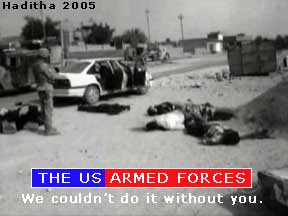
Many think that by Barney Frank being an openly Gay member of the US Congress has made him the epitome of radical liberalism, but there is a different story out there than the spoon fed media’s image for us. Check out “Equality is not good”
Barney Frank and the putrefaction of American liberalism
to see the real Barney Frank story.

So here is Mr. Liberal Democrat, Barney Frank, helping bail out the big guys with the small guys’ money. Are you really that surprised at his role as Democratic Party leader in championing inequality that benefits the well-to-do? Is any of this surprising any more after all the Democrats support to the Republican agendas in Iraq, Afghanistan, and building a bigger military-industrial-security State? Then I got some property to sell you in the swamp, Dudes.

Hey! The Democratic Party/ Obama Campaign HQ has already beat me to it!

I want more change in the White House than just skin color!

Barack Obama is proving himself to be little more than Joe Lieberman in blackface. Oy gevalt. Cowardly Dems in the Senate (Led by Obama the Coward) passed FISA, out of fear that big meanie Bush might say something bad about them if they didn’t. As if he won’t, anyway. Duh! [detail]

As much as I dislike Hillary Clinton, at least she had the decency to vote against it.

John W. McCain didn’t even bother to show up for the vote

The ACLU has announced it will fight the unconstitutional law in court.

Civil Liberties? WHAT civil liberties??? Bush kills Civil Liberties Board.

Time to put on your jack boots and Seig Hiel! US military to monitor internet to quell dissent.

Standing up for the truth. SC state employee quits rather than lower flag for toxic Senator Jesse Helms.

Ted Kennedy, who is battling brain cancer, surprised the Senate by showing up to vote on the Medicaid bill yesterday.

The screwing of America. Food manufactures quietly shrinking product sizes, while keeping same packaging and prices.

Marriage equality. MA Senate to consider repealing law that prevents gays from other states from marrying there.

Phil Graham has a mental slowdown, and calls USA a nation of whiners for caring that the GOP has destroyed the economy. If only we’d just focus on how much better off the filthy-rich are, and forget about everyone else.

Life imitates art. Paradise, CA — subject of the Eagles song The LastResort, and inspiration for the Showtime series Weeds — evacuated for wildfire. “Somebody laid the mountains low, while the town got high.”

Excerpts from Thomas McCullock’s notes July 10, thomasmc.com.

The Gay Marriage election year bugaboo

Some things come around every four years like leap years. The Olympics, US presidential elections, and the Gay Marriage wedge issue bugger-boo.

I remember in the deluge of election 2004, feeling a nagging frustration that the preoccupation of gay and lesbian Americans over the right to wed might have contributed to George W. Bush gaining his second term. As a heterosexual white male it was easy for me to consider their sexual equality struggle ill-timed. Was I right? Of course not. The quest to legitimize gay unions is doubtless as old as [gay] man and has been gathering steam in modern times just as its foes are running out of excuses. In America religious bigots against gay unions, abetted by insurance companies who don’t want to pay partner benerfits, catch their wind ON ELECTION YEARS apparently, and stage their outcry before November elections, whether the candidates at hand are divided on the issue or not.

Cynthia McKinney and Cindy Sheehan together in Mexico City!

Below, we reprint 2 speeches made in Mexico City Friday, just yesterday, April 4, 2008. The speech Greed … by Cindy Sheehan, and another speech by Cynthia McKinney that is without title.

Cynthia McKinney
Segundo Encuentro Continental de los Trabajadores
Mexico City, Mexico, April 4, 2008

Brothers and Sisters in the Movement

I am happy to be here in Mexico City where the people all over Latin
America are on the move:

On the move for justice, self-determination, and peace.

I love that you have created a Power to the People movement with your
votes that is stronger than the mightiest military force on the
planet!

With the power of your vote you have taken your countries back.

Now, all we have to do is to count all the votes in the United States
and Mexico!

In the 2000 U.S. Presidential election, an estimated six million
people went to the polls and voted, but their votes weren’t counted.

In 2000, and again in 2004, Democrats helped to install Republicans
into power rather than fight for the victory that the voters had
given them.

As a result of this kind of collusion, the Democratic majority in our
Congress has failed to impeach Bush. They have failed to institute a
livable wage, stop the multiple wars the U.S. is fighting right now,
and they have failed to protect human rights anywhere in the world,
including even at home.

That’s why I left the Democratic Party.

I refused to become complicit in war crimes, crimes against humanity,
crimes against the peace, spying on the American people, and ripping
our Bill of Rights to shreds.

And so I declared my independence from the U.S. leadership that gave
us tax cuts for the wealthy and a country 53 trillion dollars in debt
and Hurricane Katrina.

To my brothers and sisters at this Conference and in the United
States, I say:

Hands off Haiti!

Hands off Bolivia, Nicaragua, and Argentina now making a claim for
the Falklands!

Hands off Venezuela and Ecuador!

No to Plan Mexico; No to Plan Colombia! Hands off Pemex!

And finally, it was on this date, 40 years ago, that Dr. Martin
Luther King, Jr. was murdered.

We now know that Dr. King was murdered as part of a conspiracy that
included his own government. Hatched in the bowels of the Pentagon,
where so many other regime change operations have been hatched, the
government of the United States launched regime change at home on
Black America. We blacks in the United States have long known the
pain and the consequences of having authentic leadership snatched
from us; of having someone else pick our leaders before we pick them
ourselves.

I am proud to join this international movement for
self-determination; for justice and for peace. Despite today’s
difficulties, we must never let our dream be deferred. We in the U.S.
gain inspiration from your successes here so we can carry the
struggle to every nook and cranny of the United States.

Que vivan los pueblos de america!

Cindy Sheehan -Key Note Speech “GREED”
Segundo Encuentro Continental de los Trabajadores
Mexico City, Mexico, April 4, 2008

First of all I would like to thank the International Labor Council and the Electrician’s Union for such a warm welcome and I would like to assure you all, my brothers and sisters that I represent millions of North Americans who are in solidarity with you, because we are also plagued with an illegitimate President!

Once, a couple of years ago, I was getting a pedicure in the deep south in the USA, of all places, and my pedicurist was a Latina from Mexico. She lived two hours from where she and her husband owned the shop and she left her young son home with her mother-in-law for six days a week, while she and her husband toiled at the shop. She was very sweet and sympathetic to my situation as a mother whose son was killed in Iraq, but she looked up from my feet at one point and asked me: “Why do you Americans have to have everything. If you all weren’t so greedy, I could still live in my country with my family.” Greedy? Hmm? Her earnest and passionate comment gave me much to think about.

Dictionary.com defines greed as the rapacious desire, especially for wealth or possessions

Greed is also one of the seven deadly sins and I know more than most Americans that the same twisted drive for, not just a fair share of prosperity, but ALL the prosperity is what caused my son’s death and, similarly, my nail persons’ need to have to leave the beloved country of her birth.

Greed is not what drives Latin Americans to try and cross the border to go north, existential necessity is; but corporate-capitalist greed is what makes the dangerous journey necessary. Building walls on the border is not the way to solve the immigration “problem” just as invading two countries and killing innocent civilians was not the way to solve the terrorism problem. Healing the systems of oppression that cause immigration is the way to solve the “problem.” People in Latin America want the right to not have to emigrate. Like my pedicurist, they want to be able to make a good living in their own countries.

In a study done by the Economic Policy Institute in 2004, it was found that 5% of the US population owns 58% of the wealth and only 1.2% of the wealth is owned by 40% of our citizenry. I am sure if a similar study were done, this disparity would be much wider in these days of irresponsible corporate bailouts while Americans are losing their homes at the rate of 250,000 a month and the war economy has made the fat cats astronomical profits while robbing our communities of essential services and needed infrastructure improvements. The Milton Friedman model of disaster capitalism, which Naomi Klein exposes so well in her book, Shock Doctrine, is responsible for economic disaster from New Orleans to Baghdad and the basic underlying root sickness of this is greed.

Statistics can be easily manipulated as we know the statistics reporting the “success” of free trade agreements such as NAFTA are. Facts, numbers and experiential data cannot be so easily manipulated, though. In the years since the Clinton administration (with the support of my Congressional opponent, Nancy Pelosi) foisted NAFTA on our continent, both Mexico and the US have lost farmland and good paying jobs. Many of our manufacturing jobs have gone overseas to Indonesia or China and the Wal Martization of our cultures creeps up on us unchecked and corporations such as Wal Mart have been the main beneficiaries of NAFTA to the detriment of working class people in both countries.

What can we do to improve the situation and reclaim our prosperity from the control of the 21st Century Robber Barons and slave-traders?

First of all, “free” trade treaties should be replaced with fair trade agreements. Small business owners and workers should be protected from being crushed under the heels of multi-national corporations. Any agreement should have protection for workers. A worker who makes shoes, computers, cars, or grows crops should make the same livable wage in Mexico or China, as they would in America. There would be no incentive for off-shoring jobs or relocating manufacturing plants if workers in China made the same wages as workers in America.

All workers should be guaranteed the basic human right of being able to belong to a union. Unions elevate the conditions of workers and families and should remain a strong political force for good and not allow them selves to be beaten into submission or weakness by governmental or corporate pressure. (But aren’t the corporations and governments so intimately linked these days in their fascistic oppression of us average citizens?)

The fragile ecology of our planet must be protected in these agreements and the same standard of sustainability and environmental protections should be uniformly recognized and practiced globally.

Small farmers should be protected from the encroachment of “agri-giants” and their lands protected from the eminent domain of greed.

I know there are many more solutions and a comprehensive platform of “No human left behind” would guarantee the rights of all humans to safe and plentiful food and drinking water; shelter; good and free education; sustainable employment; security and safety from US corporate-militarism; and the basic rights that were guaranteed of: life, liberty and the pursuit of happiness.

For far too long, the United States of America has greedily gobbled up too much of global wealth and resources and our chickens of greed and violence are coming home to roost. As alarming as these trends are, we North Americans are only slightly beginning to feel the ravages of what we have been manufacturing and exporting for years: death and destruction. A new paradigm of global sharing and caring must be implemented and today is the beginning.

Today, as we commemorate and mourn the death of Dr. Martin Luther King, Jr who was assassinated 40 years ago in Memphis, Tn; and as I mourn the murder by the war machine of my son Casey, who was killed in Sadr City, Baghdad 4 years ago today—we must renew our commitment to peace and justice to honor their sacrifices and the sacrifices of others who have also gone before us. We just celebrated the birthday of Cesar Chavez who dedicated his life to the most marginalized and exploited of workers and I am constantly inspired by the devotion of people like Dr. King, Casey and Cesar Chavez andI hope that we all take inspiration to rededicate our lives to peace and justice.

We must build upon the coalition that we have gathered here in this beautiful and historic place to include every group that we are a part of. We can no longer say that we have to focus on “one” issue, because all the issues are the same. My country is waging deadly and lost-cause occupations of Iraq and Afghanistan and so many groups in my country say that we have to focus on bringing our troops home and not become “distracted” by other issues. Profound economic inequality and unchecked greed is the root cause of these occupations as it is the root cause of the occupation of Palestine by Israel and all the violence in the world’s hot-spots today.

In our coalition, we must educate our brothers and sisters that equalizing prosperity and neutralizing greed are the solutions to these acute problems.

I also stand here in solidarity with my brothers and sisters who are working in the Legitimate Government of Mexico to prevent the illegitimate government from privatizing PEMEX. The oil of Mexico belongs to the people of Mexico, and if I can’t be here with you all to block the crimes with my body then I will definitely be with you in spirit.

Thank you for allowing me to speak. It has been an honor to be here.

Stokely Carmichael on liberal pitfalls

Most liberals are naive to other thinking or to the insightful speeches of the socialist black activists of the 60’s. Stokely Carmichael saw the powerlessness of the liberal that other moderate Negro leaders wouldn’t attempt or couldn’t see.

The Black Panthers saw through the petty liberal ideology that always sought cooperation with the capitalists, or as Stokely put it, the oppressors. He talked of liberals and peace activists rejection of violence as a means to achieve real change. Real change defined as eliminating capitalism which is the very root of our dilemma. Is it that the progressive/liberal ideology is largely bankrupt? That it goes nowhere often and deceives its followers into static worn out Gandhi-Goodman, no alternative strategies that always succumb to the real power that is the fascists source of control? Violence? Yes is the answer.

Less a massive armed militant mobilization and a clean break from the stink that is capitalism, there will never be a fair social system that works for the vast working class population. And a re-education of our children away from fascisms model and as to the truth about democratic socialism.

“What we want to do for our people, the oppressed, is to begin to legitimize violence in their minds. So that for us violence against the oppressor will be expedient. This is very important, because we have all been brainwashed into accepting questions of moral judgment when violence is used against the oppressor.”

The Pitfalls of Liberalism
by Stokely Carmichael (Kwame Ture)
(From the book; “Stokely Speaks – From Black Power to Pan Africanism”)

Whenever one writes about a problem in the United States, especially concerning the racial atmosphere, the problem written about is usually black people that they are either extremist, irresponsible, or ideologically naive.

What we want to do here is to talk about white society, and the liberal segment of white society, because we want to prove the pitfalls of liberalism, that is, the pitfalls of liberals in their political thinking.

Whenever articles are written, whenever political speeches are given, or whenever analysis are made about a situation, it is assumed that certain people of one group, either the left or the right, the rich or the poor, the whites or the blacks, are causing polarization. The fact is that conditions cause polarization, and that certain people can act as catalysts to speed up the polarization; for example, Rap Brown or Huey Newton can be a catalyst for speeding up the polarization of blacks against whites in the United States, but the conditions are already there. George Wallace can speed up the polarization of white against blacks in America, but again, the conditions are already there.

Many people want to know why, out of the entire white segment of society, we want to criticize the liberals. We have to criticize them because they represent the liaison between other groups, between the oppressed and the oppressor. The liberal tries to become an arbitrator, but he is incapable of solving the problems. He promises the oppressor that he can keep the oppressed under control; that he will stop them from becoming illegal (in this case illegal means violent). At the same time, he promises the oppressed that he will be able to alleviate their suffering – in due time. Historically, of course, we know this is impossible, and our era will not escape history.

The most perturbing question for the liberal is the question of violence. The liberals initial reaction to violence is to try to convince the oppressed that violence is an incorrect tactic, that violence will not work, that violence never accomplishes anything. The Europeans took America through violence and through violence they established the most powerful country in the world. Through violence they maintain the most powerful country in the world. It is absolutely absurd for one to say that violence never accomplishes anything.

Today power is defined by the amount of violence one can bring against one’s enemy – that is how you decide how powerful a country is; power is defined not by the number of people living in a country, it is not based on the amount of resources to be found in that country, it is not based upon the good will of the leaders or the majority of that people. When one talks about a powerful country, one is talking precisely about the amount of violence that that country can heap upon its enemy. We must be clear in our minds about that. Russia is a powerful country, not because there are so many millions of Russians but because Russia has great atomic strength, great atomic power, which of course is violence. America can unleash an infinite amount of violence, and that is the only way one considers American powerful. No one considers Vietnam powerful, because Vietnam cannot unleash the same amount of violence. Yet if one wanted to define power as the ability to do, it seems to me that Vietnam is much more powerful than the United States. But because we have been conditioned by Western thoughts today to equate power with violence, we tend to do that at all times, except when the oppressed begin to equate power with violence….then it becomes an “incorrect” equation.

Most societies in the West are not opposed to violence. The oppressor is only opposed to violence when the oppressed talk about using violence against the oppressor. Then the question of violence is raised as the incorrect means to attain one’s ends. Witness, for example, that Britain, France, and the United States have time and time again armed black people to fight their enemies for them. France armed Senegalese in World War 2, Britain of course armed Africa and the West Indies, and the United States always armed the Africans living in the United States. But that is only to fight against their enemy, and the question of violence is never raised. The only time the United States or England or France will become concerned about the question of violence is when the people whom they armed to kill their enemies will pick up those arms against them. For example, practically every country in the West today is giving guns either to Nigeria or the Biafra. They do not mind giving those guns to those people as long as they use them to kill each other, but they will never give them guns to kill another white man or to fight another white country.

The way the oppressor tries to stop the oppressed from using violence as a means to attain liberation is to raise ethical or moral questions about violence. I want to state emphatically here that violence in any society is neither moral nor is it ethical. It is neither right nor is it wrong. It is just simply a question of who has the power to legalize violence.

It is not a question of whether it is right to kill or it is wrong to kill; killing goes on. Let me give an example. If I were in Vietnam, if I killed thirty yellow people who were pointed out to me by white Americans as my enemy, I would be given a medal. I would become a hero. I would have killed America’s enemy – but America’s enemy is not my enemy. If I were to kill thirty white policemen in Washington, D.C. who have been brutalizing my people and who are my enemy, I would get the electric chair. It is simply a question of who has the power to legalize violence. In Vietnam our violence is legalized by white America. In Washington, D.C., my violence is not legalized, because Africans living in Washington, D.C., do not have the power to legalize their violence.

I used that example only to point out that the oppressor never really puts an ethical or moral judgment on violence, except when the oppressed picks up guns against the oppressor. For the oppressor, violence is simply the expedient thing to do.

Is it not violent for a child to go to bed hungry in the richest country in the world? I think that is violent. But that type of violence is so institutionalized that it becomes a part of our way of life. Not only do we accept poverty, we even find it normal. And that again is because the oppressor makes his violence a part of the functioning society. But the violence of the oppressed becomes disruptive. It is disruptive to the ruling circles of a given society. And because it is disruptive it is therefore very easy to recognize, and therefore it becomes the target of all those who in fact do not want to change the society. What we want to do for our people, the oppressed, is to begin to legitimize violence in their minds. So that for us violence against the oppressor will be expedient. This is very important, because we have all been brainwashed into accepting questions of moral judgment when violence is used against the oppressor.

If I kill in Vietnam I am allowed to go free; it has been legalized for me. I has not been legitimatized in my mind. I must legitimatize it in my own mind, and even though it is legal I may never legitimatize in in my own mind. There are a lot of people who came back from Vietnam, who have killed where killing was legalized, but who still have psychological problems over the fact that they have killed. We must understand, however, that to legitimatize killing in one’s mind does not make it legal. For example, I have completely legitimatized in my mind the killing of white policemen who terrorize black communities. However, if I get caught killing a white policeman, I have to go to jail, because I do not as yet have the power to legalize that type of killing. The oppressed must begin to legitimatize that type of violence in the minds of our people, even though it is illegal at this time, and we have to keep striving every chance we get to attain that end.

Now, I think the biggest problem with the white liberal in America, and perhaps the liberal around the world, is that his primary task is to stop confrontation, stop conflicts, not to redress grievances, but to stop confrontation. And this is very clear, it must become very, very clear in all our minds. Because once we see what the primary task of the liberal is, then we can see the necessity of not wasting time with him. His primary role is to stop confrontation. Because the liberal assumes a priori that a confrontation is not going to solve the problem. This of course, is an incorrect assumption. We know that.

We need not waste time showing that this assumption of the liberals is clearly ridiculous. I think that history has shown that confrontation in many cases has resolved quite a number of problems – look at the Russian revolution, the Cuban revolution, the Chinese revolution. In many cases, stopping confrontation really means prolonging suffering.

The liberal is so preoccupied with stopping confrontation that he usually finds himself defending and calling for law and order, the law and order of the oppressor. Confrontation would disrupt the smooth functioning of the society and so the politics of the liberal leads him into a position where he finds himself politically aligned with the oppressor rather than with the oppressed.

The reason the liberal seeks to stop confrontation – and this is the second pitfall of liberalism – is that his role, regardless of what he says, is really to maintain the status quo, rather than to change it. He enjoys economic stability from the status quo and if he fights for change he is risking his economic stability. What the liberal is really saying is that he hopes to bring about justice and economic stability for everyone through reform, that somehow the society will be able to keep expanding without redistribution the wealth.

This leads to the third pitfall of the liberal. The liberal is afraid to alienate anyone, and therefore he is incapable of presenting any clear alternative.

Look at the past presidential campaign in the United States between Nixon, Wallace, and Humphrey. Nixon and Humphrey, because they try to consider themselves some sort of liberals, did not offer any alternatives. But Wallace did, he offered clear alternatives. Because Wallace was not afraid to alienate, he was not afraid to point out who had caused errors in the past, and who should be punished. The liberals are afraid to alienate anyone in society. They paint such a rosy picture of society and they tell us that while things have been bad in the past, somehow they can become good in the future without restructuring society at all.

What the liberal really wants is to bring about change which will not in any way endanger his position. The liberal says, “It is a fact that you are poor, and it is a fact that some people are rich but we can make you rich without affecting those people who are rich”. I do not know how poor people are going to get economic security without affecting the rich in a given country, unless one is going to exploit other peoples. I think that if we followed the logic of the liberal to its conclusion we would find that all we can get from it is that in order for a society to become suitable we must begin to exploit other peoples.

Fourth, I do not think that liberals understand the difference between influences and power, and the liberals get confused seeking influence rather than power. The conservatives on the right wing, or the fascists, understand power, though, and they move to consolidate power while the liberal pushes for influence.

Let us examine the period before civil rights legislation in the United States. There was a coalition of the labor movement, the student movement, and the church for the passage of certain civil rights legislation; while these groups formed a broad liberal coalition, and while they were able to exert their influence to get certain legislation passed, they did not have the power to implement the legislation once it became law. After they got certain legislation passed they had to ask the people whom they were fighting to implement the very things that they had not wanted to implement in the past. The liberal fights for influence to bring about change, not for the power to implement the change. If one really wants to change a society, one does not fight to influence change and then leave the change to someone else to bring about. If the liberals are serious they must fight for power and not for influence.

These pitfalls are present in his politics because the liberal is part of the oppressor. He enjoys the status quo while he himself may not be actively oppressing other people, he enjoys the fruits of that oppression. And he rhetorically tries to claim the he is disgusted with the system as it is.

While the liberal is part of the oppressor, he is the most powerless segment within that group. Therefore when he seeks to talk about change, he always confronts the oppressed rather than the oppressor. He does not seek to influence the oppressor, he seeks to influence the oppressed. He says to the oppressed, time and time again, “You don’t need guns, you are moving too fast, you are too radical, you are too extreme.” He never says to the oppressor, “You are too extreme in your treatment of the oppressed,” because he is powerless among the oppressors, even if he is part of that group; but he has influence, or, at least, he is more powerful than the oppressed, and he enjoys this power by always cautioning, condemning, or certainly trying to direct and lead the movements of the oppressed.

To keep the oppressed from discovering his pitfalls the liberal talks about humanism. He talks about individual freedom, about individual relationships. One cannot talk about human idealism in a society that is run by fascists. If one wants a society that is in fact humanistic, one has to ensure that the political entity, the political state, is one that will allow humanism. And so if one really wants a state where human idealism is a reality, one has to be able to control the political state. What the liberal has to do is to fight for power, to go for the political state and then, once the liberal has done this, he will be able to ensure the type of human idealism in the society that he always talks about.

Because of the above reasons, because the liberal is incapable of bringing about the human idealism which he preaches, what usually happens is that the oppressed, whom he has been talking to finally becomes totally disgusted with the liberal and begins to think that the liberal has been sent to the oppressed to misdirect their struggle, to rule them. So whether the liberal likes it or not, he finds himself being lumped, by the oppressed, with the oppressor – of course he is part of that group. The final confrontation, when it does come about, will of course include the liberal on the side of the oppressor. Therefore if the oppressed really wants a revolutionary change, he has no choice but to rid himself of those liberals in his rank.

Kwame Ture
(aka Stokely Carmichael)

Kwame Ture was born Stokely Carmichael on June 29, 1941 in Port of Spain, Trinidad, the son of Adolphus and Mabel Carmichael. He immigrated to the United States in 1952 with his family and settled in New York, New York. He graduated from the academically elite Bronx High School of Science in 1960 and made the decision to attend Howard University. Howard University conferred on him a Bachelor of Science Degree in Philosophy in 1964.

It was while in Washington that Stokely became deeply involved in the “Freedom Rides,” “Sit-Ins,” and other demonstrations to challenge segregation in American society. He participated with the Congress of Racial Equality (CORE) and the Nonviolent Action Group (NAG). He later joined the Student Nonviolent Coordinating Committee (SNCC) and was elected its National Chairman in June 1966. While in Greenville, Mississippi, he along with his friend and colleague Willie Ricks, rallied the cry “Black Power” which became the most popular slogan of the Civil Rights era. Consequently, he became the primary spokesman for the Black Power ideology. In 1967, he coauthored with Charles V. Hamilton, Black Power, the Politics of Liberation in America. That same year, Stokely was disassociated from SNCC and he became the Prime Minister of the Black Panthers, headquartered in Oakland, California. He soon became disenchanted with the Panthers and moved to Guinea, West Africa.

While residing in Africa, Stokely Carmichael changed his name to “Kwame Ture” to honor Kwame Nkrumah, who led Ghana to independence from Britain, and, Sekou Toure, who was President of Guinea and his mentor. For more than 30 years, Ture led the All-African People’s Revolutionary Party and devoted the rest of his life to Pan Africanism, a movement to uproot the inequities of racism for people of African descent and to develop an economic and cultural coalition among the African Diaspora.

In 1998, at the age of 57, Kwame Ture died from complications of prostate cancer. To the end he answered the telephone, “ready for the revolution.” His marriage to Miriam Makeba and Guinean physician Marlyatou Barry ended in divorce. He has one son, Bokar, who resides in the United States.

Offending the troops

War crimes in IraqOffending the soldiers: I get into this trouble every time. IF YOU ARE A SOLDIER AND YOU ARE NOT UNEDUCATED OR NOT A MURDERER, and you know it, then neither criticism would apply to you. If you are caught up in our government’s very nasty actions and you are doing all you can not to participate, you know war critics are not addressing you. Does that make sense?

On the other hand, if you feel you’ve no recourse but to do what you’re told, kill babies, mother-raping, father-killing, and those mean nasty terrible things, you’ve got to know this: they couldn’t do it without you.

To be clear, our American wars of aggression (Iraq and Afghanistan included), our illegal occupations, our extra-judicial air strikes, our maltreatment of people, our abandonment of civilized behavior, our use of torture, etc, are WAR CRIMES. They are the uppermost of criminal acts, they are CRIMES AGAINST HUMANITY. To suggest this is a matter of opinion would be like trying to insinuate that murder is not. Just because you’ve been mislead by the war-monger bandwagon does not excuse what you and it are doing. Wake up and smell the corpses.

If it offends you to be called a murderer even though you work only behind the scenes, or even though you think you’re fighting on the side of good, or even though your definition of “good” is a dead Iraqi, it’s time to stand up and accept the condemnation you have earned. You’re a dumbass dumbfuck dupe doing the bidding of immoral mass-murdering businessmen. You bring dishonor unto everything we used to think made us Americans. You discredit the bright ambitious minds that created our democracy. You tarnish the legacy of those veterans who fought for equality and justice and prosperity. Do you think a failing grade in civics or ethics or religion calls for an attaboy? You deserve consolation without doubt, because your thinking-inability is certainly not your fault, but not an endorsement to put your failed education to work killing and marauding at whim. Put down your gun you big ol’ galloot and figure out an honorable way to earn a living.

If your mutiny would mean that your even-worse behaving comrades-in-murder feel they need to shoot you for breaking rank, well that’s what you and they have coming, isn’t it? Unless YOU can convince them otherwise. Quit looking to antiwar people to fight your battles. We don’t need to go to Iraq or wear your boots to know what you’re doing is immoral. Lucky for you, most of us are forgiving and compassionate. I see the murder of one million Iraqis and think a dressing down is the least you deserve.

The falsity of Stalinist “Socialism”

Socialism does not equal tyranny, unlike the claims and demagoguery of the capitalists. A true democratic Socialism and fair market system is a natural course for human society. It is free of predatory and parasitic capitalist schemes to dominate and exploit everyone and everything. It is decentralization of power distributed to citizens, as opposed to the fascist model that benefits from centralization and concentration of power. It can disperse wealth and enrich citizens if they can be de-programmed of their false worship and idolization of wealth as success and exploitation as the norm.

And it doesn’t have to be an exact model of Marx or Engels or Trotsky or Lenin. But it should include the takeover of production from the fascists with community worker councils in control. And the shift away from enslavement of the worlds workers by the bankers and through globalisation. And control of currency back to the citizens. The capitalists are middlemen who get in our way of a just fair society that we have the ability to create. It is they who have created all of the false propaganda about Socialism. They who choke by way of embargoes, sanctions, and political disruption, any countries attempt toward a just socialist society. Their domination as a minority over the majority cannot and should not stand any longer.

Here’s a good read. Dated but still valid. Enjoy. Also enjoy the many thorough and insightful articles on www.wsws.org

Socialism and Democracy
James P. Cannon gave the following talk to a meeting at the Socialist Workers Party’s West Coast Vacation School, September 1, 1957. It was first published in the Fall 1957 International Socialist Review.

Comrades, I am glad to be here with you today, and to accept your invitation to speak on socialism and democracy. Before we can make real headway in the discussion of other important parts of the program, we have to find agreement on what we mean by socialism and what we mean by democracy, and how they are related to each other, and what we are going to say to the American workers about them.

Strange as it may seem, an agreement on these two simple, elementary points, as experience has already demonstrated, will not be arrived at easily. The confusion and demoralization created by Stalinism, and the successful exploitation of this confusion by the ruling capitalists of this country and all their agents and apologists, still hang heavily over all sections of the workers’ movement.

Shakespeare’s Mark Antony reminded us that evil quite often outlives its authors. That is true in the present case also. Stalin is dead; but the crippling influence of Stalinism on the minds of a whole generation of people who considered themselves socialists or communists lives after Stalin.

Now, of course, the Stalinists and their apologists have not created all the confusion in this country about the meaning of socialism, at least not directly. At every step the Stalinist work of befuddlement and demoralization, of debasing words into their opposite meanings, has been supported by reciprocal action of the same kind by the ruling capitalists and their apologists. They have never failed to take the Stalinists at their word, and to point to the Stalinist regime in the Soviet Union, with all of its horrors, and to say: “That is socialism. The American way of life is better.”

They have cynically accepted the Stalinist definition and have obligingly advertised the Soviet Union, with its grinding poverty and glaring inequality, with its ubiquitous police terror, frame-ups, mass murders and slave-labour camps, as a “socialist” order of society. They have utilized the crimes of Stalinism to prejudice the American workers against the very name of socialism. And worst of all, comrades, we have to recognise that this campaign has been widely successful, and that we have to pay for it. We cannot build a strong socialist movement in this country until we overcome this confusion in the minds of the American workers about the real meaning of socialism.

After all that has happened in the past quarter of a century, the American workers have become more acutely sensitive than ever before to the value and importance of democratic rights. That, in my opinion, is the progressive side of their reaction, which we should fully share. The horrors of fascism, as they were revealed in the ’30s, and which were never dreamed of by the socialists in the old days, and the no less monstrous crimes of Stalinism, which became public knowledge later—all this has inspired a fear and hatred of any kind of dictatorship in the minds of the American working class. And to the extent that the Stalinist dictatorship in Russia has been identified with the name of socialism, and that this identification has been taken as a matter of course, the American workers have been prejudiced against socialism. That’s the bitter truth, and it must be looked straight in the face.

The socialist movement in America will not advance again significantly until it regains the initiative and takes the offensive against capitalism and all its agents in the labour movement precisely on the issue of democracy.

The authentic socialist movement, as it was conceived by its founders and as it has developed over the past century, has been the most democratic movement in all history. No formulation of this question can improve on the classic statement of the Communist Manifesto, with which modern scientific socialism was proclaimed to the world in 1848. The Communist Manifesto said:

““All previous historical movements were movements of minorities, or in the interest of minorities. The proletarian movement is the self-conscious, independent movement of the immense majority, in the interest of the immense majority.”

The authors of the Communist Manifesto linked socialism and democracy together as end and means. The “self-conscious, independent movement of the immense majority, in the interest of the immense majority” cannot be anything else but democratic, if we understand by “democracy” the rule of the people, the majority. The Stalinist claim—that the task of reconstructing society on a socialist basis can be farmed out to a privileged and uncontrolled bureaucracy, while the workers remain without voice or vote in the process—is just as foreign to the thoughts of Marx and Engels, and of all their true disciples, as the reformist idea that socialism can be handed down to the workers by degrees by the capitalists who exploit them.

All such fantastic conceptions were answered in advance by the reiterated statement of Marx and Engels that “the emancipation of the working class is the task of the workers themselves.” That is the language of Marx and Engels—“the task of the workers themselves”. That was just another way of saying—as they said explicitly many times—that the socialist reorganization of society requires a workers’ revolution. Such a revolution is unthinkable without the active participation of the majority of the working class, which is itself the big majority of the population. Nothing could be more democratic than that.

Moreover, the great teachers did not limit the democratic action of the working class to the overthrow of bourgeois supremacy. They defined democracy as the form of governmental rule in the transition period between capitalism and socialism. It is explicitly stated in the Communist Manifesto—and I wonder how many people have forgotten this in recent years—“The first step”, said the Manifesto, “in the revolution by the working class, is to raise the proletariat to the position of ruling class, to win the battle of democracy.”

That is the way Marx and Engels formulated the first aim of the revolution—to make the workers the ruling class, to establish democracy, which, in their view, is the same thing. From this precise formulation it is clear that Marx and Engels did not consider the limited, formal democracy under capitalism, which screens the exploitation and the rule of the great majority by the few, as real democracy.

They never taught that the simple nationalization of the forces of production signified the establishment of socialism. That’s not stated by Marx and Engels anywhere. Nationalization only lays the economic foundations for the transition to socialism. Still less could they have sanctioned, even if they had been able to imagine, the monstrous idea that socialism could be realized without freedom and without equality; that nationalized production and planned economy, controlled by a ruthless police dictatorship, complete with prisons, torture chambers and forced-labour camps, could be designated as a “socialist” society. That unspeakable perversion and contradiction of terms belongs to the Stalinists and their apologists.

All the great Marxists defined socialism as a classless society—with abundance, freedom and equality for all; a society in which there would be no state, not even a democratic workers’ state, to say nothing of a state in the monstrous form of a bureaucratic dictatorship of a privileged minority.

The Soviet Union today is a transitional order of society, in which the bureaucratic dictatorship of a privileged minority, far from serving as the agency to bridge the transition to socialism, stands as an obstacle to harmonious development in that direction. In the view of Marx and Engels, and of Lenin and Trotsky who came after them, the transition from capitalism to the classless society of socialism could only be carried out by an ever-expanding democracy, involving the masses of the workers more and more in all phases of social life, by direct participation and control.

Forecasting the socialist future, the Communist Manifesto said: “In place of the old bourgeois society, with its classes and class antagonisms, we shall have an association.” Mark that: “an association”, not a state—“an association in which the free development of each is the condition for the free development of all”.

I say we will not put the socialist movement of this country on the right track and restore its rightful appeal to the best sentiments of the working class of this country and above all to the young, until we begin to call socialism by its right name as the great teachers did. Until we make it clear that we stand for an ever-expanding workers’ democracy as the only road to socialism. Until we root out every vestige of Stalinist perversion and corruption of the meaning of socialism and democracy, and restate the thoughts and formulations of the authentic Marxist teachers.

But the Stalinist definitions of socialism and democracy are not the only perversions that have to be rejected before we can find a sound basis for the regroupment of socialist forces in the United States. The definitions of the social democrats of all hues and gradations are just as false. And in this country they are a still more formidable obstacle because they have deeper roots, and they are nourished by the ruling class itself.

The liberals, the social democrats and the bureaucratic bosses of the American trade unions are red-hot supporters of “democracy”. At least, that is what they say. And they strive to herd the workers into the imperialist war camp under the general slogan of “democracy versus dictatorship”. They speak of democracy as something that stands by itself above the classes and the class struggle, and not as the form of rule of one class over another.

Capitalism, under any kind of government—whether bourgeois democracy or fascism or a military police state—is a system of minority rule, and the principal beneficiaries of capitalist democracy are the small minority of exploiting capitalists; scarcely less so than the slaveowners of ancient times were the actual rulers and the real beneficiaries of the Athenian democracy.

To be sure, the workers in the United States have a right to vote periodically for one of two sets of candidates selected for them by the two capitalist parties. And if they can dodge the witch-hunters, they can exercise the right of free speech and free press. But this formal right of free speech and free press is outweighed rather heavily by the inconvenient circumstance that the small capitalist minority happens to enjoy a complete monopoly of ownership and control of all the big presses, and of television and radio, and of all other means of communication and information.

But even so, with all that, a little democracy is better than none. We socialists have never denied that. And after the experiences of fascism and McCarthyism, and of military and police dictatorships in many parts of the world, and of the horrors of Stalinism, we have all the more reason to value every democratic provision for the protection of human rights and human dignity; to fight for more democracy, not less.

Socialists should not argue with the American worker when he says he wants democracy and doesn’t want to be ruled by a dictatorship. Rather, we should recognise that his demand for human rights and democratic guarantees, now and in the future, is in itself progressive. The socialist task is not to deny democracy, but to expand it and make it more complete. That is the true socialist tradition. The Marxists, throughout the century-long history of our movement, have always valued and defended bourgeois democratic rights, restricted as they were; and have utilized them for the education and organization of the workers in the struggle to establish full democracy by abolishing the capitalist rule altogether.

The right of union organization is a precious right, a democratic right, but it was not “given” to the workers in the United States. It took the mighty and irresistible labour upheaval of the ’30s, culminating in the great sit-down strikes—a semi-revolution of the American workers—to establish in reality the right of union organization in mass-production industry.

When it comes to the administration of workers’ organizations under their control, the social democrats and the reformist labour leaders pay very little respect to their own professed democratic principles. The trade unions in the United States today, as you all know, are administered and controlled by little cliques of richly privileged bureaucrats, who use the union machinery, and the union funds, and a private army of goon squads, and—whenever necessary—the help of the employers and the government, to keep their own “party” in control of the unions, and to suppress and beat down any attempt of the rank and file to form an opposition “party” to put up an opposition slate.

In practice, the American labour bureaucrats, who piously demand democracy in the one-party totalitarian domain of Stalinism, come as close as they can to maintaining a total one-party rule in their own domain. The Stalinist bureaucrats in Russia and the trade-union bureaucrats in the United States are not sisters, but they are much more alike than different. They are essentially of the same breed, a privileged caste dominated above all by motives of self-benefit and self-preservation at the expense of the workers and against the workers.

The privileged bureaucratic caste everywhere is the most formidable obstacle to democracy and socialism. The struggle of the working class in both sections of the now divided world has become, in the most profound meaning of the term, a struggle against the usurping privileged bureaucracy.

In the Soviet Union, it is a struggle to restore the genuine workers’ democracy established by the revolution of 1917. Workers’ democracy has become a burning necessity to assure the harmonious transition to socialism. That is the meaning of the political revolution against the bureaucracy now developing throughout the whole Soviet sphere, which every socialist worthy of the name unreservedly supports.

In the United States, the struggle for workers’ democracy is preeminently a struggle of the rank and file to gain democratic control of their own organizations That is the necessary condition to prepare the final struggle to abolish capitalism and establish democracy in the country as a whole. No party in this country has a right to call itself socialist unless it stands foursquare for the rank-and-file workers of the United States against the bureaucrats.

Capitalism does not survive as a social system by its own strength, but by its influence within the workers’ movement, reflected and expressed by the labour aristocracy and the bureaucracy. So the fight for workers’ democracy is inseparable from the fight for socialism, and is the condition for its victory. Workers’ democracy is the only road to socialism, here in the United States and everywhere else, all the way from Moscow to Los Angeles, and from here to Budapest.

Martin Luther King we

Apparently if collective humanity were to make the most of Dr. Martin Luther King and his legacy, we could use his holiday to think deeply about where our actions are leading us. I took the opportunity to reflect on who we think “we” includes. Everybody?

MLK’s dream was for “we,” but had nothing to do, nor indeed did not speak, nor could speak, for our masters. Let me avoid a slavery analogy.

With big brother surveillance having become intrusive as it is, I’m feeling more and more like “we” inhabit a goldfish bowl, yapping at each other about equality, fairness, respect, etc. while in reality “we” are in charge of nothing. From within the bowl we can but please the persons who feed us, keep our water filtered, and if we’re lucky, clean out our bowl every once in awhile. “We” can evolve ’til the cows come home, but our betters aren’t even in the dialog. They don’t gotta dream nor better themselves, they don’t even gotta swim.

What a farce to think that higher ideals, sacrifice and martyrdom will affect whoever is outside the bowl. Can we even fathom their zookeeping principles from Adam? Unless we assume responsibility for this bowl, this water, as the Marxists say, unless the means of production belong to us, we can only dream. And for dreaming, a dead MLK and his legacy is enough. Enough.

The Early Warriors in the Fight for Racial Equality

Since Martin Luther King Day is coming up shortly, it behooves us to post some material about who really got the Civil Rights Movement moving in the beginning. It wasn’t just tie wearing preachers spouting something vaguely connected to Jesus’s teachings that made this a Movement that had to be dealt with by America’s ruling White elites.

Today, it has gotten even worse. MLK has been turned into a lifeless corporate icon, and today’s supposed civil rights heroes are pretended to be people like Condi Rice, Barack Obama, and General Colin Powell!

Open the most wretched media rags (The Gazette? lol…etc.) and you will see hacks like Thomas Sowell promoted endlessly with photo of his Black face prominently displayed over his columns. And Oprah brings us out to the ‘Far Left’ of these corporate media sponsored ‘rights warriors’! Judge Joe Hill the ‘Center’.

In reality, even the Black Congressional Congress has lost any punch they once had. They have been mainly neutered by the Democratic Party power establishment. So where did the radicals come from that made things happen in the past? Some were Christian inspired radicals, some were Muslim inspired, and many were inspired by ‘The Reds’.

See the published New York Times review of

DEFYING DIXIE
The Radical Roots of Civil Rights, 1919-1950
By Glenda Elizabeth Gilmore

Benazir’s murder, a matter of when

Bhutto muralIt’s tragic that Benazir Bhutto was assassinated today. There is rampant speculation about who did it and why. But largely missing from the analyses I’ve read is the possibility that the nation of Pakistan, the Islamic nation of Pakistan, a nation that recently gave Osama bin Laden a 46% approval rating, simply didn’t want a high-born, Western-educated, secularist woman in a position of power in their country. A woman who has twice been removed from office on corruption charges and whose father was branded an enemy of Islam and executed in 1979.

McDonalds PakistanWe can pretend that it’s an oppressive regime we oppose and that the Pakistani people are longing for freedom and equality as we’ve defined it. In actuality, our quarrel is with the Pakistanis themselves, at least half of whom would institutionalize Islamic fundamentalism and call it freedom. Pakistanis who would love to be free of Western influence, be it cultural or political. Pakistanis who want to practice their religion and define their values without interference from outsiders.

The world does not want our electronics, nor our cars, nor much of anything we have to offer. Why do we insist that the world want our democracy? Clearly it doesn’t.

The Warsaw Ghetto was a two-state solution and so is Gaza

For many years the world got hood winked into thinking that a two-state solution was supposedly the viable option in the Middle East. The thinking went that this was the only thing that the Jewish population of Israel would agree to in order to make peace.

Unfortunately, as the situation in the West Bank and Gaza shows, the only two-state solution that the US and Israel ever have had in mind for the Palestinians was one modeled on the two-state solution of the Warsaw ghetto of WW2. That being the case, many are now reconsidering the whole issue and have returned to advocating a one-state solution where Palestinian Arabs and Israeli Jews might be given equality inside one country, not dominated by one ethnic group or religion. That would be a secular state like we live under in the US.

See The One State Solution in al jazeera