Seven hundred times N,OOO,OOO,OOO!

Is the strategy to pay this ransom, then have the robbers intercepted as they make their escape? What other excuse will Democrats Pelosi and Reid offer for coming home with a bag full of 140,000,000,000 wooden nickels? That money’s gone if we don’t STOP THEM! STOP THEM NOW!

We hear pundits say the bailout sum is beyond comprehension. Nonsense. It’s our prosperity, our health, the pursuit of happiness we offer our children and take for granted. Gone. Unless there is still time to shout down the miscreants in Washington. As we see the politicians of every stripe complicit in this heist, and insufficient outcry in the streets, isn’t it hard not to conclude Americans are getting what they deserve? If you have any gut feeling that you DO NOT WANT TO STAND IDLY BY, listen to Michael Moore: (although the DC email/phone connection appears to have been pulled.)

Friends,

Let me cut to the chase. The biggest robbery in the history of this country is taking place as you read this. Though no guns are being used, 300 million hostages are being taken. Make no mistake about it: After stealing a half trillion dollars to line the pockets of their war-profiteering backers for the past five years, after lining the pockets of their fellow oilmen to the tune of over a hundred billion dollars in just the last two years, Bush and his cronies — who must soon vacate the White House — are looting the U.S. Treasury of every dollar they can grab. They are swiping as much of the silverware as they can on their way out the door.

No matter what they say, no matter how many scare words they use, they are up to their old tricks of creating fear and confusion in order to make and keep themselves and the upper one percent filthy rich. Just read the first four paragraphs of the lead story in last Monday’s New York Times and you can see what the real deal is:

“Even as policy makers worked on details of a $700 billion bailout of the financial industry, Wall Street began looking for ways to profit from it.

“Financial firms were lobbying to have all manner of troubled investments covered, not just those related to mortgages.

“At the same time, investment firms were jockeying to oversee all the assets that Treasury plans to take off the books of financial institutions, a role that could earn them hundreds of millions of dollars a year in fees.

“Nobody wants to be left out of Treasury’s proposal to buy up bad assets of financial institutions.”

Unbelievable. Wall Street and its backers created this mess and now they are going to clean up like bandits. Even Rudy Giuliani is lobbying for his firm to be hired (and paid) to “consult” in the bailout.

The problem is, nobody truly knows what this “collapse” is all about. Even Treasury Secretary Paulson admitted he doesn’t know the exact amount that is needed (he just picked the $700 billion number out of his head!). The head of the congressional budget office said he can’t figure it out nor can he explain it to anyone.

And yet, they are screeching about how the end is near! Panic! Recession! The Great Depression! Y2K! Bird flu! Killer bees! We must pass the bailout bill today!! The sky is falling! The sky is falling!

Falling for whom? NOTHING in this “bailout” package will lower the price of the gas you have to put in your car to get to work. NOTHING in this bill will protect you from losing your home. NOTHING in this bill will give you health insurance.

Health insurance? Mike, why are you bringing this up? What’s this got to do with the Wall Street collapse?

It has everything to do with it. This so-called “collapse” was triggered by the massive defaulting and foreclosures going on with people’s home mortgages. Do you know why so many Americans are losing their homes? To hear the Republicans describe it, it’s because too many working class idiots were given mortgages that they really couldn’t afford. Here’s the truth: The number one cause of people declaring bankruptcy is because of medical bills. Let me state this simply: If we had had universal health coverage, this mortgage “crisis” may never have happened.

This bailout’s mission is to protect the obscene amount of wealth that has been accumulated in the last eight years. It’s to protect the top shareholders who own and control corporate America. It’s to make sure their yachts and mansions and “way of life” go uninterrupted while the rest of America suffers and struggles to pay the bills. Let the rich suffer for once. Let them pay for the bailout. We are spending 400 million dollars a day on the war in Iraq. Let them end the war immediately and save us all another half-trillion dollars!

I have to stop writing this and you have to stop reading it. They are staging a financial coup this morning in our country. They are hoping Congress will act fast before they stop to think, before we have a chance to stop them ourselves. So stop reading this and do something — NOW! Here’s what you can do immediately:

1. Call or e-mail Senator Obama. Tell him he does not need to be sitting there trying to help prop up Bush and Cheney and the mess they’ve made. Tell him we know he has the smarts to slow this thing down and figure out what’s the best route to take. Tell him the rich have to pay for whatever help is offered. Use the leverage we have now to insist on a moratorium on home foreclosures, to insist on a move to universal health coverage, and tell him that we the people need to be in charge of the economic decisions that affect our lives, not the barons of Wall Street.

2. Take to the streets. Participate in one of the hundreds of quickly-called demonstrations that are taking place all over the country (especially those near Wall Street and DC).

3. Call your Representative in Congress and your Senators. (click here to find their phone numbers). Tell them what you told Senator Obama.

When you screw up in life, there is hell to pay. Each and every one of you reading this knows that basic lesson and has paid the consequences of your actions at some point. In this great democracy, we cannot let there be one set of rules for the vast majority of hard-working citizens, and another set of rules for the elite, who, when they screw up, are handed one more gift on a silver platter. No more! Not again!

Yours,
Michael Moore
MMFlint@aol.com
MichaelMoore.com

P.S. Having read further the details of this bailout bill, you need to know you are being lied to. They talk about how they will prevent golden parachutes. It says NOTHING about what these executives and fat cats will make in SALARY. According to Rep. Brad Sherman of California, these top managers will continue to receive million-dollar-a-month paychecks under this new bill. There is no direct ownership given to the American people for the money being handed over. Foreign banks and investors will be allowed to receive billion-dollar handouts. A large chunk of this $700 billion is going to be given directly to Chinese and Middle Eastern banks. There is NO guarantee of ever seeing that money again.

P.P.S. From talking to people I know in DC, they say the reason so many Dems are behind this is because Wall Street this weekend put a gun to their heads and said either turn over the $700 billion or the first thing we’ll start blowing up are the pension funds and 401(k)s of your middle class constituents. The Dems are scared they may make good on their threat. But this is not the time to back down or act like the typical Democrat we have witnessed for the last eight years. The Dems handed a stolen election over to Bush. The Dems gave Bush the votes he needed to invade a sovereign country. Once they took over Congress in 2007, they refused to pull the plug on the war. And now they have been cowered into being accomplices in the crime of the century. You have to call them now and say “NO!” If we let them do this, just imagine how hard it will be to get anything good done when President Obama is in the White House. THESE DEMOCRATS ARE ONLY AS STRONG AS THE BACKBONE WE GIVE THEM. CALL CONGRESS NOW.

Transit crash used as excuse for taxpayer-paid LA cop fest

Hundreds attend funeral of LAPD officer killed in Metrolink crash And just why is it that cops get paid to go to this funeral and it makes headlines for the cops?

There were at least 24 other people that have died from this case of poorly constructed mass transit lines and the ensuing crash that occurred, so shouldn’t money go to fix these problems and save lives instead of going to salaries for cops at funerals and advertisement for spending money on yet more thugs in uniforms? We need this money for social services and other government budget items, things like safer mass transit systems funding for example and not more funding for yet more uniformed cop thuggery in this country.

The cops get paid oodles of money for no good reason. The recent events at the Democratic and Republican Party conventions are also illustrative of the excessive Let’s Feed The Uniforms mentality that is bankrupting us around the country. How much was spent for that excessive use of thuggery force by the cops? And what was so damn special about the cop that died in this tragic accident that she merits the city paying its officers to do their thing at this ceremony? What about the funeral expenses of the other who have died? What about the medical care of the injured, many of whom lacked insurance and adequate medical coverage because of that?

This country has its priorities totally screwed up, and this cop fest is just one more illustration of that. It’s time to stop glorifying the cops. It’s time to stop having our money stolen away to deed the cops more and more donuts. They are goons for the rich and only ever marginally ever do anything for the working classes. The community needs to police itself and get rid of this excessive funding that now goes to prisons and uniformed thugs.

George Will’s vocabulary outshines him

George Will Hitler bowtieCOLORADO SPRINGS- Some people look smaller in person than they do on TV. Many of us only know George Will from newsprint, but in person he’s an organ grinder’s monkey, amusingly agile, if a little threatening, but basically smallish and tethered to somebody asking for money.

Maybe it was my perspective from the steep audience seating in the South Theater of CC’s new Cornerstone Arts Center. Maybe it was looking down at George as he walked in circles between folksy baseball anecdotes, over-simplified economics and patronizing criticism of the American culture of entitlement.

I wanted to ask how a gentleman of his obvious acuity got any pleasure from addressing audiences like they were idiots. People who applauded him, by the way, and laughed at the slightest old joke. “Half of all students are of below average intelligence.” Hahahahaha. “I’m glad you got that one.” Hahahahaha.

I remember a professor I had in an advanced math class who used to berate us undergrads for the time he had to waste with us. Tonight’s audience was filled to overflow with Colorado Springs’ better-heeled hayseeds, but George Will seemed perfectly at home.

Will’s “reflections on the 2008 election” consisted of the usual horse race stats about which states have to be won by whom in order to satisfy the probabilities of precedent. “History is consistent after all,” he was attributing this adage to someone I think, “right up until the moment it isn’t.” Hahahaha. Numbers and groups of states, etc. The next president may again win the necessary electoral votes and loose the popular vote.

As a gesture to the college age portion of tonight’s audience, Will offered that all the statistical stars were lining up for a Democratic win in November, but to his contemporaries in the theater Will later confided that he didn’t consider Obama ready to lead. He also opined that Sarah Palin would provide a refreshing change to Washington DC.

Thankfully the Pulitzer Prize rewardee soon wrapped up his election year remarks and got back on the horse he undoubtedly had been commissioned to ride. Scold Americans for their entitlement mentality and convince them to privatize Social Security. There followed a Libertarian mocking of all social responsibility, and an incredible stretching of credulity seeing the absence of ready rebuttal.

Take for example, Big Pharma. George Will applauds Big Pharma and the obscene profits they reap. Those profits are only appropriate, he says, considering the tremendous costs the pharmaceuticals bear with R&D and the circumnavigation of regulations. Really George? Profit is the product of income minus expense. You want to count the expenses twice? One might compare profit against expense in the light of risk, but wouldn’t that be to beg the definition of “obscene” profits, considering none have reported obscene losses?

Will chastised the growth of the Agricultural Department citing the narrowing ratio of Ag employees to American Farmers, without referencing the precipitous rise of Big Agra and the eclipse of family farms.

Of course, entitlement programs were the chief evil, while no mention was made to corporate entitlements or bailouts or subsidized banking or the federal deficit, EXCEPT where Americans will obviously have to borrow from the next generations to finance Medicare and Social Security.

While George Will admonished Americans for wanting more from their government, he expressed not a single curiosity for how every other developed nation is able to care for their sick, their poor, and their elderly. In fact, Will compared West Germany to East Germany as an example of Capitalism’s proven superiority to Socialism, without observing that modern Germany’s social system is not the heartless one he advocates for here.

Will got lots of applause, and fielded no challenging questions. A last answer, defined for me, the nature of his limited mindset. Will was asked if a sales tax mightn’t be a more equitable substitute for the income tax. Never mind it being regressive, the suggestion certainly pleased the crowd. George Will explained that a sales tax would have to be in excess of 20% to provide the same monies. This would be unfeasible, Will pronounced. But he didn’t say it was because neither the poor, nor the working class, nor the middle class could afford a 20% rise in the cost of living. No, Will described how buying a $500,000 home would mean an additional $100,000 in tax. Unthinkable he said. And he accuses Obama of being elitist. Hahahahaha.

US government to nationalize basic financial industry

You know things are getting bad with the economy when the capitalist US government starts to nationalize industries! But that’s what the Bush Team is going to be doing, alongside their usual supporting cast of Democratic Party politician hacks chipping in, too. See U.S. to take control of mortgage giants: reports

They called it ‘conservatorship’ to keep from using the word ‘nationalize’, but it is one and the same thing. And for sure, the one and same people who will be behind nationalizing the debt ridden Fannie Mae and Freddie Mac con artists will be bad mouthing Hugo Chavez when he nationalizes industries in Venezuela. There is one big difference between US and Venezuelan nationalizations though, and that is that the US government will be doing it to help the super rich, whereas Venezuela will be nationalizing industries to help out the poor working classes of that country.

Sarah Plain, um, Palin

Cindy McCain elitist bananaSomeone forgot to tell Cindy McCain that the fashion word on Sarah’s big night was “populist.” Cin’s half-peeled banana outfit was examined by the couture analysts at Vanity Fair and the numbers look like this:

Oscar de la Renta dress: $3,000

Chanel J12 White Ceramic Watch: $4,500

Three-carat diamond earrings: $280,000

Four-strand pearl necklace: $11,000–$25,000

Shoes, designer unknown, I’m thinking Manolos: $600

Total: about $300,000!

How long until Sarah Plain stops playing moose hunter/hockey mom/sexy librarian and starts sportin’ some real duds? That would make the election season almost bearable.

info via Liza at culturekitchen

US Labor Day turned into an extra day to shop for crap at Walmart

18volgaboatmen.jpg …The US Labor Movement is in shambles and is no force at all in the economic life of this country. This is as a result of having a group of labor union heads totally tied to the Democratic Party and co-opted by big business since the post World War 2 era. What was created by radicals amongst the working class way back in the ’30s has been thrown away, and today US Labor Day is nothing more than another day when workers go to Walmart.

Labor ‘solidarity’ has now been reduced to voting for the likes of Barack Obama and Joe Biden and praying that one does not lose the small equity one might have on a home or a car. It’s a sad day for the workers of America who face illness and old age with shredded full of holes retirement and medical care plans. Brother can you spare a dime? has been changed to ‘Brother can you spare a Hundred? My car ran out of gas and we got nothing to eat.’ Labor buys nothing more than poverty for so many.

Is Vietnam a communist country still?

Since most liberals quite haven’t really caught up with the now ancient news that China is today a capitalist country run by a leftover Stalinist dictatorship, I thought it instructive to point out that Vietnam is not a communist country today either, and for the same reasons. Its Communist Party recently has devolved the previous revolution back into a nationalist run, counterrevolutionary capitalist class economy under Vietnamese Communist Party control and direction.

Last year foreign capitalist investment or FDI hit $20 billion, with Ford, WalMart, and other multinational firms now operating much of the economic activity there. The FDI of Vietnam just 10 years ago was less than $5 billion.

One of the tools to evaluate whether ‘communism’ exists or not is to look at the FDI in a country. Communists are people who try to abolish the capitalist class’s control over the working class, not those who invite foreign capitalists into the country to run the economy. Just because the ruling party might still have ‘communist’ in its name does not automatically mean that they are communist leaders any more.

Counterrevolutions often occur inside previously more radical leadership groupings, like the Vietnamese Communist Party leadership that once fought to kick the Japanese, French, and US out of their country was. Vietnam is not now still a communist country even though it at least still remains independent politically from outsider imperialists. The imperialists do have a way of sneaking back in through their capitalist investment, and for that reason, Leon Trotsky and other revolutionary communist theorists of the past correctly observed that communism could not be permanently build in any one country alone. Capitalism was, and remains so, an international economic system.

Business unionism’s dead end

laborers
Each year in the US, the labor unions get smaller and weaker. What is the cause of this since life is certainly not getting easier for the working class of our country?

Will the unions finally just evaporate into thin air? At this time they are providing about ZERO protection for the population from the corporations and their corporate run government.

In this blog we have talked at some length about the problems of ‘Peace’ organizations run as small businesses rather than as democratic community organizations opposed to war. We have the same phenomena in the Labor Movement and with the same results which are the demobilization of people rather than their mobilization. Organizations with small paid office staffs that separate themselves from the people they supposedly are serving lead to organizations that do not inspire people to move themselves. Why should they? They have no control over the organizations they are in. Apathy, disinterest, and demobilization results.

We also have to factor in the corporate control over trade unions themselves, which is achieved through the Democratic Party. Once again, this process parallels what happens with the “peace’ groups run by paid office types. In both types of organizations, trade union and ‘Peace’, the Conservatives office milieu that is cultivated by business models of organization see themselves a lobbyists, and lobbyists to the politicians. That becomes their principle focus. These types often talk about ‘speaking truth to power’, but what they mean is that they should spend all their time in some form of lobbying of Democratic Party politicians.

As a result, demonstrations and independent organizing are deliberately kept from happening, and excess value is given to hobnobbing with the corporate press currying ‘reporting’ and visiting the offices of political insiders with pleas in hand. This is activity that is seen as needing paid organizers separate from community control, whose folk are only seen as potentially messing up this lobbying effort.

This method of using business models inside community organizations has paralyzed the antiwar movement, and has beaten down the Labor Movement into non-existence. Ads a result, unions can hardly be found any where actually engaging in organizing. In fact, they can hardly be found in actually hanging on to the membership that is left. What it will take is a completely different model of organization to ever be able to rebuild these organizations. That is not presently on the scene and it will not occur in an easy manner, but will require much sacrifice and effort.

BTW, that foto of workers at the head of this column is taken from a day labor company site. These are some of the many workers abandoned by business unionism’s failed model of unionism.

Global economic rapists are at it again

G8 protest
Why protest the G8 Summit July 7-9? Those hoodlums always look so determined. Here’s the rationale by the Emergency Exit Collective:

The 2008 G8 on Hokkaido, a Strategic Assessment
Emergency Exit Collective
Bristol, Mayday, 2008

The authors of this document are a collection of activists, scholars, and writers currently based in the United States and Western Europe who have gotten to know and work with each other in the movement against capitalist globalization. We’re writing this at the request of some members of No! G8 Action Japan, who asked us for a broad strategic analysis of the state of struggle as we see it, and particularly, of the role of the G8, what it represents, the dangers and opportunities that may lie hidden in the moment. It is in no sense programmatic. Mainly, it is an attempt to develop tools that we hope will be helpful for organizers, or for anyone engaged in the struggle against global capital.

I
It is our condition as human beings that we produce our lives in common.

II
Let us then try to see the world from the perspective of the planet’s commoners, taking the word in that sense: those whose most essential tradition is cooperation in the making and maintenance of human social life, yet who have had to do so under conditions of suffering and separation; deprived, ignored, devalued, divided into hierarchies, pitted against each other for our very physical survival. In one sense we are all commoners. But it’s equally true that just about everyone, at least in some ways, at some points, plays the role of the rulers—of those who expropriate, devalue and divide—or at the very least benefits from such divisions.

Obviously some do more than others. It is at the peak of this pyramid that we encounter groups like the G8.

III
The G8’s perspective is that of the aristocrats, the rulers: those who command and maintain that global machinery of violence that defends existing borders and lines of separation: whether national borders with their detention camps for migrants, or property regimes, with their prisons for the poor. They live by constantly claiming title to the products of others collective creativity and labour, and in thus doing they create the poor; they create scarcity in the midst of plenty, and divide us on a daily basis; they create financial districts that loot resources from across the world, and in thus doing they turn the spirit of human creativity into a spiritual desert; close or privatize parks, public water taps and libraries, hospitals, youth centers, universities, schools, public swimming pools, and instead endlessly build shopping malls that channels convivial life into a means of commodity circulation; work toward turning global ecological catastrophe into business opportunities.

These are the people who presume to speak in the name of the “international community” even as they hide in their gated communities or meet protected by phalanxes of riot cops. It is critical to bear in mind that the ultimate aim of their policies is never to create community but to introduce and maintain divisions that set common people at each other’s throats. The neoliberal project, which has been their main instrument for doing so for the last three decades, is premised on a constant effort either to uproot or destroy any communal or democratic system whereby ordinary people govern their own affairs or maintain common resources for the common good, or, to reorganize each tiny remaining commons as an isolated node in a market system in which livelihood is never guaranteed, where the gain of one community must necessarily be at the expense of others. Insofar as they are willing to appeal to high-minded principles of common humanity, and encourage global cooperation, only and exactly to the extent that is required to maintain this system of universal competition.

IV
At the present time, the G8—the annual summit of the leaders of “industrial democracies”—is the key coordinative institution charged with the task of maintaining this neoliberal project, or of reforming it, revising it, adapting it to the changing condition of planetary class relations. The role of the G8 has always been to define the broad strategic horizons through which the next wave of planetary capital accumulation can occur. This means that its main task is to answer the question of how 3?4 in the present conditions of multiple crises and struggles 3?4 to subordinate social relations among the producing commoners of the planet to capital’s supreme value: profit.

V
Originally founded as the G7 in 1975 as a means of coordinating financial strategies for dealing with the ‘70s energy crisis, then expanded after the end of the Cold War to include Russia, its currently face a moment of profound impasse in the governance of planetary class relations: the greatest since the ‘70s energy crisis itself.

VI
The ‘70s energy crisis represented the final death-pangs of what might be termed the Cold War settlement, shattered by a quarter century of popular struggle. It’s worth returning briefly to this history.

The geopolitical arrangements put in place after World War II were above all designed to forestall the threat of revolution. In the immediate wake of the war, not only did much of the world lie in ruins, most of world’s population had abandoned any assumption about the inevitability of existing social arrangements. The advent of the Cold War had the effect of boxing movements for social change into a bipolar straightjacket. On the one hand, the former Allied and Axis powers that were later to unite in the G7 (the US, Canada, UK, France, Italy, Germany, Japan)—the “industrialized democracies”, as they like to call themselves—engaged in a massive project of co-optation. Their governments continued the process, begun in the ‘30s, of taking over social welfare institutions that had originally been created by popular movements (from insurance schemes to public libraries), even to expand them, on condition that they now be managed by state-appointed bureaucracies rather than by those who used them, buying off unions and the working classes more generally with policies meant to guarantee high wages, job security and the promise of educational advance—all in exchange for political loyalty, productivity increases and wage divisions within national and planetary working class itself. The Sino-Soviet bloc—which effectively became a kind of junior partner within the overall power structure, and its allies remained to trap revolutionary energies into the task of reproducing similar bureaucracies elsewhere. Both the US and USSR secured their dominance after the war by refusing to demobilize, instead locking the planet in a permanent threat of nuclear annihilation, a terrible vision of absolute cosmic power.

VII
Almost immediately, though, this arrangement was challenged by a series of revolts from those whose work was required to maintain the system, but who were, effectively, left outside the deal: first, peasants and the urban poor in the colonies and former colonies of the Global South, next, disenfranchised minorities in the home countries (in the US, the Civil Rights movement, then Black Power), and finally and most significantly, by the explosion of the women’s movement of the late ‘60s and early ‘70s—the revolt of that majority of humanity whose largely unremunerated labor made the very existence “the economy” possible. This appears to have been the tipping point.

VIII
The problem was that the Cold War settlement was never meant to include everyone. It by definition couldn’t. Once matters reached tipping point, then, the rulers scotched the settlement. All deals were off. The oil shock was first edge of the counter-offensive, breaking the back of existing working class organizations, driving home the message that there was nothing guaranteed about prosperity. Under the aegis of the newly hatched G7, this counter-offensive involved a series of interwoven strategies that were later to give rise to what is known as neoliberalism.

IX
These strategies resulted in what came to be known as “Structural Adjustment” both in the North and in the South, accompanied by trade and financial liberalization. This, in turn, made possible crucial structural changes in our planetary production in common extending the role of the market to discipline our lives and divide us into more and more polarized wage hierarchy. This involved:

· In the immediate wake of ‘70s oil shock, petrodollars were recycled from OPEC into Northern banks that then lent them, at extortionate rates of interest, to developing countries of the Global South. This was the origin of the famous “Third World Debt Crisis.” The existence of this debt allowed institutions like the IMF to impose its monetarist orthodoxy on most of the planet for roughly twenty years, in the process, stripping away most of even those modest social protections that had been won by the world’s poor—large numbers of whom were plunged into a situation of absolute desperation.

· It also opened a period of new enclosures through the capitalist imposition of structural adjustment policies, manipulation of environmental and social catastrophes like war, or for that matter through the authoritarian dictates of “socialist” regimes. Through such means, large sections of the world’s population have over the past thirty years been dispossessed from resources previously held in common, either by dint of long traditions, or as the fruits of past struggles and past settlements.

· Through financial deregulation and trade liberalization, neoliberal capital, which emerged from the G7 strategies to deal with the 1970s crisis aimed thus at turning the “class war” in communities, factories, offices, streets and fields against the engine of competition, into a planetary “civil war”, pitting each community of commoners against every other community of commoners.

· Neoliberal capital has done this by imposing an ethos of “efficiency” and rhetoric of “lowering the costs of production” applied so broadly that mechanisms of competition have come to pervade every sphere of life. In fact these terms are euphemisms, for a more fundamental demand: that capital be exempt from taking any reduction in profit to finance the costs of reproduction of human bodies and their social and natural environments (which it does not count as costs) and which are, effectively, “exernalized” onto communities and nature.

· The enclosure of resources and entitlements won in previous generations of struggles both in the North and the South, in turn, created the conditions for increasing the wage hierarchies (both global and local), by which commoners work for capital—wage hierarchies reproduced economically through pervasive competition, but culturally, through male dominance, xenophobia and racism. These wage gaps, in turn, made it possible to reduce the value of Northern workers’ labour power, by introducing commodities that enter in their wage basket at a fraction of what their cost might otherwise have been. The planetary expansion of sweatshops means that American workers (for example) can buy cargo pants or lawn-mowers made in Cambodia at Walmart, or buy tomatoes grown by undocumented Mexican workers in California, or even, in many cases, hire Jamaican or Filipina nurses to take care of children and aged grandparents at such low prices, that their employers have been able to lower real wages without pushing most of them into penury. In the South, meanwhile, this situation has made it possible to discipline new masses of workers into factories and assembly lines, fields and offices, thus extending enormously capital’s reach in defining the terms—the what, the how, the how much—of social production.

· These different forms of enclosures, both North and South, mean that commoners have become increasingly dependent on the market to reproduce their livelihoods, with less power to resist the violence and arrogance of those whose priorities is only to seek profit, less power to set a limit to the market discipline running their lives, more prone to turn against one another in wars with other commoners who share the same pressures of having to run the same competitive race, but not the same rights and the same access to the wage. All this has meant a generalized state of precarity, where nothing can be taken for granted.

X
In turn, this manipulation of currency and commodity flows constituting neoliberal globalization became the basis for the creation of the planet’s first genuine global bureaucracy.

· This was multi-tiered, with finance capital at the peak, then the ever-expanding trade bureaucracies (IMF, WTO, EU, World Bank, etc), then transnational corporations, and finally, the endless varieties of NGOs that proliferated throughout the period—almost all of which shared the same neoliberal orthodoxy, even as they substituted themselves for social welfare functions once reserved for states.

· The existence of this overarching apparatus, in turn, allowed poorer countries previously under the control of authoritarian regimes beholden to one or another side in the Cold War to adopt “democratic” forms of government. This did allow a restoration of formal civil liberties, but very little that could really merit the name of democracy (the rule of the “demos”, i.e., of the commoners). They were in fact constitutional republics, and the overwhelming trend during the period was to strip legislatures, that branch of government most open to popular pressure, of most of their powers, which were increasingly shifted to the executive and judicial branches, even as these latter, in turn, largely ended up enacting policies developed overseas, by global bureaucrats.

· This entire bureaucratic arrangement was justified, paradoxically enough, by an ideology of extreme individualism. On the level of ideas, neoliberalism relied on a systematic cooptation of the themes of popular struggle of the ‘60s: autonomy, pleasure, personal liberation, the rejection of all forms of bureaucratic control and authority. All these were repackaged as the very essence of capitalism, and the market reframed as a revolutionary force of liberation.

· The entire arrangement, in turn, was made possible by a preemptive attitude towards popular struggle. The breaking of unions and retreat of mass social movements from the late ‘70s onwards was only made possible by a massive shift of state resources into the machinery of violence: armies, prisons and police (secret and otherwise) and an endless variety of private “security services”, all with their attendant propaganda machines, which tended to increase even as other forms of social spending were cut back, among other things absorbing increasing portions of the former proletariat, making the security apparatus an increasingly large proportion of total social spending. This approach has been very successful in holding back mass opposition to capital in much of the world (especially West Europe and North America), and above all, in making it possible to argue there are no viable alternatives. But in doing so, has created strains on the system so profound it threatens to undermine it entirely.

XI
The latter point deserves elaboration. The element of force is, on any number of levels, the weak point of the system. This is not only on the constitutional level, where the question of how to integrate the emerging global bureaucratic apparatus, and existing military arrangements, has never been resolved. It is above all an economic problem. It is quite clear that the maintenance of elaborate security machinery is an absolute imperative of neoliberalism. One need only observe what happened with the collapse of the Soviet bloc in Eastern Europe: where one might have expected the Cold War victors to demand the dismantling of the army, secret police and secret prisons, and to maintain and develop the existing industrial base, in fact, what they did was absolutely the opposite: in fact, the only part of the industrial base that has managed fully to maintain itself has been the parts required to maintained the security apparatus itself! Critical too is the element of preemption: the governing classes in North America, for example, are willing to go to almost unimaginable lengths to ensure social movements never feel they are accomplishing anything. The current Gulf War is an excellent example: US military operations appear to be organized first and foremost to be protest-proof, to ensure that what happened in Vietnam (mass mobilization at home, widespread revolt within the army overseas) could never be repeated. This means above all that US casualties must always be kept to a minimum. The result are rules of engagement, and practices like the use of air power within cities ostensibly already controlled by occupation forces, so obviously guaranteed to maximize the killing of innocents and galvanizing hatred against the occupiers that they ensure the war itself cannot be won. Yet this approach can be taken as the very paradigm for neoliberal security regimes. Consider security arrangements around trade summits, where police are so determined prevent protestors from achieving tactical victories that they are often willing to effectively shut down the summits themselves. So too in overall strategy. In North America, such enormous resources are poured into the apparatus of repression, militarization, and propaganda that class struggle, labor action, mass movements seem to disappear entirely. It is thus possible to claim we have entered a new age where old conflicts are irrelevant. This is tremendously demoralizing of course for opponents of the system; but those running the system seem to find that demoralization so essential they don’t seem to care that the resultant apparatus (police, prisons, military, etc) is, effectively, sinking the entire US economy under its dead weight.

XII
The current crisis is not primarily geopolitical in nature. It is a crisis of neoliberalism itself. But it takes place against the backdrop of profound geopolitical realignments. The decline of North American power, both economic and geopolitical has been accompanied by the rise of Northeast Asia (and to a increasing extent, South Asia as well). While the Northeast Asian region is still divided by painful Cold War cleavages—the fortified lines across the Taiwan straits and at the 38th parallel in Korea…—the sheer realities of economic entanglement can be expected to lead to a gradual easing of tensions and a rise to global hegemony, as the region becomes the new center of gravity of the global economy, of the creation of new science and technology, ultimately, of political and military power. This may, quite likely, be a gradual and lengthy process. But in the meantime, very old patterns are rapidly reemerging: China reestablishing relations with ancient tributary states from Korea to Vietnam, radical Islamists attempting to reestablish their ancient role as the guardians of finance and piety at the in the Central Asian caravan routes and across Indian Ocean, every sort of Medieval trade diaspora reemerging… In the process, old political models remerge as well: the Chinese principle of the state transcending law, the Islamic principle of a legal order transcending any state. Everywhere, we see the revival too of ancient forms of exploitation—feudalism, slavery, debt peonage—often entangled in the newest forms of technology, but still echoing all the worst abuses of the Middle Ages. A scramble for resources has begun, with US occupation of Iraq and saber-rattling throughout the surrounding region clearly meant (at least in part) to place a potential stranglehold the energy supply of China; Chinese attempts to outflank with its own scramble for Africa, with increasing forays into South America and even Eastern Europe. The Chinese invasion into Africa (not as of yet at least a military invasion, but already involving the movement of hundreds of thousands of people), is changing the world in ways that will probably be felt for centuries. Meanwhile, the nations of South America, the first victims of the “Washington consensus” have managed to largely wriggle free from the US colonial orbit, while the US, its forces tied down in the Middle East, has for the moment at least abandoned it, is desperately struggling to keep its grip Mexico, Central America and the Caribbean—its own “near abroad”.

XIII
In another age all this might have led to war—that is, not just colonial occupations, police actions, or proxy wars (which are obviously already taking place), but direct military confrontations between the armies of major powers. It still could; accidents happen; but there is reason to believe that, when it comes to moments of critical decision, the loyalties of the global elites are increasingly to each other, and not to the national entities for whom they claim to speak. There is some compelling evidence for this.

Take for example when the US elites panicked at the prospect of the massive budget surpluses of the late 1990s. As Alan Greenspan, head of the Federal Reserve at the time warned, if these were allowed to stand they would have flooded government coffers with so many trillions of dollars that it could only have lead to some form of creeping socialism, even, he predicted, to the government acquiring “equity stakes” in key US corporations. The more excitable of capitalism’s managers actually began contemplating scenarios where the capitalist system itself would be imperiled. The only possible solution was massive tax cuts; these were duly enacted, and did indeed manage to turn surpluses into enormous deficits, financed by the sale of treasury bonds to Japan and China. Conditions have thus now reached a point where it is beginning to look as if the most likely long term outcome for the US (its technological and industrial base decaying, sinking under the burden of its enormous security spending) will be to end up serve as junior partner and military enforcer for East Asia capital. Its rulers, or at least a significant proportion of them, would prefer to hand global hegemony to the rulers of China (provided the latter abandon Communism) than to return to any sort of New Deal compromise with their “own” working classes.

A second example lies in the origins of what has been called the current “Bretton Woods II” system of currency arrangements, which underline a close working together of some “surplus” and “deficit” countries within global circuits. The macroeconomic manifestation of the planetary restructuring outlined in XIX underlines both the huge US trade deficit that so much seem to worry many commentators, and the possibility to continually generate new debt instruments like the one that has recently resulted in the sub-prime crisis. The ongoing recycling of accumulated surplus of countries exporting to the USA such as China and oil producing countries is what has allowed financiers to create new credit instruments in the USA. Hence, the “deal” offered by the masters in the United States to its commoners has been this: ‘you, give us a relative social peace and accept capitalist markets as the main means through which you reproduce your own livelihoods, and we will give you access to cheaper consumption goods, access to credit for buying cars and homes, and access to education, health, pensions and social security through the speculative means of stock markets and housing prices.’ Similar compromises were reached in all the G8 countries.

Meanwhile, there is the problem of maintaining any sort of social peace with the hundreds of millions of unemployed, underemployed, dispossessed commoners currently swelling the shanty-towns of Asia, Africa, and Latin America as a result of ongoing enclosures (which have speeded up within China and India in particular, even as “structural adjustment policies” in Africa and Latin America have been derailed). Any prospect of maintaining peace in these circumstances would ordinarily require either extremely high rates of economic growth—which globally have not been forthcoming, since outside of China, growth rates in the developing world have been much lower than they were in the ‘50s, ‘60s, or even ‘70s—or extremely high levels of repression, lest matters descend into rebellion or generalized civil war. The latter has of course occurred in many parts of the world currently neglected by capital, but in favored regions, such as the coastal provinces of China, or “free trade” zones of India, Egypt, or Mexico, commoners are being offered a different sort of deal: industrial employment at wages that, while very low by international standards, are still substantially higher than anything currently obtainable in the impoverished countryside; and above all the promise, through the intervention of Western markets and (privatized) knowledge, of gradually improving conditions of living. While over the least few years wages in many such areas seem to be growing, thanks to the intensification of popular struggles, such gains are inherently vulnerable: the effect of recent food inflation has been to cut real wages back dramatically—and threaten millions with starvation.

What we really want to stress here, though, is that the long-term promise being offered to the South is just as untenable as the idea that US or European consumers can indefinitely expand their conditions of life through the use of mortgages and credit cards.

What’s being offered the new dispossessed is a transposition of the American dream. The idea is that the lifestyle and consumption patterns of existing Chinese, Indian, or Brazilian or Zambian urban middle classes (already modeled on Northern ones) will eventually become available to the children of today’s miners, maquila or plantation laborers, until, ultimately, everyone on earth is brought up to roughly the same level of consumption. Put in these terms, the argument is absurd. The idea that all six billion of us can become “middle class” is obviously impossible. First of all there is a simple problem of resources. It doesn’t matter how many bottles we recycle or how energy efficient are the light bulbs we use, there’s just no way the earth’s ecosystem can accommodate six billion people driving in private cars to work in air-conditioned cubicles before periodically flying off to vacation in Acapulco or Tahiti. To maintain the style of living and producing in common we now identify with “middle classness” on a planetary scale would require several additional planets.

This much has been pointed out repeatedly. But the second point is no less important. What this vision of betterment ultimately proposes is that it would be possible to build universal prosperity and human dignity on a system of wage labor. This is fantasy. Historically, wages are always the contractual face for system of command and degradation, and a means of disguising exploitation: expressing value for work only on condition of stealing value without work— and there is no reason to believe they could ever be anything else. This is why, as history has also shown, human beings will always avoid working for wages if they have any other viable option. For a system based on wage labor to come into being, such options must therefore be made unavailable. This in turn means that such systems are always premised on structures of exclusion: on the prior existence of borders and property regimes maintained by violence. Finally, historically, it has always proved impossible to maintain any sizeable class of wage-earners in relative prosperity without basing that prosperity, directly or indirectly, on the unwaged labor of others—on slave-labor, women’s domestic labor, the forced labor of colonial subjects, the work of women and men in peasant communities halfway around the world—by people who are even more systematically exploited, degraded, and immiserated. For that reason, such systems have always depended not only on setting wage-earners against each other by inciting bigotry, prejudice, hostility, resentment, violence, but also by inciting the same between men and women, between the people of different continents (“race”), between the generations.

From the perspective of the whole, then, the dream of universal middle class “betterment” must necessarily be an illusion constructed in between the Scylla of ecological disaster, and the Charybdis of poverty, detritus, and hatred: precisely, the two pillars of today’s strategic impasse faced by the G8.

XIV
How then do we describe the current impasse of capitalist governance?

To a large degree, it is the effect of a sudden and extremely effective upswing of popular resistance—one all the more extraordinary considering the huge resources that had been invested in preventing such movements from breaking out.

On the one hand, the turn of the millennium saw a vast and sudden flowering of new anti-capitalist movements, a veritable planetary uprising against neoliberalism by commoners in Latin America, India, Africa, Asia, across the North Atlantic world’s former colonies and ultimately, within the cities of the former colonial powers themselves. As a result, the neoliberal project lies shattered. What came to be called the “anti-globalization” movement took aim at the trade bureaucracies—the obvious weak link in the emerging institutions of global administration—but it was merely the most visible aspect of this uprising. It was however an extraordinarily successful one. Not only was the WTO halted in its tracks, but all major trade initiatives (MAI, FTAA…) scuttled. The World Bank was hobbled and the power of the IMF over most of the world’s population, effectively, destroyed. The latter, once the terror of the Global South, is now a shattered remnant of its former self, reduced to selling off its gold reserves and desperately searching for a new global mission.

In many ways though spectacular street actions were merely the most visible aspects of much broader changes: the resurgence of labor unions, in certain parts of the world, the flowering of economic and social alternatives on the grassroots levels in every part of the world, from new forms of direct democracy of indigenous communities like El Alto in Bolivia or self-managed factories in Paraguay, to township movements in South Africa, farming cooperatives in India, squatters’ movements in Korea, experiments in permaculture in Europe or “Islamic economics” among the urban poor in the Middle East. We have seen the development of thousands of forms of mutual aid association, most of which have not even made it onto the radar of the global media, often have almost no ideological unity and which may not even be aware of each other’s existence, but nonetheless share a common desire to mark a practical break with capitalism, and which, most importantly, hold out the prospect of creating new forms of planetary commons that can—and in some cases are—beginning to knit together to provide the outlines of genuine alternative vision of what a non-capitalist future might look like.

The reaction of the world’s rulers was predictable. The planetary uprising had occurred during a time when the global security apparatus was beginning to look like it lacked a purpose, when the world threatened to return to a state of peace. The response—aided of course, by the intervention of some of the US’ former Cold War allies, reorganized now under the name of Al Qaeda—was a return to global warfare. But this too failed. The “war on terror”—as an attempt to impose US military power as the ultimate enforcer of the neoliberal model—has collapsed as well in the face of almost universal popular resistance. This is the nature of their “impasse”.

At the same time, the top-heavy, inefficient US model of military capitalism—a model created in large part to prevent the dangers of social movements, but which the US has also sought to export to some degree simply because of its profligacy and inefficiency, to prevent the rest of the world from too rapidly overtaking them—has proved so wasteful of resources that it threatens to plunge the entire planet into ecological and social crisis. Drought, disaster, famines, combine with endless campaigns of enclosure, foreclosure, to cast the very means of survival—food, water, shelter—into question for the bulk of the world’s population.

XV
In the rulers’ language the crisis understood, first and foremost, as a problem of regulating cash flows, of reestablishing, as they like to put it, a new “financial architecture”. Obviously they are aware of the broader problems. Their promotional literature has always been full of it. From the earliest days of the G7, through to the days after the Cold War, when Russia was added as a reward for embracing capitalism, they have always claimed that their chief concerns include

· the reduction of global poverty

· sustainable environmental policies

· sustainable global energy policies

· stable financial institutions governing global trade and currency transactions

If one were to take such claims seriously, it’s hard to see their overall performance as anything but a catastrophic failure. At the present moment, all of these are in crisis mode: there are food riots, global warming, peak oil, and the threat of financial meltdown, bursting of credit bubbles, currency crises, a global credit crunch. [**Failure on this scale however, opens opportunities for the G8 themselves, as summit of the global bureaucracy, to reconfigure the strategic horizon. Therefore, it’s always with the last of these that they are especially concerned. ]The real problem, from the perspective of the G8, is one of reinvestment: particularly, of the profits of the energy sector, but also, now, of emerging industrial powers outside the circle of the G8 itself. The neoliberal solution in the ‘70s had been to recycle OPEC’s petrodollars into banks that would use it much of the world into debt bondage, imposing regimes of fiscal austerity that, for the most part, stopped development (and hence, the emergence potential rivals) in its tracks. By the ‘90s, however, much East Asia in particular had broken free of this regime. Attempts to reimpose IMF-style discipline during the Asian financial crisis of 1997 largely backfired. So a new compromise was found, the so-called Bretton Woods II: to recycle the profits from the rapidly expanding industrial economies of East Asia into US treasury debt, artificially supporting the value of the dollar and allowing a continual stream of cheap exports that, aided by the US housing bubble, kept North Atlantic economies afloat and buy off workers there with cheap oil and even cheaper consumer goods even as real wages shrank. This solution however soon proved a temporary expedient. Bush regime’s attempt to lock it in by the invasion of Iraq, which was meant to lead to the forced privatization of Iraqi oil fields, and, ultimately, of the global oil industry as a whole, collapsed in the face of massive popular resistance (just as Saddam Hussein’s attempt to introduce neoliberal reforms in Iraq had failed when he was still acting as American deputy in the ‘90s). Instead, the simultaneous demand for petroleum for both Chinese manufacturers and American consumers caused a dramatic spike in the price of oil. What’s more, rents from oil and gas production are now being used to pay off the old debts from the ‘80s (especially in Asia and Latin America, which have by now paid back their IMF debts entirely), and—increasingly—to create state-managed Sovereign Wealth Funds that have largely replaced institutions like the IMF as the institutions capable of making long-term strategic investments. The IMF, purposeless, tottering on the brink of insolvency, has been reduced to trying to come up with “best practices” guidelines for fund managers working for governments in Singapore, Seoul, and Abu Dhabi.

There can be no question this time around of freezing out countries like China, India, or even Brazil. The question for capital’s planners, rather, is how to channel these new concentrations of capital in such a way that they reinforce the logic of the system instead of undermining it.

XVI
How can this be done? This is where appeals to universal human values, to common membership in an “international community” come in to play. “We all must pull together for the good of the planet,” we will be told. The money must be reinvested “to save the earth.”

To some degree this was always the G8 line: this is a group has been making an issue of climate change since 1983. Doing so was in one sense a response to the environmental movements of the ‘70s and ‘80s. The resultant emphasis on biofuels and “green energy” was from their point of view, the perfect strategy, seizing on an issue that seemed to transcend class, appropriating ideas and issues that emerged from social movements (and hence coopting and undermining especially their radical wings), and finally, ensuring such initiatives are pursued not through any form of democratic self-organization but “market mechanisms”—to effective make the sense of public interest productive for capitalism.

What we can expect now is a two-pronged attack. On the one hand, they will use the crisis to attempt to reverse the gains of past social movements: to put nuclear energy back on the table to deal with the energy crisis and global warming, or genetically modified foods to deal with the food crisis. Prime Minister Fukuda, the host of the current summit, for example, is already proposing the nuclear power is the “solution” to the global warming crisis, even as the German delegation resists. On the other, and even more insidiously, they will try once again to co-opt the ideas and solutions that have emerged from our struggles as a way of ultimately undermining them. Appropriating such ideas is simply what rulers do: the bosses brain is always under the workers’ hat. But the ultimate aim is to answer the intensification of class struggle, of the danger of new forms of democracy, with another wave of enclosures, to restore a situation where commoners’ attempts to create broader regimes of cooperation are stymied, and people are plunged back into mutual competition.

We can already see the outlines of how this might be done. There are already suggestions that Sovereign Wealth Funds put aside a certain (miniscule) proportion of their money for food aid, but only as tied to a larger project of global financial restructuring. The World Bank, largely bereft of its earlier role organizing dams and pipe-lines across the world, has been funding development in China’s poorer provinces, freeing the Chinese government to carry out similar projects in Southeast Asia, Africa, and even Latin America (where, of course, they cannot effectively be held to any sort of labor or environmental standards). There is the possibility of a new class deal in China itself, whose workers can be allowed higher standards of living if new low wage zones are created elsewhere—for instance, Africa (the continent where struggles over maintaining the commons have been most intense in current decades)—with the help of Chinese infrastructural projects. Above of all, money will be channeled into addressing climate change, into the development of alternative energy, which will require enormous investments, in such a way as to ensure that whatever energy resources do become important in this millennium, they can never be democratized—that the emerging notion of a petroleum commons, that energy resources are to some degree a common patrimony meant primarily to serve the community as a whole, that is beginning to develop in parts of the Middle East and South America—not be reproduced in whatever comes next.

Since this will ultimately have to be backed up by the threat of violence, the G8 will inevitably have to struggle with how to (yet again) rethink enforcement mechanisms. The latest move , now that the US “war on terror” paradigm has obviously failed, would appear to be a return to NATO, part of a reinvention of the “European security architecture” being proposed at the upcoming G8 meetings in Italy in 2009 on the 60th anniversary of NATO’s foundation—but part of a much broader movement of the militarization of social conflict, projecting potential resource wars, demographic upheavals resulting from climate change, and radical social movements as potential military problems to be resolved by military means. Opposition to this new project is already shaping up as the major new European mobilization for the year following the current G-8.

XVII
While the G-8 sit at the pinnacle of a system of violence, their preferred idiom is monetary. Their impulse whenever possible is to translate all problems into money, financial structures, currency flows—a substance whose movements they carefully monitor and control.

Money, on might say, is their poetry—a poetry whose letters are written in our blood. It is their highest and most abstract form of expression, their way of making statements about the ultimate truth of the world, even if it operates in large part by making things disappear. How else could it be possible to argue—no, to assume as a matter of common sense—that the love, care, and concern of a person who tends to the needs of children, teaching, minding, helping them to become decent , thoughtful, human beings, or who grows and prepares food, is worth ten thousand times less than someone who spends the same time designing a brand logo, moving abstract blips across a globe, or denying others health care.

The role of money however has changed profoundly since 1971 when the dollar was delinked from gold. This has created a profound realignment of temporal horizons. Once money could be said to be primarily congealed results of past profit and exploitation. As capital, it was dead labor. Millions of indigenous Americans and Africans had their lives pillaged and destroyed in the gold mines in order to be rendered into value. The logic of finance capital, of credit structures, certainly always existed as well (it is at least as old as industrial capital; possibly older), but in recent decades these logic of financial capital has come to echo and re-echo on every level of our lives. In the UK 97% of money in circulation is debt, in the US, 98%. Governments run on deficit financing, wealthy economies on consumer debt, the poor are enticed with microcredit schemes, debts are packaged and repackaged in complex financial derivatives and traded back and forth. Debt however is simply a promise, the expectation of future profit; capital thus increasingly brings the future into the present—a future that, it insists, must always be the same in nature, even if must also be greater in magnitude, since of course the entire system is premised on continual growth. Where once financiers calculated and traded in the precise measure of our degradation, having taken everything from us and turned it into money, now money has flipped, to become the measure of our future degradation—at the same time as it binds us to endlessly working in the present.

The result is a strange moral paradox. Love, loyalty, honor, commitment—to our families, for example, which means to our shared homes, which means to the payment of monthly mortgage debts—becomes a matter of maintaining loyalty to a system which ultimately tells us that such commitments are not a value in themselves. This organization of imaginative horizons, which ultimately come down to a colonization of the very principle of hope, has come to supplement the traditional evocation of fear (of penury, homelessness, joblessness, disease and death). This colonization paralyzes any thought of opposition to a system that almost everyone ultimately knows is not only an insult to everything they really cherish, but a travesty of genuine hope, since, because no system can really expand forever on a finite planet, everyone is aware on some level that in the final analysis they are dealing with a kind of global pyramid scheme, what we are ultimately buying and selling is the real promise of global social and environmental apocalypse.

XVIII
Finally then we come to the really difficult, strategic questions. Where are the vulnerabilities? Where is hope? Obviously we have no certain answers here. No one could. But perhaps the proceeding analysis opens up some possibilities that anti-capitalist organizers might find useful to explore.

One thing that might be helpful is to rethink our initial terms. Consider communism. We are used to thinking of it as a total system that perhaps existed long ago, and to the desire to bring about an analogous system at some point in the future—usually, at whatever cost. It seems to us that dreams of communist futures were never purely fantasies; they were simply projections of existing forms of cooperation, of commoning, by which we already make the world in the present. Communism in this sense is already the basis of almost everything, what brings people and societies into being, what maintains them, the elemental ground of all human thought and action. There is absolutely nothing utopian here. What is utopian, really, is the notion that any form of social organization, especially capitalism, could ever exist that was not entirely premised on the prior existence of communism. If this is true, the most pressing question is simply how to make that power visible, to burst forth, to become the basis for strategic visions, in the face of a tremendous and antagonistic power committed to destroying it—but at the same time, ensuring that despite the challenge they face, they never again become entangled with forms of violence of their own that make them the basis for yet another tawdry elite. After all, the solidarity we extend to one another, is it not itself a form of communism? And is it not so above because it is not coerced?

Another thing that might be helpful is to rethink our notion of crisis. There was a time when simply describing the fact that capitalism was in a state of crisis, driven by irreconcilable contradictions, was taken to suggest that it was heading for a cliff. By now, it seems abundantly clear that this is not the case. Capitalism is always in a crisis. The crisis never goes away. Financial markets are always producing bubbles of one sort or another; those bubbles always burst, sometimes catastrophically; often entire national economies collapse, sometimes the global markets system itself begins to come apart. But every time the structure is reassembled. Slowly, painfully, dutifully, the pieces always end up being put back together once again.

Perhaps we should be asking: why?

In searching for an answer, it seems to us, we might also do well to put aside another familiar habit of radical thought: the tendency to sort the world into separate levels—material realities, the domain of ideas or “consciousness”, the level of technologies and organizations of violence—treating these as if these were separate domains that each work according to separate logics, and then arguing which “determines” which. In fact they cannot be disentangled. A factory may be a physical thing, but the ownership of a factory is a social relation, a legal fantasy that is based partly on the belief that law exists, and partly on the existence of armies and police. Armies and police on the other hand exist partly because of factories providing them with guns, vehicles, and equipment, but also, because those carrying the guns and riding in the vehicles believe they are working for an abstract entity they call “the government”, which they love, fear, and ultimately, whose existence they take for granted by a kind of faith, since historically, those armed organizations tend to melt away immediately the moment they lose faith that the government actually exists. Obviously exactly the same can be said of money. It’s value is constantly being produced by eminently material practices involving time clocks, bank machines, mints, and transatlantic computer cables, not to mention love, greed, and fear, but at the same time, all this too rests on a kind of faith that all these things will continue to interact in more or less the same way. It is all very material, but it also reflects a certain assumption of eternity: the reason that the machine can always be placed back together is, simply, because everyone assumes it must. This is because they cannot realistically imagine plausible alternatives; they cannot imagine plausible alternatives because of the extraordinarily sophisticated machinery of preemptive violence that ensure any such alternatives are uprooted or contained (even if that violence is itself organized around a fear that itself rests on a similar form of faith.) One cannot even say it’s circular. It’s more a kind of endless, unstable spiral. To subvert the system is then, to intervene in such a way that the whole apparatus begins to spin apart.

XIX
It appears to us that one key element here—one often neglected in revolutionary strategy—is the role of the global middle classes. This is a class that, much though it varies from country (in places like the US and Japan, overwhelming majorities consider themselves middle class; in, say, Cambodia or Zambia, only very small percentages), almost everywhere provides the key constituency of the G8 outside of the ruling elite themselves. It has become a truism, an article of faith in itself in global policy circles, that national middle class is everywhere the necessary basis for democracy. In fact, middle classes are rarely much interested in democracy in any meaningful sense of that word (that is, of the self-organization or self-governance of communities). They tend to be quite suspicious of it. Historically, middle classes have tended to encourage the establishment of constitutional republics with only limited democratic elements (sometimes, none at all). This is because their real passion is for a “betterment”, for the prosperity and advance of conditions of life for their children—and this betterment, since it is as noted above entirely premised on structures of exclusion, requires “security”. Actually the middle classes depend on security on every level: personal security, social security (various forms of government support, which even when it is withdrawn from the poor tends to be maintained for the middle classes), security against any sudden or dramatic changes in the nature of existing institutions. Thus, politically, the middle classes are attached not to democracy (which, especially in its radical forms, might disrupt all this), but to the rule of law. In the political sense, then, being “middle class” means existing outside the notorious “state of exception” to which the majority of the world’s people are relegated. It means being able to see a policeman and feel safer, not even more insecure. This would help explain why within the richest countries, the overwhelming majority of the population will claim to be “middle class” when speaking in the abstract, even if most will also instantly switch back to calling themselves “working class” when talking about their relation to their boss.

That rule of law, in turn, allows them to live in that temporal horizon where the market and other existing institutions (schools, governments, law firms, real estate brokerages…) can be imagined as lasting forever in more or less the same form. The middle classes can thus be defined as those who live in the eternity of capitalism. (The elites don’t; they live in history, they don’t assume things will always be the same. The disenfranchized don’t; they don’t have the luxury; they live in a state of precarity where little or nothing can safely be assumed.) Their entire lives are based on assuming that the institutional forms they are accustomed to will always be the same, for themselves and their grandchildren, and their “betterment” will be proportional to the increase in the level of monetary wealth and consumption. This is why every time global capital enters one of its periodic crises, every time banks collapse, factories close, and markets prove unworkable, or even, when the world collapses in war, the managers and dentists will tend to support any program that guarantees the fragments will be dutifully pieced back together in roughly the same form—even if all are, at the same time, burdened by at least a vague sense that the whole system is unfair and probably heading for catastrophe.

XIX
The strategic question then is, how to shatter this sense of inevitability? History provides one obvious suggestion. The last time the system really neared self-destruction was in the 1930s, when what might have otherwise been an ordinary turn of the boom-bust cycle turned into a depression so profound that it took a world war to pull out of it. What was different? The existence of an alternative: a Soviet economy that, whatever its obvious brutalities, was expanding at breakneck pace at the very moment market systems were undergoing collapse. Alternatives shatter the sense of inevitability, that the system must, necessarily, be patched together in the same form; this is why it becomes an absolute imperative of global governance that even small viable experiments in other ways of organizing communities be wiped out, or, if that is not possible, that no one knows about them.

If nothing else, this explains the extraordinary importance attached to the security services and preemption of popular struggle. Commoning, where it already exists, must be made invisible. Alternatives— Zapatistas in Chiapas, APPO in Oaxaca, worker-managed factories in Argentina or Paraguay, community-run water systems in South Africa or Bolivia, living alternatives of farming or fishing communities in India or Indonesia, or a thousand other examples—must be made to disappear, if not squelched or destroyed, then marginalized to the point they seem irrelevant, ridiculous. If the managers of the global system are so determined to do this they are willing to invest such enormous resources into security apparatus that it threatens to sink the system entirely, it is because they are aware that they are working with a house of cards. That the principle of hope and expectation on which capitalism rests would evaporate instantly if almost any other principle of hope or expectation seemed viable.

The knowledge of alternatives, then, is itself a material force.

Without them, of course, the shattering of any sense of certainty has exactly the opposite effect. It becomes pure precarity, an insecurity so profound that it becomes impossible to project oneself in history in any form, so that the one-time certainties of middle class life itself becomes a kind of utopian horizon, a desperate dream, the only possible principle of hope beyond which one cannot really imagine anything. At the moment, this seems the favorite weapon of neoliberalism: whether promulgated through economic violence, or the more direct, traditional kind.

One form of resistance that might prove quite useful here – and is already being discussed in some quarters – are campaigns against debt itself. Not demands for debt forgiveness, but campaigns of debt resistance.

XX
In this sense the great slogan of the global justice movement, “another world is possible”, represents the ultimate threat to existing power structures. But in another sense we can even say we have already begun to move beyond that. Another world is not merely possible. It is inevitable. On the one hand, as we have pointed out, such a world is already in existence in the innumerable circuits of social cooperation and production in common based on different values than those of profit and accumulation through which we already create our lives, and without which capitalism itself would be impossible. On the other, a different world is inevitable because capitalism—a system based on infinite material expansion—simply cannot continue forever on a finite world. At some point, if humanity is to survive at all, we will be living in a system that is not based on infinite material expansion. That is, something other than capitalism.

The problem is there is no absolute guarantee that ‘something’ will be any better. It’s pretty easy to imagine “other worlds” that would be even worse. We really don’t have any idea what might happen. To what extent will the new world still organized around commoditization of life, profit, and pervasive competition? Or a reemergence of even older forms of hierarchy and degradation? How, if we do overcome capitalism directly, by the building and interweaving of new forms of global commons, do we protect ourselves against the reemergence of new forms of hierarchy and division that we might not now even be able to imagine?

It seems to us that the decisive battles that will decide the contours of this new world will necessarily be battles around values. First and foremost are values of solidarity among commoners. Since after all, every rape of a woman by a man or the racist murder of an African immigrant by a European worker is worth a division in capital’s army.

Similarly, imagining our struggles as value struggles might allow us to see current struggles over global energy policies and over the role of money and finance today as just an opening salvo of an even larger social conflict to come. For instance, there’s no need to demonize petroleum, for example, as a thing in itself. Energy products have always tended to play the role of a “basic good”, in the sense that their production and distribution becomes the physical basis for all other forms of human cooperation, at the same time as its control tends to organize social and even international relations. Forests and wood played such a role from the time of the Magna Carta to the American Revolution, sugar did so during the rise of European colonial empires in the 17th and 18th centuries, fossil fuels do so today. There is nothing intrinsically good or bad about fossil fuel. Oil is simply solar radiation, once processed by living beings, now stored in fossil form. The question is of control and distribution. This is the real flaw in the rhetoric over “peak oil”: the entire argument is premised on the assumption that, for the next century at least, global markets will be the only means of distribution. Otherwise the use of oil would depend on needs, which would be impossible to predict precisely because they depend on the form of production in common we adopt. The question thus should be: how does the anti-capitalist movement peak the oil? How does it become the crisis for a system of unlimited expansion?

It is the view of the authors of this text that the most radical planetary movements that have emerged to challenge the G8 are those that direct us towards exactly these kind of questions. Those which go beyond merely asking how to explode the role money plays in framing our horizons, or even challenging the assumption of the endless expansion of “the economy”, to ask why we assume something called “the economy” even exists, and what other ways we can begin imagining our material relations with one another. The planetary women’s movement, in its many manifestations, has and continues to play perhaps the most important role of all here, in calling for us to reimagine our most basic assumptions about work, to remember that the basic business of human life is not actually the production of communities but the production, the mutual shaping of human beings. The most inspiring of these movements are those that call for us to move beyond a mere challenge to the role of money to reimagine value: to ask ourselves how can we best create a situation where everyone is secure enough in their basic needs to be able to pursue those forms of value they decide are ultimately important to them. To move beyond a mere challenge to the tyranny of debt to ask ourselves what we ultimately owe to one another and to our environment. That recognize that none this needs to invented from whole cloth. It’s all already there, immanent in the way everyone, as commoners, create the world together on a daily basis. And that asking these questions is never, and can never be, an abstract exercise, but is necessarily part of a process by which we are already beginning to knit these forms of commons together into new forms of global commons that will allow entirely new conceptions of our place in history.

It is to those already engaged in such a project that we offer these initial thoughts on our current strategic situation.

Eugene V. Debs “When I shall fight”

Eugene DebsI am not opposed to all war, nor am I opposed to fighting under all circumstances, and any declaration to the contrary would disqualify me as a revolutionist. When I say I am opposed to war I mean ruling class war, for the ruling class is the only class that makes war. It matters not to me whether this war be offensive or defensive, or what other lying excuse may be invented for it, I am opposed to it, and I would be shot for treason before I would enter such a war.
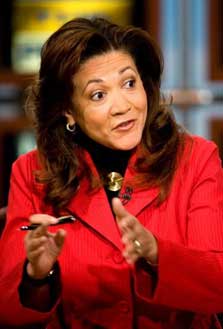
Capitalists’ wars for capitalist conquest and capitalist plunder must be fought by the capitalists themselves so far as I am concerned, and upon that question there can be no compromise and no misunderstanding as to my position. I have no country to fight for; my country is the earth; I am a citizen of the world. I would not violate my principles for God, much less for a crazy kaiser, a savage czar, a degenerate king, or a gang of pot-bellied parasites.

But while I have not a drop of blood to shed for the oppressors of the working class and the robbers of the poor, the thieves and looters, the brigands and murderers whose debauched misrule is the crime of the ages, I have a heart-full to shed for their victims when it shall be needed in the war for their liberation.

I am not a capitalist soldier; I am a proletarian revolutionist. I do not belong to the regular army of the plutocracy, but to the irregular army of the people. I refuse to obey any command to fight from the ruling class, but I will not wait to be commanded to fight for the working class. I am opposed to every war but one; I am for the war with heart and soul, and that is the world-wide war of social revolution. In that war I am prepared to fight in any way the ruling class may make necessary, even to the barricades.

There is where I stand and where I believe the Socialist Party stands, or ought to stand, on the question of war.

— Eugene V. Debs, When I Shall Fight – Appeal to Reason
(September 11, 1915)

This deformed thing we call Justice

America seems poised to possibly elect a law professor into the White House later this year. Funny that this legal specialist, who taught LAW for 10 years at the University of Chicago, has remained strangely silent as the US government instituted torture into its legal codes, eliminated Habeas Corpus, and trampled whole sale on the US Constitution.

I don’t remember a bleep of protest from this legal specialist during these recent times. Where were you Barack Obama? Your specialty is law, you hide that fact??? It’s because you kept so silent, is it not? You and your party are collaborators, aren’t you?

But this is not about Barack Obama and his loud silence. It is about America’s attitudes toward the police. It is about this deformed thing in America we call Justice. It is about how the people trust the police’s word, even though there is so much evidence that the police consistently fabricate testimony, fabricate evidence, and fabricate the supposed need for their own reproduction as a cancer upon our country… one that is growing, growing, growing., just like the military.

I opened up Parade in the Springs GagShit newspaper this morning to see the question posed, ‘Do we need more police?’ Shouldn’t the question actually be, ‘Don’t we need less police?’ or ‘Are we actually safer with this growing number of police plaguing the US?’ What would your answers be to these questions? Please tax me more, I want more jails?

I borrowed this phrase ‘the deformed thing we call Justice’ from Joe Bageant’s column titled Old Dogs and Hard Time Joe is the closest approximation we have today in America, to having a live Junior version of Studs Terkel on hand. His writings always seem to highlight the real working class issues in America, and I love reading him! Power to the People, Joe!

Here is my last question… Can we really have anything other than a deformed ‘justice’ in a country that hates the common person so much? We don’t respect the common people, for all they do is just work without being able to buy that much. How despicable is America’s attitude toward them.

Dominant elite culture thinks it a crime that poor people who work and consider them lowest on the totem pole! Shame on the common people for being so low and poor!, You Guys. It’s a crime these days to be working poor! Don’t you know it?

Yes, many in America really still want to imprison yet more of the poor and working class. For that, we need yet more police, yet more ‘law’, and yet more weaponry. These perverts… this lowe echelon of worker rabble… are seen to be like foreign Muslims almost. Show them no mercy! Yes, that’s what it’s like in America with this deformed thing the powers-that-are call Justice. ‘Justice’, in the opinions of the authoritarian elites, are them ordering the kicking around of the people who actually do the hard work. The poor are considered dumb louts for doing the work we all depend on! They deserve to be punished think so many of the self- righteous, wanna-be top A-holes!

Obama fields loaded questions from NPR

Michele Norris of National Petroleum RelationsA public radio listener wrote to criticize the interview of Barack Obama on NPR’s All Things Considered. They thought the coverage too favorable, plus there was no equal time given to John McCain. I suspect this is the result when public radio courts the lower denominator of the American media audience. Did they hear the same broadcast as I? All six questions posed to Obama were loaded, disguised in the insufferable sucrose voice-of- concern of Michele Norris. Is she the half-wit she pretends if she composed this soft-pitch spit-ball: Democrats are generally regarded as the ‘tax and spend’ party. Are you prepared to tell us that tax-n-spend is good for America?

Actually I was paraphrasing. Here are the six questions, front-loaded with false characterization or innuendo.

1. “The GOP has used the same argument for decades, that tax and spend liberalism is bad for America. ‘Tax and spend’ is almost a hyphenated phrase that’s become equivalent a dirty word. Are tax and spend policies really bad for America or is that what you’re intending to do?”

2. “Its been said many times that the candidate who will win in November will be the one who can convey that they really feel their pain … How do you convey that message?”

3. “It’s said … you just didn’t seem to connect with white working class voters … How will you do that in the general election?”

4. “Do Americans perhaps need a reality check, high gas prices might be here to stay, and are you the person who perhaps is willing to deliver that unwelcome message?”

5. “Will gas prices stay high?”
Trying to force Obama to be the unwelcome messenger.

6. One last question: Lakers or Celtics?
Hoping he’d alienate one half of the listeners or the other. Naturally Obama handled all these questions with aplomb.

Worldwide Transportation Strikes are the first signs of an economic earthquake ahead

All around the planet the working class is beginning to stir once again in mass. What is driving this awakening is the effects of rising gasoline prices, as workers engaged in transport feel the first crunch of declining world supplies of petroleum.

Taxis drivers, bus drivers, truckers cannot keep charging the same rates for their services as their costs for gasoline shoot sky high. Security tightened as fuel protests turn violent And the general public is beginning to panic as they see basic consumer goods become too costly and out of reach.

Let’s face it, much of capitalist production is extremely inefficient, wasteful, and wrongly directed. Now, the world will begin to pay the true price for capitalism’s destruction of nature’s reserves of oil, clean water, and fertile agricultural soil . As a result, all that seemed so timeless and stable in our world is crumbling today into the sands of time.

How are we to get around without the petroleum the oil firms got us addicted to? World society now looks like a heroin addict who’s lost his supply. Look out on our stretched to the limit US suburbs. Everything is built wrong. Ouch!

from Rudyard Kipling’s..

The man who would be king…

“…and they (the tribe who lived upstream) urinate in the river”
This in reference to the “runoff” election iniative.

Why should all those poor, indeed Indigent, on food stamps and sleeping on park benches Business Leaders in Colorado Springs have to pay for the toxic waste that runs off their parking lots every damn time it rains?

They probably wouldn’t drink the stuff, unfiltered, that comes off their pavement, but, hey, it’s off their property, must be Somebody Else’s Problem.
And the fact that the filtration processes to get the poison out of the water, those processes, yeah…

They cost money. But the people downstream from Colorado Springs (hint: the entire western United States, Mexico, etc… yeah, those people) they can buy their own filtration processes to get OUR poisons out of THEIR water… and all those lawsuits about it? Pshawww… that’s Frivolous Litigation, haven’t they ever heard of Tort Reform?

They don’t want to drink our urine or feces either, but guess what? the amount of runoff water from the pavement really does FLOOD the same treatment plants.
Both here, and in Pueblo, and Wolf Creek, and Albuquerque, and El Paso, Laredo, Del Rio, McAllen, Brownsville…

Not to mention Juarez, Nuevo Laredo, Acuña, Matamoros, I won’t even mention these because the people who want to dump their waste for FREE don’t even consider Mexican citizens to be human, just “potential wetbacks”. …and that’s just from ONE of the four major watersheds.

We already are being sued by Pueblo, which has a lot of Civil Servants, federal employees, living there.

Also the Military Bases all around have to filter the same wastes from the same water, at public expense. That would be EVERYBODY’S, in the entire nation, expense.

Did I mention that the runoff water also makes it more expensive to treat the Raw Sewage from our toilets? Why, yes, I did, I really really did.

Should I mention, you reckon, that the same people who oppose this “taxation” are the same ones who think it’s a good idea to change their oil in their front yards and not ever have to pick up their pet droppings?

Why, I believe I just did…

Of course, they’ll try to tell us again that Social Responsibility means Socialism, a word they still try to frighten the working class by using. They’ll also say it’s an unfair burden on the poor, because we’d have to pay higher prices to compensate for the Rich not getting corporate welfare.

Like they seriously ever gave three quarters of a fat rat’s rump about the poor to begin with.

We have fed you all for a thousand years

One two three four, I declare a class war
 
Here’s an old labor anthem, addressed to the idle rich who claim the fruit of other men’s labor. To whom belongs the wealth generated by work?

We have fed you all for a thousand years

We have fed you all for a thousand years
And you hail us still unfed,
Though there’s never a dollar of all your wealth
But marks the workers’ dead.
We have yielded our best to give you rest
And you lie on crimson wool.
Then if blood be the price of all your wealth,
Good God! We have paid it in full!

There is never a mine blown skyward now
But we’re buried alive for you.
There’s never a wreck drifts shoreward now
But we are its ghastly crew.
Go reckon our dead by the forges red
And the factories where we spin.
If blood be the price of your cursed wealth,
Good God! We have paid it in!

We have fed you all a thousand years-
For that was our doom, you know,
From the days when you chained us in your fields
To the strike a week ago.
You have taken our lives, and our babies and wives,
And we’re told it’s your legal share,
But if blood be the price of your lawful wealth,
Good God! We bought it fair!

And for good measure, from Finian’s Rainbow:
When the Idle Poor Become the Idle Rich

When the idle poor become the idle rich.
You’ll never know just who is who, or who is which.
Won’t it be rich?
When everyone’s poor relative becomes a ‘Rockefellative’,
And palms no longer itch. What a switch!

When we all wear ermine and plastic teeth
How will we determine who’s who underneath?
And when all your neighbors are upper class,
You won’t know your ‘Joneses’ from your ‘Ass-tors’

Let’s toast the day
The day we drink that drinky up, but with a little pinkie up.
The day on which the idle poor become the idle rich

When a rich man doesn’t want to work
He’s a bon vivant. Yes, he’s a bon vivant.
But when a poor man doesn’t want to work,
He’s a loafer, he’s a lounger,
He’s a lazy good for nothing, he’s a jerk!

When a rich man loses on a horse
Isn’t he a sport, oh isn’t he a sport?
When a poor man looses on a horse
He’s a gambler, he’s a spender,
He’s a low life, he’s a reason for divorce!

When a rich man chases after dames
He’s a man about town, a man about town.
But when a poor man chases after dames
He’s a bounder, he’s a rounder,
He’s a rotter, and a lot of dirty names!

When the idle poor become the idle rich
You’ll never know just who is who or who is which.
No one will see the Irish or the Slav in you
‘Cause when you’re on Park Avenue,
Cornelius and Mike, look alike

When poor Tweedle Dum is rich Tweedle Dee
This discrimination will no longer be.
When we’re in the dough and off of the nut
You won’t know your banker from your but…ler.

Let’s make the switch.
With just a few annuities, we’ll hide these incongruities
With clothes from Abercrombie-Fitch
When the idle poor become the idle rich!

David Rovics on death of Utah Phillips

utah-phillips-fellow-workers-moose-turd-pie.jpgUtah Phillips died Friday. Friends have circulated a May 14th letter he’d sent. The Salt Lake Tribune reprinted a great interview from 2005. And fellow performer David Rovics forwarded this remembrance:

I was watching my baby daughter sleep in her carseat outside of the Sacramento airport about ten hours ago when I noticed a missed call from Brendan Phillips. He’s in a band called Fast Rattler with several friends of mine, two of whom live in my new hometown of Portland, Oregon, one of whom needed a ride home from the Greyhound station. I called back, and soon thereafter heard the news from Brendan that his father had died the night before in his sleep, when his heart stopped beating.

I wouldn’t want to elevate anybody to inappropriately high heights, but for me, Utah Phillips was a legend.

I first became familiar with the Utah Phillips phenomenon in the late 80’s, when I was in my early twenties, working part-time as a prep cook at Morningtown in Seattle. I had recently read Howard Zinn’s A People’s History of the United States, and had been particularly enthralled by the early 20th Century section, the stories of the Industrial Workers of the World. So it was with great interest that I first discovered a greasy cassette there in the kitchen by the stereo, Utah Phillips Sings the Songs and Tells the Stories of the Industrial Workers of the World.

As a young radical, I had heard lots about the 1960’s. There were (and are) plenty of veterans of the struggles of the 60’s alive and well today. But the wildly tumultuous era of the first two decades of the 20th century is now (and pretty well was then) a thing entirely of history, with no one living anymore to tell the stories. And while long after the 60’s there will be millions of hours of audio and video recorded for posterity, of the massive turn-of-the-century movement of the industrial working class there will be virtually none of that.

To hear Utah tell the stories of the strikes and the free speech fights, recounting hilariously the day-to-day tribulations of life in the hobo jungles and logging camps, singing about the humanity of historical figures such as Big Bill Haywood, Joe Hill or Elizabeth Gurley Flynn, was to bring alive an era that at that point only seemed to exist on paper, not in the reality of the senses. But Utah didn’t feel like someone who was just telling stories from a bygone era — it was more like he was a bridge to that era.

Hearing these songs and stories brought to life by him, I became infected by the idea that if people just knew this history in all its beauty and grandeur, they would find the same hope for humanity and for the possibility for radical social change that I had just found through Utah.

Thus, I became a Wobbly singer, too. I began to stand on a street corner on University Way with a sign beside me that read, “Songs of the Seattle General Strike of 1919.” I mostly sang songs I learned from listening to Utah’s cassette, plus some other IWW songs I found in various obscure collections of folk music that I came across.

It was a couple years later that I first really discovered Utah Phillips, the songwriter. I had by this time immersed myself with great enthusiasm in the work of many contemporary performers in what gets called the folk music scene, and had developed a keen appreciation for the varied and brilliant songwriting of Jim Page and others. Then, in 1991, I came across Utah’s new cassette, I’ve Got To Know, and soon thereafter heard a copy of a much earlier recording, Good Though.

Whether he’s recounting stories from his own experiences or those of others doesn’t matter. There is no need to know, for in the many hours Utah spent in his troubled youth talking with old, long-dead veterans of the rails and the IWW campaigns, a bridge from now to then was formed in this person, in his pen and in his deep, resonant voice. In Good Though I heard the distant past breathing and full of life in Utah’s own compositions, just as they breathed in his renditions of older songs.

In I’ve Got To Know I heard an eloquent and current voice of opposition to the American Empire and the bombing of Iraq, rolled together seamlessly with the voices of deserters, draft dodgers and tax resisters of the previous century.

In reference to the power of lying propaganda, a friend of mine used to say it takes ten minutes of truth to counteract 24 hours of lies. But upon first hearing Utah’s song, “Yellow Ribbon,” it seemed to me that perhaps that ratio didn’t give the power of truth enough credit. It seemed to me that if the modern soldiers of the empire would have a chance to hear Utah’s monologues there about his anguish after his time in the Army in Korea, or the breathtakingly simple depiction of life under the junta in El Salvador in his song “Rice and Beans,” they would just have to quit the military.

Utah made it clear in word and in deed that steeping yourself in the tradition was required of any good practitioner of the craft, and I did my best to follow in his footsteps and do just that. I learned lots of Utah’s songs as well as the old songs he was playing. Making a living busking in the Boston subways for years, I ran into other folks who were doing just that, as well as writing great songs, such as Nathan Phillips (no relation). Nathan was from West Virginia, and did haunting versions of “The Green Rolling Hills of West Virginia,” “Larimer Street,” “All Used Up,” and other songs. In different T stops at the same time, Nathan and I could often be found both singing the songs of Utah Phillips for the passersby. Traveling around the US in the 1990’s and since then, it seemed that Utah’s music had, on a musical level, had the same kind of impact that Zinn’s People’s History or somewhat earlier works such as Jeremy Brecher’s book, Strike!, had had in written form — bringing alive vital history that had been all but forgotten. With Ani DiFranco’s collaboration with Utah, this became doubly true, seemingly overnight, and this man who had had a loyal cult following before suddenly had, if not what might be called popularity, at least a loyal cult following that was now twice as big as it had been in the pre-Ani era.

I had had the pleasure of hearing Utah live in concert only once in the early 90’s, doing a show with another great songwriter, Charlie King, in the Boston area. I was looking forward to hearing him play again around there in 1995, but what was to be a Utah Phillips concert turned into a benefit for Utah’s medical expenses, when he had to suddenly drastically cut down on his touring, due to heart problems. I think there were about twenty different performers doing renditions of Utah Phillips’ songs at Club Passim that night. I did “Yellow Ribbon.”

Traveling in the same circles and putting out CDs on the same record label, it was fairly inevitable that we’d meet eventually. The first time was several years ago, if memory serves me, behind the stage at the annual protest against the School of the Americas in Columbus, Georgia. I think I successfully avoided seeming too painfully star-struck. Utah was complaining to me earnestly about how he didn’t know what to do at these protests, didn’t feel like he had good protest material. I think he did just fine, though I can’t recall what he did.

Utah lived in Nevada City, and the last time I was there he came to the community radio station while I was appearing on a show. This was soon after Katrina, and I remember singing my song, “New Orleans,” and Utah saying embarrassingly nice things. I was on a little tour with Norman Solomon speaking and me singing, and we had done an event the night before in town, which Utah was too tired to attend, if I recall.

Me, Utah, Norman, and my companion, Reiko, went over to a nice breakfast place after the radio show, talked and ate breakfast. Utah did most of the talking, and I was pleasantly surprised to find that his use of mysterious hobo colloquialisms and frequent references to obscure historical characters in twentieth-century American anarchist history was something he did off stage as well as on.

I’ve passed near enough to that part of California many times since then. Called once when I was nearby and he was out of town, doing a show in Boston. Otherwise I just thought about calling and dropping by, but didn’t take the time. Life was happening, and taking a day or two off in Nevada City was always something that I never quite seemed to find the time for. Always figured next time I’ll have more time, I’ll call him then. It had been thirteen years since he found out about his heart problems, and he hadn’t kicked the bucket yet… Of course, now I wish I had taken the time when I had the chance, and I’m sure there are many other people who feel the same way.

In any case, for those of us who knew his music, whether from recordings or concerts, for those of us who knew Utah from his stories on or off the stage, whether we knew him as that human bridge to the radical labor movement of yesterday, or as the voice of the modern-day hobos, or as that funky old guy that Ani did a couple of CDs with, Utah Phillips will be remembered and treasured by many. He was undeniably a sort of musical-political-historical institution in his own day. He said he was a rumor in his own time. No question, one man’s rumor is another man’s legend, but who cares, it’s just words anyway.

Higher food prices now being driven by higher fuel prices

We can now see the first effects of the world energy crisis, as local grocery stores are creeping their prices of basic foods upward. The dollar stores also are not exactly dollar stores these days, and never will be again. There are two reasons for these price hikes.

First off, the Pentagon is doing this to us. We are throwing them money (and hence the military suppliers and contractors money, too) like it is going out of style. This is money we simply don’t have, and therefore it is coming from loans to our government, who then passes it off to those that have literally bought the government.

We know who eventually will get stuck with paying off these bad debts, too. It will be the working class and lower middle class of our country. And meanwhile, the rich suck at this gigantic welfare program (teat) with absolutely no shame, as they wave the American flag outside all their offices pretending to be the great patriots. The lower echelons of this fraud get 10% off!

Second cause of the rising prices is simply that we have hit the crisis of declining world oil supplies head on, and nobody has any solution to it beyond trying to corner the world supply (Thank you, Dick Cheney and Dumbo Dubya). But capturing control of world petroleum supply doesn’t exactly increase it, even if such a plot were to be ever successful. All in all, we still have yet to come up with an alternative to the mobility of oil transport, and we are dependent on oil, as we have been for all the later half of the industrial revolution.

Some think that the solution is turning back to coal. Some think it is turning to the deadly nuclear option. Some dream of sun, hydrogen fuel cells, and wind. Meanwhile, in the real world, it is still oil that fuels civilization, uh ‘civilization’ as we know it.

We currently have a rapacious economic system that expands constantly at nature’s expense. Nature is now fed up with it, even if our family and neighbors are not. Nature is run down, and will be run out if we continue this way.

Meanwhile, the prices have begun to inch up and we grow uncomfortable here at home. Elsewhere, things have grown more desperate from the start. Ahead, it is $4/ gallon prices this summer, and the sky will certainly be the limit. Oil barrel prices flown up from below $10 a barrel (not adjusted for inflation) as close back as the mid- ’80s some 22 years ago, to heading towards $120 a barrel right now. It is easy to see how our dollars are now being turned to pennies and we haven’t seen anything yet.

There are some horrible times for the world ahead as the world begins to run into shorter and shorter supply of oil. Meanwhile, let’s shop if we can, shall we not? It’s going to be much harder to do that soon.

Cynthia McKinney and Cindy Sheehan together in Mexico City!

Below, we reprint 2 speeches made in Mexico City Friday, just yesterday, April 4, 2008. The speech Greed … by Cindy Sheehan, and another speech by Cynthia McKinney that is without title.

Cynthia McKinney
Segundo Encuentro Continental de los Trabajadores
Mexico City, Mexico, April 4, 2008

Brothers and Sisters in the Movement

I am happy to be here in Mexico City where the people all over Latin
America are on the move:

On the move for justice, self-determination, and peace.

I love that you have created a Power to the People movement with your
votes that is stronger than the mightiest military force on the
planet!

With the power of your vote you have taken your countries back.

Now, all we have to do is to count all the votes in the United States
and Mexico!

In the 2000 U.S. Presidential election, an estimated six million
people went to the polls and voted, but their votes weren’t counted.

In 2000, and again in 2004, Democrats helped to install Republicans
into power rather than fight for the victory that the voters had
given them.

As a result of this kind of collusion, the Democratic majority in our
Congress has failed to impeach Bush. They have failed to institute a
livable wage, stop the multiple wars the U.S. is fighting right now,
and they have failed to protect human rights anywhere in the world,
including even at home.

That’s why I left the Democratic Party.

I refused to become complicit in war crimes, crimes against humanity,
crimes against the peace, spying on the American people, and ripping
our Bill of Rights to shreds.

And so I declared my independence from the U.S. leadership that gave
us tax cuts for the wealthy and a country 53 trillion dollars in debt
and Hurricane Katrina.

To my brothers and sisters at this Conference and in the United
States, I say:

Hands off Haiti!

Hands off Bolivia, Nicaragua, and Argentina now making a claim for
the Falklands!

Hands off Venezuela and Ecuador!

No to Plan Mexico; No to Plan Colombia! Hands off Pemex!

And finally, it was on this date, 40 years ago, that Dr. Martin
Luther King, Jr. was murdered.

We now know that Dr. King was murdered as part of a conspiracy that
included his own government. Hatched in the bowels of the Pentagon,
where so many other regime change operations have been hatched, the
government of the United States launched regime change at home on
Black America. We blacks in the United States have long known the
pain and the consequences of having authentic leadership snatched
from us; of having someone else pick our leaders before we pick them
ourselves.

I am proud to join this international movement for
self-determination; for justice and for peace. Despite today’s
difficulties, we must never let our dream be deferred. We in the U.S.
gain inspiration from your successes here so we can carry the
struggle to every nook and cranny of the United States.

Que vivan los pueblos de america!

Cindy Sheehan -Key Note Speech “GREED”
Segundo Encuentro Continental de los Trabajadores
Mexico City, Mexico, April 4, 2008

First of all I would like to thank the International Labor Council and the Electrician’s Union for such a warm welcome and I would like to assure you all, my brothers and sisters that I represent millions of North Americans who are in solidarity with you, because we are also plagued with an illegitimate President!

Once, a couple of years ago, I was getting a pedicure in the deep south in the USA, of all places, and my pedicurist was a Latina from Mexico. She lived two hours from where she and her husband owned the shop and she left her young son home with her mother-in-law for six days a week, while she and her husband toiled at the shop. She was very sweet and sympathetic to my situation as a mother whose son was killed in Iraq, but she looked up from my feet at one point and asked me: “Why do you Americans have to have everything. If you all weren’t so greedy, I could still live in my country with my family.” Greedy? Hmm? Her earnest and passionate comment gave me much to think about.

Dictionary.com defines greed as the rapacious desire, especially for wealth or possessions

Greed is also one of the seven deadly sins and I know more than most Americans that the same twisted drive for, not just a fair share of prosperity, but ALL the prosperity is what caused my son’s death and, similarly, my nail persons’ need to have to leave the beloved country of her birth.

Greed is not what drives Latin Americans to try and cross the border to go north, existential necessity is; but corporate-capitalist greed is what makes the dangerous journey necessary. Building walls on the border is not the way to solve the immigration “problem” just as invading two countries and killing innocent civilians was not the way to solve the terrorism problem. Healing the systems of oppression that cause immigration is the way to solve the “problem.” People in Latin America want the right to not have to emigrate. Like my pedicurist, they want to be able to make a good living in their own countries.

In a study done by the Economic Policy Institute in 2004, it was found that 5% of the US population owns 58% of the wealth and only 1.2% of the wealth is owned by 40% of our citizenry. I am sure if a similar study were done, this disparity would be much wider in these days of irresponsible corporate bailouts while Americans are losing their homes at the rate of 250,000 a month and the war economy has made the fat cats astronomical profits while robbing our communities of essential services and needed infrastructure improvements. The Milton Friedman model of disaster capitalism, which Naomi Klein exposes so well in her book, Shock Doctrine, is responsible for economic disaster from New Orleans to Baghdad and the basic underlying root sickness of this is greed.

Statistics can be easily manipulated as we know the statistics reporting the “success” of free trade agreements such as NAFTA are. Facts, numbers and experiential data cannot be so easily manipulated, though. In the years since the Clinton administration (with the support of my Congressional opponent, Nancy Pelosi) foisted NAFTA on our continent, both Mexico and the US have lost farmland and good paying jobs. Many of our manufacturing jobs have gone overseas to Indonesia or China and the Wal Martization of our cultures creeps up on us unchecked and corporations such as Wal Mart have been the main beneficiaries of NAFTA to the detriment of working class people in both countries.

What can we do to improve the situation and reclaim our prosperity from the control of the 21st Century Robber Barons and slave-traders?

First of all, “free” trade treaties should be replaced with fair trade agreements. Small business owners and workers should be protected from being crushed under the heels of multi-national corporations. Any agreement should have protection for workers. A worker who makes shoes, computers, cars, or grows crops should make the same livable wage in Mexico or China, as they would in America. There would be no incentive for off-shoring jobs or relocating manufacturing plants if workers in China made the same wages as workers in America.

All workers should be guaranteed the basic human right of being able to belong to a union. Unions elevate the conditions of workers and families and should remain a strong political force for good and not allow them selves to be beaten into submission or weakness by governmental or corporate pressure. (But aren’t the corporations and governments so intimately linked these days in their fascistic oppression of us average citizens?)

The fragile ecology of our planet must be protected in these agreements and the same standard of sustainability and environmental protections should be uniformly recognized and practiced globally.

Small farmers should be protected from the encroachment of “agri-giants” and their lands protected from the eminent domain of greed.

I know there are many more solutions and a comprehensive platform of “No human left behind” would guarantee the rights of all humans to safe and plentiful food and drinking water; shelter; good and free education; sustainable employment; security and safety from US corporate-militarism; and the basic rights that were guaranteed of: life, liberty and the pursuit of happiness.

For far too long, the United States of America has greedily gobbled up too much of global wealth and resources and our chickens of greed and violence are coming home to roost. As alarming as these trends are, we North Americans are only slightly beginning to feel the ravages of what we have been manufacturing and exporting for years: death and destruction. A new paradigm of global sharing and caring must be implemented and today is the beginning.

Today, as we commemorate and mourn the death of Dr. Martin Luther King, Jr who was assassinated 40 years ago in Memphis, Tn; and as I mourn the murder by the war machine of my son Casey, who was killed in Sadr City, Baghdad 4 years ago today—we must renew our commitment to peace and justice to honor their sacrifices and the sacrifices of others who have also gone before us. We just celebrated the birthday of Cesar Chavez who dedicated his life to the most marginalized and exploited of workers and I am constantly inspired by the devotion of people like Dr. King, Casey and Cesar Chavez andI hope that we all take inspiration to rededicate our lives to peace and justice.

We must build upon the coalition that we have gathered here in this beautiful and historic place to include every group that we are a part of. We can no longer say that we have to focus on “one” issue, because all the issues are the same. My country is waging deadly and lost-cause occupations of Iraq and Afghanistan and so many groups in my country say that we have to focus on bringing our troops home and not become “distracted” by other issues. Profound economic inequality and unchecked greed is the root cause of these occupations as it is the root cause of the occupation of Palestine by Israel and all the violence in the world’s hot-spots today.

In our coalition, we must educate our brothers and sisters that equalizing prosperity and neutralizing greed are the solutions to these acute problems.

I also stand here in solidarity with my brothers and sisters who are working in the Legitimate Government of Mexico to prevent the illegitimate government from privatizing PEMEX. The oil of Mexico belongs to the people of Mexico, and if I can’t be here with you all to block the crimes with my body then I will definitely be with you in spirit.

Thank you for allowing me to speak. It has been an honor to be here.

Billy Bob Clinton and the cane fields

Makes you sick… capitalism as a means toward social organizing and a just prosperity. Tell me after reading this you’re still convinced that capitalist democracy is viable any longer… for us, the working poor, the working class, the middle classes? We’ve lost all our gains, if any were actually made, since the early 70s. All the surplus that is produced from our labor, whether service or manufacturing, has been stolen by the financial industries and corporate wall street barons. This is the National Dividend that Richard Cook talks about and urges we demand, to get back our gains from our productivity.

Stokely Carmichael on liberal pitfalls

Most liberals are naive to other thinking or to the insightful speeches of the socialist black activists of the 60’s. Stokely Carmichael saw the powerlessness of the liberal that other moderate Negro leaders wouldn’t attempt or couldn’t see.

The Black Panthers saw through the petty liberal ideology that always sought cooperation with the capitalists, or as Stokely put it, the oppressors. He talked of liberals and peace activists rejection of violence as a means to achieve real change. Real change defined as eliminating capitalism which is the very root of our dilemma. Is it that the progressive/liberal ideology is largely bankrupt? That it goes nowhere often and deceives its followers into static worn out Gandhi-Goodman, no alternative strategies that always succumb to the real power that is the fascists source of control? Violence? Yes is the answer.

Less a massive armed militant mobilization and a clean break from the stink that is capitalism, there will never be a fair social system that works for the vast working class population. And a re-education of our children away from fascisms model and as to the truth about democratic socialism.

“What we want to do for our people, the oppressed, is to begin to legitimize violence in their minds. So that for us violence against the oppressor will be expedient. This is very important, because we have all been brainwashed into accepting questions of moral judgment when violence is used against the oppressor.”

The Pitfalls of Liberalism
by Stokely Carmichael (Kwame Ture)
(From the book; “Stokely Speaks – From Black Power to Pan Africanism”)

Whenever one writes about a problem in the United States, especially concerning the racial atmosphere, the problem written about is usually black people that they are either extremist, irresponsible, or ideologically naive.

What we want to do here is to talk about white society, and the liberal segment of white society, because we want to prove the pitfalls of liberalism, that is, the pitfalls of liberals in their political thinking.

Whenever articles are written, whenever political speeches are given, or whenever analysis are made about a situation, it is assumed that certain people of one group, either the left or the right, the rich or the poor, the whites or the blacks, are causing polarization. The fact is that conditions cause polarization, and that certain people can act as catalysts to speed up the polarization; for example, Rap Brown or Huey Newton can be a catalyst for speeding up the polarization of blacks against whites in the United States, but the conditions are already there. George Wallace can speed up the polarization of white against blacks in America, but again, the conditions are already there.

Many people want to know why, out of the entire white segment of society, we want to criticize the liberals. We have to criticize them because they represent the liaison between other groups, between the oppressed and the oppressor. The liberal tries to become an arbitrator, but he is incapable of solving the problems. He promises the oppressor that he can keep the oppressed under control; that he will stop them from becoming illegal (in this case illegal means violent). At the same time, he promises the oppressed that he will be able to alleviate their suffering – in due time. Historically, of course, we know this is impossible, and our era will not escape history.

The most perturbing question for the liberal is the question of violence. The liberals initial reaction to violence is to try to convince the oppressed that violence is an incorrect tactic, that violence will not work, that violence never accomplishes anything. The Europeans took America through violence and through violence they established the most powerful country in the world. Through violence they maintain the most powerful country in the world. It is absolutely absurd for one to say that violence never accomplishes anything.

Today power is defined by the amount of violence one can bring against one’s enemy – that is how you decide how powerful a country is; power is defined not by the number of people living in a country, it is not based on the amount of resources to be found in that country, it is not based upon the good will of the leaders or the majority of that people. When one talks about a powerful country, one is talking precisely about the amount of violence that that country can heap upon its enemy. We must be clear in our minds about that. Russia is a powerful country, not because there are so many millions of Russians but because Russia has great atomic strength, great atomic power, which of course is violence. America can unleash an infinite amount of violence, and that is the only way one considers American powerful. No one considers Vietnam powerful, because Vietnam cannot unleash the same amount of violence. Yet if one wanted to define power as the ability to do, it seems to me that Vietnam is much more powerful than the United States. But because we have been conditioned by Western thoughts today to equate power with violence, we tend to do that at all times, except when the oppressed begin to equate power with violence….then it becomes an “incorrect” equation.

Most societies in the West are not opposed to violence. The oppressor is only opposed to violence when the oppressed talk about using violence against the oppressor. Then the question of violence is raised as the incorrect means to attain one’s ends. Witness, for example, that Britain, France, and the United States have time and time again armed black people to fight their enemies for them. France armed Senegalese in World War 2, Britain of course armed Africa and the West Indies, and the United States always armed the Africans living in the United States. But that is only to fight against their enemy, and the question of violence is never raised. The only time the United States or England or France will become concerned about the question of violence is when the people whom they armed to kill their enemies will pick up those arms against them. For example, practically every country in the West today is giving guns either to Nigeria or the Biafra. They do not mind giving those guns to those people as long as they use them to kill each other, but they will never give them guns to kill another white man or to fight another white country.

The way the oppressor tries to stop the oppressed from using violence as a means to attain liberation is to raise ethical or moral questions about violence. I want to state emphatically here that violence in any society is neither moral nor is it ethical. It is neither right nor is it wrong. It is just simply a question of who has the power to legalize violence.

It is not a question of whether it is right to kill or it is wrong to kill; killing goes on. Let me give an example. If I were in Vietnam, if I killed thirty yellow people who were pointed out to me by white Americans as my enemy, I would be given a medal. I would become a hero. I would have killed America’s enemy – but America’s enemy is not my enemy. If I were to kill thirty white policemen in Washington, D.C. who have been brutalizing my people and who are my enemy, I would get the electric chair. It is simply a question of who has the power to legalize violence. In Vietnam our violence is legalized by white America. In Washington, D.C., my violence is not legalized, because Africans living in Washington, D.C., do not have the power to legalize their violence.

I used that example only to point out that the oppressor never really puts an ethical or moral judgment on violence, except when the oppressed picks up guns against the oppressor. For the oppressor, violence is simply the expedient thing to do.

Is it not violent for a child to go to bed hungry in the richest country in the world? I think that is violent. But that type of violence is so institutionalized that it becomes a part of our way of life. Not only do we accept poverty, we even find it normal. And that again is because the oppressor makes his violence a part of the functioning society. But the violence of the oppressed becomes disruptive. It is disruptive to the ruling circles of a given society. And because it is disruptive it is therefore very easy to recognize, and therefore it becomes the target of all those who in fact do not want to change the society. What we want to do for our people, the oppressed, is to begin to legitimize violence in their minds. So that for us violence against the oppressor will be expedient. This is very important, because we have all been brainwashed into accepting questions of moral judgment when violence is used against the oppressor.

If I kill in Vietnam I am allowed to go free; it has been legalized for me. I has not been legitimatized in my mind. I must legitimatize it in my own mind, and even though it is legal I may never legitimatize in in my own mind. There are a lot of people who came back from Vietnam, who have killed where killing was legalized, but who still have psychological problems over the fact that they have killed. We must understand, however, that to legitimatize killing in one’s mind does not make it legal. For example, I have completely legitimatized in my mind the killing of white policemen who terrorize black communities. However, if I get caught killing a white policeman, I have to go to jail, because I do not as yet have the power to legalize that type of killing. The oppressed must begin to legitimatize that type of violence in the minds of our people, even though it is illegal at this time, and we have to keep striving every chance we get to attain that end.

Now, I think the biggest problem with the white liberal in America, and perhaps the liberal around the world, is that his primary task is to stop confrontation, stop conflicts, not to redress grievances, but to stop confrontation. And this is very clear, it must become very, very clear in all our minds. Because once we see what the primary task of the liberal is, then we can see the necessity of not wasting time with him. His primary role is to stop confrontation. Because the liberal assumes a priori that a confrontation is not going to solve the problem. This of course, is an incorrect assumption. We know that.

We need not waste time showing that this assumption of the liberals is clearly ridiculous. I think that history has shown that confrontation in many cases has resolved quite a number of problems – look at the Russian revolution, the Cuban revolution, the Chinese revolution. In many cases, stopping confrontation really means prolonging suffering.

The liberal is so preoccupied with stopping confrontation that he usually finds himself defending and calling for law and order, the law and order of the oppressor. Confrontation would disrupt the smooth functioning of the society and so the politics of the liberal leads him into a position where he finds himself politically aligned with the oppressor rather than with the oppressed.

The reason the liberal seeks to stop confrontation – and this is the second pitfall of liberalism – is that his role, regardless of what he says, is really to maintain the status quo, rather than to change it. He enjoys economic stability from the status quo and if he fights for change he is risking his economic stability. What the liberal is really saying is that he hopes to bring about justice and economic stability for everyone through reform, that somehow the society will be able to keep expanding without redistribution the wealth.

This leads to the third pitfall of the liberal. The liberal is afraid to alienate anyone, and therefore he is incapable of presenting any clear alternative.

Look at the past presidential campaign in the United States between Nixon, Wallace, and Humphrey. Nixon and Humphrey, because they try to consider themselves some sort of liberals, did not offer any alternatives. But Wallace did, he offered clear alternatives. Because Wallace was not afraid to alienate, he was not afraid to point out who had caused errors in the past, and who should be punished. The liberals are afraid to alienate anyone in society. They paint such a rosy picture of society and they tell us that while things have been bad in the past, somehow they can become good in the future without restructuring society at all.

What the liberal really wants is to bring about change which will not in any way endanger his position. The liberal says, “It is a fact that you are poor, and it is a fact that some people are rich but we can make you rich without affecting those people who are rich”. I do not know how poor people are going to get economic security without affecting the rich in a given country, unless one is going to exploit other peoples. I think that if we followed the logic of the liberal to its conclusion we would find that all we can get from it is that in order for a society to become suitable we must begin to exploit other peoples.

Fourth, I do not think that liberals understand the difference between influences and power, and the liberals get confused seeking influence rather than power. The conservatives on the right wing, or the fascists, understand power, though, and they move to consolidate power while the liberal pushes for influence.

Let us examine the period before civil rights legislation in the United States. There was a coalition of the labor movement, the student movement, and the church for the passage of certain civil rights legislation; while these groups formed a broad liberal coalition, and while they were able to exert their influence to get certain legislation passed, they did not have the power to implement the legislation once it became law. After they got certain legislation passed they had to ask the people whom they were fighting to implement the very things that they had not wanted to implement in the past. The liberal fights for influence to bring about change, not for the power to implement the change. If one really wants to change a society, one does not fight to influence change and then leave the change to someone else to bring about. If the liberals are serious they must fight for power and not for influence.

These pitfalls are present in his politics because the liberal is part of the oppressor. He enjoys the status quo while he himself may not be actively oppressing other people, he enjoys the fruits of that oppression. And he rhetorically tries to claim the he is disgusted with the system as it is.

While the liberal is part of the oppressor, he is the most powerless segment within that group. Therefore when he seeks to talk about change, he always confronts the oppressed rather than the oppressor. He does not seek to influence the oppressor, he seeks to influence the oppressed. He says to the oppressed, time and time again, “You don’t need guns, you are moving too fast, you are too radical, you are too extreme.” He never says to the oppressor, “You are too extreme in your treatment of the oppressed,” because he is powerless among the oppressors, even if he is part of that group; but he has influence, or, at least, he is more powerful than the oppressed, and he enjoys this power by always cautioning, condemning, or certainly trying to direct and lead the movements of the oppressed.

To keep the oppressed from discovering his pitfalls the liberal talks about humanism. He talks about individual freedom, about individual relationships. One cannot talk about human idealism in a society that is run by fascists. If one wants a society that is in fact humanistic, one has to ensure that the political entity, the political state, is one that will allow humanism. And so if one really wants a state where human idealism is a reality, one has to be able to control the political state. What the liberal has to do is to fight for power, to go for the political state and then, once the liberal has done this, he will be able to ensure the type of human idealism in the society that he always talks about.

Because of the above reasons, because the liberal is incapable of bringing about the human idealism which he preaches, what usually happens is that the oppressed, whom he has been talking to finally becomes totally disgusted with the liberal and begins to think that the liberal has been sent to the oppressed to misdirect their struggle, to rule them. So whether the liberal likes it or not, he finds himself being lumped, by the oppressed, with the oppressor – of course he is part of that group. The final confrontation, when it does come about, will of course include the liberal on the side of the oppressor. Therefore if the oppressed really wants a revolutionary change, he has no choice but to rid himself of those liberals in his rank.

Kwame Ture
(aka Stokely Carmichael)

Kwame Ture was born Stokely Carmichael on June 29, 1941 in Port of Spain, Trinidad, the son of Adolphus and Mabel Carmichael. He immigrated to the United States in 1952 with his family and settled in New York, New York. He graduated from the academically elite Bronx High School of Science in 1960 and made the decision to attend Howard University. Howard University conferred on him a Bachelor of Science Degree in Philosophy in 1964.

It was while in Washington that Stokely became deeply involved in the “Freedom Rides,” “Sit-Ins,” and other demonstrations to challenge segregation in American society. He participated with the Congress of Racial Equality (CORE) and the Nonviolent Action Group (NAG). He later joined the Student Nonviolent Coordinating Committee (SNCC) and was elected its National Chairman in June 1966. While in Greenville, Mississippi, he along with his friend and colleague Willie Ricks, rallied the cry “Black Power” which became the most popular slogan of the Civil Rights era. Consequently, he became the primary spokesman for the Black Power ideology. In 1967, he coauthored with Charles V. Hamilton, Black Power, the Politics of Liberation in America. That same year, Stokely was disassociated from SNCC and he became the Prime Minister of the Black Panthers, headquartered in Oakland, California. He soon became disenchanted with the Panthers and moved to Guinea, West Africa.

While residing in Africa, Stokely Carmichael changed his name to “Kwame Ture” to honor Kwame Nkrumah, who led Ghana to independence from Britain, and, Sekou Toure, who was President of Guinea and his mentor. For more than 30 years, Ture led the All-African People’s Revolutionary Party and devoted the rest of his life to Pan Africanism, a movement to uproot the inequities of racism for people of African descent and to develop an economic and cultural coalition among the African Diaspora.

In 1998, at the age of 57, Kwame Ture died from complications of prostate cancer. To the end he answered the telephone, “ready for the revolution.” His marriage to Miriam Makeba and Guinean physician Marlyatou Barry ended in divorce. He has one son, Bokar, who resides in the United States.

Bleeding Hearted Liberals running small check-list businesses make my heart bleed

All around America there are bleeding hearted liberals running small businesses… small social service businesses. As a general rule, too, liberals don’t run businesses very well. They’re too damn dumbly soft and sweet, that’s why. So we can begin to understand why all these ‘reform groups’ (like the local area’s Pikes Peak Justice and Peace Commission.. for just one example) don’t make much profit for the people they claim to be serving (even as they keep them out in droves from their social advocacy groups, run as small ‘businesses’).

Here is the type of thing I am talking about,

…from an article appearing in The Nation…
‘Check off the boxes, copy the paragraph from two years ago, mail it in. As an election year approaches, I again face the piles of questionnaires that progressive organizations use to evaluate public officials. Environmentalists, feminists, campaign finance reformers, housing advocates and labor unions have all come to rely on these lists of our positions–often on issues that never even come up for a vote. It should come as no surprise that, for the most part, all we get out of this cumbersome process is a long line of “checklist liberals” who answer correctly but do little to advance the progressive causes that underlie the questionnaires.’

The rest of this article can be found on the liberal’s very own Nation Magazine at Transforming the Liberal Checklist

OK, OK! So the rest of the article is not very good, much like the liberal organizations themselves, and The Nation Magazine is not very good, either. It was still a good and insightful first paragraph of an article at least!

And the commentary reminded me of all those fund raising letters, free stamps with animal pictures on them, and ‘surveys’ to find out my learned opinions, etc. Reminds me of all the wasted time sitting in meetings where bleeding hearted liberals talk about running THEIR small businesses. You see? The bleeding hearted liberals are most always the ‘owners’ of small socially aware businesses calling themselves community’ groups, which these groups having small office staffs then try to run the group like it was a church or tiny corner store of some sort.

Yes, the small office staff always begin to behave as if they were real owners of the store, much in the same way that some convenience store minimum wage workers will try to stop a robber of some sort or other, by risking their own lives over pennies that supposedly belong to the stock owners instead. These small would be owners can snarl and bite quite hard if given an opportunity to do so. They often overpower the petty ‘robbers’ of their unit with their forceful indignations than can border on madness of sorts. Some times they get popped for being so dimwitted, too.

So what to do about all the PEACE and GREEN and SOCIAL JUSTICE groups’ ‘leaders’ acting in our name? They operate much as the Democratic Party does, which is to impede rather than progress the people forward.

The runners of these small businesses calling themselves ‘peace and justice’ outfits, most often see themselves not as an elected group of leaders for exploited workers struggling for justice and peace, but as a group of independent networkers and business operators, forcefully headed for making more profit for their own personal businesses, the social groups. They spend more time being angry at any of the lower levels of the ‘co-ops’ managed by themselves than at the power elites that cause the social injustice they are supposedly fighting against. When angered by the lower elements, their faces can become quite bulldog-like.

Recently a certain word has come into great popularity with this sort of manager owner of social cause… that word being the word SUSTAINABILITY. Why so popular this word, and with these people? It is because it strikes a chord with the small manager/owner and his small manager/owner mindset. They want to know if their small business is SUSTAINABLE and if their position as head of the operation is SUSTAINABLE most of all? SUSTAINABILITY is their biggest goal of them all. And now of course, corporate America wants to help them become SUSTAINABLE.

This sort of group run as a small business with paid staff who think themselves owners is a very huge impediment to any real social action taking place. The main technique of ‘the owners’ who are salaried is simply to eat up other people’s time. They know that they can out last them in energy by simply doing this, and can come out on top when actual decisions are to be made. In other words, they are well positioned to stifle.

Like owners of any corporation, ‘the owners’ of supposed social groups get paid real money for their time while the volunteers do not. Is this the model of a social action group that will get things done? Most certainly not. Unfortunately though, it is the model structure for liberals and their do-nothing liberalism everywhere today in America…. small groups with a paid ‘leader’ or two, spouting ‘good things’, and doing next to nothing besides appearing to be seeminglygood people.

At the recent meeting of the executive board of the Pikes Peak Justice and Peace Commission, it was totally noticeable that nobody there had anything of a working class background. In fact, the idea of justice for workers is totally absent from this group with ‘justice’ in its name. Being so church-like, this group throws the word in as if it were a bone to the lower classes so next to being sweet dogs in the eyes of these nice people. They were about as working class in composition as the ACLU is!… to give an idea of what the meeting was actually like. Nobody was ‘angry’, just sad. Or happy when seemingly a crumb from real power is thrown in their direction. And at this meeting it had been.

The City of Colorado Springs was going to let the group march in the St Pat’s Day Parade! All Hallelujah, Jesus! But that is about more than this little essay can talk about for the time being. Just let it be said, that liberals running small businesses that should be action groups make my heart bleed. Bleeding hearted liberals make poor businessmen and the conservative business men will tear them to part. Antiwar groups should not be run like they are small businesses. Probably enough said at this point.

The falsity of Stalinist “Socialism”

Socialism does not equal tyranny, unlike the claims and demagoguery of the capitalists. A true democratic Socialism and fair market system is a natural course for human society. It is free of predatory and parasitic capitalist schemes to dominate and exploit everyone and everything. It is decentralization of power distributed to citizens, as opposed to the fascist model that benefits from centralization and concentration of power. It can disperse wealth and enrich citizens if they can be de-programmed of their false worship and idolization of wealth as success and exploitation as the norm.

And it doesn’t have to be an exact model of Marx or Engels or Trotsky or Lenin. But it should include the takeover of production from the fascists with community worker councils in control. And the shift away from enslavement of the worlds workers by the bankers and through globalisation. And control of currency back to the citizens. The capitalists are middlemen who get in our way of a just fair society that we have the ability to create. It is they who have created all of the false propaganda about Socialism. They who choke by way of embargoes, sanctions, and political disruption, any countries attempt toward a just socialist society. Their domination as a minority over the majority cannot and should not stand any longer.

Here’s a good read. Dated but still valid. Enjoy. Also enjoy the many thorough and insightful articles on www.wsws.org

Socialism and Democracy
James P. Cannon gave the following talk to a meeting at the Socialist Workers Party’s West Coast Vacation School, September 1, 1957. It was first published in the Fall 1957 International Socialist Review.

Comrades, I am glad to be here with you today, and to accept your invitation to speak on socialism and democracy. Before we can make real headway in the discussion of other important parts of the program, we have to find agreement on what we mean by socialism and what we mean by democracy, and how they are related to each other, and what we are going to say to the American workers about them.

Strange as it may seem, an agreement on these two simple, elementary points, as experience has already demonstrated, will not be arrived at easily. The confusion and demoralization created by Stalinism, and the successful exploitation of this confusion by the ruling capitalists of this country and all their agents and apologists, still hang heavily over all sections of the workers’ movement.

Shakespeare’s Mark Antony reminded us that evil quite often outlives its authors. That is true in the present case also. Stalin is dead; but the crippling influence of Stalinism on the minds of a whole generation of people who considered themselves socialists or communists lives after Stalin.

Now, of course, the Stalinists and their apologists have not created all the confusion in this country about the meaning of socialism, at least not directly. At every step the Stalinist work of befuddlement and demoralization, of debasing words into their opposite meanings, has been supported by reciprocal action of the same kind by the ruling capitalists and their apologists. They have never failed to take the Stalinists at their word, and to point to the Stalinist regime in the Soviet Union, with all of its horrors, and to say: “That is socialism. The American way of life is better.”

They have cynically accepted the Stalinist definition and have obligingly advertised the Soviet Union, with its grinding poverty and glaring inequality, with its ubiquitous police terror, frame-ups, mass murders and slave-labour camps, as a “socialist” order of society. They have utilized the crimes of Stalinism to prejudice the American workers against the very name of socialism. And worst of all, comrades, we have to recognise that this campaign has been widely successful, and that we have to pay for it. We cannot build a strong socialist movement in this country until we overcome this confusion in the minds of the American workers about the real meaning of socialism.

After all that has happened in the past quarter of a century, the American workers have become more acutely sensitive than ever before to the value and importance of democratic rights. That, in my opinion, is the progressive side of their reaction, which we should fully share. The horrors of fascism, as they were revealed in the ’30s, and which were never dreamed of by the socialists in the old days, and the no less monstrous crimes of Stalinism, which became public knowledge later—all this has inspired a fear and hatred of any kind of dictatorship in the minds of the American working class. And to the extent that the Stalinist dictatorship in Russia has been identified with the name of socialism, and that this identification has been taken as a matter of course, the American workers have been prejudiced against socialism. That’s the bitter truth, and it must be looked straight in the face.

The socialist movement in America will not advance again significantly until it regains the initiative and takes the offensive against capitalism and all its agents in the labour movement precisely on the issue of democracy.

The authentic socialist movement, as it was conceived by its founders and as it has developed over the past century, has been the most democratic movement in all history. No formulation of this question can improve on the classic statement of the Communist Manifesto, with which modern scientific socialism was proclaimed to the world in 1848. The Communist Manifesto said:

““All previous historical movements were movements of minorities, or in the interest of minorities. The proletarian movement is the self-conscious, independent movement of the immense majority, in the interest of the immense majority.”

The authors of the Communist Manifesto linked socialism and democracy together as end and means. The “self-conscious, independent movement of the immense majority, in the interest of the immense majority” cannot be anything else but democratic, if we understand by “democracy” the rule of the people, the majority. The Stalinist claim—that the task of reconstructing society on a socialist basis can be farmed out to a privileged and uncontrolled bureaucracy, while the workers remain without voice or vote in the process—is just as foreign to the thoughts of Marx and Engels, and of all their true disciples, as the reformist idea that socialism can be handed down to the workers by degrees by the capitalists who exploit them.

All such fantastic conceptions were answered in advance by the reiterated statement of Marx and Engels that “the emancipation of the working class is the task of the workers themselves.” That is the language of Marx and Engels—“the task of the workers themselves”. That was just another way of saying—as they said explicitly many times—that the socialist reorganization of society requires a workers’ revolution. Such a revolution is unthinkable without the active participation of the majority of the working class, which is itself the big majority of the population. Nothing could be more democratic than that.

Moreover, the great teachers did not limit the democratic action of the working class to the overthrow of bourgeois supremacy. They defined democracy as the form of governmental rule in the transition period between capitalism and socialism. It is explicitly stated in the Communist Manifesto—and I wonder how many people have forgotten this in recent years—“The first step”, said the Manifesto, “in the revolution by the working class, is to raise the proletariat to the position of ruling class, to win the battle of democracy.”

That is the way Marx and Engels formulated the first aim of the revolution—to make the workers the ruling class, to establish democracy, which, in their view, is the same thing. From this precise formulation it is clear that Marx and Engels did not consider the limited, formal democracy under capitalism, which screens the exploitation and the rule of the great majority by the few, as real democracy.

They never taught that the simple nationalization of the forces of production signified the establishment of socialism. That’s not stated by Marx and Engels anywhere. Nationalization only lays the economic foundations for the transition to socialism. Still less could they have sanctioned, even if they had been able to imagine, the monstrous idea that socialism could be realized without freedom and without equality; that nationalized production and planned economy, controlled by a ruthless police dictatorship, complete with prisons, torture chambers and forced-labour camps, could be designated as a “socialist” society. That unspeakable perversion and contradiction of terms belongs to the Stalinists and their apologists.

All the great Marxists defined socialism as a classless society—with abundance, freedom and equality for all; a society in which there would be no state, not even a democratic workers’ state, to say nothing of a state in the monstrous form of a bureaucratic dictatorship of a privileged minority.

The Soviet Union today is a transitional order of society, in which the bureaucratic dictatorship of a privileged minority, far from serving as the agency to bridge the transition to socialism, stands as an obstacle to harmonious development in that direction. In the view of Marx and Engels, and of Lenin and Trotsky who came after them, the transition from capitalism to the classless society of socialism could only be carried out by an ever-expanding democracy, involving the masses of the workers more and more in all phases of social life, by direct participation and control.

Forecasting the socialist future, the Communist Manifesto said: “In place of the old bourgeois society, with its classes and class antagonisms, we shall have an association.” Mark that: “an association”, not a state—“an association in which the free development of each is the condition for the free development of all”.

I say we will not put the socialist movement of this country on the right track and restore its rightful appeal to the best sentiments of the working class of this country and above all to the young, until we begin to call socialism by its right name as the great teachers did. Until we make it clear that we stand for an ever-expanding workers’ democracy as the only road to socialism. Until we root out every vestige of Stalinist perversion and corruption of the meaning of socialism and democracy, and restate the thoughts and formulations of the authentic Marxist teachers.

But the Stalinist definitions of socialism and democracy are not the only perversions that have to be rejected before we can find a sound basis for the regroupment of socialist forces in the United States. The definitions of the social democrats of all hues and gradations are just as false. And in this country they are a still more formidable obstacle because they have deeper roots, and they are nourished by the ruling class itself.

The liberals, the social democrats and the bureaucratic bosses of the American trade unions are red-hot supporters of “democracy”. At least, that is what they say. And they strive to herd the workers into the imperialist war camp under the general slogan of “democracy versus dictatorship”. They speak of democracy as something that stands by itself above the classes and the class struggle, and not as the form of rule of one class over another.

Capitalism, under any kind of government—whether bourgeois democracy or fascism or a military police state—is a system of minority rule, and the principal beneficiaries of capitalist democracy are the small minority of exploiting capitalists; scarcely less so than the slaveowners of ancient times were the actual rulers and the real beneficiaries of the Athenian democracy.

To be sure, the workers in the United States have a right to vote periodically for one of two sets of candidates selected for them by the two capitalist parties. And if they can dodge the witch-hunters, they can exercise the right of free speech and free press. But this formal right of free speech and free press is outweighed rather heavily by the inconvenient circumstance that the small capitalist minority happens to enjoy a complete monopoly of ownership and control of all the big presses, and of television and radio, and of all other means of communication and information.

But even so, with all that, a little democracy is better than none. We socialists have never denied that. And after the experiences of fascism and McCarthyism, and of military and police dictatorships in many parts of the world, and of the horrors of Stalinism, we have all the more reason to value every democratic provision for the protection of human rights and human dignity; to fight for more democracy, not less.

Socialists should not argue with the American worker when he says he wants democracy and doesn’t want to be ruled by a dictatorship. Rather, we should recognise that his demand for human rights and democratic guarantees, now and in the future, is in itself progressive. The socialist task is not to deny democracy, but to expand it and make it more complete. That is the true socialist tradition. The Marxists, throughout the century-long history of our movement, have always valued and defended bourgeois democratic rights, restricted as they were; and have utilized them for the education and organization of the workers in the struggle to establish full democracy by abolishing the capitalist rule altogether.

The right of union organization is a precious right, a democratic right, but it was not “given” to the workers in the United States. It took the mighty and irresistible labour upheaval of the ’30s, culminating in the great sit-down strikes—a semi-revolution of the American workers—to establish in reality the right of union organization in mass-production industry.

When it comes to the administration of workers’ organizations under their control, the social democrats and the reformist labour leaders pay very little respect to their own professed democratic principles. The trade unions in the United States today, as you all know, are administered and controlled by little cliques of richly privileged bureaucrats, who use the union machinery, and the union funds, and a private army of goon squads, and—whenever necessary—the help of the employers and the government, to keep their own “party” in control of the unions, and to suppress and beat down any attempt of the rank and file to form an opposition “party” to put up an opposition slate.

In practice, the American labour bureaucrats, who piously demand democracy in the one-party totalitarian domain of Stalinism, come as close as they can to maintaining a total one-party rule in their own domain. The Stalinist bureaucrats in Russia and the trade-union bureaucrats in the United States are not sisters, but they are much more alike than different. They are essentially of the same breed, a privileged caste dominated above all by motives of self-benefit and self-preservation at the expense of the workers and against the workers.

The privileged bureaucratic caste everywhere is the most formidable obstacle to democracy and socialism. The struggle of the working class in both sections of the now divided world has become, in the most profound meaning of the term, a struggle against the usurping privileged bureaucracy.

In the Soviet Union, it is a struggle to restore the genuine workers’ democracy established by the revolution of 1917. Workers’ democracy has become a burning necessity to assure the harmonious transition to socialism. That is the meaning of the political revolution against the bureaucracy now developing throughout the whole Soviet sphere, which every socialist worthy of the name unreservedly supports.

In the United States, the struggle for workers’ democracy is preeminently a struggle of the rank and file to gain democratic control of their own organizations That is the necessary condition to prepare the final struggle to abolish capitalism and establish democracy in the country as a whole. No party in this country has a right to call itself socialist unless it stands foursquare for the rank-and-file workers of the United States against the bureaucrats.

Capitalism does not survive as a social system by its own strength, but by its influence within the workers’ movement, reflected and expressed by the labour aristocracy and the bureaucracy. So the fight for workers’ democracy is inseparable from the fight for socialism, and is the condition for its victory. Workers’ democracy is the only road to socialism, here in the United States and everywhere else, all the way from Moscow to Los Angeles, and from here to Budapest.

The iron fist of the marketplace

Burmese priests protestThink you’re the only one who’s come to the conclusion that the average person can be relied upon only as far as you can drag him by the ear? Do you lament that the common sense of common heads put together adds up to a hill of beans?

If you think you know better, your challenge might be to cajole or inform, in hopes of motivating the herd, where others high on the food chain would simply ride roughshod.

Burmese monks leave their sandals behindI find it odd to use animal kingdom analogies to explain human behavior when Homo Sapiens comprise neither competing species, genus, class or phyla stalking each other.

Of the nurture versus nature, I mean carrot versus stick herd management option, which approach do you observe governments most often employ? In public schools it’s authoritarian, on the streets it’s civility so long as people submit appropriately to their fleecing. But as recent events have shown, dissent has meant government reaction with black gloves, masks, armor padding, truncheons, and low tech brutality. Every aspect something you’d expect more from those traditional masters of persuasive communication, the mobsters.

The people most alarmed by totalitarian repression are the educated class who over the centuries have fought for every liberty their overlords were forced to yield. The working classes represented the leverage used to negotiate each concession, and thus came along for the ride. But its muscled ranks have always served as the labor pool for the thugs the governors would use to fight any progressive reformers.

Your police departments all have riot gear to don in the event of civil disturbances. Can you say you’ve approved of their harsh measures in the event of your getting hysterical? That equipment isn’t for soccer hooligans, it’s to break strikes and beat back political assemblies.

We’ve seen police around the world fire on crowds assembled peaceably in Burma, Mexico, Tibet and Iraq. In New Orleans we’ve seen police taser crowds of people just like us, who wanted to protest a public meeting where the decision was being made to condemn their houses.

If you think massacres are beyond the pale for our corporate overlord class, think again. If they can do it without inciting a mass rebellion, they will. The independent minded people of East Timor were massacred with US weapons and the tacit complicity of a media which let it happen off camera. So long as you don’t see it, it doesn’t bother anyone’s conscience apparently. Children labor as slaves in Bangladesh, Africa and Asia for our corporations. You don’t see it, so it’s not a problem. For the profit-mongers all corporate genocide is OK, be it by economic starvation, accident, contamination, or pollution. If you could understood the depravity inherent in their exploitation of world poverty and its resources, can you doubt they’d hesitate to fire live rounds into a crowd who threatened their rule?

Liberals and Labour

The Labour Party of Britain has changed nothing at all from Tony Blair under PM Gordon Brown, just as the Democratic Party has changed nothing 7 years into the Bush presidency. Both still are corporate creations masquerading as popular parties of the common folk.

The latest political scandal in Britain shows that ‘The Labour Party’ should actually be called The Property Developer Party.

In the US we really no longer have even the semblance of a Labor Movement, after its stagnant and corrupted leadership has spent decades after long decades monetarily supporting The Property Developer Party aka as The Corporate Trial Lawyer’s Party, etc. Union dues promoting corporate views, in short.

There is nothing democratic at all about The Democratic Party so this strategy of top down nothing (voting DP candidates) has led all of us into the dead end alley of total corporate control over ALL. We now hardly have a hint of what alternative direction would be like.

Because of this labour misleader co-option, all real organizing of the US Labor Movement will now have to be essentially a totally illegal activity if it is to have any chance to succeed at all, and American (and British workers, too) have gotten way too soft for this sort of battle. It was always the industrial workers that were the backbone for tough fights anyway, and much of that base has been ‘outsourced’ to outside the national borders of ‘The Homelands’. So what we have today, is a Labor Movement where Starbucks’ and Borders’ clerks make up some of the more militant sectors of the Anglo-Saxon working class. Oops!!! I hope I didn’t scare anybody with that word?… working class…

Liberals are now not from Labour, but are from the middle class, and worry about their food intake (healthy or not?), bowel movements (regular or not?), and image (polite or not?) while ‘protesting’. They are non-violent, turn the other cheek types, and not picket sign carriers walking the line subject to the company’s goons coming their way. Liberals now come more from churches than they do from blue collar jobs, so they are not going to bruise it out ‘violently’ witht he companies, as actually ultimately this has to be done again for progress to be made on class issues.

US Labor is now isolated,tasered, jailed, and sick (due to worsening health care and job conditions, worsening diet, and worsening ‘entertainment’ options). The only help for this sad situation might just have to come from workers in foreign countries actually standing up to the corporate goon squads (US military) we now, in America, consider absolutely normal to have all around us?

OK, that’s all I got to be said about Liberals and Labour… I gotta go shopping now! I got some coupons I need to use. Workers United For Good Coupons!

Neo-liberal regime in France hits hard road block

France doesn’t want the neo-liberal program that its government is trying to shove down its throat. Nicolas Sarkozy was elected in May as France’s president, and it is clear that he was the French corporate candidate of choice. France gripped by massive strike

Those corporations want him to destroy the social benefits that the French currently receive and to break all opposition to corporate control over everything in French society.

The French Labor Movement is battling back, and unlike the British and American Labor Movement, the French working class still has some punch left in it. The Battle For France involves more than just the French though. Neo-liberal needs to be delivered a death blow, and the French workers just like the Iraqi population as a whole, are doing their very best to fight back. We wish both the best in their struggles against the common evil we all should be struggling against. That common evil is corporate control over all society against the will of those underneath corporate yoke.