US ruling class tries to put new lipstick on its pig

airplane crash wtcBanks crashed on the day of CHANGE that isn’t change, and the ruling class tried to put new lipstick on its pig. No major bank was spared the carnage as Bank of America’s shares plunged 29 percent; Citigroup’s 20 percent, and State Street Corp., which reported sharply lower earnings, saw its shares plummet 59 percent.

“The financial stocks got murdered,” said Jack A. Ablin, chief investment officer at Harris Private Bank in Chicago. “They were basically cut in half.” See the AP… Banks sink deeper into crisis on Obama’s first day Obama is now the newest lipstick to this pig, the same old US military-industrial-governmental complex.

Obama doesn’t have either a plan nor a clue. What he does have is the backing of the US ruling class elite and that is why he is in office today, and none of that has to do with a ‘new movement’ yet arising. All his (their) empty rhetoric is now about to come totally stripped off his Hawaiian toned body, and his groupies may now cheer but the final result will be quite grim for all soon to see. All that this Barack Brand Lipstick really has to offer is yet more and more attempted cosmetic sales for a decaying, disintegrating global economic system of war and poverty, racism and genocide.

There is no agenda for change in the making in the US of today. The population remains passively accepting of any sort of new cruelty offered up by its own ruling class to all others in the world, as somehow they still think that that will continue to salvage some sort of world for themselves by doing so? All we can do for the moment is wait and see if some new awakening will begin to come forth, though it appears that first total disintegrating disaster must gain the reign supreme.

Americans still just don’t want to change nor have CHANGE come about. And until they might, we will continue to plummet all into the abyss. Sorry, but one just cannot prettify much this new lipstick on the same old pig. It simply really is the same old stuff as before, and while we expect lots of prettifying of it in the press, some minor efforts to do away with some of the worst, and lots of talk, the reality of capitalist worldwide depression will soon hit. Then the real suffering will actually begin. We are in a complete economic down spin now and Pilot Barack will not be laying us down lightly into the Hudson River on this one.

Washington DC changing of the guard

Barack Obama superheroIt reminds me of the Rose Bowl, or the Super Bowl, or more specifically, WAITING for the Main Event. It seems to me that Obama has lost his first battle against entrenched power. We have to wait, to anticipate in spoon-fed loops of network hoopla, we have to watch dignitaries, supposed rivals, embrace each other, we have to fawn as our ruling elites are paraded on red carpets, in entirely different screen shots than the thronging millions. And Barack Obama has to wait too. The nation’s pressing challenges are going to take years to address, apparently, and I believe it if Obama puts himself at the disposal of the miscreants. I’ve watched a London changing of the guard, lots of pomp, but nothing happens.

Am I anticipating a memorable inauguration speech? If President Obama announces his intent, forthwith, to initiate judicial proceedings in The Hague against as many of the previous administration as are found culpable. I expect Obama to tell them he’ll give them a half minute head start. I want to hear Barack Obama put his head against a tree and count to thirty.

Israel’s ‘Internet Megaphone’ Psychological war propaganda machine is being used against notmytribe

megaphone
It seems probable that even NotMyTribe has now come under attack from the Israel war machine via Israel’s Internet Megaphone tool of waging psychological warfare, otherwise known as GIYUS, or “Give Israel Our Support.”
 
“To check out the power of the megaphone, I logged onto a website called GIYUS (Give Israel Your United Support) last Wednesday afternoon. More than 25,000 registered users of www.giyus.org have downloaded the megaphone software, which enables them to receive alerts asking them to get active online.”

To see more about this military weapon of propaganda being used against American and World bloggers and discussion groups, go to the Guardian article from which the quote above was taken. Israel ups the stakes in the propaganda war By Stewart Purvis.

Also see the information below, as it shows how Israeli spamming of antiZionist websites works to spam notmytribe and other sites.
—————————————————————

Israel’s Foreign Ministry provides Free Internet Tool to online activists -Arjan El Fassed, The Electronic Intifada, 26 July 2006

Screen image of the giyus.org website from which the Megaphone desktop tool can be downloaded.

The following letter was sent by Israel’s Ministry of Foreign Affairs to a variety of pro-Israel organisations, so-called ‘hasbara’-groups and other supporters of Israel.

Dear friends,

Many of us recognize the importance of the Internet as the new battleground for Israel’s image. It’s time to do it better, and coordinate our on-line efforts on behalf of Israel. An Israeli software company have developed a free, safe and useful tool for us – the Internet Megaphone.

Please go to http://www.giyus.org, download the Megaphone, and you will receive daily updates with instant links to important internet polls, problematic articles that require a talk back, etc.

We need 100,000 Megaphone users to make a difference. So, please distribute this mail to all Israel’s supporters.

Do it now. For Israel.

Amir Gissin

Director Public Affairs (Hasbara) Department
Ministry of Foreign Affairs, Jerusalem

Israel’s Ministry of Foreign Affairs understands that today’s conflicts are won by public opinion. They mobilize pro-Israel activists to be active and voice “Israel’s side to the world.” The Megaphone desktop tool, built by Giyus, which means “mobilization”, sends desktop alerts on key articles on Israel and surveys, online polls where activists could click on the button to support Israel and click alerts to easily voice pro-Israel opinions.

The tool tracks down online articles and polls that members should act upon. After installing the tool, members receive alerts on those articles. With this tool Israel’s Foreign Ministry obviously thought it would help Israel’s fight in cyberspace. However, having used this tool, for others, it is quit useful as well. There is also a weblog and a forum.

For non Windows users and others who would like to to track the alerts being posted via RSS or the Web, visit this page.

Amir Gissin’s letter was posted on July 22 on the website of http://www.standwithus.com — an pro-Israel advocacy organization.

Who is the economy calling stupid?

Okay, I’ve had enough of our readiness to believe, about the economy, that nobody knows what’s going on. Nobody will tell you what’s going on, is what’s going on.

Even my deepest thinking friend tells me, “Eric, they really don’t know” (The game theorists, the would-be global axis shifters, don’t know.) He may be right, but that’s not who we’re talking about. Between those guys, and you and I, who have no clue about where the economy is going, is a hand-basket courier. That composite abstraction at the handlebars knows the destination, he’s being paid cost-plus for the delivery, and he knows enough to collect his fee in advance.

We thought “it’s the economy, stupid” was directed at George Bush the Senior. Who is/was stupid? I’m finding the syncronicity of Alanis Morissette’s Jagged Little Pill song “Isn’t it ironic?” superlatively ironic. The era when a mass audience un-learned the meaning of irony, was when the joke was really on us.

Today the accepted theme to describe the economy is: nobody knows. I recently heard the governor of Colorado speak to the need for budget cuts in these hard times. He introduced the subject of the economic downturn by explaining, almost as a throwaway foregone conclusion, “Nobody saw this coming.”

I thought, really? This is what Americans are satisfied to expect for leadership? Elected authority figures return our system to us, broken, with not a mea culpa, but mea confuso. And we buy it.

For me, this no-comprendo motif doesn’t play well in Adagio. Today DC’s new lawmakers want to know what’s become of the first half of the TARP bailout money, and the good-enough-for-primetime answer is “nobody knows.” Don’t you just want to stand up and beg your fellow audience members for a collective show of incredulity? “NOBODY KNOWS?!”

Whoever pocketed the 350 Billion, KNOWS.

From explanations of the graft in Iraq, we the television public KNOW that just one million dollars in t-bills weighs more than you can get past surveillance cameras.

From nighttime video of the economic collapse in Argentina, documentary footage viewers know it takes a continuous train of armored trucks to do a run on the banks before the public gets there.

By the way, I’m certain Billion is always capitalized, out of respect for its size.

“Nobody knows” where went the 350 Billion? No. Nobody who knows, intends to tell us.

Either way, we don’t get to know, but the distinction makes a difference, don’t you think? The excuse we’re given for not dwelling on this incongruity, nudge nudge wink wink, is that all misdirection is for the sake of consumer confidence.

To look behind the green curtain is to become dis-illusioned. If you explain the slight of hand, instead of building confidence, you throw fuel on consumer doubt.

The better economists opposed the bailout. Hundreds of them signed a petition to tell us what’s going on is a heist. Under George Bush, bankers have been making off with the US treasury. What they couldn’t spend pay themselves to foist a war, or give themselves in tax cuts, they are having to abscond with under cover of an eleventh hour “bailout.”

The best of the honest economists, Paul Krugman, was given a Nobel Prize. At the same time, our president-to-the-rescue is saying he’d consider the advice of “even Paul Krugman,” like Krugman is a fringe opinion.

Do we empower the American public beast with a truer education about what’s happening to their finances, or do we narrow their peripheral foresight like the gangway to the abbatoire?

P.T. Barnum said no one ever went broke underestimating the American public. Barnum saw opportunity and he took it. I’ll bet he wasn’t satisfied to invest his winnings on the advice of the public’s broker.

The economy is tanking because the Bush investment banker free-for-all is over.

The cash heart of the consumer confidence fattened-calf is already in the bloody hands of the high priests. The American consumer is what’s being thrown off the wall. And the communal wealth of America’s middle class can’t be put together again because the pieces which formed Humpty Dumpty’s actual pre-confidence-ballooned size are going to come up missing.

Not missing, exactly. Look at the corporate jets, private skyboxes, enormous estates, private island kingdoms and advance ticket sales of quarter-million-dollar fares into space.

With much recent ballyhoo, George Bush set aside for protection some nature preserves in the Pacific. Unlike Yellowstone, or Yosemite, these parks of azure coral reefs are inaccessible. To you.

Barack Obama’s spread-the-wealth-around campaign lingo had nothing to do with the mad scramble to divvy the pot. Obama represents our non-insider’s reflexive grab for the fewer spoons. If Obama represents a wisening up at all.

Beyond buy low, sell high, here’s an example of how the scam worked: If a $100K house can be made seem worth $500K, a broker gets five times the commission, say $60K instead of $12K, and collects that money in cash. When the cows come home, you’ve got just a house, and let’s admit that value is arbitrary. But the broker is free and clear, his gleaning of a cash value done.

And actually, your house is not even worth the cost to build it. As the democratic capitalist apparatus downgrades, and the wealthy lose empathy for the lower classes, your house is worth just the value of the shelter it provides. Look at the concern they show for your health care. Your well-being, food and shelter wise, is worth only as much as the value you add to your landlord’s pleasure.

MLK: Why I am Opposed to the War

Martin Luther King Jr“You’re too arrogant! And if you don’t change your ways, I will rise up and break the backbone of your power, and I’ll place it in the hands of a nation that doesn’t even know my name. Be still and know that I’m God.”
 
Sermon at the Ebenezer Baptist Church on April 30, 1967. Full text below.

The sermon which I am preaching this morning in a sense is not the usual kind of sermon, but it is a sermon and an important subject, nevertheless, because the issue that I will be discussing today is one of the most controversial issues confronting our nation. I’m using as a subject from which to preach,

“Why I Am Opposed to the War in Vietnam.”

Now, let me make it clear in the beginning, that I see this war as an unjust, evil, and futile war. I preach to you today on the war in Vietnam because my conscience leaves me with no other choice. The time has come for America to hear the truth about this tragic war. In international conflicts, the truth is hard to come by because most nations are deceived about themselves. Rationalizations and the incessant search for scapegoats are the psychological cataracts that blind us to our sins. But the day has passed for superficial patriotism. He who lives with untruth lives in spiritual slavery. Freedom is still the bonus we receive for knowing the truth. “Ye shall know the truth,” says Jesus, “and the truth shall set you free.” Now, I’ve chosen to preach about the war in Vietnam because I agree with Dante, that the hottest places in hell are reserved for those who in a period of moral crisis maintain their neutrality. There comes a time when silence becomes betrayal.

The truth of these words is beyond doubt, but the mission to which they call us is a most difficult one. Even when pressed by the demands of inner truth, men do not easily assume the task of opposing their government’s policy, especially in time of war. Nor does the human spirit move without great difficulty against all the apathy of conformist thought within one’s own bosom and in the surrounding world. Moreover, when the issues at hand seem as perplexing, as they often do in the case of this dreadful conflict, we’re always on the verge of being mesmerized by uncertainty. But we must move on. Some of us who have already begun to break the silence of the night have found that the calling to speak is often a vocation of agony. But we must speak. We must speak with all the humility that is appropriate to our limited vision, but we must speak. And we must rejoice as well, for in all our history there has never been such a monumental dissent during a war, by the American people.

Polls reveal that almost fifteen million Americans explicitly oppose the war in Vietnam. Additional millions cannot bring themselves around to support it. And even those millions who do support the war [are] half-hearted, confused, and doubt-ridden. This reveals that millions have chosen to move beyond the prophesying of smooth patriotism, to the high grounds of firm dissent, based upon the mandates of conscience and the reading of history. Now, of course, one of the difficulties in speaking out today grows the fact that there are those who are seeking to equate dissent with disloyalty. It’s a dark day in our nation when high-level authorities will seek to use every method to silence dissent. But something is happening, and people are not going to be silenced. The truth must be told, and I say that those who are seeking to make it appear that anyone who opposes the war in Vietnam is a fool or a traitor or an enemy of our soldiers is a person that has taken a stand against the best in our tradition.

Yes, we must stand, and we must speak. [tape skip]…have moved to break the betrayal of my own silences and to speak from the burnings of my own heart, as I have called for radical departures from the destruction of Vietnam. Many persons have questioned me about the wisdom of my path. At the heart of their concerns, this query has often loomed large and loud:

“Why are you speaking about the war, Dr. King? Why are you joining the voices of dissent?” Peace and civil rights don’t mix, they say.

And so this morning, I speak to you on this issue, because I am determined to take the Gospel seriously. And I come this morning to my pulpit to make a passionate plea to my beloved nation.

This sermon is not addressed to Hanoi, or to the National Liberation Front. It is not addressed to China or to Russia. Nor is it an attempt to overlook the ambiguity of the total situation and the need for a collective solution to the tragedy of Vietnam. Nor is it an attempt to make North Vietnam or the National Liberation Front paragons of virtue, nor to overlook the role they must play in a successful resolution of the problem. This morning, however, I wish not to speak with Hanoi and the National Liberation Front, but rather to my fellow Americans, who bear the greatest responsibility, and entered a conflict that has exacted a heavy price on both continents.

Now, since I am a preacher by calling, I suppose it is not surprising that I have seven major reasons for bringing Vietnam into the field of my moral vision. There is…a very obvious and almost facile connection between the war in Vietnam and the struggle I and others have been waging in America. A few years ago there was a shining moment in that struggle. It seemed that there was a real promise of hope for the poor, both black and white, through the Poverty Program. There were experiments, hopes, and new beginnings. Then came the build-up in Vietnam. And I watched the program broken as if it was some idle political plaything of a society gone mad on war. And I knew that America would never invest the necessary funds or energies in rehabilitation of its poor so long as adventures like Vietnam continued to draw men and skills and money, like some demonic, destructive suction tube. And you may not know it, my friends, but it is estimated that we spend $500,000 to kill each enemy soldier, while we spend only fifty-three dollars for each person classified as poor, and much of that fifty-three dollars goes for salaries to people that are not poor. So I was increasingly compelled to see the war as an enemy of the poor, and attack it as such.

Perhaps the more tragic recognition of reality took place when it became clear to me that the war was doing far more than devastating the hope of the poor at home. It was sending their sons, and their brothers, and their husbands to fight and die in extraordinarily high proportion relative to the rest of the population. We were taking the black young men who had been crippled by society and sending them eight thousand miles away to guarantee liberties in Southeast Asia which they had not found in Southwest Georgia and East Harlem. So we have been repeatedly faced with a cruel irony of watching Negro and white boys on TV screens as they kill and die together for a nation that has been unable to seat them together in the same school room. So we watch them in brutal solidarity, burning the huts of a poor village. But we realize that they would hardly live on the same block in Chicago or Atlanta. Now, I could not be silent in the face of such cruel manipulation of the poor.

My third reason moves to an even deeper level of awareness, for it grows out of my experience in the ghettos of the North over the last three years–especially the last three summers. As I have walked among the desperate, rejected, and angry young men, I have told them that Molotov cocktails and rifles would not solve their problems. I have tried to offer them my deepest compassion while maintaining my conviction that social change comes most meaningfully through non-violent action; for they ask and write me, “So what about Vietnam?” They ask if our nation wasn’t using massive doses of violence to solve its problems to bring about the changes it wanted.

Their questions hit home, and I knew that I could never again raise my voice against the violence of the oppressed in the ghettos without first having spoken clearly to the greatest purveyor of violence in the world today: my own government. For the sake of those boys, for the sake of this government, for the sake of the hundreds of thousands trembling under our violence I cannot be silent.

Been a lot of applauding over the last few years. They applauded our total movement; they’ve applauded me. America and most of its newspapers applauded me in Montgomery. And I stood before thousands of Negroes getting ready to riot when my home was bombed and said, we can’t do it this way. They applauded us in the sit-in movement–we non-violently decided to sit in at lunch counters. The applauded us on the Freedom Rides when we accepted blows without retaliation. They praised us in Albany and Birmingham and Selma, Alabama. Oh, the press was so noble in its applause, and so noble in its praise when I was saying, Be non-violent toward Bull Connor; when I was saying, Be non-violent toward [Selma, Alabama segregationist sheriff] Jim Clark.

There’s something strangely inconsistent about a nation and a press that will praise you when you say, Be non-violent toward Jim Clark, but will curse and damn you when you say, “Be non-violent toward little brown Vietnamese children. There’s something wrong with that press!

As if the weight of such a commitment to the life and health of America were not enough, another burden of responsibility was placed upon me in 1964. And I cannot forget that the Nobel Peace Prize was not just something taking place, but it was a commission–a commission to work harder than I had ever worked before for the brotherhood of Man. This is a calling that takes me beyond national allegiances.

But even if it were not present, I would yet have to live with the meaning of my commitment to the ministry of Jesus Christ. To me, the relationship of this ministry to the making of peace is so obvious that I sometimes marvel at those who ask me why I am speaking against the war. Could it be that they do not know that the Good News was meant for all men, for communists and capitalists, for their children and ours, for black and white, for revolutionary and conservative? Have they forgotten that my ministry is in obedience to the One who loved His enemies so fully that he died for them? What, then, can I say to the Vietcong, or to Castro, or to Mao, as a faithful minister to Jesus Christ? Can I threaten them with death, or must I not share with them my life?

Finally, I must be true to my conviction that I share with all men the calling to be the son of the Living God. Beyond the calling of race or nation or creed is this vocation of son-ship and brotherhood. And because I believe that the Father is deeply concerned, especially for His suffering and helpless and outcast children, I come today to speak for them.

And as I ponder the madness of Vietnam and search within myself for ways to understand and respond in compassion, my mind goes constantly to the people of that peninsula. I speak not now of the soldiers of each side, not of the military government of Saigon, but simply of the people who have been under the curse of war for almost three continuous decades now. I think of them, too, because it is clear to me that there will be no meaningful solution until some attempt is made to know these people and hear their broken cries.

Now, let me tell you the truth about it. They must see Americans as strange liberators.

Do you realize that the Vietnamese people proclaimed their own independence in 1945 after a combined French and Japanese occupation? And incidentally, this was before the Communist revolution in China. They were led by Ho Chi Minh. And this is a little-known fact, and these people declared themselves independent in 1945. They quoted our Declaration of Independence in their document of freedom, and yet our government refused to recognize them. President Truman said they were not ready for independence. So we fell victim as a nation at that time of the same deadly arrogance that has poisoned the international situation for all of these years. France then set out to reconquer its former colony. And they fought eight long, hard, brutal years trying to re-conquer Vietnam. You know who helped France? It was the United States of America. It came to the point that we were meeting more than eighty percent of the war costs. And even when France started despairing of its reckless action, we did not. And in 1954, a conference was called at Geneva, and an agreement was reached, because France had been defeated at Dien Bien Phu.

But even after that, and after the Geneva Accord, we did not stop. We must face the sad fact that our government sought, in a real sense, to sabotage the Geneva Accord. Well, after the French were defeated, it looked as if independence and land reform would come through the Geneva agreement. But instead the United States came and started supporting a man named Diem who turned out to be one of the most ruthless dictators in the history of the world. He set out to silence all opposition. People were brutally murdered because they raised their voices against the brutal policies of Diem. And the peasants watched and cringed as Diem ruthlessly rooted out all opposition. The peasants watched as all this was presided over by United States influence and by increasing numbers of United States troops who came to help quell the insurgency that Diem’s methods had aroused. When Diem was overthrown, they may have been happy, but the long line of military dictatorships seemed to offer no real change, especially in terms of their need for land and peace. And who are we supporting in Vietnam today? It’s a man by the name of general Ky [Air Vice Marshal Nguyen Cao Ky] who fought with the French against his own people, and who said on one occasion that the greatest hero of his life is Hitler. This is who we are supporting in Vietnam today. Oh, our government and the press generally won’t tell us these things, but God told me to tell you this morning. The truth must be told.

The only change came from America as we increased our troop commitments in support of governments which were singularly corrupt, inept, and without popular support and all the while the people read our leaflets and received regular promises of peace and democracy and land reform. Now they languish under our bombs and consider us, not their fellow Vietnamese, the real enemy. They move sadly and apathetically as we herd them off the land of their fathers into concentration camps, where minimal social needs are rarely met. They know they must move or be destroyed by our bombs. So they go, primarily women, and children and the aged. They watch as we poison their water, as we kill a million acres of their crops. They must weep as the bulldozers roar through their areas preparing to destroy the precious trees. They wander into the towns and see thousands of thousands of the children, homeless, without clothes, running in packs on the streets like animals. They see the children degraded by our soldiers as they beg for food. They see the children selling their sisters to our soldiers, soliciting for their mothers. We have destroyed their two most cherished institutions: the family and the village. We have destroyed their land and their crops. We have cooperated in the crushing of the nation’s only noncommunist revolutionary political force, the United Buddhist Church. This is a role our nation has taken, the role of those who make peaceful revolutions impossible but refusing to give up the privileges and the pleasures that comes from the immense profits of overseas investments. I’m convinced that if we are to get on the right side of the world revolution, we as a nation must undergo a radical revolution of values. We must rapidly begin the shift from a thing-oriented society to a person-oriented society. When machines and computers, profit motives and property rights are considered more important than people, the giant triplets of racism, militarism and economic exploitation are incapable of being conquered.

A true revolution of values will soon cause us to question the fairness and justice of many of our present policies. On the one hand, we are called to play the Good Samaritan on life’s roadside, but that will be only an initial act. One day we must come to see that the whole Jericho Road must be changed so that men and women will not be constantly beaten and robbed as they make their journey on life’s highway. True compassion is more than flinging a coin to a beggar. A true revolution of values will soon look uneasily on the glaring contrast of poverty and wealth with righteous indignation. It will look across the seas and see individual capitalists of the West investing huge sums of money in Asia, Africa, and South America, only to take the profits out with no concern for the social betterment of the countries, and say, “This is not just.” It will look at our alliance with the landed gentry of Latin America and say, “This is not just.” The Western arrogance of feeling that it has everything to teach others and nothing to learn from them is not just. A true revolution of values will lay hands on the world order and say of war, “This way of settling differences is not just.” This business of burning human beings with napalm, of filling our nation’s homes with orphans and widows, of injecting poisonous drugs of hate into the veins of peoples normally humane, of sending men home from dark and bloody battlefields physically handicapped and psychologically deranged, cannot be reconciled with wisdom, justice, and love. A nation that continues year after year to spend more money on military defense than on programs of social uplift is approaching spiritual death.

Oh, my friends, if there is any one thing that we must see today is that these are revolutionary times. All over the globe men are revolting against old systems of exploitation and oppression, and out of the wounds of a frail world, new systems of justice and equality are being born. The shirtless and barefoot people of the land are rising up as never before. The people who sat in darkness have seen a great light. They are saying, unconsciously, as we say in one of our freedom songs, “Ain’t gonna let nobody turn me around!” It is a sad fact that because of comfort, complacency, a morbid fear of communism, our proneness to adjust to injustice, the Western nations that initiated so much of the revolutionary spirit of the modern world have now become the arch anti-revolutionaries. This has driven many to feel that only Marxism has a revolutionary spirit. Therefore, communism is a judgment against our failure to make democracy real and follow through on the revolutions that we initiated. Our only hope today lies in our ability to recapture the revolutionary spirit and go out into a sometimes hostile world declaring eternal hostility to poverty, racism, and militarism. With this powerful commitment we shall boldly challenge the status quo, we shall boldly challenge unjust mores, and thereby speed up the day when

“every valley shall be exalted, and every mountain and hill shall be made low, and the rough places shall be made plain, and the crooked places straight. And the glory of the Lord shall be revealed, and all flesh shall see it together.”

A genuine revolution of values means in the final analysis that our loyalties must become ecumenical rather than sectional. Every nation must now develop an overriding loyalty to mankind as a whole in order to preserve the best in their individual societies. This call for a worldwide fellowship that lifts neighborly concern beyond one’s tribe, race, class, and nation is in reality a call for an all-embracing, unconditional love for all men. This oft misunderstood and misinterpreted concept, so readily dismissed by the Nietzsches of the world as a weak and cowardly force, has now become an absolute necessity for the survival of mankind. And when I speak of love I’m not speaking of some sentimental and weak response. I am speaking of that force which all of the great religions have seen as the supreme unifying principle of life. Love is somehow the key that unlocks the door which leads to ultimate reality. This Hindu-Muslim-Christian-Jewish-Buddhist belief about ultimate reality is beautifully summed up in the first epistle of John: “Let us love one another, for God is love. And every one that loveth is born of God and knoweth God. He that loveth not knoweth not God, for God is love. If we love one another, God dwelleth in us and his love is perfected in us.”

Let me say finally that I oppose the war in Vietnam because I love America. I speak out against this war, not in anger, but with anxiety and sorrow in my heart, and, above all, with a passionate desire to see our beloved country stand as the moral example of the world. I speak out against this war because I am disappointed with America. And there can be no great disappointment where there is not great love. I am disappointed with our failure to deal positively and forthrightly with the triple evils of racism, economic exploitation, and militarism. We are presently moving down a dead-end road that can lead to national disaster. America has strayed to the far country of racism and militarism. The home that all too many Americans left was solidly structured idealistically; its pillars were solidly grounded in the insights of our Judeo-Christian heritage. All men are made in the image of God. All men are bothers. All men are created equal. Every man is an heir to a legacy of dignity and worth. Every man has rights that are neither conferred by, nor derived from the State–they are God-given. Out of one blood, God made all men to dwell upon the face of the earth. What a marvelous foundation for any home! What a glorious and healthy place to inhabit. But America’s strayed away, and this unnatural excursion has brought only confusion and bewilderment. It has left hearts aching with guilt and minds distorted with irrationality.

It is time for all people of conscience to call upon America to come back home. Come home, America. Omar Khayyam is right: “The moving finger writes, and having writ moves on.”

I call on Washington today. I call on every man and woman of good will all over America today. I call on the young men of America who must make a choice today to take a stand on this issue.

Tomorrow may be too late. The book may close. And don’t let anybody make you think that God chose America as his divine, messianic force to be a sort of policeman of the whole world. God has a way of standing before the nations with judgment, and it seems that I can hear God saying to America,

“You’re too arrogant!

And if you don’t change your ways,

I will rise up and break the backbone of your power,

and I’ll place it in the hands of a nation that doesn’t even know my name.

Be still and know that I’m God.”

Now it isn’t easy to stand up for truth and for justice. Sometimes it means being frustrated. When you tell the truth and take a stand, sometimes it means that you will walk the streets with a burdened heart. Sometimes it means losing a job…means being abused and scorned. It may mean having a seven, eight year old child asking a daddy, “Why do you have to go to jail so much?” And I’ve long since learned that to be a follower to the Jesus Christ means taking up the cross. And my bible tells me that Good Friday comes before Easter. Before the crown we wear, there is the cross that we must bear. Let us bear it–bear it for truth, bear it for justice, and bear it for peace. Let us go out this morning with that determination. And I have not lost faith. I’m not in despair, because I know that there is a moral order. I haven’t lost faith, because the arc of the moral universe is long, but it bends toward justice. I can still sing “We Shall Overcome” because Carlyle was right: “No lie can live forever.” We shall overcome because William Cullen Bryant was right: “Truth pressed to earth will rise again.” We shall overcome because James Russell Lowell was right: “Truth forever on the scaffold, wrong forever on the throne.” Yet, that scaffold sways the future. We shall overcome because the bible is right: “You shall reap what you sow.”

With this faith we will be able to hew out of the mountain of despair a stone of hope.

With this faith we will be able to transform the jangling discords of our world into a beautiful symphony of brotherhood.

With this faith we will be able to speed up the day when justice will roll down like waters, and righteousness like a mighty stream.

With this faith we will be able to speed up the day when the lion and the lamb will lie down together, and every man will sit under his own vine and fig tree, and none shall be afraid because the words of the Lord have spoken it.

With this faith we will be able to speed up the day when all over the world we will be able to join hands and sing in the words of the old Negro spiritual, “Free at last! Free at last! Thank God Almighty, we’re free at last!”

With this faith, we’ll sing it as we’re getting ready to sing it now. Men will beat their swords into plowshares and their spears into pruning hooks. And nations will not rise up against nations, neither shall they study war anymore. And I don’t know about you, I ain’t gonna study war no more.

Where to put the Guantanamo detainees

Billboard on Colfax Avenue urges CLOSE GUANTANAMO
A major sticking point which prevented President Bush from closing Guantanamo, purportedly, and which we hear Barack Obama has been hastening to address, is what to do with Guantanamo’s inmates after the island prison is closed. I can offer only this rather obvious suggestion:

Are you FREAKING KIDDING ME?! Free every last one and PUT THEM UP AT THE WALDORF! What the fuck do you think we should do to make amends for six years in cages at Camp X-Ray?!

Are you pretending to grasp only one half of the Guantanamo violation? The Gitmo purgatory beyond the rule of law was wrong, but so too was the indefinite detention of “illegal combatants.”

Closing Guantanamo, together with the whole network of US covert prisons will be a step toward restoring America’s image as a law abiding nation. But if you’re simultaneously searching for alternative jailers to take the Gitmo detainees, you’re not showing much understanding of what you’re doing wrong.

Seriously. We hear this nation or that will not accept the nationality-appropriate of our detainees. Thus far I believe, we are objecting because our would-be partners can’t guarantee that they will continue to hold the subjects for the indefinite period we require.

And that wouldn’t compound the wrong?

Close Guantanamo. Free everyone. If there are particular men you want to charge, put them in a US prison and give them every right accorded anyone else. Give them lawyers, and recourse for redress.

Otherwise put them up in posh digs. Prostrate yourselves before them, hopefully they will someday forgive us. And they are by no means obligated to do so.

They wanted to ‘Save Darfur’ but are promoting using White Phosphorous on Gaza instead!

olive treeIt seems that many of those who wanted to ‘Save Darfur’ are now actually out there supporting Israel and its daily bombardment of Gaza’s civilian population with thousands of half-ton explosives, cluster bomblets, and White Phosphorus shells, many if not most, made in the USA! What a puzzle?

U.S. Vice President Joe Biden is one of those notables since he’s been a long time Zionist and demander of increased US military aggression against Sudan, but the group of newly gung-ho genocide advocates against the Palestinians also includes Hillel, the largest Jewish student group around the world. They fairly recently made ‘Saving Darfur’ the major focus of their political work. Now they have returned to the ‘Saving the Jewish State’ theme by killing Palestinians which is their #1 cause once again. See their website for the position Hillel Endorses JCPA Support for Israel. Now check out their ‘Save Darfur’ campaign for calling for military intervention by principally the US and Britain into Africa. Never Forget. Save Darfur and never save Iraq, Afghanistan, or Somalia, let alone Gaza?

OK, let’s go on over to another US group advocating vocally to ‘Save Darfur’, the U.S. Holocaust Memorial Museum down in Miami, Florida of all places. What are they up to? Just check on CONSCIENCE at their website to see if they have located any problems in the world today other than Darfur? Oops, Iraq, Afghanistan, Somalia, Congo, Gaza are all missing! Gaza civilians not a problem for them…. ??? Neither are Armenians, Native Americans, nor Black African slaves. What holocausts? I guess there was only one with maybe an add on of Darfur? I’m surprised, in fact. Well they are worried about the Chechens, too, it seems. Just to be fair…

There are many others out there who wanted to ‘Save Darfur’. Some of them are the local peace do-nothings at the Pikes Peak Justice and Peace Commission here in Colorado Springs allied with United for Justice and Peace nationally, which has had many a member concerned about ‘Saving Darfur’. So much so that they actually held a rally or two to show their desire for more intervention by the US government. I remember seeing some of them in tears even.

Today I’m not sure where they have disappeared to? White phosphorus and Gaza just not their thing I guess? Neither is Somalia, Congo, Afghanistan, nor really even Iraq! Funny group of people. They never really seem to get it together to demonstrate for anything other than themselves? Always fundraising though. Got some money for their office people? Staff salaries are always important! They may or may not show up at the next rally against war? You never know with these folk?

What about the group Stop Genocide Now? What did you find other than their concern about Darfur? They claim to be the following…

‘Stop Genocide Now (SGN) is a grassroots community dedicated to working to protect populations in grave danger of violence, death and displacement resulting from genocide.’

Only Darfur seems to be where they have found this ‘population’ though. Go figure? ‘Genocide’ seems to be only in Darfur? That’s amazing!

OK, I’ll stop here. I think the reader has gotten the picture by now. ‘Save Darfur’ as a rallying point really is not about saving people that much by promoting peace in the civil wars of Sudan. There is another and rather well kept hidden agenda behind this campaign, and the fact that so many groups have a blind side about this hidden agenda they are supporting is quite telling.

For many of these folk, Darfur is on the back burner and blasting away at Gaza is primary. Don’t worry though, since they’ll all be back urging humanitarian intervention quite soon. Oh wait! Supporting the US-Israeli war on Palestinians is seen by many of these people as being humanitarian interventionism. Ain’t that right, Willy Pete? Where else will they go next?

“Because you have drowned others, you were drowned…” –Rabbi Hillel

Opportunity to address new Colorado US Senator Michael Bennet on Saturday

Gaza posterColorado Governor Bill Ritter and his pick to replace Senator Ken Salazar, Denver School Superintendent Michael Bennet, will be visiting Colorado Springs on Saturday, Jan 10. You’re invited to meet the two at the Penrose Public Library at 12noon. COME AT 11AM, make them heed their constituents and stop the US wars in Iraq, Afghanistan and GAZA.

Let’s show them that Colorado isn’t just about soldiers and weapons contractors earning their livelihood from the expenditure of ordnance.

From A.N.S.W.E.R.:

The Red Cross has condemned Israel for violating international law by blocking ambulance and rescue efforts for wounded civilians. There are thousands of wounded people. The Red Cross rescue team had reported of one of many instances: [we] “found four small children next to their dead mothers in one of the houses. They were too weak to stand up on their own. One man was also found alive, too weak to stand up,” the statement said. “In all, there were at least 12 corpses lying on mattresses” in one of the houses, it added.

The Red Cross declared that Israel had violated international law in its failure to allow for care and treatment of wounded people. The Red Cross had asked Israeli forces to allow them to access these children for four days and the IOF, which remained within 80 meters from the houses, refused to allow the Red Cross through while also refusing to help the dying families.

The Washington Post reports: “The United Nations on Thursday said it was indefinitely suspending all humanitarian aid deliveries in the Gaza Strip, citing a series of Israeli attacks on U.N. facilities and personnel during the 13-day Israeli offensive.

“The suspension appeared likely to deepen a sense of crisis in Gaza, where more than half the territory’s 1.5 million people live on food aid from the United Nations and where water, power and cooking gas are all in short supply.”

The people of Gaza are enduring immense hardship. The must know that they are not alone. The world stands with them. The only thing that will end this criminal invasion and war is the massive outpouring of the people in Washington, D.C., and in countries around the world. It is the people who are making the difference. That is what January 10th is all about.

From Students for Justice in Palestine:

SJP condemns this Israeli escalation of violence against Gazans in the harshest of manners and highlights that it was forewarned by Israel’s deputy defense minister Matan Vilnai as a “greater Shoah” the Hebrew word for the Nazi holocaust.

Under International law and standing UN conventions, destroying a people in part or in full is considered ethnic cleansing.

The full siege of Gaza is leading to deaths due to lack of access to medical essentials, sickness, lack of sanitation and lack of access to basic resources that are there and protected as basic human rights. The Palestinians dying in Gaza were pushed out by Israel, forcefully and illegally in an effort to ethnically cleanse Palestine. Now Israel is killing them inside the refugee camps.

Peace can only be achieved when Israeli apartheid is ended and Palestinians are granted their national, political and civil rights, as well as the right to return as guaranteed under international law.

One big pimp for the Pentagon

Korean prostitute“Our government was one big pimp for the U.S. military,” one of the women, Kim Ae-ran, 58, said in a recent interview reports the NYT. Ex-Prostitutes Say South Korea and U.S. Enabled Sex Trade Near Bases.

This woman is talking about South Korea but just as well could have been talking about the South Vietnamese government, the Thai government, or the Philippine government. When one strips away all the rhetoric about fighting communism, fighting terrorism, and fighting to bring democracy to whoever? …what remains is the naked reality of ‘our boys’ screwing over other peoples on behalf of the US corporate elites’ profit making and power.

All those lies about why the US supposedly went and occupied South Korea to spread democracy we have heard through all these long years, are now crumbling away into the real facts becoming more known about mass atrocities, mass prostitution of Korean women, and the simple mass brainwashing of the American people back then that is coming out. Korea was no good war, but was rather merely the Japanese occupation of that country being turned into the US occupation of a portion of that Peninsula.

Many in the US military High Command wanted to drop nuclear weapons on China at that time as they used Korea as a base for their US government Asian aggression! That’s the moral caliber of the US Political and Military establishment and the forced sex trade was the same thing just passed downward as spoils to the grunts. Part of the ‘character building’ the US military is noted for. Join the Army and get a license to kill. Get a license to fuck an under aged prostitute with little to no risk from the law.

Wal-mart drives its chariot of predatory commerce over bones of Civil War dead

Union Soldiers fight on Brock Road 1864
WAL-MART wants to build a Virginia super-center on the edge of the memorial site of one of the most consequential battles of the Civil War. The Wilderness marked the first engagement between Generals Lee and Grant, ignited a forest fire which the soldiers fought through, and left 24,000 dead and wounded. Now 253 historians have joined in asking Wal-mart to reconsider.

Mr. Lee Scott, President and CEO
Walmart Stores, Inc.
702 SW 8th Street
Bentonville, Arkansas 72716-8611

Dear Mr. Scott:

I urge you in the strongest possible terms to pursue alternate building locations for the Walmart Supercenter proposed in Orange County, Virginia. The site currently under consideration lies within the historic boundary of the Wilderness Battlefield and only one quarter mile from the current boundary of the Wilderness Battlefield unit of Fredericksburg and Spotsylvania National Military Park.

The Battle of the Wilderness was among the most significant engagements of the Civil War. It marked the first time legendary generals Robert E. Lee and Ulysses S. Grant faced off against one another on the field of battle. During two days of desperate conflict in a harsh, unforgiving landscape tangled with underbrush, 4,000 Americans lost their lives and nearly 20,000 were wounded.

The proposed location will greatly increase traffic through the area and encourage further development to encroach upon and spoil the battlefield. This, in turn, will seriously degrade the experience for the many tens of thousands of heritage tourists who visit this National Park every year. The Wilderness Battlefield is easily the biggest tourist attraction in Orange County, with visitors coming from around the world to experience its serenity and contemplate its history and significance.

As a historian, I feel strongly that the Wilderness Battlefield is a unique historic and cultural treasure deserving careful stewardship. Currently only approximately 20 percent of the battlefield is protected by the National Park Service. If built, this Walmart would seriously undermine ongoing efforts to see more of this historic land preserved and deny future generations the opportunity to wander a landscape that has, until now, remained largely unchanged since 1864.

The Wilderness is an indelible part of our history, its very ground hallowed by the American blood spilled there, and it cannot be moved. Surely Walmart can identify a site that would meet its needs without changing the very character of the battlefield.

There are many places in central Virginia to build a commercial development, but there is only one Wilderness Battlefield. Please respect our great nation’s history and move your store farther away from this historic site and National Park.

Signed,

* Terrie Aamodt, Walla Walla University
* Edward D. Abrahams, Silver Spring, Md.
* Sean P. Adams, University of Florida
* Garry Adelman, History Associates, Inc.
* Nicholas Aieta, the Marlborough School, West Springfield, Mass.
* A.J. Aiseirithe, Washington, D.C.
* James Anderson, Ashburn, Va.
* Adam Arenson, University of Texas
* Jonathan M. Atkins, Berry College
* Arthur H. Auten, University of Hartford
* David Bard, Concord College
* Alwyn Barr, Texas Tech University
* Craig A. Bauer, Metairie, La.
* Erik Bauer, West Hollywood, Calif.
* Dale Baum, Texas A&M University
* Edwin C. Bearss, Historian emeritus, National Park Service
* Caryn Cosse Bell, University of Massachusetts at Lowell
* Jeffrey R. Bennett, Waterford, N.Y.
* Shannon Bennett, Ellettsville, Ind.
* Melvyn S. Berger, Newton, Mass.
* Arthur W. Bergeron, Shippensburg, Pa.
* Edward H. Bergerstrom, Port Richey, Fla.
* Eugene H. Berwanger, Colorado State University
* Fred W. Beuttler, Deputy Historian, U.S. House of Representatives
* Darrel Bigham, University of Southern Indiana
* John Bloom, Las Cruces, N.M.
* Frederick J. Blue, Youngstown State University
* Christopher Bobal, Lees Summit, Mo.
* Thomas Bockhorn, Huntsville, Ala.
* Keith Bohannon, University of West Georgia
* Phillip S. Bolger, San Diego, Calif.
* Patrick Boyd, the Pomfret School, Pomfret, Conn.
* Vernon S. Braswell, Corpus Christi, Tex.
* Roger D. Bridges, Bloomington, Ill.
* Ronald S. Brockway, Regis University
* Col. George M. Brooke, III, USMC (Ret.), Lexington, Va.
* Bruce A. Brown, Cypress, Calif.
* Norman D. Brown, University of Texas, Austen, Tex.
* David Brush, the Pomfret School, Pomfret, Conn.
* Jim Burgess, Manassas National Battlefield, Va.
* Ken Burns, Walpole, N.H.
* Brian Burton, Ferndale, Wash.
* Victoria Bynum, Texas State University-San Marcos
* Peter S. Carmichael, West Virginia University
* Marius M. Carriere, Christian Brothers University
* Katherine Cassioppi, National-Louis University
* Gary Casteel, Lexington, Va.
* Jane Turner Censer, George Mason University
* William Cheek, San Diego State University
* John Cimprich, Thomas More College
* Thomas G. Clemens, Hagerstown Community College
* Leon F. Cohn, Plantation, Fla.
* Thomas B. Colbert, Marshalltown Community College
* James R. Connor, Chancellor emeritus University of Wisconsin-Whitewater
* William J. Cooper, Jr., Louisiana State University
* Janet L. Coryell, Western Michigan University
* Charles E. Coulter, Yankton, S.D.
* Robert E. Curran, Richmond, Ky.
* Thomas F. Curran, Saint Louis, Mo.
* Gordon E. Dammann, National Museum of Civil War Medicine
* Guy Stephen Davis, Atlanta, Ga.
* William C. “Jack” Davis
* Joseph G. Dawson, III, Texas A&M University
* Mary DeCredico, United States Naval Academy
* James Lyle DeMarce, Arlington, Va.
* Charles B. Dew, Williams College
* Steven Deyle, University of Houston
* Richard DiNardo, Marine Corps Command and Staff College
* Luis-Alejandro Dinnella-Borrego, Warwick, N.Y.
* Richard R. Duncan, Alexandria, Va.
* Kenneth Durr, History Associates, Inc.
* David Dykstra, Poolesville, Md.
* Mark Elliott, University of North Carolina at Greensboro
* Robert F. Engs, University of Pennsylvania
* C. Wyatt Evans, Drew University
* Daniel Feller, University of Tennessee
* Rex H. Felton, Tiffin, Ohio
* Paul Finkelman, Albany Law School
* Jeff Fioravanti, Lynn, Mass.
* Joseph C. Fitzharris, University of Saint Thomas
* J.K. Folmarm California, Minn.
* George B. Forgie, University of Texas Austin
* Lee W. Formwalt, Organization of American Historians
* Janet B. Frazer, Narberth, Pa.
* Gary W. Gallagher, University of Virginia, Charlottesville, Va.
* Jonathan Gantt, Columbia College
* Jason Gart, History Associates, Inc.
* Louis S. Gerteis, University of Missouri, St. Louis
* Kate C. Gillin, the Pomfret School, Pomfret, Conn.
* Mary Giunta, Edinburg, Va.
* Martin K. Gordon, Columbia, Md.
* Cathy Gorn, University of Maryland
* Thomas M. Grace, Amherst, N.Y.
* Susan W. Gray, Severna Park, Md.
* A. Wilson Greene, Pamplin Historical Park and National Museum of the Civil War Soldier
* Debra F. Greene, Jefferson City, Mo.
* Jim Griffin, Frisco, Tex.
* Linda J. Guy, Clearville, Pa.
* Edward J. Hagerty, American Military University
* Alfred W. Hahn, Midlothian, Va.
* Judith Lee Hallock, South Setauket, N.Y.
* Jerry Harlow, President, Trevilian Station Battlefield Foundation
* D. Scott Hartwig, Gettysburg National Military Park, Pa.
* David S. Heidler, Colorado State University
* Jeannie Heidler, United States Air Force Academy
* John S. Heiser, Gettysburg National Military Park, Pa.
* Earl J. Hess, Lincoln Memorial University
* Libra Hilde, San Jose State University
* T. John Hillmer, Jr., Wilson’s Creek National Battlefield, Mo.
* David Hochfelder, State University of New York – Albany
* Sylvia Hoffert, Texas A&M University
* Patrick Hotard, Philadelphia, Pa.
* Richard Houston, Harwich, Mass.
* Randal L. Hoyer, Madonna University
* Richard L. Hutchison, Fort Worth, Tex.
* Brian M. Ingrassia, Georgia State University
* Perry D. Jamieson, Crofton, Md.
* Jim Jobe, Fort Donelson National Battlefield, Tenn.
* Willie Ray Johnson, Kennesaw Mountain National Battlefield Park, Ga.
* Vivian Lee Joyner, New Hill, N.C.
* Whitmel M. Joyner, New Hill, N.C.
* Walter D. Kamphoefner, Texas A&M University
* Amalie M. Kass, Harvard Medical School
* Philip M. Katz, Washington, D.C.
* Brad Keefer, Kent State University
* Brian J. Kenny, Denver, Co.
* Victoria A. Kin, San Antonio, Tex.
* George W. Knepper, University of Akron
* Christopher Kolakowski, National Museum of the U.S. Army Reserve
* Carl E. Kramer, Indiana University Southeast
* Arnold Krammer, Texas A&M University
* Robert K. Krick, Fredericksburg, Va.
* Michael E. Krivdo, Texas A&M University
* Benjamin Labaree, Saint Alban’s School, Washington, D.C.
* Dan Laney, Austin, Tex.
* Connie Langum, Wilson’s Creek National Battlefield, Mo.
* William P. Leeman, Coventry, R.I.
* Kevin Levin, Charlottesville, Va.
* Richard G. Lowe, University of North Texas
* Robert W. Lowery, Jr., Newport News, Va.
* M. Philip Lucas, Cornell College
* R. Wayne Mahood, Geneseo, N.Y.
* Daniel Martin, Lancaster, Pa.
* William Marvel, South Conway, N.H.
* Matthew Mason, Brigham Young University
* Dinah M. Mayo-Bobee, University of Massachusetts, Amherst
* George T. Mazuzan, Springfield, Va.
* Nathan McAlister, Hoyt, Kan.
* David McCullough
* Dennis K. McDaniel, Washington, D.C.
* James M. McPherson, Princeton University
* Kathleen G. McKesson, Eighty Four, Pa.
* James G. Mendez, Chicago, Ill.
* Brian Craig Miller, Emporia State University
* Roger E. Miller, Eagle River, Alaska.
* Wilbur R. Miller, State University of New York – Stony Brook
* Eric J. Mink, Fredericksburg, Va.
* Robert E. Mitchell, Brookline, Mass.
* John Moody, Orange Park, Fla.
* Richard Moore, Woodbridge, Va.
* Richard Morey, Kent Place School, Summit, N.J.
* Geoffrey Morrison, Saint Louis, Mo.
* Brenda Murray, North Pole, Alaska.
* Richard J. Myers, Doylestown, Pa.
* Eric Nedergaard, Mesa, Ariz.
* Robert D. Neuleib, Normal, Ill.
* Kenneth Noe, Auburn University
* Justin Oakley, Martinsville, Ind.
* Kristen Oertel, Millsaps College
* Marvin Olson, La Crescenta, Ca.
* Beverly Palmer, Claremont, Ca.
* John T. Payne, Lone Star College
* Graham Peck, Saint Xavier University
* William D. Pederson, Louisiana State University, Shreveport
* William E. Pellerin, Santa Barbara, Ca.
* Don Pfanz, Fredericksburg and Spotsylvania National Military Park, Va.
* Michael Pierson, University of Massachusetts, Lowell
* Kermit J. Pike, Western Reserve Historical Society, Mentor, Ohio
* Ann Poe, Alexandria, Va.
* Kieth Ploakoff, Rossmoor, Ca.
* Lawrence N. Powell, Tulane University
* Adam J. Pratt. Baton Rouge, La.
* Gerald Prokopowicz, East Carolina University
* John Quist, Shippensburg University
* Steven J. Rauch, Evans, Ga.
* S. Waite Rawls, III, Museum of the Confederacy
* Carol Reardon, Pennsylvania State University
* Douglas Reasner, Durant, Iowa
* Michael Reis, History Associates, Inc.
* Robert V. Remini, Office of the Historian, U.S. House of Representatives
* James Renberg, Southern Pines, N.C.
* Gordon Rhea, Mount Pleasant, S.C.
* Jean Richardson, Buffalo State College
* Jeffrey Richman, Brooklyn, N.Y.
* Harris D. Riley, Jr., M.D., Nashville, Tenn.
* James I. Robertson, Jr., Virginia Tech
* Stephen I. Rockenbach, Virginia State University
* Sylvia Rodrigue, Baton Rouge, La.
* Rodney A. Ross, Center for Legislative Archives, Washington, D.C.
* Jennifer Ross-Nazzal, Johnson Space Center
* Jeffrey J. Safford, Montana State University
* Frank Scaturro, New Hyde Park, N.Y.
* Mark S. Schantz, Hendrix College
* Laurence D. Schiller, Deerfield, Ill.
* Christopher A. Schnell, Springfield, Ill.
* Glenna R. Schroeder-Lein, Springfield, Ill.
* Frederick Schult, Jr., New York University
* Donald L. Schupp, Warrenton, Va.
* Richard D. Schwartz, Morristown, N.J.
* Cynthia Seacord, Schenectady, N.Y.
* Tomas Seaver, Woonsocket, R.I.
* Diane Shalda, Chicago Military Academy
* Peter D. Sheridan, Torrance, Ca.
* Mark Snyder, Akron, Ohio
* John Sotak, O.S.A., New Lenox, Ill.
* Clay W. Stuckey, DDS, Bedford, Ind.
* Carlyn Swaim, History Associates, Inc.
* Andrew Talkov, Virginia Historical Society
* Robert A. Taylor, Florida Institute of Technology
* Paul H. Tedesco, Northeastern University
* James Thayer, Milford, Mass.
* Emory M. Thomas, University of Georgia
* JoAnne Thomas, Peoria, Ill.
* Joseph Trent, Worcester, Mass.
* Tony R. Trimble, Plainfield, Ind.
* I. Bruce Turner, University of Louisiana at Lafayette
* Edwin C. Ulmer, Jr., Feasterville, Pa.
* Charles W. Van Adder, Forked River, N.J.
* Charles Vincent, Baker, La.
* Joseph F. von Deck, Ashburnham, Ma.
* Brent Vosburg, Elizabethtown, N.J.
* Robert Voss, Lincoln, Neb.
* George N. Vourlojianis, Lorain County Community College
* Christopher R. Waldrep, San Francisco State University
* John Weaver, Tipp City, Ohio
* Robert Welch, Ames, Iowa
* Lowell E. Wenger, Cincinnati, Ohio
* Jeffrey Wert, Centre Hall, Pa.
* Bruce E. Wilburn, Glen Allen, Va.
* Diana I. Williams, Wellesley College
* Mary Williams, Fort Davis National Historic Site, Tex.
* Terry Winschel, Vicksburg National Military Park, Miss.
* Roger Winthrop, Lansing, Mich.
* Eric J. Wittenberg, Columbus, Ohio
* Ralph A. Wooster, Lamar University
* Donald Yacovone, Harvard University
* Shirley J. Yee, University of Washington
* Mitchell Yockelson, National Archives and Records Administration
* William D. Young, Maple Woods Community College
* Mary E. Younger, Dayton, Ohio
* Jack Zevin, Queens College, City University of New York

Harold Pinter on drama and US banditry

“What has happened to our moral sensibility? Did we ever have any? What do these words mean? Do they refer to a term very rarely employed these days – conscience? A conscience to do not only with our own acts but to do with our shared responsibility in the acts of others? Is all this dead?”
-Harold Pinter (1930-2008)

I’m reminded of a friend of mine who asked “You know what PTSD is? It’s a bad conscience.”

An outspoken critic of the Iraq War, Harold Pinter died Christmas Eve. Here is the address he prerecorded for his acceptance of the Nobel Prize in 2005, when he had become too infirm to attend in person.

Nobel Lecture: Art, Truth & Politics

In 1958 I wrote the following:

‘There are no hard distinctions between what is real and what is unreal, nor between what is true and what is false. A thing is not necessarily either true or false; it can be both true and false.’

I believe that these assertions still make sense and do still apply to the exploration of reality through art. So as a writer I stand by them but as a citizen I cannot. As a citizen I must ask: What is true? What is false?

Truth in drama is forever elusive. You never quite find it but the search for it is compulsive. The search is clearly what drives the endeavour. The search is your task. More often than not you stumble upon the truth in the dark, colliding with it or just glimpsing an image or a shape which seems to correspond to the truth, often without realising that you have done so. But the real truth is that there never is any such thing as one truth to be found in dramatic art. There are many. These truths challenge each other, recoil from each other, reflect each other, ignore each other, tease each other, are blind to each other. Sometimes you feel you have the truth of a moment in your hand, then it slips through your fingers and is lost.

I have often been asked how my plays come about. I cannot say. Nor can I ever sum up my plays, except to say that this is what happened. That is what they said. That is what they did.

Most of the plays are engendered by a line, a word or an image. The given word is often shortly followed by the image. I shall give two examples of two lines which came right out of the blue into my head, followed by an image, followed by me.

The plays are The Homecoming and Old Times. The first line of The Homecoming is ‘What have you done with the scissors?’ The first line of Old Times is ‘Dark.’

In each case I had no further information.

In the first case someone was obviously looking for a pair of scissors and was demanding their whereabouts of someone else he suspected had probably stolen them. But I somehow knew that the person addressed didn’t give a damn about the scissors or about the questioner either, for that matter.

‘Dark’ I took to be a description of someone’s hair, the hair of a woman, and was the answer to a question. In each case I found myself compelled to pursue the matter. This happened visually, a very slow fade, through shadow into light.

I always start a play by calling the characters A, B and C.

In the play that became The Homecoming I saw a man enter a stark room and ask his question of a younger man sitting on an ugly sofa reading a racing paper. I somehow suspected that A was a father and that B was his son, but I had no proof. This was however confirmed a short time later when B (later to become Lenny) says to A (later to become Max), ‘Dad, do you mind if I change the subject? I want to ask you something. The dinner we had before, what was the name of it? What do you call it? Why don’t you buy a dog? You’re a dog cook. Honest. You think you’re cooking for a lot of dogs.’ So since B calls A ‘Dad’ it seemed to me reasonable to assume that they were father and son. A was also clearly the cook and his cooking did not seem to be held in high regard. Did this mean that there was no mother? I didn’t know. But, as I told myself at the time, our beginnings never know our ends.

‘Dark.’ A large window. Evening sky. A man, A (later to become Deeley), and a woman, B (later to become Kate), sitting with drinks. ‘Fat or thin?’ the man asks. Who are they talking about? But I then see, standing at the window, a woman, C (later to become Anna), in another condition of light, her back to them, her hair dark.

It’s a strange moment, the moment of creating characters who up to that moment have had no existence. What follows is fitful, uncertain, even hallucinatory, although sometimes it can be an unstoppable avalanche. The author’s position is an odd one. In a sense he is not welcomed by the characters. The characters resist him, they are not easy to live with, they are impossible to define. You certainly can’t dictate to them. To a certain extent you play a never-ending game with them, cat and mouse, blind man’s buff, hide and seek. But finally you find that you have people of flesh and blood on your hands, people with will and an individual sensibility of their own, made out of component parts you are unable to change, manipulate or distort.

So language in art remains a highly ambiguous transaction, a quicksand, a trampoline, a frozen pool which might give way under you, the author, at any time.

But as I have said, the search for the truth can never stop. It cannot be adjourned, it cannot be postponed. It has to be faced, right there, on the spot.

Political theatre presents an entirely different set of problems. Sermonising has to be avoided at all cost. Objectivity is essential. The characters must be allowed to breathe their own air. The author cannot confine and constrict them to satisfy his own taste or disposition or prejudice. He must be prepared to approach them from a variety of angles, from a full and uninhibited range of perspectives, take them by surprise, perhaps, occasionally, but nevertheless give them the freedom to go which way they will. This does not always work. And political satire, of course, adheres to none of these precepts, in fact does precisely the opposite, which is its proper function.

In my play The Birthday Party I think I allow a whole range of options to operate in a dense forest of possibility before finally focussing on an act of subjugation.

Mountain Language pretends to no such range of operation. It remains brutal, short and ugly. But the soldiers in the play do get some fun out of it. One sometimes forgets that torturers become easily bored. They need a bit of a laugh to keep their spirits up. This has been confirmed of course by the events at Abu Ghraib in Baghdad. Mountain Language lasts only 20 minutes, but it could go on for hour after hour, on and on and on, the same pattern repeated over and over again, on and on, hour after hour.

Ashes to Ashes, on the other hand, seems to me to be taking place under water. A drowning woman, her hand reaching up through the waves, dropping down out of sight, reaching for others, but finding nobody there, either above or under the water, finding only shadows, reflections, floating; the woman a lost figure in a drowning landscape, a woman unable to escape the doom that seemed to belong only to others.

But as they died, she must die too.

Political language, as used by politicians, does not venture into any of this territory since the majority of politicians, on the evidence available to us, are interested not in truth but in power and in the maintenance of that power. To maintain that power it is essential that people remain in ignorance, that they live in ignorance of the truth, even the truth of their own lives. What surrounds us therefore is a vast tapestry of lies, upon which we feed.

As every single person here knows, the justification for the invasion of Iraq was that Saddam Hussein possessed a highly dangerous body of weapons of mass destruction, some of which could be fired in 45 minutes, bringing about appalling devastation. We were assured that was true. It was not true. We were told that Iraq had a relationship with Al Quaeda and shared responsibility for the atrocity in New York of September 11th 2001. We were assured that this was true. It was not true. We were told that Iraq threatened the security of the world. We were assured it was true. It was not true.

The truth is something entirely different. The truth is to do with how the United States understands its role in the world and how it chooses to embody it.

But before I come back to the present I would like to look at the recent past, by which I mean United States foreign policy since the end of the Second World War. I believe it is obligatory upon us to subject this period to at least some kind of even limited scrutiny, which is all that time will allow here.

Everyone knows what happened in the Soviet Union and throughout Eastern Europe during the post-war period: the systematic brutality, the widespread atrocities, the ruthless suppression of independent thought. All this has been fully documented and verified.

But my contention here is that the US crimes in the same period have only been superficially recorded, let alone documented, let alone acknowledged, let alone recognised as crimes at all. I believe this must be addressed and that the truth has considerable bearing on where the world stands now. Although constrained, to a certain extent, by the existence of the Soviet Union, the United States’ actions throughout the world made it clear that it had concluded it had carte blanche to do what it liked.

Direct invasion of a sovereign state has never in fact been America’s favoured method. In the main, it has preferred what it has described as ‘low intensity conflict’. Low intensity conflict means that thousands of people die but slower than if you dropped a bomb on them in one fell swoop. It means that you infect the heart of the country, that you establish a malignant growth and watch the gangrene bloom. When the populace has been subdued – or beaten to death – the same thing – and your own friends, the military and the great corporations, sit comfortably in power, you go before the camera and say that democracy has prevailed. This was a commonplace in US foreign policy in the years to which I refer.

The tragedy of Nicaragua was a highly significant case. I choose to offer it here as a potent example of America’s view of its role in the world, both then and now.

I was present at a meeting at the US embassy in London in the late 1980s.

The United States Congress was about to decide whether to give more money to the Contras in their campaign against the state of Nicaragua. I was a member of a delegation speaking on behalf of Nicaragua but the most important member of this delegation was a Father John Metcalf. The leader of the US body was Raymond Seitz (then number two to the ambassador, later ambassador himself). Father Metcalf said: ‘Sir, I am in charge of a parish in the north of Nicaragua. My parishioners built a school, a health centre, a cultural centre. We have lived in peace. A few months ago a Contra force attacked the parish. They destroyed everything: the school, the health centre, the cultural centre. They raped nurses and teachers, slaughtered doctors, in the most brutal manner. They behaved like savages. Please demand that the US government withdraw its support from this shocking terrorist activity.’

Raymond Seitz had a very good reputation as a rational, responsible and highly sophisticated man. He was greatly respected in diplomatic circles. He listened, paused and then spoke with some gravity. ‘Father,’ he said, ‘let me tell you something. In war, innocent people always suffer.’ There was a frozen silence. We stared at him. He did not flinch.

Innocent people, indeed, always suffer.

Finally somebody said: ‘But in this case “innocent people” were the victims of a gruesome atrocity subsidised by your government, one among many. If Congress allows the Contras more money further atrocities of this kind will take place. Is this not the case? Is your government not therefore guilty of supporting acts of murder and destruction upon the citizens of a sovereign state?’

Seitz was imperturbable. ‘I don’t agree that the facts as presented support your assertions,’ he said.

As we were leaving the Embassy a US aide told me that he enjoyed my plays. I did not reply.

I should remind you that at the time President Reagan made the following statement: ‘The Contras are the moral equivalent of our Founding Fathers.’

The United States supported the brutal Somoza dictatorship in Nicaragua for over 40 years. The Nicaraguan people, led by the Sandinistas, overthrew this regime in 1979, a breathtaking popular revolution.

The Sandinistas weren’t perfect. They possessed their fair share of arrogance and their political philosophy contained a number of contradictory elements. But they were intelligent, rational and civilised. They set out to establish a stable, decent, pluralistic society. The death penalty was abolished. Hundreds of thousands of poverty-stricken peasants were brought back from the dead. Over 100,000 families were given title to land. Two thousand schools were built. A quite remarkable literacy campaign reduced illiteracy in the country to less than one seventh. Free education was established and a free health service. Infant mortality was reduced by a third. Polio was eradicated.

The United States denounced these achievements as Marxist/Leninist subversion. In the view of the US government, a dangerous example was being set. If Nicaragua was allowed to establish basic norms of social and economic justice, if it was allowed to raise the standards of health care and education and achieve social unity and national self respect, neighbouring countries would ask the same questions and do the same things. There was of course at the time fierce resistance to the status quo in El Salvador.

I spoke earlier about ‘a tapestry of lies’ which surrounds us. President Reagan commonly described Nicaragua as a ‘totalitarian dungeon’. This was taken generally by the media, and certainly by the British government, as accurate and fair comment. But there was in fact no record of death squads under the Sandinista government. There was no record of torture. There was no record of systematic or official military brutality. No priests were ever murdered in Nicaragua. There were in fact three priests in the government, two Jesuits and a Maryknoll missionary. The totalitarian dungeons were actually next door, in El Salvador and Guatemala. The United States had brought down the democratically elected government of Guatemala in 1954 and it is estimated that over 200,000 people had been victims of successive military dictatorships.

Six of the most distinguished Jesuits in the world were viciously murdered at the Central American University in San Salvador in 1989 by a battalion of the Alcatl regiment trained at Fort Benning, Georgia, USA. That extremely brave man Archbishop Romero was assassinated while saying mass. It is estimated that 75,000 people died. Why were they killed? They were killed because they believed a better life was possible and should be achieved. That belief immediately qualified them as communists. They died because they dared to question the status quo, the endless plateau of poverty, disease, degradation and oppression, which had been their birthright.

The United States finally brought down the Sandinista government. It took some years and considerable resistance but relentless economic persecution and 30,000 dead finally undermined the spirit of the Nicaraguan people. They were exhausted and poverty stricken once again. The casinos moved back into the country. Free health and free education were over. Big business returned with a vengeance. ‘Democracy’ had prevailed.

But this ‘policy’ was by no means restricted to Central America. It was conducted throughout the world. It was never-ending. And it is as if it never happened.

The United States supported and in many cases engendered every right wing military dictatorship in the world after the end of the Second World War. I refer to Indonesia, Greece, Uruguay, Brazil, Paraguay, Haiti, Turkey, the Philippines, Guatemala, El Salvador, and, of course, Chile. The horror the United States inflicted upon Chile in 1973 can never be purged and can never be forgiven.

Hundreds of thousands of deaths took place throughout these countries. Did they take place? And are they in all cases attributable to US foreign policy? The answer is yes they did take place and they are attributable to American foreign policy. But you wouldn’t know it.

It never happened. Nothing ever happened. Even while it was happening it wasn’t happening. It didn’t matter. It was of no interest. The crimes of the United States have been systematic, constant, vicious, remorseless, but very few people have actually talked about them. You have to hand it to America. It has exercised a quite clinical manipulation of power worldwide while masquerading as a force for universal good. It’s a brilliant, even witty, highly successful act of hypnosis.

I put to you that the United States is without doubt the greatest show on the road. Brutal, indifferent, scornful and ruthless it may be but it is also very clever. As a salesman it is out on its own and its most saleable commodity is self love. It’s a winner. Listen to all American presidents on television say the words, ‘the American people’, as in the sentence, ‘I say to the American people it is time to pray and to defend the rights of the American people and I ask the American people to trust their president in the action he is about to take on behalf of the American people.’

It’s a scintillating stratagem. Language is actually employed to keep thought at bay. The words ‘the American people’ provide a truly voluptuous cushion of reassurance. You don’t need to think. Just lie back on the cushion. The cushion may be suffocating your intelligence and your critical faculties but it’s very comfortable. This does not apply of course to the 40 million people living below the poverty line and the 2 million men and women imprisoned in the vast gulag of prisons, which extends across the US.

The United States no longer bothers about low intensity conflict. It no longer sees any point in being reticent or even devious. It puts its cards on the table without fear or favour. It quite simply doesn’t give a damn about the United Nations, international law or critical dissent, which it regards as impotent and irrelevant. It also has its own bleating little lamb tagging behind it on a lead, the pathetic and supine Great Britain.

What has happened to our moral sensibility? Did we ever have any? What do these words mean? Do they refer to a term very rarely employed these days – conscience? A conscience to do not only with our own acts but to do with our shared responsibility in the acts of others? Is all this dead? Look at Guantanamo Bay. Hundreds of people detained without charge for over three years, with no legal representation or due process, technically detained forever. This totally illegitimate structure is maintained in defiance of the Geneva Convention. It is not only tolerated but hardly thought about by what’s called the ‘international community’. This criminal outrage is being committed by a country, which declares itself to be ‘the leader of the free world’. Do we think about the inhabitants of Guantanamo Bay? What does the media say about them? They pop up occasionally – a small item on page six. They have been consigned to a no man’s land from which indeed they may never return. At present many are on hunger strike, being force-fed, including British residents. No niceties in these force-feeding procedures. No sedative or anaesthetic. Just a tube stuck up your nose and into your throat. You vomit blood. This is torture. What has the British Foreign Secretary said about this? Nothing. What has the British Prime Minister said about this? Nothing. Why not? Because the United States has said: to criticise our conduct in Guantanamo Bay constitutes an unfriendly act. You’re either with us or against us. So Blair shuts up.

The invasion of Iraq was a bandit act, an act of blatant state terrorism, demonstrating absolute contempt for the concept of international law. The invasion was an arbitrary military action inspired by a series of lies upon lies and gross manipulation of the media and therefore of the public; an act intended to consolidate American military and economic control of the Middle East masquerading – as a last resort – all other justifications having failed to justify themselves – as liberation. A formidable assertion of military force responsible for the death and mutilation of thousands and thousands of innocent people.

We have brought torture, cluster bombs, depleted uranium, innumerable acts of random murder, misery, degradation and death to the Iraqi people and call it ‘bringing freedom and democracy to the Middle East’.

How many people do you have to kill before you qualify to be described as a mass murderer and a war criminal? One hundred thousand? More than enough, I would have thought. Therefore it is just that Bush and Blair be arraigned before the International Criminal Court of Justice. But Bush has been clever. He has not ratified the International Criminal Court of Justice. Therefore if any American soldier or for that matter politician finds himself in the dock Bush has warned that he will send in the marines. But Tony Blair has ratified the Court and is therefore available for prosecution. We can let the Court have his address if they’re interested. It is Number 10, Downing Street, London.

Death in this context is irrelevant. Both Bush and Blair place death well away on the back burner. At least 100,000 Iraqis were killed by American bombs and missiles before the Iraq insurgency began. These people are of no moment. Their deaths don’t exist. They are blank. They are not even recorded as being dead. ‘We don’t do body counts,’ said the American general Tommy Franks.

Early in the invasion there was a photograph published on the front page of British newspapers of Tony Blair kissing the cheek of a little Iraqi boy. ‘A grateful child,’ said the caption. A few days later there was a story and photograph, on an inside page, of another four-year-old boy with no arms. His family had been blown up by a missile. He was the only survivor. ‘When do I get my arms back?’ he asked. The story was dropped. Well, Tony Blair wasn’t holding him in his arms, nor the body of any other mutilated child, nor the body of any bloody corpse. Blood is dirty. It dirties your shirt and tie when you’re making a sincere speech on television.

The 2,000 American dead are an embarrassment. They are transported to their graves in the dark. Funerals are unobtrusive, out of harm’s way. The mutilated rot in their beds, some for the rest of their lives. So the dead and the mutilated both rot, in different kinds of graves.

Here is an extract from a poem by Pablo Neruda, ‘I’m Explaining a Few Things’:

And one morning all that was burning,
one morning the bonfires
leapt out of the earth
devouring human beings
and from then on fire,
gunpowder from then on,
and from then on blood.
Bandits with planes and Moors,
bandits with finger-rings and duchesses,
bandits with black friars spattering blessings
came through the sky to kill children
and the blood of children ran through the streets
without fuss, like children’s blood.

Jackals that the jackals would despise
stones that the dry thistle would bite on and spit out,
vipers that the vipers would abominate.

Face to face with you I have seen the blood
of Spain tower like a tide
to drown you in one wave
of pride and knives.

Treacherous
generals:
see my dead house,
look at broken Spain:
from every house burning metal flows
instead of flowers
from every socket of Spain
Spain emerges
and from every dead child a rifle with eyes
and from every crime bullets are born
which will one day find
the bull’s eye of your hearts.

And you will ask: why doesn’t his poetry
speak of dreams and leaves
and the great volcanoes of his native land.

Come and see the blood in the streets.
Come and see
the blood in the streets.
Come and see the blood
in the streets!

Let me make it quite clear that in quoting from Neruda’s poem I am in no way comparing Republican Spain to Saddam Hussein’s Iraq. I quote Neruda because nowhere in contemporary poetry have I read such a powerful visceral description of the bombing of civilians.

I have said earlier that the United States is now totally frank about putting its cards on the table. That is the case. Its official declared policy is now defined as ‘full spectrum dominance’. That is not my term, it is theirs. ‘Full spectrum dominance’ means control of land, sea, air and space and all attendant resources.

The United States now occupies 702 military installations throughout the world in 132 countries, with the honourable exception of Sweden, of course. We don’t quite know how they got there but they are there all right.

The United States possesses 8,000 active and operational nuclear warheads. Two thousand are on hair trigger alert, ready to be launched with 15 minutes warning. It is developing new systems of nuclear force, known as bunker busters. The British, ever cooperative, are intending to replace their own nuclear missile, Trident. Who, I wonder, are they aiming at? Osama bin Laden? You? Me? Joe Dokes? China? Paris? Who knows? What we do know is that this infantile insanity – the possession and threatened use of nuclear weapons – is at the heart of present American political philosophy. We must remind ourselves that the United States is on a permanent military footing and shows no sign of relaxing it.

Many thousands, if not millions, of people in the United States itself are demonstrably sickened, shamed and angered by their government’s actions, but as things stand they are not a coherent political force – yet. But the anxiety, uncertainty and fear which we can see growing daily in the United States is unlikely to diminish.

I know that President Bush has many extremely competent speech writers but I would like to volunteer for the job myself. I propose the following short address which he can make on television to the nation. I see him grave, hair carefully combed, serious, winning, sincere, often beguiling, sometimes employing a wry smile, curiously attractive, a man’s man.

‘God is good. God is great. God is good. My God is good. Bin Laden’s God is bad. His is a bad God. Saddam’s God was bad, except he didn’t have one. He was a barbarian. We are not barbarians. We don’t chop people’s heads off. We believe in freedom. So does God. I am not a barbarian. I am the democratically elected leader of a freedom-loving democracy. We are a compassionate society. We give compassionate electrocution and compassionate lethal injection. We are a great nation. I am not a dictator. He is. I am not a barbarian. He is. And he is. They all are. I possess moral authority. You see this fist? This is my moral authority. And don’t you forget it.’

A writer’s life is a highly vulnerable, almost naked activity. We don’t have to weep about that. The writer makes his choice and is stuck with it. But it is true to say that you are open to all the winds, some of them icy indeed. You are out on your own, out on a limb. You find no shelter, no protection – unless you lie – in which case of course you have constructed your own protection and, it could be argued, become a politician.

I have referred to death quite a few times this evening. I shall now quote a poem of my own called ‘Death’.

Where was the dead body found?
Who found the dead body?
Was the dead body dead when found?
How was the dead body found?

Who was the dead body?

Who was the father or daughter or brother
Or uncle or sister or mother or son
Of the dead and abandoned body?

Was the body dead when abandoned?
Was the body abandoned?
By whom had it been abandoned?

Was the dead body naked or dressed for a journey?

What made you declare the dead body dead?
Did you declare the dead body dead?
How well did you know the dead body?
How did you know the dead body was dead?

Did you wash the dead body
Did you close both its eyes
Did you bury the body
Did you leave it abandoned
Did you kiss the dead body

When we look into a mirror we think the image that confronts us is accurate. But move a millimetre and the image changes. We are actually looking at a never-ending range of reflections. But sometimes a writer has to smash the mirror – for it is on the other side of that mirror that the truth stares at us.

I believe that despite the enormous odds which exist, unflinching, unswerving, fierce intellectual determination, as citizens, to define the real truth of our lives and our societies is a crucial obligation which devolves upon us all. It is in fact mandatory.

If such a determination is not embodied in our political vision we have no hope of restoring what is so nearly lost to us – the dignity of man.

Liability and the value of a human life…

How much does one person or all of society owe for injuries, deaths or other damages caused by actions that an individual or the representatives of Society take?

(I posted this on another forum, alfrankenweb.com. This hits at the core of a few issues that have been brought out in the forum recently.)

For instance, this time last year, an Insurance Agency, Cigna, made the decision to allow a young lady to die, even though there was a transplant liver available for her, under the notion that she only had about a 50% chance of surviving such an operation.

This mirrors the Terri Schiavo case, in several important ways.

George Bush, Jeb Bush, Karl Rove, Pat Buchanan, Rush Limbaugh, Newt Gingrich, just a representative sampling of Republican “Leadership”… not only didn’t condemn the decision but some actually applauded it.
(A Mirror doesn’t show the same image as a photograph, the orientation is that Left and Right are reversed.)

Mrs Schiavo had, apparently, about a zero percent chance of survival or ever recovering from her coma.

Richard Cheney, even though his company has surpassed Microsoft as the richest corporation in America and therefore the world, had a life prolonging surgery done, at Taxpayer Expense, even though:

his age, condition and personal habits will nullify the surgery within a decade anyway…

He has never contributed anything to Society in his entire sojourn on our planet…

And has himself denied and been an accomplice to denying the same types of life-prolonging surgeries not only to his own employees but also to any Americans who weren’t smart enough to be born, like him, with silver spoons in our mouths.

And he’s an accomplice to more than a Million murders.

Then there’s the issue of Guns.

The “Swimming Pool” analogy was brought up, and having car seats for kids too small to effectively be protected by seatbelts, and the issue of Seat-Belts themselves.

But it’s the Insurance Underwriters who brought legislation that ordered the Seat Belt and Car Seat laws, also not allowing people to burn toxic waste in their backyards, or burn anything that will set their neighborhood on fire or even their own houses.

Insurance companies = not social liberals.

In Texas, which the Frightened Wing love to proclaim as their primary territory, you can’t operate a motor vehicle without Fiscal Responsibility. You either have to have 50,000 dollars in a bank account specifically set aside for the purpose, for each vehicle, for liability claims… or purchase insurance for each vehicle.

If you own dogs which are prone to bite, your homeowners insurance goes up.

If you have a history of driving like you’re stupid your car insurance premiums go up, AND you have to carry more liability coverage.

Here’s where the disconnect begins… If you own a business,even if it’s a business like Construction which has a very high attrition rate among the workers (the ones who do the actual building both of the properties and the profits of the company) you DON’T have to carry basic Workman’s Compensation insurance. and there’s even moves afoot to Decrease employer contributions to Social Security, the ONLY disability insurance available to the vast majority of non-union Workers.

You’re also not required to carry insurance on firearms in case you, your kids, your spouse etcetera decide to do something either deliberately evil or blatantly STUPID and get people killed.

The “Poster Child Case” for this attitude was India v Union Carbide for damages done including Human Lives Lost (and yes, for those right wingers who hate being called Baby-Killers, a lot of the people killed or crippled for life were in fact infants.)

The Right Wing argue that the judgment was excessive because the “Third World” meaning dark brown people would never in their lifetimes earn more than $30K (conveniently ignoring the FACT that these were the families of Union Carbide’s Corporate Slave Labor Poolerrr… “Valued Employees” yeah, that’s the ticket) and thus the value of their lives was not equivalent to the lives of American White Collar Workers

They also, in cases of Capital Murder, or the global “war on terror” trot out the Old Testament law of “eye shall go for eye, tooth for tooth, stripe for stripe and life for life”

So, here’s an interesting theory of how that would work.

Say you’re responsible, through arrogance and ignorance, for your employee being crippled for life.

The catfish-processing workers Mr Bush declared to not be worthy of any compensation for their Carpal Tunnel injuries, for instance, every person who was crippled by that policy and the practices of the Catfish farms and their processing plants, should be able to demand that one person in the corporate heirarchy or amongst the investors in those operations should be taken out, and made to stretch his hand out across a cement block, and have it smashed irreparably with a large heavy object.

Because, you see, stripe shall go for stripe.

That refers to the seriousness of a wound.

The War on Terror, should have ended immediately at the time 3,000 of the people responsible had been killed.

Oh, wait, me ams forgot, instead of going after the ones actually responsible the Bush-Cheney people chose to go after civilian targets.

As Gilda Radner used to say, “never mind”.

Instead of the Right Wing screaming and howling about the victims and their families at Bhopal being compensated at a rate of One Years Salary for one of the Office Workers who were their Overseers on the Union Carbide Plantation errr … Supervisors and managers… yeah, that’s the ticket… for each HUMAN LIFE LOST and for those who merely had injuries that would cripple them for life, less money than it would take to have their injuries treated at anything other than a Third World hospital.

You know, the hospitals the same Right Wingers say are so very inferior to Our System…

Instead of that, for every life lost, starting from the CEO, the Board of Directors, on down, the Corporate Officers and shareholders, from the ones who own the most shares in the company on down, being taken out and asphyxiated in a Gas Chamber, just like their victims.

I think the Right Wing would scream very loudly about something like that.

Let’s turn it to a more pleasant subject.

If you have a Swimming Pool you have to have insurance on it. And routine inspections and random inspections.

If you don’t you get fined. That’s the way it is and even that wasn’t brought about by “Those Librul Elitist Latte-sippin’ Prius-Drivin’ Khaki pants-wearin’ sissy-boys” but instead as a cold, analytical business decision.

So, since that was the standard argument trotted out to counter the notion that gun owners should be held responsible for their TOYS

Let’s see the Masculinity Challenged Ones put their money where their mouths are.

Or at least find out, because, you know, unlike the freaks hanging out at the local firing range or the gun shop, Insurance Companies hire persons called “Actuaries” who maintain statistics like the number of accidental drownings per number of swimming pools, the number of Automobile fatalities as compared to the number of automobiles, the number of dog-bites by breed,…

Number of accidental and/or intentional gunshot wounds compared to the number and types of firearms…

Go to an Insurance Company Website.

And get the price quotes for Liability on your guns.

You’ll be asked questions, answer them honestly.

How many firearms you own.

How much ammunition you typically keep on hand.

Do you have a secured gun rack or safe for your firearms?

Keep in mind that your idea of secure probably isn’t as stringent as that of people who actually keep track of such things and actually know what the hell they’re doing.

Do you keep your ammunition inside your house?

If you do, you’re storing EXPLOSIVES in the same area where your family lives.

Buy some extra fire insurance, life insurance for every person in the house, and liability for your neighbors who might also perish or be seriously injured if you’re not SUPREMELY careful.

How many children do you have living with you or who typically visit?

How many of them are disabled and not as likely to survive without injuries if the Unthinkable Happens.

Hell with that, it’s not Unthinkable, if you don’t THINK about this you have absolutely no business whatsoever owning firearms…

Since bullets typically go through the wall of a house, even a BRICK wall, and into the neighboring house, get life insurance for each person living around you.

Answer all the questions honestly…

When you get through all the questions click the “Calculate your Liability” button or the “Calculate your Rate” button…. doesn’t matter which, and see what you’ll pay… IF YOU REALLY ARE HONEST AND ACTUALLY GIVE THREE QUARTERS OF A FAT RAT’S ARSE ABOUT ANYBODY.

If you can’t afford the premiums you sure as hell can’t afford the potential liability.

For those too lazy or not honest enough to go through that, if you shoot somebody, accidentally of course, BECAUSE I SIMPLY KNOW YOU WOULDN’T DO IT DELIBERATELY and the guy isn’t killed, just oh, let’s see, what’s a common occurrence with gunshot wounds, hey, I know, permanent brain damage where the person is on life support for the rest of his life…

Or simply made paraplegic or quadriplegic… that happens a lot too.

Your liability for his or her medical care could run into the MILLIONS, plus the cost of him to survive with as much normalcy and dignity as possible.

What’s that you say? You DON’T HAVE a few million laying around?

Hmmmm…….

Papieren Bitte? Just your shoes please

mens shoesMost people can easily conjure the cinematic image of Gestapo officers blocking train passengers, demanding “Your papers please.” That such a scene could ever develop in America, haunts citizens opposed to national identity cards or embedded microchips. But with modern surveillance methods as pervasive as cellphones, perhaps today’s state security services have less need to verify who we are. I’ll assert the US Department of Homeland Security is charged more with making Americans feel the heavy boot print of authoritarianism.

I think that in the wake of 9/11, this nation has indeed mobilized a “papers please” law enforcement policy.

The proof is there in black and white in the Patriot Act; you can see it in the Civil Liberties-free zone which immigration officers have been empowered to enforce to 100 miles inland from our borders; and you can see it at our airports. Last night’s 60-Minutes questioned the punitive aspects of the TSA measures to which today’s airline passengers are subjected. Less surprisingly, CBS also suggested their probable ineffectiveness.

Having just paid a holiday visit to DIA, I was inclined to see more. Yes, this is another holiday post.

Credit where credit is due? It’s no coincidence this is about shoes.

Papieren Bitte
First, I’d like to deconstruct the film mythology, which originated in wartime, from Hollywood Home Front propaganda meant to demonize the Hun. Certainly the trench-coated SS officer, or leather-jacketed Gestapo detective, asking for your documents, cut a villainous figure. But they were, in reality, as out of the ordinary as today’s FBI or CIA agents. Have you ever happened upon a one of those?

More often by far, during WWII, the job of asking for a traveler’s “Legitimacion” was assigned to the gendarmes of the occupied countries, or to the collaborators who’d been deputized. These were ordinary constables and men who otherwise were unfit to serve in combat. Old frumps, maligned and bitter. If you can picture the run-of-the-mill TSA troll, you see where I’m going.

Public Transportation
Where travelers a half-century ago were taking trains, today the public city-to-city lattice is airborne. Today we queue for planes, not trains. And instead of producing our “papers” –I should say, IN ADDITION to producing our papers– we are required to remove our shoes, all sorts of articles, submit to searches, and refrain from carrying certain items, in order to thread the needle that allows us access to public travel. I’m not sure if today’s security screening isn’t the equivalent of the depiction of the 40s silver-screen.

Before you argue that I’m being alarmist, please consider that most Germans during the war, indeed the overwhelming majority of citizens of occupied Europe, had little to fear by being asked for their documents. You or I are not insurgents on the lam, nor aspiring bomb-throwers. We do not fear being sent to Guantanamo.

Indeed, you might remember, the movie heroes who sweated the Nazi checkpoints were always resistance fighters, saboteurs, or escaped Allied prisoners. Today, ask yourself how an enemy of the USA would fare trying to use an airport. If you have become aware now that our US Homeland does not show reticence to torture, or disappear, persons of interest, would modern airport security be any less a terrifying prospect for people who may not be in lockstep with the ever rogue-ideology of the current global administrators?

And so, what was the main purpose of policemen monitoring the trains of occupied Europe? To prevent illegal travel, or to deter the thought of sedition? Both. But those were the days of imperfect intelligence.

Today, we know that even the 9/11 hijackers were tracked well in advance of their boarding at Boston Airport. Since then, we know that intelligence agency Fusion Centers also parse the surveillance data of persons of mere tangential interest. We know that the NSA records all phone calls. We know the telecoms are doing something for which they are very insistent about receiving preemptory immunity.

Potential terrorists/hijackers have everybody on their tail.

The TSA fat bastards are for the rest of us.

Airport Fear-mongering
Do you remember the days when you could linger as you dropped off your loved ones at the airport? You could wait with them, or you could meet them as they walked off the plane. Now you are greeted by concrete barriers at the curb, you can’t help anyone with their bags. America’s airports have become high security zones, unwelcoming to all.

Permit me to interject the observation that there has not been a single domestic airport attack to justify the draconian measures which have impacted American tranquility. We abide being yelled at, for absolutely no reason except the scare-phrase “Remember 9/11.” Remember the Maine? Remember Pearl Harbor? Japanese Internment Camps anyone?

If you are the traveler, you have to strip yourself of dignity before a thick-necked tin-pot. Now airports are even replacing the metal detectors with X-ray gateways. You are required to raise your arms for a virtual strip search, where digital images of your nakedness are reviewed by the airport security. Official TSA statements explain that these digital records go no further than their desks.

You can choose to believe that, or believe that all our faces are being blurred, or that our corresponding identities are not matched with the images.

(A digression on the subject of intelligence files:
Meanwhile, consider that the NSA is recording ALL satellite borne phone calls. International and domestic. They get around the “wire-tapping” restrictions by addressing it as “packet collecting.” To their devices, it’s an altogether new technology, thereby unencumbered by civil right legislation protection.

Our imaginations cannot fathom how spooks can listen to all the world’s satellite calls, but their imaginations know that someday the software will be developed to accomplish that task. Won’t they be kicking themselves later if they hadn’t stored as much as they could of our conversations BEFORE anyone suspected all telephones were eavesdropped upon?

-By the way, did you miss the memo that every cellphone is capable of being an eavesdropping device, even when it’s not engaged in a phone call? Would it be beyond the pale to imagine that if a near infinite number of calls are recorded, another near infinite amount of off-line talk is being aggregated in addition? If you can store more on your iPod than you can read in 100 lifetimes, supercomputer storage can probably lap your imagination by 100 to the 100th, I’m just thinking.)

Respect Authority
Well look at me, I’m only underlining where the DHS is happy to have us all place emphasis. FEAR. The security at today’s airports won’t keep box cutters off of airplanes, but it will keep a citizenry from daydreams of dissent.

So much ado,
And not enough DO? You already know what to do. Respect authority? Disrespect false authority! Take a lead from Comrade al-Zairi, you too can make it about the shoes.

We’ve all of us, you know it, mouthed to ourselves the defiant retort, rehearsed for if and when that imaginary Nazi hits us up for our papers: “Papers? I don’t need to show you no stinkin’ papers!”

From LA, I remember a variant which Hispanics directed at La Migra. They wished.

Anyone WITH papers can defy authority with the full confidence that comes from “I am an American” impunity. But can undocumented immigrants say it? Can Middle-Eastern-looking gentlemen say it? Not hardly.

YOU CAN.

My brave little fantasy insurgent, why not offer that rebel yell to the TSA? Tell them you don’t need to remove your stinkin’ shoes! (Double- entendre unintended.) They won’t let you on the plane, but that’s where beloved Capitalism provides your audience.

Put your courage where your mouth is
Let the airlines hear your rebel yell. “We don’t need your stinkin’ airplane!” If they don’t remove the Beirut decor concrete barriers, if they don’t send the TSA mini tyrants packing, if they don’t let you travel with toiletries of your damn choosing, you’re not going to take their stinkin’ flights.

If they’re not going to let you park up close to the terminal, where you used to be able to park but now those spaces are let out to valet parking outfits, you’re not going to visit their airport. Period.

Is there anywhere that you need to go in a hurry, besides out of the country for a long, long spell?

Drive, it’s still free
If you’re going to stick around, boycott the airlines. Use your car.

As has been demonstrated at Arizona checkpoints –as seen on YouTube– a car and a video camera can get you anywhere unmolested. If you are stopped at an DHS “immigration” checkpoint, you hold the upper hand. You can persist in being let to pass without answering a single question. If they detain you, you have a lawsuit. In your car, you can say with impunity still “I don’t need to show you no stinkin’ papers!”

Colorado Springs District 11 School District corruption in plain view

school debt
Something called a ‘School Accountability Report’ came to my house in the mail last week. Let’s take a look at it, shall we?
 
How is Colorado Springs District 11 Administration doing with that $409,468,689 they spent on less than 30,000 students last year? That’s almost a half a billion dollars! That’s a lot of money!

First off, they spent 15% of that money ($63,437,095) on ‘servicing debt’ as they called it. Wow! Double WOW! These are the people in charge of teaching math to kids, too… and it is no wonder that so many of District 11 miseducated kids cannot hardly count, let alone add and subtract, multiply and divide. $63 million per year! What did it buy? Well, it bought nothing. It was spent on ‘debt service’!

Why in the world would this School District borrow money? After all, when school levies can raise hundreds of millions of dollars at a time, why not wait before spending our tax monies? Is that really so hard for these people to do? The answer is NO. So why did they go and put parents into hock like this with taxpayers’ money?

The answer is CORRUPTION. You see, the $63 million PLUS money paid out in interest annually is something that big financial corporations lobby to get. No need to go after the bottom dwellers (you and I) to get us to add on a credit card or two, when this sort of interest ‘servicing’ can be had by getting the School Board in bed with them.

Nobody questions necessary debt, but a taxing agency such as government can obtain money without borrowing it beforehand. That is something that should be called unnecessary debt when they borrow first. It’s unnecessary for us, but necessary for banks to get corrupt fools (the D-11 School Board Administrators) to line them up with them to get that $63 million annually. Yes, those School Board Administrators are corrupt, corrupted, and shameless, and back to the ‘School Accountability Report’ once again…

Those corrupt administrators pull off an average salary of over $40/ hour. That’s right. That’s an average. The corrupted administrators that passed these deals to have the D-11 public now paying off $63 PLUS million per year in ‘debt service’ made more than that average. Perhaps $50-$70 per hour? Perhaps the sky? Your guess as to that?

Many of these students at District 11 have parents making less than $10 an hour apiece. They support these corrupt School Administrators through their taxes, who then sign these sweetheart deals with financial institutions that then helps torpedo these parents’ kids from getting much of an education for that $11,289 operating revenue per kid spent by the district.

What’s the overall grade for this District 11 corruption? ‘Overall Academic Performance on State Assessments’ = AVERAGE. That’s what their own ‘accountability’ paper read. And ‘average’ for American education as a whole = BELOW WORLD AVERAGE. The math of it is so very sad.

Math score for District 11? F. The school district public’s $63 million PLUS per year paid out in ‘debt service’? Shame on them! These administrators are scamming us! And they’re scamming our kids, too! F———- that’s F minus. This country is sinking under this type of corruption!

A Modern Marvel.

So the show that was just on, Modern Marvels, this evenings episode was Fast Food…

basically an hour long commercial for McDonalds praising them for all the wondrous Gifts of the Kroc Magi.

Yeah, whatever, but then there were a couple of really offensive commercials, of the official kind, breaking up the Love Fest for Sloth, Gluttony and Avarice…

One of them a nervous investor talking to his investment counselor, being told to not worry about the Rapid Death Spiral of The Global Economy, don’t panic, just keep investing, we’re the professional and we’ll get you through it Just Like Our Wall Street Professionalism Got America through into The Mess in the first damn place…

And the other was a Video Game much like the one you can find on the Army’s recruiting website or is it the Navy’s doesn’t matter, the one where your fantasy onscreen character is an Elite Forces Person going around blowing people away…. to suck young dumbasses into joining the “service”….

This one is most offensive, though, the game is a role-playing version of The Civil War.

That would be the AMERICAN Civil War, which lasted about a lot less than half the time the English Civil War did yet still managed to slaughter almost as many people.

So, you can drive to Mickey Dees, cause you’re too damn lazy to walk, you can buy enough grease to give a Blue Whale a massive coronary, drag it home, plop down on the couch and enjoy a few hours of slurping down the Fake Food and Graphically Fantasizing Killing Americans.

How’s THAT for Patriotism?

God Damned Crackers showed their true colors…

They elected that ChickenShit ChickenHawk racist PUKE Chambliss to the Senate.

I bet every Palin and McCain Supporter in the Springs is rejoicing.

The Bitch represented everything Not-Joe the Not-Plumber and Palin and McCain and Bush and all the other Racist Fascist PUNKS who voted for the Shit-eating Sorry Lot of them.

“Haw haw, y’all got that Nigra in the White House but we-uns jes’ elected us another Klansman to the Senate”.

I’m not ashamed to be a Southerner on your behalf.

It just gives me one more chance to shine in comparison to YOUR extra-dumb asses.

Let’s get it clear, you did NOT fight for my rights…

Seriously, you didn’t. I don’t owe a debt of thanks for you going to foreign lands and killing PEOPLE on behalf of the Oil Corporations and other corporate slavemasters.

Torturing people for daring to resist your Mighty Empire is likewise not Fighting For My Rights.

If I had wanted to listen to Imperialist Bullshit like that I would tune in Michael Savage or Gunny Bob or other Propaganda Artists.
Tune my Television to Fox “news” and just never change the channel.
Turn up the volume and install extra speakers so my neighbors can listen to that Bullshit.

Or I could have stayed the Hell in the Air Force.

I know most of you are smart enough to realize that you’re Lying.

It won’t ease your conscience. It just makes it worse when you’re in denial.

Your president sent you over there to commit Murder, Torture, Pillage and OTHER war crimes.
That’s why he gave you blanket immunity from prosecution for them beforehand.

The very kindest thing is to not coddle with you by acquiescing to the propaganda you’ve been told over and over again to chant, in voice or in print, to attempt to justify the crimes you’ve been ordered to commit.

When I’m told that you have to obey orders, otherwise we couldn’t have a war, you’re only telling one part of the truth.

Just Imagine, if you will, if the WehrMacht had not “followed orders”… would that have been true patriotism, or treason?

Would there really need to be further examples?

Who exactly says we absolutely MUST have wars, and what reasoning can you use to support that other than you were TOLD that and that you’re not allowed to question the notion? That’s a far bigger and far more relevant part of the Truth.

I WILL question the assumption, and hopefully convince others to do so as well.

The next time you’re ordered to arrest a “militant” or kill anybody, question that order..

You ARE children of the Living God and created in His image… you DO have that capacity and that right.

You CAN use your brain for something more than keeping the wind from whistling through your ears.

All you have to do is see it.

The United Nations pushes war and starvation onto the peoples of Iraq, Afghanistan, Somalia, Congo, and Haiti

haitiAid workers: Hungry kids dying in Haiti- At least 26 malnourished children have perished; scores others treated You saw that picture of the starving young girl in Haiti in the US media last week as they reported the rise of starvation inside Haiti post this year’s hurricane season. They didn’t mention though that the United Nations is overseeing this starvation on behalf of the United States government.

This is more than a tragedy that somehow just fell out of the sky and the Haitians themselves are certainly not to blame. You can thank the United States government, the United Nations, and YES, you can thank the lazy, lazy, not-so-liberal ‘Peace’crats here in the US, who think that the United Nations is the cure all of all problems instead of a major instrument of the US government’s imperialism for sitting by and letting this happen. These ‘Peace’crats are the folk to blame for helping let the United Nations rule over the peoples of these multiple countries through these US pushed ‘UN mandates’ and letting them starve to death.

Yes, billions of dollars go into using United Nations troops and the people are starving in these countries. Why in the world are sincere, good hearted young people wanting the United Nations to intervene yet more? Can’t they see what this US government directed, United Nations intervention leads to? Apparently not…

It’s time to call for the US and the UN to get out of all these countries once and for all. The UN does not bring in the economic support these people need, but instead are no more a Pentagon back up squad. The US antiwar movement needs to stop pretending that the UN is up to some good, since despite all the blather about world ‘peace’, the UN merely assists the US in spreading war and starvation across the planet.

Weathermen for a Democratic Society

Bernadine Dohrn addresses S.D.S. in ChicagoIn 1969, the Radical Youth Movement (RYM) within Students for a Democratic Society (SDS) expelled the passive participants to reconfigure the SDS to Bring the War Home. At left, Bernardine Dohrn uninvites the Progressive Labor Party (PL) and the Worker Student Alliance (WSA) from the Chicago conference. Below is the founding document after which the RYM was renamed.

You Don’t Need A Weatherman
To Know Which Way The Wind Blows

June 18, 1969

Submitted by Karin Asbley, Bill Ayers, Bernardine Dohrn, John Jacobs, Jeff Jones, Gerry Long, Home Machtinger, Jim Mellen, Terry Robbins, Mark Rudd and Steve Tappis.

I. International Revolution

The contradiction between the revolutionary peoples of Asia, Africa and Latin America and the imperialists headed by the United States is the principal contradiction in the contemporary world. The development of this contradiction is promoting the struggle of the people of the whole world against US imperialism and its lackeys.

Lin Piao, Long Live the Victory of People’s War!

People ask, what is the nature of the revolution that we talk about- Who will it be made by, and for, and what are its goals and strategy-

The overriding consideration in answering these questions is that the main struggle going on in the world today is between US imperialism and the national liberation struggles against it. This is essential in defining political matters in the whole world: because it is by far the most powerful, every other empire and petty dictator is in the long run dependent on US imperialism, which has unified, allied with, and defended all of the reactionary forces of the whole world. Thus, in considering every other force or phenomenon, from Soviet imperialism or Israeli imperialism to “workers struggle” in France or Czechoslovakia, we determine who are our friends and who are our enemies according to whether they help US imperialism or fight to defeat it.

So the very first question people in this country must ask in considering the question of revolution is where they stand in relation to the United States as an oppressor nation, and where they stand in relation to the masses of people throughout the world whom US imperialism is oppressing.

The primary task of revolutionary struggle is to solve this principal contradiction on the side of the people of the world. It is the oppressed peoples of the world who have created the wealth of this empire and it is to them that it belongs; the goal of the revolutionary struggle must be the control and use of this wealth in the interests of the oppressed peoples of the world.

It is in this context that we must examine the revolutionary struggles in the United States. We are within the heartland of a worldwide monster, a country so rich from its worldwide plunder that even the crumbs doled out to the enslaved masses within its borders provide for material existence very much above the conditions of the masses of people of the world. The US empire, as a worldwide system, channels wealth, based upon the labor and resources of the rest of the world, into the United States. The relative affluence existing in the United States is directly dependent upon the labor and natural resources of the Vietnamese, the Angolans, the Bolivians and the rest of the peoples of the Third World. All of the United Airlines Astrojets, all of the Holiday Inns, all of Hertz’s automobiles, your television set, car and wardrobe already belong, to a large degree to the people of the rest of the world.

Therefore, any conception of “socialist revolution” simply in terms of the working people of the United States, failing to recognize the full scope of interests of the most oppressed peoples of the world, is a conception of a fight for a particular privileged interest, and is a very dangerous ideology. While the control and use of the wealth of the Empire for the people of the whole world is also in the interests of the vast majority of the people in this country, if the goal is not clear from the start we will further the preservation of class society, oppression, war, genocide, and the complete emiseration of everyone, including the people of the US.

The goal is the destruction of US imperialism and the achievement of a classless world: world communism. Winning state power in the US will occur as a result of the military forces of the US overextending themselves around the world and being defeated piecemeal; struggle within the US will be a vital part of this process, but when the revolution triumphs in the US it will have been made by the people of the whole world. For socialism to be defined in national terms within so extreme and historical an oppressor nation as this is only imperialist national chauvinism on the part of the “movement.”

II. What Is The Black Colony-

Not every colony of people oppressed by imperialism lies outside the boundaries of the US. Black people within North America, brought here 400 years ago as slaves and whose labor, as slaves, built this country, are an internal colony within the confines of the oppressor nation. What this means is that black people are oppressed as a whole people, in the institutions and social relations of the country, apart from simply the consideration of their class position, income, skill, etc., as individuals- What does this colony look like- What is the basis for its common oppression and why is it important-

One historically important position has been that the black colony only consists of the black belt nation in the South, whose fight for national liberation is based on a common land, culture, history and economic life. The corollary of this position is that black people in the rest of the country are a national minority but not actually part of the colony themselves; so the struggle for national liberation is for the black belt, and not all blacks; black people in the north, not actually part of the colony, are part of the working class of the white oppressor nation. In this formulation northern black workers have a “dual role”—one an interest in supporting the struggle in the South, and opposing racism, as members of the national minority; and as northern “white nation” workers whose class interest is in integrated socialism in the north. The consistent version of this line actually calls for integrated organizing of black and white workers in the north along what it calls “class” lines.

This position is wrong; in reality, the black colony does not exist simply as the “black belt nation,” but exists in the country as a whole. The common oppression of black people and the common culture growing out of that history are not based historically or currently on their relation to the territory of the black belt, even though that has been a place of population concentration and has some very different characteristics than the north, particularly around the land question.

Rather, the common features of oppression, history and culture which unify black people as a colony (although originating historically in a common territory apart from the colonizers, i.e., Africa, not the South) have been based historically on their common position as slaves, which since the nominal abolition of slavery has taken the form of caste oppression, and oppression of black people as a people everywhere that they exist. A new black nation, different from the nations of Africa from which it came, has been forged by the common historical experience of importation and slavery and caste oppression; to claim that to be a nation it must of necessity now be based on a common national territory apart from the colonizing nation is a mechanical application of criteria which were and are applicable to different situations.

What is specifically meant by the term caste is that all black people, on the basis of their common slave history, common culture and skin color are systematically denied access to particular job categories (or positions within job categories), social position, etc., regardless of individual skills, talents, money or education. Within the working class, they are the most oppressed section; in the petit bourgeoisie, they are even more strictly confined to the lowest levels. Token exceptions aside, the specific content of this caste oppression is to maintain black people in the most exploitative and oppressive jobs and conditions. Therefore, since the lowest class is the working class, the black caste is almost entirely a caste of the working class, or [holds] positions as oppressed as the lower working-class positions (poor black petit bourgeoisie and farmers); it is a colonial labor caste,, a colony whose common national character itself is defined by their common class position.

Thus, northern blacks do not have a “dual interest”—as blacks on the one hand and “US-nation workers” on the other. They have a single class interest, along with all other black people in the US, as members of the Black Proletarian Colony.

III. The Struggle For Socialist Self-Determination

The struggle of black people—as a colony—is for self-determination, freedom, and liberation from US imperialism. Because blacks have been oppressed and held in an inferior social position as a people, they have a right to decide, organize and act on their common destiny as a people apart from white interference. Black self-determination does not simply apply to determination of their collective political destiny at some future time. It is directly tied to the fact that because all blacks experience oppression in a form that no whites do, no whites are in a position to fully understand and test from their own practice the real situation black people face and the necessary response to it. This is why it is necessary for black people to organize separately and determine their actions separately at each stage of the struggle.

It is important to understand the implications of this. It is not legitimate for whites to organizationally intervene in differences among revolutionary black nationalists. It would be arrogant for us to attack any black organization that defends black people and opposes imperialism in practice. But it is necessary to develop a correct understanding of the Black Liberation struggle within our own organization, where an incorrect one will further racist practice in our relations with the black movement.

In the history of some external colonies, such as China and Vietnam, the struggle for self-determination has had two stages: (1) a united front against imperialism and for New Democracy (which is a joint dictatorship of anti-colonial classes led by the proletariat, the content of which is a compromise between the interests of the proletariat and nationalist peasants, petit bourgeoisie and national bourgeoisie); and (2) developing out of the new democratic stage, socialism.

However, the black liberation struggle in this country will have only one “stage”; the struggle for self-determination will embody within it the struggle for socialism.

As Huey P. Newton has said, “In order to be a revolutionary nationalist, you would of necessity have to be a socialist.” This is because—given the caste quality of oppression-as-a-people-through-a-common-degree-of-exploitation—self-determination requires being free from white capitalist exploitation in the form of inferior (lower caste) jobs, housing, schools, hospitals, prices. In addition, only what was or became in practice a socialist program for self-determination—one which addressed itself to reversing this exploitation—could win the necessary active mass support in the “proletarian colony.”

The program of a united front for new democracy, on the other hand, would not be as thorough, and so would not win as active and determined support from the black masses. The only reason for having such a front would be where the independent petit bourgeois forces which it would bring in would add enough strength to balance the weakening of proletarian backing. This is not the case: first, because much of the black petit bourgeoisie is actually a “comprador” petit bourgeoisie (like so-called black capitalists who are promoted by the power structure to seem independent but are really agents of white monopoly capital), who would never fight as a class for any real self-determination; and secondly, because many black petit bourgeoisie, perhaps most, while not having a class interest in socialist self-determination, are close enough to the black masses in the oppression and limitations on their conditions that they will support many kinds of self-determination issues, and, especially when the movement is winning, can be won to support full (socialist) self-determination. For the black movement to work to maximize this support from the petit bourgeoisie is correct; but it is in no way a united front where it is clear that the Black Liberation Movement should not and does not modify the revolutionary socialist content of its stand to win that support.

From /New Left Notes/, June 18, 1969

IV. Black Liberation Means Revolution

What is the relationship of the struggle for black self-determination to the whole worldwide revolution to defeat US imperialism and internationalize its resources toward the goal of creating a classless world-

No black self-determination could be won which would not result in a victory for the international revolution as a whole. The black proletarian colony, being dispersed as such a large and exploited section of the work force, is essential to the survival of imperialism. Thus, even if the black liberation movement chose to try to attain self-determination in the form of a separate country (a legitimate part of the right to self-determination), existing side by side with the US, imperialism could not survive if they won it—and so would never give up without being defeated. Thus, a revolutionary nationalist movement could not win without destroying the state power of the imperialists; and it is for this reason that the black liberation movement, as a revolutionary nationalist movement for self-determination, is automatically in and of itself an inseparable part of the whole revolutionary struggle against US imperialism and for international socialism.

However, the fact that black liberation depends on winning the whole revolution does not mean that it depends on waiting for and joining with a mass white movement to do it. The genocidal oppression of black people must be ended, and does not allow any leisure time to wait; if necessary, black people could win self-determination, abolishing the whole imperialist system and seizing state power to do it, without this white movement, although the cost among whites and blacks both would be high.

Blacks could do it alone if necessary because of their centralness to the system, economically and geo-militarily, and because of the level of unity, commitment, and initiative which will be developed in waging a people’s war for survival and national liberation. However, we do not expect that they will have to do it alone, not only because of the international situation, but also because the real interests of masses of oppressed whites in this country lie with the Black Liberation struggle, and the conditions for understanding and fighting for these interests grow with the deepening of the crises. Already, the black liberation movement has carried with it an upsurge of revolutionary consciousness among white youth; and while there are no guarantees, we can expect that this will extend and deepen among all oppressed whites.

To put aside the possibility of blacks winning alone leads to the racist position that blacks should wait for whites and are dependent on whites acting for them to win. Yet the possibility of blacks winning alone cannot in the least be a justification for whites failing to shoulder the burden of developing a revolutionary movement among whites. If the first error is racism by holding back black liberation, this would be equally racist by leaving blacks isolated to take on the whole fight—and the whole cost—for everyone.

It is necessary to defeat both racist tendencies: (1) that blacks shouldn’t go ahead with making the revolution, and (2) that blacks should go ahead alone with making it. The only third path is to build a white movement which will support the blacks in moving as fast as they have to and are able to, and still itself keep up with that black movement enough so that white revolutionaries share the cost and the blacks don’t have to do the whole thing alone. Any white who does not follow this third path is objectively following one of the other two (or both) and is objectively racist.

V. Anti-Imperialist Revolution And The United Front

Since the strategy for defeating imperialism in semi-feudal colonies has two stages, the new democratic stage of a united front to throw out imperialism and then the socialist stage, some people suggest two stages for the US too—one to stop imperialism, the anti-imperialist stage, and another to achieve the dictatorship of the proletariat, the socialist stage. It is no accident that even the proponents of this idea can’t tell you what it means. In reality, imperialism is a predatory international stage of capitalism. Defeating imperialism within the US couldn’t possibly have the content, which it could in a semi-feudal country, of replacing imperialism with capitalism or new democracy; when imperialism is defeated in the US, it will be replaced by socialism—nothing else. One revolution, one replacement process, one seizure of state power—the anti-imperialist revolution and the socialist revolution, one and the same stage. To talk of this as two separate stages, the struggle to overthrow imperialism and the struggle for socialist revolution, is as crazy as if Marx had talked about the proletarian socialist revolution as a revolution of two stages, one the overthrow of capitalist state power, and second the establishment of socialist state power.

Along with no two stages, there is no united front with the petit bourgeoisie, because its interests as a class aren’t for replacing imperialism with socialism. As far as people within this country are concerned, the international war against imperialism is the same task as the socialist revolution, for one overthrow of power here. There is no “united front” for socialism here.

One reason people have considered the “united front” idea is the fear that if we were talking about a one-stage socialist revolution we would fail to organize maximum possible support among people, like some petit bourgeoisie, who would fight imperialism on a particular issue, but weren’t for revolution. When the petit bourgeoisie’s interest is for fighting imperialism on a particular issue, but not for overthrowing it and replacing it with socialism, it is still contributing to revolution to that extent—not to some intermediate thing which is not imperialism and not socialism. Someone not for revolution is not for actually defeating imperialism either, but we still can and should unite with them on particular issues. But this is not a united front (and we should not put forth some joint “united front” line with them to the exclusion of our own politics), because their class position isn’t against imperialism as a system. In China, or Vietnam, the petit bourgeoisie’s class interests could be for actually winning against imperialism; this was because their task was driving it out, not overthrowing its whole existence. For us here, “throwing it out” means not from one colony, but all of them, throwing it out of the world, the same thing as overthrowing it.

VI. International Strategy

What is the strategy of this international revolutionary movement- What are the strategic weaknesses of the imperialists which make it possible for us to win- Revolutionaries around the world are in general agreement on the answer, which Lin Piao describes in the following way:

US imperialism is stronger, but also more vulnerable, than any imperialism of the past. It sets itself against the people of the whole world, including the people of the United States. Its human, military, material and financial resources are far from sufficient for the realization of its ambition of domination over the whole world. US imperialism has further weakened itself by occupying so many places in the world, overreaching itself, stretching its fingers out wide and dispersing its strength, with its rear so far away and its supply lines so long.

—/Long Live the Victory of People’s War/

The strategy which flows from this is what Ché called “creating two, three, many Vietnams”—to mobilize the struggle so sharply in so many places that the imperialists cannot possibly deal with it all. Since it is essential to their interests, they will try to deal with it all, and will be defeated and destroyed in the process.

In defining and implementing this strategy, it is clear that the vanguard (that is, the section of the people who are in the forefront of the struggle and whose class interests and needs define the terms and tasks of the revolution) of the “American Revolution” is the workers and oppressed peoples of the colonies of Asia, Africa and Latin America. Because of the level of special oppression of black people as a colony, they reflect the interests of the oppressed people of the world from within the borders of the United States; they are part of the Third World and part of the international revolutionary vanguard.

The vanguard role of the Vietnamese and other Third World countries in defeating US imperialism has been clear to our movement for some time. What has not been so clear is the vanguard role black people have played, and continue to play, in the development of revolutionary consciousness and struggle within the United States. Criticisms of the black liberation struggle as being “reactionary” or of black organizations on campus as being conservative or “racist” very often express this lack of understanding. These ideas are incorrect and must be defeated if a revolutionary movement is going to be built among whites.

The black colony, due to its particular nature as a slave colony, never adopted a chauvinist identification with America as an imperialist power, either politically or culturally. Moreover, the history of black people in America has consistently been one of the greatest overall repudiations of and struggle against the state. From the slave ships from Africa to the slave revolts, the Civil War, etc., black people have been waging a struggle for survival and liberation. In the history of our own movement this has also been the case: the civil rights struggles, initiated and led by blacks in the South; the rebellions beginning with Harlem in 1964 and Watts in 1965 through Detroit and Newark in 1967; the campus struggles at all-black schools in the South and struggles led by blacks on campuses all across the country. As it is the blacks—along with the Vietnamese and other Third World people—who are most oppressed by US imperialism, their class interests are most solidly and resolutely committed to waging revolutionary struggle through to its completion. Therefore it is no surprise that time and again, in both political content and level of consciousness and militancy, it has been the black liberation movement which has upped the ante and defined the terms of the struggle.

What is the relationship of this “black vanguard” to the “many Vietnams” around the world- Obviously this is an example of our strategy that different fronts reinforce each other. The fact that the Vietnamese are winning weakens the enemy, advancing the possibilities for the black struggle, etc. But it is important for us to understand that the interrelationship is more than this. Black people do not simply “choose” to intensify their struggle because they want to help the Vietnamese, or because they see that Vietnam heightens the possibilities for struggle here. The existence of any one Vietnam, especially a winning one, spurs on others not only through consciousness and choice, but through need, because it is a political and economic, as well as military, weakening of capitalism, and this means that to compensate, the imperialists are forced to intensify their oppression of other people.

Thus the loss of China and Cuba and the loss now of Vietnam not only encourages other oppressed peoples (such as the blacks) by showing what the alternative is and that it can be won, but also costs the imperialists billions of dollars which they then have to take out of the oppression of these other peoples. Within this country increased oppression falls heavier on the most oppressed sections of the population, so that the condition of all workers is worsened through rising taxes, inflation and the fall of real wages, and speedup. But this increased oppression falls heaviest on the most oppressed, such as poor white workers and, especially, the blacks, for example through the collapse of state services like schools, hospitals and welfare, which naturally hits the hardest at those most dependent on them.

This deterioration pushes people to fight harder to even try to maintain their present level. The more the ruling class is hurt in Vietnam, the harder people will be pushed to rebel and to fight for reforms. Because there exist successful models of revolution in Cuba, Vietnam, etc., these reform struggles will provide a continually larger and stronger base for revolutionary ideas. Because it needs to maximize profits by denying the reforms, and is aware that these conditions and reform struggles will therefore lead to revolutionary consciousness, the ruling class will see it more and more necessary to come down on any motion at all, even where it is not yet highly organized or conscious. It will come down faster on black people, because their oppression is increasing fastest, and this makes their rebellion most thorough and most dangerous, and fastest growing. It is because of this that the vanguard character and role of the black liberation struggle will be increased and intensified, rather than being increasingly equal to and merged into the situation and rebellion of oppressed white working people and youth. The crises of imperialism (the existence of Vietnam and especially that it’s winning) will therefore create a “Black Vietnam” within the US.

Given that black self-determination would mean fully crushing the power of the imperialists, this “Vietnam” has certain different characteristics than the external colonial wars. The imperialists will never “get out of the US” until their total strength and every resource they can bring to bear has been smashed; so the Black Vietnam cannot win without bringing the whole thing down and winning for everyone. This means that this war of liberation will be the most protracted and hardest fought of all.

It is in this context that the question of the South must be dealt with again, not as a question of whether or not the black nation, black colony, exists there, as opposed to in the North as well, but rather as a practical question of strategy and tactics: Can the black liberation struggle—the struggle of all blacks in the country—gain advantage in the actual war of liberation by concentrating on building base areas in the South in territory with a concentration of black population-

This is very clearly a different question than that of “where the colony is,” and to this question the “yes” answer is an important possibility. If the best potential for struggle in the South were realized, it is fully conceivable and legitimate that the struggle there could take on the character of a fight for separation; and any victories won in that direction would be important gains for the national liberation of the colony as a whole. However, because the colony is dispersed over the whole country, and not just located in the black belt, winning still means the power and liberation of blacks in the whole country.

Thus, even the winning of separate independence in the South would still be one step toward self-determination, and not equivalent to winning it; which, because of the economic position of the colony as a whole, would still require overthrowing the state power of the imperialists, taking over production and the whole economy and power, etc.

VII. The Revolutionary Youth Movement: Class Analysis

The revolutionary youth movement program was hailed as a transition strategy, which explained a lot of our past work and pointed to new directions for our movement. But as a transition to what- What was our overall strategy- Was the youth movement strategy just an organizational strategy because SDS is an organization of youth and we can move best with other young people-

We have pointed to the vanguard nature of the black struggle in this country as part of the international struggle against American imperialism, and the impossibility of anything but an international strategy for winning. Any attempt to put forth a strategy which, despite internationalist rhetoric, assumes a purely internal development to the class struggle in this country, is incorrect. The Vietnamese (and the Uruguayans and the Rhodesians) and the blacks and Third World peoples in this country will continue to set the terms for class struggle in America.

In this context, why an emphasis on youth- Why should young people be willing to fight on the side of Third World peoples- Before dealing with this question about youth, however, there follows a brief sketch of the main class categories in the white mother country which we think are important, and [which] indicate our present estimation of their respective class interests (bearing in mind that the potential for various sections to understand and fight for the revolution will vary according to more than just their real class interests).

Most of the population is of the working class, by which we mean not simply industrial or production workers, nor those who are actually working, but the whole section of the population which doesn’t own productive property and so lives off of the sale of its labor power. This is not a metaphysical category either in terms of its interests, the role it plays, or even who is in it, which very often is difficult to determine.

As a whole, the long-range interests of the non-colonial sections of the working class lie with overthrowing imperialism, with supporting self-determination for the oppressed nations (including the black colony), with supporting and fighting for international socialism. However, virtually all of the white working class also has short-range privileges from imperialism, which are not false privileges but very real ones which give them an edge of vested interest and tie them to a certain extent to the imperialists, especially when the latter are in a relatively prosperous phase. When the imperialists are losing their empire, on the other hand, these short-range privileged interests are seen to be temporary (even though the privileges may be relatively greater over the faster-increasing emiseration of the oppressed peoples). The long-range interests of workers in siding with the oppressed peoples are seen more clearly in the light of imperialism’s impending defeat. Within the whole working class, the balance of anti-imperialist class interests with white mother country short-term privilege varies greatly.

First, the most oppressed sections of the mother country working class have interests most clearly and strongly anti-imperialist. Who are the most oppressed sections of the working class- Millions of whites who have as oppressive material conditions as the blacks, or almost so: especially poor southern white workers; the unemployed or semi-employed, or those employed at very low wages for long hours and bad conditions, who are non-unionized or have weak unions; and extending up to include much of unionized labor which has it a little better off but still is heavily oppressed and exploited. This category covers a wide range and includes the most oppressed sections not only of production and service workers but also some secretaries, clerks, etc. Much of this category gets some relative privileges (i.e. benefits) from imperialism, which constitute some material basis for being racist or pro-imperialist; but overall it is itself directly and heavily oppressed, so that in addition to its long-range class interest on the side of the people of the world, its immediate situation also constitutes a strong basis for sharpening the struggle against the state and fighting through to revolution.

Secondly, there is the upper strata of the working class. This is also an extremely broad category, including the upper strata of unionized skilled workers and also most of the “new working class” of proletarianized or semi-proletarianized “intellect workers.” There is no clearly marked dividing line between the previous section and this one; our conclusions in dealing with “questionable” strata will in any event have to come from more thorough analysis of particular situations. The long-range class interests of this strata, like the previous section of more oppressed workers, are for the revolution and against imperialism. However, it is characterized by a higher level of privilege relative to the oppressed colonies, including the blacks, and relative to more oppressed workers in the mother country; so that there is a strong material basis for racism and loyalty to the system. In a revolutionary situation, where the people’s forces were on the offensive and the ruling class was clearly losing, most of this upper strata of the working class will be winnable to the revolution, while at least some sections of it will probably identify their interests with imperialism till the end and oppose the revolution (which parts do which will have to do with more variables than just the particular level of privilege). The further development of the situation will clarify where this section will go, although it is clear that either way we do not put any emphasis on reaching older employed workers from this strata at this time. The exception is where they are important to the black liberation struggle, the Third World, or the youth movement in particular situations, such as with teachers, hospital technicians, etc., in which cases we must fight particularly hard to organize them around a revolutionary line of full support for black liberation and the international revolution against US imperialism. This is crucial because the privilege of this section of the working class has provided and will provide a strong material basis for national chauvinist and social democratic ideology within the movement, such as anti-internationalist concepts of “student power” and “workers control.” Another consideration in understanding the interests of this segment is that, because of the way it developed and how its skills and its privileges were “earned over time,” the differential between the position of youth and older workers is in many ways greater for this section than any other in the population. We should continue to see it as important to build the revolutionary youth movement among the youth of this strata.

Thirdly, there are “middle strata” who are not petit bourgeoisie, who may even technically be upper working class, but who are so privileged and tightly tied to imperialism through their job roles that they are agents of imperialism. This section includes management personnel, corporate lawyers, higher civil servants, and other government agents, army officers, etc. Because their job categories require and promote a close identification with the interests of the ruling class, these strata are enemies of the revolution.

Fourthly, and last among the categories we’re going to deal with, is the petit bourgeoisie. This class is different from the middle level described above in that it has the independent class interest which is opposed to both monopoly power and to socialism. The petit bourgeoisie consists of small capital—both business and farms—and self-employed tradesmen and professionals (many professionals work for monopoly capital, and are either the upper level of the working class or in the dent class interests-anti-monopoly capital, but for capitalism rather than socialism—gives it a political character of some opposition to “big government,” like its increased spending and taxes and its totalitarian extension of its control into every aspect of life, and to “big labor,” which is at this time itself part of the monopoly capitalist power structure. The direction which this opposition takes can be reactionary or reformist. At this time the reformist side of it is very much mitigated by the extent to which the independence of the petit bourgeoisie is being undermined. Increasingly, small businesses are becoming extensions of big ones, while professionals and self-employed tradesmen less and less sell their skills on their own terms and become regular employees of big firms. This tendency does not mean that the reformist aspect is not still present; it is, and there are various issues, like withdrawing from a losing imperialist war, where we could get support from them. On the question of imperialism as a system, however, their class interests are generally more for it than for overthrowing it, and it will be the deserters from their class who stay with us.

VIII. Why A Revolutionary Youth Movement-

In terms of the above analysis, most young people in the US are part of the working class. Although not yet employed, young people whose parents sell their labor power for wages, and more important who themselves expect to do the same in the future—or go into the army or be unemployed—are undeniably members of the working class. Most kids are well aware of what class they are in, even though they may not be very scientific about it. So our analysis assumes from the beginning that youth struggles are, by and large, working-class struggles. But why the focus now on the struggles of working-class youth rather than on the working class as a whole-

The potential for revolutionary consciousness does not always correspond to ultimate class interest, particularly when imperialism is relatively prosperous and the movement is in an early stage. At this stage, we see working-class youth as those most open to a revolutionary movement which sides with the struggles of Third World people; the following is an attempt to explain a strategic focus on youth for SDS.

In general, young people have less stake in a society (no family, fewer debts, etc.), are more open to new ideas (they have not been brainwashed for so long or so well), and are therefore more able and willing to move in a revolutionary direction. Specifically in America, young people have grown up experiencing the crises in imperialism. They have grown up along with a developing black liberation movement, with the liberation of Cuba, the fights for independence in Africa and the war in Vietnam. Older people grew up during the fight against fascism, during the Cold War, the smashing of the trade unions, McCarthy, and a period during which real wages consistently rose—since 1965 disposable real income has decreased slightly, particularly in urban areas where inflation and increased taxation have bitten heavily into wages. This crisis in imperialism affects all parts of the society. America has had to militarize to protect and expand its empire; hence the high draft calls and the creation of a standing army of three and a half million, an army which still has been unable to win in Vietnam. Further, the huge defense expenditures—required for the defense of the empire and at the same time a way of making increasing profits for the defense industries—have gone hand in hand with the urban crisis around welfare, the hospitals, the schools, housing, air and water pollution. The State cannot provide the services it has been forced to assume responsibility for, and needs to increase taxes and to pay its growing debts while it cuts services and uses the pigs to repress protest. The private sector of the economy can’t provide jobs, particularly unskilled jobs. The expansion of the defense and education industries by the State since World War II is in part an attempt to pick up the slack, though the inability to provide decent wages and working conditions for “public” jobs is more and more a problem.

As imperialism struggles to hold together this decaying social fabric, it inevitably resorts to brute force and authoritarian ideology. People, especially young people, more and more find themselves in the iron grip of authoritarian institutions. Reaction against the pigs or teachers in the schools, welfare pigs or the army, is generalizable and extends beyond the particular repressive institution to the society and the State as a whole. The legitimacy of the State is called into question for the first time in at least 30 years, and the anti-authoritarianism which characterizes the youth rebellion turns into rejection of the State, a refusal to be socialized into American society. Kids used to try to beat the system from inside the army or from inside the schools; now they desert from the army and burn down the schools.

The crisis in imperialism has brought about a breakdown in bourgeois social forms, culture and ideology. The family falls apart, kids leave home, women begin to break out of traditional “female” and “mother” roles. There develops a “generation gap” and a “youth problem.” Our heroes are no longer struggling businessmen, and we also begin to reject the ideal career of the professional and look to Mao, Chef, the Panthers, the Third World, for our models, for motion. We reject the elitist, technocratic bullshit that tells us only experts can rule, and look instead to leadership from the people’s war of the Vietnamese. Chuck Berry, Elvis, the Temptations brought us closer to the “people’s culture” of Black America. The racist response to the civil rights movement revealed the depth of racism in America, as well as the impossibility of real change through American institutions. And the war against Vietnam is not “the heroic war against the Nazis”; it’s the big lie, with napalm burning through everything we had heard this country stood for. Kids begin to ask questions: Where is the Free World- And who do the pigs protect at home-

The breakdown in bourgeois culture and concomitant anti-authoritarianism is fed by the crisis in imperialism, but also in turn feeds that crisis, exacerbates it so that people no longer merely want the plastic ’50s restored, but glimpse an alternative (like inside the Columbia buildings) and begin to fight for it. We don’t want teachers to be more kindly cops; we want to smash cops, and build a new life.

The contradictions of decaying imperialism fall hardest on youth in four distinct areas—the schools, jobs, the draft and the army, and the pigs and the courts. (A) In jail-like schools, kids are fed a mish-mash of racist, male chauvinist, anti-working class, anti-communist lies while being channeled into job and career paths set up according to the priorities of monopoly capital. At the same time, the State is becoming increasingly incapable of providing enough money to keep the schools going at all. (B) Youth unemployment is three times average unemployment. As more jobs are threatened by automation or the collapse of specific industries, unions act to secure jobs for those already employed. New people in the labor market can’t find jobs, job stability is undermined (also because of increasing speed-up and more intolerable safety conditions) and people are less and less going to work in the same shop for 40 years. And, of course, when they do find jobs, young people get the worst ones and have the least seniority. (C) There are now two and a half million soldiers under thirty who are forced to police the world, kill and be killed in wars of imperialist domination. And (D) as a “youth problem” develops out of all this, the pigs and courts enforce curfews, set up pot busts, keep people off the streets, and repress any youth motion whatsoever.

In all of this, it is not that life in America is toughest for youth or that they are the most oppressed. Rather, it is that young people are hurt directly—and severely—by imperialism. And, in being less tightly tied to the system, they are more “pushed” to join the black liberation struggle against US imperialism. Among young people there is less of a material base for racism—they have no seniority, have not spent 20 years securing a skilled job (the white monopoly of which is increasingly challenged by the black liberation movement), and aren’t just about to pay off a 25-year mortgage on a house which is valuable because it’s located in a white neighborhood.

While these contradictions of imperialism fall hard on all youth, they fall hardest on the youth of the most oppressed (least privileged) sections of the working class. Clearly these youth have the greatest material base for struggle. They are the ones who most often get drafted, who get the worst jobs if they get any, who are most abused by the various institutions of social control, from the army to decaying schools, to the pigs and the courts. And their day-to-day existence indicates a potential for militancy and toughness. They are the people whom we can reach who at this stage are most ready to engage in militant revolutionary struggle.

The point of the revolutionary youth movement strategy is to move from a predominant student elite base to more oppressed (less privileged) working-class youth as a way of deepening and expanding the revolutionary youth movement—not of giving up what we have gained, not giving up our old car for a new Dodge. This is part of a strategy to reach the entire working class to engage in struggle against imperialism; moving from more privileged sections of white working-class youth to more oppressed sections to the entire working class as a whole, including importantly what has classically been called the industrial proletariat. But this should not be taken to mean that there is a magic moment, after we reach a certain percentage of the working class, when all of a sudden we become a working-class movement. We are already that if we put forward internationalist proletarian politics. We also don’t have to wait to become a revolutionary force. We must be a self-conscious revolutionary force from the beginning, not be a movement which takes issues to some mystical group—”THE PEOPLE”—who will make the revolution. We must be a revolutionary movement of people understanding the necessity to reach more people, all working people, as we make the revolution.

The above arguments make it clear that it is both important and possible to reach young people wherever they are—not only in the shops, but also in the schools, in the army and in the streets—so as to recruit them to fight on the side of the oppressed peoples of the world. Young people will be part of the International Liberation Army. The necessity to build this International Liberation Army in America leads to certain priorities in practice for the revolutionary youth movement which we should begin to apply this summer. …

IX. Imperialism Is The Issue

The Communists are distinguished from the other working-class parties by this only: 1. In the national struggles of the proletariat of different countries, they point out and bring to the front the common interests of the entire proletariat, independently of all nationality. 2. In the various stages of development which the struggle of the working-class against the bourgeoisie has to pass through, they always and everywhere represent the interests of the movement as a whole.”

—Communist Manifesto

How do we reach youth; what kinds of struggles do we build; how do we make a revolution- What we have tried to lay out so far is the political content of the consciousness which we want to extend and develop as a mass consciousness: the necessity to build our power as part of the whole international revolution to smash the state power of the imperialists and build socialism. Besides consciousness of this task, we must involve masses of people in accomplishing it. Yet we are faced with a situation in which almost all of the people whose interests are served by these goals, and who should be, or even are, sympathetic to revolution, neither understand the specific tasks involved in making a revolution nor participate in accomplishing them. On the whole, people don’t join revolutions just because revolutionaries tell them to. The oppression of the system affects people in particular ways, and the development of political consciousness and participation begins with particular problems, which turn into issues and struggles. We must transform people’s everyday problems, and the issues and struggles growing out of them, into revolutionary consciousness, active and conscious opposition to racism and imperialism.

This is directly counterposed to assuming that struggles around immediate issues will lead naturally over time to struggle against imperialism. It has been argued that since people’s oppression is due to imperialism and racism, then any struggle against immediate oppression is “objectively anti-imperialist,” and the development of the fight against imperialism is a succession of fights for reforms. This error is classical economism.

A variant of this argument admits that this position is often wrong, but suggests that since imperialism is collapsing at this time, fights for reforms become “objectively anti-imperialist.” At this stage of imperialism there obviously will be more and more struggles for the improvement of material conditions, but that is no guarantee of increasing internationalist proletarian consciousness.

On the one hand, if we, as revolutionaries, are capable of understanding the necessity to smash imperialism and build socialism, then the masses of people who we want to fight along with us are capable of that understanding. On the other hand, people are brainwashed and at present don’t understand it; if revolution is not raised at every opportunity, then how can we expect people to see it in their interests, or to undertake the burdens of revolution- We need to make it clear from the very beginning that we are about revolution. But if we are so careful to avoid the dangers of reformism, how do we relate to particular reform struggles- We have to develop some sense of how to relate each particular issue to the revolution.

In every case, our aim is to raise anti-imperialist and anti-racist consciousness and tie the struggles of working-class youth (and all working people) to the struggles of Third World people, rather than merely joining fights to improve material conditions, even though these fights are certainly justified. This is not to say that we don’t take immediate fights seriously, or fight hard in them, but that we are always up front with our politics, knowing that people in the course of struggle are open to a class line, ready to move beyond narrow self-interest.

It is in this sense that we point out that the particular issue is not the issue, is important insofar as it points to imperialism as an enemy that has to be destroyed. Imperialism is always the issue. Obviously, the issue cannot be a good illustration, or a powerful symbol, if it is not real to people, if it doesn’t relate to the concrete oppression that imperialism causes. People have to be (and are being) hurt in some material way to understand the evils of imperialism, but what we must stress is the systematic nature of oppression and the way in which a single manifestation of imperialism makes clear its fundamental nature. At Columbia it was not the gym, in particular, which was important in the struggle, but the way in which the gym represented, to the people of Harlem and Columbia, Columbia’s imperialist invasion of the black colony. Or at Berkeley, though people no doubt needed a park (as much, however, as many other things-), what made the struggle so important was that people, at all levels of militancy, consciously saw themselves attacking private property and the power of the State. And the Richmond Oil Strike was exciting because the militant fight for improvement of material conditions was part and parcel of an attack on international monopoly capital. The numbers and militancy of people mobilized for these struggles has consistently surprised the left, and pointed to the potential power of a class-conscious mass movement.

The masses will fight for socialism when they understand that reform fights, fights for improvement of material conditions, cannot be won under imperialism. With this understanding, revolutionaries should never put forth a line which fosters the illusion that imperialism will grant significant reforms. We must engage in struggles forthrightly as revolutionaries, so that it will be clear to anyone we help to win gains that the revolution rather than imperialism is responsible for them. This is one of the strengths of the Black Panther Party Breakfast for Children Program. It is “socialism in practice” by revolutionaries with the “practice” of armed self-defense and a “line” which stresses the necessity of overthrowing imperialism and seizing state power. Probably the American Friends Service Committee serves more children breakfast, but it is the symbolic value of the program in demonstrating what socialism will do for people which makes the Black Panther Program worthwhile.

What does it mean to organize around racism and imperialism in specific struggles- In the high schools (and colleges) at this time, it means putting forth a mass line to close down the schools, rather than to reform them, so that they can serve the people. The reason for this line is not that under capitalism the schools cannot serve the people, and therefore it is silly or illusory to demand that. Rather, it is that kids are ready for the full scope of militant struggle, and already demonstrate a consciousness of imperialism, such that struggles for a people-serving school would not raise the level of their struggle to its highest possible point. Thus, to tell a kid in New York that imperialism tracks him and thereby oppresses him is often small potatoes compared to his consciousness that imperialism oppresses him by jailing him, pigs and all, and the only thing to do is break out and tear up the jail. And even where high school kids are not yet engaged in such sharp struggle, it is crucial not to build consciousness only around specific issues such as tracking or ROTC or racist teachers, but to use these issues to build toward the general consciousness that the schools should be shut down. It may be important to present a conception of what schools should or could be like (this would include the abolition of the distinction between mental and physical work), but not offer this total conception as really possible to fight for in any way but through revolution.

A mass line to close down the schools or colleges does not contradict demands for open admissions to college or any other good reform demand. Agitational demands for impossible, but reasonable, reforms are a good way to make a revolutionary point. The demand for open admissions by asserting the alternative to the present (school) system exposes its fundamental nature—that it is racist, class-based, and closed—pointing to the only possible solution to the present situation: “Shut it down!” The impossibility of real open admissions—all black and brown people admitted, no flunk-out, full scholarship, under present conditions—is the best reason (that the schools show no possibility for real reform) to shut the schools down. We should not throw away the pieces of victories we gain from these struggles, for any kind of more open admissions means that the school is closer to closing down (it costs the schools more, there are more militant blacks and browns making more and more fundamental demands on the schools, and so on). Thus our line in the schools, in terms of pushing any good reforms, should be, Open them up and shut them down!”

The spread of black caucuses in the shops and other workplaces throughout the country is an extension of the black liberation struggle. These groups have raised and will continue to raise anti-racist issues to white workers in a sharper fashion than any whites ever have or could raise them. Blacks leading struggles against racism made the issue unavoidable, as the black student movement leadership did for white students. At the same time these black groups have led fights which traditional trade-union leaders have consistently refused to lead—fights against speed-up and for safety (issues which have become considerably more serious in the last few years), forcing white workers, particularly the more oppressed, to choose in another way between allegiance to the white mother country and black leadership. As white mother country radicals we should try to be in shops, hospitals, and companies where there are black caucuses, perhaps organizing solidarity groups, but at any rate pushing the importance of the black liberation struggle to whites, handing out Free Huey literature, bringing guys out to Panther rallies, and so on. Just one white guy could play a crucial role in countering UAW counter-insurgency.

We also need to relate to workplaces where there is no black motion but where there are still many young white workers. In the shops the crisis in imperialism has come down around speed-up, safety, and wage squeeze—due to higher taxes and increased inflation, with the possibility of wage-price controls being instituted.

We must relate this exploitation back to imperialism. The best way to do this is probably not caucuses in the shops, but to take guys to citywide demonstrations, Newsreels, even the latest administration building, to make the Movement concrete to them and involve them in it. Further, we can effect consciousness and pick up people through agitational work at plants, train stops, etc., selling Movements, handing out leaflets about the war, the Panthers, the companies’ holdings overseas or relations to defense industry, etc.

After the Richmond strike, people leafleted about demonstrations in support of the Curaçao Oil workers, Free Huey May Day, and People’s Park.

SDS has not dealt in any adequate way with the women question; the resolution passed at Ann Arbor did not lead to much practice, nor has the need to fight male supremacy been given any programmatic direction within the RYM. As a result, we have a very limited understanding of the tie-up between imperialism and the women question, although we know that since World War II the differential between men’s and women’s wages has increased, and guess that the breakdown of the family is crucial to the woman question. How do we organize women against racism and imperialism without submerging the principled revolutionary question of women’s liberation- We have no real answer, but we recognize the real reactionary danger of women’s groups that are not self-consciously revolutionary and anti-imperialist.

To become more relevant to the growing women’s movement, SDS women should begin to see as a primary responsibility the self-conscious organizing of women. We will not be able to organize women unless we speak directly to their own oppression. This will become more and more critical as we work with more oppressed women. Women who are working and women who have families face male supremacy continuously in their day-to-day lives; that will have to be the starting point in their politicization. Women will never be able to undertake a full revolutionary role unless they break out of their woman’s role. So a crucial task for revolutionaries is the creation of forms of organization in which women will be able to take on new and independent roles. Women’s self-defense groups will be a step toward these organizational forms, as an effort to overcome women’s isolation and build revolutionary self-reliance.

The cultural revolt of women against their “role” in imperialism (which is just beginning to happen in a mass way) should have the same sort of revolutionary potential that the RYM claimed for “youth culture.” The role of the “wife-mother” is reactionary in most modern societies, and the disintegration of that role under imperialism should make women more sympathetic to revolution.

In all of our work we should try to formulate demands that not only reach out to more oppressed women, but ones which tie us to other ongoing struggles, in the way that a daycare center at U of C [University of Chicago] enabled us to tie the women’s liberation struggle to the Black Liberation struggle.

There must be a strong revolutionary women’s movement, for without one it will be impossible for women’s liberation to be an important part of the revolution. Revolutionaries must be made to understand the full scope of women’s oppression, and the necessity to smash male supremacy.

X. Neighborhood-Based Citywide Youth Movement

One way to make clear the nature of the system and our tasks working off of separate struggles is to tie them together with each other: to show that we’re one “multi-issue” movement, not an alliance of high school and college students, or students and GIs, or youth and workers, or students and the black community. The way to do this is to build organic regional or sub-regional and citywide movements, by regularly bringing people in one institution or area to fights going on on other fronts.

This works on two levels. Within a neighborhood, by bringing kids to different fights and relating these fights to each other—high school stuff, colleges, housing, welfare, shops—we begin to build one neighborhood-based multi-issue movement off of them. Besides actions and demonstrations, we also pull different people together in day-to-day film showings, rallies, for speakers and study groups, etc. On a second level, we combine neighborhood “bases” into a citywide or region-wide movement by doing the same kind of thing; concentrating our forces at whatever important struggles are going on and building more ongoing interrelationships off of that.

The importance of specifically neighborhood-based organizing is illustrated by our greatest failing in RYM practice so far—high school organizing. In most cities we don’t know the kids who have been tearing up and burning down the schools. Our approach has been elitist, relating to often baseless citywide groups by bringing them our line, or picking up kids with a false understanding of “politics” rather than those whose practice demonstrates their concrete anti-imperialist consciousness that schools are prisons. We’ve been unwilling to work continuously with high school kids as we did in building up college chapters. We will only reach the high school kids who are in motion by being in the schoolyards, hangouts and on the streets on an everyday basis. From a neighborhood base, high school kids could be effectively tied in to struggles around other institutions and issues, and to the anti-imperialist movement as a whole.

We will try to involve neighborhood kids who aren’t in high schools too; take them to anti-war or anti-racism fights, stuff in the schools, etc.; and at the same time reach out more broadly through newspapers, films, storefronts. Activists and cadres who are recruited in this work will help expand and deepen the Movement in new neighborhoods and high schools. Mostly we will still be tied in to the college-based movement in the same area, be influencing its direction away from campus-oriented provincialism, be recruiting high school kids into it where it is real enough and be recruiting organizers out of it. In its most developed form, this neighborhood-based movement would be a kind of sub-region. In places where the Movement wasn’t so strong, this would be an important form for being close to kids in a day-to-day way and yet be relating heavily to a lot of issues and political fronts which the same kids are involved with.

The second level is combining these neighborhoods into citywide and regional movements. This would mean doing the same thing—bringing people to other fights going on—only on a larger scale, relating to various blow-ups and regional mobilizations. An example is how a lot of people from different places went to San Francisco State, the Richmond Oil Strike, and now Berkeley. The existence of this kind of cross-motion makes ongoing organizing in other places go faster and stronger, first by creating a pervasive politicization, and second by relating everything to the most militant and advanced struggles going on so that they influence and set the pace for a lot more people. Further, cities are a basic unit of organization of the whole society in a way that neighborhoods aren’t. For example, one front where we should be doing stuff is the courts; they are mostly organized citywide, not by smaller areas. The same for the city government itself. Schools where kids go are in different neighborhoods from where they live, especially colleges; the same for hospitals people go to, and where they work. As a practical question of staying with people we pick up, the need for a citywide or area-wide kind of orientation is already felt in our movement.

Another failure of this year was making clear what the RYM meant for chapter members and students who weren’t organizers about to leave their campus for a community college, high school, GI organizing, shops or neighborhoods. One thing it means for them is relating heavily to off-campus activities and struggles, as part of the citywide motion. Not leaving the campus movement like people did for ERAP [Education Research Action Project] stuff; rather, people still organized on the campus in off-campus struggles, the way they have in the past for national actions. Like the national actions, the citywide ones will build the on-campus movement, not compete with it.

Because the Movement will be defining itself in relation to many issues and groups, not just schools (and the war and racism as they hit at the schools), it will create a political context that non-students can relate to better, and be more useful to organizing among high school students, neighborhood kids, the mass of people. In the process, it will change the consciousness of the students too; if the issues are right and the Movement fights them, people will develop a commitment to the struggle as a whole, and an understanding of the need to be revolutionaries rather than a “student movement.” Building a revolutionary youth movement will depend on organizing in a lot of places where we haven’t been, and just tying the student movement to other issues and struggles isn’t a substitute for that. But given our limited resources we must also lead the on-campus motion into a RYM direction, and we can make great gains toward citywide youth movements by doing it.

Three principles underlie this multi-issue, “cross-institutional” movement, on the neighborhood and citywide levels, as to why it creates greater revolutionary consciousness and active participation in the revolution:

(1) Mixing different issues, struggles and groups demonstrates our analysis to people in a material way. We claim there is one system and so all these different problems have the same solution, revolution. If they are the same struggle in the end, we should make that clear from the beginning. On this basis we must aggressively smash the notion that there can be outside agitators on a question pertaining to the imperialists.

(2) “Relating to Motion”: the struggle activity, the action, of the Movement demonstrates our existence and strength to people in a material way. Seeing it happen, people give it more weight in their thinking. For the participants, involvement in struggle is the best education about the Movement, the enemy and the class struggle. In a neighborhood or whole city the existence of some struggle is a catalyst for other struggles—it pushes people to see the Movement as more important and urgent, and as an example and precedent makes it easier for them to follow. If the participants in a struggle are based in different institutions or parts of the city, these effects are multiplied. Varied participation helps the Movement be seen as political (wholly subversive) rather than as separate grievance fights. As people in one section of the Movement fight beside and identify closer with other sections, the mutual catalytic effect of their struggles will be greater.

(3) We must build a Movement oriented toward power. Revolution is a power struggle, and we must develop that understanding among people from the beginning. Pooling our resources area-wide and citywide really does increase our power in particular fights, as-well as push a mutual-aid-in-struggle consciousness.

XI. The RYM And The Pigs

A major focus in our neighborhood and citywide work is the pigs, because they tie together the various struggles around the State as the enemy, and thus point to the need for a Movement oriented toward power to defeat it.

The pigs are the capitalist state, and as such define the limits of all political struggles; to the extent that a revolutionary struggle shows signs of success, they come in and mark the point it can’t go beyond. In the early stages of struggle, the ruling class lets parents come down on high school kids, or jocks attack college chapters. When the struggle escalates the pigs come in; at Columbia, the left was afraid its struggle would be co-opted to anti-police brutality, cops off campus, and said pigs weren’t the issue. But pigs really are the issue and people will understand this, one way or another. They can have a liberal understanding that pigs are sweaty working-class barbarians who over-react and commit “police brutality” and so shouldn’t be on campus. Or they can understand pigs as the repressive imperialist State doing its job. Our job is not to avoid the issue of the pigs as “diverting” from anti-imperialist struggle, but to emphasize that they are our real enemy if we fight that struggle to win.

Even when there is no organized political struggle, the pigs come down on people in everyday life in enforcing capitalist property relations, bourgeois laws and bourgeois morality; they guard stores and factories and the rich and enforce credit and rent against the poor. The overwhelming majority of arrests in America are for crimes against property. The pigs will be coming down on the kids we’re working with in the schools, on the streets, around dope; we should focus on them, point them out all the time, like the Panthers do. We should relate the daily oppression by the pig to their role in political repression, and develop a class understanding of political power and armed force among the kids we’re with.

As we develop a base these two aspects of the pig role increasingly come together. In the schools, pig is part of daily oppression—keeping order in halls and lunch rooms, controlling smoking—while at the same time pigs prevent kids from handing out leaflets, and bust “outside agitators.” The presence of youth, or youth with long hair, becomes defined as organized political struggle and the pigs react to it as such. More and more everyday activity is politically threatening, so pigs are suddenly more in evidence; this in turn generates political organization and opposition, and so on. Our task will be to catalyze this development, pushing out the conflict with the pig so as to define every struggle—schools (pigs out, pig institutes out), welfare (invading pig-protected office), the streets (curfew and turf fights)—as a struggle against the needs of capitalism and the force of the State.

Pigs don’t represent State power as an abstract principle; they are a power that we will have to overcome in the course of struggle or become irrelevant, revisionist, or dead. We must prepare concretely to meet their power because our job is to defeat the pigs and the army, and organize on that basis. Our beginnings should stress self-defense—building defense groups around karate classes, learning how to move on the street and around the neighborhood, medical training, popularizing and moving toward (according to necessity) armed self-defense, all the time honoring and putting forth the principle that “political power comes out of the barrel of a gun.” These self-defense groups would initiate pig surveillance patrols, visits to the pig station and courts when someone is busted, etc.

Obviously the issues around the pig will not come down by neighborhood alone; it will take at least citywide groups able to coordinate activities against a unified enemy—in the early stages, for legal and bail resources and turning people out for demonstrations, adding the power of the citywide movement to what may be initially only a tenuous base in a neighborhood. Struggles in one part of the city will not only provide lessons for but [will] materially aid similar motion in the rest of it.

Thus the pigs are ultimately the glue—the necessity—that holds the neighborhood-based and citywide movement together; all of our concrete needs lead to pushing the pigs to the fore as a political focus:

(1) making institutionally oriented reform struggles deal with State power, by pushing our struggle till either winning or getting pigged;

(2) using the citywide inter-relation of fights to raise the level of struggle and further large-scale anti-pig movement-power consciousness;

(3) developing spontaneous anti-pig consciousness in our neighborhoods to an understanding of imperialism, class struggle and the State;

(4) and using the citywide movement as a platform for reinforcing and extending this politicization work, like by talking about getting together a citywide neighborhood-based mutual aid anti-pig self-defense network.

All of this can be done through citywide agitation and propaganda and picking certain issues—to have as the central regional focus for the whole Movement.

XII. Repression And Revolution

As institutional fights and anti-pig self-defense off of them intensify, so will the ruling class’s repression. Their escalation of repression will inevitably continue according to how threatening the Movement is to their power. Our task is not to avoid or end repression; that can always be done by pulling back, so we’re not dangerous enough to require crushing. Sometimes it is correct to do that as a tactical retreat, to survive to fight again.

To defeat repression, however, is not to stop it but to go on building the Movement to be more dangerous to them; in which case, defeated at one level, repression will escalate even more. To succeed in defending the Movement, and not just ourselves at its expense, we will have to successively meet and overcome these greater and greater levels of repression.

To be winning will thus necessarily, as imperialism’s lesser efforts fail, bring about a phase of all-out military repression. To survive and grow in the face of that will require more than a larger base of supporters; it will require the invincible strength of a mass base at a high level of active participation and consciousness, and can only come from mobilizing the self-conscious creativity, will and determination of the people.

Each new escalation of the struggle in response to new levels of repression, each protracted struggle around self-defense which becomes a material fighting force, is part of the international strategy of solidarity with Vietnam and the blacks, through opening up other fronts. They are anti-war, anti-imperialist and pro-black liberation. If they involve fighting the enemy, then these struggles are part of the revolution.

Therefore, clearly the organization and active, conscious, participating mass base needed to survive repression are also the same needed for winning the revolution. The Revolutionary Youth Movement speaks to the need for this kind of active mass-based Movement by tying citywide motion back to community youth bases, because this brings us close enough to kids in their day-to-day lives to organize their “maximum active participation” around enough different kinds of fights to push the “highest level of consciousness” about imperialism, the black vanguard, the State and the need for armed struggle.

III. The Need For A Revolutionary Party

The RYM must also lead to the effective organization needed to survive and to create another battlefield of the revolution. A revolution is a war; when the Movement in this country can defend itself militarily against total repression it will be part of the revolutionary war.

This will require a cadre organization, effective secrecy, self-reliance among the cadres, and an integrated relationship with the active mass-based Movement. To win a war with an enemy as highly organized and centralized as the imperialists will require a (clandestine) organization of revolutionaries, having also a unified “general staff”; that is, combined at some point with discipline under one centralized leadership. Because war is political, political tasks—the international communist revolution—must guide it. Therefore the centralized organization of revolutionaries must be a political organization as well as military, what is generally called a “Marxist-Leninist” party.

How will we accomplish the building of this kind of organization- It is clear that we couldn’t somehow form such a party at this time, because the conditions for it do not exist in this country outside the Black nation. What are these conditions-

One is that to have a unified centralized organization it is necessary to have a common revolutionary theory which explains, at least generally, the nature of our revolutionary tasks and how to accomplish them. It must be a set of ideas which have been tested and developed in the practice of resolving the important contradictions in our work.

A second condition is the existence of revolutionary leadership tested in practice. To have a centralized party under illegal and repressive conditions requires a centralized leadership, specific individuals with the understanding and the ability to unify and guide the Movement in the face of new problems and be right most of the time.

Thirdly, and most important, there must be the same revolutionary mass base mentioned earlier, or (better) revolutionary mass movement. It is clear that without this there can’t be the practical experience to know whether or not a theory, or a leader, is any good at all. Without practical revolutionary activity on a mass scale the party could not test and develop new ideas and draw conclusions with enough surety behind them to consistently base its survival on them. Especially, no revolutionary party could possibly survive Without relying on the active support and participation of masses of people.

These conditions for the development of a revolutionary party in this country are the main “conditions” for winning. There are two kinds of tasks for us.

One is the organization of revolutionary collectives within the Movement. Our theory must come from practice, but it can’t be developed in isolation. Only a collective pooling of our experiences can develop a thorough understanding of the complex conditions in this country. In the same way, only our collective efforts toward a common plan can adequately test the ideas we develop. The development of revolutionary Marxist-Leninist-Maoist collective formations which undertake this concrete evaluation and application of the lessons of our work is not just the task of specialists or leaders, but the responsibility of every revolutionary. Just as a collective is necessary to sum up experiences and apply them locally, equally the collective interrelationship of groups all over the country is necessary to get an accurate view of the whole movement and to apply that in the whole country. Over time, those collectives which prove themselves in practice to have the correct understanding (by the results they get) will contribute toward the creation of a unified revolutionary party.

The most important task for us toward making the revolution, and the work our collectives should engage in, is the creation of a mass revolutionary movement, without which a clandestine revolutionary party will be impossible. A revolutionary mass movement is different from the traditional revisionist mass base of “sympathizers.” Rather it is akin to the Red Guard in China, based on the full participation and involvement of masses of people in the practice of making revolution; a movement with a full willingness to participate in the violent and illegal struggle. It is a movement diametrically opposed to the elitist idea that only leaders are smart enough or interested enough to accept full revolutionary conclusions. It is a movement built on the basis of faith in the masses of people.

The task of collectives is to create this kind of movement. (The party is not a substitute for it. and in fact is totally dependent on it.) This will be done at this stage principally among youth, through implementing the Revolutionary Youth Movement strategy discussed in this paper. It is practice at this, and not political “teachings” in the abstract, which will determine the relevance of the political collectives which are formed.

The strategy of the RYM for developing an active mass base, tying the citywide fights to community and citywide anti-pig movement, and for building a party eventually out of this motion, fits with the world strategy for winning the revolution, builds a movement oriented toward power, and will become one division of the International Liberation Army, while its battlefields are added to the many Vietnams which will dismember and dispose of US imperialism. Long Live the Victory of People’s War!

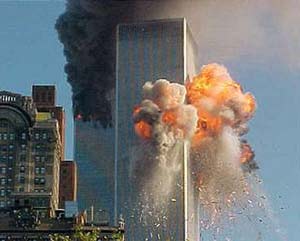
Ship of Fools and other Liberals

theodore kaczynskiSUNY Binghamton student Tim LaPietra coaxed Ted Kaczynski to write a parable for the Autumn 1999 issue of the campus publication OFF! Predictably, the peer review of SHIP OF FOOLS was snarky, e.g. Watership Dim and Rime of the Ancient Unibomber, but no match for Kaczynski’s send up.

Ship of Fools

Once upon a time, the captain and the mates of a ship grew so vain of their seamanship, so full of hubris and so impressed with themselves, that they went mad. They turned the ship north and sailed until they met with icebergs and dangerous floes, and they kept sailing north into more and more perilous waters, solely in order to give themselves opportunities to perform ever-more-brilliant feats of seamanship.

As the ship reached higher and higher latitudes, the passengers and crew became increasingly uncomfortable. They began quarreling among themselves and complaining of the conditions under which they lived.

“Shiver me timbers,” said an able seaman, “if this ain’t the worst voyage I’ve ever been on. The deck is slick with ice; when I’m on lookout the wind cuts through me jacket like a knife; every time I reef the foresail I blamed-near freeze me fingers; and all I get for it is a miserable five shillings a month!”

“You think you have it bad!” said a lady passenger. “I can’t sleep at night for the cold. Ladies on this ship don’t get as many blankets as the men. It isn’t fair!”

A Mexican sailor chimed in: “¡Chingado! I’m only getting half the wages of the Anglo seamen. We need plenty of food to keep us warm in this climate, and I’m not getting my share; the Anglos get more. And the worst of it is that the mates always give me orders in English instead of Spanish.”

“I have more reason to complain than anybody,” said an American Indian sailor. “If the palefaces hadn’t robbed me of my ancestral lands, I wouldn’t even be on this ship, here among the icebergs and arctic winds. I would just be paddling a canoe on a nice, placid lake. I deserve compensation. At the very least, the captain should let me run a crap game so that I can make some money.”

The bosun spoke up: “Yesterday the first mate called me a ‘fruit’ just because I suck cocks. I have a right to suck cocks without being called names for it!”

It’s not only humans who are mistreated on this ship,” interjected an animal-lover among the passengers, her voice quivering with indignation. “Why, last week I saw the second mate kick the ship’s dog twice!”

One of the passengers was a college professor. Wringing his hands he exclaimed, “All this is just awful! It’s immoral! It’s racism, sexism, speciesism, homophobia, and exploitation of the working class! It’s discrimination! We must have social justice: Equal wages for the Mexican sailor, higher wages for all sailors, compensation for the Indian, equal blankets for the ladies, a guaranteed right to suck cocks, and no more kicking the dog!”

“Yes, yes!” shouted the passengers. “Aye-aye!” shouted the crew. “It’s discrimination! We have to demand our rights!” The cabin boy cleared his throat.

“Ahem. You all have good reasons to complain. But it seems to me that what we really have to do is get this ship turned around and headed back south, because if we keep going north we’re sure to be wrecked sooner or later, and then your wages, your blankets, and your right to suck cocks won’t do you any good, because we’ll all drown.”

But no one paid any attention to him, because he was only the cabin boy.

The captain and the mates, from their station on the poop deck, had been watching and listening.

Now they smiled and winked at one another, and at a gesture from the captain the third mate came down from the poop deck, sauntered over to where the passengers and crew were gathered, and shouldered his way in amongst them. He put a very serious expression on his face and spoke thusly:

“We officers have to admit that some really inexcusable things have been happening on this ship. We hadn’t realized how bad the situation was until we heard your complaints. We are men of good will and want to do right by you. But – well – the captain is rather conservative and set in his ways, and may have to be prodded a bit before he’ll make any substantial changes. My personal opinion is that if you protest vigorously – but always peacefully and without violating any of the ship’s rules – you would shake the captain out of his inertia and force him to address the problems of which you so justly complain.”

Having said this, the third mate headed back toward the poop deck. As he went, the passengers and crew called after him, “Moderate! Reformer! Goody-liberal! Captain’s stooge!” But they nevertheless did as he said. They gathered in a body before the poop deck, shouted insults at the officers, and demanded their rights: “I want higher wages and better working conditions,” cried the able seaman.

“Equal blankets for women,” cried the lady passenger. “I want to receive my orders in Spanish,” cried the Mexican sailor. “I want the right to run a crap game,” cried the Indian sailor. “I don’t want to be called a fruit,” cried the bosun. “No more kicking the dog,” cried the animal lover. “Revolution now,” cried the professor.

The captain and the mates huddled together and conferred for several minutes, winking, nodding and smiling at one another all the while. Then the captain stepped to the front of the poop deck and, with a great show of benevolence, announced that the able seaman’s wages would be raised to six shillings a month; the Mexican sailor’s wages would be raised to two-thirds the wages of an Anglo seaman, and the order to reef the foresail would be given in Spanish; lady passengers would receive one more blanket; the Indian sailor would be allowed to run a crap game on Saturday nights; the bosun wouldn’t be called a fruit as long as he kept his cocksucking strictly private; and the dog wouldn’t be kicked unless he did something really naughty, such as stealing food from the galley.

The passengers and crew celebrated these concessions as a great victory, but the next morning, they were again feeling dissatisfied.

“Six shillings a month is a pittance, and I still freeze me fingers when I reef the foresail,” grumbled the able seaman. “I’m still not getting the same wages as the Anglos, or enough food for this climate,” said the Mexican sailor. “We women still don’t have enough blankets to keep us warm,” said the lady passenger. The other crewmen and passengers voiced similar complaints, and the professor egged them on.

When they were done, the cabin boy spoke up – louder this time so that the others could not easily ignore him: “It’s really terrible that the dog gets kicked for stealing a bit of bread from the galley, and that women don’t have equal blankets, and that the able seaman gets his fingers frozen; and I don’t see why the bosun shouldn’t suck cocks if he wants to. But look how thick the icebergs are now, and how the wind blows harder and harder! We’ve got to turn this ship back toward the south, because if we keep going north we’ll be wrecked and drowned.”

“Oh yes,” said the bosun, “It’s just so awful that we keep heading north. But why should I have to keep cocksucking in the closet? Why should I be called a fruit? Ain’t I as good as everyone else?”

“Sailing north is terrible,” said the lady passenger. “But don’t you see? That’s exactly why women need more blankets to keep them warm. I demand equal blankets for women now!”

“It’s quite true,” said the professor, “that sailing to the north imposes great hardships on all of us. But changing course toward the south would be unrealistic. You can’t turn back the clock. We must find a mature way of dealing with the situation.”

“Look,” said the cabin boy, “If we let those four madmen up on the poop deck have their way, we’ll all be drowned. If we ever get the ship out of danger, then we can worry about working conditions, blankets for women, and the right to suck cocks. But first we’ve got to get this vessel turned around. If a few of us get together, make a plan, and show some courage, we can save ourselves. It wouldn’t take many of us – six or eight would do. We could charge the poop, chuck those lunatics overboard, and turn the ship to the south.”

The professor elevated his nose and said sternly, “I don’t believe in violence. It’s immoral.”

“It’s unethical ever to use violence,” said the bosun.

“I’m terrified of violence,” said the lady passenger.

The captain and the mates had been watching and listening all the while. At a signal from the captain, the third mate stepped down to the main deck. He went about among the passengers and crew, telling them that there were still many problems on the ship.

“We have made much progress,” he said, “But much remains to be done. Working conditions for the able seaman are still hard, the Mexican still isn’t getting the same wages as the Anglos, the women still don’t have quite as many blankets as the men, the Indian’s Saturday-night crap game is a paltry compensation for his lost lands, it’s unfair to the bosun that he has to keep his cocksucking in the closet, and the dog still gets kicked at times.

“I think the captain needs to be prodded again. It would help if you all would put on another protest – as long as it remains nonviolent.”

As the third mate walked back toward the stern, the passengers and the crew shouted insults after him, but they nevertheless did what he said and gathered in front of the poop deck for another protest. They ranted and raved and brandished their fists, and they even threw a rotten egg at the captain (which he skillfully dodged).

After hearing their complaints, the captain and the mates huddled for a conference, during which they winked and grinned broadly at one another. Then the captain stepped to the front of the poop deck and announced that the able seaman would be given gloves to keep his fingers warm, the Mexican sailor would receive wages equal to three-fourths the wages of an Anglo seaman, the women would receive yet another blanket, the Indian sailor could run a crap game on Saturday and Sunday nights, the bosun would be allowed to suck cocks publicly after dark, and no one could kick the dog without special permission from the captain.

The passengers and crew were ecstatic over this great revolutionary victory, but by the next morning they were again feeling dissatisfied and began grumbling about the same old hardships.

The cabin boy this time was getting angry.

“You damn fools!” he shouted. “Don’t you see what the captain and the mates are doing? They’re keeping you occupied with your trivial grievances about blankets and wages and the dog being kicked so that you won’t think about what is really wrong with this ship —- that it’s getting farther and farther to the north and we’re all going to be drowned. If just a few of you would come to your senses, get together, and charge the poop deck, we could turn this ship around and save ourselves.

But all you do is whine about petty little issues like working conditions and crap games and the right to suck cocks.”

The passengers and the crew were incensed.

“Petty!!” cried the Mexican, “Do you think it’s reasonable that I get only three-fourths the wages of an Anglo sailor? Is that petty?

“How can you call my grievance trivial? shouted the bosun. “Don’t you know how humiliating it is to be called a fruit?”

“Kicking the dog is not a ‘petty little issue!’” screamed the animal-lover.

“It’s heartless, cruel, and brutal!”

“Alright then,” answered the cabin boy. “These issues are not petty and trivial. Kicking the dog is cruel and brutal and it is humiliating to be called a fruit. But in comparison to our real problem – in comparison to the fact that the ship is still heading north – your grievances are petty and trivial, because if we don’t get this ship turned around soon, we’re all going to drown.”

“Fascist!” said the professor.

“Counterrevolutionary!” said the lady passenger. And all of the passengers and crew chimed in one after another, calling the cabin boy a fascist and a counterrevolutionary.

They pushed him away and went back to grumbling about wages, and about blankets for women, and about the right to suck cocks, and about how the dog was treated. The ship kept sailing north, and after a while it was crushed between two icebergs and everyone drowned.

Bootsie Hall, 1919 – 2008

She was a lady I did recycling with down in Texas.

I told Eric the other day when he gave me and Miss Johnnie a ride to the hospital that I would write about it.

Which I probably have anyway, but Miss Bootsie died on October 7th.

She would have been 90 if she had lived until February.

Just in the past 3 years she had to stop recycling. Coronary arteries deteriorating.

She had this beat up white Ford Ranger 1/4 ton pickup she would have routinely filled with a ton of metal and half a ton of me and whoever else was dumb enough to ride with her.

Yeah, she drove crazy.

Riding with Miss Bootsie was a Religious Experience. I would even call on the Name of Our Lord three or four times every time we went out “hunting”.

I got in the habit of closing my eyes while we were rolling because, you know, if you’re fixing to die, why spend an extra few seconds being tortured by the certain knowledge thereof?

Her oldest brother was killed in World War One, just before Armistice Day in fact.

She only knew him from a picture.

Her Obituary in the Star-Telegram said that the longest she had worked any job was as a waitress for a few years.

Not so.

She had the Recycling, I guess Some People don’t consider that to be work but it sure the Hell is.

And the really important lifetime job of Being a Spectacularly Good Example and my hero.

Her given name was Beulah Faye Hall. I didn’t know that until I asked how to find her in the phone book.

I started singing that Hymn “I’m not worried for I’m dwelling, in Beulah Land” and she told me to stop.

Life as a ten year old boy at the podium

COLORADO SPRINGS- The voice of Bart Simpson spoke at Colorado College last night. What began as a the memoir My Life as a Ten Year Old Boy, and debuted at the Edinburgh Fringe Festival four years ago as a “one woman play” reached CC’s Armstrong Hall looking like 52 card pickup with that too many index cards. There might once have been a day when Simpsons fans raved like Trekkies, but the show’s longevity has lapped this generation. It didn’t help that Nancy Cartwright dissed South Park and Family Guy as uninteresting.

I don’t think The Simpsons has lost any of its vitality, but its audience has certainly evolved an appetite for alternately focused irreverence. I’d think too, a tip celebrities shouldn’t ignore from their publicists is to refrain from telling their fans that the stars themselves don’t watch television. We know you are too busy, all of us ought to have better things to do. Would Fox pay you $80,000/hour if more viewers wised up to whose resources and energy are really being consumed by the half-hour financial exchange?

My best question for “Bart” Cartwright might have been how Fox, network of illest repute, manages Matt Groening’s subversive message.

Cartwright’s only questions came from middle school children because the college students had begun pulling out, pretty embarrassed for voice-of-Bart’s unselfconscious star tripping. The lecturer was prepared to detail the minutia of Simpsons lore, and to say she enjoyed the plots which carried a social message, but was unprepared to explain any, and even lacked for a favorite episode.

No one was unsurprised or unimpressed with the breadth of Cartwright’s animation voice experience. She’d worked from My Little Pony to Pound Puppies to Kim Possible, and had been the uncredited gurgle of Maggie Simpson, among others. But those in the audience who left early, whom I came so close to envying, missed the absolute highlight of the evening, when practically as an afterthought, Cartwright revealed that her most challenging character was Chuckie Finster of the Rugrats. A hushed swoon enveloped the crowd at the mere mention. There was Cartwright’s real impact in the waning Simpsons era. Today’s Simpsons viewers only recognize Ralph Wiggum’s voice as they bump him off in the Simpsons video game.

Turbine industry wants young new wife

ball bearingAlternative energy ventures, through the efforts of their lobbyists, can’t find the workforce they need in Ohio. While the area boasts one of the nation’s highest unemployment rates, many of those workers are from the decimated steel industry. NPR Morning Edition reported yesterday that would-be wind turbine manufacturer Rotek Inc, for example, doesn’t agree that United Steel Workers Union members are right for the job.

Unions assert that the jobs aren’t offering sufficient wages. NPR uncritically countered that “The starting salary with benefits at many wind turbine plants in Ohio can range to $30,000 a year.”

The NPR report left the impression that manufacturers wanted to move into the alternative energy field, but were being thwarted by the unreasonable expectations of US labor. This may be true. But an industry promising new poor jobs is no gift horse. Shouldn’t workers look it in the mouth before entrusting futures, communities and livelihoods to it?

NPR’s Julie Grant summarized the manufacturer objections with, thankfully, a some-people-say type attribution:

“the new companies, the ones already making part for wind turbines, say they don’t want burned out workers with low morale. What they need are workers open to spending a couple of years in training, who can think on their feet, and are excited to be part of the new economy they’ re helping to create.”

The “new economy they’re helping to create?” Would that be the new economy placing the employee as being working poor? What would a radio reporter herself think of a job that requires two years of training, at the employee’s expense, to yield a $30K salary? The workforce in question are already experienced steelworkers. The wind turbine jobs are steel manufacturing jobs. They’re not looking for high tech design positions.

Lobbyist group the Apollo Alliance, which NPR labeled a Clean Energy think tank, suggests the government should subsidize the training period.

So here I believe is the crux of what alternative energy investors are after. We can’t argue that low wages are here to stay. America’s new economy will no longer support the upward middle class American Dream of the Baby Boomers. So factory workers are going to work for half the pay, if they want work at all. But do they need to be trained to do it?

The wind turbine manufacturing industry is suggesting that its labor force needs two years of training, paid for by the US taxpayer. Does that make sense to you? You get the bill, the workers get subsistence wages, and the factory owners get free labor. For two years. Likely employees are not going to stick around for the promise of $30K/yr, so the two year transitions will last as long as the government subsidies allow.

Industrialists are always looking for low wage workers, even slave labor, when they can.

NPR cited the example of Rotek Inc. “Rotek one of 75 companies here that have started making parts for wind turbines.” The report mentions an $80 million investment, but implies that Rotek is a startup that requires subsidies, tax credits and willing partner-employees. NPR didn’t mention that Rotek is a subsidiary of Rothe Erde, of Dortmund, Germany ($15.3 billion, 55,000 employees), which is a subsidiary of the ThyssenKrupp Group, Essen, Germany ($68.7 billion, 191,000 employees) of Krupp infamy. Founder Alfred Krupp was tried in Nuremberg for using concentration camp labor in his factories during the war, some of them even prisoners of war.

Krupp was the chief architect of the Nazi armaments machine. Hitler even passed a law which established the Krupp family as a monopolist dynasty immune from inheritance tax. After Krupp’s conviction, a New York Banker succeeded in lobbying for a pardon for Alfred Krupp, and reversing the sentence that his industrial holdings be forfeited.

Brave New Chickens

Not what you might think.

Actually it’s from a segment of “How It’s Made” on the Science Channel, coupled in with Aldous Huxley’s frequently banned book.

This one (I watched it today) was on Eggs.

And they proceeded to show what’s essentially a mechanized Egg Factory.

From time to time as I write this I’ll put in references to the book.

Civilization is sterilization, repeated 50,000 times between the ages of 5 and 6…

So they’ve got these hens, right, the basis of The Egg industry. A couple hundred thousand of them.

Raised in cages. Fed by a conveyor belt that delivers a mixture of feed that’s scientifically measured out for Maximum Egg Production.

Mesh floor so their droppings fall onto another conveyor belt.

All the cages identical, all the portions of the feed identical, the eggs as standardized as possible, the hens so identical they look like they’ve been cloned.

They lay their eggs, which roll out the cage onto yet another of those damned conveyor belts.

For the sake of literary diversity I’ll insert here, the hens looked like one huge Bokanovsky Group.

I’ll point out that one of the big commercial sponsors of the show is an Investment Banking group whose advertising- du-jour has thousands of Identical Looking factory workers (who aren’t the customers of the investment bank, no, we’re not THAT important to them) first at their identical, uniform “individual” workstations. Wearing of course uniforms. Sterile White Uniforms. Like the chickens, white. Sterile.

One wonders if they have a catheter arrangement where their droppings fall through the floor onto another conveyor belt…

Then that segues into the workers at the Cafeteria, at perfectly spaced, identical round white tables, (all of this As Seen From Above, so we’re literally “looking down on them”) eating identical meals, and I’d swear by the Lord God who made us all that they were eating in unison, coordinated just as surely as if they were marching.

Civilization is sterilization, repeated 50,000 times between the ages of 5 and 6.

The eggs are carried by the conveyor belts through various machines which measure them, by volume then by weight.

Machines that pick them up 5 dozen at a time and stack them quickly, efficiently, quietly, cleanly, then stacks them onto carts. Here one of the Human Intervention squads come in, identical looking workers wearing Sterile White Clothes pushing the carts onto conveyor belts which carry them into a refrigerated storage area.

Then they’re rolled, again by machines, this one triggered by a thermostat, and fed through some more sorting apparati.

A bright light is shone from behind them, and a computer reads the image to find each egg which is cracked, and mark it out for removal.

Another Worker Drone goes in with a scoop and efficiently as any machine, scoops the “tagged” eggs out.

Another computer imaging device spots which ones have traces of blood in the egg.

And the routine is once again repeated.

Then about 2 minutes more of the Glory Of The Machine being expounded…

Then the Narrator chirps much about how the chickens start laying eggs when they’re 7 weeks old, and have a productive cycle of about 52 months. Just under 4 and a half years.

Then they get a free, all expenses paid trip to the slaughterhouse.
The Narrator actually used that expression.

Which we’ve seen that mechanized, standardized operation as well…

From Hatch to Hatchet all Untouched by Human Hands.

Now, I’m sure some Industrial Apologist Type A-2 is going to give the same identical speech the Director of World Hatcheries gave to John the Savage in the book.

When John the Savage and Bernard Marx had, in a Rage Against the Machine action, interrupted the doping of a Bokanovsky Group, where they were being given their Soma rations, which triggered an Automated Security system where Soma in vaporized form was sprayed through vents in the walls and ceilings, and a Recorded Voice says “Friends, why are you being angry? Everybody belongs to everybody else, after all. ” and a couple of other Mass Calming subliminal messages they had repeated to them in their Hypnopædia sessions 100,000 times between the ages of 5 and 7…

Then Bernard and John the Savage and their friend are talking to the Director of World Hatcheries and it’s calmly explained to them, the DWH shows John the Savage copies of Shakespeare and the Bible and other Anti-social books, says the people were already so well conditioned that even if the books were given to them, they would simply dismiss it with one or more of the one-line platitudes they had been taught since childhood….

By the way, the “Hatcheries” means where Humans were grown in glass bottles until birth.

No mother, no father, just “Genetic Donors”.

The message? Conform or Else.

When imperialists talk to sheep of ‘Self Determination’

sheep at election“Nor does it change the right to self- determination fundamental to our relationship with all of our Overseas Territories” -Gillian Merron, British Foreign Minister, on behalf of British Labor Party Prime Minister. Govt agrees new constitution for Falklands

Baah, baah, baah…. You see, there are close to 600,000 sheep on these some 778 islands off the coast of Argentina called Las Malvinas. And less than 3,000 people there, most of them connected to the British military in some way or another (like with the sheepherders’ importation there to help justify British colonial occupation of these foreign islands).

Sweet Gillian blathers on about ‘self determination’ which has become code word these days, for colonialist imperialist control over other peoples affairs. And she does it out of the same breath while talking about ‘Overseas Territory’… CUTE! You have to admire such clever abilities at double talk like this!

Now that Barack Obama is in in the US White House look for the US government to probably be borrowing more of this rather pathetic vocabulary from the degenerative British Labor Poli-class, that Prime Minster Gordon Brown and his team use. ‘Humanitarian’ imperialism is back in style once again! Oh, Whoopee!!! (Do sheep eat carrots like donkeys, I wonder?)

(PS …couldn’t find a sheep picture from the land where sheep outnumber people 20,000 to 1, and not just 3-1 like the words say on the pic…. Sorry. But sheep are sheep in whatever numbers. Baaa…..)