Rock papers scissors blunderbuss

US Army says our GIs may need bigger guns. No, better history lessons. It appears as if America’s gun makers are lobbying for another US standard issue. The stories are creeping into the newswires that US soldiers need bigger guns. Our 5.56mm isn’t enough stopping power anymore, which explains the relentless insurgencies, they’re not stopping. Well, making historical comparisons isn’t going to serve your argument.
Afghan rifle

Soldiers, experts and a US Army Study are looking back at past adversarial mismarriages of ordnance to spell out why today’s GIs need to arm up. To our M4 assault rifle, the Taliban answers with the AK-47. Every schoolboy knows that, but it’s a differential in caliber that means our opponents can fire from almost twice the distance. While we’re berating the obvious, I’d like to point out their 7.62mm bullets also enjoy a home team advantage which ballistics geeks know affects range and velocity.

Apparently the Soviets had the same disadvantage against the Afghans, the soviets had the AK-47, and they faced rebels with Lee-Enfield or Mauser rifles. The WWII era guns suited the battle better.

Before that, the British were ill-equiped with Brown Bess muskets, against Jezzail flintlocks that ultimately drove every last Englishman out.

Is old better than new, it doesn’t help the case for the weapons makers. I’m reminded of when the crossbow fell to the Welsh longbow. New technology stoned by old, where the simplicity of brute force was the innovation. The Swiss pike figures somewhere in there, long pointed sticks, rough metal tips outclassing honed steel.

Short range versus long range incompatibility is not accidental. Weapons fashioned for the close-in fighting required of enforcing occupation came up short against the partisan sniper on the offensive.

US complaints of drawing the short stick are just keeping with tradition. Astute gun experts point to the M-4’s shortened muzzle as a major reason its fire lacks velocity. The shortened weapon is easier to carry through doors. An early foreshortened firearm used primarily for urban fighting was the blunderbuss. Made even more portable was the dragon, carried by the hated Dragoons, early specialists in oppressing unfree populations.

There are three common threads here, all of them related. The first is the coincidence that our pertinent examples are Afghanistan, and the Afghans never lost, regardless their weapon.

Not unrelated is that the practical, indigenous weapon has always prevailed.

And that’s directly linked to the Law of Insurgency, a principle which shamefully America doesn’t teach in its military academies. Put simply, insurgents always win.

Oh there were good old days of conquest when gunpowder ran roughshod over the stone-aged. Those days went with the conquistadors and the US cavalry.

Some may want to think our crusader edge is back, that an overwhelming US technological supremacy has restored the oppressor’s favorable imbalance, but it’s not true, boots on the ground. Wasn’t that was the lesson of Vietnam? Another lesson despicably cut from the patriot curriculum.

In Vietnam by the way, US GIs carried the larger M-14s, so both sides fired a similarly large 7.62mm round. Did it help?

It may be good military tact to upgrade our Afghan forces to the longer guns. But occupation-wise that puts us back at square one, trying to take the country, not administer it.

The industrial age, and with it the equalizing effect of universal access to weaponry, has meant the end of conquest and twilight for colonial occupations. Populations rise now against post-colonial inequity, but the victor is preordained as the tide.

The lesson for arms dealers who want to sell us more stopping power to kill our foes? Historians know what gunsmiths may deny, there’s no stopping them.

Gulf oil spill is SO Obama’s Katrina

Which parallel is not analogous? Off New Orleans, massive devastation to environment and human health, predictable failure of flawed technology, inadequate official response which broadens tragedy. Leaving BP to shoulder cleanup is like tasking arsonists to extinguish their fire. BP is responsible, but needn’t be put in charge. Put every government resource into addressing this calamity, make oil industry write the checks. By any standards of a failed rescue, Obama’s watch is proving as laggard as Bush’s.

We can all express our awe at the scale of the spill, but who can believe the professionals couldn’t foresee it? The media ramped its estimates incrementally, but department first responders were theorizing 100,000 barrels a day right from the start.

I’m amused that conservative critics use “Katrina” in the pejorative, where they didn’t hold it against Bush. Katrina has come to mean colossal fail, but what did it mean for Bush? It wasn’t his Waterloo, it didn’t even stub his toe. Those who pretend Katrina was Dubya’s downfall are the same pundits who describe Iraq as a blunder. Lies. To tar President Obama with a tragedy of like magnitude of a predecessor is to remind the electorate how bad Bush was.

I’m pleased by the comparison because it pollutes your perception that voting matters. The choice of lesser of two evils means relative degrees of industrial strength toxicity.

Why aren’t Obama hopefuls confident enough to let their leader take this “Katrina” on? Let him own it and beat Bush’s legacy of indifferent passivity.

Are you provoked because “Katrina” presumes a callous failure, as yet in your opinion unmerited by Team Obama? I’d rather say it means disaster in the sense of a test which proved this nation’s horribly misplaced priorities. Has Obama’s administration brought better preparedness in the face of unforeseen peril coming in with the tide? In such a manner alone this oil spill will rival Katrina. If you are measuring only loss of human lives, look to the health impact which the crude infusion will bring.

Now if you’re asking if the oil spill is a “Katrina” land grab of coastal real estate, and excuse to gentrify New Orleans and remake gambling regulations to suit the casinos, perhaps not. But count the same relief contractors to make themselves spillionaires. Once again the residents will bear the burden of the labor and disruption, ultimately to lose their livelihoods and homes. This time instead of praising “Brownie” the president will praise BP for doing their best, as the media will assure us it was. The spill’s magnitude could never have been predicted, they’ll say, a mitigation of the damage beyond anyone’s capability.

Was “Katrina” a repudiation of our reliance on old levees? Not really. Will this Katrina mean a rekindled moratorium against new offshore drilling capers? I doubt it. Americans inland will probably write off the oceans. No longer pristine, what with mercury, hypoxia and now oil, why not Drill Baby Drill with what is there left to lose aplomb?

Ignoble WWII bombing of Coventry commemorated with coined slur, ours

Here’s a bit of WWII distortion the History Channel is passing off as, um, history. Did you know that those dirty Krauts leveled the English city of Coventry so completely that they coined a word to celebrate it? Apparently that term was “Coventrated.” Oh, it’s a real verb alright — trouble is, it’s English. The British intelligence office seized upon the conjugated Coventriert to mean: subjected to heavy bombardment, and pretended the Huns were such bastards they commemorated the atrocity by mocking their victims in the Teutonic dictionary.

Also problematic, the barbaric Teutons failed to “coventrate” with equal efficacy anywhere else. But the Allies sure did. By night and by day, the UK and US bombers respectively “coventrated” the German and Hungarian homelands, with all the more ferocity because they were dishing the Nazis, haha, a taste of their own medicine.

The bombing of Coventry was tragedy enough, and might have been ameliorated had Churchill responded to the intelligence forewarning but risk betraying that the Brits were intercepting Germany’s secret ciphers. Allowing Coventry to fall victim was one of the high prices of keeping ULTRA a secret, but Hitler’s choice to bomb the historic city and its famed Cathedral was to provoke much enmity with the English public. Britain’s propaganda ministry was able to compound the resentment against the Germans for the devastation of Coventry by portraying the enemy as not just Philistine, but Bombast.

Of course more German cities suffered under the 24-hour US-UK tag-team bombing raids, many incurring orders of magnitude greater casualties than the 600 dead of Coventry. Notable among the Axis cities was the medieval capital of Dresden which possessed not one legitimate military target. No mention of those victims in the History Channel’s records of military misdeeds, meanwhile propagandist Newscorp property HarperCollins is weaving the coventriert detail for revisionist Dresden-deniers.

The stories of America’s firebombing of Japanese cities have already been suppressed. Apologists have long been at work justifying the use of atomic weapons against civilians in Hiroshima and Nagazaki. Where were the propagandists to conjugate Hiroshima?

America’s other unique bombing method would later be described minus geographical references, as simple carpet bombing.

The History Channel is part of the A&E network, co-owed by warmongers Disney, Hearst and NBC/GE. Their mention of “coventrate” came in a program about Lao Tsu’s Art of War, as his military edicts might have predicted, Nostradamus-like, the outcome of the Viet Nam War. Here’s an example of the program’s perspective:

The Vietcong lost the public support of many Vietnamese when they executed thousands of South Vietnamese under the employ of the US.

Meanwhile the American cause lost its public support when the US public caught sight of photographs of US war casualties.

Sound like a fair comparison? The Vietnamese weren’t demoralized by the millions killed in their midst, while the antiwar movement was not galvanized by the revelations of US atrocities? Right.

The Famous burger not most famous

Burger from The FamousOnce again COLORADO SPRINGS STYLE nominates THE FAMOUS for the city’s best burger. It ran against the usual lineup of respectable dining establishments plus King’s Chef, the token dive, but there were notable omissions worth pointing out. At the crux, The Famous grinds their own hamburger from bits trimmed from nonpareil $40 steaks, but we’re talking Iowa corn-fed variety, not prairie grass fed beef. You can find a free-range burger at Adams Mountain, which is listed, and Manitou’s The Keg, which is not. The health aspect is a first omission that might have informed local diners immeasurably.

Ranch Foods Direct, and their packing house on the west side, is a regional wholesaler of sustainable, safe meat. But they supply only a few local joints, from The Blue Star to Cy’s Drive-in, to Barney’s. If their burgers didn’t make the culinary grade, I think it’s worth noting they are orders of magnitude healthier than what the others are serving. Get that word out, and those restaurants charging $12.95 for a burger will allocate some of their cost to better beef.

Conways Red Top was also overlooked, whose burger is arguably Colorado Springs’ most famous. Red Top’s giant burger had its own chapter in Eric Schlosser’s Fast Food Nation. The local chain was praised for its favorable labor practices and better food sources, in comparison to its fast food competitors. Red Top has since made some compromises with its hamburger patties, but they’re still a local favorite. I remember once taking some Norb’s Whole Burgers from carryout to a Spring Spree park event downtown. Amid brats and roast turkey legs, Hawaiian tacos and the usual concession fare, everyone wanted what we were having.

Thankfully STYLE ignored the fast food chains, the ceaseless Carl’s Junior ad barrage notwithstanding. Likewise there was no dwelling on the corporate theme restaurants for whom the better burger is a raison d’etre. Those omissions, if you’re avoiding the mad-cow feed-lots, meet our approval.

Beyond MLK worship: Beyond Vietnam

MLK“A time comes when silence is betrayal. That time has come for us in relation to Vietnam.”
Martin Luther King Beyond Vietnam: Time to Break the Silence
Full text of 1967 speech below.

Riverside Church, New York City, 4 April 1967

I come to this magnificent house of worship tonight because my conscience leaves me no other choice. I join with you in this meeting because I am in deepest agreement with the aims and work of the organization which has brought us together: Clergy and Laymen Concerned about Vietnam. The recent statement of your executive committee are the sentiments of my own heart and I found myself in full accord when I read its opening lines:

“A time comes when silence is betrayal.”

That time has come for us in relation to Vietnam.

The truth of these words is beyond doubt but the mission to which they call us is a most difficult one. Even when pressed by the demands of inner truth, men do not easily assume the task of opposing their government’s policy, especially in time of war. Nor does the human spirit move without great difficulty against all the apathy of conformist thought within one’s own bosom and in the surrounding world. Moreover when the issues at hand seem as perplexed as they often do in the case of this dreadful conflict we are always on the verge of being mesmerized by uncertainty; but we must move on.

Some of us who have already begun to break the silence of the night have found that the calling to speak is often a vocation of agony, but we must speak. We must speak with all the humility that is appropriate to our limited vision, but we must speak. And we must rejoice as well, for surely this is the first time in our nation’s history that a significant number of its religious leaders have chosen to move beyond the prophesying of smooth patriotism to the high grounds of a firm dissent based upon the mandates of conscience and the reading of history. Perhaps a new spirit is rising among us. If it is, let us trace its movement well and pray that our own inner being may be sensitive to its guidance, for we are deeply in need of a new way beyond the darkness that seems so close around us.

Over the past two years, as I have moved to break the betrayal of my own silences and to speak from the burnings of my own heart, as I have called for radical departures from the destruction of Vietnam, many persons have questioned me about the wisdom of my path. At the heart of their concerns this query has often loomed large and loud: Why are you speaking about war, Dr. King? Why are you joining the voices of dissent? Peace and civil rights don’t mix, they say. Aren’t you hurting the cause of your people, they ask? And when I hear them, though I often understand the source of their concern, I am nevertheless greatly saddened, for such questions mean that the inquirers have not really known me, my commitment or my calling. Indeed, their questions suggest that they do not know the world in which they live.

“I wish not to speak with Hanoi and the National Liberation Front, but rather to my fellow Americans who, with me, bear the greatest responsibility in ending a conflict that has exacted a heavy price on both continents.”

In the light of such tragic misunderstandings, I deem it of signal importance to try to state clearly, and I trust concisely, why I believe that the path from Dexter Avenue Baptist Church — the church in Montgomery, Alabama, where I began my pastorate — leads clearly to this sanctuary tonight.

I come to this platform tonight to make a passionate plea to my beloved nation. This speech is not addressed to Hanoi or to the National Liberation Front. It is not addressed to China or to Russia.

Nor is it an attempt to overlook the ambiguity of the total situation and the need for a collective solution to the tragedy of Vietnam. Neither is it an attempt to make North Vietnam or the National Liberation Front paragons of virtue, nor to overlook the role they can play in a successful resolution of the problem. While they both may have justifiable reason to be suspicious of the good faith of the United States, life and history give eloquent testimony to the fact that conflicts are never resolved without trustful give and take on both sides.

Tonight, however, I wish not to speak with Hanoi and the NLF, but rather to my fellow Americans, who, with me, bear the greatest responsibility in ending a conflict that has exacted a heavy price on both continents.

The Importance of Vietnam

Since I am a preacher by trade, I suppose it is not surprising that I have seven major reasons for bringing Vietnam into the field of my moral vision. There is at the outset a very obvious and almost facile connection between the war in Vietnam and the struggle I, and others, have been waging in America. A few years ago there was a shining moment in that struggle. It seemed as if there was a real promise of hope for the poor — both black and white — through the poverty program. There were experiments, hopes, new beginnings. Then came the buildup in Vietnam and I watched the program broken and eviscerated as if it were some idle political plaything of a society gone mad on war, and I knew that America would never invest the necessary funds or energies in rehabilitation of its poor so long as adventures like Vietnam continued to draw men and skills and money like some demonic destructive suction tube. So I was increasingly compelled to see the war as an enemy of the poor and to attack it as such.

“For the sake of those boys,
for the sake of this governent,
for the sake of hundreds of thousands
trembling under our violence,
I cannot be silent.”

Perhaps the more tragic recognition of reality took place when it became clear to me that the war was doing far more than devastating the hopes of the poor at home. It was sending their sons and their brothers and their husbands to fight and to die in extraordinarily high proportions relative to the rest of the population. We were taking the black young men who had been crippled by our society and sending them eight thousand miles away to guarantee liberties in Southeast Asia which they had not found in southwest Georgia and East Harlem. So we have been repeatedly faced with the cruel irony of watching Negro and white boys on TV screens as they kill and die together for a nation that has been unable to seat them together in the same schools. So we watch them in brutal solidarity burning the huts of a poor village, but we realize that they would never live on the same block in Detroit. I could not be silent in the face of such cruel manipulation of the poor.

My third reason moves to an even deeper level of awareness, for it grows out of my experience in the ghettoes of the North over the last three years — especially the last three summers. As I have walked among the desperate, rejected and angry young men I have told them that Molotov cocktails and rifles would not solve their problems. I have tried to offer them my deepest compassion while maintaining my conviction that social change comes most meaningfully through nonviolent action. But they asked — and rightly so — what about Vietnam? They asked if our own nation wasn’t using massive doses of violence to solve its problems, to bring about the changes it wanted. Their questions hit home, and I knew that I could never again raise my voice against the violence of the oppressed in the ghettos without having first spoken clearly to the greatest purveyor of violence in the world today — my own government. For the sake of those boys, for the sake of this government, for the sake of hundreds of thousands trembling under our violence, I cannot be silent.

For those who ask the question, “Aren’t you a civil rights leader?” and thereby mean to exclude me from the movement for peace, I have this further answer. In 1957 when a group of us formed the Southern Christian Leadership Conference, we chose as our motto: “To save the soul of America.” We were convinced that we could not limit our vision to certain rights for black people, but instead affirmed the conviction that America would never be free or saved from itself unless the descendants of its slaves were loosed completely from the shackles they still wear. In a way we were agreeing with Langston Hughes, that black bard of Harlem, who had written earlier:

O, yes,
I say it plain,
America never was America to me,
And yet I swear this oath —
America will be!

Now, it should be incandescently clear that no one who has any concern for the integrity and life of America today can ignore the present war. If America’s soul becomes totally poisoned, part of the autopsy must read Vietnam. It can never be saved so long as it destroys the deepest hopes of men the world over. So it is that those of us who are yet determined that America will be are led down the path of protest and dissent, working for the health of our land.

“Surely we must see
that the men we supported
pressed them to their violence.”

As if the weight of such a commitment to the life and health of America were not enough, another burden of responsibility was placed upon me in 1964; and I cannot forget that the Nobel Prize for Peace was also a commission — a commission to work harder than I had ever worked before for “the brotherhood of man.” This is a calling that takes me beyond national allegiances, but even if it were not present I would yet have to live with the meaning of my commitment to the ministry of Jesus Christ. To me the relationship of this ministry to the making of peace is so obvious that I sometimes marvel at those who ask me why I am speaking against the war. Could it be that they do not know that the good news was meant for all men — for Communist and capitalist, for their children and ours, for black and for white, for revolutionary and conservative? Have they forgotten that my ministry is in obedience to the one who loved his enemies so fully that he died for them? What then can I say to the “Vietcong” or to Castro or to Mao as a faithful minister of this one? Can I threaten them with death or must I not share with them my life?

Finally, as I try to delineate for you and for myself the road that leads from Montgomery to this place I would have offered all that was most valid if I simply said that I must be true to my conviction that I share with all men the calling to be a son of the living God. Beyond the calling of race or nation or creed is this vocation of sonship and brotherhood, and because I believe that the Father is deeply concerned especially for his suffering and helpless and outcast children, I come tonight to speak for them.

This I believe to be the privilege and the burden of all of us who deem ourselves bound by allegiances and loyalties which are broader and deeper than nationalism and which go beyond our nation’s self-defined goals and positions. We are called to speak for the weak, for the voiceless, for victims of our nation and for those it calls enemy, for no document from human hands can make these humans any less our brothers.

Strange Liberators

And as I ponder the madness of Vietnam and search within myself for ways to understand and respond to compassion my mind goes constantly to the people of that peninsula. I speak now not of the soldiers of each side, not of the junta in Saigon, but simply of the people who have been living under the curse of war for almost three continuous decades now. I think of them too because it is clear to me that there will be no meaningful solution there until some attempt is made to know them and hear their broken cries.

“Before long they must know
that their government has sent them
into a struggle among Vietnamese,
and the more sophisticated surely realize
that we are on the side of the wealthy
and the secure
while we create hell for the poor.”

They must see Americans as strange liberators. The Vietnamese people proclaimed their own independence in 1945 after a combined French and Japanese occupation, and before the Communist revolution in China. They were led by Ho Chi Minh. Even though they quoted the American Declaration of Independence in their own document of freedom, we refused to recognize them. Instead, we decided to support France in its re-conquest of her former colony.

Our government felt then that the Vietnamese people were not “ready” for independence, and we again fell victim to the deadly Western arrogance that has poisoned the international atmosphere for so long. With that tragic decision we rejected a revolutionary government seeking self-determination, and a government that had been established not by China (for whom the Vietnamese have no great love) but by clearly indigenous forces that included some Communists. For the peasants this new government meant real land reform, one of the most important needs in their lives.

For nine years following 1945 we denied the people of Vietnam the right of independence. For nine years we vigorously supported the French in their abortive effort to re-colonize Vietnam.

Before the end of the war we were meeting eighty percent of the French war costs. Even before the French were defeated at Dien Bien Phu, they began to despair of the reckless action, but we did not. We encouraged them with our huge financial and military supplies to continue the war even after they had lost the will. Soon we would be paying almost the full costs of this tragic attempt at re-colonization.

After the French were defeated it looked as if independence and land reform would come again through the Geneva agreements. But instead there came the United States, determined that Ho should not unify the temporarily divided nation, and the peasants watched again as we supported one of the most vicious modern dictators — our chosen man, Premier Diem. The peasants watched and cringed as Diem ruthlessly routed out all opposition, supported their extortionist landlords and refused even to discuss reunification with the north. The peasants watched as all this was presided over by U.S. influence and then by increasing numbers of U.S. troops who came to help quell the insurgency that Diem’s methods had aroused. When Diem was overthrown they may have been happy, but the long line of military dictatorships seemed to offer no real change — especially in terms of their need for land and peace.

The only change came from America as we increased our troop commitments in support of governments which were singularly corrupt, inept and without popular support. All the while the people read our leaflets and received regular promises of peace and democracy — and land reform. Now they languish under our bombs and consider us – not their fellow Vietnamese — the real enemy. They move sadly and apathetically as we herd them off the land of their fathers into concentration camps where minimal social needs are rarely met. They know they must move or be destroyed by our bombs. So they go — primarily women and children and the aged.

“Somehow this madness must cease.”

They watch as we poison their water, as we kill a million acres of their crops. They must weep as the bulldozers roar through their areas preparing to destroy the precious trees. They wander into the hospitals, with at least twenty casualties from American firepower for one “Vietcong-inflicted” injury. So far we may have killed a million of them — mostly children. They wander into the towns and see thousands of the children, homeless, without clothes, running in packs on the streets like animals. They see the children, degraded by our soldiers as they beg for food. They see the children selling their sisters to our soldiers, soliciting for their mothers.

What do the peasants think as we ally ourselves with the landlords and as we refuse to put any action into our many words concerning land reform? What do they think as we test our latest weapons on them, just as the Germans tested out new medicine and new tortures in the concentration camps of Europe? Where are the roots of the independent Vietnam we claim to be building? Is it among these voiceless ones?

We have destroyed their two most cherished institutions: the family and the village. We have destroyed their land and their crops. We have cooperated in the crushing of the nation’s only non-Communist revolutionary political force — the Unified Buddhist church. We have supported the enemies of the peasants of Saigon. We have corrupted their women and children and killed their men. What liberators?

Now there is little left to build on — save bitterness. Soon the only solid physical foundations remaining will be found at our military bases and in the concrete of the concentration camps we call fortified hamlets. The peasants may well wonder if we plan to build our new Vietnam on such grounds as these? Could we blame them for such thoughts? We must speak for them and raise the questions they cannot raise. These too are our brothers.

Perhaps the more difficult but no less necessary task is to speak for those who have been designated as our enemies. What of the National Liberation Front — that strangely anonymous group we call VC or Communists? What must they think of us in America when they realize that we permitted the repression and cruelty of Diem which helped to bring them into being as a resistance group in the south? What do they think of our condoning the violence which led to their own taking up of arms? How can they believe in our integrity when now we speak of “aggression from the north” as if there were nothing more essential to the war? How can they trust us when now we charge them with violence after the murderous reign of Diem and charge them with violence while we pour every new weapon of death into their land? Surely we must understand their feelings even if we do not condone their actions. Surely we must see that the men we supported pressed them to their violence. Surely we must see that our own computerized plans of destruction simply dwarf their greatest acts.

“We must continue to raise our voices if our nation persists in its perverse ways in Vietnam.”

How do they judge us when our officials know that their membership is less than twenty-five percent Communist and yet insist on giving them the blanket name? What must they be thinking when they know that we are aware of their control of major sections of Vietnam and yet we appear ready to allow national elections in which this highly organized political parallel government will have no part? They ask how we can speak of free elections when the Saigon press is censored and controlled by the military junta. And they are surely right to wonder what kind of new government we plan to help form without them — the only party in real touch with the peasants. They question our political goals and they deny the reality of a peace settlement from which they will be excluded. Their questions are frighteningly relevant. Is our nation planning to build on political myth again and then shore it up with the power of new violence?

Here is the true meaning and value of compassion and nonviolence when it helps us to see the enemy’s point of view, to hear his questions, to know his assessment of ourselves. For from his view we may indeed see the basic weaknesses of our own condition, and if we are mature, we may learn and grow and profit from the wisdom of the brothers who are called the opposition.

So, too, with Hanoi. In the north, where our bombs now pummel the land, and our mines endanger the waterways, we are met by a deep but understandable mistrust. To speak for them is to explain this lack of confidence in Western words, and especially their distrust of American intentions now. In Hanoi are the men who led the nation to independence against the Japanese and the French, the men who sought membership in the French commonwealth and were betrayed by the weakness of Paris and the willfulness of the colonial armies. It was they who led a second struggle against French domination at tremendous costs, and then were persuaded to give up the land they controlled between the thirteenth and seventeenth parallel as a temporary measure at Geneva. After 1954 they watched us conspire with Diem to prevent elections which would have surely brought Ho Chi Minh to power over a united Vietnam, and they realized they had been betrayed again.

When we ask why they do not leap to negotiate, these things must be remembered. Also it must be clear that the leaders of Hanoi considered the presence of American troops in support of the Diem regime to have been the initial military breach of the Geneva agreements concerning foreign troops, and they remind us that they did not begin to send in any large number of supplies or men until American forces had moved into the tens of thousands.

“When machines and computers,
profit motives and property rights
are considered more important than people,
the giant triplets of
racism,
materialism
and militarism
are incapable of being conquered.”

Hanoi remembers how our leaders refused to tell us the truth about the earlier North Vietnamese overtures for peace, how the president claimed that none existed when they had clearly been made. Ho Chi Minh has watched as America has spoken of peace and built up its forces, and now he has surely heard of the increasing international rumors of American plans for an invasion of the north. He knows the bombing and shelling and mining we are doing are part of traditional pre-invasion strategy. Perhaps only his sense of humor and of irony can save him when he hears the most powerful nation of the world speaking of aggression as it drops thousands of bombs on a poor weak nation more than eight thousand miles away from its shores.

At this point I should make it clear that while I have tried in these last few minutes to give a voice to the voiceless on Vietnam and to understand the arguments of those who are called enemy, I am as deeply concerned about our troops there as anything else. For it occurs to me that what we are submitting them to in Vietnam is not simply the brutalizing process that goes on in any war where armies face each other and seek to destroy. We are adding cynicism to the process of death, for they must know after a short period there that none of the things we claim to be fighting for are really involved. Before long they must know that their government has sent them into a struggle among Vietnamese, and the more sophisticated surely realize that we are on the side of the wealthy and the secure while we create hell for the poor.

This Madness Must Cease

Somehow this madness must cease. We must stop now. I speak as a child of God and brother to the suffering poor of Vietnam. I speak for those whose land is being laid waste, whose homes are being destroyed, whose culture is being subverted. I speak for the poor of America who are paying the double price of smashed hopes at home and death and corruption in Vietnam. I speak as a citizen of the world, for the world as it stands aghast at the path we have taken. I speak as an American to the leaders of my own nation. The great initiative in this war is ours. The initiative to stop it must be ours.

This is the message of the great Buddhist leaders of Vietnam. Recently one of them wrote these words:

“Each day the war goes on the hatred increases in the heart of the Vietnamese and in the hearts of those of humanitarian instinct. The Americans are forcing even their friends into becoming their enemies. It is curious that the Americans, who calculate so carefully on the possibilities of military victory, do not realize that in the process they are incurring deep psychological and political defeat. The image of America will never again be the image of revolution, freedom and democracy, but the image of violence and militarism.”

“A nation that continues
year after year
to spend more money on military defense
than on programs of social uplift
is approaching spiritual death.”

If we continue, there will be no doubt in my mind and in the mind of the world that we have no honorable intentions in Vietnam. It will become clear that our minimal expectation is to occupy it as an American colony and men will not refrain from thinking that our maximum hope is to goad China into a war so that we may bomb her nuclear installations. If we do not stop our war against the people of Vietnam immediately the world will be left with no other alternative than to see this as some horribly clumsy and deadly game we have decided to play.

The world now demands a maturity of America that we may not be able to achieve. It demands that we admit that we have been wrong from the beginning of our adventure in Vietnam, that we have been detrimental to the life of the Vietnamese people. The situation is one in which we must be ready to turn sharply from our present ways.

In order to atone for our sins and errors in Vietnam, we should take the initiative in bringing a halt to this tragic war. I would like to suggest five concrete things that our government should do immediately to begin the long and difficult process of extricating ourselves from this nightmarish conflict:

• End all bombing in North and South Vietnam

• Declare a unilateral cease-fire in the hope that such action will create the atmosphere for negotiation.

• Take immediate steps to prevent other battlegrounds in Southeast Asia by curtailing our military buildup in Thailand and our interference in Laos.

• Realistically accept the fact that the National Liberation Front has substantial support in South Vietnam and must thereby play a role in any meaningful negotiations and in any future Vietnam government.

• Set a date that we will remove all foreign troops from Vietnam in accordance with the 1954 Geneva agreement.

Part of our ongoing commitment might well express itself in an offer to grant asylum to any Vietnamese who fears for his life under a new regime which included the Liberation Front. Then we must make what reparations we can for the damage we have done. We most provide the medical aid that is badly needed, making it available in this country if necessary.

Protesting The War

Meanwhile we in the churches and synagogues have a continuing task while we urge our government to disengage itself from a disgraceful commitment. We must continue to raise our voices if our nation persists in its perverse ways in Vietnam. We must be prepared to match actions with words by seeking out every creative means of protest possible.

As we counsel young men concerning military service we must clarify for them our nation’s role in Vietnam and challenge them with the alternative of conscientious objection. I am pleased to say that this is the path now being chosen by more than seventy students at my own alma mater, Morehouse College, and I recommend it to all who find the American course in Vietnam a dishonorable and unjust one. Moreover I would encourage all ministers of draft age to give up their ministerial exemptions and seek status as conscientious objectors. These are the times for real choices and not false ones. We are at the moment when our lives must be placed on the line if our nation is to survive its own folly. Every man of humane convictions must decide on the protest that best suits his convictions, but we must all protest.

“If we do not act
we shall surely be dragged down
the long and shameful corridors of time
reserved for those who possess
power without compassion,
might without morality,
and strength without sight.”

There is something seductively tempting about stopping there and sending us all off on what in some circles has become a popular crusade against the war in Vietnam. I say we must enter the struggle, but I wish to go on now to say something even more disturbing. The war in Vietnam is but a symptom of a far deeper malady within the American spirit, and if we ignore this sobering reality we will find ourselves organizing clergy-and laymen-concerned committees for the next generation. They will be concerned about Guatemala and Peru. They will be concerned about Thailand and Cambodia. They will be concerned about Mozambique and South Africa. We will be marching for these and a dozen other names and attending rallies without end unless there is a significant and profound change in American life and policy. Such thoughts take us beyond Vietnam, but not beyond our calling as sons of the living God.

In 1957 a sensitive American official overseas said that it seemed to him that our nation was on the wrong side of a world revolution. During the past ten years we have seen emerge a pattern of suppression which now has justified the presence of U.S. military “advisors” in Venezuela. This need to maintain social stability for our investments accounts for the counter-revolutionary action of American forces in Guatemala. It tells why American helicopters are being used against guerrillas in Colombia and why American napalm and green beret forces have already been active against rebels in Peru. It is with such activity in mind that the words of the late John F. Kennedy come back to haunt us. Five years ago he said,

“Those who make peaceful revolution impossible will make violent revolution inevitable.”

Increasingly, by choice or by accident, this is the role our nation has taken — the role of those who make peaceful revolution impossible by refusing to give up the privileges and the pleasures that come from the immense profits of overseas investment.

I am convinced that if we are to get on the right side of the world revolution, we as a nation must undergo a radical revolution of values. We must rapidly begin the shift from a “thing-oriented” society to a “person-oriented” society. When machines and computers, profit motives and property rights are considered more important than people, the giant triplets of racism, materialism, and militarism are incapable of being conquered.

A true revolution of values will soon cause us to question the fairness and justice of many of our past and present policies. On the one hand we are called to play the good Samaritan on life’s roadside; but that will be only an initial act. One day we must come to see that the whole Jericho road must be transformed so that men and women will not be constantly beaten and robbed as they make their journey on life’s highway.

True compassion is more than flinging a coin to a beggar; it is not haphazard and superficial. It comes to see that an edifice which produces beggars needs restructuring. A true revolution of values will soon look uneasily on the glaring contrast of poverty and wealth. With righteous indignation, it will look across the seas and see individual capitalists of the West investing huge sums of money in Asia, Africa and South America, only to take the profits out with no concern for the social betterment of the countries, and say: “This is not just.”

It will look at our alliance with the landed gentry of Latin America and say: “This is not just.”

The Western arrogance of feeling that it has everything to teach others and nothing to learn from them is not just.

A true revolution of values will lay hands on the world order and say of war: “This way of settling differences is not just.”

This business of burning human beings with napalm, of filling our nation’s homes with orphans and widows, of injecting poisonous drugs of hate into veins of people normally humane, of sending men home from dark and bloody battlefields physically handicapped and psychologically deranged, cannot be reconciled with wisdom, justice and love. A nation that continues year after year to spend more money on military defense than on programs of social uplift is approaching spiritual death.

America, the richest and most powerful nation in the world, can well lead the way in this revolution of values. There is nothing, except a tragic death wish, to prevent us from reordering our priorities, so that the pursuit of peace will take precedence over the pursuit of war. There is nothing to keep us from molding a recalcitrant status quo with bruised hands until we have fashioned it into a brotherhood.

This kind of positive revolution of values is our best defense against communism. War is not the answer. Communism will never be defeated by the use of atomic bombs or nuclear weapons. Let us not join those who shout war and through their misguided passions urge the United States to relinquish its participation in the United Nations. These are days which demand wise restraint and calm reasonableness. We must not call everyone a Communist or an appeaser who advocates the seating of Red China in the United Nations and who recognizes that hate and hysteria are not the final answers to the problem of these turbulent days. We must not engage in a negative anti-communism, but rather in a positive thrust for democracy, realizing that our greatest defense against communism is to take offensive action in behalf of justice. We must with positive action seek to remove those conditions of poverty, insecurity and injustice which are the fertile soil in which the seed of communism grows and develops.

The People Are Important

These are revolutionary times. All over the globe men are revolting against old systems of exploitation and oppression and out of the wombs of a frail world new systems of justice and equality are being born. The shirtless and barefoot people of the land are rising up as never before. “The people who sat in darkness have seen a great light.” We in the West must support these revolutions. It is a sad fact that, because of comfort, complacency, a morbid fear of communism, and our proneness to adjust to injustice, the Western nations that initiated so much of the revolutionary spirit of the modern world have now become the arch anti-revolutionaries. This has driven many to feel that only Marxism has the revolutionary spirit. Therefore, communism is a judgment against our failure to make democracy real and follow through on the revolutions we initiated. Our only hope today lies in our ability to recapture the revolutionary spirit and go out into a sometimes hostile world declaring eternal hostility to poverty, racism, and militarism. With this powerful commitment we shall boldly challenge the status quo and unjust mores and thereby speed the day when “every valley shall be exalted, and every mountain and hill shall be made low, and the crooked shall be made straight and the rough places plain.”

A genuine revolution of values means in the final analysis that our loyalties must become ecumenical rather than sectional. Every nation must now develop an overriding loyalty to mankind as a whole in order to preserve the best in their individual societies.

This call for a world-wide fellowship that lifts neighborly concern beyond one’s tribe, race, class and nation is in reality a call for an all-embracing and unconditional love for all men. This oft misunderstood and misinterpreted concept – so readily dismissed by the Nietzsches of the world as a weak and cowardly force – has now become an absolute necessity for the survival of man. When I speak of love I am not speaking of some sentimental and weak response. I am speaking of that force which all of the great religions have seen as the supreme unifying principle of life. Love is somehow the key that unlocks the door which leads to ultimate reality. This Hindu-Moslem-Christian-Jewish-Buddhist belief about ultimate reality is beautifully summed up in the first epistle of Saint John:

Let us love one another; for love is God and everyone that loveth is born of God and knoweth God. He that loveth not knoweth not God; for God is love. If we love one another God dwelleth in us, and his love is perfected in us.

Let us hope that this spirit will become the order of the day. We can no longer afford to worship the god of hate or bow before the altar of retaliation. The oceans of history are made turbulent by the ever-rising tides of hate. History is cluttered with the wreckage of nations and individuals that pursued this self-defeating path of hate. As Arnold Toynbee says :

“Love is the ultimate force that makes for the saving choice of life and good against the damning choice of death and evil. Therefore the first hope in our inventory must be the hope that love is going to have the last word.”

We are now faced with the fact that tomorrow is today. We are confronted with the fierce urgency of now. In this unfolding conundrum of life and history there is such a thing as being too late. Procrastination is still the thief of time. Life often leaves us standing bare, naked and dejected with a lost opportunity. The “tide in the affairs of men” does not remain at the flood; it ebbs. We may cry out desperately for time to pause in her passage, but time is deaf to every plea and rushes on. Over the bleached bones and jumbled residue of numerous civilizations are written the pathetic words: “Too late.”

There is an invisible book of life that faithfully records our vigilance or our neglect. “The moving finger writes, and having writ moves on…” We still have a choice today; nonviolent coexistence or violent co-annihilation.

We must move past indecision to action. We must find new ways to speak for peace in Vietnam and justice throughout the developing world – a world that borders on our doors. If we do not act we shall surely be dragged down the long dark and shameful corridors of time reserved for those who possess power without compassion, might without morality, and strength without sight.

Now let us begin. Now let us rededicate ourselves to the long and bitter – but beautiful – struggle for a new world. This is the calling of the sons of God, and our brothers wait eagerly for our response. Shall we say the odds are too great? Shall we tell them the struggle is too hard? Will our message be that the forces of American life militate against their arrival as full men, and we send our deepest regrets? Or will there be another message, of longing, of hope, of solidarity with their yearnings, of commitment to their cause, whatever the cost? The choice is ours, and though we might prefer it otherwise we must choose in this crucial moment of human history.

As that noble bard of yesterday, James Russell Lowell, eloquently stated:

Once to every man and nation
Comes the moment to decide,
In the strife of truth and falsehood,
For the good or evil side;
Some great cause, God’s new Messiah,
Off’ring each the bloom or blight,
And the choice goes by forever
Twixt that darkness and that light.
Though the cause of evil prosper,
Yet ’tis truth alone is strong;
Though her portion be the scaffold,
And upon the throne be wrong:
Yet that scaffold sways the future,
And behind the dim unknown,
Standeth God within the shadow
Keeping watch above his own.

William Blum – Anti-Empire Report

Here’s William Blum’s latest essay, on Lincoln Gordon, Brazil, Cuba, and the 2009 Nobel Laureate, reprinted from www.killinghope.org.

THE ANTI-EMPIRE REPORT
By William Blum, January 6, 2009

The American elite

Lincoln Gordon died a few weeks ago at the age of 96. He had graduated summa cum laude from Harvard at the age of 19, received a doctorate from Oxford as a Rhodes Scholar, published his first book at 22, with dozens more to follow on government, economics, and foreign policy in Europe and Latin America. He joined the Harvard faculty at 23. Dr. Gordon was an executive on the War Production Board during World War II, a top administrator of Marshall Plan programs in postwar Europe, ambassador to Brazil, held other high positions at the State Department and the White House, a fellow at the Woodrow Wilson International Center for Scholars, economist at the Brookings Institution, president of Johns Hopkins University. President Lyndon B. Johnson praised Gordon’s diplomatic service as "a rare combination of experience, idealism and practical judgment".

You get the picture? Boy wonder, intellectual shining light, distinguished leader of men, outstanding American patriot.

Abraham Lincoln Gordon was also Washington’s on-site, and very active, director in Brazil of the military coup in 1964 which overthrew the moderately leftist government of João Goulart and condemned the people of Brazil to more than 20 years of an unspeakably brutal dictatorship. Human-rights campaigners have long maintained that Brazil’s military regime originated the idea of the desaparecidos, "the disappeared", and exported torture methods across Latin America. In 2007, the Brazilian government published a 500-page book, "The Right to Memory and the Truth", which outlines the systematic torture, rape and disappearance of nearly 500 left-wing activists, and includes photos of corpses and torture victims. Currently, Brazilian President Luiz Inácio Lula da Silva is proposing a commission to investigate allegations of torture by the military during the 1964-1985 dictatorship. (When will the United States create a commission to investigate its own torture?)

In a cable to Washington after the coup, Gordon stated — in a remark that might have had difficulty getting past the lips of even John Foster Dulles — that without the coup there could have been a "total loss to the West of all South American Republics". (It was actually the beginning of a series of fascistic anti-communist coups that trapped the southern half of South America in a decades-long nightmare, culminating in "Operation Condor", in which the various dictatorships, aided by the CIA, cooperated in hunting down and killing leftists.)

Gordon later testified at a congressional hearing and while denying completely any connection to the coup in Brazil he stated that the coup was "the single most decisive victory of freedom in the mid-twentieth century."

Listen to a phone conversation between President Johnson and Thomas Mann, Assistant Secretary of State for Inter-American Affairs, April 3, 1964, two days after the coup:

MANN: I hope you’re as happy about Brazil as I am.

LBJ: I am.

MANN: I think that’s the most important thing that’s happened in the hemisphere in three years.

LBJ: I hope they give us some credit instead of hell.1

So the next time you’re faced with a boy wonder from Harvard, try to keep your adulation in check no matter what office the man attains, even — oh, just choosing a position at random — the presidency of the United States. Keep your eyes focused not on these "liberal" … "best and brightest" who come and go, but on US foreign policy which remains the same decade after decade. There are dozens of Brazils and Lincoln Gordons in America’s past. In its present. In its future. They’re the diplomatic equivalent of the guys who ran Enron, AIG and Goldman Sachs.

Of course, not all of our foreign policy officials are like that. Some are worse.

And remember the words of convicted spy Alger Hiss: Prison was "a good corrective to three years at Harvard."

Mothers, don’t let your children grow up to be Nobel Peace Prize winners

In November I wrote:

Question: How many countries do you have to be at war with to be disqualified from receiving the Nobel Peace Prize?

Answer: Five. Barack Obama has waged war against only Pakistan, Afghanistan, Iraq and Somalia. He’s holding off on Iran until he actually gets the prize.

Well, on December 10 the president clutched the prize in his blood-stained hands. But then the Nobel Laureate surprised us. On December 17 the United States fired cruise missiles at people in … not Iran, but Yemen, all "terrorists" of course, who were, needless to say, planning "an imminent attack against a U.S. asset".2 A week later the United States carried out another attack against "senior al-Qaeda operatives" in Yemen.3

Reports are that the Nobel Peace Prize Committee in Norway is now in conference to determine whether to raise the maximum number of wars allowed to ten. Given the committee’s ignoble history, I imagine that Obama is taking part in the discussion. As is Henry Kissinger.

The targets of these attacks in Yemen reportedly include fighters coming from Afghanistan and Iraq, confirmation of the warnings long given — even by the CIA and the Pentagon — that those US interventions were creating new anti-American terrorists. (That’s anti-American foreign policy, not necessarily anything else American.) How long before the United States will be waging war in some other god-forsaken land against anti-American terrorists whose numbers include fighters from Yemen? Or Pakistan? Or Somalia? Or Palestine?

Our blessed country is currently involved in so many bloody imperial adventures around the world that one needs a scorecard to keep up. Rick Rozoff of StopNATO has provided this for us in some detail.4

For this entire century, almost all these anti-American terrorists have been typically referred to as "al-Qaeda", as if you have to be a member of something called al-Qaeda to resent bombs falling on your house or wedding party; as if there’s a precise and meaningful distinction between people retaliating against American terrorism while being a member of al-Qaeda and people retaliating against American terrorism while NOT being a member of al-Qaeda. However, there is not necessarily even such an animal as a "member of al-Qaeda", albeit there now exists "al-Qaeda in Iraq" and "al-Qaeda in the Arabian Peninsula". Anti-American terrorists do know how to choose a name that attracts attention in the world media, that appears formidable, that scares Americans. Governments have learned to label their insurgents "al-Qaeda" to start the military aid flowing from Washington, just like they yelled "communist" during the Cold War. And from the perspective of those conducting the War on Terror, the bigger and more threatening the enemy, the better — more funding, greater prestige, enhanced career advancement. Just like with the creation of something called The International Communist Conspiracy.

It’s not just the American bombings, invasions and occupations that spur the terrorists on, but the American torture. Here’s Bowe Robert Bergdahl, US soldier captured in Afghanistan, speaking on a video made by his Taliban captors: He said he had been well-treated, contrasting his fate to that of prisoners held in US military prisons, such as the infamous Abu Ghraib prison in Iraq. "I bear witness I was continuously treated as a human being, with dignity, and I had nobody deprive me of my clothes and take pictures of me naked. I had no dogs barking at me or biting me as my country has done to their Muslim prisoners in the jails that I have mentioned."5

Of course the Taliban provided the script, but what was the script based on? What inspired them to use such words and images, to make such references?

Cuba. Again. Still. Forever.

More than 50 years now it is. The propaganda and hypocrisy of the American mainstream media seems endless and unwavering. They can not accept the fact that Cuban leaders are humane or rational. Here’s the Washington Post of December 13 writing about an American arrested in Cuba:

"The Cuban government has arrested an American citizen working on contract for the U.S. Agency for International Development who was distributing cellphones and laptop computers to Cuban activists. … Under Cuban law … a Cuban citizen or a foreign visitor can be arrested for nearly anything under the claim of ‘dangerousness’."

That sounds just awful, doesn’t it? Imagine being subject to arrest for whatever someone may choose to label "dangerousness". But the exact same thing has happened repeatedly in the United States since the Bolshevik Revolution of 1917. We don’t use the word "dangerousness". We speak of "national security". Or, more recently, "terrorism". Or "providing material support to terrorism".

The arrested American works for Development Alternatives, Inc. (DAI), a US government contractor that provides services to the State Department, the Pentagon and the US Agency for International Development (USAID). In 2008, DAI was funded by the US Congress to "promote transition to democracy" in Cuba. Yes, Oh Happy Day!, we’re bringing democracy to Cuba just as we’re bringing it to Afghanistan and Iraq. In 2002, DAI was contracted by USAID to work in Venezuela and proceeded to fund the same groups that a few months earlier had worked to stage a coup — temporarily successful — against President Hugo Chávez. DAI performed other subversive work in Venezuela and has also been active in Afghanistan, Pakistan, and other hotspots. "Subversive" is what Washington would label an organization like DAI if they behaved in the same way in the United States in behalf of a foreign government.6

The American mainstream media never makes its readers aware of the following (so I do so repeatedly): The United States is to the Cuban government like al-Qaeda is to the government in Washington, only much more powerful and much closer. Since the Cuban revolution, the United States and anti-Castro Cuban exiles in the US have inflicted upon Cuba greater damage and greater loss of life than what happened in New York and Washington on September 11, 2001. Cuban dissidents typically have had very close, indeed intimate, political and financial connections to American government agents. Would the US government ignore a group of Americans receiving funds or communication equipment from al-Qaeda and/or engaging in repeated meetings with known leaders of that organization? In the past few years, the American government has arrested a great many people in the US and abroad solely on the basis of alleged ties to al-Qaeda, with a lot less evidence to go by than Cuba has had with its dissidents’ ties to the United States, evidence usually gathered by Cuban double agents. Virtually all of Cuba’s "political prisoners" are such dissidents.

The Washington Post story continued:

"The Cuban government granted ordinary citizens the right to buy cellphones just last year." Period.

What does one make of such a statement without further information? How could the Cuban government have been so insensitive to people’s needs for so many years? Well, that must be just the way a "totalitarian" state behaves. But the fact is that because of the disintegration of the Soviet bloc, with a major loss to Cuba of its foreign trade, combined with the relentless US economic aggression, the Caribbean island was hit by a great energy shortage beginning in the 1990s, which caused repeated blackouts. Cuban authorities had no choice but to limit the sale of energy-hogging electrical devices such as cell phones; but once the country returned to energy sufficiency the restrictions were revoked.

"Cubans who want to log on [to the Internet] often have to give their names to the government."

What does that mean? Americans, thank God, can log onto the Internet without giving their names to the government. Their Internet Service Provider does it for them, furnishing their names to the government, along with their emails, when requested.

"Access to some Web sites is restricted."

Which ones? Why? More importantly, what information might a Cuban discover on the Internet that the government would not want him to know about? I can’t imagine. Cubans are in constant touch with relatives in the US, by mail and in person. They get US television programs from Miami. International conferences on all manner of political, economic and social subjects are held regularly in Cuba. What does the American media think is the great secret being kept from the Cuban people by the nasty commie government?

"Cuba has a nascent blogging community, led by the popular commentator Yoani Sánchez, who often writes about how she and her husband are followed and harassed by government agents because of her Web posts. Sánchez has repeatedly applied for permission to leave the country to accept journalism awards, so far unsuccessfully."

According to a well-documented account7, Sánchez’s tale of government abuse appears rather exaggerated. Moreover, she moved to Switzerland in 2002, lived there for two years, and then voluntarily returned to Cuba. On the other hand, in January 2006 I was invited to attend a book fair in Cuba, where one of my books, newly translated into Spanish, was being presented. However, the government of the United States would not give me permission to go. My application to travel to Cuba had also been rejected in 1998 by the Clinton administration.

"’Counterrevolutionary activities’, which include mild protests and critical writings, carry the risk of censure or arrest. Anti-government graffiti and speech are considered serious crimes."

Raise your hand if you or someone you know of was ever arrested in the United States for taking part in a protest. And substitute "pro al-Qaeda" for "counterrevolutionary" and for "anti-government" and think of the thousands imprisoned the past eight years by the United States all over the world for … for what? In most cases there’s no clear answer. Or the answer is clear: (a) being in the wrong place at the wrong time, or (b) being turned in to collect a bounty offered by the United States, or (c) thought crimes. And whatever the reason for the imprisonment, they were likely tortured. Even the most fanatical anti-Castroites don’t accuse Cuba of that. In the period of the Cuban revolution, since 1959, Cuba has had one of the very best records on human rights in the hemisphere. See my essay: "The United States, Cuba and this thing called Democracy".8

There’s no case of anyone arrested in Cuba that compares in injustice and cruelty to the arrest in 1998 by the United States government of those who came to be known as the "Cuban Five", sentenced in Florida to exceedingly long prison terms for trying to stem terrorist acts against Cuba emanating from the US.9 It would be lovely if the Cuban government could trade their DAI prisoner for the five. Cuba, on several occasions, has proposed to Washington the exchange of a number of what the US regards as "political prisoners" in Cuba for the five Cubans held in the United States. So far the United States has not agreed to do so.

Notes

  1. Michael Beschloss, Taking Charge: The Johnson White House Tapes 1963-1964 (New York, 1997), p.306. All other sources for this section on Gordon can be found in: Washington Post, December 22, 2009, obituary; The Guardian (London), August 31, 2007; William Blum, "Killing Hope", chapter 27
  2. ABC News, December 17, 2009; Washington Post, December 19, 2009
  3. Washington Post, December 25, 2009
  4. Stop NATO, "2010: U.S. To Wage War Throughout The World", December 30, 2009. To get on the StopNATO mailing list write to r_rozoff@yahoo.com. To see back issues: http://groups.yahoo.com/group/stopnato/
  5. Reuters, December 25, 2009
  6. For more details on DAI, see Eva Golinger, "The Chávez Code: Cracking US Intervention in Venezuela" (2006) and her website, posting for December 31, 2009
  7. Salim Lamrani, professor at Paris Descartes University, "The Contradictions of Cuban Blogger Yoani Sanchez", Monthly Review magazine, November 12, 2009
  8. http://killinghope.org/bblum6/democ.htm
  9. http://killinghope.org/bblum6/polpris.htm

Counterfeiting Iran’s Green Movement

Iranian banknotes
Here’s an interesting twist on currency counterfeiting: the forged defacement of Iranian banknotes. Sure it’s a real bill, with real doodles, but did it circulate beyond anyone’s kitchen table? Hmm.

At this moment, Iranian students are protesting a video aired by the government purporting to depict demonstrators defiling a poster of the Ayatollah. They assert the footage was fabricated to accuse them of being counter-revolutionaries. In such a climate, how likely is it students are defacing his image on currency and then passing it on?

It appears to me, this “Banknote Uprising” meme is a shameless and unimaginative contrivance, devised in some expat’s Parisian apartment, to pretend Tehran is being flooded with green-marked bills, hoping to prompt real Iranians to take real risks for such a scheme.

A French account quotes a “Alireza, an artist and journalist in Tehran.”

“Mirhossein Mousavi asked young people to use their imagination. And that’s what they’ve done. These banknotes, marked with images and slogans, are everywhere. I have some myself. The central bank tried to take them out of circulation, but there are so many, they had to give up on the idea. For the young people it’s a way of saying ‘We’re here. The green movement is still going on.'”

You can trace the “Banknote Uprising” story from here to here. A closer source being perhaps here. None offer a hint about from where the bills emerged, or even why we should conclude they have been penned by students.

Customizing currency is an easy thing to do in the privacy of your own home, you can even mount and frame your work, or immortalize it on the internet. But is it fair to pretend it passed through the hands of accomplices and ordinary citizens, merchants and bankers, and back again?

Even in America, imagine writing something unpopular on a bill, and trying to convince a local business owner to accept it, knowing he has to exchange it with others, make the same pitch, and ultimately someone has to cough it up to a bank teller. In America the only penalty you face is the proverbial admonishment that it’s a federal crime to deface US currency, yada yada. But what if the person on the other side of the transaction is really offended? Can you do it anonymously? Money passing hands is the very definition of paper trail.

The gist of this meme is to suggest that disenfranchisement with the government is so prevalent that dissenting slogans are circulating freely as citizens pass money from one to another. Is that true? It supports the theory that the last elections in Iran were stolen. But no evidence of fraud has emerged except as made by the US-backed reform parties. The usual international election watchdogs do not report the wrongdoings they observed in abundance in Afghanistan for example.

Writing slogans on currency is not uncommon. Before the last election, I know people who wrote pro-Obama on every bill that passed their hands. Before that there was always something cute to pass along on dollar bills. Kilroy was here, maybe? But I don’t recall any examples of those marked bills or others, coming back.

The Green Movement protesters of Tehran deserve our admiration for their heroism. Not because they represent a democratic uprising, but for being caught between a repressive system, and Western agitators bent on contriving dissent to serve their own goals of regime change.

I think the forgers give themselves away with their choice of slogans. Have a gander at: Khamenei the non-believer is servant of Putin. OR They stole oil money and give it to Chavez. Best of all are the photos of half-dozen bills marked with a rubber stamp, arrayed before the stamp and ink pad. That’s a how-to illustration, not evidence of currency floating through the market.

Shah of Iran on banknoteThe reporting references Iran’s cultural heritage of marking banknotes with dissenting messages. An example is provided of a banknote with the image of the Shah of Iran, defaced by a rubber stamp on the occasion of the Islamic Revolution. But that’s quite another case, where Iran’s currency couldn’t be pulled immediately upon the Shah’s downfall. The existing bills had to be laundered with an official stamp until new bills could be printed to replace them.

Banknote Uprising we can wish. Do it yourself, but don’t con others into acts you’re not foolhardy enough to try yourself.

Sen Udall oks metaphorical health care

The only medicine our senators want their constituents to take is the hard-to-swallow metaphorical variety. Senator Mark Udall’s monthly email explains his part in the Senate health care holdup. Two things: Udall and ten fellow freshmen set a roadblock to improve the HCR bill with cost containment, approved, Udall adds proudly, by industry experts. Next, he’s crossed the aisle to join a bipartisan fiscal task force to limit congressional spending with an eye to reducing the federal deficit. That ol’ deficit doesn’t come up when the issues are war, tax cuts for the rich, or “bailouts” for banks and industry. Apparently health care is the last straw we cannot afford. That’s the: “It will be hard to swallow, but it is medicine we need to take.”
mark-udall-freshman-democratic-senator

Udall’s amendment package to “improve” the health care bill is endorsed “by many of the nation’s leading business, consumer, policy, and health provider organizations, such as the Brookings Institution, AARP and Business Roundtable, a group of leading American CEOs.”

The 11 Democrat freshmen signing on are Sens. Mark Begich (AK), Michael Bennet (CO), Roland Burris (IL), Kay Hagan (NC), Ted Kaufman (DE), Paul Kirk (MA), Jeff Merkley (OR), Jeanne Shaheen (NH), Mark Udall (CO), Tom Udall (NM) and Mark Warner (VA).

The bipartisan task force will include eight Democrats and eight Republicans, which I’m inclined to believe will target privatization of whatever is left of the US treasury.

I didn’t mention the third subject of Senator Udall’s email: To combat the bark beetle infestation of Colorado forests, Udall has crossed the aisle again, this time to conservative Idaho Senator Jim Risch, to introduced the National Forest Insect and Disease Emergency Act of 2009 to give the US Forestry service “additional tools and resources.” By “resources” they probably mean roads into protected roadless areas, and “tools” is not even a metaphor for saws.

For the record, here’s the gobbledegook proffered as improvements to the current health care reform proposal:

A summary of the specific amendments follows.

Working More Closely with the Private Sector on Cost Containment

These amendments transform payment systems and improving quality to require the public and private sectors to move forward together on the shared goals of cost containment, improved quality, and delivery system reform.

  • CMS Innovation Center: We give the new Innovation Center explicit authority to work with private plans to align Medicare, Medicaid and private sector strategies for improving care.
  • Independent Medicare Advisory Board: We broaden the scope of the new Independent Medicare Advisory Board to look at total health system spending and make nonbinding, system-wide recommendations.
  • Quality and Value in Private Insurance: We require the Secretary to consult with relevant stakeholders to develop a methodology for measuring health plan value, which would include the cost, quality of care, efficiency, and actuarial value of plans. Developing the tools to assess health plan value will help consumers and employers make better apples-to-apples comparisons when they shop for health insurance and get the best value for their health care dollar.

Stepping-up the Commitment to Reduce Regulatory Barriers and Fight Fraud

These amendments require the U.S. Secretary of Health and Human Services (HHS) to aggressively pursue streamlined regulations and anti-fraud initiatives to ensure that all sectors of the health care system work together to improve value.

  • Administrative Simplification: We require HHS to develop standards that will allow efficient electronic exchange and streamlining of information among patients, providers and insurers.
  • Health Care Fraud Enforcement: We direct HHS to better utilize technology to prevent health care fraud.
  • Eliminating Legal Barriers to Care Improvement: In tandem with this package, the freshman Senators will be requesting that the U.S. Government Accountability Office study current laws and regulations to identify barriers to implementing innovative delivery system reforms. We also will request that the U.S. Department of Justice and the Federal Trade Commission work together to provide clearer guidance to providers who wish to enter into innovative collaborative arrangements that promote patient-centered, high quality care.

Aggressively Moving Toward Delivery System Reform

These amendments allow HHS to experiment with promising new models to further lower costs, increase quality and improve patient health.

  • Value-Based Purchasing: We require Medicare to implement pay-for-performance for more providers sooner, adding hospices, ambulatory surgical centers, psychiatric hospitals and others.
  • Broader Payment Innovation: We allow a broader, more flexible transition to new payment models for Accountable Care Organizations (ACO).
  • Medicare System Upgrades: We require HHS to modernize data systems so that valuable Medicare data can be shared in a reliable, complete, and timely manner.
  • Good Quality Everywhere: We promote greater access to tele-health services, strengthen the provider workforce and the availability of high-quality hospital services to bolster health care access for Americans in underserved and rural regions.

Is Barack Obama Sarah Palin in lipstick?

Barack Palin morphIt’s tempting to brush off the ol’ BIGOTRY IN LIPSTICK sign for Sarah Palin’s whistle stop in Colorado Springs tonight. Palin and her fans make for easy laughs, but with President Obama unmasked this week as Cheney’s new War Czar, who is Sarah “Plain and Small” but the 2012 GOP straw man to ensure Obama’s reelection? I have no interest in joining the Democrats in play-crying Wolf over Scary Palin.

A more effective approach might be to tar Sarah Palin with the Obama deception, as for example, the ugly side of the same Obama coin. SARAH PALIN IS OBAMA IN BOOGIEMAN LIPSTICK.

Come election 2012, how is anyone to mount a viable third party candidate with the specter of Sarah Palin haunting a weakened Obama? It’ll be the same old excuse for circling the wagons around the lesser of evils, the horrors being unthinkable to risk splitting the “progressive” vote. Of course, if anything is to be accomplished by way of reform and change, a non-Democrat, non-corporate candidate will have to do it, that is if you entrust electoral politics with any remaining hope at all.

You’d think it wouldn’t take an example as extreme as Sarah Palin to make President Obama look smart. The comparison may be an indication of how much ground Obama wants to give himself in his plans to disappoint us.

Vaneigem on energy as commodity

NMT’s in-house Situationist has been conceptualizing a way forward well expressed in this May 2009 interview of Raoul Vaneigem:
Situationist“We are being “offered” biofuels on the condition we agree to transgenic rapeseed farming. Eco-tourism will accelerate the plundering of our biosphere. Windmill farms are being built without any advantage to the consumers. Those are the areas where intervention is possible. Natural resources belong to us, they are free, they must be made to serve the freedom of life. It will be up to the communities to secure their own energy and food independence so as to free themselves from the control of the multinationals and their state vassals everywhere. Claiming natural power for our use means reclaiming our own existence first. Only creativity will rid us of work. …

Freeness is the only absolute weapon capable of shattering the mighty self-destruction machine set in motion by consumer society, whose implosion is still releasing, like a deadly gas, bottom-line mentality, cupidity, financial gain, profit, and predation. Museums and culture should be free, for sure, but so should public services, currently prey to the scamming multinationals and states. Free trains, buses, subways, free healthcare, free schools, free water, air, electricity, free power, all through alternative networks to be set up. As freeness spreads, new solidarity networks will eradicate the stranglehold of the commodity. This is because life is a free gift, a continuous creation that the market’s vile profiteering alone deprives us of.”
–Raoul Vaneigem, 2009

Interviewed by Hans Ulrich Obrist, for e-flux, Journal #6. See original article or the copy mirrored below:

In Conversation with Raoul Vaneigem

Hans Ulrich Obrist: I just visited Edouard Glissant and Patrick Chamoiseau, who have written an appeal to Barack Obama. What would your appeal and/or advice be to Obama?

Raoul Vaneigem: I refuse to cultivate any relationship whatsoever with people of power. I agree with the Zapatistas from Chiapas who want nothing to do with either the state or its masters, the multinational mafias. I call for civil disobedience so that local communities can form, coordinate, and begin self-producing natural power, a more natural form of farming, and public services that are finally liberated from the scams of government by the Left or the Right. On the other hand, I welcome the appeal by Chamoiseau, Glissant, and their friends for the creation of an existence in which the poetry of a life rediscovered will put an end to the deadly stranglehold of the commodity.

HUO: Could we talk about your beginnings? How did your participation in situationism begin, and what was your fundamental contribution? At the outset of your relationship with the SI, there was the figure of Henri Lefebvre. What did he mean to you at the time? Why did you decide to send him poetic essays?

RV: I would first like to clarify that situationism is an ideology that the situationists were unanimous in rejecting. The term “situationist” was ever only a token of identification. Its particularity kept us from being mistaken for the throngs of ideologues. I have nothing in common with the spectacular recuperation of a project that, in my case, has remained revolutionary throughout. My participation in a group that has now disappeared was an important moment in my personal evolution, an evolution I have personally pressed on with in the spirit of the situationist project at its most revolutionary. My own radicality absolves me from any label. I grew up in an environment in which our fighting spirit was fueled by working class consciousness and a rather festive conception of existence. I found Lefebvre’s Critique of Everyday Life captivating. When La Somme et le reste [The Sum and the Remainder] was published, I sent him an essay of sorts on “poetry and revolution” that was an attempt to unify radical concepts, Lettrist language, music, and film imagery by crediting them all with the common virtue of making the people’s blood boil. Lefebvre kindly responded by putting me in touch with Guy Debord who immediately invited me to Paris. The two of us had very different temperaments, but we would agree over a period of nearly ten years on the need to bring consumer society to an end and to found a new society on the principle of self-management, where life supersedes survival and the existential angst that it generates.

HUO: Which situationist projects remain unrealized?

RV: Psychogeography, the construction of situations, the superseding of predatory behavior. The radicality, which, notwithstanding some lapses, never ceased to motivate us, remains a source of inspiration to this day. Its effects are just beginning to manifest themselves in the autonomous groups that are now coming to grips with the collapse of financial capitalism.

HUO: The Situationist International defined the situationist as someone who commits her- or himself to the construction of situations. What were those situations for you, concretely? How would you define the situationist project in 2009?

RV: By its very style of living and thinking, our group was already sketching out a situation, like a beachhead active within enemy territory. The military metaphor is questionable, but it does convey our will to liberate daily life from the control and stranglehold of an economy based on the profitable exploitation of man. We formed a “group-at-risk” that was conscious of the hostility of the dominant world, of the need for radical rupture, and of the danger of giving in to the paranoia typical of minds under siege. By showing its limits and its weaknesses, the situationist experience can also be seen as a critical meditation on the new type of society sketched out by the Paris Commune, by the Makhnovist movement and the Republic of Councils wiped out by Lenin and Trotsky, by the libertarian communities in Spain later smashed by the Communist Party. The situationist project is not about what happens once consumer society is rejected and a genuinely human society has emerged. Rather, it illuminates now how lifestyle can supersede survival, predatory behavior, power, trade and the death-reflex.

HUO: You and Guy Debord are the main protagonists of the situationist movement. How do you see Debord’s role and your role?

RV: Not as roles. That is precisely what situationism in its most ridiculous version aims at: reducing us to cardboard cut-outs that it can then set up against one another according to the spectacle’s standard operating procedure. I am simply the spokesman, among others, of a radical consciousness. I just do what I can to see that resistance to market exploitation is transformed into an offensive of life, and that an art of living sweeps away the ruins of oppression.

HUO: What were your reasons for resigning from the group?

RV: Following the occupation movements of May 1968, we knew that some recuperation was afoot. We were familiar with the mechanisms of alienation that would falsify our ideas and fit them neatly into the cultural puzzle. It became clear to us, during the last conference in Venice, that we had failed to shatter those mechanisms, that in fact they were shattering us from the inside. The group was crumbling, the Venice conference was demonstrating its increasing uselessness, and the only answers put forward were commensurate with the self-parody we had fallen into. Dissension intensified to the point of paranoid denunciation: of betrayals of radicality, of breaches of revolutionary spirit, of dereliction of conscience. Those times of catharsis and anathema are now long past, and it might be useful to examine how it is that we sowed the seeds of failure for which the group ended up paying such a heavy price. The shipwreck, however, did not indiscriminately sweep away to the shores of oblivion all of us who participated in the adventure. The group vanished in such a way as to allow the individuals to either consolidate their radicality, disown it, or lapse into the imposture of radicalism. I have attempted to analyze our experimental adventure in Entre le deuil du monde et la joie de vivre [Between Mourning the World and Exuberant Life].

HUO: You have written a lot on life, not survival. What is the difference?

RV: Survival is budgeted life. The system of exploitation of nature and man, starting in the Middle Neolithic with intensive farming, caused an involution in which creativity—a quality specific to humans—was supplanted by work, by the production of a covetous power. Creative life, as had begun to unfold during the Paleolithic, declined and gave way to a brutish struggle for subsistence. From then on, predation, which defines animal behavior, became the generator of all economic mechanisms.

HUO: Today, more than forty years after May ‘68, how do you feel life and society have evolved?

RV: We are witnessing the collapse of financial capitalism. This was easily predictable. Even among economists, where one finds even more idiots than in the political sphere, a number had been sounding the alarm for a decade or so. Our situation is paradoxical: never in Europe have the forces of repression been so weakened, yet never have the exploited masses been so passive. Still, insurrectional consciousness always sleeps with one eye open. The arrogance, incompetence, and powerlessness of the governing classes will eventually rouse it from its slumber, as will the progression in hearts and minds of what was most radical about May 1968.

HUO: Your new book takes us on a trip “between mourning the world and exuberant life.” You revisit May ‘68. What is left of May ‘68? Has it all been appropriated?

RV: Even if we are today seeing recycled ideologies and old religious infirmities being patched up in a hurry and tossed out to feed a general despair, which our ruling wheelers and dealers cash in on, they cannot conceal for long the shift in civilization revealed by May 1968. The break with patriarchal values is final. We are moving toward the end of the exploitation of nature, of work, of trade, of predation, of separation from the self, of sacrifice, of guilt, of the forsaking of happiness, of the fetishizing of money, of power, of hierarchy, of contempt for and fear of women, of the misleading of children, of intellectual dominion, of military and police despotism, of religions, of ideologies, of repression and the deadly resolutions of psychic tensions. This is not a fact I am describing, but an ongoing process that simply requires from us increased vigilance, awareness, and solidarity with life. We have to reground ourselves in order to rebuild—on human foundations—a world that has been ruined by the inhumanity of the cult of the commodity.

HUO: What do you think of the current moment, in 2009? Jean-Pierre Page has just published Penser l’après crise [Thinking the After-Crisis]. For him, everything must be reinvented. He says that a new world is emerging now in which the attempt to establish a US-led globalization has been aborted.

RV: The agrarian economy of the Ancien Régime was a fossilized form that was shattered by the emerging free-trade economy, from the 1789 revolution on. Similarly, the stock-dabbling speculative capitalism whose debacle we now witness is about to give way to a capitalism reenergized by the production of non-polluting natural power, the return to use value, organic farming, a hastily patched-up public sector, and a hypocritical moralization of trade. The future belongs to self-managed communities that produce indispensable goods and services for all (natural power, biodiversity, education, health centers, transport, metal and textile production . . .). The idea is to produce for us, for our own use—that is to say, no longer in order to sell them—goods that we are currently forced to buy at market prices even though they were conceived and manufactured by workers. It is time to break with the laws of a political racketeering that is designing, together with its own bankruptcy, that of our existence.

HUO: Is this a war of a new kind, as Page claims? An economic Third World War?

RV: We are at war, yes, but this is not an economic war. It is a world war against the economy. Against the economy that for thousands of years has been based on the exploitation of nature and man. And against a patched-up capitalism that will try to save its skin by investing in natural power and making us pay the high price for that which—once the new means of production are created—will be free as the wind, the sun, and the energy of plants and soil. If we do not exit economic reality and create a human reality in its place, we will once again allow market barbarism to live on.

HUO: In his book Making Globalization Work, Joseph Stiglitz argues for a reorganization of globalization along the lines of greater justice, in order to shrink global imbalances. What do you think of globalization? How does one get rid of profit as motive and pursue well-being instead? How does one escape from the growth imperative?

RV: The moralization of profit is an illusion and a fraud. There must be a decisive break with an economic system that has consistently spread ruin and destruction while pretending, amidst constant destitution, to deliver a most hypothetical well-being. Human relations must supersede and cancel out commercial relations. Civil disobedience means disregarding the decisions of a government that embezzles from its citizens to support the embezzlements of financial capitalism. Why pay taxes to the bankster-state, taxes vainly used to try to plug the sinkhole of corruption, when we could allocate them instead to the self-management of free power networks in every local community? The direct democracy of self-managed councils has every right to ignore the decrees of corrupt parliamentary democracy. Civil disobedience towards a state that is plundering us is a right. It is up to us to capitalize on this epochal shift to create communities where desire for life overwhelms the tyranny of money and power. We need concern ourselves neither with government debt, which covers up a massive defrauding of the public interest, nor with that contrivance of profit they call “growth.” From now on, the aim of local communities should be to produce for themselves and by themselves all goods of social value, meeting the needs of all—authentic needs, that is, not needs prefabricated by consumerist propaganda.

HUO: Edouard Glissant distinguishes between globality and globalization. Globalization eradicates differences and homogenizes, while globality is a global dialogue that produces differences. What do you think of his notion of globality?

RV: For me, it should mean acting locally and globally through a federation of communities in which our pork-barreling, corrupt parliamentary democracy is made obsolete by direct democracy. Local councils will be set up to take measures in favor of the environment and the daily lives of everyone. The situationists have called this “creating situations that rule out any backtracking.”

HUO: Might the current miscarriages of globalization have the same dangerous effects as the miscarriages of the previous globalization from the ‘30s? You have written that what was already intolerable in ‘68 when the economy was booming is even more intolerable today. Do you think the current economic despair might push the new generations to rebel?

RV: The crisis of the ‘30s was an economic crisis. What we are facing today is an implosion of the economy as a management system. It is the collapse of market civilization and the emergence of human civilization. The current turmoil signals a deep shift: the reference points of the old patriarchal world are vanishing. Percolating instead, still just barely and confusedly, are the early markers of a lifestyle that is genuinely human, an alliance with nature that puts an end to its exploitation, rape, and plundering. The worst would be the unawareness of life, the absence of sentient intelligence, violence without conscience. Nothing is more profitable to the racketeering mafias than chaos, despair, suicidal rebellion, and the nihilism that is spread by mercenary greed, in which money, even devalued in a panic, remains the only value.

HUO: In his book Utopistics, Immanuel Wallerstein claims that our world system is undergoing a structural crisis. He predicts it will take another twenty to fifty years for a more democratic and egalitarian system to replace it. He believes that the future belongs to “demarketized,” free-of-charge institutions (on the model, say, of public libraries). So we must oppose the marketization of water and air.1 What is your view?

RV: I do not know how long the current transformation will take (hopefully not too long, as I would like to witness it). But I have no doubt that this new alliance with the forces of life and nature will disseminate equality and freeness. We must go beyond our natural indignation at profit’s appropriation of our water, air, soil, environment, plants, animals. We must establish collectives that are capable of managing natural resources for the benefit of human interests, not market interests. This process of reappropriation that I foresee has a name: self-management, an experience attempted many times in hostile historical contexts. At this point, given the implosion of consumer society, it appears to be the only solution from both an individual and social point of view.

HUO: In your writing you have described the work imperative as an inhuman, almost animal condition. Do you consider market society to be a regression?

RV: As I mentioned above, evolution in the Paleolithic age meant the development of creativity—the distinctive trait of the human species as it breaks free from its original animality. But during the Neolithic, the osmotic relationship to nature loosened progressively, as intensive agriculture became based on looting and the exploitation of natural resources. It was also then that religion surfaced as an institution, society stratified, the reign of patriarchy began, of contempt for women, and of priests and kings with their stream of wars, destitution, and violence. Creation gave way to work, life to survival, jouissance to the animal predation that the appropriation economy confiscates, transcends, and spiritualizes. In this sense market civilization is indeed a regression in which technical progress supersedes human progress.

HUO: For you, what is a life in progress?

RV: Advancing from survival, the struggle for subsistence and predation to a new art of living, by recreating the world for the benefit of all.

HUO: My interviews often focus on the connections between art and architecture/urbanism, or literature and architecture/urbanism. Could you tell me about the Bureau of Unitary Urbanism?

RV: That was an idea more than a project. It was about the urgency of rebuilding our social fabric, so damaged by the stranglehold of the market. Such a rebuilding effort goes hand in hand with the rebuilding by individuals of their own daily existence. That is what psychogeography is really about: a passionate and critical deciphering of what in our environment needs to be destroyed, subjected to détournement, rebuilt.

HUO: In your view there is no such thing as urbanism?

RV: Urbanism is the ideological gridding and control of individuals and society by an economic system that exploits man and Earth and transforms life into a commodity. The danger in the self-built housing movement that is growing today would be to pay more attention to saving money than to the poetry of a new style of life.

HUO: How do you see cities in the year 2009? What kind of unitary urbanism for the third millennium? How do you envision the future of cities? What is your favorite city? You call Oarystis the city of desire. Oarystis takes its inspiration from the world of childhood and femininity. Nothing is static in Oarystis. John Cage once said that, like nature, “one never reaches a point of shapedness or finishedness. The situation is in constant unpredictable change.”2 Do you agree with Cage?

RV: I love wandering through Venice and Prague. I appreciate Mantua, Rome, Bologna, Barcelona, and certain districts of Paris. I care less about architecture than about how much human warmth its beauty has been capable of sustaining. Even Brussels, so devastated by real estate developers and disgraceful architects (remember that in the dialect of Brussels, “architect” is an insult), has held on to some wonderful bistros. Strolling from one to the next gives Brussels a charm that urbanism has deprived it of altogether. The Oarystis I describe is not an ideal city or a model space (all models are totalitarian). It is a clumsy and naïve rough draft for an experiment I still hope might one day be undertaken—so I agree with John Cage. This is not a diagram, but an experimental proposition that the creation of an environment is one and the same as the creation by individuals of their own future.

HUO: Is Oarystis based on natural power, like the Metabolist cities? Rem Koolhaas and I are working on a book on the Japanese Metabolists. When I read your wonderful text on Oarystis, I was reminded of that movement from the 1960s, especially the floating cities, Kikutake’s water cities. Is Oarystis a Metabolist city?

RV: When Oarystis was published, the architect Philippe Rothier and Diane Hennebert, who ran Brussels’ Architecture Museum at the time, rightly criticized me for ignoring the imaginative projects of a new generation of builders. Now that the old world is collapsing, the fusion of free natural power, self-built housing techniques, and the reinvention of sensual form is going to be decisive. So it is useful to remember that technical inventiveness must stem from the reinvention of individual and collective life. That is to say, what allows for genuine rupture and ecstatic inventiveness is self-management: the management by individuals and councils of their own lives and environment through direct democracy. Let us entrust the boundless freedoms of the imaginary to childhood and the child within us.

HUO: Several years ago I interviewed Constant on New Babylon. What were your dialogues with Constant and how do you see New Babylon today?

RV: I never met Constant, who if I am not mistaken had been expelled before my own association with the SI. New Babylon’s flaw is that it privileges technology over the formation of an individual and collective way of life—the necessary basis of any architectural concept. An architectural project only interests me if it is about the construction of daily life.

HUO: How can the city of the future contribute to biodiversity?

RV: By drawing inspiration from Alphonse Allais, by encouraging the countryside to infiltrate the city. By creating zones of organic farming, gardens, vegetable plots, and farms inside urban space. After all, there are so many bureaucratic and parasitical buildings that can’t wait to give way to fertile, pleasant land that is useful to all. Architects and squatters, build us some hanging gardens where we can go for walks, eat, and live!

HUO: Oarystis is in the form of a maze, but it is also influenced by Venice and its public piazzas. Could you tell us about the form of Oarystis?

RV: Our internal space-time is maze-like. In it, each of us is at once Theseus, Ariadne, and Minotaur. Our dérives would gain in awareness, alertness, harmony, and happiness if only external space-time could offer meanders that could conjure up the possible courses of our futures, as an analogy or echo of sorts—one that favors games of life, and prevents their inversion into games of death.

HUO: Will museums be abolished? Could you discuss the amphitheater of memory? A protestation against oblivion?

RV: The museum suffers from being a closed space in which works waste away. Painting, sculpture, music belong to the street, like the façades that contemplate us and come back to life when we greet them. Like life and love, learning is a continuous flow that enjoys the privilege of irrigating and fertilizing our sentient intelligence. Nothing is more contagious than creation. But the past also carries with it all the dross of our inhumanity. What should we do with it? A museum of horrors, of the barbarism of the past? I attempted to answer the question of the “duty of memory” in Ni pardon, ni talion [Neither Forgiveness Nor Retribution]:

Most of the great men we were brought up to worship were nothing more than cynical or sly murderers. History as taught in schools and peddled by an overflowing and hagiographic literature is a model of falsehood; to borrow a fashionable term, it is negationist. It might not deny the reality of gas chambers, it might no longer erect monuments to the glory of Stalin, Mao or Hitler, but it persists in celebrating the brutish conqueror: Alexander, called the Great—whose mentor was Aristotle, it is proudly intoned—Julius Caesar, Genghis Khan, Tamerlane, Napoleon, the throngs of generals, slaughterers of peoples, petty tyrants of the city or the state, torturer–judges, Javerts of every ilk, conniving diplomats, rapists and killers contracted by religions and ideologies; so much high renown carved from baseness, wickedness, and abjection. I am not suggesting we should unpave the avenues of official history and pave the side alleys instead. We are not in need of a purged history, but of a knowledge that scoops out into broad daylight facts that have been obscured, generation after generation, by the unceasing stratification of prejudice. I am not calling for a tribunal of the mind to begin condemning a bunch of undesirables who have been bizarrely put up on pedestals and celebrated in the motley pantheons of official memory. I just want to see the list of their crimes, the mention of their victims, the recollection of those who confronted them added to the inventory of their unsavory eulogies. I am not suggesting that the name of Francisco Ferrer wipe out that of his murderer, Alfonso XIII, but that at the very least everything be known of both. How dare textbooks still cultivate any respect for Bonaparte, responsible for the death of millions, for Louis XIV, slaughterer of peasants and persecutor of Protestants and freethinkers? For Calvin, murderer of Jacques Gruet and Michel Servet and dictator of Geneva, whose citizens, in tribute to Sébastien Castellion, would one day resolve to destroy the emblems and signs of such an unworthy worship? While Spain has now toppled the effigies of Francoism and rescinded the street names imposed by fascism, we somehow tolerate, towering in the sky of Paris, that Sacré-Coeur whose execrable architecture glorifies the crushing of the Commune. In Belgium there are still avenues and monuments honoring King Leopold II, one of the most cynical criminals of the nineteenth century, whose “red rubber” policy—denounced by Mark Twain, by Roger Casement (who paid for this with his life), by Edward Dene Morel, and more recently by Adam Hochschild—has so far bothered nary a conscience. This is a not a call to blow up his statues or to chisel away the inscriptions that celebrate him. This is a call to Belgian and Congolese citizens to cleanse and disinfect public places of this stain, the stain of one of the worst sponsors of colonial savagery. Paradoxically, I do tend to believe that forgetting can be productive, when it comes to the perpetrators of inhumanity. A forgetting that does not eradicate remembering, that does not blue-pencil memory, that is not an enforceable judgment, but that proceeds rather from a spontaneous feeling of revulsion, like a last-minute pivot to avoid dog droppings on the sidewalk. Once they have been exposed for their inhumanity, I wish for the instigators of past brutalities to be buried in the shroud of their wrongs. Let the memory of the crime obliterate the memory of the criminal.
3

HUO: Learning is deserting schools and going to the streets. Are streets becoming Thinkbelts? Cedric Price’s Potteries Thinkbelt used abandoned railroads for pop-up schools. What and where is learning today?

RV: Learning is permanent for all of us regardless of age. Curiosity feeds the desire to know. The call to teach stems from the pleasure of transmitting life: neither an imposition nor a power relation, it is pure gift, like life, from which it flows. Economic totalitarianism has ripped learning away from life, whose creative conscience it ought to be. We want to disseminate everywhere this poetry of knowledge that gives itself. Against school as a closed-off space (a barrack in the past, a slave market nowadays), we must invent nomadic learning.

HUO: How do you foresee the twenty-first-century university?

RV: The demise of the university: it will be liquidated by the quest for and daily practice of a universal learning of which it has always been but a pale travesty.

HUO: Could you tell me about the freeness principle (I am extremely interested in this; as a curator I have always believed museums should be free—Art for All, as Gilbert and George put it).

RV: Freeness is the only absolute weapon capable of shattering the mighty self-destruction machine set in motion by consumer society, whose implosion is still releasing, like a deadly gas, bottom-line mentality, cupidity, financial gain, profit, and predation. Museums and culture should be free, for sure, but so should public services, currently prey to the scamming multinationals and states. Free trains, buses, subways, free healthcare, free schools, free water, air, electricity, free power, all through alternative networks to be set up. As freeness spreads, new solidarity networks will eradicate the stranglehold of the commodity. This is because life is a free gift, a continuous creation that the market’s vile profiteering alone deprives us of.

HUO: Where is love in Oarystis?

RV: Everywhere. The love affair, as complex as it is simple, will serve as the building block for the new solidarity relations that sooner or later will supersede selfish calculation, competition, competitiveness, and predation, causes of our societies’ dehumanization.

HUO: Where is the city of the dead? In a forest rather than a cemetery?

RV: Yes, a forest, an auditorium in which the voices of the dead will speak amidst the lushness of nature, where life continuously creates itself anew.

HUO: Have you dreamt up other utopian cities apart from Oarystis? Or a concrete utopia in relation to the city?

RV: No, but I have not given up hope that such projects might mushroom and be realized one day, as we begin reconstructing a world devastated by the racketeering mafias.

HUO: In 1991 I founded a Robert Walser museum, a strollological museum, in Switzerland. I have always been fascinated by your notion of the stroll. Could you say something about your urban strolls with and without Debord? What about Walser’s? Have other strollologists inspired you?

RV: I hold Robert Walser in high regard, as many do. His lucidity and sense of dérive enchanted Kafka. I have always been fascinated by the long journey Hölderlin undertook following his break-up with Diotima. I admire Chatwin’s Songlines, in which he somehow manages to turn the most innocuous of walks into an intonation of the paths of fate, as though we were in the heart of the Australian bush. And I appreciate the strolls of Léon-Paul Fargue and the learning of Héron de Villefosse. My psychogeographic dérives with Guy Debord in Paris, Barcelona, Brussels, Beersel, and Antwerp were exceptional moments, combining theoretical speculation, sentient intelligence, the critical analysis of beings and places, and the pleasure of cheerful drinking. Our homeports were pleasant bistros with a warm atmosphere, havens where one was oneself because one felt in the air something of the authentic life, however fragile and short-lived. It was an identical mood that guided our wanderings through the streets, the lanes and the alleys, through the meanderings of a pleasure that our every step helped us gauge in terms of what it might take to expand and refine it just a little further. I have a feeling that the neighborhoods destroyed by the likes of Haussmann, Pompidou, and the real estate barbarians will one day be rebuilt by their inhabitants in the spirit of the joy and the life they once harbored.

HUO: What possibilities do you see for disalienation and détournement in 2009?

RV: This is a time of unprecedented chaos in material and moral conditions. Human values are going to have to compensate for the effects of the only value that has prevailed so far: money. But the implosion of financial totalitarianism means that this currency, which has so tripped us up, is now doomed to devaluation and a loss of all meaning. The absurdity of money is becoming concrete. It will gradually give way to new forms of exchange that will hasten its disappearance and lead to a gift economy.

HUO: What are the conditions for dialogue in 2009? Is there a way out of this system of isolation?

RV: Dialogue with power is neither possible nor desirable. Power has always acted unilaterally, by organizing chaos, by spreading fear, by forcing individuals and communities into selfish and blind withdrawal. As a matter of course, we will invent new solidarity networks and new intervention councils for the well-being of all of us and each of us, overriding the fiats of the state and its mafioso-political hierarchies. The voice of lived poetry will sweep away the last remaining echoes of a discourse in which words are in profit’s pay.

HUO: In your recent books you discuss your existence and temporality. The homogenizing forces of globalization homogenize time, and vice versa. How does one break with this? Could you discuss the temporality of happiness, as a notion?

RV: The productivity- and profit-based economy has implanted into lived human reality a separate reality structured by its ruling mechanisms: predation, competition and competitiveness, acquisitiveness and the struggle for power and subsistence. For thousands of years such denatured human behaviors have been deemed natural. The temporality of draining, erosion, tiredness, and decay is determined by labor, an activity that dominates and corrupts all others. The temporality of desire, love, and creation has a density that fractures the temporality of survival cadenced by work. Replacing the temporality of money will be a temporality of desire, a beyond-the-mirror, an opening to uncharted territories.

HUO: Is life ageless?

RV: I don’t claim that life is ageless. But since survival is nothing but permanent agony relieved by premature death, a renatured life that cultivates its full potential for passion and creation would surely achieve enough vitality to delay its endpoint considerably.

HUO: The Revolution of Everyday Life was a trigger for May ’68, and you have stated in other interviews that it is your key book that you are continually rewriting. Was the book an epiphany? How did it change the course of your work? What had you been doing previously?

RV: The book was prompted by an urgent need I was feeling at the time for a new perspective on the world and on myself, to pull me out of my state of survival, by means other than through suicide. This critical take on a consumer society that was corrupting and destroying life so relentlessly made me aware and conscious of my own life drive. And it became clear to me very quickly that this wasn’t a purely solipsistic project, that many readers were finding their own major concerns echoed there.

HUO: The Revolution of Everyday Life ends on an optimistic note: “We have a world of pleasures to win, and nothing to lose but boredom.”4 Are you still an optimist today?

RV: “Pessimists, what is it you were hoping for?,” Scutenaire wrote. I am neither a pessimist nor an optimist. I try to remain faithful to a principle: desire everything, expect nothing.

HUO: What is the most recent version of the book?

RV: Entre le deuil du monde et la joie de vivre [Between Mourning the World and Exuberant Life].

HUO: What book are you working on at the moment?

RV: I would love to have the resources to complete a Dictionary of Heresies, so as to clarify and correct the historical elements included in The Movement of the Free Spirit and Resistance to Christianity.

HUO: The question of temporality also brings us to Proust and his questionnaire (see inset). What might your definition of happiness be in 2009?

RV: Living ever more intensely and passionately in an ever more intense world. To those who sneer at my ecstatic candor, I reply with a phrase that brings me great comfort: “The desire for an other life is that life already.”5

HUO: Do you have unrealized projects? Unrealized books, unrealized projects in fields other than writing, unrealized architectural projects?

RV: My priority is to live better and better in a world that is more and more human. I would love to build the “urban countryside” of Oarystis, but I’m not just waiting patiently, like Fourier at the Palais Royal, for some billionaire to decide to finance the project only to lose everything to the financial crash a minute later.

HUO: What about your collaborations with other artists, painters, sculptors, designers, filmmakers?

RV: I don’t collaborate with anyone. At times I have offered a few texts to artist friends, not as a commentary on their work but as a counterpoint to it. Art moves me when, in it, I can sense its own overcoming, something that goes beyond it; when it nurtures a trace of life that blossoms as a true aspiration, the intuition of a new art of living.

HUO: Could you tell me about Brussels? What does Brussels mean to you? Where do you write?

RV: I live in the country, facing a garden and woods where the rhythm of the seasons has retained its beauty. Brussels as a city has been destroyed by urbanists and architects who are paid by real estate developers. There are still a few districts suitable for nice walks. I am fond of a good dozen wonderful cafés where one can enjoy excellent artisanal beers.

HUO: Do you agree with Geremek’s view that Europe is the big concern of the twenty-first century?

RV: I am not interested in this Europe ruled by racketeering bureaucracies and corrupt democracies. And regions only interest me once they are stripped of their regionalist ideology and are experiencing self-management and direct democracy. I feel neither Belgian nor European. The only homeland is a humanity that is at long last sovereign.

HUO: You have used a lot of pseudonyms. Je est un autre [I is an other]? How do you find or choose pseudonyms? How many pseudonyms have you used? Is there a complete list?

RV: I don’t keep any kind of score. I leave it up to the inspiration of the moment. There is nothing secret about using a pseudonym. Rather, it is about creating a distance, most often in commissioned work. This allows me to have some fun while alleviating my enduring financial difficulties, which I have always refused to resolve by compromising with the world of the spectacle.

HUO: A book that has been used by many artists and architects has been your Dictionnaire de citations pour servir au divertissement et a l’intelligence du temps [Dictionary of Quotations for the Entertainment and Intelligence of Our Time]. Where did that idea come from?

RV: It was a suggestion from my friend Pierre Drachline, who works for the Cherche Midi publishing house.

HUO: You have often criticized environmental movements who try to replace existing capitalism with capitalism of a different type. What do you think of Joseph Beuys? What non-capitalist project or movement do you support?

RV: We are being “offered” biofuels on the condition we agree to transgenic rapeseed farming. Eco-tourism will accelerate the plundering of our biosphere. Windmill farms are being built without any advantage to the consumers. Those are the areas where intervention is possible. Natural resources belong to us, they are free, they must be made to serve the freedom of life. It will be up to the communities to secure their own energy and food independence so as to free themselves from the control of the multinationals and their state vassals everywhere. Claiming natural power for our use means reclaiming our own existence first. Only creativity will rid us of work.

HUO: Last but not least, Rilke wrote that wonderful little book of advice to a young poet. What would your advice be to a young philosopher-writer in 2009?

RV: To apply to his own life the creativity he displays in his work. To follow the path of the heart, of what is most alive in him.

Translated from the French by Eric Anglès

Leave it to pirates to run honest bourse

rocket propelled grenade RPG-22With investment bankers trying to weasel another broker’s percentage from a carbon-credit trading system, comes a living example of rudimentary venture capitalism. In Haradheere, Somalia, there’s a stock market for pirates, by comparison, something benefiting all participants.

The pirate’s market is no middleman’s monopoly. It works just like the collectives of investors who floated Britain’s privateers and the Dutch East Indies Trading Companies, just two examples of crown-sanctioned adventure-mercenary conquerors. Had you wondered why the definition of “float” includes the economies participant to navigational buoyancy?

Got a boat, a weapon, a tip on an incoming treasure galleon? Invest the pirates with your contribution and reap a stake in the rewards. Every successive stock market since the formative times, from commodities, to insurance, to futures, etc, have well surpassed the illegitimacy and immorality of the seafaring pirate variety.

Sang the Pirate King in The Pirates of Penzance: Away to the cheating world go you, Where pirates all are well-to-do.

While the corporate media decries the savagery of the lawless Somali coastal enterprises, sophisticated traders descend upon COP15 to extort a cap-and-trade protection racket from a world desperate to arrest climate change.

The pirate bourse is a reminder of what purpose the stock markets used to play. If you had a money-making idea, and needed investors, that’s where you went. But to describe a business proposal as germinating from an idea, is to peddle platitudes defining entrepreneurship as being about intellectual innovation. In practice, business opportunities chiefly present themselves from licenses obtained from the state, to operate lucrative monopolies. It usually takes the combination of disproportionate profits and manageable risk to interest wealthy investors.

I think I enjoy this Somalia juxtaposition particularly because Wall Street can’t get a piece of the pirate action. Only those with real pirate commodities need apply. And of course, only those financiers brave enough to circulate in a “pirate’s lair” like Haradheere. So the suddenly infamous Dalsan Bank of Haradheere is basically for scrappers and warlords only, and certainly no whites need apply, unless it’s to be ransomed.

Here’s a snippet from yesterday’s Reuters article:

Piracy investor Sahra Ibrahim, a 22-year-old divorcee, was lined up with others waiting for her cut of a ransom pay-out after one of the gangs freed a Spanish tuna fishing vessel.

“I am waiting for my share after I contributed a rocket-propelled grenade for the operation,” she said, adding that she got the weapon from her ex-husband in alimony.

“I am really happy and lucky. I have made $75,000 in only 38 days since I joined the ‘company’.”

If it sounds like a personal testament for a get-rich-quick scheme, it is! But unlike the television infomercials, this bourse is grounded in providing a legitimate function in Somalia.

Note that the ransom from which Ms. Ibrahim expects to profit was paid for the release of a “tuna fishing vessel.” For those who want to judge the pirates like terrorists, the inconvenient characteristic about the Somali pirates is the role they play as coast guard for a national government not up to the task. Somalia’s inability to police its waters means that international boats visit to plunder the fisheries and dump toxic waste. Illegally, obviously. The fishing villages of Somalia suffer the most, and it’s from their workforces that the pirates recruit their expeditions. The pirates arrest the wrongdoers and assess large penalties and criminal fines before the lawbreaking crews are released.

DC Sniper John Allen Muhammad was early post-911 Muslim Avenger

john allen muhammad beltway sniperWhat morbid fortuity that as President Obama heads to Fort Hood to commemorate the victims of renegade Nidal Malik Hasan, preparations are being made for the execution of another Islamic avenger, the Beltway sniper. As Americans satiate their blood lust against Muslims in the person of John Allen Muhammad who is scheduled to die tonight by lethal injection, perhaps comparisons to Major Hasan will draw attention to the ideological motives behind the 2002 shooting spree. We don’t have to like them, but it would obviously pay us to listen.

Not to excuse the Washington DC killings, nor suggest that the Gulf War veteran and convert to Islam is any less a cold-blooded murderer, but TV crime shows have painted he and accomplice Lee Boyd Malvo as sadistic serial killers, completely burying the sociopolitical elements which tie the snipers to the Global War On Terror/Islam, the legacy of the African American struggle, and its extreme incarnation as the Black Liberation Army.

Muhammad maintains his innocence, primarily because the evidence implicating him remains circumstantial. He was convicted on the strength of partner Malvo’s testimony, and recently lost a Supreme Court appeal. In his testimony, Malvo described three phases to Muhammad’s murderous plans. First was to be the sniper killings, which the two calculated could claim six victims a day. Phase two involved plans to murder a policeman and set bombs at the site of his funeral, to claim an unprecedented toll of police casualties. With money extorted from the government in return for a cessation to the killings, Muhammad and Malvo planned to retreat to Canada, where they planned to build a Utopian community for other disenfranchised African American men, where they would be trained for bigger and more numerous missions against the US.

While I can understand US public figures having to distance themselves from Muhammad, I’m not sure why the organizations speaking out for US political prisoners weren’t showing their solidarity for his motives. Were Muhammad’s ambitions much different from the freedom fighters of the EZLN? Does the rejection of Muhammad reflect the post 9/11 pallor of insurrection in word only?

The case against Major Hasan proceeds apace with the usual unofficial press leaks. I heard reporters site sources who don’t want to be identified by name, in deference to the legal constraints of the ongoing investigation. The accusations they make against Hasan, however, for the benefit of the media outlets, reflects not a concern for Hasan’s due process, but rather their fear for getting themselves in trouble. But the media is eating it up.

Obama ate a fish who knew Lincoln

bottom feederFishermen have always called it the Slimehead fish. It’s sorta-scientific name is Darwin’s Slimehead. But when bottom-of-the-barrel scraping began for the ocean’s remaining fisheries, fishmongers created a market for the never-thought-palatable deep bottom feeder by renaming it the Orange Roughy.


That much you’ve probably heard before.

Really, what’s in a name? A fish by any other name will smell too. Is there a fish story without hyperbole, that does not smell fishy? The idiom comes from the experience-honed doubt that the fishmonger’s catch is not fresh. People know steak is dead cow, so does it matter that Orange Roughy is Slimehead, Monkfish is Goosefish, Rock Salmon is Spiny Dogfish, or Tilapia is Mouthbrooder?

Actually Israeli exporters wanted to give Tilapia a biblical makeover, asserting the Tilapia from the Sea of Galilee, should be called St. Peter’s Fish, but US regulators intervened. In the Gospel of Matthew 17:27, apostle Peter tells tax collectors where they can go. In more than that many words he tells them to go fish, and from the mouth of the “first fish they catch,” they will find the four drachmas he owes them. The FDA didn’t buy it either. By the way, if you doubt Wikipedia has Zionist preoccupations, sniff the first paragraph of their entry for Tilapia. Maybe we are about to see whether Wiki momentum can surfeit the vernacular.

The US government also intervened when fish wholesalers wanted to rename the Patagonian Toothfish as Chilean Sea Bass. It’s not a Bass. And the poor Teethfish, like the Slimehead, are now endangered.

Because man’s traditional food fishes have become depleted, we’re having now to make meals of the dregs. And the populations of these deep sea dwellers have less resiliency than the coastal stocks. In the case of the Toothfish and the Slimehead, it’s because they grow very slowly. The Slimehead can grow to be 150 years old. They don’t become sexually reproductive until they are 33, and that’s not in dogfish years. Fishing operations which harvest entire sea mounts decimate every generation at once, leaving none who can spawn.

Would it give you an unsettled feeling to consume something so ancient? If we’re talking a pre-Phylloxera wine, it could be a great thing. But a fish that old has been absorbing mercury from the height of the industrial revolution onwards. So there might be a health benefit for showing deference to your fish elders.

It recently upset me to learn that with modern agriculture we eat cattle before they’re two, when they’re barely adolescent. Now I wonder what’s too old. We revere elephants and tortoises for their longevity, such ancient beings we don’t eat.

I’m old enough to remember learning about the old carp in the fountains of Paris, who also lived quite long. French schoolchildren could marvel that some carp still lived who might have glimpsed Napoleon.

A Slimehead Orange Roughy caught today could have lived in the time of Lincoln. Certainly those fish drag-netted in the 1970s, when the Orange Roughy exotic star was contrived to rise, were contemporaries of John Wilkes Booth. Though swimming many thousand feet below sea level, Roughy might have encountered a fresh shipwreck of Lincoln’s era, carrying gold sent from the west coast to finance the Civil War.

Today finds Americans awaiting their and their fellow man’s emancipation from war, torture, illegal detention, economic enslavement, usury, exploitation, impoverishment, enfeeblement and poisoning. Since just the new millennium Americans learned quick to participate again in their political system. They elected what many thought impossible, an African American president. The voters placed all their hope in Barack Obama, and their faith in party politics foretold that Obama’s majority would deliver the mandate he was given. Obama’s first days were anticipated to rival FDRs. Obama’s legacy could already be measured for laurels because it meant simply reversing the calamity of his predecessor. By such a deliverance alone, it was visualized, Obama would stand beside Abraham Lincoln, America’s greatest president.

Abraham Obama may be an unjustly loft comparison, as wanting to believe Obama deserves the Nobel Peace Prize. But what else was an expectant public to do? They put him in office, they believed his promises. He spoke of change, they wanted change. What swiftly Bush had done, they wanted undone. And Obama assured all that he heard them.

And has it worked out that way? Obama’s speeches begin where the last one ends. They’re long, they’re reasoned, but where at first Americans reveled at a suddenly well-spoken president, now they wish he’d stop talking and start doing. Apparently “yes we can” meant “you can wait” –more likely “hi Mom” or “cheese.” Now the hand which Obama raises so famously to give assurance, is looking more like just the hand.

It may be dawning on many that this junior senator from Illinois didn’t have to debate Frederick Douglas, build a log cabin, read Aristotle by candlelight, or climb a long leadership ladder to get to Washington DC. It may be occurring to them that Obama’s speech at the 2004 Democratic National Convention, was the only accomplishment they’d seen of this unknown senator from the land of Lincoln.

An Orange Roughy served on fine porcelain may turn out to be the only thing our President Obama shares with Abraham Lincoln.

And very likely, you ate one too. So if stone-carvers are already bidding on the project to add someone’s face to Mount Rushmore, your likeness may be as appropriate as any.

Uzi Landau doesn’t steal Palestinian homes because there is no such thing

Dr. Uzi Landau speaks to University of Colorado Denver, October 28
DENVER- Israeli PR envoy Uzi Landau addressed CU Denver students today, the majority of whom were antagonistic to his message. Denver policemen lined the walls, altar and choir loft, as Landau went on about the mortal threat which “extremist” Islam poses to Judeo-Christian civilization. Landau likened Iran to Nazi Germany and Ahmadinejad to Hitler, but had no comparison for the nefarious and subversive terror plots which Iran has been foisting on the free world. I’m thinking perhaps, like the CIA or Mossad?

Landau entered the room strangely like a Mafia don, flanked by an entourage of black coats and security. A well dressed man and a woman who an hour earlier had been loitering behind me as I protested outside, and whom I took to be Russian when I heard them speak to each other, now appeared as part of Landau’s party.

CU Denver Auraria Campus in front of church

Due to the sudden snowfall, the campus closed for the afternoon. As a result, the turnout for Landau’s speech was sparse. The security detail of Denver and campus police officers which subjected attendees to metal detectors and bag searches, and kept vigil from the sidelines, would have been disproportionate even if all the seats had been filled. One got the impression that law enforcement were there to assure the audience stayed awake and respectful. Policemen could be seen conspicuously conferring about the seating area occupied by activist Glenn Spagnuolo and his colleagues. When Glenn rose and walked forward to queue for the microphone, a handful of the officers adjusted their positions accordingly.

Glenn was responsible for pulling together voices to oppose Uzi Landau’s appearance. Glenn had a personal connection to Landau, having worked in the occupied territories like Rachel Corrie, and knew the activist who was ultimately killed by a bulldozer working under orders of Uzi Landau. Subsequent to that event, Glenn was deported to Jordan.

When Glenn announced the protest against Landau’s visit, the CU organizers were faced with additional security costs, for which they had no budget. Attempts were made to negotiate calling off the protest. Ultimately the Israeli embassy fronted the funds for the added police.

You might ask, against whom were the officers protecting Uzi Landau? Considering audience members had already been search for weapons, were the police trying to prevent a citizen’s arrest?

The good news, Israeli PR envoy Uzi Landau is not a very good speaker. His heavy accent and habit of letting his voice trail off confident the audience is hanging on his words, makes Landau a fortuitous emissary for those cheering against a military attack upon Iran. The bad news is that landau is as far right as they come, and if he’s reaching sympathetic ears, there are too many racist Americans without any understanding of international law.

I was surprised to discover that this Israeli minister’s talking points were no more nuanced than the flack we receive at this website from IDF Internet Megaphone trolls. Landau reflected the same disrespect for the people from whom lands were taken, and are still being taken. He argued that soldiers must be permitted to target insurgents regardless the civilian casualties.

Landau spoke confidently without batting an eye about the plight of Palestinians. He justified increased Israeli settlements based on Israel’s better record of land stewardship, and of course, he argued that anti-Semitism nugget: why should there be any lands forbidden to Jews? Specifically, to paraphrase: “If Israel can be 20% Palestinian, why cannot the Occupied Territories be 20% Jewish?”

Because Israel then builds walls around settlements and claims more land.

To his credit, Uzi Landau was entertainingly pugilistic in his response to audience questions. Instead of ignoring comments being made out of turn, he took them on, so confident and self-righteous he was about Israel’s actions. Even in Gaza, even in the context of over 60 years of occupation. But to Landau, the Palestinian Problem is dismissed easily. Palestinians don’t exist. They didn’t exist, they didn’t accept the offers of statehood when given the chance, their opportunity past, they never were.

Landau accused his detractors of offering no facts. He, on the other hand, came equipped with facts. One fact of his, from history: Even before it was declared a Jewish nation by the UN, the land of Israel had been in continuous possession of the Jews. So called “Palestinians” only came to the area for the jobs the Israelis offered them.

One of the best questions posed had to do with borders. If G-d promised the holy land to the Jews, which land was that precisely, as defined by what borders? For example, the UN granted land to inaugurate the nation of Israel. It didn’t include Jerusalem, nor much of to what Israel is laying claim. Does the “promised land” encompass more than Israel has even now? What can be the expected boundaries of Israel’s assumed birthright?

Dr. Landau didn’t dwell long on this polemic, except to say with a smile: “that will depend on our neighbors.”

Starbucks customers know their coffee

Starbucks X or Starbucks YOkay this is the obligatory coffee house post. Starbucks is betting its customers can’t tell fresh brewed from instant. Choose X or Y — the two are separated by gender apparently. Results could prove V, their space-age “VIA” instant product improves on Folgers, or W, their customers can’t tell good coffee from WORSE. I tried it.

Starbucks gave itself a break by putting its VIA instant, specially priced at $2.99 for three doses, against its ordinary brew, no Sidamo or Yirgacheffe for comparison. It’s probably the base they have stewing on the BUNN to caffeinate all their products. I couldn’t tell that from truck stop coffee. Good luck differentiating from that.

If Starbucks has set out to prove what Folgers never could, it’s proved what we already suspected. Starbucks has a lock on the best beans in the world, but its customers have been gorging themselves on the caramel whipped creme milkshakes and no longer know espresso from chocolate syrup. VIA will remind them of what coffee used to taste like at Duncan Doughnuts or the Waffle House. Bitter Americana.

Ahmadinejad denial downgraded to jibe

Before Mahmoud Ahmadinejad’s Al-Quds remarks could be translated, Zionist mouthpieces were fomenting outrage about a new “Holocaust Denial.” By the time DC, London, Paris and Berlin were pushed to repudiate the Iranian president’s statement, and real transcripts hit the stands, newspapers have had to downgrade it as a Holocaust Jibe. Ahmadinejab didn’t deny the Holocaust, he denied the “Holocaust Myth.” The part justifying the state of Israel. Official narratives promoted by Holocaust Museums prominently feature the conclusion that Jews can only escape extermination by occupying to the Middle East.

At the Al-Quds rally, marking the day of solidarity to support the continuing struggle of the Palestinian people, Ahmadinejad did say:

“The very existence of this [Israeli] regime is an insult to the dignity of the people.”

“They [the Western powers] launched the myth of the Holocaust. They lied, they put on a show and then they support the Jews.

“The pretext for establishing the Zionist regime is a lie… a lie which relies on an unreliable claim, a mythical claim, and the occupation of Palestine has nothing to do with the Holocaust.”

“This claim is corrupt and the pretext is corrupt. This regime’s days are numbered and it is on its way to collapse. This regime is dying.”

In Israeli Apartheid, you and I are black

Boycott Divestment and SanctionsSorta-leftist websites are touting use-to-be-leftist Uri Avnery’s weekend article in Ma’an called “Tutu’s Prayer.” Where, the founder of Israel’s Gush Shalom (touted as “fairly far left” as opposed to grandfather- clause’d phony) argues against the BDS boycott of Israel and against comparisons to South African apartheid. And where, Avnery shows himself blind to his own Judeo-centrism. Rejecting the term apartheid, Avnery writes: “It seems that the blacks in South Africa are very different from the Israelis–“

Whaaaaat? Israelis see themselves as not the colonists but the natives! Who is it in Israel that has to wear the sunscreen?

Avnery relates his conversation with Archbishop Desmond Tutu as reinforcing why a boycott will not work. Oh, Tutu testifies that the boycott worked against the South African regime. But Avnery points out the uniqueness of the Jews, who suffered the Holocaust. All Jews, he explains, believe the whole world is against them. An international boycott will only reinforce that belief. His conclusion: Israel will resist a boycott forever. Ergo, it won’t work.

Israelis as forever the victims; doesn’t that point to why Israelis cannot begin to see why their actions against their neighbors are likened to war crimes? They see themselves as the black of South Africa. They probably see themselves as the Palestinians in the struggle over Gaza.

You don’t have to explain to the rest of the world, who is oppressing whom in the Middle East. And that’s who has the fuller view of Israeli Apartheid.

Apartheid in Israel is much simpler than between Israeli Jews and the dispossessed Palestinians.

Under Israeli Apartheid, every Jew in the world has the preferential right to the land of the Palestinians. You, if you are a Jew, have a birthright to Israel, to the roads and lands designated for Jews only. You, if you are not a Jew, do not.

That is Israeli Apartheid. To Israel, everyone else, you , me, and the Palestinians are the black.

From whence shines that Bat Signal?

iran bat signalIt’s a droll cartoon, calling Twitter to the rescue. But I believe MARSDEN got the metropolis wrong. It’s Paris, London or Amsterdam, and French and English diplomats are in an Iranian court today because Tehran suspects the Green Revolutionists are being stirred up from points international.

The telecommunications companies could clear this up, if they weren’t themselves eager to reform Iran’s economy to favor capitalism unfettered by Islamic morality.

The US antiwar community in particular is split on whether to play along with the charade. Secular freedoms are good, but are there real verifiable indications that Iran’s populace wants them? On the one side, the Campaign for Peace and Democracy is cracking the whip to keep the usual pacifists in line. They’ve issued talking points to refute criticisms that the CPD effort in Pax Americana disguised.

Here are their straw questions:

1. Was the June 12, 2009 election fair?

2. Isn’t it true that the Guardian Council is indirectly elected by the Iranian people?

3. Was there fraud, and was it on a scale to alter the outcome?

4. Didn’t a poll conducted by U.S.-based organizations conclude that Ahmadinejad won the election?

5. Didn’t Ahmadinejad get lots of votes from conservative religious Iranians among the rural population and the urban poor? Might not these votes have been enough to overwhelm his opponents?

6. Hasn’t the U.S. (and Israel) been interfering in Iran and promoting regime change, including by means of supporting all sorts of “pro-democracy” groups?

7. Has the Western media been biased against the Iranian government?

8. Is Mousavi a leftist? A neoliberal? What is the relation between Mousavi and the demonstrators in the streets?

9. Is Ahmadinejad good for world anti-imperialism?

10. Is Ahmadinejad more progressive than his opponents in terms of social and economic policy? Is he a champion of the Iranian poor?

11. What do we want the U.S. government to do about the current situation in Iran?

12. What should we do about the current situation in Iran?

13. Is it right to advocate a different form of government in Iran?

The response to question one is amusing:

1. Was the June 12, 2009 election fair?

Even if every vote was counted fairly, this was not a fair election. 475 people wished to run for president, but the un-elected Guardian Council, which vets all candidates for supposed conformity to Islamic principles, rejected all but 4.

Free elections also require free press, free expression, and freedom to organize, all of which have been severely curtailed.”

Now, can they say the exact same thing about US elections? But they haven’t, nor have the CPD addressed Peace and Democracy issues anywhere but Iran.

Taking the admittedly lonely side is the Monthly Review, where academic Edward Herman can easily parry the CPD’s rationalizations.

Didn’t it used to be illegal to spend government monies to propagandize the American public? Someone wants a war with Iran, and their using do-gooder grass-roots to sell it.

Is the Museum of Nature and Science gathering health data for insurers?

dmns expedition health
DENVER- At the Denver Museum of Nature and Science the most popular exhibit this summer is called “Expedition Health” and features high-tech diagnostic kiosks where visitors can gauge the general state of their health. Judging by the long lines, you’d think these people haven’t visited a doctor lately. I suspect that unless the medical insurance underwriters of the exhibit can be trusted, many of the DMNS-goers won’t get to see a doctor again.

My hypothesis– that “Expedition Health” is surreptitiously collecting personal medical data on every visitor who comes through their doors, to add actionable factors to insurance customer files. If this is happening or not, it easily could. And the DMNS is not offering any assurance that it is not.

Basically, everybody who goes through the Expedition Health exhibit is surrendering personal health data, which in the hands of insurers could be critical in their decision about whether or not to offer them medical coverage. Museum staff insist that the personal information is purged every night, although with a simple internet link this explanation is disproved. Staff explain that attendee magnetic cards are erased, perhaps innocently ignorant of where the information actually accrues as the public circulate from one kiosk to the next.

expedition health peak passAt pharmacies you can measure your blood pressure without a personalized magnetic card. But at the DMNS health exhibit, sponsored by Met Life, Kaiser Permanente, et al, you have to tell the machines who you are before you can learn your heart rate, your vital statistics, results of a stress test, a measure of your “stride,” digital imagery of your body at rest and in motion, scans of your fingers and palm, and a 3-D imaging of your face.

A telling detail, to my mind, is that the DMNS offers no printed assurance that the health information of its attendees is not being harvested by data merchants. Is it? Do I have any proof? I will offer you the clues, and you can be the judge. I think there are enough signs of subterfuge to suspect that “Expedition Health” is not serving your health.

Here’s how it looks to the average exhibit visitor: the attendee is given a magnetic card to use at the electronic kiosks, at the culmination of which a “Peak Pass” card will be generated to reflect the user’s health results. In the process the attendee learns about positive and negative factors which govern human health. Attendee are free to initiate the card with whatever fictitious ID data they wish, depending on how helpfully relevant they want their results to be.

The impression of anonymity is bolstered by several insincerities. I will illuminate a few.

A. The ruse of an aliased identity

Part one, the ID. Before museum-goers can attend “Expedition Health,” they must obtain an admission ticket marked with the time they can be scheduled to enter. This is done ostensibly to ease congestion through the exhibit hall.

denver museum peak passIn purchasing their museum passes, or submitting their DMNS membership cards, the visitors are of course revealing their verifiable identities. If they are not already members in the museum’s database, their admission purchase via credit card or personal check and driver’s license confirms who they are. Under the pretense of museum security, driver’s IDs can be inspected all of their own. Who would begrudge the museum knowing who is visiting? And if you had the foresight to worry about your anonymity, what would it matter if the museum recorded too, when you would be presenting yourself at the start of the health exhibit?
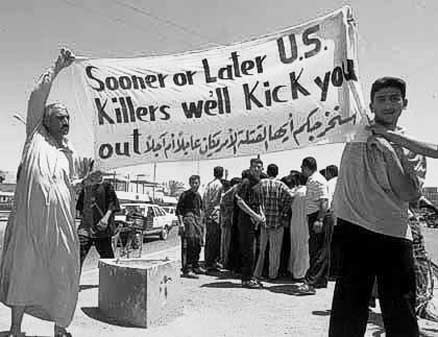
Part two: the unclean slate. At the exhibit door attendees submit their tickets and are admitted entrance and given a blank magnetic card. The staffer who collects the tickets is not the same person who immediately hands out the magnetic cards, thus reinforcing the sensation of a severed paper trail. But in actuality, there is no discontinuity because the card-holder immediately queues for a kiosk to personalize the card.

Although the user can chose to conjure personal information entirel fictitious, the impression is given that the card’s data goes no further than the exhibit’s exit door. When I asked, a staff member earnestly assured me that all the cards are erased every night. Which could be true, but irrelevant. The cards serve like a patient wristband at the hospital. The wristband confirms the identity of the patient at the various checkup points, as the medial records accumulate in remote files.

Part three, a false sense of anonymity. The museum patients are free to initiate their magnetic cards with whatever manner of fictitious name and birthday. Especially if it does not matter to them that the final printout will bear false facts. My companion felt he had to turn around to explain to me that he always lies about his birthday, by one day, to shake off the data spooks,. He volunteered this in case I thought he didn’t remember his own birth date. My sense is that most people give their true identity, if only so the kiosks will address them by their given names, the exchanges being in full view of friends and relatives waiting in line.

If the attendee hopes to glean some helpful health advice from the “Expedition Health” experience, they are inclined not to falsify the three remaining details: sex, age, and which “buddy,” among a statistical sampling of lifestyle types, they might identify themselves with.

Tell me that the last three profile items are not enough to provide a match to the hard data from the museum entrance receipts or membership database. Remember, the samples to compare are linked by the window of time the museum alloted to your ticket.

The choice of your “buddy” is the clincher. It might appear to be the most innocuous of indiscretions, but your surrogate patient type relays reliable biographical data about you, and doesn’t add anything to the health exhibit narrative except to use as a third person example, when the patient-specific explanation would reveal the alarming degree to which the diagnostics had taken your measure.

Which, to be fair, would create a liability risk for the museum, to complicate matters with pseudo diagnoses, easily misinterpreted by laymen.

The DMNS “Expedition Health” curators thus know quite definitively who you are, as you pass through their kiosks, putting yourself through a fairly extensive check up, the results of which are explained only generally to you, but to a medical administrator say enough to narrow many odds about your health prospects.

B. Diversionary misapplication of magnetic cards

Several of the Kiosks at “Expedition Health” are not interactive, and do not require the magnetic card. Of course, to assure that your “Peak Pass Personal Profile” data card will be filled print out with your EKG, Resting Heart Rate, Target Heart Rate, whether you reached your heart rate; your Arm Span, Height, Energy Score, Stride Length and Speed, a silhouette of your walking profile and another of your outreached Leonardo DaVinci pose; you’d have to have scanned your magnetic card at those machines.

By the way, the data summarized on the personal profile card was far more rudimentary in comparison to the information shown on the screens, and doubtless neither reflect the sophistication of the diagnostic electronics employed. The optics, for example, are capable of far better than inch-high cameos of your body. The lengths of time for which you have to pose for the scans betray the resolution the graphics engines are really processing.

Here’s the information being gathered at the various stops:

Taking your measure
The station which measures your arm span and height requires you to stand, arms outstretched, shoes off, for a full body digital picture, which records an uncommonly revealing photographic record of the subject’s body fat ratio.

Another station measures your stride length and speed, from which an “energy” score is awarded. To do this, a full motion video records you as you take over a half dozen steps, perhaps pushing yourself purposefully to boost your “energy score.” This video must be invaluable in what it reveals about a person’s vitality or physical challenges.

While the cardio-vascular stress tests might appear to offer mere stationary bicycling experiences, a subject’s entire session can be recorded, offering telltale clues to heart condition and lung stamina. Probably we’d all be more comfortable studying these results with the peace of mind that we have health insurance, as opposed to considering that our results might be grounds used to deny us health insurance coverage.

Diet
Several kiosks would seem to have no need for a card. For example, one featured an interactive script about nutrition. Mostly children sit at this station, to pick among menus of food, the mission being to fortify a climber for an ascent of a peak. Their choice of nutrients determines how far the animated climber will get, before tumbling after from hunger. You plug in your card to begin, and as a result the climbing figure features a Tanqueray-head-type of your chosen buddy. If this kiosk is gleaning a sense of your diet preferences, it’s not revealed on the exhibition debriefing printout.

Identification Marks
Another kiosk teaches you about wind chill. You stick your hand into a plexiglass chamber where lasers measure the change in your skin temperature over the course of several minutes. Curiously, you have to insert the magnetic card at this stop. Why? And you cannot proffer your elbow, your fist, or the back of your hand. Is it possible that the lasers reading your hand are actually scanning the prints of your palm and fingers? I know too little about medicine to conjecture what use the medical industry might have for such information, but the data is certainly marketable to security firms.

Confessions
While on this tangent, there’s another kiosk, the most popular in fact, which DOES NOT REQUIRE A CARD. At this station you get to see your face as it’s projected to age over the course of your life. The line is the longest at this station, while subjects pose, their face held immobile, framed in a stainless steel ring, for an interminable several seconds. I witnessed one person complain that the light into which he had to stare hurt his eyes. Eventually the scan yields only an oddly primitive, cellphone-quality facsimile of the subject’s face, projected on an adjacent flat screen. Next, the subject is asked which among three factors might influence how he’s expected to age. Please check which apply: UV damage, Obesity, and/or Smoker.

By law, none of these behaviors would have to be confessed to a doctor, or an insurance agent, in particular if such was a vice already put well behind. But the aging machine draws out the truth. Because the interrogator machina does not ask for your ID, it creates the semblance that you are being asked anonymously. Who doesn’t fully comprehend by now that sun exposure, obesity and smoking are very tragic predictors of our future health problems?

The pseudo age-disfigured face is disappointing. The transformation is just a transparency of age spots, wrinkles and discoloration overlaid on an initial low-rez photograph. If you are not recording the age-progression with your own camera, the ephemeral image passes, with no trace of what the long facial scan had actually recorded. You’d think since the lines of visitors here are always so long, that the aging image is what visitors might like to take with them as a memento. Alas, there’s no slot on this kiosk into which to insert your magnetic card to “record” it. But the sovereignty of this station is illusory.

Biometrics
If a webcam, a PC, and a common internet connection can transmit video in real-time video, why would this DMNS workstation be laboring for so long over your face? Can I hazard a guess? A 3-dimensional study of your face, and something just short perhaps of a retinal scan? If medical administrators are not looking at symptoms deep in your eyes, or in the translucence of your skin, perhaps this kiosk is for the security interests tabulating your biometrics.

If nothing else, the biometric configuration of your face can be matched to a digital image of your whole body from a previous kiosk, thus confirming your identity, BECAUSE AT THIS KIOSK YOU ENJOYED ANONYMITY. But now your smoker/obesity concession can be deftly noted alongside the other red flags being added to your health profile.

C. The Parting Shot
The last kiosk, in my opinion, gives the game away. If you insert your magnetic card, you can record a video message, a propo anything at all. I saw many takers offering calm Youtube soliloquies, as if composing a greeting to send into space. And AHA –instead of pretending that your video would be encoded on your card, instructions beside the screen offered the internet URL at which you can go see it.

First, this directive gives truth to the lie, the DMNS staffers’ incurious conclusion, that individual records are purged everyday. Your profile lives on on the internet, see it for yourself. Give your six-digit pass-code to a friend and they can see it too. And of course, you’re not the only one with the pass-code.

Second, you might well ask yourself, what does a videogram have to do with apprising me about my health? Unless it’s a time-capsule snapshot of you before you lost your insurance coverage. Because the video has everything to do with breached personal privacy. There you are, in your unguarded candor, sitting not upright like you would for a job interview, nor slouched like you might for Social Security, and you’re providing a recording for voice pattern recognition, for further data triangulation.

Third, you’ll have noticed, if you tried the Peak Pass link to the DMNS website, you get no further with your personal code than an invitation to “extend your experience” by installing Microsoft Silverlight. I hadn’t mentioned that the Gates Foundation was another big sponsor of “Expedition Health.” Beside the security vulnerabilities of client-side code, managing what is supposed to be confidential information, what usual back doors is Microsoft leaving in its pseudo-Flash, offering untold windows into our personal medical records?

The DMNS
I do not believe the museum staff have any idea what becomes of the data, nor the extent of the data, logged as museum visitors recreate through “Expedition Health.” The multiple employees, including a manager to whom I spoke, believed all data was erased daily. I’m not sure why they were untroubled by the internet database that obviously refutes their understanding of the process.

However the IT programmers who wired up the displays, and information managers handling the data, would most certainly know the full extent of this nefarious harvest.

Judging from the recent performance of the CEOs of the top medical insurers before Congress, expressing no remorse about their disreputable practice of rescinding coverage for customers upon their being diagnosed with expensive health problems, I do not think it is alarmist in the least to suspect that projects like “Expedition Health” and other similar museum “exhibits” around the country, are being used to further screen the prospectively less-than healthy.

DNA
Readers who’ve already visited “Expedition Health” will note that I ‘ve omitted mention of a significant corner of the experience, the hands-on, let’s play pathologist portion where visitors don lab-coats and, with the assistance of similarly lab-coated docent/lab-technicians, draw and observe their own DNA samples.

Where I inquired, I saw no magnetic-stripped cards changing hands, so I cannot say, on the hot topic of DNA, that the sky is falling. This holds with my inclination to believe that the museum volunteers are not party to the privacy improprieties of the sponsors running the machines. But what hands-on scientific observations are being conducted on digital equipment, as distinguished from analog microscopes, might be kept in the records, and it would only require just one lab-coated coordinator to monitor which sample came from whom. And wouldn’t that be the whole ball of wax?

CRYING WOLF?
If all this seems implausible, consider what is happening at Buckley AFB, by coincidence only a few miles away in Denver. Although US security agencies refuse to comment, respected intelligence experts have determined that at Buckley reside the data storage units upon which are the recordings of every single cellphone conversation that’s been transmitted via satellite. Every last one, for the past several years. Current technology does not afford agents the capability to monitor all those calls, but the processors are quickly catching up. The spooks can project that the eventual capacity to parse the information is inevitable. So why not begin logging the information now? The public has learned about Buckley from former employees, this is not mere idle speculation. Meanwhile the telecom companies who’ve been complicit in the data collection, have been very adamant about receiving immunity from prosecution for what constitute gross violations of American law.

AND NOW?
The information tracking mechanisms are there, the DMNS staff do not presume to vouch for machines, only for the harmless cards. Meanwhile the DMNS has no written pledge that their visitors’ confidentiality is being respected. Harvesting test data is not illegal after all, and with the pretense of anonymity, it’s even laudable, in the name of Science and Nature. I am awaiting a written response from the “Expedition Health” curator, and I intend to solicit an informed and verifiable refutation of these charges. I’ll keep you posted.

The “Expedition Health” installation went up in April, but it’s not coming down. It’s the most recent PERMANENT EXHIBIT to be added to the DMNS offerings. Add the trajectory of time to the information the diagnostics will be able to assemble about you.

And so, what do you think of a museum of Nature and Science, adding a whole wing about FREE HEALTH TESTING? Is that the dominion of museums, usually public repositories of the archives of knowledge? Or can you imagine a more appropriate setting for equipment and staff to perform medical checkups?

The US – Islam War nears halfway mark

I have to do more research, but I’m pretty sure October 7, 2009 should mark the HALFWAY POINT of the US-ISLAM WAR. I realize the Pentagon brass are calling for fifty years more of insurgency suppression in Afghanistan and Iraq, but if we grant them no more time than for America’s longest military intervention, we’ve got another eight years before beating our humiliating retreat.
iraq

Those who insist we could have won the Vietnam War, would have our murderous troops there still. No foreign occupation has succeeded in modern times, with the ongoing exception of Israel, which by its swallowing of Palestine has been skewing the definition of occupation to the Old Testament model of mass extermination. The treacherous method worked against the Native Americans, it may still doom the (Palestinian) Native Israelis.

Afghanistan and Iraq remain occupations, where Vichy puppet governments prosecute genocide against the native resistance. How long before Americans lose their stomach for continuous bloody repression? I cannot account for the Russians in Chechnya, but on the US-Islam front, we are halfway there.

In Afghanistan and Iraq, we may already have surpassed half the civilian death tolls in Vietnam, Cambodia and Laos. It’s hard to say, the US “doesn’t do body counts” now, and we didn’t then either. Our own military casualties grew exponentially in Vietnam. If such statistics bear comparison, today’s numbers cannot be but comparable.

It’s being whispered that American casualties are approaching a multiple of a thousand mark. Official soldier deaths in Afghanistan and Iraq are conjectured to be reaching a round number.

I’m not told how many US mercenaries are being killed. We have as many hired-guns contracted as government soldiers. Want to lay odds on how many body bags they’ve required?

Nor are we told how many US soldiers are being wounded, many of them with injuries which would not have sustained their lives in Vietnam. Surely there is a sad gray area of injury which we could round up as it approximates death.

Anti-Zionism 4D: Defining Demonization Double Standards and Delegitimization

The word “nutritious” defines a food quality that provides sustenance. I’ve no doubt as skepticism grows about the likely poisonous aspects of refined sugar and High Fructose Corn Syrup, the corporate sugar-water purveyors will append “satiates your subliminal impulses” to the meaning of nutritious. Who safeguards our dictionaries from authoritarians who profit from reweaving the fabric of knowledge we consider inviolate?

We expect facts to change, but it is unsettling to be robbed of the words which we count on to measure the change.

Did you think “anti-Semitic” meant prejudice against the Jews? It does, except the Zionists behind sustaining Israel want it to indemnify their unpopular endeavor too. Anti-Semitism now means opposing Israel, although the stigma implied is of course still “Jew Hater.” But the appropriation is unseemly. Crusading Evangelicals could tell you, if you oppose their bloody incursions into the lands of Islam, then you must be anti-Christian. But are you?

It would seem only fair that the victims of anti-Semitism should be entitled to define what oppresses them, but that’s not who’s wrapping themselves in its protection. Zionists (both Jewish and Christian) claim that an overwhelming percentage of World Jewry supports sustaining the US-Israel occupation of Palestine. Is it true? I wager that the far greater proportion of both Jews and non-Jews repudiate military aggression, occupation, ethnic cleansing and religious oppression. But if it were true, claims of suffering historical persecution are not grounds to be given license to persecute others.

Anti-Semitism describes real, tradition-rooted anti-Jewish sentiment. To expand its meaning disrespects the very tangible prejudice which Jews still face. Opposition to sustaining Israel is actually Anti-Zionism, which is neither for nor against Judaism. Anti-Zionism denounces another long-held prejudice: White European Man’s assertion that the Holy Land belongs to him.

Anti-Zionism is the opposition to sustaining an illegally invaded, illegally occupied, racist administration of Palestine in the name of “Zionism.” Anti-Zionism calls for “the destruction of Israel,” meaning the dissolution of the Western colonial theocracy imposed on the indigenous population of the Middle East. To oppose the sustaining of Israel is a call to exterminate Israeli apartheid. Anti-Zionism is no resurrection of the Final Solution. It means leave people be. White settlers should not assume to usurp the lands and water rights of the native Palestinians.

Zionism defender Nathan Sharansky has constructed a definition of anti-Semitism with an expanded breadth, he calls them the three Ds: Demonization, Double Standards and Delegitimization. It’s this 3D definition with which Zionists are branding UCSB professor William Robinson, himself a Jew, as an anti-Semite. Professor Robinson circulated an email among his sociology students, comparing Israel’s actions in Gaza to methods used by the Nazis, now US-Israeli lobby groups are calling for UCSB to censure him.

Sharansky’s three Ds are easily refuted because he offers no more than circular argument. Ipso Facto my eye. I reprint Sharansky’s explanation below, but first an abridgment:

Demonization: “…having [the Jewish state’s] actions blown out of all sensible proportion … can only be considered anti-Semitic.”

Double Standards: “It is anti-Semitism … when Israel is singled out by the United Nations for human rights abuses while tried and true abusers … are ignored.”

Delegitimization: “…the denial of Israel’s right to exist is always anti-Semitic.”

Thus, if Israel considers the criticisms leveled against it to be insensible, then the criticisms are anti-Semitic; also, so long as abusive regimes persist, Israel reserves its prerogative to abuse; and, the legitimacy of Israel’s biblically ordained Manifest Destiny is never to be questioned. These are self-rationalizations which beg ridicule, but doing so would appear anti-Semitic.

Sharansky finishes: “If other peoples have a right to live securely in their homelands, then the Jewish people have a right to live securely in their homeland.” To suggest that the right of the Palestinians to live in their homeland, have been usurped by the Jewish people, most of whom knew other homelands, is apparently anti-Semitic.

Here is Nathan Sharansky’s statement to support the 3-D formula for decrying “ANTI-SEMITISM!”

I propose the following test for differentiating legitimate criticism of Israel from anti-Semitism. The 3D test, as I call it, is not a new one. It merely applies to the new anti-Semitism the same criteria that for centuries identified the different dimensions of classical anti-Semitism.

DEMONIZATION
The first D is the test of demonization.

Whether it came in the theological form of a collective accusation of deicide or in the literary depiction of Shakespeare’s Shylock, Jews were demonized for centuries as the embodiment of evil. Therefore, today we must be wary of whether the Jewish state is being demonized by having its actions blown out of all sensible proportion.

For example, the comparisons of Israelis to Nazis and of the Palestinian refugee camps to Auschwitz — comparisons heard practically every day within the “enlightened” quarters of Europe — can only be considered anti-Semitic.

Those who draw such analogies either do not know anything about Nazi Germany or, more plausibly, are deliberately trying to paint modern-day Israel as the embodiment of evil.

DOUBLE STANDARDS
The second D is the test of double standards. For thousands of years a clear sign of anti-Semitism was treating Jews differently than other peoples, from the discriminatory laws many nations enacted against them to the tendency to judge their behavior by a different yardstick.

Similarly, today we must ask whether criticism of Israel is being applied selectively. In other words, do similar policies by other governments engender the same criticism, or is there a double standard at work?

It is anti-Semitism, for instance, when Israel is singled out by the United Nations for human rights abuses while tried and true abusers like China, Iran, Cuba, and Syria are ignored.

Likewise, it is anti-Semitism when Israel’s Magen David Adom, alone among the world’s ambulance services, is denied admission to the International Red Cross.

DELIGITIMIZATION
The third D is the test of deligitimization. In the past, anti-Semites tried to deny the legitimacy of the Jewish religion, the Jewish people, or both. Today, they are trying to deny the legitimacy of the Jewish state, presenting it, among other things, as the last vestige of colonialism.

While criticism of an Israeli policy may not be anti-Semitic, the denial of Israel’s right to exist is always anti-Semitic. If other peoples have a right to live securely in their homelands, then the Jewish people have a right to live securely in their homeland.

UCSB Hillel students Rebecca Joseph, Tova Hausman highlight poor education

Charges against Professor William RobinsonToday’s university campuses have to deal with College Republicans, ACTA and NeoMcCarthyists. The latest uneducable creeps shopped their leftist-professor- horror-story to the Anti-Defamation League, to brand their teacher’s criticism of Israel as “anti-Semitic.” UCSB senior Rebecca Joseph and junior Tova Hausman both took exception to Professor William Robinson’s Sociology Listserv email comparing Israel’s mop up operation in Gaza to the Warsaw Ghetto. Below are the words they cut and pasted together to accuse Robinson.

The literacy level of these two students is probably on par for Twilight fans, but definitely unbecoming for the University of California system. The first letter is reputedly from a college senior. Rebecca Joseph‘s opening argument was plagiarized from the internet, but she continues to scold Professor Robinson for straying from her idea of what makes a university professor. The second complaint from UCSB junior Tova Hausman copies the first letter’s form, but adds the accusation of sexual misconduct for leaving her feeling raped.

Is it unfair to put simple college students under national scrutiny like this? From their own words they show themselves to be rather helpless. But what to do when students, or some unscrupulous backers, are taking aim at a respected tenured professor? It’s serious business. Organizations like ACTA and Hillel are out to enforce a veritable Right Wing PC rectitude. As if it’s politically incorrect to make fun of uneducated on campus!

Keeping educators silenced was easier during the Bush administration, but the dampers are still on Academic Freedom. Ward Churchill may have won his case in court against the University of Colorado, but opinionated faculty are still few and far between. The latest attack against William Robinson attempts to reinforce more of the same.

UCSB senior Rebecca JosephProbably by now Hillel is wishing they’d coaxed a better educated pair of students to face off against Robinson. The administrators who received the complaint letters should have earmarked the girls for a remedial English refresher in anticipation of their graduation. But let’s look beyond the cheap shots.

The accusations inarticulated here are scurrilous where they are not outright illogical. You be the judge.

First Student Complaint
Here’s the first complaint received by UCSB, from Rebecca Joseph, Vice-president of the Santa Barbara campus Orthodox Jewish Chabad. Interestingly, UCSB has a number of pro-Israel action groups: Hillel, Jewish Awareness Movement on Campus, American Students for Israel, Stand With Us, AIPAC and the Israeli Palestinian Film Festival (which judging by the lineup runs films only by un-self-critical Israelis and sympathetic Palestinians).

Here is Rebecca Joseph’s complaint, uncorrected.

To Whom It May Concern:

On Monday, january 19, at 1:02 pm, I received an email from Professor Robinson for the course Sociology of Globalization (Soc 130SG). The subject of the email was “Parallel images of Nazis and Israelis.” This email compared the aggression of the Nazis to the Jews in Germany, to that which is going on between Palestine and Israel today. Professor Robinson wrote the first three paragraphs including the following: “Gaza is Israel’s Warsaw…” In addition to his few words, he attached an email describing the comparison which goes on to another attachment showing pictures to prove his point.

This email shocked me; before I did anything I gave him the benefit of the doubt and emailed him back asking, “I just wanted to know what this information was for? Is it for some assignment or just information that you put out there for us?” His response was “Rebecca, just for your interest….. I should have clarified.”

At this point I felt nauseous that a professor could use his power to send this email with his views attached, to each student in his class. To me this overstepped the boundaries of a professor and his conduct in a system of higher education. Due to this horrific email I had to drop the course. being a senior and needing any classes I could get, this left me in need of more classes which added more stress.

Two weeks later I saw a friend that was in the course with me and I asked him if it was ever brought up in class or discussed even for a brief minute or two, he responded by telling me that he never even mentioned it in class and that he too would have dropped the course, but he needed it to graduate on time.

Anti Semitism is considered to be hatred toward Jews –individually and as a group– that can be attributed to the Jewish religion and/or ethnicity. An important issue is the distinction between legitimate criticism of policies and practices of the State of Israel, and commentary that assumes an anti-Semitic character. The demonization of Israel, or vilification of Israeli leaders, sometimes through comparisons with Nazi leaders, and through the use of Nazi symbols to caricature them, indicates an anti-Semitic bias rather than a valid criticism of policy.

I found these parallel images intimidating, disgusting, and beyond a teacher role as an educator in the university system. I feel that something must be done so other students don’t have to go through the same intimidating, disgust I went through. I was asked to speak to him and get him to apologize but I feel that it will not make a difference for future students of his.

Whatever the outcome may be, I am hoping for some apology from Robinson, for not only my self and but for my peers in the class as well. In addition I would like to see more happen then just an apology because he has breached the University’s Code of Conduct for Professors and that this issue must be dealt with immediately.

In the Faculty Code of Conduct in Part II, Professional Responsibilities, Ethical Principles, and Unacceptable Faculty conduct, in Section A, Teaching and Students, it states that “The integrity of the faculty-student relationship is the foundation of the University’s educational mission. This relationship vests considerable trust in the faculty member, who, in turn, bears authority and accountability as mentor, educator, and evaluator.”

However Professor Robinson has turned away from his professional responsibilities through his “significant intrusion of material unrelated to the course.” (Part II, Section A, Number 1, b). He has also violated the universities policy by “participating in or deliberately abetting disruption, interference, or intimidation in the classroom,” (Part II, Section A, Number 5). Robinson has done so through this intimidating email which had pushed me to withdraw from this course and take another one.

In the University System professors above all, are to be “effective teachers and scholars,” Robinson has gone against his rights as a professor at the university through his, “unauthorized use of University resources or facilities on a significant scale for personal, commercial, political, or religious purposes,” (Section II, Section C, Number 3). Robinson used his university resources, to email each student in this course to get his view across, in doing so; he became a representation of the faculty members of the University of California Santa Barbara. The code of conduct state that, “faculty members have the same rights and obligations as all citizens. They are as free as other citizens to express their views and to participate in the political process of the community. When they act or speak in their personal and private capacities, they should avoid deliberately creating the impression that they represent the University.” By Robinson using his university email account he attaches his thoughts with that of the university and they become a single entity sharing the same ideas.

Thank you very much for your time and consideration of this matter and I am hoping to here [sic] back in the near future.

Thank you,

Rebecca Joseph

Junior Tova Hausman accused UCSB professor William Robinson of being anti-SemiticSecond student complaint
The second letter, which cribs from the first obviously, was sent by UCSB junior Tova Hausman. At least she credits the US State Dept as the source of her definition of “anti-Semitism.” But Hausman adds the accusation of sexual impropriety, taking a page it seems from David Mamet’s Oleanna.

February 19, 2009

To whom it may concern,

My name is Tova Hausman, and I was enrolled in Professor William Robinson’s Sociology 130 SG course this Winter 2009. The course was called Social Globalization. Our class received an email in the second week of class, from the professor, called “Parallel images of Nazis and Israelis.” It discussed the parallel acts and images between Nazi Germany during World War II and the present day Israelis. He claims that what the Nazis did to the Jews during the war is parallel to what Israel is doing to Palestine right now. Professor Robinson clearly stated his anti Semitic political views in this email that were unjust and unsolicited. The department of states 2004 definition of anti-Semitism: Anti Semitism is considered to be hatred toward Jews –individually and as a group– that can be attributed to the Jewish religion and/or ethnicity. An important issue is the distinction between legitimate criticism of policies and practices of the State of Israel, and commentary that assumes an anti-Semitic character. The demonization of Israel, or vilification of Israeli leaders, sometimes through comparisons with Nazi leaders, and through the use of Nazi symbols to caricature them, indicates an anti-Semitic bias rather than a valid criticism of policy……

In all the years of schooling and higher education I have never experienced an abuse of an educator position. Taking the opportunity to disseminate personal political views through obtaining email addresses of the class roster that are only for academic use, show betrayal and complete abuse of powers by the professor. To hide behind a computer and send this provocative email shows poor judgment and perhaps a warped personality. The classroom and the forum of which higher education is presented needs to be safe and guarded so the rights of individuals are respected. handle

To express one’s political views is not necessarily wrong but here it was not relevant to the subject matter. How could one continue to participate in this professor’s class? The fact that the professor attached his views to the depiction of what my great grandparents and family experienced shows lack of sensitivity and awareness. What he did was criminal because he took my trust and invaded something that is very personal. I felt as if I have been violated by this professor. Yes I am aware of Anti-Semites, but to abuse this position in an environment of higher education where I always thought it to be safe, until now, is intimidating.

This professor should be stopped immediately from continuing to disseminate this information and be punished because his damage is irreversible. He abused his privilege to teach, to lead, and to mentor.

Bellow is a list of the faculty code of conduct in which I believe Professor Robinson violated:

Part I — Professional Rights of Faculty
2. the right to present controversial material relevant to a course of instruction.

Part II — Professional Responsibilities, Ethical Principles, and Unacceptable Faculty Conduct
A. Teaching and Student

The integrity of the faculty-student relationship is the foundation of the University’s educational mission. This relationship vests considerable trust in the faculty member, who, in turn, bears authority and accountability as mentor, educator, and evaluator. The unequal institutional power inherent in this relationship heighten the vulnerability of the student and the potential for coercion. The pedagogical relationship between faculty member and student must be protected from influences or activities that can interfere with learning consistent with the goals and ideals of the University. Whenever a faculty member is responsible for academic supervision of a student, a personal relationship between them of a romantic or sexual nature, even if consensual, is inappropriate. Any such relationship jeopardizes the integrity of the educational process.

1. Failure to meet the responsibilities of instruction, including:
(b) significant intrusion of material unrelated to the course;

2. Discrimination, including harassment, against a student on political grounds, or for reasons of race, religion, sex, sexual orientation, ethnic origin, national origin, ancestry, marital status, medical condition, status as a covered veteran, or, within the limits imposed by law or University regulation, because of age or citizenship or for other arbitrary or personal reasons.

5. Participating in or deliberately abetting disruption, interference, or intimidation in the classroom.

Types of unacceptable conduct:

B. Scholarship
Violation of canons of intellectual honesty, such as research misconduct and/or intentional misappropriation of the writings, research, and findings of others.

C. University
3. Unauthorized use of University resources or facilities on a significant scale for personal, commercial, political, or religious purposes.

E. The Community Ethical Principles.
“Faculty members have the same rights and obligations as all citizens. They are as free as other citizens to express their views and to participate in the political processes of the community. When they act or speak in their personal and private capacities, they should avoid deliberately creating the impression that they represent the University.” (U.C. Academic Council Statement, 1971)

I expect this matter to be looked into and wish to be contacted soon.

Thank you,

Tova Hausman

Well let’s make a point to contact this McCarthy wannabe. These are crummy students fancying themselves campus sanitizers for Israel. What contemptible innuendo and vacuous indignation! The two students reportedly approached the Simon Wiesenthal Center, where they were advised to work through the Jewish Anti-Defamation League.

Abraham FoxmanLetter sent from the ADL
Pressure then came from Anti-Defamation League National Director Abraham Foxman who visited the campus in a covert meeting to recommend the immediate reprimand of Professor Robinson. (Foxman even had these words for the Gaza analysis offered by Bill Moyers.)

February 9, 2009

William I. Robinson
Professor of Sociology
Global and international Studies
Latin American and Iberian Studies
University of California – Santa Barbara
Santa Barbara, CA 93106

Dear Professor Robinson:

We have received complaints that on January 19, 2009, you sent an email to a number of your student entitled “parallel images of Nazis and Israelis.” If this allegation is true, ADL strongly condemns the views expressed in your email and urges you to unequivocally repudiate them.

While your writings are protected by the First Amendment and academic freedom, we rely upon our own rights to say that your comparisons of Nazis and Israelis were offensive, a historical and have crossed the line well beyond legitimate criticism of Israel.

In our view, no accurate comparison can be made between the complex Israeli-Palestinian conflict and the atrocities committed by the Nazis against the Jews. Nor can Israeli actions or policies be fairly characterized as acts of ethnic cleansing or genocide. Unlike the Holocaust (and to more recent examples of genocide and ethnic cleansing in Darfur, Rwanda and Kosovo), there is no Israeli ideology, policy or plan to persecute, exterminate or expel the Palestinian population — nor has there ever been. In direct contrast, the Nazis’ “final solution” to the “Jewish problem” was the deliberate, systematic and mechanized extermination of European Jewry. Hitler’s “final Solution” led to the calculated, premeditated murder of six million Jews and the destruction of thriving Jewish communities across Europe.

We also think it is important to note that the tone and extreme views presented in your email were intimidating to students and likely chilled thoughtful discussion on the Israeli-Palestinian conflict. Clearly, that is antithetical to the very purpose of the academy. Finally, using your university email address to send out material that appears unrelated to your Globalization of Sociology course likely violates numerous parts of the University of Santa Barbara Faculty Code of Conduct (see, for example, Part I, 2; Part II, A, 1, b; Part II, C, 3; Part II, E, 1).

Again, ADL strongly condemns the views expressed in the January 19, 2009 email and we urge you to unequivocally repudiate them.

Sincerely,

Cynthia Silverman
Santa Barbara Regional Director
Anti-Defamation League

Cc:
Department Chair, Verta Dean
Chancellor, Henry T. Yang
President, Mark G. Yudof

Martin Scharlemann, University of California at Santa BarbaraEmail from UCSB Charges Officer:
Instead of dismissing the dubious accusations, the school is convening an investigation. But not without impropriety on the part of the Charges Officer Martin Scharlemann. Prof. Scharlemann insisted that Robinson produce a written refutation BEFORE he would reveal the formal accusations leveled by the two students. Read the formidable exchanges at the website mounted by the UCSB students and faculty rallying to Robinson’s defense.

Charges Officer E-mail Re: Charges

Professor Robinson,

Responding to your memo of 3 April, here is a summary of the allegations:

* You, as professor of an academic course, sent to each student enrolled in that course a highly partisan email accompanied by lurid
photographs.

* The email was unexpected and without educational context.

* You offered no explanation of how the material related to the content of the course.

* You offered no avenue to discuss, nor encouraged any response, to the opinions and photographs included in the email.

* You directly told a student who inquired that the email was not connected to the course.

* As a result, two enrolled students were too distraught to continue with the course.

* The constellation of allegations listed above, if substantially true, may violate the Faculty Code of Conduct.

In the (”not exhaustive”) list of examples included with that Faculty Code of Conduct, the most proximate are part II, A. 1. b and A. 4.

On the other matters you raise, while my conversation with the students was confidential, I can tell you that I did not advise them to seek an “apology” from you. And yes, I did offer you an opportunity “if you wish” to provide a written response to the complaint before I met with the Charges Advisory Committee, which is solely vested with the authority to dismiss a complaint as frivolous and unfounded.

-Martin Scharlemann

Dan ChinitzAnd from the internets…
And let’s not overlook the attempts to initiate an email campaign to bring public pressure on UCSB to reprimand Professor Robinson. A commenter to this blog linked to a website advocating a form email to convey (our) universal indignation over the anti-Semitism at UCSB. The form letter is suggested by “anonymous” (possibly Alvin Black aka Dr. Mike) and he recommended signing it “Name withheld to protect privacy.” We reprint the opening and closing here:

Dear Chancellor Yang,

As I am sure you know, several months ago, Professor William I. Robinson, a self described “scholar -activist” and professor of Sociology and Global Studies at your university, forwarded an email to his students condemning Israel. The email contained images of Nazi atrocities along with images from Israel’s defensive campaign against Hamas’s terror. This comparison is considered by both the US State Dept and the European Union, in their working paper on anti-Semitism, to cross the line into anti-Semitism. This email was so disturbing to at least two students that they felt compelled to drop his class. Because of the nature of the emails, the Anti-Defamation League, as well as the UCSB Academic Senate’s Charges Committee have become involved.

[…etc…]

And thus the Arab world’s war against Israel becomes a nation-wide campus war against Jews.

Professor Robinson seems to have chosen to join the ranks of these “erstwhile defenders.”

I most sincerely urge you, therefore, to draw a line in the sand. The university should not be a promoter of Jew-hatred, nor an inciter of violence.

Sincerely yours,

Name withheld to protect privacy

Anonymity
Isn’t that what this post is about actually? We’ve aggregated the criticisms flying against Professor Robinson, but most notably this article seeks to expose the UCSB students who led the faceless attack against Professor Robinson.

Until the Los Angeles Times revealed their names today, the identities of both Joseph and Hausman had been concealed. Even the specific complaints they brought against Robinson were kept secret from the accused himself. Now, what kind of people insist on slandering others from the shadows?

At NMT, we make ourselves known, while many of our detractors do not. We could not care less, but if apologists for Israel’s crimes consider themselves in the right, why do they hide behind aliases?

If you support Israel’s “right to defend itself” by breaking international conventions and committing war crimes, stand up and say it. If you think Israel has every right to take the land of the Palestinians and keep it, Goddamn it come out from behind your creepy disguises and say it. If you’re going to impugn others for whatever false transgression, without the courage to reveal yourself, do you expect anyone to accord you credibility?

If you are going to condemn the Palestinians of Gaza for exercising their basic human right to resist an illegal foreign invasion and occupation of their land, you better have the nerve to say it publicly. Cowards.

UCSB Prof William Robinson pro-Semite

Putting down the Warsaw Ghetto uprising
Wouldn’t you think it bad form for Israeli militants to behave like Nazis, while immunizing themselves with the self-righteous indignation that any criticism of their actions can simply be dismissed as “anti-Semitic?” Photographs and confessions emerging from the IDF’s atrocities in Gaza just beg comparison the German Einsatzgruppen in Poland. Earlier this year UC Santa Barbara professor William Robinson forwarded an email photo essay to a UCSB listserv, the already much-circulated side by side comparison to the WWII atrocities. Two students complained, plagiarizing stock IDF lingo. Now the Anti-Defamation League wants Robinson to recant. With IDF propagandists pouring on the bullshit, let’s revisit the documents.

As has already been noted, Professor Robinson is a harsh critic of US foreign policy, and already a likely target for the goon squad enforcers of Western Capitalism. Not many of America’s actions are defensible, so Robinson has to be attacked by desperate means. Lucky for the lackey-jackals, Robinson chose to criticize Israel’s atrocities against the Palestinians of Gaza. Bingo!

The Israeli propaganda machine has armed aspiring Israel-defenders with a blanket rebuttal: just yell “ANTI-SEMITISM!” And what a load of crap that is. Much turns on the definition of “anti-Semitism.” It packs the punch of meaning someone who hates Jews, but the advocates of Zionism have expanded the definition into 3-D! Zionist apologist Nathan Sharansky has coined the 3D definition of ant-Semitism: demonization of Israel, double standards, and delegitimization. You don’t have to look closely to note that those points outline all the rebuttals of criticisms of Israel and any question of the legitimacy of the Zionist usurpation of Palestine.

The criticisms posed by those concerned for the fate of Gaza are the same expressed by a large portion of the Israeli Jewish population as well. But the US Israeli lobby, militantly Zionist, has the complicity of the US war-mongering corporate media, thus the IDF Megaphone protestations get traction. These are the same cheap shots leveled against Ward Churchill. By flooding the internet to create the sensation that the indignation was shared, the IDF spammers have been successful in slandering these dissenting academics.

Since we’re seeing this technique being slopped unto our comment forums, let’s examine the statement for which Robinson is being attacked. First we’ll present Robinson’s email. The next post will feature the ensuing letters of complaint, two from UCSB students, and third from the ADL.

Original Email
Here is Professor Robinson’s original email, including his attachment of the Judith Stone article. This accompanied the aforementioned photo essay he forwarded.

Subject: [socforum] parallel images of Nazis and Israelis
From: “William I. Robinson” …
Date: Mon, 19 Jan 2009 21:00:05

If Martin Luther King were alive on this day of January 19, 2009, there is no doubt that he would be condemning the Israeli aggression against Gaza along with U.S. military and political support for Israeli war crimes, or that he would be standing shoulder to shoulder with the Palestinians. I am forwarding some horrific, parallel images of Nazi atrocities against the Jews and Israeli atrocities against the Palestinians. Perhaps the most frightening are not those providing a graphic depiction of the carnage but that which shows Israeli children writing “with love” on a bomb that will tear apart Palestinian children.

Gaza is Israel’s Warsaw – a vast concentration camp that confined and blockaded Palestinians, subjecting them to the slow death of malnutrition, disease and despair, nearly two years before their subjection to the quick death of Israeli bombs. We are witness to a slow-motion process of genocide (Websters: “the systematic killing of, or a program of action intended to destroy, a whole national or ethnic group”), a process whose objective is not so much to physically eliminate each and every Palestinian than to eliminate the Palestinians as a people in any meaningful sense of the notion of people-hood.

The Israeli army is the fifth most potent military machine in the world and one that is backed by a propaganda machine that rivals and may well surpass that of the U.S., a machine that dares to make the ludicrous and obnoxious claim that opposition to the policies and practices of the Israeli state is anti-Semitism. It should be no surprise that a state founded on the negation of a people was one of the principal backers of the apartheid South African state not to mention of the Latin American military dictatorships until those regimes collapsed under mass protest, and today arms, trains, and advises military and paramilitary forces in Colombia, one of the world’s worst human rights violators.

Below is an article written by a U.S. Jew and sent to a Jewish newspaper. The editor of the paper was fired for publishing it.

Quest for Justice

By Judith Stone

I am a Jew. I was a participant in the Rally for the Right of Return to Palestine. It was the right thing to do.

I’ve heard about the European holocaust against the Jews since I was a small child. I’ve visited the memorials in Washington, DC and Jerusalem dedicated to Jewish lives lost and I’ve cried at the recognition to what level of atrocity mankind is capable of sinking.

Where are the Jews of conscience? No righteous malice can be held against the survivors of Hitler’s holocaust. These fragments of humanity were in no position to make choices beyond that of personal survival. We must not forget that being a survivor or a co-religionist of the victims of the European Holocaust does not grant dispensation from abiding by the rules of humanity.

“Never again” as a motto, rings hollow when it means “never again to us alone.” My generation was raised being led to believe that the biblical land was a vast desert inhabited by a handful of impoverished Palestinians living with their camels and eking out a living in the sand. The arrival of the Jews was touted as a tremendous benefit to these desert dwellers. Golda Mier even assured us that there “is no Palestinian problem.”

We know now this picture wasn’t as it was painted. Palestine was a land filled with people who called it home. There were thriving towns and villages, schools and hospitals. There were Jews, Christians and Muslims. In fact, prior to the occupation, Jews represented a mere 7 percent of the population and owned 3 percent of the land.

Taking the blinders off for a moment, I see a second atrocity perpetuated by the very people who should be exquisitely sensitive to the suffering of others. These people knew what it felt like to be ordered out of your home at gun point and forced to march into the night to unknown destinations or face execution on the spot. The people who displaced the Palestinians knew first hand what it means to watch your home in flames, to surrender everything dear to your heart at a moment’s notice. Bulldozers leveled hundreds of villages, along with the remains of the village inhabitants, the old and the young. This was nothing new to the world.

Poland is a vast graveyard of the Jews of Europe. Israel is the final resting place of the massacred Palestinian people. A short distance from the memorial to the Jewish children lost to the holocaust in Europe there is a leveled parking lot. Under this parking lot is what’s left of a once flourishing village and the bodies of men, women and children whose only crime was taking up needed space and not leaving graciously. This particular burial marker reads: “Public Parking”.

I’ve talked with Palestinians. I have yet to meet a Palestinian who hasn’t lost a member of their family to the Israeli Shoah, nor a Palestinian who cannot name a relative or friend languishing under inhumane conditions in an Israeli prison. Time and time again, Israel is cited for human rights violations to no avail. On a recent trip to Israel, I visited the refugee camps inhabited by a people who have waited 52 years in these ‘temporary’ camps to go home. Every Palestinian grandparent can tell you the name of their village, their street, and where the olive trees were planted. Their grandchildren may never have been home, but they can tell you where their great-grandfather lies buried and where the village well stood. The press has fostered the portrait of the Palestinian terrorist. But, the victims who rose up against human indignity in the Warsaw Ghetto are called heroes. Those who lost their lives are called martyrs. The Palestinian who tosses a rock in desperation is a terrorist.

Two years ago I drove through Palestine and watched intricate sprinkler systems watering lush green lawns of Zionist settlers in their new condominium complexes, surrounded by armed guards and barbed wire in the midst of a Palestinian community where there was not adequate water to drink and the surrounding fields were sandy and dry. University professor Moshe Zimmerman reported in the Jerusalem Post (April 30, 1995), “The Jewish children of Hebron are just like Hitler’s youth.”

We Jews are suing for restitution, lost wages, compensation for homes, land, slave labor and back wages in Europe. Am I a traitor of a Jew for supporting the right of return of the Palestinian refugees to their birthplace and compensation for what was taken that cannot be returned?

The Jewish dead cannot be brought back to life and neither can the Palestinian massacred be resurrected. David Ben Gurion said, “Let us not ignore the truth among ourselves…politically, we are the aggressors and they defend themselves…The country is theirs, because they inhabit it, whereas we want to come here and settle down, and in their view we want to take away from them their country…”

Palestine is a land that has been occupied and emptied of its people. It’s cultural and physical landmarks have been obliterated and replaced by tidy Hebrew signs. The history of a people was the first thing eradicated by the occupiers. The history of the indigenous people has been all but eradicated as though they never existed. And all this has been hailed by the world as a miraculous act of G-d. We must recognize that Israel’s existence is not even a question of legality so much as it is an illegal fait accompli realized through the use of force while supported by the Western powers. The UN missions directed at Israel in attempting to correct its violations of have thus far been futile.

In Hertzl’s “The Jewish State,” the father of Zionism said, “…We must investigate and take possession of the new Jewish country by means of every modern expedient.” I guess I agree with Ehud Barak (3 June 1998) when he said, “If I were a Palestinian, I’d also join a terror group.” I’d go a step further perhaps. Rather than throwing little stones in desperation, I’d hurtle a boulder.

Hopefully, somewhere deep inside, every Jew of conscience knows that this was no war; that this was not G-d’s restitution of the holy land to it’s rightful owners. We know that a human atrocity was and continues to be perpetuated against an innocent people who couldn’t come up with the arms and money to defend themselves against the western powers bent upon their demise as a people.

We cannot continue to say, “But what were we to do?” Zionism is not synonymous with Judaism. I wholly support the rally of the right of return of the Palestinian people.

American Corners: centers for organizing American government subversion

America Corner logoAmerican Corners is a US government subversion program that operates multiple centers abroad to disrupt opposition to American foreign policy. See Conspiracy and Propaganda Centers: Illegal US Consulates in Venezuela.

OK, one might think that this commentary about them exaggerates or is paranoid, or is misleading in some way, so let’s examine one of these US government ‘Corners’ of subversion located in Israel. See American Corner Jericho.

Here the effort to subvert is not directed against the Israeli government, but against the Palestinian opposition to that Jewish State dictatorship. The basic political program is- Accept our money and become corrupted by us. This is the policy everywhere they are in operation. It is the policy of dangling carrots in front of donkeys.

Just how does American government subversion via the American Corner centers work? This American Corner Serbia is very illustrativ. Notice that the multi-national country of Yugoslavia has been completely ideologically deconstructed by the US government here. It is not called ‘American Corner Yugoslavia’, though this ‘Corner’ is located in Belgrade, but merely given the deconstructed name ‘American Corner Serbia’. Notice too the cartoonish character of the site as it leads you finally to the nutty gritty of ‘discussion’ with…

U.S. & SERBIAN MILITARY COOPERATION
Colonel von Tersch
U.S. Military Attache
U.S. Embassy Belgrade

There is talk of 7 American Corners located in ‘Serbia’. The subversion level attacks at the level of the knees, to cripple and deconstruct the entire idea of a valid Yugoslavian nationhood.

At the African Regional Services of the American Corner Paris program, we are told quite directly, among the Laura Bush ‘Favorite Books’ style literary display there, that …

‘Please note that no direct order from persons in charge of American Corners will be considered:
To be valid, the order must be approved and sent by the U.S. Embassy Public Affairs Section.’

So cute, and so direct to the point, too.

The American Corners in Okinawa operates to keep the US military base ongoing at that site in Japan national territory. Not that the idea is very popular with the people of Okinawa itself.

How about some of this American Happy Face at an America Corner in the Arab World?

Surfin’ U.S.A.! at MCBS
On February 18, Embassy Muscat’s Defense Attach Col. Mark Avery enthralled a full house of approximately 50 students at the American Corner at Modern College of Business and Science (MCBS) with tales of surfing in his home state of Hawaii. Explaining how surfing was originally permitted only for Hawaiian kings on huge boards cut from old-growth forests, the Colonel described the sport’s modern manifestations. He discussed the surfing craze of the 1960s that spurred even American Midwesterners who lived hundreds of miles from ocean waves to buy surf boards, and he introduced surfing music like the “Beach Boys.” The students especially enjoyed the Colonel’s photographs of his favorite surfing spots in Oman, and appreciated his use of Arabic during his presentation.

More of the same at the Salalah American Corner site of the US State Department.

I found this looking for something else. (About Mayor Rivera)

I couldn’t embed it but here’s the link to the video.
 
I was looking for something that came up in the inevitable angry political discussion on the City Bus yesterday.

Actually, nobody was angry with or against each other.

We’re all just a little teensy tiny itty bitty small bit P.O.’d about the “Lower Class” being bought and sold like so many hummm… what’s that Minor Piece in a chess game, you know, the ones that always get sacrificed to save or capture a Chessman of higher rank, oh yeah… Pawns…

But it seems Our Illustrious Mayor has once again applied his own foot to his own mouth…

On the subject of cutting bus routes.

The bus in question is to one of the medical districts.

Which is getting a large percentage of Budgetary axe.

The other parties to the conversation were a retired lady and a lady who makes her living as a Teacher.

The Mayor, allegedly (but, for some strange reason, I believe every syllable of it) His Dis-Honor has made what he thought was an unrecorded remark that he doesn’t really care what bus passengers think because “The only people who ride the bus are bums and alcoholics”

This was supposed to be posted to YouTube after having been caught on a cell-phone camera.

I haven’t found it, YET.

Strangely, I have a lot of confidence that I will, and I don’t doubt for a moment that His Dis-Honor said that, simply because he has a long and rich history of making disparaging remarks about the Lower Classes, who, unlike himself, actually do the Labor that provides the wealth of Our Nation and more directly, his own Portfolio.

AND, about the soldiers who came back with pieces missing, both of body and mind, from the War of Conquest which benefits, directly, His Stock Portfolio.

One of the ladies, the schoolteacher, is blind. I had located the information she wanted on the Bus Route and schedule changes she had tried to ask the bus driver about.

The bus is the one she and the other lady use to go between their homes and, well, Everywhere Else.

I, as usual, was going to a doctor’s appointment.

One of the other bus Route Cancellation, 3 of them in fact, involve getting within a half-mile of Peak Vista Health Care, the El Paso County Health Department, and a Memorial Health Systems facility across Parkside Drive from Peak Vista.

In other words, facilities that serve the Disabled and Poor.

It’s not really a coincidence that those two groups merge at several points.

Also, in an entry into Jonah’s Museum of Spectacularly Bad Ideas, it seems the budget crunch was made an order of magnitude Worse by the reversal of the usual order of the Financial Universe,

Instead of issuing Municipal Bonds and having OTHER PEOPLE invest in the City, the City has been using Our Tax Money to GAMBLE errr… “invest” in the Stock Market, under the tutelage of Our Own Resident Pre-Chimpanzee Douglas Bruce.

The one who makes Les Freres Bush et menages look like Intellectual Giants by comparison.

I wonders, yes I does, if these Parasite Class Heroes bought, with our money, a whole bunch of those Mortgage Notes?

They could sue me for “Definition of Character” and if they win they would get everything I own.

At a net loss of the vast majority of the costs of hauling it away.

I guess they’re used to losing investments anyway.

There is much grumbling among the Working Class to the tune of a Recall Election to unseat these vermin.

As usual, Jonah speaks only for Jonah, but I think we should take that idea and run with it.