Report from the Right Front

I will be the first to point out, right now here in this forum, that I have a Texas-sized ego. I think I’m a reasonably smart guy, and not unlike any writer, that I have some things to say that are so danged important that I’m gonna say them. I’ll also point out that some others in the conversation, possibly including you, gentle reader, have the same handicap. The entire discussion ought to be undertaken with a salt shaker within easy reach ’cause everything anyone has to say ought to be taken with a liberal helping.
 
This post is an attempt to unravel a bit of a Gordian knot that has tied itself around the politics of “Occupy” movements around the world, and particularly here in Colorado Springs, Colorado, U.S.A. without hacking at it with f-bombs directed at the many possessors of equally large egos as mine, while openly acknowledging strong disagreements between some of us. Believe me, this is a difficult bit of unraveling and though I mean to avoid ad hominem attacks, I’ll not promise to eschew strong language. It’s also a bit of a news update, straight from the horse’s ass, so to speak. Sorry if it runs long or gets complicated; it’s a big hairy knot.

I am the guy that picked up the first no-camping ordinance violation in the city of Colorado Springs. I did this while participating in protests falling under the ill-defined aegis of a group called “Occupy Colorado Springs,” in solidarity with another ill-defined group called “Occupy Wall Street,” and other Occupiers all over the world. In case it’s unclear: there’s no such thing as Occupy Colorado Springs, (OCS). What happened is a few guys, boldly named at the top of the eponymous Facebook page like John Hancock at the bottom of that one famous page, finally got bent enough out of shape to do something about it so they set up a page, and a small camp down at Bijou and Tejon–Acacia Park. They were behind the Wall Street guys and liking what they were about, I came behind them.

There is no club membership, no charter, no bylaws, no nothing to define the Colorado Springs group that might in any way be construed to suggest the thing we are doing at Acacia Park is anything other than a gathering of a bunch of fully leaderless sovereign individuals that happen to share a common distaste at the state of human affairs extant in the world today. Anyone who has known me for any length of time, or has read any of the pages preceding this post will know that this is nothing new for me. I was and remain ecstatic at the development of public expression, both here and globally. I am a free actor in the business of protesting in general, and that involving the city’s no-camping ordinance in particular. I act as a sovereign, as a member of OCS whatever that means, as a citizen of the U.S.A., as a citizen of the World–a member of the human race, possessor of certain unalienable rights, whether those derive from God or not.

I decided to deliberately violate the city ordinance because I believe it exemplifies an aspect of the overall erosion of human rights here and across the globe that has precipitated such widespread uproar. I believe it directly attacks individuals’ right to life, liberty, and the pursuit of happiness, and that it is both superfluous and fully unnecessary. It’s just a mean-spirited dig at the weakest among us, a tactic akin to schoolyard bullying, which I maintain is motivated by the same spirit that allows the holders of power at the Federal Reserve and other powerful international and national bodies to gleefully grind the majority of the world’s citizenry to dust for no more than sport. I meant all along from well before the advent of any Occupations to have this conversation at a level previously unattainable to me, and now we will–that is, I and whomever cares to jump in during the proceedings. I control only my own actions and expressions.

There are some protesters at Acacia Park that have strenuously objected to my camping as I did. They are pleased to maintain the fine relationship with CSPD and with the Mayor’s office that has developed, and happy to have avoided the head-bashing, tear-gassing removals that have troubled some other Occupy outposts. Fearing a narrowing of focus from the general Occupy platforms, they asked me, and truly in some instances pleaded with me to abandon my course. Some attempted to tell me. They are happy to compromise, capitulate, appease, to utilize terms previously utilized by those members opposed to my individual action. I am not. I promise, I love every one of the crazy fools involved with the action at our little street corner whether we agree on this matter or not. I’ll mention this one more time: I am just one dude. Anyone that agrees with me here is also behaving of his or her own accord.

Our Mayor Bach is an asshole. I promised to avoid ad hominem here, and I’ll point out that this is not an attack but an observation, and only my opinion. Publicly, falsely and slanderously maligning the very civilized protesters of OCS for urinating on sidewalks while simultaneously locking park rest rooms which had previously been available to all manner of dope-shooting freaks, and possibly authorizing the operation of park sprinkler systems to douse protesters in below freezing temperatures are asshole moves. In my opinion. Mayor Bach is in error, but he’s only acting as seems best to him in each moment, now also capitulating, and allowing protesters a right to their freedom of speech.

We already have a freedom to speak in our country. My violation of the camping ordinance addresses a deeper, more fundamental set of freedoms mentioned so briefly in Mr. Jefferson’s Declaration, and to be found in all the keening of literature throughout all of history–blowin’ in the wind, one might say. This is not a narrowing of focus, but rather a telescopic lens by which I hope we can examine questions of such grand scale and difficulty that centuries after a bunch of homeless guys floated across the Atlantic to Plymouth, we still haven’t grasped them. failing to address the camping ordinance presenting itself so conveniently will flippantly sidestep the most essential key to all of this whole set of global protesting. We’ve all seen protesters on the street corner a million times. We’ve always compromised. It’s never worked.

Anecdotally speaking, it appears the major objection raised by detractors of the Occupy movement is that there has been no firm expression of goals, manifestos, or demands. It seems to me that this is the natural outcome of the complexity of the problems at hand. Although there are certainly individuals involved in skulduggery at, say, the FED, my view is that we face the necessity to alter a fundamental flaw in our very basis for human interaction. I’ll leave you to read my thoughts on that elsewhere in this blog, if you desire, both previous to this post and to come. Right now the Occupy movement is just an acknowledgement of discomfort with the extraordinarily stubborn status quo across all political and national lines, and a frame work within which discussion may take place. Planning and legal definitions will have to wait for some 7 billion Occupiers to chime in. The difficulty of hashing out the minor disagreements among players here in Colorado Springs may be an indication of how much work is involved with the big picture. Be patient. Unless you like the status quo. Most of us don’t.

For anyone out of the loop, including friends across the U.S. and abroad, here’s a bit of fact: I was arrested 18 October, around 2am MST for deliberately violating a city no-camping ordinance. The arrest was executed by my friends, the extra-fine members of the “HOTT” team of the CSPD, as we had previously discussed, (those guys are just as much in jeopardy from “Wall Street” as any of us; they are our brothers). I was simply driven, sans violence of any kind, or even cuffs or hard feelings, to the Gold Hills police station. We did a little paperwork and the fellas drove me to a friend’s place where I claimed a bit of much-needed rest. The HOTT team and I were completely cooperative with one another, and remain so. They did their jobs, I did mine. I had to wrestle with the question until some family matters came up, but I will not be camping under that no-camping sign again until at least my court date, 8 Nov at 1:30p MST. I can not, nor will I attempt to speak to the actions of any other sovereign actors who may follow my example, other than to toss out my opinion should it seem germane to me.

I hope we can all have this conversation in a civilized manner. I hope the whole world shows up at the courthouse that day. I hope all my friends known and unknown that can’t make it will pray, or chant, or beam love on fairy wings–whatever their fancy. I’m gonna need it. I think we all need it, that day and every other.

Reprinted from Hipgnosis

Every dollar wants to be free of the Fed

US one dollar bill, circa 1963-presentIt might stretch credulity that the US Bureau of Engraving encrypted prophetic images of the Pentagon –and the not yet built WTC twin towers– in their iconic Reichstag Fire infamy, unto dollar bills folded just so. But who knows, they might have chosen to encode Thomas Jefferson’s oft-quoted but unheeded chiding to the American people: “Every generation needs a new revolution.” And don’t we especially want to ignore this one? “When injustice becomes law, rebellion becomes duty.”

Yer in the Army Now….

So much has been happening lately I’m afraid this will be a big confused mess, but what th’ hey, right?
 
The world is in a Meltdown. Hell that’s the reason I have time for this crap, ya know? This is NOT a surprise. We’ve all known it’s been coming for a looong time now, though it’s hard to nail down that specific moment when we knew. Maybe we always did. I’ll get to how I think we’ve known, and how we didn’t know we’ve know a different time. For now, a somewhat more imminent thought. Here’s one place to find a buncha bone-chilling stats http://www.theglobaleducationproject.org/earth/index.php . The numbers are everywhere. This is only one source, and far more officious, (don’t mess with me, I used that word on purpose), sources are available. YOU look ’em up. Anyone wanting to look fuckin’ stupid can tapdance around them til–well, til the Apocalypse–and they’re not gonna change, cause tapdancin’ won’t change it. If it was gonna, it woulda! I already put it more or less in a nutshell: WE’RE FUCK-ED!!

But we’re not. We’re still breathing, still eating, drinking, fucking, pumping out babies, and so on. I have two accidental children whom I love without bounds. I genuinely thought it would be rude, at best, to sire a new Person and foist all this bullshit upon him16 years ago when the pertinent romantic interlude took place. Maybe it is, in way, but in plenty of other ways life is as always a thing of such great, broad, deep beauty that I think all potential for its fulfillment ought to be pursued. (Don’t imagine I’ve converted to Catholicism or something–that though was rather more metaphysically driven, and you should put on a raincoat if it looks like rain. Or waders if it looks like–you know ;)) Look around, though. We’re ALIVE!! More than we know. And life shows us in every discrete packet of light entering our retinas that it will rise, no matter what. We can’t kill the Earth. I rather think she’d prefer us to work this out, but she’ll be fine. We can certainly destroy our ability to live here as Humans, though.

In Consider the Lilies, I started to explain what I’m up to here. Every time I approach that question, the answers that come to me sound more and more absurdly grandiose. Save the world? I mean, reeealy! when I was a young child, like in the 3rd grade or something, (no shit–ask Mom), I was politicized and set in a frame of mind opposed to fascism, oppression, and unkindness, for lack of a better term. Everyone knows this is the course of idealism, though, right? I got out in the “real” world and it struck me that one must make some pragmatic concessions to get by. Right? We all learn this, don’t we? Usually when it “strikes” us it’s like a brick in the head. It’s usually thrown at us by some cog in the Fascist machine.

If you’ve read the earlier posts, or caught my live rant, you’ve likely been puzzled by my carryings on about money being a bad metaphor. It’s outdated poetry, good for a time, now hopelessly outdated like that ridiculous, overwrought Victorian romance shyte you may have read in college or high school. (Leave them kids alone, teacher!). “All bad poetry springs from genuine feeling, ” wrote Oscar Wilde, and the old thing has gotten us a long way, in fact, it’s gotten us right here. Fucked. Or on the cusp of some spectacular event(s).

We live in a competitive world. Whichever doctrinal approach one embraces, whether scientifically mechanistic or holding out for divine fiat, it’s the scrabbling over game pieces that has us in this sinking boat. Everyone has to have a buncha shit they don’t need, in order to display for all the other poor losers how dominant they or their team has been in the Game. This isn’t a fuckin’ game anymore, though. Look at those numbers again. Do you really think a little half-assed reduction in increase in greenhouse gas emissions over the next 100 years or whatever is going to save the human race? Get real! Do you really think we might someday pay off our $23 trillion debt, or whatever it is? What’s that shit, anyways? To whom do we owe it? When did we sign that contract? Didn’t someone steal that from us last month? Do we really think we can survive a collapse of the oceans, the food chain, the watersheds, etc, etc, and so on?

I may be grandiose and ridiculous, but I can read the writing on the wall, in the sky, on the face of the Moon. We’re gonna need to stop fiddle-fuckin’ around and wrestle this shit to the ground, or we’re all gonna die. Our kids are gonna die. Our grandkids, if we live to see them, will be mutant freaks like Goldbloom’s fly monster, just like the poor fucked up three-eyed fish around Chernobyl and downstream of a BHP Billiton mine , (BHP: Broken Hill Properties. It’s only a secret if you close your eyes, kids). They’ll die miserably, and the Earth will breathe a sigh of relief, having fought off a pestilent Virus. Or we can CHANGE EVERYTHING.

I saw a panel discussion at the community college yesterday, (PPCC). A Bahai, a Buddhist, a Pagan, and a Christian philosopher walked into a bar and the bartender said, “What is this, a fuckin’ joke?” Oh–sorry. They actually sat behind a table and spoke as cogently as they were able, and we all took them fairly seriously, if with the standard portion of salt–you know it’s still all bullshit, right? A thematic keystone was the notion that we’re all One, that it’s all All-One. You’ll notice me playing that riff for all I can wring from it. It’s got a lot of Soul, and it sounds good. When I say we’re all gonna die, I don’t mean all us minor league players. The whole stadium is collapsing. It’s already collapsed in a lot of ways. Check out my friend Skip’s posts about the Federal Reserve. Don’t be tapdancing when you read. The Fascists will die with us. Their secret bunkers won’t do. Competition is over; the game pieces are reduced to Parker Bros. parts. Cooperative living is at hand.

Only LOVE will save us. That’s right, y’all.Think that’s hokey? Sure. It is. But that’s a view from the old game. I put this shit up because I believe it. I’m just as much like water as anyone else. I’d stay comfortably here at the lowest level if it seemed for one second to me like that might be an option. It does not. It is not. Change or die. Right now. Today. Look me up. I have a couple ideas, and I bet you do too, if you were to stop concentrating on that tapdance.

There are many, many more things to say about all this. Come back and see us, eh?

Viva la rivoluzione!
Viva l’Esercito dell’Amore!

(Reprinted from Hipgnosis)

Who has got their boot on Rawesome Foods and the CA organic movement?

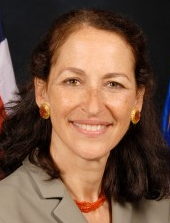
It’s tempting to urge organic growers to push ahead with sustainable health communities, agents of the corporate food distopia be damned, but here’s what happened to Rawesome Foods: raided by Feds, food stocks destroyed, arrests and prohibitive fines. How do you combat a police state prohibiting all breaches of Big Agra’s strangle-hold on world health? Natural News has an idea, publicize the names of the Federal Agents persecuting the raw dairy evangelists. Friends and loved ones might be able to talk some sense into them. Remember, in principle these health regulators are the good guys. So whose office has got their boot on the California organic food movement? Scarlett Treviso, Terrence Powell, Kelly Sakir, Siobhan Delancey, Michelle LeCavalier, & FDA Commissioner Margaret Hamburg. Here’s how to contact them, this is your local farmer’s time of need.

cdfa logoUnless they’re an appointee from an industry lobby group, a professional who pursues a career in public health is more than likely interested in the public’s health. It’s up to you to bring them up to nutritional speed.

Scarlett Treviso, Senior Special Investigator, (mastermind of first raid on Rawesome Foods, heavily involved in intimidation tactics against raw dairy farmers across California) California Dept. of Food and Agriculture, Milk and Dairy Food Safety division. Office phone: 949-716-8913, Email: streviso@cdfa.ca.gov

Terrance Powell, Bureau Director, Specialized Surveillance & Enforcement Bureau of Los Angeles County Department of Public Health. 5050 Commerce Drive, Baldwin Park, CA 91706, Phone: (626) 430-5150, Fax: (626) 851-3758. Email: tpowell@ph.lacounty.gov

Kelly Sakir, assistant District Attorney of Los Angeles County. Phone: 213-582-3394. Supervisor: Steve Cooley. Phone: 213-974-3512. Public Information Officer: Sandi Gibbons. Phone: 213-974-3525

Siobhan DeLancey FDA Press Officer, participated in the investigation of Rawesome, covers Center for Food Safety and Applied Nutrition. Phone: 301-796-4668. Email: siobhan.delancey@fda.hhs.gov

Michelle LeCavalier, Environmental Health Specialist III at the Department Of Health Services: 1501 Capitol Avenue, Suite 6001, Sacramento, CA 95814-5005. Supervisor: Jesus Urrutia, Chief EHS, 6851 Lennox Ave. # 310, Van Nuys, CA 91405. Phone: (818) 902-4470

Angelo J. Bellomo, Director of Environmental Health for the County of Los Angeles, 5050 Commerce Drive, Baldwin Park, CA 91706. Phone: (626) 430-5100. Fax: (626) 813-3000. Hotline: (888) 700-9995. Email: abellomo@ph.lacounty.gov


Margaret Hamburg, FDA Commissioner. Phone: 301-796-5000. Main FDA number: 888-463-6332. Email address #1: margaretahamburg@aol.com. Email address #2: Margaret.Hamburg@fda.hhs.gov

Tribal Sovereignty means uh… you’re a sovereign entity, with a US passport.

Remember when George Bush couldn’t define “sovereignty?” Maybe it wasn’t his fault. How would you describe sovereign lands where US extraction and exploitative industries can operate without regulatory oversight, and tribes can issue identification papers unless they mean to travel somewhere. When the original Indian treaties were signed, US destiny was manifested with promises that the former landholders’ sovereignty would be respected. The Iroquois Lacrosse team have just learned tribal sovereignty means carrying the occupier’s passport.

The US State Department at first refused to grant travel permission to the sovereign Iroquois because they didn’t have the newfangled, traceable, trackable, American passport. When congressmen intervened on behalf of the Iroquois who did not wish to submit to United States stinkin’ papers, the government relented, granting a one-time exemption.

How do suppose they mean to explain that? A just-this-once exception on the sovereignty whatsit.

But the lacrosse team’s destination was England, and British bureaucrats held firm on the original argument that the sovereign Native Americans required non-Native American passports. Post 9/11 days are no time apparently to permit international travelers to pass themselves off with rinky dink documents issued by who knows what maize-republics. The USA may foist whatever charade it wants on its captive vanquished aborigines, that doesn’t mean England has to play dumb too.

Maybe the British are mindful not only that the Iroquois were among the inventors of lacrosse, but that they once used the pretext of a game to successfully storm an English fort. Is that among their worries, Post 9/11?

Post 9/11 is no time for the pretense of sovereignty. Whether schoolchildren can grasp its contradictions or not.

Here’s Bush again, doing his best Miss South Carolina:

“Uh, tribal sovereignty means that. It’s sovereign. You’re a, you’ve been given sovereignty and you’re viewed as a sovereign entity. And therefore the relationship between the federal government and tribes is one between sovereign entities.”

Down to sports, empires are tribal

American World Cup viewers tuning in to watch their team face England on Saturday might be excused confusion about their adversary’s flag. Instead of the British Union Jack, English fans waved a red and white standard usually only glimpsed in movies where knights fight dragons, crusades, or Braveheart.

That’s the red cross of Saint George, dragon-slayer, minus the diagonal white-on-blue X of Scotland’s Saint Andrew and the red X of Ireland’s Saint Patrick. Where British dominion is concerned, natural resources and labor are commonwealth, assertion of athletic dominance is forever England.

But the England team crest, with the three lions passant-guardant, dates to lionhearted King Richard, the early realm’s warrior expansionist. Technically the heraldic cats are léopards, because the royal houses ruled in the language of the French, and these three show the empire’s spots: Team England’s badge invokes the era when “England” included the conquered Scotland, Ireland and Wales.

As far as world onlookers cared, the first round pairing of USA versus England was an intramural match among conspiratorial members of the Coalition of the Willing. At best one could only root for the good cop colonizer. Early enough in the game, a score fumbled past England’s goalie portended the Gods’ ambivalence over the outcome. Like Olympic teams, the FIFA contenders are groupings of soccer all-stars whose day jobs mean playing side by side, for either Man United or Real Madrid apparently. It’s hard to expect that team allegiances would defer to nationalism any more than to the federation’s television revenues. The achievement of a tie for match USA – England guaranteed to string along the barely interested American TV audience.

England, Scotland and Ireland were grandfathered into FIFA because, despite not being standalone sovereign nations, they originated the competition. Indeed Britain invented football, whose spread across the world is owed to European colonialism.

Sovereignty is no small distinction when it comes to legitimizing sports teams. Taiwan and Tibet are not recognized by China for example, as the Korean halves reject each other, as the US might object to Puerto Rican or Hawaiian bids for succession.

Today a pretense of sovereignty is enough to field a national soccer team. Take Iraq, Afghanistan and Israel, for example, and I needn’t stop there. By what standard are they independent entities versus US client states? They have their own flags, for all the US cares, and I daresay American pride would be sacrificed for the political gain of either of these puppets excelling their master in sport. A success in sporting circles would only bolster the facade of their indigenous national sovereignty.

Does it say something about the difference between contemporary empires and past, that the US doesn’t need to stamp the red, white and blue unto its colonial projects? Nor dominate them in the arena?

We can contrast America’s far-flung possessions and occupations with the British Commonwealth, whose flags closely mimicked mother Britain’s theme. But I’d like to clarify Ireland’s representation on the British flag. The cross of St. Patrick whose outline informs the Union Jack, represents Ireland before her independence. Still occupied Northern Ireland has a flag which duplicates England’s but for the addition of a loyalist co-opted red hand at its center.

While England holds fast to Scotland’s oil and Ireland’s loyalists, when it comes to sport, she wants all the credit.

Forget worrying if gulf spill is Obama’s Katrina. Obama is America’s Katrina.

President Obama let America know at a press conference today that he OWNS this Katrina. BP’s failure is his failure. BP’s lie is now superseded by a minimalization of his own. More bad news about attempts to halt it, nevermind, the Federal Government’s in charge. What does it mean to say the buck stops here if all you’re really doing is stopping it? We’ve got a president playing the bag man on this environmental catastrophe, just as he’s taking responsibility for Bush’s foreign policy and Wall Street’s theft. Instead of pursuing our interests, he’s taking the fall. Except he’s in the position to say “so sue me.”

It’s not that Obama pretends he’s made of Teflon. From where he sits, he can be fly paper. And doesn’t that appear to be his role? It was his most celebrated accomplishment his first year in office. Make American hegemony a little more palatable to our overseas markets. He did it.

If anything’s changed, everything as gotten monumentally worse, with no turning back either. The oil’s leaving of the well, the economy’s only going to get worse before it gets worse. Obama’s right, no good is served trying to assign blame, horses, doors, the barn’s on fire.

New ICE building is half windowless

ice offices in pueblo bank trust buildingAs reported by the Gazette on Nov 30, the US Immigration and Customs Enforcement (ICE) division of the Department of Homeland Security has opened an office in Colorado Springs in the Pueblo Bank and Trust Building. The implication is of a lonely field office to monitor the busy I-25 corridor, but the Nation Magazine is reporting that ICE locations nationwide are being used as unmarked and unmonitored detention facilities for undisclosed detainees. I can’t vouch for ours. Anyone up for a photo field trip? Bring your papers.

According to the Gazette, the office has been a pet pork project of Congressman Doug Lamborn. Their description of the new facilities:

The downtown office in Colorado Springs is the ninth ICE office in Colorado and houses several cubicles and conference rooms as well as a cache of secure rooms to be used for interviews, confidential paperwork and holding weapons.

Detentions have been until now subcontracted with El Paso County. Currently the county holds approximately 150 detainees for ICE.

Did you catch this choice segment of the story? County Commissioner Jim Bensberg apparently confuses “to have a chilling effect” with crime deterrence:

“The presence of the federal office will have a chilling effect on a wide variety of activities,” he said, without elaborating.

“There were days I thought this would never happen,” he said. “If I had a tail right now, I’d be wagging it.”

The Caracas Commitment Si Se Puede

You might imagine the multinational corporate media would blackout the talk of a 5th Socialist International. They are most determined to censor the issues which the world’s leftist parties are resolved to address. Where Obama 2008 and Copenhagen 2009 project a vacuum of ideological momentum, check out the Caracas Commitment.

The Caracas Commitment
November 25, 2009?
By Declaration from World Meeting of Left Parties?
November 19-21 Caracas, Venezuela

Political parties and organizations from Latin America, the Caribbean, Europe, Africa, Asia, and Oceania commemorate and celebrate the unity and solidarity that brought us together in Caracas, Bolivarian Republic of Venezuela, and from this libertarian city we would like to express our revolutionary rebelliousness. We are glad of and committed to the proud presence of the forces of change in a special moment of history. Likewise, we are proud to reaffirm our conviction to definitively sow, grow and win Socialism of the 21st century.

In this regard, we want to sign the Commitment of Caracas as a revolutionary guide for the challenges ahead of us. We have gathered with the aim of unifying criteria and giving concrete answers that allow us to defend our sovereignty, our social victories, and the freedom of our peoples in the face of the generalized crisis of the world capitalist system and the new threats spreading over our region and the whole world with the establishment and strengthening of military bases in the sister republics of Colombia, Panama, Aruba, Curacao, the Dutch Antilles, as well as the aggression against Ecuadorian territory, and the invasions of Iraq and Afghanistan.

We consider that the world capitalist system is going through one of its most severe crises, which has shaken its very foundations and brought with it consequences that jeopardize the survival of humanity. Likewise, capitalism and the logic of capital, destroys the environment and biodiversity, bringing with it consequences of climate change, global warming and the destruction of life.

One of the epicentres of the capitalist crisis is in the economic domain; this highlights the limitations of unbridled free markets ruled by private monopolies. In this situation, some governments have been asked to intervene to prevent the collapse of vital economic sectors, for instance, through the implementation of bailouts to bank institutions that amount to hundreds of billions of dollars. Said governments have been asked to stimulate their economies by increasing public expenditure in order to mitigate the recession and the private sector decline, which evidences the end of the supposedly irrefutable “truth” of neo-liberalism that of non-intervention of the State in economic affairs.

In this regard, it is very timely to promote an in-depth discussion on the economic crisis, the role of the State and the construction of a new financial architecture.

In summary, the capitalist crisis cannot be reduced simply to a financial crisis; it is a structural crisis of capital which combines the economic crisis, with an ecological crisis, a food crisis, and an energy crisis, which together represents a mortal threat to humanity and mother earth. Faced with this crisis, left-wing movements and parties see the defence of nature and the construction of an ecologically sustainable society as a fundamental axis of our struggle for a better world.

In recent years, progressive and left-wing movements of the Latin American region have accumulated forces, and stimulated transformations, throwing up leaders that today hold important government spaces. This has represented an important blow to the empire because the peoples have rebelled against the domination that has been imposed on them, and have left behind their fear to express their values and principles, showing the empire that we will not allow any more interference in our internal affairs, and that we are willing to defend our sovereignty.

This meeting is held at a historic time, characterized by a new imperialistic offensive against the peoples and governments of the region and of the world, a pretension supported by the oligarchies and ultraconservative right-wing, with the objective of recovering spaces lost as a consequence of the advancement of revolutionary process of liberation developing in Latin America. These are expressed through the creation of regional organizations such as ALBA, UNASUR, PETROCARIBE, Banco del Sur, the Sao Paulo Forum, COPPPAL, among others; where the main principles inspiring these processes are those of solidarity, complementarity, social priority over economic advantage, respect for self-determination of the peoples in open opposition to the policies of imperial domination. For these reasons, the right-wing forces in partnership with the empire have launched an offensive to combat the advance and development of the peoples’ struggles, especially those against the overexploitation of human beings, racist discrimination, cultural oppression, in defence of natural resources, of the land and territory from the perspective of the left and progressive movements and of world transformation.

We reflect on the fact that these events have led the U.S administration to set strategies to undermine, torpedo and destabilize the advancement of these processes of change and recuperation of sovereignty. To this end, the US has implemented policies expressed through an ideological and media offensive that aim to discredit the revolutionary and progressive governments of the region, labelling them as totalitarian governments, violators of human rights, with links to drug-trafficking operations, and terrorism; and also questioning the legitimacy of their origin. This is the reason for the relentless fury with which all the empire’s means of propaganda and its agents inside our own countries continuously attack the experiences in Venezuela, Ecuador, Nicaragua, Bolivia, and Paraguay, as with its maintenance of the blockade against revolutionary and independent Cuba.

Part of the strategy activated by the U.S. Empire is evidenced by the coup in Honduras, as well as in other destabilizing initiatives in Central America, attempting to impose the oligarchic interests that have already left hundreds of victims, while a disgusting wave of cynicism tries to cover up the dictatorship imposed by the U.S. administration with a false veil of democracy. Along with this, it is developing a military offensive with the idea of maintaining political and military hegemony in the region, for which it is promoting new geopolitical allies, generating destabilization and disturbing peace in the region and globally through military intimidation, with the help of its allies in the internal oligarchies, who are shown to be complicit in the actions taken by the empire, giving away their sovereignty, and opening spaces for the empire’s actions.

We consider that this new offensive is specifically expressed through two important events that took place this year in the continent: The coup in Honduras, and the installation of military bases in Colombia and Panama, as well as the strengthening of the already existing ones in our region. The coup in Honduras is nothing but a display of hypocrisy by the empire, a way to intimidate the rest of the governments in the region. It is a test-laboratory that aims to set a precedent that can be applied as a new coup model and a way to encourage the right to plot against the transformational and independent processes.

We denounce the military agreement between the Colombian government and the United States administration strengthens the U.S.’s military strategy, whose contents are expressed in the so-called “White Book.” This confirms that the development of the agreement will guarantee a projection of continental and intercontinental military power, the strengthening of transportation capability and air mobility to guarantee the improvement of its action capability, in order to provide the right conditions to have access to energy sources. It also consolidates its political partnership with the regional oligarchy for the control of Colombian territory and its projection in the Andes and in the rest of South America. All this scaffolding and consolidation of military architecture entails a serious threat for peace in the region and the world.

The installation of military bases in the region and their interrelation with the different bases spread throughout the world is not only confined to the military sphere, but rather forms part of the establishment of a general policy of domination and expansion directed by the U.S. These bases constitute strategic points to dominate all the countries in Central and Latin America and the rest of the world.

The treaty for the installation of military bases in Colombia is preceded by Plan Colombia, which was already an example of U.S. interference in the affairs of Colombia and the region using the fight against drug trafficking and terrorism as an excuse. However, it has been shown that drug trafficking levels have increased in Colombia; therefore, the plan is no longer justified given that no favourable results have been obtained since its implementation, that would justify a new treaty with the U.S.

Today, the global strategy headed by the U.S. concerning drug trafficking is a complete failure. Its results are summarised by a rapid processes of accumulation of illegal capital, increased consumption of drugs and exacerbation of criminality, whose victims are the peoples of Latin America, especially the Colombian people. This strategy should be revisited and modified, and should be oriented towards a different logic that focuses on drug consumption as a public health issue. In Colombia, drug trafficking has assumed the form of paramilitarism, and turned into a political project the scope of which and persons responsible should be investigated so that the truth is known, so that justice prevails and the terror of the civilian population ceases.

We, the peoples of the world, declare that we will not give up the spaces we have managed to conquer after years of struggle and resistance; and we commit ourselves to regain those which have been taken from us. Therefore, we need to defend the processes of change and the unfolding revolutions since they are based on sovereign decisions made by the peoples.

Agreements

1. Mobilization and Condemnation of U.S. Military Bases

1.1.
To organize global protests against the U.S. military bases from December 12th to 17th, 2009. Various leftwing parties and social movements will promote forums, concerts, protest marches and any other creative activity within the context of this event.

1.2.
To establish a global mobilization front for the political denouncement of the U.S. military bases. This group will be made up by social leaders, left-wing parties, lawmakers, artists, among others, who will visit different countries with the aim of raising awareness in forums, press conferences and news and above all in gatherings with each country’s peoples.

1.3.
To organize students, young people, workers and women in order to establish a common agenda of vigilance and to denounce against the military bases throughout the world.

1.4.
To organize a global legal forum to challenge the installation of the U.S. military bases. This forum is conceived as a space for the condemnation of illegalities committed against the sovereignty and self-determination of the peoples and the imposition of a hegemonic imperialist model.

1.5.
To organise a global trial against paramilitarism in Colombia bringing testimonies and evidence to international bodies of justice.

1.6.
To promote a global trial against George Bush for crimes against humanity, as the person principally responsible for the genocide against the peoples of Iraq and Afghanistan.

1.7.
To promote a campaign for the creation of constitutional and legal provisions in all of our countries against the installation of military bases and deployment of nuclear weapons of mass destruction.

1.8.
To promote, from the different social organizations and movements of the countries present in this meeting, a political solution for the Colombian conflict.

1.9.
To organise solidarity with the Colombian people against the imperial aggression that the military bases entail in Colombian territory.

2. Installation and Development of a Platform of Joint Action by Left-Wing Parties of the World

2.1.
To establish a space of articulation of progressive and left-wing organizations and parties that allows for coordinating policies against the aggression towards the peoples, the condemnation of the aggressions against governments elected democratically, the installation of military bases, the violation of sovereignty and against xenophobia, the defence of immigrants’ rights, peace, and the environment, and peasant, labour, indigenous and afro-descendent movements.

2.2.
To set up a Temporary Executive Secretariat (TES) that allows for the coordination of a common working agenda, policy making, and follow-up on the agreements reached within the framework of this international encounter. Said Secretariat undertakes to inform about relevant events in the world, and to define specific action plans: statements, declarations, condemnations, mobilizations, observations and other issues that may be decided.

2.3.
To set up an agenda of permanent ideological debate on the fundamental aspects of the process of construction of socialism.

2.4.
To prepare common working agendas with participation from Latin America, Europe, Africa, Asia and Oceania.

2.5.
To organize solidarity of the people’s of the world with the Bolivarian revolution and President Hugo Chávez, in response to the constant imperial attacks.

2.6.
To commemorate the centenary of Clara Zetkin’s proposal to celebrate March 8th as the International Day of Women. The parties undertake to celebrate this day insofar as possible.

2.7.
To summon a meeting to be held in Caracas in April 2010 in commemoration of the bicentenary of our Latin American and Caribbean independences.

3. Organization of a World Movement of Militants for a Culture of Peace

3.1.
To promote the establishment of peace bases, by peace supporters, who will coordinate actions and denouncements against interventionism and war sponsored by imperialism through activities such as: forums, cultural events, and debates to promote the ethical behaviour of anti-violence, full participation in social life, respect for human rights and fundamental freedoms, acknowledgement of the cultural identities of our peoples and strengthening the framework of integration. This space seeks to raise awareness among all citizens in rejection of all forms of domination, internal or external intervention, and to reinforce the culture of peace. To struggle relentlessly for a world with no nuclear weapons, no weapons of mass destruction, no military bases, no foreign interference, and no economic blockades, as our peoples need peace and are absolutely entitled to attain development. Promote the American continent as a territory of peace, home to the construction of a free and sovereign world.

3.2.
To organize a Peace Parliament as a political space to exchange common endeavours among the world’s progressive and left-wing parliamentarians, and to know the historical, economic, legal, political and environmental aspects key for the defence of peace. Hereby we recommend holding the first meeting in February 2010.

4. Artillery Of International Communication to Emancipate Revolutionary Consciousness

4.1.
To discuss a public communication policy at an inter-regional level that aims to improve the media battle, and to convey the values of socialism among the peoples.

4.2.
To promote the creation and consolidation of alternative and community communication media to break the media siege, promote an International Alternative Left-wing Media Coordination Office that creates links to provide for improved information exchange among our countries, in which Telesur and Radiosur can be spearheads for this action.

4.3.
To create a website of all of the progressive and left-wing parties and movements in the world as a means to ensure permanent exchange and the development of an emancipating and alternative communication.

4.4.
To promote a movement of artists, writers and filmmakers to promote and develop festivals of small, short and full-length films that reflects the advancement and the struggle of peoples in revolution.

4.5.
To hold a meeting or international forum of alternative left-wing media.

5. Mobilize All Popular Organizations in Unrestricted Support for the People of Honduras

5.1.
To promote an international trial against the coup plotters in Honduras before the International Criminal Court for the abuses and crimes committed.

5.2.
Refuse to recognize the illegal electoral process they aim to carry out in Honduras.

5.3.
To carry out a world vigil on Election Day in Honduras in order to protest against the intention to legitimize the coup, coordinated by the permanent committee that emerges from this encounter.

5.4.
To coordinate the actions of left-wing parties worldwide to curb the imperialist pretensions of using the coup in Honduras as a strategy against the Latin American and Caribbean progressive processes and governments.

5.5.
To unite with the people of Honduras through a global solidarity movement for people’s resistance and for the pursuit of democratic and participatory paths that allow for the establishment of progressive governments committed to common welfare and social justice.

5.6.
To undertake actions geared towards denouncing before multilateral bodies, and within the framework of international law, the abduction of José Manuel Zelaya, legitimate President of Honduras, that facilitated the rupture of constitutional order in Honduras. It is necessary to determine responsibility among those who participated directly in this crime, and even among those who allowed his aircraft to go in and out Costa Rica without trying to detain the kidnappers of the Honduran president.

6. Solidarity with the Peoples of the World

6.1.
The Left-wing Parties of the International Meeting of Caracas agree to demand the immediate liberation of the five Cuban heroes unfairly imprisoned in American jails. They are authentic anti-terrorist fighters that caused no harm to U.S. national security, whose work was oriented towards preventing the terrorist attacks prepared by the terrorist counterrevolution against Cuba. The Five Heroes were subject to a biased judicial process, condemned by broad sectors of humanity, and stigmatized by a conspiracy of silence by the mainstream media. Given the impossibility of winning justice via judicial means, we call upon all political left-wing parties of the world to increase actions for their immediate liberation. We call on President Obama to utilize his executive power and set these Five Heroes of Humanity free.

6.2.
The International Meeting of Left-wing Parties resolutely demands the immediate and unconditional cessation of the criminal U.S. blockade that harmed the Cuban people so badly over the last fifty years. The blockade should come to an end right now in order to fulfil the will of the 187 countries that recently declared themselves against this act of genocide during the UN General Assembly.

6.3.
To unite with the people of Haiti in the struggle for the return of President Jean Bertrand Aristide to his country.

6.4.
We propose to study the possibility to grant a residence in Venezuela to Jean Bertrand Aristide, who was kidnapped and overthrown as Haiti’s president by U.S. imperialism.

6.5.
We express the need to declare a permanent alert aimed at preventing any type of breach of the constitutional order that may hinder the process of democratic change underway in Paraguay.

6.6.
We denounce the neoliberal privatizing advance in Mexico expressly in the case of the Electric Energy state-owned company, a heritage of the people, which aims through the massive firing of 45,000 workers to intimidate the union force, “Luz y Fuerza”, which constitutes another offensive of the Empire in Central and North America.

6.7.
To declare our solidarity with the peoples of the world that have suffered and are still suffering imperial aggressions, especially, the 50 year-long genocidal blockade against Cuba; the threat against the people of Paraguay; the slaughter of the Palestinian people; the illegal occupation of part of the territory of the Republic of Western Sahara and the invasion of Iraq and Afghanistan which today is expanding into Pakistan; the illegal sanctions imposed against Zimbabwe and the constant threat against Iran, among others.

Caracas, November 21st, 2009

Declaration of Solidarity with the People of Cuba

The Left-wing Parties of the International Meeting of Caracas agree to demand the immediate liberation of the five Cuban heroes unfairly imprisoned in U.S. prisons. They are authentic anti-terrorist fighters that caused no harm to US national security, whose work was oriented towards preventing the terrorist attacks prepared by the terrorist counterrevolution against Cuba. The Five Heroes were subject to a biased judicial process, condemned by broad sectors of humanity, and stigmatized by a conspiracy of silence by the mainstream media.

Given the impossibility of winning justice via judicial means, we call upon all political left-wing parties of the world to increase actions for their immediate liberation. We call on President Obama to utilize his executive power and set these Five Heroes of Humanity free.

The International Meeting of Left-wing Parties resolutely demands the immediate and unconditional cessation of the criminal U.S. blockade that harmed the Cuban people so badly over the last fifty years. The blockade should come to an end right now in order to fulfill the will of the 187 countries that recently declared themselves against this act of genocide during the UN General Assembly.

Caracas, November 21, 2009

Special Declaration on the Coup D’état in Honduras

We, left-wing parties of Latin America, Africa, Europe, Asia and Oceania, present in the international encounter of left-wing parties, reject the coup d’état against the constitutional government of citizen’s power of the President of Honduras Manuel Zelaya Rosales.

Cognizant of the situation of repression, persecution and murder against the Honduran people and the permanent military harassment against president Manuel Zelaya Rosales, which represents a breach of the rule of law in the sister nation of Honduras:

We support the actions of the national resistance front in its struggle to restore democracy.

We demand and support the sovereign right of the Honduran people to call for a national constituent assembly to establish direct democracy and to ensure the broadest political participation of the people in public affairs.

We denounce the United States intervention and its national and international reactionary right-wing allies and their connection with the coup, which hinders the construction of democracy in Honduras and in the world.

We condemn and repudiate the permanent violation of political and social human rights as well as the violation freedom of speech, promoted and perpetrated by the de facto powers, the Supreme Court of Justice, the National Congress of the Republic, the Ministry of Defence and Security since June 28, 2009.

We reiterate our demand to international governments and bodies, not to recognize the results of the general elections to be held on November 29, 2009 in Honduras, due to the lack of constitutional guarantees and the legal conditions necessary for a fair, transparent and reliable electoral process, the lack of reliable observers that can vouch for the results of this electoral process, which has already been rejected by most international governments, bodies and international public opinion.

To propose and promote an international trial against coup plotters and their accomplices in Honduras before the International Criminal Court, for the illegal actions, abuses and crimes they committed, while developing actions aimed at denouncing to the relevant bodies and in the framework of the international law, the violation of the rights and the kidnapping of the legitimate president of Honduras Manuel Zelaya Rosales, because it is necessary to establish the responsibility of those who participated directly and internally in the perpetration of this crime.

We urge national and international human rights organizations to support these measures, to carry on the campaign of denunciation and vigilance with permanent observers in face of the renewed human rights violations, particularly the persecution and sanction through the loss of jobs for political reasons against the members and supporters of the resistance and president Manuel Zelaya.

We repudiate and condemn the attacks against the diplomatic corps of the embassies of the Federative Republic of Brazil and the Republic of Argentina, and the embassies of the member countries of the Bolivarian Alliance for the Peoples of our America (ALBA); and express our solidarity with the heroic work of the staff of these diplomatic missions, who have been victims of harassment and hostility by the coup plotters.

We agree to establish coordination among left-wing parties of the world to exert pressure to oust the de facto government and for the restoration of the constitutional president and the right of the Honduran people to install a national constituent assembly that allows for deepening direct democracy.

We urge governments, international bodies and companies to maintain and intensify economic and commercial sanctions to business accomplices and supporters of the coup in Honduras, and to maintain an attitude of vigilance, to break all relations that recognize the coup plotters and the de facto government officers, as well as to take migration control measures that hinder the movement of people who have the purpose of voting in another country where elections are held with the aim of changing the results through the transfer of votes from one country to the other.

We agree not to recognize the international and national observers of the electoral process who are aligned and conspire to attempt to give legitimacy to an electoral process devoid of legality and legitimacy. We demand that rather than observing an illegal and illegitimate process, the return of the state of democratic law and the constitutional government of citizen power Honduras President Manuel Zelaya Rosales is guaranteed.

Caracas, November 21, 2009

Special Decision

The international encounter of Left-wing Political parties held in Caracas on November 19, 20 and 21, 2009, received the proposal made by Commander Hugo Chavez Frias to convoke the V Socialist International as a space for socialist-oriented parties, movements and currents in which we can harmonize a common strategy for the struggle against imperialism, the overthrow of capitalism by socialism and solidarity based economic integration of a new type. We assessed that proposition in terms of its historical dimension which calls for a new spirit of internationalism and agreed, for the purpose of achieving it in the short term, to create a WORKING GROUP comprised of those socialist parties, currents and social movements who endorse the initiative, to prepare an agenda which defines the objectives, contents and mechanisms of this global revolutionary body. We call for an initial constitutive event for April 2010 in the City of Caracas. Furthermore, those parties, socialist currents and social movements who have not expressed themselves on this matter can subject this proposal to the examination of their legitimate directive bodies.

Caracas, November 21, 2009

Sen Udall oks metaphorical health care

The only medicine our senators want their constituents to take is the hard-to-swallow metaphorical variety. Senator Mark Udall’s monthly email explains his part in the Senate health care holdup. Two things: Udall and ten fellow freshmen set a roadblock to improve the HCR bill with cost containment, approved, Udall adds proudly, by industry experts. Next, he’s crossed the aisle to join a bipartisan fiscal task force to limit congressional spending with an eye to reducing the federal deficit. That ol’ deficit doesn’t come up when the issues are war, tax cuts for the rich, or “bailouts” for banks and industry. Apparently health care is the last straw we cannot afford. That’s the: “It will be hard to swallow, but it is medicine we need to take.”
mark-udall-freshman-democratic-senator

Udall’s amendment package to “improve” the health care bill is endorsed “by many of the nation’s leading business, consumer, policy, and health provider organizations, such as the Brookings Institution, AARP and Business Roundtable, a group of leading American CEOs.”

The 11 Democrat freshmen signing on are Sens. Mark Begich (AK), Michael Bennet (CO), Roland Burris (IL), Kay Hagan (NC), Ted Kaufman (DE), Paul Kirk (MA), Jeff Merkley (OR), Jeanne Shaheen (NH), Mark Udall (CO), Tom Udall (NM) and Mark Warner (VA).

The bipartisan task force will include eight Democrats and eight Republicans, which I’m inclined to believe will target privatization of whatever is left of the US treasury.

I didn’t mention the third subject of Senator Udall’s email: To combat the bark beetle infestation of Colorado forests, Udall has crossed the aisle again, this time to conservative Idaho Senator Jim Risch, to introduced the National Forest Insect and Disease Emergency Act of 2009 to give the US Forestry service “additional tools and resources.” By “resources” they probably mean roads into protected roadless areas, and “tools” is not even a metaphor for saws.

For the record, here’s the gobbledegook proffered as improvements to the current health care reform proposal:

A summary of the specific amendments follows.

Working More Closely with the Private Sector on Cost Containment

These amendments transform payment systems and improving quality to require the public and private sectors to move forward together on the shared goals of cost containment, improved quality, and delivery system reform.

  • CMS Innovation Center: We give the new Innovation Center explicit authority to work with private plans to align Medicare, Medicaid and private sector strategies for improving care.
  • Independent Medicare Advisory Board: We broaden the scope of the new Independent Medicare Advisory Board to look at total health system spending and make nonbinding, system-wide recommendations.
  • Quality and Value in Private Insurance: We require the Secretary to consult with relevant stakeholders to develop a methodology for measuring health plan value, which would include the cost, quality of care, efficiency, and actuarial value of plans. Developing the tools to assess health plan value will help consumers and employers make better apples-to-apples comparisons when they shop for health insurance and get the best value for their health care dollar.

Stepping-up the Commitment to Reduce Regulatory Barriers and Fight Fraud

These amendments require the U.S. Secretary of Health and Human Services (HHS) to aggressively pursue streamlined regulations and anti-fraud initiatives to ensure that all sectors of the health care system work together to improve value.

  • Administrative Simplification: We require HHS to develop standards that will allow efficient electronic exchange and streamlining of information among patients, providers and insurers.
  • Health Care Fraud Enforcement: We direct HHS to better utilize technology to prevent health care fraud.
  • Eliminating Legal Barriers to Care Improvement: In tandem with this package, the freshman Senators will be requesting that the U.S. Government Accountability Office study current laws and regulations to identify barriers to implementing innovative delivery system reforms. We also will request that the U.S. Department of Justice and the Federal Trade Commission work together to provide clearer guidance to providers who wish to enter into innovative collaborative arrangements that promote patient-centered, high quality care.

Aggressively Moving Toward Delivery System Reform

These amendments allow HHS to experiment with promising new models to further lower costs, increase quality and improve patient health.

  • Value-Based Purchasing: We require Medicare to implement pay-for-performance for more providers sooner, adding hospices, ambulatory surgical centers, psychiatric hospitals and others.
  • Broader Payment Innovation: We allow a broader, more flexible transition to new payment models for Accountable Care Organizations (ACO).
  • Medicare System Upgrades: We require HHS to modernize data systems so that valuable Medicare data can be shared in a reliable, complete, and timely manner.
  • Good Quality Everywhere: We promote greater access to tele-health services, strengthen the provider workforce and the availability of high-quality hospital services to bolster health care access for Americans in underserved and rural regions.

Ward Churchill to speak for O’odham

O'odham rightsAccording to Censored News, Activist and scholar Ward Churchill will speak at the Unitarian Universalist Church of Tucson, 4831 W. 22nd St., on November 13, 2009 at 7:00 p.m. to benefit O’odham VOICE Against the Wall, which since 2003 has organized and advocated for the traditional O’odham leaders and elders of the Tohono O’odham communities in the southern territory of the United States and northern territory of Mexico. Professor Churchill’s talk is part of the “Apartheid in America: Surviving Occupation in O’odham Lands”

O’odham activist Ofelia Rivas will also participate. The event is sponsored by the Dry River Radical Resource Center, the Earth First! Journal, and Voices against the Wall.

Here’s some background on the O’odham struggle:

pamphlet cover illustrationBy J. D. Hendricks, 2004
TIAMAT PUBLICATIONS #5

The People Who Emerged From the Earth

Over two thousand years ago the descendents of the O’odham moved into the southwestern region of the area now claimed by the U.S. as the state of Arizona. 1 The O’odham have had one of the longest histories of contact with the forces of European colonization compared with the rest of the native North American peoples. The O’odham’s first contact with Spanish invaders took place in the mid 16th century; nearly one hundred years before the colonization of the North Atlantic coast and Great Lakes regions were begun by the French and English colonists. As such, the history of the O’odham provides a good context for an investigation of the colonization of Native North America, and more specifically, an investigation of the interplay between, and results of, the varied responses to colonization – that of collaboration, accommodation, and resistance.

Many histories of the O’odham refer to these desert people as the Papago. The term Papago was a name given to the O’odham by the Spanish colonizers, and is likely the result of a Spanish corruption of the O’odham word “papabi” which was the O’odham name for one of their principal bean varieties. Thus, the Spanish colonizers term for the O’odham (Papago) came to mean “the bean eaters.” 2 For the purposes of this study I will refrain from the use of the term Papago and will refer to “the people” 3 by their traditional pre-colonial name. 4

As is often the case, with the name Papago being a good example, European constructs are often imposed upon indigenous peoples by the historians that seek to portray their past. This result can occur when historians seek to glorify European norms and traditions at the expense of indigenous ones, and can also be the result of the subconscious indoctrination of the historian by the dominant culture – in this case that of western style industrial civilization. In other cases it can be the result of a simple uncritical usage of language.

One of the most dominant and reoccurring “civilized” constructs imposed upon indigenous peoples history is the commonly understood notion that the O’odham, or any other indigenous North American culture for that matter, existed as a totality or uniformed mass. This study will seek to use the history of the interaction between the O’odham peoples and the United States, both its government and its peoples, to deconstruct this myth of the totality and provide a history of the O’odham’s varied responses to colonization from an anti-colonial and anti-industrial perspective. By investigating various important case studies in O’odham history, and looking not only at resistance but also accommodation and collaboration, it is hoped that this work will help to provide a more realistic historical picture of the effects of colonization, and the intentions and reactions of both the colonizer and the colonized. Within the previously stated context and theoretical framework, this study will argue that while the O’odham responded to the U.S. invasion of their lands in various ways, the choices to resist, accommodate, or collaborate with the forces of colonization did not affect the overall U.S. policy concerning the O’odham – that policy being the eventual total assimilation of the O’odham into the dominant “civilized” industrial system. 5

This investigation will include a strong focus on O’odham resistance to colonization, as any anti-colonial history should, however it will not discount or ignore the many historical occurrences of accommodation, and in some cases outright collaboration, with the colonizers. It is important to always keep in mind that none of the actions and reactions in any of the case studies looked at are attributable to the O’odham as a “totality,” but rather are attributable only to the various groupings of O’odham, be they incarnated in the form of the individual, the clan, the village, an economic or spiritual grouping, or an established political organization.

A God of Civilization and Coercion Comes to the O’odham

The O’odham’s first encounter with Spanish invaders took place in the mid sixteenth century when a group of conquistadors led by Alvaro Nunez Cabeza de Vaca entered O’odham territory in search of gold. These men did not find the riches they were looking for and left the desert region to return to the Spanish colony. However, soon after word spread of the O’odham villages on the northern periphery of the Spanish colony, missionaries began to travel north to bring God and “civilization” to the native people residing there. By 1686, Catholic missionaries had formed a few small missions in O’odham territory using what they believed to be the influence of their soft power 6 techniques to lure the O’odham into their missions where they were then subjected to a rigorous schedule of cultural indoctrination. Most O’odham historians, including Winston Erickson, 7 and to a lesser extent, Bernard Fontana 8 have, during this time period, focused on the O’odham who chose to reside nearby and within these early missions, thus painting a picture of the O’odham as accepting of Spanish influence and cultural indoctrination.

However a closer look at this time period reveals that mission O’odham were only a small percentage of the total population of O’odham residing in the Sonoran desert 9 and that the ones who were there may not have been so for the reasons that the colonizers believed. San Xavier del Bac, the largest mission in O’odham lands, as well as many other missions, took advantage of the fact that the desert O’odham migrated in the dry winter months to the Northern Piman settlements along the rivers to work the small farm plots for sustenance. 10 The Catholic missions inserted themselves into this traditional pattern. Those O’odham who worked and lived near the missions were, for the most part, seasonal residents, which shows that the missions were viewed merely as being of utilitarian value. Thus, the O’odham as a totality were not necessarily accommodating to or interested in anything the missionaries had to offer per se, and when the missionaries began to employ “hard power” techniques and abuse or overstep the grounds for their welcome it did not go without consequence. 11

Accommodating and ignoring the missionaries was not the only response to colonization practiced by the O’odham during the seventeenth and eighteenth centuries. Although historians such as Erickson feel that “the missions did serve the O’odham well….,” 12 that assertion is contradicted by the fact that there were many large scale rebellions waged against the missions from outside and from within. In 1695, 1751, 1756, and 1776, large scale rebellions occurred in which missionaries were killed and their missions burned to the ground. 13 In some cases these rebellions were the doing of joint O’odham/Apache alliances, which is significant considering that many histories of the O’odham and Apache portray them as immemorial enemies. This may be the result of the fact that by the early nineteenth century the Spanish government initiated a campaign of divide and conquer that was continued later by the Mexican and U.S. governments to turn the O’odham and Apache against one another, thus easing the project of their subjugation.

A Change in the Occupation Government: Washington Enters O’odham Lands

In 1821, Mexican Independence from Spain was achieved and interest in the O’odham dropped away nearly entirely. By 1828, the new and secular Mexican government began the process of shutting down the missions in O’odham territory and by 1842, the last of the missions were closed. Soon after, in 1846, the United Stated initiated a war for territorial expansion against Mexico. This war was not of immediate consequence to the O’odham peoples. Isolated in desert regions, the fighting between the two occupation powers affected them little in the short run. However, the signing of the Treaty of Guadalupe Hidalgo in 1848, which ended the war, would lay the foundations for a series of disastrous events which would affect the O’odham in very negative ways.

Of greatest consequence to the O’odham was the fact that the boundary between the United States and Mexico was not finalized by the treaty of Guadalupe Hidalgo. The boundary was designated by Article Five of the Treaty as being an arbitrary line roughly following the 32nd parallel, an area which runs through the southern part of modern Arizona. To the east, the border was provided by the Rio Grande. The exact boundary line along the 32nd parallel was to be decided at a later date. It is also important to note here that the Treaty also provided that all Mexican citizens absorbed by the United States were to be granted U.S. citizenship, which included all indigenous peoples in the annexed territory since under Mexican law they were considered citizens. In the treaty the United States also assumed the responsibility for preventing cross border raiding into Mexico by the southwestern tribes, specifically the Apache. 14

In the aftermath of the signing of the treaty of Guadalupe Hidalgo, it became quickly apparent that an acceptable border between Mexico and the United States along the 32nd parallel would not be achieved. An official survey expedition was assembled by the United States and Mexico in 1849 to trace out the boundary between the two countries with little success. Various borderlines were agreed to and then abandoned and re-made by the United States, sometimes in a unilateral decision that dismissed the positions of the Mexican government altogether. 15

The principal concern for the United States was to secure title to an area of land in northern Sonora, Mexico that was ideally suited for the construction of a portion of the southern continental railroad whose building was being discussed in the U.S. Congress at the time. One of the main advocates for this southern railroad route was a South Carolina man by the name of Colonel James Gadsden. Gadsden’s history of connections to powerful business, military, and political leaders is very interesting and his appointment by the United States to be Minister to Mexico in 1853 serves as a very informative source to gauge the United States’ intentions towards Native Americans and the O’odham in particular.

James Gadsden was born into an influential southern family and graduated from Yale University. After enlisting and serving in the war of 1812, Gadsden was sent to the Florida territory with Andrew Jackson to aid in the campaign of removal and extermination being waged against the Seminole Indians, which took place from 1816-1818. After this war against the Seminole, Gadsden was appointed by President Monroe as commissioner to oversee the removal of the Seminole Indians to Indian Territory. Like the more famous removal of the Cherokee, the removal of the Seminole, and the high death rate suffered as a result, unarguably constituted genocide. 16 As a reward for a job well done, Gadsden was appointed by Monroe to a seat on the legislative council of the territory of Florida, thus beginning Gadsden’s political career. In 1840, Gadsden was elected President of the Louisville, Charleston, and Cincinnati Railroad. In 1853, the Secretary of War, an ardent white supremacist and slavery defender by the name of Jefferson Davis, appointed Gadsden to be Minister to Mexico. 17 As Minister to Mexico, one of Gadsden’s primary missions was to negotiate a final demarcation of the boundary between the U.S. and Mexico. Although Gadsden was a zealous believer in Manifest Destiny, his ideas concerning racial Anglo-Saxonism 18 caused him to be an opponent of the total annexation of Mexico. Gadsden, like many racist U.S. politicians of that time, felt that the total absorption of Mexico and its non-Anglo population into the United States would pollute the Anglo bloodline too much and thus he sought only to gain enough territory for the United States to build the southern pacific route. 19 Thus, a man who had presided over a war of genocide against the Seminole Indians, was a devout racist, and who had obvious conflicts of interest due to his connections to the railroads, was put into a position to determine the territorial boundary between the United States and Mexico and in the process also determine the boundaries of the O’odham’s land. With its appointment of Gadsden, the intent of the U.S. government could not be clearer. Business interests and territorial expansion were to run roughshod, by any means necessary, over any native peoples who stood in the way.

It is no surprise that when James Gadsden finally successfully negotiated a treaty with Santa Anna to secure what is now the southern portion of Arizona, the O’odham were not consulted. In fact, the Gadsden Treaty, signed into law in 1853, did not contain any mention of the O’odham at all. Considering that the new boundary line put in place by the Gadsden Treaty literally split the traditional O’odham lands in two, it is obvious that the intentions of the United States were in no way benevolent. Here it is also important to point out that the terms of the Gadsden Treaty specifically included the same citizenship provisions which were spelled out in the earlier Treaty of Guadalupe Hidalgo. 20 Although the Gadsden treaty was of great significance for the O’odham, their isolation and the outbreak of the Civil War enabled them to live another decade in relative isolation from Anglo encroachment.

Assimilation, Cultural Destruction, Double Speak and Ordained Genocide

The causes which the Almighty originates, when in their appointed time he wills that one race of men – as in races of lower animals – shall disappear off the face of the earth and give place to another race, and so on, in the great cycle traced out by Himself, which may be seen, but has reasons too deep to be fathomed by us. The races of the mammoths and mastodons, and the great sloths, came and passed away: The red man of America is passing away!
–United States Congress Committee on Indian Affairs report, 1865. 21

No doubt with similar justifications in mind as those of the Committee on Indian Affairs, Anglo settlers began their invasion of O’odham lands less than a year after the conclusion of the Civil War. The Homestead Act had opened up the lands of Southern Arizona to Anglo squatters and in 1866, one of the first of many bills was passed by Congress granting mineral rights to any citizen who claimed them. 22 Every one of these homesteads opened and every resource extraction operation initiated without the express consent of the O’odham represented an illegal action under the Gadsden Treaty. The citizenship provisions of the Gadsden Treaty had granted citizenship to all former Mexican citizens and the O’odham were, by legal definition, included in this formulation. The United States, however, refused to consider “uncivilized” peoples as being worthy of the protections granted to citizens by the fourth amendment of the U.S. Constitution, which prohibits the expropriation of property. This refusal of the United States government to follow its own laws pertaining to Native Americans when those laws happen to stand in the way of U.S. interests has been a common occurrence in United States Indian policy. This land grab was only the first of many illegalities committed against the O’odham people by the United States and its citizens. In this respect the O’odham are in a special position when compared with many other tribes. While the theft of native lands by the United States Government was usually legally justified by treaty stipulations signed between a tribe and the U.S. government, this justification could not and cannot be used in the case of the O’odham since no treaty was ever signed with the O’odham by the United States Government. 23

For the most part, the O’odham did not resist this initial incursion of Anglo settlement, rather the O’odham practiced accommodation and moved farther out into the desert to shield themselves from the new settlers invading their lands. Traditional ways were maintained with the exception of the introduction of cattle ranching. The O’odham territory was well suited for the raising of cattle and a good number of O’odham became cattle ranchers, both for purposes of subsistence as well as for sale to Anglos residing in and around Tucson. In the 1880s, as increasing numbers of Anglo cattle ranchers began to invade and take over their pasture, some O’odham began to resist.

The O’odham resisted by stealing the Anglo cattle herds which were rounded up and driven south to be sold on the Mexican market. The expropriation of Anglo cattle herds was not isolated, and it became a major concern for the settlers and the government. In at least one case, a large cattle outfit was driven out of business. 24 The concern over this outbreak of O’odham theft of Anglo cattle was large enough that newspapers as far away as Los Angeles ran stories about the phenomenon. For the most part these stories seem to have been deliberately used to justify the enclosure of the O’odham into reservations as the government and Anglo cattle ranchers seized the opportunity to gain even more O’odham land by arguing that it was an unfair burden for the Anglo cattle ranchers to have to “support” the O’odham. 25 Here, in previous case study, we have another common attribute of U.S. Indian policy in general, and one which occurs again and again in the history of O’odham contact with the U.S. government and Anglo settlers – blaming the victim.

Another official position of United States Indian policy during this time period was that everything done to the Indians was, in the words of Indian Commissioner J. Q. Smith, in their own “best interests.” 26 Whether this obvious sham was based on a subconscious guilt and delusion or was a cynical example of “double-speak,” it is obvious that Native American’s best interest’s were the last thing on the government’s mind. Nevertheless, with this reasoning as justification, the first official reservation for the O’odham was created by executive order of President Grant on July 1, 1874. This small reservation surrounded the Old Catholic mission at San Xavier del Bac. It is estimated that only about ten percent 27 of the desert O’odham took up residence within this reservation – these were labeled as “civilized” O’odham by U.S. census takers. The vast majority of O’odham were labeled as “wild” and continued to live in the vast desert regions west of San Xavier del Bac. While it is obvious that the desert O’odham were resisting cultural assimilation by avoidance, even the mission O’odham maintained a resistance to European culture as the next example will illustrate.

While visiting the old mission at San Xavier a newspaper columnist from the Los Angeles Times wrote that upon her visit in 1882, she could see “not a single civilized human habitation within miles.” This writer goes on to state that the O’odham’s dwellings were in the form of “conical mud huts.” In the casual racism and Social Darwinist rhetoric of the period she also adds that,

“The Papagos are but little in advance of gophers and prairie dogs in their habitations.” 28

The point is that after more than 200 years of European influence, even the mission O’odham continued to build their traditional shelters. 29

Progressivism and Cultural Genocide: The Dawes Act

In 1887, the General Allotment Act, also known as the Dawes Act, was signed into law. The Dawes Act was the staging point for the forced assimilation of those remnants of Native American groupings which had not been totally decimated by the preceding period of “Indian Wars” and forced relocations. The essential function of the Dawes Act was to disrupt traditional tribal land holding patterns and thus force Native Americans into the Anglo system of private property. The O’odham, like most other Native American cultures, did not have a concept of private property – land was held in common for the benefit of the village group. Communally held land was an essential pre-requisite for their Anarchistic political system and extremely de-centralized tribal structure. 30

The first section of the Dawes Act provides for equal “sections” of land to be parceled out to each “head of family.” This head of family was always understood to be the father of each family when land was allotted. Thus, this first section of the act not only attempted to destroy the communal land system of Native Americans, it also instituted Patriarchy as the basis for social functioning in Native America. 31 In addition, Section Five of the Act also provides that any un-allotted lands be subject to purchase by the United States government. Section Six and Seven provide that all monies paid by the U.S. for un-allotted Native lands be held for each tribe by the U.S. Treasury and “subject to appropriation” by the U.S. government to repay itself for the implementation of allotment as well as to provide for the “civilization” of Native Americans. 32 In less veiled words, these sections are basically stating that Native Americans will be forced to pay for their own cultural annihilation.

This interpretation of the intent of the Dawes Act becomes clearer when one looks at the arguments and debates that took place in Congress and within self described progressive “Indian rights” groups such as the Indian Rights Association. Critics of the Dawes Act in Congress such as Rep. Russell Errett understood that

“the main purpose of this bill is not to help the Indian troubles so much as it is to provide a method for getting at the valuable Indian lands and opening them up for settlement.” 33

And Senator Dawes, the namesake of the final bill, speaking of the land and resources of Native Americans stated that

“civilization has got after these possessions with a greed never before equaled but it is idle to expect to stay it….” 34

As for the progressive Indian Rights Association, they argued that

“the organization of the Indians into tribes is, and has been, one of the most serious hindrances to the advancement of civilization, and that every effort should be made to secure disintegration of all tribal organizations….” 35

And one of their leaders, Reverend L. Abbott, provided justification with the statement:

“Barbarism has no rights which civilization is bound to respect.” 36

So here we have a self-proclaimed progressive Indian Rights organization arguing for cultural genocide and against the notion that Native Americans have any rights that civilized people are bound to respect! This conclusion provides a perfect example of the essence of “progressive” or “civilized” thought.

The Dawes Act had a much less devastating effect for the O’odham than it did for many other Native American tribes. At the time of its passage, the only official reservation for the O’odham was the San Xavier reservation which, as was stated earlier, was only a small 71,090 acre reservation around the old mission San Xavier del Bac. When the allotment agent came to San Xavier in 1890, he allotted out 41,600 acres of land to the 363 O’odham whom he counted in his census as being resident at the time. 37 The vast majority of the O’odham still continued to live west of San Xavier in the expansive desert regions and were little affected by the allotment schemes. Even those O’odham who lived in San Xavier and were allotted land paid little attention to the artificial boundaries drawn on paper which supposedly privatized their land – they continued to farm and graze the land communally. 38 This refusal to abide by the provisions of the Dawes Act is also a form of resistance to cultural assimilation and adds one more example to show that for those O’odham who resisted, the most often employed method of resistance was non-compliance and avoidance. This specific response to colonization was made possible by the isolation and expansiveness of their desert home, which many Anglo’s continued to view as a “hopeless desert.” 39

The Domestication of the “Wild Papago”

The vast majority of the O’odham continued to resist assimilation and maintained a fairly traditional lifestyle – minus the introduction of cattle herding and horse rearing. In the twenty years following the passage of the Dawes Act, a growing effort was made to enclose the “Wild Papago” 40 and forcibly strip them of their traditional culture and instill them with the “civilized” values of the industrial Anglo. As was mentioned previously in the paper, ranchers and the government used O’odham cattle theft from Anglo ranchers as one tool to justify the enclosure of the O’odham within a reservation. During this period, Anglo Cattle ranchers continued to encroach deeper and deeper into O’odham territory and scuffles began to break out.

In another classic example of the “blame the victim” tactic, a pro-enclosure story was printed in the Los Angeles Times, no doubt to build public pressure for the domestication of the “Wild Papago.” The story concerns a group of O’odham who had resisted an Anglo cattleman’s attempts to enclose one of their water sources. When these O’odham continually tore down the fence that this cattleman had built, the rancher filed a report with the local Indian Agency sheriff to have the men arrested. When the sheriff arrived to arrest the O’odham responsible for defending their water source, he was taken hostage. The sheriff was later released unharmed; however, the incident was used to make the argument that such troubles can only be expected to increase if the O’odham were not enclosed on a reservation where they could be more easily controlled and monitored. 41

The tactic of occupying and diverting natural water sources was one of the tools used by the Anglo settlers and government to destroy the self sufficiency of the O’odham and force them into reservations where they would be dependent on the government for their water and would thus be easier to control and monitor. Some of the O’odham clearly understood what was happening, which is evidenced by instances of resistance both to the enclosure of natural water sources as well as resistance to the drilling of wells. One example of the U.S. government using water as a tool of forced cultural assimilation can be found by looking at an event recorded by an O’odham calendar stick 42 keeper. In 1912, the O’odham residing in the village of Santa Rosa, an isolated and traditional village in the western desert region of O’odham territory, were paid a visit by an Anglo Indian Commissioner who wished to drill a well for them. The Chief of the village objected to the drilling of the well on the grounds that it would disturb their culture, their autonomy and their self-sufficiency. The government agent proceeded to have the well drilled anyway. Upon completion of the well, the Chief of the village, according to the calendar stick keeper, stated that

“the well must be left alone and, in order that the Papagos might continue their old life, water must still be carried from the spring in the foothills.” 43

However, the prohibition by the Chief could not be upheld due to the overwhelming convenience of the new well and after a period of abstaining from its usage, the village of Santa Rosa (including the Chief) gave in and thus was assimilated into the industrial system by being made dependent on the Government well. 44 During this same time period, encroaching Anglo farmers engaged in the diversion of O’odham water sources to irrigate their farms. This practice served as another method of forcing the self sufficient O’odham into a relationship of dependence upon the government. In many areas so much water was diverted that the O’odham could no longer grow their traditional summer crops. 45

In 1919, the first incarnation of an O’odham reservation to enclose the nearly two million acres of desert that the “Wild Papago” were residing in was established. The formation of the desert O’odham reservation in 1919 ushered in a period of exponentially increased government interference in O’odham matters, and of course, the various forms of coercive assimilation were multiplied. By 1933, thirty-two unwanted wells were drilled all over the new reservation. 46 The well drilling was often opposed by those who were trying to maintain the O’odham Him’dag – the traditional ways of the desert people.

Resistance and Collaboration: O’odham Responses to Forced Modernization

In contrast to the traditional O’odham who had maintained resistance to cultural assimilation for the past 300 years, there was also a small number of O’odham based in the new reservation that welcomed collaboration with the forces of Anglo modernization and advocated for cultural accommodation and in some instances for total cultural assimilation. These men would later form an organization called the Papago Good Government League, which would serve as the propaganda arm of the Bureau of Indian Affairs and government policy in general. The leadership of this new faction had been taken from their families as youths and placed in Protestant boarding schools to be culturally indoctrinated. The Tucson Presbyterian Training School was one of the indoctrination centers where many future members of the Good Government League had been sent. 47

Religious indoctrination, whether Catholic or Protestant, has always been one of the most powerful tools of colonization and its justification used by European invaders against the indigenous peoples of the Americas. The necessary counterpart to the forced indoctrination of Christian principals and morals has always been the repression of indigenous spiritual practices. The United States government understood the profound power that traditional spiritual practices had in maintaining group solidarity and cohesion and it is for this reason that such spiritual practices were made illegal and repressed historically. In 1883, a Court of Indian Offenses was established by congress at the request of Secretary of Interior Henry M. Teller to eliminate traditional spiritual practices. In a report to the commissioner of Indian Affairs, Teller laid out his goals and his rationale stating that,

“If it is the purpose of the Government to civilize the Indians, they must be compelled to desist from the savage and barbarous practices that are calculated to continue them in savagery….”

Teller went on to associate those who resisted the repression of their spirituality with the “non-progressive” faction of Indians and labeled traditional spiritualism as “debauchery,” “diabolism,” and “savagery.” The overarching argument of his letter is that in order to civilize the Indians and bring them into the industrial system, their traditional spiritualism must be destroyed. As an initial step towards this end, Teller advised that Medicine Men be “compelled” to desist from their practice of “deception.” 48

Although the Court of Indian Offenses advocated that coercion be used to repress and destroy indigenous spiritualism, it failed to succeed in this project even when it used force to try to stop traditional spiritual rituals. According to Historian Edward Spicer, the only thing the Court succeeded in doing was driving traditional spiritual practices underground. In the case of many resistant O’odham, traditional spiritual practices were continued without regard to regulations or prohibitions against them, and in many cases, federal authorities resorted to repression and arrest to try to stop these practices. One traditional spiritual practice of the O’odham which was particularly hated by the Protestant Missionaries and Indian Agents was the Vi-kita ceremony.

The Vi-kita ceremony of the O’odham has been written about and studied by many Anglo historians and anthropologists, the most prominent being Columbia Anthropologist Ruth Underhill. 49 Before going into a short description of the Vi-kita it is important to understand that this ceremony varied depending on who was conducting it and where it was being conducted. Peter Blaine, an influential O’odham man sympathetic to the traditional ways, wrote in his autobiography about Underhill’s methods. Blaine explained the traditional way for the O’odham to tell about their past was to do it

“in a group so that everybody had a chance to talk and tell it their way. Underhill was talking to just one man…Dr. Underhill was wrong all the way in how she got her information.” 50

As scholars from the dominant culture often do, Underhill had applied her own notions of hierarchy, authority and individualism to her work with the O’odham and totally disregarded their traditional methods of conveying information in a communal fashion.

The Vi-kita itself was a yearly rain and fertility festival preformed to initiate and give thanks for the yearly summer rains. The ceremony itself consisted of the communal singing of rain songs, dancing, intimate encounters, and the consumption of Navait (Saguaro wine), an alcoholic drink made by the fermentation of Saguaro Cactus buds. The consumption of this wine was meant to symbolize the connection between the sky and the earth. The intake of the Navait was representative of the earth’s intake of rain. Participants drank Navait until vomiting occurred as this act embodied the clouds issuing forth rain unto the earth. It was a powerful ceremony that bonded the O’odham with the elements of nature.

When Protestant missionaries, and a small number of Protestant O’odham in the Good Government League, backed by U.S. Indian Agents, began their attempts to usurp power on the newly formed western O’odham (Sells) 51 reservation in the early 20th century, one of the first things they attacked was the practice of the Vi-kita ceremony. In the early 1930s, Peter Blaine explained that the traditional O’odham from the San Xavier reservation would travel to the western reservation for the Vi-kita. He states that,

“In the late 1920s the government tried to stop this wine drinking ceremony on the Sells reservation. But no Papago or Agency police could ever stop it.”

In one instance Blaine tells the story of how he helped defend three traditional O’odham Vi-kita ceremony leaders when they were arrested by agents from the Indian Bureau and jailed in Tucson. During the trial, a group of Protestant O’odham men from the Good Government League 52 argued for the repression of the ceremony – one of these men, Richard Hendrix, would continue to plague the traditional O’odham in future encounters. To respond to the collaborationist Good Government League, the resistant traditional O’odham formed the League of Papago Chiefs to counter the attempts of the Protestant Good Government League to usurp control on the reservation. 53

The Indian Reorganization Act and O’odham land rights

On June 18th, 1934, President Roosevelt signed into law the Indian Reorganization Act which finally stopped the forced allotment process initiated by the Dawes Act in 1887. The Indian Reorganization Act was viewed by its proponents as being in the best interests of the Indians. One of the reasons for this view was the fact that the Dawes Act and its forced allotment provisions had resulted in the loss of 90,000,000 acres of tribal lands and it was hoped by some, including then Indian Commissioner John Collier, that the Indian Reorganization Act could be used to regain some of this lost land.

The public was also encouraged to view the Indian Reorganization Act as being beneficial for Native Americans. A large article in the Los Angles Times entitled “The Bill to Return Indian Rights” stated that:

“After a century of graft, plunder and injustice, this bill has the objective of handing their own souls back to the Indians.” 54

However, such optimism and notions of cultural relativism were not held by all. As a precursor to the Indian Reorganization Act, a report was prepared for the Secretary of the Interior in 1928 to lay out the need for a change in Federal Indian Policy. The report stated that the “great majority of Indians are ultimately to merge into the general population” and that it was the government’s responsibility to assimilate Native Americans into “white civilization” because “the hands of the clock cannot be turned backwards.” Sympathetic attempts to help Native Americans retain their culture were stigmatized as attempts to “preserve them as museum specimens.” 55 Indian Commissioner John Collier was one of those who believed that Native Americans should retain their culture and that “the awakening of the racial spirit must be sustained….” 56 However, although the finalized Indian Reorganization Act did contain elements that were meant to “help” Native Americans, many of its articles were still designed to impose “civilized” systems on Native Americans.

It can be argued that the intent of the finalized Indian Reorganization Act was to initiate a new chapter in the push for the total cultural assimilation of the Native American tribes. The argument that there was no qualitative change between the Dawes Act and the Reorganization Act is legitimate. The Indian Reorganization Act provides the examples for the argument. The main tool of assimilation in the Indian Reorganization Act was the provision in Section 17 which allowed for Native American tribes to form their own tribal governments, constitutions and laws which, although it is not specifically stated, were intended to be Anglo in structure and functioning. In the case that these native governments were not sufficiently acceptable to the U.S. government, section 17 also provided that all Tribal Government formations must be “approved by the Secretary of the Interior.” 57 This clearly shows that the intent of the Act was not to allow Native Americans to become fully autonomous, either culturally or politically. For a tribe such as the O’odham, which had a long history of decentralization and consensus decision making, the imposition of western style liberal democracy, with its attendant centralization and majority rule system, was an obvious method of forced cultural indoctrination. Peter Blaine, who was mentioned earlier, was an O’odham man who had sympathy for the traditional, decentralized and communal way of O’odham societal organization. When the collaborationist Papago Good Government League began to maneuver themselves into the position of representing all of the O’odham, Blaine took it upon himself to lead the charge to discredit their assertions to business interests and the Federal Government that they represented the O’odham. Blaine wrote that:

“This so-called council represented only their own church people, but they took it upon themselves to become a council for all Papagos. They had meetings. Nobody attended them but these four guys because most people didn’t recognize them as leaders.” 58

In 1934 Blaine, along with another O’odham from the Gila Bend reservation named Leon Pancho became the first O’odham to travel to Washington D.C. These two men were sent as representatives of the traditional chiefs of the O’odham villages to argue against a recent court order that closed the Sells reservation to outside, Anglo owned, mining. The court order was a result of a lawsuit brought by the members of the Good Government League, including Richard Hendrix, who had teamed up with outside lawyers. These lawyers were to receive as payment a ten percent share of all land reclaimed from the mining companies, or a monetary equivalent. As this entire procedure was done behind the backs of the majority of the O’odham, when it was revealed, there was great resentment towards the Good Government League by many of the O’odham.

While in Washington D.C., Blaine was informed of the pending Indian Reorganization Act, and he became a supporter of the Act due to its provision allowing for the self government of Native Americans, as well as a provision in section Six that allowed the Secretary of Interior to manage mineral, mining, and livestock on the reservation. 59 In the case of the O’odham this meant that the reservation would be re-opened to mining and they would regain an important means of economic sustenance. According to Blaine, the mines were an important economic resource for the O’odham as they provided jobs and a market where beef and other O’odham products could be sold. 60 This is yet another unfortunate example of how the incursion of Anglo industrial technology served to destroy the self-sufficiency of the O’odham by making them dependent on it for survival.

Whether or not the mines were truly in the best interest of the O’odham is a complex topic which cannot be dealt with here. However it should be stated that Blaine and his companions’ trip to Washington D.C. was financed by the Tucson Chamber of Commerce, an organization that functioned in support of the mining interests, not the O’odham. This Tucson Chamber of Commerce was the same organization that had aggressively petitioned President Wilson to rescind his 1916 act forming the Sells reservation because it prevented Anglo agricultural interests from exploiting the area’s “best agricultural and grazing lands.” 61

Resistance to and Collaboration with the “White Man’s War”

Not long after the passage of the Indian Reorganization Act and the formation of the first O’odham Tribal Government, the United States declared war on Japan, thus entering World War II. The participation of Native Americans in World War II has been well publicized, especially the role the Dineh (Navajo) played as code talkers in the South Pacific. The United States government and the mainstream media portrayed Native Americans as being eager to fight for their homeland, and eager to assimilate into “white civilization” once they returned from the war. Nearly 25,000 62 Native Americans served in the United States military during World War II, many of whom were no doubt under the impression that their service would be rewarded with increased “rights” after the war’s end. Instead, as a “reward” for Native Americans participation in World War II the United States government established the Indian Claims commission in 1946 to legalize the U.S. occupation of Native American Lands never granted to the U.S. by treaty, passed House Concurrent Resolution 108 to terminate tribal recognition as separate entities from the Federal Government, and then instituted a plan in 1954 to relocate Native Americans off the reservation and into “Indian Ghettos” in the nation’s large cities. 63 These were the “rewards” for participation in World War II.

Like many other Native American Tribes, some of the O’odham Nations members participated in World War II. Ruth Underhill claims that the O’odham enlisted to serve in World War II “in droves” 64 and it is documented that the O’odham tribal government bought $10,000 in war bonds. 65 However, the extent of this involvement was distorted by the media, academia, and even some of the O’odham leaders in the tribal government. Richard Hendrix, a former member of the collaborationist Good Government League, had risen to prominence in the new O’odham tribal government by this time and was interviewed by the Arizona Archaeological and Historical Society on November 16, 1942. In this interview Hendrix exposed the extent to which he had allowed his mind to be colonized and assimilated into that of the dominant white culture. Speaking of colonization in general and World War II in particular, Hendrix stated that the O’odham had:

Learned to love the American government and they learned to love the Stars and Stripes. And when the war came and the time came for our boys to be registered, there was no exception. They registered just the same as white boys did. And now they are out fighting alongside the white boys, the American boys. They are just as anxious as the white boys to kill as many Japs, to kill as many Germans, and they are very anxious to win this great war so that the Papago people in this desert land may continue to enjoy the freedom of their homes. 66

Hendrix’s internalization of white supremacist racial notions is a heart breaking and shocking example of the extent to which he had accepted the ideology of “white civilization.” In addition, his assertion that every O’odham boy registered for the war with “no exception” is glaringly false.

Aside from the fact that there are always exceptions to everything, there was also a large scale organized resistance to World War II led by an old Chief and medicine man, Pia Machita, and his band of traditional O’odham who resided in an isolated village in the north western area of the Sells Reservation known as the Hickwan district. According to Peter Blaine, the O’odham residing in some of the most isolated villages in the Hickwan district had not seen a white man until the 1930s, and continued to practice the traditional O’odham Him’dag. 67 When Pia Machita was informed of the compulsory registration of young O’odham boys for induction into World War II, he instructed the youth of his village to refuse to sign the registration forms when they were visited by the local Indian Agent. Pia Machita was a very traditional leader who refused cultural assimilation and would not accept the authority of the Bureau of Indian Affairs or the O’odham tribal government. Finally, after all efforts to persuade Pia Machita’s village to register had failed, the tribal chief of police and a gang of Federal Marshals led by U.S. Marshall Ben McKinney invaded the village at two in the morning on October 16th, 1941, with tear gas bombs and guns drawn – when the Marshals attempted to take Pia Machita into custody some of the young men from the village used force to liberate him and severely beat one of the federal marshals. In the face of this resistance, the government agents and their local collaborators retreated to Tucson. When the Attorney General’s Office heard of the resistance on the O’odham reservation, they immediately got involved in the effort to repress this draft resistance movement as quickly as possible to prevent its possible spread to other reservations. By May 17th, 1941, after a period of about six months of trying to track down Pia Machita and his small band of men, Marshall McKinney and O’odham collaborators including Jose Ignacio from the tribal government, surrounded Pia Machita in the village of Stoa Pitk and took him into custody without incident. 68

Peter Blaine was the O’odham tribal chairman during the time that Pia Machita was leading the draft resistance movement. Although he did not believe that Pia Machita and his men were threats in any way, he was annoyed by what he perceived to be their stubbornness and attributed their draft resistance to his belief that they “didn’t really understand what they were doing.” 69 In reality, it was Blaine who did not understand the reasons behind Pia Machita and his men’s resistance to enlistment. Pia Machita and his men understood very well what they were doing – they were resisting giving aid to a government that they understood was their enemy. Given this understanding, and given the dictionary definition of the word “collaboration,” it becomes necessary to label those O’odham who participated in the arrest of Pia Machita as such – collaborators. The understanding that the U.S. government was the enemy of the traditional O’odham of the Hickwan district was based upon a long history of attempts by the U.S. government to force the Traditional O’odham of that area to abandon the Him’dag and embrace elements of Anglo “progress” such as dams, railroads, wells, and the protestant religion. Despite Peter Blaine’s inability to understand why the O’odham in the Hickwan district rejected Anglo-civilization in its totality, he still maintained sympathy for the people there. When Pia Machita and two co-defendants were finally sentenced to serve 18 months in prison at Terminal Island Federal Prison for their roles in leading the resistance movement, Peter Blaine eventually came to their aid and used his connections as tribal chairman to persuade the sentencing Judge to release Pia Machita early and allow him to return to the reservation and his family. 70

Conclusion

The history of the O’odham’s contact with the United States government has been one marked by a persistent current of resistance to cultural assimilation into “white civilization.” This resistance has included a variety of tactics and actions. The favored tactic of resistance to assimilation for many of the O’odham groupings seems to have been that of avoidance and feigned accommodation to Anglo culture when expedient. However, as was evidenced by the O’odham’s early history of contact with the Spanish, they did not refrain from waging armed resistance to colonization when they were pushed into a situation where other tactics might have been ineffectual.

In addition to resistance and accommodation, it has also been shown that some of the O’odham choose to engage in direct collaboration with the Anglo colonization of their lands and minds. As this paper has shown, the levels of collaborative activity amongst the O’odham varied, and so did the effects of such collaboration. When investigating instances of collaboration it is always important to understand the context which produced them and to remember that the ultimate blame for a situation of oppression should always be placed upon the group committing the acts of repression – in this case the United States government and allied business interests. It is important to show such examples of collaboration and to understand that all human cultures who have been the victim of colonization have invariably contained individuals who chose to collaborate for a variety of reasons. The O’odham are no exception to this rule. Making apologies for collaboration or failing to mention the instances where such collaboration did occur creates a historical distortion and does nothing to aid present struggles for liberation.

The O’odham responses to colonization never represented a totality, but a strong current of resistance is evident throughout their history. In regards to the United States government, it can be said, given the primary sources looked at, and the final drafts of laws signed and policies followed, that the intent of the United States government toward all Native American tribes, when it was not outright genocidal, has been the cultural destruction and absorption of remaining Native Americans into the dominant industrial culture of “white civilization.” Regardless of the varying tactics used, and the various lip service about “best interests” and “justice,” it has been shown that there has never been a qualitative change in United States policy toward the O’odham people and Native Americans in general. The O’odham have maintained aspects of their traditional culture despite the best efforts of the government to force assimilation, not as a result of such efforts. A continuing current of struggle between the forces of colonization and resistance has persisted for centuries, in all its various forms, within the minds and bodies of many O’odham and will continue until liberation.

NOTES:

1
This date is based on archeological evidence gathered by E.W. Haury in Ventana Cave. Haury, E.W. The Stratigraphy and Archeology of Ventana Cave Arizona. Tuscon: University of Arizona Press, 1950. Cited from Williams, Thomas R. “The Structure of the Socialization Process in Papago Indian Society.” Social Forces, Vol.36, No.3. p.253.

2
Fontana, Bernard L. Of Earth and Little Rain: The Papago Indians. Tuscon: University of Arizona Press, 1989. pp.37-39.

3
The name “O’odham” is roughly translated as “the people” in the Piman dialect spoken by the various O’odham groupings.

4
In 1986 the tribal government of the Papago reservation officially changed its name to the Tohono O’odham Nation.

5
The term “civilized” is a problematic historical term, and its definition tends to be very subjective. The meaning of the term and its use as a label is heavily influenced by how the author and the reader understand its meaning. For the purposes of this paper, the term “civilized” refers to the totality of the “western” cultural, political, and economic system – and most importantly the belief that technological/industrial progress is inherently beneficial and liberatory. For most, being labeled “civilized” is viewed as a positive and the label of “un-civilized” or “savage” is viewed in the reverse. However, for the purposes of this study it is imperative to understand that this author views “civilization” itself as an inherently oppressive and destructive entity, and this must be kept in mind to correctly understand the arguments and analyses in the paper.

6
The term “soft power” refers to the concept of gaining influence and control over another group by means of the attraction of the dominating group’s cultural attributes and the use of commodification rather than using military might and coercion (“hard power”) to gain that influence. See Joseph S. Nye, Jr. Soft Power: The means to success in world politics. New York: Perseus Books, 2004.

7
Erickson, Winston T. Sharing the Desert: The Tohono O’odham in History. Tucson: University of Arizona Press, 2003.

8
Fontana, Bernard L. Of Earth and Little Rain: The Papago Indians. Tucson: University of Arizona Press, 1989.

9
According to Catholic missionary records, the numbers of mission O’odham during this time period were somewhere around 2,000. However, according to population estimates there were at least 10,000 O’odham peoples living in this area. See Fontana, Bernard L. Of Earth and Little Rain . pp.11,46.

10
Fontana, Bernard L., p.40.

11
It is well documented that many of the Missions resorted to physical abuse, forced confinement and occasional murder to coerce the O’odham into compliance. San Xavier del Bac, the largest and most famous of Catholic missions in O’odham lands was built with forced labor. See Daniel McCool; “Federal Indian Policy and the Sacred Mountains of the Papago Indians.” Journal of Ethnic Studies 9.3 (1981).p59.

12
Erickson, Winston P., p.66.

13
Fontana, Bernard L., pp.61-64.

14
Treaty of Guadalupe Hidalgo, Feb 2nd, 1848. United States Statutes At Large, pp. 922-943

15
For a detailed treatment of this series of events see; Garber, Paul N. The Gadsden Treaty. Glouchester: Peter Smith, 1959.

16
For more information on the removal of the Seminole; Stannard, David E. American Holocaust: The Conquest of the New World. New York: Oxford University Press, 1992. P.124. For additional information about the Seminole Wars see; Churchill, Ward. “A Little Matter Of Genocide: Holocaust and Denial in the Americas 1492 to the Present.” San Francisco: City Lights Books, 1997.

17
All dates for the political appointments of James Gadsden are cited from Paul Garber’s “The Gadsden Treaty.” Pages 74-81.

18
Racial Anglo-Saxonism was a belief popular in the later 19th century which held that Europeans of Anglo-Saxon descent were at the forefront of evolution and were responsible to bring civilization to the world. This ideology was used as a convenient justification for the extermination and removal of Native Americans. For a detailed study of this ideology see: Horsman, Reginald. Race And Manifest Destiny: The Origins of American Racial Anglo-Saxonism. Cambridge: Harvard University Press, 1981.

19
For a detailed investigation of the role that the railroads played in the Gadsden purchase see; Schmidt, Louis B. “Manifest Opportunity and the Gadsden Purchase.” Arizona and the West, vol.3 (autumn 1961).

20
Forbes, Jack D. The Papago-Apache Treaty of 1853: Property Rights and Religious Liberties of the O’odham, Maricopa and Other Native Peoples. Davis: Native American Studies Tecumseh Center, U.C. Davis, 1979. p.1.

21
United States Congress. Joint Special Committee. Condition of The Indian Tribes. Report of the joint special committee, appointed under joint resolution of March 3, 1865. With an appendix. Washington, D.C.: United States Government Printing Office, 1865.

22
Erickson, p.77

23
During this time period many treaties were negotiated with native tribes in the regions west of the Mississippi to gain legal justification for the United States’ theft of their lands. For a detailed list of treaties signed between the United States and Native American tribes, see the compendium edited by Charles J. Kappler. Indian Affairs: Laws and Treaties. 7 volumes. Washington, D.C.: Unites States Government Printing Office, 1903-4.

24
Spicer, Edward H. Cycles of Conquest: The Impact of Spain, Mexico, and the United States on the Indians of the Southwest, 1533-1960. Tucson: The University of Arizona Press, 1962. p.138.

25
“Arizona News; Papago Cattle-thieves Brought to Justice.” Los Angeles Times. Feb 1, 1894. Also see: “Arizona News; Report Showing the Depredations Committed by Papago Indians on Stockmen’s Herds.” Los Angeles Times. June 8, 1895, In addition see; “Arizona News: Papagoes Destroying Cattle in Large Numbers.” Los Angeles Times. Mar 23, 1894.

26
Kehoe, Lawrence. “Our New Indian Policy and Religious Liberty.” Catholic World, vol. 26 (Oct. 1887). P.96.

27
Erickson p.78.

28
“Tucson And Fort Lowell; Notes of a Visitor – The Church of San Xavier.” Los Angeles Times. Nov 18, 1882.

29
The Spanish had brought the adobe style of construction to the O’odham but, although the resources for adobe construction were readily available to the O’odham at San Xavier, they continued to build their traditional grass huts.

30
For a detailed study of traditional O’odham tribal structure and life style see; Underhill, Ruth M. Social Organization of the Papago Indians. Columbia: Columbia University Press, 1939. ________. Papago Woman. New York: Holt, Rinehart and Winston, 1979.

31
For the most part, traditional Native American societies exhibited gender parallelism and were rarely if ever patriarchal by definition. For a detailed study of gender in Native America see: Allen, Paula G. The Sacred Hoop: Recovering the Feminine in American Indian Traditions. Boston: Beacon Press, 1986.

32
All direct quotations from Dawes Act. General Allotment Act (Dawes Act). February 8, 1887. Printed in its totality in: Prucha, Francis, P. ed. Documents of United States Indian Policy. 3rd ed. Lincoln: University of Nebraska Press, 2000.

33
U.S. Congress, House Committee on Indian Affairs, Lands in Severalty to Indians: Report to Accompany H.R. 5038, 46th Cong., 2nd sess., May 28, 1880, H. Rept. 1576, pp.7-10. Reproduced in: Washburn, Wilcomb E. The Assault on Indian Tribalism: The General Allotment Law (Dawes Act) of 1887. Philadelphia: J.B. Lippincott Co., 1975.

34
Letter from Henry L. Dawes to Henry M. Teller (Commissioner of Indian Affairs), September 19, 1882. Dawes Papers, Library of Congress, Washington, D.C. Reproduced in: Washburn, Wilcomb E. The Assault on Indian Tribalism: The General Allotment Law (Dawes Act) of 1887. Philadelphia: J.B. Lippincott Co., 1975.

35
Washburn, Wilcomb E. The Assault on Indian Tribalism: The General Allotment Law (Dawes Act) of 1887. P.12.

36
Washburn, p.16.

37
Fontana, pp. 77-79.

38
Erickson, p. 92.

39
“Baboquivari Peak.” Los Angeles Times. Nov 4, 1894.

40
The term “Wild Papago” was a term used by the government and media to marginalize those O’odham who continued to resist “civilization.”

41
“The Indian War Cloud.” Los Angeles Times. May 22, 1885.

42
The Calendar Stick was a device used by the O’odham as a tool to aid in the remembering of their history. The Calendar Stick itself was a cactus stick on which notches were carved at various intervals which aided the history keeper in the remembrance of events.

43
Fontana, p.54.

44
This example is meant to show the insidious nature of industrial technology and is not intended to place any blame on this specific group of O’odham for their ultimate choice to begin using the well. This example is given to show how industrial technology always comes with strings attached. In this case, once the village becomes dependent on the well they in turn become dependent on the Anglo civilization which is needed to maintain the functioning of such a well, and thus become less able to resist other Anglo incursions. In addition it must be pointed out here that the traditional water gathering procedure talked about was preformed by O’odham women. Due to this fact, some may feel that by resisting the building of the well, the male O’odham are in fact seeking to perpetuate patriarchy. It is true that the O’odham did have a system of gendered roles, but the overall system made room for exceptions and is best characterized as one of gender parallelism, not patriarchy. It is the Anglo industrial system that brought patriarchy to the O’odham. For more information see: Underhill, Ruth. Papago Woman. New York: Holt, Rinehart and Winston, 1979. Also see: Allen, Paula G. The Sacred Hoop: Recovering the Feminine in American Indian Traditions. Boston: Beacon Press, 1986.

45
Forbes, Jack D. The Papago-Apache Treaty of 1853: Property Rights and Religious Liberties of the O’odham, Maricopa and Other Native Peoples. Davis: Native American Studies Tecumseh Center, U.C. Davis, 1979. pp..5-8.

46
Spicer, p. 140.

47
Spicer, p.141.

48
All quotes taken directly from: House Executive Document no.1, 48th Cong., 1st sess., serial 2190, pp.x-xii. Reproduced in; Prucha, Francis, P. ed. Documents of United States Indian Policy. 3rd ed. Lincoln: University of Nebraska Press, 2000.

49
For a detailed account of the Vi-kita see: Davis, Edward H. The Papago Ceremony of Vikita. New York: Museum of The American Indian, 1920. Also see: Underhill, Ruth. Papago Woman. New York: Holt, Rinehart and Winston, 1979.

50
Blaine, Peter. Papagos and Politics. Tucson: The Arizona Historical Society, 1981. p.42.

51
The expansive western O’odham reservation was officially called the Sells reservation. It was named after the first Indian agent in the region, John Sells.

52
The Good Government League was formed by a small group of Protestant O’odham who used the organization to advocate for the assimilation of the O’odham into Anglo civilization as well as to promote general U.S. Indian policy.

53
Blaine, pp.40-50.

54
“Bill To Return Indian Rights ” Los Angeles Times. June 8, 1934.

55
Lewis Meriam et al., The Problem of Indian Administration. Baltimore: Johns Hopkins Press, 1928. Selection printed in: Prucha, Francis, P. ed. Documents of United States Indian Policy. 3rd ed. Lincoln: University of Nebraska Press, 2000.

56
Annual Report of the Secretary of Interior, 1934, pp.78-83. Reprinted in; Prucha, Francis, P. ed. Documents of United States Indian Policy. 3rd ed. Lincoln: University of Nebraska Press, 2000.

57
Wheeler-Howard Act (Indian Reorganization Act) June 18, 1934. U.S. Statutes at Large, 48:984-88. Re-printed in: Prucha, Francis, P. ed. Documents of United States Indian Policy. 3rd ed. Lincoln: University of Nebraska Press, 2000.

58
Blaine, p.50.

59
Wheeler-Howard Act (Indian Reorganization Act) June 18, 1934. U.S. Statutes at Large, 48:984-88. Re-printed in: Prucha, Francis, P. ed. Documents of United States Indian Policy. 3rd ed. Lincoln: University of Nebraska Press, 2000.

60
Blaine, pp.50-53.

61
McCool, Daniel. “Federal Indian Policy and the Sacred Mountains of the Papago Indians.” Journal of Ethnic Studies 9.3 (1981). p.62.

62
Holm, Tom. “Fighting A White Mans War: The Extent and Legacy of American Indian Participation in World War II.” The Journal of Ethnic Studies. 9.2. p.70.

63
For more on this aspect of the Indian Claims Commission, and a discussion about the termination act see: Forbes, Jack D. The Papago-Apache Treaty of 1853: Property Rights and Religious Liberties of the O’odham, Maricopa and Other Native Peoples. Davis: Native American Studies Tecumseh Center, U.C. Davis, 1979.

64
Underhill, Ruth. Papago Woman. New York: Holt, Rinehart and Winston, 1979. P.94.

65
Blaine, p.115.

66
Hendrix, Richard. Talk by Richard Hendricks, Prominent Papago Indian, Given at the Arizona Archaeological and Historical Society, November 16, 1942. The Kiva, vol. 8 (Nov. 1942).

67
Blaine, p.92.

68
Flaccus, Elmer. “Arizona’s Last Great Indian War: The Saga of Pia Machita.” The Journal of Arizona History, vol. 22 (1981).

69
Blaine, p.101.

70
Blain, pp.103-4.

© 2004, REPRODUCTION FOR NON-PROFIT INFORMATIONAL PURPOSES IS ALLOWED

Armed UAS drones need no defending

Predator Unmanned Attack VehicleI was curious about the etymology of the term “drone” applied to military (& DHS) Unmanned Aerial Surveillance aircraft, these days, mostly Armed. Obviously Armed UAS are not named after the stingless unproductive bees whose task it is to impregnate the queen, nor lazy idlers, nor clueless computer sales techies, nor thankless menial worker drones. Anyone who’s been around Radio Controlled model planes knows drones are named for the sound they make, a steady drone as they labor across the sky. While military aerial surveillance predates the Wright Brothers, and RC model airplanes have been around for half that time, it took the advent of asymmetric warfare to open the window to military drones. Their constant buzz offering the most intractable reason.

By “asymmetric” I do not mean the US intelligence code for off-textbook warfare, for counter-insurgency methods outside von Clausewitz etiquette. I mean the inherency they obscure, war between foes lopsided.

Look at a drone’s design. It’s more Gossamer Condor than military aircraft. Obviously an unmanned vehicle comprises fewer mechanical systems because it doesn’t need to propel, nor sustain, a crew of human beings. It might need less armature for the same reason, except of course, today’s drones are of high value in their own right. So why no armament?

Why too, no powerful jet engines or swept wings for aeronautic superiority? This drone looks about as robust as a paper glider. Laymen can distinguish bombers from jet fighters, as they can trucks from a race cars. I’d say the military drone resembles more a stick insect than its accidental namesake the bee. Do Armed UASs have no need for evasive maneuver capability?

I’ll ask another obvious question, why do drones carry no customary insignia designating to whose side it belongs? In particular this element would be of primary importance when encountered by other aircraft.

But a drone doesn’t encounter enemy aircraft, nor allied aircraft who might confuse it for belonging to an adversary, because drones operate where aerial supremacy is already absolute. The key to a drone’s military usefulness is that there is no opponent to shoot it down.

An Armed UAS can drone all it wants, taking its sweet time laying siege to defenseless objectives and other targets of opportunity. The US Predator or Reaper models can glide when they want to surveil in silence, although otherwise their motors project their presence with the deliberate imposition of a school hall monitor. It is more efficient to deter the placing of IEDs than to try to catch insurgents in the act.

Meanwhile all civilians are terrorized by the sound, associating it with sudden, unpredictable and often unjustified destruction and death.

The WWII German Stuka dive bomber had inverted gull wings which were thought to produce a horrifying wail as the notorious aircraft attacked city populations, Guernica among them. In fact the sound was produced by a siren the Nazis called Jericho’s Trumpet, mounted purposefully to spread fear on the ground. Like modern drones, the Stuka were not designed to fend off attackers from the sky.

Before the fighter planes of WWI, artillery spotters would rise in balloons to survey the enemy trenches. From these tethered balloons, artillery strikes could be directed with increasing accuracy. These remote eyes in the sky were the rudiments of aerial surveillance, the precursors to today’s Armed UAS. The balloons were manned obviously, and they weren’t armed, but the spotters they held aloft were despised much as drones are today. When WWI biplanes eventually came along to pick off the balloonists like sitting ducks, the soldiers in the trenches were jubilant.

When the Soviets invaded Afghanistan, the Taliban had been fortified by the US military. We’d helped the Taliban destabilize the region, to force Russia’s hand in rushing to restore order to its southern neighbor. We wanted to draw the Russian troops in before we assisted the Afghan insurgency with the real weapons it needed to combat their invaders’ superior fire power. When Bin Laden’s Mujihadeen and the Taliban got US Stinger Missiles, the Russians could no longer deploy their helicopter gunships with impunity and the end drew near.

Eventually whoever drew the US into its war on Islam, is going to start distributing the means to take the US out. It might be Stinger Missiles or a modern equivalent. Eventually someone will develop sympathy for the victimized Muslims of Pakistan, Afghanistan, Iraq and Gaza (add Somalia, Sudan, Yemen, etc) and help them flick the killer drones from the sky.

Would attacking the drones provide retribution enough, knowing that the real operators are safe in virtual cockpit command centers located safely within US homeland borders. Would it be sufficient to keep clearing the skies of drones, or will our victims have to weed US drones from the roots?

Will the drones prove as easily replaceable as GIs? The American Public keeps count of its lost soldiers, but in no way has this stanched the flow of fresh reinforcements. We do not count expended ordnance, or expensive equipment fallen casualty. Would such tallies discourage the war mongers or encourage weapons industry stockholders?

The American public has shown itself mostly contemptuous of the economic-draft soldiers who man today’s volunteer army, the deaths accumulate, but working poor are expendable. What about those who joined the military to clean up their act? We don’t want those back. After years of war, the public is already seeing too much PTSD, without contemplating bringing all of it home.

Perhaps instead Americans will react to a casualty list of aeronautic losses, maybe for reasons of pure economics. How many helicopters and jets we are losing adds to the federal deficit. But the losses of big equipment might offer the same decision making information we glean from the higher value chess pieces. Rooks and knights represent offensive capability. Hopes for victory or a draw hinge on which of those you have left. No one capitulates based on a count of their pawns. The cumulative tallies will reflect which way the tide is going. Military drones may be worth zero lives, but their destruction will signal an insurgence indomitable.

Change that Works as viewed by the very dim light of a thousand points

I read there were demonstrators at Texas A & M to greet President Obama as he arrived to participate in a community service symposium honoring former president George Herbert Walker Bush. I’ll admit I was surprised they were run of the mill teabaggers. Where was the indignant left, protesting LOUDLY at the dubious priority of this whistle stop, while health care reform withers in DC? So far, SNL survived a fact-check on a satiric Obama checklist, except: Kissing up to the Bushes. If the Saudi King shows up for some fealty, I just know Obama is going to hold his hand.

Was this event so important an honor to Bush 41 that it required a presidential visit? Not significant enough however, to draw Junior Bush to attend the ceremony?

Dubya defenders suggest it is too early in Obama’s term for the immediate predecessor to make an appearance with the sitting president. They overlook an unprecedented extenuating factor, the event was celebrating Bush 43’s dad.

The sight might have pushed us all over the edge to see Obama palling around with the Bush dynasty in abeyance, who should all be persons of interest in prosecutions of high crimes and misdemeanors.

Wasn’t it sickening enough to see Obama fawn over the “Thousand Points of Light?” Where was Obama when the rest of world could read H.W. Bush’s lips, teacups of bull pucky. At the Bohemian Grove they quote Bush 41 to the tune of Tiptoe Through the Tulips. TPOL is code for Let them eat light.

Seeing Obama and Daddy Bush together reminded me of Dana Carvey’s flattering portrayal of the senior Bush, before the 2000 election. Bush is hunting with his attention deficit son, and for a brief shining moment he considered accidentally shooting Dubya for the good of the nation, except that Barbara would be too upset. The fantasy practically redeemed the real Poppy Bush in my eyes, forgetting he went on to profiteer with the Carlyle Group and other crony deals. Now Obama is reconciling us against our will.

The thousand points of light was just Republican’s consolation prize for Americans who began losing their jobs. Minus the federal middle class jobs to administrate the service projects. FDR looked after the jobless by creating a welfare bureaucracy that boosted the middle class. Bush had nothing to offer but a road map of the stars. Make yourself useful, yada yada.

Now Obama is picking up the tune. Where in the hell are his constituents to say, by change, Obama, we didn’t mean spare change. Get up there with some handcuffs and make a presidential citizen’s arrest, or get off the stage. The fraternizing is making us nauseated.

I want Obama to win a JUSTICE prize

Bush-to-Hague-international-criminal-courtThen our Nobel Laureate can restore Habeas Corpus, stop rendition and torture, repeal the Patriot Act, confess to illegal wars, war crimes and crimes against humanity, end all occupations, smash the weapons trade, pursue antitrust action against banks and multinational monopolies, abolish the Fed, IMF, World Bank and WTO, renounce globalism and free trade neoliberalism, own up to climate change and third world plunder, initiate restitution for US misrule, and #prosecutebushnowgoddamnit!

Najibullah Zazi sets bad example

Terrorism person of interest Najibullah Zazi has a lesson to teach fellow Coloradans. Don’t talk to the FBI. Zazi has declined a fourth consecutive day of interviews with FBI investigators. Now the Denver resident is being arrested, not to face charges of terrorism, but accusations of lying to investigators. If Zazi had referred the federal agents to the Bill of Rights, they and the media would have nothing with which to defame him.

Sept 11 – America Reaps What It Sows!

A post-911 perspective by Black Liberation Army prisoner of war Jalil Muntaqim.

U.S. International Warfare Initiates World War III Human Rights During Wartime
By Jalil A. Muntaqim

In the aftermath of the September 11, 2001, attack on the World Trade Center and Pentagon, Americans have displayed their true colors of jingoism, a militaristic spirit of nationalism. Similarly, it was witnessed how the people of Iraq rallied in support of their President, Saddam Hussein, after the U.S. bombed to death 250,000 Iraqis, and continued devastation of that country with collateral damage of 1 million dead women and children. Hence, people rallying in support of their government and representatives is a common phenomenon when a country is attacked by an outsider. The U.S. has been foremost in the world extending foreign policy of free-market economy, to the extent of undermining other countries cultures and ideologies expressed as their way of life. Such conflicts inevitably positions the U.S. as the centerpiece, the bulls-eye for international political dissent, as indicated by demonstrations against the U.S. controlled IMF, WTO and World Bank conferences. The attack on the World Trade Center and Pentagon did not occur in a vacuum. The people that carried out the attacks were not blind followers or robots with an irrational hatred of the U.S. peoples. Rather, this attack was part of an overall blowback to U.S. imperialist policy in support of zionist Israel and opposition to fundamentalist Islam.

There are essentially three primary world ideologies or world views: the capitalist free-market economy/democracy; the socialist production economy; and Islamic theocratic government, of which has been in competition for many decades. However, in the last 20 years the socialist economies has been severely subverted and co-opted by free-market economies, the ideals of American style democracy. This isolated, for the most part, Islamic theocratic ideology and system of government as the principle target of the U.S. in its quest for world hegemony. This reality of competing world views and economies is further complicated due to religious underpinning of beliefs that motivates actions, especially as they are expressed by U.S. and Western European christianity and Israel zionist judaism in opposition to Islam. From the struggles of the Crusades to the present confrontation, the struggle for ideological supremacy reigns, as the faithful continue to proselytize in the name of the Supreme Being.

When geopolitics are combined with religious fervor in the character of nationalist identity and patriotism, rational and logical thinking is shoved aside as matters of the moment takes historical precedents. It has often been said that “Truth Crush to the Earth Will Rise Again”. Since truth is relative to ones belief, can it be safely said that America has reaped what it has sowed? The American truth of capitalist christian democracy and its imperialist hegemonic aspirations has crushed both socialist and Islamic world views. It has extended its avaricious tentacles as the world police and economic harbinger of all that is beneficent, in stark denial of its history as a purveyor of genocides, slavery and colonial violence.

The U.S. was the first to use biological-germ warfare on people when it distributed blankets infected with smallpox to Native Americans; it has refused to apologize for Afrikan slavery acknowledging it engaged in a crime against humanity requiring reparations; it is the first and only country to use the atomic bomb on the people of Hiroshima and Nagasaki and intern thousands of Japanese and Italians in this country; it used carpet bombing and defoliates against the peoples of Vietnam; it has initiated embargoes, coup d’etats and assassinations against those it opposes, while propping-up right-wing military dictators; as well as continued military bombing of Vieques. In essence, the U.S. governments hegemonic goals has created the ire of millions of people throughout the world. While domestically, racial profiling, police killing and mass incarceration of Black and Brown people has eroded patriotic sentiments in opposition to white supremacy.

As America weeps and laments its loss, the public find itself joining the torn ranks of those whose heartaches beat opposing U.S. greed and international profiteering. The American public acquiesce to U.S. international folly has cause them to feel the economic pains of those who live daily in poverty. Indeed, Americans should brace for years of economic uncertainty, where the American ideal of freedom and liberty will resemble plight of those who live under the right-wing dictatorships the U.S. has supported. The tyranny suffered by others in the world as a result of U.S. imperialism, has come full circle to visit this country with the wrath of the U.S. own mechanization. Since the U.S. taught and trained right-wing military dictators in the School of the Americas, including the CIA training of Osama bin Laden in the Afghanistan proxy war against the Russians, it will be this same kind of terrorist activist that will be unleashed on American soil, as El-Hajj Malik Shabazz stated after the assassination of John Kennedy, a matter of the chicken coming home to roost. Therefore, American civil liberties and human rights are being garrotted by the yoke of the right-wing in the name of national security. The legalization of U.S. fascism was initiated with the war against political dissent (Cointelpro); the war against organized crime (RICO laws); the war against illegal drugs (plethora of drug laws) and now culminating in the war against terrorism with the American Joint Anti-Terrorist Taskforce and Office of Home Security, further extending police, FBI and CIA powers to undermine domestic civil liberties and human rights.

The U.S. Secretary of Defense, Donald Rumsfeld, recently stated that the U.S. need to create a new language in defining how to combat terrorism. This Orwellian propaganda in the media espouses the U.S. is venturing in a new type of warfare to defend the American way of life. However, what this double-speak propagates as a long-term and sustained initiative against terrorism is essentially a way of embellishing and enlarging U.S. counter-insurgency activity it has been engaged in since the advent of the Green Berets, Rangers, Delta Force and Navy Seals. The U.S. has been involved in counter-insurgency activity in Afrika, Latin America and Asia for decades. But due to the September 11, 2001, attack on U.S. soil, the government has seized the opportunity to offensively pursue left-wing revolutionaries and Muslim insurgents throughout the world. This U.S. military action extends and substantiates its position as the international police.

Since the establishment of the Trilateral Commission that initiated the process for the development of one world government, the U.S. has broaden its capacity to impose and enforce its will on oppressed peoples globally. The FBI and CIA has been operating in Europe, Afrika, Asia and Latin America establishing the long arm of U.S. law and order. Its bases of operations have conducted surveillance, investigations to arrest, prosecute or neutralize left-wing revolutionaries or Muslim insurgents. As the U.S. consolidates its political and economic influence throughout the world, it will seek to protect its overall hegemonic imperialist goals. After the Gulf War, and the air (bombing) campaign in Yugoslavia, the U.S. has employed its military might to ensure its foreign policy are achieved.

Because NATO has evolved into a European military entity that Russia is seeking to join, today, the U.S. has positioned itself beyond the mission of NATO. The U.S. now concentrates its military might in opposing Islamic countries (Iran, Iraq, Libya, Sudan, Afghanistan, Philippines, etc.) and those the U.S. deem as rogue nations (North Korea, Vietnam, Cuba, etc.). The new military initiatives will be directed to towards Southeast Asia as the secondary target, as it continues to direct the Middle East conflict to preserve its oil investments and zionist interest. As the U.S. expand its imperialist military mission, as seen with committing military troops in Uzbekistan to also protect oil interest in the Caspian Sea, it has sought to redefine itself by targeting what it identify as the terrorist thereat wherever in the world it might exist. Hence, with the employment of conventional warfare combined with counter-insurgency tactical activities, the U.S. has pronounced itself as the military guardian of the world.

Although, the U.S. states its actions are in its self-interest, in terms of what is euphemistically defined as defending the free world, the truth of the matter is this action is a prelude to evolving one world government with the U.S. as its governing authority. Once the Peoples Republic of China becomes a full member of the WTO, and North Korea and Vietnam has been compromised, with Russia becoming an ally of NATO, the U.S. political-military influence in the world will be consolidated. The U.S. geopolitical strategy is not confined to the present crisis in the aftermath of the September 11, 2001, attack and targeting Osama bin Laden as the world’s nemesis. Rather, the U.S. strategy is to preserve its capacity to establish one world government as originally envisioned by the Trilateral Commission.

Nonetheless, there are some serious obstacles to this hegemonic goal, of which the world of fundamentalist Islam has become the principle target. Here, it should be noted that Islam condemns suicide or the mass killings of women, children and non-combatant males. Yet, the U.S., Israel, western Europe, Russia, India and China all view Islam as the enemy. Although, there are over 1.2 billion Muslims in the world, the current alliance of economic interest headed by the U.S., are united to vanquish what they consider the growing menace of fundamentalist Islam. It is with this understanding of U.S. geopolitics one is able to comprehend why the U.S. has redefine its military mission, as opposition to globalization and U.S. imperialism metamorph into a political struggle without borders or territorial imperatives.

The ideological struggle between capitalist free-market economy and Islamic theocratic determinates has exploded into an international conflagration of insurgency with the potential of initiating World War III. The Islamic fundamentalist movements throughout the world has the potential to test the U.S. military, political and economic resolve as the world’s leader and authority of an one world government. With over 1.2 billion adherents, Islam has become a formidable foe to contend with for ideological supremacy in the world’s geopolitics. Even without discussing the religious (moral and ethics) aspects that motivates the geopolitics of Islam in opposition to U.S. imperialist hegemony, the call for Jihad/Holy War against the U.S. presents a serious threat that could precipitate WW-III. Therefore, the U.S. find it necessary to redefine its military mission, develop new language to codify warfare and legitimize its international political and economic purpose. Yet, many of the world’s oppressed peoples’ have already experienced U.S. military counter-insurgency tactics (Ethiopia, Somalia, Nicaragua, Guatemala, Chile, Congo, etc.), including parts of the Islamic world. No matter how or why the U.S. attempts to persuade Americans that it is entering a new type of warfare, in reality it is more of the same, only extending the military arena to further protect its authority to establish one world government.

However, the U.S. is not the homogeneous country that people are deluded into believing exist. Rather, the U.S. has been held together due its ability to exploit the world’s resources and distribute (unequally) the profits amongst its citizens with its culture of conspicuous consumption. But, the recent attack on the U.S., and its aftermath may very well lead to the untangling and unraveling of the U.S. fabric as has been witnessed with the USSR and Yugoslavia. In understanding this true history of U.S. imperialism, outside and within its borders, essentially tells a story of why U.S. imperialism has been and will continue to be attacked.

Ultimately, the U.S. will eventually find itself at war with itself, as the ideology of a free democratic society will be found to be a big lie. This is especially disconcerting as greater restrictions on civil and human rights are made into law eroding the First and Fourth Amendment of the U.S. Constitution. As during the Vietnam conflict, internal contradictions of racism, poverty and inequality will be exacerbated as a result of the U.S. military campaign and domestic undermining of civil and human rights. It is expected that strife in America will eventually become violent dissolving any semblance of the illusion of America the Beautiful. In anticipation of U.S. progressive activist opposing this claimed war against terrorism, the federal government will pass new laws to severely restrict protest, demonstrations and dissent. In the ’60s, U.S. progressive activists evolved the slogan “Bring the War Home!” – the question is what will be the slogan this time, now that the war has been brought home?

Free the Land!!

No. 1 domestic terrorist Daniel McGowan

The Huffington Post published a letter by ELF/ALF political prisoner Daniel McGowan, who is allowed to send one letter per week from CMU36, the controversial “Communication Management Unit” whose cover-name is USP Marion. According to McGowan, prison guards call it the “I Unit,” which probably does not stand for illegal.

As of May 2009, I have been at USP Marion’s “Communication Management Unit,” or CMU, for roughly nine months and now is a good time to address the misconceptions (and the silence) regarding this unit. I want to offer a snapshot of my day-to-day life here as well as some analysis of what the existence of CMUs in the federal prison system implies. It is my hope that this article will partially fill the void of information that exists concerning the CMU, will help dispel rumors, and will inspire you to support those of us on the inside fighting the existence of these isolation units — in the courts and in the realm of public opinion.

It is best to start from the beginning — or at least where my story and the CMU meet. My transfer here is no different from that of many of the men here who were living at Federal Correctional Institutions (normal prisons) prior to the genesis of the CMUs. On May 12, 2008, on my way back from a decent lunch, I was told to report to “R&D” (receiving and discharge). I was given two boxes and half an hour to pack up my meager possessions. After complying I was placed in the SHU (secure housing unit or “hole”) and put on a bus the next day. There was no hearing and no information given to me or my attorneys — only after a day was I told I was on my way to Marion, Illinois’ CMU.

Hearing the term “CMU” made my knees buckle as it drummed up some memory I had of the infamous “control units” at Marion (closed in 1995 and replaced by Florence ADX: the lone Federal “Supermax” prison). Then it hit me. The lawyers, in challenging the application of the terrorist enhancement in my case, made the prescient argument that if I receive the enhancement, the Bureau of Prisons (BoP) would use that to place me in the CMU at FCI Terre Haute, Indiana (at the time just 5 months old). In fact, on the way to FCI Sandstone in August 2007, I not only saw the CMU but met one of its residents while in transit. Let me back up and offer a brief history of the Communication Management Units.

The CMU I reside in, at USP Marion, received its first prisoner in May 2008 and when I arrived, held about 17 men, the majority of whom were Muslim. Currently, the unit has 25, with a capacity of 52 cells. In April 2009, we received seven new people, all of whom were from the CMU at FCI Terre Haute. The unit is overwhelmingly Muslim with 18 men identifying as such. Most, but not all of the prison, have so-called terrorism cases. According to a BoP spokesperson, the unit “will not be limited to inmates convicted of terrorism-related cases through all of the prisoners fit that description.” Others have prison disciplinary violation or allegations related to communication and the misuse of telephones etc. Here, almost everyone has a terrorism related case — whether it is like my case (destruction of property characterized as “domestic terrorism”) or conspiracy and “providing material aid” cases.

Before the Marion CMU opened, there was the original CMU, opened in December 2006 at the former death row at FCI Terre Haute. According to early articles, the unit was intended for “second tier terrorism inmates, most of them Arab Muslims and a less restrictive version of the Supermax in Florence, Colorado.”

Additionally, BoP Director Harley Lappin, in a July 2008 hearing on the 2009 BoP budget request, said of the CMUs, “A lot of the more serious offenders, terrorists, were housed at ADX Florence. So, we are ramping up two communications management units that are less restrictive but will ensure that all mail and phone calls of the offenders are monitored on a daily basis.”

Terre Haute’s CMU has 36 men (27 of whom are Muslim) and is roughly comparable to Marion’s CMU. The rest of this place focuses on the latter, in which I have resided and of which I have seen firsthand.

You may be curious about just what a CMU actually is. From my correspondence, I can tell that many correspondents do not know much about what goes on here. I hope this can clear up any misperceptions. According to the BoP,

The CMU is [sic] established to house inmates who, due to their current offense of conviction, offense conduct or other verified information, require increased monitoring of communication between inmates and persons in the community in order to protect the safety, security, and orderly operations of Bureau facilities and protect the public…The CMU is a self-contained general population housing unit.

There are, of course, alternate views to the above definition including the belief that the CMUs are Muslim units, a political prisoner unit (similar to the HSU operated by the BoP in the 80’s, and a punishment unit.

The CMUs have an extremely high Muslim population; here at Marion, it is 65-75%. An overrepresentation of any one demographic in a prison raises constitutional issues of equal protection as well as safety issues. Nowhere in the BoP will you find any group represented in such extreme disproportion. To counter these claims, the BoP brought in a small number of non-Muslims to be used as proof that the units are not strictly Muslim (an interesting note is that some of the Muslim men here have cases unrelated to terrorism). Does the inclusion of six people that are non-Muslim really negate the claim of segregation though? What are the criteria for determining who comes to the CMU? The BoP claims there are 211 international terrorists (and 1000 domestic terrorists) in their system. Yet, the CMUs have no more than 60 men at the present time. Where are the rest of these people? How does the BOP determine who of those 1200 are sent to a CMU and who to normal prisons? These are questions that need to be asked — in court and in the media.

Many of the men here (both Muslim and non) are considered political prisoners in their respective movements and have been engaged in social justice, religious organizations, charities and humanitarian efforts. Another conception of the CMU is that it is a location designed to isolate us from our movements and to act as a deterrent for others from those movements (as in “step outside the line and you too will end up there”). The intended effect of long-term housing of this kind is a profound sense of dislocation and alienation. With your mail, email, phones, and visits monitored and no human touch allowed at the visits, it is difficult to feel a connection to “the streets.” There is historical evidence of the BoP utilizing political prisons — despite the fact that the Department of Justice refuses to acknowledge the concept of political prisoners in US prisons, choosing to call us “criminal” instead.

The Lexington High Security Unit (HSU) was one such example. Having opened its 16-bed facilities in 1988 and housing a number of female political prisoners, the HSU functioned as an isolation unit — underground, bathed in fluorescence, and limited interaction with staff. In the opinion of Dr. Richard Korn, speaking on behalf of the American Civil Liberties Union, the unit’s goal was “…to reduce prisoners to a state of submission essential for their ideological conversion. That failing, the next objective is to reduce them as efficient, self-directing antagonists. That failing, the only alternative is to destroy them by making them destroy themselves.”

After an arduous campaign by human rights advocates and supporters, the BoP capitulated, stating it would close its facility (when it did not, it was sued). The judge ruled that the plaintiffs were illegally designated based on their past political affiliations, statements and political beliefs. The unit was closed and the women were transferred to other prisons.

The correlations between the HSU and CMU are many and seem to have some of the same goals as well as methods used to designate us here. Knowing they are dealing with people committed to ideals and the movements they are a part of, we were placed here in order to weaken those connections and harm our relationships. An example is the horrendous strain that the CMU puts on our familial relations — especially our marriages. It was certainly considered by the architects of the CMU that preventing visits that allow human touch for long-term prisoners would have a disastrous impact on our relationships and would lead to weaker inmates.

Finally, the CMU can be viewed as “the stick” — a punitive unit for those who don’t play ball or who continue to express political beliefs anathema to the BoP or the US government. Although I am not aware of the BoP’s criteria for sending people here (due to their refusal to release specific CMU information), it is curious who is and who is not here. Out of roughly 18 codefendants in my criminal case, I am the only one at a CMU (the remainder of them are at low and medium security prisons). The same goes for a member of the SHAC7 campaign, Andrew Stepanian, one of 6 defendants in his case who was sent here for the last 6 months of his sentence. Other men here have codefendants at the Terre Haute CMU while others have codefendants at normal federal prisons. Despite numerous Freedom of Information Requests, the BoP refuses to grant the documents that specify the rules governing transfer to the CMU. Remember, hardly any of the men here have received any disciplinary violations and some have been in general population over 15 years! How can someone be okay in general population for that long and then one day be seen as a communication threat?

So, I have hypothesized about the goals of the CMU. Let me discuss the many problems and injustices associated with the existence of the CMUs.

Due process
More appropriately, a lack thereof. A term I never thought much about before my imprisonment, due process is:

…the conduct of legal proceedings according to established rules and principles for the protection and enforcement of private rights, including notice and the right to hearing before a tribunal [my emphasis] with the power to decide the case.

I was moved from FCI Sandstone, against my will and at a moment’s notice, with no hearing and thus no chance to contest the reason for my transfer. A FOIA request recently received states I was redesignated May 6th, my transfer was signed the next day and I was moved on May 13th with the reason given as “program participation”. Since I got here, I have not had a hearing to contest the claims made in the “Notice to Inmate of Transfer to CMU, ” some of which were woefully inaccurate. Instead, I was told I can utilize the administrative remedy process (which I have done to no avail) and request a transfer after 18 months of “clear conduct”.

The irony is that all prisoners who violate prison rules are subject to a series of disciplinary hearings in which they could offer their defense. For legal units such as Florence ADX (Supermax) or the control unit program, there exists a codified set of rules and hearings for transfer to these locations. The BoP has deliberately ignored this process and has instead transferred us to this special, brand-new CMU without due process. My notice of transfer was given to me 12 days after I arrived!

Similar to the callous disregard for due process (and the US Constitution), there is no “step down” process for the CMU. Unlike the ones that exist at Florence ADX, control units or even the gang units, the CMU has no stages, no requisite amount of time we are to spend here before being sent back to a normal prison.

Because these preceding programs are specifically for prison misbehavior, there is a logical and orderly way to finish the program and eventually transfer. For us, the BoP has set up a paradox — if we are here for our offense conduct, which we cannot ever change, how can we reasonably leave the unit? In its “Admissions and Orientation” guide for Marion’s CMU, here is what they say:

Every new commitment to the CMU will be evaluated by his unit team regarding his suitability for incarceration in this institution. If, for some reason, the inmate is deemed not acceptable for confinement in this unit, he will be processed as expeditiously as possible…

[I am still roughly 10 months from my 18-month period in which I must wait before requesting a transfer. Considering the fact that all my remedies have been denied, I am not hopeful about this.]

CMU as Secret
In addition to the due process and transfer issues, there is the secretive and illegal manner that the CMU was created (Note: for historical perspectives, it needs to be stated that the CMU was established roughly halfway through the second term of George W. Bush and his Attorney General Alberto Gonzales.)

In April 2006, the BoP proposed a “Limited Communication for Terrorist Inmates” policy, which suggested new restrictions for “terrorists” and “terrorism related inmates” such as:

1) One 6-page letter per week.

2) One 15-minute phone call a month.

3) One 1-hour visit a month.

A coalition of civil rights organizations signed a letter of protest criticizing the proposed rules and raising numerous constitutional, practical and ethical objectives. The outcry appears to have caused the BoP to reconsider it and just 6 months later, open the CMU at FCI Terre Haute quietly. Since the BoP never sought public comment on the new CMU, it certainly appears to be a violation of the Administrative Procedural Act (APA), an argument a federal judge in Miami raised in response to a prisoner’s legal challenge to transfer to the CMU.

The unit is functionally an open secret. While the BoP circumvented the standard public comment (and feedback process), it has sought to get around this by describing the CMU as a “self-contained general population unit,” implying that the unit is legally and penally no different than a normal unit at an FCI. There is no mention of the CMU on the BoP’s website (ww.bop.gov) or USP Marion’s subpage on the same site. You will not find extensive Congressional hearings on the subject — other than a July 2008 subcommittee hearing in which it appears that the BoP director was not fully forthcoming on the CMU36. Letters here are stamped “USP Marion,” not CMU, and the unit is called “I Unit” by staff. (An interesting anecdote: while on transit in Winter 2009, I met men from the FCI here and asked them what they knew about I Unit. Without hesitation, they said, “That’s where the terrorists are.” They informed me this is what BoP Staff routinely told them.)

Media queries are met with silence or vague information. Requests by the media to interview me by coming to Marion have been denied — due to it “being detrimental to the safety, security and good order of the institution.” There still is no Program Statement on the CMU — a legal requirement, outlining the specific rules of the CMU and its designation criteria.

Because of this, and the general refusal of the BoP to hand over relevant documents through FOIA, it is impossible to determine the specific reasons why one is sent here — and thus, how to contest this process. In effect, the CMU was created on the fly, with no eye toward legality; they are free to operate it in whatever manner they choose.

Communication Management (The Promotion of Isolation and Alienation)
The most painful aspect of this unit, to me, is how the CMU restricts my contact with the world beyond these walls. It is difficult for those who have not known prison to understand what a lifeline contact with our family and friends is to us. It is our link to the world — and our future (for those of us who are fortunate enough to have release dates). Prison authorities and architects are well aware that those with strong family ties and in good communication with their loved ones are well behaved and have significantly lower rates of recidivism. The BoP, in theory, recognizes this by claiming they try to situate us within 500 miles of our homes. Mostly, this is a cruel farce for many prisoners — I have not been within 1000 miles of my family in 2 years.

The most Orwellian aspects of the CMU are in how they manage our communications:

A) Telephones- at my previous prison, I was able to use the phones for 300 minutes a month — days, nights, weekends and holidays — basically at any point I was not in my housing unit (6am-10pm). Here, we receive one 15-minute phone call a week. The call can only take place between 8am and 2:30pm, never on weekends or holidays and must be scheduled one and a half weeks in advance (we can choose a back-up number to call but if neither picks up, we don’t get a call). The call is live-monitored and recorded. Not only do we receive one fifth of the minutes granted to other federal prisoners but the call is also very trying for our families — all of whom have day jobs and many of whom have children in school. The CMU requires calls be made in English only — a difficult demand considering over half of the men here speak English as a second language (this restriction is not present at other federal prisons).

B) Visits- At FCI Sandstone, I received up to eight visiting days a month (56 hours) — contact visits in which I could embrace my wife, play cards with my nieces and share vending machine food with my visitors. These visits were my lifeline. I got about twelve of them in eight months and it aided in my adjustment to prison.

The CMU restricts our visits to one four-hour non-contract visit a month. One short visit through two inches of plate glass with cameras hanging overhead and my visitors stuffed in a four-and-a-half by three-and-a-half-foot stuffy booth — a tight squeeze for two. The visits can only take place on weekdays from 8am-2pm — no more Christmas or Thanksgiving visits — and worse, no physical contact (Consider what it would be like to have no contact with your loved ones. What if you couldn’t hug or kiss your lover, partner, wife, husband? What would that do to you?) I find myself riddled with guilt when I ask friends to spend $500 to fly across the country, drive three hours (and repeat) for a four-hour non-contact visit. I’m lucky though, having people who will do this. Many of the men here can’t afford it or don’t want to subject their children to this reality.

C) Mail- We can only send out mail once a day and we cannot visit the mail room to send out packages. We are one-hundred-percent reliant on the one staff person who deals with our mail to do so and sending a box home is a laborious procedure. We must leave our envelopes unsealed so that staff can read, copy, scan and send to whatever other agency studies our correspondence. A letter to NYC takes roughly seven to nine days (which should take five). Letters sent abroad, especially those not written in English, could take a month or more — a common complaint of some of my fellow prisoners.

Staff here has an interesting reading of the rules governing legal mail leading to the charge that they open our legal mail (this is the subject of an administrative remedy I filed with the BoP Central Office in Washington DC). The rule states that the lawyer’s name must be clearly identified and that the envelope must say “Special Mail- Open only in the presence of inmates” and yet staff has opened my legal mail that said “Law Offices of Jane Doe” stating that it should have said, “Jane Doe, Attorney at Law”! The staff looks for any reason to disqualify our legal mail as protected and gather intelligence this way. In doing so, they violate the sanctity of the attorney-client confidentiality principle.

Most of my violations have been petty — a package has more than twenty pieces of paper or a friend kindly enclosed stamps. A few instances though amount to censorship and a limiting of political expression and dialogue. See Appendix B for a detailed discussion of these instances.

D) Media Contact- Although requests have been made to interview people in the CMU, none have been granted to date. This is a violation of the spirit of the BoP’s own media policy. There is an imperative on the Bureau’s part to control and ultimately suppress information on the CMU from making it to a mass audience.

Daily Life at the CMU
Neither one of the two CMUs were built for long-term habitation. The Marion CMU was the site of the Secure Housing Unit (SHU), the USP that closed here in 2005. Terre Haute’s CMU is in “D-wing” — the site of the former federal death row.

The CMU was seemingly converted to its current use with the addition of televisions, steel tables, and new wiring and yet it is not suitable for long-term use due to its “open cell” design (i.e. with bars). With 25 prisoners, our movements are restricted to two housing ranges (hallways about 100 by 12 feet); a recreation range where we also eat (consisting of seven cells with a computer, typewriter, barber shop, religious library, social library, art room and recreational equipment); and a small rec yard (all concrete, a lap equals one-eighteenth of a mile, four cages with two basketball hoops, one handball court, a weather awning with tables and some sit-up benches). We are lucky to be visited daily by a resident bird population of doves and blackbirds, and overhead, the occasional hawk or falcon (ironically, as I write this, I overhear warnings from staff that if we continue to feed the birds, we will receive violations). The appearance of the yard with its cages, concrete, and excessive barbed wire has earned it nickname “Little Guantanamo” (of course a punitive unit with seventy-five percent Muslims also contributes to the name as well).

The conditions here are not dire — in fact, the horror stories I have heard over the last two years have convinced me it is far worse at many prisons and yet, I believe it is important to be descriptive and accurate — to dispel fears (about violence, for instance) but also to demonstrate just how different life is for us at the CMU.

There are many things we lack here that other prisons in the federal system have to offer:

1- A residential drug/alcohol program- despite at least one person here having completion of it ordered by the court.

2- Enough jobs for the prisoners here- There is not nearly enough jobs for all the men here and most are extremely low paying.

3- UNICOR- This is Federal Prison Industries which has shops at many federal prisons (including this one outside the CMU). These jobs pay much more, allow men to pay their court fees, restitution and child support and, as the BoP brags, teaches people job skills.

4- Adequate educational opportunities- Until recently, we did not have GED or vocational programs. Due to inmate pressure and persistence, we now have both of those as well as a few prisoner-taught classes but no college courses at all.

5- Access to staff on a daily basis- At other federal prisons, you are able to approach staff members at lunch every day, including the Warden. Here, we get (at most) two quick walk-throughs a week, usually taking place early in the morning. You are often left waiting days to resolve a simple question.

6- Law library access- We have a very small law library here with only twenty-five percent of the books required by law. We can only request books twice weekly and those are only delivered if the other nine hundred prisoners at the adjacent Medium are not using them. We lack Federal Court and Supreme Court reports as well as books on Immigration Law (fifty percent or more of the men here face deportation). This lack of access makes for an arduous and ineffective research path.

7- Computers- We have four computers for our email system (two for reading, one for printing and one that we were told would be for legal but it still isn’t working). Unlike my previous prison, where we had forty computers with a robust computer-class program, or like other prisons that teach a vocational computer course, we have no such thing.

8- Access to general population- Being in an isolation unit makes for a situation in which we cannot have organized sports leagues and tournaments due to not having enough people at all. This may not seem crucial but sports are a very useful diversion from the stress of prison life and separation.

After reading the preceding sections, perhaps like me you are wondering what really is the purpose of the CMU. In short, the SMU is Florence ADX-LITE for those men whose security points are low and present no real problems to staff. From my interactions with the men here, I can say with certainty, that people here are remarkably well-behaved and calm — many without any disciplinary violations. If these men, like myself, don’t get in trouble, and have been in the system for some time, why are we here? Consider my case.

My short time in prison prior to coming to the CMU consisted of two months at MDC Brooklyn and eight months at FCI Sandstone. I had never gotten in trouble and spent my days as a clerk in psychology, working toward a Master’s degree, reading, writing and exercising. My goal was to get closer to home and my loved ones. In April 2008, I filed a “hardship transfer” request due to my mother’s illness and her inability to travel to Minnesota to visit me. I had my team meeting, and my security points were lowered. Weeks later, I was moved to the CMU.

The irony is that I was moved to the CMU to have my communication managed, but what changed in that one year to justify this move? If I was a danger, then why did the BoP house me in a low-security prison? The same applies to many of the men here– some have been in general population for twenty years and then suddenly a need to manage their communication is conjured up. During my pre-CMU time, I had used 3500 phone minutes and sent hundreds of letters. If there was a problem with my communication, shouldn’t the BoP have raised this with me? My notice stating their rationale for placing me here attributed it to me “being a member and leader in the ELF and ALF” and “communicating in code.” But if this is true, then shouldn’t I have been sent to the CMU as soon as I self-reported to prison in July 2007?

The CMUs were crafted and opened under the Bush administration as some misguided attempt to be tough on the “war on terror.” This unit contains many prisoners from cases prosecuted during the hyper-paranoid and over-the-top period after 9/11 and the passage of the USA Patriot Act.44 The number of prosecutions categorized as terrorism-related more than doubled to reach 1,200 in 2002. It seemed that every other week, there was some plot uncovered by overzealous FBI agents — in Lackawanna, NY, Miami, FL, Portland, OR, and Virginia and elsewhere (never mind the illegal wiretaps and unscrupulous people used in these cases). These cases may not be headlines anymore but these men did not go away — they were sent to prison and, when it was politically advantageous for Bush, transferred to the CMUs. The non-Muslim populations of these units (although definitely picked judiciously) were sent there to dispel charges that the CMUs were exclusively Muslim units.

The codified rationale for all prisoners being transferred here are “contact with persons in community require heightened control and reviews” and “your transfer to this facility for greater communication management is necessary to the safe, secure, and orderly function of Bureau institutions…” Should an increase in monitoring of communication mean a decrease in privileges? If the goal is to manage our contact with the outside world, shouldn’t the BoP hire enough staff so that we can maintain the same rights and privileges as other prisoners (since the party line is that we are not here for punishment)? The reality is the conditions, segregation, lack of due process and such are punishment regardless of whether the BoP admits it or not.

Forward!
Where to from here, then? Does the new President and his Attorney General take issue with segregation? Will Obama view the CMU, as he did with Guantanamo Bay, as a horrible legacy of his predecessor and close it? Many people are hopeful for an outcome like that. On April 7th, 2009, Mr. Obama, while in Turkey, said, “The United States will not make war on Islam,” and that he wanted to “extend the hand of friendship to the Muslim world.” While that sounds wonderful, what does that look like in concrete terms? Will he actualize that opinion by closing the CMU? Or will he marry the policy of Bush and condone a secret illegal set of political units for Muslims and activists? What of the men here? Will he transfer us back to normal prisons and review the outrageous prosecutions of many of the CMU detainees? If it can be done with (former) Senator Ted Steven’s case, it can be done here.

While lawsuits have been filed in both Illinois and Indiana federal courts, what is needed urgently is for these units to be dragged out into the open. I am asking for your help and advocacy in dealing with this injustice and the mindset that allows a CMU to exist. Please pursue the resource section at the end of this article and consider doing something. I apologize for the length of this piece — it was suggested to me (by people way smarter than myself) that it would be best to start from the beginning and offer as many details as possible. I hope I gave you a clearer idea of what’s going on here. Thank you for all your support and love — your letters are a bright candle in a sea of darkness.

Utah Phillips (d. 23.05.08) remembered

“We the American People are enormously wealthy, you know that? Who owns all those trees in the National Forest? This is not a rhetorical question– we do! Who owns all of that offshore oil you read about in the papers? We do! Who owns all of those minerals under the federal lands? We do! It’s public property and all. But we elect people to go to Washington –who are those assholes?”

Don’t be a strikebreaker!

The major grocery store chains here in Colorado are planning to attack their workers next week by forcing a strike. At issue is that they want to destroy the pensions of these workers so don’t break their strike by crossing the picket lines and into the stores to shop. All workers deserve a decent retirement!
United food and commercial workers

You can even help out on the picket line for a bit and show some solidarity with these people in their efforts to stop company cutbacks forced against them. You can also go do your own shopping for groceries at some of the ethnic grocery companies in Colorado and help save some of your own money in the meantime. Give yourself and union workers a break!

Here is what this strike will be about…

By Laura Chapin – UFCW Local 7 – For Immediate Release – 5/2/2009

The federal government has extended the deadline for the green – or fully funded – status for the major grocers’ pension fund from April 30 to June 30, giving the companies a second chance to do the right thing by their workers. The union has already agreed to the extension, so it’s up to the companies to meet the workers halfway.

Under the Worker Retiree and Employer Relief Act of 2008, trustees of a pension plans – both the union and the companies – have the option of extending their green status, or adequately funded status, for one year. If the company trustees fail to agree to extend the green status by the new deadline of June 30, the pension fund will go into a red status, meaning there will be insufficient funding to maintain the workers’ pension plan.

The union pension trustees have agreed to the one-year extension, but the company trustees have refused and instead proposed dramatic cuts to worker’s pension benefits. The benefits to be cut include eliminating the Golden Rule of 80, which raise the retirement eligibility from age 50 to age 62, eliminating the disability pension, and eliminating a $200 a month supplement between ages 60 and 62 years of age.

“We agreed to the extension because we want to give the economy time to recover,” said UFCW Associate Counsel Crisanta Duran. “Instead of meeting the workers halfway on the agreement, which would not have cost them a penny, the companies are choosing to use the under funded status as a bargaining chip and ask for almost 50% in cuts. This is not fair to the workers who are counting on the retirement they have earned.”

According to Safeway worker Arlys Carlson, “All we’re asking is that the companies take care of us the same way we’ve taken care customers all these years.”

UFCW Local #7 represents approximately 17,000 Colorado grocery workers at Safeway, King Soopers/City Market, and Albertsons. Negotiations began April 9 and will continue daily through the current contracts’ expiration on May 9.

For More Information:
Laura K. Chapin, (303) 425-0897 ext 302 ofc
(303) 885 – 1402 cell

The major companies simply want to destroy the unions with a strike. They have begun putting help wanted ads in the papers looking for scab workers to replace union workers. Sadly enough there are many who will try to grab these jobs and to Hell With Those Guys will be their attitude, since this is America, Land of the Screw the Others. Many are actually proud of themselves for being ‘smart’ when they do so. Wrong.

Ground Zero for The Empire’s Collapse- Depository Trust & Clearing Corporation?

DTCCThe Depository Trust & Clearing Corporation or DTCC is possibly Ground Zero for the US Empire’s potential coming economic collapse, because it is the primary and dominant insuring company that guarantees pay outs for those who hold junk stocks, if they go belly up.

‘DTCC’s DTC depository provides custody and asset servicing for 3.5 million securities issues, comprised mostly of stocks and bonds, from the United States and 110 other countries and territories, valued at $40 trillion, more than any other depository in the world. In 2007, DTCC settled the vast majority of securities transactions in the United States, more than $1.86 quadrillion in value.’ Taken from wikipedia’s DTCC entry

Looking to see who is in charge at DTCC? Nice group of pics, right? Nice people I’m sure… lol… Good patriotic Americans and what all.

The DTCC history show 2 events that pushed this corporate outfit to the head. One was Bill Clinton’s deregulation of securities signed into law in 2000 at the end of his presidency, and the other was 9/11.

9/11 effectively was the death blow to paper securities, and DTCC was right there offering electronic securities instead. Here at DTCC’s site one finds this brief explanation of No More Paper: The Problems with Paper …see below

Q. I have heard that many securities were lost on 9/11. Is that true?

A. Yes, although they were eventually all replaced. Some $16 billion worth of certificates disappeared in the collapse of the World Trade Center towers on 9/11, and it took many months and nearly $300 million in industry costs to replace them. During this period, electronic records were used to ensure the owners of the securities could be identified. Meanwhile, shares held electronically were not harmed at all on 9/11.

OK, that’s nice…. And here, written in 1999 about the Clinton Administration’s proposed financial deregulation of that year that then later allowed the rise of even more speculative securities and the eventual domination of DTCC over the securities market, is the following…

***Threat to financial stability***

The proposed deregulation will increase the degree of monopolization in finance and worsen the position of consumers in relation to creditors. Even more significant is its impact on the overall stability of US and world capitalism. The bill ties the banking system and the insurance industry even more directly to the volatile US stock market, virtually guaranteeing that any significant plunge on Wall Street will have an immediate and catastrophic impact throughout the US financial system.

The Glass-Steagall Act of 1933, which the deregulation bill would repeal, was not adopted to protect consumers, although one of its most celebrated provisions was the establishment of the Federal Deposit Insurance Corporation, which guarantees bank deposits of up to $100,000. The law was enacted during the first 100 days of the Roosevelt administration to rescue a banking system which had collapsed, wiping out the life savings of millions of working people, and threatening to bring the profit system to a complete standstill.

As a recent history of that era notes: “The more than five thousand bank failures between the Crash and the New Deal’s rescue operation in March 1933 wiped out some $7 billion in depositors’ money. Accelerating foreclosures on defaulted home mortgages—150,000 homeowners lost their property in 1930, 200,000 in 1931, 250,000 in 1932—stripped millions of people of both shelter and life savings at a single stroke and menaced the balance sheets of thousands of surviving banks” (David Kennedy, Freedom from Fear, Oxford University Press, 1999, pp. 162-63).

The separation of banking and the stock exchange was ordered in response to revelations of the gross corruption and manipulation of the market by giant banking houses, above all the House of Morgan, which organized huge corporate mergers for its own profit and awarded preferential access to share issues to favored politicians and businessmen. Such insider trading played a major role in the speculative boom which preceded the 1929 crash.

Over the past 20 years the restrictions imposed by Glass-Steagall have been gradually relaxed under pressure from the banks, which sought more profitable outlets for their capital, especially in the booming stock market, and which complained that foreign competitors suffered no such limitations to their financial operations. In 1990 the Federal Reserve Board first permitted a bank (J.P. Morgan) to sell stock through a subsidiary, although stock market operations were limited to 10 percent of the company’s total revenue. In 1996 this ceiling was lifted to 25 percent. Now it will be abolished.

The Wall Street Journal celebrated the agreement to end such restrictions with an editorial declaring that the banks had been unfairly scapegoated for the Great Depression. The headline of one Journal article detailing the impact of the proposed law declared, “Finally, 1929 Begins to Fade.”

This comment underscores the greatest irony in the banking deregulation bill. Legislation first adopted to save American capitalism from the consequences of the 1929 Wall Street Crash is being abolished just at the point where the conditions are emerging for an even greater speculative financial collapse. The enormous volatility in the stock exchange in recent months has been accompanied by repeated warnings that stocks are grossly overvalued, with some computer and Internet stocks selling at prices 100 times earnings or even greater.

And there is a much more recent experience than 1929 to serve as a cautionary tale. A financial deregulation bill was passed in the early 1980s under the Reagan administration, lifting many restrictions on the activities of savings and loan associations, which had previously been limited primarily to the home-loan market. The result was an orgy of speculation, profiteering and outright plundering of assets, culminating in collapse and the biggest financial bailout in US history, costing the federal government more than $500 billion. The repetition of such events in the much larger banking and securities markets would be beyond the scope of any federal bailout.

The complete article published back in 1999 at Clinton, Republicans agree to deregulation of US financial system Almost a totally prophetic article, as it turns out. So now we wait and see if all the government money thrown at these financial pirates…YES, financial pirates…’works’? Will it be capable of floating all this junk held insured by DTCC?

Tim DeChristopher on Democracy Now!

Edward-Abbey-Tim-DeChristopher-Arches
 
Tim DeChristopher, a University of Utah disobedient civilian, was interviewed on Democracy Now! today. Amy Goodman asked him what relevance Edward Abbey had to his move to disrupt the bidding process for oil and gas leases in Utah’s red rock country.

His answer:
I think that the most powerful relevance of Edward Abbey to what I did was his statement and really his expression of the idea that sentiment without action is the ruin of the soul, because I think that’s what I had seen throughout my work as an environmentalist previous to this, where I had seen this massive crisis and massive challenge that we were facing in climate change, and I saw that my efforts of writing the letter here and there and riding my bike and things like that weren’t really aligning. My actions weren’t aligning with my sentiment of how serious this threat was, and I knew that. And so, I felt that kind of conflict within myself.
And when I stepped it up at this auction and was putting myself out there and winning all these parcels was really the first time I felt like my sentiment—or I felt like my actions were aligning with my sentiment. And I felt this tremendous sense of calm when I started doing that, because for the first time that conflict within me was gone, and I knew that when I was, you know, standing up and risking going to prison, my actions really were aligning with how big of a crisis this is.

A grand jury indicted Tim DeChristopher Wednesday afternoon with two felony counts of violating the Federal Onshore Oil and Gas Leasing Act. If convicted, Tim could face up to 10 years in the slammer. This, despite the fact that Ken Salazar cancelled the contested leases because the government failed to follow its own procedures, but more on that later!

For now, tune in to KRCC at 7 to hear Tim (and then Noam Chomsky) on Democracy Now! tonight.

Barack pledges to continue Republican Dunce Plan for privatizing Public Schools

test pencilThe Democrats pledged today to keep the Republican implementation of ‘No Child Left Behind’ intact, and as a result the nation’s corporate media is aglow celebrating the supposed great wisdom of Barack’s not so new Education Dunce Plan. Key points of Obama’s speech outlined that he would continue the previous efforts of the Republican dismantling of the public education system in our country, and continue the privatization of schools. Let’s take a look at what was encouraged in Obama’s speech…

1) More charter schools, less public ones. This is the key element of the previous run Republican plans to privatize education for young kids. It means less secular education, and more religious. It means money will go to make public schools nastier so that parents then feel obligated to move their kids into the religious and/or corporate ‘charter’ ones.

2) More testing of teachers to see if they are onboard this privatization program. If not, they get the axe under the guise of personally not meeting standards. They call this a ‘merit standard’ where teachers teaching in more difficult circumstances will get increased pressure, less administrative support than the already negligible support they are receiving, and more pressure from the top to perform (read conform). This is a measure by Barack to break the teacher’s unions, who are and would continue to be the strongest bloc opposed to further privatization of US education.

3) Yet more nonsensical ‘testing’ time for kids in place of actually educating them. More CSAP (as the Fed Mandated standardized testing is called here in Colorado) for the parent saps that think that Barack is doing something different now. Note*** each state has their own name for these Fed mandated tests, though they are basically all the exact same. Scientifically, one can measure and see that this mandatory testing has solved none of the US educational problems since its implementation by the Bush Klan, but there is no science behind this mandatory testing anyway. Still Barack wants to do more of it on your kids.

As usual, there is a lot of prettification of this reactionary agenda by the Democratic Party, most of it with $$$$$ signs attached to some promised trinkets ahead. We’d be donkeys with dollar signs hanging in front of our snouts to buy this stuff, wouldn’t we? Unfortunately, the Democratic party voters often are literal dumb donkeys when it comes to getting on board this sort of dressing up of Republican ideas done for them by their DP polis.

To see an example of the corporate daily press sell of this further privatization plan of Barack Obama for public education, go to Canada’s most important paper and read their editorial cheerleading- Obama’s revolutionary reform of U.S. education. And for some ‘read it and weep’ commentary, go see how even supposed American commies are even pushing for this Republican reaction posing itself as now Barack’s new reform… Read the People’s Weekly World opinion piece stupidly celebrating what is being proposed by the Democratic Party for America’s exploited kids- Obama admin. tackles comprehensive education reform

Of course these ‘commies’ are people who many of them for decades were subjected to standardized testing by Supreme Comrades, Joseph Stalin et al. What can one really expect from such nitwit supporters of the Democratic Party as the minuscule American Communist Party membership is? ..lol

Stop bailing the banks out and nationalize them, Robbing Hood

Robbing Hood$173 billions of taxpayer money given to just one financial company, AIG! Thanks, Obama, you’re really doing great here. What has the American public gotten for this travesty of economics, as Obama and Bush (the Democrats and the Republicans) have taken from the poor and given to the rich?
 
Why, they have gotten absolutely nothing. Who has gotten anything besides AIG?

‘The Wall Street Journal reported on Friday that about $50 billion of more than $173 billion that the U.S. government has poured into American International Group Inc since last fall has been paid to at least two dozen U.S. and foreign financial institutions.’ See Reuters… Who got AIG’s bailout billions?

What is this? Is there some sort of competition between American conservative loonies and America’s liberal loonies going on? Why don’t Americans call for nationalizing the banks since obviously the Feds can’t get the job done without all sorts of money being stolen from the poor? Enough of these Robbing Hoods! It’s time to nationalize the banks.

Bill Ayers and Derrick Jensen to speak on Forbidden Education in Boulder

forbidden-jensen-ayers
FORBIDDEN EDUCATION: Bill Ayers and Derrick Jensen will speak in Boulder on Thursday March 5, in solidarity with Ward Churchill’s legal challenge against his dismissal by CU. MEANWHILE, THIS JUST IN…

This press release just came in from DC conservative Christian PR group GRIFFNEWS, also of USAsurvival.org…

Wednesday, March 04, 2009
Attorney General Urged to Investigate Bill Ayers and Bernardine Dohrn by Campaign for Justice for Victims of Weather Underground Terrorism

WASHINGTON, D.C.- Pressure is mounting for an expanded probe of former Weathermen Bill Ayers and his wife, Bernardine Dohrn , and their alleged roles in the 1970 bombing murder of a San Francisco policeman.

Larry Grathwohl, former FBI informant in the Weather Underground and author of Bringing Down America: An FBI Informer with the Weathermen, will repeat his sworn testimony that points to the involvement of the Weather Underground in the bombing murder of Sgt. Brian V. McDonnell at a News Conference on Thursday, March 12, at 12:30 p.m. at the National Press Club, 529 14th St., NW, 13th floor (First Amendment Lounge), Washington, D.C. Grathwohl says that he was at a meeting where Ayers said that his wife Dohrn had planted the bomb.

The News Conference is being sponsored by the Campaign for Justice for Victims of Weather Underground Terrorism, a project of investigative journalist Cliff Kincaid’s America’s Survival, Inc.

The cold case of Sgt. Brian V. McDonnell, killed in 1970 when a bomb exploded at the San Francisco Park Police Station, has been quietly reopened by law enforcement authorities in the hope of finding the person or persons responsible for the crime. But Grathwohl and other speakers say that more cooperation at the federal level in the investigation is needed. That is why they are demanding that Attorney General Eric Holder authorize more resources for the probe.

Grathwohl will be joined by four other speakers who will discuss the McDonnell case, the violent history of the Weather Underground, and the reemergence of its members in political and campus organizing activities:

– Cliff Kincaid, veteran journalist and President of America’s Survival, together with internationally-renowned blogger Trevor Loudon, will release a new report on how members of the SDS and Weather Underground have revived a radical student movement on college campuses. The report will examine the international connections that people like Ayers currently have with anti-American regimes and movements.

–Jim Pera, a retired San Francisco police sergeant who was one of the first on the scene after the February 16, 1970 bombing, will have photographs of the heavy metal staples from the bomb used to kill Sergeant McDonnell.

– Herbert Romerstein, a former Congressional investigator, will release a new report that examines the violent history of the Weather Underground and its links to other terrorist and communist groups.

The Campaign for Justice for Victims of Weather Underground is a project of America’s Survival, http://www.USAsurvival.org, an independent foreign affairs watchdog organization.

Consumer confidence men

Sam IsraelThe more I see pundits scoring Barack Obama’s performance based on Wall Street’s reaction, according to how much hope Obama is able to infuse into the public’s faltering confidence in the economy, I have to ponder the uncomfortable etymology of the term CON ARTIST. Con Man is short for Confidence Man, itself a now obscure euphemism for chiseler, defrauder, grifter, scammer, swindler, gouger, or fraud. But the term is still charmingly descriptive.

While even the disreputable economists now admit that Americans can expect much worse from our economy, Bill Clinton is publicly counseling President Obama to come across with more confidence about our nation’s financial prospects.

The ex-president formally known as Slick Willy is talking about your confidence to spend, without regard to whether you may lose your job, your home, your health, or your life savings.

It’s money that makes the world go round. They need everybody’s, including yours. All the better if you have to borrow it, because you really are of little use to a monetary system unless you take out a loan and pay interest.

Otherwise, with what is anybody going to laugh all the way to the bank?

The following are a few relevant dictionary definitions. Actually, I thought they were going to be more tangential:

consumer confidence
The degree of optimism that consumers are expressing for the state of the economy through their saving and spending activity.

con·fi·dence
Trust or faith in a person or thing.

confidence man
A swindler who exploits the confidence of his victim.

confidence game
A swindle in which the victim is defrauded after his or her confidence has been won.

confidence trick
A swindle in which you cheat at gambling or persuade a person to buy worthless property.

toxic asset
Not in the dictionary. Not even Orwell’s 1984. Could this be the balance sheet doppelganger to the “good-for-you liability?” Does it share the value of a “profit-net-loss” as n approaches zero? The meaning of toxic asset would be recognizably oxymoronic, if it weren’t for the fine suits worn by the FED’s confidence men. Literally, shouldn’t a carcinogenic nutrient translate, currency-exchange wise, into Funny Money?

Much as the banks want to disguise it, a Toxic asset sounds to me like Spilt Milk, an idiom for which we already know the recourse. A chorus of cries from Bernanke, Volcker, Paulson & Rubin would not then be able to convince us to put it back in the bottle and pay for it again.