Israel, the ‘Jewish State’ of Vandals

Caterpillar bulldozerHas any other country ever become so linked to vandalism as Israel? The national state bug is even the Caterpillar in the world’s eyes. For a group of people that talk about building a nation of milk and honey out of supposed wasteland (which of course is what they continue to call the land full of Palestinians that they moved into), they sure do a lot of tearing down.

They tear down olive trees, houses, whole blocks of buildings, whole cities, almost anything that is not Jewish property. Oh No! Not Jewish property. That’s sacrosanct!

But the property of others? Get out the national bug, move the bulldozer into place, and DESTROY! Thank you, American taxpayer! You make it all happen.

OK, OK. The Americans know how to vandalize, too. Hey, our government even vandalizes our US economy, never mind how they vandalize National Security. Our American Eagle really should not be. Instead, we deserve to have our nation bird be the Vulture, don’t you think? But the Caterpillar will always be Israel.

Where to put the Guantanamo detainees

Billboard on Colfax Avenue urges CLOSE GUANTANAMO
A major sticking point which prevented President Bush from closing Guantanamo, purportedly, and which we hear Barack Obama has been hastening to address, is what to do with Guantanamo’s inmates after the island prison is closed. I can offer only this rather obvious suggestion:

Are you FREAKING KIDDING ME?! Free every last one and PUT THEM UP AT THE WALDORF! What the fuck do you think we should do to make amends for six years in cages at Camp X-Ray?!

Are you pretending to grasp only one half of the Guantanamo violation? The Gitmo purgatory beyond the rule of law was wrong, but so too was the indefinite detention of “illegal combatants.”

Closing Guantanamo, together with the whole network of US covert prisons will be a step toward restoring America’s image as a law abiding nation. But if you’re simultaneously searching for alternative jailers to take the Gitmo detainees, you’re not showing much understanding of what you’re doing wrong.

Seriously. We hear this nation or that will not accept the nationality-appropriate of our detainees. Thus far I believe, we are objecting because our would-be partners can’t guarantee that they will continue to hold the subjects for the indefinite period we require.

And that wouldn’t compound the wrong?

Close Guantanamo. Free everyone. If there are particular men you want to charge, put them in a US prison and give them every right accorded anyone else. Give them lawyers, and recourse for redress.

Otherwise put them up in posh digs. Prostrate yourselves before them, hopefully they will someday forgive us. And they are by no means obligated to do so.

Santa bought little; Barack to throw paper dollars into air

homeless in carsThe Christmas shopping season was the worst in four decades with sales slumping everywhere. Wal-Mart and other retailers warn after weak December So our new fearless leader, Barack, plans to continue Bush’s program of throwing deficit dollars into the wind towards the rich. Everybody’s on board the road to bankrupting the US government!

What happens if the printing out of new dollars to give to bankrupt companies ‘fails’? What happens if they still go under? Who will have been placed into holding the debt? Why that would be you and your kids, and you might well not even have your over mortgaged house as a roof over your head, nor have a job to hold onto? Due to the loss of value to the national currency, you could find prices going UP, Up, UP! You will find yourself living in a country sunk into holding trillions of dollars of debt it now owes.

However, since your country’s government will still be holding the balance of the world’s nuclear weaponry, there is a silver radioactive cloud to the future here. What country is going to be collecting on what your government owes them? Sound like a scene from the movie, The Godfather? What’s a little collateral damage here or there since you are a Proud American? What’s a little debt among ‘friends’?

A week or so ago I came across a homeless person living in his car, but he had bumper stickers placed all over it with ‘United We Stand’ as the message. That can be your inspiring message in this rather bleak scenario. At least you will be an American and America does best at passing off misery onto others… others like YOU.

LAs Homeless blog asks, Do we set up car parks for Homeless Living? A good question…

Cabinet candidate Bill Richardson was clean enough to run for president?

Doesn’t it strike you as a bit odd, that Arizona governor Bill Richardson withdraws his name from consideration for the Secretary of Commerce because of some unseemly quid pro quo scheme, yet it hadn’t stopped him from running for president? Where was the press to dig up the story when Richardson was still a potential Democratic presidential nominee?

It’s not as if the subject of corruption hadn’t come up. Greg Palast had exposed the governor in Armed Madhouse.

I like Palast’s extrapolation on Richardson’s ethnic heritage. To summarize, Richardson came by his Hispanic hyphen through his mom’s side. His dad was a Citibank executive, which qualifies Richardson to be a Citibank-American. As a partner in Henry Kissinger’s lobbying firm, Palast also terms him a Kissinger-American.

But what most interested Palast was the corrupt election of 2004, and how George Bush stole Arizona, under the nose of a supposedly Democratic governor. With Richardson momentarily in the spotlight, here’s an excerpt which Palast is circulating:

Bill Richardson – Kissinger-American
by Greg Palast, excerpted from Armed Madhouse

Henry Kissinger and Bill Richardson
January 5, 2009

Bill Richardson is out: Caught with his hand, if not exactly in the cookie jar, at least you could say his sticky finger were near it. I’m not surprised.

For years I’ve been investigating the second-most corrupt state in the USA (after Alaska). I like to check in on the enchanted state with my bud Santiago Juárez.

I knew it was not a polite question, but it was really bugging me, so I asked him, “Exactly how does a Mexican get the name William Richardson?”

Governor Richardson’s dad, Santiago explained, was a Citibank executive assigned to Mexico City. There he met Governor Bill’s mom, and-milagro!-a Mexican-American was born. Richardson gets big mileage out of his mother’s heritage, and that makes him, legitimately, a Mexican-American, a politically useful designation. But it’s just as legitimate to say that Richardson is a Citibank-American.

But Governor Richardson is more than that. Between leaving Bill Clinton’s cabinet where he was Secretary of Energy and grabbing a Hispanic-district seat in Congress, Richardson became a partner in (Henry) Kissinger and Associates. That would make Richardson a Kissinger-American as well.

In 2004, John Kerry won New Mexico-if you counted the votes. But they didn’t – and George Bush won the state and the presidency by just 5,000 ballots. Everyone was talking about the theft of Ohio by Republicans, but few noted that New Mexico was stolen as well. But one fact drove me straight nuts: In the end, this state and its damaged elections were in the hands of Richardson, A Democrat and a Mexican-American one at that.

In New Mexico the issue of uncounted votes is more than skin deep. Lots of Mexican-American votes don’t tally, but Citibank-American votes never get lost. Kissinger American votes always count. The story of America’s failed elections is not about undervotes. It’s about underclass. Disenfranchisement is class warfare by other means. It just happens that in New Mexico, the colors of the underclass are, for the most part, brown and red.

Class War by Other Means

As community organizer Santiago told me:

You take away people’s health insurance and you take their right to union pay scales and you take away their pensions-taking away their vote’s just one more on the list.

Some New Mexico Democrats have no trouble at the voting booth. In Santa Fe, you find trust-fund refugees from Los Angeles wearing Navajo turquoise jewelry and “casual” clothes that cost more than my car. Each one has a personal healer, an unfinished film script and a tan so deep you’d think they’re bred for their leather. They’re Democrats and their votes count. Voting-or at least voting that gets tabulated – is a class privilege. The effect is racial and partisan, but the engine is economic.

The second- and third-highest undervotes in New Mexico were recorded in McKinley and Cibola counties-85% and 72% Hispanic and Native. But the undervote champ is nearly the whitest county in New Mexico: DeBaca, which mangled and lost 8.4% of ballots cast. White DeBaca, whose average income hovers at the national poverty level, is poorer than Hispanic Cibola. No question, disenfranchisement gives off an ugly racial smell, but income is the real predictor of vote loss.

And what about those Bernalillo ghost voters for Bush? Those spirits are, it turns out, quite well-to-do, haunting the mesas west of Albuquerque where the real estate provides unobstructed views of Georgia O’Keeffe sunsets.

This was my third investigation in New Mexico in twenty years. The first time, the state’s Attorney General brought me in to go over the account books of Public Service of New Mexico (PNM), a racketeering enterprise masquerading as an electric company. Too young to understand what I wasn’t supposed to know, I proudly mapped out the sewerage lines of deceit connecting the gas drillers, water lords and political elite of New Mexico. The AG’s office handed me a nice check – which I took not as a reward, but as a payment to leave the state. After a decade away, I returned as a reporter, to look into prisons-for-pro?t out?t Wackenhut Inc. In September 1999, a company insider told me, Wackenhut was cutting costs at its New Mexico jails by sending guards alone into the cell blocks. Ralph Garcia of Santa Rosa, who’d lost his ranch to drought, took the $7.95-an-hour job guarding homicidal neo-Nazis and Mexican mafia thugs in the local Wackenhut lock-up. Inexperienced, untrained and alone, he was stabbed to death by inmates just two weeks after the insider’s warning. So that’s how Garcia became one more impoverished Chicano who lost his vote. No question, that’s not your typical case of voter disenfranchisement, but that’s the reality of the “Land of Enchantment.” New Mexico is the New America, where growing income inequality is creating a feudal divide between the prison-owning class and the prisoner-and-guard class.

Vote spoilage is the owning class’s weapon of choice.

Whose flag does Bill Richardson carry in the nouvelle class war? When I was checking out the New Mexico vote in 2005, my old friends Public Service of New Mexico hit the front page, sued by the State of California for conspiring with Enron to rig the California power market. It is still in court. It was a scam called “Ricochet.” Enron and PNM say it was not illegal. It played out about the time Garcia was walking the cell block. Where was Richardson? He was in Washington, Clinton’s Secretary of Energy, playing chubby cheerleader for PNM’s plan for “deregulation” of the energy market. Deregulation made PNM’s games possible-and Richardson’s employment by Kissinger inevitable.

Richardson, Ready for Takeoff

What about all those suspect spoiled votes in Hispanic and Indian precincts stuck inside the machines? Why didn’t this Mexican-American Democrat ask for a recount? It didn’t just slip Richardson’s little mind: He actively did everything in his power to stop a recount. I was told that it was Richardson himself who encouraged Secretary of State Vigil-Giron to reject the $114,000 payment from pissed-off Democrats and the Green Party. The Governor was too busy to speak with me about this.

Halting the 2004 recount wasn’t enough for Governor Bill, however. He demanded the legislature pass a “reform” law that would require anyone wanting a recount of a suspicious vote to put up a bond of over one million dollars. As a result, “free and fair elections” are now effectively outlawed in New Mexico. You can have a choice of a “free” election or a “fair” election, but not both. Want fair? Then you have to pay a million to recheck the ballots. In other words, it’s against the law to buy votes, but in New Mexico not against the law to buy the vote count.

On his phony reform law, Richardson was called out by a fellow Democrat, State Senator Linda Lopez-an act of indiscreet defiance that would not be forgotten by the Governor’s circle.

The centerpiece of the law signed by the Governor: Ms. Fox-Young’s proposal to require photo ID for new voters. Maybe the former Cabinet Secretary and United Nations Ambassador Richardson couldn’t imagine that photo IDs would be a problem for some voters. After all, Mexican-Americans in Little Texas may have trouble producing acceptable IDs, but it’s no problem at all for a Kissinger-American like Governor Richardson. The Governor and Jimmy Carter both have passports, they have credit cards and they have chauffeurs who will vouch for them.

Richardson wouldn’t speak with me about the 2004 vote fiasco. Instead, he busied himself with his space program. He announced the state would chip in $200 million to build a “spaceport” to land private rocket ships that will be launched beginning in 2009 by Richard Branson, the British billionaire. Passengers have already bought tickets for $200,000 each (round trip, they hope).

Doomed to repeat internment camps

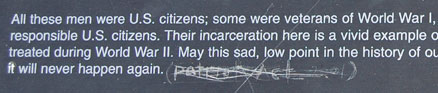
Several miles north of Moab, Utah, on Highway 191, there’s an Historical Interest marker to commemorate the Civilian Conservation Corps work camp at Dalton Wells. According to the plaque on the site, Camp DG-32 was used for public works through the Great Depression, and converted in 1943 into a concentration camp for Japanese Americans accused of being troublemakers at the civilian internment camps. The plaque offered an apology for the “total violation their civil rights,” and this admonition:
Civilian Conservation Corps DG-32 Dalton Wells
After which someone added in parentheses: “(Patriot Act, 2001)” and then as if to make the point, a next somebody scratched it out.

Full text of the marker:

Civilian Conservation Corps Camp DG-32 (Co. 234)
1935-1942

During the Great Depression of the 1930’s, CCC Camps were scattered all over the USA. They provided gainful employment to youth of the nation with work on public service projects. Between 1933 and 1942, four camps were located near Moab. Each camp worked on various natural resource project for the Soil Conservation Service, the National Park Service, and the forerunner of the Bureau of Land Management.

DG-32 was a long-lasting camp and typical of most with wooden, tar-paper covered barracks and buildings housing some 200 young men between the ages of 18 and 25. Enrollees came from the eastern states, and leadership was provided by the Army, Grazing Service, and local men experienced in construction and stock grazing needs.

Under spartan conditions, clothing, food, and housing were provided in the primitive camp. Pay was $30 per month with $25 sent home.

DG-32 projects included many range improvements: stock trails down the precipitous sandstone cliffs, spring developments, wells and stock ponds, eradication of rodents that competed with stock for feed, fences for corrals and pastures, reservoir dams, roads and bridges. These projects provided on the job training for the enrollees, besides the benefits they brought to the local economy. Many of these works are still in use today. The value of the camp and its works to Grand County is beyond estimation. It was a significant milestone that greatly influenced the economic history of the county.

All that remains of the camp today are the cottonwood trees planted by the enrollees that you see fronting this site, concrete slabs for buildings, graveled roads and rock-outlined walkways, the remains of an old windmill and a rock masonry water storage tank. These remnants signify the moving history of a time when America valiantly struggled to restore its economic stability and provide its young people with meaningful employment.

Japanese-American World War II Concentration Camp
1943

On January 11, 1943, a train pulled into Thompson Station north of here with armed Military Police guarding sixteen male American citizens of Japanese ancestry. While the locals of the town waited to cross the tracks, the entourage was loaded and transferred to the old abandoned “CCC” camp located here at Dalton Wells.

Their crime? They were classified as “troublemakers” in the Manzanar, California Relocation Center where they and their families had been forcibly located at the start of World War II. Removed from their homes and lands in California under a Presidential Executive Order, they were subject to the whim and mercy of poorly-trained bureaucrats and military personnel in the center. This Executive Presidential Order was the result of wartime hysteria, racial bigotry, and greed.

The original sixteen men were removed from Manzanar and brought here without the benefit of council. They did not have a formal hearing or proper arrest proceedings, and the action was in total violation of their civil rights. It was a process more compatible with fascism than democracy.

The inmates troubles worsened when and informer and confidant of the administration was beaten. An organizer of the mess hall workers was thrown into jail as a suspect. A meeting was held in the camp to protest the jailing and a riot resulted. Two inmates were killed by trigger-happy soldiers.

Other Japanese-American men were soon brought to the camp. Thirteen came from Gila River, Arizona, having been charged as being members of an organization which was fully sanctioned by camp officials. Ten more came from Manzanar as “suspected troublemakers.” Fifteen came from the Tule Lake, California, charged with refusing to register their availability for the draft and their loyalty to the U.S. under a set of confusing, denigrating requirements.

All these men were U.S. citizens; some were veterans of Work War I, others were family men, college graduates, and responsible U.S. citizens. Their incarceration here is a vivid example of how our Japanese-American citizens were treated during World War II. May this sad, low point in the history of our democracy never be forgotten, in the hope that it will never happen again.

The group was transferred by truck to an abandoned Indian school at Leupp, Arizona, on April 27, 1943. As those involved began to realize the inequality of the situation, the inmates were released back to relocation centers later that year. Thus, a black mark in the history of liberty and justice in the United States was ended.

Obama outed himself as a bigot when he crawled into bed with Rick Warren

Just like Clinton, Obama won’t hesitate to throw gays to the dogs if he thinks it will buy him a single vote from the rabid right. I told you he wasn’t to be trusted. And just as we saw with Prop 8, most of the black community only wants equal rights for themselves, not anybody else.
 
Say it out loud: Barack Obama is a coward.

Of course, Obama openly declared his bigotry against gays before the election, declaring they did not deserve equal rights in marriage. So this really shouldn’t surprise anyone that he would flip off the gay community like this. “Change we can believe in,” my ass.

During the campaign, I had so many arguments with his supporters, who insisted that he was the miracle that would make everything right with America. When confronted with the reality of his positions (as on gays) they would insist that was only to get elected, but, “just you watch,” once he was, then we would see the “real Obama.” Well, Ladies and Germs, the election is over, and there it is: the REAL Obama — flipping the bird to his supporters.

Only a moron would think his hiring every right winger he can find somehow doesn’t mean his is going to be a right wing administration.

What, am I the only one who realized what being a Chicago politician meant? It means he’s an asshole who can’t be trusted. But now I suspect a lot of his supporters are beginning to realize that. Though there will always be those who will defend him, no matter what — just like those Republicans who constantly made excuses for Dubya, or those born-again Christians who spend their entire lives dreaming up excuses for their “god.” People are pathetically stupid.

Disgraced: 66 nations in the UN have backed a resolution decriminalizing homosexuality.

Big hold outs: the USA, Russia, China, and the Vatican.

The nations that are more progressive than this dying backwater: Albania, Andorra, Argentina, Armenia, Australia, Austria, Belgium, Bolivia, Bosnia and Herzegovina, Brazil, Bulgaria, Canada, Cape Verde, Central African Republic, Chile, Colombia, Croatia, Cuba, Cyprus, Czech Republic, Denmark, Ecuador, Estonia, Finland, France, Gabon, Georgia, Germany, Greece, Guinea-Bissau, Hungary, Iceland, Ireland, Israel, Italy, Japan, Latvia, Liechtenstein, Lithuania, Luxembourg, Malta, Mauritius, Mexico, Montenegro, Nepal, Netherlands, New Zealand, Nicaragua, Norway, Paraguay, Poland, Portugal, Romania, San Marino, Sao Tome and Principe, Serbia, Slovakia, Slovenia, Spain, Sweden, Switzerland, the former Yugoslav Republic of Macedonia, Timor-Leste, United Kingdom, Uruguay, and Venezuela.

Excerpts from Thomas McCullock’s Dec 29 notes, thomasmc.com.

Wal-mart drives its chariot of predatory commerce over bones of Civil War dead

Union Soldiers fight on Brock Road 1864
WAL-MART wants to build a Virginia super-center on the edge of the memorial site of one of the most consequential battles of the Civil War. The Wilderness marked the first engagement between Generals Lee and Grant, ignited a forest fire which the soldiers fought through, and left 24,000 dead and wounded. Now 253 historians have joined in asking Wal-mart to reconsider.

Mr. Lee Scott, President and CEO
Walmart Stores, Inc.
702 SW 8th Street
Bentonville, Arkansas 72716-8611

Dear Mr. Scott:

I urge you in the strongest possible terms to pursue alternate building locations for the Walmart Supercenter proposed in Orange County, Virginia. The site currently under consideration lies within the historic boundary of the Wilderness Battlefield and only one quarter mile from the current boundary of the Wilderness Battlefield unit of Fredericksburg and Spotsylvania National Military Park.

The Battle of the Wilderness was among the most significant engagements of the Civil War. It marked the first time legendary generals Robert E. Lee and Ulysses S. Grant faced off against one another on the field of battle. During two days of desperate conflict in a harsh, unforgiving landscape tangled with underbrush, 4,000 Americans lost their lives and nearly 20,000 were wounded.

The proposed location will greatly increase traffic through the area and encourage further development to encroach upon and spoil the battlefield. This, in turn, will seriously degrade the experience for the many tens of thousands of heritage tourists who visit this National Park every year. The Wilderness Battlefield is easily the biggest tourist attraction in Orange County, with visitors coming from around the world to experience its serenity and contemplate its history and significance.

As a historian, I feel strongly that the Wilderness Battlefield is a unique historic and cultural treasure deserving careful stewardship. Currently only approximately 20 percent of the battlefield is protected by the National Park Service. If built, this Walmart would seriously undermine ongoing efforts to see more of this historic land preserved and deny future generations the opportunity to wander a landscape that has, until now, remained largely unchanged since 1864.

The Wilderness is an indelible part of our history, its very ground hallowed by the American blood spilled there, and it cannot be moved. Surely Walmart can identify a site that would meet its needs without changing the very character of the battlefield.

There are many places in central Virginia to build a commercial development, but there is only one Wilderness Battlefield. Please respect our great nation’s history and move your store farther away from this historic site and National Park.

Signed,

* Terrie Aamodt, Walla Walla University
* Edward D. Abrahams, Silver Spring, Md.
* Sean P. Adams, University of Florida
* Garry Adelman, History Associates, Inc.
* Nicholas Aieta, the Marlborough School, West Springfield, Mass.
* A.J. Aiseirithe, Washington, D.C.
* James Anderson, Ashburn, Va.
* Adam Arenson, University of Texas
* Jonathan M. Atkins, Berry College
* Arthur H. Auten, University of Hartford
* David Bard, Concord College
* Alwyn Barr, Texas Tech University
* Craig A. Bauer, Metairie, La.
* Erik Bauer, West Hollywood, Calif.
* Dale Baum, Texas A&M University
* Edwin C. Bearss, Historian emeritus, National Park Service
* Caryn Cosse Bell, University of Massachusetts at Lowell
* Jeffrey R. Bennett, Waterford, N.Y.
* Shannon Bennett, Ellettsville, Ind.
* Melvyn S. Berger, Newton, Mass.
* Arthur W. Bergeron, Shippensburg, Pa.
* Edward H. Bergerstrom, Port Richey, Fla.
* Eugene H. Berwanger, Colorado State University
* Fred W. Beuttler, Deputy Historian, U.S. House of Representatives
* Darrel Bigham, University of Southern Indiana
* John Bloom, Las Cruces, N.M.
* Frederick J. Blue, Youngstown State University
* Christopher Bobal, Lees Summit, Mo.
* Thomas Bockhorn, Huntsville, Ala.
* Keith Bohannon, University of West Georgia
* Phillip S. Bolger, San Diego, Calif.
* Patrick Boyd, the Pomfret School, Pomfret, Conn.
* Vernon S. Braswell, Corpus Christi, Tex.
* Roger D. Bridges, Bloomington, Ill.
* Ronald S. Brockway, Regis University
* Col. George M. Brooke, III, USMC (Ret.), Lexington, Va.
* Bruce A. Brown, Cypress, Calif.
* Norman D. Brown, University of Texas, Austen, Tex.
* David Brush, the Pomfret School, Pomfret, Conn.
* Jim Burgess, Manassas National Battlefield, Va.
* Ken Burns, Walpole, N.H.
* Brian Burton, Ferndale, Wash.
* Victoria Bynum, Texas State University-San Marcos
* Peter S. Carmichael, West Virginia University
* Marius M. Carriere, Christian Brothers University
* Katherine Cassioppi, National-Louis University
* Gary Casteel, Lexington, Va.
* Jane Turner Censer, George Mason University
* William Cheek, San Diego State University
* John Cimprich, Thomas More College
* Thomas G. Clemens, Hagerstown Community College
* Leon F. Cohn, Plantation, Fla.
* Thomas B. Colbert, Marshalltown Community College
* James R. Connor, Chancellor emeritus University of Wisconsin-Whitewater
* William J. Cooper, Jr., Louisiana State University
* Janet L. Coryell, Western Michigan University
* Charles E. Coulter, Yankton, S.D.
* Robert E. Curran, Richmond, Ky.
* Thomas F. Curran, Saint Louis, Mo.
* Gordon E. Dammann, National Museum of Civil War Medicine
* Guy Stephen Davis, Atlanta, Ga.
* William C. “Jack” Davis
* Joseph G. Dawson, III, Texas A&M University
* Mary DeCredico, United States Naval Academy
* James Lyle DeMarce, Arlington, Va.
* Charles B. Dew, Williams College
* Steven Deyle, University of Houston
* Richard DiNardo, Marine Corps Command and Staff College
* Luis-Alejandro Dinnella-Borrego, Warwick, N.Y.
* Richard R. Duncan, Alexandria, Va.
* Kenneth Durr, History Associates, Inc.
* David Dykstra, Poolesville, Md.
* Mark Elliott, University of North Carolina at Greensboro
* Robert F. Engs, University of Pennsylvania
* C. Wyatt Evans, Drew University
* Daniel Feller, University of Tennessee
* Rex H. Felton, Tiffin, Ohio
* Paul Finkelman, Albany Law School
* Jeff Fioravanti, Lynn, Mass.
* Joseph C. Fitzharris, University of Saint Thomas
* J.K. Folmarm California, Minn.
* George B. Forgie, University of Texas Austin
* Lee W. Formwalt, Organization of American Historians
* Janet B. Frazer, Narberth, Pa.
* Gary W. Gallagher, University of Virginia, Charlottesville, Va.
* Jonathan Gantt, Columbia College
* Jason Gart, History Associates, Inc.
* Louis S. Gerteis, University of Missouri, St. Louis
* Kate C. Gillin, the Pomfret School, Pomfret, Conn.
* Mary Giunta, Edinburg, Va.
* Martin K. Gordon, Columbia, Md.
* Cathy Gorn, University of Maryland
* Thomas M. Grace, Amherst, N.Y.
* Susan W. Gray, Severna Park, Md.
* A. Wilson Greene, Pamplin Historical Park and National Museum of the Civil War Soldier
* Debra F. Greene, Jefferson City, Mo.
* Jim Griffin, Frisco, Tex.
* Linda J. Guy, Clearville, Pa.
* Edward J. Hagerty, American Military University
* Alfred W. Hahn, Midlothian, Va.
* Judith Lee Hallock, South Setauket, N.Y.
* Jerry Harlow, President, Trevilian Station Battlefield Foundation
* D. Scott Hartwig, Gettysburg National Military Park, Pa.
* David S. Heidler, Colorado State University
* Jeannie Heidler, United States Air Force Academy
* John S. Heiser, Gettysburg National Military Park, Pa.
* Earl J. Hess, Lincoln Memorial University
* Libra Hilde, San Jose State University
* T. John Hillmer, Jr., Wilson’s Creek National Battlefield, Mo.
* David Hochfelder, State University of New York – Albany
* Sylvia Hoffert, Texas A&M University
* Patrick Hotard, Philadelphia, Pa.
* Richard Houston, Harwich, Mass.
* Randal L. Hoyer, Madonna University
* Richard L. Hutchison, Fort Worth, Tex.
* Brian M. Ingrassia, Georgia State University
* Perry D. Jamieson, Crofton, Md.
* Jim Jobe, Fort Donelson National Battlefield, Tenn.
* Willie Ray Johnson, Kennesaw Mountain National Battlefield Park, Ga.
* Vivian Lee Joyner, New Hill, N.C.
* Whitmel M. Joyner, New Hill, N.C.
* Walter D. Kamphoefner, Texas A&M University
* Amalie M. Kass, Harvard Medical School
* Philip M. Katz, Washington, D.C.
* Brad Keefer, Kent State University
* Brian J. Kenny, Denver, Co.
* Victoria A. Kin, San Antonio, Tex.
* George W. Knepper, University of Akron
* Christopher Kolakowski, National Museum of the U.S. Army Reserve
* Carl E. Kramer, Indiana University Southeast
* Arnold Krammer, Texas A&M University
* Robert K. Krick, Fredericksburg, Va.
* Michael E. Krivdo, Texas A&M University
* Benjamin Labaree, Saint Alban’s School, Washington, D.C.
* Dan Laney, Austin, Tex.
* Connie Langum, Wilson’s Creek National Battlefield, Mo.
* William P. Leeman, Coventry, R.I.
* Kevin Levin, Charlottesville, Va.
* Richard G. Lowe, University of North Texas
* Robert W. Lowery, Jr., Newport News, Va.
* M. Philip Lucas, Cornell College
* R. Wayne Mahood, Geneseo, N.Y.
* Daniel Martin, Lancaster, Pa.
* William Marvel, South Conway, N.H.
* Matthew Mason, Brigham Young University
* Dinah M. Mayo-Bobee, University of Massachusetts, Amherst
* George T. Mazuzan, Springfield, Va.
* Nathan McAlister, Hoyt, Kan.
* David McCullough
* Dennis K. McDaniel, Washington, D.C.
* James M. McPherson, Princeton University
* Kathleen G. McKesson, Eighty Four, Pa.
* James G. Mendez, Chicago, Ill.
* Brian Craig Miller, Emporia State University
* Roger E. Miller, Eagle River, Alaska.
* Wilbur R. Miller, State University of New York – Stony Brook
* Eric J. Mink, Fredericksburg, Va.
* Robert E. Mitchell, Brookline, Mass.
* John Moody, Orange Park, Fla.
* Richard Moore, Woodbridge, Va.
* Richard Morey, Kent Place School, Summit, N.J.
* Geoffrey Morrison, Saint Louis, Mo.
* Brenda Murray, North Pole, Alaska.
* Richard J. Myers, Doylestown, Pa.
* Eric Nedergaard, Mesa, Ariz.
* Robert D. Neuleib, Normal, Ill.
* Kenneth Noe, Auburn University
* Justin Oakley, Martinsville, Ind.
* Kristen Oertel, Millsaps College
* Marvin Olson, La Crescenta, Ca.
* Beverly Palmer, Claremont, Ca.
* John T. Payne, Lone Star College
* Graham Peck, Saint Xavier University
* William D. Pederson, Louisiana State University, Shreveport
* William E. Pellerin, Santa Barbara, Ca.
* Don Pfanz, Fredericksburg and Spotsylvania National Military Park, Va.
* Michael Pierson, University of Massachusetts, Lowell
* Kermit J. Pike, Western Reserve Historical Society, Mentor, Ohio
* Ann Poe, Alexandria, Va.
* Kieth Ploakoff, Rossmoor, Ca.
* Lawrence N. Powell, Tulane University
* Adam J. Pratt. Baton Rouge, La.
* Gerald Prokopowicz, East Carolina University
* John Quist, Shippensburg University
* Steven J. Rauch, Evans, Ga.
* S. Waite Rawls, III, Museum of the Confederacy
* Carol Reardon, Pennsylvania State University
* Douglas Reasner, Durant, Iowa
* Michael Reis, History Associates, Inc.
* Robert V. Remini, Office of the Historian, U.S. House of Representatives
* James Renberg, Southern Pines, N.C.
* Gordon Rhea, Mount Pleasant, S.C.
* Jean Richardson, Buffalo State College
* Jeffrey Richman, Brooklyn, N.Y.
* Harris D. Riley, Jr., M.D., Nashville, Tenn.
* James I. Robertson, Jr., Virginia Tech
* Stephen I. Rockenbach, Virginia State University
* Sylvia Rodrigue, Baton Rouge, La.
* Rodney A. Ross, Center for Legislative Archives, Washington, D.C.
* Jennifer Ross-Nazzal, Johnson Space Center
* Jeffrey J. Safford, Montana State University
* Frank Scaturro, New Hyde Park, N.Y.
* Mark S. Schantz, Hendrix College
* Laurence D. Schiller, Deerfield, Ill.
* Christopher A. Schnell, Springfield, Ill.
* Glenna R. Schroeder-Lein, Springfield, Ill.
* Frederick Schult, Jr., New York University
* Donald L. Schupp, Warrenton, Va.
* Richard D. Schwartz, Morristown, N.J.
* Cynthia Seacord, Schenectady, N.Y.
* Tomas Seaver, Woonsocket, R.I.
* Diane Shalda, Chicago Military Academy
* Peter D. Sheridan, Torrance, Ca.
* Mark Snyder, Akron, Ohio
* John Sotak, O.S.A., New Lenox, Ill.
* Clay W. Stuckey, DDS, Bedford, Ind.
* Carlyn Swaim, History Associates, Inc.
* Andrew Talkov, Virginia Historical Society
* Robert A. Taylor, Florida Institute of Technology
* Paul H. Tedesco, Northeastern University
* James Thayer, Milford, Mass.
* Emory M. Thomas, University of Georgia
* JoAnne Thomas, Peoria, Ill.
* Joseph Trent, Worcester, Mass.
* Tony R. Trimble, Plainfield, Ind.
* I. Bruce Turner, University of Louisiana at Lafayette
* Edwin C. Ulmer, Jr., Feasterville, Pa.
* Charles W. Van Adder, Forked River, N.J.
* Charles Vincent, Baker, La.
* Joseph F. von Deck, Ashburnham, Ma.
* Brent Vosburg, Elizabethtown, N.J.
* Robert Voss, Lincoln, Neb.
* George N. Vourlojianis, Lorain County Community College
* Christopher R. Waldrep, San Francisco State University
* John Weaver, Tipp City, Ohio
* Robert Welch, Ames, Iowa
* Lowell E. Wenger, Cincinnati, Ohio
* Jeffrey Wert, Centre Hall, Pa.
* Bruce E. Wilburn, Glen Allen, Va.
* Diana I. Williams, Wellesley College
* Mary Williams, Fort Davis National Historic Site, Tex.
* Terry Winschel, Vicksburg National Military Park, Miss.
* Roger Winthrop, Lansing, Mich.
* Eric J. Wittenberg, Columbus, Ohio
* Ralph A. Wooster, Lamar University
* Donald Yacovone, Harvard University
* Shirley J. Yee, University of Washington
* Mitchell Yockelson, National Archives and Records Administration
* William D. Young, Maple Woods Community College
* Mary E. Younger, Dayton, Ohio
* Jack Zevin, Queens College, City University of New York

Harold Pinter on drama and US banditry

“What has happened to our moral sensibility? Did we ever have any? What do these words mean? Do they refer to a term very rarely employed these days – conscience? A conscience to do not only with our own acts but to do with our shared responsibility in the acts of others? Is all this dead?”
-Harold Pinter (1930-2008)

I’m reminded of a friend of mine who asked “You know what PTSD is? It’s a bad conscience.”

An outspoken critic of the Iraq War, Harold Pinter died Christmas Eve. Here is the address he prerecorded for his acceptance of the Nobel Prize in 2005, when he had become too infirm to attend in person.

Nobel Lecture: Art, Truth & Politics

In 1958 I wrote the following:

‘There are no hard distinctions between what is real and what is unreal, nor between what is true and what is false. A thing is not necessarily either true or false; it can be both true and false.’

I believe that these assertions still make sense and do still apply to the exploration of reality through art. So as a writer I stand by them but as a citizen I cannot. As a citizen I must ask: What is true? What is false?

Truth in drama is forever elusive. You never quite find it but the search for it is compulsive. The search is clearly what drives the endeavour. The search is your task. More often than not you stumble upon the truth in the dark, colliding with it or just glimpsing an image or a shape which seems to correspond to the truth, often without realising that you have done so. But the real truth is that there never is any such thing as one truth to be found in dramatic art. There are many. These truths challenge each other, recoil from each other, reflect each other, ignore each other, tease each other, are blind to each other. Sometimes you feel you have the truth of a moment in your hand, then it slips through your fingers and is lost.

I have often been asked how my plays come about. I cannot say. Nor can I ever sum up my plays, except to say that this is what happened. That is what they said. That is what they did.

Most of the plays are engendered by a line, a word or an image. The given word is often shortly followed by the image. I shall give two examples of two lines which came right out of the blue into my head, followed by an image, followed by me.

The plays are The Homecoming and Old Times. The first line of The Homecoming is ‘What have you done with the scissors?’ The first line of Old Times is ‘Dark.’

In each case I had no further information.

In the first case someone was obviously looking for a pair of scissors and was demanding their whereabouts of someone else he suspected had probably stolen them. But I somehow knew that the person addressed didn’t give a damn about the scissors or about the questioner either, for that matter.

‘Dark’ I took to be a description of someone’s hair, the hair of a woman, and was the answer to a question. In each case I found myself compelled to pursue the matter. This happened visually, a very slow fade, through shadow into light.

I always start a play by calling the characters A, B and C.

In the play that became The Homecoming I saw a man enter a stark room and ask his question of a younger man sitting on an ugly sofa reading a racing paper. I somehow suspected that A was a father and that B was his son, but I had no proof. This was however confirmed a short time later when B (later to become Lenny) says to A (later to become Max), ‘Dad, do you mind if I change the subject? I want to ask you something. The dinner we had before, what was the name of it? What do you call it? Why don’t you buy a dog? You’re a dog cook. Honest. You think you’re cooking for a lot of dogs.’ So since B calls A ‘Dad’ it seemed to me reasonable to assume that they were father and son. A was also clearly the cook and his cooking did not seem to be held in high regard. Did this mean that there was no mother? I didn’t know. But, as I told myself at the time, our beginnings never know our ends.

‘Dark.’ A large window. Evening sky. A man, A (later to become Deeley), and a woman, B (later to become Kate), sitting with drinks. ‘Fat or thin?’ the man asks. Who are they talking about? But I then see, standing at the window, a woman, C (later to become Anna), in another condition of light, her back to them, her hair dark.

It’s a strange moment, the moment of creating characters who up to that moment have had no existence. What follows is fitful, uncertain, even hallucinatory, although sometimes it can be an unstoppable avalanche. The author’s position is an odd one. In a sense he is not welcomed by the characters. The characters resist him, they are not easy to live with, they are impossible to define. You certainly can’t dictate to them. To a certain extent you play a never-ending game with them, cat and mouse, blind man’s buff, hide and seek. But finally you find that you have people of flesh and blood on your hands, people with will and an individual sensibility of their own, made out of component parts you are unable to change, manipulate or distort.

So language in art remains a highly ambiguous transaction, a quicksand, a trampoline, a frozen pool which might give way under you, the author, at any time.

But as I have said, the search for the truth can never stop. It cannot be adjourned, it cannot be postponed. It has to be faced, right there, on the spot.

Political theatre presents an entirely different set of problems. Sermonising has to be avoided at all cost. Objectivity is essential. The characters must be allowed to breathe their own air. The author cannot confine and constrict them to satisfy his own taste or disposition or prejudice. He must be prepared to approach them from a variety of angles, from a full and uninhibited range of perspectives, take them by surprise, perhaps, occasionally, but nevertheless give them the freedom to go which way they will. This does not always work. And political satire, of course, adheres to none of these precepts, in fact does precisely the opposite, which is its proper function.

In my play The Birthday Party I think I allow a whole range of options to operate in a dense forest of possibility before finally focussing on an act of subjugation.

Mountain Language pretends to no such range of operation. It remains brutal, short and ugly. But the soldiers in the play do get some fun out of it. One sometimes forgets that torturers become easily bored. They need a bit of a laugh to keep their spirits up. This has been confirmed of course by the events at Abu Ghraib in Baghdad. Mountain Language lasts only 20 minutes, but it could go on for hour after hour, on and on and on, the same pattern repeated over and over again, on and on, hour after hour.

Ashes to Ashes, on the other hand, seems to me to be taking place under water. A drowning woman, her hand reaching up through the waves, dropping down out of sight, reaching for others, but finding nobody there, either above or under the water, finding only shadows, reflections, floating; the woman a lost figure in a drowning landscape, a woman unable to escape the doom that seemed to belong only to others.

But as they died, she must die too.

Political language, as used by politicians, does not venture into any of this territory since the majority of politicians, on the evidence available to us, are interested not in truth but in power and in the maintenance of that power. To maintain that power it is essential that people remain in ignorance, that they live in ignorance of the truth, even the truth of their own lives. What surrounds us therefore is a vast tapestry of lies, upon which we feed.

As every single person here knows, the justification for the invasion of Iraq was that Saddam Hussein possessed a highly dangerous body of weapons of mass destruction, some of which could be fired in 45 minutes, bringing about appalling devastation. We were assured that was true. It was not true. We were told that Iraq had a relationship with Al Quaeda and shared responsibility for the atrocity in New York of September 11th 2001. We were assured that this was true. It was not true. We were told that Iraq threatened the security of the world. We were assured it was true. It was not true.

The truth is something entirely different. The truth is to do with how the United States understands its role in the world and how it chooses to embody it.

But before I come back to the present I would like to look at the recent past, by which I mean United States foreign policy since the end of the Second World War. I believe it is obligatory upon us to subject this period to at least some kind of even limited scrutiny, which is all that time will allow here.

Everyone knows what happened in the Soviet Union and throughout Eastern Europe during the post-war period: the systematic brutality, the widespread atrocities, the ruthless suppression of independent thought. All this has been fully documented and verified.

But my contention here is that the US crimes in the same period have only been superficially recorded, let alone documented, let alone acknowledged, let alone recognised as crimes at all. I believe this must be addressed and that the truth has considerable bearing on where the world stands now. Although constrained, to a certain extent, by the existence of the Soviet Union, the United States’ actions throughout the world made it clear that it had concluded it had carte blanche to do what it liked.

Direct invasion of a sovereign state has never in fact been America’s favoured method. In the main, it has preferred what it has described as ‘low intensity conflict’. Low intensity conflict means that thousands of people die but slower than if you dropped a bomb on them in one fell swoop. It means that you infect the heart of the country, that you establish a malignant growth and watch the gangrene bloom. When the populace has been subdued – or beaten to death – the same thing – and your own friends, the military and the great corporations, sit comfortably in power, you go before the camera and say that democracy has prevailed. This was a commonplace in US foreign policy in the years to which I refer.

The tragedy of Nicaragua was a highly significant case. I choose to offer it here as a potent example of America’s view of its role in the world, both then and now.

I was present at a meeting at the US embassy in London in the late 1980s.

The United States Congress was about to decide whether to give more money to the Contras in their campaign against the state of Nicaragua. I was a member of a delegation speaking on behalf of Nicaragua but the most important member of this delegation was a Father John Metcalf. The leader of the US body was Raymond Seitz (then number two to the ambassador, later ambassador himself). Father Metcalf said: ‘Sir, I am in charge of a parish in the north of Nicaragua. My parishioners built a school, a health centre, a cultural centre. We have lived in peace. A few months ago a Contra force attacked the parish. They destroyed everything: the school, the health centre, the cultural centre. They raped nurses and teachers, slaughtered doctors, in the most brutal manner. They behaved like savages. Please demand that the US government withdraw its support from this shocking terrorist activity.’

Raymond Seitz had a very good reputation as a rational, responsible and highly sophisticated man. He was greatly respected in diplomatic circles. He listened, paused and then spoke with some gravity. ‘Father,’ he said, ‘let me tell you something. In war, innocent people always suffer.’ There was a frozen silence. We stared at him. He did not flinch.

Innocent people, indeed, always suffer.

Finally somebody said: ‘But in this case “innocent people” were the victims of a gruesome atrocity subsidised by your government, one among many. If Congress allows the Contras more money further atrocities of this kind will take place. Is this not the case? Is your government not therefore guilty of supporting acts of murder and destruction upon the citizens of a sovereign state?’

Seitz was imperturbable. ‘I don’t agree that the facts as presented support your assertions,’ he said.

As we were leaving the Embassy a US aide told me that he enjoyed my plays. I did not reply.

I should remind you that at the time President Reagan made the following statement: ‘The Contras are the moral equivalent of our Founding Fathers.’

The United States supported the brutal Somoza dictatorship in Nicaragua for over 40 years. The Nicaraguan people, led by the Sandinistas, overthrew this regime in 1979, a breathtaking popular revolution.

The Sandinistas weren’t perfect. They possessed their fair share of arrogance and their political philosophy contained a number of contradictory elements. But they were intelligent, rational and civilised. They set out to establish a stable, decent, pluralistic society. The death penalty was abolished. Hundreds of thousands of poverty-stricken peasants were brought back from the dead. Over 100,000 families were given title to land. Two thousand schools were built. A quite remarkable literacy campaign reduced illiteracy in the country to less than one seventh. Free education was established and a free health service. Infant mortality was reduced by a third. Polio was eradicated.

The United States denounced these achievements as Marxist/Leninist subversion. In the view of the US government, a dangerous example was being set. If Nicaragua was allowed to establish basic norms of social and economic justice, if it was allowed to raise the standards of health care and education and achieve social unity and national self respect, neighbouring countries would ask the same questions and do the same things. There was of course at the time fierce resistance to the status quo in El Salvador.

I spoke earlier about ‘a tapestry of lies’ which surrounds us. President Reagan commonly described Nicaragua as a ‘totalitarian dungeon’. This was taken generally by the media, and certainly by the British government, as accurate and fair comment. But there was in fact no record of death squads under the Sandinista government. There was no record of torture. There was no record of systematic or official military brutality. No priests were ever murdered in Nicaragua. There were in fact three priests in the government, two Jesuits and a Maryknoll missionary. The totalitarian dungeons were actually next door, in El Salvador and Guatemala. The United States had brought down the democratically elected government of Guatemala in 1954 and it is estimated that over 200,000 people had been victims of successive military dictatorships.

Six of the most distinguished Jesuits in the world were viciously murdered at the Central American University in San Salvador in 1989 by a battalion of the Alcatl regiment trained at Fort Benning, Georgia, USA. That extremely brave man Archbishop Romero was assassinated while saying mass. It is estimated that 75,000 people died. Why were they killed? They were killed because they believed a better life was possible and should be achieved. That belief immediately qualified them as communists. They died because they dared to question the status quo, the endless plateau of poverty, disease, degradation and oppression, which had been their birthright.

The United States finally brought down the Sandinista government. It took some years and considerable resistance but relentless economic persecution and 30,000 dead finally undermined the spirit of the Nicaraguan people. They were exhausted and poverty stricken once again. The casinos moved back into the country. Free health and free education were over. Big business returned with a vengeance. ‘Democracy’ had prevailed.

But this ‘policy’ was by no means restricted to Central America. It was conducted throughout the world. It was never-ending. And it is as if it never happened.

The United States supported and in many cases engendered every right wing military dictatorship in the world after the end of the Second World War. I refer to Indonesia, Greece, Uruguay, Brazil, Paraguay, Haiti, Turkey, the Philippines, Guatemala, El Salvador, and, of course, Chile. The horror the United States inflicted upon Chile in 1973 can never be purged and can never be forgiven.

Hundreds of thousands of deaths took place throughout these countries. Did they take place? And are they in all cases attributable to US foreign policy? The answer is yes they did take place and they are attributable to American foreign policy. But you wouldn’t know it.

It never happened. Nothing ever happened. Even while it was happening it wasn’t happening. It didn’t matter. It was of no interest. The crimes of the United States have been systematic, constant, vicious, remorseless, but very few people have actually talked about them. You have to hand it to America. It has exercised a quite clinical manipulation of power worldwide while masquerading as a force for universal good. It’s a brilliant, even witty, highly successful act of hypnosis.

I put to you that the United States is without doubt the greatest show on the road. Brutal, indifferent, scornful and ruthless it may be but it is also very clever. As a salesman it is out on its own and its most saleable commodity is self love. It’s a winner. Listen to all American presidents on television say the words, ‘the American people’, as in the sentence, ‘I say to the American people it is time to pray and to defend the rights of the American people and I ask the American people to trust their president in the action he is about to take on behalf of the American people.’

It’s a scintillating stratagem. Language is actually employed to keep thought at bay. The words ‘the American people’ provide a truly voluptuous cushion of reassurance. You don’t need to think. Just lie back on the cushion. The cushion may be suffocating your intelligence and your critical faculties but it’s very comfortable. This does not apply of course to the 40 million people living below the poverty line and the 2 million men and women imprisoned in the vast gulag of prisons, which extends across the US.

The United States no longer bothers about low intensity conflict. It no longer sees any point in being reticent or even devious. It puts its cards on the table without fear or favour. It quite simply doesn’t give a damn about the United Nations, international law or critical dissent, which it regards as impotent and irrelevant. It also has its own bleating little lamb tagging behind it on a lead, the pathetic and supine Great Britain.

What has happened to our moral sensibility? Did we ever have any? What do these words mean? Do they refer to a term very rarely employed these days – conscience? A conscience to do not only with our own acts but to do with our shared responsibility in the acts of others? Is all this dead? Look at Guantanamo Bay. Hundreds of people detained without charge for over three years, with no legal representation or due process, technically detained forever. This totally illegitimate structure is maintained in defiance of the Geneva Convention. It is not only tolerated but hardly thought about by what’s called the ‘international community’. This criminal outrage is being committed by a country, which declares itself to be ‘the leader of the free world’. Do we think about the inhabitants of Guantanamo Bay? What does the media say about them? They pop up occasionally – a small item on page six. They have been consigned to a no man’s land from which indeed they may never return. At present many are on hunger strike, being force-fed, including British residents. No niceties in these force-feeding procedures. No sedative or anaesthetic. Just a tube stuck up your nose and into your throat. You vomit blood. This is torture. What has the British Foreign Secretary said about this? Nothing. What has the British Prime Minister said about this? Nothing. Why not? Because the United States has said: to criticise our conduct in Guantanamo Bay constitutes an unfriendly act. You’re either with us or against us. So Blair shuts up.

The invasion of Iraq was a bandit act, an act of blatant state terrorism, demonstrating absolute contempt for the concept of international law. The invasion was an arbitrary military action inspired by a series of lies upon lies and gross manipulation of the media and therefore of the public; an act intended to consolidate American military and economic control of the Middle East masquerading – as a last resort – all other justifications having failed to justify themselves – as liberation. A formidable assertion of military force responsible for the death and mutilation of thousands and thousands of innocent people.

We have brought torture, cluster bombs, depleted uranium, innumerable acts of random murder, misery, degradation and death to the Iraqi people and call it ‘bringing freedom and democracy to the Middle East’.

How many people do you have to kill before you qualify to be described as a mass murderer and a war criminal? One hundred thousand? More than enough, I would have thought. Therefore it is just that Bush and Blair be arraigned before the International Criminal Court of Justice. But Bush has been clever. He has not ratified the International Criminal Court of Justice. Therefore if any American soldier or for that matter politician finds himself in the dock Bush has warned that he will send in the marines. But Tony Blair has ratified the Court and is therefore available for prosecution. We can let the Court have his address if they’re interested. It is Number 10, Downing Street, London.

Death in this context is irrelevant. Both Bush and Blair place death well away on the back burner. At least 100,000 Iraqis were killed by American bombs and missiles before the Iraq insurgency began. These people are of no moment. Their deaths don’t exist. They are blank. They are not even recorded as being dead. ‘We don’t do body counts,’ said the American general Tommy Franks.

Early in the invasion there was a photograph published on the front page of British newspapers of Tony Blair kissing the cheek of a little Iraqi boy. ‘A grateful child,’ said the caption. A few days later there was a story and photograph, on an inside page, of another four-year-old boy with no arms. His family had been blown up by a missile. He was the only survivor. ‘When do I get my arms back?’ he asked. The story was dropped. Well, Tony Blair wasn’t holding him in his arms, nor the body of any other mutilated child, nor the body of any bloody corpse. Blood is dirty. It dirties your shirt and tie when you’re making a sincere speech on television.

The 2,000 American dead are an embarrassment. They are transported to their graves in the dark. Funerals are unobtrusive, out of harm’s way. The mutilated rot in their beds, some for the rest of their lives. So the dead and the mutilated both rot, in different kinds of graves.

Here is an extract from a poem by Pablo Neruda, ‘I’m Explaining a Few Things’:

And one morning all that was burning,
one morning the bonfires
leapt out of the earth
devouring human beings
and from then on fire,
gunpowder from then on,
and from then on blood.
Bandits with planes and Moors,
bandits with finger-rings and duchesses,
bandits with black friars spattering blessings
came through the sky to kill children
and the blood of children ran through the streets
without fuss, like children’s blood.

Jackals that the jackals would despise
stones that the dry thistle would bite on and spit out,
vipers that the vipers would abominate.

Face to face with you I have seen the blood
of Spain tower like a tide
to drown you in one wave
of pride and knives.

Treacherous
generals:
see my dead house,
look at broken Spain:
from every house burning metal flows
instead of flowers
from every socket of Spain
Spain emerges
and from every dead child a rifle with eyes
and from every crime bullets are born
which will one day find
the bull’s eye of your hearts.

And you will ask: why doesn’t his poetry
speak of dreams and leaves
and the great volcanoes of his native land.

Come and see the blood in the streets.
Come and see
the blood in the streets.
Come and see the blood
in the streets!

Let me make it quite clear that in quoting from Neruda’s poem I am in no way comparing Republican Spain to Saddam Hussein’s Iraq. I quote Neruda because nowhere in contemporary poetry have I read such a powerful visceral description of the bombing of civilians.

I have said earlier that the United States is now totally frank about putting its cards on the table. That is the case. Its official declared policy is now defined as ‘full spectrum dominance’. That is not my term, it is theirs. ‘Full spectrum dominance’ means control of land, sea, air and space and all attendant resources.

The United States now occupies 702 military installations throughout the world in 132 countries, with the honourable exception of Sweden, of course. We don’t quite know how they got there but they are there all right.

The United States possesses 8,000 active and operational nuclear warheads. Two thousand are on hair trigger alert, ready to be launched with 15 minutes warning. It is developing new systems of nuclear force, known as bunker busters. The British, ever cooperative, are intending to replace their own nuclear missile, Trident. Who, I wonder, are they aiming at? Osama bin Laden? You? Me? Joe Dokes? China? Paris? Who knows? What we do know is that this infantile insanity – the possession and threatened use of nuclear weapons – is at the heart of present American political philosophy. We must remind ourselves that the United States is on a permanent military footing and shows no sign of relaxing it.

Many thousands, if not millions, of people in the United States itself are demonstrably sickened, shamed and angered by their government’s actions, but as things stand they are not a coherent political force – yet. But the anxiety, uncertainty and fear which we can see growing daily in the United States is unlikely to diminish.

I know that President Bush has many extremely competent speech writers but I would like to volunteer for the job myself. I propose the following short address which he can make on television to the nation. I see him grave, hair carefully combed, serious, winning, sincere, often beguiling, sometimes employing a wry smile, curiously attractive, a man’s man.

‘God is good. God is great. God is good. My God is good. Bin Laden’s God is bad. His is a bad God. Saddam’s God was bad, except he didn’t have one. He was a barbarian. We are not barbarians. We don’t chop people’s heads off. We believe in freedom. So does God. I am not a barbarian. I am the democratically elected leader of a freedom-loving democracy. We are a compassionate society. We give compassionate electrocution and compassionate lethal injection. We are a great nation. I am not a dictator. He is. I am not a barbarian. He is. And he is. They all are. I possess moral authority. You see this fist? This is my moral authority. And don’t you forget it.’

A writer’s life is a highly vulnerable, almost naked activity. We don’t have to weep about that. The writer makes his choice and is stuck with it. But it is true to say that you are open to all the winds, some of them icy indeed. You are out on your own, out on a limb. You find no shelter, no protection – unless you lie – in which case of course you have constructed your own protection and, it could be argued, become a politician.

I have referred to death quite a few times this evening. I shall now quote a poem of my own called ‘Death’.

Where was the dead body found?
Who found the dead body?
Was the dead body dead when found?
How was the dead body found?

Who was the dead body?

Who was the father or daughter or brother
Or uncle or sister or mother or son
Of the dead and abandoned body?

Was the body dead when abandoned?
Was the body abandoned?
By whom had it been abandoned?

Was the dead body naked or dressed for a journey?

What made you declare the dead body dead?
Did you declare the dead body dead?
How well did you know the dead body?
How did you know the dead body was dead?

Did you wash the dead body
Did you close both its eyes
Did you bury the body
Did you leave it abandoned
Did you kiss the dead body

When we look into a mirror we think the image that confronts us is accurate. But move a millimetre and the image changes. We are actually looking at a never-ending range of reflections. But sometimes a writer has to smash the mirror – for it is on the other side of that mirror that the truth stares at us.

I believe that despite the enormous odds which exist, unflinching, unswerving, fierce intellectual determination, as citizens, to define the real truth of our lives and our societies is a crucial obligation which devolves upon us all. It is in fact mandatory.

If such a determination is not embodied in our political vision we have no hope of restoring what is so nearly lost to us – the dignity of man.

Alternative Christmas Message of Iran’s President, Mahmoud Ahmadinejad, to the British people

Baby JesusMaybe it’s of interest to have this Translation of the Alternative Christmas Message, 24 December 2008 on hand, since there is sure to be a lot of hateful propaganda in the US and British press about it. Yes, there already has been. Here you can read the translation of the Alternative Christmas Message, delivered by the President of Iran, Mahmoud Ahmadinejad.

“In the Name of God the Compassionate, the Merciful.

Upon the anniversary of the birth of Jesus, Son of Mary, the Word of God, the Messenger of mercy, I would like to congratulate the followers of Abrahamic faiths, especially the followers of Jesus Christ, and the people of Britain.

The Almighty created the universe for human beings and human beings for Himself. He created every human being with the ability to reach the heights of perfection. He called on man to make every effort to live a good life in this world and to work to achieve his everlasting life.

On this difficult and challenging journey of man from dust to the divine, He did not leave humanity to its own devices. He chose from those He created the most excellent as His Prophets to guide humanity.

All Prophets called for the worship of God, for love and brotherhood, for the establishment of justice and for love in human society. Jesus, the Son of Mary, is the standard-bearer of justice, of love for our fellow human beings, of the fight against tyranny, discrimination and injustice.

All the problems that have bedevilled humanity throughout the ages came about because humanity followed an evil path and disregarded the message of the Prophets. Now as human society faces a myriad of problems and a succession of complex crises, the root causes can be found in humanity’s rejection of that message, in particular the indifference of some governments and powers towards the teachings of the divine Prophets, especially those of Jesus Christ.

The crises in society, the family, morality, politics, security and the economy which have made life hard for humanity and continue to put great pressure on all nations have come about because the Prophets have been forgotten, the Almighty has been forgotten and some leaders are estranged from God.

If Christ were on earth today, undoubtedly He would stand with the people in opposition to bullying, ill-tempered and expansionist powers.

If Christ were on earth today, undoubtedly He would hoist the banner of justice and love for humanity to oppose warmongers, occupiers, terrorists and bullies the world over.

If Christ were on earth today, undoubtedly He would fight against the tyrannical policies of prevailing global economic and political systems, as He did in His lifetime. The solution to today’s problems is a return to the call of the divine Prophets. The solution to these crises is to follow the Prophets – they were sent by the Almighty for the good of humanity.

Today, the general will of nations is calling for fundamental change. This is now taking place. Demands for change, demands for transformation, demands for a return to human values are fast becoming the foremost demands of the nations of the world. The response to these demands must be real and true. The prerequisite to this change is a change in goals, intentions and directions. If tyrannical goals are repackaged in an attractive and deceptive package and imposed on nations again, the people, awakened, will stand up against them.

Fortunately, today, as crises and despair multiply, a wave of hope is gathering momentum. Hope for a brighter future and hope for the establishment of justice, hope for real peace, hope for finding virtuous and pious rulers who love the people and want to serve them – and this is what the Almighty has promised.

We believe, Jesus Christ will return, together with one of the children of the revered Messenger of Islam and will lead the world to love, brotherhood and justice. The responsibility of all followers of Christ and Abrahamic faiths is to prepare the way for the fulfilment of this divine promise and the arrival of that joyful, shining and wonderful age. I hope that the collective will of nations will unite in the not too distant future and with the grace of the Almighty Lord, that shining age will come to rule the earth.

Once again, I congratulate one and all on the anniversary of the birth of Jesus Christ. I pray for the New Year to be a year of happiness, prosperity, peace and brotherhood for humanity. I wish you every success and happiness.”

UN Ambassador speaks of the hidden genocide against the Somali people

The UN envoy to Somalia, Ahmedou Ould Abdallah, has said there is a “hidden genocide” taking place in the country. Left unsaid is that it is the United States of America that is responsible for this genocide, but at least the reality of the massacre was broadcast to the world so that hopefully some action might be taken, Somalia facing ‘hidden genocide’ What does it say about the character of the American people what they have done to Somalia?

Here in Colorado Springs, there is a group of pacifist liberal voters for the Democratic Party organized in the so-called Pikes Peak Justice and Peace commission. They have agitated through public rallies for more US military intervention into Africa despite being nominally a ‘Peace’ organization. They have done this saying that more US intervention into Africa was necessary to stop genocide from taking place! So one asks what have they said about this genocide against the people in Somalia where their own US government has been responsible for? What have they done to stop it? The answer to both these questions is that they have totally ignored what was going on. It has been of no interest to them.

Something very similar to this has taken place on the national level at the United for Peace and Justice ‘Peace’crat group, and all their local affiliates. What does that say about the character of the American liberal community? It really says to the general public that their supposed ‘protestations’ for ‘Peace’ should be taken with a big grain of salt. It also says that when these same people get onto the band wagon talking about genocide in regions of Sudan where the US government is itching to get further involved for multiple reasons all having absolutely nothing to do with stopping any sort of mayhem, that one should also weigh their inaction about not caring the least about people in Congo and Somalia, not to mention the continent of Africa as a whole. After all, the US government has been responsible for the destruction that is now causing this genocide in Somalia, but the liberal ‘Peace’crat voice is on MUTE.

The best we in the US can do to stop world genocides from taking place, is simply to understand the negative role ALL Us government intervention plays in creating world war zones. Their is not a positive role the US military has to play as long as we have a government run by the military-industrial-government complex. To call on this complex to do nice and decent things is just absolutely the worst thing to do. The call should be to eliminate this monstrous danger to the world, not advocate for its use somewhere or other.

UN Ambassador Abdallah’s voice will be ignored by the Powers that caused the hidden and silent genocide to occur in the first place unless other voices rise up and speak out. You won’t win many friends at the ‘Peace’crat groups for doing so, but doing so is a necessity. The US government is responsible for multiple genocides around the world taking place and we must move against the ‘Peace’ groups that barricade action from forming against these policies of Pentagon slaughtering. It’s time to get to work and demand better than what the liberal Democrats will ever have to offer.

Obama’s Afghanistan Surge and the ‘Peace’crat picnickers

democratic party flag wavingWhat’s that silence out there? It’s the silence of all those supposed peacniks who turn out to be nothing but picnickers for the Democratic Party cons who are behind adding more US troops into occupying Afghanistan. You won’t see them out protesting this new ‘Surge’ for war, or even talking about it.

In fact, the ‘Peace’crats main group, the UnUnited for Peace and Justice (UFPJ) has decided at its recent small and semi-national December Christmas picnic to try to change the whole subject from one of war to American economy. They will not be uniting with antiwar groups for building united Spring antiwar demonstrations, but will go it alone talking about how bad the economy is instead, and blah, blah, blah…. Whirled PEAs….

Feel free to go to their YES, We Won’t site and read their usual babble about what they won’t be doing. And much better to get the real dope on this outfit of ‘Peace’crat misfits, check out this reportage about their national get together … Antiwar organizing in the Obama era by Ashley Smith and Eric Ruder reporting on the debates at the national convention of United for Peace and Justice.

US racially motivated murders post Katrina investigated by Nation Magazine

black woman, New OrleansA.C. Thompson at the Nation Magazine has done a fine bit of investigative journalism published this last week titled, Katrina’s Hidden Race War. In it he investigates the murders of Blacks by Whites in that city after Hurricane Katrina hit, and speculates about how nobody at either local, state, or federal governmental levels seems in the least bit interested in investigating the White racist vigilante violence there, which left some untold number of Blacks murdered or severely injured.

This violence was in the first place really fomented by the news media and these same governmental bodies, and now America is basically expected to forget all that? Should we though?

The violence that is reported on here is quite parallel to the violence of hundreds of Mexican and Central American immigrants being murdered by US governmental immigration policies, usually out in the hot deserts of California and Arizona, but often times in Mexico itself. Then we get down to the racial murder of Arabs in Iraq, and the deadly bombings of Pashtun civilians in Pakistan and Afghanistan. Then let’s not forget the racially motivated pogroms against the Somali people. What unfolds to us as we contemplate all this, is just how genocidal the mentality really is up in Washington D.C., take a Cheney or give a Barack as it be. Seems like little changes in the USA through the decades? Oh, and did I mention Gaza?

‘Patriotic’ pacifists and ‘Peace’crats to hold UFPJ lobbyfest gathering in Chicago

Hillary and JesusUnited for Peace and Justice (UFPJ) will be holding a gathering in Chicago next week to start their plans for a 2009 Lobbyfest of Barack Obama. They still haven’t figured any of it out and most likely never will. Ostensibly the UFPJ has not decided on doing anything just yet and the gathering is for the group to supposedly decide just what should be done?

That’s all a big joke since the Democratic Party and liberal Christian group controlled leadership of the UFPJ has but just one strategy, and that is to try to make themselves ‘heard’ by the Powers that be (though they refuse to try to mobilize any power of their own). They are like beggars of a sort, who will be pleading with Barack, Hillary, and Gates for some bones of recognition. They promise not to talk too much about imperialism, Afghanistan, Somalia, and anything else of dispute, say like… torture use by the US military, the US threatening Russia with nuclear weapons, Iraq, or US military made pollution… and the list goes on of none issues to these people., or the issues they just plain out want people not to be talking about.

The UFPJ are the ‘patriotic’ Democratic Party liberal middle class voters and churchly pacifists, whose ‘eyes are wide open’ onto the boots of several thousand US soldiers, but not much on the damage these soldiers actually did to other peoples. They voted for ‘change’, but they’re not too pressured about when it comes, where it comes from, or even if it will ever come? A pretty word or two from their Democratic Party gurus will keep most of them totally satisfied for years.

YES, the UFPJ will want to go lobby this new year, and that’s what they will project doing though they will smokescreen it with some sort of ‘national week’ of blah, blah, blah, etc. These are the very same folk that always say that large demonstrations don’t work, so just go out and vote DP. Don’t expect a change of heart from them, or any insight.

How happy they are at the success of that profoundly absurd strategy they must be with the New Administration? The more abjectly they get thrown to the side by Power, the more committed they get to their own masochistic policy of turning out the vote…. to always vote for those who will ignore them, piss on them, and marginalize them as much as they can.

The UFPJ has even been offered a challenge by other antiwar activists to give up their sectarianism and come together with others to help build national and unified demonstrations against the war. That is anathema to the UFPJ leadership though, and we should expect absolutely nothing from them that would help bring that about. They’re sticking with the Democrats come rain or shine, and come the chaos and mayhem the Democratic Party will work alongside their Republican Party cohorts to bring us more of.

The ‘Patriotic’ pacifists and ‘Peace’crats are like small business owners in their outlook, and they have the DP franchise for ownership over the antiwar movement, just as long as the rest of us put up with it and stay demobilized ourselves? That is the big question? Just how long will the real activists in the national antiwar movement keep pumping money and time into this US national coalition, the UFPJ, who are out to simply not do much at all?

Passively accepting such a group of incompetent and chained down to the DP leaders as the UFJP is, is just more of a loser strategy that does nothing to help out a country currently experiencing a collapse of the US economy and the bankruptcy of the corporate class, fallen deathly ill from their own total corruption. The country needs a real antiwar coalition at work for the country, and not just a prayer group of multiple paid office hacks. The longer a real Movement is not actually built, the more damage the Pentagon will actually do to the country and the world, Lockheed and all the other corporate powers behind them feeding from the public trough. The UFJP is not even close to being the leadership for a real Antiwar Movement in this country, and can never be that as it is organized and structured to not be one, but rather to just be a pacifist coalition of a few nice people who pray and vote and not much else.

The UFPJ not only cannot be looked upon to provide leadership for us in the next years of Obama Nation, but will be an active barrier against all that do try to work to build dissent against US militarism. That is sad to say, but efforts to try to change the orientation of this group will be about as futile as trying to pull MoveOn away from their Democratic Party foundation. Better to spend your time, energy, and efforts to build other organizations as alternative to these obstructionists. The UFPJ is simply their church, and not much else.

STATEMENT BY NATIONAL ASSEMBLY TO END THE IRAQ AND AFGHANISTAN WARS AND OCCUPATIONS

STATEMENT BY NATIONAL ASSEMBLY TO END THE IRAQ AND AFGHANISTAN WARS AND OCCUPATIONS Issued 10/23/08 SUPPORT CALL FOR UNITED MASS MOBILIZATIONS IN MARCH, 2009 IN WASHINGTON , D.C. AND OTHER CITIES

The National Assembly to End the Iraq and Afghanistan Wars and Occupations welcomes the ANSWER Coalition’s call for UNITED mass mobilizations in Washington, D.C. and other cities, including Los Angeles, San Francisco, Chicago and Miami, on March 21, 2009, marking six years of war and occupation and demanding Bring All the Troops Home Now! We also welcome UFPJ’s call for a week of Washington , D.C. mobilizations during the same period to demand an end to the war in Iraq now.

These actions are necessary and need not be contradictory, as long as there is unity in supporting them. However, a divided movement is a weakened movement. At this time, more than ever, the movements for peace and social justice must work in concert to bring the full force of opposition to the government’s criminal and destructive policies into the streets. It would be a tragic setback if all organizations and constituencies do not come together to act in a unified show of strength and determination in March.

The National Assembly to End the Iraq and Afghanistan Wars and Occupations was formed to promote a united, democratic, independent and mass action antiwar movement to bring the troops home now. Our objective was to do all in our power to achieve this by the Spring of 2009. It now appears that this critical objective is within reach.

We strongly urge and will participate in the formation of an ad hoc national coalition to make the March 21 actions a true expression of the opposition of this country’s majority to U.S. wars and occupations. The National Assembly will make every effort to bring such a coalition into fruition and to urge all Assembly supporters to actively participate in the proce

See National Assembly to End the Iraq and Afghanistan Wars and Occupations for more info.

‘Peace’crats refuse to be ‘United for Peace and Justice’

clinton-obama-flag
United for Peace and Justice is the national group that pretends to be the leadership for ‘Peace’ inside the US, yet they cannot even bring themself to speak out against the US war upon the people of Afghanistan! I call them ‘Peace’crats because they talk about PEACE in the abstract all the time, yet remain totally tied to the Democratic Party and do not actively oppose the war of US occupation of Afghanistan or speak out forcefully against it! They don’t want to embarrass Barack Obama and the Democratic Party and that is important to them above all else.

Go to the UFPJ website and see what I am talking about? Didn’t see the mention of Afghanistan there, did you? Go to their ‘Ongoing Campaigns’ link and then link again and check out their mealy mouthed, non-opposition to withdrawal from the US War waged against Afghanistan. Is this what you call an antiwar position? Peace? I call it their UFPJ Democratic Party apologist line of crap. On it, you will read this sort of BS…

What is the US responsibility to Afghanistan? How have US interest over the past few decades, including support for the Taliban, contributed to the destabilization of Afghanistan? How do we best fulfill our obligations to the Afghan people? What is the role of the US peace movement in advocating US tax-dollars to be used in ways that promote peace, stability, and international cooperation? What nonmilitary solutions can we offer?’ YES, and blah, blah, blah. No call for US withdrawal from Afghanistan here! Barack Obama is against it, that’s why.

Here on the local Colorado Springs scene the local ‘Peace’crats are even worse. Most of them play so dumb they would not admit to being able to find Afghanistan on a map and be proud about that, too! Their folk do have the local police telephone # handy, in case anybody would like to bring the subject up? That would be trespassing! And at the national fan club for the ‘Peace’crats, a website called ‘CommonDreams’, well they just target your computers ISP address and keep you from reading their comments, or commenting on what they are pushing. Afghanistan is best kept off the list of hot topics to discuss these days now that Barack Obama’s Democratic Party team is in the process of taking over fighting the US War on Afghanistan away from the Dubya crowd.

YES, the ‘Peace’crats refuse to be ‘United for Peace and Justice’. They’re only united for the Democratic War Party when push comes to shove. Afghanistan? Please don’t mention it!

Weathermen for a Democratic Society

Bernadine Dohrn addresses S.D.S. in ChicagoIn 1969, the Radical Youth Movement (RYM) within Students for a Democratic Society (SDS) expelled the passive participants to reconfigure the SDS to Bring the War Home. At left, Bernardine Dohrn uninvites the Progressive Labor Party (PL) and the Worker Student Alliance (WSA) from the Chicago conference. Below is the founding document after which the RYM was renamed.

You Don’t Need A Weatherman
To Know Which Way The Wind Blows

June 18, 1969

Submitted by Karin Asbley, Bill Ayers, Bernardine Dohrn, John Jacobs, Jeff Jones, Gerry Long, Home Machtinger, Jim Mellen, Terry Robbins, Mark Rudd and Steve Tappis.

I. International Revolution

The contradiction between the revolutionary peoples of Asia, Africa and Latin America and the imperialists headed by the United States is the principal contradiction in the contemporary world. The development of this contradiction is promoting the struggle of the people of the whole world against US imperialism and its lackeys.

Lin Piao, Long Live the Victory of People’s War!

People ask, what is the nature of the revolution that we talk about- Who will it be made by, and for, and what are its goals and strategy-

The overriding consideration in answering these questions is that the main struggle going on in the world today is between US imperialism and the national liberation struggles against it. This is essential in defining political matters in the whole world: because it is by far the most powerful, every other empire and petty dictator is in the long run dependent on US imperialism, which has unified, allied with, and defended all of the reactionary forces of the whole world. Thus, in considering every other force or phenomenon, from Soviet imperialism or Israeli imperialism to “workers struggle” in France or Czechoslovakia, we determine who are our friends and who are our enemies according to whether they help US imperialism or fight to defeat it.

So the very first question people in this country must ask in considering the question of revolution is where they stand in relation to the United States as an oppressor nation, and where they stand in relation to the masses of people throughout the world whom US imperialism is oppressing.

The primary task of revolutionary struggle is to solve this principal contradiction on the side of the people of the world. It is the oppressed peoples of the world who have created the wealth of this empire and it is to them that it belongs; the goal of the revolutionary struggle must be the control and use of this wealth in the interests of the oppressed peoples of the world.

It is in this context that we must examine the revolutionary struggles in the United States. We are within the heartland of a worldwide monster, a country so rich from its worldwide plunder that even the crumbs doled out to the enslaved masses within its borders provide for material existence very much above the conditions of the masses of people of the world. The US empire, as a worldwide system, channels wealth, based upon the labor and resources of the rest of the world, into the United States. The relative affluence existing in the United States is directly dependent upon the labor and natural resources of the Vietnamese, the Angolans, the Bolivians and the rest of the peoples of the Third World. All of the United Airlines Astrojets, all of the Holiday Inns, all of Hertz’s automobiles, your television set, car and wardrobe already belong, to a large degree to the people of the rest of the world.

Therefore, any conception of “socialist revolution” simply in terms of the working people of the United States, failing to recognize the full scope of interests of the most oppressed peoples of the world, is a conception of a fight for a particular privileged interest, and is a very dangerous ideology. While the control and use of the wealth of the Empire for the people of the whole world is also in the interests of the vast majority of the people in this country, if the goal is not clear from the start we will further the preservation of class society, oppression, war, genocide, and the complete emiseration of everyone, including the people of the US.

The goal is the destruction of US imperialism and the achievement of a classless world: world communism. Winning state power in the US will occur as a result of the military forces of the US overextending themselves around the world and being defeated piecemeal; struggle within the US will be a vital part of this process, but when the revolution triumphs in the US it will have been made by the people of the whole world. For socialism to be defined in national terms within so extreme and historical an oppressor nation as this is only imperialist national chauvinism on the part of the “movement.”

II. What Is The Black Colony-

Not every colony of people oppressed by imperialism lies outside the boundaries of the US. Black people within North America, brought here 400 years ago as slaves and whose labor, as slaves, built this country, are an internal colony within the confines of the oppressor nation. What this means is that black people are oppressed as a whole people, in the institutions and social relations of the country, apart from simply the consideration of their class position, income, skill, etc., as individuals- What does this colony look like- What is the basis for its common oppression and why is it important-

One historically important position has been that the black colony only consists of the black belt nation in the South, whose fight for national liberation is based on a common land, culture, history and economic life. The corollary of this position is that black people in the rest of the country are a national minority but not actually part of the colony themselves; so the struggle for national liberation is for the black belt, and not all blacks; black people in the north, not actually part of the colony, are part of the working class of the white oppressor nation. In this formulation northern black workers have a “dual role”—one an interest in supporting the struggle in the South, and opposing racism, as members of the national minority; and as northern “white nation” workers whose class interest is in integrated socialism in the north. The consistent version of this line actually calls for integrated organizing of black and white workers in the north along what it calls “class” lines.

This position is wrong; in reality, the black colony does not exist simply as the “black belt nation,” but exists in the country as a whole. The common oppression of black people and the common culture growing out of that history are not based historically or currently on their relation to the territory of the black belt, even though that has been a place of population concentration and has some very different characteristics than the north, particularly around the land question.

Rather, the common features of oppression, history and culture which unify black people as a colony (although originating historically in a common territory apart from the colonizers, i.e., Africa, not the South) have been based historically on their common position as slaves, which since the nominal abolition of slavery has taken the form of caste oppression, and oppression of black people as a people everywhere that they exist. A new black nation, different from the nations of Africa from which it came, has been forged by the common historical experience of importation and slavery and caste oppression; to claim that to be a nation it must of necessity now be based on a common national territory apart from the colonizing nation is a mechanical application of criteria which were and are applicable to different situations.

What is specifically meant by the term caste is that all black people, on the basis of their common slave history, common culture and skin color are systematically denied access to particular job categories (or positions within job categories), social position, etc., regardless of individual skills, talents, money or education. Within the working class, they are the most oppressed section; in the petit bourgeoisie, they are even more strictly confined to the lowest levels. Token exceptions aside, the specific content of this caste oppression is to maintain black people in the most exploitative and oppressive jobs and conditions. Therefore, since the lowest class is the working class, the black caste is almost entirely a caste of the working class, or [holds] positions as oppressed as the lower working-class positions (poor black petit bourgeoisie and farmers); it is a colonial labor caste,, a colony whose common national character itself is defined by their common class position.

Thus, northern blacks do not have a “dual interest”—as blacks on the one hand and “US-nation workers” on the other. They have a single class interest, along with all other black people in the US, as members of the Black Proletarian Colony.

III. The Struggle For Socialist Self-Determination

The struggle of black people—as a colony—is for self-determination, freedom, and liberation from US imperialism. Because blacks have been oppressed and held in an inferior social position as a people, they have a right to decide, organize and act on their common destiny as a people apart from white interference. Black self-determination does not simply apply to determination of their collective political destiny at some future time. It is directly tied to the fact that because all blacks experience oppression in a form that no whites do, no whites are in a position to fully understand and test from their own practice the real situation black people face and the necessary response to it. This is why it is necessary for black people to organize separately and determine their actions separately at each stage of the struggle.

It is important to understand the implications of this. It is not legitimate for whites to organizationally intervene in differences among revolutionary black nationalists. It would be arrogant for us to attack any black organization that defends black people and opposes imperialism in practice. But it is necessary to develop a correct understanding of the Black Liberation struggle within our own organization, where an incorrect one will further racist practice in our relations with the black movement.

In the history of some external colonies, such as China and Vietnam, the struggle for self-determination has had two stages: (1) a united front against imperialism and for New Democracy (which is a joint dictatorship of anti-colonial classes led by the proletariat, the content of which is a compromise between the interests of the proletariat and nationalist peasants, petit bourgeoisie and national bourgeoisie); and (2) developing out of the new democratic stage, socialism.

However, the black liberation struggle in this country will have only one “stage”; the struggle for self-determination will embody within it the struggle for socialism.

As Huey P. Newton has said, “In order to be a revolutionary nationalist, you would of necessity have to be a socialist.” This is because—given the caste quality of oppression-as-a-people-through-a-common-degree-of-exploitation—self-determination requires being free from white capitalist exploitation in the form of inferior (lower caste) jobs, housing, schools, hospitals, prices. In addition, only what was or became in practice a socialist program for self-determination—one which addressed itself to reversing this exploitation—could win the necessary active mass support in the “proletarian colony.”

The program of a united front for new democracy, on the other hand, would not be as thorough, and so would not win as active and determined support from the black masses. The only reason for having such a front would be where the independent petit bourgeois forces which it would bring in would add enough strength to balance the weakening of proletarian backing. This is not the case: first, because much of the black petit bourgeoisie is actually a “comprador” petit bourgeoisie (like so-called black capitalists who are promoted by the power structure to seem independent but are really agents of white monopoly capital), who would never fight as a class for any real self-determination; and secondly, because many black petit bourgeoisie, perhaps most, while not having a class interest in socialist self-determination, are close enough to the black masses in the oppression and limitations on their conditions that they will support many kinds of self-determination issues, and, especially when the movement is winning, can be won to support full (socialist) self-determination. For the black movement to work to maximize this support from the petit bourgeoisie is correct; but it is in no way a united front where it is clear that the Black Liberation Movement should not and does not modify the revolutionary socialist content of its stand to win that support.

From /New Left Notes/, June 18, 1969

IV. Black Liberation Means Revolution

What is the relationship of the struggle for black self-determination to the whole worldwide revolution to defeat US imperialism and internationalize its resources toward the goal of creating a classless world-

No black self-determination could be won which would not result in a victory for the international revolution as a whole. The black proletarian colony, being dispersed as such a large and exploited section of the work force, is essential to the survival of imperialism. Thus, even if the black liberation movement chose to try to attain self-determination in the form of a separate country (a legitimate part of the right to self-determination), existing side by side with the US, imperialism could not survive if they won it—and so would never give up without being defeated. Thus, a revolutionary nationalist movement could not win without destroying the state power of the imperialists; and it is for this reason that the black liberation movement, as a revolutionary nationalist movement for self-determination, is automatically in and of itself an inseparable part of the whole revolutionary struggle against US imperialism and for international socialism.

However, the fact that black liberation depends on winning the whole revolution does not mean that it depends on waiting for and joining with a mass white movement to do it. The genocidal oppression of black people must be ended, and does not allow any leisure time to wait; if necessary, black people could win self-determination, abolishing the whole imperialist system and seizing state power to do it, without this white movement, although the cost among whites and blacks both would be high.

Blacks could do it alone if necessary because of their centralness to the system, economically and geo-militarily, and because of the level of unity, commitment, and initiative which will be developed in waging a people’s war for survival and national liberation. However, we do not expect that they will have to do it alone, not only because of the international situation, but also because the real interests of masses of oppressed whites in this country lie with the Black Liberation struggle, and the conditions for understanding and fighting for these interests grow with the deepening of the crises. Already, the black liberation movement has carried with it an upsurge of revolutionary consciousness among white youth; and while there are no guarantees, we can expect that this will extend and deepen among all oppressed whites.

To put aside the possibility of blacks winning alone leads to the racist position that blacks should wait for whites and are dependent on whites acting for them to win. Yet the possibility of blacks winning alone cannot in the least be a justification for whites failing to shoulder the burden of developing a revolutionary movement among whites. If the first error is racism by holding back black liberation, this would be equally racist by leaving blacks isolated to take on the whole fight—and the whole cost—for everyone.

It is necessary to defeat both racist tendencies: (1) that blacks shouldn’t go ahead with making the revolution, and (2) that blacks should go ahead alone with making it. The only third path is to build a white movement which will support the blacks in moving as fast as they have to and are able to, and still itself keep up with that black movement enough so that white revolutionaries share the cost and the blacks don’t have to do the whole thing alone. Any white who does not follow this third path is objectively following one of the other two (or both) and is objectively racist.

V. Anti-Imperialist Revolution And The United Front

Since the strategy for defeating imperialism in semi-feudal colonies has two stages, the new democratic stage of a united front to throw out imperialism and then the socialist stage, some people suggest two stages for the US too—one to stop imperialism, the anti-imperialist stage, and another to achieve the dictatorship of the proletariat, the socialist stage. It is no accident that even the proponents of this idea can’t tell you what it means. In reality, imperialism is a predatory international stage of capitalism. Defeating imperialism within the US couldn’t possibly have the content, which it could in a semi-feudal country, of replacing imperialism with capitalism or new democracy; when imperialism is defeated in the US, it will be replaced by socialism—nothing else. One revolution, one replacement process, one seizure of state power—the anti-imperialist revolution and the socialist revolution, one and the same stage. To talk of this as two separate stages, the struggle to overthrow imperialism and the struggle for socialist revolution, is as crazy as if Marx had talked about the proletarian socialist revolution as a revolution of two stages, one the overthrow of capitalist state power, and second the establishment of socialist state power.

Along with no two stages, there is no united front with the petit bourgeoisie, because its interests as a class aren’t for replacing imperialism with socialism. As far as people within this country are concerned, the international war against imperialism is the same task as the socialist revolution, for one overthrow of power here. There is no “united front” for socialism here.

One reason people have considered the “united front” idea is the fear that if we were talking about a one-stage socialist revolution we would fail to organize maximum possible support among people, like some petit bourgeoisie, who would fight imperialism on a particular issue, but weren’t for revolution. When the petit bourgeoisie’s interest is for fighting imperialism on a particular issue, but not for overthrowing it and replacing it with socialism, it is still contributing to revolution to that extent—not to some intermediate thing which is not imperialism and not socialism. Someone not for revolution is not for actually defeating imperialism either, but we still can and should unite with them on particular issues. But this is not a united front (and we should not put forth some joint “united front” line with them to the exclusion of our own politics), because their class position isn’t against imperialism as a system. In China, or Vietnam, the petit bourgeoisie’s class interests could be for actually winning against imperialism; this was because their task was driving it out, not overthrowing its whole existence. For us here, “throwing it out” means not from one colony, but all of them, throwing it out of the world, the same thing as overthrowing it.

VI. International Strategy

What is the strategy of this international revolutionary movement- What are the strategic weaknesses of the imperialists which make it possible for us to win- Revolutionaries around the world are in general agreement on the answer, which Lin Piao describes in the following way:

US imperialism is stronger, but also more vulnerable, than any imperialism of the past. It sets itself against the people of the whole world, including the people of the United States. Its human, military, material and financial resources are far from sufficient for the realization of its ambition of domination over the whole world. US imperialism has further weakened itself by occupying so many places in the world, overreaching itself, stretching its fingers out wide and dispersing its strength, with its rear so far away and its supply lines so long.

—/Long Live the Victory of People’s War/

The strategy which flows from this is what Ché called “creating two, three, many Vietnams”—to mobilize the struggle so sharply in so many places that the imperialists cannot possibly deal with it all. Since it is essential to their interests, they will try to deal with it all, and will be defeated and destroyed in the process.

In defining and implementing this strategy, it is clear that the vanguard (that is, the section of the people who are in the forefront of the struggle and whose class interests and needs define the terms and tasks of the revolution) of the “American Revolution” is the workers and oppressed peoples of the colonies of Asia, Africa and Latin America. Because of the level of special oppression of black people as a colony, they reflect the interests of the oppressed people of the world from within the borders of the United States; they are part of the Third World and part of the international revolutionary vanguard.

The vanguard role of the Vietnamese and other Third World countries in defeating US imperialism has been clear to our movement for some time. What has not been so clear is the vanguard role black people have played, and continue to play, in the development of revolutionary consciousness and struggle within the United States. Criticisms of the black liberation struggle as being “reactionary” or of black organizations on campus as being conservative or “racist” very often express this lack of understanding. These ideas are incorrect and must be defeated if a revolutionary movement is going to be built among whites.

The black colony, due to its particular nature as a slave colony, never adopted a chauvinist identification with America as an imperialist power, either politically or culturally. Moreover, the history of black people in America has consistently been one of the greatest overall repudiations of and struggle against the state. From the slave ships from Africa to the slave revolts, the Civil War, etc., black people have been waging a struggle for survival and liberation. In the history of our own movement this has also been the case: the civil rights struggles, initiated and led by blacks in the South; the rebellions beginning with Harlem in 1964 and Watts in 1965 through Detroit and Newark in 1967; the campus struggles at all-black schools in the South and struggles led by blacks on campuses all across the country. As it is the blacks—along with the Vietnamese and other Third World people—who are most oppressed by US imperialism, their class interests are most solidly and resolutely committed to waging revolutionary struggle through to its completion. Therefore it is no surprise that time and again, in both political content and level of consciousness and militancy, it has been the black liberation movement which has upped the ante and defined the terms of the struggle.

What is the relationship of this “black vanguard” to the “many Vietnams” around the world- Obviously this is an example of our strategy that different fronts reinforce each other. The fact that the Vietnamese are winning weakens the enemy, advancing the possibilities for the black struggle, etc. But it is important for us to understand that the interrelationship is more than this. Black people do not simply “choose” to intensify their struggle because they want to help the Vietnamese, or because they see that Vietnam heightens the possibilities for struggle here. The existence of any one Vietnam, especially a winning one, spurs on others not only through consciousness and choice, but through need, because it is a political and economic, as well as military, weakening of capitalism, and this means that to compensate, the imperialists are forced to intensify their oppression of other people.

Thus the loss of China and Cuba and the loss now of Vietnam not only encourages other oppressed peoples (such as the blacks) by showing what the alternative is and that it can be won, but also costs the imperialists billions of dollars which they then have to take out of the oppression of these other peoples. Within this country increased oppression falls heavier on the most oppressed sections of the population, so that the condition of all workers is worsened through rising taxes, inflation and the fall of real wages, and speedup. But this increased oppression falls heaviest on the most oppressed, such as poor white workers and, especially, the blacks, for example through the collapse of state services like schools, hospitals and welfare, which naturally hits the hardest at those most dependent on them.

This deterioration pushes people to fight harder to even try to maintain their present level. The more the ruling class is hurt in Vietnam, the harder people will be pushed to rebel and to fight for reforms. Because there exist successful models of revolution in Cuba, Vietnam, etc., these reform struggles will provide a continually larger and stronger base for revolutionary ideas. Because it needs to maximize profits by denying the reforms, and is aware that these conditions and reform struggles will therefore lead to revolutionary consciousness, the ruling class will see it more and more necessary to come down on any motion at all, even where it is not yet highly organized or conscious. It will come down faster on black people, because their oppression is increasing fastest, and this makes their rebellion most thorough and most dangerous, and fastest growing. It is because of this that the vanguard character and role of the black liberation struggle will be increased and intensified, rather than being increasingly equal to and merged into the situation and rebellion of oppressed white working people and youth. The crises of imperialism (the existence of Vietnam and especially that it’s winning) will therefore create a “Black Vietnam” within the US.

Given that black self-determination would mean fully crushing the power of the imperialists, this “Vietnam” has certain different characteristics than the external colonial wars. The imperialists will never “get out of the US” until their total strength and every resource they can bring to bear has been smashed; so the Black Vietnam cannot win without bringing the whole thing down and winning for everyone. This means that this war of liberation will be the most protracted and hardest fought of all.

It is in this context that the question of the South must be dealt with again, not as a question of whether or not the black nation, black colony, exists there, as opposed to in the North as well, but rather as a practical question of strategy and tactics: Can the black liberation struggle—the struggle of all blacks in the country—gain advantage in the actual war of liberation by concentrating on building base areas in the South in territory with a concentration of black population-

This is very clearly a different question than that of “where the colony is,” and to this question the “yes” answer is an important possibility. If the best potential for struggle in the South were realized, it is fully conceivable and legitimate that the struggle there could take on the character of a fight for separation; and any victories won in that direction would be important gains for the national liberation of the colony as a whole. However, because the colony is dispersed over the whole country, and not just located in the black belt, winning still means the power and liberation of blacks in the whole country.

Thus, even the winning of separate independence in the South would still be one step toward self-determination, and not equivalent to winning it; which, because of the economic position of the colony as a whole, would still require overthrowing the state power of the imperialists, taking over production and the whole economy and power, etc.

VII. The Revolutionary Youth Movement: Class Analysis

The revolutionary youth movement program was hailed as a transition strategy, which explained a lot of our past work and pointed to new directions for our movement. But as a transition to what- What was our overall strategy- Was the youth movement strategy just an organizational strategy because SDS is an organization of youth and we can move best with other young people-

We have pointed to the vanguard nature of the black struggle in this country as part of the international struggle against American imperialism, and the impossibility of anything but an international strategy for winning. Any attempt to put forth a strategy which, despite internationalist rhetoric, assumes a purely internal development to the class struggle in this country, is incorrect. The Vietnamese (and the Uruguayans and the Rhodesians) and the blacks and Third World peoples in this country will continue to set the terms for class struggle in America.

In this context, why an emphasis on youth- Why should young people be willing to fight on the side of Third World peoples- Before dealing with this question about youth, however, there follows a brief sketch of the main class categories in the white mother country which we think are important, and [which] indicate our present estimation of their respective class interests (bearing in mind that the potential for various sections to understand and fight for the revolution will vary according to more than just their real class interests).

Most of the population is of the working class, by which we mean not simply industrial or production workers, nor those who are actually working, but the whole section of the population which doesn’t own productive property and so lives off of the sale of its labor power. This is not a metaphysical category either in terms of its interests, the role it plays, or even who is in it, which very often is difficult to determine.

As a whole, the long-range interests of the non-colonial sections of the working class lie with overthrowing imperialism, with supporting self-determination for the oppressed nations (including the black colony), with supporting and fighting for international socialism. However, virtually all of the white working class also has short-range privileges from imperialism, which are not false privileges but very real ones which give them an edge of vested interest and tie them to a certain extent to the imperialists, especially when the latter are in a relatively prosperous phase. When the imperialists are losing their empire, on the other hand, these short-range privileged interests are seen to be temporary (even though the privileges may be relatively greater over the faster-increasing emiseration of the oppressed peoples). The long-range interests of workers in siding with the oppressed peoples are seen more clearly in the light of imperialism’s impending defeat. Within the whole working class, the balance of anti-imperialist class interests with white mother country short-term privilege varies greatly.

First, the most oppressed sections of the mother country working class have interests most clearly and strongly anti-imperialist. Who are the most oppressed sections of the working class- Millions of whites who have as oppressive material conditions as the blacks, or almost so: especially poor southern white workers; the unemployed or semi-employed, or those employed at very low wages for long hours and bad conditions, who are non-unionized or have weak unions; and extending up to include much of unionized labor which has it a little better off but still is heavily oppressed and exploited. This category covers a wide range and includes the most oppressed sections not only of production and service workers but also some secretaries, clerks, etc. Much of this category gets some relative privileges (i.e. benefits) from imperialism, which constitute some material basis for being racist or pro-imperialist; but overall it is itself directly and heavily oppressed, so that in addition to its long-range class interest on the side of the people of the world, its immediate situation also constitutes a strong basis for sharpening the struggle against the state and fighting through to revolution.

Secondly, there is the upper strata of the working class. This is also an extremely broad category, including the upper strata of unionized skilled workers and also most of the “new working class” of proletarianized or semi-proletarianized “intellect workers.” There is no clearly marked dividing line between the previous section and this one; our conclusions in dealing with “questionable” strata will in any event have to come from more thorough analysis of particular situations. The long-range class interests of this strata, like the previous section of more oppressed workers, are for the revolution and against imperialism. However, it is characterized by a higher level of privilege relative to the oppressed colonies, including the blacks, and relative to more oppressed workers in the mother country; so that there is a strong material basis for racism and loyalty to the system. In a revolutionary situation, where the people’s forces were on the offensive and the ruling class was clearly losing, most of this upper strata of the working class will be winnable to the revolution, while at least some sections of it will probably identify their interests with imperialism till the end and oppose the revolution (which parts do which will have to do with more variables than just the particular level of privilege). The further development of the situation will clarify where this section will go, although it is clear that either way we do not put any emphasis on reaching older employed workers from this strata at this time. The exception is where they are important to the black liberation struggle, the Third World, or the youth movement in particular situations, such as with teachers, hospital technicians, etc., in which cases we must fight particularly hard to organize them around a revolutionary line of full support for black liberation and the international revolution against US imperialism. This is crucial because the privilege of this section of the working class has provided and will provide a strong material basis for national chauvinist and social democratic ideology within the movement, such as anti-internationalist concepts of “student power” and “workers control.” Another consideration in understanding the interests of this segment is that, because of the way it developed and how its skills and its privileges were “earned over time,” the differential between the position of youth and older workers is in many ways greater for this section than any other in the population. We should continue to see it as important to build the revolutionary youth movement among the youth of this strata.

Thirdly, there are “middle strata” who are not petit bourgeoisie, who may even technically be upper working class, but who are so privileged and tightly tied to imperialism through their job roles that they are agents of imperialism. This section includes management personnel, corporate lawyers, higher civil servants, and other government agents, army officers, etc. Because their job categories require and promote a close identification with the interests of the ruling class, these strata are enemies of the revolution.

Fourthly, and last among the categories we’re going to deal with, is the petit bourgeoisie. This class is different from the middle level described above in that it has the independent class interest which is opposed to both monopoly power and to socialism. The petit bourgeoisie consists of small capital—both business and farms—and self-employed tradesmen and professionals (many professionals work for monopoly capital, and are either the upper level of the working class or in the dent class interests-anti-monopoly capital, but for capitalism rather than socialism—gives it a political character of some opposition to “big government,” like its increased spending and taxes and its totalitarian extension of its control into every aspect of life, and to “big labor,” which is at this time itself part of the monopoly capitalist power structure. The direction which this opposition takes can be reactionary or reformist. At this time the reformist side of it is very much mitigated by the extent to which the independence of the petit bourgeoisie is being undermined. Increasingly, small businesses are becoming extensions of big ones, while professionals and self-employed tradesmen less and less sell their skills on their own terms and become regular employees of big firms. This tendency does not mean that the reformist aspect is not still present; it is, and there are various issues, like withdrawing from a losing imperialist war, where we could get support from them. On the question of imperialism as a system, however, their class interests are generally more for it than for overthrowing it, and it will be the deserters from their class who stay with us.

VIII. Why A Revolutionary Youth Movement-

In terms of the above analysis, most young people in the US are part of the working class. Although not yet employed, young people whose parents sell their labor power for wages, and more important who themselves expect to do the same in the future—or go into the army or be unemployed—are undeniably members of the working class. Most kids are well aware of what class they are in, even though they may not be very scientific about it. So our analysis assumes from the beginning that youth struggles are, by and large, working-class struggles. But why the focus now on the struggles of working-class youth rather than on the working class as a whole-

The potential for revolutionary consciousness does not always correspond to ultimate class interest, particularly when imperialism is relatively prosperous and the movement is in an early stage. At this stage, we see working-class youth as those most open to a revolutionary movement which sides with the struggles of Third World people; the following is an attempt to explain a strategic focus on youth for SDS.

In general, young people have less stake in a society (no family, fewer debts, etc.), are more open to new ideas (they have not been brainwashed for so long or so well), and are therefore more able and willing to move in a revolutionary direction. Specifically in America, young people have grown up experiencing the crises in imperialism. They have grown up along with a developing black liberation movement, with the liberation of Cuba, the fights for independence in Africa and the war in Vietnam. Older people grew up during the fight against fascism, during the Cold War, the smashing of the trade unions, McCarthy, and a period during which real wages consistently rose—since 1965 disposable real income has decreased slightly, particularly in urban areas where inflation and increased taxation have bitten heavily into wages. This crisis in imperialism affects all parts of the society. America has had to militarize to protect and expand its empire; hence the high draft calls and the creation of a standing army of three and a half million, an army which still has been unable to win in Vietnam. Further, the huge defense expenditures—required for the defense of the empire and at the same time a way of making increasing profits for the defense industries—have gone hand in hand with the urban crisis around welfare, the hospitals, the schools, housing, air and water pollution. The State cannot provide the services it has been forced to assume responsibility for, and needs to increase taxes and to pay its growing debts while it cuts services and uses the pigs to repress protest. The private sector of the economy can’t provide jobs, particularly unskilled jobs. The expansion of the defense and education industries by the State since World War II is in part an attempt to pick up the slack, though the inability to provide decent wages and working conditions for “public” jobs is more and more a problem.

As imperialism struggles to hold together this decaying social fabric, it inevitably resorts to brute force and authoritarian ideology. People, especially young people, more and more find themselves in the iron grip of authoritarian institutions. Reaction against the pigs or teachers in the schools, welfare pigs or the army, is generalizable and extends beyond the particular repressive institution to the society and the State as a whole. The legitimacy of the State is called into question for the first time in at least 30 years, and the anti-authoritarianism which characterizes the youth rebellion turns into rejection of the State, a refusal to be socialized into American society. Kids used to try to beat the system from inside the army or from inside the schools; now they desert from the army and burn down the schools.

The crisis in imperialism has brought about a breakdown in bourgeois social forms, culture and ideology. The family falls apart, kids leave home, women begin to break out of traditional “female” and “mother” roles. There develops a “generation gap” and a “youth problem.” Our heroes are no longer struggling businessmen, and we also begin to reject the ideal career of the professional and look to Mao, Chef, the Panthers, the Third World, for our models, for motion. We reject the elitist, technocratic bullshit that tells us only experts can rule, and look instead to leadership from the people’s war of the Vietnamese. Chuck Berry, Elvis, the Temptations brought us closer to the “people’s culture” of Black America. The racist response to the civil rights movement revealed the depth of racism in America, as well as the impossibility of real change through American institutions. And the war against Vietnam is not “the heroic war against the Nazis”; it’s the big lie, with napalm burning through everything we had heard this country stood for. Kids begin to ask questions: Where is the Free World- And who do the pigs protect at home-

The breakdown in bourgeois culture and concomitant anti-authoritarianism is fed by the crisis in imperialism, but also in turn feeds that crisis, exacerbates it so that people no longer merely want the plastic ’50s restored, but glimpse an alternative (like inside the Columbia buildings) and begin to fight for it. We don’t want teachers to be more kindly cops; we want to smash cops, and build a new life.

The contradictions of decaying imperialism fall hardest on youth in four distinct areas—the schools, jobs, the draft and the army, and the pigs and the courts. (A) In jail-like schools, kids are fed a mish-mash of racist, male chauvinist, anti-working class, anti-communist lies while being channeled into job and career paths set up according to the priorities of monopoly capital. At the same time, the State is becoming increasingly incapable of providing enough money to keep the schools going at all. (B) Youth unemployment is three times average unemployment. As more jobs are threatened by automation or the collapse of specific industries, unions act to secure jobs for those already employed. New people in the labor market can’t find jobs, job stability is undermined (also because of increasing speed-up and more intolerable safety conditions) and people are less and less going to work in the same shop for 40 years. And, of course, when they do find jobs, young people get the worst ones and have the least seniority. (C) There are now two and a half million soldiers under thirty who are forced to police the world, kill and be killed in wars of imperialist domination. And (D) as a “youth problem” develops out of all this, the pigs and courts enforce curfews, set up pot busts, keep people off the streets, and repress any youth motion whatsoever.

In all of this, it is not that life in America is toughest for youth or that they are the most oppressed. Rather, it is that young people are hurt directly—and severely—by imperialism. And, in being less tightly tied to the system, they are more “pushed” to join the black liberation struggle against US imperialism. Among young people there is less of a material base for racism—they have no seniority, have not spent 20 years securing a skilled job (the white monopoly of which is increasingly challenged by the black liberation movement), and aren’t just about to pay off a 25-year mortgage on a house which is valuable because it’s located in a white neighborhood.

While these contradictions of imperialism fall hard on all youth, they fall hardest on the youth of the most oppressed (least privileged) sections of the working class. Clearly these youth have the greatest material base for struggle. They are the ones who most often get drafted, who get the worst jobs if they get any, who are most abused by the various institutions of social control, from the army to decaying schools, to the pigs and the courts. And their day-to-day existence indicates a potential for militancy and toughness. They are the people whom we can reach who at this stage are most ready to engage in militant revolutionary struggle.

The point of the revolutionary youth movement strategy is to move from a predominant student elite base to more oppressed (less privileged) working-class youth as a way of deepening and expanding the revolutionary youth movement—not of giving up what we have gained, not giving up our old car for a new Dodge. This is part of a strategy to reach the entire working class to engage in struggle against imperialism; moving from more privileged sections of white working-class youth to more oppressed sections to the entire working class as a whole, including importantly what has classically been called the industrial proletariat. But this should not be taken to mean that there is a magic moment, after we reach a certain percentage of the working class, when all of a sudden we become a working-class movement. We are already that if we put forward internationalist proletarian politics. We also don’t have to wait to become a revolutionary force. We must be a self-conscious revolutionary force from the beginning, not be a movement which takes issues to some mystical group—”THE PEOPLE”—who will make the revolution. We must be a revolutionary movement of people understanding the necessity to reach more people, all working people, as we make the revolution.

The above arguments make it clear that it is both important and possible to reach young people wherever they are—not only in the shops, but also in the schools, in the army and in the streets—so as to recruit them to fight on the side of the oppressed peoples of the world. Young people will be part of the International Liberation Army. The necessity to build this International Liberation Army in America leads to certain priorities in practice for the revolutionary youth movement which we should begin to apply this summer. …

IX. Imperialism Is The Issue

The Communists are distinguished from the other working-class parties by this only: 1. In the national struggles of the proletariat of different countries, they point out and bring to the front the common interests of the entire proletariat, independently of all nationality. 2. In the various stages of development which the struggle of the working-class against the bourgeoisie has to pass through, they always and everywhere represent the interests of the movement as a whole.”

—Communist Manifesto

How do we reach youth; what kinds of struggles do we build; how do we make a revolution- What we have tried to lay out so far is the political content of the consciousness which we want to extend and develop as a mass consciousness: the necessity to build our power as part of the whole international revolution to smash the state power of the imperialists and build socialism. Besides consciousness of this task, we must involve masses of people in accomplishing it. Yet we are faced with a situation in which almost all of the people whose interests are served by these goals, and who should be, or even are, sympathetic to revolution, neither understand the specific tasks involved in making a revolution nor participate in accomplishing them. On the whole, people don’t join revolutions just because revolutionaries tell them to. The oppression of the system affects people in particular ways, and the development of political consciousness and participation begins with particular problems, which turn into issues and struggles. We must transform people’s everyday problems, and the issues and struggles growing out of them, into revolutionary consciousness, active and conscious opposition to racism and imperialism.

This is directly counterposed to assuming that struggles around immediate issues will lead naturally over time to struggle against imperialism. It has been argued that since people’s oppression is due to imperialism and racism, then any struggle against immediate oppression is “objectively anti-imperialist,” and the development of the fight against imperialism is a succession of fights for reforms. This error is classical economism.

A variant of this argument admits that this position is often wrong, but suggests that since imperialism is collapsing at this time, fights for reforms become “objectively anti-imperialist.” At this stage of imperialism there obviously will be more and more struggles for the improvement of material conditions, but that is no guarantee of increasing internationalist proletarian consciousness.

On the one hand, if we, as revolutionaries, are capable of understanding the necessity to smash imperialism and build socialism, then the masses of people who we want to fight along with us are capable of that understanding. On the other hand, people are brainwashed and at present don’t understand it; if revolution is not raised at every opportunity, then how can we expect people to see it in their interests, or to undertake the burdens of revolution- We need to make it clear from the very beginning that we are about revolution. But if we are so careful to avoid the dangers of reformism, how do we relate to particular reform struggles- We have to develop some sense of how to relate each particular issue to the revolution.

In every case, our aim is to raise anti-imperialist and anti-racist consciousness and tie the struggles of working-class youth (and all working people) to the struggles of Third World people, rather than merely joining fights to improve material conditions, even though these fights are certainly justified. This is not to say that we don’t take immediate fights seriously, or fight hard in them, but that we are always up front with our politics, knowing that people in the course of struggle are open to a class line, ready to move beyond narrow self-interest.

It is in this sense that we point out that the particular issue is not the issue, is important insofar as it points to imperialism as an enemy that has to be destroyed. Imperialism is always the issue. Obviously, the issue cannot be a good illustration, or a powerful symbol, if it is not real to people, if it doesn’t relate to the concrete oppression that imperialism causes. People have to be (and are being) hurt in some material way to understand the evils of imperialism, but what we must stress is the systematic nature of oppression and the way in which a single manifestation of imperialism makes clear its fundamental nature. At Columbia it was not the gym, in particular, which was important in the struggle, but the way in which the gym represented, to the people of Harlem and Columbia, Columbia’s imperialist invasion of the black colony. Or at Berkeley, though people no doubt needed a park (as much, however, as many other things-), what made the struggle so important was that people, at all levels of militancy, consciously saw themselves attacking private property and the power of the State. And the Richmond Oil Strike was exciting because the militant fight for improvement of material conditions was part and parcel of an attack on international monopoly capital. The numbers and militancy of people mobilized for these struggles has consistently surprised the left, and pointed to the potential power of a class-conscious mass movement.

The masses will fight for socialism when they understand that reform fights, fights for improvement of material conditions, cannot be won under imperialism. With this understanding, revolutionaries should never put forth a line which fosters the illusion that imperialism will grant significant reforms. We must engage in struggles forthrightly as revolutionaries, so that it will be clear to anyone we help to win gains that the revolution rather than imperialism is responsible for them. This is one of the strengths of the Black Panther Party Breakfast for Children Program. It is “socialism in practice” by revolutionaries with the “practice” of armed self-defense and a “line” which stresses the necessity of overthrowing imperialism and seizing state power. Probably the American Friends Service Committee serves more children breakfast, but it is the symbolic value of the program in demonstrating what socialism will do for people which makes the Black Panther Program worthwhile.

What does it mean to organize around racism and imperialism in specific struggles- In the high schools (and colleges) at this time, it means putting forth a mass line to close down the schools, rather than to reform them, so that they can serve the people. The reason for this line is not that under capitalism the schools cannot serve the people, and therefore it is silly or illusory to demand that. Rather, it is that kids are ready for the full scope of militant struggle, and already demonstrate a consciousness of imperialism, such that struggles for a people-serving school would not raise the level of their struggle to its highest possible point. Thus, to tell a kid in New York that imperialism tracks him and thereby oppresses him is often small potatoes compared to his consciousness that imperialism oppresses him by jailing him, pigs and all, and the only thing to do is break out and tear up the jail. And even where high school kids are not yet engaged in such sharp struggle, it is crucial not to build consciousness only around specific issues such as tracking or ROTC or racist teachers, but to use these issues to build toward the general consciousness that the schools should be shut down. It may be important to present a conception of what schools should or could be like (this would include the abolition of the distinction between mental and physical work), but not offer this total conception as really possible to fight for in any way but through revolution.

A mass line to close down the schools or colleges does not contradict demands for open admissions to college or any other good reform demand. Agitational demands for impossible, but reasonable, reforms are a good way to make a revolutionary point. The demand for open admissions by asserting the alternative to the present (school) system exposes its fundamental nature—that it is racist, class-based, and closed—pointing to the only possible solution to the present situation: “Shut it down!” The impossibility of real open admissions—all black and brown people admitted, no flunk-out, full scholarship, under present conditions—is the best reason (that the schools show no possibility for real reform) to shut the schools down. We should not throw away the pieces of victories we gain from these struggles, for any kind of more open admissions means that the school is closer to closing down (it costs the schools more, there are more militant blacks and browns making more and more fundamental demands on the schools, and so on). Thus our line in the schools, in terms of pushing any good reforms, should be, Open them up and shut them down!”

The spread of black caucuses in the shops and other workplaces throughout the country is an extension of the black liberation struggle. These groups have raised and will continue to raise anti-racist issues to white workers in a sharper fashion than any whites ever have or could raise them. Blacks leading struggles against racism made the issue unavoidable, as the black student movement leadership did for white students. At the same time these black groups have led fights which traditional trade-union leaders have consistently refused to lead—fights against speed-up and for safety (issues which have become considerably more serious in the last few years), forcing white workers, particularly the more oppressed, to choose in another way between allegiance to the white mother country and black leadership. As white mother country radicals we should try to be in shops, hospitals, and companies where there are black caucuses, perhaps organizing solidarity groups, but at any rate pushing the importance of the black liberation struggle to whites, handing out Free Huey literature, bringing guys out to Panther rallies, and so on. Just one white guy could play a crucial role in countering UAW counter-insurgency.

We also need to relate to workplaces where there is no black motion but where there are still many young white workers. In the shops the crisis in imperialism has come down around speed-up, safety, and wage squeeze—due to higher taxes and increased inflation, with the possibility of wage-price controls being instituted.

We must relate this exploitation back to imperialism. The best way to do this is probably not caucuses in the shops, but to take guys to citywide demonstrations, Newsreels, even the latest administration building, to make the Movement concrete to them and involve them in it. Further, we can effect consciousness and pick up people through agitational work at plants, train stops, etc., selling Movements, handing out leaflets about the war, the Panthers, the companies’ holdings overseas or relations to defense industry, etc.

After the Richmond strike, people leafleted about demonstrations in support of the Curaçao Oil workers, Free Huey May Day, and People’s Park.

SDS has not dealt in any adequate way with the women question; the resolution passed at Ann Arbor did not lead to much practice, nor has the need to fight male supremacy been given any programmatic direction within the RYM. As a result, we have a very limited understanding of the tie-up between imperialism and the women question, although we know that since World War II the differential between men’s and women’s wages has increased, and guess that the breakdown of the family is crucial to the woman question. How do we organize women against racism and imperialism without submerging the principled revolutionary question of women’s liberation- We have no real answer, but we recognize the real reactionary danger of women’s groups that are not self-consciously revolutionary and anti-imperialist.

To become more relevant to the growing women’s movement, SDS women should begin to see as a primary responsibility the self-conscious organizing of women. We will not be able to organize women unless we speak directly to their own oppression. This will become more and more critical as we work with more oppressed women. Women who are working and women who have families face male supremacy continuously in their day-to-day lives; that will have to be the starting point in their politicization. Women will never be able to undertake a full revolutionary role unless they break out of their woman’s role. So a crucial task for revolutionaries is the creation of forms of organization in which women will be able to take on new and independent roles. Women’s self-defense groups will be a step toward these organizational forms, as an effort to overcome women’s isolation and build revolutionary self-reliance.

The cultural revolt of women against their “role” in imperialism (which is just beginning to happen in a mass way) should have the same sort of revolutionary potential that the RYM claimed for “youth culture.” The role of the “wife-mother” is reactionary in most modern societies, and the disintegration of that role under imperialism should make women more sympathetic to revolution.

In all of our work we should try to formulate demands that not only reach out to more oppressed women, but ones which tie us to other ongoing struggles, in the way that a daycare center at U of C [University of Chicago] enabled us to tie the women’s liberation struggle to the Black Liberation struggle.

There must be a strong revolutionary women’s movement, for without one it will be impossible for women’s liberation to be an important part of the revolution. Revolutionaries must be made to understand the full scope of women’s oppression, and the necessity to smash male supremacy.

X. Neighborhood-Based Citywide Youth Movement

One way to make clear the nature of the system and our tasks working off of separate struggles is to tie them together with each other: to show that we’re one “multi-issue” movement, not an alliance of high school and college students, or students and GIs, or youth and workers, or students and the black community. The way to do this is to build organic regional or sub-regional and citywide movements, by regularly bringing people in one institution or area to fights going on on other fronts.

This works on two levels. Within a neighborhood, by bringing kids to different fights and relating these fights to each other—high school stuff, colleges, housing, welfare, shops—we begin to build one neighborhood-based multi-issue movement off of them. Besides actions and demonstrations, we also pull different people together in day-to-day film showings, rallies, for speakers and study groups, etc. On a second level, we combine neighborhood “bases” into a citywide or region-wide movement by doing the same kind of thing; concentrating our forces at whatever important struggles are going on and building more ongoing interrelationships off of that.

The importance of specifically neighborhood-based organizing is illustrated by our greatest failing in RYM practice so far—high school organizing. In most cities we don’t know the kids who have been tearing up and burning down the schools. Our approach has been elitist, relating to often baseless citywide groups by bringing them our line, or picking up kids with a false understanding of “politics” rather than those whose practice demonstrates their concrete anti-imperialist consciousness that schools are prisons. We’ve been unwilling to work continuously with high school kids as we did in building up college chapters. We will only reach the high school kids who are in motion by being in the schoolyards, hangouts and on the streets on an everyday basis. From a neighborhood base, high school kids could be effectively tied in to struggles around other institutions and issues, and to the anti-imperialist movement as a whole.

We will try to involve neighborhood kids who aren’t in high schools too; take them to anti-war or anti-racism fights, stuff in the schools, etc.; and at the same time reach out more broadly through newspapers, films, storefronts. Activists and cadres who are recruited in this work will help expand and deepen the Movement in new neighborhoods and high schools. Mostly we will still be tied in to the college-based movement in the same area, be influencing its direction away from campus-oriented provincialism, be recruiting high school kids into it where it is real enough and be recruiting organizers out of it. In its most developed form, this neighborhood-based movement would be a kind of sub-region. In places where the Movement wasn’t so strong, this would be an important form for being close to kids in a day-to-day way and yet be relating heavily to a lot of issues and political fronts which the same kids are involved with.

The second level is combining these neighborhoods into citywide and regional movements. This would mean doing the same thing—bringing people to other fights going on—only on a larger scale, relating to various blow-ups and regional mobilizations. An example is how a lot of people from different places went to San Francisco State, the Richmond Oil Strike, and now Berkeley. The existence of this kind of cross-motion makes ongoing organizing in other places go faster and stronger, first by creating a pervasive politicization, and second by relating everything to the most militant and advanced struggles going on so that they influence and set the pace for a lot more people. Further, cities are a basic unit of organization of the whole society in a way that neighborhoods aren’t. For example, one front where we should be doing stuff is the courts; they are mostly organized citywide, not by smaller areas. The same for the city government itself. Schools where kids go are in different neighborhoods from where they live, especially colleges; the same for hospitals people go to, and where they work. As a practical question of staying with people we pick up, the need for a citywide or area-wide kind of orientation is already felt in our movement.

Another failure of this year was making clear what the RYM meant for chapter members and students who weren’t organizers about to leave their campus for a community college, high school, GI organizing, shops or neighborhoods. One thing it means for them is relating heavily to off-campus activities and struggles, as part of the citywide motion. Not leaving the campus movement like people did for ERAP [Education Research Action Project] stuff; rather, people still organized on the campus in off-campus struggles, the way they have in the past for national actions. Like the national actions, the citywide ones will build the on-campus movement, not compete with it.

Because the Movement will be defining itself in relation to many issues and groups, not just schools (and the war and racism as they hit at the schools), it will create a political context that non-students can relate to better, and be more useful to organizing among high school students, neighborhood kids, the mass of people. In the process, it will change the consciousness of the students too; if the issues are right and the Movement fights them, people will develop a commitment to the struggle as a whole, and an understanding of the need to be revolutionaries rather than a “student movement.” Building a revolutionary youth movement will depend on organizing in a lot of places where we haven’t been, and just tying the student movement to other issues and struggles isn’t a substitute for that. But given our limited resources we must also lead the on-campus motion into a RYM direction, and we can make great gains toward citywide youth movements by doing it.

Three principles underlie this multi-issue, “cross-institutional” movement, on the neighborhood and citywide levels, as to why it creates greater revolutionary consciousness and active participation in the revolution:

(1) Mixing different issues, struggles and groups demonstrates our analysis to people in a material way. We claim there is one system and so all these different problems have the same solution, revolution. If they are the same struggle in the end, we should make that clear from the beginning. On this basis we must aggressively smash the notion that there can be outside agitators on a question pertaining to the imperialists.

(2) “Relating to Motion”: the struggle activity, the action, of the Movement demonstrates our existence and strength to people in a material way. Seeing it happen, people give it more weight in their thinking. For the participants, involvement in struggle is the best education about the Movement, the enemy and the class struggle. In a neighborhood or whole city the existence of some struggle is a catalyst for other struggles—it pushes people to see the Movement as more important and urgent, and as an example and precedent makes it easier for them to follow. If the participants in a struggle are based in different institutions or parts of the city, these effects are multiplied. Varied participation helps the Movement be seen as political (wholly subversive) rather than as separate grievance fights. As people in one section of the Movement fight beside and identify closer with other sections, the mutual catalytic effect of their struggles will be greater.

(3) We must build a Movement oriented toward power. Revolution is a power struggle, and we must develop that understanding among people from the beginning. Pooling our resources area-wide and citywide really does increase our power in particular fights, as-well as push a mutual-aid-in-struggle consciousness.

XI. The RYM And The Pigs

A major focus in our neighborhood and citywide work is the pigs, because they tie together the various struggles around the State as the enemy, and thus point to the need for a Movement oriented toward power to defeat it.

The pigs are the capitalist state, and as such define the limits of all political struggles; to the extent that a revolutionary struggle shows signs of success, they come in and mark the point it can’t go beyond. In the early stages of struggle, the ruling class lets parents come down on high school kids, or jocks attack college chapters. When the struggle escalates the pigs come in; at Columbia, the left was afraid its struggle would be co-opted to anti-police brutality, cops off campus, and said pigs weren’t the issue. But pigs really are the issue and people will understand this, one way or another. They can have a liberal understanding that pigs are sweaty working-class barbarians who over-react and commit “police brutality” and so shouldn’t be on campus. Or they can understand pigs as the repressive imperialist State doing its job. Our job is not to avoid the issue of the pigs as “diverting” from anti-imperialist struggle, but to emphasize that they are our real enemy if we fight that struggle to win.

Even when there is no organized political struggle, the pigs come down on people in everyday life in enforcing capitalist property relations, bourgeois laws and bourgeois morality; they guard stores and factories and the rich and enforce credit and rent against the poor. The overwhelming majority of arrests in America are for crimes against property. The pigs will be coming down on the kids we’re working with in the schools, on the streets, around dope; we should focus on them, point them out all the time, like the Panthers do. We should relate the daily oppression by the pig to their role in political repression, and develop a class understanding of political power and armed force among the kids we’re with.

As we develop a base these two aspects of the pig role increasingly come together. In the schools, pig is part of daily oppression—keeping order in halls and lunch rooms, controlling smoking—while at the same time pigs prevent kids from handing out leaflets, and bust “outside agitators.” The presence of youth, or youth with long hair, becomes defined as organized political struggle and the pigs react to it as such. More and more everyday activity is politically threatening, so pigs are suddenly more in evidence; this in turn generates political organization and opposition, and so on. Our task will be to catalyze this development, pushing out the conflict with the pig so as to define every struggle—schools (pigs out, pig institutes out), welfare (invading pig-protected office), the streets (curfew and turf fights)—as a struggle against the needs of capitalism and the force of the State.

Pigs don’t represent State power as an abstract principle; they are a power that we will have to overcome in the course of struggle or become irrelevant, revisionist, or dead. We must prepare concretely to meet their power because our job is to defeat the pigs and the army, and organize on that basis. Our beginnings should stress self-defense—building defense groups around karate classes, learning how to move on the street and around the neighborhood, medical training, popularizing and moving toward (according to necessity) armed self-defense, all the time honoring and putting forth the principle that “political power comes out of the barrel of a gun.” These self-defense groups would initiate pig surveillance patrols, visits to the pig station and courts when someone is busted, etc.

Obviously the issues around the pig will not come down by neighborhood alone; it will take at least citywide groups able to coordinate activities against a unified enemy—in the early stages, for legal and bail resources and turning people out for demonstrations, adding the power of the citywide movement to what may be initially only a tenuous base in a neighborhood. Struggles in one part of the city will not only provide lessons for but [will] materially aid similar motion in the rest of it.

Thus the pigs are ultimately the glue—the necessity—that holds the neighborhood-based and citywide movement together; all of our concrete needs lead to pushing the pigs to the fore as a political focus:

(1) making institutionally oriented reform struggles deal with State power, by pushing our struggle till either winning or getting pigged;

(2) using the citywide inter-relation of fights to raise the level of struggle and further large-scale anti-pig movement-power consciousness;

(3) developing spontaneous anti-pig consciousness in our neighborhoods to an understanding of imperialism, class struggle and the State;

(4) and using the citywide movement as a platform for reinforcing and extending this politicization work, like by talking about getting together a citywide neighborhood-based mutual aid anti-pig self-defense network.

All of this can be done through citywide agitation and propaganda and picking certain issues—to have as the central regional focus for the whole Movement.

XII. Repression And Revolution

As institutional fights and anti-pig self-defense off of them intensify, so will the ruling class’s repression. Their escalation of repression will inevitably continue according to how threatening the Movement is to their power. Our task is not to avoid or end repression; that can always be done by pulling back, so we’re not dangerous enough to require crushing. Sometimes it is correct to do that as a tactical retreat, to survive to fight again.

To defeat repression, however, is not to stop it but to go on building the Movement to be more dangerous to them; in which case, defeated at one level, repression will escalate even more. To succeed in defending the Movement, and not just ourselves at its expense, we will have to successively meet and overcome these greater and greater levels of repression.

To be winning will thus necessarily, as imperialism’s lesser efforts fail, bring about a phase of all-out military repression. To survive and grow in the face of that will require more than a larger base of supporters; it will require the invincible strength of a mass base at a high level of active participation and consciousness, and can only come from mobilizing the self-conscious creativity, will and determination of the people.

Each new escalation of the struggle in response to new levels of repression, each protracted struggle around self-defense which becomes a material fighting force, is part of the international strategy of solidarity with Vietnam and the blacks, through opening up other fronts. They are anti-war, anti-imperialist and pro-black liberation. If they involve fighting the enemy, then these struggles are part of the revolution.

Therefore, clearly the organization and active, conscious, participating mass base needed to survive repression are also the same needed for winning the revolution. The Revolutionary Youth Movement speaks to the need for this kind of active mass-based Movement by tying citywide motion back to community youth bases, because this brings us close enough to kids in their day-to-day lives to organize their “maximum active participation” around enough different kinds of fights to push the “highest level of consciousness” about imperialism, the black vanguard, the State and the need for armed struggle.

III. The Need For A Revolutionary Party

The RYM must also lead to the effective organization needed to survive and to create another battlefield of the revolution. A revolution is a war; when the Movement in this country can defend itself militarily against total repression it will be part of the revolutionary war.

This will require a cadre organization, effective secrecy, self-reliance among the cadres, and an integrated relationship with the active mass-based Movement. To win a war with an enemy as highly organized and centralized as the imperialists will require a (clandestine) organization of revolutionaries, having also a unified “general staff”; that is, combined at some point with discipline under one centralized leadership. Because war is political, political tasks—the international communist revolution—must guide it. Therefore the centralized organization of revolutionaries must be a political organization as well as military, what is generally called a “Marxist-Leninist” party.

How will we accomplish the building of this kind of organization- It is clear that we couldn’t somehow form such a party at this time, because the conditions for it do not exist in this country outside the Black nation. What are these conditions-

One is that to have a unified centralized organization it is necessary to have a common revolutionary theory which explains, at least generally, the nature of our revolutionary tasks and how to accomplish them. It must be a set of ideas which have been tested and developed in the practice of resolving the important contradictions in our work.

A second condition is the existence of revolutionary leadership tested in practice. To have a centralized party under illegal and repressive conditions requires a centralized leadership, specific individuals with the understanding and the ability to unify and guide the Movement in the face of new problems and be right most of the time.

Thirdly, and most important, there must be the same revolutionary mass base mentioned earlier, or (better) revolutionary mass movement. It is clear that without this there can’t be the practical experience to know whether or not a theory, or a leader, is any good at all. Without practical revolutionary activity on a mass scale the party could not test and develop new ideas and draw conclusions with enough surety behind them to consistently base its survival on them. Especially, no revolutionary party could possibly survive Without relying on the active support and participation of masses of people.

These conditions for the development of a revolutionary party in this country are the main “conditions” for winning. There are two kinds of tasks for us.

One is the organization of revolutionary collectives within the Movement. Our theory must come from practice, but it can’t be developed in isolation. Only a collective pooling of our experiences can develop a thorough understanding of the complex conditions in this country. In the same way, only our collective efforts toward a common plan can adequately test the ideas we develop. The development of revolutionary Marxist-Leninist-Maoist collective formations which undertake this concrete evaluation and application of the lessons of our work is not just the task of specialists or leaders, but the responsibility of every revolutionary. Just as a collective is necessary to sum up experiences and apply them locally, equally the collective interrelationship of groups all over the country is necessary to get an accurate view of the whole movement and to apply that in the whole country. Over time, those collectives which prove themselves in practice to have the correct understanding (by the results they get) will contribute toward the creation of a unified revolutionary party.

The most important task for us toward making the revolution, and the work our collectives should engage in, is the creation of a mass revolutionary movement, without which a clandestine revolutionary party will be impossible. A revolutionary mass movement is different from the traditional revisionist mass base of “sympathizers.” Rather it is akin to the Red Guard in China, based on the full participation and involvement of masses of people in the practice of making revolution; a movement with a full willingness to participate in the violent and illegal struggle. It is a movement diametrically opposed to the elitist idea that only leaders are smart enough or interested enough to accept full revolutionary conclusions. It is a movement built on the basis of faith in the masses of people.

The task of collectives is to create this kind of movement. (The party is not a substitute for it. and in fact is totally dependent on it.) This will be done at this stage principally among youth, through implementing the Revolutionary Youth Movement strategy discussed in this paper. It is practice at this, and not political “teachings” in the abstract, which will determine the relevance of the political collectives which are formed.

The strategy of the RYM for developing an active mass base, tying the citywide fights to community and citywide anti-pig movement, and for building a party eventually out of this motion, fits with the world strategy for winning the revolution, builds a movement oriented toward power, and will become one division of the International Liberation Army, while its battlefields are added to the many Vietnams which will dismember and dispose of US imperialism. Long Live the Victory of People’s War!

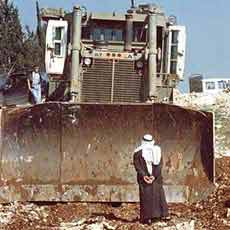
The unmitigated gall of General Motors

networking-profits.jpg You might have missed it, but General Motors yesterday took out a full page advertisement in the National newspaper, USA Today? Today, that same newspaper’s website has this info online Bipartisan group of legislators craft auto bailout compromise So what was in the advertisement that poor little Ol’ General Motors paid for? They asked for $25 billion dollars, that’s what!

Imagine if you or I went bankrupt with the aid of The Lawyer online at Not My Tribe? Would he have taken out out an ad for us in the local Gagzette, asking for the government to give us $25,000 dollars to keep from going bankrupt and perhaps not being able to provide for our family members, give the landlord rental money, and pay the loan agency their monthly piece of pie? Just like GM, we have a lot of people depending on us, and would he run that ad for us asking for the US government to take taxpayer money and bail us out to save THE ECONOMY?

Maybe those on welfare assistance need to learn from the high paid CEOs and bless their hearts, take out a full page national ad in USA Today? Give us $25 billion now! We need it for our welfare cadillacs! Oops, they don;t actually have any of those cars, but the CEOs probably do. Big Pink ones!

Barack, what you going to do, Buster? Oops, I think we already know the answer to that. We haven’t been sleeping. All these dompanies aren’t advocating for their own brand of socialism at all. They are merely doing like the military industrial complex done always, even in the very best of financial times for them. They are merely looking for more governmental paid welfare for the super rich. What unmitigated gall they have! And they look down on the poor unemployed for asking for some scraps from time to time!

Who did not play Faust for George Bush

I’d like to compile a collection of letters from famous personages in which they decline to dance with the Bush Administration. Were there many?

Shouldn’t any artist/musician/author or intellectual/humanitarian of note have publicly refused to collaborate with the immoral tyrant and his saccharine-smile patronizing librarian wife?

I have some favorites:
Mr. Feiffer Regrets -by Jules Feiffer, 2002
Poets Against War -Sam Hamill, 2003
Statement of Conscience -by Jennifer Warn, 2003
Open Letter to Laura Bush -by Sharon Olds, 2005

Archived copies are below:

Mr. Feiffer Regrets

October 12, 2002

Mrs. George W. Bush
The White House
Washington, DC

Dear Mrs. Bush,

I wish that I could come to your National Book Festival breakfast at the White House on Saturday, but after giving it much thought, I can’t attend.

I was thrilled to be invited, along with other writers and illustrators, to help celebrate your campaign to inspire young people in the pleasures of reading.

But I find it unbearably ironic that, while the uses of language are celebrated by you and your renowned guests, elsewhere in the White House language is being traduced and transformed to nudge us into war.

There are honest arguments on both sides of the Iraq debate (such as it is), but it seems necessary on the occasion of a celebration of reading to press the point that words, at their finest, don’t set out to confuse or obscure. Their aim is to clarify.

But clarity is not what we’re getting from your husband’s White House. It seems that clarity would deny him a war.

I am a father and a grandfather. As every parent knows, most children can intuit whether the stories their parents tell them are true or if they’re making them up.

The American people are able to tell too.

I am delighted to participate in National Book Festival events scheduled for the Library of Congress and the Capitol grounds. But as for your breakfast, may I convey my regrets and best wishes to you and your guests.

Sincerely,
/s/Jules Feiffer

Sam Hamill

Dear Friends and Fellow Poets:

“When I picked up my mail and saw the letter marked “The White House,” I felt no joy. Rather I was overcome by a kind of nausea as I read the card enclosed:

Laura Bush requests the pleasure of your company at a reception and White House Symposium on “Poetry and the American Voice” on Wednesday, February 12, 2003 at one o’clock

Only the day before I had read a lengthy report on George Bush’s proposed “Shock and Awe” attack on Iraq, calling for saturation bombing that would be like the firebombing of Dresden or Tokyo, killing countless innocent civilians.

I believe the only legitimate response to such a morally bankrupt and unconscionable idea is to reconstitute a Poets Against the War movement like the one organized to speak out against the war in Vietnam.

I am asking every poet to speak up for the conscience of our country and lend his or her name to our petition against this war, and to make February 12 a day of Poetry Against the War. We will compile an anthology of protest to be presented to the White House on that afternoon…

Statement of Conscience -Jennifer Warn

February 12, 2003

Mrs. Laura Bush
1600 Pennsylvania Avenue
Washington, D.C.

Dear Laura Bush,

Thank you for inviting me to the White House symposium on Poetry and the American Voice. Your call to better understand and celebrate the poetry of Walt Whitman, Emily Dickinson and Langston Hughes led me and many thousands of American poets to find their voices of dissent.

Since January 30th poets in many countries have joined in an upsurge of conscience and compassion, submitting over [15,000] poems to the Poets Against the War web site (www.poetsagainstthewar.org), organizing hundreds of anti-war poetry readings around the world, and joining with millions of others in vigils, processions, prayers and intercessions, lobbying and rallying for peace.

You have inadvertently presented a gift to the American people and to the world by providing poets an opportunity to express their most passionately held beliefs about their vision for the world’s future. Your gesture has revealed the very relationship it was meant to deny: the connection between poetry and politics, between literature and reality. Another great American poet, Wallace Stevens, presented this relationship succinctly:

“In life what is most important is the truth as it is, while in arts and letters what is most important is the truth as we see it.”

This wisdom is excerpted from “Imagination as Value,” an essay in the long tradition of poets puzzling over the power of poetry and asserting its place in a world primarily shaped by the machinations of politics and money.

What is poetry’s power? Why should you, vested with the power of the White House as First Lady, pay attention to such a rush of words at this late hour?

Poetry’s power lies in its perceptive ability to describe both inner and outer realities. In reading a poem we experience the paradoxical delight and anguish of human life. Poetry holds a mirror to the reality that our political systems and values create and in doing so reveals both the limitations of our current state and life’s endless possibilities. In its refracted light we see our intangible connections, the irrefutable unity of all people and beings on the planet.

We invite you to read this selection of poems which represents some of the most powerful in the Poetry Against the War Anthology. These poems were written by Pulitzer Prize winners, former U.S. poets laureate, and poets who work as professors, business people, homemakers and veterans. Those who have submitted poems or personal statements to register their opposition to ill-considered military action, including a pre-emptive strike on Iraq, honor a long and rich tradition of thoughtful and moral opposition by poets and other artists to senseless and murderous policies, including those of our own government.

We believe that the world is poised on the knife-edge of a decision between war and peace. It is our hope and conviction that peaceful American voices, conveyed in part and without historical precedent by the poets of this country, may help to avert a disaster of tragic proportions.

We call upon the Bush administration to halt the headlong rush toward war, to heed the voices of the people of the world, and to seek peaceful means of resolving conflicts in company with the world community.

Never before in history have so many poets gathered to speak in a single voice.

Sincerely,

Emily Warn
Poets Against the War

Open letter to Laura Bush -Sharon Olds

September 19, 2005

Laura Bush
First Lady
The White House

Dear Mrs. Bush,

I am writing to let you know why I am not able to accept your kind invitation to give a presentation at the National Book Festival on September 24, or to attend your dinner at the Library of Congress or the breakfast at the White House.

In one way, it’s a very appealing invitation. The idea of speaking at a festival attended by 85,000 people is inspiring! The possibility of finding new readers is exciting for a poet in personal terms, and in terms of the desire that poetry serve its constituents–all of us who need the pleasure, and the inner and outer news, it delivers.

And the concept of a community of readers and writers has long been dear to my heart. As a professor of creative writing in the graduate school of a major university, I have had the chance to be a part of some magnificent outreach writing workshops in which our students have become teachers. Over the years, they have taught in a variety of settings: a women’s prison, several New York City public high schools, an oncology ward for children. Our initial program, at a 900-bed state hospital for the severely physically challenged, has been running now for twenty years, creating along the way lasting friendships between young MFA candidates and their students–long-term residents at the hospital who, in their humor, courage and wisdom, become our teachers.

When you have witnessed someone nonspeaking and almost nonmoving spell out, with a toe, on a big plastic alphabet chart, letter by letter, his new poem, you have experienced, close up, the passion and essentialness of writing. When you have held up a small cardboard alphabet card for a writer who is completely nonspeaking and nonmoving (except for the eyes), and pointed first to the A, then the B, then C, then D, until you get to the first letter of the first word of the first line of the poem she has been composing in her head all week, and she lifts her eyes when that letter is touched to say yes, you feel with a fresh immediacy the human drive for creation, self-expression, accuracy, honesty and wit–and the importance of writing, which celebrates the value of each person’s unique story and song.

So the prospect of a festival of books seemed wonderful to me. I thought of the opportunity to talk about how to start up an outreach program. I thought of the chance to sell some books, sign some books and meet some of the citizens of Washington, DC. I thought that I could try to find a way, even as your guest, with respect, to speak about my deep feeling that we should not have invaded Iraq, and to declare my belief that the wish to invade another culture and another country–with the resultant loss of life and limb for our brave soldiers, and for the noncombatants in their home terrain–did not come out of our democracy but was instead a decision made “at the top” and forced on the people by distorted language, and by untruths. I hoped to express the fear that we have begun to live in the shadows of tyranny and religious chauvinism–the opposites of the liberty, tolerance and diversity our nation aspires to.

I tried to see my way clear to attend the festival in order to bear witness–as an American who loves her country and its principles and its writing–against this undeclared and devastating war.

But I could not face the idea of breaking bread with you. I knew that if I sat down to eat with you, it would feel to me as if I were condoning what I see to be the wild, highhanded actions of the Bush Administration.

What kept coming to the fore of my mind was that I would be taking food from the hand of the First Lady who represents the Administration that unleashed this war and that wills its continuation, even to the extent of permitting “extraordinary rendition”: flying people to other countries where they will be tortured for us.

So many Americans who had felt pride in our country now feel anguish and shame, for the current regime of blood, wounds and fire. I thought of the clean linens at your table, the shining knives and the flames of the candles, and I could not stomach it.

Sincerely,
SHARON OLDS

Turbine industry wants young new wife

ball bearingAlternative energy ventures, through the efforts of their lobbyists, can’t find the workforce they need in Ohio. While the area boasts one of the nation’s highest unemployment rates, many of those workers are from the decimated steel industry. NPR Morning Edition reported yesterday that would-be wind turbine manufacturer Rotek Inc, for example, doesn’t agree that United Steel Workers Union members are right for the job.

Unions assert that the jobs aren’t offering sufficient wages. NPR uncritically countered that “The starting salary with benefits at many wind turbine plants in Ohio can range to $30,000 a year.”

The NPR report left the impression that manufacturers wanted to move into the alternative energy field, but were being thwarted by the unreasonable expectations of US labor. This may be true. But an industry promising new poor jobs is no gift horse. Shouldn’t workers look it in the mouth before entrusting futures, communities and livelihoods to it?

NPR’s Julie Grant summarized the manufacturer objections with, thankfully, a some-people-say type attribution:

“the new companies, the ones already making part for wind turbines, say they don’t want burned out workers with low morale. What they need are workers open to spending a couple of years in training, who can think on their feet, and are excited to be part of the new economy they’ re helping to create.”

The “new economy they’re helping to create?” Would that be the new economy placing the employee as being working poor? What would a radio reporter herself think of a job that requires two years of training, at the employee’s expense, to yield a $30K salary? The workforce in question are already experienced steelworkers. The wind turbine jobs are steel manufacturing jobs. They’re not looking for high tech design positions.

Lobbyist group the Apollo Alliance, which NPR labeled a Clean Energy think tank, suggests the government should subsidize the training period.

So here I believe is the crux of what alternative energy investors are after. We can’t argue that low wages are here to stay. America’s new economy will no longer support the upward middle class American Dream of the Baby Boomers. So factory workers are going to work for half the pay, if they want work at all. But do they need to be trained to do it?

The wind turbine manufacturing industry is suggesting that its labor force needs two years of training, paid for by the US taxpayer. Does that make sense to you? You get the bill, the workers get subsistence wages, and the factory owners get free labor. For two years. Likely employees are not going to stick around for the promise of $30K/yr, so the two year transitions will last as long as the government subsidies allow.

Industrialists are always looking for low wage workers, even slave labor, when they can.

NPR cited the example of Rotek Inc. “Rotek one of 75 companies here that have started making parts for wind turbines.” The report mentions an $80 million investment, but implies that Rotek is a startup that requires subsidies, tax credits and willing partner-employees. NPR didn’t mention that Rotek is a subsidiary of Rothe Erde, of Dortmund, Germany ($15.3 billion, 55,000 employees), which is a subsidiary of the ThyssenKrupp Group, Essen, Germany ($68.7 billion, 191,000 employees) of Krupp infamy. Founder Alfred Krupp was tried in Nuremberg for using concentration camp labor in his factories during the war, some of them even prisoners of war.

Krupp was the chief architect of the Nazi armaments machine. Hitler even passed a law which established the Krupp family as a monopolist dynasty immune from inheritance tax. After Krupp’s conviction, a New York Banker succeeded in lobbying for a pardon for Alfred Krupp, and reversing the sentence that his industrial holdings be forfeited.

Springs ranks 3rd in arresting drinkers

IS COLORADO SPRINGS THE NATION’S 3RD DRUNKEST CITY? Relax, we rank third in criminalizing social drinkers for the sake of city revenues. The statistics used in the Men’s Health Magazine study do not measure per capita consumption of alcohol as the title might imply, but are weighed heavily with law enforcement figures, among them, the number of DUI arrests and number of M.A.D.D. programs mandated.

Denver ranked first in the nation, which could indicate the law enforcement methods are related. Both are cities spread over large expanses, with terrible public transportation systems. If there is more drinking in the Rocky Mountains than elsewhere, obviously the Front Range is the most inhospitable environment.

The regions also share the same MADD administrator, publicity hound Pam Vanoverbeke, who’s always ready to tell anyone within earshot that drinking + automobile = death. Vanoverbeke will often ignore the vehicular variable altogether. After all, and increase in drinking does mean an increase in accidents, the number of vehicles remaining fixed.

For example, arguing against relaxing enforcement of drinking on college campuses, Vanoverbeke warns: “If you make alcohol more accessible to youth more youth are going to die.”

Vanoverbeke tells her captive audiences at the court-ordered MADD events that she’s been personally impacted by five drunk driving accidents. Apparently that personal epidemic is translating into an ever alarmist image for the Front Range. And building municipal revenues. This funding method amounts to a regressive tax, because those who can afford it can opt out of the corrections treadmill with a good lawyer.

Colo. Springs celebrates underage vets

vet-parade
COLORADO SPRINGS- The average age of a uniformed participant in this year’s Veteran’s Day Parade was underage! The high school Junior ROTCs, the Young Marines, the Devil Pups, and the scouts, pulled the age downward against the ever diminishing number of retired combat vets. I think the Hussar-clad HS marching bands brought the mean down too.

While officially the youthful paraders were there to cheer the old vets, it’s hard to imagine the cries of “thank you” were not intended for the ears of those in attendance who were still part of the military. Actually a large number of those involved in the Veteran’s Day Parade are active duty, when not on deployment.

vet-parade
Belonging to a pro-militant fan club such as the Colorado Springs Young Marines does not make you a soldier, nor I should hope a soldier-to-be. But their recruits are already veterans of US militarism and the warrior indoctrination process.

vet-parade
The Young Marines are sponsored by the Marine Corps, a rather audacious recruiting beachhead considering Colorado Springs is an Army and Air Force town. Note: the Marines have no JROTC program here, and the fewest nationwide. What does that say about the age they target?

vet-parade
Not to be outdone by the Young Marines, the Colorado Springs Youth Marine Club goes by the name DEVIL PUPS, although it offers its conscripts the chance to “learn code of conduct from Godly Veterans.”

vet-parade
Note the better fitting uniform and helmet, sized for infants. The Devil Pups are affiliated with a Camp Pendleton Devil Pups Inc. Though They claim to be neither a mini-boot-camp, nor a para-military outfit, the Devil Pups require that children “must pass a Physical Fitness Test, cannot be on any type of medication for any reason, [and] cannot have asthma (no exceptions).”

vets-parade-scouting.jpg
Do you doubt the Boy Scouts are a para-military organization? These scoutmasters don’t. STILL SERVING THROUGH SCOUTING read one banner. Another read RETURNING TO THE VALUES SCOUTING NEVER LEFT. Were those the values of Kit Carson to which you’re alluding?

vets-parade
Here are elementary school students riding on a float sponsored by the Globe Charter School. They hold posters celebrating the four branches of the military, plus the National Guard and the Coast Guard.

rampart high school band
Rampart High School’s marching band, the “Rampart Regiment” costumed in deaths-head Hessian uniforms.

vets-parade
Our land-locked state also has a JROTC for students interested in the Navy. Three out of the four Colorado high schools enrolled in the Navy program are in Colorado Springs. They are Mesa Ridge, Wasson and Widefield. Oddly, none of Colorado’s 21 Army JROTC high school programs are in COS. The Air Force has five of seven participating high schools: Harrison, William Mitchell, Air Academy, Falcon and Sand Creek.

vet-parade
The parade of vintage cars provides a suitable reminder that all modern wars, post WWI, like these models, have been fought over the resource needed to fuel them.

vets-parade
Unafraid to make that point directly, the Military Vehicle Collectors Club solicits donations to KEEP ‘EM ROLLING.

vets-parade
This 40s staff car ferried former Waves who served the Navy in WWII. Resembling what most of us expect from a parade for honored veterans.

The Colorado Springs Gazette favorably headlines local Communist Party activity in our fair city!

This is, as all presidential election years are, a circus year of American comedy at its best! I mean, we got a gift from John McCain of his female Dan Quail, Sarah Pale In town even! Still, imagine my surprise to see today’s edition of our Far Right Wing daily paper (The Gagzette) with a prominent headline for our city’s only active Communist Party member, gus hall Vivian! She’s been the deliverer of the Communist Party’s national newspaper around town for years now (and a reporter for that paper, too!), but apparently our Gazette ‘reporters’, ‘editors’, and ‘newsmen’ are unaware of that!????? Go figure?

They probably are aware though, that Barack Obama is a Big Bad American Communist? I mean, we are dealing with world class geniuses over that at Freedom Communications, Inc… lol. I hope that they do not now inform the national crowd about Barack Obama’s connections to Colorado Spring’s Communist Movement, now that they are getting the real scoop about my friend Vivian, the CP reporter and paper deliverer?

OK, here’s the link to the Gazette’s pro- Communist Party activity, though you have to buy the paper’s hard copy to get the full effect, as their website really doesn’t give a good idea of how much they actually headlined their pro-CP coverage. I’ll be laughing through the next year over this one, you can bet on that! Campaigners on different sides, but have same passion

Go Vivian! I love you even if you are an evil commie! Give me a call so we can get together some! I’m not surprised that you are pushing for Obama.

Could it be that the Colorado Springs Gazette’s editors are Lenin’s useful idiots? For more about the American Communist Party, go to The Gus Hall Fan Club website …I know that our local paper would want you to do that! Go useful idiot team at our local Gagzette! Good work! I’m still not voting for Barack Obama though.

Two-edged sword of imperative morality

Because there’s the argument that we have a Moral Imperative to make war.

Funny how those wars Usually always involve the Capture of More Wealth for those who insist that it’s our Duty To God to spread our Superior Civilization to the Unwashed Heathen.

When McCain admitted at the end of the 2nd debate that the real reason for the U.S. propping up Georgia was exactly the same as the reason the Russians propped up South Ossetia, … because of the pipeline and which Economic Power would get to run it, and thus make the Other eat crap and die.

Or similar sentiments.

He showed clearly that we didn’t have the Moral Imperative to take up the sword.

And the reverse is true, we didn’t have Imperative Morality.

The necessary Moral High Ground to decide that we must Punish Russia for daring to act in the national interests of Russia rather than that of America.

Nor the same for “our” actions in Iraq. nor, obviously, “our” supposed Moral Imperative to “Force N. Korea and Iran to bend to OUR Imperial Will”

Because, really, when you have to FORCE somebody to bow to your Superiority, …

… you didn’t have any such Superiority to begin with.

That bit about the Unwashed Heathen is basicly a huge joke.

The guys who spew their Hate masked as Noble Concern For the Darker Races, like to point to the Pilgrims.

Not wanting to admit that the Pilgrims needed the Indians more than the other way round, “they were spreading the blessings of English Moderation, Liberty and Christian Enlightenment”…

And one of the things the Savages did which shocked the Pilgrims, the “far superior European Civilization”… was that the Indians actually had the “unnatural habit of bathing regularly”.

Yep, I just took a whole herd of Sacred Cows and lined them up in front of a Belt-Fed Water Cooled Machine-gun.

Polls, schmolls, and the future ahead

vote fraudThis morning reactionary AOL front-lined for its predominately Republican fans, that the Gallup poll showed the election was a tossup! What a joke! Reuters has a much different read on the presidential election stating that Obama lead on McCain grows to 12 points In fact, it might not even really be that close? The McCain ticket does well in only an urban area or two in the entire country (Dallas, Houston, Phoenix, and a very few others). People in most metro areas do not like McCain except in some of the suburbs.

Why is McCain sliding so fast? The reality is simply that not even the business community throughout most of the nation wants a Bush clone in office at this time. Bush did his job for them but his style and directly reactionary politics is all used up at this particular moment. And even more so, the business community doesn’t want a Fundamentalist Christian fool in office, which is what Sarah Palin would be if McCain died. The American Business Community, at this crashing moment world wide, wants a team of directors that might be able to keep the Western European countries from going into open rebellion against their own DC based Empire??? It might be a little too late for that however?

The Democratic Party will have control over the Presidency, the House, and the Senate. A perfect target for the Right to blame for the coming economic meltdown already under sway. Why is that? Because the Democratic Party political platforms are perfect for disintegrating the country even more as they continue to give the military-industrial complex all the plum economic government welfare contracts.

The Right will promote that very same too, but will then turn around and blame everybody and anybody else for the destruction that this will cause. Time for the hate filled then to get rabid. The predominantly Rightist Churches will be a preaching and praying against the supposed immorality and indecency that will be blamed on The Others, and history will repeat itself one more time as most folk will find it easier to go after the more defenseless people who’ll they find to be their victims, rather than those more responsible for their disintegrating plight.

Yeah, it’s bizarre..

I don’t know for sure if the O-man himself bought the food for us, or his campaign people here in town.

Either way it’s a touch of Class that no way in Hell would the McCain people be able to match.

Because Obama, and the people who are working for his campaign, are people who Give a Damn.

None of the StormFront supplied bull-poo about “palling around with terrorists”, none of the “his middle name is Hussein” like that seriously makes three quarters of a measurable amount of difference…

It comes down to People, which is what America the nation is all about.

McCain and Palin, don’t give a damn and they fly their “Don’t-Give-A-Damn'” flag proudly.

They spread the hatred like the toxic waste it truly is and don’t take any responsibility for the consequences.

I didn’t put anything up on Tribe about just yet, nor did I post here about what’s happening to my foot.

Most of the regular Tribe folks have heard about my right foot, about the work accident and all that.

Now, it turns out, the LEFT foot has a similar problem. I guess it’s natural that it slipped under the Medical Radar, what with Texas having neglected the entire damage for 12 years, other than the initial surgeries…

But a bone called the Talus, in my right foot and now, the left one as well, died, necrosed.

That’s another story.

This is about Miss Johnnie, and the Obama Campaign people and Obama himself.

Some of the Right Wing, when they’re not trying to smear and sneer him with the word that’s an insult only to the Right Wing, “Muslim”, like to scream that he’s a Radical Christian.

Let us pause momentarily and meditate upon that… “Radical Christian”…

ok, time’s up.

Hey, he’s famous for quietly being a Radical Christian and allowing his life to be his witness.

If he’s a shill for “No Change At All” I don’t see it.

I wrote to the alfrankenweb forum about it first.

There’s a lot of good back and forth between them and Tribe.

Miss Johnnie is “just another” victim of the Way Things Are…

We’re not remarkable, and that, you see, is the really frightening part.

Our nation has melted down to where only the most extremist Clown Squad could possibly even try to pretend that we have some kind of Leave it to Beaver Because Father Knows Best, Lucy mythical White Suburban utopia.

Just the events of the last year would make your jaw drop to the floor, and …

To a certain mindset, we’re supposed to Just smile, and pretend that everything is Normal.

To the campaign workers, and to Obama himself, I’d like to say Thank you…

To the ones who want us to Vote Fear, Vote Same, Vote Stay-the-course, I’d like to say —k you.

They’ve had quite enough time ruining our nation.

Now, we have to rebuild.

Seems like they let loose an Elephant into our collective living room and he trashed the place, pooped on the floor, drank out of the toilet and punched holes in all the walls.

The cleaning bill alone is going to be monstrous.