Venezuelans kick D.C. in the butt

Monroe Doctrine
Venezuela’s Chavez wins vote to allow re-election All that control over the press and the Gringos still can’t convince the Venezuelans to let them back into the country once again! Don’t cry for D.C. though, since they’ll just keep trying, keep trying, and let’s hope they just keep crying, Latin America. Next election victory will be in El Salvador next month. Goodbye, D.C.! Take your Monroe Doctrine and stuff it!

the short end of the stick

hazelwood tally stick It was one of the greatest heists in history. The scene? London, 1660. The perpetrator? England’s King Charles the II. The loot? All the gold he could con out of the country’s goldsmiths, bankers and businessmen. The tool?
 
A tally stick.

Tally sticks were a brilliant invention, but they were also insidious as they formed the foundation for the fiat currency systems we still have today. One where the root of a currency’s value is in a promise from a faceless institution, and not in the actual value of an object.

Put into use about a thousand years ago, they were a common sense solution for a young gold-and-goods economy where gold was scarce. By the time of the heist they were used in everyday transactions.

Here is how it worked. When a loan was made, the debt was carved in a standard fashion on the surface of a small (preferably hazelwood) stick, and then the stick was split in half through the center of the carving. The longer end of the IOU was given to the purchaser, and its handle was called the “stock” — the root of the word’s use in today’s markets.

Even a mostly illiterate public could read the amount scratched into the wood, and the stick would only fit perfectly with its original other half. That way, when the debtor returned with the money (or goods) owed, the sticks would be matched and the debt would be “tallied.”

In that fundamental use, they worked perfectly. But of course, as is governments’ way, the King was tempted to stretch those bounds.

Charles II ruled at a time when royal power was still based on a divine mandate. His government and institutions — and indeed he himself — saw the king as the Chosen One, which was a real shame for him because it bound him to the laws of Christendom. And Christianity at the time still forbade lending or borrowing with usury (interest). When financing several failing wars against neighboring countries depleted royal coffers, Charles II needed some quick cash to continue living in kingly fashion.

King Charles II turned to the trusted tally and the keen idea of selling his (government) tallies (debt) at a discount. That way he could allow his lenders to profit without charging interest — the basis for government debt being sold at a discount today.

And the King could issue advance tallies for emergency spending, an idea that proved all too tempting. He sold the tallies collected by his Exchequer (tax collector), essentially trading future tax receipts to the country’s goldsmiths (bankers) for quick cash.

The tallies were receipts for taxes to be paid later in the year. This is a crucial part of the story: they weren’t trading on the value of the objects being traded, but on the cost of waiting for a return and the government’s ability to collect taxes and stay honest. If the government is not honest, this is an outright Ponzi scheme, one where new debt issue could theoretically pay for passing bills. For a while.

The King realized that he’d stumbled onto something big. He could wage all the war he wanted and pay his bills with the gold he got for hazelwood. The King spent and spent, and the goldsmiths’ vaults filled up with more and more sticks.

Goldsmiths were handing out certificates for fractional gold reserves and inflating the young economy in a con all their own. And since the King played along with their early building of a banking system, they played along with the sticks-for-gold investment strategy.

Over time, the market got wise to the game. Buyers started attaching larger and larger discounts to the King’s debt to offset the perceived risk in loaning money to the King. The discounts prompted the King to issue even more tallies, promising out more future tax revenues just to meet his short-term spending desires. But remember only the discount was changing here. So the mountain of taxes to be redeemed in order to pay off his debts grew in comparison, soon overwhelming the King’s income.

By the time the whole Ponzi scheme came to an end, the King’s sticks were trading at a 10% discount (to put that into perspective, short-term T-Bills are currently trading with discounts of one-tenth of one percent or less). The payments on his newer issues trading at that discount soon outmatched all the Kingdom’s tax revenues, effectively bankrupting his Exchequer and threatening to put the monarchy in the poorhouse.

So with the stroke of a pen, the King simply declared those debts illegal and ceased payment.

With that single stroke he stole most of England’s gold — having already spent it — and forced the young economy to fall flat on its face. The King’s various creditors ended up on “the short end of the stick” and all credit in the country evaporated very nearly overnight.

Pretty scary, huh? I’m glad such a thing could never happen today.

Collapsing Mexico

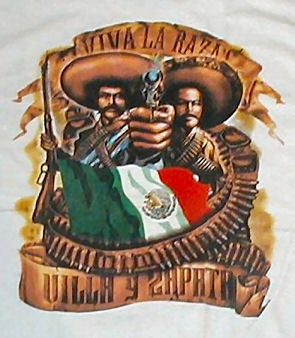
villa and zapataCollapsing Mexico was not the intent of Lawrence Summers, Obama’s new US Secretary of Treasury, but he has pulled it off BIG! Mexico’s economy today is shedding hundreds of thousands of badly needed jobs and is providing negative economic growth to its continually growing population rather than any positive numbers. Lawrence Summers is the architect of that catastrophe, so let’s review his US-Mexican resume some for those who are unaware of it. And let’s see what might be in store for Mexico’s neighbor, the USA?

Lawrence Summers was Clinton’s offerer of the US government’s move to tie Mexico into the NAFTA con, and point man to convince the Mexican PRI dictatorship, led by Ernesto Zedillo, to totally tie their country’s economic and political cart to an elephant and a donkey from the North. The carrot was a ‘giant bailout’ loan offer of billions of US treasury dollars (>$55 billion to be more exact). Many of Mexico’s PRI tied business men jumped at the opportunity and headed towards behind the scenes funding of the actual setting up of an American style 2 party con game, instead of the holding tight to the one party regime they had been supporting for so many decades. The final result was an acceptance of the billions coming from the US and a turn to setting up the Vicente Fox-PAN into the Mexican White House (Los Pinos). National debt to the US was set as something to worry about in the future, meanwhile they planned to ride high on the hog short term, and they did.

But now the US sowed genetically altered corn is coming come to roost, as Mexico has become caught totally tied to the US economy as the international collapse of all the world markets is underway. Mexicans are returning from the US because they cannot find jobs in the collapsing US economy, and returning under-aware of Mexico’s collapsing economy. A dark storm is beginning to brew, and just last weekend several hundred thousand people demonstrated in the capital against their US government enforced upon them government. John Ross, America’s foremost commentator on Mexican politics, writes of the unfolding situation this week in his commentary When (Mexican) Millionaire Mummies Mourn
Davos vs. Belem; Swine vs. Pearls

Why should Americans care about any of this? Isn’t the US collapsing world economies (China, Japan, Russia, European, and so on),one on top of the other anyway? What’s so special about what the US con-omy is doing to Mexico? Well…….? It is simply the fact that Mexico and the US are so intimately tied to each other and have been for centuries now. Wither Mexico, wither Latin America as a whole, too? It’s a volatile brew that is being stirred. BANG!

Keep an eye on Mexico as the economic downturn continues. The US government is losing its authority to direct…. to direct the people of Mexico in their own internal affairs with the collusion of their corrupt death squad loving elites who follow the order of our US elites. Don’t believe for a second that this development will not impact our own political turmoil ahead. Mexico will always be the key ‘foregin’ society for Gringolandia, and its just South of our ‘Homeland Security’. We are in this mess our corrupt capitalists have created for the common folk all of us together, and it has become a brewing Cauldron, Presidente Calderon.

Israel’s initial response was to lie and deny it was using white phosphorus in Gaza

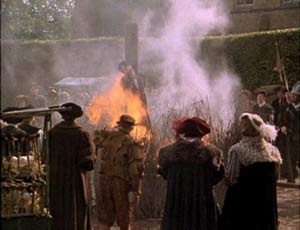
burning-at-the-stakeWhen a criminal defendant lies in Court and gets caught at it, then the Court is less likely subsequently to believe anything else that might be said by the defendant. Israel initially totally denied using White Phosphorus in Gaza but now has retreated to its second line of lies, saying that it did use White Phosphorus but only to light up the sky! Here is Israel in the beginning with its first lie thrown out to the world public…

On 13 January Brig-Gen Avi Benayahu, chief spokesman for the Israel Defense Force (IDF), said that in its assault on Gaza Israel was using weapons in accordance with international treaties and conventions. He denied Israel was using white phosphorus. ”I repeat Commander in Chief Ashkenazi’s words: The allegations of the IDF using WP [white phosphorus] are false.”

That was taken from ISRAEL-OPT: Israel denies using white phosphorus in Gaza But Israel has moved on to its next line of fortified lies to the world public…

“In response to the claims of NGOs and claims in the foreign press relating to the use of phosphorus weapons, and in order to remove any ambiguity, an investigative team has been established in the Southern Command to look into the issue,” said an Israel Defense Forces (IDF) spokesman. “It must be noted that international law does not prohibit the use of weaponry containing phosphorus to create smoke screens and for marking purposes. The IDF only uses weapons permitted by law.”

An Israeli foreign ministry statement pointed to findings by the International Committee of the Red Cross (ICRC), which said in mid-January that it found no evidence of illegal phosphorus use. “The investigation of this matter,” the spokesman said, was part of “routine IDF checks of its internal operating procedures and in no way indicated any illegal use.”

The ICRC has since clarified its position. “The fact that International Humanitarian Law does not specifically prohibit phosphorous weapons does not imply that any specific use of weapons containing this substance is legal,” said Peter Herby, head of the ICRC’s Arms Unit. “The legality of each incident of use has to be considered in light of all of the fundamental rules I have mentioned. It may be legal or not, depending on a variety of factors.”

That was taken from The Christian Science Monitor’s After the war, Gazans seek answers on white phosphorus

Misery, poverty, unemployment are growing, and global capitalism is largely to blame

world-social-forum
“Misery, poverty, unemployment are growing, and global capitalism is largely to blame,” Chavez said in a convention center before 10,000 of the estimated 100,000 people gathered at the World Social Forum held in Belem, Brazil. Earlier in the day, advocates for landless Brazilians gathered in a sweltering gymnasium and roared in approval as Ecuadorean President Rafael Correa belted out the Cuban classic “Comandante Che Guevara.” South American leaders came together at the anti-Davos forum with Venezuela’s Hugo Chavez, Bolivia’s Evo Morales and Paraguay’s Fernando Lugo joining Brazil’s President Luiz Inacio Lula da Silva on stage at the very large gathering of those opposed to the ravages of international capitalism in South America and elsewhere.

So who says that the anti-capitalist Left is dead? It is not at all and Latin America is the epicenter of the resistance to this diseased economic system that is destroying the Planet Earth for good. Don’t expect this information to appear on your TV screen though. The sponsors just wouldn’t except that, now would they? You’re under an information blockade here in the US, and as the saying goes… The Revolution Will Not Be Televised.

(*note- the photo is from a previous World Social Forum gathering)

French again put Americans to shame

french and american flagsContrast the French to Americans once again, as they respond to their country’s elite government delivered handouts in a way today unimaginable in pacified Obama nation USA. Huge crowds join French strikes Meanwhile, in America, crowds actually turn out to cheer as Obama hands out bales of paper dollars to the rich corporate world. They’re in trouble, you see?

American liberals seem to think that they can just go out and vote, and then return to their houses with their thumbs up their asses and watch TV. From that, they think that CHANGE will magically occur? …and it will….Oh YES it will!… but just change they will not actually much appreciate when it does arrive.

America’s Left is not there, having been almost totally destroyed. But the French still have a Left, and they will challenge the power of their own rich with it.

Americans are left to face the rich without any organization of their own at all. Most of them have let themselves become convinced that the Left is the actual root of all evil, and that Satan himself commands it. And truth be told many Leftists are actually demonic idiots missing in all action. To create a Left that does do anything, America will almost have to spontaneously combust before that will happen once again. Meanwhile, the French are way ahead of the Americans in being able to challenge this Brave New World of total catastrophe and meltdown that the elites are trying to force down the throats of the world population. They join Latin America in this aspect.

Barack gives Bank of America ‘overdraft protection’ as he bankrupts the US public

Barack LincolnThe Republicans gave the banks hundreds upon hundreds of billions of dollars, but that was not enough. Barack, instead of spending money to help house the homeless, institute universal medical coverage, or better Social Security for the elderly and incapacitated, thinks Bank of America’s corporate owners need yet more of your tax monies! What a wild CHANGE in thinking here! He brings us visions of Barack Lincoln, freeing the corporate class from all responsibilities! Poor slaves.

I got ‘overdraft protection’ from Bank of America, and I went over about $2 on a Safeway debit card purchase with them. They charged me over $100 before I even knew about it. I had told them I didn’t want their ‘protection’, but they had given me it anyway. So I closed out with them, Bank of America not even having any local banks in the area. Now they call me twice a day with a recorded message and have screwed with my credit rating. That’s my overdraft protection’ plan from them…. phone harassment.

If somebody came and knocked repeatedly twice a day unsolicited on my front door, the police would go get them for this abuse. But Bank of America can bombard me with computerized phone calls 14 times a week, and nobody calls that a crime, except for me. The bastards. Why doesn’t Barack Obama give me ‘overdraft protection’ from the Bank of America criminals?

Bank of America though has been given much better and real overdraft protection by their cronies, Barack and Dubya, the DP and RP. Little accounting error? Then Dubya and Barack are stumbling all over themselves to rush multiple tens of billions to Bank of America to fix their small little banking ‘error’!

They could actually nationalize the damn Bank of America and that would be fine by me. Hey, why doesn’t our government do just exactly that? Nationalizing is what they do with many small folk who go to jail if they do not pay off money they steal from others through their ‘bad investments’. Heck, the cops never even give small crooks the option to return that money, it’s simply you have been ‘nationalized’ and now you spend the next 20 years with us! Where’s the respect for small time crooks who are merely emulating the Bank Of America Big Boys with their financial thefts? The ‘law’ is rather strange in America… Rob little and you are a Bad Boy. Rob BIG, and the government starts throwing other people’s money at you!

Bank of America bail-out agreed I didn’t agree, did you agree? You did if you voted for Barack Obama, Mr. and Mrs. DP ‘Liberal’. You’re always being led around on upper class leash by hooks in your noses, it rather does seem… Dupes.

MLK: Why I am Opposed to the War

Martin Luther King Jr“You’re too arrogant! And if you don’t change your ways, I will rise up and break the backbone of your power, and I’ll place it in the hands of a nation that doesn’t even know my name. Be still and know that I’m God.”
 
Sermon at the Ebenezer Baptist Church on April 30, 1967. Full text below.

The sermon which I am preaching this morning in a sense is not the usual kind of sermon, but it is a sermon and an important subject, nevertheless, because the issue that I will be discussing today is one of the most controversial issues confronting our nation. I’m using as a subject from which to preach,

“Why I Am Opposed to the War in Vietnam.”

Now, let me make it clear in the beginning, that I see this war as an unjust, evil, and futile war. I preach to you today on the war in Vietnam because my conscience leaves me with no other choice. The time has come for America to hear the truth about this tragic war. In international conflicts, the truth is hard to come by because most nations are deceived about themselves. Rationalizations and the incessant search for scapegoats are the psychological cataracts that blind us to our sins. But the day has passed for superficial patriotism. He who lives with untruth lives in spiritual slavery. Freedom is still the bonus we receive for knowing the truth. “Ye shall know the truth,” says Jesus, “and the truth shall set you free.” Now, I’ve chosen to preach about the war in Vietnam because I agree with Dante, that the hottest places in hell are reserved for those who in a period of moral crisis maintain their neutrality. There comes a time when silence becomes betrayal.

The truth of these words is beyond doubt, but the mission to which they call us is a most difficult one. Even when pressed by the demands of inner truth, men do not easily assume the task of opposing their government’s policy, especially in time of war. Nor does the human spirit move without great difficulty against all the apathy of conformist thought within one’s own bosom and in the surrounding world. Moreover, when the issues at hand seem as perplexing, as they often do in the case of this dreadful conflict, we’re always on the verge of being mesmerized by uncertainty. But we must move on. Some of us who have already begun to break the silence of the night have found that the calling to speak is often a vocation of agony. But we must speak. We must speak with all the humility that is appropriate to our limited vision, but we must speak. And we must rejoice as well, for in all our history there has never been such a monumental dissent during a war, by the American people.

Polls reveal that almost fifteen million Americans explicitly oppose the war in Vietnam. Additional millions cannot bring themselves around to support it. And even those millions who do support the war [are] half-hearted, confused, and doubt-ridden. This reveals that millions have chosen to move beyond the prophesying of smooth patriotism, to the high grounds of firm dissent, based upon the mandates of conscience and the reading of history. Now, of course, one of the difficulties in speaking out today grows the fact that there are those who are seeking to equate dissent with disloyalty. It’s a dark day in our nation when high-level authorities will seek to use every method to silence dissent. But something is happening, and people are not going to be silenced. The truth must be told, and I say that those who are seeking to make it appear that anyone who opposes the war in Vietnam is a fool or a traitor or an enemy of our soldiers is a person that has taken a stand against the best in our tradition.

Yes, we must stand, and we must speak. [tape skip]…have moved to break the betrayal of my own silences and to speak from the burnings of my own heart, as I have called for radical departures from the destruction of Vietnam. Many persons have questioned me about the wisdom of my path. At the heart of their concerns, this query has often loomed large and loud:

“Why are you speaking about the war, Dr. King? Why are you joining the voices of dissent?” Peace and civil rights don’t mix, they say.

And so this morning, I speak to you on this issue, because I am determined to take the Gospel seriously. And I come this morning to my pulpit to make a passionate plea to my beloved nation.

This sermon is not addressed to Hanoi, or to the National Liberation Front. It is not addressed to China or to Russia. Nor is it an attempt to overlook the ambiguity of the total situation and the need for a collective solution to the tragedy of Vietnam. Nor is it an attempt to make North Vietnam or the National Liberation Front paragons of virtue, nor to overlook the role they must play in a successful resolution of the problem. This morning, however, I wish not to speak with Hanoi and the National Liberation Front, but rather to my fellow Americans, who bear the greatest responsibility, and entered a conflict that has exacted a heavy price on both continents.

Now, since I am a preacher by calling, I suppose it is not surprising that I have seven major reasons for bringing Vietnam into the field of my moral vision. There is…a very obvious and almost facile connection between the war in Vietnam and the struggle I and others have been waging in America. A few years ago there was a shining moment in that struggle. It seemed that there was a real promise of hope for the poor, both black and white, through the Poverty Program. There were experiments, hopes, and new beginnings. Then came the build-up in Vietnam. And I watched the program broken as if it was some idle political plaything of a society gone mad on war. And I knew that America would never invest the necessary funds or energies in rehabilitation of its poor so long as adventures like Vietnam continued to draw men and skills and money, like some demonic, destructive suction tube. And you may not know it, my friends, but it is estimated that we spend $500,000 to kill each enemy soldier, while we spend only fifty-three dollars for each person classified as poor, and much of that fifty-three dollars goes for salaries to people that are not poor. So I was increasingly compelled to see the war as an enemy of the poor, and attack it as such.

Perhaps the more tragic recognition of reality took place when it became clear to me that the war was doing far more than devastating the hope of the poor at home. It was sending their sons, and their brothers, and their husbands to fight and die in extraordinarily high proportion relative to the rest of the population. We were taking the black young men who had been crippled by society and sending them eight thousand miles away to guarantee liberties in Southeast Asia which they had not found in Southwest Georgia and East Harlem. So we have been repeatedly faced with a cruel irony of watching Negro and white boys on TV screens as they kill and die together for a nation that has been unable to seat them together in the same school room. So we watch them in brutal solidarity, burning the huts of a poor village. But we realize that they would hardly live on the same block in Chicago or Atlanta. Now, I could not be silent in the face of such cruel manipulation of the poor.

My third reason moves to an even deeper level of awareness, for it grows out of my experience in the ghettos of the North over the last three years–especially the last three summers. As I have walked among the desperate, rejected, and angry young men, I have told them that Molotov cocktails and rifles would not solve their problems. I have tried to offer them my deepest compassion while maintaining my conviction that social change comes most meaningfully through non-violent action; for they ask and write me, “So what about Vietnam?” They ask if our nation wasn’t using massive doses of violence to solve its problems to bring about the changes it wanted.

Their questions hit home, and I knew that I could never again raise my voice against the violence of the oppressed in the ghettos without first having spoken clearly to the greatest purveyor of violence in the world today: my own government. For the sake of those boys, for the sake of this government, for the sake of the hundreds of thousands trembling under our violence I cannot be silent.

Been a lot of applauding over the last few years. They applauded our total movement; they’ve applauded me. America and most of its newspapers applauded me in Montgomery. And I stood before thousands of Negroes getting ready to riot when my home was bombed and said, we can’t do it this way. They applauded us in the sit-in movement–we non-violently decided to sit in at lunch counters. The applauded us on the Freedom Rides when we accepted blows without retaliation. They praised us in Albany and Birmingham and Selma, Alabama. Oh, the press was so noble in its applause, and so noble in its praise when I was saying, Be non-violent toward Bull Connor; when I was saying, Be non-violent toward [Selma, Alabama segregationist sheriff] Jim Clark.

There’s something strangely inconsistent about a nation and a press that will praise you when you say, Be non-violent toward Jim Clark, but will curse and damn you when you say, “Be non-violent toward little brown Vietnamese children. There’s something wrong with that press!

As if the weight of such a commitment to the life and health of America were not enough, another burden of responsibility was placed upon me in 1964. And I cannot forget that the Nobel Peace Prize was not just something taking place, but it was a commission–a commission to work harder than I had ever worked before for the brotherhood of Man. This is a calling that takes me beyond national allegiances.

But even if it were not present, I would yet have to live with the meaning of my commitment to the ministry of Jesus Christ. To me, the relationship of this ministry to the making of peace is so obvious that I sometimes marvel at those who ask me why I am speaking against the war. Could it be that they do not know that the Good News was meant for all men, for communists and capitalists, for their children and ours, for black and white, for revolutionary and conservative? Have they forgotten that my ministry is in obedience to the One who loved His enemies so fully that he died for them? What, then, can I say to the Vietcong, or to Castro, or to Mao, as a faithful minister to Jesus Christ? Can I threaten them with death, or must I not share with them my life?

Finally, I must be true to my conviction that I share with all men the calling to be the son of the Living God. Beyond the calling of race or nation or creed is this vocation of son-ship and brotherhood. And because I believe that the Father is deeply concerned, especially for His suffering and helpless and outcast children, I come today to speak for them.

And as I ponder the madness of Vietnam and search within myself for ways to understand and respond in compassion, my mind goes constantly to the people of that peninsula. I speak not now of the soldiers of each side, not of the military government of Saigon, but simply of the people who have been under the curse of war for almost three continuous decades now. I think of them, too, because it is clear to me that there will be no meaningful solution until some attempt is made to know these people and hear their broken cries.

Now, let me tell you the truth about it. They must see Americans as strange liberators.

Do you realize that the Vietnamese people proclaimed their own independence in 1945 after a combined French and Japanese occupation? And incidentally, this was before the Communist revolution in China. They were led by Ho Chi Minh. And this is a little-known fact, and these people declared themselves independent in 1945. They quoted our Declaration of Independence in their document of freedom, and yet our government refused to recognize them. President Truman said they were not ready for independence. So we fell victim as a nation at that time of the same deadly arrogance that has poisoned the international situation for all of these years. France then set out to reconquer its former colony. And they fought eight long, hard, brutal years trying to re-conquer Vietnam. You know who helped France? It was the United States of America. It came to the point that we were meeting more than eighty percent of the war costs. And even when France started despairing of its reckless action, we did not. And in 1954, a conference was called at Geneva, and an agreement was reached, because France had been defeated at Dien Bien Phu.

But even after that, and after the Geneva Accord, we did not stop. We must face the sad fact that our government sought, in a real sense, to sabotage the Geneva Accord. Well, after the French were defeated, it looked as if independence and land reform would come through the Geneva agreement. But instead the United States came and started supporting a man named Diem who turned out to be one of the most ruthless dictators in the history of the world. He set out to silence all opposition. People were brutally murdered because they raised their voices against the brutal policies of Diem. And the peasants watched and cringed as Diem ruthlessly rooted out all opposition. The peasants watched as all this was presided over by United States influence and by increasing numbers of United States troops who came to help quell the insurgency that Diem’s methods had aroused. When Diem was overthrown, they may have been happy, but the long line of military dictatorships seemed to offer no real change, especially in terms of their need for land and peace. And who are we supporting in Vietnam today? It’s a man by the name of general Ky [Air Vice Marshal Nguyen Cao Ky] who fought with the French against his own people, and who said on one occasion that the greatest hero of his life is Hitler. This is who we are supporting in Vietnam today. Oh, our government and the press generally won’t tell us these things, but God told me to tell you this morning. The truth must be told.

The only change came from America as we increased our troop commitments in support of governments which were singularly corrupt, inept, and without popular support and all the while the people read our leaflets and received regular promises of peace and democracy and land reform. Now they languish under our bombs and consider us, not their fellow Vietnamese, the real enemy. They move sadly and apathetically as we herd them off the land of their fathers into concentration camps, where minimal social needs are rarely met. They know they must move or be destroyed by our bombs. So they go, primarily women, and children and the aged. They watch as we poison their water, as we kill a million acres of their crops. They must weep as the bulldozers roar through their areas preparing to destroy the precious trees. They wander into the towns and see thousands of thousands of the children, homeless, without clothes, running in packs on the streets like animals. They see the children degraded by our soldiers as they beg for food. They see the children selling their sisters to our soldiers, soliciting for their mothers. We have destroyed their two most cherished institutions: the family and the village. We have destroyed their land and their crops. We have cooperated in the crushing of the nation’s only noncommunist revolutionary political force, the United Buddhist Church. This is a role our nation has taken, the role of those who make peaceful revolutions impossible but refusing to give up the privileges and the pleasures that comes from the immense profits of overseas investments. I’m convinced that if we are to get on the right side of the world revolution, we as a nation must undergo a radical revolution of values. We must rapidly begin the shift from a thing-oriented society to a person-oriented society. When machines and computers, profit motives and property rights are considered more important than people, the giant triplets of racism, militarism and economic exploitation are incapable of being conquered.

A true revolution of values will soon cause us to question the fairness and justice of many of our present policies. On the one hand, we are called to play the Good Samaritan on life’s roadside, but that will be only an initial act. One day we must come to see that the whole Jericho Road must be changed so that men and women will not be constantly beaten and robbed as they make their journey on life’s highway. True compassion is more than flinging a coin to a beggar. A true revolution of values will soon look uneasily on the glaring contrast of poverty and wealth with righteous indignation. It will look across the seas and see individual capitalists of the West investing huge sums of money in Asia, Africa, and South America, only to take the profits out with no concern for the social betterment of the countries, and say, “This is not just.” It will look at our alliance with the landed gentry of Latin America and say, “This is not just.” The Western arrogance of feeling that it has everything to teach others and nothing to learn from them is not just. A true revolution of values will lay hands on the world order and say of war, “This way of settling differences is not just.” This business of burning human beings with napalm, of filling our nation’s homes with orphans and widows, of injecting poisonous drugs of hate into the veins of peoples normally humane, of sending men home from dark and bloody battlefields physically handicapped and psychologically deranged, cannot be reconciled with wisdom, justice, and love. A nation that continues year after year to spend more money on military defense than on programs of social uplift is approaching spiritual death.

Oh, my friends, if there is any one thing that we must see today is that these are revolutionary times. All over the globe men are revolting against old systems of exploitation and oppression, and out of the wounds of a frail world, new systems of justice and equality are being born. The shirtless and barefoot people of the land are rising up as never before. The people who sat in darkness have seen a great light. They are saying, unconsciously, as we say in one of our freedom songs, “Ain’t gonna let nobody turn me around!” It is a sad fact that because of comfort, complacency, a morbid fear of communism, our proneness to adjust to injustice, the Western nations that initiated so much of the revolutionary spirit of the modern world have now become the arch anti-revolutionaries. This has driven many to feel that only Marxism has a revolutionary spirit. Therefore, communism is a judgment against our failure to make democracy real and follow through on the revolutions that we initiated. Our only hope today lies in our ability to recapture the revolutionary spirit and go out into a sometimes hostile world declaring eternal hostility to poverty, racism, and militarism. With this powerful commitment we shall boldly challenge the status quo, we shall boldly challenge unjust mores, and thereby speed up the day when

“every valley shall be exalted, and every mountain and hill shall be made low, and the rough places shall be made plain, and the crooked places straight. And the glory of the Lord shall be revealed, and all flesh shall see it together.”

A genuine revolution of values means in the final analysis that our loyalties must become ecumenical rather than sectional. Every nation must now develop an overriding loyalty to mankind as a whole in order to preserve the best in their individual societies. This call for a worldwide fellowship that lifts neighborly concern beyond one’s tribe, race, class, and nation is in reality a call for an all-embracing, unconditional love for all men. This oft misunderstood and misinterpreted concept, so readily dismissed by the Nietzsches of the world as a weak and cowardly force, has now become an absolute necessity for the survival of mankind. And when I speak of love I’m not speaking of some sentimental and weak response. I am speaking of that force which all of the great religions have seen as the supreme unifying principle of life. Love is somehow the key that unlocks the door which leads to ultimate reality. This Hindu-Muslim-Christian-Jewish-Buddhist belief about ultimate reality is beautifully summed up in the first epistle of John: “Let us love one another, for God is love. And every one that loveth is born of God and knoweth God. He that loveth not knoweth not God, for God is love. If we love one another, God dwelleth in us and his love is perfected in us.”

Let me say finally that I oppose the war in Vietnam because I love America. I speak out against this war, not in anger, but with anxiety and sorrow in my heart, and, above all, with a passionate desire to see our beloved country stand as the moral example of the world. I speak out against this war because I am disappointed with America. And there can be no great disappointment where there is not great love. I am disappointed with our failure to deal positively and forthrightly with the triple evils of racism, economic exploitation, and militarism. We are presently moving down a dead-end road that can lead to national disaster. America has strayed to the far country of racism and militarism. The home that all too many Americans left was solidly structured idealistically; its pillars were solidly grounded in the insights of our Judeo-Christian heritage. All men are made in the image of God. All men are bothers. All men are created equal. Every man is an heir to a legacy of dignity and worth. Every man has rights that are neither conferred by, nor derived from the State–they are God-given. Out of one blood, God made all men to dwell upon the face of the earth. What a marvelous foundation for any home! What a glorious and healthy place to inhabit. But America’s strayed away, and this unnatural excursion has brought only confusion and bewilderment. It has left hearts aching with guilt and minds distorted with irrationality.

It is time for all people of conscience to call upon America to come back home. Come home, America. Omar Khayyam is right: “The moving finger writes, and having writ moves on.”

I call on Washington today. I call on every man and woman of good will all over America today. I call on the young men of America who must make a choice today to take a stand on this issue.

Tomorrow may be too late. The book may close. And don’t let anybody make you think that God chose America as his divine, messianic force to be a sort of policeman of the whole world. God has a way of standing before the nations with judgment, and it seems that I can hear God saying to America,

“You’re too arrogant!

And if you don’t change your ways,

I will rise up and break the backbone of your power,

and I’ll place it in the hands of a nation that doesn’t even know my name.

Be still and know that I’m God.”

Now it isn’t easy to stand up for truth and for justice. Sometimes it means being frustrated. When you tell the truth and take a stand, sometimes it means that you will walk the streets with a burdened heart. Sometimes it means losing a job…means being abused and scorned. It may mean having a seven, eight year old child asking a daddy, “Why do you have to go to jail so much?” And I’ve long since learned that to be a follower to the Jesus Christ means taking up the cross. And my bible tells me that Good Friday comes before Easter. Before the crown we wear, there is the cross that we must bear. Let us bear it–bear it for truth, bear it for justice, and bear it for peace. Let us go out this morning with that determination. And I have not lost faith. I’m not in despair, because I know that there is a moral order. I haven’t lost faith, because the arc of the moral universe is long, but it bends toward justice. I can still sing “We Shall Overcome” because Carlyle was right: “No lie can live forever.” We shall overcome because William Cullen Bryant was right: “Truth pressed to earth will rise again.” We shall overcome because James Russell Lowell was right: “Truth forever on the scaffold, wrong forever on the throne.” Yet, that scaffold sways the future. We shall overcome because the bible is right: “You shall reap what you sow.”

With this faith we will be able to hew out of the mountain of despair a stone of hope.

With this faith we will be able to transform the jangling discords of our world into a beautiful symphony of brotherhood.

With this faith we will be able to speed up the day when justice will roll down like waters, and righteousness like a mighty stream.

With this faith we will be able to speed up the day when the lion and the lamb will lie down together, and every man will sit under his own vine and fig tree, and none shall be afraid because the words of the Lord have spoken it.

With this faith we will be able to speed up the day when all over the world we will be able to join hands and sing in the words of the old Negro spiritual, “Free at last! Free at last! Thank God Almighty, we’re free at last!”

With this faith, we’ll sing it as we’re getting ready to sing it now. Men will beat their swords into plowshares and their spears into pruning hooks. And nations will not rise up against nations, neither shall they study war anymore. And I don’t know about you, I ain’t gonna study war no more.

seeking refuge in Abbey’s country

Phallic-arches-national-park
Edward Abbey presaged America’s current path to tyranny forty years ago and predicted that the end of American democracy would be coincident with the destruction of the wilderness.

What’s the connection between democracy and wilderness? Personal liberty is a fleeting commodity, according to Abbey, and history has shown that governments invariably move toward totalitarianism. When faced with authoritarian governance, wilderness is crucial because it serves as both a refuge from political oppression and a base for guerrilla warfare. Uprisings in urban settings are too quickly quelled by those with better weaponry, but hidden in mountain, desert or jungle settings, revolutionaries can gain an edge on establishment forces and engage in protracted — sometimes successful — battle. Consider Che in the mountains, the Vietcong in the jungle, Osama bin Laden in a desert cave.

From Desert Solitaire:

Suppose we were planning to impose a dictatorial regime upon the American people — the following preparations would be essential:

1. Concentrate the populace in megalopolitan masses so they can be kept under close surveillance and where, in the case of trouble, they can be bombed, burned, gassed or machine-gunned with a minimum of expense and waste.

2. Mechanize agriculture to the highest degree of refinement, thus forcing most of the scattered farm and ranching population into the cities. Such a policy is desirable because farmers, woodsmen, cowboys, Indians, fishermen and other relatively self-sufficient types are difficult to manage unless displaced from their natural environment.

3. Restrict the possession of firearms to the police and the regular military organizations.

4. Encourage or at least fail to discourage population growth. Large masses of people are more easily manipulated and dominated than scattered individuals.

5. Continue military conscription. Nothing excels military training for creating in young men an attitude of prompt, cheeful obedience to officially constituted authority.

6. Divert attention from deep conflicts within the society by engaging in foreign wars; make support of these wars a test of loyalty, thereby exposing and isolating potential opposition to the new order.

7. Overlay the nation with a finely reticulated network of communications, airlines and interstate autobahns.

8. Raze the wilderness. Dam the rivers, flood the canyons, drain the swamps, log the forests, strip-mine the hills, bulldoze the mountains, irrigate the deserts and improve the national parks into national parking lots.

In a final round of environmental fuck-yous, the Bush administration has offered up significant portions of pristine Utah wilderness to oil exploration. Aside from one notable monkeywrenching incident, the trashing of the American wilderness continues unabated.

Shots from my recent cave-hunting trip to Abbey’s country!

Toyota-Sequoia-offroad-Arches
Back-road-Arches
Arches-original-entrance
landscape-arch-arches
klondike-bluffs-arches
juniper-arches
ice-desert-arches
Marie-tree-hugger-arches
balanced-rock-near-abbey-arches
toyota-sequoia-arches
fiery-furnace-arches
delicate-arch-utah-license
cairns-delicate-arch-trail

Barack says his effort at image repair for US government to begin immediately

Western Hemisphere Institute for Security CooperationHow do you begin to repair US image abroad without really doing so much of anything? You don’t say a word really against the torture regime that your political party participated in running along with its supposed political opposition, the Republicans, but you begin to close the US Government’s most blatant image problem down…. name wise. That would be Gitmo… Guantanamo. See: Obama prepares to issue order to close Gitmo.

That’s kind of like in 2000 how Slick Willie Bill Clinton changed the US military’s torture school from the name of School of Americas (the SOA) to the totally obscured name of Western Hemisphere Institute for Security Cooperation (WHINSEC). Nothing else changed except the name. Not too surprising since Obama has stacked his new Administrative Cabinet with all those old Slick Willie retreads.

Bet you had never even heard of the name WHINSEC, now had you? And I bet you that Obama has no plans to really end US government use of torture but rather to hide it more away. Bets on that Obama will actually close down ‘WHINSEC’? Didn’t think so… The US Government has always used torture on POWs. The Vietnamese could tell the typical American something about that, as so could many a Latino. How many Democratic Party presidents and top politicians have helped administer US military torture through the years? How many countries has the US government helped their government use torture on other peoples? Your guess is as good as mine?

Opportunity to address new Colorado US Senator Michael Bennet on Saturday

Gaza posterColorado Governor Bill Ritter and his pick to replace Senator Ken Salazar, Denver School Superintendent Michael Bennet, will be visiting Colorado Springs on Saturday, Jan 10. You’re invited to meet the two at the Penrose Public Library at 12noon. COME AT 11AM, make them heed their constituents and stop the US wars in Iraq, Afghanistan and GAZA.

Let’s show them that Colorado isn’t just about soldiers and weapons contractors earning their livelihood from the expenditure of ordnance.

From A.N.S.W.E.R.:

The Red Cross has condemned Israel for violating international law by blocking ambulance and rescue efforts for wounded civilians. There are thousands of wounded people. The Red Cross rescue team had reported of one of many instances: [we] “found four small children next to their dead mothers in one of the houses. They were too weak to stand up on their own. One man was also found alive, too weak to stand up,” the statement said. “In all, there were at least 12 corpses lying on mattresses” in one of the houses, it added.

The Red Cross declared that Israel had violated international law in its failure to allow for care and treatment of wounded people. The Red Cross had asked Israeli forces to allow them to access these children for four days and the IOF, which remained within 80 meters from the houses, refused to allow the Red Cross through while also refusing to help the dying families.

The Washington Post reports: “The United Nations on Thursday said it was indefinitely suspending all humanitarian aid deliveries in the Gaza Strip, citing a series of Israeli attacks on U.N. facilities and personnel during the 13-day Israeli offensive.

“The suspension appeared likely to deepen a sense of crisis in Gaza, where more than half the territory’s 1.5 million people live on food aid from the United Nations and where water, power and cooking gas are all in short supply.”

The people of Gaza are enduring immense hardship. The must know that they are not alone. The world stands with them. The only thing that will end this criminal invasion and war is the massive outpouring of the people in Washington, D.C., and in countries around the world. It is the people who are making the difference. That is what January 10th is all about.

From Students for Justice in Palestine:

SJP condemns this Israeli escalation of violence against Gazans in the harshest of manners and highlights that it was forewarned by Israel’s deputy defense minister Matan Vilnai as a “greater Shoah” the Hebrew word for the Nazi holocaust.

Under International law and standing UN conventions, destroying a people in part or in full is considered ethnic cleansing.

The full siege of Gaza is leading to deaths due to lack of access to medical essentials, sickness, lack of sanitation and lack of access to basic resources that are there and protected as basic human rights. The Palestinians dying in Gaza were pushed out by Israel, forcefully and illegally in an effort to ethnically cleanse Palestine. Now Israel is killing them inside the refugee camps.

Peace can only be achieved when Israeli apartheid is ended and Palestinians are granted their national, political and civil rights, as well as the right to return as guaranteed under international law.

Cabinet candidate Bill Richardson was clean enough to run for president?

Doesn’t it strike you as a bit odd, that Arizona governor Bill Richardson withdraws his name from consideration for the Secretary of Commerce because of some unseemly quid pro quo scheme, yet it hadn’t stopped him from running for president? Where was the press to dig up the story when Richardson was still a potential Democratic presidential nominee?

It’s not as if the subject of corruption hadn’t come up. Greg Palast had exposed the governor in Armed Madhouse.

I like Palast’s extrapolation on Richardson’s ethnic heritage. To summarize, Richardson came by his Hispanic hyphen through his mom’s side. His dad was a Citibank executive, which qualifies Richardson to be a Citibank-American. As a partner in Henry Kissinger’s lobbying firm, Palast also terms him a Kissinger-American.

But what most interested Palast was the corrupt election of 2004, and how George Bush stole Arizona, under the nose of a supposedly Democratic governor. With Richardson momentarily in the spotlight, here’s an excerpt which Palast is circulating:

Bill Richardson – Kissinger-American
by Greg Palast, excerpted from Armed Madhouse

Henry Kissinger and Bill Richardson
January 5, 2009

Bill Richardson is out: Caught with his hand, if not exactly in the cookie jar, at least you could say his sticky finger were near it. I’m not surprised.

For years I’ve been investigating the second-most corrupt state in the USA (after Alaska). I like to check in on the enchanted state with my bud Santiago Juárez.

I knew it was not a polite question, but it was really bugging me, so I asked him, “Exactly how does a Mexican get the name William Richardson?”

Governor Richardson’s dad, Santiago explained, was a Citibank executive assigned to Mexico City. There he met Governor Bill’s mom, and-milagro!-a Mexican-American was born. Richardson gets big mileage out of his mother’s heritage, and that makes him, legitimately, a Mexican-American, a politically useful designation. But it’s just as legitimate to say that Richardson is a Citibank-American.

But Governor Richardson is more than that. Between leaving Bill Clinton’s cabinet where he was Secretary of Energy and grabbing a Hispanic-district seat in Congress, Richardson became a partner in (Henry) Kissinger and Associates. That would make Richardson a Kissinger-American as well.

In 2004, John Kerry won New Mexico-if you counted the votes. But they didn’t – and George Bush won the state and the presidency by just 5,000 ballots. Everyone was talking about the theft of Ohio by Republicans, but few noted that New Mexico was stolen as well. But one fact drove me straight nuts: In the end, this state and its damaged elections were in the hands of Richardson, A Democrat and a Mexican-American one at that.

In New Mexico the issue of uncounted votes is more than skin deep. Lots of Mexican-American votes don’t tally, but Citibank-American votes never get lost. Kissinger American votes always count. The story of America’s failed elections is not about undervotes. It’s about underclass. Disenfranchisement is class warfare by other means. It just happens that in New Mexico, the colors of the underclass are, for the most part, brown and red.

Class War by Other Means

As community organizer Santiago told me:

You take away people’s health insurance and you take their right to union pay scales and you take away their pensions-taking away their vote’s just one more on the list.

Some New Mexico Democrats have no trouble at the voting booth. In Santa Fe, you find trust-fund refugees from Los Angeles wearing Navajo turquoise jewelry and “casual” clothes that cost more than my car. Each one has a personal healer, an unfinished film script and a tan so deep you’d think they’re bred for their leather. They’re Democrats and their votes count. Voting-or at least voting that gets tabulated – is a class privilege. The effect is racial and partisan, but the engine is economic.

The second- and third-highest undervotes in New Mexico were recorded in McKinley and Cibola counties-85% and 72% Hispanic and Native. But the undervote champ is nearly the whitest county in New Mexico: DeBaca, which mangled and lost 8.4% of ballots cast. White DeBaca, whose average income hovers at the national poverty level, is poorer than Hispanic Cibola. No question, disenfranchisement gives off an ugly racial smell, but income is the real predictor of vote loss.

And what about those Bernalillo ghost voters for Bush? Those spirits are, it turns out, quite well-to-do, haunting the mesas west of Albuquerque where the real estate provides unobstructed views of Georgia O’Keeffe sunsets.

This was my third investigation in New Mexico in twenty years. The first time, the state’s Attorney General brought me in to go over the account books of Public Service of New Mexico (PNM), a racketeering enterprise masquerading as an electric company. Too young to understand what I wasn’t supposed to know, I proudly mapped out the sewerage lines of deceit connecting the gas drillers, water lords and political elite of New Mexico. The AG’s office handed me a nice check – which I took not as a reward, but as a payment to leave the state. After a decade away, I returned as a reporter, to look into prisons-for-pro?t out?t Wackenhut Inc. In September 1999, a company insider told me, Wackenhut was cutting costs at its New Mexico jails by sending guards alone into the cell blocks. Ralph Garcia of Santa Rosa, who’d lost his ranch to drought, took the $7.95-an-hour job guarding homicidal neo-Nazis and Mexican mafia thugs in the local Wackenhut lock-up. Inexperienced, untrained and alone, he was stabbed to death by inmates just two weeks after the insider’s warning. So that’s how Garcia became one more impoverished Chicano who lost his vote. No question, that’s not your typical case of voter disenfranchisement, but that’s the reality of the “Land of Enchantment.” New Mexico is the New America, where growing income inequality is creating a feudal divide between the prison-owning class and the prisoner-and-guard class.

Vote spoilage is the owning class’s weapon of choice.

Whose flag does Bill Richardson carry in the nouvelle class war? When I was checking out the New Mexico vote in 2005, my old friends Public Service of New Mexico hit the front page, sued by the State of California for conspiring with Enron to rig the California power market. It is still in court. It was a scam called “Ricochet.” Enron and PNM say it was not illegal. It played out about the time Garcia was walking the cell block. Where was Richardson? He was in Washington, Clinton’s Secretary of Energy, playing chubby cheerleader for PNM’s plan for “deregulation” of the energy market. Deregulation made PNM’s games possible-and Richardson’s employment by Kissinger inevitable.

Richardson, Ready for Takeoff

What about all those suspect spoiled votes in Hispanic and Indian precincts stuck inside the machines? Why didn’t this Mexican-American Democrat ask for a recount? It didn’t just slip Richardson’s little mind: He actively did everything in his power to stop a recount. I was told that it was Richardson himself who encouraged Secretary of State Vigil-Giron to reject the $114,000 payment from pissed-off Democrats and the Green Party. The Governor was too busy to speak with me about this.

Halting the 2004 recount wasn’t enough for Governor Bill, however. He demanded the legislature pass a “reform” law that would require anyone wanting a recount of a suspicious vote to put up a bond of over one million dollars. As a result, “free and fair elections” are now effectively outlawed in New Mexico. You can have a choice of a “free” election or a “fair” election, but not both. Want fair? Then you have to pay a million to recheck the ballots. In other words, it’s against the law to buy votes, but in New Mexico not against the law to buy the vote count.

On his phony reform law, Richardson was called out by a fellow Democrat, State Senator Linda Lopez-an act of indiscreet defiance that would not be forgotten by the Governor’s circle.

The centerpiece of the law signed by the Governor: Ms. Fox-Young’s proposal to require photo ID for new voters. Maybe the former Cabinet Secretary and United Nations Ambassador Richardson couldn’t imagine that photo IDs would be a problem for some voters. After all, Mexican-Americans in Little Texas may have trouble producing acceptable IDs, but it’s no problem at all for a Kissinger-American like Governor Richardson. The Governor and Jimmy Carter both have passports, they have credit cards and they have chauffeurs who will vouch for them.

Richardson wouldn’t speak with me about the 2004 vote fiasco. Instead, he busied himself with his space program. He announced the state would chip in $200 million to build a “spaceport” to land private rocket ships that will be launched beginning in 2009 by Richard Branson, the British billionaire. Passengers have already bought tickets for $200,000 each (round trip, they hope).

Harold Pinter on drama and US banditry

“What has happened to our moral sensibility? Did we ever have any? What do these words mean? Do they refer to a term very rarely employed these days – conscience? A conscience to do not only with our own acts but to do with our shared responsibility in the acts of others? Is all this dead?”
-Harold Pinter (1930-2008)

I’m reminded of a friend of mine who asked “You know what PTSD is? It’s a bad conscience.”

An outspoken critic of the Iraq War, Harold Pinter died Christmas Eve. Here is the address he prerecorded for his acceptance of the Nobel Prize in 2005, when he had become too infirm to attend in person.

Nobel Lecture: Art, Truth & Politics

In 1958 I wrote the following:

‘There are no hard distinctions between what is real and what is unreal, nor between what is true and what is false. A thing is not necessarily either true or false; it can be both true and false.’

I believe that these assertions still make sense and do still apply to the exploration of reality through art. So as a writer I stand by them but as a citizen I cannot. As a citizen I must ask: What is true? What is false?

Truth in drama is forever elusive. You never quite find it but the search for it is compulsive. The search is clearly what drives the endeavour. The search is your task. More often than not you stumble upon the truth in the dark, colliding with it or just glimpsing an image or a shape which seems to correspond to the truth, often without realising that you have done so. But the real truth is that there never is any such thing as one truth to be found in dramatic art. There are many. These truths challenge each other, recoil from each other, reflect each other, ignore each other, tease each other, are blind to each other. Sometimes you feel you have the truth of a moment in your hand, then it slips through your fingers and is lost.

I have often been asked how my plays come about. I cannot say. Nor can I ever sum up my plays, except to say that this is what happened. That is what they said. That is what they did.

Most of the plays are engendered by a line, a word or an image. The given word is often shortly followed by the image. I shall give two examples of two lines which came right out of the blue into my head, followed by an image, followed by me.

The plays are The Homecoming and Old Times. The first line of The Homecoming is ‘What have you done with the scissors?’ The first line of Old Times is ‘Dark.’

In each case I had no further information.

In the first case someone was obviously looking for a pair of scissors and was demanding their whereabouts of someone else he suspected had probably stolen them. But I somehow knew that the person addressed didn’t give a damn about the scissors or about the questioner either, for that matter.

‘Dark’ I took to be a description of someone’s hair, the hair of a woman, and was the answer to a question. In each case I found myself compelled to pursue the matter. This happened visually, a very slow fade, through shadow into light.

I always start a play by calling the characters A, B and C.

In the play that became The Homecoming I saw a man enter a stark room and ask his question of a younger man sitting on an ugly sofa reading a racing paper. I somehow suspected that A was a father and that B was his son, but I had no proof. This was however confirmed a short time later when B (later to become Lenny) says to A (later to become Max), ‘Dad, do you mind if I change the subject? I want to ask you something. The dinner we had before, what was the name of it? What do you call it? Why don’t you buy a dog? You’re a dog cook. Honest. You think you’re cooking for a lot of dogs.’ So since B calls A ‘Dad’ it seemed to me reasonable to assume that they were father and son. A was also clearly the cook and his cooking did not seem to be held in high regard. Did this mean that there was no mother? I didn’t know. But, as I told myself at the time, our beginnings never know our ends.

‘Dark.’ A large window. Evening sky. A man, A (later to become Deeley), and a woman, B (later to become Kate), sitting with drinks. ‘Fat or thin?’ the man asks. Who are they talking about? But I then see, standing at the window, a woman, C (later to become Anna), in another condition of light, her back to them, her hair dark.

It’s a strange moment, the moment of creating characters who up to that moment have had no existence. What follows is fitful, uncertain, even hallucinatory, although sometimes it can be an unstoppable avalanche. The author’s position is an odd one. In a sense he is not welcomed by the characters. The characters resist him, they are not easy to live with, they are impossible to define. You certainly can’t dictate to them. To a certain extent you play a never-ending game with them, cat and mouse, blind man’s buff, hide and seek. But finally you find that you have people of flesh and blood on your hands, people with will and an individual sensibility of their own, made out of component parts you are unable to change, manipulate or distort.

So language in art remains a highly ambiguous transaction, a quicksand, a trampoline, a frozen pool which might give way under you, the author, at any time.

But as I have said, the search for the truth can never stop. It cannot be adjourned, it cannot be postponed. It has to be faced, right there, on the spot.

Political theatre presents an entirely different set of problems. Sermonising has to be avoided at all cost. Objectivity is essential. The characters must be allowed to breathe their own air. The author cannot confine and constrict them to satisfy his own taste or disposition or prejudice. He must be prepared to approach them from a variety of angles, from a full and uninhibited range of perspectives, take them by surprise, perhaps, occasionally, but nevertheless give them the freedom to go which way they will. This does not always work. And political satire, of course, adheres to none of these precepts, in fact does precisely the opposite, which is its proper function.

In my play The Birthday Party I think I allow a whole range of options to operate in a dense forest of possibility before finally focussing on an act of subjugation.

Mountain Language pretends to no such range of operation. It remains brutal, short and ugly. But the soldiers in the play do get some fun out of it. One sometimes forgets that torturers become easily bored. They need a bit of a laugh to keep their spirits up. This has been confirmed of course by the events at Abu Ghraib in Baghdad. Mountain Language lasts only 20 minutes, but it could go on for hour after hour, on and on and on, the same pattern repeated over and over again, on and on, hour after hour.

Ashes to Ashes, on the other hand, seems to me to be taking place under water. A drowning woman, her hand reaching up through the waves, dropping down out of sight, reaching for others, but finding nobody there, either above or under the water, finding only shadows, reflections, floating; the woman a lost figure in a drowning landscape, a woman unable to escape the doom that seemed to belong only to others.

But as they died, she must die too.

Political language, as used by politicians, does not venture into any of this territory since the majority of politicians, on the evidence available to us, are interested not in truth but in power and in the maintenance of that power. To maintain that power it is essential that people remain in ignorance, that they live in ignorance of the truth, even the truth of their own lives. What surrounds us therefore is a vast tapestry of lies, upon which we feed.

As every single person here knows, the justification for the invasion of Iraq was that Saddam Hussein possessed a highly dangerous body of weapons of mass destruction, some of which could be fired in 45 minutes, bringing about appalling devastation. We were assured that was true. It was not true. We were told that Iraq had a relationship with Al Quaeda and shared responsibility for the atrocity in New York of September 11th 2001. We were assured that this was true. It was not true. We were told that Iraq threatened the security of the world. We were assured it was true. It was not true.

The truth is something entirely different. The truth is to do with how the United States understands its role in the world and how it chooses to embody it.

But before I come back to the present I would like to look at the recent past, by which I mean United States foreign policy since the end of the Second World War. I believe it is obligatory upon us to subject this period to at least some kind of even limited scrutiny, which is all that time will allow here.

Everyone knows what happened in the Soviet Union and throughout Eastern Europe during the post-war period: the systematic brutality, the widespread atrocities, the ruthless suppression of independent thought. All this has been fully documented and verified.

But my contention here is that the US crimes in the same period have only been superficially recorded, let alone documented, let alone acknowledged, let alone recognised as crimes at all. I believe this must be addressed and that the truth has considerable bearing on where the world stands now. Although constrained, to a certain extent, by the existence of the Soviet Union, the United States’ actions throughout the world made it clear that it had concluded it had carte blanche to do what it liked.

Direct invasion of a sovereign state has never in fact been America’s favoured method. In the main, it has preferred what it has described as ‘low intensity conflict’. Low intensity conflict means that thousands of people die but slower than if you dropped a bomb on them in one fell swoop. It means that you infect the heart of the country, that you establish a malignant growth and watch the gangrene bloom. When the populace has been subdued – or beaten to death – the same thing – and your own friends, the military and the great corporations, sit comfortably in power, you go before the camera and say that democracy has prevailed. This was a commonplace in US foreign policy in the years to which I refer.

The tragedy of Nicaragua was a highly significant case. I choose to offer it here as a potent example of America’s view of its role in the world, both then and now.

I was present at a meeting at the US embassy in London in the late 1980s.

The United States Congress was about to decide whether to give more money to the Contras in their campaign against the state of Nicaragua. I was a member of a delegation speaking on behalf of Nicaragua but the most important member of this delegation was a Father John Metcalf. The leader of the US body was Raymond Seitz (then number two to the ambassador, later ambassador himself). Father Metcalf said: ‘Sir, I am in charge of a parish in the north of Nicaragua. My parishioners built a school, a health centre, a cultural centre. We have lived in peace. A few months ago a Contra force attacked the parish. They destroyed everything: the school, the health centre, the cultural centre. They raped nurses and teachers, slaughtered doctors, in the most brutal manner. They behaved like savages. Please demand that the US government withdraw its support from this shocking terrorist activity.’

Raymond Seitz had a very good reputation as a rational, responsible and highly sophisticated man. He was greatly respected in diplomatic circles. He listened, paused and then spoke with some gravity. ‘Father,’ he said, ‘let me tell you something. In war, innocent people always suffer.’ There was a frozen silence. We stared at him. He did not flinch.

Innocent people, indeed, always suffer.

Finally somebody said: ‘But in this case “innocent people” were the victims of a gruesome atrocity subsidised by your government, one among many. If Congress allows the Contras more money further atrocities of this kind will take place. Is this not the case? Is your government not therefore guilty of supporting acts of murder and destruction upon the citizens of a sovereign state?’

Seitz was imperturbable. ‘I don’t agree that the facts as presented support your assertions,’ he said.

As we were leaving the Embassy a US aide told me that he enjoyed my plays. I did not reply.

I should remind you that at the time President Reagan made the following statement: ‘The Contras are the moral equivalent of our Founding Fathers.’

The United States supported the brutal Somoza dictatorship in Nicaragua for over 40 years. The Nicaraguan people, led by the Sandinistas, overthrew this regime in 1979, a breathtaking popular revolution.

The Sandinistas weren’t perfect. They possessed their fair share of arrogance and their political philosophy contained a number of contradictory elements. But they were intelligent, rational and civilised. They set out to establish a stable, decent, pluralistic society. The death penalty was abolished. Hundreds of thousands of poverty-stricken peasants were brought back from the dead. Over 100,000 families were given title to land. Two thousand schools were built. A quite remarkable literacy campaign reduced illiteracy in the country to less than one seventh. Free education was established and a free health service. Infant mortality was reduced by a third. Polio was eradicated.

The United States denounced these achievements as Marxist/Leninist subversion. In the view of the US government, a dangerous example was being set. If Nicaragua was allowed to establish basic norms of social and economic justice, if it was allowed to raise the standards of health care and education and achieve social unity and national self respect, neighbouring countries would ask the same questions and do the same things. There was of course at the time fierce resistance to the status quo in El Salvador.

I spoke earlier about ‘a tapestry of lies’ which surrounds us. President Reagan commonly described Nicaragua as a ‘totalitarian dungeon’. This was taken generally by the media, and certainly by the British government, as accurate and fair comment. But there was in fact no record of death squads under the Sandinista government. There was no record of torture. There was no record of systematic or official military brutality. No priests were ever murdered in Nicaragua. There were in fact three priests in the government, two Jesuits and a Maryknoll missionary. The totalitarian dungeons were actually next door, in El Salvador and Guatemala. The United States had brought down the democratically elected government of Guatemala in 1954 and it is estimated that over 200,000 people had been victims of successive military dictatorships.

Six of the most distinguished Jesuits in the world were viciously murdered at the Central American University in San Salvador in 1989 by a battalion of the Alcatl regiment trained at Fort Benning, Georgia, USA. That extremely brave man Archbishop Romero was assassinated while saying mass. It is estimated that 75,000 people died. Why were they killed? They were killed because they believed a better life was possible and should be achieved. That belief immediately qualified them as communists. They died because they dared to question the status quo, the endless plateau of poverty, disease, degradation and oppression, which had been their birthright.

The United States finally brought down the Sandinista government. It took some years and considerable resistance but relentless economic persecution and 30,000 dead finally undermined the spirit of the Nicaraguan people. They were exhausted and poverty stricken once again. The casinos moved back into the country. Free health and free education were over. Big business returned with a vengeance. ‘Democracy’ had prevailed.

But this ‘policy’ was by no means restricted to Central America. It was conducted throughout the world. It was never-ending. And it is as if it never happened.

The United States supported and in many cases engendered every right wing military dictatorship in the world after the end of the Second World War. I refer to Indonesia, Greece, Uruguay, Brazil, Paraguay, Haiti, Turkey, the Philippines, Guatemala, El Salvador, and, of course, Chile. The horror the United States inflicted upon Chile in 1973 can never be purged and can never be forgiven.

Hundreds of thousands of deaths took place throughout these countries. Did they take place? And are they in all cases attributable to US foreign policy? The answer is yes they did take place and they are attributable to American foreign policy. But you wouldn’t know it.

It never happened. Nothing ever happened. Even while it was happening it wasn’t happening. It didn’t matter. It was of no interest. The crimes of the United States have been systematic, constant, vicious, remorseless, but very few people have actually talked about them. You have to hand it to America. It has exercised a quite clinical manipulation of power worldwide while masquerading as a force for universal good. It’s a brilliant, even witty, highly successful act of hypnosis.

I put to you that the United States is without doubt the greatest show on the road. Brutal, indifferent, scornful and ruthless it may be but it is also very clever. As a salesman it is out on its own and its most saleable commodity is self love. It’s a winner. Listen to all American presidents on television say the words, ‘the American people’, as in the sentence, ‘I say to the American people it is time to pray and to defend the rights of the American people and I ask the American people to trust their president in the action he is about to take on behalf of the American people.’

It’s a scintillating stratagem. Language is actually employed to keep thought at bay. The words ‘the American people’ provide a truly voluptuous cushion of reassurance. You don’t need to think. Just lie back on the cushion. The cushion may be suffocating your intelligence and your critical faculties but it’s very comfortable. This does not apply of course to the 40 million people living below the poverty line and the 2 million men and women imprisoned in the vast gulag of prisons, which extends across the US.

The United States no longer bothers about low intensity conflict. It no longer sees any point in being reticent or even devious. It puts its cards on the table without fear or favour. It quite simply doesn’t give a damn about the United Nations, international law or critical dissent, which it regards as impotent and irrelevant. It also has its own bleating little lamb tagging behind it on a lead, the pathetic and supine Great Britain.

What has happened to our moral sensibility? Did we ever have any? What do these words mean? Do they refer to a term very rarely employed these days – conscience? A conscience to do not only with our own acts but to do with our shared responsibility in the acts of others? Is all this dead? Look at Guantanamo Bay. Hundreds of people detained without charge for over three years, with no legal representation or due process, technically detained forever. This totally illegitimate structure is maintained in defiance of the Geneva Convention. It is not only tolerated but hardly thought about by what’s called the ‘international community’. This criminal outrage is being committed by a country, which declares itself to be ‘the leader of the free world’. Do we think about the inhabitants of Guantanamo Bay? What does the media say about them? They pop up occasionally – a small item on page six. They have been consigned to a no man’s land from which indeed they may never return. At present many are on hunger strike, being force-fed, including British residents. No niceties in these force-feeding procedures. No sedative or anaesthetic. Just a tube stuck up your nose and into your throat. You vomit blood. This is torture. What has the British Foreign Secretary said about this? Nothing. What has the British Prime Minister said about this? Nothing. Why not? Because the United States has said: to criticise our conduct in Guantanamo Bay constitutes an unfriendly act. You’re either with us or against us. So Blair shuts up.

The invasion of Iraq was a bandit act, an act of blatant state terrorism, demonstrating absolute contempt for the concept of international law. The invasion was an arbitrary military action inspired by a series of lies upon lies and gross manipulation of the media and therefore of the public; an act intended to consolidate American military and economic control of the Middle East masquerading – as a last resort – all other justifications having failed to justify themselves – as liberation. A formidable assertion of military force responsible for the death and mutilation of thousands and thousands of innocent people.

We have brought torture, cluster bombs, depleted uranium, innumerable acts of random murder, misery, degradation and death to the Iraqi people and call it ‘bringing freedom and democracy to the Middle East’.

How many people do you have to kill before you qualify to be described as a mass murderer and a war criminal? One hundred thousand? More than enough, I would have thought. Therefore it is just that Bush and Blair be arraigned before the International Criminal Court of Justice. But Bush has been clever. He has not ratified the International Criminal Court of Justice. Therefore if any American soldier or for that matter politician finds himself in the dock Bush has warned that he will send in the marines. But Tony Blair has ratified the Court and is therefore available for prosecution. We can let the Court have his address if they’re interested. It is Number 10, Downing Street, London.

Death in this context is irrelevant. Both Bush and Blair place death well away on the back burner. At least 100,000 Iraqis were killed by American bombs and missiles before the Iraq insurgency began. These people are of no moment. Their deaths don’t exist. They are blank. They are not even recorded as being dead. ‘We don’t do body counts,’ said the American general Tommy Franks.

Early in the invasion there was a photograph published on the front page of British newspapers of Tony Blair kissing the cheek of a little Iraqi boy. ‘A grateful child,’ said the caption. A few days later there was a story and photograph, on an inside page, of another four-year-old boy with no arms. His family had been blown up by a missile. He was the only survivor. ‘When do I get my arms back?’ he asked. The story was dropped. Well, Tony Blair wasn’t holding him in his arms, nor the body of any other mutilated child, nor the body of any bloody corpse. Blood is dirty. It dirties your shirt and tie when you’re making a sincere speech on television.

The 2,000 American dead are an embarrassment. They are transported to their graves in the dark. Funerals are unobtrusive, out of harm’s way. The mutilated rot in their beds, some for the rest of their lives. So the dead and the mutilated both rot, in different kinds of graves.

Here is an extract from a poem by Pablo Neruda, ‘I’m Explaining a Few Things’:

And one morning all that was burning,
one morning the bonfires
leapt out of the earth
devouring human beings
and from then on fire,
gunpowder from then on,
and from then on blood.
Bandits with planes and Moors,
bandits with finger-rings and duchesses,
bandits with black friars spattering blessings
came through the sky to kill children
and the blood of children ran through the streets
without fuss, like children’s blood.

Jackals that the jackals would despise
stones that the dry thistle would bite on and spit out,
vipers that the vipers would abominate.

Face to face with you I have seen the blood
of Spain tower like a tide
to drown you in one wave
of pride and knives.

Treacherous
generals:
see my dead house,
look at broken Spain:
from every house burning metal flows
instead of flowers
from every socket of Spain
Spain emerges
and from every dead child a rifle with eyes
and from every crime bullets are born
which will one day find
the bull’s eye of your hearts.

And you will ask: why doesn’t his poetry
speak of dreams and leaves
and the great volcanoes of his native land.

Come and see the blood in the streets.
Come and see
the blood in the streets.
Come and see the blood
in the streets!

Let me make it quite clear that in quoting from Neruda’s poem I am in no way comparing Republican Spain to Saddam Hussein’s Iraq. I quote Neruda because nowhere in contemporary poetry have I read such a powerful visceral description of the bombing of civilians.

I have said earlier that the United States is now totally frank about putting its cards on the table. That is the case. Its official declared policy is now defined as ‘full spectrum dominance’. That is not my term, it is theirs. ‘Full spectrum dominance’ means control of land, sea, air and space and all attendant resources.

The United States now occupies 702 military installations throughout the world in 132 countries, with the honourable exception of Sweden, of course. We don’t quite know how they got there but they are there all right.

The United States possesses 8,000 active and operational nuclear warheads. Two thousand are on hair trigger alert, ready to be launched with 15 minutes warning. It is developing new systems of nuclear force, known as bunker busters. The British, ever cooperative, are intending to replace their own nuclear missile, Trident. Who, I wonder, are they aiming at? Osama bin Laden? You? Me? Joe Dokes? China? Paris? Who knows? What we do know is that this infantile insanity – the possession and threatened use of nuclear weapons – is at the heart of present American political philosophy. We must remind ourselves that the United States is on a permanent military footing and shows no sign of relaxing it.

Many thousands, if not millions, of people in the United States itself are demonstrably sickened, shamed and angered by their government’s actions, but as things stand they are not a coherent political force – yet. But the anxiety, uncertainty and fear which we can see growing daily in the United States is unlikely to diminish.

I know that President Bush has many extremely competent speech writers but I would like to volunteer for the job myself. I propose the following short address which he can make on television to the nation. I see him grave, hair carefully combed, serious, winning, sincere, often beguiling, sometimes employing a wry smile, curiously attractive, a man’s man.

‘God is good. God is great. God is good. My God is good. Bin Laden’s God is bad. His is a bad God. Saddam’s God was bad, except he didn’t have one. He was a barbarian. We are not barbarians. We don’t chop people’s heads off. We believe in freedom. So does God. I am not a barbarian. I am the democratically elected leader of a freedom-loving democracy. We are a compassionate society. We give compassionate electrocution and compassionate lethal injection. We are a great nation. I am not a dictator. He is. I am not a barbarian. He is. And he is. They all are. I possess moral authority. You see this fist? This is my moral authority. And don’t you forget it.’

A writer’s life is a highly vulnerable, almost naked activity. We don’t have to weep about that. The writer makes his choice and is stuck with it. But it is true to say that you are open to all the winds, some of them icy indeed. You are out on your own, out on a limb. You find no shelter, no protection – unless you lie – in which case of course you have constructed your own protection and, it could be argued, become a politician.

I have referred to death quite a few times this evening. I shall now quote a poem of my own called ‘Death’.

Where was the dead body found?
Who found the dead body?
Was the dead body dead when found?
How was the dead body found?

Who was the dead body?

Who was the father or daughter or brother
Or uncle or sister or mother or son
Of the dead and abandoned body?

Was the body dead when abandoned?
Was the body abandoned?
By whom had it been abandoned?

Was the dead body naked or dressed for a journey?

What made you declare the dead body dead?
Did you declare the dead body dead?
How well did you know the dead body?
How did you know the dead body was dead?

Did you wash the dead body
Did you close both its eyes
Did you bury the body
Did you leave it abandoned
Did you kiss the dead body

When we look into a mirror we think the image that confronts us is accurate. But move a millimetre and the image changes. We are actually looking at a never-ending range of reflections. But sometimes a writer has to smash the mirror – for it is on the other side of that mirror that the truth stares at us.

I believe that despite the enormous odds which exist, unflinching, unswerving, fierce intellectual determination, as citizens, to define the real truth of our lives and our societies is a crucial obligation which devolves upon us all. It is in fact mandatory.

If such a determination is not embodied in our political vision we have no hope of restoring what is so nearly lost to us – the dignity of man.

Unholy Alliance at United Nations fails to stop call to end criminalization of the world Gay community

gay rightsWhat a motley and sorry crew! The US government, all the homophobic Muslim states, and The pontificating Vatican all tried to stop the United Nations this Thursday from passing a resolution urging the world to stop criminalizing the Gay community. One cannot really expect a government like the US one that is deeply mired in the use of torture worldwide to recognize human rights issues of any kind, and the Bush Administration didn’t fail to fall short. No word yet from BO, but don’t hold your breath now….

France led this effort which the entire European Community supported, and now it is official. The UN has put its paper word against the continued legal and police abuse of the world Gay community. Other nations, like the US, fell way short.

Cuba was one nation that did support the resolution though, as did most other Latin American countries. See On the UN General Assembly’s Historic Vote for LGBT Rights for more of the almost totally hidden away US coverage of this historic vote.

Noam Chomsky criticizes Human Rights Watch’s pro US government propaganda

In an open letter to the Board of Directors of Human Rights Watch, over 100 experts on Latin America criticized the organization’s recent report on Venezuela, A Decade Under Chávez: Political Intolerance and Lost Opportunities for Advancing Human Rights in Venezuela, saying that it “does not meet even the most minimal standards of scholarship, impartiality, accuracy, or credibility.”

Thus begins a letter signed by More Than 100 Experts (whom) Question Human Rights Watch’s Venezuela Report, including Noam Chomsky. It’s about time that this phony front for the US State Department’s foreign policy objectives, claiming to be a human rights organization, gets taken to task for its reactionary posturing.

Too often, many corporate funded ‘non governmental organizations’ (NGOs) are given a pass on the propaganda they spread, often times in the cause of supporting US governmental interventionism (sanctions, war, etc.) against other countries. Many of these organizations spout a lot of seemingly liberal rhetoric, but their goals are in line with the most reactionary US governmental goals, policies and objectives.

It’s nice to see Noam Chomsky lending his name to the list of signatories here. That means that many who might not have paid any attention to this criticism of Human Rights Watch, may now look up and take some notice about how this group is funded and operates?

TWILIGHT vampires resemble predators of the less mystical sexual variety

stephanie meyer dreams of Babe the PigTWILIGHT- For those parents who have unwittingly encouraged their daughters to delve into Twilight, where our episodic fascination with Dracula lore is adapted for the young adult romance genre, be forewarned that author Stephenie Meyer may have fogged her rose-colored glasses with romantic nostalgia from her Mormon upbringing: old older men, arranged marriages, and, if you’ll pardon the dropped pretense, date rape.

DESPOILER ALERT.
Better you than your child?

Old fashioned matchmaking
First, Meyer’s teenage vampires are generations-old men, stuck reliving their teens, repeating high school to prey on each successive year of students. Matthew McConnaughey played it, minus fangs, in Dazed and Confused: “That’s what I love about these high school girls, man. I get older, they stay the same age.”

Off campus, some of the undead “imprint” on newborns. Want that explained? Meyer’s succubus babies are born fully-conscious, if that’s any excuse, but elders are able to perceive them as soul-partners, and claim dibs to pair with them later. When they are of consumable age, I presume.

Perhaps you find these details to be inconsequential “vampire” technicalities protected by Meyer’s un-poetic license. There’s a zinger in the fourth book which you may find less palatable.

Vampire sex
Because your tween-ager should know to make the distinction?

In book four, Bella marries the 117-year-old high school hold-back Edward Cullen, and finally he consents to consummate their marriage. He’s been withholding his afflictions for fear that vampire sex would kill her. By the way, that’s the romantic dynamic of the first three books, in case you wonder what’s titillating your acts-beyond-her-age young reader.

Typical of respectable novels, and the romance genre too perhaps, the sex scene is glossed over. Bella disrobes and joins Edward for a midnight swim, where he “leads her to deeper waters.” The narrative returns as the sun rises the next morning.

Classy enough for this lowbrow storytelling, except that Meyer earns no credit for obscuring the steamy bits, because the exact details are lost on her post-coital heroine as well. A fog of amnesia covers Bella as she spends the morning trying to reconstruct what exactly happened to her. With only her bruises for clues.

Meyer describes Bella waking feeling as if her skeletal-structure has been crushed like a wishbone, “but in a good way.” Bella discovers that she’s covered in bruises which grow still darker in severity, obscured by a dusting of feathers. Nevermind the injuries apparently, why the feathers? Her ravisher reveals he had to bite “one or two pillows” to keep himself from eviscerating her. For this act of consideration, Bella, and the readers, find Edward all the more endearing. Since vampires kill humans, how sweet that Edward merely vampire-man-handled her.

Bella survived the Twilight climax, and although she doesn’t remember the act, she’s feeling sexually satisfied. I’m open to the possibility that a gender gap might be confusing me. About what is Bella all aglow, if she doesn’t recollect what happened? Conquest? Having hosted a smashing party? I’ll tell you what I think has quenched Bella’s desire, if the Mormon motif is any indication. She’s fulfilled her biological drive. Not to possess Edward, but to become pregnant. In Meyer’s grandiose predestined sense, Bella is triumphant in having attained motherhood.

Do these themes fly over the heads of her impressionable readers? Why put them there.

The scene reads to me like waking from a date-rape drug, although the experience might more likely describe a young Mormon girl coming out of the state of shock induced by the violence of her older experienced polygamist husband rapist. At the least, how she might cope with having endured the brutality of a sexual drive unmatched by her own, and beyond her comprehension.

Men are not to blame, they are but slaves to their monstrous sexual urges. Obviously this is where Meyer looks for humanity in her vampires. Your daughter’s assignment? Assure her presumptive taker that she’s up for the worst he can unleash. She can favor the monster who feigns leniency.

Four books versus two
You may not have to worry about your child reaching the S&M sex, pregnancy, and monstrous-birth scene of Book Four. There’s a good hope that your young sophisticate will tire of Meyer’s underwhelming literary skill before the end of the first tome. There’s an even more likely chance that books three and four will bore her into maturity. Even Meyer’s fans hate the vacuity of those stretches.

Apparently the fourth volume was written as the original sequel, but was rewritten later to make room for the two filler episodes. They upped the Twilight movie take by fifty percent. Every fan is saying you appreciate the movie the most if you’ve read all the material.

What a great publishing scheme! The movie tickets are eight dollars, but the requisite quartet box set, sets you back $100. Ravaging the innocence of America’s tweens? Priceless.
Edward Cullen Robert Pattinson
Twilight the Movie
The biggest anxiety I heard expressed about the movie, was not if it could do the books justice, but whether the character of Edward could possibly live up to his physical perfection in the novel. Judging from audience reviews, film Edward was an exact match, which means Meyer left no room for a reader’s imagination. Is that what young-adult fiction is about?

Stephenie Meyer’s dream crush, as cast in Twilight the Movie, resembles the fittingly abusive Stanley of A Streetcar Named Desire, literally Marlon Brando’s brooding stage turn as the violent husband, wearing an Elvis wig, on lithium, as viewed through a camera lens smeared with Vaseline, probably also a polygamist staple.

How about just a bite?
You might be thinking, what’s wrong with just the first book? Can’t a girl luxuriate in the hyper-romantic swoon over the opening story?

I don’t know. I’ve often been perplexed about the teen Goth living death fixation, nihilism and teen suicide. I suspect they get fuel from mall rat romantics like Stephenie Meyer.

You be the judge. I was able to wrestle a few minutes with our household copy, to see that Meyer opens with this quote:

But of the tree of the knowledge of good and evil, thou shalt not eat of it: for in the day that thou eatest thereof thou shalt surely die.
Genesis 2:17

Does that equate vampirism with the forbidden fruit of knowledge? Meyer followed Dan Brown’s example to find a biblical passage to provide coded authority. More proof that insipid writing multiplies with inbred fiction authors.

In the spirit of taking guidance from a quotation, I entreat you to sample the preface of Twilight, because the Amazon Look Inside sample astutely skips it. If you’ve already read Twilight, please slap yourself on the cheek and try to extricate yourself enough to look at these paragraphs one by one.

Here it is, adulteration entirely courtesy of Meyer. Even if she was twelve when she wrote this, I hope your daughter can show more acuity than she.

PREFACE

I’d never given much thought to how I would die — though I’d had reason enough in the last few months — but even if I had, I would not have imagined it like this.

I stared without breathing across the long room, into the dark eyes of the hunter, and he looked pleasantly back at me.

Surely it was a good way to die, in the place of someone else, someone I loved. Noble, even. That ought to count for something.

I knew that if I’d never gone to Forks, I wouldn’t be facing death now. But, terrified as I was, I couldn’t bring myself to regret the decision. When life offers you a dream so far beyond any of your expectations, it’s not reasonable to grieve when it comes to an end.

The hunter smiled in a friendly way as he sauntered forward to kill me.

I bet Stephenie Meyer cannot even gag herself with a spoon.

A Congressional resolution about the Wholesale Pardon of the Bush Criminal Cartel…

It’s a start. Last year and the year before Pelosi refused to put impeachment on the table.”Oh, goodness gracious no! It would make us seem Petty and partisan if we were to ever actually, you know, Do Our Jobs and confront the Dictator”

Now at least there’s a start.

For those unfamiliar with Legalese, filing papers on somebody effectively stops the clock on any Statutes of Limitations.

Including “executive immunity”
And this is as good as any indictment or arrest warrant

It’s not too late to defend the Constitution

If the motion is tabled until after the inauguration it would be A) far more difficult for the RepubliKlans to delay or derail…
and B) it leaves the investigation very much open.

If for instance Rove or Cheney want to Arrogantly big-ass congress and refuse to answer subpoenas, then their Cowardly Lying asses can be arrested

And they won’t have their Regime in the White House or the Attorney Generals office to bail the pussies out.

Democrats.com, the Aggressive Progressives – 500,000 strong and growing!

Rep. Jerrold Nadler Leads Opposition to Bush Pardons

Dear Activist,

Congratulations! Just one week ago we asked you to launch a massive movement against pardons by signing a petition to your Representatives. Over 46,000 of you took action and Congress took notice.

On Friday, Rep. Jerrold Nadler (D-NY) introduced H.Res. 1531 urging President Bush not to pardon senior administration officials for crimes the President authorized. It notes:

President George W. Bush may have committed crimes involving the mistreatment of detainees, the extraordinary rendition of individuals to countries known to engage in torture, illegal surveillance of United States citizens, unlawful leaks of classified information, obstruction of justice, political interference with the conduct of the Justice Department, and other illegal acts

and that

Bush has been urged to grant preemptive pardons to senior administration officials who might face criminal prosecution for actions taken in the course of their official duties

Nadler’s resolution urges Congress to investigate those crimes and any pardons relating to them, and urges the Attorney General (current or future) to appoint an Independent Counsel to prosecute those crimes.

These are major steps towards holding George Bush, Dick Cheney, and other senior officials accountable for their crimes and thereby upholding the rule of law, rather than allowing Presidents to become dictators.

Rep. Nadler’s leadership is crucial because he chairs the House Judiciary Committee’s Subcommittee on the Constitution, Civil Rights, and Civil Liberties and can use his credibility and clout to move the resolution forward either during the lame duck session in December or when the next Congress convenes on January 6.

So our next step is to persuade as many Representatives as possible to co-sponsor H.Res. 1531. Please sign our new petition:
http://www.democrats.com/nadler-pardons

We also encourage you to call your Representative at 202-224-3121 and speak with the Legislative Assistant who handles Judiciary matters.

If your Representative says (s)he will co-sponsor, please let us know by commenting on our resolution “whipping” page:
http://www.democrats.com/nadler-pardon-resolution

Thanks for all you do!

Bob Fertik

#####

Forward this message to everyone you know!

I know, I know, some readers would think it’s not as much fun doing it that way as simply waiting for Karl Rove as he’s heading for his Lame-o Limo and beating his face in to the back of his head with a jack handle…

But then, in Federal Penitentiary, just imagine ….

With all those people he and Bush had railroaded waiting for the Board of Pardons and Paroles to investigate their cases… Especially the ones who were tortured….

And no Secret Service or White House Marine Guards around to step between them….

Weathermen for a Democratic Society

Bernadine Dohrn addresses S.D.S. in ChicagoIn 1969, the Radical Youth Movement (RYM) within Students for a Democratic Society (SDS) expelled the passive participants to reconfigure the SDS to Bring the War Home. At left, Bernardine Dohrn uninvites the Progressive Labor Party (PL) and the Worker Student Alliance (WSA) from the Chicago conference. Below is the founding document after which the RYM was renamed.

You Don’t Need A Weatherman
To Know Which Way The Wind Blows

June 18, 1969

Submitted by Karin Asbley, Bill Ayers, Bernardine Dohrn, John Jacobs, Jeff Jones, Gerry Long, Home Machtinger, Jim Mellen, Terry Robbins, Mark Rudd and Steve Tappis.

I. International Revolution

The contradiction between the revolutionary peoples of Asia, Africa and Latin America and the imperialists headed by the United States is the principal contradiction in the contemporary world. The development of this contradiction is promoting the struggle of the people of the whole world against US imperialism and its lackeys.

Lin Piao, Long Live the Victory of People’s War!

People ask, what is the nature of the revolution that we talk about- Who will it be made by, and for, and what are its goals and strategy-

The overriding consideration in answering these questions is that the main struggle going on in the world today is between US imperialism and the national liberation struggles against it. This is essential in defining political matters in the whole world: because it is by far the most powerful, every other empire and petty dictator is in the long run dependent on US imperialism, which has unified, allied with, and defended all of the reactionary forces of the whole world. Thus, in considering every other force or phenomenon, from Soviet imperialism or Israeli imperialism to “workers struggle” in France or Czechoslovakia, we determine who are our friends and who are our enemies according to whether they help US imperialism or fight to defeat it.

So the very first question people in this country must ask in considering the question of revolution is where they stand in relation to the United States as an oppressor nation, and where they stand in relation to the masses of people throughout the world whom US imperialism is oppressing.

The primary task of revolutionary struggle is to solve this principal contradiction on the side of the people of the world. It is the oppressed peoples of the world who have created the wealth of this empire and it is to them that it belongs; the goal of the revolutionary struggle must be the control and use of this wealth in the interests of the oppressed peoples of the world.

It is in this context that we must examine the revolutionary struggles in the United States. We are within the heartland of a worldwide monster, a country so rich from its worldwide plunder that even the crumbs doled out to the enslaved masses within its borders provide for material existence very much above the conditions of the masses of people of the world. The US empire, as a worldwide system, channels wealth, based upon the labor and resources of the rest of the world, into the United States. The relative affluence existing in the United States is directly dependent upon the labor and natural resources of the Vietnamese, the Angolans, the Bolivians and the rest of the peoples of the Third World. All of the United Airlines Astrojets, all of the Holiday Inns, all of Hertz’s automobiles, your television set, car and wardrobe already belong, to a large degree to the people of the rest of the world.

Therefore, any conception of “socialist revolution” simply in terms of the working people of the United States, failing to recognize the full scope of interests of the most oppressed peoples of the world, is a conception of a fight for a particular privileged interest, and is a very dangerous ideology. While the control and use of the wealth of the Empire for the people of the whole world is also in the interests of the vast majority of the people in this country, if the goal is not clear from the start we will further the preservation of class society, oppression, war, genocide, and the complete emiseration of everyone, including the people of the US.

The goal is the destruction of US imperialism and the achievement of a classless world: world communism. Winning state power in the US will occur as a result of the military forces of the US overextending themselves around the world and being defeated piecemeal; struggle within the US will be a vital part of this process, but when the revolution triumphs in the US it will have been made by the people of the whole world. For socialism to be defined in national terms within so extreme and historical an oppressor nation as this is only imperialist national chauvinism on the part of the “movement.”

II. What Is The Black Colony-

Not every colony of people oppressed by imperialism lies outside the boundaries of the US. Black people within North America, brought here 400 years ago as slaves and whose labor, as slaves, built this country, are an internal colony within the confines of the oppressor nation. What this means is that black people are oppressed as a whole people, in the institutions and social relations of the country, apart from simply the consideration of their class position, income, skill, etc., as individuals- What does this colony look like- What is the basis for its common oppression and why is it important-

One historically important position has been that the black colony only consists of the black belt nation in the South, whose fight for national liberation is based on a common land, culture, history and economic life. The corollary of this position is that black people in the rest of the country are a national minority but not actually part of the colony themselves; so the struggle for national liberation is for the black belt, and not all blacks; black people in the north, not actually part of the colony, are part of the working class of the white oppressor nation. In this formulation northern black workers have a “dual role”—one an interest in supporting the struggle in the South, and opposing racism, as members of the national minority; and as northern “white nation” workers whose class interest is in integrated socialism in the north. The consistent version of this line actually calls for integrated organizing of black and white workers in the north along what it calls “class” lines.

This position is wrong; in reality, the black colony does not exist simply as the “black belt nation,” but exists in the country as a whole. The common oppression of black people and the common culture growing out of that history are not based historically or currently on their relation to the territory of the black belt, even though that has been a place of population concentration and has some very different characteristics than the north, particularly around the land question.

Rather, the common features of oppression, history and culture which unify black people as a colony (although originating historically in a common territory apart from the colonizers, i.e., Africa, not the South) have been based historically on their common position as slaves, which since the nominal abolition of slavery has taken the form of caste oppression, and oppression of black people as a people everywhere that they exist. A new black nation, different from the nations of Africa from which it came, has been forged by the common historical experience of importation and slavery and caste oppression; to claim that to be a nation it must of necessity now be based on a common national territory apart from the colonizing nation is a mechanical application of criteria which were and are applicable to different situations.

What is specifically meant by the term caste is that all black people, on the basis of their common slave history, common culture and skin color are systematically denied access to particular job categories (or positions within job categories), social position, etc., regardless of individual skills, talents, money or education. Within the working class, they are the most oppressed section; in the petit bourgeoisie, they are even more strictly confined to the lowest levels. Token exceptions aside, the specific content of this caste oppression is to maintain black people in the most exploitative and oppressive jobs and conditions. Therefore, since the lowest class is the working class, the black caste is almost entirely a caste of the working class, or [holds] positions as oppressed as the lower working-class positions (poor black petit bourgeoisie and farmers); it is a colonial labor caste,, a colony whose common national character itself is defined by their common class position.

Thus, northern blacks do not have a “dual interest”—as blacks on the one hand and “US-nation workers” on the other. They have a single class interest, along with all other black people in the US, as members of the Black Proletarian Colony.

III. The Struggle For Socialist Self-Determination

The struggle of black people—as a colony—is for self-determination, freedom, and liberation from US imperialism. Because blacks have been oppressed and held in an inferior social position as a people, they have a right to decide, organize and act on their common destiny as a people apart from white interference. Black self-determination does not simply apply to determination of their collective political destiny at some future time. It is directly tied to the fact that because all blacks experience oppression in a form that no whites do, no whites are in a position to fully understand and test from their own practice the real situation black people face and the necessary response to it. This is why it is necessary for black people to organize separately and determine their actions separately at each stage of the struggle.

It is important to understand the implications of this. It is not legitimate for whites to organizationally intervene in differences among revolutionary black nationalists. It would be arrogant for us to attack any black organization that defends black people and opposes imperialism in practice. But it is necessary to develop a correct understanding of the Black Liberation struggle within our own organization, where an incorrect one will further racist practice in our relations with the black movement.

In the history of some external colonies, such as China and Vietnam, the struggle for self-determination has had two stages: (1) a united front against imperialism and for New Democracy (which is a joint dictatorship of anti-colonial classes led by the proletariat, the content of which is a compromise between the interests of the proletariat and nationalist peasants, petit bourgeoisie and national bourgeoisie); and (2) developing out of the new democratic stage, socialism.

However, the black liberation struggle in this country will have only one “stage”; the struggle for self-determination will embody within it the struggle for socialism.

As Huey P. Newton has said, “In order to be a revolutionary nationalist, you would of necessity have to be a socialist.” This is because—given the caste quality of oppression-as-a-people-through-a-common-degree-of-exploitation—self-determination requires being free from white capitalist exploitation in the form of inferior (lower caste) jobs, housing, schools, hospitals, prices. In addition, only what was or became in practice a socialist program for self-determination—one which addressed itself to reversing this exploitation—could win the necessary active mass support in the “proletarian colony.”

The program of a united front for new democracy, on the other hand, would not be as thorough, and so would not win as active and determined support from the black masses. The only reason for having such a front would be where the independent petit bourgeois forces which it would bring in would add enough strength to balance the weakening of proletarian backing. This is not the case: first, because much of the black petit bourgeoisie is actually a “comprador” petit bourgeoisie (like so-called black capitalists who are promoted by the power structure to seem independent but are really agents of white monopoly capital), who would never fight as a class for any real self-determination; and secondly, because many black petit bourgeoisie, perhaps most, while not having a class interest in socialist self-determination, are close enough to the black masses in the oppression and limitations on their conditions that they will support many kinds of self-determination issues, and, especially when the movement is winning, can be won to support full (socialist) self-determination. For the black movement to work to maximize this support from the petit bourgeoisie is correct; but it is in no way a united front where it is clear that the Black Liberation Movement should not and does not modify the revolutionary socialist content of its stand to win that support.

From /New Left Notes/, June 18, 1969

IV. Black Liberation Means Revolution

What is the relationship of the struggle for black self-determination to the whole worldwide revolution to defeat US imperialism and internationalize its resources toward the goal of creating a classless world-

No black self-determination could be won which would not result in a victory for the international revolution as a whole. The black proletarian colony, being dispersed as such a large and exploited section of the work force, is essential to the survival of imperialism. Thus, even if the black liberation movement chose to try to attain self-determination in the form of a separate country (a legitimate part of the right to self-determination), existing side by side with the US, imperialism could not survive if they won it—and so would never give up without being defeated. Thus, a revolutionary nationalist movement could not win without destroying the state power of the imperialists; and it is for this reason that the black liberation movement, as a revolutionary nationalist movement for self-determination, is automatically in and of itself an inseparable part of the whole revolutionary struggle against US imperialism and for international socialism.

However, the fact that black liberation depends on winning the whole revolution does not mean that it depends on waiting for and joining with a mass white movement to do it. The genocidal oppression of black people must be ended, and does not allow any leisure time to wait; if necessary, black people could win self-determination, abolishing the whole imperialist system and seizing state power to do it, without this white movement, although the cost among whites and blacks both would be high.

Blacks could do it alone if necessary because of their centralness to the system, economically and geo-militarily, and because of the level of unity, commitment, and initiative which will be developed in waging a people’s war for survival and national liberation. However, we do not expect that they will have to do it alone, not only because of the international situation, but also because the real interests of masses of oppressed whites in this country lie with the Black Liberation struggle, and the conditions for understanding and fighting for these interests grow with the deepening of the crises. Already, the black liberation movement has carried with it an upsurge of revolutionary consciousness among white youth; and while there are no guarantees, we can expect that this will extend and deepen among all oppressed whites.

To put aside the possibility of blacks winning alone leads to the racist position that blacks should wait for whites and are dependent on whites acting for them to win. Yet the possibility of blacks winning alone cannot in the least be a justification for whites failing to shoulder the burden of developing a revolutionary movement among whites. If the first error is racism by holding back black liberation, this would be equally racist by leaving blacks isolated to take on the whole fight—and the whole cost—for everyone.

It is necessary to defeat both racist tendencies: (1) that blacks shouldn’t go ahead with making the revolution, and (2) that blacks should go ahead alone with making it. The only third path is to build a white movement which will support the blacks in moving as fast as they have to and are able to, and still itself keep up with that black movement enough so that white revolutionaries share the cost and the blacks don’t have to do the whole thing alone. Any white who does not follow this third path is objectively following one of the other two (or both) and is objectively racist.

V. Anti-Imperialist Revolution And The United Front

Since the strategy for defeating imperialism in semi-feudal colonies has two stages, the new democratic stage of a united front to throw out imperialism and then the socialist stage, some people suggest two stages for the US too—one to stop imperialism, the anti-imperialist stage, and another to achieve the dictatorship of the proletariat, the socialist stage. It is no accident that even the proponents of this idea can’t tell you what it means. In reality, imperialism is a predatory international stage of capitalism. Defeating imperialism within the US couldn’t possibly have the content, which it could in a semi-feudal country, of replacing imperialism with capitalism or new democracy; when imperialism is defeated in the US, it will be replaced by socialism—nothing else. One revolution, one replacement process, one seizure of state power—the anti-imperialist revolution and the socialist revolution, one and the same stage. To talk of this as two separate stages, the struggle to overthrow imperialism and the struggle for socialist revolution, is as crazy as if Marx had talked about the proletarian socialist revolution as a revolution of two stages, one the overthrow of capitalist state power, and second the establishment of socialist state power.

Along with no two stages, there is no united front with the petit bourgeoisie, because its interests as a class aren’t for replacing imperialism with socialism. As far as people within this country are concerned, the international war against imperialism is the same task as the socialist revolution, for one overthrow of power here. There is no “united front” for socialism here.

One reason people have considered the “united front” idea is the fear that if we were talking about a one-stage socialist revolution we would fail to organize maximum possible support among people, like some petit bourgeoisie, who would fight imperialism on a particular issue, but weren’t for revolution. When the petit bourgeoisie’s interest is for fighting imperialism on a particular issue, but not for overthrowing it and replacing it with socialism, it is still contributing to revolution to that extent—not to some intermediate thing which is not imperialism and not socialism. Someone not for revolution is not for actually defeating imperialism either, but we still can and should unite with them on particular issues. But this is not a united front (and we should not put forth some joint “united front” line with them to the exclusion of our own politics), because their class position isn’t against imperialism as a system. In China, or Vietnam, the petit bourgeoisie’s class interests could be for actually winning against imperialism; this was because their task was driving it out, not overthrowing its whole existence. For us here, “throwing it out” means not from one colony, but all of them, throwing it out of the world, the same thing as overthrowing it.

VI. International Strategy

What is the strategy of this international revolutionary movement- What are the strategic weaknesses of the imperialists which make it possible for us to win- Revolutionaries around the world are in general agreement on the answer, which Lin Piao describes in the following way:

US imperialism is stronger, but also more vulnerable, than any imperialism of the past. It sets itself against the people of the whole world, including the people of the United States. Its human, military, material and financial resources are far from sufficient for the realization of its ambition of domination over the whole world. US imperialism has further weakened itself by occupying so many places in the world, overreaching itself, stretching its fingers out wide and dispersing its strength, with its rear so far away and its supply lines so long.

—/Long Live the Victory of People’s War/

The strategy which flows from this is what Ché called “creating two, three, many Vietnams”—to mobilize the struggle so sharply in so many places that the imperialists cannot possibly deal with it all. Since it is essential to their interests, they will try to deal with it all, and will be defeated and destroyed in the process.

In defining and implementing this strategy, it is clear that the vanguard (that is, the section of the people who are in the forefront of the struggle and whose class interests and needs define the terms and tasks of the revolution) of the “American Revolution” is the workers and oppressed peoples of the colonies of Asia, Africa and Latin America. Because of the level of special oppression of black people as a colony, they reflect the interests of the oppressed people of the world from within the borders of the United States; they are part of the Third World and part of the international revolutionary vanguard.

The vanguard role of the Vietnamese and other Third World countries in defeating US imperialism has been clear to our movement for some time. What has not been so clear is the vanguard role black people have played, and continue to play, in the development of revolutionary consciousness and struggle within the United States. Criticisms of the black liberation struggle as being “reactionary” or of black organizations on campus as being conservative or “racist” very often express this lack of understanding. These ideas are incorrect and must be defeated if a revolutionary movement is going to be built among whites.

The black colony, due to its particular nature as a slave colony, never adopted a chauvinist identification with America as an imperialist power, either politically or culturally. Moreover, the history of black people in America has consistently been one of the greatest overall repudiations of and struggle against the state. From the slave ships from Africa to the slave revolts, the Civil War, etc., black people have been waging a struggle for survival and liberation. In the history of our own movement this has also been the case: the civil rights struggles, initiated and led by blacks in the South; the rebellions beginning with Harlem in 1964 and Watts in 1965 through Detroit and Newark in 1967; the campus struggles at all-black schools in the South and struggles led by blacks on campuses all across the country. As it is the blacks—along with the Vietnamese and other Third World people—who are most oppressed by US imperialism, their class interests are most solidly and resolutely committed to waging revolutionary struggle through to its completion. Therefore it is no surprise that time and again, in both political content and level of consciousness and militancy, it has been the black liberation movement which has upped the ante and defined the terms of the struggle.

What is the relationship of this “black vanguard” to the “many Vietnams” around the world- Obviously this is an example of our strategy that different fronts reinforce each other. The fact that the Vietnamese are winning weakens the enemy, advancing the possibilities for the black struggle, etc. But it is important for us to understand that the interrelationship is more than this. Black people do not simply “choose” to intensify their struggle because they want to help the Vietnamese, or because they see that Vietnam heightens the possibilities for struggle here. The existence of any one Vietnam, especially a winning one, spurs on others not only through consciousness and choice, but through need, because it is a political and economic, as well as military, weakening of capitalism, and this means that to compensate, the imperialists are forced to intensify their oppression of other people.

Thus the loss of China and Cuba and the loss now of Vietnam not only encourages other oppressed peoples (such as the blacks) by showing what the alternative is and that it can be won, but also costs the imperialists billions of dollars which they then have to take out of the oppression of these other peoples. Within this country increased oppression falls heavier on the most oppressed sections of the population, so that the condition of all workers is worsened through rising taxes, inflation and the fall of real wages, and speedup. But this increased oppression falls heaviest on the most oppressed, such as poor white workers and, especially, the blacks, for example through the collapse of state services like schools, hospitals and welfare, which naturally hits the hardest at those most dependent on them.

This deterioration pushes people to fight harder to even try to maintain their present level. The more the ruling class is hurt in Vietnam, the harder people will be pushed to rebel and to fight for reforms. Because there exist successful models of revolution in Cuba, Vietnam, etc., these reform struggles will provide a continually larger and stronger base for revolutionary ideas. Because it needs to maximize profits by denying the reforms, and is aware that these conditions and reform struggles will therefore lead to revolutionary consciousness, the ruling class will see it more and more necessary to come down on any motion at all, even where it is not yet highly organized or conscious. It will come down faster on black people, because their oppression is increasing fastest, and this makes their rebellion most thorough and most dangerous, and fastest growing. It is because of this that the vanguard character and role of the black liberation struggle will be increased and intensified, rather than being increasingly equal to and merged into the situation and rebellion of oppressed white working people and youth. The crises of imperialism (the existence of Vietnam and especially that it’s winning) will therefore create a “Black Vietnam” within the US.

Given that black self-determination would mean fully crushing the power of the imperialists, this “Vietnam” has certain different characteristics than the external colonial wars. The imperialists will never “get out of the US” until their total strength and every resource they can bring to bear has been smashed; so the Black Vietnam cannot win without bringing the whole thing down and winning for everyone. This means that this war of liberation will be the most protracted and hardest fought of all.

It is in this context that the question of the South must be dealt with again, not as a question of whether or not the black nation, black colony, exists there, as opposed to in the North as well, but rather as a practical question of strategy and tactics: Can the black liberation struggle—the struggle of all blacks in the country—gain advantage in the actual war of liberation by concentrating on building base areas in the South in territory with a concentration of black population-

This is very clearly a different question than that of “where the colony is,” and to this question the “yes” answer is an important possibility. If the best potential for struggle in the South were realized, it is fully conceivable and legitimate that the struggle there could take on the character of a fight for separation; and any victories won in that direction would be important gains for the national liberation of the colony as a whole. However, because the colony is dispersed over the whole country, and not just located in the black belt, winning still means the power and liberation of blacks in the whole country.

Thus, even the winning of separate independence in the South would still be one step toward self-determination, and not equivalent to winning it; which, because of the economic position of the colony as a whole, would still require overthrowing the state power of the imperialists, taking over production and the whole economy and power, etc.

VII. The Revolutionary Youth Movement: Class Analysis

The revolutionary youth movement program was hailed as a transition strategy, which explained a lot of our past work and pointed to new directions for our movement. But as a transition to what- What was our overall strategy- Was the youth movement strategy just an organizational strategy because SDS is an organization of youth and we can move best with other young people-

We have pointed to the vanguard nature of the black struggle in this country as part of the international struggle against American imperialism, and the impossibility of anything but an international strategy for winning. Any attempt to put forth a strategy which, despite internationalist rhetoric, assumes a purely internal development to the class struggle in this country, is incorrect. The Vietnamese (and the Uruguayans and the Rhodesians) and the blacks and Third World peoples in this country will continue to set the terms for class struggle in America.

In this context, why an emphasis on youth- Why should young people be willing to fight on the side of Third World peoples- Before dealing with this question about youth, however, there follows a brief sketch of the main class categories in the white mother country which we think are important, and [which] indicate our present estimation of their respective class interests (bearing in mind that the potential for various sections to understand and fight for the revolution will vary according to more than just their real class interests).

Most of the population is of the working class, by which we mean not simply industrial or production workers, nor those who are actually working, but the whole section of the population which doesn’t own productive property and so lives off of the sale of its labor power. This is not a metaphysical category either in terms of its interests, the role it plays, or even who is in it, which very often is difficult to determine.

As a whole, the long-range interests of the non-colonial sections of the working class lie with overthrowing imperialism, with supporting self-determination for the oppressed nations (including the black colony), with supporting and fighting for international socialism. However, virtually all of the white working class also has short-range privileges from imperialism, which are not false privileges but very real ones which give them an edge of vested interest and tie them to a certain extent to the imperialists, especially when the latter are in a relatively prosperous phase. When the imperialists are losing their empire, on the other hand, these short-range privileged interests are seen to be temporary (even though the privileges may be relatively greater over the faster-increasing emiseration of the oppressed peoples). The long-range interests of workers in siding with the oppressed peoples are seen more clearly in the light of imperialism’s impending defeat. Within the whole working class, the balance of anti-imperialist class interests with white mother country short-term privilege varies greatly.

First, the most oppressed sections of the mother country working class have interests most clearly and strongly anti-imperialist. Who are the most oppressed sections of the working class- Millions of whites who have as oppressive material conditions as the blacks, or almost so: especially poor southern white workers; the unemployed or semi-employed, or those employed at very low wages for long hours and bad conditions, who are non-unionized or have weak unions; and extending up to include much of unionized labor which has it a little better off but still is heavily oppressed and exploited. This category covers a wide range and includes the most oppressed sections not only of production and service workers but also some secretaries, clerks, etc. Much of this category gets some relative privileges (i.e. benefits) from imperialism, which constitute some material basis for being racist or pro-imperialist; but overall it is itself directly and heavily oppressed, so that in addition to its long-range class interest on the side of the people of the world, its immediate situation also constitutes a strong basis for sharpening the struggle against the state and fighting through to revolution.

Secondly, there is the upper strata of the working class. This is also an extremely broad category, including the upper strata of unionized skilled workers and also most of the “new working class” of proletarianized or semi-proletarianized “intellect workers.” There is no clearly marked dividing line between the previous section and this one; our conclusions in dealing with “questionable” strata will in any event have to come from more thorough analysis of particular situations. The long-range class interests of this strata, like the previous section of more oppressed workers, are for the revolution and against imperialism. However, it is characterized by a higher level of privilege relative to the oppressed colonies, including the blacks, and relative to more oppressed workers in the mother country; so that there is a strong material basis for racism and loyalty to the system. In a revolutionary situation, where the people’s forces were on the offensive and the ruling class was clearly losing, most of this upper strata of the working class will be winnable to the revolution, while at least some sections of it will probably identify their interests with imperialism till the end and oppose the revolution (which parts do which will have to do with more variables than just the particular level of privilege). The further development of the situation will clarify where this section will go, although it is clear that either way we do not put any emphasis on reaching older employed workers from this strata at this time. The exception is where they are important to the black liberation struggle, the Third World, or the youth movement in particular situations, such as with teachers, hospital technicians, etc., in which cases we must fight particularly hard to organize them around a revolutionary line of full support for black liberation and the international revolution against US imperialism. This is crucial because the privilege of this section of the working class has provided and will provide a strong material basis for national chauvinist and social democratic ideology within the movement, such as anti-internationalist concepts of “student power” and “workers control.” Another consideration in understanding the interests of this segment is that, because of the way it developed and how its skills and its privileges were “earned over time,” the differential between the position of youth and older workers is in many ways greater for this section than any other in the population. We should continue to see it as important to build the revolutionary youth movement among the youth of this strata.

Thirdly, there are “middle strata” who are not petit bourgeoisie, who may even technically be upper working class, but who are so privileged and tightly tied to imperialism through their job roles that they are agents of imperialism. This section includes management personnel, corporate lawyers, higher civil servants, and other government agents, army officers, etc. Because their job categories require and promote a close identification with the interests of the ruling class, these strata are enemies of the revolution.

Fourthly, and last among the categories we’re going to deal with, is the petit bourgeoisie. This class is different from the middle level described above in that it has the independent class interest which is opposed to both monopoly power and to socialism. The petit bourgeoisie consists of small capital—both business and farms—and self-employed tradesmen and professionals (many professionals work for monopoly capital, and are either the upper level of the working class or in the dent class interests-anti-monopoly capital, but for capitalism rather than socialism—gives it a political character of some opposition to “big government,” like its increased spending and taxes and its totalitarian extension of its control into every aspect of life, and to “big labor,” which is at this time itself part of the monopoly capitalist power structure. The direction which this opposition takes can be reactionary or reformist. At this time the reformist side of it is very much mitigated by the extent to which the independence of the petit bourgeoisie is being undermined. Increasingly, small businesses are becoming extensions of big ones, while professionals and self-employed tradesmen less and less sell their skills on their own terms and become regular employees of big firms. This tendency does not mean that the reformist aspect is not still present; it is, and there are various issues, like withdrawing from a losing imperialist war, where we could get support from them. On the question of imperialism as a system, however, their class interests are generally more for it than for overthrowing it, and it will be the deserters from their class who stay with us.

VIII. Why A Revolutionary Youth Movement-

In terms of the above analysis, most young people in the US are part of the working class. Although not yet employed, young people whose parents sell their labor power for wages, and more important who themselves expect to do the same in the future—or go into the army or be unemployed—are undeniably members of the working class. Most kids are well aware of what class they are in, even though they may not be very scientific about it. So our analysis assumes from the beginning that youth struggles are, by and large, working-class struggles. But why the focus now on the struggles of working-class youth rather than on the working class as a whole-

The potential for revolutionary consciousness does not always correspond to ultimate class interest, particularly when imperialism is relatively prosperous and the movement is in an early stage. At this stage, we see working-class youth as those most open to a revolutionary movement which sides with the struggles of Third World people; the following is an attempt to explain a strategic focus on youth for SDS.

In general, young people have less stake in a society (no family, fewer debts, etc.), are more open to new ideas (they have not been brainwashed for so long or so well), and are therefore more able and willing to move in a revolutionary direction. Specifically in America, young people have grown up experiencing the crises in imperialism. They have grown up along with a developing black liberation movement, with the liberation of Cuba, the fights for independence in Africa and the war in Vietnam. Older people grew up during the fight against fascism, during the Cold War, the smashing of the trade unions, McCarthy, and a period during which real wages consistently rose—since 1965 disposable real income has decreased slightly, particularly in urban areas where inflation and increased taxation have bitten heavily into wages. This crisis in imperialism affects all parts of the society. America has had to militarize to protect and expand its empire; hence the high draft calls and the creation of a standing army of three and a half million, an army which still has been unable to win in Vietnam. Further, the huge defense expenditures—required for the defense of the empire and at the same time a way of making increasing profits for the defense industries—have gone hand in hand with the urban crisis around welfare, the hospitals, the schools, housing, air and water pollution. The State cannot provide the services it has been forced to assume responsibility for, and needs to increase taxes and to pay its growing debts while it cuts services and uses the pigs to repress protest. The private sector of the economy can’t provide jobs, particularly unskilled jobs. The expansion of the defense and education industries by the State since World War II is in part an attempt to pick up the slack, though the inability to provide decent wages and working conditions for “public” jobs is more and more a problem.

As imperialism struggles to hold together this decaying social fabric, it inevitably resorts to brute force and authoritarian ideology. People, especially young people, more and more find themselves in the iron grip of authoritarian institutions. Reaction against the pigs or teachers in the schools, welfare pigs or the army, is generalizable and extends beyond the particular repressive institution to the society and the State as a whole. The legitimacy of the State is called into question for the first time in at least 30 years, and the anti-authoritarianism which characterizes the youth rebellion turns into rejection of the State, a refusal to be socialized into American society. Kids used to try to beat the system from inside the army or from inside the schools; now they desert from the army and burn down the schools.

The crisis in imperialism has brought about a breakdown in bourgeois social forms, culture and ideology. The family falls apart, kids leave home, women begin to break out of traditional “female” and “mother” roles. There develops a “generation gap” and a “youth problem.” Our heroes are no longer struggling businessmen, and we also begin to reject the ideal career of the professional and look to Mao, Chef, the Panthers, the Third World, for our models, for motion. We reject the elitist, technocratic bullshit that tells us only experts can rule, and look instead to leadership from the people’s war of the Vietnamese. Chuck Berry, Elvis, the Temptations brought us closer to the “people’s culture” of Black America. The racist response to the civil rights movement revealed the depth of racism in America, as well as the impossibility of real change through American institutions. And the war against Vietnam is not “the heroic war against the Nazis”; it’s the big lie, with napalm burning through everything we had heard this country stood for. Kids begin to ask questions: Where is the Free World- And who do the pigs protect at home-

The breakdown in bourgeois culture and concomitant anti-authoritarianism is fed by the crisis in imperialism, but also in turn feeds that crisis, exacerbates it so that people no longer merely want the plastic ’50s restored, but glimpse an alternative (like inside the Columbia buildings) and begin to fight for it. We don’t want teachers to be more kindly cops; we want to smash cops, and build a new life.

The contradictions of decaying imperialism fall hardest on youth in four distinct areas—the schools, jobs, the draft and the army, and the pigs and the courts. (A) In jail-like schools, kids are fed a mish-mash of racist, male chauvinist, anti-working class, anti-communist lies while being channeled into job and career paths set up according to the priorities of monopoly capital. At the same time, the State is becoming increasingly incapable of providing enough money to keep the schools going at all. (B) Youth unemployment is three times average unemployment. As more jobs are threatened by automation or the collapse of specific industries, unions act to secure jobs for those already employed. New people in the labor market can’t find jobs, job stability is undermined (also because of increasing speed-up and more intolerable safety conditions) and people are less and less going to work in the same shop for 40 years. And, of course, when they do find jobs, young people get the worst ones and have the least seniority. (C) There are now two and a half million soldiers under thirty who are forced to police the world, kill and be killed in wars of imperialist domination. And (D) as a “youth problem” develops out of all this, the pigs and courts enforce curfews, set up pot busts, keep people off the streets, and repress any youth motion whatsoever.

In all of this, it is not that life in America is toughest for youth or that they are the most oppressed. Rather, it is that young people are hurt directly—and severely—by imperialism. And, in being less tightly tied to the system, they are more “pushed” to join the black liberation struggle against US imperialism. Among young people there is less of a material base for racism—they have no seniority, have not spent 20 years securing a skilled job (the white monopoly of which is increasingly challenged by the black liberation movement), and aren’t just about to pay off a 25-year mortgage on a house which is valuable because it’s located in a white neighborhood.

While these contradictions of imperialism fall hard on all youth, they fall hardest on the youth of the most oppressed (least privileged) sections of the working class. Clearly these youth have the greatest material base for struggle. They are the ones who most often get drafted, who get the worst jobs if they get any, who are most abused by the various institutions of social control, from the army to decaying schools, to the pigs and the courts. And their day-to-day existence indicates a potential for militancy and toughness. They are the people whom we can reach who at this stage are most ready to engage in militant revolutionary struggle.

The point of the revolutionary youth movement strategy is to move from a predominant student elite base to more oppressed (less privileged) working-class youth as a way of deepening and expanding the revolutionary youth movement—not of giving up what we have gained, not giving up our old car for a new Dodge. This is part of a strategy to reach the entire working class to engage in struggle against imperialism; moving from more privileged sections of white working-class youth to more oppressed sections to the entire working class as a whole, including importantly what has classically been called the industrial proletariat. But this should not be taken to mean that there is a magic moment, after we reach a certain percentage of the working class, when all of a sudden we become a working-class movement. We are already that if we put forward internationalist proletarian politics. We also don’t have to wait to become a revolutionary force. We must be a self-conscious revolutionary force from the beginning, not be a movement which takes issues to some mystical group—”THE PEOPLE”—who will make the revolution. We must be a revolutionary movement of people understanding the necessity to reach more people, all working people, as we make the revolution.

The above arguments make it clear that it is both important and possible to reach young people wherever they are—not only in the shops, but also in the schools, in the army and in the streets—so as to recruit them to fight on the side of the oppressed peoples of the world. Young people will be part of the International Liberation Army. The necessity to build this International Liberation Army in America leads to certain priorities in practice for the revolutionary youth movement which we should begin to apply this summer. …

IX. Imperialism Is The Issue

The Communists are distinguished from the other working-class parties by this only: 1. In the national struggles of the proletariat of different countries, they point out and bring to the front the common interests of the entire proletariat, independently of all nationality. 2. In the various stages of development which the struggle of the working-class against the bourgeoisie has to pass through, they always and everywhere represent the interests of the movement as a whole.”

—Communist Manifesto

How do we reach youth; what kinds of struggles do we build; how do we make a revolution- What we have tried to lay out so far is the political content of the consciousness which we want to extend and develop as a mass consciousness: the necessity to build our power as part of the whole international revolution to smash the state power of the imperialists and build socialism. Besides consciousness of this task, we must involve masses of people in accomplishing it. Yet we are faced with a situation in which almost all of the people whose interests are served by these goals, and who should be, or even are, sympathetic to revolution, neither understand the specific tasks involved in making a revolution nor participate in accomplishing them. On the whole, people don’t join revolutions just because revolutionaries tell them to. The oppression of the system affects people in particular ways, and the development of political consciousness and participation begins with particular problems, which turn into issues and struggles. We must transform people’s everyday problems, and the issues and struggles growing out of them, into revolutionary consciousness, active and conscious opposition to racism and imperialism.

This is directly counterposed to assuming that struggles around immediate issues will lead naturally over time to struggle against imperialism. It has been argued that since people’s oppression is due to imperialism and racism, then any struggle against immediate oppression is “objectively anti-imperialist,” and the development of the fight against imperialism is a succession of fights for reforms. This error is classical economism.

A variant of this argument admits that this position is often wrong, but suggests that since imperialism is collapsing at this time, fights for reforms become “objectively anti-imperialist.” At this stage of imperialism there obviously will be more and more struggles for the improvement of material conditions, but that is no guarantee of increasing internationalist proletarian consciousness.

On the one hand, if we, as revolutionaries, are capable of understanding the necessity to smash imperialism and build socialism, then the masses of people who we want to fight along with us are capable of that understanding. On the other hand, people are brainwashed and at present don’t understand it; if revolution is not raised at every opportunity, then how can we expect people to see it in their interests, or to undertake the burdens of revolution- We need to make it clear from the very beginning that we are about revolution. But if we are so careful to avoid the dangers of reformism, how do we relate to particular reform struggles- We have to develop some sense of how to relate each particular issue to the revolution.

In every case, our aim is to raise anti-imperialist and anti-racist consciousness and tie the struggles of working-class youth (and all working people) to the struggles of Third World people, rather than merely joining fights to improve material conditions, even though these fights are certainly justified. This is not to say that we don’t take immediate fights seriously, or fight hard in them, but that we are always up front with our politics, knowing that people in the course of struggle are open to a class line, ready to move beyond narrow self-interest.

It is in this sense that we point out that the particular issue is not the issue, is important insofar as it points to imperialism as an enemy that has to be destroyed. Imperialism is always the issue. Obviously, the issue cannot be a good illustration, or a powerful symbol, if it is not real to people, if it doesn’t relate to the concrete oppression that imperialism causes. People have to be (and are being) hurt in some material way to understand the evils of imperialism, but what we must stress is the systematic nature of oppression and the way in which a single manifestation of imperialism makes clear its fundamental nature. At Columbia it was not the gym, in particular, which was important in the struggle, but the way in which the gym represented, to the people of Harlem and Columbia, Columbia’s imperialist invasion of the black colony. Or at Berkeley, though people no doubt needed a park (as much, however, as many other things-), what made the struggle so important was that people, at all levels of militancy, consciously saw themselves attacking private property and the power of the State. And the Richmond Oil Strike was exciting because the militant fight for improvement of material conditions was part and parcel of an attack on international monopoly capital. The numbers and militancy of people mobilized for these struggles has consistently surprised the left, and pointed to the potential power of a class-conscious mass movement.

The masses will fight for socialism when they understand that reform fights, fights for improvement of material conditions, cannot be won under imperialism. With this understanding, revolutionaries should never put forth a line which fosters the illusion that imperialism will grant significant reforms. We must engage in struggles forthrightly as revolutionaries, so that it will be clear to anyone we help to win gains that the revolution rather than imperialism is responsible for them. This is one of the strengths of the Black Panther Party Breakfast for Children Program. It is “socialism in practice” by revolutionaries with the “practice” of armed self-defense and a “line” which stresses the necessity of overthrowing imperialism and seizing state power. Probably the American Friends Service Committee serves more children breakfast, but it is the symbolic value of the program in demonstrating what socialism will do for people which makes the Black Panther Program worthwhile.

What does it mean to organize around racism and imperialism in specific struggles- In the high schools (and colleges) at this time, it means putting forth a mass line to close down the schools, rather than to reform them, so that they can serve the people. The reason for this line is not that under capitalism the schools cannot serve the people, and therefore it is silly or illusory to demand that. Rather, it is that kids are ready for the full scope of militant struggle, and already demonstrate a consciousness of imperialism, such that struggles for a people-serving school would not raise the level of their struggle to its highest possible point. Thus, to tell a kid in New York that imperialism tracks him and thereby oppresses him is often small potatoes compared to his consciousness that imperialism oppresses him by jailing him, pigs and all, and the only thing to do is break out and tear up the jail. And even where high school kids are not yet engaged in such sharp struggle, it is crucial not to build consciousness only around specific issues such as tracking or ROTC or racist teachers, but to use these issues to build toward the general consciousness that the schools should be shut down. It may be important to present a conception of what schools should or could be like (this would include the abolition of the distinction between mental and physical work), but not offer this total conception as really possible to fight for in any way but through revolution.

A mass line to close down the schools or colleges does not contradict demands for open admissions to college or any other good reform demand. Agitational demands for impossible, but reasonable, reforms are a good way to make a revolutionary point. The demand for open admissions by asserting the alternative to the present (school) system exposes its fundamental nature—that it is racist, class-based, and closed—pointing to the only possible solution to the present situation: “Shut it down!” The impossibility of real open admissions—all black and brown people admitted, no flunk-out, full scholarship, under present conditions—is the best reason (that the schools show no possibility for real reform) to shut the schools down. We should not throw away the pieces of victories we gain from these struggles, for any kind of more open admissions means that the school is closer to closing down (it costs the schools more, there are more militant blacks and browns making more and more fundamental demands on the schools, and so on). Thus our line in the schools, in terms of pushing any good reforms, should be, Open them up and shut them down!”

The spread of black caucuses in the shops and other workplaces throughout the country is an extension of the black liberation struggle. These groups have raised and will continue to raise anti-racist issues to white workers in a sharper fashion than any whites ever have or could raise them. Blacks leading struggles against racism made the issue unavoidable, as the black student movement leadership did for white students. At the same time these black groups have led fights which traditional trade-union leaders have consistently refused to lead—fights against speed-up and for safety (issues which have become considerably more serious in the last few years), forcing white workers, particularly the more oppressed, to choose in another way between allegiance to the white mother country and black leadership. As white mother country radicals we should try to be in shops, hospitals, and companies where there are black caucuses, perhaps organizing solidarity groups, but at any rate pushing the importance of the black liberation struggle to whites, handing out Free Huey literature, bringing guys out to Panther rallies, and so on. Just one white guy could play a crucial role in countering UAW counter-insurgency.

We also need to relate to workplaces where there is no black motion but where there are still many young white workers. In the shops the crisis in imperialism has come down around speed-up, safety, and wage squeeze—due to higher taxes and increased inflation, with the possibility of wage-price controls being instituted.

We must relate this exploitation back to imperialism. The best way to do this is probably not caucuses in the shops, but to take guys to citywide demonstrations, Newsreels, even the latest administration building, to make the Movement concrete to them and involve them in it. Further, we can effect consciousness and pick up people through agitational work at plants, train stops, etc., selling Movements, handing out leaflets about the war, the Panthers, the companies’ holdings overseas or relations to defense industry, etc.

After the Richmond strike, people leafleted about demonstrations in support of the Curaçao Oil workers, Free Huey May Day, and People’s Park.

SDS has not dealt in any adequate way with the women question; the resolution passed at Ann Arbor did not lead to much practice, nor has the need to fight male supremacy been given any programmatic direction within the RYM. As a result, we have a very limited understanding of the tie-up between imperialism and the women question, although we know that since World War II the differential between men’s and women’s wages has increased, and guess that the breakdown of the family is crucial to the woman question. How do we organize women against racism and imperialism without submerging the principled revolutionary question of women’s liberation- We have no real answer, but we recognize the real reactionary danger of women’s groups that are not self-consciously revolutionary and anti-imperialist.

To become more relevant to the growing women’s movement, SDS women should begin to see as a primary responsibility the self-conscious organizing of women. We will not be able to organize women unless we speak directly to their own oppression. This will become more and more critical as we work with more oppressed women. Women who are working and women who have families face male supremacy continuously in their day-to-day lives; that will have to be the starting point in their politicization. Women will never be able to undertake a full revolutionary role unless they break out of their woman’s role. So a crucial task for revolutionaries is the creation of forms of organization in which women will be able to take on new and independent roles. Women’s self-defense groups will be a step toward these organizational forms, as an effort to overcome women’s isolation and build revolutionary self-reliance.

The cultural revolt of women against their “role” in imperialism (which is just beginning to happen in a mass way) should have the same sort of revolutionary potential that the RYM claimed for “youth culture.” The role of the “wife-mother” is reactionary in most modern societies, and the disintegration of that role under imperialism should make women more sympathetic to revolution.

In all of our work we should try to formulate demands that not only reach out to more oppressed women, but ones which tie us to other ongoing struggles, in the way that a daycare center at U of C [University of Chicago] enabled us to tie the women’s liberation struggle to the Black Liberation struggle.

There must be a strong revolutionary women’s movement, for without one it will be impossible for women’s liberation to be an important part of the revolution. Revolutionaries must be made to understand the full scope of women’s oppression, and the necessity to smash male supremacy.

X. Neighborhood-Based Citywide Youth Movement

One way to make clear the nature of the system and our tasks working off of separate struggles is to tie them together with each other: to show that we’re one “multi-issue” movement, not an alliance of high school and college students, or students and GIs, or youth and workers, or students and the black community. The way to do this is to build organic regional or sub-regional and citywide movements, by regularly bringing people in one institution or area to fights going on on other fronts.

This works on two levels. Within a neighborhood, by bringing kids to different fights and relating these fights to each other—high school stuff, colleges, housing, welfare, shops—we begin to build one neighborhood-based multi-issue movement off of them. Besides actions and demonstrations, we also pull different people together in day-to-day film showings, rallies, for speakers and study groups, etc. On a second level, we combine neighborhood “bases” into a citywide or region-wide movement by doing the same kind of thing; concentrating our forces at whatever important struggles are going on and building more ongoing interrelationships off of that.

The importance of specifically neighborhood-based organizing is illustrated by our greatest failing in RYM practice so far—high school organizing. In most cities we don’t know the kids who have been tearing up and burning down the schools. Our approach has been elitist, relating to often baseless citywide groups by bringing them our line, or picking up kids with a false understanding of “politics” rather than those whose practice demonstrates their concrete anti-imperialist consciousness that schools are prisons. We’ve been unwilling to work continuously with high school kids as we did in building up college chapters. We will only reach the high school kids who are in motion by being in the schoolyards, hangouts and on the streets on an everyday basis. From a neighborhood base, high school kids could be effectively tied in to struggles around other institutions and issues, and to the anti-imperialist movement as a whole.

We will try to involve neighborhood kids who aren’t in high schools too; take them to anti-war or anti-racism fights, stuff in the schools, etc.; and at the same time reach out more broadly through newspapers, films, storefronts. Activists and cadres who are recruited in this work will help expand and deepen the Movement in new neighborhoods and high schools. Mostly we will still be tied in to the college-based movement in the same area, be influencing its direction away from campus-oriented provincialism, be recruiting high school kids into it where it is real enough and be recruiting organizers out of it. In its most developed form, this neighborhood-based movement would be a kind of sub-region. In places where the Movement wasn’t so strong, this would be an important form for being close to kids in a day-to-day way and yet be relating heavily to a lot of issues and political fronts which the same kids are involved with.

The second level is combining these neighborhoods into citywide and regional movements. This would mean doing the same thing—bringing people to other fights going on—only on a larger scale, relating to various blow-ups and regional mobilizations. An example is how a lot of people from different places went to San Francisco State, the Richmond Oil Strike, and now Berkeley. The existence of this kind of cross-motion makes ongoing organizing in other places go faster and stronger, first by creating a pervasive politicization, and second by relating everything to the most militant and advanced struggles going on so that they influence and set the pace for a lot more people. Further, cities are a basic unit of organization of the whole society in a way that neighborhoods aren’t. For example, one front where we should be doing stuff is the courts; they are mostly organized citywide, not by smaller areas. The same for the city government itself. Schools where kids go are in different neighborhoods from where they live, especially colleges; the same for hospitals people go to, and where they work. As a practical question of staying with people we pick up, the need for a citywide or area-wide kind of orientation is already felt in our movement.

Another failure of this year was making clear what the RYM meant for chapter members and students who weren’t organizers about to leave their campus for a community college, high school, GI organizing, shops or neighborhoods. One thing it means for them is relating heavily to off-campus activities and struggles, as part of the citywide motion. Not leaving the campus movement like people did for ERAP [Education Research Action Project] stuff; rather, people still organized on the campus in off-campus struggles, the way they have in the past for national actions. Like the national actions, the citywide ones will build the on-campus movement, not compete with it.

Because the Movement will be defining itself in relation to many issues and groups, not just schools (and the war and racism as they hit at the schools), it will create a political context that non-students can relate to better, and be more useful to organizing among high school students, neighborhood kids, the mass of people. In the process, it will change the consciousness of the students too; if the issues are right and the Movement fights them, people will develop a commitment to the struggle as a whole, and an understanding of the need to be revolutionaries rather than a “student movement.” Building a revolutionary youth movement will depend on organizing in a lot of places where we haven’t been, and just tying the student movement to other issues and struggles isn’t a substitute for that. But given our limited resources we must also lead the on-campus motion into a RYM direction, and we can make great gains toward citywide youth movements by doing it.

Three principles underlie this multi-issue, “cross-institutional” movement, on the neighborhood and citywide levels, as to why it creates greater revolutionary consciousness and active participation in the revolution:

(1) Mixing different issues, struggles and groups demonstrates our analysis to people in a material way. We claim there is one system and so all these different problems have the same solution, revolution. If they are the same struggle in the end, we should make that clear from the beginning. On this basis we must aggressively smash the notion that there can be outside agitators on a question pertaining to the imperialists.

(2) “Relating to Motion”: the struggle activity, the action, of the Movement demonstrates our existence and strength to people in a material way. Seeing it happen, people give it more weight in their thinking. For the participants, involvement in struggle is the best education about the Movement, the enemy and the class struggle. In a neighborhood or whole city the existence of some struggle is a catalyst for other struggles—it pushes people to see the Movement as more important and urgent, and as an example and precedent makes it easier for them to follow. If the participants in a struggle are based in different institutions or parts of the city, these effects are multiplied. Varied participation helps the Movement be seen as political (wholly subversive) rather than as separate grievance fights. As people in one section of the Movement fight beside and identify closer with other sections, the mutual catalytic effect of their struggles will be greater.

(3) We must build a Movement oriented toward power. Revolution is a power struggle, and we must develop that understanding among people from the beginning. Pooling our resources area-wide and citywide really does increase our power in particular fights, as-well as push a mutual-aid-in-struggle consciousness.

XI. The RYM And The Pigs

A major focus in our neighborhood and citywide work is the pigs, because they tie together the various struggles around the State as the enemy, and thus point to the need for a Movement oriented toward power to defeat it.

The pigs are the capitalist state, and as such define the limits of all political struggles; to the extent that a revolutionary struggle shows signs of success, they come in and mark the point it can’t go beyond. In the early stages of struggle, the ruling class lets parents come down on high school kids, or jocks attack college chapters. When the struggle escalates the pigs come in; at Columbia, the left was afraid its struggle would be co-opted to anti-police brutality, cops off campus, and said pigs weren’t the issue. But pigs really are the issue and people will understand this, one way or another. They can have a liberal understanding that pigs are sweaty working-class barbarians who over-react and commit “police brutality” and so shouldn’t be on campus. Or they can understand pigs as the repressive imperialist State doing its job. Our job is not to avoid the issue of the pigs as “diverting” from anti-imperialist struggle, but to emphasize that they are our real enemy if we fight that struggle to win.

Even when there is no organized political struggle, the pigs come down on people in everyday life in enforcing capitalist property relations, bourgeois laws and bourgeois morality; they guard stores and factories and the rich and enforce credit and rent against the poor. The overwhelming majority of arrests in America are for crimes against property. The pigs will be coming down on the kids we’re working with in the schools, on the streets, around dope; we should focus on them, point them out all the time, like the Panthers do. We should relate the daily oppression by the pig to their role in political repression, and develop a class understanding of political power and armed force among the kids we’re with.

As we develop a base these two aspects of the pig role increasingly come together. In the schools, pig is part of daily oppression—keeping order in halls and lunch rooms, controlling smoking—while at the same time pigs prevent kids from handing out leaflets, and bust “outside agitators.” The presence of youth, or youth with long hair, becomes defined as organized political struggle and the pigs react to it as such. More and more everyday activity is politically threatening, so pigs are suddenly more in evidence; this in turn generates political organization and opposition, and so on. Our task will be to catalyze this development, pushing out the conflict with the pig so as to define every struggle—schools (pigs out, pig institutes out), welfare (invading pig-protected office), the streets (curfew and turf fights)—as a struggle against the needs of capitalism and the force of the State.

Pigs don’t represent State power as an abstract principle; they are a power that we will have to overcome in the course of struggle or become irrelevant, revisionist, or dead. We must prepare concretely to meet their power because our job is to defeat the pigs and the army, and organize on that basis. Our beginnings should stress self-defense—building defense groups around karate classes, learning how to move on the street and around the neighborhood, medical training, popularizing and moving toward (according to necessity) armed self-defense, all the time honoring and putting forth the principle that “political power comes out of the barrel of a gun.” These self-defense groups would initiate pig surveillance patrols, visits to the pig station and courts when someone is busted, etc.

Obviously the issues around the pig will not come down by neighborhood alone; it will take at least citywide groups able to coordinate activities against a unified enemy—in the early stages, for legal and bail resources and turning people out for demonstrations, adding the power of the citywide movement to what may be initially only a tenuous base in a neighborhood. Struggles in one part of the city will not only provide lessons for but [will] materially aid similar motion in the rest of it.

Thus the pigs are ultimately the glue—the necessity—that holds the neighborhood-based and citywide movement together; all of our concrete needs lead to pushing the pigs to the fore as a political focus:

(1) making institutionally oriented reform struggles deal with State power, by pushing our struggle till either winning or getting pigged;

(2) using the citywide inter-relation of fights to raise the level of struggle and further large-scale anti-pig movement-power consciousness;

(3) developing spontaneous anti-pig consciousness in our neighborhoods to an understanding of imperialism, class struggle and the State;

(4) and using the citywide movement as a platform for reinforcing and extending this politicization work, like by talking about getting together a citywide neighborhood-based mutual aid anti-pig self-defense network.

All of this can be done through citywide agitation and propaganda and picking certain issues—to have as the central regional focus for the whole Movement.

XII. Repression And Revolution

As institutional fights and anti-pig self-defense off of them intensify, so will the ruling class’s repression. Their escalation of repression will inevitably continue according to how threatening the Movement is to their power. Our task is not to avoid or end repression; that can always be done by pulling back, so we’re not dangerous enough to require crushing. Sometimes it is correct to do that as a tactical retreat, to survive to fight again.

To defeat repression, however, is not to stop it but to go on building the Movement to be more dangerous to them; in which case, defeated at one level, repression will escalate even more. To succeed in defending the Movement, and not just ourselves at its expense, we will have to successively meet and overcome these greater and greater levels of repression.

To be winning will thus necessarily, as imperialism’s lesser efforts fail, bring about a phase of all-out military repression. To survive and grow in the face of that will require more than a larger base of supporters; it will require the invincible strength of a mass base at a high level of active participation and consciousness, and can only come from mobilizing the self-conscious creativity, will and determination of the people.

Each new escalation of the struggle in response to new levels of repression, each protracted struggle around self-defense which becomes a material fighting force, is part of the international strategy of solidarity with Vietnam and the blacks, through opening up other fronts. They are anti-war, anti-imperialist and pro-black liberation. If they involve fighting the enemy, then these struggles are part of the revolution.

Therefore, clearly the organization and active, conscious, participating mass base needed to survive repression are also the same needed for winning the revolution. The Revolutionary Youth Movement speaks to the need for this kind of active mass-based Movement by tying citywide motion back to community youth bases, because this brings us close enough to kids in their day-to-day lives to organize their “maximum active participation” around enough different kinds of fights to push the “highest level of consciousness” about imperialism, the black vanguard, the State and the need for armed struggle.

III. The Need For A Revolutionary Party

The RYM must also lead to the effective organization needed to survive and to create another battlefield of the revolution. A revolution is a war; when the Movement in this country can defend itself militarily against total repression it will be part of the revolutionary war.

This will require a cadre organization, effective secrecy, self-reliance among the cadres, and an integrated relationship with the active mass-based Movement. To win a war with an enemy as highly organized and centralized as the imperialists will require a (clandestine) organization of revolutionaries, having also a unified “general staff”; that is, combined at some point with discipline under one centralized leadership. Because war is political, political tasks—the international communist revolution—must guide it. Therefore the centralized organization of revolutionaries must be a political organization as well as military, what is generally called a “Marxist-Leninist” party.

How will we accomplish the building of this kind of organization- It is clear that we couldn’t somehow form such a party at this time, because the conditions for it do not exist in this country outside the Black nation. What are these conditions-

One is that to have a unified centralized organization it is necessary to have a common revolutionary theory which explains, at least generally, the nature of our revolutionary tasks and how to accomplish them. It must be a set of ideas which have been tested and developed in the practice of resolving the important contradictions in our work.

A second condition is the existence of revolutionary leadership tested in practice. To have a centralized party under illegal and repressive conditions requires a centralized leadership, specific individuals with the understanding and the ability to unify and guide the Movement in the face of new problems and be right most of the time.

Thirdly, and most important, there must be the same revolutionary mass base mentioned earlier, or (better) revolutionary mass movement. It is clear that without this there can’t be the practical experience to know whether or not a theory, or a leader, is any good at all. Without practical revolutionary activity on a mass scale the party could not test and develop new ideas and draw conclusions with enough surety behind them to consistently base its survival on them. Especially, no revolutionary party could possibly survive Without relying on the active support and participation of masses of people.

These conditions for the development of a revolutionary party in this country are the main “conditions” for winning. There are two kinds of tasks for us.

One is the organization of revolutionary collectives within the Movement. Our theory must come from practice, but it can’t be developed in isolation. Only a collective pooling of our experiences can develop a thorough understanding of the complex conditions in this country. In the same way, only our collective efforts toward a common plan can adequately test the ideas we develop. The development of revolutionary Marxist-Leninist-Maoist collective formations which undertake this concrete evaluation and application of the lessons of our work is not just the task of specialists or leaders, but the responsibility of every revolutionary. Just as a collective is necessary to sum up experiences and apply them locally, equally the collective interrelationship of groups all over the country is necessary to get an accurate view of the whole movement and to apply that in the whole country. Over time, those collectives which prove themselves in practice to have the correct understanding (by the results they get) will contribute toward the creation of a unified revolutionary party.

The most important task for us toward making the revolution, and the work our collectives should engage in, is the creation of a mass revolutionary movement, without which a clandestine revolutionary party will be impossible. A revolutionary mass movement is different from the traditional revisionist mass base of “sympathizers.” Rather it is akin to the Red Guard in China, based on the full participation and involvement of masses of people in the practice of making revolution; a movement with a full willingness to participate in the violent and illegal struggle. It is a movement diametrically opposed to the elitist idea that only leaders are smart enough or interested enough to accept full revolutionary conclusions. It is a movement built on the basis of faith in the masses of people.

The task of collectives is to create this kind of movement. (The party is not a substitute for it. and in fact is totally dependent on it.) This will be done at this stage principally among youth, through implementing the Revolutionary Youth Movement strategy discussed in this paper. It is practice at this, and not political “teachings” in the abstract, which will determine the relevance of the political collectives which are formed.

The strategy of the RYM for developing an active mass base, tying the citywide fights to community and citywide anti-pig movement, and for building a party eventually out of this motion, fits with the world strategy for winning the revolution, builds a movement oriented toward power, and will become one division of the International Liberation Army, while its battlefields are added to the many Vietnams which will dismember and dispose of US imperialism. Long Live the Victory of People’s War!

Ship of Fools and other Liberals

theodore kaczynskiSUNY Binghamton student Tim LaPietra coaxed Ted Kaczynski to write a parable for the Autumn 1999 issue of the campus publication OFF! Predictably, the peer review of SHIP OF FOOLS was snarky, e.g. Watership Dim and Rime of the Ancient Unibomber, but no match for Kaczynski’s send up.

Ship of Fools

Once upon a time, the captain and the mates of a ship grew so vain of their seamanship, so full of hubris and so impressed with themselves, that they went mad. They turned the ship north and sailed until they met with icebergs and dangerous floes, and they kept sailing north into more and more perilous waters, solely in order to give themselves opportunities to perform ever-more-brilliant feats of seamanship.

As the ship reached higher and higher latitudes, the passengers and crew became increasingly uncomfortable. They began quarreling among themselves and complaining of the conditions under which they lived.

“Shiver me timbers,” said an able seaman, “if this ain’t the worst voyage I’ve ever been on. The deck is slick with ice; when I’m on lookout the wind cuts through me jacket like a knife; every time I reef the foresail I blamed-near freeze me fingers; and all I get for it is a miserable five shillings a month!”

“You think you have it bad!” said a lady passenger. “I can’t sleep at night for the cold. Ladies on this ship don’t get as many blankets as the men. It isn’t fair!”

A Mexican sailor chimed in: “¡Chingado! I’m only getting half the wages of the Anglo seamen. We need plenty of food to keep us warm in this climate, and I’m not getting my share; the Anglos get more. And the worst of it is that the mates always give me orders in English instead of Spanish.”

“I have more reason to complain than anybody,” said an American Indian sailor. “If the palefaces hadn’t robbed me of my ancestral lands, I wouldn’t even be on this ship, here among the icebergs and arctic winds. I would just be paddling a canoe on a nice, placid lake. I deserve compensation. At the very least, the captain should let me run a crap game so that I can make some money.”

The bosun spoke up: “Yesterday the first mate called me a ‘fruit’ just because I suck cocks. I have a right to suck cocks without being called names for it!”

It’s not only humans who are mistreated on this ship,” interjected an animal-lover among the passengers, her voice quivering with indignation. “Why, last week I saw the second mate kick the ship’s dog twice!”

One of the passengers was a college professor. Wringing his hands he exclaimed, “All this is just awful! It’s immoral! It’s racism, sexism, speciesism, homophobia, and exploitation of the working class! It’s discrimination! We must have social justice: Equal wages for the Mexican sailor, higher wages for all sailors, compensation for the Indian, equal blankets for the ladies, a guaranteed right to suck cocks, and no more kicking the dog!”

“Yes, yes!” shouted the passengers. “Aye-aye!” shouted the crew. “It’s discrimination! We have to demand our rights!” The cabin boy cleared his throat.

“Ahem. You all have good reasons to complain. But it seems to me that what we really have to do is get this ship turned around and headed back south, because if we keep going north we’re sure to be wrecked sooner or later, and then your wages, your blankets, and your right to suck cocks won’t do you any good, because we’ll all drown.”

But no one paid any attention to him, because he was only the cabin boy.

The captain and the mates, from their station on the poop deck, had been watching and listening.

Now they smiled and winked at one another, and at a gesture from the captain the third mate came down from the poop deck, sauntered over to where the passengers and crew were gathered, and shouldered his way in amongst them. He put a very serious expression on his face and spoke thusly:

“We officers have to admit that some really inexcusable things have been happening on this ship. We hadn’t realized how bad the situation was until we heard your complaints. We are men of good will and want to do right by you. But – well – the captain is rather conservative and set in his ways, and may have to be prodded a bit before he’ll make any substantial changes. My personal opinion is that if you protest vigorously – but always peacefully and without violating any of the ship’s rules – you would shake the captain out of his inertia and force him to address the problems of which you so justly complain.”

Having said this, the third mate headed back toward the poop deck. As he went, the passengers and crew called after him, “Moderate! Reformer! Goody-liberal! Captain’s stooge!” But they nevertheless did as he said. They gathered in a body before the poop deck, shouted insults at the officers, and demanded their rights: “I want higher wages and better working conditions,” cried the able seaman.

“Equal blankets for women,” cried the lady passenger. “I want to receive my orders in Spanish,” cried the Mexican sailor. “I want the right to run a crap game,” cried the Indian sailor. “I don’t want to be called a fruit,” cried the bosun. “No more kicking the dog,” cried the animal lover. “Revolution now,” cried the professor.

The captain and the mates huddled together and conferred for several minutes, winking, nodding and smiling at one another all the while. Then the captain stepped to the front of the poop deck and, with a great show of benevolence, announced that the able seaman’s wages would be raised to six shillings a month; the Mexican sailor’s wages would be raised to two-thirds the wages of an Anglo seaman, and the order to reef the foresail would be given in Spanish; lady passengers would receive one more blanket; the Indian sailor would be allowed to run a crap game on Saturday nights; the bosun wouldn’t be called a fruit as long as he kept his cocksucking strictly private; and the dog wouldn’t be kicked unless he did something really naughty, such as stealing food from the galley.

The passengers and crew celebrated these concessions as a great victory, but the next morning, they were again feeling dissatisfied.

“Six shillings a month is a pittance, and I still freeze me fingers when I reef the foresail,” grumbled the able seaman. “I’m still not getting the same wages as the Anglos, or enough food for this climate,” said the Mexican sailor. “We women still don’t have enough blankets to keep us warm,” said the lady passenger. The other crewmen and passengers voiced similar complaints, and the professor egged them on.

When they were done, the cabin boy spoke up – louder this time so that the others could not easily ignore him: “It’s really terrible that the dog gets kicked for stealing a bit of bread from the galley, and that women don’t have equal blankets, and that the able seaman gets his fingers frozen; and I don’t see why the bosun shouldn’t suck cocks if he wants to. But look how thick the icebergs are now, and how the wind blows harder and harder! We’ve got to turn this ship back toward the south, because if we keep going north we’ll be wrecked and drowned.”

“Oh yes,” said the bosun, “It’s just so awful that we keep heading north. But why should I have to keep cocksucking in the closet? Why should I be called a fruit? Ain’t I as good as everyone else?”

“Sailing north is terrible,” said the lady passenger. “But don’t you see? That’s exactly why women need more blankets to keep them warm. I demand equal blankets for women now!”

“It’s quite true,” said the professor, “that sailing to the north imposes great hardships on all of us. But changing course toward the south would be unrealistic. You can’t turn back the clock. We must find a mature way of dealing with the situation.”

“Look,” said the cabin boy, “If we let those four madmen up on the poop deck have their way, we’ll all be drowned. If we ever get the ship out of danger, then we can worry about working conditions, blankets for women, and the right to suck cocks. But first we’ve got to get this vessel turned around. If a few of us get together, make a plan, and show some courage, we can save ourselves. It wouldn’t take many of us – six or eight would do. We could charge the poop, chuck those lunatics overboard, and turn the ship to the south.”

The professor elevated his nose and said sternly, “I don’t believe in violence. It’s immoral.”

“It’s unethical ever to use violence,” said the bosun.

“I’m terrified of violence,” said the lady passenger.

The captain and the mates had been watching and listening all the while. At a signal from the captain, the third mate stepped down to the main deck. He went about among the passengers and crew, telling them that there were still many problems on the ship.

“We have made much progress,” he said, “But much remains to be done. Working conditions for the able seaman are still hard, the Mexican still isn’t getting the same wages as the Anglos, the women still don’t have quite as many blankets as the men, the Indian’s Saturday-night crap game is a paltry compensation for his lost lands, it’s unfair to the bosun that he has to keep his cocksucking in the closet, and the dog still gets kicked at times.

“I think the captain needs to be prodded again. It would help if you all would put on another protest – as long as it remains nonviolent.”

As the third mate walked back toward the stern, the passengers and the crew shouted insults after him, but they nevertheless did what he said and gathered in front of the poop deck for another protest. They ranted and raved and brandished their fists, and they even threw a rotten egg at the captain (which he skillfully dodged).

After hearing their complaints, the captain and the mates huddled for a conference, during which they winked and grinned broadly at one another. Then the captain stepped to the front of the poop deck and announced that the able seaman would be given gloves to keep his fingers warm, the Mexican sailor would receive wages equal to three-fourths the wages of an Anglo seaman, the women would receive yet another blanket, the Indian sailor could run a crap game on Saturday and Sunday nights, the bosun would be allowed to suck cocks publicly after dark, and no one could kick the dog without special permission from the captain.

The passengers and crew were ecstatic over this great revolutionary victory, but by the next morning they were again feeling dissatisfied and began grumbling about the same old hardships.

The cabin boy this time was getting angry.

“You damn fools!” he shouted. “Don’t you see what the captain and the mates are doing? They’re keeping you occupied with your trivial grievances about blankets and wages and the dog being kicked so that you won’t think about what is really wrong with this ship —- that it’s getting farther and farther to the north and we’re all going to be drowned. If just a few of you would come to your senses, get together, and charge the poop deck, we could turn this ship around and save ourselves.

But all you do is whine about petty little issues like working conditions and crap games and the right to suck cocks.”

The passengers and the crew were incensed.

“Petty!!” cried the Mexican, “Do you think it’s reasonable that I get only three-fourths the wages of an Anglo sailor? Is that petty?

“How can you call my grievance trivial? shouted the bosun. “Don’t you know how humiliating it is to be called a fruit?”

“Kicking the dog is not a ‘petty little issue!’” screamed the animal-lover.

“It’s heartless, cruel, and brutal!”

“Alright then,” answered the cabin boy. “These issues are not petty and trivial. Kicking the dog is cruel and brutal and it is humiliating to be called a fruit. But in comparison to our real problem – in comparison to the fact that the ship is still heading north – your grievances are petty and trivial, because if we don’t get this ship turned around soon, we’re all going to drown.”

“Fascist!” said the professor.

“Counterrevolutionary!” said the lady passenger. And all of the passengers and crew chimed in one after another, calling the cabin boy a fascist and a counterrevolutionary.

They pushed him away and went back to grumbling about wages, and about blankets for women, and about the right to suck cocks, and about how the dog was treated. The ship kept sailing north, and after a while it was crushed between two icebergs and everyone drowned.

WUO terrorized government property

weather undergroundTo clarify, the terrorist acts for which Bill Ayers and the Weather Underground are being demonized targeted only property damage and resulted in no casualties. Here is a list of 25 bombings attributed to the WUO, with notes from the FBI files, and the original communiques.

BOMBINGS BY WEATHERMEN / WEATHER UNDERGROUND

October 7, 1969
Haymarket Police Statue in Chicago. The Weathermen later claim credit for the bombing in their book, Prairie Fire.

December 6, 1969
Chicago Police cars parked in a precinct parking lot at 3600 North Halsted Street, Chicago. The WUO claims responsibility in Prairie Fire, stating it is a protest of the fatal police shooting of Illinois Black Panther Party leaders Fred Hampton and Mark Clark on December 4, 1969.

May 10, 1970
National Guard Association building in Washington, D.C. is bombed.

June 6, 1970
San Francisco Hall of Justice. (WUO claims credit for bombing although no explosion occurred. Months later, workmen locate an unexploded bomb).

June 9, 1970
New York City Police headquarters. The Weathermen state this is in response to “police repression.”

July 27, 1970
United States Army base at The Presidio in San Francisco, on the 11th anniversary of the Cuban Revolution.

September 12, 1970
California Men’s Colony prison break for Timothy Leary.

October 8, 1970
Marin County courthouse. WUO states this is in retaliation for the killings of Jonathan Jackson, William Christmas, and James McClain.

October 10, 1970
Queens traffic-court building. WUO claims this is to express support for the New York prison riots.

October 14, 1970
Harvard Center for International Affairs. WUO claims this is to protest the war in Vietnam.

March 1, 1971
United States Capitol. WUO states this is to protest the invasion of Laos.

August 29, 1971
Office of California Prisons, allegedly in retaliation for the killing of George Jackson.

September 17, 1971
New York Department of Corrections in Albany, New York. In protest of the killing of 29 inmates at Attica State Penitentiary.

October 15, 1971
MIT research center, William Bundy’s office.

May 19, 1972
Pentagon. “in retaliation for the U.S. bombing raid in Hanoi.”

May 18, 1973
103rd Police Precinct in New York. WUO states this is in response to the killing of 10-year-old black youth Clifford Glover by police.

September 28, 1973
ITT headquarters in New York and Rome, Italy. WUO states this is in response to ITT’s alleged role in the Chilean coup earlier that month.

March 6, 1974
Dept. of Health, Education and Welfare offices in San Francisco. WUO states this is to protest alleged sterilization of poor women. In the accompanying communiqué, the Women’s Brigade argues for “the need for women to take control of daycare, healthcare, birth control and other aspects of women’s daily lives.”

May 31, 1974
California Attorney General office. WUO states this is in response to the killing of six members of the Symbionese Liberation Army.

June 17, 1974
Gulf Oil Pittsburgh headquarters. WUO states this is to protest the company’s actions in Angola, Vietnam, and elsewhere.

September 11, 1974
Anaconda Corporation. WUO states this is in retribution for Anaconda/Rockefeller’s alleged involvement in the Chilean coup the previous year.

January 29, 1975
State Department. WUO states this is in response to escalation in Vietnam.

June 16, 1975
Banco de Ponce, NYC. WUO states this is in solidarity with striking Puerto Rican cement workers.

September, 1975
Kennecott Corporation. WUO states this is in retribution for Kennecott’s alleged involvement in the Chilean coup two years prior.

WUO COMMUNIQUES:

Communiqué #1, May 21, 1970

Hello. This is Bernardine Dohrn.

I’m going to read A DECLARATION OF A STATE OF WAR.

This is the first communication from the Weatherman underground.

All over the world, people fighting Amerikan imperialism look to Amerika’s youth to use our strategic position behind enemy lines to join forces in the destruction of the empire.

Black people have been fighting almost alone for years. We’ve known that our job is to lead white kids into armed revolution. We never intended to spend the next five or twenty-five years of our lives in jail. Ever since SDS became revolutionary, we’ve been trying to show how it is possible to overcome the frustration and impotence that comes from trying to reform this system. Kids know the lines are drawn revolution is touching all of our lives. Tens of thousands have learned that protest and marches don’t do it. Revolutionary violence is the only way.

Now we are adapting the classic guerrilla strategy of the Viet Cong and the urban guerrilla strategy of the Tupamaros to our own situation here in the most technically advanced country in the world.

Ché taught us that “revolutionaries move like fish in the sea.” The alienation and contempt that young people have for this country has created the ocean for this revolution.

The hundreds and thousands of young people who demonstrated in the Sixties against the war and for civil rights grew to hundreds of thousands in the past few weeks actively fighting Nixon’s invasion of Cambodia and the attempted genocide against black people. The insanity of Amerikan “justice” has added to its list of atrocities six blacks killed in Augusta, two in Jackson and four white Kent State students, making thousands more into revolutionaries.

The parents of “privileged” kids have been saying for years that the revolution was a game for us. But the war and the racism of this society show that it is too fucked-up. We will never live peaceably under this system.

This was totally true of those who died in the New York townhouse explosion. The third person who was killed there was Terry Robbins, who led the first rebellion at Kent State less than two years ago.

The twelve Weathermen who were indicted for leading last October’s riots in Chicago have never left the country. Terry is dead, Linda was captured by a pig informer, but the rest of us move freely in and out of every city and youth scene in this country. We’re not hiding out but we’re invisible.

There are several hundred members of the Weatherman underground and some of us face more years in jail than the fifty thousand deserters and draft dodgers now in Canada. Already many of them are coming back to join us in the underground or to return to the Man’s army and tear it up from inside along with those who never left.

We fight in many ways. Dope is one of our weapons. The laws against marijuana mean that millions of us are outlaws long before we actually split. Guns and grass are united in the youth underground.

Freaks are revolutionaries and revolutionaries are freaks. If you want to find us, this is where we are. In every tribe, commune, dormitory, farmhouse, barracks and townhouse where kids are making love, smoking dope and loading guns—fugitives from Amerikan justice are free to go.

For Diana Oughton, Ted Gold and Terry Robbins, and for all the revolutionaries who are still on the move here, there has been no question for a long time now—we will never go back.

Within the next fourteen days we will attack a symbol or institution of Amerikan injustice. This is the way we celebrate the example of Eldridge Cleaver and H. Rap Brown and all black revolutionaries who first inspired us by their fight behind enemy lines for the liberation of their people.

Never again will they fight alone.

/May 21, 1970/

Communique #2, June 9, 1970

SLIP NR 12 / 1909 / JUNE9-70 / POLICE HDQTRS / 77 BOMB EXPLOSION-240 CENTRE ST-POLICE HDQTRS-UNK

DAMAGE AND INJURIES AT THIS TIME — DETAILS LATER

Tonight, at 7 P.M., we blew up the N.Y.C. police headquarters. We called in a warning before the explosion.

The pigs in this country are our enemies. They have murdered Fred Hampton and tortured Joan Bird. They are responsible for 6 black deaths in Augusta, 4 murders in Kent State, the imprisonment of Los Siete de la Raza in San Francisco and the continual brutality against Latin and white youth on the Lower East Side.

Some are named Mitchell and Agnew. Others call themselves Leary and Hogan. The names are different but the crimes are the same.

The pigs try to look invulnerable, but we keep finding their weaknesses. Thousands of kids, from Berkeley to the UN Plaza, keep tearing up ROTC buildings.

Nixon invades Cambodia and hundreds of schools are shut down by strikes. Every time the pigs think they’ve stopped us, we come back a little stronger and a lot smarter. They guard their buildings and we walk right past their guards. They look for us—we get to them first.

They build the Bank of America, kids burn it down. They outlaw grass, we build a culture of life and music.

The time is now. Political power grows out of a gun, a Molotov, a riot, a commune … and from the soul of the people.

WEATHERMAN

Communiqué #3, July 31, 1970

From the /Berkeley Tribe/, July 31, 1970. The Red Mountain Tribe.

July 26, 1970
The Motor City

This is the third communication from the Weatherman underground.

With other revolutionaries all over the planet, Weatherman is celebrating the 11th anniversary of the Cuban revolution. Today we attack with rocks, riots and bombs the greatest killer-pig ever known to man—Amerikan imperialism.

Everywhere we see the growth of revolutionary culture and the ways in which every move of the monster-state tightens the noose around its own neck.

A year ago people thought it can’t happen here. Look at where we’ve come.

Nixon invades Cambodia; the Cong and all of Indochina spread the already rebelling US troops thin. Ahmed is a prisoner; Rap is free and fighting. Fred Hampton is murdered;

the brothers at Soledad avenge—”2 down and one to go.” Pun and several Weatherman are ripped; we run free. Mitchell indicts 8 or 10 or 13; hundreds of thousands of freaks plot to build a new world on the ruins of honky Amerika.

And to General Mitchell we say: Don’t look for us, Dog; We’ll find you first.

For the Central Committee, Weatherman Underground

Communiqué #4, September 18, 1970

From /San Francisco Good Times/, September 18, 1970. /San Francisco Good Times/.

September 15, 1970. This is the fourth communication from the Weatherman Underground.

The Weatherman Underground has had the honor and pleasure of helping Dr. Timothy Leary escape from the POW camp at San Luis Obispo, California.

Dr. Leary was being held against his will and against the will of millions of kids in this country. He was a political prisoner, captured for the work he did in helping all of us begin the task of creating a new culture on the barren wasteland that has been imposed on this country by Democrats, Republicans, Capitalists and creeps.

LSD and grass, like the herbs and cactus and mushrooms of the American Indians and countless civilizations that have existed on this planet, will help us make a future world where it will be possible to live in peace.

Now we are at war.

With the NLF and the North Vietnamese, with the Democratic Front for the Liberation of Palestine and Al Fatah, with Rap Brown and Angela Davis, with all black and brown revolutionaries, the Soledad brothers and all prisoners of war in Amerikan concentration camps we know that peace is only possible with the destruction of U.S. imperialism.

Our organization commits itself to the task of freeing these prisoners of war.

We are outlaws, we are free!

(signed) Bernardine Dohrn

Ft Carson shredding casualty records

pfc-albert-nelson-document-shredded
IS THE US-ARMY-BEDMATE-GAZETTE GOING TO REPORT THIS STORY? Salon Magazine was leaked helmet-cam video showing the 2006 deaths of two US soldiers in Ramadi, by friendly fire, which the US Army is still attributing to Iraqi insurgents. Within hours of breaking the story, soldiers working in Fort Carson offices were ordered to shred the documents relating to the slain PFCs. Fortunately Salon was leaked this development as well.

Watch the video. Pay no heed to the warnings of graphic violence and profanity. What the tape reveals is the inanity of all the soldiers’ conduct. First, a very imprudent peek through a window at a US tank, which more than likely prompted the tank to fire. As a result, the helmet wearer is knocked to the floor, a soldier on the floor above is wounded (and dies), and another on the roof is killed. What followed was discussion about whether the tank had fired the single round, countered by the commanding officer repeating that the official attribution would be mortar fire until a report proved otherwise. Despite that fact that all the soldiers coming up to the commander are reporting that the tank had fired, and he tells them “I agree with you–.” Also, during the entire sequence no other shot is heard.

It will be interesting to see what Fort Carson intended to accomplish by shredding the records of PFCs Albert Nelson and Roger Suarez. In particular because some of the documents were spirited aside and sent to Salon. Was the Army intending to produce revised versions to support their official report of the soldiers deaths?

The officials in New York State help murder immigrants in Suffolk County

marcello luceroWhen it comes to murderous racism, Louisiana doesn’t have anything up on Suffolk County, New York State. Here on Long Island, officials have a long history of acceptance and promotion of racial intolerance leading to murder. The latest case started out like this…

A friend who said he had been hanging out with the seven defendants in the park that night said there had not been much in the way of a plan before the group set out.

“We were just chilling, having a few beers,” said the friend… and then they set out to ‘fuck some Mexicans up’.

These racists were quite typical in that they didn’t know their ass from a hole on the ground. The Latinos living in their area are mainly Ecuadoran and are not from Mexico at all. So their victim, as in many of these same sort of hate crimes, was a person from a totally different group of people than from the supposed target group…. Mexicans. These teenagers murdered Mr. Lucero, who had come to the United States to help support his family in Gualaceo, Ecuador. They knifed him in the street in cold blood without any provocation at all.

So what do the scum bag local officials do? They admit that it was in fact a hate crime, but in Suffolk County these officials turn premeditated murder into ‘first degree assault’ and ‘first degree manslaughter’ charges. See Hate-crime death highlights racial tensions in Suffolk for additional information about this.

Notice if you read the news article, that a certain County Executive Steve Levy is at the center of the racism in Suffolk County, but won the majority of the Latino voters. How did that happen? It happened because he is from the Democratic Party though the Democratic Party has anti-immigrant policies as bad as the Republicans. Hispanic voters had to choose their County Exec from the locked up and undemocratic, supposed lesser of 2 evils. Actually, he last ran unopposed except for the Green Party candidate, and the Democratic Party and the Sierra Club have promoted this guy as being Mr. Green.

But there is another side to Steve Levy, and it is his racist campaigning against the immigrant community, a campaigning that animated these teenagers who wanted to ‘fuck up some Mexicans’. Ramirez: Levy has blood on his hands So did Steve Levy, if it helped get him elected?, which it did.

Steve Levy says that he did not want murder to occur, but with the long history of racist violence in Suffolk County, this is just a tad disingenuous on his part. Murder could easily be foreseen, but Levy chose not to give a damn. He hated immigrants too much. Here is what the New York Times had to say about him a year ago… Long Island The Riddle of Steve Levy

In some ways, Democratic Party politicians Steve Levy is a microcosm of the entire Democratic Party, one which has gone along with the Bush Administration racism for a long, long time. Yes, the party is embarrassed by it, but they are addicted to the racism and share it, too. Meanwhile, Mr Lucero is dead. Long Island ‘lynch mob’ killed our American Dream

Springs ranks 3rd in arresting drinkers

IS COLORADO SPRINGS THE NATION’S 3RD DRUNKEST CITY? Relax, we rank third in criminalizing social drinkers for the sake of city revenues. The statistics used in the Men’s Health Magazine study do not measure per capita consumption of alcohol as the title might imply, but are weighed heavily with law enforcement figures, among them, the number of DUI arrests and number of M.A.D.D. programs mandated.

Denver ranked first in the nation, which could indicate the law enforcement methods are related. Both are cities spread over large expanses, with terrible public transportation systems. If there is more drinking in the Rocky Mountains than elsewhere, obviously the Front Range is the most inhospitable environment.

The regions also share the same MADD administrator, publicity hound Pam Vanoverbeke, who’s always ready to tell anyone within earshot that drinking + automobile = death. Vanoverbeke will often ignore the vehicular variable altogether. After all, and increase in drinking does mean an increase in accidents, the number of vehicles remaining fixed.

For example, arguing against relaxing enforcement of drinking on college campuses, Vanoverbeke warns: “If you make alcohol more accessible to youth more youth are going to die.”

Vanoverbeke tells her captive audiences at the court-ordered MADD events that she’s been personally impacted by five drunk driving accidents. Apparently that personal epidemic is translating into an ever alarmist image for the Front Range. And building municipal revenues. This funding method amounts to a regressive tax, because those who can afford it can opt out of the corrections treadmill with a good lawyer.

Nader says that Barack Obama is the worst of Clinton

NaderRalph Nader speaks to Alexander Cockburn about the poor performance of his campaign this year, but fails to mention the main reason that was so. This was Nader’s third and most probably last run for the presidency and what it lacked was any noticeable performance by Ralph Nader in the non election years.

Where was this guy in trying to build any non-electoral Mass Movement, like one that would correctly center itself in building a Movement Against US War and Militarism? He basically was not to be found, and that showed in the results to his election bid.

A movement to replace the American Two Party Dictatorship of Corporate Power cannot be built on the cheap, Ralph. You have to try to built something other than a Campaign Committee or two. Unfortunately, your legacy is that you did not try to do this, unlike Cindy Sheehan, who is perhaps the major American figure that provides an example of somebody who has put effort into trying to build a Mass Movement against the Iraq Occupation by the US.

Still, Ralph Nader has been a major spokesperson against liberals just capitulating entirely to the Democratic Party, and continues to be so. It would be great if he would turn over a new leaf now, and call for a unity grouping with the likes of Cindy Sheehan, Cynthia McKinney and other major independent Left activists to help create a new and national Progressive Movement free of the shackles of corporate run faux liberalism that enslaves the American people inside the Two Party bipartisan shell game. Will you do it, Ralph?

More from Cockburn interview with Nader….

AC: How about the liberals and the left now?

Nader: The real crisis is the self-destruction of the liberal progressive community. It’s got nowhere to go, other than to renew its three out of four year cycle of criticism of the Democrats. They’ve nowhere to go because they’ve made no demands. He’s been a candid right-center Democrat and they’ve given him a free ride. No demands. From Labor? No demands. He gave them a sop on the card check. He campaigned for two years, promised blacks nothing, Latinos nothing, women’s groups nothing, labor nothing. Contrast the lack of demands on the liberal progressive side to what the Limbaugh crowd exacted from McCain.

Full Cockburn post election Hail to the Chief! interview with Nader Check it out!