
The Caracas Commitment Si Se Puede

You might imagine the multinational corporate media would blackout the talk of a 5th Socialist International. They are most determined to censor the issues which the world’s leftist parties are resolved to address. Where Obama 2008 and Copenhagen 2009 project a vacuum of ideological momentum, check out the Caracas Commitment.

The Caracas Commitment
November 25, 2009?
By Declaration from World Meeting of Left Parties?
November 19-21 Caracas, Venezuela

Political parties and organizations from Latin America, the Caribbean, Europe, Africa, Asia, and Oceania commemorate and celebrate the unity and solidarity that brought us together in Caracas, Bolivarian Republic of Venezuela, and from this libertarian city we would like to express our revolutionary rebelliousness. We are glad of and committed to the proud presence of the forces of change in a special moment of history. Likewise, we are proud to reaffirm our conviction to definitively sow, grow and win Socialism of the 21st century.

In this regard, we want to sign the Commitment of Caracas as a revolutionary guide for the challenges ahead of us. We have gathered with the aim of unifying criteria and giving concrete answers that allow us to defend our sovereignty, our social victories, and the freedom of our peoples in the face of the generalized crisis of the world capitalist system and the new threats spreading over our region and the whole world with the establishment and strengthening of military bases in the sister republics of Colombia, Panama, Aruba, Curacao, the Dutch Antilles, as well as the aggression against Ecuadorian territory, and the invasions of Iraq and Afghanistan.

We consider that the world capitalist system is going through one of its most severe crises, which has shaken its very foundations and brought with it consequences that jeopardize the survival of humanity. Likewise, capitalism and the logic of capital, destroys the environment and biodiversity, bringing with it consequences of climate change, global warming and the destruction of life.

One of the epicentres of the capitalist crisis is in the economic domain; this highlights the limitations of unbridled free markets ruled by private monopolies. In this situation, some governments have been asked to intervene to prevent the collapse of vital economic sectors, for instance, through the implementation of bailouts to bank institutions that amount to hundreds of billions of dollars. Said governments have been asked to stimulate their economies by increasing public expenditure in order to mitigate the recession and the private sector decline, which evidences the end of the supposedly irrefutable “truth” of neo-liberalism that of non-intervention of the State in economic affairs.

In this regard, it is very timely to promote an in-depth discussion on the economic crisis, the role of the State and the construction of a new financial architecture.

In summary, the capitalist crisis cannot be reduced simply to a financial crisis; it is a structural crisis of capital which combines the economic crisis, with an ecological crisis, a food crisis, and an energy crisis, which together represents a mortal threat to humanity and mother earth. Faced with this crisis, left-wing movements and parties see the defence of nature and the construction of an ecologically sustainable society as a fundamental axis of our struggle for a better world.

In recent years, progressive and left-wing movements of the Latin American region have accumulated forces, and stimulated transformations, throwing up leaders that today hold important government spaces. This has represented an important blow to the empire because the peoples have rebelled against the domination that has been imposed on them, and have left behind their fear to express their values and principles, showing the empire that we will not allow any more interference in our internal affairs, and that we are willing to defend our sovereignty.

This meeting is held at a historic time, characterized by a new imperialistic offensive against the peoples and governments of the region and of the world, a pretension supported by the oligarchies and ultraconservative right-wing, with the objective of recovering spaces lost as a consequence of the advancement of revolutionary process of liberation developing in Latin America. These are expressed through the creation of regional organizations such as ALBA, UNASUR, PETROCARIBE, Banco del Sur, the Sao Paulo Forum, COPPPAL, among others; where the main principles inspiring these processes are those of solidarity, complementarity, social priority over economic advantage, respect for self-determination of the peoples in open opposition to the policies of imperial domination. For these reasons, the right-wing forces in partnership with the empire have launched an offensive to combat the advance and development of the peoples’ struggles, especially those against the overexploitation of human beings, racist discrimination, cultural oppression, in defence of natural resources, of the land and territory from the perspective of the left and progressive movements and of world transformation.

We reflect on the fact that these events have led the U.S administration to set strategies to undermine, torpedo and destabilize the advancement of these processes of change and recuperation of sovereignty. To this end, the US has implemented policies expressed through an ideological and media offensive that aim to discredit the revolutionary and progressive governments of the region, labelling them as totalitarian governments, violators of human rights, with links to drug-trafficking operations, and terrorism; and also questioning the legitimacy of their origin. This is the reason for the relentless fury with which all the empire’s means of propaganda and its agents inside our own countries continuously attack the experiences in Venezuela, Ecuador, Nicaragua, Bolivia, and Paraguay, as with its maintenance of the blockade against revolutionary and independent Cuba.

Part of the strategy activated by the U.S. Empire is evidenced by the coup in Honduras, as well as in other destabilizing initiatives in Central America, attempting to impose the oligarchic interests that have already left hundreds of victims, while a disgusting wave of cynicism tries to cover up the dictatorship imposed by the U.S. administration with a false veil of democracy. Along with this, it is developing a military offensive with the idea of maintaining political and military hegemony in the region, for which it is promoting new geopolitical allies, generating destabilization and disturbing peace in the region and globally through military intimidation, with the help of its allies in the internal oligarchies, who are shown to be complicit in the actions taken by the empire, giving away their sovereignty, and opening spaces for the empire’s actions.

We consider that this new offensive is specifically expressed through two important events that took place this year in the continent: The coup in Honduras, and the installation of military bases in Colombia and Panama, as well as the strengthening of the already existing ones in our region. The coup in Honduras is nothing but a display of hypocrisy by the empire, a way to intimidate the rest of the governments in the region. It is a test-laboratory that aims to set a precedent that can be applied as a new coup model and a way to encourage the right to plot against the transformational and independent processes.

We denounce the military agreement between the Colombian government and the United States administration strengthens the U.S.’s military strategy, whose contents are expressed in the so-called “White Book.” This confirms that the development of the agreement will guarantee a projection of continental and intercontinental military power, the strengthening of transportation capability and air mobility to guarantee the improvement of its action capability, in order to provide the right conditions to have access to energy sources. It also consolidates its political partnership with the regional oligarchy for the control of Colombian territory and its projection in the Andes and in the rest of South America. All this scaffolding and consolidation of military architecture entails a serious threat for peace in the region and the world.

The installation of military bases in the region and their interrelation with the different bases spread throughout the world is not only confined to the military sphere, but rather forms part of the establishment of a general policy of domination and expansion directed by the U.S. These bases constitute strategic points to dominate all the countries in Central and Latin America and the rest of the world.

The treaty for the installation of military bases in Colombia is preceded by Plan Colombia, which was already an example of U.S. interference in the affairs of Colombia and the region using the fight against drug trafficking and terrorism as an excuse. However, it has been shown that drug trafficking levels have increased in Colombia; therefore, the plan is no longer justified given that no favourable results have been obtained since its implementation, that would justify a new treaty with the U.S.

Today, the global strategy headed by the U.S. concerning drug trafficking is a complete failure. Its results are summarised by a rapid processes of accumulation of illegal capital, increased consumption of drugs and exacerbation of criminality, whose victims are the peoples of Latin America, especially the Colombian people. This strategy should be revisited and modified, and should be oriented towards a different logic that focuses on drug consumption as a public health issue. In Colombia, drug trafficking has assumed the form of paramilitarism, and turned into a political project the scope of which and persons responsible should be investigated so that the truth is known, so that justice prevails and the terror of the civilian population ceases.

We, the peoples of the world, declare that we will not give up the spaces we have managed to conquer after years of struggle and resistance; and we commit ourselves to regain those which have been taken from us. Therefore, we need to defend the processes of change and the unfolding revolutions since they are based on sovereign decisions made by the peoples.

Agreements

1. Mobilization and Condemnation of U.S. Military Bases

1.1.
To organize global protests against the U.S. military bases from December 12th to 17th, 2009. Various leftwing parties and social movements will promote forums, concerts, protest marches and any other creative activity within the context of this event.

1.2.
To establish a global mobilization front for the political denouncement of the U.S. military bases. This group will be made up by social leaders, left-wing parties, lawmakers, artists, among others, who will visit different countries with the aim of raising awareness in forums, press conferences and news and above all in gatherings with each country’s peoples.

1.3.
To organize students, young people, workers and women in order to establish a common agenda of vigilance and to denounce against the military bases throughout the world.

1.4.
To organize a global legal forum to challenge the installation of the U.S. military bases. This forum is conceived as a space for the condemnation of illegalities committed against the sovereignty and self-determination of the peoples and the imposition of a hegemonic imperialist model.

1.5.
To organise a global trial against paramilitarism in Colombia bringing testimonies and evidence to international bodies of justice.

1.6.
To promote a global trial against George Bush for crimes against humanity, as the person principally responsible for the genocide against the peoples of Iraq and Afghanistan.

1.7.
To promote a campaign for the creation of constitutional and legal provisions in all of our countries against the installation of military bases and deployment of nuclear weapons of mass destruction.

1.8.
To promote, from the different social organizations and movements of the countries present in this meeting, a political solution for the Colombian conflict.

1.9.
To organise solidarity with the Colombian people against the imperial aggression that the military bases entail in Colombian territory.

2. Installation and Development of a Platform of Joint Action by Left-Wing Parties of the World

2.1.
To establish a space of articulation of progressive and left-wing organizations and parties that allows for coordinating policies against the aggression towards the peoples, the condemnation of the aggressions against governments elected democratically, the installation of military bases, the violation of sovereignty and against xenophobia, the defence of immigrants’ rights, peace, and the environment, and peasant, labour, indigenous and afro-descendent movements.

2.2.
To set up a Temporary Executive Secretariat (TES) that allows for the coordination of a common working agenda, policy making, and follow-up on the agreements reached within the framework of this international encounter. Said Secretariat undertakes to inform about relevant events in the world, and to define specific action plans: statements, declarations, condemnations, mobilizations, observations and other issues that may be decided.

2.3.
To set up an agenda of permanent ideological debate on the fundamental aspects of the process of construction of socialism.

2.4.
To prepare common working agendas with participation from Latin America, Europe, Africa, Asia and Oceania.

2.5.
To organize solidarity of the people’s of the world with the Bolivarian revolution and President Hugo Chávez, in response to the constant imperial attacks.

2.6.
To commemorate the centenary of Clara Zetkin’s proposal to celebrate March 8th as the International Day of Women. The parties undertake to celebrate this day insofar as possible.

2.7.
To summon a meeting to be held in Caracas in April 2010 in commemoration of the bicentenary of our Latin American and Caribbean independences.

3. Organization of a World Movement of Militants for a Culture of Peace

3.1.
To promote the establishment of peace bases, by peace supporters, who will coordinate actions and denouncements against interventionism and war sponsored by imperialism through activities such as: forums, cultural events, and debates to promote the ethical behaviour of anti-violence, full participation in social life, respect for human rights and fundamental freedoms, acknowledgement of the cultural identities of our peoples and strengthening the framework of integration. This space seeks to raise awareness among all citizens in rejection of all forms of domination, internal or external intervention, and to reinforce the culture of peace. To struggle relentlessly for a world with no nuclear weapons, no weapons of mass destruction, no military bases, no foreign interference, and no economic blockades, as our peoples need peace and are absolutely entitled to attain development. Promote the American continent as a territory of peace, home to the construction of a free and sovereign world.

3.2.
To organize a Peace Parliament as a political space to exchange common endeavours among the world’s progressive and left-wing parliamentarians, and to know the historical, economic, legal, political and environmental aspects key for the defence of peace. Hereby we recommend holding the first meeting in February 2010.

4. Artillery Of International Communication to Emancipate Revolutionary Consciousness

4.1.
To discuss a public communication policy at an inter-regional level that aims to improve the media battle, and to convey the values of socialism among the peoples.

4.2.
To promote the creation and consolidation of alternative and community communication media to break the media siege, promote an International Alternative Left-wing Media Coordination Office that creates links to provide for improved information exchange among our countries, in which Telesur and Radiosur can be spearheads for this action.

4.3.
To create a website of all of the progressive and left-wing parties and movements in the world as a means to ensure permanent exchange and the development of an emancipating and alternative communication.

4.4.
To promote a movement of artists, writers and filmmakers to promote and develop festivals of small, short and full-length films that reflects the advancement and the struggle of peoples in revolution.

4.5.
To hold a meeting or international forum of alternative left-wing media.

5. Mobilize All Popular Organizations in Unrestricted Support for the People of Honduras

5.1.
To promote an international trial against the coup plotters in Honduras before the International Criminal Court for the abuses and crimes committed.

5.2.
Refuse to recognize the illegal electoral process they aim to carry out in Honduras.

5.3.
To carry out a world vigil on Election Day in Honduras in order to protest against the intention to legitimize the coup, coordinated by the permanent committee that emerges from this encounter.

5.4.
To coordinate the actions of left-wing parties worldwide to curb the imperialist pretensions of using the coup in Honduras as a strategy against the Latin American and Caribbean progressive processes and governments.

5.5.
To unite with the people of Honduras through a global solidarity movement for people’s resistance and for the pursuit of democratic and participatory paths that allow for the establishment of progressive governments committed to common welfare and social justice.

5.6.
To undertake actions geared towards denouncing before multilateral bodies, and within the framework of international law, the abduction of José Manuel Zelaya, legitimate President of Honduras, that facilitated the rupture of constitutional order in Honduras. It is necessary to determine responsibility among those who participated directly in this crime, and even among those who allowed his aircraft to go in and out Costa Rica without trying to detain the kidnappers of the Honduran president.

6. Solidarity with the Peoples of the World

6.1.
The Left-wing Parties of the International Meeting of Caracas agree to demand the immediate liberation of the five Cuban heroes unfairly imprisoned in American jails. They are authentic anti-terrorist fighters that caused no harm to U.S. national security, whose work was oriented towards preventing the terrorist attacks prepared by the terrorist counterrevolution against Cuba. The Five Heroes were subject to a biased judicial process, condemned by broad sectors of humanity, and stigmatized by a conspiracy of silence by the mainstream media. Given the impossibility of winning justice via judicial means, we call upon all political left-wing parties of the world to increase actions for their immediate liberation. We call on President Obama to utilize his executive power and set these Five Heroes of Humanity free.

6.2.
The International Meeting of Left-wing Parties resolutely demands the immediate and unconditional cessation of the criminal U.S. blockade that harmed the Cuban people so badly over the last fifty years. The blockade should come to an end right now in order to fulfil the will of the 187 countries that recently declared themselves against this act of genocide during the UN General Assembly.

6.3.
To unite with the people of Haiti in the struggle for the return of President Jean Bertrand Aristide to his country.

6.4.
We propose to study the possibility to grant a residence in Venezuela to Jean Bertrand Aristide, who was kidnapped and overthrown as Haiti’s president by U.S. imperialism.

6.5.
We express the need to declare a permanent alert aimed at preventing any type of breach of the constitutional order that may hinder the process of democratic change underway in Paraguay.

6.6.
We denounce the neoliberal privatizing advance in Mexico expressly in the case of the Electric Energy state-owned company, a heritage of the people, which aims through the massive firing of 45,000 workers to intimidate the union force, “Luz y Fuerza”, which constitutes another offensive of the Empire in Central and North America.

6.7.
To declare our solidarity with the peoples of the world that have suffered and are still suffering imperial aggressions, especially, the 50 year-long genocidal blockade against Cuba; the threat against the people of Paraguay; the slaughter of the Palestinian people; the illegal occupation of part of the territory of the Republic of Western Sahara and the invasion of Iraq and Afghanistan which today is expanding into Pakistan; the illegal sanctions imposed against Zimbabwe and the constant threat against Iran, among others.

Caracas, November 21st, 2009

Declaration of Solidarity with the People of Cuba

The Left-wing Parties of the International Meeting of Caracas agree to demand the immediate liberation of the five Cuban heroes unfairly imprisoned in U.S. prisons. They are authentic anti-terrorist fighters that caused no harm to US national security, whose work was oriented towards preventing the terrorist attacks prepared by the terrorist counterrevolution against Cuba. The Five Heroes were subject to a biased judicial process, condemned by broad sectors of humanity, and stigmatized by a conspiracy of silence by the mainstream media.

Given the impossibility of winning justice via judicial means, we call upon all political left-wing parties of the world to increase actions for their immediate liberation. We call on President Obama to utilize his executive power and set these Five Heroes of Humanity free.

The International Meeting of Left-wing Parties resolutely demands the immediate and unconditional cessation of the criminal U.S. blockade that harmed the Cuban people so badly over the last fifty years. The blockade should come to an end right now in order to fulfill the will of the 187 countries that recently declared themselves against this act of genocide during the UN General Assembly.

Caracas, November 21, 2009

Special Declaration on the Coup D’état in Honduras

We, left-wing parties of Latin America, Africa, Europe, Asia and Oceania, present in the international encounter of left-wing parties, reject the coup d’état against the constitutional government of citizen’s power of the President of Honduras Manuel Zelaya Rosales.

Cognizant of the situation of repression, persecution and murder against the Honduran people and the permanent military harassment against president Manuel Zelaya Rosales, which represents a breach of the rule of law in the sister nation of Honduras:

We support the actions of the national resistance front in its struggle to restore democracy.

We demand and support the sovereign right of the Honduran people to call for a national constituent assembly to establish direct democracy and to ensure the broadest political participation of the people in public affairs.

We denounce the United States intervention and its national and international reactionary right-wing allies and their connection with the coup, which hinders the construction of democracy in Honduras and in the world.

We condemn and repudiate the permanent violation of political and social human rights as well as the violation freedom of speech, promoted and perpetrated by the de facto powers, the Supreme Court of Justice, the National Congress of the Republic, the Ministry of Defence and Security since June 28, 2009.

We reiterate our demand to international governments and bodies, not to recognize the results of the general elections to be held on November 29, 2009 in Honduras, due to the lack of constitutional guarantees and the legal conditions necessary for a fair, transparent and reliable electoral process, the lack of reliable observers that can vouch for the results of this electoral process, which has already been rejected by most international governments, bodies and international public opinion.

To propose and promote an international trial against coup plotters and their accomplices in Honduras before the International Criminal Court, for the illegal actions, abuses and crimes they committed, while developing actions aimed at denouncing to the relevant bodies and in the framework of the international law, the violation of the rights and the kidnapping of the legitimate president of Honduras Manuel Zelaya Rosales, because it is necessary to establish the responsibility of those who participated directly and internally in the perpetration of this crime.

We urge national and international human rights organizations to support these measures, to carry on the campaign of denunciation and vigilance with permanent observers in face of the renewed human rights violations, particularly the persecution and sanction through the loss of jobs for political reasons against the members and supporters of the resistance and president Manuel Zelaya.

We repudiate and condemn the attacks against the diplomatic corps of the embassies of the Federative Republic of Brazil and the Republic of Argentina, and the embassies of the member countries of the Bolivarian Alliance for the Peoples of our America (ALBA); and express our solidarity with the heroic work of the staff of these diplomatic missions, who have been victims of harassment and hostility by the coup plotters.

We agree to establish coordination among left-wing parties of the world to exert pressure to oust the de facto government and for the restoration of the constitutional president and the right of the Honduran people to install a national constituent assembly that allows for deepening direct democracy.

We urge governments, international bodies and companies to maintain and intensify economic and commercial sanctions to business accomplices and supporters of the coup in Honduras, and to maintain an attitude of vigilance, to break all relations that recognize the coup plotters and the de facto government officers, as well as to take migration control measures that hinder the movement of people who have the purpose of voting in another country where elections are held with the aim of changing the results through the transfer of votes from one country to the other.

We agree not to recognize the international and national observers of the electoral process who are aligned and conspire to attempt to give legitimacy to an electoral process devoid of legality and legitimacy. We demand that rather than observing an illegal and illegitimate process, the return of the state of democratic law and the constitutional government of citizen power Honduras President Manuel Zelaya Rosales is guaranteed.

Caracas, November 21, 2009

Special Decision

The international encounter of Left-wing Political parties held in Caracas on November 19, 20 and 21, 2009, received the proposal made by Commander Hugo Chavez Frias to convoke the V Socialist International as a space for socialist-oriented parties, movements and currents in which we can harmonize a common strategy for the struggle against imperialism, the overthrow of capitalism by socialism and solidarity based economic integration of a new type. We assessed that proposition in terms of its historical dimension which calls for a new spirit of internationalism and agreed, for the purpose of achieving it in the short term, to create a WORKING GROUP comprised of those socialist parties, currents and social movements who endorse the initiative, to prepare an agenda which defines the objectives, contents and mechanisms of this global revolutionary body. We call for an initial constitutive event for April 2010 in the City of Caracas. Furthermore, those parties, socialist currents and social movements who have not expressed themselves on this matter can subject this proposal to the examination of their legitimate directive bodies.

Caracas, November 21, 2009

Vaneigem on energy as commodity

NMT’s in-house Situationist has been conceptualizing a way forward well expressed in this May 2009 interview of Raoul Vaneigem:
Situationist“We are being “offered” biofuels on the condition we agree to transgenic rapeseed farming. Eco-tourism will accelerate the plundering of our biosphere. Windmill farms are being built without any advantage to the consumers. Those are the areas where intervention is possible. Natural resources belong to us, they are free, they must be made to serve the freedom of life. It will be up to the communities to secure their own energy and food independence so as to free themselves from the control of the multinationals and their state vassals everywhere. Claiming natural power for our use means reclaiming our own existence first. Only creativity will rid us of work. …

Freeness is the only absolute weapon capable of shattering the mighty self-destruction machine set in motion by consumer society, whose implosion is still releasing, like a deadly gas, bottom-line mentality, cupidity, financial gain, profit, and predation. Museums and culture should be free, for sure, but so should public services, currently prey to the scamming multinationals and states. Free trains, buses, subways, free healthcare, free schools, free water, air, electricity, free power, all through alternative networks to be set up. As freeness spreads, new solidarity networks will eradicate the stranglehold of the commodity. This is because life is a free gift, a continuous creation that the market’s vile profiteering alone deprives us of.”
–Raoul Vaneigem, 2009

Interviewed by Hans Ulrich Obrist, for e-flux, Journal #6. See original article or the copy mirrored below:

In Conversation with Raoul Vaneigem

Hans Ulrich Obrist: I just visited Edouard Glissant and Patrick Chamoiseau, who have written an appeal to Barack Obama. What would your appeal and/or advice be to Obama?

Raoul Vaneigem: I refuse to cultivate any relationship whatsoever with people of power. I agree with the Zapatistas from Chiapas who want nothing to do with either the state or its masters, the multinational mafias. I call for civil disobedience so that local communities can form, coordinate, and begin self-producing natural power, a more natural form of farming, and public services that are finally liberated from the scams of government by the Left or the Right. On the other hand, I welcome the appeal by Chamoiseau, Glissant, and their friends for the creation of an existence in which the poetry of a life rediscovered will put an end to the deadly stranglehold of the commodity.

HUO: Could we talk about your beginnings? How did your participation in situationism begin, and what was your fundamental contribution? At the outset of your relationship with the SI, there was the figure of Henri Lefebvre. What did he mean to you at the time? Why did you decide to send him poetic essays?

RV: I would first like to clarify that situationism is an ideology that the situationists were unanimous in rejecting. The term “situationist” was ever only a token of identification. Its particularity kept us from being mistaken for the throngs of ideologues. I have nothing in common with the spectacular recuperation of a project that, in my case, has remained revolutionary throughout. My participation in a group that has now disappeared was an important moment in my personal evolution, an evolution I have personally pressed on with in the spirit of the situationist project at its most revolutionary. My own radicality absolves me from any label. I grew up in an environment in which our fighting spirit was fueled by working class consciousness and a rather festive conception of existence. I found Lefebvre’s Critique of Everyday Life captivating. When La Somme et le reste [The Sum and the Remainder] was published, I sent him an essay of sorts on “poetry and revolution” that was an attempt to unify radical concepts, Lettrist language, music, and film imagery by crediting them all with the common virtue of making the people’s blood boil. Lefebvre kindly responded by putting me in touch with Guy Debord who immediately invited me to Paris. The two of us had very different temperaments, but we would agree over a period of nearly ten years on the need to bring consumer society to an end and to found a new society on the principle of self-management, where life supersedes survival and the existential angst that it generates.

HUO: Which situationist projects remain unrealized?

RV: Psychogeography, the construction of situations, the superseding of predatory behavior. The radicality, which, notwithstanding some lapses, never ceased to motivate us, remains a source of inspiration to this day. Its effects are just beginning to manifest themselves in the autonomous groups that are now coming to grips with the collapse of financial capitalism.

HUO: The Situationist International defined the situationist as someone who commits her- or himself to the construction of situations. What were those situations for you, concretely? How would you define the situationist project in 2009?

RV: By its very style of living and thinking, our group was already sketching out a situation, like a beachhead active within enemy territory. The military metaphor is questionable, but it does convey our will to liberate daily life from the control and stranglehold of an economy based on the profitable exploitation of man. We formed a “group-at-risk” that was conscious of the hostility of the dominant world, of the need for radical rupture, and of the danger of giving in to the paranoia typical of minds under siege. By showing its limits and its weaknesses, the situationist experience can also be seen as a critical meditation on the new type of society sketched out by the Paris Commune, by the Makhnovist movement and the Republic of Councils wiped out by Lenin and Trotsky, by the libertarian communities in Spain later smashed by the Communist Party. The situationist project is not about what happens once consumer society is rejected and a genuinely human society has emerged. Rather, it illuminates now how lifestyle can supersede survival, predatory behavior, power, trade and the death-reflex.

HUO: You and Guy Debord are the main protagonists of the situationist movement. How do you see Debord’s role and your role?

RV: Not as roles. That is precisely what situationism in its most ridiculous version aims at: reducing us to cardboard cut-outs that it can then set up against one another according to the spectacle’s standard operating procedure. I am simply the spokesman, among others, of a radical consciousness. I just do what I can to see that resistance to market exploitation is transformed into an offensive of life, and that an art of living sweeps away the ruins of oppression.

HUO: What were your reasons for resigning from the group?

RV: Following the occupation movements of May 1968, we knew that some recuperation was afoot. We were familiar with the mechanisms of alienation that would falsify our ideas and fit them neatly into the cultural puzzle. It became clear to us, during the last conference in Venice, that we had failed to shatter those mechanisms, that in fact they were shattering us from the inside. The group was crumbling, the Venice conference was demonstrating its increasing uselessness, and the only answers put forward were commensurate with the self-parody we had fallen into. Dissension intensified to the point of paranoid denunciation: of betrayals of radicality, of breaches of revolutionary spirit, of dereliction of conscience. Those times of catharsis and anathema are now long past, and it might be useful to examine how it is that we sowed the seeds of failure for which the group ended up paying such a heavy price. The shipwreck, however, did not indiscriminately sweep away to the shores of oblivion all of us who participated in the adventure. The group vanished in such a way as to allow the individuals to either consolidate their radicality, disown it, or lapse into the imposture of radicalism. I have attempted to analyze our experimental adventure in Entre le deuil du monde et la joie de vivre [Between Mourning the World and Exuberant Life].

HUO: You have written a lot on life, not survival. What is the difference?

RV: Survival is budgeted life. The system of exploitation of nature and man, starting in the Middle Neolithic with intensive farming, caused an involution in which creativity—a quality specific to humans—was supplanted by work, by the production of a covetous power. Creative life, as had begun to unfold during the Paleolithic, declined and gave way to a brutish struggle for subsistence. From then on, predation, which defines animal behavior, became the generator of all economic mechanisms.

HUO: Today, more than forty years after May ‘68, how do you feel life and society have evolved?

RV: We are witnessing the collapse of financial capitalism. This was easily predictable. Even among economists, where one finds even more idiots than in the political sphere, a number had been sounding the alarm for a decade or so. Our situation is paradoxical: never in Europe have the forces of repression been so weakened, yet never have the exploited masses been so passive. Still, insurrectional consciousness always sleeps with one eye open. The arrogance, incompetence, and powerlessness of the governing classes will eventually rouse it from its slumber, as will the progression in hearts and minds of what was most radical about May 1968.

HUO: Your new book takes us on a trip “between mourning the world and exuberant life.” You revisit May ‘68. What is left of May ‘68? Has it all been appropriated?

RV: Even if we are today seeing recycled ideologies and old religious infirmities being patched up in a hurry and tossed out to feed a general despair, which our ruling wheelers and dealers cash in on, they cannot conceal for long the shift in civilization revealed by May 1968. The break with patriarchal values is final. We are moving toward the end of the exploitation of nature, of work, of trade, of predation, of separation from the self, of sacrifice, of guilt, of the forsaking of happiness, of the fetishizing of money, of power, of hierarchy, of contempt for and fear of women, of the misleading of children, of intellectual dominion, of military and police despotism, of religions, of ideologies, of repression and the deadly resolutions of psychic tensions. This is not a fact I am describing, but an ongoing process that simply requires from us increased vigilance, awareness, and solidarity with life. We have to reground ourselves in order to rebuild—on human foundations—a world that has been ruined by the inhumanity of the cult of the commodity.

HUO: What do you think of the current moment, in 2009? Jean-Pierre Page has just published Penser l’après crise [Thinking the After-Crisis]. For him, everything must be reinvented. He says that a new world is emerging now in which the attempt to establish a US-led globalization has been aborted.

RV: The agrarian economy of the Ancien Régime was a fossilized form that was shattered by the emerging free-trade economy, from the 1789 revolution on. Similarly, the stock-dabbling speculative capitalism whose debacle we now witness is about to give way to a capitalism reenergized by the production of non-polluting natural power, the return to use value, organic farming, a hastily patched-up public sector, and a hypocritical moralization of trade. The future belongs to self-managed communities that produce indispensable goods and services for all (natural power, biodiversity, education, health centers, transport, metal and textile production . . .). The idea is to produce for us, for our own use—that is to say, no longer in order to sell them—goods that we are currently forced to buy at market prices even though they were conceived and manufactured by workers. It is time to break with the laws of a political racketeering that is designing, together with its own bankruptcy, that of our existence.

HUO: Is this a war of a new kind, as Page claims? An economic Third World War?

RV: We are at war, yes, but this is not an economic war. It is a world war against the economy. Against the economy that for thousands of years has been based on the exploitation of nature and man. And against a patched-up capitalism that will try to save its skin by investing in natural power and making us pay the high price for that which—once the new means of production are created—will be free as the wind, the sun, and the energy of plants and soil. If we do not exit economic reality and create a human reality in its place, we will once again allow market barbarism to live on.

HUO: In his book Making Globalization Work, Joseph Stiglitz argues for a reorganization of globalization along the lines of greater justice, in order to shrink global imbalances. What do you think of globalization? How does one get rid of profit as motive and pursue well-being instead? How does one escape from the growth imperative?

RV: The moralization of profit is an illusion and a fraud. There must be a decisive break with an economic system that has consistently spread ruin and destruction while pretending, amidst constant destitution, to deliver a most hypothetical well-being. Human relations must supersede and cancel out commercial relations. Civil disobedience means disregarding the decisions of a government that embezzles from its citizens to support the embezzlements of financial capitalism. Why pay taxes to the bankster-state, taxes vainly used to try to plug the sinkhole of corruption, when we could allocate them instead to the self-management of free power networks in every local community? The direct democracy of self-managed councils has every right to ignore the decrees of corrupt parliamentary democracy. Civil disobedience towards a state that is plundering us is a right. It is up to us to capitalize on this epochal shift to create communities where desire for life overwhelms the tyranny of money and power. We need concern ourselves neither with government debt, which covers up a massive defrauding of the public interest, nor with that contrivance of profit they call “growth.” From now on, the aim of local communities should be to produce for themselves and by themselves all goods of social value, meeting the needs of all—authentic needs, that is, not needs prefabricated by consumerist propaganda.

HUO: Edouard Glissant distinguishes between globality and globalization. Globalization eradicates differences and homogenizes, while globality is a global dialogue that produces differences. What do you think of his notion of globality?

RV: For me, it should mean acting locally and globally through a federation of communities in which our pork-barreling, corrupt parliamentary democracy is made obsolete by direct democracy. Local councils will be set up to take measures in favor of the environment and the daily lives of everyone. The situationists have called this “creating situations that rule out any backtracking.”

HUO: Might the current miscarriages of globalization have the same dangerous effects as the miscarriages of the previous globalization from the ‘30s? You have written that what was already intolerable in ‘68 when the economy was booming is even more intolerable today. Do you think the current economic despair might push the new generations to rebel?

RV: The crisis of the ‘30s was an economic crisis. What we are facing today is an implosion of the economy as a management system. It is the collapse of market civilization and the emergence of human civilization. The current turmoil signals a deep shift: the reference points of the old patriarchal world are vanishing. Percolating instead, still just barely and confusedly, are the early markers of a lifestyle that is genuinely human, an alliance with nature that puts an end to its exploitation, rape, and plundering. The worst would be the unawareness of life, the absence of sentient intelligence, violence without conscience. Nothing is more profitable to the racketeering mafias than chaos, despair, suicidal rebellion, and the nihilism that is spread by mercenary greed, in which money, even devalued in a panic, remains the only value.

HUO: In his book Utopistics, Immanuel Wallerstein claims that our world system is undergoing a structural crisis. He predicts it will take another twenty to fifty years for a more democratic and egalitarian system to replace it. He believes that the future belongs to “demarketized,” free-of-charge institutions (on the model, say, of public libraries). So we must oppose the marketization of water and air.1 What is your view?

RV: I do not know how long the current transformation will take (hopefully not too long, as I would like to witness it). But I have no doubt that this new alliance with the forces of life and nature will disseminate equality and freeness. We must go beyond our natural indignation at profit’s appropriation of our water, air, soil, environment, plants, animals. We must establish collectives that are capable of managing natural resources for the benefit of human interests, not market interests. This process of reappropriation that I foresee has a name: self-management, an experience attempted many times in hostile historical contexts. At this point, given the implosion of consumer society, it appears to be the only solution from both an individual and social point of view.

HUO: In your writing you have described the work imperative as an inhuman, almost animal condition. Do you consider market society to be a regression?

RV: As I mentioned above, evolution in the Paleolithic age meant the development of creativity—the distinctive trait of the human species as it breaks free from its original animality. But during the Neolithic, the osmotic relationship to nature loosened progressively, as intensive agriculture became based on looting and the exploitation of natural resources. It was also then that religion surfaced as an institution, society stratified, the reign of patriarchy began, of contempt for women, and of priests and kings with their stream of wars, destitution, and violence. Creation gave way to work, life to survival, jouissance to the animal predation that the appropriation economy confiscates, transcends, and spiritualizes. In this sense market civilization is indeed a regression in which technical progress supersedes human progress.

HUO: For you, what is a life in progress?

RV: Advancing from survival, the struggle for subsistence and predation to a new art of living, by recreating the world for the benefit of all.

HUO: My interviews often focus on the connections between art and architecture/urbanism, or literature and architecture/urbanism. Could you tell me about the Bureau of Unitary Urbanism?

RV: That was an idea more than a project. It was about the urgency of rebuilding our social fabric, so damaged by the stranglehold of the market. Such a rebuilding effort goes hand in hand with the rebuilding by individuals of their own daily existence. That is what psychogeography is really about: a passionate and critical deciphering of what in our environment needs to be destroyed, subjected to détournement, rebuilt.

HUO: In your view there is no such thing as urbanism?

RV: Urbanism is the ideological gridding and control of individuals and society by an economic system that exploits man and Earth and transforms life into a commodity. The danger in the self-built housing movement that is growing today would be to pay more attention to saving money than to the poetry of a new style of life.

HUO: How do you see cities in the year 2009? What kind of unitary urbanism for the third millennium? How do you envision the future of cities? What is your favorite city? You call Oarystis the city of desire. Oarystis takes its inspiration from the world of childhood and femininity. Nothing is static in Oarystis. John Cage once said that, like nature, “one never reaches a point of shapedness or finishedness. The situation is in constant unpredictable change.”2 Do you agree with Cage?

RV: I love wandering through Venice and Prague. I appreciate Mantua, Rome, Bologna, Barcelona, and certain districts of Paris. I care less about architecture than about how much human warmth its beauty has been capable of sustaining. Even Brussels, so devastated by real estate developers and disgraceful architects (remember that in the dialect of Brussels, “architect” is an insult), has held on to some wonderful bistros. Strolling from one to the next gives Brussels a charm that urbanism has deprived it of altogether. The Oarystis I describe is not an ideal city or a model space (all models are totalitarian). It is a clumsy and naïve rough draft for an experiment I still hope might one day be undertaken—so I agree with John Cage. This is not a diagram, but an experimental proposition that the creation of an environment is one and the same as the creation by individuals of their own future.

HUO: Is Oarystis based on natural power, like the Metabolist cities? Rem Koolhaas and I are working on a book on the Japanese Metabolists. When I read your wonderful text on Oarystis, I was reminded of that movement from the 1960s, especially the floating cities, Kikutake’s water cities. Is Oarystis a Metabolist city?

RV: When Oarystis was published, the architect Philippe Rothier and Diane Hennebert, who ran Brussels’ Architecture Museum at the time, rightly criticized me for ignoring the imaginative projects of a new generation of builders. Now that the old world is collapsing, the fusion of free natural power, self-built housing techniques, and the reinvention of sensual form is going to be decisive. So it is useful to remember that technical inventiveness must stem from the reinvention of individual and collective life. That is to say, what allows for genuine rupture and ecstatic inventiveness is self-management: the management by individuals and councils of their own lives and environment through direct democracy. Let us entrust the boundless freedoms of the imaginary to childhood and the child within us.

HUO: Several years ago I interviewed Constant on New Babylon. What were your dialogues with Constant and how do you see New Babylon today?

RV: I never met Constant, who if I am not mistaken had been expelled before my own association with the SI. New Babylon’s flaw is that it privileges technology over the formation of an individual and collective way of life—the necessary basis of any architectural concept. An architectural project only interests me if it is about the construction of daily life.

HUO: How can the city of the future contribute to biodiversity?

RV: By drawing inspiration from Alphonse Allais, by encouraging the countryside to infiltrate the city. By creating zones of organic farming, gardens, vegetable plots, and farms inside urban space. After all, there are so many bureaucratic and parasitical buildings that can’t wait to give way to fertile, pleasant land that is useful to all. Architects and squatters, build us some hanging gardens where we can go for walks, eat, and live!

HUO: Oarystis is in the form of a maze, but it is also influenced by Venice and its public piazzas. Could you tell us about the form of Oarystis?

RV: Our internal space-time is maze-like. In it, each of us is at once Theseus, Ariadne, and Minotaur. Our dérives would gain in awareness, alertness, harmony, and happiness if only external space-time could offer meanders that could conjure up the possible courses of our futures, as an analogy or echo of sorts—one that favors games of life, and prevents their inversion into games of death.

HUO: Will museums be abolished? Could you discuss the amphitheater of memory? A protestation against oblivion?

RV: The museum suffers from being a closed space in which works waste away. Painting, sculpture, music belong to the street, like the façades that contemplate us and come back to life when we greet them. Like life and love, learning is a continuous flow that enjoys the privilege of irrigating and fertilizing our sentient intelligence. Nothing is more contagious than creation. But the past also carries with it all the dross of our inhumanity. What should we do with it? A museum of horrors, of the barbarism of the past? I attempted to answer the question of the “duty of memory” in Ni pardon, ni talion [Neither Forgiveness Nor Retribution]:

Most of the great men we were brought up to worship were nothing more than cynical or sly murderers. History as taught in schools and peddled by an overflowing and hagiographic literature is a model of falsehood; to borrow a fashionable term, it is negationist. It might not deny the reality of gas chambers, it might no longer erect monuments to the glory of Stalin, Mao or Hitler, but it persists in celebrating the brutish conqueror: Alexander, called the Great—whose mentor was Aristotle, it is proudly intoned—Julius Caesar, Genghis Khan, Tamerlane, Napoleon, the throngs of generals, slaughterers of peoples, petty tyrants of the city or the state, torturer–judges, Javerts of every ilk, conniving diplomats, rapists and killers contracted by religions and ideologies; so much high renown carved from baseness, wickedness, and abjection. I am not suggesting we should unpave the avenues of official history and pave the side alleys instead. We are not in need of a purged history, but of a knowledge that scoops out into broad daylight facts that have been obscured, generation after generation, by the unceasing stratification of prejudice. I am not calling for a tribunal of the mind to begin condemning a bunch of undesirables who have been bizarrely put up on pedestals and celebrated in the motley pantheons of official memory. I just want to see the list of their crimes, the mention of their victims, the recollection of those who confronted them added to the inventory of their unsavory eulogies. I am not suggesting that the name of Francisco Ferrer wipe out that of his murderer, Alfonso XIII, but that at the very least everything be known of both. How dare textbooks still cultivate any respect for Bonaparte, responsible for the death of millions, for Louis XIV, slaughterer of peasants and persecutor of Protestants and freethinkers? For Calvin, murderer of Jacques Gruet and Michel Servet and dictator of Geneva, whose citizens, in tribute to Sébastien Castellion, would one day resolve to destroy the emblems and signs of such an unworthy worship? While Spain has now toppled the effigies of Francoism and rescinded the street names imposed by fascism, we somehow tolerate, towering in the sky of Paris, that Sacré-Coeur whose execrable architecture glorifies the crushing of the Commune. In Belgium there are still avenues and monuments honoring King Leopold II, one of the most cynical criminals of the nineteenth century, whose “red rubber” policy—denounced by Mark Twain, by Roger Casement (who paid for this with his life), by Edward Dene Morel, and more recently by Adam Hochschild—has so far bothered nary a conscience. This is a not a call to blow up his statues or to chisel away the inscriptions that celebrate him. This is a call to Belgian and Congolese citizens to cleanse and disinfect public places of this stain, the stain of one of the worst sponsors of colonial savagery. Paradoxically, I do tend to believe that forgetting can be productive, when it comes to the perpetrators of inhumanity. A forgetting that does not eradicate remembering, that does not blue-pencil memory, that is not an enforceable judgment, but that proceeds rather from a spontaneous feeling of revulsion, like a last-minute pivot to avoid dog droppings on the sidewalk. Once they have been exposed for their inhumanity, I wish for the instigators of past brutalities to be buried in the shroud of their wrongs. Let the memory of the crime obliterate the memory of the criminal.
3

HUO: Learning is deserting schools and going to the streets. Are streets becoming Thinkbelts? Cedric Price’s Potteries Thinkbelt used abandoned railroads for pop-up schools. What and where is learning today?

RV: Learning is permanent for all of us regardless of age. Curiosity feeds the desire to know. The call to teach stems from the pleasure of transmitting life: neither an imposition nor a power relation, it is pure gift, like life, from which it flows. Economic totalitarianism has ripped learning away from life, whose creative conscience it ought to be. We want to disseminate everywhere this poetry of knowledge that gives itself. Against school as a closed-off space (a barrack in the past, a slave market nowadays), we must invent nomadic learning.

HUO: How do you foresee the twenty-first-century university?

RV: The demise of the university: it will be liquidated by the quest for and daily practice of a universal learning of which it has always been but a pale travesty.

HUO: Could you tell me about the freeness principle (I am extremely interested in this; as a curator I have always believed museums should be free—Art for All, as Gilbert and George put it).

RV: Freeness is the only absolute weapon capable of shattering the mighty self-destruction machine set in motion by consumer society, whose implosion is still releasing, like a deadly gas, bottom-line mentality, cupidity, financial gain, profit, and predation. Museums and culture should be free, for sure, but so should public services, currently prey to the scamming multinationals and states. Free trains, buses, subways, free healthcare, free schools, free water, air, electricity, free power, all through alternative networks to be set up. As freeness spreads, new solidarity networks will eradicate the stranglehold of the commodity. This is because life is a free gift, a continuous creation that the market’s vile profiteering alone deprives us of.

HUO: Where is love in Oarystis?

RV: Everywhere. The love affair, as complex as it is simple, will serve as the building block for the new solidarity relations that sooner or later will supersede selfish calculation, competition, competitiveness, and predation, causes of our societies’ dehumanization.

HUO: Where is the city of the dead? In a forest rather than a cemetery?

RV: Yes, a forest, an auditorium in which the voices of the dead will speak amidst the lushness of nature, where life continuously creates itself anew.

HUO: Have you dreamt up other utopian cities apart from Oarystis? Or a concrete utopia in relation to the city?

RV: No, but I have not given up hope that such projects might mushroom and be realized one day, as we begin reconstructing a world devastated by the racketeering mafias.

HUO: In 1991 I founded a Robert Walser museum, a strollological museum, in Switzerland. I have always been fascinated by your notion of the stroll. Could you say something about your urban strolls with and without Debord? What about Walser’s? Have other strollologists inspired you?

RV: I hold Robert Walser in high regard, as many do. His lucidity and sense of dérive enchanted Kafka. I have always been fascinated by the long journey Hölderlin undertook following his break-up with Diotima. I admire Chatwin’s Songlines, in which he somehow manages to turn the most innocuous of walks into an intonation of the paths of fate, as though we were in the heart of the Australian bush. And I appreciate the strolls of Léon-Paul Fargue and the learning of Héron de Villefosse. My psychogeographic dérives with Guy Debord in Paris, Barcelona, Brussels, Beersel, and Antwerp were exceptional moments, combining theoretical speculation, sentient intelligence, the critical analysis of beings and places, and the pleasure of cheerful drinking. Our homeports were pleasant bistros with a warm atmosphere, havens where one was oneself because one felt in the air something of the authentic life, however fragile and short-lived. It was an identical mood that guided our wanderings through the streets, the lanes and the alleys, through the meanderings of a pleasure that our every step helped us gauge in terms of what it might take to expand and refine it just a little further. I have a feeling that the neighborhoods destroyed by the likes of Haussmann, Pompidou, and the real estate barbarians will one day be rebuilt by their inhabitants in the spirit of the joy and the life they once harbored.

HUO: What possibilities do you see for disalienation and détournement in 2009?

RV: This is a time of unprecedented chaos in material and moral conditions. Human values are going to have to compensate for the effects of the only value that has prevailed so far: money. But the implosion of financial totalitarianism means that this currency, which has so tripped us up, is now doomed to devaluation and a loss of all meaning. The absurdity of money is becoming concrete. It will gradually give way to new forms of exchange that will hasten its disappearance and lead to a gift economy.

HUO: What are the conditions for dialogue in 2009? Is there a way out of this system of isolation?

RV: Dialogue with power is neither possible nor desirable. Power has always acted unilaterally, by organizing chaos, by spreading fear, by forcing individuals and communities into selfish and blind withdrawal. As a matter of course, we will invent new solidarity networks and new intervention councils for the well-being of all of us and each of us, overriding the fiats of the state and its mafioso-political hierarchies. The voice of lived poetry will sweep away the last remaining echoes of a discourse in which words are in profit’s pay.

HUO: In your recent books you discuss your existence and temporality. The homogenizing forces of globalization homogenize time, and vice versa. How does one break with this? Could you discuss the temporality of happiness, as a notion?

RV: The productivity- and profit-based economy has implanted into lived human reality a separate reality structured by its ruling mechanisms: predation, competition and competitiveness, acquisitiveness and the struggle for power and subsistence. For thousands of years such denatured human behaviors have been deemed natural. The temporality of draining, erosion, tiredness, and decay is determined by labor, an activity that dominates and corrupts all others. The temporality of desire, love, and creation has a density that fractures the temporality of survival cadenced by work. Replacing the temporality of money will be a temporality of desire, a beyond-the-mirror, an opening to uncharted territories.

HUO: Is life ageless?

RV: I don’t claim that life is ageless. But since survival is nothing but permanent agony relieved by premature death, a renatured life that cultivates its full potential for passion and creation would surely achieve enough vitality to delay its endpoint considerably.

HUO: The Revolution of Everyday Life was a trigger for May ’68, and you have stated in other interviews that it is your key book that you are continually rewriting. Was the book an epiphany? How did it change the course of your work? What had you been doing previously?

RV: The book was prompted by an urgent need I was feeling at the time for a new perspective on the world and on myself, to pull me out of my state of survival, by means other than through suicide. This critical take on a consumer society that was corrupting and destroying life so relentlessly made me aware and conscious of my own life drive. And it became clear to me very quickly that this wasn’t a purely solipsistic project, that many readers were finding their own major concerns echoed there.

HUO: The Revolution of Everyday Life ends on an optimistic note: “We have a world of pleasures to win, and nothing to lose but boredom.”4 Are you still an optimist today?

RV: “Pessimists, what is it you were hoping for?,” Scutenaire wrote. I am neither a pessimist nor an optimist. I try to remain faithful to a principle: desire everything, expect nothing.

HUO: What is the most recent version of the book?

RV: Entre le deuil du monde et la joie de vivre [Between Mourning the World and Exuberant Life].

HUO: What book are you working on at the moment?

RV: I would love to have the resources to complete a Dictionary of Heresies, so as to clarify and correct the historical elements included in The Movement of the Free Spirit and Resistance to Christianity.

HUO: The question of temporality also brings us to Proust and his questionnaire (see inset). What might your definition of happiness be in 2009?

RV: Living ever more intensely and passionately in an ever more intense world. To those who sneer at my ecstatic candor, I reply with a phrase that brings me great comfort: “The desire for an other life is that life already.”5

HUO: Do you have unrealized projects? Unrealized books, unrealized projects in fields other than writing, unrealized architectural projects?

RV: My priority is to live better and better in a world that is more and more human. I would love to build the “urban countryside” of Oarystis, but I’m not just waiting patiently, like Fourier at the Palais Royal, for some billionaire to decide to finance the project only to lose everything to the financial crash a minute later.

HUO: What about your collaborations with other artists, painters, sculptors, designers, filmmakers?

RV: I don’t collaborate with anyone. At times I have offered a few texts to artist friends, not as a commentary on their work but as a counterpoint to it. Art moves me when, in it, I can sense its own overcoming, something that goes beyond it; when it nurtures a trace of life that blossoms as a true aspiration, the intuition of a new art of living.

HUO: Could you tell me about Brussels? What does Brussels mean to you? Where do you write?

RV: I live in the country, facing a garden and woods where the rhythm of the seasons has retained its beauty. Brussels as a city has been destroyed by urbanists and architects who are paid by real estate developers. There are still a few districts suitable for nice walks. I am fond of a good dozen wonderful cafés where one can enjoy excellent artisanal beers.

HUO: Do you agree with Geremek’s view that Europe is the big concern of the twenty-first century?

RV: I am not interested in this Europe ruled by racketeering bureaucracies and corrupt democracies. And regions only interest me once they are stripped of their regionalist ideology and are experiencing self-management and direct democracy. I feel neither Belgian nor European. The only homeland is a humanity that is at long last sovereign.

HUO: You have used a lot of pseudonyms. Je est un autre [I is an other]? How do you find or choose pseudonyms? How many pseudonyms have you used? Is there a complete list?

RV: I don’t keep any kind of score. I leave it up to the inspiration of the moment. There is nothing secret about using a pseudonym. Rather, it is about creating a distance, most often in commissioned work. This allows me to have some fun while alleviating my enduring financial difficulties, which I have always refused to resolve by compromising with the world of the spectacle.

HUO: A book that has been used by many artists and architects has been your Dictionnaire de citations pour servir au divertissement et a l’intelligence du temps [Dictionary of Quotations for the Entertainment and Intelligence of Our Time]. Where did that idea come from?

RV: It was a suggestion from my friend Pierre Drachline, who works for the Cherche Midi publishing house.

HUO: You have often criticized environmental movements who try to replace existing capitalism with capitalism of a different type. What do you think of Joseph Beuys? What non-capitalist project or movement do you support?

RV: We are being “offered” biofuels on the condition we agree to transgenic rapeseed farming. Eco-tourism will accelerate the plundering of our biosphere. Windmill farms are being built without any advantage to the consumers. Those are the areas where intervention is possible. Natural resources belong to us, they are free, they must be made to serve the freedom of life. It will be up to the communities to secure their own energy and food independence so as to free themselves from the control of the multinationals and their state vassals everywhere. Claiming natural power for our use means reclaiming our own existence first. Only creativity will rid us of work.

HUO: Last but not least, Rilke wrote that wonderful little book of advice to a young poet. What would your advice be to a young philosopher-writer in 2009?

RV: To apply to his own life the creativity he displays in his work. To follow the path of the heart, of what is most alive in him.

Translated from the French by Eric Anglès

Cindy Sheehan, Phil Ward & Travis AFB

Action against UAV drones at Travis AFB, CaliforniaColorado Springs has its own loony pro-war vet, every bit the ass like retired sergeant Phil Ward, pictured here trying to intimidate antiwar luminary Cindy Sheehan. The good news is these puffed chests are easily deflated, but you have to act decisively. Sheehan and her colleagues plan to press charges against Ward, who police had let pass, and whom the media permitted to remain nameless.

The media have blamed last week’s altercation on Sheehan, although the video shows otherwise. The elderly vet can be seen moving straight into Sheehan, standing nose to cheek until she steps back and attempts to keep him one bullhorn’s length away. Then Ward strikes at the horn, and pushes others who come to Sheehan’s rescue.

Though he put Sheehan and her fellow activists at risk, Sgt. Ward brought the media’s attention to her new tour to protest the US Air Force bases, in this case Travis AFB in California and Creech AFB in Nevada, from which air strikes on Afghanistan, Pakistan and Iraq are being conducted via unmanned drones.

Hmm. Where is our good old Major George when we need some publicity?

Here is Sheehan’s own account of “What happened at Travis AFB on Saturday.”

“Killing is right and proper”

Cindy Sheehan

On Saturday, Bay Area CODEPINK and I, started our caravan to Creech AFB in Nevada with a morning peace rally at Travis AFB in Fairfield, CA.

After we got there we were informed that we had to move off the base and were shown by MPs where we could protest. As good warriors for free speech and peace, we groused about it and we were moving forward to where we were supposed to go, when a very angry older man pulled up and started yelling at us to: “Don’t go, I want to counter protest you.” I told him, first of all, he shouldn’t be drinking so early in the morning, and secondly not to worry, that we were going anywhere, we were just moving about 100 yards away.

We decided to just stop and take a picture by the Travis AFB sign and then we were going to get back in our cars to caravan down to Lemoore NAS because it was extremely windy and we were running a little late anyway.

I was giving a little speech denouncing the drone-bombing program and the upcoming 50 percent troop escalation to Afghanistan, when the angry old man, now dressed in a military uniform, charged around the corner and got right into my bullhorn-I told him to get out of my face and he very violently slaps the bullhorn away from me.

Everything happened so quickly: I was so shocked that I was actually physically assaulted that I just turned away from him and that’s when my colleague, Suzanne immediately jumped to my aid and got between the man and me. He swore profusely and pushed her-and then a mini-melee ensued. The numerous MPs and POs that were there finally intervened after I asked them to stop the man from assaulting my friends. I touched no one even though I was within my rights to defend myself. The video clearly shows that the aggressor and the person who brought unreasoning anger and violence to the rally was Sgt. Phil Ward

After the mini-melee, a Fairfield Police Officer, told Suzanne and I that we couldn’t press charges against the man who physically assaulted us because it was a “he-said, she-said” situation, when at least one dozen law enforcement officers were standing around and witnessing the events AND if we did press charges, then Suzanne and I would also have to go to jail until things got sorted out! Complete bullshit.

After all that, when we were leaving, like we were asked to, I got about 2 feet out of the parking lot and I noticed one of the CODEPINK women was not in the van, so I pulled over to the side of the road to wait for her and as soon I we got rolling again, to add insult to injury, I WAS PULLED OVER and detained for about one-half hour and kept isolated in my car from the others until I was presented with a ticket for “impeding traffic!”

We dropped my daughter’s car off and I hopped in the van with a group of desperadoes, (with me being the third youngest, at 52, and six out of eleven in the van being over 70), and we headed down to Lemoore NAS and a National Guard post in Fresno. After another three- hour drive from Fresno, we landed at a cheap motel in Mojave California and I was shocked to open my email and see that I had received numerous emails attacking me for essentially “bullying” a poor, old military veteran.

I watched the news videos to confirm my recollection, which was 100 percent correct. I got to watch an interview that Phil Ward did after his attack on us and he says that the killing in the wars is “right and proper” and was exceedingly upset with Obama because he is only sending 34,000 more troops to Afghanistan when the generals asked for 40,000 more. During an interview with me, I am clearly shaken, but I say, “no matter how much violence they bring to us, we will bring them more peace.”

A thing to think about in this whole episode, is that at least one area newspaper posted that we were going to be at Travis AFB, and it only drew ONE person out to protest us who was unreasonably aggressive and almost comically out of control? Hmm-it makes one wonder what Phil Ward was up to. He charged out of his car at us from the second he got there and felt it was okay to be physically aggressive towards me and the other protestors and he did get away with it with impunity?

We will bring them more peace, but we will also bring them justice, too, as we are planning on pressing charges against Phil Ward as soon as we return from Creech AFB.

There’s scum that attack and more scum that protect those attackers.

There’s scum that take away our rights to peaceably assemble and to freedom of speech, and more scum that protect those who try to steal those rights.

We the People need to be the ones to vigorously defend our rights and defend peace on earth from everyone from Sgt. Phil Ward to President Obama who think that killing is “right and proper.”

Video of Phil Ward attacking our protest.

We will be pressing charges against Phil Ward and Officer Glasshoff from Fairfied, CA and I will be fighting the ticket that I received that day

Book burning is old hat for Kindle

The Amazon KindleAwww, the “Gift of Reading.” Wasn’t that something we gave ourselves for free in public school? And look at the e-book with which Amazon expects to separate readers from viewers –the latest movie.

Holy Schnikies Amazon picked a whopper of a name for its e-book reader! Is the “Kindle” supposed to inflame our gone-digital hearts to the warm fuzzies of reading? Because kindle wood and books have always been combustible dance partners. Firelight was something man used to have to read by, but kindling was also indispensable for book burnings. Which role most likely foreshadows this Kindle’s potential?

I think the answer lies not too far from Amazon CEO Jeff Bezo’s celebrated promise to never again remotely tamper with their readers’ Kindle libraries. Earlier this year, online customers bought digital books to which Amazon then discovered its merchant partner didn’t have the intellectual rights. Amazon refunded the purchases and erased the already downloaded files, revealing what technology experts already suspected, that the Kindle’s software permitted more than a hands-on eavesdropping capability.

In response to the outcry, Bezos promised never to do it again. Fine. His assurance is good enough for me. The truth is, Amazon won’t have to.

The burning of e-books will not be about destroying your and my electronic files. It will happen at the file’s creation or un-creation. And I suspect the censorship will be a lot more clever than a publisher conspicuously sitting on its exclusive rights to release or not release a title. All that need happen to disenfranchise a public from a familiar inflammatory tome is to buy the publishing right and excise the offensive material. Why not– it will be their right. And Jeff Bezos will probably be able to justify amending already sold copies under the guise of issuing corrections, or redistributing free updates to the original editions.

Can you imagine a world void of its disturbing literature? That’s the vision which has guided book burners. The only thing standing between mankind and the more equitable distribution of knowledge are the revolutionary armadas launched by Gutenberg. At which the Kindle is aiming its broadsides.

Stop recruiting US soldier terrorists

Did I hear this right — Minnesota families are alarmed that their young men are recruited to travel overseas to commit acts of terrorism? Except reporters aren’t talking about shadowy military recruiters with unfettered access to US classrooms and kindergartens enticing American youth to join the global capitalist Jihad, the alarm is about Somali relatives enjoining their fellow refugees to return to their homeland to defend Somalia against Ethiopian invaders.

Trouble is, al-Shabaab, the organization leading the fight in Somalia is being declared a terrorist organization by the US Government. Strange really, because the only acts of terrorism in Somalia are being committed by the US military or their Ethiopian proxy. But terrorism has always been defined by authoritarian propagandists as only what the enemy does. Whether it is a state or an insurgency.

I should think this is problematic when the definition of terrorism is linked to a religious cause. Radical Islam, it would seem, becomes by definition a terrorist goal. Is there not something about the separation of church and state that should hinder the US from deciding that one religion can be outlawed?

Doesn’t this mark an escalation of US state oppression — for the state to decide on which side of foreign struggles its citizens are permitted to weigh? How are foreign populist movements to manage lobbyists in Washington to ensure their struggle isn’t blacklisted as “terrorist?”

It does open the door to American domestic counter-recruiting efforts. Declare the US military a terrorist organization, and we can halt its recruiters in their tracks. No more fresh recruit pipeline to the occupation zones, no more “underground railroad” to Fort Hood. Have the US Congress declare our military a perpetrator of terrorism. It’s not a difficult argument to make. Evidence goes back to before US independence, when “Americans” fought dirty against the continent’s aboriginal population. Now examples of US state sponsored terrorism are gratuitous. The young men we send on Jihad return with haunted consciences from the acts they inflict on innocent populations. What are the motives of indiscriminate bombing, apprehension and torture, but pure terrorism to buttress subjugation to US goals?

I knew Black Friday, and You Sir, are no Black Friday

Robinson Crusoe illustration by OffterdingerIf this year’s “Black Friday” fails to pull retailers out of their red ink, should the dubious protologism retire its presumption to speak for consumer confidence? I think it should. Wasn’t it really just an economist’s “for the Gipper” meme –putting the solvency of the market on the shoulders of Christmas shoppers, rallying them to pull the economy into the black, regardless if it meant spending themselves into the red? I hate it when emotion-charged phrases are usurped by pretenders. Hiroshima was “Ground Zero” before the WTC, the “Homeland” was Nazi Germany, and “Black Friday” was Robinson Crusoe’s, well, Man Friday.

“Black Friday” in general has represented whichever awful event befell that day of the week of recent memory. It may be a wonderful anti-racism step to appoint a rare positive attribution to the word “black,” but I object to its use here to exacerbate affluenza, targeted against the best efforts of sustainability educators to reframe the day-after-Thanksgiving as Buy Nothing Day. If you are a booster for consumerism, black is an accounting concept meaning profitability. But how disingenuous to expect that those outside the balance sheet should share the enthusiasm. For example, it’s not everyone’s Good Friday just because Notre Dame wins that day. Good Friday, by the way, is also called Black Friday, as is any Friday that falls on the 13th.

Below I will list history’s Black Fridays, lest nocturnal Wikipedia cobbler elves continue their PR visits to bolster the retailer claim to the term. According to “Wikipedia” the earliest citation for a shopper’s “Black Friday” is 1966. But in actuality, the expression came from Philadelphia bus drivers and policemen referring to the traffic congestion created at their city center on the busiest shopping day of the year. But Philadelphia retailers objected to the negative connotation. Perhaps as a result, the “black ink” angle surfaces, attributed to a store clerk, offering a more upbeat, chamber-of-commerce-friendly spin. Hmm.

Many people think Black Friday recalls the Stock Market Crash of 1929. It does, and they’re right to be confused about which day of the week it was in particular, because the first day of the crash became known as Black Thursday, followed by Black Friday, then the next trading days, Black Monday and Black Tuesday.

What other occasions in man’s history have warranted the dark coloration? Let’s begin with Black Sabbath:

Black Saturdays
Sept 10, 1547, disaster for Scottish defenders at Battle of Pinkie Cleugh, Scotland
Aug 6, 1621, Mass hysteria caused by dark stormy night confirming Armageddon arrived with Episcopacy, Scotland
Dec 28, 1929, Massacre of Mau demonstrators by NZ police, Samoa
June 13, 1942, Disastrous UK Battle of Gazala against German Afrika Korps
June 29, 1946, UK Operation Agatha against Zionist terrorists in Palestine
Oct 8, 1962, height of A-bomb scare, Cuban Missile Crisis
Dec 6, 1975, Beirut massacres which started Lebanese Civil War, Lebanon
July 31, 1982, worst road accident in French history, (on annual “Black Saturday” when entire of population takes to the road for vacation)
July 14, 1984, Honk Kong exchange rates fall to all time low
Aug 20, 1988, worst day of Yellowstone Fires
Jan 20, 1990, January Massacre of Azeri demonstrators by Soviet Army, Azerbaijan
Feb 7, 2009, brush fires, Victoria, Australia

Black Sundays
Feb 14, 1926, bush fires, Victoria, Australia
April 14, 1935, “Black Blizzard” over Dust Bowl, the Great Plains of US and Canada
Feb 6, 1938, fatal waves on Bondi Beach, Australia
Nov 8, 1942, Nazi extermination of Jews in Staszow, Poland
June 11, 1944, disastrous Canadian battle against German Panzers, Normandy, France
Sept 24, 1950, sunlight blocked by forest fires, Pennsylvania
Jan 2, 1955, brush fires in Southern Australia
May 2, 1982, Exxon canceled shale oil project in Parachute, Colorado
Nov 24, 1991, extreme right party ascension in Belgium
May 1, 1994, San Marino Grand Prix death of Ayrton Senna
April 26, 1998, DIA inter-terminal subway fails, Denver
Jan 21, 2001, Direct TV purged viewers who were pirating signals
Feb 18, 2001, Datona 500 death of Dale Earnhart
Dec 28, 2008, Detroit Lions finished 0-16

Black Mondays
Easter, 1209, English settlers massacred in Dublin, Ireland
April 14, 1360, Easter misfortune during Hundred Years War
Feb 8, 1886, Pall Mall Riot, London, UK
Dec 10, 1894, Newfoundland bank failure, Canada
Oct 28, 1929, Stock Market Crash, 3rd day of trading
May 27, 1935, US Supreme Court overturns National Recovery Act
Sept 19, 1977, Shutdown of Youngstown, Ohio steel mill
Nov 27, 1978, Assassination of Harvey Milk
Oct 19, 1987, global stock market crash
Oct 8, 1990, Temple Mount Massacre by Israeli IDF, Palestine

Black Tuesdays
Oct 29, 1929, Stock Market Crash
1967, brush fires in Tasmania, Australia
Oct 20, 1987, global stock market crash, because Monday is Tuesday in Australia

Black Wednesdays
Sept 16, 1992, when UK withdrew currency from European Exchange Rate Mechanism, suffering a devaluation of 3.4 billion pounds.
Nov 3, 2004, John Kerry concedes 2004 election immediately after promising to challenge polling irregularities.

Had not the US Stock Exchange been shut down on Tuesday, there would have been a Black Wednesday 1929 as well.

Black Thursdays
Feb 6, 1851, brush fires, Victoria, Australia
Oct 24, 1929, start of US Stock Market Crash
Oct 14, 1943, disastrous US-UK bombing raid over Schweinfurt, Germany
Dec 16, 1943, disastrous UK bombing raid over Berlin, Germany
Aug 24, 1995, Moscow Interbank credit market collapse, Russia
Feb 8, 1998, Black World Wide Web Protest
July 24, 2003, Guatemala City riots, Guatemala

Black Fridays
Sept 24, 1869, collapse of price of gold.
Oct 14, 1881, Eyemouth Disaster, Scotland
Nov 11, 1887, Haymarket hangings of innocent anarchists, Chicago
Nov 18, 1910, Police assault of suffragettes, London, UK
Jan 31, 1919, George Square Riot, during strike for 40hr work week, Glasgow, Scotland
Oct 25, 1929, second day of Stock Market Crash
Jan 13, 1939, bush fires in Victoria, Australia
1940 movie starring Boris Karloff
Sept 18, 1942, Bombing of Dartmouth, Devon, UK
Oct 13, 1944, Disastrous Canadian raid, Battle of the Scheldt, Belgium
Feb 9, 1945, Disastrous UK air raid, Battle of Sunnfjord, Norway
Oct 5, 1945, Hollywood Warner Brothers union riot, led to Taft-Hartley Act
May 5, 1950, Red River Flood, Winnipeg, Manitoba, Canada
Oct 7, 1977, Phillies lost to Dodgers, game 3 of National League series
Sept 8, 1978, Massacre of protesters in Tehran, led to Iranian Revolution
May 31, 1985, US-Canadian Tornado outbreak
July 31, 1987, Edmonton Tornado, Alberta Canada
March 12, 1993 Bombay Bombings
Aug 12, 2004, suppression of protests, Male, Maldives
Sept 30, 2005, Students protesters killed in Meghalaya, India
Oct 3, 2008, EESA Wall Street Bailout
–AND–
Nov 28, 2009, the first day of the Christmas shopping season, when America’s retailers balance sheets are brought out of the red.

It fits right?

Obama imprisons civil rights attorney Lynne Stewart instead of George Bush

I’ll admit to a disquieting feeling of topsy-turvy. Until now I would have advised war resisters to take the brig and let Bush’s Democratic successor grant them amnesty. But now a trial for the accused 9/11 conspirators approaches, worrying some that the additional protections of a civilian court might result in the accused might be found not-guilty. To which Attorney General Eric Holder says “Failure is not an option.” Hello? And did I hear President Obama correctly –suggesting the 9/11 perpetrators will get the death penalty? I’d be all for it, IF Obama’s hangmen were eyeballing the real perps! Instead this administration has taking civil rights attorney Lynne Stewart to prison, and rehiring Bush spokesperson Dana Perino. What in Hope’s name is going on?

You can send a letter of support to Lynne Stewart at the following address.

Lynne Stewart
53504-054
MCC-NY
150 Park Row
New York, NY NY 10007

Here’s the interview she gave Democracy Now, in her way to turn herself in:

AMY GOODMAN: Civil rights attorney Lynne Stewart has been ordered to prison to begin serving a two-and-a-half-year sentence after a federal appeals court upheld her conviction on Tuesday.

Lynne Stewart was found guilty in 2005 of distributing press releases on behalf of her jailed client, Sheikh Omar Abdel-Rahman, also known as the “Blind Sheikh,” who’s serving a life sentence on terror-related charges. Prosecutors had sought a thirty-year sentence, but Stewart was sentenced to two-and-a-half years after the judge rejected the prosecutors’ argument that she threatened national security and ruled there was no evidence her actions caused any harm.

On Tuesday, a three-judge appeals court panel ordered the trial judge to revoke Stewart’s bond and said she must begin serving her twenty-eight-month sentence. The panel rejected Stewart’s claim she was acting only as a “zealous advocate” for her imprisoned client when she passed messages for him. The appellate ruling said, quote, “a genuinely held intent to represent a client ‘zealously’ is not necessarily inconsistent with criminal intent.”

The panel also described Stewart’s twenty-eight-month sentence as, quote, “strikingly low” and sent the case back to the trial judge to determine whether she deserved a longer prison term. The ruling said Stewart, who’s seventy years old, was to surrender to US marshals immediately, but her lawyers won her an extension until at least 5:00 p.m. today.

Well, Lynne Stewart has come to our studios here in New York. And we welcome you, Lynne, to Democracy Now! Can you describe your reaction to the ruling?

LYNNE STEWART: Well, in its sweeping and negative tone, I must say I was first a little bit shocked, because we had expected, or had hoped, at least, that some of these important constitutional issues would be decided, and then very disappointed, on my own behalf, certainly—personally, you can’t discount—but actually, for all of us, Amy, because these important constitutional issues—the right to speak to your lawyer privately without the government listening in, the right to be safe from having a search conducted of your lawyer’s office—all these things are now swept under the rug and available to the government.

AMY GOODMAN: Can you, for people who haven’t followed your case, explain exactly what happened, why you were charged?

LYNNE STEWART: I represented Sheikh Omar at trial—that was in 1995—along with Ramsey Clark and Abdeen Jabara. I was lead trial counsel. He was convicted in September of ’95, sentenced to a life prison plus a hundred years, or some sort—one of the usual outlandish sentences. We continued, all three of us, to visit him while he was in jail—he was a political client; that means that he is targeted by the government—and because it is so important to prisoners to be able to have access to their lawyers.

Sometime in 1998, I think maybe it was, they imposed severe restrictions on him. That is, his ability to communicate with the outside world, to have interviews, to be able to even call his family, was limited by something called special administrative measures. The lawyers were asked to sign on for these special administrative measures and warned that if these measures were not adhered to, they could indeed lose contact with their client—in other words, be removed from his case.

In 2000, I visited the sheikh, and he asked me to make a press release. This press release had to do with the current status of an organization that at that point was basically defunct, the Gama’a al-Islamiyya. And I agreed to do that. In May of—maybe it was later than that. Sometime in 2000, I made the press release.

Interestingly enough, we found out later that the Clinton administration, under Janet Reno, had the option to prosecute me, and they declined to do so, based on the notion that without lawyers like me or the late Bill Kunstler or many that I could name, the cause of justice is not well served. They need the gadflies.

So, at any rate, they made me sign onto the agreement again not to do this. They did not stop me from representing him. I continued to represent him.

And it was only after 9/11, in April of 2002, that John Ashcroft came to New York, announced the indictment of me, my paralegal and the interpreter for the case, on grounds of materially aiding a terrorist organization. One of the footnotes to the case, of course, is that Ashcroft also appeared on nationwide television with Letterman that night ballyhooing the great work of Bush’s Justice Department in indicting and making the world safe from terrorism.

The course of the case followed. We tried the case in 2005 to a jury, of course sitting not ten blocks from the World Trade Center, and an anonymous jury, I might add, which I think went a long way to contribute to our convictions. And all three of us were convicted. Since that time, the appeals process has followed. The appeal was argued almost two years ago, and the opinion just came like a—actually like a thunderclap yesterday. And to just put it in perspective, I think, it comes hard on the heels of Holder’s announcement that they are bringing the men from Guantanamo to New York to be tried. That—I’ll expand on that, if you wish, but that basically is where we’re at. It’s said that I should be immediately remanded, my bail revoked.

AMY GOODMAN: We’re talking to Lynne Stewart. She could be going to prison at any point. Lynne, I wanted to read to you from the Times, their description, saying,

“In addressing whether [Ms.] Stewart’s sentence was too lenient, Judge Sack wrote that Judge Koeltl had cited her ‘extraordinary’ personal characteristics, and had described her as ‘a dedicated public servant who had, throughout her career, “represented the poor, the disadvantaged and the unpopular.”’

“But Judge Koeltl had declined to determine whether Ms. Stewart had lied at trial, a factor he should have considered in weighing her sentence, Judge Sack wrote. ‘We think that whether Stewart lied under oath at her trial is directly relevant to whether her sentence was appropriate.’”

What they talking about? What is their accusation about you lying at trial?

LYNNE STEWART: Well, of course, I’m not rendering a legal opinion here, Amy, because I’m officially disbarred. But I will say that my understanding of the law is that the judge may consider whether or not a client or a person who testified in their own defense lied or even shaded the truth to their own benefit. And my sense of reading—and I haven’t read them over recently, but my sense of the sentencing was that the judge did consider it, at least in a manner. He basically said he did not think it was relevant, and the court of appeals argued with this.

I, of course, committed no perjury. I spoke on my own behalf. I described what I did. I’m not sure that the court of appeals may have liked what I said, but that is, you know, because the US attorney went into my politics at great length, as if to say, “See, she has radical politics, so we know she would have done something radical.” I’ve always said my politics are very, very different from the sheikh’s politics, and that was an unfair cut. But notwithstanding that, they do have the right to consider it. It can be something, if the judge believed you lied, that can increase your sentence.

I have every reason to believe that Judge Koeltl, who is a most careful judge, a most—a judge described, in the opinion by Judge Calabresi, as being someone who makes very wise decisions, considered it—considered it, rejected it, and went ahead. This was the number—the sentence he arrived at, twenty-eight months, and we hope that he will retain the courage that he had in making that sentence, to stick with it now that the government, through the Second Circuit, has challenged it.

AMY GOODMAN: Lynne Stewart, as you were being sentenced in 2006, you had breast cancer. How are you today? How’s your health?

LYNNE STEWART: The breast cancer is good; I have no recurrence. I just had a mammogram, even though I’m seventy. I don’t know how that falls into the new warnings. But at any rate, I’m cancer-free. I have some other aging problems, woman plumbing stuff, which I actually am scheduled for surgery on December 7th. My lawyers are hoping to be able to go to the Second Circuit and ask them to extend the period of time that I would have to surrender, in order that this surgery may be accomplished right here in New York at Lenox Hill Hospital. We’re not sure of that. It does seem that they’re—

AMY GOODMAN: Can you explain how this happens today, because at this point you have an extension until 5:00 p.m. today—

LYNNE STEWART: Yes.

AMY GOODMAN: —before going to prison? What will happen today?

LYNNE STEWART: Well, the judge has asked the lawyers to research whether he has the power at this point—I mean, this is like ancient English Magna Carta law. You know, the case has been appealed. It’s in the Second Circuit. In order for him to order me to prison, it has to be before him. In other words, the papers, I guess, have to be carried from the upper floor to the lower floor to the district court. He wanted them to research whether or not he can do anything before he has that mandate. He, of course, can decide that I’m turning myself in tomorrow. He can also decide that he doesn’t have it until—usually the mandate takes a week to ten days to come down. So we’re sort of on the edge. It will not preclude my lawyers from going to the circuit directly and asking them to stay their order of my immediate remand and revocation of bail. So we’re sort of on the edge. We’re—

AMY GOODMAN: Do you know where you will be imprisoned?

LYNNE STEWART: Say that again?

AMY GOODMAN: Do you know where you will be imprisoned?

LYNNE STEWART: No. See, that’s one of the other reasons. It’s not only my surgery. It also is the fact that I’ve never been designated and also the fact that the pre-sentence report on which they usually base these designations is three years old at this point. It doesn’t take into account anything that has happened since then.
So we think there are some grounds for extending the time, but I think it’s fair to say that at this point I have brought my books and my medicines with me to go to court this afternoon, and I expect—I expect the worst, being Irish, but hope for the best, because I’m a leftist and always optimistic.

AMY GOODMAN: What books have you brought with you?

LYNNE STEWART: I have Snow by—I never pronounce his name right—Orhan Pamuk. I have The Field of Poppies; I can’t remember the author, terrible, given to me by a dear comrade, Ralph Schoenman. And I have a couple of mysteries, because I’m an addict of mysteries, and it passes the time quickly for me.

AMY GOODMAN: Lynne, would you do anything differently today, or would you do anything differently back then, if you knew what you knew today?

LYNNE STEWART: I think I should have been a little more savvy that the government would come after me. But do anything differently? I don’t—I’d like to think I would not do anything differently, Amy. I made these decisions based on my understanding of what the client needed, what a lawyer was expected to do. They say that you can’t distinguish zeal from criminal intent sometimes. I had no criminal intent whatsoever. This was a considered decision based on the need of the client. And although some people have said press releases aren’t client needs, I think keeping a person alive when they are in prison, held under the conditions which we now know to be torture, totally incognito—not incognito, but totally held without any contact with the outside world except a phone call once a month to his family and to his lawyers, I think it was necessary. I would do it again. I might handle it a little differently, but I would do it again.

AMY GOODMAN: Lynne Stewart, I want to thank you for being with us. I hope we can talk to you in prison. Lynne Stewart has been sentenced to two-and-a-half years in jail, to be served beginning today, unless a judge is able to intervene. Thanks so much for being with us.

Israel sends deputy consul general to CC

End the occupationThe Israel Today event changed the speakers on us, instead of the Israeli Consul General to Los Angeles, it’s the Deputy Consul Gil Artzyeli. But the act’s still on. Get to Gaylord hall sometime before noon, it’s the conference room at the Southeast corner of the Worner Center building. We’ll stand outside with our repudiation of Mr. Artzyeli’s message, then go inside to assure the discussion steers toward being honest. I found this quote by Artzyeli, addressing the Denver Jewish community earlier this year about the Gaza incursion:

“This is not a war for territory … The first war is to protect the citizens of Israel, the second war is against Iran and the third war is against lies and disinformation.”

Any takers? My first question, if I’m given the chance: Mr. Artzyeli, are you here only to speak, or will you listen?

Cyndy Kulp put together a handout for the occasion:

Human Rights Issues in “Israel Today”

Israel is a pariah nation condemned by the UN and much of the international community for its multiple violations of international human rights law, including:

• Continuing the occupation of the Palestinian people

• Building housing settlements on confiscated land

• Seizing additional land and property from Palestinians to build “The Wall”, highways for the exclusive use of Israelis, and military areas, etc.

• Using extremely disproportionate and indiscriminate force in the invasion of the Gaza Strip during “Operation Cast Lead” in Dec. 2008

• Inflicting heavy casualties on Palestinians, many civilians and children with no way to escape the bombing

• Refusing to compensate the 5.8 million Palestinian refugees and their descendants who were displaced from their homes and properties during 1948

Israeli Diplomats, like our speaker today, should not be given a public platform from which to promote their views as long as they refuse to recognize and cooperate with international laws.

HERE ARE FURTHER DETAILS:

? In June 1967, the Israeli military invaded the West Bank, Gaza and East Jerusalem. These areas of historic Palestine under military control are the “Occupied Territories,” comprising some 3.5 million Palestinians, and they are systematically being incorporated into the state of Israel in violation of international law.

? Life under occupation is very harsh. The Palestinians have virtually no human or civil rights. Unemployment is rampant. In order to go about their daily lives, the people in the Occupied Territories must line up and go through multiple checkpoints manned by the Israeli army. Proper paperwork, including Palestinian ID’s, and permits are required to pass through, and many people are denied entry, even into East Jerusalem which is Palestinian territory and home to many hospitals, schools, and employers.

? Israel has built 200+ settlements in the West Bank, and over 400,000 Israelis have moved onto Palestinian land. Many of the settlers are armed and aggressive extremists, and their actions are regularly protected by Israeli Defense Forces.

? Israel has seized a majority of the West Bank land as military bases, settlements, security areas, “land reserves,” by-pass roads linking settlements with Israel, and other areas forbidden to Palestinians. Palestinians are confined to small fragmented areas resembling Bantustans in an Israeli version of Apartheid.

?? Israel’s sovereignty in Jerusalem is questioned by the international community, and contrary to what the Israelis would like you to believe, Jerusalem does not belong to Israel. This is why other nations have their embassies in Tel Aviv instead.

? East Jerusalem was declared as an occupied territory in UN Security Council Resolution 242 which specifically emphasized the “inadmissibility of the acquisition of territory by war.” Yet Israel continues to seize homes and land and allow Israeli settlers to move into East Jerusalem.

? Over 10,000 Palestinian homes have been destroyed, leaving 30,000 people homeless. Housing demolitions and displacement are common for Palestinian families, and they are powerless to protect their properties or get legal permission to build homes.

? The Gaza strip remains under siege today. Despite the withdrawal of Israeli settlers in 2005, Israel still controls entry into Gaza. People cannot leave and cannot get the goods and services they need. They are literally locked into a ghetto.

? In Dec. 2008, Israel invaded the Gaza strip, causing massive destruction and Palestinian causalities. The vast majority of the Palestinians killed in Israel’s operation were innocent civilians rather than combatants, according to a new report by B’Tselem, an Israeli human rights organization. Of the 1,387 deaths, 773 were non combatants. 320 of these were under the age of 18, and 109 were women.

? Nine Israelis were killed during the Gaza war — four by rocket fire on southern Israel, including three civilians and one soldier, while the other five were soldiers killed in combat, primarily from “friendly fire” incidents.

? The Goldstone Report which investigated the Gaza Invasion for the UN concluded that both Israel and the Palestinians had committed violations of International Law, but that Israel because of it’s huge army and sophisticated weaponry was more culpable and guilty of Crimes Against Humanity in it’s 2008/09 Gaza onslaught.

? U.S. aid has made Israel’s army one of the most powerful military forces in the world. Israel is using U.S. F-16 fighters and Apache helicopters in attacks against Palestinian civilians. This violates the U.S. Foreign Arms Export Act. Over $3 billion in US foreign aid is given to Israel, and most of it is used for military operations.

There Will Be No Security For ISRAEL Until There Is Justice For PALESTINE.

Resources For more information:
Israeli Committee Against House Demolitions
B’tselem: The Israeli Information Center for Human Rights in the Occupied Territories
Bethlehem University
Mazin Qumsiyeh
Machsom Watch
Breaking the Silence
Women in Black
Sabeel

Stop the Wall Campaign

US Campaign to End the Occupation

–END THE OCCUPATION
–COMPLY WITH INTERNATIONAL LAWS
–FREEZE SETTLEMENTS
–NEGOTIATE AN EQUITABLE SOLUTION ON LAND AND WATER

The US claims to be an “honest broker” –fair to both sides– in the so-called peace process. At the same time, the U.S. proclaimed itself the unswerving ally of Israel. These roles are contradictory. Massive U.S. aid funds the occupation. Since 1949, the U.S. has given Israel well over $100 billion in grants, loans and other assistance. This amounts to over $15,000 per Israeli citizen. ?
A genuine peace with a minimum of justice requires an independent and viable Palestinian state on the territories occupied by Israel in 1967 (West Bank, Gaza, East Jerusalem). Jerusalem should be shared as the capital of both Israel and Palestine. Palestine should be an equal neighbor alongside Israel with peace and security for both peoples. ?

Obama ate a fish who knew Lincoln

bottom feederFishermen have always called it the Slimehead fish. It’s sorta-scientific name is Darwin’s Slimehead. But when bottom-of-the-barrel scraping began for the ocean’s remaining fisheries, fishmongers created a market for the never-thought-palatable deep bottom feeder by renaming it the Orange Roughy.

That much you’ve probably heard before.

Really, what’s in a name? A fish by any other name will smell too. Is there a fish story without hyperbole, that does not smell fishy? The idiom comes from the experience-honed doubt that the fishmonger’s catch is not fresh. People know steak is dead cow, so does it matter that Orange Roughy is Slimehead, Monkfish is Goosefish, Rock Salmon is Spiny Dogfish, or Tilapia is Mouthbrooder?

Actually Israeli exporters wanted to give Tilapia a biblical makeover, asserting the Tilapia from the Sea of Galilee, should be called St. Peter’s Fish, but US regulators intervened. In the Gospel of Matthew 17:27, apostle Peter tells tax collectors where they can go. In more than that many words he tells them to go fish, and from the mouth of the “first fish they catch,” they will find the four drachmas he owes them. The FDA didn’t buy it either. By the way, if you doubt Wikipedia has Zionist preoccupations, sniff the first paragraph of their entry for Tilapia. Maybe we are about to see whether Wiki momentum can surfeit the vernacular.

The US government also intervened when fish wholesalers wanted to rename the Patagonian Toothfish as Chilean Sea Bass. It’s not a Bass. And the poor Teethfish, like the Slimehead, are now endangered.

Because man’s traditional food fishes have become depleted, we’re having now to make meals of the dregs. And the populations of these deep sea dwellers have less resiliency than the coastal stocks. In the case of the Toothfish and the Slimehead, it’s because they grow very slowly. The Slimehead can grow to be 150 years old. They don’t become sexually reproductive until they are 33, and that’s not in dogfish years. Fishing operations which harvest entire sea mounts decimate every generation at once, leaving none who can spawn.

Would it give you an unsettled feeling to consume something so ancient? If we’re talking a pre-Phylloxera wine, it could be a great thing. But a fish that old has been absorbing mercury from the height of the industrial revolution onwards. So there might be a health benefit for showing deference to your fish elders.

It recently upset me to learn that with modern agriculture we eat cattle before they’re two, when they’re barely adolescent. Now I wonder what’s too old. We revere elephants and tortoises for their longevity, such ancient beings we don’t eat.

I’m old enough to remember learning about the old carp in the fountains of Paris, who also lived quite long. French schoolchildren could marvel that some carp still lived who might have glimpsed Napoleon.

A Slimehead Orange Roughy caught today could have lived in the time of Lincoln. Certainly those fish drag-netted in the 1970s, when the Orange Roughy exotic star was contrived to rise, were contemporaries of John Wilkes Booth. Though swimming many thousand feet below sea level, Roughy might have encountered a fresh shipwreck of Lincoln’s era, carrying gold sent from the west coast to finance the Civil War.

Today finds Americans awaiting their and their fellow man’s emancipation from war, torture, illegal detention, economic enslavement, usury, exploitation, impoverishment, enfeeblement and poisoning. Since just the new millennium Americans learned quick to participate again in their political system. They elected what many thought impossible, an African American president. The voters placed all their hope in Barack Obama, and their faith in party politics foretold that Obama’s majority would deliver the mandate he was given. Obama’s first days were anticipated to rival FDRs. Obama’s legacy could already be measured for laurels because it meant simply reversing the calamity of his predecessor. By such a deliverance alone, it was visualized, Obama would stand beside Abraham Lincoln, America’s greatest president.

Abraham Obama may be an unjustly loft comparison, as wanting to believe Obama deserves the Nobel Peace Prize. But what else was an expectant public to do? They put him in office, they believed his promises. He spoke of change, they wanted change. What swiftly Bush had done, they wanted undone. And Obama assured all that he heard them.

And has it worked out that way? Obama’s speeches begin where the last one ends. They’re long, they’re reasoned, but where at first Americans reveled at a suddenly well-spoken president, now they wish he’d stop talking and start doing. Apparently “yes we can” meant “you can wait” –more likely “hi Mom” or “cheese.” Now the hand which Obama raises so famously to give assurance, is looking more like just the hand.

It may be dawning on many that this junior senator from Illinois didn’t have to debate Frederick Douglas, build a log cabin, read Aristotle by candlelight, or climb a long leadership ladder to get to Washington DC. It may be occurring to them that Obama’s speech at the 2004 Democratic National Convention, was the only accomplishment they’d seen of this unknown senator from the land of Lincoln.

An Orange Roughy served on fine porcelain may turn out to be the only thing our President Obama shares with Abraham Lincoln.

And very likely, you ate one too. So if stone-carvers are already bidding on the project to add someone’s face to Mount Rushmore, your likeness may be as appropriate as any.

Organic corn soon unavailable to you

organic-corn-flakesI was shopping the other day for organic corn flakes, thinking that of all the cereals, Dr. Kellogg’s first processed food breakfast would similarly be predominant among the organic breakfast cereal offerings. I found exactly none; neither at the supermarket, nor the health food store. I found plenty of organic bran, wheat, oat and Kashi –whatever that is, but nothing made of corn. Would you say that’s something to find curious, or alarming?

I became acutely reminded of a detail from a documentary I’d just seen, The Real Dirt on Farmer John. There’s a fleeting scene where farmer John Peterson is telling his Angelic Organics CSA customers (Community Supported Agriculture) about that year’s successful crop of corn. He’s enthusiastic, he explains, because a harvest of organic corn has become a very difficult accomplishment.

Does that give you pause, when you consider the prevalence of corn in the American diet? Before genetically modified corn, before High Fructose Corn, before Yellow Dent No. 2 which is so inedible it can be stored in piles outside (farmers used to build silos to store corn), and before corn became ethonol, corn was sweetcorn was corn.

From King Corn viewers learned about Monsanto and Cargill’s present stranglehold on the corn seed market, all of it GMO. And sporadically American farmers make the news for discovering that a neighbor’s GMO crops have overtaken theirs.

cornfield cargill nebraskaI had occasion this summer to drive through several corn-producing states. On the side of so many fields were logos designating which commercial seeds had been used. I scarcely remember a single field that did not have a sign. Some bore lot numbers, representing test samples.

Is it possible that organic corn production has begun coming up short?

Have organic corn crops become too expensive to supply the breakfast cereal makers? Organic corn flakes are still available online, manufactured by Barbara’s or Nature’s Path, but they are priced far above the average box of breakfast cereal.

Eventually all cream rises to the top. The best Bordeaux are only accessible to the super-rich, not simply because of price, but because the upscale marketers corner the supply. The same can be said of many food delicacies and nature products. Some woods for example, available for centuries to ordinary luthiers, have been purchased lock, stock and by the full forest growth, monopolized to supply only specialists. What we think of as ordinary corn may soon be available only to the affluent customer, who wouldn’t be caught dead feeding their children genetically modified foods.

Coming at this development from a completely diametric angle, Kellogg’s has decided it needs to protect its brand of conventional genetically modified corn flakes by laser-etching their logo across each one. Instead of suffering the stigma of accusations that its corn product is tainted, Kellogg’s wants its dupes to feel they’re getting value added with their balanced breakfast.

In fact, the laser process will toast the already toasted product just a little bit more, robbing it of further nutrition and resistance to carcinogens.

But the patented technology could be a welcome development. When FDA regulators decide to advocate for consumer health, as perhaps a universal health care system might mandate it, if the national diabetes or allergy epidemics don’t force the issue, the FDA can decide to make the food giants mark all their GMO products with a laser brand. Wouldn’t that restore the original meaning to the concept we know as “branding?”

UPDATE:
I had the usual Organic Corn Chips on my shopping list, but that product is gone too, both white and yellow corn varieties.

Owl City writes lyrics most foul, shitty

owl-city-adam-young-lyricsThat’s it, I’ve hit my generation gap with new music. Jonas Brothers I could abide, and Hannah, Britney, Hanson and the boy bands, because pop is fun. But holy mother of god Owl City’s lyrics are AWFUL.

Generations older than mine have taken issue with hair length, drugs, promiscuity, and noise. We’ve even hit insipid before, usually disguised by unintelligible enunciation and drowned in amplitude. But webroots Owl City takes stupid to a nails-on-chalkboard low, dubbing over loops of mechanical saccharine, with a prominent emo-sensitive vocal track.

OC’s Adam Young wines like James Blunt impersonated by a digital clone. The singer’s voice is not helped by being equalized to imitate the shrill tin of skype. But maybe he is. The vocal effects improve pitch, and perhaps producers know their tween audience these days hear their Romeos through the disembodied voices of computer chat. This is new territory. Imagine Leif Garrett trying to croon through a tracheostomy mike.

But the insanely awful lyrics are where Owl City really breaks ground. Neither David nor Shawn Cassidy’s songs were ever this embarrassing, and much of their sentimentalism was tongue in cheek. Adam Young’s Cave In, for example, could benefit with a laugh track.

Yeah, I’ll ride the range / and hide all my loose change
In my bedroom,
Cause riding a dirt bike / down a turn pike
Always takes its toll on me.

Fireflies suggests to me that someone’s developed a plugin for Garage Band which sorts random cliches according to rhyme. But the grammar’s still a rudimentary, this ’cause that.

It’s hard to say / that I’d rather stay
Awake when I’m asleep,
‘Cause everything / is never as it seems
Because my dreams / are bursting at the seams.

Vanilla Twilight throws metaphors into a mixer:

I’ll find repose in new ways / though I haven’t slept in two days,
‘Cause cold nostalgia chills me to the bone.
But drenched in Vanilla twilight, / I’ll sit on the front porch all night,
Waist deep in thought because
when I think of you I don’t feel so alone.

He had to have pulled “repose” out of the thesaurus. But “waist deep in thought” is too honest to be contrived. Obviously no thoughts here rise above the neck, except the stench of what we usually measure by increments of leg bones as we wade: ankle, knee…

My visceral gag reflex to these lyrics has everything to do with Owl City’s populist ascent through our idiot’s meritocracy. Our cultural figures, counting even our professional class of opinion shapers, are no dullards, but they will exploit any dim light for which there are moths. If pop music is candy, this treacle is pharmaceutical quality lithium. Young minds eager to stretch their realities on poetry, will have their spark of vitality mucked in industrial effluent.

To me, this dreck is worse horror than Kafka could devise. New world order, failed education, twilight of Democracy, now idiocracy for eternity. Vanilla’s Twilight streams past and future tenses in real time.

As many times as I blink / I’ll think / of you tonight.

When violet eyes get brighter, / and heavy wings grow lighter,
I’ll taste the sky / and feel alive, / again.
And I’ll forget the world that I knew, / but I swear I won’t forget you.
Oh if my voice could reach back through the past,
I’d whisper in your ear: / Oh darling I wish you were here.

we need Lisners of the PEOPLE NOT Dictators of the PEOPLE! USA! ROCKS!

lamborn-town-hall-starzmore-flag
Television cameras today gravitated toward Doug Lamborn supporters. Thank goodness this flag-waver showed up with a sign to confirm visually the nagging suspicion that his crowd was illiterate.

Lamborn snickered, literally sniggered, about the success of the summer’s tea party gatherings and his hopes for more.

CHANGE THAT WORKS brought bingo cards with each square representing an Obamacare untruth Lamborn could be expected to roll out to frighten the audience. As he hit each phrase, players would shout “YOU LIE” until the eventual “BINGO!” The Gazette labeled us hecklers, but got a picture of Pattie scanning her scorecard, and me holding off an interloper.

lamborn-pat-hill
I hope the Gazette goes with this photo for tomorrow’s print edition. Health Care Reform up against the forces of darkness.

As audience members challenged Lamborn’s presentation, sinister looking men would crowd in on us, some physically threatening, others trying to mumble through arguments. The net effect created a disruptive buzz which actually diverted our energies to engage the town hall forum. I found it effective to block their gaze by sticking up my hand, which also prevented their approach. Rita circulated handouts which cautioned the men against personal confrontations. News photographers captured the images, but note that none of these men would reveal their names.

lamborn-town-hall-tony-sopranoLoring documented the goons, including this one who addressed Loring’s video camera with his best Tony Soprano impression: “How ya doin? Got a little camera?”

Loring’s video is already online. Mark will put together a CSAction video shortly. Gazette comment section troll MBurke has posted pictures of the meeting.

lamborn-town-hall-stargazers
Here’s the full image, taken after the town hall meeting, all cameras on her. Yes, that’s Doug Bruce in the background, pushing his latest attack on the Colorado Springs municipal budget.

lamborn doug bruce
Anti-tax pig Doug Bruce was there handing out brochures about his stealth stormwater fee proposal.

Honeybees were dying because?

Lollipop by MikaNon-Bing-ers know the net is about the journey, not the destination. My search yesterday became the acquisition: from a Posterous tweet, to revisiting OK Go’s 2006 treadmill video, to their backyard dance gone-viral, to choreographer sister Trish Sie in LOLLIPOP (new tab: Mika’s highschool anthem WE ARE GOLDEN), to Sie’s PSA for Saatchie & Saatchie: HELP THE HONEY BEES. When the worry was climate change or pesticides: poor bees. Then the suspect was GMOs.

Iraq slipper thrower killed outright

US-patrol-fallujah-fallouja-falluja-iraqPoor Ahmed Latif, killed in Fallujah this week for throwing his slipper at a US patrol. News reports are calling Latif a copycat of Muntadhar al-Zaidi, on the occasion of the Iraqi shoe thrower’s release from custody. Reporters are also suggesting Latif was “mentally disturbed,” instead of simply profoundly disturbed, by a development that might disturb you too.
First however, a disturbing aspect of this incident which reporters are downplaying and which Latif lived but only briefly to experience. The US soldiers fired on Latif because they thought he’d thrown a grenade. What he threw never exploded, and in fact we only know it was a slipper because bystanders saw it, and because Latif had only one slipper when he was taken to the hospital. The American soldiers couldn’t confirm the account themselves because they hadn’t even looked for whatever came at them that didn’t explode. When the soldiers fired on Latif, he ran. Eventually their bullets overtook him.

What disturbed the now late Latif, enough to prompt him to defy the US soldiers with his slipper, was seeing an American patrol drive down the streets of Fallujah.

Maybe we think that indignation at US occupiers is commonplace in Iraq, and that Iraqis should be practiced by now at repressing their proud urge to throw down insults at hair-trigger Americans. Why now? Why Latif?

The thirty two year-old Latif was so angry to see the American patrol in Fallujah, because he thought that Iraqi cities were no longer under the jurisdiction of American troops. You probably thought that too.

Yet here they were patrolling Ahmed Latif’s neighborhood. Have you been told the US soldiers are still patrolling Fallujah? If Latif’s death can count for something, it can at least serve to alert you that American in Iraq have not moved out of the cities. But the media telling of the late slipper-thrower’s deed, are not elaborating on that detail.

Sept 11 – America Reaps What It Sows!

A post-911 perspective by Black Liberation Army prisoner of war Jalil Muntaqim.

U.S. International Warfare Initiates World War III Human Rights During Wartime
By Jalil A. Muntaqim

In the aftermath of the September 11, 2001, attack on the World Trade Center and Pentagon, Americans have displayed their true colors of jingoism, a militaristic spirit of nationalism. Similarly, it was witnessed how the people of Iraq rallied in support of their President, Saddam Hussein, after the U.S. bombed to death 250,000 Iraqis, and continued devastation of that country with collateral damage of 1 million dead women and children. Hence, people rallying in support of their government and representatives is a common phenomenon when a country is attacked by an outsider. The U.S. has been foremost in the world extending foreign policy of free-market economy, to the extent of undermining other countries cultures and ideologies expressed as their way of life. Such conflicts inevitably positions the U.S. as the centerpiece, the bulls-eye for international political dissent, as indicated by demonstrations against the U.S. controlled IMF, WTO and World Bank conferences. The attack on the World Trade Center and Pentagon did not occur in a vacuum. The people that carried out the attacks were not blind followers or robots with an irrational hatred of the U.S. peoples. Rather, this attack was part of an overall blowback to U.S. imperialist policy in support of zionist Israel and opposition to fundamentalist Islam.

There are essentially three primary world ideologies or world views: the capitalist free-market economy/democracy; the socialist production economy; and Islamic theocratic government, of which has been in competition for many decades. However, in the last 20 years the socialist economies has been severely subverted and co-opted by free-market economies, the ideals of American style democracy. This isolated, for the most part, Islamic theocratic ideology and system of government as the principle target of the U.S. in its quest for world hegemony. This reality of competing world views and economies is further complicated due to religious underpinning of beliefs that motivates actions, especially as they are expressed by U.S. and Western European christianity and Israel zionist judaism in opposition to Islam. From the struggles of the Crusades to the present confrontation, the struggle for ideological supremacy reigns, as the faithful continue to proselytize in the name of the Supreme Being.

When geopolitics are combined with religious fervor in the character of nationalist identity and patriotism, rational and logical thinking is shoved aside as matters of the moment takes historical precedents. It has often been said that “Truth Crush to the Earth Will Rise Again”. Since truth is relative to ones belief, can it be safely said that America has reaped what it has sowed? The American truth of capitalist christian democracy and its imperialist hegemonic aspirations has crushed both socialist and Islamic world views. It has extended its avaricious tentacles as the world police and economic harbinger of all that is beneficent, in stark denial of its history as a purveyor of genocides, slavery and colonial violence.

The U.S. was the first to use biological-germ warfare on people when it distributed blankets infected with smallpox to Native Americans; it has refused to apologize for Afrikan slavery acknowledging it engaged in a crime against humanity requiring reparations; it is the first and only country to use the atomic bomb on the people of Hiroshima and Nagasaki and intern thousands of Japanese and Italians in this country; it used carpet bombing and defoliates against the peoples of Vietnam; it has initiated embargoes, coup d’etats and assassinations against those it opposes, while propping-up right-wing military dictators; as well as continued military bombing of Vieques. In essence, the U.S. governments hegemonic goals has created the ire of millions of people throughout the world. While domestically, racial profiling, police killing and mass incarceration of Black and Brown people has eroded patriotic sentiments in opposition to white supremacy.

As America weeps and laments its loss, the public find itself joining the torn ranks of those whose heartaches beat opposing U.S. greed and international profiteering. The American public acquiesce to U.S. international folly has cause them to feel the economic pains of those who live daily in poverty. Indeed, Americans should brace for years of economic uncertainty, where the American ideal of freedom and liberty will resemble plight of those who live under the right-wing dictatorships the U.S. has supported. The tyranny suffered by others in the world as a result of U.S. imperialism, has come full circle to visit this country with the wrath of the U.S. own mechanization. Since the U.S. taught and trained right-wing military dictators in the School of the Americas, including the CIA training of Osama bin Laden in the Afghanistan proxy war against the Russians, it will be this same kind of terrorist activist that will be unleashed on American soil, as El-Hajj Malik Shabazz stated after the assassination of John Kennedy, a matter of the chicken coming home to roost. Therefore, American civil liberties and human rights are being garrotted by the yoke of the right-wing in the name of national security. The legalization of U.S. fascism was initiated with the war against political dissent (Cointelpro); the war against organized crime (RICO laws); the war against illegal drugs (plethora of drug laws) and now culminating in the war against terrorism with the American Joint Anti-Terrorist Taskforce and Office of Home Security, further extending police, FBI and CIA powers to undermine domestic civil liberties and human rights.

The U.S. Secretary of Defense, Donald Rumsfeld, recently stated that the U.S. need to create a new language in defining how to combat terrorism. This Orwellian propaganda in the media espouses the U.S. is venturing in a new type of warfare to defend the American way of life. However, what this double-speak propagates as a long-term and sustained initiative against terrorism is essentially a way of embellishing and enlarging U.S. counter-insurgency activity it has been engaged in since the advent of the Green Berets, Rangers, Delta Force and Navy Seals. The U.S. has been involved in counter-insurgency activity in Afrika, Latin America and Asia for decades. But due to the September 11, 2001, attack on U.S. soil, the government has seized the opportunity to offensively pursue left-wing revolutionaries and Muslim insurgents throughout the world. This U.S. military action extends and substantiates its position as the international police.

Since the establishment of the Trilateral Commission that initiated the process for the development of one world government, the U.S. has broaden its capacity to impose and enforce its will on oppressed peoples globally. The FBI and CIA has been operating in Europe, Afrika, Asia and Latin America establishing the long arm of U.S. law and order. Its bases of operations have conducted surveillance, investigations to arrest, prosecute or neutralize left-wing revolutionaries or Muslim insurgents. As the U.S. consolidates its political and economic influence throughout the world, it will seek to protect its overall hegemonic imperialist goals. After the Gulf War, and the air (bombing) campaign in Yugoslavia, the U.S. has employed its military might to ensure its foreign policy are achieved.

Because NATO has evolved into a European military entity that Russia is seeking to join, today, the U.S. has positioned itself beyond the mission of NATO. The U.S. now concentrates its military might in opposing Islamic countries (Iran, Iraq, Libya, Sudan, Afghanistan, Philippines, etc.) and those the U.S. deem as rogue nations (North Korea, Vietnam, Cuba, etc.). The new military initiatives will be directed to towards Southeast Asia as the secondary target, as it continues to direct the Middle East conflict to preserve its oil investments and zionist interest. As the U.S. expand its imperialist military mission, as seen with committing military troops in Uzbekistan to also protect oil interest in the Caspian Sea, it has sought to redefine itself by targeting what it identify as the terrorist thereat wherever in the world it might exist. Hence, with the employment of conventional warfare combined with counter-insurgency tactical activities, the U.S. has pronounced itself as the military guardian of the world.

Although, the U.S. states its actions are in its self-interest, in terms of what is euphemistically defined as defending the free world, the truth of the matter is this action is a prelude to evolving one world government with the U.S. as its governing authority. Once the Peoples Republic of China becomes a full member of the WTO, and North Korea and Vietnam has been compromised, with Russia becoming an ally of NATO, the U.S. political-military influence in the world will be consolidated. The U.S. geopolitical strategy is not confined to the present crisis in the aftermath of the September 11, 2001, attack and targeting Osama bin Laden as the world’s nemesis. Rather, the U.S. strategy is to preserve its capacity to establish one world government as originally envisioned by the Trilateral Commission.

Nonetheless, there are some serious obstacles to this hegemonic goal, of which the world of fundamentalist Islam has become the principle target. Here, it should be noted that Islam condemns suicide or the mass killings of women, children and non-combatant males. Yet, the U.S., Israel, western Europe, Russia, India and China all view Islam as the enemy. Although, there are over 1.2 billion Muslims in the world, the current alliance of economic interest headed by the U.S., are united to vanquish what they consider the growing menace of fundamentalist Islam. It is with this understanding of U.S. geopolitics one is able to comprehend why the U.S. has redefine its military mission, as opposition to globalization and U.S. imperialism metamorph into a political struggle without borders or territorial imperatives.

The ideological struggle between capitalist free-market economy and Islamic theocratic determinates has exploded into an international conflagration of insurgency with the potential of initiating World War III. The Islamic fundamentalist movements throughout the world has the potential to test the U.S. military, political and economic resolve as the world’s leader and authority of an one world government. With over 1.2 billion adherents, Islam has become a formidable foe to contend with for ideological supremacy in the world’s geopolitics. Even without discussing the religious (moral and ethics) aspects that motivates the geopolitics of Islam in opposition to U.S. imperialist hegemony, the call for Jihad/Holy War against the U.S. presents a serious threat that could precipitate WW-III. Therefore, the U.S. find it necessary to redefine its military mission, develop new language to codify warfare and legitimize its international political and economic purpose. Yet, many of the world’s oppressed peoples’ have already experienced U.S. military counter-insurgency tactics (Ethiopia, Somalia, Nicaragua, Guatemala, Chile, Congo, etc.), including parts of the Islamic world. No matter how or why the U.S. attempts to persuade Americans that it is entering a new type of warfare, in reality it is more of the same, only extending the military arena to further protect its authority to establish one world government.

However, the U.S. is not the homogeneous country that people are deluded into believing exist. Rather, the U.S. has been held together due its ability to exploit the world’s resources and distribute (unequally) the profits amongst its citizens with its culture of conspicuous consumption. But, the recent attack on the U.S., and its aftermath may very well lead to the untangling and unraveling of the U.S. fabric as has been witnessed with the USSR and Yugoslavia. In understanding this true history of U.S. imperialism, outside and within its borders, essentially tells a story of why U.S. imperialism has been and will continue to be attacked.

Ultimately, the U.S. will eventually find itself at war with itself, as the ideology of a free democratic society will be found to be a big lie. This is especially disconcerting as greater restrictions on civil and human rights are made into law eroding the First and Fourth Amendment of the U.S. Constitution. As during the Vietnam conflict, internal contradictions of racism, poverty and inequality will be exacerbated as a result of the U.S. military campaign and domestic undermining of civil and human rights. It is expected that strife in America will eventually become violent dissolving any semblance of the illusion of America the Beautiful. In anticipation of U.S. progressive activist opposing this claimed war against terrorism, the federal government will pass new laws to severely restrict protest, demonstrations and dissent. In the ’60s, U.S. progressive activists evolved the slogan “Bring the War Home!” – the question is what will be the slogan this time, now that the war has been brought home?

Free the Land!!

Gilad Schalit speaks for Palestinians

2006 letter from Sargent Gilad SchalitThe family of Sgt. Gilad Schalit have leaked a letter they received from him in 2006, where he describes his captivity in Palestine as an “intolerable and inhumane nightmare.” Israeli analysts have suggested parts of the letter were dictated by his captors. It bore their POV, for example, where Schalit refers to a location by its Arabic name, or when he calls his Gaza captors “Mujahadeen.” They do not cite where it is most obvious, describing his confinement in Gaza as “this cold and lonely prison,” an “intolerable and inhumane nightmare.”

This letter surfaces now in advance of a book on the subject of Israel’s efforts to free Schalit. His capture was used to rally IDF maneuvers against its foes. But why release a letter written in 2006, shortly after the Israeli soldier’s kidnapping, when Schalit’s family is in possession of a letter dated October 2008, delivered by former US president Jimmy Carter?

Charges dropped against Phillip Garrido, Obama wants to look forward not back

The latest of Phillip Garrido’s sex crimes occured in 1991, too far in the past to interest President Obama. Rehashing the injustices of 1990-91 would mean looking into American war crimes of the First Gulf War. To Obama’s reconciliatory way of thinking, this would open a can of worms which could only lead to redressing subsequent US bombings of civilians, including actions by the recently deposed administration, and now the ongoing state terror against a growing variety of Muslim populations.

Atomic’s one handed coders rebrand Fallujah game as Six Hours in My Lai

virtual rapeNMT has obtained screenshots from Atomic Games ‘Six Days in Fallujah,’ traded p2p and remarketed as Six Hours in My Lai. There was no budget to modify the OIF coalition uniforms to resemble the Vietnam GIs, but who’s looking at the clothing? Nostalgic vets will find the rape reenactments unremarkably familar. In reality the mayhem of My Lai and My Khe lasted 28 hours, not six, but industry research indicates that cyber ejaculators rarely have more than a six hour window before a landlady looks in on them.

Gaming studies remain inconclusive about whether virtual sex stimulation augments with cumulative scorekeeping. It will require a scientific leap before computer health levels can fortify a real-world refractory period. Otherwise virtual serial binges cannot build on themselves like the longer pyramid games of Civilization or World Of Warcraft.

okinawa schoolgirl rapeJapanese game publisher Konami, forced by civilian outcry to drop a distribution deal for Atomic’s Fallujah first person shooter, is pleased that the salient gangbang modules will find their way to end-user Marine Corps wannabes. Konami already has a bestselling Raper II title, an Okinawa schoolgirl adventure for American servicemen. Konami’s own one-handed programmers are set to adapt the Atomic code for the Japanese market. The human trafficking of Iraqi orphans into US contractor Army brothels becomes Korean Comfort Women; US combat depravity becomes The Rape of Nanking.
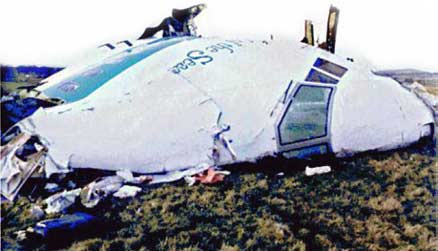
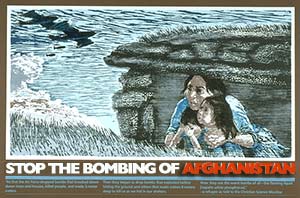
Deprived of being able to cash in on the Fallujah atrocity allure, Atomic Games is looking for sympathy from the Support the Troops crowd. Atomic laid off the soldiers on its staff, issuing this statement:

“We wish to assure the dozens of Marine veterans who have collectively invested hundreds of hours in this project that, while we have been badly wounded, we will fight on. The stories of your brothers’ courage and sacrifice in Fallujah must be shared with the world.”

By historical accounts, are they referring to the virtual sequences between the levels of action which act like silent movie inter-titles to link the running and jumping to a bigger story? Where the plot points are inviolate can be the only teaching moments in an otherwise chose-your-adventure killing spree. Where will there be opportunity for gamers to show courage and sacrifice with only a menu of rape and murder?

Let’s be clear. The Fallujah video game was not about soldiering. It did not mean to replicate the experience of 99.9% of the American soldiers who served in the battle for Fallujah. A first person shooter is not about following orders, falling in, or self-sacrifice. An FPS is about four wheeling a personal path of personal destruction. Atomic’s Six Days in Fallujah was a spring break for Grand Theft Auto sex tourists.

NMT is equally concerned about the lost Fallujah stories which may have been the narrative of the gameplay. The world should hear of the turning back all male refugees, of the White Phosphorous and sniper Free Fire Zones. The lost Fallujah action sequences no doubt exploited the armored vehicles crushing the Iraqi wounded, and the role of the helicopter gunships over the river, Red Bridge and the Fallujah hospital.

Lockerbie bomber(s) get away for good

Libyan Abdel Basset al-Megrahi has been imprisoned in the UK since 2000, for the 1988 bombing of PanAm Flight 103 over Lockerbie Scotland. Libya paid restitution for the act, but maintain their –and al-Megrahi’s– innocence. It was announced yesterday that Al-Megrahi is being freed on humanitarian grounds, because he’s been diagnosed with prostate cancer, and not in exchange for his dropping the appeal of his conviction. Thus ends further inquiry into who else was suspected of responsibility for the suitcase bomb.
Cockpit of Flight103

–which resulted in the deaths of 270 people.

Scottish MP Tam Dalyell has cause for suspicion, as documented in the 1995 The Maltese Doublecross. Prevented from being widely screened, its first venue fire-bombed, the documentary was successfully quashed by the US and UK governments. Lockerbie victim survivors opposed evidence that threatened the compensation they were seeking from Libya.

Maltese Doublecross director Allan Francovich survived attempts to run him off the road, for two years. In 1997 Francovich died while in the custody of US customs agents in Houston, age 56.

Let’s just say that Francovich’s findings bore the same elements and cast of characters as the investigations of award-winning also-dead journalist Gary Webb, found suicided in 2005, with two gunshots to the head.

US Air Force bombing is consistent

Stop the Bombing of El Salvador“At first the Air Force dropped bombs that knocked down trees and houses, killed people, and made 3-meter craters. Then they began to drop bombs that exploded before hitting the ground and others that made craters 8 meters deep to kill us as we hid in our shelters. Now they use worst bombs of all –the flaming liquid [napalm white phosphorous].”

-a refuge as told to the Christian Science Monitor, El Salvador, 1986

sweet lies of high fructose corn syrup

high-fructose-corn-syrup-processing-plant
I’m sure you’ve seen the Sweet Surprise commercials. There are several to target different consumer groups, but all involve a person #1 expressing hesitation at the offer of a high fructose corn syrup-laden “treat” and a smug HFCS-pusher asking sneeringly, “Oh yeah? Well, what’s so bad about HFCS?”

In the ads, person #1 hems and haws and has trouble articulating a satisfactory reply. HFCS person pats person #1 on the head condescendingly and says, “I thought so. Don’t worry, high fructose corn syrup is just like sugar. In moderation, it’s part of a healthy diet.” Person #1 quietly accepts the offered Frankenfood while DDB Chicago, the creator of the ads, and the Corn Refiners Association, creator of the poison, high five at their clever game, played to the grave detriment of the confused end-consumer.

I’m going to enlist my fledgling filmmaker son to help me produce a commercial of my own. The script will look something like this:

———-

Corporate Shill Cornelia: High fructose corn syrup is just like sugar. In moderation, it’s perfectly peachy for you.

Vigilant Consumer Veronica: Oh, no, Cornelia. Fortunately for you, I have a PhD in molecular biology and can help you understand how terribly you’ve been duped.

When an individual consumes sugar, the pancreas responds by increasing the production of insulin which enables the glucose in the bloodstream to be transported into cells and used as energy. The body also increases the production of leptin, a hormone that helps regulate the appetite and send a satiety signal to the body. This tells us that we’ve had enough to eat, a crucial component in the pursuit of “moderation.”

HFCS, in contrast, doesn’t cause insulin or leptin production nor increased cellular energy. You see, every cell in the body can metabolize glucose, but HFCS is only processed in the liver, like fats and alcohol, where it’s converted into triglycerides. The “energy” locked in HFCS stays largely inaccessible to the body, and most people know that elevated triglycerides — which we commonly refer to as high cholesterol — can lead to a whole host of health problems, including hardened arteries and heart attack. With HFCS, the moderation mechanism is never triggered; we never feel satisfied. Maybe this explains why 30% of American children are obese and sluggish, and why Lipitor, which is used to treat high cholesterol, is the best-selling drug in the country today. With approval by the American Academy of Pediatrics, doctors are now prescribing it to children as young as 8.

Cornelia, I know this is a lot to digest and, believe me, I’ve only begun to scratch the surface. The dangerous way HFCS is made, the genetically-modifed corn and enzymes that are used in its production, the fatty deposits and liver cirrhosis that may result from its over-consumption, the criminal complicity of the FDA, even the tale of interference with free-market mechanisms that led to its prevalence in the food supply, are all feature-length films in themselves.

Please, Cornelia, take my advice. Get educated about HFCS. Read labels. Protect yourself and your family from high fructose corn syrup. It truly is deadly, and there’s no smug satisfaction in that for me.

[hugs weepy Cornelia, hands her a tissue. children run into scene, grab offered apples, run off laughing and playing. pan to crushed box of Fudgsicles on picnic table, melting, chalk outline, puddle of congealed goo, like blood, surrounding] CUT.

US journalists! Visit scenic Kurdistan!

Sulaimania Sulaimaniya Kurdistan Iraq Irak
US media correspondents, reporters, tv anchors and news directors, get yourselves to scenic Kurdistan asap, visit the mountains of Sulaimania, the waterfalls of Ahmed Awa are apparently recommended. Embeds, lead the way! It may be the only way all you war propagandists will reap what you so justly deserve.

I can’t imagine there’s a single corporate media journalist who wouldn’t be hard pressed to defend the pro-war filter he or she puts on the news for US domestic consumption. Corporate tools? They’re military industrial pitchmen. Advocating death and dismemberment without restraint. Let them plead ignorance. Bullshit. I’d love to see Bill Clinton make a case for all of them.

Antiwar voices are split on whether to charge MSM collaborators for war crimes, for selling the Anglo world on patently illegal wars. But how else are we to be rid of them? America remains locked in a Vulcan mind meld with these impudent, immoral careerists. Perhaps apprehension by the Iranians, and a trial by revolutionary council, is the only justice they might ever meet. Dispatch them to Kurdistan: Assignment Iran! Let the Persians teach Americans the only way to deal with poisonous snakes.

The media song now, to spin the recent errant three in the best light, is that Kurdistan was not an unthinkable destination for tourists such as they, and perfectly safe too. Unless you venture toward the Iran border, where US commandos have been raiding Iranian infrastructure, while the US Navy taunts the Iranian coast in full force. Alas, Kurdistan, quite happy with its undeclared sovereignty from Iraq, has proven to be a safe haven for Anglos.

I remember a most heartbreaking scene from the first month of the war, recorded by an independent American photographer as he worked his way through Kurdistan. Perhaps you recall it.

Do I mean the friendly fire, or accidental, I’m not sure which to put in quotes, bombing which killed coalition troops, but also took out a Kurd ally who may have turned out to rival a more favored ally? No, not that one.

Our photographer was making his second entry into Iraq as I recall, and documented a personal incident thus. He was traveling with a Kurd escort, when an Iraqi combatant broke through with a grenade, determined to blow himself up next to the American.

And I should clarify, I was not rooting against the photographer, but– here’s what happened.

The Iraqi was being held off by a Kurd fighter, but he had pulled the pin on the grenade, and leaned against his opponent, dooming both of them if the Kurd dared to shoot him. The scene unfolded in the progression of stills the photographer snapped as he hastened away. The Iraqi was chest to chest with the Kurd, pleading to be let to get the American. I interpreted his entreaties to say: Brother let me pass, I must reach the American, I have no quarrel with you, let me die with the infidel. The Kurd seemed for a moment to consider the words of his Iraqi brother. American deaths counts many hundred fold, we are brothers fighting the American aggressors, I have committed to die for this act, help me, please let me just reach him.

I could be wrong, he may have been cursing the filthy Kurd for blocking his way. But his locked eyes and sweated brow reflected an earnest human being.

I cannot be sure how long this went on, but the Kurd kept the desperate man at bay, and as soon as the Kurd had wrestled control of the grenade, he shot the would-be assassin point black. The Iraqi fell unceremoniously into the tall weeds. The last image showed his body collapsed in the ditch beside the road. The photographer and his Kurd entourage moved on.

There were honest, unembedded journalists in the early stages of the war. A record number were killed by the US military until none report independently anymore. Journalists working for foreign news agencies are detained in secret US prisons, under the same pretext that we protest of Iran or North Korea.

If we do not have the resolve to string up these blood-thirsty yellow journalists, promulgating lies to justify the continued slaughter of countless innocents, let the Iranians have at them.

US extrajudicial reach extends to assassination of spouses and progeny

In a demonstration that they are closing in on Pakistani Taliban chief Baitullah Mehsud, the US military is claiming success with a drone attack on his father-in-law’s Waziristan home, where a missile killed Mehsud’s second wife, three unidentified civilians, and wounded four children.
drone unmanned

The US has posted a $5 million bounty on the head of Mehsud, based on charges he bore responsibility in Benazir Bhutto’s 2007 assassination, and for other suicide bombings. All charges he denies, but the Taliban leader won’t face his accusers long enough for unmanned drones to launch a missile his way.

Zanghra village had been targeted by US drones before, but no bounty had yet been announced for Mehsud’s extended family members. That proved to be no indication that US drone pilots in Nevada would not be carving notches for them.

While American warriors, by doing their missile targeting from the continental US, have made legitimate military targets of Air Force bases in Nevada, California and Colorado. Now they expand the battlefield to include combatant wives, relatives and progeny. As it should be.

(Imagine the relatives and cronies of our economic-war combatants, of our war criminal leaders, and our war industry profiteers; their folks at home contemplating their own culpability and vulnerability to suffer for the crimes by which their benefactors were able to enrich them. You don’t have to be remote piloting the Predators or Reapers, nor raining the Hellfire missiles upon America’s civilian adversaries to merit responsibility — it’s enough to be hollering along to “Courtesy of the Red White and Blue.”)

And, as in the case of Baitullah Mehsud, the extra-judicial assassinations are acceptable for even non-combatants, suspected-of-crimes-only, and their family and extended family.

Roberto Arango and Jose, here in Colorado Springs we miss you two guys immensely!

roberto arangoIt has been almost one month since Layla and I returned to Colorado Springs after our vacation in Colombia, and 2 months since we visited the small town located close by the high mountains called El Cocuy. The El Cocuy region is notable because these mountains are much more beautiful and spectacular than those found here in Colorado, and can be reached quite easily from Miami, Florida after a cheapie flight to Bogota and a mere 12 hour bus trip that well may be the most scenic bus ride you will ever go on.

Take all the hiking and mountain climbing equipment you will need because you probably cannot find it there in El Cocuy to purchase or rent. Maybe in the other small town nearby called Guican, though I rather doubt it?

We did not actually go into the highest area where the snow topped mountains are, because we had neither the time, equipment, nor patience to get in. Traveling with my 12 year old daughter, I had to take her needs into account, and climbing the highest mountains just was not what she had in mind at the time. Instead, she wanted to keep traveling with a 19 year British kid named Max, who was on a controlled and packed schedule that involved bussing off as quick as possible to meet up with another acquaintance.

What made the trip to El Cocuy most memorable to me was the hospitality of Roberto Arango and his friend, fellow musician Jose. After we got off the bus to El Cocuy, we managed to stumble across the plaza to an almost abandoned looking building that is in fact Roberto’s home, though he rents off beds to visiting travelers in need of a room for a week or a night. But he did not just rent us a room, but most enthusiastically offered to play us an on-the-spot concert, too! He and Jose were drinking some wine and were playing their songs and they continued playing for us their beautiful music for over an hour plus. You can see Roberto and Jose starting about 3 minutes into this youtube tape Around “El Cocuy” Mountains

Notice the paintings and beautiful garden in the background? Roberto Arango is also a very good painter and these are his works. In addition, he graduated with a degree in horticulture and in the inside plaza of his house was a full grown and beautiful garden! The paintings were way too large for us to cart back to the US, PLUS I was traveling while broke otherwise I might have tried doing just that. They were that good!

If you are interested in going to those high peaks around the area and want to get more info about what they are like, then just search Guican and El Cocuy on youtube to pull up some videos of those who have already done these treks. But for myself, the main reason to go back for me would be to revisit with my good friends, Roberto and Jose. Thanks, Guys, for having made our time spent with you the highlight of our visit to Colombia! Thanks, Roberto, and I hope to visit with you once again. And YES, Jose, your compact disc has been a big hit with my wife as I had thought it would be. She plays it constantly.

Is the Museum of Nature and Science gathering health data for insurers?

dmns expedition health
DENVER- At the Denver Museum of Nature and Science the most popular exhibit this summer is called “Expedition Health” and features high-tech diagnostic kiosks where visitors can gauge the general state of their health. Judging by the long lines, you’d think these people haven’t visited a doctor lately. I suspect that unless the medical insurance underwriters of the exhibit can be trusted, many of the DMNS-goers won’t get to see a doctor again.

My hypothesis– that “Expedition Health” is surreptitiously collecting personal medical data on every visitor who comes through their doors, to add actionable factors to insurance customer files. If this is happening or not, it easily could. And the DMNS is not offering any assurance that it is not.

Basically, everybody who goes through the Expedition Health exhibit is surrendering personal health data, which in the hands of insurers could be critical in their decision about whether or not to offer them medical coverage. Museum staff insist that the personal information is purged every night, although with a simple internet link this explanation is disproved. Staff explain that attendee magnetic cards are erased, perhaps innocently ignorant of where the information actually accrues as the public circulate from one kiosk to the next.

expedition health peak passAt pharmacies you can measure your blood pressure without a personalized magnetic card. But at the DMNS health exhibit, sponsored by Met Life, Kaiser Permanente, et al, you have to tell the machines who you are before you can learn your heart rate, your vital statistics, results of a stress test, a measure of your “stride,” digital imagery of your body at rest and in motion, scans of your fingers and palm, and a 3-D imaging of your face.

A telling detail, to my mind, is that the DMNS offers no printed assurance that the health information of its attendees is not being harvested by data merchants. Is it? Do I have any proof? I will offer you the clues, and you can be the judge. I think there are enough signs of subterfuge to suspect that “Expedition Health” is not serving your health.

Here’s how it looks to the average exhibit visitor: the attendee is given a magnetic card to use at the electronic kiosks, at the culmination of which a “Peak Pass” card will be generated to reflect the user’s health results. In the process the attendee learns about positive and negative factors which govern human health. Attendee are free to initiate the card with whatever fictitious ID data they wish, depending on how helpfully relevant they want their results to be.

The impression of anonymity is bolstered by several insincerities. I will illuminate a few.

A. The ruse of an aliased identity

Part one, the ID. Before museum-goers can attend “Expedition Health,” they must obtain an admission ticket marked with the time they can be scheduled to enter. This is done ostensibly to ease congestion through the exhibit hall.

denver museum peak passIn purchasing their museum passes, or submitting their DMNS membership cards, the visitors are of course revealing their verifiable identities. If they are not already members in the museum’s database, their admission purchase via credit card or personal check and driver’s license confirms who they are. Under the pretense of museum security, driver’s IDs can be inspected all of their own. Who would begrudge the museum knowing who is visiting? And if you had the foresight to worry about your anonymity, what would it matter if the museum recorded too, when you would be presenting yourself at the start of the health exhibit?

Part two: the unclean slate. At the exhibit door attendees submit their tickets and are admitted entrance and given a blank magnetic card. The staffer who collects the tickets is not the same person who immediately hands out the magnetic cards, thus reinforcing the sensation of a severed paper trail. But in actuality, there is no discontinuity because the card-holder immediately queues for a kiosk to personalize the card.

Although the user can chose to conjure personal information entirel fictitious, the impression is given that the card’s data goes no further than the exhibit’s exit door. When I asked, a staff member earnestly assured me that all the cards are erased every night. Which could be true, but irrelevant. The cards serve like a patient wristband at the hospital. The wristband confirms the identity of the patient at the various checkup points, as the medial records accumulate in remote files.

Part three, a false sense of anonymity. The museum patients are free to initiate their magnetic cards with whatever manner of fictitious name and birthday. Especially if it does not matter to them that the final printout will bear false facts. My companion felt he had to turn around to explain to me that he always lies about his birthday, by one day, to shake off the data spooks,. He volunteered this in case I thought he didn’t remember his own birth date. My sense is that most people give their true identity, if only so the kiosks will address them by their given names, the exchanges being in full view of friends and relatives waiting in line.

If the attendee hopes to glean some helpful health advice from the “Expedition Health” experience, they are inclined not to falsify the three remaining details: sex, age, and which “buddy,” among a statistical sampling of lifestyle types, they might identify themselves with.

Tell me that the last three profile items are not enough to provide a match to the hard data from the museum entrance receipts or membership database. Remember, the samples to compare are linked by the window of time the museum alloted to your ticket.

The choice of your “buddy” is the clincher. It might appear to be the most innocuous of indiscretions, but your surrogate patient type relays reliable biographical data about you, and doesn’t add anything to the health exhibit narrative except to use as a third person example, when the patient-specific explanation would reveal the alarming degree to which the diagnostics had taken your measure.

Which, to be fair, would create a liability risk for the museum, to complicate matters with pseudo diagnoses, easily misinterpreted by laymen.

The DMNS “Expedition Health” curators thus know quite definitively who you are, as you pass through their kiosks, putting yourself through a fairly extensive check up, the results of which are explained only generally to you, but to a medical administrator say enough to narrow many odds about your health prospects.

B. Diversionary misapplication of magnetic cards

Several of the Kiosks at “Expedition Health” are not interactive, and do not require the magnetic card. Of course, to assure that your “Peak Pass Personal Profile” data card will be filled print out with your EKG, Resting Heart Rate, Target Heart Rate, whether you reached your heart rate; your Arm Span, Height, Energy Score, Stride Length and Speed, a silhouette of your walking profile and another of your outreached Leonardo DaVinci pose; you’d have to have scanned your magnetic card at those machines.

By the way, the data summarized on the personal profile card was far more rudimentary in comparison to the information shown on the screens, and doubtless neither reflect the sophistication of the diagnostic electronics employed. The optics, for example, are capable of far better than inch-high cameos of your body. The lengths of time for which you have to pose for the scans betray the resolution the graphics engines are really processing.

Here’s the information being gathered at the various stops:

Taking your measure
The station which measures your arm span and height requires you to stand, arms outstretched, shoes off, for a full body digital picture, which records an uncommonly revealing photographic record of the subject’s body fat ratio.

Another station measures your stride length and speed, from which an “energy” score is awarded. To do this, a full motion video records you as you take over a half dozen steps, perhaps pushing yourself purposefully to boost your “energy score.” This video must be invaluable in what it reveals about a person’s vitality or physical challenges.

While the cardio-vascular stress tests might appear to offer mere stationary bicycling experiences, a subject’s entire session can be recorded, offering telltale clues to heart condition and lung stamina. Probably we’d all be more comfortable studying these results with the peace of mind that we have health insurance, as opposed to considering that our results might be grounds used to deny us health insurance coverage.

Diet
Several kiosks would seem to have no need for a card. For example, one featured an interactive script about nutrition. Mostly children sit at this station, to pick among menus of food, the mission being to fortify a climber for an ascent of a peak. Their choice of nutrients determines how far the animated climber will get, before tumbling after from hunger. You plug in your card to begin, and as a result the climbing figure features a Tanqueray-head-type of your chosen buddy. If this kiosk is gleaning a sense of your diet preferences, it’s not revealed on the exhibition debriefing printout.

Identification Marks
Another kiosk teaches you about wind chill. You stick your hand into a plexiglass chamber where lasers measure the change in your skin temperature over the course of several minutes. Curiously, you have to insert the magnetic card at this stop. Why? And you cannot proffer your elbow, your fist, or the back of your hand. Is it possible that the lasers reading your hand are actually scanning the prints of your palm and fingers? I know too little about medicine to conjecture what use the medical industry might have for such information, but the data is certainly marketable to security firms.

Confessions
While on this tangent, there’s another kiosk, the most popular in fact, which DOES NOT REQUIRE A CARD. At this station you get to see your face as it’s projected to age over the course of your life. The line is the longest at this station, while subjects pose, their face held immobile, framed in a stainless steel ring, for an interminable several seconds. I witnessed one person complain that the light into which he had to stare hurt his eyes. Eventually the scan yields only an oddly primitive, cellphone-quality facsimile of the subject’s face, projected on an adjacent flat screen. Next, the subject is asked which among three factors might influence how he’s expected to age. Please check which apply: UV damage, Obesity, and/or Smoker.

By law, none of these behaviors would have to be confessed to a doctor, or an insurance agent, in particular if such was a vice already put well behind. But the aging machine draws out the truth. Because the interrogator machina does not ask for your ID, it creates the semblance that you are being asked anonymously. Who doesn’t fully comprehend by now that sun exposure, obesity and smoking are very tragic predictors of our future health problems?

The pseudo age-disfigured face is disappointing. The transformation is just a transparency of age spots, wrinkles and discoloration overlaid on an initial low-rez photograph. If you are not recording the age-progression with your own camera, the ephemeral image passes, with no trace of what the long facial scan had actually recorded. You’d think since the lines of visitors here are always so long, that the aging image is what visitors might like to take with them as a memento. Alas, there’s no slot on this kiosk into which to insert your magnetic card to “record” it. But the sovereignty of this station is illusory.

Biometrics
If a webcam, a PC, and a common internet connection can transmit video in real-time video, why would this DMNS workstation be laboring for so long over your face? Can I hazard a guess? A 3-dimensional study of your face, and something just short perhaps of a retinal scan? If medical administrators are not looking at symptoms deep in your eyes, or in the translucence of your skin, perhaps this kiosk is for the security interests tabulating your biometrics.

If nothing else, the biometric configuration of your face can be matched to a digital image of your whole body from a previous kiosk, thus confirming your identity, BECAUSE AT THIS KIOSK YOU ENJOYED ANONYMITY. But now your smoker/obesity concession can be deftly noted alongside the other red flags being added to your health profile.

C. The Parting Shot
The last kiosk, in my opinion, gives the game away. If you insert your magnetic card, you can record a video message, a propo anything at all. I saw many takers offering calm Youtube soliloquies, as if composing a greeting to send into space. And AHA –instead of pretending that your video would be encoded on your card, instructions beside the screen offered the internet URL at which you can go see it.

First, this directive gives truth to the lie, the DMNS staffers’ incurious conclusion, that individual records are purged everyday. Your profile lives on on the internet, see it for yourself. Give your six-digit pass-code to a friend and they can see it too. And of course, you’re not the only one with the pass-code.

Second, you might well ask yourself, what does a videogram have to do with apprising me about my health? Unless it’s a time-capsule snapshot of you before you lost your insurance coverage. Because the video has everything to do with breached personal privacy. There you are, in your unguarded candor, sitting not upright like you would for a job interview, nor slouched like you might for Social Security, and you’re providing a recording for voice pattern recognition, for further data triangulation.

Third, you’ll have noticed, if you tried the Peak Pass link to the DMNS website, you get no further with your personal code than an invitation to “extend your experience” by installing Microsoft Silverlight. I hadn’t mentioned that the Gates Foundation was another big sponsor of “Expedition Health.” Beside the security vulnerabilities of client-side code, managing what is supposed to be confidential information, what usual back doors is Microsoft leaving in its pseudo-Flash, offering untold windows into our personal medical records?

The DMNS
I do not believe the museum staff have any idea what becomes of the data, nor the extent of the data, logged as museum visitors recreate through “Expedition Health.” The multiple employees, including a manager to whom I spoke, believed all data was erased daily. I’m not sure why they were untroubled by the internet database that obviously refutes their understanding of the process.

However the IT programmers who wired up the displays, and information managers handling the data, would most certainly know the full extent of this nefarious harvest.

Judging from the recent performance of the CEOs of the top medical insurers before Congress, expressing no remorse about their disreputable practice of rescinding coverage for customers upon their being diagnosed with expensive health problems, I do not think it is alarmist in the least to suspect that projects like “Expedition Health” and other similar museum “exhibits” around the country, are being used to further screen the prospectively less-than healthy.

DNA
Readers who’ve already visited “Expedition Health” will note that I ‘ve omitted mention of a significant corner of the experience, the hands-on, let’s play pathologist portion where visitors don lab-coats and, with the assistance of similarly lab-coated docent/lab-technicians, draw and observe their own DNA samples.

Where I inquired, I saw no magnetic-stripped cards changing hands, so I cannot say, on the hot topic of DNA, that the sky is falling. This holds with my inclination to believe that the museum volunteers are not party to the privacy improprieties of the sponsors running the machines. But what hands-on scientific observations are being conducted on digital equipment, as distinguished from analog microscopes, might be kept in the records, and it would only require just one lab-coated coordinator to monitor which sample came from whom. And wouldn’t that be the whole ball of wax?

CRYING WOLF?
If all this seems implausible, consider what is happening at Buckley AFB, by coincidence only a few miles away in Denver. Although US security agencies refuse to comment, respected intelligence experts have determined that at Buckley reside the data storage units upon which are the recordings of every single cellphone conversation that’s been transmitted via satellite. Every last one, for the past several years. Current technology does not afford agents the capability to monitor all those calls, but the processors are quickly catching up. The spooks can project that the eventual capacity to parse the information is inevitable. So why not begin logging the information now? The public has learned about Buckley from former employees, this is not mere idle speculation. Meanwhile the telecom companies who’ve been complicit in the data collection, have been very adamant about receiving immunity from prosecution for what constitute gross violations of American law.

AND NOW?
The information tracking mechanisms are there, the DMNS staff do not presume to vouch for machines, only for the harmless cards. Meanwhile the DMNS has no written pledge that their visitors’ confidentiality is being respected. Harvesting test data is not illegal after all, and with the pretense of anonymity, it’s even laudable, in the name of Science and Nature. I am awaiting a written response from the “Expedition Health” curator, and I intend to solicit an informed and verifiable refutation of these charges. I’ll keep you posted.

The “Expedition Health” installation went up in April, but it’s not coming down. It’s the most recent PERMANENT EXHIBIT to be added to the DMNS offerings. Add the trajectory of time to the information the diagnostics will be able to assemble about you.

And so, what do you think of a museum of Nature and Science, adding a whole wing about FREE HEALTH TESTING? Is that the dominion of museums, usually public repositories of the archives of knowledge? Or can you imagine a more appropriate setting for equipment and staff to perform medical checkups?