The Wondrous Tale of Brer Lamborn, Brer FOX & Obama the Tar Baby. Uncle Remus and Racism in Colorado Springs.

COLORADO SPRINGS- If US Rep. Doug Lamborn (R-CO) remembered one thing from the Uncle Remus stories, it was not to touch that Tar Baby! You know, the one Brer Rabbit mistook for a cute black infant who would not tip his hat to his better. Or was that a Porch-Monkey? Colorado’s 5th District is unclear about the distinction if the local media and Fox News are to be believed. Either term refers to a poor person whose sticky problems become your “quagmire” if you ignore your natural prejudice to their skin color and you let them touch you. Can a representative of bigots be bothered to know if a racial slur is offensive? According to Lamborn, he can’t. More important, the congressman reiterates –as he professes his apology to people taking umbrage at racism he hadn’t intended to express– is: NOT TO TOUCH THAT OBAMA!
 
To be clear, Doug Lamborn hasn’t apologized to his constituents, he’s only claimed to have sent President Obama a letter, assuring all that Obama, the black untouchable, will have the grace to forgive him as “a man of character”.
 
And so this Uncle Remus tale simply goes on…

The story so far
Lamborn calls black US president a Tar-Baby, public outrage ensues, Gazette newspaper lends support to Lamborn’s excuse that Tar-Baby wasn’t used in racist sense. Protests held by NAACP, community groups and local progressives, all which Lamborn refuses to meet. Lamborn office erects sign NO PROTESTS.

ACT II: Lamborn office calls for his supporters to rally, presumably under the “no protest” sign. His office issues a press release: AP, Fox News, national and statewide outlets report before the fact that LAMBORN SUPPORTERS RALLY. Huffpo and Springs activists scramble to get images of said protest sanctioned despite “no protest” sign, find none. Local TV station KOAA which had depicted rally with a photo, hours before it was alleged to happen, omitted to mention photo was from file, conveniently unfocused and likely of a past year election event.

With every shenanigan, the theme resounds: the Colorado Springs establishment supports what Doug Lamborn said about Obama being a Tar Baby.

Racism in Colorado Springs
No one is in denial about the unsavory support behind Doug Lamborn. So does Colorado Springs support his bigotry?

Does the Tea Party shit in Acacia Park? You should see those clan gatherings, you can’t find a parking space for blocks, then it’s a sea of hate-filled white faces, with Doug Lamborn right there up front.

The comment section of every local media blog overflows with indignation that “Tar-Baby” is being construed to be racist. Commentators assert their preference for Freedom of Speech over Political Correctness.

BTW, Colorado Springs is as segregated as Chicago, with black neighborhoods, churches and schools. Many lives never cross the path of another of different ethnicity, so we’re blameless actually when we conclude there’s no racism here.

Except toward Hispanics, grouped conveniently with illegal immigrants, who don’t count, by definition, according to our favorite definition: legality. Same as used to apply to slaves.

The Pikes Peak region was a hotbed of clan activity in the 1930s, and obviously before that. At the turn of the century, the good folks of Limon had to hold up a lynching, make the poor young black boy wait hours in the November cold because hundreds wanted to come on the train from Colorado Springs to see 16-year-old Preston Porter burned alive at the stake.

Lynchings of Native Americans weren’t even recorded, being as they were, sanctioned as vermin control. It was seldom that white men distinguished themselves by speaking out in defense of Indians. Pikes Peak volunteers rode with Colonel Chivington to commit the Sand Creek Massacre.

Today downtown Colorado Springs boasts a lone statue of an African-American, a William Seymour, among the city notables immortalized in bronze. His is the only likeness made to take off his hat, outdoors, I kid you not.

Speaking of which, that was Tar-Baby’s offense.

Brer Rabbit and the Tar-Baby
Brer Rabbit was passing by the little black figure, and called out a friendly hello. But Tar-Baby wouldn’t answer when spoken to. When he wouldn’t even take off his hat, Brer Rabbit figured he’d teach him a lesson. Apparently, it’s not inappropriate to clobber some status of people if they’ve disrespected you.

Of course that was the only way Brer Fox’s plan was going to ensnare the rabbit, to mire him in the tar.

You might ask, how did Brer Fox know that Rabbit was going to mix it up with the Tar Baby? Would Rabbit have laid his hand on the baby if he’d been white? Would it have mattered if a white baby didn’t answer to his greeting?

Put aside that the Tar Baby expression became a racial slur in itself, the original Tar-Baby character impersonated an African-American child who didn’t show the expected deference to a rabbit.

The accompanying images reflect the changing visual representation of Tar-Baby. He makes his first appearance in an early chapter of the Uncle Remus Tales (as collected by Joel Chandler Harris) called “The Wonderful Tar-Baby Story.” Above is one of the original illustrations by artist A.B. Frost. There Brer Fox creates a “baby” made of tar to lure Brer Rabbit into his clutches.

The next images are from Disney versions. First the animated film SONG OF THE SOUTH, then the children’s books which followed.

Disney famously has not released Song Of The South after its theatrical run. The depictions were too ethnic, and Tar-Baby recalled the black-face entertainment that ought not to have so amused white audiences. Black-face is what passes for a negro face to whites. Similarly, a baby made of tar passes for a negro, but only in exaggeration. Oblivious to many, apparently, is that African-Americans are not by any approximation black. If Brer Fox had made a baby out of milk, would white people confuse its color for their flesh tone?

Disney rewrote the tale for its children’s book series, making the tar baby this time out of glue. Not only that, but they gave him ears to resemble a rabbit. This preempted confusing him for a human baby, black or white. Now Brer Rabbit could be seen taking him for his kin, which of course shifts the premise, and might puzzle some children to wonder why Brer Rabbit is so quick to come to blows.

Uncle Remus
Some will probably ask in earnest: are the Uncle Remus tales racist? No, but their context is complicated. The stories emerged from the plantation South, from storytellers who lived in slavery. The lessons imparted are universal, but the particulars were obviously crafted to help slaves come to terms with their unchallengeable fate. Shall I quote a few passages to see if you get the idea?

Brer Tarrypin, he lay back up dar, he did, des es proud ez a nigger wid a cook possum.
–chapter 10

He scrape it clean en lick it dry, en den he go back ter wuk lookin’ mo’ samer dan a nigger w’at de patter-rollers bin had holt un.
–chapter 17

Dey er mighty biggity, dem house niggers is, but I notices dat dey don’t let nuthin’ pass. Dey goes ‘long wid der han’s en der mouf open, en w’at one don’t ketch de tother one do.
-chapter 27

How about this wrenching bit from A Story of War?

Nigger dat knows he’s gwineter git thumped kin sorter fix hisse’f, en I tuck’n fix up like de war wuz gwineter come right in at de front gate.

From chapter 33: Why the Negro is Black:

ONE night, while the little boy was watching Uncle Remus twisting and waxing some shoe-thread, he made what appeared to him to be a very curious discovery. He discovered that the palms of the old man’s hands were as white as his own, and the fact was such a source of wonder that he at last made it the subject of remark. The response of Uncle Remus led to the earnest recital of a piece of unwritten history that must prove interesting to ethnologists.

“Tooby sho de pa’m er my han’s w’ite, honey,” he quietly remarked, “en, w’en it come ter dat, dey wuz a time w’en all de w’ite folks ‘uz black—blacker dan me, kaze I done bin yer so long dat I bin sorter bleach out.”

The little boy laughed. He thought Uncle Remus was making him the victim of one of his jokes; but the youngster was never more mistaken. The old man was serious. Nevertheless, he failed to rebuke the ill-timed mirth of the child, appearing to be altogether engrossed in his work. After a while, he resumed:

“Yasser. Fokes dunner w’at bin yit, let ‘lone w’at gwinter be. Niggers is niggers now, but de time wuz w’en we ‘uz all niggers tergedder.”

“When was that, Uncle Remus?”

“Way back yander. In dem times we ‘uz all un us black; we ‘uz all niggers tergedder, en ‘cordin’ ter all de ‘counts w’at I years fokes ‘uz gittin’ ‘long ’bout ez well in dem days ez dey is now.

But atter ‘w’ile de news come dat dere wuz a pon’ er water some’rs in de naberhood, w’ich ef dey’d git inter dey’d be wash off nice en w’ite,

en den one un um, he fine de place en make er splunge inter de pon’, en come out w’ite ez a town gal.

En den, bless grashus! w’en de fokes seed it, dey make a break fer de pon’,

en dem w’at wuz de soopless, dey got in fus’ en dey come out w’ite;

en dem w’at wuz de nex’ soopless, dey got in nex’, en dey come out merlatters;

en dey wuz sech a crowd un um dat dey mighty nigh use de water up, w’ich w’en dem yuthers come long, de morest dey could do wuz ter paddle about wid der foots en dabble in it wid der han’s.

Dem wuz de niggers, en down ter dis day dey ain’t no w’ite ’bout a nigger ‘ceppin de pa’ms er der han’s en de soles er der foot.”

And my favorite passage, called Turnip Salad:

“How many er you boys,” said he, as he put his basket down, “is done a han’s turn dis day? En yit de week’s done commence. I year talk er niggers dat’s got money in de bank, but I lay hit ain’t none er you fellers. Whar you speck you gwineter git yo’ dinner, en how you speck you gwineter git ‘long?”

“Oh, we sorter knocks ‘roun’ an’ picks up a livin’,” responded one.

“Dat’s w’at make I say w’at I duz,” said Uncle Remus. “Fokes go ’bout in de day-time an’ makes a livin’, an’ you come ‘long w’en dey er res’in’ der bones an’ picks it up. I ain’t no han’ at figgers, but I lay I k’n count up right yer in de san’ en number up how menny days hit’ll be ‘fo’ you ‘er cuppled on ter de chain-gang.”

“De ole man’s holler’n now sho’,” said one of the listeners, gazing with admiration on the venerable old darkey.

“I ain’t takin’ no chances ’bout vittles. Hit’s proned inter me fum de fus dat I got ter eat, en I knows dat I got fer ter grub for w’at I gits. Hit’s agin de mor’l law fer niggers fer ter eat w’en dey don’t wuk, an’ w’en you see um ‘pariently fattenin’ on a’r, you k’n des bet dat ruinashun’s gwine on some’rs.”

What about “nigger”?
When Russel Means writes of today’s economic and anti-democratic troubles, and addresses America’s newly impoverished middle class by saying Welcome to the Reservation, this is the wisdom I think he’s looking to impart. Welcome to niggerdom, Nigger.

With that word now struck from Huckleberry Finn, the concept of “nigger” becomes harder to grasp and can’t teach us its lesson.

Listen to Uncle Remus talk about what it means to be a lowest class being, beneath the interest of humanity, untouchable, as government functionaries like Doug Lamborn would prefer the underclass laborer remain.

It’s against the moral law for niggers to eat when they don’t work. AND
I ain’t handy with figures, but I lay I can count on one hand how many days it’ll be before [“knocking around” will land you niggers] in the chain-gang.

I suggest you reread that last passage of Uncle Remus in its original. Now I’ll try my hand at the last half of that phrase:

It’s against the moral law for niggers to eat when they don’t work, and when you see them apparently fattening on air, you can just bet that ruination is going on somewhere.

News of the World crimes belong to Rupert Murdoch, News Corp, Fox News, Dow Jones and the Wall Street Journal

The issue of Rupert Murdoch’s lawless news empire isn’t about phone hacking to break news, it’s about surveillance used for the same purposes as intelligence agencies, to control political climates, to effect outcomes based on what you have on the players. Does the FBI have to find evidence of malfeasance in the US to make Murdoch any less guilty? The important point to make is that News Of The World, is News Corp, is Rupert Murdoch, is News International, is Fox, is Dow Jones, is the Wall Street Journal. With the WSJ, Murdoch’s sway over the stock market may mean he dictates the editorial voice of all corporate media properties. Anyway, who can pretend the corporate kleptocracy isn’t a shared agenda? Murdoch may be just one rotten apple, but now everyone can see how rotten. Here’s a chance to wash him out.

If the ‘Left’ is serious about doing something credible to counteract the capitalist class, now is the time. Do the work of informing the public on how News Corp has been twisting the truth not just to sell papers and floor wax, but to promote an agenda of limitless greed at the expense of working and poor people. In reality, Rupert Murdoch is just one cog in a very large propaganda machine, but he is a significant dynamic that binds the corporatists and political right-wing together. Telling the plain truth about Murdoch at this time is the best weapon progressives have at their disposal.

The Angry Indian

The lynching of Preston John Porter Jr. by a mob from Limon and Colo. Springs

A propos of, let’s
say, LYNCHING.
Burned at the stake, at Lake Station Colorado, near LimonColorado
state history records 175+ lynchings, of mostly cattle rustlers and horse thieves. Boosters laud our state’s few (5) racially-motivated lynchings, but in relation to Colorado’s small portion of African- Americans, the incident rate is not insignificant. What’s more, Colorado can tie any state for the worst race lynching ever, when in 1900, along the railroad tracks near Lake Station, black 16-year-old, 130 lb. Preston Porter Jr, innocent and probably mentally feeble, was burned at the stake by a cheering mob numbering over 300.

Lynching describes the physical act of hanging, stringing someone up without inexpedient formalities. In principal lynching means a death sentence without recourse to due justice. And of course, in practice the summary execution is often motivated by racial prejudice. I explain the obvious because today no one appears to acknowledge that US drones over Pakistan, Yemen, et al, are terminating lives based on mere suspicions of being enemies of the state, these are darker skinned lives, with the full enthusiasm of the American TV mob.

Out West, lynchings were rough justice. Everywhere else they were and are hate crimes. Colorado sidesteps having to include the killing of Native Americans as lynchings because those were massacres. One western memoir recounts that “lynch law” was as necessary to keeping peace in the Wild West as were Indian Massacres and shooting wolves.

Preston Porter was a young railroad worker accused of the rape and murder of 12-year-old Louise Frost. After having accused another African-American, three “Mexicans” and a Native American, enraged parties in Limon and Denver settled on Porter. After a week of interrogation, enhanced by trying hypnosis and reading his palm, they coerced a confession.

Next they let the victim’s father decide the manner of death. “Burnt at the stake” was his choice. The mob marched poor Preston to the site of the crime, near what was then Lake Station, and they used a rail for the stake. Preston had no coat but was made to wait for hours in the cold because crowds were delayed getting to the affair by rail from Colorado Springs.

The etching below is reprinted from the Denver Times newspaper article of November 17, 1900. It portrays Porter crying out for the Lord to forgive his tormentors. Don’t think the reporter reflected Porter’s act with sympathy. He wrote: “The great crowd shook with pure enjoyment of the situation.”

Here’s what happened next, as reported by the New York Times:

For an instant the body stood erect, the arms were raised in supplication while burning pieces of clothing dropped from them. The body then fell away from the fire, the head lower than the feet still fastened to the rail.

This was not expected, and for a few minutes those stolid men were disconcerted; they feared that the only remaining chain would give way. If this had occurred the partly burned human being would have dashed among them in his blazing garments. And not many would have cared to capture him again. But the chain held fast.

The body was then in such a position that only the legs were in the fire. The cries of the wretch were redoubled, and he again begged to be shot. Some wanted to throw him over into the fire, others tried to dash oil upon him. Boards were carried, and a large pile made over the prostrate body. They soon were ignited, and the terrible heat and lack of air quickly rendered the victim unconscious, bringing death a few moments later.

All told, the fire took 20 minutes to kill the young black victim.

How was Preston Porter’s ordeal unlike the targets of American aerial assassinations? Americans just heap on the fuel as they burn alive.

EPILOG:
Preston’s executioners left the rail at the site to serve as a warning to other coloreds. Fortunately there wasn’t any trace of it when I made a recent visit. But a docent at the nearby railroad museum knew exactly the incident I was asking about and dismissed me curtly, disgusted with my interest in the matter and refusing to offer any directions to the location. It hadn’t occured to me that Limon’s “native” residents would be related to Preston’s killers. Fortunately another local, not born-and-bred, overherd my inquiry and gave me a lift to a probable starting point.

It wasn’t hard to find. Lake Station was the train stop before the bend at Limon. Before trains, “Lake” was a stage for stagecoaches, providing water to the Butterfield Overland Dispatch heading to Denver. Later it became a “siding” where steam locomotives could take water. After water stops became unnecessary. Lake Station was demolished. Building foundations remain. Its namesake lake dried to wetland long ago.

Victim Louise Frost was returning to her home in Hugo when she was accosted as she drove her surrey across the Big Sandy River where the dry river bed was forded by the old wagon trail. The old trail refers to the famous Smokey Hill Trail which led aspiring prospectors to Colorado gold. Erosion has altered the topography of the dry river but Preston Porter was executed on a rise between the crossing and the railroad tracks.

There is no memorial for the black martyred teen. Nothing marks or commemorates the atrocity. There should and could be. The site of Preston Porter’s death lies adjacent to a protected wetands along the Big Sandy. There’s a nature walk which could easily incorporate a monument. If Limon would own up to the deed.

Lake Station, Colorado, where Lake Creek crosses into the Big Sandy
The Union Pacific Railroad track at Lake Station, looking Southwest toward Pikes Peak.

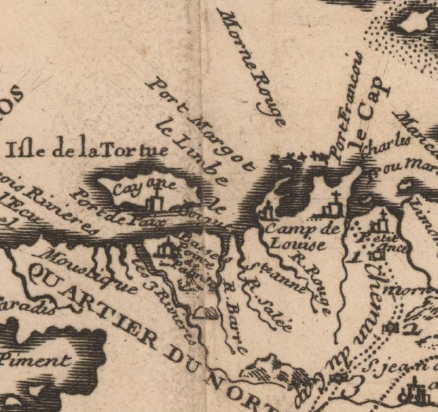
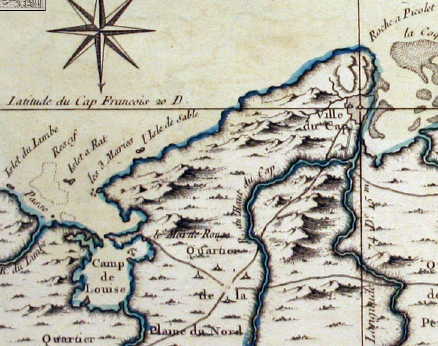
Cartographic traces of Lake, Colorado


Maybe like me you’re wondering how a landmark falls off the face of the earth, in particular Google Earth, assuming as we do that web crowdsourcing is archival, not perishable. A stagecoach watering hole in Kansas Territory, formerly Arapaho, was Hedinger’s Lake, between present day Limon and Hugo. Like the history of Colorado’s water, Lake became Lake Station, later a railway siding, today a creek.


First some back-story: 1750. When gold looked to become the carrot to drive white man’s Manifest Destiny, the Indian Territories of what would become Colorado were labeled simply the Gold Region.


Back in 1815, the West was still La Louisiane, and place names were native, French and Spanish. Taos was one of the oldest Spanish settlements, site of the First American Revolution, against the Spaniards, and another revolt when the US invaded. Camp de Baroney sits on the Arkansas River, eventually resettled as El Pueblo. And there’s La Fourche Republicaine, a fork of la Rivoire Missouri, soon to lead a prominent migration trail west.


By 1848, St. Vrain’s Fort and Grante Ft., Bent’s Fort, were already protecting Anglo trading interests. (Note by the way, Old Park and New Park, eventually to be become the “North” to South Park.)


By 1864, the Cheyenne and Arapaho found themselves bordered on the west by the “Military Department of Utah” and ceding their lands to the Kansas Territory. (On this map we can see Montana City, the original Denver City. Denver eventually overtook Auroria and the metropolis. Mineral Springs became Manitou and Colorado Springs at the foot of Pikes Peak.)

Note the curiously singular representation of a “Kansas Lake” depicted at the tip of the south fork of the Republican River, whose waters will originate in the later to be named Lincoln County, at whose heart will lie Lake, Colorado.

The Rocky Mountain region lost many lakes by the mid 1800s when beaver were hunted to near extinction and with them the beaver dams. Note just West of “Kansas Lake” lies Beaver Creek.


With the gold rush, settler trails crisscrossed the West, for wagon trains, stagecoach and mail carriers. Lake was a stage at the convergence of the Butterfield Overland Dispatch and Republican Fork Trails, where they crossed the Big Sandy Creek to join the Smoky Hill South and North Roads (after similarly named rivers which were starting points in Kansas) or the spartan Starvation Trail to Denver. Today’s I-70 follows Smoky Hill North.


Was Hedinger’s Lake the water which travelers sought at the end of the South Republican Fork Trail?


This 1868 Union Pacific map predicted the stops heading eastward from Denver to be Parkhurst, Beaver, which later became Deer Trail, and Coon Creek, which became Kit Carson, opposite Sand Creek.


By 1870, Kansas was a state and the Kansas Union Pacific RR reached Denver. (Beyond the mountains: North Park, Middle Park and South Park.)


By 1873, leaving for Denver from Fort Wallace, there were stops at Kit Carson, Aroyo, Lake, Agate (pronounced “A-Gate”) and Deer Trail. (Note: still no Colorado Springs.)


A map circa 1880s, shows Hugo, Lake, River Bend, Godfrey, Agate, Deer Trail, and Byers, named for the founder of the Rocky Mountain News, formerly Bijou.


When the Chicago Kansas and Nebraska Railroad sought a direct route to Colorado Springs, it decided to intersect the Kansas Pacific at a new stop called Limon and that was the end of Lake. At Limon the westbound trains performed what was called the “Limon Shuffle” where passenger and freight cars were separated depending on which were going to Denver and which to Colorado Springs.


Lake Station remained a stop for the Union Pacific, and on this map which accompanied the 1910 census, it’s gone, in favor of a late addition, Bagdad.

As trains no longer needed to take on water, and could reach their destinations more quickly, many stops were eliminated. This 1925 train Union Pacific train schedule lists only Cheyenne Wells, Kit Carson, Hugo and Limon before reaching Denver.


Lake is still marked on railroad maps, though there’s not even an access road to reach it.


On other maps it’s just Lake Creek, spanned by an impassable decaying bridge. It’s now a wetlands area that provides a bird sanctuary.


For the USGS, Lake still serves as namesake for the topographical map of the Lake Quadrangle.

To be continued…

Wikileaks reveals inventory of US possessions critical to corporations

To complain that a wikileaked list of off-US-soil “critical infrastructure and key resources” provides a checklist of targets for aspiring terrorists is to pretend that opponents of the US empire are as simple minded as American television viewers. The importance of most of the so-called Critical Foreign Dependencies is self-evident, more curious is how the US deems these proprietary interests, to what extent it will protect them, and for whom. Sole manufacturers of vaccines might be vital to public health, but what of communications cables, international ports, supplies of industrial metals and suppliers of components to US weapons systems? Those are critical only to bottom lines. The 2008 report in the State Department cable leaked yesterday reveals infrastructure critical to multinational corporations, whether US or not.

While American airwaves are full of denunciations of Wikileaks and Julian Assange for endangering the US, the Western press is ignoring incendiary cables making their rounds in the Middle East, in which the Lebanese Defence Minister Elias El-Murr asks his American liaison to assure Israel that a next invasion, restricted to rooting out Hezbollah, would not be opposed by Lebanese forces.

Amazon, Paypal and EveryDNS have thrown in with those that would censor Wikileaks, likely also Google and Twitter. Try to find the El-Murr story through Google News or Twitter.

Here’s the text of the 2009 cable:

2008 Critical Foreign Dependencies Initiative (CFDI)
critical infrastructure and key resources (CI/KR)

AFRICA

Congo
(Kinshasa): Cobalt (Mine and Plant)

Gabon:
Manganese – Battery grade, natural; battery grade, synthetic; chemical grade; ferro; metallurgical grade

Guinea:
Bauxite (Mine)

South Africa:
BAE Land System OMC, Benoni, South Africa
Brown David Gear Industries LTD, Benoni, South Africa
Bushveld Complex (chromite mine) Ferrochromium Manganese – Battery grade, natural; battery grade, synthetic; chemical grade; ferro; metallurgical grade
Palladium Mine and
Plant Platinum Mines Rhodium

EAST ASIA AND THE PACIFIC

Australia:
Southern Cross undersea cable landing, Brookvale, Australia
Southern Cross undersea cable landing, Sydney, Australia
Manganese – Battery grade, natural; battery grade, synthetic; chemical grade; ferro; metallurgical grade
Nickel Mines Maybe Faulding Mulgrave Victoria, Australia:
Manufacturing facility for Midazolam injection. Mayne Pharma (fill/finish), Melbourne, Australia: Sole suppliers of Crotalid Polyvalent Antivenin (CroFab).

China:
C2C Cable Network undersea cable landing, Chom Hom Kok, Hong Kong
C2C Cable Network undersea cable landing Shanghai, China
China-US undersea cable landing, Chongming, China
China-US undersea cable landing Shantou, China
EAC undersea cable landing Tseung Kwan O, Hong Kong
FLAG/REACH North Asia Loop undersea cable landing Tong Fuk, Hong Kong
Hydroelectric Dam Turbines and Generators Fluorspar (Mine)
Germanium Mine
Graphite Mine
Rare Earth Minerals/Elements Tin Mine and Plant Tungsten – Mine and Plant Polypropylene Filter Material for N-95 Masks
Shanghai Port
Guangzhou Port
Hong Kong Port
Ningbo Port
Tianjin Port

Fiji:
Southern Cross undersea cable landing, Suva, Fiji

Indonesia:
Tin Mine and Plant Straits of Malacca

Japan:
C2C Cable Network undersea cable landing, Chikura, Japan
C2C Cable Network undersea cable landing, Shima, Japan
China-US undersea cable, Okinawa, Japan
EAC undersea cable landing Ajigaura, Japan
EAC undersea cable landing Shima, Japan
FLAG/REACH North Asia Loop undersea cable landing Wada, Japan
Japan-US undersea cable landing, Maruyama, Japan
Japan-US undersea cable landing Kitaibaraki, Japan
KJCN undersea cable landing Fukuoka, Japan
KJCN undersea cable landing Kita-Kyushu, Japan
Pacific Crossing-1 (PC-1) undersea cable landing Ajigaura, Japan
Pacific Crossing-1 (PC-1) undersea cable landing Shima, Japan
Tyco Transpacific undersea cable landing, Toyohashi, Japan
Tyco Transpacific undersea cable landing Emi, Japan
Hitachi, Hydroelectric Dam Turbines and Generators
Port of Chiba
Port of Kobe
Port of Nagoya
Port of Yokohama
Iodine Mine
Metal Fabrication Machines Titanium Metal (Processed) Biken, Kanonji City, Japan
Hitachi Electrical Power Generators and Components Large AC Generators above 40 MVA

Malaysia:
Straits of Malacca

New Zealand:
Southern Cross undersea cable landing, Whenuapai, New Zealand
Southern Cross undersea cable landing, Takapuna, New Zealand

Philippines:
C2C Cable Network undersea cable landing, Batangas, Philippines
EAC undersea cable landing Cavite, Philippines

Republic of Korea:
C2C Cable Network undersea cable landing, Pusan, Republic of Korea.
EAC undersea cable landing Shindu-Ri, Republic of Korea
FLAG/REACH North Asia Loop undersea cable landing Pusan, Republic of Korea
KJCN undersea cable landing Pusan, Republic of Korea
Hitachi Large Electric Power Transformers 230 – 500 kV
Busan Port

Singapore:
C2C Cable Network undersea cable landing, Changi, Singapore
EAC undersea cable landing Changi North, Singapore
Port of Singapore
Straits of Malacca

Taiwan:
C2C Cable Network undersea cable landing, Fangshan, Taiwan
C2C Cable Network undersea cable landing, Tanshui, Taiwan
China-US undersea cable landing Fangshan, Taiwan
EAC undersea cable landing Pa Li, Taiwan
FLAG/REACH North Asia Loop undersea cable landing Toucheng, Taiwan
Kaohsiung Port

EUROPE AND EURASIA

Europe

(Unspecified):
Metal Fabrication Machines: Small number of Turkish companies (Durma, Baykal, Ermaksan)

Austria:
Baxter AG, Vienna, Austria: Immune Globulin Intravenous (IGIV)
Octapharma Pharmazeutika, Vienna, Austria: Immune Globulin Intravenous (IGIV)

Azerbaijan:
Sangachal Terminal
Baku-Tbilisi-Ceyhan Pipeline

Belarus:
Druzhba Oil Pipeline

Belgium:
Germanium Mine
Baxter SA, Lessines, Belgium: Immune Globulin Intravenous (IGIV)
Glaxo Smith Kline, Rixensart, Belgium: Acellular Pertussis Vaccine Component
GlaxoSmithKline Biologicals SA, Wavre, Belgium: Acellular Pertussis Vaccine Component
Port of Antwerp

Denmark:
TAT-14 undersea cable landing, Blaabjerg, Denmark
Bavarian Nordic (BN), Hejreskovvej, Kvistgard, Denmark: Smallpox Vaccine
Novo Nordisk Pharmaceuticals, Inc. Bagsvaerd, Denmark: Numerous formulations of insulin
Novo Nordisk Insulin Manufacturer: Global insulin supplies
Statens Serum Institut, Copenhagen, Denmark: DTaP (including D and T components) pediatric version

France:
APOLLO undersea cable, Lannion, France
FA-1 undersea cable, Plerin, France
TAT-14 undersea cable landing St. Valery, France
Sanofi-Aventis Insulin Manufacturer: Global insulin supplies Foot and Mouth Disease Vaccine finishing
Alstrom, Hydroelectric Dam Turbines and Generators
Alstrom Electrical Power Generators and Components
EMD Pharms Semoy, France: Cyanokit Injection
GlaxoSmithKline, Inc. Evreux, France: Influenza neurominidase inhibitor
RELENZA (Zanamivir) Diagast, Cedex, France: Olympus (impacts blood typing ability)
Genzyme Polyclonals SAS (bulk), Lyon, France: Thymoglobulin
Sanofi Pasteur SA, Lyon, France: Rabies virus vaccine

Georgia:
Baku-Tbilisi-Ceyhan Pipeline

Germany:
TAT-14 undersea cable landing, Nodren, Germany.
Atlantic Crossing-1 (AC-1) undersea cable landing Sylt, Germany
BASF Ludwigshafen: World’s largest integrated chemical complex
Siemens Erlangen: Essentially irreplaceable production of key chemicals
Siemens, GE, Hydroelectric Dam Turbines and Generators
Draeger Safety AG & Co., Luebeck, Germany: Critical to gas detection capability
Junghans Fienwerktechnik Schramberg, Germany: Critical to the production of mortars
TDW-Gasellschaft Wirksysteme, Schroebenhausen, Germany: Critical to the production of the Patriot Advanced Capability Lethality Enhancement Assembly
Siemens, Large Electric Power Transformers 230 – 500 kV
Siemens, GE Electrical Power Generators and Components
Druzhba Oil Pipeline Sanofi Aventis Frankfurt am Main, Germany: Lantus Injection (insulin)
Heyl Chemish-pharmazeutische Fabrik GmbH: Radiogardase (Prussian blue)
Hameln Pharmaceuticals, Hameln, Germany: Pentetate Calcium Trisodium (Ca DTPA) and Pentetate Zinc Trisodium (Zn DTPA) for contamination with plutonium, americium, and curium IDT
Biologika GmbH, Dessau Rossiau, Germany: BN Small Pox Vaccine.
Biotest AG, Dreiech, Germany: Supplier for TANGO (impacts automated blood typing ability) CSL
Behring GmbH, Marburg, Germany: Antihemophilic factor/von Willebrand factor
Novartis Vaccines and Diagnostics GmbH, Marburg, Germany: Rabies virus vaccine
Vetter Pharma Fertigung GmbH & Co KG, Ravensburg, Germany (filling): Rho(D) IGIV
Port of Hamburg

Ireland:
Hibernia Atlantic undersea cable landing, Dublin Ireland
Genzyme Ireland Ltd. (filling), Waterford, Ireland: Thymoglobulin

Italy:
Glaxo Smith Kline SpA (fill/finish), Parma, Italy: Digibind (used to treat snake bites)
Trans-Med gas pipeline

Netherlands:
Atlantic Crossing-1 (AC-1) undersea cable landing Beverwijk, Netherlands
TAT-14 undersea cable landing, Katwijk, Netherlands
Rotterdam Port

Norway:
Cobalt Nickel Mine

Poland:
Druzhba Oil Pipeline

Russia:
Novorossiysk Export Terminal
Primorsk Export Terminal.
Nadym Gas Pipeline Junction: The most critical gas facility in the world
Uranium Nickel Mine: Used in certain types of stainless steel and superalloys
Palladium Mine and Plant Rhodium

Spain:
Strait of Gibraltar
Instituto Grifols, SA, Barcelona, Spain: Immune Globulin Intravenous (IGIV)
Maghreb-Europe (GME) gas pipeline, Algeria

Sweden:
Recip AB Sweden: Thyrosafe (potassium iodine)

Switzerland:
Hoffman-LaRoche, Inc. Basel, Switzerland: Tamiflu (oseltamivir)
Berna Biotech, Berne, Switzerland: Typhoid vaccine CSL
Behring AG, Berne, Switzerland: Immune Globulin Intravenous (IGIV)

Turkey:
Metal Fabrication Machines: Small number of Turkish companies (Durma, Baykal, Ermaksan)
Bosporus Strait
Baku-Tbilisi-Ceyhan Pipeline

Ukraine:
Manganese – Battery grade, natural; battery grade, synthetic; chemical grade; ferro; metallurgical grade

United Kingdom:
Goonhilly Teleport, Goonhilly Downs, United Kingdom
Madley Teleport, Stone Street, Madley, United Kingdom
Martelsham Teleport, Ipswich, United Kingdom
APOLLO undersea cable landing Bude, Cornwall Station, United Kingdom
Atlantic Crossing-1 (AC-1) undersea cable landing Whitesands Bay
FA-1 undersea cable landing Skewjack, Cornwall Station
Hibernia Atlantic undersea cable landing, Southport, United Kingdom
TAT-14 undersea cable landing Bude, Cornwall Station, United Kingdom
Tyco Transatlantic undersea cable landing, Highbridge, United Kingdom
Tyco Transatlantic undersea cable landing, Pottington, United Kingdom.
Yellow/Atlantic Crossing-2 (AC-2) undersea cable landing Bude, United Kingdom
Foot and Mouth Disease Vaccine finishing
BAE Systems (Operations) Ltd., Presont, Lancashire, United Kingdom: Critical to the F-35 Joint Strike Fighter
BAE Systems Operations Ltd., Southway, Plymouth Devon, United Kingdom: Critical to extended range guided munitions
BAE Systems RO Defense, Chorley, United Kingdom: Critical to the Joint Standoff Weapon (JSOW) AGM-154C (Unitary Variant)
MacTaggart Scott, Loanhead, Edinburgh, Lothian, Scotland, United Kingdom: Critical to the Ship Submersible Nuclear (SSN)

NEAR/MIDDLE EAST
Djibouti:
Bab al-Mendeb: Shipping lane is a critical supply chain node

Egypt:
‘Ayn Sukhnah-SuMEd Receiving Import Terminal
‘Sidi Kurayr-SuMed Offloading Export Terminal
Suez Canal

Iran:
Strait of Hormuz
Khark (Kharg) Island
Sea Island Export Terminal
Khark Island T-Jetty

Iraq:
Al-Basrah Oil Terminal

Israel:
Rafael Ordnance Systems Division, Haifa, Israel: Critical to Sensor Fused Weapons (SFW), Wind Corrected Munitions Dispensers (WCMD), Tail Kits, and batteries

Kuwait:
Mina’ al Ahmadi Export Terminal

Morocco:
Strait of Gibraltar
Maghreb-Europe (GME) gas pipeline, Morocco

Oman:
Strait of Hormuz

Qatar:
Ras Laffan Industrial Center: By 2012 Qatar will be the largest source of imported LNG to U.S.

Saudi Arabia:
Abqaiq Processing Center: Largest crude oil processing and stabilization plant in the world
Al Ju’aymah Export Terminal: Part of the Ras Tanura complex
As Saffaniyah Processing Center
Qatif Pipeline Junction
Ras at Tanaqib Processing Center
Ras Tanura Export Terminal
Shaybah Central Gas-oil Separation Plant

Tunisia:
Trans-Med Gas Pipeline

United Arab Emirates (UAE):
Das Island Export Terminal
Jabal Zannah Export Terminal
Strait of Hormuz

Yemen:
Bab al-Mendeb: Shipping lane is a critical supply chain node

SOUTH AND CENTRAL ASIA

Kazakhstan:
Ferrochromium Khromtau Complex, Kempersai, (Chromite Mine)

India:
Orissa (chromite mines) and Karnataka (chromite mines)
Generamedix Gujurat, India: Chemotherapy agents, including florouracil and methotrexate

WESTERN HEMISPHERE

Argentina:
Foot and Mouth Disease Vaccine finishing

Bermuda:
GlobeNet (formerly Bermuda US-1 (BUS-1) undersea cable landing Devonshire, Bermuda

Brazil:
Americas-II undersea cable landing Fortaleza, Brazil
GlobeNet undersea cable landing Fortaleza, Brazil
GlobeNet undersea cable landing Rio de Janeiro, Brazil
Iron Ore from Rio Tinto Mine Manganese – Battery grade, natural; battery grade, synthetic; chemical grade; ferro; metallurgical grade Niobium (Columbium), Araxa,
Minas Gerais State (mine)
Ouvidor and Catalao I,
Goias State: Niobium

Chile:
Iodine Mine

Canada:
Hibernia Atlantic undersea cable landing Halifax , Nova Scotia, Canada
James Bay Power Project, Quebec: monumental hydroelectric power development
Mica Dam, British Columbia: Failure would impact the Columbia River Basin.
Hydro Quebec, Quebec: Critical irreplaceable source of power to portions of Northeast U. S.
Robert Moses/Robert H. Saunders Power, Ontario: Part of the St. Lawrence Power Project, between Barnhart Island, New York, and Cornwall, Ontario
Seven Mile Dam, British Columbia: Concrete gravity dam between two other hydropower dams along the Pend d’Oreille River
Pickering Nuclear Power Plant, Ontario, Canada
Chalk River Nuclear Facility, Ontario: Largest supplier of medical radioisotopes in the world
Hydrofluoric Acid Production Facility, Allied Signal, Amherstburg, Ontario
Enbridge Pipeline Alliance Pipeline: Natural gas transmission from Canada
Maritime and Northeast Pipeline: Natural gas transmission from Canada
Transcanada Gas: Natural gas transmission from Canada
Alexandria Bay POE, Ontario: Northern border crossing
Ambassador Bridge POE, Ontario: Northern border crossing
Blaine POE, British Columbia: Northern border crossing
Blaine Washington Rail Crossing, British Columbia
Blue Water Bridge POE, Ontario: Northern border crossing
Champlain POE, Quebec: Northern border crossing
CPR Tunnel Rail Crossing, Ontario (Michigan Central Rail Crossing)
International Bridge Rail Crossing, Ontario
International Railway Bridge Rail Crossing
Lewiston-Queenstown POE, Ontario: Northern border crossing
Peace Bridge POE, Ontario: Northern border crossing
Pembina POE, Manitoba: Northern border crossing
North Portal Rail Crossing, Saskatchewan
St. Claire Tunnel Rail Crossing, Ontario
Waneta Dam, British Columbia: Earthfill/concrete hydropower dam
Darlington Nuclear Power Plant, Ontario, Canada.
E-ONE Moli Energy, Maple Ridge, Canada: Critical to production of various military application electronics
General Dynamics Land Systems – Canada, London Ontario, Canada: Critical to the production of the Stryker/USMC LAV Vehicle Integration
Raytheon Systems Canada Ltd.
ELCAN Optical Technologies Division, Midland, Ontario, Canada: Critical to the production of the AGM-130 Missile
Thales Optronique Canada, Inc., Montreal, Quebec: Critical optical systems for ground combat vehicles
Germanium Mine Graphite Mine
Iron Ore Mine
Nickel Mine
Niobec Mine, Quebec, Canada: Niobium Cangene, Winnipeg, Manitoba:
Plasma Sanofi Pasteur Ltd., Toronto, Canada: Polio virus vaccine
GlaxoSmithKile Biologicals, North America, Quebec, Canada: Pre-pandemic influenza vaccines

French Guiana:
Americas-II undersea cable landing Cayenne, French Guiana

Martinique:
Americas-II undersea cable landing Le Lamentin, Martinique

Mexico:
FLAG/REACH North Asia Loop undersea cable landing Tijuana, Mexico
Pan-American Crossing (PAC) undersea cable landing Mazatlan, Mexico
Amistad International Dam: On the Rio Grande near Del Rio, Texas and Ciudad Acuna, Coahuila, Mexico
Anzalduas Dam: Diversion dam south of Mission, Texas, operated jointly by the U.S. and Mexico for flood control Falcon International Dam: Upstream of Roma, Texas and Miguel Aleman, Tamaulipas, Mexico
Retamal Dam: Diversion dam south of Weslaco, Texas, operated jointly by the U.S. and Mexico for flood control
GE Hydroelectric Dam Turbines and Generators: Main source for a large portion of larger components
Bridge of the Americas: Southern border crossing
Brownsville POE: Southern border crossing
Calexico East POE: Southern border crossing
Columbia Solidarity Bridge: Southern border crossing
Kansas City Southern de Mexico (KCSM) Rail Line, (Mexico)
Nogales POE: Southern border crossing
Laredo Rail Crossing
Eagle Pass Rail Crossing
Otay Mesa Crossing: Southern border crossing
Pharr International Bridge: Southern border crossing
World Trade Bridge: Southern border crossing
Ysleta Zaragosa Bridge: Southern border crossing
Hydrofluoric Acid Production Facility
Graphite Mine
GE Electrical Power Generators and Components
General Electric, Large Electric Power Transformers 230 – 500 kV

Netherlands Antilles:
Americas-II undersea cable landing Willemstad, Netherlands Antilles.

Panama:
FLAG/REACH North Asia Loop undersea cable landing Fort Amador, Panama
Panama Canal

Peru:
Tin Mine and Plant

Trinidad and Tobago:
Americas-II undersea cable landing
Port of Spain
Atlantic LNG: Provides 70% of U.S. natural gas import needs

Venezuela:
Americas-II undersea cable landing Camuri, Venezuela
GlobeNet undersea cable landing, Punta Gorda, Venezuela
GlobeNet undersea cable landing Catia La Mar, Venezuela
GlobeNet undersea cable landing Manonga, Venezuela

Marlon Brando’s lost Oscar speech

In 1973 Marlon Brando declined a best actor award for the Godfather in solidarity with the American Indian. Yada yada yada, only that much we remember. Something to do with Wounded Knee, but the average American might be excused for confusing the massacre of 300 Lakota in 1890, the contemporary deadly FBI-AIM confrontation, and Dee Brown’s bestseller. A new documentary Reel Injun, about Hollywood’s skewed portrayal of Native Americans, unearths Apache Sasheen Littlefeather’s incredibly poised delivery of Brando’s Oscar message.

Littlefeather was confined by time limits to present only this abbreviation, interrupted by audience booing and then simultaneous applause. Youtube has the clip, for which the transcript is below.

“Marlon Brando … has asked me to tell you, in a very long speech which I cannot share with you presently —because of time— but I will be glad to share with the press afterward, that he must… very regretfully cannot accept this very generous award.

And the reason for this being… are the treatment of American Indians today by the film industry… excuse me… and on television in movie re-runs, and also the recent happenings at Wounded Knee.

I beg at this time that I have not intruded upon this evening and that we will, in the future…our hearts and our understanding will meet with love and generosity. Thank you on behalf of Marlon Brando.”

Brando’s formal statement was released to reporters after the ceremonies.

For 200 years we have said to the Indian people who are fighting for their land, their life, their families and their right to be free: ”Lay down your arms, my friends, and then we will remain together. Only if you lay down your arms, my friends, can we then talk of peace and come to an agreement which will be good for you.”?

     When they laid down their arms, we murdered them. We lied to them. We cheated them out of their lands. We starved them into signing fraudulent agreements that we called treaties which we never kept. We turned them into beggars on a continent that gave life for as long as life can remember. And by any interpretation of history, however twisted, we did not do right. We were not lawful nor were we just in what we did. For them, we do not have to restore these people, we do not have to live up to some agreements, because it is given to us by virtue of our power to attack the rights of others, to take their property, to take their lives when they are trying to defend their land and liberty, and to make their virtues a crime and our own vices virtues.?

?     But there is one thing which is beyond the reach of this perversity and that is the tremendous verdict of history. And history will surely judge us. But do we care? What kind of moral schizophrenia is it that allows us to shout at the top of our national voice for all the world to hear that we live up to our commitment when every page of history and when all the thirsty, starving, humiliating days and nights of the last 100 years in the lives of the American Indian contradict that voice??

?     It would seem that the respect for principle and the love of one’s neighbor have become dysfunctional in this country of ours, and that all we have done, all that we have succeeded in accomplishing with our power is simply annihilating the hopes of the newborn countries in this world, as well as friends and enemies alike, that we’re not humane, and that we do not live up to our agreements.?

?     Perhaps at this moment you are saying to yourself what the hell has all this got to do with the Academy Awards? Why is this woman standing up here, ruining our evening, invading our lives with things that don’t concern us, and that we don’t care about? Wasting our time and money and intruding in our homes.?

?     I think the answer to those unspoken questions is that the motion picture community has been as responsible as any for degrading the Indian and making a mockery of his character, describing his as savage, hostile and evil. It’s hard enough for children to grow up in this world. When Indian children watch television, and they watch films, and when they see their race depicted as they are in films, their minds become injured in ways we can never know.?

?     Recently there have been a few faltering steps to correct this situation, but too faltering and too few, so I, as a member in this profession, do not feel that I can as a citizen of the United States accept an award here tonight. I think awards in this country at this time are inappropriate to be received or given until the condition of the American Indian is drastically altered. If we are not our brother’s keeper, at least let us not be his executioner.?

?     I would have been here tonight to speak to you directly, but I felt that perhaps I could be of better use if I went to Wounded Knee to help forestall in whatever way I can the establishment of a peace which would be dishonorable as long as the rivers shall run and the grass shall grow.?

?     I would hope that those who are listening would not look upon this as a rude intrusion, but as an earnest effort to focus attention on an issue that might very well determine whether or not this country has the right to say from this point forward we believe in the inalienable rights of all people to remain free and independent on lands that have supported their life beyond living memory.?

?     Thank you for your kindness and your courtesy to Miss Littlefeather. Thank you and good night.

US House Resolution 1553 offers go-ahead for Israel to attack Iran

House Republicans have crafted a resolution to offer US approval for Israel to use “all means necessary” to confront Iran, reviving Holocaust fears and misquoting Mahmoud Ahmadinejad, where “wipe from the map” conflating the “Zionist Regime” with the Jews. Below is the full text of the resolution, supported by Republican congress members including Colorado’s Doug Lamborn.

111TH CONGRESS
2D SESSION

H. RES. 1553

Expressing support for the State of Israel’s right to defend Israeli sovereignty, to protect the lives and safety of the Israeli people, and to use all means necessary to confront and eliminate nuclear threats posed by the Islamic Republic of Iran, including the use of military force if no other peaceful solution can be found within reasonable time to protect against such an immediate and existential threat to the State of Israel.

IN THE HOUSE OF REPRESENTATIVES

JULY 22, 2010

Mr. GOHMERT (for himself, Mr. AKIN, Mrs. BACHMANN, Mr. BARTLETT, Mr. BISHOP of Utah, Mrs. BLACKBURN, Mr. BONNER, Mr. BROUN of Georgia, Mr. BURTON of Indiana, Mr. CAMPBELL, Mr. CHAFFETZ, Mr. CONAWAY, Mr. CULBERSON, Ms. FALLIN, Mr. FLEMING, Mr. FRANKS of Arizona, Mr. GINGREY of Georgia, Ms. GRANGER, Mr. GRIFFITH, Mr. HENSARLING, Mr. HERGER, Mr. KING of Iowa, Mr. LAMBORN, Mr. LATTA, Mr. LOBIONDO, Mrs. LUMMIS, Mr. MARCHANT, Mr. NEUGEBAUER, Mr. PENCE, Mr. PITTS, Mr. POSEY, Mr. PRICE of Georgia, Mr. OLSON, Mr. ROONEY, Mrs. SCHMIDT, Mr. SHADEGG, Mr. SMITH of Texas, Mr. WESTMORELAND, Mr. ROSKAM, Mr. MCCOTTER, Mr. BROWN of South Carolina, Mr. RYAN of Wisconsin, Mr. MCCLINTOCK, Mr. JORDAN of Ohio, Mr. BARTON of Texas, Mr. KINGSTON, and Mr. CARTER) submitted the following resolution; which was referred to the Committee on Foreign Affairs

RESOLUTION

Expressing support for the State of Israel’s right to defend Israeli sovereignty, to protect the lives and safety of the Israeli people, and to use all means necessary to confront and eliminate nuclear threats posed by the Islamic Republic of Iran, including the use of military force if no other peaceful solution can be found within reasonable time to protect against such an immediate and existential threat to the State of Israel.

Whereas with the dawn of modern Zionism, the national liberation movement of the Jewish people, some 150 years ago, the Jewish people determined to return to their homeland in the Land of Israel from the lands of their dispersion;

Whereas in 1922, the League of Nations mandated that the Jewish people were the legal sovereigns over the Land of Israel and that legal mandate has never been superseded;

Whereas in the aftermath of the Nazi-led Holocaust from 1933 to 1945, in which the Germans and their collaborators murdered 6,000,000 Jewish people in a premeditated act of genocide, the international community recognized that the Jewish state, built by Jewish pioneers must gain its independence from Great Britain;

Whereas the United States was the first nation to recognize Israel’s independence in 1948, and the State of Israel has since proven herself to be a faithful ally of the United States in the Middle East;

Whereas the United States and Israel have a special friendship based on shared values, and together share the common goal of peace and security in the Middle East;

Whereas, on October 20, 2009, President Barack Obama rightly noted that the United States–Israel relationship is a ‘‘bond that is much more than a strategic alliance.’’;

Whereas the national security of the United States, Israel, and allies in the Middle East face a clear and present danger from the Government of the Islamic Republic of Iran seeking nuclear weapons and the ballistic missile capability to deliver them;

Whereas Israel would face an existential threat from a nuclear weapons-armed Iran;

Whereas President Barack Obama has been firm and clear in declaring United States opposition to a nuclear-armed Iran, stating on November 7, 2008, ‘‘Let me state—repeat what I stated during the course of the campaign. Iran’s development of a nuclear weapon I believe is unacceptable.’’;

Whereas, on October 26, 2005, at a conference in Tehran called ‘‘World Without Zionism’’, Iranian President Mahmoud Ahmadinejad stated, ‘‘God willing, with the force of God behind it, we shall soon experience a world without the United States and Zionism’’;

Whereas the New York Times reported that during his October 26, 2005, speech, President Ahmadinejad called for ‘‘this occupying regime [Israel] to be wiped off the map’’;

Whereas, on April 14, 2006, Iranian President Ahmadinejad said, ‘‘Like it or not, the Zionist regime [Israel] is heading toward annihilation’’;

Whereas, on June 2, 2008, Iranian President Ahmadinejad said, ‘‘I must announce that the Zionist regime [Israel], with a 60-year record of genocide, plunder, invasion, and betrayal is about to die and will soon be erased from the geographical scene’’;

Whereas, on June 2, 2008, Iranian President Ahmadinejad said, ‘‘Today, the time for the fall of the satanic power of the United States has come, and the countdown to the annihilation of the emperor of power and wealth has started’’;

Whereas, on May 20, 2009, Iran successfully tested a surface-to-surface long range missile with an approximate range of 1,200 miles;

Whereas Iran continues its pursuit of nuclear weapons;

Whereas Iran has been caught building three secret nuclear facilities since 2002;

Whereas Iran continues its support of international terrorism, has ordered its proxy Hizbullah to carry out catastrophic acts of international terrorism such as the bombing of the Jewish AMIA Center in Buenos Aires, Argentina, in 1994, and could give a nuclear weapon to a terrorist organization in the future;

Whereas Iran has refused to provide the International Atomic Energy Agency with full transparency and access to its nuclear program;

Whereas United Nations Security Council Resolution 1803 states that according to the International Atomic Energy Agency, ‘‘Iran has not established full and sustained suspension of all enrichment related and reprocessing activities and heavy-water-related projects as set out in resolution 1696 (2006), 1737 (2006) and 1747 (2007) nor resumed its cooperation with the IAEA under the Additional Protocol, nor taken the other steps required by the IAEA Board of Governors, nor complied with the provisions of Security Council resolution 1696 (2006), 1737 (2006) and 1747 (2007) . . .’’;

Whereas at July 2009’s G-8 Summit in Italy, Iran was given a September 2009 deadline to start negotiations over its nuclear programs and Iran offered a five-page document lamenting the ‘‘ungodly ways of thinking prevailing in global relations’’ and included various subjects, but left out any mention of Iran’s own nuclear program which was the true issue in question;

Whereas the United States has been fully committed to finding a peaceful resolution to the Iranian nuclear threat, and has made boundless efforts seeking such a resolution and to determine if such a resolution is even possible; and

Whereas the United States does not want or seek war with Iran, but it will continue to keep all options open to prevent Iran from obtaining nuclear weapons: Now, therefore, be it

Resolved, That the House of Representatives—

(1) condemns the Government of the Islamic Republic of Iran for its threats of ‘‘annihilating’’ the United States and the State of Israel, for its continued support of international terrorism, and for its incitement of genocide of the Israeli people;

(2) supports using all means of persuading the Government of Iran to stop building and acquiring nuclear weapons;

(3) reaffirms the United States bond with Israel and pledges to continue to work with the Government of Israel and the people of Israel to ensure that their sovereign nation continues to receive critical economic and military assistance, including missile defense capabilities, needed to address the threat of Iran; and

(4) expresses support for Israel’s right to use all means necessary to confront and eliminate nuclear threats posed by Iran, defend Israeli sovereignty, and protect the lives and safety of the Israeli people, including the use of military force if no other peaceful solution can be found within a reasonable time.

$35 iNDIApad running Linux reveals iPad users pay for intellectual property

While MIT has been racing to design the world’s first $100 computer, India has performed an end-run at a third the price, and it’s a tablet no less. Running with open-source software, as genuine volks-werks will, the iNDIAPAD will reach third world schoolchildren for $35, developers at the India Institute of Science hope even as low as $10. Absent keypad and hand crank, but with camera, touchscreen and wireless. Which begs the question of course, what indispensable features drive Apple prices? Bill Gates earned his fortune on them. Patents.

What are US Special Forces doing in the Philippines? Killing Filipinos.


At a recent party, I ran into a friend who mentioned her son was in the Philippines. “He’s in the Special Forces,” she explained tentatively in view of her audience, adding disarmingly “who knows what they are doing there.” I couldn’t help but snap back “They’re killing Filipinos is what they’re doing.”

I instantly regretted my cheap shot but spent the ensuing days rationalizing why the Philippines in particular should not have to abide American shoulder-shrugging.

What right has civil society to insulate itself from the unpleasant details about how it maintains order?

If her soldier had been deployed to Afghanistan or Iraq, I would have held my tongue, in the context of unrelated festivity at least. Whether you support the current occupations or not, the violent facts about who’s doing what are not disputed, generally. I’ve no business facing off with a lone mother who more than likely has mixed feelings about the wars, although put on parade it’s a different story.

Perhaps too, other US interventions prompt only vague comprehension of their nature, of the true evil which our country is perpetrating. But we can say the same thing about commercial enterprises which comprise the capitalist global onslaught. None of it party talk.

Few examples match the longevity of US imperial atrocities in the Philippines. There our public ignorance has no right to be ambivalent.

US military activities in the Philippines may as well be the Indian Wars for all the American public understands them, as racist and despotic, and ongoing. Our specialists have been exterminating Filipino insurgents for over a century. When we are not committing the atrocities ourselves, our military advisers are directing them for what has never risen above a client state. The rebels of Mindanao have been trying to fight off foreign occupation since the original Spanish invaders. They are the Philippines’ indigenous Taliban, and we keep trying to put them down.

The insignia of the 4rth Cavalry still commemorates what we call the “Battle of Bud Dajo” but what was in reality a massacre. where US Marines scaled an extinct crater to mount machine guns to fire into a Moro village and exterminate thousands of men, women and children.

The antiwar, anti-imperialist movement of the early 1900s knew the barbarity which our boys were visiting on the Filipinos. It was US soldiers who popularized “waterboarding” there. But since the facade of granting the islands their independence after WWII, Americans have absolved themselves of what is an ongoing occupation.

Will this be the future of Afghanistan’s puppet regime? Continued suppression of the Afghan’s efforts to fight for their liberty?

Tribal Sovereignty means uh… you’re a sovereign entity, with a US passport.

Remember when George Bush couldn’t define “sovereignty?” Maybe it wasn’t his fault. How would you describe sovereign lands where US extraction and exploitative industries can operate without regulatory oversight, and tribes can issue identification papers unless they mean to travel somewhere. When the original Indian treaties were signed, US destiny was manifested with promises that the former landholders’ sovereignty would be respected. The Iroquois Lacrosse team have just learned tribal sovereignty means carrying the occupier’s passport.

The US State Department at first refused to grant travel permission to the sovereign Iroquois because they didn’t have the newfangled, traceable, trackable, American passport. When congressmen intervened on behalf of the Iroquois who did not wish to submit to United States stinkin’ papers, the government relented, granting a one-time exemption.

How do suppose they mean to explain that? A just-this-once exception on the sovereignty whatsit.

But the lacrosse team’s destination was England, and British bureaucrats held firm on the original argument that the sovereign Native Americans required non-Native American passports. Post 9/11 days are no time apparently to permit international travelers to pass themselves off with rinky dink documents issued by who knows what maize-republics. The USA may foist whatever charade it wants on its captive vanquished aborigines, that doesn’t mean England has to play dumb too.

Maybe the British are mindful not only that the Iroquois were among the inventors of lacrosse, but that they once used the pretext of a game to successfully storm an English fort. Is that among their worries, Post 9/11?

Post 9/11 is no time for the pretense of sovereignty. Whether schoolchildren can grasp its contradictions or not.

Here’s Bush again, doing his best Miss South Carolina:

“Uh, tribal sovereignty means that. It’s sovereign. You’re a, you’ve been given sovereignty and you’re viewed as a sovereign entity. And therefore the relationship between the federal government and tribes is one between sovereign entities.”

The Lakota saw six grandfathers where Mt Rushmore fests expansionist four

A recurring discussion at the base of Mount Rushmore is whose face next belongs alongside America’s fantastic four. There’s room for more obviously, as the mountain’s Lakota name was the Six Grandfathers. They saw resemblance enough in the rocks without the Denver Mint faces. Visitors can be excused not recognizing Theodore Roosevelt, the only cameo without a coin –he lacks a DC monument too, but Teddy most certainly belongs here. To determine who else might qualify, we have to wonder at what exactly Mt Rushmore means to memorialize.

Mount Rushmore immortalizes above all a New York lawyer who persevered for half a century to assure the not inobscure landmark was named after him. The government approved carve-up was intended to draw visitors to South Dakota. Concurrent tourist spot projects included the cement dinosaurs of Rapid City and Wall Drug. The icon-fashioned mountain became its own icon, casting a Cliff Notes summary of American History into stone. Whatever posterity would have to say about their legacy, these presidents would remain an unscalable height above reproach.

George Washington was father of our country, if not what today we hold as our ideals. Washington wanted to liberate colonial profits from the tiers owed its royal investors. He fought only for the independence of the American propertied class, and faced revolt from the common soldiery who bore the brunt of fighting off the British.

Thomas Jefferson pushed us west and invented the facade of democracy based on an illusory “all men created equal” utopian agrarian society. Jefferson would have known that no farms can operate without farmhands, and that peasant revolts have never sparked revolution. Above all, who was Jefferson to pretend that you can keep everyone down on the farm once they’d seen Paree? A farmer can imbibe education and culture only if he’s got slaves doing the work.

Abraham Lincoln freed the slaves and held the union together. An America divided would have been vulnerable to resorption by the European powers. More important, the engine of our export economy was the South. Cotton and tobacco dwarfed fur.

Theodore Roosevelt championed conservation, like the national parks, but he’s on the mountain because he took America’s Manifest Destiny international. Roosevelt oversaw industry extend its empire-building offshore in search of cheap labor, resources and markets.

When conversation turns to whose face should adorn the pantheon of American expansionists, we are not lacking for capitalist do-gooders. I overheard “Obama”, “Henry Ford” or “Bill Gates,” perfectly in keeping with the theme.

In chronological order after the Rough Rider, to my mind, JP Morgan could be the beginning and the end, as father of the malevolent banking monopoly which has fated the world to Potterville.

Improving Rushmore would naturally be to efface it. How much longer really are the sculpted heads going to look like a “feat of engineering” and not simply a defilement of nature? Already what’s praised as a “work of art” looks more like a bad tattoo. Native American voices oppose the nearby Affirmative Action Crazy Horse Monument because no Indian they say would want his image superimposed on landscape.

If we can’t take it down, I have a suggestion for an additional face that neither perpetuates the enshrinement of our patronizing leadership, nor pretends to reflect a rehabilitated self-awareness. I propose we conduct an essay contest among American school children. From the dead-last, dumbest entry we select a child’s face to represent our nation’s failed intellectual promise, product of poor schooling, propaganda and poisoned spirit. That would be the face to commemorate America’s hard-headed, dumb as a brick, jackboot future.

Arrest The Warren Anderson for Bhopal criminal negligence aka cost cutting

No justice for victims of Bhopal. Verdicts of Criminal Negligence were handed down to former Union Carbide employees responsible for a death toll of 25,000 and still rising. While victims remain sorely under-compensated, the verdict means sentences of only two years each. For the American boss? Nothing!
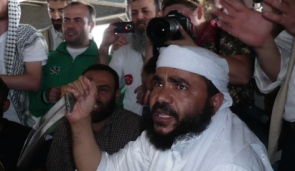
The American in charge skipped bail under mysterious circumstances in 1986 and India hasn’t been able to touch him since. The US refuses India’s request to extradite Warren Anderson, the American whose cost-cutting measures at Union Carbide were determined to have been to blame.

Greenpeace tracked the fugitive Anderson in 2002, where the US government said they couldn’t, to his home in Bridgehampton, Long Island. India questions its supposed economic clout, where the US refuses to bring to justice the an responsible for mankind’s most lethal industrial disaster.

“Cost cutting” appears to be the culprit in the Gulf Oil Spill. Will the immensity of the recent disaster prompt our justice department to pursue charges of “criminal negligence,” or will BP execs still be sitting pretty in 26 years?

Flotilla not a Love Boat, it was a lynch, says Netanyahu, describing beating of IDF soldiers, not deaths of aid workers

What’s a lynch? I find it intriguing that Israel’s spin machine can drop an American pop culture reference like Love Boat, and simultaneously flub basic usage with “a lynch.” According to Israel, that describes what befell their crack-troop Mavi Marmara party-crashers. What does “a lynch” mean? Apparently someone feels at liberty to shorten Lynch Mob, or Lynching, to coin a new threat to Israel. But doesn’t it stretch credulity to imagine the IDF has never claimed to have been baited into an “ambush?”

Every modern military with a propaganda office, when it suffers a setback, attributes it to an ambush. When the US and Israel do it, it’s an attack; when our dastardly adversaries do it, it’s an ambush. Let’s set aside that the night watch on the Mavi Marmara’s deck might have been defending themselves. For the moment the IDF version of events is the only one Israel is allowing.

Ambush, trap, beating, getting jumped, wouldn’t these be appropriate descriptions for what Israel is asserting its night-vision video depicts? To lynch someone -it’s a verb- implies a hanging, extrajudicial, usually perpetrated by a crowd against a lone victim, unarmed. So where does the IDF get “lynch?”

To my mind, the Israeli-accented tender of “lynch” is feigned bad English, stuttered -I hope in shame- as perpetrator blames victim, but stuttered conveniently, to make the accusation less preposterous. Isn’t a rape victim who is too well versed in the crime perpetrated against her, less convincing than a victim who fumbles to comprehend the outrage she suffered? Poor Israel, its soldiers stepped into a, a, a lynch.

Emitted from military spokespeople however, one projects a reflexive followup “-that’s the ticket.”

I’m guessing grasping a straws like “lynch” is played for sympathy. And while I deconstruct the false unfamiliarity of otherwise precisely crafted English: PM Netanyahu’s mention of “Love Boat” had a bumbling Bush “the internets” ring to it. Anyone old enough to know the television show about the enchanted cruise ship knows there’s not “a Love Boat” but The Love Boat.

If the newly nouned “lynch” is intended to define a hate crime unique to anti-Semites, the motive fits with Israel’s insistence that first genocide, now holocaust, can only apply to Jews. Such an implication is aided by Netanyahu’s suggestion that the lynch was “plotted.” Because common understanding of mob misbehavior precludes a premeditated plot. This may reflect a naive dismissal of the responsibility of authorities who manipulated the lynch mobs and witch hunts, but dictionaries seldom chronicle the injustice of the victors who write the history. Conventional wisdom holds that lynchings were improvisational.

Perhaps the English speaking viewers are meant to associate the implicit racism of the term. Ambush after all doesn’t conjure the slightest whiff of antisemitism. But here’s where Israel’s liberal arts wordsmiths may have outsmarted themselves. While it’s true that thousands of African Americans were lynched through our nation’s history, to the average American who dwells not very often on shameful pasts, the definition of lynching encompasses simply an execution in lieu a trial. Even an unfair trial, or kangaroo court, can be called a lynching. A lynch mob is an enraged crowd meting vigilante justice, hanging high what to them is an indisputable wrongdoer. The overwhelming number of lynching victims in America’s lawless west were hunted criminals. While xenophobia may always have skewed the mob’s judgment against Indian, Chinese, Mexican, or Black, a lynching was not by definition about racial prejudice.

If the beating of the Israeli commandos illustrated a hatred, was it racist? One is meant to assume the motive was anti-Semitic, but I wonder if Arab-Israelies serving in the IDF, or foreign nationals or mercenaries, don’t garner antagonism as vociferous. The historic prejudice decried by ADL and holocaust remembrance stalwarts has been against Jews, but the world today reviles Israeli arrogance. The US has become universal despised, but American tourists are still assured the world hates America, not its people. It’s what we’re told, if even if it is untrue. I do not know of course if Israelis are proffered the same polite assurance.

Did Israel mean that the Freedom Flotilla was an attempted lynching of Israel’s international reputation? In that case, Israel’s predictable militant reaction made such a hanging a matter of assisted suicide. If the Israeli national character suffers irreparably, who’s going to be to bame?

Presuming to paint its soldiers into a lynching scene, which character does Israel assert they played? Were the IDF the horse thieves? Bandying about the connotations of lynchings makes for an interesting turning of the tables. Were the convoy defenders the ones pronouncing hasty judgment upon their dark-of-night assailants? Or were Israel’s commandos declaring themselves judge and jury on the alleged arms smugglers?

In cases of breaking and entering, the home field advantage is accorded the right to self-defense. A SWAT team might make the argument that identifying itself as law enforcement preempts a homeowner’s recourse to armed resistance, based on the principle that an arresting officer’s safety is inviolate. Israel may assert it was policing its border, but unfortunately last Monday it was operating beyond its border. What protection can a law enforcement function claim if outside its jurisdiction?

It might be well and good to say Israel reserves the right to protect itself from enemies anywhere in the world, but it can’t pretend its badge should command universal obeisance.

The Mavi Marmara had declared her intention to run Israel’s blockade, but hadn’t yet attempted the crossing. In fact the Freedom Flotilla was moving away from the contentious area at the time of Israel’s attack.

Who then was the victim of this “lynch?”

I’ll tell you why it’s lynch and not lynching. Because Israel’s soldiers weren’t killed, they were beaten. Not to diminish what might have been their adversaries’ worst intentions, but the gantlet the IDF commandoes received was not a hanging specifically, and not very effective in terms of proving fatal. On the other hand, the outcome was the killing of an as yet undisclosed multitude of civilians, unarmed to an extent that the killings can be defined as executions, the entire result already adjudged to have been a massacre.

Israel’s invention of “lynch” is an utterance which I believe betrays the sign of shame the world longs to see from Israel. Even as the public revels in watching the Israeli hubris on self-destruct, empathy has us hoping to see Israel grasp for its lost humanity. To describe the events on the Turkish passenger ship as a “lynch” is to fail to summon the chutzpah to bear false witness, to accuse the dead of capital murder. Neither does Israel dare to raise the specter that summary executions were committed that night at all.

There is a term to describe

a) Israel’s taking the law into its own hands by pirating a ship belonging to another nation while it sailed in international waters,

b) Israel’s soldiers not being a police force but an ideology-deputized posse,

c) opting in a confused fervor to punish outlaws thought to have been caught red handed,

d) issuing on the spot death sentences.

It’s called a mass lynching.

Robert Fisk and the language of power, danger words: Competing Narratives

Celebrated reporter -and verb- Robert Fisk had harsh words, “danger words” he called them, for host Al-Jazeera where he gave an address about the language of power which has infected newsman and reader alike. Beware your unambiguous acceptance of empty terms into which state propagandists let you infer nuance: power players, activism, non-state actors, key players, geostrategic players, narratives, external players, meaningful solutions, –meaning what?
I’ll not divulge why these stung Al-J, but I’d like to detail the full list, and commit not to condone their false usage at NMT, without ridicule, “quotes” or disclaimer.

Fisk listed several expressions which he attributes to government craftsmen. Unfortunately journalists have been parroting these terms without questioning their dubious meaning. Fisk began with a favorite, the endless, disingenuous, “peace process.” What is that – victor-defined purgatory? Why would “peace” be a “process” Fisk asks.

How appropriate that some of the West’s strongest critics are linguists. Fisk lauded the current seagoing rescue of Gaza, the convoy determined to break the Israeli blockade. He compared it to the Berlin Airlift, when governments saw fit to help besieged peoples, even former enemies. This time however, the people have to act where their governments do not.

I read recently that the Gaza Freedom Flotilla might be preparing accommodations for Noam Chomsky to join the passage. Won’t that be an escalation? I imagine if Robert Fisk would climb aboard too, it would spell doom for any chance the relief supplies would reach the Gazans. A ship convoy with Chomsky and Fisk on board would present an opportunity that an Israeli torpedo could not resist.

Here is his list. If you can’t peruse the lecture, at least ponder these words with as much skepticism as you can. The parenthesis denote my shorthand.

peace process (detente under duress, while enduring repression)

“Peace of the Brave” (accept your subjugation, coined for Algeria, then France lost)

“Hearts and Minds” (Vietnam era psych-ops, then US lost)

spike (to avoid saying: increase)

surge (reinforcements, you send them in you’re losing)

key players (only puppets and their masters need apply)

back on track (the objective has been on rails?)

peace envoy (in mob-speak: the cleaner)

road map (winner’s bill of lading for the spoils)

experts (vetted opinions)

indirect talks (concurrent soliloquies, duets performed solo in proximity to common fiddler calling tune)

competing narratives (parallel universes in one? naturally the perpetrator is going to tell a different tale, disputing that of victim’s; ungoing result is no justice and no injustice) examples:
occupied vs. disputed;
wall vs. security barrier;
colonization vs settlements, outposts or Jewish neighborhoods.

foreign fighters (them, but always us)

Af-Pak (ignores third party India and thus dispute to Kashmir)

appeasers (sissies who don’t have bully’s back)

Weapons of Mass Destruction (not Iraq, now not Iran)

think tanks (ministry of propaganda privatized)

challenges (avoids they are problems)

intervention (asserted authority by military force)

change agents (by undisclosed means?)

Until asked otherwise, I’ll append Fisk’s talk here:

Robert Fisk, The Independent newspaper’s Middle East correspondent, gave the following address to the fifth Al Jazeera annual forum on May 23.

Power and the media are not just about cosy relationships between journalists and political leaders, between editors and presidents. They are not just about the parasitic-osmotic relationship between supposedly honourable reporters and the nexus of power that runs between White House and state department and Pentagon, between Downing Street and the foreign office and the ministry of defence. In the western context, power and the media is about words – and the use of words.

It is about semantics.

It is about the employment of phrases and clauses and their origins. And it is about the misuse of history; and about our ignorance of history.

More and more today, we journalists have become prisoners of the language of power.

Is this because we no longer care about linguistics? Is this because lap-tops ‘correct’ our spelling, ‘trim’ our grammar so that our sentences so often turn out to be identical to those of our rulers? Is this why newspaper editorials today often sound like political speeches?

Let me show you what I mean.

For two decades now, the US and British – and Israeli and Palestinian – leaderships have used the words ‘peace process’ to define the hopeless, inadequate, dishonourable agreement that allowed the US and Israel to dominate whatever slivers of land would be given to an occupied people.

I first queried this expression, and its provenance, at the time of Oslo – although how easily we forget that the secret surrenders at Oslo were themselves a conspiracy without any legal basis. Poor old Oslo, I always think! What did Oslo ever do to deserve this? It was the White House agreement that sealed this preposterous and dubious treaty – in which refugees, borders, Israeli colonies – even timetables – were to be delayed until they could no longer be negotiated.

And how easily we forget the White House lawn – though, yes, we remember the images – upon which it was Clinton who quoted from the Qur’an, and Arafat who chose to say: “Thank you, thank you, thank you, Mr. President.” And what did we call this nonsense afterwards? Yes, it was ‘a moment of history’! Was it? Was it so?

Do you remember what Arafat called it? “The peace of the brave.” But I don’t remember any of us pointing out that “the peace of the brave” was used originally by General de Gaulle about the end of the Algerian war. The French lost the war in Algeria. We did not spot this extraordinary irony.

Same again today. We western journalists – used yet again by our masters – have been reporting our jolly generals in Afghanistan as saying that their war can only be won with a “hearts and minds” campaign. No-one asked them the obvious question: Wasn’t this the very same phrase used about Vietnamese civilians in the Vietnam war? And didn’t we – didn’t the West – lose the war in Vietnam?

Yet now we western journalists are actually using – about Afghanistan – the phrase ‘hearts and minds’ in our reports as if it is a new dictionary definition rather than a symbol of defeat for the second time in four decades, in some cases used by the very same soldiers who peddled this nonsense – at a younger age – in Vietnam.

Just look at the individual words which we have recently co-opted from the US military.

When we westerners find that ‘our’ enemies – al-Qaeda, for example, or the Taliban -have set off more bombs and staged more attacks than usual, we call it ‘a spike in violence’. Ah yes, a ‘spike’!

A ‘spike’ in violence, ladies and gentlemen is a word first used, according to my files, by a brigadier general in the Baghdad Green Zone in 2004. Yet now we use that phrase, we extemporise on it, we relay it on the air as our phrase. We are using, quite literally, an expression created for us by the Pentagon. A spike, of course, goes sharply up, then sharply downwards. A ‘spike’ therefore avoids the ominous use of the words ‘increase in violence’ – for an increase, ladies and gentlemen, might not go down again afterwards.

Now again, when US generals refer to a sudden increase in their forces for an assault on Fallujah or central Baghdad or Kandahar – a mass movement of soldiers brought into Muslim countries by the tens of thousands – they call this a ‘surge’. And a surge, like a tsunami, or any other natural phenomena, can be devastating in its effects. What these ‘surges’ really are – to use the real words of serious journalism – are reinforcements. And reinforcements are sent to wars when armies are losing those wars. But our television and newspaper boys and girls are still talking about ‘surges’ without any attribution at all! The Pentagon wins again.

Meanwhile the ‘peace process’ collapsed. Therefore our leaders – or ‘key players’ as we like to call them – tried to make it work again. Therefore the process had to be put ‘back on track’. It was a railway train, you see. The carriages had come off the line. So the train had to be put ‘back on track’. The Clinton administration first used this phrase, then the Israelis, then the BBC.

But there was a problem when the ‘peace process’ had been put ‘back on track’ – and still came off the line. So we produced a ‘road map’ – run by a Quartet and led by our old Friend of God, Tony Blair, who – in an obscenity of history – we now refer to as a ‘peace envoy’.

But the ‘road map’ isn’t working. And now, I notice, the old ‘peace process’ is back in our newspapers and on our television screens. And two days ago, on CNN, one of those boring old fogies that the TV boys and girls call ‘experts’ – I’ll come back to them in a moment – told us again that the ‘peace process’ was being put ‘back on track’ because of the opening of ‘indirect talks’ between Israelis and Palestinians.

Ladies and gentlemen, this isn’t just about clichés – this is preposterous journalism. There is no battle between power and the media. Through language, we have become them.

Maybe one problem is that we no longer think for ourselves because we no longer read books. The Arabs still read books – I’m not talking here about Arab illiteracy rates – but I’m not sure that we in the West still read books. I often dictate messages over the phone and find I have to spend ten minutes to repeat to someone’s secretary a mere hundred words. They don’t know how to spell.

I was on a plane the other day, from Paris to Beirut – the flying time is about three hours and 45 minutes – and the woman next to me was reading a French book about the history of the Second World War. And she was turning the page every few seconds. She had finished the book before we reached Beirut! And I suddenly realised she wasn’t reading the book – she was surfing the pages! She had lost the ability to what I call ‘deep read’. Is this one of our problems as journalists, I wonder, that we no longer ‘deep read’? We merely use the first words that come to hand …

Let me show you another piece of media cowardice that makes my 63-year-old teeth grind together after 34 years of eating humus and tahina in the Middle East.

We are told, in so many analysis features, that what we have to deal with in the Middle East are ‘competing narratives’. How very cosy. There’s no justice, no injustice, just a couple of people who tell different history stories. ‘Competing narratives’ now regularly pop up in the British press. The phrase is a species – or sub-species – of the false language of anthropology. It deletes the possibility that one group of people – in the Middle East, for example – are occupied, while another group of people are doing the occupying. Again, no justice, no injustice, no oppression or oppressing, just some friendly ‘competing narratives’, a football match, if you like, a level playing field because the two sides are – are they not – ‘in competition’. It’s two sides in a football match. And two sides have to be given equal time in every story.

So an ‘occupation’ can become a ‘dispute’. Thus a ‘wall’ becomes a ‘fence’ or a ‘security barrier’. Thus Israeli colonisation of Arab land contrary to all international law becomes ‘settlements’ or ‘outposts’ or ‘Jewish neighbourhoods’.

You will not be surprised to know that it was Colin Powell, in his starring, powerless appearance as secretary of state to George W. Bush, who told US diplomats in the Middle East to refer to occupied Palestinian land as ‘disputed land’ – and that was good enough for most of the American media.

So watch out for ‘competing narratives’, ladies and gentlemen. There are no ‘competing narratives’, of course, between the US military and the Taliban. When there are, however, you’ll know the West has lost.

But I’ll give you a lovely, personal example of how ‘competing narratives’ come undone. Last month, I gave a lecture in Toronto to mark the 95th anniversary of the 1915 Armenian genocide, the deliberate mass murder of one and a half million Armenian Christians by the Ottoman Turkish army and militia. Before my talk, I was interviewed on Canadian Television, CTV, which also owns the Toronto Globe and Mail newspaper. And from the start, I could see that the interviewer had a problem. Canada has a large Armenian community. But Toronto also has a large Turkish community. And the Turks, as the Globe and Mail always tell us, “hotly dispute” that this was a genocide. So the interviewer called the genocide “deadly massacres”.

Of course, I spotted her specific problem straight away. She could not call the massacres a ‘genocide’, because the Turkish community would be outraged. But equally, she sensed that ‘massacres’ on its own – especially with the gruesome studio background photographs of dead Armenians – was not quite up to defining a million and a half murdered human beings. Hence the ‘deadly massacres’. How odd!!! If there are ‘deadly’ massacres, are there some massacres which are not ‘deadly’, from which the victims walk away alive? It was a ludicrous tautology.

In the end, I told this little tale of journalistic cowardice to my Armenian audience, among whom were sitting CTV executives. Within an hour of my ending, my Armenian host received an SMS about me from a CTV reporter. “Shitting on CTV was way out of line,” the reporter complained. I doubted, personally, if the word ‘shitting’ would find its way onto CTV. But then, neither does ‘genocide’. I’m afraid ‘competing narratives’ had just exploded.

Yet the use of the language of power – of its beacon-words and its beacon-phrases -goes on among us still. How many times have I heard western reporters talking about ‘foreign fighters’ in Afghanistan? They are referring, of course, to the various Arab groups supposedly helping the Taliban. We heard the same story from Iraq. Saudis, Jordanians, Palestinian, Chechen fighters, of course. The generals called them ‘foreign fighters’. And then immediately we western reporters did the same. Calling them ‘foreign fighters’ meant they were an invading force. But not once – ever – have I heard a mainstream western television station refer to the fact that there are at least 150,000 ‘foreign fighters’ in Afghanistan. And that most of them, ladies and gentlemen, are in American or other Nato uniforms!

Similarly, the pernicious phrase ‘Af-Pak’ – as racist as it is politically dishonest – is now used by reporters when it originally was a creation of the US state department, on the day that Richard Holbrooke was appointed special US representative to Afghanistan and Pakistan. But the phrase avoided the use of the word ‘India’ whose influence in Afghanistan and whose presence in Afghanistan, is a vital part of the story. Furthermore, ‘Af-Pak’ – by deleting India – effectively deleted the whole Kashmir crisis from the conflict in south-east Asia. It thus deprived Pakistan of any say in US local policy on Kashmir – after all, Holbrooke was made the ‘Af-Pak’ envoy, specifically forbidden from discussing Kashmir. Thus the phrase ‘Af-Pak’, which totally deletes the tragedy of Kashmir – too many ‘competing narratives’, perhaps? – means that when we journalists use the same phrase, ‘Af-Pak’, which was surely created for us journalists, we are doing the state department’s work.

Now let’s look at history. Our leaders love history. Most of all, they love the Second World War. In 2003, George W. Bush thought he was Churchill as well as George W. Bush. True, Bush had spent the Vietnam war protecting the skies of Texas from the Vietcong. But now, in 2003, he was standing up to the ‘appeasers’ who did not want a war with Saddam who was, of course, ‘the Hitler of the Tigris’. The appeasers were the British who did not want to fight Nazi Germany in 1938. Blair, of course, also tried on Churchill’s waistcoat and jacket for size. No ‘appeaser’ he. America was Britain’s oldest ally, he proclaimed – and both Bush and Blair reminded journalists that the US had stood shoulder-to-shoulder with Britain in her hour of need in 1940.

But none of this was true.

Britain’s old ally was not the United States. It was Portugal, a neutral fascist state during World War Two. Only my own newspaper, The Independent, picked this up.

Nor did America fight alongside Britain in her hour of need in 1940, when Hitler threatened invasion and the German air force blitzed London. No, in 1940 America was enjoying a very profitable period of neutrality – and did not join Britain in the war until Japan attacked the US naval base at Pearl Harbour in December of 1941.

Ouch!

Back in 1956, I read the other day, Eden called Nasser the ‘Mussolini of the Nile’. A bad mistake. Nasser was loved by the Arabs, not hated as Mussolini was by the majority of Africans, especially the Arab Libyans. The Mussolini parallel was not challenged or questioned by the British press. And we all know what happened at Suez in 1956.

Yes, when it comes to history, we journalists really do let the presidents and prime ministers take us for a ride.

Today, as foreigners try to take food and fuel by sea to the hungry Palestinians of Gaza, we journalists should be reminding our viewers and listeners of a long-ago day when America and Britain went to the aid of a surrounded people, bringing food and fuel – our own servicemen dying as they did so – to help a starving population. That population had been surrounded by a fence erected by a brutal army which wished to starve the people into submission. The army was Russian. The city was Berlin. The wall was to come later. The people had been our enemies only three years earlier. Yet we flew the Berlin airlift to save them. Now look at Gaza today. Which western journalist – and we love historical parallels – has even mentioned 1948 Berlin in the context of Gaza?

Look at more recent times. Saddam had ‘weapons of mass destruction’ – you can fit ‘WMD’ into a headline – but of course, he didn’t, and the American press went through embarrassing bouts of self-condemnation afterwards. How could it have been so misled, the New York Times asked itself? It had not, the paper concluded, challenged the Bush administration enough.

And now the very same paper is softly – very softly – banging the drums for war in Iran. Iran is working on WMD. And after the war, if there is a war, more self-condemnation, no doubt, if there are no nuclear weapons projects.

Yet the most dangerous side of our new semantic war, our use of the words of power – though it is not a war since we have largely surrendered – is that it isolates us from our viewers and readers. They are not stupid. They understand words, in many cases – I fear – better than we do. History, too. They know that we are drowning our vocabulary with the language of generals and presidents, from the so-called elites, from the arrogance of the Brookings Institute experts, or those of those of the Rand Corporation or what I call the ‘THINK TANKS’. Thus we have become part of this language.

Here, for example, are some of the danger words:

· POWER PLAYERS

· ACTIVISM

· NON-STATE ACTORS

· KEY PLAYERS

· GEOSTRATEGIC PLAYERS

· NARRATIVES

· EXTERNAL PLAYERS

· PEACE PROCESS

· MEANINGFUL SOLUTIONS

· AF-PAK

· CHANGE AGENTS (whatever these sinister creatures are).

I am not a regular critic of Al Jazeera. It gives me the freedom to speak on air. Only a few years ago, when Wadah Khanfar (now Director General of Al Jazeera) was Al Jazeera’s man in Baghdad, the US military began a slanderous campaign against Wadah’s bureau, claiming – untruthfully – that Al Jazeera was in league with al-Qaeda because they were receiving videotapes of attacks on US forces. I went to Fallujah to check this out. Wadah was 100 per cent correct. Al-Qaeda was handing in their ambush footage without any warning, pushing it through office letter-boxes. The Americans were lying.

Wadah is, of course, wondering what is coming next.

Well, I have to tell you, ladies and gentlemen, that all those ‘danger words’ I have just read out to you – from KEY PLAYERS to NARRATIVES to PEACE PROCESS to AF-PAK – all occur in the nine-page Al Jazeera programme for this very forum.

I’m not condemning Al Jazeera for this, ladies and gentlemen. Because this vocabulary is not adopted through political connivance. It is an infection that we all suffer from – I’ve used ‘peace process’ a few times myself, though with quotation marks which you can’t use on television – but yes, it’s a contagion.

And when we use these words, we become one with the power and the elites which rule our world without fear of challenge from the media. Al Jazeera has done more than any television network I know to challenge authority, both in the Middle East and in the West. (And I am not using ‘challenge’ in the sense of ‘problem’, as in ‘”I face many challenges,” says General McCrystal.’)

How do we escape this disease? Watch out for the spell-checkers in our lap-tops, the sub-editor’s dreams of one-syllable words, stop using Wikipedia. And read books – real books, with paper pages, which means deep reading. History books, especially.

Al Jazeera is giving good coverage to the flotilla – the convoy of boats setting off for Gaza. I don’t think they are a bunch of anti-Israelis. I think the international convoy is on its way because people aboard these ships – from all over the world – are trying to do what our supposedly humanitarian leaders have failed to do. They are bringing food and fuel and hospital equipment to those who suffer. In any other context, the Obamas and the Sarkozys and the Camerons would be competing to land US Marines and the Royal Navy and French forces with humanitarian aid – as Clinton did in Somalia. Didn’t the God-like Blair believe in humanitarian ‘intervention’ in Kosovo and Sierra Leone?

In normal circumstances, Blair might even have put a foot over the border.

But no. We dare not offend the Israelis. And so ordinary people are trying to do what their leaders have culpably failed to do. Their leaders have failed them.

Have the media? Are we showing documentary footage of the Berlin airlift today? Or of Clinton’s attempt to rescue the starving people of Somalia, of Blair’s humanitarian ‘intervention’ in the Balkans, just to remind our viewers and readers – and the people on those boats – that this is about hypocrisy on a massive scale?

The hell we are! We prefer ‘competing narratives’. Few politicians want the Gaza voyage to reach its destination – be its end successful, farcical or tragic. We believe in the ‘peace process’, the ‘road map’. Keep the ‘fence’ around the Palestinians. Let the ‘key players’ sort it out.

Ladies and gentlemen, I am not your ‘key speaker’ this morning.

I am your guest, and I thank you for your patience in listening to me.

Just flew back from DC, arms tired

March 20 ANSWER DemonstrationI hoped to be sending updates from CAMP OUT NOW at the capitol, but a laptop mishap left me unplugged for the week. Have much to report about Sheehan’s last stand(s), Obama and St Pats, Cynthia McKinney and the ANSWER march, street-dancing with SDS, Kathy Griffin and DADT, Medea torments AIPAC, Sunday’s immigration rally, Kill-the-Bill teabaggers vs. anti-abortion Catholics, RAN tripods at the EPA, the Smithsonian for Complete Idiots, disciples for 911 untruth, Holocaust Denial at the National Museum of the American Indian, and more.

Cool Runnings vs selling out the whales

Forget putting together a Winter Olympic delegation to tap into your nationality’s PR budget, the real money is in the International Whaling Commission. Right now Japan is showering aid to nations willing to enroll in the IWC, to help Japan overturn the whaling moratorium. The IWC convenes a special session tomorrow in Florida and Greenpeace reports the whales have just lost the majority.

Of great concern is that the US and New Zealand appear to want to switch sides, despite Candidate Obama’s pledge to support the whaling moratorium.

The traditional pro-whaling nations of Japan, Norway, Iceland, Peru and Russia have allied with land-locked entities to vote to resume whaling. Mali and Mongolia are among recent recruits. Other aid recipients include Antigua, Barbuda, Belize, Dominica, Grenada, Guinea-Bissau, Morocco, Panama, St. Lucia, St. Vincent, St Kitts, and the Solomon Islands.

Anti-whaling leader Australia is joined by Austria, the Czech Republic, Hungary, Luxembourg, Slovakia, Switzerland and San Marino.

Other members include Argentina, Belgium, Belize, Benin, Brazil, Cambodia, Cameroon, Chile, People’s Republic of China, Republic of the Congo, Costa Rica, Côte d’Ivoire, Croatia, Cyprus, Denmark, Ecuador, Eritrea, Estonia, Finland, France, Gabon, The Gambia, Germany, Greece, Guatemala, Republic of Guinea, India, Ireland, Israel, Italy, Kenya, Republic of Korea, Kiribati, Laos, Lithuania, Luxembourg, Republic of the Marshall Islands, Mauritania, Mexico, Monaco, Nauru, Netherlands, Nicaragua, Norway, Oman, Palau, Portugal, Romania, Russian Federation, Senegal, Slovak Republic, South Africa, Spain, Suriname, Sweden, Tanzania, Togo, Tuvalu, United Kingdom and Uruguay.

If your nation isn’t on the list, contact your state department. Forget assembling a tropical bobsled team, you’ll be able to pay your own way to Sochi, because the big money is in killing whales.

Labadee: Royal Caribbean’s Neo Haiti

Labadee oasis seas boi caimanFormer President Bill Clinton is heading to Haiti, again. As UN special envoy to Haiti, he paid a visit last year as a guest of the Royal Caribbean cruise ship line to promote their tourist facility at La’Badie. Said CEO Adam Goldstein: “Labadee is just a great example of the way that things can work in a very positive way in this country.” Are those new ways or old? The secured compound, laying under the protection of the old French colonial capitol, greets 7,000 cruise passengers a week, even this week, many of whom don’t know they’re in “Haiti,” on an old slave plantation, or what may have been the crucible of real Islamic rebel voodoo!

I didn’t know about the private resort of Labadee, but my attention was drawn in December to the announcement of the launch of The Oasis of the Seas, the largest cruise ship ever devised. It was leaving the shipyards of Finland, having to pass under a Danish suspension bridge at low tide, so titanic was she. I took note because the headline announced her maiden destination to be Haiti, an odd place I thought, to be ostentatious.

The spotlight which the recent earthquake has brought on the poverty in Haiti had me wondering if all seventeen decks of the Oasis of the Seas were gawking at the suffering masses awaiting aid in Port-au-Prince. Not a chance. The Oasis, and Royal Caribbean’s fleet of floating carbon boots harbor at a secluded oasis which the cruise line rents from Haiti. Its income represents the largest portion of Haiti’s tourism revenue. If you thought President Obama’s offer of $100 Million was stingy, you can calculate Royal Caribbean’s avarice on one hand.

The tragic earthquake hasn’t interrupted the cruises. It this tragedy has an upside, it’s that some vacationers are expressing less facility stuffing down a burger knowing most Haitians await relief.

Haiti receives $6 for each tourist who disembarks to zip-line, buy trinkets from licensed vendors, and sun on Christoper Columbus Beach. They’re told it was his old stomping ground –which actually can be said of Hispaniola’s entire northern coastline. Likewise the same is true about the slave plantations which, from the port of Cap Francois, provided 40% of Europe’s sugar and 60% of its coffee. Today Haiti is renowned as the poorest land in the Western Hemisphere. The verdant lands of La Partie Du Nord –of Les Grand Blancs— are separated from the Haitian population by a mountainous Massif, and in the case of Labadee, with barbed wire.

habitation-slave-plantationsRoyal Caribbean boasts that its operations are critical to the Haitian economy. It employs hundreds, but contrast that with what the coast could provide if it wasn’t privatized. The resort draws from a cheap labor pool of an unlimited mass of Haitians who are kept with no other options but to hope they can replace the couple hundred employees confined to the cruise line compound.

And yes, the cruise itineraries avoid mention of Haiti, attributing Labadee as a “private island” of Hispaniola. The private island concept is not new, cruise ship operators began several decades back to seek to give their customers refuge from the growing throngs of third world poor who paddle out to the ship hoping for first world largess. Another motive was that cruise lines could also monopolize where their passengers could spend their money while ashore. What began as exclusive contracts with port destinations, very notoriously the Alaskan inland passage, became ventures where cruise line operators bought entire tracks of properties retired from oil or military use, whether half islands, or merely beaches, recast as private beaches, populated by private workforces.

Disney Cruise Line: Castaway Cay, Bahamas
Princess Cruises: Princess Cays, Eleuthera, Bahamas
Norwegian Cruise Line: Great Stirrup Cay, Bahamas
Holland/Carnival: Half Moon Bay, Little San Salvador Island, Bahamas
Royal Caribbean/Celebrity: Coco Cay, Bahamas; Labadee, Hispaniola

According to the Royal Caribbean promotional material, the spelling Labadee is anglicized for English-speakers. It’s named after the Marquis de La’Badie, a “Frenchman who first settled the area in the 1600s.”

At one time the French plantation owners were comforted by their remote location, buffered they thought from the potential of slave rebellions from the south. In fact, Haiti’s famed uprising began in the north, not far at all from La’Badie. Off the Royal Caribbean itinerary, but only a stone’s throw away, that is to say, within distance of incoming stones, are landmarks important to the celebrated revolution: Haiti’s first copper mine, site of a lone concentration of Islamic slaves, and the Bois Caiman of lore.

The area of Cape Haitien, as it’s called today, holds two of Haiti’s geography secrets. One, the conclusive location of La Villa de Navidad, where Christopher Columbus built his first European settlement in the New World, a fort made of the timbers of the wrecked flagship Santa Maria; Columbus returned the next year to find his men murdered and the houses burned to the ground. Archeologists are still looking to find definitive traces in Caracol or Bord de Mer de Limonade.

Second, the site of the Bwa Kayiman, the ceremony which launched Haiti’s famed slave rebellion led by Toussaint Louverture. Some scholars have begun to question whether it happened at all. They base their skepticism on the absence of written testaments. Although it’s popularly understood that the gathering of conspirators was confessed under torture by rebels captured by the French authorities. The cynics suggest the story was a fabrication to demonize the black slaves and that:

the manuscript minutes of these interrogations have survived in the French National Archives and make no mention of this or any other vodun ceremony.

That’s something to wrap your mind around, that transcripts remain of torture sessions conducted so many years ago.

Naturally the secret gathering had to escape the suspicions of the French slaveholders, but the infamy of the declaration of the Bois Caiman has inspired every Bolivarian insurrection since, from Bolivar, to Marti, Sandino, Castro, Moralles and Chavez. Revisionists seeking to tamp the populist spirit question why its location remains a mystery. Oral tradition holds that the rebels gathered in an open space in the forests of Morne Rouge.

Morne Rouge, the place where BC ceremony hypotheses converge, is also the only place in Haiti to retain an important Islamic cult. This is because the first wave of slaves were from the Senegambian region and had already undergone heavy Islamic influence. Up to date, Mori Barthelemy and followers of the region maintain this tradition, with honor to the sun, specific funeral rites and so on. If one returns to sources of the 16th century, one finds that there is where the first copper mines were established by the Spaniards, when they started giving up on the gold.

You can find Labadee, 19° 47? 11? N, 72° 14? 44? W on any modern map. Pondering The Cape it occupies, and the deep water harbor it is able to afford a behemoth like the Oasis of the Seas, I was led to research the mysteries of Haiti’s NORD, and survey the progression of place names on European maps which span the years.

haiti
This is Cristóbal Colón‘s own recollection of the northern coast of what he called La Isla Española, marking his first landing at San Nicolas Môle, the island of Tortuga, Fort Navidad, and the landmark Monte Cristi whose height guided Columbus and led him to name Hispaniola after Spain.

haiti charlevoix
A later map made by the French attempts to show the divisions of the indigenous tribes. The site marked “Premier Etablissment” marks Navidad, built near the Taíno cultural center of Hayti-Bohío-Quisqueya.

haiti Vinckeboons
A 1639 Dutch map shows Cap François. On the south shore of Isla Tortuga lies the beach Playa Cyan, across the water from the river Rio dos Caymanis. Also note the hills to the east called Mançanilla, these divided the peaceful Taíno from the warring Caciq. The location name derives from the Manchineel Trees whose poison berries they used to poison the tips of their arrows.

haiti monte christo
French map circa 1723 marks Cayne opposite the Iron Coast of L’Ile de la Tortue. There’s also a typical sailor’s landmark: Pointe des Palmiers (trans. Point of the Palms). The promontory of Cap François has here become Le Cap (The Cape). It shelters Port St. François, east of the heights of Morne Rouge and Mines de Cuivre (trans. copper mines).

haiti labat
French map of Cape Francois dated 1722 adds Le Limbe, the first area which the rebel slaves put to the torch; and Le Chemin du Cap, the main road to the valleys of the south.

haiti Ponce
This 1796 French map features another sailor’s aid, Pointe Tête de Chein (trans. Dog’s Head Point). The fortification battery on the Cape was built upon Roche à Picolet. This map was drawn after the rebellion of 1791. The Morne Rouge (trans. Red Heights) is now designated as Ravine du Morne au Diable and the Acul à Sabal. The Devil’s Ravine is the present location of Royal Caribbean’s Labadee.

The poor of Haiti are still taking heat for the Bwa Kayiman having been a pact with the devil.

haiti bellin
I add this 1764 map for personal interest. Few maps even today mark L’Islet à Rat (trans. Rat Island), which Columbus called La Amiga, was an aid to navigation out of his anchorage at Bay of Acul which he called Cabo de Caribata.

This map also details how colonial French St Domingue was divided into districts, here the Ville du Cap, the Quartier de Plaine du Nord and Camp de Louise.

haiti moreau
This 1770 map of Cap François and Environs distinguishes the larger slavery plantations.

haiti labadi

On the subject of Columbus, isn’t it surprising to reconcile the current verdict on his genocidal behavior, with the histories which have glorified his stature? After all, the primary accounts have never changed. How did earlier biographers overlook the damning and salacious details? One very polite telling of Columbus’ adventures, written by Filson Young published in 1906 provides a prim example. Here Young addresses the kidnap and rape of the indians whom Columbus encountered:

…his taking of the women raises a question which must be in the mind of any one who studies this extraordinary voyage—the question of the treatment of native women by the Spaniards. Columbus is entirely silent on the subject; but taking into account the nature of the Spanish rabble that formed his company, and his own views as to the right which he had to possess the persons and goods of the native inhabitants, I am afraid that there can be very little doubt that in this matter there is a good reason, for his silence. So far as Columbus himself was concerned, it is probable that he was innocent enough; he was not a sensualist by nature, and he was far too much interested and absorbed in the principal objects of his expedition, and had too great a sense of his own personal dignity, to have indulged in excesses that would, thus sanctioned by him, have produced a very disastrous effect on the somewhat rickety discipline of his crew. He was too wise a master, however, to forbid anything that it was not in his power to prevent; and it is probable that he shut his eyes to much that, if he did not tolerate it, he at any rate regarded as a matter of no very great importance. His crew had by this time learned to know their commander well enough not to commit under his eyes offences for which he would have been sure to punish them.

[Giving a list of instructions to the men Columbus planned to leave behind at La Navidad, among them: ]

…and especially to be on their guard to avoid injury or violence to the women, “by which they would cause scandal and set a bad example to the Indians and show the infamy of the Christians.”

no kolumbus day christopher columbusAnd here’s the rub. In this passage the author shows if we do not absolve Columbus, we indict ourselves.

The ruffianly crew had in their minds only the immediate possession of what they could get from the Indians; the Admiral had in his mind the whole possession of the islands and the bodies and souls of its inhabitants. If you take a piece of gold without giving a glass bead in exchange for it, it is called stealing; if you take a country and its inhabitants, and steal their peace from them, and give them blood and servitude in exchange for it, it is called colonisation and Empire-building. Every one understands the distinction; but so few people see the difference that Columbus of all men may be excused for his unconsciousness of it.

Tim Tebow here’s your sign

Football-Ephesians-Tim-Tebow-Bible-Eye-BlackFootball evangelist Tim Tebow is at it again, proselytizing with his sportsman mascara. This time it’s Ephesians, something about how you’re saved by your belief in Jesus, regardless your deeds. It’s the same mentality that has Americans crusading against the Islamic world, desecrating humanity with an impunity sanctioned by blind faith. It’s the same mindless arrogance that emboldens Brit Hume to call Tiger Woods to Christianity, whose American tradition has it that all your mother killing and father raping will be forgiven. In Hume’s world, Tokyo Rose was tried for inciting war crimes. Hume doesn’t recognize that he’s guilty of worse. In Hume’s Christianity, apparently only Buddhists reap what they sow.
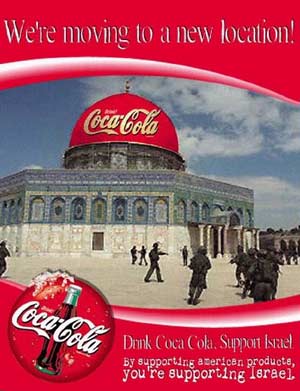
What is the point of the messaging in the eye black? Is it merely more ad space, like the helmets with the American flag decals, or uniforms with the Nike logos or embedded Swooshes, Gatoraid patchs and corporate sponsors of whichever bowl? Dark patches beneath the eyes might be nature’s way of easing the trauma of bright light on hangover sufferers. If the black light-sinks work, then Tebow’s white on black script most certainly impedes his vision.

It was always my impression that football players marked their faces with shoe polish like it was indian war paint, to give themselves a menacing look. I think that’s more Tebow’s motif, to intimidate with self-righteousness.

In which case, the I’m-better-than-you scripture reference would seem more along the lines of the sign which restaurants post above the coat rack: not responsible for stolen items, although common law dictates that if you are seated beyond line of sight of the garments you shed, the restaurant is responsible.

Tim Tebow informs us, through Ephesians, that he has chosen to follow God’s will for him, that his lifetime consist of playing American football. Whether they understands it or not, Tebow and company vitalize the spiritual center of America’s culture of violence. We kick ass, and hold God responsible.

The Cairo Declaration

gaza-freedom-march-cairo-egypt
Ambitions for a greater Gaza Freedom March have been set aside for another decade, but the hopeful delegates thwarted in Cairo issued the following declaration:

End Israeli Apartheid?
Cairo Declaration
?January 1, 2010

We, international delegates meeting in Cairo during the Gaza Freedom March 2009 in collective response to an initiative from the South African delegation, state:

In view of:

* Israel’s ongoing collective punishment of Palestinians through the illegal occupation and siege of Gaza;?

* the illegal occupation of the West Bank, including East Jerusalem, and the continued construction of the illegal Apartheid Wall and settlements;?

* the new Wall under construction by Egypt and the US which will tighten even further the siege of Gaza;?

* the contempt for Palestinian democracy shown by Israel, the US, Canada, the EU and others after the Palestinian elections of 2006;?

* the war crimes committed by Israel during the invasion of Gaza one year ago;?

* the continuing discrimination and repression faced by Palestinians within Israel;?

* and the continuing exile of millions of Palestinian refugees;?

* all of which oppressive acts are based ultimately on the Zionist ideology which underpins Israel;?

* in the knowledge that our own governments have given Israel direct economic, financial, military and diplomatic support and allowed it to behave with impunity;?

* and mindful of the United Nations Declaration on the Rights of Indigenous People (2007)

We reaffirm our commitment to:

Palestinian Self-Determination?Ending the Occupation?Equal Rights for All within historic Palestine?The full Right of Return for Palestinian refugees.

We therefore reaffirm our commitment to the United Palestinian call of July 2005 for Boycott, Divestment and Sanctions (BDS) to compel Israel to comply with international law.

To that end, we call for and wish to help initiate a global mass, democratic anti-apartheid movement to work in full consultation with Palestinian civil society to implement the Palestinian call for BDS.

Mindful of the many strong similarities between apartheid Israel and the former apartheid regime in South Africa, we propose:

1) An international speaking tour in the first 6 months of 2010 by Palestinian and South African trade unionists and civil society activists, to be joined by trade unionists and activists committed to this programme within the countries toured, to take mass education on BDS directly to the trade union membership and wider public internationally;

2) Participation in the Israeli Apartheid Week in March 2010;

3) A systematic unified approach to the boycott of Israeli products, involving consumers, workers and their unions in the retail, warehousing, and transportation sectors;

4) Developing the Academic, Cultural and Sports boycott;

5) Campaigns to encourage divestment of trade union and other pension funds from companies directly implicated in the Occupation and/or the Israeli military industries;

6) Legal actions targeting the external recruitment of soldiers to serve in the Israeli military, and the prosecution of Israeli government war criminals; coordination of Citizen’s Arrest Bureaux to identify, campaign and seek to prosecute Israeli war criminals; support for the Goldstone Report and the implementation of its recommendations;

7) Campaigns against charitable status of the Jewish National Fund (JNF).

We appeal to organisations and individuals committed to this declaration to sign it and work with us to make it a reality.

Signed by:

(* Affiliation for identification purposes only.)

1. Hedy Epstein, Holocaust Survivor/ Women in Black*, USA?
2. Nomthandazo Sikiti, Nehawu, Congress of South African Trade Unions (COSATU), Affiliate International Officer*, South Africa?
3. Zico Tamela, Satawu, Congress of South African Trade Unions (COSATU) Affiliate International Officer*, South Africa?
4. Hlokoza Motau, Numsa, Congress of South African Trade Unions (COSATU) Affiliate International Officer*, South Africa?
5. George Mahlangu, Congress of South African Trade Unions (COSATU) Campaigns Coordinator*, South Africa?
6. Crystal Dicks, Congress of South African Trade Unions (COSATU) Education Secretary*, South Africa?
7. Savera Kalideen, SA Palestinian Solidarity Committee*, South Africa?
8. Suzanne Hotz, SA Palestinian Solidarity Group*, South Africa?
9. Shehnaaz Wadee, SA Palestinian Solidarity Alliance*, South Africa?
10. Haroon Wadee, SA Palestinian Solidarity Alliance*, South Africa?
11. Sayeed Dhansey, South Africa?
12. Faiza Desai, SA Palestinian Solidarity Alliance*, South Africa?
13. Ali Abunimah, Electronic Intifada*, USA?
14. Hilary Minch, Ireland Palestine Solidarity Committee*, Ireland?
15. Anthony Loewenstein, Australia?
16. Sam Perlo-Freeman, United Kingdom?
17. Julie Moentk, Pax Christi*, USA?
18. Ulf Fogelström, Sweden?
19. Ann Polivka, Chico Peace and Justice Center*, USA?
20. Mark Johnson, Fellowship of Reconciliation*, USA?
21. Elfi Padovan, Munich Peace Committee*/Die Linke*, Germany?
22. Elizabeth Barger, Peace Roots Alliance*/Plenty I*, USA?
23. Sarah Roche-Mahdi, CodePink*, USA?
24. Svetlana Gesheva-Anar, Bulgaria?
25. Cristina Ruiz Cortina, Al Quds-Malaga*, Spain?
26. Rachel Wyon, Boston Gaza Freedom March*, USA?
27. Mary Hughes-Thompson, Women in Black*, USA?
28. David Letwin, International Jewish Anti-Zionist Network (IJAN)*, USA?
29. Jean Athey, Peace Action Montgomery*, USA?
30. Gael Murphy, Gaza Freedom March*/CodePink*, USA?
31. Thomas McAfee, Journalist/PC*, USA?
32. Jean Louis Faure, International Jewish Anti-Zionist Network (IJAN)*, France?
33. Timothy A King, Christians for Peace and Justice in the Middle East*, USA?
34. Gail Chalbi, Palestine/Israel Justice Project of the Minnesota United Methodist Church*, USA?
35. Ouahib Chalbi, Palestine/Israel Justice Project of the Minnesota United Methodist Church*, USA?
36. Greg Dropkin, Liverpool Friends of Palestine*, England?
37. Felice Gelman, Wespac Peace and Justice New York*/Gaza Freedom March*, USA?
38. Ron Witton, Australian Academic Union*, Australia?
39. Hayley Wallace, Palestine Solidarity Committee*, USA?
40. Norma Turner, Manchester Palestine Solidarity Campaign*, England?
41. Paula Abrams-Hourani, Women in Black (Vienna)*/ Jewish Voice for Just Peace in the Middle East*, Austria?
42. Mateo Bernal, Industrial Workers of the World*, USA?
43. Mary Mattieu, Collectif Urgence Palestine*, Switzerland?
44. Agneta Zuppinger, Collectif Urgence Palestine*, Switzerland?
45. Ashley Annis, People for Peace*, Canada?
46. Peige Desgarlois, People for Peace*, Canada?
47. Hannah Carter, Canadian Friends of Sabeel*, Canada?
48. Laura Ashfield, Canadian Friends of Sabeel*, Canada?
49. Iman Ghazal, People for Peace*, Canada?
50. Filsam Farah, People for Peace*, Canada?
51. Awa Allin, People for Peace*, Canada?
52. Cleopatra McGovern, USA?
53. Miranda Collet, Spain?
54. Alison Phillips, Scotland?
55. Nicholas Abramson, Middle East Crisis Response Network*/Jews Say No*, USA?
56. Tarak Kauff, Middle East Crisis Response Network*/Veterans for Peace*, USA?
57. Jesse Meisler-Abramson, USA?
58. Hope Mariposa, USA?
59. Ivesa Lübben. Bremer Netzwerk fur Gerechten Frieden in Nahost*, Germany?
60. Sheila Finan, Mid-Hudson Council MERC*, USA?
61. Joanne Lingle, Christians for Peace and Justice in the Middle East (CPJME)*, USA?
62. Barbara Lubin, Middle East Children’s Alliance*, USA?
63. Josie Shields-Stromsness, Middle East Children’s Alliance*, USA?
64. Anna Keuchen, Germany?
65. Judith Mahoney Pasternak, WRL* and Indypendent*, USA?
66. Ellen Davidson, New York City Indymedia*, WRL*, Indypendent*, USA?
67. Ina Kelleher, USA?
68. Lee Gargagliano, International Jewish Anti-Zionist Network (Chicago)*, USA?
69. Brad Taylor, OUT-FM*, USA?
70. Helga Mankovitz, SPHR (Queen’s University)*, Canada?
71. Mick Napier, Scottish Palestine Solidarity Campaign*, Scotland?
72. Agnes Kueng, Paso Basel*, Switzerland?
73. Anne Paxton, Voices of Palestine*, USA?
74. Leila El Abtah, The Netherlands?
75. Richard, Van der Wouden, The Netherlands?
76. Rafiq A. Firis, P.K.R.*/Isra*, The Netherlands?
77. Sandra Tamari, USA?
78. Alice Azzouzi, Way to Jerusalem*, USA?
79. J’Ann Schoonmaker Allen, USA?
80. Ruth F. Hooke, Episcopalian Peace Fellowship*, USA?
81. Jean E. Lee, Holy Land Awareness Action Task Group of United Church of Canada*, Canada?
82. Delphine de Boutray, Association Thèâtre Cine*, France?
83. Sylvia Schwarz, USA?
84. Alexandra Safi, Germany?
85. Abdullah Anar, Green Party – Turkey*, Turkey?
86. Ted Auerbach, USA?
87. Martha Hennessy, Catholic Worker*, USA?
88. Father Louis Vitale, Interfaile Pace e Bene*, USA?
89. Leila Zand, Fellowship of Reconciliation*, USA?
90. Emma Grigore, CodePink*, USA?
91. Sammer Abdelela, New York Community of Muslim Progressives*, USA?
92. Sharat G. Lin, San Jose Peace and Justice Center*, USA?
93. Katherine E. Sheetz, Free Gaza*, USA?
94. Steve Greaves, Free Gaza*, USA?
95. Trevor Baumgartner, Free Gaza*, USA?
96. Hanan Tabbara, USA?
97. Marina Barakatt, CodePink*, USA?
98. Keren Bariyov, USA?
99. Ursula Sagmeister, Women in Black – Vienna*, Austria?
100. Ann Cunningham, Australia?
101. Bill Perry, Delaware Valley Veterans for Peace*, USA?
102. Terry Perry, Delaware Valley Veterans for Peace*, USA?
103. Athena Viscusi, USA?
104. Marco Viscusi, USA?
105. Paki Wieland, Northampton Committee*, USA?
106. Manijeh Saba, New York / New Jersey, USA?
107. Ellen Graves, USA?
108. Zoë Lawlor, Ireland – Palestine Solidarity Campaign*, Ireland?
109. Miguel García Grassot, Al Quds – Málaga*, Spain?
110. Ana Mamora Romero, ASPA-Asociacion Andaluza Solidaridad y Paz*, Spain?
111. Ehab Lotayef, CJPP Canada*, Canada?
112. David Heap, London Anti-War*, Canada?
113. Adie Mormech, Free Gaza* / Action Palestine*, England?
114. Aimee Shalan, UK?
115. Liliane Cordova, International Jewish Anti-Zionist Network (IJAN)*, Spain?
116. Priscilla Lynch, USA?
117. Jenna Bitar, USA?
118. Deborah Mardon, USA?
119. Becky Thompson, USA?
120. Diane Hereford, USA?
121. David Heap, People for Peace London*, Canada?
122. Donah Abdulla, Solidarity for Palestinian Human Rights*, Canada?
123. Wendy Goldsmith, People for Peace London*, Canada?
124. Abdu Mihirig, Solidarity for Palestinian Human Rights-UBC*, Canada?
125. Saldibastami, Solidarity for Palestinian Human Rights-UBC*, Canada?
126. Abdenahmane Bouaffad, CMF*, France?
127. Feroze Mithiborwala, Awami Bharat*, India?
128. John Dear, Pax Christi*, USA?
129. Ziyaad Lunat, Portugal?
130. Michael Letwin, New York City Labor Against the War (NYCLAW)?
131. Labor For Palestine

A 1930 Spirit of Christmas Past

Black Agenda Report revisited this Christmas poem by Langston Hughes:

“Merry Christmas”: Published in New Masses (Dec. 1930), p. 4.

Merry Christmas, China,
From the gun-boats in the river,
Ten-inch shells for Christmas gifts,
And peace on earth forever.

Merry Christmas, India,
To Gandhi in his cell,
From righteous Christian England,
Ring out, bright Christmas bell!

Ring Merry Christmas, Africa,
From Cairo to the Cape!
Ring Hallehuiah! Praise the Lord!
(For murder and for rape.)

Ring Merry Christmas, Haiti!
(And drown the voodoo drums—
We’ll rob you to the Christian hymns
Until the next Christ comes

Ring Merry Christmas, Cuba!
(While Yankee domination
Keeps a nice fat president
In a little half-starved nation.)

And to you down-and-outers,
(“Due to economic laws”)
Oh, eat, drink, and be merry
With a bread-line Santa Claus—

While all the world hails Christmas,
While all the church bells sway!
While, better still, the Christian guns
Proclaim this joyous day!

While holy steel that makes us strong
Spits forth a mighty Yuletide song:
SHOOT Merry Christmas everywhere!
Let Merry Christmas GAS the air!

Boycott Coca-Cola for India’s water, Colombia’s unions and Israel Apartheid

Subversive mock Coke adOK, it’s a famously discredited fake-ad to slander Coke. They have no plans to rebrand the Dome of the Rock. But Israel may — and Coca-Cola is a sponsor. That’s why Coloradans For Peace are calling to boycott Coke, to stop supporting Israeli Apartheid.

There are plenty of reasons to boycott the real thing spreading diabetes. At COP15 the Yes Men targeted Coke for their preposterous “Bottle of Hope” campaign which could only refer to Coke’s hope to green-wash their culpability for depleting water tables and poisoning India and contracting to kill labor organizers in Colombia. Coke is a bad habit.

Since overrunning East Jerusalem in 1967, Israel is trying to settle it in defiance of international sanctions. Israel promises as administrator not to alter the Muslim shrine, but radical Zionists have been making open preparations to restore it as a Jewish temple.

coca-cola kills logoCoke is a corporate underwriter of Israeli expansion into the Palestinian Territories. Their Kiryat Gat bottling plant is built on contested land, and Coke has now invested in the Tavor Winery on Palestinian land.

Boycotting Coke would send a message that the beverage multinational must redress the injustices it perpetuates. Wouldn’t it be an easy thing, really, to pass on all Coca-Cola products? What will you miss?

coca-cola steals world waterThe Yes Men Coke action at COP15 did produce a tongue-in-cheek press conference dubbed Rage Against the Coke Machine, where attendees recited this pledge:

“I, [name], with respect for crimes against people and the planet, from this day forward, for the rest of my living days will never, ever, drink Coca-Cola again until the Coca-Cola company ceases and entirely stops stealing the water from communities in India and stops union-busting in Colombia and ceases and desists entirely from relentless and absurd greenwashing like a ‘bottle of hope.’”

Absent sadly was mention of Coca-Cola’s support of Israeli Apartheid. Let’s put it back!

I knew Black Friday, and You Sir, are no Black Friday

Robinson Crusoe illustration by OffterdingerIf this year’s “Black Friday” fails to pull retailers out of their red ink, should the dubious protologism retire its presumption to speak for consumer confidence? I think it should. Wasn’t it really just an economist’s “for the Gipper” meme –putting the solvency of the market on the shoulders of Christmas shoppers, rallying them to pull the economy into the black, regardless if it meant spending themselves into the red? I hate it when emotion-charged phrases are usurped by pretenders. Hiroshima was “Ground Zero” before the WTC, the “Homeland” was Nazi Germany, and “Black Friday” was Robinson Crusoe’s, well, Man Friday.

“Black Friday” in general has represented whichever awful event befell that day of the week of recent memory. It may be a wonderful anti-racism step to appoint a rare positive attribution to the word “black,” but I object to its use here to exacerbate affluenza, targeted against the best efforts of sustainability educators to reframe the day-after-Thanksgiving as Buy Nothing Day. If you are a booster for consumerism, black is an accounting concept meaning profitability. But how disingenuous to expect that those outside the balance sheet should share the enthusiasm. For example, it’s not everyone’s Good Friday just because Notre Dame wins that day. Good Friday, by the way, is also called Black Friday, as is any Friday that falls on the 13th.

Below I will list history’s Black Fridays, lest nocturnal Wikipedia cobbler elves continue their PR visits to bolster the retailer claim to the term. According to “Wikipedia” the earliest citation for a shopper’s “Black Friday” is 1966. But in actuality, the expression came from Philadelphia bus drivers and policemen referring to the traffic congestion created at their city center on the busiest shopping day of the year. But Philadelphia retailers objected to the negative connotation. Perhaps as a result, the “black ink” angle surfaces, attributed to a store clerk, offering a more upbeat, chamber-of-commerce-friendly spin. Hmm.

Many people think Black Friday recalls the Stock Market Crash of 1929. It does, and they’re right to be confused about which day of the week it was in particular, because the first day of the crash became known as Black Thursday, followed by Black Friday, then the next trading days, Black Monday and Black Tuesday.

What other occasions in man’s history have warranted the dark coloration? Let’s begin with Black Sabbath:

Black Saturdays
Sept 10, 1547, disaster for Scottish defenders at Battle of Pinkie Cleugh, Scotland
Aug 6, 1621, Mass hysteria caused by dark stormy night confirming Armageddon arrived with Episcopacy, Scotland
Dec 28, 1929, Massacre of Mau demonstrators by NZ police, Samoa
June 13, 1942, Disastrous UK Battle of Gazala against German Afrika Korps
June 29, 1946, UK Operation Agatha against Zionist terrorists in Palestine
Oct 8, 1962, height of A-bomb scare, Cuban Missile Crisis
Dec 6, 1975, Beirut massacres which started Lebanese Civil War, Lebanon
July 31, 1982, worst road accident in French history, (on annual “Black Saturday” when entire of population takes to the road for vacation)
July 14, 1984, Honk Kong exchange rates fall to all time low
Aug 20, 1988, worst day of Yellowstone Fires
Jan 20, 1990, January Massacre of Azeri demonstrators by Soviet Army, Azerbaijan
Feb 7, 2009, brush fires, Victoria, Australia

Black Sundays
Feb 14, 1926, bush fires, Victoria, Australia
April 14, 1935, “Black Blizzard” over Dust Bowl, the Great Plains of US and Canada
Feb 6, 1938, fatal waves on Bondi Beach, Australia
Nov 8, 1942, Nazi extermination of Jews in Staszow, Poland
June 11, 1944, disastrous Canadian battle against German Panzers, Normandy, France
Sept 24, 1950, sunlight blocked by forest fires, Pennsylvania
Jan 2, 1955, brush fires in Southern Australia
May 2, 1982, Exxon canceled shale oil project in Parachute, Colorado
Nov 24, 1991, extreme right party ascension in Belgium
May 1, 1994, San Marino Grand Prix death of Ayrton Senna
April 26, 1998, DIA inter-terminal subway fails, Denver
Jan 21, 2001, Direct TV purged viewers who were pirating signals
Feb 18, 2001, Datona 500 death of Dale Earnhart
Dec 28, 2008, Detroit Lions finished 0-16

Black Mondays
Easter, 1209, English settlers massacred in Dublin, Ireland
April 14, 1360, Easter misfortune during Hundred Years War
Feb 8, 1886, Pall Mall Riot, London, UK
Dec 10, 1894, Newfoundland bank failure, Canada
Oct 28, 1929, Stock Market Crash, 3rd day of trading
May 27, 1935, US Supreme Court overturns National Recovery Act
Sept 19, 1977, Shutdown of Youngstown, Ohio steel mill
Nov 27, 1978, Assassination of Harvey Milk
Oct 19, 1987, global stock market crash
Oct 8, 1990, Temple Mount Massacre by Israeli IDF, Palestine

Black Tuesdays
Oct 29, 1929, Stock Market Crash
1967, brush fires in Tasmania, Australia
Oct 20, 1987, global stock market crash, because Monday is Tuesday in Australia

Black Wednesdays
Sept 16, 1992, when UK withdrew currency from European Exchange Rate Mechanism, suffering a devaluation of 3.4 billion pounds.
Nov 3, 2004, John Kerry concedes 2004 election immediately after promising to challenge polling irregularities.

Had not the US Stock Exchange been shut down on Tuesday, there would have been a Black Wednesday 1929 as well.

Black Thursdays
Feb 6, 1851, brush fires, Victoria, Australia
Oct 24, 1929, start of US Stock Market Crash
Oct 14, 1943, disastrous US-UK bombing raid over Schweinfurt, Germany
Dec 16, 1943, disastrous UK bombing raid over Berlin, Germany
Aug 24, 1995, Moscow Interbank credit market collapse, Russia
Feb 8, 1998, Black World Wide Web Protest
July 24, 2003, Guatemala City riots, Guatemala

Black Fridays
Sept 24, 1869, collapse of price of gold.
Oct 14, 1881, Eyemouth Disaster, Scotland
Nov 11, 1887, Haymarket hangings of innocent anarchists, Chicago
Nov 18, 1910, Police assault of suffragettes, London, UK
Jan 31, 1919, George Square Riot, during strike for 40hr work week, Glasgow, Scotland
Oct 25, 1929, second day of Stock Market Crash
Jan 13, 1939, bush fires in Victoria, Australia
1940 movie starring Boris Karloff
Sept 18, 1942, Bombing of Dartmouth, Devon, UK
Oct 13, 1944, Disastrous Canadian raid, Battle of the Scheldt, Belgium
Feb 9, 1945, Disastrous UK air raid, Battle of Sunnfjord, Norway
Oct 5, 1945, Hollywood Warner Brothers union riot, led to Taft-Hartley Act
May 5, 1950, Red River Flood, Winnipeg, Manitoba, Canada
Oct 7, 1977, Phillies lost to Dodgers, game 3 of National League series
Sept 8, 1978, Massacre of protesters in Tehran, led to Iranian Revolution
May 31, 1985, US-Canadian Tornado outbreak
July 31, 1987, Edmonton Tornado, Alberta Canada
March 12, 1993 Bombay Bombings
Aug 12, 2004, suppression of protests, Male, Maldives
Sept 30, 2005, Students protesters killed in Meghalaya, India
Oct 3, 2008, EESA Wall Street Bailout
–AND–
Nov 28, 2009, the first day of the Christmas shopping season, when America’s retailers balance sheets are brought out of the red.

It fits right?

Colorado Springs power plants not among world’s 200 dirtiest by much

CARMA map as simplified by FORBESGood news, Colorado Spring’s main power plant is not among the world’s 200 biggest carbon offender power plants. But our neighbors are. One quarter of the world’s dirtiest power plants (53) are in the US. All in red states, because the uneducted are the new black. Actually in the West many of these coal plants are foisted on the Indians, the enduring black.

Colorado Springs is surrounded by:

LARAMIE RIVER, Wheatland, Wyoming at 15 million tons of carbon
INTERMOUNTAIN, Delta, Utah at 16 million
CRAIG, Colorado at 12 million
NAVAJO, Page, Arizon at 20 million
SAN JUAN, New Mexico at 12 million
MONTICELLO, Mount Pleasant, Texas at 18 million
WELSH, Pittsburg, Texas at 12 million
LA CYGNE, Kansas at 11 million

(For the record, the worst offender is the TAICHUNG plant in Taiwan, which emits 40 million tons of carbon every year. Clean plants emit 0.)

Falling short of ranking in the 200 worst, surrounding Colorado Springs, are:

CHEROKEE, Denver, Colorado at 5 million
COMANCHE, Pueblo, Colorado at 5 million
HAYDEN, Colorado at 4 million
PAWNE, Brush, Colorado at 4 million

Carbon emissions ratings are based on a plant’s efficiency relative to its intensity. On an interactive map offered by Carbon Monitoring For Action (CARMA), the dirty plants are in red, the clean in green. CARMA map of Colorado Springs area power plants The mainstream media is working off of maps offered by Forbes magazine, not CARMA’s. Notice the Forbes article sponsor is Shell Oil, who’s leading the effort to extract oil shale, an ugly alternative to coal. But don’t be fooled by Forbes’ interesting omissions. Colorado Springs is red.

The three plants operated by Colorado Springs Utility fall into the dirty category:

DRAKE, Colorado Springs, 80903 at 2.3 million
RD NIXON, Fountain, at 1.8
BIRDSALL Colorado Springs, 80907 at 0.1

That’s right, the “cloud maker” located at Colorado Springs’ center, is squarely in the red, pollution wise. A model of Clean Coal.

Considered relatively cleaner are:

FRONT RANGE POWER, Fountain, Colorado at 1.2 million
FOUNTAIN VALLEY, at 0.2 million
WN CLARK, Canon City, Colorado at 0.4 million
LIMON, at 0.1 million

Clean:

COLORADO SPRINGS WICKS at 0
TESLA, Manitou Springs, Colorado at 0
NORAD, at 0.03 million

Subcomandante Marcos on LA OTRA

EZLN Zapatistas Subcomandante MarcosReading more about the Tohono O’odham, I came across this speech by the EZLN’s masked leader Subcomandante Marcos, delivered at a 2006 tribal gathering of SW Native American insurgents. It’s about the other Mexico, in solidarity with the other Americas: “La Otra.”

Compared his words to President Obama today telling the tribal summit in DC: “You will not be forgotten.” Sounds like a eulogy.

Doesn’t it? Or simply another white man’s empty promise. It appears to me that Obama is playing the forked tongue white man to Americans of every color, giving them assurances that they are now in good hands, yet turning his back on them all when the speeches are through. It’s Obama the great equalizer, making sure that all Americans, Red, White, Brown and Black, get treated like they’re black.

EZLN: A Meeting with the O’odham
By Subcomandante Insurgente Marcos

O'odham meetingLa Otra – The Other Mexico
October 26, 2006

Bueno, Compañeras and Compañeros:

First we just want to thank the Monroy family, who is receiving the Sixth Commission and the Karavana’s compañeros, who are giving us lodging here, in… Rancho el Peñasco is it called? Thank you Compañeros and Compañeras. And thank you to all of you who have endured the six hours that we have been here, and I hope you have a little patience for what I am going to say.

We especially want to thank the traditional O’odham authorities. Don José, Doña Ofelia – I don’t see her anymore – Is Doña Ofelia still here? No? Brenda, Doña Brenda? They’re not here either, what a pity. Doña Alicia? Well, that’s what happened to us. The traditional authorities went away and we came to listen to them. No? But Don José is here, as I want to bring a message from the indigenous Zapatista communities to the Tohono O’odham people, and also for the Navajo and Cherokee people.

What the compañero, the Purépecha chief Salvador said, from the National Indigenous Congress, also represents our thinking. The traditional O’odham chief, Doña Ofelia, pointed out something that we already see in the papers. That thing that a few people are promoting here, the National Indigenous Convention, is a lie. It is really directed by someone who was an official under President Vicente Fox, and later was unemployed and is now involved with the National Indigenous Convention, which is really a movement to support López Obrador. The Indian peoples don’t interest them. The documents, which they are presenting, which those people are distributing, make no mention of the San Andrés Accords, which have cost blood and death not just to Zapatistas, but to more than 40 Indian peoples, tribes and nations of Mexico, who are in agreement with that struggle. We are in agreement with what was expressed by Doña Ofelia, the O’odham traditional authority.

“We are Zapatistas. We live in the last corner of this country. We are of Mayan roots. We are people of Tzeltal, Tzotzil, Tojolabal, Chol, Zoque and Mam roots.” And it is our custom at times to speak, when we speak with other Indian peoples, to use a symbolic language with tales and legends – ”sometimes we speak about our history, our goals, with tales, legends and symbolic language, and in this time that we have this message for the O’odham and Navajos and Cherokees, we take this root.” To pass on this message that the Compañeros sent me to tell you, we will use that resource. Our elders, our chiefs, say that the gods made the world, that they made the men and women of corn first. And they specifically put the heart of corn in them. But the corn ran out and some men and women didn’t get a heart. The color of the earth ran out, and they began to look for other colors. Then, the heart of corn touched people who are white, red or yellow. So there are people here who don’t have the dark color of indigenous people, but they have the heart of corn, so they are here with us. Our oldest ones say, our chiefs, that the people who didn’t get a heart, took care of it later, they occupied the empty space with money, and that it doesn’t matter what color those people have, they have a heart that is the green color of money. And our old ones also say that, every once in a while, the land seeks to protect its O’odham Representative Doña Ofeliaand Subcomandante Marcos children, the men and women of corn. And that a time comes – which is when the night is the most difficult – when the land gets tired and needs those men and women to help it live.

They were killing our people with diseases, we were going to disappear, just like the Kiliwa people are disappearing, a few hundred kilometers from here where we are, where there are only 54 families left. And of them, only four speak the Kiliwa language here in Mexico, on this side.

We want to say to the O’odham nation, to the Navajo – I don’t know if Michelle is still here? No, not her either, well, we don’t have any messenger, I hope that someone tapes it… pardon me, Michelle. What happened is that in our land, our chiefs – I am a Subcomandante, because I am not the chief – my chiefs are men and women like Doña Ofelia, like Don José, 100 percent indigenous. And it fell on me – together with other compañeros – to do other work.

We were already dead and we were called upon to become warriors, according to our legend. And as we were dead, we became what we are: shadows. And in a strict sense we are that: “shadow’s warriors or warriors of the shadows.” And January 1, 1994, on the wall of a bank in San Cristóbal de las Casas, appeared a sign that we painted which said: here we are the forever dead, dying again, but now to live. And that was the message that we were giving to the rest of the world: that in this country and on this planet, one had to fight and be willing to die to be able to survive.

In the story that we are telling – or what they ordered us to tell you – the land protected us after the Spanish invasion, and it made us survive and resist the North American invasion, and it made us live. And after the invasion of money or big capital, the land that made us survive is at the point of dying, precisely because of those above. If you think that they are going to conform themselves to seeing us as poor people, without schools, without medicine, you are wrong: they want us to disappear completely.

For entire decades we have been living with diseases, without education, scratching the earth to be able to take some produce from it. Now they also want that land. The Escalera Nautica will mean the total disappearance of the Yoreme, the Mayo, Cucapá and Yaqui peoples from the whole coast of Sinaloa, Sonora, Baja California and Baja Sur, for hotel and tourist businesses. There’s not going to be anything more than deceit from the government, for the Yoreme, the Yaqui, the O’odham, the Cucupá and the Kiliwa.

The governments and those who lead them want that land to convert it into a commodity. If we permit that, this land is going to be destroyed. And that which protected us, that made us survive, is also going to die. And if that land and that world die, there will be no reason to fight, or to live, or to study.

What we are proposing here is that we have to unite as Indian peoples. Land dies the same way in O’odham, Navajo, Cherokee, Tzeltal, Tzotzil, Purépecha and Náhuatl territory, and we must unite, but not only in Mexico, but on the whole continent.

They, those who are up above, have already shown for hundreds of years, for centuries, that the only thing that they have done has been to destroy the earth. No more – “no more that’s enough” – it’s sufficient. Now we have to take the land’s destiny and its defense into our hands. Don’t leave it one minute more in the hands of the rich. We, those who have the color of the earth and hearts of corn, without regard to our skin color – we have to do it, because if we don’t, the whole world is going to disappear.

To the one who has money, what’s happening is not important. O’odham and Navajo territory is now a territory of death. Your fields, where your culture flourishes, is where poor Mexicans are killed, families who try to cross to the other side. The O’odham and Navajo people cannot permit that. You know that they are converting our lands, besides, into their garbage can: we are their garbage dumps. Toxic wastes, nuclear wastes, are not going to the residential zones, not in New York or Washington: they are going to Indian lands. And land is like the human body; one cannot inject poison into one part without affecting the rest. They think that they will only poison O’odham and Navajo land. They are going to poison everything and they are going to destroy it.

As the National Indigenous Congress compañero said: “we came to invite you, not to ask the government, but to get rid of it.” Not to be praying that the North American and Mexican governments respect O’odham territory, which is divided by the borderline. And we know that the borderline crosses through your people’s ceremonial center. We want that border to disappear, so that once again the O’odham, Navajo and Cherokee nations exist, as well as our peoples, because they already demonstrated that they cannot conduct this world and take it to a good end. We have to do it, not just for our Indian peoples, but for all humanity. Therefore, we say that our struggle is for humanity and against neoliberalism.

We wanted to invite you to join this movement, which is called the Other Campaign, so that as Indian peoples, the history of each 100 years is not repeated again. It is going to be repeated, but one part is going to change.

In 1810, we struggled for independence against Spanish power; in 1910, against the landowner’s power. In 2010 – and even before – we will struggle against the power of money. But, differently than the 200 and 100 years before, now the Indian peoples will have to be respected. The same thing will not occur again: that another comes to power and the Indian peoples disappear again, or suffer the same poverty and scorn. Therefore, as Indian peoples, we form separately inside of the Other Campaign, and separately we talk to each other and separately we make agreements.

Those who are up there above, compañeros and compañeras of Sonora – Yaquis, Yoremes, Cucapás, O’odham – are only going to deceive you. They are going to buy off one or two of you, they are going to take them on a trip – like traveling around with those who distributed the paper just now – around the world, but their people are going to disappear. And if you are the leaders, it is certain, they are going to take you to hotels, or to the conventions those that the politicians have, but your people are going to disappear. And photos of your leaders are going to come out in the newspapers, but the garbage dump is going to poison your land.

And there will be many gatherings and declarations, but our poor Mexican men and women are going to continue dying on Navajo land, or on the land of the O’odham. Those things are not going to change if we continue believing in those above.

And that’s what the Sonoran government is going to do, after this meeting you are going to see it. It is going to declare that it will resolve the indigenous problem, it is going to seek you out and it is going to invite you to the big hotels; it’s going to give you good food, and it is going to put papers in front of you to sign. It is going to give you some aid and some credit. But nothing, absolutely nothing, is going to change in your territories.

The San Andrés Accords, which are the ones that represent the agreement of more than 40 peoples, tribes, nations and neighborhoods of the Indian peoples of Mexico, they say one thing that everyone forgets they say: that indigenous territory is indigenous. No one can do anything in indigenous territory if the community doesn’t accept it. Not putting a garbage dump, or a hotel, not even crossing through your territory without permission from the authorities – which is certainly what the compañera Ofelia was complaining about, and about which we also complain.

That is what we are saying wherever we go. And in this case, we were thinking that we were only going to talk with the O’odham people, or with Indian peoples, but how good it is that you arrived from many places. And especially, the people who are struggling on the other side in the United States, also with Indian peoples, and also with this injustice, this war of annihilation there is against the undocumented.

A little while ago when we were coming here, we crossed the border, there in Sonoyta, we crossed over on the other side and later we returned because we had to come here. But the big extension of the desert was seen and I was thinking – I imagined what all the compañeros from the Karavana – what it was going to mean crossing that desert, without food. If the heat or the cold doesn’t kill you, the Minutemen kill you, or the ranchers, or the motorcyclists, or La Migra. And no one was going to take count, not even the university studies. If we, as Indian people, do not unite… We are proposing a continental gathering of all the original peoples of these lands, in October of the coming year, when 515 years of the “discovery” are completed. Now it was good! 500 years are enough to show that they couldn’t.

And if the governments of the United States or Mexico didn’t see us when we were few, we will see if the world doesn’t see us when all the Indian peoples of this continent – from Tierra del Fuego to Alaska – unite and begin to tell of all the injustices and struggles. And that gathering is going to be in Northwest Mexico, near the border – which does not exist for us – in other words near the Oodham, Navajo, Cherokee, Cucapá, Kiliwa, Yoreme, Yaqui land, where we have been all these days. In a few days, we are making agreements with each other and taking votes, perhaps next month this call that we are proposing will come out.

That is more or less what we want to tell you. I hope you can pass the message to the traditional chiefs: Ofelia, Brenda, Alicia – Don José is here – Michelle: I ask a favor that you pass it to the Navajo people, the compañera with the Cherokee people.

We only ask you that, we are going to talk directly among ourselves and make an agreement. The next time that we come my chiefs will come, I will not come, they sent me first to see how it was. I report to them and then they will come, those that command me, because that is our way.

That is what we want to say, compañeros and compañeras. Many thanks, Good Night.

Ward Churchill to speak for O’odham

O'odham rightsAccording to Censored News, Activist and scholar Ward Churchill will speak at the Unitarian Universalist Church of Tucson, 4831 W. 22nd St., on November 13, 2009 at 7:00 p.m. to benefit O’odham VOICE Against the Wall, which since 2003 has organized and advocated for the traditional O’odham leaders and elders of the Tohono O’odham communities in the southern territory of the United States and northern territory of Mexico. Professor Churchill’s talk is part of the “Apartheid in America: Surviving Occupation in O’odham Lands”

O’odham activist Ofelia Rivas will also participate. The event is sponsored by the Dry River Radical Resource Center, the Earth First! Journal, and Voices against the Wall.

Here’s some background on the O’odham struggle:

pamphlet cover illustrationBy J. D. Hendricks, 2004
TIAMAT PUBLICATIONS #5

The People Who Emerged From the Earth

Over two thousand years ago the descendents of the O’odham moved into the southwestern region of the area now claimed by the U.S. as the state of Arizona. 1 The O’odham have had one of the longest histories of contact with the forces of European colonization compared with the rest of the native North American peoples. The O’odham’s first contact with Spanish invaders took place in the mid 16th century; nearly one hundred years before the colonization of the North Atlantic coast and Great Lakes regions were begun by the French and English colonists. As such, the history of the O’odham provides a good context for an investigation of the colonization of Native North America, and more specifically, an investigation of the interplay between, and results of, the varied responses to colonization – that of collaboration, accommodation, and resistance.

Many histories of the O’odham refer to these desert people as the Papago. The term Papago was a name given to the O’odham by the Spanish colonizers, and is likely the result of a Spanish corruption of the O’odham word “papabi” which was the O’odham name for one of their principal bean varieties. Thus, the Spanish colonizers term for the O’odham (Papago) came to mean “the bean eaters.” 2 For the purposes of this study I will refrain from the use of the term Papago and will refer to “the people” 3 by their traditional pre-colonial name. 4

As is often the case, with the name Papago being a good example, European constructs are often imposed upon indigenous peoples by the historians that seek to portray their past. This result can occur when historians seek to glorify European norms and traditions at the expense of indigenous ones, and can also be the result of the subconscious indoctrination of the historian by the dominant culture – in this case that of western style industrial civilization. In other cases it can be the result of a simple uncritical usage of language.

One of the most dominant and reoccurring “civilized” constructs imposed upon indigenous peoples history is the commonly understood notion that the O’odham, or any other indigenous North American culture for that matter, existed as a totality or uniformed mass. This study will seek to use the history of the interaction between the O’odham peoples and the United States, both its government and its peoples, to deconstruct this myth of the totality and provide a history of the O’odham’s varied responses to colonization from an anti-colonial and anti-industrial perspective. By investigating various important case studies in O’odham history, and looking not only at resistance but also accommodation and collaboration, it is hoped that this work will help to provide a more realistic historical picture of the effects of colonization, and the intentions and reactions of both the colonizer and the colonized. Within the previously stated context and theoretical framework, this study will argue that while the O’odham responded to the U.S. invasion of their lands in various ways, the choices to resist, accommodate, or collaborate with the forces of colonization did not affect the overall U.S. policy concerning the O’odham – that policy being the eventual total assimilation of the O’odham into the dominant “civilized” industrial system. 5

This investigation will include a strong focus on O’odham resistance to colonization, as any anti-colonial history should, however it will not discount or ignore the many historical occurrences of accommodation, and in some cases outright collaboration, with the colonizers. It is important to always keep in mind that none of the actions and reactions in any of the case studies looked at are attributable to the O’odham as a “totality,” but rather are attributable only to the various groupings of O’odham, be they incarnated in the form of the individual, the clan, the village, an economic or spiritual grouping, or an established political organization.

A God of Civilization and Coercion Comes to the O’odham

The O’odham’s first encounter with Spanish invaders took place in the mid sixteenth century when a group of conquistadors led by Alvaro Nunez Cabeza de Vaca entered O’odham territory in search of gold. These men did not find the riches they were looking for and left the desert region to return to the Spanish colony. However, soon after word spread of the O’odham villages on the northern periphery of the Spanish colony, missionaries began to travel north to bring God and “civilization” to the native people residing there. By 1686, Catholic missionaries had formed a few small missions in O’odham territory using what they believed to be the influence of their soft power 6 techniques to lure the O’odham into their missions where they were then subjected to a rigorous schedule of cultural indoctrination. Most O’odham historians, including Winston Erickson, 7 and to a lesser extent, Bernard Fontana 8 have, during this time period, focused on the O’odham who chose to reside nearby and within these early missions, thus painting a picture of the O’odham as accepting of Spanish influence and cultural indoctrination.

However a closer look at this time period reveals that mission O’odham were only a small percentage of the total population of O’odham residing in the Sonoran desert 9 and that the ones who were there may not have been so for the reasons that the colonizers believed. San Xavier del Bac, the largest mission in O’odham lands, as well as many other missions, took advantage of the fact that the desert O’odham migrated in the dry winter months to the Northern Piman settlements along the rivers to work the small farm plots for sustenance. 10 The Catholic missions inserted themselves into this traditional pattern. Those O’odham who worked and lived near the missions were, for the most part, seasonal residents, which shows that the missions were viewed merely as being of utilitarian value. Thus, the O’odham as a totality were not necessarily accommodating to or interested in anything the missionaries had to offer per se, and when the missionaries began to employ “hard power” techniques and abuse or overstep the grounds for their welcome it did not go without consequence. 11

Accommodating and ignoring the missionaries was not the only response to colonization practiced by the O’odham during the seventeenth and eighteenth centuries. Although historians such as Erickson feel that “the missions did serve the O’odham well….,” 12 that assertion is contradicted by the fact that there were many large scale rebellions waged against the missions from outside and from within. In 1695, 1751, 1756, and 1776, large scale rebellions occurred in which missionaries were killed and their missions burned to the ground. 13 In some cases these rebellions were the doing of joint O’odham/Apache alliances, which is significant considering that many histories of the O’odham and Apache portray them as immemorial enemies. This may be the result of the fact that by the early nineteenth century the Spanish government initiated a campaign of divide and conquer that was continued later by the Mexican and U.S. governments to turn the O’odham and Apache against one another, thus easing the project of their subjugation.

A Change in the Occupation Government: Washington Enters O’odham Lands

In 1821, Mexican Independence from Spain was achieved and interest in the O’odham dropped away nearly entirely. By 1828, the new and secular Mexican government began the process of shutting down the missions in O’odham territory and by 1842, the last of the missions were closed. Soon after, in 1846, the United Stated initiated a war for territorial expansion against Mexico. This war was not of immediate consequence to the O’odham peoples. Isolated in desert regions, the fighting between the two occupation powers affected them little in the short run. However, the signing of the Treaty of Guadalupe Hidalgo in 1848, which ended the war, would lay the foundations for a series of disastrous events which would affect the O’odham in very negative ways.

Of greatest consequence to the O’odham was the fact that the boundary between the United States and Mexico was not finalized by the treaty of Guadalupe Hidalgo. The boundary was designated by Article Five of the Treaty as being an arbitrary line roughly following the 32nd parallel, an area which runs through the southern part of modern Arizona. To the east, the border was provided by the Rio Grande. The exact boundary line along the 32nd parallel was to be decided at a later date. It is also important to note here that the Treaty also provided that all Mexican citizens absorbed by the United States were to be granted U.S. citizenship, which included all indigenous peoples in the annexed territory since under Mexican law they were considered citizens. In the treaty the United States also assumed the responsibility for preventing cross border raiding into Mexico by the southwestern tribes, specifically the Apache. 14

In the aftermath of the signing of the treaty of Guadalupe Hidalgo, it became quickly apparent that an acceptable border between Mexico and the United States along the 32nd parallel would not be achieved. An official survey expedition was assembled by the United States and Mexico in 1849 to trace out the boundary between the two countries with little success. Various borderlines were agreed to and then abandoned and re-made by the United States, sometimes in a unilateral decision that dismissed the positions of the Mexican government altogether. 15

The principal concern for the United States was to secure title to an area of land in northern Sonora, Mexico that was ideally suited for the construction of a portion of the southern continental railroad whose building was being discussed in the U.S. Congress at the time. One of the main advocates for this southern railroad route was a South Carolina man by the name of Colonel James Gadsden. Gadsden’s history of connections to powerful business, military, and political leaders is very interesting and his appointment by the United States to be Minister to Mexico in 1853 serves as a very informative source to gauge the United States’ intentions towards Native Americans and the O’odham in particular.

James Gadsden was born into an influential southern family and graduated from Yale University. After enlisting and serving in the war of 1812, Gadsden was sent to the Florida territory with Andrew Jackson to aid in the campaign of removal and extermination being waged against the Seminole Indians, which took place from 1816-1818. After this war against the Seminole, Gadsden was appointed by President Monroe as commissioner to oversee the removal of the Seminole Indians to Indian Territory. Like the more famous removal of the Cherokee, the removal of the Seminole, and the high death rate suffered as a result, unarguably constituted genocide. 16 As a reward for a job well done, Gadsden was appointed by Monroe to a seat on the legislative council of the territory of Florida, thus beginning Gadsden’s political career. In 1840, Gadsden was elected President of the Louisville, Charleston, and Cincinnati Railroad. In 1853, the Secretary of War, an ardent white supremacist and slavery defender by the name of Jefferson Davis, appointed Gadsden to be Minister to Mexico. 17 As Minister to Mexico, one of Gadsden’s primary missions was to negotiate a final demarcation of the boundary between the U.S. and Mexico. Although Gadsden was a zealous believer in Manifest Destiny, his ideas concerning racial Anglo-Saxonism 18 caused him to be an opponent of the total annexation of Mexico. Gadsden, like many racist U.S. politicians of that time, felt that the total absorption of Mexico and its non-Anglo population into the United States would pollute the Anglo bloodline too much and thus he sought only to gain enough territory for the United States to build the southern pacific route. 19 Thus, a man who had presided over a war of genocide against the Seminole Indians, was a devout racist, and who had obvious conflicts of interest due to his connections to the railroads, was put into a position to determine the territorial boundary between the United States and Mexico and in the process also determine the boundaries of the O’odham’s land. With its appointment of Gadsden, the intent of the U.S. government could not be clearer. Business interests and territorial expansion were to run roughshod, by any means necessary, over any native peoples who stood in the way.

It is no surprise that when James Gadsden finally successfully negotiated a treaty with Santa Anna to secure what is now the southern portion of Arizona, the O’odham were not consulted. In fact, the Gadsden Treaty, signed into law in 1853, did not contain any mention of the O’odham at all. Considering that the new boundary line put in place by the Gadsden Treaty literally split the traditional O’odham lands in two, it is obvious that the intentions of the United States were in no way benevolent. Here it is also important to point out that the terms of the Gadsden Treaty specifically included the same citizenship provisions which were spelled out in the earlier Treaty of Guadalupe Hidalgo. 20 Although the Gadsden treaty was of great significance for the O’odham, their isolation and the outbreak of the Civil War enabled them to live another decade in relative isolation from Anglo encroachment.

Assimilation, Cultural Destruction, Double Speak and Ordained Genocide

The causes which the Almighty originates, when in their appointed time he wills that one race of men – as in races of lower animals – shall disappear off the face of the earth and give place to another race, and so on, in the great cycle traced out by Himself, which may be seen, but has reasons too deep to be fathomed by us. The races of the mammoths and mastodons, and the great sloths, came and passed away: The red man of America is passing away!
–United States Congress Committee on Indian Affairs report, 1865. 21

No doubt with similar justifications in mind as those of the Committee on Indian Affairs, Anglo settlers began their invasion of O’odham lands less than a year after the conclusion of the Civil War. The Homestead Act had opened up the lands of Southern Arizona to Anglo squatters and in 1866, one of the first of many bills was passed by Congress granting mineral rights to any citizen who claimed them. 22 Every one of these homesteads opened and every resource extraction operation initiated without the express consent of the O’odham represented an illegal action under the Gadsden Treaty. The citizenship provisions of the Gadsden Treaty had granted citizenship to all former Mexican citizens and the O’odham were, by legal definition, included in this formulation. The United States, however, refused to consider “uncivilized” peoples as being worthy of the protections granted to citizens by the fourth amendment of the U.S. Constitution, which prohibits the expropriation of property. This refusal of the United States government to follow its own laws pertaining to Native Americans when those laws happen to stand in the way of U.S. interests has been a common occurrence in United States Indian policy. This land grab was only the first of many illegalities committed against the O’odham people by the United States and its citizens. In this respect the O’odham are in a special position when compared with many other tribes. While the theft of native lands by the United States Government was usually legally justified by treaty stipulations signed between a tribe and the U.S. government, this justification could not and cannot be used in the case of the O’odham since no treaty was ever signed with the O’odham by the United States Government. 23

For the most part, the O’odham did not resist this initial incursion of Anglo settlement, rather the O’odham practiced accommodation and moved farther out into the desert to shield themselves from the new settlers invading their lands. Traditional ways were maintained with the exception of the introduction of cattle ranching. The O’odham territory was well suited for the raising of cattle and a good number of O’odham became cattle ranchers, both for purposes of subsistence as well as for sale to Anglos residing in and around Tucson. In the 1880s, as increasing numbers of Anglo cattle ranchers began to invade and take over their pasture, some O’odham began to resist.

The O’odham resisted by stealing the Anglo cattle herds which were rounded up and driven south to be sold on the Mexican market. The expropriation of Anglo cattle herds was not isolated, and it became a major concern for the settlers and the government. In at least one case, a large cattle outfit was driven out of business. 24 The concern over this outbreak of O’odham theft of Anglo cattle was large enough that newspapers as far away as Los Angeles ran stories about the phenomenon. For the most part these stories seem to have been deliberately used to justify the enclosure of the O’odham into reservations as the government and Anglo cattle ranchers seized the opportunity to gain even more O’odham land by arguing that it was an unfair burden for the Anglo cattle ranchers to have to “support” the O’odham. 25 Here, in previous case study, we have another common attribute of U.S. Indian policy in general, and one which occurs again and again in the history of O’odham contact with the U.S. government and Anglo settlers – blaming the victim.

Another official position of United States Indian policy during this time period was that everything done to the Indians was, in the words of Indian Commissioner J. Q. Smith, in their own “best interests.” 26 Whether this obvious sham was based on a subconscious guilt and delusion or was a cynical example of “double-speak,” it is obvious that Native American’s best interest’s were the last thing on the government’s mind. Nevertheless, with this reasoning as justification, the first official reservation for the O’odham was created by executive order of President Grant on July 1, 1874. This small reservation surrounded the Old Catholic mission at San Xavier del Bac. It is estimated that only about ten percent 27 of the desert O’odham took up residence within this reservation – these were labeled as “civilized” O’odham by U.S. census takers. The vast majority of O’odham were labeled as “wild” and continued to live in the vast desert regions west of San Xavier del Bac. While it is obvious that the desert O’odham were resisting cultural assimilation by avoidance, even the mission O’odham maintained a resistance to European culture as the next example will illustrate.

While visiting the old mission at San Xavier a newspaper columnist from the Los Angeles Times wrote that upon her visit in 1882, she could see “not a single civilized human habitation within miles.” This writer goes on to state that the O’odham’s dwellings were in the form of “conical mud huts.” In the casual racism and Social Darwinist rhetoric of the period she also adds that,

“The Papagos are but little in advance of gophers and prairie dogs in their habitations.” 28

The point is that after more than 200 years of European influence, even the mission O’odham continued to build their traditional shelters. 29

Progressivism and Cultural Genocide: The Dawes Act

In 1887, the General Allotment Act, also known as the Dawes Act, was signed into law. The Dawes Act was the staging point for the forced assimilation of those remnants of Native American groupings which had not been totally decimated by the preceding period of “Indian Wars” and forced relocations. The essential function of the Dawes Act was to disrupt traditional tribal land holding patterns and thus force Native Americans into the Anglo system of private property. The O’odham, like most other Native American cultures, did not have a concept of private property – land was held in common for the benefit of the village group. Communally held land was an essential pre-requisite for their Anarchistic political system and extremely de-centralized tribal structure. 30

The first section of the Dawes Act provides for equal “sections” of land to be parceled out to each “head of family.” This head of family was always understood to be the father of each family when land was allotted. Thus, this first section of the act not only attempted to destroy the communal land system of Native Americans, it also instituted Patriarchy as the basis for social functioning in Native America. 31 In addition, Section Five of the Act also provides that any un-allotted lands be subject to purchase by the United States government. Section Six and Seven provide that all monies paid by the U.S. for un-allotted Native lands be held for each tribe by the U.S. Treasury and “subject to appropriation” by the U.S. government to repay itself for the implementation of allotment as well as to provide for the “civilization” of Native Americans. 32 In less veiled words, these sections are basically stating that Native Americans will be forced to pay for their own cultural annihilation.

This interpretation of the intent of the Dawes Act becomes clearer when one looks at the arguments and debates that took place in Congress and within self described progressive “Indian rights” groups such as the Indian Rights Association. Critics of the Dawes Act in Congress such as Rep. Russell Errett understood that

“the main purpose of this bill is not to help the Indian troubles so much as it is to provide a method for getting at the valuable Indian lands and opening them up for settlement.” 33

And Senator Dawes, the namesake of the final bill, speaking of the land and resources of Native Americans stated that

“civilization has got after these possessions with a greed never before equaled but it is idle to expect to stay it….” 34

As for the progressive Indian Rights Association, they argued that

“the organization of the Indians into tribes is, and has been, one of the most serious hindrances to the advancement of civilization, and that every effort should be made to secure disintegration of all tribal organizations….” 35

And one of their leaders, Reverend L. Abbott, provided justification with the statement:

“Barbarism has no rights which civilization is bound to respect.” 36

So here we have a self-proclaimed progressive Indian Rights organization arguing for cultural genocide and against the notion that Native Americans have any rights that civilized people are bound to respect! This conclusion provides a perfect example of the essence of “progressive” or “civilized” thought.

The Dawes Act had a much less devastating effect for the O’odham than it did for many other Native American tribes. At the time of its passage, the only official reservation for the O’odham was the San Xavier reservation which, as was stated earlier, was only a small 71,090 acre reservation around the old mission San Xavier del Bac. When the allotment agent came to San Xavier in 1890, he allotted out 41,600 acres of land to the 363 O’odham whom he counted in his census as being resident at the time. 37 The vast majority of the O’odham still continued to live west of San Xavier in the expansive desert regions and were little affected by the allotment schemes. Even those O’odham who lived in San Xavier and were allotted land paid little attention to the artificial boundaries drawn on paper which supposedly privatized their land – they continued to farm and graze the land communally. 38 This refusal to abide by the provisions of the Dawes Act is also a form of resistance to cultural assimilation and adds one more example to show that for those O’odham who resisted, the most often employed method of resistance was non-compliance and avoidance. This specific response to colonization was made possible by the isolation and expansiveness of their desert home, which many Anglo’s continued to view as a “hopeless desert.” 39

The Domestication of the “Wild Papago”

The vast majority of the O’odham continued to resist assimilation and maintained a fairly traditional lifestyle – minus the introduction of cattle herding and horse rearing. In the twenty years following the passage of the Dawes Act, a growing effort was made to enclose the “Wild Papago” 40 and forcibly strip them of their traditional culture and instill them with the “civilized” values of the industrial Anglo. As was mentioned previously in the paper, ranchers and the government used O’odham cattle theft from Anglo ranchers as one tool to justify the enclosure of the O’odham within a reservation. During this period, Anglo Cattle ranchers continued to encroach deeper and deeper into O’odham territory and scuffles began to break out.

In another classic example of the “blame the victim” tactic, a pro-enclosure story was printed in the Los Angeles Times, no doubt to build public pressure for the domestication of the “Wild Papago.” The story concerns a group of O’odham who had resisted an Anglo cattleman’s attempts to enclose one of their water sources. When these O’odham continually tore down the fence that this cattleman had built, the rancher filed a report with the local Indian Agency sheriff to have the men arrested. When the sheriff arrived to arrest the O’odham responsible for defending their water source, he was taken hostage. The sheriff was later released unharmed; however, the incident was used to make the argument that such troubles can only be expected to increase if the O’odham were not enclosed on a reservation where they could be more easily controlled and monitored. 41

The tactic of occupying and diverting natural water sources was one of the tools used by the Anglo settlers and government to destroy the self sufficiency of the O’odham and force them into reservations where they would be dependent on the government for their water and would thus be easier to control and monitor. Some of the O’odham clearly understood what was happening, which is evidenced by instances of resistance both to the enclosure of natural water sources as well as resistance to the drilling of wells. One example of the U.S. government using water as a tool of forced cultural assimilation can be found by looking at an event recorded by an O’odham calendar stick 42 keeper. In 1912, the O’odham residing in the village of Santa Rosa, an isolated and traditional village in the western desert region of O’odham territory, were paid a visit by an Anglo Indian Commissioner who wished to drill a well for them. The Chief of the village objected to the drilling of the well on the grounds that it would disturb their culture, their autonomy and their self-sufficiency. The government agent proceeded to have the well drilled anyway. Upon completion of the well, the Chief of the village, according to the calendar stick keeper, stated that

“the well must be left alone and, in order that the Papagos might continue their old life, water must still be carried from the spring in the foothills.” 43

However, the prohibition by the Chief could not be upheld due to the overwhelming convenience of the new well and after a period of abstaining from its usage, the village of Santa Rosa (including the Chief) gave in and thus was assimilated into the industrial system by being made dependent on the Government well. 44 During this same time period, encroaching Anglo farmers engaged in the diversion of O’odham water sources to irrigate their farms. This practice served as another method of forcing the self sufficient O’odham into a relationship of dependence upon the government. In many areas so much water was diverted that the O’odham could no longer grow their traditional summer crops. 45

In 1919, the first incarnation of an O’odham reservation to enclose the nearly two million acres of desert that the “Wild Papago” were residing in was established. The formation of the desert O’odham reservation in 1919 ushered in a period of exponentially increased government interference in O’odham matters, and of course, the various forms of coercive assimilation were multiplied. By 1933, thirty-two unwanted wells were drilled all over the new reservation. 46 The well drilling was often opposed by those who were trying to maintain the O’odham Him’dag – the traditional ways of the desert people.

Resistance and Collaboration: O’odham Responses to Forced Modernization

In contrast to the traditional O’odham who had maintained resistance to cultural assimilation for the past 300 years, there was also a small number of O’odham based in the new reservation that welcomed collaboration with the forces of Anglo modernization and advocated for cultural accommodation and in some instances for total cultural assimilation. These men would later form an organization called the Papago Good Government League, which would serve as the propaganda arm of the Bureau of Indian Affairs and government policy in general. The leadership of this new faction had been taken from their families as youths and placed in Protestant boarding schools to be culturally indoctrinated. The Tucson Presbyterian Training School was one of the indoctrination centers where many future members of the Good Government League had been sent. 47

Religious indoctrination, whether Catholic or Protestant, has always been one of the most powerful tools of colonization and its justification used by European invaders against the indigenous peoples of the Americas. The necessary counterpart to the forced indoctrination of Christian principals and morals has always been the repression of indigenous spiritual practices. The United States government understood the profound power that traditional spiritual practices had in maintaining group solidarity and cohesion and it is for this reason that such spiritual practices were made illegal and repressed historically. In 1883, a Court of Indian Offenses was established by congress at the request of Secretary of Interior Henry M. Teller to eliminate traditional spiritual practices. In a report to the commissioner of Indian Affairs, Teller laid out his goals and his rationale stating that,

“If it is the purpose of the Government to civilize the Indians, they must be compelled to desist from the savage and barbarous practices that are calculated to continue them in savagery….”

Teller went on to associate those who resisted the repression of their spirituality with the “non-progressive” faction of Indians and labeled traditional spiritualism as “debauchery,” “diabolism,” and “savagery.” The overarching argument of his letter is that in order to civilize the Indians and bring them into the industrial system, their traditional spiritualism must be destroyed. As an initial step towards this end, Teller advised that Medicine Men be “compelled” to desist from their practice of “deception.” 48

Although the Court of Indian Offenses advocated that coercion be used to repress and destroy indigenous spiritualism, it failed to succeed in this project even when it used force to try to stop traditional spiritual rituals. According to Historian Edward Spicer, the only thing the Court succeeded in doing was driving traditional spiritual practices underground. In the case of many resistant O’odham, traditional spiritual practices were continued without regard to regulations or prohibitions against them, and in many cases, federal authorities resorted to repression and arrest to try to stop these practices. One traditional spiritual practice of the O’odham which was particularly hated by the Protestant Missionaries and Indian Agents was the Vi-kita ceremony.

The Vi-kita ceremony of the O’odham has been written about and studied by many Anglo historians and anthropologists, the most prominent being Columbia Anthropologist Ruth Underhill. 49 Before going into a short description of the Vi-kita it is important to understand that this ceremony varied depending on who was conducting it and where it was being conducted. Peter Blaine, an influential O’odham man sympathetic to the traditional ways, wrote in his autobiography about Underhill’s methods. Blaine explained the traditional way for the O’odham to tell about their past was to do it

“in a group so that everybody had a chance to talk and tell it their way. Underhill was talking to just one man…Dr. Underhill was wrong all the way in how she got her information.” 50

As scholars from the dominant culture often do, Underhill had applied her own notions of hierarchy, authority and individualism to her work with the O’odham and totally disregarded their traditional methods of conveying information in a communal fashion.

The Vi-kita itself was a yearly rain and fertility festival preformed to initiate and give thanks for the yearly summer rains. The ceremony itself consisted of the communal singing of rain songs, dancing, intimate encounters, and the consumption of Navait (Saguaro wine), an alcoholic drink made by the fermentation of Saguaro Cactus buds. The consumption of this wine was meant to symbolize the connection between the sky and the earth. The intake of the Navait was representative of the earth’s intake of rain. Participants drank Navait until vomiting occurred as this act embodied the clouds issuing forth rain unto the earth. It was a powerful ceremony that bonded the O’odham with the elements of nature.

When Protestant missionaries, and a small number of Protestant O’odham in the Good Government League, backed by U.S. Indian Agents, began their attempts to usurp power on the newly formed western O’odham (Sells) 51 reservation in the early 20th century, one of the first things they attacked was the practice of the Vi-kita ceremony. In the early 1930s, Peter Blaine explained that the traditional O’odham from the San Xavier reservation would travel to the western reservation for the Vi-kita. He states that,

“In the late 1920s the government tried to stop this wine drinking ceremony on the Sells reservation. But no Papago or Agency police could ever stop it.”

In one instance Blaine tells the story of how he helped defend three traditional O’odham Vi-kita ceremony leaders when they were arrested by agents from the Indian Bureau and jailed in Tucson. During the trial, a group of Protestant O’odham men from the Good Government League 52 argued for the repression of the ceremony – one of these men, Richard Hendrix, would continue to plague the traditional O’odham in future encounters. To respond to the collaborationist Good Government League, the resistant traditional O’odham formed the League of Papago Chiefs to counter the attempts of the Protestant Good Government League to usurp control on the reservation. 53

The Indian Reorganization Act and O’odham land rights

On June 18th, 1934, President Roosevelt signed into law the Indian Reorganization Act which finally stopped the forced allotment process initiated by the Dawes Act in 1887. The Indian Reorganization Act was viewed by its proponents as being in the best interests of the Indians. One of the reasons for this view was the fact that the Dawes Act and its forced allotment provisions had resulted in the loss of 90,000,000 acres of tribal lands and it was hoped by some, including then Indian Commissioner John Collier, that the Indian Reorganization Act could be used to regain some of this lost land.

The public was also encouraged to view the Indian Reorganization Act as being beneficial for Native Americans. A large article in the Los Angles Times entitled “The Bill to Return Indian Rights” stated that:

“After a century of graft, plunder and injustice, this bill has the objective of handing their own souls back to the Indians.” 54

However, such optimism and notions of cultural relativism were not held by all. As a precursor to the Indian Reorganization Act, a report was prepared for the Secretary of the Interior in 1928 to lay out the need for a change in Federal Indian Policy. The report stated that the “great majority of Indians are ultimately to merge into the general population” and that it was the government’s responsibility to assimilate Native Americans into “white civilization” because “the hands of the clock cannot be turned backwards.” Sympathetic attempts to help Native Americans retain their culture were stigmatized as attempts to “preserve them as museum specimens.” 55 Indian Commissioner John Collier was one of those who believed that Native Americans should retain their culture and that “the awakening of the racial spirit must be sustained….” 56 However, although the finalized Indian Reorganization Act did contain elements that were meant to “help” Native Americans, many of its articles were still designed to impose “civilized” systems on Native Americans.

It can be argued that the intent of the finalized Indian Reorganization Act was to initiate a new chapter in the push for the total cultural assimilation of the Native American tribes. The argument that there was no qualitative change between the Dawes Act and the Reorganization Act is legitimate. The Indian Reorganization Act provides the examples for the argument. The main tool of assimilation in the Indian Reorganization Act was the provision in Section 17 which allowed for Native American tribes to form their own tribal governments, constitutions and laws which, although it is not specifically stated, were intended to be Anglo in structure and functioning. In the case that these native governments were not sufficiently acceptable to the U.S. government, section 17 also provided that all Tribal Government formations must be “approved by the Secretary of the Interior.” 57 This clearly shows that the intent of the Act was not to allow Native Americans to become fully autonomous, either culturally or politically. For a tribe such as the O’odham, which had a long history of decentralization and consensus decision making, the imposition of western style liberal democracy, with its attendant centralization and majority rule system, was an obvious method of forced cultural indoctrination. Peter Blaine, who was mentioned earlier, was an O’odham man who had sympathy for the traditional, decentralized and communal way of O’odham societal organization. When the collaborationist Papago Good Government League began to maneuver themselves into the position of representing all of the O’odham, Blaine took it upon himself to lead the charge to discredit their assertions to business interests and the Federal Government that they represented the O’odham. Blaine wrote that:

“This so-called council represented only their own church people, but they took it upon themselves to become a council for all Papagos. They had meetings. Nobody attended them but these four guys because most people didn’t recognize them as leaders.” 58

In 1934 Blaine, along with another O’odham from the Gila Bend reservation named Leon Pancho became the first O’odham to travel to Washington D.C. These two men were sent as representatives of the traditional chiefs of the O’odham villages to argue against a recent court order that closed the Sells reservation to outside, Anglo owned, mining. The court order was a result of a lawsuit brought by the members of the Good Government League, including Richard Hendrix, who had teamed up with outside lawyers. These lawyers were to receive as payment a ten percent share of all land reclaimed from the mining companies, or a monetary equivalent. As this entire procedure was done behind the backs of the majority of the O’odham, when it was revealed, there was great resentment towards the Good Government League by many of the O’odham.

While in Washington D.C., Blaine was informed of the pending Indian Reorganization Act, and he became a supporter of the Act due to its provision allowing for the self government of Native Americans, as well as a provision in section Six that allowed the Secretary of Interior to manage mineral, mining, and livestock on the reservation. 59 In the case of the O’odham this meant that the reservation would be re-opened to mining and they would regain an important means of economic sustenance. According to Blaine, the mines were an important economic resource for the O’odham as they provided jobs and a market where beef and other O’odham products could be sold. 60 This is yet another unfortunate example of how the incursion of Anglo industrial technology served to destroy the self-sufficiency of the O’odham by making them dependent on it for survival.

Whether or not the mines were truly in the best interest of the O’odham is a complex topic which cannot be dealt with here. However it should be stated that Blaine and his companions’ trip to Washington D.C. was financed by the Tucson Chamber of Commerce, an organization that functioned in support of the mining interests, not the O’odham. This Tucson Chamber of Commerce was the same organization that had aggressively petitioned President Wilson to rescind his 1916 act forming the Sells reservation because it prevented Anglo agricultural interests from exploiting the area’s “best agricultural and grazing lands.” 61

Resistance to and Collaboration with the “White Man’s War”

Not long after the passage of the Indian Reorganization Act and the formation of the first O’odham Tribal Government, the United States declared war on Japan, thus entering World War II. The participation of Native Americans in World War II has been well publicized, especially the role the Dineh (Navajo) played as code talkers in the South Pacific. The United States government and the mainstream media portrayed Native Americans as being eager to fight for their homeland, and eager to assimilate into “white civilization” once they returned from the war. Nearly 25,000 62 Native Americans served in the United States military during World War II, many of whom were no doubt under the impression that their service would be rewarded with increased “rights” after the war’s end. Instead, as a “reward” for Native Americans participation in World War II the United States government established the Indian Claims commission in 1946 to legalize the U.S. occupation of Native American Lands never granted to the U.S. by treaty, passed House Concurrent Resolution 108 to terminate tribal recognition as separate entities from the Federal Government, and then instituted a plan in 1954 to relocate Native Americans off the reservation and into “Indian Ghettos” in the nation’s large cities. 63 These were the “rewards” for participation in World War II.

Like many other Native American Tribes, some of the O’odham Nations members participated in World War II. Ruth Underhill claims that the O’odham enlisted to serve in World War II “in droves” 64 and it is documented that the O’odham tribal government bought $10,000 in war bonds. 65 However, the extent of this involvement was distorted by the media, academia, and even some of the O’odham leaders in the tribal government. Richard Hendrix, a former member of the collaborationist Good Government League, had risen to prominence in the new O’odham tribal government by this time and was interviewed by the Arizona Archaeological and Historical Society on November 16, 1942. In this interview Hendrix exposed the extent to which he had allowed his mind to be colonized and assimilated into that of the dominant white culture. Speaking of colonization in general and World War II in particular, Hendrix stated that the O’odham had:

Learned to love the American government and they learned to love the Stars and Stripes. And when the war came and the time came for our boys to be registered, there was no exception. They registered just the same as white boys did. And now they are out fighting alongside the white boys, the American boys. They are just as anxious as the white boys to kill as many Japs, to kill as many Germans, and they are very anxious to win this great war so that the Papago people in this desert land may continue to enjoy the freedom of their homes. 66

Hendrix’s internalization of white supremacist racial notions is a heart breaking and shocking example of the extent to which he had accepted the ideology of “white civilization.” In addition, his assertion that every O’odham boy registered for the war with “no exception” is glaringly false.

Aside from the fact that there are always exceptions to everything, there was also a large scale organized resistance to World War II led by an old Chief and medicine man, Pia Machita, and his band of traditional O’odham who resided in an isolated village in the north western area of the Sells Reservation known as the Hickwan district. According to Peter Blaine, the O’odham residing in some of the most isolated villages in the Hickwan district had not seen a white man until the 1930s, and continued to practice the traditional O’odham Him’dag. 67 When Pia Machita was informed of the compulsory registration of young O’odham boys for induction into World War II, he instructed the youth of his village to refuse to sign the registration forms when they were visited by the local Indian Agent. Pia Machita was a very traditional leader who refused cultural assimilation and would not accept the authority of the Bureau of Indian Affairs or the O’odham tribal government. Finally, after all efforts to persuade Pia Machita’s village to register had failed, the tribal chief of police and a gang of Federal Marshals led by U.S. Marshall Ben McKinney invaded the village at two in the morning on October 16th, 1941, with tear gas bombs and guns drawn – when the Marshals attempted to take Pia Machita into custody some of the young men from the village used force to liberate him and severely beat one of the federal marshals. In the face of this resistance, the government agents and their local collaborators retreated to Tucson. When the Attorney General’s Office heard of the resistance on the O’odham reservation, they immediately got involved in the effort to repress this draft resistance movement as quickly as possible to prevent its possible spread to other reservations. By May 17th, 1941, after a period of about six months of trying to track down Pia Machita and his small band of men, Marshall McKinney and O’odham collaborators including Jose Ignacio from the tribal government, surrounded Pia Machita in the village of Stoa Pitk and took him into custody without incident. 68

Peter Blaine was the O’odham tribal chairman during the time that Pia Machita was leading the draft resistance movement. Although he did not believe that Pia Machita and his men were threats in any way, he was annoyed by what he perceived to be their stubbornness and attributed their draft resistance to his belief that they “didn’t really understand what they were doing.” 69 In reality, it was Blaine who did not understand the reasons behind Pia Machita and his men’s resistance to enlistment. Pia Machita and his men understood very well what they were doing – they were resisting giving aid to a government that they understood was their enemy. Given this understanding, and given the dictionary definition of the word “collaboration,” it becomes necessary to label those O’odham who participated in the arrest of Pia Machita as such – collaborators. The understanding that the U.S. government was the enemy of the traditional O’odham of the Hickwan district was based upon a long history of attempts by the U.S. government to force the Traditional O’odham of that area to abandon the Him’dag and embrace elements of Anglo “progress” such as dams, railroads, wells, and the protestant religion. Despite Peter Blaine’s inability to understand why the O’odham in the Hickwan district rejected Anglo-civilization in its totality, he still maintained sympathy for the people there. When Pia Machita and two co-defendants were finally sentenced to serve 18 months in prison at Terminal Island Federal Prison for their roles in leading the resistance movement, Peter Blaine eventually came to their aid and used his connections as tribal chairman to persuade the sentencing Judge to release Pia Machita early and allow him to return to the reservation and his family. 70

Conclusion

The history of the O’odham’s contact with the United States government has been one marked by a persistent current of resistance to cultural assimilation into “white civilization.” This resistance has included a variety of tactics and actions. The favored tactic of resistance to assimilation for many of the O’odham groupings seems to have been that of avoidance and feigned accommodation to Anglo culture when expedient. However, as was evidenced by the O’odham’s early history of contact with the Spanish, they did not refrain from waging armed resistance to colonization when they were pushed into a situation where other tactics might have been ineffectual.

In addition to resistance and accommodation, it has also been shown that some of the O’odham choose to engage in direct collaboration with the Anglo colonization of their lands and minds. As this paper has shown, the levels of collaborative activity amongst the O’odham varied, and so did the effects of such collaboration. When investigating instances of collaboration it is always important to understand the context which produced them and to remember that the ultimate blame for a situation of oppression should always be placed upon the group committing the acts of repression – in this case the United States government and allied business interests. It is important to show such examples of collaboration and to understand that all human cultures who have been the victim of colonization have invariably contained individuals who chose to collaborate for a variety of reasons. The O’odham are no exception to this rule. Making apologies for collaboration or failing to mention the instances where such collaboration did occur creates a historical distortion and does nothing to aid present struggles for liberation.

The O’odham responses to colonization never represented a totality, but a strong current of resistance is evident throughout their history. In regards to the United States government, it can be said, given the primary sources looked at, and the final drafts of laws signed and policies followed, that the intent of the United States government toward all Native American tribes, when it was not outright genocidal, has been the cultural destruction and absorption of remaining Native Americans into the dominant industrial culture of “white civilization.” Regardless of the varying tactics used, and the various lip service about “best interests” and “justice,” it has been shown that there has never been a qualitative change in United States policy toward the O’odham people and Native Americans in general. The O’odham have maintained aspects of their traditional culture despite the best efforts of the government to force assimilation, not as a result of such efforts. A continuing current of struggle between the forces of colonization and resistance has persisted for centuries, in all its various forms, within the minds and bodies of many O’odham and will continue until liberation.

NOTES:

1
This date is based on archeological evidence gathered by E.W. Haury in Ventana Cave. Haury, E.W. The Stratigraphy and Archeology of Ventana Cave Arizona. Tuscon: University of Arizona Press, 1950. Cited from Williams, Thomas R. “The Structure of the Socialization Process in Papago Indian Society.” Social Forces, Vol.36, No.3. p.253.

2
Fontana, Bernard L. Of Earth and Little Rain: The Papago Indians. Tuscon: University of Arizona Press, 1989. pp.37-39.

3
The name “O’odham” is roughly translated as “the people” in the Piman dialect spoken by the various O’odham groupings.

4
In 1986 the tribal government of the Papago reservation officially changed its name to the Tohono O’odham Nation.

5
The term “civilized” is a problematic historical term, and its definition tends to be very subjective. The meaning of the term and its use as a label is heavily influenced by how the author and the reader understand its meaning. For the purposes of this paper, the term “civilized” refers to the totality of the “western” cultural, political, and economic system – and most importantly the belief that technological/industrial progress is inherently beneficial and liberatory. For most, being labeled “civilized” is viewed as a positive and the label of “un-civilized” or “savage” is viewed in the reverse. However, for the purposes of this study it is imperative to understand that this author views “civilization” itself as an inherently oppressive and destructive entity, and this must be kept in mind to correctly understand the arguments and analyses in the paper.

6
The term “soft power” refers to the concept of gaining influence and control over another group by means of the attraction of the dominating group’s cultural attributes and the use of commodification rather than using military might and coercion (“hard power”) to gain that influence. See Joseph S. Nye, Jr. Soft Power: The means to success in world politics. New York: Perseus Books, 2004.

7
Erickson, Winston T. Sharing the Desert: The Tohono O’odham in History. Tucson: University of Arizona Press, 2003.

8
Fontana, Bernard L. Of Earth and Little Rain: The Papago Indians. Tucson: University of Arizona Press, 1989.

9
According to Catholic missionary records, the numbers of mission O’odham during this time period were somewhere around 2,000. However, according to population estimates there were at least 10,000 O’odham peoples living in this area. See Fontana, Bernard L. Of Earth and Little Rain . pp.11,46.

10
Fontana, Bernard L., p.40.

11
It is well documented that many of the Missions resorted to physical abuse, forced confinement and occasional murder to coerce the O’odham into compliance. San Xavier del Bac, the largest and most famous of Catholic missions in O’odham lands was built with forced labor. See Daniel McCool; “Federal Indian Policy and the Sacred Mountains of the Papago Indians.” Journal of Ethnic Studies 9.3 (1981).p59.

12
Erickson, Winston P., p.66.

13
Fontana, Bernard L., pp.61-64.

14
Treaty of Guadalupe Hidalgo, Feb 2nd, 1848. United States Statutes At Large, pp. 922-943

15
For a detailed treatment of this series of events see; Garber, Paul N. The Gadsden Treaty. Glouchester: Peter Smith, 1959.

16
For more information on the removal of the Seminole; Stannard, David E. American Holocaust: The Conquest of the New World. New York: Oxford University Press, 1992. P.124. For additional information about the Seminole Wars see; Churchill, Ward. “A Little Matter Of Genocide: Holocaust and Denial in the Americas 1492 to the Present.” San Francisco: City Lights Books, 1997.

17
All dates for the political appointments of James Gadsden are cited from Paul Garber’s “The Gadsden Treaty.” Pages 74-81.

18
Racial Anglo-Saxonism was a belief popular in the later 19th century which held that Europeans of Anglo-Saxon descent were at the forefront of evolution and were responsible to bring civilization to the world. This ideology was used as a convenient justification for the extermination and removal of Native Americans. For a detailed study of this ideology see: Horsman, Reginald. Race And Manifest Destiny: The Origins of American Racial Anglo-Saxonism. Cambridge: Harvard University Press, 1981.

19
For a detailed investigation of the role that the railroads played in the Gadsden purchase see; Schmidt, Louis B. “Manifest Opportunity and the Gadsden Purchase.” Arizona and the West, vol.3 (autumn 1961).

20
Forbes, Jack D. The Papago-Apache Treaty of 1853: Property Rights and Religious Liberties of the O’odham, Maricopa and Other Native Peoples. Davis: Native American Studies Tecumseh Center, U.C. Davis, 1979. p.1.

21
United States Congress. Joint Special Committee. Condition of The Indian Tribes. Report of the joint special committee, appointed under joint resolution of March 3, 1865. With an appendix. Washington, D.C.: United States Government Printing Office, 1865.

22
Erickson, p.77

23
During this time period many treaties were negotiated with native tribes in the regions west of the Mississippi to gain legal justification for the United States’ theft of their lands. For a detailed list of treaties signed between the United States and Native American tribes, see the compendium edited by Charles J. Kappler. Indian Affairs: Laws and Treaties. 7 volumes. Washington, D.C.: Unites States Government Printing Office, 1903-4.

24
Spicer, Edward H. Cycles of Conquest: The Impact of Spain, Mexico, and the United States on the Indians of the Southwest, 1533-1960. Tucson: The University of Arizona Press, 1962. p.138.

25
“Arizona News; Papago Cattle-thieves Brought to Justice.” Los Angeles Times. Feb 1, 1894. Also see: “Arizona News; Report Showing the Depredations Committed by Papago Indians on Stockmen’s Herds.” Los Angeles Times. June 8, 1895, In addition see; “Arizona News: Papagoes Destroying Cattle in Large Numbers.” Los Angeles Times. Mar 23, 1894.

26
Kehoe, Lawrence. “Our New Indian Policy and Religious Liberty.” Catholic World, vol. 26 (Oct. 1887). P.96.

27
Erickson p.78.

28
“Tucson And Fort Lowell; Notes of a Visitor – The Church of San Xavier.” Los Angeles Times. Nov 18, 1882.

29
The Spanish had brought the adobe style of construction to the O’odham but, although the resources for adobe construction were readily available to the O’odham at San Xavier, they continued to build their traditional grass huts.

30
For a detailed study of traditional O’odham tribal structure and life style see; Underhill, Ruth M. Social Organization of the Papago Indians. Columbia: Columbia University Press, 1939. ________. Papago Woman. New York: Holt, Rinehart and Winston, 1979.

31
For the most part, traditional Native American societies exhibited gender parallelism and were rarely if ever patriarchal by definition. For a detailed study of gender in Native America see: Allen, Paula G. The Sacred Hoop: Recovering the Feminine in American Indian Traditions. Boston: Beacon Press, 1986.

32
All direct quotations from Dawes Act. General Allotment Act (Dawes Act). February 8, 1887. Printed in its totality in: Prucha, Francis, P. ed. Documents of United States Indian Policy. 3rd ed. Lincoln: University of Nebraska Press, 2000.

33
U.S. Congress, House Committee on Indian Affairs, Lands in Severalty to Indians: Report to Accompany H.R. 5038, 46th Cong., 2nd sess., May 28, 1880, H. Rept. 1576, pp.7-10. Reproduced in: Washburn, Wilcomb E. The Assault on Indian Tribalism: The General Allotment Law (Dawes Act) of 1887. Philadelphia: J.B. Lippincott Co., 1975.

34
Letter from Henry L. Dawes to Henry M. Teller (Commissioner of Indian Affairs), September 19, 1882. Dawes Papers, Library of Congress, Washington, D.C. Reproduced in: Washburn, Wilcomb E. The Assault on Indian Tribalism: The General Allotment Law (Dawes Act) of 1887. Philadelphia: J.B. Lippincott Co., 1975.

35
Washburn, Wilcomb E. The Assault on Indian Tribalism: The General Allotment Law (Dawes Act) of 1887. P.12.

36
Washburn, p.16.

37
Fontana, pp. 77-79.

38
Erickson, p. 92.

39
“Baboquivari Peak.” Los Angeles Times. Nov 4, 1894.

40
The term “Wild Papago” was a term used by the government and media to marginalize those O’odham who continued to resist “civilization.”

41
“The Indian War Cloud.” Los Angeles Times. May 22, 1885.

42
The Calendar Stick was a device used by the O’odham as a tool to aid in the remembering of their history. The Calendar Stick itself was a cactus stick on which notches were carved at various intervals which aided the history keeper in the remembrance of events.

43
Fontana, p.54.

44
This example is meant to show the insidious nature of industrial technology and is not intended to place any blame on this specific group of O’odham for their ultimate choice to begin using the well. This example is given to show how industrial technology always comes with strings attached. In this case, once the village becomes dependent on the well they in turn become dependent on the Anglo civilization which is needed to maintain the functioning of such a well, and thus become less able to resist other Anglo incursions. In addition it must be pointed out here that the traditional water gathering procedure talked about was preformed by O’odham women. Due to this fact, some may feel that by resisting the building of the well, the male O’odham are in fact seeking to perpetuate patriarchy. It is true that the O’odham did have a system of gendered roles, but the overall system made room for exceptions and is best characterized as one of gender parallelism, not patriarchy. It is the Anglo industrial system that brought patriarchy to the O’odham. For more information see: Underhill, Ruth. Papago Woman. New York: Holt, Rinehart and Winston, 1979. Also see: Allen, Paula G. The Sacred Hoop: Recovering the Feminine in American Indian Traditions. Boston: Beacon Press, 1986.

45
Forbes, Jack D. The Papago-Apache Treaty of 1853: Property Rights and Religious Liberties of the O’odham, Maricopa and Other Native Peoples. Davis: Native American Studies Tecumseh Center, U.C. Davis, 1979. pp..5-8.

46
Spicer, p. 140.

47
Spicer, p.141.

48
All quotes taken directly from: House Executive Document no.1, 48th Cong., 1st sess., serial 2190, pp.x-xii. Reproduced in; Prucha, Francis, P. ed. Documents of United States Indian Policy. 3rd ed. Lincoln: University of Nebraska Press, 2000.

49
For a detailed account of the Vi-kita see: Davis, Edward H. The Papago Ceremony of Vikita. New York: Museum of The American Indian, 1920. Also see: Underhill, Ruth. Papago Woman. New York: Holt, Rinehart and Winston, 1979.

50
Blaine, Peter. Papagos and Politics. Tucson: The Arizona Historical Society, 1981. p.42.

51
The expansive western O’odham reservation was officially called the Sells reservation. It was named after the first Indian agent in the region, John Sells.

52
The Good Government League was formed by a small group of Protestant O’odham who used the organization to advocate for the assimilation of the O’odham into Anglo civilization as well as to promote general U.S. Indian policy.

53
Blaine, pp.40-50.

54
“Bill To Return Indian Rights ” Los Angeles Times. June 8, 1934.

55
Lewis Meriam et al., The Problem of Indian Administration. Baltimore: Johns Hopkins Press, 1928. Selection printed in: Prucha, Francis, P. ed. Documents of United States Indian Policy. 3rd ed. Lincoln: University of Nebraska Press, 2000.

56
Annual Report of the Secretary of Interior, 1934, pp.78-83. Reprinted in; Prucha, Francis, P. ed. Documents of United States Indian Policy. 3rd ed. Lincoln: University of Nebraska Press, 2000.

57
Wheeler-Howard Act (Indian Reorganization Act) June 18, 1934. U.S. Statutes at Large, 48:984-88. Re-printed in: Prucha, Francis, P. ed. Documents of United States Indian Policy. 3rd ed. Lincoln: University of Nebraska Press, 2000.

58
Blaine, p.50.

59
Wheeler-Howard Act (Indian Reorganization Act) June 18, 1934. U.S. Statutes at Large, 48:984-88. Re-printed in: Prucha, Francis, P. ed. Documents of United States Indian Policy. 3rd ed. Lincoln: University of Nebraska Press, 2000.

60
Blaine, pp.50-53.

61
McCool, Daniel. “Federal Indian Policy and the Sacred Mountains of the Papago Indians.” Journal of Ethnic Studies 9.3 (1981). p.62.

62
Holm, Tom. “Fighting A White Mans War: The Extent and Legacy of American Indian Participation in World War II.” The Journal of Ethnic Studies. 9.2. p.70.

63
For more on this aspect of the Indian Claims Commission, and a discussion about the termination act see: Forbes, Jack D. The Papago-Apache Treaty of 1853: Property Rights and Religious Liberties of the O’odham, Maricopa and Other Native Peoples. Davis: Native American Studies Tecumseh Center, U.C. Davis, 1979.

64
Underhill, Ruth. Papago Woman. New York: Holt, Rinehart and Winston, 1979. P.94.

65
Blaine, p.115.

66
Hendrix, Richard. Talk by Richard Hendricks, Prominent Papago Indian, Given at the Arizona Archaeological and Historical Society, November 16, 1942. The Kiva, vol. 8 (Nov. 1942).

67
Blaine, p.92.

68
Flaccus, Elmer. “Arizona’s Last Great Indian War: The Saga of Pia Machita.” The Journal of Arizona History, vol. 22 (1981).

69
Blaine, p.101.

70
Blain, pp.103-4.

© 2004, REPRODUCTION FOR NON-PROFIT INFORMATIONAL PURPOSES IS ALLOWED