Roughing it in DC

WASHINGTON DC- We caught the Metro, dragged our bags across the streets and sidewalks, but alright, we haven’t exactly been roughing it.

Map of Washington DC hotels
First stop, the Capitol Hilton, from which we can promenade to the White House. It’s a stuffy hotel, with historic presidential-themed porcelain plates on display featuring an eagle that would look more comfortable on Luftwaffe place settings.

Marie arranged the other couples nights at the St. Gregorys, the nearer to hang around the university and explore Georgetown.

St Gregory Hotel, Washington DC
The St. Gregory Hotel was reputedly a favorite of Marlyn Monroe’s. Which I suppose is enough to explain the life size statue of Monroe in their lobby. Monroe stands poised above the famous subway vent, her dress permanently fixed immodestly. Billy Wilder had the good sense to shot the scene from the front, but the St. Gregory didn’t have that foresight, and they’ve bent this Monroe forward like a hood ornament, for short customers maybe.

I’m not sure the titillating sight is something to complain about. Call it a land mind for involuntary ogling. Easily avoided once you know it’s there, but if your mind is on something else, a conversation for example, Monroe’s pose catches your reflex unawares.

Mark 6TH YEAR of Iraq Occupation with profiteers Boeing, Lockheed, GD and KBR

answer-march-on-pentagon
A.N.S.W.E.R.’s March 21 MARCH ON THE PENTAGON to mark the sixth year of the War in Iraq will be directed not only at the US Department of Defense, but at the war profiteers for whom 2007 was a record year, among them Boeing, Lockheed Martin, General Dynamics and KBR. In Colorado Springs the merchants of death can be visited on one corner.

answer

On March 21, 2009,
March on the Pentagon and the Corporate War Profiteers

Department of the Defense HeadquartersThe March on the Pentagon on Saturday, March 21 is shaping up to be a dramatic and highly significant demonstration. Many thousands of people are coming to Washington, D.C. to make their voices heard.

March 21 will culminate in a dramatic direct action where hundreds of coffins—representing the multinational victims of militarism, Empire and corporate greed—will be carried and delivered to the headquarters of the Corporate War Profiteers and Merchants of Death.

From the Pentagon, we will march to the nearby giant corporate offices of Boeing Company, Lockheed Martin Corporation, General Dynamics and KBR (the former subsidiary of Halliburton).

The march will start close to the State Department in Washington, D.C. (assemble at 12 noon at 23rd St. and Constitution Ave. NW).

Please make an urgently needed donation today by clicking this link to donate online through our secure server, where you can also find information on how to donate by check.

These are the Corporate War Profiteers and Merchants of Death. They are the vultures who profit off the death and suffering of the people of Iraq, Afghanistan and Palestine, and off of the thousands of U.S. soldiers and marines who have died or been wounded in these wars of aggression. They are anti-worker and anti-union.

The march will be led by a large contingent of veterans and family members of veterans from the Iraq and Afghanistan wars, and from earlier conflicts.

Militarism and Corporate Capitalism
We will march on their slick-and-shiny corporate offices that are located less than a mile from the Pentagon. Their location in the very shadow of the Pentagon speaks volumes about the intimate connection between militarism and corporate capitalism.

When the Pentagon brass retire, they rotate out of their Pentagon offices and directly into the Corporate boardrooms and office suites of the Death Merchants. It is a very cozy and very profitable relationship for the elites—in and out of uniform. They make the profits, others do the bleeding.

Last year was a great year for the Corporate War Profiteers and Merchants of Death. Profits soared even as the rest of the economy neared collapse. The CEOs of the four corporations that we will be visiting on March 21 received more than $319 million in compensation in 2007 alone (and remember, that’s just for four individuals). “We the People” paid the bill for the high tech weapons that were used against occupied people in Iraq, Afghanistan and Palestine. The Corporate Executives laughed all the way to the bank while grieving parents and children buried their loved ones from Baghdad to Kabul to Gaza to Detroit.

A quick examination shows that the CEOs of the Military-Industrial Complex contributed to both the Democratic and Republican Party candidates in almost equal amounts. They favor a system that ensures that politicians will come and go every four years but the military machine—that fusion of industry, banks and the Pentagon brass—will remain as is.

We Need Jobs & Schools – Not War!
The same banks that are being bailed out to the tune of trillions of dollars even while they foreclose families who can’t pay their mortgage debts are double-dipping from the national treasury by making huge profits in their investments in Boeing, Lockheed Martin, General Dynamics and KBR.

War is just good business for these corporate executives. Every F-16 bomber, attack helicopter, cruise missile and Drone bomber is a source of profit. If the wars stopped they would be out of business.

The people of this country are fed up with the status quo. They want decent-paying jobs, and affordable health care and housing for all. Students want to study rather than be driven out by soaring tuition rates. People want a complete—not partial—withdrawal of ALL troops from Iraq. They want the war in Afghanistan to end rather than escalate. They are increasingly opposed to sending $2.6 billion each year to Israel.

People are coming to Washington, D.C. on March 21 from college campuses, high schools, and cities and towns throughout the United States.

It is time for real change. Unless the movement for change stays in the streets, the powerful corporate and banking interests will certainly dominate the politics of this country. That is unacceptable. That is a path toward endless war and occupation abroad, and a massive transfer of wealth to the already rich at home.

All out for March 21! Jobs Not War! Schools Not War! Occupation is a Crime!

From pentagonmarch.org:

Meet the Corporate War Profiteers and Merchants of Death

James Mcnerney Jr BoeingW. James McNerney Jr.
CEO of Boeing.

2007 Total Compensation: $19 million. Value of Boeing Stock Owned: $25.7 million

Facts about Boeing:
Boeing currently produces numerous jets and bombers, including the B-2 Spirit Stealth Bomber and the F/A-22 Raptor, as well as multiple surface-to-air missiles and various bombs. Boeing also produces the bolt-on JDAM (Joint Direct Attack Munition) that turns gravity bombs into “smart” munitions.

Boeing supplies Israel with various weapon systems, including the F-15 Eagle fighter jet and A-64 Apache attack helicopter, as well as numerous types of bombs and missiles. It was these weapons that helped to kill 1,017 Palestinians killed in the Israeli invasion of Gaza in December 2008 and January 2009.

In 2008, Boeing made $2,225,947 in campaign contributions. 58 percent of these contributions were to Democrats, and 42 percent were to Republicans. In 2008, they spent $16,610,000 on lobbying.

Despite massive profits, Boeing opposed raises for plant employees, and attempted to outsource union jobs so that the company could be “more flexible.”

Robert Stevens Lockheed MartinRobert J. Stevens
CEO of Lockheed Martin

2007 Total Compensation: $37 million. Value of Lockheed Martin Stock Owned: $33.8 million

Facts about Lockheed Martin:
Lockheed Martin currently produces the F-117 Stealth Fighter that was used in the brutal “Shock and Awe” bombings of Iraq, as well as the F/A-22 Raptor fighter jet. They also produces various missile systems, including the Hellfire and Javelin, and various nuclear weapon designs. Lockheed supplies fighter jets and other weapon systems to Israel.

Lockheed’s 2008 first-quarter revenue was $9.98 billion–an increase of $700 million from the year prior. By 2015, the F-35 program alone could represent more than $16 billion in annual revenue for the company.

Lockheed’s former vice-president, Bruce Jackson, headed the Committee for the Liberation of Iraq.

In 2005, Lockheed received $65 million every single day of the year from the U.S. government. That year, Lockheed garnered $228 in federal tax money from every household in the United States.

In 2008, Lockheed made $2.6 million in political contributions—49 percent to the Democrats and 51 percent to the Republicans.

In 2004, Lockheed spent nearly $10 million on more than 100 lobbyists. From 2001-2005, only Philip Morris and GE spent more money lobbying Congress. By 2008, that number was $15.8 million.

Nicholas Chabraja General DynamicsNicholas D. Chabraja
CEO of General Dynamics

2007 Total Compensation: $60 million. Value of GD Stock Owned: $154.2 million

Facts about General Dynamics:
General Dynamics currently produces dozens of weapon systems, which include the Stryker Armored Combat Vehicle and the M-1 Abrams Main Battle Tank series, as well as other highly devastating artillery systems and the Trident Nuclear Submarine.

General Dynamics has supplied Israel with various weapon systems, including the F-16 Falcon fighter jet.

In 2008, General Dynamics made $1,682,595 in campaign contributions—58 percent to the Democrats and 42 percent to the Republicans.

Also in 2008, General Dynamics spent $8,562,439 lobbying for government contracts.

Fueled by sales of business jets and military-combat equipment, General Dynamics reported a 32 percent jump in first-quarter profits for 2008, to $573 million. The backlog of work not completed far outpaced revenues, growing by 14 percent to nearly $50 billion.

Analysts think General Dynamics and Mr. Chabraja will do even better next year, noting the “upside potential” of the combat-systems group, which is benefiting from the U.S. Army’s restocking of equipment lost, damaged or worn by operations in Iraq and Afghanistan, in addition to a $12 billion backlog of orders for corporate jets.

William Utt KBRWilliam P. Utt
CEO of Kellogg Brown & Root.

2007 Total Compensation: $3.29 million. Value of KBR Stock Owned: $6.5 million

Facts about KBR:
There are roughly 14,000 KBR employees inside of Iraq that provide logistical support to the U.S. military. KBR has made billions off of “reconstruction” contracts within Iraq.

KBR is the largest non-union construction company in the United States. It has won many contracts with the U.S. government, including $100 million to build a U.S. embassy in Afghanistan, as well as $216 million for the construction of several base camps and training foreign troops from the Republic of Georgia.

Despite at least a dozen former employees alleging they had been raped by co-workers in Iraq and other employees saying co-workers regularly stole gold, artwork, and weapons, KBR remains in the Pentagon’s good graces. In mid-April, it received a 10-year, $150 billion contract to support the military overseas.

CEO William Utt called 2008 an “outstanding year,” saying KBR posted record profitability.

Despite many scandals and controversies, KBR reported that its first quarter net profits for 2008 more than tripled, from $28 million the previous year to $98 million.

answer

ANSWER Coalition Responds to President Obama’s Iraq Speech of Friday, February 27

With his speech today, President Obama has essentially agreed to continue the criminal occupation of Iraq indefinitely. He announced that there will be an occupation force of 50,000 U.S. troops in Iraq for at least three more years. President Obama used carefully chosen words to avoid a firm commitment to remove the 50,000 occupation troops, even after 2011.

The war in Iraq was illegal. It was aggression. It was based on lies and false rationales. President Obama’s speech today made Bush’s invasion sound like a liberating act and congratulated the troops for “getting the job done.” More than a million Iraqis died and a cruel civil war was set into motion because of the foreign invasion. President Obama did not once criticize the invasion itself.

He has also requested an increase in war spending for Iraq and Afghanistan, and plans to double the number of U.S. troops sent to fight in Afghanistan.

President Obama has asked Congress to provide more than $200 billion for the Iraq and Afghanistan wars over the next two years, in addition to increasing the Pentagon budget by four percent.

Based on President Obama’s new budget, the Pentagon would rank as the world’s 17th largest economy—if it were a country. This new budget increases war spending. Total spending in 2010 would roughly equate to an average of $21,000 a second.

This is not the end of the occupation of Iraq, but rather the continuation of the occupation.

There is only one reason that tens of thousands of troops will remain in Iraq: It is because this is a colonial-type occupation of a strategically important and oil-rich country located in the Middle East where two-thirds of the world’s oil reserve can be found.

Obama’s speech was a major disappointment for anyone who was hoping that Obama would renounce the illegal occupation of Iraq. Today, the U.S. government spends $480 million per day to fund the occupation of Iraq. Even if 100,000 troops are drawn out by August 2010, that means the indefinite occupation of Iraq will cost more than $100 million each day. The continued occupation of Iraq for two years or three years or more makes a complete mockery out of the idea that the Iraqi people control their own destiny. It is a violation of Iraq’s sovereignty and independence.

It is no wonder that John McCain came out to support President Obama’s announced plan on Iraq. McCain was an supporter of former President Bush’s and Vice President Cheney’s war and occupation in Iraq.

Bush, Cheney and Rumsfeld—the architects of regime change in Iraq—never had the goal of indefinitely keeping 150,000 U.S. troops in Iraq. They wanted to subdue the Iraqi people and exercise control with a smaller force. The Iraqi armed resistance prolonged the stationing of 150,000 U.S. troops.

Bush’s goal was domination over Iraq and its oil supplies, and domination over the region. This continues to be the goal of the U.S. political and economic establishment, including that of the new administration.

President Obama decided not to challenge the fundamental strategic orientation. That explains why he kept the Bush team—Secretary of Defense Robert Gates, and Generals Petraeus and Odierno—on the job to oversee and manage the Iraq occupation. They will also manage the widening U.S. war in Afghanistan and the aerial assaults on Pakistan. There have been over 30 U.S. bombing attacks in Pakistan in the last two months.

We are marching on Saturday, March 21 because the people of this country are fed up with the status quo. They want decent-paying jobs, and affordable health care and housing for all. Students want to study rather than be driven out by soaring tuition rates. The majority of people want a complete—not partial—withdrawal of ALL troops from Iraq. They want the war in Afghanistan to end rather than escalate. They are increasingly opposed to sending $2.6 billion each year to Israel and want an end to the colonial occupation of Palestine.

Obama reneging on promises to pull US troops out of Iraq

LiarObama won the presidency based on the fact that most Americans found him to be credible on his promise to get US troops out of Iraq, whereas they didn’t think John McCain had any commitment to do so. They got tricked and it appears that Obama today will merely restate the Bush promise to the Iraqi puppet government to get US troops out of Iraq by January 1, 2012. Look for numerous press reports to misstate that Obama is actually going to do nothing new in a manner similar to this one… Obama to Announce U.S. Troop Withdrawal in Iraq …Read the details and you can see that it is basically the Bush plan gift re-wrapped for more liberal Democratic Party voters acceptance of it!

What can be seen by this continued glue to the Bush program in regards to Iraq, is that the Democrats have no confidence that Iraq will not fall into a fight for power the minute US troops leave. The puppet government is that unstable, and in fact there are real and credible fears that civil war might now break out even with US troops still inside the country. Simply put, Barack Obama is fearful of changing Bush’s game plans for Iraq, so he’s sticking to the basic Republican program and sugar coating for his unmotivated Democratic Party constituency.

Yes, the Democratic Party ‘Peace’crats have kept the lid on all protest coming from their groups nationwide. The national coalition of these votes, the UFPJ (United for Peace and Justice) are refusing to unite with ANSWER in calling for Spring demonstrations. They simply really don”t want them with Abraham Obama in office…. he’s going to free the White Middle Class liberals from their slavery under Rush Limbaugh and Fox News!

Not only is Obama sticking with the Bush program directly promising to keep US troops in Iraq until 2012, he continues to carry out the Bush-Cheney game plan by expanding occupation in Afghanistan, and aggressively threatening Iran and Syria with war. Add to that the Democratic Party in no way has changed from giving Israel green light to continue their ethnic cleansing program against the Palestinians in the Occupied Territories and elsewhere (inside Israel itself). Meanwhile the ‘Peace’crats stand around with their thumbs up their asses and mumbling CHANGE… SPARE CHANGE, PLEASE. It’s very sad to see people debase themselves in this manner.

One can only feel sorry for the Iraqi population, too. They have no guarantee that the US under Barack Obama as CIC will actually stick to the promises to get out by 2012. All sorts of excuses to justify the idea that that cannot be actually done when the time comes can be made up under the usual fire of events, and Barack Obama is just the man in the US Presidency to do just exactly that. Three years from now? Well the US under this plan most likely will still be inside Iraq like glue. The US government and military simply didn’t build all their forts and Embassy Closed Gates without a desire to stick around. Barack is their guy, and when stability begins to crumble with his limited pull out, you can pretty much guess that the ‘plans’ will get changed once again. It’s simply stupid to trust the Democratic Party with much of anything other than their own going plans to collaborate with the Republican Party in running the World on behalf of American corporate power.

Also see… Orwell in Babylon- Obama’s Non-Withdrawal Withdrawal Plan ….By CHRIS FLOYD at antiwar.com

History Begins at Sumer

Sumerian statuesI’m reading about the Sumarians (5,300 – 2,000 B.C.) FROM THE TABLETS OF SUMER: 39 Firsts in Man’s Recorded History. The Sumarians originated civilization as we know it, and their demise may look a lot like ours too. In case you missed the memo, Sumer was earliest Mesopotamia in southern Iraq.

Until the mid 19th Century, we didn’t know Sumerians from Adam. Their history is traced by now deciphered cuneiform writings on clay vessels. Now thanks to Bush’s Folly, we may learn very little more.

Until I have more to relate, I’ll treat you to the table of contents, where Princeton Assyriologist Samuel Noah Kramer lays out his thesis. You might be surprised at which cultural themes are apparently elemental.

From the Tablets of Sumer was published in 1956. The latest edition, History Begins at Sumer can be read online. Kramer also compiled an 18-volume Sumerian dictionary.

Thirty-Nine Firsts in Man’s Recorded History

1.     EDUCATION: The First School
2.     SCHOOLDAYS: The First Case of “Apple-Polishing”
3.     FATHER AND SON: The First Case of Juvenile Delinquency
4.     INTERNATIONAL AFFAIRS: The First “War of Nerves”
5.     GOVERNMENT: The First Bicameral Congress
6.     CIVIL WAR IN SUMER: The First Historian
7.     SOCIAL REFORM: The First Case of Tax Reduction
8.     LAW CODES: The First “Moses”
9.     JUSTICE: The First Legal Precedent
10.   MEDICINE: The First Pharmacopoeia
11.   AGRICULTURE: The First “Farmer’s Almanac”
12.   HORTICULTURE: The First Experiment in Shade-Tree Gardening
13.   PHILOSOPHY: Man’s First Cosmogony and Cosmology
14.   ETHICS: The First Moral Ideals
15.   SUFFERING AND SUBMISSION: The First “Job”
16.   WISDOM: The First Proverbs and Sayings
17.   “AESOPICA”: The First Animal Fables
18.   LOGOMACHY: The First Literary Debates
19.   PARADISE: The First Biblical Parallels
20.   A FLOOD: The First “Noah”
21.   HADES: The First Tale of Resurrection
22.   SLAYING OF THE DRAGON: The First “St. George”
23.   TALES OF GILGAMESH: The First Case of Literary Borrowing
24.   EPIC LITERATURE: Man’s First Heroic Age
25.   TO THE ROYAL BRIDEGROOM: The First Love Song
26.   BOOK LISTS: The First Library Catalogue
27.   WORLD PEACE AND HARMONY: Man’s First Golden Age
28.   ANCIENT COUNTERPARTS OF MODERN WOES:
The First “Sick” Society
29.   DESTRUCTION AND DELIVERANCE: The First Liturgic Laments
30.   THE IDEAL KING: The First Messiahs
31.   SHULGI OF UR: The First Long-Distance Champion
32.   POETRY: The First Literary Imagery
33.   THE SACRED MARRIAGE RITE: The First Sex Symbolism
34.   WEEPING GODDESSES: The First Mater Dolorosa
35.   AU-A A-U-A: The First Lullaby
36.   THE IDEAL MOTHER: Her First Literary Portrait
37.   THREE FUNERAL CHANTS: The First Elegies
38.   THE PICKAXE AND THE PLOW: Labor’s First Victory
39.   HOME OF THE FISH: The First Aquarium

John Brown Obama vs Barack Lincoln

John BrownIn their quest to muddy Barack Obama by his association with Weatherman Bill Ayers, some right wing bloggers dug up a copy of the old SDS/ Weathermen zine OSAWATOMIE which Ayers and company published and distributed while on the lam. What could the title mean, the blimp-necks wondered…

Googling “Osawatomie” revealed it was a town in Missouri associated with the abolitionist terrorist John Brown, who ultimately led the ill-fated armed insurrection against slavery at Harper’s Ferry, which sparked the Civil War and finally decided the matter. The reich-wing bloggers were certain this was the meaningful link, “there is no other Osawatomie listed on the map, anywhere,” one blogger assured readers.

If they had looked inside the first issue, on the inside cover, they’d have found the explanation for why Students for a Democratic Society, frustrated with the false promise of non-violent resistance, had chosen to honor John Brown:

Inset: In 1856, at the Battle of Osawatomie, Kansas, John Brown and 30 other abolitionists, using guerrilla tactics, beat back an armed attack by 250 slavery supporters, who were trying to make Kansas a slave state. This was a turning point in the fight against slavery. For this, John Brown was given the name “Osawatomie” by his comrades.

While some today are excited to paint Barack Obama’s face over the portrait of Abraham Lincoln, I wish it had been John Brown whose example might have inspired Obama. Abraham Lincoln bent to the eventual will of the American people to emancipate the slaves, but it was Brown who led the way.

They wanted to ‘Save Darfur’ but are promoting using White Phosphorous on Gaza instead!

olive treeIt seems that many of those who wanted to ‘Save Darfur’ are now actually out there supporting Israel and its daily bombardment of Gaza’s civilian population with thousands of half-ton explosives, cluster bomblets, and White Phosphorus shells, many if not most, made in the USA! What a puzzle?

U.S. Vice President Joe Biden is one of those notables since he’s been a long time Zionist and demander of increased US military aggression against Sudan, but the group of newly gung-ho genocide advocates against the Palestinians also includes Hillel, the largest Jewish student group around the world. They fairly recently made ‘Saving Darfur’ the major focus of their political work. Now they have returned to the ‘Saving the Jewish State’ theme by killing Palestinians which is their #1 cause once again. See their website for the position Hillel Endorses JCPA Support for Israel. Now check out their ‘Save Darfur’ campaign for calling for military intervention by principally the US and Britain into Africa. Never Forget. Save Darfur and never save Iraq, Afghanistan, or Somalia, let alone Gaza?

OK, let’s go on over to another US group advocating vocally to ‘Save Darfur’, the U.S. Holocaust Memorial Museum down in Miami, Florida of all places. What are they up to? Just check on CONSCIENCE at their website to see if they have located any problems in the world today other than Darfur? Oops, Iraq, Afghanistan, Somalia, Congo, Gaza are all missing! Gaza civilians not a problem for them…. ??? Neither are Armenians, Native Americans, nor Black African slaves. What holocausts? I guess there was only one with maybe an add on of Darfur? I’m surprised, in fact. Well they are worried about the Chechens, too, it seems. Just to be fair…

There are many others out there who wanted to ‘Save Darfur’. Some of them are the local peace do-nothings at the Pikes Peak Justice and Peace Commission here in Colorado Springs allied with United for Justice and Peace nationally, which has had many a member concerned about ‘Saving Darfur’. So much so that they actually held a rally or two to show their desire for more intervention by the US government. I remember seeing some of them in tears even.

Today I’m not sure where they have disappeared to? White phosphorus and Gaza just not their thing I guess? Neither is Somalia, Congo, Afghanistan, nor really even Iraq! Funny group of people. They never really seem to get it together to demonstrate for anything other than themselves? Always fundraising though. Got some money for their office people? Staff salaries are always important! They may or may not show up at the next rally against war? You never know with these folk?

What about the group Stop Genocide Now? What did you find other than their concern about Darfur? They claim to be the following…

‘Stop Genocide Now (SGN) is a grassroots community dedicated to working to protect populations in grave danger of violence, death and displacement resulting from genocide.’

Only Darfur seems to be where they have found this ‘population’ though. Go figure? ‘Genocide’ seems to be only in Darfur? That’s amazing!

OK, I’ll stop here. I think the reader has gotten the picture by now. ‘Save Darfur’ as a rallying point really is not about saving people that much by promoting peace in the civil wars of Sudan. There is another and rather well kept hidden agenda behind this campaign, and the fact that so many groups have a blind side about this hidden agenda they are supporting is quite telling.

For many of these folk, Darfur is on the back burner and blasting away at Gaza is primary. Don’t worry though, since they’ll all be back urging humanitarian intervention quite soon. Oh wait! Supporting the US-Israeli war on Palestinians is seen by many of these people as being humanitarian interventionism. Ain’t that right, Willy Pete? Where else will they go next?

“Because you have drowned others, you were drowned…” –Rabbi Hillel

Wal-mart drives its chariot of predatory commerce over bones of Civil War dead

Union Soldiers fight on Brock Road 1864
WAL-MART wants to build a Virginia super-center on the edge of the memorial site of one of the most consequential battles of the Civil War. The Wilderness marked the first engagement between Generals Lee and Grant, ignited a forest fire which the soldiers fought through, and left 24,000 dead and wounded. Now 253 historians have joined in asking Wal-mart to reconsider.

Mr. Lee Scott, President and CEO
Walmart Stores, Inc.
702 SW 8th Street
Bentonville, Arkansas 72716-8611

Dear Mr. Scott:

I urge you in the strongest possible terms to pursue alternate building locations for the Walmart Supercenter proposed in Orange County, Virginia. The site currently under consideration lies within the historic boundary of the Wilderness Battlefield and only one quarter mile from the current boundary of the Wilderness Battlefield unit of Fredericksburg and Spotsylvania National Military Park.

The Battle of the Wilderness was among the most significant engagements of the Civil War. It marked the first time legendary generals Robert E. Lee and Ulysses S. Grant faced off against one another on the field of battle. During two days of desperate conflict in a harsh, unforgiving landscape tangled with underbrush, 4,000 Americans lost their lives and nearly 20,000 were wounded.

The proposed location will greatly increase traffic through the area and encourage further development to encroach upon and spoil the battlefield. This, in turn, will seriously degrade the experience for the many tens of thousands of heritage tourists who visit this National Park every year. The Wilderness Battlefield is easily the biggest tourist attraction in Orange County, with visitors coming from around the world to experience its serenity and contemplate its history and significance.

As a historian, I feel strongly that the Wilderness Battlefield is a unique historic and cultural treasure deserving careful stewardship. Currently only approximately 20 percent of the battlefield is protected by the National Park Service. If built, this Walmart would seriously undermine ongoing efforts to see more of this historic land preserved and deny future generations the opportunity to wander a landscape that has, until now, remained largely unchanged since 1864.

The Wilderness is an indelible part of our history, its very ground hallowed by the American blood spilled there, and it cannot be moved. Surely Walmart can identify a site that would meet its needs without changing the very character of the battlefield.

There are many places in central Virginia to build a commercial development, but there is only one Wilderness Battlefield. Please respect our great nation’s history and move your store farther away from this historic site and National Park.

Signed,

* Terrie Aamodt, Walla Walla University
* Edward D. Abrahams, Silver Spring, Md.
* Sean P. Adams, University of Florida
* Garry Adelman, History Associates, Inc.
* Nicholas Aieta, the Marlborough School, West Springfield, Mass.
* A.J. Aiseirithe, Washington, D.C.
* James Anderson, Ashburn, Va.
* Adam Arenson, University of Texas
* Jonathan M. Atkins, Berry College
* Arthur H. Auten, University of Hartford
* David Bard, Concord College
* Alwyn Barr, Texas Tech University
* Craig A. Bauer, Metairie, La.
* Erik Bauer, West Hollywood, Calif.
* Dale Baum, Texas A&M University
* Edwin C. Bearss, Historian emeritus, National Park Service
* Caryn Cosse Bell, University of Massachusetts at Lowell
* Jeffrey R. Bennett, Waterford, N.Y.
* Shannon Bennett, Ellettsville, Ind.
* Melvyn S. Berger, Newton, Mass.
* Arthur W. Bergeron, Shippensburg, Pa.
* Edward H. Bergerstrom, Port Richey, Fla.
* Eugene H. Berwanger, Colorado State University
* Fred W. Beuttler, Deputy Historian, U.S. House of Representatives
* Darrel Bigham, University of Southern Indiana
* John Bloom, Las Cruces, N.M.
* Frederick J. Blue, Youngstown State University
* Christopher Bobal, Lees Summit, Mo.
* Thomas Bockhorn, Huntsville, Ala.
* Keith Bohannon, University of West Georgia
* Phillip S. Bolger, San Diego, Calif.
* Patrick Boyd, the Pomfret School, Pomfret, Conn.
* Vernon S. Braswell, Corpus Christi, Tex.
* Roger D. Bridges, Bloomington, Ill.
* Ronald S. Brockway, Regis University
* Col. George M. Brooke, III, USMC (Ret.), Lexington, Va.
* Bruce A. Brown, Cypress, Calif.
* Norman D. Brown, University of Texas, Austen, Tex.
* David Brush, the Pomfret School, Pomfret, Conn.
* Jim Burgess, Manassas National Battlefield, Va.
* Ken Burns, Walpole, N.H.
* Brian Burton, Ferndale, Wash.
* Victoria Bynum, Texas State University-San Marcos
* Peter S. Carmichael, West Virginia University
* Marius M. Carriere, Christian Brothers University
* Katherine Cassioppi, National-Louis University
* Gary Casteel, Lexington, Va.
* Jane Turner Censer, George Mason University
* William Cheek, San Diego State University
* John Cimprich, Thomas More College
* Thomas G. Clemens, Hagerstown Community College
* Leon F. Cohn, Plantation, Fla.
* Thomas B. Colbert, Marshalltown Community College
* James R. Connor, Chancellor emeritus University of Wisconsin-Whitewater
* William J. Cooper, Jr., Louisiana State University
* Janet L. Coryell, Western Michigan University
* Charles E. Coulter, Yankton, S.D.
* Robert E. Curran, Richmond, Ky.
* Thomas F. Curran, Saint Louis, Mo.
* Gordon E. Dammann, National Museum of Civil War Medicine
* Guy Stephen Davis, Atlanta, Ga.
* William C. “Jack” Davis
* Joseph G. Dawson, III, Texas A&M University
* Mary DeCredico, United States Naval Academy
* James Lyle DeMarce, Arlington, Va.
* Charles B. Dew, Williams College
* Steven Deyle, University of Houston
* Richard DiNardo, Marine Corps Command and Staff College
* Luis-Alejandro Dinnella-Borrego, Warwick, N.Y.
* Richard R. Duncan, Alexandria, Va.
* Kenneth Durr, History Associates, Inc.
* David Dykstra, Poolesville, Md.
* Mark Elliott, University of North Carolina at Greensboro
* Robert F. Engs, University of Pennsylvania
* C. Wyatt Evans, Drew University
* Daniel Feller, University of Tennessee
* Rex H. Felton, Tiffin, Ohio
* Paul Finkelman, Albany Law School
* Jeff Fioravanti, Lynn, Mass.
* Joseph C. Fitzharris, University of Saint Thomas
* J.K. Folmarm California, Minn.
* George B. Forgie, University of Texas Austin
* Lee W. Formwalt, Organization of American Historians
* Janet B. Frazer, Narberth, Pa.
* Gary W. Gallagher, University of Virginia, Charlottesville, Va.
* Jonathan Gantt, Columbia College
* Jason Gart, History Associates, Inc.
* Louis S. Gerteis, University of Missouri, St. Louis
* Kate C. Gillin, the Pomfret School, Pomfret, Conn.
* Mary Giunta, Edinburg, Va.
* Martin K. Gordon, Columbia, Md.
* Cathy Gorn, University of Maryland
* Thomas M. Grace, Amherst, N.Y.
* Susan W. Gray, Severna Park, Md.
* A. Wilson Greene, Pamplin Historical Park and National Museum of the Civil War Soldier
* Debra F. Greene, Jefferson City, Mo.
* Jim Griffin, Frisco, Tex.
* Linda J. Guy, Clearville, Pa.
* Edward J. Hagerty, American Military University
* Alfred W. Hahn, Midlothian, Va.
* Judith Lee Hallock, South Setauket, N.Y.
* Jerry Harlow, President, Trevilian Station Battlefield Foundation
* D. Scott Hartwig, Gettysburg National Military Park, Pa.
* David S. Heidler, Colorado State University
* Jeannie Heidler, United States Air Force Academy
* John S. Heiser, Gettysburg National Military Park, Pa.
* Earl J. Hess, Lincoln Memorial University
* Libra Hilde, San Jose State University
* T. John Hillmer, Jr., Wilson’s Creek National Battlefield, Mo.
* David Hochfelder, State University of New York – Albany
* Sylvia Hoffert, Texas A&M University
* Patrick Hotard, Philadelphia, Pa.
* Richard Houston, Harwich, Mass.
* Randal L. Hoyer, Madonna University
* Richard L. Hutchison, Fort Worth, Tex.
* Brian M. Ingrassia, Georgia State University
* Perry D. Jamieson, Crofton, Md.
* Jim Jobe, Fort Donelson National Battlefield, Tenn.
* Willie Ray Johnson, Kennesaw Mountain National Battlefield Park, Ga.
* Vivian Lee Joyner, New Hill, N.C.
* Whitmel M. Joyner, New Hill, N.C.
* Walter D. Kamphoefner, Texas A&M University
* Amalie M. Kass, Harvard Medical School
* Philip M. Katz, Washington, D.C.
* Brad Keefer, Kent State University
* Brian J. Kenny, Denver, Co.
* Victoria A. Kin, San Antonio, Tex.
* George W. Knepper, University of Akron
* Christopher Kolakowski, National Museum of the U.S. Army Reserve
* Carl E. Kramer, Indiana University Southeast
* Arnold Krammer, Texas A&M University
* Robert K. Krick, Fredericksburg, Va.
* Michael E. Krivdo, Texas A&M University
* Benjamin Labaree, Saint Alban’s School, Washington, D.C.
* Dan Laney, Austin, Tex.
* Connie Langum, Wilson’s Creek National Battlefield, Mo.
* William P. Leeman, Coventry, R.I.
* Kevin Levin, Charlottesville, Va.
* Richard G. Lowe, University of North Texas
* Robert W. Lowery, Jr., Newport News, Va.
* M. Philip Lucas, Cornell College
* R. Wayne Mahood, Geneseo, N.Y.
* Daniel Martin, Lancaster, Pa.
* William Marvel, South Conway, N.H.
* Matthew Mason, Brigham Young University
* Dinah M. Mayo-Bobee, University of Massachusetts, Amherst
* George T. Mazuzan, Springfield, Va.
* Nathan McAlister, Hoyt, Kan.
* David McCullough
* Dennis K. McDaniel, Washington, D.C.
* James M. McPherson, Princeton University
* Kathleen G. McKesson, Eighty Four, Pa.
* James G. Mendez, Chicago, Ill.
* Brian Craig Miller, Emporia State University
* Roger E. Miller, Eagle River, Alaska.
* Wilbur R. Miller, State University of New York – Stony Brook
* Eric J. Mink, Fredericksburg, Va.
* Robert E. Mitchell, Brookline, Mass.
* John Moody, Orange Park, Fla.
* Richard Moore, Woodbridge, Va.
* Richard Morey, Kent Place School, Summit, N.J.
* Geoffrey Morrison, Saint Louis, Mo.
* Brenda Murray, North Pole, Alaska.
* Richard J. Myers, Doylestown, Pa.
* Eric Nedergaard, Mesa, Ariz.
* Robert D. Neuleib, Normal, Ill.
* Kenneth Noe, Auburn University
* Justin Oakley, Martinsville, Ind.
* Kristen Oertel, Millsaps College
* Marvin Olson, La Crescenta, Ca.
* Beverly Palmer, Claremont, Ca.
* John T. Payne, Lone Star College
* Graham Peck, Saint Xavier University
* William D. Pederson, Louisiana State University, Shreveport
* William E. Pellerin, Santa Barbara, Ca.
* Don Pfanz, Fredericksburg and Spotsylvania National Military Park, Va.
* Michael Pierson, University of Massachusetts, Lowell
* Kermit J. Pike, Western Reserve Historical Society, Mentor, Ohio
* Ann Poe, Alexandria, Va.
* Kieth Ploakoff, Rossmoor, Ca.
* Lawrence N. Powell, Tulane University
* Adam J. Pratt. Baton Rouge, La.
* Gerald Prokopowicz, East Carolina University
* John Quist, Shippensburg University
* Steven J. Rauch, Evans, Ga.
* S. Waite Rawls, III, Museum of the Confederacy
* Carol Reardon, Pennsylvania State University
* Douglas Reasner, Durant, Iowa
* Michael Reis, History Associates, Inc.
* Robert V. Remini, Office of the Historian, U.S. House of Representatives
* James Renberg, Southern Pines, N.C.
* Gordon Rhea, Mount Pleasant, S.C.
* Jean Richardson, Buffalo State College
* Jeffrey Richman, Brooklyn, N.Y.
* Harris D. Riley, Jr., M.D., Nashville, Tenn.
* James I. Robertson, Jr., Virginia Tech
* Stephen I. Rockenbach, Virginia State University
* Sylvia Rodrigue, Baton Rouge, La.
* Rodney A. Ross, Center for Legislative Archives, Washington, D.C.
* Jennifer Ross-Nazzal, Johnson Space Center
* Jeffrey J. Safford, Montana State University
* Frank Scaturro, New Hyde Park, N.Y.
* Mark S. Schantz, Hendrix College
* Laurence D. Schiller, Deerfield, Ill.
* Christopher A. Schnell, Springfield, Ill.
* Glenna R. Schroeder-Lein, Springfield, Ill.
* Frederick Schult, Jr., New York University
* Donald L. Schupp, Warrenton, Va.
* Richard D. Schwartz, Morristown, N.J.
* Cynthia Seacord, Schenectady, N.Y.
* Tomas Seaver, Woonsocket, R.I.
* Diane Shalda, Chicago Military Academy
* Peter D. Sheridan, Torrance, Ca.
* Mark Snyder, Akron, Ohio
* John Sotak, O.S.A., New Lenox, Ill.
* Clay W. Stuckey, DDS, Bedford, Ind.
* Carlyn Swaim, History Associates, Inc.
* Andrew Talkov, Virginia Historical Society
* Robert A. Taylor, Florida Institute of Technology
* Paul H. Tedesco, Northeastern University
* James Thayer, Milford, Mass.
* Emory M. Thomas, University of Georgia
* JoAnne Thomas, Peoria, Ill.
* Joseph Trent, Worcester, Mass.
* Tony R. Trimble, Plainfield, Ind.
* I. Bruce Turner, University of Louisiana at Lafayette
* Edwin C. Ulmer, Jr., Feasterville, Pa.
* Charles W. Van Adder, Forked River, N.J.
* Charles Vincent, Baker, La.
* Joseph F. von Deck, Ashburnham, Ma.
* Brent Vosburg, Elizabethtown, N.J.
* Robert Voss, Lincoln, Neb.
* George N. Vourlojianis, Lorain County Community College
* Christopher R. Waldrep, San Francisco State University
* John Weaver, Tipp City, Ohio
* Robert Welch, Ames, Iowa
* Lowell E. Wenger, Cincinnati, Ohio
* Jeffrey Wert, Centre Hall, Pa.
* Bruce E. Wilburn, Glen Allen, Va.
* Diana I. Williams, Wellesley College
* Mary Williams, Fort Davis National Historic Site, Tex.
* Terry Winschel, Vicksburg National Military Park, Miss.
* Roger Winthrop, Lansing, Mich.
* Eric J. Wittenberg, Columbus, Ohio
* Ralph A. Wooster, Lamar University
* Donald Yacovone, Harvard University
* Shirley J. Yee, University of Washington
* Mitchell Yockelson, National Archives and Records Administration
* William D. Young, Maple Woods Community College
* Mary E. Younger, Dayton, Ohio
* Jack Zevin, Queens College, City University of New York

A Modern Marvel.

So the show that was just on, Modern Marvels, this evenings episode was Fast Food…

basically an hour long commercial for McDonalds praising them for all the wondrous Gifts of the Kroc Magi.

Yeah, whatever, but then there were a couple of really offensive commercials, of the official kind, breaking up the Love Fest for Sloth, Gluttony and Avarice…

One of them a nervous investor talking to his investment counselor, being told to not worry about the Rapid Death Spiral of The Global Economy, don’t panic, just keep investing, we’re the professional and we’ll get you through it Just Like Our Wall Street Professionalism Got America through into The Mess in the first damn place…

And the other was a Video Game much like the one you can find on the Army’s recruiting website or is it the Navy’s doesn’t matter, the one where your fantasy onscreen character is an Elite Forces Person going around blowing people away…. to suck young dumbasses into joining the “service”….

This one is most offensive, though, the game is a role-playing version of The Civil War.

That would be the AMERICAN Civil War, which lasted about a lot less than half the time the English Civil War did yet still managed to slaughter almost as many people.

So, you can drive to Mickey Dees, cause you’re too damn lazy to walk, you can buy enough grease to give a Blue Whale a massive coronary, drag it home, plop down on the couch and enjoy a few hours of slurping down the Fake Food and Graphically Fantasizing Killing Americans.

How’s THAT for Patriotism?

Weathermen for a Democratic Society

Bernadine Dohrn addresses S.D.S. in ChicagoIn 1969, the Radical Youth Movement (RYM) within Students for a Democratic Society (SDS) expelled the passive participants to reconfigure the SDS to Bring the War Home. At left, Bernardine Dohrn uninvites the Progressive Labor Party (PL) and the Worker Student Alliance (WSA) from the Chicago conference. Below is the founding document after which the RYM was renamed.

You Don’t Need A Weatherman
To Know Which Way The Wind Blows

June 18, 1969

Submitted by Karin Asbley, Bill Ayers, Bernardine Dohrn, John Jacobs, Jeff Jones, Gerry Long, Home Machtinger, Jim Mellen, Terry Robbins, Mark Rudd and Steve Tappis.

I. International Revolution

The contradiction between the revolutionary peoples of Asia, Africa and Latin America and the imperialists headed by the United States is the principal contradiction in the contemporary world. The development of this contradiction is promoting the struggle of the people of the whole world against US imperialism and its lackeys.

Lin Piao, Long Live the Victory of People’s War!

People ask, what is the nature of the revolution that we talk about- Who will it be made by, and for, and what are its goals and strategy-

The overriding consideration in answering these questions is that the main struggle going on in the world today is between US imperialism and the national liberation struggles against it. This is essential in defining political matters in the whole world: because it is by far the most powerful, every other empire and petty dictator is in the long run dependent on US imperialism, which has unified, allied with, and defended all of the reactionary forces of the whole world. Thus, in considering every other force or phenomenon, from Soviet imperialism or Israeli imperialism to “workers struggle” in France or Czechoslovakia, we determine who are our friends and who are our enemies according to whether they help US imperialism or fight to defeat it.

So the very first question people in this country must ask in considering the question of revolution is where they stand in relation to the United States as an oppressor nation, and where they stand in relation to the masses of people throughout the world whom US imperialism is oppressing.

The primary task of revolutionary struggle is to solve this principal contradiction on the side of the people of the world. It is the oppressed peoples of the world who have created the wealth of this empire and it is to them that it belongs; the goal of the revolutionary struggle must be the control and use of this wealth in the interests of the oppressed peoples of the world.

It is in this context that we must examine the revolutionary struggles in the United States. We are within the heartland of a worldwide monster, a country so rich from its worldwide plunder that even the crumbs doled out to the enslaved masses within its borders provide for material existence very much above the conditions of the masses of people of the world. The US empire, as a worldwide system, channels wealth, based upon the labor and resources of the rest of the world, into the United States. The relative affluence existing in the United States is directly dependent upon the labor and natural resources of the Vietnamese, the Angolans, the Bolivians and the rest of the peoples of the Third World. All of the United Airlines Astrojets, all of the Holiday Inns, all of Hertz’s automobiles, your television set, car and wardrobe already belong, to a large degree to the people of the rest of the world.

Therefore, any conception of “socialist revolution” simply in terms of the working people of the United States, failing to recognize the full scope of interests of the most oppressed peoples of the world, is a conception of a fight for a particular privileged interest, and is a very dangerous ideology. While the control and use of the wealth of the Empire for the people of the whole world is also in the interests of the vast majority of the people in this country, if the goal is not clear from the start we will further the preservation of class society, oppression, war, genocide, and the complete emiseration of everyone, including the people of the US.

The goal is the destruction of US imperialism and the achievement of a classless world: world communism. Winning state power in the US will occur as a result of the military forces of the US overextending themselves around the world and being defeated piecemeal; struggle within the US will be a vital part of this process, but when the revolution triumphs in the US it will have been made by the people of the whole world. For socialism to be defined in national terms within so extreme and historical an oppressor nation as this is only imperialist national chauvinism on the part of the “movement.”

II. What Is The Black Colony-

Not every colony of people oppressed by imperialism lies outside the boundaries of the US. Black people within North America, brought here 400 years ago as slaves and whose labor, as slaves, built this country, are an internal colony within the confines of the oppressor nation. What this means is that black people are oppressed as a whole people, in the institutions and social relations of the country, apart from simply the consideration of their class position, income, skill, etc., as individuals- What does this colony look like- What is the basis for its common oppression and why is it important-

One historically important position has been that the black colony only consists of the black belt nation in the South, whose fight for national liberation is based on a common land, culture, history and economic life. The corollary of this position is that black people in the rest of the country are a national minority but not actually part of the colony themselves; so the struggle for national liberation is for the black belt, and not all blacks; black people in the north, not actually part of the colony, are part of the working class of the white oppressor nation. In this formulation northern black workers have a “dual role”—one an interest in supporting the struggle in the South, and opposing racism, as members of the national minority; and as northern “white nation” workers whose class interest is in integrated socialism in the north. The consistent version of this line actually calls for integrated organizing of black and white workers in the north along what it calls “class” lines.

This position is wrong; in reality, the black colony does not exist simply as the “black belt nation,” but exists in the country as a whole. The common oppression of black people and the common culture growing out of that history are not based historically or currently on their relation to the territory of the black belt, even though that has been a place of population concentration and has some very different characteristics than the north, particularly around the land question.

Rather, the common features of oppression, history and culture which unify black people as a colony (although originating historically in a common territory apart from the colonizers, i.e., Africa, not the South) have been based historically on their common position as slaves, which since the nominal abolition of slavery has taken the form of caste oppression, and oppression of black people as a people everywhere that they exist. A new black nation, different from the nations of Africa from which it came, has been forged by the common historical experience of importation and slavery and caste oppression; to claim that to be a nation it must of necessity now be based on a common national territory apart from the colonizing nation is a mechanical application of criteria which were and are applicable to different situations.

What is specifically meant by the term caste is that all black people, on the basis of their common slave history, common culture and skin color are systematically denied access to particular job categories (or positions within job categories), social position, etc., regardless of individual skills, talents, money or education. Within the working class, they are the most oppressed section; in the petit bourgeoisie, they are even more strictly confined to the lowest levels. Token exceptions aside, the specific content of this caste oppression is to maintain black people in the most exploitative and oppressive jobs and conditions. Therefore, since the lowest class is the working class, the black caste is almost entirely a caste of the working class, or [holds] positions as oppressed as the lower working-class positions (poor black petit bourgeoisie and farmers); it is a colonial labor caste,, a colony whose common national character itself is defined by their common class position.

Thus, northern blacks do not have a “dual interest”—as blacks on the one hand and “US-nation workers” on the other. They have a single class interest, along with all other black people in the US, as members of the Black Proletarian Colony.

III. The Struggle For Socialist Self-Determination

The struggle of black people—as a colony—is for self-determination, freedom, and liberation from US imperialism. Because blacks have been oppressed and held in an inferior social position as a people, they have a right to decide, organize and act on their common destiny as a people apart from white interference. Black self-determination does not simply apply to determination of their collective political destiny at some future time. It is directly tied to the fact that because all blacks experience oppression in a form that no whites do, no whites are in a position to fully understand and test from their own practice the real situation black people face and the necessary response to it. This is why it is necessary for black people to organize separately and determine their actions separately at each stage of the struggle.

It is important to understand the implications of this. It is not legitimate for whites to organizationally intervene in differences among revolutionary black nationalists. It would be arrogant for us to attack any black organization that defends black people and opposes imperialism in practice. But it is necessary to develop a correct understanding of the Black Liberation struggle within our own organization, where an incorrect one will further racist practice in our relations with the black movement.

In the history of some external colonies, such as China and Vietnam, the struggle for self-determination has had two stages: (1) a united front against imperialism and for New Democracy (which is a joint dictatorship of anti-colonial classes led by the proletariat, the content of which is a compromise between the interests of the proletariat and nationalist peasants, petit bourgeoisie and national bourgeoisie); and (2) developing out of the new democratic stage, socialism.

However, the black liberation struggle in this country will have only one “stage”; the struggle for self-determination will embody within it the struggle for socialism.

As Huey P. Newton has said, “In order to be a revolutionary nationalist, you would of necessity have to be a socialist.” This is because—given the caste quality of oppression-as-a-people-through-a-common-degree-of-exploitation—self-determination requires being free from white capitalist exploitation in the form of inferior (lower caste) jobs, housing, schools, hospitals, prices. In addition, only what was or became in practice a socialist program for self-determination—one which addressed itself to reversing this exploitation—could win the necessary active mass support in the “proletarian colony.”

The program of a united front for new democracy, on the other hand, would not be as thorough, and so would not win as active and determined support from the black masses. The only reason for having such a front would be where the independent petit bourgeois forces which it would bring in would add enough strength to balance the weakening of proletarian backing. This is not the case: first, because much of the black petit bourgeoisie is actually a “comprador” petit bourgeoisie (like so-called black capitalists who are promoted by the power structure to seem independent but are really agents of white monopoly capital), who would never fight as a class for any real self-determination; and secondly, because many black petit bourgeoisie, perhaps most, while not having a class interest in socialist self-determination, are close enough to the black masses in the oppression and limitations on their conditions that they will support many kinds of self-determination issues, and, especially when the movement is winning, can be won to support full (socialist) self-determination. For the black movement to work to maximize this support from the petit bourgeoisie is correct; but it is in no way a united front where it is clear that the Black Liberation Movement should not and does not modify the revolutionary socialist content of its stand to win that support.

From /New Left Notes/, June 18, 1969

IV. Black Liberation Means Revolution

What is the relationship of the struggle for black self-determination to the whole worldwide revolution to defeat US imperialism and internationalize its resources toward the goal of creating a classless world-

No black self-determination could be won which would not result in a victory for the international revolution as a whole. The black proletarian colony, being dispersed as such a large and exploited section of the work force, is essential to the survival of imperialism. Thus, even if the black liberation movement chose to try to attain self-determination in the form of a separate country (a legitimate part of the right to self-determination), existing side by side with the US, imperialism could not survive if they won it—and so would never give up without being defeated. Thus, a revolutionary nationalist movement could not win without destroying the state power of the imperialists; and it is for this reason that the black liberation movement, as a revolutionary nationalist movement for self-determination, is automatically in and of itself an inseparable part of the whole revolutionary struggle against US imperialism and for international socialism.

However, the fact that black liberation depends on winning the whole revolution does not mean that it depends on waiting for and joining with a mass white movement to do it. The genocidal oppression of black people must be ended, and does not allow any leisure time to wait; if necessary, black people could win self-determination, abolishing the whole imperialist system and seizing state power to do it, without this white movement, although the cost among whites and blacks both would be high.

Blacks could do it alone if necessary because of their centralness to the system, economically and geo-militarily, and because of the level of unity, commitment, and initiative which will be developed in waging a people’s war for survival and national liberation. However, we do not expect that they will have to do it alone, not only because of the international situation, but also because the real interests of masses of oppressed whites in this country lie with the Black Liberation struggle, and the conditions for understanding and fighting for these interests grow with the deepening of the crises. Already, the black liberation movement has carried with it an upsurge of revolutionary consciousness among white youth; and while there are no guarantees, we can expect that this will extend and deepen among all oppressed whites.

To put aside the possibility of blacks winning alone leads to the racist position that blacks should wait for whites and are dependent on whites acting for them to win. Yet the possibility of blacks winning alone cannot in the least be a justification for whites failing to shoulder the burden of developing a revolutionary movement among whites. If the first error is racism by holding back black liberation, this would be equally racist by leaving blacks isolated to take on the whole fight—and the whole cost—for everyone.

It is necessary to defeat both racist tendencies: (1) that blacks shouldn’t go ahead with making the revolution, and (2) that blacks should go ahead alone with making it. The only third path is to build a white movement which will support the blacks in moving as fast as they have to and are able to, and still itself keep up with that black movement enough so that white revolutionaries share the cost and the blacks don’t have to do the whole thing alone. Any white who does not follow this third path is objectively following one of the other two (or both) and is objectively racist.

V. Anti-Imperialist Revolution And The United Front

Since the strategy for defeating imperialism in semi-feudal colonies has two stages, the new democratic stage of a united front to throw out imperialism and then the socialist stage, some people suggest two stages for the US too—one to stop imperialism, the anti-imperialist stage, and another to achieve the dictatorship of the proletariat, the socialist stage. It is no accident that even the proponents of this idea can’t tell you what it means. In reality, imperialism is a predatory international stage of capitalism. Defeating imperialism within the US couldn’t possibly have the content, which it could in a semi-feudal country, of replacing imperialism with capitalism or new democracy; when imperialism is defeated in the US, it will be replaced by socialism—nothing else. One revolution, one replacement process, one seizure of state power—the anti-imperialist revolution and the socialist revolution, one and the same stage. To talk of this as two separate stages, the struggle to overthrow imperialism and the struggle for socialist revolution, is as crazy as if Marx had talked about the proletarian socialist revolution as a revolution of two stages, one the overthrow of capitalist state power, and second the establishment of socialist state power.

Along with no two stages, there is no united front with the petit bourgeoisie, because its interests as a class aren’t for replacing imperialism with socialism. As far as people within this country are concerned, the international war against imperialism is the same task as the socialist revolution, for one overthrow of power here. There is no “united front” for socialism here.

One reason people have considered the “united front” idea is the fear that if we were talking about a one-stage socialist revolution we would fail to organize maximum possible support among people, like some petit bourgeoisie, who would fight imperialism on a particular issue, but weren’t for revolution. When the petit bourgeoisie’s interest is for fighting imperialism on a particular issue, but not for overthrowing it and replacing it with socialism, it is still contributing to revolution to that extent—not to some intermediate thing which is not imperialism and not socialism. Someone not for revolution is not for actually defeating imperialism either, but we still can and should unite with them on particular issues. But this is not a united front (and we should not put forth some joint “united front” line with them to the exclusion of our own politics), because their class position isn’t against imperialism as a system. In China, or Vietnam, the petit bourgeoisie’s class interests could be for actually winning against imperialism; this was because their task was driving it out, not overthrowing its whole existence. For us here, “throwing it out” means not from one colony, but all of them, throwing it out of the world, the same thing as overthrowing it.

VI. International Strategy

What is the strategy of this international revolutionary movement- What are the strategic weaknesses of the imperialists which make it possible for us to win- Revolutionaries around the world are in general agreement on the answer, which Lin Piao describes in the following way:

US imperialism is stronger, but also more vulnerable, than any imperialism of the past. It sets itself against the people of the whole world, including the people of the United States. Its human, military, material and financial resources are far from sufficient for the realization of its ambition of domination over the whole world. US imperialism has further weakened itself by occupying so many places in the world, overreaching itself, stretching its fingers out wide and dispersing its strength, with its rear so far away and its supply lines so long.

—/Long Live the Victory of People’s War/

The strategy which flows from this is what Ché called “creating two, three, many Vietnams”—to mobilize the struggle so sharply in so many places that the imperialists cannot possibly deal with it all. Since it is essential to their interests, they will try to deal with it all, and will be defeated and destroyed in the process.

In defining and implementing this strategy, it is clear that the vanguard (that is, the section of the people who are in the forefront of the struggle and whose class interests and needs define the terms and tasks of the revolution) of the “American Revolution” is the workers and oppressed peoples of the colonies of Asia, Africa and Latin America. Because of the level of special oppression of black people as a colony, they reflect the interests of the oppressed people of the world from within the borders of the United States; they are part of the Third World and part of the international revolutionary vanguard.

The vanguard role of the Vietnamese and other Third World countries in defeating US imperialism has been clear to our movement for some time. What has not been so clear is the vanguard role black people have played, and continue to play, in the development of revolutionary consciousness and struggle within the United States. Criticisms of the black liberation struggle as being “reactionary” or of black organizations on campus as being conservative or “racist” very often express this lack of understanding. These ideas are incorrect and must be defeated if a revolutionary movement is going to be built among whites.

The black colony, due to its particular nature as a slave colony, never adopted a chauvinist identification with America as an imperialist power, either politically or culturally. Moreover, the history of black people in America has consistently been one of the greatest overall repudiations of and struggle against the state. From the slave ships from Africa to the slave revolts, the Civil War, etc., black people have been waging a struggle for survival and liberation. In the history of our own movement this has also been the case: the civil rights struggles, initiated and led by blacks in the South; the rebellions beginning with Harlem in 1964 and Watts in 1965 through Detroit and Newark in 1967; the campus struggles at all-black schools in the South and struggles led by blacks on campuses all across the country. As it is the blacks—along with the Vietnamese and other Third World people—who are most oppressed by US imperialism, their class interests are most solidly and resolutely committed to waging revolutionary struggle through to its completion. Therefore it is no surprise that time and again, in both political content and level of consciousness and militancy, it has been the black liberation movement which has upped the ante and defined the terms of the struggle.

What is the relationship of this “black vanguard” to the “many Vietnams” around the world- Obviously this is an example of our strategy that different fronts reinforce each other. The fact that the Vietnamese are winning weakens the enemy, advancing the possibilities for the black struggle, etc. But it is important for us to understand that the interrelationship is more than this. Black people do not simply “choose” to intensify their struggle because they want to help the Vietnamese, or because they see that Vietnam heightens the possibilities for struggle here. The existence of any one Vietnam, especially a winning one, spurs on others not only through consciousness and choice, but through need, because it is a political and economic, as well as military, weakening of capitalism, and this means that to compensate, the imperialists are forced to intensify their oppression of other people.

Thus the loss of China and Cuba and the loss now of Vietnam not only encourages other oppressed peoples (such as the blacks) by showing what the alternative is and that it can be won, but also costs the imperialists billions of dollars which they then have to take out of the oppression of these other peoples. Within this country increased oppression falls heavier on the most oppressed sections of the population, so that the condition of all workers is worsened through rising taxes, inflation and the fall of real wages, and speedup. But this increased oppression falls heaviest on the most oppressed, such as poor white workers and, especially, the blacks, for example through the collapse of state services like schools, hospitals and welfare, which naturally hits the hardest at those most dependent on them.

This deterioration pushes people to fight harder to even try to maintain their present level. The more the ruling class is hurt in Vietnam, the harder people will be pushed to rebel and to fight for reforms. Because there exist successful models of revolution in Cuba, Vietnam, etc., these reform struggles will provide a continually larger and stronger base for revolutionary ideas. Because it needs to maximize profits by denying the reforms, and is aware that these conditions and reform struggles will therefore lead to revolutionary consciousness, the ruling class will see it more and more necessary to come down on any motion at all, even where it is not yet highly organized or conscious. It will come down faster on black people, because their oppression is increasing fastest, and this makes their rebellion most thorough and most dangerous, and fastest growing. It is because of this that the vanguard character and role of the black liberation struggle will be increased and intensified, rather than being increasingly equal to and merged into the situation and rebellion of oppressed white working people and youth. The crises of imperialism (the existence of Vietnam and especially that it’s winning) will therefore create a “Black Vietnam” within the US.

Given that black self-determination would mean fully crushing the power of the imperialists, this “Vietnam” has certain different characteristics than the external colonial wars. The imperialists will never “get out of the US” until their total strength and every resource they can bring to bear has been smashed; so the Black Vietnam cannot win without bringing the whole thing down and winning for everyone. This means that this war of liberation will be the most protracted and hardest fought of all.

It is in this context that the question of the South must be dealt with again, not as a question of whether or not the black nation, black colony, exists there, as opposed to in the North as well, but rather as a practical question of strategy and tactics: Can the black liberation struggle—the struggle of all blacks in the country—gain advantage in the actual war of liberation by concentrating on building base areas in the South in territory with a concentration of black population-

This is very clearly a different question than that of “where the colony is,” and to this question the “yes” answer is an important possibility. If the best potential for struggle in the South were realized, it is fully conceivable and legitimate that the struggle there could take on the character of a fight for separation; and any victories won in that direction would be important gains for the national liberation of the colony as a whole. However, because the colony is dispersed over the whole country, and not just located in the black belt, winning still means the power and liberation of blacks in the whole country.

Thus, even the winning of separate independence in the South would still be one step toward self-determination, and not equivalent to winning it; which, because of the economic position of the colony as a whole, would still require overthrowing the state power of the imperialists, taking over production and the whole economy and power, etc.

VII. The Revolutionary Youth Movement: Class Analysis

The revolutionary youth movement program was hailed as a transition strategy, which explained a lot of our past work and pointed to new directions for our movement. But as a transition to what- What was our overall strategy- Was the youth movement strategy just an organizational strategy because SDS is an organization of youth and we can move best with other young people-

We have pointed to the vanguard nature of the black struggle in this country as part of the international struggle against American imperialism, and the impossibility of anything but an international strategy for winning. Any attempt to put forth a strategy which, despite internationalist rhetoric, assumes a purely internal development to the class struggle in this country, is incorrect. The Vietnamese (and the Uruguayans and the Rhodesians) and the blacks and Third World peoples in this country will continue to set the terms for class struggle in America.

In this context, why an emphasis on youth- Why should young people be willing to fight on the side of Third World peoples- Before dealing with this question about youth, however, there follows a brief sketch of the main class categories in the white mother country which we think are important, and [which] indicate our present estimation of their respective class interests (bearing in mind that the potential for various sections to understand and fight for the revolution will vary according to more than just their real class interests).

Most of the population is of the working class, by which we mean not simply industrial or production workers, nor those who are actually working, but the whole section of the population which doesn’t own productive property and so lives off of the sale of its labor power. This is not a metaphysical category either in terms of its interests, the role it plays, or even who is in it, which very often is difficult to determine.

As a whole, the long-range interests of the non-colonial sections of the working class lie with overthrowing imperialism, with supporting self-determination for the oppressed nations (including the black colony), with supporting and fighting for international socialism. However, virtually all of the white working class also has short-range privileges from imperialism, which are not false privileges but very real ones which give them an edge of vested interest and tie them to a certain extent to the imperialists, especially when the latter are in a relatively prosperous phase. When the imperialists are losing their empire, on the other hand, these short-range privileged interests are seen to be temporary (even though the privileges may be relatively greater over the faster-increasing emiseration of the oppressed peoples). The long-range interests of workers in siding with the oppressed peoples are seen more clearly in the light of imperialism’s impending defeat. Within the whole working class, the balance of anti-imperialist class interests with white mother country short-term privilege varies greatly.

First, the most oppressed sections of the mother country working class have interests most clearly and strongly anti-imperialist. Who are the most oppressed sections of the working class- Millions of whites who have as oppressive material conditions as the blacks, or almost so: especially poor southern white workers; the unemployed or semi-employed, or those employed at very low wages for long hours and bad conditions, who are non-unionized or have weak unions; and extending up to include much of unionized labor which has it a little better off but still is heavily oppressed and exploited. This category covers a wide range and includes the most oppressed sections not only of production and service workers but also some secretaries, clerks, etc. Much of this category gets some relative privileges (i.e. benefits) from imperialism, which constitute some material basis for being racist or pro-imperialist; but overall it is itself directly and heavily oppressed, so that in addition to its long-range class interest on the side of the people of the world, its immediate situation also constitutes a strong basis for sharpening the struggle against the state and fighting through to revolution.

Secondly, there is the upper strata of the working class. This is also an extremely broad category, including the upper strata of unionized skilled workers and also most of the “new working class” of proletarianized or semi-proletarianized “intellect workers.” There is no clearly marked dividing line between the previous section and this one; our conclusions in dealing with “questionable” strata will in any event have to come from more thorough analysis of particular situations. The long-range class interests of this strata, like the previous section of more oppressed workers, are for the revolution and against imperialism. However, it is characterized by a higher level of privilege relative to the oppressed colonies, including the blacks, and relative to more oppressed workers in the mother country; so that there is a strong material basis for racism and loyalty to the system. In a revolutionary situation, where the people’s forces were on the offensive and the ruling class was clearly losing, most of this upper strata of the working class will be winnable to the revolution, while at least some sections of it will probably identify their interests with imperialism till the end and oppose the revolution (which parts do which will have to do with more variables than just the particular level of privilege). The further development of the situation will clarify where this section will go, although it is clear that either way we do not put any emphasis on reaching older employed workers from this strata at this time. The exception is where they are important to the black liberation struggle, the Third World, or the youth movement in particular situations, such as with teachers, hospital technicians, etc., in which cases we must fight particularly hard to organize them around a revolutionary line of full support for black liberation and the international revolution against US imperialism. This is crucial because the privilege of this section of the working class has provided and will provide a strong material basis for national chauvinist and social democratic ideology within the movement, such as anti-internationalist concepts of “student power” and “workers control.” Another consideration in understanding the interests of this segment is that, because of the way it developed and how its skills and its privileges were “earned over time,” the differential between the position of youth and older workers is in many ways greater for this section than any other in the population. We should continue to see it as important to build the revolutionary youth movement among the youth of this strata.

Thirdly, there are “middle strata” who are not petit bourgeoisie, who may even technically be upper working class, but who are so privileged and tightly tied to imperialism through their job roles that they are agents of imperialism. This section includes management personnel, corporate lawyers, higher civil servants, and other government agents, army officers, etc. Because their job categories require and promote a close identification with the interests of the ruling class, these strata are enemies of the revolution.

Fourthly, and last among the categories we’re going to deal with, is the petit bourgeoisie. This class is different from the middle level described above in that it has the independent class interest which is opposed to both monopoly power and to socialism. The petit bourgeoisie consists of small capital—both business and farms—and self-employed tradesmen and professionals (many professionals work for monopoly capital, and are either the upper level of the working class or in the dent class interests-anti-monopoly capital, but for capitalism rather than socialism—gives it a political character of some opposition to “big government,” like its increased spending and taxes and its totalitarian extension of its control into every aspect of life, and to “big labor,” which is at this time itself part of the monopoly capitalist power structure. The direction which this opposition takes can be reactionary or reformist. At this time the reformist side of it is very much mitigated by the extent to which the independence of the petit bourgeoisie is being undermined. Increasingly, small businesses are becoming extensions of big ones, while professionals and self-employed tradesmen less and less sell their skills on their own terms and become regular employees of big firms. This tendency does not mean that the reformist aspect is not still present; it is, and there are various issues, like withdrawing from a losing imperialist war, where we could get support from them. On the question of imperialism as a system, however, their class interests are generally more for it than for overthrowing it, and it will be the deserters from their class who stay with us.

VIII. Why A Revolutionary Youth Movement-

In terms of the above analysis, most young people in the US are part of the working class. Although not yet employed, young people whose parents sell their labor power for wages, and more important who themselves expect to do the same in the future—or go into the army or be unemployed—are undeniably members of the working class. Most kids are well aware of what class they are in, even though they may not be very scientific about it. So our analysis assumes from the beginning that youth struggles are, by and large, working-class struggles. But why the focus now on the struggles of working-class youth rather than on the working class as a whole-

The potential for revolutionary consciousness does not always correspond to ultimate class interest, particularly when imperialism is relatively prosperous and the movement is in an early stage. At this stage, we see working-class youth as those most open to a revolutionary movement which sides with the struggles of Third World people; the following is an attempt to explain a strategic focus on youth for SDS.

In general, young people have less stake in a society (no family, fewer debts, etc.), are more open to new ideas (they have not been brainwashed for so long or so well), and are therefore more able and willing to move in a revolutionary direction. Specifically in America, young people have grown up experiencing the crises in imperialism. They have grown up along with a developing black liberation movement, with the liberation of Cuba, the fights for independence in Africa and the war in Vietnam. Older people grew up during the fight against fascism, during the Cold War, the smashing of the trade unions, McCarthy, and a period during which real wages consistently rose—since 1965 disposable real income has decreased slightly, particularly in urban areas where inflation and increased taxation have bitten heavily into wages. This crisis in imperialism affects all parts of the society. America has had to militarize to protect and expand its empire; hence the high draft calls and the creation of a standing army of three and a half million, an army which still has been unable to win in Vietnam. Further, the huge defense expenditures—required for the defense of the empire and at the same time a way of making increasing profits for the defense industries—have gone hand in hand with the urban crisis around welfare, the hospitals, the schools, housing, air and water pollution. The State cannot provide the services it has been forced to assume responsibility for, and needs to increase taxes and to pay its growing debts while it cuts services and uses the pigs to repress protest. The private sector of the economy can’t provide jobs, particularly unskilled jobs. The expansion of the defense and education industries by the State since World War II is in part an attempt to pick up the slack, though the inability to provide decent wages and working conditions for “public” jobs is more and more a problem.

As imperialism struggles to hold together this decaying social fabric, it inevitably resorts to brute force and authoritarian ideology. People, especially young people, more and more find themselves in the iron grip of authoritarian institutions. Reaction against the pigs or teachers in the schools, welfare pigs or the army, is generalizable and extends beyond the particular repressive institution to the society and the State as a whole. The legitimacy of the State is called into question for the first time in at least 30 years, and the anti-authoritarianism which characterizes the youth rebellion turns into rejection of the State, a refusal to be socialized into American society. Kids used to try to beat the system from inside the army or from inside the schools; now they desert from the army and burn down the schools.

The crisis in imperialism has brought about a breakdown in bourgeois social forms, culture and ideology. The family falls apart, kids leave home, women begin to break out of traditional “female” and “mother” roles. There develops a “generation gap” and a “youth problem.” Our heroes are no longer struggling businessmen, and we also begin to reject the ideal career of the professional and look to Mao, Chef, the Panthers, the Third World, for our models, for motion. We reject the elitist, technocratic bullshit that tells us only experts can rule, and look instead to leadership from the people’s war of the Vietnamese. Chuck Berry, Elvis, the Temptations brought us closer to the “people’s culture” of Black America. The racist response to the civil rights movement revealed the depth of racism in America, as well as the impossibility of real change through American institutions. And the war against Vietnam is not “the heroic war against the Nazis”; it’s the big lie, with napalm burning through everything we had heard this country stood for. Kids begin to ask questions: Where is the Free World- And who do the pigs protect at home-

The breakdown in bourgeois culture and concomitant anti-authoritarianism is fed by the crisis in imperialism, but also in turn feeds that crisis, exacerbates it so that people no longer merely want the plastic ’50s restored, but glimpse an alternative (like inside the Columbia buildings) and begin to fight for it. We don’t want teachers to be more kindly cops; we want to smash cops, and build a new life.

The contradictions of decaying imperialism fall hardest on youth in four distinct areas—the schools, jobs, the draft and the army, and the pigs and the courts. (A) In jail-like schools, kids are fed a mish-mash of racist, male chauvinist, anti-working class, anti-communist lies while being channeled into job and career paths set up according to the priorities of monopoly capital. At the same time, the State is becoming increasingly incapable of providing enough money to keep the schools going at all. (B) Youth unemployment is three times average unemployment. As more jobs are threatened by automation or the collapse of specific industries, unions act to secure jobs for those already employed. New people in the labor market can’t find jobs, job stability is undermined (also because of increasing speed-up and more intolerable safety conditions) and people are less and less going to work in the same shop for 40 years. And, of course, when they do find jobs, young people get the worst ones and have the least seniority. (C) There are now two and a half million soldiers under thirty who are forced to police the world, kill and be killed in wars of imperialist domination. And (D) as a “youth problem” develops out of all this, the pigs and courts enforce curfews, set up pot busts, keep people off the streets, and repress any youth motion whatsoever.

In all of this, it is not that life in America is toughest for youth or that they are the most oppressed. Rather, it is that young people are hurt directly—and severely—by imperialism. And, in being less tightly tied to the system, they are more “pushed” to join the black liberation struggle against US imperialism. Among young people there is less of a material base for racism—they have no seniority, have not spent 20 years securing a skilled job (the white monopoly of which is increasingly challenged by the black liberation movement), and aren’t just about to pay off a 25-year mortgage on a house which is valuable because it’s located in a white neighborhood.

While these contradictions of imperialism fall hard on all youth, they fall hardest on the youth of the most oppressed (least privileged) sections of the working class. Clearly these youth have the greatest material base for struggle. They are the ones who most often get drafted, who get the worst jobs if they get any, who are most abused by the various institutions of social control, from the army to decaying schools, to the pigs and the courts. And their day-to-day existence indicates a potential for militancy and toughness. They are the people whom we can reach who at this stage are most ready to engage in militant revolutionary struggle.

The point of the revolutionary youth movement strategy is to move from a predominant student elite base to more oppressed (less privileged) working-class youth as a way of deepening and expanding the revolutionary youth movement—not of giving up what we have gained, not giving up our old car for a new Dodge. This is part of a strategy to reach the entire working class to engage in struggle against imperialism; moving from more privileged sections of white working-class youth to more oppressed sections to the entire working class as a whole, including importantly what has classically been called the industrial proletariat. But this should not be taken to mean that there is a magic moment, after we reach a certain percentage of the working class, when all of a sudden we become a working-class movement. We are already that if we put forward internationalist proletarian politics. We also don’t have to wait to become a revolutionary force. We must be a self-conscious revolutionary force from the beginning, not be a movement which takes issues to some mystical group—”THE PEOPLE”—who will make the revolution. We must be a revolutionary movement of people understanding the necessity to reach more people, all working people, as we make the revolution.

The above arguments make it clear that it is both important and possible to reach young people wherever they are—not only in the shops, but also in the schools, in the army and in the streets—so as to recruit them to fight on the side of the oppressed peoples of the world. Young people will be part of the International Liberation Army. The necessity to build this International Liberation Army in America leads to certain priorities in practice for the revolutionary youth movement which we should begin to apply this summer. …

IX. Imperialism Is The Issue

The Communists are distinguished from the other working-class parties by this only: 1. In the national struggles of the proletariat of different countries, they point out and bring to the front the common interests of the entire proletariat, independently of all nationality. 2. In the various stages of development which the struggle of the working-class against the bourgeoisie has to pass through, they always and everywhere represent the interests of the movement as a whole.”

—Communist Manifesto

How do we reach youth; what kinds of struggles do we build; how do we make a revolution- What we have tried to lay out so far is the political content of the consciousness which we want to extend and develop as a mass consciousness: the necessity to build our power as part of the whole international revolution to smash the state power of the imperialists and build socialism. Besides consciousness of this task, we must involve masses of people in accomplishing it. Yet we are faced with a situation in which almost all of the people whose interests are served by these goals, and who should be, or even are, sympathetic to revolution, neither understand the specific tasks involved in making a revolution nor participate in accomplishing them. On the whole, people don’t join revolutions just because revolutionaries tell them to. The oppression of the system affects people in particular ways, and the development of political consciousness and participation begins with particular problems, which turn into issues and struggles. We must transform people’s everyday problems, and the issues and struggles growing out of them, into revolutionary consciousness, active and conscious opposition to racism and imperialism.

This is directly counterposed to assuming that struggles around immediate issues will lead naturally over time to struggle against imperialism. It has been argued that since people’s oppression is due to imperialism and racism, then any struggle against immediate oppression is “objectively anti-imperialist,” and the development of the fight against imperialism is a succession of fights for reforms. This error is classical economism.

A variant of this argument admits that this position is often wrong, but suggests that since imperialism is collapsing at this time, fights for reforms become “objectively anti-imperialist.” At this stage of imperialism there obviously will be more and more struggles for the improvement of material conditions, but that is no guarantee of increasing internationalist proletarian consciousness.

On the one hand, if we, as revolutionaries, are capable of understanding the necessity to smash imperialism and build socialism, then the masses of people who we want to fight along with us are capable of that understanding. On the other hand, people are brainwashed and at present don’t understand it; if revolution is not raised at every opportunity, then how can we expect people to see it in their interests, or to undertake the burdens of revolution- We need to make it clear from the very beginning that we are about revolution. But if we are so careful to avoid the dangers of reformism, how do we relate to particular reform struggles- We have to develop some sense of how to relate each particular issue to the revolution.

In every case, our aim is to raise anti-imperialist and anti-racist consciousness and tie the struggles of working-class youth (and all working people) to the struggles of Third World people, rather than merely joining fights to improve material conditions, even though these fights are certainly justified. This is not to say that we don’t take immediate fights seriously, or fight hard in them, but that we are always up front with our politics, knowing that people in the course of struggle are open to a class line, ready to move beyond narrow self-interest.

It is in this sense that we point out that the particular issue is not the issue, is important insofar as it points to imperialism as an enemy that has to be destroyed. Imperialism is always the issue. Obviously, the issue cannot be a good illustration, or a powerful symbol, if it is not real to people, if it doesn’t relate to the concrete oppression that imperialism causes. People have to be (and are being) hurt in some material way to understand the evils of imperialism, but what we must stress is the systematic nature of oppression and the way in which a single manifestation of imperialism makes clear its fundamental nature. At Columbia it was not the gym, in particular, which was important in the struggle, but the way in which the gym represented, to the people of Harlem and Columbia, Columbia’s imperialist invasion of the black colony. Or at Berkeley, though people no doubt needed a park (as much, however, as many other things-), what made the struggle so important was that people, at all levels of militancy, consciously saw themselves attacking private property and the power of the State. And the Richmond Oil Strike was exciting because the militant fight for improvement of material conditions was part and parcel of an attack on international monopoly capital. The numbers and militancy of people mobilized for these struggles has consistently surprised the left, and pointed to the potential power of a class-conscious mass movement.

The masses will fight for socialism when they understand that reform fights, fights for improvement of material conditions, cannot be won under imperialism. With this understanding, revolutionaries should never put forth a line which fosters the illusion that imperialism will grant significant reforms. We must engage in struggles forthrightly as revolutionaries, so that it will be clear to anyone we help to win gains that the revolution rather than imperialism is responsible for them. This is one of the strengths of the Black Panther Party Breakfast for Children Program. It is “socialism in practice” by revolutionaries with the “practice” of armed self-defense and a “line” which stresses the necessity of overthrowing imperialism and seizing state power. Probably the American Friends Service Committee serves more children breakfast, but it is the symbolic value of the program in demonstrating what socialism will do for people which makes the Black Panther Program worthwhile.

What does it mean to organize around racism and imperialism in specific struggles- In the high schools (and colleges) at this time, it means putting forth a mass line to close down the schools, rather than to reform them, so that they can serve the people. The reason for this line is not that under capitalism the schools cannot serve the people, and therefore it is silly or illusory to demand that. Rather, it is that kids are ready for the full scope of militant struggle, and already demonstrate a consciousness of imperialism, such that struggles for a people-serving school would not raise the level of their struggle to its highest possible point. Thus, to tell a kid in New York that imperialism tracks him and thereby oppresses him is often small potatoes compared to his consciousness that imperialism oppresses him by jailing him, pigs and all, and the only thing to do is break out and tear up the jail. And even where high school kids are not yet engaged in such sharp struggle, it is crucial not to build consciousness only around specific issues such as tracking or ROTC or racist teachers, but to use these issues to build toward the general consciousness that the schools should be shut down. It may be important to present a conception of what schools should or could be like (this would include the abolition of the distinction between mental and physical work), but not offer this total conception as really possible to fight for in any way but through revolution.

A mass line to close down the schools or colleges does not contradict demands for open admissions to college or any other good reform demand. Agitational demands for impossible, but reasonable, reforms are a good way to make a revolutionary point. The demand for open admissions by asserting the alternative to the present (school) system exposes its fundamental nature—that it is racist, class-based, and closed—pointing to the only possible solution to the present situation: “Shut it down!” The impossibility of real open admissions—all black and brown people admitted, no flunk-out, full scholarship, under present conditions—is the best reason (that the schools show no possibility for real reform) to shut the schools down. We should not throw away the pieces of victories we gain from these struggles, for any kind of more open admissions means that the school is closer to closing down (it costs the schools more, there are more militant blacks and browns making more and more fundamental demands on the schools, and so on). Thus our line in the schools, in terms of pushing any good reforms, should be, Open them up and shut them down!”

The spread of black caucuses in the shops and other workplaces throughout the country is an extension of the black liberation struggle. These groups have raised and will continue to raise anti-racist issues to white workers in a sharper fashion than any whites ever have or could raise them. Blacks leading struggles against racism made the issue unavoidable, as the black student movement leadership did for white students. At the same time these black groups have led fights which traditional trade-union leaders have consistently refused to lead—fights against speed-up and for safety (issues which have become considerably more serious in the last few years), forcing white workers, particularly the more oppressed, to choose in another way between allegiance to the white mother country and black leadership. As white mother country radicals we should try to be in shops, hospitals, and companies where there are black caucuses, perhaps organizing solidarity groups, but at any rate pushing the importance of the black liberation struggle to whites, handing out Free Huey literature, bringing guys out to Panther rallies, and so on. Just one white guy could play a crucial role in countering UAW counter-insurgency.

We also need to relate to workplaces where there is no black motion but where there are still many young white workers. In the shops the crisis in imperialism has come down around speed-up, safety, and wage squeeze—due to higher taxes and increased inflation, with the possibility of wage-price controls being instituted.

We must relate this exploitation back to imperialism. The best way to do this is probably not caucuses in the shops, but to take guys to citywide demonstrations, Newsreels, even the latest administration building, to make the Movement concrete to them and involve them in it. Further, we can effect consciousness and pick up people through agitational work at plants, train stops, etc., selling Movements, handing out leaflets about the war, the Panthers, the companies’ holdings overseas or relations to defense industry, etc.

After the Richmond strike, people leafleted about demonstrations in support of the Curaçao Oil workers, Free Huey May Day, and People’s Park.

SDS has not dealt in any adequate way with the women question; the resolution passed at Ann Arbor did not lead to much practice, nor has the need to fight male supremacy been given any programmatic direction within the RYM. As a result, we have a very limited understanding of the tie-up between imperialism and the women question, although we know that since World War II the differential between men’s and women’s wages has increased, and guess that the breakdown of the family is crucial to the woman question. How do we organize women against racism and imperialism without submerging the principled revolutionary question of women’s liberation- We have no real answer, but we recognize the real reactionary danger of women’s groups that are not self-consciously revolutionary and anti-imperialist.

To become more relevant to the growing women’s movement, SDS women should begin to see as a primary responsibility the self-conscious organizing of women. We will not be able to organize women unless we speak directly to their own oppression. This will become more and more critical as we work with more oppressed women. Women who are working and women who have families face male supremacy continuously in their day-to-day lives; that will have to be the starting point in their politicization. Women will never be able to undertake a full revolutionary role unless they break out of their woman’s role. So a crucial task for revolutionaries is the creation of forms of organization in which women will be able to take on new and independent roles. Women’s self-defense groups will be a step toward these organizational forms, as an effort to overcome women’s isolation and build revolutionary self-reliance.

The cultural revolt of women against their “role” in imperialism (which is just beginning to happen in a mass way) should have the same sort of revolutionary potential that the RYM claimed for “youth culture.” The role of the “wife-mother” is reactionary in most modern societies, and the disintegration of that role under imperialism should make women more sympathetic to revolution.

In all of our work we should try to formulate demands that not only reach out to more oppressed women, but ones which tie us to other ongoing struggles, in the way that a daycare center at U of C [University of Chicago] enabled us to tie the women’s liberation struggle to the Black Liberation struggle.

There must be a strong revolutionary women’s movement, for without one it will be impossible for women’s liberation to be an important part of the revolution. Revolutionaries must be made to understand the full scope of women’s oppression, and the necessity to smash male supremacy.

X. Neighborhood-Based Citywide Youth Movement

One way to make clear the nature of the system and our tasks working off of separate struggles is to tie them together with each other: to show that we’re one “multi-issue” movement, not an alliance of high school and college students, or students and GIs, or youth and workers, or students and the black community. The way to do this is to build organic regional or sub-regional and citywide movements, by regularly bringing people in one institution or area to fights going on on other fronts.

This works on two levels. Within a neighborhood, by bringing kids to different fights and relating these fights to each other—high school stuff, colleges, housing, welfare, shops—we begin to build one neighborhood-based multi-issue movement off of them. Besides actions and demonstrations, we also pull different people together in day-to-day film showings, rallies, for speakers and study groups, etc. On a second level, we combine neighborhood “bases” into a citywide or region-wide movement by doing the same kind of thing; concentrating our forces at whatever important struggles are going on and building more ongoing interrelationships off of that.

The importance of specifically neighborhood-based organizing is illustrated by our greatest failing in RYM practice so far—high school organizing. In most cities we don’t know the kids who have been tearing up and burning down the schools. Our approach has been elitist, relating to often baseless citywide groups by bringing them our line, or picking up kids with a false understanding of “politics” rather than those whose practice demonstrates their concrete anti-imperialist consciousness that schools are prisons. We’ve been unwilling to work continuously with high school kids as we did in building up college chapters. We will only reach the high school kids who are in motion by being in the schoolyards, hangouts and on the streets on an everyday basis. From a neighborhood base, high school kids could be effectively tied in to struggles around other institutions and issues, and to the anti-imperialist movement as a whole.

We will try to involve neighborhood kids who aren’t in high schools too; take them to anti-war or anti-racism fights, stuff in the schools, etc.; and at the same time reach out more broadly through newspapers, films, storefronts. Activists and cadres who are recruited in this work will help expand and deepen the Movement in new neighborhoods and high schools. Mostly we will still be tied in to the college-based movement in the same area, be influencing its direction away from campus-oriented provincialism, be recruiting high school kids into it where it is real enough and be recruiting organizers out of it. In its most developed form, this neighborhood-based movement would be a kind of sub-region. In places where the Movement wasn’t so strong, this would be an important form for being close to kids in a day-to-day way and yet be relating heavily to a lot of issues and political fronts which the same kids are involved with.

The second level is combining these neighborhoods into citywide and regional movements. This would mean doing the same thing—bringing people to other fights going on—only on a larger scale, relating to various blow-ups and regional mobilizations. An example is how a lot of people from different places went to San Francisco State, the Richmond Oil Strike, and now Berkeley. The existence of this kind of cross-motion makes ongoing organizing in other places go faster and stronger, first by creating a pervasive politicization, and second by relating everything to the most militant and advanced struggles going on so that they influence and set the pace for a lot more people. Further, cities are a basic unit of organization of the whole society in a way that neighborhoods aren’t. For example, one front where we should be doing stuff is the courts; they are mostly organized citywide, not by smaller areas. The same for the city government itself. Schools where kids go are in different neighborhoods from where they live, especially colleges; the same for hospitals people go to, and where they work. As a practical question of staying with people we pick up, the need for a citywide or area-wide kind of orientation is already felt in our movement.

Another failure of this year was making clear what the RYM meant for chapter members and students who weren’t organizers about to leave their campus for a community college, high school, GI organizing, shops or neighborhoods. One thing it means for them is relating heavily to off-campus activities and struggles, as part of the citywide motion. Not leaving the campus movement like people did for ERAP [Education Research Action Project] stuff; rather, people still organized on the campus in off-campus struggles, the way they have in the past for national actions. Like the national actions, the citywide ones will build the on-campus movement, not compete with it.

Because the Movement will be defining itself in relation to many issues and groups, not just schools (and the war and racism as they hit at the schools), it will create a political context that non-students can relate to better, and be more useful to organizing among high school students, neighborhood kids, the mass of people. In the process, it will change the consciousness of the students too; if the issues are right and the Movement fights them, people will develop a commitment to the struggle as a whole, and an understanding of the need to be revolutionaries rather than a “student movement.” Building a revolutionary youth movement will depend on organizing in a lot of places where we haven’t been, and just tying the student movement to other issues and struggles isn’t a substitute for that. But given our limited resources we must also lead the on-campus motion into a RYM direction, and we can make great gains toward citywide youth movements by doing it.

Three principles underlie this multi-issue, “cross-institutional” movement, on the neighborhood and citywide levels, as to why it creates greater revolutionary consciousness and active participation in the revolution:

(1) Mixing different issues, struggles and groups demonstrates our analysis to people in a material way. We claim there is one system and so all these different problems have the same solution, revolution. If they are the same struggle in the end, we should make that clear from the beginning. On this basis we must aggressively smash the notion that there can be outside agitators on a question pertaining to the imperialists.

(2) “Relating to Motion”: the struggle activity, the action, of the Movement demonstrates our existence and strength to people in a material way. Seeing it happen, people give it more weight in their thinking. For the participants, involvement in struggle is the best education about the Movement, the enemy and the class struggle. In a neighborhood or whole city the existence of some struggle is a catalyst for other struggles—it pushes people to see the Movement as more important and urgent, and as an example and precedent makes it easier for them to follow. If the participants in a struggle are based in different institutions or parts of the city, these effects are multiplied. Varied participation helps the Movement be seen as political (wholly subversive) rather than as separate grievance fights. As people in one section of the Movement fight beside and identify closer with other sections, the mutual catalytic effect of their struggles will be greater.

(3) We must build a Movement oriented toward power. Revolution is a power struggle, and we must develop that understanding among people from the beginning. Pooling our resources area-wide and citywide really does increase our power in particular fights, as-well as push a mutual-aid-in-struggle consciousness.

XI. The RYM And The Pigs

A major focus in our neighborhood and citywide work is the pigs, because they tie together the various struggles around the State as the enemy, and thus point to the need for a Movement oriented toward power to defeat it.

The pigs are the capitalist state, and as such define the limits of all political struggles; to the extent that a revolutionary struggle shows signs of success, they come in and mark the point it can’t go beyond. In the early stages of struggle, the ruling class lets parents come down on high school kids, or jocks attack college chapters. When the struggle escalates the pigs come in; at Columbia, the left was afraid its struggle would be co-opted to anti-police brutality, cops off campus, and said pigs weren’t the issue. But pigs really are the issue and people will understand this, one way or another. They can have a liberal understanding that pigs are sweaty working-class barbarians who over-react and commit “police brutality” and so shouldn’t be on campus. Or they can understand pigs as the repressive imperialist State doing its job. Our job is not to avoid the issue of the pigs as “diverting” from anti-imperialist struggle, but to emphasize that they are our real enemy if we fight that struggle to win.

Even when there is no organized political struggle, the pigs come down on people in everyday life in enforcing capitalist property relations, bourgeois laws and bourgeois morality; they guard stores and factories and the rich and enforce credit and rent against the poor. The overwhelming majority of arrests in America are for crimes against property. The pigs will be coming down on the kids we’re working with in the schools, on the streets, around dope; we should focus on them, point them out all the time, like the Panthers do. We should relate the daily oppression by the pig to their role in political repression, and develop a class understanding of political power and armed force among the kids we’re with.

As we develop a base these two aspects of the pig role increasingly come together. In the schools, pig is part of daily oppression—keeping order in halls and lunch rooms, controlling smoking—while at the same time pigs prevent kids from handing out leaflets, and bust “outside agitators.” The presence of youth, or youth with long hair, becomes defined as organized political struggle and the pigs react to it as such. More and more everyday activity is politically threatening, so pigs are suddenly more in evidence; this in turn generates political organization and opposition, and so on. Our task will be to catalyze this development, pushing out the conflict with the pig so as to define every struggle—schools (pigs out, pig institutes out), welfare (invading pig-protected office), the streets (curfew and turf fights)—as a struggle against the needs of capitalism and the force of the State.

Pigs don’t represent State power as an abstract principle; they are a power that we will have to overcome in the course of struggle or become irrelevant, revisionist, or dead. We must prepare concretely to meet their power because our job is to defeat the pigs and the army, and organize on that basis. Our beginnings should stress self-defense—building defense groups around karate classes, learning how to move on the street and around the neighborhood, medical training, popularizing and moving toward (according to necessity) armed self-defense, all the time honoring and putting forth the principle that “political power comes out of the barrel of a gun.” These self-defense groups would initiate pig surveillance patrols, visits to the pig station and courts when someone is busted, etc.

Obviously the issues around the pig will not come down by neighborhood alone; it will take at least citywide groups able to coordinate activities against a unified enemy—in the early stages, for legal and bail resources and turning people out for demonstrations, adding the power of the citywide movement to what may be initially only a tenuous base in a neighborhood. Struggles in one part of the city will not only provide lessons for but [will] materially aid similar motion in the rest of it.

Thus the pigs are ultimately the glue—the necessity—that holds the neighborhood-based and citywide movement together; all of our concrete needs lead to pushing the pigs to the fore as a political focus:

(1) making institutionally oriented reform struggles deal with State power, by pushing our struggle till either winning or getting pigged;

(2) using the citywide inter-relation of fights to raise the level of struggle and further large-scale anti-pig movement-power consciousness;

(3) developing spontaneous anti-pig consciousness in our neighborhoods to an understanding of imperialism, class struggle and the State;

(4) and using the citywide movement as a platform for reinforcing and extending this politicization work, like by talking about getting together a citywide neighborhood-based mutual aid anti-pig self-defense network.

All of this can be done through citywide agitation and propaganda and picking certain issues—to have as the central regional focus for the whole Movement.

XII. Repression And Revolution

As institutional fights and anti-pig self-defense off of them intensify, so will the ruling class’s repression. Their escalation of repression will inevitably continue according to how threatening the Movement is to their power. Our task is not to avoid or end repression; that can always be done by pulling back, so we’re not dangerous enough to require crushing. Sometimes it is correct to do that as a tactical retreat, to survive to fight again.

To defeat repression, however, is not to stop it but to go on building the Movement to be more dangerous to them; in which case, defeated at one level, repression will escalate even more. To succeed in defending the Movement, and not just ourselves at its expense, we will have to successively meet and overcome these greater and greater levels of repression.

To be winning will thus necessarily, as imperialism’s lesser efforts fail, bring about a phase of all-out military repression. To survive and grow in the face of that will require more than a larger base of supporters; it will require the invincible strength of a mass base at a high level of active participation and consciousness, and can only come from mobilizing the self-conscious creativity, will and determination of the people.

Each new escalation of the struggle in response to new levels of repression, each protracted struggle around self-defense which becomes a material fighting force, is part of the international strategy of solidarity with Vietnam and the blacks, through opening up other fronts. They are anti-war, anti-imperialist and pro-black liberation. If they involve fighting the enemy, then these struggles are part of the revolution.

Therefore, clearly the organization and active, conscious, participating mass base needed to survive repression are also the same needed for winning the revolution. The Revolutionary Youth Movement speaks to the need for this kind of active mass-based Movement by tying citywide motion back to community youth bases, because this brings us close enough to kids in their day-to-day lives to organize their “maximum active participation” around enough different kinds of fights to push the “highest level of consciousness” about imperialism, the black vanguard, the State and the need for armed struggle.

III. The Need For A Revolutionary Party

The RYM must also lead to the effective organization needed to survive and to create another battlefield of the revolution. A revolution is a war; when the Movement in this country can defend itself militarily against total repression it will be part of the revolutionary war.

This will require a cadre organization, effective secrecy, self-reliance among the cadres, and an integrated relationship with the active mass-based Movement. To win a war with an enemy as highly organized and centralized as the imperialists will require a (clandestine) organization of revolutionaries, having also a unified “general staff”; that is, combined at some point with discipline under one centralized leadership. Because war is political, political tasks—the international communist revolution—must guide it. Therefore the centralized organization of revolutionaries must be a political organization as well as military, what is generally called a “Marxist-Leninist” party.

How will we accomplish the building of this kind of organization- It is clear that we couldn’t somehow form such a party at this time, because the conditions for it do not exist in this country outside the Black nation. What are these conditions-

One is that to have a unified centralized organization it is necessary to have a common revolutionary theory which explains, at least generally, the nature of our revolutionary tasks and how to accomplish them. It must be a set of ideas which have been tested and developed in the practice of resolving the important contradictions in our work.

A second condition is the existence of revolutionary leadership tested in practice. To have a centralized party under illegal and repressive conditions requires a centralized leadership, specific individuals with the understanding and the ability to unify and guide the Movement in the face of new problems and be right most of the time.

Thirdly, and most important, there must be the same revolutionary mass base mentioned earlier, or (better) revolutionary mass movement. It is clear that without this there can’t be the practical experience to know whether or not a theory, or a leader, is any good at all. Without practical revolutionary activity on a mass scale the party could not test and develop new ideas and draw conclusions with enough surety behind them to consistently base its survival on them. Especially, no revolutionary party could possibly survive Without relying on the active support and participation of masses of people.

These conditions for the development of a revolutionary party in this country are the main “conditions” for winning. There are two kinds of tasks for us.

One is the organization of revolutionary collectives within the Movement. Our theory must come from practice, but it can’t be developed in isolation. Only a collective pooling of our experiences can develop a thorough understanding of the complex conditions in this country. In the same way, only our collective efforts toward a common plan can adequately test the ideas we develop. The development of revolutionary Marxist-Leninist-Maoist collective formations which undertake this concrete evaluation and application of the lessons of our work is not just the task of specialists or leaders, but the responsibility of every revolutionary. Just as a collective is necessary to sum up experiences and apply them locally, equally the collective interrelationship of groups all over the country is necessary to get an accurate view of the whole movement and to apply that in the whole country. Over time, those collectives which prove themselves in practice to have the correct understanding (by the results they get) will contribute toward the creation of a unified revolutionary party.

The most important task for us toward making the revolution, and the work our collectives should engage in, is the creation of a mass revolutionary movement, without which a clandestine revolutionary party will be impossible. A revolutionary mass movement is different from the traditional revisionist mass base of “sympathizers.” Rather it is akin to the Red Guard in China, based on the full participation and involvement of masses of people in the practice of making revolution; a movement with a full willingness to participate in the violent and illegal struggle. It is a movement diametrically opposed to the elitist idea that only leaders are smart enough or interested enough to accept full revolutionary conclusions. It is a movement built on the basis of faith in the masses of people.

The task of collectives is to create this kind of movement. (The party is not a substitute for it. and in fact is totally dependent on it.) This will be done at this stage principally among youth, through implementing the Revolutionary Youth Movement strategy discussed in this paper. It is practice at this, and not political “teachings” in the abstract, which will determine the relevance of the political collectives which are formed.

The strategy of the RYM for developing an active mass base, tying the citywide fights to community and citywide anti-pig movement, and for building a party eventually out of this motion, fits with the world strategy for winning the revolution, builds a movement oriented toward power, and will become one division of the International Liberation Army, while its battlefields are added to the many Vietnams which will dismember and dispose of US imperialism. Long Live the Victory of People’s War!

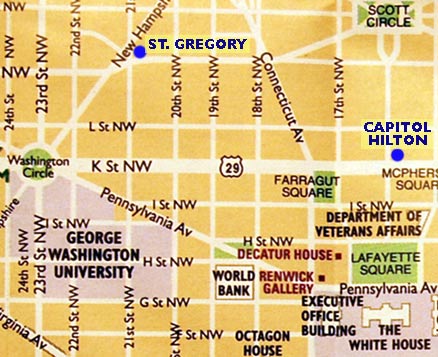
Is Bush sending tanks from Ukraine to Kenya to South Sudan to foment civil war there?

somalia-modern-pirates_big.jpg Hijacked tanks ‘for South Sudan’ Who paid for these tanks? The US government?

South Sudan doesn’t have that much cash on hand at all. One should ask these questions especially with Barack Obama just having called in the debate tonight for US military intervention against the Sudanese government. Whoa there! Bush has got the Democrat beat on the punch and we can all rest assured in our nice little American homes that our government is going to once again initiate yet more genocide in Africa! …in the name of preventing it, no doubt. Poor Obama, he just can’t quite seem to outflank Bush’s and McCain’s militarism to the Right no matter how hard he tries. And he does try hard!

The Panic of 1873 and the panic today

panic-of-1873Many are looking back at the 1930s to the Great Depression of that Era and comparing today’s capitalist downturn to that one, but others see little similarities between that Economic Crash of what appears to many as the mere distant yesterday and today’s. Yet there is still another great financial crash to compare our current one to, the one historically called The Panic of 1873.

That one, too, had many differences to the Great Depression of the 1930s, and YES also to the one we are living now. But all three of the mentioned capitalist economic worldwide crashes share some remarkable similarities, too. Here are a few similarities between now and 1873.

In 1873, the US had just finished an incredibly costly Civil War, where huger amounts of money went into funding the military. Today, we see huge amounts of deficit spending on the military that have ballooned the national debt into the multiple trillions of dollars. Piggybacked onto that is the same credit crunch that the people of 1873 saw and experienced. Further, both these 2 economic crashes were worldwide, and not just American affairs.

One other aspect of all these Crashes is the lack of concern with most human suffering that the crashes cause to the working class. “Panic, as a health officer, sweeping the garbage out of Wall Street.” See what I mean? And another thread to all these horrible downturns is the utter confusion of people living on the dogmas of their times. Today, as in the past, people can’t seem to figure out just who to blame, and have a tendency to blame innocents instead of perpetrators of the crises.

Bolivian president talks about US subversion in his country

CheThe Bush Administration and US government are promoting a terrorist campaign against supporters of the Bolivian president, Evo Morales. In fact, the US government is promoting and fomenting Civil War there, as it backs Rightist elements that have engaged in racist witch hunts against the indigenous community, whom in their great majority are backers of the ‘Change’ that their current president is trying to bring about. You tube has an interview with Morales just recorded this week. Check it out.

South America unites in rejecting US subversion on continent

evo moralesMuch of Latin America has watched on in disgust as the US government has fomented regional strife, civil war, and racist pogroms against the indigenous community in Bolivia that has claimed at least 30 lives so far. Reuters reports though that South American leaders back Bolivia’s Morales and not Washington DC in this battle.

Leaders of countries all around the globe are beginning to resist US government terrorism. Pakistan also has begun to fight back against US subversion of peace in their country, just as Russia gave a kick in the teeth to US subversion in Eastern Europe and the Caucasus. See Pakistan troop fire turns back U.S. helicopters

Latin America, too, is just fed up with the US government. Yankees Go Home! That is the cry every where these days!

The NATO tug of war

The US and Britain are pulling NATO in one direction and France and Germany seem increasingly rather reluctant to follow along. The US wants a NATO ready to start nuclear war with Russia and ready to dismember Pakistan’s national integrity, but the French and German governments don’t seem fully on board this imperialistic US game plan. They sit by silently in apparent disbelief, as the US also foments civil war in Ukraine.

As a result of this French and German discord with the US war drive, NATO has issued a comment or two that it will not participate in US destruction inside Pakistan. NATO says won’t take part in Pakistan raids And France and Germany have tried to bargain with Russia separate from the US about the Georgia/ US-Russian conflict, but without any real success.

Inside the US, we have seen no split in the unity of the ruling 2 parties in their apparently united desire to push conflict with Russia to the wire. We have seen not the faintest sign that there is any disagreement at all between the DP and RP over dragging Pakistan further into civil war pushed by outside forces, i.e. the US government. There has been no apparent Democratic Party response to Palin’s comments that she was ready to war with Russia. And the DP-voting bloggers have even gone along totally, too.

There is a clear US government drive to increase world conflict in order to establish yet more US hegemony across the planet. Americans as a whole seem utterly content with this at the moment, since they still see no price to pay that will involve themselves. Such a level of ignorance and stupidity is truly disheartening, and Americans will ultimately discover what a catastrophe they went along with as their leaders plotted and planned.

What does 9/11 have to do with this?

soldier praying9/11 has become the essential cornerstone of the new fusion of US imperialism, US Christian neo-theocracy, and US racism. God supposedly has chosen a victimized nation to become his Chosen People, etc. and so on. Evil Muslim Arab Devils lurk in the shadows and want the blood of good Christians and their Jewish servants. God Bless America!

Eric and I got a first hand glimpse of this current political theocracy in action at the Colorado Springs municipal government meeting this Tuesday, where 9/11 served to serve up an even bigger than normal dose of Pledge of Allegiance loyalism, pre-meeting prayer, and verbal hypocrisy. They even had a giant harp there on hand to make it all even more heavenly, I guess for the theocrats that run the city government here in the city? It was surreal and I stayed outside in the halls to keep from churning my lunch back up.

Eric proposed that the city look into why it’s police removed him and Peter illegally away from a political activity they and others were protesting, and then later harassed him and Peter legally for several months all in order to finally drop the framed up charges altogether? He linked it to the same sort of abuse of police power used against Democracy Now and Amy Goodman at the Republican Convention.

I used my time to ask that the city council members take their responsibility seriously as government leaders to pass a municipal resolution condemning the federal torture of US government held POWs, their illegal detention for years without charges, and their transport to foreign countries for torture there, too. All I got for my efforts was total silence as Republican Mayor Lionel Rivera chimed in about how he supported these abuses by the US military, while the other city council people sat by stupidly.

These Right Wing Americans, both Democratic and Republican Party leaders, use 9/11 to justify everything these days, no matter how backward and unconnected from 9/11. For example, what does 9/11 have to do with re-arming Georgia or putting missile systems into Poland and The Czech Republic? What does 9/11 have to do with the US government supporting and fomenting civil war in countries as diverse as Pakistan, Bolivia, the Caucasus region, Iran, China, and Ukraine? But 9/11 is the catch word for all of this, as the vacuous Global War on Terrorism forgets to target terrorists at all, but instead moves against everybody, everywhere, and at everytime!

Yes, 9/11 is also the excuse to move against the US population itself, as the stop terrorism line got reduced down to accusing protesters of planning to use urine and shit to terrorize just who at the ruling parties conventions? It doesn’t matter any more just how stupid and illogical and unbelievable all this really is anymore. We’re on Green light, Yellow light, Red light bullshit all the time.

So on this 9/11 worship day, ask yourselves….

Are you still proud to be an American?

If you are, then you are a real nitwit. This country is on the wrong track and you know it!

Local black man made to take his hat off

Statue of William SeymourCOLORADO SPRINGS- An early Pikes Peak Region African American settler is commemorated with a statue in downtown Colorado Springs. A plaque explains that William Seymour was one of many freed slaves who moved west after the Civil War. The statue is meant to honor all those “invisible” pioneers, ignored in the official histories of the city. What’s remarkable is that the statue of this black man is erected next to the Plaza of the Rockies, a bastion of conservative financiers.

The plaque explains a further improbability: the statue was funded by the Plaza. Otherwise known as the Booz Allen Hamilton building, the Colorado Springs home of Morgan Stanley, Smith Barney and RBC Dain Rauscher.

What caught my eye was Seymour’s fedora laying on the adjacent bench. It’s an artistic touch that blurs bronze with reality, but the metal hat also reduces the bench’s utility by half. That’s the first beef I had with it. Only one person can sit at a time to wait for the bus.

Then I pondered why Seymour’s hat was off. The gesture makes him look like a gentleman, fitting to have been the first African American to serve on an El Paso County jury. Seymour was also a founding member of a local Baptist church. Is the park bench meant to be a church pew? He’d have left his coat at the door as well.

Integrated as it is with the park bench, we have to conclude William Seymour is standing outside. We’ve encountered him, as the plaque suggests, on his way home. He’s taken his hat off out of deference to us. We honor he and his fellow “invisible” black pioneers, but we depict him in the lee of Plaza of the Rockies, knowing his place.

Other historical luminaries honored around the downtown have statues who’ve kept their hats on.

South Ossetia a land grab by US Georgia

Russian tanks come to protect South OssetiaThe US is decrying Russian aggression in South Ossetia, a breakaway province of Georgia, itself a breakaway of the ex-Soviet states. Georgia is a US proxy and a NATO beachhead aimed toward Russia and the Middle East. South Ossetia is a critical part. Here’s analysis from Global Research:

War in the Caucasus: Towards a Broader Russia-US Military Confrontation?
By Michel Chossudovsky, Global Research, August 10, 2008

During the night of August 7, coinciding with the opening ceremony of the Beijing Olympics, Georgia’s president Saakashvili ordered an all-out military attack on Tskhinvali, the capital of South Ossetia.

The aerial bombardments and ground attacks were largely directed against civilian targets including residential areas, hospitals and the university. The provincial capital Tskhinvali was destroyed. The attacks resulted in some 1500 civilian deaths, according to both Russian and Western sources. “The air and artillery bombardment left the provincial capital without water, food, electricity and gas. Horrified civilians crawled out of the basements into the streets as fighting eased, looking for supplies.” (AP, August 9, 2008). According to reports, some 34,000 people from South Ossetia have fled to Russia. (Deseret Morning News, Salt Lake City, August 10, 2008)

The importance and timing of this military operation must be carefully analyzed. It has far-reaching implications.

Georgia is an outpost of US and NATO forces, on the immediate border of the Russian Federation and within proximity of the Middle East Central Asian war theater. South Ossetia is also at the crossroads of strategic oil and gas pipeline routes.

Georgia does not act militarily without the assent of Washington. The Georgian head of State is a US proxy and Georgia is a de facto US protectorate.

Who is behind this military agenda? What interests are being served? What is the purpose of the military operation.

There is evidence that the attacks were carefully coordinated by the US military and NATO.

Moscow has accused NATO of “encouraging Georgia”. Russia’s Foreign Minister Sergey Lavrov underscored the destabilizing impacts of “foreign” military aid to Georgia: .

“It all confirms our numerous warnings addressed to the international community that it is necessary to pay attention to massive arms purchasing by Georgia during several years. Now we see how these arms and Georgian special troops who had been trained by foreign specialists are used,” he said.(Moscow accuses NATO of having “encouraged Georgia” to attack South Ossetia, Russia Today, August 9, 2008)

Moscow’s envoy to NATO, Dmitry Rogozin, sent an official note to the representatives of all NATO member countries:

“Russia has already begun consultations with the ambassadors of the NATO countries and consultations with NATO military representatives will be held tomorrow,” Rogozin said. “We will caution them against continuing to further support of Saakashvili.”

“It is an undisguised aggression accompanied by a mass propaganda war,” he said.

(See Moscow accuses NATO of having “encouraged Georgia” to attack South Ossetia, Russia Today, August 9, 2008)

According to Rogozin, Georgia had initially planned to:

“start military action against Abkhazia, however, ‘the Abkhaz fortified region turned out to be unassailable for Georgian armed formations, therefore a different tactic was chosen aimed against South Ossetia’, which is more accessible territorially. The envoy has no doubts that Mikheil Saakashvili had agreed his actions with “sponsors”, “those with whom he is negotiating Georgia’s accession to NATO “. (RIA Novosti, August 8, 2008)

Contrary to what was conveyed by Western media reports, the attacks were anticipated by Moscow. The attacks were timed to coincide with the opening of the Olympics, largely with a view to avoiding frontpage media coverage of the Georgian military operation.

On August 7, Russian forces were in an advanced state readiness. The counterattack was swiftly carried out.

Russian paratroopers were sent in from Russia’s Ivanovo, Moscow and Pskov airborne divisions. Tanks, armored vehicles and several thousand ground troops have been deployed. Russian air strikes have largely targeted military facilities inside Georgia including the Gori military base.

The Georgian military attack was repealed with a massive show of strength on the part of the Russian military.
Act of Provocation?

US-NATO military and intelligence planners invariably examine various “scenarios” of a proposed military operation– i.e. in this case, a limited Georgian attack largely directed against civilian targets, with a view to inflicting civilian casualties.

The examination of scenarios is a routine practice. With limited military capabilities, a Georgian victory and occupation of Tskhinvali, was an impossibility from the outset. And this was known and understood to US-NATO military planners.

A humanitarian disaster rather than a military victory was an integral part of the scenario. The objective was to destroy the provincial capital, while also inflicting a significant loss of human life.

If the objective were to restore Georgian political control over the provincial government, the operation would have been undertaken in a very different fashion, with Special Forces occupying key public buildings, communications networks and provincial institutions, rather than waging an all out bombing raid on residential areas, hospitals, not to mention Tskhinvali’s University.

The Russian response was entirely predictable.

Georgia was “encouraged” by NATO and the US. Both Washington and NATO headquarters in Brussels were acutely aware of what would happen in the case of a Russian counterattack.

The question is: was this a deliberate provocation intended to trigger a Russian military response and suck the Russians into a broader military confrontation with Georgia (and allied forces) which could potentially escalate into an all out war?

Georgia has the third largest contingent of coalition forces in Iraq after the US and the UK, with some 2000 troops. According to reports, Georgian troops in Iraq are now being repatriated in US military planes, to fight Russian forces. (See Debka.com, August 10, 2008)

This US decision to repatriate Georgian servicemen suggests that Washington is intent upon an escalation of the conflict, where Georgian troops are to be used as canon fodder against a massive deployment of Russian forces.

US-NATO and Israel Involved in the Planning of the Attacks

In mid-July, Georgian and U.S. troops held a joint military exercise entitled “Immediate Response” involving respectively 1,200 US and 800 Georgian troops.

The announcement by the Georgian Ministry of Defense on July 12 stated that they US and Georgian troops were to “train for three weeks at the Vaziani military base” near the Georgian capital, Tbilisi. (AP, July 15, 2008). These exercises, which were completed barely a week before the August 7 attacks, were an obvious dress rehearsal of a military operation, which, in all likelihood, had been planned in close cooperation with the Pentagon.

The war on Southern Ossetia was not meant to be won, leading to the restoration of Georgian sovereignty over South Ossetia. It was intended to destabilize the region while also triggering a US-NATO confrontation with Russia.

On July 12, coinciding with the outset of the Georgia-US war games, the Russian Defense Ministry started its own military maneuvers in the North Caucasus region. The usual disclaimer by both Tblisi and Moscow: the military exercises have “nothing to do” with the situation in South Ossetia. (Ibid)

Let us be under no illusions. This is not a civil war. The attacks are an integral part of the broader Middle East Central Asian war, including US-NATO-Israeli war preparations in relation to Iran.

The Role of Israeli Military Advisers

While NATO and US military advisers did not partake in the military operation per se, they were actively involved in the planning and logistics of the attacks. According to Israeli sources (Debka.com, August 8, 2008), the ground assault on August 7-8, using tanks and artillery was “aided by Israeli military advisers”. Israel also supplied Georgia with Hermes-450 and Skylark unmanned aerial vehicles, which were used in the weeks leading up to the August 7 attacks.

Georgia has also acquired, according to a report in Rezonansi (August 6, in Georgian, BBC translation) “some powerful weapons through the upgrade of Su-25 planes and artillery systems in Israel”. According to Haaretz (August 10, 2008), Israelis are active in military manufacturing and security consulting in Georgia.

Russian forces are now directly fighting a NATO-US trained Georgian army integrated by US and Israeli advisers. And Russian warplanes have attacked the military jet factory on the outskirts of Tbilisi, which produces the upgraded Su-25 fighter jet, with technical support from Israel. (CTV.ca, August 10, 2008)

When viewed in the broader context of the Middle East war, the crisis in Southern Ossetia could lead to escalation, including a direct confrontation between Russian and NATO forces. If this were to occur, we would be facing the most serious crisis in US-Russian relations since the Cuban Missile crisis in October 1962.

Georgia: NATO-US Outpost

Georgia is part of a NATO military alliance (GUAM) signed in April 1999 at the very outset of the war on Yugoslavia. It also has a bilateral military cooperation agreement with the US. These underlying military agreements have served to protect Anglo-American oil interests in the Caspian sea basin as well as pipeline routes.

Both the US and NATO have a military presence in Georgia and are working closely with the Georgian Armed Forces. Since the signing of the 1999 GUAM agreement, Georgia has been the recipient of extensive US military aid.

Barely a few months ago, in early May, the Russian Ministry of Defense accused Washington, “claiming that [US as well as NATO and Israeli] military assistance to Georgia is destabilizing the region.” (Russia Claims Georgia in Arms Buildup, Wired News, May 19, 2008). According to the Russian Defense Ministry

“Georgia has received 206 tanks, of which 175 units were supplied by NATO states, 186 armored vehicles (126 – from NATO) , 79 guns (67 – from NATO) , 25 helicopters (12 – from NATO) , 70 mortars, ten surface-to-air missile systems, eight Israeli-made unmanned aircraft, and other weapons. In addition, NATO countries have supplied four combat aircraft to Georgia. The Russian Defense Ministry said there were plans to deliver to Georgia 145 armored vehicles, 262 guns and mortars, 14 combat aircraft including four Mirazh-2000 destroyers, 25 combat helicopters, 15 American Black Hawk aircraft, six surface-to-air missile systems and other arms.” (Interfax News Agency, Moscow, in Russian, Aug 7, 2008)

NATO-US-Israeli assistance under formal military cooperation agreements involves a steady flow of advanced military equipment as well as training and consulting services.

According to US military sources (spokesman for US European Command), the US has more than 100 “military trainers” in Georgia. A Pentagon spokesman Bryan Whitman “said there were no plans to redeploy the estimated 130 US troops and civilian contractors, who he said were stationed in the area around Tblisi” (AFP, 9 August 2008). In fact, US-NATO military presence in Georgia is on a larger scale to that acknowledged in official statements. The number of NATO personnel in Georgia acting as trainers and military advisers has not been confirmed.

Although not officially a member of NATO, Georgia’s military is full integrated into NATO procedures. In 2005, Georgian president proudly announced the inauguration of the first military base, which “fully meets NATO standards”. Immediately following the inauguration of the Senakskaya base in west Georgia, Tblisi announced the opening of a second military base at Gori which would also “comply with NATO regulations in terms of military requirements as well as social conditions.” (Ria Novosti, 26 May 2006).

The Gori base has been used to train Georgian troops dispatched to fight under US command in the Iraq war theater.

It is worth noting that under a March 31, 2006, agreement between Tblisi and Moscow, Russia’s two Soviet-era military bases in Georgia – Akhalkalaki and Batumi have been closed down. (Ibid) The pullout at Batumi commenced in May of last year, 2007. The last remaining Russian troops left the Batumi military facility in early July 2008, barely a week before the commencement of the US-Georgia war games and barely a month prior to the attacks on South Ossetia.

The Israel Connection

Israel is now part of the Anglo-American military axis, which serves the interests of the Western oil giants in the Middle East and Central Asia.

Israel is a partner in the Baku-Tblisi- Ceyhan pipeline which brings oil and gas to the Eastern Mediterranean. More than 20 percent of Israeli oil is imported from Azerbaijan, of which a large share transits through the BTC pipeline. Controlled by British Petroleum, the BTC pipeline has dramatically changed the geopolitics of the Eastern Mediterranean and the Caucusus:

“[The BTC pipeline] considerably changes the status of the region’s countries and cements a new pro-West alliance. Having taken the pipeline to the Mediterranean, Washington has practically set up a new bloc with Azerbaijan, Georgia, Turkey and Israel, ” (Komerzant, Moscow, 14 July 2006)

While the official reports state that the BTC pipeline will “channel oil to Western markets”, what is rarely acknowledged is that part of the oil from the Caspian sea would be directly channeled towards Israel, via Georgia. In this regard, a Israeli-Turkish pipeline project has also been envisaged which would link Ceyhan to the Israeli port of Ashkelon and from there through Israel’s main pipeline system, to the Red Sea.

The objective of Israel is not only to acquire Caspian sea oil for its own consumption needs but also to play a key role in re-exporting Caspian sea oil back to the Asian markets through the Red Sea port of Eilat. The strategic implications of this re-routing of Caspian sea oil are far-reaching. (For further details see Michel Chossudovsky, The War on Lebanon and the Battle for Oil, Global Research, July 2006)

What is envisaged is to link the BTC pipeline to the Trans-Israel Eilat-Ashkelon pipeline, also known as Israel’s Tipline, from Ceyhan to the Israeli port of Ashkelon.

“Turkey and Israel are negotiating the construction of a multi-million-dollar energy and water project that will transport water, electricity, natural gas and oil by pipelines to Israel, with the oil to be sent onward from Israel to the Far East,

The new Turkish-Israeli proposal under discussion would see the transfer of water, electricity, natural gas and oil to Israel via four underwater pipelines.

http://www.jpost.com/servlet/Satellite?cid=1145961328841&pagename=JPost%2FJPArticle%2FShowFull“Baku oil can be transported to Ashkelon via this new pipeline and to India and the Far East.[via the Red sea]”

“Ceyhan and the Mediterranean port of Ashkelon are situated only 400 km apart. Oil can be transported to the city in tankers or via specially constructed under-water pipeline. From Ashkelon the oil can be pumped through already existing pipeline to the port of Eilat at the Red Sea; and from there it can be transported to India and other Asian countries in tankers. (REGNUM)

In this regard, Israel is slated to play a major strategic role in “protecting” the Eastern Mediterranean transport and pipeline corridors out of Ceyhan. Concurrently, it also involved in channeling military aid and training to both Georgia and Azerbaijan.

A far-reaching 1999 bilateral military cooperation agreement between Tblisi and Tel Aviv was reached barely a month before the NATO sponsored GUUAM agreement. It was signed in Tbilisi by President Shevardnadze and Israel’s Prime Minister Binyamin Netanyu. These various military cooperation arrangements are ultimately intended to undermine Russia’s presence and influence in the Caucasus and Central Asia.

In a pro forma declaration, Tel Aviv committed itself, following bilateral discussions with Moscow, on August 5, 2008, to cut back military assistance to Georgia.

Russia’s Response

In response to the attacks, Russian forces intervened with conventional ground troops. Tanks and armored vehicles were sent in. The Russian air force was also involved in aerial counter-attacks on Georgian military positions including the military base of Gori.

The Western media has portrayed the Russian as solely responsible for the deaths of civilians, yet at the same time the Western media has acknowledged (confirmed by the BBC) that most of the civilian casualties at the outset were the result of the Georgian ground and air attacks.

Based on Russian and Western sources, the initial death toll in South Ossetia was at least 1,400 (BBC) mostly civilians. “Georgian casualty figures ranged from 82 dead, including 37 civilians, to a figure of around 130 dead…. A Russian air strike on Gori, a Georgian town near South Ossetia, left 60 people dead, many of them civilians, Georgia says.” (BBC, August 9, 2008). Russian sources place the number of civilian deaths on South Ossetia at 2000.

A process of escalation and confrontation between Russia and America is unfolding, reminiscent of the Cold War era.

Are we dealing with an act of provocation, with a view to triggering a broader conflict? Supported by media propaganda, the Western military alliance is intent on using this incident to confront Russia, as evidenced by recent NATO statements.

American liberal intellectualism in crisis

The IntellectualsAmerican liberal intellectualism is in a state of crisis today. The intellectuals that guide liberalism keep shouting to the Democratic Party to stop collaborating with the Republican Party and to be a true opposition as today’s liberals have thought they always were.

The post World War II outlook of American liberal intellectuals is beginning to crumble and Barack Obama marks the line for a new transformation in American liberal politics. Obama simply is not going to do as the liberal intellectuals demand he act. Liberals can scream and wail and shout and it will all be for naught. The Democrats and Republicans are merely two branches of the same entity, which is that of being the American Corporate Party. And Barack Obama and thee Democratic Party leadership will continue to act as Republican collaborationists.

Barack Obama comes to the forefront precisely at the beginning of the great breakup in the appearance of American Empire. For the last six decades, the American Empire has posed itself as a benign world enforcer, a cop for the public good. Today, that image is all in shreds, and Barack will not be able to put it back together again. Certainly not with his plans to attack Iran, continue to oppress Afghanistan with a USA occupation, and continue to lie and fudge about US occupation and genocide in Iraq. And not with the coming global capitalist economic meltdown.

Yes, American liberalism is in crisis and it bears to take a look at how it has reacted to such crisis in the past.

‘…the record is plain that from the twenties to the forties the majority of anti-capitalist intellectuals passed through three phases which were marked out by the mighty national and world events of the time. From the stock market crash to Hitler’s victory and Roosevelt’s, assumption of office they were torn loose from their previous moorings and swung sharply to the left. From 1933 to the Spanish civil war and the Moscow trials they deepened their commitments and produced the initial differentiations. From 1937 through the crushing of the Spanish revolution, the Stalin-Hitler pact and the Second World War they began the flight from radicalism which was consummated in the wholesale recanting characteristic of the cold war.’

The author, George Novack, is talking about how American liberal intellectuals of his time went from being much like they are today, to becoming radicalized and anti-capitalist, and then beaten back and conservatized once again. The entire history as told by him can be read at Radical Intellectuals in the 1930s

What we get over a period of time, is that America’s liberal leaning intellectuals most resemble a giant bowl of Jello not quite congealed in the refrigerator. They are not the most steadfast citizens amongst the general population. They like to go with the flow more than anything else, so they will be torn asunder when the times change once again.

Look for many of the liberal intellectuals to walk around in circles acting stunned in the next coming years. They just don’t have too many intellectual (or societal) resources to do much anything of else. Despite being the foremost world authorities on everything, they don’t have the real power in their hands, and as such, like servants everywhere, most will do as the Patron dictates while griping about it in the shadows.

The DNC Alliance for Real Democracy is a counter-protest Fifth Column

Denver DNC 2008DENVER, COLO.- The Alliance for Real Democracy (ARD), formed to counter the scrappily-named Recreate 68 at the DNC, is in reality an unwitting fifth column, set up by Democratic Party allies to temper protest in Denver. The UFPJ and other sundry “non-violent” progressives are funneling their members into the less populist ARD actions to divert participation from the major DNC demonstrations. But the aforementioned underwriters aren’t providing any funding, surprise! Leaving the ARD to protest exactly what it’s supposed to: nothing.

Alliance for Real DemocracyI think it’s heartbreaking to watch earnest young activists, representing the organizations comprising the ARD coalition, trying to organize activities without any commitment from their national affiliations. And some of the more outspoken national leaders, keen to make appearances at the DNC rallies, are beginning to smell a rat. They’re making backup arrangements to coordinate with the boots on the ground, R-68.

A Fifth Column refers to a group of partisans, usually spontaneously organized, which forms behind enemy lines as a conquering army approaches. It is the additional “column” of civilian fighters which an attacker might count on to stab the defenders in the back. Franco boasted of his fifth column in the Spanish Civil War. The French Resistance represented a fifth column for the Normandy liberators.

America’s antiwar movement has had its steady divisions, between UFPJ and A.N.S.W.E.R. most notably, but the rift has become more critical with the advent of another hopeful Democratic election win. Four years ago it was Kerry, with groups like Moveon.org trying to tone down the antiwar rhetoric. This year it’s Obama, and the appeasers are out in battalions. As usual, it’s done in the name of “nonviolence,” where too vigorous protest is seen as insufficiently nonviolent for the Democrat’s fragile delusions.

When R-68 began the groundwork for DNC protests, they were vilified for evoking the Chicago 1968 police riots. R-68 repudiated the violence, but not surprisingly those statements have yet to be reported in print. Meanwhile the bad press gave UFPJ and other nonviolence apostles the opportunity to break away and form their holy alliance to give their members sanctuary from the ruffians, re unpredictable young people.

But will it really? The R-68 group includes Unconventional Denver and Disrupt 08, but neither have violent plans. Black Block script-kiddies will turn up no matter whose event. Police agent provocateurs will instigate violence no matter how pious your crowd.

Code Pink, IVAW, Veterans For Peace, and UFPJ are among the national endorsers of ARD. Tent State, SFPJ, and Students for a Democratic Society are examples of young activists getting caught in their elders’ tar baby.

Because it’s not enough to vote for Obama, you have to quash dissent for Obama. It’s the Alliance For Real Democracy For Obama.

Naturally Denver protest organizers, whether ARD or R68, have found themselves having to confer about time slots and permits, out of respect for the success of each other’s activities. As a result, the national head of UFPJ, Leslie Cagan, issued an email decreeing that no ARD organization member would participate in the major Aug 24 kickoff antiwar demonstration. This drew question marks from prominent activist leaders who want to be at the biggest rally.

Bi-monthly CONSULTA meetings were scheduled by ARD and R68 to coordinate efforts. But the morning before the second Consulta, Leslie Cagan flew in from NYC for an emergency meeting with ARD leadership to brief them on what not to negotiate. She followed this with a hastily scheduled press conference the next day on the subject of Iran, it appeared to preempt her rivals’ DON’T BOMB IRAN action planned for August 2nd.

Colorado Springs own PPJPC is an endorser of ARD. Their letter of support was read into the minutes of a recent meeting, and it read like the typical support they’re getting from everyone. I’ll paraphrase the PPJPC letter:

“We at the Pikes Peak Justice and Peace Commission are honored to endorse your efforts at the DNC … due to critical funding shortages, we cannot offer you any monetary support at this time … Likewise, I’m sorry that I will not be able to participate in any events that week , but will try to interest our members in attending…” We’ll be with you in spirit, etc.

Why form a fifth column if you’re not going to support it? Because the ARD‘s job is to do nothing. Doing nothing is exactly how you stab activism in the back.

Global economic rapists are at it again

G8 protest
Why protest the G8 Summit July 7-9? Those hoodlums always look so determined. Here’s the rationale by the Emergency Exit Collective:

The 2008 G8 on Hokkaido, a Strategic Assessment
Emergency Exit Collective
Bristol, Mayday, 2008

The authors of this document are a collection of activists, scholars, and writers currently based in the United States and Western Europe who have gotten to know and work with each other in the movement against capitalist globalization. We’re writing this at the request of some members of No! G8 Action Japan, who asked us for a broad strategic analysis of the state of struggle as we see it, and particularly, of the role of the G8, what it represents, the dangers and opportunities that may lie hidden in the moment. It is in no sense programmatic. Mainly, it is an attempt to develop tools that we hope will be helpful for organizers, or for anyone engaged in the struggle against global capital.

I
It is our condition as human beings that we produce our lives in common.

II
Let us then try to see the world from the perspective of the planet’s commoners, taking the word in that sense: those whose most essential tradition is cooperation in the making and maintenance of human social life, yet who have had to do so under conditions of suffering and separation; deprived, ignored, devalued, divided into hierarchies, pitted against each other for our very physical survival. In one sense we are all commoners. But it’s equally true that just about everyone, at least in some ways, at some points, plays the role of the rulers—of those who expropriate, devalue and divide—or at the very least benefits from such divisions.

Obviously some do more than others. It is at the peak of this pyramid that we encounter groups like the G8.

III
The G8’s perspective is that of the aristocrats, the rulers: those who command and maintain that global machinery of violence that defends existing borders and lines of separation: whether national borders with their detention camps for migrants, or property regimes, with their prisons for the poor. They live by constantly claiming title to the products of others collective creativity and labour, and in thus doing they create the poor; they create scarcity in the midst of plenty, and divide us on a daily basis; they create financial districts that loot resources from across the world, and in thus doing they turn the spirit of human creativity into a spiritual desert; close or privatize parks, public water taps and libraries, hospitals, youth centers, universities, schools, public swimming pools, and instead endlessly build shopping malls that channels convivial life into a means of commodity circulation; work toward turning global ecological catastrophe into business opportunities.

These are the people who presume to speak in the name of the “international community” even as they hide in their gated communities or meet protected by phalanxes of riot cops. It is critical to bear in mind that the ultimate aim of their policies is never to create community but to introduce and maintain divisions that set common people at each other’s throats. The neoliberal project, which has been their main instrument for doing so for the last three decades, is premised on a constant effort either to uproot or destroy any communal or democratic system whereby ordinary people govern their own affairs or maintain common resources for the common good, or, to reorganize each tiny remaining commons as an isolated node in a market system in which livelihood is never guaranteed, where the gain of one community must necessarily be at the expense of others. Insofar as they are willing to appeal to high-minded principles of common humanity, and encourage global cooperation, only and exactly to the extent that is required to maintain this system of universal competition.

IV
At the present time, the G8—the annual summit of the leaders of “industrial democracies”—is the key coordinative institution charged with the task of maintaining this neoliberal project, or of reforming it, revising it, adapting it to the changing condition of planetary class relations. The role of the G8 has always been to define the broad strategic horizons through which the next wave of planetary capital accumulation can occur. This means that its main task is to answer the question of how 3?4 in the present conditions of multiple crises and struggles 3?4 to subordinate social relations among the producing commoners of the planet to capital’s supreme value: profit.

V
Originally founded as the G7 in 1975 as a means of coordinating financial strategies for dealing with the ‘70s energy crisis, then expanded after the end of the Cold War to include Russia, its currently face a moment of profound impasse in the governance of planetary class relations: the greatest since the ‘70s energy crisis itself.

VI
The ‘70s energy crisis represented the final death-pangs of what might be termed the Cold War settlement, shattered by a quarter century of popular struggle. It’s worth returning briefly to this history.

The geopolitical arrangements put in place after World War II were above all designed to forestall the threat of revolution. In the immediate wake of the war, not only did much of the world lie in ruins, most of world’s population had abandoned any assumption about the inevitability of existing social arrangements. The advent of the Cold War had the effect of boxing movements for social change into a bipolar straightjacket. On the one hand, the former Allied and Axis powers that were later to unite in the G7 (the US, Canada, UK, France, Italy, Germany, Japan)—the “industrialized democracies”, as they like to call themselves—engaged in a massive project of co-optation. Their governments continued the process, begun in the ‘30s, of taking over social welfare institutions that had originally been created by popular movements (from insurance schemes to public libraries), even to expand them, on condition that they now be managed by state-appointed bureaucracies rather than by those who used them, buying off unions and the working classes more generally with policies meant to guarantee high wages, job security and the promise of educational advance—all in exchange for political loyalty, productivity increases and wage divisions within national and planetary working class itself. The Sino-Soviet bloc—which effectively became a kind of junior partner within the overall power structure, and its allies remained to trap revolutionary energies into the task of reproducing similar bureaucracies elsewhere. Both the US and USSR secured their dominance after the war by refusing to demobilize, instead locking the planet in a permanent threat of nuclear annihilation, a terrible vision of absolute cosmic power.

VII
Almost immediately, though, this arrangement was challenged by a series of revolts from those whose work was required to maintain the system, but who were, effectively, left outside the deal: first, peasants and the urban poor in the colonies and former colonies of the Global South, next, disenfranchised minorities in the home countries (in the US, the Civil Rights movement, then Black Power), and finally and most significantly, by the explosion of the women’s movement of the late ‘60s and early ‘70s—the revolt of that majority of humanity whose largely unremunerated labor made the very existence “the economy” possible. This appears to have been the tipping point.

VIII
The problem was that the Cold War settlement was never meant to include everyone. It by definition couldn’t. Once matters reached tipping point, then, the rulers scotched the settlement. All deals were off. The oil shock was first edge of the counter-offensive, breaking the back of existing working class organizations, driving home the message that there was nothing guaranteed about prosperity. Under the aegis of the newly hatched G7, this counter-offensive involved a series of interwoven strategies that were later to give rise to what is known as neoliberalism.

IX
These strategies resulted in what came to be known as “Structural Adjustment” both in the North and in the South, accompanied by trade and financial liberalization. This, in turn, made possible crucial structural changes in our planetary production in common extending the role of the market to discipline our lives and divide us into more and more polarized wage hierarchy. This involved:

· In the immediate wake of ‘70s oil shock, petrodollars were recycled from OPEC into Northern banks that then lent them, at extortionate rates of interest, to developing countries of the Global South. This was the origin of the famous “Third World Debt Crisis.” The existence of this debt allowed institutions like the IMF to impose its monetarist orthodoxy on most of the planet for roughly twenty years, in the process, stripping away most of even those modest social protections that had been won by the world’s poor—large numbers of whom were plunged into a situation of absolute desperation.

· It also opened a period of new enclosures through the capitalist imposition of structural adjustment policies, manipulation of environmental and social catastrophes like war, or for that matter through the authoritarian dictates of “socialist” regimes. Through such means, large sections of the world’s population have over the past thirty years been dispossessed from resources previously held in common, either by dint of long traditions, or as the fruits of past struggles and past settlements.

· Through financial deregulation and trade liberalization, neoliberal capital, which emerged from the G7 strategies to deal with the 1970s crisis aimed thus at turning the “class war” in communities, factories, offices, streets and fields against the engine of competition, into a planetary “civil war”, pitting each community of commoners against every other community of commoners.

· Neoliberal capital has done this by imposing an ethos of “efficiency” and rhetoric of “lowering the costs of production” applied so broadly that mechanisms of competition have come to pervade every sphere of life. In fact these terms are euphemisms, for a more fundamental demand: that capital be exempt from taking any reduction in profit to finance the costs of reproduction of human bodies and their social and natural environments (which it does not count as costs) and which are, effectively, “exernalized” onto communities and nature.

· The enclosure of resources and entitlements won in previous generations of struggles both in the North and the South, in turn, created the conditions for increasing the wage hierarchies (both global and local), by which commoners work for capital—wage hierarchies reproduced economically through pervasive competition, but culturally, through male dominance, xenophobia and racism. These wage gaps, in turn, made it possible to reduce the value of Northern workers’ labour power, by introducing commodities that enter in their wage basket at a fraction of what their cost might otherwise have been. The planetary expansion of sweatshops means that American workers (for example) can buy cargo pants or lawn-mowers made in Cambodia at Walmart, or buy tomatoes grown by undocumented Mexican workers in California, or even, in many cases, hire Jamaican or Filipina nurses to take care of children and aged grandparents at such low prices, that their employers have been able to lower real wages without pushing most of them into penury. In the South, meanwhile, this situation has made it possible to discipline new masses of workers into factories and assembly lines, fields and offices, thus extending enormously capital’s reach in defining the terms—the what, the how, the how much—of social production.

· These different forms of enclosures, both North and South, mean that commoners have become increasingly dependent on the market to reproduce their livelihoods, with less power to resist the violence and arrogance of those whose priorities is only to seek profit, less power to set a limit to the market discipline running their lives, more prone to turn against one another in wars with other commoners who share the same pressures of having to run the same competitive race, but not the same rights and the same access to the wage. All this has meant a generalized state of precarity, where nothing can be taken for granted.

X
In turn, this manipulation of currency and commodity flows constituting neoliberal globalization became the basis for the creation of the planet’s first genuine global bureaucracy.

· This was multi-tiered, with finance capital at the peak, then the ever-expanding trade bureaucracies (IMF, WTO, EU, World Bank, etc), then transnational corporations, and finally, the endless varieties of NGOs that proliferated throughout the period—almost all of which shared the same neoliberal orthodoxy, even as they substituted themselves for social welfare functions once reserved for states.

· The existence of this overarching apparatus, in turn, allowed poorer countries previously under the control of authoritarian regimes beholden to one or another side in the Cold War to adopt “democratic” forms of government. This did allow a restoration of formal civil liberties, but very little that could really merit the name of democracy (the rule of the “demos”, i.e., of the commoners). They were in fact constitutional republics, and the overwhelming trend during the period was to strip legislatures, that branch of government most open to popular pressure, of most of their powers, which were increasingly shifted to the executive and judicial branches, even as these latter, in turn, largely ended up enacting policies developed overseas, by global bureaucrats.

· This entire bureaucratic arrangement was justified, paradoxically enough, by an ideology of extreme individualism. On the level of ideas, neoliberalism relied on a systematic cooptation of the themes of popular struggle of the ‘60s: autonomy, pleasure, personal liberation, the rejection of all forms of bureaucratic control and authority. All these were repackaged as the very essence of capitalism, and the market reframed as a revolutionary force of liberation.

· The entire arrangement, in turn, was made possible by a preemptive attitude towards popular struggle. The breaking of unions and retreat of mass social movements from the late ‘70s onwards was only made possible by a massive shift of state resources into the machinery of violence: armies, prisons and police (secret and otherwise) and an endless variety of private “security services”, all with their attendant propaganda machines, which tended to increase even as other forms of social spending were cut back, among other things absorbing increasing portions of the former proletariat, making the security apparatus an increasingly large proportion of total social spending. This approach has been very successful in holding back mass opposition to capital in much of the world (especially West Europe and North America), and above all, in making it possible to argue there are no viable alternatives. But in doing so, has created strains on the system so profound it threatens to undermine it entirely.

XI
The latter point deserves elaboration. The element of force is, on any number of levels, the weak point of the system. This is not only on the constitutional level, where the question of how to integrate the emerging global bureaucratic apparatus, and existing military arrangements, has never been resolved. It is above all an economic problem. It is quite clear that the maintenance of elaborate security machinery is an absolute imperative of neoliberalism. One need only observe what happened with the collapse of the Soviet bloc in Eastern Europe: where one might have expected the Cold War victors to demand the dismantling of the army, secret police and secret prisons, and to maintain and develop the existing industrial base, in fact, what they did was absolutely the opposite: in fact, the only part of the industrial base that has managed fully to maintain itself has been the parts required to maintained the security apparatus itself! Critical too is the element of preemption: the governing classes in North America, for example, are willing to go to almost unimaginable lengths to ensure social movements never feel they are accomplishing anything. The current Gulf War is an excellent example: US military operations appear to be organized first and foremost to be protest-proof, to ensure that what happened in Vietnam (mass mobilization at home, widespread revolt within the army overseas) could never be repeated. This means above all that US casualties must always be kept to a minimum. The result are rules of engagement, and practices like the use of air power within cities ostensibly already controlled by occupation forces, so obviously guaranteed to maximize the killing of innocents and galvanizing hatred against the occupiers that they ensure the war itself cannot be won. Yet this approach can be taken as the very paradigm for neoliberal security regimes. Consider security arrangements around trade summits, where police are so determined prevent protestors from achieving tactical victories that they are often willing to effectively shut down the summits themselves. So too in overall strategy. In North America, such enormous resources are poured into the apparatus of repression, militarization, and propaganda that class struggle, labor action, mass movements seem to disappear entirely. It is thus possible to claim we have entered a new age where old conflicts are irrelevant. This is tremendously demoralizing of course for opponents of the system; but those running the system seem to find that demoralization so essential they don’t seem to care that the resultant apparatus (police, prisons, military, etc) is, effectively, sinking the entire US economy under its dead weight.

XII
The current crisis is not primarily geopolitical in nature. It is a crisis of neoliberalism itself. But it takes place against the backdrop of profound geopolitical realignments. The decline of North American power, both economic and geopolitical has been accompanied by the rise of Northeast Asia (and to a increasing extent, South Asia as well). While the Northeast Asian region is still divided by painful Cold War cleavages—the fortified lines across the Taiwan straits and at the 38th parallel in Korea…—the sheer realities of economic entanglement can be expected to lead to a gradual easing of tensions and a rise to global hegemony, as the region becomes the new center of gravity of the global economy, of the creation of new science and technology, ultimately, of political and military power. This may, quite likely, be a gradual and lengthy process. But in the meantime, very old patterns are rapidly reemerging: China reestablishing relations with ancient tributary states from Korea to Vietnam, radical Islamists attempting to reestablish their ancient role as the guardians of finance and piety at the in the Central Asian caravan routes and across Indian Ocean, every sort of Medieval trade diaspora reemerging… In the process, old political models remerge as well: the Chinese principle of the state transcending law, the Islamic principle of a legal order transcending any state. Everywhere, we see the revival too of ancient forms of exploitation—feudalism, slavery, debt peonage—often entangled in the newest forms of technology, but still echoing all the worst abuses of the Middle Ages. A scramble for resources has begun, with US occupation of Iraq and saber-rattling throughout the surrounding region clearly meant (at least in part) to place a potential stranglehold the energy supply of China; Chinese attempts to outflank with its own scramble for Africa, with increasing forays into South America and even Eastern Europe. The Chinese invasion into Africa (not as of yet at least a military invasion, but already involving the movement of hundreds of thousands of people), is changing the world in ways that will probably be felt for centuries. Meanwhile, the nations of South America, the first victims of the “Washington consensus” have managed to largely wriggle free from the US colonial orbit, while the US, its forces tied down in the Middle East, has for the moment at least abandoned it, is desperately struggling to keep its grip Mexico, Central America and the Caribbean—its own “near abroad”.

XIII
In another age all this might have led to war—that is, not just colonial occupations, police actions, or proxy wars (which are obviously already taking place), but direct military confrontations between the armies of major powers. It still could; accidents happen; but there is reason to believe that, when it comes to moments of critical decision, the loyalties of the global elites are increasingly to each other, and not to the national entities for whom they claim to speak. There is some compelling evidence for this.

Take for example when the US elites panicked at the prospect of the massive budget surpluses of the late 1990s. As Alan Greenspan, head of the Federal Reserve at the time warned, if these were allowed to stand they would have flooded government coffers with so many trillions of dollars that it could only have lead to some form of creeping socialism, even, he predicted, to the government acquiring “equity stakes” in key US corporations. The more excitable of capitalism’s managers actually began contemplating scenarios where the capitalist system itself would be imperiled. The only possible solution was massive tax cuts; these were duly enacted, and did indeed manage to turn surpluses into enormous deficits, financed by the sale of treasury bonds to Japan and China. Conditions have thus now reached a point where it is beginning to look as if the most likely long term outcome for the US (its technological and industrial base decaying, sinking under the burden of its enormous security spending) will be to end up serve as junior partner and military enforcer for East Asia capital. Its rulers, or at least a significant proportion of them, would prefer to hand global hegemony to the rulers of China (provided the latter abandon Communism) than to return to any sort of New Deal compromise with their “own” working classes.

A second example lies in the origins of what has been called the current “Bretton Woods II” system of currency arrangements, which underline a close working together of some “surplus” and “deficit” countries within global circuits. The macroeconomic manifestation of the planetary restructuring outlined in XIX underlines both the huge US trade deficit that so much seem to worry many commentators, and the possibility to continually generate new debt instruments like the one that has recently resulted in the sub-prime crisis. The ongoing recycling of accumulated surplus of countries exporting to the USA such as China and oil producing countries is what has allowed financiers to create new credit instruments in the USA. Hence, the “deal” offered by the masters in the United States to its commoners has been this: ‘you, give us a relative social peace and accept capitalist markets as the main means through which you reproduce your own livelihoods, and we will give you access to cheaper consumption goods, access to credit for buying cars and homes, and access to education, health, pensions and social security through the speculative means of stock markets and housing prices.’ Similar compromises were reached in all the G8 countries.

Meanwhile, there is the problem of maintaining any sort of social peace with the hundreds of millions of unemployed, underemployed, dispossessed commoners currently swelling the shanty-towns of Asia, Africa, and Latin America as a result of ongoing enclosures (which have speeded up within China and India in particular, even as “structural adjustment policies” in Africa and Latin America have been derailed). Any prospect of maintaining peace in these circumstances would ordinarily require either extremely high rates of economic growth—which globally have not been forthcoming, since outside of China, growth rates in the developing world have been much lower than they were in the ‘50s, ‘60s, or even ‘70s—or extremely high levels of repression, lest matters descend into rebellion or generalized civil war. The latter has of course occurred in many parts of the world currently neglected by capital, but in favored regions, such as the coastal provinces of China, or “free trade” zones of India, Egypt, or Mexico, commoners are being offered a different sort of deal: industrial employment at wages that, while very low by international standards, are still substantially higher than anything currently obtainable in the impoverished countryside; and above all the promise, through the intervention of Western markets and (privatized) knowledge, of gradually improving conditions of living. While over the least few years wages in many such areas seem to be growing, thanks to the intensification of popular struggles, such gains are inherently vulnerable: the effect of recent food inflation has been to cut real wages back dramatically—and threaten millions with starvation.

What we really want to stress here, though, is that the long-term promise being offered to the South is just as untenable as the idea that US or European consumers can indefinitely expand their conditions of life through the use of mortgages and credit cards.

What’s being offered the new dispossessed is a transposition of the American dream. The idea is that the lifestyle and consumption patterns of existing Chinese, Indian, or Brazilian or Zambian urban middle classes (already modeled on Northern ones) will eventually become available to the children of today’s miners, maquila or plantation laborers, until, ultimately, everyone on earth is brought up to roughly the same level of consumption. Put in these terms, the argument is absurd. The idea that all six billion of us can become “middle class” is obviously impossible. First of all there is a simple problem of resources. It doesn’t matter how many bottles we recycle or how energy efficient are the light bulbs we use, there’s just no way the earth’s ecosystem can accommodate six billion people driving in private cars to work in air-conditioned cubicles before periodically flying off to vacation in Acapulco or Tahiti. To maintain the style of living and producing in common we now identify with “middle classness” on a planetary scale would require several additional planets.

This much has been pointed out repeatedly. But the second point is no less important. What this vision of betterment ultimately proposes is that it would be possible to build universal prosperity and human dignity on a system of wage labor. This is fantasy. Historically, wages are always the contractual face for system of command and degradation, and a means of disguising exploitation: expressing value for work only on condition of stealing value without work— and there is no reason to believe they could ever be anything else. This is why, as history has also shown, human beings will always avoid working for wages if they have any other viable option. For a system based on wage labor to come into being, such options must therefore be made unavailable. This in turn means that such systems are always premised on structures of exclusion: on the prior existence of borders and property regimes maintained by violence. Finally, historically, it has always proved impossible to maintain any sizeable class of wage-earners in relative prosperity without basing that prosperity, directly or indirectly, on the unwaged labor of others—on slave-labor, women’s domestic labor, the forced labor of colonial subjects, the work of women and men in peasant communities halfway around the world—by people who are even more systematically exploited, degraded, and immiserated. For that reason, such systems have always depended not only on setting wage-earners against each other by inciting bigotry, prejudice, hostility, resentment, violence, but also by inciting the same between men and women, between the people of different continents (“race”), between the generations.

From the perspective of the whole, then, the dream of universal middle class “betterment” must necessarily be an illusion constructed in between the Scylla of ecological disaster, and the Charybdis of poverty, detritus, and hatred: precisely, the two pillars of today’s strategic impasse faced by the G8.

XIV
How then do we describe the current impasse of capitalist governance?

To a large degree, it is the effect of a sudden and extremely effective upswing of popular resistance—one all the more extraordinary considering the huge resources that had been invested in preventing such movements from breaking out.

On the one hand, the turn of the millennium saw a vast and sudden flowering of new anti-capitalist movements, a veritable planetary uprising against neoliberalism by commoners in Latin America, India, Africa, Asia, across the North Atlantic world’s former colonies and ultimately, within the cities of the former colonial powers themselves. As a result, the neoliberal project lies shattered. What came to be called the “anti-globalization” movement took aim at the trade bureaucracies—the obvious weak link in the emerging institutions of global administration—but it was merely the most visible aspect of this uprising. It was however an extraordinarily successful one. Not only was the WTO halted in its tracks, but all major trade initiatives (MAI, FTAA…) scuttled. The World Bank was hobbled and the power of the IMF over most of the world’s population, effectively, destroyed. The latter, once the terror of the Global South, is now a shattered remnant of its former self, reduced to selling off its gold reserves and desperately searching for a new global mission.

In many ways though spectacular street actions were merely the most visible aspects of much broader changes: the resurgence of labor unions, in certain parts of the world, the flowering of economic and social alternatives on the grassroots levels in every part of the world, from new forms of direct democracy of indigenous communities like El Alto in Bolivia or self-managed factories in Paraguay, to township movements in South Africa, farming cooperatives in India, squatters’ movements in Korea, experiments in permaculture in Europe or “Islamic economics” among the urban poor in the Middle East. We have seen the development of thousands of forms of mutual aid association, most of which have not even made it onto the radar of the global media, often have almost no ideological unity and which may not even be aware of each other’s existence, but nonetheless share a common desire to mark a practical break with capitalism, and which, most importantly, hold out the prospect of creating new forms of planetary commons that can—and in some cases are—beginning to knit together to provide the outlines of genuine alternative vision of what a non-capitalist future might look like.

The reaction of the world’s rulers was predictable. The planetary uprising had occurred during a time when the global security apparatus was beginning to look like it lacked a purpose, when the world threatened to return to a state of peace. The response—aided of course, by the intervention of some of the US’ former Cold War allies, reorganized now under the name of Al Qaeda—was a return to global warfare. But this too failed. The “war on terror”—as an attempt to impose US military power as the ultimate enforcer of the neoliberal model—has collapsed as well in the face of almost universal popular resistance. This is the nature of their “impasse”.

At the same time, the top-heavy, inefficient US model of military capitalism—a model created in large part to prevent the dangers of social movements, but which the US has also sought to export to some degree simply because of its profligacy and inefficiency, to prevent the rest of the world from too rapidly overtaking them—has proved so wasteful of resources that it threatens to plunge the entire planet into ecological and social crisis. Drought, disaster, famines, combine with endless campaigns of enclosure, foreclosure, to cast the very means of survival—food, water, shelter—into question for the bulk of the world’s population.

XV
In the rulers’ language the crisis understood, first and foremost, as a problem of regulating cash flows, of reestablishing, as they like to put it, a new “financial architecture”. Obviously they are aware of the broader problems. Their promotional literature has always been full of it. From the earliest days of the G7, through to the days after the Cold War, when Russia was added as a reward for embracing capitalism, they have always claimed that their chief concerns include

· the reduction of global poverty

· sustainable environmental policies

· sustainable global energy policies

· stable financial institutions governing global trade and currency transactions

If one were to take such claims seriously, it’s hard to see their overall performance as anything but a catastrophic failure. At the present moment, all of these are in crisis mode: there are food riots, global warming, peak oil, and the threat of financial meltdown, bursting of credit bubbles, currency crises, a global credit crunch. [**Failure on this scale however, opens opportunities for the G8 themselves, as summit of the global bureaucracy, to reconfigure the strategic horizon. Therefore, it’s always with the last of these that they are especially concerned. ]The real problem, from the perspective of the G8, is one of reinvestment: particularly, of the profits of the energy sector, but also, now, of emerging industrial powers outside the circle of the G8 itself. The neoliberal solution in the ‘70s had been to recycle OPEC’s petrodollars into banks that would use it much of the world into debt bondage, imposing regimes of fiscal austerity that, for the most part, stopped development (and hence, the emergence potential rivals) in its tracks. By the ‘90s, however, much East Asia in particular had broken free of this regime. Attempts to reimpose IMF-style discipline during the Asian financial crisis of 1997 largely backfired. So a new compromise was found, the so-called Bretton Woods II: to recycle the profits from the rapidly expanding industrial economies of East Asia into US treasury debt, artificially supporting the value of the dollar and allowing a continual stream of cheap exports that, aided by the US housing bubble, kept North Atlantic economies afloat and buy off workers there with cheap oil and even cheaper consumer goods even as real wages shrank. This solution however soon proved a temporary expedient. Bush regime’s attempt to lock it in by the invasion of Iraq, which was meant to lead to the forced privatization of Iraqi oil fields, and, ultimately, of the global oil industry as a whole, collapsed in the face of massive popular resistance (just as Saddam Hussein’s attempt to introduce neoliberal reforms in Iraq had failed when he was still acting as American deputy in the ‘90s). Instead, the simultaneous demand for petroleum for both Chinese manufacturers and American consumers caused a dramatic spike in the price of oil. What’s more, rents from oil and gas production are now being used to pay off the old debts from the ‘80s (especially in Asia and Latin America, which have by now paid back their IMF debts entirely), and—increasingly—to create state-managed Sovereign Wealth Funds that have largely replaced institutions like the IMF as the institutions capable of making long-term strategic investments. The IMF, purposeless, tottering on the brink of insolvency, has been reduced to trying to come up with “best practices” guidelines for fund managers working for governments in Singapore, Seoul, and Abu Dhabi.

There can be no question this time around of freezing out countries like China, India, or even Brazil. The question for capital’s planners, rather, is how to channel these new concentrations of capital in such a way that they reinforce the logic of the system instead of undermining it.

XVI
How can this be done? This is where appeals to universal human values, to common membership in an “international community” come in to play. “We all must pull together for the good of the planet,” we will be told. The money must be reinvested “to save the earth.”

To some degree this was always the G8 line: this is a group has been making an issue of climate change since 1983. Doing so was in one sense a response to the environmental movements of the ‘70s and ‘80s. The resultant emphasis on biofuels and “green energy” was from their point of view, the perfect strategy, seizing on an issue that seemed to transcend class, appropriating ideas and issues that emerged from social movements (and hence coopting and undermining especially their radical wings), and finally, ensuring such initiatives are pursued not through any form of democratic self-organization but “market mechanisms”—to effective make the sense of public interest productive for capitalism.

What we can expect now is a two-pronged attack. On the one hand, they will use the crisis to attempt to reverse the gains of past social movements: to put nuclear energy back on the table to deal with the energy crisis and global warming, or genetically modified foods to deal with the food crisis. Prime Minister Fukuda, the host of the current summit, for example, is already proposing the nuclear power is the “solution” to the global warming crisis, even as the German delegation resists. On the other, and even more insidiously, they will try once again to co-opt the ideas and solutions that have emerged from our struggles as a way of ultimately undermining them. Appropriating such ideas is simply what rulers do: the bosses brain is always under the workers’ hat. But the ultimate aim is to answer the intensification of class struggle, of the danger of new forms of democracy, with another wave of enclosures, to restore a situation where commoners’ attempts to create broader regimes of cooperation are stymied, and people are plunged back into mutual competition.

We can already see the outlines of how this might be done. There are already suggestions that Sovereign Wealth Funds put aside a certain (miniscule) proportion of their money for food aid, but only as tied to a larger project of global financial restructuring. The World Bank, largely bereft of its earlier role organizing dams and pipe-lines across the world, has been funding development in China’s poorer provinces, freeing the Chinese government to carry out similar projects in Southeast Asia, Africa, and even Latin America (where, of course, they cannot effectively be held to any sort of labor or environmental standards). There is the possibility of a new class deal in China itself, whose workers can be allowed higher standards of living if new low wage zones are created elsewhere—for instance, Africa (the continent where struggles over maintaining the commons have been most intense in current decades)—with the help of Chinese infrastructural projects. Above of all, money will be channeled into addressing climate change, into the development of alternative energy, which will require enormous investments, in such a way as to ensure that whatever energy resources do become important in this millennium, they can never be democratized—that the emerging notion of a petroleum commons, that energy resources are to some degree a common patrimony meant primarily to serve the community as a whole, that is beginning to develop in parts of the Middle East and South America—not be reproduced in whatever comes next.

Since this will ultimately have to be backed up by the threat of violence, the G8 will inevitably have to struggle with how to (yet again) rethink enforcement mechanisms. The latest move , now that the US “war on terror” paradigm has obviously failed, would appear to be a return to NATO, part of a reinvention of the “European security architecture” being proposed at the upcoming G8 meetings in Italy in 2009 on the 60th anniversary of NATO’s foundation—but part of a much broader movement of the militarization of social conflict, projecting potential resource wars, demographic upheavals resulting from climate change, and radical social movements as potential military problems to be resolved by military means. Opposition to this new project is already shaping up as the major new European mobilization for the year following the current G-8.

XVII
While the G-8 sit at the pinnacle of a system of violence, their preferred idiom is monetary. Their impulse whenever possible is to translate all problems into money, financial structures, currency flows—a substance whose movements they carefully monitor and control.

Money, on might say, is their poetry—a poetry whose letters are written in our blood. It is their highest and most abstract form of expression, their way of making statements about the ultimate truth of the world, even if it operates in large part by making things disappear. How else could it be possible to argue—no, to assume as a matter of common sense—that the love, care, and concern of a person who tends to the needs of children, teaching, minding, helping them to become decent , thoughtful, human beings, or who grows and prepares food, is worth ten thousand times less than someone who spends the same time designing a brand logo, moving abstract blips across a globe, or denying others health care.

The role of money however has changed profoundly since 1971 when the dollar was delinked from gold. This has created a profound realignment of temporal horizons. Once money could be said to be primarily congealed results of past profit and exploitation. As capital, it was dead labor. Millions of indigenous Americans and Africans had their lives pillaged and destroyed in the gold mines in order to be rendered into value. The logic of finance capital, of credit structures, certainly always existed as well (it is at least as old as industrial capital; possibly older), but in recent decades these logic of financial capital has come to echo and re-echo on every level of our lives. In the UK 97% of money in circulation is debt, in the US, 98%. Governments run on deficit financing, wealthy economies on consumer debt, the poor are enticed with microcredit schemes, debts are packaged and repackaged in complex financial derivatives and traded back and forth. Debt however is simply a promise, the expectation of future profit; capital thus increasingly brings the future into the present—a future that, it insists, must always be the same in nature, even if must also be greater in magnitude, since of course the entire system is premised on continual growth. Where once financiers calculated and traded in the precise measure of our degradation, having taken everything from us and turned it into money, now money has flipped, to become the measure of our future degradation—at the same time as it binds us to endlessly working in the present.

The result is a strange moral paradox. Love, loyalty, honor, commitment—to our families, for example, which means to our shared homes, which means to the payment of monthly mortgage debts—becomes a matter of maintaining loyalty to a system which ultimately tells us that such commitments are not a value in themselves. This organization of imaginative horizons, which ultimately come down to a colonization of the very principle of hope, has come to supplement the traditional evocation of fear (of penury, homelessness, joblessness, disease and death). This colonization paralyzes any thought of opposition to a system that almost everyone ultimately knows is not only an insult to everything they really cherish, but a travesty of genuine hope, since, because no system can really expand forever on a finite planet, everyone is aware on some level that in the final analysis they are dealing with a kind of global pyramid scheme, what we are ultimately buying and selling is the real promise of global social and environmental apocalypse.

XVIII
Finally then we come to the really difficult, strategic questions. Where are the vulnerabilities? Where is hope? Obviously we have no certain answers here. No one could. But perhaps the proceeding analysis opens up some possibilities that anti-capitalist organizers might find useful to explore.

One thing that might be helpful is to rethink our initial terms. Consider communism. We are used to thinking of it as a total system that perhaps existed long ago, and to the desire to bring about an analogous system at some point in the future—usually, at whatever cost. It seems to us that dreams of communist futures were never purely fantasies; they were simply projections of existing forms of cooperation, of commoning, by which we already make the world in the present. Communism in this sense is already the basis of almost everything, what brings people and societies into being, what maintains them, the elemental ground of all human thought and action. There is absolutely nothing utopian here. What is utopian, really, is the notion that any form of social organization, especially capitalism, could ever exist that was not entirely premised on the prior existence of communism. If this is true, the most pressing question is simply how to make that power visible, to burst forth, to become the basis for strategic visions, in the face of a tremendous and antagonistic power committed to destroying it—but at the same time, ensuring that despite the challenge they face, they never again become entangled with forms of violence of their own that make them the basis for yet another tawdry elite. After all, the solidarity we extend to one another, is it not itself a form of communism? And is it not so above because it is not coerced?

Another thing that might be helpful is to rethink our notion of crisis. There was a time when simply describing the fact that capitalism was in a state of crisis, driven by irreconcilable contradictions, was taken to suggest that it was heading for a cliff. By now, it seems abundantly clear that this is not the case. Capitalism is always in a crisis. The crisis never goes away. Financial markets are always producing bubbles of one sort or another; those bubbles always burst, sometimes catastrophically; often entire national economies collapse, sometimes the global markets system itself begins to come apart. But every time the structure is reassembled. Slowly, painfully, dutifully, the pieces always end up being put back together once again.

Perhaps we should be asking: why?

In searching for an answer, it seems to us, we might also do well to put aside another familiar habit of radical thought: the tendency to sort the world into separate levels—material realities, the domain of ideas or “consciousness”, the level of technologies and organizations of violence—treating these as if these were separate domains that each work according to separate logics, and then arguing which “determines” which. In fact they cannot be disentangled. A factory may be a physical thing, but the ownership of a factory is a social relation, a legal fantasy that is based partly on the belief that law exists, and partly on the existence of armies and police. Armies and police on the other hand exist partly because of factories providing them with guns, vehicles, and equipment, but also, because those carrying the guns and riding in the vehicles believe they are working for an abstract entity they call “the government”, which they love, fear, and ultimately, whose existence they take for granted by a kind of faith, since historically, those armed organizations tend to melt away immediately the moment they lose faith that the government actually exists. Obviously exactly the same can be said of money. It’s value is constantly being produced by eminently material practices involving time clocks, bank machines, mints, and transatlantic computer cables, not to mention love, greed, and fear, but at the same time, all this too rests on a kind of faith that all these things will continue to interact in more or less the same way. It is all very material, but it also reflects a certain assumption of eternity: the reason that the machine can always be placed back together is, simply, because everyone assumes it must. This is because they cannot realistically imagine plausible alternatives; they cannot imagine plausible alternatives because of the extraordinarily sophisticated machinery of preemptive violence that ensure any such alternatives are uprooted or contained (even if that violence is itself organized around a fear that itself rests on a similar form of faith.) One cannot even say it’s circular. It’s more a kind of endless, unstable spiral. To subvert the system is then, to intervene in such a way that the whole apparatus begins to spin apart.

XIX
It appears to us that one key element here—one often neglected in revolutionary strategy—is the role of the global middle classes. This is a class that, much though it varies from country (in places like the US and Japan, overwhelming majorities consider themselves middle class; in, say, Cambodia or Zambia, only very small percentages), almost everywhere provides the key constituency of the G8 outside of the ruling elite themselves. It has become a truism, an article of faith in itself in global policy circles, that national middle class is everywhere the necessary basis for democracy. In fact, middle classes are rarely much interested in democracy in any meaningful sense of that word (that is, of the self-organization or self-governance of communities). They tend to be quite suspicious of it. Historically, middle classes have tended to encourage the establishment of constitutional republics with only limited democratic elements (sometimes, none at all). This is because their real passion is for a “betterment”, for the prosperity and advance of conditions of life for their children—and this betterment, since it is as noted above entirely premised on structures of exclusion, requires “security”. Actually the middle classes depend on security on every level: personal security, social security (various forms of government support, which even when it is withdrawn from the poor tends to be maintained for the middle classes), security against any sudden or dramatic changes in the nature of existing institutions. Thus, politically, the middle classes are attached not to democracy (which, especially in its radical forms, might disrupt all this), but to the rule of law. In the political sense, then, being “middle class” means existing outside the notorious “state of exception” to which the majority of the world’s people are relegated. It means being able to see a policeman and feel safer, not even more insecure. This would help explain why within the richest countries, the overwhelming majority of the population will claim to be “middle class” when speaking in the abstract, even if most will also instantly switch back to calling themselves “working class” when talking about their relation to their boss.

That rule of law, in turn, allows them to live in that temporal horizon where the market and other existing institutions (schools, governments, law firms, real estate brokerages…) can be imagined as lasting forever in more or less the same form. The middle classes can thus be defined as those who live in the eternity of capitalism. (The elites don’t; they live in history, they don’t assume things will always be the same. The disenfranchized don’t; they don’t have the luxury; they live in a state of precarity where little or nothing can safely be assumed.) Their entire lives are based on assuming that the institutional forms they are accustomed to will always be the same, for themselves and their grandchildren, and their “betterment” will be proportional to the increase in the level of monetary wealth and consumption. This is why every time global capital enters one of its periodic crises, every time banks collapse, factories close, and markets prove unworkable, or even, when the world collapses in war, the managers and dentists will tend to support any program that guarantees the fragments will be dutifully pieced back together in roughly the same form—even if all are, at the same time, burdened by at least a vague sense that the whole system is unfair and probably heading for catastrophe.

XIX
The strategic question then is, how to shatter this sense of inevitability? History provides one obvious suggestion. The last time the system really neared self-destruction was in the 1930s, when what might have otherwise been an ordinary turn of the boom-bust cycle turned into a depression so profound that it took a world war to pull out of it. What was different? The existence of an alternative: a Soviet economy that, whatever its obvious brutalities, was expanding at breakneck pace at the very moment market systems were undergoing collapse. Alternatives shatter the sense of inevitability, that the system must, necessarily, be patched together in the same form; this is why it becomes an absolute imperative of global governance that even small viable experiments in other ways of organizing communities be wiped out, or, if that is not possible, that no one knows about them.

If nothing else, this explains the extraordinary importance attached to the security services and preemption of popular struggle. Commoning, where it already exists, must be made invisible. Alternatives— Zapatistas in Chiapas, APPO in Oaxaca, worker-managed factories in Argentina or Paraguay, community-run water systems in South Africa or Bolivia, living alternatives of farming or fishing communities in India or Indonesia, or a thousand other examples—must be made to disappear, if not squelched or destroyed, then marginalized to the point they seem irrelevant, ridiculous. If the managers of the global system are so determined to do this they are willing to invest such enormous resources into security apparatus that it threatens to sink the system entirely, it is because they are aware that they are working with a house of cards. That the principle of hope and expectation on which capitalism rests would evaporate instantly if almost any other principle of hope or expectation seemed viable.

The knowledge of alternatives, then, is itself a material force.

Without them, of course, the shattering of any sense of certainty has exactly the opposite effect. It becomes pure precarity, an insecurity so profound that it becomes impossible to project oneself in history in any form, so that the one-time certainties of middle class life itself becomes a kind of utopian horizon, a desperate dream, the only possible principle of hope beyond which one cannot really imagine anything. At the moment, this seems the favorite weapon of neoliberalism: whether promulgated through economic violence, or the more direct, traditional kind.

One form of resistance that might prove quite useful here – and is already being discussed in some quarters – are campaigns against debt itself. Not demands for debt forgiveness, but campaigns of debt resistance.

XX
In this sense the great slogan of the global justice movement, “another world is possible”, represents the ultimate threat to existing power structures. But in another sense we can even say we have already begun to move beyond that. Another world is not merely possible. It is inevitable. On the one hand, as we have pointed out, such a world is already in existence in the innumerable circuits of social cooperation and production in common based on different values than those of profit and accumulation through which we already create our lives, and without which capitalism itself would be impossible. On the other, a different world is inevitable because capitalism—a system based on infinite material expansion—simply cannot continue forever on a finite world. At some point, if humanity is to survive at all, we will be living in a system that is not based on infinite material expansion. That is, something other than capitalism.

The problem is there is no absolute guarantee that ‘something’ will be any better. It’s pretty easy to imagine “other worlds” that would be even worse. We really don’t have any idea what might happen. To what extent will the new world still organized around commoditization of life, profit, and pervasive competition? Or a reemergence of even older forms of hierarchy and degradation? How, if we do overcome capitalism directly, by the building and interweaving of new forms of global commons, do we protect ourselves against the reemergence of new forms of hierarchy and division that we might not now even be able to imagine?

It seems to us that the decisive battles that will decide the contours of this new world will necessarily be battles around values. First and foremost are values of solidarity among commoners. Since after all, every rape of a woman by a man or the racist murder of an African immigrant by a European worker is worth a division in capital’s army.

Similarly, imagining our struggles as value struggles might allow us to see current struggles over global energy policies and over the role of money and finance today as just an opening salvo of an even larger social conflict to come. For instance, there’s no need to demonize petroleum, for example, as a thing in itself. Energy products have always tended to play the role of a “basic good”, in the sense that their production and distribution becomes the physical basis for all other forms of human cooperation, at the same time as its control tends to organize social and even international relations. Forests and wood played such a role from the time of the Magna Carta to the American Revolution, sugar did so during the rise of European colonial empires in the 17th and 18th centuries, fossil fuels do so today. There is nothing intrinsically good or bad about fossil fuel. Oil is simply solar radiation, once processed by living beings, now stored in fossil form. The question is of control and distribution. This is the real flaw in the rhetoric over “peak oil”: the entire argument is premised on the assumption that, for the next century at least, global markets will be the only means of distribution. Otherwise the use of oil would depend on needs, which would be impossible to predict precisely because they depend on the form of production in common we adopt. The question thus should be: how does the anti-capitalist movement peak the oil? How does it become the crisis for a system of unlimited expansion?

It is the view of the authors of this text that the most radical planetary movements that have emerged to challenge the G8 are those that direct us towards exactly these kind of questions. Those which go beyond merely asking how to explode the role money plays in framing our horizons, or even challenging the assumption of the endless expansion of “the economy”, to ask why we assume something called “the economy” even exists, and what other ways we can begin imagining our material relations with one another. The planetary women’s movement, in its many manifestations, has and continues to play perhaps the most important role of all here, in calling for us to reimagine our most basic assumptions about work, to remember that the basic business of human life is not actually the production of communities but the production, the mutual shaping of human beings. The most inspiring of these movements are those that call for us to move beyond a mere challenge to the role of money to reimagine value: to ask ourselves how can we best create a situation where everyone is secure enough in their basic needs to be able to pursue those forms of value they decide are ultimately important to them. To move beyond a mere challenge to the tyranny of debt to ask ourselves what we ultimately owe to one another and to our environment. That recognize that none this needs to invented from whole cloth. It’s all already there, immanent in the way everyone, as commoners, create the world together on a daily basis. And that asking these questions is never, and can never be, an abstract exercise, but is necessarily part of a process by which we are already beginning to knit these forms of commons together into new forms of global commons that will allow entirely new conceptions of our place in history.

It is to those already engaged in such a project that we offer these initial thoughts on our current strategic situation.

Helen Keller: Oh blind vanity of slaves!

helen-keller-blind-soldier-socialist-isolationist-pacifist-sedition“It is in your power to refuse to carry the artillery … You do not need to make a great noise about it. With the silence and dignity of creators you can end wars and the system of selfishness and exploitation that causes wars. All you need to do to bring about this stupendous revolution is to straighten up and fold your arms.”

Strike Against War

To begin with, I have a word to say to my good friends, the editors, and others who are moved to pity me. Some people are grieved because they imagine I am in the hands of unscrupulous persons who lead me astray and persuade me to espouse unpopular causes and make me the mouthpiece of their propaganda. Now, let it be understood once and for all that I do not want their pity; I would not change places with one of them. I know what I am talking about. My sources of information are as good and reliable as anybody else’s. I have papers and magazines from England, France, Germany and Austria that I can read myself. Not all the editors I have met can do that. Quite a number of them have to take their French and German second hand. No, I will not disparage the editors. They are an overworked, misunderstood class. Let them remember, though, that if I cannot see the fire at the end of their cigarettes, neither can they thread a needle in the dark. All I ask, gentlemen, is a fair field and no favor. I have entered the fight against preparedness and against the economic system under which we live. It is to be a fight to the finish, and I ask no quarter.

The future of the world rests in the hands of America. The future of America rests on the backs of 80,000,000 working men and women and their children. We are facing a grave crisis in our national life. The few who profit from the labor of the masses want to organize the workers into an army which will protect the interests of the capitalists. You are urged to add to the heavy burdens you already bear, the burden of a larger army and many additional warships. It is in your power to refuse to carry the artillery and the dread-noughts and to shake off some of the burdens, too, such as limousines, steam yachts and country estates. You do not need to make a great noise about it. With the silence and dignity of creators you can end wars and the system of selfishness and exploitation that causes wars. All you need to do to bring about this stupendous revolution is to straighten up and fold your arms.

We are not preparing to defend our country. Even if we were as helpless as Congressman Gardner says we are, we have no enemies foolhardy enough to attempt to invade the United States. The talk about attack from Germany and Japan is absurd. Germany has its hands full and will be busy with its own affairs for some generations after the European war is over.

With full control of the Atlantic Ocean and the Mediterranean Sea, the allies failed to land enough men to defeat the Turks at Gallipoli; and then they failed again to land an army at Salonica in time to check the Bulgarian invasion of Serbia. The conquest of America by water is a nightmare confined exclusively to ignorant persons and members of the Navy League.

Yet, everywhere, we hear fear advanced as argument for armament. It reminds me of a fable I read. A certain man found a horseshoe. His neighbor began to weep and wail because, as he justly pointed out, the man who found the horseshoe might someday find a horse. Having found the shoe, he might shoe him. The neighbor’s child might some day go so near the horse’s heels as to be kicked, and die. Undoubtedly the two families would quarrel and fight, and several valuable lives would be lost through the finding of the horseshoe. You know the last war we had we quite accidentally picked up some islands in the Pacific Ocean which may some day be the cause of a quarrel between ourselves and Japan. I’d rather drop those islands right now and forget about them than go to war to keep them. Wouldn’t you?

Congress is not preparing to defend the people of the United States. It is planning to protect the capital of American speculators and investors in Mexico, South America, China, and the Philippine Islands. Incidentally this preparation will benefit the manufacturers of munitions and war machines.

Until recently there were uses in the United States for the money taken from the workers. But American labor is exploited almost to the limit now, and our national resources have all been appropriated. Still the profits keep piling up new capital. Our flourishing industry in implements of murder is filling the vaults of New York’s banks with gold. And a dollar that is not being used to make a slave of some human being is not fulfilling its purpose in the capitalistic scheme. That dollar must be invested in South America, Mexico, China, or the Philippines.

It was no accident that the Navy League came into prominence at the same time that the National City Bank of New York established a branch in Buenos Aires. It is not a mere coincidence that six business associates of J.P. Morgan are officials of defense leagues. And chance did not dictate that Mayor Mitchel should appoint to his Committee of Safety a thousand men that represent a fifth of the wealth of the United States. These men want their foreign investments protected.

Every modern war has had its root in exploitation. The Civil War was fought to decide whether the slaveholders of the South or the capitalists of the North should exploit the West. The Spanish-American War decided that the United States should exploit Cuba and the Philippines. The South African War decided that the British should exploit the diamond mines. The Russo-Japanese War decided that Japan should exploit Korea. The present war is to decide who shall exploit the Balkans, Turkey, Persia, Egypt, India, China, Africa. And we are whetting our sword to scare the victors into sharing the spoils with us. Now, the workers are not interested in the spoils; they will not get any of them anyway.

The preparedness propagandists have still another object, and a very important one. They want to give the people something to think about besides their own unhappy condition. They know the cost of living is high, wages are low, employment is uncertain and will be much more so when the European call for munitions stops. No matter how hard and incessantly the people work, they often cannot afford the comforts of life; many cannot obtain the necessities.

Every few days we are given a new war scare to lend realism to their propaganda. They have had us on the verge of war over the Lusitania, the Gulflight, the Ancona, and now they want the workingmen to become excited over the sinking of the Persia. The workingman has no interest in any of these ships. The Germans might sink every vessel on the Atlantic Ocean and the Mediterranean Sea, and kill Americans with every one–the American workingman would still have no reason to go to war.

All the machinery of the system has been set in motion. Above the complaint and din of the protest from the workers is heard the voice of authority.

“Friends,” it says, “fellow workmen, patriots; your country is in danger! There are foes on all sides of us. There is nothing between us and our enemies except the Pacific Ocean and the Atlantic Ocean. Look at what has happened to Belgium. Consider the fate of Serbia. Will you murmur about low wages when your country, your very liberties, are in jeopardy? What are the miseries you endure compared to the humiliation of having a victorious German army sail up the East River? Quit your whining, get busy and prepare to defend your firesides and your flag. Get an army, get a navy; be ready to meet the invaders like the loyal-hearted freemen you are.”

Will the workers walk into this trap? Will they be fooled again? I am afraid so. The people have always been amenable to oratory of this sort. The workers know they have no enemies except their masters. They know that their citizenship papers are no warrant for the safety of themselves or their wives and children. They know that honest sweat, persistent toil and years of struggle bring them nothing worth holding on to, worth fighting for. Yet, deep down in their foolish hearts they believe they have a country. Oh blind vanity of slaves!

The clever ones, up in the high places know how childish and silly the workers are. They know that if the government dresses them up in khaki and gives them a rifle and starts them off with a brass band and waving banners, they will go forth to fight valiantly for their own enemies. They are taught that brave men die for their country’s honor. What a price to pay for an abstraction–the lives of millions of young men; other millions crippled and blinded for life; existence made hideous for still more millions of human being; the achievement and inheritance of generations swept away in a moment–and nobody better off for all the misery! This terrible sacrifice would be comprehensible if the thing you die for and call country fed, clothed, housed and warmed you, educated and cherished your children. I thinkthe workers are the most unselfish of the children of men; they toil and live and die for other people’s country, other people’s sentiments, other people’s liberties and other people’s happiness! The workers have no liberties of their own; they are not free when they are compelled to work twelve or ten or eight hours a day. they are not free when they are ill paid for their exhausting toil. They are not free when their children must labor in mines, mills and factories or starve, and when their women may be driven by poverty to lives of shame. They are not free when they are clubbed and imprisoned because they go on strike for a raise of wages and for the elemental justice that is their right as human beings.

We are not free unless the men who frame and execute the laws represent the interests of the lives of the people and no other interest. The ballot does not make a free man out of a wage slave. there has never existed a truly free and democratic nation in the world. From time immemorial men have followed with blind loyalty the strong men who had the power of money and of armies. Even while battlefields were piled high with their own dead they have tilled the lands of the rulers and have been robbed of the fruits of their labor. They have built palaces and pyramids, temples and cathedrals that held no real shrine of liberty.

As civilization has grown more complex the workers have become more and more enslaved, until today they are little more than parts of the machines they operate. Daily they face the dangers of railroad, bridge, skyscraper, freight train, stokehold, stockyard, lumber raft and min. Panting and training at the docks, on the railroads and underground and on the seas, they move the traffic and pass from land to land the precious commodities that make it possible for us to live. And what is their reward? A scanty wage, often poverty, rents, taxes, tributes and war indemnities.

The kind of preparedness the workers want is reorganization and reconstruction of their whole life, such as has never been attempted by statesmen or governments. The Germans found out years ago that they could not raise good soldiers in the slums so they abolished the slums. They saw to it that all the people had at least a few of the essentials of civilization–decent lodging, clean streets, wholesome if scanty food, proper medical care and proper safeguards for the workers in their occupations. That is only a small part of what should be done, but what wonders that one step toward the right sort of preparedness has wrought for Germany! For eighteen months it has kept itself free from invasion while carrying on an extended war of conquest, and its armies are still pressing on with unabated vigor. It is your business to force these reforms on the Administration. Let there be no more talk about what a government can or cannot do. All these things have been done by all the belligerent nations in the hurly-burly of war. Every fundamental industry has been managed better by the governments than by private corporations.

It is your duty to insist upon still more radical measure. It is your business to see that no child is employed in an industrial establishment or mine or store, and that no worker in needlessly exposed to accident or disease. It is your business to make them give you clean cities, free from smoke, dirt and congestion. It is your business to make them pay you a living wage. It is your business to see that this kind of preparedness is carried into every department on the nation, until everyone has a chance to be well born, well nourished, rightly educated, intelligent and serviceable to the country at all times.

Strike against all ordinances and laws and institutions that continue the slaughter of peace and the butcheries of war. Srike against war, for without you no battles can be fought. Strike against manufacturing shrapnel and gas bombs and all other tools of murder. Strike against preparedness that means death and misery to millions of human being. Be not dumb, obedient slaves in an army of destruction. Be heroes in an army of construction.

-Helen Keller at Carnegie Hall, Strike Against War, New York City, January 5, 1916

Happy Father’s Day

A father sat with bowed head in his aloneness. About him clung his weeping children. The winds outside threw great scarfs of powdered snow against the window panes, when suddenly the last born tore himself from the group and rushed out into the storm calling for his mother. Yet even his baby voice could not penetrate the great silence that held this mother.
 
Hurriedly, the father gathered him back to his protection and for more than two decades, William Jackson Smart, alone, kept paternal vigilance over his motherless children.

Mrs. John B. Dodd, of Washington, first proposed the idea of a “father’s day” in 1909. Mrs. Dodd wanted a special day to honor her father, William Smart, a Civil War veteran, who was widowed when his wife died in childbirth with their sixth child. Mr. Smart was left to raise the newborn and his other five children by himself on a rural farm in eastern Washington state. It was after Mrs. Dodd became an adult that she realized the strength and selflessness her father had shown in raising his children as a single parent.

Eric accommodates pigtailsFather’s Day has become a day to not only honor your father, but all men who act as a father figure. Stepfathers, uncles, grandfathers, and adult male friends are honored on Father’s Day.

A vaccine for PTSD.

There is a natural (perhaps “unnatural”) Immunity Factor to counter Post Traumatic Stress Disorder…

It’s called “sociopathy” and its evil twin “narcissism”.

I know, some people will only accept the opinion of Army scientists on what causes or prevents the disease, so I’ll use a paraphrase of their definitions.

It started to be a really really noticeable problem at the time of our Civil War and the Crimean War(s)…

A time when large standing armies of conscripts were suddenly the norm rather than an aberration.

A time of weapons technologies wherein somebody you could not see or hear, somebody perhaps miles away, could kill you, or your comrades, large numbers of you at a time.

But the truly extraordinary stress, wasn’t from the sudden spurts of violence, not directly, at least.

It was the vastly longer times Between barrages, between battles…

The disruption of you natural Circadian rhythms, sleep patterns and waking patterns, the “attack at dawn” because Dawn is the point at which all living creatures, from the lowest proto-bacterium to the Great Apes, and Humans, are at their lowest level of energy.

So you had to be awake, and aware, by dawn. Guards have to be maintained at all hours… thus intermittent episodes of sleep deprivation. And that not on a regular basis.

The randomness of that is also a factor.

Then there’s the acts of pure murder. You can train yourself to ignore your conscience, or be trained en masse to ignore your collective conscience… to supress the certain knowledge that you are doing something totally against your basic humanity…

But the Basic Training itself, aka Indoctrination, aka Pavlovian Conditioning, aka Brainwashing, is designed not to strenghten your resolve, or your ability to think logically… but to break those barriers, those mental and spiritual bits of armor provided by God, that keep most people from committing outrageous crimes.

You can, if your indoctrination is constantly reinforced, maintain that level of denial… but only for as long as your indoctrination is reinforced.

Once you are separated from your army, or from your cult, or whatever group is brainwashing you, the denial becomes harder and harder to maintain.

False “patriotism”, or devotion to whatever OTHER similar lower-case “g” god you’ve been trained to worship, and a simple fear of admitting, mostly to yourself or your comrades, that you have done wrong, is a very powerful reason to keep it sublimated, to bottle it and suppress it.

Alcohol and other drugs are one really commonly used method.

Perhaps it’s the reason members of the military are actually Encouraged to drink. Somebody who’s a total drunkard might be punished or looked down upon, but so are tee-totallers.

People who abstain from social drinking are actually looked upon as having antisocial tendencies, or at least, not being as suggestible, “not a team player”.

So, what would be a good, non-destructive vaccine, a good prevention for PTSD?

not maintaining a Standing Army for one.

It might sound kind of idealistic, like what would then prevent some foreign power from invading and enslaving America…

Well, for one thing, we haven’t been invaded since 1814. And then it was one of the Superpowers of its time, Great Britain. And they couldn’t maintain their other, bigger wars and still attempt to occupy even those small patches of American ground that they DID gain.

Too much drain on their manpower, materiel and other resources, especially money.

Much like our Federal Government spending DEFICIT after 7 years of Bush is now 5 times (approximately) the Government Budget for the entire 4 years of the “tax and spend liberal” Carter Administration. Add in, (or subtract) an equal amount which was the Projected SURPLUS for 2007, made in 2001 when Bush took office.

That might sound like phantom accounting, unless you realize that the “Liberation” was projected to actually make a profit.

Just not for, you know, the average American or the average “Liberated” Iraqi.

And this is from the economy that the Capitalist Masters say is “The Strongest on earth”.

Israel, one of our proxy states, could not maintain an occupation in Lebanon even with massive American money aid. They can’t maintain an occupation of the West Bank, populated with the poorest Arab nation there is, where their most advanced military technology is a reworked Russian rocket-propelled grenade… without massive American financing.

If we had simply left “goddam insane” alone in 1991, the other Arab nations, and the simple economics, would have ended the invasion.

We’re a rich nation, how would the poorest nations maintain it? Historically, they’ve done it the way Hussein maintained his battle with Iran… with massive amounts of money.

Donated money.

So it’s do-able. People who point out that it’s never worked before fail to recall the other side of that equation, it’s never been tried before.

The same people who say we need to pour (literally) countless trillions of dollars into occupying the Arabian Peninsula for the rest of our national existence, were the same ones who cut the funding for every actual Peace initiative whenever a snag was hit in the progress thereof.

That’s the REAL “surrender mentality”.

The notion that peace would be very difficult to achieve, therefore we shouldn’t even try, and just surrender to Endless War and the Dictatorship necessary to maintain it.

And the economic degradation. And the inescapable fact that our children or grandchildren or hell, maybe even our very own generation, would be occupied by a foreign power when the Empire falls.

And then there’s the medical costs, not least the cost of PTSD.

Even if somebody doesn’t have full-blown psychoses as a result of PTSD, it degrades the physical health, medical problems like Diabetes, Heart, lung, kidney diseases, even arthritis, become more common. The human immune system is suppressed by PTSD.

That’s the most common symptom of it, actually, according to the Army. The most expensive.

We have one candidate for president, has said that he WILL cut “social spending”, like public health, VETERANS health care, etc etc etc.. to fund his Masters (Satans) Endless War.

We need to innocculate the entire American public against PTSD, with the knowledge that war is NOT a “necessary evil”. With the knowledge of WHY it can be ended and HOW it can be ended.

It beats living Hell out of the alternative possibilities probabilities.

The CIA behind Darfur-Sudan troubles?

Global R: Early CIA Involvement in Darfur Has Gone Unreported
Intel Daily: CIA Uses Sudanese Intelligence in Iraq

Global Research excerpt:

“In 1978 oil was discovered in Southern Sudan. Rebellious war began five years later and was led by John Garang, who had taken military training at infamous Fort Benning, Georgia. “The US government decided, in 1996, to send nearly $20 million of military equipment through the ‘front-line’ states of Ethiopia, Eritrea and Uganda to help the Sudanese opposition overthrow the Khartoum regime.” [Federation of American Scientists http://www.fas.org] Between 1983 and the peace agreement signed in January 2005, Sudan’s civil war took nearly two million lives and left millions more displaced. Garang became a First Vice President of Sudan as part of the peace agreement in 2005. From 1983, “war and famine-related effects resulted in more than 4 million people displaced and, according to rebel estimates, more than 2 million deaths over a period of two decades.” [CIA Fact Book -entry Sudan]”

Intel Daily excerpt:

“The US has been able to maintain its intelligence connections with Sudan and continues covert operations with a number of regimes, such as in the Ethiopian intervention in Somalia. But the debacle in Iraq and China’s growing economic weight in Africa are undermining its hegemonic role on the continent. In February this year the Bush administration announced that it intended to set up, by late 2008, a separate military command for Africa, known as Africom. At present the responsibility for US operations in Africa is divided between several commands. The new structure is designed to reflect the increasing proportion of American imports of oil and gas coming from Africa.”

Propagandist for Jews only Israel in town ‘for Darfur’ end of month

I just got a notice from a leader and promoter of the local ‘Save Darfur’ crowd, that LA film director Mark Jonathan Harris would be in town the end of March pushing the need to intervene against Sudan and China in Africa. While the multiple civil wars in Sudan have been horribly destructive of human life and I wish for them to end like yesterday, I know where this campaign is getting its biggest push from. It is getting it from the Go-Zionism lobby that operates and flourishes in D.C., Florida, and Hollywood.

This film director, Mark Harris, has been sponsored before via The US Holocaust Museum, which is partially funded with America’s tax monies, though it principally promotes the foreign agenda of Israel. The principal angle the US Holocaust Museum is always working, is that US militarism is absolutely necessary to protect others from genocides, which of course, the US government is never supposedly responsible for. What a dubious supposition, too! But then again, what would one expect would be the main argument of an institution that is partially sponsored by our own government?

Harris is intimately tied to the US Holocaust Museum through one of his previous works (well promoted by ‘the museum’) about Jewish orphans after WW2. One will probably never get to see him doing a work about Palestinian, Afghan, or Iraqi orphans though, even if now he has a film out to supposedly educate the public about the need to ‘Save Darfur’.

Israel is trying so hard to justify their own repression against the Arab population the Jewish state has displaced and continues to displace, that the US Holocaust Museum is investing much of its funds to take public eyes off all the current Jewish and American sponsored slaughter thoughout the world. Through it’s joining and sponsoring the campaign to supposedly ‘Save Darfur’, The US Holocaust Museum hopes to justify the concept of supposedly just and humanitarian interventions coming from The Empire’s military power.

‘Genocide, Genocide, Genocide’ is what they want you to hear for the next 1,000 years, and they want you to hear it in a way that would justify next to anything Jewish Apartheid Israel might do to make itself yet larger in territory stolen away from another group of people. A US grab for Sudanese oil is nothing to them compared to their own desire to help Jewish Israel grab yet more land.

Mark Jonathan Harris and the US Holocaust Museum want to operate like stealth bombers inside the ‘Save Darfur’ push by the Israeli propaganda squad. It is important that the general American public not realize that this is part of a Zionist campaign, so The US Holocaust Museum’s front group is called Genocide Intervention Network instead. It’s a case really, of an institution sponsored by 2 governments (Israel and the US are behind the US Holocaust Museum), posing itself off as an activist coalition.

Actually, the only real thing important to Israel is to try to revitalize the idea that US government ‘humanitarian intervention’ will be needed over and over again. That is their big lie. Without it, Apartheid Jewish Israel would stand alone in the world.

Saving Darfur means less than nothing to Zionists. And neither does saving Sudan. They merely want to save Zionist Jews from world disapproval by distracting attention elsewhere. So far, they have partially succeeded, so beware new wars because of that. And yes, it’s a shame that some proPeace activists have gotten sucked into this Zionist campaign.

Racial separatism can be promoted as a supposedly humanitarian objective, but it really is not. Neither in Sudan, nor Israel/Palestine.

Sudan ultimately just cannot benefit by Europeans and Americans ‘saving it’, and then dividing it up into multiple new ‘countries’. See Iraq and Afghanistan today to get a take on what is meant by stating such. Partition under the direction of The Empire may ultimately be the fate that awaits all 3 of these widely different regions (present day Sudan, Iraq, Afghanistan), unless, of course, we can stop this continual military interventionism by the US.